Archive for the ‘Showcase Presents’ Category

Showcase Presents The Atom volume 2

Wednesday, August 11th, 2010


By Gardner Fox, Gil Kane & various (DC Comics)
ISBN13: 978-1-4012-1848-5

Super-Editor Julius Schwartz ushered in the Silver Age of American Comics with his Showcase successes Flash, Adam Strange and Green Lantern, directly leading to the Justice League of America which in turn inspired Fantastic Four and the whole Marvel Empire and …

However his fourth attempt to revitalize a “Golden Age Great” stalled when Hawkman (debuting in Brave and the Bold #34, February-March 1961) failed to find an immediate audience. Undeterred, he back-pedalled and persevered with the Winged Wonder, whilst moving forward with his next revival. Showcase #34 (September-October 1961) retooled the pint-sized strongman of the 1940’s Justice Society of America into a fascinating science-fiction champion and eternal underdog.

Ray Palmer was a young physicist working on the compression of matter: a teaching Professor at Ivy Town University. He was wooing career girl Jean Loring, who wanted to make her name as a trial lawyer before settling down as Mrs. Palmer (yep that’s what the 1960s were like for the fillies; years of striving and achievement followed by glorious, fulfilling days cooking meatloaf and changing nappies…)

One evening Ray found an ultra-dense fragment of White Dwarf Star Matter, leading his research into a new direction. By converting some of the degenerate matter into a lens he could shrink objects, but frustratingly they always exploded when he attempted to restore them to their original state. As fiercely competitive as his intended bride, Ray kept his progress secret until he could perfect the process. Meanwhile the couple took a group of youngsters on a science hike to Giant Caverns, where a cave-in trapped the entire party.

As they all lay trapped and dying Ray secretly activated his reducing lens to shrink himself, using the diamond engagement ring he was carrying to carve a tiny fissure in the rock wall into an escape hole. Fully expecting to detonate any second, he was astounded to discover that some peculiar combination of circumstances allowed to him to return to his normal six foot height with no ill effects. With his charges safe he returned to his lab to find that the process only worked on his own body; all other subjects still catastrophically detonated.

Somewhat disheartened he pondered his situation – and his new-found abilities. Naturally, he became a superhero, fighting crime, injustice and monsters, but Ray also determined to clandestinely help Jean become successful as quickly as possible using his suit made from White Dwarf material, which could alter not only his height but also his weight and mass…

This second volume collects the Atom #18-38, the remainder of Palmer’s solo stories (with issue #39 the title merged with another struggling Schwartz title to become The Atom and Hawkman - an early casualty of declining interest in superhero comics at the end of the 1960s) and explodes into action with the first of two short tales scripted as always by Gardner Fox, penciled by Gil Kane and inked by Sid Greene.

‘The Hole-in-the-Wall Lawman!’ (lead feature in Atom #18, April-May 1965) found the Tiny Titan tracking a safe-cracker who had inadvertently stolen a miniaturised thermonuclear bomb whereas ‘The Atomic Flea!’ saw the hero lose his memory while fighting thugs, wrongly deducing that he must be part of the flea circus where he regained consciousness…

Clever whimsy, scientific wonders, eye-popping action, perspective tricks and simply stunning long-shots, mid-shots and close-ups with glorious, balletic, full-body action poses are hallmarks of this fondly regarded, dynamic series, but #19 brought a whole new edge and dynamic to the Atom when he became the second part of a bold experiment in continuity. ‘World of the Magic Atom!’ was a full-length epic featuring a sexy sorceress in a world where science held no sway.

The top-hatted, fish-netted, comely young sorceress appeared in a number of Julie Schwartz-edited titles hunting her long-missing father Zatarra: a magician-hero in the Mandrake mould who had fought evil in the pages of Action Comics for over a decade beginning with the very first issue. In true Silver Age “refit” style Fox conjured up a young and equally gifted daughter, and popularised her by guest-teaming her with a selection of superheroes he was currently scripting (if you’re counting, her quest began in Hawkman #4 and after this chapter moved on to Green Lantern #42, and the Elongated Man back-up strip in Detective Comics #355 as well as a very slick piece of back writing to include the high-profile Caped Crusader via Detective #336 – ‘Batman’s Bewitched Nightmare’, before concluding after the GL segment in Justice League of America #51).

Issue #20’s ‘Challenge of the Computer Crooks!’ found the Tiny Titan again battling ingenious robbers attempting to use one of those new-fangled electronic brains to improve their heists whilst in ‘Night of the Little People!’ impersonating a leprechaun to sway a reluctant witness to testify in court. A recurrent theme in the Tiny Titan’s career was Cold War Espionage. The American/Soviet arms-and-ideas race figured heavily in the life of physicist Ray Palmer and in the collegiate circle of Ivy Town where even Jean’s father was a scientist carefully watched by both CIA and KGB.

Issue #21’s ‘Combat Under Glass!’ pitted the Man of Many Sizes against soviet spies and an enraged housecat, whilst ‘The Adventure of the Canceled Birthday’ was another enchanting “Time-Pool” tale wherein the Atom traveled to England in 1752, meeting Henry Fielding, helping to establish the Bow Street Runners, as well as solving the mystery of 11 days that dropped off the British calendar (for the answer to this mysterious true event look up the Julian Calendar on line – although buying this book would be far more entertaining and rewarding…)

Ray Palmer’s mentor and colleague Professor Alpheus Hyatt created a six-inch wide energy field that opened portals to other eras. Hyatt thought it an intriguing but useless scientific oddity, occasionally extracting perplexing items from it by blindly dropping a fishing line through. Little did he know his erstwhile student was secretly using it to experience rousing adventures in other times and locations. This charming, thrilling and unbelievably educational maguffin generated many of the Atom’s best and most well-loved exploits.

‘Bat Knights of Darkness!’ introduced the Elvarans, a subterranean race of six inch feudal warriors who had lived in Giant Caverns since prehistoric times. When these savage bat-riding berserkers fell under the mental sway of cheap thug Eddie Gordon, all of Ivy Town was threatened. This visual tour de force is a captivating early example of Gil Kane’s swashbuckling fantasy epics and a real treat for anybody who loved Blackmark, Star Hawks or even the 1983 classic Sword of the Atom.

Issue #23 opened with a smart science-fiction teaser as the Mighty Mite played a peculiar joke on the police in ‘The Riddle of the Far-Out Robbery!’ but it was back to blockbusting basics when he stopped the ‘Thief with the Tricky Toy!’ and more so in #24 when he saved the entire planet from plant Master Jason Woodrue in the feature-length thriller ‘The Atom-Destruction of Earth!’

The Camp/Superhero craze triggered by the Batman TV show was infecting many comic-books at this time, and a lighter, punnier tone was creeping into a lot of otherwise sound series. ‘The Man in the Ion Mask!’ is far more entertaining than the woeful title might suggest; a solid heist-caper featuring another crook with a fancy gadget, and even the espionage romp ‘The Spy Who Went Out for the Gold!’ is a smart, pacy rollercoaster ride of thrills and spills, but there’s really not much I can say to defend the ludicrous yarn introducing costumed nut the Bug-Eyed Bandit.

Feeble felon Bertram Larvan built a robotic mini-beast to rob for him and despite some wonderful artwork from Kane and Greene ‘The Eye-Popping Perils of the Insect Bandit!’ in #26 remains an uncharacteristic blot on Gardner Fox’s generally pristine copy-book.  The art quality grew in leaps and bounds during this period, as seen in the romantic tryst-come-slugfest described in crime-thriller ‘Beauty and the Beast-Gang!’ accompanied by spectacular historical high-jinks as Atom used the Time Pool to visit the Montgolfier Brothers in 1783 Paris, saving Benjamin Franklin’s life and becoming a ‘Stowaway on a Hot-Air Balloon!’

It was non-stop costumed criminal action when Chronos returned in #28’s ‘Time-Standstill Thefts!’ with a side-order of scientific mystery when ordinary citizens began to change size in ‘The 100,000 “Atoms” of Ivy Town!’, and the sheer drama intensified when the Mighty Mite teamed up with the Earth-2 Atom for a cataclysmic clash against one of the worst villains of DC’s Golden Age in ‘The Thinker’s Earth-Shaking Robberies!’

Nasty thug Eddie Gordon returned in #30, which wouldn’t really have been a problem except he had once more gained control of the diminutive flying berserkers in ‘Daze of the Bat-Knights!’ whilst old comrade Hawkman guest-starred #31’s ‘Good Man, Bad Man, Turnabout Thief!’ to battle a phantom menace hidden within the brain of an innocent man, and issue #32 saw a most astounding episode in the Tiny Titan’s career as he became the giant invader of a sub-molecular universe in the enthralling fantasy thriller ‘The Up and Down Dooms of the Atom!’

Bert Larvan inexplicably won a second appearance in ‘Amazing Arsenal of the Atom-Assassin!’ and it must be said, comes off as a far worthier opponent the second time around, whilst the outlandish comedy-thriller ‘Little Man… You’ve Had a Big-Gang Day!’ produced the daftest assemblage of themed villains in DC history – each has a gimmick based on the word “big”. Led by Big Head, Big Bertha is strong, Big Wig uses weaponized toupees – and wait till you see what Big Cheese can do… Despite all that, this lunacy is actually hugely enjoyable Big Fun!

Issue #35 led with a sterling crime-caper ‘Plight of the Pin-Up Atom’ and closed with the gripping ‘Col. Blood Steals the Crown Jewels!’ following the Mighty Mite into another Time Pool adventure in 1671 London. The Earth-2 Atom returned for one of the very best team-up tales of the Silver Age in ‘Duel Between the Dual Atoms’ as a radiation menace played hob with victim’s ages on both worlds simultaneously, before the artistic team signed off in mind-blowing style by adding a new ally to the Atom’s crime-fighting arsenal in ‘Meet Major Mynah!’ in #37.

A trip to war-torn Cambodia saw the diminutive hero adopt a wounded Mynah bird who, with a few repairs and alterations from Winged Wonder Hawkman, transformed the faithful talking bird into both alternative transport and strafing back-up for the Tiny Titan.

This volume concludes with a classy and extremely scary transition tale from writer Frank Robbins and artists Mike Sekowsky and George Roussos. ‘Sinister Stopover… Earth!’ is an eerie alien invasion mystery perfectly in keeping with the grimmer sensibility gradually taking over the bright shiny world of comics at the time and still one of the spookiest tales of the Atom’s captivating run.

With the next issue the changing tastes and times forced The Atom and Hawkman series to merge (see Showcase Presents: Hawkman volume 2), but even then the move only bought an extra year or so. Superheroes were once more in decline and different genres were on the rise. The Atom was never a major name or colossal success, but a reading these witty, compelling tales by Gardner Fox, where Gil Kane first mastered the fluid human dynamism that made him a legend, you’d be hard-pressed to understand why. This is sheer superhero perfection. Why not try a little Atomic Action… just a tiny bit?

© 1965, 1966, 1967, 1968, 2008 DC Comics.  All Rights Reserved.
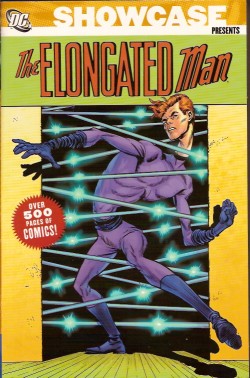
Showcase Presents Aquaman volume 3

Saturday, August 7th, 2010


By Bob Haney, Nick Cardy & various (DC Comics)
ISBN13: 978-1-4012-2181-2

Aquaman was one of a handful of costumed adventurers to survive the superhero collapse at the end of the Golden Age, a rather nondescript and genial guy who solved maritime crimes and mysteries when not rescuing fish and people from sub-sea disasters. Created by Mort Weisinger and Paul Norris he first launched in More Fun Comics #73 (1941). Strictly a second stringer for most of his career he nevertheless continued on beyond many stronger features, illustrated by Norris, Louis Cazaneuve, Charles Paris, and latterly Ramona Fradon who drew every adventure until 1960.

When Showcase #4 rekindled the public’s taste for costumed crimefighters with the advent of a new Flash DC updated its small band of superhero survivors, especially Green Arrow and Aquaman. Records are incomplete, sadly, so often we don’t know who wrote what, but after the revamp fuller records survive and this third black and white collection starring the King of the Seven Seas has only two creative credit conundrums.

Now with his own title and soon a to be featured in the popular, groundbreaking cartoon show Superman/Aquaman Hour of Adventure, the Finned Fury seemed destined for super-stardom. These joyously outlandish tales, reprinting issues #24-39, a Brave and the Bold team-up with The Atom (# 73) and a scarce-remembered collaboration from Superman’s Pal Jimmy Olsen #115 comfortably and rapturously mark the end of the wholesome, affable hero, laying groundwork for the grittily innovative run from revolutionary editor Dick Giordano and hot new talents Steve Skeates, Jim Aparo and Neal Adams…

Sadly those are a treat for another time, but there’s entertainment a-plenty here beginning with Aquaman #24, November-December 1965 from an uncredited author (Dave Wood and Jack Miller are both strong possibilities…) and regular artistic ace Nick Cardy.

In ‘Aquaman: Save Our Seas!’ the titanic tussle with maritime malcontent The Fisherman found the new parents (the Sea King and Mera were probably the first 1960s heroes to marry and have kids) almost fatally easily distracted when an alien plot threatened to destroy earth’s oceans, whilst in #25, ‘The Revolt of Aquaboy!’ an ancient Chinese sorcerer rapid-aged the proud parents’ newborn into a spiteful ungrateful teenager as part of a plot to capture the sunken city of Atlantis.

The entire world went spy-crazy in the first half of the Swinging Sixties and anonymous acronymic secret societies popped up all over TV, book and comics. With #26 (March-April 1966), Aquaman joined the party when seconded by the US government (even though absolute ruler of a sovereign, if somewhat soggy, nation) to thwart the sinister schemes of the Organisation for General Revenge and Enslavement in the still surprisingly suspenseful ‘From O.G.R.E. With Love!’ by Bob Haney and Cardy.

With Haney and Cardy firmly ensconced as the creative team, thrilling fantasy became the order of the day in such power-packed puzzlers as #27’s ‘The Battle of the Rival Aquamen’ wherein alien hunters unleashed devious duplicates of the Sea King and his Queen and #28’s ‘Hail Aquababy, New King of Atlantis!’ with rogue American geneticist Dr. Starbuck attempting to steal the throne with subtle charm, honeyed words and a trained gorilla and eagle who could breathe underwater.

Archenemy Orm the Ocean Master returned to attack America and the world in the tense undersea duel ‘Aquaman, Coward-King of the Seas!’, which provided some startling insights into the hero and villain’s shared shadowy pasts as well as the requisite thrills and chills, whilst ‘The Death of Aquaman’ proved to be a guest-star-studded spectacular of subterfuge, double-cross and alien intrigue, before the Sea King found himself a fish trapped out of water when ‘O.G.R.E. Strikes Back!, attempting to destroy the United Nations.

Ocean Master’s family connections clearly struck a chord with readers as he returned to unleash the ancient leviathan ‘Tryton the Terrible’ whilst the troublesome teenagers got a tacit acknowledgement of their growing importance with the introduction of Aqua-Girl in ‘Aqualad’s Deep-Six Chick!’ (stop wincing; they were simpler, more obnoxious times and the story itself about disaffected youth being exploited by unscrupulous adults is a perennial and worthwhile one).

Aquaman #34 featured another evil doppelganger ‘Aquabeast the Abominable’ and typified a new, harsher sensibility in storytelling. Even though the antagonists were still generally aliens and monsters – from now on they were far meaner, scarier aliens and monsters…

The Sea King teamed up with JLA compatriot the Atom in Brave and the Bold # 73 (August-September 1967) to tackle a microscopic marauder named ‘Galg the Destroyer’ in a taut drama written by Haney and illustrated by the vastly undervalued Sal Trapani, before returning to his home-title and another deadly clash with Ocean Master and the ruthless Black Manta. Never afraid to tweak the comfort zone or shake up the status quo Haney’s excellent tale ‘Between Two Dooms!’ resulted in the Atlanteans losing their ability to breathe underwater, leaving Aquaman’s subjects virtual prisoners in their own sub-sea city for years to come…

Now a TV star, Aquaman went from strength to strength as Haney and Cardy pulled out all the creative stops on such resplendent battles tales as ‘What Seeks the Awesome Three?’ - pitting the hero against mechanistic marauders Magneto, Claw and Torpedo-Man – and the chillingly prophetic eco-drama ‘When the Sea Dies!’, due in no small part to villains Ocean Master and the Scavenger.

Closing out his volume are two more dark thrillers and a classic guilty pleasure. Firstly Aquaman #38 introduced a relentless, merciless vigilante who accidentally set his sights on the Atlantean Ace in ‘Justice is Mine, Saith the Liquidator!’ before ‘How to Kill a Sea King!’ revealed a tragic tale of an alien seductress set on splitting up the Royal Couple, and the dilemmas and delights conclude with a charming treat from scripter Leo Dorfman and artist Pete Costanza which originally appeared in Superman’s Pal Jimmy Olsen #115 (October 1968).

One of the greatest advantages of these big value black-&-white compendiums is the opportunity they provide, whilst chronologically collecting a character’s adventures, to include crossovers and guest spots from other titles. When the star is as long-lived and incredibly peripatetic as Aquaman, that’s an awful lot of extra appearances for a fan to find so the concluding tale here, taken from a title cruelly neglected by today’s fans, is an absolute gold-plated bonus…

‘Survival of the Fittest!’ saw the mystical Old Man of the Sea attempt to replace Aquaman with the far more pliant cub reporter: never realising that the lad was made of far sterner stuff than the demon could possibly imagine…

DC has a long, comforting history of genteel, innocuous yarn-spinning delivered with quality artwork. Haney and Cardy’s Aquaman is an all but lost run of classics worthy of far more attention than they’ve received of late. It is a total pleasure to find just how readable they still are. With tumultuous sea-changes in store for the Sea King, the comics industry and America itself, the stories in this book signal the end of one glorious era and the promise of darker, far more disturbing days to come.

© 1965-1968, 2009 DC Comics. All Rights Reserved.
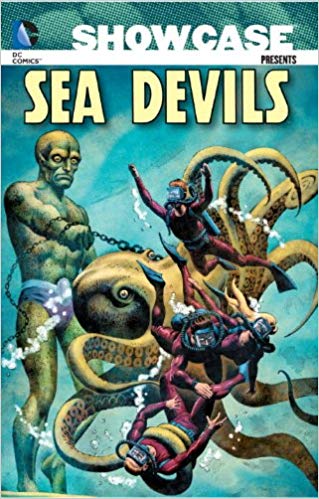
Showcase Presents the Flash volume 3

Friday, August 6th, 2010


By John Broome, Gardner Fox, Carmine Infantino & various (DC Comics)
ISBN: 978-1-4012-2297-0

The second Flash triggered the Silver Age of comics and, for the first ten years or so, in terms of creative quality and sheer originality it was always the book to watch. Following his debut in Showcase #4 (October 1956) police scientist Barry Allen – transformed by an accidental lightning strike and chemical bath into a human thunderbolt of unparalleled velocity and ingenuity – was characteristically slow in winning his own title but finally after three more trial issues finally stood on his own wing-tipped feet in The Flash #105 (February-March 1959). He never looked back and by the time of this third collection’s contents – issues #141-161of his own hard-won title the Scarlet Speedster was an undisputed icon of the apparently unstoppable Silver Age of superheroes.

The comic-book had gelled into a comfortable pattern of two short tales per issue leavened with semi-regular book-length thrillers. This delightful black and white recollection begins with a perfect example of the former from Flash #141 (December 1963). The majority of adventures were still produced by globetrotting scripter John Broome and the increasingly stylised and innovative art-team of Carmine Infantino & Joe Giella, and ‘Mystery of the Flash’s Third Identity’ saw them at their very best in a wittily absorbing super-villain yarn featuring the Top.

In another clever piece of internal comicbook logic, Broome posited that Flash’s foes looked so good because of they had their own underworld bespoke tailor – and armourer. This tale introduced Paul Gambi (an editorial in-joke acknowledging the dedicated contributions of über-fan and letter-writer Paul Gambaccini), setting the Monarch of Motion on the tailor’s tail in an enticing piece of fluff that was neatly balanced by ‘Slowdown in Time’, a canny, enthralling science fiction lesson in relativity featuring that most literal absent-minded professor Ira West, Barry’s prospective father-in- law and a genius who had casually deduced the true identity of the Flash…

Gardner Fox scripted the mile-a-minute romp ‘Perilous Pursuit of the Trickster!’ whilst Broome blended legal loopholes and alien invasions to perplex the Scarlet Speedster with the ‘Puzzle of the Phantom Plunderers!’ before issue #143 featured another full-length team-up with the Emerald Gladiator in ‘Trail of the False Green Lanterns!’ – scripted by the ever-entrancing Fox who herein introduced future-gazing arch-foe Thomas Oscar Morrow.

The next two issues were all-Fox affairs: the eerie ‘Menace of the Man-Missile!’ pitting the Sultan of Speed against a shape-shifting atomic felon whilst plucky protégé Kid Flash solo-starred in the human interest parable ‘Lesson for a Star Athlete!’ before super-villainy returned in Flash #145 where ‘The Weather Wizard Blows Up a Storm!’ and the normally stoic, stolid hero briefly had his head turned by ‘The Girl From the Super-Fast Dimension!’

Broome scripted the wacky romp ‘The Mirror Master’s Master Stroke!’ and Frank Giacoia briefly bolstered the regular art team for Fox’s terrific terror tale ‘Fatal Fingers of the Flash!’ the kind of “high concept, big science” yarn that especially captivated kids in the age of space races and burgeoning technology – and still enthrals today. Issue #147 was a feature length clash with two (or was it three?) of the Scarlet Speedster’s greatest foes. John Broome scripted the fascinating ‘Our Enemy, the Flash!’ which saw schizophrenic Al Desmond attempting to reform and relinquish both his Dr. Alchemy and Mr. Element personas; only to be forcibly compelled to commit further crimes by the ruthless 25th century sociopath Professor Zoom, the Reverse Flash!

By this time it was clear that the biggest draw to the Flash was his mind-boggling array of costumed foes, as evidenced by Broome’s Captain Boomerang tale ‘The Day Flash Went into Orbit!’, but as the writer proved with his second tale in this issue creative heart and soul still counted for much. ‘The Doorway to the Unknown!’ is the moving story of an embezzler who returns from the grave to prevent his brother paying for his crimes: a ghost story from a time when such tales were all but banned and a pithy human drama that deservedly won the Academy of Comic Book Arts Alley Award for Best Short Story of the year. It still brings a worthy tear to my eyes…

Broome also scripted #149’s alien invasion thriller starring the Vizier of Velocity and his speedy sidekick ‘The Flash’s Sensational Risk!’ whilst Fox penned the Murphy Anderson inked ‘Robberies by Magic!’ which featured another return engagement for futuristic magician Abra Kadabra, before going on to produce #150’s lead tale ‘Captain Cold’s Polar Perils!’ Giella returned for Fox’s second yarn, another science mystery ‘The Touch-and-Steal Bandits!’

Flash #151 was another sterling team-up epic. Fox once more teamed his 1940’s (or retroactively, Earth-2) creation the original Flash with his contemporary counterpart, this time in a spectacular battle against the black-hearted Shade ‘Invader From the Dark Dimension’, whilst #152’s double-header consisted of ‘The Trickster’s Toy Thefts’ (Fox, Infantino & Anderson) and the Broome scripted light-hearted thriller ‘The Case of the Explosive Vegetables!’ – another engaging comedy of errors starring Barry Allen’s father-in-law to be.

Flash #153 saw Broome reprise the much lauded ‘Our Enemy, the Flash!’ in ‘The Mightiest Punch of All Time!’ as the villainous Zoom once more attempted to corrupt the reformed Al Desmond and the next issue saw Fox’s medical mystery ‘The Day Flash Ran Away with Himself!’ and Broome’s old fashioned crime caper ‘Gangster Masquerade!’ which brought back thespian Dexter Myles and made him custodian of the increasingly important Central City landmark the Flash Museum.

It had to happen and it finally did in Flash #155: Broome teamed six of the Rogue’s Gallery into ‘The Gauntlet of Super-Villains!’, a bombastic fights ‘n’ tights extravaganza, but one with a hidden twist and a mystery foe concealed in the wings, whilst the following issue was an equally engrossing invasion saga with the Flash a hunted man: ‘The Super-Hero Who Betrayed the World!’ also courtesy of Broome, Infantino & Giella.

Fox wrote both stories in #157; ‘Who Stole the Flash’s Super-Speed?’ (a return visit for Doralla, - Girl from the Super-Fast Dimension) and another tussle with the nefarious Top in ‘The Day Flash Aged 100 Years!’ as well as those of #158: a rather ridiculous alien encounter ‘Battle Against the Breakaway Bandit!’ and the far more appetising thriller ‘The One-Man Justice League!’ wherein the Flash defeated the plans of JLA nemesis Professor Ivo without even noticing…

The cover of Flash #159 features his empty uniform and a note saying the hero was quitting, a tale entitled ‘The Flash’s Final Fling!’ written by Gardner Fox, and guest-starring Kid Flash and Earth-2 hero Dr. Mid-Nite. At that time, editors and creative staff usually designed covers that would grab potential readers’ attention and then produced stories to fit. With this issue Schwartz tried something truly novel and commissioned Robert Kanigher (first scripter of the new Scarlet Speedster in Showcase #4) to write a different tale to explain the same eye-catching visual.

‘Big Blast in Rocket City!’ – scripted by John Broome – filled out #159 with one more Professor West light espionage thriller and as Flash #160, which cover appears next was an 80-Page Giant reprint edition, issue #161 concludes this magnificent third collection. The first story is where that novel experiment in cover appeal culminates in Kanigher’s gritty, terse and uniquely emotional interpretation – ‘The Case of the Curious Costume’ before the high-octane entertainment ends with Fox, Infantino & Giella’s Mirror Master mystery ‘The Mirror with 20-20 Vision!’

These tales were crucial to the development of modern comics and more importantly, they are brilliant, awe-inspiring, beautifully realised thrillers that amuse, amaze and enthral both new readers and old lags. This lovely compendium is another must-read item for anybody in love with the world of words-in-pictures.

© 1963-1966, 2009 DC Comics. All Rights Reserved.
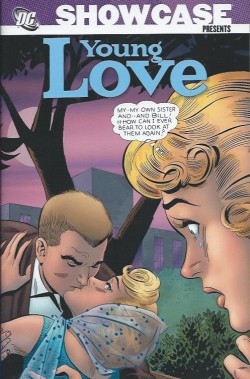
Showcase Presents Aquaman volume 2

Friday, June 4th, 2010


By Jack Miller, Bob Haney, Ramona Fradon, Nick Cardy & various (DC Comics)
ISBN: 978-1-4012-1712-9

Aquaman was one of the few superheroes to survive the collapse at the end of the Golden Age, a rather nondescript and generally bland looking guy who solved maritime crimes and mysteries when not rescuing fish and people from sub-sea disasters.

He was created by Mort Weisinger and Paul Norris in the wake of Timely Comics’ Sub-Mariner and debuted in More Fun Comics #73 (1941). Strictly a second stringer for most of his career he nevertheless continued on beyond many stronger features, illustrated by Norris, Louis Cazaneuve and Charles Paris, until young Ramona Fradon took over the art chores in 1954, by which time Aquaman had moved to a regular back-up slot in Adventure Comics. She was to draw every single adventure until 1960.

In 1956 Showcase #4 (See The Flash Archive Edition volume 1 or Showcase Presents the Flash volume 1) rekindled the public’s imagination and zest for costumed crime-fighters and, as well as re-imagining many departed Golden Age stalwarts, DC also updated and remade its isolated survivors, especially Green Arrow and Aquaman. Records are incomplete, sadly, so often we don’t know who wrote what, but after the initial revamp better records survive and this second collection of the King of the Seven Seas has far fewer creative credit conundrums.

Although now the star of his own title, Aquaman still appeared as a back-up feature in World’s Finest Comics until 1964 and this chronological compilation includes those tales (issues #130-133, 135, 137, 139), his Brave and the Bold team-up with Hawkman (# 51) and the contents of Aquaman #7-23, covering the period December 1962 to September-October 1965, a period that led directly into the King of the Seven Seas becoming one of DC’s earliest television stars as part of the animated Superman/Aquaman Hour of Adventure.

The major writers from those years were Jack Miller and Bob Haney and although some records are lost and a few later scripts remain unattributed, recognizing artists is far less troubling. The World’s Finest stories were Fradon’s last; captivatingly clean, economical lines bringing to unique life charming little adventure and mystery vignettes which always were and still are a joy to behold. Thereafter, apart from a memorable and brief return to co-create Metamorpho the Element Man, she left comics until 1972 to raise her daughter.

‘King of the Land Beasts’ (WFC #130, by Haney & Fradon) is a typically high-quality teaser about an alien Aquaman whilst ‘The Sea Beasts from Atlantis’ (Aquaman #7 by Miller & Nick Cardy) pitted the Sea Lord and Aqualad against hideous sub-sea monsters and a plot to overthrow the government of the lost city, abetted if not quite aided by the sea imp Quisp.

‘The Man Who Controlled Water’ (World’s Finest # 131, Miller & Fradon) saw the heroic pair tackle a scientist who could solidify liquids into fearsome weapons whilst in issue #8 of their own magazine, creators Miller and Cardy revealed ‘The Plot to Steal the Seas’ with the oceanic adventurers battling far out of their comfort zone to thwart marauding aliens.

Dave Wood scripted the quirky thriller ‘The Fish in the Iron Mask’ (WFC #132) wherein faithful octopus Topo was possessed by a sinister helmet and ‘The Secret Mission of King Neptune’ (Aquaman #9, Miller & Cardy) seemingly brought the heroes into bombastic contention with the God of the Oceans – but was he all he seemed?

World’s Finest #133 briefly introduced ‘Aquaman’s New Partner – Aqua-Girl’, but Miller and Fradon’s creation was strictly a one shot deal, whereas ‘War of the Water Sprites’ (Aquaman #10, Miller & Cardy) introduced an evil band of Quisp’s fellow imps who eerily presaged a tale of the JSA decades later…

‘The Creatures that Conquered Aquaman’ (from WFC #135, Miller & Fradon) was another alien invasion extravaganza whilst Aquaman #11 featured the landmark introduction of the Sea King’s future wife Mera in the Miller & Cardy extravaganza ‘The Doom from Dimension Aqua’, whilst #12 featured two shorter thrillers from Haney, ‘The Menace of the Land-Sea Beasts’ with mutated jungle animals wreaking sub-sea havoc and ‘The Cosmic Gladiators!’ wherein the seaborne sentinels are press-ganged into an intergalactic gladiatorial contest.

Miller provided the penultimate World’s Finest outing ‘The Day Aquaman Lost his Powers’ for #137 and Haney scripted a manic tale of team-up terror for superb veteran artist Howard Purcell in ‘Fury of the Exiled Creature’ (The Brave and the Bold #51, December 1963-January 1964) in which the fearsome Outcast of Atlantis turned mutative powers against not just Aquaman but also new DC superstars Hawkman and Hawkgirl.

Aquaman #13 then saw Mera return in the Miller-penned ‘Invasion of the Giant Reptiles’ as the tide-crossed lovers joined to defeat criminals from the future. Fradon and Miller ended the Sea King’s World’s Finest tenure in high style with the taut thriller ‘The Doom Hunters’ in #139, leaving Nick Cardy as sole Aquaman artist. His work slowly began to become more representational and realistic, although Miller’s ‘Aquaman’s Secret Powers!’ still held plenty of fantastic fantasy as a dying derelict cursed the Sea King with incredible new abilities, whilst the second tale in #14 ‘The Tyrant Ruler of Atlantis’ found the temporarily deranged hero seizing the throne of the sunken city. Within scant months he would be legitimately offered the crown…

Miller wrote the next four issues beginning with the sinister scientific tragedy ‘Menace of the Man-Fish’, #16’s ‘The Duel of the Sea Queens!’ as Mera battled an alien siren who had set her tentacled cap for Aquaman and #17’s ‘The Man who Vanquished Aquaman’ wherein the god Poseidon stole Mera.

All this romantic tension and concentration was for a purpose. The next issue, #18 featured ‘The Wife of Aquaman’ as the Sea King married his extra-dimensional beloved in one of the first superhero weddings of the Silver Age. Talk about instant responsibilities…

None of the remaining tales have a credited scripter, but that doesn’t affect their wonderful readability nor Cardy’s better-every-panel artwork, beginning with #19’s ‘Atlanteans For Sale’ wherein new bride Mera slowly went bonkers due to her husband’s neglectful super-heroing schedule. Cue the arrival of the merman man-candy Nikkor who insinuated himself into her affections… and the throne!

This surprisingly adult tale is followed by #20’s ‘The Sea King’s Double Doom’ as an old friend and a shape-changing monster both hit Atlantis at the same time. Coincidence? We think not…

Super-villain the Fisherman debuted in #21’s ‘The Fearful Freak from Atlantis’ as the Sea King became a sea monster, whilst ‘The Trap of the Sinister Sea Nymphs’ introduced Mera’s wicked twin sister. This splendidly engaging second volume ends on another groundbreaking high-note with issue #23’s ‘The Birth of Aquababy’ wherein the happy couple’s newborn child displays uncanny powers (and yes, you nit-picking gossips it was nine months later… exactly nine months).

One of the greatest advantages of these big value black-&-white compendiums is the opportunity they provide whilst chronologically collecting a character’s adventures to include crossovers and guest spots from other titles. When the star is as long-lived and incredibly peripatetic as DC’s King of the Seven Seas that’s an awful lot of extra appearances for a fan to find…

DC has a long and comforting history of gentle, innocuous yarn-spinning with quality artwork. Ramona Fradon’s Aquaman is one of the most neglected runs of such accessible material, and it’s a pleasure to discover just how readable they still are. And when the opportunity arises to compare her wonderful work to the exponentially improving superhero work of such a stellar talent as Nick Cardy this book becomes another fan’s must-have item. More so when all the stories are still suitable for kids of all ages, Why not treat yourself and your youngsters to a timeless dose of whimsy and adventure? You won’t regret it.

© 1962, 1963, 1964, 1965, 2008 DC Comics. All Rights Reserved.
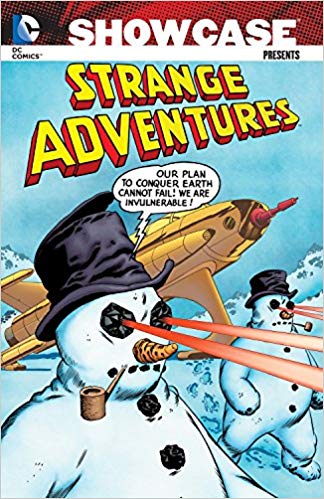
Showcase Presents Supergirl volume 2

Monday, April 19th, 2010


By Jerry Siegel, Leo Dorfman, Jim Mooney & various (DC Comics)
ISBN: 978-1-84856-055-0

Superhero comics don’t often do whimsical and thrilling anymore. They especially don’t do short or self-contained. The modern narrative drive concentrates on extended spectacle, major devastation and relentless terror and trauma. It also helps if you’re a hero who has come back from the dead once or twice or wear a combat thong and thigh boots…

Although there’s nothing intrinsically wrong with that, sometimes the palate just craves a different flavour. Once this continued cosmic cataclysm was the exception not the rule, and this second enchanting black and white compendium of the early career of Superman’s cousin Kara Zor-El of Argo City happily displays why.

After a few intriguing test-runs Supergirl began as a future star of the expanding Superman pocket universe in Action Comics #252 (May 1959). Superman’s cousin Kara had been born on a city-sized fragment of Krypton, hurled intact into space when the planet exploded. Eventually Argo City turned to Kryptonite like the rest of the detonated world’s debris, and her dying parents, observing Earth through their scopes, sent their daughter to safety as they perished. Landing on Earth, she met Superman who created the identity of Linda Lee and hid her in an orphanage in small town Midvale whilst she learned of her new world and powers in secrecy and safety.

This second collection, encompassing all the Girl of Steel’s adventures from the back of Action Comics #283 (December 1961) to #321 (February 1965), finds the young heroine still in training, her very existence kept secret from the general public and living with adoptive parents Fred and Edna Danvers – who are also completely unaware that the orphan they have recently adopted is a Kryptonian super-being.

The accent on these stories generally revolves around problem-solving, identity-preserving and loneliness, with both good taste and the Comics Code ensuring that readers weren’t traumatised by unsavoury or excessively violent tales. Such plots, akin to situation comedies, often pertained, as in the first story represented here: ‘The Six Red “K” Perils of Supergirl!’, by Jerry Siegel and regular artist Jim Mooney.

Peculiar transformations were a mainstay of 1960s comics, and although a post-modern interpretation might discern some metaphor for puberty or girls “becoming” women, I rather suspect the true answer can be found in the author’s love of comedy and an editorial belief that fighting was unladylike. Red Kryptonite, a cosmically altered isotope of the radioactive element left when Krypton exploded, caused temporary physical and sometimes mental mutations in the survivors of that doomed world – a godsend to writers in need of a challenging visual element when writing characters with the power to drop-kick planets…

Here the wonder-stuff generates a circus of horrors, transforming Supergirl into a werewolf, shrinking her to microscopic size and making her fat (I’m not going to say a single word…).

The drama continued in the next instalment, ‘The Strange Bodies of Supergirl!’ wherein she grew a second head, gained death-ray vision (ostensibly!) and changed into a mermaid. This daffy holdover to simpler times presaged a big change in the Maid of Might’s status as with the next issue her parents learned her true origins and her existence was revealed to the world in the two-part saga ‘The World’s Greatest Heroine!’ and ‘The Infinite Monster!’ both appearing in issue #285, as Supergirl became the darling of the universe: openly saving the planet and finally getting the credit for it.

Action #286 pitted her against her cousin’s greatest foe in ‘The Death of Luthor!’, whilst ‘Supergirl’s Greatest Challenge!’ saw her visit the Legion of Super-Heroes (quibblers be warned: initially their far-future era was the 21st century. It was quietly retrofitted to a thousand years from “now” after the tales in this volume) and save the Earth from invasion. She also met the telepathic descendent of her cat Streaky. His name was Whizzy (I could have left that out but chose not to – once more for smug, comedic effect…).

‘The Man who Made Supergirl Cry!’ signaled the beginning of Leo Dorfman’s run as scripter. Little is known about this prolific writer, other than he also worked under the name Geoff Brown, producing quality material continuously from the Golden Age until his death in 1974. In this tight little thriller Phantom Zone villains took control of Supergirl’s new dad in a plot to escape their ethereal dungeon dimension, whilst #289’s ‘Superman’s Super-Courtship!’ is something of a classic, as the Girl of Steel scoured the universe for an ideal mate for her cousin. Charming at the time, modern sensibilities might quail at the conclusion that his perfect mate was just like Supergirl herself, but older…

‘Supergirl’s Super Boy-Friends!’ saw both human Dick Malverne and Atlantean mer-boy Jerro catch super-powers after kissing her (I’m again saying nothing here) whilst she didn’t actually become ‘The Bride of Mr. Mxyzptlk!’ when the fifth dimensional prankster transferred his unwanted attentions to her in Action #291.

An extended storyline began in the next issue when the girl got a new “pet”. ‘The Super-Steed of Steel!’ was a beautiful white horse who helped her stave off an alien invasion, but the creature had a bizarre and mysterious past, revealed in ‘The Secret Origin of Supergirl’s Super-Horse!’, and a resolution of sorts was reached in ‘The Mutiny of Super-Horse’.

A new cast member joined the series in ‘The Girl with the X-Ray Mind!’, a psychic with a shocking connection to the Superman Family, and her secrets were further revealed in ‘The Girl who was Supergirl’s Double!’ It was the beginning of an extraordinarily tense and epic continued storyline that featured Phantom Zone villains, Luthor, Supergirl’s arch enemy Lesla Lar, the destruction of Atlantis and genuine thrills and excitement. Earth was threatened by ‘The Forbidden Weapons of Krypton!’ and it took ‘The Super-Powers of Lex Luthor!’ to finally save the day.

Action #299 returned to whimsical normality with ‘The Fantastic Secret of Superbaby II!’, and the anniversary 300th issue featured ‘The Return of Super-Horse!’: another multi-part tale that revealed ‘The Secret Identity of Super-Horse!’ in #301, only to suffer ‘The Day Super-Horse went Wild!’ in the next episode.

By this time Supergirl was featured on every second Action Comics cover, and was regularly breaking into the lead Superman story. All those covers, by art dream-team Curt Swan and George Klein are collected herein, as is their Dorfman-scripted Man of Steel tale ‘The Monster from Krypton!’ from #303, with Supergirl having to battle her Red K transformed cousin. Sadly the art is misattributed to Mooney in the credits, but he actually did draw the moving tragedy of ‘Supergirl’s Big Brother!’ for his regular second-feature in that issue.

Supergirl got a new arch-enemy in ‘The Maid of Menace!’ but Black Flame was not as problematic as ‘The Girl Who hated Supergirl!’ (again solely credited to Mooney but I’m pretty sure its at least part-inked by John Forte). Action #306 was a pure mystery thriller as Girl of Steel became ‘The Maid of Doom!’ whilst ‘Supergirl’s Wedding Day!’ almost proved that no girl can resist a manly man… almost!

‘The Super-Tot from Nowhere!’ proved to be a most difficult adventure in babysitting and #309’s ‘The Untold Story of Argo City!’ began another long saga revealing the true fate of Kara’s Kryptonian mum and dad, whilst ‘Supergirl’s Rival Parents!’ saw her having to chose between them and her Earth family.

More equine revelations came on ‘The Day Super-Horse Became Human!’ whilst eerie coincidence was examined in ‘The Fantastic Menace of the “LL’s”.’ ‘Lena Thorul, Jungle Princess!’ brought the troubled psychic back into the Girl of Steel’s so-complicated life, and the soap opera screws began really tightening when parent trouble resumed in ‘Supergirl’s Tragic Ordeal!’

It was the start of another wicked plot, continued in ‘The Menace of Supergirl’s Mother!’ and concluded in ‘Supergirl’s Choice of Doom!’, but the heroine’s problems were only beginning. In Action #317, Luthor’s latest scheme resulted in ‘The Great Supergirl Double-Cross!’, after which her life changed forever when ‘Supergirl Goes to College!’

Now nominally on her own at sedate Stanhope College, the dramas of catty rival and suspicious sorority sisters were added to identity preserving, boy-chasing and superhero-ing, but first she had to prove she wasn’t ‘The Super-Cheat!’ to keep her place at university. ‘The Man Who Broke Supergirl’s Heart!’ was not only a cad but an alien one, and this volume finishes on an emotional high with #321’s ‘The Enemy Supergirl!’ stuffed with intrigue, imposters and even coma-patients…

Throughout this four-odd year period Kara of Krypton underwent more changes than most of her confreres had in twenty years, as the editors sought to find a niche the buying public could resonate with, but for all that these stories remain exciting, ingenious and utterly bemusing. Possibly the last time a female super-character’s sexual allure and sales potential wasn’t freely and gratuitously exploited, these tales are a link and window to a far less crass time and display one of the few strong female characters that parents can still happily share with their youngest girl children. I’m certainly not embarrassed to let any women see this book, unlike any “Bad-Girl” book you could possibly name.

© 1961-1964, 2008 DC Comics. All Rights Reserved.

Showcase Presents Hawkman volume 2

Monday, March 22nd, 2010


By Gardner Fox, Murphy Anderson, Bob Haney, Dick Dillon & various (DC Comics)
ISBN13: 978-1-4012-1817-1

After fighting long and hard to win his own title it was such a pity that time and fashion seemed to conspire against the Winged Wonder…

Katar Hol and his wife Shayera Thal were police officers on their own highly advanced planet of Thanagar. They originally travelled to Earth from the star system Polaris in pursuit of a shape-changing spree-thief named Byth but stayed to study Earth police methods in the cultural metropolis of Midway City. This all occurred in the wonderful ‘Creature of a Thousand Shapes’ which appeared in The Brave and the Bold #34 (cover-dated February-March 1961), but the public was initially resistant and it was three years and many further issues, guest-shots and even a back-up feature in Mystery in Space before the Winged Warriors finally won their own title

Hawkman #1, cover-dated April-May 1964, signalled the beginning of a superb run of witty, thrilling, imaginative and hugely entertaining science fiction, crime-mystery and superhero adventures that captivated the devoted but still painfully small audience.

This second, concluding volume, reprinting in crisp efficient black and white Hawkman #12-27, Brave and the Bold #70, The Atom #31 and the avian portions of the last-ditch combination-comic The Atom and Hawkman #39-45, recommences the magic with another large-scale cosmic epic that originally debuted in February-March 1966 (issue #12). ‘The Million-Year-Long War!’ is pure Gardner Fox storytelling, recounting how a Thanagarian exploration team awakened two aliens determined to kill each other even after eons of suspended animation and whose enmity drove them to possess all of Thanagar, turning Hawkman’s homeworld into one huge weapon. As usual Fox’s imaginings were gloriously illustrated by Murphy Anderson – as they would be until Julie Schwartz surrendered editorial control with issue #22.

Hawkman #13 featured a startling time-bending saga ‘Quest of the Immortal Queen!’ wherein a Valkyrie from Earth’s far future decided to add the Winged Wonder to her seraglio of lusty warriors plucked from history. Happily his wife Shayera strenuously objected and is both smart and tough enough to sort things out. Fox’s treatment of female characters was highly unique for those pre-feminist times: all his heroines – a large number of them wives, not wishy-washy “girlfriends” – were capable, intelligent and most importantly, wholly independent individuals.

Hawkgirl was written as every bit her husband’s equal and the Hawks had one of the most subtle and sophisticated relationships in the business. Like Sue and Ralph Dibney (Elongated Man and wife) Katar and Shayera were full partners, (both couples were influenced by the Nick and Nora Charles characters of the Thin Man movies) and the interplay between them was always rich in humour and warmth.

As a sign of the times super-secret criminal conspirators C.A.W. returned to seize control of the ‘Treasure of the Talking Head!’ – an ancient computer which held all the world’s knowledge, built before the birth of Christ, and the Pinioned Paladins then faced a fantastic monster in ‘Scourge of the Human Race!’, an encounter which revealed the true history of humanity as the last surviving specimen of Homo Sapiens’ earliest rival for mastery of the planet attempts to reverse evolution…

Issue #16 was a dimension-hopping sequel to Hawkman #6 (‘World Where Evolution Ran Wild’): an incredible Lost Worlds romp which combined secret history, fantastic fantasy and DC’s signature fascination with apes and simians in ‘Lord of the Flying Gorillas!’ whilst #17’s ‘Ruse of the Robbing Raven’ changed pace with a clever costumed crook caper. The issue also contained the first short back-up tale in over a year – another science based mystery entitled ‘Enigma of the Escape-Happy Jewel Thieves!’

Hawkman then guest-starred – and clashed – with Batman in The Brave and the Bold #70 (February-March 1967): ‘Cancelled: 2 Super-Heroes’ by Bob Haney, EC legend Johnny Craig and Chuck Cuidera saw the usually comradely crime-busters at each others throats due to the machinations of a manic millionaire who collected secret identities, whilst later that month in his own title the Winged Wonder teamed with Adam Strange against the malevolent Manhawks to locate the ‘World That Vanished!’ The planet in question was Thanagar and when it went it took Hawkman’s beloved Shayera with it…

This colossal tale concluded in the next issue with the action-packed ‘Parasite Planet Peril!’ and the Avian Ace then joined his old friend in The Atom #31 for ‘Good Man, Bad Man, Turnabout Thief!’ (by Fox, Gil Kane & Sid Greene) to battle a phantom super-criminal hidden within the brain of an innocent man, before returning to home ground for Hawkman#20’s ‘Death of the Living Flame’ a classy anthropological tomb-raiding yarn and the introduction of a new and persistent foe in ‘Lion-Mane… the Tabu Menace!’

The alien-infected leonine marauder returned in the very next issue ‘Attack of the Jungle Juggernaut!’- a typically classy thriller for Fox and Anderson to bow out with. With issue #22, George Kashdan took over the editorial reins, tapping Bob Haney, Dick Dillin and Charles “Chuck” Cuidera to continue the adventures of the Winged Wonders in a market increasingly indifferent to costumed characters. ‘Quoth the Falcon “Hawkman Die!”’ certainly hit the ground running as the tale of extraterrestrial paranoia and civil unrest resulted in Hawkman revealing his secret identity and alien heritage to a hostile Earth…

‘The Hawkman from 1,000,000 B.C.!’ was another dark, moody tale wherein a mad scientist’s time-plundering ray inflicts dinosaurs, ancient warriors and an amnesiac Hawkman on the shell-shocked citizens of Midway City. Arnold Drake scripted the alien invasion saga ‘The Robot-Raiders from Planet Midnight!’ and Haney resurfaced for ‘Return of the Death Goddess!’ and Shayera’s brief but ghastly possession by the ghost of the mythical Medusa.

The writing was on the wall by June-July 1968 and the prophetically entitled ‘Last Stand on Thanagar!’(issue #26) scripted by Raymond Marais, was a rushed inconsequential affair before the final tale ‘…When the Snow-Fiend Strikes!’ ended Hawkman’s solo career with a muddled tale of Communist agents and Yetis in the Himalayas.

It was a bad time for superheroes. Buying tastes had changed and a drop in comic sales and attendant rise in interest in supernatural themes prompted publishers to drop or amend much of the anti-horror provisions of the Comics Code Authority. Tales of mystery and imagination were returning after nearly a decade-and-a-half, but sales figures notwithstanding, Julie Schwartz had worked too hard to just let Hawkman die.

Just as Marvel were converting their double-feature split books into solo titles Hawkman was crammed into the equally struggling Atom comic for one last year of adventures.

The Atom and Hawkman, beginning with #39 (October-November 1968, carrying on the numbering of the Tiny Titan’s publication) featured some of Schwartz’s biggest creative guns, alternating short solo stories with shared adventures. The first of these was ‘Vengeance of the Silver Vulture!’ an epic battle against a resurgent Mayan death-cult written by Bob Kanigher, illustrated by Anderson and Joe Giella, with cover art by Joe Kubert – who would also contribute interior art to the feature he struggled so long and hard to create.

Written by Fox, pencilled by Kubert and inked by Anderson, the Hawkman portion of #40, ‘Man with the Inbuilt Panic Button!’ and its sequel ‘Yo-Yo Hangup in the Sky!’ from #41 are one last splendid slice of the “Good Old Days” – an intriguing mystery about a ordinary man who suddenly develops the power of teleportation – but only from one life-threatening crisis to a greater one…

Denny O’Neil joined Dick Dillin and Sid Greene for ‘When the Gods Make Madness!’, a full-length team-up which pitted the heroes against Hindu gods, and Kanigher revived the Golden Age Hawkman’s greatest foe in the two part saga of The Gentleman Ghost ‘Come to my Hanging!’ and the concluding ‘The Ghost Laughs Last’, both illustrated by Anderson.

The Atom and Hawkman #45 was the final issue, a revelatory psycho-drama featuring both heroes by O’Neil, Dillin and Greene that wrapped up their comic tenure and set them up with a prolonged series of further adventures in Justice League of America: a veritable lifeboat for cancelled costumed crime-fighters at that time.

‘Queen Jean, Why Must We Die?’ revealed that the Atom’s fiancée Jean Loring was the descendent of aliens who had crashed on Earth in the Stone Age. Returned from sub-molecular exile the survivors drove her insane – because their hereditary rulers must be free of all care – before the heroes could rescue – but not cure her. This tale would provide much of the basis for Loring’s actions in contemporary sagas Identity Crisis and Countdown to Final Crisis

And then , but for the JLA, occasional guest-spots or back-up features in Action or Detective Comics that was it for the Winged Wonders until changing tastes and times gave them another, indeed many other, shots at the stars.

Hawkman briefly grew into one of the most iconic characters of the second superhero boom, not just for the superb art but also because of brilliant, subtle writing and incomparable imagination. These tales are comfortably familiar but grippingly timeless. Yet comics are a funny business; circumstances, tastes and fashions often mean that wonderful works are missed and unappreciated.

Don’t make the same mistake readers did in the 1960s. Together with its first volume this book captures and perfectly preserves the very essence of the Silver Age of Superheroes. Whatever your own vintage, read these astounding adventures and become a fan. It’s never too late.
© 1966, 1967, 1968, 1969, 2008 DC Comics. All Rights Reserved.

Showcase Presents Brave and the Bold Batman Team-ups Volume 2

Tuesday, February 9th, 2010


By Bob Haney, Jim Aparo, Neal Adams, Nick Cardy & various (DC Comics)
ISBN13: 978-1-84576-813-3

Now settled on a winning format – pairing media superstar Batman with other luminaries of the DC universe in complete stand-alone stories – The Brave and the Bold proceeded to win critical as well as commercial kudos by teaming regular writer Bob Haney with the best artists available. At this time editors favoured regular if not permanent creative teams, feeling that a sense of visual and even narrative continuity would avoid confusion amongst younger readers. During this second collection (reprinting B&B #88-108 in crisp, efficient black and white) a number of stellar artists contributed before the comicbook finally found its perfect draughtsman…

Following a ground-breaking run by the iconoclastic and influential Neal Adams (see Showcase Presents Brave and the Bold Batman Team-ups Volume 1) was always going to be a tough act but veteran Irv Novick – who would unfairly tread in Adams’ mighty shadow on Batman for years to come – did sterling work here on a gritty tale of boxing and Cold War mind-games when the Caped Crusader met Wildcat in ‘Count Ten… and Die!’ (B&B #88, February-March 1970).

Mike Esposito inked that tale before rejoining longtime collaborator Ross Andru for a brief return engagement that began with an eerie thriller pitting Batman against the mystery sensation Phantom Stranger in #89’s ‘Arise Ye Ghosts of Gotham!’ and then switching pace and genre for a time-bending science fiction thriller ‘You Only Die Twice!’ guest-starring interstellar champion Adam Strange.

Issue #91, ‘A Cold Corpse for the Collector’ is a true gem of a tale. Haney was always at his best with terse, human scale dramas, especially “straight” crime thrillers, and his pairing of the Gotham Guardian with Black Canary (transplanted from Earth-2 to replace the “de-powered” Wonder Woman in the Justice League) found the recently widowed heroine searching for the Earth-1 counterpart of her dead husband only to find imminent death in a masterpiece of ironic melodrama. It also signalled the advent of the superb Nick Cardy as illustrator: a run of beautifully drawn and boldly experimental assignments that are still startling to see even four decades later.

The artistic exploration continued in the next issue when Batman traveled to England, embroiled in a moody, gothic murder mystery with a trio of British stereotypes fancifully christened “The Bat Squad.” Although the scratch team never reappeared, ‘Night Wears a Scarlet Shroud!’ remains a period delight and a must for those who still remember when “Eng-ga-land Swung.”

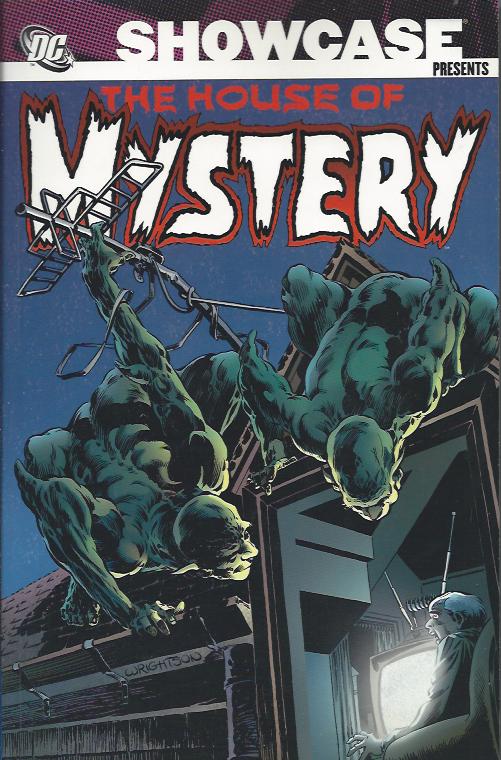
At the end of the 1960s the Comics Code Authority ended its ban on crime and horror comics to allow publishers to exploit the global interest in the supernatural. This had instantly affected comics and more and more stories had macabre overtones. It even led to the revival of horror and suspense anthologies. One such was the venerable House of Mystery; and unquestionably the oddest team-up in B&B history.

Scripted by Denny O’Neil and illustrated by Neal Adams #93’s ‘Red Water, Crimson Death’ is a chilling ghost story with the added advantage of having the Dark Knight’s somber shtick counterbalanced by the musings of the sardonic laconic Cain, ethereal and hip caretaker of that haunted habitat…

Bob Haney, Nick Cardy and the Teen Titans returned for the powerful counter-culture bomb-plot ‘Rebels in the Streets’ whilst a forgotten mystery hero (I won’t spoil it for you) helped Batman get the goods on ruthless, fat-cat industrialist Ruby Ryder in ‘C.O.D. – Corpse on Delivery’, and – somewhat more palatable for continuity bugs – Sgt Rock’s second engagement was set in contemporary times rather than in WWII as the honourable old soldier became a bureaucrat’s patsy in an excellent espionage thriller ‘The Striped-Pants War!’

Haney clearly had a fondness for grizzled older heroes as Wildcat made another comeback in #97’s South-of-the-Border saga ‘The Smile of Choclotan!’, an epic of exploration inked by Cardy over the husky he-man pencils of the hugely underrated Bob Brown. The Phantom Stranger guested next in a truly sinister tale of suburban devil worship which found Batman thoroughly out of his depth in ‘The Mansion of the Misbegotten!’, illustrated by the man who would soon become the only B&B artist: Jim Aparo.

Brown and Cardy returned to draw the Flash saving the Gotham Gangbuster from ghostly possession in ‘The Man who Murdered the Past’ and Aparo illustrated the anniversary 100th issue as Green Lantern, Green Arrow and Black Canary had to take over for a Batman on the verge of death and trapped as ‘The Warrior in a Wheel-Chair’ as well as the outrageous murder-mystery ‘Cold-Blood, Hot Gun’ wherein Metamorpho, the Element Man assisted the Caped Crusader in foiling the World’s most deadly hitman.

Brave and the Bold #102 featured a true rarity: the Teen Titans again featured in an angry tale of the generation gap ‘Commune of Defiance’ which began as an Aparo job, but in a bizarre turnabout Neal Adams – an artist legendary for blowing deadlines – was called in to finish the story, contributing the last nine pages of the tension-packed political thriller. Bob Brown and Frank McLaughlin illustrated ‘A Traitor Lurks Inside Earth!’ a doomsday saga of military computers gone awry featuring the multipurpose Metal Men whilst Aparo handled the poignant story of love from beyond the grave in the eponymously entitled ‘Second Chance for a Deadman?’ from #104.

The aforementioned unpowered Wonder Woman returned after a long absence in Haney and Aparo’s superb revolutionary epic ‘Play Now… Die Later!’ wherein Diana Prince and Batman become pawns in a bloody South American feud exported to the streets of Gotham, and Green Arrow was sucked into a murderous get-rich-quick con in #106’s ‘Double Your Money… and Die’, featuring a surprise star villain.

Black Canary then featured in a clever take on the headline-grabbing – and still unsolved – D.B. Cooper hijacking of a airliner in ‘The 3-Million Dollar Sky’ from B&B #107 (June-July 1973. Inflation sucks: “Cooper” only got $200,000 when he jumped out of that Boeing 727 in November 1971, never to be see again…) and this volume ends with a wonderfully chilling tale of obsession as Sgt. Rock tried once more to catch the greatest monster in history on ‘The Night Batman Sold his Soul!’

These are some of the best and most entertainingly varied yarns from a period of magnificent creativity in the American comics industry. Aimed at a general readership, gloriously free of heavy, cloying continuity baggage and brought to stirring action-packed life by some of the greatest artists in the business, this is a Batman for all seasons and reasons with the added bonus of some of the most fabulous and engaging co-stars a fan could imagine. How could anybody resist? Seriously: can you…?

©1970-1973, 2007 DC Comics. All Rights Reserved.

Showcase presents Green Lantern volume 4

Sunday, February 7th, 2010


By John Broome, Gardner Fox, Dennis O’Neil, Gil Kane & various (DC Comics)
ISBN: 978-1-84856-322-3

Slightly slimmer than the usual phonebook-sized tome the fourth collection starring the Emerald Gladiator of Earth-1 (here reproducing in crisp, stylish black and white the contents of issues #60-75 of the groundbreaking comic book) is a kind of throat-clearing shuffle to allow a fifth volume to begin with the landmark O’Neil/Adams Green Lantern/Green Arrow tales, but that doesn’t by any means imply that the superb collection here is unworthy of your attentions.

By the time this selection of stories began DC was a company in transition – as indeed was America itself – with new ideas (for which, in comic-book terms read “new, young writers”) being given greater headway than ever before: an influx of new kids unseen since the very start of the industry, when excitable young artists and writers ran wild with imagination…

Green Lantern #60 (April 1968) was however an all-veteran outing as Gardner Fox, Gil Kane and Sid Greene introduced a fantastic new foe in ‘Spotlight on the Lamplighter!’, a power-packed, crime-busting morality play that foreshadowed a spectacular team-up classic in the next issue.

Mike Friedrich penned ‘Thoroughly Modern Mayhem!’ but mercifully the story was as wonderful as the title is not, since it cut to the quick of a problem many a kid had posited. If the power ring was so powerful why not just command it to banish all evil? When the old and weary Emerald Crusader of Earth-2 does just that, it takes both him and his Earth-1 counterpart to remedy the shocking consequences…

Issue #62 replaced Kane with Jack Sparling for Fox’s clever scientific mystery ‘Steal Small… Rob Big!’ and Denny O’Neil’s metaphysical, history-warping thriller ‘This is the Way… The World… Ends!’ in #63: whilst Mike Sekowsky and Joe Giella illustrated the O’Neil scripted ‘Death to Green Lantern’ wherein a long-forgotten foe almost destroyed the Green Guardian’s reputation before ending his life. Social historians might like to note the inclusion of benevolent and necessary (plus favourably depicted and written) hippies/flower children acting as more than mere comedic asides: Those times they really were a-changin’…

There was a return to straight superhero drama with Fox, Sekowsky and Giella’s doomsday thriller ‘Dry Up… and Die!’ which apparently ended the criminal career of Doctor Polaris whilst John Broome took GL back to the future for another planet-saving sci-fi romp in #66’s ‘5708 AD… A Nice Year to Visit – But I Wouldn’t Want to Live Then!’

Issue #67 featured two shorter tales, the first of which ‘Green Lantern Does his Ring Thing!’ was a delightful old-school conundrum as old enemy Bill Baggett wrested mental control of the ring away from the Emerald Gladiator (by Fox, Dick Dillin and Giella) whilst ‘The First Green Lantern!’ by Fox and Sid Greene revealed how the Corps began in the first (and only, I think) of a projected series: Tales of the Power Ring.

Contemporary space opera was the order of the day in the intriguing action thriller ‘I Wonder Where the Yellow Went!’ scripted by O’Neil and featuring the wonderfully welcome return of a rejuvenated Gil Kane, aided and abetted by Giella. Kane’s last efforts on the hero he visually created was to be a eye-pooping run of beautiful, dynamic classics, and none more so than the youth-rebellion parable ‘If Earth Fails the Test… it Means War!’, cleverly scripted by Broome and inked by the incomparable Wally Wood.

Vince Colletta inked the less impressive Broome/Kane space spoof ‘A Funny Thing Happened on the Way to Earth’, but honour and quality were restored with the tense countdown to disaster mystery ‘The City that Died!’ (Broome, Kane and Giella): one of two tales in #71, and one that reintroduced Olivia Reynolds – a love interest whose subconscious mind was a planet-shattering energy source. The second story was another jolly Jordan Brothers yarn, from Broome, Dillin and Murphy Anderson, but ‘Hip Jordan Makes the Scene!’ was a regrettably old-fashioned tale of a grifting hippie way out of tune with its readers’ sensibilities – and that’s a shame because it is quite funny…

‘Phantom of the Space Opera!’ by O’Neil, Kane and Giella is a visually magical but rather heavy-handed co-opting of Wagner’s Ring of the Nibelungs, transposed to deep space, but this was more than compensated for by the brilliant two-parter that followed.

‘From Space Ye Came…’ in Green Lantern #73 and its climactic conclusion ‘Lost in Space!’, by Mike Friedrich, Kane and Anderson was an unforgettable clash of ultimate enemies as Sinestro, the renegade Green Lantern, made a brutal attempt on our hero’s life using his foe’s unrequited love for Carol Ferris as a psychological wedge. However the alien mastermind was unaware of just how unstable Ferris was in her dual identity of the gem-possessed Star Sapphire…

With #76 Denny O’Neil would become sole scripter and in collaboration with comics genius Neal Adams completely redefined contemporary superhero strips with relevancy-driven stories. But to complete this book and the first chapter of Hal Jordan/Green Lantern’s chequered career comes the glorious swan-song ‘The Golden Obelisk of Qward!’ as the Emerald Crusader and a desperate doctor invaded the anti-matter universe to save Olivia Reynolds and destroy a weapon capable of demolishing our galaxy. Broome, Kane and Giella went out on a high note blending modern sensibilities with the plot-driven sense of wonder and high-octane action that made Green Lantern such an all-pervasive hit and the very foundation stone of DC mythology.

These tales of wit and courage, illustrated with astounding dynamism defined the Silver Age of comics and they are still as captivating and engrossing now as they ever were – perhaps even more so. If you love the sheer gloss and glamour of superhero fiction, then it never gets better than this…

© 1968, 1969, 1970, 2009 DC Comics. All Rights Reserved.

Showcase Presents Brave and the Bold Batman Team-ups Volume 1

Sunday, January 10th, 2010


By Bob Haney, Neal Adams & various (DC Comics)
ISBN13: 978-1-4012-1209-4

The Brave and the Bold began in 1955 as an anthology adventure comic featuring short complete tales about a variety of period heroes: a format that mirrored the contemporary movie fascination with historical dramas. Written by Bob Kanigher issue #1 led with Golden Gladiator, the Silent Knight and Joe Kubert’s now legendary Viking Prince. From #5 the Gladiator was increasingly alternated with Robin Hood, but the adventure format carried the title until the end of the decade when the burgeoning costumed character revival saw B&B transform into a try-out vehicle like Showcase.

Issue #25 (August-September 1959) featured the debut of Task Force X: the Suicide Squad, followed by Justice League of America (#28), Cave Carson (#31), Hawkman (#34), and since only the JLA hit the first time out, there were return engagements for the Squad, Carson and Hawkman. Something truly different appeared in #45-49 with the science fictional Strange Sports Stories, before Brave and the Bold #50 provided a new concept that once again truly caught the reader’s imagination.

That issue paired two superheroes – Green Arrow and Martian Manhunter – in a one-off team-up, as did succeeding issues: Aquaman and Hawkman in #51, WWII Battle Stars Sgt Rock, Captain Cloud, Mme. Marie and the Haunted Tank in #52 and Atom and Flash in #53. The next team-up, Robin, Aqualad and Kid Flash, evolved rapidly into the Teen Titans. After Metal Men/the Atom and Flash/Martian Manhunter a new hero, Metamorpho, the Element Man debuted in #57-58. Then it was back to superhero pairings with #59, and although no one realised it at the time this particular conjunction, Batman with Green Lantern would be particularly significant.

After a return engagement for the Teen Titans in #60, the next two issues highlighted Earth-2 champions Starman and Black Canary, whilst Wonder Woman met Supergirl in #63. Then, in an indication of things to come, and in acknowledgement of the TV induced mania mere months away Batman duelled hero/villain Eclipso in #64. Within two issues, following Flash/Doom Patrol (#65) and Metamorpho/Metal Men (#66) Brave and the Bold #67 saw the Caped Crusader take de facto control of the title, and the lion’s share of the team-ups. With the exception of #72-73 (Spectre/the Flash and Aquaman/Atom) the comic was henceforth to be a place where Batman invited the rest of company’s heroic pantheon to come and play…

This first collection of Batman’s pairing with other luminaries of the DC universe (reprinting B&B #59, 64, 67-71 and 74-87) features the last vestiges of a continuity-reduced DC where individual story needs were seldom submerged into a cohesive overarching scenario, with writer Bob Haney crafting stories that were meant to be read in isolation, and drawn by a huge variety of artists with only one goal: entertainment.

The Brave and the Bold #59 (April-May 1965, illustrated by Ramona Fradon and Charles Paris) found Batman and Green Lantern reliving the plot of the Count of Monte Cristo as they resisted ‘The Tick-Tock Traps of the Time Commander!’ whilst a long-lost romantic interest brought the Caped Crusader into conflict with criminal combine Cyclops in ‘Batman versus Eclipso’ (#64, February-March 1966, illustrated by the great Win Mortimer).

‘The Death of the Flash’ in #67 (August-September 1966) was a terse high-speed thriller drawn with flair by Carmine Infantino and Charles Paris, and the next issue, with visuals from Mikes Sekowsky and Esposito, offered one of the oddest tales in DC’s long history as Metamorpho had to defeat a Gotham Guardian mutated into a vicious monster in ‘Alias the Bat-Hulk!’

Win Mortimer returned to illustrate Batman, Green Lantern and the Time Commander’s fractious reunion in #69’s ‘War of the Cosmic Avenger’ whilst Hawkman’s first Bat team-up ‘Cancelled: 2 Super-heroes!’ pitted the pair against a secret identity collector in a quirky tale with art by Johnny Craig and Chuck Cuidera, and Green Arrow, drawn by his Golden Age illustrator George Papp, helped Batman survive ‘The Wrath of the Thunderbird!’

After the aforementioned hiatus the Caped Crime-crusher took full possession of Brave and the Bold with #74’s fast-paced and funny ‘Rampant Run the Robots’ as the Metal Men tackled prejudice and evil inventors and in #75 The Spectre joined the Dark Knight to free Gotham City’s Chinatown from ‘The Grasp of Shahn-Zi!’ both tales drawn by the new semi-regular art team of Ross Andru and Mike Esposito.

Drawn by Sekowsky and Jack Abel, Plastic Man helped solve the mystery of The Molder in #76’s ‘Doom, What is Thy Shape?’ Andru and Esposito illustrated the Atom’s exploits in ‘So Thunders the Cannoneer!’ and Bob Brown stepped in to draw ‘In the Coils of the Copperhead’ wherein Wonder Woman found herself vying with the newly-minted Batgirl for Batman’s affections. Of course it was all a cunning plan… wasn’t it?

Neal Adams was a young illustrator who had worked in advertising and ghosted some newspaper strips whilst trying to break into comics. With #75 he had become a cover artist for B&B, and with #79 (August-September 1968) he took over the interior art for a groundbreaking run that rewrote the rulebook for strip illustration. ‘The Track of the Hook’ paired the Dark Knight Detective with the justice-obsessed Deadman: murdered trapeze artist Boston Brand  who was hunting his own killer, and whose earthy, human tragedy elevated the series’ costume theatrics into deeper, more mature realms of drama and action. The stories aged ten years overnight and instantly became every discerning fan’s favourite read.

‘And Hellgrammite is his Name’ found Batman and the Creeper battling an insect-themed super-hitman, and the Flash aided the Caped Crusader defeat an unbeatable thug in ‘But Bork Can Hurt You!’ (both inked by Dick Giordano) whilst Aquaman became ‘The Sleepwalker from the Sea’ in an eerie tale of mind-control and sibling rivalry.

Issue # 83 took a radical turn as the Teen Titans tried to save Bruce Wayne’s latest foster-son from his own inner demons in ‘Punish Not my Evil Son!’ but the next team-up was one that got many fans in a real tizzy in 1969. ‘The Angel, the Rock and the Cowl’ recounted a World War II exploit where Batman and Sgt. Rock of Easy Company hunted Nazi gold together, only closing the case twenty-five years later. Ignoring the kvetching about relative ages and which Earth we’re on, you should focus on the fact that this is a startlingly gripping tale of great intensity, beautifully realised, and one which has been criminally discounted for decades as “non-canonical”.

Brave and the Bold #85 is arguably the best of an incredible run. ‘The Senator’s Been Shot!’ reunited Batman and Green Arrow in a superb multi-layered thriller of politics, corruption and cast-iron integrity, wherein Bruce Wayne became a stand-in for a law-maker and the Emerald Archer got a radical make-over that turned him into the fiery liberal gadfly champion of the relevancy generation.

Boston Brand returned in #86, as Batman found ‘You Can’t Hide from a ‘Deadman!’ in a captivating epic of death, redemption and resurrection that became a cornerstone of Bat-mythology for the next three decades, and this spellbinding black and white collection of classic confrontations concludes with a decidedly different adventure written and drawn by Mike Sekowsky and starring the venerable comics icon he had made fresh and exciting all over again.

Entitled ‘The Widow-Maker’, it tells of the son of one of Batman’s foes who attempts to add to his tally of motoring murders by luring the Caped Crusader into a rigged high performance car race until Diana Prince, once and future Wonder Woman, steps in…

By taking his cues from news headlines, popular films and proven genre-sources, Bob Haney produced gripping adventures that thrilled and enticed with no need for more than a cursory nod to an ever-more onerous continuity. Anybody could pick up one of his concoctions and be sucked into a world of wonder. Consequently those tales are just as fresh and welcoming today, their themes and premises as immediate now as then and the glorious variety of artists involved still proves a constant source of joy and wonder. Here is a Bat-book literally everybody can enjoy.

© 1965-1970, 2007 DC Comics. All Rights Reserved.

Showcase presents Green Lantern volume 3

Sunday, December 20th, 2009


By John Broome, Gardner Fox, Gil Kane, Sid Greene & Carmine Infantino (DC Comics)

ISBN13: 978-1-84576-853-9

Firmly established as a major star of the company firmament, Green Lantern increasingly became a series which provided conceptual highpoints and “big picture” foundations that successive creators would use to build the tight-knit history and continuity of the DC universe. At this time there was also a turning away from the simple imaginative wonder of a ring that could do anything in favour of a hero who preferred to use his fists first and ignore easy solutions.

What a happy coincidence that at this time artist Gil Kane was just reaching his artistic peak, his dynamic full-body anatomical triumphs bursting with energy and crashing out of every page…

Green Lantern #39 (September 1965) featured two tales by John Broome, Kane and master inker Sid Green; a return engagement for Black Hand, the Cliché Criminal entitled ‘Practice Makes the Perfect Crime!’ and a bombastic slugfest with an alien prize fighter named Bru Tusfors, ‘The Fight for the Championship of the Universe!’ They were mere warm-ups for the next issue.

‘The Secret Origin of the Guardians!’ was a landmark second only to ‘Flash of Two Worlds’ (see Showcase Presents the Flash volume 2 or Crisis on Multiple Earths: the Team-ups volume 1) as Broome teamed the Emerald Gladiator with his Earth-2 counterpart Alan Scott to stop Krona, an obsessed Oan scientist whose misguided attempts to discover the origins of the universe had introduced evil into our reality billions of years ago and forced his immortal brethren to become protectors of life and civilisation in an unending act of group contrition.

Simultaneously high concept and action packed, this tale became the accepted keystone of DC cosmology and the springboard for all those mega-apocalyptic publishing events such as Crisis on Infinite Earths. It has seldom been equalled and never bettered…

Issue #41 featured twisted romance in ‘The Double Life of Star Sapphire!’ as an alien power-gem once more compelled Carol Ferris to subjugate and marry her sometime paramour Green Lantern, and Gardner Fox wrote another cracking magical mystery as the extraterrestrial wizard Myrwhydden posed ‘The Challenge of the Coin Creatures!’

In ‘The Other Side of the World!’ Fox continued a long-running experiment in continuity with a superb tale of time-lost civilisations and an extra-dimensional invasion by the Warlock of Ys that co-starred the peripatetic Zatanna the Magician.

The top-hatted, fish-netted, comely young sorceress had appeared in a number of Julie Schwartz-edited titles hunting her long-missing father Zatarra: a magician-hero in the Mandrake mould who had fought evil in the pages of Action Comics for over a decade beginning with the very first issue. In true Silver Age “refit” style Fox created his young and equally gifted daughter, and popularised her by guest-teaming her with a selection of superheroes he was currently scripting (if you’re counting, these tales appeared in Hawkman #4, Atom #19, Green Lantern #42, and the Elongated Man back-up strip in Detective Comics #355 as well as a very slick piece of back writing to include the high-profile Caped Crusader via Detective #336 – ‘Batman’s Bewitched Nightmare’, before concluding after the GL segment in Justice League of America #51).

The Flash guest-starred in a high-powered tussle with a new nemesis in the ‘Catastrophic Crimes of Major Disaster!’ in #43 and the next issue provide two tales – a rarity as book-length epics increasing became the action-packed norm. Oddly, second-class postage discounts had for years dictated the format of comic-books: to qualify for cheaper rates periodicals had to contain more than one feature, but when the rules were revised single, complete tales not divided into “chapters” soon proliferated. Here though are two reasons to bemoan the switch; Fox’s ‘Evil Star’s Death-Duel Summons’ and Broome’s Jordan Brothers adventure ‘Saga of the Millionaire Schemer!’, offering high-intensity super-villain action and heady, witty mystery.

The Earth-2 Green Lantern returned for another team-up in #45’s fantasy romp ‘Prince Peril’s Power Play’ by Broome, who raised the dramatic stakes with the hero’s first continued adventure in the following issue. Before that, though Green Lantern #56 opened with a delightfully grounded crime-thriller ‘The Jailing of Hal Jordan’ from Fox, before ‘The End of a Gladiator!’ detailed the murder of GL by old foe Dr. Polaris and concluded with his funeral on Oa, home of the Guardians!

Broome was on fire at this time: the following issue found the hero’s corpse snatched to the 58th century and revived in time to save his occasional future home from a biological infection of pure evil in the spectacular conclusion ‘Green Lantern Lives Again!’

Bizarrely garbed goodies and baddies were common currency at this time of “Batmania” so when gold-plated mad scientist Keith Kenyon returned it was as a dyed-in-the-wool costumed crazy in Fox’s ‘Goldface’s Grudge Fight Against Green Lantern!’, although Broome’s showbiz scoundrel Dazzler didn’t quite set the world afire in #49’s ‘The Spectacular Robberies of TV’s Master Villain!’ The story was still a shocker however as Hal Jordan quit his job as a Coast City test Pilot and went on the first of his vagabond quests across America…

With Green Lantern #50 Gil Kane began inking his own art, lending the proceedings a raw, savage appeal. The fight content in the stories was also ramped up, as seen in Broome’s murder-mystery treasure hunt ‘The Quest for the Wicked Queen of Hearts!’ which was complimented by an extragalactic smack-fest in Fox’s ‘Thraxton the Powerful vs Green Lantern the Powerless’ before Broome took the Emerald Crusader back to the 58th century to battle ‘Green Lantern’s Evil Alter Ego!’ in #52.

Alan Scott and comedy sidekick Doiby Dickles popped over from Earth-2 to aid against the return of arch nemesis Sinestro in the frankly peculiar ‘Our Mastermind, the Car!’ by Broome and Kane, but found a much less outré plot or memorable foe in #53’s ‘Captive of the Evil Eye!’ whilst artists Carmine Infantino and Sid Greene stepped in to illustrate Broome’s thrillingly comedic Jordan Brothers back-up ‘Two Green Lanterns in the Family!’ as Hal took a job as a county-spanning investigator for the Evergreen Insurance company.

Broome and Kane were reunited for the positively surreal, super-scientific ‘Menace in the Iron Lung!’ (#54), and all-out attack on the Guardians in ‘Cosmic Enemy Number One’, which concluded in ‘The Green Lanterns’ Fight for Survival!’ and the appointment of a second Earthling to the Corps.

Fox scripted a sparkling Fights ‘n’ Tights duel in ‘The Catastrophic Weapons of Major Disaster!’ (#57) and a gripping psycho-thriller in #58’s ‘Peril of the Powerless Green Lantern’ wherein the hero seemingly suffered from debilitating combat fatigue. Sid Greene returned with this latter and stayed to ink the last tale in this volume, another continuity landmark.

In issue #59 (March 1968) Broome introduced Guy Gardner ‘Earth’s Other Green Lantern!’ in a rip-roaring cosmic epic of what-might-have-been. When dying GL Abin Sur had ordered his ring to select a worthy successor Hal Jordan hadn’t been the only candidate, but the closest of two. What if the ring had chosen his alternative instead…?

With a superb double page pin-up from GL #46 to end on this book gathers the imaginative and creative peak of Broome, Fox and Kane, a plot driven plethora of adventure sagas and masterful thrillers that literally reshaped the DC Universe. Action lovers and fans of fantasy fiction couldn’t find a better example of everything that defines superhero comics.
© 1965, 1966, 1967, 1968, 2008 DC Comics. All Rights Reserved.