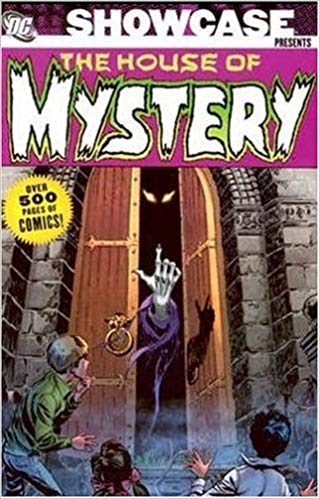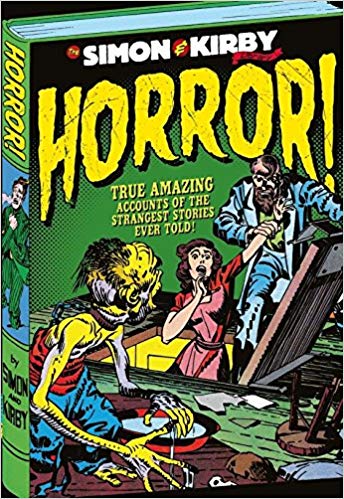
Showcase Presents the Spectre volume 1


By Gardner F. Fox, Bob Haney, Mike Friedrich, Steve Skeates, Dennis J. O’Neil, Mark Hanerfeld, Michael L. Fleisher, Len Wein, Paul Kupperberg, Mike W. Barr, Murphy Anderson, Carmine Infantino, Ross Andru & Mike Esposito, Neal Adams, Jerry Grandenetti, Jack Sparling, Bernie Wrightson, Jim Aparo, Frank Thorne, Ernie Chan, Jim Starlin, Michael R. Adams & various (DC Comics)
ISBN: 978-1-4012-3417-1 (TPB)

Created by Jerry Siegel & Bernard Baily in 1940 and debuting via a 2-part origin epic in More Fun Comics #52 and 53, The Spectre is one of the oldest characters in DC’s vast character stable. Crucially, just like Siegel’s other iconic creation, he soon began to suffer from a basic design flaw: he was just too darn powerful.

Unlike Superman however, this relentless champion of justice was already dead, so he can’t really be logically or dramatically imperilled. Of course, in those far off early days that wasn’t nearly as important as sheer spectacle: forcibly grabbing the reader’s utter attention and keeping it stoked to a fantastic fever pitch.

Starting as a virtually omnipotent phantom, the Grim Ghost evolved, over various revivals, refits and reboots into a tormented mortal soul bonded inescapably to the actual embodiment of the biblical Wrath of God.

The story is a genuinely gruesome one: police detective Jim Corrigan is callously executed by gangsters before being called back to the land of the living. Commanded to fight crime and evil by a glowing light and disembodied voice, he was indisputably the most formidable hero of the Golden Age.

He has been revamped many times, and in the 1990s was revealed to be God’s own Spirit of Vengeance wedded to a human conscience. When Corrigan was finally laid to rest, Hal (Green Lantern) Jordan and murdered Gotham City cop Crispus Allen replaced him as the mitigating conscience of the unstoppable, easily irked force of Divine Retribution…

However, the true start of that radically revitalised career began in the superhero-saturated mid-1960s when, hot on the heels of feverish fan-interest in the alternate world of the Justice Society of America and Earth-2 (where all the WWII heroes retroactively resided), DC began trying out solo revivals of 1940’s characters, as a counterpoint to such wildly successful Silver Age reconfigurations as Flash, Green Lantern, Atom and Hawkman…

This sublime and colossal Showcase selection collects and documents the almighty Man of Darkness’ return in the Swinging Sixties, his landmark reinterpretation in the horror-soaked, brutalised 1970s and even finds room for some later appearances before the character was fully de-powered and retrofitted for the post-Crisis on Infinite Earths DC Universe.

As such, this mammoth monochrome tome (624 peril-packed pages!) contains Showcase #60, 61 and 64; The Spectre #1-10; team-up tales from The Brave and the Bold #72, 75, 116, 180 & 199 and DC Comics Presents #29; the lead strips from Adventure Comics #431-440 and one last hurrah from horror-anthology Ghosts #97-99, cumulatively encompassing the end of 1965 to the middle of 1983.

DC had tried a number of Earth-2 team-iterations (Starman/Black Canary – with Wildcat – in The Brave and the Bold #61-62, whilst Showcase #55 & 56 spotlighted Doctor Fate & Hourman with a cameo from the original Green Lantern), but inspirational editor Julie Schwartz and scripter Gardner F. Fox only finally achieved their ambition to launch a Golden Age hero into his own title with the revival of the Ghostly Guardian in Showcase. It was hard going and perhaps ultimately benefited from a growing general public interest in supernatural stories…

After three full length appearances and many guest-shots, The Spectre won his own solo series at the end of 1967, just as the super-hero craze went into a steep decline, but arguably Showcase #60 (January/February 1966) anticipated the rise of supernatural comics by re-introducing Corrigan and his phantom passenger in ‘War That Shook the Universe’ by Earth-2 team supreme Fox & illustrator Murphy Anderson.

This spectacular saga reveals why the Heroic Haunt had vanished two decades previously, leaving the fundamentally human Corrigan to pursue his war against evil on merely mortal terms – until a chance encounter with a psychic investigator frees the spirit buried deep within him.

A diligent search reveals that, 20 years previously, a supernal astral invader broke into the Earth plane and possessed a mortal, but was so inimical to our laws of reality that both it and the Grim Ghost were locked into their meat shells – until now…

Thus began a truly spectre-acular (feel free to groan, but that’s what they called it back then) clash with the devilish Azmodus that spans all creation and blew the minds of us gobsmacked kids…

Issue #61 (March/April) upped the ante when the even-more satanic Shathan the Eternal subsequently insinuates himself into our realm from ‘Beyond the Sinister Barrier’, stealing mortal men’s shadows until he is powerful enough to conquer the physical universe. This time The Spectre treats us to an exploration of the universe’s creation before narrowly defeating the source of all evil…

The Sentinel Spirit re-manifested in Showcase #64 (September/October 1966) for a marginally more mundane but no less thrilling adventure when ‘The Ghost of Ace Chance’ takes up residence in Jim’s body. By this time, it was established that ghosts need a mortal anchor to recharge their ectoplasmic “batteries”, and this unscrupulous crooked gambler is determined to inhabit the best frame available…

The try-out run concluded, the editors sat back and waited for sales figures to dictate the next move. When they proved inconclusive Schwartz orchestrated a concerted publicity campaign to further promote Earth-2’s Ethereal Adventurer.

The Brave and the Bold #72 (June/July 1967) saw the Spectre clash with Earth-1’s Scarlet Speedster in ‘Phantom Flash, Cosmic Traitor’ (by Bob Haney, Carmine Infantino & Charles “Chuck” Cuidera). This sinister saga sees the mortal meteor arcanely transformed into a sinister spirit-force and power-focus for unquiet American aviator Luther Jarvis who returns from his death in 1918 to wreak vengeance on the survivors of his squadron – until the Spectre intervenes…

Due to the vagaries of comicbook scheduling, Brave and the Bold #75 (December 1967/January 1968) appeared at around the same time as The Spectre #1, although the latter had a cover-date of November/December 1967. In the Batman team-up tale – scripted by Haney and drawn by Ross Andru & Mike Esposito – Ghostly Guardian joins Dark Knight to free Gotham City’s Chinatown from ‘The Grasp of Shahn-Zi!’: an ancient oriental sorcerer determined to prolong his reign of terror at the expense of an entire community and through the sacrifice of an innocent child, after which the Astral Avenger finally, simultaneously, debuted in his own title…

The Spectre #1 featured ‘The Sinister Lives of Captain Skull’ by Fox & Anderson, divulging how the botched assassination of American Ambassador Joseph Clanton and an experimental surgical procedure allows one of the diplomat’s earlier incarnations to seize control of his body and, armed with mysterious eldritch energies, run amok on Earth.

These “megacyclic energy” abilities enable the revenant to harm and potentially destroy the Ghostly Guardian and compel the Spectre to pursue the piratical Skull through a line of previous lives until he can find their source and purge the peril from all time and space…

With issue #2 (January/February 1968) artistic iconoclast Neal Adams came aboard for the Fox-scripted mystery ‘Die Spectre – Again’ wherein crooked magician Dirk Rawley accidentally manifests his etheric self and severely tests both Corrigan and his phantom lodger as they seek to end the double-menace’s string of crimes, mundane and magical. At this time, the first inklings of a distinct separation and individual identities began. The two halves of the formerly sole soul of Corrigan were beginning to disagree and even squabble…

Neophyte scripter Mike Friedrich joined Adams for #3’s ‘Menace of the Mystic Mastermind’ wherein pugilistic paragon Wildcat faces the inevitable prospect of age and infirmity even as an inconceivable force from another universe possesses petty thug Sad Jack Dold, turning him into a nigh-unstoppable force of cosmic chaos…

‘Stop that Kid… Before He Wrecks the World’ was written & illustrated by Adams with a similar trans-universal malignity deliberately empowering a young boy as a prelude to its ultimate conquest, whilst #5’s ‘The Spectre Means Death?’ (all Adams again) appears to show the Ghostly Guardian transformed into a pariah and deadly menace to society, until Jim’s investigations uncover the emotion-controlling Psycho Pirate at the root of the Heroic Haunt’s problems…

Despite all the incredible talent and effort lavished upon it, The Spectre simply wasn’t finding a big enough audience. Adams left for straight superhero glory elsewhere and a hint of changing tastes came as veteran illustrator of horror comics Jerry Grandenetti came aboard.

Issue #6 (September/October 1968) saw his eccentric, manic cartooning adding raw wildness to the returning Fox’s moody thriller ‘Pilgrims of Peril!’ Murphy Anderson also re-enlisted, applying a solid ink grounding to the story of a sinister quartet of phantom Puritans who invade the slums of Gateway City, driving out the poor and hopeless as they hunt long-lost arcane treasures. These would allow demon lord Nawor of Giempo access to Earth unless The Spectre can win his unlife or death duel with the trans-dimensional horror…

As the back of issue #7 was dedicated to a solo strip starring Hourman (not included in this collection), The Spectre saga here – by Fox, Grandenetti & Anderson – was a half-length tale which followed the drastic steps necessary to convince the soul of bank-robber Frankie Barron to move on. Since he was killed during a heist, the astral form of aversion therapy used to cure ‘The Ghost That Haunted Money!’ proves not only ectoplasmically effective but outrageously entertaining…

Issue #8 (January/February 1969) was scripted by Steve Skeates and began a last-ditch and obviously desperate attempt to turn The Spectre into something the new wave of anthology horror readers would buy.

As a twisted, time-lost apprentice wizard struggles to return to Earth after murdering his master and stealing cosmic might from the void, on our mundane plane an exhausted Ghostly Guardian neglects his duties and is taken to task by his celestial creator.

As a reminder of his error, the Penitent Phantasm is burdened by a fluctuating weakness – which would change without warning – to keep him honest and earnest. What a moment for the desperate disciple Narkran to return then; determined to secure his elevated god-like existence by securing ‘The Parchment of Power Perilous!’…

The Spectre #9 completed the transition, opening with an untitled short from Friedrich (illustrated by Grandenetti & Bill Draut) which sees the Man of Darkness again overstep his bounds by executing a criminal. This prompts Corrigan to refuse the weary wraith the shelter of his reinvigorating form and when the Grim Ghost then assaults his own host form, the Heavenly Voice punishes the spirit by chaining him to the dreadful Journal of Judgment: demanding he atone by investigating the lives inscribed therein in a trial designed to teach him again the value of mercy…

The now anthologised issue continued with ‘Abraca-Doom’ (Dennis J. O’Neil & Bernie Wrightson) as The Spectre attempts to stop a greedy carnival conjurer signing a contract with the Devil, whilst ‘Shadow Show’ – by Mark Hanerfeld & Jack Sparling – details the fate of a cheap mugger who thinks he can outrun the consequences of a capital crime…

The next issue gave up the ghost. The Spectre folded with #10 (May/June 1969), but not before a quartet of tantalising tales by – writer or writers unknown – shows what might have been…

‘Footsteps of Disaster’ with art from Grandenetti & George Roussos, follows a man from cradle to early grave, revealing the true wages of sin, whilst ‘Hit and Run’ (probably drawn by Ralph Reese) proves again that the Spirit of Judgment is not infallible and even human scum might be redeemed…

‘How Much Can a Guy Take?’ (Sparling) offers salvation to a shoeshine boy pushed almost too far by an arrogant mobster before the series closed with a cunning murder mystery involving what appeared to be a killer ventriloquist’s doll in the Grandenetti & Roussos limned ‘Will the Real Killer Please Rise?’

With that the Astral Avenger returned to comicbook limbo for nearly half a decade until changing tastes and another liberalising of the Comics Code saw him arise as lead feature in Adventure Comics #431 (January/February 1974) for a shocking run of macabre, ultra-violent tales from Michael L. Fleisher & Jim Aparo.

‘The Wrath of… The Spectre’ offered a far more stark, unforgiving take on the Sentinel Spirit; reflecting the increasingly violent tone of the times. Here, a gang of murderous thieves slaughter the crew of a security truck and are tracked down by a harsh, uncompromising police lieutenant named Corrigan. When the bandits are exposed, the cop unleashes a horrific green and white apparition from his body which inflicts ghastly punishments that horrendously fit their crimes…

With art continuity (and no, I’m not sure what that means either) from Russell Carley, the draconian fables continue in #432 as in ‘The Anguish of… The Spectre’ assassins murder millionaire Adrian Sterling and Corrigan meets the victim’s daughter Gwen. Although the now-infallible Wrathful Wraith soon exposes and excised the culprits, the dead detective has to reveal his true nature to the grieving daughter. Moreover, Corrigan begins to feel the stirring of impossible, unattainable yearnings…

Adventure #433 exposed ‘The Swami and… The Spectre’ as Gwen seeks spiritual guidance from a ruthless charlatan who promptly pays an appalling price when he finally encounters an actual ghost, whilst in #434 ‘The Nightmare Dummies and… The Spectre’ (with additional pencils by the great Frank Thorne), a plague of department store mannequins run wild in a killing spree at the behest of a crazed artisan who believes in magic – but can’t imagine the cost of his dabbling…

Issue #435 introduces journalist Earl Crawford who tracks the ghastly fallout of the vengeful spirit’s anti-crime campaign as ‘The Man Who Stalked The Spectre!’ Of course, once he sees the ghost in grisly action, Crawford realises the impossibility of publishing this scoop…

Adventure #436 finds Crawford still trying to sell his story as ‘The Gasmen and… The Spectre’ sets the Spectral Slaughterman on the trail of a gang who kill everyone at a car show as a simple demonstration of intent before blackmailing the city. Their gorily inescapable fate only puts Crawford closer to exposing Corrigan, after which, in #437’s ‘The Human Bombs and… The Spectre’ (with pencils from Ernie Chan & Aparo inks) a kidnapper abducts prominent persons – including Gwen – to further a merciless mad scheme of amassing untold wealth… until the Astral Avenger ended the depredations forever…

In #438, ‘The Spectre Haunts the Museum of Fear’ (Chan & Aparo again) sees a crazed taxidermist turning people into unique dioramas until the Grim Ghost intervenes, but the end was in sight again for the Savage Shade. Issue #439’s ‘The Voice that Doomed… The Spectre’ (all Aparo) turns the wheel of death full circle, as the Heavenly Presence who created him allows Corrigan to fully live again so that he can marry Gwen. Sadly, it is only to have the joyous hero succumb to ‘The Second Death of The… Spectre’ (#440, July/August 1975) and tragically resume his never-ending mission…

This milestone serial set a stunning new tone and style for the Ghostly Guardian which has informed each iteration ever since…

From midway through that run, Brave and the Bold #116 provides another continuity-coshing supernatural team-up with Batman – a far less graphically violent struggle against the ‘Grasp of the Killer Cult’ (Haney & Aparo). When Kali-worshipping Thugs from India seemingly target survivors of a WWII American Army Engineer unit, Detective Corrigan and the Dark Knight clash on both the method and motives of the mysterious murderers…

DC Comics Presents #29 (January 1981, by Len Wein, Jim Starlin & Romeo Tanghal) revealed what happened after Supergirl is knocked unconscious during a cataclysmic battle and sent hurtling through dimensions measureless to man. When her cousin tries to follow, the Ghostly Guardian is dispatched to stop the Metropolis Marvel from transgressing ‘Where No Superman Has Gone Before’…

By the early 1980s, the horror boom had again exhausted itself and DC’s anthology comics were disappearing. As part of the effort to keep them alive, Ghosts featured a 3-part serial starring “Ghost-Breaker” and inveterate sceptic Dr. Terry 13 who at last encounters ‘The Spectre’ in issue #97 (February 1981, by Paul Kupperberg, Michael R. Adams & Tex Blaisdell), wherein terrorists invade a high society séance and are summarily dispatched by the inhuman poetic justice of the freshly-manifested Astral Avenger…

Now determined to destroy the monstrous revenant vigilante, Dr. 13 returns in #98 as ‘The Haunted House and The Spectre’ finds the Ghost-Breaker interviewing Earl Crawford and subsequently discovering the long-sought killer of his own father. Before 13 can act however, the Spectre appears and steals his justifiable retribution from the aggrieved psychic investigator…

The drama closed in Ghosts #99 as ‘Death… and The Spectre’ (inked by Tony DeZuñiga) sees scientist and spirit locked in one final furious confrontation.

This staggering compendium of supernatural thrillers concludes with two more team-up classics from Brave and the Bold, beginning with ‘The Scepter of the Dragon God’ by Fleisher & Aparo (from #180, November 1980). Although Chinese wizard Wa’an-Zen steals enough mystic artefacts to conquer Earth and destroy The Spectre, he gravely underestimates the skill and bravery of merely mortal Batman, whilst in #199 (June 1983) ‘The Body-napping of Jim Corrigan’ (Mike W. Barr, Andru & Rick Hoberg), finds the ethereal avenger baffled by the abduction and disappearance of his mortal host. Even though he cannot trace his own body, the Spectre knows where the World’s Greatest Detective hangs out…

Ranging from fabulously fantastical to darkly, violently enthralling, these comic masterpieces perfectly encapsulate the way superheroes changed over a brief 20-year span, but remain throughout some of the most beguiling and exciting tales of DC’s near-80 years of existence. If you love comicbooks you’d be crazy to ignore this one…
© 1966, 1967, 1968, 1969, 1974, 1975, 1981, 1983, 2012 DC Comics. All Rights Reserved.
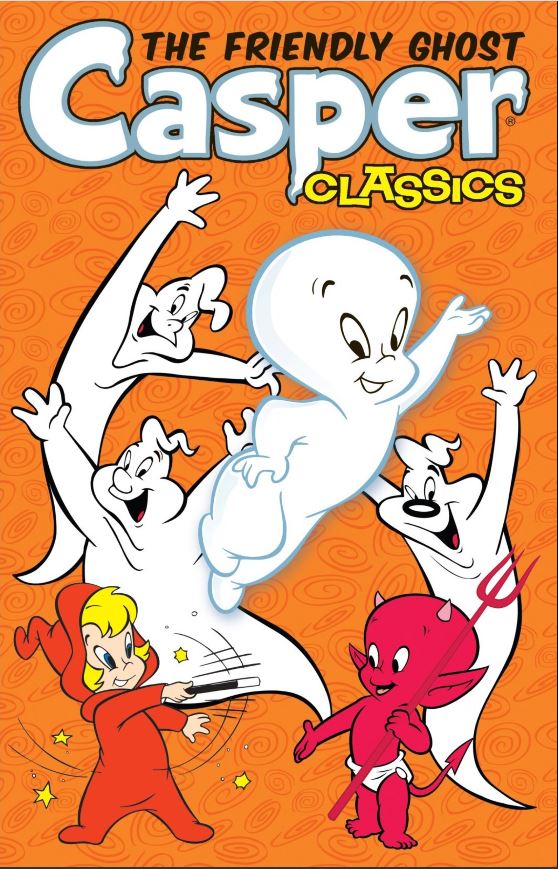
Orient Gateway


By Vittorio Giardino (Catalan Communications/NBM)
ISBN: 978-0-87416-041-3 (Catalan PB Album) 978-1-56163-184-1 (NBM PB Album)
Born on Christmas Eve 1946, Vittorio Giardino was an electrician who switched careers at age 30. He initially worked for a number of comics magazines before his first collection – Pax Romana – was released in 1978. Giardino has toiled, slowly but consistently, on both feature characters such as the detective Sam Pezzo, saucy Winsor McKay homage Little Ego and cold-war drama Jonas Fin, as well as general fiction tales, producing over 43 albums to date.

Way back in 1982 as the Cold War tottered to an end, he began the tale of a quiet, bearded fellow recalled by the Deuxieme Bureau (the French Secret Service) to investigate the slaughter of almost every agent in the cosmopolitan paradise of Budapest. The series ran in four parts in the magazine Orient Express before being collected as Rhapsodie Hongroise. It was Giardino’s 13th book and in no way unlucky for him. In it, reluctant yet competent spy Max Fridman (transliterated into Max Friedman for the English-speaking world), was dragged back into the “Great Game” in the years of uneasy peace just before the outbreak of World War II…

Within three years he returned to the subtly addictive pre-war drama with follow-up La Porta d’Oriente – Orient Gateway to you and me.

Summer 1938: All the espionage agencies in the world know war is coming and nothing can stop it. Frantically jockeying for the most favourable position, they’re all seeking every advantage for when the balloon goes up. Soviet engineer Mr. Stern has become just such a preferred asset of too many rival organisations, so he runs, losing himself in the teeming, mysterious city of Istanbul.

Once again diffident, canny operative Max is drawn into the murky miasma of spycraft, but now, beside exotic, bewitching Magda Witnitz, is he the only one to ask why so many dangerous people want to acquire Stern?

And why are they so willing to kill for him?

Subtle, entrancing and magnificently illustrated, this is an entrancing, slow-boil thriller with all the beguiling nostalgic panache of Casablanca and labyrinthine twists and turns of Tinker, Tailor, Soldier, Spy which no fan of the genre, let alone comics aficionado, can afford to miss.

Over the course of a decade, the masterful Italian graphic novelist crafted two further individual tales and in 1999 added a stunning triptych of albums. No Pasarán! detailed a key moment during the conflict in Republican Spain and dying days of the Civil War, revealing many clues into the life of the unassuming antihero. Two more volumes were added to the canon in 2002 and 2008, and I’m declaring they are all now long past due to be revived and revisited…

Giardino is a smart and confident writer who makes tone and nuance carry a tale and his art – a more representational derivation of Hergé’s ligne claire (clean line) – makes the lovingly rendered locations as much a character as any of the stylish operatives in a dark, doomed world on the brink of holocaust.

Although still largely an agent unknown in the English-speaking world, Max Friedman is one of espionage literature’s greatest characters, and Giardino’s work is like honey for the eyes and mind. This is another graphic novel every fan of comics or the Intelligence Game should know.
© 1986 Vittorio Giardino. All rights reserved.

Defenders Marvel Masterworks volume 3


By Len Wein, Steve Gerber, Chris Claremont, Jim Starlin, Sal Buscema, Vince Colletta, Gil Kane, Dan Adkins, Don Newton, Don Heck, George Tuska & various (Marvel)
ISBN: 978-0-7851-5961-2 (HB)

The Defenders were the last of the big star-name conglomerate super-groups, and would eventually number amongst their membership almost every hero – and some few villains – in the Marvel Universe. No real surprise there, since the initial line-up was composed of the company’s major league bad-boys: misunderstood and mad, outcast and bad and so often actually dangerous to know.

The genesis of the team derived from their status as publicly distrusted “villains”, and they never achieved the “in-continuity” fame or acceptance of other teams, but that simply seemed to leave the creators open to taking a few more chances and playing the occasional narrative wild card.

This third titanic hardcover/eBook Masterworks collection assembles a veritable host of Fights ‘n’ Tights wonders from a large list of sources: Defenders #17-21, Giant Sized Defenders #2-4 and Marvel Two-in-One #6-7, cumulatively encompassing cover-dates October 1974 to April 1975. The action commences after team originator Roy Thomas shares recollections of his time as Editor-in-Chief of Marvel and as the series began to find its singularly unique voice and tone…

The action opens with a supernatural thriller from Giant Sized Defenders #2 (October 1974), scripted by Len Wein and fabulously limned by master craftsman Gil Kane and rising star inker Klaus Janson. ‘H… as in Hulk… Hell… and Holocaust’ pits the always-embattled Jade Giant against sinister cult the Sons of Satanish and their dead leader Asmodeus before the Defenders (core-group Doctor Stephen Strange, Valkyrie and reformed bad-boy Nighthawk) must perforce call on Daimon Hellstrom, Son of Satan, for some highly specialised assistance…

In Defenders #17 the heroes set up housekeeping in a converted Long Island Riding Stables, courtesy of Nighthawk’s civilian alter ego Kyle Richmond just as displaced Asgardian soul Valkyrie leaves to seek out the truth about the human body she currently inhabits.

The main plot of ‘Power Play’ (by Wein, Sal Buscema & Dan Green) sees the remaining heroes engage with and then enlist the aid of Hero for Hire/Power Man Luke Cage, as super strong thugs the Wrecking Crew topple a number of Richmond’s New York’s buildings hunting for a hidden super-weapon. The spectacular ‘Rampage!‘ reveals their object is a pocket gamma bomb, before the furious finale (Chris Claremont, Wein, Buscema & Janson) sets everybody frantically ferreting out the location of a deadly ‘Doomball!’ whisked away by some foolish bystander…

Immediately afterwards Strange, his disciple Clea and Fantastic Four lynchpin The Thing encounter a disharmonious cosmic challenge in Marvel Two-In-One #6’s ‘Death-Song of Destiny’ (by Steve Gerber, George Tuska & Mike Esposito) that concludes in MTIO #7 with ‘Name That Doom!’ (Sal Buscema pencils) wherein Valkyrie joins the melee just in time to cross swords with the egregious Asgardian exiles Enchantress and Executioner who are beyond a cosmic scheme to reorder the universe…

The aftermath of that eldritch encounter spills over into Defenders #20 as Gerber came aboard as regular scripter, beginning a truly groundbreaking run of stories. ‘The Woman She Was…’ (art by Sal B & Vince Colletta) starts unravelling the torturous backstory of Valkyrie’s unwitting human host Barbara Norris during a breathtakingly bombastic battle that also reanimated the diabolical threat of the Undying Ones. Late arriving, Strange and Nighthawk almost perish at the hands of the demons’ human worshippers…

Steve Gerber was a uniquely gifted writer who combined a deep love of Marvel’s continuity minutiae with irrepressible wit, dark introspection and measured imagination, all leavened with enticing and surreality. His stories were always at the extreme edge of the company’s intellectual canon and never failed to deliver surprise and satisfaction.

In Defenders #21, he began a long and epically peculiar saga with ‘Enter: The Headman!’ (illustrated by Buscema & Sal Trapani) wherein a trio of thematically linked scientists and savants, all originating in Marvel’s pre-superhero fantasy anthologies, opened their insidious campaign of conquest and vengeance by driving New York city temporarily insane…

Before the next chapter however, a brace of extended sagas play chronological catch-up here: firstly ‘Games Godlings Play!’ from Giant-Size Defenders #3 (written by Gerber, Jim Starlin & Wein with art from Starlin, Dan Adkins, Don Newton & Jim Mooney), sightless swashbuckler Daredevil joins Strange, Valkyrie, and Sub-Mariner Prince Namor to save the Earth from Elder of the Universe The Grandmaster: a cosmic games-player whose obsession with gladiatorial combats pits the heroes against intergalactic menaces from infinity… and beyond…

Then follows a more down-to-Earth tale as sometime-Avenger Yellowjacket pops in to help crush insane criminal genius Egghead and Nighthawk’s old gang the Squadron Sinister on ‘Too Cold a Night for Dying!’ (Giant Sized Defenders #4, by Gerber, Don Heck & Colletta) before this compendium concludes with the Atlas Era short tales that originally introduced Gorilla Man Arthur Nagan, human horror Dr. Jerold Morgan and Chondu the Mystic who comprise the heinous Headmen…

Nagan debuted in in ‘It Walks Erect!’ by Paul S. Newman & Bob Powell (Mystery Tales #21, September 1954): a driven obsessive surgeon performing appalling transplant research on gorillas who ultimately take an unholy revenge upon him, whilst biologist Morgan’s matter compression experiments terrified – but saved – the city in ‘Prisoner of the Fantastic Fog’ by an unknown writer and Angelo Torres from World of Fantasy #11, April 1958.

Tales of Suspense #9 (May 1960) then revealed how stage magician Chondu was far more than he seemed in mini-thriller by Stan Lee & Larry Lieber, wonderfully rendered by the miraculous Doug Wildey.

The vignettes had all been reprinted in horror anthology Weird Wonder Tales #7 (December 1974) and the cover of that issue opens a selection of added extras which also include house ads and creator biographies.

For the longest time The Defenders was the best and weirdest superhero comicbook in the business, and this bitty, unwieldy collection was where it all really kicked off. The next volume would see the inspirational unconventionality reach stellar heights…

If you love superheroes but crave something just a little different these yarns are for you… and the best is still to come.
© 1974, 1975, 2016 Marvel Characters, Inc. All rights reserved.

The Calvin and Hobbes Lazy Sunday Book


By Bill Watterson (Andrews McMeel)
ISBN: 978-0-83621-852-7 (TPB)

Almost any event big or small is best experienced through the eyes of a child – and better yet if he’s a fictional waif controlled by the whimsical sensibilities of a comic strip genius like Bill Watterson.

Calvin is the child in us all; Hobbes is the sardonic unleashed beast of our Aspirations; no, wait… Calvin is this little boy, an only child with a big imagination and a stuffed Tiger that is his common sense and moral sounding board…

No; Calvin is just a lonely little boy and Hobbes talks only to him. That’s all you need or want.

A best-selling strip and critical hit for ten years (running from November 18th 1985 through December 31st 1995), Calvin and Hobbes came and went like a comet and we’re all now the poorer for its passing. The strip redefined depictions of the “Eyes of Wonder” which children all possess, and made us adults laugh, and so often cry too: its influence shaping a generation of up-and-coming cartoonists and comicbook creators.

We all wanted a childhood like that kid’s; bullies, weird teachers, obnoxious little girls and all. At least we could – and still do – visit…

The Daily and Sundays appeared in more than 2,400 newspapers all over the planet and from 2010 reruns have featured in over 50 countries. There have been 18 unmissable collections (selling over 45,000,000 copies thus far), including a fabulous complete boxed set edition in both soft and hard cover formats. I gloat over my hardback set almost every day.

Unlike most of his fellows, Watterson shunned the spotlight and the merchandising Babylon that follows a comic strip mega-hit and dedicated all his spirit and energies into producing one of the greatest treatments on childhood and the twin and inevitably converging worlds of fantasy and reality anywhere in fiction. All purists need to know is that the creator cites unique sole-auteur strips Pogo, Krazy Kat and Peanuts as his major influences and all mysteries are solved…

Calvin is a hyper-active little boy growing up in a suburban middle-American Everytown. There’s a city nearby, with museums and such, and a little bit of wooded wilderness at the bottom of the garden. The kid’s smart, academically uninspired and happy in his own world. He’s you and me. His best friend and companion is stuffed tiger Hobbes, who – as I might have already mentioned – may or may not be alive. He’s certainly far smarter and more ethically evolved than his owner…

And that’s all the help you’re getting. If you know the strip you already love it, and if you don’t you won’t appreciate my destroying the joys of discovery for you. This is beautiful, charming, clever, intoxicating and addictive tale-telling, blending wonder and laughter, socially responsible and wildly funny.

After a miraculous decade, at the top of his game Watterson retired the strip and himself, and though I bitterly resent it, and miss it still, I suppose it’s best to go out on a peak rather than fade away by degrees. I certainly respect and admire his dedication and principles.

This slim tome collects some of the earliest full-colour Sunday pages from the strip, and includes a new 10-page adventure painted in staggeringly lovely watercolours. Imaginative, dazzling, unforgettably captivating, these are some of the best of Watterson’s work. You should have them in your house.

The entire Calvin and Hobbes canon is still fully available in solo volumes and the aforementioned wrist-cracking box set but not, sadly, in a digital edition yet. You can however, enjoy digital dollops of this graphic milestone if so inclined by going to gocomics.com/calvinandhobbes. They are also available online through the Andrews McMeel Uclick platform, so there’s no reason for you not to make this brilliant example of our art form a permanent part of your life. And you’ll thank me for it, too…
© 1989 Universal Press Syndicate. All Rights Reserved.
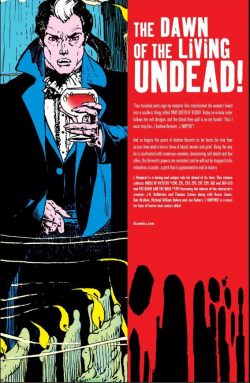
Yakari and Great Eagle (volume 1)


By Derib & Job, translated by Erica Jeffrey (Cinebook)
ISBN: 978-1-90546-004-5 (PB Album)

Westerns of every sort have always captivated consumers in Europe and none more so than the assorted French-speaking sections who also avidly devour comics. Historically, we Brits have also been big fans of sagebrush sagas and the plight of the “noble savage”…

In 1964, French-Swiss journalist André Jobin founded children’s magazine Le Crapaud à lunettes and began writing stories for it under the pseudonym Job. Three years later he hired young fellow French-Swiss artist Claude de Ribaupierre, who had begun his own career as an assistant at Studio Peyo, (home of Les Schtroumpfs/The Smurfs) where the promising lad had worked on a number of Smurfs strips for venerable weekly Le Journal de Spirou.

As “Derib”, Claude co-created with Job Adventures of the Owl Pythagore for Le Crapaud à lunettes.

Two years later they struck pure glittering gold with their next collaboration.

Launching in 1969, Yakari told the compassionate, whimsical tale of a young Oglala Lakota boy on the Great Plains; set sometime after the introduction of horses by the Conquistadores but before the coming of the modern White Man.

Delib, equally adept in both the enticing, comically dynamic “Marcinelle” cartoon big-foot style and a devastatingly evocative meta-realistic mannerism, went on to become one of the Continent’s most prolific, celebrated, honoured and beloved artists – mostly of western-themed tales with astounding and magnificent geographical backdrops and landscapes – and Yakari is considered by many to be the feature that catapulted him to mega-stardom.

It’s a crime that such groundbreaking strips as Celui-qui-est-né-deux-fois, Jo (the first comic ever published dealing with AIDS), Pour toi, Sandra and La Grande Saga Indienne) haven’t been translated into English yet, but we still patiently wait in hope and anticipation…

The series has reached 39 albums: a testament to the strip’s evergreen vitality and the brilliance of its creators, although Job has finally relinquished scripting to French writer Joris Chamblain (Les Carnets de Cerise) for the upcoming 40th tome….

Overflowing with gentle whimsy and heady compassion, young Yakari enjoys a largely bucolic existence: at one with nature and generally free from privation or strife. For the sake of our delectation, however, the ever-changing seasons are punctuated with the odd crisis, generally resolved without fuss, fame or fanfare by a little lad who is smart, brave… and can – thanks to the boon of his totem guide who he meets for the first time in the tale under review here – communicate with all animals…

The eponymous first collected edition was released in 1973 and the strip rapidly rose to huge prominence. In 1978 it began running in Le Journal de Tintin, spawning two animated TV series (1983 and 2005), the usual merchandising spin-offs and monumental global sales in 17 languages to date. There’s also a movie…

In 2005 that translated first volume – Yakari et le grand aigle – was released by Cinebook as part of their opening salvo in converting British audiences to the joys and magic of Euro-comics and is still readily available for you and your family to enjoy on paper or digitally.

Yakari and Great Eagle begins one quiet night on the plains whilst the little boy is deep in dreams. In that sunny ethereal world, he is walking to meet his totem spirit who greets him with a grand flourish and presents him with a huge feather enabling the child to soar like a bird. The rendezvous is tinged with joy and sadness as the sagacious raptor informs him that he will no longer come to him in dreams, but if the boy becomes as much like an eagle as possible, they will meet again in the living world…

Awake and excited, Yakari rushes about the camp trying to decide what the riddle means. Hunt like a raptor? Wear a feather-filled war-bonnet? Every eager attempt leads to disappointment and embarrassment and sleepy loafer Eye-of-Broth can’t even be bothered to wake up and share the benefit of his years of idle contemplation…

However, when young friend Rainbow loses the puma cub she is carrying, Yakari gallantly dashes after it and only quick thinking saves them both from the baby’s furious mother…

The next day Yakari asks his father Bold Gaze, but the warriors are all too busy preparing to capture a new herd of wild horses. Sneaking off into the rocky desert with older boy Buffalo Seed to watch the roundup, Yakari wonderingly observes how nimble pinto Little Thunder easily avoids all the experienced wranglers’ traps.

As the adults drive the new intake back to the encampment, Yakari follows Little Thunder high into the rocky escarpments and frees the panicked pony from a rockslide that’s pinned a hind leg.

Great Eagle appears and for this selfless act awards the boy a feather, but when Yakari returns home his father takes it from him, admiring his imagination but explaining that only those who have accomplished great deeds – for which read grown-ups – have a right to wear one. Nothing the stern but loving parent can do will change the stubborn boy’s story that a talking eagle awarded him the singular honour…

Days pass and the despondent – featherless – lad wanders alone when he is suddenly engulfed in a stampede and trapped by a brushfire. Immediately Great Eagle is there, guiding him to safety and advising him that soon his father will return the feather to him. The lad is grateful but confused. How is he ever meant to become like his totem spirit? Moreover, how will he ever find his way home from the strange region he now finds himself in?

As the tribe searches for lost Yakari, the hungry child has a close encounter with a bear; finds food by observing her cubs; falls into and subsequently escapes from a deep bear trap and narrowly escapes becoming supper for a lone wolf.

Eventually, he finds a river and rides a makeshift canoe until washed up on a shore where horses are drinking. Spotting Little Thunder, the boy tries to capture him, but the tricks and tactics Yakari has seen working for his elders are useless against the wily horse. The lad is utterly gobsmacked when Little Thunder refuses to be his captive but offers to be his friend…

With his new comrade, it’s not long before Yakari comes riding proudly home out of the wilderness astride a pony no man can tame and justifiably reclaims his honour-feather… Thus begins the gloriously gentle and big-hearted saga of the valiant little brave who can speak with animals and who enjoys a unique place in an exotic world: a 50-year parade of joyous, easygoing and inexpressibly fun adventures honouring and eulogising an iconic culture with grace, wit, wonder and especially humour.

A true masterpiece of children’s comics literature, Yakari is a series no fan should be without and here is just the place to start…
Original edition © 1973 Le Lombard/Dargaud by Derib + Job. English translation 2005 © Cinebook Ltd.

Cedric volume 6: Skating on Thin Ice


By Laudec & Cauvin with colours by Leonardo; translated by Jerome Saincantin (Cinebook)
ISBN: 978-1-84918-408-3 (PB Album)

Raoul Cauvin is one of Europe’s most successful comics scripters. Born in Antoing, Belgium in 1938, by 1960 he was working in the animation department of publishing giant Dupuis after studying the print production technique of Lithography.

Happily, he quickly discovered his true calling was writing funny stories and began a glittering, prolific career at Le Journal de Spirou.

While there he concocted (with Salvérius) the astoundingly successful Comedy-Western Bluecoats plus dozens of other long-running, award-winning series such as Sammy, Les Femmes en Blanc, Boulouloum et Guiliguili, Cupidon, Pauvre Lampil and Agent 212: cumulatively shifting more than 240 separate albums.

His collaborator on superbly sharp and witty kid-friendly family strip Cédric is Italian born, Belgium-raised Tony de Luca, who studied electro-mechanics and toiled as an industrial draughtsman until he could make his own break into bandes dessinée.

Following a few fanzine efforts in the late 1970s, as “Laudec” he landed soap-style series Les Contes de Curé-la-Fl’ûte at Spirou in 1979. He built that into a brace of extended war-time serials (L’an 40 in 1983 and Marché Noir et Bottes à Clous in 1985) whilst working his way around many of the comic’s other regular strips. In 1987, he united with Cauvin on the first Cédric shorts and from then on all was child’s play…

We have Dennis the Menace (the Americans have their own too, but he’s not the same) whilst the French-speaking world has Cédric: an adorable, lovesick rapscallion with a heart of gold and an irresistible penchant for mischief. He’s also afflicted with raging amour…

Collected albums (31 so far) of variable-length strips – ranging from a ½ page to half a dozen – began appearing in 1989, and remain amongst the most popular and best-selling in Europe, as is the animated TV show spun off from the strip.

…A little Word to the Wise: this is not a strip afraid to suspend the yoks in favour of a little suspense or near-heartbreak. Our bonny boy is almost-fatally smitten with Chen: a Chinese girl newly arrived in his class yet so very far out of his league, leading to frequent and painful confrontations and miscommunications.

Whilst the advice given by his lonely, widowed grandpa is seldom of any practical use, it can pick open scabs from the elder’s long, happy but now concluded marriage which can reduce normal humans to tears…

This sixth Cinebook translation (available in paperback album and digital formats) was continentally released in 1994 as Cédric – Comme sur des roulettes and opens with a typically chaotic school Christmas play which is anything but a ‘Holy Night, Silent Night‘, after which select parents and kids attend a downtown school carnival. Contrary to the notion that ‘Everyone’s a Winner…‘, there’s a lot of pain and resentment come close of play…

Cedric’s belief that his grandad walked with dinosaurs is painfully refuted in ‘Showing His Age’, after which a ‘Recycling Report‘ and river clean-up exhumes some report cards thought lost forever, before the diminished energy of the young and old leave mum and dad with some unexpected ‘Snuggling Time‘… but not for long…

A bone of domestic contention is the elder’s bitterly-expressed belief that his son-in-law’s career in lowly retail is not real work. However, ‘Carpet Diem‘ reveals how a young rug seller made his mark and met his true love – albeit at risk of life, limb and sanity – before Cedric and co-conspirator Freddy devise a new way to hide bad news from the teacher in ‘Hidden in Plain Sight‘…

Our boy’s constant quest to impress Chen plumb new depths when the ‘Budding Artist‘ attempts to make a clay bust of his inamorata and, unabashed by that debacle, then idiotically agrees to teach her how to skateboard in ‘Balancing Act…

When Grandpa gets sick, Cedric offers to babysit for the most selfish of motives in ‘The Labourer is Worthy of his Hire‘ and is similarly selfish in sabotaging Chen’s attempts to get fit in ‘Miss Muscle‘ but is totally outmatched when Mum gets out a crystal ball to detail his latest crimes in ‘Misfortune Teller‘…

As Chen’s birthday rolls around again, Cedric determines to win the humiliating war of gifts and ‘Put a Ring on it‘, after which Grandpa feel invisible thanks to a familial loss of ‘Listening Skills‘, even as an acrobatic new kid’s showing off turns all the female classmates’ heads. His attempts to steal back the limelight end in the usual aggrieved fashion in ‘Hanging in There…‘ before this slice of school life closes with the lad’s latest psychological ploy to lighten his egregious learning load collapsing in failure when he discovers ‘It’s All in the Delivery‘…

Sharp, rapid-paced, warmly witty yet unafraid to explore the harsher moments of life, the exploits of this painfully keen, beguilingly besotted rapscallion are a charming example of how all little boys are just the same and infinitely unique. Cedric is a superb family strip perfect for youngsters of every vintage…
© Dupuis 1994 by Cauvin & Laudec. All rights reserved. English translation © 2018 Cinebook Ltd.

Maddie Kettle – The Adventure of the Thimblewitch


By Eric Orchard (Top Shelf Productions)
ISBN: 978-1-60309-072-8 (TPB)
When this fantastic tale – the debut graphic novel of Canadian cartoonist and illustrator Eric Orchard – was released a few years ago, it created quite a stir among critics and comics fans, won a Spectrum Award and made us all hungry for more. We’re still waiting for a sequel but the power and imagination of the story hasn’t diminished one whit…

Maddy Kettle is eleven years old and used to work in her parents’ bookshop in Dustcloud Gap, but now she’s a girl with a mission. Unfortunately, that mission keeps changing on the fly…

With her pet floating Spadefoot Toad Ralph, she takes a steam train across the wild country, seeking the spider goblins who attacked their store and seeking the mysterious Thimblewitch who turned mum and dad into mole rats…

When more goblins attack the train, Maddie is lost in the desert, but soon finds new allies in cloud cartographers Harry the bear and musical raccoon Silvio. They offer her a ride in their moon-gas powered balloon, but refuse to believe her story. After all, the Thimblewitch used to be the protector of the cloudscape and these days doesn’t even use magic anymore…

After many adventures, and encounters with strange creatures such as vampire bats and unlikely warrior Splike, Maddy finally has her showdown with the Thimblewitch, only to learn a few amazing truths and set out on even more perilous quests…

Visually spectacular, hyper-imaginative and mordantly moody in the manner of Ghormenghast and the darker passages of Baum’s Oz books, this is a deliciously dark fable with a wonderfully memorable girl hero, showing that intelligence, determination, creativity, courage and a willingness to admit mistakes are also super powers.

Available in paperback and eBook formats, this is a fabulous romp no kid of any vintage could resist.
© and ™ 2014 Eric Orchard. All Rights Reserved.
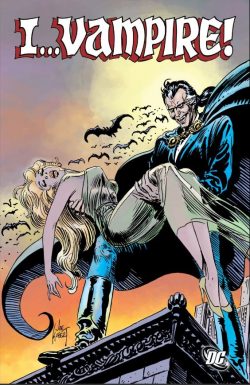
Cow Boy – a Boy and His Horse


By Nate Cosby & Chris Eliopoulos, with Roger Langridge, Brian Clevinger, Scott Wegener, Mitch Gerads, Colleen Coover, Mike Maihack & various (Archaia/Boom Entertainment)
ISBN: 978-1 936393-67-1 (HB Archaia) 978-1-60886-419-5 (PB Boom Entertainment)

The Wild West is a place of myth, mayhem, pure ideals, shining imagery and utter paradox. This superb all-ages yarn proves all that and still hides a surprise or two, so get it for your young ‘uns and read it too. It comes in hard and soft cover and even over the wireless telegraph of that there digital book stuff…

Boyd Linney is an honest bounty hunter with a unique specialty. He’s ten years old and only tracks his own kin: owlhoots, sharpers and scoundrels, every one of ’em…

Delivered with delicious irony and captivating cartoon visuals, this fistful of rootin’ tootin’ yarns comes courtesy of writer Nate Cosby (Pigs, Jim Henson’s The Storyteller) and illustrator/colourist/letterer Chris Eliopoulos (Franklin Richards, Misery Loves Sherman), kicking every trope and meme of the ancient west sharply in the ankles (Boyd’s smart, tough and ornery, but really, really short) as the kid on a mission busts his dad out of jail just to bring him to justice.

On the ride to the marshal’s office the hard-bitten kid learns his early life was even harder and more debased than he ever reckoned. It does not ease his temperament as he goes after double dealing, saloon owner Zeke Linney, but he never liked his oldest brother, anyway…

The hardest part was tracking down his Granpappy…

Augmenting the dry, witty whimsy and gritty daftness are a succession of short vignettes by invited artisans of similar mien, beginning with multi-talented Roger Langridge (The Muppet Show, Fred the Clown, Thor: the Mighty Avenger, Popeye) who briefly details the downfall of ‘The Man with No Underpants’, after which Brian Clevinger, Scott Wegener & Mitch Gerards (Atomic Robo), silently detail destructive progress in ‘The Wireless West’.

Colleen Coover (Small Favors, Banana Sunday, X-Men First Class, Jim Henson’s The Storyteller) outlines a portentous proposal in ‘Yellow Rose & Black Billy’ before Mike Maihack (Cleopatra in Space) reveals another day in the explosive life of one of the oddest pairings in gunfighting annals, concluding that ‘A Penguin Never Misses’ before the sagebrush homage halts with a terse prose epigram by Cosby – ‘Boyd’s Wagon: A Cow Boy Short Story’…

Hugely enjoyable and profoundly disrespectful, this western delight is a supreme treat for aficionados of the timeless genre and anybody deeply in need of a hearty horse laugh…
Cow Boy is ™ and © 2012 Nate Cosby and Chris Eliopoulos. All rights reserved.

Flember – the Secret Book (Advance galley proof copy)


By Jaimie Smart (David Fickling Books)
ISBN: 978-1-910989-46-3 (PB Illustrated novel)

There are precious few perks in the high stakes, cut & thrust world of writing about graphic novels and books, but one is getting to see great stories before you all do and then acting all smugly know-it-all and blasé about how good they are, as if I’m in with the In Crowd.

This review of Flember is based on a proof copy and I’ll probably review the proper book too when it comes out in Early October. It’s that good…

Unlike writer/artist Jamie Smart’s previous outings (Fish Head Steve!, Space Raoul, Bunny vs. Monkey, Looshkin – the Adventures of the Maddest Cat in the World!!, Corporate Skull and bunches of brilliant strips for The Beano, Dandy and others), this is an illustrated novel, not comics strips, but that only means he’s really good at the wordy stuff too, and even so his dynamic cartoons, diagrams and maps are lavished all over the text and act as an integral part of the storytelling.

Here’s a little digression that might assuage any confusions I’ve inadvertently caused…

The old demarcations – whether in format or content – between comics and books are all but gone these days but once the items of printing were reckoned as different as chalk and chuck wagons.

From the pre-print era of illustrated manuscripts, books always possessed a capacity (time, manpower and budgets permitting) to include images in the text. As the book trade evolved, pictures were generally phased out of cheaper, mass-market editions because they required costly, time-consuming extra effort by skilled technicians. Most artists and illustrators wanted payment for their efforts too, so volumes with pictures were regarded as extra special, most often crafted for children, students or aficionados of textbooks…

Comics strips grew out of cartoon images, beginning as static illustrations accompanied by blocks of printed text before gradually developing into pictorial sequences with narration, dialogue and sound effects incorporated into the actual design. Print procedures and physical strictures of manual typesetting often dictated that pictures (printed on the pages or added as separate plates) frequently appeared nowhere near the snippets of text they illumined).

These days digital print processes are speedy, efficient and flexible, and many creative bright sparks have realised that they can combine all these tangential disciplines into a potent synthesis.

Gosh, wasn’t that lecture dull?

What I’m saying is that these days, the immediacy of comics, the enchantment of illustrated images, the power of well-designed infographics and the mesmeric tone and mood of well-written prose can all be employed simultaneously to create tales of overwhelming entertainment. Flember – The Secret Book does it with aplomb, imagination, dexterity and sundry other fruit and veg you’ve never heard of. That’s an inside joke until you read the book…

But what’s it about, Win?

I’m giving little away but suffice to say that somewhere far away the island of Flember houses a rather rural and backwards facing community who live in a little walled village called Eden. The citizens are an odd bunch, set in the old traditional ways and they don’t particularly like inventors anymore.

Young Dev Everdew doesn’t really fit in. His brother is a snarky would-be leader of the local Guild and Mum doesn’t like to cause a fuss. Dad used to be Mayor but he’s gone now…

Life on the island depends on a seemingly-mystical force called Flember: an energising life force that animates the trees, living creatures and crops and even people. Did I mention that Dev’s addicted to inventing? He is, and all his contraptions always go wrong and cause the fuss previously mentioned.

The boy can’t stop himself, though, and just knows his devices can make life better for everybody. Despite the pleadings, help and advice of his young pals, Dev keeps making things and accidentally hurting people, but the situation gets completely out of hand after he builds a giant bear that absorbs all the Flember and comes shockingly alive. Sadly, that puts the little genius on the trail of a colossal secret underpinning everything and teaches him the consequences of rash actions…

Fast-paced, astoundingly inventive, raucously hilarious, deeply moving even while sagely exploring how carefree childishness grows into empathy and responsibility, this is a marvellous romp and an ideal example of words and pictures acting in harmony… almost like a well-oiled machine.

Just to be clear here though; never oil books or any digital reading device, ok? Just use them to acquaint yourself with tales as good as this one…
Text and illustrations © Jamie Smart 2019. All Rights Reserved.

Flember – The Secret Book is scheduled for release on October 3rd 2019 and is available for pre-order now. It’s a perfect item if you’re already stuck for options about Great Big Gift-Giving Season…

Quick & Flupke: Fasten Your Seatbelts


By Hergé, translated by David Radzinowicz (Egmont UK)
ISBN: 978-1-4052-4742-9 (PB Album)

Georges Prosper Remi – known to all as Hergé – created a genuine masterpiece of graphic literature with his tales of a plucky boy reporter and his entourage of iconic associates. Singly, and later with assistants including Edgar P. Jacobs, Bob de Moor and other supreme stylists of the select Hergé Studio, he crafted 23 splendid volumes (originally produced in brief instalments for newspaper periodicals) which have since grown beyond their popular culture roots and attained the status of High Art.

Globally renowned for these magnificent Tintin adventures, Hergé also did much to return comics to the arena of mass entertainment, a position largely lost after the advent of television, video-recording and computer games.

However, the bold boy and his opinionated dog were by no means his only creation. The author was a prodigious jobbing cartoonist in the years before the junior journalist finally assured him immortality and he generated a minor pantheon of other topical strips and features such as Tim the Squirrel in the Far West, The Amiable Mr. Mops, Tom and Millie and Popol Out West.

Among the best of the rest were the tales of Jo and Zette Legrand and their chimpanzee Jocko in much the same wholesome action vein as Tintinand the episodic, all-ages shenanigans of a pair of mischievous ragamuffins in pre-WWII Belgium.

In 2005 Egmont translated three escapades of Jo, Zette and Jocko into English (although there are more just sitting out there, all foreign and unreadable by potential fans too lazy to learn French or any of a dozen other civilised languages…) so in 2009 the publisher tried again with two collections of the Master’s second most successful creation: Quick et Flupke, gamins de Bruxelles.

These rambunctiously subversive, trouble-making working-class rapscallions and scallywags were precursors and thematic contemporaries of such beloved British boy acts as The Bash Street Kids, Winker Watson, Roger the Dodger et. al., and for more than a decade – January 1930 to May 1940 – rivalled the utterly irresistible Tintin in popularity and almost certainly acted as a rehearsal room for all the humorous graphic and slapstick elements which became so much a part of future Tintin tales.

Ten years ago Egmont had a brief stab at reviving the likely lads and it was only the general public’s deplorable lack of taste and good sense which stopped the kids from taking off again…

On leaving school in 1925, Hergé began working for Catholic newspaper Le XXe Siécle, falling under the influence of its Svengali-like editor Abbot Norbert Wallez. Remi produced his first strip series The Adventures of Totor for Boy Scouts of Belgium monthly magazine the following year, and by 1928 was in charge of producing the paper’s children’s weekly supplement Le Petit Vingtiéme.

He was unhappily illustrating The Adventures of Flup, Nénesse, Poussette and Cochonette, written by the staff sports reporter, when Abbot Wallez asked him to create a new adventure series. Perhaps a young reporter who would travel the world, doing good whilst displaying solid Catholic values and virtues?

Having recently discovered the word balloon in imported newspaper strips, Remi decided to incorporate the innovation into his own work. He created a strip both modern and action-packed – and heavily anti-communist. From January 10th 1929, weekly episodes of Tintin in the Land of the Soviets appeared in Le Petit Vingtiéme, running until May 8th 1930.

Around this time the cartoonist also began crafting weekly 2-page gag strips starring a pair of working-class rascals on the streets of Brussels. They played pranks, got into good-natured trouble and even ventured into the heady realms of slapstick and surrealism: the sort of antics any reader of Dennis the Menace (ours, not the Americans’) would find fascinatingly familiar.

Originally seen in black-&-white in Le Petit Vingtiéme, the lads larked about for over a decade until the war and mounting pressures of producing Tintin meant they had to go. They were only rediscovered in 1985 and their collected adventures ran to a dozen best-selling albums… so there’s still plenty left out there to be translated into English…

Fasten Your Seat Belts contains a superbly riotous celebration of boyish high spirits, beginning with hose-pipe pranks in ‘The Big Clean’, before a rare good deed leads to strife with ‘A Poor Defenceless Woman’ and a day ‘At the Seaside’ results in another round of boyish fisticuffs after which their arch-foe the policeman succumbs to the irresistible temptations of a handy catapult in ‘Everyone Gets a Turn’.

Quick – the tall one in the beret – then learns to his cost ‘How Music Calms the Nerves’ and discovers the drawback of ‘Pacifism’, whilst portly Flupke tries tennis and finds himself far from ‘Unbeatable’…

‘Advertising’ then proves to be a dangerous game and an annoying insect meets its end in ‘Instructions for Use’, before ‘Quick the Clock Repairer’, proves to be something of an overstatement and ‘Football’ becomes just another reason for the pals to fall out…

Although unwelcome ‘At the Car Showroom’, some Eskimos (you’re going to have to suspend some of your modern sensitivities every now and again, remember) seem happy to share in ‘A Weird Story’ whist Hergé himself turns up in ‘A Serious Turn of Events’, even as the kids are disastrously ‘At Odds’ over a funny smell in their proximity.

Then, ‘Quick the Music Lover’ cleverly deals with an annoying neighbour, Flupke goes Christmas skiing in ‘That’s How It Is’ and another good turn goes bad in ‘All Innocence’ before a sibling spat gets sorted through ‘Children’s Rights’ and Quick cocks up cuisine even with ‘The Recipe’…

A handy ‘Yo-yo’ causes traffic chaos and a milk run goes spectacularly awry in a buttery ‘Metamorphosis’ before this magical blast from the past concludes with cleverly appealing ‘Tale Without a Tail’.

Regrettably hard to find now (and past time for a digital edition if not paper reissue), this book and the simple, perfect gags it contains show another side to the supreme artistry of Hergé – and no lover of comics can consider life complete without a well-thumbed copy of their own…
© Hergé – Exclusivity Editions Casterman 1991. All Rights Reserved. English translation © 2009 Egmont UK Limited. All rights reserved.