Showcase Presents The House of Secrets volume 1


By Mike Friedrich, Gerry Conway, Marv Wolfman, Len Wein, Steve Skeates, Robert Kanigher, Raymond Marais, Sam Glanzman, Jack Kirby, Mark Evanier, Jack Oleck, Mary Skrenes, Jerry Grandenetti, Bill Draut, Jack Sparling, Dick Dillin, Dick Giordano, Werner Roth, Neal Adams, Sid Greene, Alex Toth, Mike Royer, Mike Peppe, Don Heck, Wally Wood, Ralph Reese, John Costanza, Gil Kane, George Tuska, Gray Morrow, Ross Andru & Mike Esposito, Michael Wm. Kaluta, Rich Buckler, Bernie Wrightson, Al Weiss, Tony DeZuñiga, Jim Aparo, Sergio Aragonés, Nestor Redondo, Jose Delbo, Adolfo Buylla & various (DC Comics)
ISBN: 978-1-4012-1818-8

It’s the time for over-eating and spooky stories so let’s pay a visit to a much-neglected old favourite…

American comicbooks started slowly until the creation of superheroes unleashed a torrent of creative imitation and invented a new genre.

Implacably vested in the Second World War, the Overman swept all before him (and very occasionally her or it) until the troops came home and the more traditional genres resurfaced and eventually supplanted the Fights ‘n’ Tights crowd.

Although new kids kept on buying, much of the previous generation of consumers also retained their four-colour habit but increasingly sought older themes in the reading matter. The war years altered the psychological landscape of the world and as a more world-weary, cynical young public came to see that all the fighting and dying hadn’t really changed anything, their chosen forms of entertainment (film and prose as well as comics) reflected this.

As well as Westerns, War and Crime comics, celebrity tie-ins, madcap escapist comedy and anthropomorphic funny animal features were immediately resurgent, but gradually another of the cyclical revivals of spiritualism and public fascination with the arcane led to them being outshone and outsold by a wave of increasingly impressive, evocative and shocking horror comics.

There had been grisly, gory and supernatural stars before, including a pantheon of ghosts, monsters and wizards draped in mystery-man garb and trappings (The Spectre, Mr. Justice, Sgt. Spook, Frankenstein, The Heap, Sargon the Sorcerer, Zatara, Monako, Zambini the Miracle Man, Kardak the Mystic, Dr. Fate and dozens of others), but these had been victims of circumstance: The Unknown as a power source for super-heroics.

Now the focus shifted to ordinary mortals thrown into a world beyond their ken with the intention of unsettling, not vicariously empowering, the reader.

Almost every publisher jumped on the increasingly popular bandwagon, with B & I (which became the magical one-man-band Richard E. Hughes’ American Comics Group) launching the first regularly published horror comic in the Autumn of 1948. Technically though Adventures Into the Unknown was actually pipped by Avon who had released an impressive single issue entitled Eerie in January 1947 before at last launching a regular series in 1951.

By this time worthy monolith Classics Illustrated had already long milked the literary end of the medium with adaptations of The Headless Horseman, Dr. Jekyll and Mr. Hyde (both 1943), The Hunchback of Notre Dame (1944) and Frankenstein (1945) among others.

If we’re keeping score this was also the period in which Joe Simon & Jack Kirby identified another “mature market” gap and invented the Romance comic (Young Romance #1, September 1947) but they too saw the sales potential for macabre mood material, resulting in the seminal anthologies Black Magic (launched in 1950) and boldly obscure psychological drama vehicle Strange World of Your Dreams (1952).

Around that time the company that would become DC Comics bowed to the inevitable and launched a comparatively straight-laced anthology that nevertheless became one of their longest-running and most influential titles with the December 1951/January 1952 launch of The House of Mystery.

When the hysterical censorship scandal which led to witch-hunting hearings (feel free to type Senate Subcommittee on Juvenile Delinquency, April-June 1954 into your search engine at any time… You can do that because it’s apparently a free country now) was curtailed by the industry adopting a castrating straitjacket of self-regulatory rules.

Horror titles produced under the aegis of the Comics Code Authority were sanitised and anodyne affairs in terms of Shock and Gore but since the appetite for suspenseful short stories was still high, in 1956 National introduced sister title House of Secrets which debuted with a November/December cover-date.

Plots were dialled back into marvellously illustrated, rationalistic, fantasy-adventure vehicles which would dominate the market until the 1960s when superheroes (which had started to creep back in 1956 after Julius Schwartz began the Silver Age of comics by reintroducing the Flash in Showcase #4,) finally overtook them.

Green Lantern, Hawkman, the Atom and a slew of other costumed cavorters generated a gaudy global bubble of masked mavens which even forced the dedicated anthology suspense titles to transform into super-character split-books, with Martian Manhunter and Dial H for Hero monopolising House of Mystery whilst Mark Merlin – later Prince Ra-Man – sharing space with Eclipso in House of Secrets.

When caped crusader craziness peaked and popped, Secrets was one of the first casualties. The title folded with #80, the September/October 1966 issue.

However, nothing combats censorship better than falling profits and by the end of the 1960s the Silver Age superhero boom was over, with many titles gone and some of the industry’s most prestigious series circling the drain…

This real-world Crisis led to surviving publishers of the field agreeing to loosen their self-imposed restraints against crime and horror comics. Nobody much cared about gangster titles anymore but as the liberalisation coincided with another bump in public interest in all aspects of the Worlds Beyond, the resurrection of scary stories was a foregone conclusion and obvious “no-brainer.”

Even ultra-wholesome Archie Comics re-entered the field with their rather tasty line of Red Circle Chillers…

Thus, with absolutely no fanfare at all House of Secrets was resurrected with issue #81, cover-dated August/September 1969 – just as big sister The House of Mystery had done a year earlier.

Under a bold banner declaiming “There’s No Escape From… The House of Secrets”, writer Mike Friedrich, Jerry Grandenetti & George Roussos introduced a ramshackle, sentient old pile in ‘Don’t Move It!’ after which Bill Draut limned the introduction of bumbling caretaker Abel (with a guest-shot by his murderous older brother Cain from HoM) in ‘House of Secrets’.

The portly porter then kicked off his storytelling career with the Gerry Conway & Jack Sparling yarn ‘Aaron Philip’s Photo Finish!’ and the inaugural issue was put to bed with a Draut limned ‘Epilogue’…

HoS #82 is a largely Conway scripted affair as Draut drew both ‘Welcome to the House of Secrets‘ and the ‘Epilogue’, whilst cinema shocker ‘Realer Than Real’ was illustrated by Werner Roth & Vince Colletta.

Written by Marv Wolfman, ‘Sudden Madness’ was a short sci fi saga from the brush of Dick Giordano, whilst Conway regaled us with ‘The Little Old Winemaker’ (Sparling art): a salutary tale of murder and revenge. ‘The One and Only, Fully-Guaranteed, Super-Permanent, 100%’ is Wolfman again and realised by Dick Dillin & Neal Adams – a darkly comedic tale of domestic bliss and how to get it…

After Draut & Giordano’s ‘Welcome to the House of Secrets‘ piece, superstar Alex Toth made his modern HoS debut with the Wolfman-written fantasy ‘The Stuff That Dreams are Made Of’, Mikes Royer & Peppe visualised the sinister love-story of ‘Bigger Than a Breadbox’ before Conway & Draut revived time-honoured gothic menace for a chilling fable ‘The House of Endless Years’.

Conway & Draut maintained the light-hearted bracketing of the stories as #84 began with ‘If I Had but World Enough and Time’ (Len Wein, Dillin & Peppe), a cautionary tale about too much television. The tension grows with Wolfman & Sid Greene’s warning against wagering in ‘Double or Nothing!’ and Steve Skeates, Sparling & Jack Abel’s utterly manic parable of greed ‘The Unbelievable! The Unexplained!’, before Wein & Sparling mess with our dreams in ‘If I Should Die before I Wake…

Cain and Abel acrimoniously open HoS #85 after which Wein & Don Heck disclose what happens to some ‘People Who Live in Glass Houses…’ whilst art-legend Ralph Reese illustrates Wein’s daftly ironic ‘Reggie Rabbit, Heathcliffe Hog, Archibald Aardvark, J. Benson Babboon and Bertram the Dancing Frog’…

John Costanza contributed a comedy page entitled ‘House of Wacks’ and Conway, Gil Kane & Neal Adams herald the upcoming age of slick and seductive barbarian fantasy with the gloriously vivid and vital ‘Second Chance’.

Issue #86 featured the eerily seductive ‘Strain’ with art by George Tuska, a powerful prose puzzler ‘The Golden Tower of the Sun’ written by Conway with illustrations from Gray Morrow, after which the writer and Draut tug heartstrings and stun senses in the moving, moody madness of ‘The Ballad of Little Joe’…

The issue ends with an episode of the peripatetic, post-apocalyptic, ironic occasional series ‘The Day after Doomsday’ courtesy of Wein & Sparling.

The chatty introductions and interludes with Abel were gradually diminishing to make way for longer stories and experimental episodes such as #87’s ‘And in the Darkness… Light’; sub-divided into ‘Death Has Marble Lips!’, a sculptural shocker from Robert Kanigher, Dillin & Giordano; sinister sci fi scenario ‘The Man’ from Wolfman, Ross Andru & Mike Esposito and excellent weird pulps pastiche ‘The Coming of Ghaglan’ by Raymond Marais & talented newcomer Michael Wm. Kaluta.

Much the same was #88’s dread duo ‘The Morning Ghost’ by Wolfman, Dillin & Frank Giacoia and ‘Eyesore!’ by Conway & Draut.

Most of the covers were the magnificent work of Neal Adams but HoS #89 sports a rare and surprisingly effective tonal image by Irv Novick (although attributed here to Gray Morrow): a gothic romance special with period thrillers ‘Where Dead Men Walk!’ – drawn by Morrow – and ‘A Taste of Dark Fire!’ from Conway & Heck.

This latter tale debuted Victorian devil-busting duo Father John Christian and Rabbi Samuel Shulman who appeared far too infrequently in succeeding years (see also Showcase Presents the Phantom Stranger volume 2).

Tuska illustrated Skeates’ futuristic thriller ‘The Distant Dome’ in #90, whilst Wolfman, Rich Buckler & Adams described the short, sharp lives of ‘The Symbionts’, after which Mike Friedrich & Morrow end this SF extravaganza with the perplexing tale of ‘Jedediah!’

Issue #91 was almost entirely Conway scripted and led with a South American revolutionary rollercoaster ‘The Eagle’s Talon!’ illustrated by Grandenetti & Wally Wood. Sparling limned faux-factual feature ‘Realm of the Mystics’, after which writer/artist Sam Glanzman produced a potent parable of alienation in ‘Please, Don’t Cry Johnny!’ and Murphy Anderson wrapped up the wonderment with Conway’s deadly doppelganger drama ‘There are Two of Me… and One Must Die!’

Issue #92 was one of those rare moments in comics when all the factors are in perfect alignment for a major breakthrough. Cover-dated June/July 1971, the 12th anthological issue of House of Secrets cemented the genre into place as the industry leader as Len Wein & artist Bernie Wrightson produced a throwaway thriller set at the turn of the 19th century. Here gentleman scientist Alex Olsen is murdered by his best friend and his body dumped in a swamp.

Years later his beloved bride, now the unsuspecting wife of the murderer, is stalked by a shambling, disgusting beast that seems to be composed of mud and muck…

‘Swamp Thing’ was cover-featured – also eerily illustrated by Wrightson – striking an instant and sustained chord with the buying public. It was the bestselling DC comic of that month and reader response was fervent and persistent. By all accounts the only reason there wasn’t an immediate sequel or spin-off was that the creative team didn’t want to produce one.

Eventually however, bowing to interminable pressure, and with the sensible idea of transplanting the concept to contemporary America, the first issue of Swamp Thing appeared on newsstands in the Spring of 1972. It was an instant hit and an immortal classic.

The remaining pages in that groundbreaking HoS issue aren’t bad either, with Jack Kirby & Mark Evanier scripting the psychodrama ‘After I Die’ for old Prize/Crestwood Comics stable-mate Bill Draut to illustrate, whilst ‘It’s Better to Give…’ by Virgil North (AKA Mary Skrenes) provided an early chance for Al Weiss & Tony DeZuñiga to strut their superbly engaging artistic stuff.

The issue ends with a sudden shocker by Conway & Dillin entitled ‘Trick or Treat’

House of Secrets #93 (August/September 1971) saw the title expand from 32 to 52 pages – as did all DC’s titles for the next couple of years, opening the doors for a magnificent period of new material married to the best of the company’s prodigious archives for an appreciative, impressionable audience.

Jim Aparo made his HoS debut in the Skeates scripted spook-fest ‘Lonely in Death’ and so did macabre cartoonist Sergio Aragonés in ‘Abel’s Fables’, after which the reprint bonanza began with ‘The Curse of the Cat’s Cradle’ (originally from My Greatest Adventure #85) stupendously depicted by Alex Toth.

Jack Abel’s ‘Nightmare’ was followed by golden oldie ‘The Beast from the Box’; courtesy of Nick Cardy and House of Mystery #24, after which Lore (Shoberg) contributed a page of ‘Abel’s Fables’ before the entertainment ended with the chilling ‘Never Kill a Witch’s Son!’ by John Albano & DeZuñiga, rounding out the fearsome fun in period style…

Issue #94 began by revealing ‘The Man with My Face’ (art by Sparling) and ‘Hyde… and Go Seek!’ by Wein & DeZuñiga, whilst ‘The Day Nobody Died’ (George Roussos; Tales of the Unexpected #9) and ‘Track of the Invisible Beast!’ (Toth from House of Mystery #109) provided vintage voltage before another Aragonés ‘Abel’s Fables’ and ‘A Bottle of Incense… a Whiff of the Past!’ by Francis (Gerry Conway) Bushmaster, Weiss & Wrightson closed proceedings in devilishly high style…

Albano & Heck showed domesticity wasn’t pretty in ‘Creature…‘, everybody got a nasty case of chills in ‘And Thing That Go Bump in the Night!’ (credited to Sparling but probably Tuska & Win Mortimer) before ‘The Last Sorcerer’ (Bernard Baily from HoM #69) and ‘The Phantom of the Flames!’ – a rare DC illustration job for the great Joe Maneely from HoM #71.

The dark dramas close with Jack Oleck and Nestor Redondo’s ‘The Bride of Death’. Issue #95 also included a couple of Lore’s ‘Abel’s Fables’, a Sparling ‘Realm of the Mystics’ and a Wein & Sparling ‘Day after Doomsday’.

‘World for a Witch’ by Oleck & Draut opened the next peril-packed issue, followed by a high-tension, high-tech Toth reprint ‘The Great Dimensional Brain Swap’ (HoS #48) and Wein, Dillin & Jack Abel’s ‘Be it Ever So Humble…’ whilst Oleck & Wood’s ‘The Monster’ describes a different kind of horror.

‘The Indestructible Man’ (by unsung master-draughtsman Bill Ely, and originally seen in Tales of the Unexpected #12) closes the show. Also lurking within this issue is another agonisingly funny Aragonés ‘Abel’s Fables’ contribution…

The penultimate issue in this sparkling collection – incomprehensibly still the only way to access these chilling classics – led with classical creep-show ‘The Curse of Morby Castle’ by Sparling after which Skeates & Aparo return to ‘Divide and Murder’ and Aragonés strikes again in ‘Abel’s Fables’.

Blasts from the past ‘The Tomb of Ramfis’ (HoM #59, by the fabulous John Prentice) and ‘Dead Man’s Diary’ (drawn by Ralph Mayo for HoM #46) are demarcated by another trenchant Wein & Sparling ‘Day after Doomsday’, before Jose Delbo delineates a manic monster-fest entitled ‘Domain of the Damned’.

The last issue in this magnificent monochrome compendium opens with a glorious intro page from Mark Hanerfeld & Kaluta, after which the artist entrancingly illustrates Albano’s tough-as-nails-thriller ‘Born Losers’ and Toth illuminates the ‘Secret Hero of Center City’ (originally seen in HoM #120).

After one more Aragonés ‘Abel’s Fables’ Wein, Mikes Roy & Peppe reveal why ‘The Night Train Doesn’t Stop Here anymore!’ and another John Prentice treat is served up in ‘The Fatal Superstition’ (HoM #35) before the great Adolfo Buylla celebrates the end of the affair in grisly fashion with ‘Happy Birthday, Herman!’

These terror-tales captivated the reading public and critics alike when they first appeared and it’s no stretch to posit that they probably saved the company during one of the toughest downturns in comics publishing history. Now their blend of sinister mirth, classic horror scenarios and suspense set-pieces can most familiarly be seen in such children’s series as Goosebumps, Horrible Histories and their many latterday imitators.

If you crave beautifully realised, tastefully splatter-free sagas of mystery and imagination, not to mention a huge supply of bad-taste, kid-friendly cartoon chills, book your stay at the House of Secrets as soon as you possibly can…
© 1969, 1970, 1971, 1972, 2008 DC Comics. All Rights Reserved.
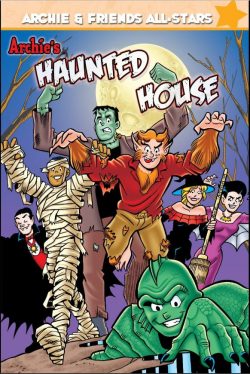
Archie & Friends All Stars volume 5: Archie’s Haunted House


By Fernando Ruiz, Batton Lash, Dan Parent, George Gladir, Stan Goldberg, Mark McKenna, Henry Scarpelli, Rich Koslowski, & various (Archie Comics)
ISBN: 978-1-879794-52-8

Win’s Christmas Gift Recommendation: Family Friendly Fear Fest for Kids of All Ages… 8/10

Archie Andrews has been around for more than seventy years: a good-hearted lad lacking in common sense whilst Betty Cooper, the pretty, sensible girl next door – with all that entails – waits ardently nearby, loving the great ginger goof.

Veronica Lodge is a rich, exotic and glamorous debutante who only settles for our boy if there’s nobody better around. She might actually love him too, though.

Despite their rivalry, Betty and Veronica are firm friends. Archie, of course, can’t decide who or what he wants…

Archie’s unconventional best friend Jughead Jones is Mercutio to Archie’s Romeo, providing rationality and a reader’s voice, as well as being a powerful catalyst of events in his own right. That charming triangle (with significant additions over the years) has been the basis for decades of funnybook magic and the concept is eternally self-renewing…

Adapting seamlessly to every trend and fad of youth culture since before there even was such a thing, the host of writers and artists who’ve crafted the stories over the decades have made the “everyteen” characters of utopian Riverdale a benchmark for childhood development and a visual barometer of growing up.

In this paperback and digital collection, the warring gal-pals and extended cast of the small-town American Follies are again plunged deep into whimsy and fable as writers Fernando Ruiz, Batton Lash, Dan Parent & George Gladir delve into the Dark Side for a selection of spooky spoofs and all-ages arcane adventure…

The weird wonders begin with Ruiz & Mark McKenna’s ‘…Clothes Make the Monster’ (Archie & Friends #135, September 2009) as the gang opt for a Halloween costume party at Riverdale High only to fall foul of a sinister sorceress whose bewitched outfits transform the kids into the monsters they’re dressed as…

Thankfully resident genius Dilton Doily has a plan and an unsuspected talent…

An extended gothic extravaganza that ran across a host of titles follows. The epic and episodic ‘…This Old House…’ was devised by Lash, Stan Goldberg & Henry Scarpelli) and opened in World of Archie #17, December 1995, with succeeding chapters erupting in Archie #442 (December 1995), Betty and Veronica #95 and Archie’s Pal Jughead Comics #93, both out for January 1996.

When Reggie vandalises a ramshackle, condemned property it sparks heated debate amongst the gang, all of whom have sentimental memories of the old pile from their younger days.

With the city council being urged to finally pull it down the teens are divided between demolition and declaring it a local landmark…

The politicking ensues in ‘House of Riverdale! Part 1’ even as Archie is plagued by nightmares of the dilapidated dwelling’s old occupants. Second chapter ‘Thou Protest Too Much…’ finds the gang on a picket line preserving the building until Veronica’s dad delivers the good news. The place has been saved for posterity. It turns out that it might not be good news, though, as in a nearby town Sabrina (the Teenaged Witch) pores over ancient records of the original inhabitants and readies herself to intervene…

The tension increases in ‘House of Riverdale! Part 3′ as Betty also does a little digging and connects the seemingly-benevolent name Father Riverdale to a nasty piece of work named Leander van Dermeulen whose 19th century crusade against progress resulted in a magic cult, a police shootout and a dying curse…

Fourth chapter ‘Worn Out Welcome’ finds the terrified Archie reversing his position and petitioning the council to tear down the house before the curse can be reactivated – with the expected reaction from the adults. Betty meanwhile, sneaks into the house to find some of her friends already there and totally ensorcelled…

‘House of Riverdale! Part 5′ sees Archie call on trusted comrade Jughead for help only to lose him to the dire domicile before everything comes to a head in ‘Fall of the House of Riverdale!’ As the malign ghost of van Dermeulen meets his match in ultra-nonconformist Juggy, unlikely hero Archie takes drastic action to save the day in the estate’s ghastly grounds…

With the main event concluded, lighter fare follows as B&V discover ‘An Axe to Grind’ (Betty and Veronica Spectacular #85, November 2008) with Dan Parent & Rich Koslowski revealing how the boys’ plans to crash a girls-only Halloween party go appallingly awry…

The same issue also provides a gallery of faux movie posters ‘Riverdale Style’, fashions and tips for ‘The Ultimate Halloween Bash!’ plus recipes and treats for all ‘Archie Zombies’ before the spooky shenanigans conclude with Gladir, Ruiz & Koslowski’s ‘For Monsters Only!’

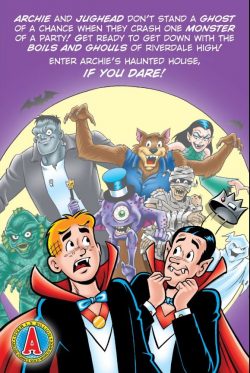
First seen in Tales from Riverdale Digest #30 (December 2008) this sly shocker finds Archie and Jughead in full vampire ensemble but stumbling into a sinister soiree for actual devils, demons and creatures of the night…

Co-starring all the adorable supporting characters we know and love, these smartly beguiling skits are a marvellous example of just why Archie has been unsurpassed in this genre for generations: providing decades of family-friendly fun and wholesome teen entertainment – complete with goblins, ghosts and ghouls as required…
© 2010 Archie Comics Publications, Inc. All rights reserved.

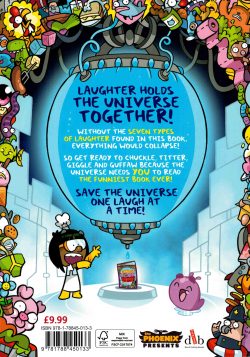
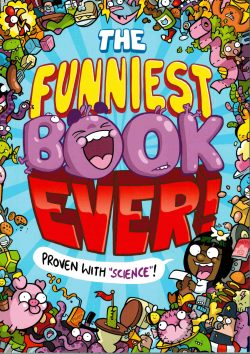
The Funniest Book Ever! (Proven with Science!)


By Jaimie Smart, James Turner, Laura Ellen Anderson, Jess Bradley, Gary Northfield, James Stayte & various (David Fickling Books)
ISBN: 978-1-78845-013-3

Win’s Christmas Gift Recommendation: Silly, Sensational, Unmissable… 9/10

Nearly Christmas Again! Soon the kids will be on holiday and perpetually underfoot. Moreover, parents and extended family will be looking for presents they can afford and actually comprehend.

What about a book? A really, Really Funny Book?

Very much in the manner of classic Christmas Annuals, The Funniest Book Ever! is another wonderful compendium of captivating comics from the fabulous weekly Phoenix, designed to incapacitate your unruly young ‘uns with cartoon japery and adventure. Moreover, as it proudly boasts on the cover it’s all done with SCIENCE! So, it’s even scholastically advantageous.

Since its premiere in 2012, The Phoenix has offered humour, adventure, quizzes, puzzles and educational material in a traditional-seeming weekly comics anthology for girls and boys. The vibrant parade of fun and fantasy has won praise from the Great and the Good, child literacy experts and the only people who really count – a dedicated and growing legion of totally engaged kids and parents who read it avidly…

Jam-packed within these glossy, full-colour pages are more exploits culled from the periodical pages, starring a pantheon of firm favourites, all curated by a team of junior boffins endeavouring to ascertain and confirm their theory that the universe is held together by fundamental forces best described as “The Seven Laughs”…

Acting as a proof of each are seven of the magazine’s most memorable features, as the highly technical treatise begins with Belly Rumble, an argument defined here by more arcadian action from twin stars locked in a spiralling orbit of mutually assured distraction as the execute an ongoing vendetta between implacable woodland warriors…

Concocted with feverishly glee by Jamie Smart, Bunny vs. Monkey has been a Phoenix fixture from the first issue: recounting a madcap war of nerves and ideologies between animal arch-enemies set amidst an idyllic arcadia which masquerades as a more-or-less mundane English Wood.

The tail-biting tension and rural war of wits and wonder-weapons began when an obnoxious simian intruder popped up after a disastrous space shot went awry. Having crash-landed in Crinkle Woods – a scant few miles from his blast-off site – Monkey believes himself the rightful owner of a strange new world, despite the continual efforts of sensibly reasonable Bunny to convince him otherwise.

For all his patience, propriety and poise, the laid-back long-ears simply cannot contain the incorrigible idiot ape, who is a rude, noise-loving, chaos-creating troublemaker. Things soon escalated once the simian interloper teamed up with an utterly mad scientist skunk who is master of many malign sciences and technologies…

In this tranche of turbulent tiny terrors Monkey manifests mayhem and endures great pain after declaring ‘Down with Spring’ before weaponizing Angling in a ‘Fish Off’ with Bunny and abusing history with a wooden Trojan trap in ‘There’s a Moose Loose!’

‘Leaf it Alone!’ finds the hyperactive simian turning simple garden chores into a mini-apocalypse whilst his on-going partnership with the skunk leads to an invisible bovine in the snows. However, their ‘Ca-Moo-Flaaj’ is as nothing compared to Bunny’s natural advantages…

After perverting a simple carrot with chemistry, Skunky anticipates ‘The Biggest, Mostest Enormousest Explosion in the World!’ but has not reckoned on sometime guinea pig Action Beaver‘s unique appetites. A true contender for that honour arrives when Humanz chase astoundingly gifted birds into the woods and barely escape ‘The Kakapo Poo Kaboom!’ with their lives…

Even so, the nosy bipedal interlopers stick around causing problems until the critters unite to remove them using ‘A Bear Bum!’…

A hunt for ‘Worms!’ then leads to a cacophonous din after which a dragon incursion leads to a need for knight service in ‘Arise, Lord Wuffywuff!’

The abrupt menacing return of ‘Skunky!’ only provides disappointment and confusion, but his crazed influence remains once he unleashes his devastating, colossal De-Forester 9000, resulting in the unthinkable as Bunny and Monkey declare ‘The Truce!’ that leads to the mega-munching machine’s demise.

By the time Action Beaver becomes ‘The Messenger!’ for Skunky’s poison letters, all bets are off again and it’s every critter for himself, leading to a doomed summit meeting at a hot spring in ‘Time to Get Along!’

The sinister scientist then proves you can have too much of a good thing after his Multiplyer accidentally creates a tidal wave of ‘Doughnuts!’ before a special event proclaims ‘An Exclusive Bunny Vs Monkey Detective Story: The Curious Case of the Pig in the Night Time’ with our entire outré cast going through their Sherlock Holmesian motions…

‘The Order of the Moose!’ is a secret woodland society sworn to protect nature at all costs and after we see them spectacularly underperform this section concludes with Monkey and Skunky testing their nine-megaton ‘Explosive Sweets!’…

The next component of the larger debate is the Cosmic Chuckle and that means a heaping helping of Star Cat: one of the wildest rides in the wondrous weekly anthology as crafted by the astoundingly clever James Turner (Super Animal Adventure Squad, The Unfeasible Adventures of Beaver and Steve).

The strip began in issue #0 and has been synchronising orbits irregularly ever since…

The premise is timeless and instantly engaging, revealing the far-out endeavours of a bunch of spacefaring nincompoops in the classic mock-heroic manner. There’s so very far-from-dauntless Captain Spaceington, extremely dim amoeboid Science Officer Plixx, inarticulate and barely housebroken beastie The Pilot and Robot One, who quite arrogantly and erroneously believes himself one of the smartest thinkers in the cosmos.

The colossal, formidable void-busting vessel they traverse the universe in looks like a gigantic ginger tom because that is what it is: half-cat, half-spaceship. What more do you need to know?

Hypothesised here are a brace of extended exploits beginning with ‘Just Deserts’ as the intrepid band crash on to super Saharan sand world and suffer the agonies of the damned – sort of – before ‘Computational Capers’ finds them back in space and battling a tyrannical computer with ideas above his (work) station…

Evil Cackle cites Evil Emperor Penguin as proof of concept. The strip was conceived and created by children’s book illustrator/author Laura Ellen Anderson (Kittens, Snow Babies) and stars a bad – brilliant but Bad – bird who lurks in a colossal fortress beneath the Antarctic, where he strives tirelessly towards his stated goal of absolute global domination.

His only assistance – if you can call it that – comes in the form of an army of hench-minions: most notably stylish, erudite administrative lackey Number 8 and cute, diminutive, fuzzy, loyal, utterly inventive abominable snowman clone Eugene.

Evil Emperor Penguin had originally whipped up a batch of 250, but none of the others are anything like Eugene…

EEP then appointed the fluffy, bizarrely inventive tyke his Top Minion but somehow never managed to instil within him the proper degree of ruthless evilness. The hairy halfwit is, however, a dab-hand with engineering, building stuff and cooking spaghetti hoops, so it’s not a total loss…

The polar pirate starts this particular campaign of terror by attempting to crash a sporty party for the world’s top brass in ‘Human Nature’ parts I & 2. To assist his gatecrashing the Annual World Leader Olympics, the bad bird has to wear a human-shaped robot suit and that’s never a good thing, is it?

Everybody loves cute kittens, which is what Debra is counting on when she uses soppy Eugene to infiltrate the fortress and steal all the Spaghetti Hoops in ‘What’s New Pussy Cat’. She’s the cousin of Evil Cat (EEP’s insidious rival in the Word Domination stakes) and with the team – and even Evil Cat – helplessly trapped, they must all surrender all pride and dignity and call on jolly unicorn Keith to save them in ‘Rainbows to the Rescue’…

The nefarious nonsense recommences with 2-part thriller-chiller ‘I Will Crèche You’ wherein EEP’s incredible De-Agefying Youth Juice causes havoc after Evil Cat breaks into the citadel and everybody gets a rejuvenating soaking…

The ice escapades conclude with ‘Eugene’s Day Off’: an unremitting stream of great experiences for the faithful servitor, but, for the Penguin Potentate – having to make do with substandard substitute Neill – a string of catastrophic, humiliating and painful disasters…

Wild Card calculation Squid Fits leads us inexorably to Jess Bradley’s diverting digressions Squid Bits! A proof of Laugh #4: that features gags, absurd Things To Do and odd innovations ranging from Monster Fashion to Red Panda’s Insult Guide and Cut ‘n’ Keep Characters to Official Words for Everyday Sounds!

These Fishy fascinations precede the arrival of next stellar party particle star turn as Critter Titter invites a closer inspection of Gary’s Garden.

This marvellous minibeast comedy-adventure is crafted by Gary Northfield (Beano‘s Derek the Sheep, The Terrible Tales of the Teeytinysaurs) and explores human nature through the fauna and flora unnoticed at our feet.

Human laggard Gary, like most of us, doesn’t do as much as he should in his back yard – and the assorted birds, beasts and bugs despise him for it – but at least it means they can all live their lives in relative peace and quiet…

The occasional series began in The Phoenix #2, and this seditious sampling opens with an army of brassed-off birds raiding the lazy lump’s kitchen cupboards, after which nocturnal raiders reveal the basics of bin-raiding whilst at the treeline an ambitious bug steals a golden acorn and dissolves into ego mania as a six-limbed Sith lord…

As Larry Ladybird hunts for his beloved Elaine and dreads her elopement with Dracula, in the pond a tadpole is daydreaming with amazing consequences and an art class is being disrupted by a most intransigent slug.

When Stunt Slug‘s attention-grabbing scheme goes awry, a motley band of beasts, birds and bugs occupy themselves by entering the Great Garden Bake Off – in a festive extra-long episode before the examples end with the debut of a chitinous band of merrie “men” and a new Ladybird Robin Hood…

Barbarian Celebrity Chef Gorebrah! crushes evil whilst concocting outrageous recipes and tasty treats so he’s the ideal exemplar of the Gastronomic Guffaw: offering a selection of dishes and disasters including prehistoric demonic biscuits embedded in glacial ice, princess-flavoured milkshakes, monopolised by cloud-dwelling giants, smoky sausage bats and a duel with a rival gustatory wild man.

Later mirth -&-mayhem packed menus include the gnomish origins of pasta salad and the creepiest dish in the world, saved from an alien invader deep inside an Antarctic culinary school…

Th scientific arguments crash to a halt with the Uncontrollable Giggle as Looshkin – the Adventures of the Maddest Cat in the World!! – seals the thesis with a sleek sheen of feline frenzy and surreal Shock and Awe.

Devised by Jamie Smart (yeah, the guy who invented Bunny vs. Monkey, Corporate Skull and bunches of other brilliant strips for Beano, Dandy and others) this is a brilliantly bonkers addition to the vast feline pantheon of truly horrifying hairballs infesting the graphic universe.

This anarchic kitty is just like yours: cute, innocently malign and able to twist the bounds of credibility and laws of physics whenever the whim takes him…

Quite naturally, the epic begins with an origin of sorts as Mrs Alice Johnson brings home a kitten from the pet shop. Not one of the adorable little beauties at the front of the store, though, but the odd, creepy, lonely little fuzzy hidden at the back of the store…

The Johnsons are not your average family. Firstborn son Edwin watches too many horror films and keeps a book of spells in his room whilst Dad is a brilliant inventor who needs peace and quiet to complete his fart-powered jet-pack or potato-powered tractor. It’s not long before those days are gone for good…

The sweet little daughter isn’t all she seems either: when kitten Looshkin is subjected to an innocent tea party in the garden, her toys all secretly warn the cat of the horrors in store. All too soon teddy bear Bear is subjected to a hideous cake-arson assault.

Surprisingly, Looshkin takes it all in stride and even escalates the carnage and chaos whenever and however he can. It seems he has found his natural home… or is it all in his be-whiskered little head?

The selection opens with ‘How to Make Friends and Annoy Bears’ as the cat’s nocturnal pranks result in cacophonous calamity after which ‘ThbthbtThhhhhhhhhhhHonk!’ reveals the lengths some folk will go to in executing the perfect raspberry…

‘Danger Sausage’ might not be everyone’s ideal superhero but Looshkin thinks he’s the business, after which a frog glove-puppet claims ‘I’m Not to Blame’ when a bulldozer destroys the garden…

‘Wooooooo – cough – oooooooh!!’ proves that even ghosts know when they’re outclassed in the scaring stakes after which ‘Meanwhile in Croydon’ finds the frenetic feline getting a job in marketing and ‘Nee-Naw! Nee-Naw! Nee-Naw! Neeeee-Nawww!’ sees the transition to a nursing career after almost fatally injuring Mr. Johnson.

Science then goes Boink! and reality gets temporarily inverted with the mind-bending ‘Big Silly Blue Cat Who Are You and What are you Doing in my House? before consistency, if not normality, are restored in ‘With Great Power Comes Giant Lasers’ as a certain cat becomes US president and leader of the Free World. Don’t scoff; stranger things have happened…

‘Due to an Incident involving Angry Clowns There Now Follows a Change in our Usual Programming’ see the madcap mouser drawn into the mesmerising power of old sitcoms whilst ‘Doorbell Ding Dong!!’ opens a war of postal one-upmanship between cat and Bear…

The brain-blasting advent of the cat’s mercurial Great Uncle Olaf begins with ‘Loooshkin! Oh Looshkin, Where Are You? You’ve Been Missing for Ages’ but is soon sidelined when Edwin’s magical library is used to call up something dreadful by ‘The Lump Whisperer’…

When Looshkin indulges in some prognostication the outcome is never in doubt especially for ‘Pig!’, but the cat is back on terrifying form in ‘Ooooh!! I’m Bustin’!’ when an outbreak of gastric unhappiness coincides with the sudden sabotage of every toilet in town…

There’s a big surprise for all concerned when Looshkin invents a vicious new game in ‘A New Challenger Appears!’ before everything wraps up in seasonal spirit with a bizarre trip to the twilight zone of yule tide with ‘A Christmas Special!!’

Arguments thus presented, (see what I did there?) this bonanza tome – packed with fun, thrills and the type of bizarre, nonsensical wonderment kids love but can’t explain to anyone over 21 – leaves it to you to judge the veracity of the science. That’s best done by reading and rereading The Funniest Book Ever: a superb package of British-style children’s humour and adventure any parent should be proud to own. Christmas is Saved!
Text and illustrations © 2018 Jaimie Smart, James Turner, Laura Ellen Anderson, Jess Bradley, Gary Northfield, James Stayte as appropriate. All rights reserved.

Rex Generations


By Ted Rechlin (Rextooth Studios)
ISBN: 978-1-59512-229-4

Win’s Christmas Gift Recommendation: Marvellous Monster Madness and Science with a Bite… 9/10

I’ve never met a kid who didn’t love dinosaurs, and that gleeful fascination doesn’t fade with age or what we laughingly regard as maturity.

Ted Rechlin clearly ascribes to that belief too, and has made it his life’s work, whether it’s in his six – and counting – books (including End of the Ice Age, Jurassic and the award-winning Sharks: A 400 Million Year Journey) or in freelance commissions for the likes of DC Comics, Dark Horse or Dover Publications.

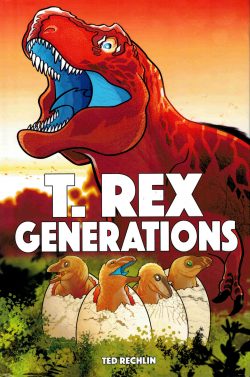
Rex Generations is an incredibly informative and engaging book about family, rendered with great deftness, gleeful aplomb, and packed with the latest scientific thinking regarding arguably the most famous species of big lizard (or is that bird?) on Earth.

In case you weren’t paying attention, the clan in question is thundering great tyrannosaur Cobalt and his feisty mate Sierra, just getting by in what is nowadays Hell Creek, Montana.

This stunning full-colour hardback, however, opens in the Mesozoic bit of the Cretaceous Period, or approximately 66 million years ago on a very special night. Here our anxious apex predators proudly celebrate the hatching of four eggs, heralding the start of the next generation, after which we’ll closely follow the pack over the next decade or so. The parents teach and provide in a dangerous environment packed with a wide variety of dangerously capable prey, rival predators and unknown perils of every description.

This is dinosaurs and natural history, not Lady and the Tramp with really big teeth, so brace yourself and your own youngsters with a little spoiler alert: not everybody present at this antediluvian nativity is going to make it…

Compelling, beguilingly educational and splendidly entertaining, T. Rex Generations is a glorious celebration of Earth’s Saurian inhabitants and our enduring love affair with them. More, Please!
© 2018 Ted Rechlin. All rights reserved.

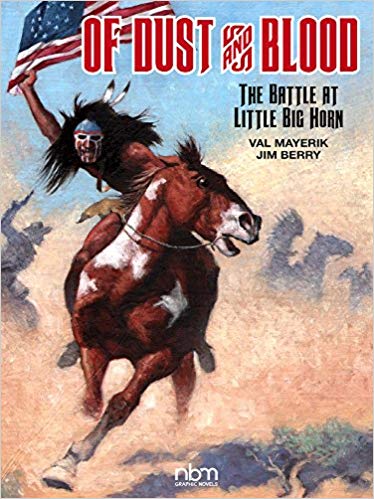
Of Dust and Blood – the Battle at Little Big Horn


By Val Mayerik & Jim Berry & various (NBM)
ISBN: 978-1-68112-183-3

Win’s Christmas Gift Recommendation: Potent, Powerful, Unmissable… 9/10

Thanks to the twin miracles of humanity’s love of stories and the power of commercial narrative there’s no logic to how or why some events pass into the forgotten corners of history whilst others become touchstones of common experience or even actual living myths.

In 1875 The Battle at Little Big Horn noted 268 US dead and 55 severely wounded men… and an unknown or unspecified number of native casualties.

Eleven years earlier the Chivington (Sand Creek) Massacre recorded a wildly estimated 500-600 killed and mutilated Cheyenne and Arapaho (two thirds of whom were women and children). To be fair, the figures might have been as low as 60 or 70 heathen souls, but practically nobody white really cared…

My point is that the reason you’ve heard of one but not the other is the force of publicity…

After Custer’s debacle and the slaughter of the 7th Cavalry, the Anheuser-Busch brewery commissioned prints of a painting memorialising “Custer’s Last Fight” and had them framed and hung in bars and saloons across America, forever connecting their product in the minds of generations of drinkers with unvarnished white heroism…

With historical veracity at a supreme disadvantage, the ill-judged clash at Little Big Horn – alternatively described by the winning side as the Battle of the Greasy Grass – has become the stuff of imagination and extrapolation.

Atrocity aside, that’s not necessarily a bad thing as it’s led numerous thoughtful creative types into examining the event on their own terms and applying the perspective of history to the events and the shameful, bloody aftermath…

Two of the very best are comics veteran Val Mayerik and journalist-turned-author Jim Berry who have here shaped the conflict to their own deeply moving ends with this superb offering. Originally self-published through Kickstarter contributions, this stunning oversized (315 x 238 mm) full-colour hardback second edition (also available in digital formats) explores truth and myth whilst adding another powerful fictive component to the sprawling patchwork.

Following Berry’s mood-setting and painfully timely Introduction – superbly augmented by a linework Map of The Battle of the Greasy Grass/Little Big Horn by fellow graphic scholar Rick Geary – the story (lettered by Simon Bowland) unfolds in rapid yet panoramic moments, and traces two ultimately converging paths.

On one side cavalry scout Greenhaw takes some time off to pen a letter to his beloved Rose, even as some distance away young Lakota warrior Slow Hawk performs the funeral rites for his brother. Now he is the last of his family…

Against the background of the tragically documented specifics of the inevitable, legendary greater clash, these two strangers are carried by events towards an inescapable and tragic confrontation…

Rendered with staggering virtuosity by Mayerik, the smaller moments and incidents contributing to the greater clash we all think we know are beguiling and breathtaking in their warmth and humanity, magnificently underscoring Berry’s incisive questioning of the point and merit of the battle.

Augmenting the visual narrative is a text essay describing what happened After the Battle and how commercial interests monetised and weaponised public sentiment against the Indians and led to America’s own final solution to the Indian Wars at Wounded Knee Creek in 1890.

Following on, Val Mayerik: The Process describes, with plenty of access to the artist’s sketchbook, how many of the most evocative images were created before this terrific tome concludes with a Bibliography of further reading for interested parties and a moving page of dedications dubbed ‘Philamayaa’…

This is a wondrous and sobering experience any comics fan or student of human nature must seek out share.
© 2018 Jim Berry, all rights reserved. 2nd Edition. All fictional characters are trademarks of Jim Berry and Val Mayerik.

Of Dust and Blood will be published on October 30th 2018 and is available for pre-order now. For more information and other great reads see http://www.nbmpub.com/

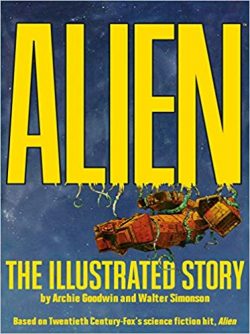
Alien: The Illustrated Story


By Archie Goodwin & Walter Simonson, from a screenplay by Dan O’Bannon and a story by Dan O’Bannon & Ronald Shusett (Heavy Metal/Futura)
ISBN: 978-0-93036-842-5                  978-1-78116-595-9 (Titan Books Facsimile 2012)

Alien was released in 1979 and utterly redefined the science fiction cinema genre. It pretty much did the same for horror stories too.

Creeping in on the back of the jolly adventuring romps of the Star Wars phenomenon and its shiny, happy, Valerian rip-offs “homages”, Dan O’Bannon’s dark tale and Ridley Scott’s grimly meticulous vision reintroduced the vital element of apocalyptic terror that had been absent from the medium since the headiest, most utterly paranoiac days of 1950s B-Movies.

You know the plot: a bunch of interstellar miners are diverted by their untrustworthy bosses to a lost planet where they find an extraterrestrial shipwreck. One of the humans is infected by something uncanny and beyond the explorers’ meagre imaginings and brings aboard a ghastly killer that grows and hides and changes. Picking off the crew one by one, it cannot be stopped, escaped from or killed…

Lots of films have had comics adaptations: good bad or indifferent. Very few have ever come as close to capturing the stunning, senses-overloading feel – rather than the plot or look or detail – of the source material, although all of those too are well-catered for in this slim but superb graphic extravaganza from the award-winning creative team of Archie Goodwin & Walt Simonson (see Manhunter: The Special Edition for perhaps their ultimate moment of comics collaboration).

Spectacular, engrossing, visually innovative (in both storytelling and lettering/calligraphic effects) and absolutely absorbing, this hard-to-find gem – either in the original US edition from Heavy Metal Productions, this mass-market UK edition from Futura, or any of the later reissues in a variety of formats and sizes – is a true landmark of comics, long overdue for a definitive release with plenty of bonus features and preferably only in the original large, square European Album format please…
© 1979 by Twentieth Century-Fox Film Corporation. All rights reserved.

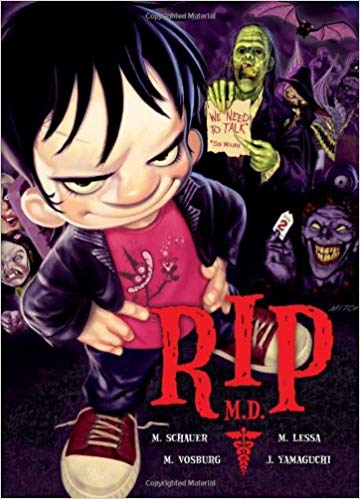
Rip M.D.


By Mitch Schauer, Mike Vosburg, Michael Lessa, & Justin Yamaguchi (Lincoln Butterfield/Fantagraphics Books)
ISBN: 978-1-60699-369-9

Here’s a dark gem that sadly got missed by the greater reading public when it first came out in 2010, but as it’s the season for revenants and resurrections…

Ripley Plimt is a bright lad with a hobby. Ever since he can remember he has adored classic monster movies. He’s an absolute expert on trivia, minutiae and lore. Now he’s eleven and all grown up he’s come to one inescapable conclusion… it’s all true!

When the kind-hearted lad mends a little bat’s broken wing one night it changes his life forever. Bitten by the fixing bug (but not the bat – that would be ungracious) little Rip applies his unsuspected new skills to repairing the mouldering zombie corpse that shows up later – with the understanding and grudging approval of his parents and Uncle Will.

Soon needy werewolves, protoplasmic blobs and ghost cats are all turning up to complicate the creepy kid’s life…

The only real flies in the ointment are repulsive mortal kids Pretoria and Stanley DeMann, who used to live in Rip’s house and are prepared to go to extraordinary, murderous lengths to force the easy-going Plimpt family out…

Their millionaire dad is even worse, orchestrating a campaign of very human terror to get his way, almost driving Rip to abandon his unconventional dreams. However, the unscrupulous autocrat has some dark secrets of his own and Limbo the dead cat and a pretty little vampire girl know how best to exploit them…

Writer, artist, producer, designer and Emmy® Award-winning animator Mitch Schauer (creator of Angry Beavers and Freakazoid!, and supervising director of the Super Hero Squad Show) is a founding member of Lincoln Butterfield, an independent animation company also comprising Robert Hughes and painter Michael Lessa.

Comics veteran Mike Vosburg, who inked Schauer’s pencilled art here, has a glittering prize or two himself: as well as his funnybook career (Savage She-Hulk, G.I. Joe, Lori Lovecraft), he won his own Emmy® for directing Spawn cartoons and was chief storyboard artist for the Narnia movie franchise as well as dozens of movies and shows you’ve loved over the years.

Co-producing this snazzy graphic novel with electrically eclectic comics publisher Fantagraphics Books is LB’s first foray into print – but hopefully not their last.

With painted colour effects from Lessa & Justin Yamaguchi and including a wonderful developmental art section, this spectacular, spooktacular romp is a fabulously punchy, action-packed, wickedly funny treat for kids of all ages that will leave every reader voraciously hungry for more…
© 2010. All Rights Reserved. A joint production between Fantagraphics Books and Lincoln Butterfield.

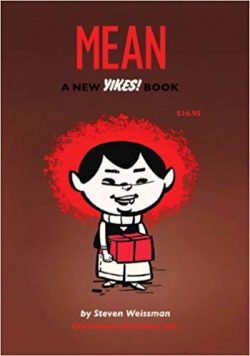
Mean


By Steven Weissman (Fantagraphics Books)
ISBN: 978-1-56097-866-4

Steven Weissman was born in California in 1968 and grew up to be an exceptionally fine and imaginative cartoonist. He’s worked for Alternative Comics, Last Gasp, Dark Horse, Marvel, DC, Vice and Nickelodeon Magazine among others, and his artistic sensibilities have been influenced and shaped by such disparate forces as Super-Deformed manga, “Our Gang” comedies, Abbott and Costello, Dan Clowes, Mike Allred and Peanuts – the strip, not the versatile if sometimes potentially fatal foodstuff.

Much of his groundbreaking, award-winning early work, dating from the mid-1990s, offered a post-modern, skewed and alternative view of friendship, childhood, world weirdness and people’s meanness and can all be enjoyed over and over again in such stunning compilations as Tykes, Lemon Kids, Don’t Call Me Stupid, White Flower Day, Chocolate Cheeks and others. The French and Japanese – who really know quality comics – love him lots and have done so for years.

In 2012 Weissman literally went back to the drawing board, un-and-re-creating himself and his aesthetic methodology for a and unbelievably enchanting hardcover weekly online strip entitled Barack Hussein Obama which has since been collected into a series of stunning cartoon books about the unsuspected nature of modern America. Gosh, I miss those days…

Today though in the spirit of the season we’re revisiting some of his earlier material…

If there is such a thing as ‘Dark and Comforting’ then Weissman’s weird and wicked early cartooning is a perfect example. Following the success of Chewing Gum in Church and Kid Firechief, Fantagraphics promptly compiled earlier works from his self-published Yikes!; amply supplemented with other rare and even unpublished strips to create a lovely insight into the development of a truly unique graphic vision.

These 32 tales, (still available in paperback and digital editions) were all created between 1993 and 2002, and feature his cast of deeply peculiar children in a macabre tribute to Charles Schulz’s signature strip, but they are also literal embodiments of the phrase “little monsters”.

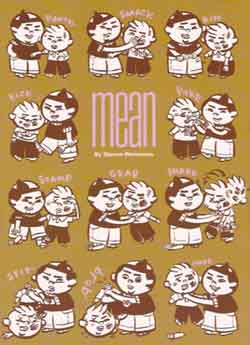
In simple childhood romps such as ‘The See-Thru Boy’, ‘The Loneliest Girl in Town’, ‘Inevitable Time-Travel Story’, ‘No Kiss!’ and many others, the bizarre cast of Li’l Bloody (a child vampire), Kid Medusa, Pullapart Boy and X-Ray Spence live an idyllically suburban 1950’s existence of school, fishing, skateboards, white picket fences, aliens, wheelchair jousting, marbles and weird science.

Weissman’s seductive cast all have huge round heads and ancient bodies like graphic progeria-sufferers, but the drawing is lavish, seductive and utterly convincing.

These are great comics about kids (but perhaps regarded as Best Not For Kids) that are a treat, a revelation and most definitely darkly comforting.
MEAN © 2007 Fantagraphics Books. All content © 2007 Steven Weissman. All Rights Reserved.

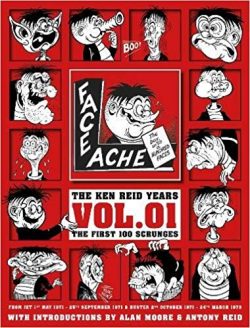
Faceache volume one: The First 100 Scrunges


By Ken Reid, with Ian Mennell & various (Rebellion Studios)
ISBN: 978-1-78108-601-8

Win’s Christmas Gift Recommendation: Masterfully Macabre Mirthquakes… 10/10

If you know British Comics, you’ll know Ken Reid.

He was another of those rebellious, youthful artistic prodigies who, largely unsung, went about transforming British Comics: entertaining millions and inspiring hundreds of those readers to become cartoonists too.

Reid was born in Manchester in 1919 and drew from the moment he could hold an implement. Aged nine, he was confined to bed for six months with a tubercular hip, and occupied himself with constant scribbling and sketching. He left school before his fourteenth birthday and won a scholarship to Salford Art School, but never graduated. He was, by all accounts, expelled for cutting classes and hanging about in cafes.

Undaunted he set up as a commercial artist, but floundered until his dad began acting as his agent.

Ken’s big break was a blagger’s triumph. He talked his way into an interview with the Art Editor of the Manchester Evening News and came away with a commission for a strip for its new Children’s Section. The Adventures of Fudge the Elf launched in 1938 and ran until 1963, with only a single, albeit lengthy, hiatus from 1941 to 1946 when Reid served in the armed forces.

From the late 1940s onwards, Reid dallied with comics periodicals: with work (Super Sam, Billy Boffin, Foxy) published in Comic Cuts and submissions to The Eagle, before a fortuitous family connection (Reid’s brother-in-law was Dandy illustrator Bill Holroyd) brought DC Thomson managing editor R.D. Low to his door with a cast-iron offer of work.

On April 18th 1953 Roger the Dodger debuted in The Beano. Reid drew the feature until 1959 and created numerous others including the fabulously mordant doomed mariner Jonah, Ali Ha-Ha and the 40 Thieves, Grandpa and Jinx among many more.

In 1964 Reid and fellow unappreciated superstar Leo Baxendale jumped ship and began working for DCT’s arch rival Odhams Press. This gave Ken greater license to explore his ghoulish side: concentrating on comic horror yarns and grotesque situations in strips like Frankie Stein, and The Nervs in Wham! and Smash! as well as more visually wholesome but still strikingly surreal fare as Queen of the Seas and Dare-a-Day Davy.

In 1971 Reid devised Faceache – arguably his career masterpiece – for new title Jet. The hilariously horrific strip was popular enough to survive the comic’s demise – after a paltry 22 weeks – and was carried over in a merger with stalwart periodical Buster where it thrived until 1987. During that time he continued innovating and creating through a horde of new strips such as Creepy Creations, Harry Hammertoe the Soccer Spook, Wanted Posters, Martha’s Monster Makeup, Tom’s Horror World and a dozen others.

Ken Reid died in 1987 from the complications of a stroke he’d suffered on February 2nd, whilst at his drawing board, putting the finishing touches to a Faceache strip.

On Reid’s passing the strip was taken over by Frank Diarmid who drew until its cancelation in October 1988.

The astoundingly absorbing comedy classic is a perfect example of resolutely British humorous sensibilities – absurdist, anarchic and gleefully grotesque – and revolves around a typically unruly and unlovely scrofulous schoolboy making great capital out of a unique gift, albeit often to his own detriment and great regret…

Ricky Rubberneck early discovered an appalling (un)natural ability of scrunching (or “scrungeing”) up his face into such ghastly contortions that he could revolt, disgust and terrify anyone who gazed upon him. Over the weeks and years, the modern medusa worked hard to polish his gifts until his foul fizzog could attain any formation. Eventually his entire body could be reshaped to mimic any creature or form, real or imagined. Naturally, he used his powers to play pranks, take petty vengeances, turn a temporary profit, deal with bullies and impress his pals.

Just as naturally, those efforts frequently resulted in the standard late 20th century punishments being dealt out by his dad, teachers and sundry other outraged adults…

This stunning hardback (and eBook) celebration – hopefully the first of many – is part of Rebellion’s ever-expanding Treasury of British Comics and collects all 22 Jet episodes (spanning May 1st – 29th September 1971, plus the remaining 78 from Buster & Jet beginning with October 2nd and concluding with March 24th 1973.

The potent package is garnished with an appreciative Introduction by Alan Moore – ‘The Unacceptable Face of British Comics’ – a fondly intimate reminiscence in Antony J. Reid’s ‘My Father Ken Reid’ and a full biography of the great man…

What follows is an outrageous outpouring of raw cartoon creativity as Reid, writing and drawing with inspired effulgence, spins a seemingly infinite skein of comedy gold on his timeless theme of a little boy who makes faces at the world.

Weekly deadlines are a ferocious foe however, and a couple of strips reprinted were written by unsung pro Ian Mennell, whilst – between January and September 1972 – a fill-in artist (possibly Robert Nixon?) illustrated 16 episodes, presumably as Reid’s other commitments such as Jasper the Grasper, The Nervs or his numerous funny football features in Scorcher & Score mounted.

In these pages though, the accent is on madcap tomfoolery as the plastic-pussed poltroon undergoes a succession of fantastic facial reconfigurations: terrifying teachers, petrifying posh and pushy landowners, mimicking monstrous beasts, outraging officious officialdom and entertaining an army of schoolboy chums and chumps.

Orchards are raided, competitions are entered, plays and school trips are upstaged and aborted and even actual spooks and horrors are afforded the shocks of their unlives as Faceache gurns his way through an endless parade of hilarious hijinks.

These cartoon capers are amongst the most memorable and re-readable exploits in all of British comics history: smart, eternally funny and beautifully rendered. This a treasure-trove of laughs that spans generations and deserves to be in every family bookcase.
© 1971, 1972, 1973 & 2017 Rebellion Publishing Ltd. Introduction © Alan Moore. Faceache is ™ Rebellion Publishing Ltd. All Rights Reserved.

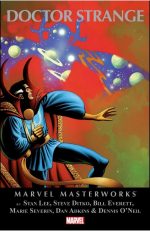
Doctor Strange Marvel Masterworks volume 2


By Stan Lee, Steve Ditko, Dennis O’Neil, Roy Thomas, Raymond Marais, Jim Lawrence, Dan Adkins, Bill Everett, Marie Severin, George Tuska & various (Marvel)
ISBN: 978-0-7851-1737-7 (HB)                    978-0-7851-6770-9 (TPB)

Win’s Christmas Gift Recommendation: A Modicum More Merry Seasonal Magic… 9/10

When the budding House of Ideas introduced a warrior wizard to their burgeoning pantheon in the summer of 1963 it was a bold and curious move. Bizarre adventures and menacing monsters were still incredibly popular but mention of magic or the supernatural – especially vampires, werewolves and their eldritch ilk – were harshly proscribed by a censorship panel which dictated almost all aspects of story content.

At this time – almost a decade after a public witch hunt led to Senate hearings – all comics were ferociously monitored and adjudicated by the draconian Comics Code Authority. Even though the some of the small company’s strongest sellers were still mystery and monster mags, their underlying themes and premises were almost universally mad science and alien wonders, not necromantic or thaumaturgic horrors.

That might explain Stan Lee’s low-key introduction of Steve Ditko’s mystic adventurer: an exotic, twilit troubleshooter inhabiting the shadowy outer fringes of rational, civilised society.

Capitalising on of the runaway success of Fantastic Four, Lee had quickly spun off the youngest, most colourful member of the team into his own series, hoping to recapture the glory of the 1940s when the Human Torch was one of the company’s untouchable “Big Three” superstars.

Within a year of FF #1, anthology title Strange Tales became home for the blazing boy-hero (beginning with issue #101, cover-dated October 1962): launching Johnny Storm on a creatively productive but commercially unsuccessful solo career.

Soon after in Tales of Suspense #41 (May 1963) current sensation Iron Man battled a crazed technological wizard dubbed Doctor Strange, and with the name successfully and legally in copyrightable print (a long-established Lee technique: Thorr, The Thing, Magneto and the Hulk had been disposable Atlas “furry underpants monsters” long before they became in-continuity Marvel characters) preparations began for a new and truly different kind of hero.

The company had already recently published a quasi-mystic precursor: balding, trench-coated savant Doctor Droom – later rechristened (or is that re-paganed?) Dr. Druid – had an inconspicuous short run in Amazing Adventures (volume 1 #1-4 & #6: June-November 1961). He was a balding psychiatrist, sage and paranormal investigator who tackled everything from alien invaders to Atlanteans. He was subsequently retro-written into Marvel continuity as an alternative candidate and precursor for Stephen Strange‘s ultimate role as Sorcerer Supreme…

Nevertheless, after a shaky start, the Marvel Age Master of the Mystic Arts became an unmissable icon of the cool counter-culture kids who saw in Ditko’s increasingly psychedelic art echoes and overtones of their own trippy explorations of other worlds and realms…

That might not have been the authors’ intentions but it certainly helped keep the mage at the forefront of Lee’s efforts to break comics out of the kids-stuff ghetto…

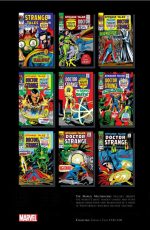
This magnificent confabulation (available in hardback, trade paperback and digital reincarnations) collects the mystical portions of Strange Tales #142-168, (spanning March 1966 to May 1968) and – despite the Good Doctor barely cover-featuring until #130 – kindly includes every issue’s stunning frontage: thus offering an incredible array of superb eye-catching Marvel masterpieces from the upstart company’s formative heydays by not only Ditko but also Jack Kirby, Bob Powell, John & Marie Severin, Bill Everett, Jim Steranko and Dan Adkins.

The sorcerous super-shenanigans commence after the traditional jocund reminiscences by Stan Lee in his Introduction, after which mystic mayhem resumes at full pelt and breakneck pace. This time-period, leading up to a full-blown Marvel expansion and solo-star status, saw the magician achieve his greatest triumphs under Ditko before entering a period of great creative insecurity under a welter of substitute writers and artists after the originator abruptly left the company at the height of his fame and success in early 1967.

The previous volume had seen Dr. Stephen Strange defeat his sworn nemesis Baron Mordo and extra-dimensional dark god Dormammu after an epic serial saga. The weary victor had then returned to his mystic Sanctum Sanctorum, unaware that lesser enemies had boobytrapped his residence with mundane explosives…

Scripted by Lee and plotted and illustrated by Ditko, Strange Tales #142 revealed ‘Those Who Would Destroy Me!’ as Mordo’s unnamed disciples ready for one last stab at the Master of the Mystic Arts.

They would remain anonymous for decades, only gaining names of their own – Kaecillius, Demonicus and The Witch – upon their return in the mid-1980s. Here, however, they easily entrap the exhausted mage and imprison him with a view to plundering all his secrets. It’s a big mistake as in the Roy Thomas scripted sequel ‘With None Beside Me!’, Strange quickly outwits and subdues his captors…

In #144 Ditko & Thomas take the heartsick hero ‘Where Man Hath Never Trod!’ Although Dread Dormammu was soundly defeated and humiliated before his peers and vassals, the demonic tyrant took a measure of revenge by exiling Strange’s anonymous female collaborator to realms unknown. Now, as the Earthling seeks to rescue her by searching myriad mystic planes he stumbles into a trap laid by the Dark One and carried out by devilish collector of souls Tazza…

On defeating the scheme, Strange returns to Earth and almost dies at the hands of a far weaker, but much sneakier wizard dubbed Mister Rasputin. The spy and swindler utilises his meagre gifts for material gain but is happy to resort to base brutality ‘To Catch a Magician!’ (scripted by Dennis O’Neil).

All previous covers had been Kirby S.H.I.E.L.D. affairs but finally, with Strange Tales #146, Strange and Ditko won their moment in the sun. Although the artist would soon be gone, the Good Doctor would remain, alternating with Nick Fury’s team until the title ended.

Ditko & O’Neil presided over ‘The End …At Last!’ as a deranged Dormammu abducts Strange before suicidally attacking the omnipotent embodiment of the cosmos known as Eternity.

The cataclysmic chaos ruptures the heavens over infinite dimension and when the universe is calm again both supra-deities are gone. Rescued from the resultant tumult, however, is the valiant girl Strange had loved and lost. She introduces herself as Clea, and although Strange despondently leaves her, we all know she will be back…

This cosmic swansong was Ditko’s last hurrah. Issue #147 saw a fresh start as Strange returns to his Greenwich Village abode under the auspices of co-scripters Lee & O’Neil, with comics veteran Bill Everett suddenly and surprisingly limning the arcane adventures.

From the Nameless Nowhere Comes… Kaluu!’ sees sagacious mentor The Ancient One rush to his pupil’s side mere moments before an ancient enemy launches a deadly attack from beyond the unknown. O’Neil & Everett then tread new ground by revealing ‘The Origin of the Ancient One!’ even as the mysterious foe intensifies his siege of the Sanctum in #149’s ‘If Kaluu Should Triumph…’

Roy Thomas then steps in to write concluding battle bonanza ‘The Conquest of Kaluu!’ as Master and Student defeat the overwhelmingly powerful intruder through grit and ingenuity. ST #150 then wraps up on an ominous note as with Dormammu gone another ancient evil begins to stir in the Dark Dimension…

Throughout his despotic reign the Dread One had apparently been keeping captive a being every bit his equal in power and perfidy and his superior in guile and cruelty. She was his sister and in #151 ‘Umar Strikes!’ Returning scribe Lee & Everett document her assumption of the throne, revenge on Clea and plans for Earth before plunging Strange ‘Into the Dimension of Death!’ in #152.

Naturally, she too has underestimated the puny mortal and Strange begins his retaliation even as he finds himself traversing outer dimensions and eventually ‘Alone, Against the Mindless Ones!’ This episode is notable for the illustrative debut of the magnificent Marie Severin, who applies a sense of potent wonder and film-inspired kinetics to the storytelling.

Strange Tales #154 has Lee, Severin & Umar declare ‘Clea Must Die!’, but the task proves harder than imagined after Strange finds macabre and unlikely allies in the demonic dictator’s own dungeons.

Winning temporary reprieve, Strange and Clea voyage to Earth where the Ancient One ruthlessly moves her beyond Umar’s reach forever but ‘The Fearful Finish…!’ only escalates the goddess’ determination and wrath. In #156 she resolves to dirty her own hands and all too soon, ‘Umar Walks the Earth!’ She is too late as Strange’s mentor has despatched him to a distant realm beyond all worlds on a suicide mission that could endanger all creation…

Artistic super-star-in-waiting Herb Trimpe signed on as inker for #157’s ‘The End of the Ancient One!’ as Strange and his unleashed secret weapon arrive back in time to see off Umar, but only at an unforgivable cost…

Bereft and aghast, Strange must face alone the monster he has unleashed, unaware that his liberating of the beast Zom has not only sparked an awakening of mystic force all over the world but also invoked the draconian assessment of supernal arbiter The Living Tribunal who rules that Earth must die…

With Thomas scripting, the Cosmic Judge manifests ‘The Sands of Death’ to eradicate the destabilising wild magic infesting the planet but grudgingly accepts Strange’s plea bargain to save the universe from ‘The Evil That Men Do…’

This constant ramping up of tension proceeds as Strange enlists old foe Mordo, who magnanimously agrees to absorb all the evil energy the Doctor siphons from a legion of newly-empowered sorcerers.

In Strange Tales #160 Raymond Marais, Severin & Trimpe reveal what a bad idea that is as ‘If This Planet You Would Save!’ sees the powered-up Baron turn on his benefactor, before exiling him to a fantastic alien cosmos in #161’s ‘And a Scourge Shall Come Upon You!’ (by Marais & new star-turn artist Dan Adkins).

In that uncanny other realm Strange meets former romantic entanglement Victoria Bentley before both are accosted by a macabre mystic tyrant who offers aid against the nigh-omnipotent Mordo for a price…

From the Never-World Comes… Nebulos!’ (scripted by James Bond writer Jim Lawrence & rendered by Adkins) sees Strange pull all the stops out: crushing Mordo, outwitting Nebulos and stymying The Tribunal’s ‘Three Faces of Doom!’ just in time save Earth.

As his reward he is despatched by the Grand Arbiter into a ‘Nightmare!’ pursuit of Victoria, arriving on a monster-ridden planet ruled by a techno-wizard named Yandroth, who declares himself to be the Scientist supreme of the universe…

The subject of a case of hate at first sight, Dr. Strange endures more gadget-laden peril in issue #165 as Yandroth inflicts testing to destruction on ‘The Mystic and the Machine’. Defeated by the hero’s courage and magic the bonkers boffin activates his doomsday scenario, stating ‘Nothing Can Halt… Voltorg!’ (Lawrence, George Tuska & Adkins) until science proves him wrong…

Big things were happening at Marvel in 1968. After years under a restrictive retail sales deal, The House of Ideas secured a new distributor and were finally expanding with a tidal wave of titles. “Split-Books” such as Strange Tales were phased out in favour of solo series for their cohabiting stars and, for the Master of the Mystic Arts at least, that meant a bit of rapid resetting…

O’Neil & Adkins teamed up in ST #167 for ‘This Dream… This Doom!’ in which Strange returns to Earth, indulges in a spot of handy resurrecting and proceeds to track down the still missing Victoria Bentley. This excursion takes the wizard of Greenwich Village deep into the realm of imagination where Yandroth is waiting for him…

The end comes suddenly in #168 as ‘Exile!’ apparently sees the end of the villain and a quick return to home in time for a bold new start…

That’s it for this exemplary exhibition of ethereal escapades – unless you include one last treat in the form of a stunning Ditko pin-up originally seen in Marvel Collectors’ Item Classics #10 (August 1967) – but there’s more magical marvels to come in your future…

Doctor Strange has always been the coolest of outsiders and most accessible fringe star of the Marvel firmament. This glorious grimoire is a miraculous means for old fans to enjoy his world once more and the perfect introduction for recent acolytes or converts created by the movie iteration.
© 1966, 1967, 1968, 2016 Marvel Characters, Inc. All rights reserved.