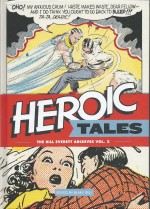
Heroic Tales: The Bill Everett Archives volume 2


By Bill Everett and others, edited and complied by Blake Bell (Fantagraphics Books)
ISBN: 978-1-60699-600-3

Thanks to modern technology there is a superabundance of collections featuring the works of too-long ignored founding fathers and lost masters of American comic books. A magnificent case in point is this second superb chronicle revisiting the incredible gifts of one of the greatest draughtsmen and yarn-spinners the industry has ever seen.

You could save some time and trouble by simply buying the book now rather than waste your valuable off-hours reading my blather, but since I’m keen to carp on anyway feel free to accompany me as I delineate just why this tome needs to join the books on your “favourites” shelf.

He was a direct descendent and namesake of iconoclastic poet and artist William Blake. His tragic life and awe-inspiring body of work – Bill was possibly the most technically accomplished artist in US comicbook industry – reveals how a man of privilege and astonishing pedigree was wracked by illness, an addictive personality (especially alcoholism) and sheer bad luck, nevertheless shaped an art-form and left twin legacies: an incredible body of superlative stories and art, and, more importantly, saved many broken lives saved by becoming a dedicated mentor for Alcoholics Anonymous in his later years.

William Blake Everett was born in 1917 into a wealthy and prestigious New England family. Bright and precocious, he contracted Tuberculosis when he was twelve and was dispatched to arid Arizona to recuperate.

Thus began a life-long affair with the cowboy lifestyle: a hard-drinking, smoking, tall-tale telling breed locked in a war against self-destruction, described in the fact-filled, picture-packed Introduction by Blake Bell which covers ‘The Early Years of Comics: 1938-1942’, ‘The Birth of Marvel Comics’ and ‘The Comic Book Production System’, before ‘The Heroes’ precedes a full-colour selection of incredible prototypical adventure champions with a brief essay on the set-up of Centaur Comics, Novelty Press, Eastern Color Printing, Hillman and Lev Gleason Publications…

Accompanied by the covers for Amazing Mystery Funnies volume 2 #3, 5 and 6 (March, May & June 1939, Centaur) are three outer space exploits of futuristic trouble shooter Skyrocket Steele, whilst Tibetan-trained superhero Amazing-Man offers a transformative triptych of titanic tales spanning war-torn Europe, augmented by the covers to Amazing-Man Comics #9-11 February-April 1940.

Everett’s deeply held western dreams are covered next with a brace of rootin’ tootin’ yarns starring Bull’s-Eye Bill from Novelty Press’ Target Comics #3-4 (April & May 1940) whilst from #7-9 (August-October 1940), the author smoothly switched to sophisticated suspense with master of disguise The Chameleon crushing contemporary criminals in scintillating escapades from Target Comics’ answer to The Saint, the Falcon and the Lone Wolf.

Thanks to his breakthrough Sub-Mariner sagas Everett was inextricably linked to water-based action, and Eastern Comics hired him to create human waterspout Bob Blake, Hydroman for the bimonthly Reg’lar Fellers Heroic Comics. Here, spanning issues # 6-9 (May-November 1941, with the covers for #6 and 7), are four spectacular, eerie, offbeat exploits, covering an extended battle against foreign spies and American Fifth Columnists, after which Red Reed in the Americas! (created by Bob Davis & Fitz) offers the first two chapters in a political thriller wherein a college student and his pals head South of the Border to fight Nazi-backed sedition and tyranny in a stunning tour de force first seen in Lev Gleason’s Silver Streak Comics #20 & 21 (April & May 1942).

A section of Miscellaneous and text illustrations follows, blending Western spot drawings with the eye-catching covers from Amazing Mystery Funnies volume 2 #18, Target Comics #5 and 6, Blue Bolt (vol. 1 #11, vol. 2 #1, 2 and 3) and Famous Funnies #85.

The Humorous and More describes Everett’s forays into other markets: niche sectors such as licensed comics, comedy and romance, and even returns to pulp and magazine illustration as he strove to stay one step ahead of a constantly shifting market and his own growing reputation for binges and unreliability.

‘What’s With the Crosbys?’ is a superbly rendered gossip strip from Famous Stars #2 (1950, Ziff-Davis) whilst a stunning monochrome girly-pin-up of ‘Snafu’s Lovely Ladies’ (from Snafu #3 Marvel, March 1956), and the cover of Adventures of the Big Boy #1 (also Marvel, from the same month) lead into the Back Cover of Cracked #6 (December 1958, Major Magazines) and other visual features from the Mad imitator as well as the colour cover to less successful rip-off Zany (#3, from March 1959).

Everett’s staggering ability to draw beautiful women plays well in the complete romance strip ‘Love Knows No Rules’ (Personal Love #24, November 1953 Eastern Color), and this section concludes with a gritty black and white title page piece from combat pulp War Stories #1, courtesy of Marvel’s parent company Magazine Management, September 1952.

The Horror concentrates on the post-superhero passion for scary stories: an arena where Bill Everett absolutely shone like a diamond. For over a decade he brought a sheen of irresistible quality to the generally second-rate chillers Timely/Atlas/Marvel generated in competition with genre front-runners EC Comics. It’s easy to see how they could compete and even outlive their gritty, gore-soaked competitor, with such lush and lurid examples of covers and chillingly beautiful interior pages…

Following a third informative background essay detailing his life until its cruelly early end in 1973, a choice selection of his least known and celebrated efforts opens with tale of terror ‘Hangman’s House’ (Suspense #5, November, 1950): a grim confrontation with Satanic evil, followed by futuristic Cold War shocker ‘I Deal With Murder!’ and a visit to a dark carnival of purely human wickedness in ‘Felix the Great’ (both culled from Suspense #6, January 1951).

Adventures into Weird Worlds #4 (Spring 1952) offered a laconic, sardonic glimpse into ‘The Face of Death’, whilst from the next issue (April 1952) ‘Don’t Bury Me Deep’ tapped untold depths of tension in a moodily mordant exploration of fear and premature burial. Hard on the heels of the cover to Journey Into Unknown Worlds #14 (December 1952) comes one of its interior shockers as ‘The Scarecrow’ helped an aged couple solve their mortgage problems in a most unusual manner.

The Marvel madness then concludes with a cautionary tale of ‘That Crazy Car’ from Journey into Mystery #20, December 1954, concluding a far too brief sojourn amidst arguably Everest’s most accomplished works and most professionally adept period.

This magnificent collection ends with a gallery of pages and one complete tale from the end of his career; selected from an even more uninhibited publisher attempting to cash in on the adult horror market opened by Warren Publishing with Eerie, Creepy and Vampirella.

Skywald was formed by industry veteran Israel Waldman and Everett’s old friend Sol Brodsky, tapping into the burgeoning black and white market with mature-reader and supernatural magazines Hell-Rider, Crime Machine, Nightmare, Psycho and Scream. Offered an “in” Everett produced incredible pin-ups (included here are three from Nightmare (#1, 2 & 4, December 1970-June 1971), ‘A Psycho Scene’ (Psycho #5, November, 1971) a stunning werewolf pin-up from Psycho #6 and one of revived Golden Age monstrosity ‘The Heap’ from Psycho #4.

Most welcome, however, is a magnificent 10-page monochrome masterpiece of gothic mystery ‘The Man Who Stole Eternity’ from Psycho #3, May, 1971.

Although telling, even revelatory and concluding in a happy ending of sorts, what this book really celebrates is not the life but the astounding versatility of Bill Everett. A gifted, driven man, he was a born storyteller with the unparalleled ability to make all his imaginary worlds hyper-real; and for nearly five decades his incredible art and wondrous stories enthralled and enchanted everybody lucky enough to read them.

© 2013 Fantagraphics Books. Text © 2013 Blake Bell. All art © its respective owners and holders. All rights reserved.
Win’s Christmas Gift Recommendation: Perfect for art lovers, Marvel Zombies and addicts of pure comics magic… 9/10
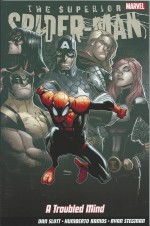

Superior Spider-Man: A Troubled Mind


By Dan Slott, Humberto Ramos, Ryan Stegman, Victor Olazaba & Cam Smith (Marvel/Panini UK)
ISBN: 978-1-84653-538-3

Over the years the Wondrous Wallcrawler has undergone many evolutions, refits and even backsliding revisions, but his latest evolution – springing out of the landmark Amazing Spider-Man #700 – is certainly the most radical character change of all the MarvelNOW! relaunches.

In that issue the personality of Peter Parker died and Doctor Otto Octavius took over his body, becoming a wholly Superior Spider-Man.

Parker’s mind had been transferred into the rapidly failing body of the super-villain where, despite every desperate effort, in the end he perished with and within that decrepit, expiring frame. Now Octopus is permanently installed in the Amazing Arachnid’s body and living Peter’s life, albeit with a few minor but necessary alterations, upgrades and improvements…

The situation is not completely intolerable. At the moment of the villain’s greatest triumph Parker forced Octavius to relive and experience every moment of tragedy and sacrifice that made Spider-Man the champion he was.

From that emotional turmoil came understanding and the villain reformed, swearing to live the rest of his stolen life in tribute to his enemy; honestly endeavouring to carry on Spider-Man’s self-imposed mission and equally guided by the binding principle that “with great power comes great responsibility”…

However the megalomaniac within proved hard to suppress and the new web-spinner incessantly worked to prove himself a better man: augmenting the hero’s gadgets and methodology with millions of spy robots to patrol the entire city at once, adding advanced weaponry to the suit and even acting pre-emptively rather than merely reacting to crises.

Otto went back to college because he was appalled Parker had no doctorate and even tried to rekindle his new body’s old relationship with Mary Jane Watson.

The new, ultra-efficient Spider-Man has become New York’s darling and even Mayor J. Jonah Jameson has embraced the Web-spinner, all but appropriating the wallcrawler as a deputy – to the utter incredulity of an imperceptible phantom of Peter Parker lurking within the deepest recesses of the overwritten mind of Spider-Man…

The helpless ghost is an unwilling passenger, unsuspected by Octavius but increasingly privy to the villain’s own barely-suppressed memories. Moreover, some of Parker’s oldest friends are beginning to suspect something hinky is happening.

Police CSI Officer and ex-girlfriend Carlie Cooper knew of Peter’s incredible secret life and is increasingly reminded of the last time Spider-Man fought Doc Ock, when the killer broke her arm. He also claimed then that he was Peter trapped in the villain’s body…

Everybody accepts Spider-Man has changed. Not only is he more efficient these days, but he’s far more brutal too. Giving bad-guys like Boomerang and the Vulture the thorough thrashings they so richly deserve plays really well with the public and, after a deadly hostage siege, the hero’s status with city cops peaked after the Amazing Arachnid executed the sociopathic perpetrator Massacre…

Written by Dan Slott, A Troubled Mind collects issues #6-10 of The Superior Spider-Man (released March-July 2013) and continues following the author’s introductory summation ‘Superior Minds’.

Humberto Ramos & Victor Olazaba illustrated ‘Joking Hazard’ which sees prankster villains Jester and Screwball win vast popular acclaim for their “harmless” public humiliations of the rich and powerful – such as Mayor Jameson.

Even though the pair are actually using their internet site to phish financial details from the millions of viewers who access their posts, the world loves them – but not the new Spider-Man, who horrifically overreacts to being made to look a fool…

Meanwhile, as Parker and new romantic interest Anna Maria Marconi negotiate the obstacles to Peter obtaining his doctorate – a mission not helped by the candidate’s innate smug arrogance – the Avengers are becoming extremely concerned about their young comrade’s erratic behaviour, whilst in the shadows a new Hobgoblin carefully lays plans to conquer the city…

The multi-part ‘Troubled Mind’ then commences with ‘Right Hand Man’ as Robin Hood villain Cardiac returns, still stealing technology to treat patients who can’t afford medical care. With a little girl in desperate need of advanced brain scanning, the rogue raids an impound facility and liberates a device devised by the dead madman Otto Octavius. He cannot understand why former frenemy Spider-Man seems to take the theft so personally…

The ghost of Peter Parker later feels a swell of hope when the Avengers forcibly arrest his stolen body and subject it to a battery of tests. Sadly, the Avengers in ‘Proof Positive’ don’t include geniuses like Tony Stark or Henry Pym, and cannot properly interpret the data their machines provide.

Doc Ock can, however, and now realises why occasionally he feels inexplicable resistance when his angry, violent natures boils over…

With Octavius exultant and Parker’s ghost crushed, the wallcrawler tracks down Cardiac’s illegal free hospital to retrieve “his” scanner, only to feel his righteous indignation crumbling at the sight of the dying little girl the maverick surgeon is trying to help…

Consumed by guilt, the Superior Spider-Man uses the purloined scanner to perform brain surgery on the child but, after saving her, retains the scanner to perform a similar service upon himself…

‘Gray Matters’ discloses how the Avengers’ tests revealed a phantom echo of Peter’s brain patterns beneath his own freshly encoded, dominant patterns and how, with the aid of his scanner, Otto hunts down and forever erases the aggravating voice within his skull…

Now wiped forever free of that annoying shadow of conscience, the finally triumphant mad doctor can celebrate his ‘Independence Day’ (art by Ryan Stegman & Cam Smith) completely devoid of limiting considerations such as pity or humanity. Of course, the same applies to the new iterations of supervillains such as White Dragon, The Owl and Tombstone, organised by Hobgoblin as the vanguard of an unstoppable army of evil to take New York City…

More importantly, with Phantom Parker no longer incessantly, fruitlessly screaming in his head, the hero’s nearest and dearest are coming to the inescapable conclusion that there is something just plain wrong with “Peter”…

To Be Continued…

Capped off with a selection of Ramos’s design sketches in ‘Superior Insight’ augmenting a gallery of his covers, this astounding reinvention carries as standard that wonder-of-21st-century invention AR icon sections. These Marvel Augmented Reality App pages offer access to story bonuses once you download the little dickens – free from marvel.com – onto your smart-phone or Android-enabled tablet.

Spider-Man has been reinvented so often it has become something of a norm, but this incarnation – for however long it lasts – is one that no fan or newbie can afford to miss: shocking, clever and impossibly addictive.

™ & © 2013 Marvel & Subs. Licensed by Marvel Characters B.V. through Panini S.p.A. All rights reserved. A British Edition published by Panini Publishing, a division of Panini UK, Ltd.

Little Fluffy Gigolo Pelu volume 2


By Junko Mizuno (jaPress/Last Gasp)
ISBN: 978-0-86719-743-3

If you’re over a certain age or have eclectic tastes in art and music you might feel a pang of nostalgia at the work in this second intriguing, coyly adult collection, featuring Manga sensation Junko Mizuno’s most subversively compelling creation.

Since her emergence in 1995, the author has become renowned – perhaps infamous – for mixing childlike innocence with grim, gory action and unwholesome or stridently clashing, wildly inappropriate content in a sub-genre now dubbed Gothic or Noir kawaii (where kawaii describes cutely drawn protagonists and subjects).

Moreover the skewed sensibilities of her work in such Manga as Cinderalla, Hansel & Gretel, Princess Mermaid, Pure Trance and Momongo no Isshō (the Life of Momongo) has exploded out of the comics ghetto to be embraced by a larger audience with art exhibitions (Heart Throbs and Tender Succubus), art-books (Hell Babies, Collector File and Flare) and high-end designer toys for adults which include plush animals, vinyl figures, stationery, postcards, stickers, original art T-shirts and even a line of condoms and erotic paraphernalia.

Her shojo (“stories for girls”) derived style also borrows heavily from the iconic imagery of the 1960s and early 1970s, particularly the Graphic Psychedelia which grew out of Pop Art, with huge eyed, large-headed poppet girls, drawn to look young or, more accurately, actively, innocently, illicitly under-aged: living in simplified environments where detail is reduced to bare minima.

Her stories are always sharply at odds with her drawing style, like cartoons for toddlers involving unpleasant visits to the gynaecologist or being consumed by cannibals, and much of her material incorporates splashy full colour despite the overwhelming preponderance of black and white material in Japan.

Once Upon a Time on a cute pink planet invisible to human eyes lived a race of beautiful naked young women and one very lovely, placidly carnivorous purple Space Hippo.

Of course, there was also Pelu: a fluffy excitable ball of fuzz who incessantly questioned the idyllic existence. From the Hippo Pelu learned of Earth where there are two sexes, and of his own origins, and immediately the little puffball determined to visit the planet of humans and father a baby so he won’t be alone any more…

The journey led to a number of salutary adventures for the naive ET, whose venerable progression from wide-eyed Innocent to sexual enlightenment did not provide contentment or that longed-for child.

On Earth the fluffy naif closely observed a host of human interactions whilst always politely asking if anyone would like to be made pregnant – but love, hate, jealousy, pride, ambition, self-loathing and even murder were all hard to grasp until Pelu befriended hobo alcoholic Su-San who became a valued comrade and teacher…

This second monochrome tome continues the elucidatory explorations and peripatetic pursuits of the lonely heart “lad”, beginning with ‘Bubble Princess Transformation’ wherein the amorphous alien becomes enamoured of a beautiful sex-worker in the final stages of gender reassignment and presides over a rare happy-ever-after rather than the regulation “happy ending” after which the 2-part ‘I Married a Puppet Master’ delves into even stranger territory.

Good wife Murako spends her idle moments knitting glove puppet friends, but is increasingly worried that husband Mamoru‘s job is affecting his health. She is utterly unaware one of her creations has befriended the oddly similar new neighbour Pelu…

However, when Mamoru is callously transformed into a living doll by his bosses at Big Pharmaceutical, Murako is shocked into stunned inactivity… but not knitwear nightmare Koro who recruits Pelu to help obtain a brutal revenge…

Back on the streets again Su-San and Pelu are then approached by a sexy hostess for one of those unique television competition game-shows in ‘Surprise! Japan’s New Record’ but, after the little visitor’s stunning victory leaves them flush for a change, things get very odd…

Another 2-parter, ‘The Secret of the Flower Garden’ finds the spherical sex-pot approached by lovely Tsubomi with a rather unlikely proposition. Soon Pelu is regularly servicing her, her mother and grandmother, in a secret villa beneath a soda factory, just helping a family of hereditary nymphomaniacs, blithely unaware that understanding man of the house Kiyoshi is a bit of an amateur film-maker…

Eventually, still without progeny, Pelu is discarded for a fresher, less exhausted replacement and returns to best buddy Su-San, just in time to fall in love again…

‘Sigh of the Kappa Girl’ is a bittersweet tale of unrequited love as poor Kappa-ko is ditched by boyfriend and prospective husband Makoto. His family want their boy to marry someone else – anyone else actually – as they have an old-fashioned prejudice against Kappas.

You can see their point of view: although she is sweet and sad and gentle, most of the magical water demons are mischievous, cunning flesh-eaters, living in the city’s tainted rivers and watercourses. Seeking solace with Pelu, the betrayed girl steals his heart away but soon leaves him for another…

The saga takes another strange turn in ‘The Niece from Outer Space’ when a young princess from the pink planet comes to visit her far-voyaging uncle. Melu is even more innocent than Pelu but too soon adapts to Earth’s ways – especially after gorging on human food makes her body grow up faster than her mind. Soon she’s hanging out with the wrong crowd (homicidal quintuplets and their abusive, exploitative father) and Pelu is too late to prevent a miraculous tragedy…

This extraordinary collection concludes in poignant heartbreak as Pelu and Su-San become ill on the streets and the little stranger loses his best friend forever to the ‘Homeless Paradise’. The only glimmer of light in the sobering tale for Pelu is meeting Su-San’s estranged daughter Noriko Saotome and learning something of his forever-gone companion’s sorry past…

Little Fluffy Gigolo Pelu continues the potentially shocking saga of an incorrigible innocent abroad, with seductive fantasy underpinned by a subtle sinister subtext and an overt narrative informed by the naivety of “Swinging Sixties” sexuality.

Everything, especially the legion of pretty  girls, is drawn in the style of early Playboy icons, in the brand of  cartoon stylisations that featured in movie title sequences like What’s New, Pussycat? or Yellow Submarine. Anybody British who remembers the children’s animation Crystal Tipps and Alistair, or the hippo from Rainbow, will feel a frisson of nostalgia – which is of course the point. The art is an irresistible velvet trap designed to reduce readers to a receptive state in which the author can make telling points about contemporary culture.
By co-opting children’s entertainment Mizuno addresses fundamental aspects of human existence in a form designed to shock, subvert, upset and most importantly provoke. So, if some thought on the readers’ part extends beyond our visceral gut-reaction to nude innocent girls and the idealistic purity that used to be associated with such imagery, then she’s done her job…

This is a supremely edgy fantasy with a lot to say about society and relationships – similar to but utterly different from Robert Heinlein’s groundbreaking social satire Stranger in a Strange Land, and will one day I’m sure, have just as much impact.

© 2004, 2013 Junko Mizuno. All Rights Reserved.

See also www.MIZUNO-JUNKO.com

Love and Rockets: the Covers


By Gilbert, Jaime & Mario Hernandez (Fantagraphics Books)
ISBN: 978-1-60699-598-3

In the 1980s a qualitative revolution forever destroyed the tired moribund, stereotypical and ghettoised ways different genres of comic strips were produced and marketed. The iconic force most evidently shattering those comfy pigeonholes we’d built for ourselves were three guys from Oxnard, California; Jaime, Mario and Gilberto Hernandez.

Love and Rockets was an anthology magazine originally self-published in 1981which featuring intriguing, adventuresome larks and wildly different comic narratives that pretty much defied classification, all wrapped up in the sheen and ephemera of LA’s Hispanic and punk music scenes.

Stories varied from slick, sci-fi-soused hi-jinx starring punky young gadabouts and their extended eccentric circle of friends – or the heart-warming, terrifying, gut-wrenching soap-opera fantasies from the rural Central American paradise of Palomar.

Jaime Hernandez was always the most noticeable part of the graphic literary revolution: his sleek, seductive, clean black line and beautiful composition, impeccably rendered heroes and villains and the comfortingly recognisable – though thoroughly “roofied” comic book iconography – particularly appealing to readers raised on traditional Marvel and DC fare.

However his love of that material, as well as the influence of Archie Comics cartoonists (especially Sam Schwartz, Harry Lucey and Dan De Carlo), accomplished and enticing as it is, often distracted from the power of his writing, especially in his extended epics featuring of Maggie Chascarillo and Hopey Glass – AKA Maggie & Hopey, Las Locas, something never true of Gilbert, whose simplified cartooning and subtle, reined-in graphics never overwhelmed the sheer magnetic compulsion of his scripts…

The Hernandez Boys, gifted synthesists all, enthralled and enchanted with incredible stories that sampled a thousand influences conceptual and actual – everything from Comics, TV cartoons, masked wrestlers, the exotica of American Hispanic pop culture and even German Expressionism. There was also a perpetual backdrop displaying the holy trinity of youth: Sex and Drugs and Rock and Roll…

The result was dynamite. Mario only officially contributed on rare occasions but his galvanising energy informed everything – and his covers here display a fondness for those battered genres both tantalising and darkly skewed…

Jaime’s sleek, enticing visual forays explored friendship and modern love whilst destroying stereotypes of feminine attraction through his fetching coterie of Gals Gone Wild, and Gilberto created a hyper-real rural landscape macrocosm in Palomar: a playground of wit and passion and human imperfection in the quicksilver form of a poor Latin-American village with a vibrant, funny and fantastically quotidian cast created for his extended saga Heartbreak Soup.

Life, death, poverty, adultery, murder, boredom, magic, weird science and gossip shaped Palomar’s metafictional environs, as the artist mined his own post-punk influences in his deceptively addictive primitivist drawing style which blended his personal mythologies of comics, music, drugs, strong women, gangs, sex and family.

The denizens and survivors of Palomar still inform and shape Beto’s work, both directly and as imaginative spurs for spin-off stories.

Winning critical acclaim but little financial success, the brothers temporarily went their own ways in the mid-1990s, creating side projects and special series before creatively reuniting a few years back to produce annual collections of new material in their shared or, rather, intermittently adjacent pen-and-ink universes.

In more than three decades of groundbreaking creative endeavour, Los Bros Hernandez crafted a vast and magnificent canon of cartoon brilliance and literary enchantment and this truly spectacular art book presents all the eye-popping front and back covers from 1982-1996: fifty incredible issues which graced and lit up comic shop shelves, always looking nothing like any publication produced at the time.

This huge hardback (338x262mm) comes with a cool cover-cel overlay and re-presents each glorious, intriguing and occasionally controversial image, restored, re-mastered and de-cluttered to remove all extraneous, obfuscating text – such as barcodes and pricing information.

Moreover, also included are many pages of original pencils and inks, correction stages, production ephemera from each part of the art-to-finished-cover process, plus an extensive commentary section where Los Bros share their thoughts and intimate moments of “creators’ remorse”.

As well as the captivating magazine iterations by the guys as they mastered their craft, this astounding collection also includes 28 pages of covers from the numerous collected editions which propelled the mature creators to global comics stardom and contributed so much to the growth of today’s graphic novel market.

Mesmerising, breathtaking graphic wonderment and enticing pop art masterpieces; these incredible concoctions capture the spirit of subversive, intoxicating youthful vitality which changed the comic industry forever and comprise a truly essential catalogue of artistic excellence no lover of narrative art should miss.

© 2013 Gilbert, Jaime and Mario Hernandez. All rights reserved.
Win’s Christmas Gift Recommendation: Pretty, powerful, perfect picture magic… 10/10

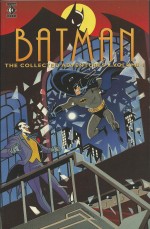
Batman: The Collected Adventures volume 1


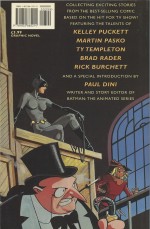
By Kelly Puckett, Marty Pasko, Ty Templeton, Brad Rader & Rick Burchett (DC Comics/Titan Books)
ISBNs: 978-1-56389-098-7 (DC),      978-1-85286-521-4 (Titan)

Batman: The Animated Series launched in America on September 5th 1992 and ran until September 15th 1995. Masterminded by Paul Dini and Bruce Timm, the show revolutionised the image of the Dark Knight and led to some of the absolute best comicbook tales in his almost 75-year publishing history.

By employing a timeless visual tone (dubbed “Dark Deco”) the show mixed elements from all iterations of the character and, without diluting the power and mood of the premise, perfectly honed the grim avenger and his team into a wholly accessible, thematically memorable form that the youngest of readers could enjoy, whilst adding shades of exuberance and style that only most devout and obsessive Batmaniac could possibly find fault with.

Naturally the comicbook version was an cast-iron contender for collection in the newly-emergent trade paperback market and this long out-of print edition – published in America by DC and by Titan Books in Britain – gathered the first half-dozen all-ages epics from The Batman Adventures comicbook (originally published from October 1992 to March 1993) in a smashing, straightforward sampler of Fights ‘n’ Tights fantasy.

Preceded by ‘An Introduction by Paul Dini: Batman’s Most Animated Adventures’ and accompanied by a plethora of pulsating storyboards, the action begins with ‘Penguin’s Big Score’ by Kelly Puckett, Ty Templeton & Rick Burchett.

Each story was divided into three chapters and ‘Charm School Dropout!’ found the Bird of Ill Omen taking tips on how to rehabilitate his nefarious reputation from The Joker, whilst in ‘Top of the World, Ma!’ the Foul Fowl’s new standing as a philanthropist had all Gotham agog.

The sinister scheme was finally exposed by Batman in the climactic third act ‘Power of the Press’, but the hero had no idea that the real winner was the Clown Prince of Crime…

In issue #2 ‘Catwoman’s Killer Caper’ (Puckett, Templeton & Burchett) kicked off with a gem heist before, on Joker’s urging, sultry Selina Kyle visited England’s Tower of London to swipe ‘The Family Jewels!’

In hot pursuit, the Gotham Gangbuster headed across The Pond to quell ‘Panic over Londontown’ and solved the mystery of a seemingly impossible theft in ‘Midnight Madness’ – but not before the Harlequin of Hate snatched the real prize…

All that crafty conniving culminated in ‘Joker’s Late-Night Lunacy!’ by Puckett, Templeton & Burchett, with Gotham’s airwaves hijacked and Commissioner Gordon kidnapped by the larcenous loon who made himself literally unmissable viewing in ‘A Star is Born!’

‘I Want My JTV!’ saw District Attorney Harvey Dent make it onto the Joker’s inescapable guest list, but Batman was again one step ahead of the game and lowered the boom in the explosive ‘Flash in the Pan!’

Writer Marty Pasko and penciller Brad Rader joined inker Rick Burchett for a gripping two-issue tale of terror guest starring Robin as ‘Riot Act’ describes ‘Panic in the Streets’ after a strange plague caused citizens to lose the ability to read.

Even with utter chaos gripping the city the Teen Wonder’s ‘Help on the Wing’ results in a huge step forward but when ‘Robin Takes a Fall’ the mastermind reveals himself and the drama intensifies in #4 with ‘Riot Act: Johnny Can’t Read!’ as the Scarecrow steps up his campaign to teach the slackers of the modern world a lesson….

However, the Dynamic Duo are well aware of the ‘Hi-Fi Hijinx’ at the root of the problem and, with the help of a repentant henchman, end the crisis in ‘Those Who Can’t Do!’

This initial foray into classic four-colour fun ends with a stunning change of pace as Bruce Wayne is arrested for murder in ‘The Third Door!’ Crafted by Puckett, Rader & Burchett, the cunning locked-room mystery opens with ‘The Party’s Over’ as the prime suspect details the facts of the case to young Dick Grayson, before being locked up with a mob of dangerous thugs in ‘Crime and Punishment’ leaving the kid to ferret out the real  killer in the tense conclusion ‘War and Peace’…

Compellingly written, superbly designed and spectacularly illustrated, these stripped-down rollercoaster-romps are quintessential Bat-magic, and as a host of big name bad-guys vie with timeless crime scenarios on every page, this is a book any fan of any age and vintage will adore.

Sheer, unadulterated magic – so start agitating for a new edition now!
© 1992, 1993 DC Comics. All Rights Reserved.

Mark Shultz: Carbon volume 1


By Mark Shultz (Flesk)
ISBN: 978-1-933865-54-6

After everything is said and done the most immediate response to narrative art is inevitably visceral and visual.

We take and tell our stories in picture form, and the sheer ability to express emotion and put the impossible on paper always captivates and leaves us wondering “how did he/she do that”?

It’s the reason why collections of comics art always have such amazing impact. We get to marvel at spectacular pretty pictures whilst stealing a furtive glimpse behind the curtain at the working of wonderment.

One maestro more than happy to share his secrets is Mark Shultz. The writer/artist shot to stardom after his 1986 EC Comics-inspired Xenozoic Tales (a magnificent blend of pulp fiction, Fifties automobile chic and honking great dinosaurs) hit an instantly addictive chord with the comics-buying public.

The publication spawned an animated TV series, assorted arcade, video and role-playing games, trading cards, action figures, candy bars and a succession of reprints (comics and graphic novel collections) from Kitchen Sink, Marvel and Dark Horse – mostly under its showbiz title Cadillacs and Dinosaurs.

Since then Schultz has become one of the industry’s biggest stars: tackling Superman, Batman and high-profile movie properties such as Aliens and Predator whilst always pursuing his great love: classic adventure archetypes like Tarzan, Conan and Doc Savage. Since 2004 he has been the writer of the Prince Valiant Sunday strip.

This particular oversized (305 x 232mm) collection of sketches, working drawings and finished pieces concentrates on a procession of his most pulchritudinous pulp princesses, lusty he-men and fantastic beasts in incredible unworldly locations: offering astounding insight into his creative process through breathtaking gatefolds displaying the progression from idea to full-painted finished art.

This compelling compendium of captivating heroines, bombastic barbarians, jungle kings and queens, space heroes, Martian Princesses, savage beasts, two-fisted types, what looks to me like DC’s iconic war heroes The Losers and so many wonderful dinosaurs also includes many scenes from Xenozoic Tales, sketches from forthcoming works and a tremendous informative bonus feature.

Schultz is as much science buff as fantasy aficionado and kicks off this book with the heavily illustrated inside story of how he was asked by pal and top bone-boffin Dr. Michael J. Ryan to produce the first visual representations of a newly-discovered dinosaur in ‘Introducing Xenoceratops‘ (or Xenoceratops Foremostensis, to give it the full formal title)…

Flesk Publications specialises in art books and the lavish tomes they produce are dedicated to the greats of our industry, with volumes on sequential narrative and fantasy illustration starring Steve Rude, Al Williamson, James Bama, Gary Gianni, Franklin Booth, William Stout and Joseph Clement Coll and many, many more.

The beautifully intimate glimpses of a master at work, with full-colour reproduction capturing every nuance of those gorgeous pencil or brushstrokes, make this a book a vital primer for anybody dreaming of drawing for a living, and the stirring lavish material revealed here will enthral and entice every fan of wondrous worlds and fantastic forgotten realms.

© 2013 Mark Schultz. All Rights Reserved. All artworks, features and properties © 2013 the individual creators, owners or copyright holders.

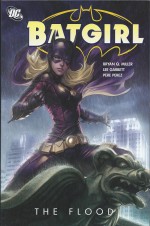
Batgirl: The Flood


By Bryan Q. Miller, Lee Garbett, Pere Perez & various (DC Comics)
ISBN: 978-1-4012-3142-2

Batman has gathered young allies about him since the second year of his all-consuming crusade: adopting assorted waifs or strays and training them to be the best that they can be, all for the greater good of his beloved GothamCity.

Stephanie Brown, daughter of C-list bad-guy Cluemaster, began her costumed crime-busting career as the Spoiler, secretly scotching Daddy Dearest’s schemes before graduating to a more general campaign against the city’s underworld.

Eventually, she undertook a disastrous stint as the fourth Robin: a tenure which provoked a brutal gang war which devastated Gotham and ostensibly caused her own demise under torture at the red hands of psychopathic mob boss Black Mask.

When Stephanie returned to Gotham after months in self-imposed exile, she overcame incredible obstacles – the greatest of which was her former Bat-family’s deep mistrust. Thus she inherited the role of Batgirl from Cassandra Cain, a former assassin who had revived the role after her own predecessor was crippled and forced to retire…

Barbara Gordon, the computer crusader known as Oracle, is the daughter of Gotham City’s Police Commissioner. Her own valiant vocation as Batgirl was ended after the Joker blew out her spine during one of his incomprehensible capers. Although trapped in a wheelchair, she still hungered for justice and found new ways to make a difference in a very bad world.

Reinventing herself as a cyber-world information gatherer for Batman, she wound up an invaluable resource for the entire superhero community, before putting together her own fluctuating squad of female fighters – the Birds of Prey.

She also crossed keyboards with her intellectual antithesis: a sociopathic computer hacker and ex-costumed whacko called the Calculator…

Barbara, with grudging acceptance of stand-in Dark Knight Dick Grayson, then decided to mentor Stephanie as the troublesome teen attempted to combine undergraduate studies with her compulsive mission to save lives and help the helpless…

Collecting issues #9-14 of Batgirl volume 3 (from June-November 2010), this full-on action romp scripted by Bryan Q. Miller blends grim urban adventure and deadly Weird Science with infectious wry humour, as perfectly seen in the 4-part ‘Batgirl Rising: The Flood’ (illustrated by Lee Garbett, Pere Perez and inkers Jonathan Glapion, Richard Friend, Rodney Ramos, Walden Wong).

After Batgirl saves a subway train from a crazed suicide bomber, Stephanie is drawn into her mentor’s deadly ongoing cyber-war with the Calculator.

Not only does the digital desperado bear an unhealthy grudge for his past humiliations at the hands of the enigmatic Oracle, but now, since the computer crusader harbours his own estranged and wheelchair-bound daughter Wendy, turning her against him, all bets are off…

His diabolical revenge includes not only a devastating hack-attack on Oracle’s database and systems but also, using stolen alien programming code, mind-controlling thousands of citizens. The Apokolips nanites are everywhere, turning ordinary folk into savage suicide-assassins aimed at Barbara and the new Batgirl.

Either they surrender Wendy or an army of innocents will turn the city into a charnel-house…

Forced to lethal lengths to combat the Calculator’s bloody assault, Babs goes mobile but succumbs to the mind-stealing mechanoid plague, leaving Wendy to act as Stephanie’s new partner and digital quartermaster. However since the villain’s army of thralls now include brain-bound techno-zombies like Man-Bat, Catwoman and The Huntress, the task seems impossible…

Reduced to a last-ditch frontal assault Batgirl spectacularly invades the Calculator’s base, unaware that, despite being a victim of the nanovirus, Barbara has begun her own counterattack from within the vengeful villain’s own mind…

After the main event this delightful Fights ‘n’ Tights fun-fest clears the palate with a brace of one-off yarns beginning with ‘Trust’ (illustrated by Pere Perez) detailing Stephanie’s unique response to a cocked-up bank hostage-situation perpetrated by Clayface.

The grim debacle is made excessively complicated not only because the Teen Tornado’s Person of Potential Romantic Interest (Police Detective Nick Gage) is on scene, but also -since the shape-shifting charlatan is disguised as one of the imperilled customers – because Batgirl is the one holding them all captive until she can deduce who he is…

Manic insanity rounds off this chronicle with ‘Terror in the 3rd Dimension’ (Garbett & Trevor Scott) as a civilian Girl’s Night Out with BFF Supergirl goes crazily wrong when a campus science experiment goes “boink!” and 24 Draculas from an all-night classic movie show are materialised to run riot through the city.

With obviously no peace for the wicked-hot, the World’s Finest Blondes have their work cut out doing a passable imitation of Buffy the Vampire Slayer before things return to any semblance of “normal”…

With a stunning cover gallery by Stanley “artgerm” Lau, this collection offers that rarest of modern delights for comics fans: complication-free, easily accessible thrills, chills, spills and fun, fun, fun!!!

So get some before the next angst-storm drags us all down again…
© 2010 DC Comics. All Rights Reserved.

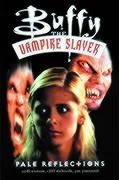
Buffy the Vampire Slayer: Pale Reflections


By Andi Watson, Doug Petrie, Cliff Richards & Joe Pimentel (Dark Horse/Titan Books)
ISBN: 978-1-84023-236-6

Having conquered television, Buffy the Vampire Slayer began a similar crusade with the far harder to please comicbook audiences. Launched in 1998 and offering smart, sassy tales to accompany the funny, action-packed and mega-cool onscreen entertainment, the series began in an original graphic novel (Buffy the Vampire Slayer: the Dust Waltz) before debuting in a monthly series.

She quickly became a major draw for publisher Dark Horse – whose line of licensed comicbook successes included Star Wars, Indiana Jones, Aliens and Predator – and her exploits were substantially supplemented by a profusion of short stories in the company’s showcase anthology Dark Horse Presents and other venues.

Scripted primarily by Andi Watson, this particular UK Titan Books edition – with depiction and delineation from Cliff Richards & Joe Pimentel – features stories set during TV Season 3 and re-presents issues #17-19 (January through March 2000), as well as a delicious and timely morsel first seen in Dark Horse Presents #141, March 1999.

Check your facts here: Buffy Summers was a gormless charm-free cheerleaderValley Girl until the night when she inexplicably turned into a hyper-strong, impossibly durable monster-killer.

After being stalked by a creepy old coot from a secret society of Watchers she discovered that she was the most recent recipient of a millennial mystic curse which transformed mortal maids into living death-machines to all things undead arcane or uncanny: a Slayer.

Moving with her mom to typical California hamlet Sunnydale, Buffy then learned her new hometown was located on the edge of an eldritch gateway known to the unhallowed as The Hellmouth.

Enrolling at Sunnydale High Buffy made some friends and, schooled by new Watcher Rupert Giles, conducted a never-ending war on devils, demons and every shade of predatory supernatural species inexorably drawn to the area…

This slim supernal compilation at last concludes ‘Bad Blood’ – an extended storyline which pitted the daring, darling “Scooby Gang” against ambitious, narcissistic psycho-killer vampire Selke and her new breed of modified demonic thralls.

When vain Selke’s face was ruined in battle she naturally sought out a plastic surgeon. Dr. Flitter took up her cause, restoring and improving the vampire with the promise of immortality as his oft-postponed reward.

However, since scientific procedures didn’t work, he resorted to magic and his researches found a way to turn vampire blood into a super-steroid for Selke and her chosen brood. Now she and her newly-minted children of the night hunt not only humans for food, but other vampires to provide the raw ingredients of the Bad Blood serum…

Despite a rather full dance card, however, Selke cannot forget what Buffy did and is increasingly obsessed with making the Slayer suffer…

Selke’s über-vamps are also making much mischief, and Buffy and recently restored undead lover Angel are finding them almost impossible to destroy…

As a nocturnal civil war breaks out between Selke’s squad and the town’s “normal” vampires, Selke urges Flitter to use the blood to make a Slayer antipersonnel weapon – a sorcerous clone designed to hunt down and slaughter the original…

The saga picks up in ‘Your Cheatin’ Heart’ as Willow, Cordelia, Oz, Xander and Buffy are forced to join in school-type activities by building a float for an upcoming parade. Angel, meanwhile, has captured one of Selke’s new ‘Roid Rage Vamps and started obtaining answers in a manner most un-heroic…

On the midnight streets, Buffy is ambushed by her mystic clone and, after a blistering battle, loses. Elsewhere Selke, unaware that a new faction has sabotaged her modified blood supply, gorges herself on the foul brew…

After disposing of Buffy’s body down a handy manhole, the doppelganger attempts to infiltrate the Scooby Gang, but although she has the Slayer’s memories, her attitudes are seriously skewed. For instance, her knowledge of fashion rivals Cordie’s…

Tensions rise in ‘She’s No Lady’ as the clone starts to degrade. Born of Bad Blood, she casts no reflection and can’t see her face, but once she notices the flesh of her shoulder coming off she heads straight back to Doc Flitter…

The cosmetic alchemist has already discovered that someone has adulterated his buckets of blood and Selke is completely out of control when the clone arrives, leaking from many lesions.

None of them are aware that under Sunnydale Buffy is slowly recuperating, assisted by a shambling earlier prototype previously discarded by Flitter.

As Angel sneaks in and destroys the reservoir of augmented blood, the raging, oblivious Selke orders the duplicate to fetch Buffy’s body and prove she’s dead…

The gory carnival of chaos concludes in ‘Old Friend’ as the clone confronts the Slayer and her earlier incarnation in the sewers, whilst above ground Willow and Giles examine “Buffy’s” blood on a discarded parade costume and uncover the awful truth…

When Selke sees the decimation wrought by Angel, she goes berserk, body rapidly mutating into monstrosity, just as the long-awaited procession begins through Sunnydale. Her depredations are interrupted by the battered but victorious Buffy who spectacularly destroys Selke and ends the Bad Blood menace forever.

However in the shadows, deadly demon lovers Spike and Drusilla fade from sight, taking their new toy Dr. Flitter with them…

Supplemented by the usual wealth of photos and covers by Jeff Matsuda, John Sibal, Randy Green & Andy Owens, this chronicle also includes ‘Killing Time’ – a short adventure by Doug Petrie, Richards and Pimentel wherein three sulky Goth girls manifest chronal ravager Ragginor and the Slayer has to defeat the demon before all time ends…

Here is another superbly accessible magical fight-fest – even for those unfamiliar with the vast backstory: a creepy chronicle of short stirring sagas as easily enjoyed by the most callow neophyte as by any dedicated devotee.
Buffy the Vampire Slayer ™ & © 2000 Twentieth Century Fox Film Corporation. All rights reserved.

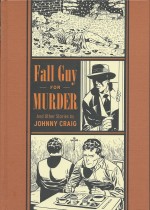
Fall Guy for Murder and Other Stories


By Johnny Craig, with Ray Bradbury, Bill Gaines & Al Feldstein (Fantagraphics Books)
ISBN: 978-1-60699-658-4

From 1950-1954 EC was the most innovative and influential comicbook publisher in America, dominating the genres of crime, horror, adventure, war and science fiction. They even originated an entirely new beast – the satirical comicbook.

After a shaky start, following the death of his father (who actually created Comicbooks in 1933), new head honcho William Gaines and his trusty master-of-all-comics trades Al Feldstein turned a slavishly derivative minor venture into a pioneering, groundbreaking enterprise which completely altered the perception of the industry and art form.

As they began co-plotting the bulk of EC’s output together, intent on creating a “New Trend” of stories aimed at older and more discerning readers – and not the mythical 8-year-old comicbooks ostensibly targeted – they shifted the emphasis of the ailing company towards dark, funny, socially aware and more adult fare.

Their publishing strategy also included hiring some the most gifted writers and artists in the field. One of the very best and most undervalued today was Johnny Craig…

This lavish monochrome hardcover volume, part of Fantagraphics’ EC Library, gathers a chilling collection of Craig’s supernatural suspense and especially his superbly Noir-drenched crime stories in a wonderful primer of peril packed with supplementary interviews, features and dissertations, beginning with the informative and picture-packed ‘Brilliant Good Guys, Even More Brilliant Bad Guys’ by lecturer Bill Mason, after which the succession of classic genre tales begins with  ‘One Last Fling!’ from Vault of Horror #21 October/November 1951. Craig was an absolute master of pen-and-ink illustration, but his scripting was just as slick and deceptively, hilariously seductive.

In his initial yarn here, a circus knife-thrower refused to let the mere fact that his beloved assistant had become a vampire drive them apart, whilst ‘Out of the Frying Pan…’ (from Crime SuspenStories #8, December 1951/January 1952) is a wry gem of misdirection, as a temporarily blind killer lets the wrong little old man plan his escape from hospital for him…

From Vault of Horror #22 (December 1951/January 1952), ‘Fountains of Youth!’ was straightforward supernatural thriller about a vitality-leeching monster, but ‘Understudy to a Corpse!’ (Crime SuspenStories #9, February/March 1952) was a brilliantly twisty murder-plot involving a penniless actor who murdered his uncle and diverted police attention by impersonating the victim post mortem. It did not go according to plan…

‘A Stitch in Time!’ (Vault of Horror #23 February/March 1952) is a grotesque classic in which a tyrannical sweatshop boss pays a ghastly price for abusing the desperate seamstresses in his employ, before ‘…Rocks in His Head!’ from Crime SuspenStories #10 (April/May 1952) sees a harassed hard-pressed surgeon with a greedy young wife making a disastrous choice when faced with a jewel-bedecked corpse to autopsy, and ‘A Bloody Undertaking!’ (Vault of Horror #24, April/May 1952) takes the same theme into supernatural territory as a pretty young thing turns the head of an old country doctor who really should know better…

Regarded as one of the company’s slowest creators, Craig nevertheless found time to illustrate scripts by Gaines & Feldstein such as ‘…On a Dead Man’s Chest!’ (Haunt of Fear #12 March/April 1952) wherein, after a sordid affair and brutal murder, retribution from beyond the grave sought out the victim’s wife and philandering brother…

‘Stiff Punishment!’ from Crime SuspenStories #11 June/July 1952 was all Craig, however, and again dealt with the pressures of greedy young things who wed staid old doctors. This time when the medical lecturer finally snapped he thought he had the perfect way to hide the body – but, ironically, he hadn’t…

In ‘Séance!’ (Vault of Horror #25 June/July 1952) a couple of conmen kill a mark who learns too much but are undone when the widow consults their own spiritualist for answers, after which Gaines & Feldstein scripted a shocking tale of gluttony and a vengeful sword-swallower in the gloriously macabre ‘Fed Up!’ from Haunt of Fear #13 May/June 1952.

The genuine tension of ‘The Execution!’ (Crime SuspenStories #12 August/September 1952), wherein a death row inmate waited for the witness who could save him from the chair, came from one simple shocking fact. In Craig’s stories the good guys didn’t always win, and justice was frequently derailed and even cheated…

‘Two of a Kind!’ (Vault of Horror #26 August/September 1952) offered a sexually charged love story of the most extreme kind of sacrifice, whilst in ‘Silver Threads Among the Mold!’ (Vault of Horror #27 October/November 1952) an avaricious model regrets making a fool of the sculptor who adores and supports her, and ‘Sweet Dreams!’ (Crime SuspenStories #14 December 1952/January 1953) reveals the dire lengths an insomniac will stoop to in search of a little rest.

‘Till Death…’from Vault of Horror #28, December 1952/January 1953 – is, for many fans, the ultimate zombie story as a besotted plantation owner loses his new bride to disease and soon learns to regret using voodoo to restore her to his side.

‘When the Cat’s Away…’ (Crime SuspenStories #15 February/March 1953) is pure Crime Noir as a cuckolded husband deals with his wife and best friend with finesse and grim finality, whilst ‘The Mausoleum!’ from Vault of Horror #29, February/March 1953, sees an English landowner sell his family castle to a ghost-crazy American, lock, stock and damning evidence of the murder he committed to inherit everything…

‘Rendezvous!’ (Crime SuspenStories #16 April/May 1953) brilliantly outlines the sheer dumb luck that scotched the perfect murder/insurance scam, after which ‘Split Personality!’ (Vault of Horror #30 April/May 1953) details the incredible lengths to which a con artist went to deprive identical twin sisters of their fortunes…

‘Touch and Go!’ from Crime SuspenStories #17 June/July 1953 is Craig’s sublimely paranoiac and compulsive adaptation of the Ray Bradbury vignette about a killer who left damning fingerprints, whilst romantic obsession underpins the tragic tale of an artist-turned-mugger who only stole to pay for true love’s medical bills in ‘Easel Kill Ya!’ from Vault of Horror #31 June/July 1953.

This addictive compilation concludes with a devilishly convoluted tale of a Private Eye set up to take the blame for a perfect crime. Written by Gaines & Feldstein, ‘Fall Guy for Murder!’ (Crime SuspenStories #18 August/September 1953) is the quintessential 1950s crime story: smart, scary, devious and morally utterly ambiguous…

The comics classics are then followed by more background revelations via S.C. Ringgenberg’s in-depth personal history in ‘Johnny Craig’ – complete with a stunning selection of Craig’s most eye-catching and controversial covers – and a general heads-up on the short-lived but world-shaking  phenomenon in ‘The Ups and Downs of EC Comics: A Short History’ by author, editor, critic and comics fan Ted White and the comprehensively illuminating ‘Behind the Panels: Creator Biographies’ by Mason, Tom Spurgeon and Janice Lee.

The short, sweet but severely limited output of EC has been reprinted ad infinitum in the decades since the company died. These titanic comics tales revolutionised not just our industry but also impacted the whole world through film and television and via the millions of dedicated devotees still addicted to New Trend tales.

Fall Guy for Murder is the fifth Fantagraphics compendium highlighting the contributions of individual creators, adding a new dimension to aficionados’ enjoyment whilst providing a sound introduction for those lucky souls encountering the material for the very first time.

Whether an aged EC Fan-Addict or the merest neophyte convert, this is a book no comics lover or crime- caper victim should miss…

Fall Guy for Murder and Other Stories © 2013 Fantagraphics Books, Inc. All comics stories © 2013 William M. Gaines Agent, Inc., reprinted with permission. All other material © 2013 the respective creators and owners.
Win’s Christmas Gift Recommendation: Brooding menace and stunning drama leavened with black humour… 10/10

The Amazing, Enlightening and Absolutely True Adventures of Katherine Whaley


By Kim Deitch (Fantagraphics Books)
ISBN: 978-1-60699-631-7

Since the 1960s Kim Deitch has been one of most consistently effective stars of America’s Commix Underground, although as with Harvey Pekar’s American Splendor, it is only relatively recently that he has won wider acclaim. This has been primarily through a series of interconnected prose-and strip fantasies such as Boulevard of Broken Dreams, Shadowland, The Search for Smilin’ Ed and other multi-layered alternative history/faux biographies such as the book under review here.

For the past two decades he has been producing occasional short stories about a down-at-heel carnival and the shabby, eccentric no-hopers who have populated it throughout the 150 years of its existence, the eerie aliens who have preserved its posterity and, of course, the immortal Waldo the Cat.

That saga organically grew into explorations of the minor characters they encountered and soon a great big narrative snowball started rolling…

In The Amazing, Enlightening and Absolutely True Adventures of Katherine Whaley, we return to the increasingly formalised, craftily chronicled Deitch Universe, albeit tangentially, wherein the author focuses on other members of his inexhaustible cast all the while tellingly revealing lost secrets of American history through a lens of scholarly examination and conspiracy theory woven through popular culture scenarios of the past.

Notionally picking up on a minor player last seen in Deitch’s Pictorama, the story here explores the incredible life of an unprepossessing little old lady, as disclosed in a letter left as part of a bequest…

The story-within-a-story begins in the grotty logging town of Lumberton, New York State in 1908, when demure Katherine Whaley, after failing as librarian and school teacher, took a job playing piano in the brand new movie theatre operated by old man Braunton as just another way to deprive lumberjacks and dissolute townies of their hard-earned cash.

The early 20th century was a time of immense and radical social change and after a brush with movie stardom – courtesy of a roving chapter-play Production Company – Katherine makes the acquaintance of the charismatic Charles Varnay and his super-intelligent dog Rousseau, whose esoteric and beguiling beliefs in the nigh-mystical powers of “Enlightenment” carry her off her on an odyssey of self-discovery…

Varnay sees her as the personification of that noble conceptual ideal and wants her to star in a movie serial that will spread his life-changing philosophy to the world’s masses. Naturally, much of her part as The Goddess of Enlightenment involves acting in the nude…

Covering the major cultural landmarks of the early century, from movie mania, the Jazz Age, the Great War and Prohibition, Katherine’s account swings between dubious memoir to laudatory manifesto as her perceptions and opinions of the mysterious Varnay swing from philandering charlatan to messianic superman.

Whilst she might find it hard to accept that the philosopher possesses actual recordings of Jesus Christ delivering his teachings, undiluted by millennia of obfuscating organised religion, there is no doubt that Varnay has great power: after all he stopped her aging and may himself be more than 200 hundred years old…

The beauty of this tale is the complex detail with which it unfolds: the grace and wit with which Deitch overlays historical fact with brilliant fabrication. Thus, I’m certainly not going to spoil the sheer revelatory enchantment for you by giving anything away…

With this surreal historiography of the little-known peripheries of the birth of cinema, Deitch has concocted another utterly unique and absorbing graphic treat – printed in a lavish widescreen format in this stunning monochrome hardback – again sharing the intoxicating joys of living in the past and dwelling in shared social memories.

Combining science-fiction, conspiracy theory, pop history, fact and legend, show-biz razzmatazz and the secret life of Beavers with a highly developed sense of the absurdly meta-real, the author once more weaves an irresistible spell that charms, thrills and disturbs whilst his meticulous drawing holds the reader in a deceptively loose yet inescapable grip.

Follow the secret saga of the World According to Deitch and you too will succumb to the arcane allure of his ever-unfolding cartoon parade revealing the “Americana Way”. In Fact – or Fiction – you might already be there, but you’ll never know unless you look…

© 2013 Kim Deitch. This edition © 2013 Fantagraphics Books, Inc. All Rights Reserved.