
Thanks to the generosity of those fine people at Titan Comics we have a spiffy, brand, spanking new copy of Steed and Mrs Peel to give away so it’s time to show your True Brit Grit by answering three little questions – they be waiting for you at the end of this review…
Steed and Mrs. Peel volume 1: A Very Civil Armageddon

By Mark Waid, Caleb Monroe, Steve Bryant, Will Sliney, Yasmin Liang & Chris Rosa (Boom! Studios/Titan Books)
ISBN: 987-1-60886-306-8
Generally when I write about the Avengers here we’re thinking about an assembled multitude of Marvel superheroes, but – until the recent movie blockbuster stormed the world – for most non-comics civilians that name usually conjured up images of dashing heroics, old world charm, incredible adventure and bizarrely British festishistic attire.
It’s easy to see how that might lead to some consumer confusion…
The (other) Avengers was/were an incredibly stylish and globally popular crime/spy TV show made in Britain which glamorously blended espionage with arch, seductively knowing comedy and deadly danger with elements of technological fantasy from the 1960s through to the beginning of the 1980s. A phenomenal cult hit, the show and its sequel The New Avengers is best remembered now for Cool Britannia style action, kinky quirkiness, mad gadgetry, surreal suspense and the wholly appropriate descriptive phrase “Spy Fiâ€.
The legacy of the series is still apparent in many later hit shows as The Invisible Man (both TV spy iterations), Chuck, the new Mission: Impossible movies and even Marvel’s Agents of S.H.I.E.L.D.
Enormously popular all over the globe – even Warsaw Pact Poland was crazy for Rewolwer i melonik (or A Revolver and a Bowler Hat) – the show gradually evolved from a gritty crime/vengeance thriller entitled Police Surgeon in 1961 into a paragon of witty, thrilling and sophisticated adventure lampoonery with suave, urbane British Agent John Steed and dazzlingly talented amateur sleuth Mrs. Emma Peel battling spies, robots, criminals, secret societies, monsters and even “aliens†with tongues very much in cheeks and always under the strictest determination to remain cool, dashingly composed and exceedingly eccentric…
The format was a winner. Peel, as played by (Dame) Diana Rigg, had been a replacement for landmark character Cathy Gale – the first hands-on fighting female in British television history – who left the show in 1964 to become Bond Girl Pussy Galore in the movie Goldfinger. However Rigg’s introduction took the show to even greater heights of success and recently bereaved actress Emma Peel’s huge popularity with viewers cemented the archetype of a powerful, clever, competent woman into the nation’s psyche and forever banished the screaming, eye-candy girly-victim to the dustbin of popular fiction.
Rigg left in 1967 (she married James Bond in On Her Majesty’s Secret Service) and another feisty female was found in the person of Tara King (Linda Thorson) to carry the series to its demise in 1969. Its continued popularity in more than 90 countries eventually resulted in a revival during the late 1970s. The New Avengers saw glamorous Purdey (Joanna Lumley) and brutishly manly Gambit (Gareth Hunt) acting as partners and foils to the agelessly debonair and deadly Steed…
The show has remained a hugely enticing cult icon. There was a rather ill-conceived major motion picture in 1998, and in 2007 America’s TV Guide ranked the TV iteration the 20th Top Cult TV Show Ever. During its run and beyond, the internationally adored series spawned toys, games, collector models, a pop single and stage show, radio series, posters and books and all the myriad merchandising strands that inevitably accompany a media sensation.
Naturally, as a popular British Television program these Avengers were no stranger to our comics pages either.
Following an introductory strip starring Steed & Gale in listings magazines Look Westward and The Viewer plus the Manchester Evening News (September 1963 to the end of 1964), legendary children’s staple TV Comic launched its own Avengers strip in #720 (October 2nd 1965) with Emma Peel firmly ensconced. This serial ran until #771 (September 24th 1966) and the dashing duo also starred in the TV Comic Holiday Special, whilst a series of young Emma Peel adventures featured in June & Schoolfriend.
The feature then transferred to DC Thomson’s Diana until 1968 whereupon it returned to TV Comic with #877, depicting Steed and Tara King until 1972 and #1077.
In 1966 there was a one-off, large-sized UK comicbook from Mick Anglo Studios whilst in America, Gold Key’s Four-Color series published a try-out book in 1968 using recycled UK material under the rather obvious title John Steed/Emma Peel – since Marvel had already secured an American trademark for comics with the name “Avengersâ€â€¦
There were also a number of wonderful, sturdily steadfast hardback annuals for the British Festive Season trade, beginning with 1962’s TV Crimebusters Annual and thereafter pertinent TV Comic Annuals before a run of solo editions graced Christmas stockings from 1967-1969 plus a brace of New Avengers volumes for 1977 and 1978.
Most importantly, Eclipse/ACME Press produced a trans-Atlantic prestige miniseries between 1990 and 1992. Steed & Mrs. Peel was crafted by Grant Morrison & Ian Gibson with supplementary scripting from Anne Caulfield.
That tale was reprinted in 2012 by media-savvy publishers Boom! Studios and acted as a kind of pilot for the current iteration under review here. The adventures of Steed and Mrs. Peel Ongoing began soon after and this initial compilation – collecting issues #0-3 from August to December 2012 – form a worthy reintroduction for the faithful and happily accessible introduction for notional newcomers as the dedicated followers of felons return for another clash with memorable TV antagonists The Hellfire Club.
These baroque bounders appeared in the TV episode ‘A Touch of Brimstone’ and so warped the maturing personalities of young Chris Claremont and John Byrne that they later created their own version for a comicbook they were working on – the Uncanny X-Men…
The drama here opens in ‘A Very Civil Armageddon: Prologue’ (written by Boom! chief creative guru Mark Waid and illustrated by Steve Bryant) as, back in the style-soaked Swinging Sixties, our heroes are called upon to investigate ‘The Dead Future’ and how an active – albeit murdered – agent can seemingly age decades overnight.
The situation reminds Mrs. Peel of the mind-bending, lethally effective fun-and-games perpetrated by the insidious Hellfire Club and its now-defunct leader the Honourable John Clever Cartney…
Further inquiries take them to the latest incarnation of the ancient Gentleman’s Club where the futurist Ian Lansdowne Dunderdale Cartney disavows any knowledge of the matter or his dad’s old antisocial habits. In fact the current scion is far more absorbed with the World of Tomorrow than the embarrassing peccadilloes of the past. However it’s all a trap and whilst Emma is attacked by a killer robot maid Steed is ambushed – only to awaken as an old man 35 years later in the year 2000AD!
Forever undaunted, the temporarily separated Derring-Duo refuse to believe the improbable and impeccably strike back individually to uncover the incredible answer to an impossible situation…
The main feature, by Waid and Caleb Monroe with art from Will Sliney, then sees ‘London Falling’ as the long-dreaded nuclear Armageddon finally happens, leaving Steed, Peel and a swarm of politicians, Lords and civil servants as the only survivors in a battered atomic bunker beneath a utterly devastated Houses of Parliament.
The shattered, shaken remnants of Empire and Civilisation are astounded to discover that the only other survivors are ghastly atomic mutants and a coterie of exceptionally well-stocked and fully prepared members of the Hellfire Club…
‘Life in Hell’ finds the former foes joining forces and combining resources, but Steed and Peel are convinced that something is “not kosherâ€. For one thing former members of once-important political committees and knowledgeable generals keep disappearing, but most importantly Ian Cartney and his deplorable sister Dirigent are now known to be masters of their father’s dark arts of illusion, trickery and brainwashing…
Steed rumbles to the nature of an audaciously cunning Psy-Ops espionage scheme almost too late as Emma is once again transformed into a ferocious, whip-wielding bondage nightmare in the concluding instalment ‘Long Live the Queen’. Of course, a good spy, like a boy scout, is always prepared and the dapper detective cleverly turns the tables on his foes just in time for a rollicking, explosively old-fashioned comeuppance…
Wry, arch and wickedly satisfying, this opening salvo in the reborn franchise is a delight for staunch fans and curious newcomers alike and this volume also includes a vast (28) covers and variants gallery by Joseph Michael Linsner, Phil Noto, Joshua Covey & Blond, Mike Perkins & Vladimir Popov and Drew Johnson to astound the eyes as much as the story assaults the senses…
© 2013 StudioCanal S.A. All rights reserved.
OK. All clued in?
Would you like to own this book without paying? If so then this is your chance.
All you have to do is enter this piffling little contest and trust to luck…
It’s free and absolutely anybody can join in. You can enter as many times as you want but there’s only one prize and my word is final in every instance.
Below are three multiple choice questions. Simply send your best guesses using Leave a Reply and we’ll pull a correct entry out of our digital bowler hat on December 1st.
Do Not Text, Tweet, Telephone or Telepath us. Just append the name of the lucky person you want to receive the prize with the three letters of your divination in the review’s comment section and we’ll take it from there.
Please do not send us your address. If you win we’ll contact you and ask for where you want the book sent.
Unless you’re residing at the ends of the Earth (in which case the parcel may take a little longer to arrive) the winner should have this treasured possession in time for Christmas, even with British post-privatised post practises…
Ready… Set… Go!
- The Avengers were known by what title in Poland?
- A Revolver and a Bowler Hat.
- Hard Hat and Leather Boots.
- Umbrellas and Kicks.
- Mrs Peel was Steed’s second karate-kicking female fighting partner. Who preceded her?
- Sue Storm.
- Tara Tempest.
- Cathy Gale.
- Patrick MacNee & Honor Blackman produced an infamous Avengers spin-off novelty pop single in 1964. What was it called?
- These Boots Are Made for Kicking.
- Have some Madeira, M’Dear.
- Kinky Boots.
Good luck one and all…
Uncanny Avengers volume 3: The Apocalypse Twins
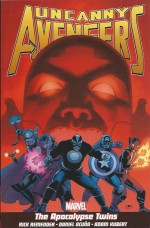
By Rick Remender, Gerard Gorman Duggan, Daniel Acuña & Adam Kubert (Marvel/Panini UK)
ISBN: 978-1-84653-564-2
In the aftermath of the Avengers versus X-Men publishing event, company-wide reboot MarvelNOW! repositioned and recast the entire continuity in the ongoing never-ending battle to keep old readers interested and pick up new ones.
What You Need to Know: Once upon a time mutant Avenger Wanda Maximoff – daughter of arch-villain Magneto and known to the world as the Scarlet Witch – married android hero The Vision and they had (through the agency of magic and her unsuspected chaos-energy fuelled ability to reshape Reality) twin boys. Over the course of time it was revealed that her beloved sons were not real and they subsequently vanished (for further details see Marvel Platinum: the Definitive Avengers).
As years passed her loss slowly drove Wanda mad, and when she finally slipped completely over the edge the resultant slaughter-spree destroyed many of her Avengers team-mates. The effects of her actions subsequently reshaped the entire Marvel Universe, resulting in climactic reboot Avengers Disassembled.
The team had barely recovered from that catastrophe before she overwrote Reality again, altering recent Earth history such that mutants ruled over a society where humans or “sapiens†were an acknowledged evolutionary dead-end living out their lives and destined for extinction within two generations.
It took every champion on Earth and a huge helping of luck to put that genie back in a bottle (another colossal crossover – House of M), and in the aftermath less than 200 mutants were left on Earth…
The Witch was partially rehabilitated and began her quest for redemption during the aforementioned Avengers versus X-Men with the World’s Mightiest Heroes striving against the remaining mutants for control of Hope Summers: a girl born to be mortal host to the implacable force of cosmic destruction and creation known as The Phoenix.
However the primal phenomenon instead possessed a quintet of X-Men, corrupting them by manifesting their dream of making Earth a paradise for besieged, beleaguered Homo Superior.
In the ensuing conflict humanity was briefly enslaved before, inevitably, the selfish appetites of the Phoenix Force caused those possessed to turn upon each other. Soon its transcendent power transformed rallying figurehead and mutant freedom-fighter Cyclops into another apparently unstoppable, insatiable “Dark Phoenixâ€.
At that crossroads moment his beloved mentor Charles Xavier, founder of the X-Men and formulator of the aspiration of peaceful mutant/human co-existence returned, only to be killed by his most devoted disciple…
Professor X’s death united X-Men and Avengers but, in the days following the expulsion of the Phoenix Force, progress and reconciliation stalled. The mostly human world festered with resentment even as new mutants began to manifest, and liberated mankind again fell into its old habits: intolerance, violence and bigoted, vigilante outrages…
When undying über-Nazi the Red Skull stole Xavier’s brain and appropriated the deceased mutant’s awesome telepathic abilities, his terrorist outrages were halted by a new team of Avengers: one formed by Captain America and S.H.I.E.L.D. to counter the rising tide of inter-species hostility…
Having been born out of one wave of genocidal race-hatred, the Sentinel of Liberty was painfully aware that America’s mutant minority had been poorly served – if not actively institutionally discriminated against – and sought to make amends by continuing Xavier’s utopian vision. To that end he convened the high-profile, affirmatively-active Avengers Unity Division, comprising human and mutant heroes working together.
The quintessential Avenger chose former government agent Havok (Cyclops’ brother Alex Summers) to lead the team, which consisted of himself, Thor, Scarlet Witch, Rogue, Wolverine, Sunfire,and the squad’s bloody baptism of fire saw them stop the Skull’s freakish army of bio-engineered S-Men and seemingly prove the promise of the premise.
However at a very public press conference inducting two new members – Wonder Man and the Wasp – they were attacked by ancient enemy Grim Reaper. The clash ended when mutant Rogue slaughtered the psychopath in full view of the horrified watching world. In one shocking instant the entire enterprise seemed utterly undermined with all that hard-won pro-mutant progress wasted…
Collecting Uncanny Avengers #6-11 (cover-dated June to October 2013), and the spin-off Uncanny Avenger AU #8 (July), this astounding celebration of the magic of Fights ‘n’ Tights fiction kicks everything into time-busting cosmic overdrive as the harried heroes fall prey to the bewildering machinations of arch-nemesis Kang the Conqueror and his most potent pawns The Apocalypse Twins…
It all begins in Scandinavia in 1013AD where/when a young, cocky and rebellious Thor is attacked by En Sabah Nur, immortal mutant Apocalypse and agent of the all-powerful Space Gods dubbed Celestials. The grotesque creature believes he is safeguarding the future by promoting the triumph of only the very strongest mutants, but all the petulant Thunderer knows is that he has been shamed and thrashed by a freak with an unfair advantage – star-forged armour…
Apocalypse is guided in his seemingly random attacks by former enemy Pharaoh Rama-Tut who advocates pre-emptive attacks on certain beings: those whose descendents would one day unite to resist the mutant advocate of Survival of the Fittest: the ancestors of a group called Avengers…
In Asgard Thor learns that his father Odin is subject a non-aggression pact with the Celestials but is too headstrong and angry to put aside his grievance. When sternly told to drop the matter, the furious godling finds suspiciously handy help from his malevolent half-brother Loki who shows him a spell which can enchant Thor’s battle-axe JarnBjorn into a weapon capable of rending even Celestial armour…
Delighted with his new unstoppable blade, Thor goes looking for a rematch and does not see that a stranger has been masquerading as his brother…
The Storm Lord arrives in primitive London just as Apocalypse attacks the next name on Rama-Tut’s list; a warrior named Folkbern Logan…
The Pagan soldier has been attacked by Apocalypse’s Four Horsemen and Thor is the answer to his prayers, wielding JarnBjorn with devastating effect. Saving Logan, destroying the servants and grievously wounding Apocalypse he returns to Asgard only to be severely admonished by Odin, even as elsewhen Apocalypse realises he has been played for a fool by Rama-Tut. The real winner is Kang who quietly takes his intended prize – a weapon even Space Gods cannot endure…
In our present, Apocalypse has been recently killed and many deadly creatures vie for the dubious honour of assuming his mantle and role as mutant messiah/exterminator of humanity. Thus on solar-orbiting Starcore Station his appalling son Genocide petitions the Celestials to accept him as their new agent…
The Celestials are a crucial component in the mechanics of the cosmos, their only interest being the raw, unstoppable processes of evolution. However when the enigmatic Apocalypse Twins materialise, they exercise their claim as true heirs by using JarnBjorn to achieve the impossible: executing the omnipotent Celestial Gardener and thereby endangering the very fabric of existence…
On Earth Havok has just successfully defended Rogue from murder charges at a S.H.I.E.L.D. hearing and attempts to keep her busy and out of sight by sending her after Magneto when news arrives that Earth’s alien early warning satellite The Peak is under attack.
Wanda meanwhile is trying to talk with WonderMan. Their relationship has been strained ever since she killed and resurrected him and the traumatised energy being is undergoing a few confusing life-changes. For one thing he’s now become a pacifist. He will help the team in every way possible… except by fighting…
Despite all efforts the Avengers are unable to save The Peak from the Twins, who use the fallen Celestial’s vehicle to send the station crashing down on Rio de Janeiro. Although Thor and Sunfire are able to save the city from obliteration the rest of the team are more concerned with a secret they have just uncovered: Wolverine’s hidden role in the death of the Twin’s birth-father – the former X-Man Warren Worthington, AKA Archangel…
Whilst all this is occurring Captain America is fighting for his life in war-torn South Sudan and manoeuvred into uncovering a message from a mysterious ally purporting to know what is actually going on.
The Twins are also aware of layers of deceit. Raised by Kang in time-warped isolation Eimin and Uriel are beginning to suspect their patron’s motives and each other’s dedication. These qualms do not prevent them from detonating an atomic blast just as the rest of the Avengers arrive to supplement Thor and Sunfire…
The Marvel Universe is a busy place and whilst this saga was unfolding another major event was simultaneously unfolding in the pages of Age of Ultron. There, a time-warping event created an alternate Earth where the malign mechanoid took over the world from a point in Earth’s future. The epic spawned a plethora of “extra†issues – such as Uncanny Avengers #8AU – wherein the characters from the alternate timeline spawned by the temporal tribulations offered decidedly different tales of our most famed champions.
In this chronal digression – written by Gerard Gorman Duggan and illustrated by Adam Kubert – we glimpse the formative years of the Apocalypse Twins as Kang temporarily frees his twisted children from his private concentration camp in 4145AD. The Lord of Time had been raising them in such harsh conditions to temper them for future roles, but now seeks to test his charges with a first mission of assassination.
The target is veteran Red, White and Blue Sentinel of Justice Colonel America but the operation does not go according to plan…
Returning with #9 to the regularly scheduled tale Ragnarok Now! displays the deepening rift in the Unity team as the resurgent adult Apocalypse Twins continue their campaign for mutant ascendancy by constituting their own squad of Horsemen to winnow humanity and its heroes. These heralds of Mutant Rapture and human disaster are not the bio-engineered creatures their true father preferred however.
The children of En Sabah Nur instead opt for a quartet of dead horrors to pave their way to triumph…
In Sudan meanwhile, Captain America digests information received from the godlike Immortus – another “master of time†and purportedly Kang’s reformed future self. The decidedly untrustworthy savant has entrusted the Star Spangled Avenger with the actual nature of reality and revealed why the Twins must be stopped as well as the ghastly consequences should they win the ongoing war to control all times, spaces and realities…
When Cap then learns of Wolverine’s murderous past actions the team splits over philosophy and pragmatism. Havok is hard-pressed to keep the heroes united before the onslaught of the Twins’ zombie Horsemen, Sentry, Banshee, Daken and Grim Reaper: all deadly killers with deep emotional ties to the heroes and all of whom died at the hands of Avengers…
As the Unity squad splits up to tackle the Apocalypse agents, the calamitous clashes only mask the Twins’ secret agenda: they have seemingly seduced the reality-shredding Scarlet Witch to their cause, convincing her to use her world-warping curse to bring about their long-desired ascendancy as instigators of the Mutant Rapture…
To Be Continued…
Scripted by Rick Remender and illustrated by Daniel Acuña, this rather confused and somewhat convoluted, but exceedingly spectacular, complex and ambitious epic may be a bit daunting for casual readers but dedicated followers of mutant mayhem will no doubt adore the fantastic premise and blockbusting scope of events.
Also provoking much applause and approbation are a gallery of covers and variants by John Cassaday & Laura Martin, Milo Manara and Jim Cheung, whilst the selection of 21st century extra content in the form of AR icon sections includes trailers, character bios, creator commentaries and oodles more. The Marvel Augmented Reality App pages grant access to story bonuses once you download the little dickens – free from marvel.com – onto your smart-phone or Android-enabled tablet. So you should do that too, right?
™ & © 2013 Marvel & Subs. Licensed by Marvel Characters B.V. through Panini S.p.A. All rights reserved. A British Edition published by Panini Publishing, a division of Panini UK, Ltd.
Spain: Rock, Roll, Rumbles, Rebels & Revolution
By Manuel “Spain†Rodriguez (Burchfield Penney Art Center/Last Gasp)
ISBN: 978-0-86719-782-2
Manuel Rodriguez was one of the pioneering lights of America’s transformative Underground Commix movement: a mainstay of the counterculture which subversively reshaped the nation’s psyche in the 1960s and 1970s. However, although always a left-leaning radical, infamous for his raucously hyper-violent, audaciously sexual urban vigilante Trashman, Spain was also a quietly dedicated craftsman, historian, educationalist and graphic biographer.
Born in Buffalo, New York state in 1940, the Hispanic kid spent a lot of time with notorious biker gang the Road Vultures and these experiences, as much as his political upbringing and formal education at the SilvermineGuildArtSchool in New Canaan, Connecticut (1957-1960), moulded and informed his entire creative career.
In the 1960s he became a regular contributor to landmark alternative magazine the East Village Other, which not only utilised his burgeoning talents as illustrator and designer but also commissioned, in 1968, his groundbreaking tabloid comicbook Zodiac Mindwarp. That insert proved so successful that EVO subsequently sponsored a regular anthology publication. Gothic Blimp Works was a turning point and clarion call in the evolution of underground publishing.
However, the excessive exploits of Trashman – “Agent of the 6th International†– against a repressive dystopian American super-state were only the tip of the creative iceberg. Ardent left-winger Spain founded the trade organisation the United Cartoon Workers of America whilst contributing to many of the independent comics and magazines which exploded out of the burgeoning counterculture movement across the world.
Manuel Rodriguez was also an erudite and questioning writer/artist with a lifelong interest in history – especially political struggle and major battlefield clashes, and much of his other work revealed a stunning ability to bring these subjects to vibrant life.
The breadth, depth and sheer variety of Spain’s work – from gritty urban autobiography (American Splendor, Cruisin’ with the Hound: the Life and Times of Fred Tooté) to psycho-sexual sci fi (Zap Comix, Skull, Mean Bitch Thrills) is a testament to his incredible talent but the restless artist also found time to produce a wealth of other cartooning classics.
Amongst his dauntingly broad canon of comics material are literary adaptations (Edgar Allen Poe, Sherlock Holmes’ Strangest Cases), historical treatises (War: The Human Cost) and biographies (Ché {Guevara}: a Graphic Biography, Devil Dog: the Amazing True Story of the Man who Saved America {Marine Major General Smedley Darlington Butler}) as well as educational and design works such as You Are a Spiritual Being Having a Human Experience and Nothing in This Book Is True, But It’s Exactly How Things Are (both with Bob Frissell).
He also produced the ongoing comics serial The Dark Hotel for American current affairs, politics and media news aggregation website Salon.
In 2012 Spain finally lost a six-year battle against cancer and this superb book – actually the Exhibition catalogue for a career retrospective at the prestigious Burchfield Penney Art Center at Buffalo State College – celebrates his tumultuous life and spectacular contribution to the art form of graphic narrative with a compelling series of essays as well as a superb selection of the great man’s best pieces including some little known lost treasures.
The appreciation begins with ‘Stand Up’ by Anthony Bannon (Executive Director, BPAC), before the biographical ‘Grease, Grit and Graphic Truth’ by Edmund Cardoni (Executive Director, Hallwalls Contemporary Arts Center) explores Spain’s past, whilst
‘Keep the Flames of Buffalo Burning’ by Don Metz examines his lasting effect on comics and society.
However the true value of this chronicle is in the 60+ covers, designs, story-pages, roughs, panel excerpts and strips both vintage and recent, monochrome and full-colour which demonstrate the sheer talent and drive to communicate that fuelled Spain for his entire life.
The Partial Spain Bibliography 1969-2012 and Selected Spain Exhibitions only hint at the incredible depth and lasting legacy of his career and I’m praying that some enlightened publisher like Fantagraphics or Last Gasp is already toiling on a comprehensive series of “Complete Works of…†volumes…
Stark, shocking and always relevant, the communicative power of Spain is something no true lover of comics can afford to miss.
© 2012 Burchfield Penney Art Center. All rights reserved.
Wolfsmund volume 2
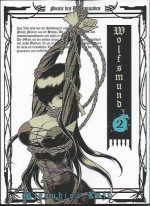
By Mitsuhisa Kuji, translated by Ko Ransom (Vertical)
ISBN: 978-1935654-79-7
There’s not much to found regarding pseudonymous woman of mystery Mitsuhisa Kuji other than that she has worked as assistant to both Kentaro Miura (Berserk) and Kaoru Mori (Emma, Anything and Something), but this simply means that we can appreciate her solely through her work, such as this fearsomely nihilistic and bleakly beguiling historical re-enactment of the legend of William Tell as collected in this second English-language volume of Wolfsmund…
Set in 14th century Switzerland and drawing on historical records, the serial debuted in 2009 as Ookami no Kuchi: Wolfsmund in Seinen publication Fellows! – with four tankÅbon volumes collected thus far – and details the struggle of three formerly autonomous alpine cantons, Uri, Unterwalden and Shwyz, for freedom and independence from the oppressive domination of invaders from what is rapidly becoming the oppressive and savagely rapacious Habsburg Empire.
Unconventionally, rather than starring dashing heroes, this interpretation of the oft-told folktale centres around the monolithic fortress of Wolfsmund, situated in the Sankt Gotthard Pass: an impenetrable keep, barrier and waystation between mountain passes which dictates and controls the population’s ability to move, flee and find allies, intelligence or war materiel. The castle complex forms a crucial trade bottleneck between Germany and Italy and houses a garrison of hard-hearted soldiers commanded by a human monster in angelic form.
Wolfram the Bailiff is a sadistic sentinel with a dark genius for ferreting out insurrection, disposing of freedom fighters and crushing the people’s hopes. So far nobody has survived falling under his excoriating gaze…
The horrific murderously medieval passion play resumes with ‘Hans and Eva Part One’ as another would-be rebel dies from torture and the aging innkeeper of Uri again publicly rows with his lovely and extremely young wife. Gossip is rife amongst the villagers and for once it’s all true: she married him for his money; he wanted her for her body.
Neither of them is fulfilling their side of the bargain, however…
The resistance fighters of the area are more concerned with their impossibly bad luck. Somehow, valued, experienced men keep falling to Wolfram’s agents: it’s almost as if someone is informing on them…
Eva is unhappy. She loves jewels and wants Hans to buy her more, and so the grizzled barkeep makes another secret journey to Wolfsmund to relate conversations overheard in his hostelry. In the meanwhile however Eva haughtily dons all her bling and defiantly parades around Uri where some very desperate men at last put two and two together…
The dark fable concludes in ‘Hans and Eva Part Two’ as with their cover blown the innkeeper and his repentant bride seek safe passage from Wolfram only to learn to their cost what the beautiful psychopath thinks of traitors and betrayers.
The pair are left to the tender mercies of the rebels and only the intervention of the mysterious dark prostitute who plies her trade in the inn outside the mountain keep’s gates – known as the Wolf’s Mouth – prevents Eva’s death at the hands – and nastier members – of the resistance men. The greedy child does not escape justice though…
The remainder of this increasingly dark and shocking saga relates the appalling story of ‘Cedar and Juwel’ as, with the struggle intensifying and Wolfram’s reprisals hitting ever harder, an itinerant street performer and her little girl arrive at the pass. The debased woman Cedar wants to return to her home in Germany and will happily ply the tricks of more than one trade to get there, and she doesn’t seem to care whether her daughter Juwel comes with her or not…
However, after seducing a Bishop she comes to the attention of Wolfram – a far harder audience to impress. The savage games he plays with both mother and child lead to a concatenation of tragedies which compel the mysterious Madam of the Inn to blow her own cover, heralding the foreboding return of the land’s inevitable liberator… the last son of William Tell…
This stunningly bleak and breathtakingly vicious examination of the human cost of national liberation is rendered with astounding skill in a powerful semblance of woodblock-etching (in the manner of Albrecht Dürer): stark, uncompromising illustration which perfectly compliments the daunting milieu, adamantine scenery and cruelly brutal episodes wherein heroes of “the Eternal Alliance†repeatedly try and fail to pass through the Wolf’s Maw or fool the brutally deadly cherub in command…
Harsh, uncompromising and visceral, this unhappy saga is best enjoyed by older readers, and those who realise that not every ending is a happy one…
Wolfsmund is printed in the ‘read-from-back-to-front’ manga format.
© 2010 Mitsuhisa Kuji. All rights reserved.
Marada the She-Wolf

By Chris Claremont & John Bolton (Titan Books)
ISBN: 987-0-85768-632-9
Scantily clad hot chicks swinging swords have been a staple of fantasy comics from their very inception, and probably nobody has done it better – certainly visually – than Chris Claremont and John Bolton. So this smartly recycled, supremely satisfying, luxuriously oversized (302 x 226mm) hardback compilation of their collaborative fantasy saga should be a welcome addition to the shelves of all aficionados of wild adventure and stirring sagas – especially in a world where mystical/historical dramas like Game of Thrones, Atlantis and Da Vinci’s Demons are garnering new interest in “Things Old, Things Forgottenâ€â€¦
As detailed in Jo Duffy’s Introduction and collection Editor Steve Cook’s background essays ‘Birth of a Warrior’, ‘The Art of War’, ‘Epic Tales’ and ‘Legacy’ these stories – set in the cosmopolitan days of Imperial Rome – originally ran in Epic Illustrated (Marvel’s answer to Heavy Metal magazine) beginning with #10, February 1982. Originally the strip appeared in beautiful monochrome wash-and-line, and although I would have preferred them to have been left that way for this collection, Bolton’s sensitive conversion of the art to painted colour is lush, lovely and stunningly effective.
By the way, that possibly waspish crack about recycling doesn’t just refer to the art, superb though it is. The original story started life as a Red Sonja yarn for black and white anthology Bizarre Adventures, before Claremont & Bolton reworked the thing and, by inserting the whole kit and caboodle into the “real†world of the Ancient Roman – albeit embroidered with Celtic myth and legend – added a satisfying layer of dramatic authenticity to the mix which still leaves it head-and-shoulders above all other Sword and Sorcery “Bad Girls†tales, as well as most fantasy fiction…
The literary pre-game warm-up also includes an effusive memo from the author as ‘Claremont on Bolton’ offers more creative insight on why these seldom-seen stories are just so darn good before the wonderment unfolds in the initial tale ‘Marada the She-Wolf: The Shattered Sword’.
The ferociously independent warrior woman is a wandering mercenary whose grandfather was Julius Caesar. When her parents fell into political disfavour she was whisked from the Eternal City to live free and grow wild. Now, years later in the deserts around Damascus she is rescued from slavers by charismatic Warrior-Magician Donal MacLlyanllwyr, but the indomitable Marada he remembers is gone and all he liberates is a broken doll, traumatised by some unspoken horror and utterly devoid of will and spirit.
Mystically transporting her to the arboreal citadel of Ashandriar amidst the misty hills of distant Britain, the baffled soldier seeks the aid of patron sorceress Rhiannon to diagnose, if not cure her malady.
As she gradually recovers the warrior woman forms a bond with Donal’s daughter Arianrhod; a girl of vast, if unschooled, magical power. Before long the ghastly secret of Marada’s malaise is revealed when a demonic creature invades the mystic keep, killing Donal and abducting Arianrhod.
Enraged and desperate Marada is forced to brave Hell itself and slash her way through an army of devils to rescue the child she now considers as much daughter as friend from the wizard and demon conclave who initially broke her as part of a convoluted scheme to reign on Earth…
The re-galvanised She-Wolf is ultimately victorious but the horrific confrontation leaves her and Arianrhod stranded in East Africa. With no other option, the triumphant, exhausted duo begin the long walk home to Albion…
From Epic #12, ‘Royal Hunt’ is a shorter, self-contained tale wherein Marada and Arianrhod, after escaping the Infernal Realm, are taken by Ashake, barbaric Empress of the Amazonian kingdom of Meroë. The Battle Queen offers her captives the dubious distinction of being her quarry in a hunt (a competent if cheekily uninspired variation of Richard Connell’s landmark 1924 short story – and equally influential 1932 movie The Most Dangerous Game).
Sadly both predator and prey are unaware that malign male mercenaries are lurking about, with the worst of all intentions for the unsuspecting women…
Hard fought combat and the sudden intervention of the sneaking male scum makes allies of Ashake and Marada and leads to the voyagers’ final tale, ‘Wizard’s Masque’ (Epic Illustrated #23-24, April & June 1984) which finds the long-lost Europeans aboard the merchant ship Raven, bound for Roman port Massilia. However impetuous Arianrhod gets bored with their slow progress and attempts a transportation spell, opening a portal to nether realms and letting something really ghastly out of hell…
Beating the beast back, Marada falls though the gap in reality to materialise on an Arabic pirate ship currently engaged in a life-and-death clash with soldiers of an Eastern Kaydif. Her sudden presence turns the tide and soon she is partner to flamboyant corsair Taric Redhand, who swears to get her back to her home and lost “daughterâ€â€¦
Unfortunately Marada has also been noticed by sinisterly seductive sorcerer Jaffar Ibn Haroun Al-Rashid. Although he purports to be a friend – and potential lover – able to reunite her with The Raven, he conceals a connection to the same demonic alliance that originally targeted the She-Wolf in faraway Rome. He is also, in all things, a creature of passion and self-serving convictions, capable of absolutely anything to achieve his own ends…
Ultimately however, the lost warrior woman knows she can only depend upon herself to find her way back to Arianrhod and home…
Moody, passionate and powerfully evocative, this is a classic work of comics fantasy that at last has a home and format worthy of it, and will certainly all delight fans of the genre.
© & ™ 2013 John Bolton and Christ Claremont. All rights reserved.
The Art of Archie: the Covers
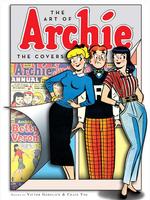
By various, edited by Victor Gorelick & Craig Yoe (Archie Books)
ISBN: 978-1-936975-79-2
Win’s Christmas Gift Recommendation: A perfect celebration of the magic of comicbooks… 10/10
For most of us, comics mean buff men and women in capes and tights hitting each other, lobbing trees about, or stark, nihilistic genre thrillers aimed at an extremely mature and sophisticated readership of confirmed fans – and indeed that has been the prolific norm for nearly twenty years.
However, over the decades since comicbooks were invented in 1933, other forms of sequential illustrated fiction genres have held their own. One that has maintained a unique position over the years – although almost now completely transferred to television – is the teen-comedy genre begun by and synonymous with a carrot topped, homely (at first just plain ugly) kid named Archie Andrews.
MLJ were a small outfit which jumped wholeheartedly onto the superhero bandwagon following the debut of Superman. In November 1939 they launched Blue Ribbon Comics, promptly following with Top-Notch and Pep Comics. The content was the accepted blend of costumed heroes, two-fisted adventure strips and one-off gags. Pep made history with its lead feature The Shield – the industry’s first superhero clad in the American flag – but generally MLJ were followers not innovators.
That all changed at the end of 1941. Even while profiting from the Fights ‘N’ Tights phalanx, Maurice Coyne, Louis Silberkleit and John Goldwater (hence MLJ) spotted a gap in their blossoming market and in December the action strips were joined by a wholesome, ordinary hero; an “average teen†who had invitingly human-scaled adventures that might happen to the readers, but with the laughs, good times, romance and slapstick heavily emphasised.
Pep Comics #22 introduced a gap-toothed, freckle-faced, red-headed goof showing off to the pretty blonde next door. Taking his lead from the popular Andy Hardy movies starring Mickey Rooney, Goldwater developed the concept of a youthful everyman, tasking writer Vic Bloom & artist Bob Montana with the job of making it work.
So effective and all-pervasive was the impact and comforting message the new kid offered to the boys “over there†and those left behind on the Home Front that Archie Andrews and the wholesome image of familiar, beloved, secure Americana he and the Riverdale gang represented, one could consider them the greatest and most effective Patriotic/Propaganda weapon in comics history…
It all started with an innocuous 6-page tale entitled ‘Archie’ which introduced the future star and pretty girl-next-door Betty Cooper. Archie’s unconventional best friend and confidante Forsythe P. “Jughead†Jones also debuted in that first story as did the small-town utopia they lived in.
The premise was an instant hit and in 1942 the feature graduated to its own title. Archie Comics #1 was the company’s first non-anthology magazine and began an inexorable transformation of the entire company. With the introduction of rich, raven-haired Veronica Lodge, all the pieces were in play for the industry’s second Phenomenon (Superman being the first).
By May 1946 the kids had taken over and, retiring its heroic characters years before the end of the Golden Age, MLJ renamed itself Archie Comics, becoming to all intents and purposes a publisher of family comedies. This overwhelming success, like the Man of Tomorrow’s, forced a change in the content of every other publisher’s titles and led to a multi-media industry including a newspaper strip, TV, movies, pop-songs and even a chain of restaurants.
Intermittently the costumed cut-ups have returned on occasion but Archie Comics now seems content to specialise in what they do uniquely best.
The eponymous high-schooler is a good-hearted lad lacking common sense and Betty – pretty, sensible, devoted girl next door, with all that entails – loves the ridiculous redhead. Ronnie is spoiled, exotic and glamorous and only settles for our boy if there’s nobody better around. She might actually love him too, though. Archie, of course, can’t decide who or what he wants…
This never-tawdry eternal triangle has been the basis of seventy years of charmingly raucous, gently preposterous, frenetic, chiding and even heart-rending comedy encompassing everything from surreal wit to frantic slapstick, as the kids and an increasing cast of friends grew into an American institution.
Adapting seamlessly to every trend and fad, perfectly in tone with and mirroring the growth of teen culture, the host of writers and artists who’ve crafted the stories over the decades have made the archetypal characters of Riverdale a benchmark for youth and a visual barometer of growing up American.
Archie’s unconventional best friend Jughead is Mercutio to Archie’s Romeo, providing rationality and a reader’s voice, as well as being a powerful catalyst of events in his own right. There’s even a likeably reprehensible Tybalt figure in the crafty form of Reggie Mantle – who first popped up to cause mischief in Jackpot Comics #5 (Spring 1942).
This beguiling triangle (plus annexe and outhouse) has been the rock-solid foundation for decades of comics magic. …And the concept is eternally self-renewing…
Archie has thrived by constantly reinventing its core characters, seamlessly adapting to the changing world outside the bright, flimsy pages, shamelessly co-opting youth, pop culture and fashion trends into its infallible mix of slapstick and young romance.
Each and every social revolution has been painlessly assimilated into the mix with the editors tastefully confronting a number of social issues affecting the young in a manner both even-handed and tasteful over the years.
The cast is always growing and the constant addition of new characters such as African-American Chuck – an aspiring cartoonist – his girlfriend Nancy, fashion-diva Ginger, Hispanic couple Frankie & Maria and a host of others like spoiled home-wrecker-in-waiting Cheryl Blossom all contribute to a wide and refreshingly broad-minded scenario. In 2010 Archie even jumped the final social repressive hurdle when Kevin Keller, an openly gay young man and clear-headed advocate, joined the cast, capably tackling and dismantling the last major taboo in mainstream comics.
A major component of the company’s success has been the superbly enticing artwork and especially the unmistakable impact afforded via the assorted titles’ captivating covers. This spectacular compilation (a companion to 2010s Betty & Veronica collection) traces the history and evolution of the wholesome phenomenon through many incredible examples from every decade. Augmented by scads of original art, fine art and commercial recreations, printer’s proofs and a host of other rare examples and graphic surprises no fan of the medium could possibly resist, this huge hardback (312 x 235mm) re-presents hundreds of funny, charming, gloriously intriguing and occasionally controversial images plus background and biographies on the many talented artists responsible for creating them.
Moreover, also included are many original artworks – gleaned from the private collections of fans – scripts, sketches, gag-roughs, production ephemera from the art-to-finished-cover process, plus an extensive, educational introductory commentary section stuffed with fascinating reminiscences and behind-the-scenes anecdotes.
The picture parade begins with some thoughts from the brains behind the fun as ‘It’s a Gift’ by current Publisher/Co-CEO Jon Goldwater, ‘You Can Judge a Book by its Cover!’ – Editor-in-Chief/Co-President Victor Gorelick – and ‘On the Covers’ from cartoonist and Comics Historian Craig Yoe take us to the 1940s where ‘In the Beginning…’ details the story of Archie with relevant covers and the first of a recurring feature highlighting how later generations of artists have recycled and reinterpreted classic designs.
‘A Matchless Cover’ leads into the first Artist Profile – ‘Bob Montana’ – and a wealth of cracking Golden Age images in ‘Who’s on First!’ before chapters on specific themes and motifs commence with a celebration of beach scenes with ‘In the Swim’ after which artist ‘Bill Vigoda’ steps out from behind his easel and into the spotlight.
‘Déjà Vu All Over Again’ further explores the recapitulation of certain cover ideas before ‘Rock ‘n’ Roll!’ examines decades of pop music and “guest†stars such as the Beatles, whilst ‘Archie’s Mechanically Inclined’ examines a short-lived dalliance with an early form of home DIY magazines. The life of veteran illustrator ‘Al Fagaly’ leads into a selection of ‘Fan Faves’ ancient and modern and the biography of ‘Harry Sahle’ then segues neatly into a selection of cheerleading covers in ‘Let’s Hear It for The Boy!’
It wasn’t long after the birth of modern pop music that the Riverdale gang formed their own band and ‘Ladies and Gentlemen, The Archies!’ focuses on those ever-evolving musical prodigies with scenes from the Swinging Sixties to the turbulent Rap-ridden 21st century after which the history of artist ‘Joe Edwards’ leads into a barrage of smoochy snogging scenes in ‘XOXOXO!’
Always a keen follower of fads and fashions the Archie crowd embraced many popular trends and ‘Monster Bash!’ concentrates on kids’ love of horror and recurring periods of supernatural thrills after which a bio of ‘Dan Parent’ leads unerringly to more ‘Celebrity Spotting!’ with covers featuring the likes of George (Sulu) Takei, Michael Jackson, Simon Cowell, J-Lo, Kiss, the casts of Glee and Twilight, and even President Barack Obama all eagerly appearing amongst so very many others.
‘Art for Archie’s Sake’ dwells on the myriad expressions of junior painting and sculpture and, after the life story of the sublimely gifted ‘Harry Lucey’, ‘The Time Archie was Pinked Out!’ details the thinking behind the signature logo colour schemes used during the company’s pre-computer days.
‘Life with Archie’s a Beach!’ takes another look at the rise of teenage sand and surf culture through the medium of beautifully rendered, scantily clad girls, whilst after the lowdown on writer/artist ‘Fernando Ruiz’, ‘Dance! Dance! Dance!’ follows those crazy kids from Jitterbug to Frug, Twisting through Disco and ever onwards…
‘The Happiest of Holidays’ highlights the horde of magical Christmas covers Archie, Betty and Ronnie have starred on whilst ‘Rhyme Time’ reveals the odd tradition of poetry spouting sessions that have been used to get fans interested and keep them amused.
A history of the inimitable ‘Samm Schwartz’ precedes a look at classroom moments in ‘Readin’ Writin’ an’ Archie’ – with a separate section on organised games entitled ‘Good Sports!’ – after which the life of legendary artist ‘Dan DeCarlo’ neatly leads to another selection of fad-based fun as ‘That’s Just Super!’ recalls the Sixties costumed hero craze as well as a few other forays into Fights ‘n’ Tights fantasy…
‘Let’s Get this Party Started’ features covers with strips rather than single images and is followed by a biography of ‘Bob Bolling’ before ‘A Little Goes a Long Way!’ concentrates on the assorted iterations of pre-teen Little Archie comics. This is then capped by the eye-popping enigma of teen taste as visualised in the many outfits du jour revealing ‘A Passion for Fashion’…
‘Come as You Aren’t!’ is devoted to the theme of fancy dress parties after which the modern appetite for variant covers is celebrated in ‘Alternate Realities’ (with stunning examples from Fiona Staples, Tim Seeley and Walter Simonson amongst others) all wrapped up by the gen on artistic mainstay ‘Bob White’.
The entire kit and caboodle then happily concludes with an assortment of surreal, mindblowing covers that defy categorisation or explanation in ‘And Now, For Something Completely Different’, proving that comics are still the only true home of untrammelled imagination: featuring scenes that literally have to be seen to be believed…
Mesmerising, breathtaking graphic wonderment, fun-fuelled family entertainment and enticing pop art masterpieces; these unforgettable cartoon confections truly express the joyous spirit of intoxicating youthful vitality which changed the comic industry forever and comprise an essential example of artistic excellence no lover of narrative art should miss.
Spanning the entire history of American comicbooks and featuring vintage images, landmark material and up-to-the-minute modern masterpieces, this is a terrific tome for anybody interested in the history of comics, eternally evergreen light laughs and the acceptable happy face of the American Dream.
™ & © 2013 Archie Comics Publications, Inc. All rights reserved.
The Complete Crumb Comics volume 8: The Death of Fritz the Cat – New Edition
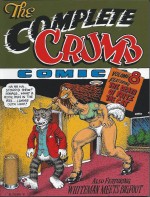
By R. Crumb & guests (Fantagraphics Books)
ISBN: 978-0-56097-076-7
This book contains really clever and outrageously dirty pictures, rude words, non-condemnatory drug references and allusions, apparent racism, definite sexism, godless questioning of authority and brilliantly illustrated, highly moving personal accounts and opinions. It also painfully displays a genius grappling with his inner demons in a most excruciatingly honest and uncomfortable manner.
If you – or those legally responsible for you – have a problem with that, please skip this review and don’t buy the book.
Really.
I mean it…
Robert Crumb is a truly unique creative force in comics and cartooning, with as many detractors as devotees. From the first moments of the rise of America’s counterculture, his uncompromising, forensically neurotic introspections, pictorial rants and invectives unceasingly picked away at societal scabs, measuring his own feelings and motives whilst ferociously ripping way civilisation’s concealing curtains for his own benefit. However, he always happily shared his unwholesome discoveries with anybody who would take the time to look…
In 1987 Fantagraphics Books began the Herculean task of collating, collecting and publishing the chronological totality of the artist’s vast output, and those critically important volumes are being currently reissued for another, more liberated generation.
The son of a career soldier, Robert Dennis Crumb was born in Philadelphia in 1943 into a dysfunctional, broken family. He was one of five kids who all found different ways to escape their parents’ highly volatile problems, and comic strips were paramount among them.
Like his older brother Charles, Robert immersed himself in the comics and cartoons of the day; not just reading but creating his own. Harvey Kurtzman, Carl Barks and John Stanley were particularly influential, but also comic strip legends such as E.C. Segar, Gene Ahern, Rube Goldberg, Bud (Mutt and Jeff) Fisher, Billy (Barney Google) De Beck, George (Sad Sack) Baker and Sidney (The Gumps) Smith, as well as classical illustrators like C.E. Brock and the wildly imaginative and surreal 1930’s Looney Tunes and Merrie Melodies animated shorts.
Defensive, introspective, frustrated, increasingly horny and always compulsively driven, young Robert pursued art and self-control through religion with equal desperation. His early spiritual repression and flagrant, hubristic celibacy warred with his body’s growing needs. …
To escape his stormy early life, he married young and began working in-house at the American Greeting Cards Company. He discovered like minds in the growing counterculture movement and discovered LSD. By 1967 Crumb had moved to California and became an early star of Underground Commix. As such he found plenty of willing hippie chicks to assuage his fevered mind and hormonal body whilst reinventing the very nature of cartooning with such creations as Mr. Natural, Fritz the Cat, Devil Girl and a host of others. He worked on in what was essentially a creative utopia throughout the early 1970’s but the alternative lifestyle of the Underground was already dying. Soon it would disappear: dissipated, disillusioned, dropped back “in†or demised.
A few dedicated publishers and artists stayed the course, evolving on a far more businesslike footing as Crumb carried on creating, splitting his time between personal material and commercial art projects whilst incessantly probing deeper into his turbulent inner world.
This eighth volume mostly covers – in chronological order – material created and published in 1971 (with the merest tantalising smidgen of stuff from 1972), when the perpetually self-tormented artist first began to experience creative dissatisfaction with his newfound status as alternative cultural icon: a period when the no-longer insular or isolated artist was at his most flamboyantly creative, generating a constant stream of new characters, gags, commercial art jobs, short strips and with longer material popping up seemingly everywhere.
It was also the moment when he began to realise the parasitic, exploitative nature of many of the hangers-on exploiting his work for profits which he never saw himself – particularly filmmaker Ralph Bakshi, whose phenomenally successful movie of Fritz the Cat prompted Crumb to kill the cunning kitty character off…
That and more are all faithfully reproduced in this compilation – which makes for another rather dry listing here, I’m afraid – but (as always) the pictorial material itself is both engrossing and astoundingly rewarding. But please don’t take my word for it: buy the book and see for yourselves…
After a passionate if meandering photo-packed Introduction from wife and collaborator Aline Kominsky-Crumb – whom he first met in 1971 – the stream of cartoon consciousness and literary freewheeling begins with the salutary tale of ‘Stinko the Clown in Stinko’s New Car’ from Hytone, rapidly followed by the strange romance of ‘Maryjane’ originally seen in Home Grown Funnies, which also provided the (now) racially controversial and unpalatable ‘Angelfood McDevilsfood in Backwater Blues’ – with that horrific homunculus The Snoid – and twisted “love†story of ‘Whiteman Meets Big Foot’…
The underground Commix scene was awash with artistic collaborations and a selection of jam sessions kicks off here with ‘Let’s Be Realistic’ from Hungry Chuck Biscuits wherein Crumb, Jay Lynch, Jay Kinney & Bruce Walthers surreally free-associated, whilst in Mom’s Homemade Comics Denis Kitchen, Don Glassford, Dale Kuipers, Jim Mitchell, Pete Poplaski, Wendel Pugh, Jay Lynch, Dave Dozier, Bruce Walthers & Dennis Brul joined forces with the bespectacled outsider to make some ‘Kumquat Jam’…
From ProJunior, ‘Perdido Part One’ and ‘ProJunior in Perdido Part Two’ saw the Dagwood-esque everyman experience the growth in social violence courtesy of Crumb and fellow legend S. Clay Wilson.
All on his own again Crumb captured the appalling nature of ‘Jumpin’ Jack Flash!’ (from Thrilling Murder) and crafted a lovely ‘Nostalgic Books catalog cover’ for their Summer/Fall 1971 issue, after which a tranche of material from Big Ass #2 (August 1971) starts with a paranoiac perusal of ‘The Truth!’, before another obnoxious jerk resurfaces to dominate sexy bird creatures in ‘Eggs Ackley in Eggs Escapes’ even as the intimately contemplative domestic explorations of ‘A Gurl’ dissolve into the raucous, earthy humour of ‘Anal Antics’ to end the first black and white section of this challenging chronicle.
A vividly vivacious Color Section celebrates a wealth of covers, opening with ‘The Last Supplement to the Whole Earth Catalog’(March 1971), followed by ‘Home Grown Funnies’ and its angsty back cover strip ‘The Desperate Character Writhes Again!’. Moving on, ‘Big Ass #2’, ‘Mr. Natural #2’ – front and back covers – leads to ‘Bijou Funnies #6′ and the rainbows end on the sublimely subversive front for ‘The People’s Comics’.
A return to monochrome provides two more strips from Big Ass #2 beginning with the savagely ironic ‘A Word to you Feminist Women’ and the cruelly hilarious ‘Sally Blubberbutt’ after which the contents of Mr. Natural #2 (October 1971) unfold with ‘Mr. Natural “Does the Dishes‒, before ruminating and sharing more timeless wisdom with resident curious “Straight†Flakey Foont in ‘A Gurl in Hotpants’.
This leads to ‘Sittin’ Around the Kitchen Table’ and meeting ‘The Girlfriend’, after which two untitled Mr. Natural graphic perambulations result in a cult war with the adherents of the aforementioned Snoid and everything ends with the sage and his buddy The Big Baby being released from jail to go ‘On the Bum Again’…
From Bijou Funnies #6 comes another taste of ‘ProJunior’ as the poor shmuck seeks employment to keep his girlfriend quiet, whilst the jam feature ‘Hef’s Pad’ (by Crumb, Lynch & Skip Williamson) exposes the darker side of selling out for cash and fame…
A strip from Surfer Magazine vol. 12, #6 trenchantly heralds the advent of work from 1972 when ‘Salty Dog Sam “Goes Surfin’!‒, whilst the cover of Zap 7 (Spring issue) and the Nostalgia Press Book Service Catalog cover neatly segues into three superb landmark strips from The People’s Comics beginning with a deeply disturbing glimpse inside the befuddled head of the “Great Man†in ‘The Confessions of R. Crumb’.
That poignantly outrageous graphic outburst leads to a cruelly sardonic polemic in ‘The R. Crumb $uck$e$$ Story’ which merely serves as a sound narrative investment for the shockingly self-satisfied, liberating cartoon catharsis achieved by killing off his now-unwelcome signature character in ‘Fritz the Cat “Superstar‒…
If Crumb had been able to suppress his creative questing, he could easily have settled for a lucrative career in any one of a number of graphic disciplines from illustrator to animator to jobbing comic book hack, but as this pivotal collection readily proves, the artist was haunted by the dream of something else – he just didn’t yet know what that was…
Crumb’s subtle mastery of his art-form and obsessive need to reveal his every hidden depth and perceived defect – in himself and the world around him – has always resulted in an unquenchable fire of challenging comedy and untamed self-analysis, and this terrific tome shows him at last mastering – or at least usefully channelling – that creative energy for the benefit of us all.
This superb series charting the perplexing pen-and-ink pilgrim’s progress is the perfect vehicle to introduce any (over 18) newcomers to the world of grown up comics. And if you need a way in yourself, seek out this book and the other sixteen as soon as conceivably possible…
Let’s Be Realistic © 1971, 1992, 1997, 2013 Crumb, Jay Lynch, Jay Kinney, Bruce Walthers & R. Crumb. Kumquat Jam © 1971, 1992, 1997, 2013 Denis Kitchen, Don Glassford, Dale Kuipers, Jim Mitchell, Pete Poplaski, Wendel Pugh, Jay Lynch, Dave Dozier, Bruce Walthers, Dennis Brul & R. Crumb. All other material © 1971, 1972, 1992, 1997, 2013 Robert Crumb. All contributory art material and content © the respective creators/copyright holders. All rights reserved.
And… we’re back
As I’m now fully back in the saddle – and wearing a brand new Office Chair Seat Beltâ„¢ – I’d like to take this opportunity to thank the paramedics, ambulance pilots, A&E personnel and especially the astoundingly hardworking nurses, doctors, physiotherapists and support staff of Wards 2 and 12 at Queen Elizabeth II Hospital, Woolwich for looking after me so diligently and enabling me to get back to business so quickly.
Even though they’re all normal people with real jobs and will probably never read any of this, you at least should know just who’s responsible (or to blame, I suppose) for my speedy recovery.
RATIONALISE POLITICS, NOT HOSPITALS.
The James Bond Omnibus volume 005


By Jim Lawrence & Yaroslav Horak (Titan Books)
ISBN: 987-0-85768-590-2
Win’s Christmas Gift Recommendation: A Traditional Licence To Thrill… 8/10
There are sadly very few British newspaper strips to challenge the influence and impact of classic daily and Sunday “funnies†from America, especially in the field of adventure fiction. The 1930’s and 1940’s were particularly rich in popular, not to say iconic, creations. You would be hard-pressed to come up with home-grown household names to rival Popeye, Dick Tracy, Buck Rogers, The Phantom, Mandrake the Magician, Flash Gordon or Steve Canyon, let alone Terry and the Pirates or the likes of Little Lulu, Blondie, Li’l Abner, Little Orphan Annie or Popeye and yes, I know I said him twice, but Elzie Segars’s Thimble Theatre was funny as well as thrilling, constantly innovative, and really, really good.
What can you recall for simple popularity let alone longevity or quality in Britain? Rupert Bear? Absolutely. Giles? Technically, yes. Nipper? Jane? The Perishers? Garth?
I hope so, but I doubt it.
The Empire didn’t quite get it until it wasn’t an empire any more. There were certainly very many wonderful strips being produced: well-written and beautifully drawn, but that stubborn British reserve just didn’t seem to be in the business of creating household names… until the 1950’s.
Something happened in ‘fifties Britain – but I’m not going to waste any space here discussing it. It just did.
In a new spirit that seemed to crave excitement and accept the previously disregarded, comics (as well as all entertainment media from radio to novels) got carried along on the wave. Eagle, the regenerated Dandy and Beano, girls’ comics in general: all shifted into creative high gear, and so did newspapers. And that means that I can go on about a graphic collection with proven crossover appeal for a change.
The first 007 novel Casino Royale was published in 1953 and subsequently serialised in the Daily Express from 1958, beginning a run of paperback book adaptations scripted by Anthony Hern, Henry Gammidge, Peter O’Donnell and Kingsley Amis before Jim Lawrence, a jobbing writer for American features (who had previously scripted the aforementioned Buck Rogers) came aboard with The Man With The Golden Gun to complete the transfer of the Fleming canon to strip format, thereafter being invited to create new adventures, which he did until the strip’s ultimate demise in 1983.
The art on the feature was always of the highest standard. Initially John McLusky provided the illustration until 1966’s conclusion of You Only Live Twice and, although perhaps lacking in verve, the workmanlike clarity of his drawing easily coped with the astonishing variety of locales, technical set-ups and sheer immensity of cast members, whilst accomplishing the then-novel conceit of advancing a plot and ending each episode on a cliff-hanging “hook†every day.
He was succeeded by Yaroslav Horak, who also debuted on Golden Gun with a looser, edgier style, at once more cinematic and with a closer attention to camera angle and frenzied action that seemed to typify the high-octane 1960’s.
Titan books have re-assembled the heady brew of adventure, sex, intrigue and death into a series of addictively accessible monochrome Omnibus editions and this fifth compilation finds the creators on top form as they reveal how the world’s greatest agent never rests in his mission to keep us all free, safe and highly entertained…
The frantic derring-do and dark, deadly diplomacy commences with ‘Till Death Do Us Part’ which first ran in the Daily Express from July 7th to October 14th 1975. Solidly traditional 007 fodder, it found Bond assigned to kidnap/rescue Arda Petrich, the comely daughter of a foreign asset, and keep vital intelligence out of the hands of the KGB.
This pacy thriller is most notable more for the inevitable introduction of the eccentric gadgets which had become an increasingly crucial component of the filmic iteration than for the actual adventure, but there are still thrills and flesh aplenty on view.
Hard on the heels of that yarn is brief but enthralling encounter ‘The Torch-Time Affair’ (October 15th 1975 – January 15th 1976), wherein the hunt for a record of all Soviet subversion in Latin America leads to bodies on the beach, a mountain of lies and deceit, breathtaking chases on roads and through jungles, and an astonishingly intriguing detective mystery as Bond and female “Double-O†operative Susie Kew must save the girl, get the goods and end the villain.
But which one…?
‘Hot-Shot’ (January 16th – June 1st) finds the unflappable agent assisting Palestinian freedom fighter Fatima Khalid as she tries to clear the name of her people of airline atrocities committed by enigmatic Eblis terrorists. Their cooperative efforts uncover a sinister Indian billionaire behind the attacks before Bond recognises an old enemy at the heart of it all… Dr. No!
In ‘Nightbird’ (2nd June – 4th November) sporadic attacks by what appear to be alien invaders draw 007 into a diabolical scheme by a cinematic genius and criminal master of disguise apparently in search of military and political secrets and weapons of mass destruction. However a far more venal motive is the root cause of the sinister schemes and reign of terror…
Despite surreal trappings, ‘Ape of Diamonds’ (November 5th 1976 – January 22nd 1977) is another lethally cunning spy exploit as a deadly maniac uses a colossal and murderous gorilla to terrorise London and kidnap an Arab banker, leading Bond to a financial wild man determined to simultaneously destroy Britain’s economic prosperity and steal the Crown Jewels. Happily for the kingdom, Machiavellian Rameses had completely underestimated the ruthless determination of James Bond…
‘When the Wizard Awakes’ finds bad guys employing supernatural chicanery, when the body of a Hungarian spy – dead for two decades – walks out of his tomb to instigate a reign of terror that eventually involves S.P.E.C.T.R.E., the Mafia and the KGB until the British Agent unravels the underlying plot…
In 1977 the Daily Express ceased publication of the Bond feature and the tale was published only in the Sunday Express (from January 30th -May 22nd 1977). Later adventures had no UK distribution at all, only appearing in overseas editions. This state of affairs continued until 1981 when another British newspaper – the Daily Star – revived his career. Presumably, we’ll deal with those cases in another volume.
The first of those “lost†stories are included here, however, beginning with ‘Sea Dragon’, produced for European syndication: a maritime adventure with geo-political overtones wherein crazed billionairess and scurrilous proponent of “women’s liberation†Big Mama Magda Mather tried to corner the World Oil market using sex, murder and a deadly artificial sea serpent.
In ‘Death Wing’ Bond is needed to solve the mystery of a new and deadly super-weapon employed by the Mafia for both smuggling contraband and assassination. Despite a somewhat laborious story set-up, once the tale hits its stride, the explosive end sequence is superb as the undercover agent finds himself used as a flying human bomb aimed at the heart of New York City. His escape and subsequent retaliation against eccentric hit-man Mr. Wing is an indisputable series highpoint.
This astounding dossier of espionage exploits ends in ‘The Xanadu Connection’ (1978) as the daring high-tech rescue of undercover agent Heidi Franz from East Germany inexorably leads the super spy down a perilous path of danger and double-cross.
When Bond is tasked with safeguarding the wife of a British asset leading resistance forces in Russian Turkestan, the mission inevitably leads 007 to the Sino-Soviet hotspot where he is embroiled in a three-sided war between KGB occupation forces, indigenous Tartar rebels and their ancestral enemies of the Mongol militias led by insidious, ambitious spymaster Kubla Khan.
Deep in enemy territory with adversaries all around him, Bond is hardly surprised to discover that the real threat might be from his friends and not his foes…
Fast, furious action, masses of moody menace, sharply clever dialogue and a wealth of exotic locales and ladies make this an unmissable adjunct to the Bond mythos and a collection no fan can do without. After all, nobody does it better…
© 1975, 1977, 1977, 1978, 2013 Ian Fleming Publications Ltd/ Express Newspapers Ltd. All rights reserved.