
Iron Man 2: Public Identity


By Joe Casey, Justin Theroux, Barry Kitson, Ron Lim & various (Marvel)
ISBN: 978-0-7851-4858-6

With new Superhero and comics-based Summer Movie Blockbusters now an annual tradition there’s generally a wealth of supplementary reading released to coincide, cash in on and tantalise we die-hard print addicts.

Thus, through the safe lens of enough time passed and all hype deflated, here’s a slim tome designed as one of many combination tie-in and prequels to the second Iron Man film.

Public Identity was a 3-part miniseries from April and May 2010 starring the filmic iteration of the Marvel characters, scripted by Joe Casey and Justin Theroux with art from Barry Kitson, Ron Lim, Tom Palmer, Victor Olazaba, Stefano Gaudiano & Matthew Southworth, which added nuance and background to the tale of Tony Stark’s very visible battle against rival arch-technocrat Justin Hammer and a whip-wielding maniacal amalgam of comicbook veterans Crimson Dynamo and Whiplash…

This compilation also includes a triptych of short back-up vignettes starring some of the supporting cast in solo adventures originally published as the one-shot Iron Man 2: Agents of S.H.I.E.L.D. plus a selection of text, art and photo-features culled from the promo magazine Iron Man 2 Spotlight.

At the conclusion of the first film Tony Stark had just revealed to the frantic media that he was the incredible Armoured Avenger and ‘No Reason’ takes up from there, before flashing back decades to when munitions magnate Howard Stark first moved into researching the astounding potential of ARC reactor technology with Soviet scientist Anton Vanko. ARC, you’ll recall, is the overwhelming power source which keeps son Tony alive and fuels his high-tech super-suit…

In the now the self-exposed son is revelling in the celebrity his admission has garnered, as old comrade James Rhodes and all his other close friends can only watch and worry. The government – and especially the Military – want the power of Iron Man under their explicit control and are applying increasing pressure to the hedonistic playboy to get their way…

Grudgingly, to prove he’s still in control, Tony accepts a military reconnaissance job to insurgent-plagued Al Kut, but naturally goes off mission when he sees lives being lost…

Woefully disdainful of stifling protocol or American Military objectives, Stark kicks butt and posts footage with the world’s media, uncaring of the toes he’s stepping on…

Meanwhile in the Land of the Free and the padded invoice, Justin Hammer is unveiling his latest multi-billion dollar death machine to General Thaddeus “Thunderbolt” Ross, a career soldier who wants kill-power like Iron Man’s, but free of the insubordinate or free-thinking, conscience-plagued playboy adventurer…

In the past, Howard Stark is appalled to discover his friend Anton stealing ARC secrets, and dejected when the far-from contrite technologist is deported by Federal agents. Years pass and his boy Tony endures abuse and neglect from his troubled dad, leading to some fateful decisions…

Tony is still making poor choices in the present, blowing off business meetings to defuse traps and abandoned tech scattered throughout Afghanistan by the enigmatic Ten Rings organisation and even US forces. Rhodes, meanwhile, is with General Ross, deeply disturbed that the untested Hammer weapon is going straight into action with an unprepared live pilot on a dangerous covert and unsanctioned mission…

The op goes disastrously wrong. The Pentagon overrules the overtly hostile Ross and Rhodey begs Tony to intervene. Congolese Army units have shot down the Hammer craft and captured the American pilot, but the guerrillas are no match for Iron Man who pulls off a spectacular rescue without harming a single Congolese soldier in the undertaking…

However, when Stark delivers the wounded airman to Ross, the Thunderbolt is furious that a global symbol of American superiority refused to shoot back and prepares to take matters into his own hands…

And as the son of Anton Vanko completes his own Arc reactor and prepares to take vengeance on the Stark family, in the shadows Nick Fury and S.H.I.E.L.D. begin their own subtle moves to move in on Iron Man…

As the comicbook conclusion segues into the film, this book shifts into stealth mode with three Agents of S.H.I.E.L.D. solo mini-thrillers all scripted by Casey, beginning with arch manipulator Fury in ‘Who Made Who’ (rendered by Tim Greene) which sees the Golden Avenger barnstorm into a S.H.I.E.L.D./Navy SEAL operation against the mysterious Ten Rings cabal, opening the bidding in a bizarre war of nerves between the controlling spymaster and the ferociously free-spirited hero who – for now – still owns Iron Man…

Then ‘Just off the Farm’ – with art from Felix Ruiz – shows Agent Coulson under fire but never pressure as he solves a minor personnel problem and field-tests his latest recruit, even as ‘Proximity’, illustrated by Matt Camp, details how lethal femme fatale Black Widow inserted herself into Stark’s company and positioned herself for her spectacular movie debut…

The text features lead with ‘Silver Screen Style’ wherein comics artist and movie production consultant Adi Granov reveals secrets of both print and screen iterations, complete with lashings of pictures including reinterpreted Classic Covers and pages of Extremis Armour Designs.

Chris Arrant then discusses ‘Iron Man vs. Whiplash’ with screenwriters Marc Guggenheim and Brannon Braga, and ‘#1 With a Bullet’ by Dugan Trodglen explores the role and history of superspy Black Widow.

Thereafter epic comics saga ‘Iron Man Disassembled’ is highlighted by scripter Matt Fraction and interviewer Jess Harold before ‘Iron Man: Lightning in a Bottle’ finds John Rhett Thomas debating the classic revival of the Steel-Shod Sentinel with 1980s creators David Michelinie and Bob Layton, before Arrant chats with Warren Ellis about his take on Iron Man in ‘Armor Wars 2.0’.

Presumably as a preamble to the then-upcoming team movie, this section concludes with a stirring stroll down memory lane as ‘The Armored Avenger’ pinpoints “Eight of Iron Man’s Definitive Moments” with the Mighty Avengers, as compiled by Dugan Trodglen.

Also including a cover gallery by Granov and Salvador Larroca, this terse, explosive action package is a fine, fun comics read which should also act as an enticing interface for converting metal movie mavens into dedicated followers of funnybook fiction.
© 2010 Marvel Characters, Inc. All rights reserved.

Superman: Nightwing and Flamebird volume 1


By Greg Rucka, Eddy Barrows, Sidney Teles, Diego Olmos, Pere Pérez & various (DC Comics)
ISBN: 978-1-4012-2639-8

“The Dynamic Duo of Kandor” were first envisioned by pulp author Edmond Hamilton and artists Curt Swan & George Klein in Superman #158 (January 1963, ‘Superman in Kandor!’) which saw raiders from the preserved Kryptonian enclave attacking the Man of Steel and describing him as a traitor to his people.

Back then, the baffled Superman infiltrated the Bottle City with Jimmy Olsen where they created the Batman and Robin-inspired masked identities of Nightwing and Flamebird to ferret out the answer…

Over intervening decades the roles have been played by a number of others in Kandor and elsewhere, before eventually being appropriated for regular Earthbound characters when the original Robin became Nightwing and first Batgirl Bette Kane re-branded herself as Flamebird.

In this iteration, part of the recent overarching Superman publishing event “World of New Krypton/World Without Superman”, the 100,000 preserved Kandorians have escaped imprisonment in the Bottle City and, gaining superpowers under Sol’s light, built themselves a planet in our solar system.

With the Man of Steel’s arch-nemesis General Zod prominent and pre-eminent in the newly re-established society and most of Earth crazy-scared about a world full of belligerent supermen flying around in their backyard, Kal-El has abandoned his adopted homeworld to keep an eye on the system’s newest immigrants…

Earth is not completely defenceless, however. As well as the Justice League and Superman’s hand-picked replacement Mon-El of Daxam, Supergirl and a mysterious “Superwoman” still fly our skies and top-secret, sinister paramilitary, anti-alien task force Project 7734 is watching, certain that there are other ET insurgents just waiting in hiding…

Collecting Action Comics #875-879, Action Comics Annual #12 (from May to September 2009) and excerpts from Superman Secret Files 2009, this tense suspense thriller introduces a brace of apparently familiar new players to the cosmic drama of World Without Superman…

Written throughout by Greg Rucka, 5-part saga ‘The Sleepers’ (illustrated by Eddy Barrows, Ruy José & Julio Ferreira) begins in Australia with a masked and armoured duo attacking a media mogul and revealing that he is in fact Kryptonian agent Tor-An; placed in deep cover by Zod to infiltrate Earth’s echelons of power prior to invasion.

His cover spectacularly blown by Nightwing and Flamebird – Kryptonians masquerading as earthling heroes during these times of xenophobic hysteria – the alien infiltrator battles manically but is soon overcome and transported to Superman’s vacant Fortress of Solitude as, in Metropolis, Lois Lane ponders the implications of the televised battle.

Also considering the state of affairs is the fanatical leader of Project 7734. General Sam Lane is Lois’ father and a global war hero thought long-perished in service of humanity. However the severely off-reservation zealot is actually running his own covert agenda of rendition and murder under the noses of family and government, secure in his conviction that only he knows what’s best for Earth.

What he doesn’t know is who these newcomers are – although he does have some suspicions…

On New Krypton military martinet – and Zod’s former lover – Ursa is investigating the disappearance of security officer Thara Ak-Var, unaware as yet that the young woman is AWOL on Earth, hunting down six Kryptonian sleepers the General and Ursa so assiduously trained. The twisted, sadistic soldier-fanatic has no idea how closely the mysterious Flamebird is to one she thought lost forever…

And in the Fortress Thara, having locked up Tor-An, is horrified to see her teenaged companion Lor-Zod age ten years in agonising seconds…

Part 2 (with additional pencils from Sidney Teles) opens with the distraught pair ambushed and overwhelmed by the deranged, unstoppable Ursa, who seems to know all the bewildered boy-man’s secrets. So she should: Ursa is his mother…

Unfortunately, bringing him into the world doesn’t prevent the Kryptonian killer savagely beating Nightwing to the brink of death and stabbing Flamebird with a lethal Kryptonite knife. Only a desperate rally and sheer luck allows the tormented young man to fend her off and escape the Fortress with his dying partner.

In Metropolis some time later, Lois Lane looks out her window and sees the son she thought lost forever floating in mid-air with a dead woman in his arms……

Part 3 (illustrated by Teles & Sandro Ribeiro) opens with a furious and frustrated Ursa discovering the Fortress empty except for the incarcerated failure Tor-An as, in distant America, Lois is reunited with the strangely altered boy who was briefly adopted by her and husband Clark Kent…

It all began when Superman intercepted a spaceship crashing to Earth. Catching the blazing capsule he discovered a young boy within, apparently from Krypton…

Claimed by the US government, the boy nearly disappeared into the nebulous miasma of US covert agencies until the Man of Tomorrow rescued him. Determined the boy should have a normal childhood he then closeted him with his own foster parents. Jonathan and Martha Kent were the only humans with any experience of raising super-kids…

Thereafter the Action Ace decided to keep the authorities involved but at arms length, even after Lex Luthor sent the unstable juggernaut Bizarro to steal the boy, but was eventually forced to admit that only total anonymity could save the youngster from becoming somebody’s ultimate weapon.

He and Lois adopted the boy, naming him Christopher, just as three Kryptonian villains smashed free of the Phantom Zone (a stark and silent realm of nullity; formless and intangible, it was a time-proof, timeless prison for the worst villains of lost planet Krypton) and attacked Earth.

Challenging the Man of Steel, they claimed to know the boy’s true origins. Christopher – nee Lor-Zod – had been born in an aberrant, solid sector of the ghostly plane; impossible fruit of a union between disgraced Zod and psychotic killer Ursa. Subjected to constant torture and abuse at the hands of the twisted prison population the unearthly child finally escaped, but his uncanny genesis had made him a creature of disruptive potential.

His mere presence on Earth threatened to break down the walls to the Phantom Zone, and Lois last saw her adopted son when the brave little boy voluntarily returned to his birth dimension to save the world from invasion by an army of Kryptonian convicts…

Now only months later he is back, full grown and carrying a wounded woman he clearly loved deeply. Possibly the greatest human expert on Kryptonians, Lois promptly calls on Justice Leaguer Kimiyo Hoshi who – as Dr. Light – bombards Thara with yellow solar radiation to kickstart super-healing.

Unfortunately the spectacular radiance is picked up by covert 7734 surveillance. General Lane turns his paranoid attentions upon his daughter and discovers “Enemy Hostile” Thara Ak-Var sunbathing on his little girl’s roof…

Christopher, assured that Thara is on the mend, returns to the Fortress. Once there though, he only finds Tor-An’s corpse and his own maniac birth-mother alternatively itching for another fight and beseeching him to come home.

Disgusted and distracted Nightwing flees but is ambushed over the icy wastes by Lane’s souped-up drone planes.

Now, in Nevada, a young Kryptonian couple begin a lethal rampage: hot, horny and obsessed with becoming the new Bonnie and Clyde in their own gory remake of “Badlands”…

Part 4 (art by Diego Olmos) finds former sleeper agents Az-Rel and Nadira in New Mexico, having gouged a bloody swathe through the Southwest, completely rejecting Zod’s schemes, preferring a life of murderous, sex-fuelled self-indulgence…

Chris had been wounded in 7734’s attack and DNA has been gathered and processed by the covert xenophobes. The results confirm General Lane’s theory that Nightwing is the same child Superman prevented the US Government from confiscating and it also proves his own daughter is a traitor to humanity, consorting with and giving comfort to aliens…

Nightwing returns to Metropolis just as the recuperating Thara finishes telling Lois how she and the boy first hooked up, but no sooner are they all reunited than news of the spree-killers catapults the heroes into amother battle…

The furious fight against power-drunk Az-Rel and Nadira in Part 5 (Olmos art) is only interrupted when 7734’s top agent and an army of bizarre monsters join the melee.

Codename: Assassin is a powerful telepathic fanatic more concerned with capturing Nightwing and Flamebird than saving lives and his interference allows the Kryptonian thrill-killers opportunity to escape. Nightwing pursues, but the telepath remains, preferring to extract all the enigmatic crusaders’ secrets from Thara’s mind.

With Nightwing obliviously chasing the fugitive sleepers, all Flamebird’s memories are being sampled by the rapacious Assassin until he inadvertently triggers a terrifying explosive transformation and his captive manifests as a chaotic creature of blazing destructive energy…

In the aftermath Az-Rel and Nadira elude Chris and the shaken but restored Thara (but not 7734’s other metahuman assets) whilst at a distant grave Mon-El confirms Lois’ worst suspicions: her driven, duplicitous, obsessive father is still alive…

Action Comics Annual #12 then provides ‘The Origin of Nightwing and Flamebird’ (illustrated by Pere Pérez); disclosing how Kandor’s abduction by Brainiac set in motion a series of tragic events which orphaned Thara and led to her becoming a security officer in Kandor, protecting the parents of the girl who would one day become Supergirl.

We also learn how her life was further changed when, moved by an irresistible inpulse, she joined the city’s Spiritual Guild and somehow, impossibly, connected with a little boy lost in the Phantom Zone and constantly tortured by his own parents and all the ghostly inmates of the penal plane.

And then one day, prompted by urgings from a mythical deity, Thara broke into the Zone and spectacularly rescued Lor-Zod, battling demons in human form to bring them both into the light…

To Be Continued…

With a cover gallery by Andrew Robinson and Renato Guedes and including full fact file pages on both Nightwing and Flamebird, this slim exotic tome is fast paced, action-packed, pretty and engaging but as an opening shot in only a sidebar sequence to a major story arc, probably offers more bewilderment than wonderment to any reader not intimately aware with the ever-changing minutiae of the continuity.

Definitely worth a look, but perhaps only after reading the main event first…
© 2009, 2010 DC Comics. All Rights Reserved.

The Daniel Clowes Reader: A Critical Edition of Ghost World and Other Stories, with Essays, Interviews and Annotations


By Daniel Clowes, with Ken Parille & various (Fantagraphics Books)
ISBN: 978-1-60699-589-1

One of the greatest assets of the comics medium is the ostensibly straightforward nature of its storytelling. With pictures wedded to text, what you see is so clearly what you get. So whenever a master creator regularly, consciously and deliberately subverts that implicit convention the result might be occasionally obscure or confusing, but always utterly engrossing.

At the forefront of comics storytelling for nearly three decades, Daniel Clowes is, for many, an acquired taste. However, once he’s in your brain there’s certainly no shaking the things he can do with pen and ink, motive, character and the special kind of targeted situational magic that inhabits the world of pictures and words in static harmony.

Born in Chicago in 1961, Clowes began his career as a cartoonist with humour magazine Cracked before creating uniquely skewed short comic tales for Fantagraphics. His first piece debuted in Love and Rockets # 13 (September 1985), an introductory prelude to his retro-chic detective magazine Lloyd Llewellyn which launched soon after, running in various incarnations for three years.

In 1989 he created personal anthology vehicle Eightball and began producing a variety of tales – short and serial-length – spanning a range of topics and styles investigating all aspects of cartoon narrative from autobiography to social satire, nostalgic absurdist media-fuelled yarns to surreal, penetrating human dramas, all viewed through the lens of iconic popular cultures and social motifs.

All that material has since been collected in assorted albums with two, Ghost World and Art School Confidential, successfully adapted into critically acclaimed feature films.

His experiences in Hollywood combined with deep-seated childhood influences of noir movies and comicbooks combined and resulted in David Boring – another powerful literary comics statement.

The author is rightly renowned as a founding force in Graphic Novel publishing (a term he actually despises); instrumental in breaking the ghetto walls which had constrained the medium in English-speaking countries since the inception of the comicbook industry by creating popular stories of interest to a general audience of adults and helping the art become a recognised art form.

Now The Daniel Clowes Reader cements that idea by presenting a large body of selected classic works augmented with a profusion of scholarly articles and features, both as salute to Clowes’ achievements and an inexpensive introduction to many of the creator’s most impressive tales.

Subtitled Ghost World, Nine Short Stories and Critical Materials – Comics About Art, Life, Adolescence and Real Life, the book is compiled and edited by Literature Professor and reviewer Ken Parille, with contributions from a host of industry journalists and scholars.

The volume, packed with heavily illustrated text features, opens with an Introduction section offering thoughts and quotes from a multitude of sources in ‘Daniel Clowes on…’, followed by ‘An Aesthetic Biography of Daniel Clowes’ and a formal, informative ‘Introduction to the Daniel Clowes Reader’.

Section I: Ghost World, Girls and Adolescence offers ‘Daniel Clowes’ Introduction from Ghost World Special Edition’ before the entire tale is reproduced cover-to-cover.

In an uncanny comics-style coincidence, I was actually  in the process of completing a much-postponed review of Ghost World when this new edition arrived so, in the interests of brevity and the certain assurance that it needs a fuller appreciation, I’m breaking my own rules by not properly covering the astonishing breakthrough novel here and now.

Come back in a couple of weeks for the full Monty, but for the present just be aware that the story concerns two young slackers Enid and Rebecca who shamble through and survive a climactic change in their lives and circumstances – after which hanging out, talking music, making fanzines and being generally post-ironic no longer grip their attentions quite so forcefully…

Following the two-tone tale is a host of thoughtful and impressive essays and features on it, opening with comprehensive ‘Annotations for Ghost World’ compiled by the author and Parille, after which a full Ghost World Index precedes ‘An Interview with Daniel Clowes’ by Joshua Glenn from 1990.

Adele Melander-Dayton reveals ‘How Ghost World Made Me Brave’, Pamela Thurschwell examines ‘The Ghost Worlds in Modern Adolescence’ through the lens of the tale and Parille conducts a panel-specific literary dissection in ‘Close Reading Clowes’ Dialogue: “You’ve grown into a very beautiful young woman.”’

Kaya Oakes looks at a peculiar 1990s fad in ‘Literature at the Xerox Machine: The Rise of the Zine’ and small-press mogul Gilmore Tamny recalls the story of ‘Wiglet: An Introduction and Excerpts’ in a nostalgia-filled fillip…

The iconic lead character is expanded and probed via ‘Enid’s Bookshelf: Ghost World and Its Precursors with Poems by Russell Edson and Cartoons by Ann Roy’ and ‘Enid’s Record Player: Patience and Prudence and The Ramones’ before ‘Where Are They Now?: An Afterlife for Enid and Rebecca…’ returns a decade later in a fourth-wall bending brace of obfuscatory full-colour strips created for the Ghost World Special Edition in 2008.

This opening sally then closes with a great big ‘Cartooning Glossary for Ghost World and Other Comics’.

Section II:  Short Stories, Boys and (Post) Adolescence marries a number of pivotal Clowes’ quasi-autobiographical tales with more searching literary inquisitions. “Blue Italian Shit” and “Like a Weed, Joe”: The Inner Life of Young Clowes sets up the illuminating monochrome strips – both starring official Clowes stand-in Rodger Young.

Over many years the artist has frequently adopted all manner of cartoon glove-puppets and dummies to act as spokesmodel and mouthpiece for satire, observation and reflection…

‘Blue Italian Shit’ (from Eightball #13, 1994) is narrated by Rodger the old social misfit, recalling his life as an 18-year old virgin in 1979, whilst ‘Like a Weed, Joe’ (Eightball #16, 1995) finds a younger Young in 1974, suffering from what might be first love and simultaneously hanging out with bad influence/white trash Bemis, a best friend he has no affection for but who is at least more fun than his dementia-challenged, daily diminishing grandparent and guardians…

Both episodes are fully annotated and followed by ‘Clowes on Rodger Young, Gender and Autobiography: Excerpts from Five Interviews’ and Scott Saul’s “Etc., Etc.”: the Post-Punk Ballad of Rodger Young (the name was appropriated from a song about a real WWII war-hero who was killed in 1943), before another article by Pirelle introduces the next two strips in this section.

‘“The Party” and “Buddy Bradley in Who Would You Rather Fuck: Ginger or Mary Ann?”: Daniel Clowes vs. The Ironic Hipster’ concentrate on more contemporary sallies.

Rendered in full colour, ‘The Party’ (Eightball #11, 1993) is again cruelly, destructively autobiographical: revealing a harshly self-castigating inner monologue during a celebration both unwanted and unwelcome, whilst in monochrome one-pager ‘Buddy Bradley in Who Would You Rather Fuck: Ginger or Mary Ann?’ (Eightball #13, 1994), Clowes borrows characters from colleague cartoonist Peter Bagge to lampoon commercialism in the “Slacker Generation” with devastating effect.

This is followed by a generalised discussion of Clowes’ unique viewpoint in Against Groovy by Joshua Glenn, further thoughts on commercialism in society in “Me Worry?”/“U Buy”: Clowes and Advertising in the 1990s, before ‘“Black Nylon”: Super-Beings and Psychic Battles’ discusses the artist’s most impenetrable yarn (reproduced in full from Eightball #18 (1995).

‘Black Nylon’ is a dreamy, scary, laconic, terse superhero/noir/psychodrama that should be read not debated, but is followed by a six-stage argument ‘Decoding “Black Nylon”’ and extensive scene-by-scene commentary by Parille.

Section III: Comics, Artists and Audiences develops ideas on the interdependent relationships that inform the creator’s efforts and rewards, and opens with ‘“Daniel G. Clowes®™ in Just Another Day”: Truth, Lies and Autobiography’ before the eponymous strip (from Eightball #5 (1991) mercilessly skewers the 1990s fad for introspective self-expression and, following more annotations, preloads the next strip with the brief discourse ‘“Introduction”: Superheroes, Satire and Sympathy’.

The cartoon tale ‘Introduction’ (from a revised collected edition of the graphic novel Pussey! in 2006) traces Clowes’ career trajectory through comics reader to art-school and beyond, in one of his most forthright and direct autobiographical strips, fully annotated by Parille.

The cartoonist’s unhappy relationship with vocational art training and his days at Pratt Institute is further dissected in ‘“Art School Confidential”: The Cartoonist as Undercover Cop’ before all the horrors and parasites are hilariously, graphically exposed in the full-colour Mad magazine inspired ‘Art School Confidential’ (Eightball #7, November 1991).

‘Changing Faces’ is a packed page tracking the evolution and constant revision of the artist’s past works after which ‘“Ugly Girls”: Looking at Ugly to Find Beauty’ discusses Clowes’ antipathy to manufactured, commercial, cosmeticised, socially-acceptable standards of beauty, before the stunning monochromatic – and annotated – cartoon diatribe ‘Ugly Girls’ (Eightball #8 1992) leads into a lengthy and far-reaching discussion by Anne Mallory and Parille regarding ‘Urban Romanticism, Mad Magazine and the Aesthetics of Ugly (1986-1998)’

‘Six Comic Strips about the “Artistic Triangle: Artist, Art and Audience’ precedes and deconstructs the following short pieces ‘King Ego’ (Eightball #12 1993), ‘Man-Child’, ‘Tom Pudd’, ‘Wallace Wood’ and ‘You’ (all from Twentieth Century Eightball 2002) whilst the extended ‘Justin M. Damiano’ (The Book of Other People, 2008) excoriates the isolating role of critic/reviewer…

‘Modern Cartoonist’ (originally an insert pamphlet from Eightball #18 1997), is Clowes’ manifesto – don’t call it a mission statement – a powerful pictorial/typographic polemic preceded here by the illuminating Modern Cartoonist: The Truth about Comics (again copiously annotated) and leads quite naturally into large tell-all feature Worlds on Paper: An Interview with Daniel Clowes on His Creative Process by Darcy Sullivan as well as A Daniel Clowes Chronology and a list For Further Reading…

This is another of those too-rare productions that shouldn’t really be reviewed, just read, with themes of adolescence, maturity, the quest for self and the impending end of life delivered via a landscape of comics, film noir, mock-heroics – and the irreducible knowledge that families make individuals – resulting in a truly personal experience for every reader.

It’s also a solid acknowledgement that only kids’ comics are for kids these days, and confirmation that the medium of cartooning in the English language has at last reached the lofty pinnacle of music, literature and film: popular commercial fields and forms of expression which can encompass and generate, trash, mediocrity and pure capital A Art…

All images and materials © 2013, Daniel Clowes, except where otherwise expressly held by individual copyright holders and used here by permission. The Daniel Clowes Reader: A Critical Edition of Ghost World and Other Stories, with Essays, Interviews and Annotations is © 2013 Ken Parille. This edition © 2013 Fantagraphics Books, Inc. All rights reserved.

Persia Blues volume 1: Leaving Home


By Dara Naraghi & Brent Bowman (NBM/ComicsLit)
ISBN: 978-1-56163-706-5

We do it for fame, we do it for fortune (or at least to pay bills), we do it for fun but all of us primarily make comics because we absolutely have to. Every story we hear, each pedestrian observation provokes the reaction “how would I break that down into panels? How many to a page?”…

All real world input – from shopping lists to bad TV – is taken in, screened through an internal grid and then we worry about how we’ll draw the damn thing. One day…

All creative people are a little bit chained to their art-form, and Iranian ex-pat Dara Naraghi far more so than most. As well as his own celebrated BigCityBlues comic he keeps busy adapting licensed properties such as Robert Patterson’s Witch & Wizard novels, Terminator: Salvation, It! The Terror From Beyond Space and Ghostbusters into comics form, writing for DC, Image and IDW and running his own publishing house Ferret Press.

His breakthrough graphic anthology Lifelike set new standards for expressive exploratory tale-telling and he was a founding member of comics creators collective PANEL. He also scripts (and occasionally draws) utterly wonderful tales covering every aspect of the human experience from wild fantasy to chilling slice-of-life in a splendid series of webcomics.

Artist and illustrator Brent Bowman has created art for the Age of Empires collector card game and worked at Caliber Press and Image Comics. He too is a member of PANEL, devoted to pushing the envelope (probably after covering it with doodles and sketches) of graphic narrative.

Together they have begun a series of graphic novels implausibly blending real-world reportage with high fantasy in a manner both intriguing and captivating.

Persia Blues: Leaving Home introduces spirited young woman Minoo Shirazi who has a history of troublemaking in two worlds…

Far away and long ago a bold warrior with an inexplicable magical power is battling beside her lover against brigands and worse to retrieve a holy book in the heyday of the Persian Empire.

Four years ago in Shiraz, Iran, forthright and independent architecture student Minoo meets another rebellious, frustrated young woman and cleverly outwits the Ayatollah’s Morality Police when they accuse the girls of immodesty – a pretty serious crime in a state that appears to hate women and fear individualism…

In Ancient Persia the war woman returns the sacred Avesta to a venerable cleric at Zoroaster’s Fire Temple and learns about the eternal struggle between the light of Ahura Mazda and dark, evil Ahriman, before somehow lapsing into a bitter argument with the parochial paternalistic priest.

Back in Iran, Minoo gets home safely but word of her brush with the authorities has reached her father. Loving but scared, once-eminent history professor Bijan Shiraz provokes a very similar argument with much the same result. This wise man has reason to fear.

Every day he fights a losing battle as religious fundamentalists slowly destroy his overweening passion, rewriting and revising the grand and glorious history of Persia to suit the self-serving demands of a theocratic, clerical dictatorship. With his wife and son gone, Bijan cannot bear the thought that his wilful daughter might also be lost to him…

In the days of Zoroaster, the sex-fuelled, shamelessly exhausted slumber of barbarian Minoo and her lover Tyler is shattered when she experiences a horrifying vision. Rushing to the FireTemple, they discover the priest on the verge of expiring, claiming with his last breaths that Ahriman himself was his killer.

He makes her promise to voyage to the distant capital Persepolis and discloses that Minoo’s long-lost mother is there. Although Minoo refuses to believe the dying man’s delusions, when a giant, wingless talking Hippogriff (an Opinicus?) appears she has no choice but to accept the prediction and the quest…

Iran 18 years ago: seven year old Minoo has a furious tantrum on learning that she must now wear a Hijab whenever she goes outside. The government edict applies to all girls starting school, and the child’s explosive reaction prompts a fight between her father and mother Manijeh. Eventually, however, Mum’s pragmatic wisdom and Dad’s gentle humour calm the tense situation…

In Persia, swordswoman Minoo is equally reluctant to bow to authority but just as susceptible to reason as the Hippogriff decrees that she will play a key part in the battle between good and evil and must accept her fate…

Now minus six years: teen rebel Minoo is playing fast and loose with a flashy rich punk from Tehran. When her furious father furiously ejects the lecher another row erupts and his daughter throws in his face her lack of choice and opportunity under the Mullahs – a crushing blow to a man who almost lost his life defending personal freedom and intellectual liberty…

Four days have passed in Ancient Persia and, as Tyler and Minoo dutifully attend the funeral rites of the murdered holy man, appalling Ahriman himself appears and sets a pride of lions on the questers…

In oppressed Iran 15 years ago, Bijan and Manijeh are having a terrible fight. She wants the family to leave but the scholar refuses to leave the proud history of Persia in the hands of revisionist maniacs. Minoo eavesdrops from outside, terrified hr parents are divorcing, but older brother Ramin soon calms her and assuages her fears…

Near death but reluctant to harm innocent beasts, Minoo is astounded when Ahura Mazda manifests and rewards their forbearance with healing light and sage advice…

Three years ago in the Shiraz’ Vakil Bazaar, Minoo and her father discuss her recent graduation. Her prospects have long been a brittle bone of contention, and she cannot accept the confirmed intellectual’s argument that she should pursue a Master’s Degree. Not in a country that openly suppresses choice and opportunity for women…

She is utterly astounded when her father reveals he has changed his mind and will use all his resources, contacts and waning influence to secure her a University place outside Iran. If the government will let her leave, that is…

Just outside Persepolis, Tyler and Minoo encounter the legendary Anusiya battling an horrific army of scorpion men. Dashing to join the hard-pressed Persian Royal Guard, their warrior spirits and battle savvy turn the tide and the grateful soldiers escort them to an audience with the Emperor…

In Iran the family are gossiping; shocked that Minoo won’t come out of her room to join the Saal. No matter how upset or modern she might be, a dutiful daughter should be present at the one-year anniversary ceremony to commemorate the death of her mother…

…Or rather Empress. Purandokht is Queen and Protector of the Persian Empire and would know to whom the realm owes thanks…

This is a tale of interconnected contrasts with the modern flashback scenes rendered in stark black line and the fantastic magical Persian adventure rendered in lush, painterly pencil-grey tones. Moreover, although the general dialogue and idiom is what you’d expect in an historical drama, Tyler and mystic Minoo only speak like American twenty-somethings…

Our suspicions are further tweaked by the brace of Epilogues in which the wandering warriors reveal to Purandokht that they are from “Columbus”– who has her own shocking personal revelation for the woman warrior – whilst in Shiraz two years ago Minoo joyously learns that she will be attending the University of Ohio in America…

Gleefully melding past and present, fact and fiction, this introductory volume revels in exploiting reader expectation and confusion to craft a beguiling multi-layered tale about family, responsibility, guilt, oppression and the hunger for independence that carries the reader along, promoting wonder and second-guessing whilst weaving a tapestry of mystery.

We’ll all have guesses about what’s really happening but Naraghi and Bowman won’t be telling any secrets too soon.

Engaging, rewarding and just plain refreshingly different, Persia Blues looks set to become a classic in years to come.

To Be Continued…
© 2013 Dara Naraghi and Brent Bowman.

Greek Mythology for Beginners


By Joe Lee (For Beginners Books)
ISBN: 978-1-934389-83-6

The heroic tales and legends of the Hellenic Golden Age have for centuries formed an integral part of educational development and the cultural and philosophical – if no longer spiritual – legacy of these stories permeates every aspect of modern society. What we don’t perhaps fully grasp, though, is how this wealth of thought and fable gripped the souls of the ancient world’s paramount aggregation of deep thinkers.

They’re just stories to you and me, but to the world-changing likes of Aristotle, Archimedes, Anaximander Epicurus, Euclid, Diogenes, Plato, Pythagoras, Sophocles, Socrates and the rest – plus those uncounted millions of ordinary citizens of that loose-knit region linked by only geography, language and of course religion – they were as real and profound as the Koran or Bible today.

All theocratic stories are devised to explain away unsolved questions and unknowable mysteries. The liturgical lessons précised here in such engaging prose style and with such effective cartooning were one disparate people’s attempt to rationalise the universe they inhabited.

The For Beginners series of books are heavily illustrated text primers: accessible graphic non-fiction foundation courses in a vast variety of subjects from art to philosophy, politics to history and more, all tackled in a humorous yet readily respectful manner. This particular volume is compiled by Joe Lee, author, cartoonist and historian with degrees from IndianaUniversity (Medieval History) and Ringling Brothers, Barnum & Bailey’s ClownCollege…

Following an Introduction describing our debt to the Ancient world, this fun and fascinating invitation to the meat of the myths commences with a catalogue of leading participants and the intriguing creation myths of the Hellenes in Part 1: The Gods Themselves, from Chaos to Christmas – a sort of chronological introduction to the void from which everything sprang.

An explanation of Chaos is followed in close order by the potted histories of Ouranos and Gaea, the original Eros, The Titans, the Children of Heaven and Earth and The Twelve Olympians – each given their own biography and modus operandi.

This extensive listing of the beings and creatures Greeks prayed to and feared is complemented by The Cavalcade of Other Deities in which we learn of the Other (minor) Gods, such as The Muses, The Fates, The Graces, Dionysus, Demeter, Pan, Adonis, Aeolus, Antaeus, Asclepius, Ate, Attis, Boreas, Charon, Chiron, Eos, Eris, The Gorgons, Harmony, The Harpies, Helios, The Horae, Hypnos, Phantasos, Iris, Nemesis, Nike, Pegasus, The Pleiades, Priapus, Proteus, Selene, Silenus, Thanatos, Tyche and Zephrus.

If you battled your way through that odd yet oddly familiar list you might now have some inkling just how much our world is still informed and coloured by theirs…

There are even more surprises when we learn of The Nonhumans: Centaurs, Dryads, Naiads, Nereids, Nymphs, Oceanids, Oreads, Satyrs, Sileni, Sirens and of course that lethally querulous Egyptian immigrant The Sphinx…

Part II: the Stories that Inform deals with many of the most famous episodes, divided into logical categories for easier assimilation.

The Allegories covers the educationally enriching salutary histories of Pandora, Eros (the second) and Psyche, Orpheus and Eurydice, Pygmalion and Galatea, Narcissus and Echo, tragic Daphne, Persephone, Phaeton, donkey-eared Midas, Atalanta, and the brilliant craftsmen Daedalus and Icarus – all episodes redolent with warnings and punishments we simultaneously find apt and arbitrary.

Overweening Moral: Gods are unpredictable and destiny inescapable…

Next come the assorted stirring sagas of The Heroes. Mined voraciously by all modern media, the convoluted histories of Perseus, Bellerophon, Theseus, Jason, Oedipus and Heracles (with a complete rundown on those fabled Twelve Labours from slaying the Nemean Lion to stealing the Golden Apples of the Hesperides), these stories are still beloved and retold: just check out the next Percy Jackson film (…Sea of Monsters) or the burgeoning sub-genre spawned by the remade Clash of the Titans.

And just so’s you know: the Kraken was a Norse, not Hellenic, sea-terror…

This section concludes with an extensive yet abbreviated tour of The Epics of Homer. The Iliad and The Odyssey are a bedrock source for much contemporary prose, poetry and entertainment and you are the poorer if you have not read one of the many excellent translations of these epics…

This engaging appreciation ends with Part III: A Funny Thing Happened on the Way to the Modern World as the incomprehensible influence of Greek thought and spirituality is traced through the rise and fall of Rome, suppressed by Christianity and taken up, shorn of theocratic force and impetus but charged with logical aesthetics by the artists and wise men of The Renaissance.

Thereafter the influence is seen in Neo-Classicism, the philosophical soul-searching of Nietzsche and intellectual probing of Freud (who coined such common if rather inappropriate modern terms as “Oedipus Complex” and “Narcissism”).

Fans should be on particularly solid and familiar ground for the last essay as Popular Culture examines Gods and Monsters in ‘Books’, ‘Comics’ and ‘Movies’ before the author wraps things up in his heartfelt and enticing ‘Conclusion’.

Short, sweet, clever and captivating, this is a delicious entrée into the pervasive, fantastic world of Greek myth and the subtler subtext of our times, and would well suit older kids (who have at least seen cartoon representations of naked men and women before) with an interest in grand stories and amazing adventures…
Text and illustrations © 2013 Joe Lee. All rights reserved.

The Twin Knights


By Osamu Tezuka, translated by Maya Rosewood (Vertical)
ISBN: 978-1-939130-01-3

Osamu Tezuka first rescued and then utterly revolutionised the Japanese comics industry during the 1950s and 1960s. Being a devoted fan of the films of Walt Disney he also performed similar sterling service in the country’s fledgling animation industry.

Many of his earliest works were aimed at children but right from the start his expansive fairytale stylisations – so perfectly seen in this splendid romp – harboured more mature themes and held hidden treasures for older readers…

Ribon no Kishi or “Knight of the Ribbon” was a breakthrough series which Tezuka returned to repeatedly during his life and one that is being continued even in the 21st century by his disciples. The simplistic but engaging fable of a Princess forced by political intrigue and cruel fate to pose as a man – and a warrior knight at that – has been adapted into movie and TV anime seen all over the world (generally known as some variation of “Choppy and the Princess” in places as far-flung as Canada, France Australia and Brazil) and in 2006 a stage musical was launched.

The serial was first published in Kodansha’s Shoujo Korabu (Shōjo Club), running from January 1954 to January 1956, with the generational sequel collected here appearing in Nakayoshi magazine as Futago no Kishi between January 1958 and June 1959.

The series is a perennial favourite and classic of the medium and this complete-in-one-volume yarn continues the saga begun in the two-volume softcover English-language Princess Knight.

Influenced heavily by Disney’s fairytale feature-films, each chapter herein is designated a “Scene” and opens with an homage to movie musical set-pieces in a ‘Prologue’ which reveals that the beautiful Queen Sapphire of Silverland has just given birth to a boy and a girl…

Scene 2 reveals ‘The Twin’s Secret’ as ambitious nobles of the court begin lobbying for one or other of the newborns to be named as heir (apparently, the subject of male primogeniture doesn’t appear to be a hindrance or issue in Silverland), with such vigour that proud father Franz is spending all his time breaking up duels…

Depressed and flustered the King gets a helping hand from the angel Tink, and Prince Daisy rather than Princess Violetta is officially nominated Heir Apparent.

However ambitious Duchess Dahlia and her ineffectual husband are unprepared to accept the decision and make treasonous plans. Soon, baby boy Daisy has been abducted and left to die in a wooded wilderness ruled over by the ferocious monster Slobb…

The people are divided and, in an effort to curtail civil war, Sapphire and Franz devise an insane plan. The twins were identical and now Violetta will play the part of both siblings, for as long as it takes to find her lost brother and preserve the kingdom. The Queen is particularly distraught that, for sake of duty, her daughter must endure the selfsame hardships that forced a young Sapphire to become the turbulent Knight of the Ribbon all those years ago…

‘In the Forest’ meanwhile, the Prince has been adopted by a fawn whose love and devotion is so great that the Goddess of the Forest grants her the power to become human from dusk till dawn. Papi will raise the boy as her little brother “Ronnie”, but the Goddess warns that her shape-shifting gift comes with some serious provisos and inevitable tragic consequences…

A decade passes and Daisy, left alone every day, becomes a headstrong, independent lad and mighty hunter. His greatest dream is to shoot a certain deer that always avoids him with almost human intelligence…

At the palace ‘Violetta’s Sadness’ grows as she is one day demure damsel and the next a boy harshly schooled in all the manly arts of war. Eventually she runs off and meets the palace gardener’s boy Tom Tam, but her brief, carefree respite kindles an incredible suspicion in the ever-scheming, always watching Dahlia…

More time passes and on the separated children’s fifteenth birthday a crisis is reached when only Violetta attends the huge party. Thankfully, the arrival of enigmatic envoys ‘Prince White and Prince Black’ distracts the ever-watching plotters and allows the distraught Princess to change into her masculine mode. The visiting brothers are keen on hunting in the Forest of Slobb, however, and when “Daisy” accompanies them Dahlia confirms her suspicions using the keen nose of a savage hunting hound…

Prince Black is as dark as his name and belligerently picks a fight with “Daisy”. Although beaten in the ensuing duel he cheats and is admonished by his noble brother, but in his heart hatred blooms and festers…

Prince White, meanwhile, finds himself impossibly drawn to the beautiful boy Daisy and is delighted to hear that the plucky lad has a sister who is his exact match and equal…

Dahlia, seeing an opportunity, distracts Prince Black from taking out his ire on the local fauna and offers him an intriguing proposition…

When White is wounded by Slobb, the hunting party returns to the palace – with Papi in her deer form one of the captured prizes – and as Daisy changes into her girl clothes to meet and minister to the visiting Prince’s injuries the scurrilous Black observes the transformation and discovers the nation’s greatest secret…

As the sun sets the trussed but living fawn becomes human again and ‘What Papi Saw’ describes how her eavesdropping on Black and Dahlia changes the fate of Silverland forever…

Horrifically, however, after escaping the palace and earnest pursuit from Prince Black, she is shot in her own home by the boy she has raised. Reverting to human and on her deathbed she tells heartbroken Ronnie everything she has learned and urges him to fulfil his true destiny …

That begins with a final fateful battle against the terrifying Slobb after which the keen hunter forever forswears his boyhood pursuits and finds all the animals in the forest pay him homage. Meanwhile in the palace Dahlia makes her move, forcing the compromised Royal Family into temporary custody in ‘The North Tower’.

Even her husband is surprised at her plan to ensure that they never leave it…

Long ago the King of Mice pledged his allegiance to Sapphire, and his successor now informs Violetta of her lost brother’s location and even aids her escape – clad in the legendary guise of Knight Ribbon – but she is too late.

Her brother has vanished. As the disguised Violetta slumps in dejection she is accosted by a saucy wench most taken with the beautiful young man before her. The wild, teasing creature offers aid which is gratefully accepted…

Emerald is in fact a ‘Gypsy Queen’ and, promising to aid the Knight, takes “him” to their wizened fortune teller Nara Yama, who reveals the missing brother is alive. She also divines the masquerader’s true identity and gender!

Just then the usurper Duke’s men raid the camp but the gypsies fight them off and flee…

At the palace Dahlia’s husband as acting regent gets a double surprise. The first is the corpse of the once-unstoppable Slobb and the other is the youth who dragged it in.

Common woodsman Ronnie is the spitting image of the missing Violetta in her male aspect and might well act as a pliable ‘Substitute Daisy’ when the Royal Family finally succumb to the slow-acting poison secretly being administered to them…

Things take a magical turn when Emerald and Knight Ribbon stumble upon the hidden ‘Palace of Roses’ and learn the true nature of Princes Black and White. Both are mystical creatures but whilst the good Prince wishes he could lose his powers and wed Violetta, Black is determined to cause her extreme suffering and death…

With the faithful, still-oblivious Gypsy Queen’s aid the Ribbon Knight survives Black’s garden of horrors and the pair escape ‘Inundation’ and eldritch ‘Storm’ as they fight their way out of Rose Citadel, but are soon trapped in a ghastly ‘Mirage Forest’ controlled by the witch Begonia until a magical sprite adopts them. However ‘Devoted Tiln’ must pay an awful price for her valiant intercession which only brings the fugitives to the relative safety of a small village.

Prince Black leads the Regent’s soldiers to them there and Violetta is exposed. Shocked and angry, Emerald nevertheless helps her escape to ‘Wolf Mountain’ where another tragic sacrifice leads the rebels into one final battle against the plotters, restores order for the just and inflicts well-deserved punishment upon the wicked in the action-packed, wildly romantic – if inappropriately entitled – ‘Epilogue’…

The Twin Knights is a spectacular, riotous, rollicking adventuresome fairytale about desire, destiny and determination which cemented the existence of the Shoujo (“Little Female” or young girl’s manga) genre in Japan and can still deliver a powerful punch and wide eyed wonder on a variety of intellectual levels. One of the most beguiling kid’s comics Tezuka ever crafted, it’s a work that all fans and – especially parents – should know, but be warned, although tastefully executed, this tales doesn’t sugar coat the drama and more than one favourite character won’t be alive at the end. If you have sensitive kids read it first and, if you too have a low woe quotient, pack handkerchiefs…

This black and white book is printed in the traditional ‘read-from-back-to-front’ manga format.
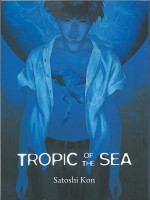
© 2013 by Tezuka Productions. Translation © 2013 by Vertical, Inc. All rights reserved.

The Love and Rockets Companion – 30 Years and Counting


Edited by Marc Sobel & Kristy Valenti (Fantagraphics Books)
ISBN: 978-1-60699-579-2

In the 1980s a qualitative revolution forever destroyed the clichéd, stereotypical ways different genres of comic strips were produced and marketed. Most prominent in destroying the comfy pigeonholes we’d built for ourselves were three guys from Oxnard, California; Jaime, Mario (occasionally) and Gilberto Hernandez.

Love and Rockets was an anthology magazine (which first appeared as a self-published comic in 1981) featuring intriguing, adventuresome larks and bold experimental comic narratives that pretty much defied classification, all wrapped up in the ephemera of the LA Hispanic and punk music scene.

Most stories focussed on either the slick, sci-fi-soused hi-jinx of punky young gadabouts Maggie and Hopey (and their extended eccentric circle of friends) or the heart-warming, terrifying, gut-wrenching soap-opera fantasies from the rural Central American paradise of Palomar.

Jaime Hernandez was always the most visible part of the graphic and literary revolution: his sleek, seductive, clean black line and beautiful composition – not to mention impeccably rendered heroes and villains and the comfortingly recognisable comic book iconography – being particularly welcomed by readers weaned on traditional Marvel and DC superheroes.

However his love of that material, as well as the influence of Archie Comics cartoonists (I often see shades of the great Sam Schwartz and Harry Lucey in his drawing and staging), accomplished and enticing as it is, often distracted from the power of his writing, especially in his extended saga of Maggie Chascarillo and Hopey GlassLas Locas, something never true of Gilbert, whose cartoony, reined-in graphics never overwhelmed the sheer magnetic power of his writing…

The Hernandez Boys, gifted synthesists all, enthralled and enchanted with incredible stories that sampled a thousand influences conceptual and actual – everything from Comics, TV cartoons, masked wrestlers and the exotica of American Hispanic pop culture to German Expressionism. There was also a perpetual backdrop displaying the holy trinity of youth: Sex and Drugs and Rock and Roll – for which please hear mostly alternative music and punk rock.

The result was dynamite. Mario only officially contributed on rare occasions but his galvanising energy informed everything. The slick and enticing visual forays by Jaime explored friendship and modern love whilst destroying stereotypes of feminine attraction through his fetching coterie of Gals Gone Wild, and Gilberto created a hyper-real microcosm in the rural landscape of Palomar: a playground of wit and passion in the quicksilver form of a poor Latin-American village with a vibrant, funny and fantastically quotidian cast created for his extended serial Heartbreak Soup.

Everything from life, death, adultery, magic, serial killing and especially gossip could happen in Palomar’s metafictional environs, as the artist mined his own post-punk influences in a deceptively effective primitivist art style which blended the highly personal mythologies of comics, music, drugs, strong women, gangs, sex and family.

The denizens of Palomar still inform and shape Beto’s work, both directly and as imaginative spurs for spin-off stories.

Winning critical acclaim but little financial success, the brothers temporarily went their own ways, working on side projects and special series before creatively reuniting a few years back to produce annual collections of new material in their particularly peculiar shared or, rather, intermittently adjacent pen-and-ink universes.

In more than three decades of groundbreaking creative endeavour, Los Bros Hernandez have crafted a vast and magnificent canon of cartoon brilliance and literary wonder and this long-overdue companion volume collects rarely seen conversations with the boys as well as two new interviews and also offers a host of truly essential lists and features no serious student of Love and Rockets lore can afford to miss.

Heavily illustrated throughout with candid photos, seen, unseen and unpublished art from the artists and excerpted examples by the many assorted creators who inspired them – everybody from Jack Kirby monsters to Jesse Marsh’s Tarzan to Warren Kremer and Ernie Colon’s Hot Stuff, the Little Devil – this invaluable volume commences with Interviews…

The first is from The Comics Journal #126 (January 1989), conducted by publisher Gary Groth and covering ‘Origins’, ‘Early Affection’, ‘Mostly Music’ (with a Love & Lists  album discography) and a solo section on both Jaime and Gilbert.

The Comics Journal #178 (July 1995) saw Los Bros chatting candidly with Neil Gaiman on personal work and the state of the Comics biz.

Completists will be delighted to know that although both these features have been edited for relevance the entire, unexpurgated interviews can be found online if you are of an historical bent.

Marc Sobel conducted a new interview with Los Bros especially for this volume, discussing ’30 years and Counting’, ‘Family’, ‘Bent Worlds’, a list of the story within a story of ‘Rosalba Fritz Martinez’ B-Movie Roles’, ‘The Naked Cosmos’, ‘Influences’, ‘Post-Comics Depression’, ‘The Indy-Comics Ghetto’, ‘Preconceived Notions’, ‘Anthologies’, ‘The Future of Comics’ and more.

The editor also spoke at length with Gary Groth on why and how he took a chance on three unproved kids and the effect the series has had on the global comics scene, encompassing, ‘Back to the Beginning’, how ‘Four-Color Separations’ worked, ‘Breaking into Bookstores’, ‘Foreign Affairs’ and so many more dark secrets…

Fascinating as the background insights are, the true worth of this huge tome (368 pages and 195x240mm) is the fan-friendly such as the 20-page Timelines listing all the stories, descriptions and references for both Locas and Palomar continuities, and the immense (73 page) Character Guides for each ongoing epic – originally compiled by Chris Staros in his fanzine The Staros Report and completely updated for this book.

Love and Rockets took the comics community by storm when it debuted and although the magazine only infrequently published letters of comment, when they did the missives were usually outrageous and often from impressive and familiar names. In the Letter Column Highlights section the likes of Steve Leialoha, Scott Hampton, Steve Rude, Mark Wheatley, Christie Marx, Kurt Busiek, Evan Dorkin, Andi Watson and many others famed and infamous passed comment and made waves. This is followed by an illuminating group of Bros.’ Favorite Comics which is both revelatory and charming.

Invaluable to all devotees and prospective beginners alike, the Checklist catalogues every story and piece of artwork by the brothers in all iterations of Love and Rockets as well as all the specials, miniseries, side-projects and even outside commissions ranging as far afield as GI Joe to DC Who’s Who, and the whole glorious compilation is capped off with a vast fold out dust-jacket featuring the Locas/Luba Family Charts.

A genuine phenomenon and classic of comics entertainment, Love and Rockets should be compulsory reading for any friend of the art form. This Companion tome will make navigating the huge interconnected Hernandez universe simplicity itself and I thoroughly commend it to your house…
© 2013 Fantagraphics Books, Inc. Love and Rockets © 2013 Gilbert Hernandez and Jaime Hernandez. All images, articles and stories © their respective copyright holders.

Wolfsmund volume 1


By Mitsuhisa Kuji, translated by Ko Ransom (Vertical)
ISBN: 978-193565475-9

All I can glean regarding pseudonymous woman of mystery Mitsuhisa Kuji is that she has worked as assistant to both Kentaro Miura (Berserk) and Kaoru Mori (Emma, Anything and Something), but that simply means that we can appreciate her solely through her work, such as this darkly nihilistic and bleakly beguiling historical re-enactment of the legend of William Tell as collected in this first English-language volume of Wolfsmund…

Set in the 14th century and drawing on historical records, the serial debuted in 2009 as Ookami no Kuchi: Wolfsmund in Seinen publication Fellows! – with four tankōbon volumes collected thus far – and details the struggle of three autonomous alpine cantons, Uri, Unterwalden and Shwyz, for freedom and independence from the oppressive domination of invaders from what will become the Habsburg Empire.

Unconventionally, the oft-told tale centres around the monolithic fortress of Wolfsmund, situated in the Sankt Gotthard Pass: an impenetrable barrier station between mountains controlling the population’s ability to move, flee or obtain allies, intelligence or war material, and a crucial trade bottleneck between Germany and Italy.

The chilling black drama begins in ‘Liese and Georg’ as a highborn lady and daughter of the downtrodden proto-nation’s liberating hero undergoes appalling hardships and indignities at the hands of her most devoted servant in order to pass through the forbidding gate to freedom.

However all her determination and her bondsman’s wiles are as nothing to the insidious observations and deep suspicions of Wolfram the Bailiff; sadistic sentinel with an angel’s face, and undisputed master of Wolfsmund.

Although the wayfarers find sympathetic souls in the village around the castle – especially the seductive female innkeeper – their flight ends in discovery, combat and inevitable, inescapable doom…

The dark fable continues in ‘Johanna and Klaus’ wherein a lethally competent woman warrior undertakes to preserve her master’s treasures and the resistance’s war chest by passing through Wolfsmund to Italian bankers in Lugano. After also spending time with the enigmatic Guesthouse Madam, the deviously competent Johanna also fails to fool implacably diligent Wolfram and she is taken.

However, once inside the castle her true plan comes into play…

The notional stars of the legend at last appear in the final story in this initial volume.

The legend of ‘Wilhelm and Walter’ had long inspired the savagely repressed peoples of what will one day be Switzerland and, after a meeting with the innkeeper, Tell senior and junior opt for the unprecedented option of scaling the mountain rather than passing through the Wolf’s Mouth.

Wolfram however is a coldly calculating custodian and has made provision to counter even the most hare-brained and impossible attempts to escape his jurisdiction…

This is a harsh and visceral saga best enjoyed by older readers, and there’s a powerful aura of woodblock-etching (even a feeling of Albrecht Dürer) to the stark, uncompromising illustration that perfectly compliments the daunting milieu, adamantine scenery and cruelly brutal episodes in which assorted freedom fighters of “the Eternal Alliance” repeatedly try and fail to pass through the fortress gates and fool the cruelly beautiful sadistic angel in command.

However, with the mystery of the lovely libertine innkeeper to tease things along, this book feels more like prologue than main event and I for one can’t wait to see what comes next. After all, even if we know our eventual destination, it’s the journey that really matters…

Wolfsmund is printed in the ‘read-from-back-to-front’ manga format.
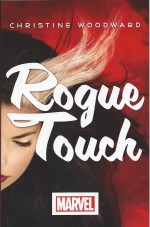
© 2010 Mitsuhisa Kuji. All rights reserved.

Pacific Rim: Tales from Year Zero


By Travis Beacham, Sean Chen, Yvel Guichet, Pericles Junior, Chris Batista, Geoff Shaw & various (Legendary)
ISBN: 978-0-7851-5394-8

It’s summer – which means movie blockbusters – and just for a change here’s a collection of comics stories based on a film rather than the other way round.

The filmic Pacific Rim is set in the third decade of the 21st century and details a protracted battle between humanity and a procession of monolithic monsters which perpetually erupt out of the oceans to smash our cities. To combat these creatures – whose blood is devastatingly toxic – science has devised colossal anthropomorphic machines piloted by teams of bold but essentially doomed soldiers…

This slight but stunningly fun hardback companion compilation, set simultaneously before and during the events of the silver screen saga, features a triptych of short tales drawn from the unused backstory material to fill in detail and character necessarily sacrificed to the exigencies of keeping the motion picture action moving along.

According to the Introduction by writer Travis Beacham, he and co-scripter/Director Guillermo Del Toro are both manic fans of the venerable Japanese genres of Kaiju (literally “strange beasts” or ,more popularly, humongous city-stomping monsters) and their frequent opponents in anime and manga, Mecha (super automaton/vehicles piloted by noble human heroes).

Pacific Rim is thus a way to reintroduce these ever-cool concepts to a new generation of fans who might have missed out on the sheer vicarious joy and thrills of such planet-shaking spectacle.

The revelations begin in 2024AD as journalist Naomi Sokolov, en route to an interview with legendary figure Stacker Pentecost, meets another veteran of the anti-Kaiju initiative and learns how technician Tendo Choi survived humanity’s first encounter with the marauding horror which eradicated San Francisco and changed the path of mankind on August 13th 2013 – ‘K-Day’…

In the decade since, giant Jaeger war-suits have protected the surface world but now they’re being phased out in favour of a new solution – “the Wall” – and Choi’s account of that fateful first contact gives powerful argument as to why that’s a bad idea…

Naomi’s next interview is with Dr. Jasper Schoenfeld, the engineering genius who first came up with the concept of immense ambulatory uber-tanks. His revelations in ‘Turn of the Tide’ explain the role and sacrifices of his all-but-forgotten lab partner Caitlin Lightcap, whose brilliance and passion turned the idea into a workable reality – and also detail the appalling cost to the Jaegers’ unique riders…

Sokolov finally gains her time with inspirational project leader Pentecost in ‘The Bond’ but is quite unprepared for the great man recognising her and the role she played in almost destroying a crucial part of the Jaeger Academy team in the early days of recruitment…

Even though packed with blockbusting Mecha vs. Monster action throughout, this book primarily provides a subtle in-filling and shading of character in vignettes unavailable in the rip-roaring on-screen avalanche of action. Moreover, illustrators Sean Chen, Yvel Guichet, Pericles Junior, Chris Batista, Geoff Shaw, Mark McKenna, Steven Bird, Matt Banning, Guy Major, Tom Chu & Dom Regan work wonders blending these quiet, informative moments with the overall thrust of paralleling the movie mayhem.

This volume also includes an expansive segment charting ‘From Script to the Final Page: The Creative Process’ as Beacham’s typing progresses through Guichet’s rough sketches to full pencils and inks before ending as coloured and lettered final art. And as if that wasn’t enough, there’s even a full colour feature on ‘Kaiju’ with a handy guide for distinguishing Belobog from Scissure, telling apart Trespasser from Kaiceph and knowing your Verocitor from Karloff…

Furious fun for monster-lovers of all ages…
© 2013 Legendary Comics LLC. All Rights Reserved.

X-Men: X-Termination


By Greg Pak, David Lapham, Marjorie Liu, Matteo Buffagni, André Araújo, David López & various (Marvel/Panini UK)
ISBN: 978-1-84653-549-9

Since the 1960s comics fans have been totally au fait with the concept and complexities of alternate universes and the bewildering potentialities of an infinity of Earths. Offering irresistible temptations to writers and fans alike, the hallowed plot device offers the opportunity to creatively meddle and play at will and still back-pedal if readers get too stroppy or upset or – worse yet – bored and confused…

Marvel has a highly structured multiverse and every alternate realm comes with its own “Official Reality Number” – the regular mainstream continuity is set to Earth-616 and the Ultimates Universe is designated Earth-1610 for example.

Of course, once introduced, each and every new iteration is somebody’s favourite and consequently characters regularly traverse the cosmic void between continua barely distinguishable or wildly variant.

There have been many miniseries such as Avengers: United They Stand or Blink and even regular series set on or between these divergent planes such as Exiles, Age of Apocalypse and others…

It generally takes a clear head and true devotion to follow and wallow in the minutia of the enterprise. Consider that your only warning…

Collecting Age of Apocalypse #13-14, X-Treme X-Men #12-13, X-Termination #1-2 and Astonishing X-Men volume 3, #60-61 this hugely enjoyable but woefully continuity-entangled cosmic rumble attempts to bring a little clarity and clear some very crowded decks with a bombastic brouhaha that first appeared between March and April 2013.

The mini-event appeared in selected mutant titles beginning with Age of Apocalypse #13 which offered an ‘X-Termination Prologue’ by David Lapham, Renato Arlem & Valentine De Landro set on the alternate dubbed Earth-295, where the early death of Charles Xavier led to an appalling Reality in which the self-appointed mutant god of natural selection Apocalypse almost eradicated humanity before a coterie of radically different heroes and villains stopped him.

In the wake of the 1995 “Age of Apocalypse” event, many of this Earth-295’s inhabitants escaped to “our” world and generated a tidal wave of plots and story-arcs. One such was tragic widower Kurt Wagner, a teleporting sword-wielding X-warrior determined to hunt down a band of genocidal Apocalypse minions including Sugar Man, the Blob and evil twisted versions of Iceman and the Beast.

However, whilst he pursued vengeance in our world, on his own Earth the last survivors were losing a battle against the legacies of the defeated Apocalypse: a shattered eco-system, insuperable differences between the equally devastated human and mutant populations and even cosmic meddling by cosmic interlopers…

Led by Jean Grey , her lover Graydon “Horror Show” Creed and a mysterious strategist dubbed Prophet, a disparate band (including cyborg Donald “Goodnight” Pierce, Deadeye and Fiend) have spent more than a decade fighting Apocalypse’s self-appointed successor Weapon Omega and hunting a cosmic artefact dubbed a “Life Seed” hidden millennia past by one of the pan-dimensional star gods called Celestials.

Now their apparently futile battles are nearing an end, whilst on Earth-616 their old comrade Nightcrawler – currently working with Wolverine’s covert black ops team X-Force – having captured his major objective Henry (Dark Beast) McCoy, prepares to abandon his new friends and return to his broken home world…

Simultaneously in X-Treme X-Men #12 – another ‘X-Termination Prologue’ by Greg Pak & André Araújo – Alison Blair, the Dazzler of Earth-616, is leading a team of heroes from a plethora of Realities in a crusade against a league of malign Charles Xaviers. These terrifying telepotents have pooled their formidable psychic resources in a scheme to conquer the entire multiverse and Alison is determined to stop them

Even with an appalling attrition rate her squad – psionic super-computer Sage, Grecian man-god Hercules and strange versions of her old X-Men comrades Wolverine (Howlett), Scott Summers and a very young Nightcrawler Kurt Waggoner – are barely holding their own against the Evil Xaviers.

Now, on a predominantly Egyptian Earth, the rogue telepaths have opened an inter-dimensional rift and begun feeding on the energies released by sacrificing hundreds of humans. In a frantic assault the X-Treme team rescue and apparently redeem an enslaved Xavier (or rather a self-sustaining Professor X head in a jar), but the sinister psychic savants’ meddling has opened a hole to a far greater realm and deadlier threat…

The saga properly begins in X-Termination #1 (by Marjorie Liu, Pak, David López & Allen Martinez) with the origin of the multiverse – a deliberate construction of massive and ancient cosmic intellects designed to imprison their greatest mistake in the void between Realities, trapped for eternity between infinite layers of Creation.

Recently, however, the incessant crossings and transfers between supposed inviolate Realities has weakened those walls ands now the portal manufactured by the Xaviers has breached it completely, allowing something intolerable to break out…

On Earth-616 Wolverine’s X-Force team – Gambit, Iceman, Northstar and Karma – are hunting their treacherous former ally Nightcrawler (of Earth-295, remember?) whose actions have led to the death of team mate Fantomex, and brought him into an insane alliance with the Dark Beast.

The inter-dimensional fugitives are in San Francisco attempting to manipulate the power of a dormant Space God known as the “Dreaming Celestial” when X-Force arrives, but the Beast is able to use the giant’s power to open a gateway to 295 through which the pair escape.

However, as Nightcrawler hands the war-criminal McCoy over to Jean and Prophet, it becomes clear that something is wrong. The portal isn’t closing, only spewing out a torrent of vile detritus from who knows where…

Only when in short order both X-Force and then Dazzler’s X-Treme team emerge from the spitting, arcing rent in reality does Nightcrawler begin to realise the potential catastrophe his rash actions have triggered – a fear confirmed when a trio of monstrous unstoppable humanoids emerge and begin absorbing all this Earth’s energy and life-force. They have already consumed the Egyptian Earth to get here and within seconds the amassed, amazed army of heroes suffers its first fatality…

The saga continues in Astonishing X-Men volume 3, #60 (Liu, Matteo Buffagni & Arlem) as the assembled warriors redouble their efforts but are easily repulsed. The only successes come when Karma’s psionic talent provides the embattled heroes with the secret origin of the deadly devourers and Iceman’s powers provide a defence the creatures cannot absorb…

The elation is short-lived as the beings split up and one uses the still-open portal to voyage to Earth-616 and another irresistible, immovable feast…

Panicked and galvanised, the 616 heroes prepare to follow but Prophet bids them stop and think. He has a notion that the Celestial Life Seed lost somewhere on Earth-295 might be the only weapon capable of stopping the inter-dimensional ravagers. However as the heroes separate into teams to tackle the threat to multiple Earths and seek out the seed, Dark Beast McCoy makes his own plans to profit from the heroes’ sacrifices…

Lapham, Araújo & Arlem extend the epic in Age of Apocalypse #14 as Wolverine, Howlett, Hercules and Northstar join Prophet, Gambit, Deadeye, young Kurt Waggoner and Sage in San Francisco on 616 and find the devourer absorbing the inestimable energy of the Dreaming Celestial.

On 295 a team of X-champions and a battalion of robotic Sentinels fight a futile holding action as McCoy, Nightcrawler, Scott Summers, Dazzler and Jean hunt deep under the Earth for the Seed, painfully aware that the ancient artefact created Apocalypse and threatens to transform whoever uses it into something as bad, if not worse…

However when Jean and Nightcrawler secure the “Apocalypse pod” and abandon their former comrades, they are in turn ambushed by McCoy who steals the vital, yet horrific device for his own purposes…

On Earth 616 another hero dies as the antediluvian invader absorbs the forces within the Dreaming Celestial and grows to monumental proportions. Moreover as the X-fighters regroup in X-Treme X-Men #13 (Pak, Lapham, Liu, Guillermo Mogorron, Raul Valdés, Edgar Tadeo, Carlos Cuevas, Don Ho & Walden Wong) they discover an even more ghastly threat.

The trio are merely a vanguard for an infinite army of energy eaters and all the power being consumed will be used to free the horde to absorb and end each and every iota of creation…

With multiversal Armageddon imminent, Astonishing X-Men volume 3, #61 (Liu, Arlem, Jose Kleber de Moura Jr. Buffagni & Raul Valdés) sees more heroes fall, one self-despising villain redeemed and a valiant sacrifice to the Apocalypse Seed at last result in an effective weapon against the devourers. Also unleashed is the true secret origin of Reality, revealed before it all spectacularly wraps up in X-Termination #2 (Lapham, López, Mogorron, Valdés, Cuevas & Martinez) with the end of one universe and the migration of the last of the heroes to another.

No prizes for guessing which one…

Taught, fraught, beautifully rendered by many talented hands and unarguably spectacular, if a little hard to follow in places, X-Termination also includes a beautiful cover-and-variants gallery by Greg Land, Salvador Larroca, Kalman Andrasofszky, Ed McGuiness, Morry Hollowell, Giuseppe Camuncoli, Cam Smith, Rain Beredo, Mike Deodato and Philip Noto – but no digital add-ons or extras this time.
™ & © 2013 Marvel & Subs. Licensed by Marvel Characters B.V. through Panini S.p.A. All rights reserved. A British Edition published by Panini Publishing, a division of Panini UK, Ltd.