Showcase Presents Sgt. Rock volume 2


By Robert Kanigher, Joe Kubert, Bob Haney, Ross Andru & various (DC Comics)
ISBN: 978-1-4012-1984-0

Sgt Rock and the “combat-happy Joes” of Easy Company are one of the great and enduring creations of the American comic-book industry. The gritty meta-realism of Robert Kanigher’s ordinary guys in life-or-death situations captured the imaginations of generations of readers, young and old. So pervasive is this icon of comicbook combat that’s it’s hard to grasp that Rock is not an immortal industry prototype like Superman, Batman and Wonder Woman – with us since the earliest moments of the industry – but is in fact a late addition to and child of the Silver Age of Comics: debuting as just another tale in war anthology G.I. Combat (#68, January 1959, by Kanigher & Joe Kubert).

The archetypal sergeant was an anonymous boxer who wasn’t particularly skilled but simply refused to be beaten, absorbing any and all the punishment dealt out to him.

When ‘The Rock!’ enlisted in the US Army, however, that same Horatian quality attained mythic proportions as he held back an overwhelming Nazi attack by sheer grit and determination, remaining bloody but unbowed on a field littered with dead and broken men.

The tale inspired an instant sequel or two before, in Our Army at War #83 (June 1959), the story really began…

This second titanic tour of duty collects in stark and stunning monochrome the groundbreaking tales which made Sgt. Rock a comics legend. These grim and gritty, epically poetic war stories are taken from the then still-anthological Our Army at War #118-148, bracketing May 1962 to November 1964, a period when American comics were undergoing a renaissance in style, theme and quality.

Scripted throughout by Editor Kanigher, the terse episodes herein begin with ‘The Tank vs. the Tin Soldier!’ illustrated by the brilliant Russ Heath as movie idol Randy Booth mustered in to Easy Company and spent all his snobbish energy trying to get out again. By the time he learned how to be a real soldier, his moment in the limelight had turned from cinematic melodrama to Greek tragedy…

The artist most closely associated with Rock, Joe Kubert illustrated #119’s memorable fable ‘A Bazooka for Babyface!’ wherein a kid who’d lied about his age made it to the Front, but didn’t fool the indomitable topkick. Of course, by the time the fighting died down enough to send him back, the Babyface was a seasoned combat veteran…

Kubert superbly limned the majority of stories in this volume, such as #120’s ‘Battle Tags for Easy Co.!’, which used brief vignettes to illustrate how squad stalwarts Ice Cream Soldier, Wild Man and Bulldozer earned their nicknames, before showing the latest Green Apple recruit why the Sarge was called Rock, after which ‘New Boy in Easy!’ in #121 introduced a chess-obsessed replacement who took a lot of convincing that war was no hobby and men weren’t just pawns…

This narrative device of incorporating brief past-action episodes into a baptism of fire scenario played over and over again in Sgt. Rock and never got old.

OAAW #122 featured ‘Battle of the Pyjama Commandoes!’ comprising more portmanteau tales as a number of Easy Joes recuperated in a field hospital, until the Germans broke through and the wounded had to pick up their weapons again…

High-energy stylist Jerry Grandenetti illustrated ‘Battle Brass Ring!’ in #123 as a pushy new replacement antagonised the entire unit until he learned to his cost the value of teamwork and the price of command, after which Kubert returned for ‘Target – Sgt. Rock!’

When the indomitable warrior was captured and brainwashed by a Nazi tank commander into leading an attack on Easy, Bulldozer had to balance Rock’s life against his beloved sergeant’s unflinching standing orders…

More moral dilemmas punished the valiant warriors in #125 (illustrated by Heath) as the unit was cut off from the main Allied force and ordered to ‘Hold – At All Costs!’, whilst ‘The End of Easy Company!’ (#126 and illustrated by Kubert) pitted the unstoppable dogfaces against impassable fortifications and a veritable mountain of Germans who severely underestimated the sheer stubbornness of tired, angry Americans…

With Kubert settling in for the long haul as regular artist on the strip, issue #127 offered an epic 25-page blitz of stories-within-a-story as a quartet of combat-happy Joes related personal tales of their unbeatable boss in ‘4 Faces of Sgt. Rock’.

OAAW #128 featured ‘The Battle of the Sergeants!’ as Rock met his Nazi counterpart in the deserts of Africa, after which #129 revealed that ‘Heroes Need Cowards!’ by exploring Rock’s earliest days in the Army, and ‘No Hill for Easy!’ in #130 saw the battered band of brothers go above and beyond to placate a shell-shocked Major and finish the suicide mission of a deranged last man standing…

In #131 ‘One Pair of Dogtags … For Sale’ saw Easy meet a woman warrior every inch their equal who literally spilled her own blood to keep Rock alive, whilst in ‘Young Soldiers Never Cry!’ the sergeant became a combat babysitter after rescuing a toddler on the battlefield of Normandy.

‘Yesterday’s Hero!’ in #133 saw a decorated veteran join Easy to a rapturous welcome, but flounder, unable to escape the shocking circumstances that made him an unwilling example of both heroism and cowardice, whilst in ‘The T.N.T. Book’ another replacement insisted on playing the odds in war as he had on the track… until he learned the true stakes of battle…

Our Army at War #135 pitted Rock against a German non-com who was in almost every way his ‘Battlefield Double!’, whilst in #136 a desperately frightened new kid arrived begging the indomitable topkick to ‘Make Me a Hero!’, and #137 saw a cavalry holdover from WWI finally achieve his long-delayed charge to glory in ‘Too Many Sergeants!’

When a close skirmish separated Rock from his greenest new replacement in #138, the weary warrior went through combat hell to find ‘Easy’s Lost Sparrow!’, before the next mission resulted in capture for four of the unit’s best and a ‘A Firing Squad for Easy!’ at a German Submarine dock. Happily the team of Frogmen they’d been protecting returned the favour…

OAAW #140 was another full-length thriller – with cameos from fellow comicbook combatant Captain Johnny Cloud and French Resistance fighter Mademoiselle Marie – which revealed the wry story of how Rock kept winning deserved but wholly unwelcome battlefield promotions. His dilemma as a ‘Brass Sergeant!’ was only resolved after reuniting a misunderstood son with his “spit-and-polish” General father under exceptional circumstances…

An timid old school friend turned up in #141, still needing Rock’s protection until “Shaker” finally pulled the ‘Dead Man’s Trigger!’, whilst in the next issue Kanigher pushed the envelope with the tale of a boy who held the sergeant to ransom and became ‘Easy’s New Topkick!’ in order to finish his dead Maquis comrades’ last mission. This stirring saga inspired the creation of Unit 3 – a French Resistance squad of battle-hardened children who appeared sporadically in later issues.

In #143 the US soldiers were back in the desert where embattled dogfaces honoured fallen comrade Farmer Boy by planting ‘Easy’s T.N.T. Crop!’ and harvested a victory built on sand, after which ‘The Sparrow and the Tiger!’ saw Rock at last succumb to battle fatigue and the constant loss of his “kids” until a scared replacement showed him the true value of persistence and grace under fire…

Our Army at War #145 offered the back-story on the squad’s Native American rifleman in ‘A Feather for Little Sure-Shot!’, whilst in #146 imagination ran wild as ‘The Fighting Guns of Easy!’ compared stories about the men who fired them.

This second savage selection of combat actions concludes with a rare 2-part yarn, beginning in #147 as ‘Generals Don’t Die! Book One’ found the hands-on topkick the envy of all his commanding officers. However, after helping desk-jockey General Bentley die in glorious battle, Rock was saddled with fulfilling a promise to a dying man and forced to impersonate Bentley.

Things got even trickier when the impostor had to lead the troops in breaking a stalled advance, a classic conundrum spectacularly resolved in the blockbuster conclusion ‘Generals Don’t Die! Book Two: Generals are Sergeants with Stars!’ as Rock kept the dead man’s secret and maintained Bentley family honour until he could pass on those unearned Brass Stars to the next Bentley generation…

Robert Kanigher at his worst was a declarative, heavy-handed and formulaic writer, but when writing his best stuff – as here – his work was imaginative, evocative, iconoclastic and heart-rending. He was a unique reporter and observer of the warrior’s way and the unchanging condition of the dedicated and so very human ordinary foot-slogging G.I.

With superb combat covers from Kubert, Grandenetti, and Heath fronting each episode, this battle-book is a visually perfect compendium and a certain delight for any jaded comics fan looking for something more than flash and dazzle.

A perfect example of true Shock and Awe; these are stories every comics fan and combat collector should see.
© 1963, 1964, 2008 DC Comics. All Rights Reserved.
Buffy the Vampire Slayer: The Remaining Sunlight


By Andi Watson, Joe Bennett & Rick Ketchum with J. L. van Meter & Luke Ross (Dark Horse/Titan Books)
ISBN: 978-1-84023-078-9

Fully established as a media sensation, Buffy the Vampire Slayer debuted in her own monthly comicbook in 1998, with sharp, thrilling tales that perfectly complimented the sensational, groundbreaking and so, so cool TV show.

After debuting with an original graphic novel (see Buffy the Vampire Slayer: the Dust Waltz) the character quickly became a major draw for publisher Dark Horse – whose many other licensed comicbook successes included Star Wars, Indiana Jones, Aliens and Predator – and her monthly exploits were frequently supplemented by short stories in the company’s showcase anthology Dark Horse Presents and other venues.

This premier compilation (I’m once more featuring the British Titan Books edition and – if you’re asking – the stories are all set during TV Season 2) collects the first three issues of the regular Dark Horse comicbook crafted by Andi Watson, Joe Bennett & Rick Ketchum.

Included as a bonus is the short story which was the Slayer’s very first comicbook appearance, taken from Dark Horse Presents Annual 1998, written by J.L. van Meter, with art by Luke Ross & Ketcham.

In case you’ve only just returned From Beyond the Veil: Buffy Summers was a clueless Valley Girl and hip teen cheerleader until she turned overnight into a monster-killer: latest winner of a mystic, genetic lottery which transformed mortal maids into human killing machines: Slayers.

Moving to the small California hamlet of Sunnydale, obliviously located on the edge of a mystic portal dubbed The Hellmouth, she, a close band of new friends and her cult-appointed magical mentor Rupert Giles battled devils, demons and every species of terror inexorably drawn to the area and who/what/which considered humanity a snack…

The action begins with ‘Wu-Tang Fang’ as, after another tedious school day Willow, Xander and Buffy blow off steam at local club The Bronze.

When a pack of Vampires attacks them on the way home, the Slayer easily deals with the ill-conceived assault but is afterwards confronted and threatened by a mysterious oriental figure in a cloak and straw hat.

It disappears without incident but Xander, fed up with being saved by a girl and following an all night kung fu movie marathon, enrols next day at a martial arts Dojo.

As he painfully finds his new sensei is a bullying brute, Buffy and Giles are discovering a string of martial artists killed by vampires. The standard searches of the Library’s lore-books turn up a name: San Sui of the Xiang River – an ancient wandering warrior who challenged fighters to duels and drank their blood when they lost…

However, after Xander’s teacher meets an horrific end courtesy of the mysterious stranger, San Sui is unprepared for Buffy, who takes out all the extra training she’s been forced to endure on his smug, undead ass…

The next issue covered the annual arcane imbecility of ‘Halloween’ in Sunnydale – a night when vamps generally stayed in due to the hordes of happy people wandering about. This time, however, a pack of smart young dead things decide to stock up on tasty human titbits for their enforced vacation…

One of them is scholarly stalwart Willow who was snatched after storming out of an argument with her folks. Since, like most of the older high-schoolers, Buffy is stuck with chaperoning little kids on the night, nobody notices her BFF is missing until almost too late…

Of course the Slayer does her thing and rescues her gal-pal in time, but after a spectacular vamp-eviscerating battle, Buffy’s concern for Willow causes her to miss one demon who manages to flee with severe – but not death-threatening – injuries. That would prove a costly oversight in months to come as Selke slowly regained her power and fed her burning hatred…

From issue #3 ‘Cold Turkey’ continued the holiday horrors with Buffy lumbered by her mother with producing the daunting Thanksgiving blow-out. Stuck with necessarily late-night shopping in-between school and Slayer-ing, she and Giles are obsessing over the missing fourth Halloween human-hoarder.

Selke is hiding out and recuperating via the most degrading and disgusting means, but when she spots her hated enemy picking up turkey and trimmings at the soul-destroying All-Nite-O-Mart, the damaged devil decides to surprise the Slayer and speed her recovery with a hot meal.

Not her best idea ever, but even after a blistering cemetery confrontation the irrepressible Queen of the Damned again escapes with most of her scurvy skin intact…

The devastating and dramatic danses macabre conclude here with the aforementioned added bonus ‘MacGuffins’ from Dark Horse Presents Annual 1998: a gleeful mirthquake wherein Buffy receives a brace of mischievous, uncontrollable gremlins in the post.

This time however the trollish terrors are not a malign menace but a Watcher-sponsored test – one Giles would learn to regret once the hilariously grudge-bearing Slayer finally got her hands on the slippery little supernatural sods…

With photos and original covers by Arthur Adams, Chris Bachalo, Tim Townsend & Joe Bennett, this fast and furious, pictorially powerful compilation is sharply scripted and proceeds at a breakneck rollercoaster pace, to perfectly capture the brittle, intoxicating spirit of the TV series.

The Remaining Sunlight is an easily accessible romp even if you’re not familiar with the vast backstory: a creepy chronicle and tumultuous thriller as easily enjoyed by the most callow neophyte as by any dedicated devotee.
Buffy the Vampire Slayer ™ & © 1999 Twentieth Century Fox Film Corporation. All Rights Reserved.

All-New X-Men: Here to Stay


By Brian Michael Bendis, David Marquez, Stuart Immonen & Wade Von Grawbadger (Marvel/Panini UK)
ISBN: 978-1-84653-547-5

Surely everybody wonders what might result if they could meet their older selves one day, and as scripter Brian Michael Bendis continues his intriguing regeneration and restating of the Mutant Question, the answers here increasingly indicate it might all be a very bad idea indeed…

Following all the poor choices and horrendous paths taken by assorted Homo Superior heroes over the last few years, and in the aftermath of the blockbuster Avengers versus X-Men publishing event, MarvelNOW! reformed the entire continuity, taking the outcast champions in truly bizarre old/new directions.

At the beginning of the Marvel Age, a very special bunch of kids were singled out by wheelchair-bound telepath Charles Xavier. Gloomy Scott Summers, ebullient Bobby Drake, wealthy golden boy Warren Worthington III, insular Jean Grey and animalistic genius Henry McCoy were gathered up by “Professor X” – a driven man dedicated to brokering peace and achieving integration between massed humanity and an emergent off-shoot race of mutants, ominously dubbed Homo Superior.

To achieve his dream he educated and trained the five youngsters – codenamed Cyclops, Iceman, the Angel, Marvel Girl and the Beast – for unique roles as heroes, ambassadors and symbols in an effort to counter the growing tide of human prejudice and fear.

Over the intervening years the struggle to integrate mutants into society resulted in many tragedies and compromises, including Jean’s death, Warren’s mutilation, Hank’s further mutation and eventually Cyclops’ radicalisation. The steadfast and trustworthy team-leader eventually joined with former foes Magneto and Emma Frost in a hard-line alliance devoted to preserving mutant lives at the cost, whenever necessary, of human ones.

His former team-mates and newer X-Men such as Wolverine, Storm and Kitty Pryde stayed true to Xavier’s ideal, abandoning Scott to protect and train the next X-generation of mutant kids at the Jean Grey School for Higher Learning…

When Hank McCoy realised he was fatally mutating, he became obsessed with the notion that the early idealistic First Class of X-Men – especially Scott– could bring the mutant terrorist Cyclops back from his current path of doctrinaire madness and ideological race war insanity.

To that end he utilised time-travel technology in a last-ditch attempt to avoid inevitable mutant civil war: risking the entire space/time continuum by bringing not only his old friend but also the rest of the valiant young team back to the future to reason with the fallen Cyclops.

The gamble paid off in all the wrong ways: rather than restoring noble, dedicated Scott Summers to the man he used to be, the confrontation simply hardened the maverick’s heart and strengthened his resolve.

Moreover, even though McCoy’s younger self impossibly cured his older iteration, young Henry and the rest of the X-Kids refused to go home until “Evil” Cyclops was stopped…

Collecting All-New X-Men #6-10, cover-dated March-June 2013, this time-warping reboot finds the displaced teens adapting to a scary world (in a 3-part tale illustrated by David Marquez) as previously diffident wallflower Jean Grey suddenly takes charge of her future-shocked classmates.

At first overwhelmed by the instant onset of vast telepathic powers to augment her established telekinesis, Jean is given useful tips and hints on mental control by Kitty Pryde who resigns as headmistress to devote all her energies to training the chronally-displaced quintet.

Young Scott is especially traumatised. He just can’t believe the man he’s become and will not allow his later self to continue betraying his life’s purpose. Stealing Wolverine’s motorbike he flees the school where the First Class have been forcibly sequestered and heads out into the real world with the feral mutant hard on his heels…

Even as Warren at last meets his impossibly alien older self, Scott is learning far more than he ever wanted to about the 21st century, unaware that he has been discovered by one of the X-dynasty’s most cunning and ruthless enemies…

Teen Scott has made it to Manhattan and finagled his way into the bank where his older self has kept a safety- deposit box. The financial time-capsule contains one more big shock: a souvenir from his wedding to Jean and another impossible pill to swallow…

However before he can digest the fact, Wolverine catches him and convinces him to come quietly.

There’s another surprise though when the obnoxious Canadian turns into a quiet alley and transforms into a blue-skinned woman. Although he doesn’t know it, Scott is in the manipulative clutches of Raven Darkholme, a merciless mutant criminal known as Mystique. The innocent hours she spends talking to the still-naïve champion will affect his life forever…

When the real Wolverine finally tracks down the truant, he has no idea what Mystique has wrought as he drags the confused kid back to the WestchesterSchool, and when Scott shows Jean the retrieved wedding memento she too is speechless…

Young Warren cannot understand the changes time and circumstance have wrought upon his older self, and the ebullient flighty creature seems unable or unwilling to confide in him. However, as the two Angels soar through the heavens together they become aware of an attack on distant AvengersTower. Instantly back in battle mode the pair rout a deadly Hydra task force, but when the World’s Mightiest Superheroes meet, them Captain America is understandably aghast at the potentially continuum-rending consequences of five time-displaced teens running loose in their own future…

No sooner have the Avengers been temporarily placated than Cap’s fears are justified when young Warren, appalled at the things he’s seen and learned, attempts to commandeer the time-machine and return to his rightful time and place.

Shockingly, Jean seizes control of his mind and reprograms him so that he wants to stay…

Stuart Immonen returns to illustrate the final two chapters (with the assistance of Wade Von Grawbadger) as Kitty begins to accelerate the kids’ X-training and Scott lets slip that he’s met Mystique. As Kitty goes into damage control mode, in New York the subject of her fears is advancing her latest scheme.

With ravening psycho-killer Sabretooth she is raiding maximum security penitentiary The Raft to liberate mutant super-illusionist Lady Mastermind. Their new, shared ambition is lethally simple: use their powers to steal so much money that nobody will ever be able to touch them…

Meanwhile the ideological mutant conflict heats up when the elder Cyclops, Emma Frost, Magik and Magneto arrive at the Jean Grey School for Higher Learning with a chilling proposition. Convinced of coming mutant extinction at human hands, the renegade terrorist Scott Summers has come with an open invitation: any students who wish may join his own academy – dedicated to training Homo Superior to fight and survive rather than co-exist with humanity…

With horror, X-Men young and old realise that the outrageous appeal has been accepted by some of the ungrateful students in their care…

Even as the faculty and temporal-fugitives ponder that shock, word arrives that the situation has worsened. A gang of mutants have slaughtered dozens of humans in a raid that netted millions of dollars and human/mutant relations have never been shakier…

To Be Continued…

Addictive, enthralling and utterly compelling, this second All-New X-outing mixes blistering action, sharp humour and slowly-mounting tension with the signature themes of alienation and personal freedom to deliver a refreshingly direct drive to the once water-treading mutant franchise and offers a perfect jumping-on point for new and retired fans alike as long as you also read the previous volume (All-New X-Men: Here Comes Yesterday)…

This book also includes a beautiful cover-and-variants gallery by Immonen, Chris Bachalo, Nick Bradshaw & Greg Horn and the now standard 21st century add-on of AR icon sections (Marvel Augmented Reality App) which give access to story bonuses once you download the code – for free – from marvel.com onto your smart-phone or Android-enabled tablet.

™ & © 2013 Marvel & Subs. Licensed by Marvel Characters B.V. through Panini S.p.A. All rights reserved. A British Edition published by Panini Publishing, a division of Panini UK, Ltd.

Golden Age Flash Archives Volume II


By Gardner F. Fox, E.E. Hibbard, Hal Sharp & various (DC Comics)
ISBN: 978-1-4012-0784-7

The innovative array of companies that became DC published a number of iconic “Firsts” in the early years of the industry. Associated outfit All-American Publications (who were bought out and acquired by National in 1946) were responsible for the first comicbook super-speedster as well as the iconic Wonder Woman, Green Lantern and many others who became mainstays of DC’s pantheon of stars.

Devised, created and written by Gardner Fox and first drawn by Harry Lampert, Jay Garrick debuted as the very first Monarch of Motion in Flash Comics #1 and quickly – how else? – became a veritable sensation.

“The Fastest Man Alive” wowed readers in anthologies Flash Comics, Comics Cavalcade, All Star Comics and others – as well as his own solo vehicle All-Flash Quarterly – for just over a decade before changing tastes benched him and most other Mystery Man heroes in the early1950s.

His invention as a strictly single-power superhero created a new trend in the burgeoning action-adventure funnybook marketplace, and his particular riff was specifically replicated many times at various companies where myriad Fast Furies sprang up.

After over half a decade of mostly interchangeable cops, cowboys and cosmic invaders, the concept of human rockets and superheroes in general was spectacularly revived in 1956 by Julie Schwartz in Showcase #4 when police scientist Barry Allen became the second hero to run with the concept. It’s been non-stop ever since …

This charmingly seductive deluxe Archive edition collects the Fastest Yarns Alive from Flash Comics #18-24, covering June-December 1941, as well as the first two issues of the irrepressible Garrick’s whimsically eccentric full-length exploits from All-Flash Quarterly (Summer and Fall of that same fateful year), all written by the apparently inexhaustible Gardner Fox.

After another informative Introduction from comicbook everyman Jim Amash, the rollercoaster of fun and thrills gathers steam with ‘The Restaurant Protective Association’ (illustrated by Hal Sharp), with Jay and girlfriend/confidante Joan Williams stumbling upon a pack of extortionists and exposing a treacherous viper preying on Joan’s best gal-pal, after which ‘The Fall Guy’ in #19 revealed how a gang of agile fraudsters were faking motor accidents to fleece insurance companies.

Both cases gave Garrick ample opportunity to display the hilarious and humiliating bag of super-speed tricks and punishing pranks which astounded playful kids of the day and still delight decades later.

Flash Comics #20 led with ‘The Adventure of the Auctioned Utility Company’ wherein Joan accidentally bought a regional power outfit and Jay used all his energies to reconcile a feuding family whilst teaching a miserly embezzler an unforgettable lesson…

Sharp had been doing such splendid artistic service on the monthly tales because regular illustrator E. E. Hibbard had presumably been devoting all his creative energies to the contents of the forthcoming 64-page All-Flash Quarterly #1.

The epic premiere issue opened with a tantalising frontispiece ‘The JSA Bid Farewell to the Flash’, celebrating the fact that The Fastest Man Alive was the third character to win his own solo comic – after Superman and Batman – and would therefore be “too busy for Justice Society get-togethers”…

‘The Origin of the Flash’ was then retold by Fox & Hibbard revealing again how some years previously college student Garrick had passed out in the lab at Midwestern University, only to awaken hyper-charged and the fastest creature on Earth thanks to the “hard water fumes” he had inhaled whilst unconscious.

After weeks recovering in hospital, the formerly-frail apprentice chemist realised the exposure had given him super-speed and endurance, so he promptly sought to impress his sort-of girlfriend Joan Williams by becoming an unstoppable football player. Eventually the kids graduated and Garrick moved to New York where, appalled by rampant criminality, he decided to use his gifts to fight it.

The Flash operated mostly in secret, as much hindered as helped by wilful, headstrong Joan who began her own lifetime obsession of pesky do-gooding here…

‘The Men Who Turned to Stone’ plunged us back to the present as one of Garrick’s colleagues at Chemical Research Incorporated discovered an instant petrification process and was abducted by criminals who saw a chance to make lots of illegal money…

Hibbard also illustrated the uncredited fun-fact featurette ‘The Flash Presents his Hall of Speed Records’ before ‘Meet the Author and Artist of the Flash’ offered an intimate introduction to the creative team, after which ‘The Adventure of the Monocle and his Garden of Gems’ saw the debut of a rare returning villain with an unwise addiction to other people’s jewels, but enough brains to counter The Flash’s speed – if not Jay’s courage and ingenuity.

When Flash prevented the murder of a cowboy performer in New York ‘The Rodeo Mystery’ soon took Jay and Joan to Oklahoma and a crooked ploy to steal a newly discovered oil well before the issue closed with Flash smashing a gambler trying to take over the sport of Ice Hockey in ‘Menace of the Racket King’.

In Flash Comics #21 gambling was still a problem as ‘The Lottery’ (illustrated by Sharp) saw the Speedster expose a cunning criminal scheme to bilk theatre patrons and carnival-goers whilst in #22 ‘The Hatchet Cult’ took an uncustomarily dark walk on the wild side as the Flash became involved in a Chinatown Tong war and exposed the incredible secret of modern Mongol mastermind Mighty Kong…

Hibbard & Sharp collaborated on issue #23’s ‘A Millionaire’s Revenge’ wherein wealthy plutocrat Leffingwell Funk decided to avenge an imagined slight by a poor but happy man. His method was unique: it began with engineering unsuspecting shoe store owner Jim Sewell‘s inheritance of half a million dollars and would have ended with leg-breaking thugs, disgrace and prison had not Jim counted Jay Garrick amongst his circle of friends…

The Fall 1941 All-Flash Quarterly (#2 and again an all Fox/Hibbard production) kicked off with a spectacular all-action ‘Title Page’ and informative recap in ‘A Short History of the Flash’ before the creators ambitiously undertook a massive four-chapter saga of vengeance and justice.

In an era where story was paramount this oddly time-skewed tale might jar slightly with modern continuity-freaks, spanning as it does nearly a lifetime in the telling, but trust me just go with it…

‘The Threat: Part One – The Adventure of Roy Revenge!’ opens as brilliant young criminal Joe Connor is sentenced to ten years in jail and swears vengeance on DA Jim Kelley. The convict means it too, spending every waking moment inside improving himself educationally, becoming a trustee to foster the illusion of rehabilitation.

On his release Connor befriends Kelley, who is pursuing a political career, and orchestrates the abduction of the lawyer’s newborn son…

Years later a bold young thug dubbed Roy Revenge begins a campaign of terror against Mayor Jim Kelley which even the Flash is hard-pressed to stop. When the bandit is at last apprehended Kelley pushes hard to have the boy jailed, unaware of his biological connection to the savage youth.

In the intervening years Connor had truly reformed – until his angelic wife died leaving him to care for their little girl Ann and “adopted” son Roy. Without his wife’s influence Connor again turned to crime and raised the stolen boy to hate his real father…

‘The Flash Presents his Hall of Speed Records’ and ‘How to Develop Your Speed by the Flash’ break up the melodrama before the saga continues in ‘The Threat: Part Two – Adventure of the Blood-Red Ray’ as Connor rises in the Underworld and plans to take over the country. Ann has grown up a decent and upstanding – if oblivious – citizen whose only weakness is her constant concealment of her brother Roy, who has been hiding from the law for years…

Even when the elder master criminal’s plan to destroy the Kelleys with a heat-ray is scotched by the Flash the canny crook convinces the Speedster that he is merely a henchman and escapes the full force of justice…

‘The Threat: Part Three – The Wrecker Racket’ sees a new gang plaguing the city, led by a monstrous disfigured albino. Nobody realises this is Connor who escaped custody by a method which physically ruined his body and only increased his hatred of Kelley.

Locating Roy, who has since found peace in rural isolation, the malign menace again draws the young man into his maniacal schemes. When the boy nearly kills his “sister” Ann in pursuance of Connor’s ambitions only the Flash can save the day, leading to a swathe of revelation and a shocking conclusion in ‘The Threat: Part Four – The End of the Threat’…

After that monumental generational saga this splendid selection closes with a full-on alien extravaganza from Flash Comics #24 as Garrick investigates a series of abductions and foils a madman’s plot to forcibly colonise the Red Planet. Unfortunately when inventor Jennings and his gangster backer reached their destination with Jay a helpless prisoner, nobody expected the arid world to be already occupied by belligerent insectoids. ‘The Flash and the Spider-Man of Mars’ by Hibbard & Sharp ends the book on a gloriously madcap, spectacular fantasy high note…

Amazing, exciting and quirkily captivating – even if not to every modern fan’s taste – the sheer exuberance, light-hearted tone and constant narrative invention in the tales of a brilliant nerd who became a social crusader and justice-dispensing human meteor are addictively appealing, and with covers by Sharp, Sheldon Moldoff & Hibbard, this book is another utter delight for lovers of early Fights ‘n’ Tights fantasy.

Of course, with such straightforward thrills on show any reader with an open mind could find his opinion changed in a flash.
© 1941, 2005 DC Comics. All Rights Reserved.
Superior Spider-Man: My Own Worst Enemy


By Dan Slott, Ryan Stegman, Giuseppe Camuncoli & John Dell (Marvel/Panini UK)
ISBN: 978-1-84653-538-3

Over the years the Wondrous Wallcrawler has undergone many evolutions, refits and even backsliding revisions, but this new continuation, picking up where Amazing Spider-Man #700 shockingly ended, is probably the most radical character revamp yet and the boldest of all the MarvelNOW! relaunches.

There is no way to avoid this so be prepared to suffer at least temporary consternation and a major spoiler alert. If you don’t want to know what’s happened to Marvel’s signature character, stop now and read no further.

For those who remain: for the majority of the aforementioned anniversary epic, the mind of Peter Parker had been transferred into the rapidly failing body of deranged super-creep Otto Octavius and, despite his every valiant effort, in the end perished with that decrepit, expiring frame.

Now the former Doctor Octopus is permanently installed in the Amazing Arachnid’s body and ready to assume his life… with a few minor alterations and improvements…

The outlook for humanity is not as bleak as it might seem: on the very brink of defeat Parker pulled off a brilliant coup and forced Octavius to emotionally relive every moment of tragedy and sacrifice that made Spider-Man the champion he was.

From the turmoil came understanding and the villain reformed, swearing to live the rest of his stolen life in tribute to his enemy; honestly carrying on the mission of Spider-Man, guided by the binding principle that “with great power comes great responsibility”…

Written by Dan Slott with art by Ryan Stegman, Giuseppe Camuncoli & John Dell, My Own Worst Enemy collects issues #1-5 of The Superior Spider-Man (cover-dates March- May 2013) and opens with ‘Hero or Menace?’ as the still shell-shocked and guilt-tinged amalgam answers the call to duty when a new iteration of his old gang the Sinister Six begins a series of daring raids.

Boomerang, The Shocker, Speed Demon, Overdrive, a new female Beetle and robot prototype The Living Brain are attacking a science lab when the resolute Wallcrawler swings in with great intentions. Sadly when the opposition proves too much, the transplanted terror quickly reverts to type and flees.

…Until he spots an innocent in danger and, despite himself, turns back to effect a spectacular rescue and drive off his foes with a savage efficiency quite unlike Spider-Man and more fitting to a super-villain…

Appropriating the Living Brain for himself, “Parker” then reports for work at commercial think-tank Horizon Labs, determined to make stopping The Six his priority. Fellow workers notice a distinct change in their once easy-going pal and, after a cagy chat with head genius Max Modell, the arrogant, egotist agonisingly realises that every new scientific achievement, breakthrough and triumph will henceforward be credited to his greatest enemy.

There is one advantage however: as Parker, Octavius is rekindling an intimate relationship with the stunning female Mary Jane Watson…

When the Sinister Six attack again the Superior Spider-Man is waiting. A coldly methodical rationalist, the ingenious savant has deduced their plans and laid a trap: countering their numerical and power advantages by setting technological ambushes, stroking his own ego by calling the press in advance so that they can record his triumph.

However he almost blows it all by flying into a rage and nearly beating Boomerang to death.

Octavius has no idea what finally stays his hand: no conception that some portion of Peter Parker’s consciousness survives and is beginning to have a tangible effect on his purloined life…

As ‘The Peter Principle’ opens, the new, ultra-efficient Spider-Man has become New York’s darling. Even Mayor J. Jonah Jameson has embraced the Web-spinner, to the utter incredulity of not only the imperceptible phantom of Parker but also two of his former girlfriends.

Mary Jane and Police CSI Officer Carlie Cooper both know of Peter’s secret life and are discussing how much he’s changed. However when MJ reveals she’s considering getting back together with him, Carlie is reminded of something. The last time Spider-Man fought Doc Ock the killer maniac broke her arm. He also claimed that he was Peter trapped in the villain’s body…

The new Parker is exultant. He has spent his day improving Spider-Man’s costume, gimmicks and methodology, building spy robots to patrol the city for him while he plans a scientific strategy to bed Mary Jane, to the petulant horror of his unsuspected in-house voyeur.

Before the campaign can progress however another old Spider-foe resurfaces as The Vulture strikes, employing children as surrogate flying thieves working to steal one final big score for the ancient crook….

‘Everything You Know is Wrong’ opens as Jameson takes the City’s relationship with Spider-Man one step further towards full legitimisation, whilst MJ reels from a shocking announcement from “Peter” and Carlie’s suspicions begin to obsess her. The Web-spinner’s hunt for the Vulture is also stalled.

Octavius had a special affinity with the wily old bird and isn’t keen on catching him, but that all changes when he realises just how the flying Fagin truly regards his flock, inadvertently inflicting Otto’s horrific and revelatory childhood memories on the hapless ghost Parker. The appalling injuries the hero then inflicts on the Vulture push Carlie towards the only logical conclusion possible…

This stunning reinvention ends with a staggeringly potent 2-parter beginning with ‘The Aggressive Approach’ wherein the hidden Otto Octavius continues to shine at Horizon, smugly producing groundbreaking technologies until he is reminded that the body he wears never finished college.

Ego gutted by Parker having no doctorate, he determines to return to University and win the coveted honorific, even as at Ravencroft Institute for the Criminally Insane the lethal sociopath Massacre escapes, leaving another trail of bodies. The ever-present shade of the true Peter Parker is appalled and wracked with guilt. He once had the chance to end the killer’s atrocities and chose not to…

The new Spider-Man has no such qualms and promises Mayor Jameson that will not be the outcome this time…

Unknown to all, the Wallcrawler’s greatest foe is also readying himself for a return match even as ‘Emotional Triggers’ finds Octavius turning all his intellect and resources to finding the murderous Massacre.

Well, almost…

With Phantom Parker incessantly and fruitlessly screaming at him, the decidedly less excitable Spider-Man first takes time off to cultivate a new lady-friend and satiate his culinary appetites before tackling the fugitive psycho-killer, who has meanwhile formed an alliance with an unscrupulous businesswoman keen on using his ability to grab headlines and air-time to promote her company.

Eventually, however, the Wallcrawler’s robot eyes find Massacre, and Spider-Man leads a SWAT team against the emotionless mass murderer, ending a horrific hostage crisis in a manner no real hero ever would…

This marvellously intriguing fresh start includes the usual cover-&-variants gallery – by Stegman, Mike Deodato, Jr., Joe Quesada, Camuncoli, J. Scott Campbell, Adi Granov, Humberto Ramos, Skott Young, Ed McGuiness, Simone Bianchi & Mike Bagley – behind-the-scenes production feature ‘Superior Insight’ and the now obligatory 21st century extra content for tech-savvy consumers in the form of AR icon sections.

These Marvel Augmented Reality App pages give access to story bonuses once you download the little dickens – free from marvel.com – onto your smart-phone or Android-enabled tablet.

If you’ve never read a Spider-Man comic in your life you can start right here. Honestly, everything you need to start fresh and cold is covered in this smart spin, even if nobody in fandom really believes Peter Parker is gone for good…

™ & © 2013 Marvel. Licensed by Marvel Characters B.V. through Panini S.p.A. All rights reserved. A British Edition published by Panini Publishing, a division of Panini UK, Ltd.

A Cartoon History of the Monarchy


By Michael Wynn Jones (Macmillan)
ASIN: B001H0OAOO           ISBN: 0-333-19805-0

Just picked this up in a second-hand shop and thought of you – well, some of you anyway – on this anniversary day…

We’re far too reluctant in this country to celebrate the history and quality of our own cartooning tradition; preferring simply to remark on the attention-grabbers or impressive longevity of one or two classic and venerable veterans of the pen-&-ink game, when the actual truth is that for an incredibly long time the political art movement of the Empire and Commonwealth – and its enemies – was vast, varied and fantastically influential.

The British wing of the form has been magnificently serviced over the centuries by masters of form, line, wash and most importantly ideas, repeatedly tickling our funny bones or enraging our sleeping consciences and sensibilities, all whilst poking our communal pomposities and fascinations.

From its earliest inception, satiric draughtsmanship has been used to attack and sell: initially ideas, values, opinions and prejudices or but eventually actual products too. In newspapers, magazines and especially comicbooks, the sheer power of graphic narrative, with its ability to create emotional affinities, has led to the creation of unforgettable images and characters – and the destruction of real people or social systems.

When those creations can affect the daily lives of millions of readers, the force that they can apply in the commercial or political arena is almost irresistible…

In Britain the cartoonist has held a bizarrely precarious position of power for centuries: the deftly designed bombastic broadside or savagely surgical satirical slice instantly capable of ridiculing, exposing, uplifting or deflating the powerfully elevated, unapproachable and apparently untouchable with a simple shaped-charge of scandalous wit and crushingly clear, universally understandable visual metaphor.

For this method of concept transmission, lack of literacy or education is no barrier. As the Catholic Church proved millennia ago with the Stations of the Cross, stained glass windows and a pantheon of idealised saints, a picture is worth far more than a thousand words…

For as long as we’ve had printing in this country there have been scurrilous gadfly artists commentating on rulers, society and all iniquities: pictorially haranguing the powerful, pompous, privileged and just plain perfidious through swingeing satire and cunning caricature. Sometimes artists have been just plain mean…

Britain had no monopoly on talent and indignation, and this canny compendium also frequently features European – and latterly American – takes on our scandalous Royals and oddball citizenry…

Released in 1978 and desperately in need of updating and re-issue, A Cartoon History of the Monarchy offers a potted, far from hagiographic history and deliciously skewed view of our Ruling Elite in all their unsavoury glory; an unbroken line of jibes, asides and broadsides gathered from divers sources by jobbing journalist and aficionado of japes, lampoons and sketches Michael Wynn Jones, who here casts a discriminating eye from the reign of Elizabeth I up until just before the Silver Jubilee of the second Regina to bear the name…

Following a handy list of the Kings and Queens of England, the pomposity-puncturing procession commences with The Age of Intolerance, reproducing cartoons and adding commentary dealing with the doings of the ten monarchs from Elizabeth I – George II.

The accompanying essays describe the zeitgeist of those times – the religious question as England, Wales, Ireland and eventually Scotland came to numerous crises regarding succession.

That issue always revolved around whether the land should be Catholic or Protestant. ‘Popes, Plots and Puritans’ led to the final solution when ‘The Men from Hanover’ arrived to settle the matter and fully cement the nation under the Church of England.

The savage sampling of the nation and continent’s opinions are represented here by 26 visual bombards such as the allegorical assault ‘Diana and Callisto’ by Dutch artist Miricenys from 1585, the anonymous ‘England’s Miraculous Preservation’ from 1648 and ‘The Royal Oake of Brittayne’ (from 1649) amongst so many others.

Cartoon grotesques such as ‘Cromwell’s Car’ (1649) or ‘Babel and Bethel’ (1679) appear beside such scandalous foreign attacks as Dutch illustrator Dusart’s ‘Fr. James King’ and the anonymous French pictorial polemic ‘Notice of Burial’ (both from 1690). We British riposted with jeering celebrations of martial triumphs such as ‘The Arrival of William and Mary’ (1689), ‘The Great Eclipse of the Sun’ (simultaneously a topical spin on a solar event in 1706 and the defeat of “Sun King” Louis XIV by the British armies of Queen Anne), and ‘A Bridle for the French King’ from the same year.

Domestic contretemps are highlighted through such draughtsman’s delights as the anonymous 1743 shocker ‘The Hanover Bubble’, Ebersley’s ‘The Agreeable Contrast’ (from 1746 and attacking King George’s brother “Butcher” Cumberland’s treatment of Jacobites after the defeat of the Young Pretender), and the exposure of Popish influence in the Highlands described by ‘The Chevalier’s Market’ from 1745…

Whereas much of this material – both British and foreign – was generally national commentary and straight religio-political assault, by the time period covered in The Wickedest Age: George III – George IV (1760-1830) the cartoon had also evolved into a weapon designed to wound with wit and crush through cruel caricature.

After covering the major crises and scandals of the generally sensible – if parsimonious – third George in ‘The Royal Malady’, ‘“The Dregs of Their Dull Race”’ and ‘Twilight Years’, a veritable Golden Age of popular disapproval and artistic mugging of the Prince Regent and much-delayed, frustrated monarch (and his many mistresses) is covered in ‘The Prince of Whales’, ‘The Secret Marriage’, ‘“Pray Get Me a Glass of Brandy”’ and ‘Delicate Investigations’.

The public disdain of the times generated a fusillade of cartoon prints, represented here by 35 graphic bombards and savage cartoon sallies by names which have become as famous as any ruler. However master character assassins Townsend (‘The Scotch hurdy-gurdy’), George Cruikshank (‘Royal Condescension’), Gillray (‘A New Way to Pay the National Debt’, ‘A Voluptuary under the Horrors of Digestion’), Rowlandson (‘The Prospect Before Us’) and Heath (‘A Triumph of innocence over perjury’) are ably bolstered by lesser lights West (‘The Save-all and the Extinguisher!’), Williams (‘Low Life above stairs’), Vowles (‘The shelter for the destitute’) and Marshall (‘The kettle calling the pot ugly names’) and a few anonymous pen-pricks who nevertheless hit hard with ‘Tempora Mutantor’, ‘The captive Prince’ and ‘Reading of the Imperial decree’ and more.

As periodical publication overtook print-shops as the greatest disseminators of carton imagery, the open savagery and targeted vulgarity of caricaturists was gradually replaced with mannered, if barbed, genteel observation.

Thus The Age of Discretion: William IV, Victoria (spanning 1830-1901) offers a different style of Royal Commentary: no less challenging, but certainly much more overtly respectful when critical. Sometimes, though, this new family-oriented cartooning, even in magazines such as Punch and The Times, simply sunk to fawning veneration as the institution of monarchy became more and more removed from the lives of the citizenry.

William’s times are summed up in text via ‘The Sailor King’ and ‘Reform Billy’ whilst Victoria’s epochal reign and the Parliamentarians who increasingly wielded the decisive power is described through ‘The Queen of the Whigs’, ‘Revolutions are bad for the Country’, ‘The Black and the Brown’ and ‘Years of Widowhood’.

The 36 collected images capture those days of Empire, with Heath, Seymour and Doyle predominant in illustrating bluff sea-dog William’s socially contentious days of Reform.

Victoria’s years, from engaging popular ingénue Queen, through happy bride to politically intrusive grand dame of European Court intrigue, highlights the craft of Doyle (‘The Queen in Danger’, 1837), Leech, (‘There’s Always Something’, 1852), Tenniel (‘Queen Hermione’, 1865, ‘New Crowns for Old Ones!’, 1876), Morgan (‘Where is Britannia?’ and ‘A Brown Study’ – both 1867) and Sambourne (‘Kaiser-i-Hind’, 1876) amongst so many others.

Her latter years also saw a rise in social conscience cartooning as displayed by the crusading Merry with ‘The Scapegrace of the Family’ (1880), ‘The fall of the rebels‘ in 1886 and more, or the telling modernist take of Max Beerbohm whose ‘The rare, the rather awful visits of Albert Edward to Windsor Castle’, cuttingly illustrated the rift between the Empress and her playboy heir…

Despite her well-known disapproval, the good-time Prince became an effective king as was his son, both covered in The Edwardian Age: Edward VII – George V, spanning 1901-1936. Their dutiful achievements are recounted in ‘The Coming King’ and ‘The First Gentleman of Europe’ before war with Germany necessitated a family name change for George – ‘The First Windsor’…

With kings increasingly used as good-will ambassadors and being cited in scandals that frequently ended in court, the 30 cartoons included in this section include many German pieces from not only the war years but also the tense decade that preceded them, as Imperial Superpowers jostled for position and tentatively used propaganda to appeal to the world’s “unwashed masses” for justification for their aims and ambitions.

Beside veteran caricaturists such as Leech, Morgan, May, Partridge, Staniforth and David Low are merciless lampoons from German cartoonists Brandt, Blir, Heine, Gulbransson and Johnson as well as French illustrator Veber and lone American Kirby.

Our pictorial history lesson concludes with The Age of Respectability: Edward VIII, George VI, Elizabeth II generally skipping World War II, concentrating instead on the openly secret scandal of Edward and Mrs Simpson in ‘Abdication’ before the advent of ‘New Elizabethans’ brought a modern age of rulers as sideshow attractions…

Although Fleet Street chose to whitewash and suppress the affair between a King-in-waiting and the American divorcee, the rest of the world made great play of the situation: as seen here with 11 telling cartoon shots from Americans McCutcheon and Orro, whilst French scribbler Effel posited typically insouciant Gallic ‘Une Solution’ and German-based Gulbransson played up the true romance angle…

In the meantime British cartoonist Low had to be at his most obliquely hilarious, delineating the crisis by not mentioning it, and Punch stars like Partridge steadfastly pursued a line of deferential, tragic sacrifice…

Although there is very little material featuring wartime monarch George VI – a propaganda casualty of the conflict – the last 20 images herein celebrate the changing image of a very public Royal Family as pictured by names very familiar to contemporary cartoon lovers.

The imagery is also contextually far more familiar – and presumably comfortable – to modern tastes as print media generally learned to save their vitriol for politicians and celebrities and reserved only minor chidings and silly teasing for “the Royals”, as seen in ‘Birthday Greetings’ and ‘Under the Splendid Empire Tree’ by Shepard from 1947 or Illingworth’s 1951 panels ‘Family Ties’ and ‘Happy Returns’.

Papers were, however, happy to utilise the monarchy to score points against governments, as seen in an attack on Enoch Powell (Cummings’ ‘Ministry of Repatriation’) and the battle between Rhodesia’s Ian Smith and Harold Wilson lampooned in ‘Your Move!’ by Jak (both from 1968) or the legendary Giles’ ‘New Rent Assistance Bill’ (1971).

Also offering acerbic jollity of a far more blueblood-specific variety are cartoon giants Trog and Waite who join the abovementioned in exploiting the Royal Family’s gift for headline-stealing gaffes in such daring gags as ‘I Suppose we did send them to the Right Schools?’, ‘I Suppose she’ll think these are of the Queen Mother’, ‘More Pay’ and ‘Andrew’s Exchange Student’: coming full circle with the best of Hanoverian excesses scrutinised by a cost-conscious government and public – but this time for rather more gentle laughs…

Appended with a scholarly section of Acknowledgements, Illustration sources and Index of artists, this is an extremely welcoming and effective introduction to the lasting relationship between Royalty, Church and Fourth Estate that offers a fantastic overview of Regal adaptability and cultural life through a wealth of cunningly contrived images and pictorial iconography that reshaped society and the world.

These are timeless examples of the political pictorialist’s uncanny power and, as signs of the times, form a surprising effecting gestalt of the never-happy nation’s feeling and character…

None of that actually matters now, since these cartoons have performed the task they were intended for: shaping the thoughts and attitudes of generations of voters. That they have also stood the test of time and remain as beloved relics of a lethal art form is true testament to their power and passion.

Stuffed with astounding images, fascinating lost ephemera and mouth-watering tastes of comic art no aficionado could resist, this colossal collection is a beautiful piece of cartoon history that will delight and tantalise all who read it and truly deserves to be back on bookshelves…
© Michael Wynn Jones 1978. All rights reserved.

Thor God of Thunder: The God Butcher


By Jason Aaron & Esad Ribic (Marvel Panini UK)
ISBN: 978-1-84653-533-8

In the wake of the game-changing Avengers versus X-Men publishing event, the company’s entire continuity was reconfigured. From that point on the banner MarvelNOW! indicated a radical repositioning and recasting of all the characters in an undertaking designed to keep the more than 50-year old universe interesting to readers old and new alike.

This involved a varying degree of drastic rethink for beloved icons, concepts and brands, always, I’m sure, with one wary eye on how the material would look on a movie screen…

Collecting Thor, God of Thunder #1-5 (cover-dated January-April 2013) by Jason Aaron & Esad Ribic, this big, bold blockbuster saga simultaneously unfolds over three separate eras and offers a spectacular clash as the bellicose Lord of Lightning faces his ultimate adversary…

It begins in Iceland in 893AD where a young god revels amongst his Viking worshippers, slaying monsters and bedding mortal maids in the days before he proved himself worthy enough to wield the mystic mallet Mjolnir.

During his revels a dismembered corpse washes up, terrifying the valiant Norsemen. They have never seen the like but Thor recognises it as a god from another pantheon, slaughtered and dismembered like meat…

In the now, Thor is summoned into deep space and the parched planet Indigarr. The Thunderer has mystically heard the desperate prayer of a little girl and on his arrival brings rain and salvation to her dying world.

Celebrated as a saviour, the Storm Lord wonders aloud why the people did not pray to their own gods – across the entire universe, all civilisations and peoples have deities – and learns they are dead. Investigating further he locates Indigarr’s god-palace and discovers the entire pantheon was tortured to death ages ago…

As a monstrous black beast ambushes him he remembers a horrific experience more than a millennium past and knows fear…

In the furthest future, an aged Thor sits in a shattered Great Hall of Asgard. He has only one arm and one eye and is the last god – perhaps the last being – in existence …except for the uncountable hordes of savage black beasts that surround him…

The cosmic conundrum continues in ‘A World without Gods’ as, in Iceland, Thor leads a bold band of worshipful reivers on a quest into what will one day be Russia and encounters a being who has killed all the gods of the Slavs.

Appropriating one of the perished pantheon’s flying horses Thor soars aloft to challenge the mysterious God Butcher and, amidst a welter of ‘Blood in the Clouds’, eventually defeats the maniacal alien Gorr…

In the present, an enraged Thunder God, having honourably disposed of the celestial corpses, sets off to discover the truth of the situation…

Arriving at the pan-cosmic metropolis of Omnipotence City, where gods of every world and time have met since the universe began, the Thunderer discovers that over the eons many divinities have gradually stopped visiting.

After consulting the infinitude of scrolls in ‘The Hall of the Lost’, Thor journeys to many of the worlds and finds the same thing over and again: slaughtered, desecrated corpses and planets bereft of godly life. Each of them does harbour a brutal black beast though…

In ancient Russia the Thunder godling recovers after seven days in a coma, tended by his faithful Vikings. Seeking to confirm his victory, Thor subsequently searches the icy wastes and finds the last of the Slavic Celestials, left as a swiftly expiring signpost to a rematch with the diabolical divinity-slayer…

In our time Thor and Avenger ally Iron Man visit the same region, scouting the cave where Thor ended the menace of Gorr, the God Butcher in the 9th century.

After all he has seen in space, however, the Thunderer is questioning his memory and conclusions. Wiser and warier than his youthful incarnation, the Prince of Asgard dispatches the Golden Avenger to warn Earth’s other pantheons of their imminent peril before entering the cave he’d last visited more than a thousand years ago…

At the very end of days the dotard Thunder God continues to slay black beasts, hungry for the honourable death they will not allow him…

And in the 21st century the Lord of Storms finds not his foe, but a pathetically broken alien god the Butcher has left with a personal message – “It’s all your fault, Thor…”

At the end of time ‘The Last God in Asgard’ is left to fight again but never die, as in the now, Thor and broken alien deity Shadrak return to Omnipotence City following a slipped reference to something called “Chronux” and stumble into a raid by beast creatures determined to erase all reference to it from the infinite library of the eternal omnopolis.

In 893AD the awful truth of what occurred in Gorr’s cavern is revealed, as the present-day Thor follows a faint hope to the planet of the Time Gods and learns the impossibly grandiose, history-shredding scheme of the Butcher.

Gorr meanwhile has uncovered the true origin-story of universal life and invades the corridors of time to achieve his ‘Dream of a Godless Age’…

The Celestial Slaughterman is even more elated when his 21st century nemesis is catapulted to Asgard at the end of eternity. Now the chronal marauder has two Thors to play with – for as long as he wishes…

To Be Continued…

Dark, complex, expansive and disturbing, this cruelly compelling yarn perfectly capitalises on the Thunder’s God’s key conceptual strengths to offer a decidedly different take on the venerable hero – one that should delight fans who think they’ve seen it all.

Also included herein are swathes of extra content for tech-savvy consumers via the AR icon option (described as “code for a free digital copy on the Marvel Comics app for iPhone®, iPad®, iPad Touch® & Android devices and Marvel Digital Comics Shop: a special augmented reality content available exclusive through the Marvel AR app – including cover recaps, behind the scenes features and more”) as well as the usual available-to-all expansive cover-and-variants gallery by Ribic, Skott Young, Daniel Acuña, Joe Quesada, Olivier Coipel & Rajko Milosevic Guera.

™ & © 2013 Marvel. Licensed by Marvel Characters B.V. through Panini S.p.A. All rights reserved. A British Edition published by Panini Publishing, a division of Panini UK, Ltd.

Blade of the Immortal volume 1: Blood of a Thousand


By Hiroaki Samura translated by Dana Lewis & Toren Smith (Dark Horse/Studio Proteus)
ISBN: 978-1-56971-239-9

Born in Chiba Prefecture in 1970, manga master Hiroaki Samura differs from many of his contemporary colleagues in that he actually pursued classical art training before abandoning oil paints and easels for the monochrome freedom and easy license of the “whimsical drawings” industry.

He was, however, plucked from college in the early 1990s before finishing his degree, to find huge success creating the astonishing fantasy saga Mugen no Jūnin (The Inhabitant of Infinity) for Seinen magazine Afternoon.

The series ran from June 25th 1993 to December 25th 2012, a total of 30 volumes which spectacularly blended ubiquitous Samurai comics themes and scenarios with vengeful supernatural plots, political intrigues, existential philosophy and punk-era nihilism as the driven, murderously efficient antihero constantly deployed his outrageously eccentric arsenal of fanciful edged weapons, whilst pondering the merits of salvation and the meaning and point of living too long…

The series was picked by Dark Horse in 1996 and released as Blade of the Immortal, first as a monthly comicbook series and, from 2007 onwards, exclusively in collected graphic novel editions.

One note of caution for purists: the series’ dialogue is written in an updated, quirkily anachronistic literary style which strives for emotional veracity rather than (faux) period authenticity, so it can all be a little disconcerting at first…

Set in middle of the Tokugawa Shogunate (between 1600 and 1868AD), this first sublimely engaging volume opens with ‘About the Translation’ – a prose section explaining the translation process and the symbology of the piece – before ‘Prologue: Criminal’ introduces debased and unsavoury Ronin Manji; one-eyed outlaw and a weary killer looking for peace and redemption in all the wrong places.

The “Slayer of 100 Good Men” – including his own peace-keeper brother-in-law – Manji is currently stalking Gyobutsu “Johnny” – a mass-murderer who kills his victims whilst disguised as a priest. When a trap goes wrong the debased Ronin manfully ignores a pistol shot through his brain to finish his sacrilegious quarry.

The Ronin is no longer as other men. There are worms in his head, and as they knit his inexplicably non-fatal wound back together, Manji broods.

In his despicable past he was a cheap sell-sword who killed as he pleased. When his misdeeds brought him into conflict with his “cop” brother-in-law he also butchered him. The shock drove his sister Machi mad.

She was the only thing Manji ever cared about…

Yaobikuni has no problem with living forever – she won’t die until she’s saved every soul in Japan – and when the unkillable reprobate again meets the 800-year old nun who inflicted on him the sacred Kessen-chu bloodworms which can heal any hurt, she draws him into the old pointless discussion about salvation. Yaobikuni urges him to give up the sword, but all he wants to do is die….

Even if he could, it’s no longer an option now that he has to care for his grievously damaged Machi…

The problem is savagely solved when the vengeful brother and 20-strong gang of “Johnny” abduct her, determined to make her murderous brother pay emotionally and physically for the death of their leader.

Manji’s botched rescue attempt leaves him triumphant above a sea of corpses and utterly alone in the world…

Pushed too far, he finds Yaobikuni and offers her a deal: if he kills one thousand truly evil men she must remove the Kessen-chu and let Manji rest at last.

Despite misgivings that he’s just found another way to keep on killing, the nun agrees…

‘Conquest’ introduces young Rin, whose father Asano was targeted for slaughter by a merciless gang of anarchist thugs calling themselves the Ittō-ryÅ«.

Long ago the grandfather of their leader Anotsu Kagehisa had been shamefully and unjustly expelled from Asano’s Mutenichi ryÅ« fencing Dojo, and the grandson had resolved to destroy all such schools and the socially stratified, arrogantly smug advocates of privilege who populated them.

Gathering an army of similarly aggrieved, like-minded rebels and outcasts, Anotsu murdered many Swords-masters: destroying their legacies and accumulating a powerful army before seeking his ultimate triumph over a despised ancestral enemy…

After ending Rin’s father, Anotsu gave her mother O-Toki to his men, but told them to leave the little girl alone.

Rin never saw her mother again and now, aged sixteen, the last sword of the Mutenichi- ryū School was in the metropolis of Edo looking for payback. What she found was a jolly little nun who suggested she seek out a maimed-and-mangy, mean-looking Ronin to act as her bodyguard…

They didn’t hit it off. Manji was condescending and patronising and wanted her to prove her contention that the members of Ittō-ryÅ« were genuinely evil before he subtracted them from his target tally of 1000 human monsters…

Reaching an agreement of sorts the pair join forces, unaware that Rin has been followed by Anotsu’s macabre lieutenant Kuroi Sabato. The deranged psycho-poet has been sending taunting verses to the girl ever since that fateful night, whilst secretly treasuring his keepsake of her mother O-Toki all these lonely years…

Now he’s ready for Rin to complete a ghastly set of horrific personalised trophies but the satanic stalker has never met – or killed – anyone like Manji before…

The eerie epic closes here with ‘Genius’ wherein the decidedly odd couple seek aid and assistance from an old friend of Rin’s father. Retired samurai Sōri has dedicated his remaining years to becoming an artist, but still struggles to master the tricky discipline of “sword-painting”. The uncouth Manji can barely contain his scornful taunts, especially as the artist seems unwilling to assist a lady in distress, apparently far more concerned with the trivial problem that he can never get the reds right in his compositions…

Of course the revenant Ronin has no idea that once Sōri was The Shogun’s Ninja …

More of Anotsu’s psycho-killer goons have followed Rin and Manji to the painter’s lodgings however, looking for the blade-wielding girl genius who killed the lethally adept Kuroi. When they attack the sleeping Rin they soon discover to their everlasting regret the mettle of her allies…

In the stillness after the slaughter, Rin and Manji move on to continue their vendetta against the Ittō-ryū, but Sōri regretfully remains behind to pursue his art.

At least now he knows what pigments suit him best…

‘An Interview with Hiroaki Samura’ and a selection of cover illustrations from the comicbook iteration complete this viscerally brutal, staggeringly beguiling first volume of mythic martial mastery…

Although crafting other works such as the western Emerald, romantic comedies, erotic works and horror stories such as Night of the Succubus and Bradherley’s Coach, Blade of the Immortal is undoubtedly Mr. Samura’s signature creation – so far – and a truly unparalleled delight for fans of not just manga but for all lovers of dark fantasy.
© 1996, 1997 Hiroaki Samura. All rights reserved. English translation rights arranged through Kodansha Ltd. New and adapted artwork & text © 1996, 1997 Studio Proteus and Dark Horse Comics Inc. All other material © 2000 Dark Horse Comics Inc. All rights reserved.

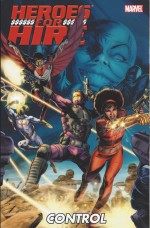
Heroes for Hire: World War Hulk


By Zeb Wells, Fred Van Lente, Clay Mann, Alvin Lee, Leonard Kirk, Alé Garcia, James Cordeiro, Terry Pallot & John Bosco (Marvel)
ISBN: 978-1-7851-2800-7

After a TV reality show starring actual superheroes went hideously wrong and resulted in the deaths of hundreds of children in Stamford, Connecticut, popular opinion turned massively against masked crusaders. The US government mandated a scheme to licence, train and regulate all metahumans but the plan split the superhero community, and an indignant, terrified general populace quivered as a significant faction of their former defenders refused to surrender to the bureaucratic vicissitudes of the Super-Human Registration Act.

The Avengers and Fantastic Four fragmented and, as the conflict escalated, it became clear to all involved that the increasingly bitter fighting was for souls as much as lives.

Both sides battled for love of Country and Constitution and both sides knew they were right.

At the heart of the savage clash of ideologies, bionic detective Misty Knight and her ninja partner Colleen Wing assembled a squad of warriors to do some real good during the worst of times…

Knight and Wing – the Daughters of the Dragon – were former associates of Power Man & Iron Fist, and revived their old firm Heroes for Hire to apprehend metas who refused to comply with the SHRA.

However the new squad – ex-thief Black Cat, Kung Fu Master Shang-Chi, insect avatar Humbug, sadistic martial arts polymath Tarantula and super-mercenary Paladin – soon found themselves at odds with the tricky path they were following as their promised role (only apprehending villains) began to suffer increasing “mission creep”…

Moreover as they tracked their sanctioned targets, they lost a comrade (Atlantean powerhouse Orka), credibility and the trust of all sides in the Civil War…

This collection, gathering issues #11-15 and primarily scripted by Zeb Wells, brings down the curtain on the second Heroes for Hire series (spanning August to December 2007) and saw the team founder and die amidst internal strife and the end of the world …

This particular Armageddon was the result of The Incredible Hulk returning to Earth after months away on another planet.

He had been peremptorily exiled to a brutal, barbaric world by Reed Richards, Dr. Strange and Tony Stark but found lasting love and family there. However, when the savage paradise was destroyed by Earthly technology, the Grim Green Giant returned to his homeworld at the head of an alien coalition of survivors dubbed The Warbound, determined to exact vengeance in kind…

The frantic call to arms begins in ‘Infestation’ (illustrated by Clay Mann & Terry Pallot) as the H4H team land in New York after a mission in the antediluvian Savage Land and walk into a city under martial law.

The job had been to capture a missing link Homo Habilis specimen (dubbed Moon Boy) for S.H.I.E.L.D.’s science division, but during the expedition, unknown to the others, insect avatar Humbug was taken by colossal bugs long-vanished from the rest of the world, leaving his friends to believe him dead and eaten.

He was subsequently found, but somehow changed: no longer the whiny clown they knew. Powerful, confident and slightly frightening, he informed them that they had to rush home to fight a threat to the entire planet. His friends had no idea what Earth’s ancient insect masters of had transformed their laughable companion into…

Brought up to speed by S.H.I.E.L.D., the heroes join the mobilisation to resist Hulk and the Warbound, ignoring the bizarre warnings of Humbug that the true threat was “the warrior-beetle and his queen”…

Seeing no profit, Paladin leaves even as the frantic insect master, wracked by inexpressible contacts with the invader-bugs, rushes off into the locked-down city. Following, Shang-Chi and the others discover their deranged comrade stalking bizarrely cute insect scavengers. As they try to befriend one of the “Hivelings”, Humbug casually dismembers it and showers them with its “blood”…

These tales were accompanied by a sidebar serial, ‘Killer Instincts’ (by Fred Van Lente, John Bosco & Pallot), wherein the absconding Paladin discovers S.H.I.E.L.D.’s new super-agent Scorpion raiding the NYPD’s confiscated super-weapon and evidence warehouse and gets into a fight he can’t win…

‘Subjugation’ (Wells, Mann & Pallot) finds the team and Moon Boy – fully-cloaked from the scout aliens’ chemical senses by bug ichor – infiltrating the Warbound flagship until the ultra-advanced King Miek penetrates the subterfuge.

Humbug chooses to slip away rather than warn his companions, leaving them all to be captured as he confronts the true threat to Earth. Tragically when he faces the sinister Brood Queen her presence is too much and the man-bug becomes her helpless thrall…

Meanwhile, back at ‘Killer Instincts’ (Van Lente, Bosco & Pallot), the struggle between Paladin and Scorpion escalates as both combatants begin employing all the stashed gimmicks impounded there…

‘Incarceration’ reveals how the situation goes from bad to worse as Humbug turns on his former comrades, allowing them to be tortured. However, whereas the Brood Queen sees his connection to Earth’s insect overlords as a means of subverting the entire planet – and making it her new global nest – Miek only sees a rival…

When the King demands to know which one of the infiltrators killed his Hiveling, Humbug blames Tarantula. Shocked and appalled, but refusing to snitch on Humbug, Colleen claims she did it and both women are dragged off to be tortured to death…

‘Killer Instincts’ concludes with the apparent death of Paladin, but the whole fight has been orchestrated as a test, with Scorpion utterly unaware who has been pulling her psychotic strings…

‘Procreation’ (Wells, Alvin Lee, Mann & Pallot) then finds Misty, Shang, Black Cat and Moon Boy casually discarded in Central Park as their framed companions are made the hosts and food for a new generation of horrific bugs…

As the Brood Queen prepares to do likewise to all of New York, Paladin steals a S.H.I.E.L.D. super-tank, links up with the remaining members of Heroes For Hire and leads a last charge into the proto-nest under MadisonSquareGarden…

The final confrontation comes in ‘Extermination’ (with art by Lee, Leonard Kirk, Alé Garcia, James Cordeiro & Pallot) as the heroes brutally clash with Humbug and discover how little humanity remains in his ghastly mutated form.

Defeated and discarded by their former sidekick, the Heroes regroup to rescue Colleen and Tarantula.

As Humbug agonisingly transforms into his ultimate form, the surprise secret weapon of the Insect Lords ends the threat of the Brood Queen, and one member of H4H takes uncharacteristic measures to end both Humbug’s dishonourable career and a beloved comrade’s eternal suffering.

Tragically, even in the aftermath of it all, there’s one final betrayal for the broken heroes to endure…

Dark, destructive and decidedly downbeat, this turbulent tome closed the books on the Commerce-fuelled Champions with a distinct tinge of unfinished business and led to a third iteration in 2010…

Before this lot shut up shop, however, there’s still space to mention that this collection includes a cover gallery by Clayton Henry, Takeshi Miyazawa, Sana Takeda & Francis Tsai, and again strongly recommend this splendidly gritty, witty, funny, fast-paced and spectacularly action-packed series which will surely delight all older fans of Fights ‘n’ Tights fiction.
© 2008 Marvel Characters, Inc. All Rights Reserved.

Battling Boy

(Uncorrected Proof Copy)

By Paul Pope (First Second)
ISBN: 978-1-59643-145-4

Paul Pope is undoubtedly one of the most creative and visually engaging creators working in comics these days. Since his debut in 1993 he has stunningly combined elements of European and Japanese styles with classical American themes to produce tales of science fiction, fantasy, crime, comedy, romance, adventure and even superheroics, generally for mature audiences.

If you’re not a fan yet, check out Sin Titulo, Batman: Year 100, Heavy Liquid, 100%, One Trick Ripoff and more…

This latest venture, however, is aimed a general readership – Hey, Kids, This Means You! – and introduces a world very similar to our own but with one big, big difference…

Arcopolis City would be the perfect place to bring up kids but for one thing. Ghastly devils roam at night, stealing children. Even the days are increasingly fraught as a seemingly endless procession of monstrous beasts incessantly carves a swathe of mindless destruction through the bright, breezy thoroughfares…

Of course the valiant sentinels of the Fighting 145th do their very best to contain the daily onslaughts, but it is to jet-packed, ray-gun-wielding science hero Haggard West that the harried citizens look to end the crisis. Those heartfelt hopes are cruelly dashed, however, when hooded horror Sadisto lays a crafty trap and blasts the magnificent rocket-man out of the sky…

His daughter and apprentice Aurora is shattered as she watches her dad vanish in a blast of blazing plasma…

Entire universes away, a shining citadel of warrior deities celebrates a very special event as the greatest pantheon of dutiful cosmic champions in the universe revels in the brief return of their mightiest hero. The stormy saviour of many worlds is back to see his son, who has reached a very special age…

The Boy is not ready for his Turning Day. Even if every child born here is invariably sent into the cosmos on their 13th birthday to save some lesser race from imminent peril on the venerable quest known as “a Ramble”, he knows he isn’t strong enough yet. After all, many of his childhood comrades have never returned…

As usual, though, his puissant father knows best and the anxious lad (armed with a very special cloak, battle grieves, the Encyclopedia Monstrosity, keys to an apartment, a map, a magic credit card and a dozen totem tee-shirts) is booted out of the veritable Valhalla of the Starry Lofts and dumped on a mountaintop overlooking a seemingly continent-sized city …just as a homogonous Humbaba rampages through Arcopolis eating cars and crushing tanks…

Before hurtling off to another appointment with destiny, the lad’s proud father casually reminds his spooked scion that if his “Battling Boy” cannot end the plague of monsters on this world, humanity is finished here…

Even as Aurora West begins to unlock the secrets of her father’s legacy and keenly embrace her own dreamed of destiny, the reluctant young demi-god makes his way to the epicentre of chaos and engages the ferocious furious Humbaba.

Things do not go according to plan…

Wry, spectacular and astonishingly engaging, this is a supremely entertaining, beautifully rendered yarn with plenty of fast-paced action, judicious suspense, likable heroes and a gloriously arch villain in the Machiavellian Sadisto, whose subtle scams and unlikely alliances stretch far beyond this blockbusting premiere epic.

This is an ideal comic book for older kids, and reads even better if you’re their adult keeper or guardian. Don’t miss out on the start of something very special…
© 2013 by Paul Pope. All rights reserved.

Battling Boy will be published on October 8th 2013.