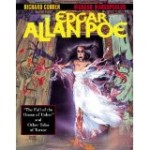
Edgar Allan Poe – The Fall of the House of Usher and Other Tales of Horror


Adapted by Richard Corben & Rich Margopoulos (Catalan Communication/Del Rey)
ISBNs: Catalan signed hb 0-87416-013-8   Del Rey pb 978-0-34548-313-3

Richard Corben is one of America’s greatest proponents of graphic narrative: a legendary animator, illustrator, publisher and cartoonist surfing the tumultuous wave of independent counterculture commix of the 1960s and 1970s to become a major force in pictorial storytelling with his own unmistakable style and vision. He is renowned for his mastery of airbrush and captivatingly excessive anatomical stylisation and infamous for delightfully wicked, darkly comedic horror and beguiling eroticism in his fantasy and science fiction tales. He is also an acclaimed and dedicated fan of the classics of gothic horror literature…

Always garnering huge support and acclaim in Europe, he was regularly collected in luxurious albums even as he fell out of favour – and print – in his own country. This collection gathers a number of adaptations of works by Godfather of eerie fantasy Edgar Allan Poe, first seen in issues of Creepy magazine between 1974-1975 and in Pacific Comics’ A Corben Special in 1984.

This superb hardback Catalan collection was re-released in 2005 in softcover by prose publisher Del Rey Books in July 2005.

The terror commences with the moody monochrome madness of ‘The Oval Portrait’ (from Creepy #69, February 1975 and adapted by writer Rich Margopoulos, as were all the Warren originated stories here) wherein the wounded survivor of a duel breaks into an abandoned chateau to recover and falls under the sinister spell of a beguiling painting and seductive journal…

‘The Raven’ is a fully airbrushed, colour phantasmagoria from Creepy #67 (December 1974) which perfectly captures the oppressive majesty of the classic poem, as is the next macabre vignette wherein the focus shifts to ancient Greece and the inevitable approach of death amongst the warriors at a funeral: a wake tainted by an invisible ‘Shadow’ (Creepy #70 April, 1975).

The obvious and worthy star turn of this tome is the artist’s own adaptation of ‘The Fall of the House of Usher’, created for the comicbook A Corben Special in May 1984 and here expanded and reformatted for the larger, squarer page of this European album.

Traveller Edgar Arnold is trapped in the bilious swamp where the ancestral seat of the ancient Usher clan is slowly dissolving into the mire that surrounds it.

The tainted blood of the melancholic master Roderick and his debauched clandestinely closeted, sumptuously seductive, deranged sister Madeline proves certain to extinguish the family long before the dank Earth reclaims the crumbling manse, but if it doesn’t Roderick is determined to expedite matters himself.

Madeline however, has other dreams and desires and is not above using her unique charms to win her objectives…

Corben – with the assistance of colourists Herb & Diana Arnold – perfectly captures the trenchant, doom-laden atmosphere, erotic charge and cataclysmic denouement of the original and this seminal, seductive work is undoubtedly one of the very best interpretations of this much-told and retold tale.

The artist’s sublime acumen in depicting humanity’s primal drives has never been better exemplified than with these immortal stories and this is a book no comics or horror fan should be without.
© 1974, 1975, 1984, 1985 1993 Richard Corben and Richard Margopoulos. All rights reserved.

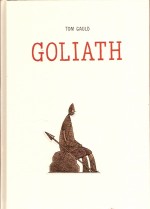
Goliath


By Tom Gauld (Drawn & Quarterly)
ISBN: 978-1-77046-065-2

Everybody knows the story of David and Goliath. Big, mean evil guy at the head of an oppressive army terrorising the Israelites until a little boy chosen by God kills him with a stone from his slingshot.

But surely there’s more to it than that…?

In this supremely understated and gentle retelling we get to see what the petrifying Philistine was actually like and, to be quite frank, history and religion have been more than a little unkind…

Like most really big guys Goliath of Gath is a shy, diffident, self-effacing chap. The hulking man-mountain is an adequate administrator but fifth worst swordsman in the army, which has been camped in opposition to the Hebrew forces for months. Moreover, the dutiful, contemplative colossus doesn’t even have that much in common with the rough-and ready attitudes of his own friends…

When an ambitious captain gets a grand idea he has the towering clerk outfitted in terrifying brass armour and orders him to issue a personal challenge to the Israelites every day.

“Choose a man, let him come to me that we may fight.

If he be able to kill me then we shall be your servants.

But if I kill him then you shall be our servants.”

The plan is to demoralise the foe with psychological warfare: grind them down until they surrender. There’s no reason to believe that Goliath will ever have to actually fight anybody…

Elegiac and deftly lyrical this clever reinterpretation has literary echoes and overtones as broadly disparate as Raymond Briggs and Oscar Wilde and as it gently moves to its sad and inescapable conclusion the deliciously poignant, simplified line and sepia-toned sturdiness of this lovely hardback add a subtle solidity to the sad story of a monstrous villain who wasn’t at all what he seemed…

Tom Gauld is a Scottish cartoonist whose works have appeared in Time Out and the Guardian. He has illustrated such children’s classics as Ted Hughes’ The Iron Man and his own books include Guardians of the Kingdom, 3 Very Small Comics, Robots, Monsters etc., Hunter and Painter and The Gigantic Robot. You can see more of his work at www.tomgauld.com
© 2012 Tom Gauld. All rights reserved.
This book is scheduled for release in mid-March 2012. For book signing/tour dates please consult our Noticeboard or the author’s own website.

Al Williamson Archives volume 2


By Al Williamson with an introduction by Victor Williamson (Flesk)
ISBN: 978-1-933865-34-8

Al Williamson was one of the greatest draughtsmen ever to grace the pages of comicbooks and newspaper comics sections. He was born in 1931 in New York City, after which his family relocated to Bogotá, Columbia just as the Golden Age of syndicated adventure strips began.

The lad’s passion for “the Comics” – especially Alex Raymond’s Flash Gordon and Jungle Jim – was broadened as he devoured imported and translated US material as well as the best that Europe and Latin America could provide in such anthology magazines as Paquin and Pif Paf. When he was twelve the Williamsons returned to America and, after finishing school, the artistic prodigy found work in the industry that had always obsessed him.

In the early 1950s he became a star of E.C. Comics’ science fiction titles beside kindred spirits Joe Orlando, Wally Wood, Roy G. Krenkel, Frank Frazetta and Angelo Torres, and drew Westerns Kid Colt and Ringo Kid for Atlas/Marvel. During the industry’s darkest days he found new fame and fans producing newspaper strips, first by assisting John Prentice on Rip Kirby – another masterpiece originally created by Alex Raymond – and from 1967 with Secret Agent Corrigan.

As comicbooks recovered in the 1960s Williamson drew Flash Gordon for King Comics and worked on mystery tales and westerns for DC whilst drawing Corrigan, later becoming the go-to guy for blockbuster sci-fi film adaptations with his stunning interpretations of Blade Runner and Star Wars.

His stunning poetic realism, sophisticated compositions, classicist design and fantastic naturalism graced many varied tales, but in later years he became almost exclusively a star inker over pencillers as varied as John Romita Jr., Larry Stroman, Rick Leonardi, Mark Bright, José Delbo and a host of others on everything from Transformers to Spider-Man 2099, Daredevil to Spider-Girl and his magical brushes and pens embellished many of Marvel’s Graphic Novel productions such as The Inhumans or Cloak and Dagger/Predator and Prey.

Al Williamson passed away in June 2010.

After a memory-soaked celebratory introduction from his son Victor, this second oversized (305x229mm) 64 page collection features more sketches, working drawings, doodles, unlinked pages, model sheets, unused and unfinished pages as well as a few completed but unseen treasures from one of the stellar creators of our art form.

In assorted media and forms from quick line sketches in ink, broad brush and tonal studies, full pencils and finished illustrations, Williamson displays his mastery in magical pictures ranging from intoxicating fantasy and barbarian women, valiant sword-wielding warriors, wondrous dinosaurs, Cowboys and Indians, rockets and robots, sports heroes, period drama scenes, cosmic adventurers, beasts and monsters, aliens, action sequences, beguiling nudes and glamour studies, his delicious trademark cute lizards, and so much more.

Standout and extra-inspiration pieces include a fabulous page of the Rocketeer, a Reef Ryan pulp page, many 1960s Flash Gordon sketches, more glorious John Carter of Mars illustrations and a few hard-boiled crime scenes…

The beautifully intimate glimpses of a master at work, with full colour reproduction capturing every nuance of Williamsons’ gorgeous pencil strokes, make this a book a vital primer for anybody dreaming of drawing for a living and the astounding breadth and scope of work presented here make me itch to pick up my pencil and draw, draw, draw some more myself.

Enticing, revealing, rewarding and incredibly inspirational, no lover of wonder or art lover can fail to be galvanised by this superb portfolio of excellence.

© 2011 The Estate of Al Williamson. Introduction © 2011 Victor Williamson. Rocketeer illustration © 1984 The Rocketeer Trust. All Rights Reserved.

Kramers Ergot volume 8


By various, edited by Sammy Harkham (PictureBox)
ISBN: 978-0-98458-927-2

Since the 1980s when “Underground” creators and cartoonists of adult and mature English-language comics first began to find mainstream and popular acceptance by re-branding themselves as alternative or Avant Garde, there have periodically emerged groundbreaking anthologies which served to disseminate the best of the best in challenging sequential art. Following on the groundbreaking heels of Raw and its descendants, Kramers Ergot launched as a 48-page mini-comic in 2000 and grew into a vari-format, anything goes visual and intellectual banquet before suspending publication with #7 in 2008 with a hugely proportioned (536x414mm) 96-page deluxe hardback starring sixty of the art form’s most beguiling pantheon of stars.

Now founding father Sammy Harkham returns with another stunning array of top-notch new creations and a smattering of sublime vintage material in a gloriously accessible 240-page clothbound B-format hardback that once more brandishes the sharpest of cutting edges at fans of the medium at its most uncompromising…

The magic begins with the abstract and glittering Overture by Robert Beatty, after which Washington Punk musician Ian F. Svenonius (Nation of Ulysses, Weird War and Chain and The Gang) contributes a fascination and informative essay on the shape of American arts with Notes on Camp part 2.

Alternative star and social commentator ‘Jimbo’ returns in a trek across tomorrow’s wastelands in a sharp monochrome yarn from Gary Panter after which C.F. explores isolation and human relationships in the placidly eerie ‘Warm Genetic House-Test Pattern’ whilst Kevin Huizenga redraws an old Charlton Comics fantasy tale (“The Half Men” by Bill Molno & Sal Trapani and possibly scripted by the prolific Joe Gill) in the quirkily disturbing ‘Mysteries of Unexplained Worlds’…

Leon Sadler produces the first of two contributions in the colourfully pensive ‘Friendship Comic’ whilst the muted hues and jolly style of Gabrielle Bell’s ‘Cody’ successfully belies the tale’s violent underpinnings and Frank Santoro & Dash Shaw shock and stun with their chilling ‘Childhood Predators’.

‘Ain’t it So?’ is a smart cartoon by Tim Hensley and ‘Get Your Ass to Mars’ is a set of stunning art photo pieces from Takeshi Murata, whilst ‘Mining Colony X7170’ is a typically dark and savage sci fi shocker from anti-art iconoclast Johnny Ryan before

Leon Sadler returns with the expansive and picaresque ‘Goblins Orbit the Earth (I’m Here! It’s Me!)’.

Chris Cilla takes a different look at love in ‘Secret Tourist’ and ‘Barbarian Bitch’ by Anya Davidson joyously screws with all the traditions of the hoary old genre and Ben Jones plays cunning mind-games and perpetrates dire puns in his shaggy doggish and charmingly primitivist ‘The Ultimate Character 2002’ after which Editor Sammy Harkham picks up his own pens to describe the silent horror and driving melodrama of ‘A Husband and a Wife’.

‘Epilogue’ is another visual voyage from painter Robert Beatty and this tome concludes with a long lost delight.

The last contribution is a true joy for me reprinting as it does a selection from what I believe to be one of the most delicious and clever British strips ever created. ‘Oh, Wicked Wanda (Select Excerpts)’ reprints in sublime full glossy colour Ron Embleton & Frederick Mullalley’s brilliant socio-sexual satire which ran in Penthouse magazine between 1973-1980.

Journalist, editor (of left-wing magazine Tribune), columnist, novelist and political writer Mullally was hired to script the exotic, erotic adventures of Wanda Von Kreesus, the richest woman in the world, Candyfloss, her insatiable jailbait paramour and an outrageous coterie of faithful employees including an all-girl army, a mad scientist and a brutal looking thug with the soul of a poet. To illustrate he secured the talents of oil painter and comic strip veteran Ron Embleton who had astounded comic readers with his lush and vibrant strip Wulf the Briton in Express Weekly and his illustrations in Look and Learn.

Oh, Wicked Wanda! was originally a prose serial illustrated by Bryan Forbes, beginning in 1969 before becoming, in 1973, the unbelievably lavish and torrid strip reprinted here, continuing until 1980 when it was replaced by Sweet Chastity, also painted by Embleton, and scripted by Penthouse proprietor Bob Guccione.

The bored and mischievous hellion is a sexually adventurous woman from a time when sexual politics and liberation were huge issues, and therefore prime targets for low comedy and high satire. Mullally peppered his scripts with topical references (many, sadly which would escape today’s casual reader, I’m sure) and the phenomenal Embleton would depict them with hyper-realistic accuracy. Harold Wilson, Edward Heath, Ted Kennedy, Richard Nixon, Henry Kissinger, Fidel Castro, Lyndon Johnson, Spiro Agnew, Mao Tse-tung, John Wayne, Donald Duck, Mickey Mouse and even comic-strip greats like Pogo, Mutt and Jeff or Krazy Kat, all meandered through the glossy pages, a cross between a Greek Chorus and pictorial ad-libs.

Many celebrities were actively parodied, participants and classical and contemporary erotic allusions abounded; ranging from a little nymphette lounging about reading William Burroughs’s Naked Lunch to visual and verbal references to Shelley’s Leda and the Swan.

Here some of the earliest adventures are re-presented as Wanda destroys, debases, abducts and mounts (no, not necessarily that way) the obnoxiously rich and famous for her Museum of Misfits and Deviancy; consequently taking on the Mafia, the CIA and South American Nazi war criminal Martin Boorman. Her personal Mad Scientist Homer Sapiens also reveals his sordid connections to some of the 20th century’s nastiest personages…

Oh, Wicked Wanda! is still a funny, sexy read and inarguably one of the most beautiful British strips ever crafted. Hopefully this selection will lead to a new audience and a comprehensive reprinting …

As well as being a comics-lovers dream, Kramers Ergot is a book-lovers delight with excellent design and a reassuringly high-class print values. This package is something no lover of the medium can afford to miss.

All material © 2011 respective authors and owners. All rights reserved.

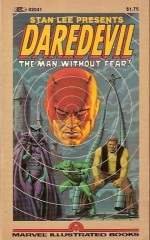
Stan Lee Presents Daredevil


By Stan Lee & Wally Wood (Marvel Illustrated Books)
ISBN: 0-939766-18-3

Here’s another look at how our industry’s gradual inclusion into mainstream literature began and one more pulse-pounding paperback package for action fans and nostalgia lovers, offering yet another chance to enjoy some of the best and most influential comics stories of all time.

After a few abortive attempts in the 1960s to storm the shelves of bookstores and libraries, Marvel made a concerted and comprehensive effort to get their wares into more socially acceptable formats. As the 1970s closed, purpose-built graphic collections and a string of new prose adventures tailored to feed into their all-encompassing continuity began oh, so slowly to appear.

Whereas the merits of the latter are a matter for a different review, the company’s careful reformatting of classic comics adventures were generally excellent; a superb and recurring effort to generate continuity primers and a perfect – if fickle – alternative venue to introduce fresh readers to their unique worlds.

The dream project was never better represented than in this classy little crime-busting cornucopia of wonders with crisp black and white reproduction, sensitive editing, efficient picture-formatting and two superb epics from the first “hot run” of the very variable Man Without Fear …

Matt Murdock is a blind lawyer whose remaining senses hyper-compensate, making him an astonishing acrobat, mind-blowing martial artist and living lie-detector. Very much a second-string hero for most of his early years, Daredevil was nonetheless a striking and popular one, due in large part to the captivatingly humanistic art of such modern Michelangelos as Wally Wood, John Romita and Gene Colan.

DD fought thugs, gangsters, a variety of super-villains and even the occasional monster or alien invasion. He quipped and wise-cracked his way through life and life-threatening combat, before under the auspices of Jim Shooter, Roger McKenzie and Frank Miller, the character transformed into a dark, moody avenger and grim, quasi-religious metaphor of justice and retribution…

After a shaky start, with the fifth issue Wally Wood assumed the art chores where his lush and lavish work brought power, grace and beauty to the series. At last this mere costumed acrobat seemed to spring and dance across the rooftops and pages. Wood’s contribution to the plotting didn’t hurt either. He actually got a cover plug on his first issue.

This brilliant black and white collection begins with the Daredevil #6’s ‘Trapped by the Fellowship of Fear!’: a minor classic wherein the Sightless Swashbuckler had to defeat not only the blockbusting Ox and electric assassin The Eel but his own threat-specific foe Mr. Fear who could instil terror and panic in victims, courtesy of his deadly gas-gun…

Another villain debuted in #8’s gripping industrial espionage thriller with meek, mild Wilbur Day hiring Nelson & Murdock to retrieve the rights to a stolen technology patent from industrialist Carl Kaxton. However, the case led to a clash with a bizarre and terrifying menace in ‘The Stiltman Cometh!’ Moreover Day proved to be far more than he at first appeared…

It’s easy to assume that such resized, repackaged mass market paperback collections were just another Marvel cash-cow in their tried-and-tested “flood the marketplace” sales strategy – and maybe they were – but as someone who has bought these stories in most of the available formats over the years, I have to admit that these handy back-pocket books are among my very favourites and ones I’ve re-read most – they’re handier, more accessible and just plain cool – so why aren’t they are available as ebooks yet?
© 1965, 1982 Marvel Comics Group, a division of Cadence Industries Corporation. All rights reserved.

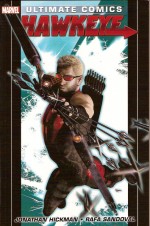
Ultimate Comics Hawkeye


By Jonathan Hickman, Rafa Sandoval, Jordi Tarragona & Brad Anderson (Marvel/Panini UK)
ISBN: 978-1-84653-464-5

Marvel’s Ultimates imprint launched in 2000 with major characters and concepts re-imagined to bring them into line with the presumed different tastes of modern readers.

Eventually the alternate, darkly nihilistic universe became as continuity-constricted as its predecessor and in 2008 the cleansing event “Ultimatum” culminated in a reign of terror which apparently (this is comics, after all) killed dozens of super-humans and millions of lesser mortals.

The era-ending event was a colossal tsunami triggered by Magneto which inundated the superhero-heavy island of Manhattan and devastated the world’s mutant population. The X-Men as well as many other superhuman heroes and villains died and in the aftermath anybody classed as a ‘”Homo Superior” had to surrender to the authorities or be shot on sight. Understandably most survivors as well any newly emergent X-people kept themselves well hidden. The world quickly became a far more deadly and fast-changing place with science and paranoia running rampant…

Before the Deluge S.H.I.E.L.D. director Nick Fury ran an American Black Ops team of super-humans called the Avengers, but he was eventually toppled from his position for sundry rule-bending antics – and being caught doing them.

Now Fury’s back, once more running the Federal Security Agency: firmly re-established and in charge of both secret agents and the official superhero team for public consumption whilst running another clandestine super-squad doing stuff the officially sanctioned Ultimates wouldn’t dream of…

As well as the pick of remaining and new superhumans, Fury’s sometime secret army consists of James Rhodes: a fanatical soldier wearing devastating War Machine battle armour; the Hulk, ruthless super-spy Black Widow, resurrected WWII super soldier Captain America (part of the bright and shiny public Image company but always happy to slum it when necessary) and the infallible professional fixer Hawkeye – the man who never misses…

This compilation collects the Ultimate Comics: Hawkeye four part miniseries from August to November 2011, which acted as prelude and sidebar to yet another relaunch of the constantly-changing grim and gritty alternate universe. Also on view in this tale is a new take on mainstream Marvel’s hidden race concepts of metahumans and monsters The Eternals, Deviants and Celestials and offers a big tip of the hat to Jack Kirby’s other paranormal alien-nation the Inhumans…

In this apocalyptic modern world individual metahumans can be Weapons of Mass Destruction and personal superpowers are now the focus of a terrifying new global arms race. When the new nation SEAR (SouthEast Asian Republic) devolves into civil war the outside world learns that they have developed a serum that will randomly spark fantastic abilities in anybody dosed with it.

To achieve a monopoly in metahuman resources the SEAR rulers have also released an artificial virus to eradicate the X-Gene: as it spreads around the planet it destroys the potential for any more mutants to be born. There will never again be naturally occurring challengers to “The People”…

Unfortunately for the SEAR government – and thus their ally America – the insurrectionists rampaging through the ambitious new nation comprise the now uncontrollable unwilling first test subjects of the chemical trigger they have dubbed “The Source”…

When S.H.I.E.L.D. is ordered to assist the beleaguered SEAR authorities, Fury sends his very best and most trusted agent but events too quickly spiral out of control as a race of belligerent New Gods go wild in the streets. Moreover, Hawkeye’s true mission is not to save some tin pot dictators from their own folly but to secure a sample of the source for the good old USA…

When the situation becomes irretrievable Fury dispatches covert Ultimate-X and the Hulk but even these formidable fighting forces are ill-equipped to halt the carnage; especially since the “The People of the Source” have decimated the capital city and already fractionated into two philosophically opposed sub-groups led by two feuding brothers Zorn and Xorn: the vengefully aggressive Eternals and pacific, philosophical Celestials.

Sadly for humanity, the former far outnumber the latter…

However one thing both factions agree on is that Earth now belongs to their kind and anybody – powered or merely human – are lowly “Deviants”…

Featuring some valuable hints on the history and abilities of Olympic champion and reformed felon Clint Barton and his close association with Fury, this intriguing tome is a terse and straightforward do-or-die action rollercoaster and classy “gathering doom” tale in its own right but was only ever intended as an introduction to bigger events in the core title The Ultimates.

However the always entertaining Jonathan Hickman and cruelly underrated Rafa Sandoval (augmented by the inks of Jordi Tarragona and colourist Brad Anderson) make this a sleek and glossy simple pleasure for older Fights ‘n’ Tights fans and the impressive cover gallery by such stars as Neal Adams, Adam Kubert and Kaare Andrews add immeasurably to the book’s visual appeal.

Even though far more upbeat and exuberant that the usual Ultimate fare, the trademark post-modernity and cynical, dark action is still here to deliver the visceral punch fans insist on, so this is a pretty good book for anybody thinking on jumping on to the decidedly different world of Wonder: one which will resonate with older readers who love the darkest side of superheroes and casual readers who know the company’s movies better than the comic-books.

A British edition licensed and published by Panini UK, Ltd. ™ & © 2012 Marvel Entertainment LLC and its subsidiaries. Licensed from Marvel Characters B.V. All Rights Reserved.

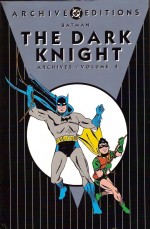
Batman: the Dark Knight Archives volume 4


By Bob Kane, Don Cameron, Bill Finger, Jack Schiff, Jerry Robinson, George Roussos, Jack & Ray Burnley (DC Comics)
ISBN: 1-56389-983-3

This fourth captivating deluxe hardback chronicle of yarns from the dawn of his career encompasses Batman #13-16 (October/November 1942- April/May 1943) and again features adventures produced during the scariest days of World War II which helped to the gladden the young hearts of overseas and home-front heroes alike.

The feature had grown into a media sensation and pocket industry and just as with predecessor and trendsetter Superman had necessitated an expansion of dedicated creative staff.

It’s certainly no coincidence that many of these Golden Age treasures are also some of the best beloved tales in the Batman canon, as co-creator and lead writer Bill Finger was increasingly supplemented by the talents of Don Cameron, Jack Schiff and others as the Dynamic Duo became a hugely successful franchise. The war seemed to stimulate a peak of creativity and production, with everybody on the Home Front keen to do their bit – even if that was simply making kids of all ages forget their troubles for a brief while…

After a comprehensive overview in the Foreword from professional fan and historian Bill Schelly the contents of Batman #13 opened with ‘The Batman Plays a Lone Hand’ (Cameron, Bob Kane, Jerry Robinson & George Roussos) tugging heartstrings as the Dark Knight fired Robin, kicked out Dick Grayson and returned to his anti-crime campaign as a solo act. Of course there was a perfectly logical reason…

They were back together again and on more traditional ground when the Joker caught the acting bug and organised a ‘Comedy of Tears’ (Schiff, Kane, Robinson & Roussos), after which ‘The Story of the Seventeen Stones!’ (scripted by Finger, drawn by Jack Burnley & inked by brother Ray) presented a deliciously experimental murder-mystery and the  heroes slipped into more comfortable Agatha Christie – or perhaps Alfred Hitchcock – territory when they tackled a portmanteau of crimes on a train in ‘Destination: Unknown!’ by Cameron, Kane, Robinson & Roussos.

Cameron wrote all four stories in Batman #14 beginning with ‘The Case Batman Failed to Solve’, (illustrated by Jerry Robinson) – a superb example of the sheer decency of the Caped Crusader as he fudged a mystery for the best possible reason, whilst ‘Prescription for Happiness’ (with art from Kane, Robinson & Roussos) is a classic example of the human interest drama that used to typify Batman tales as a poor doctor discovered his own true worth, and ‘Swastika Over the White House!’ (Jack & Ray Burnley) was typical of the blistering spy-busting action yarns readers were lapping up at the time. The final story ‘Bargains in Banditry!’ – also by the Burnley boys – was another canny crime caper featuring the Penguin wherein the Wily Old Bird stopped committing crimes and began selling the plans for his convoluted capers to other crooks…

Batman #15 led with Schiff, Kane, Robinson & Roussos’s Catwoman romp ‘Your Face is your Fortune!’ with the Feline Fury taking on a job at a swanky Beauty Parlour to gain info for her crimes and inadvertently falling for Society Batchelor Bruce Wayne, whilst Cameron and those Burnley boys introduced plucky homeless boy Bobby Deen ‘The Boy Who Wanted to be Robin!’ and proved he had what it takes to do the job.

The same team created the powerful propaganda tale ‘The Two Futures’, which examined what America would be like under Nazi subjugation and ‘The Loneliest Men in the World’ (Cameron, Kane, Robinson & Roussos) was – and still is – one of the very best Seasonal Batman tales ever created; full of pathos, drama, fellow-feeling and action as the Dynamic Duo brought Christmas to a selection of dedicated but overlooked workers and public servants …

The landmark Batman #16 (April/May 1943) opened with one of three tales by Cameron ‘The Joker Reforms!’ (Kane, Robinson & Roussos) wherein the Clown Prince suffers a blow to the head and a complete personality shift, but not for long – after which Ruth “Bunny Lyons” Kaufman scripted a bold and fascinating black market milk caper in ‘The Grade A Crimes!’ for Ray & Jack Burney to dynamically delineate.

‘The Adventure of the Branded Tree’ (Cameron and the Burnleys) saw the Gotham Gangbusters head to lumberjack country for a vacation and become embroiled in big city banditry before the issue and the action conclude with the hilarious thriller-comedy ‘Here Comes Alfred!’ (Cameron, Kane, Robinson & Roussos) which foisted a rotund, unwelcome and staggeringly faux-English manservant upon the Masked Manhunters to finally complete the classic core cast of the series in a brilliantly fast-paced spy-drama with loads of laughs and buckets of tension.

These torrid tales from creators at their absolute peak and heroes at their most primal are even more readable now that I don’t have to worry about damaging an historical treasure simply by turning a page. This is perhaps the only way to truly savour these Golden Age greats and perhaps one day all ancient comics will be preserved this way…
© 1942, 1943, 2003 DC Comics. All Rights Reserved.

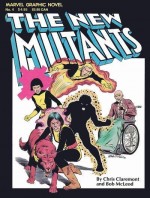
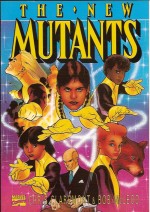
The New Mutants – Marvel Graphic Novel #4


By Chris Claremont & Bob McLeod (Marvel)
ISBN: 978-0-93976-620-8   1994 edition 0-939766-20-5

Midway through an extended X-Men storyline wherein the maligned mutants were lost in space and Professor X was infected with a telepathic parasite which urged him to gather similarly super-powered, potential hosts for parasitic aliens The Brood, Marvel launched a spin-off X-series which returned thematically to the core concept of heroes-in-training.

This fresh yet retro venture was dubbed The New Mutants and to fully capitalise on the landmark undertaking the junior class debuted in the company’s hot new format as a Marvel Graphic Novel.

At that time Marvel led the field of high-quality original graphic novels: offering big event tales set in the tight continuity of the Marvel Universe, series launches, creator-owned properties, movie adaptations and licensed assets in lavishly expansive packages based on the well-established European Album format with bigger, almost square pages (285x220mm rather than the customary 258x168mm) which felt and looked instantly superior to the gaudily standard flimsy comicbook pamphlets – irrespective of how good, bad or incomprehensible the contents proved to be.

After the immensely successful in-House epic ‘The Death of Captain Marvel’, two licensed properties ‘Elric: the Dreaming City’ and ‘Dreadstar’ set the seal on Marvel’s dedication to experimentation. The New Mutants then proved the growing power of the burgeoning Comicbook Direct Sales Market as this introductory graphic novel (only available in those still-few emporia) led directly into a nationally distributed new monthly series. Some fans had to jump through incredible hoops to pick up that all-important initial adventure…

Entitled ‘Renewal’ the school days saga finds sometime X-Men doctor Moira MacTaggert in the Scottish Highlands saving lupine metamorph schoolgirl Rahne Sinclair from a lynch mob led by a pious religious demagogue. The action then switches to Brazil where millionaire’s son and sporting golden boy Roberto DaCosta transforms into an eerie ebony monster in the middle of a soccer match. With the massed spectators appalled and terrified, only Bobby’s girlfriend Juliana Sandoval rushes to his aid…

In Kentucky, 16 year old Sam Guthrie trudges toward the coalmine. With his father recently dead, the boy now has to forget dreams of higher education and provide for his brothers and sisters. However when a cave-in buries him and his crew Sam unexpectedly blasts his way out in an explosive burst of power…

Meanwhile in the Medicine Bow Mountains of Colorado, reclusive Cheyenne maiden Danielle Moonstar is appalled to hear that her beloved grandfather is about send her to live with a white man named Xavier. Old Black Eagle fears her uncanny psychic abilities will overwhelm her and menace everybody around her…

None of these widely scattered waifs is aware that a manic mutant-hater has made them targets of his obsessive hatred. Dani is the first to suffer as her grandfather is murdered by armoured warriors…

Meanwhile in Westchester, Charles Xavier is examining Rahne and another young mutant. Xi’an Coy Manh is a Vietnamese refugee whose ability to possess people led her into conflict with her crime-lord uncle and the Amazing Spider-Man under the soubriquet Karma. When news of Black Eagle’s death arrives, Xavier rushes to Colorado with the two girls in tow, arriving in time to help Moonstar drive off more armoured assassins.

Discerning that Hellfire Club villain Donald Pierce is behind the murders and attempted abduction, the group then travels to Rio de Janeiro but arrives too late to save Roberto and Juliana from being kidnapped by Pierce’s agents…

Juliana dies saving DaCosta during a botched rescue mission and the grieving boy swears to have his full measure of vengeance…

Pierce has not been idle: he has already deceived and recruited gullible, desperate Sam Guthrie and sent the superhuman Cannonball to capture Xavier, leaving only the mutant kids, codenamed Wolfsbane, Mirage, Sunspot and Karma, to save him and thwart Pierce’s mad schemes. In this they are helped in no small part by the conflicted but rapidly reconsidering Guthrie…

Beautifully illustrated by Bob McLeod this fast-paced rollercoaster of drama and action was the first step in the inexorable expansion of the X-Universe franchise and still reads amazingly well – especially for new fans – even after that Homo Superior bubble has long burst…

A slightly re-proportioned and reformatted edition was released in 1994, reduced in size to approximate standard comicbook proportions and the tales has also been reprinted, albeit in proportionally much-reduced standard format as the first chapter of New Mutants Classic Volume 1 TPB (from 2006) which also includes the comicbooks New Mutants #1-7 and Uncanny X-Men #167 within its 240 pages.
© 1982, 1994 Marvel Entertainment Group, Inc. All rights reserved.

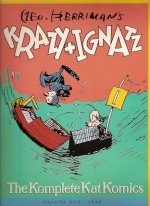
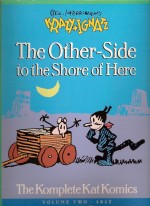
Krazy + Ignatz: The Komplete Kat Komics volume 1, 1916 and volume 2: 1917 The Other-Side to the Shore of Here


By George Herriman (Eclipse Books/Turtle island)
ISBNs: 0-913035-48-3 and 0-913035-75-0

I must admit to feeling like a fool and a fraud reviewing George Herriman’s winningly surreal masterpiece of eternal unrequited love. Although Krazy Kat is unquestionably a pinnacle of graphic innovation, a hugely influential body of work which shaped the early days of the comics industry and an undisputed treasure of world literature, some readers – from the strip’s earliest antecedents in 1913 right up to five minutes ago – just cannot “get it”.

All those with the right sequence of genes (K, T, Z and A, I suspect) are instantly fans within seconds of exposure whilst those sorry few who are oblivious to the strip’s inimitable charms are beyond anybody’s meagre capacity to help.

Still, since everyday there’s newcomers to the wonderful world of comics I’ll assume my inelegant missionary position once more and hope to catch and convert some fresh soul – or, as I like to think of it, save some more “lil Ainjils”…

The Krazy & Ignatz softcover series of collected Sunday pages was contrived by Eclipse Comics and the Turtle Island Foundation and taken over by Fantagraphics when the publisher succumbed to the predatory market conditions of the 1990s. It is not and never has been a strip for dull, slow or unimaginative people who simply won’t or can’t appreciate the complex multilayered verbal and pictorial whimsy, absurdist philosophy or seamless blending of sardonic slapstick with arcane joshing. It is the closest thing to pure poesy that narrative art has ever produced.

Think of it as Dylan Thomas and Edward Lear playing “I Spy” with James Joyce amongst beautifully harsh and barren cactus fields whilst Gabriel García Márquez types up the shorthand notes and keeps score…

Herriman was already a successful cartoonist and journalist in 1913 when a cat and mouse who had been cropping up in the corners and backgrounds of his outrageous domestic comedy strip The Dingbat Family/The Family Upstairs finally graduated to their own feature. “Krazy Kat” debuted in William Randolph Hearst’s New York Evening Journal on October 28, 1913 and, mainly by dint of the publishing magnate’s overpowering direct influence, spread throughout his vast stable of papers.

Although Hearst and a host of the period’s artistic and literary intelligentsia (which included e.e. Cummings, Frank Capra, John Alden Carpenter, Gilbert Seldes, Willem de Kooning, H.L. Mencken and Jack Kerouac) utterly adored the strip, many local editors -ever cautious of the opinions of the hoi-polloi who actually bought the papers – did not and took every career-risking opportunity to drop it from the comics section.

Eventually the feature found a home in the Arts and Drama section of Hearst’s vast empire of papers. Protected by the publisher’s patronage the strip flourished unharmed by editorial interference and fashion and ran until Herriman’s death in April 1944.

The basic premise is simple: Krazy is an effeminate, dreamy, sensitive and romantic feline of indeterminate gender in love with Ignatz Mouse: rude crude, brutal, mendacious and thoroughly scurrilous.

Ignatz is a real Man’s Muridae; drinking, stealing, cheating, carousing, neglectful of his spouse and children. He revels in spurning Krazy’s genteel advances by regularly and repeatedly belting the cat with a well-aimed and mightily thrown brick (obtained singly or in bulk and generally legitimately from noted local brickmaker Kolin Kelly).

The third member of the classic eternal triangle is lawman Offissa Bull Pupp, hopelessly in love with Krazy, well aware of the Mouse’s true nature, but bound by his own timidity and sense of honour from removing his rival for the cat’s affections. Krazy is, of course, blithely oblivious of Pupp’s true feelings and dilemma…

Also populated with a stunning supporting cast of inspired anthropomorphic bit players such as Joe Stork, (deliverer of babies), the hobo Bum Bill Bee, Don Kiyoti, busybody Pauline Parrot, Walter Cephus Austridge, the Chinese mallard Mock Duck, Joe Turtil and a host of other audacious characters – all capable of stealing the limelight and even supporting their own features – the episodes occur in and around the Painted Desert environs of Coconino (based of the artist’s vacation retreat Coconino County, Arizona) and the surreal playfulness and fluid ambiguity of the flora and landscape are perhaps the most important member of the cast.

The strips are a masterful mélange of wickedly barbed contemporary social satire, folksy yarn-telling, unique experimental art, strongly referencing Navajo art forms and sheer unbridled imagination and delightfully expressive language: alliterative, phonetically and even onomatopoeically joyous and compellingly musical (“He’s simpfilly wondafil”, “A fowl konspirissy – is it pussible?” or “I nevva seen such a great power to kookoo”), yet for all that the adventures are timely, timeless, bittersweet, self-referential, fourth-wall bending, eerie, idiosyncratic and utterly hilarious escapades encompassing every aspect of humour from painfully punning shaggy dog stories to riotous slapstick.

The eponymous first monochrome volume opens with ‘The Kat’s Kreation’ by Bill Blackbeard; a fulsome, fascinating and heavily illustrated history of the development of the frankly freakish feline as briefly outlined above, after which this slim, tall tome shuffles into the first cautious but full-bodied escapades from 1916 delivered every seven days from April 23rd to December 31st.

Within that first year, as war raged in Europe and with America edging inexorably closer to the Global Armageddon, the residents of Coconino sported and wiled away their days in careless abandon but totally embroiled within their own – and their neighbours’ – personal dramas.

Big hearted Krazy adopts orphan kitties, accidentally goes boating and ballooning, saves baby birds from predatory mice and rats, survives pirate attacks, constantly endures assault and affectionate attempted murder and does lots of nothing in an utterly addictive, idyllic and eccentric way…

The volume ends with ‘The Kat Maker’ a copiously illustrated biography of Herriman.


Volume 2: 1917 The Other-Side to the Shore of Here begins with ‘Kat in Nine Bags – a Twenty Year Quest for a Phantom’ a trenchant introductory article by Bill Blackbeard which describes Publisher Hearst’s unceasing battle with his own editors to keep the strip in print and on the Comics pages – everything short of kidnap and assassination apparently – before the artistic tour de force (covering January 7th to 30th December) commences in perfect harmony with its eclectic and embattled environment.

Within this second magical atlas of another land and time the formative tone and textures of the eternal game play out as usual, but with some intriguing diversions such as recurring explorations of terrifying trees, grim ghosts and obnoxious Ouija Boards, tributes to Kipling as we discover why the snake rattles, meet Ignatz’s aquatic cousin, observe the invasion of Mexican Jumping Beans and a plague of measles, discover the maritime value of “glowerms”, discover who was behind a brilliant brick-stealing campaign of crime and at last see Krazy become the Bricker and not Brickee…

To complete the illustrious experience and explore the ever-shifting sense of reality amidst the constant display of visual virtuosity and verbal verve this big, big book (305x230mm) ends with ‘The Ignatz Mouse Debaffler Pages’ providing pertinent facts, snippets of contextual history and necessary notes for the young and potentially perplexed…

There has been a wealth of Krazy Kat collections since the late 1970s when the strip was generally rediscovered by a far more accepting audience and these particular compendiums were picked up by Fantagraphics when Eclipse ceased trading in 1992. The current publisher’s avowed intent is to complete the collection and then keep the works in print and more power to them for that.

Herriman’s epochal classic is a genuine Treasure of World Art and Literature and these comic strips shaped our industry, galvanised comics creators, inspired auteurs in fields as disparate as prose fiction, film, sculpture, dance, animation and jazz music whilst always delivering delight and delectation to generations of devoted wonder-starved fans.

If however, you are one of Them and not Us, or if you actually haven’t experienced the gleeful graphic assault on the sensorium, mental equilibrium and emotional lexicon carefully thrown together by George Herriman from the dawn of the 20th century until the dog days of World War II, this glorious brace of cartoon masterpieces are among the most accessible…

Just remember: not everybody gets it and some of them aren’t even stupid or soulless – they’re just unfortunate… “There Is A Heppy Lend Furfur A-Waay”…
© 1989/1990 Eclipse Books/Turtle Island Foundation. All rights reserved.

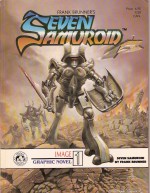
Frank Brunner’s Seven Samuroid


By Frank Brunner (Image International)
ISBN: 0-943128-06-4

The 1980s were a fertile time for American comics-creators. It was as if a brand new industry had been born with the proliferation of the Direct Sales Market and dedicated specialist retail outlets; companies were experimenting with format and content and economically, times were good so punters even had a bit of spare cash to play with.

Moreover much of the “kid’s stuff” stigma had finally been invalidated and America was catching up to the rest of the world in acknowledging that sequential narrative might just be a for-real, actual art-form…

Consequently many young start-up companies began competing for the attention and leisure-dollars of fans grown accustomed – or resigned – to getting their on-going picture stories from DC, Marvel, Archie and/or Harvey Comics. European and Japanese material had been creeping in and by 1983 a host of young companies such as WaRP Graphics, Pacific, Eclipse, Capital, Now, Comico, Dark Horse, First and many others had established themselves and were making impressive inroads, all supplemented by the rapid rise of a healthy plethora of comics criticism, collection and informational magazines…

New talent, established stars and fresh ideas all found a thriving forum to try something a little different both in terms of content and format. Even smaller companies had a fair shot at the big time and a lot of great material came – and too often, quickly went – without getting the attention or success it warranted.

One of the most overlooked but just plain fun features came from an unlikely paring of star artist Frank Brunner and a printing company based in New Zealand, which tapped into the growing zeitgeist of Japan’s burgeoning robotic warrior knights or “mecha” and the modern pulp space opera of the first Star Wars generation…

In the future the great Galactic Union succumbed to war brought about by political ambition and economic greed. At the height of the conflict a group of wise men created a small force of super-robots hardwired with the unflinching principles of ancient Earth’s noblest warriors; dedicated to preserving all innocent life and defending the oppressed; whether organic or mechanical.

These Samuroids were then bonded with the personalities of valiant volunteers whose intellects were transcribed into the awesome automatons. However after decades of constant struggle even the unceasing efforts of the puissant mechanicals were not enough to stave off an era of darkness, decline and destruction…

Two millennia later the universe is a place of chaos and anarchy dotted with small emergent enclaves of brutal feudal “civilisation” still limited to their own isolated, hostile star-systems. On the planet Ion, freedom fighter Zeta leads a band of rebels battling the rise of a new Dark Imperium. Hunted by sky-borne troops in deadly gun-ships, she falls into a cave and discovers a ponderous solitary figure: Ultek the Samuroid.

The tragic undying warrior has stood sentinel in this dark hole since he and his fellows failed in their appointed task centuries ago, contemplating the horrors he was built to prevent and all the lives he was forced to take. However his broken soul is fired up at last when the Imperium troops savagely attack, wounding Zeta.

Roused to action, Ultek destroys the monstrous thugs and joins Zeta’s cause, determined to thwart the expansionist horrors of the voracious Imperium and its mad monarch, The Mikado…

To this end he seeks out the other surviving Samuroids, who have indeed fallen low…

After millennia their quasi-mystical power-source Reiki is all but exhausted. Another mecha Sarr donates his reserves to scientists in hope of their synthesising a substitute fuel whilst Ultek returns to the stars in search of more old comrades. He finds two aboard an ancient Galaxy-Union Star Battle Wagon, converted into a vast and corrupt travelling carnival. They are unresisting slaves of its vile master, Strom Bolla…

Sark and Gorr have bartered their honour for dwindling rations of Reiki, but Ultek finds a valuable friend in the brave but inconsequential droid Toto who describes himself as an “honorary Samuroid”. With precious time passing and desperately determined to free and rehabilitate his fallen comrades Ultek joins the Carnival as a gladiator, but before he can make his move events spiral out of control when the decrepit warship is attacked by two more Samuroids Hum-Run and Dagg…

United at last the Seven Samuroid return to Ion where the rebellion has fared badly under the Mikado’s barbarous assaults and horror, glory and restored honour await them…

That or final irrevocable death and darkness…

At first this book (published in the overlarge 285 x 220mm European Album Format) might seem a creature of unlikely marriages: adapting the classic plot and ever-so-serviceable themes and motifs of Akira Kurosawa’s Shichinin no Samurai to the heavily technocratic milieu of Star Wars and Battlestar Galactica is not so big a leap, but much of this sci fi romp is exceedingly dark and decidedly mature in content and Brunner’s superbly humanistic illustration is often at odds with the grubby, grimy tone and faceless  dehumanising technology and hardware of the storyline.

Stuffed with in-jokes and dry asides, this tales also skirts rather than embraces the spiritual aspects of the original Seven Samurai but does pay lip-service to the all-embracing warrior code of Bushido as well as finding room for romance and a happy ending of sorts.

All in all this is a very queer beast indeed from a time when anything seemed possible, but in the final analysis provides a huge amount of old-fashioned thrills, chills and spills, making it well worth the time and effort of fans of movie and cartoon fantasy as well as classic comics adventure.
© 1984 Frank Brunner. All rights reserved.