The Flash: Ignition


By Geoff Johns, Alberto Dose, Howard Porter & Livesay (DC Comics)
ISBN: 978-1-4012-0463-1

There are many super-speedsters in the DCU and most of them congregate in the conjoined metropolis of Keystone and Central City. Wally West, third incarnation of The Flash, lived there with his true love Linda Park, his Aunt Iris and rocket-racers such as Jay Garrick, with juvenile speedster from the Future Impulse and his mentor/keeper Max Mercury, the Zen Master of hyper-velocity, only an eye-blink away…

Created by Gardner Fox and Harry Lampert, Garrick debuted as the very first Scarlet Speedster in Flash Comics #1 (January 1940). “The Fastest Man Alive” wowed readers for over a decade before changing tastes benched him in 1951. The concept of speedsters and superheroes in general was revived in 1956 by Julie Schwartz in Showcase #4 when police scientist Barry Allen became the second hero to run with the concept.

The Silver Age Flash, whose creation ushered in a new and seemingly unstoppable era of costumed crusaders, died heroically during Crisis on Infinite Earths (1985-1986) and was promptly succeeded by his sidekick Kid Flash. Of course Allen later returned from the dead – but doesn’t everyone?

Initially Wally West struggled to fill the boots of his predecessor, both in sheer ability and, more tellingly, in confidence. Feeling a fraud, he nonetheless persevered and eventually overcame, becoming the greatest to carry the name.

This volume reprints issues #201-206 of Wally’s long-gone-and-much-missed monthly comic and opens in the aftermath of a blockbusting battle which tore the Twin Cities and the extended Flash Family apart.

In the wake of those events the Scarlet Speedster disappeared and, thanks to the intervention of nigh-omnipotent spirit The Spectre, everyone who knew Wally West was the Flash forgot the secret.

Unfortunately that also included Linda and Wally too…

Scripter Geoff Johns and artists Alberto Dose, Howard Porter & Livesay kick started a new era in the hero’s life with ‘Driven’ as the double metropolis began to suffer the lack of a super-fast protector. Crime went up and a wave of cold-themed killings seemed to indicate that former thief Captain Cold had graduated to homicidal mania. Meanwhile, slow but steady police garage mechanic Wally West plodded on with his new job, fixing the battered vehicles of Keystone PD and coming to terms with the fact that Linda has just miscarried their unborn child…

When a huge car-crash jump-started his powers an ultra-swift Wally was baffled, but by the end of ‘Shifting Gears’ had deduced that his newfound ability to not be killed by a variety of accidents and attacks meant something or someone had messed with his mind…

In ‘Crash and Burn’, as the freeze murders escalated and with every cop hunting Captain Cold, Wally was forced to confront the fact that he must be the long-missing Flash. He has a long, illuminating chat with a guy in a diner; and if he had been in possession of his memories he would have realised that he’d just shared coffee and philosophy with the suspected murderer everybody wanted…

Back in the scarlet suit but with his memories still vague, Wally tracked the icy felon but evidence was slowly pointing to another killer framing the sub-zero scoundrel – a suspicion confirmed when the befuddled speedster was attacked by a new Mr. Element and only saved by the Bad Captain in ‘Cold Reality’.

Whilst Linda, tormented by insidious dreams, left Wally, her confused husband was driven to research the life of the Flash; convinced at last that it was his own, and when Batman hit town, determined to discover who had doctored the memories of the entire Justice League, the motive behind the miracle was finally uncovered in ‘Secrets’ culminating in a spectacular confrontation with the true killer, a poignant reconciliation with Linda and a blistering fresh start for the Fastest Man alive in ‘Up to Speed’…

For more than seven decades the adventures of the Flash have been the very acme of superhero storytelling, with successive generations of inventive creators producing the very best of high-speed action and superlative drama. This is another of those supremely readable classics and a terrific place for new readers to jump aboard the rollercoaster…
© 2004, 2005 DC Comics. All Rights Reserved.

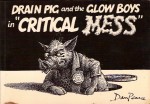
Drain Pig and the Glow Boys in “Critical Mess”


By Dan Pearce
ISBN: 0-86245-103-5

Once upon a time it was acceptable and desirable rather than just cool for entertainers to be political. Music, film, comedy and especially comics and cartoons rather than today’s obsessions with sex, parenthood and celebrity were at the forefront of social and political criticism…

From the Plutonium Age of Comics comes this scarce, all but unknown, but still readily locatable little lost gem by Dan Pearce which perfectly captured all the daily indignities and nightly horrors of the Thatcher years: the rise of untrammelled greed, the death of personal responsibility and the celebration of conscienceless self-aggrandisement…

I’m ashamed to say that I know very little of this wickedly effective dark satire, although it does look as if the saga was released in strip or magazine instalments a la Steve Bell’s Worlds of If… or Donald Rooum’s stunningly funny Wildcat series.

As ever if anyone knows more, I’d love to hear from you…

Drain Pig is a social leper and despised outcast: a full-grown talking animal who ekes out a pathetic existence living in the sewers. One dreadful night he sees the woman who raised him but when he tries to talk to her she denies him and has him arrested.

The wealthy Mrs. Berkely-Hunt is a pillar of the community and well-in with the powers that be: how could someone of her standing possibly know a scumbag like Drain Pig?

Meanwhile her daughter Mag has started a job as the newest journo for the Daily Dross and her first day is spent covering the trial of the ghastly layabout and social dreg…

She is shocked to see her mother as witness and complainant and horrified when she realises the maternal Society snob is lying in her teeth. The railroaded pig gets five years hard labour when the Judge forces a guilty verdict…

Meanwhile Mag’s scientist boyfriend Mike is travelling to Sizemould Nuclear Power station on a fact-finding mission investigating reports of leaks and mutations.

Mag forces Mummy to tell the truth: Drain Pig was once the beloved companion of a scientist who named him Danny. Her mother, still an impressionable girl herself, was named executor and guardian of the piglet’s inheritance.

Mrs. Berkely-Hunt then reveals how she grew to despise the low beast, leading to the dowager’s flushing the poor piglet down to loo to get rid of him whilst keeping his endowment for herself and making a socially advantageous marriage.

Appalled, the plucky reporter resolves to make amends but discovers to her disgust that the pitiful porker has been deliberately lost within in the prison system…

Meanwhile the secret connections between Britain’s sales of weapons-grade Plutonium and the decrepit, radiation-leaking power station are beginning to circulate and Mag is sent to cover the protesters peace-camp set up around the plant.

Whilst there she interviews Bernard Klein, the physicist who originally built Sizemould; now the spiritual leader of the movement to close it down. Amidst determined, well-intentioned campaigners and a host of four-clawed crabs, Mag learns of the “rabble’s” only success – convincing all the local unemployed not to take jobs as “glow boys” or pipe repairmen.

So faulty is the building that steam generator and water-system repairs are necessary every day, but the ruptures and escapes are so radioactive that workers can only safely be exposed to the pipes for 30 minutes a year!

Unknown to all, however, the ruthless controllers of the plant and the Ministry have worked out a perfect solution: use hardcore convicts nobody will miss as the unwitting repairmen. As long as the public is kept in the dark nobody important will care…

However when Mag glimpses the long missing Drain Pig through the security fences and armed paramilitary guards policing Sizemould, she knows something dirty is up…

With her editor rewriting and slanting her copy, the plant’s technical director in a drug-and-booze filled meltdown, Special Branch infiltrating the protest camp and bugging phones, an ambitious junior circumventing what few safety-protocols still remain in the plant and a snap inspection by Men from the Ministry (of Defence as well as Energy…), the situation looks ripe for an explosive confrontation…

And then Bernie Klein is murdered and everything starts to spectacularly unravel…

Blending Machiavellian intrigue with baroque humour and perfectly riding the popular wave of corrupt back-door deals, old boy network cronyism and vile elitism which has become the hallmark of the period, Drain Pig and the Glow Boys tells a captivating tale in compelling, evocative visual style enticingly reminiscent of the best of Underground Commix’ stars such as R. Crumb and Spain Rodriguez.

Despite being as funny as The New Statesman, mordantly surreal as Whoops, Apocalypse! and as trenchantly biting as Spitting Image, Critical Mess never caught the battered, impoverished public’s attention – although the book still has its passionate supporters to this day.

Perhaps it was because Pearce was too good at his job. Not only is this a bitingly savage satire on the times, but a well-reasoned and minutely researched assault on the idiocies and inadequacies of the Nuclear industry, “legitimate” Arms deals and exports and a blistering attack on the Press and legal system.

It’s also a superbly well-written thriller with stark overtones of David Drury’s 1985 film Defense of the Realm and the gloriously absurdist swingeing satire of Gulliver’s Travels or Animal Farm…

If this kind of honest incisive, important cartoon work appeals there are still copies to be found at incredibly reasonable prices and the author is still active, still passionate, still angry (and rightly so  after all these years) and can be found here
© Dan Pearce 1983.

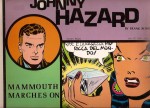
Johnny Hazard: Mammoth Marches On


By Frank Robbins (Pacific Comics Publications)
No ISBN

Johnny Hazard was a newspaper strip created in answer to and in the style and manner of Terry and the Pirates, but in many ways the steely-eyed hero most resembles – and indeed presages – Milton Caniff’s second magnum opus Steve Canyon.

Unbelievably, until last year this stunningly impressive and enthralling adventure strip has never been comprehensively collected in graphic novels – at least in English – although selected highlights had appeared in nostalgia magazines such as Pioneer Comics and Dragon Lady Press Presents.

However, sporadic compendiums of the full-colour Sunday pages have popped up over the years, such as this glorious and huge (340 x 245mm) landscape tabloid produced by re-translating a collected Italian edition back into English, courtesy of the Pacific Comic Club.

Frank Robbins was a brilliant all-around cartoonist whose unique artistic and lettering style lent themselves equally to adventure, comedy and superhero tales and his stunning cunning storytellers mind made him one of the best writers of three generations of comics.

He first came to fame in 1939 when he took over the Scorchy Smith newspaper strip from the legendary Noel Sickles and created a Sunday page for the feature in 1940. He was offered the prominent Secret Agent X-9 but instead created his own lantern jawed, steely-eyed man of action. A tireless and prolific worker, even whilst producing a daily and Sunday Hazard (usually a separate storyline for each) Robbins freelanced as an illustrator for The Saturday Evening Post, Look, Life and a host of other mainstream magazines.

In the 1960s and 1970s he moved into comicbooks, becoming a key contributor to Batman, Batgirl, Detective Comics (where he created Man-Bat with Neal Adams), The Shadow and DC’s mystery anthologies before settling in as an artist at Marvel on a variety of titles including Captain America, Daredevil, Ghost Rider, Morbius, Human Fly, Man from Atlantis, Power Man and The Invaders, which he co-created with Roy Thomas.

When the strip launched on Monday June 5th 1944, Johnny Hazard was an aviator, in the United States Army Air Corps and when hostilities ceased became for a while a freelance charter pilot and secret agent before settling into the bombastic life of a globe-girdling troubleshooter, mystery-solver and modern day Knight Errant babe-magnet.

The strip ended in 1977: another victim of diminishing panel-sizes and the move towards simplified, thrill-free, family-friendly gag-a-day graphic fodder to wrap around small-ads.

With the release at long last of a dedicated collection of the black and white Daily strips, I thought I’d spotlight a few of those fabulous landscape tomes which kept Johnny Hazard alive in fans hearts during years after it ceased publication beginning with the thoroughly captivating Mammoth Marches On and subsequent sequences which first appeared in American Sunday Supplements between January 27th 1952 to April 12th 1953.

In the steaming jungle heat of French Indo-China the pilot is transporting famed Movie Director Grippman of Mammoth Studios, and his star attraction Cerise to the heart of the rain forest on a location-shoot is stricken with malaria. Forced to land at a Military field they make the fortuitous acquaintance of our hero and his friends Brandy and Blitz Martin; all currently without a plane of their own…

Also in tow are an entire film crew, assorted extras and a baby Elephant, all destined for a distant abandoned temple and village of unsuspecting natives. Short of cash and with nothing to do, Johnny lets himself be talked into taking the pilot’s place whilst wandering journalist Brandy agrees to act as the haughty Cerise’s stand-in and body double… to limit the star’s exposure to sun, insects and peasants…

Amidst all the drama and passion such events always generate, Johnny warily keeps aloof. The big scene involves an ancient idol for which Grippman has brought a fist-sized hunk of glass to replace the legendary lost diamond eye it boasted until white explorers first appeared a century ago…

When Cerise makes a play for Hazard and is rebuffed she storms into the temple and falls into a secret chamber, finding the genuine lost sparkler. In a fit of greedy pique she replaces the fake with the real thing…

The trained baby elephant Mammoth has seen it all and Cerise determines to get rid of the four-footed witness in an increasing dangerous series of arranged accidents…

Things come to head when the monsoon hits early and disaster strikes for the greedy starlet…

The strip then effortlessly segues into blistering criminal action with ‘The Hunted’ as Johnny ferries the film crew on to Tokyo where old pal Blitz buys a souvenir samurai sword from a street vendor. Of course nobody realised that the katana was a thousand year old relic most recently owned by Baron Takana: a big shot in the recent war and a fugitive war criminal ever since.

When the sword is stolen and a venerated historical expert murdered, suspicion rests equally on the elusive Takana and Hazard’s sexy femme fatale foe Baroness Flame, but as the hunt continues the drama escalates into full-blown crisis when the fugitive Baron is cornered and threatens to detonate a stolen atomic weapon…

The fabulous frantic fun and thrills conclude with ‘Scavengers’ as Johnny is asked by his old boss Lisbeth Manning to investigate a series of mysterious plane crashes and cargo thefts. With typical savvy Hazard deduces the method and tracks the gang of highly sophisticated bandits to a deadly confrontation in the jungles between Vietnam and Cambodia, before this stunning old-fashioned romp ends with the thieves in custody and the tantalising opening pages of the next mind-boggling yarn ‘Ceiling Zero-Minus’.

To be continued…

These exotic action romances perfectly capture the mood and magic of a distant but so incredibly familiar time; with cool heroes, hot dames and very wicked villains decorating captivating locales and stunning scenarios, all peppered with blistering tension, mature humour and visceral excitement.

Johnny Hazard is a brilliant two-fisted thriller strip and even if you can’t easily locate these fantastic full-colour chronicles, at least the prospect of an eventual new Sunday strip collection is a little closer at last…
© 1952-1953 King Features Syndicate. © 1979 Pacific C.C.

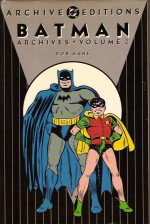
Batman Archives volume 2


By Bob Kane, Bill Finger, Jerry Robinson, George Roussos & various (DC Comics)
ISBN: 0-930289-60-9

The history of the American comicbook industry in most ways stems from the raw, vital and still completely compelling tales of two iconic creations published by DC/National Comics: Superman and Batman. It’s only fair and fitting that both those characters are still going strong and that their earliest adventures can be relived in chronological order in both relatively cheap softcover chronicles and magnificently lavish hardback compilations.

This second sturdy deluxe edition of Batman’s classic crime-busting Detective Comics cases spans the period from May 1941-December 1942 and features all his exploits from issues #51-70. The majority of the stories were written by Bill Finger and the art chores shared out between Bob Kane, Jerry Robinson & George Roussos. Those necessary details dealt with, what you really need to know is that this is a collection of Batman yarns which see the character grow into an icon who would inspire so many: all whilst developing the resilience and fan-dedication to survive the many cultural vicissitudes the coming decades would inflict upon him and his partner, Robin.

As with many of these first print Archive collections, there are no contents pages or creator credits, so for the sake of expediency I’ve again used information and story-titles from later collections to facilitate the review.

After an overview and Foreword from crime novelist and sometime Batman scripter Max Allan Collins, the excitement is unleashed with ‘The Case of the Mystery Carnival’ as the Dynamic Duo liberated a circus from crooks who had taken it over, after which they tackled the insidious terror of Chinese Tongs in ‘The Secret of the Jade Box’ (Detective Comics #52) and solved the tragic problems of suicidal actress ‘Viola Vane’: all mood-soaked set-pieces featuring commonplace human-scaled heroes and villains.

‘Hook Morgan and his Harbor Pirates’ saw the Dynamic Duo spectacularly clean up the evil-infested city docks whilst Detective #55 took them back to fantasy basics with the spectacular mad scientist thriller ‘The Brain Burglar’ after which a quick vacation visit to a ghost-town resulted in a stunning confrontation with a rampaging monster in the eerie action-romp ‘The Stone Idol’.

Detective #57 featured ‘Twenty-Four Hours to Live’, a tale of poisonings and Crimes of Passion, whilst the perfidious Penguin debuted in the next issue to make our heroes the victims of ‘One of the Most Perfect Frame-Ups’ before cropping up again in #59, making a play to control Mississippi; turning his formidable talents to bounty-hunting his fellow criminals in ‘The King of the Jungle!’

That tale was written by Joseph Greene and Jack Schiff, who had a long and auspicious career as an editor at DC, scripted ‘The Case of the Costume-Clad Killers’ from Detective Comics #60, another excursion into larcenous mania with the Joker again stealing the show – and everything else.

‘The Three Racketeers’ is a magnificent story gem and much-reprinted classic (aren’t they all?) from an era packed with both explosive thrillers and tense human dramas. This perfect example of the latter saw a trio of criminal big-shots swap stories of the Gotham Guardians over a quiet game of cards and has a sting-in-the-tail that still hits home more than fifty years later.

It’s followed Finger, Kane & Robinson’s epic clash ‘Laugh, Town Laugh!’ (Detective #62) wherein the diabolical Joker went on a terrifying murder-spree to prove to the nation’s comedians and entertainers who truly was “King of Jesters”.

Those creative giants also produced ‘A Gentleman in Gotham’ for Detective Comics #63, as the Caped Crusader had to confront tuxedoed International Man of Mystery Mr. Baffle, after which the Crime Clown again reared his tousled viridian head in ‘The Joker Walks the Last Mile’ (#64, June 1942).

Each tale here is preceded by the stunning cover of the issue and Detective Comics #65 was a particularly superb patriotic example by Jack Kirby & Joe Simon with Batman and Robin welcoming the Boy Commandos to the title – even though they had actually begun thrashing the Hun a month earlier. The mesmerising Dark Knight tale for the issue featured art by Jack Burnley & George Roussos illustrating Greene’s poignant and powerful North Woods thriller ‘The Cop who Hated Batman!’

The tales produced during the darkest days of World War II were among the very best of the Golden Age and it’s no coincidence that many of these vintage treasures are also some of most reprinted tales in the Batman canon. With chief writer Bill Finger at a peak of creativity and production, everybody on the Home Front was keen to do their bit – even it that was simply making kids of all ages forget their troubles for a brief while…

‘The Crimes of Two-Face’, (Detective #66, August 1942, by Finger, Kane & Robinson) was a classical tragedy in crime-caper guise as Gotham District Attorney Harvey Kent (the name was later changed to Dent) was brutally disfigured whilst in court and went mad – becoming the conflicted villain who remains one of the Caped Crusader’s greatest and most compelling foes to this day.

Detective #67 featured the Penguin who gained his avian Modus Operandi and obsession as ‘Crime’s Early Bird!’ after which Two-Face’s personal horror-story continued in ‘The Man Who Led a Double Life’ as the conflicted fallen idol attempted – and failed – to win back his ideal lost life, following which Joseph Greene scripted the Joker’s final escapade of this volume with perilous pranks and menace aplenty in the calamitous case of ‘The Harlequin’s Hoax!’

The fantastic fantasy and gritty melodrama concludes with the decidedly different threat of ‘The Man Who Could Read Minds!’ an off-beat psycho-thriller from Don Cameron which saw Batman risk his secret identity to stop a merciless, bloodthirsty telepath in a dynamic masterpiece which premiered in Detective Comics #70.

The stories here show the creators and characters at their absolute peak and they’re even more readable now that I don’t have to worry if I’m wrecking an historical treasure simply by turning a page.

These stories cemented the popularity of Batman and Robin and brought a modicum of joy and relief to millions during a time of tremendous hardship and crisis. Even if these days aren’t quite as perilous or desperate, the power of such work to arouse and charm is still potent and just as necessary.
© 1941, 1942, 1991 DC Comics. All Rights Reserved.

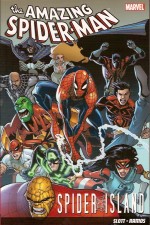
Amazing Spider-Man: Spider Island


By Dan Slott, Fred Van Lente, Rick Remender, Humberto Ramos, Stefano Caselli  & various (Marvel/Panini UK)
ISBN: 978-1-84653-501-7

When the Spider-Man continuity was drastically and controversially altered for the ‘Brand New Day’ publishing event a refreshed, now single-and-never-been-married Peter Parker was parachuted into a new life, so if this is your first Web-spinning yarn in a while – or if you’re drawing your cues from the movies – prepare yourself for a little confusion. That being said, this classy collection of Web-spun wonderment is more accessible than most: a spectacular summer blockbuster yarn with New York overwhelmed by monsters, a hideous all-consuming threat and packed to the spiracles (look it up: I’m being clever again) with returning villains from Spidey’s less complicated glory-days…

Gathering Spider-Island: Deadly Foes, Amazing Spider-Man #666-672, Venom #6-8, and background material, original art, text-features and interviews from Marvel Spotlight Spider-Island, the manic Marvel mayhem commences when clone-builder Miles Warren AKA The Jackal resurrects the warped Peter Parker doppelganger Kaine and upgrades him for malicious purposes and a hidden new boss; turning the recent cadaver into a monstrous multi-limbed humanoid Tarantula…

Meanwhile in ‘Prologue: the One and Only’ the webslinger is riding a wave of popularity in New York City despite every effort of new Mayor J. Jonah Jameson and even in his civilian identity is having a pretty good life. The original hard-luck kid has a great, well-paid job designing high-tech gadgets, is fast friends with the city’s greatest scientists Tony Stark and Reed Richards and even has a devoted, hot, new girlfriend; forensic cop Carlie Cooper.

But now, something very strange is happening: all over Manhattan people are starting to manifest spider-powers and government asset Flash Thompson is put on alert in his role as new black-ops agent Venom, keeping the supposedly retired and disabled war-hero from the bedside of his estranged and terminal father…

When Peter recently lost his Spider-sense, clairvoyant arachnid hero Madame Web convinced him to study martial arts with Shang-Chi, fabled Master of Kung Fu, to prepare for a dire future crisis, but his hectic schedule – constantly moving from Horizon Labs to Fantastic Four HQ and Avengers Mansion – means he is one of the last to know that a manufactured plague is turning New York into a city of Spider People, just as Jackal, Tarantula and their sultry secret leader are unleashing yet another arachnoid atrocity…

‘The Amazing Spider-Manhattan’ sees the infestation grow as Carlie reveals she has Spider-powers and the Jackal assembles an army of arachnid-enhanced thugs to plunder and run riot, further spreading the contagion. A city-wide epidemic forces Jameson to close all exits from the New York and quarantine the populace as the superheroes begin a desperate holding action against a wave of wall-crawling criminals.

When the original-and-genuine tries to join them in ‘Peter Parker, the Unspectacular Spider-Man’ he is sent away since he’s indistinguishable from many of the thugs, but the indomitable lad soon finds a way to strike back and even recruit reinforcements for the hard-pressed defenders.

Across town Venom is stalking the cause of the plague and Eddie Brock, originally possessed by the selfsame alien Symbiote, discovers that he has become a natural cure for the Spider-infection: a living ‘Anti-Venom’…

The covert paramilitary predator had overcome and captured the Jackal’s new Spider-King, but the whole operation was a trick; allowing the beast to sneak thousands of spider-babies out of the quarantined city, ready to infect the entire country. Moreover when Flash discovers that the original identity of the horrific Spider-King was in fact America’s greatest hero he is caught between honour and duty…

In ‘Arachnotopia’ Peter Parker is leading the fightback but helpless to combat the next stage of the disease as victims begin to mutate from spider-powered humans into carnivorous, monstrous eight-legged freaks. His life is made even more difficult when he sees Carlie so clearly using his powers better than he ever did…

Meanwhile Reed Richards, frantically seeking a cure, sees that complete infestation of Manhattan is only a matter of hours away…

With the mystery mastermind revealed there are ‘Spiders, Spiders Everywhere’ but a glimmer of hope remains as Flash/Venom infiltrates the Queen’s arachnoid inner circle, just as Peter’s old flame Mary Jane Watson discovers her own inner arthropod and joins the struggle armed with an advantage no other infectee can – or would want to – boast…

The next Venom instalment sees Flash clash with Anti-Venom before dragging the all-too-willing Brock back to Reed Richards…

Meanwhile the Queen has established mental contact with every victim and uses them as a battery: a web of life feeding her transformative energy and, when the cure is synthesised, she compels all her thralls to resist it and the people administering it…

In the final Venom episode Flash valiantly tackles the Queen head-on but is easily defeated. Luckily one of the first infectees to be cured was that legendary hero trapped inside the Spider-King…

Unfortunately the disease has already reached peak infection and the triumphant Queen transforms into a skyscraper-sized arachnoid colossus ready and able to turn the world into a planet of spiders. With everything to fight for and no hope, Mary Jane and a most unexpected ally lead one final assault by the remaining assembled heroes on the monumental monstrosity, giving the one true Amazing Spider-Man a valiant last chance to spectacularly save everyone…

In ‘Epilogue: the Naked City’ a city wide “Morning After” focuses on the staggering aftermath of the climactic clash and cannily resets the scene for a fresh start in the Spidey universe with departures, arrivals and a whole new outlook for Marvel’s most iconic hero…

Although not necessary, readers might also benefit from a quick re-reading of Spectacular Spider-Man: Disassembled, but this gloriously bombastic rollercoaster action-romp from writers Dan Slott, Fred Van Lente and Rick Remender, illustrated by Humberto Ramos, Stefano Caselli, Tom Fowler, Minck Oosterveer, Carlos Cuevas, Victor Olazaba & Karl Kesel forms not only a terrific Fights ‘n’ Tights tale but also serves as a stand-alone saga and perfect jumping-on point for readers new or returning. With the aforementioned added features pages and a stunning gallery of variant covers by

Ramos, Greg Land, Gabriele Dell’Otto, Stephanie Hans & Stuart Immonen Spider-Island is possibly one of the best Spider-Man books in years.

This British edition of Amazing Spider-Man: Spider Island is set for release on January 19th 2012.
™ & © 2012 Marvel & Subs. Licensed by Marvel Characters B.V. through Panini S.p.A. Italy. A British Edition by Panini UK Ltd.

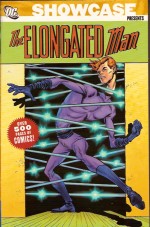
Showcase Presents Elongated Man


By Gardner Fox, Carmine Infantino & various (DC Comics)
ISBN: 978-1-4012-1042-2

Once upon a time American comics editors believed readers would become jaded if  characters were over-used or over-exposed and so to combat that potential danger – and for sundry other commercial and economic reasons – they developed back-up features in most of their titles. By the mid-1960s the policy was largely abandoned as resurgent superheroes sprang up everywhere and readers just couldn’t get enough…but there were still one or two memorable holdouts.

In late 1963 Julius Schwartz took editorial control of Batman and Detective Comics and finally found a place for a character who had been lying mostly fallow ever since his debut as a walk-on in the April/May 1960 Flash.

The Elongated Man was Ralph Dibny, a circus-performer who discovered an additive in soft drink Gingold which seemed to give certain people increased muscular flexibility. Intrigued, he refined the chemical until he had developed a serum which gave him the ability to stretch, bend and compress his body to an incredible degree. Then Ralph had to decide how to use his new powers…

This charming, witty and very pretty compilation gathers all the Flash guest appearances from issues #112, 115, 119, 124, 130, 134, and 138 spanning April/May 1960 to August 1963 before re-presenting the Stretchable Sleuth’s entire scintillating run from Detective Comics #327-371 (May 1964-January 1968).

Designed as a modern take on the classic Golden Age champion Plastic Man, Dibny debuted in Flash #112 in ‘The Mystery of the Elongated Man!’ as a mysterious masked yet attention-seeking elastic do-gooder, of whom the Scarlet Speedster was nonetheless highly suspicious, in a cunningly crafted crime caper by John Broome, Carmine Infantino & Joe Giella. Dibny returned in #115 (September 1960 and inked by Murphy Anderson) when aliens attempted to conquer the Earth and the Vizier of Velocity needed ‘The Elongated Man’s Secret Weapon!’ as well as the guest-star himself to save the day.

In Flash #119 (March 1961), Flash rescued the vanished hero from ‘The Elongated Man’s Undersea Trap!’ which introduced the vivacious Sue Dibny (as a newly wed “Mrs Elongated Man”) in a mysterious and stirring tale of sub-sea alien slavers by regular creative team Broome, Infantino & Giella.

The threat was again extraterrestrial with #124′s alien invasion thriller ‘Space-Boomerang Trap!’ (November 1961) which featured an uneasy alliance between the Scarlet Speedster, Elongated Man and the sinister Captain Boomerang who naturally couldn’t be trusted as far as you could throw him…

Ralph collaborated with Flash’s junior partner in #130 (August 1962) only just defeating the wily Weather Wizard when ‘Kid Flash Meets the Elongated Man!’ but then sprang back into action with – and against – the senior partner in Flash #134 (February 1963), seemingly allied with Captain Cold ‘The Man who Mastered Absolute Zero!’ in a flamboyant thriller that almost ended his budding heroic career…

Gardner Fox scripted ‘The Pied Piper’s Double Doom!’ in Flash #138 (August 1963) a mesmerising team-up which saw both Elongated Man and the Scarlet Speedster enslaved by the Sinister Sultan of Sound, before ingenuity and justice finally prevailed.

When the back-up spot opened in Detective Comics (a position held by the Martian Manhunter since 1955 and only vacated because J’onn J’onzz had been promoted to the lead position in House of Mystery) Schwartz had Ralph Dibny slightly reconfigured as a flamboyant, fame-hungry, brilliantly canny travelling private eye solving mysteries for the sheer fun of it. Aided by his equally smart but thoroughly grounded wife, the short tales were patterned on the classic “Thin Man” filmic adventures of Nick and Norah Charles, blending clever, impossible crimes with slick sleuthing, all garnished with the outré heroic permutations and frantic physical antics first perfected in Jack Cole’s Plastic Man.

These complex yet uncomplicated sorties, drenched in fanciful charm and sly dry wit, began in Detective Comics #327 (May 1964) and ‘Ten Miles to Nowhere!’ (by Fox & Infantino, who inked himself for all the early episodes) wherein Ralph, who had publicly unmasked and become a minor celebrity, discovered that someone had been stealing his car and bringing it back as if nothing had happened. Of course it had to be a clever criminal plot of some sort…

A month later he solved the ‘Curious Case of the Barn-door Bandit!’ and debuted his rather revolting trademark of manically twitching his expanded nose whenever he “detected the scent of mystery in the air” before heading for cowboy country to unravel the ‘Puzzle of the Purple Pony!’ and play cupid for a young couple hunting a gold mine in #329.

Ralph and Sue were on an extended honeymoon tour, making him the only costumed hero without a city to protect. When they reached California Ralph became embroiled in a ‘Desert Double-Cross!’ where hostage-taking thieves raided the home of a wealthy recluse after which Detective #331 offered a rare full-length story in ‘Museum of Mixed-Up Men!’ (Fox, Infantino & Giella) as Batman, Robin and the Elongated Man united against a super-scientific felon able to steal memories and reshape victims’ faces.

Returned to a solo support role in #332, the Ductile Detective discovered Sue had been replaced by an alien in ‘The Elongated Man’s Other-World Wife!’ (with Sid Greene becoming the new permanent inker). Of course, nothing was as it seemed…

‘The Robbery That Never Happened!’ began when a jewellery-store customer suspiciously claimed he had been given too much change whilst ‘Battle of the Elongated Weapons!’ in #334 concentrated on a crook who had adapted Ralph’s Gingold serum to affect objects, after which bombastic battle it was back to mystery-solving when the Elongated Man was invited by Fairview City to round up a brazen bunch of uncatchable bandits in ‘Break Up of the Bottleneck Gang!’

While visiting Central City again Ralph was lured to the Mirror Master’s old lair and only barely survived ‘The House of “Flashy” Traps!’ and then risked certain death in the ‘Case of the 20 Grand Pay-off!’ by replacing Sue with a look-alike – for the best possible reasons – but without her knowledge or permission…

Narrowly surviving his wife’s wrath by turning the American tour into a World cruise, Ralph then tackled the ‘Case of the Curious Compass!’ in Amsterdam, foiling a gang of diamond smugglers, before returning to America and ferreting out funny-money pushers in ‘The Counterfeit Crime-Buster!’

Globe-trotting creator John Broome returned to script ‘Mystery of the Millionaire Cowboy!’ in Detective #340 (June 1965) as Ralph and Sue stumbled onto a seemingly haunted theatre and found crooks at the heart of the matter, whilst ‘The Elongated Man’s Change-of-Face!’ (by Fox, Infantino & Greene) saw a desperate newsman publish fake exploits to draw the fame-fuelled hero into investigating a town under siege, and ‘The Bandits and the Baroness!’ (Broome) saw the perpetually vacationing couple check in at a resort where every other guest was a Ralph Dibny, in a classy insurance scam story heavy with intrigue and tension.

A second full-length team-up with Batman featured in Detective Comics #343 (September 1965, by Broome, Infantino & Giella), in ‘The Secret War of the Phantom General!’; a tense action-thriller pitting the hard-pressed heroes against a hidden army of gangsters and Nazi war criminals, determined to take over Gotham City.

Having broken Ralph’s biggest case the happy couple headed for the Continent and encountered ‘Peril in Paris!’ (Broome, Infantino & Greene) when Sue went shopping as an ignorant American and returned a few hours later a fluent French-speaker…

‘Robberies in Reverse!’ (Fox) saw a baffling situation when shopkeepers began paying customers, leading Ralph to a severely skewed scientist’s accidental discovery whilst #346’s ‘Peephole to the Future!’ (Broome) saw the Elongated Man inexplicably develop the power of clairvoyance, which cleared up long before he could use it to tackle ‘The Man Who Hated Money!’ (Fox); a bandit who destroyed every penny he stole.

‘My Wife, the Witch!’ was Greene’s last ink job for a nearly a year; a Fox thriller wherein Sue apparently gained magical powers whilst ‘The 13 O’clock Robbery!’ with Infantino again inking his own work, found Ralph walk into a bizarre mystery and deadly booby-trapped mansion, before Hal Jordan’s best friend sought out the stretchable Sleuth to solve the riddle of ‘Green Lantern’s Blackout!’ – an entrancing, action-packed team-up with a future Justice League colleague, after which ‘The Case of the Costume-made Crook!’ found the Elongated Man ambushed by a felon using his old uniform as a implausible burglary tool.

Broome devised ‘The Counter of Monte Carlo!’ as the peripatetic Dibnys fell into a colossal espionage conspiracy at the casino and became pawns of a fortune teller in ‘The Puzzling Prophecies of the Tea Leaves!’ (Fox) before Broome delighted one more time with ‘The Double-Dealing Jewel Thieves!’ as a museum owner found that his imitation jewel exhibit was indeed filled with fakes…

As Fox assumed full scripting duties Mystic Minx Zatanna guest-starred in #355’s ‘The Tantalising Troubles of the Tripod Thieves!’, wherein stolen magical artefacts led Ralph into conflict with a band of violent thugs whilst ‘Truth Behind the False Faces!’ saw Infantino bow out on a high note as the Elongated Man helped a beat cop to his first big bust and solved the conundrum of a criminal wax museum.

Detective #357 (November 1966) featured ‘Tragedy of the Too-Lucky Thief!‘ (by Fox, Murphy Anderson & Greene) as the Dibnys discovered a gambler who hated to win but could not lose whilst Greene handled all the art on ‘The Faker-Takers of the Baker’s Dozen!’ wherein Sue’s latest artistic project led to the theft of a ancient masterpiece. Anderson soloed with Fox’s ‘Riddle of the Sleepytime Taxi!’, a compelling and glamorous tale of theft and espionage and when Ralph and Sue hit Swinging England in Detective #360 (February 1967, Fox & Anderson) with ‘London Caper of the Rockers and Mods!’, they met the monarch and prevented warring kid-gangs from desecrating our most famous tourist traps before heading home to ‘The Curious Clue of the Circus Crook!’ (Greene), wherein Ralph visited his old Big-Top boss and stopped a rash of robberies which had followed the show around the country.

Infantino found time in his increasingly busy schedule for a few more episodes, (both inked by Greene) beginning with ‘The Horse that Hunted Hoods’, a police steed with uncanny crime solving abilities, and continuing in a ‘Way-out Day in Wishbone City!’ wherein normally solid citizens – and even Sue – went temporarily insane and started a riot, after which unsung master Irv Novick stepped in to delineate the mystery of ‘The Ship That Sank Twice!’

‘The Crooks who Captured Themselves!’ (#365, with art by Greene) found Ralph losing control of his powers whilst Broome & Infantino reunited one last time for ‘Robber Round-up in Kiddy City!’ as, for a change, Sue sniffed out a theme-park mystery for Ralph to solve and Infantino finally bowed out with the superb ‘Enigma of the Elongated Evildoer!’ (written by Fox and inked by Greene) as the Debonair Detectives found a thief in a ski lodge who seemed to possess all Ralph’s elastic abilities…

The Atom guest-starred in #368, helping battle clock-criminal Chronos in ‘The Treacherous Time-Trap!’ by Fox, Gil Kane, Greene and iconoclastic newcomer Neal Adams illustrated the poignant puzzler ‘Legend of the Lover’s Lantern!’, after which Kane & Greene limned the intriguing all-action ‘Case of the Colorless Cash!’. The end of the year signalled the end of an era as Fox, Mike Sekowsky & Greene finished off the Elongated Man’s expansive run with the delightfully dizzy lost-loot yarn ‘The Bellringer and the Baffling Bongs’ (#371, January 1968).

With the next issue Detective Comics became an all Bat-family title and Ralph and Sue Dibny temporarily faded from view until revived as bit players in Flash and finally recruited into the Justice League as semi-regulars. Their charismatic relationship and unique genteel style has however, not been seen again: casualties of changing comics tastes and the replacement of sophistication with angsty shouting and testosterone-fuelled sturm und drang…

Witty, bright, clever and genuinely exciting these smart stories from a lost age are all beautiful to look at and a joy to read for any sharp kid and all joy-starved adults. This book is a shining tribute to the very best of DC’s Silver Age and a volume no fan of fun and adventure should be without.
© 1960, 1961, 1962, 1964, 1965, 1966, 1967, 1968, 2006 DC Comics. All Rights Reserved.

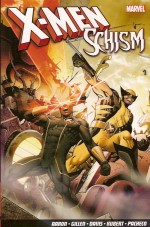
X-Men: Schism


By Jason Aaron, Kieron Gillen, Carlos Pacheco, Frank Cho, Daniel Acuña, Alan Davis, Adam Kubert, Tim Seeley, Billy Tan & various (Marvel/Panini UK)
ISBN: 978-1-84653-502-4

Radical change – or at least the appearance of such – is a cornerstone of modern comics. There must be a constant changing of the guard, a shifting of scene and milieu and, in latter times, a regular diet of death, resurrection and rebirth.

A case in point is this rather impressive restating of the Mutant paradigm from Marvel wherein the latest status quo gets the boot and a new beginning equates with a return to the old days…

Most people who read comics have a passing familiarity with Marvel’s ever-changing X-Men franchise and newcomers or occasional consumers won’t have too much trouble following the backstory so let’s plunge in as the hostile world once more kicks sand in the faces of the planet’s most dangerous and reviled minority…

This utterly engrossing tome (collecting X-Men Schism #1-5, Generation Hope #10-11 and X-Men ReGenesis) finds the world’s mutant population reduced to a couple of hundred desperate souls living in self-imposed exile on an island dubbed “Utopia” located in San Francisco Bay.

Although generally welcomed by most of the easygoing residents of the city, tensions are high and with X-Men team-leader Cyclops running the colony in an increasingly draconian manner, his relationship with war-weary second-in-command Wolverine is slowly, inexorably deteriorating…

Matters come to head when Logan refuses to train the latest batch of kids in combat techniques, concerned that these newest mutants are being cheated of their childhoods, after which Quentin Quire, a 16-year old anarchist telepath provokes an frantic armed response from human world leaders at an arms limitation conference intended to convince humanity to abandon their “defensive” anti-mutant weapons; which generally equates to giant robotic Sentinels of various vintages…

With the world once again on alert against “Homo Superior” attacks, every nation is frantically rearming, but the robots have all degenerated into rampaging menaces attacking their owners – if they work at all – and the assembled mutants and assorted superheroes are kept busy saving humans from their own bellicose paranoid folly…

Meanwhile a bunch of very human rich kids make a move of their own. The greedy, remorseless and ambitious scions of munitions millionaires, human traffickers and deranged scientists have waited long enough for what’s theirs and, after murdering their parents and guardians, take over the Hellfire Club to initiate their scheme of ruling the Earth before they hit puberty…

As their cynical, vicious plan unfolds, the embattled Utopians become the unwitting target of increasingly bloody attacks and Cyclops and Wolverine catastrophically clash over the role of the super-powered children in their care, almost oblivious of the launch of the new super-Sentinel devised by the impatient new Hellfire kids…

Although Utopia is saved in the nick of time, the policy-split leads to a sundering of the Mutants as Wolverine leads many of the youngest kids and some of Cyclops’ oldest, but most disappointed and disaffected, friends to a place where they can attempt a different way of living, leaving the island as a highly visible fortress against and target of human aggression; populated by warriors and militaristic genocide-survivors ready to take the Race – or perhaps more correctly, Species – War to their oppressors…

The core miniseries was scripted by Jason Aaron and illustrated by Carlos Pacheco, Frank Cho, Daniel Acuña, Alan Davis, Adam Kubert, Cam Smith, Mark Farmer & Mark Roslan with Kieron Gillen writing the intersecting chapters from Generation Hope and the epilogue X-Men ReGenesis drawn by Tim Seeley and Billy Tan, respectively.

If you crave fast, furious and fulfilling Fights ‘n’ Tights fiction this is a nearly perfect one-shop stop for your edification and delectation.

X-Men Schism is scheduled for release on January 19th 2012.

™ & © 2012 Marvel & Subs. Licensed by Marvel Characters B.V. through Panini S.p.A. Italy. A British Edition by Panini UK Ltd. ™ and © 2012 Marvel Entertainment LCC and its subsidiaries. All rights reserved. A British edition released by Panini UK Ltd.

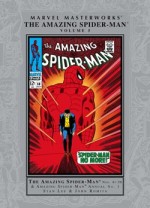
Marvel Masterworks volume 22: Amazing-Spider-Man 41-50 & Annual 3


By Stan Lee, John Romita Sr. & various (Marvel)
ISBN: 0-87135-914-6

The rise and rise of the wondrous web-spinner continued and even increased pace as the decade progressed, and by the time of the tales in this fourth sumptuous hardcover (collecting Amazing Spider-Man #41-50 and Annual 3, spanning October 1966 to July 1967) Peter Parker and friends were on the way to being household names as well as the darlings of college campuses and the media intelligentsia.

By 1966 Stan Lee and Steve Ditko could no longer work together on their greatest creation. After increasingly fraught months the artist simply resigned, leaving Spider-Man without an illustrator. Meanwhile John Romita had been lured away from DC’s romance line and given odd assignments before assuming the artistic reins of Daredevil, the Man Without Fear.

Now he was co-piloting the company’s biggest property and expected to run with it.

With issue #41 and ‘The Horns of the Rhino!’ Romita took complete artistic control, inking his own pencils in a blockbusting rip-roarer as a super-strong spy tasked with abducting J. Jonah Jameson‘s astronaut son was stopped by the Astounding Arachnid, who found the victim a far harder proposition in the next issue. Amazing Spider-Man #42 ‘The Birth of a Super-Hero!’ saw John Jameson mutated by space-spores and go on a terrifying rampage in a explosive, entertaining yarn only really remembered for the last panel of the final page…

Mary Jane Watson had been a running gag for years; a prospective blind-date arranged by Aunt May whom Peter had narrowly avoided – and the creators had skilfully not depicted – for the duration of time that our hero had been involved with Betty Brant, Liz Allen, and latterly Gwen Stacy. In that last frame the gob-smacked young man finally realised that he been ducking the hottest chick in New York for two years!

‘Rhino on the Rampage!’ in #43 gave the horn-headed villain one more crack at Jameson and Spidey, but the emphasis was solidly on foreshadowing future foes and building Pete and MJ’s relationship.

The Marvel mayhem continued with the return of a tragedy-drenched old foe as Stan & John reintroduced biologist Curt Conners in #44′s ‘Where Crawls the Lizard!’. The deadly reptilian marauder threatened Humanity itself and it took all of the wall-crawler’s resourcefulness to stop him in the cataclysmic concluding chapter ‘Spidey Smashes Out!’

Issue #46 introduced another all-new menace in the form of seismic super-thief ‘The Sinister Shocker!’ who proved little match for the Web-spinner whilst ‘In the Hands of the Hunter!’ brought back a fighting-mad and extremely vengeful Kraven to menace the family of Peter Parker’s new best friend Harry Osborn.

Apparently the obsessive big-game hunter had entered into a contract with Harry’s father (the super-villainous Green Goblin until a psychotic break turned him into a traumatised amnesiac) and now the Russian rogue wanted paying off or payback…

Luckily Spider-Man was on hand to dissuade him, but it’s interesting to note that at this time the student life and soap-opera sub-plots became increasingly important to the mix, with glamour girls Mary Jane and Gwen Stacy (superbly delineated by the masterful Romita) as well as former bully Flash Thompson and the Osborns getting as much or more “page-time” as Aunt May or the Daily Bugle staff, who had previously monopolised the non-costumed portions of the ongoing saga.

Amazing Spider-Man #48 introduced Blackie Drago: a ruthless thug who shared a prison cell with one of the wall-crawler’s oldest foes. At death’s door the ailing super-villain revealed his technological secrets, enabling Drago to escape and master ‘The Wings of the Vulture!’

Younger, faster, tougher, the new Vulture defeated Spider-Man and in #49′s ‘From the Depths of Defeat!’ battled Kraven the Hunter until a restored and reinvigorated Wall-crawler stepped in to thrash them both.

Issue #50 introduced one of Marvel’s greatest villains in the first of a three part yarn that saw the beginnings of romance between Parker and Gwen Stacy and the death of a cast member, re-established Spidey’s war on cheap thugs and common criminals (a key component of the hero’s appeal was that no criminal was too small for him to bother with) and saw a crisis of conscience force him to quit in ‘Spider-Man No More!’ only to return and become entangled ‘In the Clutches of… the Kingpin!’ (inked by Mike Esposito, moonlighting from DC as Mickey Demeo).

The remaining two chapters of that groundbreaking, gang-busting triptych are reproduced in the next volume but there’s still one last treat in store…

This chronicle concludes with ‘…To Become an Avenger!’ (Amazing Spider-Man Annual # 3 and out of sequence – so if you’re that way inclined read this tale first) as the World’s Mightiest Heroes offered the Web-Spinner membership in the team and an end to most of his pecuniary and P.R. woes if he could capture the Hulk.

As usual all was not as it seemed but the action-drenched epic, courtesy of Lee, Romita (on layouts), Don Heck & Demeo/Esposito is the kind of guest-heavy package that made those summer specials a kid’s ultimate delight.

Topped off with a cover gallery and glorious pin-ups of the entire cast of Peter Parker’s life, one last Ditko action-page and a group shot of Spidey with all the heroes stronger than him, this classic compendium is the ideal way to introduce or reacquaint readers with the formative Spider-Man. The brilliant adventures are superb value and this series of books should be the first choice of any adult with a present to buy for an impressionable child.

…Or for their greedy, needy selves…
© 1966, 1967, 1997 Marvel Entertainment Group, Inc. All rights reserved.

Superman Archives volume 3


By Jerry Siegel & Joe Shuster with Leo Nowak and the Superman Studio (DC Comics)
ISBN: 978-1-56389-002-4

By 1941 the intoxicating blend of eye-popping action and social crusading which hallmarked the early exploits of the Man of Tomorrow had grown to encompass cops-and-robbers crime-busting, science fiction, fantasy and even whimsical comedy.

With a thrice-weekly radio serial, games, toys, a newspaper strip and a growing international media presence, Superman was definitely everybody’s hero, as confirmed in this classic compendium, gathering in their entirety issues #5-8 of his landmark solo title.

This first-edition deluxe hardback opens with an enchanting reminiscence from star artist and early contributor Jack Burnley, but once more no contents page or creator credits, so for the sake of expediency I’ve again used information and story-titles from later collections to facilitate the review. Besides, if you just buy this brilliant, lavish, full-colour hardback treasure-trove, you’ll be too busy reading the glorious stories to worry over such minor details…

Superman #9 (March/April 1941) was another four-star thriller with all the art credited to Cassidy and the Shuster Studio. ‘The Phony Pacifists’ is an enthralling espionage thriller that capitalised on increasing US tensions over “the European War”, followed by a bulletin to members of the Supermen of America club, gag strip Henrietta and a page spotlighting Sports veterans before ‘Joe Gatson, Racketeer’ details the sorry end of a hot-shot blackmailer and kidnapper.

‘Mystery in Swasey Swamp’ pits the Man of Steel against a wave of eerie happenings and ruthless spies, whilst Frank Cooper’s prose vignette recalls the exploits of WWI in ‘A Bombing Flight’ and ‘Super-Strength by Superman’ advocated the benefits of regular exercise before ‘Jackson’s Murder Ring’ pitted the Metropolis Marvel against an ingenious gang of killers-for-hire.

Siegel & Shuster had created an unstoppable juggernaut and were constantly struggling to cope with it. All the Superman stories in issue #10 (May/June 1941) were scripted by Siegel, but illustrated by Studio stalwarts. ‘The Invisible Luthor’ (drawn by Leo Nowak) saw the malevolent mastermind contrive a devastating campaign of terror, and after the humorous fact-page ‘Calling All Cars’ the similarly illustrated adventure ‘The Talent Agency Fraud’ saw Superman and Lois Lane bust a gang of blackmailing thugs preying on star-struck girls.

Wayne Boring & the shop handled the last two Superman stories, beginning by exposing a scurrilous swami in ‘The Spy Ring of Righab Bey’ and, after text-tale ‘Big Leaguer’ by George Shute and Bolty’s (Henry Boltioff) factual frolics ‘It’s True!’ ,‘The Dukalia Spy Ring’ saw the Action Ace trounce thinly-veiled Nazis at a propaganda sports festival (topical and exotic themes of suspense were still necessarily oblique then, since at this time America was still officially neutral in the “European war.”).

Superman #11 (July/August 1941) was an all-Nowak affair, beginning with ‘Zimba’s Gold Badge Terrorists’, as more thinly disguised Nazis “blitzkrieged” the USA, whilst after more gags and Boltinoff ‘Facts…’ the Man of Tomorrow battled rampaging giant animals in ‘The Corinthville Caper’, before scouring the world seeking a cure for ‘The Yellow Plague’. After Nelson Edwards’ nautical prose tale ‘Timely Rescue’ and yet more Boltinoff info-gags in ‘It’s So…’ Superman dashed home in time to foil ‘The Plot of Count Bergac’ and crushed a coterie of High Society gangsters.

Even though spies and sabotage plots were already a trusty part of the narrative currency of the times and many in America felt war was inevitable (patriotic covers were beginning to appear on many comic books), they were still a distant problem, impersonal and at one remove from daily life as experienced by the kids who were the perceived audience for these four-colour fantasies. That would change radically in the months to come…

For the meantime though, these final four yarns from Superman #12 (September/October 1941) are amongst the last pre-war stories of the Man of Tomorrow. Once again they were all scripted by Siegel with Leo Nowak drawing most of the comic output at this time. He’s responsible for the first two here…

‘Peril on Pogo Island’ found Lois and Clark at the mercy of rampaging tribesmen, although spies from a certain foreign power are at the back of it all, whilst ‘The Suicide Murders’ saw the plucky journalists facing a particularly grisly band of gangsters. After a Books Worth Reading feature and a gag page, John Sikela inked ‘The Grotak Bund’ wherein seditionists attempted to destroy vital US industries and, following Boltinoff’s ‘Kid Stuff’ and Roger Forrest’s prose crime-vignette ‘Safe Job’, fully illustrated the final tale as an old and indefatigable foe reared his shiny slaphead once more in ‘The Beasts of Luthor’, targeting far-flung Baracoda Island with a spectacular array of giant monsters.

Augmented by a host of delightfully mesmerising contemporary ads for cool toys and the company’s burgeoning line of comics super-stars, these Golden Age tales are priceless enjoyment, a fantastic window on comfortingly simpler times and some of the greatest Fights and Tights adventures ever crafted.

How can you possibly resist them?
© 1941, 1991 DC Comics. All Rights Reserved.
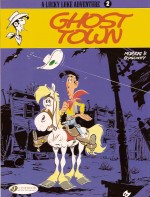
Lucky Luke volume 2: Ghost Town


By Morris & Goscinny, translated by Luke Spear (CineBook)
ISBN: 978-1-905460-12-0

It’s hard to think of one of Europe’s most beloved and long-running comics characters being in any way controversial, but when the changing times caught up with the fastest gun in the West (“so fast he can outdraw his own shadow”) and the planet’s most laconic cowboy moved with them, the news made headlines all over the world.

Lucky Luke is a rangy, good-natured, lightning fast cowboy who roams the fabulously mythic Old West, having light-hearted adventures with his horse Jolly Jumper and Rantanplan (“dumbest dog in the West” and a charming spoof of cinema canine Rin-Tin-Tin), interacting with a host of historical and legendary figures of the genre.

His continued exploits over more than 66 years have made him one of the best-selling comic characters in Europe, (78 collected books and more than 300 million albums in 30 languages thus far), with spin-off games, computer games, animated cartoon and even a plethora of TV shows and live-action movies.

He was created in 1946 by Belgian animator, illustrator and cartoonist Maurice de Bévère – AKA Morris – for the 1947 Annual (L’Almanach Spirou 1947) of Le Journal de Spirou, launching into his first weekly adventure ‘Arizona 1880′ on December 7th 1946.

Before then, while working at the CBA (Compagnie Belge d’Actualitiés) cartoon studio Morris met future comics super-stars Franquin and Peyo, and worked for weekly magazine Le Moustique as a caricaturist (to my eyes Lucky Luke looks uncannily like the young Robert Mitchum who graced so many mid-1940s B-movie Westerns).

He quickly became one of “la Bande des quatre”, or Gang of Four, which comprised the creators Jijé, Will and his old comrade Franquin, and who were the leading proponents of the loose and free-wheeling artistic style known as the “Marcinelle School” which dominated Spirou in aesthetic contention with the “Ligne Claire” style used by Hergé, EP

Jacobs and other artists in Tintin Magazine.

In 1948 the Gang (all but Will) visited America, meeting US creators and sightseeing, and Morris stayed for six years, meeting René Goscinny, scoring some work from the newly-formed EC sensation Mad and making copious notes and sketches of the swiftly vanishing Old West. That research would resonate on every page of his life’s work.

Working alone until 1955 when he reunited with Goscinny, Morris produced another nine albums worth of affectionate sagebrush parody before, working in perfect unison, Luke attained the dizzying heights of superstardom, commencing with ‘Des rails sur la Prairie’ (Rails on the Prairie), which began in Spirou on August 25th 1955.

In 1967 the straight-shooter switched teams, transferring to Goscinny’s own magazine Pilote with ‘La Diligence’ (The Stagecoach). Goscinny produced 45 albums with Morris before his death, from when Morris continued both alone and with fresh collaborators.

Morris died in 2001 having drawn fully 70 adventures, plus the spin-off adventures of Rantanplan, with Achdé, Laurent Gerra, Benacquista & Pennac taking over the franchise, producing another five tales to date.

Moreover, apart from that very first adventure Lucky, to appropriate a quote applied to the thematically simpatico Alias Smith and Jones “in all that time he never shot or killed anyone”…

Lucky Luke first appeared in Britain syndicated in the weekly comic Film Fun and again in 1967 in Giggle where he was renamed Buck Bingo. In all these venues as well as the numerous attempts to follow the English-language successes of Tintin and Asterix albums from Brockhampton and Knight Books, Luke had a trademark cigarette hanging insouciantly from his lip, but in 1983 Morris – no doubt amidst both pained howls and muted mutterings of “political correctness gone mad” – substituted a piece of straw for the much-travelled dog-end, which garnered him an official tip of the hat from the World Health Organization.

The most recent attempt to bring Lucky Luke to our shores and shelves comes from Cinebook, with Ghost Town the second of the 28 (and counting) available albums, originally collected in 1965 as La Ville fantôme, the 25th adventure and Goscinny’s 16th collaboration with the artist.

As Luke rides the range he encounters two tarred-and-feathered gamblers Denver Miles and Colorado Bill. Despite instantly assessing their scurrilous natures – and of course they do try to rob him – he gives them assistance and a ride to the nearest outpost of civilisation.

That happens to be the deserted mining town of Gold Hill where they encounter an embittered old miner dubbed Old Powell who chases them off at gunpoint.

A little further on they reach Bingo Creek where they discover the mad old coot was once the victim of a gold-salting scheme (hiding gold on worthless land and getting a sucker to buy it) but stubbornly refused to quit, convinced that somewhere in his mountain the motherlode still lay hidden…

Denver and Colorado are incorrigible crooks and after Lucky exposes their fleecing of the townsfolk the bent gamblers try to backshoot him, only to fall foul of Powell’s skill with a rifle…

Eternally grateful Lucky determines to befriend and assist the irascible old coot, despite his surly protests, whilst Denver and Colorado plan the perfect revenge by attempting to steal his mine and then re-salt it before selling it to some other sucker…

To this end they try buy up the claim, have Old Powell hanged for witchcraft, frame him for cattle-rustling and even plant the stolen cash-register from the saloon in his mine.

But they haven’t reckoned on the ingenuity of Lucky Luke; a man so swift and sharp that he can outdraw his own shadow… Against the masterful wits and wicked wits of our indomitable hero the gamblers are ultimately helpless in this splendidly intoxicating blend of all-ages action, slapstick and wry cynical humour.

Although the dialogue is still a bit dry in places, this is a grand old hoot in the tradition of Destry Rides again and Support Your Local Sheriff (or perhaps Paint Your Wagon, Evil Roy Slade or Cat Ballou are more your style?) superbly executed by master storytellers and a wonderful introduction to a unique genre for modern kids who might well have missed the romantic allure of the mythical Wild West.

And in case you’re worried, even though the interior art still has our hero chawin’ on that ol’ nicotine stick, trust me, there’s very little chance of anyone craving a quick snout, but quite a high probability that they’ll want more Lucky Luke Albums…
© Dargaud Editeur Paris 1971 by Goscinny & Morris. © Lucky Comics. English translation © 2006 Cinebook Ltd.