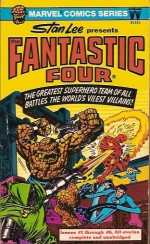
Stan Lee Presents the Fantastic Four


By Stan Lee & Jack Kirby with Joe Sinnott (Kangaroo/Pocket Books)
ISBN: 0-671-81445-1

Here’s another look at how our industry’s gradual inclusion into mainstream literature began and one more pulse-pounding paperback package for action fans and nostalgia lovers, offering yet another chance to enjoy some of the best and most influential comics stories of all time.

One thing you could never accuse entrepreneurial maestro Stan Lee of was reticence, especially when promoting his burgeoning line of superstars. In the 1960s most adults – including the people who worked there – considered comic-books a ghetto. Some disguised their identities whilst others were “just there until they caught a break”.

Visionaries all; Stan, Jack Kirby & Steve Ditko had another idea – change the perception.

Whilst the artists pursued their imaginations waiting for the quality of the work to be noticed, Lee proactively pursued every opportunity to break down the slum walls: college lecture tours, animated TV shows, ubiquitous foreign franchising and of course getting their product onto the bookshelves of “real” book shops.

After a few abortive attempts in the 1960s to storm the shelves of bookstores and libraries, Marvel made a concerted and comprehensive effort to get their wares into more socially acceptable formats. As the 1970s closed, purpose-built graphic collections and a string of new prose adventures tailored to feed into their all-encompassing continuity began oh, so slowly to appear.

Whereas the merits of the latter are a matter for a different review, the company’s careful reformatting of classic comics adventures were generally excellent; a superb and recurring effort to generate continuity primers and a perfect – if fickle – alternative venue to introduce fresh readers to their unique worlds.

The dream was superbly represented than in this classy little back-pocket Kirby cornucopia of wonders with sharp reproduction, the classic four-colour palette, sensitive editing, efficient picture-formatting and of course, six unforgettable epics from the very dawn of Lee & Kirby’s magnificent partnership…

After a troubled period at DC Comics (National Periodicals as it then was), a terrifying downturn in all comics sales across the board and a creatively productive but disheartening time on the poisoned chalice of the Sky Masters newspaper strip, Kirby settled into his new job at the small and shaky outfit which had once been publishing powerhouse Timely/Atlas; now reduced to releasing only 16 titles per month, churning out mystery, monster, romance and western material for a marketplace that seemed doomed to die.

But such fertile imagination couldn’t be suppressed for long and when the Justice League of America caught the public’s massed imagination it gave him and writer/editor Stan Lee an opportunity which changed the industry forever, and might well have saved it from extinction.

Depending upon who you believe, a golfing afternoon led publisher Martin Goodman to order his nephew Stan to create a series about super-characters like the JLA.

Combining the tone and tenets of the cautiously reviving mystery-man genre with their own tried-and-true sci-fi monster magazine fare, Lee & Kirby’s resulting team quickly took the industry and the fans by storm. It wasn’t the powers: they’d all been seen since the beginning of the medium. It wasn’t the costumes – they didn’t even have any until the third issue – it was Kirby’s compelling art and the fact that these characters weren’t anodyne cardboard cut-outs.

Set in a real and thoroughly recognizable location, (New York City from #3 onwards) a quartet of imperfect, brash and rather stroppy individuals banded together out of tragedy and disaster to face the incredible.

In most ways The Challengers of the Unknown (Kirby’s prototype quartet whose immortal exploits are available in two wonderful DC Archives and a single economical, black and white Showcase Presents volume) laid all the groundwork for the wonders to come, but the staid, almost hide-bound editorial strictures of National would never have allowed the raw, undiluted energy of the concept to run roughshod over taste and occasionally good publishing sense.

This tantalising all-colour pint-sized paperback reprints the first six trend-setting, empire-building issues beginning with Fantastic Four #1 (bi-monthly and cover-dated November 1961, by Lee, Kirby and an uncredited inker whose identity remains a topic of much debate to this day): a raw, rough, passionate and uncontrolled blend of fantasy adventure and sci-fi saga. Thrill-hungry kids pounced on it.

After Stan’s now compulsory rollicking, folksy introductory prologue ‘The Fantastic Four’ saw maverick scientist Reed Richards summon his fiancé Sue Storm, their friend Ben Grimm and Sue’s teenaged brother Johnny before heading off on their first mission. In a flashback we discover they are driven survivors of a private space-shot which went horribly wrong when Cosmic Rays penetrated their ship’s inadequate shielding. They smashed back to Earth and found that they had all been hideously mutated into outlandish freaks.

Richards’ body became elastic, Sue gained the power to turn invisible, Johnny Storm could turn into living flame and tragic Ben turned into a shambling, rocky freak. Shaken but unbowed they vow to dedicate their new abilities to benefiting mankind.

In ‘The Fantastic Four meet the Mole Man’ they foil a plan by another outcast who controls monsters and slave humanoids from far beneath the Earth before uncovering ‘The Moleman’s Secret!’

This summation of the admittedly mediocre plot cannot do justice to the engrossing wonder of that breakthrough issue – we really have no grasp today of just how different in tone, how shocking it all was.

“Different” doesn’t mean “better” even here, but the FF was like no other comic on the market at the time and buyers responded to it hungrily. The brash experiment continued with another old plot in #2. ‘The Skrulls from Outer Space’ were shape-changing aliens who framed the FF and made them hunted outlaws (a fruitful theme often returned to in those early days) before the genius of Mister Fantastic bluffed their entire invasion fleet into abandoning their plans for conquering Earth.

Issue #3 (inked by Sol Brodsky) featured ‘The Menace of the Miracle Man’ whose omnipotent powers had a simple secret, but is more notable for the first appearance of their uniforms and a shocking line-up change, which led directly into the next issue. Continued stories were an innovation in themselves, but the revival of a Golden Age Great instantly added depth and weight to the six month old and still un-named Marvel Universe.

‘The Coming of the Sub-Mariner’ reintroduced the all-powerful amphibian Prince of Atlantis, who had been lost for decades, a victim of amnesia. Recovering his memory thanks to the Human Torch, Namor returned to his sub-sea home only to find it destroyed by atomic testing. A monarch without subjects, he swore vengeance on humanity and attacked New York City with a gigantic monster. This saga is when the series truly kicked into high-gear…

Until now the creative team, who had been in the business since it began, had been hedging their bets. Despite the innovations of a contemporary superhero experiment their antagonists had relied heavily on the trappings of popular trends in the media – and as reflected in their other titles. Aliens and monsters played a major role in the earlier tales but Fantastic Four #5 took a full-bite out of the recovering Fight n’ Tights apple and introduced the first full-blown super-villain to the budding Marvel Universe.

I’m not discounting Mole Man, but that tragic little gargoyle, for all his bitter schemes and plans of world conquest, wouldn’t truly acquire the persona of a costumed foe until his more refined second appearance in #22.

‘Prisoners of Doctor Doom’ (July 1962, inked by the subtly slick Joe Sinnott) has it all: an attack by a mysterious enemy from Reed’s past, magic and super-science, lost treasure, time-travel – even the ever popular buccaneering pirates stir this heady brew of all-out adventure.

Sheer magic and the on-form creators knew they were on to an instant winner since the deadly Doctor returned the very next issue, teamed with a reluctant but gullible Sub-Mariner to attack our heroes in #6’s ‘Captives of the Deadly Duo!’ inked by new regular embellisher Dick Ayers: perfectly closing this delightful little collectors item.

In this first super-villain team up Prince Namor’s growing affection for Sue Storm forced the sub-sea stalwart to save his foes from dire death in outer space – but only after Doom tried to kill him too…

These immortal epics are available in numerous formats and editions (including monochrome softcover compendiums and enticing lavish premium hardbacks), but there’s an oddly delicious and seditious cachet to these easily concealable collections which always take me back decades to ‘O’ level Civics and Economics classes on warm Wednesday afternoons that’s simply impossible to ignore and always leaves a warm fuzzy feeling…

Ah, the merry buzz of insects, the steady drone of an oblivious teacher who didn’t want to be there either and the slow cautious turning of pages perfectly obscured by a large, dog-eared tome of Keynesian dogma…

But that’s just me…

It’s easy to assume that such resized, repackaged paperback book collections of early comics extravaganzas were just another Marvel cash-cow in their tried-and-tested “flood the marketplace” sales strategy – and maybe they were – but as someone who has bought these stories in most of the available formats over the years, I have to admit that these handy back-pocket versions are among my very favourites and ones I’ve re-read most – they’re handier, more accessible and just plain cool – so why aren’t they are available as ebooks yet?

© 1977 Marvel Comics Group. All rights reserved.
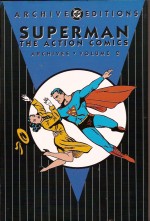
Superman in Action Comics Archives volume 2


By Jerry Siegel & Joe Shuster, Jack Burnley, Wayne Boring, Fred Ray, Paul Cassidy & the Superman Studio (DC Comics)
ISBN: 1-56389-426-2

In the second stellar hardback collection the Man of Tomorrow’s earliest groundbreaking adventures, reprinted from issues #21-36 of the epochal anthology Action Comics, the never-ending battle for Truth, Justice and the American Way reaches the middle of 1941, with war ripping apart the outer world but still no more than a looming literary menace for most Americans.

As described in modern-day super-scribe Paul Kupperberg’s introduction, although creators Siegel & Shuster had very much settled into the character by now, the buzz of success still fired them and innovation still sparkled amidst the exuberance.

These stories were largely untitled, but for convenience I’ve added the designations contrived by editors in other recent compilations such as the Superman Chronicles, so the full-on, four-colour magic opens here with ‘The Atomic Disintegrator’ – originally published in Action #21, February 1940 – wherein our restlessly exuberant hero tackled an early secret identity crisis and foiled a deadly plot by old enemy Ultra-Humanite (now creepily residing within the curvaceous body of movie starlet Delores Winters) which was followed by ‘Europe at War’, not only a tense and thinly disguised call to arms for the still neutral USA, but a continued story: an almost unheard-of luxury in those early days of funny-book publishing, which resulted in a spectacular and chilling one-man peace-keeping mission to halt hostilities between the nations of Galonia and Toran – and all explosively revealed to be the Machiavellian fault of a criminal scientist named Alexander Luthor…

Action #24 featured ‘Carnahan’s Heir’, a wealthy wastrel whom Superman promised to turn into a useful citizen, whilst the next told the tale of the ‘The Amnesiac Robbers’; good-guys compelled to commit crimes by an evil hypnotist in a crime wave with political repercussions, sporting a cover by new artistic sensation Wayne Boring, who went on to illustrate the next four too.

In comic book terms at least Superman was master of the world, and had already utterly changed the shape of the fledgling industry by the time of these tales. There was a popular newspaper strip, foreign and overseas syndication, and the Fleischer studio was producing some of the most expensive – and best – animated cartoons ever conceived. Thankfully the quality of the source material was increasing with every four-colour release, and the energy and enthusiasm of Jerry Siegel and Joe Shuster had infected the burgeoning studio that grew around them to cope with the relentless demand.

From Action Comics #26 (July 1940) came ‘Professor Cobalt’s Clinic’ wherein Clark Kent and Lois Lane exposed a murderous sham Heath Facility with a little Kryptonian help, and the next month dealt a similar blow to the corrupt orphanage ‘Brentwood Home for Wayward Youth’. The September issue found him at the circus, solving the mystery of ‘The Strongarm Assaults’, a fast-paced thriller beautifully illustrated by the astonishingly talented Jack Burnley, brought in to help as the Superman newspaper strip took up more and more of Shuster’s time.

Action Comics #29 (October 1940) again featured Burnley art in a gripping tale of murder for profit. Human drama in ‘The Life insurance Con’ was replaced by deadly super-science as the mastermind Zolar created ‘A Midsummer Snowstorm’, in #30 allowing Burnley a rare opportunity to display his fantastic imagination as well as his representational excellence and featured the first of Fred Ray’s scintillating run of covers.

Action Comics #31 featured another high-tech crime-caper as gangsters put an entire city to sleep and only Clark Kent wasn’t ‘In the Grip of Morpheus’ in #31 whilst #32’s ‘The Gambling Racket of Metropolis’ (January 1941) saw the Metropolis Marvel crush an illicit High Society gambling operation that had wormed its nefarious way into the loftiest echelons of Government, a typical Jerry Siegel social drama magnificently illustrated by the increasingly impressive Burnley.

Action Comics #33 and 34 were also Burnley blockbusters wherein Superman first went north to discover ‘Something Amiss at the Lumber Camp’, before heading to coal country to save ‘The Beautiful Young Heiress’; both superbly enticing character-plays with plenty of scope for eye-popping super-stunts to thrill the gasping fans.

Behind a Wayne Boring cover Action Comics #35 saw the artistic return of Joe Shuster – aided by an increasing number of assistants dubbed “the Superman Studio” – for a human interest tale with startling repercussions in ‘The Guybart Gold Mine’, and this volume concludes with Superman mightily stretched to cope with the awesome threat of ‘The Enemy Invasion’; a canny taste of things to come if America entered World War II.

Stories of corruption, disaster and social injustice were typical of the times, but with war in the news and clearly on the horizon, the content of Superman’s adventures was changing and so, necessarily, did the scale and scope of the action.

The raw intensity and sly wit still shone through in Siegel’s scripts which literally defined what being a superhero meant, but as the world became more dangerous the Man of Tomorrow simply became stronger and more flamboyant to deal with it all, and Shuster and his team stretched and expanded the iconography that all others would follow.

Still some of the very best Fights ‘n’ Tights any fan could ever find, these tales deserve pride of place on any bookshelf.
© 1940, 1941, 1998 DC Comics. All Rights Reserved.

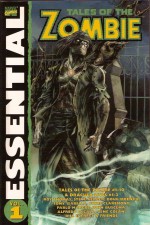
Essential Tales of the Zombie vol.1


By Steve Gerber, Pablo Marcos & various (Marvel)
ISBN 0-7851-1916-7

Inspiration isn’t everything. In fact as Marvel slowly grew to a position of market dominance in the wake of the losing their two most innovative and inspirational creators, they did so less by experimentation and more by expanding proven concepts and properties. The only real exception to this was the en masse creation of horror titles in response to the industry down-turn in super-hero sales – a move expedited by a rapid revision in the wordings of the increasingly ineffectual Comics Code Authority rules.

The switch to sinister supernatural stars had a number of benefits. Most important it brought a new readership to comics, one attuned to the global revival in spiritualism, Satanism and all things spooky. Almost as important, it gave the reprint-crazy company an opportunity to finally recycle old 1950s horror stories that had been rendered unprintable and useless since the code’s inception in 1954.

This comprehensive moody monochrome tome collects the contents of Tales of the Zombie #1-10 and pertinent portions of Dracula Lives #1-2 but, despite targeting the more mature black and white magazine market of the 1970s, these are oddly coy horror stories for a generation born before “video nasties” and teen-slasher movies, so it’s not likely that you’ll need a sofa to hide behind…

The collection commences with ‘Zombie!’ illustrated by unsung legend Tony DiPreta: one of those aforementioned, unleashed 1950s reprints which found its way as cheap filler into the back of Dracula Lives #1 (August 1973). In this intriguing pot-boiler criminal Blackie Nolan runs for his life when the man he framed for his crimes animates a corpse to extract his revenge…

A few months earlier Marvel Editor-in-Chief Roy Thomas had green-lighted a new mature-reader anthology magazine starring a Walking Deadman, closely based on a classic 1953 Stan Lee/Bill Everett thriller originally published in Menace #5. Tales of the Zombie #1 had a cover-date of July 1973 and contained a mix of all-new material, choice reprints and text features to thrill and chill all the voodoo devotees of comics land.

The undead excitement begins with ‘Altar of the Damned’ by Thomas, Steve Gerber, John Buscema & Tom Palmer, introducing wealthy Louisiana coffee-magnate Simon Garth as he frantically breaks free of a voodoo cult determined to sacrifice him. He is aided by priestess Layla who usually earns her daily bread as his secretary. Unfortunately, the attempt fails and Garth dies only to be brought back as a mighty, mindless slave of his worst enemy Gyps – the petty, lecherous gardener fired for leering at the boss’s daughter…

Next comes a retouched, cunningly recycled reprint of the aforementioned Everett ‘Zombie!’ yarn, adapted to depict the Garth as the corpse walker rampaging through Mardi Gras before exacting a far more permanent punishment on the ghastly gardener, after which the Dick Ayers limned ‘Iron Head’ saw a deep sea diver take a decidedly different look at the native art of resurrection…

‘The Sensuous Zombie!’ is a cinematic history of the sub-genre and ‘Back to Back and Belly to Belly at the Zombie Jamboree Ball!’ an editorial tribute to Bill Everett after which Kit Pearson, Marv Wolfman & Pablo Marcos revealed the secret of ‘The Thing From the Bog!’ whilst Tom Sutton applied a disinterred tongue to his cheek for the blackly comic story of ‘The Mastermind’.

Gerber, Buscema & Syd Shores then returned to the saga of Simon Garth in ‘Night of the Walking Dead!’, as the murdered man’s daughter lost the amulet which controlled the zombie to a psychotic sneak thief…

Pertinent portions of Dracula Lives #2 follow as ‘The Voodoo Queen of New Orleans!’ by Thomas, Gene Colan & Dick Giordano relates the Lord of Vampires’ clash with the undying mistress of magic Marie Laveau (tenuously included here as the charismatic bloodsucker strides past the recently deceased Garth on a crowded Mardi Gras street) before Tales of the Zombie #2 unfolds in its gory entirety.

Gerber & Marcos led off with ‘Voodoo Island!’ as daughter Donna Garth took ship for Port-Au-Prince, determined to learn all she could about the dark arts whilst the shambling cadaver of her father was drawn into the nefarious affairs of criminal mastermind Mr. Six. By circuitous means the mindless but instinct-driven Garth also ended up in Haiti just as a madman turning women into giant spiders decided Donna would be an ideal test subject… Luckily the one-time coffee-king’s best friend Anton Cartier was a resident and an expert on Voodoo lore…

‘Voodoo Unto Others’ by Tony Isabella & Winslow Mortimer tells a grim but affecting tale of the law of the Loa whilst ‘Acid Test’ by Stan Lee & George Tuska is another 1950’s thriller culled from Marvel’s chiller vaults, followed by a text feature trumpeting the company’s “next big thing” with ‘Introducing Brother Voodoo’ by Isabella.

It was back to contemporary times with the stunning graveyard re-animator yarn ‘Twin Burial’ by Chuck Robinson & Ralph Reese, balanced by creepy Colan classic ‘From Out of the Grave’ after which Chris Claremont asked ‘Voodoo: What’s it All About, Alfred?’ in an expansive prose piece, before Gerber & Marcos concluded the Garth mini-saga in ‘Night of the Spider!’

Issue #3 found the Zombie still lurching around Haiti in ‘When the Gods Crave Flesh!’, encountering a manic film director and his histrionic starlet wife who wanted to expose Voodoo to the judgemental celluloid eye of Hollywood.

Bad, bad, bad idea…

Claremont scripted a prose shocker next, contributing part 1 of ‘With the Dawn Comes Death!’, lavishly illustrated with stock movie stills before ‘Net Result’ provided another Atlas-era atrocity (by DiPreta) whilst Isabella & Vincente Alcazar excelled with a new epic of samurai-against-dragon in ‘Warrior’s Burden’.

‘The Night of the Living Dead Goes on and on and on’ provided an in-depth analysis of the movie that restarted it all by Don McGregor, and Bill Walton limned the Fifties fear-fest ‘I Won’t Stay Dead’ before Doug Moench & Enrique Badia crafted a grim period piece of perilous plantation peril in ‘Jilimbi’s Word’ after which ‘Tales of the Zombie Feature Page’ closed the issue with a Steve Gerber interview and a critique of George A. Romero’s film Codename: Trixie – which we all know today as The Crazies…

Tales of the Zombie #4 (March 1974) opened with ‘The Law and Phillip Bliss’ as the mystic Amulet of Damballah irresistibly drew Garth back to New Orleans at the unwitting behest of a down-and-out with a grudge, swiftly followed by another movie feature by McGregor, this time examining the spooky overtones of current James Bond flick ‘Live and Let Die’, after which Gerry Conway, Rich Buckler, Vic Martin & Win Mortimer crafted a comicstrip film-thriller in ‘The Drums of Doom!’

Fantasy author Lin Carter explored popular modern supernatural proliferation in his article ‘Neo-Witchcraft’, ‘Courtship by Voodoo’ (by Isabella & Ron Wilson) recounted Egyptian romantic antics, and Moench & Mortimer disclosed the downside of desecrating graves for fun in ‘Nightfilth Rising’.

John Albano & Ernie Chua (nee Chan) told the tragic tale of ‘Four Daughters of Satan’ before ‘The Law and Phillip Bliss’ concluded in a cathartic slaughter of high-priced lawyers, whilst ‘the Zombie Feature Page’ highlighted the work and life of artist Pablo Marcos,

‘Palace of Black Magic!’ saw Phil Glass lose the amulet and control of Garth to crimelord Mr. Six and the Zombie become a terrifying weapon of sinister Voodoun lord Papa Shorty, until his new master’s own arrogance led to carnage and a kind of freedom for the Dean Man Walking, after which issue #5 continues with Moench’s filmic tribute article ‘White Zombie: Faithful Unto Death’ and a Russ Heath Atlas classic ‘Who Walks with a Zombie?’

The concluding instalment of Claremont’s prose piece ‘With the Dawn Comes Death!’ preceded another text infomercial ‘Brother Voodoo Lives Again…’ and new western horror story ‘Voodoo War’ by Isabella, with moody art from Syd Shores & Ayers, and ToTZ# 5 finished on a gritty high with ‘Death’s Bleak Birth!’ a powerful supernatural crime thriller by Moench & veteran illustrator Frank Springer.

Tales of the Zombie #6 (July 1974) opened with a handy update of events thus far before launching into Gerber & Marcos’ ‘Child of Darkness!’ wherein the anguished ambulatory remains of Simon Garth interrupts a hidden Voodoo ritual and encounters once more the Mambo Layla, who tried in vain to save him before his death and revivification. Even together though, they are unprepared for the vicious thing lurking in the swamp’s deepest recesses…

Gerry Boudreau then explored the history of the genre by critiquing Hammer Films’ ‘The Plague of the Zombies’ followed by a hilarious photo-feature on Zombie/blacksploitation movie ‘Sugar Hill’ and Claremont’s article on all things undead in ‘The Compleat Voodoo Man’.

Brother Voodoo had initially run in Strange Tales #169-173, from September 1973 to April 1974, ending on a cliffhanger which was concluded here with the Moench, Len Wein, Colan & Frank Chiaramonte epic ‘End of a Legend!’ as the Man with Two Souls finally defeated Voodoo villain Black Talon before ‘The Voodoo Beat’ by Carla Joseph rounded up a selection of movies and books then available regarding all things Cadaverous and Fetishy…

Moench & Alfredo Alcala provided a fill-in tale for the wandering corpse in ‘The Blood-Testament of Brian Collier’ as Garth shambled into a High Society murder-mystery, after which an article from the Village Voice by Kenneth Dreyfack on ‘Voodoo in the Park’ follows, notable to comics fans because it was illustrated by future great Dan Green, closely followed by Moench & Mortimer’s comics featurette ‘Haiti’s Walking Dead’ and ‘Inside Voodoo’ a book review by Claremont. The issue ended with ‘A Second Chance to Die’ – a classy short thriller by Carl Wessler & Alcala.

Tales of the Zombie #8 (November 1974) opened with a similar frontispiece feature by Isabella & Michael Kaluta ‘The Voodoo Killers’, whilst Gerber & Marcos returned to the title character with ‘A Death Made of Ticky-Tacky’ as Garth and Layla at long last reached New Orleans and fell foul of bored urban swingers looking for a different kind of good time. ‘Jimmy Doesn’t Live Here Anymore’ offered a chilling prose vignette by David Anthony Kraft, liberally illustrated by Kaluta.

‘Night of the Hunter’ by scripter Larry Lieber and rendered by Ron Wilson, Mike Esposito & Frank Giacoia saw a corrupt prison guard realise he’d tortured and killed the wrong black man when the victim’s brother turned up straight from the sinister heart of Haiti.

‘Tales of the Happy Humfo’ was another article on Voodoo by Claremont, spiced up with Kaluta drawings and Alcala again shut the show down with ‘Makao’s Vengeance’ a slick jungle chiller scripted by David Kraft.

The first issue of 1975 opened with ‘Was He a Voodoo-Man?’ by Isabella & Mortimer, after which the author then scripted the stunning Zombie headliner ‘Simon Garth Lives Again!’ illustrated by Virgilio Redondo & Alcala, whilst Claremont & Yong Montano contributed the second chapter in the saga; ‘A Day in the Life of a Dead Man’ for the ubiquitous Alcala to ink before Isabella & Marcos concluded the Garth extravaganza with ‘The Second Death Around’. As an added bonus Moench & Alcala also designed a swampy slaughter-party in ‘Herbie the Liar Said it Wouldn’t Hurt!’

Tales of the Zombie #10 (March 1975) led with a Brother Voodoo tale by Moench & Tony DeZuniga wherein the Lord of the Loa struggled to prevent ‘The Resurrection of Papa Jambo’ (the scheduled Simon Garth saga having been lost in the post at time of printing), with medical nightmare ‘Eye For an Eye, Tooth For a Tooth’ by Conway, Virgilio Redondo & Rudy Nebres; Wessler, John Warner & Alcazar’s death-row chiller ‘Malaka’s Curse!’ and the great Tom Sutton’s macabre ‘Grave Business’ bringing up the rear.

The horror boom was swiftly waning by this time and the advertised 11th issue never materialised. An all-reprint Tales of the Zombie Super-Annual was released that summer with only the cover reproduced here.

Peppered with vibrant Zombie pin-ups by Marcos and Sutton and covers by Boris Vallejo and Earl Norem, this intriguing monochrome compendium, although a little dated, does contain what passed for Explicit Content in the mid 1970s, so although the frights should be nothing for today’s older kids, the occasional nipple or buttock might well send them screaming over the edge.

However with appropriate mature supervision I’m sure this groovy gore-fest will delight many a brain-eating fright fan…

©1973, 1974, 1975, 2006 Marvel Characters, Inc. All Rights Reserved.

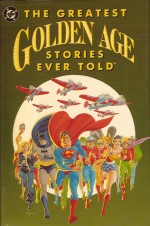
The Greatest Golden Age Stories Ever Told


By many & various (DC Comics)
ISBN: 0-932289-57-9

When the very concept of high priced graphic novels was just being tested in the 1990s DC Comics produced a line of glorious hardback compilations spotlighting star characters and celebrating standout stories from the company’s illustrious and varied history decade by decade. They even branched out into themed collections which shaped the output of the industry to this day, such as this fabulous congregation of yarns – and even ads – that epitomised the verve and sheer exuberance of the most important period in American comics history.

Edited by Mike Gold, with associates Brian Augustyn, Robert Greenberger and Mark Waid, this splendid tome opens with a ‘One Man’s Gold is Another Man’s Pyrite’ – a foreword by Golden Age champion Roy Thomas – and also includes the essay ‘Roots of Magic’ by Gold, but fascinating and informative as those features are, the real literary largesse is to be found in the 22 stories and five stunningly enticing house ads and single page editorial features which no true fan can see without experiencing ineffable yearning…

The vintage thrills and spills commence with a spectacular Joe Simon & Jack Kirby Boy Commandos romp from Detective Comics #69 (November 1942). ‘The Siege of Krovka’ found the underage warriors battling Nazis beside desperate Russian villagers determined to make the invaders pay for every frozen inch of Soviet soil in a blockbusting 12 page masterpiece of patriotic fervour as only the Golden Age’s greatest creative team could craft.

A classic and much-beloved Caped Crusaders caper follows: ‘While the City Sleeps’ from Batman #30 (September 1945) by Bill Finger & Dick Sprang, wherein the Dynamic Duo prowl Gotham long after dark, seeking to keep a first-time burglar from a life of ruinous crime – a genuine masterpiece of the socially aware, even-handed redemptive era where theft was split into greed and – all too often – necessity…

From Flash Comics #4 (April 1940) comes the splendidly barbarous Hawkman thriller ‘The Thought Terror’ by Gardner Fox & Sheldon Moldoff wherein the Winged Warrior and reincarnated Egyptian Prince clashed with a sinister mesmerist enslaving the city’s wealthy citizens whilst Plastic Man #21 (January 1950) provided the absurdist and hilarious horror-adventure ‘Where is Amorpho?’ as the stretchable Sleuth faced an alien shape-shifter with a voracious and potentially lethal appetite…

Superboy: Give Your Town a Present (1949) is a public service announcement page of the sort continually running through comicbooks of the period, courtesy of Jack Schiff & Win Mortimer and is followed by the debut appearance of one the era’s most impressive “lost treasures”. ‘The Story of Wildcat’ comes from Sensation Comics #1 (January 1942) which is best remembered for the series debut of Wonder Woman. In this classy tale of a framed boxer who clears his name by donning a feline mask and costume, Finger & Irwin Hasen captured everything which made for perfect rollercoaster action adventure.

Black Canary started as a sexy criminal foil in the Johnny Thunder strip before taking over his spot in Flash Comics. ‘The Riddle of the Topaz Brooch’ by Robert Kanigher & Carmine Infantino from #96 (June 1948) is a perfect example of the heady blend of private eye mystery and all-action hi-jinks which increasingly typified post-war comics.

After a beguiling House Ad for ‘The Big Seven!’ (Action, Flash, More Fun, Star Spangled, Detective, All-American and Adventure Comics for October 1941), an uncredited Kid Eternity yarn illustrated by Mac Raboy introduces deadly art thief ‘The Count’ (Kid Eternity #3, Fall 1946) before Sheldon Mayer provides a superbly whacky selection of comedy strips featuring the tribulations of Scribbly: Midget Cartoonist (in actuality a little kid with a big future and lots of pencils) from All-American Comics #6 September 1939.

The original Green Lantern battled his most nefarious foe in ‘The Icicle Goes South’ (All-American Comics #92, December 1947) a spectacular duel choreographed by Kanigher and Alex Toth after which The Sandman tackled ‘The Pawn Broker’ in a fascinating detective mystery by Fox & Crieg Flessel from Adventure Comics #51 (June 1940) and Jay Garret, the first super-speeding Flash, helped professional gambler Deuces Wild survive ‘The Rise and Fall of Norman Empire’ a captivating history of crime and punishment by Fox & E.E. Hibbard, first seen in All Flash Comics #14 Spring 1944.

Jack Burnley’s Starman was always a magnificently illustrated strip and with Alfred Bester scripting ‘The Menace of the Invisible Raiders’ (Adventure Comics #67, October 1941) this example is easily one of the most thrilling tales of the run – if not the entire decade – introducing eerily impressive villain The Mist to an awe-struck world.

Schiff & George Papp produced institutional ad ‘Green Arrow and the Red Feather Kid’ in 1949 to promote Community Chest contributions, followed here by a fabulously fearsome Spectre adventure ‘Boys From Nowhere’ (More Fun Comics #57, July 1940) wherein Jerry Siegel & Bernard Baily recount the vengeful return of murderous supernatural terrorist Zor. A note of admitted bafflement here: I’m pretty sure the title is a misprint as there are no kids in the tale but there is a voice which emanates from empty air…

Cowboy crimebuster Vigilante and his sidekick the Chinatown Kid visited a ranch in Australia to bust rustlers and catch ‘The Lonesome Kangaroo’ in a rocket-paced romp beautifully illustrated by Jerry Robinson & Mort Meskin from Action #128 (September 1948), whilst the burly gumshoe Slam Bradley – arguably DC’s longest running character and prototype for Superman – cleaned up ‘The Streets of Chinatown’ in Detective Comics #1, March 1937 courtesy of talented kids Jerry Siegel & Joe Shuster, after which another gloriously evocative House Ad (for June 1942 and with the addition of Sensation Comics now ‘The Big Eight!’) all precede a stunning blockbuster exploit of The Black Condor in ‘The President’s Been Kidnapped’ from Crack Comics #19, December 1941, illustrated by the incredible Lou Fine.

Another fascinating House Ad from July 1944 combines a listing of the worthies of the company’s Editorial Advisory Board with a cracking come-on for the proverbial ‘Big Eight’ after which Dan Barry provides sublime art for the uncredited Johnny Quick drama ‘The Day That Was Five Years Long’ (Adventure Comics #144, September 1949) wherein the Man in Motion gives back a half-decade of lost time to a convict wrongly convicted of a crime he did not commit and ‘Superman Returns to Krypton’ (Superman #61 December 1949) by Finger & Al Plastino thematically, if not chronologically, closed the Golden Age by expanding, rewriting and retconning the Siegel & Shuster debut tale.

Unsung genius Jimmy Thompson wrote and drew the maniacally merry thriller ‘Robotman vs. Rubberman’ (Star-Spangled Comics #77 February 1948) wherein a good hearted brain in a mechanical form battled a larcenous circus freak without a bone or a scruple in his body, after which aviation ace Blackhawk braved antediluvian horrors on ‘The Plateau of Oblivion’ (Modern Comics #67 November 1947), illustrated by the incredible Reed Crandall.

Wonder Woman #13 (Summer 1945) provided the chilling fantasy saga of ‘The Icebound Maidens’, by William Moulton Marston & H.G. Peter, whilst the House Ad ‘Action! Thrills! Adventure!’ tempts us all with the covers of Superman, Batman, World’s Finest Comics and Mutt and Jeff for October 1941, before the Justice Society of America wrap things up with the stellar tale of ‘The Injustice Society of the World’ and their campaign to conquer America, narrowly averted by the era’s boldest heroes in 37 rip-roaring pages crafted by Gardner Fox, Irwin Hasen, Joe Kubert, Carmine Infantino & Alex Toth, which first captivated readers in All-Star Comics #37 (November 1947).

In a treasure-trove like this the biographies section ‘Creating the Greatest’ is a compulsive and enticing delight courtesy of Mark Waid and the whole show is capped off with Robert Greenberger’s explanatory ‘End Notes’ which describes the impossible task of compiling such a wonderful collection as this

The Greatest Stories collections were revived this century as smaller paperback editions but although the titles often duplicate the original volumes the contents usually don’t.

These sturdy early collections stand as an impressive and joyous introduction to the fantastic worlds and exploits of the World’s Greatest Superheroes and for sheer physical satisfaction the older, larger books are by far the better product. Some of them made it to softcover trade paperback editions, but if you can afford it, the big hard ones are the jobs to go for – and cherish forever…
© 1939-1950, 1990 DC Comics, Inc. All Rights Reserved.

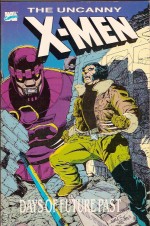
X-Men: Days of Future Past


By Chris Claremont, John Byrne, & Terry Austin (Marvel)
ISBN: 0-87135-582-5

Here’s one more slight yet elegant lost treasure from the early days of graphic novel compilations that might amuse and will certainly delight all-out aficionado and neophyte X-fans alike – and perhaps intrigue the odd collector-completist also.

Released in 1989, as Marvel was tentatively coming to grips with the burgeoning phenomena of “trade paperback” collections, this full-colour 48 page compendium collects two supremely impressive issues of Uncanny X-Men (#141-142 from January and February 1980) which perfectly encapsulated everything that made the outrageous outcasts such an unalloyed triumph and touchstone of youthful alienation.

In 1963 The X-Men #1 introduced Cyclops, Iceman, Angel, Marvel Girl and the Beast: very special students of Professor Charles Xavier, a wheelchair-bound telepath dedicated to brokering peace and integration between the masses of humanity and the emergent off-shoot race of mutants dubbed Homo Superior. After years of eccentric and spectacular adventures the mutant misfits disappeared at the beginning of 1970 during a sustained downturn in costumed hero comics as supernatural mystery once more gripped the world’s entertainment fields.

Although their title was revived at the end of the year as a cheap reprint vehicle, the missing mutants were reduced to guest-stars and bit-players throughout the Marvel universe and the Beast was made over into a monster until Len Wein, Chris Claremont & Dave Cockrum revived and reordered the Mutant mystique with a brand new team in Giant Size X-Men #1 in 1975.

To old foes-turned-friends Banshee and Sunfire was added a one-shot Hulk villain dubbed Wolverine, and all-original creations Kurt Wagner, a demonic German teleporter codenamed Nightcrawler, African weather “goddess” Ororo Monroe AKA Storm, Russian farmboy Peter Rasputin, who transformed at will into a living steel Colossus and bitter, disillusioned Apache superman John Proudstar who was cajoled into joining the makeshift squad as Thunderbird.

The revision was an unstoppable hit and soon grew to become the company’s most popular – and high quality – title. In time Cockrum was succeeded by John Byrne and as the team roster shifted and changed the series rose to even greater heights, culminating in the landmark “Dark Phoenix” storyline which saw the death of arguably the book’s most beloved and imaginative character.

In the aftermath team leader Cyclops left and a naive teenaged girl named Kitty Pryde signed up…

In the eponymous ‘Days of Future Past’ Claremont, Byrne & Terry Austin depicted an imminently approaching dystopian apocalypse wherein mutants, paranormals and superheroes have been eradicated by Federally-controlled Sentinel robots, who now rule a shattered world on the edge of utter annihilation. New York is a charnel pit with most surviving mutants kept in concentration camps and only a precious few free to fight a losing war of resistance.

The middle-aged Kitty is the lynchpin of a desperate plan to unmake history. With the aid of telepath named Rachel (eventually to escape that time-line and become the new Phoenix) Pryde swaps consciousness with her younger self in a last-ditch attempt to prevent the pivotal event which created the bleak, black tomorrow where all her remaining friends and comrades are being pitilessly exterminated one by valiant one…

‘Mind Out of Time’ sees the mature Pryde in our era, inhabiting her juvenile body and leading her disbelieving X-Men team-mates on a frantic mission to foil the assassination of US senator David Kelly on prime-time TV by the sinister Brotherhood of Evil Mutants – super-powered terrorists determined to make a very public example of the human politician attacking the cause of Mutant Rights…

Fast-paced, action-packed, spectacularly multi-layered, bitterly tragic and tensely inconclusive – as all such time-travel tales should be – this cunning, compact yarn is indubitably one of the best individual stories of the Claremont/Byrne era and set the mood, tone and agenda for the next decade of mutant mayhem…

An extended edition containing Uncanny X-Men #138-143 and X-Men Annual #4 was released in 2006, but for sheer, swift stripped-down impact this slim 48-page tome is still one of the best slices of X-treme X-citement any fan could possibly crave…
© 1980, 1989 Marvel Entertainment Group, Inc. All rights reserved.

Princess Knight Part 1


By Osamu Tezuka, translated by Maya Rosewood (Vertical)
ISBN: 978-1934287-27-9

Win’s Christmas Gift Recommendation: a fairytale for all ages and types of romantic… 8/10

Osamu Tezuka utterly revolutionised the Japanese comics industry during the 1950s and 1960s. Being a devoted fan of the films of Walt Disney he also performed similar sterling service in the country’s fledgling animation industry.

Many of his earliest works were aimed at children but right from the start his expansive fairytale stylisations – so perfectly seen in this splendid romp – harboured more mature themes and held hidden treasures for older readers…

Ribon no Kishi or “Knight of the Ribbon” is a series which Tezuka returned to repeatedly during his life and one that is being continued even in the 21st century by his disciples. The simple tale has been turned into TV anime seen all over the world (generally known as some variation of “Choppy and the Princess” in places as far-flung as Canada, France and Brazil) and in 2006 a stage musical was launched.

The serial was first published in Kodansha’s Shoujo Korabu (Shōjo Club), running from January 1954 to January 1956, with a generational sequel appearing in Nakayoshi magazine between January 1958 and June 1959. The original tale was updated and revised in 1963-1966 and forms the basis of the version featured in this magnificent tome, translated from the Tezuka Osamu Manga Zenshu Edition 1977.

In 1967-1968, to tie-in with a television adaptation, Tezuka reconfigured the tale with science fiction overtones and, illustrated by Kitano Hideaki, it ran for a year in Shōjo Friend.

The series is a perennial favourite and classic of the medium and this volume forms part of a two-volume softcover English-language edition, containing the first 16 episodes.

‘Once Upon a Time’ opens in Heaven where junior angels are busy with soon to be born souls, installing either blue boy hearts or pink girl hearts to the ante-natal cherubs in their care. Unfortunately easily distractible Tink (AKA “Choppy” in many foreign iterations) cocks up and one proto-baby gets both…

Tink is dispatched to Earth to retrieve the superfluous metaphysical organ and lands in the feudal kingdom of Silverland, where a most important child is about to be born. The King and Queen desperately desire that their imminent first-born be a boy, for no female can rule the country. Should the child be a princess then vile Duke Duralumin‘s idiot and nastily maladjusted boy Plastic will become heir-apparent.

Thus, due to a concatenation of circumstances, a baby girl with a dual nature spends her formative years pretending to be a prince…

Fifteen years pass before ‘Flowers and Parades’ resumes the saga. Tink has been lax in his mission and Prince Sapphire has become the darling boy of the kingdom. Duralumin and his crafty henchman Sir Nylon have spent the intervening years certain that the gallant boy is actually a useless girl but have been unable to prove it, whilst Sapphire has grown into a dutiful, beautiful – if androgynous – specimen skilled in riding, sports and all arts martial, but passionately yearns to be allowed to openly wear the dresses and make-up which are her family’s most intimate secret. When Tink finally reveals himself and exposes the heir’s hidden nature, Nylon overhears…

‘The Carnival’ sees gorgeous Prince Franz Charming pay a royal visit from neighbouring Goldland and Sapphire, aided by her mother and nurse, dons a blonde wig and party frock and clandestinely give vent to her true nature, turning all heads and captivating her regal guest. When she returns to her public identity all Franz can talk about is the mysterious girl with flaxen hair, blind to the fact that she is sitting beside him…

In ‘The Tournament’ the evil Duke turns a fencing exhibition to his advantage, killing the King and framing Franz for the deed, after which the ‘Prisoner Prince’ is helped to escape by his Flaxen maid. Heir Sapphire accedes to the throne in ‘Coronation’ only to have it all snatched away as the Duke’s latest scheme succeeds beyond all his wildest dreams and Sapphire is publicly exposed as a girl, and her recently widowed mother is accused of betraying the nation by concealing the fact since her birth…

Reviled and shunned, mother and daughter are imprisoned with ghastly hunchback jailer Gammer in ‘Sapphire in Coffin Tower’ wherein the distraught girl befriends the vermin of the keep just as Gammer gets his orders to dispose of his charges. Meanwhile Tink has been searching high and low for Sapphire…

Narrowly escaping being murdered the princess becomes a masculine masked avenger of wrongs in ‘Phantom Knight’s Debut’, punishing the wicked men who have ruined her nation since Plastic was enthroned by his corrupt father Duralumin.

Meanwhile in the Palace the villains look for ways to control the increasingly off-kilter Plastic in ‘The Idiot King’s Bride’. Little do they know that Briar Rose, the fetching companion they’ve acquired, is Sapphire on an infiltration mission…

When she is inevitably caught Sapphire’s life takes an even more dramatic turn in ‘Devil’s Whisper’ when terrifying witch Madame Hell materialises, offering her untold wealth and power if she will sell her female heart and nature. Luckily Tink’s angelic power drives her off, but is unable to prevent the princess being sentenced to a life of penal servitude in ‘Two By the Quarry’.

Here she again meets Franz, who has long believed Sapphire responsible for his frame-up and imprisonment in Silverland’s dungeons. Nevertheless the Prince helps Sapphire escape, almost dying in the effort. Soon after the girl is transported to ‘The Witch’s Lair’ and meet’s Hell’s daughter Hecate, who is violently opposed to her mother’s scheme to marry her off to Franz.

That young worthy however, has meanwhile recovered from his wounds and is still searching for the Flaxen-haired girl, oblivious to her true identity and nature…

Hecate does not want Sapphire’s girlish heart and frees the Princess Knight by turning her into a ‘Grieving Swan’ who is captured by Franz and added to the Royal Flock. The Prince too is being pressured to marry and beget an heir, so when Madame Hell arrives with a huge bribe and a now compliant Hecate the boy’s uncle is keen to cement the nuptial alliance until the ensorcelled swan Sapphire exposes their true natures with Tink’s angelic assistance…

Just as Franz begins to finally notice the similarity of his flaxen dream girl to the freshly restored Sapphire in ‘Two Hearts’ she and Tink are fleeing – right into the clutches of Nylon who is keen to wipe out any loose ends. At the worst possible moment the angel completes his long mission and reclaims the boy-heart, leaving her helpless, but cannot betray his friend and returns it, consequently losing his place in Heaven…

Together again the pair attempt to rescue Sapphire’s mother from Coffin Tower but are too late. The Queen and Gammer have been taken to Sea Snake Island where vengeful Madame Hell’s dark magic has transformed her into a petrified ‘Stone Queen’.

This premier chronicle concludes with Sapphire and Tink adrift on the ocean where they encounter the brilliant, dashing and gloriously charismatic ‘Captain Blood, Pirate’ who instantly penetrates the princess’ manly disguise and sees a woman he wants to marry at all costs…

Princess Knight is a spectacular, riotous, rollicking adventuresome fairytale about desire, destiny and determination which practically invented the Shoujo (“Little Female” or young girl’s manga) genre in Japan and can still deliver a powerful punch and wide eyed wonder on a variety of intellectual levels. Still one of the best and most challenging kid’s comics tales ever, it’s a work that all fans and – especially parents – should know.

This black and white book is printed in the traditional ‘read-from-back-to-front’ manga format.

© 2011 by Tezuka Productions. Translation © 2011 by Mari Morimoto and Vertical, Inc. All rights reserved.

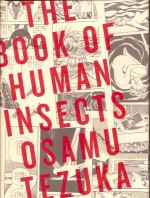
The Book of Human Insects


By Osamu Tezuka translated by Mari Morimoto (Vertical)
ISBN: 978-1-935654-20-9

Win’s Christmas Gift Recommendation: an ideal chiller for those dark nights… 8/10

There aren’t many Names in comics. Lots of creators; multi-disciplined or single focussed, who have contributed to the body of the art form, but we don’t have many Global Presences whose contributions have affected generations of readers and aspirants all over the World, like a Mozart or Michelangelo or Shakespeare. There’s just Hergé and Jack Kirby and Osamu Tezuka.

Tezuka was born in Osaka Prefecture on 3rd November 1928 and as a child suffered from a severe illness which made his arms swell. The doctor who cured him inspired him to study medicine, and although Osamu began his professional drawing career while at university, he persevered with his studies and qualified as a doctor too. Facing a career crossroads, his mother advised him to do the thing that made him happiest. He never practiced as a healer but the world was gifted with such classic cartoon masterpieces as Tetsuwan Atomu (Astro-boy), Kimba the White Lion, Buddha, Adolf and literally hundreds of other graphic narratives. Along the way Tezuka incidentally pioneered, if not created, the Japanese anime industry.

Able to speak to the hearts and minds of children and adults equally, Tezuka’s works range from the childishly charming to the disturbing – and even terrifying. In 1970-1971 he produced the stark and moody psycho-thriller Ningen Konchuuki for Akita Shonen’s Play Comic, detailing the inexorable rise of a truly different kind of monster for the burgeoning audiences who were growing up and demanding more mature manga fare.

This superb black and white 364 page hardback opens with ‘Spring Cicada’ as failed and broken designer Ryotaro Mizuno ponders the incredible success of golden girl Toshiko Tomura; a bright young thing who has just scooped a major literary prize for her first novel.

Across town a broken-down derelict also toasts her success whilst in a lonely garret a girl hangs from the end of a noose…

Mizuno confronts Toshiko in her moment of triumph, telling her failed author Kageri Usuba has committed suicide. Their tense exchange is observed by muck-raking journalist Aokusa…

Convinced he’s on to something the reporter perseveres and discovers that Toshiko is a modern renaissance woman: emerging from obscurity to become a celebrated actress while still in her teens, she graduated to directing before becoming an award-winning designer. Abruptly she metamorphosed again, writing the stunning novel The Book of Human Insects. Still in her twenties, there seems to be nothing the angelic girl cannot do…

Further enquiry leads the newsman to her desolate rural home where the uncanny genius presents an entirely different, almost wanton aspect. Moreover she keeps there a very creepy waxwork of her dead mother…

Toshiko catches the professional voyeur and agrees to an interview, but before that meeting Aokusa is accosted by shambling drop-out Hyoroku Hachisuka, a once-prominent stage-director who imparts the true story of Toshiko’s resplendent rise to fame and fortune.

Once, the universally approved-of, wholesome girl was a small, timid creature who inveigled her way into his theatre company. Once there she attached herself like a leech to the star, learning her ways and mannerisms. A perfect mimic, Toshiko not only acquired the actress’s skills but also seemed to suck out her talent and inspiration. When the former star quit Toshiko replaced her…

She performed that same slow consumption of the entire company and then turned her attentions to the director…

Moreover, the seemingly helpless waif was utterly amoral, using sex, slander and perhaps even murder to achieve her ends, which were always short-term: she had no goals or life ambitions, but merely flitted from victim to victim like a wasp seeking its next meal…

Ignoring the warning Aosuka persists and discovers that promising writer Usuba once had a room-mate named Toshiko whom she accused of plagiarising her novel…

Intriguingly, the lonely writer’s recent suicide occurred in extremely suspicious circumstances…

During a TV interview Toshiko accidentally meets Mizuno again. Revealed as one of her earliest victims, can he possibly be the only man she ever loved?

In ‘Leafhopper’ Aosuka uncovers another of Toshiko’s secrets when he meets for the first and last time her shady associate Arikawa – a murderous anarchist who cleans ups the lovely mimic’s potential embarrassments – just as she tries to renew her relationship with the bitter and far wiser Mizuno.

Toshiko also meets war criminal and right-wing “businessman” Sesson Kabuto who immediately discerns her true nature and keeps a fascinated but wary professional distance from her…

Toshiko operates almost instinctively and according to immediate desire, but she has a terrifying capacity to clean up any potentially damaging loose-ends. After seducing Arikawa she spectacularly removes him during a political assassination and uses the affair to promote her next book…

Meanwhile Mizuno spirals further into despondency until he meets a prostitute who looks like Toshiko and finally finds redeeming true love – of a sort…

Toshiko almost overreaches her abilities when she is arrested by South Korean security forces in ‘Longhorn Beetle’ but is rescued and forced into marriage by a man every inch her ruthless, remorseless equal, compelling her to even more inspired acts of perversion and survival – which consequentially endangers the wellbeing of everybody in Japan – before ‘Katydid’ brings the unique drama to a shocking, bloody, poignant and utterly unexpected conclusion…

Murder-mystery, Greek Tragedy, trenchant melodrama, serial-killer horror story and much more, this supremely adult tale has hardly dated at all since its release and offers a chilling image of those hidden invisible predators who have supplanted vampires, witches and werewolves in the dark corners of our communal consciousness.

The beautiful maiden as lure and amoral predator possibly began with this truly disturbing tale and the story is one which will stay with readers long after the final page is turned…

“God of Manga” Osamu Tezuka died in 1989 but with ever more of his copious canon at last being released in English there’s plenty of brilliant material for all ages, intellects and inclinations to admire and adore, so why not start right here, right now.

Accept no imitations…

© 2011 by Tezuka Productions. Translation © 2011 by Mari Morimoto and Vertical, Inc. All rights reserved.

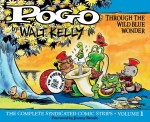
Pogo: the Complete Syndicated Comic Strips volume 1


By Walt Kelly (Fantagraphics Books)
ISBN: 978-1-56097-869-5

Win’s Christmas Gift Recommendation: Perfect for anybody with a brain or heart…  10/10

This is one of those once in lifetime books which reduce honest critics to nigh speechlessness so I’m offering two different reviews: the first and most fearsomely honest is freely adapted from President’s Clinton’s election catchphrase “It’s the Economy, Stupid!”

Ready?

Just buy it, Stupid!


If you need more though, and aren’t driven off by my unbridled brusqueness, I’ll elucidate at tedious, pointless length…

Walter Crawford Kelly Jr. was born in 1913 and started his cartooning career whilst still in High School, as both artist and reporter for the Bridgeport Post. In 1935, he moved to California and joined the Disney Studio, working on shorts and such features as Dumbo, Fantasia and Pinocchio until the infamous animator’s strike in 1941.

Refusing to take a side, Kelly moved back East and began drawing comicbooks – primarily for Dell Comics, who had the Disney funnybook license.

Despite his glorious work on such humanistic classics as the Our Gang movie spin-off, Kelly preferred anthropomorphic animal and children’s fantasy (see Walt Kelly’s Santa Claus Adventures) and created Albert the Alligator and Pogo Possum for Animal Comics #1 (December 1942) sagaciously retaining the copyrights in the ongoing tale of two Bayou critters and their young African-American pal Bumbazine. Although the black kid soon disappeared, the animal pals stayed on as stars until 1948 when Kelly became art editor and cartoonist for the hard hitting, left-leaning liberal newspaper The New York Star.

On October 4th 1948, Pogo, Albert and an ever-expanding cast began their careers in the funny pages, appearing six days a week until the periodical folded in January 1949.

Although a gently humorous kids feature, by the end of its run – reprinted in full at the back of this magnificent tome – the first glimmers of the increasingly barbed, boldly satirical masterpiece of velvet-pawed social commentary began to be seen…

This much delayed – but absolutely worth it – first of twelve volumes follows the ascent of this scintillating and vastly influential strip; don’t believe me, just listen to Gary Trudeau, Berke Breathed, Bill Watterson, Jeff McNally, Bill Holbrook, Mark O’Hare, Alan Moore, Jeff Smith and even Goscinny & Uderzo and our own Maurice Dodd & Dennis Collins, whose wonderful strip The Perishers owes more than a little to the sublime antics of the Okefenokee Swamp citizenry…

After the Star closed Pogo was picked up for mass distribution by the Post-Hall Syndicate and launched on May 16th 1949. A colour Sunday page debuted January 29th 1950 and both were produced simultaneously by Kelly until his death in 1973 (and beyond, courtesy of his talented wife and family…).

At its peak the strip appeared in 500 papers in 14 countries and the book collections which began in 1951 numbered nearly 50, collectively selling 30 million copies.

This volume includes all the Star strips, the Dailies from inception to December 30th 1950, and the Sundays – in a full colour section – from January 29th – December 31st 1950, plus a wealth of supplementary features including a Foreword from columnist Jimmy Breslin, an introduction by biographer Steve Thompson, a week-by-week highly detailed contents section, a useful guide ‘About the Sundays’ by Mark Evanier, and an invaluable context and historical notes feature ‘Swanp Talk’ by the amazing R.C. Harvey.

Kelly’s genius was the ability to beautifully, vivaciously draw comedic, tragic, pompous, sympathetic characters of any shape or breed and make them inescapably human and he used that gift to blend hard-hitting observation of our crimes, foibles and peccadilloes with rampaging whimsy, poesy and sheer exuberant joie de vivre.

The hairy, scaly, feathered slimy folk here are inescapably us, elevated by burlesque, slapstick, absurdism and all the glorious joys of wordplay from puns to malapropisms to raucous accent humour into a multi-layered hodge-podge of all-ages accessible delight.

In volumes to come Kelly will set his bestial cast loose on such timid, defenceless victims as Senator Joe McCarthy, J.Edgar Hoover, the John Birch Society, Richard Nixon and the Ku Klux Clan, but he starts off small here, introducing the gently bemused Pogo, boisterous, happily ignorant Albert, dolorous Porkypine, obnoxious turtle Churchy La Femme, lugubrious hound Beauregard Bugleboy, carpet-bagging Seminole Sam Fox, pompous (not) know-it-all Howland Owl and a host of others in gags and extended epics ranging from assorted fishing trips, building an Adam Bomb, losing and finding other people’s children, electioneering, education, kidnapping, the evil influence of comicbooks, Baseball season, why folks shouldn’t eat each other, Western cow punchers, cows punching back, New Years Resolutions, public holidays and so much more…

The Sundays also began with one-off gags but soon evolved into convoluted and mesmeric continued sagas such as the search for the Fountain of Youth, building a school and keeping it filled, Albert being elected Queen of the Woodland by the elf-like forest fauns – and why that was ultimately a very bad thing indeed…

Timeless and magical, Pogo is a giant of world literature, not simply comics, and this magnificent edition should be the pride of every home’s bookshelf.

POGO Through the Wild Blue Wonder and all POGO images, including Walt Kelly’s signature © 2011 Okefenokee Glee & Perloo Inc. All other material © 2011 the respective creator and owner. All rights reserved.

The Drops of God Book 1: Les Gouttes de Dieu


By Tadashi Agi & Shu Okimoto translated by Kate Robinson (Vertical)
ISBN: 978-1-93565-427-8

Win’s Christmas Gift Recommendation: 7/10. Perfect for that impossible-to-buy-for relative.

Every so often a graphic novel jumps the ghetto walls and makes a splash in the wider world and this intriguing manga monolith is the latest: eschewing the usual icebreakers of horror, sci fi or blood-soaked action to target the lofty and insular world of the high-end vinter trade and the obsessive fascination of oenophilia (I’m chucking in a bunch of technical terms all enticingly explained in the book, but you can cheat and use your search-engine of choice).

Created by brother and sister thriller-writing team Shin & Yuko Kibayashi (Kindaichi’s Case Files, GetBackers) under their nom de crime Tadashi Agi and stunningly illustrated by Shu Okimoto, Kami no Shizuku debuted in 2004 in Kondansha’s Morning and began book compilation a year later. The siblings are also two of the most influential wine connoisseurs in the world and their expertise and passion shine through every page of this monolithic manga tome (430 pages) which has taken the wine world by storm and won the Gourmand and Cookbook Award 2009 – presumably a first for any work of fiction, let alone graphic novel – and has been described by Decanter Magazine as “arguably the most influential wine publication in the past 20 years.”

Of course all I care about is comics, but even on my terms the tale of prodigal son Shizuku Kanzaki, raised from birth to follow his father’s obsession only to rebel and seek his own path until tragedy and circumstance pull him back to his destiny, this is a thoroughly entertaining immaculately realised soap/thriller drama that would make fans of Jackie Collins or Dick Francis rethink their allegiances…

The first eighteen chapters of the ongoing saga are contained in this first English translation, beginning with ‘The Scent of a Hundred Flowers’ and introducing apprentice Sommelier Miyabi Shinohara who almost shames her wine-bar/restaurant employers in front of a prominent – but boorish – wine snob until a dashing young man saves the day with a bit of daredevil decanting.

It transpires that the lad is a small cog in a vast beer-making concern and has never tasted wine: a shocking admission as Shizuku is the son of global superstar of wine criticism Yutaka Kanzaki…

It seems old man Kanzaki had great hopes and aspirations for his son, training the boy from birth in flavours, odour detection and discrimination like a vintner version of Doc Savage, but the boy rebelled and rejected his father’s passion.

The situation changes when Shizuku is informed of his sire’s death and a unique will…

‘A Prayer to the Fruitful Earth’ reveals the elder Kanzaki had a vast and valuable private collection of stellar vintages and has left them, his house and fortune to his wayward son under a bizarre condition. The lad must indulge in a duel with dark prince of Wine-tasters – and inheritor of Kanzaki’s mantle as greatest critic in Japan – Issei Tomine in a dozen blind tastings of the greatest vintages in the collection – the “Twelve Apostles” – as well as the mysterious thirteenth bottle known only as “the Drops of God”. To the one who most closely agrees with the master’s own description goes everything…

At first Shizuku doesn’t care, but the arrogance of Tomine and a burning desire to understand the father who pushed him to such extraordinary lengths moves the orphan to an alliance with Miss Shinohara and a crash-course in the history, lore and philosophy of the wine industry and craft in ‘The Profound and Subtle Queen’ as well as his first ever actual taste of the magical elixir…

For reasons even he doesn’t understand the neophyte decides to accept the challenge of the Drops of God in ‘Over the Bed Wafts an Aroma of Awakening’ and begins his education, inestimably assisted by his incredible sense of smell, expanded palate and the physical skills he never even knew he possessed, courtesy of his early training.

In episodes with such evocative titles as ‘The God of Burgundy’, ‘A Maiden Fleeing through Strawberry Fields’, ‘Tasting in the Park’ and ‘Cradling God’s Blessing in Both Hands’, what follows is a dazzling display of hard fact and the theosophical fervour of the grape-growers art, seamlessly blended with a canny melodrama of rivalry, redemption and possibly burgeoning young love as Shizuku discovers the obsessive power of his father’s life.

The cast expands as the story unfolds and the nigh-mystical nature of wine is seen to mend fences, restore lost lovers and even diagnose illness in ‘Draining the Glass of Reunion’, ‘A Maiden Smiling in the Strawberry Fields’, ‘The Sweet Dessert of Parting’ and ‘The Ones Who Watch Over’.

Even Shizuku’s career alters as he transfers from sales to the Beer company’s small and struggling wine division and discovers that even all he has learned is not enough when he falls foul of snobbery and bigotry in ‘At All the Battles’ Start’, ‘A Lovely Cruel Flower’, ‘Tough Love for a Saucy Lolita’, ‘The Mystery Man of the Wine Division’ and ‘Merry-Go-Round’.

Meanwhile Tomine has begun to stack the odds in his favour by introducing a seductive secret agent into the lives of Shizuku and Miss Shinohara in ‘A Fantastico Night’ wherein some nasty facts about the true character of the Prince of wine-critics is revealed…

As much religion and philosophy as science and art, the cachet and inherent excitement of the wine trade transfers readily and effectively in this tale to make for a superbly readable tale for older readers.

The Japanese excel at making superb comics which simultaneously entertain and educate (check out economics textbook Japan Inc. by Shotaru Ishinomori to see what I mean) and the powerful, evocative imagery used to capture the sensorial effect of wine on the tongue and myriad fragrances in the nostrils is staggeringly effective – a perfect use of the disciplines which only comics can muster.

This is a surprisingly compelling comics-read and might well be the perfect gift for all those people you thought you couldn’t buy a graphic novel present for…

This black and white book is printed in the traditional ‘read-from-back-to-front’ manga format.

© 2011 Tadashi Agi/Shu Okimoto. All rights reserved.

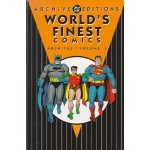
World’s Finest Comics Archives volume 1


Edmond Hamilton, Bill Finger, Curt Swan, Dick Sprang & various (DC Comics)
ISBN: 978-1-56389-488-6

During the 1950s most superheroes of the American Golden Age faded away leaving only headliners Superman, Batman and Wonder Woman – and whoever they could carry in the back of their assorted titles – to carry on their genteel crusade against thugs, monsters and aliens.

With economics and rising costs also dictating a reduction in average page counts, the once-sumptuous World’s Finest Comics (originally 96 pages per issue), which had featured solo adventures of the flagship heroes plus a wealth of other features, simply combined the twin stars in a lead story of each issue, beginning with #71 in July-August 1954.

And so they proceeded for decades more until Crisis on Infinite Earths rewrote the DC universe in 1985 and everything was shaken up by retooling The Man of Steel and  re-examining all the Caped Kryptonian’s close relationships in a darker, more cynical light.

However, for many years Superman and Batman worked together perfectly as the “World’s Finest” team. They were friends as well as colleagues and the pairing made sound financial sense since DC’s top heroes (in effect the company’s only costumed stars) could cross-pollinate and, more importantly, cross-sell their combined readerships.

This most inevitable of Paladin Pairings first occurred on the Superman radio show in the early 1940s, whilst in comics the pair had only briefly met whilst on a Justice Society of America adventure in All-Star Comics #36 (August-September 1947) – and perhaps even there they missed each other in the gaudy hubbub…

Of course they had shared the covers on World’s Finest Comics from the outset, but never crossed paths inside; sticking firmly to their specified solo adventures within. So, after a fascinating introduction from Mark Waid, this magnificent all-ages hardback compendium begins reliving those days of wonder in fabulous full colour with their classic, official first comicbook case together which appeared in Superman #76 (issue #76, May/June 1952).

Science fiction author Edmond Hamilton was tasked with revealing how Man of Steel and Caped Crusader first met – and accidentally discovered each other’s identities – whilst sharing a cabin on an over-booked cruise liner. Although an ordinary crime-stopper yarn, it was the start of a phenomenon. The art for ‘The Mightiest Team in the World’ was by the superb Curt Swan and inkers John Fischetti & Stan Kaye. Thereafter remaining inclusions in this first volume comprise the lead stories from World’s Finest Comics #71-85.

World’s Finest Comics #71 (July-August 1954) presented the Man of Tomorrow and the Gotham Gangbuster in the first of their official shared-cases as the Caped Crusader became ‘Batman – Double For Superman!’ (by scripter Alvin Schwartz with Swan & Kaye providing pictures) as the merely mortal hero traded identities to preserve his comrade’s alter ego and latterly, his life…

‘Fort Crime!’ (Schwartz, Swan & Kaye) saw them unite to crush a highly organised mob with a seemingly impregnable hideout, after which Hamilton returned to script ‘Superman and Batman, Swamis Inc’, a clever sting-operation that almost went tragically awry before an alien invader prompted an insane rivalry which resulted in ‘The Contest of Heroes’ by Bill Finger, Swan & Kaye, from #74.

The same creative team produced ‘Superman and Robin!’ wherein a disabled Batman could only fret and fume as his erstwhile assistant seemingly dumped him for a better man, whereas ‘When Gotham City Challenged Metropolis’ (Hamilton, Swan & Charles Paris) saw the champions at odds as their hometowns over-aggressively vied for a multi-million dollar electronics convention before a landmark tale by Hamilton, Swan & Kaye invented a new sub-genre when a mad scientist’s accident temporarily removed the Caped Kryptonian’s powers and created ‘The Super-Batman!’ in WF #77.

Arguably Batman’s greatest artist joined the creative crew ‘When Superman’s Identity is Exposed!’ (by Hamilton, Dick Sprang & Kaye) as a mysterious source kept revealing the Man of Steel’s greatest secret, only to be revealed as a well-intentioned disinformation stunt, whereas the accent was on high adventure when the trio became ‘The Three Musicians of Bagdad’ – a stunning time-travel romp from Hamilton, Sprang & Kaye.

When the Gotham Gazette faced closure days before a spectacular crime-expose, Clark Kent and Lois Lane joined dilettante Bruce Wayne as pinch-hitting reporters on ‘The Super-Newspaper of Gotham City’ (Hamilton, Sprang & Charles Paris) after which ‘The True History of Superman and Batman’ (Hamilton, Sprang & Kaye, #81) saw a future historian blackmail the heroes into restaging their greatest exploits so his erroneous treatise on them would be accurate…

Hamilton also produced a magnificent and classy costumed drama when ‘The Three Super-Musketeers!’ visited 17th century France to solve the mystery of the Man in the Iron Mask whilst Bill Finger wrote a brilliant and delightful caper-without-a-crime in ‘The Case of the Mother Goose Mystery! before Hamilton provided insight on a much earlier meeting of the World’s Finest Team with ‘The Super-Mystery of Metropolis!’ in #84, all for Sprang & Kaye to enticingly illustrate.

This initial collection of tales ends on a romantic note as Hamilton, Swan, Sprang & Kaye demonstrate how a comely Ruritanian Princess inadvertently turned the level-headed heroes into ‘The Super-Rivals’ (World’s Finest Comics #85 November-December 1956) attempting to woo, wow and outdo each other – but of course they had a far nobler plan in motion all along…

As mentioned above Superman Batman and Robin appeared together on the covers of World’s Finest from the outset and this captivating chronicle includes a glorious additional section reproducing 17 of those magnificently eye-catching, irresistible lures for the young at heart, as well as a comprehensive raft of creator biographies for the dedicated fan.

These are charming, clever yet uncomplicated tales whose dazzling style has recently returned to inform if not dictate the form for much of DC’s modern television animation – especially the fabulous Batman: the Brave and the Bold series – and the contents of this tome are a veritable feast of witty, charming thrillers packing as much punch and pizzazz now as they always have.

This book is the perfect gift for the kid in your no matter what age he/she/you are…
© 1952, 1954, 1955, 1956, 1999 DC Comics. All Rights Reserved.