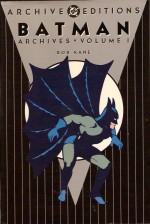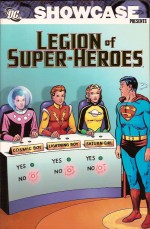
Batman: the Dark Knight Archives volume 1


By Bob Kane, Bill Finger, Jerry Robinson, George Roussos & various (DC Comics)
ISBN: 1-56389-050-X

By the time Batman and Robin the Boy Wonder won their own title (cover-dated Spring 1940) the company that would become DC had learned many lessons from their previous publishing phenomenon.

For one thing they no longer presumed that costumed characters were an incomprehensible glitch or soon to fade flash-in-the pan; nor were they going to be caught short by a lack of new material…

As the characters’ popularity grew, new talent joined the stable of creators. Jerry Robinson had already signed up with writer Bill Finger and penciller Bob Kane and during this period more scripters and artists were actively sought for the team.

This magnificent full-colour hardback compilation re-presents the first four quarterly issues in a gloriously resplendent sturdy collectors’ format, following the constantly rising fortunes of the Dynamic Duo as they fully developed and stormed ahead of all competition in progressively improving stories originally published between 1940 and 1941.

After a heartfelt paean of praise from US Senator Patrick Leahy, Batman #1 opens proceedings with a recycled origin culled from portions of Detective Comics #33 and 34. ‘The Legend of the Batman – Who He Is and How He Came to Be!’ by Gardner Fox, Bob Kane & Sheldon Moldoff offered in two perfect pages what is still the best ever origin of the character, after which ‘The Joker’ (Bill Finger, Kane & Jerry Robinson – who produced all the remaining tales in this astonishing premiere tome) introduced the greatest villain in the Dark Knight’s rogues’ gallery via a stunning tale of extortion and wilful wanton murder.

‘Professor Hugo Strange and the Monsters’ follows as the old enemy (see Batman Archives volume 1) returned with laboratory-grown hyperthyroid horrors to rampage through the terrified city after which ‘The Cat’ – who later added the suffix ‘Woman’ to her name to avoid any possible doubt or confusion – plied her felonious trade of jewel theft aboard the wrong cruise liner and fell foul for the first time of the dashing Dynamic Duo.

The initial issued ended with the ‘The Joker Returns’ as the sinister clown broke jail and resumed his terrifying campaign of murder for fun and profit before “dying” in mortal combat with the Gotham Guardian…

He returned in the opening tale of Batman #2 as ‘Joker Meets Cat-Woman‘ (by Finger, Kane, Robinson & the extremely impressive George Roussos) wherein svelte thief, homicidal jester and a crime syndicate all tussle for the same treasure with the Dynamic Duo caught in the middle.

‘Wolf, the Crime Master’ was a fascinating take on the classic Jekyll and Hyde tragedy after which an insidious – and classic – murder-mystery ensued in ‘The Case of the Clubfoot Murders’ before Batman and Robin faced uncanny savages and ruthless showbiz promoters in a poignant monster story ‘The Case of the Missing Link’.

Issue #3 (Fall 1940) saw Finger, Kane, Robinson & Roussos rise to even greater heights, beginning with ‘The Strange Case of the Diabolical Puppet Master’ an eerie episode of mesmerism and espionage, followed by a grisly scheme wherein innocent citizens are mysteriously transformed into specimens of horror and artworks destroyed by the spiteful commands of ‘The Ugliest Man in the World’ before ‘The Crime School For Boys!!’ saw Robin infiltrate a gang who had a cruel and cunning recruitment plan for dead-end kids…

‘The Batman vs. The Cat-Woman’ found the larcenous burglar in over her head when she stole for and from the wrong people and the issue ends with a magical Special Feature as ‘The Batman Says’ presented an illustrated prose Law & Order pep-talk crafted by Whitney Ellsworth and Robinson.

Batman #4 (Winter 1941) featured ‘The Case of the Joker’s Crime Circus’, as the mountebank of Mirth plunged into madness and recruited a gang from the worst that the entertainment industry could offer, whilst modern-day piratical plunderings were the order of the day in ‘Blackbeard’s Crew and the Yacht Society.

‘Public Enemy No.1’ told a salutary gangland fable in the manner of contemporary, socially aware Jimmy Cagney crime movies and ‘Victory For the Dynamic Duo’ submerged the Partners in Peril in the turbulent and very violent world of sports gambling to end the issue and this first fantastic collection on a rousing high note.

Notwithstanding the historical significance of the material presented here, there is a magnificent bonus for anyone who hasn’t read some or all of these tales before. They are astonishingly well-told and engrossing mini-epics that will still grip the reader with the white heat of sheer exuberant class and quality.

Read these yarns and you’ll understand why today’s creators keep returning to this material every time they need to revamp the mythology.

Timeless, enthralling and truly, truly great.
© 1940, 1940, 1992 DC Comics. All Rights Reserved.

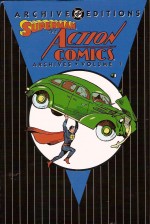
Superman in Action Comics Archives volume 1


By Jerry Siegel & Joe Shuster (DC Comics)
ISBN: 978-1-56389-335-3

The creation of the Man of Steel quite literally spawned a genre if not an actual art form and, nearly eight years after the first DC Archive Edition gathered the first four issues of the comicbook Superman into a spectacular lavish hardbound collection, the company finally got around to re-presenting the epochal run of raw, vibrant, unpolished stories which preceded them – and which first set the funnybook world on fire.

Here is the crude, rough, uncontrollable wish-fulfilling, cathartic exuberance of a righteous and superior man dealing out summary justice equally to social malcontents, exploitative capitalists, thugs and ne’er-do-wells that initially captured the imagination of a generation.

In this volume you’ll meet the first ever returning foe (us old lags call ’em “arch-enemies”) the Ultra Humanite plus a rip-roaring mix of hoods, masterminds, plagues, disasters, lost kids and distressed damsels – all dealt with in a direct and captivating manner by our relentlessly entertaining champion in swift and decisive fashion. Here they are presented in totality and chronological order from Action Comics #1 (June 1938) through #20 (January 1940).

Well, not exactly…

Because the first and third issues of the Man of Tomorrow’s own title featured an expanded version of the inaugural exploit and reprinted the Superman tales from Action Comics #2-5 – already seen in Superman Archives volume 1 – this tome is, perforce, not exactly a complete chronicle. However the cut-down, savagely truncated premier tale which appeared in June of 1938 to launch the long-lived anthology is here, in all its impressively terse, groundbreaking glory, as are all the Kryptonian contents of issues #7-20.

Most of these early tales were untitled, but for everyone’s convenience, have been given descriptive appellations by the editors; so after a fascinating introduction from Mark Waid, the wonderment begins with ‘Superman: Champion of the Oppressed!’ as, after describing the alien foundling’s escape from exploding Planet Krypton and astonishing powers in nine panels; the costumed crusader masquerading by day as reporter Clark Kent averted numerous tragedies by saving an innocent woman from the Electric Chair, roughing up a wife beater, busting racketeer Butch Matson – consequently saving feisty colleague Lois Lane from abduction and worse – and exposed a lobbyist for the armaments industry who was bribing Senators and fomenting war in Europe.

Although the stories themselves don’t appear, Action Comics #2-6 are represented here by a brief prose précis of each Superman yarn and the covers of the comics – all by Leo E. O’Mealia – and not one featuring the Caped Crimebuster…

The editors were initially dubious about the alien strongman’s popular appeal and preferred more traditional genre covers. By #16 sales figures confirmed that whenever the big guy did appear up-front sales jumped and, inevitably, Superman assumed pole position for decades to come with #19.

Action #7 was one of those high-selling issues, with a stunning Shuster cover of the still-leaping-not-flying hero which presaged ‘Superman Joins the Circus’ as the crusading mystery-man stopped racketeers taking over the Big Top, whilst the next episode saw ‘Superman in the Slums’ working to save young delinquents from a future life of crime and depravity and #9 featured the cops’ disastrous decision to stop the caped vigilante’s interference in ‘Wanted: Superman’. That manhunt ended in an uncomfortable stalemate…

‘Superman Goes to Prison’ in #10 again featured a Shuster cover (the non-super front images were by Fred Guardineer and are all included as an appetising bonus in this book) with the Man of Tomorrow infiltrating and exposing the brutal horrors of the State Chain Gangs, whilst #11 featured ruthless conmen driving investors to penury and suicide in ‘Superman and the “Black Gold Swindle”’.

Guardineer’s cover of Zatara on Action #12 incorporated another landmark as the Man of Steel was given a cameo badge declaring he was inside every issue, and his own adventure ‘Superman Declares War on Reckless Drivers’ was a hard-hitting tale of casual joy-riders, cost-cutting automobile manufacturers, corrupt lawmakers and dodgy car salesmen who all felt the wrath of the hero after a friend of Clark Kent was killed in a hit-&-run incident. The road-rage theme continued into the next instalment when ‘Superman vs. the Cab Protective League’ pitted the tireless force of nature against a murderous gang trying to take over the city’s taxi companies and quietly introduced the hero’s first great nemesis.

This issue also sported a classic Shuster Super-cover as the Man of Steel was awarded all the odd-numbered issues for his attention-grabbing playground.

Action #14 (which coincided with the launch of Superman #1) saw the return of the villain in ‘Superman Meets the Ultra-Humanite’ which had the mercenary scientist switch from incessant graft, corruption and murder to an obsessive campaign to destroy the Metropolis Marvel after which the cover-featured ‘Superman on the High Seas’ in #15 tackled sub-sea pirates and dry land gangsters. ‘Superman and the Numbers Racket’ saw the hero save an embezzler from suicide and disrupt another wicked gambling cabal, after which #17 featured ‘The Return of the Ultra-Humanite’ in another viciously homicidal caper.

Guardineer’s last human adventure cover – an aerial dog fight – on #18 led into ‘Superman’s Super-Campaign’ as both Kent and Superman determined to crush a merciless blackmailer, whilst ‘Superman and the Purple Plague’ found the city in the grip of a deadly epidemic created by the Ultra-Humanite.

This incredible run of tales ends with ‘Superman and the Screen Siren’ from Action Comics #20 (January 1940) as beautiful actress Delores Winters was revealed not as a sinister super-scientific monster but the latest tragic victim of the Ultra-Humanite’s greatest horror… brain transplant surgery!

Superman’s rise was meteoric and inexorable by now. He was the indisputable star of Action, plus his own dedicated title; a Superman daily newspaper strip began on 16th January 1939, with its separate Sunday strip following from November 5th of that year, which was garnering millions of new fans, and a radio show was in the offing and would launch on February 12th 1940.

Although the gaudy burlesque of monsters and super-villains still lay years ahead of our hero, these primitive captivating tales of corruption, disaster and social injustice are just as engrossing and speak powerfully of the tenor of the times. The raw intensity and sly wit still shine through in Siegel’s stories which literally defined what being a Super Hero means whilst Shuster created the basic iconography for all others to follow. These Golden Age tales are priceless enjoyment at an absurdly affordable price and in a durable, comfortingly lavish format. What dedicated comics fan could possibly resist them?
© 1938, 1939, 1940, 1997 DC Comics. All Rights Reserved.

Batman Archives volume 1


By Bob Kane, Bill Finger & Jerry Robinson (DC Comics)
ISBN: 0-930289-60-9

The history of the American comicbook industry in almost every major aspect stems from the raw, vital and still powerfully compelling tales of twin icons published by DC/National Comics: Superman and Batman. It’s only fair and fitting that both those characters are still going strong and that their earliest adventures can be relived in chronological order in a variety of formats from relatively economical newsprint paperbacks to stunning, deluxe hardcover commemorative Archive editions.

This first bumper Batman edition, reprinting Detective Comics #27-50 (May 1939-April 1941) sees the grim solitary Darknight Detective begin his lifelong mission, picking up a youthful ally and far too many dedicated nemeses in a blistering collection of evocative and game-changing rollercoaster romps which utterly reshaped the burgeoning funnybook business and enthralled a generation of thrill-seeking kids of all ages.

After a stirring introduction from popular culture historian Rick Marschall the magic begins with “The Case of the Chemical Syndicate” by Bob Kane and collaborator Bill Finger from #27, wherein a cabal of sinister industrialists are progressively murdered until an eerie human bat intrudes on Police Commissioner Gordon’s stalled investigation and ruthlessly deals with the killer.

Issue #28 saw the fugitive vigilante crush the mob of jewel thief Frenchy Blake before encountering his very first psychopathic killer when ‘Batman Meets Doctor Death’ in #29. Confident of the innovation’s potential, Kane & Finger revived the mad medic for the very next instalment, before Gardner Fox scripted a two-part shocker which introduced the first bat-plane, Bruce Wayne’s girlfriend Julie Madison and vampiric horror ‘The Monk’: a saga which concluded in an epic chase across Eastern Europe and a spectacular climax in #32.

Detective Comics #33 featured ‘The Batman Wars Against the Dirigible of Doom’: a blockbusting disaster thriller which just casually slipped in the secret origin of the Gotham Guardian, as prelude to the air-pirate action, after which Euro-trash dastard Duc D’Orterre found his uncanny science and unsavoury appetites no match for the mighty Batman.

Issue #35 pitted the Cowled Crusader against crazed cultists murdering everyone who had seen their ruby idol, although the deaths were caused by a far more prosaic villainy, after which grotesque criminal genius Professor Hugo Strange debuted with his lethal man-made fog and lightning machine in #36, and an all-pervasive band of spies ultimately proved no match for the vengeful masked Manhunter in #37.

Detective Comics #38 (April 1940) changed the landscape of comicbooks forever with the introduction of ‘Robin, The Boy Wonder’: child trapeze artist Dick Grayson whose parents were murdered before his eyes and who joined Batman in a lifelong quest for justice, beginning, after the Flying Grayson’s killers were captured, with The Horde of the Green Dragon” – oriental Tong killers in Chinatown – from Detective #39 before the Dynamic Duo solved a string of murders on a movie set which almost saw Julie just another victim of the monstrous maniac ‘Clayface!’

Batman and Robin solved the baffling mystery of a kidnapped boy in #41 and ended another murder maniac’s rampage in ‘The Case of the Prophetic Pictures!’ before clashing with a corrupt mayor in #43’s ‘The Case of the City of Terror!’

An unparallelled hit, the stories perforce expanded their parameters in #44 with the dreamy fantasy of giants and goblins ‘The Land Behind the Light!’, and the Joker made his horrific Detective Comics debut in #45 with ‘The Case of the Laughing Death” whilst #46 features the return (and last appearance until 1977) of our hero’s most formidable scientific adversary in ‘Professor Strange’s Fear Dust’.

The drama was of a far more human scale in #47’s action-packed homily of parental expectation and the folly of greed ‘Money Can’t Buy Happiness’ whilst #48 found Batman and Robin defending America’s bullion reserves in ‘The Secret Cavern’ and they faced fresh horror in #49 from another old foe when ‘Clayface Walks Again’ as deranged actor Basil Karlo rekindled his passion for murder and resumed his attempts to kill Bruce Wayne’s girlfriend Julie …

The Batman yarn from Detective Comics #50 (April 1941) epically concludes this scintillating collection with a breathtaking rooftop and subterranean battle against acrobatic burglars in ‘The Case of the Three Devils’.

Bob Kane, Jerry Robinson and their compatriots created an iconography which carried the Batman feature well beyond its allotted life-span until later creators could re-invigorate it. They added a new dimension to children’s reading… and their work is still captivatingly accessible.

Moreover, these early stories set the standard for comic superheroes. Whatever you like now, you owe it to these stories. Superman gave us the idea, but writers like Bill Finger and Gardner Fox refined and defined the meta-structure of the costumed crime-fighter. Where the Man of Steel was as much Social Force and wish fulfilment as hero, Batman and Robin did what we ordinary mortals wanted to do. They taught bad people the lesson they deserved.

These are tales of elemental power and joyful exuberance, brimming with deep mood and addictive action. Comic book heroics simply don’t come any better.
© 1939, 1940, 1941, 1990 DC Comics. All Rights Reserved.

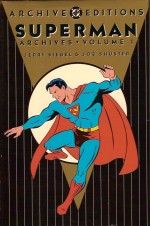
Superman Archives volume 1


By Jerry Siegel & Joe Shuster (DC Comics)
ISBN: 0-30289-47-1
Without doubt the creation of Superman and his unprecedented acceptance and adoption by a desperate and joy-starved generation quite literally gave birth to a genre if not an actual art form.

This stunning, lavish collection was also a significant first: the lovingly restored pages on glossy paper between gleaming hardback covers began DC’s superb Archive Editions series which, since 1989, has brought long forgotten and expensive classic tales to an appreciative wider audience.

Moreover the format has inestimably advanced the prestige and social standing of the medium itself as well as preserving a vital part of American popular culture.

Within this initial collection, following an effusive appreciation from legendary creator and comics historian Jim Steranko, are the complete contents of the first four issues of Superman, from Summer 1939 to Spring 1940. Here is the crude, rough, uncontrollable wish-fulfilling exuberance of a righteous and superior man dealing out summary justice to wife-beaters, reckless drivers and exploitative capitalists, as well as thugs and ne’er-do-wells, who captured the imagination of a nation and the world.

The character had debuted a year previously in Action Comics #1 in truncated, reformatted episodes by young, exuberant creators Jerry Siegel and Joe Shuster, cobbled together from a rejected newspaper strip proposal. An instant stand-out hit in the otherwise average comics anthology, the Man of Steel was given his own solo title – another first – and also starred in the tourist tie-in New York’s World Fair Comics #1 (June 1939).

Superman #1 began with an expanded partial reprint of the premier Action Comics tale, describing the alien foundling’s escape from exploding Planet Krypton before a costumed crusader masquerading by day as reporter Clark Kent averted a tragedy by saving an innocent woman from the Electric Chair, pounded a wife beater and busted racketeer Butch Matson, consequently saving feisty colleague Lois Lane from abduction and worse.

He also averted a European war fomented by greedy munitions dealers.

Superman’s first issue also re-presented the material from Action #2-4, with the mystery-man travelling to San Monte to spectacularly quiet down the hostilities already in progress and after a ‘Scientific Explanation of Superman’s Amazing Strength!’ the Man of Steel responded to a coal mine cave-in and exposed corrupt corporate practises before cleaning up gamblers who fixed football games. The first issue concluded with a two-page prose adventure of the Caped Crime-crusher and a biographical feature on Siegel & Shuster.

Superman #2 opened with a human drama as the Action Ace cleared the name of broken heavyweight boxer Larry Trent, coincidentally cleaning the scum out of the fight game and, after ‘Superman’s Tips for Super-Health’ and a captivating add for New York’s World Fair Comics, proceeded with ‘Superman Champions Universal Peace!’ wherein the hero crushed a gang who had stolen the world’s deadliest poison gas weapon, once more going up against unscrupulous munitions manufacturers.

‘Superman and the Skyscrapers’ found Kent investigating suspicious deaths in the construction industry, leading his alter ego into confrontation with ruthless thugs and their fat-cat corporate boss, after which another Superman text tale ended the issue.

The Winter Superman edition opened with a rip-roaring and shockingly uncompromising expose of corrupt orphanages, after which Lois stole Clark Kent’s assignment and became hopelessly embroiled in a deadly construction scam: imperilled by a colossal collapsing dam in a stirring yarn first published in Action #5.

Future Superboy star artist George Papp contributed science filler ‘Fantastic Facts’ and “Bert Lexington” penned prose crime thriller ‘Death by the Stars’ after which ‘Superman’s Manager’ turned up to scam Metropolis until he finally met his supposed client and ended up behind bars (reprinted from Action #6).

The exigencies of providing so much material was clearly beginning to tell: this issue is filled with fillers such as ‘Acquiring Super-Strength’, ‘Attaining Super-Health!’, prose prison yarn ‘Good Luck Charm’ by Hugh Langley and funny animal antics with dashing Dachshund ‘Shorty’ before the Man of Steel made his last appearance in another sterling gang-busting exploit, rescuing Lois from murderous smugglers.

Superman #4, cover-dated Spring 1940, concludes this inaugural compendium, with another four adventures; beginning with the landmark saga ‘The Challenge of Luthor’, wherein the red-headed rogue scientist used earthquakes to threaten civilisation. Following more ‘Attaining Super-Strength’, animal antics with ‘This Doggone World’ and facts ‘From the 4 Corners’ by Sheldon Moldoff, the mad scientist returned in ‘Luthor’s Undersea City’, a terrific tale of dinosaurs and super-science. Langley’s text vignette ‘Changer of Destiny’ preceded Superman’s battle against ‘The Economic Enemy,’ a spy-story about commercial sabotage instigated by an unspecified foreign power. Another Papp ‘Fantastic Facts’, some immensely enticing house ads and Lexington’s science fiction prose poser ‘Pioneer into the Unknown’ all act as palate-cleansers for the final fantastic thriller wherein the Man of Tomorrow clashed with gangsters and Teamsters in ‘Terror in the Trucker’s Union’.

Steranko then closed the show with an ‘Afterword’ detailing the contents of the adventures from Action Comics #1-14 (which were eventually collected in 1987 as Superman in Action Comics Archive volume 1).

As well as economical price and no-nonsense design and presentation, and notwithstanding the historical significance of the material presented within, there is a magnificent bonus for any one who hasn’t read these tales before. They are astonishingly well-told and engrossing mini-epics that can still grip and excite the reader.

In a world where Angels With Dirty Faces, Bringing Up Baby and The Front Page are as familiar to our shared cultural consciousness as the latest episode of Dr Who or the next Bond movie, the dress, manner and idiom in these seventy-plus-year-old stories can’t jar or confuse. They are simply timeless, enthralling, and great.

Read these yarns and you’ll understand why today’s creators keep returning to this material every time they need to revamp the big guy. They are simply timeless, enthralling, and great.
© 1939-1940, 1989 Dc Comics. All Rights Reserved.

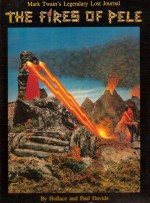
The Fires of Pele


By Hollace and Paul Davids & Sergio Aragonés, assisted by Lee Mishkin, with SFX by M.D. Wolf (Paul Davids Productions/Pictorial Legends)
ISBN: 978-0-93903-100-9

Here’s an intriguing and thoroughly fabulous photo-novel oddity from the 1980s – or as it should be known, the days before Photoshopâ„¢ – that still holds the power to enchant and delight even in an era where recordings of fan-favourite shows can be bought, bartered or downloaded at the click of a mouse.

For all you youngsters: photo-novels were paperback adaptations of movies or episodes of popular TV shows which used text and film-stills instead of drawn art to reproduce the story. Inexplicably popular in the late 1970s and early 1980s, they fell from favour with the rise of video, and latterly, laser-discs, DVD and other methods of actually owning the full-sensorium original material.

Cinema releases included Alien, Grease, Close Encounters of the Third Kind, the 1978 Lord of the Rings and many others whilst TV editions included Dr. Who, The Incredible Hulk and an even dozen episodes of the Original Star Trek.

A few photo-novels such as Star Wars and Charlie’s Angels are still produced these days.

At the end of 1986 husband and wife screen writers Hollace and Paul Davids produced this excessively impressive and clever faux-fable blending the mythology of Hawaii and the Sandwich Islands with the peripatetic but well-documented wanderings of reporter-at-large Samuel Langhorne Clemens AKA Mark Twain.

An oversized 247x305mm, glossy 56 page modern fairytale, the illustrations here are original full-colour special effects cinematic plates (no cheap computer graphics packages or Photoshop, remember?) with a cast of actors creating the scenes in the manner of Fumetti/photo picture stories, further enhanced with designs and painted illustrations by Sergio Aragonés and Lee Mishkin – and the pen and ink maestro also provides a wealth of merry monochrome “marginals” of the Great Raconteur himself…

The story is beguilingly simple: whilst reporting on the Sandwich Islands for his employers the Sacramento Union newspaper in 1866, the adventuresome author encountered a race of magical Polynesian pixies known as Melehulas and was drawn into a battle between bold heroes and spiteful gods…

The great Prince Lakekua was to wed the foundling princess Analike, but the comely warrior had caught the eye of dreadful Pele, Goddess of Fire, Lightning, Wind and Volcanoes. After first trying unsuccessfully to seduce and compel the doughty warrior, Pele sent her malign kin, such as The Shark God, Moho the steam god and Earth-giant Kona to imprison the brave girl beyond the reach of man and destroy all who tried to find her.

Luckily for Lakekua, his trusty young friend Kakipoto knew such benevolent spirit creatures as the Menehulas, bestial master craftsman Kakamora and a host of other advantageous allies such as a fast-thinking, smooth talking visiting white traveller from distant shores…

Crammed with exotic scenarios, lush, incredible scenery, mighty battles, true love, talking fish, shape-shifting wizards, Demon Owls, Lizard-Ladies and the unjust wrath of the gods this is a marvellous romp in the grand Ray Harryhausen Bank Holiday movie manner and a splendid yarn long overdue for a modern revisitation.

Until then however, the original large slim tome is still readily available should you desperately need to explore the dark side of Paradise…
© 1986 Hollace & Paul Davids. All right reserved. Menehulas Photos © 1985 The Menehunes Group. All other photos © 1983 Paul Davids and Mark Wolf.

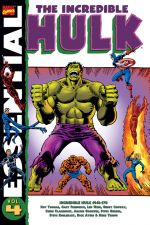
Essential Hulk volume 4


By Roy Thomas, Archie Goodwin, Steve Englehart, Herb Trimpe, John Severin & various (Marvel)
ISBN: 978-1-7851-2193-5

By the close of the 1960s the Incredible Hulk had settled into a comfortable niche and satisfyingly effective formula as the tragic Bruce Banner sought cures for his gamma-transformative curse, alternately aided or hunted by prospective father-in-law US General “Thunderbolt” Ross and a variety of guest-star heroes and villains.

Herb Trimpe made the character his own, the “house” Jack Kirby-based art-style quickly evolving into often startlingly abstract mannerism, augmented by an unmatched facility for drawing technology and especially honking great ordnance and vehicles – all of which looks especially great in the crisp black and white of these magically affordable Essentials volumes. And of course no one can deny the cathartic reader-release of a great big “Hulk Smash!” moment…

This chronologically complete monochrome treat contains issues #143-170, spanning September 1971 – December 1973, and opens with an inevitable but long-delayed clash as the Jade Juggernaut battled Doctor Doom in the Roy Thomas, Dick Ayers & John Severin epics wherein the hunted Bruce Banner found ‘Sanctuary!’ in the New York Latverian Embassy. The deal was a bad one as the Iron Dictator proceeded to enslave the Gamma scientist for his bomb-making knowledge in an attempt to make his awesome alter ego into an unstoppable war machine…

The scheme went awry in ‘The Monster and the Madman!’ (Thomas, Gary Friedrich, Ayers & Severin) as the brainwashed Banner broke free of his conditioning thanks to Doom’s conflicted consort Valeria just in time for the Hulk to deliver a salutary lesson in mayhem throughout the dictator’s domain.

Incredible Hulk #145 found the monster invading a film-set in Egypt and accidentally awakening a prehistoric alien war-weapon in ‘Godspawn’, by Thomas, Len Wein, Herb Trimpe & Severin, whilst in America the military, in the form of Thunderbolt Ross, opened a dedicated anti-Hulk base named “Project Greenskin” after which Gerry Conway scripted Thomas’ plot for ‘And the Measure of a Man is… Death!’ wherein the Hulk faced sandstorms, bitter memories and the Israeli army in the deserts of Northern Egypt whilst in America the Hulkbuster base was already being infiltrated by android facsimiles constructed by the Jade Giant’s greatest foe.

As the Hulk headed instinctively homeward the infiltration threatened the US President himself and led to a catastrophic clash between Old Greenskin and The Leader as well as ‘The End of Doc Samson!’. That issue (#147) also included a moving and powerful vignette ‘Heaven is a Very Small Place!’ wherein Thomas, Trimpe & Severin took the tormented titan to the very edge of paradise before horrifying reality once more reasserted itself…

Archie Goodwin debuted as scripter – with a little plotting assistance from a very junior Chris Claremont – in ‘But Tomorrow… the Sun Shall Die!’ as the monster’s lost love Jarella travelled to Earth and a longed for reunion just as Banner was apparently cured of his curse by radical solar-energy experimentation. Unfortunately, the princess from the micro-verse accidentally brought with her a super-assassin determined to end her life at all costs and somehow triggered the sun into going nova…

Forced to become the monster once again to save his beloved, the Hulk was captured by Ross’s forces only to escape when an ancient threat returned to Earth in #149, hungry for radiation to survive in ‘… And Who Shall Claim This Earth His Own? The Inheritor!’

After dispatching that threat the Gamma Goliath wandered into the wilderness where he encountered on-sabbatical X-Man Alec Summers who had banished himself – with girlfriend Lorna Dane – to the deserts of New Mexico, terrified of his uncontrollable cosmic power in ‘Cry Hulk, Cry Havok!’ (#150 April 1972).

When Lorna encountered a menacing biker gang and an Emerald Giant violently protective of his privacy, Summers finally proved himself against the rampaging but easily distracted titan…

‘When Monsters Meet!’ pitted the Hulk against a radioactive horror resulting from a disastrous cancer-cure derived from Banner’s blood after which Friedrich, Ayers & Frank Giacoia asked ‘But Who Will Judge the Hulk?’ as the helpless Bruce Banner was sent to trial for the destruction wrought by his emerald alter ego: a guest-star studded two-parter which concluded in #153 ‘My World, My Jury!’ with additional art from Trimpe & Severin.

After explosively escaping the kangaroo court, the fugitive fury discovered ‘Hell is a Very Small Hulk!’ (Goodwin, Trimpe & Severin) when he swallowed a defective shrinking formula, created by the Astonishing Ant-Man, in a forlorn attempt to rejoin Jarella in her subatomic world. Snatched up by the face-shifting Chameleon and the assembled hordes of Hydra, the diminished brute still managed to quash their treasonous schemes – at the apparent cost of his life.

In actuality, the Hulk was shrinking in sporadic bursts, propelled into a succession of micro-worlds, including an impossible “Earth” where Nazis had won WWII in ‘Destination: Nightmare!’ before a cosmic entity named Shaper of Worlds tempted the Green Gargantuan with an empty paradise, before another shrinking spasm happily deposited him on Jarella’s world in time for ‘Holocaust at the Heart of the Atom!’ (inked by Sal Trapani) to pit him against his worst nightmare – himself – before again losing his true love to the vicissitudes of cruel fate,

Returned to Earth and normal size the Jade Goliath battled a brace of old enemies in ‘Name My Vengeance: Rhino!’ before being dispatched to the far side of the Sun and a clash on Counter-Earth with the messianic Adam Warlock in ‘Frenzy on a Far-Away World’, courtesy of Roy Thomas, Steve Gerber, Trimpe & Trapani. Meanwhile on our planet, heartbroken Betty Ross, believing her one true love was forever gone, married the over-attentive, ever present Major Glenn Talbot…

Steve Englehart took over the scripting chores with #159 and ‘Two Years Before the Abomination!’ as Banner and the Rhino returned to our embattled globe only to again be attacked by General Ross’ Hulkbuster forces; determined to kill Banner and safeguard America – and preserve his unsuspecting daughter’s new marriage…

However, the resulting conflagration awoke a comatose Gamma monster even more deadly than the Hulk…

‘Nightmare in Niagara!’ saw the misunderstood man-brute instinctively drawn to the honeymooning couple only to encounter amphibian outcast Tiger Shark in another blockbusting battle issue, after which his Northerly rampage took the Green Goliath to Canada and ‘Beyond the Border Lurks Death!’ wherein the Hulk became a reluctant ally of the recently hyper-mutated Hank McCoy – better known as the Bludgeoning Beast – in a battle against the Mimic, an old X-foe whose ability to absorb the attributes of others had gone tragically, catastrophically haywire and threatened to consume the entire Earth.

Still under Northern Lights, the Hulk encountered a terrifying horror called the Wendigo in ‘Spawn of the Flesh-Eater!’ but the maniacal man-eater harboured a tragically shattering secret which made it as much victim as villain…

Pushing ever Pole-ward the Hulk reached the top of world but could not elude Ross’ relentless pursuit. After a cataclysmic arctic clash both man-monster and his stalker fell into the clutches of Soviet prodigy the Gremlin (mutant offspring of the Hulk’s very first foe the Gargoyle: see Essential Hulk volume 1 for details) in ‘Trackdown’ and although the Gamma Giant broke free easily the American General became a highly embarrassing political prisoner…

Shambling into Polar seas the Hulk encountered a fantastic sub-sea colony of human aquatic nomads in #164’s ‘The Phantom from 5,000 Fathoms!’ and became a slave of egomaniacal Captain Omen who had created his own mobile submarine nation and roamed the ocean beds at will.

The draconian martinet had no idea how his dissatisfied clan hungered for freedom, fresh air and sunlight and would disastrously rebel to follow ‘The Green-Skinned God!’ to their doom…

Incredible Hulk #166 finally saw the Green Goliath return to New York just in time to encounter Battling Bowman Hawkeye and a brain-eating electrical monster dubbed Zzzax in ‘The Destroyer From the Dynamo!’ whilst in the sub-plot section, a bold bid to rescue Thunderbolt Ross from the Commies succeeded, but seemingly cost the life of his new son-in-law…

Jack Abel took over the inking duties in #167 with ‘To Destroy the Monster!’ as grieving widow Betty Ross-Talbot suffered a nervous breakdown and was targeted by intellectual murder mutant Modok and his agents of Advanced Idea Mechanics who needed an infallible weapon to break the Hulk.

Just as black ghetto kid Jim Wilson reconnected with the Emerald Behemoth the Hulk easily destroyed Modok’s giant Robot body but failed to prevent Betty’s abduction, but she retuned in the next issue as a Gamma-spawned avian horror programmed to destroy her former lover in ‘The Hate of the Harpy!’

Issue #169 saw the temporarily triumphant Harpy and her verdant victim trapped aboard an ancient floating fortress in the sky in ‘Calamity in the Clouds!’ and battling together against a monstrous Bi-Beast until Modok attacked and destroyed the last vestige of the sky-citadel, propelling the now human Banner and Betty onto a lost tropical island inhabited by incredible alien creatures in the Englehart, Chris Claremont, Trimpe & Abel ‘Death from on High!’ which cataclysmically concludes this fourth fabulous Essential Hulk extravaganza in tried and true bombastic style.

Before it all ends though, there’s one last treat in the form of an unused alternative cover to Hulk #166…

The Incredible Hulk is one of the most well-known comic characters on Earth, and these stories, as much as the movies, cartoons, TV shows, games, toys and action figures are the reason why. For an uncomplicated, honestly vicarious experience of Might actually being Right, you can’t do better than these yarns so why not Go Green – even if its only in monochrome and your own delirious head?
© 1971, 1972, 1973, 2006 Marvel Characters, Inc. All Rights Reserved.

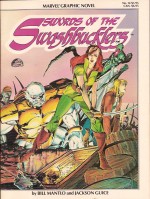
Swords of the Swashbucklers – Marvel Graphic Novel #14


By Bill Mantlo & Jackson Guice; lettered by Ken Bruzenak & coloured by Alfred Ramirez (Marvel)
ISBN: 0-87135-002-5

During the 1980s the American comics scene experienced a magical proliferation of new titles and companies following the creation of the Direct Sales Market. With publishers now able to firm-sale straight to retail outlets rather than overprint and accept returned copies from non-specialised shops, the industry was able to support less generic titles and creators were able to experiment without losing their shirts.

In response Marvel developed its own line of creator-owned properties during the height of the creative explosion, generating a number of supremely impressive, idiosyncratic series on better quality paper in a variety of formats under the watchful, canny eye of Editor Archie Goodwin. The delightfully disparate line was called Epic Comics and the results reshaped the industry.

One of their earliest hits was a sparkling, rambunctious science fantasy serial with a delightfully familiar core concept: Pirates in Space.

Swords of the Swashbucklers debuted in a premiere Marvel Graphic Novel before graduating to an on-going Epic series in March 1985; created by the much missed Bill Mantlo and ‘Jackson “Butch” Guice, whose collaborative efforts had made the latter days of the Marvel Micronauts comicbook such a vibrant joy (and there’s another series simply gasping for an Essential Edition, should the arcane gods of Trademark and Licensing ever get their acts together…)

The oversized process-colour format had been a great success for the company: a venue for a variety of “big stories” told on larger than normal pages (285 x 220mm rather than the now customary 258 x 168mm, similar to the standard European albums of the times) featuring not only proprietary characters such as Iron Man or the New Mutants, but also licensed assets like Conan, media tie-ins such as Who Framed Roger Rabbit? and creator-owned properties including Jim Starlin’s Dreadstar, Cholly and Flytrap and many more.

Although little more than a prelude for the series that followed this scintillating romp is still a compelling rollercoaster adventure in its own right which begins on the South Carolina coastline the morning after a terrific storm had battered those isolated dunes.

Thirteen year old Domino Blackthorne Drake, descendent of a genuine buccaneer queen, is happily beach-combing with her cat Cap’n Kidd when they find an incredible alien device uncovered by the gales.

Although clearly centuries old, the thing is still active and, as her distracted parents discuss their marital problems, the bold little girl gets too close and the artefact unleashes a torrent of impossible energy into the helpless lass…

As the authorities take over and place the now comatose waif and bizarre device into government quarantine, across the universe a solar-sailed marauder attacks a colossal slave ship of the rapacious Colonizer Empire. In command of the freebooter “Starshadow” is charismatic, ruthless half-breed Raader – the scourge of intergalactic civilisation…

A merciless conglomeration of greedy knaves and pitiless cutthroats, the Swashbucklers are still more welcome on many worlds than the resource-plundering, slave-taking Colonizers and, after freeing the captives (whilst keeping all their treasures and possessions) the Starshadow heads for safe-harbour on the hidden world Haven.

Here, amidst fair-weather friends and openly hostile rivals, the pirate princess clashes and carouses before awakening in her mother’s house – a citadel the mysterious “Earthling” Bonnie Blackthorne has maintained for over two hundred years…

When the pirates intercept a signal from a long-lost Colonizer probe coming from beyond the cosmic phenomena dubbed the Cloudwall, the race is on to secure the riches of the new world hidden there…

Daring the intergalactic unknown and expansion-obsessed Colonizer ships, the Starshadow arrives on the legendary planet Earth only hours ahead of the Imperial survey forces. The primitive human forces swiftly fall between attacks from both pirates and invading alien conquerors, whilst the somnolent Domino slumbers on.

When the Surveyors seize the sleeper and her family, the girl snaps awake, filled with irresistible, uncanny energies and routs the raiding party, but not before her mother and father are taken aboard the Imperial flagship, which retreats back beyond the Cloudwall to report a new world to conquer.

Rescued by Raader Domino discovers an impossible shared heritage with the alien privateer and determines to join her on the other side of the sky, both to rescue her parents and possibly save her own unsuspecting world…

Straightforward, fast-paced adventure in the grand manner, supplemented by a ‘Saga of the Swashbucklers’ additional feature, this is a fine fun book well worthy of rediscovery, preferably with the entirety of the comicbook run that followed in one deluxe collection.

Until then, though all these items are readily available through many internet retailers, so dig deep, me thrill-starved Hearties…
© 1984 Bill Mantlo & Jackson Guice. All rights reserved. Swords of the Swashbucklers is ™ Bill Mantlo & Jackson Guice.

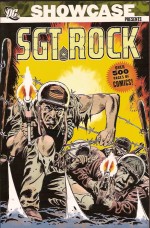
Showcase Presents Sgt. Rock volume 1


By Robert Kanigher, Joe Kubert, Bob Haney, Ross Andru & various (DC Comics)
ISBN: 978-1-4012-1713-6

Sgt Rock and the “combat-happy Joes” of Easy Company are one of the great and enduring creations of the American comic-book industry. The gritty meta-realism of Robert Kanigher’s ordinary guys in life-or-death situations captured the imaginations of generations of readers, young and old. So pervasive is this icon of comicbook combat, that’s it’s hard to grasp that Rock is not an immortal industry prototype like Superman, Batman and Wonder Woman – with us since the earliest moments of the industry – but is in fact a late addition to and child of the Silver Age of Comics.

This initial compendium collects in stunning black and white the tentative first steps in the character’s evolution from G.I. Combat #68 and Our Army at War #81-82 to the first full barrage of battle blockbusters from OAAW #83-117, covering January 1959 to April 1962, a period wherein all American comics were undergoing a staggering revolution in style, theme and quality.

Behind the stunning Jerry Grandenetti cover (the first of many in this impressive tome) from G.I. Combat #68, January 1959, lurks a quiet, unassuming story (by Kanigher & Joe Kubert) of an anonymous boxer who wasn’t particularly skilled but simply refused to be beaten. When ‘The Rock!’ enlisted in the US Army, however, that same Horatian quality attained mythic proportions as he held back an overwhelming Nazi attack by sheer grit and determination, remaining bloody but unbowed on a field littered with dead and broken men.

Dubbed “Rocky” the character returned as a sergeant in the April Our Army at War (#81) again facing superior German forces as ‘The Rock of Easy Co.!’ in a brief but telling vignette by Bob Haney, Ross Andru & Mike Esposito and finally won a personal identity as Sgt. Rock next issue, in the Mort Drucker illustrated ‘Hold Up Easy!’: another harsh and declarative mini-epic from Kanigher which saw hard-luck heroes Easy Company delayed and then saved by callow replacements who eventually came good…

Our Army at War #83 (June 1959) saw the true launch of the immortal everyman hero in ‘The Rock and the Wall!’ by Kanigher & Kubert: a tough-love, battlefield tutor shepherding his men to competence and survival amidst the constant perils of war. Here he met a rival for his men’s admiration in the equally impressive Joe Wall…

Irv Novick illustrated ‘Laughter on Snakehead Hill!’ as the embattled dog-faces of Easy fought to take a heavily fortified citadel whilst OAAW #85 introduced the first continuing cast member in the Kubert limned ‘Ice Cream Soldier!’ as Rock assuaged a fearful replacement’s jangled nerves with tales of another hopeless “green apple” who grew into his job.

This ploy of incorporating brief past-action episodes into a baptism of fire scenario would play over and over again and never got old…

Haney returned in #86 to script ‘Tank 711’ for Kubert as the terse top-kick educated another newbie in combat etiquette. Kanigher returned to describe the taking of “No-Return-Hill” and the initiation of four more raw recruits in ‘Calling Easy Co.!’ after which Grandenetti illustrated a brace of tales in #88 and 89; ‘The Hard Way’ in which Rock suffered a shocking crisis of confidence and ‘No Shot from Easy!’ wherein the indomitable sergeant was forced to give his toughest ever order…

Issue#90 holds classic Kubert as ‘Three Stripes Hill!’ revealed the story of how Rock won his stripes and the traditionally anthological Our Army at War offered three complete Sgt. Rock stories in #91, beginning with ‘No Answer From Sarge!’ as the NCO risked everything to drag a recruit out of a crippling funk, ‘Old Soldiers Never Run!’ where he had to weigh an old man’s pride against Easy’s continued existence, and the Haney scripted tragic fable of a sole-surviving Scottish soldier in ‘The Silent Piper!’

Issue #92 saw Kanigher and Kubert tackle battlefield superstitions in ‘Luck of Easy!’, ‘Deliver One Airfield!’ introduced Zack Nolan, a son of privilege who had to learn teamwork the hard way and #94’s ‘Target… Easy Company’ pitted the company against a German General determined to eradicate the high-profile heroes.

OAAW #95 debuted the charismatic and ambitious Bulldozer Nichols who wanted Rock’s rank and position in ‘Battle of the Stripes!’, after which ‘Last Stand for Easy!’ saw the still in-charge top-kick compelled to relinquish his lead-from-the-front position and ‘What Makes a Sergeant Run?’ found him again sharing his war wisdom with the young and the hapless.

Haney penned ‘Soldiers Never Die!’ in #98 with Rock forced to overcome his team’s trauma at losing a beloved comrade whilst Kanigher described ‘Easy’s Hardest Battle!’ in #99 as the weary warrior recalled a number of instances which all qualified, before once more triumphing over insurmountable odds.

The Stalwart Sergeant risked everything to save a broken replacement in #100’s ‘No Exit For Easy!’ and repeated the task in ‘End of Easy!’ when a parachute drop went tragically awry, before #102’s ‘The Big Star!’ saw the consequences of depending on a young man utterly unsuited for combat…

‘Easy’s Had It!’ in #103 was another Haney contribution, exploring what happened when Rock was wounded and the company had to fight without their guiding light and lucky talisman, after which Kanigher assumed full script duties beginning with #104 and ‘A New Kind of War!’ with the grizzled vet totally outgunned by a valiant nurse who refused to retreat and never surrendered.

‘TNT Birthday!’ in #105 had Rock worried about the underage kid who had somehow got past all the instructors to join Easy under terrifying fire and ‘Meet Lt. Rock!’ (illustrated by Novick) saw the inveterate non-com forcibly promoted until he managed to undo the horrify prospect and #107’s ‘Doom Over Easy!’ again saw the savvy soldiers afflicted by crippling superstition.

The superb Russ Heath drew his first Rock strip in OAAW #108: ‘The Unknown Sergeant!’ found the Combat-Happy Joes passing through a French village with a statue of a WWI Yank “doughboy” bearing an uncanny resemblance to their own indomitable leader – provoking some very uncomfortable historical hallucinations – whilst Kubert’s return in #109’s ‘Roll Call of Heroes!’ signalled a dose of grim reality when Rock recalled his own deadly baptism of fire and lost comrades, after which a green Lieutenant almost caused mutiny and murder until he learned the rules of Combat Arithmetic in ‘That’s An Order!’

‘What’s the Price of a Dogtag?’ was painfully answered in the occupied streets and on seemingly deserted beaches in #111 whilst ‘Battle Shadow!’ focused on the burgeoning supporting cast in a blistering explosive extravaganza and African American soldier Jackie Johnson took centre stage (in a bold early example of comicbook affirmative action) for a memorable last-stand moment in ‘Eyes of a Blind Gunner’ in #113 (December 1961).

The incessant toll of lost comrades hit hard in ‘Killer Sergeant!’, whilst the civilian survivors and partisans who comprised ‘Rock’s Battle Family!’ helped him survive the worst the war could throw at him and featured a cameo from French Resistance star Mademoiselle Marie, but the ragged warrior was all alone when he answered #116’s ‘S.O.S. Sgt. Rock!’ to save lost comrade Ice Cream Soldier…

This inaugural battle-book concludes with a dramatic tale of three hopelessly square pegs who finally found their deep, round holes in #117’s traumatic saga of ‘The Snafu Squad!’

Robert Kanigher at his worst was a declarative, heavy-handed and formulaic writer, but when writing his best stuff – as he does here – an imaginative, evocative, iconoclastic and heart-rending reporter and observer of the warrior’s way and the unchanging condition of the dedicated and so very human ordinary foot-slogging G.I.

With superb combat covers from Kubert, Grandenetti, and Heath fronting each episode this battle-book is a visually perfect compendium and is a lost delight for any jaded comics fan looking for something more than flash and dazzle.

A perfect example of true Shock and Awe; these are stories every fan should see.
© 1959, 1960, 1961, 1962, 2007 DC Comics. All Rights Reserved.
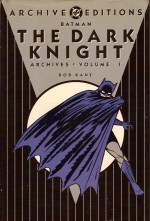
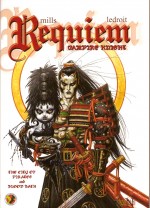
Requiem Vampire Knight Tome 5: The City of Pirates and Blood Bath


By Pat Mills & Ledroit (Panini Books UK)
ISBN: 978-1-84653-496-6

As is so often the case Europe is the last and most beneficial arena for the arts and untrammelled creativity, and none more so than comics and sequential narrative. Mercifully the Continent cherishes the best of the world’s past as well as nurturing the fresh and new, without too much concern for historical bugbears of political correctness, transient social impropriety and contemporary censoriousness – which is why so many established English language strip creators produce their best work there.

Perhaps it’s simply that they revere not revile the popular arts as much as all those hoity-toity classical ones….

Requiem Vampire Knight is an impressive example of self-publishing done right, and happily with commensurate rewards. For years writer Pat Mills wanted to break into the European market and in 2000 he did so by setting up Nickel Editions with publisher Jacques Collin (whose Zenda Editions produced some of the nicest looking albums of the 1980s) and artist Olivier Ledroit who illustrated the first four books of the incredibly popular Chroniques de la Lune Noire (Black Moon Chronicles) for Zenda before the series transferred to Dargaud. Mills and Ledroit were already old comrades having previously worked on the impressive Sha.

Mills is well known to readers of this blog (see for example Marshal Law: Fear and Loathing and his incontestable masterpiece Charley’s War) but perhaps Ledroit is not so familiar. After studying Applied Arts he began his career as an illustrator for games magazines and broke into Bandes Dessinee (that’s comics to us Anglaise) in 1989 with the aforementioned Black Moon Chronicles, written by François Marcela Froideval.

Specialising in fantasy art Ledroit drew Thomas Mosdi’s Xoco (1994) before teaming with Pat Mills on the acerbic, futurist thriller Sha, set in an ultra-religious fascistic USA (1996-1999 and thematically in the real world any minute now).

His lush painterly style was adapted to fairytales in 2003 with L’Univers Féerique d’Olivier Ledroit, and he is credited as one of the founding fathers of the darkly baroque fantasy sub-genre BD Gothique.

From a financially shaky start Requiem Vampire Knight quickly proved that quality will always find an audience and Nickel swiftly expanded whilst continuing the excessively adult adventures of deceased warrior Heinrich Augsburg. The saga is released as annual albums in France and has been serialized in Germany as Requiem Der Vampirritter and in America’s Heavy Metal (beginning in Volume 27 #1, March 2003).

Two years ago Panini UK brought this evocative series to Britain in superb oversized, A4 format, double-editions presenting two albums per volume and the fifth compendium is here just in time to assault the Christmas market. The City of Pirates and Blood Bath continues the hell-bent saga of a conflicted Nazi doomed to unlive his life as a vampire warrior in a macabre inverse world of evil, which began in Requiem Vampire Knight Tome 1: Resurrection and Danse Macabre.

Augsburg was a German officer killed on the Eastern Front in 1944. As he died all he could think of was his guilt over a doomed affair with the Jewess Rebecca whom he chose not to save when the Gestapo came for her…

Resurrection is a brooding, blood-drenched world of eternal strife and warfare: a grim, fantastic, necromantic mirror of Earth with the seas and land-masses reversed, where time runs backwards and denizens grow younger day by day – if they’re not “expired” first by any of a billion-and-one friends, allies, total strangers or archest enemies.

The charnel realm is populated by all the worst sinners of Earth reincarnated as monsters of myth in a damned domain where the dead mortals are reborn in ranks and hierarchies determined by their sins on Earth. Their only purpose is to expiate or exacerbate the sins of their former lives…

Heinrich (now called Requiem) is a Vampire: one of the top predators in this bloody post-existence reality, pinnacle of Hell’s pyramid of puissance and a full knight at the court of Dracula.

Requiem and his blood-draining kin are trapped in a spiral of bloodletting, debauchery and intrigue and his position is far from secure. Not only has he earned the enmity of the treacherous faction of elite Nosferatu led by Lady Claudia Demona, Lord Mortis and Baron Samedi, but it appears that he may be a returned soul…

Long before Augsberg died on a frozen battlefield, killed by a Russian he was trying to rape, the Templar Heinrich Barbarossa had committed such atrocities in the name of Christianity that he was guaranteed a place in Dracula’s inner circle when he inevitably reached Resurrection.

However the remade Barbarossa/Vampire Knight Thurim committed such an unpardonable crime that he and it were excised from the court and Resurrection itself.

But in this volume, Requiem, plagued by memories of a doomed affair with a proscribed Jewess named Rebecca, is in the midst of a cataclysmic all-out war involving every ghastly inhabitant of the blazing inferno they’re pent within…

Amidst the factions of Vampires, Gods, arcane Archaeologists, Lamias, Werewolves, Ghouls and so many others, Rebecca too has reconstituted in Resurrection. Her only chance of eternal rest is to expire the one responsible for her being there…

I’d strongly advise picking up the previous chronicles before this one if back-story means much too you, since Mills & Ledroit don’t waste any time or space on catching up, but storm straight into the unfolding epic with a staggering climax to the all-encompassing war between the unruly desperadoes of Aerophagia, The City of Pirates and Dark Harbour, capital and stronghold of the Vampire Court of Draconia.

Along the breakneck way we discover that the second most important man in post-War America was the earthly identity and hideous soul reconstituted as the deadly Buccaneer Queen Lady Mitra, who has been trading with the living world of Earth for holy weaponry capable of destroying Nosferatu, whilst the conflicted and irresolute warrior Requiem makes an unlikely conquest who will again divert him from his quest for Rebecca.

Also drawing attention is the samurai vampire Dragon, bound to the pirate cause by his ancient – and therefore baby-like – sensei Tengu, but whose own unholy dream is to find and expire the man who caused the atomic death of Hiroshima…

As the conflict escalates to a bloody, burning climax all of Resurrection is embroiled in the constant carnage and even the most exalted monsters begin to falter and finally “die”…

With everything in uproar Dracula begins his final moves in the bloody game as Requiem, torn between desire, duty and despair faces off against his martial and spiritual counterpart Dragon…

Blood Bath combines the incredible end of the war with Mills’ signature blackly mordant bad-taste humour, as a peerless duel between the Vampire Knights devolves into murderous slapstick as demon-infant Tengu battles his own master (Requiem’s teacher and sponsor Cryptos – an even younger baby-thing) whilst a euphoric Lady Mitra invades the Vampire sanctum intent of sealing her victory in the ichor of undead elite Lady Zarkov and Queen Bathory.

Tragically for her, Mitra succeeds and learns a horrifying ultimate truth…

Meanwhile, in a far corner of the realm the race of dragons who once were England’s greatest champions are moving against their once-ally Draconia…

Unrelentingly hard and heavy, this spectacularly decadent, opulent, Machiavellian dalliance with the wildest dreams – and grim, black wit – of a new De Sade, this book ends on yet another cliffhanger as the Vampire Lord prepares to make his endgame move, but that a blood-drenched spectacle for a later day…

For any fan of Mills’ work there nothing truly new here to be shocked by, but the liberating license to explore his favourite themes guided only by his own conscience and creative integrity has resulted in a complex, intensely compelling epic of revenge and regret on the most uncompromising of worlds where there is literally no justice and no good deed ever goes unpunished.

Blending cosmic warfare with sardonic deadpan humour, wrapped in the ludicrously OTT trappings of sadomasochistic fetishism, this is a truly epic saga of Gothic hopelessness perfect for the post-punk, post-revisionary, lavishly anti-reductionist fantasy fan.

But it’s probably best if you don’t show your gran or the vicar and certainly not your – or anybody else’s – kids. They’ve probably got their own copies anyway…

Ledroit’s illustration is utterly astonishing. In places delightfully reminiscent of Druillet’s startlingly visual and deceptively vast panel-scapes from such lost masterpieces as Yragael: Urm as well the paradoxically nihilistic energy of such decadent Michael Moorcock civilisations as Granbretan or Melniboné, he has created a truly unique scenario with his vibrant palette. Never has the horrific outer darkness been so colourfully captured and the sheer scope of the numerous ambulatory nightmares and eye-popping battles is utterly mind-boggling.

A darkly grim and mordantly cynical secularist dream, this is a fabulously realized adult fantasy of blood and thunder both beguiling and addictive.

Dark, dark magic!

© 2009, 2010, 2011 Nickel/Mills/Ledroit.  All rights Reserved.

Showcase Presents Legion of Super-Heroes volume 1


By Otto Binder, Jerry Siegel, Edmond Hamilton, Curt Swan, John Forte & various (DC Comics)
ISBN: 978-1- 4012-1382-4

Once upon a time, in the far future, a band of super-powered kids from dozens of alien civilisations took inspiration from the greatest legend of all time and formed a club of heroes. One day those Children of Tomorrow came back in time and invited that legend to join them…

And thus began the vast and epic saga of the Legion of Super-Heroes, as first envisioned by writer Otto Binder and artist Al Plastino in early 1958, just as the revived comicbook genre of superheroes was gathering an inexorable head of steam. Since that time the fortunes and popularity of the Legion have perpetually waxed and waned, with their future history tweaked and rebooted, retconned and overwritten again and again to comply with editorial diktat and popular whim.

This glorious, far-and-wide ranging monochrome collection assembles the many preliminary appearances of these valiant Tomorrow People and their inevitable progress towards and attainment of their own feature; including all pertinent material from Adventure Comics #247, 267, 282, 290, 293, and 300-321, Action Comics #267, 276, 287 and 289, Superboy #86, 89, 98, Superman #147, Superman Annual #4 and Superman’s Pal Jimmy Olsen #72 and 76.

The many-handed mob of juvenile universe-savers debuted in Adventure Comics #247 (April 1958) in a Superboy tale wherein three mysterious kids invited the Boy of Steel to the 30th century to join a team of metahuman champions all inspired by his historic career. Created by Otto Binder & Al Plastino, the throwaway concept inflamed public imagination and after a slew of further appearances throughout Superman Family titles, the LSH eventually took over Superboy’s lead spot in Adventure for their own far-flung, quirky escapades, with the Caped Kid Kryptonian reduced to “one of the in-crowd”…

However here the excitement was still gradually building as the kids returned more than a 18 months later in Adventure #267 (December 1959) for Jerry Siegel & George Papp to play with. In ‘Prisoner of the Super-Heroes!‘ the teen wonders turned up to attack and incarcerate the Boy of Steel because of a misunderstood ancient record…

The following summer Supergirl met the Legion in Action Comics #267 (August 1960, by Siegel & Jim Mooney) as Lightning Lad, Saturn Girl and Cosmic Boy secretly travelled to “modern day” America to invite the Maid of Might to join the team, in a repetition of their offer to Superboy 15 years previously (in nit-picking fact they claimed to be the children of the original team – a fact glossed over and forgotten these days: don’t time-travel stories make your head hurt…?).

Due to a dubious technicality, young and eager Kara Zor-El failed her initiation at the hands of ‘The Three Super-Heroes’ and was asked to reapply later – but at least we got to meet a few more Legionnaires, including Chameleon Boy, Invisible Kid and Colossal Boy…

With the editors still cautiously testing the waters, it was Superboy #86 (January 1961) before the ‘The Army of Living Kryptonite Men!’ by Siegel & Papp turned the LSH into a last-minute Deus ex Machina to save the Smallville Sentinel from juvenile delinquent Lex Luthor’s most insidious assault. Two months later in Adventure #282, Binder & Papp introduced Star Boy as a romantic rival for the Krypton Kid in ‘Lana Lang and the Legion of Super-Heroes!’

Action #276 (May 1961) introduced ‘Supergirl’s Three Super Girl-Friends’ by Siegel & Mooney, which finally saw the her crack the plasti-glass ceiling and join the team, sponsored by Saturn Girl, Phantom Girl and Triplicate Girl. We also met for the first time Bouncing Boy, Shrinking Violet, Sun Boy and potential bad-boy love-interest Brainiac 5 (well at least his distant ancestor Brainiac was a very bad boy…)

Next comes a pivotal two-part tale ‘Superboy’s Big Brother’ (by Robert Bernstein & Papp from Superboy #89, June 1961) in which an amnesiac, super-powered space traveller crashes in Smallville, speaking Kryptonese and carrying star-maps written by the Boy of Steel’s long-dead father…

Jubilant, baffled and suspicious in equal amounts the Superboy eventually, tragically discovered ‘The Secret of Mon-El’ by accidentally exposing the stranger to a lingering, inexorable death, before desperately providing critical life-support by depositing the dying alien in the Phantom Zone until a cure could be found…

With an August 1961 cover-date Superman #147 unleashed ‘The Legion of Super-Villains’ (Siegel, Curt Swan & Sheldon Moldoff): a stand-out thriller featuring Lex Luthor and the adult Legion coming far too close to destroying the Action Ace until the temporal cavalry arrived…

Adventure #290 (November) by Bernstein & Papp seemingly gave Sun Boy a starring role in ‘The Secret of the Seventh Super-Hero!’ – a clever tale of redemption and second chances, followed in #293 (February 1962) by a gripping thriller from Siegel, Swan & George Klein: ‘The Legion of Super-Traitors’ wherein the future heroes were turned evil, prompting Saturn Girl to recruit a Legion of Super-Pets including Krypto, Streaky the Super Cat, Beppo, the monkey from Krypton and Comet the magical Super-horse to save the world – and yes, I typed all that with a reasonably straight face…

‘Supergirl’s Greatest Challenge!’ by Siegel & Mooney (Action #287 April 1962) saw her visit the Legion (quibblers be warned: for some reason it was mis-determined as the 21st century in this story) and saved future Earth from invasion. She also met a telepathic descendent of her cat Streaky. His name was Whizzy (I could have omitted that fact but chose not to – once more for smug, comedic effect and in sympathy with cat owners everywhere)…

Action #289 featured ‘Superman’s Super-Courtship!’ wherein the Girl of Steel scoured the universe for an ideal mate for her cousin. One highly possible candidate was the adult Saturn Woman, but her husband Lightning Man objected… Perhaps charming at the time, but modern sensibilities might quail at the conclusion that his perfect match was a doppelganger of Supergirl herself, but thankfully a bit older…

By the release of Superboy #98 (July 1962), the decision had been made. The buying public wanted more Legion stories and after ‘The Boy With Ultra-Powers’ by Siegel, Swan & Klein introduced a mysterious lad with greater powers than the Boy of Steel, focus shifted to Adventure Comics #300 (cover dated September 1962) where the futuristic super-squad finally landed their own gig; even occasionally taking an alternating cover-spot from the still top-featured Superboy.

Tales of the Legion of Super-Heroes opened its stellar run with ‘The Face Behind the Lead Mask!’ by Siegel, John Forte & Plastino; a fast-paced premier which pitted Superboy and the 30th century champions against an impossibly unbeatable foe until Mon-El, long-trapped in the Phantom Zone, briefly escaped a millennium of confinement and saved the day…

In those halcyon days humour was as important as action, imagination and drama, so many of the early exploits were light-hearted and moralistic. Issue #301 offered hope to fat kids everywhere with ‘The Secret Origin of Bouncing Boy!’ by regular creative team Siegel & Forte, wherein the process of open auditions was instigated (providing devoted fans with loads of truly bizarre and memorable applicants over the years) whilst allowing the rebounding human rotunda to give a salutary pep talk and inspirational recount of heroism persevering over adversity.

Adventure #302 featured ‘Sun Boy’s Lost Power!’ as the golden boy was forced to resign until fortune and boldness restored his abilities whilst ‘The Fantastic Spy!’ in #303 provided a tense tale of espionage and possible betrayal by new member Matter-Eater Lad.

The happy readership was stunned by the events of #304 when Saturn Girl engineered ‘The Stolen Super-Powers!’ to make herself a one-woman Legion. Of course it was for the best possible reasons, but still didn’t prevent the shocking murder of Lightning Lad…

With comfortable complacency utterly destroyed #305 further shook everything up with ‘The Secret of the Mystery Legionnaire!’ who turned out to be the long-suffering Mon-El finally cured and freed from his Phantom Zone prison.

Normally I’d try to be more obscure about story details – after all my intention is to get new people reading old comics – but these “spoiler” revelations are crucial to further understanding here and besides you all know these characters are still around, don’t you?

Pulp science fiction writer Edmond Hamilton took over the major scripting role with Adventure #306 and introduced ‘The Legion of Substitute Heroes!’ (still quirkily, perfectly illustrated by John Forte): a group of rejected applicants who selflessly banded together to clandestinely assist the champions who had spurned them, after which transmuting orphan Element Lad joined the team, seeking vengeance of the space pirates who had wiped out his entire species in ‘The Secret Power of the Mystery Super-Hero!’ and #308 seemingly saw ‘The Return of Lightning Lad!’

Spoiler Warning: skip to the next paragraph NOW!!! if you don’t want to know it was actually his similarly empowered sister who once unmasked – and unmanned – took her brother’s place as Lightning Lass…

‘The Legion of Super-Monsters!’ was a straightforward clash with embittered applicant Jungle King who took his rejection far too personally and gathered a deadly clutch of space beasts to wreak havoc and vengeance whilst ‘The Doom of the Super-Heroes!’ in #310 was a frantic battle for survival against an impossible foe and Adventure #311 saw ‘The War Between the Substitute Heroes and the Legionnaires!’ begin with a cease-and-desist order from the A-Team which turned into secret salvation as the plucky, stubborn outcasts carried on anyway under the very noses of the blithely oblivious LSH…

Issue #312 (September 1963) saw the ‘The Super-Sacrifice of the Legionnaires!’ and the inevitable resurrection of Lightning Lad – but only after the harrowing sacrifice of one devoted team-member – whilst in Superman’s Pal Jimmy Olsen #72 (October) ‘The World of Doomed Olsens!’ (Siegel, Swan & Klein) depicted an intriguing enigma wherein the cub-reporter was confronted by materialisations of his most memorable metamorphoses (see the Superman: the Amazing Transformations of Jimmy Olsen for further details), only to deduce it was all a prank by those naughty Legion scamps… but one with a serious purpose behind the jolly japery…

In #313’s ‘The Condemned Legionnaires!’ (Hamilton, Swan, Klein & Forte) Supergirl played a starring role when the mysterious Satan Girl infected the team with a deadly plague and forced them all into perpetual quarantine whilst ‘The Super-Villains of All Ages!’ (illustrated by Forte) had a manic mastermind steal a Legion Time-Bubble to recruit the greatest monsters and malcontents of history – Nero, Hitler and John Dillinger – as his irresistible army of crime.

Why he was surprised when they double-crossed him and took over the bodies of Superboy, Mon-El and Ultra Boy is beyond me… Happily, the lesser legionnaires still proved more a match for the brain-switched rogues.

‘The Legionnaires Super-Contest!’ in #315 finally saw the Substitute heroes go public, for which the primary team offered to allow one of them to join the big boys. Which one? That’s the contest part…

Issue #316’s ‘The Renegade Super-Hero!’ saw one trusted team-mate revealed as a career criminal and go on the run, but of course there was more to the tale than first appeared, after which the heroes were introduced to ‘The Menace of Dream Girl!’ a ravishing clairvoyant who beguiled her way into the Legion for her own obscure, arcane reasons. In her well-meaning way she presaged the coming of deadly threat The Time Trapper and also found a moment to convert the electrically redundant sister of the revived Lightning Lad into the gravity-defying Light Lass.

Adventure #318 featured ‘The Mutiny of the Legionnaires!’ wherein Sun Boy succumbed to battle fatigue and became a draconian Captain Bligh during an extended rescue mission, whilst in Superman’s Pal Jimmy Olsen #76 (April 1964) Siegel & Forte described ‘Elastic Lad Jimmy and his Legion Romances!’ wherein the plucky journalist was inveigled into the future and found himself inexplicably irresistible to the comely costumed champions of Tomorrow. It wasn’t his primitive charm, though…

Hamilton & Forte began a strong run of grittier tales from #319 on, beginning with ‘The Legion’s Suicide Squad!’ as the Science Police asked the team to destroy, at all costs, a monolithic space fortress, whilst #320 debuted a daring new character in Dev-Em, a forgotten survivor of Superman’s dead homeworld who was little more than a petty thug when Superboy first defeated him.

Now in ‘The Revenge of the Knave From Krypton!’ by Siegel, Forte, Papp, Moldoff & Plastino, the rapscallion returned as either a reformed undercover cop or the greatest traitor in history…

The story portion of this wonderful tome concludes with Adventure #321 and ‘The Code of the Legion!’ by Hamilton, Forte & Plastino which revealed the team’s underlying Articles of Procedure during a dire espionage flap, whilst testing one Legionnaire to the limits of his honour and ingenuity and actually ending another’s service forever.

Perhaps.

This is followed by an appropriate extra from Superman Annual #4 which featured a two-page informational guide illustrated and pictorial check-list of the team by Swan & Klein which was amended and supplemented in Adventure #316 with an additional two pages of stunning micro-pin-ups, all faithfully included here. This fabulously innocent and imaginative chronicle also includes every cover the team starred on: mostly the work of honorary Legionnaire Curt Swan and inkers George Klein, Stan Kaye, and Sheldon Moldoff.

The Legion is undoubtedly one of the most beloved and bewildering creations in American comicbook history and largely responsible for the growth of the groundswell movement that became Comics Fandom. Moreover, these sparkling, simplistic and devastatingly addictive stories as much as the legendary Julie Schwartz Justice League fired up the interest and imaginations of a generation of young readers and built the industry we all know today.

These naive, silly, joyous, stirring and utterly compelling yarns are precious and fun beyond any ability to explain – even if we old lags gently mock them to ourselves and one another. If you love comics and haven’t read this stuff, you are the poorer for it and need to enrich your future life as soon as possible.

© 1958-1964, 2007 DC Comics. All Rights Reserved.