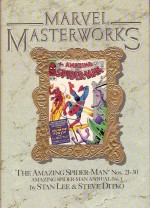
Marvel Masterworks volume 10: Amazing-Spider-Man 21-30 & Annual 1


By Stan Lee & Steve Ditko (Marvel)
ISBN: 0-87135-596-5

The third magnificent full-colour hardback collection of Spider-Man’s earliest adventures sees the World’s Most Misunderstood Hero begin to challenge the dominance of the Fantastic Four as Marvel’s premier comicbook both in sales and quality. Steve Ditko’s off-beat plots and unconventionally inspirational art had gradually reached an accommodation with the slick and potent superhero house-style Jack Kirby was developing (at least as much as such a unique talent ever could), with less line-feathering, more controlled, moody backgrounds and fewer totemic villains.

Although still very much a Ditko vehicle, Spider-Man had by this time attained a sleek pictorial gloss. Stan Lee’s scripts were comfortably in tune with the times if not his collaborator’s tastes and, although his assessment of the audience was probably the more correct one, all disagreements with the artist over the strip’s editorial direction were still confined to the office and not the pages themselves.

Thematically, there’s still a large percentage of old-fashioned crime and gangsterism here. The dependence on costumed super-foes as antagonists was still finely balanced with ordinary thugs, hoods and mobsters, but those days were rapidly coming to an end too.

When Ditko abruptly left the series and the company, the dreaded loss in quality and sales never happened. The mere “safe pair of hands” that John Romita (senior) considered himself blossomed into a major talent in his own right, and the Wall-Crawler continued his unstoppable rise at an accelerated pace but that’s a bridge crossed in another volume…

This terrific tome (reprinting Amazing Spider-Man #21-30 and Amazing Spider-Man Annual #1) kicks off with ‘Where Flies The Beetle’ featuring a hilarious love triangle as the Human Torch’s girlfriend used Peter Parker to make the flaming hero jealous. Unfortunately the Beetle, a villain with a high-tech suit of insect-themed armour, was simultaneously planning to use her as bait for a trap. As ever Spider-Man was simply in the wrong place at the right time, resulting in a spectacular fight-fest.

‘The Clown, and his Masters of Menace’ saw a return engagement for the Circus of Crime with splendidly outré action and a lot of hearty laughs provided by increasingly irreplaceable supporting stars Aunt May, Betty Brant and J. Jonah Jameson whilst #23 presented a superb thriller blending the ordinary criminals that Ditko loved to depict with the arcane threat of a super-villain attempting to take over the Mob. ‘The Goblin and the Gangsters’ was both moody and explosive, a perfect contrast to ‘Spider-Man Goes Mad!’ in #24. This psychological stunner found a clearly delusional hero seeking psychiatric help, but there was more to the matter than simple insanity, as an insidious old foe made an unexpected return…

Issue #25 once again saw the obsessed Daily Bugle publisher take matters into his own hands: ‘Captured by J. Jonah Jameson!’ introduced Professor Smythe – whose robotic Spider-Slayers would bedevil the Web-Spinner for years to come – hired by the bellicose newsman to remove Spider-Man for good.

Issues #27 and 28 comprised a captivating two-part mystery exposing a deadly duel between the Green Goblin and an enigmatic new masked criminal. ‘The Man in the Crime-Master’s Mask!’ and ‘Bring Back my Goblin to Me!’ together form a perfect Spider-Man saga, with soap-opera melodrama and screwball comedy leavening tense thrills and all-out action.

‘The Menace of the Molten Man!’ from #28 was a tale of science gone bad and remains remarkable today not only for the spectacular action sequences – and possibly the most striking Spider-Man cover ever produced – but also as the story in which Peter Parker finally graduated from High School.

‘Never Step on a Scorpion!’ saw the return of that lab-made villain, hungry for vengeance against not just the Web-Spinner but also Jameson for turning a disreputable private eye into a super-powered monster, and the chronological tales here conclude with #30’s off-beat crime-caper which cannily sowed the seeds for future masterpieces. ‘The Claws of the Cat!’ featured the city-wide hunt for an extremely capable burglar (way more exciting than it sounds, trust me!), plus the introduction of an organised mob of thieves working for mysterious new menace the Master Planner.

Out of place but never unwelcome, this volume ends with the timeless landmark and still magnificently thrilling battle against the ‘Sinister Six’ which actually first appeared between Amazing Spider-Man #16 and 17.

When a team of villains comprising Electro, Kraven, Mysterio, Sandman, Vulture and Doctor Octopus abducted Aunt May and Peter Parker’s girlfriend Betty, Spider-Man was forced to confront them without his Spider-powers. A staggeringly enthralling Fights ‘n’ Tights saga, this influential tale also featured cameos (or more likely product placement ads) by every other extant hero of the budding Marvel universe. Also included are special feature pages on ‘The Secrets of Spider-Man!’ and the comedic short ‘How Stan Lee and Steve Ditko Create Spider-Man’ and a gallery of pin-up pages featuring ‘Spider-Man’s Most Famous Foes!’

Full of energy, verve, pathos and laughs, gloriously short of post-modern angst and breast-beating, these fun classics are quintessential comic magic and with the Fantastic Four form the very foundation of everything Marvel became. This sturdy compendium is another unmissable opportunity for readers of all ages to celebrate the magic and myths of the modern heroic ideal in delightfully decadent luxury – and would make an ideal gift.
© 1964, 1965, 1989 Marvel Characters, Inc. All Rights Reserved.

Marvel Masterworks Invincible Iron Man volume 2: Tales of Suspense 51-65


By Stan Lee, Don Heck, Jack Kirby & various (Marvel)
ISBN: 978-0-7851-0886-3 or 978-0-7851-1771-1

There are a number of ways to interpret the life and moonlighting career of Tony Stark, glamorous millionaire industrialist/inventor and his armoured alter-ego, Iron Man.

Created in the aftermath of the Cuban Missile Crisis and at a time when “Red-baiting” and “Commie-bashing” were American national obsessions, the emergence of a brilliant new Thomas Edison, using Yankee ingenuity and invention to safeguard and better the World, seemed inevitable. Combine the then-common belief that technology could solve any problem with the universal imagery of noble knights battling evil and the proposition almost becomes a certainty. Of course it might simply be us kids thought it both great fun and very, very cool…

This glorious full colour deluxe hardback compendium of the Golden Avenger’s early days reprints his further early adventures, with a smattering of feature pages and pin-ups from Tales of Suspense #51 (cover-dated March 19664) through #65 (May 1965), a period when Marvel built steadily and irresistibly on their creative inspiration and began scoring solid commercial successes: a time that would see them start to topple DC Comics from a position of dominance, but before the flashy underdogs became the darlings of the student counter-culture. In these tales Tony Stark is still very much the patriotic armaments manufacturer, and not the enlightened capitalist dissenter he would become.

Behind the first of fifteen fabulous Jack Kirby covers the wonderment begins with TOS #51 and ‘The Sinister Scarecrow’ (by Stan Lee & Don Heck) wherein the Golden Avenger tackled a tricky contortionist who quickly became a major menace after stealing vital weapons plans, after which Soviet femme fatale The Black Widow debuted with a savage partner who almost destroyed Iron Man in a Russian-made armour-suit when ‘The Crimson Dynamo Strikes Again!’ scripted, as was the next issue, by the enigmatic “N. Kurok”.

She was back in #53 when ‘The Black Widow Strikes Again!’ a far deadlier threat on her own after stealing an anti-gravity ray but nevertheless still failed to hit her gleaming target and the oriental mastermind who would become Stark’s greatest enemy returned in Tales of Suspense #54 to exact ‘The Mandarin’s Revenge!’; a two-part tale which concluded in ‘No One Escapes the Mandarin!’

Happily Iron Man did, and after bonus factoid-featurettes ‘All About Iron Man’ and ‘More Info About Iron Man’, plus pinups of devoted friends and confidantes Happy Hogan and Pepper Potts, our hero was attacked by Commie super agent ‘The Uncanny Unicorn!’

The Widow resurfaced to beguile budding superhero ‘Hawkeye, the Marksman!’ into attacking the Golden Avenger in #57, before a true landmark event occurred in the next issue. Iron Man had monopolised Tales of Suspense since his creation but ‘In Mortal Combat with Captain America’ (inked by Dick Ayers) an all-out battle between the two heroes – resulting from a clever impersonation by evil impressionist The Chameleon – hinted at a big change in the title.

The clash was a primer for the next issue when Cap would begin his own solo adventures, splitting the monthly comic into a shared anthology featuring Marvel’s top patriotic heroes.

Iron Man’s outing in TOS #59 was against high-tech bandit ‘The Black Knight!’ as a result of which Stark was unable to remove the armour without triggering a heart attack, a situation which hadn’t occurred since the initial heart injury forced Stark to devise his iron-shod alter-ego. Up until this time he had led a relatively normal life by simply wearing the life-sustaining chest-plate under his clothes but now he was a trapped by his own tech…

The introduction of soap-opera sub-plots were a necessitated by the shorter page counts, as were continued stories, but this seeming disadvantage worked to improve both the writing and the sales.

With Stark’s “disappearance,” Iron Man was ‘Suspected of Murder!’ – a tale which featured the return of Hawkeye and the Black Widow – leading directly into ‘The Death of Tony Stark!’ and after another stunning pin-up, ‘The Origin of the Mandarin!’.

After that extended epic, a change of narrative pace occurred as short, complete exploits returned. The first was #63’s industrial sabotage thriller ‘Somewhere Lurks the Phantom!’, followed by the surely self-explanatory ‘Hawkeye and the New Black Widow Strike Again!’ (inked by Chic Stone and disclosing the sultry spy’s conversion into a wall-crawling super-character), before this gold-plated triumph ends with ‘When Titans Clash!’ (inked by Mike Esposito under the pseudonym Mickey Demeo) as a petty thief steals the new armour and Stark must defeat his greatest invention clad only in his clunky old suit.

Iron Man developed amidst the growing political awareness of the Viet Nam Generation who were the comic’s maturing readership. Wedded as it was to the American Military-Industrial Complex, with a hero – originally the government’s wide-eyed golden boy – gradually becoming attuned to his country’s growing divisions, it was, as much as Spider-Man, a bellwether of the times.

That these tales also remain such a thrilling rollercoaster riot of classic super-hero fun is a lasting tribute to the talents of the superb creators who worked on them and this sturdy invincible tome is absolutely the best way to review these masterpieces of Marvel mettle.
© 1964, 1965, 2005 Marvel Characters, Inc. All Rights Reserved.

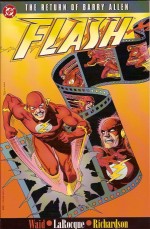
The Flash: the Return of Barry Allen

New revised review

By Mark Waid, Greg LaRocque, Sal Velluto & Roy Richardson (DC Comics)
ISBN: 978-1-56389-268-4

When the Silver Age Flash died during the Crisis on Infinite Earths in 1985, he was promptly succeeded by his grieving shell-shocked sidekick and nephew Wally West, who initially struggled to fill the boots of his groundbreaking predecessor, both in sheer physical ability and, more tellingly, in confidence. Wally felt like a fraud, but like a true hero he soldiered on and eventually rose to esteemed heights.

Just as he was becoming comfortable in the role though, the unthinkable happened… Actually in comics not so unthinkable and that idea is used to telling effect within the text.

Years later just as Wally was coming to terms with his historic heritage and still painful sense of bereavement Barry Allen reappeared, stunned, amnesiac, but unquestionably alive…

This slender chronicle collects issues #74-78 of the Wally West Flash (which originally ran from March to August 1993) and, after ‘Flashback’ – an informative introduction from Mark Waid & Brian Augustyn – opens with a couple of teasing, foreshadowing pages from earlier issues which lead to the late Scarlet Speedster turning up on Wally’s doorstep on Christmas Eve after which the high-speed action opens with ‘Trust’ by Waid, Greg LaRocque – assisted by Sal Velluto – & Roy Richardson.

Heroes have come back before and villains have always pulled imposturing fast ones too, so as Barry’s memories slowly return Wally is suspicious, although his mentor’s oldest friends Jay Garrick and Hal (Green Lantern) Jordan are quickly convinced. But still, something doesn’t seem quite right with the returned, but no longer so easygoing, heroic ideal…

In ‘Running Behind’ Barry and Wally are happily patrolling together and the younger Flash is becoming convinced that nothing more than insecurity and jealousy are colouring his misgivings. Even Garrick, the WWII Flash, is apparently content and cooperating in their unstoppable crime-blitz. Wally is even considering surrendering the name and creating a new heroic persona for himself when, during a skirmish with high-tech bandits Barry inexplicably flies into a psychotic rage…

Helpless, fearing Barry’s derangement is caused by his death and resurrection, Wally watches his mentor progressively lose it in ‘Identity Crisis’, whilst the utterly pragmatic Garrick recruits fellow veteran speedsters Johnny Quick and Max Mercury just in case the worst comes to pass. When the tech-bandits are revealed to be a deadly alien gang Wally and uncle Barry track them down and the younger Flash is apparently killed…

Wally has survived but is hiding: only he knows that his beloved uncle Barry has gone mad, attempting to murder his own nephew, after which in ‘Suicide Run’ the returned Scarlet Speedster tries to kill everybody else who might rival his standing as the Fastest Man Alive…

An incredible accident finally reveals the truth to the despondent Wally as “Barry Allen” goes on a murderous global rampage in ‘Blitzkrieg’ before the youngest Flash returns to lead a dramatic and desperate final charge against the most dangerous man of all time in the staggering, blockbuster, revelatory conclusion ‘The Once and Future Flash’.

That is one of the very best Fights ‘n’ Tights tales of the 1990s, a rollercoaster ride of bluff, misdirection and all-out action that was instrumental in shutting up old coots like me who kept whining about how the new stuff just wasn’t as good as the old…

Despite some less than stellar artwork this is a great tale, captivatingly told and which powerfully pushes the buttons of any superhero fan, whether a Flash follower or not. Catch and enjoy, time after time after time….

© 1993 DC Comics. All Rights Reserved.

Lucky Star volume 1


By Kagami Yoshimizu translated by Rika Takahashi (BANDAI Entertainment)
ISBN: 978-1-60496-112-6

Japanese four-panel strips are very similar in terms and construction to modern Western newspaper strips, with a fixed cast of characters acting in brief complete gag tales, often building upon previous episodes to comprise a greater mosaic, but often the similarity ends there.

This rather peculiar (to a fat, finicky fifty-something British bloke at least) compilation confuses, delights, confounds, charms but mostly baffles as it describes the day to day to day trials and tribulations of a small group of small Japanese schoolgirls, their less than completely proper teacher and a few other older – if no wiser – influences who regularly intersect with the all-encompassing world of TV, manga, comics games, homework and dawning social advancement that is Lucky Star.

Kagami Yoshimizu’s Raki☆Suta debuted in the January 2004 issue of Japanese computer magazine Comptiq as a floating graphic end-piece and page-filler for the articles and features, but proved so popular that a reprint collection was released a year later. The strip soon began guesting in other magazines such as Shōnen Ace, Dragon Magazine, Mobile Newtype and Kadokawa Hotline and quickly spun off into video games, a drams CD, visual novels, light novels and an anime TV series, and even made the jump to American screens.

Set in Kasukabe City, Saitama Prefecture, the individual episodes are in the mild and timeless, unchallenging, nothing-ever-changes mould of Hagar or Garfield – but with far less of their stripped-down artistic and stylistic economy – and follow the daily doings and musings of young High School girls. Sporty “Otaku” games addict Konata Izumi, cute, bespectacled and dutiful know-it-all Miyuki Takara, tough-girl Kagami Hiiragi and her kind, adorable bimbo-in-training fraternal twin Tsukasa are all brought together under the second-rate, whimsical, but not-so efficient tutelage of beer-drinking history teacher Ms. Nanoko Kuroi.

This initial translated tome collects the first 25 instalments (averaging between 4 and 9 four-panel strips reading down, not across, the page, right to left and, since it’s manga, back to front), mostly in black and white but with a few full-colour examples too.

As you’d expect most of the material centres around the playing of electronic games; dutifully paying lip-service to the absorption and distraction of such upon girls who should be preparing for life and doing their homework, but as the series progressed wider issues (such as dealing with boys), interests (like films, magazine competitions and travelling on trains) and more mature characters are introduced, – most notably  grown-up and freshly newlywed cousin Yui Narumi; a strong-willed but amiably good-hearted police woman in the Traffic Rules Division who might perhaps be quite the wrong sort of role-model for the already slacking Konata.

The chapters are designated ‘Begin Activity’, ‘Older Sister’, ‘Unchanging Everyday Life’, ‘The Other Side of the Lens’, ‘Footsteps of Spring’, ‘A Season of New Beginnings… Maybe’, ‘Ideals’, ‘Various Appearances, but Contents are Still the Same’, ‘A Clever Way to Do It’, ‘The Rowdiness Before Battle’, ‘Do Your Best, Young Ones’, ‘Beginner’, ‘Relatives, No Doubt’, ‘Play, Play’, ‘Bright Season’, ‘Full of Memories’, ‘When Time Passes, Even Things you Don’t Like’, ‘The Other Side, Without the Lens’, ‘Preparations for the Cultural Festival!’, ‘The Days Until the Athletics Festival!’, ‘Personality’, ‘Game’, ‘Home Visitation’, ‘Conditions Don’t Change’ and ‘Season For Sleep’: covering a plethora of topics and situations inadvertently delivering intriguing insights into modern attitudes to school, work, women’s roles and  the culture and concerns of the nation. For example, Konata is a second-generation addict; working after school at a cosplay café, staying up all night and sharing all the games her equally electronically-enslaved single parent dad buys – even the adult ones. Kagami is a traditional swot: diligent, diffident and most concerned with best efforts and propriety at all times, but is sweet, forgiving and understanding… whilst her sister is an airhead but an excellent cook.

The strips themselves range from clever and charming to dry and witty to devastatingly funny to bittersweet to, quite often, utterly incomprehensible (at least to a fat old English bloke who doesn’t play video games) but the craft and quality of the storytelling, whilst not perhaps everyone’s cup of tea, is exceptional and indisputable.

With lots of sketches, illustrated character studies and a handy and informative annotated Translators Notes section, Lucky Star might be just the thing to spark interest from that stubborn holdout in the house who just won’t read any comics at all…

© 2005 Kagami Yoshimizu. English BANDAI Entertainment, Inc. edition May 2009.

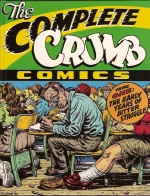
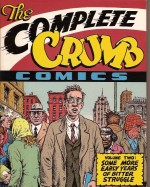
The Complete Crumb Comics volumes 1 and 2


By Robert Crumb and Charles Crumb (Fantagraphics Books)
ISBNs: 0-930196-43-1(hb)   & 978-0-930193-62-8

Robert Crumb is a unique creative force in the world of cartooning with as many detractors as devotees. His uncompromising, excoriating, neurotic introspections, pictorial rants and invectives unceasingly picked away at societal scabs and peeked behind forbidden curtains for his own benefit, but he has always happily shared his unwholesome discoveries with anybody who takes the time to look…

In 1987 Fantagraphics Books began the nigh-impossible task of collating, collecting and publishing the chronological totality of the artist’s vast output and many of those engrossing compendia are now being reissued.

These earliest volumes have been constantly described as the least commercial and, as far as I know, remain out of print, but contrary as ever, I’m reviewing them anyway…

The son of a career soldier, Robert Dennis Crumb was born in Philadelphia in 1943 into a functionally broken family. He was one of five kids who all found different ways to escape their parents’ shattering problems and comics were always paramount amongst them.

As had his older brother Charles, Robert immersed himself in the strips and cartoons of the day; not simply reading but feverishly creating his own. Harvey Kurtzman, Carl Barks and John Stanley were particularly influential, but also newspaper artists like E.C. Segar, Gene Ahern, Rube Goldberg, Bud (Mutt and Jeff) Fisher, Billy (Barney Google), De Beck, George (Sad Sack) Baker and Sidney (The Gumps) Smith as well as illustrators like C.E. Brock and the wildly imaginative and surreal 1930’s Looney Tunes and Merrie Melodies animated shorts.

Defensive and introspective, young Robert pursued art and slavish self-control through religion with equal desperation. His early spiritual repression and flagrant, hubristic celibacy constantly warred with his body’s growing needs…

Escaping his stormy early life, he married young and began working in-house at the American Greeting Cards Company. He discovered like minds in the growing counterculture movement and discovered LSD. In 1967 Crumb relocated to California and became an early star of Underground Commix. As such he found plenty of willing hippie chicks to assuage his fevered mind and hormonal body whilst reinventing the very nature of cartooning with such creations as Mr. Natural, Fritz the Cat, Devil Girl and a host of others. The rest is history…

Those tortured formative years provide the meat of the first volume The Early Years of Bitter Struggle which, after ‘Right Up to the Edge’ – a comprehensive background history and introduction from lifelong confidante Marty Pahls – begins revealing the troubled master-in-waiting’s amazingly proficient childhood strips from the self-published Foo #1-3 (a mini-comic project passionately produced by Robert and his older brother Charles from September to November 1958).

Rendered in pencils, pens and whatever else was handy; inextricably wedded to the aforementioned funnybooks, strips and animated shorts cited above, the mirthful merry-go-round opens with ‘Report From the Brussels World’s Fair!’ and ‘My Encounter With Dracula!’: frantic and frenetic pastiches of the artists’ adored Mad material, with Robert already using a graphic avatar of himself for narrative purposes.

Closely following are the satirical ‘Clod of the Month Award’, ‘Khrushchev Visits U.S.!!’ and ‘Noah’s Ark’.

From 1959 comes ‘Treasure Island Days’: a rambling gag-encrusted shaggy dog Russian Roulette experiment created by the lads each concocting a page and challenging the other to respond and continue the unending epic, after which ‘Cat Life’ followed family pet Fred’s fanciful antics from September 1959 to February 1960 before morphing, or perhaps “anthropomorphing” into an early incarnation of Fritz the Cat in ‘Robin Hood’…

That laconic stream of cartoon-consciousness resolved into the raucous and increasingly edgy saga ‘Animal Town’ followed here by a very impressive pin-up ‘Fuzzy and Brombo’, before the central full-colour section provides a selection of spoof covers.

Four ‘R. Crumb Almanac’ images – all actually parts of letters to Pahls – are complemented by three beautiful ‘Arcade’ covers, swiftly followed by a return to narrative monochrome and ‘A Christmas Tale’ which saw Crumb’s confused and frustrated sexuality begin to assert itself in his still deceptively mild-mannered work.

A progression of eleven single-page strips produced between December 1960 and May 1961 precedes three separate returns to an increasingly mature and wanton ‘Animal Town’ – all slowly developing the beast who would become Crumb’s first star until Fritz bows out in favour of ‘Mabel’ – a prototypical big and irresistible woman of the type Crumb would legendarily have trouble with – and this initial volume concludes with another authorial starring role in the Jules Feiffer (see Explainers) inspired ‘A Sad Comic Strip’ from March 1962.


The second volume Some More Early Years of Bitter Struggle continues the odyssey after ‘The Best Location in the Nation…’ – another Pahls reminiscence – describes the swiftly maturing and deeply unsatisfied Crumb’s jump from unhappy home to the unsatisfying world of work.

‘Little Billy Bean’ (April 1962) returns to the hapless, loveless nebbish of A Sad Comic Strip whilst ‘Fun with Jim and Mabel’ revisits Crumb’s bulky, morally-challenged amazon after which the focus shifts to her diminutive and feeble companion ‘Jim’. Next, an almost fully-realised ‘Fritz the Cat’ finally gets it on in a triptych of saucy soft-core escapades from R. Crumb’s self-generated Arcade mini-comic project.

From this point onwards the varied and exponentially impressive breadth of Crumb’s output becomes increasingly riddled with his often hard-to-embrace themes and declamatory, potentially offensive visual vocabulary as his strips grope towards the creator’s long-sought personal artistic apotheosis.

His most intimate and disturbing idiosyncrasies regarding sex, women, ethnicity, personal worth and self-expression all start to surface here…

Therefore, if intemperate language, putative blasphemy, cartoon nudity, fetishism and comedic fornication are liable to upset you or those legally responsible for you, stop reading this review right here and don’t buy the book.

Working in the production department of a vast greetings card company gave the insular Crumb access to new toys and new inspiration as seen in the collection of ‘Roberta Smith, Office Girl’ gag strips from American Greetings Corporation Late News Bulletins (November 1963-April 1964), followed here by another Fritz exploit enigmatically entitled ‘R. Crumb Comics and Stories’ which includes just a soupcon of raunchy cartoon incest, so keep the smelling salts handy…

A selection of beautiful sketchbook pages comes next and then a full-colour soiree of faux covers: letters to Pahls and Mike Britt disguised as ‘Farb’ and ‘Note’ front images as well as a brace of Arcade covers and the portentously evocative front for R. Crumb’s Comics and Stories #1 from April 1964.

The rest of this pivotal collection is given over to thirty more pages culled from the artist’s sketchbooks; a vast and varied compilation that ably displays the artist’s incredible virtuosity and proves that if Crumb had been able to suppress his creative questing he could easily have settled for a lucrative career in any one of a number of graphic disciplines from illustrator to animator to jobbing comic book hack.

Crumb’s subtle mastery of his art-form and obsessive need to reveal his most hidden depths and every perceived defect – in himself and the world around him – has always been an unquenchable fire of challenging comedy and riotous rumination, and these two tomes are the secret to understanding the creative causes, if not the artistic affectations of this unique craftsman and auteur.

This superb series charting the perplexing pen-and-ink pilgrim’s progress is the perfect vehicle to introduce any (over 18) newcomers to the world of grown up comics. And if you need a way in yourself, seek out these books and the other fifteen as soon as conceivably possible…

Report From the Brussels World’s Fair!, My Encounter With Dracula!, Clod of the Month Award, Khrushchev Visits U.S.!! & Noah’s Ark © 1980 Robert and Charles Crumb. Other art and stories © 1969, 1974, 1978, 1987, 1988 Robert Crumb. All rights reserved.

Re-Gifters


By Mike Carey, Sonny Liew & Marc Hempel (Minx/Titan Books edition)
ISBN: 978-1-84576-579-8

In 2007 DC comics attempted a bold experiment in building new markets by creating the Minx imprint: dedicated to producing comics material for the teen/young adult audience – especially the ever-elusive girl readership – that had embraced translated manga material, momentous global comics successes such as Maus and Persepolis and those abundant and prolific fantasy serials which produced such pop phenomena as Roswell High, Twilight and even Harry Potter.

Sadly after only a dozen immensely impressive and decidedly different graphic novels Minx shut up shop in October 2008, markedly NOT citing publishing partner Random House’s failure to get the books onto the appropriate shelves of major bookstore chains as the reason.

Nevertheless the books which were published are still out there and most of them are well worth tracking down – either in the US originals or the British editions published by Titan Books.

My particular favourite is the second release: a magnificently beguiling and engaging black and white, cross-cultural romantic martial arts melange by writer Mike Carey and artists Sonny Liew & Marc Hempel.

The trio’s glorious offbeat and upbeat Vertigo miniseries My Faith in Frankie is generally regarded as a prototype for the Minx model, and that quirky quixotic brilliance is in full flower in this tale of feisty yet desperately dutiful Korean-American teen Jen “Dixie” Dik Seong who channels her suppressed aggression into hapkido and her blossoming crush on hunky Adam into daydreaming, clumsiness and humiliating imbecility…

A klutz in real life, Dixie is a demon in martial arts battle, but as her best friend and dojo-mate Avril is keenly aware, the flummoxed lass’s poor head is stuck in the clouds these days…

It’s hard enough for Dixie to juggle school, a quick-fire temper, her precious heritage and loving-but-generally clueless parents with burgeoning hormones and astoundingly annoying younger brothers; without the added distraction of infatuation with a rich, self-absorbed white boy who is also her only serious rival in the upcoming National Hapkido Tournament.

After a chance encounter with mouthy street punks and bad boy Dillinger, Dixie blows all her savings and the Tournament entrance fee which her father gave her on an ancient warrior statue for Adam; leading to a huge fight with Avril but which actually succeeds in getting the boy to notice her.

So much so, in fact, that he wants her advice in getting snooty babe Megan to go out with him…

When Dixie discovers that a business loan for her father from traditional Korean bankers depends on her performance in the tournament, the furious and lovelorn girl is forced to battle for a wild-card place in the event by joining a knockout “Street Sweep Competition” against half the kids in Los Angeles… including the dire and dangerous Dillinger…

Moreover, Adam has finally got into Megan’s good books – and other places – by re-gifting Dixie’s statue to the most popular girl in school…

Re-Gifters is a bright, witty, sublimely funny and intriguing coming of age comedy which follows all the rules of the romance genre but still manages to inject a vast amount of novelty and individual character into the mix: a perfect vehicle for attracting to the medium new and youthful readers with no abiding interest in outlandish power-fantasies or vicarious vengeance-gratification – and yes, that does mean women…

Track this down and read a genuinely different kind of comic book – but do it before some hack movie producer inevitably turns the tale into just another teen rom-com…
© 2007 Mike Carey, Sonny Liew & Marc Hempel. All rights reserved.

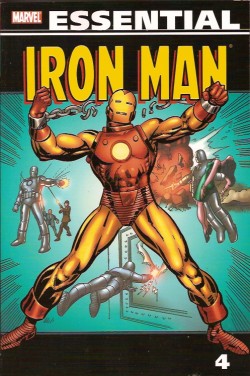
Essential Iron Man volume 4


By Gerry Conway, Mike Friedrich, Robert Kanigher, Steve Gerber, George, Tuska, Jim Starlin & various (Marvel)
ISBN: 978-0-7851-4254-6

First conceived in the wake of the Cuban Missile Crisis at a time when the economy was booming and “Commie-bashing” was an American national obsession, the emergence of a new and shining young Thomas Edison, using Yankee ingenuity, wealth and invention to safeguard the Land of the Free and better the World, seemed an obvious development. Combining the then-sacrosanct faith that technology and business in unison could solve any problem, with the universal imagery of noble knights battling evil, the Invincible Iron Man seemed an infallibly successful proposition.

Of course whilst Tony Stark was the acceptable face of 1960s Capitalism – a glamorous millionaire industrialist/scientist and a benevolent all-conquering hero when clad in the super-scientific armour of his alter-ego Iron Man – the turbulent tone of the 1970s soon relegated his suave, “can-do” image to the dustbin of history and with ecological disaster and social catastrophe from the myriad abuses of big business the new zeitgeists of the young, the Golden Avenger and Stark International were soon confronting a few tricky questions from the increasingly politically savvy readership.

With glamour, money and fancy gadgetry not quite so cool anymore the questing voices of a new generation of writers began posing uncomfortable questions in the pages of a series that was once the bastion of militarised America …

This fourth gleaming black and white chronological compendium navigates that transitional period; reprinting Iron Man #39-61 (July 1971 to August 1973) as the title experienced an unprecedented and often uncomfortable number of creative personnel changes whilst the country endured a radical and often divisive split in ideology.

Gerry Conway and Herb Trimpe open the proceedings with ‘A Twist of Memory… a Turn of Mind!’ wherein oriental mastermind White Dragon turned Tony Stark into a brainwashed pawn, thereby inadvertently enslaving the Golden Avenger. Stark’s devoted assistant Kevin O’Brian came to the rescue but was led down a path to inevitable doom when he assisted his mind-locked employer in a torturous ‘Night Walk!’ (George Tuska & Jim Mooney) to save his sanity and defeat their sinister foe.

Simultaneously, Marianne Rodgers, the woman they both love, begins a slow glide into madness as her telepathic powers intensify and eat at her mind…

Issue #41 continued a long and convoluted storyline dealing with mystery mastermind Mr. Kline in ‘The Claws of the Slasher!’ as a duo of paranormal saboteurs attacked Washington DC during a Senate investigation into Stark Industries, accidentally triggering a psychic transformation in Marianne who temporarily became a mind-warping harpy in ‘When Demons Wail!’ (inked by Frank Giacoia), culminating in a blockbusting extra-long battle against psionic godling Mikas in ‘Doomprayer!’ (Mooney inks). During that cataclysmic conflict O’Brian built his own super-armour to join the fray as The Guardsman; his own mental state rapidly deteriorating and his eventual showdown with Stark growing ever more unavoidable…

Iron Man #44, by Conway, Robert Kanigher, Tuska & Vince Colletta, found Stark near death in ‘Weep for a Lost Nightmare!’ guarded by Kevin and Marianne as Kline dispatched a robotic Night Phantom to finish the ailing hero off; a tale truncated midway and completed in the next issue – presumably due to deadline problems. The remainder of the comic – and happily included here – is a one off, all-new adventure of The Astonishing Ant-Man.

‘Armageddon on Avenue “A”’, by Roy Thomas, Ross Andru & Mike Esposito, is a light-hearted romp pitting the diminutive hero against ambitious, overcompensating old foe The Scarlet Beetle – a bug determined to conquer the word and wipe out humanity.

Gary Friedrich scripted the concluding ‘Beneath the Armour Beats a Heart!’ in #45 after which Stark faced a revolt by his own Board of Directors who had convinced the jealousy-consumed O’Brian to stand with them.

When student protestors invaded the factory, reactionary revolt instigator Simon Gilbert convinced O’Brian to don his Guardsman suit and murderously teach them all a lesson, leading to a horrific escalation in ‘Menace at Large!’ (inked by John Verpoorten) as Iron Man intervened to save lives and caused the out-of control O’Brian’s death…

In the aftermath Stark was compelled to review his origins, twin careers and now-obscured objectives in the classic ‘Why Must There be an Iron Man?’ (# 47, by Thomas, Barry Smith & Mooney) after which, emotionally reinvigorated, the Armoured Ace welcomed new scripter Mike Friedrich and old artists Tuska & Colletta to face a renewed threat from radical anarchist Firebrand in ‘The Fury and the Inferno!’ after which Marianne’s final breakdown began…

‘… There Lurks the Adaptoid!’ found the terrified woman experiencing horrifying precognitive visions when a power-mimicking robot attacked Iron Man, leading to her betrayal of the man she loved when the automaton evolved into an unbeatable new form in #50’s ‘Deathplay’, just as Z-list villain Princess Python attempted to kidnap Tony Stark, and the bizarre saga concluded with bombastic battle in ‘Now Stalks the Cyborg-Sinister!’

New Age mysticism and West Coast celebrity- cults influenced Iron Man #53 as Stark confronted ‘Raga: Son of Fire!’, an emotion-fuelled flaming maniac who had been trained by an evil Guru who subsequently took over from his failed disciple when things got too hot. ‘The Black Lama!’ (additional pencils from star-in-waiting Jim Starlin) was also unable to destroy the Golden Avenger, but would later return to become one of the hero’s greatest foes.

Issue #54 found Stark still in California and drawn into what became one of Marvel’s most successful crossover epics. ‘Sub-Mariner: Target For Death!’ introduced alien researcher Madame MacEvil – later re-branded as Moondragon after this opening salvo in the Thanos Saga – a bald sexy siren who manipulated Iron Man into attacking the Prince of Atlantis in a spectacular duel with the bonus of additional art from the legendary Bill Everett

The Thanos story moved into full gear in Iron Man #55, as Friedrich scripted Starlin’s opening gambit ‘Beware The… Blood Brothers!’ which introduced haunted humanoid powerhouse Drax the Destroyer, trapped by extraterrestrial invader Thanos under the Nevada desert and in dire need of rescue…

(This was all merely a prelude to the full saga which appeared in Captain Marvel #25-33, Marvel Feature #12 and Avengers #125, and has been collected in such compilations as The Life of Captain Marvel and others.)

Issue #56 was a literally magical palate-cleanser as Steve Gerber joined Starlin & Esposito to tell the satirically hilariously tragedy of ‘Rasputin’s Revenge’, wherein a street corner doom-prophet accidentally gained the power to fulfil his prognostications but still fell sadly short of engineering the apocalypse…

It was back to business as usual with Gerber, Tuska, Esposito & Giacoia in #57 as a devastating ‘Strike!’ hit the troubled Stark factories, engineered by an insidious old enemy who inevitably overplayed his be-ringed hand in the concluding ‘Mandarin and the Unicorn: Double-Death!’ (with Mike Friedrich returning to script Gerber’s plot) after which ‘A Madness in Motown!’ saw Stark battling the revenge-maddened Firebrand whilst unknowingly falling for the torrid terrorist’s sister Roxie.

This sparkling compact chronicle climaxes with a two-part clash against a deadly technology-thief which began with ‘Cry Marauder!’ when the masked malcontent stole Stark’s experimental space shuttle, culminating in ‘Death Knells over Detroit!’ as the purloined prototype was unerringly aimed like a monstrous missile into the heart of Motor City, leaving a crippled Iron Man with only seconds left to save the day…

Don’t fret folks; it all turned out alright in the end…

With this volume Marvel further entrenched itself in the camp of the young and the restless, experiencing firsthand and everyday the social upheaval America was undergoing. This rebellious teen sensibility and increased political conscience permeated the company’s publications as their core audience evolved from Flower Power innocents into a generation of acutely aware activists. Future tales would increasingly bring reformed capitalist Stark into many unexpected and outrageous situations…

But that’s the meat of another review, as this engrossing graphic novel is done. From our distant vantage point the polemical energy and impact might be dissipated, but the sheer quality of the comics and the cool thrill of the eternal aspiration of man in perfect partnership with magic metal remains. These superhero sagas are amongst the most underrated but impressive tales of the period and are well worth your time, consideration and cold hard cash…

© 1971, 1972, 1973, 2010 Marvel Characters, Inc. All rights reserved.

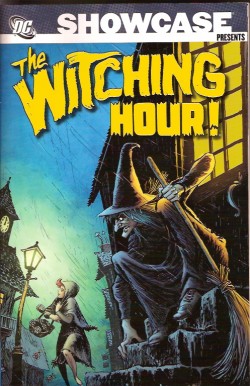
Showcase Presents The Witching Hour volume 1


By Alex Toth & various (DC Comics)
ISBN: 978-0-85768-196-6

American comicbooks started slowly until the creation of superheroes unleashed a torrent of creative imitation and invented a new genre. Implacably vested in the Second World War, the Overman swept all before him (and the far too occasional her) until the troops came home and more traditional genres supplanted the Fights ‘n’ Tights crowd.

Although new kids kept up the buying, much of the previous generation also retained their four-colour habit but increasingly sought older themes in the reading matter. The war years altered the psychology of the world, and as a more world-weary, cynical young public came to see that all the fighting and dying hadn’t really changed anything, their chosen forms of entertainment (film and prose as well as comics) reflected this. As well as Western, War and Crime comics, madcap escapist comedy and anthropomorphic funny animal features were immediately resurgent, but gradually another periodic revival of spiritualism and interest in the supernatural led to a wave of increasingly impressive, evocative and even shocking horror comics.

There had been grisly, gory and supernatural stars before, including a pantheon of ghosts, monsters and wizards draped in mystery-man garb and trappings (The Spectre, Mr. Justice, Sgt. Spook, Frankenstein, The Heap, Dr. Fate and dozens of others), but these had been victims of circumstance: the unknown as a power source for super-heroics. Now the focus shifted to ordinary mortals thrown into a world beyond their ken or control with the intention of unsettling, not vicariously empowering the reader.

Almost every publisher jumped on the increasingly popular bandwagon, with B & I (which became the magical one-man-band Richard E. Hughes’ American Comics Group) launching the first regularly published horror comic in the Autumn of 1948, although Adventures Into the Unknown was technically pipped by Avon who had released an impressive single issue entitled Eerie in January 1947 before launching a regular series in 1951, by which time Classics Illustrated had already long milked the literary end of the medium with adaptations of the Headless Horseman, Dr. Jekyll and Mr. Hyde (both 1943), The Hunchback of Notre Dame (1944) and Frankenstein (1945) among others.

If we’re keeping score this was also the period in which Joe Simon and Jack Kirby identified another “mature market” gap and invented the Romance comic (Young Romance #1, September 1947) but they too saw the sales potential for spooky material, resulting in the seminal Black Magic (launched in 1950) and boldly obscure psychological drama anthology Strange World of Your Dreams (1952).

The company that would become DC Comics bowed to the inevitable and launched a comparatively straight-laced anthology that nevertheless became one of their longest-running and most influential titles with the December 1951/January 1952 launch of The House of Mystery.

When the hysterical censorship scandal which led to witch-hunting hearings (feel free to type Senate Subcommittee on Juvenile Delinquency, April-June 1954 into your search engine at any time… you can do that because it’s notionally a free country now) was curtailed by the industry adopting a castrating straitjacket of self regulatory rules.

HoM and its sister title House of Secrets were dialled back into rationalistic, fantasy adventure vehicles, which dominated the market until the 1960s when super-heroes (which had started to creep back after Julius Schwartz began the Silver Age of comics by reintroducing the Flash in Showcase #4, 1956) finally overtook them. Green Lantern, Hawkman, the Atom and a slew of other costumed cavorters generated a gaudy global bubble of masked mavens which even forced the dedicated anthology suspense titles to transform into super-character split-books.

However nothing combats censorship better than falling profits and at the end of the 1960s the Silver Age superhero boom stalled and crashed, leading to the surviving publishers of the field agreeing to loosen their self-imposed restraints against crime and horror comics. Nobody much cared about gangster titles at that time but as the liberalisation coincided with another bump in global interest in all aspects of the supernatural, the resurrection of scary stories was a foregone conclusion and obvious “no-brainer.” Even the ultra wholesome Archie comics re-entered the field with their rather tasty line of Red Circle thrillers…

With Tales of the Unexpected from #105 and House of Mystery #174 the company switched to anthology horror material before creating an all-new title to further exploit the morbid fascination with the fearsome and spooky (they even resurrected the cancelled House of Secrets in late 1969) for those heady days when it was okay – and profitable – to scare the heck out of little kids by making them laugh.

Edited until #14 by Dick Giordano, The Witching Hour first struck at the end of 1968 (with a February/March 1969 cover-date). From the outset it was an extremely experimental and intriguing beast and this amazingly economical Showcase Presents collection reprints the first 19 issues, completely covering the first three years as the fear fad grew to become the backbone of DC’s sales. It is perhaps the most talent-stuffed title of that entire period.

Here the usual cool and creepy horror hosts who introduced the tales were three witches – based as much on Macbeth as the ancient concept of Maiden, Mother and Crone – a torrid trio who constantly battled to outdo or out-gross each other in the telling of terror tales. Moreover, Cynthia, Mildred and Mordred – as well as shy monster man-servant Egor – were designed and usually drawn by master artist Alex Toth; making the framing sequences between yarns as good as and sometimes better than the stories they brazenly bracketed.

One minor quibble: records from the period are not complete and occasionally a creator is unknown, but this volume also sadly misattributes the artist too. I’ve attempted to correct the mistakes when I’m certain, but please be warned and beware – I’m not always right either…

Following a stunning Nick Cardy cover, Toth starts the ball rolling by introducing the sinister sisters and their ongoing contest before Dennis O’Neil & Pat Boyette relate the story of a time-travelling tap-dancer in ‘Save the Last Dance For Me’, after which Toth writes and illustrates a compelling period piece of peril in ‘Eternal Hour!’ and Jack Sparling relates the eerie fate of wave-obsessed Stanley’s search for ‘The Perfect Surf’. Toth’s scary sisters then close out the premier issue (with, I suspect, additional inks from Neal Adams), but still find room for ‘Silk Gauze’, an informational page by persons unknown which first appeared in Tales Unexpected #126.

Although attributed to Toth, #2’s introductory episode is by his old Standard Comics stable-mate Mike Sekowsky (inked by Giordano) and leads into Sparling’s dream-chiller ‘Scream!’, after which young José Delbo delineates a shocking period tale of slavery and vengeance ‘The Trip of Fools!’ before Sid Greene’s short ghost story ‘The Beat Goes On!’ and Sparling’s ‘Once Upon a Surprise Ending!’ end an issue regrettably short on writer credits.

Following another Sekowsky/Giordano intro, Toth & Vince Colletta illustrated Don Arneson’s medieval mood masterpiece ‘The Turn of the Wheel!’, whilst Alan Riefe & Sparling told a decidedly different ghost-story in ‘The Death Watch’, after which Steve Skeates & Bernie Wrightson revealed a very alterative fantasy hero in ‘…And in a Far-Off Land!’, followed by the first of a series of short prose vignettes: an anonymous fright-comedy entitled ‘Potion of Love’.

Toth illustrated the sisters’ ‘Witching Hour Welcome Wagon’ (a useful identifying rule of thumb for the uninitiated is that the master usually signed his work – and was allowed too…) after which new kid Gerard Conway spectrally scripted ‘A Matter of Conscience’ for art veterans Sparling & George Roussos. Another anonymous prose piece ‘If You Have Ghosts’ preceded a smashing yarn entitled ‘Disaster in a Jar’ by Riefe & Boyette and Conway scripted the period witchfinder thriller ‘A Fistful of Fire’ for Delbo – a vastly underrated artist who was on the best form of his career at this time.

Toth’s Weird Sisters closed out that issue and eerily, hilariously opened #5 before Wrightson lavishly embellished a nifty but uncredited (as is every script in this one) nautical nightmare ‘The Sole Survivor!’, followed by text-teaser ‘The Non-Believer!’ and Boyette’s stunning, clownish creep-feature ‘A Guy Can Die Laughing!’, whilst Stanley Pitt & Giordano’s dating dilemma ‘The Computer Game’ was one of the first to explore that now-hoary plot. After Toth signs off the witches, there’s an added one-page black-comedy bonus from Sid Greene with ‘My! How You’ve Grown!’

Sekowsky & Giordano limned Dave Kaler’s take on the sisters’ intro for The Witching Hour #6 after which a far darker horror debuted in ‘A Face in the Crowd!’ by Conway, Mike Roy & Mike Peppe, as a Nazi war criminal and a concentration camp survivor met in an American street; Marv Wolfman & Delbo described a tale of neighbourly intolerance in ‘The Doll Man!’ and ‘Treasure Hunt’ by Skeates, John Celardo & Giordano showed why greed isn’t always good. Also included were Conway’s prose tale ‘Train to Doom’, ‘Mad Menace’ – a half-page gag strip by John Costanza – and ‘Distortion!’ another Greene-limned one-pager.

Toth & Mike Friedrich were on spectacular form for #7’s introduction and bridging sequences, and Bill Draut was compulsively effective in prison manhunt saga ‘The Big Break!’ whose scripter Steve Skeates also wrote modern-art murder-mystery ‘The Captive!’ for Roussos, after which Friedrich & Jack Abel advised a most individual baby to ‘Look Homeward, Angelo!’. Text piece ‘Who Believes Ouija?’ and Jack Miller & Michael Wm. Kaluta’s gothically lovely ‘Trick or Treat’ round out the sinister sights in this issue.

Sergio Aragonés & Neal Adams provided the witch-bits for #8, bracketing their own satanically sardonic ‘Above and Beyond the Call of Duty!’, as well as ‘Three Day Home Trial!’ (Aragonés & Cardy) and the staggeringly inventive ‘Computerr’ by that man again and Toth. ‘The Career Man’ was a witty but anonymous prose piece and the issue closed with a Twice Told Tale by Ron Whyte & Sparling, as an urban myth was revealed in ‘The Sign of the Hook!’

Toth & Draut began #9, after which Bob Brown & Murphy Anderson illustrated ghostly tale ‘The Long Road Home!’ and, after text story ‘The Dark Well’, the peripatetic, post-apocalyptic, ironic occasional series ‘The Day after Doomsday’ by Len Wein & Sparling made a welcome appearance. Delbo delightfully delineated a terrifying tale of Old China in ‘The Last Straw’ and, after George Tuska took over the Weird Sisters linking-segments, a doomsday debacle closed the dramas with a ‘Trumpet Perilous!’ drawn by Sparling & Abel.

The witches’ opening issue #10 were once more by Toth & Draut, promptly followed by a magnificent illustration job by the great Gray Morrow on the regrettably uncredited ‘A Warp in Time… Loses Everything!’ – work inestimably improved by being seen in monochrome – after which the all-word ‘I’ll See You in My Dreams’ preceded Conway & Toth’s superb forbidden romance ‘Hold Softly, Hand of Death!’. Tuska handles the Sisters before Sparling’s faux-fact page ‘Realm of the Mystics’ ends this excursion into the dark.

Toth drew the intro and Jack Oleck’s ‘The Mark of the Witch’ (inked by Draut) in #11, whilst – after text-tale ‘Retired Undefeated!’ – Tuska inspirationally illustrated the creepy chronal conundrum ‘The Sands of Time, the Snows of Death!’, and The Witching Hour #12 was similarly blessed, as after a sinisterly sexy Skeates/Toth intro the devilish duo then described an horrific ‘Double Edge’ battle between witch-queens and valiant mortals, followed by a Machiavellian actor’s ‘Double Take’ (Skeates & Tuska) and a demonic duel and ‘Double Cross!’ by Skeates & Gil Kane. The ever-anonymous prose piece was the mordantly merry ‘The Dead Can’t Talk But…’

Giordano’s last issue was editor was #13, which opened in grand style as fellow comicbook hosts Cain, Abel and the Mad Mod Witch (from Houses of Mystery and Secrets and The Unexpected respectively) attended ‘New Year’s Eve at the Witching Hour’ (illustrated by Neal Adams) followed by a marvellously experimental and effective psycho-thriller by Alan Gold & Gray Morrow entitled ‘The Maze’, a far more traditional but no less scary story ‘The Accursed Clay!’ (Miller, Sparling & Frank Giacoia) and the just plain strange tale of ‘The Rush-Hour Ride of Abner Pringle!’, by Wein & Delbo. As an added treat the text token was ‘The Witching Hour Mistree’ by that shy but not retiring rogue Egor…

When veteran editor Murray Boltinoff assumed the reins with #14 (April-May 1971) an element of experimentalism was surrendered but the more conventional material was no less welcomed by the horror-hungry readership: more proof, if any were needed, that artistic endeavour and envelope-pushing aren’t to everybody’s taste. George Tuska replaced Toth as regular illustrator of the introductory and bridging sections, but otherwise most fright-seeking kids could hardly tell the difference.

The all-science fiction issue’s terror-tales began with a beautiful but oddly stilted yarn from Conway and Jeff Jones who explored the solitary burdens of ‘Fourteen Months’ in deep space, whilst ‘Which Witch is Which?’, by Kaler, drawn by Stanley & Reg Pitt, related the comeuppance of an intergalactic Lothario. As “Al Case”, Editor Boltinoff provided the text feature ‘Dead Letter Office’ and the issued ended on a classic visual high note with ‘The Haunted House in Space!’ illustrated by the dream team of Al Williamson & Carlos Garzon.

After the usual ghastly graphic girl talk TWH #15 started with a murder masterpiece from George Kashdan & Wally Wood revealing that ‘Freddy is Another Name For Fear!’, after which Al Case scripted ‘End of a World’ before Phil Seuling & Gray Morrow stole the show with the fearsome fable of the ‘Bayou Witch’ and Case & Art Saaf rang down the curtain with ‘I Married a Witch!’

Issue #16 saw House of Mystery expand from 32 to 52 pages – as did all DC titles for the next couple of years, opening the doors for a superb period of new material and the best of the company’s prodigious archives to an appreciative, impressionable audience. The mysterious magic began after Tuska’s punchy prelude with the cautionary ‘Never Kill a Witch!’ by Carl Wessler, John Calnan & Bernie Case, after which Boltinoff – as Bill Dennehy – provided a slick and edgy reinterpretation of a classic fairytale for Morrow to lavishly limn in ‘The Spell of Sinner Ella!’ before switching back to his Case persona for the Tony DeZuniga illustrated duelling drama ‘You Can’t Hide From Death’. The classic reprints began with ‘The Wondrous Witch’s Cauldron’ (drawn by the legendary Lee Elias from House of Secrets #58), followed by a Joe Orlando illustrated, Charles King scripted text piece ‘Last Meal’ and Howie Post and Draut’s ghoulish period parable ‘The Curse of the Cat’ which both first saw print in House of Mystery #177.

Kashdan & Heck opened #17 with a modern magic myth in ‘This Little Witch Went to College’ after which a classic 1950’s fear-feature from Sensation Mystery Comics #109 saw Carmine Infantino & Joe Giella devastatingly depict the ‘Fingers of Fear!’ whilst from House of Secrets #46, Howard Sherman delineated ‘The Second Life of Simon Steele’. Dennehy, Calnan & Colletta provided a new yarn with an old moral in ‘The Corpse who Carried Cash!’ before Wessler & mood-master Jerry Grandenetti fantastically finished the fear-fest with ‘The Man in the Cellar’.

The same team opened #18 with ‘The Worm that Turned to Terror’, a schizophrenic slice of domestic hell followed by ‘The Diggers!’ a nasty, vengeful yarn from Bobs Haney and Brown with Giacoia inks that encompassed half a century of French war and regret. Tales of the Unexpected #13 was the original source of both the Ed Herron/Jack Kirby conundrum ‘The Face Behind the Mask’ and the Herron/Cardy creepy-crime caper ‘I Was a Prisoner of the Supernatural’, after which modernity returned with Jim Aparo’s ‘Hypnotic Eye’ and the Kashdan, Calnan & Colletta cautionary tale ‘When Satan Comes Calling!’

The final issue in this superbly spooky compendium is The Witching Hour #19, which, after the customary Tuska drawn kaffeeklatsch with Mordred, Mildred and Cynthia, commences in a stylish, sparkling Jack Phillips & Grandenetti chiller ‘A Tomb for the Winning!’, swiftly followed by ‘The Four Threads of Doom’ (by anonymous & Cardy from Tales of the Unexpected #12) after which a different anonymous and Tuska provided a fresh new thriller in ‘Stop Beating, Heart! You’re Killing Me!’. One final Cardy reprint ‘The Lamp That Changed People!’ (House of Mystery #20) follows before this wonderful debut volume of witchly wonderment concludes with the Kashdan/Elias shocker ‘What Evil Haunts This House?’

These terror-tales captivated the reading public and critics alike when they first appeared and it’s likely the supernatural sector saved DC during one of the toughest downturns in comics publishing history. Now their blend of garish mordant mirth, classic horror scenarios and suspense set-pieces can most familiarly be seen in such children’s series as Goosebumps, Horrible Histories and their many imitators.

If you crave beautifully realised, tastefully gore-free sagas of tension and imagination, not to mention a huge supply of bad-taste, kid-friendly cartoon chaos, stay up past The Witching Hour as long and as often as you possibly can…

© 1969, 1970, 1971, 1972, 2011 DC Comics. All Rights Reserved.

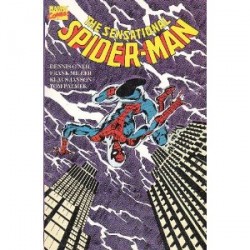
Sensational Spider-Man


By Dennis O’Neil, Frank Millar, Klaus Janson, Tom Palmer, Stan Lee, Jack Kirby & Steve Ditko (Marvel)
ISBN: 978-0-87135-514-0

Here’s a masterfully moody little lost snippet of full-on Marvel Madness from the early days of graphic novel compilations that might amuse and will certainly delight all-out aficionados and neophyte Spidey fans alike.

Released in 1989, but still readily available and affordable, this full-colour 80 page compendium collects two supremely impressive Amazing Spider-Man Annuals (#s 14 and 15) by veteran scripter Dennis O’Neil and then rising star Frank Miller, yet still finds room for a classy classic from the Astounding Arachnid’s earliest days (Amazing Spider-Man #8) by Marvel’s triumvirate of top creators.

Inexplicably the action starts with Amazing Spider-Man Annual #15 (1981) with Klaus Janson inking ‘Spider-Man: Threat or Menace?’ wherein maniac vigilante Frank Castle (five years before the Steven Grant/Mike Zeck miniseries catapulted him to anti-heroic superstardom in The Punisher) returns to the Big Apple and becomes embroiled in a deadly scheme by Doctor Octopus to poison five million New Yorkers.

It’s not long before both Peter Parker and his colourful alter-ego are caught in the middle of a terrifying battle of ruthless wills in this tense and clever suspense thriller, which perfectly recaptures the moody mastery of Steve Ditko’s heydays.

Next up is the previous year’s summer offering: a frantic magical mystery masterpiece wherein Doctor Doom and extra-dimensional dark god Dread Dormammu attempt to unmake Reality by invoking the Arcane Armageddon of The Bend Sinister.

‘Vishanti’, inked by Tom Palmer, sees an unsuspecting dupe capture Doctor Strange for the malevolent masterminds and nearly unleash cosmic hell with only the Amazing Spider-Man left to literally save the world; a fascinating magic and mayhem romp that once more deeply references and reverences the glory days of Ditko, particularly ‘The Wondrous World of Dr. Strange!’, the legendary team-up of web-spinner and wizard from Spidey’s second annual.

As if that brace of brilliant yarns was not enough high-quality comic excitement, this slim tome also includes ‘Spiderman Tackles the Torch!’, a masterful, light-hearted 6-page vignette written by Stan Lee, drawn by Jack Kirby and inked by Ditko wherein a younger, boisterous and far more carefree wall-crawler gate-crashed a beach party thrown by the flaming hero’s girlfriend, leading to a clash with the entire Fantastic Four with explosive and thoroughly entrancing consequences.

The most enduring and effective component of Spider-Man’s success was always the soap opera continuity element, but this rare collection of stand-alone stories perfectly demonstrates the character’s other star properties: sharp humour, heroic ingenuity, incredible action and beguiling empathy with the readership.

Sensational Spider-Man is one of the best individual collections of the hero ever assembled and makes a perfect primer for anyone looking to discover the magic for the first time.
© 1988 Marvel Entertainment Group, Inc. All rights reserved.

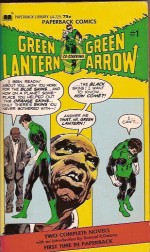
Green Lantern and Green Arrow #1


By Denny O’Neil, Neal Adams, John Broome, Gil Kane & various (Paperback Library)
ISBN: 0-446-64729-2 075

Until relatively recent times, comic strips – like rock ‘n’ roll or spray-can street art – were considered an outcast, bastard non-Art form continually required to explain and justify themselves.

And during those less open-minded times, just like the other examples cited, every so often the funnybook industry produced something which forced the wider world to sit up and take notice. In this slim paperback – in itself proof positive of the material’s merit because the stories were contained in a proper book and not a flimsy, gaudy, disposable pamphlet – some of the most groundbreaking tales in American comicbook history were re-presented to an audience finally becoming cognizant that a mere Children’s medium” might have something to contribute to the whole culture and society…

This striking paperback book collection opens with an introduction from Samuel R. Delaney and is rather sensibly followed by the very first Green Lantern tale from Showcase # 22 (September-October 1959), providing much needed background – as well as few solid old-fashioned thrills for readers new to the character and concept.

After the successful revival and reworking of The Flash in 1956, DC (or National Comics as they then were) was keen to build on a seemingly resurgent superhero trend. Showcase #22 hit the stands at the same time as the fourth issue of the new Flash comicbook (#108) with architects of the Silver Age editor Julie Schwartz, writer John Broome and artists Gil Kane & Joe Giella providing a Space Age reworking of a Golden-Age superhero with the magic ring.

Super-science replaced mysticism as Hal Jordan, a young test pilot in California, was transported to the side of a dying alien policeman who had crashed on Earth. Mortally wounded, Abin Sur commanded his power-ring, a device which could materialise thoughts, to seek out a replacement ring-bearer; honest and without fear.

Scanning the planet, it had selected Jordan and brought him to an appointment with destiny. The dying alien bequeathed the ring, a lantern-shaped Battery of Power and his noble profession to the astonished Earthman.

In six pages ‘S.O.S Green Lantern’ established the characters, scenario and narrative thrust of a series that would become the spine of DC continuity, opening a universe of wonder to wide eyed readers of all ages.

However, after a decade of earthly crime-busting, interstellar intrigue and spectacular science fiction shenanigans the Silver Age Green Lantern was about to become one of the earliest big-name casualties of the downturn in superhero sales in 1969 prompting Editor Schwartz to try something extraordinary to rescue the series.

The result was a bold experiment which created a fad for socially relevant, ecologically aware, mature stories which spread throughout DC’s costumed hero comics and beyond; totally revolutionising the industry and nigh-radicalising readers.

Tapping superstars-in-waiting Denny O’Neil and Neal Adams to produce the revolutionary fare, Schwartz watched in fascinated disbelief as the resultant thirteen groundbreaking, landmark tales captured the tone of the times, garnered critical praise, awards and desperately valuable publicity from the outside world, whilst simultaneously registering such poor sales that the series was finally cancelled anyway, with the heroes unceremoniously packed off to the back of marginally less endangered comicbook The Flash.

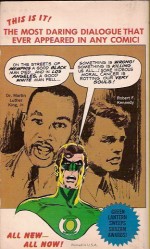
The main event of this pocket-sized collection re-presents the first two landmark stories, perfectly encapsulating everything Americans were already experiencing in the bubbling cauldron of social turmoil and experimentation on their own doorsteps. Everything was challenged on principle and with issue #76 of Green Lantern (April 1970 and the first issue of the new decade) O’Neil and Adams redefined the nature of superhero adventure with their “Issues”-driven stories; transforming complacent and all-powerful establishment masked boy-scouts into uncertain, questioning champions and strident explorers of the enigma of America.

When these stories first appeared National/DC was a company in transition – just like America itself – with new ideas sought for and acted upon: a wave of fresh, raw talent was hired, akin to the very start of the industry, when excitable scarce-young creators ran wild with imagination. Their cause wasn’t hurt by the industry’s swingeing commercial decline: costs were up and the kids just weren’t buying funnybooks in the quantities they used to so perhaps it was time to see what the next generation had to offer…

O’ Neil, working in tight collaboration with hyper-realistic artist Adams, assaulted all the traditional monoliths of contemporary costumed dramas with tightly targeted, protest- driven stories. The comicbook had been re-designated Green Lantern/Green Arrow with Emerald Archer Oliver Queen constantly mouthing off as a hot-headed, liberal sounding-board and platform for a generation-in-crisis whilst staid, quasi-reactionary GL Hal Jordan played the part of the oblivious but well-meaning old guard. At least the Ring-Slinger was able to perceive his faults and more or less willing to listen to new ideas…

‘No Evil Shall Escape My Sight!’ (inked by Frank Giacoia) is a true landmark of the medium, utterly reinventing the concept of the costumed crusader as newly-minted, freshly bankrupted millionaire Oliver (Green Arrow) Queen challenged his Justice League comrade’s cosy worldview when the lofty space-cop painfully discovered real villains wore business suits, had expense accounts, hurt people just because of skin colour and would happily poison their own nests for short-term gain…

The specific villain du jour was a wealthy landlord whose treatment of his poverty-stricken tenants wasn’t actually illegal but certainly was wickedly immoral… Of course, the fact that this yarn is also a brilliantly devious crime-thriller with science-fiction overtones didn’t exactly hurt either…

The continuation ‘Journey to Desolation’ from #77 was every bit as groundbreaking.

At the conclusion of the #76 an immortal Guardian of the Universe – known as “the Old Timer” – was assigned to accompany the Emerald Duo on a voyage to “discover America”: a soul-searching social exploration into the dichotomies which divided the nation – and a tremendously trendy and popular pastime for the nation’s disaffected citizens back then.

Their first stop brought the trio to a poverty-stricken Appalachian mining town run as a private kingdom by a ruthless entrepreneur happy to use agent-provocateurs and Nazi war criminals to keep his wage slaves in line. When a young protest singer looked likely to become the next Bob Dylan and draw unwelcome publicity, he had to be eliminated – as did the three strangers who drove into town at just the wrong moment…

Although the heroes provided temporary solutions and put away viciously human criminals, these tales were always carefully heavy-handed in exposing bigger ills and issues which couldn’t be fixed with a wave of a Green Ring; invoking an aura of helplessness that was metaphorically emphasised during this story when Hal was summarily stripped of much of his might for no longer being the willing, unquestioning stooge of his officious, high-and-mighty alien masters…

It’s impossible to assess the effect this early bookstore edition had on the evolution of comics’ status – it certainly didn’t help keep the comicbook series afloat – but  this edition certainly gave credibility to the stories themselves: a fact proved by the number of times and variety of formats these iconic adventures have been reprinted.
© 1959, 1970, 1972 National Periodical Publications, Inc.