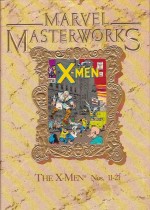
Marvel Masterworks volume 7: X-Men 11-21


By Stan Lee, Jack Kirby, Roy Thomas, Werner Roth, Dick Ayers & various (Marvel)
ISBN: 0-87135-482-9
In 1963 things really took off for the budding Marvel Comics as Stan Lee & Jack Kirby expanded their diminutive line of action titles, putting a bunch of relatively new super-heroes together as the Avengers, launching a decidedly different war comic in Sgt Fury and his Howling Commandos and creating a group of alienated but valiant teenagers who were called together to fight a rather specific threat to humanity.

After spectacular starts on all those titles, Kirby’s increasing workload compelled him to cut back to simply laying out these lesser lights as Thor and Fantastic Four evolved into perfect playgrounds and full-time monthly preoccupations for his burgeoning imagination. The last series he surrendered was the still-bimonthly X-Men wherein outcast tribe of mutants Cyclops, Iceman, Angel, Beast and Marvel Girl – very special students of wheelchair-bound telepath Professor Charles Xavier -worked diligently and clandestinely to foster peace and integration between the unwary masses of humanity and the gradually emergent race Homo Superior.

This second lavish deluxe edition covers issues #11-21 (May 1965 to June 1966) and features two key transitional moments as first Kirby and then Stan Lee handed the series over to fresh new talent…

A major turning point signalled The King’s departure in #11 with ‘The Triumph of Magneto!’ as our heroes and the Brotherhood of Evil Mutants both searched for a fantastically powered being called The Stranger. None were aware of his true identity, nature or purpose, but when the Master of Magnetism found him first it spelt the end of the war with the X-Men…

With Magneto gone and the Brotherhood broken, Kirby relinquished the pencilling to other hands, providing loose layouts and design only. Alex Toth & Vince Colletta proved an uncomfortable mix for #12′s tense drama ‘The Origin of Professor X!’ – the start of a two-part saga which introduced Xavier’s half brother Cain Marko and revealed that simple lout’s mystic transformation into an unstoppable human engine of destruction.

The story concluded with ‘Where Walks the Juggernaut’, a compelling tension-drenched tale guest-starring the Human Torch, but most notable for the introduction of penciller Werner Roth (using the name Jay Gavin) who would be associated with the mutants for the next half decade. His inker for this first outing was the infallible Joe Sinnott.

Roth was an unsung veteran of the industry, working for the company in the 1950s on such star features as Apache Kid and the inexplicably durable Kid Colt, Outlaw, as well as Mandrake the Magician for King Features Comics and Man from U.N.C.L.E. for Gold Key. As with many pseudonymous creators it was his DC commitments (mostly romance stories) which forced him to disguise his moonlighting until Marvel grew big enough to offer him full-time work.

‘Among us Stalk the Sentinels!’ from issue #14 (inked by Colletta), celebrated the team’s inevitable elevation to monthly publication with the first chapter of a three-chapter epic introducing anthropologist Bolivar Trask, whose solution to the threat of Mutant Domination was super-robots that would protect humanity at all costs. Sadly their definition of “protect” varied wildly from the expected, but what can you expect when a social scientist dabbles in high-energy physics and engineering?

The X-Men took the battle to the Sentinels secret base and became ‘Prisoners of the Mysterious Master Mold!’ before wrapping up their ferrous foes with ‘The Supreme Sacrifice!’ Veteran Dick Ayers joined as inker from #15, his clean line blending perfectly with Roth’s clean, classicist pencils. They remained a team for years, adding vital continuity to this quirky but never top-selling series.

X-Men #17 dealt with the aftermath of the battle – probably the last time the US Army and government openly approved of the team’s efforts – and the sedate but brooding nature of ‘…And None Shall Survive!’ enabled the story to generate a genuine air of apprehension as the Xavier Mansion was taken over by an old foe who picked them off one by one until only the youngest was left to battle alone in the climactic conclusion ‘If Iceman Should Fail..!’

‘Lo! Now Shall Appear… The Mimic!’ in #19 was Lee’s last script, a pithy tale of a troubled teen with the ability to copy the skills, powers and abilities of anyone in close proximity, after which the writing reins were turned over to Roy Thomas in #20, who promptly jumped in guns blazing with ‘I, Lucifer…’ an alien invasion yarn that starred Xavier’s arch-nemesis as well as Unus the Untouchable and the Blob, revealing in passing how Professor X lost the use of his legs.

With the canny concluding part ‘From Whence Comes Dominus?’, Thomas & Roth completely made the series their own, blending juvenile high spirits, classy superhero action and torrid soap opera with beautiful drawing and stirring adventure.

At this time Marvel Comics had a vast and growing following among older teens and college kids, and the youthful Thomas spoke and wrote as they did. Coupled with his easy delight in large casts this would increasingly make X-Men a very welcoming read for we adolescents…

These quirky tales are a million miles removed from the angst-ridden, breast-beating, cripplingly convoluted X-brand of today’s Marvel and, in many ways are all the better for it. Well drawn, highly readable adventures are never unwelcome or out of favour, and it should be remembered that everything here informs so very much of the mutant monolith. These are stories for the dedicated fan and newest convert, and never better packaged than in this fabulously stylish full-colour tome. Everyone should have this book.
© 1965, 1966, 1988 Marvel Characters, Inc. All Rights Reserved.
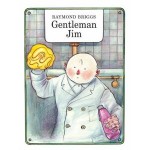

Gentleman Jim


By Raymond Briggs (Jonathan Cape/Drawn & Quarterly)
ISBN: 978-0-22408-524-3,  D&Q edition 978-1-8972-9936-4

Cartoonist, political satirist, philosopher, social commentator and delighter of children Raymond Briggs never forgets that kids think too. Many of his books for the young revel in their fascination with all things gross and disgusting and the artist has never underestimated unformed minds’ capacity for empathy and understanding. Moreover, unlike so many working in the children’s book industry, he isn’t afraid to be morose or even sad…

The comicbook industry has always wilfully neglected Briggs’s graphic narratives which have reached more hearts and minds than the Hulk or Dan Dare ever will, yet his books remain among the most powerful and important in the entire field.

His most famous works such as The Snowman, When the Wind Blows and Fungus the Bogeyman are but the tip of an incredibly impressive and uniquely British iceberg of dry wit, cheeky sarcasm and poignant fellow-feeling for even the most ghastly and graceless of protagonists.

After leaving Wimbledon School of Art, Central and The Slade – and completing a stint of National Service in Catterick – Briggs began working as an illustrator in 1958. He has since produced 36 superb books: ranging from illuminating other creators’ poetry and stories to crafting his own dingily fabulous yarns such as this slyly seditious treatise on self-betterment that first appeared in 1980.

One of his most charmingly bittersweet and contemplative efforts, Gentleman Jim is the mesmerising and affectionate portrait of a one of life’s always-dreaming no-hoper’s published just as Thatcherite dogma began to bite and tear into Britain’s already reeling social structures.

Jim Bloggs is a middle aged bloke who mans a Council-run public toilet or “Gentleman’s Convenience” in Birmingham, diligently and uncomplainingly cleaning and maintaining his subterranean office whilst constantly dreaming of bigger, better, bolder things. There’s nothing wrong with the job; it’s just that Jim feels he was meant for greater challenges…

Whenever he has a quiet moment he scans the job section of the paper, imagining himself a hero of the Royal Marines or a tail-gunner in a fighter-bomber or an artist or even a doorman in a fancy uniform. It’s never too late…

Jim’s problem is education: he hasn’t any and all these vacant situations want people with “The Levels”, O’s and A’s and whatnot…

At home with his wife Hilda, Jim discusses a change of direction. Inspired by a late film on television he decides to become a cowboy, maybe even a sheriff…

A quick bit of research convinces him that the start-up costs for cowboying are beyond his means and the paperwork would be a nightmare, but after popping into the second-hand bookshop Jim realises that what he really wants to be is a Highwayman.

Even here though, money is a problem. Great black chargers or even plain old valiant steeds cost thousands of pounds. However, when the local Donkey Sanctuary lets him have one of their older ones for free, Jim’s off and running in his new career…

Sublimely low key and gentle, the fall into arrant criminality of this ambitious dreamer is a sheer, understated masterpiece of sardonic whimsy which will enthral and delight older kids as well as all us adults who never quite made it. Yet…

Older editions from Hamish Hamilton, Sphere and Penguin are still available, and with Christmas bearing down upon us never forget Brigg’s splendid seasonal treats Father Christmas, Father Christmas Goes on Holiday and the stunning classic The Snowman…
© 1980, 2008  Raymond Briggs. All Rights Reserved.

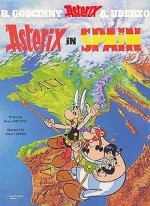
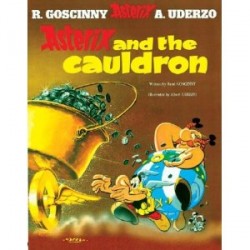
Asterix and the Cauldron, Asterix in Spain & Asterix and the Roman Agent


By Goscinny & Uderzo, translated by Anthea Bell & Derek Hockridge (Orion Books)
ISBNs: 978-075286-628-4, 978-0-75286-630-7 and 978-0-75286-632-1

One of the most-read comics series in the world, the collected chronicles of Asterix the Gaul have been translated into more than 100 languages since his debut in 1959, with animated and live-action movies, TV series, assorted games, toys and even a theme park outside Paris (Parc Astérix, if you’re planning a trip…) spinning off from his hilarious exploits.

More than 325 million copies of 34 Asterix books have sold worldwide, making his joint creators France’s bestselling international authors.

The diminutive, doughty potion-powered champion of Gallic Pride was created by two of the art-form’s greatest proponents, writer René Goscinny & illustrator Albert Uderzo and although their inspirational collaborations ended in 1977 with the death of the prolific scripter, the creative wonderment still continued until relatively recently from Uderzo and assistants – albeit at a slightly reduced rate.

The wonderment works on multiple levels: ostensibly, younger readers revel in the action-packed, lavishly illustrated comedic romps where sneaky, bullying baddies get their just deserts whilst we more worldly readers enthuse over the dry, pun-filled, sly satire, especially as enhanced for English speakers by the brilliantly light touch of translators Anthea Bell & Derek Hockridge, who played no small part in making the indomitable Gaul and his gallant companions so palatable to the Anglo-Saxon world. (Me, I still admire a divinely delivered “Paff!” as much as any painfully potent pun or dry cutting jibe…)

The stories were set on Uderzo’s beloved Brittany coast, where a small village of warriors and their families resisted every effort of the Roman Empire to complete the conquest of Gaul, or alternately, anywhere in the Ancient World, circa 50BC, as the Gallic Gentlemen wandered the fantastic lands of the Empire and beyond…

When the heroes were playing at home, the Romans, unable to defeat this last bastion of Gallic insouciance, resorted to a policy of containment. Thus the little seaside hamlet is permanently hemmed in by the heavily fortified garrisons of Totorum, Aquarium, Laudanum and Compendium.

The Gauls don’t care: they daily defy the world’s greatest military machine simply by going about their everyday affairs, protected by the magic potion of resident druid Getafix and the shrewd wits of the rather diminutive dynamo and his simplistic, supercharged best friend…

Firmly established as a global brand and premium French export by the mid-1960s, Asterix the Gaul continued to grow in quality as Goscinny & Uderzo toiled ever onward, crafting further fabulous sagas; building a stunning legacy of graphic excellence and storytelling gold.

Asterix and the Cauldron was the thirteenth saga, originally running in Pilote #469-491, throughout 1968 and first translated into English in 1976.

The tale is one of treachery, felony and dishonour as fellow Gaulish chieftain Whosemoralsarelastix – a cunning and conniving Roman collaborator – convinces the reluctant but big-hearted Vitalstatistix to guard the occupied cliff-top community’s treasury from Imperial tax collectors.

Despite knowing how untrustworthy the scoundrel is, Gaul must help Gaul and the rogue’s huge onion-soup cauldron, stuffed with his people’s golden Sestertii, is placed under the stewardship of the village’s greatest hero and most trustworthy warrior: Asterix.

However, that night, as a great inter-village feast is consumed, somebody cuts their way into the guard hut and steals the glittering contents of that mighty tureen. Naturally Whosemoralsarelastix wants his money back and the noble Vitalstatistix is honour bound to replace the stolen horde, Disgraced, Asterix is banished until he can refill the empty cauldron with gold…

Trusty Obelix refuses to turn away from his friend and joins the quest, which first takes them to the garrison of Compendium, where the wily warrior intends to refill the empty churn with some of the gold the occupiers have been regularly collecting from Gauls.

Unfortunately, Caesar has been experiencing some cash-flow problems and not only has he been rushing the takings to Rome, he hasn’t even paid his soldiers for months.

With disharmony, mutiny and strike action imminent among the legions Asterix and Obelix realise they must look elsewhere for their loot.

Even their old acquaintances the pirates are cash-strapped – and soon traditionally thrashed – so the doughty duo must seek their fortune at the grand market in Condatum, briefly and disastrously becoming Boar merchants, paid street boxers, actors and charioteers, before turning to crime and planning a bank robbery…

Even here our two just men fare badly. In desperation, they decide to rob Caesar’s tax collector, but Asterix discovers a strange thing. Not only has the destitute Whosemoralsarelastix somehow paid his taxes, but the coins smell of onion soup…

With realisation dawning Asterix visits the cliff-dwelling villagers for a little chat and a mighty reckoning…

Rich with slapstick action and cutting commercial satire (for example the tax collector was a caricature of France’s then Finance Minister Valéry Giscard d’Estaing), this hilarious crime caper is a glorious example of dry yet riotous adventure comedy.


Asterix in Spain promptly followed during 1969 (Pilote #498-519) in France and Astérix en Hispanie was translated into English two years later, recounting how a valiant group of Iberian warriors were similarly holding-out against Caesar’s total conquest of that proud nation.

Chief Huevos Y Bacon was the noble warrior leading the resistance but when his haughty son Pepe was captured all seemed lost. Fearing reprisal or rescue the Romans hastily despatched the hostage lad to the garrison at Totorum, under the command of brutish Spurius Brontosaurus, who has no idea what the “pacified” Gauls of the area are like and has his hands more than full contending with the appallingly behaved and inspirationally vicious young prince.

When his guards encounter Gauls in the great forest they are easily overwhelmed by playful Obelix. Asterix takes Pepe back to the village where, after an ill-advised and painful attempt by Brontosaurus and the legion to reclaim him, the heroes decide to return him to his father. Most pertinent in this decision is the spoiled brat’s obnoxious behaviour…

Brontosaurus has pragmatically decided the kid is perfectly safe with the Gauls and unaware of their planned jaunt to Hispania, smugly returns to his post. Meanwhile, after their mandatory encounter with pirates, Asterix, Obelix and faithful mutt Dogmatix make their leisurely way through the scenic countryside (offering many trenchant asides regarding the modern French passion for Spanish touring holidays) until a chance encounter in an inn reveals to the General how close they are to undoing all his plans.

Venal but no coward the Roman joins their excursion party, captures Asterix and steals the Gaul’s magic potion and plans to destroy Huevos Y Bacon’s resistance forever. However Obelix, Pepe – and Dogmatix – have a plan to spectacularly save the day…

Full of good-natured nationalistic pokes and trans-national teasing, liberally served up with raucous hi-jinks and fast-paced action, this is another magical titbit of all-ages entertainment.


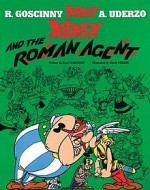
Asterix and the Roman Agent was first seen 1970 in Pilote #531-552, making the jump to English in 1972, and once more featured homeland insecurity as Caesar, under attack by the Roman Senate over the indomitable, unconquerable Gauls, deploys his greatest weapon: a double-edged sword named Tortuous Convolvulus, whose every word and gesture seems to stir ill-feeling and conflict in all who meet him.

Where Force of Arms has failed perhaps this living agent of dissent might forever fracture the Gauls’ unshakable comradeship and solidarity with dose of Roman entente dis-cordiale…

On the crossing, just two minutes with the conniving Convolvulus has the brotherhood of pirates at each other’s throats, and even while discussing the plan with Aquarium’s commander Felix Platypus, the agent’s unique gift sows discord and violence, so when he finally enters the village it’s not long before the high-spirited and fractious Gauls are at war with each other…

The women are cattily sniping at each other, the traders are trading blows and even Asterix and Obelix are on the outs. But that’s not the worst of it: somehow the idea has gotten around that their sharp little champion has sold out to the Romans…

With discord rife the Romans soon have the secret of the magic potion too – or do they? -but the ingenious Convolvulus hasn’t reckoned on two things: the sheer dimness of Imperial troops and the invaluable power of true friendship, leaving Asterix and Obelix a way to overcome their differences, turn the tables and once more save the day.

At last, the agent provocateur is forced to realise that sometimes one can be too smart for one’s own good…

Brittle, barbed and devilishly sharp, this yarn was reputedly based on lingering ill-feeling following an internal power-struggle at Pilote which almost cost editor Goscinny his job. The original title for the tale was La Zizanie – “The Ill-feeling” or “The Dissension”. Seen through the lens of forty years of distance, however, all that can be seen now is stinging, clever, witty observational comedy and magnificently engaging adventure, and surely that’s what matters most?

Asterix sagas are always stuffed with captivating historical titbits, soupcons of healthy cynicism, singularly surreal situations and amazingly addictive action, illustrated in a magically enticing manner. These are perfect comics that everyone should read over and over again.

© 1968-1970 Goscinny/Uderzo. Revised English translation © 2004 Hachette. All rights reserved.

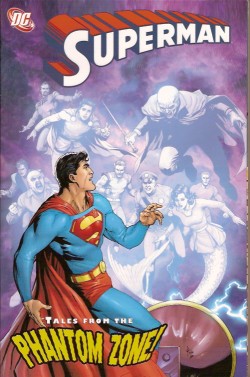
Superman: Tales From the Phantom Zone


By Jerry Siegel, Edmond Hamilton, Otto Binder, Curt Swan & various (DC Comics)
ISBN: 978-1-4012-2258-1

Superman is comics’ champion crusader: the hero who effectively started a whole genre and in the decades since his spectacular launch in June1938 one who has survived every kind of menace imaginable. With this in mind it’s tempting and very rewarding to gather up whole tranches of his prodigious back-catalogue and re-present them in specifically-themed collections, such as this sinister set of sorties into the stark and silent realm of nullity designated the Phantom Zone: a time-proof timeless prison for the worst villains of lost planet Krypton.

This captivating collection (gathering material from Adventure Comics #283, 300, Action Comics #336, Superman’s Girl Friend, Lois Lane #33, Superman’s Pal, Jimmy Olsen #62, Superman #157, 205, Superboy #89, 104 and Who’s Who volume 18) represents appearances both landmark and rare, crafted by the many brilliant writers and artists who have contributed to the Kryptonian canon over the years.

Naturally this terrific tome begins with the first appearance of the dolorous dimension in ‘The Phantom Superboy’ by Robert Bernstein & George Papp (from Adventure Comics #283 April, 1961) wherein a mysterious alien vault smashes to Earth and the Smallville Sensation finds sealed within three incredible super-weapons built by his long-dead dad Jor-El. There’s a disintegrator gun, a monster-making de-evolutioniser and a strange projector that opens a window into an eerie, timeless dimension of stultifying intangibility.

However as Superboy reads the history of the projector – used to incarcerate Krypton’s criminals – a terrible accident traps him inside the Phantom Zone and only by the greatest exercise of his mighty intellect does he narrowly escape…

Next is the pivotal two-part tale ‘Superboy’s Big Brother’ (by Robert Bernstein & Papp from Superboy #89, June 1961) in which an amnesiac, super-powered space traveller crashes in Smallville, speaking Kryptonese and carrying star-maps written by the long-dead Jor-El…

Jubilant, baffled and suspicious in equal amounts the Boy of Steel eventually, tragically discovers ‘The Secret of Mon-El’ by accidentally exposing the stranger to a fatal, inexorable death and desperately provides critical life-support by depositing the dying alien in the Phantom Zone until a cure can be found…

Superman’s Girl Friend, Lois Lane #33 (May 1962) by a sadly unknown writer, but illustrated by the always exceptional art team of Curt Swan and George Klein, further explored the dramatic potential of the Zone in ‘The Phantom Lois Lane!’ when a temporarily deranged Lana Lang dispatched all her romantic rivals for the Man of Tomorrow’s affections to the extra-dimensional dungeon, whilst one month later in ‘Superman’s Phantom Pal!’ (Leo Dorfman, Swan & Klein from Superman’s Pal, Jimmy Olsen #62) Jimmy Olsen in his Elastic Lad role was drawn through a miniscule rip in the fabric of reality and joined Mon-El in the Zone where the plucky cub reporter faced down the worst of Krypton’s villains and resisted their ultimate temptation…

Adventure Comics #300 (September 1962) saw the debut of the Legion of Super-Heroes in their own series by Jerry Siegel, John Forte & Al Plastino. That premier yarn ‘The Face Behind the Lead Mask!’ pitted Superboy and the 30th century champions against an unbeatable foe until Mon-El intervened, briefly freed from a millennium of confinement…

‘The Super-Revenge of the Phantom Zone Prisoner!’ by Edmond Hamilton, Swan & Klein (from Superman #157 November 1962) saw the introduction of power-stealing Gold Kryptonite and Superman’s Zone-o-phone – which allowed him to communicate with the incarcerated inhabitants – in a stirring tale of injustice and redemption. Convicted felon Quex-Ul uses the device to petition Superman for release since his sentence has been served, and despite reservations the fair-minded hero can only agree.

However further investigation reveals Quex-Ul had been framed and was wholly innocent of any crime, but before Superman can explain or apologise he has to avoid the deadly trap the embittered and partially mind-controlled parolee has laid for the son of the Zone’s discoverer…

Superboy #104 (April 1963) contained an epic two-part saga ‘The Untold Story of the Phantom Zone’ with ‘The Crimes of Krypton’s Master Villains’, by Hamilton & Papp describing Jor-El’s discovery of the Zone, his defeat of ambitious political criminal Gra-Mo and the reasons the vault of super-weapons was dispatched into space whilst ‘The Kid who Knocked Out Superboy!’ (illustrated by Swan & Klein) saw Gra-Mo return to take vengeance on the son of his nemesis.

‘The Man From the Phantom Zone!’ (Action Comics #336, April 1966, by Hamilton, Swan & Klein) had Superman release another convict whose time was served, leading to a captivating crime mystery in the Bottle City of Kandor as 50 year old juvenile delinquent Ak-Var found life in a solid and very judgemental world a very mixed blessing…

By April 1968, times and tone were changing as seen in ‘The Man Who Destroyed Krypton!’ (Superman #205, Otto Binder & Plastino) as alien terrorist Black Zero comes to Earth determined to blow it up just as he had the planet Krypton decades ago! Overmatched and stunned by the truth of his world’s doom, the Man of Steel is convinced that releasing Jax-Ur, the Zone’s wickedest inhabitant, is the only way to save his adopted homeworld… an absorbing, enthralling, surprisingly gritty tale of vengeance and a perfect way to end this eclectic collection.

With a comprehensive informational extract from the 1986 Who’s Who in the DC Universe entry from the Zone and its most notorious inmates, illustrated by Rick Veitch, this compelling collection is an intriguing introduction to the aliens hidden amongst us and a superb treat for fans of every vintage.

© 1961, 1962, 1963, 1964, 1966, 1968, 1986, 2009 DC Comics. All Rights Reserved.

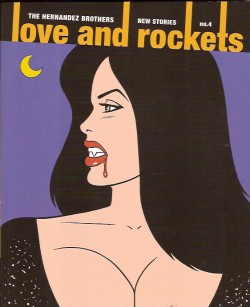
Love and Rockets: New Stories volume 4


By The Hernandez Brothers (Fantagraphics Books)
ISBN: 978-1-60699-490-0

A year goes by like twelve long months when you’re waiting for a really special treat, but if that deferred object of desire is the next annual instalment of Love and Rockets: New Stories then the wait is always worth it.

One of the transcendent, formative forces of the 1980s comics revolution, Love and Rockets was an anthology magazine featuring the slick, intriguing, sci-fi tinged hi-jinx of punky young things Maggie and Hopey – las Locas – and heart-warming, gut-wrenching soap-opera epics set in a rural Central American paradise called Palomar.

The Hernandez Boys (three guys from Oxnard, California: Jaime, Gilberto and Mario), gifted synthesists all, enthralled and enchanted with incredible stories sampling and referencing a thousand influences – everything from Comics, TV cartoons, masked wrestlers and the exotica of American Hispanic pop culture to German Expressionism.

There was also a perpetual backdrop displaying the holy trinity of youth: Sex and Drugs and Rock and Roll – for which last please also include alternative music, hip hop and punk.

The result was dynamite. Mario only officially contributed on rare occasions, but Jaime’s slick, enticing visual forays explored friendship and modern love by destroying stereotypes of feminine attraction through his fetching coterie of Gals Gone Wild, whilst Gilberto created a hyper-real landscape and playground of wit and passion created for his extended generational saga Heartbreak Soup: a quicksilver chimera of breadline Latin-American village life with a vibrant, funny and fantastically quotidian cast.

The denizens of Palomar still inform and shape his latest tales both directly and as imaginative spurs for ostensibly unaffiliated stories.

Everything from life, death, adultery, magic, serial killing and especially gossip could happen in Palomar’s meta-fictional environs, as the artist mined his own post-punk influences via a devastatingly effective primitivist style which blended the highly personal mythologies of comics, music, drugs, powerful women, gangs, sex and family using a narrative format which is the graphic equivalent of Magical Realism.

Winning critical acclaim but scant financial reward the brothers eventually went their own ways but a few years ago creatively reunited to produce these annual collections of new material in their particularly peculiar shared or, rather, intermittently adjacent pen-and-ink universes.

This fourth volume commences with the third chapter of Jaime’s compelling “those were the days” graphic revival of las Locas, aptly designated ‘The Love Bunglers’; further following the tribulations of middle-aged Maggie Chascarrillo, still looking for her life’s path and true love; still an uncomprehending, unsuspecting object of desire to the men – and some of the women – who flock around her.

Here the repercussions of the shocking return of her disturbed and long missing brother has shaken her world and looks likely to escalate into inescapable tragedy…

Gilbert again plunders the movie career of captivating, complex aging B-movie queen Fritz (See High Soft Lisp, The Troublemakers and Love from the Shadows) and her teen-tyro niece Dora “Killer” Rivera – granddaughter of Palomar’s formidable Matriarch Luba and another pneumatic, no-nonsense, take-charge character determined to do everything her way and own all her own mistakes – for the trendy, torrid and trashy ‘King Vampire’: a beguiling contemporary fang-banger romance wherein a troubled teen and her geeky boy-pal are spurned by the local Goth gang but not the two true bloodsuckers who have just flapped into town…

‘The Love Bunglers part 4’ cleanses the pictorial palate nicely as Maggie continues to stumble from misapprehension to miscue, after which Jaime offers another glimpse into her formative years with ‘Return To Me’, a stunning prequel to the previous volume’s astonishing, revelatory ‘Browntown’…

Gilbert then steps away from filmic conceit to examine the actress Fritz in the seductively mesmeric and innocuously shocking ‘And Then Reality Kicks In’ as the dowager starlet frankly discusses her drinking problem and stalled career with a friend before Jaime memorably closes out this year’s model with the poignant, trenchant and amazingly upbeat conclusion to ‘The Love Bunglers’

Warm-hearted, deceptively heart-wrenching, challenging, charming and irresistibly addictive, Love and Rockets: New Stories is a grown up comics fan’s dream come true and remains as valid and groundbreaking as its earlier incarnations – the diamond point of the cutting edge of American graphic narrative.

© 2011 Gilbert and Jaime Hernandez. This edition © 2011 Fantagraphics Books. All Rights Reserved.

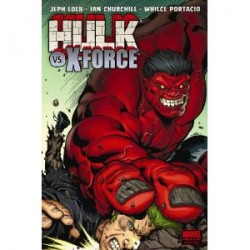
Hulk volume 4: Hulk Vs. X-Force


By Jeph Loeb, Ian Churchill, Whilce Portacio & various (Marvel)
ISBN: 978-0-7851-4053-5

Bruce Banner was a military scientist who was accidentally caught in a gamma bomb blast of his own devising. As a result stress and other factors caused him to transform into a giant green monster of unstoppable strength and fury. As both occasional hero and mindless monster he rampaged across the Marvel Universe for decades, finally finding his size 700 feet and a format that worked, swiftly becoming one of young Marvel’s most popular features.

An incredibly popular character both in comics and more global media beyond, he has often undergone radical changes in scope and format to keep his stories fresh and his exploits explosively compelling…

In recent years the number of Gamma-mutated monsters rampaging across the Marvel landscape has proliferated to inconceivable proportions. The days of Bruce Banner getting angry and going Green are long gone, so anybody taking their cues from the TV or movie incarnations will be wise to assume a level of unavoidable confusion. There are now numerous assorted Hulks, She-Hulks, Abominations and all kinds of ancillary atomic berserkers roaming the planet, so be prepared to experience a little confusion if you’re coming to this particular character told. Nevertheless these always epic stories are generally worth the effort so persist if you can.

Even if you are familiar with Hulk history ancient and modern, you might be forgiven for foundering on the odd point of narrative, so this book, collecting a more-or-less self-contained episode of gamma-generated chaos and calamity (originally published in the latter part of 2009 as ‘Code Red’ in Hulk #14-18) provides a cathartic dose of destructive diversion with a minimum of head-hurting continuity conundrums.

What you need to know: a new, intelligent, ruthless and awesomely efficient Red Hulk has been operating in America, clearly not Banner but nevertheless quite to able to hold his own against such powerhouses as The Abomination and even Thor. His origins and intentions are unknown and he guards his human identity with terrifying ferocity…

This is all part of an overlong, ongoing plot by the world’s wickedest brain trust to conquer everything (as would be later seen in the epic Fall of the Hulks) but here the action is immediate and starts in ‘Eyewitness’ (by Loeb, Ian Churchill & Mark Farmer) when mutant bounty hunter Domino accidentally sees the Red Hulk transform and flees for her life, knowing the Crimson Colossus will stop at nothing to protect his secret…

The Bloody Behemoth, who has unspecified shady links to Gamma-endowed metahuman psychiatrist Doctor Leonard Samson and professional Hulk-hunter General “Thunderbolt” Ross, gives chase, but soon loses the luck-warping mutant and so recruits a team of ruthless trackers comprising Deadpool, the Punisher, Crimson Dynamo, Thundra and Elektra with orders to silence her at all costs…

However Domino has friends of her own and in ‘Collision’ seeks help from Wolverine’s ultra-covert mutant wet-works squad which includes X-23, Archangel and Warpath: a lethal X-Force prepared to do whatever’s necessary to protect one of their own…

After a blockbusting battle the mutants seem to be gaining the upper hand until a new wild card emerges… a brutal Red She-Hulk who changes the game and demands the death of erstwhile ally Elektra in return…

‘She’ reveals plots within ploys inside schemes as the Scarlet Juggernaut betrays both sides for her hidden masters, culminating with all-out carnage in the concluding episode ‘Man in the Mirror’ as a few apparent coincidences are revealed as part of a engrossing master-plan…

With his complicity exposed Doc Samson takes centre-stage for the epilogue ‘Delilah’ (illustrated by Whilce Portacio & Danny Miki): a fascinating psycho-drama revealing the origins, motivations and hidden edges to the shrink all the heroes once trusted with their darkest, deepest secrets…

This bracing, bombastic battlebook also includes a 17 page cover gallery by Churchill, Farmer, Peter Steigerwald, Ed McGuiness, Dexter Vines, Chris Sotomayor, Dave Stewart and Jason Keith plus sketchbook/interview features with Churchill and Portacio with lots of pencil art and comedy strip bonus features ‘Hulk Gym’, ‘Hulk Movie’, ‘Hulk Date’, ‘Hulk Tonsils’ and ‘Hulk Dentist’ by Audrey Loeb, Carlos Silva & Dario Brizuela.

Whenever staggering, monumental Fights ‘n’ Tights turmoil is your fancy, the Hulk is always going to be at the top of every thrill-seekers hit list…

© 2009, 2010 Marvel Characters, Inc. All Rights Reserved.
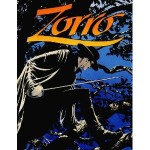
Zorro in Old California


By Nedaud & Carlo Marcello (Eclipse Books)
ISBN: 978-1-89172-920-1 hardcover,   978-0-91303-512-2 paperback

One the earliest masked heroes and still phenomenally popular throughout the world is perennial film favourite “El Zorro, The Fox”, originally created by jobbing writer Johnston McCulley in 1919 in a five part serial entitled ‘The Curse of Capistrano’ and debuting in All-Story Weekly from August 6th to 6th September. The tale was subsequently published by Grossett & Dunlap in 1924 as The Mark of Zorro and further reissued in 1959 and 1998 by MacDonald & Co. and Tor respectively.

Famously Hollywood royalty Douglas Fairbanks and Mary Pickford read the ‘The Curse of Capistrano’ in All-Story Weekly on their honeymoon and immediately optioned the adventure to be the first film release from their new production company/studio United Artists.

The Mark of Zorro was a global movie sensation in 1920 and for years after, and New York based McCulley re-tailored his creation to match the extremely different filmic incarnation. The Caped Crusader aptly fitted the burgeoning genre that would soon be people by the likes of The Shadow, Doc Savage and the Spider.

Rouben Mamoulian’s filmic remake of The Mark of Zorro further ingrained the Fox into the World’s psyche, and as the prose exploits continued in a variety of publications Dell began a comicbook version in 1949. When Walt Disney began a hugely popular Zorro TV show in 1957 the comics series was redesigned to capitalise on it and the entertainment corporation began a decades-long strip incarnation of “their” version of the character in various areas of the world. This classy tome collects half of the dozen stories produced for a French iteration which originally ran in Le Journal de Mickey, by veteran Italian artist Raphaël Carlo Marcello and relative enigma Nedaud, of whom I sadly know very little.

The celebrated and supremely stylish Marcello (1929-2007) moved to Paris in 1948 and began his long and prestigious career drawing Loana et le Masque Chinois in Aventures de Paris-Jeunes and Nick Silver for Collection Victoire before switching to newspaper strips for Opera Mundi in 1950, illustrating La Découverte du Monde and L’Histoire de Paris before adapting Ben Hur, Jane Eyre and the Bible.

In 1952, he joined Héroic, working on Oliver Twist, Gil Blas and Bug Jargal, then began a 15-year run on Le Cavalier Inconnu (1955-1970) in Pépito. His maintained ties to newspapers throughout and continued general interest literary adaptations for Mondial-Presse.

In 1956, he contributed Bob Franck to Bugs Bunny magazine and numerous strips to Lisette, Monty, Mireille, L’Intrépide/Hurrah and Rintintin. He moved to Pif Gadget in 1970, collaborating on his signature series Docteur Justice with prolific scenarist/writer Jean Ollivier as well as Amicalement Vôtre (a TV adaptation scripted Spanish by the legendary Victor Mora), Taranis (scripts by Ollivier & Mora), Tarao (by Roger Lécureux) and La Guerre du Feu.

Never stopping for breath Marcello illustrated John Parade, Patrouilleur de l’Espace, in Le Journal des Pieds Nickelés, the Larousse series L’Histoire de France en Bandes Dessinées, La Découverte du Mond and L’Histoire du Far West until 1985 when he joined Le Journal de Mickey to create Le Regard du Tigre, Le Club des Cinq and the subject of this collection.

Solidly based on the 1950s TV series Zorro ran for a year (1985-1986): 12 stirring fast-paced, swashbuckling romps, the first half of which are collected in this slim, full colour European-format album. After these thundering epics Marcello carried on improving, drawing sci fi extravaganza Cristal, epigrammatic short stories Voulez-vous de Nos Nouvelles?, Michael Jackson, Wayne Thunder, L’Épopée du Paris Saint-Germain and mature-reader series Nuit Barbare and Amok. In 1991 he returned to his hometown of Vintimille where he ended his days drawing episodes of iconic Italian series’ Tex and Zagor for Il Giornalino and Bonelli publishing.

Don Diego de la Vega is the foppish son of a noble house in old California when it was a Spanish Possession, who used the masked persona of Zorro the Fox to right wrongs, defend the weak and oppressed – particularly the pitifully maltreated natives and Indians – and thwart the schemes of Capitan Monastario, his bumbling sergeant Garcia and the despicable Governor determined to milk the populace for all they had. In his crusade Diego was aided by Bernardo (the deaf-mute manservant retained for the assorted TV and movies) and the good-will of the oppressed and overtaxed people of Los Angeles.

Whenever Zorro appeared he left his mark – a bold letter “Z” – carved into walls, doors, curtains, but never, ever faces…

Written for an all-ages audience these stories, each around ten pages long, play out an exotic eternal, riotous game of tag, beginning with ‘Wanted!’ as a huge reward galvanises the town to hunt the Fox, until Zorro turns the tables by capturing the Capitan and ransoming him back, thereby emptying the military coffers…

Next, in ‘The Assassins’ bandits posing as patriotic rebels capture the masked hero as part of their plan to murder the Governor and loot the ever-growing township, whilst ‘Double Agent’ sees Monastario blackmail a girl into betraying the wily avenger, but again misjudges Zorro’s ability to connect with the downtrodden Californians…

‘The Scarecrow’ finds the hero thwart a plot to discredit the reputation of Zorro when the unscrupulous Capitan employs a murderous masked impostor, after which ‘Tight as a Noose’ sees Monastario arrest Diego’s father Don Alejandro for treason to entrap the mysterious vigilante, and this rip-roaring rollercoaster ride concludes with ‘The Winds of Rebellion’ as the latest illegal tax rouses the town council against the Capitan and Zorro gets involved to prevent bloodshed…

Full-bodied, all-action and beautifully realised these classy adventures of a global icon are long overdue for a comprehensive and complete re-release, but until then at least this terrific tome is still readily available in both hardback and softcover through many online retailers.
® and © 1986 Zorro Productions, Inc. All Rights Reserved.
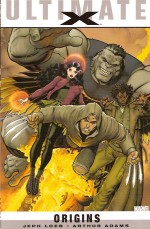
Ultimate X: Origins


By Jeph Loeb, Arthur Adams & various (Marvel/Panini UK)
ISBN: 978-1-84653-464-5

Marvel’s Ultimates imprint launched in 2000 with major characters and concepts re-imagined to bring them into line with the presumed different tastes of modern readers.

Eventually the alternate, darkly nihilistic universe became as continuity-constricted as its predecessor and in 2008 the cleansing event “Ultimatum” culminated in a reign of terror which apparently (this is still comics, after all) killed dozens of super-humans and millions of lesser mortals.

The era-ending event was a colossal tsunami triggered by Magneto which inundated the superhero-heavy island of Manhattan and devastated the world’s mutant population. The X-Men as well as many other superhuman heroes and villains died and in the aftermath anybody classed as a ‘”Homo Superior” had to surrender to the authorities or be shot on sight. Understandably most survivors as well any newly emergent X-people kept themselves well hidden…

This collection, re-presenting the long-delayed and much awaited Ultimate Comics: Ultimate X: Origins five part miniseries opens with the story of sixteen year-old wild-boy Jimmy Hudson, who terrifyingly discovers his true origins when he inexplicably survives a street-racing car-crash and is visited by a mysterious girl named Kitty Pride. She comes bearing a hologram message from the dead mutant-hero Wolverine which explains the boy’s incredible healing ability and the bony claws that keep inconveniently popping out of Jimmy’s knuckles…

“Karen Grant” finds all her carefully completed precautions to stay anonymously under the radar are for nought when her wannabe-boyfriend posts her picture on the internet, drawing the attention Tsunami-survivor Jean Grey was desperately trying to avoid…

When evil mutants Mystique and Sabretooth confront her in the mall where she works the result is spectacular destruction. Karen flees again, only to be found by Jimmy Hudson…

In Chicago winged vigilante Derek Morgan can’t escape his troubled past or hard-ass cop brother who wants to turn him in to the Mutant regulators. Fortunately that’s when jimmy and super-psionic Karen Grant show up…

In California Liz Allen thinks she’s sacrificed enough. Leaving New York, discovering she’s a mutant and having to put up with a half-brother dubbed “Tubby Teddy” who’s the spitting image of their deadbeat dad Fred Dukes – better known as the monstrous Blob – should be enough grief for any girl, but when Teddy’s only friend brings a gun to school and starts using it the siblings’ secret powers are exposed all over the TV News. Moreover his invulnerability is nothing compared to the fiery conflagration her own abilities spark off…

Before long the Allens are separated forever when she joins Karen’s runaways and Teddy trudges off to join the revenge-obsessed Quicksilver’s Brotherhood of Mutants…

The volume concludes as Karen’s “X” gang is forced to recruit some heavy-hitting power after Sabretooth almost kills Jimmy. Her solution is overwhelming overkill and she gets Bruce Banner to deliver a Hulk-sized lesson in punitive retribution, spurns Quicksilver’s offer to join forces against humanity and instead allies with one of the most powerful and Machiavellian men in the world…

Originally designed to form part of the post-Ultimatum stable of titles, X suffered perennial delays (five issues between February 2010 and July 2011) and the story instead became a prelude to a new Ultimate X-Men series, none of which is germane to the enjoyment of this classy “gathering of heroes” tale by the always impressive Jeph Loeb and the phenomenally impressive Arthur Adams (augmented by the digital inks of Aspen MLT’s Mark Roslan and colourist Peter Steigerwalt).

Even though far more upbeat and exuberant that the usual Ultimate fare, the trademark post-modernity and cynical, dark action is still here to deliver the grim ‘n’ gritty punch fans insist on, so this is a pretty good book for anybody thinking on jumping on to decidedly different world of Wonder: one which will resonate with older readers who love the darkest side of superheroes and casual readers who know the company’s movies better than the comic-books.
™ & © 2011 Marvel Entertainment LLC and its subsidiaries. Licensed by Marvel Characters B.V. All Rights Reserved. A British edition published by Panini UK, Ltd.

Superman: Eradication! (The Origin of the Eradicator)


By Dan Jurgens, Jerry Ordway, Roger Stern, George Pérez & various (DC Comics)
ISBN: 978-1-56389-193-9

Once the 1987 John Byrne re-imagining of the Man of Steel had stripped away much of mythology and iconography which had grown up around the Strange Visitor from Another World over fifty glorious years, succeeding creative teams spent a great deal of time and ingenuity putting much of it back, albeit in terms more accessible to a cynical and well-informed young audience far more sophisticated than their grandparents ever were.

This slim but exceedingly effective tome, collecting material from Action Comics #651-652, Adventures of Superman #460, 464-465 and Superman #41-42, provides fascinating insights and fresh revelations into the long-gone world of Krypton as well as introducing new character-concepts which would inform and affect the entire mythology of the World’s Ultimate Superhero.

After a lengthy period of self-impose banishment in deep space (for which see Superman: Exile) the Man of Tomorrow returned to Earth carrying an incredibly powerful artefact which had survived the destruction of Krypton. The Eradicator could reshape matter and was programmed to preserve, or indeed, resurrect and restore the heritage and influence of the lost civilisation at all costs.

After a number of close calls Superman realised the device was too dangerous to leave loose so he buried it in an Antarctic crevasse and assumed that ended the affair…

‘Be it ever So Deadly’ by Dan Jurgens & Andy Kubert, found the Metropolis Marvel hurtling to the South Pole to rescue a survey team transformed into slaves of an automated fortress built by the Eradicator to emulate Krypton on Earth. Investigating the alien citadel, Superman discovered the Eradicator had been built by his own ancestor and was attuned his own genetic structure. A spectacular battle ensued…

‘The Nature of the Beast’ by Jerry Ordway & Dennis Janke saw a far calmer hero adopt the Fortress as his secret base, whilst light years away the infallible bounty hunter Lobo got really drunk and was conned into travelling to Earth to destroy Superman. The Czarnian had no idea it was a betting scam by gamblers who didn’t want to see War World Gladiator Draaga bankrupt them by killing the Man of Steel…

Clark Kent had been made editor of glossy magazine News-time, but the pressure was clearly affecting the once affable and easygoing guy. Lately he’d become a cold, calculating, nitpicking martinet…

Even Superman seemed distant and aloof, especially with loved ones such as Ma and Pa Kent…

Still pickled, Lobo reached Earth before Draaga and promptly started throwing blockbusting punches…

‘Blood Brawl’ (Jurgens & Art Thibert) pulled all the clues together as Lobo and his entourage invaded the Antarctic citadel. When the Action Ace responded his uniform momentarily converted to Kryptonian apparel… As Superman and Lobo cataclysmically clashed, the Eradicator openly continued reprogramming the Man of Steel’s mind converting him into a ruthless, passionless Kryptonian science-warrior, who deemed it more expedient to avoid combat rather than strive against one of the most dangerous killers in the universe…

The tension increased in ‘Not of this Earth’ by Roger Stern, George Pérez, Kerry Gammill & Brett Breeding, as alien warrior queen Maxima returned, determined to make Superman her mate. When he again rejected her, their blistering battle allowed the Eradicator to take full control of the embattled Kryptonian.

Ordway & Janke then described how Kal-El the ‘Krypton Man’ began reshaping the chaotic, emotion-afflicted Earth into a world of cold logic just as Draaga arrived, hungry for a decisive return match…

A catastrophic combat almost decimated Metropolis before scientist Emil Hamilton forcibly moved the fight to the Moon, resulting in a turning point for ‘The Last Son of Krypton’ (Jurgens & Thibert) as Clark Kent’s foster parents, realising the horror their boy has become, risked everything to help him shake off the influence of the alien artefact, culminating in a magnificent victory of love over logic in Stern, Pérez, Gammill & Breeding’s stirring finale ‘Wayward Son’.

When they were first published these tales of the post-Crisis Superman continually confounded old fans (like me) and industry pundits (me again, I suppose) simply by being, against all expectations, the very best in good, old fashioned four-colour fun, crafted by creators who went above and beyond to deliver cracking good reads week after week. These little gems are an absolute must for any lover of Fights ‘n’ Tights wonderment.
© 1989, 1990, 1996 DC Comics. All Rights Reserved.

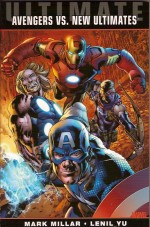
Ultimate Avengers vs. New Ultimates


By Mark Millar, Lenil Yu & various (Marvel/Panini UK)
ISBN: 978-1-84653-497-3

Marvel’s Ultimates imprint launched in 2000 with major characters and concepts re-imagined to bring them into line with the presumed different tastes of modern readers.

Eventually the alternate, darkly nihilistic universe became as continuity-constricted as its predecessor and in 2008 the cleansing event “Ultimatum” culminated in a reign of terror which apparently (this is still comics, after all) killed dozens of super-humans and millions of lesser mortals.

The era-ending event was a colossal tsunami which scoured the superhero-heavy island of Manhattan and in the aftermath a new world order increasingly dictated by super spy agency S.H.I.E.L.D. Before the Deluge Nick Fury ran an American super-human Black Ops team codenamed the Avengers, but he was eventually toppled from his position for sundry rule-bending antics – and for being caught doing them.

Now he’s firmly re-established, running a new dirty jobs team doing stuff the officially sanctioned Ultimates wouldn’t dream of…

His secret army consists of Hawkeye – the man who never misses, James Rhodes: fanatical soldier in devastating War Machine battle armour; demi-vampire Blade, and Gregory Stark: Iron Man’s smarter, utterly amoral older brother…

By contrast the shiny, glory-grabbing public team consists of Captain America, Thor, Iron Man, Giant Man and ruthless super-spy Black Widow – all taking their cues from Fury’s replacement Carol Danvers.

This final post-tsunami collection, re-presenting Ultimate Comics: Avengers vs. The New Ultimates #1-6, brings to a head simmering tensions and a rather obvious master-plan percolating since the first days of the new team, as, across town and in another book (see Ultimate Spider-Man: Death of Spider-Man) a superhero prodigy fights his final battle with repercussions that shape the conclusion of this earth-shattering epic…

At the end of Ultimate Avengers volume 3: Blade versus the Avengers the massive S.H.I.E.L.D. security citadel dubbed the Triskelion was unfortunately teleported to the Iranian desert outside Tehran, and as agent-in-charge Giant Man attempts to bring order from chaos, in New York Iron Man is on the brink of death…

Meanwhile reports come in that show top-secret super-soldier discoveries and genetic enhancement weaponry are being stolen and sold to rogue states…

Fury and his team, augmented by psycho-killer The Punisher, are already hot on the trail of the leak and logic increasingly dictates that there must be a highly-placed traitor within S.H.I.E.L.D. When his squad spectacularly confronts old ally Tyrone Cash – the first Hulk – the traitor is revealed as Carol Danvers… Meanwhile, behind enemy lines and tracking stolen superhuman tech, the other team have also discovered the turncoat and determine to capture the perfidious Nick Fury…

With the heroes all set up to destroy each other, New York becomes a catastrophic Ground Zero once more, intersecting with the aforementioned Spider-Man saga (so for best results read that too) whilst in Iran and North Korea super-soldier warfare directly resulting from the thefts look certain to catapult the planet into global conflagration and the true villain into a position of unassailable power…

Wrapping up another Ultimate era preparatory to a further Brave New Re-launch, this blackly trenchant, rollercoaster ride by Mark Millar & Lenil Yu (ably assisted by inkers and finishers Stephen Segovia, Gerry Alanguilan, Jason Paz, Jeff Huet & colourist Sonny Gho) is violent and powerfully effective: a grim-and-gritty swan-song both compelling and avidly readable.

This tome also includes a superb and abundant gallery of variant covers by Yu, Gho, Frank Martin, Marte Gracia, Frank Cho, Brandon Peterson, Jason Keith, Bryan Hitch, Paul Neary & Paul Mounts.

This spooky, cynical, sinister shocker is another breathtakingly effective yarn only possible outside the Marvel Universe; one which will resonate with older readers who love the darkest side of superheroes and casual readers who know the company’s movies better than the comic-books.

™ & © 2011 Marvel Entertainment LLC and its subsidiaries. Licensed by Marvel Characters B.V. All Rights Reserved. A British edition published by Panini UK, Ltd.