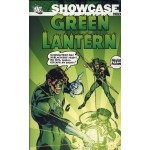
JLA volumes 11 & 12: Obsidian Age books 1 & 2


By Joe Kelly, Doug Mankhe, Tom Nguyen & various (DC Comics)
ISBNs: 978-1-84023-702-3 & 978-1-84023-709-2

When the World’s Greatest Superheroes and cornerstone of the Silver Age of Comics were relaunched in 1997 (see JLA: New World Order) the intrinsic quality actually lived up to the massive hype and made as many new fans as it won back old ones, but the glistening aura of “fresh and new” never lasts forever and by the time of these tales there had been numerous changes of creative team – usually a bad sign…

However Joe Kelly, Doug Mankhe and Tom Nguyen’s tenure proved to be a competent blend of steadying hands and boldly iconoclastic antics through which the JLA happily continued their tricky task of keeping excitement levels stoked for a fan-base cursed with a criminally short attention-span.

Kelly’s run on the series has some notable highs (and lows) and these two impressive editions collect the author’s boldest and most audacious adventure, an epic which spanned a year of publication and rewrote millennia of DC continuity.

Collecting issues # 66-71 and # 72-76 respectively, The Obsidian Age began in Book 1 with ‘The Destroyers Part 1’ wherein peculiar water-based events and phenomena indicated that Aquaman – believed killed in a catastrophe which eradicated Atlantis – was alive and trying to contact his JLA comrades. When the team are subsequently attacked by an ancient mystical warrior they get their first clue that it’s not “somewhere” but “somewhen”…

‘The Destroyers Part 2’ sees the team recovering from a second attack by the terrifying Tezumak and shaman Manitou Raven whose coordinated manipulations bring the heroes into the ruins of ‘Stillborn Atlantis’ and all-out combat with the deranged Ocean Master. When Tempest (the all grown-up Aqualad and now a magical adept himself) and a conclave of mystic heroes, including Zatanna, Faust and Doctors Occult and Fate, are called in to assess the deteriorating situation in the no-longer sunken city, the assembled champions of science and magic realise that something truly terrible is about to be unleashed….

Renewed assaults from the past indicate another global crisis and when the JLA discover a message from Aquaman they head back 3000 years to discover an unsuspected era of Atlantean domination. With Superman, Batman, Wonder Woman, Flash, Green Lantern, Martian Manhunter and Plastic Man gone, a stand-in team of heroes are left to guard the world but the ancient mastermind behind the menace has also prepared a contemporary trap for the substitute JLA…

‘New Blood’ (illustrated by Yvel Guichet & Mark Propst) features Zatanna and the Atom trying to stave off a concatenation of clearly unnatural natural disasters with the aid of Green Arrow, Captain Marvel, Firestorm, Jason Blood (with and without Etrigan the Demon), Hawkgirl, ex-villain and troubled soul Major Disaster, Nightwing and new find Faith (as well as a little help from the Justice Society of America) – a desperate scratch-team woefully overmatched and under-trained…

Meanwhile the strands of mystery are unravelled in ‘Revisionist History’ which finds the time-lost First Team in 1000BC where an above-the-waves Atlantis leads a coalition of nations and super-warriors in a campaign to conquer the known world by sword and sorcery. This unknown episode of human history contravenes all the records and clandestine reconnaissance by the JLA reveals an enchantress named Gamemnae is behind the scheme.

But her plans extend far beyond her own epoch and to that end she has kidnapped the 21st century water-breathing Atlanteans and enslaved their king Aquaman…

However Gamemnae’s own team is far from united: Manitou Raven and his bride Dawn are deeply troubled by the venality of their allies and the obvious nobility of the Justice Leaguers… Meanwhile back in the future the last story of Book 1 returns focus to the new team in ‘Transition’ (by Guichet & Propst again) as the planet is ravaged by geological catastrophes and Gamemnae’s millennial booby-trap activates, intent on conquering the world of tomorrow by suborning its meta-human and mystic defenders…

Ending on a stunning mystery cliffhanger this volume also includes a behind-the-scenes text feature on the formidable enemy team ‘The Ancients’ including a delightful assemblage of design sketches.


Obsidian Age Book 2 opens with a handy précis of previous events before launching into ‘History is Written By…’ (Kelly, Mahnke & Nguyen) wherein the JLA battles hopeless odds in ancient Atlantis whilst trying to liberate the enslaved water-breathing descendents, and in modern times ‘Last Call’ (Guichet & Propst) finds the alternative League faring badly against Gamemnae’s monstrous animated time-trap until a ghostly message from the past enables them to turn the tide…

‘Obsidian’ follows the final tragic battle between the JLA and The Ancients, revealing how Gamemnae’s future assaults began whilst Manitou finally succumbs to his conscience and changes sides. ‘Tragic Kingdom’ (by Mahnke, Guichet, Darryl Banks, Dietrich Smith and inkers Nguyen, Propst, Wayne Faucher & Sean Parsons) simultaneously provides the origin and final fall of the deadly Witch-Queen in a cataclysmic confrontation that bends times, breaks the barriers between life and death and costs one of the heroes everything…

The story-portion culminates in ‘Picking up the Pieces’ (with art from Lewis LaRosa & Al Milgrom)  as the JLA conclude a 3000 year quest to restore their fallen comrade and re-jig their roster in the aftermath of the epic adventure that has left them all changed…

This volume ends with an insightful and revealing ‘Afterword’ by Kelly.

The action of Obsidian Age takes place in the devastated aftermath of the DC Crossover Event “Our Worlds At War” wherein an alien doomsday device named Imperiex almost destroyed the planet – but there’s enough useful background and build-up in the chapters collected in both books to circumvent any possible confusion should that saga have passed you by…

Engaging, engrossing and especially entertaining this is a superior superhero slugfest that will appeal to a lot of readers who thought the Fights ‘n’ Tights genre beyond or beneath them…
© 2002, 2003 DC Comics. All Rights Reserved.
Buck Danny volume 2: The Secrets of the Black Sea


By Francis Bergése & Jacques de Douhet colours by Frédéric Bergése translated by Jerome Saincantin (Cinebooks)
ISBN: 987-1-84918-018-4

Here’s another of the latest translated versions of a favourite continental classic, courtesy of the fine people at Cinebooks; a publishing outfit dedicated to bringing the fabulous wealth and variety of European comics to we infamously resistant English-speaking graphic novel readers.

Buck Danny premiered in Spirou in January 1947 and continues soaring across the Wild Blue Yonder to this day. The strip describes the improbably long and historically significant career of the eponymous Navy pilot and his wing-men Sonny Tuckson and Jerry Tumbler. It is one of the world’s last aviation strips and a series which has always closely wedded itself to current affairs such as The Korean War, Bosnia and even Afghanistan.

The Naval Aviator was created by Georges Troisfontaines whilst he was director of the Belgian publisher World Press Agency. The series was initially depicted by Victor Hubinon before being handed to the multi-talented Jean-Michel Charlier, then working as a junior artist. When Charlier, with fellow creative legends Albert Uderzo and René Goscinny, formed the Édifrance Agency to promote the specialised communication benefits of comics strips, he continued to script Buck Danny and did so until his death.

From then on, his artistic collaborator Francis Bergése (who had replaced Hubinon in 1978) took complete charge of the adventures of the All-American Air Ace, occasionally working with other creators such as in this captivating political thriller scripted by Jacques de Douhet.

Like so many artists involved in stories about flight Francis Bergése (born in 1941) started young with both drawing and flying. He qualified as a pilot whilst still a teenager, enlisted in the French Army and was a reconnaissance flyer by his twenties. At age 23 he began selling strips to L’Étoile and JT Jeunes (1963-1966) after which he produced his first aviation strip Jacques Renne for Zorro. This was soon followed by Amigo, Ajax, Cap 7, Les 3 Cascadeurs, Les 3 A , Michel dans la Course and many others.

Bergése worked as a jobbing artist on comedies, pastiches and WWII strips until 1983 when he was offered the plum job of illustrating the venerable and globally syndicated Buck Danny. Bergése even found time in the 1990s to produce some tales for the European interpretation of Great British icon Biggles. He finally retired in 2008, passing on the reins to illustrator Fabrice Lamy and scripter Fred Zumbiehl.

Like all the Danny tales this second volume is astonishingly authentic: a suspenseful and compelling politically-charged adventure yarn originally published in 1994 as Buck Danny #45: Les secrets de la mer Noire and coloured by Frédéric Bergése) which blends mind-boggling detail and technical veracity with good old fashioned blockbuster derring-do.

It’s 1991 and in the dying days of the Soviet Empire a submarine incident leads the American Chief of Naval Operations to dispatch Buck into the newly open Russia of “Glasnost and Perestroika” to ascertain the true state and character of the old Cold War Foe. All but ordered to be a spy, Buck is further perturbed by his meeting with ambitious Senator Smight, the US dignitary who is supposed to be his contact and cover-story on the trip to heart of Communism.

Moreover, Buck is an old target of the KGB and knows that no matter what the official Party Line might be, a lot of Soviet Cold Warriors have long and unforgiving memories…

No sooner does he make landfall than his greatest fears are realised. Shanghaied to a top secret Russian Naval super-vessel Buck knows he’s living on borrowed time: but his death is apparently only a pleasant diversion for the KGB renegade in charge, whose ultimate plans involve turning back the clock and undoing all the reforms of the Gorbachev administration… and the key component to the scheme is a conveniently dead American spy in the wrong place at the right time…

Of course the ever-efficient US Navy swings into action, determined to rescue their pilot, clean up the mess and deny the Reds a political victory but there’s only so much Tumbler and Tuckson can do from the wrong side of the re-drawn Iron Curtain. Luckily Buck has some unsuspected friends amongst the renegades too…

Fast-paced, brimming with tension, packed with spectacular air and sea action and delivered like a top-class James Bond thriller, The Secrets of the Black Sea effortlessly plunges the reader into a delightfully dizzying riot of intrigue, mystery and suspense. This is a superb slice of old-fashioned razzle-dazzle that enthrals from the first page to the last panel and shows just why this brilliant strip has lasted for so long.

Suitable for older kids and boys of all ages, the Adventures of Buck Danny is one long and enchanting tour of duty no comics fan or armchair adrenaline-junkie can afford to miss. Chocks Away, me hearties…

© Dupuis, 1994 by Bergése& de Douhet. English translation © 2009 Cinebook Ltd. All Rights Reserved.

Y – The Last Man: volume 9 Motherland


By Brian K Vaughan, Pia Guerra Goran Sudžuka & José Marzán Jr. (Vertigo)
ISBN: 978-1-84576-358-9

When an apparent plague killed every male on Earth, only student Yorick Brown and his pet monkey Ampersand survived in a world instantly utterly all-girl. Even with a government super-agent and a geneticist escorting him across the unmanned American continent to a Californian bio-lab, all the boy could think of was re-uniting with his girlfriend Beth, trapped in Australia when the disaster struck.

With his rather reluctant companions secret agent 355 and Dr. Allison Mann – who were trying to solve the mystery of his continued existence – the romantically determined oaf trekked overland from Washington DC to California, getting ever closer to his fiancée… or so he thought. Each of his minders harboured dark secrets: Dr. Mann feared she might have actually caused the plague by giving birth to the world’s first parthenogenetic human clone and the lethally competent 355 had allegiances to organisations far-more far-reaching than the American government….

Also out to stake their claim and add to the general tension were renegade Israeli General Alter Tse’Elon and post-disaster cult called “Daughters of the Amazon” who wanted to make sure that there really were no more men left to mess up the planet. Other complications included Yorick’s occasionally insane sister, Hero, stalking him across the ultra-feminised, ravaged and now utterly dis-United States and the boy’s own desirability to the numerous frustrated and desperate women he encountered en route to Oz…

After four years and some incredible adventures Yorick (a so-so scholar but a proficient amateur magician and escapologist) and crew reached Australia only to discover Beth had already taken off on her own odyssey to Paris. During the hunt Dr. Mann discovered the truth: Yorick was alive because his pet Ampersand was immune and had insulated his owner via his habit of “sharing” his waste products if Yorick didn’t duck fast enough…

As this book, reprinting issues #49-54 of the award-winning comics series, opens with the eponymous four-chapter ‘Motherland’ (illustrated by Pia Guerra & José Marzán Jr.) Yorick and his guardians are following a trail to the true architect of the plague in Hong Kong, only to be captured by the cause of all the world’s woes – a deranged biologist cursed with genius, insanity and a deadly dose of maniacal misogynistic hubris.

Just before a breathtaking denouement wherein Yorick and Allison learn the incredible reasons for the plague, and Agent 355 and turncoat Australian spy Rose clash for the final time with the ninja who has been stalking them for years, the scene switches to France where Yorick’s sister Hero has successfully escorted the baby boys born in a hidden Space Sciences lab to relative safety… although General Tse’Elon is not a pursuer easily avoided or thwarted…

Even after the plague is demystified, the villain fully come-uppanced and the world on the verge of coming back from the brink of extinction there’s still stories to be told as seen in ‘The Obituarist’ (with art from Goran Sudžuka& José Marzán Jr.) wherein the murder of Yorick’s mother by Tse’Elon takes centre-stage in a divertissement which hints that the planet is already fixing itself and this penultimate volume concludes with ‘Tragicomic’ (Sudžuka& Marzán Jr. again) as the lunatic land of Hollywood begins its own comeback: making trash movies, spawning bad comicbooks and splintering into a host of territorial gang-wars…

The end was in sight and even with the series’ overarching plot engine seemingly exhausted there was still one last string of intrigue, suspense and surprise in store from writer Brian K. Vaughn. The last of Y the Last Man will prove to be the best yet but that’s an unmissable tale for another time…

© 2006, 2007 Brian K Vaughan & Pia Guerra. All Rights Reserved.

Little Ego


By Vittorio Giardino, translated by Jean-Jacques Surbeck (Catalan Communications)
ISBN: 978-1-56163-094-3

Born on Christmas Eve 1946, Italian electrician Vittorio Giardino changed careers at age 30 and began his true life’s work as one of the world’s most gifted graphic storytellers. Initially working for many European comics magazines, his first collection, Pax Romana, was released in 1978. There have been many more since.

Giardino has worked slowly but consistently on intriguing and complex characters such as detective Sam Pezzo, the cold-war hero Jonas Fink and diffident super-spy Max Fridman as well as general fiction tales, producing more than 35 albums to date.

In January 1984 Italian Popular Arts and nostalgic style magazine Glamour International featured an engaging ingénue in a sexually charged yet delightfully innocent homage to Winsor McKay’s immortal fantasy strip Little Nemo in Slumberland. Little Ego then graduated to in her own occasional series in Comic Art (July 1985 to November 1989) which was reprinted in this saucy little collection and Heavy Metal and Penthouse Comics.

As well as some of the most clean-lined and sublime narrative art produced in the last half century Giardino’s unique ability to inform and suggest with nuanced expression and gesture plus his scrupulous devotion to research and historical accuracy elevates his work far above the usual adults-only one-handed reading matter whilst his clearly heartfelt homage to a past master and lost age reveals a sly, dry sense of humour and deliciously whimsical bent. Whenever his frankly frustrated heroine dreams the world is full of wickedly animated flowers, an amorous crocodile in her bath, mischievously narcissistic mirror-images, persistent but extremely handy umbrellas and the double-edged problems of ultra efficient bust-enhancement creams.

As all the vignettes end with Ego wondering what her therapist will think, it’s clear that psychological “hot-button topics” played a big part in the strip’s make-up…

Eventually the two-page complete adventures gave way to longer and even continued escapades, beginning with an embarrassing public nudity dream – but one with a happy ending – followed by the introduction of dream companion Onis, whose bold and boisterous nature inevitably got her and Ego into lots of sticky scrapes and situations as they went on an extended dream-vacation through the labyrinths of erotic imagery and her suppressed subconscious…

With wing-walking, the exotic Middle-East, lost palaces, Bedouin encampments, Big City fashion houses, night clubs and the permanent promise of the enigmatic Green Sheik and his under-used and over zealous harem to tantalise and titillate Little Ego (and her readers) this is a book open-minded adults will yearn to own.

Lucky for one and all then that even though out of print this seductive slim tome is still readily available…
© 1989 Vittorio Giardino. English edition © 1989 Catalan Communications. All Rights Reserved.

Max


By Giovanetti (Macmillan, New York)
No ISBN

Pericle Luigi Giovanetti was a huge star in the cartoon firmament in the years following World War II and one look at his work will instantly show you why. Born in 1916 in Switzerland, this doyen of brilliant penmen launched his most famous character in Punch in April 1953 – from whence most of these scintillating escapades sprang (the remaining pieces are courtesy of Nebelspalter and Glamour).

Max is a small, round furry creature most likened to a hamster, whose wordless pantomimes were both cute and whimsical – as well as trenchantly self-deprecating. Don’t ask me how a beautifully rendered little puff-ball could stand for pride brought low and pomposity punctured, but he did. The weekly incidents were also blissfully free of mawkish sentimentality; a funny animal for adults and children.

Max was syndicated across the world, (known as Mr. Makkusu-san in Japan) numbering such diverse luminaries as Jason Robards and Charles Schulz as fans and even lending its image and cache to the British Navy and Swiss Air Force as mascot and figurehead.

There were four collections between 1954 and 1961: this one, Max Presents, Nothing But Max and the Penguin Max. Like these, two other collections, Beware of the Dog and Birds without Words, are also criminally out of print.

In this initial 96 page hardback the hairy hero happily demonstrates the challenges inherent in assorted musical instruments, ink-pens, all kind of cooking, drink, hats, hobbies and a host of other occupations and interests…

For all his trenchant ability to convey meaning and offer salutary warnings without uttering a sound, Max’s origins – and indeed species – was a subject of much dispute in the four corners of the globe until Clive King and Giovanetti revealed all in the magical children’s book Hamid of Aleppo, (written in 1958) which delightfully revealed the little wonder’s true origins, antecedents, taxonomy and species: Max is a Syrian Golden Hamster!

The sheer artistic virtuosity of Giovanetti is astounding to see and the fact that his work should be forgotten is a travesty and a crime. If you ever find a collection of his work do yourself the biggest favour of your life and grab it with both hands.

The internet is a wonderful thing. Just as it finally provided me with a book I’d been hunting out for decades it also revealed that I’d been a short-sighted idiot for not looking further afield – or indeed across the Channel.

A French edition was released in 2003 (ISBN-13: 978-2-21107-074-4) because our Gallic cousins have a far more informed opinion of comics and cartooning than us Anglos – and since all these glorious cartoons are wordless masterpieces that shouldn’t hinder anybody wishing to make the acquaintance of this magical superstar of yesteryear – and, hopefully tomorrow…
© 1954 Pericle Luigi Giovannetti. All Rights Reserved.

Essential Daredevil volume 3


By Roy Thomas, Gene Colan, Barry Smith, Gerry Conway & various (Marvel)
ISBN: 978-0-7851-1724-7

Marvel Comics built its fan-base through audacious, contemporary stories with spectacular art and by creating a shared continuity that closely followed the characters through not just their own titles but also through the many guest appearances in other comics. Such an interweaving meant that even today completists and fans seek out extraneous stories simply to get a fuller picture of their favourites’ adventures.

In such an environment, series such as ‘Essential‘ and DC’s ‘Showcase‘ are an invaluable and economical format which approaches the status of a public service for collectors and fans. This particular edition, reprinting the exploits of a very different Daredevil to the one radicalised urban vigilante of Frank Miller and his successors, covers the period from February 1969 (#49) to March 1971 (#74), and includes Iron Man #35-36 wherein two complex extended storylines converged and somewhat confusingly concluded (see what I mean about cross-collecting?).

Matt Murdock is a blind lawyer whose other senses hyper-compensate, making him a astonishing acrobat, formidable fighter and a living lie-detector. Very much a second-string hero for most of his early years, Daredevil was nonetheless a very popular one, due in large part to the captivatingly humanistic art of Gene Colan. He fought gangsters, a variety of super-villains and even the occasional or monster alien invasion. He quipped and wise-cracked his way through life and life-risking combat, utterly unlike the grim, moody quasi-religious metaphor he’s been seen as in latter years.

In these tales from the pivotal era of relevancy, social awareness and increasing political polarisation the man Without Fear was also growing into the conscience of a generation…

The action commences with Stan Lee’s final scripts on the sightless crusader. ‘Daredevil Drops Out’ (#49), illustrated by Colan and the great George Klein, saw Murdock as the target of a robotic assassin built by Mad-Scientist-for-Hire Starr Saxon; a tense action-packed thriller which grew into something very special with the second chapter ‘If in Battle I Fall…!’ when neophyte penciller Barry Smith stepped in, ably augmented by veteran inker Johnny Craig.

Lee left comics Boy Wonder Roy Thomas to finish up for him in ‘Run, Murdock, Run!’ (Daredevil #51, with art by Smith & Klein), a wickedly gripping, frantically escalating psychedelic thriller which saw Saxon uncover the hero’s greatest secret as the Man Without Fear succumbed to toxins in his bloodstream and went berserk. The saga ended in stunning style on ‘The Night of the Panther!’ (Smith &Craig) as African Avenger Black Panther joined the hunt for the out-of-control DD and subsequently helped contain, if not defeat, the dastardly Saxon.

Moreover the ending blew away all the conventions of traditional Fights ‘n’ Tights melodrama and still shocks me today…

Colan & Klein returned for #53’s ‘As it Was in he Beginning…’ as Thomas reprised, revised and expanded Stan Lee’s origin script from Daredevil #1 whilst the hero came to a bold decision, executed in #54 as ‘Call him Fear!’ featured the “death” of Matt Murdock and the triumphant return of long-lost villain Mr. Fear. ‘Cry Coward!’ (beginning a superb inking run by the legendary Syd Shores) revealed DD’s desperate reason for faking his demise and saw the end of one of Horn-Head’s greatest foes.

‘…And Death Came Riding!’ opened a tense two-parter which forever changed Murdock’s relationship with the perennially loved-from-afar Karen Page and introduced a stunningly sinister new menace in Death’s-Head. By the end of ‘In the Midst of Life…!’ Matt and Karen were enjoying the most progressive and mature relationship in mainstream comics…

‘Spin-Out on Fifth Avenue!’ started to re-establish some civilian stability as the resurrected Mr. Murdock became a prosecutor for New York  District Attorney Foggy Nelson and went after a mysterious new gang-boss dubbed Crime-Wave. As the soap operatic plot-threads took hold new threats were waiting such as the amped-up biker Stunt-Master and #59’s far nastier hired assassin who proved ‘The Torpedo Will Get You if you Don’t Watch Out!’

‘Showdown at Sea!’ finished the career of the insidious Crime-Wave and signalled a return to single issue action-based stories beginning with ‘Trapped… by the Trio of Doom!’ featuring a spectacular struggle against Cobra, Mr. Hyde and The Jester whilst the Batman analogue from the Squadron Sinister (see Essential Avengers volume 4) attempted to destroy DD in ‘Quoth the Nighthawk “Nevermore”!’

Horn-Head stopped deadly psychopath Melvin Potter from busting out of jail in ‘The Girl… or the Gladiator’ at the cost of his love-life, then followed the star-struck Karen to Hollywood and took out his bad mood on a handy hood in ‘Suddenly… The Stunt-Master!’ Murdock stayed in Los Angeles to oversee Karen’s first acting gig – a pastiche of then-hot spooky TV show Dark Shadows – and stopped her becoming part of a murder spree in ‘The Killing of Brother Brimstone’, a classy whodunit which cataclysmically climaxed in ‘…And One Cried Murder!’

Still stuck on the West Coast DD tackled another old enemy as ‘Stilt-Man Stalks the Soundstage’ with the now-reformed Stunt-Master ably assisting our hero. Matt finally left Karen to the vicissitudes of Tinseltown, landing in New York just in time to become embroiled in a plot blending radical politics and the shady world of Boxing – ‘The Phoenix and the Fighter.’

The Black Panther returned seeking a favour in ‘A Life on the Line’ as kid gangs and the birth of the “Black Power” movement leapt from the news headlines to comicbook pages and youth protest also inspired the seditious menace of ‘The Tribune’ (written by Gary Friedrich) as youthful ideologues, cynical demagogues and political bombers tore the city apart. The unrest peaked in Daredevil #71 as Roy Thomas returned for his swansong to script the concluding ‘If An Eye Offend Thee…!’

New sensation Gerry Conway took over the scripting with the next issue, easing himself in with an interdimensional fantasy frolic as DD encountered a mirror dwelling mystery man named Tagak in ‘Lo! The Lord of the Leopards!’ before plunging readers into an ambitious crossover yarn which began in Iron Man #35 wherein the Armoured Avenger, seductive free agent Madame Masque and Nick Fury all wanted ‘Revenge!’ (Conway, Don Heck & Mike Esposito) for the near-fatal wounding of S.H.I.E.L.D agent Jasper Sitwell by the mercenary Spymaster.

Their efforts were somehow fuelling an alien artefact called the Zodiac Key and, when its creators sucked DD into the mix to battle Spymaster and a bunch of super-villains affiliated to the cosmic device, everybody got shanghaied to another universe in ‘Behold… the Brotherhood!’ (Daredevil #73, illustrated by Colan & Shores) before the epic concluded with extreme briskness in Iron Man #36.

Oddly though, ‘Among Us Stalks the Ramrod!’ (Conway, Heck & Esposito) concludes the crossover by page 8, yet continues for another 12 with the remainder of Shell-Head’s battle against an alien terra-former. Moreover the episode ends on a cliffhanger you’ll need Essential Iron Man Volume 3 to see resolved…

Daredevil #74 concludes this impressive outing with a mercifully complete conundrum as DD finds himself ‘In the Country of the Blind!’ and must thwart a criminal plot to cripple New York…

The social upheaval of the period produced a lot of impressively earnest material that only hinted at the true potential of Daredevil. These beautifully illustrated yarns may occasionally jar with their heartfelt stridency but the honesty and desire to be a part of a solution rather than blithely carry on as if nothing was happening affords them a potency that no historian, let alone comics fan, can dare to ignore.

And the next volume heads even further into uncharted territory…

© 1969, 1970, 1971, 2005 Marvel Characters, Inc. All Rights Reserved.

Jack of Fables volume 3: The Bad Prince


By Bill Willingham, Matthew Sturges, Tony Akins, Andrew Pepoy, Russ Braun & Andrew Robinson (Vertigo)
ISBN: 978-1-84576-913-0

In case you didn’t know, Fables are refugee fairytale, storybook and mythical characters hidden on our mundane Earth since their various legend-drenched realms fell to a mysterious and unbeatable Adversary. Arriving hundreds of years ago (and still coming) the immortal immigrants disguised their true natures from humanity whilst creating enclaves where their longevity, magic and sheer strangeness (such as all the talking animals safely sequestered on a remote farm in upstate New York) would not endanger the life of uneasy luxury they have built for themselves. Many of these elusive eternals wander the human world, but always under injunction never to draw any attention.

In Fables: Homelands the utterly self-absorbed and absolutely amoral Jack of the Tales (basis for such legends as Beanstalk, Giant-killer, Frost, Be Nimble and many more) did just that by stealing Fabletown funds to become a movie producer; creating the three most popular fantasy films of all time, based on (his version) of his life and consequently drawing physical power from the billions who inadvertently “believed” in him.  The avaricious toe-rag also coined vast amounts of filthy lucre in the process.

A key tenet of the series is that the more “mundies” (that’s mere mortals like you and me… well, me anyway) think about a fable character, the stronger that actual character becomes. Books, TV, songs: all feed their vitality.

In Jack of Fables: The (Nearly) Great Escape our irreverent faux-hero was brought low by the publicity-shy Fables Police, banished from Hollywood and ordered to disappear, with only a suitcase full of cash to tide him over.

Promptly captured by The Golden Bough, a clandestine organisation which had been “vanishing” Fables for centuries, Jack escaped during a mass break-out of forgotten, abridged Fables, all fleeing from a particularly horrific fate – metaphysical and contextual neutering.

He is presently on the run from those selfsame forces (in the distractingly vivacious shape of the Page Sisters, dedicated hunters of everything Fabulous and Uncanny) as this third volume – collecting issues #12-16 of the monthly Vertigo comic- commences with ‘Hit the Road, Jack’ the first chapter of the four part eponymous Bad Prince saga …

Written by Bill Willingham & Matthew Sturges and illustrated by Tony Akins & Andrew Pepoy, the adventure opens with Jack and the metaphysical, engagingly peculiar but trouble-attracting sad-sack Gary, the Pathetic Fallacy desecrating the Grand Canyon and arguing – which allows the aforementioned Page girls to recapture them. Bundled in the back of their van is Wicked John, another escapee from the Golden Bough internment camp. Still feisty, Jack picks another fight and as the recaptured Fables bicker their spat causes the van to plunge into the Canyon…

Of course, nobody dies but there are some unfortunate consequences. They’re stranded at the bottom, Priscilla Page has a broken wrist and as they all dry out after their a dip in the Colorado River a wandering tramp shoves a six-foot sword through Jack’s chest…

‘I Forget’ (with additional pencils by Russ Braun) resumes the tale with the irate but otherwise unharmed Jack bitching and whining about how the sword – by all accounts the legendary Excalibur – won’t come out, whilst unbeknownst to all in New York an old and formidable metafictional menace is stirring…

Back in the Canyon, Gary has reached some unfortunate conclusions about Jack and discovered the downside of being the Most Popular Fable in the World. The Golden Bough is also making another move as Hilary Page pressgangs a few defanged inmates and sets off on a mission of her own. Chapter three reveals some startling secrets and the unsuspected, humiliating connection between Jack and ‘The Legend of Wicked John’ before the tale diverts into a re-examination of that dratted “Beanstalk/Giant-killer” debacle. And as the cast kvetches, another mysterious pursuer closes in on the stranded story-folk…

If you were confused before, the concluding ‘(Enchanted) Blade Runner’ (with supplementary inking by Bill Reinhold) might clear things up for you (or not – it all depends on how much attention you’re paying) as Jack finagles himself out of his human-scabbard situation and the sinister Mr. Revise opens up his unconventional family album for closer inspection: a sinister yet sardonic foretaste of odd events to come…

There’s one last eccentric endeavour in store however as ‘Jack O’ Lantern’, illustrated by Andrew Robinson, once more delves into our obnoxious hero’s chequered past and describes some of the unsavoury and hilarious events that stemmed from his various dealings and disputes with the devil…

This series just gets better and better. An imaginative and breathtakingly bold rollercoaster ride of flamboyant fantasy and snappy-patter street-smarts, these yarns are always beautifully drawn and continually push the boundaries of traditional storytelling.

Saucy, self-referential, darkly, mordantly funny, Jack of Fables is a deliciously whimsical fairytale for adults concocted with much more broad, adult, cynical humour and sex than your average comicbook – so mothers and matrons be warned! Every enchanting volume should be compulsory reading for jaded fantasists everywhere.

© 2007, 2008 Bill Willingham and DC Comics. All Rights Reserved.
Jak volume 13 (1981)


By Jak (Express Newspapers)
ISBN: 0-85079-117-0

I reviewed one of Jak’s earliest collections a few years back and churlishly bemoaned the lack of contextual grounding, utterly forgetting that a brief time later the editors of the series began doing just that so here’s another bite of a superb cartoon cherry that’s still not impossible for the determined fan to find.

The truly sad if not terrifying thing about rereading topical news cartoons years if not decades later is how distressingly familiar the subjects and hot topics are.

For example this volume taken from 1981 features an impending Royal Wedding, bombings in Ireland, nuclear contamination, BP cocking up the planet, banking scandals, insane cuts in military spending, increased unemployment – especially for school and college leavers, brutal spending cuts, a chancellor who couldn’t add up (Geoffrey Howe back then), cynical disinformational bitching about overpaid Council and public sector workers plus a Tory government falling apart and attacking itself and its partners.

However, that time the Government saved itself by fighting a war with somebody thousands of miles away over oil, but there’s no chance of that happening aga…

Hey, wait a minute…

Even the quirky “silly season” stories seem afflicted by generational déjà vu then and now: ITV’s breakfast show was suffering a star-strapped meltdown, the space shuttle was big news (the first not last ever flight into orbit), Prince Andrew was embarrassing us in the eyes of the world, a major acting star went spectacularly off the rails and we were “all in it together” with even rich people cutting down on luxuries (slightly) and England had an appalling football team…

This compendium even closes with the threat of impending war in Libya…

Sometimes our industry is cruel and unjust. This collection of cartoons by Raymond Allen Jackson, who, as Jak, worked for thirty years as political cartoonist for London Evening Standard – renamed by this time as The Standard – is one of many that celebrated his creativity, perspicacity and acumen as he drew pictures and scored points with and among the entire range of British Society.

His gags, produced daily to a punishing deadline as they had to be topical, were appreciated, if not feared, by toffs and plebs alike and were created with a degree of craft and diligence second to none. Even now, decades later, they are still shining examples of wit and talent. Most of them are still scathingly funny too.

Artists like Jak who were commenting on contemporary events are poorly served by posterity. This particular volume (re-presenting a selection of single panel-gags from September 5th 1980 to October 19th 1981), like all of these books, was packaged and released for that year’s Christmas market, with the topics still fresh in people’s minds. Thirty years later – although the drawing is still superb – although the minutiae might escape a few – the trenchant wit, dry jabs and outraged passion which informed these pictorial puncture wounds is still powerfully present. And clearly human nature never changes…

It’s just a huge shame that the vast body of graphic excellence that news cartoonists produce has such a tenuous shelf-life. Perhaps some forward looking university with a mind to jazzing up their modern history or social studies curricula might want to step up and take charge of the tragically untapped and superbly polished catalogue of all our yesterdays…
© 1981 Express Newspapers Limited.

Heartburst – A Marvel Graphic Novel


By Rick Veitch (Marvel/King Hell Press)
ISBN: 0- 939766-82-5  King Hell edition ISBN: 978-0-98002-060-1

Once upon a time Marvel led the publishing pack in the development of high quality original graphic novels: mixing creator-owned properties, licensed assets like Conan, special in-continuity Marvel Universe tales and even new series launches in extravagant over-sized packages (a standard 285 x 220mm rather than the now customary 258 x 168mm based on the globally accepted European album format) which felt and looked instantly superior to the standard flimsy US comicbook no matter how good, bad or controversial the contents might be.

This terrifically appetising tale, developed under the company’s creator-owned Epic imprint in 1984, was one of the most experimental of those heady early days: a bold and impressive allegory of and attack on the assorted bigotries still too proudly cherished and even boasted of by so many in those distant days… in the 21st century we’re far less concerned with what you buy, pray to, look like or sleep with, aren’t we?

The drama begins with ‘Heartbeat’ as on a far-distant Earth colony circling Epsilon Bootis the theocratic authorities are in a state of constant crisis. In the centuries since humans first landed they have polarised into a closed, dogmatic and militaristic society, devoted to the worship of gods who regularly and actively communicate with them.

They have no truck with heretical Earth scientists like Miss Rimbaud whose explanation that the Holy Sponsor’s electronic teachings are merely old TV broadcasts. They don’t want to hear that those 1950s attitudes are discredited now. They absolutely won’t tolerate any hint of ending their campaign to sterilise and eradicate the native Ploo…

The indigenous natives are in dire distress: beautiful, friendly bright green beings, sexually and genetically compatible with humans and permanently emitting an aphrodisiac musk Terrans cannot resist. If the race is to be kept pure the Ploo simply cannot be allowed to survive…

Young Sunoco Firestone (most humans have good scriptural names like Pepsi, Schlitz or Bilko) is present when his uncle Inquisitor Xerox interrogates Rimbaud. Her story strikes a disturbing chord in the lad, already pushed to breaking point by recurring dreams of a magical well and a cosmic voice calling to him… When he sees a forbidden Ploo exotic dancer in a banned sector of town Sunoco is irresistibly drawn to her and the biologically inevitable happens…

Obsessed with his alien soul-mate Maia, shaken by his delirious fall into miscegenation and terrified because the Sacred Broadcasts have suddenly stopped, Sunoco snaps and abandons his life, joining Maia as a traveling entertainer, experiencing daily delight as the world rapidly goes to hell and beyond. But even though free, happy and proud; with Maia pregnant the dream voice won’t leave him alone, hinting at some incredible celestial destiny whilst the eternally vigilant gene-police are stepping up their pogroms and getting closer to the desperate fugitives…

With ‘Heartrhythm’ the forces of oppression close in and the lovers are separated as Sunoco is captured and the planet descends into outright civil war with the faithful eradicating the last Ploo and their turncoat human lovers. Broken and desperate Firestone agrees to become a spy for the human army, but when he meets the enigmatic Rimbaud he changes sides once more and finally discovers the secret of the voice and a fantastic universal power that will shape the destiny of two worlds in ‘Heartburst’…

Rick Veitch is a criminally undervalued creator, with a poet’s sensibilities and a disaffected Flower-Child’s perspectives informing a powerful social and creative consciousness and conscience. This spectacularly mind-bending romp synthesizes the total late 20th century American experience from the bland triumph of cultural imperialism to the spiritual disenfranchisement of Vietnam whilst telling an uplifting story of love and hope – a really neat trick if you can do it…

This sly, dry, funny, impressively adult and breathtakingly reflective full painted yarn proves that he can and Heartburst should be on the must read list of any serious fan…

In 2008 Veitch released a remastered, slightly smaller-dimensioned edition under his own King Hell Press imprint. Heartburst and Other Pleasures also includes three short graphic collaborations with those other outré  masters of unconventional love Alan Moore and Steve Bissette: including ‘Mirror of Love’, ‘Underpass’, ‘Try to Remember’ as well as unseen art-pages. This too is well worth  tracking down or you could simply order direct from the man himself by typing www.rickveitch.com into your favourite search-engine, remembering always to keep a credit card handy – preferably your own…
© 1984, 2008 Rick Veitch. All Rights Reserved.

Showcase Presents Batgirl volume 1


By Gardner Fox, Carmine Infantino, Gil Kane, Don Heck & various (DC Comics)
ISBN: 978-1-4012-1367-1

Today comics readers are pretty used to the vast battalion of Bat-shaped champions infesting Gotham City and its troubled environs, but for the longest time it was just Bruce, Dick and occasionally their borrowed dog Ace keeping crime on the run. However in Detective Comics #233 (July 1956 and three months before the debut of the Flash officially ushered in the Silver Age of American comicbooks) the editorial powers-that-be introduced heiress Kathy Kane, who sporadically suited-up in chiropteran red and yellow for the next eight years.

In Batman #139 (April 1961) her niece Betty started dressing up and acting out as her assistant Batgirl, but when Editor Julie Schwartz took over the Bat-titles in 1964 both ladies unceremoniously disappeared in his root-and-branch overhaul.

In 1966 the Batman TV series took over the planet, but its second season was far less popular and the producers soon saw the commercial sense of adding a glamorous female fighter in the fresh, new tradition of Emma Peel, Honey West and The Girl From U.N.C.L.E. especially when clad in a cute cape, shiny skin-tight body-stocking and go-go boots…

Of course she had to join the comics cast too and this Showcase edition re-presents her varied appearances as both guest-star and headliner in her own series, beginning with her four-colour premiere…

In ‘The Million Dollar Debut of Batgirl’ (Detective Comics #359, cover-dated January 1967) writer Gardner Fox and the art team supreme of Carmine Infantino and Sid Greene introduced young Barbara Gordon, mousy librarian and daughter of the Police Commissioner to the superhero limelight, so by the time the third season began on September 14, 1967, she was well-established.

Whereas in her small screen premiere she pummeled the Penguin, her funnybook origin featured the no-less-ludicrous but at least visually forbidding Killer Moth in a clever, fast-paced yarn involving blackmail and murder that still stands up today and which opens in fine style this long-awaited monochrome celebration of the brief but stellar career of one of the most successful distaff spin-offs in the business.

Her appearances came thick and fast after that initial tale: ‘The True-False Face of Batman’ (Detective #363, by Fox Infantino and Greene) was a full co-starring vehicle as the new girl was challenged to deduce Batman’s secret identity whilst tracking down enigmatic criminal genius Mr. Brains, after which she teamed-up with the Girl of Steel in World’s Finest Comics #169 (September 1967) wherein the uppity lasses seemingly worked to replace Batman and Superman in ‘The Supergirl-Batgirl Plot’; a whimsical fantasy feast from Cary Bates, Curt Swan & George Klein.

Detective #369, illustrated by Infantino and Greene, somewhat reinforced boyhood prejudices about icky girls in the classy thriller ‘Batgirl Breaks Up the Dynamic Duo’ which segued directly into a classic confrontation in Batman #197 as ‘Catwoman sets Her Claws for Batman!’ by Fox, Frank Springer and Greene. This frankly daft tale is most fondly remembered for the classic cover of Batgirl and Catwoman (with Whip!!!) squaring off over Batman’s prone body – comic fans have a psychopathology all their very own…

Gil Kane made his debut on the Dominoed Daredoll (did they really call her that? – yes they did, from page 2 onwards!) in #371′s ‘Batgirl’s Costumed Cut-ups’, a masterpiece of comic-art dynamism that inker Sid Greene could be proud of, but which proffered some rather uncomfortable assertions about female vanity that Gardner Fox probably preferred to forget – and just check out the cover of this tome if you think I’m kidding.

Batgirl next surfaced in Justice League of America #60, February 1968, wherein the team barely survived a return match with alien invader Queen Bee and were temporarily transformed into ‘Winged Warriors of the Immortal Queen!’ (by Fox, Mike Sekowsky & Greene whilst in the June-July The Brave and the Bold (#78) Bob Brown stepped in to draw her in for Bob Haney’s eccentric crime-thriller ‘In the Coils of the Copperhead’ wherein Wonder Woman found herself vying with the fresh young thing for Batman’s affections. Of course it was all a cunning plan… wasn’t it?

That same month another team-up with Supergirl heralded a sea-change in DC’s tone, style and content as the girls were dragged into ‘The Superman-Batman Split!’ (World’s Finest Comics #176) with Bates providing a far darker mystery for the girls and boys (including Robin and Jimmy Olsen) to solve whilst artists Neal Adams & Dick Giordano began revolutionising how comics looked with their moody, exciting hyper-realistic renderings.

Although Barbara Gordon cropped up in the background of occasional Batman adventures that was the last time the masked heroine was seen until Detective Comics #384, (February 1969) when Batgirl finally debuted in her own solo feature. Written by Mike Friedrich and illustrated by the phenomenal team of Gil Kane & Murphy Anderson ‘Tall, Dark. Handsome …and Missing!’ began a run of human-scaled crime dramas with what all the (male) scripters clearly believed was a strong female slant as in this yarn wherein librarian Babs developed a crush on a frequent borrower just before he inexplicably vanished.

Batgirl investigated and ran into a pack of brutal thugs before solving the mystery in the second part, ‘Hunt For the Helpless Hostage!’ (Detective #385), after which the lead story from that issue rather inexplicably follows here.

‘Die Small… Die Big!’ by Robert Kanigher, Bob Brown & Joe Giella is one of the best Batman adventures of the period, with a nameless nonentity sacrificing everything for a man he’s never met, but Babs is only in three panels and never as Batgirl…

Adventure Comics #381 (June 1969) made far better use of her skills as she went undercover and was largely at odds with the Maid of Steel whilst exposing ‘The Supergirl Gang’ in a tense thriller by Bates & Win Mortimer. Batgirl shared the second slot with Robin in alternating adventures, so she next appeared in Detective #388 which welcomed aboard newspaper strip veteran Frank Robbins to script ‘Surprise! This’ll Kill You!’ a sophisticated bait-and-switch caper which saw Batgirl impersonate herself and almost pay with her life for another girl’s crimes. Spectacularly illustrated by Kane & Anderson the strip had expanded from eight to ten pages but that still wasn’t enough and the breathtaking thrills spilled over into a dramatic conclusion in ‘Batgirl’s Bag of Tricks!

Although the tone and times were changing there was still potential to be daft and parochial too, as seen in ‘Batman’s Marriage Trap!’ (Batman #214, by Robbins, Irv Novick & Giella) wherein a wicked Femme Fatale set the unfulfilled spinsters of America on the trail of Gotham’s Most Eligible Bat-chelor (see what I did there? I’ve done it before too and you can’t stop me…). Not even a singular guest-shot by positive role-model Batgirl could redeem this peculiar throwback – although the art rather does…

‘A Clue… Seven-Foot Tall!’ (from Detective #392, October 1969, by Robbins, Kane & Anderson) was another savvy contemporary crime-saga which also introduced a new Bat cast-member in the form of disabled Vietnam veteran and neophyte private eye Jason Bard (who would eventually inherit Batgirl’s spot in Detective Comics). Here and in the concluding ‘Downfall of a Goliath’ Babs and Bard sparred and joined forces to solve a brutal murder in the world of professional basketball.

In issues #396 and 397 (February and March 1970) Batgirl faced the very modern menace of what we’d now call a psycho-sexual serial killer in the chilling and enthralling mystery ‘The Orchid-Crusher’ and ‘The Hollow Man’: a clear proof of the second string character’s true and still untapped potential…

The anniversary Detective #400 (June 1970) finally teamed her with Robin in ‘A Burial For Batgirl!’(Denny O’Neil, Kane & Vince Colletta) a college-based murder mystery that referenced the political and social unrest then plaguing US campuses, but which still found space to be smart and action-packed as well as topical before the chilling conclusion ‘Midnight is the Dying Hour!’ (Detective #401).

With issue #404 Babs became the sole back-up star as Robbins, Kane & Frank Giacoia sampled the underground movie scene with ‘Midnight Doom-Boy’ mischievously spoofing Andy Warhol’s infamous Factory studio in another intriguing murder-plot, diverting to and culminating in another branch of Pop Art as Batgirl nearly became ‘The Living Statue!’

In ‘The Explosive Circle!’ (#406, with Colletta back to ink) the topic du jour was gentrification as property speculation ripped Gotham apart, but not as much as a gang of radical bombers, leading to the cry ‘One of Our Landmarks is Missing!’ The next issue (#408) saw the vastly underrated Don Heck take over as artist, inked here by Dick Giordano on ‘The Phantom Bullfighter!’ wherein a work-trip to Madrid embroiled Batgirl in a contentious dispute between matadors old and new, leading to a murderous ‘Night of the Sharp Horns!’

Inevitably fashion reared its stylish head in a strip with a female lead, but Robbins’ immensely clever ‘Battle of the Three “M’s”’ (that’s mini, midi and maxi to you straights out there) proved to be one of the most compelling and clever tales of the entire run as a trendsetting celebrity found herself the target of an unscrupulous designer, leading to a murderous deathtrap for Babs in ‘Cut… and Run!’ Clearly inspired, Robbins stayed with girlish things for ‘The Head-Splitters!’ (Detective #412) and Heck, now inking himself, rose to the occasion for a truly creepy saga about hairdressing that features one of the nastiest scams and murder methods I’ve ever seen, ending in a climactic ‘Squeeze-Play!’…

Babs reunited with Jason Bard for an anniversary date only to stumble onto an ‘Invitation to Murder!’ (another celebrity homage; this time to Richard Burton and Elizabeth Taylor) – a classy fair-play mystery resolved in ‘Death Shares the Spotlight!’

A cop-killing had torn apart the city and Babs’ father Commissioner Jim Gordon was taking it badly in ‘The Deadly Go-Between!’, but militant radicals weren’t the only threat as seen in the concluding episode ‘A Bullet For Gordon!’, which presaged a far greater role for the once-anodyne authority figure and leading to the character’s integral role in today’s Bat-universe.

Robbins and Heck also revealed a shocking secret about the Commissioner that would build through the remaining Batgirl adventures, beginning with ‘The Kingpin is Dead!’, concerning a “motiveless” hit on an old gang-boss all cleared up in spectacular fashion with ‘Long Live the Kingpin!’ in #419.

‘Target for Mañana!’ saw Babs and her dad travel to Mexico on a narcotics fact-finding mission only to fall foul of a sinister plot in ‘Up Against Three Walls!’ before the series took a landmark turn in ‘The Unmasking of Batgirl’ as a charmer broker her heart and Babs decided to chuck it all in and run for Congress in ‘Candidate For Danger!’

Detective Comics #424 (June 1972) featured ‘Batgirl’s Last Case’ as “Battlin’ Babs” overturned a corrupt political machine and shuffled off to DC, leaving Jason to manage on his own, but that wasn’t quite the end of her adventures. Superman #268 (October 1973) found her battling spies in the Capitol beside the Man of Steel in ‘Wild Week-End in Washington!’ courtesy of Elliot S. Maggin, Curt Swan & Bob Oksner and repeating the experience a year later in ‘Menace of the Energy-Blackmailers!’ (Superman #279, by Maggin, Swan & Phil Zupa.

This eclectic but highly entertaining compendium concludes with one last Supergirl team-up, this time from Superman Family #171 (June/July 1975) wherein a distant descendent of the Empress of the Nile used magic to become ‘Cleopatra, Queen of America’ overwhelming even Superman and the Justice League before the Cape and Cowl Cuties finally lowered the boom…

Batgirl’s early exploits come from and indeed partially shaped an era where women in popular fiction were finally emerging from the marriage-obsessed, ankle-twisting, deferential, fainting hostage-fodder mode that had been their ignoble lot in all media for untold decades. Feminism wasn’t a dirty word or a joke then for the generation of girls who at last got some independent and effective role-models with (metaphorically, at least) balls.

Complex yet uncomplicated, the adventures of Batgirl grew beyond their crassly commercial origins to make a real difference. However these tales are not only significant but drenched in charm and wit; drawn with a gloriously captivating style and panache that still delights and enthralls. This is no girly comic but a full-on thrill ride you can’t afford to ignore…
© 1967-1975, 2007 DC Comics. All Rights Reserved.