Graylight


By Naomi Nowak (NBM)
ISBN13: 978-1-56163-567-2

There are a number of uncomfortable if not altogether unpleasant truisms that still dominate the narrative arts, particularly in terms of gender appeasement: most prevalent and dominant of those – after “chuck in some sex scenes” – are “males need to see mindless action as often as possible” and “women require moments of pretty, contemplative stillness in their stories.”

Mercifully these Hollywood-originated dictums are being challenged and disproved in recent years (just take a look at the frighteningly charged stillness of the “quiet bits” in such European screen gems as “Wallander”), especially in the burgeoning and still largely experimental graphic novel market, where the rules of narration are still being discovered…

In her third book, Graylight, painter and illustrator Naomi Nowak composes another dreamy, symbol-drenched inquiry into the complexities of love in a surreal, quasi-mystical tale of a troubled young woman whose complacency and bad habits get her into an unimaginable amount of difficulty.

Sasha is beautiful, affable, friendly, utterly self-absorbed and an unrepentant thief. If she sees something see likes, she simply knows it will be better off with her. Sadly that can also apply to people as well as objects…

Years ago, a man killed himself, and his widow swore to their infant son Edmund that she would always protect her baby boy from bad things – such as women who drive their husbands to their deaths…

As usual Sasha is the centre of attention in the bar when the journalist Erik spots her. She is holding court, shocking friends with her honesty about how wicked she is. She can feel no remorse for taking the things she wants. Erik is in town to interview a reclusive author, Aurora, and besotted with Sasha, brings her with him as his “photographer.”

The interview goes badly. Aurora is hostile and has a son nobody knew of: a sheltered young man called Edmund, who is protective of his mother but drawn to the moodily effervescent Sasha. Flirting with the reclusive boy as a matter of habit, Sasha is most attracted to an antique book, so she takes it.

Edmund sets out to retrieve the book but is increasingly ensnared in Sasha’s charismatic spell. Aurora, seeing Sasha to be just the kind of woman she swore to protect her son from, knows a few spells of her own, and is quite prepared to use any and every means to keep her ancient promise…

Colourful in misty pastels and shockingly bold lines, this oneiric, supernaturally-tinged drama blends the sensibilities of shōjo manga (romantic stories for young girls) with the bleak, moody naturalism of Scandinavian landscape painting and the rich, sexually charged texture of teen soap operas to produce a compellingly sinister love story of desire and consequence that is lyrical, often reflective and occasionally pretentious, but always eminently readable and totally beautiful to look upon.

And here’s my point: this quiet, contemplative breed of graphic narrative has a great deal to offer the reader looking for something a little different. As an old unrepentant heterosexual male I felt no need for a fistfight or car chase to keep my attention from wandering, and those dreamy, floaty moments greatly added to the atmosphere and mood. If the action is starting to pall, why not try a little mood magic…?

© 2007 Naomi Nowak. All Rights Reserved.

Famous Players – the Mysterious Death of William Desmond Taylor (paperback edition)


By Rick Geary (NBM/Comics Lit)
ISBN: 978-1-56163-559-7

Master cartoonist criminologist Rick Geary returns with another compelling escapade from his latest series of graphic novel crime reconstructions, soon available (May 20th) in an economical paperback edition.

Combining a superlative talent for laconic prose, incisive observation and detailed pictorial extrapolation with his fascination for the darker aspects of human history, Geary’s forensic eye scours the last hundred years or so for his ‘Treasury of XXth Century Murder’ series, here re-examining a landmark homicide that changed early Hollywood and led in large part to the punishing self-censorship of the Hays Commission Production Code.

In 1911 the first moving picture studio set up in the sunny orange groves of rural Hollywood. Within a decade the place was a burgeoning boom town of production companies and back lots, and movie stars were earning vast sums of money. As usual with Boom Towns the new community had swiftly accumulated a ubiquitous underbelly, becoming a hotbed of vice, excess and debauchery.

William Desmond Taylor was a man with a clouded past and a huge reputation as a movie director and ladies man. On the morning of Thursday, February 2nd, 1922 he was found dead in his palatial home by his valet, opening one of the most celebrated (and still unsolved) murder cases in Los Angeles’ extremely chequered history. Uncovering a background of drugs, sex, booze, celebrity and even false identity, this true crime became a template for every tale of “Hollywood Babylon” and, even more than the notorious Fatty Arbuckle sex scandal, drove the movers and shakers of Tinsel-Town to clean up their act – or at least to keep it out of the public gaze.

Geary is meticulous and logical as he dissects the crime, examines the suspects – major and minor – and dutifully pursues all the players to their recorded ends. Especially intriguing are snippets of historical minutiae and beautifully rendered maps and plans which bring all the varied locations to life (the author should seriously consider turning this book into a Cluedo special edition) and gives us all a fair crack at solving this glamorous Cold Case.

Geary presents the facts and the theories with chilling graphic precision, captivating clarity and devastating dry wit, and this saga is every bit as compelling as his Victorian forays: a perfect example of how graphic narrative can be so much more than simple fantasy entertainment. He is a unique talent in the comic industry not simply because of his manner of drawing but because of his subject matter and methodology in telling his tales.

This merrily morbid series of murder masterpieces should be mandatory reading for every mystery addict and crime collector.

© 2009 Rick Geary. All Rights Reserved.

Tales of the Green Beret Books 1-3


By Robin Moore & Joe Kubert (Blackthorne/Comic Strip Preserves)
ISBNs: 0-932629-36-9, 0-932629-48-2 and 0-932629-59-8

If you’re old enough to remember the Viet Nam conflict you’ll understand when I say that it was a war that changed the World’s perception of America. It marked a growth of civil resistance, student unrest and all-pervasive questioning of previously accepted authority. People thought differently after it ended. Most had their eyes opened: many screwed them tighter shut…

It is something we should be aware of now more than ever…

In 1965 a blockbuster book by novelist Robin Moore rocketed to the top of the bestseller lists, generating a film, a hit song and a highly controversial syndicated comic strip. Moore, possibly one of the very first “Embedded Journalists”, trained with and then accompanied America’s elite combat group, the US Army Special Forces, for two years, and was clearly proud to be counted amongst “The Green Berets.”

The United States Army Special Forces is a Special Operations Force designed to carry out six specific briefs: Unconventional Warfare, Foreign Internal Defense, Special Reconnaissance, Direct Military Action, Hostage Rescue and Counter-Terrorism. Units usually carry out these missions with foreign troops on foreign soil, and their remit also includes Search and Rescue, Peacekeeping and Humanitarian Assistance. In later years they have also specialized in Landmine Removal, Counter-Proliferation, Psychological Operations, Manhunting, and Counter-Drug operations.

The unit was formed in 1952 as part of the US Army Psychological Warfare Division, designated the 10th Special Forces Group at the new Psychological Warfare School (which became the John F. Special Warfare Center and School just before these strips premiered).

During the 1960s they were mostly employed in Southeast Asia, South America and Europe in their Unconventional Warfare capacity. The group motto is “De Oppresso Liber” – To Liberate the Oppressed – and relates to their most frequent function: training and advising foreign indigenous forces.

Oddly, the Green Beret itself is a Scottish tradition dating from World War II, when American OSS agents and US Army Rangers (their equivalent to our Commandos) were trained by the Royal Marines and awarded the prestigious headgear for successfully completing the terrifying Commando Training course.

The hats were banned by the US military, but worn clandestinely – and illegally – until 1961, when President Kennedy personally authorized them as a signal of the caliber of soldier able to win one: “a symbol of excellence, a badge of courage, a mark of distinction in the fight for freedom.”

This gesture forever bound the Green Berets to the memory of the murdered President, as the very first week of the strip stirringly affirms. Tales of the Green Berets comes from a time when the USA led the Free World (now there’s a phrase to pick apart semantically), politicians were generally considered to be open and honest and the CIA were good guys. As usual when nations go to war, idealism is always the first casualty, closely followed by young men and foreign civilians…

Fully aware of the value of favourable PR, the strip was created at the urging of Lt. General William Yarborough, who had sponsored Moore’s research and arduous training. He was the current commander of the John F. Kennedy Special Warfare Center and was keen to see the military displayed in a positive light. After a brief but abortive initial opening, the strip launched as a daily on April 4th and Sunday feature on April 10th 1966 from the Chicago Tribune Syndicate, with scripts by Howard Liss and art from the immensely talented Joe Kubert, whose work on DC’s war comic-books was swiftly making him America’s top war artist.

The tales featured a fictionalised reporter, Chris Tower, who had trained with the Green Berets for an article and was now posted to Vietnam by his newspaper magnate father to report on the war…

In the first adventure here ‘Kidnap Ksor Tonn’ Tower meets up with an old friend and becomes embroiled in an operation to abduct a prominent Viet Cong commander: an impressive tale of jeopardy and double-cross. These stories are surprisingly even-handed in their treatment of the conflict, as ‘Sucker Bait’ sees Tower visiting a jungle village of peasants caught in the middle of the war, with heartbreaking consequences…

This is followed by an exotic view of life in Sin City Saigon entitled ‘Chris Kidnapped’ but the perpetrators aren’t political, merely greedy students looking to make some quick American cash…

The first volume ends with the opening shots in a new conflict as Chris flies to Central America to join ‘Operation Oilspot’…

The saga continues in volume two as Chris becomes deeply involved in an ideological battle between the poor peasants of San Marco and Marxist insurgents. In this war for hearts and minds the Green Berets are only “observers”, teaching and training the local soldiery and helping to construct roads and a bridge, but the insurgents are determined to sabotage the project. Moreover they are not so much dedicated communists as profiteering bandits with an eye to the main chance…

This is an impressive saga full of genuine moral conflict and personal tragedy, whilst the next tale ‘Freedom Flight’, switches locales to East Berlin and genres to pure espionage as Tower and a European team warm up the Cold War to smuggle a family through Checkpoint Charlie for a new life beyond the Iron Curtain. Once more the story breaks at a critical moment, to resume in the third and final volume.

On concluding ‘Freedom Flight’ Tower returns to Southeast Asia to examine the links between South Vietnamese Generals – ostensibly the allies of the Americans – and American organised crime. ‘The Syndicate’ is a tense thriller which shows that the modern problem with Vietnamese drug lords was an open secret even in 1967, and as the spellbinding action simultaneously takes place in Asia and America, clearly reveals that the situation was in large part self-inflicted…

This final volume concludes with the somewhat truncated yet engagingly complex political drama ‘Prince Synoc’, wherein a Special Forces trained son of the King of Thailand apparently defects to a faction of the anti-American, anti-monarchist Thai Army of Liberation.

All is not as it seems though, as Tower and the local Green Berets discover… The third and final volume ends here on a rather inconclusive note with the December 31st 1967 Sunday instalment, but I’m not really surprised that these volumes never finished reprinting the entire strip…

The feature was in strange and controversial straits by this time. Although still popular, it had become an easy target for anti-war protesters, with writing campaigns and even picketing of papers that carried it. Kubert’s usually inspired and grippingly evocative textured art suffered (it looks to me like fellow DC artist Jack Abel has ghosted the inking on more than one occasion), and Joe left the strip in January 1968. His last Sunday page was January 7th and his final daily ran three days later. The series continued for a few months more with veteran Tarzan artist John Celardo as illustrator, before succumbing to the inevitable.

Now however, with the distance of decades, surely it is time for this superb and seminal series to be revisited and given the complete deluxe treatment. These cheap and cheerful Blackthorne editions are scarce, often poorly printed and incomplete. The first abortive tale ‘Viet Cong Cowboy’ was not included and since the stories are so very readable it seems only right to also include the missing Celardo strips. After all, this man was also a major artistic talent and I for one would love to review his later efforts…

One more for the graphic novel wish-list then…
© 1986 Tribune Media Services, Inc. All Rights Reserved.

JSA volume 4: Fair Play


By Geoff Johns & various (DC Comics)
ISBN: 978-1-84023-628-6

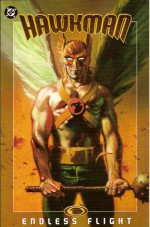
Now firmly re-established as a major force in the DC universe as well as the commercial comics market, the Justice Society of America went from strength to strength after the rebirth of the seminal, eternal hero Hawkman (see the previous volume JSA: the Return of Hawkman), with Geoff Johns writing increasingly grander epics, tinctured with intriguing soap-opera sub-plots whilst scrupulously exploring and reinventing the internal mythology that has kept the characters as beloved best friends for generations of fans.

This volume, collecting issues #26-31 of the monthly comic and pertinent selections from JSA Secret Files #2, leads off with ‘Breaking Storms’ (co-plotted by Davis S. Goyer and illustrated by Javier Saltares & Ray Kryssing) finding assorted members of the team getting reacquainted, generally carrying out day-to-day business, but beyond the rewarding view of heroes behind their masks, the groundwork for two upcoming epics were stylishly foreshadowed as a pair of old enemies made their first cautious moves…

‘Who Do You Trust?’ (with art from Rags Morales & Michael Bair) found the nominally reformed villain Black Adam making himself less than welcome with his new team-mates until magical boy-scout Captain Marvel intervened, and it was back to all-out action in ‘Upping the Ante’ (illustrated by Derec Aucoin) when extreme gambler Roulette laid plans to pressgang the JSA for her next cage-fighter gladiatorial tournament.

The plan got underway in ‘Thunderstruck’ (Morales & Bair) as the team elected a new chairman only to find themselves abducted and enslaved; forced to fight each other to the death for the edification of super-villains and evil millionaires. Throughout it all Roulette was playing a double-game: something other than greed for profit and blood was fuelling her actions…

The big climax began in a ‘Face-Off’ (by Stephen Sadowski, Christian Alamy & Dave Meikis) but the saga paused – if not digressed – for a short interlude featuring the team’s youngest members, Jakeem Thunder and Star-Spangled Kid (with art from Peter Snejbjerg), who were caught up in a battle with a “Jokerised” Solomon Grundy.

‘Kids’ was part of a braided crossover event that spanned the entire DC pantheon (see Batman: the Joker’s Last Laugh for more details and murderous high jinks) but scripter Johns also cannily used the opportunity to advance one of those aforementioned big plots by bringing back the original Johnny Thunder – who wanted his magic genie back from Jakeem…

Roulette’s motives were revealed even as her illicit fight-club went down in flames when the triumphant JSA overwhelmed her assembled hordes in ‘Fair Play’ (Sadowski & Keith Champagne) and this volume concludes with a team field trip to Gotham City and a terse encounter with the Dark Knight in ‘Making Waves’ (chillingly executed by Snejbjerg) as the assembled heroes raced to rescue a kidnapped baby…

Superhero stories simply aren’t to everybody’s tastes, but if the constant and continuous battle of gaudy costumes and flashy personas must be part of the graphic narrative arts market then high quality material like this should always be at the top of the list. If you haven’t been tempted yet these sterling stirring tales might make a convert of you yet…

© 2001, 2002 DC Comics. All Rights Reserved.

Rod Serling’s The Twilight Zone: Walking Distance


Adapted by Mark Kneece & Dove McHargue (Bloomsbury)
ISBN: 978-0-7475-8787-3

The Twilight Zone was an anthology television show created by the incredibly talented Rod Serling which ran for five seasons between 1959 and 1964. It served to introduce real science fiction, fantasy and modern horror themes to adult audiences who had thus far only experienced escapist, gung-ho space operas such as Flash Gordon and Tom Corbett: Space Cadet.

Serling’s show and the rivals and spin-offs which followed such as The Outer Limits and Night Gallery proved that such themes had both literary value and commercial potential during the turbulent “Space Age” of the 1960’s, and Twilight Zone in particular, thanks to Serling’s progressive views even addressed many social evils of the day.

There were 156 episodes of the first series – over half written by Serling – with such luminaries as Richard Matheson, George Clayton Johnson, Reginald Rose, Charles Beaumont, Earl Hamner Jr., Ray Bradbury, Damon Knight, Harlan Ellison, Lewis Padgett, Jerome Bixby and even Ambrose Bierce, also contributing episodes or tales for adaptation. It was revived twice (in 1985-1989 and 2002; a further 109 episodes) and the various incarnations ran continually in syndication from 1959-2003). Without the Twilight Zone and Rod Serling, it’s doubtful that shows like Star Trek would ever have been made…

Now Mark Kneece (see the superb Trailers, which he produced with Julie Collins-Rousseau), in conjunction with the Savannah College of Art and Design, has adapted some of those landmark early episodes as graphic novels published by Walker Books for Young Readers in America and available in the UK through Bloomsbury.

Martin Sloan is driving his expensive car. A 39 year-old ad exec at the top of his game, he is rich, busy and slowly dying inside. When his car crashes he finds himself near an old fashioned small-town just like the one he grew up in. Exactly like it. In fact, there’s a young boy over yonder who looks the spitting image of…

Illustrated with understated efficiency by Dove McHargue, a tutor at the Savannah college, ‘Walking Distance’ is a melancholic assault on the Rat-Race of Sixties America, an elegy to simpler, happier times and Serling’s most personal – almost autobiographical – story. This is a powerful shot at the relentless American Dream of success at all costs, with just the right amount of tension and terror to spice up the fable whilst keeping the message poignant and welcoming.

As Sloan confronts his past and reshapes his future, in this wonderfully enticing tale it’s easy to see and painful to admit that even though the warnings were clear fifty years ago (the episode was the fifth to air, a Halloween treat which debuted on October 30th 1959) the lesson still needs learning today.

Serling was a comics fan from his earliest days, particularly of the EC tales that shook America in the days before the Comics Code: a fact obvious to anybody who has read those challenging masterpieces and watched his magnificent continuation of them in television. This adaptation of his work is both a fitting tribute and an excellent introduction to a world of graphic narrative a little further out and deeper in than the costumed mainstream, and one any older child can – and should – happily experience.

Text © 2008 the Rod Serling Trust. Illustrations © 2008 by Design Press, a division of Savannah College of Art and Design, Inc. All Rights Reserved.

Iron Man: Enter: the Mandarin


By Joe Casey & Eric Canete (Marvel)
ISBN: 978-0-7851-2522-5

With the blockbuster sequel to the Iron Man movie imminently expected, there’s a lot of shiny glittery product out there devoted to the Golden Avenger and this impressive reworking of Tales of Suspense #50-55, which introduced his greatest foe, is still available and probably one of the most accessible to new readers as well as being a cast-iron cracker in its own right (and for a highly recommended look at those original masterpieces see Marvel Masterworks: Iron Man 1963-1964 – other reprint editions are available…).

The excellent Joe Casey has taken the events of that landmark sequence created by Stan Lee and Don Heck and first published from February to July 1964, at the height of the Cold War, and by refocusing on the villain rather than the hero has managed the tricky task of updating without radically counteracting or denying what has gone before.

Originally released as a six issue miniseries it shows how the oriental mastermind was a Chinese aristocrat who discovered ten rings in the belly of a crashed spacecraft, but due to his arrogance simply retired to await the moment when the world would eventually become his. Calling himself The Mandarin he idled away his days until the communist government provoked him into an angry life. Unfortunately, this unforeseen activity provoked American intelligence agency S.H.I.E.L.D. into action too…

Convincing weapons-technocrat Tony Stark to investigate, they are unaware that they are sending Armoured Avenger Iron Man to a meeting with destiny: his initial clash with the Chinese warlord will set the Mandarin on an obsessive, aggressive vendetta against both Stark Industries and the entire debased modern world…

As well as featuring a delightfully entertaining take on supporting cast favourites Pepper Potts and Happy Hogan this epic includes skirmishes with the deadly Scarecrow, Crimson Dynamo and the Mandarin’s own son, but the real graphic rewards come in the form of the spectacular, devastating clashes with the inimical Master of Menace that open and close this great tale, illustrated with clunky, retro-magnificence (think of Art Deco with all the nuts and bolts on show) by Eric Canete (whose sketchbook of covers is also included at the back of the book), winningly coloured by Dave Stewart.

Enter: the Mandarin is quite simply one of the best Iron Man books in years. What are you waiting for…?

© 2007, 2008 Marvel Publishing, Inc. All Rights Reserved.

300


By Frank Miller & Lynn Varley (Dark Horse)
ISBN: 978-1-56971-402-7

Generally I reserve these graphic novel reviews for less successful affairs since I figure that most people have probably checked out something which has garnered as much press attention outside the comics industry as this chronicle has; but when I was joining my local library at the weekend this sturdy landscape-format hardback literally leapt off the shelf at me (almost killing the small child reaching stubby, stained fingers up to it). I took it as an omen from the gods to proceed.

Fear not, I didn’t steal it from that clumsy urchin either: his mother took one look at the thing and (ignoring the excessively graphic violence lovingly, almost poetically rendered by Miller and painted by Lynn Varley) dropped it like a burning brick when she saw that some of the warriors had no pants on.

Storming off to complain that the cartoon men had their willies out she left the tome in my bemused hands…

300 is not a history book.

This visually arresting drama retelling the Battle of Thermopylae is not a way to crib on your exams but rather a potent hymn to the ancient manly virtues of courage, honour, duty, patriotism and sacrifice, told mostly through the words and attitudes of an aging king (in the ancient world anyone who reached their fifth decade was truly remarkable) who decided that his code of conduct was more important than his life and even those of the men who loved and trusted him.

A picture book for adults, this fable is pared down to a rhythmic, economical asperity as austere as the legendary code of the Spartans it eulogises, with only the rich primal colours of passion – deep blues, blood reds, warm golds – to lift the spirits. The narrative is delivered in short choppy cadences that evoke the no-nonsense, terse lifestyle of the warrior king.

Originally released as a five issue miniseries, drawn as double page spreads for a truly epic scope, the five chapters Honor, Duty, Glory, Combat and Victory tell of the voracious Persian emperor Xerxes, whose armies were incomprehensibly vast and who determined to add the squabbling collection of states known as Greece to his dominions. It tells of the harsh, Darwinian life of Sparta and the unbending pride and courage of their king Leonidas.

In 480BC, unable to muster Sparta’s army to resist the Persian invasion due to the corrupt intervention of his own priests, Leonidas and 300 friends went “for a walk” to the “Hot Gates” of Thermopylae, where with the dubious aid of a few thousand lesser Greeks they fought an incredible holding action until betrayed by one of their own. Finally surrounded, with no hope of escape, the Spartans all went to their gods with heads and spears held high, their example as much as their actions inspiring Greece to finally destroy the mad ambitions of Xerxes…

If you’ve seen the film based on this book, you still haven’t experienced the raw power and untrammeled tension of Miller’s original interpretation. Here there’s no padding: no perfumed council debates, no farewell lovemaking, no treacherous Dominic West (Theron to you) to dilute the polemical energy of the tale. The equation is pure simplicity: Homeland Endangered + Way Of Life Imperiled = Resistance At All Costs.

Now in its tenth printing – and still going strong – this is a book that perfectly displays everything comics can do that is unique to our art-form. If you still haven’t read 300, waste no more time: this tale was made for you…

© 1998, 1999, 2006 Frank Miller. All rights reserved.

Casey Ruggles: King of the Horsemen/the Prophet Julius/Juan Soto – Daily Strips 1951


By Warren Tufts (Western Winds Productions)
No ISBN

The newspaper strip Casey Ruggles – A Saga of the West used Western motifs and scenarios to tell a broad range of stories stretching from shoot-’em-up dramas to comedy yarns and even the occasional horror story. The hero was a dynamic ex-cavalry sergeant and sometime US Marshal making his way to California since 1849 to find his fortune (this was the narrative engine of both features until 1950 where daily and Sunday strips divided into separate tales), meeting historical personages like Millard Fillmore, William Fargo, Jean Lafitte and Kit Carson in gripping two-fisted action-adventures.

Warren Tufts was a phenomenally talented illustrator and storyteller born too late. He is best remembered now – if at all – for creating two of the most beautiful western comics strips of all time: Ruggles and the elegiac, iconic Lance.

Sadly he began his career at a time when the glory days of newspaper syndicated strips were gradually giving way to the television age and ostensibly free family home entertainment. Had he been working scant years earlier in adventure’s Golden Age he would undoubtedly be a household name – at least in comics fans’ homes.

Born in Fresno, California on Christmas Day, 1925 Tufts was a superb, meticulous draughtsman with an uncanny grasp of character and a great ear for dialogue whose art was effective and grandiose in the representational manner, favourably compared to both Hal Foster’s Prince Valiant and the best of Alex Raymond. On May 22nd 1949 he began Ruggles as a full-colour Sunday page, and added to it with a black and white daily strip which began on September 19th of that year.

He worked for the United Features Syndicate, who owners of such popular strips as Fritzi Ritz and L’il Abner, and his lavish, expansive tales were crisply told and highly engaging, but Tufts, a compulsive perfectionist, regularly worked 80-hour weeks at the drawing board and consequently often missed deadlines. This led him to use many assistants such as Al Plastino, Rueben Moreira and Edmund Good. Established veterans Nick Cardy and Alex Toth also spent time working as “ghosts” on the series and Cardy’s stint is reproduced in this volume.

Due to a falling-out with his syndicate Tufts left his wonderful western creation in 1954 and Al Carreño continued the feature until its demise in October 1955. The departure came when TV producers wanted to turn the strip into a weekly television show but apparently United Features baulked, suggesting the show would harm the popularity of the strip.

Tufts formed his own syndicate for his next and greatest project, Lance (probably the last great full page Sunday strip and another series crying out for a high-quality collection) before moving peripherally into comic-books, working extensively for West Coast outfit Dell/Gold Key, where he drew various westerns and cowboy TV show tie-ins like Wagon Train, Korak son of Tarzan, The Amazing Chan and the Chan Clan and a long run on the Pink Panther comic. Eventually he quit drawing completely, working as an actor, voice-actor and eventually in animation on such shows as Challenge of the Super Friends.

Tufts had a lifelong passion for flying, even building his own ‘planes. In 1982 whilst piloting one he crashed and was killed.

The Pacific Comics Club collected many “lost strip classics” at the start of the 1980s, including six volumes (to my knowledge) of Casey Ruggles adventures. This fourth stupendous black and white volume (approximately 15 inches x 10 inches) contains stories that highlight Tufts’ love of Western history, facility for comedy and innovative willingness to take chances in three tales strip’s third year.

The first is a traditional cowboy story featuring the clandestine return of an old foe. ‘King of the Horseman’ originally ran from 14th May to 23rd June 1951, and saw a mysterious “Sonoran” (in actuality Mexican bandit Joaquin Murietta) challenge all the miners in a gold town to test their riding skills against his own.

Bored and cash rich but not stupid, the gambling fools call in Marshal Ruggles to do the rough riding…

This is a engrossing and informative little gem, softly sardonic and luxuriating in the minutiae of the historical west and cowboy mythology. Art lovers will also have the joy of comparing two master realists as Tufts, ever-strapped to meet his punishing deadlines surrendered the greater part of the tale (all the racing, chasing and action-stunting) to Nick Cardy, keeping only the first and last weeks’ episodes for himself.

This was probably to give himself a little leeway on the next adventure ‘The Prophet Julius’, a dark, clever yarn about a greedy flim-flam man and the eerie power he exerted on an isolated outpost. Running from June 25th to August 11th 1951, the action begins with a shooting star crashing to earth, closely followed by a mesmerising soothsayer terrifying, coercing and even hypnotising miners into handing over their wealth. With even Ruggles helpless the township pull together to craft a solution no Hollywood hack has ever considered…

The six-gun thrills conclude here with another unsung innovation wherein Tufts adapted the documentary/Film Noir style prevalent in the B-Movie gangster films of the time to create a prototype graphic-novel police procedural that would do Rick (A Treasury of Victorian Murder, The Saga of the Bloody Benders) Geary proud.

The predominantly Mexican Vasquez Gang terrorized the simple folk of rural California for almost 15 years with outlaws being captured or killed only to be replaced by ever more bloodthirsty villains  ‘Juan Soto’ was one such and the hunt for him was perfectly incorporated into a clever tale of organised man-hunting by Tufts. Soto was actually killed in a gunfight with Alameda County Sheriff Harry Morse.

Here however the bandit’s increasingly obnoxious depredations draw Ruggles into a posse with five other lawmen who undertake a legendary trek through rugged country, ending in a fearsomely authentic, grimly chilling siege and showdown.

Human intrigue and fallibility, bombastic action and a taste for the bizarre reminiscent of the best John Ford or Raoul Walsh movies make Casey Ruggles the ideal western strip for the discerning modern audience. Westerns are a uniquely perfect vehicle for drama and comedy, and Casey Ruggles is one of the very best produced in America: easily a match for the usually superior European material like Tex or Lieutenant Blueberry.

Surely the beautiful clean-cut lines, chiaroscuric flourishes and sheer artistic imagination and veracity of Warren Tufts can never be truly out of vogue? These great tales are desperately deserving of a wider following, and I’m still praying some canny publisher knows a good thing when he sees it…
© 1950, 1951United Features Syndicate, Inc. Collection © Western Winds Productions. All Rights Reserved.

Justice League of America: Second Coming


By Dwayne McDuffie, Ed Benes & various (DC Comics)
ISBN: 978-1-84856-253-0

By the time of the stories in this collection (issues #22-26 of the most recent incarnation of the World’s Greatest Superhero team) writer Dwayne McDuffie has his feet comfortably under the table and begins to play with the secondary characters that always offer the most narrative opportunity in such large congregations of major and minor stars.

Beginning with ‘The Widening Gyre’, illustrated by Ed Benes, he also cleans up some of the longer-running plot threads as the Red Tornado finally gets a new body, after months of inhabiting the JLA computers after being destroyed by the killer android Amazo (see Justice League of America: the Tornado’s Path). Sadly, whilst his relationship with his human wife and child looks set to resume, the tempestuous affair between Red Arrow and Hawkgirl is rapidly spinning out of control and beast-empowered heroine Vixen has finally come clean to her team-mates about her out-of-control abilities, Amazo reveals he is neither gone nor forgotten…

Once more assuming control of the Tornado’s new body in ‘Things Fall Apart’ the parasitic automaton resumes its programmed task of destroying the JLA, but as it again crashes to defeat in ‘The Blood-Dimmed Tide’ (this chapter illustrated by Alan Goldman, Prentis Rollins, Rodney Ramos & Derek Fridolfs), Vixen and guest-star Animal Man realise that something is terribly amiss with their powers, origins and even reality itself…

‘The Best Lack All Conviction’ (with art from Benes, Doug Mahnke, Darick Robertson, Shane Davis, Ian Churchill, Ivan Reis, Christian Alamy, Rob Stull, & Joe Prado) finds one faction of the team tracking down Amazo’s creator whilst the other half are drawn into a reality-warping battle with the trickster god Kwaku Anansi. The mythical creator of all stories claims to have designed Vixen (and Animal Man’s) abilities, and now forces the malfunctioning warrior into curing her current maladies – even if she has to die in the process.

With her comrades re-imagined into a plethora of disturbing alternate incarnations Vixen battles to overcome her own failings and rescue “the Real World” from a creature utterly beyond good and evil, and with a particularly unpleasant method of teaching salutary lessons in the climactic ‘Spiritus Mundi’, a impressive and quirky conclusion from McDuffie and Benes that proves that you don’t need A-List stars to tell great stories…

Sleek, glossy, action-packed and leavened with great characterisation and sharp one-liners, the JLA‘s continuing adventures are still among the very best modern superhero sagas around. If you’re not a fan yet, reading these books will swiftly and permanently alter that reality…

© 2008, 2009 DC Comics. All Rights Reserved.

Showcase Presents Supergirl volume 2


By Jerry Siegel, Leo Dorfman, Jim Mooney & various (DC Comics)
ISBN: 978-1-84856-055-0

Superhero comics don’t often do whimsical and thrilling anymore. They especially don’t do short or self-contained. The modern narrative drive concentrates on extended spectacle, major devastation and relentless terror and trauma. It also helps if you’re a hero who has come back from the dead once or twice or wear a combat thong and thigh boots…

Although there’s nothing intrinsically wrong with that, sometimes the palate just craves a different flavour. Once this continued cosmic cataclysm was the exception not the rule, and this second enchanting black and white compendium of the early career of Superman’s cousin Kara Zor-El of Argo City happily displays why.

After a few intriguing test-runs Supergirl began as a future star of the expanding Superman pocket universe in Action Comics #252 (May 1959). Superman’s cousin Kara had been born on a city-sized fragment of Krypton, hurled intact into space when the planet exploded. Eventually Argo City turned to Kryptonite like the rest of the detonated world’s debris, and her dying parents, observing Earth through their scopes, sent their daughter to safety as they perished. Landing on Earth, she met Superman who created the identity of Linda Lee and hid her in an orphanage in small town Midvale whilst she learned of her new world and powers in secrecy and safety.

This second collection, encompassing all the Girl of Steel’s adventures from the back of Action Comics #283 (December 1961) to #321 (February 1965), finds the young heroine still in training, her very existence kept secret from the general public and living with adoptive parents Fred and Edna Danvers – who are also completely unaware that the orphan they have recently adopted is a Kryptonian super-being.

The accent on these stories generally revolves around problem-solving, identity-preserving and loneliness, with both good taste and the Comics Code ensuring that readers weren’t traumatised by unsavoury or excessively violent tales. Such plots, akin to situation comedies, often pertained, as in the first story represented here: ‘The Six Red “K” Perils of Supergirl!’, by Jerry Siegel and regular artist Jim Mooney.

Peculiar transformations were a mainstay of 1960s comics, and although a post-modern interpretation might discern some metaphor for puberty or girls “becoming” women, I rather suspect the true answer can be found in the author’s love of comedy and an editorial belief that fighting was unladylike. Red Kryptonite, a cosmically altered isotope of the radioactive element left when Krypton exploded, caused temporary physical and sometimes mental mutations in the survivors of that doomed world – a godsend to writers in need of a challenging visual element when writing characters with the power to drop-kick planets…

Here the wonder-stuff generates a circus of horrors, transforming Supergirl into a werewolf, shrinking her to microscopic size and making her fat (I’m not going to say a single word…).

The drama continued in the next instalment, ‘The Strange Bodies of Supergirl!’ wherein she grew a second head, gained death-ray vision (ostensibly!) and changed into a mermaid. This daffy holdover to simpler times presaged a big change in the Maid of Might’s status as with the next issue her parents learned her true origins and her existence was revealed to the world in the two-part saga ‘The World’s Greatest Heroine!’ and ‘The Infinite Monster!’ both appearing in issue #285, as Supergirl became the darling of the universe: openly saving the planet and finally getting the credit for it.

Action #286 pitted her against her cousin’s greatest foe in ‘The Death of Luthor!’, whilst ‘Supergirl’s Greatest Challenge!’ saw her visit the Legion of Super-Heroes (quibblers be warned: initially their far-future era was the 21st century. It was quietly retrofitted to a thousand years from “now” after the tales in this volume) and save the Earth from invasion. She also met the telepathic descendent of her cat Streaky. His name was Whizzy (I could have left that out but chose not to – once more for smug, comedic effect…).

‘The Man who Made Supergirl Cry!’ signaled the beginning of Leo Dorfman’s run as scripter. Little is known about this prolific writer, other than he also worked under the name Geoff Brown, producing quality material continuously from the Golden Age until his death in 1974. In this tight little thriller Phantom Zone villains took control of Supergirl’s new dad in a plot to escape their ethereal dungeon dimension, whilst #289’s ‘Superman’s Super-Courtship!’ is something of a classic, as the Girl of Steel scoured the universe for an ideal mate for her cousin. Charming at the time, modern sensibilities might quail at the conclusion that his perfect mate was just like Supergirl herself, but older…

‘Supergirl’s Super Boy-Friends!’ saw both human Dick Malverne and Atlantean mer-boy Jerro catch super-powers after kissing her (I’m again saying nothing here) whilst she didn’t actually become ‘The Bride of Mr. Mxyzptlk!’ when the fifth dimensional prankster transferred his unwanted attentions to her in Action #291.

An extended storyline began in the next issue when the girl got a new “pet”. ‘The Super-Steed of Steel!’ was a beautiful white horse who helped her stave off an alien invasion, but the creature had a bizarre and mysterious past, revealed in ‘The Secret Origin of Supergirl’s Super-Horse!’, and a resolution of sorts was reached in ‘The Mutiny of Super-Horse’.

A new cast member joined the series in ‘The Girl with the X-Ray Mind!’, a psychic with a shocking connection to the Superman Family, and her secrets were further revealed in ‘The Girl who was Supergirl’s Double!’ It was the beginning of an extraordinarily tense and epic continued storyline that featured Phantom Zone villains, Luthor, Supergirl’s arch enemy Lesla Lar, the destruction of Atlantis and genuine thrills and excitement. Earth was threatened by ‘The Forbidden Weapons of Krypton!’ and it took ‘The Super-Powers of Lex Luthor!’ to finally save the day.

Action #299 returned to whimsical normality with ‘The Fantastic Secret of Superbaby II!’, and the anniversary 300th issue featured ‘The Return of Super-Horse!’: another multi-part tale that revealed ‘The Secret Identity of Super-Horse!’ in #301, only to suffer ‘The Day Super-Horse went Wild!’ in the next episode.

By this time Supergirl was featured on every second Action Comics cover, and was regularly breaking into the lead Superman story. All those covers, by art dream-team Curt Swan and George Klein are collected herein, as is their Dorfman-scripted Man of Steel tale ‘The Monster from Krypton!’ from #303, with Supergirl having to battle her Red K transformed cousin. Sadly the art is misattributed to Mooney in the credits, but he actually did draw the moving tragedy of ‘Supergirl’s Big Brother!’ for his regular second-feature in that issue.

Supergirl got a new arch-enemy in ‘The Maid of Menace!’ but Black Flame was not as problematic as ‘The Girl Who hated Supergirl!’ (again solely credited to Mooney but I’m pretty sure its at least part-inked by John Forte). Action #306 was a pure mystery thriller as Girl of Steel became ‘The Maid of Doom!‘ whilst ‘Supergirl’s Wedding Day!’ almost proved that no girl can resist a manly man… almost!

‘The Super-Tot from Nowhere!’ proved to be a most difficult adventure in babysitting and #309’s ‘The Untold Story of Argo City!’ began another long saga revealing the true fate of Kara’s Kryptonian mum and dad, whilst ‘Supergirl’s Rival Parents!’ saw her having to chose between them and her Earth family.

More equine revelations came on ‘The Day Super-Horse Became Human!’ whilst eerie coincidence was examined in ‘The Fantastic Menace of the “LL’s”.’ ‘Lena Thorul, Jungle Princess!’ brought the troubled psychic back into the Girl of Steel’s so-complicated life, and the soap opera screws began really tightening when parent trouble resumed in ‘Supergirl’s Tragic Ordeal!’

It was the start of another wicked plot, continued in ‘The Menace of Supergirl’s Mother!’ and concluded in ‘Supergirl’s Choice of Doom!’, but the heroine’s problems were only beginning. In Action #317, Luthor’s latest scheme resulted in ‘The Great Supergirl Double-Cross!’, after which her life changed forever when ‘Supergirl Goes to College!’

Now nominally on her own at sedate Stanhope College, the dramas of catty rival and suspicious sorority sisters were added to identity preserving, boy-chasing and superhero-ing, but first she had to prove she wasn’t ‘The Super-Cheat!’ to keep her place at university. ‘The Man Who Broke Supergirl’s Heart!’ was not only a cad but an alien one, and this volume finishes on an emotional high with #321’s ‘The Enemy Supergirl!’ stuffed with intrigue, imposters and even coma-patients…

Throughout this four-odd year period Kara of Krypton underwent more changes than most of her confreres had in twenty years, as the editors sought to find a niche the buying public could resonate with, but for all that these stories remain exciting, ingenious and utterly bemusing. Possibly the last time a female super-character’s sexual allure and sales potential wasn’t freely and gratuitously exploited, these tales are a link and window to a far less crass time and display one of the few strong female characters that parents can still happily share with their youngest girl children. I’m certainly not embarrassed to let any women see this book, unlike any “Bad-Girl” book you could possibly name.

© 1961-1964, 2008 DC Comics. All Rights Reserved.