Can’t Get No


By Rick Veitch (Sun Comics/Vertigo)
ISBN: 978-1-4012-1059-5 (TPB Vertigo),
ISBN: 978-1-7241-3814-9 (TPB/Digital edition Sun Comics remastered second edition)

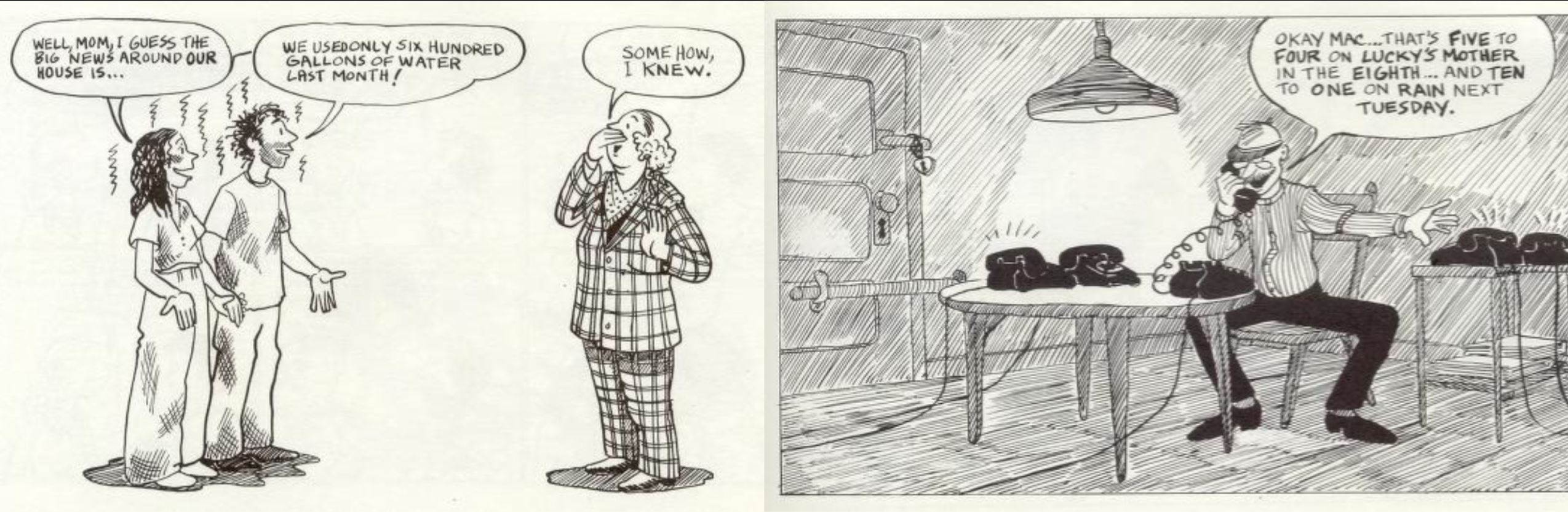
Born on May 7th 1951, Rick Veitch is a criminally undervalued creator who has lived through post-war(s) America’s many chimeric social revolutions. He has a poet’s sensibilities and a disaffected Flower-Child’s perspectives informing a powerful creative consciousness – and conscience. Can’t Get No is a landmark experiment in both form and content which deserves careful and repeated examination.

The shockwaves from the terrorist atrocity of September 11th 2001 changed the world and in our own small insulated corner, generated a number of graphic narrative responses of varying quality, not to mention deep emotional honesty. Rick Veitch’s 2006 Can’t Get No was as powerful and heartfelt as any, and benefited greatly from the little time and distance that bestowed perspective on raw emotional reactions.

Chad Roe‘s company sold the world’s most permanent and indelible marker pen, the Eter-No-Mark. Everyone involved in selling them was flying high, but then the lawsuits hit all at once. A cheap, utterly irremovable felt-pen is a godsend to street-artists and becomes the most virulent of vandalistic weapons to property owners with nice clean tempting walls…

As his universe collapsed on him, Chad went on a bender, picked up two hippie-artist-chicks in a bar and woke up a human scribble-board, covered literally from head to toe in swirling, organic, totally permanent designs.

Even then he tried so very hard to bounce back. A walking abstract artwork, he was ostracized by mockery, and unable to conceal his obvious “otherness”, and neither self-help philosophies, drugs, or alcohol could make him feel normal anymore. Defeated, reviled and eventually crushed in spirit, he was trapped in a downward spiral. Then Chad met the pen-wielding girls again and found solace and uncomplicated joy in the artist’s world of sex, booze and dope.

Lost to “normal” society, Chad took a road-trip with the women, but they hadn’t even left the city before they were all arrested. This was morning on September 11th and as the girls violently resisted the cops, an airplane flew overhead, straight towards the centre of Manhattan…

With no-one looking at him, just another part of the shocked crowd, Chad watched for an eternity, and then – no longer anything but another stunned mortal – drove away with an Arab family in their mobile home…

And thus began a psychedelic, introspective argosy through US philosophy, symbolism and meta-physicality. With this one act of terrorism forever changing the nation, Chad is forced on a journey of discovery to find an America that is newborn both inside and out. His travels take him through vistas of predictable cruelty and unexpected tolerance, through places both eerily symbolic and terrifyingly plebeian, but by the end of this post-modern Pilgrim’s Progress, both he and the world have adapted, accommodated and accepted.

Black & white in landscape format, and eschewing dialogue and personal monologues for ambient text (no word balloons or descriptive captions, just the words that the characters encounter such as signs, newspapers, faxes etc.) this graphic narrative screams out its great differences to usual comic strip fare, but the truly magical innovation is the “text-track”: a continual fluid, peroration of poetic statements that supply an evocative counterpoint to the visual component.

Satirical, cynical and strident with lyricism deployed for examination and introspection, and perhaps occasionally over-florid, but nonetheless moving and heartfelt free verse and epigrams do not make this an easy read or a simple entertainment. They do make it a piece of work every serious consumer of graphic narrative should experience… before it’s too late for all of us.
© 2006, 2019 Rick Veitch. All Rights Reserved.

Today in 1900, Alley Oop originator V.T. Hamlin was born, followed in 1905 Puerta Rico by Golden Age cover maestro Alex Schomburg, whilst in 1957, Classics Illustrated mainstay Henry C. Kiefer died. Franz Frazetta hung on until today in 2010 at which time he was 82 years old.

This date in 1943, Jack Sparling began his newspaper strip Clare Voyant, and in 2004 Jeff Smith apparently drew the final page of Bone.

Fight the Power – A Visual History of Protest Among the English-Speaking Peoples


By Sean Michael Wilson, Benjamin Dickson, Hunt Emerson, John Spelling, Adam Pasion with additional cartoons by Polyp (New Internationalist)
ISBN: 978-1-78026-122-5 (PB)

Politics is composed of and utilised equally by firebrands and coldly calculating grandees, and that’s probably the only guiding maxim you can trust. Most normal people don’t give a toss about all that until it affects them in the pocket or impacts their kids and, no matter to what end of the political spectrum one belongs, the greatest enemy of the impassioned ideologue is apathy. This simple fact forces activists and visionaries to ever-more devious and imaginative stunts and tactics…

However, all entrenched Powers-That-Be are ultimately hopeless before one thing: collective unified resistance by the very masses they’re holding down through force of arms, artificial boundaries of class or race, capitalist dogmas, various forms of mind control like bread, circuses and religion, divisive propagandas or just the insurmountable ennui of grudging acceptance to a status quo and orchestrated fear that unknown change might make things worse.

Perhaps you can see how such musings might be of relevance in these current unforgettable days?

From its earliest inception, cartooning has been used to sell: initially ideas or values but eventually actual products too. In newspapers, magazines and especially comic books the sheer power of narrative – with its ability to create emotional affinities – has been linked to the creation of unforgettable images and characters. When those stories affect the lives of generations of readers, the force that they can apply in a commercial, social or especially political arena is almost irresistible…

The compelling power of graphic narrative to efficiently, potently, evocatively disseminate vast amounts of information and seductively advocate complex issues with great conviction through layered levels has always been most effectively used in works with a political or social component. That’s never been more evident than in this stunning and scholarly graphic anthology detailing infamous and effective instances of popular protest.

In Britain the cartoonist has always occupied a perilously precarious position of power: with deftly designed bombastic broadsides or savagely surgical satirical slices ridiculing, exposing and always deflating the powerfully elevated and apparently untouchable with a simple shaped charge of scandalous wit and crushingly clear, universally comprehensible visual metaphor… or sometimes just the plain and simple facts of the matter.

For this universal and welcomingly basic method of concept transmission, levels of literacy or lack of education are no barrier. As the Catholic Church proved millennia ago with the Stations of the Cross, stained glass windows and a pantheon of idealised, sanitised saints, a picture is absolutely worth a thousand words, and as William the Conqueror saw with the triumphalist Bayeux Tapestry, picture narratives are worth a few million more…

Following a fabulously thought-provoking Introduction by author, journalist and filmmaker Tariq Ali, this march through the history of dissent as compiled and scripted by Sean Michael Wilson & Benjamin Dickson begins with an agenda-setting ‘Prologue’ illustrated by Adam Pasion, best described (without giving the game away) as Uncle Sam, John Bull and the Statue of Liberty (AKA ‘Liberty Enlightening the World’) walk into a bar…

Their heated discussion on the value and need of people using their right to dissent is then captivatingly illustrated through a series of erudite, fascinating, shocking and deliciously funny tutorial episodes, beginning with a compelling account of ‘The Luddites and the Swing Riots, 1811-1832’ written by Wilson and rendered both palatable and mesmerising by comics legend Hunt Emerson.

The artist then turns to recreating the horrific events and aftermath of ‘The Battle of Peterloo, 1819’ via Dickson’s script before, with Wilson, cataloguing a wave of ‘Colonial Rebellions, 1836-1865’ which the British Empire dealt with in its traditional even-handed, temperate manner (and in case you were wondering, that’s me doing sarcasm). Wilson & Pasion then detail the global impact of the ‘Irish Rebellions, 1791-1922’ whilst Dickson & Emerson’s account of ‘The Suffragettes, 1903-1918’ follows the story of Votes for Women right up to the present. Practically forgotten and brutally savage, ‘The Australian General Strike, 1917’ (by Wilson & Pasion) and the equally appalling landmark events of ‘The Boston Police Strike, 1919’ – as told by Dickson & John Spelling – reveal a pattern to modern labour conflicts, with working folk ranged against intransigent and greedy commercial interests.

The age-old struggle escalated during the ‘UK General Strike and the Battle of George Square, 1918-1926’ (Wilson & Spelling) and reached an intolerable strike-busting peak in Ohio during ‘The Battle of Toledo, 1934’ (Wilson & Spelling): a struggle which cemented management and labour into the intractable ideologically opposed positions they still inhabit today in the aforementioned English-speaking world…

Championing of Human Rights is commemorated by Dickson & Pasion in ‘Rosa Parks and the Bus Boycott, 1955-1956’ followed by a deeply moving account of ‘The Trial of Nelson Mandela, 1964’, whilst the modern American soldier’s method of combating unwelcome or insane orders is reviewed in brilliantly trenchant Wilson & Emerson’s ‘Fragging’

Back home and still etched in so many peoples’ memories, Dickson & Spelling’s ‘The Poll Tax Riots, 1989-1991’ offers a surprisingly even-handed rundown of Margaret Thatcher’s greatest political blunder, before hitting more recent headlines with the origins and outcomes of ‘Occupy, 2011’

Returning to that bar and Lady Liberty, Dickson, Wilson & Pasion draw some telling Conclusions to close our cartoon course in mass resistance, after which the writers discuss their process in Authors Notes: Why This Book? before then listing the truly phenomenal rewards of all those campaigns and protests with a long list of Rights Won. These range from Women’s Suffrage to the universal formal acknowledgement of the Human Right to Protest that our current global leaders and assorted billionaires are so keen on taking away again…

Understanding the value of a strategically targeted chuckle, this fabulous monochrome chronicle concludes with one last strip as Dickson & Emerson hilariously reveal ‘The Four Stages of Protest’ courtesy of Mohandas “Mahatma” Gandhi…

More so than work, sport, religion, fighting or even sex, politics has always been the very grist that feeds the pictorial gadfly’s mill. Of course, cartooning can only accomplish so much, and whilst Fight the Power! recounts a number of instances where physical and intellectual action were necessary to achieve or maintain justice, at least comics can still galvanise the unconvinced into action and help in the useful dissemination of knowledge about protest: the Who, Where, When, and How.

If you don’t understand What or Why then you’re probably already on the other side of the barricades – and complaining about who gets what vaccine or can be allowed to shout in the streets at all…
© 2013 Sean Michael Wilson and Benjamin Dickson. Illustrations © 2013 Hunt Emerson, John Spelling and Adam Pasion. Cartoons © 2013 Polyp. All rights reserved.
Today in 1909, Golden Age legend Howard Sherman (Dr. Fate, Tommy Tomorrow, Congorilla) was born, as was David Micheline (Iron Man, Spider-Man, Venom, Swamp Thing, Aquaman, Magnus – Robot Fighter) in1948, inkers Dennis Jensen in 1952, John Beatty in 1961 and John Lucas in 1968. France greeted Emmanuel Larcenet (Dungeon, Le combat ordinaire) in 1969, with the US response being Nunzio DeFilippis (Three Strikes, Dragon Age) in 1970, and Bryan Edward Hill (American Carnage, Blade) in 1977.

This date in 2002, Robert Kanigher died.

DC Finest: The Flash – The Fastest Man Dead


By Robert Kanigher, Mike Friedrich, Steve Skeates, Dennis O’Neill, Bob Haney, Len Wein, Cary Bates, Gil Kane, Irv Novick, Don Heck, Dick Dillin, Bob Brown, Murphy Anderson, Dick Giordano, Joe Giella, Nick Cardy, Frank McLaughlin, Tex Blaisdell, Carmine Infantino, Neal Adams, Jack Adler, Tatjana Wood, John Costanza & various (DC Comics)

ISBN: 978-1-77952-836-0 (TPB)

This book includes Discriminatory Content produced in less enlightened times.

Here’s another compelling DC Finest edition: chronologically curated paperback archives (generally around 600 pages) highlighting past glories. Whilst primarily concentrating on the superhero pantheon, there are genre selections including horror, sci fi, western and war books, but sadly none yet available digitally. However, we live in hope…

The Silver Age of US comics is formally and forever tied to Showcase #4 and the rebirth of The Flash. That epochal issue was released in the late summer of 1956 and from it stems all today’s print, animation, games, collector cards, cosplay and TV/movie wonderment. No matter which way you look at it, the renaissance began with The Flash, but it’s an unjust yet true fact that being first is not enough: it also helps to be best and people have to notice. MLJ’s The Shield beat Captain America to the news-stands by over a year yet the former is all but forgotten today. I mention that here as it pertains to this collection, which sees the advent of original Shield co-creator Irv Novick (Bob Phantom; Hangman; Steel Sterling; Silent Knight; Robin Hood, all DC war books, Captain Storm; Sea Devils; Batman, The Joker; Lois Lane; Tomahawk and more) as the Scarlet Speedster’s regular illustrator; a run (oh. Ha-Ha.) spanning Flash #200-270 and close to a full 10-year stretch with him only absent for #205, 213-214 & 264…

For the early trendsetting sagas and situations you should catch DC Finest: The Flash – The Human Thunderbolt and take as read that here the (second) Flash is Barry Allen, a police forensic scientist simultaneously struck by lightning and bathed in exploding chemicals from his lab. Supercharged by the accident, Barry (a lifelong fan of comic books) took his superhero identity from his favourite childhood reading – and eventually his acknowledged alternately Earth predecessor. Once upon a time there was a “fictional” scientist named Jay Garrick who was exposed to the mutagenic fumes of Hard Water and promptly became the “fastest man alive”…

Wearing a sleek, streamlined, tricked-out bodysuit (courtesy of  Carmine Infantino – a major talent approaching his artistic and creative peak), Barry was point man for the spectacular revival of a genre and an entire industry. He also became a renowned intergalactic champion, wholesome family man and paternalistic elder statesman of the superhero set after marrying his longtime fiancée Iris West

With Infantino safely elevated to DC’s current publisher, this splendidly tempting full colour paperback of Seventies hits displays the glorious work of the last replacement illustrators before the Flash landed in Novick’s hands, just as changing tastes rejected the previously paramount, rationalistic science fiction worlds touched by the Vizier of Velocity. Now high speed action involved issues of social relevance and themes of supernatural horror and makes for some weird moments as this copious compendium covers The Flash #197-229 (May 1970 – October 1974) plus guest shots in World’s Finest Comics #198-199 (November & December 1970) and The Brave and the Bold #99 (December 1971/January 1972).

Gil Kane & Vince Colletta capture all the fun and thrills of Mike Friedrich’s ‘Four-Star Super-Hero’ in the opening yarn of Flash #197 as a sharp cop spots a private communication tic only shared with his lab partner Barry Allen. Attempts to save a secret identity and convince Charlie Conwell otherwise are further hampered by blizzard conditions in Central City, canny crooks with jetpacks and skis, a flu epidemic and Barry’s dedication to Amateur Dramatics, which see him take time out to play every part in the local presentation of Hamlet. All’s well that ends well and after that show goes on, it’s back to cosmic basics with Robert Kanigher’s ‘To the Nth Degree’ showing the Crimson Comet catapulted across the universe to save fire-beings on an exploding planet, courtesy of another wild invention of his father-in-law Professor Ira West

Kanigher, Kane & Colletta open #198 where ‘No Sad Songs for a Scarlet Speedster!’ has three orphan kids aid a gun-shot and temporarily brain-damaged Flash regain his lost mojo before neophyte superhero Zatanna guests in ‘Call it …Magic’ (by Friedrich, Don Heck & Colletta) and requires swift rescue after being abducted across arcane dimensions by macabre body-snatcher Xarkon

Kanigher, Kane & Colletta’s ‘Flash? Death Calling!’ in #199 focuses on the ordeals of scientist Dr Hollister who dons the scarlet skin-tights to punish himself after apparently accidentally killing the hero. However that guilt also saves the day and resurrect the speedster – just in time for Flash to meet superspy Colonel K (of US-IN-T Agency) and stop a Chinese energy missile smashing into ‘The Explosive Heart of America!’ (Kanigher, Kane & Colletta)

Novick and inker Murphy Anderson join Kanigher for anniversary celebration ‘Count 200 – and Die!’ as the Monarch of Motion succumbs to mind manipulation and is manoeuvred by sinister siren Dr. Lu into  assassinating the US President. Thankfully our hero (Flash of course, not PotUS!) is faster than his own fired gunshot and is back in all-American action for #201, enduring Kanigher, Novick & Anderson’s ‘Million-Dollar Dream!’ and applying tough love to wheelchair bound sports star Pablo Hernandez. The treatment restores the player but that’s only fair as the hero was responsible for initially crippling the kid…

Many issues offered second stories at this time, and the policy of guest shots for other Flash-family favourites was solidly in place. Here Kanigher, Novick & Anderson take us to Earth Two and swift encore for an old villain as Jay Garrick produces – eventually – the ‘Finale for a Fiddler!’

Although costumed hero capers were waning in general appeal, Flash was still hugely popular. Thus when World’s Finest Comics began a run of Superman team-ups with #198, the Red Runner was the clear first choice and allowed editors to return to a thorny topic which had bedevilled fans for years.

The comic book experience is littered with eternal, unanswerable questions. The most common and most passionately asked always begin “who would win if” or “who’s strongest/smartest/fastest…” Here, crafted by Denny O’Neil, Dick Dillin & Joe Giella, ‘Race to Save the Universe!’ and concluding instalment ‘Race to Save Time’ (WFC #198-199) upped the stakes on two previous competitions as our high-speed heroes are conscripted by the Guardians of the Universe to circumnavigate the entire cosmos at their greatest velocities to reverse the rampage of the mysterious Anachronids: faster-than-light creatures whose pell-mell course throughout galaxies is actually unwinding time itself and unravelling the fabric of creation. Little does anybody suspect that Superman’s oldest enemies were behind the entire appalling scheme, but the battle was swiftly won and reality saved in the end…

It was a far more grounded but no less chilling situation in Flash #202 where Kanigher, Novick & Anderson despatch reporter Iris Allen to Hollywood where she is kidnapped by murderous cultist creeps ‘The Satan Circle’ and her frantic husband confronts the unknown and the worst aspects of human nature to save her. Kid Flash then endures his own eldritch overload as ‘The Accusation!’ (by Steve Skeates, Dillin & Anderson) finds college-age comet Wally West tormented by visons of impending death that come appallingly true…

With Kanigher, Novick & Anderson at the helm #203 augured a huge change in the cosy domestic set-up as ‘The Flash’s Wife is a Two-Timer!’ reveals that Iris is actually a foundling sent through time to escape atomic armageddon and only the adopted child of scatterbrained super-genius Ira West. When the process reverses itself and she is dragged back to the future – Central City 2970 AD – The Flash follows and is caught up in a war that has been all but won by oppressive East-bloc tyrant Sirik the Supreme. Of course his intervention is enough to reset the scales before he returns baffled bride Iris Russell (née West)-Allen to her immigrant time period.

Once there though, repercussions of the revelation continue as a recovered 30th century keepsake turns her into an uncontrollable, secret-exposing blabbermouth in #204’s ‘The Great Secret Identity Exposé!’ with the Justice League understandably irate that Flash talks in his sleep and his wife knows all their civilian identities…

Back up tale ‘The Mind-Trap’ (Skeates, Dillin & Anderson) then sees Kid Flash chasing a body-stealing Egyptian pharaoh’s ghost to end the issue on a lighter note…

The Flash #205 was another hugely popular reprint collection of the era, sporting a cover by Dick Giordano (and included here) before it was back to spooky business in #206 for Kanigher, Novick & Anderson’s ‘24 Hours of Immortality!’ as haughty alien superbeings resurrect a recently killed surgeon and young mother to attend to unfinished business, but for the most mean-spirited motives – until Flash intervenes with a lesson all could benefit from.

With the supernatural now fully unleashed at DC, Flash #207 led with Friedrich, Novick & Anderson’s ‘The Evil Sound of Music!’, as former mystic hero Sargon the Sorcerer exploits his own family and rock ‘n’ roll-loving kids to restore his lost powers, before confronting the Scarlet Speedster, his own inner demons and rapacious external devils on the path back to the light. Grounding that journey to hell, Kid Flash then faces ‘The Phantom of the Cafeteria!’ ending the depredations of a superfast, hyper-hungry alien in a quick but satisfying yarn from Skeates, Dillin & Giordano.

In #208, Kanigher, Novick & Anderson exposed ‘A Kind of Miracle in Central City’ as wayward kids exploited by drug pushers are saved by prayer, the timely intervention of nuns and invisible superspeed before Flash #209 debuted new regular writer Cary Bates. He would run with the Vizier of Velocity for the rest of the series, only missing #213-214, 217, 293, 306 and 313 between 1970 through 1985.

Fresh from the starting blocks, Bates, Novick & Giordano took the speedster into higher, weirder realms ‘Beyond the Speed of Life!’ where Flash and reality shielding Sentinel stopped existence from being devoured. Meanwhile, on mundane Earth old Rogues Trickster, Captain Boomerang and Gorilla Grodd squabbled over bragging rights for who had finally killed the hero. At the back, Kid Flash saved a student troubled by gangsters in ‘Coincidence Can Kill!’ courtesy of Skeates, Dillin, Giordano.

A visit to 2971 came with #210 as Bates, Novick & Giordano expanded the Earth East-Earth West “warm” war in ‘An Earth Divided!’ with Flash seeking to save man-made President Abraham Lincoln (II) from belligerent occidental tyrant Bekor. Science fiction surrendered to spooky tales next as Flash teamed up with Batman in Brave and the Bold #99. Here Bob Haney, Bob Brown, & Nick Cardy revealed how an attempt to resurrect Bruce Wayne’s parents opened the door to the Dark Knight’s possession by an unquiet spirit. ‘The Man Who Murdered the Past!’ almost ensured an invasion of angry ghosts until superspeed and smart thinking saved the day…

Comics were always about popular trends, and in Flash #211 Bates, Novick & Giordano contrived alien invaders who used the fad of rolling derby to fuel the destruction of Earth via constantly ‘Flashing Wheels!’ However, Kid Flash was on far more stable ground as he exposed corrupt officials covering up toxic dumping in ‘Is This Poison Legal?’ by Skeates, Dillin & Giordano. Equally bold and topical the next issue saw ‘The Flash in Cartoon Land!’ with Novick & Giordano depicting how manic 64th century magician Abra Kadabra trapped the hero and a little lad Barry Allen was babysitting in a graphic madhouse where scientific rules did not apply.

The next two issues – #213 & 214 – were reprint specials represented here with the original covers by Neal Adams & Cardy before #215 saw Bates, Novick, Frank McLoughlin & Giordano detail the ‘Death of an Immortal!’ The eons are catching up with undying villain Vandal Savage who attempts to trick Barry Allen and Jay Garrick into remedying the crisis for him. However their mission is intercepted by chronal cop Tempus and the end is not what Savage anticipated…

For Bates at least, Flash was all about his signature Rogues Gallery and in #216 the writer revealed the shocking truth about multiple personality villain Al Desmond/Dr. Alchemy/Mr. Element. Seemingly cured and reformed, Desmond was afflicted by ‘The Curse of the Dragon’s Eye!’ (Novick, Frank McLoughlin & Giordano), astrally connected to an unstable star in the constellation Draco and vacillating between manic and passive, and Good and Evil as it built to cataclysmic detonation. Now that time had come and Flash had to save his friend and hopefully prevent him destroying Earth when his patron star died. Its counterbalanced by Skeates & Dillin’s Kid Flash fable ‘2D?’ as Kid Flash goes after extradimensional slavers abducting workers who stare at certain paintings for too long…

Hard times for superheroes saw Green Lantern take up residence in the anterior pages of The Flash from #217 and shorter tales began with a fill-in from Len Wein for Novick & McLoughlin. ‘The Flash Times Five is Fatal!’ saw the hero attacked by a rogue AI built by Ira West. It preferred sabotage, reality warping and murder to rescinding its categoric statement that no one as fast as the Scarlet Speedster could possibly exist…

Bates and the Pied Piper returned in #218 as a cunning sonic ambush was foiled by speed vibrations generating ‘The Flash of 1,000 Faces!’ whilst in #219 (with Joe Giella inking) ‘The Million Dollar Deathtrap’ saw the hero targeted by wagering rivals Mirror Master and The Top and only triumphing after applying the proven principle of “divide and conquer”…

Flash literally and grotesquely joined protégé Kid Flash in #220 as The Turtle (Barry’s very first super-foe) returned to alter Earth’s internal vibrations and cure ‘The Slowest Man on Earth’ of his unique condition no matter the cost to everyone else. Thankfully two heads proved better than one in this instance and the shaking shakedown was averted.

Co-scripter John Warner joined Bates, Novick & McLoughlin for #221’s ‘Time-Schedule For Disaster!’ as techno-bandit Cipher attempts – and ultimately fails – to harvest Flash’s speed vibrations to power his weapons before #222’s ‘The Heart That Attacked the World!’ (Novick, McLoughlin & Giordano) offers a full-length team up with Green Lantern as Weather Wizard and Sinestro join forces to end their enemies. Sadly, born betrayer Sinestro secretly linked the Speedster’s racing heartbeat to the continued existence of Earth…

In #223, Bates, Novick & Giordano ‘Make Way for the Speed-Demons!’ as another old enemy rigs races between Flash and three mechanical racers of land sea and air, with the expressed intention of humiliating the speedster whilst hiding his true intentions, before #224 introduces ‘The Fastest Man Dead!’ after Barry’s friend and mentor Charlie Conwell is murdered. That doesn’t stop the veteran helping Flash close the last case on his docket and save his pal Barry one last time…

Another Scarlet-Emerald team-up sees Flash again battle Professor Zoom, the Reverse-Flash before discovering  ‘Green Lantern, Master Criminal of the 25th Century!’ (#225, Bates, Novick & Giordano) is the villain’s unwilling slave. Of course, it all plays out successfully in time, after which Captain Cold and Heatwave embroil Barry Allen in their psycho-drama rivalry, thereby inadvertently subjecting Flash to ‘The Hot-Cold War in Central City!’ (inked by Giordano & McLoughlin). Immediately afterwards (with McLoughlin inking) #227 reveals ‘Flash – This is Your Death!’ as Captain Boomerang ( and his dad!) rerun past fast & furious clashes whilst seeking to end the hero’s career and existence forever, before Tex Blaisdell inks #228’s ‘The Day I saved the Life of the Flash!’ Here Bates injects himself into the story as a comic book writer from Earth-Prime accidentally slips across dimensional divides; arriving on Earth-One in time to aid the “fictional” speedster he scripts in a deadly duel with the Trickster…

This compendium closes with the pertinent original material from 100-Page Spectacular Flash #229 which led with a Golden Age Flash team up as ‘The Rag Doll Runs Wild!’ Here Bates, Novick, Giordano & McLoughlin detail how a seeming resurgent rampage by a 1940s thieving contortionist is merely a mask for a far more sinister scheme perpetrated by a hidden vengeful mastermind. Closing proceedings are two teaser treats from that giant compendium: specifically a ‘Flash Puzzle’ by Bob Rozakis, Infantino & Anderson and an unattributed ‘Flash Trivia Quiz and Answers’

With covers by Kane, Infantino, Anderson, Neal Adams, Colletta Giordano, Jack Adler, Cardy and Tatjana Wood, this splendid selection is a must-read item for anybody in love with the world of words-in-pictures and fast-paced fantasy fables. Ready. Steady, Go get it!
© 1970, 1971, 1972, 1973, 1974, 2026 DC Comics. All Rights Reserved.

Today in 1906 was the birth date of cartoonist Dale Messick (Brenda Starr, Reporter) followed ten years later by comic book/ad exec Irv Novick, and author Peter O’Donnell (Modesty Blaise, James Bond, Romeo Jones) in 1920. In 1954 Jamie Delano (Captain Britain, Doctor Who, Hellblazer, Animal Man) joined the party as did Matt Kindt (Poppy and the Lost Lagoon, Dept. H, MIND MGMT, BRZRKR) in 1973.

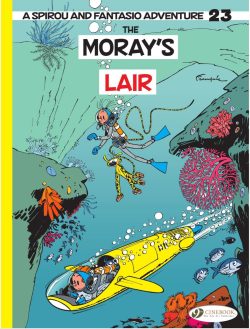
Gomer Goof volume 1: Mind the Goof!


By André Franquin, Delporte & Jidéhem: translated by Jerome Saincantin (Cinebook)
ISBN: 978-1-84918-358-1 (Album TPB/digital edition)

This book includes Discriminatory Content produced during less enlightened times and some used for dramatic and comedic effect.

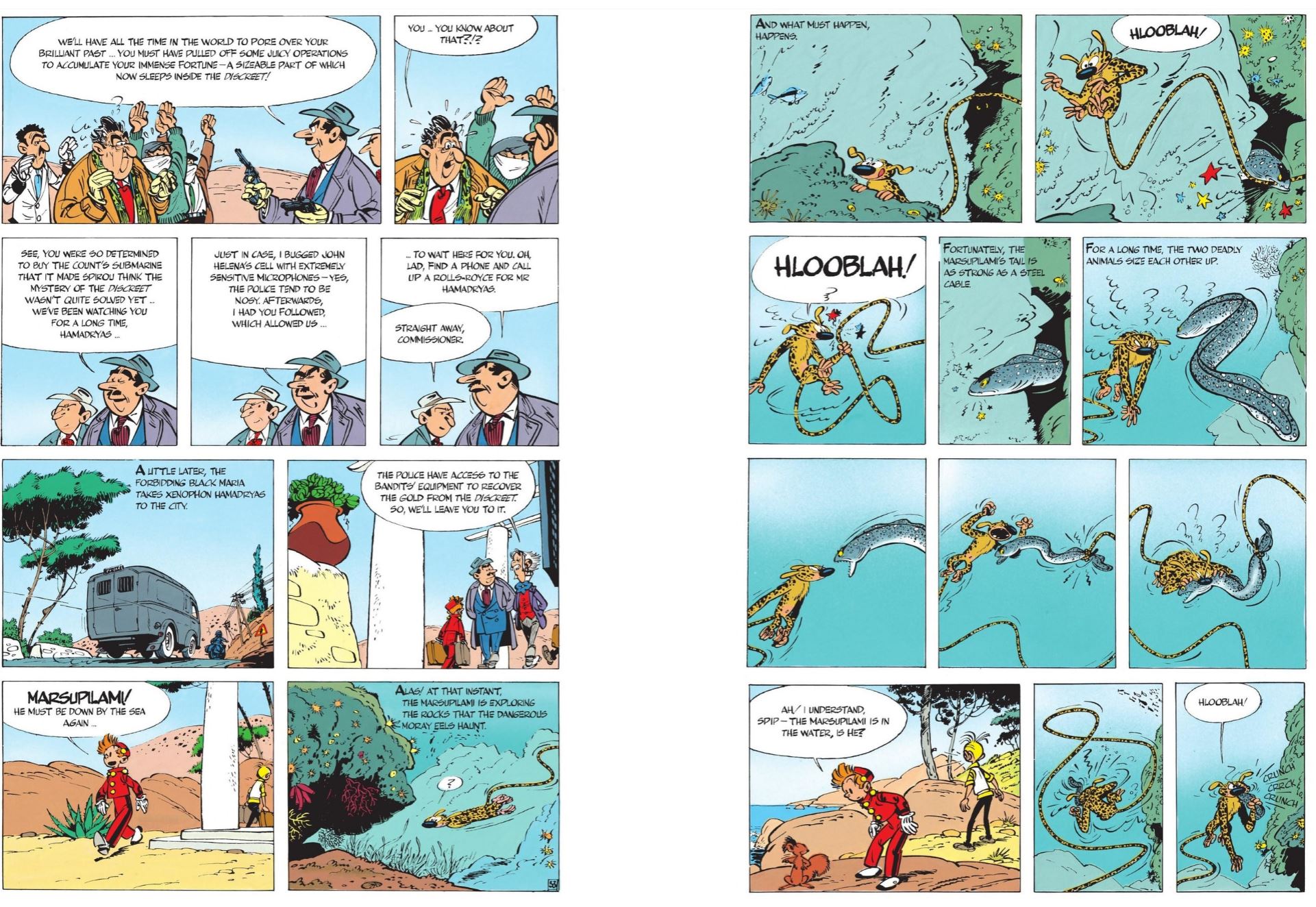
Born in Etterbeek, Belgium on January 3rd 1924, André Franquin began his astounding career in the golden age of European cartooning. In 1946, as assistant to Joseph “Jijé” Gillain on top strip Spirou, he inherited sole control of the keynote feature, and creating countless unforgettable characters like Fantasio and The Marsupilami. Over two decades Franquin made the strip purely his, expanding its scope and horizons, as co-stars Spirou & Fantasio – with hairy Greek Chorus Spip the squirrel – became globetrotting troubleshooters visiting exotic places, exposing crimes, exploring the incredible and clashing with bizarre, eccentric arch-enemies. Throughout all that, Fantasio remained a full-fledged – albeit entirely fictional – reporter for Le Journal de Spirou, popping back to base between assignments. Regrettably, ensconced there like a splinter under a fingernail was an arrogant, accident-prone office junior. He was Gaston Lagaffe; Franquin’s other immortal – or peut-être unkillable? – conception…

There’s a hoary tradition of comics personalising fictitiously back-office creatives and the arcane processes they indulge in, whether it’s Marvel’s Bullpen or DC Thomson’s lugubrious Editor and underlings at The Beano and Dandy; it’s a truly international practise. Somehow though, after debuting in LJdS #985 (February 28th 1957), the affable dimwit grew – like one of his own monstrous DIY projects – beyond all control. Whether guesting in Spirou’s sagas or his own strips/faux reports for the editorial pages, Lagaffe became one of the most popular and ubiquitous components of the comic he was supposed to paste up.

In initial cameos or occasional asides on text pages, well-meaning foul-up and ostensible studio gofer Gaston lurked and lounged amidst a crowd of diligent toilers until the workshy slacker employed as a general assistant at LJdS’s head office became a solid immovable fixture. Ultimately the scruffy bit-player shambled into his own star feature…

In terms of schtick and delivery, older readers will recognise favourite beats and elements of well-intentioned helpfulness wedded to irrepressible self-delusion as seen in Benny Hill or Jacques Tati vehicles and recognise recurring riffs from Only Fools and Horses and Mr Bean. It’s blunt-force slapstick, using paralysing puns, fantastic ingenuity and inspired invention to mug smugness, puncture pomposity, lampoon the status quoi? (and that’s British punning, see?) and ensure no good deed goes noticed, rewarded or unpunished…

As previously stated, Gaston/Gomer can be seen (if you’re very quick or extremely patient) toiling at Le Journal de Spirou’s editorial offices. At first he reported to Fantasio, but as pressure of work took the hero away, the Goof instead complicated the lives of office manager Léon Prunelle and other harassed and bewildered staffers, all whilst effectively ignoring any tasks he’s paid to actually handle. These notionally include page paste-up, posting packages, filing, clean-up, collecting stuff inbound from off-site and editing readers’ letters – the reason why fans’ requests/suggestions are never acknowledged or answered…

Gomer is lazy, hyperkinetic, opinionated, ever-ravenous, impetuous, underfed, forgetful and eternally hungry: a passionate sports fan, self-proclaimed musician maestro and animal lover whose most manic moments all stem from cutting work corners, stashing or consuming contraband nosh in the office or inventing the Next Big Thing. This situation leads to constant clashes with colleagues and draws in notionally unaffiliated bystanders like increasingly manic traffic cop Longsnoot and fireman Captain Morwater, plus ordinary passers-by who should know by now to keep away from this street.

Through it all, the obtuse office oaf remains affable, easy-going and incorrigible. Only three questions matter: why everyone keeps giving him one last chance, what does gentle, lovelorn Miss Jeanne see in the self-opinionated idiot, and will perpetually-outraged and accidentally abused capitalist financier De Mesmaeker ever get his perennial, pestiferous contracts signed?

If you’re old, new to this and yet experiencing a dose of déjà vu, it might be because the big idiot appeared in a 1970s Thunderbirds annual, rechristened Cranky Franky. Perhaps they should have kept the original title…

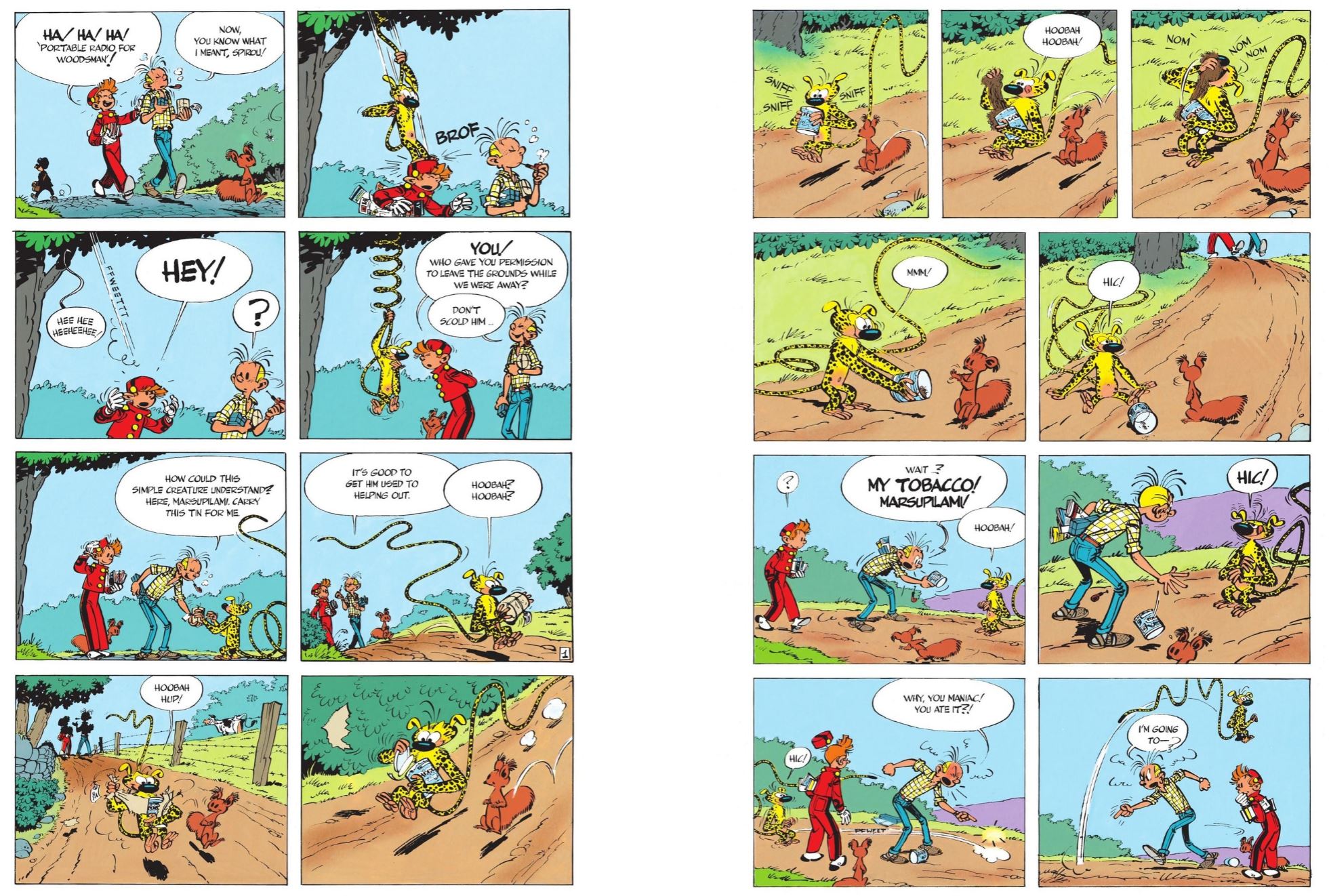
This premier compilation consists of half-page shorts and comedic text story “reports” from the LJdS’s editorial page before ultimately unleashing full episodes of madcap buffoonery. As previously stated Gomer is employed (let’s not dignify his position by calling it “work”) at the Spirou offices, reporting to go-getting Fantasio and foolishly left in charge of minor design jobs like paste-up and reading readers’ letters and general dogs-bodying. He’s lazy, opinionated, forgetful and eternally hungry. Many of his most catastrophic actions revolve around cutting corners and caching illicit food in the office…

Following 26 short, sharp two-tier gag episodes – involving Gomer’s office innovations, his hunt for food, assorted pets and livestock, sporting snafus and his appallingly decrepit and dilapidated Fiat 509 auto(barely)mobile – the first of numerous prose vignettes ‘On the Line’ exposes the fool’s many delusional attempts to become an inventor. Other text forays – punctuated by more pint-sized gag-strips – follow. These comedy briefs include ‘More Than One String to his Bow’, ‘Police Report’, ‘Open Letter to Mr De Mesmaeker’ (Jean De Mesmaeker being the real name of collaborator and background artist Jidéhem and taken for the self-important businessman who became Gomer’s ultimate foil), ‘Winter Stalactites’, ‘Red vs Blue’, ‘Noise Pollution’, ‘Presence of Mind’, ‘Gomer’s stethoscope’, ‘The Firebug Fireman’, ‘Gas-powered bicycle’ and ‘Definitely-not-surreptitious advertising’.

The print then gives way to a long-running procession of half-page strips with our editorial idiot causing a cataclysm of cartoon chaos.

Further prose pieces slip into extended continuity when Fantasio embargoes all canned food (potentially explosive and always a bio-hazard) and Gomer applies all his dubious ingenuity to beating the ban in ‘The tin wars’, ‘Ticking tin bombs’, ‘Diary of a War correspondent’ and ‘Blockade’ before one final strip flurry brings the hilarity to temporary pause…

Far better enjoyed than précised or described, these strips allowed Franquin, fellow scenarist Yvan Delporte and Jidéhem to flex their whimsical muscles and subversively sneak in some satirical support for their political beliefs in pacifism and environmentalism, but at their core remain supreme examples of all-ages comedy: wholesome, barbed, daft and incrementally funnier with every re-reading.

So why not start now?
© Dupuis, Dargaud-Lombard s.a. 2017 by Franquin. All rights reserved. English translation © 2017 Cinebook Ltd.
Today in 1907, comic strip god Milton Caniff was born, as was – in 1913 – John Carter of Mars illustrator John Coleman Burroughs. Ditto Japanese teacher/political cartoonist Taizo Yokoyama (Pu-san, Eheh) in1917. Reading wise, André Franquin’s Gaston Lagaffe debuted in 1957.

If there was a February 29th this year, tomorrow we’d be commemorating the birth of Italian superstar Paolo Eleuteri Serpieri (Druuna) in 1944 and the launch of Bil Keane’s The Family Circus in 1960… but we don’t so we ain’t.

DC Finest: Superman – The Invisible Luthor


By Jerry Siegel & Joe Shuster, Jack Burnley, Paul Lauretta, Wayne Boring, Jack Burnley, Paul Cassidy, Ed Dobrotka, Leo Nowak, Fred Ray, John Sikela, Dennis Neville, Don Komisarow, lettered by Frank Shuster, Betty Burnley Bentley, the Superman Studio & various (DC Comics)
ISBN: 978-1-77950-332-3 (TPB)

This book includes Discriminatory Content produced in less enlightened times

Nearly 90 years ago, Superman rebooted planetary mythology and kickstarted the entire genre of modern fantasy heroes. Outlandish, flamboyant, indomitable, infallible and unconquerable, he also saved a foundering industry by birthing an entirely new genre of storytelling: the Super Hero. Since April 18th 1938 (the generally agreed day copies of Action Comics #1 first went on sale) he has grown into a mighty presence in all aspects of art, culture and commerce, even as his natal comic book universe organically grew and expanded. Within three years of that debut, the intoxicating blend of eye-popping action and social wish-fulfilment that had hallmarked the early exploits of the Man of Tomorrow had grown: encompassing crime-busting, reforming dramas, science fiction, fantasy and even whimsical comedy. However, once the war in Europe and the East captured America’s communal consciousness, combat themes and patriotic imagery dominated most comic book covers, if not interiors.

In comic book terms alone Superman was soon a true master of the world, utterly changing the shape of the fledgling industry as easily as he could a mighty river. There was a popular newspaper strip, a thrice-weekly radio serial, games, toys, foreign and overseas syndication and as the decade turned, the Fleischer studio’s astounding animated cartoons.

Moreover, the quality of the source material was increasing with every four-colour release as the energy and enthusiasm of originators Jerry Siegel & Joe Shuster went on to inform and infect the burgeoning studio which grew around them to cope with the relentless demand.

These tales have been reprinted many times, but this latest compilation might arguably be the best yet, offering the original stories in reading – if not strictly chronological publishing – order and spanning cover-dates July 1940 to September 1941. It features landmark sagas from Action Comics #26-40 and Superman #6-11, plus pivotal appearances in New York’s World Fair No. 2, World’s Best Comics #1 and World’s Finest Comics #2 & 3 (all with eye-catching groundbreaking covers by Jack Burnley). Although most early tales were untitled, here, for everyone’s convenience, they have been given descriptive appellations by the editors, and I should also advise that as far as we know it’s written entirely by Seigel, with the majority of covers by Fred Ray (unless I say otherwise!).

This incredible panorama of torrid tales opens with gangsters attempting to plunder jewels from exhibits at the biggest show on earth. Taken from premium package New York World’s Fair #2, ‘Superman at the 1940 World’s Fair’ is credited to Siegel & Schuster, but actually illustrated by Burnley who also provided the first ever pairing of the Man of Tomorrow with Dynamic Duo Batman and Robin on the cover to drag readers in…

Siegel & Shuster had created a true phenomenon and were struggling to cope with it. As well as monthly and bimonthly comics a new quarterly publication, initially World’s Best and ultimately World’s Finest Comics – springing from the success of the publisher’s New York World’s Fair comic-book tie-ins – would soon debut with their indefatigable hero featuring prominently in it. Superman’s daily newspaper strip began on 16th January 1939 (Yes! Today but back then!), with a separate Sunday strip following from November 5th: garnering millions of new devotees. The need for new material and creators was constant and oppressive, so expansion was the watchword at the Superman and Shuster studios.

On the primary pages though, Action Comics#26 (July 1940) introduced ‘Professor Cobalt’s Clinic’ (limned by Pauls Lauretta & Cassidy with Siegel inking and Frank Shuster lettering) wherein Clark Kent & Lois Lane expose a murderous sham Health Facility with a little Kryptonian help, whilst the following month dealt a similar blow to corrupt orphanage the ‘Brentwood Home for Wayward Youth’. September’s issue found Superman at the circus, solving the mystery of ‘The Strongarm Assaults’, a fast-paced thriller beautifully illustrated by the astonishingly talented and versatile Burnley. Whilst thrilling to all that, kids of the time could also have picked up the sixth issue of Superman (cover-dated September/October 1940). Produced by Siegel and the Superman Studio, with Shuster increasingly overseeing and only drawing key figures and faces, this contained four more lengthy adventures. Behind its Shuster & Cassidy cover, ‘Lois Lane, Murderer’, and ‘Racketeer Terror in Gateston’ by Cassidy had the Man of Action saving his plucky co-worker from a dastardly frame up and rescuing a small town from a mob invasion. An infomercial for the Supermen of America club and the secrets of attaining ‘Super Strength’ as shared by Burnley, Shuster & Cassidy follows. These lead to more adventure and action from Lauretta & Cassidy as ‘Terror Stalks San Caluma’ and ‘The Construction Scam’ sees the Man of Tomorrow foil a blackmailer who’s discovered his secret identity before spectacularly fixing a corrupt company’s shoddy, death-trap buildings.

Action Comics #29 (October 1940) again features Burnley art in a gripping tale of murder for profit. Human drama in ‘The Life Insurance Con’ was followed by deadly super-science as the mastermind Zolar created ‘The Midsummer Snowstorm’, allowing Burnley a rare opportunity to display his fantastic imagination as well as his representational acumen and dexterity. Then Superman #7 (November/December1940) marked a creative sea-change as occasional cover artist Wayne Boring became Schuster’s regular inker, whilst seeing the Man of Steel embroiled in local politics when he confronts ‘Metropolis’ Most Savage Racketeers’; quells manmade disasters in ‘The Exploding Citizens’; stamps out City Hall corruption in ‘Superman’s Clean-Up Campaign’ (illustrated fully by Boring) and puts villainous high society bandits ‘The Black Gang’ where they belong… behind iron bars.

For Action # 31 Burnley draws another high-tech crime caper as crooks put an entire city to sleep and only Clark Kent isn’t ‘In the Grip of Morpheus’ after which ‘The Gambling Rackets of Metropolis’ (AC #32) finds Lois almost institutionalised until the Big Guy steps up to crush an illicit High Society operation that has wormed its nefarious way into the loftiest echelons of Government, a typical Siegel social drama magnificently illustrated.

Cover-dated January/February 1941, Superman #8 was another spectacular and wildly varied compendium containing four big adventures ranging from fantastic fantasy in ‘The Giants of Professor Zee’ (Cassidy & Boring); topical suspense in spotlighting ‘The Fifth Column’ (Boring & Komisarow) and common criminality in ‘The Carnival Crooks’ (Cassidy) before concluding with cover-featured ‘Parrone and the Drug Gang’ (Boring), wherein the Metropolis Marvel duels doped-up thugs and corrupt lawyers controlling them.

Action Comics #33 & 34 are both Burnley extravaganzas wherein Superman goes north to discover ‘Something Amiss at the Lumber Camp’, before heading to coal country to save ‘The Beautiful Young Heiress’; both superbly enticing character-plays with plenty of scope for super-stunts to thrill the gasping fans.

Superman #9 (March/April 1941) was another four-star thriller with all art credited to Cassidy. ‘The Phony Pacifists’ is an espionage thriller capitalising on increasing US tensions over “the European War” whilst ‘Joe Gatson, Racketeer’ recounts the sorry end of a hot-shot blackmailer and kidnapper. ‘Mystery in Swasey Swamp’ combines eerie rural events with ruthless spies whilst the self-explanatory ‘Jackson’s Murder Ring’ pits the Caped Kryptonian against an ingenious gang of commercial assassins. The issue also improves health and well-being with another Shuster & Cassidy ‘Supermen of America’ update and exercise feature ‘Super-Strength’ by Shuster.

The success of the annual World’s Fair premium comic books had convinced editors that an over-sized anthology of their characters, with Superman and Batman prominently featured, would be a worthwhile proposition even at the exorbitant price of 15¢ (most 64-page titles retailed for 10¢ and would do so until the 1960s). At 96 pages, World’s Best Comics #1 debuted with a Spring 1941 cover-date and Fred Ray frontage, before transforming into the soon-to-be-venerable World’s Finest Comics from issue #2 onwards. From that landmark one-&-only edition comes gripping disaster thriller ‘Superman vs. the Rainmaker’, illustrated by Boring & Komisarow, after which Action Comics #35 headlines a human-interest tale with startling repercussions in Boring & Leo Nowak’s ‘The Guybart Gold Mine’, before even Superman is mightily stretched to cope with the awesome threat of ‘The Enemy Invasion’ rendered by Boring & Shuster: a canny, foreboding taste of things to come if – or rather, when – America entered World War II.

Superman #10 (May/June 1941) opens with eponymous mystery ‘The Invisible Luthor’ (Nowak), follows with ‘The Talent Agency Fraud’ (Cassidy, Nowak, Siegel & the Studio), steps on the gas in ‘The Spy Ring of Righab Bey’ and closes with ‘The Dukalia Spy Ring’ (both by Boring, Siegel & the Studio): topical and exotic themes of suspense as America was still at this time still officially neutral in the “European War”. Conversely, Action Comics #37 (June 1941) returned to tales of graft, crime and social injustice in ‘Commissioner Kent’ (Cassidy) as the Man of Steel’s timid alter-ego is forced to run for the job of Metropolis’ top cop, before World’s Finest Comics #2 (Summer 1941) unleashes Cassidy & Nowak’s ‘The Unknown X’ – a fast-paced mystery of sinister murder-masterminds, before AC #38 (and Nowak & Ed Dobrotka) provide a spectacular battle bout against a sinister hypnotist committing crimes through ‘Radio Control’

Other than a Cassidy pinup, Superman #11 (July/August 1941) was an all Nowak affair, beginning with ‘Zimba’s Gold Badge Terrorists’ wherein thinly disguised Nazis “Blitzkrieg” America, after which “giant animals” go on a rampage in ‘The Corinthville Caper’. Seeking a cure for ‘The Yellow Plague’ then takes Superman to the ends of the Earth whilst ‘The Plot of Count Bergac’ brings him back home to crush High Society gangsters. All by Nowak but accompanied by a Cassidy pinup.

Horrific mad science creates ‘The Radioactive Man’ in Action #39 (Nowak & Shuster Studios), whilst #40 featured ‘The Billionaire’s Daughter’ (by John Sikela) wherein the mighty Man of Tomorrow needs all his wits to set straight a spoiled debutante before we closing with ‘The Case of the Death Express’: a tense thriller about train-wreckers illustrated by Nowak from the Fall issue of World’s Finest (#3).

Stories of corruption and social injustice were gradually moving aside for more spectacular fare, and with war in the news and clearly on the horizon, the tone and content of Superman’s adventures changed too: the scale and scope of the stunts became more important than the motive. The raw passion and sly wit still shone through in Siegel’s stories but as the world grew more dangerous the Man of Tomorrow simply had to become stronger and more flamboyant to deal with it all, with Shuster and his team consequently stretching and expanding the iconography for all imitators and successors to follow.

These Golden Age tales are priceless enjoyment at an absurdly affordable price. My admiration for the stripped-down purity and power of these stories is boundless. Nothing has ever come near them for joyous, child-like perfection. You really should make them part of your life. In fact, how can you possibly resist them?
© 1940, 1941, 2025 DC Comics. All Rights Reserved.

Today in 1939 Jean Van Hamme (XIII, Thorgal, Largo Winch) was born, which you now know was the same moment – allowing for time zone differentials – that the Superman newspaper strip launched. It ended in 1966 but Van Hamme’s still going…

In 1960 UK comic Judy debuted, and ten years later so did Garth Ennis.

Die Laughing


By Andre Franquin, translated by Jenna Allen (Fantagraphics Books)
ISBN: 978-1-68396-091-1 (HB/Digital edition)

This book includes Discriminatory Content produced in less enlightened times. This book includes Discriminatory Content included for dramatic effect.

Like so much in Franco-Belgian comics, it all starts with Le Journal de Spirou. The momentous magazine debuted on April 2nd 1938, with its engaging and eponymous lead strip created by Rob-Vel (Françoise Robert Velter). In 1943 publishing giant Dupuis purchased all rights to the comic and its titular star, after which comic-strip prodigy Joseph Gillain/Jijé took the helm. In 1946 Jijé’s assistant assumed the creative reins, gradually sidelining previously preferred gag vignettes in favour of extended adventure serials. He introduced a broad, engaging cast of regulars: adding to the mix phenomenally popular rare beast and animal marvel Marsupilami (first seen in Spirou et les héritiers in 1952 and eventually a spin-off star of screen, plush toy store, console games and albums in his own right).

The auteur continued crafting increasingly fantastic tales and absorbing Spirou sagas until his resignation in 1969. Throughout that period the creator was deeply involved in the production of the weekly Spirou comic and increasingly beset by depression and other mental health issues.

André Franquin was born in Etterbeek, Belgium on January 3rd 1924. Drawing from an early age, the lad began formal art training at École Saint-Luc in 1943 but only until the war forced the school’s closure a year later. He then found work at Compagnie Belge d’Animation in Brussels where he met Maurice de Bévère (Lucky Luke creator Morris), Pierre Culliford (Peyo, creator of The Smurfs and Benny Breakiron) and Eddy Paape (Valhardi, Luc Orient). In 1945 all but Peyo signed on with Dupuis, and Franquin began his career as a jobbing cartoonist/illustrator. He produced covers for Le Moustique and scouting magazine Plein Jeu. During those early days, Franquin and Morris were being tutored by Jijé, who was the main illustrator at Le Journal de Spirou. He turned the youngsters – and fellow neophyte Willy Maltaite (AKA Will of Tif et Tondu, Isabelle, Le jardin des désirs) – into a smoothly functioning creative bullpen known as La bande des quatre or “Gang of Four”. They later reshaped and revolutionised Belgian comics with their prolific and engaging “Marcinelle school” style of graphic storytelling…

Jijé handed Franquin all responsibilities for the flagship strip part-way through Spirou et la maison préfabriquée (Spirou #427, June 20th 1946). The kid ran with it for the next two decades; enlarging the scope and horizons of the feature until it became purely his own. Almost every week fans would meet startling new characters such as comrade/rival Fantasio or crackpot inventor and Merlin of mushroom mechanics the Count of Champignac.

Spirou & Fantasio became globe-trotting journalists, travelling to exotic places, uncovering crimes, exploring the fantastic and clashing with a coterie of exotic arch-enemies. However, throughout all that time Fantasio was still a full-fledged reporter for Le Journal de Spirou and had to pop into the office all the time. While there he conceived another landmark icon, a comedic foil/meta-real alter ego who was an accident-prone, big-headed junior in charge of minor jobs and dogs-bodying. He was Gaston Lagaffe and through him Franquin expressed his unruly dissident opinions and tendencies…

Gaston – who debuted in #985 (February 28th 1957) – grew to be one of the comic’s most popular and perennial components. In terms of entertainment schtick and delivery, older readers will certainly recognise beats of Jacques Tati; timeless elements of well-meaning self-delusion British readers will recognise from Some Mothers Do Have ‘Em or Mr Bean. It’s primal slapstick, paralysing puns, pomposity lampooned and no good deed going noticed, rewarded or unpunished…

In a splendid example of good practise, Franquin mentored his own band of apprentice cartoonists during the 1950s. These included Jean Roba (La Ribambelle, Boule et Bill/Billy and Buddy); Jidéhem (Sophie, Starter, Gaston Lagaffe) & Greg (Comanche, Bruno Brazil, Bernard Prince, Zig et Puce, Achille Talon), all co-workers with him on Spirou et Fantasio. In 1955, a contractual spat with Dupuis saw Franquin briefly enlist with rivals Casterman on Le Journal de Tintin, where he collaborated with René Goscinny and old pal Peyo whilst creating the fashion/lifestyle domestic comedy gag strip Modeste et Pompon. Franquin almost immediately patched things up with Dupuis and returned to Spirou, subsequently co-creating Gaston Lagaffe (known in Britain these days as Gomer Goof) in 1957, but was still obliged to carry on his Casterman commitments too…

From 1959, writer Greg and background artist Jidéhem assisted Franquin, but by 1969 the artist had reached his Spirou limit. He quit, taking his mystic yellow monkey with him.

Later creations include fantasy series Isabelle, illustration sequence Monsters and this arcane convergence of bleak gallows humour, adult conceptual nihilism and impassioned social and ideological frustration lensed through bitter comedy. If you’re aware of the later work of Spike Milligan, you’ll know what I mean. The strip and original series title Idées Noires has become linguistic common currency in French-speaking countries, as a term for gloomy or negative thoughts: dark ideas daily obsessing people in crisis expunged and expressed through strident manic humour…

It began as Franquin recuperated from a heart attack in 1975. Idées Noires was part of an insert comic – Le Trombone illustré – he & Yvan Delporte produced for weekly Le Journal de Spirou beginning in 1977 with the March 17th issue. After 30 mini-issues, and with the global situation looking increasingly fraught, a revitalised Franquin took the strip to mature reader magazine Fluide Glacial where it ran until 1983.Plagued throughout his life by depression, Franquin passed away on January 5th 1997, but his legacy remains: a vast body of work that reshaped the landscape of European comics. In 2018, Fantagraphics gathered and translated the strips, releasing them as Die Laughing.

As seen in Cynthia Rose’s erudite and informative Introduction – ‘Liberty, Audacity, Hilarity: André Franquin’ – the peripatetic feature gave the troubled genius room to address his allegiances with issues of environmentalism, animal cruelty, political duplicity and plain old human insanity, and strike back with the best weapons in his arsenal: sarcasm, mockery and despairing outrage.

To further demarcate the material from past works, the images were delivered in scratchy, shocking lines and solid blacks, with elements reversed out. It’s a world of silhouettes, deep shadows and brooding forward spaces and middle-grounds, with no extraneous detail: all delivered in eerie evocative, expressionist monochrome, rather than the shining, substantial Disney-inspired colour of Spirou and Marsupilami.

This compilation consists of half and full page shorts plus some longer strips lampooning and spearing smug pomposity, business greed, military-industrial chicanery and ruthlessness, planetary abuse such as inflicted by oil companies and the global arms race. There are many mordant observations on sport, war for profit, the death penalty (still the guillotine, for Pete’s sake!), alien abduction, the rat race; sheer random surreal absurdism, all skewered by a sense of cosmic justice acknowledged, if not satisfied…

A constant theme returned to with merciless regularity is bloodsports and the kind of arsehole who finds fun and feels magnified by pointless slaughter. Especially singled out are those French traditionalists (think of whatever the French have instead of our steadfast “Gammon” crowd) who simply must slaughter songbirds in their thousands every year as they migrate to and from Europe…

Franquin was a master of comedy in all its aspects from whimsically light to trenchantly black-edged. Come see how and why…

Die Laughing © 2018 by Fantagraphics Books, Inc. Comics © Editions Audie/Franquin Estate. All rights reserved. Introduction © 2018 by Cynthis Rose. Afterword © 2018 Gotlib Estate. All other images and text © 2018 their respective copyright holders. All rights reserved.
Today in 1911 DC writer/editor Murray Boltinoff was born, and in 1977 the newspaper strip Amazing Spider-Man by Stan Lee & John Romita Sr. began.

In 2005 we lost one of the true greats as Will Eisner finally put down his pens. As always, there are many places other than us to go learn more and read stuff. Do that then, yes?

The Treasury of British Comics Annual 2026


By Stephen Brotherstone, Dave Lawrence, Scott Goodall, David Roach, Chris Lowder, Keith Richardson, Suyi Davies Okungbowa, James Tomlinson, Ned Hartley, Peter Milligan, Willie Paterson, Martin Baxendale, Edison Neo, Ken Reid, Horatio Altuna, Steve White, Jesús Redondo, Henrik Salhström, Solano Lopez, Eric Bradbury, Carlos Cruz, Francisco Fuentes Man, Juan Arancio, Mervyn Johnston, Frank Langford, Ian Kennedy, Vanyo, Bret Parson, Josep Gual, Staz Johnson, James Harren & various (Rebellion Studios)
Digital only eISBN: 978-1-83786-721-9; 978-1-83786-727-1 (Webshop Exclusive)

This book includes Discriminatory Content produced in less enlightened times.

Win’s Christmas Gift Recommendation: True Brit Comics Class… 9/10

Ooh, look! One more!

Just like the bumper seasonal hardbacks they celebrate, Treasury of British Comics Annuals blend old classics with all-new material, and although this year’s selection probably won’t last you all through 2026, it is packed with wonderful yarns that you will certainly read over and again. Combining original modern material with strips from Jag Annual 1971; Smash! November 16th 1968; Monster Fun July 5th 1975; Boy’s World February 19th – October 3rd 1964; The Birthday Book For Boys 1972; Misty February 24th 1979; Whizzer & Chips December 20th 1980; Action May 1st 1976; Wildcat Holiday Special 1989; Battle Action Force November 1st 1986; Valiant Annual 1969; Action Annual 1977; Buster December 28th 1991; Wham! Annual 1972 and Monster Fun October 2024, and kicks off with a strange team up tale fresh off the drawing/key boards of Stephen Brotherstone, Dave Lawrence & Henrik Salhström. It was lettered – like all the new material here – by Jonathan Stevenson.

‘Helmet Head & El Mestizo: “On the First day of Christmas…” ’ pairs the aging mercenary with the robot sheriff to save a frontier town – and that aforementioned ROBOT SHERIFF! – from ruthless scavengers, after which a classic tale of murderous child soldiers sees the ‘Mouse Patrol’ (by an unidentified writer and the incredible Eric Bradbury from Jag Annual 1971) still looking for their POW dads on the battlefields of North Africa in 1942. This time the three lads (Blackie Knight, Ginger Nobb & Cyril North) and their chimp chum Cleo ride their stolen tank into a Nazi super weapon test and gleefully turn it on the astounded Afrika Corps!

Presented as Original Art Archive Scans published in Smash! November 16th 1968, ‘A Short Cut Home!’ is limned by Francisco Fuentes Man and details how a nasty Earthman outsmarts himself after blackmailing gentle – but clever – aliens, after which Monster Fun July 5th 1975 supplies a Ken Reid comedy classic scripted by a mystery gagster. ‘Martha’s Monster Make-Up’ allows her to mould faces like putty and, here, get rid of a really obnoxious family guest…

Very much a main attraction, full-colour painted serial ‘John Brody and the Green Men’ ran in Boy’s World from February 19th to October 3rd 1964. Crafted by Willie Paterson & Frank Langford this is an epic African adventure in the manner of She and other fantasy movies, following the eponymous troubleshooter into a fantastic submerged kingdom and civil war against devilish priests, bloodyhanded tyrants a and a lot of undersea beasties…

It’s followed by Ned Hartley, Steve White & Stevenson’s new parody yarn ‘Imagine if Gums Was Published in Action…’ which speaks for itself – albeit rather messily – prior to Tom Tully & Ian Kennedy revealing how colour-changing ‘Kid Chameleon’ (The Birthday Book For Boys 1972) continues searching for his parents’ assassin. If not for those reptiles who had raised him in the Kalahari desert, he would have no chance…

Author unknown & Josep Gual reveal the monster-hunting surprise two girls unleash on ‘The Island’ (from Misty February 24th 1979) after which school spoof ‘Strange Hill’ (by another unknown & Martin Baxendale from Whizzer & Chips December 20th 1980) neatly shuffles us into an all-new yarn from David & Emily Roach pitting stellar sorcery savants in ‘Vanessa From Venus vs. Spellbinder’.

Thanks to another Original Art Archive Scan we get to see superspy ‘Dredger’ (by Chris Lowder & Horatio Altuna from Action May 1st 1976) settle with a KGB hit squad in all his mean, messy glory prior to James Tomlinson & Jesús Redondo Román detail why the undead don’t like space travel. ‘The Wildcat Complete: Vampire!’ was originally seen in Wildcat Holiday Special 1989, and our seasonal session adopts a rather bleak note for ‘The Fighting MaGees’ (Peter Milligan & Solano Lopez from Battle Action Force November 1st 1986) as brothers Jack and Micky endure the hell of the Gallipoli landings and are forever changed…

From Valiant Annual 1969 Carlos Cruz González and that unknown writer provide a vivid adventure for a certain inventor and his robot assistants as ‘The House of Dolmann’ face plundering pop sensations The Spectrums whilst Juan Arancio’s Original Art Archive Scans for Action Annual 1977 pit white explorers against a jungle packed with ‘The Wild Ones’

Mervyn Johnston’s ‘Captain Crucial’ clashes with a very busy Kris Kringle courtesy of Buster December 28th 1991, whilst anonymous & Vanyo detail how ordinary folk finished off ‘The Loch Tregar Terror’ (Wham! Annual 1972). One last new yarn by Suyi Davies Okungbowa, Edison Neo & Barbara Nosenzo reintroduces hairy giant robot ‘Mytek the Mighty’ in a show of brute strength and authorial foreboding before we close the fun & games with a vegan bloodbath triggered by Keith Richardson & Brett Parson’s ‘Count Carrot’ – as previously predigested in Monster Fun October 2024…

That’s all you get here, but remember this is a book you still can buy and receive instantly. The internet probably has others. You should check that out in a bit…
© 1964, 1967, 1968, 1970, 1971, 1975, 1976, 1979, 1980, 1986, 1989, 1991, 2024, 2025 Rebellion Publishing IP Ltd. All Rights Reserved.
The Treasury of British Comics Annual 2024


By Simon Furman, Tom Tully, Alec Worley, Alf Wallace, Leo Baxendale, Pat Mills, Mike Brown, Kek-W, Walter Thorburn, E. George Cowan, Derek Cribbling, Leo Baxendale, Ken Armstrong, Mike Collins, David Roach, Enric Badia Romero, Dave Gibbons, Garry Leach, Ken Reid, Brian Bolland, Joe Colquhoun, Steve Dillon, DaNi, Cam Kennedy, Brian Lewis, Mike Western, Staz Johnson, Tom Paterson, Carlos Guirado, Juan Arancio, Henry Flint & various (Rebellion Studios)
Digital only eISBN: 978-1-83786-025-8 (Kindle); 978-183786-133-0 (Webshop Exclusive)

This book includes Discriminatory Content produced in less enlightened times.

Win’s Christmas Gift Recommendation: True Brit Comics Class… 8/10

As I’ve repeated ad infinitum, British comics always enjoyed an extended love affair with unconventional (for which feel free to substitute “weird” or “creepy”) heroes. Many stars and notional role models in our strips might have been outrageous or just plain “off”, but we also handled traditional stuff in a more appropriate manner… one less likely to have outraged parents and censorious moral stickybeaks gunning for editors and publishers

Until the 1980s, UK periodicals employed an anthological model, offering a large variety of genre, theme and characters. Humour comics like The Beano were leavened by action-adventures like The Q-Bikes or General Jumbo whilst dramatic fare papers like Lion, Eagle, Hotspur or Valiant always offered palate-cleansing gagsters… and there was no reason to rock that boat in end-of-year bumper annuals

Prior to game-changers Action, Misty and 2000AD, British comics fell into fairly ironclad categories. Back then, you had genial and/or fantastic preschool fantasy; a large selection of licensed entertainment properties; action; adventure; war; school dramas, sports and conventional comedy strands. Closer examination would confirm there was always a subversive merging, mixing undertone, especially in such antihero series as Dennis the Menace or our rather strained interpretation of superheroes. Just check out The Spider, Kelly’s Eye or early Steel Claw stories…

The glory days of Christmas Annuals have ended but thanks to Rebellion and their superb Treasury of British Comics project, a touch of that grand legacy has been delighting old and new readers with modern versions of the good old days for a few years now. A little slice of the future of nostalgia comes with a limited Hardback edition and general-release digital compilations of seasonal comics fun and thrills. Moreover – just like the bonanza hardbacks they celebrate – these Annuals are a blend of all-new material and old classics.

In this first release from November 2023 the recovered, remastered delights stem from Smash! April 2nd – May 14th 1966; Wham! Annual 1966: Wham! November 25th 1967 and January 15th 1968; Lion & Valiant Holiday Extra 1969; Pow! Annual 1971; Buster Book of Scary Stories 1975; Action Summer Special 1976; Valiant Book of Mystery & Magic 1976; Action Annual 1979; Battle Holiday Special 1979; Misty Annual 1980; Starlord Annual 1982; Scream! May 12th 1984 and Monster Fun Halloween Spooktacular 2021 and opens with a modern-day team up clash by Simon Furman, Mike Collins & David Roach, coloured by Gary Caldwell and lettered by Annie Parkhouse.

‘The Spider Vs The Leopard from Lime Street’ pits the wild and wary misunderstood heroes against each other until time-bending true malign manipulators The Infernal Gadgeteer and Dr Mysterioso are exposed and expelled, after which true evil genius Leo Baxendale depicts in full colour how ‘Grimly Feendish’ staged his own Great Train Robbery in Wham! November 25th 1967.

Reproduced from actual artboards as “Original Art Archive Scans – with erasings, white out and all…” and as seen in weekly Smash! from April 2nd – May 14th 1966, ‘Moon Madness’ was written by Alf Wallace and illustrated by Brian Lewis, and revealed how a Russian lunar mission resulted in a bizarre jigsaw monster terrorising Britain…

Another multi-hued Baxendale ‘Grimly Feendish’ (from Wham! January 15th 1968) depicting another banditry bungle segues into a sci fi classic from an unknown author and Garry Leach as seen in Starlord Annual 1982 wherein an all-consuming bio-terror on a cargo freighter demands the expert attention of ‘The Exterminator’, after which an equally anonymous yarn from The Buster Book of Scary Stories 1975 limned by Dave Gibbons sees a keen trainee aviator used by ‘The Ghost Pilot’ to save a person on peril and pay off a debt…

Wham! Annual 1966 provided a wry extended ‘Frankie Stein’ tale by Walter Thorburn & Ken Reid regarding the excesses of the tabloid press before Tom Tully & Brian Bolland detail the terrors and rewards of modern sport sensation ‘Spinball’ as originally covered in Action Annual 1979, prior to another new tale as ‘Black Beth’ faces arcane peril from tarot terrors courtesy of Alec Worley, DaNi & Oz Osbourne. Pat Mills, Derek Cribbling & Joe Colquhoun keep up the mystic menace with a craven cartoonist’s cautionary tale and fate as ‘The Final Victim’ as seen in the Valiant Book of Mystery & Magic 1976 prior to Misty Annual 1980, an unknown author and Carlos Guirado exposing a young heiress to ancient heirloom ‘The Hand of Vengeance!’

Supernatural mystery continues with Furman, Steve Dillon & Jay Cobb’s ‘Beware the Werewolf!’ from Scream! May 12th 1984 before the scene shifts to true horror as Cam Kennedy and the Unknown Scripter deliver a lost episode of ‘Charleys’ War’ first found in Battle Holiday Special 1979, prior to time-travelling ‘Robot Archie’ and pals facing pirates in the Caribbean thanks to E. George Cowan & Mike Western and Lion & Valiant Holiday Extra 1969

‘Esper Commandos’ was published in Pow! Annual 1971, limned by future Modesty Blaise and Axa illustrator Enric Badia Romero and reappears here as another smudges ‘n’ all “Original Art Archive Scan”. It features a future and fascinating psionic super-squad as they infiltrate and eliminate the Britain’s future enemies, and precedes a full colour origin for one of UK comics’ strangest stars. Thanks to Ken Armstrong & Juan Arancio in Action Summer Special 1976,‘Great White Death’ revealed how Shark superstar Hookjaw got his bloody start…

One last original yarn – by Kek-W, Staz Johnson, Barbara Nosnzo & Simon Bowland – maintains the tone but transfers time and place to Leningrad in 1944 for saucy savage combat fable ‘Gustav of the Bearmacht’ before Monster Fun Halloween Spooktacular 2021 revives ‘Gah! The Gobblin’ Goblin’ and his astounding appetite thanks to Keith Richardson, Tom Paterson & Bowland.

Daft, thrilling, beautifully rendered, devastatingly nostalgic and truly fun, these are all you need to complete your Crimbo celebrations and since we’re all messing about with electrons and what-nots, if you want YOU CAN GET IT IMMEDIATELY THANKS TO DIGITAL RUDOLF THE RED BUTTON REINDEER AND THEM INTERWEB TUBES!!

The same applies to the follow up tome…
© 1966, 1967, 1968, 1969, 1971, 1975, 1976, 1979, 1980, 1982, 1984, 2021 & 2023 Rebellion Publishing IP Ltd. All Rights Reserved.
The Treasury of British Comics Annual 2025


By Paul Grist, Simon Furman, Leo Baxendale, Ian Rimmer, Donne Avenell, Tom Tully, Alec Worley, Steve Moore, John Smith, Simon Williams, John M. Burns, Mike Collins, Carlos Ezquerra, Mick McMahon, Mike Western, Frank Langford, Massimo Belardinelli, Anna Morozova, Ian Kennedy, Eric Bradbury, David Roach, Emily Roach, Andreas Butzbach & various (Rebellion Studios)
eISBN: 978-1-83786-498-0 (general edition); 978-183786-501-7 (Webshop Exclusive)

This book includes Discriminatory Content produced in less enlightened times.

Win’s Christmas Gift Recommendation: More True Brit Comics Class… 8/10

What you read up above is just as true for this second Annual Endeavour which emerged at the end of 2024. This time around, the new contributions are augmented by material from Tiger February 13th – May 8th 1965; Wham! February 27th 1965; Lion Annual 1972; The Buster Book of Scary Stories 1975; Valiant 21st August -16th October 1976; Valiant Annual 1976; Battle Annual 1979; Dan Dare Annual 1980; Action Annual 1982; Scream! Holiday Special 1985 and 2000 AD Presents Action!

Kicking things off is a full-colour, all new rematch /grudge match as Paul Grist, Simon Willams, colourist Jason Cardy & letterer Leila Jess detail one more mighty mess up in ‘Robot Archie Vs The Sludge’ prior to that uncredited writer and Carlos Ezquerra revealing how battle-savvy rebel ‘Major Easy’ ferrets out traitors in Nazi-occupied Greec as seen in Battle Annual 1979.

Long ago Scream! Holiday Special 1985 pointed out the problems with ‘New Neighbours’ courtesy of Ian Rimmer & Mike Western whilst anonymous & Mick McMahon expose the domestic stresses of ‘3000 AD The Traveller’, as first debated in Dan Dare Annual 1980 (which is apparently still a 2000 AD Production)…

Leo Baxendale’s anarchic spoof ‘Eagle Eye, Junior Spy – Doomsday School’ (Wham! February 27th 1965) segues into dark and dangerous (no really) football strip ‘Stryker’ (by Tom Tully & Ian Kennedy and running in Valiant 21st August to 16th October 1976) as really good player joins a naff team to discover how his brother died following an ugly on-pitch incident…

John Smith & John M. Burns were on fine form in 2000 AD Presents Action! as ‘Doctor Sin: The Strange Case of the Wyndham Demon’ sees the mystic troubleshooter drawn to a dark and deadly case of diabolical incursions after which Simon Furman, Mike Collins & letterer SquakeZz deliver an all-original adventure as ‘Kelly’s Eye Vs The White Eyes’ sees mystic ghost-breaker Cursitor Doom call in the invulnerable hero to end a threat to the entire multiverse caused by environmental mucking about…

There’s more of the same, if a little earlier set, as anonymous & Frank Langford detail how animal experiments turn a lab chimp into a threat to all humanity after taking over ‘Gorilla Island’ as seen in Tiger from February 13th to May 8th 1965 – predating Planet of the Apes by three years! – after which possibly the same scripter (who can tell?) & Ian Kennedy cover how immortal time traveller ‘Adam Eterno’ exposes a slave-taker at Camelot’s Round Table, as seen in Valiant Annual 1976.

Donne Avenell & Massimo Belardinelli tell a tale of feudal Caped Crusader/Dark (green) Knight) ‘Flame O’ the Forest’ wherein the masked Saxon battles Norman injustice and oppression in a short romp from Lion Annual 1972 before final new addition ‘Black Beth: Vultures of Azotir’ sees Alec Worley, Anna Morozova, & Ozwald reaffirm the Warrior Sorceress’ undying battle against evil magic and wicked people, before Steve Moore & Eric Bradbury close the Christmas curtain with The Knight From Nowhere’: one last bout of sword-waving sagas and supernatural vengeance as originally seen The Buster Book of Scary Stories 1975

And that’s another pretty package of festive future-of-nostalgia fun done. Crucially, all these digital delights could be all yours right now, if not sooner…

Admit it. You’re tempted, right? And don’t YOU deserve some seasonal fun and thrills too?
© 1965, 1972, 1975, 1976, 1979, 1980, 1982, 1985, 1992 & 2024 Rebellion Publishing IP Ltd. All Rights Reserved.
Today in 1946 Vittorio Giardino was born. We just did his Max Fridman stuff so no help from here, just go scrolling. In 1947 Dutch wonder boy Joost Swarte was born and in 1959 Jean Roba’s Boule et Bill began in Le Journal de Spirou, and 10 years later Scottish writer Mark Millar was born.

On the downside, though, in 1986 today was Gardner F. Fox’s last day on Earth-1 and in 1992 Smurf-meister Peyo passed away leaving all far less blue…

Justice League of America – The Last Survivors of Earth!


By Denny O’Neil, Mike Friedrich, Robert Kanigher, Dick Dillin, Neal Adams, Joe Giella, Murphy Anderson, Curt Swan, Dick Giordano & various (DC Comics)
ISBN: 978-1-4012-8920-1 (TPB/Digital edition)

This book includes Discriminatory Content produced in less enlightened times.

Win’s Christmas Gift Recommendation: Action, Imagination and Social Conscience: a True Xmas Tradition… 9/10

After the actual invention of the comic book superhero – for which read the Action Comics debut of Superman in 1938 – the most significant event in the industry’s progress was the combination of individual sales-points into a group. Thus, what seems blindingly obvious to us with the benefit of four-colour hindsight was proven: a number of popular characters could multiply readership by combining forces. Plus, of course, a mob of superheroes is just so much cooler than one… or one-and-a-half if there’s a sidekick involved…

And so, the debut of the Justice Society of America is rightly revered as a true landmark in the development of comic books, and when Julius Schwartz revived the superhero genre in the late 1950s, the turning point came with an inevitable union of his reconfigured mystery men. That moment came with #28 of The Brave and the Bold, a classical adventure title that had recently transformed into a try-out magazine like Showcase. Just before Christmas 1959 the ads began running. …Just Imagine! The mightiest heroes of our time… have banded together as the Justice League of America to stamp out the forces of evil wherever and whenever they appear!

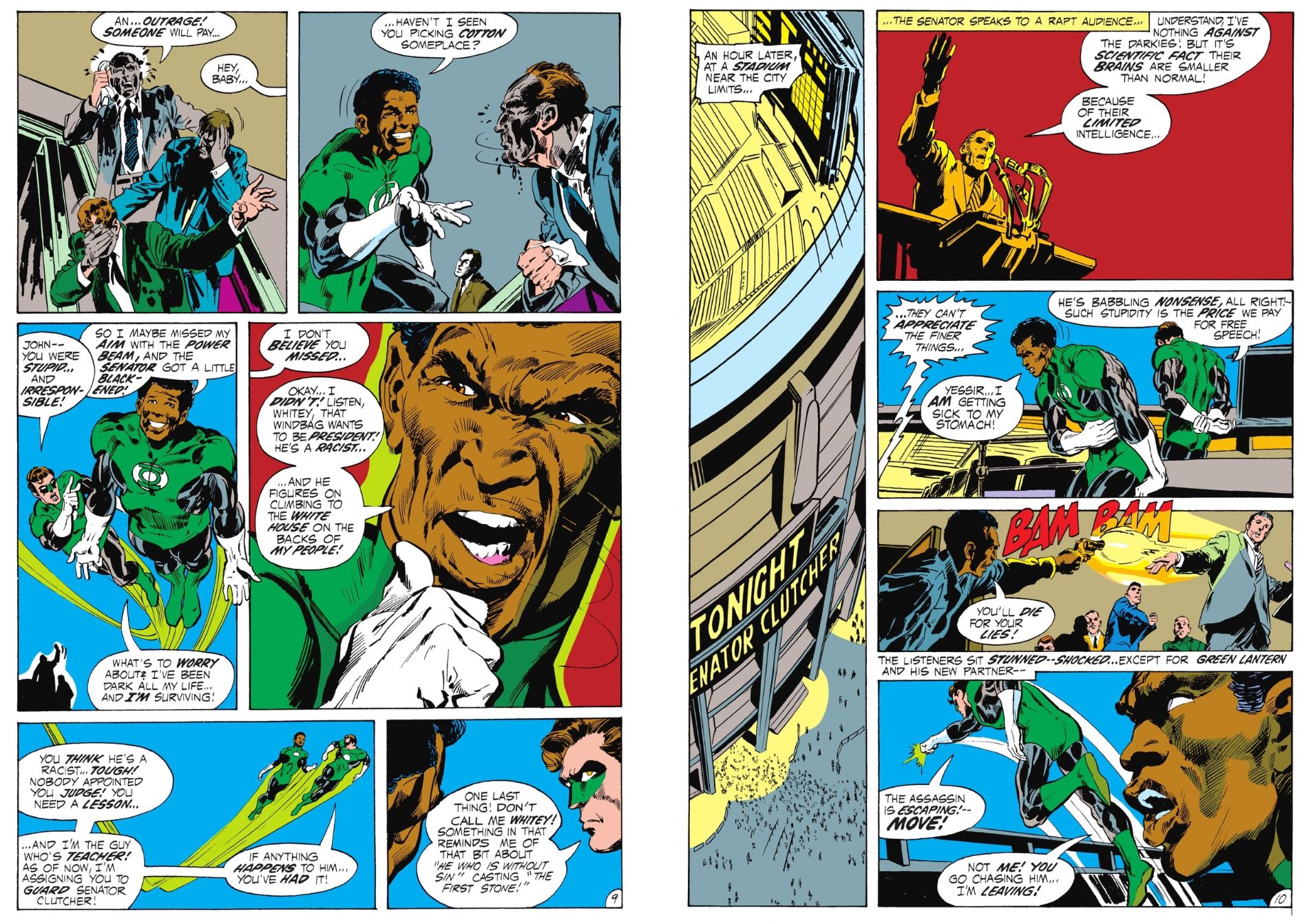
The rest is history: the JLA captivated the youth of a nation, reinvigorated an industry and even inspired a small family concern into creating the Fantastic Four, thereby transforming the art-form itself. Following a spectacular rise, TV spin-offs brought international awareness which led to catastrophic overexposure: by 1968 the new superhero boom looked to be dying just as its predecessor had at the end of the 1940s.

Sales were down generally in the comics industry and costs were beginning to spiral, and more importantly “free” entertainment, in the form of television, was by now ensconced in even the poorest household. If you were a kid in the sixties, think on just how many brilliant cartoon shows were created in that decade, when artists like Alex Toth and Doug Wildey were working in West Coast animation studios. Moreover, comic book heroes were now appearing on the small screen. Superman, Aquaman, Batman, upstart Marvel’s heroes and even the Justice League of America were there every Saturday in your own living room…

It was also a time of great political and social upheaval. Change was everywhere and unrest even reached the corridors of DC. When a number of creators agitated for increased work benefits the request was not looked upon kindly. Many left the company for other outfits. Some quit the business altogether… and some were pushed out…

This fabulous compendium volume reflects the turmoil of those times as the original writer and penciller who had created every single adventure of the World’s Greatest Superheroes since their inception gave way to a new wave of scripters and a fresh if not young artist.

Richard Allen “Dick” Dillin (17th December 1928 – 1st March 1980) had started in the 1940s at Quality Comics on Blackhawk, Plastic Man and their war anthologies. An utterly reliable prolific draughtsman, he moved to DC when the company bought out Quality and spent over a decade drawing their Blackhawk. When Sekowsky left, he would draw every JLA issue for the next twelve years, as well as many other adventures of DC’s top characters – and even a wealth of horror stories when the company started scaring kids for money again…

Collecting issues #77-95 (cover-dates December 1969 to December 1971) and generously re-presenting the stirring covers of #85 & 93: giant all-reprint editions, this tome captures a culture in transition and visible change in the way DC stories were told, over a period when the market changed forever, and comics stopped being casual disposable mass-entertainment.

By the end of the period covered in this volume the publishers had undertaken the conceptual and commercial transition from a mass-market medium which slavishly followed trends and fashions to become a niche industry producing only what its dedicated fans wanted…

Without preamble the drama commences with the heroes’ confidence and worldview shattered after enigmatic political populist Joe Dough suborns and compromises their beloved teen mascot in ‘Snapper Carr… Super-Traitor!’ as crafted by Denny O’Neil, Dillin & Joe Giella, a coming-of-age yarn that changed the comfy, cosy superhero game forever.

Greater social awareness parading through comics at this time manifested in the next epic 2-parter, which also revives another Golden Age Great (presumably to cash in on the mini-boom in screen Westerns). The Vigilante – a cowboy-themed superhero who battled bandits and badmen in a passel of DC titles from 1941-1954 – here alerts the team to ‘The Coming of the Doomsters!’ just in time to foil alien invaders who use pollution as their secret weapon. The vile plot concludes in ‘Come Slowly Death, Come Slyly!’ as the heroes stop the toxic baddies whilst subtly introducing young readers to potential ecological disasters in the making. This gave us plenty of time to offset greenhouse gases and end our dependence on fossil fuels and has given us the healthy planet we enjoy today…

Another landmark of this still-impressive tale was the introduction of the JLA Satellite, as the team moved from a hole in a mountain to a high-tech orbiting fortress. As they are moving in, ‘Night of the Soul-Stealer!’ sees Thanagarian Lorch Nor collecting heroic spirits in a magic box, but it is only prelude to an even greater threat as JLA #81 reveals his good intentions when the ‘Plague of the Galactic Jest-Master’ threatens to inflict a greater mind-crushing horror upon our entire universe…

Next is another grand collaboration between JLA and the Justice Society of America as ruthless property speculators (is there any other kind?) from outer space seek to raze two separate Earths in ‘Peril of the Paired Planets’. Only the ultimate sacrifice of a true hero averts trans-dimensional disaster in climactic conclusion ‘Where Valor Fails… Will Magic Triumph?’

Justice League of America #84 (November 1970) hosted ‘The Devil in Paradise!’: a guest-script from veteran Robert Kanigher wherein a well-meaning but demented scientist builds his own Eden to escape Earth’s increasing savagery, before going off the deep end and attempting to cleanse the world and start civilisation afresh.

With superheroes on the outs the team was severely truncated too. JLA #86 confronted issues of overpopulation and impending global starvation as Mike Friedrich began a run of excellent eco-thrillers with ‘Earth’s Final Hour!’. Here crooked business entrepreneur (can I say “any other kind” again?) Theo Zappa tries to trade away Earth’s plankton (base of our entire food-chain) to a race of aliens with only Superman, Batman, Flash, Aquaman, Atom & Hawkman on hand to thwart him, whilst #87’s ‘Batman… King of the World!’ brings in occasional guest-star Zatanna and semi-retired Green Lantern Hal Jordan to tackle a deadly alien robot raider. This was a devious and barely veiled attack on Big Business and the Vietnam war, most renowned these days for introducing a group of alien superheroes mischievously based on Marvel’s Mighty Avengers.

The human spirit and enduring humanity are highlighted as ancient refugees from the lost city of Mu return to find us in charge of the planet they had abandoned millennia ago. ‘The Last Survivors of Earth!’ proves that even when superheroes are outmatched by scientifically-instigated global catastrophes, the simple patience, charity and self-confidence of ordinary folks can move mountains and save worlds…

‘The Most Dangerous Dreams of All!’ is one of the oddest tales in the JLA canon, with a thinly disguised Harlan Ellison psychically inserting himself into the consciousness of Superman and Batman to woo Black Canary with near-fatal repercussions, in a rather self-indulgent but intriguing examination of the creative process. Back on – and under – solid ground again for #90, ‘Plague of the Pale People!’ sees Aquaman’s submerged kingdom of Atlantis conquered by a primitive subsea tribe (the Saremites from Flash #109) using nerve gas negligently dumped in the ocean by the US military. In a mordant and powerful parable about lost faith and taking responsibility, the JLA must deal with problems much tougher than whomping monsters, repelling invaders and locking up bad guys…

JLA #91 (August 1971) heralds a hero-heavy first chapter in the annual JLA/JSA team-up with ‘Earth… the Monster-Maker!’ as the Supermen, Flashes, Green Lanterns, Hawkmen, Atoms & Robins of two Realities simultaneously and ineffectually battle an alien boy and his symbiotically-linked dog on two planets a universe apart. The result is meaningless carnage and imminent death until ‘Solomon Grundy… the One and Only!’ gives all concerned a life-saving lesson on togetherness and lateral thinking…

Following the cover of reprint giant #93, Neal Adams steps in to provide additional pencils for tense mystery ‘Where Strikes Demonfang?’ as ghostly guardian Deadman helps Batman, Aquaman & Green Arrow foil a murder mission by previously infallible archer Merlyn and the League of Assassins.

The issue and this tome end on a cliffhanger as Flash, Green Lantern & Hawkman are lost in a teleporter accident, leaving Batman, Black Canary, Green Arrow & Atom to fight ‘The Private War of Johnny Dune!’ wherein a disaffected African American freshly returned from Vietnam discovers the power and temptation of superpowers. Tragically, even the ability to control minds isn’t enough to change an unjust society 200 years in the making…

Augmented by stunning covers from Murphy Anderson, Curt Swan, Dick Giordano & Adams, these thoroughly wonderful thrillers mark an end and a beginning in comic book storytelling as whimsical adventure was replaced by inclusivity, social awareness and tacit acknowledgement that a smack in the mouth can’t solve all problems.

The audience was changing and the industry was forced to change with them. But underneath it all the drive to entertain remained strong and effective. Charm’s loss is drama’s gain and today’s readers might be surprised to discover just how much punch these tales had – and still have.

And for that you must get this book…
© 1969, 1970, 1971, 2019 DC Comics. All Rights Reserved.
Today in 1929, Dick Dillin was born. You can appreciate his lifetime of comics creation drawing everyone from Aquaman to Zatanna in everything from Blackhawk to World’s Finest Comics… and you should. Or you could just scroll up.
In Britain, Strongman’s Daughter Pansy Potter debuted in 1938, courtesy of Hugh McNeill and The Beano. Red Ryder co-creator Stephen Slesinger died today in 1953 and in 2006 ultra prolific comics phenomenon Joe Gill passed away. He co-created Captain Atom and most reprinted Charlton comics you’ve heard of. Why not track down Strange Suspense: The Steve Ditko Archives vol 1 for a taste?