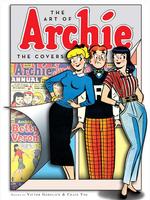
The Art of Archie: the Covers


By various, edited by Victor Gorelick & Craig Yoe (Archie Books)
ISBN: 978-1-936975-79-2

Win’s Christmas Gift Recommendation: A perfect celebration of the magic of comicbooks… 10/10

For most of us, comics mean buff men and women in capes and tights hitting each other, lobbing trees about, or stark, nihilistic genre thrillers aimed at an extremely mature and sophisticated readership of confirmed fans – and indeed that has been the prolific norm for nearly twenty years.

However, over the decades since comicbooks were invented in 1933, other forms of sequential illustrated fiction genres have held their own. One that has maintained a unique position over the years – although almost now completely transferred to television – is the teen-comedy genre begun by and synonymous with a carrot topped, homely (at first just plain ugly) kid named Archie Andrews.

MLJ were a small outfit which jumped wholeheartedly onto the superhero bandwagon following the debut of Superman. In November 1939 they launched Blue Ribbon Comics, promptly following with Top-Notch and Pep Comics. The content was the accepted blend of costumed heroes, two-fisted adventure strips and one-off gags. Pep made history with its lead feature The Shield – the industry’s first superhero clad in the American flag – but generally MLJ were followers not innovators.

That all changed at the end of 1941. Even while profiting from the Fights ‘N’ Tights phalanx, Maurice Coyne, Louis Silberkleit and John Goldwater (hence MLJ) spotted a gap in their blossoming market and in December the action strips were joined by a wholesome, ordinary hero; an “average teen” who had invitingly human-scaled adventures that might happen to the readers, but with the laughs, good times, romance and slapstick heavily emphasised.

Pep Comics #22 introduced a gap-toothed, freckle-faced, red-headed goof showing off to the pretty blonde next door. Taking his lead from the popular Andy Hardy movies starring Mickey Rooney, Goldwater developed the concept of a youthful everyman, tasking writer Vic Bloom & artist Bob Montana with the job of making it work.

So effective and all-pervasive was the impact and comforting message the new kid offered to the boys “over there” and those left behind on the Home Front that Archie Andrews and the wholesome image of familiar, beloved, secure Americana he and the Riverdale gang represented, one could consider them the greatest and most effective Patriotic/Propaganda weapon in comics history…

It all started with an innocuous 6-page tale entitled ‘Archie’ which introduced the future star and pretty girl-next-door Betty Cooper. Archie’s unconventional best friend and confidante Forsythe P. “Jughead” Jones also debuted in that first story as did the small-town utopia they lived in.

The premise was an instant hit and in 1942 the feature graduated to its own title. Archie Comics #1 was the company’s first non-anthology magazine and began an inexorable transformation of the entire company. With the introduction of rich, raven-haired Veronica Lodge, all the pieces were in play for the industry’s second Phenomenon (Superman being the first).

By May 1946 the kids had taken over and, retiring its heroic characters years before the end of the Golden Age, MLJ renamed itself Archie Comics, becoming to all intents and purposes a publisher of family comedies. This overwhelming success, like the Man of Tomorrow’s, forced a change in the content of every other publisher’s titles and led to a multi-media industry including a newspaper strip, TV, movies, pop-songs and even a chain of restaurants.

Intermittently the costumed cut-ups have returned on occasion but Archie Comics now seems content to specialise in what they do uniquely best.

The eponymous high-schooler is a good-hearted lad lacking common sense and Betty – pretty, sensible, devoted girl next door, with all that entails – loves the ridiculous redhead. Ronnie is spoiled, exotic and glamorous and only settles for our boy if there’s nobody better around. She might actually love him too, though. Archie, of course, can’t decide who or what he wants…

This never-tawdry eternal triangle has been the basis of seventy years of charmingly raucous, gently preposterous, frenetic, chiding and even heart-rending comedy encompassing everything from surreal wit to frantic slapstick, as the kids and an increasing cast of friends grew into an American institution.

Adapting seamlessly to every trend and fad, perfectly in tone with and mirroring the growth of teen culture, the host of writers and artists who’ve crafted the stories over the decades have made the archetypal characters of Riverdale a benchmark for youth and a visual barometer of growing up American.

Archie’s unconventional best friend Jughead is Mercutio to Archie’s Romeo, providing rationality and a reader’s voice, as well as being a powerful catalyst of events in his own right. There’s even a likeably reprehensible Tybalt figure in the crafty form of Reggie Mantle – who first popped up to cause mischief in Jackpot Comics #5 (Spring 1942).

This beguiling triangle (plus annexe and outhouse) has been the rock-solid foundation for decades of comics magic. …And the concept is eternally self-renewing…

Archie has thrived by constantly reinventing its core characters, seamlessly adapting to the changing world outside the bright, flimsy pages, shamelessly co-opting youth, pop culture and fashion trends into its infallible mix of slapstick and young romance.

Each and every social revolution has been painlessly assimilated into the mix with the editors tastefully confronting a number of social issues affecting the young in a manner both even-handed and tasteful over the years.

The cast is always growing and the constant addition of new characters such as African-American Chuck – an aspiring cartoonist – his girlfriend Nancy, fashion-diva Ginger, Hispanic couple Frankie & Maria and a host of others like spoiled home-wrecker-in-waiting Cheryl Blossom all contribute to a wide and refreshingly broad-minded scenario. In 2010 Archie even jumped the final social repressive hurdle when Kevin Keller, an openly gay young man and clear-headed advocate, joined the cast, capably tackling and dismantling the last major taboo in mainstream comics.

A major component of the company’s success has been the superbly enticing artwork and especially the unmistakable impact afforded via the assorted titles’ captivating covers. This spectacular compilation (a companion to 2010s Betty & Veronica collection) traces the history and evolution of the wholesome phenomenon through many incredible examples from every decade. Augmented by scads of original art, fine art and commercial recreations, printer’s proofs and a host of other rare examples and graphic surprises no fan of the medium could possibly resist, this huge hardback (312 x 235mm) re-presents hundreds of funny, charming, gloriously intriguing and occasionally controversial images plus background and biographies on the many talented artists responsible for creating them.

Moreover, also included are many original artworks – gleaned from the private collections of fans – scripts, sketches, gag-roughs, production ephemera from the art-to-finished-cover process, plus an extensive, educational introductory commentary section stuffed with fascinating reminiscences and behind-the-scenes anecdotes.

The picture parade begins with some thoughts from the brains behind the fun as ‘It’s a Gift’ by current Publisher/Co-CEO Jon Goldwater, ‘You Can Judge a Book by its Cover!’ – Editor-in-Chief/Co-President Victor Gorelick – and ‘On the Covers’ from cartoonist and Comics Historian Craig Yoe take us to the 1940s where ‘In the Beginning…’ details the story of Archie with relevant covers and the first of a recurring feature highlighting how later generations of artists have recycled and reinterpreted classic designs.

‘A Matchless Cover’ leads into the first Artist Profile – ‘Bob Montana’ – and a wealth of cracking Golden Age images in ‘Who’s on First!’ before chapters on specific themes and motifs commence with a celebration of beach scenes with ‘In the Swim’ after which artist ‘Bill Vigoda’ steps out from behind his easel and into the spotlight.

‘Déjà Vu All Over Again’ further explores the recapitulation of certain cover ideas before ‘Rock ‘n’ Roll!’ examines decades of pop music and “guest” stars such as the Beatles, whilst ‘Archie’s Mechanically Inclined’ examines a short-lived dalliance with an early form of home DIY magazines. The life of veteran illustrator ‘Al Fagaly’ leads into a selection of ‘Fan Faves’ ancient and modern and the biography of ‘Harry Sahle’ then segues neatly into a selection of cheerleading covers in ‘Let’s Hear It for The Boy!’

It wasn’t long after the birth of modern pop music that the Riverdale gang formed their own band and ‘Ladies and Gentlemen, The Archies!’ focuses on those ever-evolving musical prodigies with scenes from the Swinging Sixties to the turbulent Rap-ridden 21st century after which the history of artist ‘Joe Edwards’ leads into a barrage of smoochy snogging scenes in ‘XOXOXO!’

Always a keen follower of fads and fashions the Archie crowd embraced many popular trends and ‘Monster Bash!’ concentrates on kids’ love of horror and recurring periods of supernatural thrills after which a bio of ‘Dan Parent’ leads unerringly to more ‘Celebrity Spotting!’ with covers featuring the likes of George (Sulu) Takei, Michael Jackson, Simon Cowell, J-Lo, Kiss, the casts of Glee and Twilight, and even President Barack Obama all eagerly appearing amongst so very many others.

‘Art for Archie’s Sake’ dwells on the myriad expressions of junior painting and sculpture and, after the life story of the sublimely gifted ‘Harry Lucey’, ‘The Time Archie was Pinked Out!’ details the thinking behind the signature logo colour schemes used during the company’s pre-computer days.

‘Life with Archie’s a Beach!’ takes another look at the rise of teenage sand and surf culture through the medium of beautifully rendered, scantily clad girls, whilst after the lowdown on writer/artist ‘Fernando Ruiz’, ‘Dance! Dance! Dance!’ follows those crazy kids from Jitterbug to Frug, Twisting through Disco and ever onwards…

‘The Happiest of Holidays’ highlights the horde of magical Christmas covers Archie, Betty and Ronnie have starred on whilst ‘Rhyme Time’ reveals the odd tradition of poetry spouting sessions that have been used to get fans interested and keep them amused.

A history of the inimitable ‘Samm Schwartz’ precedes a look at classroom moments in ‘Readin’ Writin’ an’ Archie’ – with a separate section on organised games entitled ‘Good Sports!’ – after which the life of legendary artist ‘Dan DeCarlo’ neatly leads to another selection of fad-based fun as ‘That’s Just Super!’ recalls the Sixties costumed hero craze as well as a few other forays into Fights ‘n’ Tights fantasy…

‘Let’s Get this Party Started’ features covers with strips rather than single images and is followed by a biography of ‘Bob Bolling’ before ‘A Little Goes a Long Way!’ concentrates on the assorted iterations of pre-teen Little Archie comics. This is then capped by the eye-popping enigma of teen taste as visualised in the many outfits du jour revealing ‘A Passion for Fashion’…

‘Come as You Aren’t!’ is devoted to the theme of fancy dress parties after which the modern appetite for variant covers is celebrated in ‘Alternate Realities’ (with stunning examples from Fiona Staples, Tim Seeley and Walter Simonson amongst others) all wrapped up by the gen on artistic mainstay ‘Bob White’.

The entire kit and caboodle then happily concludes with an assortment of surreal, mindblowing covers that defy categorisation or explanation in ‘And Now, For Something Completely Different’, proving that comics are still the only true home of untrammelled imagination: featuring scenes that literally have to be seen to be believed…

Mesmerising, breathtaking graphic wonderment, fun-fuelled family entertainment and enticing pop art masterpieces; these unforgettable cartoon confections truly express the joyous spirit of intoxicating youthful vitality which changed the comic industry forever and comprise an essential example of artistic excellence no lover of narrative art should miss.

Spanning the entire history of American comicbooks and featuring vintage images, landmark material and up-to-the-minute modern masterpieces, this is a terrific tome for anybody interested in the history of comics, eternally evergreen light laughs and the acceptable happy face of the American Dream.
™ & © 2013 Archie Comics Publications, Inc. All rights reserved.

A1: The World’s Greatest Comics


By various (Atomeka/Titan Comics)
ISBN: 987-1-78276-016-0

A1 began in 1988 as an anthology showcase for comics creativity, free from the usual strictures of mainstream publishers, consequently attracting many of the world’s top writers and artists to produce work at once personal and experimental, comfortingly familiar and, on occasion, deucedly odd.

Editors Garry Leach and Dave Elliott have periodically returned to their baby and this year the title was resurrected under the aegis of Titan Comics to provide more of the same.

Always as much committed to past excellence as future glories (you should see the two page dedication list here) and following the grandest tradition of British comics, the new title already has a great big hardback annual and it offers the same eclectic mix of material old and new…

After that aforementioned thank you to everyone from Frank Bellamy to Faceache in ‘The Dream Day’s are Back: The One’s Especially For You…’ the cartoon carnival commences with a truly “Golden Oldie” as Joe Simon & Jack Kirby (inked by Al Williamson) provide the science fiction classic ‘Island in the Sky’ – which first surfaced in Harvey Comic’s Race for the Moon #2 September, 1958 – wherein an expired astronaut returns from death thanks to something he picked up on Jupiter…

Each tale here is accompanied by fulsome creator biographies and linked by factual snippets about most artists’ drug of choice.

These photographic examples of coffee barista self-expression (with all ‘Latte Art’ throughout courtesy of Coffee Labs Roasters) are followed by illustrator Alex Sheikman & scripter Norman Felchle’s invitation to the baroque, terpsichorean delights of the ‘Odd Ball’.

The fantastic gothic revisionism resumes after another coffee-break as the sublime Sandy Plunkett details in captivating monochrome the picaresque perils of life in a sprawling urban underworld with his ‘Tales of Old Fennario’

‘Odyssey: A Question of Priorities’ by Elliot, Toby Cypress & Sakti Yuwono is a thoroughly up-to-date interpretation of pastiche patriotic avenger Old Glory, who now prowls modern values-challenged America, regretting the choices he’s made and the timbre of his current superhero comrades…

‘Image Duplicator’ by Rian Hughes & Dave Gibbons is, for me, the most fascinating feature included here, detailing and displaying comics creator’s admirable responses to the appropriation and rapine of comic book images by “Pop” artist Roy Lichtenstein.

In a move to belatedly honour the honest jobbing creators simultaneously ripped off and denigrated by the “recontextualisation” and transformation to High Art, Hughes and Gibbons approached a number of professionals from all sectors of the commercial arts and asked them to re-appropriate Lichtenstein’s efforts.

The results were displayed in the exhibition Image Duplicator and all subsequent proceeds donated to the charity Hero Initiative which benefits comic creators who have fallen on hard times.

In this feature you can see some of the results of the comicbook fightback with contributions from Hughes, Gibbons, FuFu Frauenwahl, Carl Flint, Howard Chaykin, Salgood Sam, Mark Blamire, Steve Cook, Garry Leach, Dean Motter, Jason Atomic, David Leach, Shaky Kane, Mark Stafford, Graeme Ross, Kate Willaert & Mitch O’Connell.

Master of all funnybook trades Bambos Georgiou then offers his 2011 tribute to DC’s splendidly silly Silver Age in the Curt Swan inspired ‘Weird’s Finest – Zuberman & Batguy in One Adventure Together!’ and Dominic Regan crafts a stunning Technicolor tornado of intriguing illumination as Doctor Arachnid has to deal with cyber Psychedelia and a divinely outraged ‘Little Star’…

‘Emily Almost’ by Bill Sienkiewicz first appeared in the original A1 #4, a bleak paean to rejection seen here in muted moody colour, after which Scott Hampton revisits the biblical tale of ‘Daniel’ and Jim Steranko re-presents his groundbreaking, experimental multi-approach silent story ‘Frogs!’ and follows up with ‘Steranko: Frogs!’  – his own treatise on the history and intent behind creating the piece thirty years ago…

‘Boston Metaphysical Society’ is a prose vignette of mystic Steampunk Victoriana written by Madeleine Holly-Rosing from her ongoing webcomic, ably illustrated by Emily Hu, whilst ‘Mr. Monster’ by Alan Moore & Michael T. Gilbert (with inks from Bill Messner-Loebs) is a reprint of ‘The Riddle of the Recalcitrant Refuse!’

First found in #3 (1985) of the horror hunter’s own series, it recounts how a dead bag-lady turns the city upside out when her mania for sorting junk transcends both death and the hero’s best efforts…

‘The Weirding Willows: Origins of Evil’ by Elliot, Barnaby Bagenda & Jessica Kholinne is one of the fantasy features from the new A1 – a dark reinterpretation of beloved childhood characters such as Alice, Ratty, Toad and Mole, which fans of Bill Willingham’s Fables should certainly take notice of…

‘Devil’s Whisper’ by James Robinson & D’Israeli also comes from A1 #4, and features Matt Wagner’s signature creation Grendel – or does it?

Stechgnotic then waxes lyrical about Barista art in ‘The Artful Latte’ after which ‘Melting Pot – In the Beginning’ by Kevin Eastman, Eric Talbot & Simon Bisley ends the affair by revisiting the ghastly hellworld where the gods spawned an ultimate survivor through the judicious and repeated application of outrageous bloody violence.

Of course it’s a trifle arrogant and rather daft to claim any collection as “The World’s Greatest Comics” and – to be honest – these aren’t. There’s no such thing and never can be…

However this absorbing, inspiring oversized collection does contain a lot of extremely good and wonderfully entertaining material by some of the best and most individualistic creators to have graced our art form.

What more can you possibly need?

A1 Annual © 2013 Atomeka Press, all contents copyright their respective creators. ATOMEKA © 2013 Dave Elliott & Garry Leach.

Anyone wishing to learn more or donate to Hero Initiative can find them at www.heroinitiative.org

The High Fidelity Art of Jim Flora – Album Covers and Music Illustrations


By Irwin Chusid & Barbara Economon (Fantagraphics Books)
ISBN: 978-1-60699-655-3

Some artists can be said to epitomise an era, their works forever evoking the time and style and flavour of a discreet age. Usually it’s all those inspired invisible creatives toiling at the coalface of imagination: advertising and package designers, film poster artists, fashion designers and yes, comic and strip illustrators, whose individual yet socially synergistic efforts pool and leak into a generation’s psyche.

A very select few artists can be also be charged with actually creating the definition of an epoch: Jim Flora was one of those…

Born in Ohio in 1914, he studied at the Art Academy of Cincinnati from 1935-1939. A year before he graduated Flora met brilliant but troubled author and artist Robert Lowry and together they founded the influential Little Man Press, publishing a stellar line of impressive literary titles with eye-catching art and design.

In 1942 they parted and Flora, newly married, briefly became a freelance artist before taking a job with Columbia Records. He upped sticks for Westport Connecticut, initially working for the in-house art department under Alex Steinweiss (inventor of the illustrated album cover).

The newcomer designed ads, crafted and illustrated new-release pamphlets and assorted retail trade literature, but when his boss enlisted in the Navy, the 4-F Flora was promoted to Art Director.

Always drawing and designing, he continued until 1945, creating the groundbreaking advance-trade periodical Coda, and was promoted to Advertising Manager. However, afflicted with an insatiable hunger to create, Flora chafed in such a time-consuming, bureaucratic position, even as his first landmark LP designs began to appear throughout 1947.

Despite having a wife and five kids to support, in 1950 he resigned and relocated with the brood to Mexico for 15 months. Despite revelling in artistic freedom and absorbing the colourful kinetic art of the region, the Floras returned to Connecticut in 1951, and Jim began a hugely successful career as a freelance illustrator. Thereafter he lent his uniquely enchanting style to record covers for Columbia, RCA Victor, Camden and others whilst generating mountains of illustrations for books, newspapers and magazines.

Life, Look, Newsweek, The New York Times Magazine, Fortune, Holiday, Mademoiselle, Research and Engineering, Computer Design Magazine, Sports Illustrated, Collier’s and many others numbered him amongst their regular contributors, and for most of 1952 he also operated as Art Director for Park East, where he published the earliest commercial art of R.O. Blechman and Andy Warhol.

His tireless creativity and graphic invention always forcing him into new challenges, Flora also created storyboards for animator Gene Deitch at cartoon factory United Productions of America (UPA).

He was also a savvy professional and could see how times and trends would inevitably shift. With fashion inexorably against him, Rock ‘n’ Roll supplanting Jazz and classical sounds and photography encroaching on album sleeves, in 1955 he sold his first illustrated children’s book The Fabulous Fireworks Family to Harcourt Brace, and produced sixteen more until retirement in 1982.

He loved everything nautical or maritime and cherished Jazz, and his pervasive, infectious style transformed animation and graphic illustration from the late1950s on, when all those kids who’d bought his LP covers or read his publicity bulletins began to work on cartoons for the burgeoning, all-consuming television industry or entered the advertising field.

Flora was addicted to making art and employed a uniquely frenetic, narrative-packed rhythmic style that jumped with boundless energy and charm and paid no-nevermind to foolish hobgoblins like perspective, representational anatomy or good taste and common sense. Many of the most impressive works abound with wry but subtly concealed scenes of horror, sex and violence…

Flora never drew comics, but if he had they would have been amazing…

This superb coffee-table art book by biographers, archivists and fans Irwin Chusid and Barbara Economon is the fourth compilation in a series that includes The Mischievous Art of Jim Flora (2004), The Curiously Sinister Art of Jim Flora (2007) and The Sweetly Diabolic Art of Jim Flora (2009). As such it contains hundreds of beguiling and revelatory images, roughs, sketches, photos, designs, layouts, complete ads and spot illustrations from his most productive decades: images impossibly familiar and nostalgia-loaded for anyone who grew up in the 1960s and 1970s.

Most importantly this book also reproduces every (known) record cover Flora created…

It all opens with Chusid’s expansive biographical overview ‘Wizard of the Square-Foot Canvas’ and includes an ‘Interview with Jim Flora’ plus Martina Schmitz’ ‘Interview with Robert Jones’ (lifelong buddy and Flora’s Art Director successor at Columbia, RCA Victor and Park East, he commissioned a vast number of works from the freelancer), all liberally bedecked with stunning pictures.

The colossal Album Covers gallery then commences to steal your visual breath away presenting stunning reproductions of those eccentric masterpieces from Mambo For Cats to The Dukes of Dixieland, Strollin’ the Cha Cha Cha to Inside Sauter-Finegan, from Lord Buckley’s Hipsters, Flipsters, and Finger-Poppin’ Daddies Knock Me Your Lobes to Mexican Folk Songs or Till Eulenspiegel to For Boppers Only, concluding with a groovy selection of his commercial art spreads and later fine art pieces – paintings, drawings and prints celebrating music, friends and life.

His influence on generations of artists is incalculable and lasting. Flora passed away in 1998, but his pictures are still here, frantically jinking and jiving in every mind that ever saw them…

The High Fidelity Art of Jim Flora © 2013 Irwin Chusid. All images © the Heirs of Jim Flora, except where noted otherwise. All rights reserved.
Win’s Christmas Gift Recommendation: a pictorial time-warp for hepcats of all ages… 8/10

Love and Rockets: the Covers


By Gilbert, Jaime & Mario Hernandez (Fantagraphics Books)
ISBN: 978-1-60699-598-3

In the 1980s a qualitative revolution forever destroyed the tired moribund, stereotypical and ghettoised ways different genres of comic strips were produced and marketed. The iconic force most evidently shattering those comfy pigeonholes we’d built for ourselves were three guys from Oxnard, California; Jaime, Mario and Gilberto Hernandez.

Love and Rockets was an anthology magazine originally self-published in 1981which featuring intriguing, adventuresome larks and wildly different comic narratives that pretty much defied classification, all wrapped up in the sheen and ephemera of LA’s Hispanic and punk music scenes.

Stories varied from slick, sci-fi-soused hi-jinx starring punky young gadabouts and their extended eccentric circle of friends – or the heart-warming, terrifying, gut-wrenching soap-opera fantasies from the rural Central American paradise of Palomar.

Jaime Hernandez was always the most noticeable part of the graphic literary revolution: his sleek, seductive, clean black line and beautiful composition, impeccably rendered heroes and villains and the comfortingly recognisable – though thoroughly “roofied” comic book iconography – particularly appealing to readers raised on traditional Marvel and DC fare.

However his love of that material, as well as the influence of Archie Comics cartoonists (especially Sam Schwartz, Harry Lucey and Dan De Carlo), accomplished and enticing as it is, often distracted from the power of his writing, especially in his extended epics featuring of Maggie Chascarillo and Hopey Glass – AKA Maggie & Hopey, Las Locas, something never true of Gilbert, whose simplified cartooning and subtle, reined-in graphics never overwhelmed the sheer magnetic compulsion of his scripts…

The Hernandez Boys, gifted synthesists all, enthralled and enchanted with incredible stories that sampled a thousand influences conceptual and actual – everything from Comics, TV cartoons, masked wrestlers, the exotica of American Hispanic pop culture and even German Expressionism. There was also a perpetual backdrop displaying the holy trinity of youth: Sex and Drugs and Rock and Roll…

The result was dynamite. Mario only officially contributed on rare occasions but his galvanising energy informed everything – and his covers here display a fondness for those battered genres both tantalising and darkly skewed…

Jaime’s sleek, enticing visual forays explored friendship and modern love whilst destroying stereotypes of feminine attraction through his fetching coterie of Gals Gone Wild, and Gilberto created a hyper-real rural landscape macrocosm in Palomar: a playground of wit and passion and human imperfection in the quicksilver form of a poor Latin-American village with a vibrant, funny and fantastically quotidian cast created for his extended saga Heartbreak Soup.

Life, death, poverty, adultery, murder, boredom, magic, weird science and gossip shaped Palomar’s metafictional environs, as the artist mined his own post-punk influences in his deceptively addictive primitivist drawing style which blended his personal mythologies of comics, music, drugs, strong women, gangs, sex and family.

The denizens and survivors of Palomar still inform and shape Beto’s work, both directly and as imaginative spurs for spin-off stories.

Winning critical acclaim but little financial success, the brothers temporarily went their own ways in the mid-1990s, creating side projects and special series before creatively reuniting a few years back to produce annual collections of new material in their shared or, rather, intermittently adjacent pen-and-ink universes.

In more than three decades of groundbreaking creative endeavour, Los Bros Hernandez crafted a vast and magnificent canon of cartoon brilliance and literary enchantment and this truly spectacular art book presents all the eye-popping front and back covers from 1982-1996: fifty incredible issues which graced and lit up comic shop shelves, always looking nothing like any publication produced at the time.

This huge hardback (338x262mm) comes with a cool cover-cel overlay and re-presents each glorious, intriguing and occasionally controversial image, restored, re-mastered and de-cluttered to remove all extraneous, obfuscating text – such as barcodes and pricing information.

Moreover, also included are many pages of original pencils and inks, correction stages, production ephemera from each part of the art-to-finished-cover process, plus an extensive commentary section where Los Bros share their thoughts and intimate moments of “creators’ remorse”.

As well as the captivating magazine iterations by the guys as they mastered their craft, this astounding collection also includes 28 pages of covers from the numerous collected editions which propelled the mature creators to global comics stardom and contributed so much to the growth of today’s graphic novel market.

Mesmerising, breathtaking graphic wonderment and enticing pop art masterpieces; these incredible concoctions capture the spirit of subversive, intoxicating youthful vitality which changed the comic industry forever and comprise a truly essential catalogue of artistic excellence no lover of narrative art should miss.

© 2013 Gilbert, Jaime and Mario Hernandez. All rights reserved.
Win’s Christmas Gift Recommendation: Pretty, powerful, perfect picture magic… 10/10

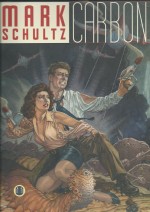
Mark Shultz: Carbon volume 1


By Mark Shultz (Flesk)
ISBN: 978-1-933865-54-6

After everything is said and done the most immediate response to narrative art is inevitably visceral and visual.

We take and tell our stories in picture form, and the sheer ability to express emotion and put the impossible on paper always captivates and leaves us wondering “how did he/she do that”?

It’s the reason why collections of comics art always have such amazing impact. We get to marvel at spectacular pretty pictures whilst stealing a furtive glimpse behind the curtain at the working of wonderment.

One maestro more than happy to share his secrets is Mark Shultz. The writer/artist shot to stardom after his 1986 EC Comics-inspired Xenozoic Tales (a magnificent blend of pulp fiction, Fifties automobile chic and honking great dinosaurs) hit an instantly addictive chord with the comics-buying public.

The publication spawned an animated TV series, assorted arcade, video and role-playing games, trading cards, action figures, candy bars and a succession of reprints (comics and graphic novel collections) from Kitchen Sink, Marvel and Dark Horse – mostly under its showbiz title Cadillacs and Dinosaurs.

Since then Schultz has become one of the industry’s biggest stars: tackling Superman, Batman and high-profile movie properties such as Aliens and Predator whilst always pursuing his great love: classic adventure archetypes like Tarzan, Conan and Doc Savage. Since 2004 he has been the writer of the Prince Valiant Sunday strip.

This particular oversized (305 x 232mm) collection of sketches, working drawings and finished pieces concentrates on a procession of his most pulchritudinous pulp princesses, lusty he-men and fantastic beasts in incredible unworldly locations: offering astounding insight into his creative process through breathtaking gatefolds displaying the progression from idea to full-painted finished art.

This compelling compendium of captivating heroines, bombastic barbarians, jungle kings and queens, space heroes, Martian Princesses, savage beasts, two-fisted types, what looks to me like DC’s iconic war heroes The Losers and so many wonderful dinosaurs also includes many scenes from Xenozoic Tales, sketches from forthcoming works and a tremendous informative bonus feature.

Schultz is as much science buff as fantasy aficionado and kicks off this book with the heavily illustrated inside story of how he was asked by pal and top bone-boffin Dr. Michael J. Ryan to produce the first visual representations of a newly-discovered dinosaur in ‘Introducing Xenoceratops‘ (or Xenoceratops Foremostensis, to give it the full formal title)…

Flesk Publications specialises in art books and the lavish tomes they produce are dedicated to the greats of our industry, with volumes on sequential narrative and fantasy illustration starring Steve Rude, Al Williamson, James Bama, Gary Gianni, Franklin Booth, William Stout and Joseph Clement Coll and many, many more.

The beautifully intimate glimpses of a master at work, with full-colour reproduction capturing every nuance of those gorgeous pencil or brushstrokes, make this a book a vital primer for anybody dreaming of drawing for a living, and the stirring lavish material revealed here will enthral and entice every fan of wondrous worlds and fantastic forgotten realms.

© 2013 Mark Schultz. All Rights Reserved. All artworks, features and properties © 2013 the individual creators, owners or copyright holders.

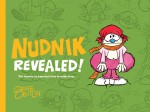
Nudnik Revealed!


By Gene Deitch (Fantagraphics Books)
ISBN: 978-1-60699-651-5

Kim Deitch has been one of the leading lights of America’s Comix Underground since its earliest days. He probably got his artistic acumen, narrative know-how and skewed raconteur’s view from his dad…

Eugene Merril “Gene” Deitch was born in 1924 and began his astounding career as a graphic designer and art director before eventually moving into animation. Over a 65-year career working as producer, scripter, artist, designer and Director for UPA/Columbia Pictures, MGM, Terrytoons/20th Century Fox, King Features and Paramount Pictures, he created cartoons for both movie audiences and television consumption.

In 1961 his cartoon feature of Jules Feiffer’s Munro won the Oscar® for Animated Short Film, and he numbers Tom Terrific, Tom and Jerry, Popeye and Krazy Kat amongst his other major successes. Deitch directed Alice of Wonderland in Paris, adapted the animated feature of Maurice Sendak’s Where the Wild Things Are and is credited with the first ever Tolkien film adaptation with The Hobbit in 1966.

Gene Deitch has resided in Prague for decades where he established a long and fruitful working relationship with Krátký Film s.r.o. studios. This partnership led, in 1964-1965, to a uniquely personal and brilliant run of movie cartoon shorts starring the latest in a shabby yet unbroken line of good-natured, ingenuously bumbling, impoverished cinematic victims of cruel circumstance.

The very first Nudnik cartoon garnered Deitch another Academy Award® nomination and led to the commission of 11 more shorts starring the luckless loafer, conceived and mapped out by Deitch to be constructed by his Iron Curtain cousins …and delivered just as the American tradition of preceding main movie blockbusters with brief cartoons was ending….

Now with those lost classics restored and collected on a commemorative DVD, Deitch has also compiled a glorious oversized (310 x 236mm) full-colour hardback compendium detailing the history and genesis of Nudnik as an accompaniment.

Dedicated to and enamoured of the hallowed concept of the lonely loser, Deitch famously got the idea for his favourite creation after a piece of office machinery tried to kill him. From there the concept of a down-and-out hobo who was a magnet for ever-increasing disaster just seemed to gel…  

Liberally illustrated throughout with original art and documents scrupulous hoarded by Deitch, the disclosures begin in the introductory ‘Here’s Nudnik’ after which the physical genesis of the character is revealed in ‘Nudnik, Master of Failure’…

In ‘What’s a Nudnik?’, Deitch traces the development of his ultimate baggy-pants clown, revealing his personal empathy with his creation, after which ‘The Nudnik Plot’ examines the narrative thrust of the two brief series.

Historical antecedents, poster art and some of the merchandising intended to supplement the character launch all contribute to the story of ‘The Nudnik Look’ before the real meat of this tome begins with Production Scrapbook – Capturing Ideas on Paper’.

This vast collection of utterly fascinating development sketches, preparatory roughs, scene layout drawings, models sheets, animation tests, character designs, episode models, gags, pictorial story snippets and even a complete 1967 “flip-book” adventure (‘The Cut Finger Fumble’ produced for the Montreal World’s Fair) plus more merchandise prototypes all show just how much work goes into making animation.

Then Film Setups – Some actual camera setups, cels, and backgrounds’ reproduces many actual finished scenes from the cartoons whilst Gags – Nudnik gag sketches, some of which were produced as 30-second “blackout” gag films’ reprints whole raw story sequences which show just how similar cartons and comics strips truly are.

At the time, Deitch was still learning how to work with his Czech team and thus his visual instructions were often excessively detailed.

The next section fills out the book with a magical treat for fans and students of the medium: three complete production storyboards, exactly as the actual animators received them and which they used to turn Deitch’s script, ideas and drawings into six minutes of slapstick action and outré sound effects.

The actual tales are all 18 to 20 pages of nine frames each, ‘Home Sweet Nudnik’ (episode 7), ‘Welcome Nudnik’ (episode 3) and ‘Good Neighbor Nudnik’ (episode 11), and work perfectly as comics even as they reveal the secret of animation magic…

This terrific tome then closes with additional features ‘To Russia With Love’ featuring a modern performer celebrating the cartoon clown’s shtick, a salutary example of the unwanted influence of Studio bosses in ‘Peeing in the Soup’ and a warm plug for that aforementioned DVD collection in ‘Nudnik Lives Again’…

Long regarded as a lost masterpiece of the art form, Nudnik Revealed! is a wonderful visual memoir which offers stunning insights into the history of cartoon creation and the mind of a brilliantly imaginative creative force.

Nudnik Revealed! is © 2013 Fantagraphics Books Inc. All contents © 2013 Gene Deitch. All rights reserved.

Astounding, Mysterious, Weird & True Volume 1: The Pulp Art of Comic Book Artists


By Steven Brower & Jim Simon (SB Studio Books)
ISBN: 978-1-4820-3313-7

Once upon a time, literacy was at an all-time high in the English-speaking world. A determined push to educate all and sundry took reading out of the hands of a moneyed intelligentsia and made it a tool of the working man, just as print technology was finding cheaper and more effective ways for creators and purveyors to disseminate their wares to growing markets.

Moreover, what everybody in the publishing world knew was what working folk needed more than anything (even religion) was cheap entertainment – the less wholesome and salutary the better…

In Britain we had newspapers, a burgeoning comics sector, “blood and thunder” periodicals and story magazines. In America they had “The Pulps”…

The first was indisputably The Argosy, created by Frank A. Munsey in 1896 and largely superseding most types of the infamous “Dime Novel” which had, with untrammelled sensationalism, ruled the periodical markets since 1860.

Argosy and its end-of-the-century imitators dominated and inspired a publishing phenomenon which eventually covered every genre – or blend of genres – in an industry niche which lasted well into the 1990s, albeit in a much reduced and rarefied form.

As well as spectacular colour covers, almost all pulps had black and white interior illustrations – spots, splashes and spreads – and some even had their own comic strip serials.

There were pulps for every possible taste and topic from romance to mystery to all-out action – including racier “men’s adventures”: two-fisted exotic action-thrillers heavy on mildly fetishistic sadism and bondage themes, with Rugged American men coming to the rescue of white women in peril from thugs and foreigners, saving them (the white women, of course) from “fates worse than death”, but only just in time and never before they had lost most of their clothes (the girls, and often many of the Rugged Americans too…).

One publisher in particular specialised in this niche market, producing a range of saucy genre thrillers all graced with a defining appellative: Spicy Detective, Spicy Western, Spicy Mystery and Spicy Adventure Stories. This was printer-turned-publisher Harry Donenfeld, who occasionally assumed control of companies who couldn’t pay their print bills. In 1934 and knowing pretty well what readers liked, he created a “Men’s Mag” mini empire under the twin banners of Culture and Trojan Publications. Of course, that’s also how he assumed control of the company that became DC Comics less than a decade later…

In 1943 the pressure exerted by various censorious elements in America became too much and Trojan/Culture changed tack and “Spicy” overnight evolved into “Speed Detective”, “Speed Western” and so forth. Perhaps the fact that Donenfeld was sitting on a wholesome family goldmine of comicbook characters such as Superman and Batman had something to do with that…

The story of how Max Gaines turned freebie pamphlets containing reprinted newspaper strips into a discrete and saleable commodity (thereby launching an entire industry, if not art-form) has been told far better elsewhere, but undoubtedly the influence of eye-grabbing pulp pictures as much as those reformatted strips influenced the growth and iconography of comicbooks.

Moreover, with thematic similarities and the same few owners hiring illustrators (and writers), naturally the creatives of one market frequently worked in both – and occasionally all three – arenas.

Now at long last, with comicbooks the indisputable major force in today’s illustrated fiction, comes a superb collection of images gathered together by writer/designer Steven Brower and novelist Jim Simon which shines a welcome light on those artists whose talents were to be found in all areas of popular printed fiction…

This superb gallery begins with ‘Diamonds and Rust’ by Simon; an efficient and studious overview of the history, artists and characters that thrived in those bygone days of wonder before the sublime and stunning panoply of pictures – all accompanied by incisive and revelatory potted biographies – commences.

The images are all culled from such evocative titles as Astounding, If, Courage, Super Science Stories, Weird Tales, Marvel Stories, Galaxy, Nick Carter, Detective, Basketball Stories, Wonder Stories, Big Book, Detective Short Stories, Planet Stories, Adventure, World’s News, Speed Detective, Sky Fighters, Dime Western and many more…

The many artists whose work features in this initial volume can be broken into roughly three categories. The first is pulp masters who also worked in comicbooks such as Edd Cartier, Charles Coll, Virgil Finlay, Kelly Freas, Roy G. Krenkel, Gray Morrow and Alex Schomburg whilst the second is jobbing artists equally at home in newspapers comicbooks, pulps and eventually commercial art.

Those include Benjamin “Stookie” Allen, D, Bruce Berry, Jack Binder, Jon L. Blummer, J. C, Burroughs (son of Tarzan creator Edgar Rice Burroughs), Harry Campbell, Paul Cooper, Harvey Eisenberg, Elton Fax, Harry Fisk, Dan Heilman, Ray Isip, Jeff Jones, Jacob Landau, D.H. Moneypenny, Lou Morales, Leo Morey, Norman Nodel, Neil O’Keefe, George Olesen, Paul Orban, H.L. Parkhurst, Louis Ravielli, Rod Ruth, John Styga, Riley Thomson, Elmer Wexler, Chuck Winter and Cedric Windas.

Finally there are fascinating examples of non-narrative illustration by legendary stars of comics such as Dan Adkins, Murphy Anderson, Dick Ayers, Matt Baker, Dan Barry, C.C. Beck, Pete Constanza, Stan Drake, Bill Draut, Will (or Bill) Ely, Creig Flessel, Dick Fletcher, John Forte, Matt Fox, Dick Giordano, John Giunta, Jerry Iger, Graham Ingels, Jack Kirby, George Klein, Alex Kotsky, Alden McWilliams, Mort Meskin, Irving Novick, Rudy Palais, Alex Raymond, Paul Reinman, Syd Shores, Joe Simon and Wally Wood.

There even a few British superstars included, such as Norman Petit (creator of legendary strips Jane and Susie), Brian Lewis (Dan Dare, Suki, Starlord, 2000AD, House of Hammer) and the inimitable Don Lawrence, artist on Storm, Trigan Empire, Marvelman, Olac the Gladiator, Buffalo Bill and so many more…

Also included in this wonderful celebration is an intriguing selection of Prototypes, displaying potential pulp antecedents of comics characters such as the Joker and Mr. Mxyzptlk…

If you’re of a nostalgic bent or simply a lover of magnificent art and illustration, Astounding, Mysterious, Weird & True is a compendium that will amaze and delight you.

© 2013 Steven Brower & Jim Simon. Diamonds and Rust © 2013 Jim Simon. Text and design © 2013 Steven Brower.

Astounding, Mysterious, Weird & True was made via the CreateSpace Independent Publishing Platform.

Walrus (Brandon Graham’s All Bum Album – from Tusk ‘Till Dawn)


By Brandon Graham (PictureBox)
ISBN: 978-0-9851595-9-7

Autumn is officially here, with its fire-storms, droughts and sunburns, so it’s hard to escape the conclusion that the Holiday Season is inescapably close. After all, the Christmas films have been playing on Sky Movies since early March…

Seriously though, if you’re prudent, it is time to start looking at gifts for your loved ones or family, and here’s one of the prettiest and most intriguing comics art-books I’ve seen in many a year…

Brandon Graham was born in Oregon in 1976, an inveterate graffiti artist who seamlessly turned his graphic gifts and narrative flair to comicbook storytelling, beginning with Ameri-manga publisher Antarctic Press (October Yen) in 1996, dividing his time with Alternative or Independent Publisher projects and gracing the mainstream with work for Image, NMB, IDW and Vertigo.

He is a founder member of artistic collective MeatHaus, and if you like comedy, science fiction, erotica, manga and Moebius, you might want to seek out collections such as King City, 24Seven, Escalator, Multiple Warheads, Perverts of the Unknown and others – as well as this book…

Walrus is a monochrome and colour compendium of “Drawings and Sketchbook Comics from 2009-2011”, featuring  artworks, working roughs, calligraphy, rendered thoughts and idle musings, finished pieces and found imagery that serve to introduce viewers into a beguiling world of fantastic futurity and mesmerising wonderment – and there are weird critters and hot chicks…

A roughly comicbook-sized paperback (112 pages, 240x173mm) with a beautiful gatefold cover, this marvellous compendium comprises snippets of reportage, designs, roughs and layouts from finished stories.

There are moments of tenderness and intimacy, peeks into the creative process, bizarre moments of communal reality, caricatures, gags, spoofs of and tributes to comics and movies (such as Fantastic Four #9, Dirty Pair, Conan and The Good, The Bad and The Ugly), a commemoration of Moebius (The Long Goodbye), deliciously funny and whimsical gags, complete stories such as ‘Far North’, ‘Work Weak’ and ‘Today in the Life’ plus a preponderance of pages dedicated to evocative, seductive post-modern glamour art.

Punky, funky, enduring, enchanting and sublimely entertaining, this is another perfect example of the kind of book that makes the reader hungry to get out and draw stories now! Now!! NOW!!!

…As well as being just plain wonderful to see.

All art-forms need such creators and Walrus might well be the book to get you – or your kids – off the couch and into a studio.
© 2013 Brandon Graham. All rights reserved.

Sidney Sime: Master of the Mysterious


By Simon Heneage & Henry Ford (Thames and Hudson)
ISBN: 0-500-27154-2

A little while ago I mentioned with due reverence the wonderful illustrator Sidney Herbert Sime: late Victorian, Edwardian and latterly Georgian master of fantasy art whose stunning and imaginative pictorial forays into the realms of fable, myth and literary romanticism influenced two generations of readers and creators, but who is these days all but forgotten.

Not On My Watch…

Sime is archetypal of the rag-to-riches-to-obscurity fate which befell so many talented individuals of this period (for instance, do you know who Arthur Machen, William Hope Hodgson or even William Friese-Greene were?). After pulling himself up by his bootstraps, Sime became a celebrated and notable society figure thanks to his unique creations before changing modes and his own uncompromising nature isolated him from rapidly evolving times and tastes.

There aren’t too many tomes celebrating his work (this one is still available through a few internet dealers, though) but you can still see many of his original works if you visit the Sidney Sime Memorial Gallery in Worplesdon, near Guildford in Surrey.

After Acknowledgements and an Introduction, a short, erudite essay – packed with supporting artworks – describes the artist’s beginnings in ‘The Early Years’, disclosing that we don’t really know when he was born (sometime between 1865-1867 in Hulme, Greater Manchester) before going on to describe how the second son of six fathered by a warehouseman worked as a child in coal mines, as a linen draper, in a bakery, barbers and a shoemakers: voraciously self-educating, busking music and creating pictures to sell in his off-hours.

He graduated to sign-writing and found the funds to attend Liverpool School (later College) of Art, then joined the University of Liverpool before moving to London, winning artistic awards and securing commercial commissions in many newspapers and especially ‘The Magazines’ such as Pick-Me-Up, Pall Mall Gazette, Eureka, The Idler (which he eventually purchased thanks to a wealthy relative’s bequest) and others.

As well as the enigmatic fantasy works he loved creating, Sime sold straight illustrations, humorous cartoons, political gags, topical portraits, theatrical sketches and all the other assorted images a picture-hungry public demanded in an era when photography was still in its infancy.

Almost all of Sime’s best works were created in black and white – although he crafted them in a bewildering melange of media which frequently aroused the ire of the printers and plate-makers who had to reproduce his work in the newspapers, magazines and books of the era.

His native brilliance soon found him a place amongst the artistic and intellectual intelligentsia where he moved easily beside the likes of Caran d’Ache, Max Beerbohm, Phil May, Arnold Golsworthy and Raven-Hill as ‘Painter and Clubman’…

Sime is best remembered however for ‘The Illustrated Books’ – providing visual accompaniments for the burgeoning ranks of literary fantasists such as Golworthy (Death and the Woman), William Hope Hodgson (The Ghost Pirates), Machen (House of Souls) and more.

His most famous pieces resulted from a decades-long collaboration with Edward John Moreton Drax Plunkett, 18th Baron of Dunsany. The young Irish writer and dramatist – who published under the name Lord Dunsany – was a huge fan who sought out Sime in 1904 and together they revolutionised popular literature with such unforgettable fables as The Gods of Pegana, The Book of Wonder, and The King of Elfland’s Daughter.

Changing tastes following the Great War saw a decline in sublimely ethereal fantasy and Sime pursued newspaper work once more in periodicals such as The Illustrated London News, The Sketch, Tattler and The Strand. In his later years he also moved into ‘Theatre Design’ – including a triptych of operas based on the Mabinogion – and even held successful one-man shows as detailed in ‘The Exhibitions of 1924 and 1927’ before gradually fading from public view.

Concentrating on oil painting and illustrating the Gospel of St. John during ‘Later Years at Worplesdon’, he lived quietly in a cottage he purchased for himself and bride Mary Susan Pickett. He died on May 22nd 1941.

The ‘Conclusion’ and extensive ‘Bibliography’ suitably round things off here as an hors d’oeuvre to the visual main course here as The Plates: a Fantasy Portfolio offers a dozen fully annotated, full page Magazines Illustrations and 46 stunning masterpieces from the Dunsany books similarly presented…

Included in this last section are astounding and captivating prints from The Gods of Pegana, Time and the Gods, The Sword of Welleran, A Dreamer’s Tales, The Book of Wonder, Tales of Wonder, The King of Elfland’s Daughter and My Talks with Dean Spanley, covering the period 1905 to 1936, after which a scholarly Index neatly concludes the affair.

Sidney Sime is an astonishing one-of-a-kind creator whose influence is still being felt today, and one who has been overlooked for far too long. Here’s hoping the current trend for spooky wonders tempts some enterprising publisher to produce the kind of laudatory deluxe chronicle his genius truly deserves…

© 1980 Thames and Hudson Ltd, London. All Rights Reserved.
The master of mystery does have his own gallery so please check out The Sidney Sime Gallery and then go see the astounding arts and crafts masterpieces for yourself…

Ghosts and Ruins


By Ben Catmull (Vertical)
ISBN: 978-1-60699-678-2

If you know the works of Sidney Sime and Edward Gorey and the horror comics of Bernie Wrightson and Michael Kaluta or love to peer through your locked fingers at the films of Tim Burton or the creepy backgrounds in Charles Addams cartoons, you’re clearly an aficionado of silly, spooky business and know mordant fantasy plays best when played for laughs.

With that in mind, you might be interested in a new black-&-white coffee-table art book from cartoonist Ben Catmull (Monster Parade, Paper Theater) which celebrates the stuff of nauseating, stomach-churning terror and sinister, creeping suspense in a series of eerie illustrated plates crafted in scratchboard on masonite for extra darkness!

All that arcane art is wedded to epigrammatic prose snippets to comprise tantalising skeletons of stories best left untold and consequences unimaginable…

This engrossing landscape hardback (268 x 222mm) combines gloomy gothic imagery with wry and witty updates on uncanny situations in a procession of locations best left well enough alone, beginning with six views of the dank domicile of diabolical ‘Drowned Shelley’ and a single glimpse of ‘The Buried House’.

A queasy quartet then divulges the doings of the ‘The Disgusting Garden’ after which one peek at ‘The Secluded House’ leads inexorably to a triptych revealing ‘The Woman Outside the Window’ and four frames of ‘Wandering Smoke’. ‘The Order of the Shadowy Finger’ – five in full – gives way to three glimpses of ‘The Lighthouse’, a visit to a domicile all ‘Hair and Earwigs’ and thence to numerous views of the masterpieces hewn by horrific revenant ‘The Sculptor’…

A demonic carpenter once concocted a ‘Labyrinth of Junk’, but that was as nothing compared to the sheer terror of ‘The Crawling House’ and the ghastly practises of a ‘Lonely Old Spinster’…

Mordantly blending bleak, spectral dread and anxious anticipation with classical scary scenarios, this terrifying tease is a sheer delight no lover of Dark Art could conceivably resist…

© 2013 Ben Catmull. This edition © 2013 Fantagraphics. All rights reserved.
Ghosts and Ruins will be released on September 12th 2013.