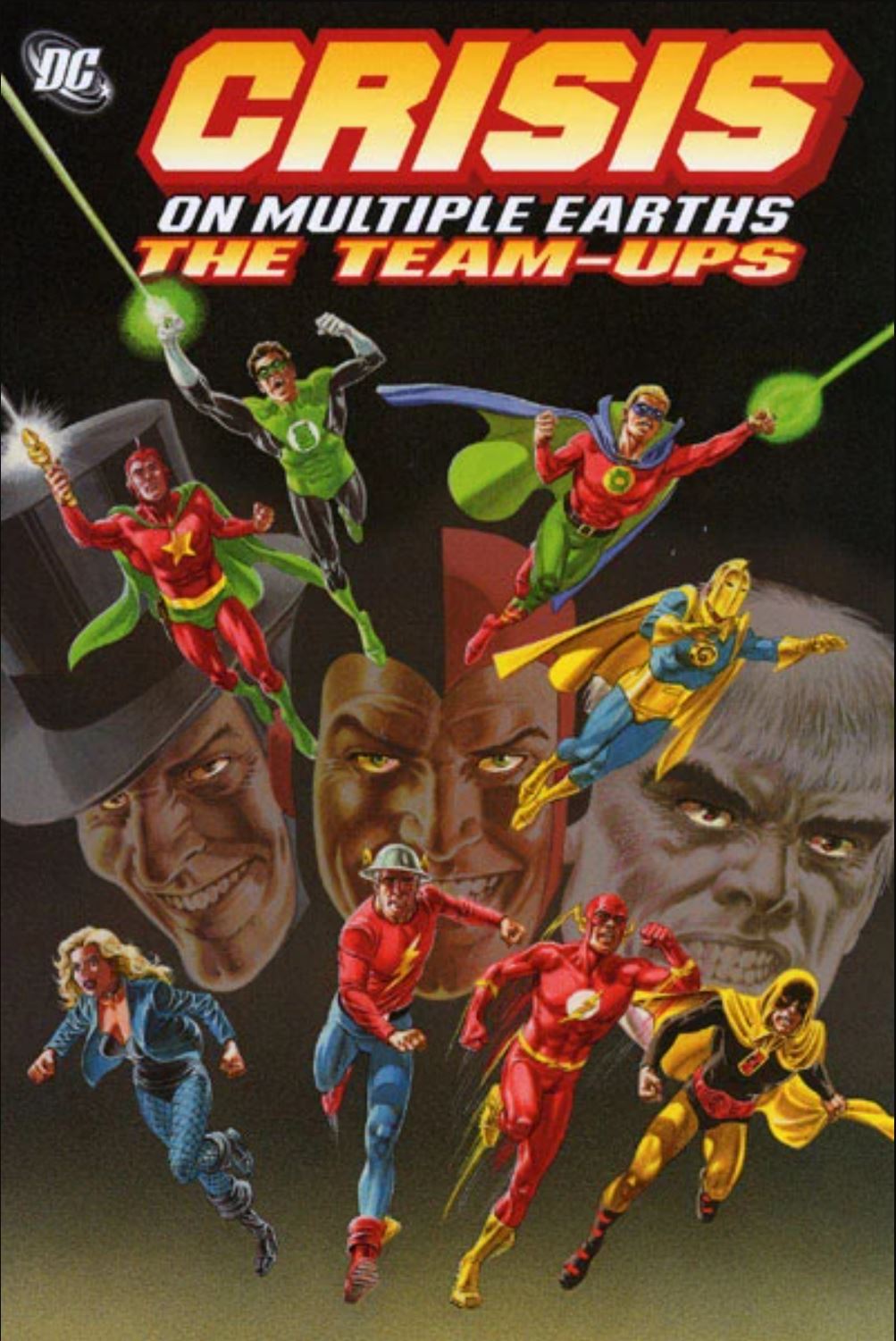
DC Finest: The Flash – The Fastest Man Dead


By Robert Kanigher, Mike Friedrich, Steve Skeates, Dennis O’Neill, Bob Haney, Len Wein, Cary Bates, Gil Kane, Irv Novick, Don Heck, Dick Dillin, Bob Brown, Murphy Anderson, Dick Giordano, Joe Giella, Nick Cardy, Frank McLaughlin, Tex Blaisdell, Carmine Infantino, Neal Adams, Jack Adler, Tatjana Wood, John Costanza & various (DC Comics)

ISBN: 978-1-77952-836-0 (TPB)

This book includes Discriminatory Content produced in less enlightened times.

Here’s another compelling DC Finest edition: chronologically curated paperback archives (generally around 600 pages) highlighting past glories. Whilst primarily concentrating on the superhero pantheon, there are genre selections including horror, sci fi, western and war books, but sadly none yet available digitally. However, we live in hope…

The Silver Age of US comics is formally and forever tied to Showcase #4 and the rebirth of The Flash. That epochal issue was released in the late summer of 1956 and from it stems all today’s print, animation, games, collector cards, cosplay and TV/movie wonderment. No matter which way you look at it, the renaissance began with The Flash, but it’s an unjust yet true fact that being first is not enough: it also helps to be best and people have to notice. MLJ’s The Shield beat Captain America to the news-stands by over a year yet the former is all but forgotten today. I mention that here as it pertains to this collection, which sees the advent of original Shield co-creator Irv Novick (Bob Phantom; Hangman; Steel Sterling; Silent Knight; Robin Hood, all DC war books, Captain Storm; Sea Devils; Batman, The Joker; Lois Lane; Tomahawk and more) as the Scarlet Speedster’s regular illustrator; a run (oh. Ha-Ha.) spanning Flash #200-270 and close to a full 10-year stretch with him only absent for #205, 213-214 & 264…

For the early trendsetting sagas and situations you should catch DC Finest: The Flash – The Human Thunderbolt and take as read that here the (second) Flash is Barry Allen, a police forensic scientist simultaneously struck by lightning and bathed in exploding chemicals from his lab. Supercharged by the accident, Barry (a lifelong fan of comic books) took his superhero identity from his favourite childhood reading – and eventually his acknowledged alternately Earth predecessor. Once upon a time there was a “fictional” scientist named Jay Garrick who was exposed to the mutagenic fumes of Hard Water and promptly became the “fastest man alive”…

Wearing a sleek, streamlined, tricked-out bodysuit (courtesy of  Carmine Infantino – a major talent approaching his artistic and creative peak), Barry was point man for the spectacular revival of a genre and an entire industry. He also became a renowned intergalactic champion, wholesome family man and paternalistic elder statesman of the superhero set after marrying his longtime fiancée Iris West

With Infantino safely elevated to DC’s current publisher, this splendidly tempting full colour paperback of Seventies hits displays the glorious work of the last replacement illustrators before the Flash landed in Novick’s hands, just as changing tastes rejected the previously paramount, rationalistic science fiction worlds touched by the Vizier of Velocity. Now high speed action involved issues of social relevance and themes of supernatural horror and makes for some weird moments as this copious compendium covers The Flash #197-229 (May 1970 – October 1974) plus guest shots in World’s Finest Comics #198-199 (November & December 1970) and The Brave and the Bold #99 (December 1971/January 1972).

Gil Kane & Vince Colletta capture all the fun and thrills of Mike Friedrich’s ‘Four-Star Super-Hero’ in the opening yarn of Flash #197 as a sharp cop spots a private communication tic only shared with his lab partner Barry Allen. Attempts to save a secret identity and convince Charlie Conwell otherwise are further hampered by blizzard conditions in Central City, canny crooks with jetpacks and skis, a flu epidemic and Barry’s dedication to Amateur Dramatics, which see him take time out to play every part in the local presentation of Hamlet. All’s well that ends well and after that show goes on, it’s back to cosmic basics with Robert Kanigher’s ‘To the Nth Degree’ showing the Crimson Comet catapulted across the universe to save fire-beings on an exploding planet, courtesy of another wild invention of his father-in-law Professor Ira West

Kanigher, Kane & Colletta open #198 where ‘No Sad Songs for a Scarlet Speedster!’ has three orphan kids aid a gun-shot and temporarily brain-damaged Flash regain his lost mojo before neophyte superhero Zatanna guests in ‘Call it …Magic’ (by Friedrich, Don Heck & Colletta) and requires swift rescue after being abducted across arcane dimensions by macabre body-snatcher Xarkon

Kanigher, Kane & Colletta’s ‘Flash? Death Calling!’ in #199 focuses on the ordeals of scientist Dr Hollister who dons the scarlet skin-tights to punish himself after apparently accidentally killing the hero. However that guilt also saves the day and resurrect the speedster – just in time for Flash to meet superspy Colonel K (of US-IN-T Agency) and stop a Chinese energy missile smashing into ‘The Explosive Heart of America!’ (Kanigher, Kane & Colletta)

Novick and inker Murphy Anderson join Kanigher for anniversary celebration ‘Count 200 – and Die!’ as the Monarch of Motion succumbs to mind manipulation and is manoeuvred by sinister siren Dr. Lu into  assassinating the US President. Thankfully our hero (Flash of course, not PotUS!) is faster than his own fired gunshot and is back in all-American action for #201, enduring Kanigher, Novick & Anderson’s ‘Million-Dollar Dream!’ and applying tough love to wheelchair bound sports star Pablo Hernandez. The treatment restores the player but that’s only fair as the hero was responsible for initially crippling the kid…

Many issues offered second stories at this time, and the policy of guest shots for other Flash-family favourites was solidly in place. Here Kanigher, Novick & Anderson take us to Earth Two and swift encore for an old villain as Jay Garrick produces – eventually – the ‘Finale for a Fiddler!’

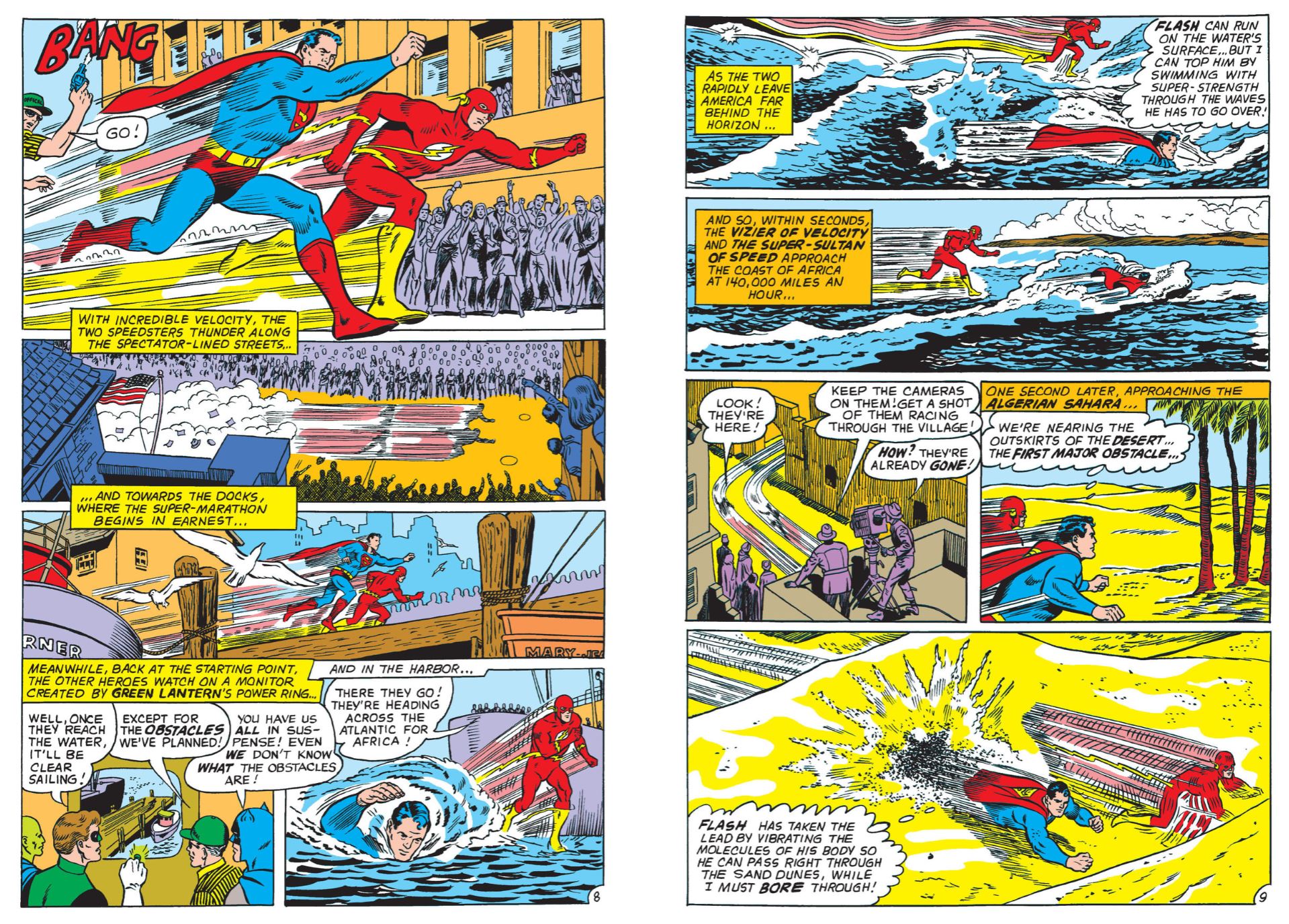
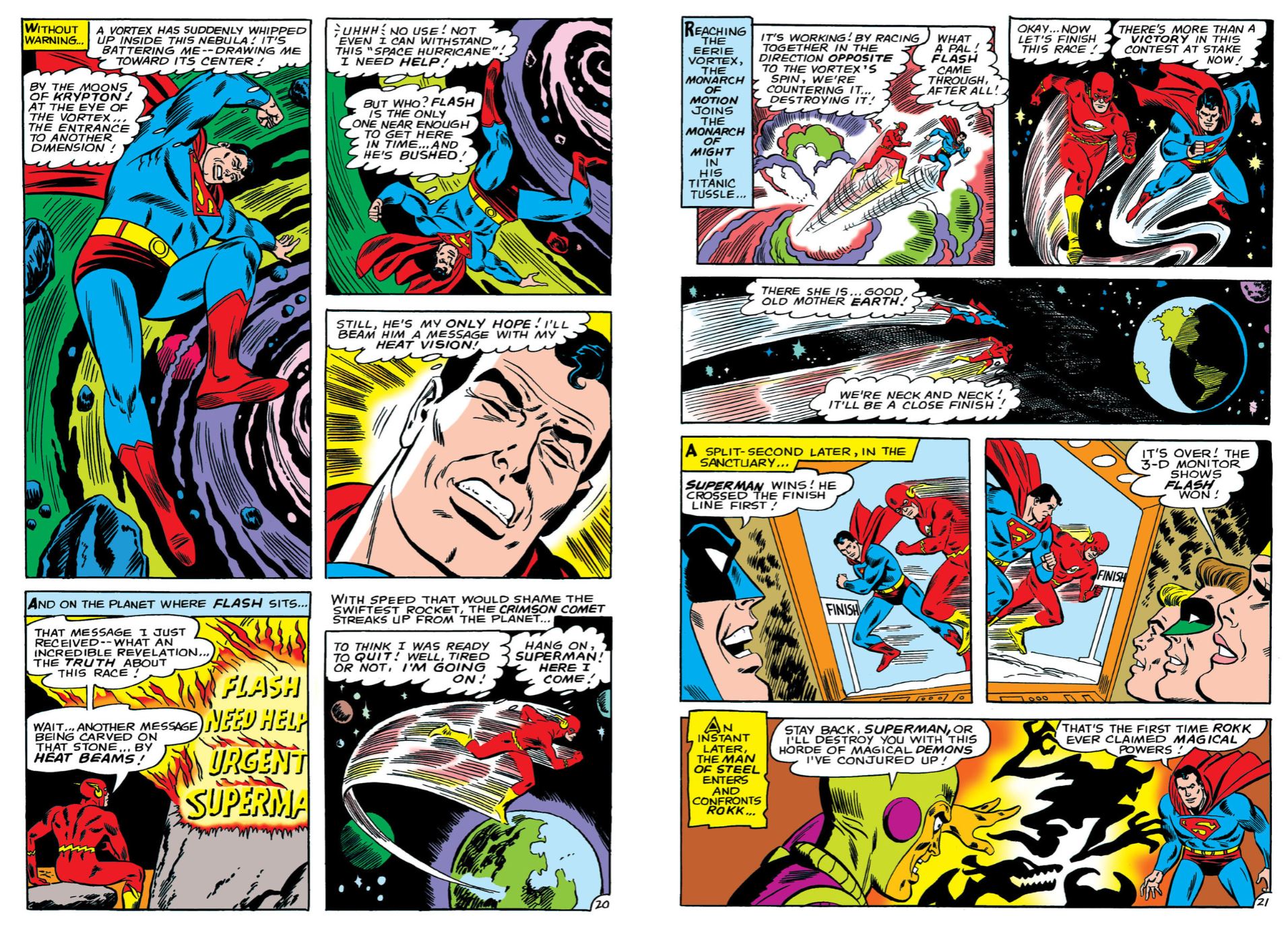
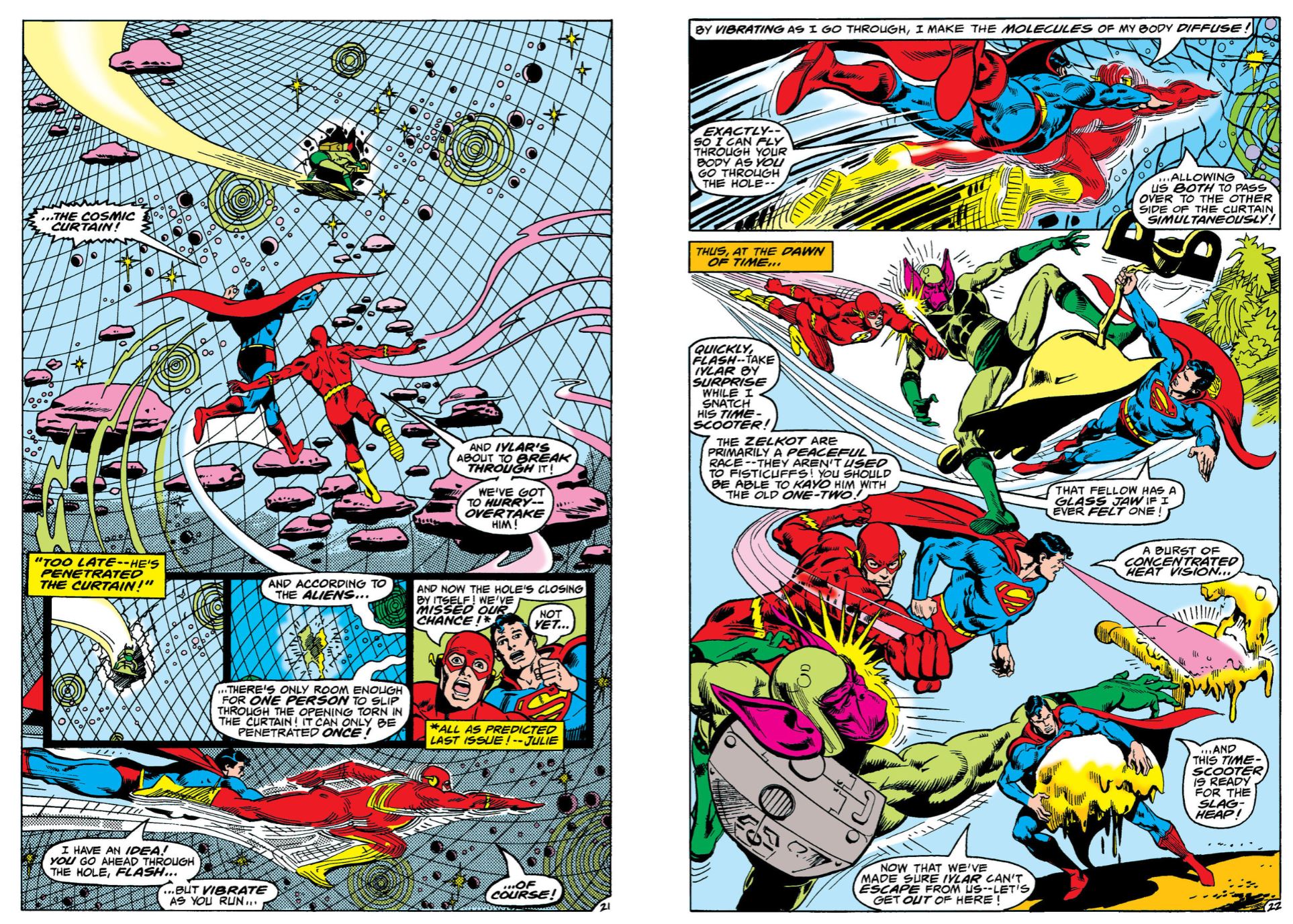
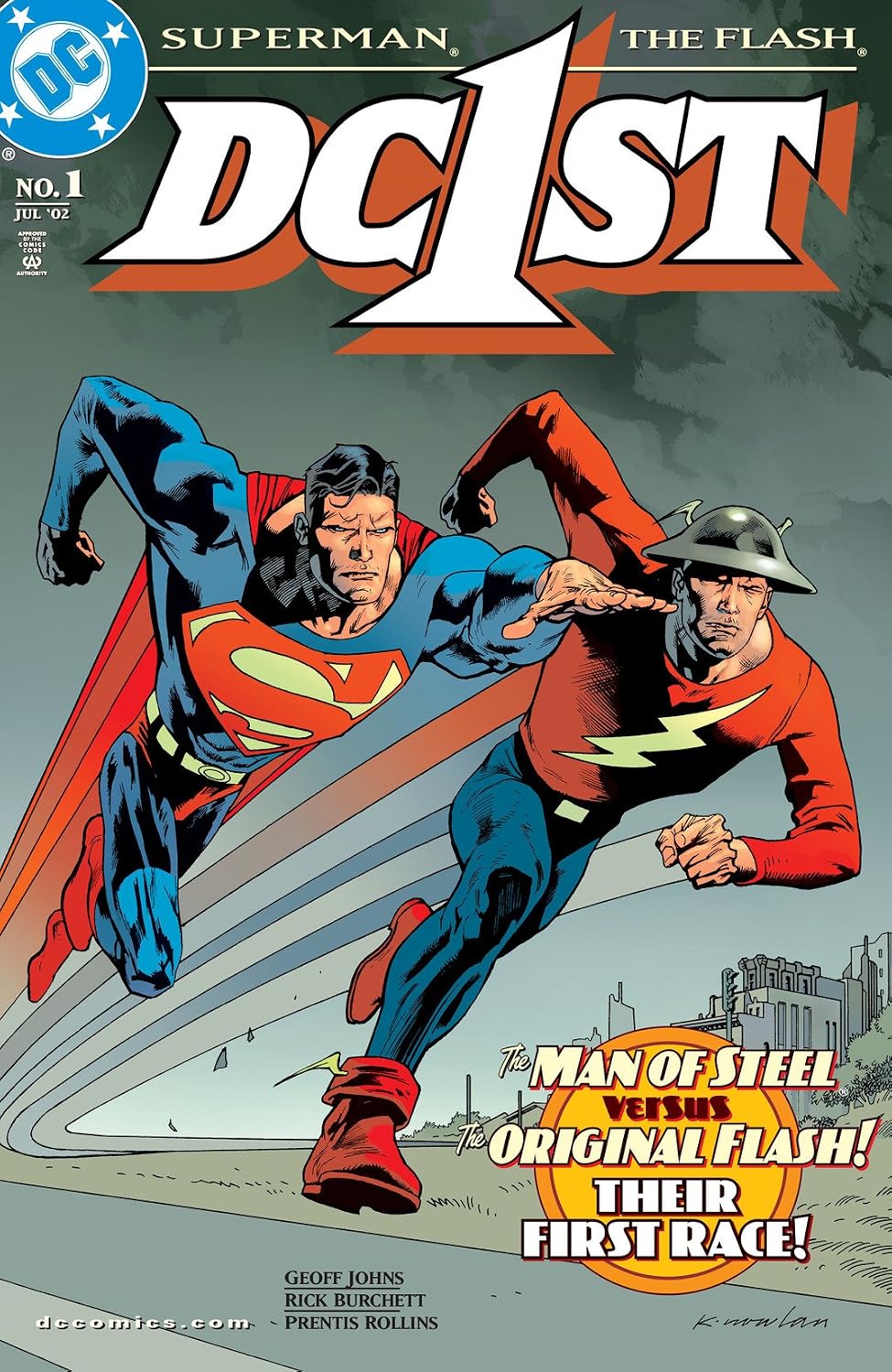
Although costumed hero capers were waning in general appeal, Flash was still hugely popular. Thus when World’s Finest Comics began a run of Superman team-ups with #198, the Red Runner was the clear first choice and allowed editors to return to a thorny topic which had bedevilled fans for years.

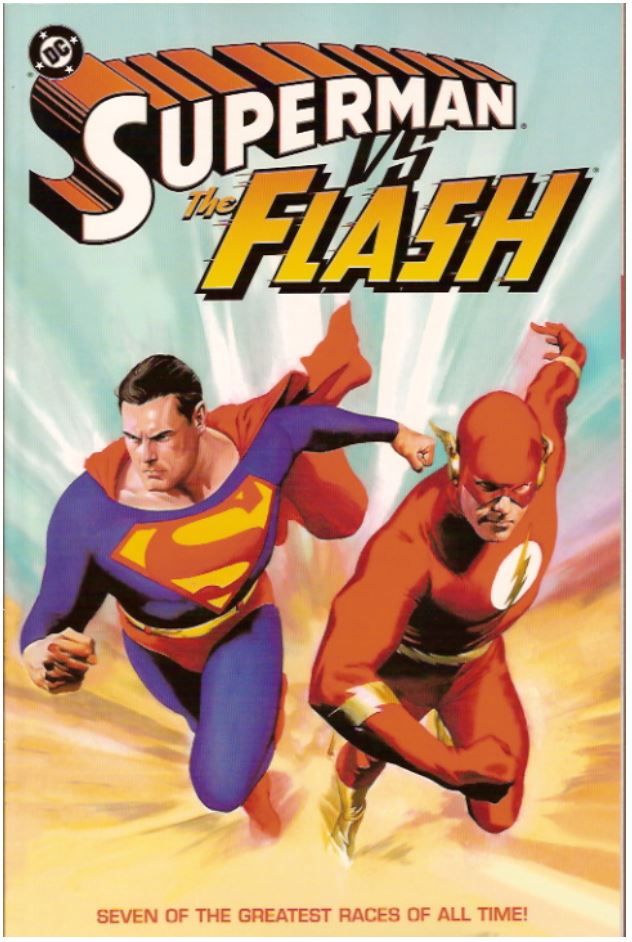
The comic book experience is littered with eternal, unanswerable questions. The most common and most passionately asked always begin “who would win if” or “who’s strongest/smartest/fastest…” Here, crafted by Denny O’Neil, Dick Dillin & Joe Giella, ‘Race to Save the Universe!’ and concluding instalment ‘Race to Save Time’ (WFC #198-199) upped the stakes on two previous competitions as our high-speed heroes are conscripted by the Guardians of the Universe to circumnavigate the entire cosmos at their greatest velocities to reverse the rampage of the mysterious Anachronids: faster-than-light creatures whose pell-mell course throughout galaxies is actually unwinding time itself and unravelling the fabric of creation. Little does anybody suspect that Superman’s oldest enemies were behind the entire appalling scheme, but the battle was swiftly won and reality saved in the end…

It was a far more grounded but no less chilling situation in Flash #202 where Kanigher, Novick & Anderson despatch reporter Iris Allen to Hollywood where she is kidnapped by murderous cultist creeps ‘The Satan Circle’ and her frantic husband confronts the unknown and the worst aspects of human nature to save her. Kid Flash then endures his own eldritch overload as ‘The Accusation!’ (by Steve Skeates, Dillin & Anderson) finds college-age comet Wally West tormented by visons of impending death that come appallingly true…

With Kanigher, Novick & Anderson at the helm #203 augured a huge change in the cosy domestic set-up as ‘The Flash’s Wife is a Two-Timer!’ reveals that Iris is actually a foundling sent through time to escape atomic armageddon and only the adopted child of scatterbrained super-genius Ira West. When the process reverses itself and she is dragged back to the future – Central City 2970 AD – The Flash follows and is caught up in a war that has been all but won by oppressive East-bloc tyrant Sirik the Supreme. Of course his intervention is enough to reset the scales before he returns baffled bride Iris Russell (née West)-Allen to her immigrant time period.

Once there though, repercussions of the revelation continue as a recovered 30th century keepsake turns her into an uncontrollable, secret-exposing blabbermouth in #204’s ‘The Great Secret Identity Exposé!’ with the Justice League understandably irate that Flash talks in his sleep and his wife knows all their civilian identities…

Back up tale ‘The Mind-Trap’ (Skeates, Dillin & Anderson) then sees Kid Flash chasing a body-stealing Egyptian pharaoh’s ghost to end the issue on a lighter note…

The Flash #205 was another hugely popular reprint collection of the era, sporting a cover by Dick Giordano (and included here) before it was back to spooky business in #206 for Kanigher, Novick & Anderson’s ‘24 Hours of Immortality!’ as haughty alien superbeings resurrect a recently killed surgeon and young mother to attend to unfinished business, but for the most mean-spirited motives – until Flash intervenes with a lesson all could benefit from.

With the supernatural now fully unleashed at DC, Flash #207 led with Friedrich, Novick & Anderson’s ‘The Evil Sound of Music!’, as former mystic hero Sargon the Sorcerer exploits his own family and rock ‘n’ roll-loving kids to restore his lost powers, before confronting the Scarlet Speedster, his own inner demons and rapacious external devils on the path back to the light. Grounding that journey to hell, Kid Flash then faces ‘The Phantom of the Cafeteria!’ ending the depredations of a superfast, hyper-hungry alien in a quick but satisfying yarn from Skeates, Dillin & Giordano.

In #208, Kanigher, Novick & Anderson exposed ‘A Kind of Miracle in Central City’ as wayward kids exploited by drug pushers are saved by prayer, the timely intervention of nuns and invisible superspeed before Flash #209 debuted new regular writer Cary Bates. He would run with the Vizier of Velocity for the rest of the series, only missing #213-214, 217, 293, 306 and 313 between 1970 through 1985.

Fresh from the starting blocks, Bates, Novick & Giordano took the speedster into higher, weirder realms ‘Beyond the Speed of Life!’ where Flash and reality shielding Sentinel stopped existence from being devoured. Meanwhile, on mundane Earth old Rogues Trickster, Captain Boomerang and Gorilla Grodd squabbled over bragging rights for who had finally killed the hero. At the back, Kid Flash saved a student troubled by gangsters in ‘Coincidence Can Kill!’ courtesy of Skeates, Dillin, Giordano.

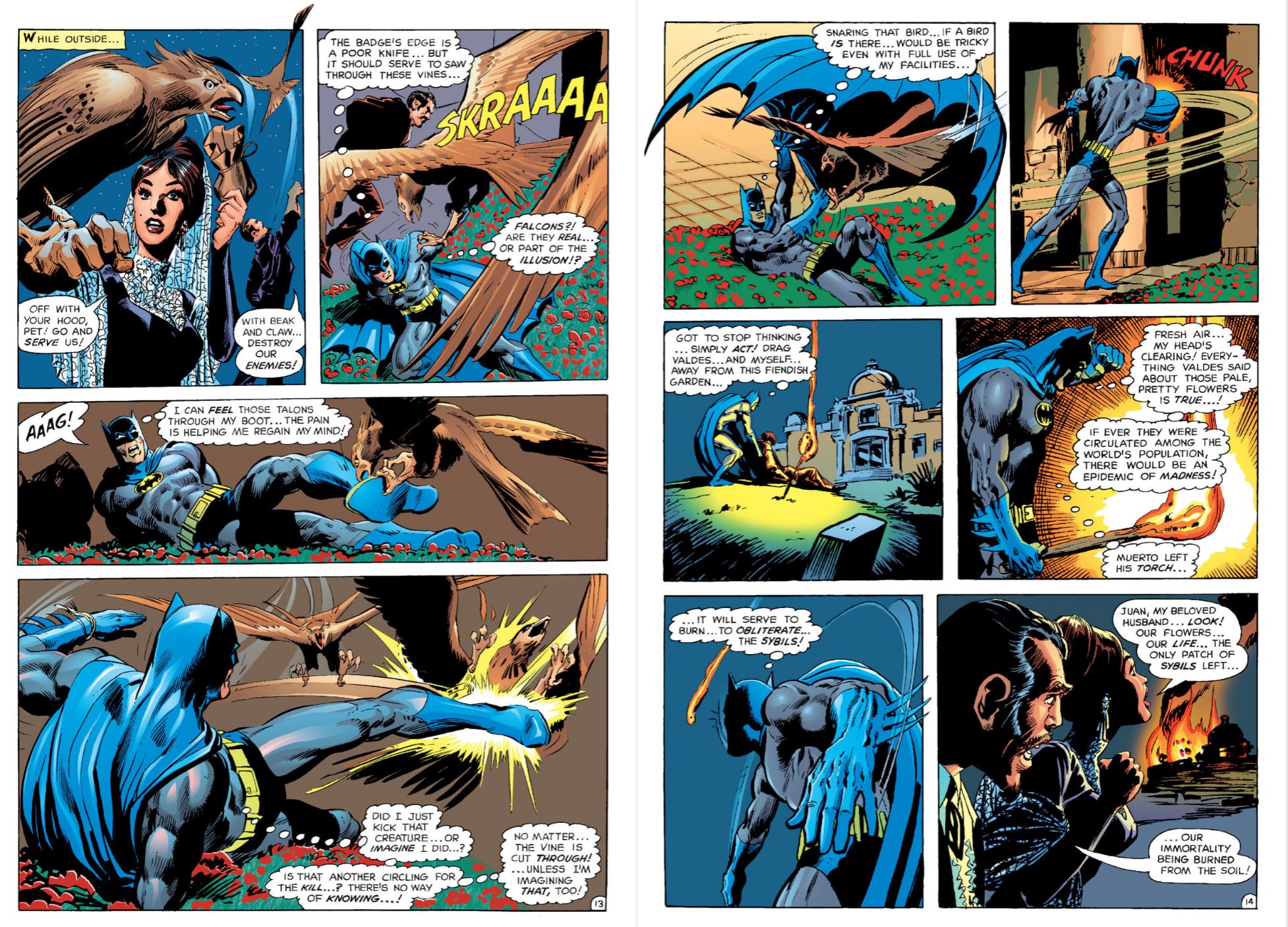
A visit to 2971 came with #210 as Bates, Novick & Giordano expanded the Earth East-Earth West “warm” war in ‘An Earth Divided!’ with Flash seeking to save man-made President Abraham Lincoln (II) from belligerent occidental tyrant Bekor. Science fiction surrendered to spooky tales next as Flash teamed up with Batman in Brave and the Bold #99. Here Bob Haney, Bob Brown, & Nick Cardy revealed how an attempt to resurrect Bruce Wayne’s parents opened the door to the Dark Knight’s possession by an unquiet spirit. ‘The Man Who Murdered the Past!’ almost ensured an invasion of angry ghosts until superspeed and smart thinking saved the day…

Comics were always about popular trends, and in Flash #211 Bates, Novick & Giordano contrived alien invaders who used the fad of rolling derby to fuel the destruction of Earth via constantly ‘Flashing Wheels!’ However, Kid Flash was on far more stable ground as he exposed corrupt officials covering up toxic dumping in ‘Is This Poison Legal?’ by Skeates, Dillin & Giordano. Equally bold and topical the next issue saw ‘The Flash in Cartoon Land!’ with Novick & Giordano depicting how manic 64th century magician Abra Kadabra trapped the hero and a little lad Barry Allen was babysitting in a graphic madhouse where scientific rules did not apply.

The next two issues – #213 & 214 – were reprint specials represented here with the original covers by Neal Adams & Cardy before #215 saw Bates, Novick, Frank McLoughlin & Giordano detail the ‘Death of an Immortal!’ The eons are catching up with undying villain Vandal Savage who attempts to trick Barry Allen and Jay Garrick into remedying the crisis for him. However their mission is intercepted by chronal cop Tempus and the end is not what Savage anticipated…

For Bates at least, Flash was all about his signature Rogues Gallery and in #216 the writer revealed the shocking truth about multiple personality villain Al Desmond/Dr. Alchemy/Mr. Element. Seemingly cured and reformed, Desmond was afflicted by ‘The Curse of the Dragon’s Eye!’ (Novick, Frank McLoughlin & Giordano), astrally connected to an unstable star in the constellation Draco and vacillating between manic and passive, and Good and Evil as it built to cataclysmic detonation. Now that time had come and Flash had to save his friend and hopefully prevent him destroying Earth when his patron star died. Its counterbalanced by Skeates & Dillin’s Kid Flash fable ‘2D?’ as Kid Flash goes after extradimensional slavers abducting workers who stare at certain paintings for too long…

Hard times for superheroes saw Green Lantern take up residence in the anterior pages of The Flash from #217 and shorter tales began with a fill-in from Len Wein for Novick & McLoughlin. ‘The Flash Times Five is Fatal!’ saw the hero attacked by a rogue AI built by Ira West. It preferred sabotage, reality warping and murder to rescinding its categoric statement that no one as fast as the Scarlet Speedster could possibly exist…

Bates and the Pied Piper returned in #218 as a cunning sonic ambush was foiled by speed vibrations generating ‘The Flash of 1,000 Faces!’ whilst in #219 (with Joe Giella inking) ‘The Million Dollar Deathtrap’ saw the hero targeted by wagering rivals Mirror Master and The Top and only triumphing after applying the proven principle of “divide and conquer”…

Flash literally and grotesquely joined protégé Kid Flash in #220 as The Turtle (Barry’s very first super-foe) returned to alter Earth’s internal vibrations and cure ‘The Slowest Man on Earth’ of his unique condition no matter the cost to everyone else. Thankfully two heads proved better than one in this instance and the shaking shakedown was averted.

Co-scripter John Warner joined Bates, Novick & McLoughlin for #221’s ‘Time-Schedule For Disaster!’ as techno-bandit Cipher attempts – and ultimately fails – to harvest Flash’s speed vibrations to power his weapons before #222’s ‘The Heart That Attacked the World!’ (Novick, McLoughlin & Giordano) offers a full-length team up with Green Lantern as Weather Wizard and Sinestro join forces to end their enemies. Sadly, born betrayer Sinestro secretly linked the Speedster’s racing heartbeat to the continued existence of Earth…

In #223, Bates, Novick & Giordano ‘Make Way for the Speed-Demons!’ as another old enemy rigs races between Flash and three mechanical racers of land sea and air, with the expressed intention of humiliating the speedster whilst hiding his true intentions, before #224 introduces ‘The Fastest Man Dead!’ after Barry’s friend and mentor Charlie Conwell is murdered. That doesn’t stop the veteran helping Flash close the last case on his docket and save his pal Barry one last time…

Another Scarlet-Emerald team-up sees Flash again battle Professor Zoom, the Reverse-Flash before discovering  ‘Green Lantern, Master Criminal of the 25th Century!’ (#225, Bates, Novick & Giordano) is the villain’s unwilling slave. Of course, it all plays out successfully in time, after which Captain Cold and Heatwave embroil Barry Allen in their psycho-drama rivalry, thereby inadvertently subjecting Flash to ‘The Hot-Cold War in Central City!’ (inked by Giordano & McLoughlin). Immediately afterwards (with McLoughlin inking) #227 reveals ‘Flash – This is Your Death!’ as Captain Boomerang ( and his dad!) rerun past fast & furious clashes whilst seeking to end the hero’s career and existence forever, before Tex Blaisdell inks #228’s ‘The Day I saved the Life of the Flash!’ Here Bates injects himself into the story as a comic book writer from Earth-Prime accidentally slips across dimensional divides; arriving on Earth-One in time to aid the “fictional” speedster he scripts in a deadly duel with the Trickster…

This compendium closes with the pertinent original material from 100-Page Spectacular Flash #229 which led with a Golden Age Flash team up as ‘The Rag Doll Runs Wild!’ Here Bates, Novick, Giordano & McLoughlin detail how a seeming resurgent rampage by a 1940s thieving contortionist is merely a mask for a far more sinister scheme perpetrated by a hidden vengeful mastermind. Closing proceedings are two teaser treats from that giant compendium: specifically a ‘Flash Puzzle’ by Bob Rozakis, Infantino & Anderson and an unattributed ‘Flash Trivia Quiz and Answers’

With covers by Kane, Infantino, Anderson, Neal Adams, Colletta Giordano, Jack Adler, Cardy and Tatjana Wood, this splendid selection is a must-read item for anybody in love with the world of words-in-pictures and fast-paced fantasy fables. Ready. Steady, Go get it!
© 1970, 1971, 1972, 1973, 1974, 2026 DC Comics. All Rights Reserved.

Today in 1906 was the birth date of cartoonist Dale Messick (Brenda Starr, Reporter) followed ten years later by comic book/ad exec Irv Novick, and author Peter O’Donnell (Modesty Blaise, James Bond, Romeo Jones) in 1920. In 1954 Jamie Delano (Captain Britain, Doctor Who, Hellblazer, Animal Man) joined the party as did Matt Kindt (Poppy and the Lost Lagoon, Dept. H, MIND MGMT, BRZRKR) in 1973.

DC Finest: Justice League of America – Starro the Conqueror


By Gardner F. Fox, Mike Sekowsy, Carmine Infantino, Bernard Sachs, Murphy Anderson, Joe Giella & various (DC Comics)
ISBN: 978-1-79950-773-4 (TPB)

This book includes Discriminatory Content produced in less enlightened times.

After the actual invention of the comic book superhero – by which we mean the launch of Superman in 1938 – the most significant event in the industry’s progress was to combine individual sales-points into a group. Thus what seems blindingly obvious to us with the benefit of four-colour hindsight was irrefutably proven: a number of popular characters could multiply readership by combining forces. Plus, of course, a whole bunch of superheroes is far cooler than just one – or even one and a sidekick…

Thus the Justice Society of America is rightly revered as a true landmark in the development of comic books and – when Julius Schwartz began reviving and revitalising the nigh-defunct superhero genre in 1956 – the next key moment would come a few years with the inevitable teaming of reconfigured mystery men. The League launched in The Brave and the Bold #28 (cover-dated March 1960 but actually on sale from December 29th 1959) and cemented the growth and validity of the revived subgenre, triggering an explosion of new characters at every company producing comic books; even spreading to the rest of the world as the 1960s progressed.

Spanning March 1960 to May 1963, this full-colour paperback collection of timeless classics re-presents The Brave and the Bold #28-30, issues #1-19 of the epochal first series of Justice League of America and a crucial early cross-branding event from Mystery in Space #75, with scripter Gardner Fox and illustrators Mike Sekowsky & Bernard Sachs – with the support of Joe Giella, Carmine Infantino & Murphy Anderson – seemingly able to do no wrong. That moment that changed everything for us baby-boomers came in The Brave and the Bold #28, a classical adventure title that had recently become a try-out magazine like Showcase. Just in time for Christmas 1959 ads began running…

“Just Imagine! The mightiest heroes of our time… have banded together as the Justice League of America to stamp out the forces of evil wherever and whenever they appear!…”

When it came that first tale was written by the indefatigable Gardner Fox and illustrated by quirky, understated virtuoso Mike Sekowsky, and inked by Bernard Sachs, Joe Giella & Murphy Anderson. ‘Starro the Conqueror!’ saw Flash, Wonder Woman, Aquaman, J’onn J’onzz – Manhunter from Mars and recent debutante Green Lantern defeat a marauding alien starfish whilst Superman and Batman stood by as a reserve. In those naive days, editors feared their top characters could be “over-exposed” and consequently lose popularity. The team also picked up an average American kid as a mascot. “Typical teenager” Snapper Carr would prove a focus of fan controversy for decades to come, and the yarn was/is supplanted by fact page ‘The “Starfish” Family!’ crafted by clever persons currently unknown…

Confident of his material and the superhero genre’s fresh appeal, Schwartz had two more thrillers ready for the following issues. B&B #29 saw the team defeat a marauder from the future who apparently had history on his side in ‘The Challenge of the Weapons Master!’ (inks by Sachs and Giella) whilst #30 saw the debut of the team’s first mad-scientist archvillain in the form of Professor Ivo who employed and his super android Amazo in ‘The Case of the Stolen Super Powers’ (Fox, Sekowsky & Sachs) to  end the try-out run. Three months later a new bi-monthly title debuted…

Perhaps somewhat sedate by histrionic modern standards, the JLA was revolutionary in a comics marketplace where less than 10% of all sales featured costumed adventurers. Not only consumer imagination was struck by hero teams either. Stan Lee was apparently given a copy of Justice League by his boss Martin Goodman and told to do something similar for the tottering comics company he ran… and look what came of that…

Justice League of America #1 offered a voyage to ‘The World of No Return’, in the insalubrious company of trans-dimensional tour-guide and tawdry tyrant Despero who bedevilled the World’s Greatest Heroes until, once again, plucky Snapper Carr became the key to defeating the villain and saving the day. As previously mentioned, although Superman and Batman were included in the membership their participation was strictly limited as editorial diktat at the start to avoid possible reader ennui and saturation from over-exposure. That ended from this point forward as they joined the regulars in all their games.

The second issue’s ‘Secret of the Sinister Sorcerers!’ presented an astounding conundrum as the villains of Magic-Land sneakily transposed the location of their dimension with Earth’s, causing the Laws of Science to be replaced with the Lore of Mysticism. The true mettle of the costumed heroes (with Superman & Batman fully participating in the proceedings) was shown when they had to use ingenuity rather than their powers to defeat fearsome foes and set two worlds to rights.

JLA #3 introduced despicable despot and slimy sentient trafficker Kanjar Ro who attempted to turn the team into his personal army in ‘The Slave Ship of Space!’, before the next episode was the first of many to feature a new member joining the team. Green Arrow saved the day in science-fiction thriller ‘Doom of the Star Diamond’, but was almost kicked out in #5 as the insidious evil genius Doctor Destiny inadvertently framed him ‘When Gravity Went Wild!’

The glory days of full-on “costumed crazies” was still in the future and most tales of this period involved extraterrestrial or fringe technology-triggered emergencies such as the mad scientist who encountered them next. ‘The Wheel of Misfortune!’ saw the debut of pernicious and persistent master of wild science Professor Amos Fortune, who weaponised luck to challenge the masked marvels, whilst #7 was another alien invasion plot (Agellaxians this time) who used an amusement park as a live-weapons lab, using humans to beta test their tech and eerily transform the swiftly-investigating heroes infiltrating ‘The Cosmic Fun-House!’

Organised crime then collided with cruel happenstance in January 1962’s JLA #8. ‘For Sale… the Justice League!’ offered a smart gangster caper wherein cheap hood Pete Rickets finds a prototype teaching tool and misuses it as mind-control weapon to enslave the superhero team before simple Snapper once again saves the day.

As often remarked, back then origins and character background were not as important as delivering solid entertaining stories and it was not until Justice League of America #9 (cover-dated February 1962 and on sale from December 21st 1961) that the group shared its motivating first case with enthralled readers via the narrative engine of curious Snapper Carr. Nigh-mythic now and oft-recounted. ‘The Origin of the Justice League’ recounts the circumstances of the team’s birth in an alien invasion saga as mighty space warriors seeking to use Earth as a gladiatorial arena in which to decide the future ruler of their distant world Appellax

It’s followed by the series’ first continued story. ‘The Fantastic Fingers of Felix Faust!’ finds the World’s Greatest Superheroes already battling a marauder from the future – the Lord of Time – when they’re spellbound by a vile sorcerer. Faust has awoken three antediluvian demons (Abnegazar, Rath and Ghast) and sold them the world in exchange for 100 years of unlimited power. Although the heroes eventually outwit and defeat Faust they have no idea that the demons are loose…

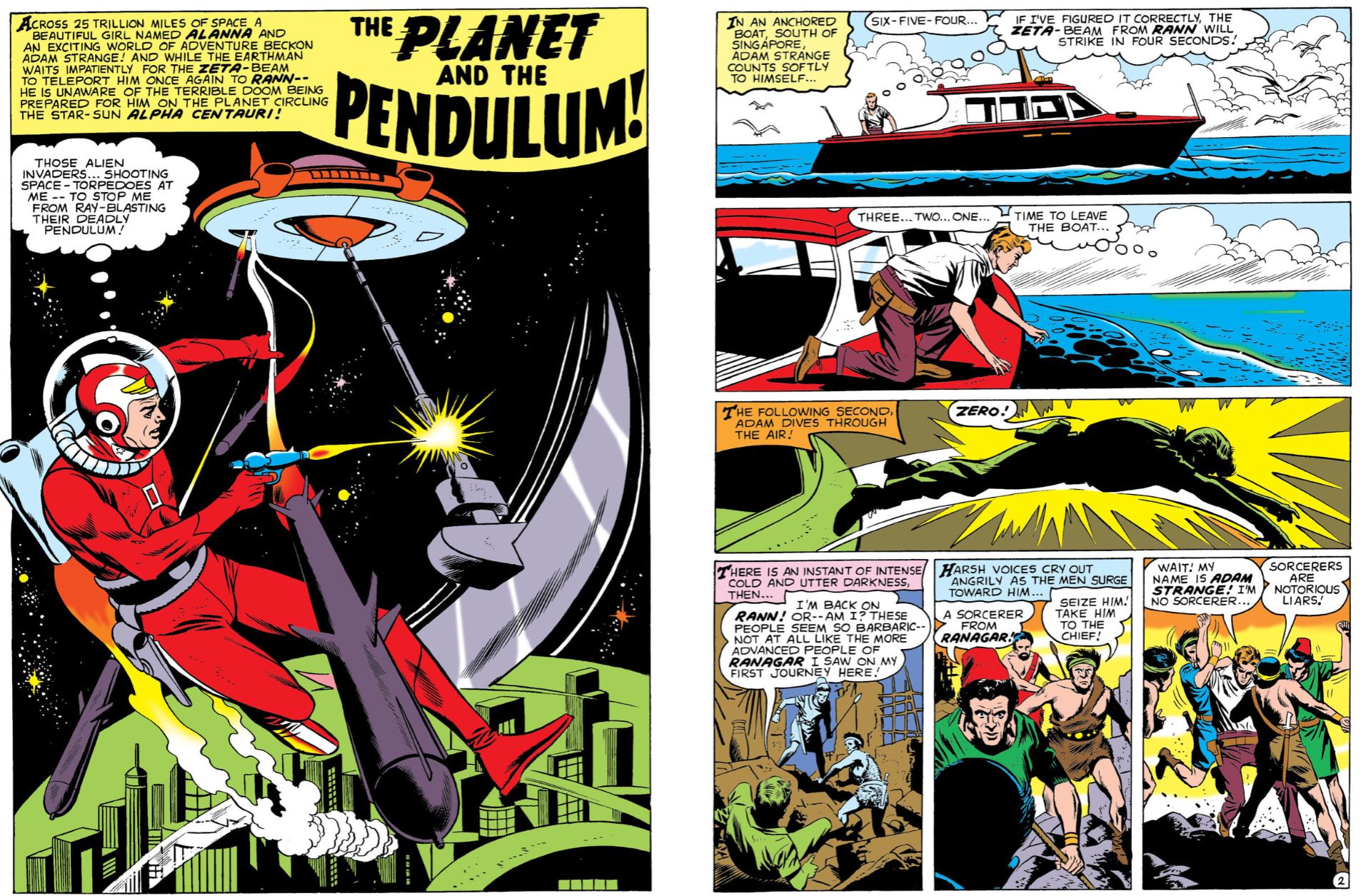
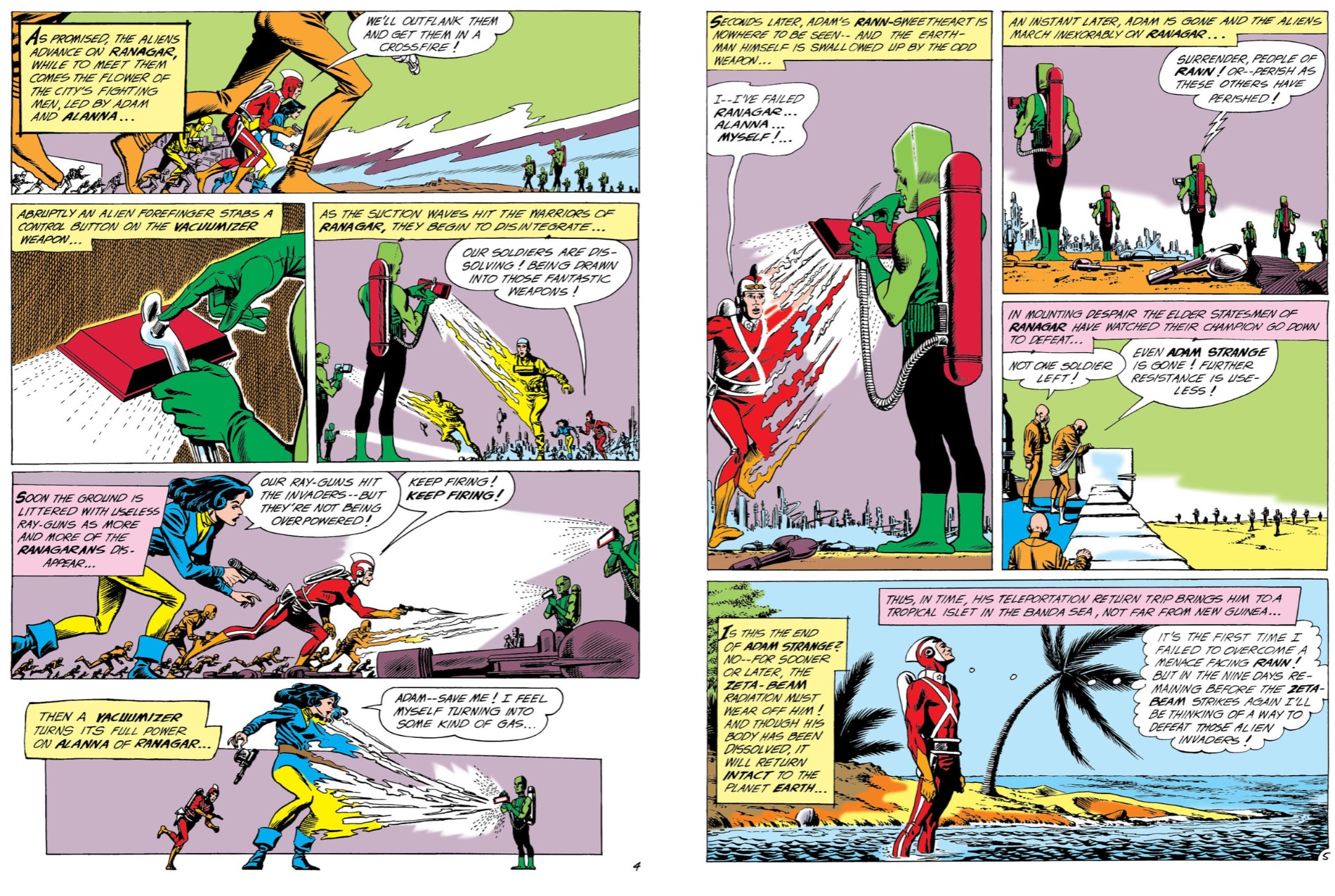
Although chronologically and sequentially adrift, next up is  Mystery in Space #75 (May 1962), wherein the worlds-beating team guest-star in a full-length thriller in Adam Strange’s ongoing, off-world epic adventures. Strange is an Earth archaeologist who regularly teleports to a planet circling Alpha Centauri where his wits and ingenuity saved the citizens of Rann from all manner of interplanetary threats and menaces. In ‘The Planet that came to a Standstill!’, Kanjar Ro attempts to conquer Strange’s adopted home, and our gallant hero must enlist the aid of the JLA before once again saving the day himself. This classic team-up was written by Fox, and illustrated by Carmine Infantino & Murphy Anderson.

Then, back in JLA #11 (also cover-dated May 1962) concluding chronological conundrum ‘One Hour to Doomsday!’ sees the JLA pursue and capture initial target The Lord of Time, before becoming trapped a century from their home-era by the awakened, re-empowered demons. This level of plot complexity hadn’t been seen in comics since the closure of EC Comics, and never before in a superhero tale. It was a profound acknowledgement by the creators that the readership was no longer simply little kids – if indeed it ever had been…

Perennial archvillain Doctor Light debuted in #12, attempting a pre-emptive strike on the team by transporting them to carefully selected sidereal worlds where their abilities would be useless, but ‘The Last Case of the Justice League’ proved to be anything but, and in the next issue the heroes saved our entire reality by solving ‘The Riddle of the Robot Justice League’: sinister simulacra created to stop the champions from halting the theft of our life-energy by agents of another cosmic realm. Then ‘The Menace of the “Atom” Bomb!’ in #14 proved to be  a neat way of introducing latest inductee The Atom whilst showing a fresh side to an old villain masquerading as new nemesis Mister Memory

‘Challenge of the Untouchable Aliens’ in JLA #15 added some fresh texture to the formulaic plot of extra-dimensional invaders out for our destruction before ‘The Cavern of Deadly Spheres’ delivered a deceptive change-of-pace tale with a narrative technique that just couldn’t be used on today’s oh-so-sophisticated audience, but still has the power to grip a reader. Ever challenging and always universal continuity building, more links between heroes were formed in #17’s ‘Triumph of the Tornado Tyrant!’ Here a sentient cyclone that had once battled indomitable Adam Strange (in Mystery in Space #61) set up housekeeping on an desolate world and ponder the very nature of Good and Evil and even roleplay out its deliberations. It soon realised that it needed the help of the Justice League to reach a survivable conclusion…

Teaser Alert: As well being a cracking yarn, this story is pivotal in the development of the android hero Red Tornado

JLA #18 found the heroes forcibly summoned to a subatomic universe by three planetary champions whose continued existence now threatened to destroy the very world they were designed to protect. ‘Journey to the Micro-World’ found the JLA compelled to defeat opponents who were literally unbeatable and discovering yet again that Batman’s brains were a super power no force could thwart…

One final perplexing puzzle was posed in ‘The Super-Exiles of Earth’ after unstoppable duplicates of the heroes go on a crime-spree, forcing global governments to banish the League into space. Breaking rules and laws whilst battling undercover in their civilian identities, the team prove too much for the mystery mastermind behind the plot and return to public acclaim in a stellar wrap-up to another fabulous feast of four-colour fun.

With iconic covers by Sekowsky, Infantino and Anderson, these tales are a perfect example of all that was best and purest about US comics’ Silver Age: combining optimism and ingenuity with bonhomie and adventure. This slice of better times also has the benefit of cherishing wonderment whilst actually being historically valid for any fan of our medium. Best of all the stories here are still captivating and enthralling transports of delight.

These classical compendia are a dedicated fan’s delight: an absolute gift for modern fans who desperately need to catch up without going bankrupt. They are also perfect to give to youngsters as an introduction into a fabulous world of adventure and magic…
© 1960, 1961, 1962, 1963, 2026 DC Comics. All Rights Reserved.

Today in 1883 trailblazing strip creator Frank King (Gasoline Alley) was born, as was trendsetting illustrator Mac Raboy (Captain Marvel Junior, Green Lama, Flash Gordon) in 1914; German comics legend Rolf Kauka (Dagobert, Fix und Foxi) in 1917 and Gerard Way (Umbrella Academy, Doom Patrol, some music and TV and movies ‘n’ stuff) in 1977.

In 1978, DC’s The World’s Greatest Superheroes newspaper strip premiered.

Green Lantern: The Silver Age volume 1


By John Broome, Gardner Fox, Gil Kane, Mike Sekowsky, Carmine Infantino, Ross Andru, Joe Giella, Murphy Anderson & various (DC Comics)
ISBN: 978-1-4012-6348-5 (TPB/Digital edition)

This book includes Discriminatory Content produced in less enlightened times.

Today marks the centenary of Eli Katz, who, as Gil Kane, worked from the Golden Age until his death (on January 31st 2000) to make comics the art form it is today. Diligent, resolute and always challenging himself, Kane was a trendsetting pioneer in style, in form and in comics philosophy. He was also a visual architect of the superhero revival in the Silver Age and a key component in the evolution of the Graphic Novel.

Gil Kane worked as an artist, and an ever-more effective and influential one, drawing – and writing – for many companies since his 1940s debut: on superheroes, action, war, mystery, romance, movie adaptations and, perhaps most importantly, Westerns and Science Fiction tales. In the late 1950s Kane was one of editor Julius Schwartz’s go-to artists for regenerating the superhero. Yet by 1968, at the top of his (admittedly much denigrated) profession, this relentlessly revolutionary and creative man felt so confined by juvenile strictures of the industry that he struck out on new ventures, jettisoning editorial and format bounds of comic books for new visions and media.

His Name Is Savage was an adult-oriented monochrome magazine about a cold and ruthless super-spy in the James Bond/Man Called Flint mould, co-written by friend & collaborator Archie Goodwin. It was very much a precursor in tone, treatment and subject matter to many of today’s adventure titles. The other venture, Blackmark (also with Goodwin), not only ushered in an era of comic book Sword & Sorcery, but became one of the first Graphic Novels. Technically, as the series was commissioned by publisher Ballantine as eight volumes, it was also America’s first comic Limited Series. Volume 1 launched in January 1971, with volume 2 just completed when the publisher killed the project. Albeit a generation Kane’s junior, long term seasoned collaborator Roy Thomas reprinted those tales in Marvel’s Savage Sword of Conan and Marvel Preview, with artwork rejigged to accommodate a different page format.

In comic books Kane’s milieux included Boy Commandos, Young Allies & Newsboy Legion, Johnny Thunder, Jimmy Wakely, Hopalong Cassidy, Rex the Wonder Dog, The Atom, Plastic Man, Robin, Batgirl, Batman, Superman, Flash, Hawk and Dove, Captain Action, T.H.U.N.D.E.R. Agents, U.N.D.E.R.S.E.A. Agent, plus hundreds of genre yarns – romance, war, sci fi, western and horror – before landing at Marvel Comics to reinvent Amazing Spider-Man, Captain America, Thor, Hulk, Ka-Zar and Captain Marvel, co-creating Adam Warlock, Morbius, Iron Fist. He adapted John Carter, Warlord of Mars and other adventure fantasy properties and reinvigorated dozens of horror-hero and superhero stalwarts, all while filling in on seemingly every character and cover going…

Restless and craving what the medium could still achieve, he created newspaper strip Star Hawks (in 1977 with Ron Goulart) and numerous special projects like Jason Drum for Le Journal de Tintin and The Ring of the Nibelung. Also working as Gil Stack, Scott Edward, Stack Til, Stacktil, Pen Star and Phil Martell, Kane was a foundation stone of comics and remains a vivid, vital inspiration to future generations of creators and readers.

With all that in mind let’s revisit a character he co-created and who will be forever associated with Kane: the Silver Age Emerald Gladiator…

After their hugely successful revival and reworking of The Flash, DC (or National Comics as they were) were keen to build on the resurgent superhero trend. Showcase #22 hit the stands at the same time as the fourth issue of the new Flash comic book – #108 – and once again the guiding lights were Editor Julie Schwartz & writer John Broome. Assigned as illustrator was action ace Gil Kane, generally inked by Joe Giella.

This fabulous paperback compilation gathers Showcase #22-24 (September/October 1959 to January/February 1960) and Green Lantern #1-9 (July/August 1960-November 1961) and reveals how a Space Age reconfiguration of the Golden-Age superhero with a magic ring replaced mysticism with super-science.

Hal Jordan was a young test pilot in California when an alien policeman crashed his spaceship on Earth. Mortally wounded, Abin Sur commanded his ring – a device which could materialise thoughts – to seek out a replacement officer, honest and without fear. Scanning the planet it selected Jordan and brought him to the crash-site. The dying alien bequeathed his ring, the lantern-shaped Battery of Power and his profession to the astonished Earthman.

In six pages ‘S.O.S Green Lantern’ established characters, scenario and narrative thrust of a series that would increasingly become the spine of DC continuity, leaving room for another two adventures in that premiere issue. ‘Secret of the Flaming Spear!’ and ‘Menace of the Runaway Missile!’ were both contemporary thrillers set against the backdrop of the aviation industry at a time when the Cold War was at its height. Unlike Flash’s debut, the publishers were now confident of their ground. The next two issues of Showcase carried the new hero into even greater and more fantastic exploits. ‘Summons from Space’ sent Green Lantern to another world: saving an emerging race from a deadly threat at the behest of the as-yet-unnamed leaders of the Green Lantern Corps, whilst ‘The Invisible Destroyer’ pitted the neophyte Emerald Gladiator against earthbound eerie menace – a psychic marauder that lived on atomic radiation.

Showcase #24 (January/February 1960) featured another spy-ring in ‘The Secret of the Black Museum!’ but Jordan’s complex social life took centre-stage in ‘The Creature That Couldn’t Die!’ when the threat of an unstoppable monster paled before the insufferable stress of being his own rival. Hal’s boss Carol Ferris, controversially left in charge of her father’s aviation company (an utterly radical concept in 1960 when most women were still considered fainting-fodder fluff), won’t date an employee, but is deliriously happy for him to set her up with glamorous, mysterious GL…

Six months later Green Lantern #1 was released. All previous tales had been dynamically drawn by Kane & Giella, in a visually arresting and exciting manner, but the lead tale here, ‘Planet of Doomed Men’ was inked by the astoundingly multi-talented Murphy Anderson, and his fine line-work elevated the tale (more emergent humans in need of rescue from another monster) to the status of a minor classic. Giella returned for the second tale, ‘Menace of the Giant Puppet!’, in which GL fought his first – albeit rather lame – supervillain, the Puppet Master.

The next issue originated a concept that would be pivotal to the future of DC continuity. ‘The Secret of the Golden Thunderbolts!’ featured an Antimatter Universe and the diabolical Weaponers of Qward: a twisted race who worshipped Evil, and whose criminals (i.e. people who wouldn’t lie, cheat, steal or kill) wanted asylum on Earth. Also inked by Anderson, this is an early highpoint of tragic melodrama from an era where emotionalism was actively downplayed in comics. The second story ‘Riddle of the Frozen Ghost Town! is a crime thriller highlighting the developing relationship between the hero and his Inuit (then “Eskimo”) mechanic Tom “Pieface”Kalmaku.

The Qwardians returned in the all-Giella-inked #3, leading with ‘The Amazing Theft of the Power Lamp!’ before Jordan’s love life again spun out of control in ‘The Leap Year Menace!’, whilst GL #4 saw the hero trapped in the antimatter universe in ‘The Diabolical Missile from Qward!’ (Anderson inks) nicely balanced by light-&-frothy mistaken-identity caper ‘Secret of Green Lantern’s Mask!’ This last was apparently crafted by a veritable round-robin raft of pencillers including Kane, Giella, Carmine Infantino, Mike Sekowsky and Ross Andru…

Issue #5 was a full-length thriller introducing Hector Hammond, GL’s second official recurring super-foe in ‘The Power Ring that Vanished!’: a saga of romantic intrigue, mistaken identity and evolution gone wild. This was followed by another pure science fiction puzzler ‘The World of Living Phantoms!’ (Kane & Giella), debuting avian Green Lantern Tomar Re and opening up the entire universe to avid readers.

Having shown us other GLs, Broome immediately excelled himself in the next episode. ‘The Day 100,000 People Vanished!’ brought the Guardians of the Universe into the open to warn of their greatest error: renegade Green Lantern Sinestro who, in league with Qwardians, had become a threat to the entire universe. This taut, tense shocker introduced one of the most charismatic and intriguing villains in the DCU, and the issue still had room for a dryly amusing, whimsical drama introducing Tom Kalmaku’s fiancée Terga in ‘Wings of Destiny’.

In the early 1960s DC production wizard Jack Adler devised a process to add enhancing tone to cover illustrations. The finished result was eye-catching and mind-blowing, but sadly, examples such as the cover of #8 here really don’t work with the glossy pages and digitised colour-tints of modern reproduction. Never mind, though, since contents ‘The Challenge from 5700 AD!’ comprise a fantasy tour de force as the Emerald Gladiator is shanghaied through time to save the future from an invasion of mutant lizards…

Sinestro returned in the next issue – the last in this astounding cosmic collection – with his own super-weapon in ‘The Battle of the Power Rings!’ (with Anderson again substituting for Giella) but the real gold is ‘Green Lantern’s Brother Act’, with the revelation of Hal’s two brothers and a snoopy girl reporter convinced young Jim Jordan is secretly the ring-slinging superhero. This wry poke at DC’s house plot-device shows just how sophisticated Schwartz & Broome believed their audiences to be.

In those long ago days costumed villains were always third choice in a writer’s armoury: clever bad-guys and aliens always seemed more believable to creators back then. If you were doing something naughty would you want to call attention to yourself? Nowadays the visual impact of buff men in tights dictates the type of foe more than the crimes committed, which is why these glorious adventures of simpler yet somehow better days are such an unalloyed delight. These Fights ‘n’ Tights romps are in themselves a great read for most ages, but when also considered as the building blocks of all DC continuity they become vital fare for any fan keen to make sense of the modern superhero experience.

Judged solely on their own merit, these are snappy and awe-inspiring; beautifully illustrated by a rapidly evolving graphic narrative superstar in ascendance: captivatingly clever thrillers that amuse, amaze and enthral both new readers and old devotees. This collection is a must-read item for anybody in love with our art-form and especially for anyone just now encountering the hero for the first time through his TV incarnation.
© 1959, 1960, 1961, 2016 DC Comics. All Rights Reserved.

Today in 1882 Spanish creator Salvador Bartolozzi (weekly Pinocchio) was born, with The New Yorker cartoonist Chon Day arriving in 1907, Levi Katz in 1926 and crusading Filipino cartoonist Pol Medina Jr. (Pugad Baboy) in 1960. In 1980 Dash Shaw (Bottomless Belly Button, New School, The Unclothed Man In the 35th Century A.D., Courier) joined that august grouping.

In 1936 Frank Leonard’s Mickey Finn strip debuted, and ran until 10th September 1977.

Showcase Presents Weird War Tales volume 1


By Robert Kanigher, Bob Haney, Bill Finger, Sheldon Mayer, Jack Oleck, Len Wein, Marv Wolfman, Joe Kubert, Carmine Infantino, Dennis O’Neil, Russ Heath, Mort Drucker, Frank Thorne, Alex Toth, Reed Crandall, Sam Glanzman, John Severin, Howard Chaykin, Ed Davis, Frank Robbins, Nestor Redondo, George Evans, Alex Niño, Russ Heath, Neal Adams & various (DC Comics)
ISBN: 978-1-4012-3694-6 (TPB)

This book includes Discriminatory Content produced in less enlightened times.

American comics just idled along rather slowly until the invention of Superman provided a flamboyant new genre for heroes and subsequently unleashed a torrent of creative imitation and imaginative generation for a suddenly thriving, voracious new entertainment model.

Implacably vested in World War II, these gaudily-attired mystery men swept all before them until the troops came home, but as the decade closed more traditional themes and heroes began to resurface and eventually supplant the Fights ‘n’ Tights crowd.

As a new generation of kids started buying and collecting, many of the first fans who retained their four-colour habit increasingly sought more mature themes in their pictorial reading matter. The war years and post-war paranoia had irrevocably altered the psychological landscape of the readership and as a more world-weary, cynical young public came to see that all the fighting and dying hadn’t really changed anything. Their chosen forms of entertainment (film, theatre and prose as well as comics) increasingly reflected this.

To balance the return of Western, War, Crime and imminent Atomic Armageddon-fuelled Science Fiction, comics created new genres. Celebrity tie-ins, madcap escapist or teen-oriented comedy and anthropomorphic funny animal features sprang up, but gradually another of the cyclical revivals of spiritualism and a public fascination with the arcane led to a wave of impressive, evocative and shockingly addictive horror comics. There had been grisly, gory and supernatural stars before, including a pantheon of ghosts, monsters and wizards draped in superhero trappings but these had usually been victims of circumstance: The Unknown as a power source for super-heroics. Now focus shifted to ordinary mortals thrown into a world beyond their ken with the intention of unsettling, not vicariously empowering the reader.

If we’re keeping score this was also the period in which Joe Simon & Jack Kirby identified another “mature market” gap and filled it by inventing romance comics (Young Romance #1, September 1947) and they too saw the sales potential for spooky material, resulting in the seminal Black Magic (1950) and boldly obscure psychological drama anthology Strange World of Your Dreams (1952). The company which would become DC Comics bowed to the inevitable and launched a comparatively strait-laced anthology that nevertheless became one of their longest-running and most influential titles with The House of Mystery (cover-dated December 1951/January 1952).

After the hysterical censorship debate which led to witch-hunting Senate hearings in the early 1950s was curtailed by the industry adopting a castrating straitjacket of self-regulation, titles produced under the aegis of the Comics Code Authority were sanitised, anodyne affairs in terms of Shock and Gore, but the audience’s appetite for suspense was still high and in 1956 National introduced sister titles Tales of the Unexpected and House of Secrets. Stories were dialled back from uncanny spooky yarns to marvellously illustrated, rationalistic fantasy-adventure vehicles and – eventually – straight monster-busting Sci Fi tales which dominated the market into the 1960s. That’s when superheroes – which had gradually enjoyed their own visionary revival after Julius Schwartz reintroduced The Flash in Showcase #4 – finally overtook them.

Green Lantern, Hawkman, The Atom and a rapidly-expanding coterie of costumed cavorters generated a gaudy global bubble of masked mavens which forced previously staunchly uncompromising anthology suspense titles to become super-character books. When caped crusader craziness peaked and popped, superheroes began dropping like Kryptonite-gassed flies. However, nothing combats censorship better than falling profits and, at the end of the 1960s with the cape-and-cowl boom over and some of the industry’s most prestigious series circling the drain, the surviving publishers of the field agreed to revise the Comics Code, loosening their self-imposed restraints against crime and horror comics.

Nobody much cared about gangster titles but, as the liberalisation coincided with yet another bump in public interest concerning supernatural themes, the resurrection of scary stories was a foregone conclusion and obvious no-brainer.

Thus, with absolutely no fanfare at all, horror comics came back and quickly dominated the US market for more than half a decade. DC led the pack: converting House of Mystery and Tales of the Unexpected into supernatural suspense anthologies in 1968 and resurrecting House of Secrets a year later.

Such was not the case with war comics. Tales of ordinary guys in combat began with the industry itself and although mostly sidelined during the capes-&-cowls war years, quickly re-asserted themselves once the actual fighting stopped. National/DC were one of the last publishers to get in on the combat act, converting superhero/fantasy adventure anthology Star Spangled Comics into Star Spangled War Stories the same month it launched Our Army at War (both cover-dated August 1952). They repurposed All-American Comics into All-American Men of War a month later as a “police action” in Korea escalated.

DC grew the division slowly but steadily, launching Our Fighting Forces (#1, November 1954) – just as EC’s groundbreaking combat comics were vanishing – and in 1957 added GI Combat to their portfolio when Quality Comics got out of the funnybook business.

As the 1950s closed however, the two-fisted anthologies all began incorporating recurring characters such as Gunner and Sarge – and latterly Pooch – from Our Fighting Forces #45 on, (May 1959); Sgt Rock (Our Army at War #83 (June 1959) and The Haunted Tank (G.I. Combat #87, April/May 1961). Soon all DC war titles had a lead star or feature to hold the fickle readers’ attention. The drive to produce superior material never wavered however, hugely aided by the diligent and meticulous ministrations of writer/editor Robert Kanigher.

In America after the demise of EC Comics in the mid-1950’s and prior to the game-changing Blazing Combat, the only certain place to find controversial, challenging and entertaining American war comics was DC. In fact, even whilst Archie Goodwin’s stunning but tragically mis-marketed quartet of classics were waking up a new generation of readers in the 1960s, the home of Superman, Batman and Wonder Woman was a veritable cornucopia of gritty, intriguing, beautifully limned battle tales presenting armed combat on a variety of fronts and from many differing points of view.

Whilst the Vietnam War escalated, 1960s America increasingly endured a Homefront death-struggle pitting deeply-ingrained Establishment social attitudes against a youth-oriented generation with a radical new sensibility. In response, military-themed comic books from National Periodical Publishing, as it then was, became even more bold and innovative.

However, the sudden downturn in superheroes led to some serious rethinking, and although the war titles maintained and even built sales, they also beefed up the anthological elements.

Thus in 1971 a title combining supernatural horror stories with bombastic battle yarns in an anthological setting seemed a forgone conclusion and sure thing to both publishers and readers alike…

This epic monochrome tome collects the contents of Weird War Stories #1-21 (cover-dates September/October 1971 to January 1974), offering a broad blend of genre mash-ups for readers with a taste for the dark and uncanny to relish. The series launched in a 52-page format combining new material with modified reprints featuring a veritable Who’s Who of top flight creative talent – both seasoned veterans and stars in waiting.

WWS #1 saw Editor Joe Kubert writing and illustrating an eerie linking strand entitled ‘Let Me Tell You of the Things I’ve Seen’, wherein a lost GI meets the personification of Death (the title’s long-term narrator in various blood-stained uniforms) who has a few foxhole stories to share…

The Reaper begins with ‘Fort Which Did Not Return!’ (by Kanigher & Russ Heath, as first seen in GI Combat #86), detailing how a bomber continues its mission even after the crew bail out, following up with all-new ‘The Story behind the Cover’ wherein Kubert reveals how a shunned German soldier carried on his duties after death…

From Star Spangled War Stories #71 (July 1958) Bob Haney & Kubert disclosed ‘The End of the Sea Wolf!’, as a sadistic U-Boat captain is sunk by one of his own earlier victims, whilst SSWS #116 (August/September 1964) originally debuted France Herron & Irv Novick’s ‘Baker’s Dozen’, with a fresh-faced replacement to a super-superstitious platoon battling to prove he’s not their unlucky thirteenth man…

The issue ends with that lost GI realising just who has been telling tales in Kubert’s ‘You Must Go!’

The reprints in these early issues were all taken from a time when supernatural themes were proscribed by the Comics Code Authority, but even so they all held fast to an eerie aura of sinister uncertainty… the merest hint of the strange and uncanny to leaven the usual blood and thunder of battle books. In Weird War Tales #2, Kubert reprised his bridging vehicle as ‘Look… and Listen…’ sees a crashed Stuka pilot meeting a ghastly stranger at a battle-torn desert oasis before ‘Reef of No Return’ (Haney & Mort Drucker from Our Fighting Forces #43, March 1959) details a determined frogman’s most dangerous mission in advance of Kanigher & Frank Thorne’s new WWI silent saga ‘The Moon is the Murderer’ proving that overwhelming firepower isn’t everything…

Kubert’s ‘Behind the Cover’ features a prophetic dream and terrifying telegram, and ‘A Promise to Joe!’ (Kanigher & Novick, G.I. Combat #97 (December 1962-January 1963) sees a dead gunner seemingly save his friend from beyond the grave, after which the superb ‘Monsieur Gravedigger’ – by Jerry DeFuccio & legendary Reed Crandall – follows the follies of a sadistic Foreign Legionnaire who pushes his comrades too far. Cartoonist John Costanza delivers gag-packed ‘Military Madness’ and Kubert & Sam Glanzman offer a fact-packed ‘Sgt. Rock’s Battle Stations’ about ‘The Grenadier’ before Bill Finger, Ross Andru & Mike Esposito examine a young recruit’s rite of passage and development of ‘The Face of a Fighter’ (Our Fighting Forces #25, September 1957) before ‘Oasis’ concludes the sorry saga of that downed Aryan airman.

American Naval Aviators ditching at sea were the unwilling audience for Death’s stories as WWT #3 opens with Kubert’s ‘Listen…’ The roster starts with ‘Been Here Before!’ (Finger, Andru & Esposito, G.I. Combat #44 January 1957) as a soldier under fire turns his mind back to boyhood games to save the day, after which we see an aerial battle and parachute drop from the perspective of ‘The Cloud That Went to War!’ (Our Fighting Forces #17, January 1957) courtesy of Dave Wood, Andru & Esposito.

More Costanza comedy from ‘The Kreepy Korps!’ precedes an early tale by Len Wein & Marv Wolfman, ably illustrated by Heath as both cave tribes and modern soldiers battle to possess ‘The Pool’, before the artist’s earlier collaboration with Bob Haney reveals how ‘Combat Size!’ is all a matter of mental attitude in a tale from Our Army at War #66 (January 1958). After Glanzman’s ‘Battle Album’ explains ‘Flying Guns’, a finny friend helps a US submarine sink an aircraft carrier in Finger & Drucker’s ‘Pilot for a Sub!’ (OAaW #68, March 1958) and the issue ends as Kubert sends a ‘Lifeboat’ for those tragic aviators…

The fourth issue opens with Kubert’s final linking tale as a ‘Gypsy Girl’ and her family find wounded soldier Tony after his buddy runs off to get a medic. They kindly offer to pass the time with him, sharing stories like ‘Ghost Ship of Two Wars’ (Kanigher & Novick, All-American Men of War #81, September 1960) wherein an obsessed WWI pilot seemingly slips into 1944 while pursuing his unbeatable archenemy the Black Ace.

Kanigher & Gene Colan’s ‘Time Warp’ originally appeared as ‘The Dinosaur Who Ate Torpedoes!’ in SSWS #123 (October/November 1965 and part of the uniquely bizarre War That Time Forgot series), pitting US frogmen against colossal sea-going saurians, after which ‘The Unknown Sentinel’ (by author unknown & Mort Meskin from House of Mystery #55, October 1956) saves the lives of two soldiers lost on manoeuvres on America’s most famous battlefield.

Glanzman then offers one of his magnificently engaging autobiographical USS Stevens vignettes with all-new, elegiac ‘Prelude’ before Kubert wraps up his chilling drama as ‘I Know Them to be True’ sees medics arriving to find Tony a much-changed man, leaving Costanza to close things down with a laugh and some ‘Military Madness’.

Weird War Tales #5 opens with Haney & Alex Toth providing a book-end tale of ‘The Prisoner’ held by Nazis in Italy. Seeking a way out, he recalls tales of escape such as ‘The Toy Jet!’ (Haney & Heath, All-American Men of War#78, March/April 1960): a chilling psychological thriller about an interned pilot in North Korea. It’s followed by ‘Human Trigger’ (Herron, Andru & Esposito, Star Spangled War Stories #18, February 1954) which shows how a soldier lying on a mine deftly saves his own life…

Herron & Carmine Infantino then reveal how an US spy is forced to ‘Face a Firing Squad!’ (SSWS #14, November 1953) and Norman Maurer instructs with the history of ‘Medal of Honour: Corporal Gerry Kisters’ before Willi Franz & Heath detail the victory of a ‘Slave’ in Roman times and Haney & Toth offer final release in ‘This Is It!’

Issue #6 saw Weird War cut to a standard 36-page package and take a step into tomorrow with Haney & Toth’s battlefield test of ‘Robots’. Wolfman & Frank Thorne expanded the theme in ‘Pawns’ as humans and mechanoids finally decide who works for whom whilst ‘Goliath of the Western Front!’ (Herron, Andru & Esposito, SSWS #93 – October/November 1960) features a giant mechanical Nazi and American David who finally does for him, before Haney & Toth settle all debate with the conclusive ‘Robot Fightin’ Men’

Wolfman & Kubert provide thematic bookends for #7, beginning with ‘Out of Action’ and wounded GIs awaiting the worst by trading tales like William Woolfolk, Jerry Grandenetti & Joe Giella’s ‘Flying Blind’ (OAaW #12, July 1953) wherein a wounded pilot must trust someone else for the first time in his life if he wants to land his burning jet. Kanigher & Kubert’s ‘The 50-50 War!’ (A-AMW #41, January 1957) finds sporting rivals forced to help each other after both suffer injuries on an alpine mission, with Costanza adding more welcome levity through his ‘Military Hall of Fame’. ‘The Three GIs’ (Finger & Heath, SSWS #62, October 1957) riffs smartly on those monkeys who respectively can’t see, hear and speak and the Purple Heart yarns end with Wolfman & Kubert’s chilling ‘I Can’t See’

From WWT #8, editorial control switched to the Mystery division under Joe Orlando and with that reprints were shelved in favour of original material as publication frequency graduated from six times a year to monthly. This all-German-focused issue begins with a gruesome ‘Guide to No-Man’s Land’ (probably written by assistant editor E. Nelson Bridwell and illustrated by Tony DeZuñiga) before moving on to ‘The Avenging Grave’ (Kanigher & DeZuñiga) with SS officers learning too late the folly of desecrating the dead of WWI. Anonymously scripted ‘Thou Shalt Not Kill!’– with art by Steve Harper & Neal Adams – sees more gloating Nazis facing a vengeful golem. Kanigher & DeZuñiga return to reveal the fate of an arrogant 1916 air ace in the skies over No-Man’s Land in ‘Duel of the Dead’ before the artist’s ‘Epilogue’ wraps things up, whilst Weird War Tales #9 invites us to ‘Enter the Portals of War’ in an introduction drawn by Howard Chaykin, swiftly followed by a trio of Kanigher yarns illustrated by the cream of DC’s Filipino artists.

‘The Promise’ was limned by Alfredo P. Alcala, telling a tale in two eras as both Teutonic knights in 1242 and German tankers seven centuries later fail to cross frozen Lake Chud, whilst Gerry Talaoc renders the disastrous end of deathly, determined ‘Blood Brothers!’ during the American Civil War, and incomparable Alex Niño details ‘The Last Battle’ between East and West before Chaykin pops back to declare ‘Death, the Ultimate Winner’.

Sheldon Mayer & Toth open WWT #10 with a deliciously whimsical ghostly love story in ‘Who is Haunting the Haunted Chateau?’ before Raymond Marais & Quico Redondo change the tone as a Death-Camp commandant returns after the war to salvage ill-gotten gains from ‘The Room that Remembered’, whilst Wein & Walter Simonson – in the artist’s pro comics debut – reveal why invading Nazis shouldn’t abuse the town idiot, incurring the wrath of ‘Cyrano’s Army’

Always experimental, the creative team of Mayer, DeZuñiga, Alcala, Talaoc & Niño tried their hand at a time-twisting complete adventure for #11. Occurring on ‘October 30? over 99 years beginning in 1918, the tale compares the progress of an ambitious German General granted a wish for glory by a treacherous spirit of war, with three ghostly Americans determined to fix a long-standing mistake whatever the cost…

DeZuñiga draws the introduction to #12, featuring tales of ‘Egypt’ starting with Kanigher & Talaoc’s tale of an ancient warlord who learned to regret spitting on the ‘God of Vengeance’, whilst ‘Hand of Hell’ (Kanigher & DeZuñiga) sees Anubis similarly deal with one of Rommel’s least reputable, most sadistic deputies. Arnold Drake & Don Perlin then switch locales to Roman Britain where a centurion takes an accidental time-trip and ultimately overthrows the Druids in ‘The Warrior and the Witch-Doctors!’

Weird War Tales #13 opens with Oleck & Nestor Redondo’s ‘The Die-Hards’, with Nazis realising there are even worse killers than they haunting their latest conquered village, before Drake & Niño determine that ‘Old Samurai Never Die’ when a would-be shogun offends the patron spirit of Bushido. ‘Loser’s Luck’ – by Michael J. Pellowski, George Kashdan & DeZuñiga – details harsh choices facing the unfortunate winners of the next, last war…

Mayer, DeZuñiga & Alcala reunite in #14 to tell an eerie tale of doomed love and military injustice from the days before Pearl Harbor which begins with a ‘Dream of Disaster’, incorporates a deadly flight with a ‘Phantom for a Co-Pilot’ and marines who arrive ‘Too Late for the Death March!’ before finally meeting ‘The Ghost of McBride’s Woman’ and vindicating an unsung hero…

A little lad enamoured of war’s glory learns a lesson in WWT #15 when his dead grandfather takes him back to WWI to see how ‘…Ace King Just Flew in from Hell’ (Drake & Perlin) before Oleck & Talaoc reveal the doom of ‘The Survivor’ of a Viking raid which offends a sorceress, and Oleck & Alcala detail the shocking fate of a fanatical crusader who succumbs to ‘The Ultimate Weapon’ of a Saracen wise man. Drake & Alcala describe transplant science gone mad in #16’s ‘More Dead than Alive!’, whilst the first of a Niño double bill sees him delineate Oleck’s ‘The Conquerors’ who eradicate humanity – but not the things that predate on them – whilst Drake’s ‘Evil Eye’ sees a little boy inflict hell’s wrath on both Allies and Axis alike…

In #17, Kanigher & George Evans disclose how a dishonourable French Air Ace is punished by ‘Dead Man’s Hands’ before Pellowski, E. Nelson Bridwell & Ernie Chan reveal how a murdered soldier is avenged by ‘A Gun Named Marie!’ WWT #18 has Drake & DeZuñiga sketch the brief career of ‘Captain Dracula!’ as he marauds through (mostly) German forces in Sicily before Mayer & Talaoc return for the cautionary tale of a greedy German sergeant in France whose avarice makes him easy prey for the ‘Whim of a Phantom!’

Drake & Talaoc start #19 with the full-length story of an agent who infiltrates the Nazi terror weapon known as ‘The Platoon That Wouldn’t Die!’, and #20 reverts to short stories with Oleck & Perlin’s ‘Death Watch’ of a doomed coward who should have waited one more day before deserting, before Drake & Alcala’s period saga of a witchcraft vendetta ‘Operation: Voodoo!’ and their Battle of Britain chiller wherein a burned-out fighter pilot learns ‘Death is a Green Man’.

This blockbusting blend of military mayhem, magical melee and martial madness concludes with Weird War Tales #21 and ‘One Hour to Kill!’ by Drake & Frank Robbins, wherein an American soldier is ordered to go back in time to assassinate Leonardo Da Vinci and prevent the invention of automatic weapons. Mayer & Bernard Baily then detail just how a foul-up GI becomes an unstoppable hero ‘When Death Took a Hand’

Classily chilling, emotionally intense, superbly illustrated, insanely addictive and Just Plain Fun, this is a deliciously guilty pleasure that will astound and delight any lover of fantasy fiction and comics that work on plot invention rather than character compulsion.
© 1971, 1972, 1973, 2012 DC Comics. All Rights Reserved.

Today in 1937 Herman creator Jim Unger was born, whilst in 1967, pioneering Golden Age artist Homer Fleming (Craig Kennedy, The Whip, Chuck Dawson, Captain Jim of the Texas Rangers, Classics Illustrated) died.

Also in 1967, British weeklies Pow! and Mandy both launched, as did tabloid treasure The Beezer way back in 1956 today.

Invincible Iron Man Epic Collection volume 7 (1976-1978): Ten Rings to Rule the World


By Bill Mantlo, Gerry Conway, Herb Trimpe, Roger Stern, George Tuska, Keith Pollard, Keith Giffen, Carmine Infantino, Jeff Aclin, Mike Esposito, Don Perlin, Jack Abel, Fred Kida, Alfredo Alcala, Rudy Nebres, Bruce Patterson, Josef Rubinstein, Bob Wiacek, Pablo Marcos, Don Newton & various (MARVEL)
ISBN: 978-1-3029-6059-9 (TPB/Digital edition)

This book includes Discriminatory Content produced in less enlightened times.

Arch-technocrat and supreme survivor Tony Stark has changed profile and rebuilt himself many times since debuting in Tales of Suspense #39 (March 1963). There and then, as a VIP visitor to Vietnam assessing the efficacy of munitions he had designed, the inventor was critically wounded and captured by sinister, savage Communists. Put to work building weapons with the dubious promise of medical assistance upon completion, Stark instead crafted the first of innumerable technologically-augmented protective suits to keep himself alive and deliver him from his oppressors. From there it was a simple – transistor-powered – jump to full time superheroics as a modern Knight in Shining Armour…

Conceived after the Cuban Missile Crisis at a time when Western economies were booming and “Commie-bashing” was America’s obsession, a dashing new Thomas Edison employing Yankee ingenuity, wealth and invention to safeguard the Land of the Free and better the World seemed an obvious development. Combining then-sacrosanct faith that technology and business in unison could solve any problem, with the universal imagery of noble knights battling evil, Stark – the Invincible Iron Man – seemed an infallibly successful proposition.

Of course, whilst he was the acceptable face of 1960s Capitalism – a glamorous, benevolent, rich, technocratic and all-conquering hero when clad in super-scientific armour – the turbulent tone of the 1970s soon relegated his suave, “can-do” image to the dustbin of history. With ecological disaster and social catastrophe from myriad big business abuses new zeitgeists of the young, the Golden Avenger and Stark International were soon confronting some tricky questions from an increasingly politically savvy readership.

With glamour, money and fancy gadgetry not quite so cool anymore the questing voices of a new generation of writers began posing uncomfortable questions in the pages of a series that was once a bastion of militarised America. Collectively accommodating cover-dates November 1976 to October 1978, this Epic chronological epistle completes that transitional period, reprinting Iron Man #92-114, plus Annual #4 and a guest yarn from Marvel Premiere #44 as Bill Mantlo’s passionate writing triggered a minor renaissance in the Steel Sentinel’s chrome-plated chronicles that resulted in some of the best stories of the Eighties era. It also returned Iron Man to the top-rank of Marvel stars.

If you’re a fan thanks to the movie interpretation, that iteration starts right here, right now…

The mettle majesty opens with manic menace The Melter who soon regrets an ill-advised grudge rematch in ‘Burn, Hero… Burn!’ (Gerry Conway, George Tuska & Jack Abel) before Herb Trimpe returns to plot and pencil Iron Man #93. Pitting Old Shellhead against a British-based modern-day pirate in ‘Kraken Kills’ (Conway script & Abel inks), the self-declared Commander deduces Stark’s secret identity before blackmailing the inventor into building weapons for his super-submarine fleet. Never at a loss, though, Stark turns the tables, sparking ‘Frenzy at Fifty Fathoms!’ to scupper the madman’s plans…

Invincible Iron Man Annual #4 (August 1977) offers an all-action alliance with newly constituted super-team The Champions by Mantlo, Tuska & inker Don Perlin. When psychic assassin M.O.D.O.K. overwhelms the Golden Avenger, Iron Man calls in old allies Black Widow and Hercules (plus teammates Ghost Rider, Iceman, Darkstar and The Angel) to thwart ‘The Doomsday Connection!’

Also from that issue comes an out-of-place martial arts vignette by Roger Stern, Jeff Aclin & Don Newton. ‘Death Lair!’ stars former Master of Kung Fu villain Midnight on a mission of murder against old Iron Man enemy Half-Face

The regular monthly climb to reclaimed pole position resumes with veteran Iron Man artist Tuska joining plotter Conway, scripter Mantlo and inker Perlin in unleashing giant android ‘Ultimo!’ (IM #95, cover-dated February 1977) against Washington DC. Clad in upgraded armour and in the Capitol to answer congressional questions about his company, Stark is targeted by a vengeful hidden nemesis who activates the mountainous monster for a classic B-movie sci fi rampage in the streets, with the Golden Avenger supplementing hard pressed Army and National Guard units… before falling in ignominious defeat due to sabotage…

Mantlo, Tuska & Abel prove you can’t keep a good Iron Man down as the embattled hero rallies and retaliates in ‘Only a Friend Can Save Him’ as former close ally and dutiful S.H.I.E.L.D. agent Jasper Sitwell joins the counterattack. Meanwhile, a long-simmering plotline advances as NYPD detective Michael O’Brien – who holds Stark responsible and accountable for the death of his brother Kevin – finally allows his obsession with a cover-up to pull him across legal lines and into collusion with shady PI Harry Key, whose latest client also has nasty plans for the playboy inventor…

Thanks to ingenuity and sheer guts, Stillwell & Iron Man seemingly destroy Ultimo deep below DC, but their triumph is short lived as a return to Stark’s Long Island factory provokes a ‘Showdown with the Guardsman!’ (Conway, Mantlo, Tuska & Perlin). When Mike takes PA Krissy Longfellow hostage, steals the armour suit that drove his brother insane and ambushes the Golden Avenger wearing it, the clash is swift and brutal. Thankfully this time, the blockbusting battle ends before another good man dies…

Whilst subsequently treating O’Brien, another distraction comes when an old frenemy attacks the facility and US interventionist economic practises. ‘Sunfire Strikes Again!’ sees the Japanese ultra-nationalist mutant warrior again seek to derail progress, unaware that he’s a pawn of the lurking presence gunning for Stark. However, the harried hero’s problems start with the fact that his greatest weapon is offline and he’s fighting in borrowed Guardsman armour. When the conflict frees imprisoned Michael O’Brien, the cop seeks to make amends by joining the battle in an obsolete Iron Man outfit, but – even with Mike Esposito inking – the new allies rapidly find themselves ‘At the Mercy of the Mandarin!’

During the melee, Key tries his luck in the Stark vaults once too often and encounters an unexpected problem, thanks to another insidious infiltrator planted by a different scheming mastermind. However, having freed himself, Tony is too now busy rushing to a far-distant, potentially world-ending final battle in anniversary issue #100. Invading China, Iron Man faces horrors, homunculi Death Squads, nuclear armageddon and his most obsessive enemy whose ‘Ten Rings to Rule the World!’ ultimately prove insufficient to the task…

With the tyrant’s countless plots to discredit Stark now exposed, our hero starts a long journey home, even as in Long Island, Harry Key, Sitwell and one of the traitors in Stark’s midst begin a cautious espionage dance…

Iron Man’s trip stalls when he’s shot down over Yugoslavia (just google it) and awakens in a creepy old castle filled with freaks and outcasts safeguarded by a familiar – to elderly or dedicated Marvelites at least – huge and daunting figure. Recovering in ‘Then Came the Monster!’ our weary voyager views Castle Frankenstein and panics: clashing with the gentle “Modern Prometheus” before the real menace emerges.

Inked by Esposito & Pablo Marcos, ‘Dreadknight and the Daughter of Creation!’ channels old Marvel horror tales as a brutal and brutalised escaped experiment of Doctor Doom’s laboratories seeks to compel the great granddaughter of Victor Frankenstein to share with him the secrets of creating life…

This ruthless high-tech paladin’s sadistic efforts are eventually thwarted by Iron Man and the original (good) Monster, after which the Steel-Shod Sentinel at last arrives home in #103’s ‘Run for the Money!’ by Mantlo, Tuska & Esposito. Sadly, it’s just in time for the next domestic crisis as Sitwell exposes the traitor only to be captured by revolting corporate villain Midas, who – patience exhausted – launches a truly hostile takeover using tanks, mercenaries, lawyers and the Stock Market…

He is temporarily checked by itinerant junior hero/innocent bystander Jack of Hearts who – as per standard Marvel protocol – is attacked by weary, late arriving Iron Man who misconstrues events and assaults the well-meaning stranger. Shock follows shock as Midas’ legal chicanery forces Iron Man’s surrender, ceding control of Stark International to his enemy, even as the villain’s agent and top lieutenant Madame Masque quits to ally herself with the defeated hero and his ousted, outmanoeuvred alter ego Tony Stark.

In the aftermath, repercussions of the takeover ripple outwards. With Stark no longer paying her bill, deeply disturbed super-telepath (and former Stark inamorata) Marianne Rodgers is kicked out of the sanatorium that has been keeping her psionic deadly tendencies in check…

The fightback begins in ‘Triad! (Mantlo, Tuska & Esposito) after Stark initially refuses the help of Masque. Thus she instead allies with former lover/patsy Sitwell whilst elsewhere, interested parties Michael O’Brien and Jack of Hearts also seek to stop Midas converting Stark’s purloined resources into a world-conquering armed force. Also heading slowly towards a showdown, Marianne graduates towards Long Island, leaving a trail of bodies in her wake…

With ‘Every Hand Against Him!’ and despite the stakes being so high, Tony has quit forever, preferring to hide in his father’s old house with Madame Masque. Less sanguine over the crisis and National Security threat, many of Iron Man’s allies join a volunteer force recruited by psychic superhero The Wraith and eventually consisting of Police Captain Jean de Wolf, former Iron Man stand-in Eddie March, The Guardsman & Jack of Hearts, covertly backed up by Sitwell and (the first) Nick Fury

Still short of power, they co-opt through blackmail, Masque’s lethal skills and Tony’s last remaining armour suit to take out Midas. ‘Then There Came a War!’ (#106) sees the squad invade SI to face a legion of automated Iron Men. At the height of battle Marianne Rodgers – in a fugue state – finally reaches her destination. As Keith Pollard & Fred Kida step in to illustrate the catastrophic conclusion, ‘And, in the End…’ sees her power tip the scales, uncovering even more treachery in Tony’s inner circle and inspiring the despondent hero to take back his heritage, his company and his honour…

With most of his allies apparently dead, Iron Man calls in Avenging ally Yellowjacket (AKA original Ant-Man Henry Pym) to help whip up a miracle cure in #108 (Mantlo, Carmine Infantino & Bob Wiacek). This incurs some ‘Growing Pains!’ and a palate-cleansing action-filled monster-bash as the clear-up somehow reactivates Kang the Conqueror’s devastating Growing Man android to add to the wreckage and rubble…

Once the fighting is finished, rebuilding Stark International begins, with Mantlo, Infantino & Kida dictating the pace prior to another crisis after Jack of Hearts traces the Growing Man’s programming commands as emanating from Luna. Thus Iron Man and his superhero apprentice board a Quinjet and experiences a very painful ‘Moonrise!’ when their mission intersects a secret sortie by Soviet Super-soldiers Darkstar, Vanguard & Crimson Dynamo. The Communist cosmonauts are only investigating a bizarre alien artefact, but entrenched political and personal animosities spark a savage clash. Both sides are preoccupied when the silver egg activates, transporting those closest to it – the Americans – to somewhere far, far away…

Mantlo, Pollard & Kida stretch their fantasy muscles in an astral epic as the heroes materialise aboard a vast ship bearing Colonizers of Rigel to their next conquest. Sadly, these ‘Sojourners Through Space!’ have targeted Wundagore II – used by animal-enhancing man-made deity the High Evolutionary to store former experiments – and are soon caught up in a battle against formidable space Knights of Wundagore and two devastating late-arriving, quickly escaping human captives within their colossal Command ship…

When an alliance of humans and hyper-evolved Earth beasts proves too costly, the Rigellian venture is called off in ‘The Man, the Metal, and the Mayhem!’  but this in turn leads to renegade Colonizer subcommander Arcturus spitefully targeting Earth with a robot stolen from Galactus (the original Punisher from Fantastic Four #48-50). Upon its despatch, closing instalment ‘Moon Wars!’ (IM #112, July 1978 by Mantlo, Pollard & Alfredo Alcala) sees a swift, unauthorised Colonizer strike prompt a desperate dash back to Luna and shattering descent to Detroit for Iron Man, resulting in blistering battle with the cosmic weapon of chastisement and a new definition of the word “invincible” for the triumphant Golden Avenger…

With Mantlo scripting, Pollard layout pages and Trimpe’s pencilling for inker Josef Rubinstein, Iron Man #113 trumpeted a fresh beginning for Stark International after defeating the bloody takeover bid of Mr Midas. However, as the new complex opened for business, an old enemy is already infiltrating the company whilst a more brazen assault comes after a dying foe is manipulated into attacking the complex using ‘The Horn of the Unicorn!’

Seeking help for the beaten-and-at-death’s door Unicorn, the Metal Marvel consults The Avengers and inadvertently triggers a second assault by the villain who also activates a long-interred robotic threat that seems agonisingly familiar in ‘The Menace of… Arsenal!’ (Mantlo, Giffen & Bruce D. Patterson) leading to a turning point moment you’ll need the next book or another collection to enjoy…

To Be Continued…

Here, however, one last narrative nubbin comes from Marvel Premiere #44 (October 1978): the one-shot try-out of Stark’s former apprentice, by Mantlo, Giffen & Rudy Nebres). ‘The Jack of Hearts!’ reexamines the origin of trust fund brat Jack Hart, who was inundated in the experimental “zero fluid” invented by his murdered father. Seemingly resurrected and imbued with incredible energy and computational powers, Jack hunts The Corporation who ordered the hit and here – thanks to new connection in S.H.I.E.L.D. – inconclusively clashes with their preferred hitman Hemlock

With covers throughout by Jack Kirby, Al Milgrom, Abel, Ron Wilson, Dan Adkins, Gil Kane, Dave Cockrum, Sal Buscema, Jim Starlin, Val Mayerik, George Pérez, Terry Austin, Frank Giacoia, Joe Sinnott, Joe Rubinstein, John Byrne, Wiacek, Pollard, John Romta Jr., Ed Hannigan & Frank Giacoia, other extras include house ads, cartoon fan letter ‘Printed Circuits’ (by Fred Hembeck from #112); editorial pages and style sheets from Marvel Premiere #44 and original art covers by Starlin, Mayerik & Cockrum.

From our distant vantage point the polemical energy and impact might be dissipated, but the sheer quality of the comics and cool thrill of the eternal aspiration of man in perfect partnership with magic metal remains. These Fights ‘n’ Tights classics are amongst the most underrated but impressive tales of the period and are well worth your time, consideration and cold hard cash
© 2025 MARVEL.

You’d think we barely have room for a review this time as it’s such an auspicious day for comics…

In 1912 today creepy cartoon colossus Charles Addams was born, and in 1929 both Buck Rogers by Dick Calkins and Hal Foster’s Tarzan strips debuted. In 1934 Alex Raymond & Don Moore launched Jungle Jim and a year later combined it with new idea Flash Gordon.

Underground and Mad magazine artist Jay Lynch was born in 1945 and two years later Milton Caniff premiered his other masterpiece with the launch of Steve Canyon. That ran until 1988.

In 1953, Bob Wiacek joined the party as did Karl Kesel in 1959, and publisher Fabrice Giger (Les Humanoïdes Associés) arrived in 1965. Surely by coincidence, two years after, that nativity was followed by the launch of Greg & Eddie Paape’s Luc Orient in Le Journal de Tintin.

DC Finest Green Lantern (volume 2) – Earth’s Other Green Lantern


By Gardner F. Fox, John Broome, Bob Haney, Gil Kane, Carmine Infantino, Ramona Fradon & Charles Paris, Murphy Anderson, Joe Giella, Frank Giacoia, Sid Greene & various (DC Comics)
ISBN: 978-1-79950-326-2 (TPB)

This book includes Discriminatory Content produced in less enlightened times.

Win’s Christmas Gift Recommendation: Pure & Superhero Sensationalism… 9/10
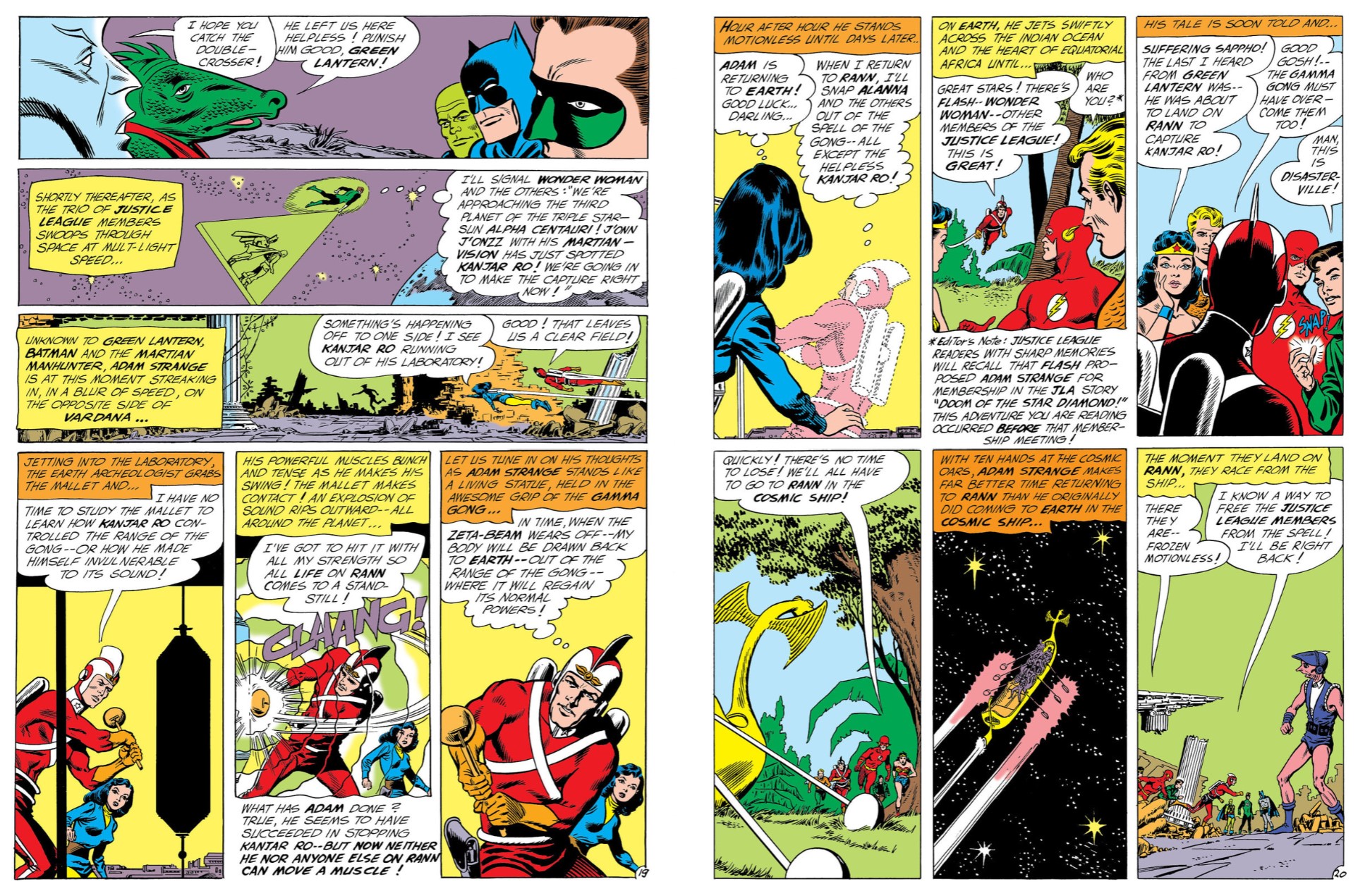
After a hugely successful revival and reworking of Golden Age all-star The Flash, DC (National Periodical Publications as they were then) built on a resurgent superhero trend. Cover dated October 1959 and on sale from July 28th, Showcase #22 hit newsstands at the same time as the fourth issue of the new Flash comic book (#108) and once again the guiding lights were Editor Julie Schwartz and writer John Broome. Assigned as illustrator was action ace Gil Kane.

Brash, cocky test pilot Hal Jordan was in California when an alien cop crashed on Earth. Mortally wounded, Abin Sur commanded his ring – a device which could materialise thoughts – to find a replacement officer: one both honest and without fear. Scanning the planet, the wonder weapon selected Jordan, whisking him to the crash-site. The dying alien bequeathed his ring, lantern-shaped Battery of Power and his profession (patrolman of Sector 2814) to the astonished Earthman.

In 6 pages the story established characters, scenario and narrative thrust of a series that would become the spine of all DC continuity. With the concept of the superhero being re-established among the buying public, there was no shortage of gaudily clad competition. Better books thrived by having something a little “extra”. With Green Lantern that was primarily the superb scripts of John Broome & Gardner Fox and astounding ever-evolving drawing of Gil Kane (ably abetted by a string of top inkers) whose dynamic anatomy and dramatic action scenes were maturing with every page he drew. Happily, the concept itself was also a provider of boundless opportunity.

Other heroes had extraterrestrial, other-dimensional and even trans-temporal adventures, but the valiant champion of this series was also a cop: a lawman working for the biggest police force in the entire universe.

This fabulous compilation gathers Green Lantern #40-61 (October 1965 -June 1968) plus contemporary guest appearances in The Flash #168, Detective Comics #350 and The Brave and the Bold #69. It all gets started without fanfare and opens with GL #40 which went on sale on August 26th 1965.

Conceived and delivered by Broome, Kane & Sid Greene (with conceptual input as always from editor Schwartz, ‘The Secret Origin of the Guardians!’ was a landmark second only to game-changing ‘Flash of Two Worlds’ (see DC Finest: The Flash – The Human Thunderbolt) as the Emerald Gladiator with his Earth-2 counterpart Alan Scott have to stop obsessed Oan scientist Krona, whose misguided attempts to discover the origins of the universe had introduced evil into our pristine reality billions of years ago. His actions forced his immortal brethren to become protectors of life and civilisation in an unending act of group contrition – the Guardians of the Universe.

Now he was back and still asking the wrong question, with his efforts also endangering a parallel earth. Happily for creation, that world had its own vastly experienced Emerald Avenger, who pitched in, and was so good at crisis management that the Guardians offered him Hal’s job…

Simultaneously high concept and all-action, the tale became a keystone of DC cosmology and a springboard for all those mega-apocalyptic publishing events such as Crisis on Infinite Earths. It has seldom been equalled and never bettered…

Gardner Fox scribed GL #41, spotlighting twisted romance in ‘The Double Life of Star Sapphire!’ as an alien power-gem again compels Jordan’s boss/true love Carol Ferris to subjugate and marry her sometime paramour Green Lantern. Fox also wrote another cracking magical mystery to end the issue as extraterrestrial wizard Myrwhydden triggered ‘The Challenge of the Coin Creatures!’

Next came ‘The Other Side of the World!’ wherein Fox continued a long-running experiment in continuity with a superb tale of time-lost civilisations and an extra-dimensional invasion by the Warlock of Ys co-starring peripatetic quester Zatanna the Magician as perfectly pictured by Kane & Greene.

At that time the top-hatted, fish-netted sorceress appeared in a number of Schwartz-edited titles, hunting her long-missing father Zatarra: a magician-hero in the Mandrake mould who had fought evil in the pages of Action Comics for over a decade, beginning with the very first issue. In true Silver Age “refit” style, Fox concocted a young, equally empowered daughter, promoting and popularising her in guest-team ups with superheroes he was currently scripting. If you’re counting, these tales appeared in Hawkman #4, Atom #19, Green Lantern #42 and an Elongated Man back-up strip in Detective Comics #355 as well as a slick piece of back writing to include the high-profile Caped Crusader via Detective #336. It all concluded after this GL segment in Justice League of America #51. You can enjoy the entire early epic by tracking down Justice League of America: Zatanna’s Search

The Flash shared the spotlight in #43: a high-energy tussle with a debuting tectonically terrifying new supervillain for Fox’s ‘Catastrophic Crimes of Major Disaster!’ and the next issue provide two tales – an increasing rarity as book-length epics became the action-packed norm.

Second-class postage discounts had for years dictated the format of comic books: to qualify for cheaper rates periodicals had to contain more than one feature, but when the rules were revised single, complete tales not divided into “chapters” soon proliferated. Here though are two reasons to bemoan the switch; Fox’s ‘Evil Star’s Death-Duel Summons’ and Broome’s “Jordan Brothers” adventure ‘Saga of the Millionaire Schemer!’, offering high-intensity alien supervillain action and a heady, witty comedy-of-errors mystery as Hal visits his family and is embroiled in new sister-in-law Sue’s hare-brained scheme to prove that her husband Jim Jordan is actually Green Lantern!

Crossovers were becoming increasingly common as shared continuity expanded and heroes popped up out of their regular jurisdiction. One brilliantly executed example follows…

Back in 1963 Schwartz had assumed editorial control of Batman & Detective Comics, allowing him space for a character who had been lying mostly fallow ever since his debut as a very long-legged walk-on in the April/May 1960 Flash. The Elongated Man was Ralph Dibny: a circus-performer who discovered an additive in popular soft drink Gingold which gave certain rare people increased muscular flexibility. Intrigued, Dibny isolated and refined the chemical and developed a serum granting him the ability to stretch, bend and compress his body to an incredible degree. From Detective #350 (April 1966) comes ‘Green Lantern’s Blackout!’ wherein Hal’s best friend Thomas Kalmaku seeks out the Stretchable Sleuth to solve the riddle of the hero’s abrupt disappearance – an entrancing, action-packed team-up with a future Justice League colleague by Fox & Carmine Infantino.

Scripted by Broome, Earth-2’s ring wielder returns for another power-packed pairing in Green Lantern #45’s fantasy & fisticuffs romance romp ‘Prince Peril’s Power Play’. The author raised the dramatic stakes with the hero’s first continued adventure in the following issue. GL #46 opens with Fox’s delightfully grounded crime-thriller ‘The Jailing of Hal Jordan’, before – preceded by a spectacular Kane pin-up – ‘The End of a Gladiator!’ details the murder of Sector 2814’s GL by old foe Dr. Polaris, concluding with his honour-laden funeral on Oa, home of the Guardians!

Broome was on fire at this time: the following issue and concluding chapter sees the hero’s corpse snatched to the 58th century and revived in time to save his occasional future home from a biological infection of pure evil in the spectacular triumph ‘Green Lantern Lives Again!’ Bizarrely garbed goodies and baddies were common currency at this time of incipient TV-generated Batmania, so when gold-plated mad scientist Keith Kenyon returned it was as a dyed-in-the-wool costumed crazy for Fox’s ‘Goldface’s Grudge Fight Against Green Lantern!’: a brutal clash of opposites. Sadly, Broome’s showbiz scoundrel Dazzler didn’t quite set the world afire in #49’s ‘The Spectacular Robberies of TV’s Master Villain!’ but the yarn was still a shocker, as Hal Jordan quit his job as a Coast City test pilot and went on the first of his vagabond quests across America…

Green Lantern had been the first hero to co-headline with Batman in The Brave and the Bold #59 (April/May 1965): a tale which became the blueprint of the title’s next 20 years as two colleagues joined forces for a specific case. There devious criminal scientist John Starr tricked Bruce Wayne into clearing his name and stole the Emerald Crusader’s power to fuel a chronal assault on Gotham as the Time Commander. Here and now, Win Mortimer joins scripter Bob Haney as Gotham Gangbuster and Green Knight endure a fractious reunion in B&B #69’s ‘War of the Cosmic Avenger’ (December 1966-January 1967) as John Starr repeats his tactic to unleash star-powered golem Cosmo upon the world, utterly unaware that the monster might have its own sinister agenda. Luckily, our heroes are smarter than the brilliant but bad time bandit…

With Green Lantern #50 Kane began inking his own art (probably in preparation for his forthcoming independent publications Savage and Blackmark), lending the proceedings a raw, savage appeal. The fight content in the stories was also ramped up, as seen in Broome’s murder-mystery treasure hunt ‘The Quest for the Wicked Queen of Hearts!’, complimented by an extragalactic smack-fest in Fox’s ‘Thraxton the Powerful vs Green Lantern the Powerless’, prior to Broome bringing the Emerald Crusader back to the 58th century to battle ‘Green Lantern’s Evil Alter Ego!’ in #52. Meanwhile, across the editorial aisle in The Flash #168 (cover-dated March 1967 but on sale from January 19th) Broome delivered a full-length thriller for Infantino & Sid Greene in which the Guardians of the Universe seek out the Scarlet Speedster after finding ‘One of our Green Lanterns is Missing!’ Bafflingly, as the Vizier of Velocity hunts for his missing best buddy, he is constantly distracted and diverted by a gang of third-rate thugs who have somehow acquired futuristic super weapons…

Back in GL #52, Broome & Kane have Alan Scott and comedy sidekick Doiby Dickles pop over from Earth-2 to aid against returning arch nemesis Sinestro in frankly peculiar ‘Our Mastermind, the Car!’, before finding far less outré plot or memorable foe for #53’s ‘Captive of the Evil Eye!’ wherein an alien giant stealing Earth’s atmosphere is ferociously foiled. The same issue sees Infantino & Greene step up to illustrate Broome’s thrillingly comedic Jordan Brothers back-up ‘Two Green Lanterns in the Family!’ as Hal finds employment as an investigator for the Evergreen Insurance company…

Broome & Kane reunite for positively surreal, super-scientific saga ‘Menace in the Iron Lung!’ (GL #54), with a manic shut-in orchestrating a deadly remote war against the Viridian Avenger followed by an all-out attack on the Guardians and their operatives in ‘Cosmic Enemy Number One’. The trans-galactic assassinations conclude in ‘The Green Lanterns’ Fight for Survival!’ and the appointment of a second Earthling to the now depleted Corps.

For #57, Fox scripts a sparkling Fights ‘n’ Tights duel in ‘The Catastrophic Weapons of Major Disaster!’ with the walking extinction event simultaneously tapping into and depowering the power ring before #58’s gripping psycho-thriller ‘Peril of the Powerless Green Lantern’ sees our hero seemingly suffering from debilitating combat fatigue. Sid Greene returned to inking with this yarn, staying on to embellish another continuity landmark.

In Green Lantern (volume 2 #59, March 1968) Broome introduced ‘Earth’s Other Green Lantern!’ in a rip-roaring cosmic epic of what-might-have-been. When dying Abin Sur originally ordered his ring to select a worthy successor Hal Jordan wasn’t the only candidate, but simply the closest of two. Here thanks to Guardian technology Hal sees what would have occurred if the ring had chosen his alternative Guy Gardner instead¦?

Action lovers and fans of fantasy fiction couldn’t find a better example of everything that defines superhero comics, but by the time of these later stories began DC was a company in transition – as indeed was America itself – with new ideas (for which, in comic-book terms, read “new, young writers”) granted greater headway than ever before: in turn generating an influx of new kids unseen since the very start of the industry, when excitable young artists and writers ran wild with imagination. Green Lantern #60 (April 1968), however, was an all-veteran outing as Fox, Kane & Greene introduced a fantastic new foe in ‘Spotlight on the Lamplighter!’, a power-packed, crime-busting morality play inadvertently foreshadowing a spectacular Green team-up classic in the next issue.

We end as we began for the last tale in this collection, wherein Mike Friedrich pens ‘Thoroughly Modern Mayhem!’ Mercifully the story is as wonderful as the title is not, since it cut to the quick of a problem many a kid had posited. If the power ring was so powerful why not just command it to end all evil? When the old and world-weary Emerald Crusader of Earth-2 does just that, it takes both him and his Earth-1 counterpart to remedy the shocking consequences to all of humanity…

Augmented with covers by Kane, Murphy Anderson, Jack Adler, Infantino, Greene & Joe Giella, these costumed drama romps are in themselves a great read for most ages, but when also considered as the building blocks of all DC continuity they become vital fare for any fan keen to make sense of the modern superhero experience. This blockbusting book showcases the imaginative and creative peak of Broome, Fox & Kane: a plot driven plethora of action sagas and masterful thrillers that literally reshaped the DC Universe. If you love superheroes you will never read better…
© 1965, 1966, 1967, 1968, 2025 DC Comics. All Rights Reserved.

Today in 1908 key comics personage, DC editor, writer and media intermediary Whitney Ellsworth was born, and in 1970 so was Mexican maestro Humberto Ramos who has excelled on everything from Amazing Spider-Man to Young Justice.

You’ve probably never heard of her, but Dorothy Woolfolk shattered a bunch of glass ceilings and was DC’s first woman editor. We lost her today in 2000, but her legacy lives on.

DC’s Greatest Imaginary Stories


By Otto Binder, Bill Finger, Jerry Siegel, John Broome, Leo Dorfman, Edmond Hamilton, Jim Shooter, C.C. Beck, Dick Sprang, Kurt Schaffenberger, Curt Swan, Carmine Infantino, Bob Kane & various (DC Comics)
ISBN: 978-1-4012-0534-8 (TPB)

This book includes Discriminatory Content produced in less enlightened times.

Win’s Christmas Gift Recommendation: Purely Addictive Comics Madness… 9/10
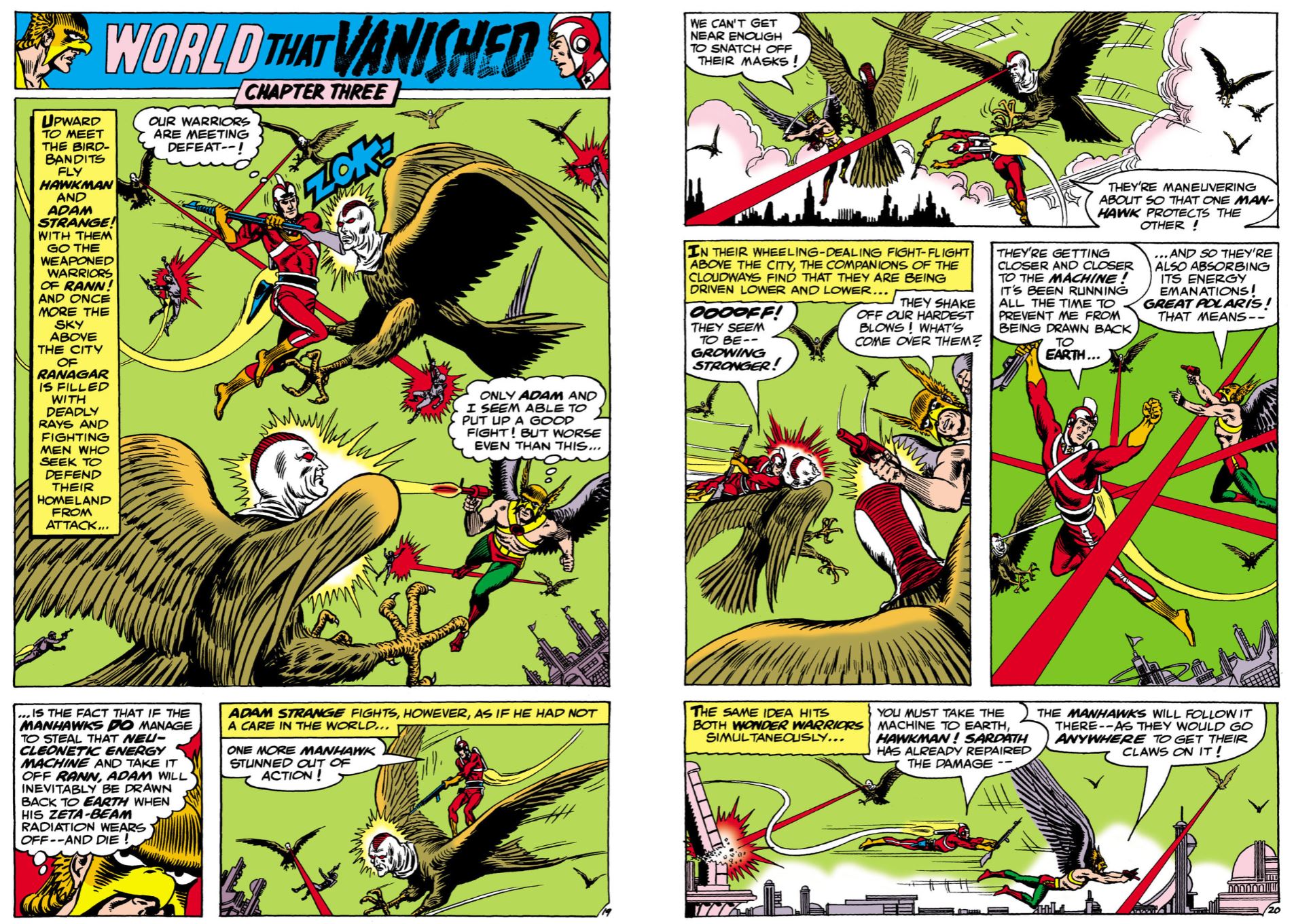
Alan Moore’s infamous epigram notwithstanding, not all comics tales are “Imaginary Stories”.

When DC Editor Mort Weisinger was expanding the Superman continuity and building the legend, he realised that each new tale was an event that added to a nigh-sacred canon: that what was written and drawn mattered to the readers. But, as a big concept guy, he wasn’t going to let that aggregated “history” stifle a good idea, nor would he allow his eager yet sophisticated audience to endure clichéd deus ex machina cop-outs to mar the sheer enjoyment of a captivating concept. The mantra known to every baby-boomer fan was “Not a Dream! Not a Hoax! Not a Robot!” boldly emblazoned on covers depicting scenes that couldn’t possibly be true… as a way of exploring non-continuity deviations, plots and scenarios devised at a time when editors believed entertainment trumped consistency and knew that every comic read was somebody’s first… or potentially last.

This jolly little compilation – long overdue for revival and expansion – celebrates the time when whimsy and imagination were king but somewhat stretches the point by leading with a fanciful tale of the World’s Mightiest Mortal. Courtesy of Otto Binder & CC Beck, ‘Captain Marvel and the Atomic War’ (Captain Marvel Adventures #66, October 1946) actually hoaxes the public through a demonstration of how the world might end in the new era of Nuclear Proliferation.

‘The Second Life of Batman’ (Bill Finger, Dick Sprang & Charles Paris in Batman #127, October 1959) doesn’t really fit the strict definition either, but the tale of a device that predicts how Bruce Wayne’s life would have run if his parents had not been killed is superb and engaging all the same. In contrast, ‘Mr. and Mrs. Clark (Superman) Kent!’ (Jerry Siegel & brilliant Kurt Schaffenberger) was the first of an occasional series that began in Superman’s Girlfriend Lois Lane #19 (August 1960). Far more apropos, it depicts the laughter and tears that might result if the plucky news-hen secretly marries the Man of Steel.

From an era uncomfortably parochial and patronising to women, there’s actually plenty of genuine heart and understanding in this tale and a minimum of snide sniping about “silly, empty-headed girls”…

Eventually the concepts became so bold that Imaginary Stories could command book-length status. ‘Lex Luthor, Hero!’ (Superman #149, November 1961) by Siegel, Curt Swan & Sheldon Moldoff details the mad scientist’s greatest master-plan and ultimate victory in a tale as powerful now as it ever was. In many ways this is what the whole concept was made for! No prizes for guessing what ‘Jimmy Olsen Marries Supergirl!’ (Superman’s Pal Jimmy Olsen #57, December 1961) is about, but the story is truly a charming delight, beautifully realized by Siegel, Swan & Stan Kaye.

Once more stretching a point ‘The Origin of Flash’s Masked Identity!’ (John Broome, Carmine Infantino & Joe Giella in The Flash# 128, May 1962) although highly entertaining, is more an enthusiastic day-dream than alternate reality and, I suspect, is added to bring variety to the mix – as is the intriguing ‘Batman’s New Secret Identity’ (Batman #151, November 1961, by Finger, Bob Kane & Paris).

‘The Amazing Story of Superman-Red and Superman-Blue!’ (Superman #162, July 1963) is possibly the most influential tale of this entire subgenre. Written by Leo Dorfman with art from Swan & George Klein, this startling utopian classic was so well-received that decades later it still influences and flavours Superman continuity. The plot involves the Action Ace being divided into two equal wonder men who promptly solve all universal problems and even the love rivalry between Lois Lane and Lana Lang!

Siegel & Schaffenberger’s ‘The Three Wives of Superman!’ is an enchanting tragedy of missed chances from SGLL #51 (August 1964) clearing the palate for ‘The Fantastic Story of Superman’s Sons’ (by Edmond Hamilton, Swan & Klein in Superman #166, November 1964): a solid thriller built on a tragic premise (what if only one of Superman’s children inherited his powers?), and this bright and breezy book closes with the stirring, hard-hitting ‘Superman and Batman… Brothers!’, wherein orphaned Bruce Wayne is adopted by the Kents, but cannot escape a destiny of tragedy and darkness. Written by Jim Shooter, with art from Swan & Klein for World’s Finest Comics #172 (cover-dated December 1967) this moody thriller in many ways signalled the end of carefree days and the beginning of a grittier, more cohesive DC universe for a less whimsical, fan-based audience.

This collection is a glorious slice of fancy, augmented by an informative introduction from columnist Craig Shutt, bolstered with mini-cover reproductions of many tales that tragically never made it into the collection, but I do have one minor quibble: No other type of tale was more dependent on an eye-catching, conceptually intriguing cover, so why couldn’t those belonging to these collected classics have been included here, too?

Surely, it’s time for a re-issue in either print or digital format with all those arresting covers included. Yes, it is… and don’t call me Shirley.
© 1946, 1959-1964, 1967, 2005 DC Comics. All Rights Reserved.

Today in 1900 Chester Gould was born. No help from me here, deduct who he was.
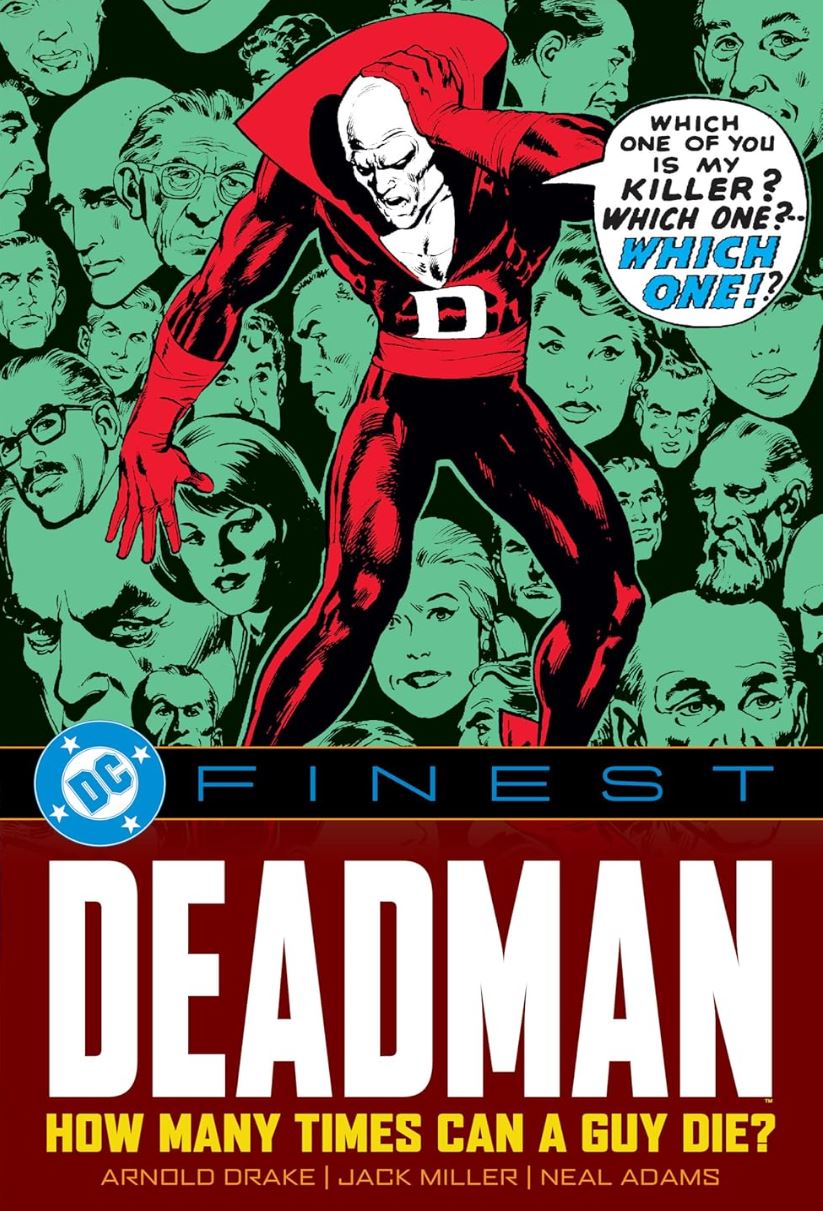
Happy birthday British arts icon Rian Hughes, arrived today in 1963, joined three years after by Jill Thompson and Guy Davis. Them also you should seek out here or in their own books…

DC Finest: Super Friends – The Fury of the Super Foes


By E. Nelson Bridwell, Denny O’Neil, Ramona Fradon, Kurt Schaffenberger, Ric Estrada, Alex Toth, Joe Orlando, Bob Smith, Vince Colletta with Dick Giordano, Curt Swan & Geoge Klein & various (DC Comics)
ISBN: 978-1-79950-316-3 (TPB)

This book contains Discriminatory Content produced during less enlightened times.

Win’s Christmas Gift Recommendation: Evergreen Superhero Sagas For All… 9/10

Once upon a time comics were primarily created with kids in mind. Whilst I’d never advocate exclusively going back to those days, the modern industry has for the longest time sinned by not fully addressing the needs and tastes of younger fans these days. By that I mean less tie-ns and more accessible standard stoires like Marvel Adventures material or this stuff here.

Happily, DC has latterly been rectifying the situation with new and – most importantly for old geeks like me – remastered, repackaged age-appropriate gems from their vast back catalogue.

A superb case in point of all-ages comics done right is this tome celebrating the joys of childhood when comics and TV shows were interchangeable in kids’ head. It was all one great big dangerous fun world to save or conquer…

DC Finest: Super Friends:- The Fury of the Super Foes gathers comic book tales spun off from a hugely popular Saturday Morning TV Cartoon show: one that, thanks to the canny craftsmanship and loving invention of lead scripter E. Nelson Bridwell, became an integral and unmissable component of the greater pre Crisis on Infinite Earths DC Universe.

It was also one of the most universally thrilling and satisfying superhero titles of the period: featuring the smart, witty, straightforward adventures people my age grew up with, produced during a period when the entire industry was increasingly losing itself in colossal continued storylines and bombastic, convoluted, soap opera melodrama.It’s something all creators should have tattooed on their foreheads: sometimes all you really want is a smart plot well illustrated, sinister villains well-smacked, a solid resolution and early bed…

TV show Super Friends ran (under various iterations) from 1973 to 1986; starring primarily Superman, Batman and Robin, Wonder Woman, Aquaman and a brace of studio-originated kids as student crimebusters. The cast was supplemented by guest stars from the DCU on a case by case basis. The animated series made the transition to print as part of the publisher’s 1976 foray into “boutiqued” comics which saw titles with a television connection cross-marketed as DC TV Comics.

Child-friendly Golden Age comic book revival Shazam!- the Original Captain Marvel had been adapted into a successful live action series and its Saturday Morning silver screen stablemate The Secrets of Isis consequently reversed the process to become a comic book. With the additions of hit comedy show Welcome Back Kotter and animated blockbuster Super Friends four-colour format, DC had a neat outreach imprimatur tailor-made to draw viewers into the magic word of funnybooks.

At least that was the plan: with the exception of Super Friends none of the titles lasted more than ten issues beyond their launch…

This massive mega-extravaganza collects Super Friends #1-26 (spanning November 1976 to November 1979), includes promo comic Aquateers Meet the Super Friends and reprints material from Limited Collectors’ Edition #C-41 and C-46.

The fun begins a crafty 2-part caper by the wondrous E. Nelson Bridwell and illustrators Ric Estrada, Vince Colletta & Joe Orlando. ‘The Fury of the Super Foes’ finds heroes-in-training Wendy & Marvin – and their incredibly astute mutt Wonderdog – studying at the palatial Hall of Justice, even as elsewhere, a confederation of villains prove imitation is the sincerest form of flattery… if not outright intellectual theft. Having auditioned a host of young criminals, The Penguin, Cheetah, Flying Fish, Poison Ivy and Toyman are creating a squad of sidekicks and protégés to follow in their felonious footsteps. Now Chick, Kitten, Sardine, Honeysuckle and Toyboy are all ready and willing to carry out their first caper…

When the giant “Troubalert” screen informs our heroes of a 3-pronged attack on S.T.A.R. Labs’ latest inventions, the team split up to tackle the crises, but are thoroughly trounced until Wendy & Marvin break curfew to help them. As a result of the clash, Chick and Kitten are brought back to the Hall of Justice, but their talk of repentance is a rascally ruse and they secretly sabotage vital equipment. Thankfully, Wonderdog has seen everything and quickly finds a way to inform the still-oblivious good guys in issue #2, but too late to prevent the Super Friends being briefly ‘Trapped by the Super Foes’

Aided and abetted by inker Bob Smith, the incomparable Ramona Fradon (Aquaman; Metamorpho the Element Man; Brenda Starr, Reporter) became penciller with #3, as ‘The Cosmic Hit Man?’ sees 50 intergalactic super-villains murdered by infernal Dr. Ihdrom, who then blends their harvested essences to create an apparently unbeatable hyper-horror to utterly overwhelm Earth’s heroic defenders. However, he falls victim to his own arrogance and Wendy & Marvin’s logical deductions…

‘Riddles and Rockets!’ sees the Super Friends overmatched by new ne’er-do-well Skyrocket whilst simultaneously seeking to cope with a rash of crimes contrived by King of Conundra The Riddler. Soon a pattern emerges and a criminal connection is confirmed…

Author Bridwell (Secret Six; Inferior Five; Batman; Superman; The Flash; Legion of Super-Heroes; Captain Marvel/Shazam!) was justly famed as DC’s Keeper of Lore and top Continuity Cop thanks to his astoundingly encyclopaedic knowledge of its publishing minutiae and ability to instantly recall every damn thing! ‘Telethon Treachery!’ gave him plenty of scope to display it with a horde of near-forgotten guest-stars joining the heroes as they host a televised charity event. Sadly, money-mad menace Greenback lurks in the wings, awaiting his moment to grab the loot and kidnap the wealthiest donors. Then The Atom (Ray Palmer) plays a crucial role in stopping the depredations of an animal trainer using beasts as bandits in ‘The Menace of the Menagerie Man!’ before a huge cast change is unveiled in #7 (October 1977) with ‘The Warning of the Wondertwins’

You all know TV is very different from comics. When the next season of Super Friends aired, Wendy, Marvin & Wonderdog were abruptly gone, replaced without explanation by alien kids Zan & Jayna and their elastic-tailed space monkey Gleek. With room to extrapolate and in consideration of fans, Bridwell explained the sudden change via a battle to save Earth from annihilation whilst introducing the newest student heroes in memorable style. At the Hall of Justice Wendy & Marvin spot a spaceship hurtling to Earth on the Troubalert monitor and dash off to intercept it. Aboard are two siblings from distant planet Exor: a girl able to transform into animals and a boy who can become any form of water, from steam to ice. They have come carrying an urgent warning…

Superman’s alien enemy Grax has resolved to eradicate humanity and devised a dozen different superbombs and attendant weird-science traps to ensure his victory. These are scattered all over Earth and even the entire Justice League cannot stretch its resources to cover every angle and threat. To Wendy & Marvin the answer is obvious: call upon the help and knowledge of hyper-powered local heroes…

Soon Superman and Israel’s champion The Seraph are dismantling a black hole bomb whilst Elongated Man and titan-tressed Godiva perform similar service on a life-eradicator in England. Flash (Barry Allen) and mighty-leaping Impala dismantle uncatchable ordnance in South Africa before Hawkman & Hawkwoman join Native American avenger Owlwoman to crush darkness-breeding monsters in Oklahoma, whilst from the Hall of Justice Wendy, Marvin and the Wonder Twins monitor the crisis with a modicum of mounting hope…

The cataclysmic epic continues in #8 with ‘The Mind Killers!’ as Atom and Rising Son tackle a device designed to decimate Japan, and in Ireland Green Lantern Hal Jordan and Jack O’Lantern battle multi-hued monstrosities before switching off their technological terror.

In New Zealand, time-scanning Tuatara tips off Red Tornado to the position of a bomb cached in the distant past whilst Venezuela’s doom is diverted through a team-up of Batman, Robin and reptile-themed champion Bushmaster. And in Taiwan a melding of sonic superpowers possessed by Black Canary and the astounding Thunderlord harmoniously saves the day…

The saga soars to a classic climax with ‘Three Ways to Kill a World!’ in which the final phases of Grax’s scheme fail thanks to Green Arrow & Tasmanian Devil in Australia, with Aquaman & Little Mermaid sorting out the embattled seas off Denmark and Wonder Woman & The Olympian preserving modern Greece.

Or at least, they would have if the Hellenic heroes had found the right foe. Sadly, their triumph against Wrong-Place, Right-Time terrorist Colonel Conquest almost upsets everything. Thankfully, the quick thinking hero-students send an army of defenders to Antarctica where Norwegian novice Icemaiden dismantles the ultimate booby-trap bomb.  However, whilst the adult champions are engaged, Grax invades the Hall of Justice seeking revenge on the pesky whistleblowing Exorian kids. He’s completely unprepared for and overwhelmed by Wendy, Marvin & Wonderdog, who categorically prove they’re ready to graduate to the big leagues…

Thus with Zan & Jayna enrolled as latest heroes-in-training, Super Friends #10 details their adoption by Batman’s old associate – and eccentric time travel theoretician – Professor Carter Nichols, just before a legion of alien horrors arrive on Earth to teach the kids that appearances can be lethally deceiving in ‘The Monster Menace!’ In #11, ‘Kingslayer’ pits the heroes against criminal mastermind Overlord who has contracted the world’s greatest hitman to murder more than one hundred leaders at one sitting…

Another deep dive into DC’s past resurrected Golden Age titans T.N.T and Dan, the Dyna-Mite in ‘The Atomic Twosome!’ These 1940s mystery men had been under government wraps ever since their radioactive powers began to melt down, but when an underground catastrophe ruptures their individual lead-lined vaults, the Super Friends are called in to prevent potential nuclear nightmare. Then the subterranean reason for the near tragedy is tracked to a monstrous mole creature, and leads to the introduction of eternal mystic Doctor Mist, who reveals the secret history of civilisation and begs help to halt ‘The Mindless Immortal!’ before its random burrowing shatters mankind’s cities. From here, Bridwell would build a fascinating new team concept that would support decades of future continuity…

Super Friends #14 opens with ‘Elementary!’; introducing four ordinary mortals forever changed when possessed by ancient sprits. Tasked by Overlord with plundering the world, Undine, Salamander, Sylph & Gnome are defeated by our heroes yet retain their powers and so become crimefighting team The Elementals. Also on view is a short back-up illustrated by Kurt Schaffenberger & Bob Smith. ‘The Origin of the Wondertwins’ at last reveals they are Exorian genetic throwbacks (despised outcasts on their homeworld) who fled from a circus of freaks and uncovered Grax’s plot before taking that fateful voyage to Earth.

Big surprises come in ‘The Overlord Goes Under!’ (Fradon & Smith) as the Elementals begin battling evil by joining the Super Friends in crushing the crook. All those superheroes are blithely unaware that they are merely clearing the way for a far more cunning and subtle mastermind to take Overlord’s place…

‘The People Who Stole the Sky!’ in SF #16 is a grand, old-fashioned alien invasion yarn, foiled by the team and the increasingly adept Wonder Twins whilst ‘Trapped in Two Times!’ has Zan & Jayna used by the insidious Time Trapper to lure their adult mentors into deadly peril on Krypton in the days before it detonated, and future water world Neryla in the hours before it’s swallowed by its critically expanding red sun. After rescuing the kids – thanks largely to Superman’s legendary lost love Lyla Ler-Rol – the Super Friends employ Tuatara’s temporal insight and Professor Nichol’s obscure chronal methodologies to hunt the Trapper in a riotous yet educational ‘Manhunt in Time!’ (art by Schaffenberger & Smith), by way of Atlantis before it sank, medieval Spain and Michigan in 1860CE: all to thwart a triple-strength scheme to derail history and end Earth civilisation…

SF #19 sees an encore for Menagerie Man in ‘The Mystery of the Missing Monkey!’ (Fradon & Smith) as the animal exploiter appropriates Gleek: intent on turning his elastic-tailed talents into a perfect pickpocketing tool, before Denny O’Neil (as Sergius O’Shaugnessy) teams with Schaffenberger & Smith for a more jocular turn. Here, chaos and comedy ensue when the team tackles vegetable monsters unleashed after self-obsessed shlock-movie director Frownin’ Fritz Frazzle uses Merlin’s actually magical Magic Lantern to make a “masterpiece” on the cheap in ‘Revenge of the Leafy Monsters!’

Bridwell & Fradon bounce back in #21 where ‘Battle Against the Super Fiends!’ has the heroes travelling to Exor to combat super-criminals who can duplicate their power-sets, after which ‘It’s Never Too Late!’ (#22, O’Shaugnessy, Fradon & Smith) reveals how time bandit Chronos subjects the Super Friends to a chronal-delay treatment rendering them perennially too late to stop him… but only until Batman and the Wonder Twins out-think him.

The Mirror Master divides and banishes teachers from students in #23 but is ultimately unable to prevent an ‘SOS from Nowhere!’ (Bridwell, Fradon & Smith) to the Flash. This episode also spends time fleshing out the Wonder Twins’ earthly alter egos as Gotham Central highschoolers John & Joanna Fleming

With O’Shaugnessy scripting, ‘Past, Present and Danger!’ sees Zan & Jayna’s faces found engraved on a recently-unearthed Egyptian pyramid. Upon investigation inside the edifice, the heroes awaken two ancient exiles who resemble the kids, but who are in truth criminals who fled Exorian justice thousands of years previously. How lucky, then, that the kids are perfect doubles that the villains can send back with the robot cops surrounding the pyramid – once they’ve got rid of all those busybody Earthling heroes…

Enjoying promotion through treachery, habitually harassed Underling has seized power at last in Bridwell’s ‘Puppets of the Overlord’, and then employs forbidden technology to mind-control adult and junior heroes. Happily, international champions Green Fury (later Fire), Wonder Woman’s sister Nubia, Tasmanian Devil and Seraph can join Green Lantern and Queen Mera of Atlantis in delivering a liberating solution, after which this splendid selection of super thrills pauses with SF #26 as Bridwell, Fradon & Smith bring back some old friends and enemies for ‘The Wondertwins’ Battle of Wits!’ when a scheming former Bat-foe enacts an infallibly murderous plot…

Rounding out the frenetic fun is a features section that includes the Alex Toth cover from Limited Collectors’ Edition #C-41  and new material from sequel C-46. These include a comic strip collaboration with Bridwell on introductory tale ‘Super Friends’ which was a star-studded framing sequence for a big reprint issue of Justice League classics. The wonders are further augmented by Toth’s comprehensive pictorial essay on creating ‘TV Cartoons’ (with contributions from Bob Foster), plus his ‘The JLA on TV’ model sheets, and designs of ‘The Hall of Justice’ by Terry Austin. As you of course know, comics legend Toth was lead designer on the characters’ transition to TV animation…

The extras include mini-comic Aquateers Meet the Super Friends – a 1979 promotional giveaway included with every purchase of Super Friends Swim Goggles. An uncredited framing sequence (which looks like a Continuity Associates project that Dick Giordano & Frank McLoughlin had a hand in) segues into ‘The Greatest Show on Water’ – an Aquaman short by Fradon originally published in Adventure Comics #219, (December 1955).

The bumper fun wraps with Alex Ross’ painted cover from 2001 book collection Super Friends!

With covers by Fradon, Smith, Schaffenberger, Colletta, Ernie Chan and more, this hopefully initial compendium is superbly entertaining, masterfully crafted and utterly engaging. It offers stories of pure comics gold to delight children and adults in equal proportion. Truly generational in appeal, they are probably the closest thing to an American answer to the magic of Tintin or Asterix and no family home should be without this tome.

Sadly, this masterful mystery megamix is not yet available digitally, but we live in hope. In the meantime, if you prefer your cartoon crimebustng computer collated you could access 2020’s Super-Friends: Saturday Morning Comics volume 1.
© 1976, 1977, 1978, 1979, 2001, 2025 DC Comics, Inc. All Rights Reserved.

Today in 1697, Willam Hogarth was born. Notionally adding to the comics lustre and significance, in 1918, Howard Purcell was also added to the planet’s roster, as was Neil Gaiman in 1960. In the exit column for today, in 1993 we lost astounding illustrator Alberto Breccia, and in 2006 immortal sci fi writer Jack Williamson. All those other guys you can find in old posts here, but I particularly recommend Beyond Mars – The Complete Series 1952-1955.

DC Finest: The Spectre – The Wrath of the Spectre


By Gardner F. Fox, Bob Haney, Mike Friedrich, Steve Skeates, Dennis J. O’Neil, Mark Hanerfeld, Jack Miller, Michael L. Fleisher, Paul Kupperberg, Mike W. Barr, Roy Thomas, Murphy Anderson, Carmine Infantino, Ross Andru & Mike Esposito, Neal Adams, Jerry Grandenetti, Jack Sparling, Bernie Wrightson, José Delbo, Jim Aparo, Frank Thorne, Ernie Chan, Michael R. Adams, Rick Hoberg, Jerry Ordway, Richard Howell, Larry Houston, Gerald Forton & various (DC Comics)
ISBN: 978-1-4012-3417-1 (TPB)

This book includes Discriminatory Content produced in less enlightened times

This stunning compilation is another long-awaited full colour chronolgically curated compilation delivering “affordably priced, large- paperback collections” highlighting DC’s past glories. Sadly, none are yet available digitally, as were the last decade’s Bronze, Silver and Golden Age collections, but we live in hope…

Win’s Christmas Gift Recommendation: Sublime Seasonal Spookfest for Comics Addicts… 10/10

Created by Jerry Siegel & Bernard Baily in 1940 and debuting via a 2-part origin epic in More Fun Comics #52 & 53, The Spectre is one of the oldest characters in DC’s vast character stable. Crucially, just like Siegel’s other iconic creation, the Ghostly Guardian soon began suffering from a basic design flaw: he was just too darn powerful. However, unlike Superman this relentless champion of justice is already dead, so he can’t really be logically or dramatically imperilled. Moreover, in those far off early days that wasn’t nearly as important as sheer spectacle: forcibly grabbing the reader’s utter attention and keeping it stoked to a fantastic fever pitch.

Starting as a virtually omnipotent phantom, the Astral Avenger evolved over various revivals, refits and reboots into a tormented mortal soul bonded inescapably to the actual embodiment of the biblical Wrath of God…

The story is a genuinely gruesome one: police detective Jim Corrigan is callously executed by gangsters before being called back to the land of the living. Commanded to fight crime and evil by a glowing light and disembodied voice, he was indisputably the most formidable hero of the Golden Age. He has been revamped many times, and in the 1990s was revealed to be God’s own Spirit of Vengeance wedded to a human conscience. When Corrigan was finally laid to rest, Hal (Green Lantern) Jordan and murdered Gotham City cop Crispus Allen replaced him as the mitigating conscience of the unstoppable, easily irked force of Divine Retribution. Last time I looked, Corrigan had the job again…

However, the true start of that radically revitalised career began in the superhero-saturated mid-1960s when, hot on the heels of feverish fan-interest in the alternate world of the Justice Society of America and Earth-2 (where all their WWII heroes retroactively resided), DC began trying out solo revivals of 1940’s characters, as a counterpoint to such wildly successful Silver Age reconfigurations as Flash, Green Lantern, Atom and Hawkman

This colossal compilation documents the almighty Man of Darkness’ resurrection in the Swinging Sixties, his landmark reinterpretation in the horror-soaked, brutalised 1970s and even finds room for some later appearances before the character was fully de-powered and retrofitted for the post-Crisis on Infinite Earths DC Universe. As such, this Spectre-acular tome of terror (660 subtly sinister peril-packed pages!) re-presents material from Showcase #60, 61 & 64; team-up tales from The Brave and the Bold #72, 75, 116, 180 & 199; The Spectre #1-10; lead strips from Adventure Comics #431-440: a tryptich serial from horror-anthology Ghosts #97-99 and a wartime-set saga from JSA retro hit All-Star Squadron #27-28: cumulatively channelling January/February 1966 to December 1983.

Back in the Sixties DC had attempted a number of Earth-2 team-iterations (Starman & Black Canary – with Wildcat – in The Brave and the Bold #61-62, whilst Showcase #55 & 56 spotlighted Doctor Fate & Hourman, with a cameo from the original Green Lantern), but inspirational editor Julie Schwartz & scripter Gardner F. Fox only finally achieved their ambition to relaunch a Golden Age hero into his own title with the revival of the Ghostly Guardian in Showcase. It had been hard going and perhaps ultimately happened only thanks to a growing general public taste for supernatural stories…

After three full length appearances and many guest-shots, The Spectre won his own solo series at the end of 1967, just as the superhero craze went into steep decline, but arguably Showcase #60 (cover-dated January/February 1966 but actually on sale from Novenember 25th 1965) anticipated the rise of supernatural comics by re-introducing Corrigan and his phantom passenger in ‘War That Shook the Universe’ by Earth-2 team supreme Fox & illustrator Murphy Anderson. This spectacular saga reveals why the Heroic Haunt had vanished two decades previously, leaving fundamentally human (but dead) Corrigan to pursue his war against evil on merely mortal terms – until a chance encounter with a psychic investigator frees the spirit buried deep within him. A diligent search reveals that, 20 years previously, a supernal astral invader broke into the Earth plane and possessed a mortal, but was so inimical to our laws of reality that both it and the Grim Ghost were locked into their meat shells until now…

Thus began a truly Spectre-acular (feel free to groan, but that’s what they called it back then) clash with devilish diabolical Azmodus that spans all creation and blew the minds of us gobsmacked kids…

Showcase #61 (March/April) upped the ante as even more satanic Shathan the Eternal subsequently insinuates himself into our realm from ‘Beyond the Sinister Barrier’: stealing mortal men’s shadows until he is powerful enough to conquer the physical universe. This time The Spectre treats us to an exploration of the universe’s creation before narrowly defeating the source of all evil…

The Sentinel Spirit paused before re-manifesting in Showcase #64 (September/October 1966) for a marginally more mundane but no less thrilling case after ‘The Ghost of Ace Chance’ takes up residence in Jim’s body. By this time, it was established that ghosts need a mortal anchor to recharge their ectoplasmic “batteries”, with this unscrupulous crooked gambler determined to inhabit the best frame available…

Try-out run concluded, the editors sat back and waited for sales figures to dictate the next move. When they proved inconclusive, Schwartz orchestrated a concerted publicity campaign to further promote Earth-2’s Ethereal Adventurer. Thus The Brave and the Bold #72 (June/ July 1967) saw the Sentinel Spook clash with Earth-1’s Scarlet Speedster in ‘Phantom Flash, Cosmic Traitor’ (by Bob Haney, Carmine Infantino & Charles “Chuck” Cuidera). This sinister saga sees the mortal meteor arcanely transformed into a sinister spirit-force and power-focus for expired but unquiet American aviator Luther Jarvis who returns from his death in 1918 to wreak vengeance on the survivors of his squadron – until the Spectre intervenes…

Due to the vagaries of comic book scheduling, B&B #75 (December 1967/January 1968) appeared at around the same time as The Spectre #1, although the latter had a cover-date of November/December 1967. In this edition it follows the debut of the haunted hero in his own title…

‘The Sinister Lives of Captain Skull’, by Fox & Anderson, divulges how the botched assassination of American Ambassador Joseph Clanton and an experimental surgical procedure allows one of the diplomat’s earlier incarnations to seize control of his body and, armed with mysterious eldritch energies, run amok on Earth. These “megacyclic energy” abilities enable the revenant to harm and potentially destroy the Grim Ghost, compelling the Spectre to pursue the piratical Skull through a line of previous lives until he can find their source and purge the peril from all time and space. Meanwhile over in the Batman team-up tale – scripted by Haney and limned by Ross Andru & Mike Esposito – Ghostly Guardian joins Dark Knight to liberate Earth-One Gotham City’s Chinatown from ‘The Grasp of Shahn-Zi!’: an ancient oriental sorcerer determined to prolong his reign of terror at the expense of an entire community and through the sacrifice of an innocent child, after which the Astral Avenger proceeded on Earth-Two in his own title…

With #2 (January/February 1968) artistic iconoclast Neal Adams came aboard for Fox-scripted mystery ‘Die Spectre – Again’ wherein crooked magician Dirk Rawley accidentally manifests his etheric self and severely tests both Corrigan and his phantom lodger as they seek to end the double-menace’s string of crimes, mundane and magical. At this time, the first inklings of a distinct separation and individual identities began. The two halves of the formerly sole soul of Corrigan were beginning to disagree and even squabble…

Neophyte scripter Mike Friedrich joined Adams for #3’s ‘Menace of the Mystic Mastermind’ wherein pugilistic paragon Wildcat faces the inevitable prospect of age and infirmity even as an inconceivable force from another universe possesses petty thug Sad Jack Dold, turning him into a nigh-unstoppable force of cosmic chaos.

Next, ‘Stop that Kid… Before He Wrecks the World’ was written & illustrated by Adams with a similar trans-universal malignity deliberately empowering a young boy as a prelude to its ultimate conquest, whilst #5’s ‘The Spectre Means Death?’ (all Adams again) appears to show the Astral Adept transformed into a pariah and deadly menace to society, until Corrigan’s investigations uncover emotion-controlling villain Psycho Pirate at the root of the Heroic Haunt’s problems…

Despite the incredible talent and effort lavished upon it, The Spectre simply wasn’t finding a big enough audience. Adams left for superhero glory elsewhere and a hint of changing tastes emerged as veteran horror comics illustrator Jerry Grandenetti came aboard. Issue #6 (September/October 1968) saw his eccentric, manic cartooning adding raw wildness to the returning Fox’s moody thriller ‘Pilgrims of Peril!’ Anderson also re-enlisted, applying a solid ink grounding to the story of a sinister quartet of phantom Puritans who invade the slums of Gateway City, driving out the poor and hopeless as they hunt long-lost arcane treasures. These would allow demon lord Nawor of Giempo access to Earth unless Spectre can win his unlife or death duel with the trans-dimensional horror…

As the back of #7 was dedicated to a solo strip starring Hourman (not included here), The Spectre saga here – by Fox, Grandenetti & Anderson – was a half-length tale following the drastic steps necessary to convince the soul of bank-robber Frankie Barron to move on. As he was killed during a heist, the astral form of aversion therapy used to cure ‘The Ghost That Haunted Money!’ proves not only ectoplasmically effective but outrageously entertaining…

Issue #8 (January/February 1969) was scripted by Steve Skeates and began a last-ditch and obviously desperate attempt to turn The Spectre into something the new wave of anthology horror readers would buy.

As a twisted, time-lost apprentice wizard struggles to return to Earth after murdering his master and stealing cosmic might from the void, on our mundane plane an exhausted Ghostly Guardian neglects his duties and is taken to task by his celestial creator. As a reminder of his error, the Penitent Phantasm is burdened by a fluctuating weakness – which would change without warning – to keep him honest and earnest. What a moment then, for desperate disciple Narkran to return, determined to secure an elevated god-like existence by securing ‘The Parchment of Power Perilous!’

The Spectre #9 completed the transition, opening with an untitled short from Friedrich (illustrated by Grandenetti & Bill Draut) finding the Man of Darkness again overstepping his bounds by executing a criminal. This prompts Corrigan to refuse the weary wraith the shelter of his reinvigorating form and when the Grim Ghost then assaults his own host form, the Heavenly Voice punishes the spirit by chaining him to the dreadful Journal of Judgment: demanding he atone by investigating the lives inscribed therein in a trial designed to teach him again the value of mercy.

The now anthologised issue continued with ‘Abraca-Doom!’ (Dennis J. O’Neil & Bernie Wrightson) as The Spectre attempts to stop a greedy carnival conjurer signing a contract with the Devil, whilst ‘Shadow Show’ – by Mark Hanerfeld & Jack Sparling – details the fate of a cheap mugger who thinks he can outrun the consequences of a capital crime. The Spectre gave up the ghost, folding with #10 (May/June 1969), but not before a quartet of tantalising tales shows what might have been. ‘Footsteps of Disaster’ (Friedrich, Grandenetti & George Roussos) follow a man from cradle to early grave, revealing the true wages of sin, whilst ‘Hit and Run’ (Steve Skeates & Jose Delbo) proves again that the Spirit of Judgment is not infallible and even human scum might be redeemed. Jacks Miller & Sparling asked ‘How Much Can a Guy Take?’ with a shoeshine boy pushed almost too far by an arrogant mobster before the series closed with a cunning murder mystery involving what appeared to be a killer ventriloquist’s doll in Miller, Grandenetti & Roussos’ ‘Will the Real Killer Please Rise?’ With that the Astral Avenger returned to comic book limbo for nearly half a decade until changing tastes and another liberalising of the Comics Code saw him arise as lead feature in Adventure Comics #431 (January/February 1974) for a shocking run of macabre, ultra-violent tales from Michael L. Fleisher, Jim Aparo and friends

‘The Wrath of… The Spectre’ offered a far more stark, unforgiving take on the Sentinel Spirit; reflecting the increasingly violent tone of the times. Here, a gang of murderous thieves slaughter the crew of a security truck and are tracked down by a harsh, uncompromising police lieutenant named Corrigan. When the bandits are exposed, the cop unleashes a horrific green and white apparition from his body which inflicts ghastly punishments horrendously fitting their crimes.

With art continuity (and no, I’m not sure what that means either) from Russell Carley, the draconian encounters continue in #432 as in ‘The Anguish of… The Spectre’ assassins murder millionaire Adrian Sterling and Corrigan meets the victim’s daughter. Although the now-infallible Wrathful Wraith soon exposes and excises the culprits, the dead detective has to reveal his true nature to grieving Gwen. Moreover, Corrigan begins to feel the stirring of impossible, unattainable yearnings…

Adventure #433 exposed ‘The Swami and… The Spectre’ with Gwen seeking spiritual guidance from a ruthless charlatan who promptly pays an appalling price when he finally encounters an actual ghost, whilst #434’s ‘The Nightmare Dummies and… The Spectre’ (with additional pencils by Frank Thorne), reveals a plague of department store mannequins running wild in a killing spree at the behest of a crazed artisan who believes in magic – but cannot imagine the cost of his dabbling. AC #435 introduces journalist Earl Crawford who tracks ghastly fallout of the vengeful spirit’s anti-crime campaign in ‘The Man Who Stalked The Spectre!’ Of course, once he sees the ghost in grisly action, Crawford realises the impossibility of publishing this scoop…

Adventure #436 finds Crawford still trying to sell his implausible story as ‘The Gasmen and… The Spectre’ sets the Spectral Slaughterman on the trail of a gang who kill everyone at a car show as a simple demonstration of intent before blackmailing the city. Their gorily inescapable fate only puts Crawford closer to exposing Corrigan…

Meanwhile elsewhere, Haney & Aparo reunite Batman, Detective Corrigan and a far kinder Spectre for Brave and the Bold #116’s ‘Grasp of the Killer Cult’, as the heroes hunt WWII veterans targetted by the spirits of dead Kali worshippers on a murder spree to generate enough arcane energy to resurrect their goddess, before Adventure #437’s ‘The Human Bombs and… The Spectre’ (pencilled by Ernie Chan with Aparo inks) sees a kidnapper abduct prominent persons – including Gwen – to further a mad scheme to amass untold wealth… until the Astral Avenger ends both financial aspirations and deadly depredations forever.

Despite critical acclaim – and popular controversy – the weird writing was on the wall for the grimmest ghost ever and AC #438 heralded the beginning of the end in Fleischer, Chan & Aparo’s ‘The Spectre Haunts the Museum of Fear’. Here a deranged taxidermist turns people into unique dioramas until the original spirit of vengeance intervenes. The end was in sight again for the Savage Shade and #439’s ‘The Voice that Doomed… The Spectre’ (all Aparo art) turns the wheel of death full circle, as the Heavenly Presence who created him allows Corrigan to fully live again so that he can marry Gwen. Sadly, it’s only to have the joyous hero succumb to ‘The Second Death of The… Spectre’ in the next, last issue (#440, July/ August 1975) before tragically resuming his never-ending mission. This milestone serial set a stunning new tone and style for the Ghostly Guardian which has informed each iteration ever since…

By the early 1980s, the latest horror boom had exhausted itself and DC’s anthology comics were disappearing. As part of the effort to keep them alive, Ghosts featured a 3-part serial starring “Ghost-Breaker” and inveterate sceptic Dr. Terry 13 who at last encounters ‘The Spectre’ in issue #97 (February 1981, by Paul Kupperberg, Michael R. Adams & Tex Blaisdell). Here, terrorists invade a high society séance and are summarily dispatched by the inhuman poetic justice of a freshly-manifested Astral Avenger. Resolved to destroy the sadistic revenant vigilante, recently converted true beliver Dr. 13 returns in #98 when‘The Haunted House and The Spectre’ finds the Ghost-Breaker interviewing Earl Crawford and subsequently discovering the long-sought killer of his own father. Before 13 can act, however, the Spectre appears to hijack his justifiable retribution…

The drama ends in Ghosts #99 as ‘Death… and The Spectre’ (inked by Tony DeZuñiga) sees scientist and spirit locked in one final furious confrontation. Then more team-up classics from Brave and the Bold follow, beginning with ‘The Scepter of the Dragon God’ (by Fleisher & Aparo from #180, November 1980). Although Chinese wizard Wa’an-Zen steals enough mystic artefacts to conquer Earth and destroy The Spectre, he gravely underestimates the skill and bravery of merely mortal Batman, before #199’s ‘The Body-napping of Jim Corrigan’ (June 1983 by Mike W. Barr, Andru & Rick Hoberg), depicts the undead investigator baffled by the abduction and disappearance of his mortal host. Even though he cannot trace his own body, the Spectre knows where the World’s Greatest Detective hangs out…

This staggering compendium of supernatural thrillers concludes with a two-part saga from revivalist treat All-Star Squadron #27 & 28 as Roy Thomas, Jerry Ordway, Richard Howell, Larry Houston & Gerald Forton take us back to embattled 1942 where America’s greatest superheroes strive against the last outbreak of fascist tendencies.

Here the Golden Age Superman, Batman and Robin join Doctor Fate, Tarantula, Firebrand, The Atom, Hawkman, Phantom Lady, Amazing Man, Commander Steel, Dr. Mid-nite, Starman, Sandman, Flash, The Guardian, Johnny Thunder, Green Lantern, Johnny Quick, Liberty Belle and Wonder Woman go in search of a missing ghostly Guardian only to learn ‘A Spectre is Hanting the Multiverse!’ with the mightiest being in creation enslaved to pan-dimensional tyrant Kulak, High Priest of Brztal and facilitating a long-anticipated scheme to eradicate Earth, it’s no small mercy that humanity has other uncanny defenders – such as Sargon the Sorceror – to call upon…

Although an incongruously superhero-heavy tale to end on this compilation covers much of the darlest corners of DC legend and fable. With covers by Anderson, Infantino, Jack Adler, Adams, Grandenetti, Nick Cardy, Aparo, Tatjana Wood, George Tuska, Anthony Tollin & Jerry Ordway, and ranging from fabulously fantastical to darkly, violently enthralling, these comic masterpieces perfectly encapsulate the way superheroes changed over a brief 20-year span, but remain throughout some of the most beguiling and exciting tales of the company’s canon. If you love comic books you’d be crazy to ignore this one.
© 1966, 1967, 1968, 1969, 1974, 1975, 1981, 1983, 2012 DC Comics. All Rights Reserved.

On this day in 1867 strip pioneer Winsor McCay was born. Check out Daydreams and Nightmares – The Fantastic Visions of Winsor McCay for more.

Today in 1938 Belgian giant Raoul Cauvin was born. Bluecoats volume 18: Duel in the Channel was the last book of his we covered, whilst in 1946, the first issue of Le Journal de Tintin went on sale. Stuff from there like Blake and Mortimer is all over this site. Just use the search box and see…

DC Finest: Hawkman volume 1 – Wings Across Time


By Gardner F. Fox, Bob Haney, Joe Kubert, Gil Kane, Murphy Anderson, Howard Purcell, Carmine Infantino & various (DC Comics)
ISBN: 978-1-79950-250-0 (TPB)

This book includes Discriminatory Content produced in less enlightened times.

Here’s another stunning compilation from the DC Finest line: full colour chronolgically curated collections delivering “affordably priced, large-size (generally around 600 pages) paperback collections” of past glories. Whilst concentrating on the superhero pantheon, there are and will also be assorted genre selections like horror and war books, and themed compendia.  

Sadly, none of these comics classics are available digitally, as were the last decade’s Bronze, Silver and Golden Age collections, but we live in hope and keep on whining…

Not all passions are romantic: mine is to finally have all old comics forever available in curated editions. These astoundingly engaging Silver Age tales are another joyous moment of past glories revisited highlighting one of the most effective and enduring romantic crime-busting, world-saving partnerships in comics…

With a superhero revival in full swing by 1961, Editorial mastermind Julius Schwartz turned to resurrecting one of DC’s most visually arresting and iconic Golden Age characters. Once again eschewing mysticism for science fiction (the original Hawkman was a reincarnated Egyptian prince murdered by a villainous priest who just kept coming back…), Schwartz picked scripter Gardner F. Fox who had created the Golden Age great and matched him with artist Joe Kubert to construct a new and contemporary hero for the Jet/Space Age.

This titanic tome at last gathers in full colour the works and deeds of the Winged Wonders as first seen in The Brave and the Bold #34-36 & 42-44 & 51; The Atom #7; Mystery in Space #87-90 and Hawkman #1-11: cumulatively spanning February/March 1961 to December 1965/January 1966.

Katar Hol and Shayera Thal are police officers on their own planet of Thanagar. The married couple have travelled to Earth from the star system Polaris in pursuit of a spree-thief named Byth who assaulted a scientist and stole a drug bestowing the ability to change into anything. Thus the scene was set in ‘Creature of a Thousand Shapes!’ which graced The Brave and the Bold #34 (cover-dated February/March 1961) back when the title was a try-out vehicle like Showcase. Disappointments aside, the origin yarn is a spectacular work of graphic magic, with the otherworldly nature of the premise rendered captivatingly human by the passionately emphatic, moody expressiveness of Kubert’s art. It is a minor masterpiece of comic storytelling, and still a darned good read.

The high-flying heroes returned in the next issue, now “temporarily” stationed on Earth to study Terran police methods. In ‘Menace of the Matter Master’ they defeat a plundering scientist who has discovered a means to control elements and indulge in super-larceny, before ‘Valley of Vanishing Men’ takes our fully-integrated visitors from another world to the Himalayas to unlock the astounding and ironic secret of the Abominable Snowmen. Last shot in the try-out session, B&B #36 sees them defeat modern day wizard Konrad Kazlak in ‘Strange Spells of the Sorcerer!’ and, soon after, save Earth from another Ice Age whilst outwitting ‘The Shadow Thief of Midway City!’

With the 3-issue audition over, the publishers sat back and waited for the fan letters and sales figures… and something odd happened: fans were vocal and enthusiastic, but the huge sales figures that previously accompanied such reactions just weren’t there. It was inexplicable. The quality of the work was plain to see on every page, but somehow not enough people had plunked down their dimes to justify an ongoing Hawkman series.

A year later DC tried again. The Brave and the Bold #42 (June/July 1962) featured ‘The Menace of the Dragonfly Raiders’ which found Katar & Shayera returning to Thanagar just in time to encounter a bizarre band of alien thieves and the sinister hand of their oldest foe. Here was superhero action in a fabulous alien locale and the next issue maintained the exoticism – at least initially – before Hawkman and Hawkgirl returned to Midway City to defeat a threat to both worlds – ‘The Masked Marauders of Earth!’.

One last B&B issue followed (#44, October/November 1962) with two splendid and delightful short tales. ‘Earth’s Impossible Day!’ focused on Shayera’s desire to celebrate a holiday tradition of Thanagar before eerie doomsday thriller ‘The Men who Moved the World’ unearthed a lost civilisation and the return of Earth’s original occupiers seeking to move back again…

And then the Hawks vanished again. It certainly looked like this time the Schwartz magic had stumbled if not faltered. It was not, however, the end of the saga. Convinced he was right, Schwartz retrenched. Enjoying some success with his latest revival and mindful of the response when he had teamed Flash with Green Lantern in the summer of 1962, the editor had writer Fox include the Winged Wonder in The Atom #7 (cover-dated June/July 1963). An interplanetary thriller illustrated by Gil Kane & Murphy Anderson, ‘The Case of the Cosmic Camera!’ is a rocket-paced invasion rollercoaster ranging from the depths of space to Earth’s most distant past, where this new, clean-limbed version of the Avian Avenger clearly found fan-favour. In 1963 Hawkman returned! Again!

Mere months later, and dated November, Mystery in Space #87 had the Pinioned Paladin in action on the cover. The anthologogical sci fi standard had been the home of interstellar adventurer Adam Strange since #53, so now Schwartz moved his Winged Wonders into a plausible back-up slot and even bestowed occasional cover-privileges. Still beguilingly written by Fox, Kubert’s dark gritty art was superseded by the clean, graceful illustration of Anderson. Crime caper ‘The Amazing Thefts of the I.Q. Gang!’ dealt with a unexpected repercussion of an Adam Strange thriller and was followed a month later by ‘Topsy-Turvy Day in Midway City!’… a whimsical flourish as the cosmic couple’s devotion and Thangarian wedding customs lead to the capture of Terran bank bandits…

With the management now on board, guest appearances to maximise profile were easier to find. Hawkman returned to The Brave and the Bold with #51 (December 1963/January 1964) to team with Aquaman and face the ‘Fury of the Exiled Creature’ in a quirky tale of monsters, magic and mayhem in sunken Atlantis written by Bob Haney and illustrated by the criminally neglected Howard Purcell. Back in Mystery in Space #89 the ‘Super-Motorized Menace!’ proved the highest tech motor cycle is still no match for ancient weapons and alien  advantages…

These brief, engaging action pieces paled before the majesty and ambition of MiS #90 which delivered a full length epic uniting teaming the Hawks and Adam Strange in a legendary End-of the-World(s) epic. Illustrated by Carmine Infantino & Anderson, ‘Planets in Peril!’ was the last Hawkman back-up. From the next month, and after three years of trying, Hawkman soared into his own title.

Cover-dated April/May 1964, Hawkman #1 is a gem by Fox & Anderson. Two of the most visually arresting chracters in comics, the Hawks also boasted one of the most subtle and sophisticated relationships in the business. Like Sue & Ralph Dibney (Elongated Man and wife) Katar & Shayera are equal partners, and both couples were influenced by the Nick & Nora Charles characters of the Thin Man movies. Like those progenitors, the interplay of the Hols at home or at work is always rich in humour and warmth. In ‘Rivalry of the Winged Wonders’ – and whilst accommodatingly recapping their origins for newcomers, the couple decide to turn their latest case into a contest – Hawkgirl (eventually more appropriately called Hawkwoman) will use Thanagarian super-science to track and catch a band of thieves, whilst Hawkman limits himself to Earth techniques and tools to solving the crime.

This charmingly witty yarn is balanced by action thriller ‘Master of the Sky Weapons’ as recentlt resurrected ancient Mayan warrior Chac threatens Earth with disinterred alien super weapons. The the second issue stuck with star-stuff as the ‘Secret of the Sizzling Sparklers!’ offered an action-packed thriller of transdimensional invasion before closing with ‘Wings across Time!’: a mystery revolving around the discovery of the flying harness of legendary figure Icarus.

With “Carter & Shiera Hall” established as archeologists at Midway City Museum and Earth’s crypto-history & -zoology offering constant story-inspiration, another criminal brain-teaser opened the third issue. However, scientific bandits proved less of a menace than ‘The Fear that Haunted Hawkman’ with inexplicable panic attacks, before ordinary thugs and an extraordinary alien owl converged to make our heroes ‘Birds in a Gilded Cage’. Hawkman #4 then opened with a tale destined to revolutionise DC comics. ‘The Girl who Split in Two!’ introduced legacy hero Zatanna, daughter of a magician who fought crime in the 1940s only to “mysteriously disappear”…

From the very first issue, and for over a decade, Zatarra was a hero in the Mandrake mould who fought evil in the pages of Action Comics. During the Silver Age, Gardner Fox had Zatarra’s young, equally gifted daughter search for the missing mage, systematcally teaming up with superheroes he was currently scripting (if you’re counting, those tales appeared in Hawkman #4, The Atom #19, Green Lantern #42, and the Elongated Man strip from Detective Comics #355). A very slick piece of backwriting latterly included the high-profile Caped Crusader via Detective #336 – ‘Batman’s Bewitched Nightmare!’. The saga concluded in Justice League of America #51’s ‘Z… As in Zatanna… and Zero Hour!’). The collected saga Zatanna’s Search is currently out of print but you can go here for our take on it…

This wide, long-running experiment in continuity proved there was a dedicated fanbase with a voracious appetite for experimentation and relatively deep pockets. Most importantly, it finally signalled an end of the period where DC heroes largely lived and battled in self-imposed worlds of their own.

Hawkman #4 back-up ‘The Machine that Magnetized Men!’ is another enthalling howdunnit  tale as the Pinioned Paladins use reason and deduction to defeat thieves who are impossible to touch. For the next issue ‘Steal, Shadow… Steal!’ was the first full-length thriller, wherein ruthless Shadow Thief Carl Sands returns seeking revenge, believing causing Earth’s next Ice Age to be an acceptable consequence of his schemes, whilst in #6, publishing fashion caught up with the Hawks…

Another epic, and one that turned DC’s peculiar obsession with gorillas into a classic adventure, ‘World Where Evolution Ran Wild!’ lures our heroes to fabled Illoral, where a scientist’s explorations and interventions have stretched Natural Selection to un-natural limits. Bold, brash and daft in equal amounts, this is a fabulous romp and seeing again the cover where Hawkman struggles for his life against a winged gorilla makes the adult me realise those DC chaps might have known what they were doing with all those anthropoid covers!

By issue #7 (April/May 1965) the world was gripped in secret agent fever as the likes of James Bond, The Man from U.N.C.L.E., and a host of others snuck and sashayed across our screens. Comics were not immune,  even though spies had been a staple threat there for decades. Before Hawkman joined the gang, however, he had to deal with the rather mediocre threat posed by solar ray inspired criminal genius Ira Quimby and ‘The Amazing Return of the I.Q. Gang!’ As they were quickly returned to prison the Hawks faced the ‘Attack of the Crocodile-Men!’: a high-octane super-science thriller introducing C.A.W. – the Criminal Alliance of the World…

Another supremely captivating cover adorned #8, as the Hawks fought an ancient Roman Artificial Intelligence, built by not-so-mythical metalsmith Vulcan in ‘Giant in the Golden Mask!’, before defeating an alien Harpy who’d been buried for half a million years and promptly triggered a ‘Battle of the Bird-Man Bandits!’ as soon as she woke up…

Hawkman #9 saw The Atom as guest star when an old villain returned with a seemingly perfect revenge plan. Full-length super-thriller ‘Master Trap of the Matter Master!’ offered sheer superhero hi-jinks, after which #10 saw a playful Fox at his best in both ‘Hawkman Clips the Claws of C.A.W!’ This was another espionage drama with a delicious subplot as the Winged Wonder aids a sexy CIA agent with a big secret of her own – before solving ‘The Magic Mirror Mystery!’: a fair-play brainteaser with lots of high-flying action to balance the smart stuff.

This glorious volume closes with another superb full-length epic. Clearly designed as a so-fashionable “player on the other side”, ‘The Shrike Strikes at Midnight!’ leaving our heroes trailing a super-powered, winged bandit all over the world and on to the star system Mizar, in a gripping tale of crime, super-villainy, aliens, revolutions and even dinosaurs…

Although never the major player of his 1940s ancestor, Hawkman grew to be one of the most iconic characters of the second superhero boom, not just for the superb art but also because of a brilliantly sly, whimsically subtle writer with a huge imagination. These tales are comfortably familiar but also grippingly timeless. Thankfully, comics are a funny business; circumstances, tastes and fashions often mean that wonderful works are missed and unappreciated, but it aso means revivals are never too late. Don’t make the same mistake readers did in the 1960s. Whatever your age, read these astounding adventures and become a fan. It’s never too late.
© 1961, 1962, 1963, 1964, 1965, 1966, 2025 DC Comics. All Rights Reserved.