Redcoats-ish: Jeff Martin’s War of 1812


By Jeff Martin (Renegade Arts Entertainment)
ISBN: 978-0-9921-5086-0

Win’s Christmas Gift Recommendation: Perfect for Making History Fun… 8/10

In recent years there seems to have been a glorious renaissance of Canadian mass culture. Being Erica, Rookie Blue, Orphan Black, Republic of Doyle, Murdoch Mysteries and a host of other intriguing TV shows all offer a slightly skewed look at entertainment standbys and standards – and that’s not even counting the hordes of individual Canucks who’ve made their mark in what we provincial Brits lazily consider the American monopoly of populist literature, movies, music, and assorted dramatic arts…

Comics and strips too have become reinvigorated, with scribes and pen-pushers producing some of the most interesting stuff since the mid-1980s when Cerebus the Aardvark was the undisputed acme of Indie publishing, Puma Blues invented a strikingly different aesthetic sensibility and a different Renegade Press put out such spellbindingly novel fare as Normalman, Neil the Horse, The Spiral Cage and a host of other off-kilter gems to liven up the world of cartoons and funnybooks.

Following on yesterdays review here’s an intriguing sidebar to one of the most badly-handled wars in history, which officially ended in December 1814, courtesy of well-fed diplomats in Ghent, but carried on killing folk and cocking up lives in the New World until somebody finally got around to telling the actual combatants in 1815…

During its bi-centennial those times of trans-border trouble were wittily reassessed by cartoon and illustrator Jeff Martin via a weekly webcomic and are now cunningly compiled here through the auspices of Renegade Arts Entertainment.

In ‘A Note from the Frontline’ author Martin describes his long interest in the source material of this clash of incompetents, after which comics maven – and self-confessed liquor-lover – Jay Bardyla offers some insightful perspective into the creator’s career and process in ‘Forward March!’

Then the raucous rounds of slapstick shot and snark-filled sarcasm bombs are unleashed when a couple of ill-prepared, reluctant and self-preservation-obsessed citizens find themselves somehow marching off to war with the Canadian militia…

At least stout and surly baker George is initially keen to serve, rushing off with no thought of danger (really… none at all…) but he insists on dragging wisely reluctant trapper and frustrated bread buyer John Pink with him into the woods in search of the front lines.

In truth nobody made them go, nobody really wants them there and, after tramping through the brush for a good long time, they realise that they have no idea what the invading Americans even look like.

When they finally encounter some strangers by a river George and John spend so much time arguing what to do that their targets walk up and attack them first…

And so it goes as folk on both sides – none of whom have ever been trained to fight – shamble through the dense countryside, missing each other and only inflicting harm accidentally, whilst simultaneously wishing they’d never started the affair…

As our hapless halfwits stumble into more and more trouble, not particularly participating in the all-but forgotten Battle of Maguaga and being on hand but no help at all during the daft-but-true exploit of the fall of unconquerable American stronghold Fort Detroit, other incongruous characters are introduced such as the dryly laconic native Joseph and a barking mad-alcoholic serving British Sergeant, all contributing greatly to the aura to the fiasco.

However the real delights and most incisive jabs are reserved for actual personalities of the conflict: Indian messiah Tecumseh, charismatic Canadian Major-General Isaac Brock, staggeringly inept American commander General William Hull and venal Washington war hawk Henry Clay…

Fast, funny and surprisingly informative, Redcoats-ish provides smart laughs, sharp observation and stylishly splendid cartoon comedy capers that no lover of history or hilarity will want to miss.
Redcoats-ish: Jeff Martin’s War of 1812 © 2014 Renegade Arts Entertainment.

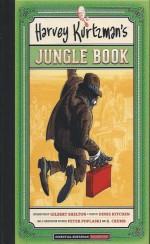
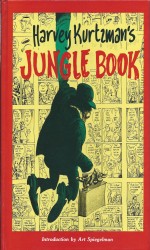
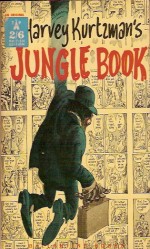
Harvey Kurtzman’s Jungle Book


By Harvey Kurtzman (Ballantine/Kitchen Sink)
ISBNs: 978-0-87816-033-4 (Kitchen Sink HB),      338-K (Ballantine original PB)

Win’s Christmas Gift Recommendation: Hard To Find – but absolutely worth it… 10/10

Here in Britain we think we invented modern satire, and quite frankly it’s a pretty understandable notion, with The Great 1960s Wit Scare producing the likes of Peter Cook, John Bird, John Fortune, Bernard Levin, Richard Ingrams, Alan Bennett, Paul Foot, Ned Sherrin, Jonathan Miller, David Frost and institutions such as The Establishment club, That Was the Week that Was and the utterly wonderful Private Eye (long may She reign, offend, fly at Gads and survive repeated libel and defamation writs…).

Somehow our American cousins were not so copiously blessed. Their share of genuine world-changing, liberal-lefty intellectual troublemakers only really comprised Tom Lehrer and Harvey Kurtzman. Of course it a very large country with an unbelievable number of guns equally distributed amongst smart folks, idiots and lunatics alike…

Creative genius Kurtzman is probably the most important cartoonist of the last half of the 20th century – even more so than Will Feiffer, Jack Kirby, Joe Kubert or Will Eisner.

His early triumphs in the fledgling field of comicbooks (Frontline Combat, Two-Fisted Tales and especially the groundbreaking, game-changing Mad) would be enough for most creators to lean back on but Kurtzman was a force in newspaper strips (See Flash Gordon Complete Daily Strips 1951-1953) and a restless innovator, commentator and social explorer who kept on looking at folk and their doings and just couldn’t stop making art to share his findings…

He invented a whole new format when he converted the highly successful colour funny book Mad into a black-&-white magazine, safely distancing the brilliant satirical publication from the fall-out caused by the 1950s comics witch-hunt which eventually killed all EC’s other titles.

He pursued comedy and social satire further with the magazines Trump, Humbug and Help!, all the while creating challenging and powerfully effective humour strips such as Little Annie Fanny (for Playboy), Nutz, Goodman Beaver, Betsy and her Buddies and many more. He died far too soon, far too young in 1993.

In 1959, having left Mad over issues of financial control and with both follow-up independent ventures Trump and  Humbug defunct, the irrepressible Kurtzman convinced Ballantine Books to publish a mass-market paperback of all-new satirical material.

The company had just lost the rights to publish Mad‘s paperback reprint line and were cautiously amenable…

The intriguing oddment saw the Great Observer in top form, returning to his comic roots by spoofing and lambasting strip characters, classic cinema, contemporary television and apparently unchanging social sentiments in a quartet of hyper-charged tales. Unfortunately the project was the first of its kind in America and met with less than stellar success. No one had ever published 140 pages of new comics in one savage bite before, and even the plenitude of strip reprint books always had one eye to the kids’ market.

This stuff was strictly for adults who would happily read newspaper or magazine strips but didn’t want to be seen carrying a book of them. Duly enlightened Kurtzman returned to safer ground and launched Help! just in time for the Swinging Sixties’ satire boom…

The slim monochrome package might not have changed the nation but it certainly warped and affected a generation of budding cartoonists and writers. Quickly becoming a legend – and nearly a myth in fan circles – Jungle Book was rescued from limbo in 1987 when Denis Kitchen (that much-missed crusading champion of all things grand, esoteric, nostalgic and/or naughty in comics), released the entire lost volume as a deluxe oversized (214 x 149 x 19mm) collectors hardback edition through his Kitchen Sink Press.

It’s still one of the funniest, most marvellous examples of wit and creativity comics have ever produced, as well as Kurtzman’s longest single work and is long overdue for another go-round.

Large sized paperback editions were also released at the time, but are now just as hard to find…

Deemed one of the “Top 100 Comics of the 20th Century” by The Comics Journal, the racy, revelatory controversial – and in 1959 completely ignored – tome’s full title is Harvey Kurtzman’s Jungle Book: Or, Up from the Apes! (and Right Back Down) – In Which Are Described in Words and Pictures Businessmen, Private Eyes, Cowboys, and Other Heroes All Exhibiting the Progress of Man from the Darkness of the Cave into the Light of Civilization by Means of Television, Wide Screen Movies, the Stone Axe, and Other Useful Arts and the Kitchen Sink edition augments its reproduction with an effusive and captivating ‘Intro’ from devoted fan Art Spiegelman plus an information-packed ‘Outro’ by editor and comics historian Dave Schriener.

The material itself is gloriously timeless and revelatory. In 1959 it gave the author an opportunity to experiment with layout, page design, narrative rhythms and especially the graphic potential of lettering, all whilst asking pertinent probing questions about the world changing around him.

‘Thelonius Violence, Like Private Eye’ is ostensibly a parody of groundbreaking TV show Peter Gunn, with the jazz-loving hipster “White Knight for Hire” scoring chicks and getting hit an awful lot as he infallibly and oh-so-coolly tracks a killer whilst protecting blackmail victim Lolita Nabokov…

The tale is slick and witty and sublimely smart, whereas the next piece barely contains a lot of pent-up frustration for past sins and misdemeanours.

For ‘Organization Man in the Grey Flannel Executive Suite’ Kurtzman accessed his experiences working for bosses (such as Marvel’s Martin Goodman) to create the salutary tale of a decent young man’s progress up the corporate ladder at Shlock Publications Inc. The quasi-autobiographical impressionable and ambitious naïf in question is Goodman Beaver (who would be resurrected for Help! and eventually, improbably evolve into Little Annie Fanny) and his transformation from sweet kid to cruel, corrupt, exploitative typical business jerk makes for truly outrageous reading.

The title comes from a trio of contemporary bestsellers on the subject of men in business: Executive Suite by Cameron Hawley (1952), The Man in the Gray Flannel Suit by Sloan Wilson in 1955 and William H. Whyte’s 1956 drama The Organization Man.

‘Compulsion on the Range’ simultaneously spoofs top-rated western Gunsmoke and the era’s growing fascination with cod psychology and angst-ridden heroes as Marshal Matt Dolin‘s far-reaching obsession with out-shooting infallible outlaw Johnny Ringding which takes him to the end of the Earth…

The volume wraps up with an edgily barbed tribute to Great Southern novels like Erskine Caldwell’s Tobacco Road and God’s Little Acre and assorted works of William Faulkner and Tennessee Williams, filtered through a glorious froth of absurd melodrama, frustrated passions and steamy sex (by all accounts the Very Best Kind), all outrageously delivered via astoundingly rendered caricatures and inspired dialect and accent gags.

In ‘Decadence Degenerated’ us sees thet nothin’ evah changes in sleepy ole Rottenville. Then wun naht, when the boys is jus’ a-oglin’ purty Honey-Lou as ushul, somethin’ goes awry an’ it all leads to murdah an’ lynchin’ befoah a snoopy repohtah who claims he frum up Noath turn up thinkin’ he can fin’ the truth…

Soon violent passions is furtha aroused and nothin’ kin evah be the same agin…

Funny, evocative and still unparalleled in its depth and visual potency, Harvey Kurtzman’s Jungle Book inspired and influenced creators and storytellers as disparate as Robert Crumb, Art Spiegelman, Gilbert Shelton and Terry Gilliam. This is a masterpiece of our art form which no true devotee can afford to be without.

© 1959, 1986 Harvey Kurtzman. ‘Intro’ © 1986 Art Spiegelman. ‘Outro’ © 1986 Dave Schriener. Entire contents © 1986 Kitchen Sink Press. All rights reserved.

© 1990 by Byron Preiss Visual Publications Inc. Each strip © 1990 Harvey Kurtzman and the respective artist. All rights reserved.

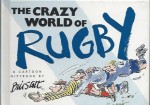
The Crazy World of Rugby


By Bill Stott (Exley)
ISBN: 978-1-85015-770-0

We are apparently a nation of avid armchair sportsmen here in Britain, so I’ve taken this opportunity to re-examine the so-very-English obsession with chasing balls and incurring life-changing injury through the far gentler medium of cartoon books and in particular a collection of dry, droll and often painfully accurate observations by one of my favourite unsung gagsters.

Another prolific but criminally near-forgotten staple of British gag graphics, Bill Stott’s manically loose line, stunningly evocative drawing and mordantly acerbic conceptions (which basically boil down to “no matter how strange, if it can happen it will happen to you, but only if somebody is watching…”) were a mainstay of Punch, Private Eye, The Times and many other papers and publications from 1976 onwards.

In his other life he was – and probably still is – a degree-level college painting and drawing tutor. Moreover he’s still in the game – such as it is in these days of magazine and newspaper cartoon paucity – and you can check out his latest stuff or even commission an original simply by visiting billstott.co.uk.

There might even be copies of this superb little rib-tickler on sale there…

British cartooning has been magnificently served over the centuries by masters of form, line, wash and most importantly clever ideas repeatedly poking (and here actually bending) our funny bones whilst pricking our pomposities and fascinations, and nothing says more about us than our crazy compulsion to thrash about in mud, smiting perfectly civil strangers in the name of fun and exercise…

Within the pages of the Crazy World of Rugby (released in both English and American editions as a hardcover and paperback) the wary watcher from the safety of the sidelines will learn the horrors and joys of Scrum and Ruck, the utter inefficacy of referees, the amusing things you can do with upright poles and the agonising dangers of tradition whilst developing a fascination for odd-shaped balls…

The role of parental support and the sweet angelic singing of burly men in shorts, the wonders of a robust appetite and attendant health benefits of a little regular fresh air are emphasised and the girl-pulling attractions of broken noses and mouths uncluttered by teeth are counterbalanced with observations on international rule interpretation.

Moreover, the idiosyncrasies of training regimens and the terrific indifference of the rules of physics and Laws of Momentum are redefined, all filtered through the hazy bonhomie of the friendly post-match booze-up…

One of a splendid range of themed collections issued by transatlantic publishing outfit Exley in both English and American editions, this fabulous full colour landscape tome is guaranteed to wring a wry smile from retired competitors whilst confirming for the rest of us what we’ve always assumed about this most manly of sports and most sporting of men…

These kinds of cartoon collection are perennial library/charity shop and jumble sale fare and if you ever see a Stott collections (others in this particular series include The Crazy World of Cats, Cricket, Hospitals, Housework, Marriage and Gardening) in such a place, do yourself a favour, help out a good cause and have a brilliant laugh with another true master of mirth.

As for me and my armchair… Books yes, Rugby not so much…

1988 Bill Stott. All rights reserved.

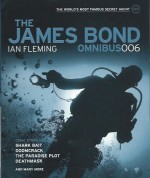
The James Bond Omnibus 006


By Jim Lawrence, John McLusky, Yaroslav Horak & Harry North (Titan Books)
ISBN: 987-0-85768-591-9

Win’s Christmas Gift Recommendation: A Most Traditional Licence to Thrill… 9/10

It’s annoying to admit but there are very few British newspaper strips to challenge the influence and impact of classic daily and Sunday “funnies” from America, especially in the field of adventure fiction.

The 1930’s and 1940’s were particularly rich in popular, not to say iconic, creations. You would be hard-pressed to come up with home-grown household names to rival Popeye, Dick Tracy, Buck Rogers or Flash Gordon, let alone Terry and the Pirates, Steve Canyon, or the likes of Little Lulu, Blondie, Li’l Abner, Little Orphan Annie or Popeye and yes, I know I said him twice, but Elzie Segars’s Thimble Theatre was funny as well as thrilling, constantly innovative, and really, really good.

What strips can you recall to equal simple popularity let alone longevity or quality in Britain? Rupert Bear? Absolutely. Giles? Technically, yes. Nipper? Jane? The Perishers? Garth? Judge Dredd?

I’d like to hope so, but I doubt it.

The Empire didn’t quite get it until it wasn’t an empire any more. There were certainly very many wonderful strips being produced: well-written and beautifully drawn, but that stubborn British reserve plus a completely different editorial view of the marketplace (which just didn’t consider strips an infallible, readership-attracting magnet, as our American cousins did) never seemed to be in the business of creating household names… until the 1950’s.

Something happened in ‘fifties Britain – but I’m not going to waste any space here discussing it. It just did.

In a new spirit that seemed to crave excitement and accept the previously disregarded, comics (as well as all “mere” entertainment media from radio serials to paperback novels) got carried along on the wave. Just like television, periodicals such as Eagle, the regenerated Dandy and Beano and girls’ comics in general all shifted into creative high gear …and so at last did newspapers.

And that means that I can happily extol the virtues of a graphic collection with proven crossover appeal for a change.

The first 007 novel Casino Royale was published in 1953 and was subsequently serialised – after much dithering and nervousness on behalf of author Fleming – as a strip in the Daily Express from 1958. It was the start of a beguiling run of paperback book adaptations scripted by Anthony Hern, Henry Gammidge, Peter O’Donnell and Kingsley Amis before Jim Lawrence, a jobbing writer for American features (who had previously scripted the aforementioned Buck Rogers) came aboard on The Man With the Golden Gun to complete the transfer of the Fleming canon to strip format. Thereafter he was invited to create new adventures, which he did until the strip’s demise in 1983.

The art on the feature was always of the highest standard.

Initially John McLusky handled the illustration until 1966’s conclusion of You Only Live Twice and, although perhaps lacking in verve, the workmanlike clarity of his drawing easily coped with the astonishing variety of locales, technical set-ups and sheer immensity of cast members, whilst accomplishing the then-novel conceit of advancing a plot and ending each episode on a cliff-hanging “hook” every day.

He was succeeded by Yaroslav Horak, who debuted on Man With the Golden Gun offering a looser, edgier style, at once more cinematic and with a closer attention to camera angle and frenzied action that seemed to typify the high-octane 1960’s.

Horak illustrated 26 complete adventures until in 1977 The Daily Express ceased running the Bond feature (with the then-running adventure suddenly switching to The Sunday Express (from January 30th until conclusion on May 22nd).

Later adventures had no UK presence at all, only appearing in syndication in European papers. This state of affairs continued until 1981 when British paper The Daily Star revived the feature with ‘Doomcrack’.

Titan books have re-assembled those scarce-seen tales – a heady brew of adventure, sex, intrigue and death – into the last of their addictively accessible monochrome Omnibus Editions, wherein a dedicated band of creators on top form prove how the world’s greatest agent never rests in his mission to keep us all free, safe, shaken, stirred and thoroughly entertained…

The frantic derring-do and dark, deadly diplomacy commences with Lawrence & Horak’s final (UK-embargoed) exploit ‘Shark Bait’ – originally running abroad from 1978 to 1979 – finding Bond up to his neck in hot water after boldly abducting Soviet scuba diver Katya Orlova from the Coral Sea.

That high-bodycount encounter is, however, only the starting point in 007’s mission and, after brutally deprogramming her in the searing Australian Outback, they become moving targets for KGB hit-teams as he builds trust before completing his overall game plan: tracking down a colossal shark which has swallowed a stolen computer carrying NATO nuclear secrets.

With the Russians inexorably closing in on the prize, the infallible agent is prepared to do whatever it takes to stop them…

When The Daily Star began their Bond serial with ‘Doomcrack’ (February 2nd to August 19th 1981) Lawrence was still in command of concocting stories but the illustrator was a rather controversial one.

Harry North was a regular and prolific contributor to both the US and UK iterations of Mad Magazine and, whilst his renditions of the regular cast caught the likenesses of the filmic Bond, M, Moneypenny and others, his action and suspense scenes couldn’t escape his comedic preferences and often hinder or even destroy all dramatic effect.

If you can get past that though, the tale of KGB killers, East German intrigue and defector Dr. Vlad Sinescu is a gripping if convoluted one. The avaricious genius wants to sell to Britain his new super weapon – capable of exploding brains at a distance, bringing down aircraft and shaking down cities – but his communist former masters are prepared to do anything to stop the sale.

…And then, amidst all the carnage and chaos, insidious criminal cabal S.P.E.C.T.R.E. steps in, grabbing the boffin and his weapon before extorting the world by destroying national monuments. With the situation hopeless it’s no wonder 007 quits and joins the opposition…

Veteran artist McLusky returned to steady the ship for the next explosive epic wherein devious cult leader Father Star uses psycho-chemicals, brain surgery, artificial angels and ghostly special effects to control the actions of bereaved billionaires, generals and politicians. The hunt for the brilliant mastermind with plans of ruling this world, if not the next, takes James around the planet and into many a salacious dive before he can finally crush ‘The Paradise Plot’ (August 20th 1981 to June 4th 1982)…

An insidious millionaire murder-maestro with a revolting terror-weapon turns up in ‘Deathmask’ (June 7th 1982 – February 2nd 1983), leaving a trail of hideously deformed corpses in his wake. It takes the combined efforts of Bond and fellow agent Suzie Kew to defeat deranged Ivor Nyborg‘s legion of mechanical monsters, broach the fiend’s astounding undersea lair and prevent a genetically engineered plague devastating humanity…

A policy switch to shorter, less complex stories was instigated with ‘Flittermouse’ (February 9th – May 20th 1983) as vengeful maniac Dr. Cat returned with another diabolically ingenious method of murder before the indomitable super-agent sent him to his final reward, after which ‘Polestar’ (May 23rd – July 15th 1983) saw the end of Britain’s connection to the espionage ace.

The James Bond strip had been a problem for the Star since its resurrection and was abruptly dropped midway through this adventure. The story concluded only in the ever-reliable European syndication market, and thankfully it’s here in its entirety for us all to enjoy.

The short, sharp saga finds 007 in the subzero wilds of Artic Canada discovering a woman frozen to death and exhibited as a macabre scarecrow.

He’s in territory owned by Polestar Petroleum to locate the origin point of rogue missiles which have been launched against Russia and America, but before he can investigate further he is attacked a rabid wolf…

Rescued by native woman Red Doe, James learns the sordid history of Polestar’s megalomaniacal owner Robert Ayr: ruthless tycoon, potential global dictator, serial abuser and killer of Red Doe’s mother.

Soon Bond has infiltrated the company as a fugitive rocket engineer to scupper plans to subject the world to nuclear blackmail whilst the vengeful Cree woman enjoys a long-anticipated meeting with Ayr…

Again working solely for continental readers, Lawrence & McLusky’s final comics collaboration was ‘The Scent of Danger’ (1983), with Bond lured to a yacht off the Italian Riviera and a near-fatal rendezvous with a ravenous shark. The perpetrator is old enemy Madame Spectra who wants the agent out of the way before she uses a (narcotically addictive) high-end fashion perfume to enslave firstly wives and lovers but eventually every politician in Britain. Happily the unkillable hero and ferociously determined journalist Liz Villiers have a plan to stop her…

Despite every effort the strip was clearly nearing its end when Yaroslav Horak returned for the last two adventures beginning with ‘Snake Goddess’ (1983-1984). At the peak of his flamboyant form the illustrator added a superb frisson of tension to the tale of a mystery killer who used serpents to assassinate military men and operatives involved in the deployment of atomic weapons in Europe.

After the snake killer turned his attention to Moneypenny, Bond’s involvement was assured and his subtle investigations led him to Swedish cult rock star Freya. However, the sultry serpentine peace campaigner was only another target for the true culprit: fanatical fan Mr. Vidyala, a billionaire with money to burn and the brilliance to build a huge nuclear sea-serpent submarine.

He planned to provoke World War III and rule the ruins with his unwilling Snake Queen Freya but utterly underestimated the ruthless ingenuity of the British agent he so easily captured…

This astounding dossier of espionage exploits ends in ‘Double Eagle’ (1984): a baroque plot by German agents on both sides of the Berlin Wall planning a spectacular stunt to promote reunification of their sundered country.

Unfortunately the notionally worthy scheme precluded a number of necessary deaths – by robot giant eagles and merciless KGB and Stasi agents – and risked turning the simmering Cold War red hot…

Following a trail of bodies and dodging numerous assassination attempts Bond eventually finds himself in the invidious position of wanting – just this once – to fail…

Fast, furious action, masses of moody menace, sharply clever dialogue and an abundance of exotic locales and ladies make this an invaluable adjunct to the Bond mythos and a collection no fan can do without. After all, nobody has ever done it better…
All strips are © Ian Fleming Publications Ltd/Express Newspapers Ltd 1987. James Bond and 007 are ™Danjaq LLC used under license from Ian Fleming Publications Ltd. All rights reserved.

The Power of Tank Girl


By Alan Martin, Rufus Dayglo, Ashley Wood & (Titan Comics)
ISBN: 978-1-78276-064-1

Win’s Christmas Gift Recommendation: … 8/10

By golly, doesn’t time – and the occasional burst of bullets – fly! It’s hard to believe that our recent past is so far away. Back in the garishly gritty 1980s when I was tea-boy on Warrior magazine (still one of the most influential independent comics ever produced) there was a frantic buzz of feverish creativity in the British comics scene which seemed to say that any young upstart could hit the big time.

Possibly the most upstarty of all were art-students Jamie Hewlett & Alan Martin (and, tangentially, Phillip Bond) who prowled the local convention circuit impressing the hell out of everybody with their photocopied fanzine Atomtan. At the back of issue #1 was a pin-up/ad for a dubious looking young lady with a big, Big, BIG gun and her own armoured transport. And now it’s suddenly 30 years later…

Commissioned by Brett Ewins and Steve Dillon for their new publishing venture Deadline (a pop-culture magazine with loads of cool comics strips), the absurdist tales of a feisty, well-armed chick roaming the wilds of a futuristic Australia with her Kangaroo boy-friend Booga caught the imagination of a large portion of the public. There was even a movie…

After many years dallying with a sordid plethora of different publishers, the salty, soldierly slapper found her way to Titan Books – self-appointed custodian of the Best of British strip art – who comprehensively remastered her old adventures and spin-offs into a series of unmissable volumes.

Now as Tank Girl continues to periodically sneak out for further frantic capers, they’ve added another tome to the canon as The Power of Tank Girl gathers recent serial exploits The Gifting, Visions of Booga and The Royal Escape (published in the USA by IDW between November 2007 and September 2010) into one stunning pocket – or is that pouch? – sized compendium of exuberant excess and blood-drenched hilarity…

Scripted throughout by Martin, the mucky-mouthed mania begins with a dash of poesy in ‘The Power’ and a pulsating pin-up before a transcendental epic ‘The Royal Escape’ (with art by the incomparable Rufus Dayglo) opens with ‘Part One: The Golden Egg’ wherein Tank Girl, paramour Booga (a most manly and lovable kangaroo) and gal pals Jackie (Boat Girl), Barney and Jet Girl are moments from death at the guns (and bombs, bayonets, RPGs etc…) of an extremely pissed off but much depleted army.

With their backs to the shattered walls and ammo gone, Jet Girl is forced to throw the last thing she possesses: a mysterious golden egg she has owned since childhood…

The deed somehow turns her semi-catatonic and the mismatched team are forced to split up. As the gritty warriors hunker down, Barney and Jackie go on a mystic quest to recover the egg. The trek takes them up a mountain to meet skeevy shaman Wanka in ‘The Bulldog Breed’ who guides them to an eagle’s nest with a broken eggshell containing a teeny-tiny, very confused Jet Girl…

While they yomp back to the battle, the hard-pressed hold-out heroes are reduced to defending themselves with little more than a ‘Dead Man’s Sandwich’ even as their returning friends stumble across a gigantic statue deep in the Bush.

The monolith looks like Jet Girl and when the weeny wonder finds herself compelled to crawl into it, the statue comes to terrifying life…

Now possessed of an awesome unstoppable walking weapon, the wanderers return in time to make ‘A Terrible Souffle’ of the invading army in a shattering spectacle of intense and sustained carnage…

After a potpourri of covers and groovy pics, odd ode ‘Last of the Jensen Interceptors’ leads into a nostalgic nightmare when Tank Girl determines to attend at all costs a reunion gig by her fave girlhood manufactured Boy-Band in ‘The Funsters Will Play’ (with art by Ashley Wood)…

A procession of fearsome fashion pages comes next as ‘Keys to the Tank’, ‘Booga in Extreme Jungle Wear’, ‘Jet Girl in Stealth Flying Gear’, ‘Barney in Urban Camouflage’ and ‘Cruiser Tank in full Racing Livery’ depict how the most stylish mass-murderers make the scene whilst ‘Tank Girl in Bad Camouflage’ and the concluding chapter ‘Uncle Smiffy’s Tombstone’ returns to strip storytelling to deliver a daft drama disclosing the bloodstained origins of Boat Girl…

Dayglo resumes the arty stuff for Visions of Booga which finds the lovers sucked into a Mafia plot and sent to prison in ‘Falling Angel Blues’. Unfortunately they’re also caught up in the daring escape of the Don’s favourite brother from the prison transport and have to go on the lam from both the cops and the mob.

The best disguise seems to be switching genders but perhaps they haven’t really thought it through…

The pursuit continues and intensifies when they kill one of the Mafioso, accidentally acquiring in the process ultimate mystic panacea the ‘Book of Hipster Gold’ and stumbling onto unhappy diner waitress Barney who just happens to have an old SDKFZ 251 Mittlerer Schutzenpanzerwagen parked out back…

On the run again (but now in a perfectly working Nazi armoured halftrack) the fugitives head for the West Coast where a seasoned hippy dwells. He’s the only person on Earth who can be trusted with the eldritch tome of peace and perfection but as ‘Letters to Earth’ shows, The Mob never quit and hippies – even the sublime and most cool Spanky Smith – aren’t what they used to be.

Still, he does find time to marry Tank Girl and Booga before the bad guys turn up for the blistering and bizarre conclusion ‘Which Cuts the Finest, the Sabre or the Blade of Grass?’…

Following some more covers, The Gifting opens with a batch of illustrated Beat poems extolling ‘Digging the Lonely Eternity’, before a bit of girl goss gets all scatological whilst solving the pressing mystery of ‘The Dogshit in Barney’s Handbag’ (Wood art) after which Martin & Dayglo spin us back to the 1970s for ‘Tank Girl and Friends in Our Glam Day Out’ revisiting such iconic treats as Evel Knievel, Chopper Bikes, Pub Lunches and much, much more, whilst Wood’s go on the art encompasses a ‘Barney Pull-out Poster’ and extended paean to days past ‘X2-38’ which sees Booga lose his heart to a toy raygun from his childhood which becomes his ‘Reason for Living’, before pausing for a brief ‘Tank Girl Haiku’

Dayglo’s smartly rendered ‘Bonko Patrol’ explains the downside of truly heavy ordnance before Wood wanders back to limn another extended battle against evil and ill manners in ‘The Innocent Die First’.

This sterling parable finds Tank Girl and Booga at a luxurious hotel they’ve just purchased, happily whiling away their days insulting the clientele and starting fights until they offend the wrong punter and start a full scale war in ‘Easy Action’. The conflict naturally escalates until the cataclysmic ‘Attack on the Foreskin Bridge Hotel’ ends the dispute in a most unlikely manner…

‘Barney and Jet Girl in Stone Fox Chase’ (Dayglo) then pairs the dynamic duo with Style Icon Adam Ant for a bout of carnage and chaos after which ‘Tank Girl Tat’ offers the kind of merchandise you’ll never see anywhere else and Wood illuminates a quiet night in with nothing to do but ‘Kill Jumbo’…

Booga then plays stage magician to entertain ‘The Kids from 23A’ with horrific results before getting stuck trying to buy lingerie in ‘The Gifting’ and everything wraps up nicely with another selection of moodful poetic meanderings comprising ‘Like a Roast Potato in a Pick-Up Truck’, ‘The Sunshine of Your Arse’, ‘The Ox’ and ‘You Are Loved’…

Never too wedded to the concept of internal logic, chronological order, narrative consistency, linguistic restraint or spelling (so if you’re pedantic be warned!), this latest compote of outrageous and hilarious cartoon phantasmagoria revels in a glorious mud-bath of social iconoclasm, in-yer-face absurdity, decades of British Cultural Sampling and the ever-popular addictive sex ‘n’ violence.

Wildly absurdist, intoxicatingly adorable and packed to the gills with covers, spot art and other pictorial pleasures, The Power of Tank Girl is an ever-so-cool rollercoaster thrill-ride and lifestyle touchstone for life’s incurable rebels and undying Rude Britannians, so if you’ve never seen the anarchic, surreal and culturally soused peculiarity that is Tank Girl, bastard love child of 2000AD and Love and Rockets, you’ve missed a truly unique experience… and remember, she doesn’t care if you like her, just so long as you notice her.
Tank Girl and all related characters are ™ & © 2014 Jamie Hewlett and Alan Martin. All rights reserved.

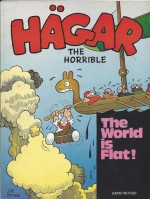
Hägar the Horrible: The Epic Chronicles – Dailies 1980-1981


By Dik Browne (Titan Books)
ISBN: 978-1-78116-715-1

Win’s Christmas Gift Recommendation: a perfect package of traditional fun… 9/10

Although very much in decline these days, for nearly 200 years cartoon strips and gag-panels were the universal medium of wit, satire mirth and cultural exchange. Latterly we purveyors of primarily sequential narrative have exhibited an unhappy tendency to become protective and parochial about our own particular specialism within the greater art form.

How many times have we heard an artist or writer working on a hot new comicbook property revelling in sales of sixty-to-seventy thousand monthly copies, almost simultaneously disparage strips such as Dilbert, Dick Tracy or Garfield whose daily readership can be numbered in millions, if not billions?

Let’s all just try to remember that tastes differ, and that we’re all just making lines on a surface here, and most especially that TV and Computer Games are the real enemy of our industry, shall we?

OK, rant over.

Mainstream cartooning is a huge daily joy to a vast and often global readership whose needs are quite different from those of hard-core, dedicated comic fans, or even that ever-growing base of intrigued browsers dipping their toes in the sequential narrative pool. Even those stuck-up stickybeaks who have pointedly “never read a comic” have read and enjoyed strips or panels, and in this arena Britain has seen not only a golden bounty of home produced material but also imported some of the very best the rest of the world has to offer.

Dik (AKA Richard Arthur Allan) Browne was a native New Yorker born in 1917 who studied at Cooper Union and apprenticed as a copy boy and art-bod for the New York Journal America before joining the US Army.

His wartime duties in the Engineering Corps included strategic map-making, but whilst in service he also created the comic strip Jinny Jeep about the Women’s Army Corps, which set the tone for his peacetime career.

A professional cartoonist and illustrator, he worked for Newsweek and in advertising after mustering out, gaining a reputation as a superb logo designer (The Campbell Soup Kids, Chiquita Banana and the Birdseye Bird number amongst his most memorable creations).

He also dabbled with comicbooks – a few Classics Illustrated Junior issues – and produced some children’s books, before teaming up with Beetle Bailey creator Mort Walker to draw the hugely successful spin-off strip Hi and Lois in 1954.

Whilst illustrating that family comedy – and deviously training his sons Chance and Chris to take eventually over his cartooning duties – Dik devised another strip that he would write as well as render.

Hägar the Horrible debuted through the King Features Syndicate on February 4th 1973 and quickly became a world-wide hit. The strip is still a fixture in 1900 newspapers in 58 countries in thirteen languages and the iconic characters have migrated to books, comic albums, games, animated movies, toys and more…

Dik Browne retired from cartooning in 1988 and tragically died from cancer on June 4th 1989. Chance now continues Hi and Lois whilst Chris continues to wield pen, wave sword and wear the chief’s horned helmet on Hägar…

A certified classic of World Cartooning, Hägar the Horrible is the ongoing subject of a comprehensive collectors series and this latest (sixth) monolithic hardback compendium covers 7th July 1980 to January 2nd 1982, with the hard-drinking, voracious sea-roving Viking and his scurvy crew constantly trekking out to far climes before perennially staggering home to their quirky families in a never-ending stream of sight gags, painful puns and surreal situations.

This volume opens with a passionate reverie from a close associate and fellow star cartoonist in the Foreword by Lynn Johnston before Chris Browne shares memories of one his dad’s most imaginative and appealing children’s books (The Land of Lost Things co-created with Mort Walker) in ‘The Lost World of Dik Browne’.

Then, before the cavalcade of comic calamity commences, readers old and new are regaled with a handy chart of the Hägar Family Tree, reintroducing the great man and his doughty dependents: Helga the long-suffering wife, studious son Hamlet and troublesome teenaged daughter Honi.

Also making an appearance are faithful canine Snert, stroppy house-duck Kvack and the hero’s faithful if intellectually challenged sidekick Lucky Eddie…

The magic of these daily strips is the constant stream of japes and capers constantly revisiting established themes and hot-button topics. Over the hundreds of pages that follow you can see Hägar’s perpetual struggle to bring home the bacon (and wine and gold and textiles and…), spar with Helga as she fruitlessly struggles to civilise her barbaric oaf of a man, and Honi’s torment as she pines equally for seedy musician Lute and noble knight Sir Philip Courtright whilst testing out other matrimonial options and alternatively considers a career as a axe-swinging Valkyrie…

Bookish Hamlet is always there to disappoint and delight his gregarious, bellicose dad; Snert and Kvack frequently outwit and appal the humans who share their home whilst Lucky Eddie and the mismatched crew of incompetent sea-reavers follow the red-bearded rascal into battle against foreign armies, daunting dragons, a coterie of assorted clergy and the unwelcoming elements, content in the knowledge that somehow, somewhere they will find more booze…

Enticing, irrepressible, hilarious and deeply satisfying, Hägar the Horrible is a masterpiece of the strip cartoonists’ unique art form and one guaranteed to deliver delight over and over again to young and old alike.

Hägar the Horrible is © 2014 King Features Syndicate and ™ Hearst Holdings, Inc. All rights reserved. All strips © 1980 & 1981 King Features Syndicate. All rights reserved. All other material © 2014 their respective authors.

An Age of License – a Travelogue


By Lucy Knisley (Fantagraphics Books)
ISBN: 978-1-60699-768-0

Win’s Christmas Gift Recommendation: a fresh taste of all that’s right about comics and creators… 8/10

Since I first started reading comics (sometime soon after the discovery of fire) the industry and art form has undergone a magical transformation in styles and formats and a huge expansion in content.

Where once the medium was populated with heroes and horrors, fantasies and wish fulfilment exercises, these days literally anything can become the engrossing and absorbing meat of graphic narrative, dependent only upon the skill and passions of dedicated and inspired artisan creators.

A superb example of this broadening of strip horizons is globe-girdling cartooning diarist and epicure Lucy Knisley who has made a career out of documenting her life as it happens, detailing her experiences and fascinations in an engaging and entertaining manner through such graphic missives as French Milk and Relish: My Life in the Kitchen.

Now she’s back with another beguiling slice of graphic verité whish covers a European working vacation come bittersweet lovers tryst.

This latest voyage begins in 2011 when the cat-loving cartoonist was invited to be a guest at Norway’s Raptus Comics Festival. After some understandable dithering and consultation with pals and fellow pros the author agreed, planning to turn the Work Jolly into the start of an extended visit to friends in Germany and vacationing family in France…

As the time nears the daunting plans all come together and Lucy prepares herself by immersing in personal Scandinavian-ness: researching the family history of her Swedish grandparents…

Events obtain a sharper edge in New York in the months immediately preceding the trip as she meets visiting Henrik: a most fanciable lad she agrees to visit in his Stockholm home after the convention…

With her six-venue itinerary sorted all that’s left is for the journey to begin…

Packed with intimate detail and engaging introspection, rendered in clean, clear compelling black line – augmented by occasional bursts of painterly watercolour illustration – this is a fabulously absorbing voyage with a most delightful and forthright travel companion who unstintingly shares her thoughts, feeling and experiences in a manner guaranteed to win over the most jaded fellow passenger – especially as she always garnishes her slivers of new experience with her trademark adventures and observations through the welcoming lens of regional foods made and enjoyed.

Through work, relaxation, the hazy indolence of a love affair and its gradual ending, a phrase she heard in the winemaking region of Beaune in France comes to haunt her.

L’Age license – a time of freedom for youth to try, fail, experiment and learn – fascinates and captivates her and she spends much of her time in France and beyond, searching for its truth, origins and meaning…

Exceedingly funny, sweet, disarmingly incisive, heartwarming, uncompromising and utterly enchanting, this beguiling, moving memoir is a comics experience unlike any other and fans of travel, storytelling and a life well-lived will adore the open, sharing experience it vicariously offers.
An Age of License © 2014 Lucy Knisley. This edition © 2014 Fantagraphics Books, Inc. All rights reserved.

Lobey’s The Wee Boy! – Five Lobey Dosser adventures by Bud Neill


By Bud Neill, compiled by Ranald MacColl (Mainstream Publishing)
ISBN: 1-85158-405-6

Nobody’s ever accused me of being sensitive to the tone of the times, but with all thoughts directed north of the border for so long now, I’ve decided to feature this superbly unique dose of Celtic (more properly Glaswegian) cartoon magic today.

It’s the work of a tragically near-forgotten genius of pen and brush who should rightly be a household name wherever people like to laugh and ponder the absurdity of existence, no matter what flag they fly.

William Neill – forever immortalised as “Bud” – was born in 1911 in Partick just before the family moved to Troon in Ayrshire. He was a typical kid and fell in love with the brash wonder of silent movies – most especially the rambunctious westerns of William S. Hart.

His other great drive was a love of horses, and he could always be found hanging around stables, trading odd jobs for the chance of a few minutes’ riding.

After finishing school the young artistic star won a place at Glasgow School of Art. In the late 1930s Bud briefly emigrated, working in Canada and absorbing the tricks of America’s greatest newspaper cartoonists in their creative heyday.

He served as a gunner during WWII but was invalided out and became a bus driver. These experiences led to his creating a series of pocket cartoons starring the “Caurs & Clippies” of Glasgow’s tramcar system.

By 1944 Bud was drawing for the Glasgow Evening Times: sharp, wry observational pieces starring the city and its inhabitants, characterised by a devastating and instantly enchanting use of the iconic rhythms, vernacular and argot everyone shared.

In January 1949 The Evening News began running the uniquely surreal escapades of his greatest creation. Sheriff Lobey Dosser of Calton Creek was a brilliant inspiration: the adventures of a canny wee lawman in a hauntingly typical western town populated exclusively by Scots (from Glasgow’s Calton district, presumably) living an outrageously domestic, hilariously apt inner city life all whilst tricked out in cowboy hats and six-guns…

Delving deep into the venerable, anarchic and often surreal material of music hall and pantomime, Bud crafted a supremely odd, anachronistically familiar, bizarrely inviting world of solecism masquerading as local events. The series transferred to The Sunday Mail in 1956 where it became so popular that previous, complete strip adventures were collected in instant sell-out, one shilling landscape booklets (all incredibly sought after collectors’ items these days).

Neill died in 1970 but his work steadily continued to garner fans and acquire a mythical status, so by the middle of the decade Glasgow artist and sculptor Ranald MacColl began work on a biography.

That in turn led to a series of graphic collections such as this one and eventually belated recognition for Neill and his most memorable creations.

Bud was subsequently celebrated in exhibitions, galleries and, following Glasgow’s becoming European City of Culture in 1990, two separate bronze statues (Lobey, Rank Bajin and noble steed Elfie in Woodlands Road and, in Homecoming Year 2009, The G.I. Bride and her “Wean” at Partick Station), funded by public donations, Strathclyde Passenger Transport and private sponsors.

Hard to find but so worth the effort, Lobey’s The Wee Boy! gathers the contents of five of those shilling collections in a sensibly narrative chronological – not publication or even creation – order and is packed with informative extras such as MacColl’s fascinating historical and atmospheric Introduction and a hilarious Prologue by Bud himself from 1958, before the astonishing origin of the champion of Calton Creek is revealed in ‘Lobey Dosser: His Life Story’.

On a rare quiet day the grizzled sheriff recounts his early life to a jail full of impressionable young’uns…

Once upon a time in auld Glesca a mother had one bairn too many and the precocious tyke, to spare her further hardship, put his possessions in a hanky on a stick and headed off to make his way in the world.

Although only a few months old, he rejected being fostered out to his mean Auntie Mabel and joined a merchant ship under the tyrannical Captain Blackswite, unaware that the big shouty blackguard was a pirate…

After many exciting years at sea Lobey jumped ship and was befriended by cannibals and their erudite chief Hannibal which led to more exploring, meeting monsters and other strange things before encountering a race of Oxbridge-educated white savages and happily acquiring a rare two-legged horse.

El Fideldo was to become his greatest friend and inseparable companion. Together they made their way to Mexico where the wee wanderer discovered an unsuspected talent for upholding the law and keeping the peace. After cleaning out a nest of vicious banditos the restless pair headed north and soon fetched up in Laredo, Texas where a disastrous love affair with Adoda, formidable daughter of wealthy Whisk E. Glorr, led to a clash with rustlers led by scurrilous Watts Koakin…

His heart broken – even though he had cleaned up the range – Dosser and Elfie kept heading west until they reached Arizona and first met future arch-nemesis Rank Bajin selling out the wagon train he was guiding to the local Sioux…

Rescuing the embattled settlers, Lobey decided to stay with the Scots expats as they built a town in the wilderness.  They called it Calton Creek…

Wild, imaginative and with every daily episode loaded with sight gags, striking slapstick, punishing puns, cartoon in-jokes and intoxicating vernacular, each Lobey Dosser tale was a non-stop carnival of graphic mirth and this terrific tome continues in fine fettle with ‘The Mail Robbery’ wherein nefarious Bajin attempts to incite an Indian uprising amongst the Pawnee of Chief Toffy Teeth and leaves the little lawman to die of thirst in the searing deserts. As the scorched sheriff struggles to survive, the naïve citizens are left to adapt to a protective occupation by flash Yankee G.I.s and airmen…

Sardonic and satirically cutting, the yarn also sports one of the best – and daftest – horseback chases in entertainment history…

Romance and mystery abound in ‘The Secret of Hickory Hollow’ as that Bajin scoundrel buys up the mortgage on Vinegar Hill‘s farm and tries to kick out the old coot and his substantial niece Honey Perz. The villain has got wind of a mineral resource on the property that would make a man as wealthy as the Maharaja of Baroda, or perhaps even a regional Deputy Superintendent of the Coal Board…

When Lobey organises the cash needed to pay off the outstanding loan, Bajin reluctantly resorts to the last resort and begins romancing sweet, innocent, hulking Honey…

It all looks bleak for justice until the sheriff befriends an astoundingly good-looking and wholesome uranium prospector named Hart O’Gold who quickly tickles Honey’s fickle fancy…

However nobody – including ghostly guardian Rid Skwerr – is prepared for the soviet spies behind the entire affair to jump in take over and it needs the timely intervention of mystic imp Fairy Nuff to save their accumulated hash before the Dosser can finally expose the viper in the nest…

The local natives are always up to mischief and ‘The Indian War’ kicks off when the railroad tries to lay track through Pawnee Territory just as Chief Rubber Lugs of the Blackfeet Tribe revisits an old and outstanding grudge with Chief Toffy Teeth.

The ineffectual Captain Goodenough arrives with a division of cavalry to safeguard the white citizenry but matters soon worsen, painfully exacerbated when the folk of Calton Creek take advantage of Lobey’s absence (he’s trying to negotiate with both bunches of bellicose braves) to run Rank Bajin out of town and the hooded hoodlum starts freely peddling weapons to both sides…

…And then Bajin kills Lobey and takes over the town.

…And then…

The last yarn in this monochrome tome of tall tales is the most incredible of all as ‘The “Reform” of Rank Bajin’ sees the vile villain scooting around Calton Creek doing good deeds and selling off his astounding arsenal of wicked weapons and cunning contraband. Baffled, perplexed, confused and not sure what’s going on, Lobey asks Boot Hill haunter Rid Skwerr to spy on the no-longer reprehensible Rank and even love-struck Fairy Nuff gets in on the act.

The astounding truth finally emerges: Bajin has a boy who is growing up honest, so he is selling up and returning to the family he deserted in Borstal Bluffs, Iowa to sort the shameful lad out. Knowing the tremendous vacuum his absence will leave in Calton’s exciting landscape, however, he has a recommendation for a locum arch-enemy for his arch-enemy…

Can this possibly all be true or is the beastly Bajin executing his most sinister scheme yet?

Cunningly absurdist, socially aware, humorously harnessed insanity in the manner of Spike Milligan, Michael Bentine and the immortal Goon Show, the adventures of Lobey Dosser are a brilliant example of comic strips perfectly tailored to a specific time, place and audience which magically transcend their origins to become a masterpiece of the art form.

It’s also side-splitting, laugh-out-loud, Irn Bru spit-take hilarious and really needs to be recollected for today’s audiences.

And of course that’s what I really want: a complete reprinting of these sublimely perfect spoofs.

And once you read some so will you…
© Ranald MacColl 1992. All rights reserved.

David, we’re PREGNANT!


By Lynn Johnston (Meadowbrook Press)
ISBN: 978-0-67176-018-2

I suspect the world’s about to go into Celeb-Baby Meltdown again so here’s how I shamelessly cash in, since we can’t send nippers up chimneys or down mines anymore…

As Shakespeare would have it “the world must be peopled”, but if we must there’s always room for a little sensible advice and preparation, so here’s an old cartoon book to provide a few laughs along with all the useful tips and calming, shared experiences.

Of course it’s all actually just another excuse for me to bemoan the loss of those once-ubiquitous cheap ‘n’ cheerful gag-packed paperbacks which are now all-but-forgotten fossils of a once mighty industry; pushed to extinction by the more palatable-sounding graphic novels and trade paperback collections.

Lynn Johnston (née Ridgway) is a national treasure of Canada where her cartooning and narrative talents first came to the fore. Born in 1947 in Collingwood, she was raised in North Vancouver, attending Vancouver School of Art before beginning her career as an animator.

In 1969 she married and was working as a medical artist at McMaster University when this project began in most unlikely circumstances. As described by Dr. Murray W. Enkin in his Introduction to David, we’re Pregnant!, whilst he was attending her in the early days of her first pregnancy, she was staring up – as you apparently do – at his blank ceiling and offered to draw some cartoons to comfort and entertain her fellow mums-to-be during such necessary but rather discommoding and undignified moments.

The result was a huge success in his surgery and was transferred in 1973 to a petite cartoon book which became a huge global sensation. It spawned two sequels (Hi Mom! Hi Dad! and Do They Ever Grow Up?) and led in 1978 to her being invited by the mighty Universal Press Syndicate to create a family comic strip.

Enticed by a twenty year contract, she began the still-running For Better or For Worse, based on her own family and soon fame, through massive syndication, best-selling books, and popular TV and movies soon came knocking…

She is one of the most gifted and celebrated cartoonists in the business, with awards including a Reuben from the National Cartoonists Society, Pulitzer nominations, a Gemini Award and a basketful of Honorary Degrees and Doctorates. Johnston holds both The Order of Canada and membership in The Order of Manitoba. She has her own star on Canada’s Walk of Fame and was elected in 2008 to The National Cartoon Museum Hall of Fame.

David, we’re Pregnant! is a solid example of a lost art form: mature-themed gag-collections which were the last commercial gasp in a tradition of pictorial entertainments that began with Punch and evolved into a publishing standby of British and American life for nearly a century before fading away to loiter around bargain bins, jumble sales and junk shops…

As much social satire as self-help, this deliciously addictive art-party traces the vicissitudes of trying to get pregnant, the idiocies of first-time-fathers, “helpful” family members who’ve been there, doctors in all their glory and the shock of realising you’re going to be PARENTS…

Also raising alarm and smiles are panels on the then-revolutionary Lamaze classes, the reactions of older kids to a new sibling, pregnancy clothes, finances, food crazes, quitting smoking and the horrors of getting fat…

Through morning sickness, name selection, waiting for the first kick, expectant mothers-in-law and partners who think they’re funny to delivery and those early times of loud noises, bad smells and no sleep, this splendid tome keeps the entertainment quotient at maximum whilst delivering a bunch of trenchant and even useful home truths…

Cartooning has been magnificently served over the centuries by masters of form, line, wash and most importantly smart ideas, repeatedly poking our funny bones, pricking our pomposities, stroking our happy places and feeding our fascinations. This sort of thing used to be bread ‘n’ butter in our game, so why not find a shy, alluring little bookshelf and start filling it with marvellous evergreen material like this…

David, we’re Pregnant! is a superb example of a major artist in fiendishly clever and beguiling form, generating warmth and fun with easy charm and utter aplomb. If you find this book (or indeed any cartoon compilation) give it a try. They’re a dying breed and you really will miss them once they’re gone…
© 1975 Potlatch Publications. All rights reserved.

The Mythology of S. Clay Wilson volume 1: Pirates in the Heartland


By S. Clay Wilson, edited by Patrick Rosenkranz (Fantagraphics Books)
ISBN: 978-1-60699-747-5

This book is filled with dark, violent sexual imagery and outrageous situations intended to make adults laugh and think.

If the cover and the copy above hasn’t clued you in, please be warned that this book contain nudity, images of extreme violence, sexual intimacy and excess – both hetero- and homo-sexual – and language commonly used in the privacy of the bedroom, drunken street brawls and probably school playgrounds whenever supervising adults aren’t present.

If the mere thought of all that offends you, read no further and don’t buy the book. The rest of us will just have to enjoy some of the most groundbreaking cartoon experiences ever created without you.

Steve Clay Wilson was a pioneering light of America’s transformative Underground Commix movement: an uncompromising, controversial, in-your-face pioneer of the counterculture, constantly challenging attitudes and sensitivities whilst telling the kind of cartoon tales he wanted – or perhaps had – to.

Something of a contradiction to those who knew him, charming, charismatic Wilson lived life to the full and took his art seriously.

And what art! Stark, complex, shocking, incredibly detailed tableaux jumping with modern Rabelaisian content: mesmerising scenes packed with intense multi-layered busyness, crammed with outrageous, iconic characters in constant surging motion – mostly combative and hilariously violent.

The manly hedonistic exuberance of frantic fighters rejoicing in the wild freedom as exemplified by bikers, cowboys, pirates, bull dykes and devils, augmented by other violent ne’er-do-wells, grotesques, human-scaled beasts and things which could be drawn but never described…

His work seethed and abounded with excess: monsters, mutilations, booze and drug-fuelled romps populated with priapic plunderers and ravening beasts, dangerous and disturbed women and always, always unsettling scenes of society’s biggest taboos – sex and personal freedom.

All Americans already worshipped violence; Wilson just pushed the visuals for that sacrament as far as he could into surreal parody…

Everybody who knew Wilson adored him, but around him they were usually a little nervous and stepped lightly…

The modern successor to Peter Bruegel and Hieronymus Bosch moved on to other artistic arenas when the Underground movement foundered but he never toned down his visions. In 2008 he suffered massive brain damage in mysterious circumstances and has been undergoing full-time palliative care ever since.

This intimate and informative oversize (286 x 202mm) hardcover biography and graphic overview is compiled from previous writings and extensive interviews with the people he grew up with and who shared his eventful life.

Moreover each telling anecdote and reminiscence is augmented with photos, paintings, illustrated letters and private or previously unpublished artworks, and each chapter offers a wealth of strips: comprising all of his published comics work from the heady days of America’s counterculture explosion in 1968 to its virtual demise in 1976.

Our history opens with a warm, picture-packed, fact-filled Introduction by college pal and flatmate John Gary Brown before the hagiography of horrors begins with ‘Wilson’s Childhood’.

Described by Robert Crumb as “the strongest, most original artist of my generation” Steven Clay Wilson grew up in down-home Lincoln, Nebraska, thriving on a diet of EC comics (especially Piracy), post-war prosperity and Great Plains sensibilities. His early life was filled with good family, cool pets, cycling, school and drawing.

Lots of drawing (much of it impressively included in the first chapter) takes us out of High School and unto college but before that unfolds there’s a gory welter of early triumphs in the black and white comics section which includes such classics as ‘Shorts in the Bowl’ from Gothic Blimp Works #1, ‘River City Shoot-Out’from the second issue and ‘No Loot for You, Captain Namrooth’ from Gothic Blimp Works #6, all from 1969, followed by a ‘Goodtimes Front Cover’ for May 1st 1970.

The entirety – 26 images – of the mega-successful arts project which became ‘S. Clay Wilson Portfolio Comix’ leads into the strip ‘Afterwards’ from Hydrogen Bomb Funnies, 1970 and the tableaux ‘It’s a Thrill to Kill’ from Thrilling Murder Comics 1971 and ‘The 137th Dream of Lester Gass’ (Illuminations 1971).

A productive strip period begins with ‘Insect Paranoia’ from Insect Fear #1, ‘Insect Angst’ (#2, both 1970) and ‘Insomnia Angst’ (#3, 1972), followed by ‘Boogie Boogie Horror Yarn’ (Laugh in the Dark, 1971) and closes with ‘Whip Tip Tales’ and ‘Soft Core Porn Yarn’from San Francisco Comic Book issues #1 and #3 in 1970.

Wilson’s turbulent brush with art school and academia at the University of Nebraska is detailed in ‘Higher Education’ as is his understandably less than glorious military service and adoption of the drop out life style, all topped off by more manic strips and panels (he called them “Deep Scenes”) beginning with ‘The Hog Ridin’ Fools’ (Zap Comix #2, 1968 and featuring a very early appearance of Wilson’s signature character the Checkered Demon). That issue also provides ‘Just as you said Madge… He’s Shitting’and ‘Head First’, whilst from the third comes ‘Captain Pissgums and His Pervert Pirates’, ‘Gilded Moments’,‘Captain Edwards St. Miguel Tilden Bradshaw and his crew come to Grips with bloodthirsty foe pirates’, ‘Come Fix’and ‘Arnie, my bra ain’t on’.

Wilson drew at a phenomenal rate and Zap Comix #4 1969 unleashed ‘A Ball in the Bung Hole’, an untitled phantasmagorical double-spread, ‘Leather Tits’ and the debut of his occasional lewd lead ‘Star-Eyed Stella’ whilst Zap #5 1970 barely contained ‘Lester Gass the Midnight Misogynist’, ‘Ruby the Dyke Meets Weedman’and ‘Snake Snatch Tale’.

At the end of 1966 Wilson relocated to ‘Lawrence, Kansas’, a burgeoning Midwestern oasis of counterculture thought and self-expression, and a useful place to concentrate his creative energies before his inevitable move to the West Coast. This chapter is abutted by another wave of glorious filth and ferocity comprising non-biblical epic ‘The Felching Vampires Meet the Holy Virgin Mary’ (Felch Cumics 1975), adult fairy tale ‘Puducchio’ from Pork (1974) which also provided a quartet of single frame gags, after which Bent (1971) provides Deep Scene ‘Dwarf Snuffing Station #103’, ‘Pendants’, a return engagement for ‘Star-Eyed Stella’and ‘Nail Tales’.

Declaring “Art is Therapy”, Wilson always saw its creation as a collaborative process: one which demanded a response. On reaching the golden lands of ‘The Barbary Coast’ his artistic jams with the likes of Crumb – who claims the flatlander inspired him to completely release all his artistic inhibitions – and creative compadres like Spain Rodriguez, Rick Griffin, Robert Williams and Victor Moscoso made them royalty in the San Francisco heart of the revolution.

That star-studded, astounding period and how it began to fade makes up the last revelatory chapter in this initial volume and concludes with one last selection of colour and monochrome masterpieces including the eye-popping ‘Deranged doctors perform operational experiments on mutated patients under the antiseptic incandescent gaze of the Big Daddy Devil Doctor’ from Arcade #3, 1975, illustrations for William Burroughs’seminal short story‘Fun City in Badan’ (Arcade #4), ‘The Corpse Gobblin’ Ogre of Columbite Mountain’(Arcade #5), ‘Monster Bride’ (Arcade #6) and ‘Vampire Lust’(Arcade #7, 1976).

Also on show are multi-hued strip ‘Last Foe’ (Apple Pie July 1975), the cover from Zap Comix #3, the front and back covers from S. Clay Wilson Portfolio Comix, Bent and Pork,‘It’s a treat to blast away the flat foot’s feet’ from Tales of Sex and Death #1, (1971), eight-page, in-record minicomic insert ‘The Saga of Yukon Pete’ from the vinyl platter of the same name by Son of Pete and the Muffdivers, wrapping up in fine style with the infernally euphoric ‘Surfsup’ strip from Tales from the Tube #1, 1972.

Scholarly yet surprisingly engaging, this superb collation, contrived and shepherded by Patrick Rosenkranz, offers an amazingly and unforgettable close-up view of one of the most important cartoonists in American history. This is a book no serious lover of the art form or devotee of grown-up comics can afford to miss.

The Mythology of S. Clay Wilson volume one: Pirates in the Heartland © 2014 Fantagraphics Books. All comics and images by S. Clay Wilson © 2014 S. Clay Wilson. All biographical text © 2014 Patrick Rosenkranz. All other material © 2014 its respective creators and owners. All rights reserved.