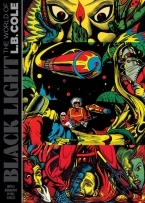
Black Light: The World of L.B. Cole


By Leonard Brandt Cole with an introduction by Bill Schelly (Fantagraphics Books)
ISBN: 978-1-60699-762-8

The early days of the American comicbook industry were a whirlwind of spectacular exuberance and the front covers of the gaudy pamphlets that endlessly proliferated were all crafted to scream “Buy Me! Buy Me!” from within a sea of similar sights.

As such, that first visual contact was crucial to success and one of the greatest artists ever to mesmerise kids out of their hard-earned dimes was Leonard Brandt Cole (28th August 1918 – December 5th 1995) who had a master designer’s knack for combining captivating ideas and imagery with eye-popping style and technique.

Although he also illustrated quite a few interior strips (for Holyoke, Ajax, Farrel and Gilberton), Cole’s true gift and passion was devising attention-grabbing cover images rendered in what he called “poster colors”.

Whether on Horror, Superhero, Science Fiction, Sports, Humour, Crime, War, Western, Rugged Adventure, Jungle, Romance or Funny Animal titles, his stellar, absorbing art was instantly recognisable and in great part is what defines the Golden Age of Comics for us today…

His influence doesn’t end there, however. A shrewd businessman and editor, Cole started his own studio-shop to manufacture stories for assorted companies and parlayed it into publishing company (initially by buying existing properties from client Novelty Press in 1949) and then diversifying through his Star Comics line into genre novels, prose-pulps, puzzle-books and general magazine periodicals.

Frequently he would combine his electric primary colours over a black background adding instant extra punch to his renditions of masked champions, soaring spaceships, macabre monsters and a legion of damsels in love or distress…

Before joining the nascent comics industry in the early 1940s, Cole’s background was in science and printing. He studied veterinary science (he held a doctorate in Anatomy and Physiology from the University of Berlin) but was working as a lithographic Art Director when he made the seemingly sideways transition into illustration and comics.

Incredibly this colossal (272 pages, at 337x235mm), durably Flexibound compendium is his first major retrospective, bringing together a multitude of his most impressive works in one immense, colourful and informative volume

The astounding career of a comicbook Renaissance man is covered in fascinating detail in ‘Comics by Design – the Weird Worlds of L.B. Cole’ by pre-eminent historian of the medium Bill Schelly, whose appreciation ‘Fever Dreams in Four-Color Form’ is followed by his erudite biography and timeline of the artist, divided into four discrete periods.

Each section is augmented by photos, covers, original artwork and even comics extracts – ranging from panels and splash pages to complete stories (such as Paul Revere Jr.) – covered in lavish detail in ‘Into Comics’ and ‘Cole as Publisher’ whilst ‘Out of Comics’ focuses on his later move into commercial art, education and illustration.

In the 1980s Cole was “rediscovered” by comics fandom and achieved minor celebrity status through appearances at conventions. ‘Art Among the Junk’ covers this period up until his death when he began recreating his iconic covers as privately commissioned paintings for modern collectors.

The true wonder of this glorious phantasmagorical collection follows in ‘The Comics Covers of L.B. Cole’ which showcases long runs of the artist’s stunning covers – nearly 350 eye-popping poster images – from such evocative titles as 4Most, All-Famous Police Cases, Blue Bolt, Captain Aero, Cat-Man Comics, Classics Illustrated, Contact Comics, Confessions of Love, Criminals on the Run, Dick Tracy, Flight Comics, Frisky Animals, Ghostly Weird Stories, Killers, Jeep Comics, Mask, Popular Teen-Agers, Power Comics, Ship Ahoy, Shocking Mystery Cases, Spook, Sport Thrills, Startling Terror Tales, Suspense Comics, Target Comics, Terrors of the Jungle, Top Love, Toy Town, Western Crime Cases, White Rider and Super Horse and many more…

The pictorial feast doesn’t end there though as ‘Further Works’ gathers a host of his non-comics covers including books such as The Greatest Prison Breaks of All Time, Murders I’ve Seen, Raging Passions and Love Hungry, as well as magazine covers for joke periodicals like Wit and Wisdom, Sporting Dogs and World Rod and Gun. Gentleman’s publications and “sweat mags” such as Man’s True Action, Man’s Daring Adventures and Epic (Stories of True Action) also feature: all augmented with articles, working sketches and original drawings and paintings. There’s even a selection of his superb animal studies and anatomical and medical textbook illustrations, plus private commissions, recreations and unpublished or unfinished works…

Black Light is a vast and stunning treasury of fantastic imagery from a bygone age by a master of visual communication that no fan of popular art could fail to appreciate, but for comics lovers it’s something else too: a seductive gateway to astounding worlds of imagination and breathless nostalgia impossible to resist.
Black Light: The World of L.B. Cole © 2015 Fantagraphics Books. All comics, artwork, photos, illustrations and intellectual properties © 2015 the respective copyright holder. All rights reserved.

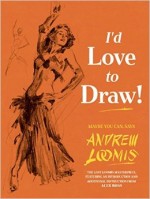
I’d Love to Draw!


By Andrew Loomis (Titan Books)
ISBN: 978-1-78116-920-9

Win’s Christmas Recommendation: a superb, old-school introduction to peace and recreation… 9/10

There are a host of books both academic and/or instructional designed to inculcate a love of comics whilst offering tips, secrets and an education in how to make your own sequential narratives.

There are far more intended to foster and further the apparently innate and universal desire to simply make art and make it proficiently and well. There are however, precious few that do it with as much style, enthusiasm, delight and cunning craft as this latest re-release by one of the most influential and meritorious masters of illustration America ever produced.

William Andrew Loomis was born in Syracuse, New York in 1892. He grew up in Zanesville, Ohio during the period when almost all published illustration was crafted by talented hands rather than mechanical contrivances like cameras.

Aged 19, he moved back to New York to study under George Bridgman and Frank DuMond at the Art Students League before enlisting to fight in The Great War.

On returning to America Loomis studied at the Art Institute of Chicago whilst setting up his own agency as a jobbing illustrator. Successful from the start, he began supplementing his income during the 1930s by teaching at the American Academy of Art and eventually started compiling his lecture and class material into such popular and effective instructional tomes as Fun With a Pencil and Figure Drawing for All It’s Worth.

His many beautiful and inspirational books influenced generations of artists before eventually slipping out of print, but in recent years Titan Books have been gradually resurrecting them.

This latest tome (with an Introduction and a lavishly informative commentary by comics legend and grateful fan Alex Ross) continues the master’s good works in an epic-scaled (315 x 235mm) luxuriously sturdy monochrome hardback which is a treasure to behold. Even when demonstrating the simplest stance or construction shape, Loomis’ utter joy in putting lines or shapes or shades on paper shines through…

This deeply idiosyncratic, wonderfully expansive and copiously illustrated collection begins with ‘Getting Started’: explaining the theory of ‘Basic Forms’ whilst offering page after page of illuminating examples before carefully and enthusiastically getting to grips with the thorny discipline of ‘Perspective’ in all its daunting forms.

The third pillar of artistic accomplishment is tackled head-on in ‘Light’ with a plethora of examples and exercises explaining all the necessities and useful tricks before the comfortable crash-course gravitates to Part Two and ‘Getting the Fun Out of It!’

Here the first port of call is perfecting ‘The Head’ which incorporates basic construction, carriage, positions and techniques before moving on to caricature and portraiture, after which ‘The Figure’ meticulously traces body form and development from stick-skeletons and sketch layouts to varieties of rendering, fast action visual notation, The Nude and the fundamentals of full illustration.

The foundation course concludes with the third and most important part: ‘The Fun of Sketching’: opening with an effusive overview of the practice of ‘Sketching’ incorporating Line and Form Combined, Exaggeration to Project Character, Solid or Tonal Caricature, Portrait Sketching and much, much more.

Everything ends in an enthralling and enthusiastic ‘Closing Chat’ from the great man encouraging everyone to pick up a pencil and get on with it…

Loomis died in 1959 with one last art manual – Eye of the Painter & Elements of Beauty – published posthumously, yet his professional artistic philosophy, folksy wit and great personal charm still shine throughout this book. His gentle yet thorough instruction of the eternal unchanging verities of visual creation still makes the rewarding act of drawing not only achievable but desirable for everyone.

Perhaps this splendid volume is aimed more squarely at the progressing cartoonist, rather than at utter neophytes, and provides as much a philosophy of creativity as strict instruction, but I’d Love to Draw! will well serve any budding artists and storytellers whilst keeping idle hands and minds amused, absorbed and entertained for hours. If you already have the urge to make pictures but want a little encouragement, this marvellous manual will offer a steadying hand and all the support you could dream of.

© Andrew Loomis, The Estate of Andrew Loomis 2014. All rights reserved.

Introduction and additional text © Alex Ross 2014.

The Mythology of S. Clay Wilson volume 1: Pirates in the Heartland


By S. Clay Wilson, edited by Patrick Rosenkranz (Fantagraphics Books)
ISBN: 978-1-60699-747-5

This book is filled with dark, violent sexual imagery and outrageous situations intended to make adults laugh and think.

If the cover and the copy above hasn’t clued you in, please be warned that this book contain nudity, images of extreme violence, sexual intimacy and excess – both hetero- and homo-sexual – and language commonly used in the privacy of the bedroom, drunken street brawls and probably school playgrounds whenever supervising adults aren’t present.

If the mere thought of all that offends you, read no further and don’t buy the book. The rest of us will just have to enjoy some of the most groundbreaking cartoon experiences ever created without you.

Steve Clay Wilson was a pioneering light of America’s transformative Underground Commix movement: an uncompromising, controversial, in-your-face pioneer of the counterculture, constantly challenging attitudes and sensitivities whilst telling the kind of cartoon tales he wanted – or perhaps had – to.

Something of a contradiction to those who knew him, charming, charismatic Wilson lived life to the full and took his art seriously.

And what art! Stark, complex, shocking, incredibly detailed tableaux jumping with modern Rabelaisian content: mesmerising scenes packed with intense multi-layered busyness, crammed with outrageous, iconic characters in constant surging motion – mostly combative and hilariously violent.

The manly hedonistic exuberance of frantic fighters rejoicing in the wild freedom as exemplified by bikers, cowboys, pirates, bull dykes and devils, augmented by other violent ne’er-do-wells, grotesques, human-scaled beasts and things which could be drawn but never described…

His work seethed and abounded with excess: monsters, mutilations, booze and drug-fuelled romps populated with priapic plunderers and ravening beasts, dangerous and disturbed women and always, always unsettling scenes of society’s biggest taboos – sex and personal freedom.

All Americans already worshipped violence; Wilson just pushed the visuals for that sacrament as far as he could into surreal parody…

Everybody who knew Wilson adored him, but around him they were usually a little nervous and stepped lightly…

The modern successor to Peter Bruegel and Hieronymus Bosch moved on to other artistic arenas when the Underground movement foundered but he never toned down his visions. In 2008 he suffered massive brain damage in mysterious circumstances and has been undergoing full-time palliative care ever since.

This intimate and informative oversize (286 x 202mm) hardcover biography and graphic overview is compiled from previous writings and extensive interviews with the people he grew up with and who shared his eventful life.

Moreover each telling anecdote and reminiscence is augmented with photos, paintings, illustrated letters and private or previously unpublished artworks, and each chapter offers a wealth of strips: comprising all of his published comics work from the heady days of America’s counterculture explosion in 1968 to its virtual demise in 1976.

Our history opens with a warm, picture-packed, fact-filled Introduction by college pal and flatmate John Gary Brown before the hagiography of horrors begins with ‘Wilson’s Childhood’.

Described by Robert Crumb as “the strongest, most original artist of my generation” Steven Clay Wilson grew up in down-home Lincoln, Nebraska, thriving on a diet of EC comics (especially Piracy), post-war prosperity and Great Plains sensibilities. His early life was filled with good family, cool pets, cycling, school and drawing.

Lots of drawing (much of it impressively included in the first chapter) takes us out of High School and unto college but before that unfolds there’s a gory welter of early triumphs in the black and white comics section which includes such classics as ‘Shorts in the Bowl’ from Gothic Blimp Works #1, ‘River City Shoot-Out’from the second issue and ‘No Loot for You, Captain Namrooth’ from Gothic Blimp Works #6, all from 1969, followed by a ‘Goodtimes Front Cover’ for May 1st 1970.

The entirety – 26 images – of the mega-successful arts project which became ‘S. Clay Wilson Portfolio Comix’ leads into the strip ‘Afterwards’ from Hydrogen Bomb Funnies, 1970 and the tableaux ‘It’s a Thrill to Kill’ from Thrilling Murder Comics 1971 and ‘The 137th Dream of Lester Gass’ (Illuminations 1971).

A productive strip period begins with ‘Insect Paranoia’ from Insect Fear #1, ‘Insect Angst’ (#2, both 1970) and ‘Insomnia Angst’ (#3, 1972), followed by ‘Boogie Boogie Horror Yarn’ (Laugh in the Dark, 1971) and closes with ‘Whip Tip Tales’ and ‘Soft Core Porn Yarn’from San Francisco Comic Book issues #1 and #3 in 1970.

Wilson’s turbulent brush with art school and academia at the University of Nebraska is detailed in ‘Higher Education’ as is his understandably less than glorious military service and adoption of the drop out life style, all topped off by more manic strips and panels (he called them “Deep Scenes”) beginning with ‘The Hog Ridin’ Fools’ (Zap Comix #2, 1968 and featuring a very early appearance of Wilson’s signature character the Checkered Demon). That issue also provides ‘Just as you said Madge… He’s Shitting’and ‘Head First’, whilst from the third comes ‘Captain Pissgums and His Pervert Pirates’, ‘Gilded Moments’,‘Captain Edwards St. Miguel Tilden Bradshaw and his crew come to Grips with bloodthirsty foe pirates’, ‘Come Fix’and ‘Arnie, my bra ain’t on’.

Wilson drew at a phenomenal rate and Zap Comix #4 1969 unleashed ‘A Ball in the Bung Hole’, an untitled phantasmagorical double-spread, ‘Leather Tits’ and the debut of his occasional lewd lead ‘Star-Eyed Stella’ whilst Zap #5 1970 barely contained ‘Lester Gass the Midnight Misogynist’, ‘Ruby the Dyke Meets Weedman’and ‘Snake Snatch Tale’.

At the end of 1966 Wilson relocated to ‘Lawrence, Kansas’, a burgeoning Midwestern oasis of counterculture thought and self-expression, and a useful place to concentrate his creative energies before his inevitable move to the West Coast. This chapter is abutted by another wave of glorious filth and ferocity comprising non-biblical epic ‘The Felching Vampires Meet the Holy Virgin Mary’ (Felch Cumics 1975), adult fairy tale ‘Puducchio’ from Pork (1974) which also provided a quartet of single frame gags, after which Bent (1971) provides Deep Scene ‘Dwarf Snuffing Station #103’, ‘Pendants’, a return engagement for ‘Star-Eyed Stella’and ‘Nail Tales’.

Declaring “Art is Therapy”, Wilson always saw its creation as a collaborative process: one which demanded a response. On reaching the golden lands of ‘The Barbary Coast’ his artistic jams with the likes of Crumb – who claims the flatlander inspired him to completely release all his artistic inhibitions – and creative compadres like Spain Rodriguez, Rick Griffin, Robert Williams and Victor Moscoso made them royalty in the San Francisco heart of the revolution.

That star-studded, astounding period and how it began to fade makes up the last revelatory chapter in this initial volume and concludes with one last selection of colour and monochrome masterpieces including the eye-popping ‘Deranged doctors perform operational experiments on mutated patients under the antiseptic incandescent gaze of the Big Daddy Devil Doctor’ from Arcade #3, 1975, illustrations for William Burroughs’seminal short story‘Fun City in Badan’ (Arcade #4), ‘The Corpse Gobblin’ Ogre of Columbite Mountain’(Arcade #5), ‘Monster Bride’ (Arcade #6) and ‘Vampire Lust’(Arcade #7, 1976).

Also on show are multi-hued strip ‘Last Foe’ (Apple Pie July 1975), the cover from Zap Comix #3, the front and back covers from S. Clay Wilson Portfolio Comix, Bent and Pork,‘It’s a treat to blast away the flat foot’s feet’ from Tales of Sex and Death #1, (1971), eight-page, in-record minicomic insert ‘The Saga of Yukon Pete’ from the vinyl platter of the same name by Son of Pete and the Muffdivers, wrapping up in fine style with the infernally euphoric ‘Surfsup’ strip from Tales from the Tube #1, 1972.

Scholarly yet surprisingly engaging, this superb collation, contrived and shepherded by Patrick Rosenkranz, offers an amazingly and unforgettable close-up view of one of the most important cartoonists in American history. This is a book no serious lover of the art form or devotee of grown-up comics can afford to miss.

The Mythology of S. Clay Wilson volume one: Pirates in the Heartland © 2014 Fantagraphics Books. All comics and images by S. Clay Wilson © 2014 S. Clay Wilson. All biographical text © 2014 Patrick Rosenkranz. All other material © 2014 its respective creators and owners. All rights reserved.

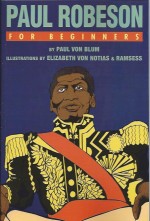
Paul Robeson for Beginners


By Paul Von Blum, illustrated by Elizabeth Von Notias & Ramsess (For Beginners)
ISBN: 978-1-934389-81-2

The For Beginners series of books are heavily illustrated text primers: accessible graphic non-fiction foundation courses in a vast variety of subjects from art to philosophy, politics to history and much more, all tackled in an accessible yet readily respectful manner. This particular volume was written by Paul Von Blum, author and Senior Lecturer in African American Studies and Communication Studies at UCLA with a wealth of strips and illustrations by graphic design specialist Elizabeth Von Notias and self-taught multi-media creator Ramsess.

If remembered at all, Paul Robeson (April 9th 1898 – January 23rd 1976) is thought of by most people as that African American singer/actor with an incredible bass voice. Maybe some will recall that he was a left wing political activist who fell foul of Joe McCarthy during America’s infamous “Red-baiting” witch-hunting period.

That’s true enough, but he was also one of the most accomplished and gifted individuals in the nation’s history: a true Renaissance man who was cheated of his ultimate potential simply because his skin was the wrong colour…

The Introduction lists Robeson’s astonishing accomplishments – all the more amazing when you realise the lack of opportunities if not outright repression facing negroes in a segregated America at the time of his birth and not truly tackled until the Civil Rights movement began gaining traction in the late 1950s.

As told in more telling detail – both in word and pictures in ‘The Early Days’, ‘Paul Robeson the Athlete’, ‘Paul Robeson the Stage Actor’, ‘Paul Robeson the Screen Actor’ and ‘Paul Robeson the Singer’ – he was born in Princeton, New Jersey; the son of a preacher.

He was the last of five children in a time and place rigidly defined by class and race divisions.

A brilliant student, he graduated Somerville High School in 1915 and won a four-year scholarship to Rutgers University where, despite initial hostility and actual physical assaults – he became the star of the Football, Baseball, Basketball and athletics squads, twice designated “All-American”.

From there he attended New YorkUniversityLawSchool, before transferring to ColumbiaUniversityLawSchool.

Talented and seemingly tireless, he turned an interest in the dramatic arts into a part-time stage career and became a professional Football player in 1920. He got married, acted, sang, played Pro ball and kept on studying, graduating Columbia in 1923 and worked as a lawyer at a prestigious law firm until the bigotry he experienced from his own subordinates became too much.

In 1924 he switched from stage acting to movies but still carried on a glittering international career: starring as Othello in London and playing in many hit plays and musicals such as Showboat, Emperor Jones, Stevedore and All God’s Chillun’s Got Wings…

Always politically active, he visited the Soviet Union in 1934, spoke out against Fascism during the Spanish Civil War, co-founded the anti-colonial Council on African Affairs and used his name and fame to agitate for social and legal changes in such contentious areas as Southern lynch law and trade union legislation.

Such activities made him a prime target in the USA and in 1941 J. Edgar Hoover ordered the FBI to open a file on him…

In 1950 the US government took away his passport because he refused to recant his pro-Soviet, pro-socialist stance and he became an exile in his own country. He was unable to leave America for eight years, until a Supreme Court ruling decreed the State Department had no right to revoke passports due to an individual’s political beliefs.

Robeson’s life was filled with such landmarks. Once free to travel again, he became an international political celebrity and social commentator, using his concerts and stage appearances in places as disparate as Wales, Australia, Russia, East Germany and elsewhere to promote a dream of World “Freedom, Peace and Brotherhood”…

His beliefs, struggles achievements and failures are then examined in ‘Paul Robeson the International Activist’, ‘Paul Robeson the Domestic Political Activist’ before a thorough appreciation in ‘The Final Years and His Lasting Legacy’…

Augmented by a ‘Bibliography’, ‘Selected Chronology’ and creator biographies, this absorbing documentary proves again the astounding power of visual narrative when wedded to the life story of a truly unique individual.
© 2013 Paul Von Blum. Illustrations © 2013 Elizabeth Von Notias & Ramsess. All rights reserved. A For Beginners Documentary Comic Book © 2013.

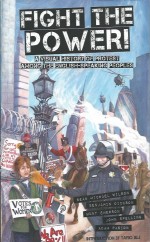
Fight the Power – a Visual History of Protest Among the English Speaking Peoples


By Seán Michael Wilson, Benjamin Dickson, Hunt Emerson, John Spelling, Adam Pasion with additional cartoon by Polyp (New Internationalist)
ISBN: 978-1-78026-122-5

Politics is composed of and utilised equally by firebrands and coldly calculating grandees, and that’s probably the only guiding maxim you can trust. Most normal people don’t give a toss about all that until it affects them in the pocket or impacts their kids and, no matter to what end of the political spectrum one belongs, the greatest enemy of the impassioned ideologue is apathy. This simple fact forces activists and visionaries to ever-more devious and imaginative stunts and tactics…

However, all entrenched Powers-That-Be are ultimately hopeless before one thing: collective unified resistance by the very masses they’re holding down through force of arms, artificial boundaries of class or race, capitalist dogmas, various forms of mind control like bread, circuses and religion, divisive propagandas or just the insurmountable ennui of grudging acceptance to a status quo and orchestrated fear that unknown change might make things worse.

From its earliest inception cartooning has been used to sell: initially ideas or values but eventually actual products too. In newspapers, magazines and especially comicbooks the sheer power of narrative with its ability to create emotional affinities has been linked to the creation of unforgettable images and characters. When those stories affect the lives of generations of readers, the force that they can apply in a commercial, social or especially political arena is almost irresistible…

The compelling power of graphic narrative to efficiently, potently and evocatively disseminate vast amounts of information and seductively advocate complex issues with great conviction through layered levels has always been most effectively used in works with a political or social component. That’s never been more evident than in this stunning and scholarly new graphic anthology detailing some of the most infamous and effective instances of popular protest.

In Britain the cartoonist has always occupied a perilously precarious position of power: with deftly designed bombastic broadsides or savagely surgical satirical slices instantly capable of ridiculing, exposing and always deflating the powerfully elevated and apparently untouchable with a simple shaped charge of scandalous wit and crushingly clear, universally understandable visual metaphor …or sometimes just the plain and simple facts of the matter…

For this universal and welcomingly basic method of concept transmission, levels of literacy or lack of education are no barrier. As the Catholic Church proved millennia ago with the Stations of the Cross, stained glass windows and a pantheon of idealised, sanitised saints, a picture is absolutely worth a thousand words, and as William the Conqueror saw with the triumphalist Bayeux Tapestry, picture narratives are worth a few million more…

Following a thought-provoking Introduction by author, journalist and filmmaker Tariq Ali, this procession through the history of dissent compiled and scripted by Seán Michael Wilson and Benjamin Dickson begins with an agenda-setting ‘Prologue’ – illustrated by Adam Pasion – which can best be described without giving the game away as “Uncle Sam, John Bull and the Statue of Liberty (AKA ‘Liberty Enlightening the World’) walk into a bar…”

Their heated discussion on the value and need of people using their right to dissent is then captivatingly illustrated through a series of erudite, fascinating, shocking and even funny tutorial episodes beginning with a compelling account of ‘The Luddites and the Swing Riots, 1811-1832’ written by Wilson and rendered both palatable and mesmerising by comics legend Hunt Emerson.

The artist then turns his talents to recreating the horrific events and aftermath of ‘The Battle of Peterloo, 1819’ from Dickson’s script before, with Wilson, cataloguing a wave of ‘Colonial Rebellions, 1836-1865’ which the British Empire dealt with in its traditional even-handed, temperate manner (and in case you were wondering, that’s called “sarcasm”…)

Wilson & Pasion then detail the global impact of the ‘Irish Rebellions, 1791-1922’ whilst Dickson & Emerson’s account of ‘The Suffragettes, 1903-1918’ actually follows the story of Votes for Women right up to the present. The practically forgotten and brutally savage sagas of ‘The Australian General Strike, 1917’ (by Wilson & Pasion) and the equally appalling landmark events of ‘The Boston Police Strike, 1919’ – as told by Dickson & John Spelling – reveal the pattern of modern labour conflicts with working folk ranged against intransigent and greedy commercial interests.

The age-old struggle escalated during the ‘UK General Strike and the Battle of George Square, 1918-1926’ (Wilson & Spelling) and reached an intolerable strike-busting peak in Ohio during ‘The Battle of Toledo, 1934’ (Wilson & Spelling): a struggle which cemented management and labour into the intractable ideologically opposed positions they still inhabit today…

The championing of Human Rights is commemorated by Dickson & Pasion in ‘Rosa Parks and the Bus Boycott, 1955-1956’ and a deeply moving account of ‘The Trial of Nelson Mandela, 1964’ whilst the modern American soldier’s method of combating unwelcome or insane orders is reviewed in the brilliantly trenchant ‘Fragging’ by Wilson & Emerson…

Back home and still etched in many peoples memories, ‘The Poll Tax Riots, 1989-1991’ offers a surprisingly even-handed account of Margaret Thatcher’s greatest political blunder by Dickson & Spelling, before hitting today’s headlines with the origins and outcomes – to date – of ‘Occupy, 2011-‘…

Returning to that bar and Lady Liberty, Dickson, Wilson & Pasion then draw a few telling Conclusions to close the cartoon course in mass resistance, after which the writers discuss their process in Authors Notes: Why This Book? before then listing the truly phenomenal rewards of all those campaigns and protests with a long list of Rights Won (ranging from Women’s Suffrage to the universal formal acknowledgement of the Human Right to Protest).

Understanding the value of a strategically targeted chuckle, this fabulous monochrome chronicle concludes with one last strip as Dickson & Emerson hilariously reveal ‘The Four Stages of Protest’ courtesy of Mohandas “Mahatma” Gandhi…

More so than work, sport, religion, fighting or even sex, politics has always been the very grist that feeds the pictorial gadfly’s mill. Of course cartooning can only accomplish so much and whilst Fight the Power! recounts a number of instances where physical and intellectual action were necessary to achieve or maintain justice, at least our art form can galvanise the unconvinced into action and help in the useful dissemination of knowledge about protest: the Who, Where, When, and How.

If you don’t understand What or Why then you’re probably already on the other side of the barricades…
© 2013 Seán Michael Wilson and Benjamin Dickson. Illustrations © 2013 Hunt Emerson, John Spelling and Adam Pasion. Cartoons © 2013 Polyp. All rights reserved.

This book was reviewed and scheduled before the announcement of the death of Nelson Mandela. After briefly considering postponing the posting I’ve decided to go ahead. If you can’t understand why perhaps you should think really hard about what he stood for and what Fight the Power! is about.
Win – proudly wearing his little red rebel’s hat…

Science – A Discovery in Comics


By Margreet de Heer with Yiri T. Kohl (NBM)
ISBN: 978-1-56163-750-8

There’s no use denying it: Annual Gift-Giving Season isn’t far off and it’s never too early to think of the ideal item for that troublesome family/friend unit. So here’s something scientifically approved and tested to fit the bill for any disputative colleague fed up with socks, pants, pen-sets or One Direction action figures…

It has long been a truism of the creative arts that the most effective, efficient and economical method of instruction and informational training has been the comic strip.

Advertising mavens have always exploited the subversive impact of well-chosen words wedded to evocative pictures, and public information materials frequently use sequential narrative to get hard messages over quickly and simply.

Additionally, since World War II, carefully crafted strips have been constantly used as training materials in every aspect of adult life from school careers advice to various branches of military service – utilising the talents of comics giants as varied as Milton Caniff, Will Eisner (who spent decades producing reams of comic manuals for the US army and other government departments), Kurt Schaffenberger and Neil Adams.

These days the educational value and merit of comics is a given.

Larry Gonick in particular has been using the strip medium to stuff learning and entertainment in equal amounts into the weary brains of jaded students with such tomes as The Cartoon History of the Universe, The Cartoon History of the United States and The Cartoon Guide to… series (Computers, Non-Communication, Physics, Statistics, the Environment, Genetics, Sex and more).

Japan employs vast quantities of manga text books in its schools and universities and has even released government reports and business prospectuses as comic books to get around the ingrained apathy towards reading large dreary volumes of public information.

So do we, and so do the Americans.

Here Margreet de Heer and husband Yuri again employ the medium to sublimely and elegantly tackle another all-consuming preoccupation and noble creation of the mind of Man, following their previous endeavours elucidatory endeavours…

She was born in 1972 into a family of theologians and, despite some rebellious teen forays to the wild side of life, studied Theology for 9 years at the University of Amsterdam. After graduating in 1999 she decided to become a cartoonist – and did – but also worked at the wonderful comics and cool stuff emporium/cultural icon Lambiek in Amsterdam.

Whilst there she collaborated with industry expert Kees Kousemaker on a history of Dutch comics before becoming a full-time artist in 2005, with commissions in publications as varied as Yes, Zij aan Zij, Viva Mama, Flo’, Jippo, Farfelu and NRC.Next.

In 2007 she began a series of cartoon philosophical reports for the newspaper Trouw, which prompted a perspicacious publisher to commission a complete book on this most ancient of topics. Filosofie in Beeld was released in 2010 and translated into English by NBM as Philosophy – a Discovery in Comics.

An inveterate questioner, she then turned her thoughts and pens to Religie in Beeld – which I’m assuming is “Religion in Comic Pictures” as I don’t think it’s been translated into English yet – before logically moving on to the third leg of the fabled Pillars of Wisdom.

Science – A Discovery in Comics is one more superb full-colour strip foundation course packed with information and gentle humour. Dissecting and disseminating the essence and fundamentals of a big, big subject in a subversively calm and accessible way, de Heer crafts her hypotheses and findings with the instruments of a gifted writer and synthesist and a master’s grasp of the medium.

This supremely engaging discourse opens with a searching ‘Prologue’ pointing out the core contradictions of supposedly unambiguous scientific thought before a few working definitions lead to a discussion of ‘What is Science?’ before the lectures begin with the core concept ‘The Beginning of Modern Western Science’.

This examination of the astounding achievements – and now obsolete observations – of Ancient Greece, paying particular attention to ‘Thales of Miletus’, ‘Anaximander’, ‘Pythagoras’, ‘Archimedes’ and ‘Euclid’ then elegantly diverts into a discourse on Mathematics, divided into ‘History of Math’ concentrating upon ‘Four Fascinating Mathematical Phenomena: Pi, Infinity, The Golden Ratio and Zero’.

Thos sagacious Greeks are represented here by ‘Aristotle’ who laid the foundations of ‘The Scientific Method’…

Science in the Middle Ages is covered ‘…At a Glance’ and through ‘The Medieval Worldview’, after which the subject switches to Chemistry, complete with a ‘History of Chemistry’, a quirky look at ‘the Periodic Table’ and some surprising things you didn’t know about famous scientists – and many who should be but aren’t.

A summary of where we’re at leads into the revelatory Mrs. Scientist which details just a few of the brilliant female thinkers and doers sidelined and short-changed by mainstream history before the journey resumes with a visit to The Renaissance paying particular attention to ‘Leonardo Da Vinci’.

Progressing to The Scientific Revolution where ‘New Ideas’ at last supplanted the accepted wisdom of the ‘Ideas of Aristotle’, the focus is on ‘Galileo Galilei’ and the destructive, increasingly toxic ‘Relationship Between Science and Religion’…

The section on Astronomy opens with ‘History of Astronomy’ and a glimpse at ‘Space’ after which Newton gets his own chapter, culminating in a brilliant explanation of ‘Newton’s Laws’ before the spotlight falls on Physics…

Following the preliminary and compulsory ‘History of Physics’, a short treatise on ‘Three Sub-areas of Physics: Electricity, Thermodynamics and Motion’ as visually verified in ‘Classical Mechanics’ takes us to The Nineteenth Century – Age of Discoveries with a potted history of ‘Charles Darwin’ evolving into the furore surrounding ‘Natural Theology’ and a section on the new discipline of Biology…

‘History of Biology’, naturally results in a thorough examination of ‘Genetics’ and a personal moment for Margreet and Yuri as they take advantage of a very modern facility in ‘The Chromosome Chronicles’.

Geology surfaces next with ‘History of Geology’, revealing and revisiting the protracted debate over ‘The Age of the Earth’, ‘History of the Earth’ and ‘History of Man’.

Einstein of course, rates a section to himself, and ‘Albert Einstein’, ‘The Theory of Relativity’ and ‘Funny Facts’ happily lead to the contentious Quantum Theory,

This doctrine divided theoreticians for most of the 20th century – as seen in ‘History of Quantum Theory’ – examining the confounding paradox of ‘Wave and/or Particle’, ‘The Classical Worldview’ versus ‘The Quantum Worldview’ and asks ‘Next Stop: a Theory of Everything?’

And because proper science is about sharing knowledge, this scintillating speculation concludes with ‘Where are we Heading? – Science of the Future’, offering a quick survey of current affairs and prospective avenues of exploration…

This pictorial peroration also includes a handy page of recommendations of other books, films and graphic novels to check out, such as Bill Bryson’s A Short History of Everything and Logicomix: An Epic Search for Truth by Apostolos Doxiadis, Christos H. Papadimitriou, Alecos Papadatos and Anna di Donna.

This is a truly sharp and witty book, which marvellously reduces centuries of contentious pondering, violent discussion and high-altitude academic acrimony to an enthralling, utterly accessible experience any smart kid or keen elder would be happy to experience.

Clear, concise, appropriately challenging and informatively funny, Science – A Discovery in Comics is a wonder of unpretentious, exuberant graphic craft and a timeless book we can all enjoy.

© @2012 Uitgeverij Meinema, Zoetermeer, TheNetherlands. English translation © 2013 Margreet de Heer.
Win’s Christmas Gift Recommendation: Perfect for anybody with a brain and a question… 9/10

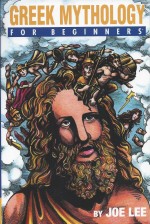
Greek Mythology for Beginners


By Joe Lee (For Beginners Books)
ISBN: 978-1-934389-83-6

The heroic tales and legends of the Hellenic Golden Age have for centuries formed an integral part of educational development and the cultural and philosophical – if no longer spiritual – legacy of these stories permeates every aspect of modern society. What we don’t perhaps fully grasp, though, is how this wealth of thought and fable gripped the souls of the ancient world’s paramount aggregation of deep thinkers.

They’re just stories to you and me, but to the world-changing likes of Aristotle, Archimedes, Anaximander Epicurus, Euclid, Diogenes, Plato, Pythagoras, Sophocles, Socrates and the rest – plus those uncounted millions of ordinary citizens of that loose-knit region linked by only geography, language and of course religion – they were as real and profound as the Koran or Bible today.

All theocratic stories are devised to explain away unsolved questions and unknowable mysteries. The liturgical lessons précised here in such engaging prose style and with such effective cartooning were one disparate people’s attempt to rationalise the universe they inhabited.

The For Beginners series of books are heavily illustrated text primers: accessible graphic non-fiction foundation courses in a vast variety of subjects from art to philosophy, politics to history and more, all tackled in a humorous yet readily respectful manner. This particular volume is compiled by Joe Lee, author, cartoonist and historian with degrees from IndianaUniversity (Medieval History) and Ringling Brothers, Barnum & Bailey’s ClownCollege…

Following an Introduction describing our debt to the Ancient world, this fun and fascinating invitation to the meat of the myths commences with a catalogue of leading participants and the intriguing creation myths of the Hellenes in Part 1: The Gods Themselves, from Chaos to Christmas – a sort of chronological introduction to the void from which everything sprang.

An explanation of Chaos is followed in close order by the potted histories of Ouranos and Gaea, the original Eros, The Titans, the Children of Heaven and Earth and The Twelve Olympians – each given their own biography and modus operandi.

This extensive listing of the beings and creatures Greeks prayed to and feared is complemented by The Cavalcade of Other Deities in which we learn of the Other (minor) Gods, such as The Muses, The Fates, The Graces, Dionysus, Demeter, Pan, Adonis, Aeolus, Antaeus, Asclepius, Ate, Attis, Boreas, Charon, Chiron, Eos, Eris, The Gorgons, Harmony, The Harpies, Helios, The Horae, Hypnos, Phantasos, Iris, Nemesis, Nike, Pegasus, The Pleiades, Priapus, Proteus, Selene, Silenus, Thanatos, Tyche and Zephrus.

If you battled your way through that odd yet oddly familiar list you might now have some inkling just how much our world is still informed and coloured by theirs…

There are even more surprises when we learn of The Nonhumans: Centaurs, Dryads, Naiads, Nereids, Nymphs, Oceanids, Oreads, Satyrs, Sileni, Sirens and of course that lethally querulous Egyptian immigrant The Sphinx…

Part II: the Stories that Inform deals with many of the most famous episodes, divided into logical categories for easier assimilation.

The Allegories covers the educationally enriching salutary histories of Pandora, Eros (the second) and Psyche, Orpheus and Eurydice, Pygmalion and Galatea, Narcissus and Echo, tragic Daphne, Persephone, Phaeton, donkey-eared Midas, Atalanta, and the brilliant craftsmen Daedalus and Icarus – all episodes redolent with warnings and punishments we simultaneously find apt and arbitrary.

Overweening Moral: Gods are unpredictable and destiny inescapable…

Next come the assorted stirring sagas of The Heroes. Mined voraciously by all modern media, the convoluted histories of Perseus, Bellerophon, Theseus, Jason, Oedipus and Heracles (with a complete rundown on those fabled Twelve Labours from slaying the Nemean Lion to stealing the Golden Apples of the Hesperides), these stories are still beloved and retold: just check out the next Percy Jackson film (…Sea of Monsters) or the burgeoning sub-genre spawned by the remade Clash of the Titans.

And just so’s you know: the Kraken was a Norse, not Hellenic, sea-terror…

This section concludes with an extensive yet abbreviated tour of The Epics of Homer. The Iliad and The Odyssey are a bedrock source for much contemporary prose, poetry and entertainment and you are the poorer if you have not read one of the many excellent translations of these epics…

This engaging appreciation ends with Part III: A Funny Thing Happened on the Way to the Modern World as the incomprehensible influence of Greek thought and spirituality is traced through the rise and fall of Rome, suppressed by Christianity and taken up, shorn of theocratic force and impetus but charged with logical aesthetics by the artists and wise men of The Renaissance.

Thereafter the influence is seen in Neo-Classicism, the philosophical soul-searching of Nietzsche and intellectual probing of Freud (who coined such common if rather inappropriate modern terms as “Oedipus Complex” and “Narcissism”).

Fans should be on particularly solid and familiar ground for the last essay as Popular Culture examines Gods and Monsters in ‘Books’, ‘Comics’ and ‘Movies’ before the author wraps things up in his heartfelt and enticing ‘Conclusion’.

Short, sweet, clever and captivating, this is a delicious entrée into the pervasive, fantastic world of Greek myth and the subtler subtext of our times, and would well suit older kids (who have at least seen cartoon representations of naked men and women before) with an interest in grand stories and amazing adventures…
Text and illustrations © 2013 Joe Lee. All rights reserved.

The Love and Rockets Companion – 30 Years and Counting


Edited by Marc Sobel & Kristy Valenti (Fantagraphics Books)
ISBN: 978-1-60699-579-2

In the 1980s a qualitative revolution forever destroyed the clichéd, stereotypical ways different genres of comic strips were produced and marketed. Most prominent in destroying the comfy pigeonholes we’d built for ourselves were three guys from Oxnard, California; Jaime, Mario (occasionally) and Gilberto Hernandez.

Love and Rockets was an anthology magazine (which first appeared as a self-published comic in 1981) featuring intriguing, adventuresome larks and bold experimental comic narratives that pretty much defied classification, all wrapped up in the ephemera of the LA Hispanic and punk music scene.

Most stories focussed on either the slick, sci-fi-soused hi-jinx of punky young gadabouts Maggie and Hopey (and their extended eccentric circle of friends) or the heart-warming, terrifying, gut-wrenching soap-opera fantasies from the rural Central American paradise of Palomar.

Jaime Hernandez was always the most visible part of the graphic and literary revolution: his sleek, seductive, clean black line and beautiful composition – not to mention impeccably rendered heroes and villains and the comfortingly recognisable comic book iconography – being particularly welcomed by readers weaned on traditional Marvel and DC superheroes.

However his love of that material, as well as the influence of Archie Comics cartoonists (I often see shades of the great Sam Schwartz and Harry Lucey in his drawing and staging), accomplished and enticing as it is, often distracted from the power of his writing, especially in his extended saga of Maggie Chascarillo and Hopey GlassLas Locas, something never true of Gilbert, whose cartoony, reined-in graphics never overwhelmed the sheer magnetic power of his writing…

The Hernandez Boys, gifted synthesists all, enthralled and enchanted with incredible stories that sampled a thousand influences conceptual and actual – everything from Comics, TV cartoons, masked wrestlers and the exotica of American Hispanic pop culture to German Expressionism. There was also a perpetual backdrop displaying the holy trinity of youth: Sex and Drugs and Rock and Roll – for which please hear mostly alternative music and punk rock.

The result was dynamite. Mario only officially contributed on rare occasions but his galvanising energy informed everything. The slick and enticing visual forays by Jaime explored friendship and modern love whilst destroying stereotypes of feminine attraction through his fetching coterie of Gals Gone Wild, and Gilberto created a hyper-real microcosm in the rural landscape of Palomar: a playground of wit and passion in the quicksilver form of a poor Latin-American village with a vibrant, funny and fantastically quotidian cast created for his extended serial Heartbreak Soup.

Everything from life, death, adultery, magic, serial killing and especially gossip could happen in Palomar’s metafictional environs, as the artist mined his own post-punk influences in a deceptively effective primitivist art style which blended the highly personal mythologies of comics, music, drugs, strong women, gangs, sex and family.

The denizens of Palomar still inform and shape Beto’s work, both directly and as imaginative spurs for spin-off stories.

Winning critical acclaim but little financial success, the brothers temporarily went their own ways, working on side projects and special series before creatively reuniting a few years back to produce annual collections of new material in their particularly peculiar shared or, rather, intermittently adjacent pen-and-ink universes.

In more than three decades of groundbreaking creative endeavour, Los Bros Hernandez have crafted a vast and magnificent canon of cartoon brilliance and literary wonder and this long-overdue companion volume collects rarely seen conversations with the boys as well as two new interviews and also offers a host of truly essential lists and features no serious student of Love and Rockets lore can afford to miss.

Heavily illustrated throughout with candid photos, seen, unseen and unpublished art from the artists and excerpted examples by the many assorted creators who inspired them – everybody from Jack Kirby monsters to Jesse Marsh’s Tarzan to Warren Kremer and Ernie Colon’s Hot Stuff, the Little Devil – this invaluable volume commences with Interviews…

The first is from The Comics Journal #126 (January 1989), conducted by publisher Gary Groth and covering ‘Origins’, ‘Early Affection’, ‘Mostly Music’ (with a Love & Lists  album discography) and a solo section on both Jaime and Gilbert.

The Comics Journal #178 (July 1995) saw Los Bros chatting candidly with Neil Gaiman on personal work and the state of the Comics biz.

Completists will be delighted to know that although both these features have been edited for relevance the entire, unexpurgated interviews can be found online if you are of an historical bent.

Marc Sobel conducted a new interview with Los Bros especially for this volume, discussing ’30 years and Counting’, ‘Family’, ‘Bent Worlds’, a list of the story within a story of ‘Rosalba Fritz Martinez’ B-Movie Roles’, ‘The Naked Cosmos’, ‘Influences’, ‘Post-Comics Depression’, ‘The Indy-Comics Ghetto’, ‘Preconceived Notions’, ‘Anthologies’, ‘The Future of Comics’ and more.

The editor also spoke at length with Gary Groth on why and how he took a chance on three unproved kids and the effect the series has had on the global comics scene, encompassing, ‘Back to the Beginning’, how ‘Four-Color Separations’ worked, ‘Breaking into Bookstores’, ‘Foreign Affairs’ and so many more dark secrets…

Fascinating as the background insights are, the true worth of this huge tome (368 pages and 195x240mm) is the fan-friendly such as the 20-page Timelines listing all the stories, descriptions and references for both Locas and Palomar continuities, and the immense (73 page) Character Guides for each ongoing epic – originally compiled by Chris Staros in his fanzine The Staros Report and completely updated for this book.

Love and Rockets took the comics community by storm when it debuted and although the magazine only infrequently published letters of comment, when they did the missives were usually outrageous and often from impressive and familiar names. In the Letter Column Highlights section the likes of Steve Leialoha, Scott Hampton, Steve Rude, Mark Wheatley, Christie Marx, Kurt Busiek, Evan Dorkin, Andi Watson and many others famed and infamous passed comment and made waves. This is followed by an illuminating group of Bros.’ Favorite Comics which is both revelatory and charming.

Invaluable to all devotees and prospective beginners alike, the Checklist catalogues every story and piece of artwork by the brothers in all iterations of Love and Rockets as well as all the specials, miniseries, side-projects and even outside commissions ranging as far afield as GI Joe to DC Who’s Who, and the whole glorious compilation is capped off with a vast fold out dust-jacket featuring the Locas/Luba Family Charts.

A genuine phenomenon and classic of comics entertainment, Love and Rockets should be compulsory reading for any friend of the art form. This Companion tome will make navigating the huge interconnected Hernandez universe simplicity itself and I thoroughly commend it to your house…
© 2013 Fantagraphics Books, Inc. Love and Rockets © 2013 Gilbert Hernandez and Jaime Hernandez. All images, articles and stories © their respective copyright holders.

A Cartoon History of the Monarchy


By Michael Wynn Jones (Macmillan)
ASIN: B001H0OAOO           ISBN: 0-333-19805-0

Just picked this up in a second-hand shop and thought of you – well, some of you anyway – on this anniversary day…

We’re far too reluctant in this country to celebrate the history and quality of our own cartooning tradition; preferring simply to remark on the attention-grabbers or impressive longevity of one or two classic and venerable veterans of the pen-&-ink game, when the actual truth is that for an incredibly long time the political art movement of the Empire and Commonwealth – and its enemies – was vast, varied and fantastically influential.

The British wing of the form has been magnificently serviced over the centuries by masters of form, line, wash and most importantly ideas, repeatedly tickling our funny bones or enraging our sleeping consciences and sensibilities, all whilst poking our communal pomposities and fascinations.

From its earliest inception, satiric draughtsmanship has been used to attack and sell: initially ideas, values, opinions and prejudices or but eventually actual products too. In newspapers, magazines and especially comicbooks, the sheer power of graphic narrative, with its ability to create emotional affinities, has led to the creation of unforgettable images and characters – and the destruction of real people or social systems.

When those creations can affect the daily lives of millions of readers, the force that they can apply in the commercial or political arena is almost irresistible…

In Britain the cartoonist has held a bizarrely precarious position of power for centuries: the deftly designed bombastic broadside or savagely surgical satirical slice instantly capable of ridiculing, exposing, uplifting or deflating the powerfully elevated, unapproachable and apparently untouchable with a simple shaped-charge of scandalous wit and crushingly clear, universally understandable visual metaphor.

For this method of concept transmission, lack of literacy or education is no barrier. As the Catholic Church proved millennia ago with the Stations of the Cross, stained glass windows and a pantheon of idealised saints, a picture is worth far more than a thousand words…

For as long as we’ve had printing in this country there have been scurrilous gadfly artists commentating on rulers, society and all iniquities: pictorially haranguing the powerful, pompous, privileged and just plain perfidious through swingeing satire and cunning caricature. Sometimes artists have been just plain mean…

Britain had no monopoly on talent and indignation, and this canny compendium also frequently features European – and latterly American – takes on our scandalous Royals and oddball citizenry…

Released in 1978 and desperately in need of updating and re-issue, A Cartoon History of the Monarchy offers a potted, far from hagiographic history and deliciously skewed view of our Ruling Elite in all their unsavoury glory; an unbroken line of jibes, asides and broadsides gathered from divers sources by jobbing journalist and aficionado of japes, lampoons and sketches Michael Wynn Jones, who here casts a discriminating eye from the reign of Elizabeth I up until just before the Silver Jubilee of the second Regina to bear the name…

Following a handy list of the Kings and Queens of England, the pomposity-puncturing procession commences with The Age of Intolerance, reproducing cartoons and adding commentary dealing with the doings of the ten monarchs from Elizabeth I – George II.

The accompanying essays describe the zeitgeist of those times – the religious question as England, Wales, Ireland and eventually Scotland came to numerous crises regarding succession.

That issue always revolved around whether the land should be Catholic or Protestant. ‘Popes, Plots and Puritans’ led to the final solution when ‘The Men from Hanover’ arrived to settle the matter and fully cement the nation under the Church of England.

The savage sampling of the nation and continent’s opinions are represented here by 26 visual bombards such as the allegorical assault ‘Diana and Callisto’ by Dutch artist Miricenys from 1585, the anonymous ‘England’s Miraculous Preservation’ from 1648 and ‘The Royal Oake of Brittayne’ (from 1649) amongst so many others.

Cartoon grotesques such as ‘Cromwell’s Car’ (1649) or ‘Babel and Bethel’ (1679) appear beside such scandalous foreign attacks as Dutch illustrator Dusart’s ‘Fr. James King’ and the anonymous French pictorial polemic ‘Notice of Burial’ (both from 1690). We British riposted with jeering celebrations of martial triumphs such as ‘The Arrival of William and Mary’ (1689), ‘The Great Eclipse of the Sun’ (simultaneously a topical spin on a solar event in 1706 and the defeat of “Sun King” Louis XIV by the British armies of Queen Anne), and ‘A Bridle for the French King’ from the same year.

Domestic contretemps are highlighted through such draughtsman’s delights as the anonymous 1743 shocker ‘The Hanover Bubble’, Ebersley’s ‘The Agreeable Contrast’ (from 1746 and attacking King George’s brother “Butcher” Cumberland’s treatment of Jacobites after the defeat of the Young Pretender), and the exposure of Popish influence in the Highlands described by ‘The Chevalier’s Market’ from 1745…

Whereas much of this material – both British and foreign – was generally national commentary and straight religio-political assault, by the time period covered in The Wickedest Age: George III – George IV (1760-1830) the cartoon had also evolved into a weapon designed to wound with wit and crush through cruel caricature.

After covering the major crises and scandals of the generally sensible – if parsimonious – third George in ‘The Royal Malady’, ‘“The Dregs of Their Dull Race”’ and ‘Twilight Years’, a veritable Golden Age of popular disapproval and artistic mugging of the Prince Regent and much-delayed, frustrated monarch (and his many mistresses) is covered in ‘The Prince of Whales’, ‘The Secret Marriage’, ‘“Pray Get Me a Glass of Brandy”’ and ‘Delicate Investigations’.

The public disdain of the times generated a fusillade of cartoon prints, represented here by 35 graphic bombards and savage cartoon sallies by names which have become as famous as any ruler. However master character assassins Townsend (‘The Scotch hurdy-gurdy’), George Cruikshank (‘Royal Condescension’), Gillray (‘A New Way to Pay the National Debt’, ‘A Voluptuary under the Horrors of Digestion’), Rowlandson (‘The Prospect Before Us’) and Heath (‘A Triumph of innocence over perjury’) are ably bolstered by lesser lights West (‘The Save-all and the Extinguisher!’), Williams (‘Low Life above stairs’), Vowles (‘The shelter for the destitute’) and Marshall (‘The kettle calling the pot ugly names’) and a few anonymous pen-pricks who nevertheless hit hard with ‘Tempora Mutantor’, ‘The captive Prince’ and ‘Reading of the Imperial decree’ and more.

As periodical publication overtook print-shops as the greatest disseminators of carton imagery, the open savagery and targeted vulgarity of caricaturists was gradually replaced with mannered, if barbed, genteel observation.

Thus The Age of Discretion: William IV, Victoria (spanning 1830-1901) offers a different style of Royal Commentary: no less challenging, but certainly much more overtly respectful when critical. Sometimes, though, this new family-oriented cartooning, even in magazines such as Punch and The Times, simply sunk to fawning veneration as the institution of monarchy became more and more removed from the lives of the citizenry.

William’s times are summed up in text via ‘The Sailor King’ and ‘Reform Billy’ whilst Victoria’s epochal reign and the Parliamentarians who increasingly wielded the decisive power is described through ‘The Queen of the Whigs’, ‘Revolutions are bad for the Country’, ‘The Black and the Brown’ and ‘Years of Widowhood’.

The 36 collected images capture those days of Empire, with Heath, Seymour and Doyle predominant in illustrating bluff sea-dog William’s socially contentious days of Reform.

Victoria’s years, from engaging popular ingénue Queen, through happy bride to politically intrusive grand dame of European Court intrigue, highlights the craft of Doyle (‘The Queen in Danger’, 1837), Leech, (‘There’s Always Something’, 1852), Tenniel (‘Queen Hermione’, 1865, ‘New Crowns for Old Ones!’, 1876), Morgan (‘Where is Britannia?’ and ‘A Brown Study’ – both 1867) and Sambourne (‘Kaiser-i-Hind’, 1876) amongst so many others.

Her latter years also saw a rise in social conscience cartooning as displayed by the crusading Merry with ‘The Scapegrace of the Family’ (1880), ‘The fall of the rebels‘ in 1886 and more, or the telling modernist take of Max Beerbohm whose ‘The rare, the rather awful visits of Albert Edward to Windsor Castle’, cuttingly illustrated the rift between the Empress and her playboy heir…

Despite her well-known disapproval, the good-time Prince became an effective king as was his son, both covered in The Edwardian Age: Edward VII – George V, spanning 1901-1936. Their dutiful achievements are recounted in ‘The Coming King’ and ‘The First Gentleman of Europe’ before war with Germany necessitated a family name change for George – ‘The First Windsor’…

With kings increasingly used as good-will ambassadors and being cited in scandals that frequently ended in court, the 30 cartoons included in this section include many German pieces from not only the war years but also the tense decade that preceded them, as Imperial Superpowers jostled for position and tentatively used propaganda to appeal to the world’s “unwashed masses” for justification for their aims and ambitions.

Beside veteran caricaturists such as Leech, Morgan, May, Partridge, Staniforth and David Low are merciless lampoons from German cartoonists Brandt, Blir, Heine, Gulbransson and Johnson as well as French illustrator Veber and lone American Kirby.

Our pictorial history lesson concludes with The Age of Respectability: Edward VIII, George VI, Elizabeth II generally skipping World War II, concentrating instead on the openly secret scandal of Edward and Mrs Simpson in ‘Abdication’ before the advent of ‘New Elizabethans’ brought a modern age of rulers as sideshow attractions…

Although Fleet Street chose to whitewash and suppress the affair between a King-in-waiting and the American divorcee, the rest of the world made great play of the situation: as seen here with 11 telling cartoon shots from Americans McCutcheon and Orro, whilst French scribbler Effel posited typically insouciant Gallic ‘Une Solution’ and German-based Gulbransson played up the true romance angle…

In the meantime British cartoonist Low had to be at his most obliquely hilarious, delineating the crisis by not mentioning it, and Punch stars like Partridge steadfastly pursued a line of deferential, tragic sacrifice…

Although there is very little material featuring wartime monarch George VI – a propaganda casualty of the conflict – the last 20 images herein celebrate the changing image of a very public Royal Family as pictured by names very familiar to contemporary cartoon lovers.

The imagery is also contextually far more familiar – and presumably comfortable – to modern tastes as print media generally learned to save their vitriol for politicians and celebrities and reserved only minor chidings and silly teasing for “the Royals”, as seen in ‘Birthday Greetings’ and ‘Under the Splendid Empire Tree’ by Shepard from 1947 or Illingworth’s 1951 panels ‘Family Ties’ and ‘Happy Returns’.

Papers were, however, happy to utilise the monarchy to score points against governments, as seen in an attack on Enoch Powell (Cummings’ ‘Ministry of Repatriation’) and the battle between Rhodesia’s Ian Smith and Harold Wilson lampooned in ‘Your Move!’ by Jak (both from 1968) or the legendary Giles’ ‘New Rent Assistance Bill’ (1971).

Also offering acerbic jollity of a far more blueblood-specific variety are cartoon giants Trog and Waite who join the abovementioned in exploiting the Royal Family’s gift for headline-stealing gaffes in such daring gags as ‘I Suppose we did send them to the Right Schools?’, ‘I Suppose she’ll think these are of the Queen Mother’, ‘More Pay’ and ‘Andrew’s Exchange Student’: coming full circle with the best of Hanoverian excesses scrutinised by a cost-conscious government and public – but this time for rather more gentle laughs…

Appended with a scholarly section of Acknowledgements, Illustration sources and Index of artists, this is an extremely welcoming and effective introduction to the lasting relationship between Royalty, Church and Fourth Estate that offers a fantastic overview of Regal adaptability and cultural life through a wealth of cunningly contrived images and pictorial iconography that reshaped society and the world.

These are timeless examples of the political pictorialist’s uncanny power and, as signs of the times, form a surprising effecting gestalt of the never-happy nation’s feeling and character…

None of that actually matters now, since these cartoons have performed the task they were intended for: shaping the thoughts and attitudes of generations of voters. That they have also stood the test of time and remain as beloved relics of a lethal art form is true testament to their power and passion.

Stuffed with astounding images, fascinating lost ephemera and mouth-watering tastes of comic art no aficionado could resist, this colossal collection is a beautiful piece of cartoon history that will delight and tantalise all who read it and truly deserves to be back on bookshelves…
© Michael Wynn Jones 1978. All rights reserved.

Race to Incarcerate – a Graphic Retelling


By Marc Mauer & Sabrina Jones (The New Press)
ISBN: 978-1-59558-514-7

This book made me really, really angry.

That’s okay though; it was supposed to.

Marc Mauer is the Executive Director of The Sentencing Project, a non-profit organisation working for over 25 years to establish “a fair and effective U.S. criminal justice system by promoting reforms in sentencing policy, addressing unjust racial disparities and practices, and advocating for alternatives to incarceration”.

They provide training for American defense lawyers, explore methods of changing the ferociously slanted legal system in regard to socially disadvantaged and racial minorities, debunk politically advantageous myths about the efficacy of incarceration and work towards reducing the nation’s reliance on prison sentences through advocacy and by affecting policy on how best to safeguard the citizenry and punish criminals.

Highlighting disturbing trends and inequities in the criminal justice system since 1986 – especially in the treatment of non-white and juvenile offenders – the organisation has been consulted by Congress, The United States Sentencing Commission, U.S. Commission on Civil Rights and other Federal Agencies, subsequently overseeing changes to national drug policy guidelines and helping shape The Fair Sentencing Act of 2010.

The Project particularly concerns itself with combating racial disparity in detention, cataloguing various forms of felony disenfranchisement and has led campaigns to end the widespread practice of condemning juveniles to life without parole as well as working to beef up the mandate of The Juvenile Justice and Delinquency Prevention Act.

All of which made Mauer the perfect person to write 1999’s landmark expose Race to Incarcerate, which detailed the causes and minutia of the meteoric rise in America’s prison population since 1970. He then followed up in 2002 with Invisible Punishment: the Collateral Consequences of Mass Imprisonment (co-edited by Meda Chesney-Lind).

A telling indictment of a flawed, cruel, unfair and unscrupulous system, Race to Incarcerate was re-released in 2006 and now the powerfully polemical tract has been brilliantly updated, revised and adapted by cartoonist Sabrina Jones into a ferocious indictment re-positioned to engage and inform the general public and especially older kids as well .

Jones is a painter, illustrator, scenic artist, writer and activist whose evocatively lush and organically primitivist work has graced such politically aware publications as Studs Terkel’s Working, FDR and the New Deal for Beginners, The Real Cost of Prisons, graphics collective World War 3 Illustrated and autobiographical anthology GirlTalk amongst many others. Her most notable solo project to date is the beguiling Isadora Duncan: a Graphic Biography.

Following an evocative Foreword from Civil Rights lawyer and author Michelle Alexander and an updated, heart-rending but hope-filled Preface by author Mauer, the bare, bald facts are starkly presented in ‘Introduction: U.S. Prisons from Inception to Export’ which follows the invention of penitentiaries by the Puritans to the current situation where America has the disturbing honour of being number 1 country in the field of locking up citizens. The USA has the highest rate of incarceration in the world.

Perhaps that’s because they don’t just execute their criminals… no, wait…

The stunningly effective visual history lesson is followed by the political background and lowdown on ‘The Rise of the “Tough on Crime” Movement’ from 1973, examining the divisive policies and calculated duplicity of Nixon and the Republicans in the wake of the triumphant Civil Rights Movement and tracking the switch from programs of rehabilitation to specious but vote-winning punitive prison policies.

The situation culminated with ‘The Triumph of “Tough on Crime”’ which casts a spotlight on the disparities in dealing with increasing drug abuse during the rise of the Black Power movement and focuses on the draconian, tragically trend-setting policies of New York Governor Nelson Rockefeller, who instigated the harshest drug laws in the USA when ‘The Rock Gets Rolling’…

With prison populations rising rapidly and disparately, things took a turn for the worst from 1980 as seen in ‘Crime as Politics: The Reagan-Bush Years’ after which a particularly heinous travesty of justice is spotlighted in ‘Kemba Smith: a Case of Extreme Sentencing’.

The problem was not simply the self-serving prejudice of one party as poignantly, frustratingly illustrated in ‘Crime as Politics: The Clinton Years’, but hit new depths of hypocrisy in 2000 as ‘Crime as Politics: The George W. Bush Years’ stomach-churningly shows…

Over the last half-century the whole situation seems to have been predicated upon a few fallacious if not deliberately disingenuous dictums clearly exposed in ‘The Prison-Crime Connection’ which inexorably led to a monumental institutionalised injustice system generating ‘Color-Coded Justice’ and concentration on a profiling or criminality as seen in ‘The War on Drugs and African-Americans’.

The biggest shock however comes in ‘A New Direction’ as the authors reveal that – despite all the rhetoric and entrenched biases – the situation is actually improving as more and more States abandon the old, costly, failing punishment policies to try something new and humane.

After decades where States stopped building schools to pay for bigger and bigger prisons – with no appreciable effect other than depriving kids of an education – various localities are trying different approaches and finding that where costly incarceration and harsh punishments don’t work social programs, rehabilitation projects and investment in people do…

Coda:  Also included in this book are details of outreach projects asking readers to contribute books to prisoners or become pen-friends with inmates, illustrated by Carnell Hunnicutt, a long-term inmate whose comics about his penal experiences and prison issues first inspired Mauer to release Race to Incarcerate as a graphic novel.

Packed throughout with shocking, well-documented, specific cases and backed up by an eye-watering torrent of shameful statistics, this is a work with the power to change society, so, with British politicians increasingly keen on emulating the idiotic mistakes and politically-advantageous, socially destructive criminal justice policies of our American cousins, Race to Incarcerate is a book every school library and home should have.

Moreover if you care about people and justice it’s one you must read…

© 2013 by The New Press, based on Race to Incarcerate by Marc Mauer © 1999, 2006 by The Sentencing Project. ‘Kemba Smith: a Case of Extreme Sentencing’ © 2013 by Sabrina Jones. Foreword © 2013 by Michelle Alexander. Preface © 2013 by The Sentencing Project. All rights reserved.