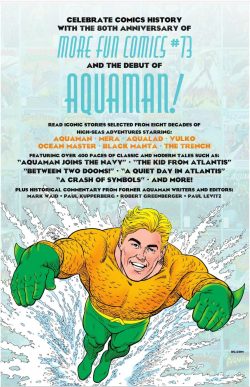
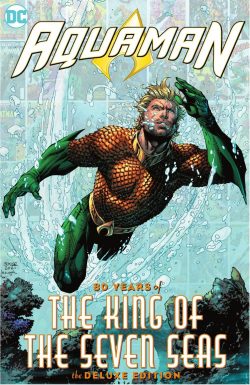
Aquaman: 80 Years of the King of the Seven Seas – the Deluxe Edition


By Mort Weisinger & Paul Norris, Joe Samachson, Otto Binder, Robert Bernstein, Jack Miller, Bob Haney, Steve Skeates, Paul Levitz, Paul Kupperberg, J.M. DeMatteis, Neal Pozner, Keith Giffen & Robert Loren Fleming, Peter David, Jeph Loeb, Will Pfeifer, G. Willow Wilson & Tony Bedard, Geoff Johns, Dan Abnett, Louis Cazeneuve, John Daly, Ramona Fradon, Nick Cardy, Jim Aparo, Mike Grell, Don Newton, Dick Giordano, Craig Hamilton, Curt Swan, Martin Egeland, Jim Calafiore, Ron Garney, Patrick Gleason, Joshua Middleton, Ivan Reis, Stjepan Šelji? & various (DC Comics)
ISBN: 978-1-7795-1019-8 (HB/Digital edition)

Win’s Christmas Gift Recommendation: Sea Son’s Greetings …and Greatest … 9/10

Aquaman is that oddest of comic book phenomena: a timeless survivor. One of the few superheroes to carry on in unbroken exploits since the Golden Age, the King of the Seas has endured endless cancellations, reboots and makeovers in the name of trendy relevance and fickle fashion but has somehow always recovered to come back fresher, stronger and more intriguing. He’s also one of the earliest cartoon champions to make the jump to television…

Created by Mort Weisinger & Paul Norris, the Sea King debuted in More Fun Comics #73 in the wake of and in response to Timely Comics’ barnstorming antihero Namor the Sub-Mariner. Strictly a second stringer for most of his career, Aquaman nevertheless swam on beyond many stronger features; illustrated by Norris, Louis Cazeneuve, John Daly, Charles Paris, and of course Ramona Fradon who drew almost every exploit from 1951 to 1961.

This compelling compilation collects – in whole or in part – material from More Fun Comics #73, Adventure Comics #120, 137, 232, 266, 269, 437, 475, Aquaman #11, 35, 46, 62, Aquaman (volume 2) #1, The Legend of Aquaman Special #1, Aquaman (volume 5) #0, 37, JLA: Our Worlds at War #1, Aquaman (volume 6) #17, Outsiders: Five of a Kind – Metamorpho/Aquaman #1, Aquaman (volume 7) #1, and Aquaman (volume 8) #25, spanning cover-dates November 1941 to August 2017.

As convention dictates these celebratory collections include essays by individuals connected to the subject, beginning with Mark Waid discussing ‘The Early Years’ before that untitled tale is redesignated ‘The Submarine Strikes’ for this edition. The salty sea saga sees survivors in lifeboats being rescued – and the brutal U-Boat commander responsible for their plight swiftly brought to justice – by a mysterious stranger who converses with porpoises. The golden saviour reveals that he was made into a subsea superman by his scientist father: an explorer who had discovered the secrets of lost, long-dead Atlantis.

Six years later Joe Samachson & Cazeneuve revealed how ‘Aquaman Goes to College’ (Adventure Comics #120, September 1947) as the oceanic adventurer sagaciously seeks to expand his knowledge of marine life, only to become embroiled in collegiate sporting scandals whilst Adventure #137 – cover-dated February 1949 – saw him explore ‘The Undersea Lost World!’ thanks to Otto Binder & John Daly only to clash with early archenemy and ruthless modern pirate Black Jack.

The Fifties Superhero Interregnum saw Ramona Fradon (Metamorpho, Super Friends, Brenda Starr) assume the art chores, by which time Aquaman was settled like a barnacle in a regular Adventure Comics back-up slot offering slick, smart and extremely genteel aquatic action. She was to draw every single adventure until 1960, making the feature one of the best looking if only mildly thrilling hero strips of the era. Sadly, records aren’t as helpful on writers and ‘Aquaman Joins to Navy!’ from AC #232 (January 1957) is anonymously penned as it describes how the Sea King is asked to boost recruitment…

In 1956, when Showcase #4 rekindled the public’s taste for costumed crimefighters with the advent of a new Flash, National/DC began cautiously updating its small band of superhero survivors, especially Green Arrow and the Subsea Sentinel. The program included a new origin and expanded cast and here (#266, November 1959) Robert Bernstein & Fradon test the waters as ‘Aquaman Meets Aquagirl!’: giving more information about fabled modern Atlantis (not dead but a thriving ancient civilisation) whilst trialling a possible sidekick.

With #269, Adventure Comics #269, (February 1960) Bernstein & Fradon completed the formula by introducing permanent junior partner Aqualad. ‘The Kid from Atlantis!’ was a young, purple-eyed outcast from the mysterious city possessing the same powers as Aquaman but terrified of fish – at least until the Sea King applies a little firm but kindly psychology.

By the end of the tale the little guy has happily adapted and would help patrol the endless oceans – and add a child’s awestruck perspective to the mix – for nearly a decade thereafter.

The early era ends with Paul Kupperberg’s essay ‘King of Atlantis’

As the sixties opened, Aquaman was a back-up feature in Detective Comics and World’s Finest Comics, but made his big leap following a team up with Hawkman in Brave and the Bold # 51 and his own try-out run in Showcase #30-33. After two decades of continuous nautical service, the marine marvel was at last awarded his own name – Arthur Curry – and comic book (#1 cover-dated January/February 1962), but although the star of his own title and a founder member of the Justice League of America, Aquaman continued as a back-up feature in World’s Finest Comics until 1964.

The rise would result in his featuring in groundbreaking must-see animation show The Superman/Aquaman Hour of Adventure. The Finned Fury seemed destined for super-stardom, but despite increasingly bold and innovative tales presented with stunning art, his title was cancelled as the decade closed. Towards the end, outrageously outlandish crime and sci fi yarns gave way to grittily hard-edged epics steered by revolutionary editor Dick Giordano and hot new talents Steve Skeates & Jim Aparo that might arguably be the first sallies of comic books’ landmark socially conscious “relevancy” period…

Kicking off this period, with Aquaman now commanding an army of sea life and ruling a super-scientific culture, Aquaman #11 (September/October 1963) saw him confront ‘The Doom From Dimension Aqua.’ Here Jack Miller and illustrator Nick Cardy introduced the Sea King’s future wife Mera when insurgents from her extra-dimensional kingdom invaded Earth’s Oceans. Although not seen here, she married Aquaman seven issues later): one of the first Silver Age superhero weddings and swiftly followed by the arrival of “Aquababy”…

In Aquaman #35 (September/October 1967) Bob Haney & Cardy crafted another deadly clash with Atlantean usurper Ocean Master and ruthless human nemesis Black Manta. Never afraid to tweak the comfort zone or shake up the status quo, ‘Between Two Dooms!’ epitomised growing darker sensibilities of the title, resulting in Atlanteans being robbed of their ability to breathe underwater, leaving Aquaman’s subjects virtual prisoners in their own subsea city for years to come…

Over those years scripter Steve Skeates and artist Jim Aparo began an epic extended tale as the Sea Lord abandoned all kingly duties to hunt for Mera after she is abducted from his very arms. For full enjoyment you will want to see Aquaman: The Search For Mera but concluding chapter ‘The Explanation!’ (by Skeates, Aparo & Frank Giacoia AKA “An Inker”) fills in the blanks on a complex scheme exposing treachery in Atlantis and collusion between subsea corridors of power and American crimelords…

This bombastic thriller forever ended the anodyne days of B-lister Aquaman: reforging the hero into a passionate, questioning, forceful environmental champion far more in keeping with the turbulent times, but it didn’t stop his cancelation with #56. Despite some of the most avant-garde, intriguing, exciting and simply beautiful adventures of Aquaman’s entire career, the title became another victim of the industry shift from Super Hero to supernatural themes.

As the decade closed superhero sales tanked and the Sea King was again reduced to back-up duties in other titles, but the quality of his stories remained high. After a three year hiatus the Marine Marvel returned in Adventure Comics, with this third outing from #437 (January/ February 1975 by Paul Levitz & Mike Grell) sarcastically depicting ‘A Quiet Day in Atlantis’ in advance of regaining his solo title. He battled bravely against political foes, supervillains and the burden of duty and family, but in Aquaman #62 (June/July 1978 by Kupperberg, Don Newton & Bob McLeod) faced tragedy and failure in ‘And the Wall came Tumblin’ Down’: losing both wife and child…

Time and tides passed before Adventure Comics #475 (September 1980) found J.M. DeMatteis & Dick Giordano relating how newly-reconciled Aquaman and Mera forcibly separate yet again in ‘Scavenger Hunt!’ after a subsea treasure hunter attacks…

The “all-change Eighties” and the impact of Crisis on Infinite Earths is pondered in ‘The Ruler of The Deep Gains Depth’ by Robert Greenberger covering a period of near-constant change and revision with the backstory of Atlantis and the Sea King regularly tweaked in search of a winning formula. In truth, the creators frequently succeeded but could never maintain the high sales each reboot started with, even after the post-Crisis reboot cleared away much of five decades of accumulated backstory…

A renewed hero debuted in Aquaman (volume 2) #1. Cover-dated February 1986, this was the start of a 4-issue miniseries redefining the relationship of Arthur and half-brother Orm, as well as embedding magic as a key component of previously rationalist Atlantis. Sporting a new costume, Aquaman endured a revised origin whilst trying to stop Ocean Master subjugating Earth with lost Atlantean necromancy. Here that epic journey begins with ‘The Rise and Fall and Rise and Fall of Atlantis’ by Neil Pozner, Craig Hamilton and Steve Montano, but segues sans completion into May 1989’s The Legend of Aquaman Special #1 as a tweaked origin reveals how his mother escaped a totalitarian Atlantis in ‘The Legend of Aquaman’ by Keith Giffen, Robert Loren Fleming, Curt Swan & Eric Shanower.

New versions were constant and painfully trend-chasing, coming and going with distressing speed, but – following continuity reset Zero Hour – all DC characters got a radical make-over and Aquaman (volume 5) #0 (October 1994 seemingly found a format with sea legs thanks to Peter David, Martin Egeland, Brad Vancata & Howard M Shum. ‘A Crash of Symbols’ saw the hero lose a hand and gain a hook, while Aqualad and marine hybrid Dolphin bring the maimed Sea King back to the Atlantis he abandoned and duties he despises. One such onerous task is defending the city from Darkseid’s minions during the Genesis publishing event. ‘One Demon Life’ is all action and intrigue by David, Jim Calafiore & Peter Palmiotti (v.5, #37, October 1997).

The Sea King was often a pawn of unseen forces and sales figures at this time, and next up is one-shot JLA: Our Worlds at War #1 (September 2001). A cosmic calamity/DC Crossover – wherein alien doomsday device and inimical manifested concept Imperiex almost destroys Earth and unravels the universe – tragically impacts Aquaman and his entire subsea race as Jeph Loeb, Ron Garney & Mark Morales capture ‘A Date That Will Live in Infamy’ as the embattled planet calls on all its metahuman resources to repel Imperiex, who retaliates by eradicating Atlantis and everyone in it…

The fate of Aquaman and his people was revealed in JLA Deluxe volume 6 and The Obsidian Age saga, but for us Paul Levitz ponders ‘The Next Eight Decades’ before a smart new revision sees Will Pfeifer, Patrick Gleason & Christian Alamy return to strict scientific methodology for Aquaman volume 6 #17 (June 2004) as ‘American Tidal Part 3’ finds Arthur helping citizens of a Californian city suddenly turned into water-breathers by a mystery maniac who also explosively submerges their homes to create “Sub Diego”. Helping Aquaman solve the mystery whilst adapting to her own status as the newly-minted Aquagirl is feisty millennial teen Lorena, after which we see the hero mysteriously made over as teenager himself and teamed with the Element Man in Outsiders: Five of a Kind – Metamorpho/Aquaman #1 (October 2007); another crossover tale by G. Willow Wilson & Joshua Middleton.

Another major overhaul came in November 2011 and Aquaman (volume 7) #1. Recreated in the wake of the Flashpoint publishing event and DC’s company-wide reboot The New 52, the new/old approach concentrated on a back-to-basics for the Sea Sovereign and Atlantean Overlord. Crafted by Geoff Johns, Ivan Reis & Joe Prado, it found Aquaman and Mera trying to reconcile their status as second-string heroes on the surface world with the reality of being unwelcome rulers of a belligerent Atlantis eager to wipe out air-breathing humanity. Sadly, such petty tensions are sidelined when unknown deep-sea horrors attack above and below the waves, consuming everything in their path in ‘The Trench Part One’…

This eclectic if not frustrating compendium concludes with more unfinished business as Dan Abnett & Stjepan Šelji? celebrate the DC Universe Rebirth with Aquaman (volume 8) #25 from August 2017 and the start of another epic saga in ‘Underworld’ as the King and Queen of Atlantis are deposed and hunted by new tyrant Corum Rath and begin a revolution to depose him right back…

To Be Continued elsewhere…

Covers accompanying the stories cited above are bolstered by even more ‘Cover Highlights’ by Mike Sekowsky, Murphy Anderson, Cardy, Neal Adams, Giordano, Aparo, Ernie Chan, Vince Colletta, Hamilton, Kirk Jarvinen, Egeland & Vancata, Calafiore, Butch Guice, Jim Lee & Scott Williams, Middleton, Paul Pelletier & Andrew Hennessy and Francesco Mattina – subdivided into Silver, Bronze, Dark and Modern Ages – and includes a pencil sketch by Lee and ‘Biographies’ on all creators

DC has a long, comforting history of genteel, innocuous yarn-spinning delivered with quality artwork. The Golden, Silver and pre-Crisis Aquaman was a trusty champion and family friendly average guy, who became an earnest, unsure and strident wanderer in the latter part of the 20th century. Latterly, he operated as a bombastic, bludgeoning brute with a chip on his shoulder and plenty to prove: proving that the Sea King is certainly a man for all generations, eras, seasons and screens…

What is most clear however, is that all his past adventures deserve far more attention than they’ve received. It is a true pleasure to find just how readable they still are. With tumultuous sea-changes always in store for Aquaman, the comics industry and America itself, this monolithic testament to the inestimable value of a good bad-guy is a true delight for fans of all ages and vintage.

This peek at the perpetually renewable Marine Monarch is a book of many flavours and textures and one to be tucked into with gusto.
© 1941, 1943, 1947, 1952, 1956, 1959, 1960, 1962, 1964, 1968, 1976, 1977, 1980, 1984, 1986, 1994, 1997, 2003, 2004, 2011, 2015, 2016 DC Comics. All Rights Reserved.
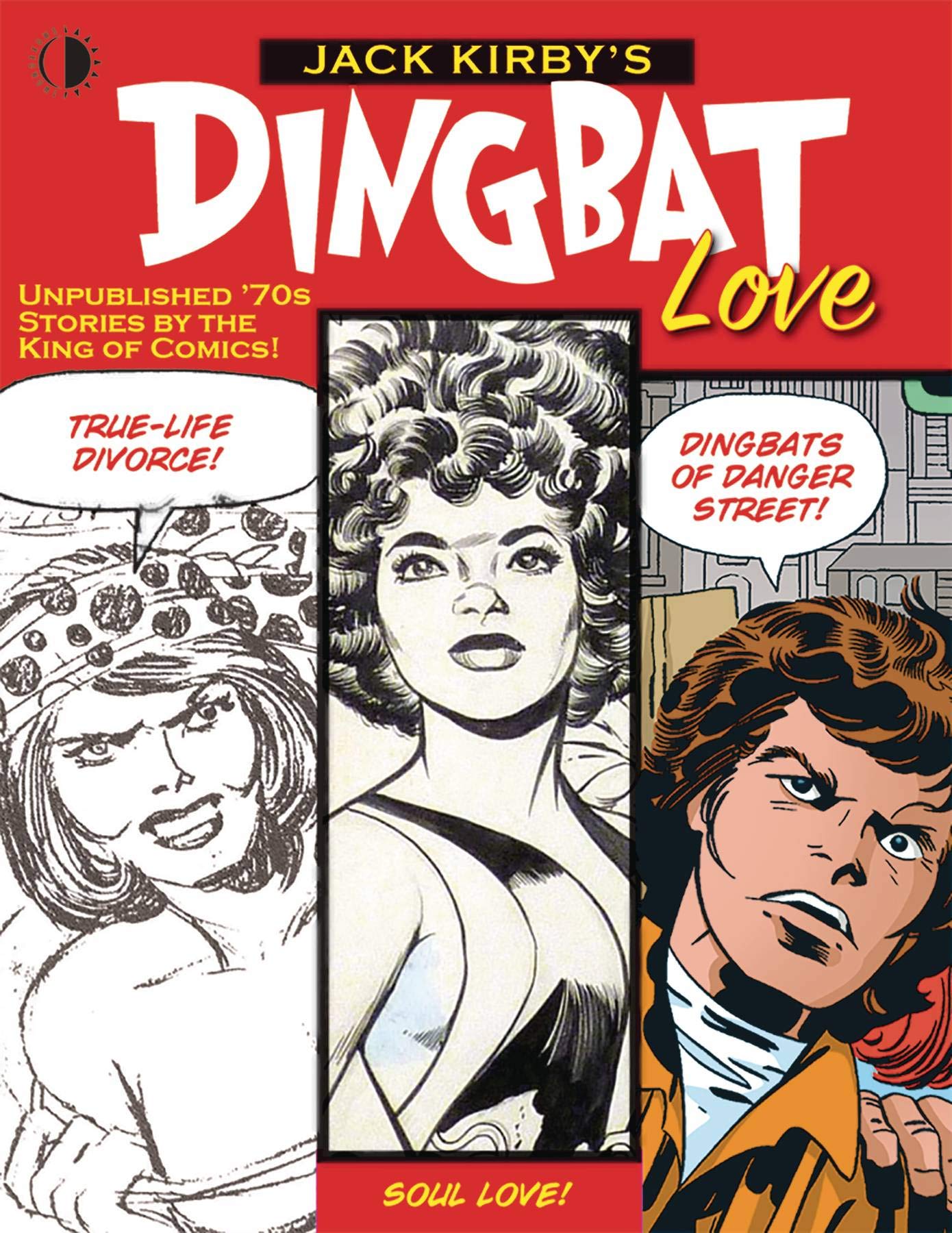
Jack Kirby’s Dingbat Love – Unpublished ’70s Stories by the King of Comics


By Jack Kirby, Vince Colletta, Tony DeZuñiga, Mike Royer Alex Ross, & D. Bruce Berry, with John Morrow, Mark Evanier, Steve Sherman, Jerry Boyd & various (TwoMorrows Publishing)
ISBN: 978-1-60549-091-5 (HB)

Win’s Christmas Gift Recommendation: Lost Chances Revisited and Reassessed… 9/10

Jack Kirby was – and remains, long after his passing – the master imagineer of American comics. His collected works provide a vast and rich trove of astounding narrative delights for any possible occasion. Famed for larger-than-life characters and gigantic, cosmic imaginings, Kirby was an astute, spiritual man who had lived through poverty, gangsterism, the Great Depression, World War II and the rise and stall of the Space Age. He’d seen and survived Post-War optimism, Cold War paranoia, political cynicism and birth and death of peace-seeking counter-cultures. Above all else, he was open-minded and utterly wedded to the making of comics stories on every imaginable subject impacting the human condition, but faced resistance every step of the way…

On returning from valiant service in WWII, Jack – reunited with creative partner Joe Simon – resumed a stellar comics partnership and began producing genre material for older audiences. “S&K” famously invented the genre of Romance comics, adding a fresh strand to a canon already spanning every subject imaginable. We know Kirby mostly for reinventing superheroes, but this book of “might-have-beens” asks a powerful and – for proponents of the medium and art form – distressing question: how far would Jack have imagined and pioneered if he’d been supported in his experiments rather than continually undercut and sandbagged?

Kirby always understood the fundamentals of pleasing an audience and toiled diligently to combat the appalling prejudice about the word-&-picture medium – especially from insiders and professionals who despised the “kiddies’ world” they felt trapped in. During the 1950s, changing tastes, dog-whistle politics and an anti-crime, anti-horror witch-hunt quashed the mature end of the US comics industry, and under a doctrinaire, self-inflicted conduct code, publishers stopped innovating and embraced more anodyne fare. This holding pattern saw the demise of many smaller publishers and persisted until the rebirth of superheroes…

From 1956, after he and Simon closed their own studio, Jack rejoined a dying outfit using the name “Atlas”. Kirby partnered with Stan Lee on science fiction, mystery, war and western anthologies and, when superheroes were revived, swiftly changed the world with a salvo of bold new concepts and characters that revitalised – if not actually saved – the comics business.

However, after little more than a decade, costumed characters began to wane again as public interest in the supernatural grew. With books, television and movies all exploring “The Unknown” in gripping and stylish new ways, the Comics Code Authority sought to slacken its censorious chokehold on horror titles, hoping to save the industry from implosion when the superhero boom busted. Enduring increasing editorial stonewalling and creative ennui at Marvel, in 1970 Kirby (after breaking ground with a few horror shorts for the House of Ideas’ new anthology titles) accepted a long-standing offer from arch rival DC Comics…

Promised freedom to innovate, one of the first projects he tackled was an entirely new full-colour, slick paper magazine format carrying material targeting adult readerships. However, backtracking almost immediately, DC’s powers-that-be incrementally cut a wide prospectus of fresh ideas and titles for “The Speak-Out Series” to a brace of pulp paper, monochrome magazines: In The Days of The Mob and Spirit World – and even let those wither after a single issue of each.

For the full story of how that worked out, you can read Mark Evanier’s acerbic article in this glorious oversized (227 x 280 mm) hardback compilation. He was there and knows a lot of the secrets. There’s also commentary from his editorial studio partner who was also part of the sabotaged project that could have forced American comics to grow up a generation earlier than they did. He closes this tome with ‘Speaking Out – An Afterword by Steve Sherman’

Dingbat Love combines lost stories and unseen art with a history of how it all went wrong. There’s even a reconstruction from extant material and informed deduction of how one of Kirby’s proposed gamechangers might have looked, but we open with ‘A Foreword, Looking Back’ by ultimate fan John Morrow and a discussion of the proposed big gun launch in ‘True Life Divorce’ – an Introduction by Mark Evanier offering background and context.

The remaining comics material intended for True-Life Divorce follows as happily-married Kirby explored the contentious hot button topic of marriage and separation. All his proposed titles were intended to be collaborative projects with The King starting each for other writers and artists to continue, but throughout the creative process DC insisted their superstar creator carry the bulk of the output: a herculean task even for the legendarily prolific auteur.

‘”The Ladies Man”’ – by John Morrow’ then explores Kirby’s women characters, beginning in the era when Emancipation gave way to Liberation and over half the planet started finding powerful role models addressing their lives and experiences. As with the Romance revolution of 1947, Kirby’s goal was to make comics women would read and a rough plan of the contents of True-Life Divorce #1 precedes a magazine where marriage counsellor Geoffrey Miller would share case details of his clients. Racy, thought-provoking but never salacious, the surviving results here are pencilled tale ‘The Maid’ and partially-inked (by Vince Colletta) ‘The Twin’.

Morrow then discusses a breakthrough story that derailed everybody in ‘The Missing Model’ which featured a black woman and her problems with two men. It’s followed by her tragically incomplete tale in 7 pages of 10 (again inked by Coletta) detailing the choices she was forced to make in ‘The Model.’ This particular story caused a storm at DC, as the publishers saw a way to enter the growing and vibrant market of publications for African Americans at a time when comic book sales were in a brutal decline…

More on that later, but here True-Life Divorce #1 finishes with the all-pencilled drama of ‘The Other Woman’ after which ‘And Now… Mike Royer’ discusses a rare snippet probably intended for a second issue and inked for this book by Kirby’s most effective and dedicated embellisher. ‘The Cheater’ is printed with each pencilled page beside Royer’s inked one.

The result of DC’s interest in “The Model” led to the company pressuring Kirby to create a romance magazine for black readers, based on recent ethnocentric style magazines Jet and Ebony.

Although Kirby reluctantly agreed to the project, he again urged the editors to hire young and/or black creators for the prosed periodical alternatively dubbed Soul Romance or Soul Love – and with as little success. Here in ‘A Little Love for Soul Romance’, John Morrow provides a brief history of comic books aimed at African Americans (including Negro Romances and Negro Heroes) and discussion of creators of colour and a critical assessment by black writer Jerry Boyd in ‘Let Your Soul… Love!’ precedes a bold and brave experiment: ‘Soul Love #1 Facsimile Edition.’

With a few willing accomplices, Morrow uses Kirby’s delivered stories for the book to create a reasonable draft of what the King always intended: a glossy paper, full colour magazine with faux ads and editorial content such as ‘Equal Rights Aren’t Wrong’ supporting his comic tales. Inked by Tony DeZuñiga and Colletta these include ‘Fears of a Go-Go Girl!’, ‘Diary of a Disappointed Doll!’, ‘Dedicated Nurse!’, ‘Old Fires!’, and unembellished tale The Teacher’, all fronted by a painted cover by Alex Ross based on a Kirby rough. The project ended ignominiously and was unceremoniously shelved when DC’s sales and distribution team killed it, citing no reasonable way to reach black markets and stores…

‘Another Introduction by Mark Evanier’ details those scary days when comic books almost died as an industry and the febrile period when DC demanded its creators create a wave of new titles and concepts to combat Marvel flooding newsstands with reprint comics. Kirby and Joe Simon responded with a number of books and ideas (and numerous completed stories) but when the company backtracked most of the initial outings (Atlas, Manhunter, The Green Team, The Dingbats of Danger Street, The Outsiders) were bundled into new try-out title 1st Issue Special with Kirby’s Kobra radically retooled before later release. Only their collaboration on a new Sandman was judged sufficient to publish eventually running six issues.

Simon’s The Green Team and Kirby’s The Dingbats of Danger Street were both modern takes on the Golden Age “Kid Gang” concept that had paid such huge dividends with their Young Allies, Boy Commandos, Newsboy Legion, Boys Ranch and Boy Explorers series, and are fully detailed in Morrow’s essay/commentary ‘Danger Street’s Back Alleys’.

Their only official appearance in pre-Crisis on Infinite Earths continuity was in 1st Issue Special #6 (September 1976), with Royer inking a bizarre and hilarious revival of the subgenre starring four multi-racial street urchins (Good Looks, Non-Fat, Krunch and Bananas) united for survival and annoying the heck out of cheesy thugs and surreal super threats like Jumping Jack and The Gasser as well as local cop Lt. Mullins

You’ll need to see DC’s 1st Issue Specials for that yarn, but it transpires – for complex reasons you’ll learn when you buy this book (heck, buy ‘em both!) – that at least two – and perhaps 4 more – full stories were readied at the time. Here, what would have been the second and third outings have been inked by Royer and show in full colour the King layer on drama and tragedy to what appeared to be a comedy feature as ‘The Dingbats of Danger Street #2’ sees Good Looks go dark and hunt professional killer ‘Snake-Meat’ for the oldest reason imaginable: ‘Vengeance’

These stories incorporate glorious multi-page foldouts breathtaking in their graphic shock-value and offer original art reproductions of the first story and page layouts for later ones…

Bruce Berry-inked ‘The Dingbats of Danger Street #3’ focuses on Krunch in a disturbing exploration of child abuse, family exploitation and reasons for runaways by introducing Uncle Birdly and ‘The Dark, Dark, Cellar!’ where he expects to hear his charges ‘Scream, Baby Scream!’

Packed with unseen art pages, promotional materials, sketches. notes and photos, and compiling work commissioned then cancelled this a wonderful treat for fans but regrettably, not a book you can read digitally yet, but hope springs eternal…

Decades after his death Jack Kirby remains a unique and uncompromising artistic force of nature: his words and pictures an unparalleled, hearts-&-minds grabbing delight no comics lover could resist. If you’re not a fan or simply not prepared to see for yourself what all the fuss has been about then no words of mine will change your mind.

That doesn’t alter the fact that Kirby’s work from 1937 to his death in 1994 shaped the entire American scene and indeed the entire comics planet – affecting the lives of billions of readers and thousands of creators in all areas of artistic endeavour for generations. He’s still winning new fans and apostles, from the young and naive to the most cerebral intellectuals. Jack’s work is instantly accessible, irresistibly visceral, deceptively deep whilst simultaneously mythic and human. And that’s all of us, right?

Wherever your tastes take you, his creations will be there ready and waiting.
Jack Kirby’s Dingbat Love editorial package © 2019 TwoMorrows Publishing. Soul Love cover painting © 2019 Alex Ross. Introductions © 2019 Mark Evanier. Afterword and photos © 2019 Steve Sherman. “Let Your Soul… Love!” © 2019 Jerry Boyd. True-Life Divorce, Soul Love, Dingbats of Danger Street and all other DC Comics characters ™ & © DC Comics. All Rights Reserved. All other characters and properties used ™ &/or © their respective rights owners and holders.

Crisis on Multiple Earths Book 3: Countdown to Crisis


By Gerry Conway, Roy Thomas, Kurt Busiek, George Pérez, Marv Wolfman, Dick Dillin, Don Heck, Adrian Gonzales, Chuck Patton, Keith Pollard, Rich Buckler, Alan Kupperberg, Jerry Ordway & various (DC Comics)
ISBN: 978-1-7795-2176-7 (TPB/Digital edition)

Win’s Christmas Gift Recommendation: Unmissable Family Get-togethers… 9/10

As I’ve incessantly mentioned, I was a “Baby Boomer” raised on Julie Schwartz, Gardner Fox and John Broome’s gradual reintroduction of Golden Age superheroes during the halcyon, eternal summery days of the early 1960s. To me, those fascinating counterpart crusaders from Earth-Two weren’t vaguely distant memories rubber-stamped by parents or older brothers – they were cool, fascinating and enigmatically new. And for some reason the “proper” heroes of Earth-One held them in high regard and treated them with obvious deference…

The transcendent wonderment began in The Flash: pioneering trendsetter of the Silver Age Comics Revolution. Showcase Editor Julie Schwartz ushered in a new age with his landmark successes – which also included Adam Strange, Green Lantern, The Atom and (in The Brave and the Bold) Hawkman – directly leading to the invention of the Justice League. That in turn inspired the Fantastic Four and Marvel’s entire empire – changing forever the way comics were made and read…

Whereas the 1940s were about magic and macho, the Silver Age polished everything with a thick veneer of SCIENCE and a wave of implausibly rationalistic concepts which filtered into the dawning mass-consciousness of my generation. The most intriguing and ultimately rewarding was, of course, the notion of parallel worlds. After triumphantly ushering in the return of superheroes, the Scarlet Speedster – with Fox & Broome writing – set an unbelievably high standard for costumed adventure in sharp, witty tales of science and imagination, illustrated with captivating style and refined simplicity by Carmine Infantino.

The epochal epic that changed American comics forever was Fox’s ‘Flash of Two Worlds’ (Flash #123 September 1961, reprinted in many places, but not here): introducing to an emerging continuity the concept of alternate Earths and, the multiversal structure of the future DCU, as well as all successive cosmos-shaking yearly Crises sagas that grew from it.

… And again, where DC led, others followed…

Received with tumultuous acclaim, the notion was revisited in Flash #129 which teasingly reintroduced evergreen stalwarts – Wonder Woman, Hawkman, Green Lantern, The Atom, Doctor Mid-Nite and Black Canary: venerable members of the Justice Society of America. Clearly Editor Schwartz had something in mind…

The tale led to the elder team’s first meeting with the Justice League of America and start of an annual tradition. When ‘Flash of Two Worlds’ brought us the notion of Infinite Earths and alternate iterations of costumed crusaders, fans began agitating for the return of the Greats of the Golden Age. Editorial powers-that-be were hesitant, fearing too many heroes would be silly and unmanageable, or worse yet, put readers off. If they could see us now…

These innovative adventures generated an avalanche of popular and critical approval (big sales figures, too) so inevitably the trans-dimensional tests led to the ultimate team-up in the summer of 1963. Once DC’s Silver Age heroes began regularly meeting their Golden Age predecessors from “Earth-Two”, a yearly tradition commenced and every summer (ish) the JLA would team-up with the JSA to combat a trans-dimensional threat. This gloriously enthralling volume celebrating Infinite Diversity in Infinite Costumes gathers the last combinations and summer double-headers starring the JLA & JSA and includes another outreach team-up designed to set young hearts racing and pulses pounding.

Encompassing October 1979 – November 1984, Justice League of America #171-172, 183-185, 195-197, 207-209, 219-220, 231-232, All-Star Squadron #14-15 and DC Comics Presents Annual #1 cover a transitional period as DC prepared for its 50th anniversary by planning to destroy everything they had built in Crisis on Infinite Earths. The collection opens with a locked-room mystery by Gerry Conway, Dick Dillin & Frank McLaughlin as ‘The Murderer Among Us: Crisis Above Earth One!’ sees the League feting the Society in their satellite HQ and horrified to find one of their veteran guests throttled by unseen hands.

With no possible egress or exit, the greatest detectives of two worlds realise one of their heroic complement must be the cold-blooded killer and a methodical elimination of suspects leads to tense explorations and explosive repercussions in the revelatory finale ‘I Accuse…’

With the next summer’s team-up an artistic era ended as criminally underappreciated illustrator Dick Dillin passed away whilst drawing the saga. He and McLaughlin only completed Conway’s first chapter – ‘Crisis on New Genesis or, Where Have All the New Gods Gone?’ – leaving up-and-coming star George Pérez to fill some very big boots (and gloves and capes and…).

An epic confrontation between JLA, JSA and futuristic deities of Jack Kirby’s astounding Fourth World in #183-185 (October-December 1980) begins with the assembled heroes unilaterally shanghaied out of the regular universe and transported to transdimensional paradise planet New Genesis. That world is utterly deserted but for a furiously deranged warrior Orion who seems set on crushing them all. Happily, he is stopped by late-arriving Mister Miracle, Big Barda, Oberon and Metron who reveal their fellow gods have been captured and sent to hell-world Apokolips by three Earth-2 villains. The world has been in turmoil since Orion killed evil overlord Darkseid. In the interim the vanquished devil’s spirit travelled to Earth-Two and recruited The Shade, Icicle and Fiddler to resurrect him…

Details are reviewed in ‘Crisis Between Two Earths or, Apokolips Now!’ (Conway, Pérez & McLaughlin) as – freshly restored – Darkseid strives to make his still-tenuous existence permanent. In response, the heroes split up to stop him by hitting key components of his technology and support teams. En route they encounter a resistance movement of battle-scarred super-powered toddlers, the horrific reason New Genesisians were initially taken and even how Darkseid plans to invade the natural universe by cataclysmically warping Apokolips into the space currently occupied by Earth-Two…

The diabolical denouement reveals a ‘Crisis on Apokolips or, Darkseid Rising!’, as the scattered champions reunite to stop imminent catastrophe and set the worlds to rights in an explosive clash with no true resolution. Such is the nature of undying evil…

Issues #195-197 (October-December 1981, edited by Len Wein) offered action and intrigue in ‘Targets on Two Worlds’ (Conway, Pérez & John Beatty), as Earth-Two’s premiere mad scientist and serial body-snatcher The Ultra-Humanite gathers a coterie of villains from his own world and Earth-One into a new incarnation of the Secret Society of Super-Villains.

The wily supergenius has divined that by removing five specific Leaguers and JSA-ers from their worlds he can achieve an alteration of the Cosmic Alignment and create a world utterly devoid of all superheroes. Selling the plan to his suspicious pawns Monocle, Psycho Pirate, Brain Wave, Rag Doll, The Mist, Cheetah, Signalman, Killer Frost and Floronic Man is relatively easy. They can see the advantages and have no idea the duplicitous savant is playing them for his own ultimate advantage…

Inked by Romeo Tanghal, the plan successfully concludes in ‘Countdown to Crisis!’ as Earth-One’s Batman, Black Canary, Wonder Woman, Firestorm and Atom are ambushed with their other-world guests Flash/Jay Garrick, Hourman, Hawkman, Superman and Johnny Thunder. Despatched to an inter-dimensional void, they learn the longed-for Realignment results in a hero-free planet as the triumphant miscreants quickly fall out. Similarly banished, Earth-One’s villains spitefully retaliate by freeing the lost heroes from a ‘Crisis in Limbo!’ (illustrated by Keith Pollard, Pérez & Tanghal) and join them in crushing the Ultra-Humanite to restore the previous status quo…

DC Comics Presents Annual #1 (September 1982) then adds another crucial component of Crisis on Infinite Earths, as Marv Wolfman, Rich Buckler & Dave Hunt reintroduce the world where good and evil are transposed. ‘Crisis on Three Earths!’ sees the Supermen of Earths One & Two again thrash their respective nemeses Lex and Alexei Luthor only to have the villains flee to another universe…

In Case You Were Wondering: soon after the Silver Age brought back an army of costumed heroes, ‘Crisis on Earth-One’ (Justice League of America #21, August 1963) and ‘Crisis on Earth-Two’ (in #22) became one of the most important stories in DC history and arguably one of the most important tales in American comics. Sequel saga ‘Crisis on Earth-Three’ & ‘The Most Dangerous Earth of All!’ (JLA#29-30) reprised the team-up thrills after the super-beings of yet another alternate Earth discovered the secret of multiversal travel.

Unfortunately, Ultraman, Owlman, Superwoman, Johnny Quick and Power Ring were super-criminals The Crime Syndicate of Amerika on a world without heroes. They see the JLA and JSA as living practise dummies to sharpen their evil skills upon…

Back at the DCCP Annual, the Luthors land on Earth-3 and begin transdimensional attacks on their archenemies: even tentatively affiliating with Ultraman whilst treacherously planning to destroy all three Earths…

This potential cosmic catastrophe prompts the brilliant and noble Alex Luthor of Earth-Three to abandon his laboratory, turn himself into his world’s very first superhero and join the hard-pressed Supermen in saving humanity three times over…

That same year later – specifically October-December 1982 – the annual scenario expanded into a sprawling multi-title extravaganza: a team-up and chronal crossover encompassing Justice League of America #207-209 and WWII set All-Star Squadron #14-15. Played out across alternate universes and divergent histories, the drama commenced in Justice League #207 as ‘Crisis Times Three!’ (Conway, Don Heck & Tanghal) sees members of the JSA diverted from a trans-dimensional exchange and rendezvous with the JLA.

They are deposited on a terrifying post-apocalyptic alternate Earth where 1962’s Cuban Missile Crisis resulted in atomic war, whilst the JLA are smashed by the unexpected arrival of their evil counterparts the Crime Syndicate of Earth-Three. As the lost JSAers explore a nuclear nightmare, the story unfolds and an old enemy is exposed. This Earth was devastated due to the intervention of malign time-meddler Per Degaton

Having barely survived the attack of the Syndicators, a team of Justice Leaguers – Superman, Zatanna, Firestorm, Hawkman and Aquaman – jump to Earth-Two and discovers a fascistic society which has been ruled by Degaton since the 1940s. Barely escaping, they then plunge back down that timeline to January 1942 to solve the mystery and stumble upon the JSA’s wartime branch: the All-Star Squadron

After the creation of Superman and the very concept of Superheroes, arguably the next most groundbreaking idea for comic books was to stick a bunch of individual stars into a team. Thus when anthology title All Star Comics #3 revealed its previously solo line-up interacting as a comradely group, the very nature of the genre took a huge leap in evolution.

The Justice Society of America inspired innumerable similar iterations over decades but for many of us tragically nostalgia-paralysed fans, the original and genuine pioneers have always been Simply the Best.

Possibly their greatest living fan, advocate and perpetuator is writer, editor and historian Roy Thomas who has long championed – when not actually steering – their revivals and continued crusades against crime, tyranny and injustice. When he moved from Marvel to DC in the early 1980s, Thomas created Arak, Son of Thunder and Captain Carrot, wrote Batman and Wonder Woman and inevitably revived the world’s original Super-Team. Moreover, he somehow convinced DC’s powers-that-be to put them back where they truly belonged – battling for freedom and democracy in the white-hot crucible of World War II. The All-Star Squadron was comprised of minor characters owed by DC/National and All American Comics, retroactively devised as an adjunct to the main team and indulging in “untold tales” of the War period…

The action resumes in All-Star Squadron #14, courtesy of writer Thomas and illustrators Adrian Gonzales & Jerry Ordway. In ‘The Mystery Men of October!’ they are an unknown quantity to the recently arrived Leaguers in search of Degaton. Their arrival coincides with the rogue recovering his erased memories, stealing his boss’s time machine (long story: buy the book for the full details) and heading into the time stream where he encounters and liberates the Crime Sydicators from an energy-prison the heroes had created for them…

Joining forces, the murderous monsters foray forward and across the realities. Arriving in a 1962 and stealing nuclear missiles Russia had stockpiled in Cuba, they precipitate a clash of wills between President John F. Kennedy, Soviet premier Nikita Khrushchev and Fidel Castro triggering atomic Armageddon. Sadly, none of this is known to the JLA or All-Stars in 1942 who see costumed strangers and instantly attack…

That battle ends in JLA #208 after Degaton makes his ultimatum known: America and the world’s total surrender or successive detonation of dozens of atomic super explosives in many nations. Happily the heroes of two eras are ready to stifle ‘The Bomb-Blast Heard ‘Round the World’ (Conway, Heck & Sal Trapani) and deploy accordingly. They are soon joined by JSA comrades from 1982 who have escaped their dystopian dungeon dimension and headed back 40 years for the beginning of the end in A-SS #15’s all-action clash of titans ‘Masters of Worlds and Time!’ (Thomas, Gonzales & Ordway).

The senses-shattering conclusion comes in JLA #209 with Conway & Heck detailing the cautious restoration of all consensus realities in ‘Should Old Acquaintances Be Forgot…’

Thomas joined Conway scripting the penultimate pairing (JLA #219-220 October to November) with Chuck Patton, Tanghal & Pablo Marcos illustrating ‘Crisis in the Thunderbolt Dimension!’ and ‘The Doppelgänger Gambit!’

Here an attack on Earth-One by a coterie of villains from both worlds begins with the magical Thunderbolt of retired JSA stalwart Johnny Thunder inexplicably ambushing the Justice League’s biggest guns. With the heroes in comas, The Wizard, Fiddler, Felix Faust, The Icicle, Chronos and Dr. Alchemy plunder the planet as the remaining costumed champions uncover a shocking secret about Earth-Two émigré Black Canary and clash with a long-forgotten foe who can also control the electrical genie who exposes an awful secret and the hidden history of the JSA… before the good guys and – late addition Sargon the Sorcerer – lower the boom again…

The end of the tradition came one year later as Kurt Busiek, Alan Kupperberg & Buckler debuted a quarrelsome clan whose ‘Family Crisis!’ had cosmic repercussions. Spanning #231 & 232 it begins when Dr. Joshua Champion inadvertently opens the doors of reality and allows a marauding force to enter and endanger all existence. Altered by the exchange, Champion’s children enlist the aid of the JLA and JSA to resist and repel the ghastly Commander on all ‘Battlegrounds!’ imaginable…

Guest-starring Supergirl, the nuanced saga saw realities topple and reborn, as an appearance of The Monitor and his future Harbinger presaged bigger surprises in store…

With previous collection art, covers by Dillin, Dick Giordano, Jim Starlin, Bob Smith, Pérez, Mike DeCarlo, Buckler, Joe Kubert and Patton, plus full biographies of creators, this is a nostalgic delight for all who love superheroes and villains, crave carefully constructed modern mythologies and adore indulgently fantastic adventure, great causes and momentous victories: captivating Costumed Dramas no lover of Fights ‘n’ Tights fun could possibly resist.
© 1979, 1980, 1981, 1982, 1983, 1984, 2023 DC Comics. All Rights Reserved.

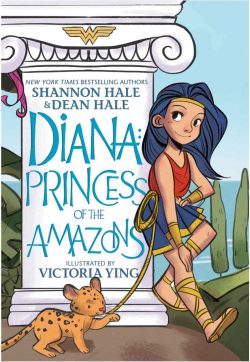
Diana: Princess of the Amazons


By Shannon Hale & Dean Hale, illustrated by Victoria Ying with Lark Pien, Dave Sharpe & various (DC Comics)
ISBN: 978-1-91422-406-5 (TPB/Digital edition)

Win’s Christmas Gift Recommendation: Myth Making Gift Giving… 9/10

In recent years DC opened up its shared superhero universe to generate Original Graphic Novels featuring its stars in stand-alone adventures for the demographic inappropriately dubbed Young Adult. To date, results have been rather hit or miss, but when they’re good, they are very good indeed.

They’ve been especially scrupulous producing material catering to girls and other previously neglected comics minorities, tapping into the communal history and mystique of the DCU and always visiting aspects of youthful rebellion and growing independence.

Here – crafted by Shannon Hale (Rapunzel’s Revenge, The Princess in Black, Squirrel Girl, Princess Academy, Ever After High, Real Friends) & Dean Hale (Rapunzel’s Revenge, The Princess in Black, Squirrel Girl), illustrator, author and animator Victoria Ying (Big Hero 6, Moana, Meow!, Not Quite Black and White) colourist Lark Pien and letterer Dave Sharpe – is a tale of the earliest icon women in comics ever had: Earth’s most recognisable Female Heroic Ideal.

Wonder Woman is the acme of female role models. Since her premier she has permeated every aspect of global consciousness, becoming not only a paradigm of comics’ very fabric but an affirming symbol to women everywhere. In whatever era you observe, the Amazing Amazon epitomises a perfect balance between Brains and Brawn and, over decades, has become one of a rarefied pantheon of literary creations achieving meta-reality.

Her origins have been common cultural currency for so long and assimilated by so many generations that it’s a given the story can now be massaged and reinvented to accommodate and address any readership – just like all the best fairy tales.

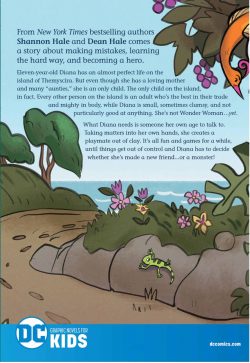
Diana: Princess of the Amazons opens on the paradisical island of Themyscira: home of immortal Hellenic warriors called Amazons. They are mighty and wise and each is millennia old, happily ruled by their Queen Hippolyta. A few years prior to this tale she was blessed with a daughter. Diana is smart, courageous and inquisitive, spending her days learning from her thousands of “aunties”, playing with the vast number of animals inhabiting the land, exploring and having fun. Of course, as the only child on an isolated island, there’s no one to have all that fun with…

When she little everybody paid her attention and sought to share Diana’s life, but now that she’s nearly a teenager she often feels in the way of grown up stuff. It’s like she’s always in trouble… too old and simultaneous still too young for anything…

Then one day, Auntie Lyssa reminds Diana how Hippolyta moulded a baby out of clay and the gods and goddesses breathed life into it. More out of boredom than anything else, Diana heads to the beach and using clay, sand and surf tries ‘Making a Friend’ She isn’t surprised that it doesn’t work, but a little later meets the almost-breathing fruits of her labours when someone follows her…

The sand creature calls herself Mona and wants to be friends but refuses to let adults see her. Slowly, Mona becomes a covert but constant presence in Diana’s life, but that comes at a cost. There’s a flaw in her and an exciting wildness, leading to ‘Cutting Class on Themyscira’ and even wilful mischief. The princess should be ashamed of herself – but increasingly isn’t…

When one prank goes awry, Diana desperately wants to make amends and earn back her mother’s respect, and Mona hints that she should demonstrate her warrior prowess…

Of course the island is a paradise and no heroic deeds are possible there. All the Amazons’ martial training is because they are tasked with guarding Doom’s Doorway: the entrance to a hell dimension where the gods have imprisoned all the monsters of mythology. Thankfully ‘Only an Amazon’ can even turn the key holding the horrors in check.

With the incessant cajoling voice of her only friend in her ears, Diana makes the biggest mistake of her life…

However, with Hell unleashed and her aunties losing a savage battle against unholy terrors, she soon proves why she is ‘The Best of Us’: making hard decisions, exposing the truth of Mona and ultimately facing death to make things right again…

A superb example of a beloved character living up to her full potential, this is a sublime and rousing romp proving heroism comes in all manner of packages and affirming everyone can be the hero.

If further proof were required, this book also contains an enchanting extended excerpt from Zatanna and the House of Secrets to hammer home the point by entertaining the heck out of you and leaving you wanting more…
© 2020 DC Comics. All Rights Reserved.

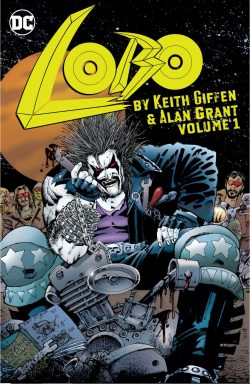
Lobo by Keith Giffen & Alan Grant volume 1


By Keith Giffen & Alan Grant with Simon Bisley, Christian Alamy, Denys Cowan, Kevin O’Neill & various (DC Comics)
ISBN: 978-1-4012-7477-1 (TPB/Digital edition)

Win’s Christmas Gift Recommendation: ’Tis the Season To Be Fragged… 8/10

Lobo is an incredibly powerful, inescapably violent, perpetually drunken thug afflicted with a love of space dolphins, an utter disregard for all other life and an unshakable moral code hard for anyone else to grasp. The obnoxious, overbearing, unsanitary intergalactic bounty hunter was first seen in Omega Men #3, cover-dated June 1983. He then cropped up all over the DC universe, even becoming a mainstay of the popular L.E.G.I.O.N. series: indentured by cunning stunt as a (sort of) peacekeeper to the intergalactic commercial police force run by Vril Dox, “son” of one multiversal iteration of cosmic super-villain Brainiac.

He had his own monthly title for a few years as well as multiple miniseries and specials, and was a popular candidate for inter and cross-company team-ups. He’s even been a repeat offender on screen in both live action and animated iterations. In-world, the name Lobo roughly translates as “he who devours your entrails and enjoys it”. Despite being pretty much a one trick pony and increasingly an exercise in outrageous graphic excess, this unstoppable, anarchic force-of-nature exploded in popularity in the decade following debut. He was exactly what many fans wanted.

This collection reprints Lobo #1-4; The Lobo Paramilitary Christmas Special; Lobo’s Back #1-4; Lobo: Blazing Chain of Love; Lobo Convention Special and material from Who’s Who in the DC Universe, collectively spanning all of infinity via cover-dates November 1990 to September 1993.

Without any kind of fair warning, this bloodbath of poor taste and shocking excess opens with initial Limited Series Lobo #1-4: ‘The Last Czarnian’. The skeevy brute always prided himself on being the final survivor of his planet, but here finds to his horror and disgust that he missed someone when he slaughtered his entire race. That lucky survivor is his old fourth grade teacher Miss Tribb, who has unbelievably and unwisely written an unauthorized tell-all biography of “the Main Man” who was her least favourite pupil ever…

Forbidden by his own honour-code from killing her, he must instead escort the snippy snarky old baggage to Dox at L.E.G.I.O.N. HQ with every nut-job in the universe pursuing them, hell-bent on killing one or other or preferably both of them. Subdivided into ‘Part One: Portrait of a Psychopath’, ‘Part Two: Lord of the Dance’, ‘Part Three: Spell or Die’ and ‘Part Four: The Last Last Czarnian’, this blistering bonkers baroque barbarity is plotted and laid out by Giffen, scripted by Grant and outrageously limned by hip headbanger Simon Bisley as colourist; Lovern Kindzierski and letterer Todd Klein aid and abet the cartoon carnage. As usual, despite all the forces ranged against him, The Main Man has the last – albeit misspelled – word…

The Lobo Paramilitary Christmas Special (January 1992) follows with Giffen, Grant, Bisley, Kindzierski and Gaspar Saldino expediting ‘The Lobo Xmas Sanction’ as cash-strapped parents of far-too-many brats look to save on end of year expenses and learn how a certain unsavoury soul and his dog Dawg were hired by The Easter Bunny to take out his biggest rival in the holiday icon game: Santa Claus. The elves were no real problem but old man Kringle was a harder nut to crack and left a surprise Lobo never anticipated…

Beginning in May 1992, and coloured by Danny Vozzo, Lobo’s Back #1-4 comprised ‘The Final Fragdown’, ‘Heaven is… a 4-Letter Word’, ‘If the Jackboot Fits…!’ and ‘The War in Heaven’ then details his return to the private sector after L.E.G.I.O.N. implodes and how he dies trying to bring in the infamous Loo, the most dangerous being in the universe.

What follows is an outrageous, darkly hilarious, blood-soaked spin on a venerable old tale (you’ve probably seen the Bugs Bunny cartoon classic) as Lobo makes himself persona non grata in every aspect of the afterlife. When both Heaven and Hell discover that the Main Man is too much to handle, there’s only one place to go and that’s back here, but nobody said it had to be in his original body…

Fans and the spiritually attuned will want to see what this creative team does with comic guest stars loke The Demon and General Glory and a host of pantheons and holy folk of all denominations…

Behind a cover by Dan Brereton, Lobo: Blazing Chain of Love sees artist Denys Cowan, colourist Noelle Giddings and letterer “Tanya” Klein join Giffen & Grant to explore the Main Man’s other main interest, only to encounter a forced shortage of willing babes of negotiable affection…

You’d think that’s the kind of problem relentless remorseless violence couldn’t fix. You’d be wrong…

This yarn will confound all your expectations as it is in fact a potent, brilliantly-conceived argument for safe sex crafted at the height of the fightback against HIV/AIDS, leading directly into our final furious foray… against Comics fandom itself…

The Lobo Convention Special – with the much-missed Kev O’Neill delivering another inimitable illustration masterclass, and Digital Chameleon adding hues to the queues at ‘Lobo-Con’ – is blackly comedic, ironic, sardonic and manic, as it depicts and cruelly deconstructs the people it depends upon. After skewering the great, good and especially unwashed of the industry, it all ends in carnage but begins with Lobo looking to replace his copy of the Death of Superman and heading to a convention packed with the kind of fanboys we’re all absolutely certain are FAR WORSE than we are…

The carnage concludes with info pages from Who’s Who in the DC Universe

At the height of his popularity the Main Man of Mayhem was a publisher’s dream. There was actual baying from fans and speculators for more product and a largely new and receptive audience which hadn’t seen the unleashed potential of grown up comics. These tales for (im)Mature readers aren’t to everybody’s taste, but Giffen & Grant’s wickedly sharp scripts gave Bisley (assisted by Christian Alamy) and later artists scope for breathtakingly memorable art sequences, and sometimes just going wild is as rewarding as the most intricately balanced craftwork and plot-building.

All that being said, if you’re in the right mood, his kind of gratuitous mayhem can be wonderfully entertaining and has much to recommend it if vicious, sardonic slapstick pushes your buttons. Comics excess at its finest.
© 1990, 1991, 1992, 1993, 2018 DC Comics. All Rights Reserved.

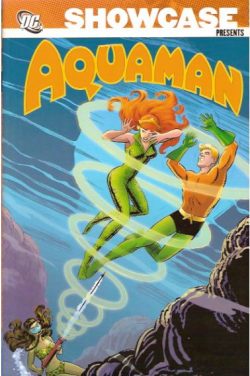
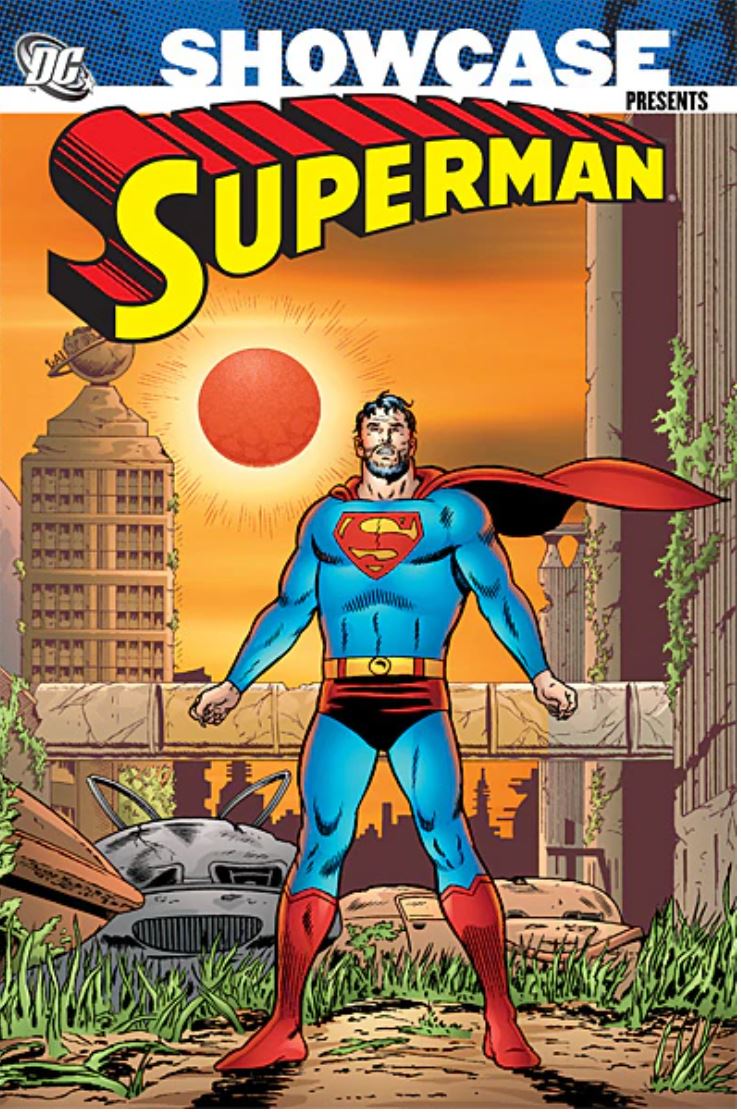
Showcase Presents Aquaman volume 3


By Bob Haney, Nick Cardy, Sal Trapani, Leo Dorfman & Pete Costanza & various (DC Comics)
ISBN: 978-1-4012-2181-2 (TPB)

We’re counting down to what augurs to be another Christmas movie megahit for DC, so let’s take a look at the lengthy history of page, screen, game and giant mutated seahorse…

Aquaman was one of a handful of costumed adventurers to survive the superhero collapse at the end of the Golden Age; a rather nondescript and genial guy who solved maritime crimes and mysteries when not rescuing fish and people from sub-sea disasters. Created by Mort Weisinger and Paul Norris, he first launched in More Fun Comics #73 (1941). Strictly a second stringer for most of his career he nevertheless continued on beyond many stronger features, illustrated by Norris, Louis Cazaneuve, Charles Paris, and latterly Ramona Fradon who drew every adventure from 1954 until 1960.

When Showcase #4 rekindled the public’s taste for costumed crimefighters with the advent of a new Flash, DC updated its small band of superhero survivors, especially Green Arrow and Aquaman. Records are incomplete, sadly, so often we don’t know who wrote what, but after the revamp fuller records survive and this third black and white collection starring the King of the Seven Seas has only two creative credit conundrums.

Now with his own title and soon to be featured in the popular, groundbreaking cartoon show Superman/Aquaman Hour of Adventure, the Finned Fury seemed destined for super-stardom. These joyously outlandish tales, reprinting issues #24-39, a Brave and the Bold team-up with The Atom (# 73) and a scarce-remembered collaboration from Superman’s Pal Jimmy Olsen #115 comfortably and rapturously mark the end of the wholesome, affable hero, laying groundwork for a grittily innovative run from revolutionary editor Dick Giordano and hot new talents Steve Skeates, Jim Aparo and Neal Adams…

Those are a treat for another time, but there’s entertainment a-plenty here beginning with Aquaman #24 (November/December 1965) by an uncredited author (Dave Wood, George Kashdan or Jack Miller are strong possibilities) and regular artistic ace Nick Cardy.

In ‘Aquaman: Save Our Seas!’, the titanic tussle with maritime malcontent The Fisherman found the new parents (the Sea King and Mera were the first 1960s superheroes to marry and have kids) almost fatally easily distracted when an alien plot threatens to destroy Earth’s oceans, whilst in #25, ‘The Revolt of Aquaboy!’ by Bob Haney & Cardy sees an ancient Chinese sorcerer rapid-age the proud parents’ newborn into a spiteful ungrateful teenager as part of a plot to subjugate the sunken city of Atlantis.

The entire world went spy-crazy in the first half of the Swinging Sixties and anonymous acronymic secret societies popped up all over TV, books and comics. With #26 (March/April 1966), Aquaman joined the party when seconded by the US government (even though absolute ruler of a sovereign, if somewhat soggy, nation) to thwart the sinister schemes of the Organisation for General Revenge and Enslavement in the still surprisingly suspenseful ‘From O.G.R.E. With Love!’

With Haney & Cardy firmly ensconced as creative team, thrilling fantasy became the order of the day in such power-packed puzzlers as #27’s ‘The Battle of the Rival Aquamen’ – wherein alien hunters unleash devious duplicates of the Sea King and his Queen – before #28’s ‘Hail Aquababy, New King of Atlantis!’ introduces rogue American geneticist Dr. Starbuck. He seeks to steal the throne with subtle charm, honeyed words… and a trained gorilla and eagle modified to operate underwater…

Archenemy Orm the Ocean Master returns to attack America – and the world – in tense undersea duel ‘Aquaman, Coward-King of the Seas!’, which also provides some startling insights into the hero and villain’s shared shadowy pasts as well as the requisite thrills and chills, after which ‘The Death of Aquaman’ proves to be a guest-star-studded spectacular of subterfuge, double-cross and alien intrigue. The very much alive Sea King then finds himself a fish trapped out of water when ‘O.G.R.E. Strikes Back!, attacking the United Nations!

Ocean Master’s obscured family connections clearly struck a chord with readers as he returns in #32 to unleash the ancient leviathan ‘Tryton the Terrible’ whilst the troublesome teenagers get a tacit acknowledgement of their growing importance with the introduction of Aqua-Girl in ‘Aqualad’s Deep-Six Chick!’ (stop wincing; they were simpler, more obnoxious times and the story itself – about disaffected youth being exploited by unscrupulous adults – is a perennial and worthwhile one).

Aquaman #34 featured another evil doppelganger ‘Aquabeast the Abominable’, typifying a new, harsher sensibility in storytelling. Even though the antagonists were still generally aliens and monsters, from now on they were far meaner, scarier aliens and monsters…

The Sea King teamed up with Justice League of America compatriot The Atom in The Brave and the Bold # 73 (August/September 1967) to tackle a microscopic marauder named ‘Galg the Destroyer’ in a taut drama written by Haney and illustrated by always impressive and vastly undervalued Sal Trapani, before returning to his home-title and another deadly clash with Ocean Master and ruthless nemesis Black Manta. Never afraid to tweak the comfort zone or shake up the status quo, Haney’s excellent tale ‘Between Two Dooms!’ epitomises the growing darker sensibilities of the title, resulting in all Atlanteans losing their ability to breathe underwater, leaving Aquaman’s subjects virtual prisoners in their own sub-sea city for years to come…

Now a TV star, Aquaman went from strength to strength as Haney & Cardy pulled out all the creative stops on such resplendent battles tales as ‘What Seeks the Awesome Three?’ – pitting the hero against mechanistic marauders Magneto (no relation), Claw and Torpedo-Man – and chillingly prophetic eco-drama ‘When the Sea Dies!’, due in no small part to villains Ocean Master and The Scavenger.

Closing out his volume are two more dark thrillers and a classic guilty pleasure. Firstly, Aquaman #38 introduced a relentless, merciless vigilante who accidentally set his sights on the Atlantean Ace in ‘Justice is Mine, Saith the Liquidator!’, before ‘How to Kill a Sea King!’ tells a tragic tale of an alien seductress set on splitting up the Royal Couple. The era and this collection end with a charming treat from scripter Leo Dorfman and artist Pete Costanza taken from Superman’s Pal Jimmy Olsen #115 (October 1968).

The greatest advantage of these big value monochrome compendia was the opportunity they offered, whilst chronologically collecting a character’s adventures, to include crossovers and guest spots from other titles. When the star is as long-lived and widely travelled as Aquaman, that’s an awful lot of extra appearances for a fan to find, so the concluding tale here – taken from a title cruelly neglected by today’s fans – is an absolute gold-plated bonus…

‘Survival of the Fittest!’ sees the mystical Old Man of the Sea attempt to replace Aquaman with the far more pliant cub reporter: never realising the lad is made of far sterner and more decent stuff than the demon could possibly imagine…

DC has a long, comforting history of genteel, innocuous yarn-spinning delivered with quality artwork. Haney & Cardy’s Aquaman is an all-but-lost run of classics worthy of far more attention than they’ve received of late. It is a total pleasure to find just how readable they still are. With tumultuous sea-changes in store for the Sea King, the comics industry and America itself, the stories in this book signal the end of one glorious era and the promise – or threat – of darker, far more disturbing days to come.
© 1965-1968, 2009 DC Comics. All Rights Reserved.

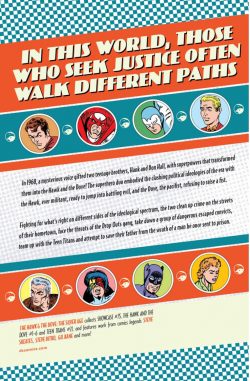
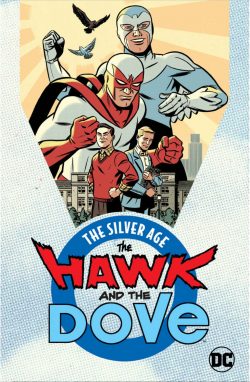
The Hawk and The Dove: The Silver Age


By Steve Ditko, Gil Kane, Neal Adams, Nick Cardy, John Celardo, Sal Trapani, Wally Wood & various (DC Comics)

ISBN: 978-1401278052 (TPB/Digital edition)
Win’s Christmas Gift Recommendation: For a Season of Heated Family Debates… 9/10

The 1960s changed the world, especially in comics. Fresh ideas, new freedoms, young talents emerging and a growing assurance among established creators that what they were doing mattered and had lasting relevance generated a wave of inspiration and new characters everywhere. Not all of them hit home, but all have lasting significance. Happy Anniversary Hawk & Dove

Steve Ditko was one of our industry’s greatest and most influential talents and – in his lifetime – one of America’s least lauded. Reclusive and reticent by inclination, his fervent desire was always just to get on with his job, telling stories the best way he could: letting his work speak for him. Whilst the noblest of aspirations, that attitude was usually a minor consideration – and even an actual stumbling block – for the commercial interests which controlled all comics production back then and still exert an overwhelming influence upon the bulk of mainstream comic industry output. If you need more biographical background, there are plenty of wonderful books or even that internet stuff to find it. I’m sticking to his wish to have the stories tell you all you need to know…

After his legendary disagreements with Stan Lee led to Ditko quitting Marvel he worked at Warren Publishing and resumed his career-long association with Charlton Comics. Their laissez faire editorial attitudes always offered virtual creative freedom, if not great financial reward, but when their trailblazing editor Dick Giordano was poached by rapidly-slipping industry leader DC Comics in 1968, he brought with him some of his bullpen of key creators.

Whilst Jim Aparo, Steve Skeates, Frank McLaughlin and Denny O’Neil found a new home, Ditko began only a sporadic – if phenomenally fruitful – association with DC.

During this heady, unsettled period, the first strips derived from Ditko’s interpretation of novelist Ayn Rand’s Objectivist philosophy began appearing in fanzines and independent press publications like Witzend and The Collector – an avenue of freer expression the artist wholeheartedly embraced in an era of social rebellion. For the “over-ground” publishing colossus DC, he devised numerous short stories for genre anthologies and a brace of cult classics. Beware The Creeper came first, followed by the superbly captivating concept gathered here: The Hawk and the Dove. Later visits to the house of Superman & Batman generated Shade, the Changing Man, Stalker and The Odd Man, plus truly unique reinterpretations of The Demon, Man-Bat, Legion of Super-Heroes and many more…

This slight but superb compilation gathers every Ditko-drafted episode of a feature very much of its time plus those who took up the task when he left: curating Showcase #75, The Hawk and the Dove #1-6 and Teen Titans #21, covering May/June 1968 to May/June 1969.

The domestic drama of a family at war naturally opens ‘In the Beginning’ (Showcase #75, with Ditko doing everything except dialoguing which was left to relative youngster Steve Skeates) as high school kids Don and Hank Hall resume their heated quarrel about what American society needs to be. Don is left-leaning pacifist and younger brother Hank is savagely reactionary: pro-military, pro-patriot and anti-dissent of any kind. It was a situation played out all over the world at that crucial stage of the Vietnam war as a new generation turned away from what their parents held dear…

The Hall boys’ paternal parent was doctrinaire small town Judge Irwin Hall of Elmond County: handing out harsh but fair pronouncements that were the cause of a minor superhero moment. When he throws the book at convicted racketeer Dargo, it sparks a wave of violent reprisals and assassination attempts that hospitalise the Judge. Constantly arguing their irreconcilable views, Don and Hank follow one gangster they suspect and are trapped in a warehouse, helpless to prevent a follow-up murder attempt. Their mounting panic and frustration ends when a mysterious voice magically grants them superpowers and costumed identities based on their divergent worldviews and allowing them to escape and foil the killers…

The gift only activates “when evil is present” and also magnifies their ability to act out their philosophical standpoint, and in typical Ditko manner is heartily vilified by the Judge who advocates the rule of law and enforcement of elected authority over criminal vigilantism…

Reaction was strong enough to warrant a solo series and cover-dated August/September that year, The Hawk and the Dove #1 (again scripted by Skeates) revealed ‘The Dove is a Very Gentle Bird’ as teen thieves The Drop-outs plunder at will, with Dove Don and Hawk Hank taking very different approaches to stopping them. The concept of the warring brothers was fascinating but extremely flawed in comic book terms.

Hawk happily smashed everything in traditional Fights ‘n’ Tights style whilst Dove second-guessed his own every action, enduring all kinds of permutation to be dynamic and proactive without ever actually hitting anyone: a definition of pacifism that struggled with itself…

The dichotomy clearly affected Ditko, who abandoned his creation after only three stories, although his swansong ‘Jailbreak’ (H&D #2 Ditko & Skeates) is a mini-masterpiece perfectly embodying all those innate contradictions to craft a powerful tale of ideology and redemption. When the Hall family vacation is overtaken by a mass prison escape, crazed killer Harker forces hopeless, despondent career-convict Davis and a genuinely-reformed young parolee to escape with him, intending to sacrifice them to aid his getaway. When Harker takes the Halls hostage, Hawk and Dove manifest, but as the belligerent bird-boy brutalises Davis and the many escapees he brought along, the repentant parolee saves the hostages whilst Dove stubbornly defeats Harker by taking the beating of his life and wearing his opponent down. Here, the true victory belongs to Don and the system that punishes the guilty and rewards the rule-followers: hardly a radical challenge to the social issues the series sought to redress…

The Hawk and the Dove #3 (December 1968/January 1969) brought a big creative change but more thematic confusion as Gil Kane & Sal Trapani joined Skeates for a brace of crime mysteries. ‘After the Cat’ has the heroes hunt a violent costumed burglar, where Dove’s principles directly lead to tragedy and death after which ‘Twice Burned!’ finds the avian avengers helpless when a savage assault and travesty of justice leads an angry teenager into vengeful violence…

Skeates, Kane & Trapani advanced the themes of ideology versus family bonds in #4 as ‘The Sell-Out!’ sees a mayoral run implicate Judge Hall in wrongdoing when Hawk and Dove expose their father’s oldest political ally as a murdering criminal mastermind funding his campaign through forgery and art theft…

The inevitable occurs in #5 when Kane takes over scripting and Wally Wood assumes the inker’s role in ‘Walk With Me O’ Brother… Death Has Taken My Hand!’

A pre-WWII infant immigrant from Latvia born Eli Katz, Gil Kane was a pivotal player in the developing US comics industry, and indeed the art form itself. Working as an artist, and an increasingly more effective and influential one, he drew for many outfits from 1942 on, tackling superheroes, crime, action, war, mystery, romance, animal heroes (Streak, Rex the Wonder Dog!), movie adaptations Westerns and Science Fiction tales.

In the late 1950s he became one of Julie Schwartz’s key artists: regenerating and rebooting the superhero concept. Yet by 1968, at the top of his profession, this relentlessly revolutionary and creative man felt so confined by the juvenile strictures of the industry that he struck out on bold new ventures that jettisoned the editorial and format bondage of comic books for new visions and media. His Name Is Savage was an adult-oriented black & white magazine about a cold and ruthless super-spy in the James Bond/Matt Helm/Man Called Flint mould; co-written by friend and collaborator Archie Goodwin. It was very much a precursor in tone, treatment and subject matter of many of today’s adventure titles.

His other venture, Blackmark (1971, also with Goodwin), not only ushered in the comic book era of Sword & Sorcery, but also became one of the medium’s first Graphic Novels. Technically, as the series was commissioned by fantasy publisher Ballantine as 8 volumes, it was also envisioned as America’s first comic Limited Series. Before them, though, there was Captain Action and The Hawk and The Dove. At this moment Kane was eager to stretch his creative muscles in a period of great change and challenge and editor Dick Giordano was happy to oblige…

The tale of betrayal and rage sees Irwin Hall uncharacteristically intercede when old friend and literal life-saver Sam Hodgins is framed for armed robbery and murder. When Hawk and Dove investigate they discover a shocking truth that leads to Hank Hall being near-fatally injured as Don – losing his mind with grief – betrays his principles in pursuit of vengeance, not justice…

The tale leads into Teen Titans #21 (June 1969) and a landmark guest shot in DC’s other young heroes title. Written by Neal Adams, pencilled by him and Sal Amendola with inks from brush-maestro Nick Cardy – one of the all-out prettiest illustration jobs of that decade – the tale is centrepiece of a triptych tale spanning TT #20-22.

Facing interdimensional invasion spearheaded by a human multinational crime gang, Titans (Kid Flash, Robin, Wonder Girl and Speedy) are briefly joined by our symbolic super-teens for ‘Citadel of Fear’: chasing smugglers, facing evil ETs and ramping up the surly teen angst quotient whilst moving the invaders story-arc towards a stunning conclusion that you’ll have to read elsewhere

The unstoppable superhero recession of the late 1960s generated incredible and bold experiments, but all those groundbreaking advances went unheeded and unheralded – except by the next generation of comic creators who benefitted from them. Back then, costumed hero books fell like dominoes and The Hawk and The Dove died with #6 (June/July 1969, by Kane & John Celardo). ‘Judgment in a Small Dark Place!’ again focusses on Judge Hall as the son of a man he jailed years previously targets the family before kidnapping and torturing the draconian lawgiver.

Unable to cooperate, the boys search for him separately, but in the end it’s Hawk’s mindless violence that solves the problem and – as usual – Hall’s ungrateful response is seeking to arrest the lawless vigilantes…

This little slice of obscure hero history also includes spectacular covers by Ditko, Kane and Cardy.

The Sixties was the era when all assorted facets of “cool-for-kids” ephemera finally started to coalesce into a comprehensive assault on our minds and our parents’ pockets. Music, TV, movies, comics, bubble-gum cards and toys all began concertedly feeding off each other, building a unified and combined fantasy-land no kid could resist, but there was also deep and permanent change to the culture and social consciousness and kids became aware politically active for the first time. Those competing colliding forces have never been more wonderfully expressed than in the stories in this book and you would be mad to miss it.
© 1968, 1969, 2018 DC Comics. All Rights Reserved.

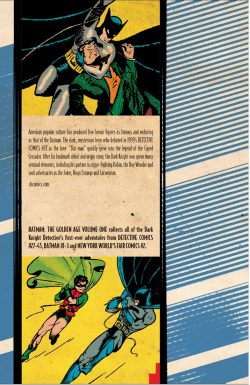
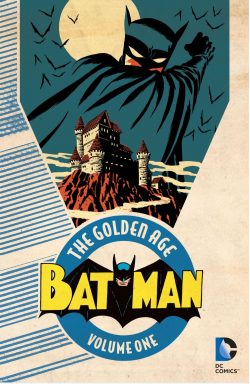
Batman: The Golden Age volume 1


By Bob Kane, Bill Finger, Gardner Fox, Whitney Ellsworth, Sheldon Moldoff, Jerry Robinson, George Roussos & various (DC Comics)
ISBN: 978-1-4012-6333-1 (TPB/Digital edition)
Win’s Christmas Gift Recommendation: Vintage Comic book Perfection… 10/10

Next year marks Batman’s 85th Anniversary and we’ll be covering many old and new books about the Dark Knight over the year. However, why not pre-load the noir wonderment with this perfect compilation of how it all began. It’s not too big – like an Omnibus edition – or too small – like a measly pamphlet comic book – and would therefore make an ideal gift for the fan in your life (and we all know I mean you, right…)?

Batman: The Golden Age re-presents the Gotham Guardian’s earliest exploits in original chronological order, forgoing glossy, high-definition paper and reproduction techniques in favour of a newsprint-adjacent feel and the same flat, bright-yet-muted colour palette which graced the originals. There’s no fuss, fiddle or Foreword, and the book steams straight into the meat of the matter with the accumulated first year and a half of material featuring the masked mystery-man, plus all those stunning covers spanning Detective Comics #27-45, Batman #1-3 and the Dynamic Duo’s story from New York World’s Fair Comics 1940. That cumulatively covers every groundbreaking escapade from May 1939 to November 1940.

As Eny Fule Kno, Detective #27 featured the Darknight Detective’s debut in the ‘Case of the Chemical Syndicate!’ by Bob Kane and as yet still anonymous close collaborator/co-originator Bill Finger.

A spartan, understated yarn introduced dilettante playboy criminologist Bruce Wayne, drawn into a straightforward crime-caper as a cabal of industrialists are successively murdered. The killings stop when an eerie figure dubbed “The Bat-Man” intrudes on Police Commissioner Gordon’s stalled investigation to ruthlessly expose and deal with the hidden killer.

The following issue saw the fugitive vigilante return to crush ‘Frenchy Blake’s Jewel Gang’ before encountering his very first psychopathic killer and returning villain in Detective Comics #29. Gardner Fox scripted these next few adventures beginning with ‘The Batman Meets Doctor Death’, in a deadly duel of wits with deranged, greedy general practitioner Karl Hellfern and his assorted instruments of murder: the most destructive and diabolical of which was sinister Asiatic manservant Jabah…

This is my cue to remind all interested parties that these stories were created in far less tolerant times with numerous narrative shortcuts and institutionalised social certainties expressed in all media that most today will find offensive. If that’s a deal-breaker, please pass on this book… and most literature, pop songs and films created before the 1960s…

Confident of their new villain’s potential, Kane, Fox and inker Sheldon Mayer encored the mad medic for the next instalment and ‘The Return of Doctor Death’, before Fox & Finger co-scripted a 2-part shocker debuting the first bat-plane, Bruce’s girlfriend Julie Madison and undead horror The Monk in an expansive, globe-girdling spooky saga. ‘Batman Versus the Vampire’ concluded the tale with an epic chase across Eastern Europe and a spectacular climax in a monster-filled castle in issue #32.

Detective #33 featured Fox & Kane’s ‘The Batman Wars Against the Dirigible of Doom’: a blockbusting disaster thriller which just casually slips in the secret origin of the grim avenger, as mere prelude to intoxicating air-pirate action, before Euro-trash dastard Duc D’Orterre finds his uncanny science and unsavoury appetites no match for the mighty Batman in ‘Peril in Paris’.

Bill Finger returned as lead scripter in issue #35, pitting the Cowled Crusader against crazed cultists murdering everyone who had seen their sacred jewel in ‘The Case of the Ruby Idol’ – although the many deaths are actually caused by a far more prosaic villain. Inked by new kid Jerry Robinson, grotesque criminal genius ‘Professor Hugo Strange’ debuted with his murderous man-made fog and lightning machine in #36, after which all-pervasive enemy agents ‘The Spies’ prove no match for the vengeful Masked Manhunter in DC #37.

Detective Comics #38 (April 1940) changed the landscape of comic books forever with the introduction of ‘Robin, The Boy Wonder’: child trapeze artist Dick Grayson – whose parents are murdered before his eyes – thereafter joins Batman in a lifelong quest by bringing to justice mobster mad dog Boss Zucco

After the Flying Grayson’s killers were captured, Batman #1 (Spring 1940) opened proceedings with a recycled origin culled from portions of Detective Comics #33 and 34. ‘The Legend of the Batman – Who He Is and How He Came to Be!’ by Fox, Kane & Moldoff delivers in two perfect pages what is still the best ever origin of the character, after which ‘The Joker’ (Finger, Kane & Robinson – who also produced all the remaining tales in this astonishing premiere issue) launches the greatest villain in DC’s pantheon via a stunning tale of extortion and wilful wanton murder.

‘Professor Hugo Strange and the Monsters’ follows as an old adversary returns, unleashing laboratory-grown hyperthyroid horrors to rampage through the terrified city whilst ‘The Cat’ – who later added the suffix ‘Woman’ to her name to avoid any possible doubt or confusion – plies her felonious trade of jewel thief aboard the wrong cruise-liner and falls foul for the first time of the dashing Dynamic Duo.

The initial issue ends with the ‘The Joker Returns’ as the sinister clown breaks jail to resume his terrifying campaign of murder for fun and profit before “dying” in mortal combat with the Gotham Guardians.

Following a superb pin-up (originally the back cover of that premier issue) of the Dynamic Duo by Kane, tense suspense and all-out action continues in Detective #39 and Finger, Kane & Robinson’s ‘The Horde of the Green Dragon’ – “oriental” Tong killers in Chinatown – after which ‘Beware of Clayface!’ sees the Dynamic Duo solving a string of murders on a film set which almost sees Julie Madison the latest victim of a monstrous movie maniac…

Batman and Robin solved the baffling mystery of a kidnapped boy in Detective #41’s ‘A Master Murderer’ before enjoying their second solo outing in a quartet of comics classics from Batman #2 (Summer 1940). It begins with ‘Joker Meets Cat-Woman’ (Finger, Kane, Robinson & new find George Roussos) wherein svelte thief, homicidal jester and a crime syndicate all tussle for the same treasure. with our Caped Crusaders caught in the middle.

‘Wolf, the Crime Master’ then offers a fascinating take on the classic Jekyll & Hyde tragedy after which an insidious and ingenious mystery ensues in ‘The Case of the Clubfoot Murderers’, before Batman and Robin confront uncanny savages and ruthless showbiz promoters in poignant monster story ‘The Case of the Missing Link’.

‘Batman and Robin Visit the New York World’s Fair’ comes from the second New York World’s Fair Comics. Finger, Kane & Roussos followed the vacationing Dynamic Duo as they track down a maniac mastermind with a metal-dissolving ray, after which Detective Comics #42 again finds our heroes ending another murderous maniac’s rampage in ‘The Case of the Prophetic Pictures!’ before clashing with a corrupt mayor in #43’s ‘The Case of the City of Terror!’

An unparalleled hit, Batman stories never rested on their laurels. The creators always sought to expand their parameters, as with Detective #44’s nightmarish fantasy of giants and goblins in ‘The Land Behind the Light!’. Then, Batman #3 (Fall 1940) has Finger, Kane, Robinson & Roussos rise to even greater heights, beginning with ‘The Strange Case of the Diabolical Puppet Master’: an eerie episode of uncanny mesmerism and infamous espionage…

A grisly scheme unfolds next as innocent citizens are mysteriously transformed into specimens of horror, and artworks destroyed by the spiteful commands of ‘The Ugliest Man in the World’ before ‘The Crime School for Boys!!’ registers Robin infiltrating a gang who have a cruel and cunning recruitment plan for dead-end kids…

‘The Batman vs. the Cat-Woman’ lastly reveals the larcenous lady in well over her head when she steals for – and from – the wrong people…

The issue also offered a worthy Special Feature as ‘The Batman Says’ presents an illustrated prose Law & Order pep-talk crafted by Whitney Ellsworth and illustrated by Robinson.

The all-out action concludes here with a magnificent and horrific Joker jape from Detective Comics #45 as ‘The Case of the Laughing Death’ displays the Harlequin of Hate undertaking a campaign of macabre murder against everyone who has ever defied or offended him…

With full Creator Biographies and comic covers by Kane, Robinson & Roussos plus all the other general action ones by Fred Guardineer & Creig Flessel (crafted before the superheroes took over the front page forever), this is a stunning monument to exuberance and raw talent. Kane, Robinson and their compatriots created an iconography which carried the Batman feature well beyond its allotted life-span until later creators could re-invigorate it. They added a new dimension to children’s reading – and their work remains captivatingly accessible.

These primal stories set the standard for comic superheroes. Whatever you like now, you owe it to these stories. Superman gave us the idea, but writers like Finger and Fox refined and defined the meta-structure of the costumed crime-fighter. Where the Man of Steel was as much Social Force and wish fulfilment hero, Batman and Robin did what we ordinary mortals wanted to do. They taught bad people the lessons they deserved…

These are tales of elemental power and joyful exuberance, brimming with deep mood and addictive action. Comicbook heroics simply don’t come any better. More than anything else, this book serves to perfectly recapture the mood and impact of a revolutionary masked avenger and, of course, delights my heavily concealed inner child no end.
© 1939, 1940, 2016 DC Comics. All Rights Reserved.
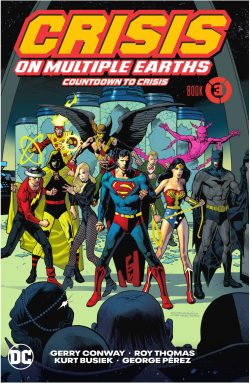
Showcase Presents Superman volume 4


By Edmond Hamilton, Robert Bernstein, Jerry Siegel, Leo Dorfman, Al Plastino, Curt Swan, George Klein & various (DC Comics)
ISBN: 978-1-4012-1847-8 (TPB)

By the time of the stories in this fabulous fourth monochrome compendium Superman was a truly global household name, with the burgeoning mythology of lost Krypton, modern Metropolis and the core cast familiar to most children and many adults.

The Man of Tomorrow was just beginning a media-led burst of revived interest. In the immediate future, television exposure, a rampant merchandising wave thanks to the Batman-led boom in superheroes generally, highly efficient world-wide comics, cartoon, bubble gum cards and especially toy licensing deals would all feed a growing mythology. Everything was in place to keep the Last Son of Krypton a vibrant yet comfortably familiar icon of modern, Space-Age America: particularly constantly evolving, ever-more dramatic and imaginative comicbook stories.

Spanning October 1962 to February 1964 and taken from Action Comics #293-309 and Superman #157-166, here the Man of Tomorrow faces evermore fantastic physical threats and critical personal and social challenges.

AC #293 gets things off to a fine start with Edmond Hamilton & Al Plastino’s ‘The Feud Between Superman and Clark Kent!’ as another exposure to randomly metamorphic Red Kryptonite divides the Metropolis Marvel into a rational but powerless mortal and an aggressive, out of control superhero, determined to continue his existence at all costs…

Superman #157 (November 1962) opens with fresh additions to mythology as ‘The Super-Revenge of the Phantom Zone Prisoner!’ – Hamilton, Curt Swan & George Klein – introduces permanently power-neutralising Gold Kryptonite and Superman’s Zone-o-phone – allowing him to monitor and communicate with the incarcerated inhabitants in a stirring tale of injustice and redemption. Convicted felon Quex-Ul uses it to petition Superman for release since his sentence has been served, and despite reservations our fair-minded hero agrees. However, further investigation reveals Quex-Ul was framed and innocent of any crime, but before Superman can make amends, he must survive a deadly trap the embittered (and partially mind-controlled) parolee had laid for the son of the Zone’s discoverer…

The issue also carried a light-hearted espionage yarn as the Action Ace becomes ‘The Super-Genie of Metropolis!’ (Robert Bernstein & Plastino) as well as ‘Superman’s Day of Doom!’ from Jerry Siegel, Swan & Klein, wherein a little kid saves the hero from a deadly ambush set during a parade in his honour.

Action #294 contains a classic duel between Superman and Lex Luthor in Hamilton & Plastino’s ‘The Kryptonite Killer!’ wherein the sinister scientist makes elemental humanoids to destroy his hated foe, whilst #295’s ‘Superman Goes Wild!’ (Bernstein, Swan & Klein) features an insidious plot by the Superman Revenge Squad to drive him murderously insane.

Issue #158 of his solo title hosted full-length epic ‘Superman in Kandor!’ (Hamilton, Swan & Klein) as raiders from the preserved Kryptonian enclave attack the Man of Steel in ‘Invasion of the Mystery Supermen’, describing him as a traitor to his people. Baffled, Action Ace and Jimmy Olsen infiltrate the Bottle City: creating costumed alter egos Nightwing and Flamebird to become ‘The Dynamic Duo of Kandor!’ By solving the enigma, they save the colony from utter destruction in ‘The City of Super-People!’

Action #296 seemingly offers a man vs. monster saga in ‘The Invasion of the Super-Ants!’ (Hamilton & Plastino) but the gripping yarn has a sharp plot twist and timely warning about nuclear proliferation, before in #297’s ‘The Man Who Betrayed Superman’s Identity!’ (Leo Dorfman, Swan & Klein), veteran newsman Perry White is gulled into solving the world’s greatest mystery after a head injury induces amnesia.

Editor Mort Weisinger was expanding the series’ continuity and building the legend, and realised each new tale was an event adding to a nigh-sacred canon: what he printed was deeply important to the readers. However, as an ideas man he wasn’t going to let that aggregated “history” stifle a good plot, nor would he allow his eager yet sophisticated audience to endure clichéd Deus ex Machina cop-outs which might mar the sheer enjoyment of a captivating concept. Thus “Imaginary Stories” were conceived as a way of exploring non-continuity plots and scenarios, devised at a time when editors felt that entertainment trumped consistency and fervently believed that every comic read was somebody’s first and – unless they were very careful – their last…

Taken from Superman #159, this book’s first Imaginary Novel follows, as ‘Lois Lane, the Super-Maid of Krypton!’ (Hamilton, Swan & Klein) sees a baby girl escape Earth’s destruction by rocketing to another world in ‘Lois Lane’s Flight from Earth!’ Befriending young Kal-El, she grows to become a mighty champion of justice. Clashing with ‘The Female Luthor of Krypton!’ and repeatedly saving the world, Lois tragically endures ‘The Doom of Super-Maid!’ at a time when attitudes apparently couldn’t allow a woman to be stronger than Superman – even in an alternate fictionality…

Dorfman, Swan & Klein’s ‘Clark Kent, Coward!’ leads Action #298 wherein a balloon excursion dumps Jimmy, Lois and the clandestine crusader in a lost kingdom whose queen finds the timid buffoon irresistible. Unfortunately the husky hunks of the hidden land take extreme umbrage at her latest dalliance…

In #160 of his eponymous publication, our hero temporarily loses his powers in ‘The Mortal Superman!’ (Dorfman & Plastino), almost dying in ‘The Cage of Doom!’ before his merely human wits prove sufficient to outsmart a merciless crime syndicate, after which the mood lightens as – fully restored – he becomes ‘The Super-Cop of Metropolis!’ to outwit spies in a classy “why-dunnit” from Siegel, Swan & Klein.

Action #299 reveals the outlandish motives behind ‘The Story of Superman’s Experimental Robots!’ in a truly bizarre tale by Siegel & Plastino, whilst Superman #161 offers an untold tale revealing how he tragically learned the limitations of his powers. In ‘The Last Days of Ma and Pa Kent!’ (Dorfman & Plastino) a vacation time-travel trip led to his foster parents’ demise and only too late did the heartbroken hero learn his actions were not the cause of their deaths. It’s supplemented by ‘Superman Goes to War’ (Hamilton, Swan & Klein) lightening the mood as a war game covered by Daily Planet staff devolves into the real thing after Clark discovers some participants are actually aliens.

Action Comics reached #300 with the May1963 issue ,and to celebrate Hamilton & Plastino crafted brilliantly ingenious ‘Superman Under the Red Sun!’ wherein the Man of Tomorrow is trapped in the far, far future where Earth’s sun has cooled to crimson and his powers fade. The valiant chronal castaway suffers incredible hardship and danger before devising a way home, just in time for #301 and ‘The Trial of Superman!’ – by the same creative team – as the Man of Steel allows himself to be prosecuted for Clark Kent’s murder to save America from a terrible threat.

Dorfman, Swan & Klein’s ‘The Amazing Story of Superman-Red and Superman-Blue!’ (Superman #162) is possibly the most ambitious and influential tale of the entire “Imaginary Tale” sub-genre: a startling utopian classic so well-received that decades later it influenced and flavoured the post-Crisis on Infinite Earths Superman continuity for months. It still does today. The Metropolis Marvel permanently divides into two equal beings in ‘The Titanic Twins!’, who promptly solve all Earth’s problems with ‘The Anti-Evil Ray!’ and similar scientific breakthroughs before both retiring with pride and the girls of their dreams, Lois Lane and Lana Lang (one each, of course) in ‘The End of Superman’s Career!’

There’s no record of who scripted Action #302’s ‘The Amazing Confession of Super-Perry White!’ but Plastino’s slick, beefy art lends great animation to a convoluted tale with the Man of Steel replacing the aging editor to thwart an assassination plot, accidentally giving the impression that podgy Perry is his actual alter ego…

Superman #163 offered crafty mystery in ‘Wonder-Man, the New Hero of Metropolis!’ (Hamilton, Swan & Klein) who almost replaces the Man of Steel, were it not for his tragic foredoomed secret, before ‘The Goofy Superman!’ (Bernstein & Plastino) sees Red K deprive the hero of powers and sanity, resulting in a fortuitous stay in the local Home for the Perpetually Bewildered – since that’s where a cunning mad bomber is secretly hiding out…

In Action #303 Hamilton, Swan & Klein have the infernal mineral transform Superman into ‘The Monster from Krypton!’, almost dying at the hands of the army and a vengeful Supergirl who believes her cousin has been eaten by the dragon he’s become, and #304 hosted ‘The Interplanetary Olympics!’ (Dorfman, Swan & Klein), as Superman deliberately throws the contest and shames Earth…  but only for the best possible reasons!

Courtesy of Hamilton, Swan & Klein in Superman #164 (October 1963) comes classic clash The Showdown Between Luthor and Superman’, pitting the lifelong foes in an unforgettable confrontation on post-apocalyptic planet Lexor – a dead world of lost science and fantastic beasts. ‘The Super-Duel!’ offers a new side to Superman’s previously 2-dimensional arch-enemy and the issue also includes ‘The Fugitive from the Phantom Zone!’ (Siegel & Plastino): a smart vignette with Superman outwitting a foe he can’t beat by playing on his psychological foibles…

Action #305 featured Imaginary Story ‘Why Superman Needs a Secret Identity!’ (Dorfman, Swan & Klein) detailing personal tragedies and disasters following Ma & Pa Kent’s proud and foolish public announcement that their son is an alien Superboy, whilst Superman #165’s ‘Beauty and the Super-Beast!’ and conclusion ‘Circe’s Super-Slave’ (Bernstein, Swan & Klein), see the Man of Steel seemingly helpless against the ancient sorceress. In fact, the whole thing is an elaborate hoax to foil alien invaders of the Superman Revenge Squad. The issue’s third tale, ‘The Sweetheart Superman Forgot!’ (Siegel & Plastino) offers heartbreaking forbidden romance wherein powerless, amnesiac and disabled Superman meets, loves and loses a good woman who wants him purely for himself. When memory and powers return, Clark has no recollection of Sally Selwyn, who’s probably still pining faithfully for him…

Action #306 sees Bernstein & Plastino tweak the Prince and the Pauper in ‘The Great Superman Impersonation!’ as Kent is hired to protect a South American President because he looks enough like Superman to fool potential assassins. Of course it’s all a byzantine con, but by the end who’s conning who?

The reporter’s crime exposés make ‘Clark Kent – Target for Murder!’ in Action #307 (by an unattributed scripter with Swan & Klein) but villainous King Kobra makes the mistake of his life when the hitman he hires turns out to be the intended victim in disguise, after which #308 concentrates on all-out fantasy as ‘Superman Meets the Goliath-Hercules!’ (anonymous & Plastino) after crossing into a parallel universe. Before returning, the Action Ace helps a colossal demigod perform “the Six Labours of King Thebes” in a yarn clearly cobbled together in far too much haste.

Superman #166 (January 1964) features ‘The Fantastic Story of Superman’s Sons’ by Hamilton, Swan & Klein: an Imaginary Tale/solid thriller built on a painful premise – what if only one of Superman’s children inherits his powers? (Sounds a bit familiar now, no?) The saga starts with Jor-El II and Kal-El II’ and the discovery that Kal junior takes after his Earth-born mother. He subsequently grows into a teenager with real emotional problems and, hoping to boost his confidence, dad packs both boys off to Kandor so they’ll be physically equal. Soon the twins find adventure as ‘The new Nightwing and Flamebird!’

However, when a Kandorian menace escapes to the outer world, it’s up to the human son to save Earth following ‘Kal-El II’s Mission to Krypton!’ which wraps everything up in a neat and tidy bundle of escapist fun.

This volume closes with a strange TV tie-in tale from Action Comics #309 as an analogue of This Is Your Life honours Superman by inviting all his friends – even the Legion of Super-Heroes and especially Clark Kent – to ‘The Superman Super-Spectacular!’ (Hamilton, Swan & Klein). With no other option, the hero must share his secret identity with someone new so that they can impersonate him. Although there must be less convoluted ways to allay Lois’ suspicions, this yarn includes perhaps the oddest guest star appearance in comics’ history…

These tales are the comic book equivalent of bubble gum pop music: perfectly constructed, always entertaining, occasionally challenging and never unwelcome. As well as containing some of the most delightful episodes of a pre angst-drenched, cosmically catastrophic DC, these fun, thrilling, mind-boggling and yes, frequently moving all-ages stories also perfectly depict changing mores and tastes that reshaped comics between the safely anodyne 1950s to the seditious, rebellious 1970s, all the while keeping to the prime directive of the industry – “keep them entertained and keep them wanting more”.

I know I certainly do…
© 1962-1964, 2008 DC Comics. All Rights Reserved.
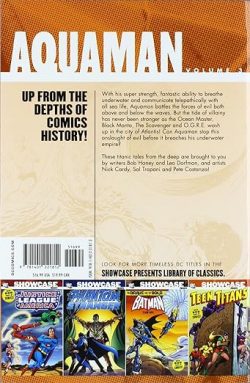
Deadman Tells the Spooky Tales


By Franco and a few of his Fiendish Friends!Sara Richard, Andy Price, Derek Charm, Mike Hartigan, Christopher Uminga, Abigail Larson, Morgan Beem, Justin Castaneda, Tressina Bowling, Boatwright Artwork, Scoot McMahon, Isaac Goodhart, and Agnes Garbowska with Silvana Brys – & various (DC Comics)
ISBN: 978-1-7795-0384-8 (TPB/Digital edition)

Here’s a little post-Halloween treat for youngsters of every vintage to ease our communal dark awaiting us at the end of all things. Never to soon early to start traumatising preschoolers, right?

As the 1960s ended, the massive superhero boom resolved into a slow but certain bust, with formerly major successes unable to find enough readers to keep them alive. The taste for superheroes was diminishing in favour of traditional genres, and one rational editorial response reshaping costumed characters to fit evolving contemporary tastes.

Publishers swiftly changed gears and even staid, cautious DC reacted rapidly: redesigning masked mystery men to fit the new landscape. Newly revised and revived costumed features included roving mystic troubleshooter The Phantom Stranger and golden age colossus The Spectre, whilst resurgent genres spawned atrocity-faced WWII spy Unknown Soldier and cowboy bounty hunter Jonah Hex, spectral westerner El Diablo and game-changing monster hero Swamp Thing, spearheading a torrent of new formats, anthologies and concepts.

The earliest of that dark bunch was assassinated trapeze artist Boston Brand who began his career by dying in Strange Adventures #205 (cover-dated October/November 1967). An ordinary man in a brutal, cynical world, Brand was a soul in balance until killed as part of a pointless initiation for a trainee assassin.

When the unlucky aerialist died, instead of going to whatever reward awaited him, he was given the chance to solve his own murder by conniving spirit of the universe Rama Kushna. That opportunity evolved into an unending mission to balance the scales between good and evil in the world. The ghost is intangible and invisible to all mortals, but has the ability to “walk into” living beings, possessing and briefly piloting them.

You should read all his stories because they are really good; all the previous has no real bearing on what follows. I just love showing off my wasted youth.

Here he holds the hallowed position of quirky narrator and curator to a collection of terror tales entirely scripted by Franco (Aureliani) and lettered by Wes Abbott, and drawn by a host of artists…

The eerie soirée and each following vignette are preceded by our supernatural star offering ‘A Die-er Warning’ (all limned by Sara Richard). Commencing in ‘The House of Madame Pyka’ – rendered by Andy Price in tones of blue – wilful Brooke moves into an expired spiritualist’s house…

Deadman interjects between tales to test our resolve but undaunted, we see Derek Charm illuminate in living colour the shocking result of Mr. Smith’s visit to the optician in ‘Eyes’, before Mike Hartigan exposes the spook in the ‘Litter Box’ and Christopher Uminga & Silvana Brys silently show the downside of too many ‘Neighborhood Cats’

Abigail Larson provides the art for an exceptionally effective argument for why kids should stay out of ‘The Cemetery’ and Morgan Beem captures the mordant gloom and imminent immolation of ‘Fall’ before Justin Castaneda homes in on little kids and playground bullies to expose ‘A Boy and His Skull’

Tressina Bowling renders tall tales painfully real in ‘The Fisherman’ whilst Boatwright Artwork take a long last look at ‘Mannequins’, before Scoot McMahon peeks ‘On the Inside’ of Batman’s most tragic foe.

Franco gets artistic with ‘The Fly’ prior to Isaac Goodhart exploiting DC’s monstrous back-catalogue for fearful film show ‘Inattentive Blindness’ before Agnes Garbowska & Silvana Brys confirm that the end is near and that bright shiny colours have no bearing on safety and security in ‘The Box’.

Silly and chilling, this splendidly glitzy grimoire shows that our love of scaring ourselves and each other starts early and never stops. Fearful fun for all: get some now!
© 2022 DC Comics. All Rights Reserved.