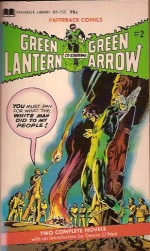
Green Lantern and Green Arrow #2


By Denny O’Neil, Neal Adams, Frank Giacoia & Dan Adkins (Paperback Library)
ISBN: 0-446-64755-1

Once upon a time, comics – like Rock ‘n’ Roll or spray-can street art – was considered outcast, bastard non-Art continually required to explain and justify itself – even when some of the people vainly defending the intrusive fledgling forms were critics and proponents of the other higher creative forms.

And during those less open-minded times, just like the other examples cited, every so often the funnybook industry brought forth something which forced the wider world to sit up and take notice.

This slim paperback – in itself proof positive of the material’s merit because the stories were contained in a proper book and not a flimsy, gaudy, disposable pamphlet (sic) – is a sequel to an earlier collection of some of the most groundbreaking comic adventures in American history; repackaged for an audience finally becoming cognizant that the unfairly dismissed children’s escapism might have something to contribute to the whole of culture and society…

After a decade of earthly crime-busting, interstellar intrigue and spectacular science fiction shenanigans the Silver Age Green Lantern was about to become one of the earliest big-name casualties of a downturn in superhero sales in 1969 prompting Editor Julius Schwartz to try something extraordinary to rescue the series.

The result was a bold experiment which created an industry-wide fad for socially relevant, ecologically aware, mature stories which spread throughout DC’s costumed hero comics and beyond; totally revolutionising the comics scene and nigh-radicalising readers.

Tapping superstars-in-waiting Denny O’Neil & Neal Adams to produce the revolutionary fare, Schwartz watched in fascinated disbelief as the resultant thirteen groundbreaking, landmark tales captured the tone of the times, garnered critical praise, awards and desperately valuable publicity from the outside world, whilst simultaneously registering such poor sales that the series was finally cancelled anyway, with the heroes unceremoniously packed off to the back of marginally less endangered comicbook The Flash.

When these stories (reprinted from Green Lantern/Green Arrow #78-79, July and September 1970) first appeared DC was a company in transition – just like America itself – with new ideas (which in comic-book terms meant “young writers”) being given much leeway: a veritable wave of fresh, raw talent akin to the very start of the industry, when excitable young creators ran wild with fevered imaginations and anything might happen.

Their cause wasn’t hurt by the industry’s swingeing commercial decline: costs were up and the kids just weren’t buying funnybooks in the quantities they used to…

O’Neil, in tight collaboration with hyper-realistic illustrator Adams, attacked all the traditional monoliths of contemporary costumed dramas with tightly targeted, protest- driven stories. Green Arrow had been shoe-horned into the series with Emerald Archer Oliver Queen constantly mouthing off as a hot-headed, liberal sounding-board and platform for a generation-in-crisis whilst staid, quasi-reactionary GL Hal Jordan played the part of the oblivious but well-meaning old guard. At least the Ring-Slinger was able to perceive his faults and more or less willing to listen to new ideas…

This striking book opens with an introduction from Dennis O’Neil before hurling helter-skelter into a chillingly topical headline grabbing yarn…

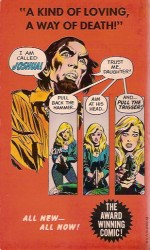
The confused and merely-mortal Green Lantern discovered another unpalatable aspect of human nature in ‘A Kind of Loving, a Way of Death!’ (with inks from Frank Giacoia) when the Arrow’s new girlfriend Black Canary joined the peripatetic cast. Seeking to renew her stalled relationship with the Emerald Archer, she was waylaid by bikers, grievously injured and taken in by a charismatic hippy guru. Sadly Joshua’s wilderness cult owed more to Charles Manson than the Messiah and his brand of Peace and Love only extended to white people: everybody else was simply target practise…

The ongoing shoddy treatment and plight of Native Americans was stunningly highlighted next in ‘Ulysses Star is Still Alive!’ (inked by Dan Adkins) as big-business logging interests attempted to deprive a mountain tribe of their very last scraps of heritage, once more causing the Green Knights to take extraordinarily differing courses of action to help and find a measure of justice…

It’s impossible to assess the effect this early bookstore edition had on the evolution of comics’ status – it certainly didn’t help keep the comicbook series afloat – but  this edition certainly gave credibility to the stories themselves: a fact proved by the number of times and variety of formats these iconic adventures have been reprinted.
© 1970, 1972 National Periodical Publications, Inc. All rights reserved.
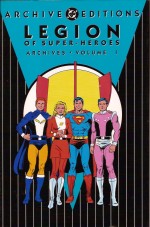
Legion of Super-Heroes: Archive Edition Volume 1


By Otto Binder, Jerry Siegel, Edmond Hamilton, Curt Swan, John Forte, Jim Mooney & various (DC Comics)
ISBN: 1-56389-020-8

Once upon a time, in the far future, a band of super-powered kids from dozens of alien civilisations took inspiration from the legend of the greatest champion of all time and formed a club of heroes. One day those Children of Tomorrow came back in time and invited that legend to join them…

And thus began the vast and epic saga of the Legion of Super-Heroes, as first envisioned by writer Otto Binder and artist Al Plastino in early 1958, just as the revived comicbook genre of superheroes was gathering an inexorable head of steam. Since that time the popularity of the Legion has perpetually waxed and waned, with their complex continuity continually tweaked and rebooted, retconned and overwritten again and again to comply with editorial diktat and popular whim.

We Silver Age Legion fans are indubitably the most persistent, passionate, finicky and snitty of all – and editors crossed us at their peril – so when DC announced that it would be gathering all the titanic team’s appearances in a chronological series of deluxe hardcover Archive Editions we were overjoyed (actually most of us thought it was about time and long overdue…) and eager.

This glorious, far-and-wide ranging full-colour premier compendium assembles the many preliminary appearances of these valiant Tomorrow People and their inevitable progress towards and attainment of their own feature; including all pertinent material from Adventure Comics #247, 267, 282, 290, 293, and 300-305, Action Comics #267, 276, 287 and 289, Superboy #86, 89, 98, Superman #147 – a period spanning 1958-1963. Also included are an introduction by editor, publisher and devotee Mike Gold, creator biographies and a Curt Swan cover gallery (all inked by either Stan Kaye or George Klein) featuring all the burgeoning band of brothers’ pole positions from Adventure Comics #247, 267, 282, 290, 293, 300, 302, Superboy #89 and 98 and Superman #147.

The multi-hued mob of universe-savers first manifested in Adventure Comics #247 (April 1958) in a Superboy tale wherein three mysterious kids invited the Boy of Steel to the 30th century to join a team of metahuman champions all inspired by his historic career. Created by Otto Binder & Al Plastino, the throwaway concept inflamed public imagination and after a slew of further appearances throughout Superman Family titles, the LSH eventually took over Superboy’s lead spot in Adventure for their own far-flung, quirky escapades, with the Caped Kid Kryptonian reduced to “one of the in-crowd”…

However here the excitement was still gradually building when the kids returned more than 18 months later in Adventure #267 (December 1959) for Jerry Siegel & George Papp to play with.

In ‘Prisoner of the Super-Heroes!‘ the teen wonders reappeared to attack and incarcerate the Boy of Steel because of a misunderstood ancient record…

The following summer Supergirl met the Legion in Action Comics #267 (August 1960, by Siegel & Jim Mooney) as Lightning Lad, Saturn Girl and Cosmic Boy secretly travelled to “modern day” America to invite the Maid of Might to join the team, in a repetition of their offer to Superboy 15 years previously (in nit-picking fact they claimed to be the children of the original team – a fact glossed over and forgotten these days: don’t time-travel stories make your head hurt…?).

Due to a dubious technicality, young and eager Kara Zor-El failed her initiation at the hands of ‘The Three Super-Heroes’ and was asked to reapply later – but at least we got to meet a few more Legionnaires, including Chameleon Boy, Invisible Kid and Colossal Boy…

With the editors still cautiously testing the waters, it was Superboy #86 (January 1961) before the ‘The Army of Living Kryptonite Men!’ by Siegel & Papp turned the LSH into a last-minute Deus ex Machina to save the Smallville Sentinel from juvenile delinquent Lex Luthor’s most insidious assault. Two months later in Adventure #282, Binder & Papp introduced Star Boy as a romantic rival for the Krypton Kid in ‘Lana Lang and the Legion of Super-Heroes!’

Action #276 (May 1961) introduced ‘Supergirl’s Three Super Girl-Friends’ by Siegel & Mooney, which finally saw the her crack the plasti-glass ceiling and join the team, sponsored by Saturn Girl, Phantom Girl and Triplicate Girl. We also met for the first time Bouncing Boy, Shrinking Violet, Sun Boy and potential bad-boy love-interest Brainiac 5 (well at least his distant ancestor Brainiac was a very bad boy…)

Next comes a pivotal two-part tale ‘Superboy’s Big Brother’ (by Robert Bernstein & Papp from Superboy #89, June 1961) in which an amnesiac, super-powered space traveller crashes in Smallville, speaking Kryptonese and carrying star-maps written by the Boy of Steel’s long-dead father…

Jubilant, baffled and suspicious in equal amounts Superboy eventually, tragically discovered ‘The Secret of Mon-El’ by accidentally exposing the stranger to a lingering, inexorable death, before desperately providing critical life-support by depositing the dying alien in the Phantom Zone until a cure could be found…

With an August 1961 cover-date Superman #147 unleashed ‘The Legion of Super-Villains’ (Siegel, Curt Swan & Sheldon Moldoff): a stand-out thriller featuring Lex Luthor and the adult Legion coming far too close to destroying the Action Ace until the temporal cavalry arrived…

Adventure #290 (November 1961, by Bernstein & Papp) seemingly gave Sun Boy a starring role in ‘The Secret of the Seventh Super-Hero!’ – a clever tale of redemption and second chances, followed in #293 (February 1962) by a gripping thriller from Siegel, Swan & George Klein: ‘The Legion of Super-Traitors’ wherein the future heroes were turned evil, prompting Saturn Girl to recruit a Legion of Super-Pets including Krypto, Streaky the Super Cat, Beppo, the monkey from Krypton and Comet the magical Super-horse to save the world – and yes, I typed all that with a reasonably straight face…

‘Supergirl’s Greatest Challenge!’ by Siegel & Mooney (Action #287 April 1962) saw her visit the Legion (quibblers be warned: it was mistakenly described as the 21st century in this story) to save future Earth from invasion. She also met a telepathic descendent of her cat Streaky. His perhaps ill-considered name was Whizzy…

Action #289 featured ‘Superman’s Super-Courtship!’ wherein the Girl of Steel scoured the universe for an ideal mate for her cousin. One highly possible candidate was the adult Saturn Woman, but her husband Lightning Man objected… Perhaps charming at the time, but modern sensibilities might quail at the conclusion that his perfect match was a doppelganger of Supergirl herself, but thankfully a bit older…

By the release of Superboy #98 (July 1962), the decision had been made. The buying public wanted more Legion stories and once ‘The Boy With Ultra-Powers’ by Siegel, Swan & Klein had introduced a mysterious lad with greater powers than the Boy of Steel, the focus shifted to Adventure Comics #300 (cover dated September 1962) wherein the futuristic super-squad finally landed their own gig; even occasionally stealing the odd cover-spot from the still top-featured Superboy.

Tales of the Legion of Super-Heroes opened its stellar run with ‘The Face Behind the Lead Mask!’ by Siegel, John Forte & Plastino; a fast-paced premier which pitted Superboy and the 30th century champions against an impossibly unbeatable foe until Mon-El, long-trapped in the Phantom Zone, briefly escaped a millennium of confinement and saved the day…

In those halcyon days humour was as important as action, imagination and drama, so many early escapades were light-hearted and moralistic. Issue #301 offered hope to fat kids everywhere with ‘The Secret Origin of Bouncing Boy!’ by regular creative team Siegel & Forte, wherein the process of open auditions was instigated (providing devoted fans with loads of truly bizarre and memorable applicants over the years) whilst allowing the rebounding human rotunda to give a salutary pep talk and inspirational recount of heroism persevering over adversity.

Adventure #302 featured ‘Sun Boy’s Lost Power!’ as the golden boy was forced to resign until fortune and boldness restored his abilities whilst ‘The Fantastic Spy!’ in #303 provided a tense tale of espionage and possible betrayal by new member Matter-Eater Lad.

The happy readership was stunned by the events of #304 when Saturn Girl engineered ‘The Stolen Super-Powers!’ to make herself a one-woman Legion. Of course it was for the best possible reasons, but still didn’t prevent the shocking murder of Lightning Lad…

With comfortable complacency utterly destroyed, #305 further shook everything up with ‘The Secret of the Mystery Legionnaire!’ who turned out to be the long-suffering Mon-El finally cured and freed from his Phantom Zone prison.

The Legion is undoubtedly one of the most beloved and bewildering creations in American comicbook history and largely responsible for the growth of the groundswell movement that became Comics Fandom. Moreover, these sparkling, simplistic and astoundingly addictive stories as much as the innovations of Julie Schwartz’s Justice League fired up the interest and imaginations of a generation of young readers and built the industry we all know today.

Naive, silly, joyous, stirring and utterly compelling yarns are precious and fun beyond any ability to explain but if you love comics and haven’t read this stuff, you are the poorer for it and need to enrich your future life as soon as possible.
© 1958-1964, 1991 DC Comics. All Rights Reserved.

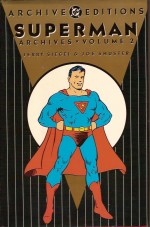
Superman Archives volume 2


By Jerry Siegel & Joe Shuster and the Superman Studio (DC Comics)
ISBN: 0930289-76-5

By 1940 the intoxicating blend of sensational superlative action and social crusading which hallmarked the early exploits of the Man of Tomorrow had gradually expanded to encompass traditional cops-and-robbers crime-busting and outright fantasy and science fictional elements.

With a thrice-weekly radio serial, games, toys, a newspaper strip and a growing international media presence, Superman was swiftly becoming everybody’s hero, as this classic compendium re-presenting issues #5-8 of his landmark solo title ideally illustrates.

This first-edition deluxe hardback opens with a beguiling Foreword from author, strip-writer, historian and fervent fan Ron Goulart but no contents page or creator credits, so for the sake of expediency I’ve used information and story-titles from later collections to facilitate the review. Besides, if you just buy this brilliant, lavish, full-colour hardback treasure-trove, you’ll be too busy reading the glorious stories to worry over such petty details…

Superman #5 (Summer 1940) was the last quarterly issue: from the next the comicbook would be published every two months – a heartbreakingly tough schedule for Jerry Siegel, Joe Shuster and their burgeoning Superman Studio, then comprising Paul Cassidy, Leo Nowak, Dennis Neville and Jack Burnley. They would continue to expand rapidly in the months to come.

This issue is a superb combination of human drama, crime and wicked science beginning with ‘The Slot Machine Racket’, a particularly hard-hitting yarn exposing the rise in gambling machines and one-armed bandits targeting young kids and their meagre allowances, which, after a delightful ‘Super Strength: Rules for Summer Living’ health and exercise feature and a Supermen of America ad, continued in similar vein with ‘Campaign Against the Planet’, wherein corrupt politicians attempted to bribe, intimidate and ultimately end the crusading paper’s search for truth and justice.

After two-fisted genre prose vignette ‘Power of the Press’ by George Chute, arch-villainy manifested with the insidious, toxic threat of ‘Luthor’s Incense Machine’ and, after another text thriller ‘Murder in the Wind’ by Jack Willis, cartoon capers with dizzy Dachshund ‘Shorty’ and a joke page, Superman crushed Big Business chicanery by exposing the scandal of ‘The Wonder Drug’.

Issue #6, produced by Siegel and the Studio, with Shuster only overseeing and drawing key figures and faces, contained four more lengthy adventures and led with ‘Lois Lane, Murderer’ as the Man of Action saved his plucky journalistic rival from a dastardly frame up, then took a break while Chute’s text thriller ‘Too Big for Marbles’ and hobo humorist Driftin’Dave (by Alger) offered a change of pace, after which Superman rescued a small town from a gangster invasion in ‘Racketeer Terror in Gateston.’

Jack Burnley produced the Super Strength exercise tips which preceded ‘Terror Stalks San Caluma’ with our hero’s efforts to avert a disaster hampered by a blackmailer who’d discovered his secret identity. Legend in waiting Gardner Fox authored exotic prose murder-mystery ‘The Strangest Case’ and fact-page ‘Sporting Close-Ups!’ happily set up the stunning final act as the Man of Steel uncovered ‘The Construction Scam’ foiling and spectacularly fixing a corrupt company’s shoddy, death-trap buildings.

Superman #7(November/December1940) firstly found the Action Ace embroiled in local politics when he confronted ‘Metropolis’ Most Savage Racketeers’ and, after a George Papp Fantastic Facts feature and gypsy tall-tale text-piece ‘Rinaldo’s Revenge’ by G.B. Armbruster, proceeding to crush horrific man-made disasters orchestrated by property speculators in ‘The Exploding Citizens’…

Shorty played the canine fool again before the Man of Tomorrow stamped out City Hall corruption in ‘Superman’s Clean-Up Campaign’ – illustrated by Wayne Boring, who inked Shuster on the last tale of this issue where the Caped Crimebuster put villainous high society bandits ‘The Black Gang’ exactly where they belonged… behind iron bars.

Released in time for the Holiday Season, Superman #8 (cover-dated January-February 1941) was another spectacular and varied compendium containing four big adventures and a flurry of filler features.

The fantastic fantasy romp ‘The Giants of Professor Zee’ (illustrated by Paul Cassidy), found the hero battling man-made monsters and merciless greed and, following a page each of ‘Laffs’ and ‘Nature News…’, plumped for topical tension and suspense in ‘The Fifth Column’ (depicted by Boring & Don Komisarow) with Superman rounding up spies and saboteurs, before comprehensively cleaning up uncommon criminals in ‘The Carnival Crooks’ (Cassidy again).

Text tale ‘Knotty Problem’ by Ed Carlisle and Ray McGill’s ‘Snapshots with our Candid Cartoon Camera’ led to a breathtaking disaster tale which this splendid volume. The cover-featured ‘Perrone and the Drug Gang’ featured an increasingly rare comic-book outing for Shuster – inked by Boring – wherein the Metropolis Marvel battled doped-up thugs and the corrupt drug-dealing lawyers who controlled them for – illegal – profit.

One off the most enticing aspects of these volumes is the faithful and entrancing inclusion of all the covers, period ads, pin-ups and special offers… with the Superman merchandise page alone worth the price of admission…

My admiration for the stripped-down purity and power of these Golden Age tales is boundless. Nothing has ever come near them for joyous, child-like perfection and every genuine fan really should make them a permanent part of his or her life.
© 1940, 1990 DC Comics. All Rights Reserved.

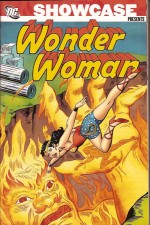
Showcase Presents Wonder Woman volume 3


By Robert Kanigher, Ross Andru & Mike Esposito (DC Comics)
ISBN: 978-1-84856-474-9

Wonder Woman was created by psychologist and polygraph pioneer William Moulton Marston – apparently at the behest of his formidable wife Elizabeth – and uniquely realised by Harry G. Peter just as the spectre of World War II began to affect America.

She debuted as a bonus in All Star Comics #8 (December 1941) before vaulting into her own cover-featured series in Sensation Comics a month later. An instant hit, she quickly won her own title (cover-dated Summer 1942).

Using the pen-name Charles Moulton, Marston scripted all her adventures until his death in 1947, whereupon Robert Kanigher took over the writer’s role. Venerable co-creator H. G. Peter continued on as illustrator until his death in 1958. Wonder Woman #97, in April of that year, was his last hurrah and the end of an era.

With the exception of Superman, Batman, Wonder Woman and a few anodyne back-up features, costumed heroes had all but died out at the end of the 1940s, replaced by merely mortal champions in a deluge of anthologised genre titles but Showcase #4 rekindled the public’s interest in costumed crime-busters with a new iteration of The Flash in 1956 and the fanciful floodgates opened wide once more…

Whilst re-inventing Golden Age Greats such as Green Lantern, Atom and Hawkman, National/DC gradually updated those hoary survivors who had weathered the backlash and the ever-resilient Amazing Amazon …

Artists Ross Andru & Mike Esposito, who illustrated every script in this all-ages compendium, had debuted as cover artists from #95, but with Wonder Woman #98 (May 1958) they took over the interiors as writer/editor Kanigher reinvented much of the original mythos, tinkering with her origins and unleashing her on an unsuspecting world in a fanciful blend of girlish whimsy, rampant sexism, strange romance, alien invasion, monster-mashing and utterly surreal (some would say-stream-of-consciousness) storytelling…

By the time of this collection, re-presenting issues #138-156 (May 1963-August 1965) of the Amazing Amazon’s adventures, the Silver Age revival of the superhero genre was in full swing and despite individual stories of stunning imagination and excellence the format and timbre of Wonder Woman was looking tired and increasingly out of step with the rest of National/DC’s gradually gelling shared continuity.

While all the other champions and defenders were getting together and teaming up at the drop of a hat – as indeed was the Princess of Power in Justice League of America – within the pages of her own title a timeless, isolated fantasy universe was carrying on much as it always had.

Increasingly however, the Amazon was being sidelined by imaginary stories starring her younger selves Wonder Tot and Wonder Girl and even her mother Hippolyta was regularly stealing the show and the limelight.

With this volume though, the tide finally began to turn back in Diana’s favour…

‘The Kite of Doom! (#138) presented another spectacular “Impossible Day” adventure starring the entire Wonder Woman Family (that would be Princess Diana at three different ages acting in concert with her mother in tales which where outside even the amorphous and negligible continuity of the series, where internal consistency and logic were always notional and extremely mutable) and found the four faces of Wonder Woman again battling nuclear nemesis Multiple Man, alien invaders and the daily blazing fireball of doom…

‘The Day Wonder Woman Revealed her Secret Identity!’ saw the goddess Aphrodite inflict the Amazon with amnesia whilst meddling in her stalled romance with pilot Steve Trevor whilst WW #140 was another Impossible Tale with Wonder Woman transformed into ‘The Human Lightning!’ as Morpheus, god of dreams tested the entire Wonder Family before ‘The Academy of Arch-Villains!’ offered a reward for the destruction of the heroine and had to face the sinister machinations of Angle Man, the Human Fireworks and the diminutive but deadly Mouse Man.

The whole family were imperilled by terrifying trans-dimensional duplicates in ‘Captives of the Mirage Giants!’ another implausible Impossible Tale whilst issue #143 offered two tales, beginning with an alien invasion which could only be foiled by a mystic sword hidden within ‘The Terror Trees of Forbidden Island’, after which Wonder Woman was reduced to helplessness by the malignant Mouse Man and locked in ‘The Amazon Mouse Trap!’

Another brace of yarns featured in #144: the impressively clever ‘Revolt of Wonder Woman!’ wherein the tireless crusader suffered a stress-related breakdown until a blind girl restored her faith and determination and ‘Mer-Boy vs. Bird-Boy!’ with Wingo, an avian rival for Wonder Girl’s affections ,complicating an already busy day as the Teen Titan tackled invading aliens, enemy atomic submarines and the ever-deadly fireball from space…

The Wonder Woman Family were impossibly back to confront bad dreams and time-plunderers in ‘The Phantom Sea-Beast!’ but only Wonder Woman and Diana Prince were on hand to fight the ‘War of the Underwater Giants!’ and win thousands of dollars – for charity, of course – from a story-obsessed millionaire…

WW #147 featured an impossible tale from the Amazon’s teenage years as ‘Bird-Girl – Fish-Girl!’ her sea and sky boyfriends were given their heart’s desire by Athena and Aphrodite and both wished for a more physically compatible inamorata, whilst ‘The Olympics of the Doomed’ celebrated the 1964 Games with a stirring action romp in which the dread Duke of Deception captured Wonder Woman and compelled her to compete in a sudden-death competition on Mars…

In ‘The Last Day of the Amazons!’ the impossible Wonder Family almost triggered the destruction of Paradise Island when Queen Hippolyta’s passion for her long-lost lover causes his statue to come to life in a land where the presence of all males is severely proscribed by the goddesses…

Wonder Woman #150 offered ‘The Phantom Fisher-Bird!’ – a strange but thrilling yarn wherein the Wonder Family were hunted by giant man-birds from another plane of existence and ‘Wonder Girl vs. the Teenage Monster!’ (#151, January 1965) saw the Daring Damsel dogged and desired by a cosmic Glop which absorbed and mimicked anything: machinery, atomic weapons, Rock ‘n Roll records, juvenile delinquency…

With #152 the lass even took cover billing becoming Wonder Woman Presents Wonder Girl and featured another Impossible Tale with the young heroine resisting dinosaurs, mythological demons, invaders from Mars, disastrous weather and the importunate advances of Mer-boy and Bird-Boy in ‘Wonder Girl’s Decision of Doom!’ and found herself adopted by a deranged and traumatised trapeze artist who just knew that he was ‘Wonder Girl’s Mysterious Father!’

A far darker delusion haunted her in #153 as the Duke of Deception engineered ‘Wonder Girl’s Stolen Face!’ and turned her into an uncontrollable beast until Wonder Tot, Hippolyta and Wonder Woman found a face-saving solution…

‘Battle of the Boiling Man!’ in #154 saw the title revert to the mature iteration of the Female Fury in the penultimate Impossible Tale wherein wilful deities, mythical beasts and an ambulatory volcano all conspired to test the Amazons to destruction…

‘I Married a Monster!’ was a take on Beauty and the Beast wherein Wonder Woman, fed up with the constant badgering, bickering and marriage proposals of Steve Trevor, Manno and Wingo, swore off men for good and promptly fell in love with a brooding bad-boy brute trapped in a floating castle…

Just when it seemed the series could sink no lower Wonder Woman #156 changed everything with ‘The Brain Pirate of the Inner World!’ – a stylish adventure written and drawn in an effective and charming pastiche of Moulton & Peter’s glorious Golden Age Amazon.

When Wonder Woman visited the comics emporium of the Dream Merchant she was totally immersed and drawn into one of her past cases: “re-experiencing” a battle with other-dimensional buccaneers who had stolen the mentalities and enslaved the bodies of Steve and her old sidekicks the Holliday Girls…

Wild, bold, action-packed and thrilling, with all that mushy multi-species romance stuff dropped and her younger selves forgotten, a new kind of Wonder Woman was coming…

But not in this eclectic, eccentric collection which ends on this welcome high note.

Always delightful yet often mind-boggling and practically incomprehensible by modern narrative standards, these exuberant, effulgent fantasies are usually illogical and occasionally just plain bonkers, but in those days adventure in the moment was paramount and if you could put rationality and consistency aside for a moment these utterly infectious romps simply sparkled then and now with fun, thrills and sheer spectacle.

Wonder Woman is rightly revered as a focus of female strength, independence and empowerment, but the welcoming nostalgia and easy familiarity of such innocuous imaginative fairytales must be a magical escape for open-minded readers, whilst the true, incomparable value of these stories is the incredible quality entertainment they still offer.

© 1963, 1964, 1965, 2009 DC Comics, Inc. All Rights Reserved.

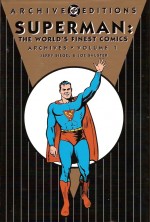
Superman: the World’s Finest Comics Archives volume 1


By Jerry Siegel & Joe Shuster, Leo Nowak, John Sikela (DC Comics)
ISBN: 978-1-4012-0151-7

The debut of Superman propelled National Comics to the forefront of their fledgling industry and in 1939 the company was licensed to produce a commemorative comicbook celebrating the opening of the New York World’s Fair, with the Man of Tomorrow prominently featured on the appropriately titled New York World’s Fair Comics among such four-colour stars as Zatara, Butch the Pup, Gingersnap and The Sandman.

This glorious deluxe hardback edition collects that epochal early mass-market premium appearance plus his return in Worlds Fair 1940, as well as the Superman stories from World’s Best #1 and World’s Finest Comics #2-15 in gleaming, seductive full-colour and also includes a beguiling Foreword by fan, historian, author and film producer Michael Uslan as well as the now-traditional creator biographies.

The spectacular card-cover 96 page anthologies were a huge hit and convinced the editors that an over-sized anthology of their pantheon of characters, with Superman and Batman prominently featured, would be a worthwhile proposition. The format was retained for a wholly company-owned, quarterly high-end package, retailing for the then hefty price of 15¢. Launching as World’s Best Comics #1 (Spring 1941), the book transformed into World’s Finest Comics from #2, beginning a stellar 45 year run which only ended as part of the massive clear-out and decluttering exercise that was Crisis on Infinite Earths.

With stunning, eye-catching covers from Sheldon Mayer, Jack Burnley, Fred Ray and others, this fabulously exuberant compendium opens with ‘Superman at the World’s Fair’ by Jerry Siegel & Joe Shuster, wherein Clark Kent and Lois Lane were dispatched to cover the gala event giving the mystery man an opportunity to contribute his own exhibit and bag a bunch of rotten robbers to boot…

A year later he was ‘At the 1940’s World’s Fair’ (lavishly illustrated by Burnley) foiling an attempt by another gang of ne’er-do-wells to steal a huge emerald.

With success assured World’s Best Comics launched early in 1941 and from that landmark edition comes gripping disaster-thriller ‘Superman vs. the Rainmaker’ illustrated by Paul Cassidy, after which World’s Finest Comics #2 provided thrills and spills in Siegel, Leo Nowak, Cassidy & Shuster’s ‘The Unknown X’, a fast-paced mystery of sinister murder-masterminds and maritime menace, whilst ‘The Case of the Death Express’ was a tense thriller about train-wreckers (by Nowak) from the Fall issue.

World’s Finest Comics #4 featured ‘The Case of the Crime Crusade’ by Siegel, Nowak & John Sikela, another socially relevant racketeering yarn highlighting the bravery of fiery editor Perry White and combining a crusading campaign to modernise the city’s transport system with a battle against bomb-wielding gangsters, whilst ‘The Case of the Flying Castle’ had Superman breach the Tower of Terror to confront an Indian curse and an unscrupulous businessman and WF #6 (Summer 1942, Siegel, Nowak & Sikela) saw ‘The Man of Steel vs. the Man of Metal’ pitting our hero and newsboy Jimmy Olsen against Metalo, a mad scientist whose discoveries made him every inch Superman’s physical match…

‘The Eight Doomed Men’ in issue #7 were a coterie of ruthless millionaires targeted for murder because of the wicked past deeds of their privileged college fraternity; a crime mystery spiced up with flamboyant high-tech weaponry that pushed the Action Ace to his limits whilst ‘Talent Unlimited’ (Siegel, Sam Criton & Sikela) saw Superman track down a missing heiress who had abandoned wealth for a stage career and poor but honest theatrical friends. Unfortunately, even though she didn’t want her money, other people did…

From World’s Finest Comics #9 on, no record of the scripter(s) identities are available but there’s no appreciable drop in quality to be seen as ‘One Second to Live’ (drawn by Sikela) found the Man of Tomorrow clearing an innocent man of murder and saving him from the electric chair, whilst ‘The Insect Terror’ (Nowak & Sikela) saw an incredible battle with a super-villain whose giant bugs almost consumed Metropolis before ‘The City of Hate’ (Sikela) found Lois and Clark’s search for the “Four Most Worthy Citizens” leading them to demagogues, hate-mongers and the worst of humanity before finally succeeding…

Another case of social injustice was exposed and rectified in WF #12’s ‘The Man who Stole a Reputation’ (illustrated by Ira Yarbrough) wherein a downtrodden clerk chucked in his job and sought out the glamorous rewards of crime until Superman demonstrated the error of his thinking and ‘The Freedom of the Press’ found Clark and Lois looking for the Daily Planet’s centennial scoop; oblivious to the gangsters determined to wreck the paper forever, whilst Sikela’s ‘Desert Town’ took the Man of Steel to the wild west and a hidden citadel of crooks determined to sabotage the building of a new city over their secret hideout…

The last tale in this volume is ‘The Rubber Band’ illustrated by Sikela & Nowak from World’s Finest Comics #15 (Fall 1944) which details the exploits of a gang of black market tyre thieves who were given a patriotic “heads-up” after Superman dumped their boss on the Pacific front line where US soldiers were fighting and dying…

These blockbusting yarns, released at three month intervals, provide a perfect snapshot of the Caped Kryptonian’s amazing development from unstoppable, outlaw social activist to trusted paragon of American virtues in timeless tales which have never lost their edge or their power to enthral and beguile and, as always, this formidable Archive Edition is the most luxurious and satisfying of ways to enjoy them over and over again.

So why aren’t you…?
© 1940, 1941, 1942, 1943, 1944, 2004 DC Comics. All Rights Reserved.

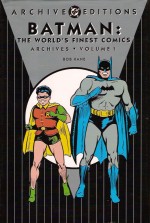
Batman: World’s Finest Archives volume 1


By Bob Kane, Bill Finger, Jerry Robinson, George Roussos & (DC Comics)
ISBN: 1-56389-819-5

The creation of Superman propelled National Comics to the forefront of their fledgling industry and in 1939 the company was licensed to produce a commemorative comicbook celebrating the start of the New York World’s Fair, with the Man of Tomorrow prominently featured among the four-colour stars of the appropriately titled New York World’s Fair Comics.

A year later, following the birth of Batman and Robin, National combined Dark Knight, Boy Wonder and Man of Steel on the cover of the follow-up New York World’s Fair 1940.

The spectacular 96 page anthology was a huge hit and the format was retained as the Spring 1941 World’s Best Comics #1, before finally settling on the now legendary title World’s Finest Comics from #2, beginning a stellar 45-year run which only ended as part of the massive clear-out and de-cluttering exercise that was Crisis on Infinite Earths.

Until 1954 and the swingeing axe-blows of rising print costs, the only place Superman and Batman ever met was on the stunning covers by the likes of Jack Burnley, Fred Ray and others. Between those sturdy card covers, the heroes maintained a strict non-collaboration policy…

This glorious deluxe hardback edition gathers the pivotal early appearances from Worlds Fair 1940, World’s Best #1 and World’s Finest Comics #2-16 in gleaming, glossy full-colour and also includes a beguiling Foreword by cartoonist and industry historian R.C. Harvey plus brief biographies of all the creators involved in these early masterpieces.

The vintage wonderment begins with ‘Batman and Robin Visit the 1940 New York World’s Fair’ by Bill Finger, Bob Kane & George Roussos, wherein the Dynamic Duo tracked down a maniac mastermind with a metal-dissolving ray, after which the same creative team deliver the classic and still enthrallingly eerie murder-mystery ‘The Witch and the Manuscript of Doom!’ from World’s Best #1 (Spring 1941).

Jerry Robinson joined the artists for World’s Finest Comics #2 and ‘The Man Who Couldn’t Remember!’ – a powerful character play and baffling mystery that still packs a punch – whilst #3 featured the first appearance of one of Batman’s greatest foes in ‘The Riddle of the Human Scarecrow’ a moody masterwork which saw the debut of Professor Jonathan Crane, a psychologist obsessed with both fear and money…

This is followed by a rip-roaring contemporary cowboy yarn ‘The Ghost Gang Goes West’ as a holiday for Bruce Wayne and Dick Grayson turned into a riot of action, mystery and adventure after which ‘Crime Takes a Holiday’, (WFC #5, Spring, 1942 by Finger, Robinson & Roussos) offered a canny mystery yarn as the criminal element of Gotham “downed tools”. Naturally it was all part of a devious master-plan and just as naturally our heroes soon got to the bottom of it…

Behind a particularly effective War cover the brilliant Bat-yarn from World’s Finest #6 was ‘The Secret of Bruce Wayne!’ wherein Joe Greene, Robinson & Roussos provided a secret identity exposé tale that would become a standard plot of later years. From #7 (Fall 1942) came an imaginative thriller-chiller of theft and survival ‘The North Pole Crimes!’ (Finger, Kane & Robinson) whilst in ‘Brothers in Law’ from #8, by Jack Schiff and Jack & Ray Burnley, pitted Batman and Robin simultaneously against a Napoleon of Crime and feuding siblings who had radically differing definitions of justice, before the Cowled Crusader portion of #9 (Spring 1943) had Finger, Robinson & Roussos recount the salutary saga of a criminal mastermind who invented the wickedly ingenious ‘Crime of the Month!’ scheme.

World’s Finest Comics #10 offered ‘The Man With the Camera Eyes’ by Finger, Robinson & Roussos, a gripping battle of wits between our heroes and a crafty crook with an eidetic memory, whilst ‘A Thief in Time!’ (Finger & Robinson inked by Fred Ray) pitted the Gotham Gangbusters against future-felon Rob Callender who fell through a time-warp and thought he’d found the perfect way to get rich.

‘Alfred Gets His Man!’ by Finger & Dick Sprang found Batman’s faithful new retainer reviving his own boyhood dreams of being a successful detective with hilarious and action-packed results…

Issue #13 featured ‘The Curse of Isis!’ (Finger & Jack Burnley, inked by brother Ray and George Roussos) was a maritime mystery of superstition, smugglers and sabotage and similar themes were explored in Finger, Robinson & Roussos’ ‘Salvage Scavengers!’ three months later.

The last two tales are sadly anonymously scripted but both feature artist Jerry Robinson at the peak of his powers, beginning with ‘The Men Who Died Twice!’ from #15 wherein a trio of murderers seemingly escape their legal sentences but not their fates, and World’s Finest #16 (Winter 1944) temporarily brings things to a halt with the superb thriller ‘The Mountaineers of Crime!’ as Batman and Robin cleaned up the Rockies and put a bunch of bold bandits and brigands in the brig.

These spectacular yarns, produced every three months for the quarterly anthology, provide a perfect snapshot of the Batman’s amazing development from raw, vigilante agent of revenge to dedicated, sophisticated Darknight Detective in timeless tales which have never lost their edge or their power to enthral and beguile. Moreover this sturdy Archive Edition is the most luxurious and satisfying of ways to enjoy them.

So why don’t you…
© 1940, 1941, 1942, 1943, 1944, 2002 DC Comics. All Rights Reserved.

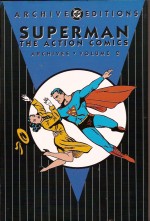
Superman in Action Comics Archives volume 2


By Jerry Siegel & Joe Shuster, Jack Burnley, Wayne Boring, Fred Ray, Paul Cassidy & the Superman Studio (DC Comics)
ISBN: 1-56389-426-2

In the second stellar hardback collection the Man of Tomorrow’s earliest groundbreaking adventures, reprinted from issues #21-36 of the epochal anthology Action Comics, the never-ending battle for Truth, Justice and the American Way reaches the middle of 1941, with war ripping apart the outer world but still no more than a looming literary menace for most Americans.

As described in modern-day super-scribe Paul Kupperberg’s introduction, although creators Siegel & Shuster had very much settled into the character by now, the buzz of success still fired them and innovation still sparkled amidst the exuberance.

These stories were largely untitled, but for convenience I’ve added the designations contrived by editors in other recent compilations such as the Superman Chronicles, so the full-on, four-colour magic opens here with ‘The Atomic Disintegrator’ – originally published in Action #21, February 1940 – wherein our restlessly exuberant hero tackled an early secret identity crisis and foiled a deadly plot by old enemy Ultra-Humanite (now creepily residing within the curvaceous body of movie starlet Delores Winters) which was followed by ‘Europe at War’, not only a tense and thinly disguised call to arms for the still neutral USA, but a continued story: an almost unheard-of luxury in those early days of funny-book publishing, which resulted in a spectacular and chilling one-man peace-keeping mission to halt hostilities between the nations of Galonia and Toran – and all explosively revealed to be the Machiavellian fault of a criminal scientist named Alexander Luthor…

Action #24 featured ‘Carnahan’s Heir’, a wealthy wastrel whom Superman promised to turn into a useful citizen, whilst the next told the tale of the ‘The Amnesiac Robbers’; good-guys compelled to commit crimes by an evil hypnotist in a crime wave with political repercussions, sporting a cover by new artistic sensation Wayne Boring, who went on to illustrate the next four too.

In comic book terms at least Superman was master of the world, and had already utterly changed the shape of the fledgling industry by the time of these tales. There was a popular newspaper strip, foreign and overseas syndication, and the Fleischer studio was producing some of the most expensive – and best – animated cartoons ever conceived. Thankfully the quality of the source material was increasing with every four-colour release, and the energy and enthusiasm of Jerry Siegel and Joe Shuster had infected the burgeoning studio that grew around them to cope with the relentless demand.

From Action Comics #26 (July 1940) came ‘Professor Cobalt’s Clinic’ wherein Clark Kent and Lois Lane exposed a murderous sham Heath Facility with a little Kryptonian help, and the next month dealt a similar blow to the corrupt orphanage ‘Brentwood Home for Wayward Youth’. The September issue found him at the circus, solving the mystery of ‘The Strongarm Assaults’, a fast-paced thriller beautifully illustrated by the astonishingly talented Jack Burnley, brought in to help as the Superman newspaper strip took up more and more of Shuster’s time.

Action Comics #29 (October 1940) again featured Burnley art in a gripping tale of murder for profit. Human drama in ‘The Life insurance Con’ was replaced by deadly super-science as the mastermind Zolar created ‘A Midsummer Snowstorm’, in #30 allowing Burnley a rare opportunity to display his fantastic imagination as well as his representational excellence and featured the first of Fred Ray’s scintillating run of covers.

Action Comics #31 featured another high-tech crime-caper as gangsters put an entire city to sleep and only Clark Kent wasn’t ‘In the Grip of Morpheus’ in #31 whilst #32’s ‘The Gambling Racket of Metropolis’ (January 1941) saw the Metropolis Marvel crush an illicit High Society gambling operation that had wormed its nefarious way into the loftiest echelons of Government, a typical Jerry Siegel social drama magnificently illustrated by the increasingly impressive Burnley.

Action Comics #33 and 34 were also Burnley blockbusters wherein Superman first went north to discover ‘Something Amiss at the Lumber Camp’, before heading to coal country to save ‘The Beautiful Young Heiress’; both superbly enticing character-plays with plenty of scope for eye-popping super-stunts to thrill the gasping fans.

Behind a Wayne Boring cover Action Comics #35 saw the artistic return of Joe Shuster – aided by an increasing number of assistants dubbed “the Superman Studio” – for a human interest tale with startling repercussions in ‘The Guybart Gold Mine’, and this volume concludes with Superman mightily stretched to cope with the awesome threat of ‘The Enemy Invasion’; a canny taste of things to come if America entered World War II.

Stories of corruption, disaster and social injustice were typical of the times, but with war in the news and clearly on the horizon, the content of Superman’s adventures was changing and so, necessarily, did the scale and scope of the action.

The raw intensity and sly wit still shone through in Siegel’s scripts which literally defined what being a superhero meant, but as the world became more dangerous the Man of Tomorrow simply became stronger and more flamboyant to deal with it all, and Shuster and his team stretched and expanded the iconography that all others would follow.

Still some of the very best Fights ‘n’ Tights any fan could ever find, these tales deserve pride of place on any bookshelf.
© 1940, 1941, 1998 DC Comics. All Rights Reserved.

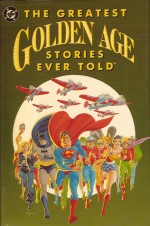
The Greatest Golden Age Stories Ever Told


By many & various (DC Comics)
ISBN: 0-932289-57-9

When the very concept of high priced graphic novels was just being tested in the 1990s DC Comics produced a line of glorious hardback compilations spotlighting star characters and celebrating standout stories from the company’s illustrious and varied history decade by decade. They even branched out into themed collections which shaped the output of the industry to this day, such as this fabulous congregation of yarns – and even ads – that epitomised the verve and sheer exuberance of the most important period in American comics history.

Edited by Mike Gold, with associates Brian Augustyn, Robert Greenberger and Mark Waid, this splendid tome opens with a ‘One Man’s Gold is Another Man’s Pyrite’ – a foreword by Golden Age champion Roy Thomas – and also includes the essay ‘Roots of Magic’ by Gold, but fascinating and informative as those features are, the real literary largesse is to be found in the 22 stories and five stunningly enticing house ads and single page editorial features which no true fan can see without experiencing ineffable yearning…

The vintage thrills and spills commence with a spectacular Joe Simon & Jack Kirby Boy Commandos romp from Detective Comics #69 (November 1942). ‘The Siege of Krovka’ found the underage warriors battling Nazis beside desperate Russian villagers determined to make the invaders pay for every frozen inch of Soviet soil in a blockbusting 12 page masterpiece of patriotic fervour as only the Golden Age’s greatest creative team could craft.

A classic and much-beloved Caped Crusaders caper follows: ‘While the City Sleeps’ from Batman #30 (September 1945) by Bill Finger & Dick Sprang, wherein the Dynamic Duo prowl Gotham long after dark, seeking to keep a first-time burglar from a life of ruinous crime – a genuine masterpiece of the socially aware, even-handed redemptive era where theft was split into greed and – all too often – necessity…

From Flash Comics #4 (April 1940) comes the splendidly barbarous Hawkman thriller ‘The Thought Terror’ by Gardner Fox & Sheldon Moldoff wherein the Winged Warrior and reincarnated Egyptian Prince clashed with a sinister mesmerist enslaving the city’s wealthy citizens whilst Plastic Man #21 (January 1950) provided the absurdist and hilarious horror-adventure ‘Where is Amorpho?’ as the stretchable Sleuth faced an alien shape-shifter with a voracious and potentially lethal appetite…

Superboy: Give Your Town a Present (1949) is a public service announcement page of the sort continually running through comicbooks of the period, courtesy of Jack Schiff & Win Mortimer and is followed by the debut appearance of one the era’s most impressive “lost treasures”. ‘The Story of Wildcat’ comes from Sensation Comics #1 (January 1942) which is best remembered for the series debut of Wonder Woman. In this classy tale of a framed boxer who clears his name by donning a feline mask and costume, Finger & Irwin Hasen captured everything which made for perfect rollercoaster action adventure.

Black Canary started as a sexy criminal foil in the Johnny Thunder strip before taking over his spot in Flash Comics. ‘The Riddle of the Topaz Brooch’ by Robert Kanigher & Carmine Infantino from #96 (June 1948) is a perfect example of the heady blend of private eye mystery and all-action hi-jinks which increasingly typified post-war comics.

After a beguiling House Ad for ‘The Big Seven!’ (Action, Flash, More Fun, Star Spangled, Detective, All-American and Adventure Comics for October 1941), an uncredited Kid Eternity yarn illustrated by Mac Raboy introduces deadly art thief ‘The Count’ (Kid Eternity #3, Fall 1946) before Sheldon Mayer provides a superbly whacky selection of comedy strips featuring the tribulations of Scribbly: Midget Cartoonist (in actuality a little kid with a big future and lots of pencils) from All-American Comics #6 September 1939.

The original Green Lantern battled his most nefarious foe in ‘The Icicle Goes South’ (All-American Comics #92, December 1947) a spectacular duel choreographed by Kanigher and Alex Toth after which The Sandman tackled ‘The Pawn Broker’ in a fascinating detective mystery by Fox & Crieg Flessel from Adventure Comics #51 (June 1940) and Jay Garret, the first super-speeding Flash, helped professional gambler Deuces Wild survive ‘The Rise and Fall of Norman Empire’ a captivating history of crime and punishment by Fox & E.E. Hibbard, first seen in All Flash Comics #14 Spring 1944.

Jack Burnley’s Starman was always a magnificently illustrated strip and with Alfred Bester scripting ‘The Menace of the Invisible Raiders’ (Adventure Comics #67, October 1941) this example is easily one of the most thrilling tales of the run – if not the entire decade – introducing eerily impressive villain The Mist to an awe-struck world.

Schiff & George Papp produced institutional ad ‘Green Arrow and the Red Feather Kid’ in 1949 to promote Community Chest contributions, followed here by a fabulously fearsome Spectre adventure ‘Boys From Nowhere’ (More Fun Comics #57, July 1940) wherein Jerry Siegel & Bernard Baily recount the vengeful return of murderous supernatural terrorist Zor. A note of admitted bafflement here: I’m pretty sure the title is a misprint as there are no kids in the tale but there is a voice which emanates from empty air…

Cowboy crimebuster Vigilante and his sidekick the Chinatown Kid visited a ranch in Australia to bust rustlers and catch ‘The Lonesome Kangaroo’ in a rocket-paced romp beautifully illustrated by Jerry Robinson & Mort Meskin from Action #128 (September 1948), whilst the burly gumshoe Slam Bradley – arguably DC’s longest running character and prototype for Superman – cleaned up ‘The Streets of Chinatown’ in Detective Comics #1, March 1937 courtesy of talented kids Jerry Siegel & Joe Shuster, after which another gloriously evocative House Ad (for June 1942 and with the addition of Sensation Comics now ‘The Big Eight!’) all precede a stunning blockbuster exploit of The Black Condor in ‘The President’s Been Kidnapped’ from Crack Comics #19, December 1941, illustrated by the incredible Lou Fine.

Another fascinating House Ad from July 1944 combines a listing of the worthies of the company’s Editorial Advisory Board with a cracking come-on for the proverbial ‘Big Eight’ after which Dan Barry provides sublime art for the uncredited Johnny Quick drama ‘The Day That Was Five Years Long’ (Adventure Comics #144, September 1949) wherein the Man in Motion gives back a half-decade of lost time to a convict wrongly convicted of a crime he did not commit and ‘Superman Returns to Krypton’ (Superman #61 December 1949) by Finger & Al Plastino thematically, if not chronologically, closed the Golden Age by expanding, rewriting and retconning the Siegel & Shuster debut tale.

Unsung genius Jimmy Thompson wrote and drew the maniacally merry thriller ‘Robotman vs. Rubberman’ (Star-Spangled Comics #77 February 1948) wherein a good hearted brain in a mechanical form battled a larcenous circus freak without a bone or a scruple in his body, after which aviation ace Blackhawk braved antediluvian horrors on ‘The Plateau of Oblivion’ (Modern Comics #67 November 1947), illustrated by the incredible Reed Crandall.

Wonder Woman #13 (Summer 1945) provided the chilling fantasy saga of ‘The Icebound Maidens’, by William Moulton Marston & H.G. Peter, whilst the House Ad ‘Action! Thrills! Adventure!’ tempts us all with the covers of Superman, Batman, World’s Finest Comics and Mutt and Jeff for October 1941, before the Justice Society of America wrap things up with the stellar tale of ‘The Injustice Society of the World’ and their campaign to conquer America, narrowly averted by the era’s boldest heroes in 37 rip-roaring pages crafted by Gardner Fox, Irwin Hasen, Joe Kubert, Carmine Infantino & Alex Toth, which first captivated readers in All-Star Comics #37 (November 1947).

In a treasure-trove like this the biographies section ‘Creating the Greatest’ is a compulsive and enticing delight courtesy of Mark Waid and the whole show is capped off with Robert Greenberger’s explanatory ‘End Notes’ which describes the impossible task of compiling such a wonderful collection as this

The Greatest Stories collections were revived this century as smaller paperback editions but although the titles often duplicate the original volumes the contents usually don’t.

These sturdy early collections stand as an impressive and joyous introduction to the fantastic worlds and exploits of the World’s Greatest Superheroes and for sheer physical satisfaction the older, larger books are by far the better product. Some of them made it to softcover trade paperback editions, but if you can afford it, the big hard ones are the jobs to go for – and cherish forever…
© 1939-1950, 1990 DC Comics, Inc. All Rights Reserved.

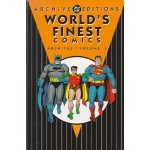
World’s Finest Comics Archives volume 1


Edmond Hamilton, Bill Finger, Curt Swan, Dick Sprang & various (DC Comics)
ISBN: 978-1-56389-488-6

During the 1950s most superheroes of the American Golden Age faded away leaving only headliners Superman, Batman and Wonder Woman – and whoever they could carry in the back of their assorted titles – to carry on their genteel crusade against thugs, monsters and aliens.

With economics and rising costs also dictating a reduction in average page counts, the once-sumptuous World’s Finest Comics (originally 96 pages per issue), which had featured solo adventures of the flagship heroes plus a wealth of other features, simply combined the twin stars in a lead story of each issue, beginning with #71 in July-August 1954.

And so they proceeded for decades more until Crisis on Infinite Earths rewrote the DC universe in 1985 and everything was shaken up by retooling The Man of Steel and  re-examining all the Caped Kryptonian’s close relationships in a darker, more cynical light.

However, for many years Superman and Batman worked together perfectly as the “World’s Finest” team. They were friends as well as colleagues and the pairing made sound financial sense since DC’s top heroes (in effect the company’s only costumed stars) could cross-pollinate and, more importantly, cross-sell their combined readerships.

This most inevitable of Paladin Pairings first occurred on the Superman radio show in the early 1940s, whilst in comics the pair had only briefly met whilst on a Justice Society of America adventure in All-Star Comics #36 (August-September 1947) – and perhaps even there they missed each other in the gaudy hubbub…

Of course they had shared the covers on World’s Finest Comics from the outset, but never crossed paths inside; sticking firmly to their specified solo adventures within. So, after a fascinating introduction from Mark Waid, this magnificent all-ages hardback compendium begins reliving those days of wonder in fabulous full colour with their classic, official first comicbook case together which appeared in Superman #76 (issue #76, May/June 1952).

Science fiction author Edmond Hamilton was tasked with revealing how Man of Steel and Caped Crusader first met – and accidentally discovered each other’s identities – whilst sharing a cabin on an over-booked cruise liner. Although an ordinary crime-stopper yarn, it was the start of a phenomenon. The art for ‘The Mightiest Team in the World’ was by the superb Curt Swan and inkers John Fischetti & Stan Kaye. Thereafter remaining inclusions in this first volume comprise the lead stories from World’s Finest Comics #71-85.

World’s Finest Comics #71 (July-August 1954) presented the Man of Tomorrow and the Gotham Gangbuster in the first of their official shared-cases as the Caped Crusader became ‘Batman – Double For Superman!’ (by scripter Alvin Schwartz with Swan & Kaye providing pictures) as the merely mortal hero traded identities to preserve his comrade’s alter ego and latterly, his life…

‘Fort Crime!’ (Schwartz, Swan & Kaye) saw them unite to crush a highly organised mob with a seemingly impregnable hideout, after which Hamilton returned to script ‘Superman and Batman, Swamis Inc’, a clever sting-operation that almost went tragically awry before an alien invader prompted an insane rivalry which resulted in ‘The Contest of Heroes’ by Bill Finger, Swan & Kaye, from #74.

The same creative team produced ‘Superman and Robin!’ wherein a disabled Batman could only fret and fume as his erstwhile assistant seemingly dumped him for a better man, whereas ‘When Gotham City Challenged Metropolis’ (Hamilton, Swan & Charles Paris) saw the champions at odds as their hometowns over-aggressively vied for a multi-million dollar electronics convention before a landmark tale by Hamilton, Swan & Kaye invented a new sub-genre when a mad scientist’s accident temporarily removed the Caped Kryptonian’s powers and created ‘The Super-Batman!’ in WF #77.

Arguably Batman’s greatest artist joined the creative crew ‘When Superman’s Identity is Exposed!’ (by Hamilton, Dick Sprang & Kaye) as a mysterious source kept revealing the Man of Steel’s greatest secret, only to be revealed as a well-intentioned disinformation stunt, whereas the accent was on high adventure when the trio became ‘The Three Musicians of Bagdad’ – a stunning time-travel romp from Hamilton, Sprang & Kaye.

When the Gotham Gazette faced closure days before a spectacular crime-expose, Clark Kent and Lois Lane joined dilettante Bruce Wayne as pinch-hitting reporters on ‘The Super-Newspaper of Gotham City’ (Hamilton, Sprang & Charles Paris) after which ‘The True History of Superman and Batman’ (Hamilton, Sprang & Kaye, #81) saw a future historian blackmail the heroes into restaging their greatest exploits so his erroneous treatise on them would be accurate…

Hamilton also produced a magnificent and classy costumed drama when ‘The Three Super-Musketeers!’ visited 17th century France to solve the mystery of the Man in the Iron Mask whilst Bill Finger wrote a brilliant and delightful caper-without-a-crime in ‘The Case of the Mother Goose Mystery! before Hamilton provided insight on a much earlier meeting of the World’s Finest Team with ‘The Super-Mystery of Metropolis!’ in #84, all for Sprang & Kaye to enticingly illustrate.

This initial collection of tales ends on a romantic note as Hamilton, Swan, Sprang & Kaye demonstrate how a comely Ruritanian Princess inadvertently turned the level-headed heroes into ‘The Super-Rivals’ (World’s Finest Comics #85 November-December 1956) attempting to woo, wow and outdo each other – but of course they had a far nobler plan in motion all along…

As mentioned above Superman Batman and Robin appeared together on the covers of World’s Finest from the outset and this captivating chronicle includes a glorious additional section reproducing 17 of those magnificently eye-catching, irresistible lures for the young at heart, as well as a comprehensive raft of creator biographies for the dedicated fan.

These are charming, clever yet uncomplicated tales whose dazzling style has recently returned to inform if not dictate the form for much of DC’s modern television animation – especially the fabulous Batman: the Brave and the Bold series – and the contents of this tome are a veritable feast of witty, charming thrillers packing as much punch and pizzazz now as they always have.

This book is the perfect gift for the kid in your no matter what age he/she/you are…
© 1952, 1954, 1955, 1956, 1999 DC Comics. All Rights Reserved.

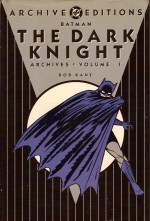
Batman: the Dark Knight Archives volume 1


By Bob Kane, Bill Finger, Jerry Robinson, George Roussos & various (DC Comics)
ISBN: 1-56389-050-X

By the time Batman and Robin the Boy Wonder won their own title (cover-dated Spring 1940) the company that would become DC had learned many lessons from their previous publishing phenomenon.

For one thing they no longer presumed that costumed characters were an incomprehensible glitch or soon to fade flash-in-the pan; nor were they going to be caught short by a lack of new material…

As the characters’ popularity grew, new talent joined the stable of creators. Jerry Robinson had already signed up with writer Bill Finger and penciller Bob Kane and during this period more scripters and artists were actively sought for the team.

This magnificent full-colour hardback compilation re-presents the first four quarterly issues in a gloriously resplendent sturdy collectors’ format, following the constantly rising fortunes of the Dynamic Duo as they fully developed and stormed ahead of all competition in progressively improving stories originally published between 1940 and 1941.

After a heartfelt paean of praise from US Senator Patrick Leahy, Batman #1 opens proceedings with a recycled origin culled from portions of Detective Comics #33 and 34. ‘The Legend of the Batman – Who He Is and How He Came to Be!’ by Gardner Fox, Bob Kane & Sheldon Moldoff offered in two perfect pages what is still the best ever origin of the character, after which ‘The Joker’ (Bill Finger, Kane & Jerry Robinson – who produced all the remaining tales in this astonishing premiere tome) introduced the greatest villain in the Dark Knight’s rogues’ gallery via a stunning tale of extortion and wilful wanton murder.

‘Professor Hugo Strange and the Monsters’ follows as the old enemy (see Batman Archives volume 1) returned with laboratory-grown hyperthyroid horrors to rampage through the terrified city after which ‘The Cat’ – who later added the suffix ‘Woman’ to her name to avoid any possible doubt or confusion – plied her felonious trade of jewel theft aboard the wrong cruise liner and fell foul for the first time of the dashing Dynamic Duo.

The initial issued ended with the ‘The Joker Returns’ as the sinister clown broke jail and resumed his terrifying campaign of murder for fun and profit before “dying” in mortal combat with the Gotham Guardian…

He returned in the opening tale of Batman #2 as ‘Joker Meets Cat-Woman‘ (by Finger, Kane, Robinson & the extremely impressive George Roussos) wherein svelte thief, homicidal jester and a crime syndicate all tussle for the same treasure with the Dynamic Duo caught in the middle.

‘Wolf, the Crime Master’ was a fascinating take on the classic Jekyll and Hyde tragedy after which an insidious – and classic – murder-mystery ensued in ‘The Case of the Clubfoot Murders’ before Batman and Robin faced uncanny savages and ruthless showbiz promoters in a poignant monster story ‘The Case of the Missing Link’.

Issue #3 (Fall 1940) saw Finger, Kane, Robinson & Roussos rise to even greater heights, beginning with ‘The Strange Case of the Diabolical Puppet Master’ an eerie episode of mesmerism and espionage, followed by a grisly scheme wherein innocent citizens are mysteriously transformed into specimens of horror and artworks destroyed by the spiteful commands of ‘The Ugliest Man in the World’ before ‘The Crime School For Boys!!’ saw Robin infiltrate a gang who had a cruel and cunning recruitment plan for dead-end kids…

‘The Batman vs. The Cat-Woman’ found the larcenous burglar in over her head when she stole for and from the wrong people and the issue ends with a magical Special Feature as ‘The Batman Says’ presented an illustrated prose Law & Order pep-talk crafted by Whitney Ellsworth and Robinson.

Batman #4 (Winter 1941) featured ‘The Case of the Joker’s Crime Circus’, as the mountebank of Mirth plunged into madness and recruited a gang from the worst that the entertainment industry could offer, whilst modern-day piratical plunderings were the order of the day in ‘Blackbeard’s Crew and the Yacht Society.

‘Public Enemy No.1’ told a salutary gangland fable in the manner of contemporary, socially aware Jimmy Cagney crime movies and ‘Victory For the Dynamic Duo’ submerged the Partners in Peril in the turbulent and very violent world of sports gambling to end the issue and this first fantastic collection on a rousing high note.

Notwithstanding the historical significance of the material presented here, there is a magnificent bonus for anyone who hasn’t read some or all of these tales before. They are astonishingly well-told and engrossing mini-epics that will still grip the reader with the white heat of sheer exuberant class and quality.

Read these yarns and you’ll understand why today’s creators keep returning to this material every time they need to revamp the mythology.

Timeless, enthralling and truly, truly great.
© 1940, 1940, 1992 DC Comics. All Rights Reserved.