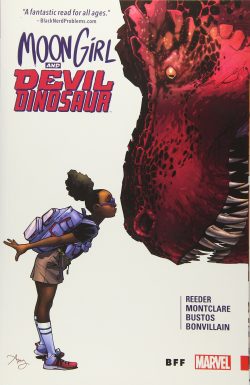
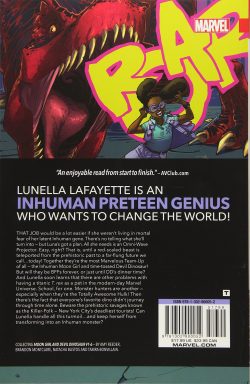
Moon Girl and Devil Dinosaur volume one: BFF


By Brandon Montclare, Amy Reeder, Natacha Bustos, Tamra Bonvillain & various (Marvel)
ISBN: 978-1-3029-0005-2 (TPB/Digital edition)

The Marvel Universe is absolutely stuffed with astounding young geniuses but Lunella Lafayette is probably the most memorable you’ll ever meet. Very young, very gifted and proudly black, she lives with her parents on Manhattan’s Lower East Side when not attending Public School 20 Anna Silver on Essex Street.

Thanks to her obsessive interest in astronomy and alien races the other kids mockingly call her “Moon Girl” whilst the brilliant, bored 4th grader’s teachers universally despair because she already knows so much more than they do…

It’s a hassle, but Lunella actually has bigger problems. Time is running out and her numerous applications to specialist schools such as the Fantastic Four’s Future Foundation have all gone unanswered. The situation needs resolving as it’s pretty important and urgent. Lunella has – correctly – deduced that she carries dormant Inhuman genes, and the constantly moving mutagenic Terrigen Cloud recently released into Earth’s atmosphere (see both the Infinity and Inhumanity events) could transform her into a monster at any windswept moment…

Thanks to her investigations, she’s an expert in advanced and extraterrestrial technology, and her quest for a cure or Terrigen-deterrence procedure sees her perpetually sneaking out past bedtime in search of gadgets and detritus left behind after frequent superhero clashes around town…

That impetus reaches its hope-filled climax when her handmade detectors locate a discarded Kree Omni-Wave Projector in opening chapter ‘Repeat After Me’…

At some unspecified time in Earth’s distant prehistory, various emergent species of hominids eked out a perilous existence beside the last of the great lizards and other primordial giants. At one particular key moment, a wide-eyed innocent of the timid yet clever Small Folk saved a baby tyrannosaur from ruthless pre-human hunters the Killer Folk.

They had already slaughtered its mother and siblings with cunning snares and were merrily torturing the little lizard with blazing firebrands – which turned its scorched hide a livid, blazing red – before Moon Boy intervened…

Under the roaring light of a blazing volcano, boy and beast bonded, becoming inseparable companions. It was soon apparent the scarlet saurian was no ordinary reptile: blessed with uncanny intelligence and unmatchable ferocity, Devil became an equal partner in a relationship never before seen in the world. It did not, however, prevent the duo becoming targets for ruthless Killer Folk leader Thorn-Teeth who now slaughters and sacrifices beasts and Small Folk to a mystic “Nightstone”. A more advanced observer might remark on how much it resembles a Kree Omni-Wave Projector…

When Moon-Boy steals the dread talisman, he is savagely beaten near to death even as – in a gym class on Essex Street – Coach Hrbek confiscates and accidentally activates a fancy doodad Lunella’s been playing with instead of paying attention to getting fit.

Lights flash, time shreds and universes collide. A hole opens in space and a pack of bizarre monkey men shamble into modern New York. Arriving too late in the antediluvian valley, Devil Dinosaur thunders straight through the portal, intent on avenging his dying comrade…

Arriving in an impossibly confusing new world, Devil understandably panics. After causing much chaos and carnage, the bombastic beast sniffs little Lunella and snatches her up…

A mad chase ensues in ‘Old Dogs and New Tricks’ as deeply confused Devil marauds through Manhattan with outraged Lunella unable to escape or control the ferocious thunder lizard.

Meanwhile, the Killer Folk rapidly adapt to the new environment. Hiding out and observing everything occurring in the Yancy Street Subway Station, they soon prove the old adage about primitive not meaning stupid. Within days they have grasped the fundamentals of English and new concepts like money and clothes, as well as the  trickier notions of “gangs” and “protection rackets”…

Most importantly, Thorn-Teeth remembers that when they arrived, one of the hairless Small Folk was holding his Nightstone…

In ‘Out of the Frying Pan’, Moon Girl is having little luck ditching the overly-attentive, attention-attracting Torrid T-Rex. Tragically, when she finally does, the Killer Folk grab her and the Omni-Wave…

Their triumph is short-lived, since the lizard’s superior sense of smell summons Devil to the rescue, although, in the resulting melee, the precious device is lost. Growing grudgingly fond of the colossal critter, Lunella stashes Devil in her super-secret lab underneath PS 20, but when a spot of student arson sets the school ablaze, her hideaway is exposed and Devil bursts up through the ground to rescue kids trapped on an upper floor…

The fracas also unfortunately attracts the kind of superhero response Lunella has been dreading. ‘Hulk + Devil Dinosaur – ‘Nuff Said’ sees smug, teenaged Gamma-powered Avenger Amadeus Cho butt in with his bulging muscles and inability to listen to reason…

Poor Devil is no match for the Totally Awesome Hulk, forcing Moon Girl to intervene with some her own inventions. Across town, the Killer Folk – proudly carrying the Nightstone – deal with the last obstacle to their supremacy in the Yancy Street criminal underworld…

The Battle of PS 20 reaches its inevitable conclusion and Cho confiscates Devil Dinosaur, leaving Lunella thoroughly grounded and (apparently) behaving like a normal little girl in ‘Know How’.

Of course, it’s all a trick and as soon as everybody is lulled into complacency Moon Girl kits herself out with more devious gadgetry and busts Devil out of the Top Secret Wing of the Natural History Museum. She’s on a tight deadline now: her weather-monitoring gear confirms the Terrigen Cloud is rolling back towards Manhattan…

The spectacular jailbreak results in a ‘Eureka!’ moment coinciding with the Killer Folk consolidating their grip on the streets and using the Omni-Wave to capture Moon Girl. It also results in Lunella’s mother discovering who broke a dinosaur out of jail, and she furiously heads to the school for a reckoning with her wayward child…

The final conflict sees our little warrior at last victorious over the Killer Folk, albeit too late. As Moon Girl and Devil Dinosaur roar in triumph on the rooftops, Lunella realises she is trapped outside with the Terrigen cloud descending. Her time and opportunity to create a cure has come and gone…

To Be Continued…

Collecting Moon Girl and Devil Dinosaur #1-6 from January to June 2016, this compelling, immensely entertaining romp is crafted by writers Brandon Montclare & Amy Reeder, with art from Natacha Bustos, colours by Tamra Bonvillain and letters from Travis Lanham. With a cover and variants gallery from Trevor Von Eeden, Pascal Campton, Paul Pope, Jeffrey Veregge & Pia Guerra, this addictively engaging yarn affords non-stop fun: a wonderful all-ages Marvel saga that is as fresh, thrilling, moving and hilariously funny now as it ever was.

Moon Girl and Devil Dinosaur: BFF is the kind of tale to lure youngsters into the comics habit and a perfect tool to seduce jaded older fans back into the fold…
© 2016 Marvel Characters, Inc. All rights reserved.

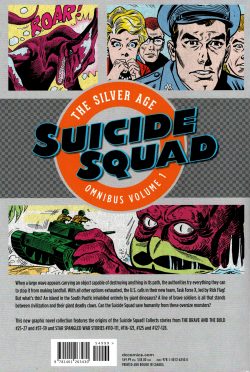
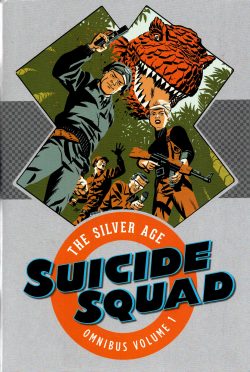
Suicide Squad: The Silver Age


By Robert Kanigher, Howard Liss, Ross Andru & Mike Esposito, Gene Colan, Joe Kubert & various (DC Comics)
ISBN: 978-1-4012-6343-0 (HB) 978-1 4012 7516 7 (TPB)

The War that Time Forgot was a strange series which saw paratroopers and tanks of the “Question Mark Patrol” dropped on Mystery Island from whence no American soldiers ever returned. Assorted crack GIs discovered why when the operation was suddenly overrun by pterosaurs, tyrannosaurs and worse…

However, the combat-&-carnosaur creation was actually a spin-off of an earlier concept which hadn’t quite caught on with the comics-buying public. That wasn’t a problem for Writer/Editor Kanigher: a man well-versed in judicious recycling and reinvention…

Back in 1955 he had devised and written anthology adventure comic The Brave and the Bold which featured short complete tales starring a variety of period heroes: a format mirroring that era’s filmic fascination with historical dramas.

Issue #1 led with Roman swords-&-sandals epic Golden Gladiator, medieval mystery-man The Silent Knight and Joe Kubert’ Viking Prince. Soon the Gladiator was side-lined by the company’s iteration of Robin Hood, but the high adventure theme carried the title until the end of the decade when the burgeoning superhero revival saw B&B transform into a try-out vehicle in the manner of the astounding successful Showcase. Used to launch enterprising concepts and characters such as Cave Carson, Strange Sports Stories, Hawkman and the epochal Justice League of America, the title began test runs s with #25 (August/September 1959) with the fate-tempting Suicide Squad – code-named Task Force X by the US government to investigate uncanny mysteries and tackle unnatural threats.

The scary tales were all illustrated by Kanigher’s go-to team for fantastic fantasy (Ross Andru & Mike Esposito) and they clearly revelled at the chance to cut loose and show what they could do outside the staid whimsy of Wonder Woman or gritty realism of the war titles they usually handled…

The Brave and the Bold #25 introduced a quartet of merely human specialists – air ace war hero Colonel Rick Flag, combat medic Karin Grace and big-brained boffins Hugh Evans and Jess Price – all officially convened into a unit whose purpose was to tackle threats beyond conventional comprehension such as the interstellar phenomenon dubbed ‘The Three Waves of Doom!’

The quartet were built on a very shaky premise. All three men loved Karin. She only loved Rick (who wouldn’t?), but agreed to conceal her inclinations and sublimate her passions so Hugh and Jess would stay on the team of scientific death-cheaters…

In their first published exploit, a cloud from outer space impacted Earth and created a super-heated tsunami which threated to broil America. With dashing derring-do, the troubleshooters quenched the ambulatory heat wave only to have it spawn a colossal alien dragon emanating super-cold rays that might trigger a new ice age…

The only solution was to banish the beast back into space on a handy rocket headed for the sun, but tragically, the ship had to be piloted…

Having heroically ended the invader, the team were back two months later as B&B #26 opened with an immediate continuation. ‘The Sun Curse’ saw our stranded astronauts struggling – in scenes eerily prescient and reminiscent of the Apollo 13 crisis a decade later – to return their ship to Earth. Uncannily, the trip bathes them in radiation which causes them to shrink to insect size…

Back on terra firma but now imperilled by everything around them, the team nonetheless manages to scuttle a proposed attack by a hostile totalitarian nation before regaining their regular stature…

A second, shorter tale finds the quartet enjoying some downtime in Paris before the Metro is wrecked by an awakened dinosaur. Of course, our tough tourists are ready and able to stop the ‘Serpent in the Subway!’

In an entertainment era dominated by monsters and aliens, with superheroes still only tentatively resurfacing, Task Force X were at the forefront of beastie-battles. Their third and final try-out issue found them facing evolutionary nightmare as a scientist vanished and the region around his lab was suddenly besieged by gigantic insects and a colossal reptilian humanoid the team dubbed ‘The Creature of Ghost Lake!’ (December 1959/January 1960). They readily destroyed the monster but never found the professor…

A rare failure for those excitingly experimental days, the Suicide Squad vanished after that triple try-out run, only to resurface months later for a second bite of the cherry. The Brave and the Bold #37 (August/September 1961) opened with Karin displaying heretofore unsuspected psychic gifts and predicting an alien ‘Raid of the Dinosaurs!’ which pitted the group against hyper-intelligent saurians whilst ‘Threat of the Giant Eye!’ focussed on the retrieval of a downed military plane and lost super-weapon. That mission brought the Squad to an island of mythological mien where a living monocular monolith hunted people…

In #38 (October/November 1961) the team tackled the ‘Master of the Dinosaurs’ – an alien using Pteranodons to hunt like an Earthling employs falcons – after which the fabulous four fell afoul of extra-dimensional would-be conquerors but still had enough presence of mind and determination to defeat the ‘Menace of the Mirage People!’

B&B #39 (December 1961/January 1962) called “time!” on Task Force X after ‘Prisoners of the Dinosaur Zoo!’ saw the team uncover an ancient extraterrestrial ark caching antediluvian flora and fauna, and a ‘Rain of Fire!’ found them crushing a macabre criminal entombing crime-busters in liquid metal. That was it for the Squad until 1986 when a new iteration of the concept was launched in the wake of Crisis on Infinite Earths.

Or was it? Superhero fans are notoriously clannish and insular so they might not have noticed how one creative powerhouse refused to take “no thanks” for an answer…

Robert Kanigher (1915-2002) was one of the most distinctive authorial voices in American comics, blending rugged realism with fantastic fantasy in his signature war comics, westerns, horror stories, superhero titles such as Wonder Woman, Lois Lane, Teen Titans, Hawkman, Metal Men, Batman and other genres too numerous to cover here. He also scripted ‘Mystery of the Human Thunderbolt’ – the very first story of the Silver Age. This introduced Barry Allen AKA the Flash to hero-hungry kids in 1956.

Kanigher sold his first stories and poetry in 1932 and wrote for the theatre, film and radio before joining the Fox Features shop where he created The Bouncer, Steel Sterling and The Web whilst also providing scripts for Blue Beetle and the original Captain Marvel.

In 1945, he settled at All-American Comics as both writer and editor, staying on when the company amalgamated with National Comics to become the forerunner of today’s DC. He wrote the original Flash and Hawkman, created Black Canary and Lady Cop, plus many memorable villainous femme fatales like Harlequin and Rose and Thorn. This last he reconstructed during the relevancy era of the early 1970s into a schizophrenic crime-busting female superhero.

When mystery-men faded out at the end of the 1940s, Kanigher easily switched to espionage, adventure, westerns and war stories, becoming in 1952 writer/editor of the company’s combat titles: All-American War Stories, Star Spangled War Stories and Our Amy at War.

He created Our Fighting Forces in 1954 and added G.I. Combat to his burgeoning portfolio when Quality Comics sold their line of titles to DC in 1956, all the while helming Wonder Woman, Johnny Thunder, Rex the Wonder Dog, Silent Knight, Sea Devils, The Viking Prince and a host of others.

Among his numerous game-changing war series were Sgt. Rock, Enemy Ace, the Haunted Tank and The Losers as well as the visually addictive, irresistibly astonishing “Dogfaces and Dinosaurs” dramas sampled and filling out the back of this stunning collection…

Kanigher was a restlessly creative writer and even used the uncanny but formulaic adventure arena of The War that Time Forgot as a personal laboratory for his series concepts. The Flying Boots, G.I. Robot and many other teams and characters first appeared in the manic Pacific hellhole with wall-to-wall danger. Indisputably the big beasts were the stars, but occasionally (extra)ordinary G.I .Joes made enough of an impression to secure return engagements, too…

The War that Time Forgot debuted in Star Spangled War Stories #90 (April-May 1960), running until #137 (May 1968). It skipped only three issues: #91, 93 and #126 (the last of which starred the United States Marine Corps simian Sergeant Gorilla – look it up: I’m neither kidding nor being metaphorical…).

Simply too good a concept to ignore, this seamless, shameless blend of Sir Arthur Conan Doyle’s Lost World and Edgar Rice Burroughs’ Caprona stories – known alternatively as the Caspak Trilogy or The Land That Time Forgot – provided everything baby-boomer boys could dream of: giant lizards, humongous insects, fantastic adventures and two-fisted heroes with lots of guns. The only thing mostly missing was cave-girls in fur bikinis…

In the summer of 1963, a fresh Suicide Squad debuted in Star Spangled War Stories #110 to investigate a ‘Tunnel of Terror’ into the lost land of giant monsters: this time though, a giant albino gorilla decided that us mammals should stick together…

The huge hairy beast was also the star of ‘Return of the Dinosaur Killer!’ in #111 as the unnamed Squad leader and a wily boffin (visually based on Kanigher’s office associate Julie Schwartz) struggled to survive on a reptile-ridden tropical atoll…

SSWS #116 (August/September 1964) depicted a duo of dedicated soldiers facing ice-bound beasts in ‘The Suicide Squad!’ – the big difference being that Morgan and Mace were more determined to kill each other than accomplish their mission…

‘Medal for a Dinosaur!’ in #117 bowed to the inevitable: introducing a (relatively) friendly and extremely cute baby pterodactyl to balance out Mace & Morgan’s barely suppressed animosity, after which ‘The Plane-Eater!’ in #118 saw the army odd couple adrift in the Pacific and in deep danger until the leather-winged little guy turned up once more…

The Suicide Squad were getting equal billing by the time of #119’s ‘Gun Duel on Dinosaur Hill!’ (February/March 1965), as yet another band of men-without-hope battled saurian horrors – and each other – to the death, after which seemingly unkillable Morgan & Mace returned with Dino, the flying ptero-tot, who found a new companion in handy hominid Caveboy before the whole unlikely ensemble struggled to survive against increasingly outlandish creatures in ‘The Tank Eater!’…

Issue #121 presented a diving drama when a UDT (Underwater Demolitions Team) frogman won his Suicide Squad rep as a formidable fighter and ‘The Killer of Dinosaur Alley!’ Increasingly now, G.I. hardware and ordnance trumped bulk, fang and claw…

Undisputed master of gritty fantasy art Joe Kubert added his pencil-and-brush magic to a tense, manic thriller featuring the return of the G.I. Robot in stunning battle bonanza ‘Titbit for a Tyrannosaurus!’ in #125 (February/March 1965), after which Andru & Esposito covered another Suicide Squad sea-saga in #127: ‘The Monster Who Sank a Navy!’

This eclectic collection tumultuously terminates in scripter Howard Liss and visual veteran Gene Colan’s masterfully crafted, moving human drama from #128 which was astoundingly improved by the inclusion of ravening reptiles in ‘The Million Dollar Medal!’

Throughout this calamitous compilation of dark dilemmas, light-hearted romps and battle blockbusters, the emphasis is always on foibles and fallibility; with human heroes unable to put aside grudges, swallow pride or forgive trespasses even amidst the strangest and most terrifying moments of their lives. This edgy humanity informs and elevates even the daftest of these wonderfully imaginative adventure yarns.

Classy, intense, insanely addictive and Just Plain Fun, the original Suicide Squad offers a kind of easy, no-commitment entertainment seldom seen these days and is a deliciously guilty pleasure for one and all. Surely, this is a movie we would all watch…
© 1959, 1960, 1961, 1962, 1963, 1964, 1965, 1966, 2016 DC Comics. All Rights Reserved.

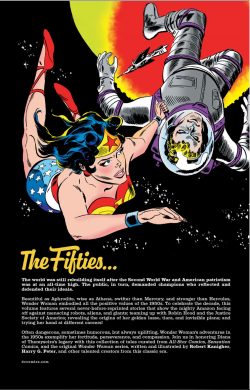
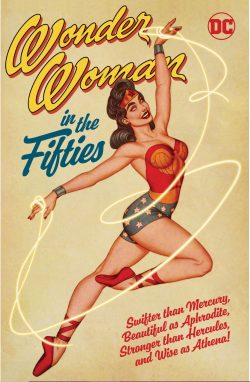
Wonder Woman in the Fifties


By Robert Kanigher, John Broome, Harry G. Peter, Ross Andru & Mike Esposito, Frank Giacoia, Arthur Peddy & Bernard Sachs & various (DC Comics)
ISBN: 978-1-779507-624-6 (TPB/Digital edition)

In the early years of this century, DC launched a series of graphic archives intended to define DC’s top heroes through the decades: delivering magnificent past comic book magic from the Forties to the Seventies via a tantalisingly nostalgic taste of other – arguably better, but certainly different – times. The collections carried the cream of the creative crop, divided into subsections, partitioned by cover galleries, and supplemented by short commentaries; a thoroughly enjoyable introductory reading experience. I prayed for more but was frustrated… until now…

Part of a trade paperback trilogy – the others being Superman and Batman (thus far, but hopefully Aquaman, Green Arrow and Martian Manhunter are in contention too, as they have become such big shot screen stars these days) – the experiment was recently re-run, with even more inviting samples from the company’s vintage, family-friendly canon.

Gathered here is a menu of deliciously dated delights starring Earth’s most recognisable Female Heroic Ideal, heralded by a time-&-tone-setting Introduction from historian, author and columnist Andy Mangels augmenting each context-stuffed chapter text piece.

With Robert Kanigher as primary writer of record throughout the book, the contents here originated in Sensation Comics #97, 100; Wonder Woman #45, 50, 60, 66, 72, 76, 80, 90, 94-95, 98-105, 107, 108, 750; and All-Star Comics #56, 57 spanning the entire decade whilst attempting to reconcile an indomitable symbol of female emancipation and independence with a post-war world determined to turn them back into docile brood mares and passive uber-consumers…

Wonder Woman was created by polygraph pioneer William Moulton Marston – apparently at the behest of his remarkable wife Elizabeth and their life partner Olive Byrne. The vast majority of the outlandish early adventures were limned by illustrator Harry G. Peter.

The Astounding Amazon debuted in All Star Comics #8 (cover-dated December 1941, and top-selling home of the Justice Society of America) just before launching in her own solo series and cover-spot of new anthology Sensation Comics the following month. She was an instant hit, and gained her own eponymous title in late Spring of that year (Summer 1942).

Using the nom de plume Charles Moulton, Marston & Co scripted all her many and fabulous exploits until his death in 1947, whereupon Kanigher officially took over the writer and editor’s role. The venerable Peter continued until his own death in 1958. Wonder Woman #97 – in April of that year – was his last hurrah and the end of an era.

Supported by a factual briefing, the comics classics commence with The (Many) Origins of Wonder Woman, and the first adjustments to the classic origin tale…

For purposes of comparison, the 1940s saga stated that on a hidden island of immortal super-women, American aviator Steve Trevor of US Army Intelligence crashed to Earth. Near death, he was nursed back to health by young, impressionable Princess Diana.

Fearing her growing obsession with the creature from a long-forgotten, madly violent world, her mother Queen Hippolyte shared the hidden history of the Amazons: how they were seduced and betrayed by men, but rescued by goddess Aphrodite on condition they isolated themselves from the world, devoting their eternal lives to becoming ideal, perfect creatures.

However, when Athena and Aphrodite subsequently instructed Hippolyte to despatch an Amazon with the American to fight for global freedom and liberty and against oppression and barbarism, Diana overcame all other candidates in a brutal open competition to became their emissary – Wonder Woman.

On arriving in America, she purchased the identity and credentials of lovelorn Army nurse Diana Prince, elegantly allowing the Amazon to be close to Steve and the heartsick medic to wed her own fiancé in South America. Diana also joined Army Intelligence as secretary to General Darnell, ensuring she would always be able to watch over her beloved. She little suspected that, although painfully shallow Steve only had eyes for the dazzling Amazon superwoman, the General had fallen for mousy yet superbly competent Lieutenant Prince…

As the decade turned it was deemed time for a refurbished origin and – illustrated by Harry G. Peter – WW #45 (cover-dated January/February 1951) delivered ‘The Wonder Woman Story!’

This found childhood rivals vying for the journalistic kudos of publishing the Amazon’s backstory. However, after a hard-won trip to Paradise Island led to Mary Ellen learning the details of it all – Hercules’s ancient ‘Act of Treachery!’ and how the Princess defied authority for love – all manner of trouble emerged…

Cunning competitor John Lane had bugged Mary’s jewellery and craftily followed her to the Amazon homeland, causing a major upset…

Back then Wonder Woman’s artists were astonishingly faithful and true, staying with her for pretty long hauls. Peter and his uncredited team of female assistants served nearly 20 years before he was let go mere weeks before dying. His replacements Ross Andru & Mike Esposito drew her adventures from 1958 to the middle of 1967 (#98 – 171), and limned this breakthrough tale from WW #105 (April 1959)

The issue debuted Wonder Girl in the ‘‘The Secret Origin of Wonder Woman’, revealing how centuries ago Olympian divinities bestowed unique powers on the daughter of Queen Hippolyta and how – as a mere teenager – the indomitable Diana brought the Amazons to Paradise Island. Continuity – let alone consistency or rationality – were never as important to Kanigher as strong story or breathtaking visuals, and this eclectic odyssey is a great yarn that simply annoyed the heck out of a lot of fans – but not as much as the junior Amazon would in years to come after these teen tales spawned an actual junior Amazon as sidekick to Diana…

That ball started rolling in #107 (July 1959) and proved that the high fantasy exploits of the minor had clearly caught somebody’s editorial fancy. Follow-ups came thick and fast after ‘Wonder Woman Amazon Teen-Ager!’ saw the youngster ensnare an unwanted romantic interest in merboy Ronno, whilst dutifully undergoing a quest to win herself a superhero costume…

Fronted by an article on her legendary kit and illustrated throughout by H.G. Peter, Fashion as Armor: The Equipment List shares some of Kanigher’s frequent and often contradictory exposés on the source and powers of Wonder Woman’s combat gear. It begins with ‘The Secret Story of Wonder Woman’s Lasso!’ (WW #50, November/December 1951), depicting how the princess undertakes three divine tasks to ensure the rope gains magical traits of unbreakability, infinite elasticity and truthful compulsion. Along the way she uses it against crooks, spies, other Amazons, submarines, dinosaurs and a Roc…

That mythological bird, another dinosaur and aliens play a major role in ‘The Talking Tiara!’ (#66, May 1954) as Steve learns how Diana belatedly won possession of her headpiece, a “Linguagraph Tiara” capable of translating any language past present or future, whilst ‘The Secret of Wonder Woman’s Sandals’ (#72, February 1955) reveals some odd characteristics of the footwear as she performs incredible feats (sorry!) to confirm her worthiness…

Cover-dated February 1956 ‘The Origin of the Amazon Plane!’ featured in Wonder Woman #80, recalling a trio of tasks undertaken to collect separated sections of her faithful, invisible robot conveyance before #95 (January 1958) offered ‘The Secret of Wonder Woman’s Tiara!’: this time in the form of a tale told to toddlers, revealing how the hat was a gift from aliens given in thanks for saving them from marauding Phenegs…

Moving on to highlight the Amazon’s noteworthy collaborations, One of the Team offers a trio of tales. The section is a somewhat “Marmite” moment that fans will either love or hate…

The majority of the chapter is devoted to a brace of tales starring the Justice Society of America and, whilst I’m never going to complain about seeing such classics where new readers can discover them, it’s a lot of pages to hand over to a group who had Wonder Woman serving coffee and taking notes as “Club Secretary” for years. At least here, in the last of the original run, she’s graduated to being an leading participant in their adventures…

After the actual invention of the superhero via the 1938 Action Comics debut of Superman, the most significant event in our industry’s history was the combination of individual stars into a like-minded group. Thus, what seems blindingly obvious to us with the benefit of four-colour hindsight was proven: consumers can’t get enough of garishly-hued mystery men, and combining a multitude of characters inevitably increases readership. Plus, of course, a mob of superheroes is just so much cooler than one…or one-and-a-half if there’s a sidekick involved…

The creation of the Justice Society of America in 1941 utterly changed the shape of the budding industry. Following the runaway success of Superman and Batman, both National Comics and its separate-but-equal publishing partner All-American Comics went looking for the next big thing whilst frantically concentrating on getting anthology packages into the hands of a hungry readership. Thus All Star Comics: conceived as a joint venture affording characters already in their respective stables an extra push towards winning elusive but lucrative solo titles.

Technically, All Star Comics #3 (cover-dated Winter 1940-1941 and released in December 1940) was the kick-off, but the mystery men merely had dinner and recounted recent cases and didn’t actually go on a mission together until #4, which had an April 1941 cover-date.

The merits of the marketing project would never be proved: rather than a runaway favourite graduating to their own starring vehicle as a result of the poll, something radically different evolved. For the third issue, prolific scribe Gardner Fox apparently had the bright idea of linking all the solo stories through a framing sequence with the heroes gathering to chat about their latest exploits. With that simple notion that mighty mystery men hung out together, history was made and it wasn’t long before they started working together…

However, after WWII ended, superheroes gradually declined, and most companies had shelved them by 1950. Their plummet in popularity led to a revival in genre-themed titles and characters, and it was a stripped-down team (Flash, Green Lantern, Hawkman, The Atom, Black Canary, Dr. Mid-Nite and Wonder Woman) in contemporarily tailored crime and science fiction sagas before the title abruptly changed into All Star Western with #58.

Both JSA stories were written by John Broome and illustrated via alternating chapters by Frank Giacoia and Arthur Peddy & Bernard Sachs. Leading off is All-Star Comics #56 (December 1950/January 1951) and ‘The Day the World Ended!’ wherein a future scientist goes to extraordinary lengths to recruit the 20th century stalwarts to save Tomorrow’s World from shapeshifting invaders. Issue #57 was the JSA’s last hurrah with ‘The Mystery of the Vanishing Detectives!’ pitting them against criminal mastermind The Key after he abducts Earth’s greatest criminologists in advance of a spectacular robbery spree. Both are great yarns that deserve their own archival volume, but the Amazon’s contributions are barely visible in both…

Of more interest is the Kanigher & Peter tale from Wonder Woman #72 (November 1957). ‘The Channel of Time’ begins as an unashamed plug for The Adventures of Superman TV show, with the Amazon eagerly enjoying the latest episode when interference turns the screen into an SOS through time, displaying old ally Robin Hood in existential peril…

An initial iteration of the legendary archer had debuted in New Adventure Comics #23 (January 1938), and National/DC also acquired Quality Comics’ Robin Hood Tales title. That version had begun in February 1956, with DC continuing the run from #7 (cover-dated February 1957) as well as featuring the hero in Kanigher’s The Brave and the Bold from #5 (May 1956). That was (coincidentally?) the same month The Amazing Amazon first met the Sentinel of Sherwood Forest, who here requires assistance against a dragon, wicked foemen and a shark-infested moat safeguarding evil Prince John…

Seeing Double then highlights the hero’s tendency to encounter copies of herself – everything from evil doppelgangers from parallel universes to weirdly exact robot facsimiles…

When Showcase #4 rekindled the readership’s imagination and zest for masked mystery-men with a second, brand-new iteration of The Flash in 1956, the fanciful floodgates opened wide once more. As well as re-inventing Golden Age stars like Green Lantern and Hawkman, the company consequently updated many hoary survivors like Green Arrow and Aquaman. Also included in the revitalising agenda were the High Trinity: Man of Steel, Caped Crusader and the ever-resilient Princess of Power…

Andru & Esposito had debuted as cover artists 3 issues earlier, but with Wonder Woman #98 they took over the entire comic book as Kanigher reinvented much of the old mythology and tinkered with her origins in The Million Dollar Penny!’ After Athena visits an island of super-scientific immortal women, informing Queen Hippolyta that she must send an emissary and champion of justice to crime-ridden “Man’s World”, the sovereign declares an open competition for the job.

She isn’t surprised when her daughter wins and is given the task of turning a penny into a million dollars in one day – all profits going to children’s charities, of course…

Just as the new Wonder Woman begins her coin chore, American airman Steve Trevor bails out of his malfunctioning jet high above the magically hidden isle, unaware that should any male set foot on Amazon soil the immortals would lose all their powers. Promptly thwarting impending disaster, Diana and Steve then team up to accomplish her task, encountering along the way The Undersea Menace’ before building The Impossible Bridge!’

Following that epic comes the lead from landmark issue #100 (August 1958): a spectacular battle saga commencing with The Challenge of Dimension X!’ as an alternate Earth Wonder Woman competes with the Amazing Amazon for sole rights to the title: all culminating with a deciding bout in The Forest of Giants!’

No celebration of the fifties could be complete without an exploration of the outdated concept of gainful female employment. With art by Peter, Working 9 to 5: The Careers of Wonder Woman offers a quick peek of typical opportunities beginning with Sensation Comics #97 (May 1950). ‘Wonder Woman, Romance Editor’ sees the Amazon agree to a task no male journalist can handle, solving the woes of lovelorn women seeking husbands, whilst her own duties prevent her giving in to Steve’s increasingly urgent demands to settle down… Cover-dated November 1950, Sensation Comics #100 showcases ‘Wonder Woman, Hollywood Star!’ as the Amazon and Steve endure peerless perils making a movie one crazed glamour queen is determined only she should star in, after which two millionaires make a bet that propels the Amazon into a string of crazy roles culminating in her shepherding an infant T-Rex as ‘Wonder Woman, Amazon Baby Sitter!’ (WW #90, May 1957)…

As you’ve probably ascertained, much of Kanigher’s oeuvre depended on the Princess of Paradise undergoing tasks and tests for a variety of reasons and this voyage of rediscovery concludes with some of the most noteworthy, gathered as The Trials of Wonder Woman

Leading off is Peter-rendered classic ‘The Secret Olympics!’ (WW #60, July 1953) as Diana justifies her legendary brief as “beautiful as Aphrodite, wise as Athena, swifter than Mercury (sic) and stronger than Hercules”…

 Issue #76 (August 1955) introduces ‘The Bird Who Revealed Wonder Woman’s Identity!’ before Diana devises a way to undermine a gabby Mynah’s proclamations before Andru & Esposito assume the art duties for the remainder of the book, beginning with Top Secret!’ from Wonder Woman #99 (July 1958).

Introducing the Hellenic Hero’s new covert identity as Air Force Intelligence officer Lt. Diana Prince the tale opens a decade of tales with Steve perpetually attempting to uncover her identity and make the most powerful woman on Earth his blushing bride, whilst his bespectacled, glorified secretary stands unnoticed, exasperated and ignored right beside – or slightly behind – him…

Here that means attempting to trick her into marriage with a rigged bet – a tactic the creep tried a lot back then – after which ‘Wonder Woman’s 100th Anniversary!’ (WW #100 again) deals with the impossibility of capturing the far-too-fast and furious Amazon’s exploits on film for Paradise Island’s archives…

In #101 (October 1958), ‘Undersea Trap!’ sees Steve tricking his “Angel” into agreeing to marry him if she has to rescue him three times in 24 hours (just chalk it up to simpler times, or you’ll pop a blood vessel, OK?) after which January 1959 and WW #103 spotlight ‘The Wonder Woman Album!’ returning to the previously explored “impossible-to-photograph” theme, before we close on Wanted… Wonder Woman’ (#108, August 1959), as Flying Saucer aliens frame her for heinous crimes as a precursor to a planetary invasion but are not smart enough to realise when they are being played…

Also including a selection of breathtaking covers by Irwin Hasen & Sachs, Irv Novick, Peddy and Andru & Esposito plus a Bonus Cover Gallery by the latter pair, this is a fascinating but potentially charged tome. By modern standards these exuberant, effulgent fantasies are all-out crazy, but as examples of the days when less attention was paid to continuity and concepts of shared universes and adventure in the moment were paramount, these outrageous romps simply sparkle with fun, thrills and sheer spectacle -a s long as you keep in mind the outrageous undercurrent of blatant sexism underpinning it all. This was a period when – officially – only men could tell the tales of the Amazing Amazon…

Wonder Woman is rightly revered as a focal point of female strength, independence and empowerment, but the welcoming nostalgia and easy familiarity of these costumed fairy tales remain a delight for all open-minded readers with the true value of these exploits being the incredible quality of entertainment they provide.
© 1950, 1951, 1953, 1954, 1955, 1956, 1957, 1958, 1959, 2020, DC Comics. All Rights Reserved.

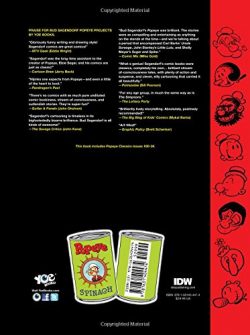
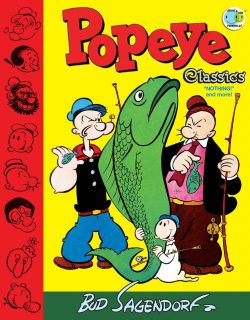
Popeye Classics volume 7: “Nothing” and More


By Bud Sagendorf, edited and designed by Craig Yoe (Yoe Books/IDW)
ISBN: 978-1-63140-447-4 (HB) eISBN: 978-1-62302-786-5

How many cartoon classics can you think of still going after a century? Here’s one…

There are a few fictional personages to enter communal world consciousness – and fewer still from comics – but a grizzled, bluff, uneducated, visually impaired old sailor with a speech impediment is possibly the most well-known of that select bunch.

Elzie Crisler Segar was born in Chester, Illinois on 8th December 1894. His father was a general handyman, and the boy’s early life was filled with the solid, dependable blue-collar jobs that typified the formative years of his generation of cartoonists. Segar worked as a decorator, house-painter and also played drums; accompanying vaudeville acts at the local theatre.

When the town got a movie-house, Elzie played silent films, absorbing all the staging, timing and narrative tricks from keen observation of the screen. Those lessons would become his greatest assets as a cartoonist. It was while working as the film projectionist, at age 18, that he decided to become a cartoonist and tell his own stories.

Like so many others in those hard times, he studied art via mail, specifically W.L. Evans’ cartooning correspondence course out of Cleveland, Ohio, before gravitating to Chicago where he was “discovered” by Richard F. Outcault – regarded by most in the know today as the inventor of modern newspaper comic strips with The Yellow Kid and Buster Brown.

The celebrated pioneer introduced Segar around at the prestigious Chicago Herald. Still wet behind the ears, the kid’s first strip, Charley Chaplin’s Comedy Capers, debuted on 12th March 1916.

In 1918, Segar married Myrtle Johnson and moved to William Randolph Hearst’s Chicago Evening American to create Looping the Loop, where Managing Editor William Curley foresaw a big future for Segar and promptly packed the newlyweds off to New York: HQ of the mighty King Features Syndicate. Within a year Segar was producing Thimble Theatre, (launching December 19th 1919) in the New York Journal: a smart pastiche of cinema and knock-off of movie-inspired features like Hairbreadth Harry and Midget Movies, with a repertory of stock players acting out comedies, melodramas, comedies, crime-stories, chases and especially comedies for vast daily audiences. It didn’t stay that way for long…

The core cartoon cast included parental pillars Nana and Cole Oyl; their lanky, highly-strung daughter Olive; diminutive-but-pushy son Castor; and the homely ingenue’s plain and (very) simple occasional boyfriend Horace Hamgravy (latterly, just Ham Gravy). Thimble Theatre had successfully run for a decade when, on January 17th 1929, a brusque, vulgar “sailor man” shambled into the daily ongoing saga of hapless halfwits. Nobody dreamed the giddy heights that stubborn cantankerous walk-on would reach…

In 1924 Segar created a second daily strip. The 5:15 was a surreal domestic comedy featuring weedy commuter and would-be inventor John Sappo and his formidable wife Myrtle. This one endured – in one form or another – as a topper/footer-feature accompanying the main Sunday page throughout the author’s career, and even survived his untimely death, eventually becoming the trainee-playground of Popeye’s second great humour stylist: Bud Sagendorf.

After Segar’s premature passing in 1938, Doc Winner, Tom Sims, Ralph Stein and Bela Zambouly all took on the strip, as the Fleischer Studio’s animated features brought Popeye to the entire world, albeit a slightly variant vision of the old salt of the funny pages. Sadly, none had the eccentric flair and raw inventiveness that had put Thimble Theatre at the forefront of cartoon entertainments. And then, finally, Bud arrived…

Born in 1915, Forrest “Bud” Sagendorf was barely 17 when his sister – who worked in the Santa Monica art store where Segar bought his drawing supplies – introduced the kid to the master cartoonist who became his teacher and employer as well as a father-figure. In 1958, after years on the periphery, Sagendorf finally took over the strip and all the merchandise design, becoming Popeye’s prime originator…

With Sagendorf as main man, his loose, rangy style and breezy scripts brought the strip itself back to the forefront of popularity and made reading it cool and fun all over again. Bud wrote and drew Popeye in every graphic arena for 24 years. When he died in 1994, his successor was controversial “Underground” cartoonist Bobby London.

Young Bud had been Segar’s assistant and apprentice, and in 1948 became exclusive writer and artist of Popeye’s comic book exploits. The series launched in February of that year in a regular title published by America’s unassailable king of periodical licensing, Dell Comics.

On debut, Popeye was a rude, crude brawler: a gambling, cheating, uncivilised ne’er-do-well. He was soon exposed as the ultimate working-class hero: raw and rough-hewn, practical, but with an innate, unshakable sense of what’s fair and what’s not; a joker who wanted kids to be themselves – but not necessarily “good” – and someone who took no guff from anyone…

Naturally, as his popularity grew, Popeye mellowed somewhat. He was still ready to defend the weak and had absolutely no pretensions or aspirations to rise above his fellows, but the shocking sense of dangerous unpredictability and comedic anarchy he initially provided was sorely missed… except not in Sagendorf’s yarns…

Collected in this superb full-colour hardback/digital edition are Popeye #30-34, crafted by irrepressible “Bud”: collectively spanning September/November 1954 to October/December 1955. Stunning, nigh stream-of-consciousness slapstick sagas are preceded by an effusively appreciative ‘Society of Sagendorks’ briefing by inspired aficionado, historian and publisher Craig Yoe, offering a mirthful mission statement.

Augmenting that is another tantalising display of ephemera and merchandise in ‘A Bud Sagendorf Scrapbook’ presenting Coca-Cola Company-funded comic strip themed postcards distributed to WWII servicemen; original art, tin toys; a Popeye Chalkboard; Get Well Soon and Birthday card art plus images on cups and mugs.

We rejoin the ceaseless parade of laughs, surreal imagination and thrills with quarterly comic book #30, opening with text tale ‘The Bigger They Are -’ detailing, across the inside front-&-back covers, the story of Throckmorton …biggest tomcat in the world!

Another wild ride in begins in ‘Desert Pirates (a story of Evil Haggery)’ as Popeye’s ruthless nemesis The Sea Hag uses witchcraft, seduction, brainwashing and principally hamburgers to turn Wimpy into her weapon against the old sea salt. Naturally, when the hero blunders into her arid ambush, the scurvy faithless traitor then betrays her to Popeye – it’s just his nature…

An engaging Micawber-like coward, cad and conman, the insatiably ravenous J. Wellington Wimpy debuted in the newspaper strip on May 3rd 1931: an unnamed, decidedly partisan referee in one of Popeye’s pugilistic bouts.

Scurrilous, aggressively humble and scrupulously polite, the devious oaf struck a chord and Segar gradually made him a fixture. Preternaturally hungry, ever-keen to solicit bribes and a cunning coiner of many immortal catchphrases – such as “I would gladly pay you Tuesday for a hamburger today” and “Let’s you and him fight” – Wimpy was the perfect foil for our simple action hero and increasingly stole the entire show… and anything else unless it was very heavy or extremely well nailed down…

Follow-up yarn ‘Popeye An’ Swee’Pea in “Danger, Lunch!”’ resorts to tireless domestic themes as a quiet meal with Olive becomes an assault course after the anarchic and precocious “infink” gets bored and amuses himself with a hammer and chemistry set…

Smartly acknowledging a contemporary trend for sci fi fun, Sagendorf had introduced ‘Axle and Cam on the Planet Meco’ in #26: a robotic father and son indulging in wild romps on other worlds. Here they observe Earth television shows and the lads decides what his world needs is beanie hats, sidewalk refreshment stands and fun with dragons…

Cover-dated January/March 1955, #31 also opens and closes with a prose yarn adorning inside front and back. ‘Apple Vote!’ exposes the shocking behaviour of a retired racehorse with a sweet tooth after which ‘Thimble Theatre Presents Popeye An’ Swee’Pea in “Mud!”’ finds unconventional family unit Popeye, Swee’Pea and villainous reprobate Poopdeck Pappy deemed dysfunctional by Olive. Her eccentric efforts to save the kid and make him a gentleman are resisted by all involved with extreme vigour…

Just as the sailor man idly daydreams of being a monarch, the wacky ruler of Spinachovia returns in ‘Popeye and King Blozo in “Exile!” or “Bein’ King is Fer de Boids!!!”’ with the maritime marvel unwisely trading cap for crown  and learning a salutary lesson about people in general and being careful of what you wish for, after which ‘Axle and Cam on the Planet Meco’ sees the mechanical moppet pay a fraught and frightening visit to Earth…

The issue concludes with a back cover strip starring ‘Popeye and Swee’Pea’ inspired by baby pictures…

Popeye #32 (April/June) opens with epic thrill-fest ‘Alone! or Hey! Where is Everybody? or Peoples is All Gone!’ as humans are abducted from all over the coast, leading the sailor man into another ferocious battle with evil machines and his most persistent enemy, after which our stars swap sea-voyages for western climes in “a tale of gold and cactus” entitled ‘Lorst!’

Set some years previously, the story reveals how Popeye made his fortune prospecting – despite and ultimately because of a little trouble with his newly adopted kid…

Sagendorf was a smart guy in tune with popular trends and fashions as well as understanding how kids’ minds worked. His tales are timeless in approach and delivery. As television exponential expanded, cowboys were king, with westerns dominating both large and small screens and plenty of comics. Thus, many episodes saw Popeye as a horse-riding sagebrush wanderer who ran a desert railroad when he wasn’t prospecting or exploring. I don’t think he ever carried a gun though…

The changing times dictated a shift in back-up features and the final ‘Axle and Cam on the Planet Meco’ exploit saw their world in chaos after Cam tried to transplant the human fashion for lawns to his own planet. Text tale ‘Catfish! detailed a meeting between fish feline and mutt and a wordless desert inspired back cover strip starring ‘Popeye and Swee’Pea’ wrapped thigs up.

The next issue (#33 July/September) offered a monochrome ‘Popeye and Swee’Pea’ house-wrecking short before main feature ‘Trouble-Shooter’ sees the tireless “hoomanitarian” set up as a helping hand for folk with troubles. Sadly, the gesture attracts some real nuts like cowardly King Hinkle of Moola who needs a patsy to fight rival ruler the King of Boola…

Returning to western deserts, Popeye and Swee’Pea swap sea-voyages for arid plains in ‘Monskers!’ and encounter a gigantic dinosaur which is not what it seems…

The replacement back-up feature was actually a return of Segar-spawned old favourites. Sappo was now hapless landlord to world’s worst lodger Professor O.G. Wotasnozzle, who callously inflicts the brunt of his genius on the poor schmuck. In ‘I’m the Smartest Man in the World!’, the lunatic fringe scientist decides to end late payment harassment by uninventing money…

A prose vignette reveals the fate of cowboy pony George who has ‘A Long Tail!’, before the fun pauses with a back-cover baseball gag starring Popeye An’ Swee’Pea.

The year and this archive close with #34, starting with more ‘Popeye An’ Swee’Pea’ baseball exploits on the monochrome inside front cover before Thimble Theatre Presents sailor man, Olive, Wimpy and the kid who endure a nautical nightmare storm that leaves our cast castaway on an island of irascible, invisible folk in eponymous saga ‘Nothing!’

Next, Popeye An’ Swee’Pea revisit western deserts to dig in the dirt and face ‘Uprising! or The Red Man Strikes Back! or Birds of a Feather!’ as the kid contends with and eventually befriends Indian infant Big Chief Thunder Eagle Jr. Sadly their play war on the white man is misunderstood by Wimpy who calls in not the cavalry but the US Army…

The manic mirth multiplies exponentially when Professor O.G. Wotasnozzle proves his insane ingenuity and dangerous lack of perspective in ‘Stop Thief!! or Please Halt! or Burglarproof House!’ before the fun concludes with one last text treat in transformative tale ‘Fish Fly!’ and a back cover gag proving why adults like Popeye should listen to kids like Swee’Pea…

Outrageous and side-splitting, these all-ages yarns are evergreen examples of narrative cartooning at its most surreal and inspirational. Over the last nine decades Thimble Theatre’s most successful son has unfailingly delighted readers and viewers around the world. This book is simply one of many, but each is sure-fire, top-tier entertainment for all those who love lunacy, laughter, frantic fantasy and rollicking adventure. If that’s you, add this compendium of wonder to your collection.
Popeye Classics volume 7 © 2015 Gussoni-Yoe Studio, Inc. All Rights Reserved. Popeye © 2015 King Features Syndicate. ™ Heart Holdings Inc.

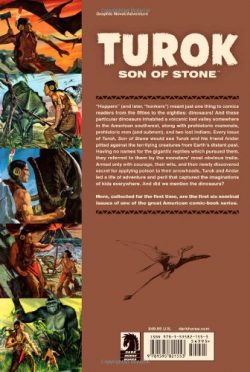
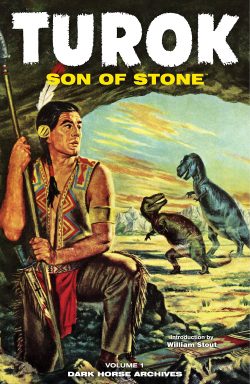
Turok Son of Stone Archives volume 1


By Gaylord DuBois Ray Bailey, Bob Correa, Jack Abel, Vince Alascia & various (Dark Horse Books)
ISBN: 978-1-59582-155-3 (HB)

By simply never signing up to the draconian overreaction of the bowdlerizing Comics Code Authority, in the late 1950s Dell became the company for life and death thrills, especially in the arena of traditional adventure stories. If you were a kid in search of a proper body count instead of flesh wounds, you went for Tarzan, Roy Rogers, Tom Corbett and their ilk. That’s not to claim that the West Coast outfit were gory, exploitative sensationalists – far from it – but just that the writers and editors knew that fiction – especially kid’s fiction – needs a frisson of danger to make it work.

That was never more aptly displayed than in the long-running cross-genre saga of two Native Americans trapped in a world of sabretooth tigers, cavemen and dinosaurs…

Printing giant Whitman Publishing had been producing their own books and comics for decades through their Dell and Gold Key imprints, rivalling and often surpassing DC and Timely/Marvel at the height of their powers. Famously, they never capitulated to the wave of anti-comics hysteria which resulted in the crippling self-censorship of the 1950s and Dell Comics never displayed the Comics Code Authority symbol on their covers or sought the organization’s nanny-like approval.

They never needed to: their canny blend of media and entertainment licensed titles were always produced with a family market in mind and their comics’ creative staff took their editorial stance from the mores of the filmic Hayes Code and burgeoning television industry.

Like the big and little screen, they enticed but never shocked: keeping contentious social issues implicit instead of tacit. It was a proven case of “violence and murder are fine, but never, ever titillate.”

Moreover, the majority of their adventure comics covers were high quality photographs or paintings – adding a stunning degree of authenticity and realism to even the most outlandish of concepts for us wide-eyed waifs in need of awesome entertainment.

Dell hit the thrill jackpot as the censorship debacle hit its peak, by combining a flavour of westerns with monster lizards: after all what 1950s kid could resist “Red Indians” vs Dinosaurs?

Debuting in Four-Color Comics #596 (October/November 1954) Turok, Son of Stone told of two plains warriors hunting in the wilderness North of the Rio Grande when they became lost in a huge cave-system. They eventually emerged into a lost valley of wild men and antediluvian beasts and would spend the next 26 years (a total of 125 issues) wandering there, seeing sights and doing things kids of all ages would happily die for.

Despite solid claims from historian Matthew H. Murphy and comics legend Paul S. Newman (who definitely scripted the series from #9 onwards) Son of Stone was almost certainly created and first written by Dell’s editorial supremo Gaylord DuBois, and this magnificent hardcover collection gathers both Four Color try-outs (the second originally appearing in #656, October/November 1955) and thereafter issues #3-6 of an eponymous solo title.

Dell had one of the most convoluted numbering systems in comics collecting, and successive appearances in the try-out title usually – but not always – corresponded to eventual early issues of a solo series. Therefore FC #596 is Turok #1, FC #646 became #2 and the series proper began with #3. It isn’t always that simple though: after 30-odd Donald Duck Four Colors, Donald Duck proper launched his own adventures with #26!

Go figure… but just not now…

Set sometime in the days before Columbus stumbled upon America, Turok is a full brave mentoring a novice lad named Andar (apparently the original concept called for two teens, with the mature warrior originally a boy called Young Hawk). In ‘The World Below’ (limned by Rex Maxon), the hunters become lost while exploring Carlsbad Caverns, New Mexico (DuBois was a frequent visitor to that fabulous subterranean site) and after days lost and wandering, they emerge into a vast, enclosed valley where they are menaced by huge creatures they never dreamed could exist.

In ‘The Terrible Ones’ they encounter beast-like cavemen and discover a way to make their puny arrows potent against the colossal cats, wolves and lizards that make human life spans so brief in this incredible world. In return they teach the ape-men the miracle of archery…

One year later, Four Color #656 opened on the morning after in ‘The Mystery of the Mountain’ as caveman Lanok helps Turok and Andar solve a grisly disappearance before the newcomers become lost once more in the great caverns. Eventually emerging at a far distant point of the lush valley, they are befriended by another tribe; one composed only of women and children. The technologically advanced modern visitors helped the primitives recover their men-folk in ‘The Missing Hunters’ and come tantalizingly close to escaping the sunken world forever before their hopes are cruelly dashed…

The format was set and successful. With Turok, Son of Stone #3 (March-May 1956) the pair began decades of constant wandering, seeking escape from the valley, encountering a fantastic array of monsters and lost tribes to help or fight, and illustrated by a succession of artist which included Ray Bailey, Bob Correa, Jack Abel & Vince Alascia.

‘The Exiled Cave Men’ saw them find their way back to Lanok, whose tribe had lately been driven from their home by a gigantic tyrannosaur. As well as helping them find new digs, Andar and Turok give them a further short and profitable lesson in cutting edge weaponry.

Of course the natives didn’t call it a tyrannosaur. The absolute best thing about this glorious series is the imaginative names for monsters. Moreover, although cavemen might have called T. Rexes “Runners”, Allosaurs “Hoppers” and Pterosaurs “Flyers”, whilst generally referring to giant lizards as “Honkers”, us kids knew all the proper names for these scaly terrors and felt pretty darn smug about it…

Relocated to an island in a great lake, Lanok’s tribe marvelled at the coracles and canoes Turok builds to explore its tributaries as ‘Strange Waters’ follows the homesick braves to another section of the valley with even stranger creatures.

Issue #4 opened with ‘The Bridge to Freedom’, finding Turok and Andar escaping the valley, only to turn back and help Lanok, whilst ‘The Smilodon’ pits the reunited trio against the mightiest hunter of all time as a sabretooth tiger takes an unrelentingly obsessive interest in how they might taste…

‘The River of Fire’ opened #5 as geological turbulence disrupted the valley, causing beasts to rampage and forcing Lanok’s tribe to flee from volcanic doom, whilst ‘The Secret Place’ sees Turok and Andar suffer from the jealous rage of the tribe’s slighted shaman. Of course, the witch-doctor turns out to be his own worst enemy…

Issue #6 (December 1956-February 1957) began with an inevitable but fabulously rewarding and cathartic clash as the wanderers face ‘The Giant Ape’; a King Kong-inspired romp with a bittersweet sting before Turok’s initial collected outing ends with ‘The Stick Thrower’ wherein a monkey-like newcomer introduces the lost boys to the magic of boomerangs and the pernicious wilfulness of mastodons…

But that’s not all! For sundry commercial reasons comic books were compelled to include at least three features per issue at this period, so this selection concludes with recovered text vignette ‘Aknet Becomes a Man’ and, just to be safe, ‘Lotor’: a natural history strip starring a wily raccoon looking to feed his brood, despite the best efforts of giant bullfrogs and hungry allosaurs…

With a rapturous introduction from artistic superstar/dino-buff William Stout, plus assorted fact-features that graced the original issues (‘The Dinosauria’, ‘The Ichthyosaurs’, ‘The Smilodon’, ‘The Mastodon’, ‘Turok’s Lost Valley’ and ‘Prehistoric Men’), this is a splendid all-ages adventure treat that will enrapture and enthral everybody who ever wanted to walk with dinosaurs… and Mammoths and Moas and…

Now, if we can only convince the current rights-holders to sanction a fresh release of this and its companion volumes – either physically and/or digitally – we could all travel back and get lost again in the primal Garden of action/adventure Eden…
™ & © 2009 Random House, Inc. Under license to Classic Media, Inc., an Entertainment Rights Company. All rights reserved.