King Conan volume 4: The Conqueror


By Timothy Truman, Tomás Giorello, José Villarrubia & various (Dark Horse Books)
ISBN: 978-1-61655-514-6

During the 1970’s the American comic book industry opened up after more than fifteen years of cautious and calcified publishing practises that had come about as a reaction to the censorious oversight of the self-inflicted Comics Code Authority. This body was created to keep the publisher’s product wholesome after the industry suffered their very own McCarthy-style Witch-hunt during the 1950s.

One of the first genres revisited was Horror/Mystery comics and from that came the pulp icon Conan the Cimmerian, via a little tale called ‘The Sword and the Sorcerers’ in anthology Chamber of Darkness #4 (April 1970), whose hero Starr the Slayer bore no little thematic resemblance to the Barbarian. It was written by Roy Thomas and drawn by Barry Smith, a recent Marvel find, and one who was just breaking out of the company’s still-prevalent Kirby house-style.

Pulp-style Sword & Sorcery stories had been enjoying a prose revival in the paperback marketplace since the release of soft-cover editions of Lord of the Rings (first published in 1954) and by the 1960s a popular revival of the two-fisted fantasies of Edgar Rice Burroughs, Otis Adelbert Kline, Fritz Lieber and others were being supplemented by modern writers such as Michael Moorcock and Lin Carter who kick-started their careers with contemporary versions of man against mage. However, the undisputed grand master of the genre was Robert E. Howard.

Despite some early teething problems, including being cancelled and reinstated in the same month, the comicbook adventures of REH were as big a success as the prose yarns that led the global boom in fantasy and, latterly, the supernatural.

Conan became a huge hit; a monumental brand which saw new prose tales, movies, a TV series and cartoon show, a newspaper strip, games, toys and all the other paraphernalia of success… and it all stemmed from the vast range of quality comics initiated by Thomas and Smith.

In Conan’s all-conquering wake Marvel developed comicbook interpretations of other Howard creations such as Bran Mak Morn, Solomon Kane and others. Undoubtedly the Silver and Bronze medals went to the fairly straight adaptation of King Kull of Atlantis and a rather more broadly reinterpreted Red Sonya of Rogatine.

Roy Thomas was a huge fan of the prose source material and took great pains to adapt the novels and short stories into the graphic canon, but he was also one of the top writers in his field and much of the franchise’s success devolves from his visceral grasp of the characters, which makes this particular graphic novel of particular interest.

Eventually, however, fashions changed and Marvel – having tried increasingly deviant and unsuccessful reboots of the sword-slinger – surrendered or lost the rights to the barbarian blockbuster.

The franchise was picked up by “Intellectual Properties” specialists Dark Horse who eagerly took up the Howard mantle, reinvigorating the hero and his satellites with fresh adaptations of the source material crafted by a host of talented creators who could cut loose, utterly unhampered by the censorship of the Comics Code Authority which had afflicted the Marvel incarnation…

This fourth Dark Horse volume collects issues #1-6 of King Conan The Conqueror (originally published as a comicbook miniseries from February to July 2014), expanding and reinterpreting Howard’s epic Conan novel The Hour of the Dragon and opening with the warrior-emperor in his dotage relating to dutiful scribe and historian Pramis the events of the greatest crisis of his troubled reign…

What Had Gone Before: After decades of adventure-filled wandering, the Cimmerian’s travels eventually led him to the throne of the vast and prosperous kingdom of Aquilonia, but the outsider’s dream of founding a dynasty had soon stumbled as an alliance of disgruntled hereditary nobles and satellite kings plotted his downfall. To secure their ends the plotters resurrected an ancient wizard from demon-haunted Acheron through the arcane agency of a mystic gem known as The Heart of Ahriman.

With the sorcerous interventions of eldritch revenant Xaltotun, Conan was toppled and given over to his treacherous enemies. He subsequently escaped thanks to the actions of harem slave Zenobia and, on the advice of enigmatic witch Zelata that only the Heart can defeat Xaltotun, the fugitive pursued its current owner across the seas to the port of Messantia.

The saga resumes as Conan relentlessly tracks Beloso – who thinks himself the greatest thief in the world. The deposed king is constantly distracted by thoughts of Zenobia whom he had to abandon, and tragically unaware that a band of Khitan warrior-priests (like super-ninjas) hired by Aquilonian puppet-ruler Valerius are tracking him in turn…

Amongst his many careers prior to kingship, Conan had once led the most savage pirates of the age as the merciless Amra and now he inflicts himself upon former fence-turned-upstanding merchant Publio to help him find Beloso and the Heart.

Far from willing but with too much to lose, the businessman reluctantly assists his “guest” but the effort is too little too late. By the time Conan finds his prey the thief is dead at the hands of Stygian priests (another faction with a long grudge against the barbarian) and the gem gone.

Whilst still reeling in shock and disappointment Publio’s thugs jump the Cimmerian and leave him for dead, but the betrayer fares no better after the Khitans show up looking for Conan…

The King was always exceedingly hard to kill and has merely escaped out to sea only to be captured by trading ship Venturer: a vessel which can always find room for one more galley-slave. It’s the last mistake the captain ever makes, however, as the barbarian goes berserk, sowing slaughter all about him and freeing the captives at the oars, many of whom recognise the white maniac as their former pirate lord Amra…

Before long Venturer has new masters and the liberated Black Corsairs have ferried Amra to the Stygian capital Khemi. Refusing further aid Conan infiltrates the temple city of vile snake worshippers in search of the Heart, making his way with a minimum of mayhem and penetrating the inner sanctum of arch-priest Thutothmes.

Unfortunately his furtive progress attracts the attention of seductive vampire princess Akivasha who hasn’t had a real man – in any sense – for centuries…

Conan’s narrow escape from her clutches precipitates him into a clash with Thutothmes – who has by now secured the Heart of Ahriman – but everything is suddenly thrown into chaos when the infallible Khitans burst into the tombs determined to claim the deposed king no matter who stands in their way…

After watching the mystic factions eviscerate each other Conan ends the last priest standing and, thanks to the efforts of a most tractable zombie who leads him out of the labyrinthine temple, makes off with the Heart. Before long the Corsairs have brought him back to his stolen kingdom and the exile is recruiting an army from his oppressed Aquilonian subjects, who have been chafing under the brutal depredations of Valerius…

Soon the entire nation is ablaze and the plotters are sore-pressed in their own unquiet kingdoms too. Desperate, they plan to betray and sacrifice their mystic secret weapon Xaltotun, only to realise far too late that the servant has been their master for some time…

The crisis comes to a head when the mage attempts to destroy Conan’s liberating army during a pivotal clash of implacable foes. Seeking to fuel his magics with Zenobia’s blood, Xaltotun is totally unprepared for the determination of enraged and enslaved mortals acting in concert, the eldritch opposition of the Heart and the carefully calculated vengeance of the wily Cimmerian…

Apocalyptic, bombastic and cataclysmically compelling, this is a splendid retelling of a pulp fantasy classic augmented by an insightful Afterword by adaptor Timothy Truman and a Bonus Gallery of pencil art by illustrator Tomás Giorello

This collection is a superb slice of savage escapism that any red-blooded, action-starved armchair adventurer would kill for, a superb way to enjoy some of American popular fiction’ most influential – and enjoyable – moments. They certainly deserve a prized place on your bookshelf.
©2014, 2015 Conan Properties International, LLC. All rights reserved.

Dungeon: the Early Years Set (volume 1: The Night Shirt: volume 2: Innocence Lost)


By Joann Sfar & Lewis Trondheim, art by Christophe Blain, translated by Joe Johnson (NBM)
Set ISBN: 978-1-56163-932-1

As crafted by prolific artisans Joann Sfar (Professeur Bell, Les olives noires, The Rabbi’s Cat) and Lewis Trondheim (La Mouche, Kaput and Zösky, Little Nothings) with assorted associates of their New Wave-ish collective of bande dessinée creators most often seen under the aegis of independent publisher L’Association, the Donjon saga has generated more than thirty interlinked volumes since it launched in 1998 and has become far more than a mere cult hit all over the world.

These slim, translated and re-released tomes form a small sub-division of a vastly generational, eccentrically raucous and addictively wacky franchise which melds starkly adult whimsy to the fantastic worlds of fantasy fiction, and the Early Years tomes (now available as a complete set) fill in some historical gaps which might have puzzled occasional readers of Dungeon Parade, Zenith, Monstres and Twilight.

There’s this magic castle, in a fantastic land of miracles, see, and it’s got a dungeon…

But before that citadel was constructed there was the debauched, bureaucratised and grimly frenetic urban hellhole of Antipolis, greatest and most appalling city on the strange world of Terra Amata…

Illustrated in compellingly frenetic style by Christophe Blain, it all begins with volume one and the origin of ‘The Night Shirt’. Young Hyacinthe De Cavalerre is the scion of an esteemed and noble – if provincial – house and line. The world is changing however; shifting from feudal aristocracy and blood-privilege to a civilisation based on mercantilism, greed and bureaucracy.

Thus a father dispatches his dreamy boy to the capital to study, residing with an estranged uncle to learn the rules of the New Age. The boy’s dreams of literary glory soon founder after an encounter with monstrous “Brutes” in the forest and are forever dashed when faced with the filth and unbridled avarice of the city…

At least he has made one friend: learned fellow traveller Doctor Hippolyte is also heading to Antipolis, determined to petition the city council to free a gigantic Arboress the municipality intends to burn alive as part of their upcoming carnival celebrations…

Literally negotiating their way into the fetid metropolis the travellers separate, and Hyacinthe makes his way to the mansion of wheelchair-bound Count Florotte and has a tense encounter with a serpentine – if mannish – seductress who teasingly offers to teach him how to use his sword.

His uncle calls her Alexandra; a valued – if occasional – employee…

Wearily settling in that night the young man is roused by screams and rushes to the aid of a serving girl being cruelly assaulted by an arrogant bully who boasts that no one will to come to her aid. When the boy intervenes he is casually rebuffed and shamefully leaves. The villain is Michael, his uncle’s most valued deputy and the one Hyacinthe has been indentured to…

Despondently returning to his room the boy then makes the acquaintance of the house elves as they busily steal his golden jacket buttons…

The next day Michael begins the fiscal and social education of his new charge, having Hyacinthe carry the huge bag of gold Florotte regularly dispenses for bribing officials to leave his various business enterprises alone. The lad is horrified to see the system used to throw Hippolyte in jail after failing to convince the town council to spare the captive tree-woman…

Michael celebrates by dragging the lad to an insalubrious tavern and getting plastered. The feline factotum knows Alexandra too…

After carrying the soused villain home, the furious, fanciful boy comes to a bizarre decision and returns to the dark streets, draped in a big blouse, waving his sword and wearing a mask…

More by luck than skill he breaks Hippolyte out of his noisome cell and the pair flee through the city. The flight is particularly easy as someone is killing all the guards and impediments in their path…

Soon they see Alexandra, dispatching more men, and the still-unnamed crusader gallantly rushes to her aid. She is more than a little charmed, even as she saves the neophyte from his own impetuous folly…

After she vanishes Hyacinthe attempts to get Hippolyte out of the city but the scholar refuses to leave without the Arboress. Forced to leave him hidden inside the gigantic tree-woman, the exhausted little hero staggers home and stumbles upon one of Michael’s more devilish schemes. The reprobate is taking gold from the elves to stop his own workers dynamiting the ground under Antipolis…

Some businessmen have plans to build a vast subway system beneath the city and have hired Blasters to blow up or expand the already in situ elf tunnels. Michael is taking cash from the little people to “stop” the project he’s actually expediting. He’s even crass enough to boast to Hyacinthe that they have over-paid him…

Scrupulously honest, the lad determines to return the extra gold but upon reaching the bowels of the city he accidentally causes a huge detonation which kills the Blasters, earning the undying devotion of the elves…

On reaching the house again he is horrified to find the mastermind behind the subway scheme is his own uncle and the elder doesn’t care how many suffer or die to accomplish his grand design…

Later as the Carnival begins, besotted Hyacinthe follows Alexandra and discovers what she does for Florotte: as the finest killer in the Guild of Assassins she is invaluable in his business dealings. When the heartbroken boy confronts her on the matter he painfully learns just how good she is at her job…

Battered and probably delirious, he determines to save her from herself and is astonished to find an army of elves awaiting him in his room. Blasters have returned in force and the wee folk have decided to abandon their underground homes for somewhere less busy…

Donning his commodious crime-busting costume, the lad chooses to do some good by saving Hippolyte and the Arboress. Accompanied by the elves he heads for the enclosure where the remarkably strong little people offer to carry the all-but-immobile tree-woman for their beloved “Nightshirt”. Soon, under cover of colossal carnival floats, the fugitives are heading for the wild woods surrounding the city…

After the carnage of a breakneck chase and unlikely triumph, Arboress and elves are invited to live in the castle of Hyacinthe’s father and a new story begins sometime later with the boy now a dutiful student attending the University of Antipolis.

When newcomer Alcibiades joins the class of prominent Dr. Fontaine, he is soon taken under the lad’s generous wing, experiencing the heady freedom of student life where Hyacinthe is the butt of the organ-juggling jokes of the Necromancy undergraduates. He regularly blows off steam prowling the dark streets, dishing out justice as the infamous urban legend The Night Shirt…

Utterly besotted with Alexandra, one night he spies on her and observes a passionate tryst with the vile Michael. Sadly the villain observes him back and a violent rooftop duel ensues…

Barely escaping with his life Hyacinthe heads home where his uncle has a favour to ask. Fontaine is a strenuous critic of Florotte’s proposed subway and, since a succession of “gifts” have not swayed the scientist’s opinions, perhaps the student might have a quiet word with his teacher?

The interview does not go well and despondent Hyacinthe opts to visit his father in the country rather than return to Florotte’s mansion. Enjoying the break, the lad lapses from unrequitable love of Alexandra and suffers a frustrating dalliance with a young lady named Elise. This leads to a violent battle between forest monsters and the Night Shirt…

Wounded and bleeding he is rescued by the elves who give him a pipe with magic tobaccos which temporarily impart a host of strange powers and abilities. When he returns to Antipolis, Fontaine has been murdered and Night Shirt has claimed responsibility…

Resolved to clear his alter ego’s name, things go quite badly for the boy until Alexandra deals herself in to save the little oaf from himself, but in the end justice is only served and the real killer exposed after sensible Elise takes over…

The saga continued in Volume 2: Innocence Lost as some time later future supreme Dungeon-Keeper Hyacinthe prowls the night as a far more effective masked vigilante. The Night Shirt’s nocturnal adventures are however seriously curtailed by his still-unrequited inamorata Alexandra.

Her violent disdain does not stop her from sharing her unbridled passions – and a rather painful social disease – with the poor fool. Visiting old friend Dr. Hippolyte at the rapidly expanding country castle for advice (and possible medical solutions) he meets fair Gabrielle Olivet and offers to accompany her as she travels to join her fiancé in far-off Necroville.

However during a stopover in lawless, rabbit-infested frontier town Zedotamaxim, she is falsely arrested by over-officious sheriffs and trusts Hyacinthe to engineer her release by fetching her intended – prominent lawyer Eustace Ravin – from the wilds of the charnel hamlet…

Sadly once Hyacinthe gets there Eustace proves to be a rather faithless gadabout who couldn’t care less about Gabrielle’s plight. By the time he convinces the rogue of his duty it’s too late and she has been sold to the biggest brothel in Antipolis.

Determined to set things right The Night Shirt realises he’s going to need the assistance of the kind of people he usually fights…

Second story After the Rain is set many years later when aging and now dissolute Hyacinthe is a middle-aged, unhappily married roué. Set in his ways and terminally unhappy the former Night Shirt is enticed into making a comeback by clever and strangely superhuman Doctor Cormor who must battle greed and the establishment itself to stop completion of the infernal subway being dug through the unstable pile of detritus that forms the bedrock of the city.

Perhaps it is less a noble quest than the return of slinky Alexandra that fires up the weary hero, but when inevitable disaster strikes will Hyacinthe be ready or able to cope?

Featuring the catastrophic events which destroyed Antipolis and sparked the creation of the modern Dungeon of Terra Armata this is perhaps the most effective yarn in the franchise’s vast scope and span…

The inhabitants of this weirdly surreal universe include every kind of anthropomorphic beast and bug as well as monsters, demons, mean bunnies, sexy vamps and highly capable women-folk who know the true (lack of) worth of a man. This is an epic saga of cynically world-weary political intrigue, played as an eternal and highly amusing battle of the sexes, with tongues planted firmly in cheeks – and no, I won’t clarify or specify…

Comprising in total four translated French albums – ‘Donjon Potron-Minet: Le Chemisede la Nuit’, ‘Un Justicier dans L’Ennui, ‘Une Jeunesse Qui S’Enfuit’ and ‘Apres La Pluie’ – this baroque bunch of barbaric books comprise a delightfully absurd, earthy, sharp, poignant and brilliantly outlandish romp that’s a joy to read with vibrant, wildly eccentric art as moody as Dark Knight, as jolly as Rupert Bear and as anarchic as the best of Leo Baxendale.

Definitely for grown-ups with young hearts, Dungeon is a near-the-knuckle, illicit experience which addicts at first sight, but for fuller comprehension – and added enjoyment – I’d strongly advise buying all the various incarnations which are happily also currently available as collectors’ sets…

© 2001-2006, 2014 Delcourt Productions-Trondheim-Sfar-Blain. English translation © 2005 and 2009 NBM. All rights reserved.

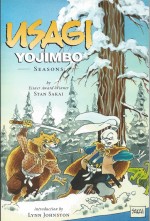
Usagi Yojimbo book 10: The Brink of Life and Death


By Stan Sakai (Dark Horse Comics)
ISBN: 978-1-56971-259-7

Usagi Yojimbo (“rabbit bodyguard”) first appeared as a background character in Stan Sakai’s The Adventures of Nilson Groundthumper and Hermy, which premiered in 1984 amongst assorted furry ‘n’ fuzzy folk Albedo Anthropomorphics #1. He subsequently graduated to a solo act in Critters, Amazing Heroes, Furrlough and the Munden’s Bar back-up series in Grimjack.

In 1955, when Sakai was two years old, the family moved from Kyoto, Japan to Hawaii. Growing up in a cross-cultural paradise he graduated from the University of Hawaii with a BA in Fine Arts, before leaving the state to pursue further studies at Pasadena’s Art Center College of Design in California.

His early forays into comics were as a letterer – most famously for the inimitable Groo the Wanderer – before his nimble pens and brushes found a way to express his passion for Japanese history, legend and the filmic works of Akira Kurosawa and his peers, inspirationally transforming a proposed story about a human historical hero into one of the most enticing and impressive fantasy sagas of all time.

And it’s still more educational, informative and authentic than any dozen Samurai sagas you can name…

Although the deliriously peripatetic and expansive period epic stars sentient animals and details the life of a peripatetic Lord-less Samurai eking out as honourable a living as possible by selling his sword as a Yojimbo (bodyguard-for-hire), the milieu and scenarios all scrupulously mirror the Feudal Edo Period of Japan (roughly 16th – 17th century AD by our reckoning) whilst simultaneously referencing other cultural icons from sources as varied as Zatoichi to Godzilla.

Miyamoto Usagi is brave, noble, industrious, honest, sentimental, gentle, artistic, empathetic, long-suffering and conscientious: a rabbit devoted to the tenets of Bushido, he is simply unable to turn down any request for help or ignore the slightest evidence of injustice. As such, his destiny is to be perpetually drawn into an unending panorama of incredible situations.

This evocative and enticing tenth black-&-white blockbuster collects yarns from Dark Horse Comics’ Usagi Yojimbo series (volume 3), #1-6 plus additional tales from issues #13, 15 and 16 from the previous Mirage iteration, aligning epic sagas of intrigue with brief vignettes attending to more plebeian dramas and even the occasional supernatural thriller, all tantalisingly tinged with astounding martial arts action and drenched in wit, irony, pathos and even true tragedy…

Following a heartfelt and enthusiastic Introduction from comics author Kurt Busiek, the ever-unfolding yarn resumes with a handy recap in ‘Origin Tale’ summarising the valiant wanderer’s fraught life to date before ‘Kaisō’ finds Miyamoto Usagi befriending a seaweed farmer who’s experiencing a spot of bother with his neighbours…

At peace with himself amongst hard-toiling peasants, Usagi becomes embroiled in their escalating battle with a village of rival seaweed sellers – previously considered helpful and friendly – and soon realises scurrilous merchant Yamanaka is fomenting unrest between his suppliers to make extra profit…

‘A Meeting of Strangers’ in a roadside hostelry introduces a formidable female warrior to the constantly expanding cast as the Lepine Legend graciously offers a fellow weary mendicant the price of a drink. A professional informer then sells Usagi out to the still-smarting Yamanaka and the lethally capable Inazuma has ample opportunity to repay her slight debt to the Rabbit Ronin when he’s ambushed by an army of hired brigands…

Far away a portentous interlude occurs as a simple peasant and his granddaughter are attacked by a band of bandits. The belligerent scum are about to compound extortion and murder with even more heinous crimes when a stranger with a ‘Black Soul’ stops them…

Jei is a veritable devil in mortal form, believing himself a “Blade of the Gods”, chosen by the Lords of Heaven to kill the wicked. The maniac makes a convincing case: when he stalked Usagi the manic monster was struck by a fortuitous – or possibly divinely sent – lightning bolt and still survived.

Still keen to continue his crusade, the monster deals most emphatically with the criminals before allowing orphaned granddaughter Keiko to join him…

Despite – or perhaps because – it is usually one of the funniest comics on the market, occasionally Usagi Yojimbo can brilliantly twist readers’ expectations with tales that rip your heart apart.

Such is the case with ‘Noodles’ as the nomadic Ronin meets again street performer, shady entertainer and charismatic pickpocket Kitsune who has begun plying all her antisocial trades in a new town just as eternally-wandering Usagi turns up.

The little metropolis is in uproar at a plague of daring robberies and when the inept men employed by Yoriki (Assistant Commander) Masuda try – and painfully fail – to arrest the long-eared stranger as a probable accomplice, the ferociously resistant ronin earns the instant enmity of the pompous official.

Following the confrontation, a hulking, mute soba (buckwheat noodle) vendor begins to pester the still-annoyed rabbit and eventually reveals he’s carrying the elegant Kitsune in his baskets…

Astounded the Yojimbo renews his acquaintance with her before the affable thieves go on their way, but trouble and tragedy are just around the corner…

The town magistrate is leaning heavily on his Yoriki to end the crime wave but has no conception that Masuda is actually in the pay of a vicious gang carrying out most of the thefts. What they all need a convincing scapegoat to pin the blame on and poor dumb peasant Noodles is ideal – after all, he can’t even deny his guilt…

With a little sacrificed loot planted, he becomes the perfect patsy and before Usagi and Kitsune even know he’s been taken, the simple fool has been tried and horrifically executed…

‘Noodles Part 2’ opens as they frantically dash for the public trial and almost immediate crucifixion but pickpocket and ronin can do nothing to save the innocent victim. All they can do is swear to secure appropriate vengeance and justice…

In sober mien the rabbit roves on, stumbling into a house of horror and case of possession as ‘The Wrath of the Tangled Skein’ finds Usagi returning to a region plagued by demon-infested forests. Offered hospitality at a merchant’s house he subsequently saves the daughter from doom at the claws of a demonic Nue (tiger/fox/pig/snake devil).

He is almost too late however and only alerted to a double dose of danger when a Bonze (Buddhist Priest) arrives to exorcise the poor child… just like the one already praying over the afflicted waif upstairs…

This duel with the forces of hell leads into ‘The Bonze’s Story’ as Usagi strikes up a friendship with the true priest and learns how misfortune and devotion to honour compelled elite samurai Sanshobo to put aside weapons and war in search of greater truths and inner peace…

Political intrigue and explosive espionage resurface in ‘Bats, the Cat, & the Rabbit’ as Neko ninja chief Chizu re-enters Usagi’s life, fleeing a flight of rival Komori (bat) ninjas. The winged horrors are determined to take a scroll containing the secrets of making gunpowder and after a tremendous, extended struggle the exhausted she-cat cannot believe her rabbit companion is willing to hand it over. She soon shrugs it off. After all the Komori have fallen into her trap and quickly regret testing the purloined formula …

The peripatetic Yojimbo then walks into a plot to murder Great Lord Miyagi involving infallible unseen assassin Kuroshi at ‘The Chrysanthemum Pass’. He is simply aiding karma to a just outcome despite overwhelming odds and a most subtle opponent… This chronicle then sees a return engagement with the lethally adept Inazuma when ‘Lightning Strikes Twice’…

The hunted woman is always at the heart of a storm of hired blades trying to kill her, but during one peaceful moment she finds a little time to share with a fellow swordsmaster the instructive tale of a dutiful daughter who married the wrong samurai and, by exacting rightful vengeance upon his killer, won the undying hatred of a powerful lord…

Despite changing publishers a number of times, the Roaming Rabbit has been in continuous publication since 1987, with more than 30 collections and books to date. He has guest-starred in many other series (most notably Teenage Mutant Ninja Turtles and its TV incarnation) and nearly made it into his own small-screen show.

There are high-end collectibles, art prints, computer games and RPGs, a spin-off sci-fi comics serial and lots of toys. Sakai and his creation have won numerous awards both within the Comics community and amongst the greater reading public.

Fast-paced yet lyrical, informative and funny, the saga alternately bristles with tension and thrills and frequently crushes your heart with astounding tales of pride and tragedy, evil and duty.

Bursting with veracity and verve, Usagi Yojimbo is the perfect comics epic: a monolithic magical saga irresistibly appealing that will delight devotees and make converts of the most hardened haters of “funny animal” stories.
© 1998 Stan Sakai. Usagi Yojimbo is a registered trademark of Stan Sakai. All rights reserved.

The Phoenix Presents: The Pirates of Pangaea Book 1


By Daniel Hartwell & Neill Cameron (David Fickling Books)
ISBN: 978-1-910200-08-7

Why are pirates so mean? I don’t know, they just AARRRR…

In January 2012 Oxford-based family publisher David Fickling Books launched a traditional anthology comics weekly aimed at girls and boys between 6 and 12 which revelled in reviving the good old days of picture-story entertainment intent whilst embracing the full force of modernity in style and content.

Each issue still offers humour, adventure, quizzes, puzzles and educational material in a joyous parade of cartoon fun and fantasy. In the years since its premiere, The Phoenix has gone from strength to strength, winning praise from the Great and the Good, child literacy experts and the only people who really count – the astoundingly engaged kids and parents who read it…

The Phoenix was voted No.2 in Time Magazine‘s global list of Top Comics and Graphic Novels and is the only strip publication started in the UK in the last forty years to have passed the 100 issue mark. It celebrated its first anniversary by developing a digital edition available globally as an app and is continually expanding its horizons.

It is, most importantly, tremendous fun, offering not just comedic comic capers, but games, puzzles, “How-To…” pages and even adventure strips.

Crafted by Daniel Hartwell (Urban Beasts) and Neill Cameron (Mo-Bot High, How to Make Awesome Comics), by far the most engaging thriller so far featured is a sublime combination of classic endeavour and enticing fantasy which blends bold buccaneers, boldly brilliant kids, suspenseful swashbuckling escapades and gloriously gigantic dinosaurs.

The alternate-history lesson begins with twelve year old Sophie Delacourt voyaging out from England in 1717 to join her Uncle Silas, the newly appointed Governor of the lost land of Pangaea.

The huge island-continent is reputed to be the oldest land on Earth and a place primarily inhabited by colossal reptiles of the land and air. Master Bosun William takes a paternal interest in the girl, explaining the wondrous nature of the place, but nothing prepares Sophie for the experience of a colossal “long-neck” which dives under their vessel and lifts it bodily into the air.

The interior of Pangaea is a vast shifting ocean of long grass afflicted and infested with fast and deadly predators no man afoot could survive or escape, so all ships are picked up out of blue Caribbean waters then carried upon brobdingnagian beasts’ backs between the rocky high points and plateaux where humanity has built its dwellings and settlements.

The big beasts are kept docile and compliant by the administration of a herb dubbed “Snuff” and piloted by the skilful class of inland mariners known as “Snuffmen”…

Sophie has never seen anything so wonderful in her life but, as Snuffman John guides the magnificent Bessie and her formerly-seagoing burden towards the Governor’s capital city, the amazed girl catches sight of the ever-present peril which besets this latest outpost of empire.

Through the shifting verdure comes a pirate ship strapped atop a terrifying black Land Leviathan and soon the voyagers are fighting for their lives in an ‘Ambush on Pangaea’.

Sophie is locked in her cabin as the corsairs’ devastating attack pillages the vessel and, when the insanely cruel Captain Brookes cries victory, making the crew walk the plank to their deaths, she is the only survivor…

The second chapter opens with the Governor’s niece imprisoned on Brookes’ land-ship, a potential goldmine in ransom for the greedy maniac. Furious and defiant Sophie is slowly befriended by brute’s cabin boy Timothy Kelsey. The lad is the tormented last survivor of a previous foray which saw the murder of his mentor and master Dr. Shaw; a naturalist who had come to the lost land to catalogue the ‘Indigenous Fauna of the Pangaean Land-Mass’.

After witnessing Brookes’ cruelty, Sophie agrees to join in the boy’s desperate plan for escape but as they make their move to fly off on the ship’s captive “Great Wing” lizard, they stumble over the Captain’s first mate.

Ten Gun Jones is also engaged in fleeing on the “Razor Beak”, but the noise of their stumbling over each other rouses the ship and the three are forced to flee together into the night amidst a hail of musket fire…

Soon the trio are hopelessly ‘Lost in the Sea of Green’ as their gravely wounded pterosaur expires just short of a high-projecting stony pinnacle. With deadly “Land Sharks” and “Belly Rippers” closing in on them all hope seems lost until an even deadlier beast pounces.

The “Tyrant” makes short work of the circling velociraptors, but its ravening hunger remains unsated. Only sheer terror carries the three fugitives to the relative safety of the rocky islet and, frantically scaling the igneous tower with the horror snapping at their heels, they all tumble into a cave to find themselves inside an abandoned pirate den…

The dusty lair has weapons, lamps, water, liquor and even brontosaur jerky; everything they might need to outwait the roaring giant outside, but after a sleepless night with Ten Gun less than forthcoming about why he was deserting Captain Brookes, Sophie conceives a dangerous idea.

After feeding the monster chunks of the dried meat liberally doused in the Snuff she found in a barrel, in an act of seeming madness Sophie drops onto the horror’s head and soon has it – or rather her – acting like a very dangerous steed…

The fearless lass then explains how an elderly servant in England taught her the secrets of horse-whispering before christening her scaly new pet “Cornflower”. Timothy is elated that they can use the Tyrant to safely cross the lethal Sea of Green to civilisation but Jones has other plans…

The enigmatic pirate’s guarded directions soon bring them to an active volcano which is in truth the neutral port used as a safe-haven by all the freebooters plying the grassy deeps. In a tavern the children learn the ‘Secrets of Raptor Rock’ and are introduced to bombastic Captain Ford, who previously planted Ten Gun in Brookes’ crew to secretly secure the second half of a disputed treasure map…

With both pieces secure the privateer immediately sets to emerald sea, but Ten Gun insists on bringing Sophie and Tim along. They have barely left the rock before Cornflower breaks out of her pen and doggedly follows…

The children are put to work and Sophie soon makes friends with Iwakian Snuffman Tak: a native Pangaean who steers the buccaneers’ bombastic brontosaur Gertrude…

The exploratory voyage comes to a sudden end after crossing the eerie “Longnecks Graveyard” when they hove into view of the fantastic plateau known in legend as “The Forbidden Isle”…

An expeditionary party is soon driving inland to a ancient temple in ‘Quest for the Golden Skull’ but upon entering, the greedy pirates are astounded to discover that the invaluable artefact they’re hunting is not a gilded human head but actually a full size tyrant’s skull cast in precious metal…

That’s when ferocious native defenders – the Kron Iwakia – ambush the party, driving them back to the relative safety of Gertrude, but the rapidly retreating raiders have no idea of what’s happened in the meantime.

Young Kelsey, resentful of being enslaved again has – more by accident than design – blown up the ship and stampeded Gertrude off into the Sea of Green just as maniacal Captain Brookes arrives intent on reclaiming his map and slaughtering everyone…

Even though the enraged Iwakians vanished when the ship began to burn, Ford’s rattled crew are no match for the nautical newcomers and things look bleak and bloody. Sophie and Kelsey desperately head back to the temple chased by Brookes’ men and death seems imminent until, from nowhere, Cornflower hurtles into action and eagerly despatches the pursuing pirates.

This prompts the Kron Iwakia to emerge from concealment to guide Cornflower and the kids back to the temple. The natives worship Tyrant lizards and after a strange ceremony deem Sophie and her reptile holy. That’s when Tim realises that the Golden Skull is not a mere ornament but battle armour for a tyrannosaur Chosen One…

With the Iwakians in close support the valiant children return to the ongoing pirate war to settle a number of old scores before taking control of their own destinies…

Superbly engaging and utterly enthralling, this astounding all-action romp is a riotous delight of astonishing adventure and this fabulous first compilation also includes many maps and crucial fact pages on the assorted dinosaurs from Dr. Shaw’s ‘Indigenous Fauna of the Pangaean Land-Mass’ – specifically ‘Sauropoda’, ‘Pterosauria’, ‘Dromaeosauridae’ and ‘Tyrannosauridae’ – all scrupulously crafted, corrected and annotated by erstwhile cabin boy and greatest living expert Timothy Kelsey…

Bright, breezy furious fun for the entire family, so don’t miss this unburied treasure…
Text © Daniel Hartwell 2015. Illustrations © Neill Cameron 2015. All rights reserved.

Tales of the Mysterious Traveller


By Joe Gill, Steve Ditko, Bill Molno, Gene Colan, Charles Nicholas, Paul Reinman & various (Racecourse Press/GT Ltd.)
No ISBN

Steve Ditko is one of our industry’s greatest talents and probably America’s least lauded. His fervent desire to just get on with his job and tell stories the best way he can, whilst the noblest of aspirations, has and will always be a major consideration or even stumbling block for the commercial interests which for so long controlled all comics production and still exert an overwhelming influence upon the mainstream bulk of Funnybook output.

Before his time at Marvel, young Ditko perfected his craft creating short stories for a variety of companies and it’s an undeniable joy to be able to look at this work from a such an innocent time when he was just breaking into the industry: tirelessly honing his craft with genre tales for whichever publisher would have him, always seeking to be as free as possible from the interference of intrusive editors.

The Mysterious Traveller was one of Charlton Comics’ earliest stars. The title came from a radio show (which ran from 1943-1952) which the doggedly second-string company licensed, with a lead/host/narrator acting more as voyeur than active participant.

Standing aloof, speaking “to camera” and asking readers for opinion and judgement, he shared a selection of funny, sad, scary and wondrous human interest yarns all tinged with a hint of the weird and supernatural. The long-running show spawned a single comicbook issue published by Trans-World Publications illustrated by the great Bob Powell, cover-dated November 1948.

When revived years later and as rendered by Ditko, whose storytelling mastery, page design and full, lavish brushwork were just beginning to come into their mature full range, the Tales of the Mysterious Traveler (as the US version was styled) short stories were esoteric and utterly mesmerising. This comicbook iteration ran for 13 issues from 1956-1959…

The particular print artefact under review today is in fact a British compilation of Charlton reprints, culled not only from the nominated title but from range of genre titles for a presumably less-discerning British audience. It’s one of a line of card-cover albums and cheap pamphlets reprinting US material that proliferated in the late 1950’s before actual comicbooks began to be imported. Other volumes range from Blackhawk to Rip Kirby to Twilight Zone.

The short complete tale was once the sole staple of the comic book profession, when the plan was to deliver as much variety as possible to the reader. Sadly that particular discipline is all but lost to modern comic creators.

This undated (I’m guessing it’s from 1960) monochrome chronicle – which I’m assuming was scripted almost entirely by the prodigiously prolific Joe Gill – opens with ‘Little Boy Blue’ (TotMT#10, November 1958) detailing the unsuspected, unacknowledged sacrifice of a jazz virtuoso who saves the world after which, from the same issue ‘The Statues that Came to Life’ reveals how ancient Greek king Pellas tries to duplicate Pygmalion’s legendary feat and hires an artist to carve him a perfect wife.

However when sculptor Phidias succeeds and the marble beauty comes to life, it is not Pellas she wants…

‘The Puncher from Panhandle’ is western prose yarn by Frank Richards – which feels like it might have been written by a Brit – after which two episodes of ‘Sundown Patrol’ (frustratingly familiar – perhaps early Don Perlin – but I can’t find where it originally ran) follows a grim attrition as nine US Cavalrymen defy renegade warrior Crazy Dog‘s attempts to destroy them…

It’s followed by another Frank Richards western vignette: a tale of banditry and ‘The Man in the Flour Bag’ after which Ditko again scores with the classic sci fi shocker ‘Adrift in Space’ (Mysteries of Unexplored Worlds #8, June1958). Here Captain Crewes, marooned in the void by a mutinous crew, ruminates on what brought him to this sorry fate.

Next is ‘The Half Men’ (illustrated by Bill Molno &Sal Trapani from the same issue) which sees three flawed but dauntless men voyage to a fantastic under-earth civilisation. Astute readers might recognise the tale from modern alternative comics since Kevin Huizenga tellingly redrew the entire epic for Kramer’s Ergot volume 8…

Also from MoUW #8 is a moving yarn by Gene Colan and one that I can’t identify. Colan’s moodily rendered ‘The Good Provider’ sees a married couple tested to the extreme by a wish-fulfilling bag whilst ‘Full Development’ follows the sorry path of a young man who develops mind-reading powers after the CIA recruit him…

Ditko resurfaces for ‘The Mountain That Was’ (Mysteries of Unexplored Worlds #11 January 1959) with an eerie saga of climbers and snowbound monsters after which from the same source ‘Voyage to Nowhere’ (Molno & Vince Alascia) sees a wealthy man fall into a coma and undergo a startling moral transformation.

Unusual Tales #6 (February 1957) provided ‘Caveman’ (by Charles Nicholas & Jon D’Agostino?) which follows a sour-tempered wage-slave through a cathartic reversion to soul-cleansing primitivism whilst, following prose terror tale ‘Frightful Fears’ from MoUW #11, ‘Algaroba the Aerial Artist’ (Molno & Alascia, Unusual Tales #2, January 1956) poses a bizarre enigma of reincarnation and high wire artistry…

‘The Strange Return’ by Paul Reinman (MoUW #11 again) treads similar ground with the tale of a treasure hunter in Persia after which ‘The Memorable Mile’ (probably by Molno again but I can’t trace the source) details how supernatural forces come to the fore in a propaganda-drenched sporting contest…

Molno & Trapani then render ‘Not All Gold Glitters’ (Unusual Tales #6, February 1957) wherein a destitute couple are pushed to the limits of sanity when they mysteriously inherit a fortune whilst ‘Elixir’ (Molno &Trapani from MoUW #8 again) attacks medical arrogance as a disbelieving doctor throws away a miracle cure he receives in the mail…

Everything wraps up with anonymously illustrated (Maurice Whitman perhaps?) but moving ‘Willie!’ from UT #6 as a modernising boss comes a-cropper after retiring an aging craftsman and his favourite machine…

This amazingly capacious volume has episodes that terrify, amaze, amuse and enthral: utter delights of fantasy fiction with lean, stripped-down plots and simple dialogue that let the art set the tone, push the emotions and tell the tale, from a time when a story could end sadly as well as happily or portentously and only wonderment was on the agenda, hidden or otherwise.

Sadly it’s rather hard to find – but not impossible! – and, if like me, you lament that only superstar creators get their back catalogue reprinted these days but still yearn to see the efforts of the journeymen who filled the other pages of old comicbooks, collections like this are your only resort.

Little gems like this should be permanently in print or at least available online and used as a primer for any artist who wants a career in comics, animation or any storytelling discipline.
No copyright notice included so let’s assume © 2014 the current rights owner. All rights reserved.

Merry Christmas, Boys and Girls!

In keeping with my self-imposed Holiday tradition here’s yet another selection of British Annuals selected not just for nostalgia’s sake but because it’s my blog and I just want to…

After decades when only American comics and nostalgia items were considered collectable or worthy, these days the resurgence of interest in home-grown comics and stories means there’s a lot more of this kind of material out there and if you’re lucky enough to stumble across a vintage volume, I hope my words can convince you to acquire it.

Topping my Xmas wish-list would be further collections from those fans and publishers who have begun to rescue this magical material from print limbo in affordable new collections…

Great writing and art is rotting in boxes and attics or the archives of publishing houses, when it needs to be back in the hands of readers once again. As the tastes of the public have never been broader and a selective sampling of our popular heritage will always appeal to some part of the mass consumer base, let’s all continue rewarding publishers for their efforts and prove that there’s money to be made from these glorious examples of our communal childhood.

The Sparky Book 1975

By many and various (D.C. Thomson)
Retroactively awarded ISBN: 978-0-85116-103-7

For many British readers – whether comics fans or not – the Holiday Season means The Beano Book, but publisher D.C. Thomson produced a wide range of weekly titles over the decades, most of which also offered superb hardcover annuals so this year I’ve opted to feature one of the lesser lights – although as always, the quality and invention of the work is hard to deny…

Way back when, most annuals were produced in a wonderful “half-colour” which British publishers utilised in order to keep costs down. This was done by printing sections or “signatures” of the books with only two plates, such as Cyan (Blue) and Magenta (Red) or Yellow and Black.

The sheer versatility and range of hues provided was simply astounding. Even now this technique inescapably screams “Holiday Extras” for me and my aging contemporaries. This particular example comes from the barely-yesterday year of 1974 (and would have hit shop shelves in late August) when printing technology had advanced to such a degree that a goodly proportion of the book could cost-effectively be produced in full colour.

Sparky launched as a weekly comic on January 23rd 1965, intended for a slightly younger audience than Beano or Dandy and after 652 issues merged with The Topper (July 9th 1977 issue).

As was often the case its Annual outlived it, generating fun-filled hardback albums from 1965 until 1980, all featuring extra-long or special tales starring its most popular strips.

Again, as is so often the case, my knowledge of the creators involved is appallingly sub-standard – especially in regard to the writers – but I’ll hazard my usual wild guesses in the hope that someone with more substantial information will correct me when I err…

The manic mirth begins with Vic Niell’s ‘Peter Piper’ whose “Magic Pipe Brings Things to Life”.

In this tale the musical mysticism causes chaos by animating a giant dog on a poster which our hero compounds thereafter by having to zap a lot of burly folks into existence to help him catch it again, after which “Britain’s Brightest Coppers” Cedric and Frederic take on a brace of bandits dressed as policemen in an extended and hilarious ‘L Cars’ escapade illustrated by Bill Hill.

A dramatic full-colour painted fact-feature then eulogizes the ancient Vikings in ‘Faces of Man: North Man’ (by an artist I can’t identify) after which the inimitable Bill Ritchie provides his first cartoon contribution with ‘Barney Bulldog and Young Ben’ who enjoy a spot of indoor football whilst ‘Dreamy Daniel – Who Does He Think He Is?’ – by a fill-in artist also unknown to me – details the foolish fantasist’s muddling up fixing a TV aerial with scaling Everest.

Gordon Bell then limns ‘Spoofer McGraw – He Tells Tall Tales’ as the fibber regales his buddy Bo with the ludicrous story of how crash helmets were invented whilst ‘Hungry Horace’ (by George Drysdale?) is just for once innocent of scoffing all the food in the family picnic hamper before ‘Keyhole Kate’ (maybe Drysdale again rather than original artist Allan Morley) devises a foolproof gimmick to facilitate her nosy voyeurism but becomes a victim of her own ingenuity…

Jim Petrie’s ‘We Are the Sparky People’ offers an unedifying peek behind the scenes of comics production and a warning glimpse at the seedy inner workings of the editorial department on a day when the office mice run riot, after which another full-colour section spotlights the nation’s most infallible espionage agent as ‘I Spy… and the Master Phoney!’ (by Brian Walker or John Fox, perhaps?) pits the diminutive wonder against chameleonic Chinese rogue Wong Numba…

Following a little brain-teasing with ‘The Great Sparky Join-the-Dots Game’, John Geering delights with a boisterous outing for ‘Pansy Potter, the Strong Man’s Daughter’ as her long-suffering folks enjoy a quiet holiday by staying home after packing their child off to the seaside…

‘Faces of Man: South Man’ celebrates the prowess of the legendary Zulu warriors before Ritchie enjoys a spot of fourth-wall busting canine metamorphosis in ‘Barney Bull’ and Bob Webster (or a rather good impersonator) delights in an extended tale of every fan’s favourite alien robot in ‘A Tale of Two Klankys’ wherein the well-meaning mechanoid aids little Ernie and Sis Huggins in winning a fancy-dress prize and nabbing some conniving kidnappers…

Malcolm Judge’s ‘Ali’s Baba’ starred an invisible genie tasked with acting as super-nannie to the world’s most trouble-prone toddler and here the ill-starred ifrit exhausts himself after the pestiferous kid smuggles a puppy into the house after which ‘Jumbo and Jet’ (artist unknown but possibly Mike Green?) details how the elephant and mouse duo have a holiday from hell in a seaside chalet…

Probably by the same illustrator is ‘Snip and Snap the Tearaway Terriers’ who take drastic action against an owl interrupting their sleep whilst archest of enemies ‘Puss and Boots’ rejoice in full-colour forays by Geering and ‘Hungry Horace in 2000AD’ speculates on greed and nosh-cadging in the World of Tomorrow.

The rainbow hues continue as the civilisation and accomplishments of China are celebrated in ‘Faces of Man: Eastern Man’, wish-granting ‘Mr. Bubbles’ (Pamela Chapaeu and/or James Fox) turns barnyard swine into gourmet clubbers and ‘A Typical Day in the Life of Peter Piper’ sees the well-meaning lad’s animations generate a rollercoaster’s worth of trouble and thrills…

Back in black and red ‘Spoofer McGraw’ tells more tall tales to Bo – this time regarding the shocking truth behind puppets and marionettes – after which ‘Barney Bulldog’ finds his new job actually costs him cash and ‘Keyhole Kate’ invades a castle and is hoist on someone else’s petard…

Sports day is just another opportunity for a cat-and-dogfight to ‘Puss and Boots’, after which ‘L Cars in France!’ sees the boobies in blue export their ineptitude to Paris whilst ‘Pansy Potter’s Horoscope’ gives her dad plenty of warning about forthcoming disasters on their next holiday together…

‘Invisible Dick’ by Tony Speer finds boy-hero Dick Dixon searching for his real cloaking torch whilst tackling a bullying thug after which ‘Ali’s Baba’ takes up the tactics of a highwayman after being read Dick Turpin at bedtime and ‘Puss and Boots’ indulge in underwater warfare in a backyard swimming pool before ‘Presenting… Sirs View of the Sparky People’ heralds another full-colour section with candid comedic CCTV footage…

Quirky but uncredited ‘The Space Kids’ then reveals how four boys with a stunning secret aid extraterrestrial junk man Zarro after the trader unwittingly collects an occupied lunar module as stellar scrap before a final ‘Faces of Man: Western Man’ describes the life of native American tribes before the White Man came and everything wraps up with another ‘Mr. Bubbles’ escapade as young Wendy wishes she could do handstands like the other girls and soon the entire town is walking upside down…

Bright, breezy and supremely entertaining, this is another unbeatable blend of festive fun and thrills to delight kids of all ages.
© D.C. Thomson & Co. Ltd. 1974

My Enid Blyton Book (1948)

By Enid Blyton, illustrated by Grace Lodge (Latimer House/Marks & Spencer, Ltd.)
No ISBN

Enid Mary Blyton (August 11th 1897-28th November 1968) was English and wrote lots of stories for children – sometimes as many as fifty books a year.

Despite being controversial for much of her career she quickly became part of the very fabric of growing up British and her name became synonymous with childhood. In 1948 another bastion of empire – high-end retail giant Marks and Spencer – began an association with the author which produced three stunning annual collections of fabulous, beautifully illustrated gentle fantasy short stories. This was the first of them.

My Enid Blyton Book 1948 featured a selection of previously told tales taken from the weekly children’s periodical Sunny Stories for Little Folks between 1927 and 1934, lavishly and enchantingly illustrated here in the traditional two-colour process by the amazingly gifted Grace Lodge.

An astute businesswoman, the author had already recycled the material once as two thirds of the 1934 compilation tome The Red Pixie Book (illustrated then by Kathleen Nixon).

A lexicon of clever, charming and funny yarns for youngsters, the book commenced with ‘Who Stole the Crown?’ (from SStfLF #174, September 1933) wherein the King of Pixieland’s summer crown was purloined by persons or creatures unknown and the appalled ruler was forced to turn to a rather smug chap called Little-Cap who used deductive reasoning to ferret out the culprit…

Next follows the salutary tale of a gnome named ‘Clickety-Clack’ (#90, March 1930) whose gruffly unpleasant manner was cured in a trice following a shocking encounter with an aeroplane, after which human children Jill and Norman went on the adventure of a lifetime.

Whilst walking in the woods their pet Puppy-Dog Pincher was turned into a mouse by an outraged brownie. Thankfully a kindly Pixie maid lent them ‘The Little Walking House’ (AKA ‘The House with Six Legs’ from SStfLF #190, May 1934) so that they could travel to the sky castle of High-Hat the Giant and secure a cure. Of course it wasn’t quite as simple as all that…

‘Gooseberry Whiskers’ (#92, April 1930) is a delightful “just-so” story revealing how a thieving gnome trying to hide stolen caterpillar hairs accidentally gave a simple garden fruit bristles and ‘The Pixie Who Killed the Moon’ (#16, February 1927) detailed how foolish Pixie boy Big Eyes was the bane of his mother’s existence and got a big surprise after confusing the lunar orb for a red balloon…

‘Feefo Goes to Market’ (#190, May 1934) is a rather jolly and riotous romp relating how a hardworking gnome with a very large family was held up as an aggravating paragon to his fellow wee folk once too often by many unhappy wives…

As the prosperous onion-pudding maker returned home a bunch of irate neighbourhood husbands lay in wait to teach him a lesson but Feefo was not only industrious but crafty and turned the tables on his lazy ambushers…

Mister Curly was mean, always finding ways to penny pinch and not share time, effort or money. However his life changed radically after he swindled a tinker goblin out of ‘The Little Singing Kettle’ (#187, April 1934) and learned a hard but necessary lesson…

‘Good Old Jumbo!’ (#188, April 1934) detailed how a neglected toy animal rescued a kidnapped Pixie princess Dimple from Red Goblin kidnappers after which a subtle tale from the war of the sexes revealed how a very bad king was controlled by his wise and noble wife through the agency of ‘King Bom’s Ice-Cream’ (#188, April 1934).

‘The Boy Who Pulled Tails’ (#189, May 1934) is another lesson well told as boisterous human boy learned that yanking animals’ tails was only fun for him. His epiphany began after he tugged the sleek tail of a gnome cat which promptly leaped off and attached itself to his rear end. A few days of having his own appendage attacked worked wonders thereafter…

Sometimes however mischief pays off as in ‘Pipkin Plays a Trick’ (#187, April 1934) wherein the wily pixie and his sister Penny duped their selfish neighbours and impatient elders into carrying out tedious arduous chores simply by implying that some money had been lost…

The tale of ‘The Poor Pink Pig’ (#178, November 1933) is a story of witchcraft in which the unhappy porker, fed up with acting as a substitute familiar to his owner Mother Winkle, goes looking for a new home whilst the saga of ‘Mr. Grumpygroo’s Hat’ (#88, February1930) proves how acting nice and smiling can transform even the most surly curmudgeon into a pillar of society and friend to all and everything ends with a sorry saga of recalcitrant imbecility as ‘Fiddle-De-Dee, the Foolish Brownie’ (#103, October 1930) proves over and over again that he is immune to any aspect of common sense…

Sweet, charming, clever, nostalgic and ferociously twee, these tales are nevertheless a superb example of what made Britain British for decades and still retain their mesmeric power, especially when lavishly illustrated by one of the very best artists you’ve never heard of.

A genuine landmark of Annual publication.
© Enid Blyton 1948. All rights reserved.

Valiant Annual 1973

By various (Fleetway)
Retroactively awarded ISBN: 978-0-85037-033-1

Valiant was conceived as a “Boy Paper” in 1962 as the British comics industry struggled to cope with the sudden importation of brash, flashy, full-colour comics from America. A weekly anthology concentrating on adventure features and offering a constantly changing arena of action, the magazine was the company’s most successful title for over a decade and absorbed many less successful periodicals between its launch and eventual amalgamation into new-styled, hugely popular Battle Picture Weekly in 1976.

There were 21 Annuals between 1964 to 1985, combining original strips with prose stories; sports, science and general interest features; short humour strips and – increasingly from the 1970s onwards – reformatted reprints from IPC/Fleetway’s vast back catalogue.

From their creative heyday (this book would have been on sale from the end of August 1972) and sporting a magical Mike Western cover, the all-boys excitement begins with ‘The Sea Warriors’: an illustrated historical feature on the numerous vessels to carry the name “Valiant”.

‘The Wild Wonders’ (Western and probably Tom Tully on script) kicks off the comics capers with a tale of Rick and Charlie Wilde and their long-suffering guardian Mike Flynn. Shipwrecked on remote Worrag Island in the Hebrides, the toddlers were raised by animals and survived to become almost superhuman specimens. When rescued by Olympic swimmer Mike they became sporting sensations able to out-compete most adult athletes in any discipline. They could also talk to animals.

Here they save the seaside resort of Frilsea from a band of marauding thugs and bikers in a splendidly anarchic romp after which ‘The Tuffs of Terror Island’ finds four boys trapped on a tropical paradise filled with giant animals with only friendly caveman Urrg to help them survive.

The long-running serial strip originated in Lion, drawn by Tony Coleman, but I suspect this one-off, featuring the hunt for a colossal and nutritious cassowary egg, has been handled by a very talented Spanish ghost-illustrator.

Seagoing simpleton ‘Wacker’ (originally “Elmer” when running in Buster) has pet problems before the iconic ‘Captain Hurricane’ (written by Scott Goodall or Jon Rose) makes his first appearance, single-handedly crushing the Japanese in Burma whilst his hardworking batman Maggot Malone sets about ending a food shortage caused by black marketeers…

A brace of comedy capers – ‘The Crows’ by the amazingly prolific Reg Parlett and the astoundingly slick and wonderful ‘Sporty’ by Reg (Sporting Sam) Wootton – segues neatly into prose skiing/smuggler thriller ‘Diamond Run’ with illustrations by Eric Bradbury after which frenetic trend-chasers ‘The Nutts’ cause aerial angst in a superb yarn from Spanish cartoonist Ángel Nadal.

His comedic prowess is also on show in western spoof ‘Hymer Loafer – the Tiredest Man in Tennessee’ whose stagecoach lowjinks here exasperate his hard working mother. The strip was a frequently recycled feature previously entitled Lazy Sprockett and Kip Carson when it appeared in Buster.

A photo-packed essay on Olympic history, ‘The Greatest Games of All’ is followed by another maritime mirthquake with ‘Wacker (He’s All at Sea)’ before a true veteran aviator takes to the skies in ‘Battler Britton and the Flying Fortress’ (possibly illustrated by Italian artist Giorgio Trevisan) wherein the air ace has to retrieve a new bombsight from a downed bomber.

Clearing the palate is another Parlett rib-tickler starring ‘The Crows’ after which a full-colour section highlights period peril for ‘Janus Stark’. The epic “Incredible Adventures” of this fantastically innovative and successful strip were created by Tully for the relaunch of Smash in 1969, with the majority of the art by Francisco Solano Lopez’s studio.

The eerie moodiness of the weekly well suited the story of a foundling who grew up in a grim orphanage only to become the greatest escapologist of the Victorian age. The “Man with Rubber Bones” also had his own ideas about justice, and would joyously sort out scoundrels the Law couldn’t or wouldn’t touch.

A number of creators worked on this feature which survived until the downsizing of the publisher’s comics division in 1975 – and even beyond. Stark escaped oblivion when the series was continued in France – even unto Janus’s eventual death and succession by his son.

Here the monochrome murk gives way to stunning sunlit scenes as the escapologist travels to Egypt, solves the secret of the pyramids and foils tomb-robbers in a fast-paced romp painted by Solano Lopez or possibly Carlos Cruz.

A football-themed Wootton ‘Sporty’ precedes an outdated and rather un-PC selection of gags dubbed ‘Injun Antics’ after which strange facts are recounted in ‘Well Fancy That’ and Leo Baxendale’s ‘The Swots and the Blots’ (possibly ghosted by Mike Lacey) renew their cataclysmic class wars…

A prose tale of ‘Captain Hurricane’ finds the mighty Marine in France thumping “Krauts” and facing off against a steam engine before a recycled and reformatted ‘Kelly’s Eye’ serial pits the indestructible troubleshooter against vampires and a sinister slave-taking mastermind…

The much-loved, long-running strip featured ordinary, decent bloke Tim Kelly who came into possession of the mystical “Eye of Zoltec” gem which kept him free from all harm as long as held on to it. You won’t be surprised to discover that due to the demands of weekly boys’ adventures, Tim lost the infernal thing pretty darned often – and always at the most inopportune moment…

The spectacular artwork of Solano Lopez was the major draw of this series, with Tully and Goodall the usual scripters.

Nadal’s ‘Hymer Loafer’ then stops the trains from running on time – or at all – after which unlikely survivor ‘Billy Bunter’ (Parlett) again overcomes incredible odds to fill his prodigious tum and ‘The Sea Warriors’ reveal the story of HMS Hermes with ‘Wacker’ sustaining the naval theme whilst playing hob with ships’ figureheads…

One of the most fondly remembered British strips of all time is the startlingly beautiful Steel Claw. From 1962- 1973 Jesús Blasco and his small family studio enthralled the nation’s children illustrating the breakneck adventures of scientist, adventurer, spy and even costumed superhero Louis Crandell. Initially written by novelist Ken Bulmer, the majority of the character’s career was scripted by Tully.

Here ‘The Return of the Claw’ offers a superbly illustrated prose drama wherein Crandell has to recover a stolen nuclear missile and ends up trapped in a sinister carnival…

One more funny flight of ‘The Crows’ leads to a full-colour extended outing for gypsy football savant ‘Raven on the Wing’ (Solano Lopez studio) as the wonder boy suffers a loss of form whilst in France and tribal mystic Morag has to invoke her uncanny powers to set him right…

An hilarious dalliance with man-powered flight for ‘The Nutts’ is followed by a photo-essay ‘Sporting Roundabout’, games pages exposing ‘Magic Secrets’ and a fact-feature of astronauts and ‘Star Transportation’ before the frankly bizarre ‘Yellowknife of the Yard’ stars in a text tale (with illustrations by Douglas Maxted?) fighting the depredations of flamboyant mastermind the Crime Master as he confounds the regular Metropolitan constabulary…

A gag-packed selection of ‘Sporting Smiles’ precedes another ‘Billy Bunter’ tale after which Henry Nobbins tries his hand big game hunting in Africa…

Light-hearted everyman ‘His Sporting Lordship’ was one of the most popular strips of the era. Beginning in Smash! it survived merger with Valiant in 1971 and only died just before the comic itself did.

Nobbins was a labourer on a building site when he unexpectedly inherited five million pounds and the title of Earl of Ranworth. Unfortunately, he couldn’t touch the cash until he had restored the family’s sporting reputation by winning the championships, prizes and awards that his forebears had held in times past…

Further complicating the issue was rival claimant Parkinson who, with henchman Fred Bloggs, attempt to sabotage each attempt. Luckily the new Earl was ably assisted by his canny and cunning butler Jarvis…

The capable manservant had his hands full in this tale (art possibly by Douglas Maxted) as Henry strives to bring back a live lion for the local zoo with Parkinson and Bloggs on wicked top form…

HMS Kent is the final subject of the ‘The Sea Warriors’ feature whilst ‘Who Is It?’ tests the readers’ knowledge of sporting stars after which the seasonal bonanza concludes with a stellar fantasy (illustrated by Luis Bermejo?) as teenager ‘Jon of the Jungle’ and his man-ape ally Zim travel back to Africa only to have their plane crash onto a lost plateau where dinosaurs, cave men and even worse monsters still battle for survival…

Eclectic, wide-ranging and always of majestically high quality, this blend of fact, fiction, fun and thrills is a splendid evocation of lost days of joy and wonder. We may not be making books like this anymore but at least they’re still relatively easy to track down. Of course what’s really needed is for some sagacious publisher to start re-issuing them…
© IPC Magazines Ltd., 1972

Cochlea & Eustachia


By Hans Rickheit (Fantagraphics Books)
ISBN: 978-1-60699-801-4

Win’s Christmas Gift Recommendation: Unseasonably Strange but Utterly Irresistible… 9/10

Hans Rickheit was born in 1973 and has been producing skilfully crafted art in many different arenas since the 1990s, beginning with self-published mini-comics before graduating to full-sized, full-length epics such as Kill, Kill, Kill and The Squirrel Machine. He has also worked in film, music, gallery works and performance art.

A Xeric award beneficiary, he came to broader attention in 2001 with the controversial graphic novel Chloe, and has since spread himself wide contributing to numerous anthologies and periodicals, creating beguiling webcomics and instigating the occasional anthology or minicomic of his own such as Chrome Fetus.

That last was the original venue for the strangely surreal binary sorority known as Cochlea & Eustachia. They first manifested in issue #5 in 2001, with obscure and occulted follow-ups in The Stranger, Proper Gander, Hoax, Typhon, Blurred Visions and Pood. Most recently they have destructively scurried and ambled through Rickheit’s webcomic pages (http://www.chromefetus.com/) and now are ready to inflict their distracting blend of ingénue iconoclasm and chaos chic through the printed page of a splendidly olde worlde graphic compilation.

A keen student of dreams, Rickheit has been called obscurantist, and indeed in all his beautifully rendered and realised concoctions meaning is layered and open to wide interpretation.

His preferred oeuvre is the recondite imagery and sturdily fanciful milieu of Victorian/Edwardian Americana which proved such rich earth for fantasists such as Edgar Allen Poe, H.P. Lovecraft, Clark Ashton Smith and August Derleth, whilst his fine, studied, meticulously clear line is a perfect, incisive counterpoint to the frequently challenging logic-bending of miasmic mystery and cosmic confusion.

In Short: pay attention, scrutinise carefully and make up your own mind…

In a shabby, battered manse peculiar contraptions and bizarre trophies of things that should never have existed – let alone be stuffed and mounted – abound.

The master of the house is another strange creature and as he awakes from a unique bier and begins to wander the rooms, unseen and undetected wanton mischief makers Cochlea and Eustachia rouse also and resume their apparently aimless peregrinations through the walls, nooks and crannies of the edifice that rests atop a sea of animal skulls…

The nubile, girl-like creatures scutter about in dream-like journeys and progressions, avoiding and yet stalking the wheelchair bound savant as he continues his labours, cultivating creatures of incomprehensible oddity…

Soon chances occur for more manufactured calamity and a wildly sedate chase ensues, resulting in capture, shocking indignity and a clash with monsters and giant robots, but as the episode escalates we are left to wonder are the elfin wanderers a binary or in fact trinary partnership?

Or is the truth – if such a thing can ever be pinned down and vivisected – something even more baroque and uncanny?

All that basically means is that I wouldn’t dream of spoiling this sinisterly absurdist confection from one of the most impressively singleminded craftsmen working in comics today, and if you are at all tempted or intrigued you must buy this splendidly slewed and offbeat chronicle.

Scary, beautiful, disturbing and often utterly inappropriate, the full-colour exploits of the masked misfit misses is accompanied by an enticing extra tale in muted monochrome as the mysterious masqueraders return to declare ‘How It Works’, after finding a possibly handsome stranger stashed in a box in a starkly surreal swamp…

Visually reminiscent of the best of Rick Geary, Jason Lutes and Charles Burns whilst being nothing like them at all, Rickheit presents a singularly surreal and mannered design; a highly charged, subtly disturbing delusion that will chill, bewilder and possibly even outrage many readers.

It is also compelling, seductive, sublimely quirky, blackly hilarious and nigh-impossible to forget. As long as you’re an adult and braced for the unexpected, expect this to be one of the best books you’ll read this decade – or any other…
Cochlea & Eustachia © 2014 Hans Rickheit. This edition © 2014 Fantagraphics Books Inc.

Showcase Presents Sea Devils volume 1


By Robert Kanigher, Bob Haney, France E. Herron, Hank P. Chapman, Russ Heath, Irv Novick, Joe Kubert, Gene Colan, Ross Andru & Mike Esposito, Jack Abel, Bruno Premiani, Sheldon Moldoff & Howard Purcell (DC Comics)
ISBN: 978-1-4012-3522-2

Robert Kanigher (1915-2002) was one of the most distinctive authorial voices in American comics, blending rugged realism with fantastic fantasy and outrageous imagination in his signature war comics, as well as for the wealth of horror stories, romance yarns, “straight” adventure, westerns and superhero titles such as Wonder Woman, Teen Titans, Hawkman, Metal Men, Batman (plus other genres far too numerous to cover here) at which he also excelled.

He sold his first stories and poetry in 1932, wrote for the theatre, film and radio, and joined the Fox Features “shop” at the beginning of the comicbook phenomenon where he created The Bouncer, Steel Sterling and The Web, whilst providing scripts for established features like Blue Beetle and the original Captain Marvel.

In 1945 he settled at All-American Comics as both writer and editor, staying on when the company amalgamated with National Comics to become the forerunner of today’s DC. He wrote the Golden Age Flash and Hawkman, created Black Canary and many sexily memorable villainesses such as Harlequin and Rose and the Thorn. This last temptress he redesigned during the relevancy era of the early 1970s into a schizophrenic crime-busting super-heroine who haunted the back of Superman’s Girlfriend Lois Lane – which Kanigher also scripted at the time.

When mystery-men faded at the end of the 1940s, Kanigher moved easily into other genres such as spy-thrillers, westerns and war stories. In 1952 he became chief writer and editor of the company’s small combat line: All-American War Stories, Star Spangled War Stories and Our Army at War.

He created Our Fighting Forces in 1954 and added G.I. Combat to his packed portfolio when Quality Comics sold their dwindling line of titles to National/DC in 1956.

In 1955 Kanigher devised historical adventure anthology The Brave and the Bold and its stalwart early stars Silent Knight, Golden Gladiator and Viking Prince whilst still scripting Wonder Woman, Johnny Thunder, Rex the Wonder Dog and a host of others.

In 1956, for Julius Schwartz he scripted ‘Mystery of the Human Thunderbolt’ – the first story of the Silver Age which introduced Barry Allen as the new Flash to the hero-hungry kids of the world.

Kanigher was a restlessly creative writer and frequently used his uncanny if formulaic action arenas as a testing ground for future series concepts. Among the many epochal war features he created were Sgt. Rock, Enemy Ace, The War that Time Forgot, The Haunted Tank and The Losers, but he always kept an eye on contemporary trends too.

When supernatural comics took over the industry in the late 1960s he was a mainstay at House of Mystery, House of Secrets and Phantom Stranger and in 1975 created gritty human interest feature Lady Cop. Fifteen years earlier he had caught a similar wave (Oh Ha Ha…) by cashing in on the popularity of TV show Sea Hunt.

His entry into the sudden sub-genre deluge of scuba-diver comics featured the magic contemporary formula of a heroic foursome (Smart Guy, Tough Guy, Young Guy and A Girl) who would have all manner of (undersea) adventures from logical to implausible, topical to fantastical. He dubbed his team The Sea Devils…

Re-presenting the turbulent, terrific try-out stories from Showcase #27-29 (July/August to November/December 1960) and Sea Devils #1-16, cover-dated September/October 1961-March/April 1964, this mammoth monochrome tome blends bizarre fantasy, sinister spy stories, shocking science fiction and two-fisted aquatic action with larger-than-life yet strictly human heroes who carved their own unique niche in comics history…

In almost every conceivable way the “try-out title” Showcase created the Silver Age of American comicbooks and is responsible for the multi-million dollar industry and nascent art form we all enjoy today.

Showcase was a try-out comic: a printed periodical Petri dish designed to launch new series and concepts with minimal commitment of publishing resources. If a new character sold well initially a regular series would follow. The process had been proved with Frogmen, Lois Lane, Challengers of the Unknown, Flash and many more

The principle was a sound one which paid huge dividends. The Editors at National were apparently bombarded with readers’ suggestions for new titles and concepts and the only possible way to feasibly prove which would be popular was to offer test runs and assess fan – and most crucially sales – reactions.

Showcase #27 followed a particularly historic and fruitful run of successful debuts which included Space Ranger, Adam Strange, Rip Hunter…Time Master and Green Lantern. It seemed that the premier publication could do no wrong. Moreover, it wasn’t Kanigher and artist Russ Heath’s first dip in this particular pool.

Showcase #3 had launched The Frogmen in an extended single tale following candidates for a US Underwater Demolitions Team in WWII as they perilously graduated from students to fully-fledged underwater warriors. The feature, if not the characters, became a semi-regular strip in All-American Men of War #44 (April #1957) and other Kanigher-edited war comics: making Frogmen the first but certainly not the last graduate of the try-out system. Now the time was right for a civilian iteration to make some waves…

The drama here begins in ‘The Golden Monster’ (by Kanigher & Heath) as lonely skin-diver Dane Dorrance reminisces about his WWII frogman father – and his trusty buddies – before being saved from a sneaky shark by a mysterious golden haired scuba-girl.

Judy Walton is an aspiring actress who, seeking to raise her Hollywood profile, has entered the same underwater treasure hunt Dane is engaged in, but as they join forces they have no idea of the dangers awaiting them…

Locating the sunken galleon they’ve been hunting both are trapped when seismic shifts and a gigantic octopus bury them inside the derelict. Happily third contestant Biff Bailey is on hand and his tremendous strength tips the scales and allows the trio to escape.

Now things take a typical Kanigher twist as the action switches from tense realistic drama to riotous fantasy with the explosive awakening of a colossal reptilian sea-monster who chases the divers until Judy’s little brother Nicky races in to distract the beast…

Temporarily safe, the relative strangers unite to destroy the thing – with the help of a handy floating mine left over from the war – before deciding to form a professional freelance diving team. They take their name from the proposed movie Judy wanted to audition for and become forever “The Sea Devils”…

In Showcase #28 Dane’s dad again offers his boy ‘The Prize Flippers’ he won for his exploits in the war, but Dane feels his entire team should be allowed to compete for them. Of course each diver successively outdoes the rest but in the end a spectacular stunt with a rampaging whale leaves the trophy in the hands of a most unlikely competitor…

A second story then sees the new team set up shop as “underwater trouble-shooters” only to stumble into a mystery as pretty Mona Moray begs them to find her missing father. Professor Moray was lost when his rocket crashed into the ocean, but as the divers diligently search the crash site they are ambushed by underwater aborigines and join the scientist in an uncanny ‘Undersea Prison’…

Only when their captors reveal themselves as invading aliens do the team finally pull together, escape the trap and bring the house down on the insidious aquatic horrors…

Showcase #29 also offered two briny tales beginning with ‘The Last Dive of the Sea Devils’ wherein a recently-imprisoned dictator from Venus escapes to Earth and battles the astounded team to a standstill from his giant war-seahorse.

The blockbusting battle costs them their beloved vessel The Sea Witch but the crew make use of a handy leftover torpedo to end the interplanetary tyrant. Sea-born giants also abound in ‘Undersea Scavenger Hunt’ wherein the cash-strapped trouble-shooters compete in a flashy contest to win a new boat.

Incredible creatures and fantastic treasure traps are no real problem but the actions of rival divers The Black Mantas almost cost our heroes their lives…

Everything worked out though and nine months later Sea Devils #1 hit the stands with Kanigher & Heath leading the way. In ‘The Sea Devils vs. the Octopus Man’ our watery quartet are now the stars of a monster movie but when the lead beastie comes to lethal life and attacks them, all thoughts of fame and wealth sink without trace…

The second tale was scripted by the superbly inventive Bob Haney who riffed on Moby Dick‘s plot in the tale of how Vikings hunted a mythical orca with a magic harpoon before latter-day fanatical whaler Captain Shark mercilessly sought the ‘Secret of the Emerald Whale’ with the desperate Sea Devils dragged along for the ride…

Haney wrote both yarns in the next issue, beginning with ‘A Bottleful of Sea Devils’ as mad scientist Mr. Neptune uses a shrinking device to steal a US Navy weapon prototype. With the aquatic investigators hard on his flippered heels, the felon is soon caught whilst ‘Star of the Sea’ introduced brilliant performing seal Pappy who repeatedly saved the team before finding freedom and true love in the wilds waters of the Atlantic…

Kanigher returned for #3’s ‘Underwater Crime Wave’ as the Devils clashed with a cunning modern Roman Emperor who derives his incredible wealth from smuggling and traps the team in his undersea arena after which Judy finds herself the only one immune to the allure of ‘The Ghost of the Deep’. Subsea siren Circe was utterly intent on making the boys her latest playthings and her human rival is compelled to pull out all the stops to save her friends…

Sea Devils # 4 led with ‘The Sea of Sorcery’ as the team investigate but fail to debunk any of the incredible myths of a supposedly haunted region of ocean, after which Haney detailed how the squad travelled into the heart of South America to liberate a tribe of lost pre-Columbian Condor Indians from a tyrannical witch doctor whilst solving ‘The Secret of Volcano Lake!’

‘The Creature Who Stole the 7 Seas’ (Kanigher) opened issue #5 as a particularly dry period for the trouble-shooters ends after a crashing UFO disgorges a sea giant intent on transferring Earth’s oceans to his own arid world. Oddly for the times, here mutual cooperation and a smart counter-plan save the day for two panicked planets.

Veteran writer Hank P. Chapman joined the ever-expanding team with a smart yarn of submerged Mayan treasure and deadly traps to imperil the team as they solve the ‘Secret of the Plumed Serpent’ before Kanigher returned with a book-length thriller in #6 which found the Devils seemingly ensorcelled by ancient parchments which depicted them battling incredible menaces in centuries past.

Biff battles undersea knights for Queen Cleopatra, Judy saves Ulysses from the Sirens, Nicky rescues a teenaged mermaid from a monstrous fish-man and Dane clashes with ‘The Flame-Headed Watchman!’, but is wise enough to realise that the true threat comes from the mysterious stranger who has brought them such dire documents…

The switch to longer epics was a wise and productive move, followed up in #7 with ‘The Human Tidal Wave!’ as the heroes spectacularly battle an alien made of roaring water to stop a proposed invasion, whilst in #8 they strive to help a fish transformed into a grieving merman from the ‘Curse of Neptune’s Giant!’ The malignant horror’s mutative touch temporarily makes monsters of them all too, but in the end Sea Devil daring trumps eldritch cruelty…

More monster madness followed in #9’s‘The Secret of the Coral Creature!’ as the team became paragliding US Naval medics to rescue an astronaut. That was mere prelude to an oceanic atomic bomb test which blasted them to a sea beneath the sea which had imprisoned an ancient alien for eons of crushing solitude, and who had no intention of ever letting the air-breathers go…

A concatenation of crazy circumstances creates the madness of #10’s ‘4 Mysteries of the Sea!’ as godly King Neptune decrees that on this day every wild story of the sea will come true just as the Sea Devils are competing in a “Deep Six Tall Tales” contest.

Soon the incredulous squad are battling pirates in an underwater ghost town, rescued from captivity by a giant octopus thanks to a friendly seal (Good old Pappy!), facing off against aliens of the Martian Canals Liars Club and saving Neptune himself from a depth charge attack…

The hugely underrated Irv Novick took over as primary illustrator with #11 as the Sea Devils agreed to test human underwater endurance limits in an ocean-floor habitat. Soon however Dane was near breaking point seeing a succession of monsters from the ‘Sea of Nightmares!’

Kanigher relinquished the writing to fellow golden age alumni France E. Herron who kicked off in rip-roaring form with a classy sci fi romp wherein Nicky’s growing feelings of inadequacy are quashed after he saves his comrades – and the world – from the ‘Threat of the Magnetic Menace!’

Always experimental and rightfully disrespectful of the fourth wall, editors Kanigher and George Kashdan turned issue #13 over to the fans for ‘The Secrets of 3 Sunken Ships’ as successive chapters of Herron’s script were illustrated by Joe Kubert, Gene Colan and Ross Andru & Mike Esposito for the audience to decide who was the best.

The artists all appear in the tale conducting interviews and “researching” the Deep Sea Daredevils as they tackle a reincarnated sea captain, travel to an ancient sea battle between Greece and Persia and meet the alien who kidnapped the crew of the Marie Celeste…

The gag continued in Sea Devils #14 as illustrator Irv Novick came along for the ride when the amazing aquanauts try to end the catastrophic ‘War of the Underwater Giants’ which saw aging deities Neptune and Hercules battle for supremacy in Earth’s oceans.

Jack Abel was the artistic guest star in second story ‘Challenge of the Fish Champions!’ wherein the heroes enter a cash prize competition to buy scuba equipment for a junior diving club.

Unfortunately, crazy devious scientist Karpas also wants the loot and fields a team of his own technologically augmented minions. Before long the human skin-divers are facing off against a sea lion, a manta ray, a squid and a merman. After all, nobody said contestants had to be human…

Novick got into the act again illustrating #15 as author Herron revealed Judy and Nicky’s relationship to the ‘Secret of the Sunken Sub!’ When inventor Professor Walton vanishes whilst testing his latest submersible, it’s only a matter of time before his children drag the rest of the Sea Devils to the bottom of every ocean to find him and his lost crew.

The uncanny trail takes them through shoals of monsters, astounding flora and into the lair of an incredible sea spider before the mission is successfully accomplished…

Things regained some semblance of narrative normality with the final issue in this compilation as Hank Chapman contributed a brace of high adventure yarns beginning with ‘The Strange Reign of Queen Judy and King Biff’ superbly rendered by the wonderful Bruno Premiani & Sheldon Moldoff. When a massive wave capsizes the Sea Witch only Dane and Nicky seemingly survive, but the determined explorers persevere and eventually find their friends held as bewitched captives on the island of an immortal wizard. All they have to do is kidnap their ferociously resisting friends, escape an army of angry guards and penetrate the island’s mystic defences a second time to restore everything to normal. No problem…

This eccentric and exciting voyage of discovery concludes with ‘Sentinel of the Golden Head’ – illustrated by the always impressive Howard Purcell & Moldoff – as the restored aquatic quartet stumble onto the lost island of Blisspotamia in time to witness a beautiful maiden trying to sacrifice herself to the sea gods.

By interfering they incur the wrath of a legion of mythological horrors and have no choice but to defy the gods to free the terrified islanders from ignorance and tyranny…

These massive black-&-white compendiums are superb value and provide a vital service by bringing older, less flashy (but still astonishingly expensive in their original issues) tales to a readership which might otherwise be denied them. However this is probably the only series which I can honestly say suffers in the slightest from the lack of colour.

Whilst the line-art story illustrations are actually improved by the loss of hue, the original covers – by Heath and Irv Novick as supervised and inked by production ace Jack Adler – used all the clever technical print effects and smart ingenuity of the period to add a superb extra layer of depth to the underwater scenes which tragically cannot be appreciated in simple line and tone reproduction. Just go to any online cover browser site and you’ll see what I mean…

Nevertheless the amazing art and astounding stories are as good as they ever were and Showcase Presents Sea Devils is simply stuffed with incredible ideas, strange situations and non-stop action. These underwater wonders are a superb slice of the engaging fantasy thrillers which were once the backbone of American comicbooks. Perhaps a little whacky in places, they are remarkably similar to many tongue-in-cheek, anarchic Saturday morning kids animation shows and will certainly provide jaded fiction fans with hours of unmatchable entertainment.…
© 1960, 1961, 1962, 1963, 1964, 2012 DC Comics. All Rights Reserved.

The Squickerwonkers volume 1


By Evangeline Lilly & Johnny Fraser-Allen (Titan Books)
ISBN: 978-1-78329-545-6

Win’s Christmas Gift Recommendation: Beguiling fun for kids of all ages… 9/10

In the good old days children used to be exposed to literature both entertaining and at the same time morally edifying. Generally that meant frontloading wonderful tales of adventure and imagination with scarcely concealed threats of dire retribution for acts of rebellion of minor malfeasance – and a good thing too, say I.

Coming from that first generation of kids who grew up watching Doctor Who from behind the sofa, we all know the value of thrills, chills and spectacle safely experienced from a base of comfortable security. The stuff we read – such as the unexpurgated Fairytales of the Brothers Grimm – gave us all a thorough grounding in wonder and responsibility and a deep loathing of sanitised modern pablum masquerading as entertainment for youngsters.

Happily, recent times have thrown up an increasing number of tomes for tots that tantalisingly re-embrace the wild, dark and deliciously dangerous realms of fantasy and wonder and such is definitely the case with this delirious original comic romp from actress and author Evangeline Lilly (Lost, The Hobbit, The Hurt Locker).

Delivered in vivacious, vivid verse, this splendid picture book is astoundingly and lavishly illustrated by Johnny Fraser-Allen (senior sculptor and conceptual designer at WETA Workshop with works like The Hobbit trilogy, Narnia Chronicles and Spielberg’s Tintin to his credit): an introductory bestiary to a band of particularly peculiar creatures with their own rigorously enforced code of conduct…

Simply stuffed to overflowing with utterly entrancing painterly images of the rough-carved and close-cut cast, the rhythmic revelations commence following a glowing and emphatic Introduction from Peter Jackson, Fran Walsh and Philippa Boyens, after which the curtain rises on obnoxiously tantrum-addicted little Selma, supercilious scion of the Rin-Run Royals.

On this occasion the haughty tyke pokes her over-privileged nose into a fascinating travelling circus wagon and encounters a family of eerie animated puppets and macabre marionettes who are uniformly unimpressed by her credentials and uncouth demands to see the incredible “Squickershow”…

Taking umbrage at her boorish manners the dauntingly garish Papa the Proud parades his bizarre band of brothers and sisters before “inviting” Selma to join their creepy capering crowd. Her tantrums are all to no avail and soon she is literally enchanted to become just one of the gang…

As well as the laconic epic of leery limericks and arcane etchings, this stunning book also includes luxurious biographies of the creative crew involved and ends with a fabulous no-strings attached feature giving each of The Squickerwonkers their moment in the limelight.

The roguish retinue of delightful dummies includes the aforementioned Papa the Proud, Mama the Mean, Gilligan the Guilty, Meghan the Mute, Greer the Greedy, Gillis the Gluttonous, Sparky the Spectacle, Lorna the Lazy, Andy the Arrogant and, making her travelling stage puppet show debut, Selma the Spoiled…

Clearly conceived with one wise eye towards an animated feature in the future, this slim cautionary comedy of manners highlights a coterie of unsettling stars in a rousing fable your kids will want to read over and over again. And so will you.
© 2013 Evangeline Lilly.

Thor: Wolves of the North


By Michael Carey, Alan Davis, Peter Milligan, Michael Perkins, Mico Suayan, Tom Grindberg & various (Marvel)
ISBN: 978-0-7851-5614-7

Created by Stan Lee & Jack Kirby, The Mighty Thor debuted in Journey into Mystery #83 (August 1962), heralding a procession of spectacular adventures that came to encompass everything from crushing petty crime capers to saving universes from cosmic doom.

As the decades passed he also survived numerous reboots and re-imaginings to keep the wonders of fabled Asgard appealing to an increasingly jaded readership. An already exceedingly broad range of scenarios spawned even greater visual variety after the Thunderer’s introduction to the pantheon of cinematic Marvels and his ongoing triumphs as a bona fide burgeoning movie franchise.

This slim but surprisingly gripping chronicle compiles material from Thor: Wolves of the North (February 2011), Thor: the Truth of History (December 2008) and Thor Annual volume 3, #1(November 2009), concentrating on clashes with Asgard’s worst menaces and Earth’s other gods and monsters.

‘Wolves of the North’ by Michael Carey, Michael Perkins and colourist Dan Brown takes us to embattled Viking village Redhangir, where valiant warriors are under constant assault by hellish forces. When chief Thorvald is mortally wounded by the marauding ogres’ impossibly huge king, the mortal’s last acts are to make his daughter Einar his successor and order the warriors to never surrender…

This doesn’t go down well with the community’s priesthood who believe the best way to end the conflict is to sacrifice the bellicose young woman to Death Goddess Hela…

A tense standoff between church and state is suddenly ended when Thor falls out of the sky in a blast of thunder. Severely depleted, he reveals that Asgard itself is under siege, with the Queen of the Dead sneaking the warrior-legions of her demon-king ally Skald into battle via the backdoor through Midgard. The creatures have but dallied at Redhangir for the sheer sport of bloodletting…

Moreover, although the Storm Lord has been despatched to close the invaders’ devious route, his journey has depleted him. To be effective on Earth he needs a mortal anchor. Selflessly, Einar Thorvaldsdottir offers herself, knowing full that what harms one now will injure both…

A refreshed and reinvigorated Thor starts a cataclysmic rout of the demons, but canny Hela knows all and has her mortal priests attempt to secretly sacrifice Einar, knowing her death means the Thunderer’s defeat and Asgard’s demise.

Of course the Cold Queen and her demon ally have no conception of Thor’s furious determination or a merely mortal chief’s unfailing resolve to save her people…

That grimly compelling fable leads directly into riotous, Kirby-inspired swashbuckling romp ‘The Truth of History’ by writer/penciller Alan Davis, inker Mark Farmer and colourist Rob Swager which opens rather quietly with two archaeologists debating the puzzling climate of ancient Egypt and odd, post-construction alterations to the monolithic Sphinx.

The answers to those great unknowns are then explained by plunging back nearly four thousand years to a time when Thor and a trusty band of Asgardians stopped sorceress Queen Nedra from using an unsanctioned portal to Midgard.

Although the Aesir were victorious, bumbling blowhard Volstagg subsequently fell through the activated gateway and was lost, compelling the Prince of Asgard and boon companions Fandral the Dashing and Hogun the Grim to follow…

The mystic journey lands them in Egypt where their pale skins mark them as demonic invaders whereas the immortal Northmen can only see signs of drought whilst slaves toil building pointless stone monuments and enfeebled peasants starve under the pitiless gaze of fat priests and bestial halflings.

In times long past the world’s scattered pantheons geographically divided up humanity, each abiding over and caring for their worshippers in their own way. Now, as the Asgardians see how the gods of Heliopolis minister to their adherents’ needs, they wonder at the wisdom of the pact…

Elsewhere Volstagg is having the time of his life, fed and feted by glamorous women and guzzling gallons of heady sweet wine. Eventually his questing comrades reach the city of Giza and are welcomed by priests under the stern gaze of a colossal stone griffin.

When the Asgardians throw the sumptuous feast they are offered to the starving peasants outside, they earn the enmity of arrogantly pompous pharaoh Neb-Maat and provoke a pitched battle with his unearthly retinue of beastmen.

Whilst that fight grows in intensity, far below their feet in the catacombs their soused and happy kinsman is being offered up as a sacrifice to an ancient horror, and when his screams reach Thor’s ears the Storm Lord rips the palace apart to reach him. He soon finds himself facing the awesome beast which inspired the griffin statue.

The resultant clash reshapes the fate of a nation and echoes down through history…

This stellar spectacle of blistering intoxicating old-fashioned entertainment is marvellously tinged with wry knowing humour to counterbalance the bombastic bravado and furious action and serves as a perfect palate-cleanser for the darker fare which follows: a chilling and poignant tale of modern vintage.

From Thor Annual volume 3, #1 comes ‘The Hand of Grog’ by Peter Milligan, Mico Suayan, Tom Grindberg, Stefano Gaudiano, Edgar Delgado & J. Roberts, set in the aftermath of the apocalyptic Siege of Asgard.

The story opens in Celestial Heliopolis where Egyptian Death God Seth is summoned by a prognosticator to hear some glad tidings. Despised Thor has suffered an emotional collapse after being tricked into slaying his own grandfather Bor.

The once formidable Thunderer is a broken being ready to accept his ending, but although eager to make it so, Seth is a cautious deity and instead dispatches his servant Grog the God-Slayer and a pack of bestial pawns to hunt down the ailing warrior…

On Earth Thor has vanished. The spirit-sickened hero has taken refuge inside Dr. Don Blake, a pale ghost hiding from his responsibilities. That all changes as soon as the horror squad arrives and begins attacking innocent mortals in an attempt to draw out their prey…

Despite believing himself deprived of his godly might, a stout defence of the weak and helpless resoundingly reinvigorates Thor, but once the danger has passed, he soon reverts to his despondent state…

However when Grog returns to finish off the human survivors in hospital, Blake seizes a slim chance to break his alter ego’s psychological chains. And if it doesn’t work, there won’t be anyone left alive to complain about his radical kill-or-cure remedy…

Frantic, furious and ferociously enthralling, Wolves of the North is a pure blast of mythic Fights ‘n’ Tights fun and frolics no action-loving fantasy fan could possibly resist.

© 2008, 2009, 2011 Marvel Characters, Inc. All rights reserved.