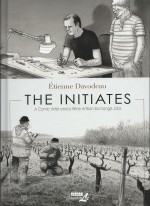
The Initiates – A Comic Artist And a Wine Artisan Exchange Jobs

Initiates front 2
By Étienne Davodeau, translated by Joe Johnson (NBM/Comics Lit)
ISBN: 978-1-56163-703-4

Throughout 2010 Bande Dessinée author/artist Étienne Davodeau (Friends of Saltiel, Lulu femme Nue, Un monde si tranquille, The Poor People: A History of Activists), noted for both brilliant fiction and moving factual comicbook novels, participated in a fascinating life (or perhaps vocation) swap experiment.

The artist, writer and designer was born in 1965 and, whilst studying art at the University of Rennes, founded Psurde Studios with fellow comics creators Jean-Luc Simon and Marc Le Grand, AKA “Joub”. His first album The Man Who Did Not Like Trees was released in 1992 and he forms an integral part of the modern graphic auteur movement in French and Belgian comics.

Released as Les Ignorants in October 2011, this lyrical and beguiling cartoon documentary reveals the year when the artist and independent specialist wine-maker Richard Leroy shared the secrets and mundane realities of each other’s insular, introspective and fearsomely philosophical solitary professions.

Davodeau knew absolutely nothing of the ferocious demands of the elite, experimental grape-growing game nor the oenophilic secrets and mysteries of tasting wine, but similarly the bluff, irascible son of the soil had barely read a comic in his entire life. The journal of discovery opens with ‘To Pruning, Then (Plus One Belgian Printing)’ as the artist is put to work in icy winds on the terroir of Montbenault, cutting and shaping the lianas which hold such glorious potential. Then Leroy is taken on an eye-opening tour of a Belgian print-works where Davodeau is summoned to sign off his latest album…

In ‘Wood’ a trip to a cooperage dissects the role of barrels in the slow fermentation process, as the new friends discuss the imponderables of judgement. It’s hard to define, but in their own fields each knows right and wrong, good and bad and most especially “not perfect yet”…

Leroy’s extra-curricular work includes reading lots of comics and graphic novels, as well as being introduced to the peripheral joys such as signings, collectors fads and so forth, but when he is introduced to major creator Gibrat a fascinating discourse on the aesthetics of the medium ensues in ‘Jean-Pierre (and Jimi, and Wolfgang Amadeus and a Few Others)’, liberally lubricated by the vintner’s ever-present samples of his own form of creative expression…

A charming interview and guest appearance with Lewis Trondheim graces ‘The Art of the Portrait and its Vicissitudes, or “The Theory of the Beak”’ even as the spring brings terror, confusion and greater back-breaking toil as the artist has his first brush with tractors and even more obscure specialist technologies, ‘What Goes Without Saying’ offers personal history and raking in the hot sun, after which ‘In Praise of Manure’ focuses on subjectivity as he learns the pros and cons of the controversial vintners’ heresy of “Biodynamics”…

Ploughing and accidental self-immolation features in ‘A Question of Proximity’, whilst the arrival of the world’s most influential wine critic opens a whole new area of discourse in ‘New York/Montbenault/New York’, and the tables are satisfactorily turned in ‘Saying Something Stupid: (Sometimes) a Good Idea’ as Richard attends an editors’ meeting in Paris in July before a little break at a Bistro reveals the true depth of the naïve comic-consuming artisan’s liquid gifts…

Wine-making is a 24/7 occupation and as storm season hits the terroir ‘The Blunder’ offers moments of genuine tension and apprehension for this year’s crop before a successful “disbudding” of the vines leaves time for a taste-training session for the novice drinker and reluctant reader alike.

In ‘Blacks and Whites’ the never-shy Leroy meets a creator whose work deeply affected him, and the pleasant hours spent with author/artist Marc-Antoine Mathieu lead to deep thoughts all round before ‘Wherein, When Certain Vintners Suffer Sulphur’ covers the raging debate in the wine industry on the use of elemental additives to “manage” fermentation, which leads inevitably to the frantic camaraderie of the grape-picking and constant cry for another ‘Bucket!’

October, and with the year’s harvest pressed and in barrels there’re a few quiet moments to disparage foolish ‘Label Drinkers’ at Wine Exhibitions, happily contrasting the snobs with Leroy’s first experience of a Comics Festival, before November brings the first tentative tastings of the new vintage and a long-awaited epiphany moment for reluctant reader Leroy in ‘Montbenault/Paris/Kabul’…

The Photographer (“Into War-Torn Afghanistan with Doctors Without Borders”, by Emmanuel Guibert, Didier Lefèvre and Frédéric Lemercier ) was the book the vintner responded to on a purely, frighteningly visceral level, so Davodeau takes the bemused convert to meet the lead creator and consequently discovers a tenuous connection between his life-swap partner and the documentary graphic novel’s subjects…

In ‘A Teetering Statue’ the quiet winter weeks allow breathing space to learn the travails of shipping and export, as well as encompassing a visit to the Paris Cartier Foundation’s Moebius Exhibition and some deliciously piquant home truths for comics cognoscenti before returning again to pruning vines, whilst ‘Savagnins, Poulsards, and Company’ takes us almost full circle as Leroy takes the artist to the vintner’s own personal promised land and a fellow elite wine maverick, whilst a trip to Corsica takes in the Bastia Comics Convention and the unique vineyard of the “Patrimonio Arena” in ‘Nielluccio, Vermentinu, Bianco Gentile and Oubapo’…

The magnificently elegiac and languorously evocative account wraps up in genteelly seductive manner with one final excursion as The Initiates head for the Dordogne to follow up on Emmanuel Guibert’s introduction to the survivors of The Photographer. One last gracious day of cross-fertilised booze and books conversation in ‘Final Revelations under a Cherry Tree‘ then leads inevitably back to where and how it all began for both participants…

Of course all I care about is comics, but even on my terms this rapturous, studious yet impossibly addictive account of two open-minded, deeply dedicated artists’ tentative exploration of each other worlds – at once tediously familiar and utterly unknown – is a masterpiece of subtle education, if not benevolent propaganda and, like good wine or a great book, takes its own sweet time to hook you.

Also included in this surprisingly compelling hardback chronicle is ‘Drunk/Read’ – a list of wines and graphic novels introduced to each novitiate; an intriguing bucket list for readers to aspire to and complete our second hand education into the greatest arts on Earth…

This dazzling display of harsh fact and the theosophical fervour of the grape-growers art, seamlessly blended with an outsider’s overview of our whacky, cosy world of cartoons and funnybooks, is enchanting beyond measure and should figure high on any fan’s list of books to seduce comics non-believers with. It might also be the perfect gift for all those people you thought you couldn’t buy a graphic novel present for…

Europeans excel at making superb comics which simultaneously entertain and educate (check out the sublime On the Odd Hours or The Sky over the Louvre to see what I mean) and the seductive, evocative, eclectically human monochrome illustration and dialogue perfectly capture the sensorial effect of wine and work and weather, and the backbreaking, self-inflicted artisan toil and ineffable rewards of making comics or creating wine…

Every so often a book jumps our self-imposed ghetto wall of power fantasies and rampaging adventurism, and I pray this elegiac documentary of a bizarrely fitting experiment makes that sort of splash in the wider world.
© Futuropolis 2011. © 2013 NBM for English translation.
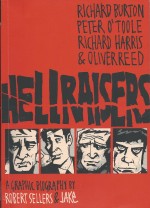
Hellraisers – a Graphic Biography


By Robert Sellers & JAKe (SelfMadeHero)
ISBN: 978-1-906838-36-2

I’m a sucker for comics biographies, and when I saw this superbly engaging and imaginative one on the shelves of my local library I just couldn’t resist a peek…

Robert Sellers is a former stand-up comedian and current film journalist with prose biographies of Sting, Tom Cruise, Sean Connery and the Monty Python phenomenon to his name, as well a regular contributor to periodicals and magazines such as The Independent, Empire, Total Film, SFX and Cinema Retro. He has also been seen on TV.

In 2009 he published a magnificent history of brilliance and excess in his “Life and Inebriated Times of Burton, Harris, O’Toole and Reed” in 2011 in collaboration with prestigious illustrator, designer and animator JAKe (How to Speak Wookiee, cartoon series Geekboy, Mighty Book of Boosh, The Prodigy’s Fat of the Land and so much more, both singly and with the studio Detonator which he co-founded). The artist keeps himself to himself and lets his superb artistry do all the talking.

Self-adapted from his prose history of the iconic barnstorming British film and theatre legends Richard Burton, Richard Harris, Oliver Reed and Peter O’Toole, Sellers here transformed Hellraisers into a pictorial feast, featuring the unique lives of a quartet of new wave, working class thespian heroes – more famed for boozing and brawling than acting – into a masterful parable and celebration of the vital, vibrant creative force of rebellion, interpreted with savage, witty style in ferociously addictive and expressive monochrome cartoon and caricature by the enigmatic artist.

Working on the principle that a Hellraiser is “a person who causes trouble by violent, drunken or outrageous behaviour” and cloaked in the guise of Charles Dickens’ A Christmas Carol, the salutary fable opens as another drunken reprobate is thrown out of another pub. It’s Christmas Eve at the Rose & Crown of Broken Dreams and Martin should be home with his wife and son.

After again disgracing himself the pathetic drunk staggers back, shaking with DT’s and unexpunged rage to his loving but scared family, only to pass out. He is awoken by his hellraising father who drank and smoked himself to death seven years ago…

Told that he has one last chance to save himself, Martin is warned that he will be visited by four spirits (no, not that sort) who will regale him with the stories of their lives and fates and failures and triumphs …

What follows is a beguiling journey of bitter self-discovery as Burton, Harris, Reed and O’Toole (still alive but part of the visitation of “spooky buggers” since it’s just a matter of time, my dear boy) recount their own sodden histories, experiences and considerations in an attempt to turn the neophyte around.

They’re certainly not that repentant, however, and even proud of the excesses and sheer exuberant manly mythology they’ve made of their lives…

Managing the masterful magic trick of perfectly capturing the sheer charismatic force and personality of these giants of their craft and willing accomplices in their own downfalls, this superb saga even ends on an upbeat note, but only after cataloguing the incredible achievements, starry careers, broken relationships, impossibly impressive and frequently hilarious exploits of debauchery, intoxication and affray perpetrated singly and in unison by the departed, unquiet soused souls…

Filled with the legendary exploits and barroom legends of four astoundingly gifted men who couldn’t stop breaking rules and hearts (especially their own), blessed or cursed with infinitely unquenchable thirsts for the hard stuff and appetites for self-destruction, this intoxicating and so very tasty tome venerates the myths these unforgettable icons promulgated and built around themselves, but never descends into pious recrimination or laudatory gratification.

It’s just how they were…

Sellers has the gift of forensic language and perfectly reproduces the voices and idiom of each star even as JAKe perfectly blends shocking historical reportage with evocative surreal metafiction in this wonderful example of the power of sequential narrative.

Clever, witty and unmissable.
© 2010 Robert Sellers and JAKe. All rights reserved.

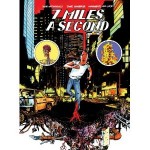
Seven Miles a Second


By David Wojnarowicz, James Romberger & Marguerite van Cook (Fantagraphics Books)
ISBN: 978-1-60699-614-0

Every so often an outsider dabbles in the comics medium and brings something new to the tried-and-trusted mix which forces insiders to re-evaluate the way and the why of their preferred medium. Such a case was the collaboration between iconoclastic multi-media artist David Wojnarowicz, cartoonist and occasional comics pro James Romberger and painter Marguerite van Cook.

During the 1980s and until his death in 1992 Wojnarowicz was a public fireball: a restless and prolific author, poet, musician, painter, filmmaker, photographer, performance artist, advocate for Artist’s Rights, anti-censorship champion and political activist, driven and inspired to constantly create by his appallingly deprived and corrupted younger days as a teen runaway, street prostitute and AIDS sufferer.

Linked by surreal and iconic visual observations, the visual thesis consists of three interlinked episodes from the author’s life, threaded and embellished with reminiscences, observations, dreams and poetry to form a discourse with the world which made Wojnarowicz the compulsive, questing, wonderingly politicised rebel that he was.

With ‘Thirst’, we follow a worldly-wise, street-smart kid as he dodges Vice Cops and cruises for “Johns” on the 1970’s hustling, bustling corners of 42nd Street, before encountering just one more sad guy in search of negotiable warmth and temporary affection…

‘Stray Dogs’ takes place some years later as David and his latest dangerous boyfriend Willy struggle to feed themselves and trawl the soup kitchens, halfway houses and shelters in search of food and a safe place to sleep. Their nightmare journey through the dregs and gutters of the city would enrage a saint and make the Devil weep…

The disturbingly forensic inner narrative ends with a contemplative and breathtakingly introspective marshalling of ideas and experiences in the eponymous fantasy masterpiece ‘Seven Miles a Second’ (“the minimum velocity necessary to escape the gravitational pull of the Earth”). This explosively excessive tour of culture’s conjoined imagination was begun during Wojnarowicz’s final months and left uncompleted until Romberger, himself a renowned cartoonist and exhibition artist – particularly in his scenes of urban and inner city life – returned to the author’s incomplete notes and his own memories of the man to pull everything together.

This final painfully intense and intimate graphic narrative was initiated in 1989 and only completed after Wojnarowicz died from AIDS-related complications. The collaboration was posthumously released in 1996 as a Vertigo Prestige Format Publication – a slim 64-page comicbook-sized album which became a cult classic of the newborn “Literary Comics” movement.

Wojnarowicz’s lost masterpiece of graphic narrative has now been rescued by Fantagraphics: re-mastered, extended, expanded, augmented and repackaged in a lavish hardback oversized (298x229mm) edition that magnificently gifts this telling testament with the physical gravitas and presence it always deserved.

Illustrator Romberger and his wife Van Cook – whose original watercolour hues have been lovingly restored for this edition – have also included five new pages distilled from their intimate knowledge of Wojnarowicz for this breathtakingly evocative, challenging, terrifying, hallucinogenic, appallingly revelatory condemnation of a society that happily eats its weak and different,

Hard to take, frighteningly beautiful and staggeringly honest, this is a book that will – and must – upset all the right people, but is one that no mature, clear thinking devotee of graphic narrative should miss.

© 2012 James Romberger, Marguerite Van Cook and the Estate of David Wojnarowicz. This Edition © 2012 Fantagraphics Books, Inc. All rights reserved.

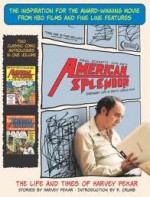
American Splendor: The Life and Times of Harvey Pekar – New Revised Review


By Harvey Pekar, R. Crumb, Gregory Budgett, Gary Dumm, Gerry Shamray,
Kevin Brown, Susan Cavey & Val Mayerik
(Ballantine Books)
ISBN: 978-1-84023-787-0

Before finding relative fame in the 21st century, Harvey Pekar occupied that ghastly niche so good at trapping the truly creative individual: Lots and lots of critical acclaim, and an occasional heart-breakingly close brush with super-stardom, without ever actually getting enough ahead to feel secure or appreciated.

One of those aforementioned brushes came in 1980s with the release of a couple of compilations of selected strips by mainstream publisher Doubleday that even to this day are some of his most powerful, honest and rewarding “literary comics” ever seen. By mercilessly haranguing, begging and even paying (out of his meagre civil service wages and occasional wheeler-deal) any artists who met his exacting intellectual standards, Pekar all but created the comics genre of autobiographical, existentially questing, slice-of-life graphic narratives whilst eking out a mostly lonely, hand-to-mouth existence in Cleveland, Ohio.

How the irascible, opinionated, objectionable, self-educated music-mad working stiff came to use the admittedly (then) impoverished comicbook medium to make a fiercely vital social commentary on American life of the ordinary Joe is a magical journey in the plebeian far better read than read about, but I’m going to have a crack at convincing any holdouts anyway.

Moreover, by the time you’ve seen this I’m already on to my next crusade…

This compendium combines and re-releases those seminal tomes in one big, bold edition and was released to tie-in with the award-winning 2003 indie film biography American Splendor, and opens with the superb contents of the 1985 release American Splendor: the Life and Times of Harvey Pekar, beginning by reproducing the introduction by early collaborator and modern Media Darling Robert Crumb before proceeding with a seductive welter of elegiac, confrontational, compulsive, challenging, painfully frank and distressingly honest observations that collectively changed the way English language comics were perceived, received and even created.

Rendered by Crumb, the excoriating graphic self-analysis begins with ‘The Harvey Pekar Name Story’ as the obsessive yet passive hunt for other people with the same name briefly gripped the self-confessed compulsive personality, whilst ‘The Young Crumb Story’ gave us Pekar’s take on the cartooning career of his collaborator, after which ‘A Fantasy’ again revisited the artist’s relationship with the writer: Pekar uncomfortably bragging over how he had browbeaten and gulled Crumb into drawing his scripts – and still was…

Gary Dumm illustrated the bizarre ‘Ozzie Nelson’s Open Letter to Crumb’ (written in 1972) describing the faded TV celebrity’s snotty pep talk to the cartooning degenerate, after which Crumb returned to deliver self-abusive insight as Pekar revealed ‘How I Quit Collecting Records – and Put Out a Comic Book with the Money I Saved’.

Greg Budgett & Dumm handled many of the most searingly honest introspectives such as ‘The Day Before the Be In’, the equally forthright and painful personal history sequels ‘Awakening to the Terror of the New Day’ and ‘Awakening to the Terror of the Same Old Day’ or the nigh-spiritual rationalisations of ‘Short Weekend – a Short Story About the Cosmic and the Ordinary’…

One of the most impressive facets of Pekar’s tales is the uncompromising depiction of the people he encountered in work or socially (if such a term can apply to such a self-admitted “judgemental jerk”) and the frankly brutal way he attempts to keep narrative polish out of his graphic reportage.

Incidents such as ‘A Compliment’ or ‘Jivin’ With Jack the Bellboy as he Goes About… Hustlin’ Sides’ and ‘Jack the Bellboy and Mr. Boats’ – all illustrated by Crumb – recount episodes with co-workers undistinguished, unremarkable and free of all dramatic embellishment or grace-saving charisma… but they are intoxicatingly real and appealing.

‘Read This’ (Budgett & Dumm) tells how even cynics can be surprised by people, whilst the Crumb-illustrated ‘Standing Behind Old Jewish Ladies in Supermarket Lines’ is as gently hilarious as their ‘Ridin’ the Dog’ vignette of cross-country bus travel is contemplatively reassuring.

Innovative Gerry Shamray tackled the wordy self-examination of life’s pointless frustrations in ‘An Argument at Work’ and the cathartic ‘Working Man’s Nightmare’ with aplomb and smart sensitivity, before Crumb resurfaced to draw an incredible familiar and unwelcome situation as the obnoxious ‘Freddy Visits for the Week End’. Regrettably we all have friends like him…

Pekar’s disastrous history with women was a frequent theme and ‘Ripoff Chick’ (by Budgett & Dumm again) showed why and how. The only difference between the author and most men was that he admitted up front that he wanted sex without complications or commitment…

‘One Good Turn Deserves Another’ (Shamray) invites us to share a typically penny-pinching secret, before Dumm tackled a quirky friendship and the perils of well-intentioned matchmaking in ‘Leonard & Marie’, and ordinary folk got tied up discussing theology and politics in Shamray’s wryly related ‘Noah’s Ark’. The artist then effectively encapsulated ‘Class Antagonism’ before Jewish intellectual Pekar again examined his ethnic and cultural roots by revisiting his relationship with Old World Hebrew ‘Emil’ (Dumm & Budgett) and the danger of first-hand accounts in the Crumb-illustrated ‘The Maggies (Oral History)’ and Shamray’s death-camp memoir ‘Kaparra’…

Crumb then turned in his most claustrophobic and impassioned drawing for the vibrant manifesto ‘American Splendor Assaults the Media’ after which the immensely stylish Kevin Brown limned a tale of frustrated selling out as Harvey attempted to schmooze up-and-coming movie star Wallace Shawn ‘Grubstreet, USA’, after which the first volume ended on a high of sorts with Pekar via Crumb temporarily resolving a ‘Hypothetical Quandary’.

The philosophising, reminiscing, ruminating, observing, eulogizing, questioning and fictively projecting promptly continues in From the Streets of Cleveland Comes… American Splendor: the Life and Times of Harvey Pekar, resuming the painfully honest – and to us here and now perhaps often unsettling and disquieting – accounts of normal lives with the Crumb-crafted classics ‘Pickled Okra (Okry)’, ‘Lunch with Carmella’, ‘Rollins on Time’ and ‘Visualize, Actualize, Realize’ – all containing commonplace friendly interactions with Pekar’s African-American co-workers that would make many genteel folk wince today…

A prospective hot date turned into a gruelling and pointless exercise in furniture moving in the Budgett & Dumm saga ‘Guerrilla Theatre: July ’74 – on the Corner’ with a punch-line not apparent until their ‘On the Corner… a Sequel: June 1976’, after which inker turned illustrator to relate the nostalgic revelations of young lust in the 1950s on the ‘Roller Coaster to Nowhere’, but some measure of cosmic karma was achieved decades later when Pekar finally achieve his  childhood goal of owning ultra-hip and so, so cool ‘Stetson Shoes’…

‘Mrs. Roosevelt and the Young Queen of Greece’ and ‘Busman’s Holiday’ by Dumm & Budgett celebrate the simple joy of guys simply sitting around shooting the breeze, whilst Crumb’s delicious treatment of Pekar’s love for old fashioned Jewish kvetching makes ‘Miracle Rabbis – a Dr. Gesundheit Story’ a minor masterpiece of comics.

‘An Everyday Horror Story’ (Shamray) then recaptures the tension and terror of Pekar’s first brush with serious illness – or so the author thought.

Always a healthy, vigorous but exceptionally excitable shouty man, Pekar got properly sick for the first time in his life and faced the very real prospect of never being able to speak again. This exceedingly gripping account perfectly presents all the fear, frustration, metaphysical pleading and moving emotional and practical support Harvey’s friends and then wife provided – and what happened next…

‘Alice Quinn’ drawn by S. (Susan) Cavey then detailed a portentous meeting with the girl who got away before Shamray’s powerfully captivating ‘I’ll be Forty Three on Friday (How I’m Living Now)’ offers a rare moment of optimistic clarity, and Cavey’s ‘Jury Duty’ shows how even the most earnest hopes and honest ambitions can worry the bejeezus out of “normal” folks…

For most of his life Pekar was that rarest of creatures – an un-typical American who chose not to drive (for good, sound and to my mind admirable reasons). Thus he often spent time cadging lifts and fretting about the etiquette of returning favours to his civilian chauffeurs. In ‘A Ride Home’ (Cavey) the impatience and anxiety grew momentarily too much, whilst in Dumm’s ‘Free Ride’ a long-standing arrangement with a previously admired old Jewish guy escalated into something ferociously passive-aggressive, quite strange and impossibly worrisome…

The same traumas afflicted Pekar when he foolishly bought his ex- wife’s automobile only to find it a cursed Jonah, which plagued him for many snowbound months in ‘Old Cars and Winter’ by Cavey. The superb and vastly underrated Val Mayerik joined the select band of artistic collaborators with the gloriously uplifting ‘A Marriage Album’, depicting life with beloved third wife with Joyce Brabner, and explored Pekar’s wild street-fighting juvenile days and later proclivities in ‘Violence’, whilst ‘History Repeats Itself’ offered a moment of resigned contemplation over teen spirits courtesy of Seán Carroll.

Mayerik contributed a final brace of gently contemplative pieces beginning with ‘A Matter of Life and…’ which saw an older, calmer author recap his life with a little more kindness than ever before, whilst an uneventful bus ride found Pekar gleaning a wealth of down-home ‘Common Sense’ from a voluble instructor driver before this masterful meander through a truly unique mind concludes with Crumb and the perfect solution to life’s ills with ‘Mr. Boats’ Miracle Cure’…

With art by individualistic collaborators who were never content to stay in their Comfort Zones but always endeavoured to make their contributions unique unto the story, and selected from a most adventurous and historically creative decade, these tales of working life, self-esteem, achievement, failure, religion, the media, Nazi atrocity, guilt, acceptable bigotry, proudly defended ignorance, friendship, aloofness and the art of understanding women are timeless slices of life’s dreary brilliance.

As a man who constantly assessed and re-examined his own creative worth and self, Harvey Pekar opened up his life to the world and changed it by being ordinary and average.

…Except he never was, as this superb insight into the mind and heart of a truly original comics creator will attest. This splendid, engrossing book offers readers a chance to see the humour, confusion and frustration of being an American thinker in a world that simply doesn’t value brains and spirit anymore – and I fear that’s going to be one of humanity’s eternal verities…

© 1976-1986, 2004 Harvey Pekar, LLC. All Rights Reserved.

Transposes


By Dylan Edwards (Northwest Press)
ISBN: 978-0-9845940-8-5

I don’t hold many unflinching beliefs; but one of the few is that I, you and certainly no church, government or pressure group has any damn right to dictate what consenting adults do with or to their bodies. I may reserve the right to privately snigger at some of the more ambitious things people get up to in order to get their rocks off, but I can’t help that: after all I’ve lived through Flower Power, Free Love, New Men, flares (twice) and an era when both religions and politicians tolerated gays and evolution, and believed women were equal to men.

I’m more than happy for anybody to assign, clarify or reassign their gender identity as they see fit, and as for when “Life begins” and what you’re born as, I’m far more concerned by the fact that the most vocal advocates “know” exactly when, what and how it begins whilst it’s inside a human but feel no compunction or duty of care for any baby – or mother’s – wellbeing as soon as the (still developing until age 30) agglomeration of cells is out of the womb and into the world…

Whilst we’re sharing I also feel we should probably all pass an exam before we’re allowed to vote or voice an opinion…

There are a lot of acronyms here and I’m not going to play translator or decoder interminably, so if we miss linking any just use that search engine OK? This is comics, not University Challenge…

LGBT comics have long been the best place in the graphic narrative business to portray real romance: an artefact, I suppose, of a society that seems determined to establish sex and love as two utterly separate beasts. I’d still love to think that in the 21st century we’ve all outgrown the juvenile, judgemental bad old days and can simply appreciate powerful, moving and funny comics about people of all sorts without any kind of preconception…

Unless we’re talking girl/vampire/werewolf menageries a trois: that stuff is just plain wrong…

The very fact of being judged “different” now seems to be an increasingly common badge of courage in a world where fanatics and bigots become daily more rabid, and actual religious leaders can claim with straight faces that God so hates homosexuals and fornicators (or atheists or scientists or Ginger-haired, left-handed people) that in His wisdom He sends hundreds of tornados and tsunamis every year to wreck the homes of the faithful and worshipful – presumably because they ain’t doin’ nothin’ ’bout it…

Dylan Edwards, AKA NDR, is a graphic artist, cartoonist and sculptor: author of Politically InQueerect, sports strip The Outfield and many others, plus the creator of really cute monsters (as seen on his Feeping Creatures site), and in Transposes uses comics to celebrate the history of seven ordinary souls just living their lives as FTMs (females transitioning to males).

Dylan – who extensively interviewed each star before crafting these elucidating mini-epics – encapsulates their unconventional existences for the wider world with disarming candour and certified charm. Of course, all the “hot button issues” touted by a hypocritically moralising media (coming out, bullying, role models, gay identity, promiscuity vs. monogamy, childhood sexual abuse, risky sex and/or partners, STIs, parental approval and rejection) are present here – which only goes to show just how widespread and universal those perennial difficulties are…

Regardless of that, this collection comes off as a wonderfully positive and affirming chronicle celebrating determination and difference and, after an effusive and informative Introduction by Alison Bechdel (cartoonist, author of Fun Home and Are You My Mother? and deviser of the truly inspirational Bechdel test), there’s an engaging comic strip Foreword by storymaker Dylan Edwards explaining the process that led to the impressive pictorial reportage that follows.

Delivered with jokey aplomb, this savvy and smart ice-breaker gently eases the uninitiated into issues of transgender, cisgender and that subset-within-a-subset defined here as “queer-identified female-to-male-transpersons” before the terrific tale-spinning begins…

Over coffee ‘Cal’ tells of his trip to physically hook-up with an adventurously like-minded internet contact and how it all led to a few surprises, a whole new set of skills and a great story to dine off for months to come…

The gloriously hilarious ‘Henry’ scrupulously – even compulsively – recorded every aspect of his satisfyingly unconventional life and was quite content to share insights and horror stories from the astoundingMuseum ofNatural Henry…

Confusion and insecurity were a way of life for ‘Adam’ until he met Marni, who after an intense and nurturing time helped her beau discover that she really wasn’t the girl for him, whilst for ‘Blake’ an intoxicating brief encounter led to unexpected and life-long repercussions.

Scholarly, happily-in-control ‘Avery’ learned his greatest lessons early from an intolerant father and the wise, understanding and joyously gay uncle the family had ostracised, after which the cavalcade of human drama ends with a gloriously moving, entwined tale of two young outsiders simply destined for each other in the parallel-lives journey of ‘Aaron & James’ ending our odyssey on a fabulous, happy high note…

We are then comfortingly caught-up by a brief Epilogue in which all the participants are revisited and updated on life since their interviews to re-emphasise that feeling of pleasing continuance…

Comics as a medium is already a symbolically active one, honed and irresistibly one-step-removed from the mundane faux reality of film or photography. As such its powers to skin away confusing or misleading surface and reveal unalloyed intent and meaning are without parallel.

Don’t take my word for it. Check out any political caricature by Hogarth, Scarfe or Steve Bell…

It’s an admission of annoying embarrassment to me that I’ve felt compelled to put in so much equivocating background and bumph before coming to the meat of this review. In the final analysis Transposes is a subtly sensitive, evocative, romantic and humorously rewarding collection of “people stories” which any open-minded fan will adore. There’s not much fighting but plenty of punch, and in an ideal world this book would be readily available in every school library for any confused kid in need of inspiration, comfort, understanding, encouragement and hope.

Sadly because it deals openly with sex and gender, it’s probably going to be banned in more than half the United States and get pilloried in our free and impartial Press… Well, if nothing else the publicity will be very useful in ensuring that the folk who need to get to hear of it…
© 2012 Dylan Edwards. All rights reserved.

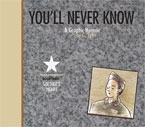
You’ll Never Know Book 3: Soldier’s Heart


By C. Tyler (Fantagraphics Books)
ISBN: 978-1-60699-588-8

Win’s Christmas Gift Recommendation: an ideal example of Art for Our Sake… 10/10

In 2009 illustrator, educator, performer and occasional cartoonist Carol Tyler (The Job Thing, Late Bloomer) published the first of a trilogy of graphic memoirs examining her tempestuous relationship with her father. Chuck, a veteran of World War II and by all measures A Good and Decent Man, had been a mystery and painful cipher to his girl for years but everything changed one day in 2002.

After six decades of brusque taciturnity and scarily obsessive sublimating self-reliance, during which he had edited his service career out of his life, Chuck suddenly and explosively opened up about his time in Africa and Europe. However, he would not or could not recall his later experiences in Italy and France as the War staggered to a close…

Disease and growing infirmity had suddenly produced in her once strong-but-distant father a terrifying openness and desire to share his long-suppressed war experiences and history.

As if suddenly speaking for an entire generation who fought and died or survived and somehow soldiered on as civilians in a society with no conception of Post Traumatic Stress Disorders, Chuck Tyler began to unburden his soul.

Galvanised and hungry to learn more, Carol began creating an album of his army years but soon came up against a mental blank-period: one for which no corroborating records existed. For, as much as he could effusively recall, there was so much more that had been excised from Chuck’s mind and apparently erased by the government…

It became a quest: a relentless search for hidden truths which abruptly collapsed when the irritably mutable elder suddenly turned on her and the painful, frustrating search for the past.

In 2010, second volume Collateral Damage was released and found Carol coping with her own husband Justin‘s infidelities, mental dilemmas, betrayal and desertion. This led to a resumption of the father-and-daughter recording and re-ordering of Chuck’s recollections of Italy and France (including the infamous Battle of the Bulge) whilst re-examining her own agonisingly chaotic, self-destructive existence and hidden demons.

Carol was forced to examine her troubled past through a new lens. How much did growing up the child of a devoted, loving husband who was incomprehensibly somehow a coldly, unapproachable father, shape her own parade of life-errors and marital mishaps?

Could she prevent her increasingly wild daughter Julia from perpetuating the cycle by making the same bad choices she had?

As her parents’ physical and mental states inexorably deteriorated, Chuck had become obsessed by the mystery of the missing months he’d forgotten and a potential “Government Pay-out”. In his more open and lucid moments he gratefully accepted Carol’s aid in trying to solve the dilemma and so the pair began to explore numerous Federal and Veteran’s Administrative archives and resources…

During an increasingly critical reappraisal of the family’s shared experiences, Carol subsequently discovered how her mother Hannah or “Red” had coped with dark tragedies and suppressed secrets on the Home Front, and gained enhanced perspective but no satisfactory answers to the continuing conundrum of her father.

Rushing to finish her self-appointed task of turning her father’s life into a comprehensible chronicle whilst her parents both visibly declined with every visit, Carol’s personal life was also becoming uncontrollable and too much to endure…

Exploring three generations of a family born out of collateral damage and which never truly escaped WWII, the saga concludes with the revelatory breakthrough moments of Soldier’s Heart, opening with a moving visual introduction by Carol and Red before revealing how Julia’s spiralling behavioural  problems brought a chastened and resolutely repentant Justin back into the fold. Julia’s troubles prove to have a biological and psychological basis and, whilst Justin came back into their lives, he never made it to Carol’s bed. As the once-marrieds moved into a new holding pattern, the cartoonist’s military searches brought her to the actual man of her dreams but family loyalty kept him from her too…

With ‘The Mind’ awhirl Carol found solace and renewed balance by adopting a miraculous dog before embarking on a frighteningly close shave involving Chuck, a gun and a mouse in ‘The X-mas Tale’ whilst New Year ruminations on the price soldiers always pay and how we honour the fallen in ‘Dulce et Decorum Est’ and ‘Walking the Mat’ bring the pensive and elegiac narrative to ‘Dad’s Army Scrapbook and Tour of Duty Highlights part V: Rhineland Dec. 1944-Mar. 1945’…

Here at last the researches find a crucial turning point as Chuck’s broken memories and the records pinpoint a discrepancy – although the old soldier’s recall describes his duties and exploits up to March when he was sent home, the files show that he didn’t get back to America again until November…

Further investigations and a growing network of helpful contacts lead them towards the National Archives Personnel Records Center in St. Louis and Carol resolves to take her folks on an epic road trip to Missouri. Although personally revelatory, the excursion turns into a frustrating bureaucratic nightmare in ‘Prairie Trek by Truck with Hannah and Chuck’ and advances the Tour of Duty Scrapbook not one jot.

Now the project’s very last hope is a ‘Trip to the National Archives and WWII Memorial – Washington, D.C. 2004’ but the journey is almost finished before it’s begun when Chuck’s latest home-improvement project turns the family home into an asbestos-soaked  death-trap and the old man’s toxic other self resurfaces.

With relations between father and daughter at their lowest ebb for years, the Washington excursion begins with little hope for success but leads unbelievably to a spectacular and moving breaking of the mental dam and subsequent epiphany of shocking proportions…

The story doesn’t end there but moves on to re-begin for the Tyler clan and there’s still one last moving ‘Epilogue’ before the close of this very special, grimly life-affirming account.

Ruminative, pensive and moodily elegiac with a series of stunning set-piece illustrations eerily reminiscent of American master of stoic isolation Edward Hopper blending into a mixed palette of cartooning and illustration disciplines, C. Tyler’s art adroitly mirrors her eclectic, entrancing non-sequential story-form, with a beguiling, bewildering array of styles meshing perfectly and evocatively to create a fully immersive comics experience.

Offering warmth, heartbreak, horror, humour, angst, tragedy, triumph and hope in a seductive display simultaneously charming and devastatingly effective, this grand narrative is itself constructed like a photo album (hardback, landscape and copiously expansive at 310x265mm) redefining the eternal question “How and Why Do Families Work?”

The mystery of the Soldier’s Heart is a magnificent conclusion to Tyler’s triptych of discovery and one no lover of comics or student of the human condition should miss.

© 2012 C. Tyler. All rights reserved.

Cancer Vixen


By Marisa Acocella Marchetto (Fourth Estate)
ISBN: 978-0-00-722163-9

The Comic medium is incredibly powerful: easily able to convey different levels of information and shades of meaning in a highly individualistic and personal manner on any subject imaginable. Although primarily used as a medium of entertainment, the sequential image is also a devastating tool for instruction and revelation as in this superb encapsulation of one woman’s knock-down drag-out tussle with the “Big C”…

Born in1962, Marisa Acocella studied painting at the Pratt Institute and theSchoolofVisual ArtsinNew York Cityand became an Art Director for a major Madison Avenue Ad agency. After a meteoric career in the field she turned to cartooning in 1993.

Acocella concocted the quasi-autobiographical fashion cartoon ‘She’ which debuted in Mirabella Magazine before transferring to Elle in 1996. The feature was collected as Just Who the Hell Is She, Anyway? The Autobiography of She and the character was optioned for a show by HBO television.

The frantic scribbler was subsequently head-hunted by Robert Mankoff, Cartoon Editor for iconic periodical The New Yorker and soon after, with her work regularly appearing in Glamour (where she crafted the series ‘Glamour Girls’), Advertising Age, Talk, Modern Bride and ESPN magazine, she created ‘The Strip’ for the New York Times Sunday Styles section. It was that prestigious paper’s first ever continuing comics feature.

In 2004, three weeks before her marriage to a dashing and highly successful restaurateur, at the top of her game and seemingly with the world at her stylishly shod feet (there’s a great deal of attention paid to women’s shoes here, but at least it’s a hereditary fetish: her simply overwhelming mother Violetta Acocella was a designer for the Delman Shoe Company), Marisa found a lump in her breast…

How the sometimes flighty, occasionally self-absorbed but ultimately tough and determinedly resolute Style-Zombie Fashionista cartoonist took control of her life and her situation to beat cancer makes for an utterly engrossing and ferociously vital read…

Told in overlapping flashbacks Cancer Vixen – because the artist loathed the term “Cancer Victim” – documents her emotional pilgrimage through denial, oppressive terror, turbulent anticipations, financial heebie-jeebies, desperate metaphysical bargaining, exploration of outrageous alternative therapies, grudging acceptance and onerous fight-back through her interactions with friends and family – especially her formidably overbearing ‘(S)Mother’ and man-in-a-billion husband-to-be Silvano Marchetto…

As Marisa reveals the day-by-day, moment-to-moment journey from suspicion to diagnosis, through surgery and the horrifying post-op chemo-therapy with profound passion, daunting honesty and beguiling self-deprecating humour, what strikes me most is the cruelly unnecessary extra anguish caused by a silly mistake which might have cost the artist her life…

Even though thoroughly in-touch, on the go and in command of her life, this modern Ms. had accidentally let her Health Insurance lapse…

Coming from a country where, despite the best efforts of our current government to gut and sell off the National Health Service, nobody has to die from insufficient funds or suffer because of their bank balance, the most gob-smacking strand of this graphic reportage is the cost-counting exercise which periodically totted-up the dollars spent at crucial stages of treatment and the realisation that many of her potential care-givers were actually bidding against each other rather than working together to treat their patients customers…

Thankfully Glamour magazine nobly commissioned Marisa to turn her regular strip into a cartoon account of her illness and recovery (with the Cancer Vixen strip launching as a 6 page strip in the April 2005 issue), whilst bravely marrying Silvano – in defiance of her very real dread that he might be a widower before their first anniversary – at least got Marisa belatedly onto his insurance policy…

As a result of her experiences, Marisa Acocella-Marchetto apportioned a percentage of the book’s profits to The Breast Cancer Research Foundation and to underprivileged women at the St. Vincent’s Hospital Comprehensive Cancer Center inManhattan, where she also recently established The Cancer Vixen Fund, dedicated to help uninsured women get the best breast care available.

Delivered in a chatty, snazzy blend of styles and bright, bold colours, this relentlessly factual – and truly scary because of it – book combines a gripping true story of terror and resilience with a glorious love story and inspiring celebration of family and friendship under the worst of all circumstances.

Whilst not the escapist fantasy fiction which is our medium’s speciality, this human drama and faithfully impassioned but funny memoir – with a happy ending to boot – is the kind of comic which will enthral and elate real-world fans and devotees of the medium; and indeed everyone who reads it.
© 2006 Marisa Acocella Marchetto. All rights reserved.

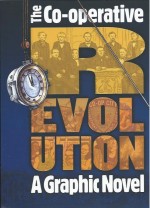
The Co-operative Revolution – A Graphic Novel


By Polyp, with Paul Monaghan, Rachel Vorburg-Rugh, Gillian Lonergan, Ed May and Ian Nixon (New Internationalist on behalf of the Co-operative Group)
ISBN: 978-1-906523-19-0

You might not be aware of it but 2012 is the United Nations International Year of Co-operatives – which I’ll define here as people working in community rather than competition, and applying that fundamental principle to the world of business.

Today Co-operative societies and groups have spread to every corner of the globe and proved a successful and frequently innovation-friendly alternative model to straight consume-expand-or-die Capitalism in commercial arenas as varied as wholesale and retail, agriculture, journalism, banking, car-making, textiles, construction, hotel management, all sorts of service industries and even Healthcare provision.

The potential of the simple notion of working together for mutual benefit seems to terrify some people – let’s call them greedy and selfish – but since the successful experiment of the Rochdale Pioneers in 1844 the philosophy has grown and blossomed and provided decent livelihoods for generations of workers and enabled them to provide increasingly better lives for their children.

Co-operation isn’t a tactic or model but rather a philosophy that encourages people to take full responsibility and reward for the fruits of their labours, which necessarily makes all their endeavours operate on a human scale and with a face anonymous corporate production finds impossible to match or emulate. The modern, thriving international movement grew from an impassioned but measured response to the worst excesses of the Commercial Age and is deftly recounted in the first section of this compelling and informative graphic history.

During the early years of the Industrial Revolution it was standard practice for the owners of British factories and industrial works to pay appalling wages to their workforces and simultaneously run the only shops where those meagre remunerations could be spent. Usually the bosses also owned the houses where workers lived: another method of ensuring the monies they paid out coming back into their own coffers.

As you’d expect such a closed system was easily prone to abuse: sales to the labourers – food, candles, clothes and every other household need – were rife with shoddy, cheap workmanship, with debased and adulterated food frequently sold in short measures and priced in such a way as to keep workers alive but with no hope of improving themselves or escaping the system. Credit was always extended – with no real intention of ever collecting on it – and workers were trapped forever in an inescapable spiral of debt to the company. It was pure economic feudalism and little better than slavery.

Many times before, workers had attempted to address the problem by uniting to buy goods in bulk and distribute them communally, but always the enterprises had failed. However on December 21st 1844 in Rochdale, a small band of working men – weavers, colliers, woolsorters and cloggers – pooled their small cash reserves and opened a rough-and-ready general store selling flour, sugar, butter and candles, promising “unadulterated wares in honest weights and measures”.

Instead of mutually ruinous credit, The Rochdale Society of Equitable Pioneers offered all members of their collective enterprise a dividend – a fair and regular redistribution of profit after working costs were covered.

As the chapter ‘Yesterday’ details, despite fierce and unscrupulous opposition from established businessmen and authorities terrified of revolution by the lower class, the Co-operative movement endured and grew. When farmers and companies were squeezed to stop them providing produce to the Pioneers, the Society simply went further afield and even began sourcing or making their own items – a process and solution repeated over and again through nearly 170 years of continued existence and growth.

The burgeoning movement was a constant force for social mobility and improvement: in their first rented premises in Toad Lane, the upper floor swiftly became meeting rooms and a free Library, with not just books but microscopes, globes and all modern scientific instruments where the poor could educate themselves to eventually escape the trap of ignorance and poverty the wealthy created for them…

The slow but solid growth and geographical expansion of the radical movement is charted against the changing social and cultural climate in a beguiling and elegiac potted history after which ‘Today’ recounts many examples of successful Co-operative practice currently improving lives better all over the world.

One of the movement’s greatest successes was the establishment of Fair-Trade farms, plantations and other businesses around the globe, from Canada where more than a third of the World’s Maple Sugar is produced by Co-ops, to the USA where 900 rural Co-ops produce 42% of the nation’s electricity distribution, covering 75% of the landmass.

In India – where 239 million people belong to a Co-operative society – a tribe of hereditary snake-catchers even transformed their unique, traditional but dying trade into a thriving repurposed business.

Closer to home, when I first started freelancing as an artist/graphic designer, I belonged to a loose association of specialists who shared or traded jobs according to our specialities and particular strengths…

Almost as soon as they were published, Darwin’s discoveries regarding the fundamental evolutionary principle described as “Survival of the Fittest” were co-opted by Capitalists, hungry to justify their appalling excesses. Here ‘Always’ focuses on the plenitude of scientific discoveries which counter those spurious commercial notions and act as a happy rebuttal to the spurious commercial mantra of an utterly unchecked free market which continuously permits greedy and cavalier bankers to bankrupt economies and nations, whilst rapacious rampant tycoons and corporations create Crash after Recession after Depression, over and over again and with no thought of redress or reparations to the billions of people they impoverish…

‘Tomorrow’ takes a speculative look at how Co-operation could take us to even greater communal achievements by following a really good day in 2044 when the happy partners of the Rochdale Aerotech Co-op celebrate their contribution to the mission which is landing men on Mars…

This alluring and pleasingly education chronicle concludes with an absorbing ‘Timeline’ following the progress of “Co-operation Through History” by tracking changes in politics and culture promoted, prompted and provoked by the movement from the very first recorded 1769 bulk purchase scheme of the Fenwick Weavers to the 2012 UN declaration of the International Year of Co-operatives…

Since its creation, the Co-operative movement has promoted education for the poor, social equality, universal health, and equanimity in farming, banking, manufacturing and production. By making simple retail fair it has freed society’s least advantaged from de facto slavery, shaped political and social reform across the world and offered true opportunity for improvement and a better life for all people.

This wonderful book – hopefully destined for every school library and history syllabus – using all the force and power which only comics narrative can provide, is a sterling example of what people can do when working together and in unity and one no fair minded individual should miss.

© The Co-operative Group. All rights reserved.
Radical cartoonist and activist Polyp has worked with campaigning organizations around the world for over fifteen years. He lives and works in a co-operative housing complex inManchester,England.

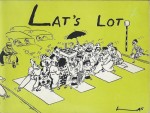
Lat’s Lot- the Second Collection


By Datuk Mohammad Nor Khalid AKA “Lat” (Berita Publishing)
No ISBN:

Mohammad Nor Khalid is probably Malaysia’s most beloved and prolific cartoonist, having begun his professional career aged 13 and working continuously in comics, strip illustration and journalism as well as the editorial and political works that have made him a household name in Asia.

Born in 1951 the son of a government clerk in the Malaysian military, the artist spent his early life in a rural village (superbly captured and eulogised in his graphic recollection Kampung Boy) before moving to the city in 1962 – with those later autobiographical reminiscences and observations recalled in cartoon sequel Town Boy. As early as 1960 the precocious nine-year old was selling his drawings – or trading them for cinema tickets.

Exposed to a steady diet of music, films and imported comics such as Beano and Dandy, as well as home-grown material such as the bombastic adventure strips of Raja Hamzah, within two years Khalid was supplementing the family income with his edgy, exuberant and sublimely inclusive drawings.

Mentored by senior cartoonist Rejab bin Had (known nationally as “Rejabhad”) the boy sold his first comicbook series Tiga Sekawan (Three Friends Catch a Thief) to Sinaran Brothers Publishers who believed the postal submissions came from an adult professional. Khalid, saddled with his baby nickname “bulat” – which means “round” – from an early age, turned the moniker into the diminutive and distinctive pen-name Lat by which a goodly portion of the world now knows him…

In 1968, he began the weekly strip Keluarga Si Mamat (Mamat’s Family) for Berita Minggu, the Sunday edition of national newspaper Berita Harian. The series ran for 26 years.

On leaving school, Lat became a crime reporter for Berita Harian in the capital Kuala Lumpur, but in 1974 switched to drawing full-time after a cartoon feature in Hong Kong paper Asia Magazine (on the Malaysian circumcision ceremony Bersunat) brought him to the attention of editor-in-chief Tan Sri Lee Siew Yee of the New Straits Times. Unaware that the artist was already an employee, the big boss promptly commissioned a series of cartoons entitled Scenes of Malaysian Life. The paper thereafter also dispatched Lat on a four-month sabbatical toEngland where he studied atSt. Martin’sCollege ofArt inLondon. Whilst there, Lat was exposed to such varied and iconoclastic draughtsmen as Gerald Scarfe, Frank Dickens and Ralph Steadman…

On his return, the inspired young craftsman totally transformed Scenes of Malaysian Life and in 1975 was made chief editorial cartoonist with absolute carte blanche to draw whatever he liked…

Working for such prominent national newspapers Lat blended astute observation, palpable honesty, utter neutrality and a superbly self-deprecating ironic gentility with a keen sense of what ordinary Malaysians knew, felt and were interested about.  In 1978 his first compilation book was released and, ever-bolshie, I’ve decided to review the second one, which was rushed out a few months later to cope with the frantic demand for more, more, more…

Ceaselessly working, Lat has published more than 20 books and cartoon collections and branched out into animation, design, merchandising and even theme-park creation. He’s also produced an animated feature (‘Mina Smiles’) promoting literacy for Unesco.

This glorious over-sized 144 page monochrome masterpiece features 74 of his very best strips and panels, covering all aspects of the Malaysian experience both at home and abroad – even the experiences and emotions of Lat’s ‘Trip Across U.S.A.’ so eerily echo my own ( or indeed anyone’s) first trip to the Big Country…

The full page cartoon statements on ‘Going to Work’, ‘The Long Wait’, ‘Married Life’ and longer pieces dedicated to such diverse topics as Elvis impersonators, ‘Penang Revisited’, ‘Police Force: the Way We Were’ and the Tamil/Bollywood romance of ‘Velappan and Minachi’ display the author’s wickedly sly sense of the absurd, and there’s a stinging selection of political scoops such as ‘Hussein and the Pay Rise’, ‘Pay Claims’, ‘Endau – Rompin Summit’, ‘Asri’s Story’ and ‘Visitor from Japan’ to smirk over.

Poignant childhood memories such as ‘Football in the Kampung’, ‘Life with Dad’, ‘Football Fever’, ‘Exam Time’, ‘Hostel Life’, ‘Metrication Woes’, ‘Our First Woman Soccer Referee’ and ‘Down Negri Way’, the hidden depths of sardonic surreality in ‘My Ardent Fan’, ‘Let’s Do the Bump’ or ‘My Fair Body’ sit happily beside razor-sharp commentaries about ordinary folk in ‘The Male Look’, ‘The Short Cut’, ‘Panorama’ and many more to tickle the fancy.

Moreover the bustling multi-national, multi-faith, complicated but wonderfully functional melting pot is superbly celebrated in such strips as ‘In an Indian Restaurant’, ‘The Hawkers’, ‘At the Tea Stall’, ‘Fasting Time Again’, ‘A Hakka Wedding’, ‘The Orang Putehs’ and so many others which make this book above everything else a perfect advert for an exotic land and welcoming society we should all have on our “must see” list…

In 1994 Lat was awarded the honorific “Datuk” (equivalent to our own Knighthood) by the Sultan of Perak, recognising the cartoonist’s contribution to promoting social harmony and understanding through his years of artistic endeavour.

Referencing recognisable dashes of Searle’s unsavoury oik Nigel Molesworth with an amazing aura of madcap cartoonist Sergio Aragonés, these superb specimens display the vibrant life of a completely different culture – so comfortingly like to our own – but are, most impressively, a brilliant and uniquely personal peek into the mind and heart of a perfect artistic ambassador: one we should all be far more aware of.
© 1978 Berita Publishing Sdn. Bhd. All rights reserved.

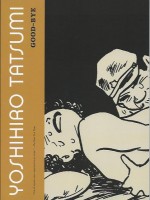
Good-Bye


By Yoshihiro Tatsumi, translated by Yuji Oniki (Drawn & Quarterly)
ISBN: 978-1-77046-078-2

Since the 1950s, compulsive storyteller and inventor of the mature and socially relevant Gekiga comics-form Yoshihiro Tatsumi worked at the fringes of the Japanese manga industry as it grew from a despised sub-art form to an unstoppable global colossus of the entertainment media.

Freelancing for whoever would take a chance on him, whilst producing bargain-basement Manga lending shop Kashihon (story-books purpose-made for comics lending libraries), and even self-publishing – as Dōjinshi or “Vanity projects” – his uniquely personal graphic explorations of the world as he saw it, Tatsumi slowly gained prominence amongst other artists and a small dedicated cognoscente.

Eventually his dedication to tales of deeply personal, agonisingly intimate and slyly accusatory cartoon reportage filtered into and became the mainstream and in recent years Tatsumi has received the accolades and acclaim he long deserved as, at last, society caught up with him…

After decades at the periphery of comics consciousness, Tatsumi was “discovered” by the West at the dawn of the new millennium (despite a bootlegged English-language edition in 1987 and occasional European reprints) and in 2005 Drawn & Quarterly began releasing collections of his vast output in hardback editions which re-presented a taste of material culled from specific years.

Now the fruits of that on-going annual project are at last available in deluxe monochrome softcover editions, their appeal greatly benefited by the fact that in 2009 Tatsumi’s monolithic cartoon autobiography A Drifting Life turned him into a domestic and world superstar, garnering a brace of Eisner Awards, Japan’s Osamu Tezuka Cultural Prize as well as the regards sur le monde Award at the Angoulême International Comics Festival.

Following an introduction from author, historian, translator and pundit Frederik L. Schodt, this third volume presents works from the period 1971-1972 when Tatsumi settled into an unqualified burst of inspired creativity and produced some of his most memorable pieces: dissections, queries and tributes to the Human Condition as experienced by the lowest of the low in a beaten but re-emergent nation-culture which was ferociously and ruthlessly re-inventing itself all around him

The panoply of disturbing, beguiling, sordid, intimate, heartbreaking, trenchantly wry and utterly uncompromising strips dealing with uncomfortable realities, inescapable situations, punishing alienations, excoriating self-loathing and the bleakest, emptiest corners and crannies of human experience begins in ‘Hell’ – a tale which recalls the bombing of Hiroshima and the headiest days of the passionately anti-H-Bomb movement in 1967. A former Japanese Army photographer recalls a shot he took in the aftermath: a silhouette burned into a wall of a loving son massaging his weary mother’s shoulders. In 1951 he had sold the photo to a news agency and the shot became a potent symbol of the “No More Hisoshimas” movement, rocketing the photographer to world-wide prominence.

Now in the shadow of a newly dedicated monument a stunning revelation threatens to undo all the good that photo has done…

At the end of his working life Saburo Hanayama was sidelined by all the younger workers: all except kind Ms. Okawa whose kindly solicitousness rekindled crude urgings in the former soldier and elderly executive. With his wife and daughter already planning how to spend his retirement pension, Saburo rebels and blows it all on wine, women and song, but even when he achieves the impossible hidden dream with the ineffable Ms. Okawa, he is plagued by impotence and guilt and is still ‘Just a Man’…

In ‘Sky Burial’ disaffected slacker Nogawa isn’t even shaken up when the mummified body of his neighbour is discovered, a victim of neglect, undiscovered for months until the smell became too overpowering.

After all, his life is a mess too and he keeps seeing vultures in the sky above the bustling streets… As his surviving neighbours all move out following the death, Nogawa stays, abandoning himself to the birds and vermin eager to colonise the vacant building…

When he retired, a nondescript businessman deeded all his possessions to his family and went to live in the woods, obsessed with a bizarre ‘Rash’ that afflicted his body. However, when a young girl attempts suicide he saves her and gains new interest in the world. How tragic that his notions and hers are so different…

Businessman Kazuya returns to the old neighbourhood and recalls a bizarre friendship with a ‘Woman in the Mirror’. Once he and Ikeuchi were great friends, but when he accidentally discovered his pal’s need to dress as a girl, a great fire changed both their lives forever…

When ‘Night Falls Again’ a desperately lonely man haunts the strip joints and bars of Osaka, despising himself, missing his rural home and bombarded by images of sex for sale. Driven to the edge he at long last buys a ticket…

Two bar girls clean up after the night’s toil, but Akemi is preoccupied. It’s time to visit her husband in prison, even if he is a changed, brutalised man and doesn’t believe she has kept herself for him all these years. When he threatens to become her pimp once released, she takes extreme action in ‘Life is so Sad’…

Tatsumi experimented with wash tones rather than the usual line, brush and mechanical tone screens for his tale of a foot fetishist driven to outlandish steps just so he could keep hearing heels go ‘Click Click Click’, and this compelling collection concludes with the eponymous minor masterpiece which was until recently the artist’s most (in)famous tale.

The semi-autobiographical ‘Good-Bye’ describes the declining relationship between prostitute Mariko or “Mary” – who courts social ignominy by going with the American GI Joe’s – and her dissolute father; once a proud soldier of Japan’s beaten army, reduced to cadging cash and favours from her.

Her dreams of escape to America are shattered one day and in her turmoil she pushes her father too far and he commits an act there’s no coming back from…

Tatsumi uses art as a symbolic weapon, using an instantly recognisable repertory company of characters pressed into service over and again as archetypes and human abstracts of certain unchanging societal aspects and responses. Moreover he has an astounding ability to present situations with no clean and clear-cut resolution: the tension and sublime efficacy revolves around carrying the reader to the moment of ultimate emotional crisis and leaving you suspended there…

Tatsumi, like Robert Crumb and Harvey Pekar, largely set his own agenda, producing work which first and foremost interested himself, toiling for decades in relative isolation producing compelling, explicit, groundbreaking stories which were the foundation of today’s “literary” or alternative field of graphic narrative: a form which whilst mostly sidelined and marginalised for most of their working lives has at last emerged as the most important and widely accepted avenue of the comics medium.

These are stories no true lover of comics can afford to miss and this series of collections is a must-have for every adult reader’s bookshelf.

Art and stories © 19771, 1972, 2012 Yoshihiro Tatsumi. Introduction © 2008, 2012 Frederik L. Schodt. This edition © 2012 Drawn & Quarterly. All rights reserved.