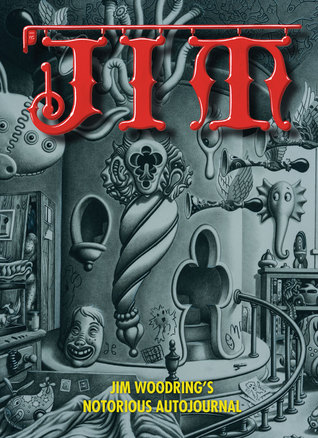
Jim – Jim Woodring’s Notorious Autojournal


By Jim Woodring (Fantagraphics Books)
ISBN: 978-1-60699-752-9 (HB)

There are a few uniquely gifted and driven comics creators who simply defy categorisation or even description. There’s a pantheon of artisans: Kirby, Ditko, Hergé, Eisner, Clowes, Meskin, Millionaire and a few others who bring something utterly personal and universally effective to their work just beyond the reviewer’s skills (mine certainly) to elucidate, encapsulate or convey. They are perfect in their own way and so emphatically wonderful that no collection of praise and analysis can do them justice.

You just have to read the stuff yourself.

Arguably at the top of that distinguished heap of graphic glitterati is Jim Woodring. It’s a position he has maintained for years and clearly appears capable of holding for generations to come.

Woodring’s work has always been challenging, funny, spiritual, grotesque, philosophical, heartbreaking, beautiful and extremely scary. Moreover, even after reading that sentence you will still be absolutely unprepared for what awaits the first time you encounter any of his books – and even more so if you’ve already seen everything he’s created.

Cartoonist, animator, fine artist, toy-maker and artistic Renaissance man, Woodring’s eccentric output has delighted far too small and select an audience since his first mini-comics forays in 1980.

The reader may have avidly adored his groundbreaking, oneirically autobiographical Fantagraphics magazine Jim (1986 and cherry-picked for this collection) or its notional spin-off series Frank (of which Weathercraft won The Stranger 2010 Genius Award for Literature whilst 2018’s Poochytown marked Woodring’s last Frank foray to date). Perhaps it was Tantalizing Stories, Seeing Things or more mainstream features like his Star Wars and Aliens tales for Dark Horse Comics that hit home but, always, there is never anything but surprise waiting when his next story appears…

An accomplished storytelling technician these days, Woodring grows rather than constructs solidly surreal, abstractly authentic, wildly rational, primal cartoon universes, wherein his meticulous, clean-lined, sturdily ethereal, mannered blend of woodblock prints, R. Crumb landscapes, expressionist Dreamscapes, religious art and monstrous phantasmagoria all live and play …and often eat each other.

His stories follow a logical, progressional narrative – often a surging, non-stop chase from one insane invention to the next – layered with multiple levels of meaning yet totally devoid of speech or words, boldly assuming the intense involvement of the reader will participate and complete the creative circuit.

Such was not always the case and this superbly sumptuous oversized (292 x 228mm) hardcover compilation (also available digitally) gathers earlier formative and breakthrough efforts in colour and monochrome: offering the very best of his strips, paintings, poems and stories from JIM and other (sadly unnamed) sources between 1980 and 1996.

This compulsive collection also includes a new 24-page strip starring the artist’s hulking, bewhiskered, aggressively paranoid, dream-plagued family man/cartoonist alter ego, cementing his reputation as a master of subconscious exploration, surreal self-expression and slyly ironic comedic excoriation – and it’s still almost impossible to describe.

You really, really, really have to dive in and discover for yourself…

Packed with hallucinatory spot-images and JIM cover illustrations, the furtive fruits of Woodring’s ever-present dream-recording “autojournal” are prefaced by a beguiling and informative ‘Author’s Note’ before the wonderment begins with ‘Jim #1 in its entirety’: the complete contents of his very first self-published fanzine from 1980.

A master of silent expressive cartooning, Woodring’s playfully inventively fascination with and love of words and tale-making shines through in such laboriously hand-lettered, illustrated epigrammatic vignettes as ‘Lozenge’ and ‘Jim Today’, as well as witty iconographic concoctions like ‘Tales of Bears’ and ‘Troutcapper Hats’ before the premier strip saga details a doomed fishing trip in ‘Seafood Platter from Hell’, and a moment of early silent psychedelia reveals how ‘Two Children Inadvertently Kill an Agent of the Devil Through an Excess of Youthful High Spirits’…

Another personal true story and painful brush with disability and imperfection is disclosed in ‘Invisible Hinge’ whilst ‘The Hour of the Kitten’ returns to distressed, disturbed prose before the first of many outrageous faux-ads offers indispensable conscience-pets ‘Niffers’, preceding another text-trek in ‘A Walk in the Foothills’.

Cats play a large part in these early strips and ‘Big Red’ is probably the cutest bloody-clawed, conscienceless killer you’ll ever meet whilst ‘Enough is Enough’ offers graphic pause before an ad for the home ‘Dreamcorder’ segues into a disturbing poster of rural excess in ‘A Lousy Show’.

‘Particular Mind’ provides a strip encapsulating relationships, hallucinations and life-drawing, after which the tempting services provided by ‘Jim’s Discipline Camp’ are counterbalanced by a paean to pharmacopoeia in ‘Good Medicine’.

More savage exploits of ‘Big Red’ lead to a commercial presentation in ‘This is the Meat (…That Changed Me, Dad!)’, whilst ‘Horse Sinister’ describes – in prose and pictures – another disturbing dream dilemma and ‘At the Old Estate’introduces a sophisticated loving couple whose wilderness paradise is forever altered by an unwelcome visitor’s incredible revelation. Thereafter, a worried young child describes how life changed after he found his parents’ ‘Dinosaur Cage’…

The truly eccentric tale of ‘Li’l Rat’ (from a 1965 story by John Dorman) is followed by a visual feast of images from ‘Jim Book of the Dead’ and a surreal flyer for ‘Rolling Cabine’, after which ‘What the Left Hand Did’ captures in strip form the horrors of mutilation and malformation. The macabre tone-painting ‘Almost Home’ then leads to an epic strip of father and son fun beginning with ‘Let’s Play!’…

Jim’s jaunt soon transports him to ‘Powerland’ where dad meets himself, whilst ‘Nidrian Gardner’ revisits a couple of suave swells whilst ‘Looty’ offers consumers a toy they just shouldn’t own…

‘The Hindu Marriage Game’ leads our unhappy bearded fool to a place where his lack of judgement can truly embarrass him, whilst ‘Quarry Story’ explores a debilitating recurring dream about the nature of artistic endeavour and ‘This House’explains how you can live life without ever going outside again – and how’s that for prophetic and timely?

The first inklings of the mature creator emerge in absurdist romp ‘The Birthday Party’ after which prose shaggy-dog story ‘The Reform of the Apple’ leads to a dark, distressing cartoon confrontation with doom on ‘The Stairs’, before largely monochrome meanderings give way to stunning full-colour surreal reveries in ‘Screechy Peachy’.

The radiant hues remain for galvanic image ‘Vher Umst Pknipfer?’ and pantomimic rollercoaster romp ‘Trosper’ after which bold black & white introspection resumes with a naked lady and a garrulous frog in ‘Dive Deep’.

A ghostly Hispanic condition of drunkenness haunts cruelly playful kids in ‘Pulque’ whilst little Max asks dad a leading question in ‘Echo’ and radio rebels Chip and Monk meet some girls and risk the wrath of civic authority with illegal broadcasting in ‘A Hometown Tale’, before an ideal wife has a bad-tempered off-day in ‘Obviously Not’.

As the years passed, many of Woodring’s later spiritual and graphic signature creatures slowly begun to appear in his strips. Old met new in ‘His Father Was a Great Machine’ wherein strident Jim has an encounter with a phantasmagorical thing, after which little Susan and a determined slug shaped up for an inevitable collision in the prose fable ‘When the Lobster Whistles on the Hill’.

Sheer whimsy informs ‘Cheap Work/Our Hero is a Bastard’ and the bizarre offerings of ‘Jimland Novelties’, whilst ‘The Smudge-Pot’ shows what all magazine letters pages should be like. ‘Pulque’ – in full colour strip mode – returns with a message for the dying before ‘Boyfriend of the Weather’ wraps up the surreal voyaging with a homey homily, and reproductions of Jim #1, volume 2 back cover and Jim #2, volume 2 cover bring this festival of freakish fun to the finale with style, aplomb and oodles of frosting…

Woodring’s work is not to everyone’s taste or sensibilities – otherwise why would I need to plug his work so earnestly – and, as ever, these astounding drawings have the perilous propensity of repeating like cucumber and making one jump long after the book has been put away, but the artist is an undisputed master of graphic narrative and an affirmed innovator always making new art to challenge us and himself.

He makes us love it and leaves us hungry for more, and these early offerings provide the perfect starter course for a full-bodied feast of fantasy…

Are you feeling peckish yet…?
© 2014 Jim Woodring. All rights reserved.

Wage Slaves


By Daria Bogdańska, translated by Aleksander Linskog (Centrala)
ISBN: 978-1-912278-06-0 (TPB)

It’s rare to see an international indie comic that combines personal revelation and intimate expression with hard-hitting reportage, so massive kudos to relative newcomer Daria BogdaÅ„ska who documented her eventful life thus far with uncompromising veracity while becoming a successful social activist battling corruption, authoritarian ennui and exploitation of immigrants in real life as well as this powerful and joyous paperback tome.

Having left her abusive home in Poland at 15, Daria travels across Europe, supporting herself with a succession of “under-the-table” and “off-the-books” jobs of varying legality and daily uncertainty, until she applies for and wins a place on a college course in Sweden.

After arriving in Malmö and hooking up with old friends, she finds accommodation of a tenuous nature, but, like so many others, has to work to pay for her studies. Being a temporary resident, she has no social security number and finds herself in the crushing trap of being unable to secure steady or even legal employment…

While constantly navigating the minefield of Sweden (Hell, any nation’s) Catch 22-based social security system, she finds casual work as a waitress and dogsbody for a chain of bars and curry houses run by an immigrant turned local bigwig…

As the year progresses, she notices things are pretty hinky even by the standards of the illicit economies she’s been exposed to in the past. At one point, the hard-working, occasionally partying student realises she’s supported herself for six years all over the world and never once had legitimate employment…

A little research reveals the nature and level of exploitation her non-white co-workers are enduring in pursuit of the Swedish equivalent of a Green Card, and something snaps. Daria decides something has to be done and boldly risks everything by joining a union…

Brutally frank, charmingly earnest and carrying a potent punch of virtue triumphant, Wage Slaves is a subtly engaging peek at the life too many youngsters have to endure, and one you should refresh your own comfortably numb social conscience with.
© Daria Bogdańska & Centrala. All rights reserved.

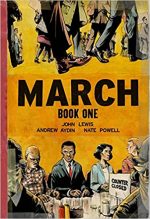
March Book One


By John Lewis, Andrew Aydin & Nate Powell (Top Shelf Productions)
ISBN: 978-1-60309-383-5 (HB) 978-1-60309-300-2 (PB)

It’s a lazy cop-out but honestly, some books just need to be read. March is one of them. It’s the story in his own words of legendary civil rights pioneer and properly-evolved human being John Lewis: the first of three describing his path from oppressed and sidelined southern child to non-violent activist to the halls of America’s Congress. Adapted by his assistant Andrew Aydin and multi award-winning cartoonist Nate Powell (Two Dead, Come Again, About Face, Any Empire, Swallow Me Whole, The Silence of Our Friends) it charts with astonishing intimacy and warmth a story of the good guys winning in the end…

The artist’s sensitive monochrome washes and tones painstakingly capture the dignity, determination, humour and pervasive quiet tension of the South during those fraught times and the growing groundswell of peaceful resistance that culminated in a very public confrontation on a bridge, a long walk to Washington and the start of a process still sadly underway every day…

It proudly celebrates everything the 45th PotUS seemed determined to roll back, and failed to accomplish, too so that’s a big Yar, Boo Sucks! to him too while we’re on the subject…

March Book One was first released in 2013 as a paperback, again as a lavish oversized (210 by 305mm) hardback three years later. It’s also available in digital formats: one of the most lauded and awarded biographies of recent times and immensely enjoyable and uplifting. You need to see it and the concluding volumes, too.
March Book One © 2013, 2016 John Lewis and Andrew Aydin. This edition © 2017 Fantagraphics Books. All rights reserved.
Martin Luther King and The Montgomery Story

By Alfred Hassler, Benton Resnik & Sy Barry (Fellowship of Reconciliation/Top Shelf Productions)
ISBN: N/A

When you actually read the book cited in the previous review, you’ll hopefully notice an inspirational comic book enjoyed by many at the time. A potted history and primer on non-violent resistance, Martin Luther King and The Montgomery Story was published in 1957 by the Fellowship of Reconciliation and widely disseminated and shared by Civil Rights organisations, churches, schools – and young John Lewis. When Top Shelf released The March they also revived this historical treasure, and it too can be yours.

All proceeds still go to fund the Fellowship’s ongoing work…

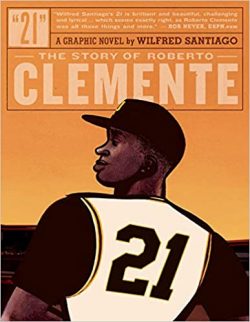
“21”: The Story of Roberto Clemente


By Wilfred Santiago (Fantagraphics Books)
ISBN: 978-1-56097-892-3 (HB) 978-1-60699-775-8 (PB)

I’m not a big fan of American Sports, favouring the ease and simplicity of our own gentle pastimes such as Rugby and, of course, the ultimate immersive experience that is Test Cricket, but I am a complete sucker for history – particularly graphic biographies. That’s especially true when they are as innovative and imaginative as this superbly passionate and evocative account of the life of a groundbreaking star, quietly philanthropic humanitarian and culture-changing champion of ethnic equality.

Roberto Clemente Walker was born in Puerto Rico on August 18th 1934, one of seven kids in a devoutly Catholic family. Baseball and, latterly, his wife Vera and three kids were his entire life. He played for a Puerto Rican team until the Brooklyn Dodgers head-hunted him.

At that time racial restrictions were dominant in the American game, so he actually only played against white people in the Canadian League for the Montreal Royals.

In 1954 Clemente finally got into the American game after signing with the Pittsburgh Pirates – a working relationship that lasted until his tragic death in a plane crash in December 1972.

During those tempestuous 18 years Clemente broke down many social barriers and became a sporting legend: the first Hispanic player to win a World Series as a starter, the first Latino to win the National League’s Most Valuable Player Award and winner of a dozen Gold Glove Awards. An all-round player, he scored 3000 hits and achieved many other notable career highlights.

He worked passionately for humanitarian causes in Latin America, believing every child should have free and open access to sports. He died delivering earthquake relief to Nicaragua after the devastating tremor of December 23rd 1972. His body was never recovered.

Clemente was posthumously elected to the Baseball Hall of Fame in 1973: the first Hispanic to receive the honour – and the only contemporary player ever to have the 5-year waiting period waived. He is a national icon in Puerto Rico and one of the leading figures in the movement to desegregate American sports.

Rather than a dry accounting of his life, author Wilfred Santiago’s tale skips forward and back, illustrated in a studied and fiercely expressionistic melange of styles which sketch in tone and mood, superbly synthesising the life of a true frontrunner and a very human hero.

With its message of success and glory in the face of poverty and discrimination “21” (available in hardback, softcover and digital formats) is potently reminiscent of James Sturm’s The Golem’s Mighty Swing, but its entrancing, vibrant visual style is uniquely flavoured with the heat of the tropics and the pride of the people Clemente loved.

Lusciously realised in sumptuous earth-tones and powerfully redolent of the spirit of Unjust Times A-Changin’, this is a fabulous book for every fan of the medium and not simply lads and sports-fans…
Art and text © 2011Wilfred Santiago. All rights reserved.

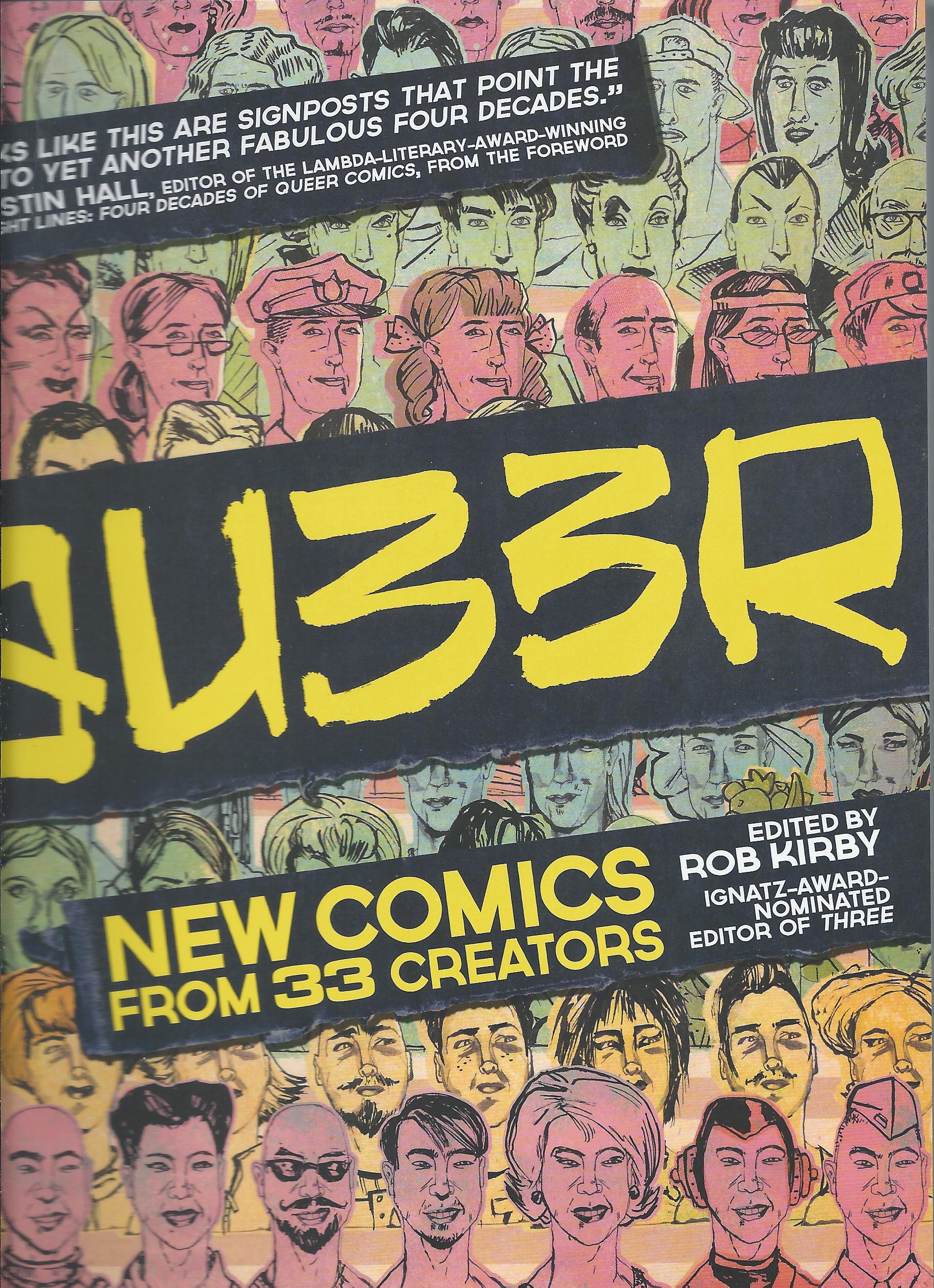
QU33R


By various; edited by Rob Kirby (Northwest Press)
ISBN: 978-1-93872-038-3 (HB) 978-1-93872-036-9 (TPB)

It’s long been an aphorism – if not cliché – that LGBTQ comics are the only place in the graphic narrative business to regularly portray real romance.

It’s still true: an artefact, I suppose, of a society which seems determined to demarcate and separate sex and love as two utterly different – and possibly even opposite – things. I’d like to think that here and now – in most places – we’ve outgrown the juvenile, judgemental, bad old days and can simply appreciate powerful, moving and funny comics about people of all sorts without any kind of preconception, but that battle’s still not completely won yet. Compendia such as this classic tome – available in hardback, paperback and digital editions – helped and continues to aid the fight…

In this superb anthology – with contributions from 33 Lesbian, Gay, Bisexual, Transgender and/or Queer (IE- questioning their sexual identity) craftspeople and creators – love stories are not all that’s on offer. The authors and artists cajoled and shepherded by Rob Kirby (Curbside Boys, The Books of Boy Trouble) have produced revelatory ponderings, satires, comics-reportage, pastiches, comedies, thrillers, horror stories and superhero adventures, as well as many superb pictorial narrative diaries and autobiographical pieces to complement the wild, heady romances inescapably on offer.

Oh, and (hold on while I switch to bold) there’s sex and swearing: rather a lot and sometimes a bit graphic, so if you’re liable to be upset by words and pictures of an adult nature (such as joyous, loving fornication between two people separated by age, wealth, social position and race who happily possess and constantly employ the same type of naughty bits on each other) then go away and read something else.

In fact, just go away.

It all begins with a Foreword by Justin Hall (No Straight Lines: Four Decades of Queer Comics, Glamazonia, True Travel Tales, Hard to Swallow) recapitulating just how far the industry and society have come since Mary Wing’s self-published Come Out Comix in 1973. That breakthrough opened doors for thousands of other non-hetero creators, and here editor Rob Kirby’s Introduction places this contemporary compendium of “Alt/Queer comics” in its contextual place leaving nothing for us to do except enjoy the ride…

It all begins with ‘Porno’ by Eric Orner, wherein the artist beguilingly relates key moments and situations from his past whilst ruminating upon his relationship with his dad, after which Annie Murphy’s ‘Mother’s Sisters’ offers similar family insights by searching through the pages of a faux-photo-album.

MariNaomi then beautifully explains how, if not why, ‘Three’s a Crowd’ for a date-shy lass, whilst Ed Luce’s dance hall days in a Death-Metal mosh pit are hilariously described in ‘Wuvable Oaf presents Kindness of Strangers’.

‘The Transformers – a True Story’ (by Dylan Edwards) is a moving, memorable account of growing up “different”; an oft-repeated experience recapitulated in Diane DiMassa’s girlish tale of young love ‘Born Qu33r’.

Always compelling and challenging, Justin Hall hits home hard here with ‘Seductive Summer’ and the doomed affair of two young men with very different causes for their feelings of attraction, isolation, alienation despair and doom. ‘Just Another Night in Carbon City’ (Jennifer Camper) then offers a grimly witty noir crime tale with not a Tough Guy in sight…

‘Sissy That Walk’ by Eric Kostiuk Williams incisively relates the fan reaction to RuPaul’s Drag Race show before a meaningful conversation occurs between two old friends in Kris Dresen’s ‘Chop Suey’ and Tyler Cohen presents us with one enigmatic possible tomorrow in ‘Flux’…

‘So Young, So Talented, So What?!’ is an engaging and often scary comic jam by Jennifer Camper & Michael Fahy, couched in the cautionary tale of a young artistic boy lost even before he reaches the Big City; followed by a triptych of Fahy’s narrative gallery images and strips entitled ‘Found’, ‘O’Hara Song’ and ‘Hazily Remembered Drag Queens’.

Edie Fake then plays coy and arch at the ‘Sex Club’, whilst José-Luis Olivares indulges in ‘Online Fantasy’ and Steve MacIsaac lets his mind wander back into thoughts of unpleasant school days in ‘Vacant Lots’, before wishful thinking and wistful hope poignantly meet in ‘For Fletch and Ruski, Spooner, and Calico’ by Rick Worley.

‘Life’s but a Walking Shadow’ (Christine Smith) silently scours the college scene with a couple of kids who haven’t found their way yet whilst ‘Political Will’ by Carlo Quispe reveals the inescapable highs and lows of the party scene

Do you remember Private Manning? The young soldier was an intelligence analyst in Iraq in 2009, releasing thousands of classified documents to the horrified world. The records were leaked via a hacker named Lamo and the then-transgender Bradley was communicating via electronic media. Here Andy Hartzell imaginatively and mesmerising illustrates those game-changing chat logs in ‘Manning/Lamo Project’ to create possibly the most engrossing piece in this wonderful book.

‘Toot Toot Heyyyyyyy Beep Beep’ by Carrie McNinch describes a first emotional connection and the fall of Skylab before Rob Kirby recounts his own dating dilemma in ‘Music for No Boyfriends’ and local London lad Sina Sparrow proves there’s no such thing as carefree love in ‘If You Want Me to I Will Be The One Who Is Always Good’…

Superheroes and wry humour inform Ivan Velez, Jr.’s ‘Oso Oro – the night I got my hero card…’ with the protagonist falling foul of the masked community’s precarious pecking order after which ‘Coming Out With the Bunksteads’ (by Arch-Bishop of Gay Comics Howard Cruse) hilariously turns venerable family strip Blondie on its head with a little coming-out confession, whilst author and “Officially Out” professional wrestler Terrance Griep relates ‘The Second Most Asked Question’ about his grappling career, with Rob Kirby supplying the excruciating visual details…

A different type of “tension and differences in the band” are disclosed in Craig Bostick’s ‘Guitar Bass Drums’before‘Burger Meister: a Story of Love and Loss’ by Amanda Verwey focuses on a tragic miscommunication and Comedy of desperate-dating Errors, before Nichole J. Georges describes just another date in the whimsically wonderful ‘Grief’.

David Kelly helpfully shares a few very sensible ‘Tips to a Teen-Age Me’ whilst Marian Runk offers some captivating memories and suggestions of her own in ‘This Winter, I Practiced Being Alone’…

‘Miss Sasha Velour’ (by Sasha Steinberg) then shows you don’t need to be armed to be Fabulous, and Jon Macy graphically examines his relationship with his heroes in a powerfully self-searching untitled graphic musing on Oscar Wilde, Frankenstein’s Monster, Djuna Barnes, Raymond Chandler and Charles Mingus before ‘Confession’ (L. Nichols) rounds off the comics cavalcade with a light-hearted affirmation about finding yourself…

Situated between pin-up Drag in 1969 (Sasha Steinberg), and untitled pieces from MariNaomi and L. Nichols – plus one last strip starring ‘School Girls’ by Camper – About the Creators then briefs you on the talented story-makers and where else to find their work whilst a copious Special Thanks section gratefully name-checks the contributors and the investors on KickStarter who paid to make the project happen, ending this glorious rainbow-hued book of bright ideas and colourful yarns on an exceedingly positive and life-affirming note.

QU33R remains a superb example of comics celebrating determination and difference: sensitive, evocative, romantic and humorously engaging “people stories” which any open-minded fan can’t help but adore. There’s not much fighting but plenty of punch, and in an ideal world this book would be readily available in every school and library for any confused kid in need of inspiration, comfort, understanding, encouragement and hope.
QU33R, the collection is © 2014 Rob Kirby. The individual art and writing contributions are © 2014 the original artists and writers. All rights reserved.

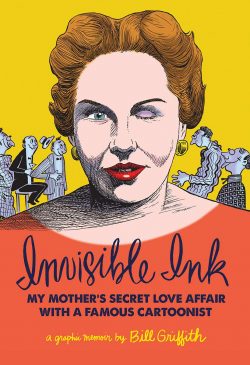
Invisible ink: My Mother’s Secret Love Affair with a Famous Cartoonist


By Bill Griffith (Fantagraphics Books)
ISBN: 978-1-60699-895-3 (HB)

Starting life as an underground feature in 1971, Bill Griffith’s absurdist commentary on American society Zippy the Pinhead has grown into such a prodigious and pervasive counter-culture landmark that it’s almost a bastion of the civilisation it constantly scrutinises and ridicules.

What I never suspected before and – according to the revelations stunningly catalogued and depicted in this powerful and absorbing Graphic Memoir, nor did he – was the subtle influence the gods of cartooning had been constantly exerting upon his family’s lives for generations…

As much a detective yarn and fond memorial to simpler (but just as complex) times as a straight biography, Invisible Ink: My Mother’s Secret Love Affair with a Famous Cartoonist reveals how the cartoonist and social commentator (already long-schooled in the proud achievements of artistic ancestor and photographic pioneer William Henry Jackson) uncovered further pictorial predecessors and briefly became an impassioned genealogist and investigator after an elderly uncle decided it was time to pass on a boxful of dusty family memorabilia.

An uneventful yet evocative journey from Connecticut to North Carolina – miles slowly passing as the traveller is immersed in internet research – starts memories flowing and when Uncle Alan hands over a historical treasure trove the naturally contemplative cartoonist’s childhood memories are triggered and his instincts for a good story are piqued…

Griffith’s thoughts continually return to his own childhood in Levittown when he and his passionate, beautiful, aspiring-author mother regularly posed for neighbour and legendary pulp illustrator Ed Emshwiller‘s many magazine covers. By the time the voyager stops discussing the past, Bill is powerfully aware of just how real and earthy and fallibly human his relatives were. As yet, however, the discourse still offers no insight into why his own cold, abusive father turned out the way he did…

Meticulous Alan is a mine of useful minutiae with his catalogue of familial foibles and passed-down stories, but even he is un aware of Barbara Griffith (nee Jackson)’s greatest indiscretion: a 15-year, full-on, tempestuous love affair with cartoonist, cartooning-teacher, publisher, comicbook pioneer, crime-writer and indefatigably restless entrepreneur Lawrence Lariar: an innocuously smooth operator who, although moderately successful for his entire life, was, in many ways, the Forgotten Man of Comics.

With the flow of information now going both ways, Bill shares the day in 1972 when word came of his dad’s imminent death and of how, in a moment of overwhelmed, grieving guilt  – and with the family all gathered at the hospital – his mother-the-widow of mere minutes confessed that she had been wife in all but name to another man since 1957…

As Bill further re-examines his own memories, cross-referencing with pictures, diaries and his mother’s epic unpublished novel which clearly and cleanly transfers her complicated life into the refuge of putative fiction, a series of pictures begins to form…

Startlingly frank, scrupulously detailed, diligently analytical and brilliantly reconstructed using a variety of styles, this is a fact-filled, graphic tour de force elevating the players to the rank of archetypes whilst still leaving them authentic, living creatures we are convinced we know.

Superbly applying the techniques of fiction to the discipline of documentary, Invisible Ink (available in hardback and digital editions) is a wonderful exemplar of real-world comics and one no serious reader can afford to miss.
© 2015 Bill Griffith. All rights reserved.

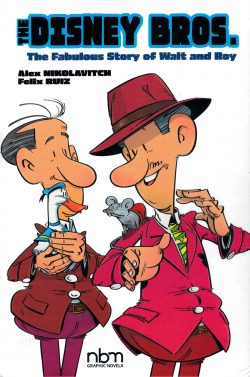
The Disney Bros – The Fabulous Story of Walt and Roy


By Alex Nikolavitch & Felix Ruiz, translated by Montana Kane (NBM)
ISBN: 978-1-68112-266-3(HB) eISBN: 978-1-68112-267-0

Win’s Christmas Gift Recommendation: Because it’s not Christmas without magic castles in the air… 9/10

When it comes to biography, Walt Disney is a true “Marmite” figure, with writers and historians pretty evenly divided between effusive hagiography and excoriating exposés.

As fully discussed in author Alex Nikolavitch’s Introduction, the genius who nurtured and nourished the childhood dreams of generations across the globe is an immensely polarising figure: a sensitive creator and twice-burned artisan who grew increasing and equally obsessed with micromanaging all around him and spreading heartfelt joy.

What this superb graphic summation of the fantasy overlord’s complex and contradictory life adds is the necessary balance quietly provided throughout and beyond Walt‘s life by his nigh-invisible brother Roy…

Alex Nikolavitch is a French author, screenwriter, essayist and educator, who writes comics and has a steady sideline translating English-language books like V for Vendetta, Tank Girl and Spawn to supplement his own series such as Burton and Les Canaux du Mitan. His collaborator here is mercurial Spanish artist and colourist Felix Ruiz (Savage Wolverine, Agents of Atlas: Marvel Boy, The Uranian, Halo) who reverts to a charmingly compelling and effective École de Marcinelle bigfoot style to trace the career of America’s greatest dream factory…

In episodic bursts of vivid scenes preceded by a potted history of animation, the story opens with ‘Of a Mouse and Men’as cartoon pioneers Walt Disney and Ub Iwerks – reeling from having their creation Oswald the Lucky Rabbit taken from them by unscrupulous money men – bounce back with a new character… a mouse.

More crucially, Walt asks his brother Roy to join the team. He is an accountant, with his feet planted firmly on the ground and his hands on the financial tiller.

…And then “Talkies” revolutionise the film industry and Walt has another good idea just as the Great Depression looms…

Second Chapter ‘Childhood Dreams’ covers the turbulent period after Snow White was released, as Roy secures global distribution in some very unwholesome places, balanced with the brothers’ fruitless attempts to rationalise their new lifestyles to their pious, old-fashioned doctrinaire parents. This leads to revelatory flashbacks of the boys growing up in rural religious Missouri and Walt’s transformative first encounter with Movies…

The war years and infamous union-busting strike of Disney’s animation studio is covered in ‘Turbulence’, as well as the post war years of expansion, as the arch creator increasingly seeks to control every aspect of his ever-expanding kingdom.

Walt’s anti-communist mania blatantly manifests in ‘Builder of Empires’, as the company moves into television and theme parks and the aging autocrats faces his own mortality…

Skilfully negotiating the complex web of beguiling creativity that always warred with a ruthless struggle for autonomy, political control and money, The Disney Bros – The Fabulous Story of Walt and Roy is a superbly delivered balancing act between reportage and drama. Evoking amazement, glee, sympathy and moral outrage in turn, the tale – delivered in jolly, velvetxglove-over-lead-lined-blackjack cartoon manner – is available in substantial hardback and various digital formats and is supplemented with an historical critique by author Jarett Kobek in ‘Afterword: How to Build a Media Empire’ plus suggested Further Reading.

This is a splendid work no fan of comics or film history should miss.
© 2019 Blue Lotus Prod. © 2020 NBM for the English translation.

The Disney Bros – The Fabulous Story of Walt and Roy is scheduled for release on November 26th 2020 and is available for pre-order in both print and digital editions.

Most NBM books are also available in digital formats. For more information and other great reads see, http://www.nbmpub.com/

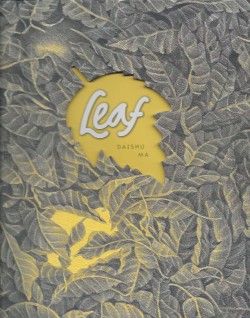
Leaf


By Daishu Ma (Fantagraphics Books)
ISBN: 978-1-60699-853-3 (HB)

Win’s Christmas Gift Recommendation: Perfectly Confirming Life and Liberty 9/10

Sequential Art – or “comics” as I stubbornly prefer to think of it – is generally typified as a marriage of text with a series of illustrations designed to tell a story and impart a mood, but it’s always been a nebulously open-ended venture with little time for hard and fast rules and happy to avoid definition.

For instance if a story has an overabundance of words in too few pictures, the result is little more than illustrated prose, but if you go the other way and minimise, or even completely exclude words, what you have is the absolute zenith in comics communication. And more often than not, it’s the best writers who use the least verbiage, whether they illustrate the story or not…

Daishu Ma is a Chinese cartoonist, artist and designer working in Barcelona. This, her first graphic novel Leaf, rapidly joined a rarefied band of international illustrative icons (Jim Woodring, Jason and our own Raymond Briggs being regularly amongst the most prominent) who frequently eschew and transcend the printed word and strictures of graphic narrative, allowing methodically crafted imagery to establish scenes, define characters, create nuance and carry a tale.

…Or rather here, a politically-edged, industrially-condemning eco-parable, since her sublime, meticulous and astonishingly beguiling pencil-tone art – enhanced by smartly applied splashes of mood-enhancing pastel colour – exposes a blandly bleak industrial environment on the brink of eradicating the last vestiges of the natural world…

This is a story you must experience for yourself so let’s content ourselves with the basic facts: when a young man on an excursion finds a fallen leaf which pulses with an uncanny, comforting radiance he covertly takes it back to the ever-sprawling city.

His teeming conurbation, bustling office of employment and even extremely basic, always empty apartment are all drab and dolorous despite the plentiful supply of monopolistic artificial lights and he realises that what he’s found is something special, even inspirational.

Increasingly obsessed, he roams the bustling city, seeking someone who can explain what he hides in his home. The revelatory journey takes him to unsuspected, people-packed enclaves of joy, wonder and despondency and into many folks’ lost memories of better times, when he encounters a young woman who has dedicated her life to understanding the rapidly vanishing flora of the world and a strangely timid old man who seems to know all the secrets of light-making…

And once the finder obsessively follows a convoluted trail to a hidden truth, how can he not risk everything in a bold act to change his overcrowded, oppressive, unhappy world?

Entrancing, subtle and seductive in a purely primal manner, Leaf offers a vision of hope for all lovers of beautiful simplicity and natural wonder.
© 2015 Daishu Ma. All rights reserved.

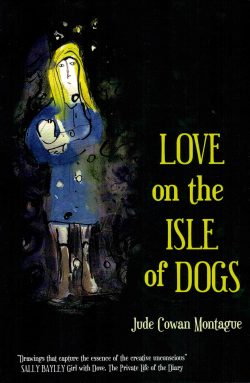
Love on the Isle of Dogs


By Jude Cowan Montague, (Friends of Alice Publishing)
ISBN: 978-1-9160306-7-1 (PB)

Terror comes in many forms but I imagine there’s nothing to beat the moment your best beloved turns into a monster. Tragically, that doesn’t happen all at once…

Jude Cowan Montague (Caretaker of Animals around the World, The Originals, The Wires, The Leidenfrost Effect, Young Hitch in Forbidden Flames: Young Alfred Hitchcock in the Sidney Street Siege [The Adventures of Young Alfred Hitchcock]) has lived a full life so far, and it isn’t anywhere near over yet.

Born in Manchester, the artist, writer, composer, film historian, poet and broadcaster now abides in London where this intriguing and frequently heart-rending personal memoir takes place, way back in the heady cauldron of Docklands in the 1990s.

Trust me, I was a newlywed then and there myself and it was not a good time to be starting a new life. At least me and mine got out relatively unscathed…

This is a is a beautiful, powerful and personal account of a time of tragedy kindly shared, so I’m curtailing my usual verbosity regarding plot and events, and concentrating on technical stuff to entice you to get your own copy. An internationally exhibited gallery artist and acclaimed writer of prose and poesy, the auteur here approaches the same vent in two ways, firstly as highly immediate, evocative, primitivist freeform strips and images in black, white and grey ‘Pictures’ and latterly reworked – like someone trying to make senses of events – in ‘Words’.

Way back then, an introspective creative type working in a Newham arts centre restarted a relationship with the perfect guy. A charmer, brilliant and the owner of a house he had built with his own hands on the legendary but counter-charismatic Isle of Dogs.

For a while it was all “living the dream”, until the accident and progressive brain injury. Then, oh so slowly, he grew into someone else: a guy who was sometimes still a great dad and provider of surprise pet dogs, but at others a terrified, angry, paranoid figure of fear who couldn’t recognise or remember his nearest and dearest.

And, unlike made up stories, love and devotion don’t always save the day…

Earnest and candid, Love on the Isle of Dogs is a full-on confrontation with the everyday dramas and joys that turn dazzling bright young things into your mum and dad. It’s as simple and shocking as that…
© 2020 Jude Cowan Montague 2020. All rights reserved.

Mongrel


By Sayra Begum (Knockabout)
ISBN: 978-0-86166-269-2 (PB)

Comics offer an immediate and potent method of communication that is both universally accessible and subtly intimate. You want countless characters and exotic locales? Just draw them. Need to navigate the most torturous tracks of the psyche and expose the most taciturn soul? Just fill captions and balloons with the words and tone that cut to the heart of the matter…

Somebody who got that from get-go was Sayra Begum, who first presented her life story in pictorial form in 2017. Happily, she shared it with the perceptive folks at Knockabout Comics who recognised a great work when they saw it…

In her own incisive words and deft pencil work, Begum – identifying here as “Shuna” – shares what growing up meant for the child of a strict, devout and loving Bangladeshi Muslim mum only living in England until the family has enough money to retire to a mansion in her beloved homeland. It’s not an easy existence since her dad is a white man (a convert to Islam) who still remembers the freedoms of his old life. Moreover, the community treats them with polite disregard…

As seen in ‘Meet the Mongrel’, ‘Memories of Waterland’, and ‘The Forgotten Self’, Shuna and her siblings are pulled in many directions growing up. She wants to be an artist, but her Amma is more concerned that she be ‘A Good Muslim’, believing that ‘Life is a Test’ and her old ways such as ‘An Arranged Marriage’ are the only proper life to live…

For her parents England ends at the front door and the household is pure Bangla within the walls. The lure of the outer world has already proved too much for one brother as seen in ‘My Poor Family’, ‘Suffocated’ and ‘The Disownment’ and soon Shuna too is living a secret life with an English lover mother could never approve of…

Contrasts with her perfect cousin in Bangladesh constantly wrack her conscience but Shuna has long capitulated to the wiles of Shaitan in her head. Life has a trick of upsetting all plans and exposing secrets and ‘Our Parallel Family’, ‘The Meeting’, ‘Judgement Day’ and ‘The Mongrel Children’ reveal how even the harshest opinions can shift leading to a truly romantic happy ending in ‘Goodbye Anger’ and the ruminatory ‘Epilogue’…

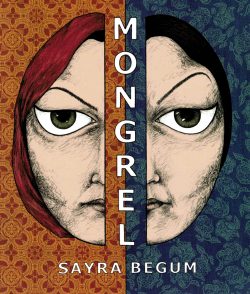
Begum weds brisk, informative line drawing with traditional patterns of Islamic art and the excesses of surrealism to weave a compelling and visually enticing tale of real people coping with ancient intolerances and rapidly evolving family stresses in a fluid, multicultural society. It’s all the more affecting to realise she’s bravely sharing the minutiae and intimacies of her own life to highlight a situation as old as humanity itself.

A magical story and a stunning debut, Mongrel is book you must read and share.
Mongrel © by 2020 Sayra Begum All rights reserved.