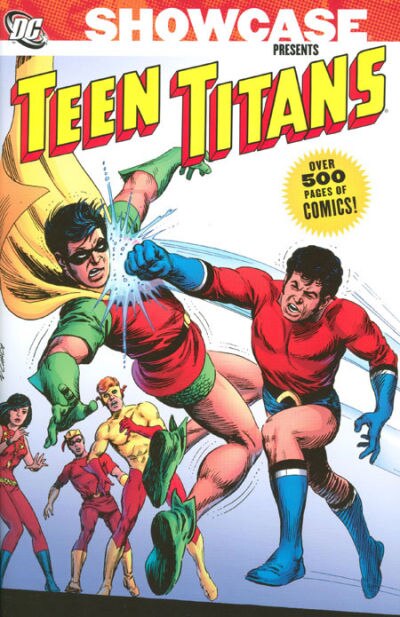
Showcase Presents Teen Titans volume 2


By Mike Friedrich, Bob Haney, Neal Adams, Marv Wolfman, Robert Kanigher, Steve Skeates, Gil Kane, Wally Wood, Nick Cardy, Sal Amendola, George Tuska, Carmine Infantino, Dick Dillin, Joe Giella, Jim Aparo & various (DC Comics)
ISBN: 978-1-84576-677-1 (TPB)

Hey, Super Kids! Happy 60th Anniversary!

It’s perhaps hard to grasp these days that once kid heroes were a rarity and at the beginning of the Silver Age, often considered a liability. Now the massive Teen Titans brand – with numerous comic book iterations, assorted TV shows, movies and even an award-winning early reading version (Aw, Yeaah! Tiny Titans!) their continuance as assured as anything in our biz. Nevertheless, during the tumultuous 1960s the series – never a top seller – courted controversy and actual teenage readers by confronting controversial issues head on.

I must have been just lucky, because these stories of lost youth searching for great truths and meaning were released just as I turned Teen. They resonated especially because they were talking directly to me. It didn’t hurt that they were brilliantly written, fantastically illustrated and staggeringly fresh and contemporary. I’m delighted to declare that age hasn’t diminished their quality or impact either, merely cemented their worth and importance.

The concept of underage hero-teams was not a new one when the Batman TV show fuelled DC’s move to entrust big heroes’ assorted sidekicks with their own regular comic as a hip and groovy ensemble as dedicated to helping kids as they were to stamping out insidious evil.

The biggest difference between wartime groups like The Young Allies, Boy Commandos or Newsboy Legion and such 1950s holdovers as The Little Wise Guys or Boys Ranch and the DC’s new team was quite simply the burgeoning phenomena of “The Teenager” as a discrete social and commercial power bloc. These were kids who could be allowed to do things themselves (within reason) without constant adult aid or supervision. As early as spring 1964, Brave and the Bold #54 had tested the waters in a gripping tale by Bob Haney & Bruno Premiani in which Kid Flash, Aqualad and Robin foiled a modern-day Pied Piper.

What had been a straight team-up was formalised a year later when the heroes reunited and included Wonder Girl in a proper super-group with a team-name: Teen Titans. With the stories in this second merely monochrome print-only relic of a collected volume of those early exploits the series had hit a creative peak, with spectacular, groundbreaking artwork and fresh, different stories that increasingly showed youngsters had opinions and attitudes of their own – and often that they could be at odds with those of their mystery-men mentors…

Spanning cover-dated January 1969 to December 1971 and collecting Teen Titans #19-36, and team-up appearances from Brave and the Bold #83 & 94 and World’s Finest Comics #205, these tales cover the most significant period of social and political unrest in American history and do it from the perspective of the underdogs, the seekers, the rebels…

The wonderment begins with a beautifully realised comedy-thriller as boy bowman Speedy enlists. ‘Teen Titans: Stepping Stones for a Giant Killer!’ (#19, January/February 1969), by Mike Friedrich, Gil Kane & Wally Wood, pitted the team against youthful evil mastermind Punch who planned to kill the Justice League of America and thought a trial run against the junior division a smart idea…

Brave and the Bold # 83 (April/May 1969) took a radical turn as the Titans (sans Aqualad, who was dropped from the squad to appear in Aquaman and because there just ain’t that much sub-sea skulduggery) tried to save Bruce Wayne’s latest foster-son from his own inner demons in a tense thriller about trust and betrayal in the Haney & Neal Adams epic ‘Punish Not my Evil Son!’. TT #20 took a long running plot-thread about extra-dimensional invaders and gave it a counterculture twist in ‘Titans Fit the Battle of Jericho’, a rollicking romp written by Neal Adams, pencilled by him & Sal Amendola and inked by brush-maestro Nick Cardy – one of the all-out prettiest illustration jobs of that decade.

Exemplars of the era/symbolic super-teens Hawk and Dove join proceedings for #21’s ‘Citadel of Fear’ (Adams & Cardy): chasing smugglers, finding aliens and ramping up the surly teen rebellion quotient whilst moving the invaders story-arc towards its stunning conclusion. ‘Halfway to Holocaust’ is only half of #22, the abduction of Kid Flash & Robin leading to a cross-planar climax as Wonder Girl, Speedy and a radical new ally quash the invasion threat forever, but still leaving enough room for a long overdue makeover in ‘The Origin of Wonder Girl’ by Marv Wolfman, Kane & Cardy. For years the series – and DC editors in general – had fudged the fact the younger Amazon Princess was not actually human, a sidekick, or even a person, but rather an incarnation of Wonder Woman as a child. As continuity backwriting strengthened its stranglehold on the industry, it was finally felt that the team’s distaff member needed a fuller background of her own.

This moving tale revealed she was in fact a human foundling rescued by Princess Diana and raised on Paradise Island where super-science gave her all the powers of a true Amazon. They even found her a name – Donna Troy – and an apartment, complete with hot roommate. All Donna had to do was sew herself a glitzy new figure-hugging costume…

Now thoroughly grounded, the team jetted south in #23’s fast-paced yarn ‘The Rock ‘n’ Roll Rogue’ (by Haney, Kane & Cardy), trying to rescue musical rebel Sammy Soul from his grasping family and – by extension – his lost dad from Amazonian headhunters. ‘Skis of Death!’ (#24, November/December) by the same creative crew has the quartet holidaying in the mountains and uncovering a scam to defraud Native Americans of their lands. It was a terrific old-style tale, but with the next issue the most radical change in DC’s cautious publishing history made Teen Titans a comic which had thrown out the rulebook…

For a series which spoke so directly to young people, it’s remarkable to think that ‘The Titans Kill a Saint?’ and its radical departure from traditional superhero stories was crafted by Bob Kanigher & Nick Cardy – two of the most senior creators in the business. The emotion-charged thriller set the scene for a different type of human-scaled adventures that were truly gripping and bravely innovative. For the relatively short time the experiment continued, readers had no idea what might happen next…

While on a night out in their civilian identities, Robin, Kid Flash, Speedy, Wonder Girl, Hawk and Dove meet telepathic go-go dancer Lilith who warns them of impending trouble. Cassandra-like, they ignore her warnings and a direct result a globally revered Nobel Laureate is gunned down. Coming so soon after the deaths of John F. and Robert Kennedy, Dr. Martin Luther King Jr. and Malcolm X, this was stunning stuff and in traumatised response all but Robin abandon their costumed personas and – with the help of mysterious millionaire philanthropist and mentor Mr. Jupiter – dedicate their unique abilities to exploring humanity’s flaws and graces: seeking fundamentally human ways to atone and make a difference in the world…

With Lilith beside them, they undertake different sorts of missions, beginning with ‘A Penny For a Black Star’ in which they attempt to live in a poverty-wracked inner city ghetto, where they find Mal Duncan, a street kid who becomes the first African-American in space…although it’s a one-way trip.

TT #27 reintroduced eerie elements of fantasy as ‘Nightmare in Space’ (Kanigher, George Tuska, Carmine Infantino & Cardy) sees the Titans en route to the Moon to rescue Mal, before encountering something far beyond the ken of mortal imagining. Meanwhile on Earth, Donna’s roommate Sharon stumbles upon an alien incursion. ‘Blindspot’ by Steve Skeates & Cardy was tangentially linked to another innovative saga then playing out in Aquaman’s comic book. You’ll need to see Aquaman: The Search For Mera and Aquaman: Deadly Waters for that extended delight. Both were edited by fresh-faced Dick Giordano, who was at this time responsible for the majority of innovative new material coming out of DC, even whilst proving himself one of the best inkers in the field.

Suffice to say that the Sea King’s foe Ocean Master had allied himself with aliens and Sharon became involved just as Aqualad returned looking for help. Unable to understand the Titan’s reluctance to get involved, Garth tries to go it alone but hits a snag only the original team can fix, which they do in Skeates & Cardy’s concluding chapter ‘Captives!’ However, once the alien threat is thwarted our heroes once more lay down their powers and costumes, but they have much to ponder after seeing what benefits their unique gifts can bring…

Teen Titans #30 featured three short tales, written by Skeates. Illustrated by Cardy, ‘Greed… Kills!’ is a cunning mystery exploring street and white-collar crime, whereas ‘Whirlwind’ is a Kid Flash prose novelette with art by Amendola before ‘Some Call it Noise’ (Infantino & Cardy) delivers an Aqualad solo tale in which his girlfriend Tula – AKA Aquagirl – takes a near-fatal wrong turn at a surface world rock concert.

Student politics took centre-stage in #31’s lead feature ‘To Order is to Destroy’ (Skeates, Tuska & Cardy) as the young heroes investigate a totally trouble-free campus where unhappy or difficult scholars are given a small brain operation to help them “concentrate”, whilst Hawk & Dove solo strip ‘From One to Twenty’ pits quarrelsome Don and Hank Hall against a band of murderous counterfeiters in a deft crime-caper from Skeates, Tuska & Cardy.

The creators then open up the fantasy element again with a time-travelling, parallel universe epic beginning in #32 with ‘A Mystical Realm, A World Gone Mad’ as Mal and Kid Flash accidentally change the past, turning Earth into a magical mad-scape. However, undoing their error results in a Neanderthal teenager being trapped in our time, presenting the group with their greatest challenge: educating a savage primitive and making him into a civilised modern man. Illustrated by Tuska & Cardy, ‘Less Than Human’ signalled the return of Bob Haney as main writer and triggered a gradual return of powers and costumes as the author picked up the pace of Jupiter’s grand experiment, restating it in terms that looked less harshly on comics’ bread & butter fights ‘n’ tights scenarios.

Brave and the Bold #94 (February-March 1971, by Haney & Cardy) offered potent counter-culture thrills as the team infiltrate an inner city commune to negate a nuclear bomb-plot in ‘Rebels in the Streets’, before the exigencies of publishing moved the series into the world of the supernatural as costumed heroes temporarily faded away in favour of tales of mystery and imagination. Haney, Tuska & Cardy’s ‘The Demon of Dog Island’ sees the team – including Robin who had quietly rejoined during the civilisation of cave-boy Gnarrk – desperately battling to prevent Wonder Girl’s possession by a gypsy ghost.

Skeates, Dick Dillin & Joe Giella crated ‘The Computer That Captured a Town’ in World’s Finest Comics #205 (September 1971), slyly examining racism and sexism as Superman finds the Titans trapped in a small town that had mysteriously re-adopted the values of the 1890s – a lot like middle America today but with culprits a lot easier to punch in the face…

Teen Titans #35 reiterated supernatural themes as the team travels to Verona in ‘Intruders of the Forbidden Crypt’ (Haney, Tuska & Cardy) wherein Lilith and the son of Mr. Jupiter’s business rival are drawn into a mesmerising web of tragedy: compelled to relive the doomed love of Romeo and Juliet despite all the rationalisations of modern science and the best efforts of the young heroes…

By the same creators, ‘A Titan is Born’ is a rite of passage for Mal as the everyman “token black guy” faces and defeats the murderous Gargoyle alone and unaided, before the reincarnation tragedy concludes with fate foiled in ‘The Tomb Be their Destiny’: the cover feature of #36. Filling out that issue and this book are two brief vignettes: Aqualad 3-page teaser ‘The Girl of the Shadows’ by Skeates & Jim Aparo and Haney & Cardy’s beguiling opening episode in the origin of Lilith ‘The Teen-Ager From Nowhere’. This showed a 10-year-old orphan’s first prescient exploit and the distrust it engendered, promising much more to come: a perfect place to end this second monochrome masterpiece of graphic literature.

Although perhaps dated in delivery now, these tales were a liberating experience for kids when first released. They truly betokened new empathy with independent youth and tried to address problems that were more relevant to and generated by that specific audience. That they are so captivating in execution is a wonderful bonus. This is absolute escapism and absolutely delightful and demand a fresh edition as soon as possible.
© 1969, 1970, 1971, 1972, 2007 DC Comics. All Rights Reserved.

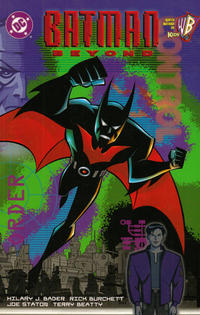
Batman Beyond!


By Hilary J. Bader, Rich Burchett, Joe Staton, Terry Beatty & various (DC comics)
ISBN: 978-1-56389-604-0 (TPB)

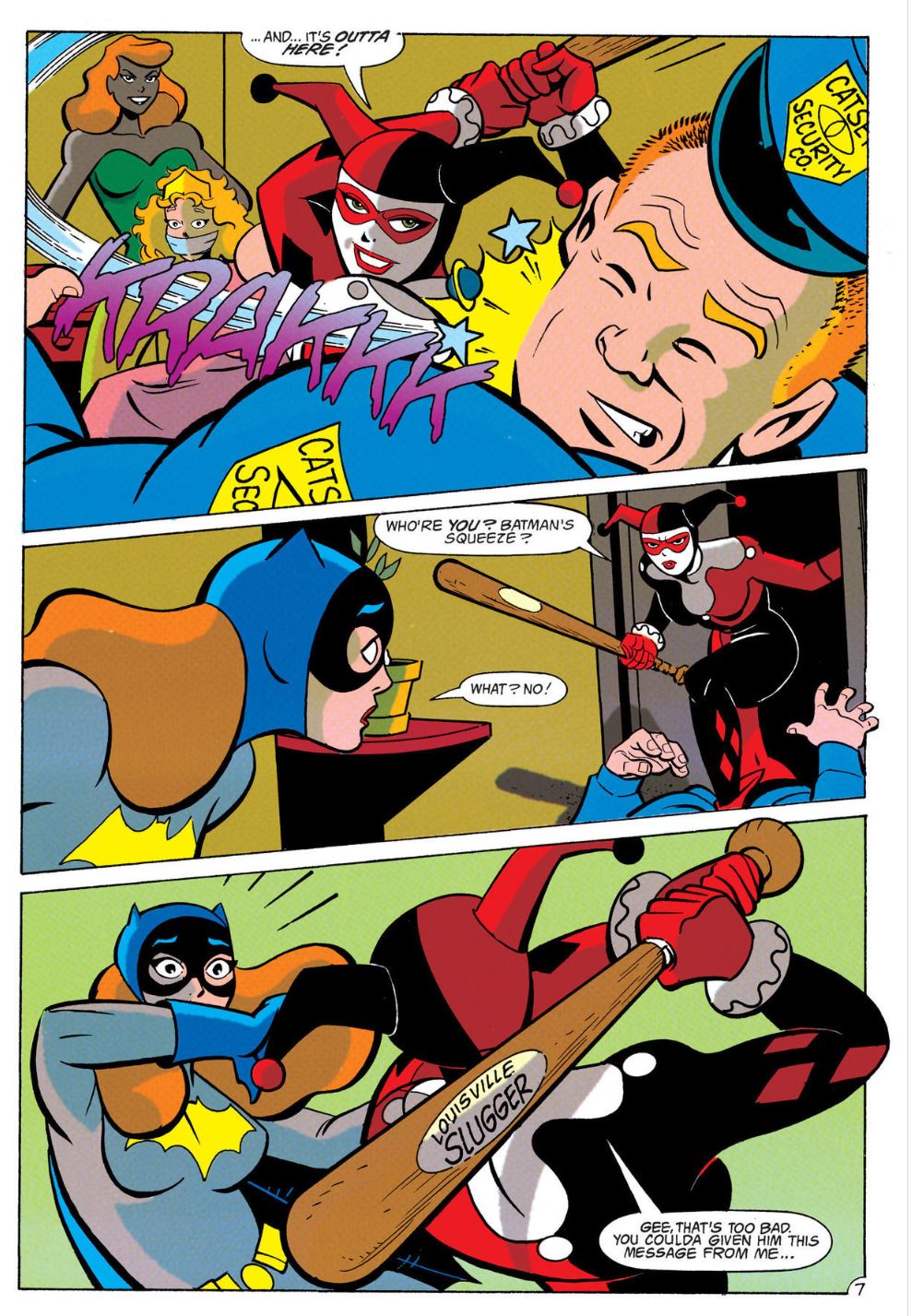
The Batman Animated TV series masterminded by Eric Radomski, Bruce Timm, Paul Dini and others in the 1990s revolutionised The Dark Knight and led – with a tie-in monthly printed series – to some of the absolute best comic book tales in his 85-year publishing history. With the hero’s small screen credentials firmly re-established, follow-up series began (and are still coming), eventually feeding back into the overarching multiversal DCU continuity.

Following those award-winning animated sagas, in 1999 came a new incarnation set one generation into the future, following Bruce Wayne in the twilight of his life reluctantly mentoring a new teen hero picking up his eerily-scalloped mantle. In Britain the series was inspirationally re-titled Batman of the Future but for most of the impressed cognoscenti and awestruck kids worldwide it was Batman Beyond!

Again the show was augmented by a cool kids’ comic book. This inexplicably out-of-print collection re-presents the first 6-issue miniseries in a hip and trendy, immensely entertaining package suitable for fans and aficionados of all ages. Although not necessary to a reader’s enjoyment, passing familiarity with the TV episodes will enhance the overall experience. All stories were written by Hilary J. Bader and we open with a 2-part adaptation of the pilot, illustrated by Rick Burchett & Terry Beatty.

‘Not On My Watch!’ serves up glimpses of the last days of Batman’s crusade against crime before age, infirmity and injury slowed him down to the point of compromising his principles and endangering the citizens he’d sworn to protect…

Years later, Gotham City in the mid-21st century (notionally accepted as 2039 AD – 100 years after the Dark Knight’s debut in Detective Comics #27) is a dystopian urban jungle where angry, rebellious schoolkid Terry McGinnis strikes a blow against pernicious pimped-up street punks The Jokerz and is chased out of town all the way to the gates of a ramshackle mansion. Meanwhile, his research scientist dad has discovered a little too much about how the company he works for operates.

Wayne-Powers used to be a decent place to work before old man Wayne became a recluse. Now Derek Powers runs the show and is ruthless enough to do anything to increase profits… Outside town, Terry is saved from a potentially fatal Jokerz encounter by a burly old man who then collapses. Helping aged Bruce Wayne inside the mansion, Terry discovers the long neglected Batcave before being chased away by the surly saviour. McGinnis but doesn’t really care… until he gets home to find his father has been murdered…

In a storm of emotion, he returns to Wayne Manor as concluding chapter ‘I Am Batman’ sees McGinnis attempting to force Wayne to act before giving up in frustration and stealing the hero’s greatest weapon: a cybernetic Bat-suit that enhances strength, speed, durability and perception. Alone, untrained and unaided, a new Batman sets to enact justice and exact revenge…

In the ensuing clash with Powers the unscrupulous entrepreneur is mutated into a radioactive monster – dubbed Blight – before Wayne and Terry negotiate a tenuous truce and grudging understanding. For now, Terry will continue to clean up Gotham City as an apprentice- and strictly probationary-hero…

With #3, Bader, Burchett & Beatty began crafting original stories of future Gotham, commencing with ‘Never Mix, Never Worry’ wherein Blight returns to steal a selection of man-made radioactive elements which can only be used to cause harm… or can they?

Joe Staton took over pencilling with #4 as a schoolboy nerd frees a devil from limbo and old man Wayne introduces the cocksure Terry to parapsychologist Jason Blood and his eldritch alter ego Etrigan the Demon in spooky shocker ‘Magic Is Everywhere’. That sentiment is repeated and reinforced when a school-trip to a museum unleashes ancient lovers to feed on the students’ life energy in delightfully comical tragedy ‘Mummy, Oh! and Juliet’…

This captivating compendium concludes in another compellingly edgy thriller as Terry stumbles into a return bout with a shapeshifting super-thief in ‘Permanent Inque Stains’, only to find there are worse crimes and far more evil villains haunting his city…

In 2000 Titan Books released a British edition re-titled Batman of the Future (to comply with the renamed UK TV series) and this version is a little easier to locate by those eager to enjoy the stories rather than own an artefact. Fun, thrilling and surprisingly moving, these tales are magnificent examples of comics that appeal to young and old alike and are well overdue for re-issue. They also prove the foundation concepts of Batman can travel far and riff wildly, but always deliver maximum wonderment.
© 1999 DC Comics. All Rights Reserved.

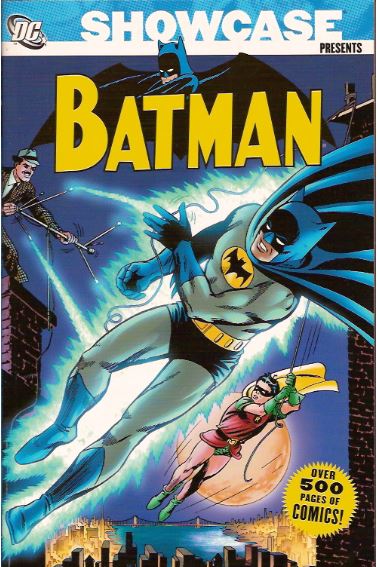
Showcase Presents Batman volume 1


By John Broome, Gardner Fox, Ed Herron, Bill Finger, Carmine Infantino, Bob Kane, Sheldon Moldoff, Joe Giella, Sid Greene & various (DC Comics)
ISBN: 978-1-4012-1086-1 (TPB)

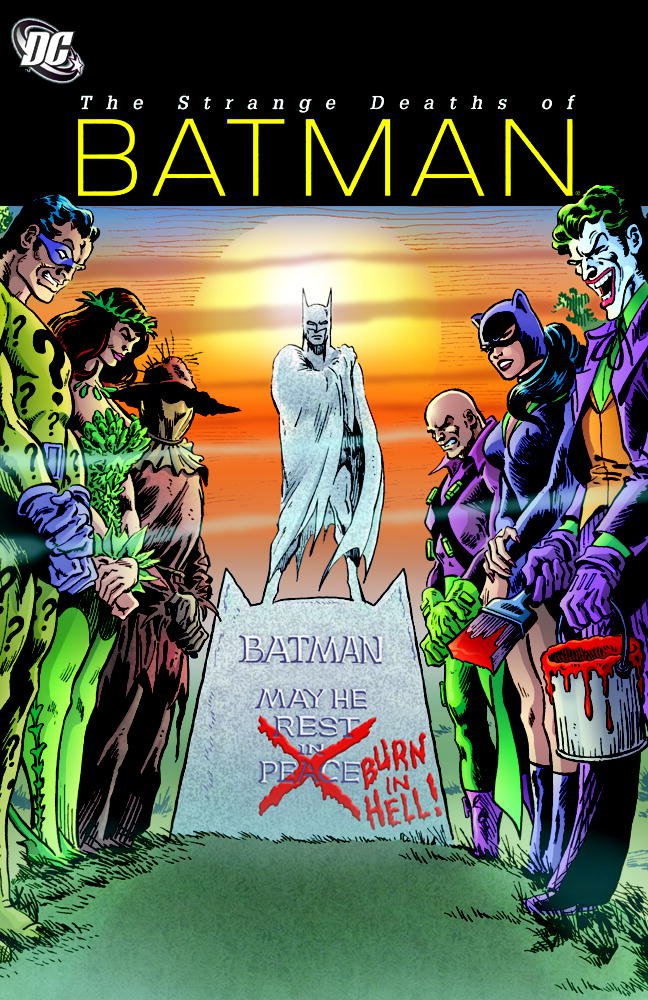
Although cover-dated May 1939, Detective Comics #27 was on sale from March 30th. Happy Anniversary, Dark Knight! Because we like being us, let’s look at a perennial comics incarnation too long overdue for re-evaluation and re-inclusion in the greater Batty-verse…

I’m assuming everybody here loves comics and that we’ve all had the same trying experience of attempting to justify that passion to somebody not genned up or tuned in. Excluding your partner (who is actually right – the living room floor is not the place to leave your D*&$£! funnybooks), many people STILL have an entrenched and erroneous view of narrative strip art, resulting in a frustrating and futile time as you seek to dissuade them from that opinion.

If so, this collection might be the book you want next time that confrontation occurs. Collected here in stark and stunning monochrome are tales which reshaped the Dynamic Duo and set them up for global Stardom – and subsequent fearful castigation from fans – as the template for the Batman TV show of the 1960s. It must be noted, however, that the canny producers and researchers of that landmark derived their creative impetus from stories and especially movie serials of the era preceding the “New Look Batman”, as well as the prevailing tone of those socially changeable times…

So what’s going on here?

By the end of 1963, editor Julius Schwartz had revived much of DC’s science fiction and fantasy line – and the entire industry – with his deft reinterpretation and modernization of the Superhero. He was then asked to work his magic with the creatively stalled, nigh-moribund Caped Crusader franchise of titles. Bringing his usual team of top-notch creators with him, Schwartz stripped down the core-concept, downplaying aliens, outlandish villains and daft transformation tales, to bring a cool modern take to the pursuit and capture of criminals, and even overseeing a streamlining rationalisation of the art style itself.

The most apparent change readers was a yellow circle around the Bat-symbol on his chest, but far more importantly, the stories also changed. A subtle aura of genuine menace re-entered the comfortable, absurdly abstract world of Gotham City….

This initial Showcase Presents Batman compendium collects all the Bat-Sagas (STILL the only place to find them reprinted in full and in chronological order) as seen in Detective Comics #327-342 and Batman #164-174: 38 stunning stories that reshaped a legend and spanning cover-dates May 1964 to September 1965. The revolution began with the lead yarn in Detective #327, written by John Broome and illustrated by Carmine Infantino & Joe Giella at the very peak of their creative powers and collaborative partnership, before the Big Change was fully formalised with two tales from Batman #164.

‘The Mystery of the Menacing Mask! was a cunning “Howdunnit?” long on action and peril, as hints of a criminal “underground railroad” led the Dynamic Duo to a common thug seemingly able to control the heroes with his thoughts. The venerable title was clearly refocusing on its descriptive, evocative title for the foreseeable future, and to ram the point home, a new back-up feature was introduced – “Stretchable Sleuth” The Elongated Man. This comic book was to be a suspenseful brain-teaser from now on…

In the eponymous Batman title, action and adventure became paramount. Two-Way Gem Caper!’ pitted Batman & Robin against slick criminal Dabblo, but the thief wasn’t the true star of this tale. Almost as an aside, a new Batcave and refashioned Wayne Manor were introduced, plus a sleek, compact new Batmobile – more sports-car than super-tank. This story was written by Ed “France” Herron and drawn by “Bob Kane”. Veteran inker Giella was tasked with finishing the contents of both Bat-books in a bid to generate uniformity in all stories. The inker would ultimately perform the same role when the Batman syndicated newspaper strip was revived, beginning on May 29th 1966…

A new semi-regular feature debuted in that issue. “The Mystery Analysts of Gotham City” was a private club of detectives, criminologists and crime-writers who met to discuss their cases. Somehow the meetings always resulted in an adventure such as ‘Batman’s Great Face-Saving Feat!’ (Herron & Kane), wherein eager applicant Hugh Rankin applied his Private Eye talents to discovering the Gotham Gangbuster’s true identity in an effort to win a seat at the sleuths’ table. Suffice it to say, he had to reapply…

‘Gotham Gang Line-Up!’ completed the transformation of Batman. Written by original co-creator Bill Finger and pencilled by Kane, this rather mediocre crime-caper from Detective #328 is most remarkable for the plot-twist wherein long-serving butler Alfred sacrificed his life to save the heroes, prompting Dick Grayson’s Aunt Harriet to move into Wayne Manor.

From this point, the process fell into a pattern of top-of-the-line tales punctuated by utterly exceptional occasional epics of drama, mystery and action. These would continue until the infamous TV show’s success became so great it actually began to inform – or taint – the style of story in the comics. And while I’m into editorial asides: whenever the credits read “Bob Kane” the artist usually doing the drawing was unsung hero Sheldon Moldoff.

Written by Broome and pencilled by Infantino, Detective #329’s ‘Castle with Wall-To-Wall Danger!’ was a captivating international thriller seeing the heroes braving deadly death-traps in Swinging England whilst pursuing a dastardly thief, before eerie science fiction saga ‘Man Who Quit the Human Race!’ (Gardner Fox, Kane & Giella) led in Batman #165 finding fantastic fantasy still had a place in the Gotham Guardian’s new world. A potential new love-interest debuted in back-up tale ‘The Dilemma of the Detective’s Daughter!’, courtesy of Herron & Kane, as student policewoman Patricia Powell left cop-college for the mean streets of the city.

Over in Detective #330, Broome & Kane detailed a new kind of crime in ‘The Fallen Idol of Gotham City!’, wherein a mysterious phenomenon turned ordinary citizens into blood-hungry mobs on command. In Batman #166, ‘Two-Way Deathtrap!’ sees a pair of petty thugs set up the perfect ambush after finding a pipeline into the Batcave whilst, ‘A Rendezvous with Robbery!’ pictured a return engagement for Pat Powell during a frantic crime caper with both tales by Herron & Kane. A rare full-length story in Detective #331 guest-starred Elongated Man as the ‘Museum of Mixed-Up Men’ (Broome & Infantino) united costumed sleuths against a super-scientific felon, after which a Rogues Gallery super-villain finally appeared in #332’s ‘The Joker’s Last Laugh’ (Broome & Kane), set on switching places with the Caped Crimebusters in his own manic manner…

In Batman #167 Finger & Kane declared ‘Zero Hour for Earth!’ as international espionage pulled the Titanic Team from Gotham into a global manhunt for secret society Hydra prior to Detective #333 pitting the heroes against a faux goddess and real telepaths in the ‘Hunters of the Elephants’ Graveyard!’, courtesy of Fox & Infantino. Then ‘The Fight That Jolted Gotham City!’ opened Batman #168 with a blockbusting battle between the Masked Manhunter and temporarily deranged circus strongman Mr. Muscles after which the Mystery Analysts resurfaced to close the book, explaining ‘How to Solve the Perfect Crime… in Reverse!’ (both tales by Herron & Moldoff).

The opening shot in an extended war against an incredible new foe dubbed The Outsider came with Detective #334 and the introduction of Grasshopper‘The Man Who Stole from Batman!’ (Fox & Moldoff), whilst Fox & Infantino’s ‘Trail of the Talking Mask!’ in #335 gave the Caped Crimebusters opportunity to reinforce their sci-fi credentials in a classy high-tech thriller guest starring PI Hugh Rankin.

Wily, bird-themed badman The Penguin popped up in Batman#169 (Herron & Moldoff), making the heroes his unwilling ‘Partners in Plunder!’, after which inker Sid Greene made his debut delineating ‘A Bad Day for Batman!’, wherein he overcomes many vicissitudes of cruel coincidence to nab a determined thief. Detective #336 (Fox, Moldoff & Giella) featured ‘Batman’s Bewitched Nightmare’ as a broom-riding crone attacks the Dynamic Duo at the Outsider’s behest. In later months the witch was revealed to be sultry sorceress Zatanna, but most comics cognoscenti agree this was not the original plan, but rather cannily back-written during the frantic months of “Batmania” that followed the debut of the TV show (for a fuller explanation see JLA: Zatanna’s Search).

An intriguing new foe made his modest mark in Batman #170 with highly professional thief Roy Reynolds running rings around the Gotham Gangbusters – at least initially – as the ‘Genius of the Getaway Gimmicks!’ (Fox & Moldoff) with Finger providing a captivating, human-scaled drama in ‘The Puzzle of the Perilous Prizes!’ enabling Giella to show off his pencilling as well as inking skills. ‘The Deep-Freeze Menace!’ (Detective #337, Fox & Infantino) focuses on captivating fantasy, pitting Batman against a super-powered caveman encased in ice for 50,000 years, before the caped crimebuster gains his own uncanny advantage in #338 as a chemical accident renders ‘Batman’s Power-Packed Punch!’ too dangerous to be near…

After an absence of decades, ‘Remarkable Ruse of The Riddler!’ reintroduced the Prince of Puzzlers in Batman # 171: a clever book-length mystery from Fox & Moldoff which did much to catapult the previously forgotten villain to the first rank of Bat-Baddies, after which DC’s inexplicable (but deeply cool) long-running love-affair with gorillas resulted in a cracking doom-fable as ‘Batman Battles the Living Beast-Bomb!’ (Fox & Infantino in Detective #339) highlighting the hero’s physical prowess in a duel of wits and muscles against a sinister super-intelligent simian. Broome came back to script the eerie conundrum drawn by Moldoff which opened Batman #172. ‘Attack of the Invisible Knights!’ proved to be wicked science not ancient magic, whilst Batman’s own technological advances played a major role part in backup ‘Robin’s Unassisted Triple Play!’ (Fox, Moldoff & Greene), giving the Boy Wonder plenty of scope to show his own skills against a gang of murderous bandits.

Detective #340 saw the war against Batman escalate when ‘The Outsider Strikes Again!’ (Fox & Moldoff), offering further clues to the hidden foe’s incredible abilities by animating everyday objects – and the Batmobile – to attack the Caped Champions, before Broome & Infantino detailed a cinema-inspired catastrophic campaign in #341’s ‘The Joker’s Comedy Capers!’ Criminal mastermind/blackmailer Mr. Incognito then offered ‘Secret Identities For Sale’ in Batman #173’s lead tale and Broome, Moldoff and inker Sid Greene depicted ‘Walk Batman – To Your Doom!’: a sinister psychological murder-plot years ahead of its time.

Broome & Moldoff’s ‘The Midnight Raid of the Robin Gang!’ (Detective #342) hinted at the burgeoning generational unrest of the 1960s as the faithful Boy Wonder seemingly sabotaged his mentor before signing up with costumed juvenile delinquents, before this collection of Caped Crusader Chronicles concludes with Fox & Moldoff’s Batman #174: a brace of blockbusters comprising a brutal story of street-fighting as the Gotham Guardian is ambushed and becomes The Human Punching Bag!’ before the Mystery Analysts find themselves the intended victims of a “Ten Little Indians” murder-scheme in ‘The Off-Again, On-Again Lightbulbs!’ (inked by Greene).

No matter how much we might squeal and foam about it, to a large portion of the world Batman will always be the “Zap! Biff! Pow!”, affably lovable, caped buffoon of that 1960s television show. It really was that popular. Whether you tend towards the anodyne light-heartedness of then, commercially acceptable psychopathy of the current day or actually just like the comic book character in all eras, if you sit down, shut up and actually read these wonderful adventures for all (reasonable) ages, you will find the old adage “Quality will out” still holds true. And if you’re actually a fan who hasn’t read this classic stuff, you have an absolute treat in store…
© 1964, 1965, 2006 DC Comics. All Rights Reserved.

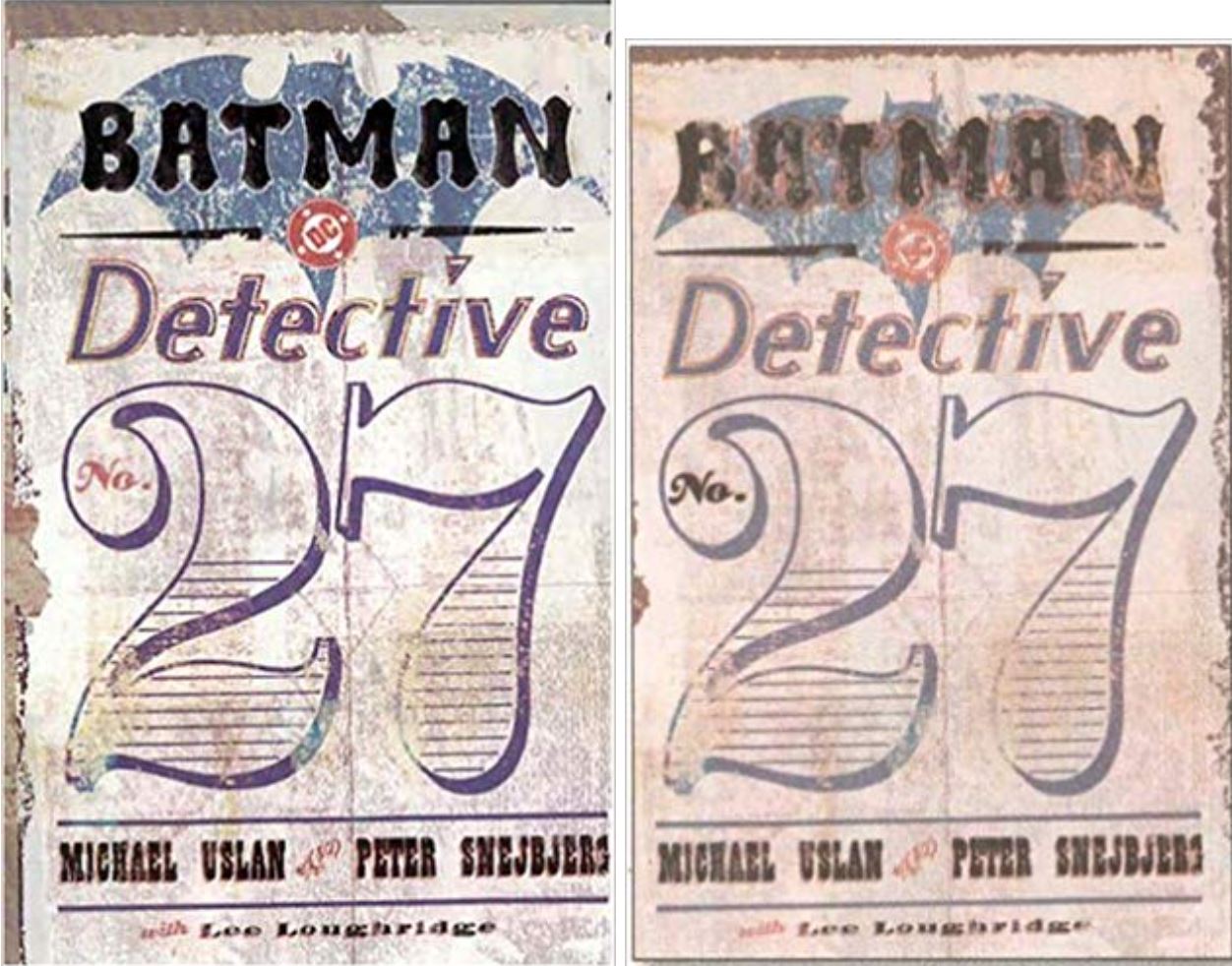
Batman: Detective No. 27


By Michael Uslan & Peter Snejbjerg with Lee Loughridge (DC Comics)
ISBN: 978-1-4012-0185-2 (HB) 978-1401-2010-74 (TPB)

Although cover-dated May 1939, according to most scholars Detective Comics #27 was on sale from March 30th. That makes today the actual anniversary date of the Dark Knight. Because we like to be unpredictable here, let’s look at an intriguing offshoot and permutation of the now-mythic inspirational lawman by one of the most important but least-appreciated creators in his history.

Not so long ago and for a brief while, DC’s experimental Elseworlds imprint – where famous & familiar characters and accepted consensual continuity were radically or subtly reimagined – was a regular hive of productivity and generated some wonderful – and quite a few ridiculous – stories.

By using what readers thought they knew as a springboard, the result – usually constricted into a disciplined single story – had a solid and resolute immediacy that was too often diluted in regular periodical publications where an illusion of constant change always trumps actual innovation in long-running characters… unless they are about to be cancelled…

No chance of that with this property and franchise figure, but still a fine example of that process is this intriguing pulp mystery and generational drama blending the lineage of the Gotham City Waynes with covert societies and secret history of the United States of America.

Oh, in case you were wondering: after a couple of fallow decades, DC reinstated most of those Elseworlds experiments as part of a greater multiverse, so they all turned out to “real” too, somewhere in time and space…

April 1865, Washington DC: President Abraham Lincoln overrides the objections of Allan Pinkerton (who had created the Secret Service to protect him) and goes to see popular play Our American Cousin at Ford’s Theatre. The resultant assassination prompts the infuriated and humiliated security genius to create a dedicated clandestine force beyond the reach of everything but their mission and their own consciences…

April 1929, Gotham City: a doctor, his wife and their young son exit a movie theatre where they have thrilled to the exploits of Douglas Fairbanks as Zorro. Suddenly, sneak thieves confront them and in the struggle Thomas & Martha Wayne are gunned down, leaving a grieving boy kneeling over their bloody corpses. Family butler Alfred packs the coldly resolute boy off on a decade-long world tour to study with masters of criminology around the globe…

Lincoln’s murder was planned by a cabal of Confederate plotters: the Knights of the Golden Circle. Their leader, an early eugenics-inspired geneticist named Josiah Carr, outlines a Doomsday vengeance plot that will take decades to complete…

January 1st 1939: Bruce Wayne finally returns to Gotham, ready to begin his life’s mission, but is diverted when crusading newspaperman Lee Travis (DC’s first costumed mystery man shamus The Crimson Avenger in mainstream continuity) reveals the existence of the Secret Society of Detectives and invites the young man to become their 27th operative since Pinkerton.

Charming and relentlessly compelling, this superbly pacy thriller follows two time-lines as the founding Detective hunts the Golden Circle through the years, enlisting the covert aid of many historical figures such as Kate Warne (the USA’s first official female detective), journalist and President-to-be Teddy Roosevelt and biologist/monk Gregor Mendel whilst Wayne closes in on the long-awaited climax of the Doomsday plot with the aid of Babe Ruth and Dr. Sigmund Freud. He even confronts cunningly-customised versions of such classic Bat-foes as Catwoman, Scarecrow, Hugo Strange and The Joker.

Best of all, there’s a deliciously wry cameo from the Golden Age Superman as well as a magnificent surprise ending to this two-fisted tribute to the “Thud-and-Blunder” era of the 1930s pulps that spawned Batman and all those like him.

This is a conspiracy thriller stuffed to overflowing with in-jokes, referential asides, pop culture clues and universal icons that make The Da Vinci Code and its legion of even more tedious knock-offs look like dry words on dusty paper. The only flaw is that writer Uslan -lawyer, author, educator, producer and über Bat-fan and the man who brought the Gotham Gangbuster back to cinema screens in 1989 – with illustrator Peter Snejbjerg (The Books of Magic, Abe Sapien, Starman) & colourist Lee Loughridge (Saucer Country, The Batamn Adventures, Stumptown) were never able to create a sequel…

And just in case you need a really big clue: the comic book Detective Comics #27 featured the very first appearance of a certain Dark Knight…
© 2003 DC Comics. All Rights Reserved.

The Art of Ramona Fradon


By Ramona Fradon; interviewed by Howard Chaykin (Dynamite Entertainment)
ISBN: 978-1-60690-140-3 (HB/Digital edition)

In a matter of mere weeks that have taken many accomplished, acclaimed and beloved comics luminaries (including Paul Neary, Enrique Badía Romero, José Delbo, Marti (Riera), John G. Miller and Keith Giffen) – we are particularly saddened to learn that pioneering cartoonist Ramona Fradon died on February 24th. At the age of 97 she had only just officially retired a month previously. Her incomparable works will keep her with us through characters and titles such as Super Friends, Aquaman and Metamorpho (slated to appear in the next Superman film). Until then, here’s another tome you should own…

Although present in comic books from the start, women – like so many other non-white/male “minorities” – have been largely written out of history. One of the very few to have weathered that inexplicable exclusion was Ramona Fradon. This excellent commemorative art collection celebrates not only her life and contribution, but thanks to its format – a free, unexpurgated extended interview with iconoclastic creator Howard Chaykin – shares the artist’s frank and forthright views on everything from work practise to the power of fans…

It begins with an Introduction from Walt Simonson who proclaims ‘Meet your Idol… and discover They’re even Cooler than you Thought!’, before early days are revealed in ‘Part One: Setting the Scene’ and ‘Part Two: In the Beginning’

Ramona Dom was born on October 2nd 1926 to an affluent Chicago family with many ties to commercial creative arts. Her father was a respected artisan, letterer and calligrapher who had designed the logos for Camel cigarettes, Elizabeth Arden and other major brands, and also formulated the fonts Dom Casual and Dom Bold. He had plans for his daughter, urging her to become a fashion designer…

The family moved to (outer) New York when Ramona was five. Ramona initially attended The Parsons School of Design, and discovered she had absolutely no interest in creating clothes. Although she’d never read comic books, she had voraciously read illustrated books like John Barton Gruelle’s Raggedy Anne and Andy series, and was a devoted fan of newspaper strips. Favourites included Dick Tracy, Bringing Up Father, The Phantom, Alley Oop, Flash Gordon, Terry and the Pirates and Li’l Abner (all herein represented by 1930s examples).

Ramona soon transferred to the New York Art Students League – a hotbed of cartooning – where she met and married Arthur Dana Fradon. He became a prolific illustrator, author and cartoonist and a regular contributor to The New Yorker between 1948-1992. They wed in 1948 and he actively encouraged her to seek work in the still young funnybook biz…

‘Part Three: Gingerly Breaking into Comics’ reveals how her first forays at Timely Comics led to DC/National Comics and a Shining Knight yarn published in Adventure Comics #165 (cover-dated June 1951), 10 months later taking over the veteran Aquaman feature in #167. Fradon was one of the first women to conspicuously and regularly illustrate comic books, drawing the strip throughout the 1950s and shepherding the Sea King from B-lister to solo star and Saturday morning TV pioneer.

In the first of a series of incisive, informative mini biographies, ‘Sidebar: Murray Boltinoff’ reveals the influence of that much-neglected and under-appreciated editor. ‘Part Four: Queen of the Seven Seas’ and ‘Part Five: Man of 1000 Elements’ show how occasional stints on The Brave and the Bold team-ups led to her co-creation of Sixties sensation Metamorpho, the Element Man. However in 1965 – at the pinnacle of success – she abruptly retired to raise a daughter, only returning to comics in 1972 for another stellar run of landmark work.

‘Sidebar: George Kashdan’ tells all about the multi-talented scripter before ‘Part Six: Ramona Returns to Comics… At Marvel???’ details how the House of Ideas lured the artist back to her board and highlights her difficulties working “Marvel-style” on assorted horror shorts, The Claws of the Cat and Fantastic Four, all presaging a return to DC…

‘Sidebar: Joseph Patterson’ looks into the astounding strip Svengali who green lit Dick Tracy, Little Orphan Annie, Gasoline Alley and more before ‘Part Seven: Back Home at DC Comics’ where she was busier than ever. As well as horror and humour shorts, Fradon drew a new Metamorpho try-out, superhero spinoff Freedom Fighters and her twin magnum opuses: revived comedy superhero Plastic Man and TV sensation Super Friends. These revelations are bolstered by ‘Sidebar: E. Nelson Bridwell’, exploring the life of the man who knew everything about everything…

In 1980, Fradon took over Dale Messick’s long-running newspaper strip Brenda Starr, drawing it for 15 years. ‘Part Eight: Leaping From Books to Strips’ explores that painful and unpleasant chore in sharp detail, supplemented by ‘Sidebar: Brenda Starr’ outlining the feature’s history and reprinting those episodes when the ageless reporter met a certain cop, allowing Fradon to finally draw childhood idol Dick Tracy

The most fascinating stuff is left until last as ‘Part Nine: Ramona the Author’ discusses her career post-Brenda: drawing for Bart Simpson and Spongebob Squarepants comics, returning to higher education and writing a philosophical historical mystery novel – The Gnostic Faustus: The Secret Teachings Behind the Classic Text – as well as illustrated kids book The Dinosaur That Got Tired of Being Extinct.

Packed throughout with candid photos, and stunning pencil sketches, painted pictures and privately commissioned works – like Aquaman, assorted Super Friends, Superman, Batman, Wonder Woman, Robin; Metal Men, Aqualad, Brenda Starr, Black Canary, Shazam/Captain Marvel, Shining Knight, The Atom, The Spirit, Metamorpho & cast, Marvel Girl, Miss America, Power Girl, Catwoman, Hawkman, numerous illustrations from The Story of Superman book plus convention sketches, this celebration concludes with even more fabulous sleek super art images in ‘Part Nine: Ramona Today’ and ‘Part Eleven: Bibliography’

This is an amazing confirmation of an incredible career and any fan’s dream package. Amongst gems unearthed here are complete Aquaman stories ‘The Kid from Atlantis!’ (Adventure Comics #269, 1960), ‘A World Without Water’ (Adventure#251, 1958) and ‘How Aquaman Got his Powers!’ (Adventure #260, 1959), plus tales from Star Spangled War Stories (#184, 1975) and ‘The Invisible Bank Robbers!’ (Gangbusters #30, 1952).

Also on show are unpublished sample strips by Dana & Ramona Fradon and a monumental cover gallery of unforgettable images from Super Friends #3, 5-8, 10, 11, 13, 17, 19, 21, 22, 24-27, 31, 33, 36-39 & 41; Plastic Man #16-20; The Brave and the Bold #55, 57, 58, Showcase #30 & 33, Metamorpho, the Element Man #1-5, Namora #1 (2010), Fantastic Four #133 and Freedom Fighters #3.

These are supported by selected interior pages in full colour or monochrome from Star Spangled War Stories #8; Adventure Comics #190; Metamorpho, the Element Man #1; 1st Issue Special #3; Fantastic Four #133; The Brave and the Bold #57; House of Secrets #116 & 136; Secrets of Haunted House #3 & 14; House of Mystery #232 & 273; Plop! #5; Freedom Fighters #3 & 5; Plastic Man #14; Super Friends #6-8, 10, 13, 16, 19, 21, 23 & 25 and the Super DC Calendar 1977.

A truly definitive appreciation of the Comic Book Hall of Fame inductee 2006, this oversized (229 x 305 mm) hardback reproduces hundreds of pages and covers, plus a wealth of out-industry artwork and commissioned wonders, as accompaniment to an astonishingly forthright testament and career retrospective of a phenomenal and groundbreaking talent.

The Art of Ramona Fradon will delight everyone by showing everybody how comics should be done….
Marvel Characters © and ™ 1941-2013 Marvel Characters, Inc. DC Comics Characters © and ™ DC Comics. Brenda Starr™ © 2013 Tribune Media Services. All Rights Reserved.

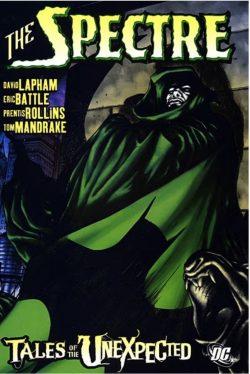
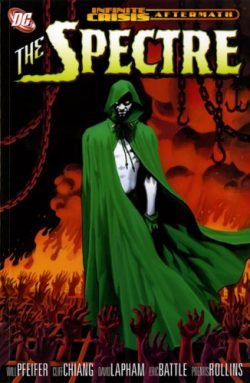
Crisis Aftermath: The Spectre & The Spectre: Tales of The Unexpected


By Will Pfeifer & Cliff Chiang, David Lapham, Eric Battle, Prentis Rollins, Tom Mandrake & various (DC Comics)
ISBN: 978-1-84576-577-X (TPB Aftermath): 978-1-84576-668-9 (TPB Unexpected)

The Spectre first appeared in More Fun Comics #52 (cover-dated February 1940), brainchild of Superman co-creator Jerry Siegel and artist Bernard (Hourman) Baily. Jim Corrigan, a murdered police detective, was ordained an open-ended mission by a glowing light and disembodied voice to fight crime and evil: swiftly becoming one of the most overwhelmingly powerful heroes of the Golden Age.

The astral avenger has been revamped and revived many times since. Latterly and powerfully (by John Ostrander &Tom Mandrake) revealed to be God’s Spirit of Vengeance bonded to a human conscience, Corrigan was finally laid to rest and Hal Jordan replaced him. Jordan was a Green Lantern who nearly destroyed the universe when possessed by antediluvian fear-parasite Parallax, before redeeming his soul and sacrificing his life to reignite our dying sun in the Final Night miniseries.

Bonded and bound to The Spectre force, Jordan became more a Spirit of Redemption than Retribution and, following a complex series of events in the wake of the Infinite Crisis was resurrected as a mortal superhero – leaving The Spectre without human guidance or scruple…

Collecting 3-part miniseries Crisis Aftermath: The Spectre and the lead stories from Tales of the Unexpected #1-3, this book follows the Ghostly Guardian’s search for a new host. This it finds in the reluctant, intangible form of by-the-book cop Crispus Allen, a black detective in Gotham City’s police force, and a just man callously murdered by fellow officer/ dirty cop Jim Corrigan (no relation to the original).

Will Pfeifer (Batman, Catwoman, Blood of the Demon) & Cliff Chiang (Human Target, Paper Girls, Wonder Woman) open the account in ‘Dead Again’ as The Spectre tries to convince what remains of angry atheist Allen to bond with him and jointly dispense Heavenly Justice. It then must prove the validity of the admittedly random and illogical way the Spirit of Retribution selects targets/victims from the billions of murderous sinners in sore need of the grim phantom’s personal, bloodily ironic attentions.

Subtle, compelling and challenging, the inescapable tragedy of the ending lends desperately needed depth to a timeless character far too powerful for traditional tale-telling. It is followed by the first quarter of an 8-part epic by David Lapham, Eric Battle &Prentis Rollins that featured in DC’s revival of the classic anthology title Tales of the Unexpected.

Slum-lord Leonard Krieger has been murdered in one of his own rat-traps. He was found chained and tortured (for two weeks) in the foul basement of a tenement filled with desperate people and outcasts on the edge of society. When he was very nearly dead Krieger was then stabbed repeatedly. There’s certainly no shortage of suspects…

Crispus Allen may be dead but he’s a still a detective and knows there’s a terrible secret buried in the wasteland of the Granville Towers. So do investigating officers Marcus Driver and Josh Azeveda. When The Spectre identifies and dispatches the killer it seems the case is over, but all the dark mysteries of the tenement are not yet revealed and all the horrors within keep calling out to both the harassed unsettled cops and Allen as well…

David Lapham (Shadowman, Stray Bullets, Silverfish) took The Spectre into uncharted waters with this raw and savage portmanteau saga. Rather than one baroque crime and one appropriately grisly punishment, he examines the nature of evil by focusing on all inhabitants of the slum and their degree of culpability in this murder as well as other sins. Can every door hide a secret worthy of God’s Punishment? Moreover, does Crispus have the power – and inclination – to temper the Spectre’s awful judgements?

‘The Cold Hand of Vengeance’ is engrossing and challenging stuff, well worth your attention, but to truncate the saga this way (the remaining issues 4-8 are collected in sequel volume The Spectre: Tales of the Unexpected) is annoying and unnecessary. Even with a gallery of alternate covers by luminaries like Neal Adams & Moose Bauman, Michael Wm. Kaluta & David Baron, Michael Mignola, Matt Wagner & Dave Stewart, this brilliant tale screams “unfinished business”…


Spectre: Tales of the Unexpected

Completing the intense horror-suspense begun in Crisis Aftermath: The Spectre murdered detective Crispus Allen returns, newly-bonded to an all-powerful supernatural force and finds himself irresistibly drawn back to the tenement house where slum-lord Leonard Krieger was killed.

Eventually killed. Prior to that he was chained in the basement for weeks, starved, tortured, abused and generally made to regret the miseries he had inflicted on his many tenants. One man has already paid the Ghostly Guardian’s ghastly price for that, but somehow the sin remains unpunished and Allen, as well as GCPD grunts Marcus Driver and Josh Azeveda, are convinced there’s more to know and further horror to come from God’s Spirit of Vengeance.

Already the ameliorating human influence is being challenged and has little effect when the Spectre – unable to leave Gotham – goes on a rampage of grotesque and barbaric retribution in the murder capital of the world. As the police chip away at the mystery of Krieger’s death and the wall of silence from the other tenants of seemingly accursed Granville Towers, Crispus becomes ever more inured to the atrocities humanity perpetrates on a daily basis. Without intervention, he may become more ruthless and relentless than The Spectre itself.

With outstanding guest-appearances by Batman and The Phantom Stranger (the latter illustrated by veteran Spectre illustrator Tom Mandrake) this volume reprints #4-8 of the lead strip in anthological revival Tales of the Unexpected, including original covers by Bernie Wrightson, Mike Huddleston, Bill Sienkiewicz, Art Adams, Prentis Rollins, Eric Battle & Dave Stewart.

A harsh, uncompromising exploration of justice, provocation and guilt, this is not a story for the young or squeamish and the mystery, engrossing though it be, is secondary to the exploration of the events that produced it. Can the modern world still use an Old-Testament solution to sin, or is every crime now too complex for prescribed punishments?

It’s rare for superhero comics to be this challenging but Tales of the Unexpected manages that and still delivers a visceral, evocative thriller that is a joy to read. These are lost gems crying out for a fresh chance to shine in the darkness… and at 128 pages for the first one and 144 for the follow-up, would it be so hard to make them one volume?
© 2006, 2007 DC Comics. All Rights Reserved.

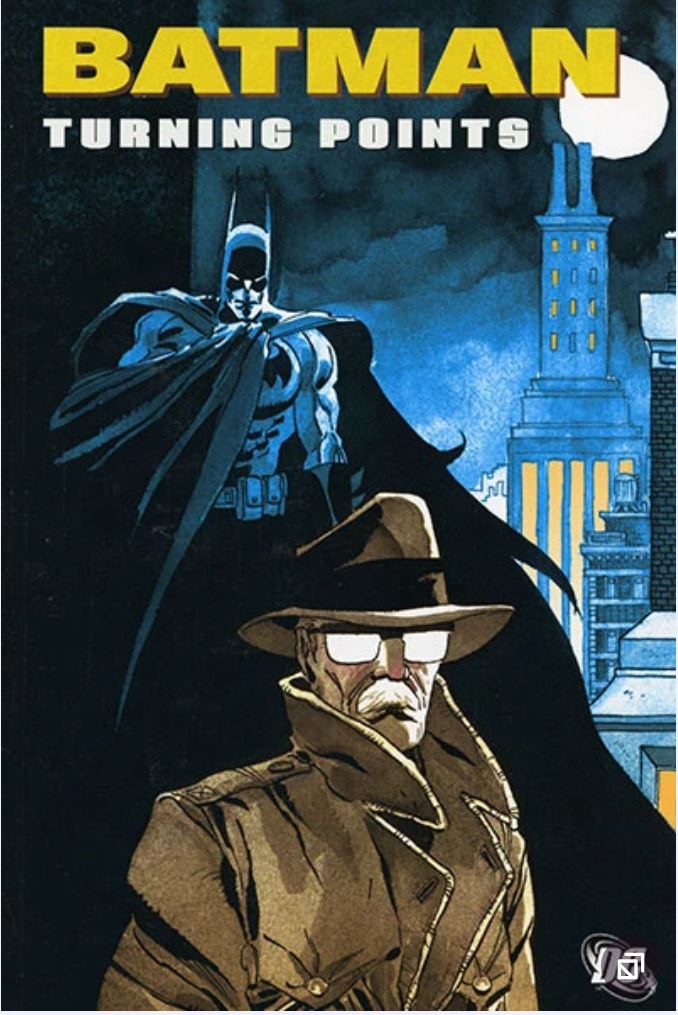
Batman: Turning Points


By Greg Rucka, Ed Brubaker, Chuck Dixon, Steve Lieber, Joe Giella, Dick Giordano, Bob Smith, Brent Anderson, Paul Pope, Claude St. Aubin & various (DC Comics)
ISBN: 978-1-4012-1360-2 (TPB)

When Superman debuted in Action Comics #1, the only still-the-same-today supporting character was Lois Lane. When “The Bat-Man” premiered a year later in Detective Comics #27 (cover-date May 1939 but on sale from March 30th), the only other person you might recognise was Police Commissioner Gordon. Make of this what you will…

Over the 85 years of Batman’s existence, almost as important as the partnership between the Dark Knight and assorted Boy Wonders has been a bizarrely offbeat symbiotic relationship between those costumed vigilantes and Gotham City’s top cop James Gordon.

This collection – inexplicably one of very few Batman books unavailable in digital formats – compiles five individual pastiches released as 2001 miniseries Turning Points. Here, readers see significant moments in the development of that shadowy alliance produced primarily for long-term aficionados in tribute to key eras in Batman’s career by veteran artists and (then) new wave creators.

It all begins with Greg Rucka & Steve Lieber’s ‘Uneasy Allies’, set in the days – and visual style – of the mysterious vigilante’s stormy debut in Frank Miller & Dave Mazzuchelli’s exemplary Batman: Year One. Police Captain Gordon is still the only honest cop on a corrupt and brutally gung-ho force, reeling from the shock of his wife divorcing him. When bereaved, heartsick and crazed college professor Hale Corbett takes an entire wedding hostage, Gotham’s SWAT team commander is champing at the bit to storm in and rack up the body-count, whereas wanted felon The Batman offers Gordon a slim hope of ending the siege without loss of life.

All the masked nut-case wants in return is a sympathetic ear at the GCPD…

A clandestine working relationship established, …And Then There Were… Three?’ (by Ed Brubaker & Joe Giella – who drew many of 1960s stories and Batman’s newspaper strip) celebrate the era of TV’s “Batmania”. About a year after their first meeting, reports of a garishly garbed boy assistant to Batman begin filtering in. As deadly psychopath Mr. Freeze rampages through the city, Gordon demands to why the now-tolerated Caped Crusader is recklessly endangering a child.

In a rowdy romp packed with past icons like giant props and gaudy villains, a decidedly deadly outcome forces the cop to see and realise the true nature of Batman and Robin’s relationship…

Brubaker, Dick Giordano & Bob Smith set ‘Casualties of War’ in the bleak aftermath following the death of second Robin Jason Todd, the crippling of Barbara (Batgirl) Gordon and the torture of her father, at the bone-white hands of The Joker. A solitary, driven Dark Knight haunts streets and allies, ceaselessly crushing criminals with brutal callousness, whilst sinister serial killer The Garbage Man prowls unchallenged…

When wheelchair-bound Barbara fails in her attempted intervention to calm a Batman pushing himself to breaking-point, it takes a rooftop heart-to-heart with recently promoted Commissioner Gordon to finally crack the manhunter’s shell and begin the healing process…

Chuck Dixon & Brent Anderson step in years later when, as a result of a strategically systematic attack by would-be crime-lord Bane, an exhausted and broken Batman is replaced by another, darker champion. Set during the Knightfall publishing event, ‘The Ultimate Betrayal’ describes the moment Gordon realises his enigmatic ally has become a remorseless machine/exterminating angel hunting criminals with no regard to life anymore. If only third Robin Tim Drake could have told him that the man behind the cowl – and claws and razor-armour – is actually Azrael: hereditary and murderously programmed living weapon of an ancient Christian warrior-cult…

Rucka, Paul Pope & Claude St. Aubin bring the journey full circle in ‘Comrades in Arms’ wherein a mysterious stranger and his family hit Gotham on a mission to find Gordon and Batman, just as the Commissioner introduces his destined successor Michael Akins to the Major Crimes Unit. Word on the street is the Russian mob are planning a huge retaliatory strike and every cop is waiting for the hammer to fall when Hale Corbett walks back into GCPD HQ, demanding to see Gordon and the masked manhunter who changed his life many years ago…

Filtered through gritty modern sensibilities but still able to revere past glories and Batman’s softer sides, this thoroughly readable collection includes a cover gallery by artistic all-stars Javier Pulido, Ty Templeton, Joe Kubert, Howard Chaykin, Pope & Tim Sale, and offers a gripping thrill ride for newcomers and veterans alike.
© 2001, 2007 DC Comics. All Rights Reserved.

Showcase Presents Metamorpho, The Element Man


By Bob Haney, Gardner Fox, Ramona Fradon, Joe Orlando, Sal Trapani, Jack Sparling, Charles Paris, Mike Sekowsky, Mike Esposito, Bernard Sachs & various (DC Comics)
ISBN: 978-1-4012-0762-5 (TPB)

By the time Metamorpho, The Element Man was introduced to a superhero-obsessed world the first vestiges of a certifiable boom were just becoming apparent. As such, the light-hearted, nigh-absurdist take struck a Right-Time, Right-Place chord, blending far out adventure with tongue-in-cheek comedy.

Celebrating 60 years of weird happenings, the bold, brash “Man of a Thousand Elements” debuted in The Brave and the Bold #57, cover-dated January 1965 and on sale from October 29th 1964 – just in time for Halloween. After a second try-out tale in the next issue, he and his crackers cast catapulted right into a solo title for an eclectic and oddly engaging 17-issue run. Sadly, this canny monochrome compendium – collecting those eccentric debut adventures from B&B #57 & 58, Metamorpho, The Element Man #1-17 and team-up tales from The Brave and the Bold #66 and 68 and Justice League of America #42 – is at present STILL the only archival collection available. Until someone rectifies that situation, at least here you can revel in some truly enchanting monochrome illustration and madcap myth-making. Unlike most Showcase editions, the team-up stories here are not chronologically re-presented in original publication order but are closeted together at the back, so if stringent continuity is important to you, the always informative old-school credit-pages will enable you to navigate the wonderment in the correct sequence.

Sans dreary preamble, the action commences immediately with ‘The Origin of Metamorpho’, written by Bob Haney (who created the concept and character and wrote everything here except the Justice League story). The captivating art is by Ramona Fradon & Charles Paris and introduces glamorous he-man Soldier of Fortune Rex Mason: currently working as a globetrotting artefact-procurer and agent for ruthlessly acquisitive scientific genius and business tycoon Simon Stagg. Mason is obnoxious and insolent but his biggest fault as far as the boss is concerned is that the mercenary dares to love – and be loved – by the plutocrat’s only daughter Sapphire

Determined to rid himself of the impudent “fortune-hunter”, Stagg sends his potential son-in-law to Egypt tasked with retrieving a fantastic artefact dubbed the Orb of Ra from the lost pyramid of Ahk-Ton. The tomb raider is accompanied only by Java, a previously fossilised Neanderthal corpse Rex had extracted from a swamp and which (whom?) Stagg had subsequently restored to life. Mason plans to take his final fabulous fee and whisk Sapphire away from her controlling father forever, but fate and his companion have other plans…

Utterly faithful to the scientific wizard who was his saviour, Java sabotages the mission and leaves Mason to die in the tomb, victim of an ancient, glowing meteor. The man-brute rushes back to his master, carrying the Orb and fully expecting Stagg to honour his promise and give him Sapphire in marriage. Meanwhile, trapped and painfully aware his time has come, Mason swallows a suicide pill as the scorching rays of the star-stone burn through him…

Instead of death relieving his torment, Rex mutates into a ghastly chemical freak capable of shapeshifting and transforming into any of the elements or compounds that comprise his human body: carbon, hydrogen, oxygen, calcium, iron, cobalt and so many others…

Hungry for vengeance, Mason returns and confronts his betrayers only to be overcome by the alien energies of the Orb of Ra. An uneasy détente is declared as Mason accepts Stagg’s desperate offer to cure him – if possible…

The senior Stagg is further horrified when Rex reveals his condition to Sapphire and finds she still loves him. Totally unaware of his employer’s depths of duplicity, Mason starts working for the tycoon as metahuman problem-solver Metamorpho, the Element Man.

Brave and the Bold #58 (February-March 1965) reveals more of Stagg’s closeted skeletons when old partner Maxwell Tremayne kidnaps the Element Man and later abducts Sapphire to ‘The Junkyard of Doom!’ Apparently, the deranged armaments manufacturer was once intimately acquainted with the girl’s mother and never quite got over it…

The test comics were an unqualified success and Metamorpho promptly started in his own title, cover-dated July-August 1965, just as the wildly tongue-in-cheek “High Camp” craze was catching on in all areas of popular culture: mixing ironic vaudevillian kitsch with ancient movie premises as theatrical mad scientists and scurrilous spies began appearing everywhere.

‘Attack of the Atomic Avenger’ sees nuclear nut-job Kurt Vornak seeking to crush Stagg Industries, only to be turned into a deadly, planet-busting radioactive super-atom, after which ‘Terror from the Telstar’ pits our charismatic characters against Nicholas Balkan, a ruthless criminal boss set on sabotaging America’s Space Program. Manic multi-millionaire T.T. Trumbull uses his own daughter Zelda to get to Simon Stagg through his heart, accidentally proving to all who know him that the old goat actually has one. This was part of TT’s attempt to seize control of America in ‘Who Stole the U.S.A.?’, with the ambitious would-be despot backing up the scheme with an incredible robot specifically designed to murder Metamorpho.

Happily, Rex Mason’s guts and ingenuity prove more effective than the Element Man’s astonishing powers…

America saved, the dysfunctional family head South of the Border, becoming embroiled in ‘The Awesome Escapades of the Abominable Playboy’ as Stagg schemes to marry Sapphire off to Latino Lothario Cha Cha Chavez. The spoiled wilful girl is simply trying to make Mason jealous and had no idea of her dad’s true plans; Stagg senior has no conception of Chavez’s real intentions or connections to the local tin-pot dictator…

With this issue the gloriously stylish innovator Ramona Fradon left the series, to be replaced by two artists who strove to emulate her unique, gently madcap manner of drawing with varying degrees of success. Luckily, veteran inker Charles Paris stayed on to smooth out the rough edges. First was E.C. veteran Joe Orlando whose 2-issue tenure began with outrageous doppelganger drama ‘Will the Real Metamorpho Please Stand Up?’ wherein eccentric architect Edifice K. Bulwark tries to convince Mason to lend his abilities to his chemical skyscraper project. When Metamorpho declines, Bulwark and Stagg attempt to create their own Element Man with predictably disastrous consequences. ‘Never Bet Against an Element Man!’ (#6 May-June 1966) took the team to the French Riviera as gambling grandee Achille Le Heele snookers Stagg and wins “ownership” of Metamorpho. The Gallic toad’s ultimate goal was stealing the world’s seven greatest wonders (including the Taj Mahal and Eiffel Tower) and, somehow, only the Element Man can make that happen…

Sal Trapani began drawing with #7’s ‘Terror from Fahrenheit 5,000!’ as the acronymic superspy fad hit hard. Here Metamorpho is enlisted by the C.I.A. to stop suicidal maniac Otto Von Stuttgart destroying the entire planet by dropping a nuke into the Earth’s core, before costumed villain Doc Dread is countered by an undercover Metamorpho becoming ‘Element Man, Public Enemy!’ in a diabolical caper of doom and double-cross. Metamorpho #9 shifted into classic fantasy when suave and sinister despot El Mantanzas maroons the cast in ‘The Valley That Time Forgot!’: battling cavemen and antediluvian alien automatons, after which a new catalysing element is added in ‘The Sinister Snares of Stingaree!’ This yarn introduces Urania Blackwell – a secret agent somehow transformed into an Element Girl and sharing all Metamorpho’s incredible abilities. Not only is she dedicated to eradicating evil such as criminal cabal Cyclops, but Urania is also the perfect paramour for Rex Mason, who even cancels his wedding to Sapphire to go gang-busting with her…

With a new frisson of sexual chemistry sizzling barely beneath the surface, ‘They Came from Beyond?’ finds a conflicted Element Man confronting an apparent alien invasion whilst ‘The Trap of the Test-Tube Terrors!’ sees another attempt to cure Rex of his unwanted powers. This allows mad scientist Franz Zorb access to Stagg Industry labs long enough to build an army of chemical horrors. The plot thickens with Zorb’s theft of a Nucleonic Moleculizer, prompting a continuation in #14 wherein Urania is abducted only to triumphantly experience ‘The Return from Limbo’

Events and stories grew increasingly outlandish and outrageous as TV’s superhero craze intensified and ‘Enter the Thunderer!’ (#14, September/October 1967) depicted Rex pulled between Sapphire and Urania whilst marauding extraterrestrial Neutrog terrorises Earth in preparation for the arrival of his mighty mutant master. The next instalment augured an ‘Hour of Armageddon!’ as the uniquely menacing Thunderer takes control of Earth until boy genius Billy Barton aids the Elemental defenders in defeating the alien horrors.

Trapani inked himself for Metamorpho #16: an homage to H. Rider Haggard’s She novels (and 1965 movie blockbuster) wherein ‘Jezeba, Queen of Fury!’ changes the Element Man’s life forever. When Sapphire marries playboy Wally Bannister, the heartbroken Element Man undertakes a mission to find the lost city of Ma-Phoor and encounters an undying beauty who wants to conquer the world… and just happens to be Sapphire’s exact double. Moreover, the immortal empress of a lost civilisation once loved an Element Man of her own: a Roman soldier named Algon who became a chemical warrior two thousand years previously.

Believing herself reunited with her lost love, Jezeba finally launches her long-delayed attack on the outside world with disastrous, tragic consequences…

The oddly appetising series came to a shuddering unsatisfactory halt with the next issue as the superhero bubble burst and costumed comic characters suffered their second recession in 15 years. Metamorpho was one of the first casualties, cancelled just as (or perhaps because) the series was emerging from its quirky comedic shell with the March/April 1968 issue.

Illustrated by Jack Sparling, ‘Last Mile for an Element Man!’ sees Mason tried – and executed! – for the murder of Bannister, resurrected by Urania Blackwell and set on the trail of true killer Algon. Consequently, Mason and Element Girl uncover a vast conspiracy and rededicate themselves to defending humanity at all costs. The tale ends on a never-resolved cliffhanger: when Metamorpho was revived a few years later no mention was ever made of these last game-changing issues…

Our elemental entertainment doesn’t end here though, as this tome somewhat expiates the frustrating denouement with three terrific team-up tales, beginning with The Brave and the Bold #66 (June/July 1966) and ‘Wreck the Renegade Robots’ wherein a mad scientist usurps control of the Metal Men just as their creator Will Magnus is preoccupied with a cure turning Metamorpho back into an ordinary mortal…

Two issues later (B& B #68 October/November 1966), the still chemically active crimebuster battles popular TV Bat-Baddies The Penguin, Joker and Riddler as well as a fearsomely mutated Caped Crusader in thoroughly bizarre tale ‘Alias the Bat-Hulk!’ with both yarns courtesy of Haney, Mike Sekowsky & Mike Esposito. Sekowsky also drew the final exploit in this volume as Justice League of America #42 (February 1966) sees the hero joyfully join the World’s Greatest Superheroes to defeat cosmic menace The Unimaginable. The grateful champions instantly offer him membership but are astounded when – and why – ‘Metamorpho Says… No!’: a classic romp written by Gardner Fox and inked by Bernard Sachs.

The wonderment concludes with a sterling pin-up of Element Man and core cast by Fradon & Paris. Individually enticing, always exciting but oddly frustrating in total, this book will delight readers who aren’t too wedded to cloying continuity but simply seek a few moments of casual, fantastic escapism.
© 1965-1967, 2005 DC Comics. All Rights Reserved.
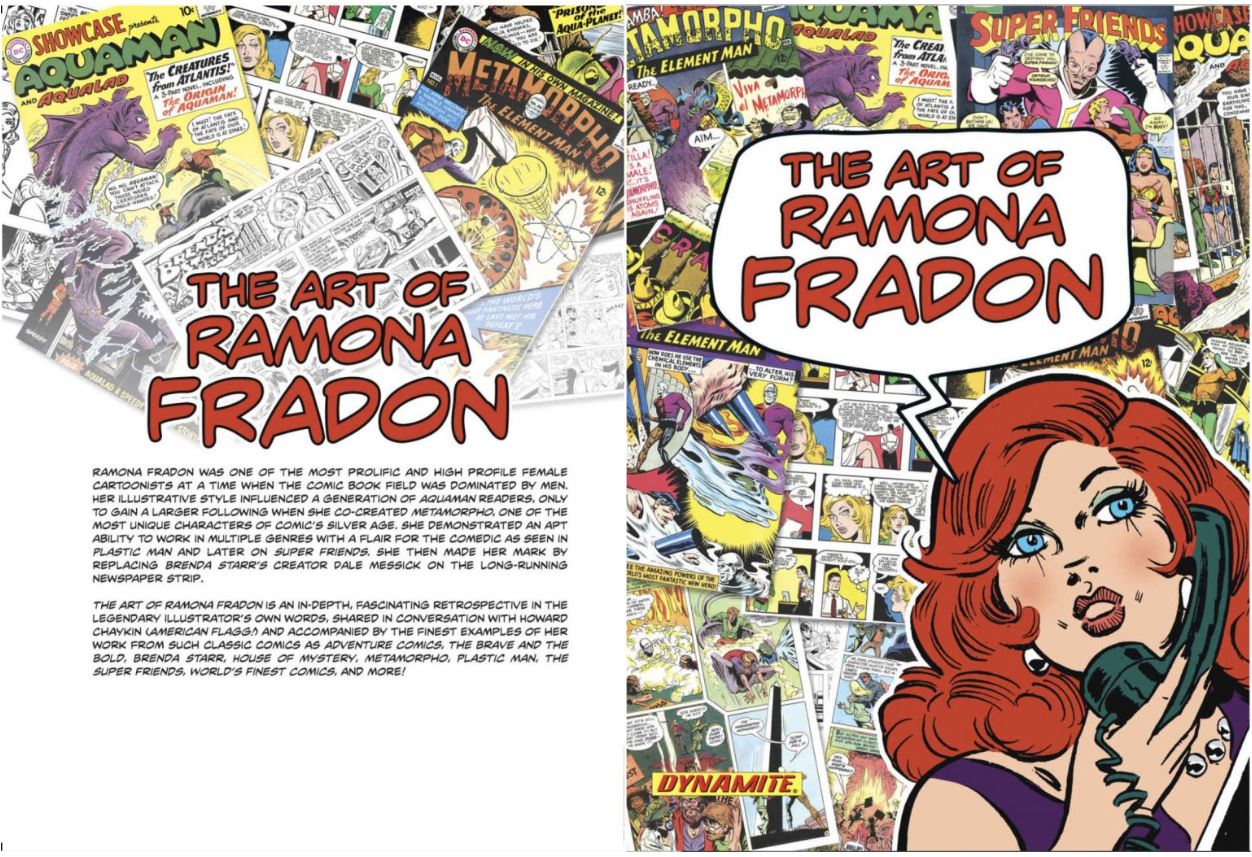
Batman and Superman in World’s Finest Comics: The Silver Age volume 1


By Edmond Hamilton, Bill Finger, Jerry Coleman, Curt Swan, Dick Sprang, Stan Kaye, Sheldon Moldoff, Charles Paris, Ray Burnley & various (DC Comics)
ISBN: 978-1-4012-7780-2 (TPB/Digital edition)

This year marks Batman’s 85th Anniversary and we’ll be covering many old and new books about the Dark Knight over the year. However, the Gotham Guardian’s impact has been far ranging and sustained, so let’s also take a look at his part in reshaping Superman and other heroes too…

Some things were just meant to be: bacon & eggs, rhubarb & custard, chalk & cheese…

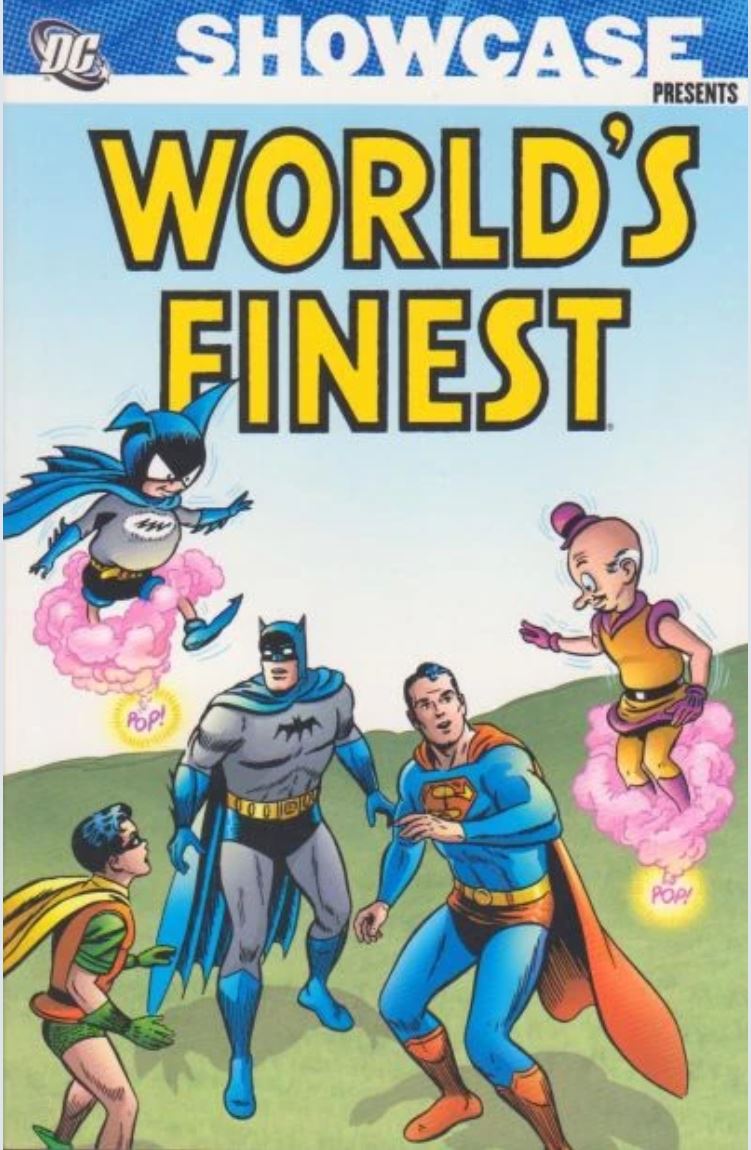
Both initially debuting as driven loners, after settling into their respective pioneering superhero niches, Superman and Batman ultimately worked together as the “World’s Finest” team for decades. They were friends as well as colleagues and their pairing made sound financial sense since DC’s top heroes (in effect, the company’s only costumed stars) could cross-pollinate and, more importantly, cross-sell their combined readerships.

This most inevitable of Paladin Pairings first occurred on the Superman radio show in 1945, and in comics the pair only briefly met whilst on a Justice Society of America adventure in All-Star Comics #36 (August/September 1947) – and even there they missed each other in the general gaudy hubbub…

Of course, they had shared the covers of World’s Finest Comics from the outset, but never crossed paths inside; sticking firmly to their specified solo adventures. For us pictorial continuity buffs, the climactic real first time was in the pages of Superman’s own bi-monthly comic (issue #76, May/June 1952), but the real birth of their partnership came in World’s Finest Comics #71 cover-dated July/August 1954 and making 2024 their official 70th Anniversary. (Yay, Teams!)

In 1952, pulp science fiction author Edmond Hamilton had been tasked with revealing how Man of Steel and Caped Crusader first met and accidentally uncovered each other’s costumed identities – whilst sharing a cabin on an overbooked cruise liner. Although an average crime-stopper yarn, it was the start of a phenomenon. Of course you’ll need to revisit the previous volume for that and other early team up tales…

With dwindling page counts, rising costs but a proven readership and after years of co-starring but never mingling, World’s Finest Comics #71 had presented Superman and Batman in the first of their official shared cases. A huge hit, the innovative partnership was one of the few superhero success stories of the 1950s and this second stunning compendium of Silver Age solid gold spans July/August 1958 to March 1961: re-presenting the lead stories from World’s Finest Comics #95-116. The astounding archive of adventure opens with a Hamilton, Dick Sprang & Ray Burnley yarn pitting the temporarily equally multi-powered and alien-entranced champions against each other in ‘The Battle of the Super-Heroes’.

A magical succession of magnificent and light-heartedly whacky classics began in WFC #96 with Hamilton’s ‘The Super-Foes from Planet X’, wherein indolent and effete aliens dispatch fantastic monsters to battle the titanic trio for the best possible reasons…

Bill Finger took over scripting with #97, incomprehensibly turning the Man of Steel on his greatest friends in ‘The Day Superman Betrayed Batman’, after which ‘The Menace of the Moonman!’ pits the heroes against a deranged hyper-powered astronaut. Then, ‘Batman’s Super-Spending Spree!’ baffles his close friends before Lex Luthor devilishly traps Superman in the newly-recovered “Bottle City of Kandor” to become ‘The Dictator of Krypton City’ – all breathtaking epics beautifully limned by Sprang & Kaye.

Sprang inked himself in rocket-paced super-crime thriller ‘The Menace of the Atom-Master’ whereas it took Curt Swan, Burnley, Sprang & Sheldon Moldoff to properly unveil the titanic tragedy of ‘The Caveman from Krypton’ in #102. Sprang & Moldoff then unveiled ‘The Secret of the Sorcerer’s Treasure’, depicting a couple of treasure hunters driven mad by the tempting power of freshly unearthed magical artefacts, after which Luthor came to regret using a hostage Batwoman to facilitate ‘The Plot to Destroy Superman!’

After a metamorphosis which turned Clark Kent into ‘The Alien Superman’ proved not at all what it seemed to be, ‘The Duplicate Man’ in WF #106 sees the ultimate downfall of a villain who develops an almost unbeatable crime tool. He’s followed by ‘The Secret of the Time-Creature’ who encompassed centuries and resulted in one of Finger’s very best detective thrillers to baffle but never stump the Cape & Cowl Crusaders…

Jerry Coleman assumed the writer’s role with ‘The Star Creatures’ (art by Sprang & Stan Kaye); the tale of an extraterrestrial moviemaker whose deadly props were stolen by Earth crooks. Stellar cover artist Curt Swan (with Stan Kaye inking) finally made the move to interior illustrator for ‘The Bewitched Batman’, detailing a tense race against time to save the Gotham Guardian from an ancient curse, before ‘The Alien who Doomed Robin’ (Sprang & Moldoff) sees a symbiotic link between monster marauder and Boy Wonder leave the senior heroes apparently helpless – at least for a little while…

Finger, Sprang & Moldoff toured ‘Superman’s Secret Kingdom’ (#111, August 1960) in a compelling lost world yarn wherein a cataclysmic holocaust deprives the Man of Steel of his memory, necessitating Batman and Robin seeking to cure him at all costs…

The next issue – by Coleman, Sprang & Moldoff – delivered a unique and tragic warning in ‘The Menace of Superman’s Pet’ as a phenomenally cute teddy bear from space proves to be an unbelievably dangerous menace and unforgettable true friend. Bring tissues, you big babies…

In an era when disturbing or terrifying menaces were frowned upon, many tales featured intellectual dilemmas and unavoidably irritating pests to torment our heroes. Both Gotham Guardian and Man of Steel had their own magical 5th dimensional gadflies and it was therefore only a matter of time until ‘Bat-Mite Meets Mr. Mxyzptlk’: a madcap duel to determine whose hero was best with America caught in the metamorphic middle.

WF #114 saw Superman, Batman & Robin shanghaied to distant world Zoron with their abilities are reversed as ‘Captives of the Space Globes’. Nevertheless, justice is still served in the end, after which ‘The Curse that Doomed Superman’ sees the Action Ace consistently outfoxed by a scurrilous Swami with the Darknight Detective helpless to assist him…

Swan & Kaye return for #116’s thrilling monster mash ‘The Creature from Beyond’ to wrap up this volume with a criminal alien out-powering Superman whilst concealing an incredible secret…

Here are gloriously clever yet uncomplicated tales whose dazzling style still inform if not dictate the manner of DC’s modern TV animations – like the fabulous Batman: The Brave and the Bold – and the contents of this titanic tome are a veritable feast of witty, charming thrillers packing as much punch and wonder now as they always have.
© 1958, 1959, 1960, 1961 2018 DC Comics. All Rights Reserved.
Showcase Presents: The Teen Titans volume 1


By Bob Haney, Len Wein, Marv Wolfman, Bruno Premiani, Nick Cardy, Irv Novick, Bill Molno, Lee Elias, Bill Draut, Jack Abel, Sal Trapani & various (DC Comics)
ISBN: 978-1-84576-677-1 (TPB)

The concept of kid hero teams was not a new one when DC finally opted to entrust their big heroes’ assorted sidekicks with their own comic. The result was a fab, hip and groovy ensemble as dedicated to helping kids as it was to stamping out insidious evil; ready to capitalise on the growing independence of modern kids.

The greatest difference between underage wartime groups like The Young Allies, Newsboy Legion and Boy Commandos or 1950s holdovers like The Little Wise Guys and Boy Explorers and the birth of the Teen Titans was quite simply a burgeoning social phenomenon popularly dubbed “Teenagers”: a whole new thing regarded as a discrete cultural and commercial force. These were kids who could – and should – be permitted to do things themselves free from constant adult “help” or supervision. This quirkily eclectic compilation re-presents landmark try-out appearances from The Brave and the Bold #54 and 60 and Showcase #59 – collectively debuting in 1964 and1965 – plus the first 18 issues of a Teen Titans solo title, running January/February 1966 to November/December 1968.

As early as the June/July 1964 cover-dated issue of The Brave and the Bold (#54), DC’s Powers-That-Be tested choppy unknown waters in a gripping tale by writer Bob Haney superbly illustrated by unsung genius Bruno Premiani. At that juncture B&B was exploring a succession of superhero combinations and ‘The Thousand-and-One Dooms of Mr. Twister’ united Kid Flash, Aqualad and Robin the Boy Wonder in a bizarre battle against a modern wizard/Pied Piper who had stolen the teens of provincial Hatton Corners. The young heroes had met in the town by chance when students there invited them to mediate a long-running dispute with the adults in charge. Hey Kids! Happy 60th Anniversary!

This element of a teen “court-of-appeal” was the motivating factor in many of the later group’s cases. One year later the lads met again for a second adventure (The Brave and the Bold #60, by the same creative team) but introduced two new elements.

‘The Astounding Separated Man’ featured more misunderstood kids – this time in coastal hamlet Midville – threatened by an outlandish monster whose giant body parts could move independently. They added Wonder Girl (not actually a sidekick, or even a person, at that time but rather a magical/digital artificial avatar of Wonder Woman as a child, but a fact writers and editors seemed blissfully unaware of) and finally earned a name: Teen Titans.

Their final test appearance came in Showcase (issue #59, cover-dated November/December 1965): birthplace of so many hit comic concepts. It was the first drawn by the brilliant Nick Cardy – who became synonymous with the 1960s series. ‘The Return of the Teen Titans’ pitted them against teen pop trio The Flips who were apparently also a gang of super-crooks… but as was so often the case, the grown-ups had got it all wrong…

One month later their own comic launched. Dated January/February 1966, TT #1 was released mere weeks before the first Batman TV show aired on January 12th. Robin was point of focus on the cover – and most succeeding ones – as Haney & Cardy produced exotic thriller ‘The Beast-God of Xochatan!’ with the youngsters acting as Peace Corps representatives in a South America-set drama of sabotage, giant robots and magical monsters.

The next issue held a fantastic mystery of revenge and young love involving ‘The Million-Year-Old Teen-Ager’ who was entombed and revived in the 20th century. He might have survived modern intolerance, bullying and culture shock on his own, but when his ancient blood enemy turned up, the Titans were ready to lend a hand…

TT #3’s ‘The Revolt at Harrison High’ capitalised on the craze for drag-racing in a tale of crazy criminality. Produced during a historically iconic era, many readers now can’t help but cringe when reminded of such daft dastardly foes as Ding-Dong Daddy and his evil bikers, and of course the hip, trendy dialogue (it wasn’t that accurate then, let alone now) is pitifully dated, but the plot is strong and the art magnificent.

‘The Secret Olympic Heroes’ guest-starred Green Arrow’s teen partner Speedy in a very human tale of parental pressure at the peak end of sporting endeavour, although there’s also skulduggery aplenty from a terrorist organisation intent on disrupting the games. In #5’s ‘The Perilous Capers of the Terrible Teen’ the Titans faced dual tasks: helping a troubled young man and capturing a super-villain called The Ant, despite all evidence indicating that they were the same person, before another DC sidekick made his Titans debut in ‘The Fifth Titan’. Here obnoxious juvenile know-it-all Beast Boy from the Doom Patrol falls under the spell of a wicked circus owner and the kids must set things right. Painfully illustrated by Bill Molno & Sal Trapani, it’s the absolute low-point of a stylish run.

Many fans would disagree, however, citing #7’s ‘The Mad Mod, Merchant of Menace’ as the biggest stinker, but beneath painfully dated dialogue there’s a witty, tongue-in-cheek tale of swinging London and novel criminality, plus the return of the magnificent Nick Cardy to the art chores. It was back to America for ‘A Killer called Honey Bun’ (illustrated by Irv Novick & Jack Abel): another tale of adult intolerance and misunderstood youth, set against a backdrop of espionage in Middle America featuring a deadly prototype robotic super-weapon in the title role, whereas #9’s ‘Big Beach Rumble’ saw the Titans refereeing a vendetta between rival colleges before modern day pirates crashed the scene. Novick pencilled and Cardy’s inking made it all very palatable.

The editor obviously agreed as the artists remained for the next few issues. ‘Scramble at Wildcat’ was a crime caper featuring dirt-bikes and desert ghost-towns with skeevy biker The Scorcher profiting from a pernicious robbery spree whilst Speedy returned in #11’s spy-thriller ‘Monster Bait’ with the young heroes undercover to save a boy being blackmailed into betraying his father and his country. Twin hot-topics the Space-Race and Disc Jockeys informed whacky sci fi thriller ‘Large Trouble in Space-ville!’ with #13 a true classic as Haney & Cardy produced a seasonal comics masterpiece ‘The TT’s Swingin’ Christmas Carol!’: a stylish retelling that has become one of the most reprinted Titans tales ever. At this time Cardy’s art opened up as he grasped the experimental flavour of the times. The cover of TT #14, as well as the interior illustration for grim psycho-thriller ‘Requiem for a Titan’ are unforgettable. The case introduced the team’s first serious returning villain (Mad Mod does not count!): The Gargoyle is mesmerising and memorable. Although Cardy only inked Lee Elias’s pencils for #15’s eccentric tryst with Hippie counter-culture, ‘Captain Rumble Blasts the Scene!’ is a genuinely compelling crime thriller from a time when nobody over age 25 understood what the youth of the world was doing…

Teen Titans #16 returned to more fanciful ground in ‘The Dimensional Caper!’ when aliens infiltrate a rural high school (and how many times has that plot resurfaced since this 1968 epic?). Cardy’s art reached dizzying heights of innovation both here and in the next issue’s waggish jaunt to London in ‘Holy Thimbles, It’s the Mad Mod!’: a cunning criminal chase through Cool Britannia including a command performance from Her Majesty, the Queen!

This initial volume ends with a little landmark as novice writers Len Wein & Marv Wolfman got their big break introducing Russian superhero Starfire and setting themselves firmly on a path of teen super-team writing. ‘Eye of the Beholder’ is a cool cat burglar caper set in trendy Stockholm, drawn with superb understatement by Bill Draut, acting as the perfect indicator of changes in style and attitude that would infuse the Titans and the comics industry itself.

Although perhaps dated in delivery, these tales were a liberating experience for kids when first released. They betokened fresh empathy with independent youth and tried to address problems more relevant to and generated by that specific audience. That they are captivating in execution is a wonderful bonus. This is absolute escapism and absolutely delightful.
© 1964-1968, 2006 DC Comics. All Rights Reserved.