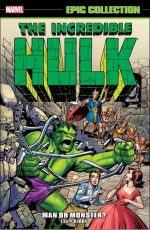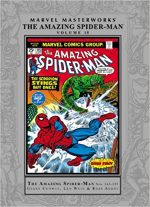
Incredible Hulk Epic Collection: Man or Monster?


By Stan Lee, Jack Kirby, Steve Ditko, Dick Ayers & various (Marvel)
ISBN: 978-0-7851-9600-6

Chronologically collecting the Jade Juggernaut’s earliest appearances, this titanic tome (available as a hefty paperback and relatively weightless digital edition) gathers Incredible Hulk #1-6, Fantastic Four #2 and 25-26, Avengers #1-3 and 5, Amazing Spider-Man #14, Tales to Astonish #59 and a memorable clash with Thor from Journey into Mystery #112: cumulatively spanning early 1962 to the end of 1964.

The Incredible Hulk was new-born Marvel’s second new superhero title, although technically Henry Pym debuted earlier in a one-off yarn in Tales to Astonish #27 (January 1962). However, he didn’t become a costumed hero until the autumn, by which time Ol’ Greenskin was not-so-firmly established.

The Hulk smashed right into his own bi-monthly comic and, after some classic romps by Young Marvel’s finest creators, crashed right out again. After six issues the series was cancelled and Lee retrenched, making the Gruff Green Giant a perennial guest-star in other Marvel titles until such time as they could restart the drama in their new “Split-Book” format in Tales to Astonish where Ant/Giant-Man was rapidly proving to be a character who had outlived his time.

Cover-dated May 1962, the Incredible Hulk #1 sees puny atomic scientist Bruce Banner, sequestered on a secret military base in the desert, perpetually bullied by the bombastic commander General “Thunderbolt” Ross as the clock counts down to the World’s first Gamma Bomb test.

Besotted by Ross’s daughter Betty, Banner endures the General’s constant jibes as the timer ticks on and tension increases.

At the final moment Banner sees a teenager lollygagging at Ground Zero and frantically rushes to the site to drag the boy away. Unknown to everyone, the assistant he’s entrusted to delay the countdown has an agenda of his own…

Rick Jones is a wayward but good-hearted kid. After initial resistance he lets himself be pushed into a safety trench, but just as Banner prepares to join him The Bomb detonates…

Somehow surviving the blast, Banner and the boy are secured by soldiers, but that evening as the sun sets the scientist undergoes a monstrous transformation. He grows larger; his skin turns a stony grey…

In six simple pages that’s how it all starts, and no matter what any number of TV or movie reworkings or comicbook retcons and psycho-babble re-evaluations would have you believe that’s still the best and most primal take on the origin. A good man, an unobtainable girl, a foolish kid, an unknown enemy and the horrible power of destructive science unchecked…

Written by Stan Lee, drawn by Jack Kirby with inking by Paul Reinman, ‘The Coming of the Hulk’ barrels along as the man-monster and Jones are kidnapped by Banner’s Soviet counterpart the Gargoyle for a rousing round of espionage and Commie-busting. In the second issue the plot concerns invading aliens, and the Banner/Jones relationship settles into a traumatic nightly ordeal as the good doctor transforms and is locked into an escape-proof cell whilst the boy stands watch helplessly. Neither ever considers telling the government of their predicament…

‘The Terror of the Toad Men’ is formulaic but viscerally and visually captivating as Steve Ditko inks Kirby; imparting a genuinely eerie sense of unease to the artwork. Incidentally, this is the story where the Hulk inexplicably changed to his more accustomed Green persona…

Although back-written years later as a continuing mutation, the plain truth is that grey tones caused all manner of problems for production colourists so it was arbitrarily changed to the simple and more traditional colour of monsters.

The third issue presented a departure in format as long, chaptered epics gave way to complete short stories. Dick Ayers inked Kirby in the transitional ‘Banished to Outer Space’ which radically altered the relationship of Jones and the monster, with the story thus far reprised in 3-page vignette ‘The Origin of the Hulk’ after which Marvel mainstay of villainy the Circus of Crime debuts in ‘The Ringmaster’. The Hulk goes on an urban rampage in #4’s first tale ‘The Monster and the Machine’ before aliens and Commies combine in the second escapade ‘The Gladiator from Outer Space!’

The Incredible Hulk #5 is a joyous classic of Kirby action, introducing immortal Tyrannus and his underworld empire in ‘The Beauty and the Beast!’ whilst those pesky Commies came in for another drubbing when the Jolly Green freedom-fighter prevents the invasion of Lhasa in ‘The Hordes of General Fang!’

Lee grasped early on the commercial impact of cross-pollination and – presumably aware of disappointing sales – inserted the Jade Juggernaut into his top selling title next.

Fantastic Four #12 (March 1963) featured an early crossover as the team were asked to help the US army capture ‘The Incredible Hulk’: a tale from Lee, Kirby & Ayers packed with intrigue, action and bitter irony as  series of spectacularly destructive sabotage incidents puts the heroes on the trail of a monster when they should have been looking at spies…

Despite the sheer verve and bravura of these simplistic classics – some of the greatest, most rewarding comics nonsense ever produced – the Hulk series was not doing well, and Kirby moved on to more appreciated arenas. Steve Ditko handled all the art chores for #6: another full-length epic and an extremely engaging one.

‘The Incredible Hulk Vs the Metal Master’ has astounding action, sly and subtle sub-plots and a thinking man’s resolution, but nonetheless the title died with the issue, also dated March.

Another comic debuted that month and offered a life line to the floundering Emerald Outcast.  ‘The Coming of the Avengers’ is one of the cannier origin tales in comics. Instead of starting at a zero point and acting as if the reader knew nothing, creators Lee, Kirby & Ayers assumed that interested parties had at least a passing familiarity with Marvel’s other titles, and wasted very little time or energy on introductions in the premiere issue.

In Asgard Loki, god of evil, is imprisoned on a dank islet but still craves vengeance on his step-brother mighty Thor. Observing Earth the villain finds the monstrous Hulk and engineers a situation wherein the man-brute goes on a rampage, hoping to trick the Thunder God into battling the bludgeoning brute. When sidekick Rick Jones radios the Fantastic Four for assistance, Loki diverts the transmission so they cannot hear it and expects his mischief to quickly blossom. However. other heroes pick up the SOS – namely Iron Man, Ant Man and the Wasp.

As the costumed champions on the desert converge to search for the Hulk, they realize something’s amiss…

This terse and compelling yarn is Lee & Kirby at their bombastic best, and one of the greatest stories of the Silver Age (it’s certainly high in my own top ten Marvel Tales of all time!) and is promptly followed by ‘the Space Phantom’ (Lee, Kirby & Reinman), another unforgettable epic, in which an alien shape-stealer almost destroys the group from within.

Ever-changing, the tale ends with the volatile Hulk quitting the team only to return in #3 as a villain in partnership with ‘Sub-Mariner!’ This globe-trotting romp delivered high energy thrills and one of the best battle scenes in comics history.

Three months later Fantastic Four #25 featured a cataclysmic clash that had young heads spinning in 1964 and pretty much ever since. Inked by George Roussos, ‘The Hulk Vs The Thing’ and concluding tale ‘The Avengers Take Over!’ in FF #26 offered a fast-paced, all-out Battle Royale as the disgruntled man-monster comes to New York in search of sidekick Rick with only an injury-wracked FF in the way of his destructive rampage.

A definitive moment in the character development of the Thing, the action amplifies when a rather stiff-necked and officious Avengers team horns in claiming jurisdictional rights on “Bob” Banner (this tale is plagued with pesky continuity errors which would haunt Lee for decades) and his Jaded Alter Ego.

Notwithstanding the bloopers, this is one of Marvel’s key moments and still a visceral, vital read.

Over in Avengers #5, ‘The Invasion of the Lava Men!’ (Lee, Kirby & Reinman) revealed another incredible romp as Earth’s Mightiest battled superhuman subterraneans and a lethally radioactive mutating mountain with the unwilling assistance of the Hulk… his last appearance there for many months…

The next cameo came in Amazing Spider-Man #14 (July 1964): an absolute milestone as a hidden criminal mastermind debuted by manipulating a Hollywood studio into making a movie about the wall-crawler. Even with guest-star opponents such as the Enforcers the Incredible Hulk steals all the limelight in ‘The Grotesque Adventure of the Green Goblin’ (by Lee & Ditko) which is only otherwise notable for introducing Spider-Man’s most perfidious and flamboyant enemy (sarcasm alert!).

The second chapter of the man-monster’s career was about to take off and Tales to Astonish #59 (September) offered a bombastic prologue as ‘Enter: The Hulk!’ (Lee, Ayers & Reinman) sees the Avengers inadvertently inspiring Giant-Man to hunt down the Green Goliath.

Although the Human Top devilishly engineered that blockbusting battle, Lee was the real mastermind, as with the next issue The Hulk began starring in his own series and on the covers whilst Giant-Man’s adventures shrank back to a dozen or so pages.

This wonderfully economical compendium of wonders closes with the lead story from Journey into Mystery #112 (January 1965). ‘The Mighty Thor Battles the Incredible Hulk!’ is a glorious gift to all those fans who perpetually ask “Who’s stronger…?” Possibly Kirby and Chic Stone’s finest artistic moment, it details a private duel between the two super-humans that occurred during that free-for-all between Earth’s Mightiest, Sub-Mariner and Ol’ Greenskin in Avengers #3. The raw power of that tale is a perfect exemplar of what makes the Hulk work and would an ideal place to close proceedings but fans and art lovers can enjoy further treats in the form of assorted House Ads, original artwork by Kirby and Ditko, a gallery of classic Kirby covers modified by painter Dean White (originally seen on assorted Marvel Masterworks editions), plus reproduced Essentials collection and Omnibus covers by Bruce Timm and Alex Ross…

Hulk Smash! He always was and with material like this he always will be.
© 1962, 1963, 1964, 1965, 2016 Marvel Characters, Inc. All rights reserved.
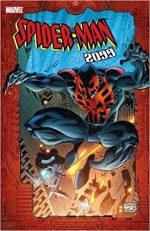
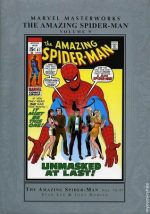
Amazing Spider-Man Masterworks volume 9


By Stan Lee, John Romita, John Buscema, Jim Mooney & various (Marvel)
ISBN: 978-0-7851-2462-7

Amazing Spider-Man was always a comicbook that matured with – or perhaps just slightly ahead of – its fan-base.

This nail-biting ninth full-colour compilation of chronological Arachnoid Amazement sees the World’s Most Misunderstood Hero navigate another rocky period of transformation and tribulation on the road to becoming the world’s most popular comics character.

After a shaky start The Amazing Spider-Man quickly became a popular sensation with kids of all ages. Before too long the quirky, charming, thrillingly action-packed comics soap-opera would become the model for an entire generation of younger heroes impatiently elbowing aside the staid, (relatively) old thirty-something mystery-men of previous publications and hallowed tradition.

Smart-but-alienated Peter Parker was bitten by a radioactive spider during a school trip. Discovering strange superhuman abilities which he augmented with his own natural chemistry, physics and engineering genius, the kid did what any lonely, geeky nerd would do with such newfound prowess: he tried to cash in for girls, fame and money.

Making a costume to hide his identity in case he made a fool of himself, Parker became a minor media celebrity – and a criminally self-important one. To his eternal regret, when a thief fled past him one night he didn’t lift a finger to stop him, only to find when he returned home that his guardian uncle Ben Parker had been murdered.

Crazed and vengeful, Peter hunted the assailant who’d made his beloved Aunt May a widow and killed the only father he had ever known, discovering, to his horror, that it was the self-same felon he had neglected to stop. His irresponsibility had resulted in the death of the man who raised him, and the traumatised boy swore to forevermore use his powers to help others…

Since that night, the Wondrous Wallcrawler has tirelessly battled miscreants, monsters and madmen, with a fickle, ungrateful public usually baying for his blood even as he perpetually saves them…

The rise and rise of the Amazing Arachnid increased pace as the Swinging Sixties drew to a close and, by the time of the tales collected herein (re-presenting Amazing Spider-Man #78-87, originally released between November 1969 and August 1970), Peter and his ever-expanding cast of comrades were practically household names and the darlings of college campuses and the media intelligentsia throughout America and the world.

Stan Lee’s scripts tapped into the always-evolving zeitgeists of the times and the deft use of soap opera plots kept older readers glued to the series even if the bombastic battle sequences didn’t.

One of those American “time-ghosts” was crime and gangsterism and dependence on flamboyant costumed super-foes as antagonists was finely balanced with the usual suspect-pool of thugs, hoods and mob-bosses, but these were not the individual gangs of the Ditko days.

Now Organised Crime and was a huge cultural touchstone with comics cashing in on modern movies, novels and headlines…

Illustrated by John Buscema, Amazing Spider-Man#78 opens this volume with ‘The Night of the Prowler!’ featuring John Romita Junior’s first ever creator-credit for “suggesting” dissatisfied young black man Hobie Brown who briefly turned his frustrations and innate inventive genius to costumed criminal purposes until set straight by Spider-Man in the concluding ‘To Prowl No More!’

With #80 a policy of single-issue adventures was instituted: short, snappy stand-alone thrillers delivering maximum thrills and instant satisfaction. First off was a return for the wallcrawler’s very first super-foe as ‘On the Trail of the Chameleon!’ found the criminal charlatan indulging in a spree of robberies after which an action-packed if somewhat ridiculous punch-up resulted from ‘The Coming of The Kangaroo!’, including a clear contender for daftest origin of all time…

Romita senior then returned as penciller for ‘And Then Came Electro!’ with the voltaic villain attempting to slaughter Spidey live on national TV.

There were big revelations about the Kingpin in the 3-part saga that featured in issues #83-85 with the introduction of ‘The Schemer’ (Lee, Romita sr. & Mike “DeMeo” Esposito): a mysterious but extremely well-heeled criminal outsider determined to destroy the power of the sumo-like crime-lord and usurp his position in the underworld.

‘The Kingpin Strikes Back!’ (Romita sr., Buscema & Mooney) and ‘The Secret of the Schemer!’ changed the Marvel Universe radically, not just by disclosing some of the family history of one of the company’s greatest villains, but also by sending Peter Parker’s eternal gadfly Flash Thompson back to a dubious fate in Vietnam.

It wasn’t the kid’s first tour but now the war was becoming unpopular at home and the bombastic jingoism of earlier issues was being replaced by more contemplative concern as evoked by authorial mouthpiece Stan Lee…

‘Beware… the Black Widow!’ then gave Romita and Mooney a chance to redesign and relaunch the Soviet super-spy and sometime-Avenger in an enjoyable if highly formulaic misunderstanding/clash-of-heroes yarn with an ailing Spider-Man never really endangered. The entire episode was actually a promotion for the Widow’s own soon-to-debut solo series…

The dramas conclude for now with ‘Unmasked at Last!’ which found Parker, convinced that his powers were fading forever and suffering from a raging fever, exposing his secret identity to all the guests at his girlfriend’s party…

Using the kind of logic and subterfuge that only works in comics and sitcoms, Parker and Hobie Brown convinced everybody that it was only a flu-induced aberration…

This is another fabulous celebration of an important teen icon and symbol. Spider-Man at this time became a permanent, unmissable part of many youngsters’ lives and did so by living a life as close to theirs as social mores and the Comics Code would allow. Blending cultural authenticity with spectacular art, and making a dramatic virtue of the awkwardness, confusion and sense of powerlessness that most of the readership experienced daily, resulted in an irresistibly intoxicating read, delivered in addictive emotionally-intense instalments, but none of that would be relevant if the stories weren’t so compellingly entertaining. This book is Stan Lee’s Marvel and Spider-Man at their peak.
© 1969, 1970, 2014 Marvel Character, Inc. All rights reserved.

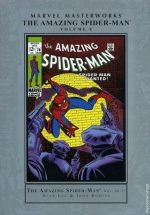
Amazing Spider-Man Masterworks volume 8


By Stan Lee, John Romita, John Buscema, Ross Andru, Jim Mooney, Bill Everett & various (Marvel)
ISBN: 978-0-7851-2074-2) (HB)                   978-0-7851-8807-0 (TPB)

This eighth astounding full-colour compilation of webspinning wonderment again follows the World’s Most Misunderstood Hero through deadly dangers and romantic rollercoasters as the second great era of Amazing Arachnid artists moved inevitably to a close. Although the elder John Romita would remain closely connected to Spider-Man’s adventures for some time yet, these tales would be amongst his last long run as lead illustrator on the series.

After a shaky start – suffering cancellation before his first issue – The Amazing Spider-Man quickly became a popular sensation with kids of all ages. Before long the quirky, charming, thrillingly action-packed comics soap-opera became the model for an entire generation of younger heroes impatiently elbowing aside the staid, (relatively) old thirty-something mystery-men of previous publications and hallowed tradition.

Peter Parker was a smart-but-alienated kid bitten by a radioactive spider during a school science trip. Discovering astonishing arachnid abilities – which he augmented with his own natural chemistry, physics and engineering genius – the kid did what any lonely, geeky nerd would do with such newfound prowess: he tried to cash in for girls, fame and money.

Making a costume to hide his identity in case he made a fool of himself, Parker became a minor media celebrity – and a criminally self-important one. To his eternal regret, when a thief fled past him one night he didn’t lift a finger to stop him, only to find when he returned home that his guardian uncle Ben Parker had been murdered.

Crazed and vengeful, Peter hunted the assailant who’d made his beloved Aunt May a widow and killed the only father he had ever known, discovering, to his horror, that it was the self-same felon he had neglected to stop. His irresponsibility had resulted in the death of the man who raised him, and the traumatised boy swore to forevermore use his powers to help others…

Since that night, the Wondrous Wallcrawler has tirelessly battled miscreants, monsters and madmen, with a fickle, ungrateful public usually baying for his blood even as he perpetually saves them…

The rise and rise of the Amazing Arachnid accelerated as the Swinging Sixties drew to a close and, by the time of the tales collected herein (Amazing Spider-Man#68-77 originally released between January-October 1969, plus an obscure thriller from Marvel Super-Heroes #14), Peter and his ever-expanding cast of comrades were on the way to being household names as well as the darlings of college campuses and the media intelligentsia.

Stan Lee’s scripts were completely in tune with the times – as observed by most kids’ parents at least – and the increasing use of soap opera plots kept older readers glued to the series even if the bombastic battle sequences didn’t.

Thematically, gangsterism dominated (probably due to the contemporary buzz caused by Mario Puzo’s novel The Godfather) and an increasing use of mystery plots balanced a dependence on costumed super-foes as antagonists: all finely balanced with the usual suspect-pool of thugs, hoods and mob-bosses, but these were not the individual gangs of the Ditko days.

Now Organised Crime and Mafia analogue The Maggia were the big criminal-cultural touchstone as comics caught up with modern movies and headlines.

Issue #68 (by Lee, Romita & Jim Mooney) started a lengthy saga featuring the pursuit of an ancient stone tablet by various nefarious forces, beginning with The Kingpin who exploited a topical moment of student dissent to foment a ‘Crisis on the Campus!’

When a seemingly inevitable riot erupted, the Big Bad tried to swipe the artefact, leaving a few teenagers we’re all too familiar with looking very guilty…

Meanwhile Peter Parker, already struggling with debt, a perpetually at-Death’s-Door Aunt May, relationship grief with girlfriend Gwen Stacy and no time to study, was accused of not being involved enough by his fellow students…

During this period scripter Lee increasingly tapped into the student unrest of the times in various Marvel titles and ‘Mission: Crush the Kingpin!’ further tightened the screws as the student unrest exploded into violence whilst the corpulent crime czar incriminated Spider-Man in the tablet’s theft.

Hounded and harried in ‘Spider-Man Wanted!’ the web warrior nevertheless managed to defeat the Kingpin only to (briefly) believe himself a killer after he attacked personal gadfly J. Jonah Jameson in a fit of rage; causing an apparent heart attack in the obsessive, hero-hating publisher.

At his lowest ebb, and now stuck with the tablet, Parker is attacked by sometime-Avenger Quicksilver in ‘The Speedster and the Spider!’ (#71), before John Buscema signs on as layout-man in ‘Rocked by the Shocker!’

No sooner does Spider-Man leave the stone tablet with Gwen’s dad – former Police Chief Stacy – than the vibrating villain attacks, pinching the petrified artefact and precipitating a frantic underworld civil war. The Maggia dispatch brutal over-sized enforcer Man-Mountain Marko to retrieve it at all costs in ‘The Web Closes!’ (Lee, Buscema, Romita & Mooney) as upstart lawyer Caesar Cicero makes his long-anticipated move to depose aged Don of Dons Silvermane…

However, the frail, elderly crime-lord knows the true secret – if not the methodology – of the tablet. To that end, he abducts biologist Curt Connors and his family to reconstruct the formula hidden on the stone and bring him ultimate victory.

Unfortunately, nobody but Spider-Man knows Connors is also the lethal Lizard and that the slightest stress might unleash the reptilian monster within to once more threaten all humanity. ‘If this be Bedlam!’ (Romita & Mooney) leads directly into ‘Death Without Warning!’ as the decrypted power of the tablet causes a cataclysmic battle that seemingly destroys one warring faction forever, decimating the mobs, but also freeing a far more deadly threat…

Amazing Spider-Man #76 sees John Buscema become full penciller with ‘The Lizard Lives!’ whilst concluding chapter ‘In the Blaze of Battle!’ witnesses the webspinner trying to defeat, cure and keep the tragic secret of his friend Connors, all whilst preventing guest-starring Human Torch Johnny Storm exterminating the marauding rogue reptile forever…

Closing this comics compendium is a one-off yarn from Marvel Super-Heroes #14 (May 1968). ‘The Reprehensible Riddle of the… The Sorcerer!’ actually debuted a year previously in the try-out title and reads to me like an inventory tale rushed out to fill a deadline gap or printed just before its “use-by” date expired. Nonetheless, as crafted by Lee, Ross Andru & Bill Everett, it offers a different spin on the wallcrawler as an enigmatic psychic targets Spider-Man, using psionic strikes and voodoo tricks to draw the hero to New Orleans and a death duel with a synthetic, science-tinged homunculus…

Spider-Man became a permanent unmissable part of many teenagers’ lives at this time and did so by living a life as close to theirs as social mores and the Comics Code would allow. Blending cultural authenticity with glorious narrative art, and making a dramatic virtue of the awkwardness, confusion and sense of powerlessness most of the readership experienced daily, resulted in an irresistibly intoxicating read, delivered in addictive soap-opera slices, but none of that would be relevant if the stories weren’t so compellingly entertaining.

This book is Marvel and Spider-Man at their peak. Why not see why…?
© 1968, 2012 Marvel Characters, Inc. All rights reserved.
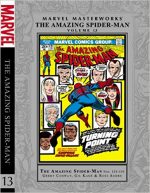
Amazing Spider-Man Masterworks volume 7


By Stan Lee, John Romita, Larry Lieber, Don Heck, Jim Mooney & various (Marvel)
ISBN: 978-0-7851-1637-0 (HB)                    978-0-7851-5935-3 (TPB)

Amazing Spider-Man was always a comicbook that matured with – or perhaps just slightly ahead – of its fan-base.

This seventh superbly scintillating full-colour compilation of chronological webspinning wonderment sees the World’s Most Misunderstood Hero through another rocky period of transformation as the second great era of Amazing Arachnid artists moved inevitably to a close. Although the elder John Romita would remain closely connected to the Wall-Crawler’s adventures for a little time yet, these tales would be amongst his last long run as lead illustrator on the series.

After a shaky start The Amazing Spider-Man quickly became a popular sensation with kids of all ages. Before too long the quirky, charming, thrillingly action-packed comics soap-opera would become the model for an entire generation of younger heroes impatiently elbowing aside the staid, (relatively) old thirty-something mystery-men of previous publications and hallowed tradition.

You know the story: Peter Parker was a smart-but-alienated kid bitten by a radioactive spider during a school science trip. Discovering he’d developed astonishing arachnid abilities – which he augmented with his own natural chemistry, physics and engineering genius – the kid did what any lonely, geeky nerd would do with such newfound prowess: he tried to cash in for girls, fame and money.

Making a costume to hide his identity in case he made a fool of himself, Parker became a minor media celebrity – and a criminally self-important one. To his eternal regret, when a thief fled past him one night he didn’t lift a finger to stop him, only to find when he returned home that his guardian uncle Ben Parker had been murdered.

Crazed and vengeful, Peter hunted the assailant who’d made his beloved Aunt May a widow and killed the only father he had ever known, discovering, to his horror, that it was the self-same felon he had neglected to stop. His irresponsibility had resulted in the death of the man who raised him, and the traumatised boy swore to forevermore use his powers to help others…

Since that night, the Wondrous Wallcrawler tirelessly battled miscreants, monsters and madmen, with a fickle, ungrateful public usually baying for his blood even as he perpetually saves them…

The rise and rise of the Amazing Arachnid increased pace as the Swinging Sixties drew to a close and, by the time of the tales collected herein (re-presenting Amazing Spider-Man #62-67, Annual #5 and oversized mainstream magazine experiment Spectacular Spider-Man #1-2, all originally released between July and December 1968), Peter and his ever-expanding cast of comrades were on the way to being household names as well as the darlings of college campuses and the media intelligentsia.

Stan Lee’s scripts were completely in tune with the times – as seen by most kids’ parents at least – and the increasing use of soap opera plots kept older readers glued to the series even if the bombastic battle sequences didn’t.

Thematically, there’s still a large percentage of old-fashioned crime and gangsterism and an increasing use of mystery plots. Dependence on costumed super-foes as antagonists was finely balanced with the usual suspect-pool of thugs, hoods and mob-bosses, but these were not the individual gangs of the Ditko days. Now Organised Crime and Mafia analogue The Maggia were the big criminal-cultural touchstone as comics caught up with modern movies and headlines.

First however from July 1968 comes Spectacular Spider-Man #1 by Lee, John Romita & Jim Mooney: an extended political thriller with charismatic reformer Richard Raleigh ferociously campaigning to become Mayor thus targeted and hunted by a brutish monster seemingly determined to keep the old political machine in place at all costs…

Rendered in moody wash tones, the drama soon disclosed a sinister plotter behind the campaign of terror… but his identity was the last one Spidey expected to expose…

Also included in the magazine and here was a retelling of the hallowed origin tale – ‘In the Beginning…’ by Lee, with Larry Lieber pencils and inks-&-tones added by the great Bill Everett.

Back in the four-colour world Amazing Spider-Man #62 demanded ‘Make Way for …Medusa!’: Lee, Romita, Don Heck & Mike Esposito/DeMeo supplied a fresh change-of-pace yarn as the wallcrawler stumbles into combat with the formidable Inhuman due to the machinations of a Madison Avenue ad man, after which ‘Wings in the Night!’ in #63 saw the original elderly Vulture return to crush his usurper Blackie Drago, and then take on Spidey for dessert.

The awesome aerial angst concluded with ‘The Vultures Prey’ which led to another art-change (with the sumptuous heavy line-work of Jim Mooney briefly replacing the workmanlike Heck & Esposito) in #65 as Spider-Man was arrested and had to engineer ‘The Impossible Escape!’ from a Manhattan prison, foiling a mass jailbreak along the way.

A psychotic special-effects mastermind returns seeking loot and vengeance in #66’s ‘The Madness of Mysterio!’ (Romita, Heck & DeMeo) as the master of FX illusion engineered his most outlandish stunt, whilst in the background the amnesiac Norman Osborn slowly began to regain his memory.

Although the wallcrawler is subjected to a hugely bizarre form of mind-bending it nevertheless results in an all-out action-packed brawl (rendered by Romita & Mooney) entitled ‘To Squash a Spider!’. Perhaps more interestingly, this yarn introduced Randy Robertson, college student son of the Daily Bugle’s city editor and one of the first young black regular roles in Silver Age comics. Lee and his staff were increasingly making a stand on Civil Rights issues at this time of unrest and Marvel would blaze a trail for African American characters in their titles. There would also be a growth of student and college issues during a period when American campuses were coming under intense media scrutiny…

The Amazing Arachnid’s magazine experiment then concludes with The Spectacular Spider-Man #2 (November 1968). To offset disappointing sales, Marvel had switched to a smaller size and added colour, but it was to be the last attempt to secure older-reader shelf-space until the early 1970s. At least the story was top-rate…

Following monochrome recap ‘The Spider-Man Saga’ Lee, Romita & Mooney dealt with months of foreshadowing by finally revealing how Norman Osborn shook off his selective amnesia and returned to full-on super-villainy in ‘The Goblin Lives!’

Steeped in his former madness and remembering Peter Parker was Spider-Man, Osborn plays cat and mouse with his foe, threatening all the hero’s loved ones until a climactic battle utilising hallucinogenic weapons again erases the Goblin personality… for the moment…

This volume closes with Amazing Spider-Man Annual #5 by Lee and his brother Larry Lieber (with inking from Esposito – still in his clandestine “Mickey DeMeo” guise) and clears up a huge mystery in the webspinner’s life by revealing the secret behind the deaths of ‘The Parents of Peter Parker!’.

Played as an exotic spy-thriller the tale took Spider-Man to the Algerian Casbah and a confrontation with the Red Skull. Nit-pickers and continuity-mavens will no doubt be relieved to hear that the villain was in fact retconned later and designated as the second Soviet master-villain who featured in the Captain America revival of 1953-1954, and not the Nazi original that Lee and Co had clearly forgotten was in “suspended animation” throughout that decade when writing this otherwise perfect action romp and heartstring-tugging melodrama…

That annual also provided a nifty Daily Bugle cast pin-up, a speculative sports feature displaying the advantages of Spider powers, a NYC street-map of the various locations where the Spidey saga unfolded plus a spoof section displaying how the Wallcrawler would look if published by Disney/Gold Key, DC or Archie Comics, or drawn by Al “Li’l Abner” Capp, Chester “Dick Tracy” Gould and Charles “Peanuts” Schulz.

It all wraps up with ‘Here We Go A-Plotting!’: a comedic glimpse at work in the Marvel Bullpen, uncredited but unmistakably drawn by the marvellous Marie Severin…

Blending cultural authenticity with stunning narrative art, and making a dramatic virtue of the awkwardness, confusion and sense of powerlessness that most of the readership experienced daily, resulted in an irresistibly intoxicating read, delivered in addictive soap-opera instalments, but none of that would be relevant if the stories weren’t so compellingly entertaining.

This book is Marvel and Spider-Man at their peak. Wish you were here?
© 1968, 2012 Marvel Characters, Inc. All rights reserved.
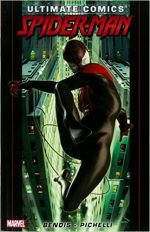
Amazing Spider-Man Marvel Masterworks volume 6


By Stan Lee, John Romita, Larry Lieber, Don Heck & various (Marvel)
ISBN: 978-0-7851-1362-2 (HB)                    978-1-3023-7876-9 (HB)

After a shaky start The Amazing Spider-Man quickly became a popular sensation with kids of all ages, rivalling the creative powerhouse that was Fantastic Four. Before too long the quirky, charming, thrillingly action-packed comics soap-opera would become the model for an entire generation of younger heroes impatiently elbowing aside the staid, (relatively) old thirty-something mystery-men of previous publications and hallowed tradition.

You know the story: Peter Parker was a smart-but-alienated kid bitten by a radioactive spider during a school science trip. Discovering he’d developed astonishing arachnid abilities – which he augmented with his own natural chemistry, physics and engineering genius – the kid did what any lonely, geeky nerd would do with such newfound prowess: he tried to cash in for girls, fame and money.

Making a costume to hide his identity in case he made a fool of himself, Parker became a minor media celebrity – and a criminally self-important one. To his eternal regret, when a thief fled past him one night he didn’t lift a finger to stop him, only to find when he returned home that his guardian uncle Ben Parker had been murdered.

Crazed with a need for vengeance, Peter hunted the assailant who’d made his beloved Aunt May a widow and killed the only father he had ever known, discovering, to his horror, that it was the self-same felon he had neglected to stop. His irresponsibility had resulted in the death of the man who raised him, and the traumatised boy swore to forevermore use his powers to help others…

Since that night, the Wondrous Wallcrawler has tirelessly battled miscreants, monsters and madmen, with a fickle, ungrateful public usually baying for his blood even as he perpetually saves them…

The rise and rise of the Amazing Arachnid increased pace as the Swinging Sixties unfolded and, by the time of the tales in this sixth sterling celebration (re-presenting Amazing Spider-Man #51-61 and Annual #4, originally released between August 1967 and June 1968), Peter and his ever-expanding cast of cohorts were on the way to being household names as well as the darlings of college campuses and the media intelligentsia.

Issue #50 had introduced one of Marvel’s greatest villains in the first of a 3-part yarn that saw the blooming of romance between Parker and college classmate Gwen Stacy and re-established Spidey’s war on cheap thugs and common criminals (a key component of the hero’s appeal was that no criminal was too small for him to bother with).

The saga also saw a crisis of conscience force him to quit before resolving to take up his heroic burden once more.

This volume opens with the second chapter as the wallcrawler is trapped ‘In the Clutches of… the Kingpin!’ (by Lee & Romita), battling an army of thugs to save hostages Fred Foswell and J. Jonah Jameson but ultimately losing a fateful fight with the big boss before tragically triumphing in concluding clash ‘To Die a Hero!’

This gang-busting triptych saw Romita relinquish the inking of his art to Mike Esposito (moonlighting from DC as Mickey DeMeo).

Amazing Spider-Man Annual #4 follows as Lee – with his brother Larry Lieber & Esposito handling the art chores – crafts an epic battle-saga wherein Spidey and the Human Torch are tricked into appearing in a movie. Sadly ‘The Web and the Flame!’ is just a deviously diabolical scheme to kill them orchestrated by old enemies The Wizard and Mysterio, but the titanic teens are up to the task of trashing their attackers…

From the same issue – and all courtesy of Lieber – come pictorial fact-features ‘The Coffee Bean Barn!’ face-checking the then-current Spider-Man regulars, sartorial secrets exposed in ‘What the Well-Dressed Spider-Man Will Wear’ before superpowers are scrutinised in ‘Spidey’s Greatest Talent’.

Also included are big pin-ups of our hero testing his strength against Marvel’s mightiest good guys, a double-page spread ‘Say Hello to Spidey’s Favorite Foes!’ plus another 2-page treat as we enjoy ‘A Visit to Peter’s Pad!’

A new multi-part saga began in #53 with ‘Enter: Dr. Octopus’ as the many-tentacled madman tries to steal a devastating new piece of technology. After being soundly routed the madman goes into hiding as a lodger at Aunt May’s house in ‘The Tentacles and the Trap!’, before regrouping and finally succeeding in ‘Doc Ock Wins!’

He even convinces a mind-wiped webslinger to join him before the astonishing conclusion in ‘Disaster!’ as, even bereft of memory, the Amazing Arachnid turns on his sinister subjugator and saves the day…

Shell-shocked and amnesiac, Spider-Man is lost in New York in #57 (with lay-outs by Romita, and pencils from the reassuring reliable Don Heck) until he clashes with Marvel’s own Tarzan clone in ‘The Coming of Ka-Zar!’ whilst in the follow-up ‘To Kill a Spider-Man!’ vengeance-crazed roboticist Professor Smythe convinces Jonah Jameson to finance another murderous mechanical Spider-Slayer…

With Heck still in the artist’s chair, Amazing Spider-Man #59 sees the hero regain his memory and turn his attention to a wave of street-crime in ‘The Brand of the Brainwasher!’ as a new mob-mastermind begins taking control of the city by mind-controlling city leaders and prominent cops – including Gwen’s dad.

The drama continues as the schemer is revealed to be one of Spidey’s old foes in ‘O, Bitter Victory!’ The revelation creates big problems for Peter and Gwen before concluding part ‘What a Tangled Web We Weave…!’ sees our hero save the day but still stagger away more victim than victor…

Spider-Man became a permanent and unmissable part of many teenagers’ lives at this time and did so by living a life as close to theirs as social mores and the Comics Code would allow.

Blending cultural authenticity with stunning narrative art, and making a dramatic virtue of the awkwardness, confusion and sense of powerlessness that most of the readership experienced daily resulted in an irresistibly intoxicating read, delivered in addictive soap-opera instalments, but none of that would be relevant if the stories weren’t so compellingly entertaining.

This book is Stan Lee’s Marvel and Spider-Man at their peak. You should be here too…
© 1967, 1968, 2015 Marvel Characters, Inc. All rights reserved.
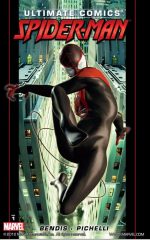
Marvel Adventures Avengers: Thor and Captain America


By Paul Tobin, Scott Gray, Todd Dezago, Ronan Cliquet, Ron Lim, Lou Kang & various (Marvel)
ISBN: 978-0-7851-5584-3

Since its earliest days Marvel has always courted young comicbook consumers. In 2003 the company instituted the Marvel Age imprint to update and reframe classic original tales by Stan Lee, Jack Kirby, Steve Ditko and others for a fresh-faced 21st century readership.

The experiment was tweaked in 2005, becoming Marvel Adventures. The tone was very much that of the company’s burgeoning TV cartoon franchises, in execution if not name. Titles bearing the Marvel Adventures brand included Spider-Man, Fantastic Four, Super Heroes, The Avengers and Hulk. These iterations ran until 2010 when they were cancelled and replaced by new volumes of Marvel Adventures: Super Heroes and Marvel Adventures: Spider-Man.

Almost all of those yarns have been collected in digest-sized compilations such as this one which gathers a selection of fantastic feats starring the God of Thunder or Sentinel of Liberty and their friends, comprising four all-ages tales from the second volume of Marvel Adventures Super Heroes #13-16 (spanning June-September 2011).

The action opens with a mythological masterpiece by Paul Tobin, Ronan Cliquet & Amilton Santos wherein plucky novice hero Nova is invited by Avenging comrades Thor and Valkyrie to accompany them on an annual errand for Odin the All-Father.

In the distant past when Asgardians warred with Trolls, a godling messenger named Glane failed in his mission and was banished to the ghastly Fields of the Fallen to pay penance by continually battling the Golden Realm’s vilest enemies.

Periodically Thor has been sent to add new tasks to the sinning failure’s heavy burden, and this year as the Thunderer and Valkyrie ready themselves for the trip, they invite the starstruck Nova to tag along.

However, as the trio battle their way through horrific monsters and overwhelming odds, Nova finds himself increasingly uncomfortable with the sentence meted out to Glane and even begins to doubt the motives of his immortal mentors. All that changes once he meets and battles beside the convicted penitent…

Originating in MASH #14, ‘Out of Time!’ is by Todd Dezago, Ron Lim & Scott Koblish (inspired by Gerry Conway & Ross Andru’s tale from the original Marvel Team-Up #7) and sees the Lord of Storm intercepting Spider-Man after the wall-crawler is blasted high into the sky whilst battling raving maniac the Looter.

That happy coincidence occurs just a bizarre force freezes time around them. When the heroes discover that only they have escaped a devastating weapon deployed by Trollish tyrant Kryllk the Conqueror to paralyze and overwhelm both Asgard and the mortal plane, they must divide their strength to simultaneously smash the conqueror in both Manhattan and Asgard if they are to set time running free again…

Captain America takes the spotlight in #15 as ‘Back in Time’ (Tobin, Cliquet & Santos) finds the Star-Spangled Avenger battling Neanderthals with ray-guns in a National Forest after tracking down rogue geneticists who have stolen a huge amount of plutonium.

A mere mile away, Peter Parker‘s girlfriend Sophia Sanduval is getting back to nature and chilling with her furry, scaly and feathered friends. As Chat, the mutant teen’s power to communicate with animals makes her a crucial component of the mystery-solving Blonde Phantom Detective Agency, but even she has never seen anything like the wave of extinct creatures which appear after Cap begins battling the tooled-up cavemen.

Soon she has been briefed on the deadly experiments of rogue technologist Jerrick Brogg – whose ambition is to build an army out of revived extinct creatures – and swears to help Cap put the maniac away and save all the beasts he has recreated from short painful lives of terror and brutal exploitation…

Wrapping up the action comes ‘Stars, Stripes and Spiders!’ by Dezago, Lou Kang & Pat Davidson (based on Len Wein & Gil Kane’s tale from Marvel Team-Up #13).

When a certain wall-crawling high-school student and occasional masked hero stumbles into Captain America tackling an AIM cadre stealing super-soldier serum, the nervous lad learns a few things about the hero game from the legendary guy who wrote the book. Sadly, not making that lesson any easier is petrifying super-villain Grey Gargoyle, whose deadly touch almost ends Spidey’s homework worries – and continued existence – forever…

Never the success the company hoped, the Marvel Adventures project was superseded in 2012 by specific comics tied to those Disney XD television shows designated as “Marvel Universe cartoons”, but these collected stories are still an intriguing, amazingly entertaining and superbly accessible means of introducing characters and concepts to kids born sometimes three generations or more away from the originating events.

Fast, furious, funny and enthralling, these riotous mini-epics are extremely enjoyable yarns, although parents should note that some of the themes and certainly the level of violence might not be what everybody considers “All-Ages Super Hero Action”…
© 2011 Marvel Characters, Inc. All rights reserved.
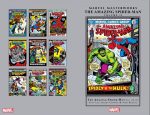
Marvel Adventures Spider-Man Volume 4: Friendly Neighborhood


By Paul Tobin, Roberto Di Salvo, Matteo Lolli, Terry Pallot & various (Marvel)
ISBN: 978-0-7851-5257-6

Since its earliest days Marvel has always courted the youngest comicbook audiences. Whether through animated movie or TV tie-ins such as Terrytoons Comics, Mighty Mouse, Super Rabbit Comics, Duckula, assorted Hanna-Barbera and Disney licenses and a myriad of others, or original creations such as Tessie the Typist, Millie the Model, Homer the Happy Ghost, Li’l Kids or even Calvin, the House of Ideas has always understood the necessity of cultivating the next generation of readers.

These days however, accessible child-friendly titles are on the wane and with Marvel’s proprietary characters all over screens large and small, the company usually prefers to create adulterated versions of its own pantheon, making that eventual hoped-for transition to more mature comics as painless as possible.

The process began in 2003 when the company created a Marvel Age line which updated and retold classic original tales by Stan Lee, Jack Kirby and Steve Ditko, merging it with the remnants of its failed manga-based Tsunami imprint, which was also intended for a junior demographic.

The experiment was tweaked in 2005, becoming Marvel Adventures with the core titles transformed into Marvel Adventures: Fantastic Four and Marvel Adventures: Spider-Man. The reconstituted classics were then replaced by all-original yarns.

Additional titles included Marvel Adventures: Super Heroes, The Avengers and Hulk, running until 2010 when they were cancelled and replaced by new volumes of Marvel Adventures: Super Heroes and Marvel Adventures: Spider-Man which carried on the established continuities.

This digest-sized collection collects issues #13-16 of that second iteration and sees Paul Tobin firmly in the driving seat, deftly blending action with humour and even inserting a little low level soap opera romance as 16-year old Peter Parker continues his first steps as reluctant yet driven superhero Spider-Man. Even after all the time he has prowled the streets and skyscrapers of New York, fighting crime and injustice, he’s still just a kid learning the ropes and pretty much in over his head all the time…

Illustrated by Roberto Di Salvo, the drama begins with our hero and his Aunt May vacationing in Britain. Whilst the senior Parker checks out antiques shops and farmers’ markets in Devon, her poor nephew has found a spot of bother on Dartmoor, beside British “Scooby Gang” T.U.F.F. (Teenage Ultimate Forteans Forever).

Following reports of monster sightings on the moors, Spidey and Co. unite with jungle lord Ka-Zar and his smilodon ally Zabu to crush a ring of exotic pet smugglers selling dinosaurs stolen from the Savage Land in ‘Raptor of the Baskervilles’.

A tricky task at the best of times, their valiant endeavour almost ends in disaster when the thieves bring in mutant maniac Sabretooth to kill the pesky, interfering kids…

Back in the Big Apple, the Web-spinner then teams up with Police Captain George Stacy to stop a run of armoured car heists perpetrated by Mysterio. ‘The Illusionist’ (Matteo Lolli & Pallot) had liberally dosed the heroes with hallucinogenic gases but was unaware of Spider-Man’s secret weapon: Peter Parker’s mutant girlfriend Sophia Sanduval who can communicate with animals and works as a part-time operative of the Blonde Phantom Detective Agency. “Chat” has got a lot of unusual animal resources at her disposal and is more than willing to lend some assistance…

The critter-whisperer is of even greater use when Doctor Doom seizes control of the UN whilst she and Peter are attending on a school trip. With delegates held hostage and a deadly bomb hidden on the premises, Chat and her bestial buddies play a key role saving the day in ‘Council of Doom’ (Di Salvo art) whilst all Spidey has to do is keep the Iron Dictator and his deadly army of robot doubles distracted. Well, that and not die…

Wrapping up the narrative action is ‘Magically Suspicious’ (Lolli & Pallot) as insane enchanter Baron Mordo seeks to open the gates of hell and let the Elder Eldritch Ones loose on Earth.

To facilitate their return he has pre-emptively unleashed a horde of demonic wraiths to take out the world’s superheroes, leaving only Spider-Man, Chat and Sorcerer Supreme Doctor Stephen Strange free to lead the extremely messy resistance…

These Spidey super stories (accompanied by a cover gallery from Barry Kitson, Patrick Scherberger, Edgar Delgado, Ale Garza & Chris Sotomayor and a big bundle of pin-ups by the likes of John Romita Senior, Terry & Rachel Dodson, Salvador Larroca and more) are all exceptionally enjoyable escapades, but parents should note that some of the themes and certainly the violence might not be what everybody considers “All-Ages Super Hero Action” and would perhaps sit better with older kids…

Fast-paced and impressive, brightly and breezily leavening light-hearted action with loads of sly laughs, this book shows the alternative web-spinner at his wall-crawling best with the violence toned down and “cartooned-up” whilst the stories take great pains to keep the growing youth-oriented sub-plots pot-boiling on but as clear as possible.

Never the success the company hoped, the Marvel Adventures project was superseded in 2012 by specific comics tied to Disney XD television shows designated as “Marvel Universe cartoons”, but these collected stories are still an amazing and arguably more culturally accessible means of introducing character and concepts to kids born two or three generations away from those far-distant 1960s originating events.
© 2011 Marvel Characters, Inc. All rights reserved.
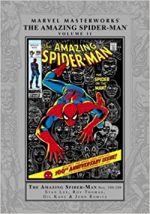
Marvel Adventures Avengers: Captain America


By Scott Gray, Roger Langridge, Todd Dezago, Roger Stern, Craig Rousseau, Matteo Lolli, Lou Kang, John Byrne & various (Marvel)
ISBN: 978-0-7851-4562-3

Since its earliest days Marvel always courted the youngest comicbook consumers. Whether animated tie-ins such as Terrytoons Comics, Mighty Mouse, Super Rabbit Comics, Duckula, assorted Hanna-Barbera and Disney licenses and a myriad of others, or original creations such as Millie the Model, Homer the Happy Ghost, Li’l Kids and Calvin – or as in the 1980s Star Comics line – an entire imprint for originated or licensed comics targeting peewee punters, the House of Ideas has always understood the necessity of cultivating the next generation of readers.

These days, however, general kids’ interest titles are all but dead and, with Marvel characters all over screens large and small, the company usually prefers to create child-friendly versions of its own proprietary pantheon, making that eventual hoped-for transition to more mature comics as painless as possible.

In 2003 the company instituted a Marvel Age line which updated and retold classic original tales by Stan Lee, Jack Kirby & Steve Ditko, mixing it with the remnants of the manga-based Tsunami imprint, all intended for a younger readership.

The experiment was tweaked in 2005, evolving into Marvel Adventures with core titles transformed into Marvel Adventures: Fantastic Four and Marvel Adventures: Spider-Man. The tone was very much that of the company’s burgeoning TV cartoon franchises, in delivery if not name. Additional Marvel Adventures series included Super Heroes, The Avengers and Hulk. These iterations ran until 2010 when they were cancelled and replaced by new volumes of Marvel Adventures: Super Heroes and Marvel Adventures: Spider-Man.

Those tales have all been collected in welcoming digest-sized compilations such as this one which gathers a selection of yarns starring the Sentinel of Liberty. This particular patriotic play-list comprises three all-ages tales – taken from Marvel Adventures Super Heroes #8 and 12, plus an early outing from Marvel Age Spider-Man Team-Up #2 and rounded out with a mainstream continuity yarn from Captain America volume 1 #255 from March 1981.

The Sentinel of Liberty was created by Joe Simon & Jack Kirby at the end of 1940 and launched straight into his own Timely Comics’ (Marvel’s earliest iteration) title. Captain America Comics #1 was cover-dated March 1941 and was a monster smash-hit. Cap was the absolute and undisputed star of Timely’s “Big Three” – the other two being the Human Torch and Sub-Mariner. He was also one of very the first to fall from popularity at the end of the Golden Age.

When the Korean War and Communist aggression dominated the American psyche in the early 1950s Cap was briefly revived – as were his two fellow superstars – in 1953 before sinking once more into obscurity until a resurgent Marvel Comics once more needed them. When the Stars-&-Stripes Centurion finally reappeared he finally found a devoted following who stuck with him through thick and thin.

Soon after taking over the Avengers, he won his own series and, eventually, title. Cap waxed and waned through the most turbulent period of social change in American history but always struggled to find an ideological place and stable footing in the modern world, plagued by the trauma of his greatest failure: the death of his boy partner Bucky…

If you’re of a slavish disposition continuity-wise, the first three Star-Spangled sagas all occur on Marvel’s Earth-20051 whilst the last is situated in the regulation Earth-616.

It opens with an updated origin – in keeping with the later filmic iteration – as ‘The Legend Reborn’ (by Scott Gray & Craig Rousseau as seen in MASH #8, April 2009) sees World War II’s greatest hero decanted from an arctic iceberg by agents of SHIELD.

Future-shocked and mistrusting, Steve Rogers breaks out of protective custody and explores the 21st century beside teen-rebel and street-performer Rick Jones, until secret society Hydra try to “recruit” him and Cap is finally forced to pick a side…

The introductory epic is augmented by an enticing war-time tale. ‘Spy for the Cameras!’ (Roger Langridge & Rousseau) finds Cap and annoyingly plucky reporter Rosalind Hepburn exposing an undercover plot in Hollywoodland…

Issue #12 (August 2009) saw Cap and Rick return in ‘Web of Deceit’ by Gray & Matteo Lolli. Here the time-lost hero is transported into Hydra’s digital domain to face unimaginable and lethally implausible peril, until Rick’s buddies in the Online Brigade log in to save the day…

This is followed by another deliciously wry WWII romp from Langridge & Rousseau, with news-hen Rosalind, Cap and Bucky battling a prototype mutant cyborg in ‘If This Be P.R.O.D.O.K.!’

‘Stars, Stripes and Spiders!’ is by Todd Dezago, Lou Kang & Pat Davidson (originally debuting in Marvel Age Spider-Man Team-Up #2, December 2004 and inspired by Len Wein and Gil Kane’s tale from the original Marvel Team-Up #13).

When a certain wall-crawling high-school student and part-time hero stumbles into Captain America tackling an AIM cadre stealing a super-soldier serum, the nervous lad learns a few things about the hero game from the guy who wrote the book. Not making that lesson any easier is petrifying super-villain the Grey Gargoyle…

Closing out this fast-paced primer of patriotic action is a classic retelling of Cap’s early career by Roger Stern & John Byrne. The story was the finale in a superb run by the duo: a mini-renaissance of well-conceived and perfectly executed yarns epitomising all the fervour and pizzazz of Captain America in his glory days. ‘The Living Legend’ is a moody, rocket-paced origin saga which was the definitive version of the hero’s nativity for decades…

Never the success the company hoped, the Marvel Adventures project was superseded in 2012 by specific comics tied to those Disney XD television shows designated as “Marvel Universe cartoons”, but these collected stories are still an intriguing, amazingly entertaining and superbly accessible means of introducing characters and concepts to kids born sometimes three generations or more away from the originating events.

Beguiling, enthralling and impressive, these riotous super stories are extremely enjoyable yarns, although parents should note that some of the themes and certainly the violence might not be what everybody considers “All-Ages Super Hero Action” and might perhaps better suit older kids…

© 1981, 2000, 2009, 2011 Marvel Characters, Inc. All rights reserved.
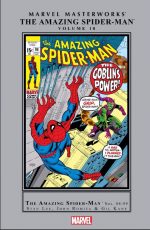
Essential Amazing Spider-Man volume 7


By Gerry Conway, Archie Goodwin, Len Wein, Ross Andru, Sal Buscema, Gil Kane & various (Marvel)
ISBN: 978-0-7851-1879-4

After a shaky start in 1962 The Amazing Spider-Man quickly rebounded, soon proving a sensation with kids of all ages and rivalling the creative powerhouse that was Lee & Kirby’s Fantastic Four. Soon the quirky, charming, action-packed comicbook soap-opera would become the model for an entire generation of younger heroes elbowing aside the staid, (relatively) old costumed-crimebusters of previous publications.

You all know the story: Peter Parker was a smart but alienated kid bitten by a radioactive spider during a school science trip. Discovering he had developed astonishing arachnid abilities – which he augmented with his own natural chemistry, physics and engineering genius – the kid did what any lonely, geeky nerd would do with such newfound prowess: he tried to cash in for girls, fame and money.

Making a costume to hide his identity in case he made a fool of himself, Parker became a minor media celebrity – and a criminally self-important one. To his eternal regret, when a thief fled past him one night he didn’t lift a finger to stop him, only to find when he returned home that his guardian uncle Ben Parker had been murdered.

Crazed with a need for vengeance, Peter hunted the assailant who had made his beloved Aunt May a widow and killed the only father he had ever known, finding, to his horror, that it was the selfsame felon he had neglected to stop. His irresponsibility had resulted in the death of the man who raised him, and the traumatised boy swore to forevermore use his powers to help others…

Since that night the Wondrous Wallcrawler has tirelessly battled miscreants, monsters and madmen, with a fickle, ungrateful public usually baying for his blood even as he perpetually saves them.

The Amazing Spider-Man was always a comicbook that matured with – or perhaps just slightly ahead of – its fan-base and this seventh exceedingly enthralling monochrome compilation of chronological web-spinning adventures sees the World’s Most Misunderstood Hero through one of the most traumatic periods of his career.

By the time of these tales Lee’s hand-picked successor Gerry Conway was giving way to fresher authorial hands. Nevertheless, scripts continued to blend contemporary issues (which of course often feel quite outdated from here in the 21st century, Man!) with soap opera subplots to keep older readers as glued to the series as the outrageous adventure and bombastic battle sequences beguiled the youngsters.

Thematically, there’s further decline in the use of traditional crimes and gangsters, overwhelmed by outlandish villains, monsters and capers, but the most sensational advance was a super-science plot which would reshape the nature of the web-spinner’s adventures for decades to come…

Nevertheless the Wallcrawler was still indisputably mainstream comics’ voice of youth; defining being a teenager for young readers of the 1970s, tackling incredible hardships, fantastic foes and the most pedestrian and debilitating of frustrations.

High School nerd Peter Parker had grown up and gone to college. Because of his guilt-fuelled double-life he struggled there too, developed a stress ulcer but found true love with policeman’s daughter Gwen Stacy…

This volume, spanning November 1974 to September 1976, collects Amazing Spider-Man #138-160, Annual #10 and incorporates team-up tales from Giant-Size Spider-Man #4-5. Eagle-eyed completists might notice the third Giant-Size issue has been omitted: that’s because there the Wallcrawler met Doc Savage and Marvel no longer hold the license to publish the magnificent Man of Bronze…

With no particular fanfare the action opens with Conway still very much in charge as ‘Madness Means… the Mindworm!’ – illustrated by Ross Andru, Frank Giacoia & Dave Hunt – finds Parker relocating downmarket to Queens in time to encounter a macabre psychic parasite feeding of the denizens of the district. Then issue #139 introduces a bludgeoning brute with a grudge against J. Jonah Jameson on the ‘Day of the Grizzly!’ When Spidey intervenes he is beaten and handed over to the costumed crazy’s silent partner the Jackal who melodramatically reveals he knows the hero’s true identity. Even though Peter escapes his diabolical trap in ‘…And One will Fall!’ the maniac flees and remains at large…

A long-running comedy thread ends as the ridiculous Spider-Mobile ends up in the river, but the Wallcrawler barely has time to care as an apparently dead enemy returns in #141’s ‘The Man’s Name Appears to be… Mysterio!’

Despite the psychological assaults escalating and Pete continually questioning his own sanity, the mystery is solved in ‘Dead Man’s Bluff!’ before Giant-Size Spider-Man #4 (April 1975 and inked by Mike Esposito) which sees an eagerly-anticipated reappearance of Marvel’s most controversial antihero in an expanded role.

‘To Sow the Seed of Death’s Day’ finds the Webslinger forced into one of the Punisher‘s cases when ruthless arms dealer Moses Magnum perfects a lethal chemical-weapon and begins testing it on randomly kidnapped victims.

Tracking down the monster in ‘Attack of the War Machine!’, the unlikely comrades infiltrate his ‘Death-Camp at the Edge of the World!’ before summary justice is dispensed… as much by fate as the heroes’ actions…

The Lone Gunman was created by Conway, John Romita Sr. and Andru; an understandably muted response to popular prose anti-heroes like Don Pendleton’s Mack Bolan: the Executioner: the cutting edge of a bloody tide of fictive Viet Nam vets who all turned their training and talents to wiping out organised crime in the early 1970s.

Although one of the industry’s biggest hits from the late 1980s onwards, the compulsive vengeance-taker was an unlikely and uncomfortable star for comicbooks. His methods were always excessively violent and usually permanent. It’s intriguing to note that unlike most heroes who debuted as villains (Black Widow or Wolverine come readily to mind) Punisher actually became more immoral, anti-social and murderous, not less: the buying public simply shifted its communal perspective; he never toned down or cleaned up his act…

That same month in Amazing Spider-Man 143 ‘…And the Wind Cries: Cyclone!’ saw Peter in Paris to deliver a ransom for the kidnapped Jameson and battling a hyper-fast French super-villain. The story was average but the real kicker was the overly-fond farewell casual chum Mary Jane Watson expressed: a kiss that finally shifted traumatised, depressed Peter’s thoughts from his beloved and recently murdered Gwen…

Conway, Andru, Giacoia & Hunt capitalised on the situation when Pete returned as #144 launched ‘The Delusion Conspiracy’ and #145 exposed a baffled girl’s confusion and terror at everyone’s reactions when she comes home and the entire world screams ‘Gwen Stacy is Alive …and, Well…?!’

With Gwen somehow resurrected and Peter on the edge of a breakdown, Aunt May was hospitalised just in time for another old foe to strike again in ‘Scorpion… Where is Thy Sting?’, but the real kick in the tale was irrefutable scientific reports which proved the increasingly bewildered Miss Stacy was not an impostor…

Giant-Size Spider-Man #5 (July 1975, inked by Esposito again) offers a strange yet welcome break from the mental tension as ‘Beware the Path of the Monster!’ sees Parker despatched to Florida to photograph the macabre Man-Thing only to discover the lethal Lizard is also loose and hunting ‘The Lurker in the Swamp!’ It takes all the web-spinner’s power and the efforts of a broken man in sore need of redemption to set things right in the climactic conclusion ‘Bring Back my Man-Thing to Me!’…

Back in the Big Apple for #147, Peter finds some answers as further tests prove Gwen is a clone – remember, this was new and cutting-edge stuff in 1975 – but all too soon he’s distracted by another foe bad-guy with a grudge and hungry to prove ‘The Tarantula is a Very Deadly Beast’ (Andru, Esposito & Hunt).

It’s all part of a convoluted revenge scheme and the hero is ambushed by a mesmerised Gwen at the behest of an archfiend as ‘Jackal, Jackal, Who’s Got the Jackal?’ at last shares some shocking truths about one of Peter’s most trusted friends before the Delusion Conspiracy explosively concludes with #149’s ‘Even if I Live, I Die!’ (Andru & Esposito).

Learning he and Gwen had been cloned by their biology teacher Miles Warren, the Amazing Arachnid has to defeat his alchemical double in a grim, no-holds-barred identity-duel, with neither sure who’s the real McCoy. The battles eventually results in the copy’s death… maybe…

That moment of doubt over who actually fell informs anniversary issue Amazing Spider-Man #150, as Archie Goodwin, Gil Kane, Esposito & Giacoia take the hero down memory lane and up against a brigade of old antagonists to decide whether ‘Spider-Man… or Spider-Clone?’ survived that final fight, before new regular scripter Len Wein joins Andru & John Romita Sr. to launch a new era of adventure…

After disposing of his duplicate’s corpse in an incineration plant, Spider-Man finds time to let Peter Parker reconnect with his long-neglected friends. However a jolly party is soon disrupted as blackouts triggered by a super-menace lead the Wallcrawler into the sewers for a ‘Skirmish Beneath the Streets!’, resulting in our hero almost drowning and nearly being ‘Shattered by the Shocker!’ (Andru, Esposito & Giacoia) in the conclusive return engagement…

A moving change-of-pace tale sees a blackmailed former football star give his all to save a child in ‘The Longest Hundred Yards!’ (Andru & Esposito) but it is left to Spider-Man to make the computer-crook culprits pay, after which #154 reveals ‘The Sandman Always Strikes Twice!’ (art by Sal Buscema & Esposito) – but with little lasting effect – until murder-mystery ‘Whodunnit!’ cunningly links three seemingly unconnected cases in a masterful “Big Reveal”…

A long-running romance-thread resulted in the oft-delayed wedding of Pete’s old flame Betty Brant to reporter Ned Leeds, but the nuptials are interrupted by a new costumed crook in ‘On a Clear Day, You Can See… the Mirage’ (Andru & Esposito), even as a sinister hobo who had been haunting the last few yarns came fully into the spotlight…

Much of the previous Essential Spider-Man volume was taken up with a protracted struggle for control of New York with Spidey and elderly May Parker caught in the middle. The devilish duel concluded with a nuclear explosion and the seeming end of two major antagonists but #157 exposed ‘The Ghost Who Haunted Octopus!’ when the debased long-limbed loon turned to Aunt May for his salvation.

With Peter in attendance, the many-handed menace seeks to escape a brutal ghost but their combined actions actually liberate a pitiless killer from inter-dimensional limbo in ‘Hammerhead is Out!’, leading to a savage three-way showdown with Spidey ‘Arm-in-Arm-in-Arm-in-Arm-in-Arm-in-Arm with Doctor Octopus’ to save the horrified Widow Parker…

A new insectoid arch-foe debuted in Amazing Spider-Man Annual #10, courtesy of plotter Wein, scripter Bill Mantlo and artists Kane, Esposito & Giacoia as ‘Step into my Parlor…’ depicts obsessed Spider-hater Jameson hiring unscrupulous biologist Harlan Stilwell to create a tailor-made nemesis to eradicate the Wallcrawler.

Elsewhere that detested hero is breaking up a vicious hostage situation manufactured by psychotic Rick Deacon, but when the killer escapes and breaks into a certain lab he is rapidly transformed into a winged wonder-man hungry for payback on the web-spinner in ‘…Said the Spider to the Fly!’

This copious compendium then concludes with the opening shot in an extended epic as a criminal inventor who is one of the web-spinner’s oldest enemies recovers Spidey’s ditched vehicle and tricks it out to hunt down its original owner if #160’s ‘My Killer the Car!’ (Wein, Andru & Esposito)…

Despite some qualifications this is still a superb selection starring an increasingly relevant teen icon and symbol. Spider-Man at this time became a crucial part of many youngsters’ existence and did so by living a life as close to theirs as social mores and the Comics Code would allow.

Blending cultural veracity with glorious art whilst making a dramatic virtue of the awkwardness, confusion and sense of powerlessness most of the readership experienced daily resulted in an irresistibly intoxicating read, delivered in addictive prime time melodrama moments, but none of that would be relevant if the stories weren’t so compellingly entertaining.

The tales in this again proved Spider-Man was bigger than any creator and was well on the way to becoming as real as Romeo and Juliet, Sherlock Holmes or Tarzan.
© 1974, 1975, 1976, 2011 Marvel Entertainment Group, Inc. All rights reserved.

Mighty Avengers volume 3: Secret Invasion Book 1


By Brian Michael Bendis, Alex Maleev, Koi Pham, John Romita Sr., Danny Miki, Klaus Janson, Tom Palmer & various (Marvel)
ISBN: 978-0-7851-3010-9

Following the divisive and brutal superhero Civil War, Tony Stark (a staunch advocate of the draconian, nigh-totalitarian Super-Human Registration Act) formed a squad of Government-sanctioned heroes. His SHIELD-backed Mighty Avengers were designed to take care of business whilst he worked on his “Fifty States Initiative”, the objective of which was to eventually field teams of federally trained and licensed superheroes in every State of the Union.

Firstly, though, he had to restore public confidence, especially as the unregistered, rogue New Avengers continued to defy his orders to surrender to government authority: saving lives and crushing evil without his permission. Things never seemed to go Stark’s way however, and a series of catastrophic crises led inexorably to Earth succumbing to alien infiltration and conquest.

This seditious third volume is written throughout by Brian Michael Bendis and gathers Mighty Avengers #12-15 (June-August 2008), re-presenting some of the opening sallies in the major event dubbed Secret Invasion wherein the torturously unfolding plan by the shapeshifting Skrulls finally turns into a red-hot shooting war.

Since Fantastic Four #2 (January 1961), the Skrulls have been a pernicious cornerstone of the Marvel Universe. After decades of frustrating failure, the insidious intergalactic infiltrators were finally made the stars of a colossal braided crossover which ran from Spring to Christmas 2008 throughout all the company’s titles.

The premise? The aliens’ former all-encompassing empire had been crippled and scourged by a devastating catastrophe which destroyed much of their star-spanning power. Consequently the survivors underwent a mass fundamentalist-religious conversion: utterly resolved and dedicated to make Earth their new homeworld – just as their ancient scriptures foretold…

To this end they imperceptibly replaced a number of Earth denizens – mostly superheroes, villains and/or their close associates. When the plot was finally exposed no defender of the Earth truly knew who was on their side…

Moreover, the Skrulls had also unravelled the secrets of Earth magic and humanity’s unique genetics, creating legions of amped-up equivalents to the world’s mightiest heroes and villains. During this period they hid amongst us, primed and waiting to destroy mankind’s champions in head-to-head confrontations.

Not all Skrulls were fanatics however. Earth also harboured a few carefully hidden dissidents opposed to the new regime and non-fanatics simply unwilling to get properly involved…

The mysteries start to unravel in the ‘The Awakening’ from #12-13 (illustrated by Alex Maleev) where a fugitive and closeted Nick Fury – on the run for manipulating an Avengers squad into attacking the sovereign state of Latveria – discovers his current squeeze is actually a shapeshifting alien. Taking the appropriate steps, he sneaks back into SHIELD to warn his replacement Maria Hill that she can trust no-one…

Always playing a deeply convoluted game, he then contacts Spider-Woman – his mole in the Avengers, SHIELD and Hydra – to warn her of Skrull infiltration before activating his own plan B, gathering his long-cached cadre of super-powered non-entities and agents never on anybody’s radar. Then he sets all the pieces tumbling into turbulent motion…

The untitled issue #15 – illustrated by Khoi Pham & Danny Miki – returns focus to Stark’s Mighty Avengers team (field leader Ms. Marvel, Black Widow, Wonder Man, the Wasp, Sentry and Grecian war god Ares), all blithely going about their heroic business unaware that trusted major-domo Edwin Jarvis has been replaced by a high-ranking Skrull.

When the revelation day at last arrives the treacherous insider instigates a chilling plan to take incomprehensibly powerful superman Sentry out of action by attacking his mind and those he loves most…

The campaign of terror concludes with a chilling flashback illustrated by John Romita Jr., Klaus Janson & Tom Palmer, revealing how a dedicated proponent of the Super-Human Registration Act, a key component of Iron Man’s Fifty States Initiative and Founding Avenger was long ago replaced by a Skrull. What that augurs for humanity, only the coming weeks and months can tell…

To Be Continued…

With covers by Marko Djurdjevic and Bendis’ full script for issue #12 this slim tome offers another slick and stylish slice of breathtaking all-action entertainment which adds depth and weight to the impressive and appealing Secret Invasion main event but also reads perfectly well on its own merits.

Here is another Fights ‘n’ Tights “must-read” for insatiable thrill-chasers everywhere.
© 2008, 2009 Marvel Characters, Inc. All rights reserved.