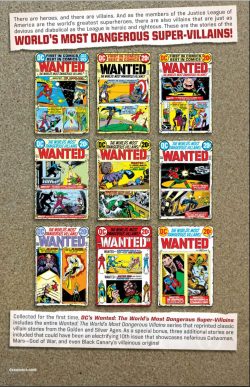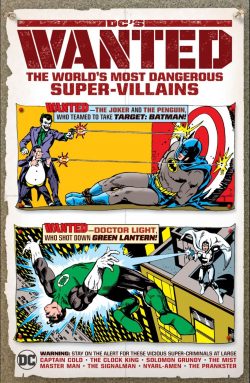
DC’s Wanted: The World’s Most Dangerous Villains


By Jerry Siegel, Bill Finger, Jack Kirby, Joe Simon, William Woolfolk, Ed Herron, John Broome, Gardner F. Fox, Alfred Bester, Don Cameron, Joe Samachson, Mort Weisinger, Ken Fitch, David Vern Reed, Sheldon Moldoff, Jack Burnley, Carmine Infantino, Gil Kane, Lee Elias, Mort Meskin, Joe Kubert, Howard Sherman, Pete Riss, Paul Reinman, Alex Kotzky, Bernard Baily, Jon Sikela, Harry G. Peter, Murphy Anderson, Nick Cardy & various (DC Comics)
ISBN: 978-1-7795-0173-8 (HB)

We talk of Gold and Silver Ages in comics and latterly for the sake of expediency have added other mineral markers like a Bronze Age, but no ever talks about the period between 1964 and 1977 as a specific and crucial time in funnybook history. But it was…

During that period, economic pressure compelled DC and Marvel to increasingly plunder their own archives and fill expensive pages in their primary product to maintain hard-won spaces on newsstands and magazine spinners. Some readers moaned about reprints. Some didn’t notice and most didn’t care. But for all those little proto-geeks like me, it was being given the keys to the greatest kingdom of all.

Once you grasped that the differently drawn stuff with clunkier buildings and cars – and more men in hats – was from the past, and not something happening “now”, it simply added to the scope and scale of what you were reading: hinting of a grand unknown past you were now party to. Moreover, the sheer quality of most twice-printed tales was astounding.

I wasn’t around for Lou Fine or Basil Wolverton or Jack Burnley the first time, but reprints made me a devotee. You young whippersnappers with your interwebs and archive collections don’t know how lucky you are.

Marvel especially made a service out of a necessity: keeping their older material in print via big packages like Marvel Collectors’ Items Classics and Marvel Tales to ensure reader awareness of their unfolding universe. Those and DC’s 80-Page Giant specials were true gateway series for comics junkies who wanted a peek at the past… particularly the mysterious and alluring “Golden Age” where all the really incredible stuff must have happened…

In 1968 DC started taking reprints seriously by creating a specific title. DC Special began a succession of themed and carefully curated issues at a time when superheroes had entered another decline. In its first run – from fall 1968 to November/December 1971 – it featured issues dedicated to the careers of Carmine Infantino and Joe Kubert, horror stories, teen comedy, western, crime, and two issues featuring Strange Sports Stories, as well as an “all-girl” superhero volume, the Viking Prince and Plastic Man. Issues #8 (Summer1970) and #14 (September/October 1972) were both entitled Wanted! The World’s Most Dangerous Villains: an unrepentant, unashamed celebration of costumed good guys thrashing costumed bad guys…

This spiffy hardback and digital collection sadly excludes those try-out experiments but does collect all the subsequent contents of the spin-off title that followed – #1-9 spanning July/August 1972 to September 1973 – and adds a tenth issue just for thrills and giggles.

It kicks off with a gloriously outré debut as #1 reintroduced ‘The Signalman of Crime’ who used signs and symbols to baffle lawmen. He came – and went – in Batman #112 (December 1957) courtesy of Bill Finger, Sheldon Moldoff & Charles Paris and is followed by a classy Green Arrow yarn from Ed Herron & Lee Elias. ‘The Crimes of the Clock King’ were first found and foiled in World’s Finest Comics (#111 July 1960). Rounding out the first sally is ‘Menace of the Giant Puppet’ by John Broome, Gil Kane & Joe Giella (Green Lantern volume 2 #1, August 1960) wherein the Emerald Gladiator faced the superscience-wielding Puppeteer.

Gold was struck in #2 as Batman #25 (October/November 1944) yielded Don Cameron, Jack Burnley & Jerry Robinson’s‘Knights of Knavery’: an epic clash which saw crime rivals The Penguin and Joker – temporarily – join forces against the Dynamic Duo, after which John Broome, Infantino & Giella detail how ‘The Trickster Strikes Back’. The air-walking felon plunders Central City until the Scarlet Speedster finally outwits him, as first seen in The Flash #121 (June 1961).

Wanted #3 provided exclusively Golden Age greatness, beginning with The Vigilante yarn from Action Comics #69 (February 1944). Devised by Joe Samachson, Mort Meskin & Joe Kubert, ‘The Little Men Who Were There!’ pitted the Prairie Troubadour against diabolical Napoleon of Crime The Dummy, after which warrior wizard Doctor Fate frustrated an invasion by ‘The Fish-Men of Nyarl-Amen’ (More Fun Comics #65 March 1941, by Gardner F. Fox & Howard Sherman) and Hawkman crushed ‘The Human Fly Bandits’ thanks to creators Broome & Kubert as seen in Flash Comics #100 (October 1948).

Original Green Lantern Alan Scott headlined in #4, replaying his epic first clash with Solomon Grundy from All-American Comics #61 (October 1944) as related by Alfred Bester & Paul Reinman in ‘Fighters Never Quit!’, whilst the follow-up featured Kid Eternity – who died before his time and was rewarded by Higher Powers with the power to summon figures from history, myth and literature to fight for justice. ‘Master Man’ came from Kid Eternity #15 (May 1949) wherein writer William Woolfolk and illustrator Pete Riss created the hero’s ultimate nemesis and set them duelling by proxy via resuurected heroes and villains…

Contemporary Green Gladiator Hal Jordan returned in #5, battling Doctor Light in Gardner F. Fox, Kane & Sid Greene’s ‘Wizard of the Light-Wave Weapons!’ (Green Lantern volume 2 #33, December 1964), before the original Tiny Titan faced ‘The Man in the Iron Mask!’ in an epic clash by Woolfolk & Alex Kotzky from Doll Man Quarterly #15 (Winter 1948).

Starman opened #6, in a grudge match against arch foe The Mist. Fox & Burnley’s ‘Finders Keepers!’ – from Adventure Comics #77, August 1942 – saw the see-through fiend use found treasure to mesmerise his victims, and is followed by a saga of Sargon the Sorcerer, battling Blue Lama as ‘The Man Who Met Himself’ (Sensation Comics #71, November 1947 by Broome & Reinman). The drama ends on a spectacular high in the Kubert-illustrated Wildcat thriller ‘The Wasp’s Nest!’ from (Sensation Comics #66, June 1947).

Wanted #7 exhumed more Gold, beginning with speedster Johnny Quick‘s duel with satanic scientist Dr. Clever who gleans the secret of hyper-velocity in ‘The Adventure of the Human Streak’ (More Fun Comics #76 February 1942 and illustrated by Mort Weisinger & Mort Meskin) after which the 1940’s Hawkman battles spectral nemesis The Gentleman Ghost in Robert Kanigher & Kubert’s ‘The Crimes That Couldn’t Have Happened!’ (Flash Comics #90, December 1947) before Ken Fitch & Bernard Baily reveal how Hourman crushes ‘Dr. Glisten’s Submarine Pirates’ as originally seen inAdventure Comics #72, March 1942.

The Silver Age Flash faces ‘The Big Freeze!’ in Broome, Infantino & Murphy Anderson’s furious fight against Captain Cold (The Flash #114 August 1960) before Fox & Sherman pit a depowered Doctor Fate against transformative terror ‘Mr. Who’ in a stirring saga from More Fun Comics #73 (November 1941).

The original run concluded with #9, which opened with Jerry Siegel & Jon Sikela’s epic and absurdist Superman clash against the diabolical Prankster who claimed to be ‘Crime’s Comedy King!’ in Action Comics #57 (February 1943) after which the adventure peaked in a classic Jack Kirby & Joe Simon Sandman thriller. First found in World’s Finest Comics #6 (Summer 1942) ‘The Adventure of the Magic Forest!’ saw the Master of Dreams and Sandy the Golden Boy crush murderous, nefarious hijacker Nightshade…

The fun continues with a virtual 10th issue compiled in recent times and prompted by a letter from Wanted #9 requesting an all-female outing. It took long enough but the wish is finally granted in ‘A Modern Take: Wanted: The World’s Most Dangerous Villains #10! which begins with a Catwoman classic.

The Sleeping Beauties of Gotham City!’ debuted in Batman #84 (June 1954), scripted by David Vern Reed and limned by Sheldon Moldoff & Stan Kaye, wherein notorious Selina Kyle subverts a beauty contest, not for vanity but for glittering profit, after which Flash Comics #86 (August 1947) provides the first adventure of ‘The Black Canary’ in a swansong for bumbling hero Johnny Thunder by Kanigher, Infantino & Giella.

Wrapping up this sublime “Wants” list is a late clash between the Amazing Amazon and war god Mars by Kanigher & Harry G. Peter. ‘The Girl Who saved Paradise Island!’ comes from Wonder Woman #36, July/August 1949 and features interplanetary conflict and the truly terrifying warriors of Infanta, so be warned…

With covers by Murphy Anderson and Nick Cardy, this tome celebrates the primal simplicity of Superhero comics: no angst, no grey areas and no continued epics, just a whole bunch of done-in-one delights for fans of history and simplicity.
© 1941, 1942, 1943, 1944, 1945, 1947, 1948, 1949, 1954, 1960, 1961, 1964, 1972, 1973, 2020 DC Comics. All Rights Reserved.
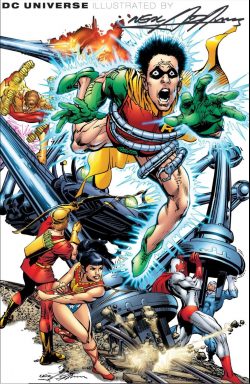
DC Universe Illustrated by Neal Adams volume 1


By Neal Adams with Dennis O’Neil, Gardner F. Fox, Robert Kanigher, Howard Liss, Hank Chapman, Len Wein, Bob Haney, Mark Evanier, Sergio Aragonés, Joe Kubert & various (DDC Comics)
No ISBN: digital only edition

As the 1960s began Neal Adams was a young illustrator who had worked in advertising and ghosted some newspaper strips whilst trying to break into comics. Whilst pursuing a career in advertising and “real art” he did a few comics pages for Archie Comics and subsequently became one of the youngest artists to co-create and illustrate major licensed newspaper strip Ben Casey (based on a popular TV medical drama series).

That comics fascination never faded, however, and Adams drifted back to National/DC, doing a few covers as inker or penciller before eventually finding himself at the vanguard of a revolution in pictorial storytelling…

He made such a mark that DC have regularly curated and reissued his work in a series of commemorative collections. This is the first of a proposed series of eBook tomes extracted from heftier physical artefacts covering the artists’ minor efforts (those not starring Batman, Deadman or “Hard-Travelling Heroes” Green Lantern/Green Arrow) in themed original publication order.

Revisiting Teen Titans #20-22 and gatherings material from Detective Comics #369; Superman #254; Justice League of America #94; Our Army At War #182, 183, 186, 240; Star Spangled War Stories #134, 144; Fanboy #5 and Amazing World of DC Comics Special Edition #1 it cumulatively embraces November 1969 through July 1999.

Following a contextualising Foreword by Paul Levitz and Adams’ thoughts in his own ‘Superheroes Foreword’ the comic dramas commence with a tale of slinky sleuth The Elongated Man who solves a bizarre theft connected to the ‘Legend of the Lovers’ Lantern’ (scripted by Gardner F. Fox from Detective Comics #369, November 1969).

We then encounter a bold triptych from Teen Titans #20-22 (March/April to June/July 1969), written by Adams and pencilled by him and Sal Amendola with inks by brush-maestro Nick Cardy – one of the all-out prettiest illustration jobs of that decade.

Completing s a long-running plot-thread of extra-dimensional invaders by endowing everything with a counterculture twist, ‘Titans Fit the Battle of Jericho’ is a spectacular rollercoaster romp deftly blending teen revolt, organised crime, anti-capitalist activism, bug-eyed monsters and cunning extraterrestrial conquerors…

Symbolic super-teens Hawk and Dove briefly join the proceedings for #21’s ‘Citadel of Fear’ (Adams & Cardy): chasing smugglers, facing evil ETs and ramping up the surly teen angst quotient whilst moving the invaders story-arc towards stunning conclusion ‘Halfway to Holocaust’ wherein the abduction of Kid Flash and Robin leads to a cross-planar climax as Wonder Girl, Speedy and a radical new ally quash the invaders forever…

Excerpts from Justice League of America #94’s ‘Where Strikes Demonfang’ – specifically pages 1, 5, 20 and 22 – tie up loose ends from the Deadman saga seen elsewhere (in Strange Adventures of the Adams Deadman collections) before a modern pin-up of ‘Ra’s al Ghul’ brings us to a delightful treat scripted by Len Wein taken from The Private Life of Clark Kent backup series.

‘The Baby Who Walked Through Walls’ comes from Superman #254 (July 1972): scripted by Len Wein and deliciously detailing how even the mighty Man of Tomorrow is no match for a toddler determined to dodge her babysitter and go exploring…

Unpublished Superman pages and thumbnails culled from ‘Amazing World of DC Comics Special Edition #1’ (February 1976) segue into a selection of public service messages starring the Caped Kryptonian – specifically ‘Justice for All Includes Children 1, 2, 6 and 7′ – and are followed by a monochrome and a full-colour v ‘9/11 Tribute’…

Self-parody changes the tone as an excerpt from Fanboy #5 (July 1999) finds Mark Evanier & Sergio Aragonés joining the master of moody in an unlikely iteration of the Daft Knight…

A ‘Batman Sketchbook’ offers preliminary doodles for Robin’s new costume, Batman roughs and Joker redesigns, culminating in finished pin-ups of all before the tone twists back to hyper-realism and a ‘War Stories Foreword’ by Neal Adams begins a chronological excursion through the artist’s combat contributions to DC canon.

All recoloured in Adam’s lush modern manner, the lean sparse sagas commence with ‘It’s My Turn to Die’ from Our Army At War #182 (July 1967), with Howard Liss scripting the tale of an officer who’s reached his emotional limit, whilst ‘Invisible Sniper’ (Liss again from OAAW #183, August 1967) tracks an embattled GI hunting an infallible enemy with a killer gimmick…

The Killing Ground’ (Star Spangled War Stories #134, August -September 1967) is a Robert Kanigher moment from The War That Time Forgot, with PT Boat survivors striving against a succession of seaborne antediluvian atrocities, after which ‘My Life for a Medal’Our Army At War #186 (November 1967, by veteran scribe Hank Chapman) – holds a shocking lesson for a glory-hungry go-getter.

A visual triumph, Joe Kubert inked hot new penciller Adams on Kanigher’s ‘Death Takes No Holiday!’ (SSWS #144, April-May 1969) as another macabre death-dealing French aviator – dressed as a skeleton – terrorised and butchered Jagdstaffel pilots at will, forcing the Kaiser’s Enemy Ace Hans von Hammer into insane action to inspire his men and cure a young flier of fear-induced madness…

War takes a weird – and socially relevant – turn as we visit the future for our concluding clash in Bob Haney’s ‘Another Time Another Place’ (Our Army At War #240, January 1972) as an elite squad meet the enemy and get a sobering surprise…

Sadly short of Adams incredible canon of covers, we wrap up with only full ‘Biographies’ as a bonus, but this beautiful book still offers a look at less often seen gems that were in many ways more informative than all the big-banner achievements of a major force in comics. Now, if only DC would sort out his horror stories and truly lost gems like Jerry Lewis, we’d all be happy…
© 1967, 1969, 1971, 1972, 1976, 1999, 2008 DC Comics. All Rights Reserved.
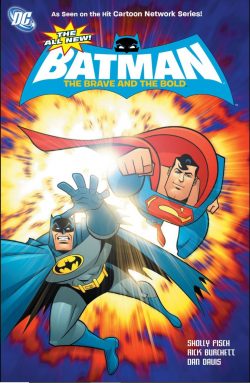
The All-New Batman: The Brave and the Bold volume 1


By Sholly Fisch, Rick Burchett, Dan Davis & various (DC Comics)
ISBN: 978-1-4012-3272-6 (TPB)

The Brave and the Bold premiered in 1955 as an anthology adventure comic featuring short complete tales about a variety of period heroes: a format reflecting the era’s filmic fascination with flamboyantly fanciful historical dramas. Devised and written by Bob Kanigher, issue #1 led with Roman epic Golden Gladiator, medieval mystery-man The Silent Knight and Joe Kubert’s Viking Prince. Soon the Gladiator was alternated with Robin Hood, but the adventure theme carried the title until the end of the decade when the burgeoning costumed character revival saw B&B transform into a try-out vehicle like Showcase.

Used to premiere concepts and characters such as Task Force X: The Suicide Squad, Cave Carson, Hawkman and Strange Sports Stories as well as the epochal Justice League of America, the comic soldiered on until issue #50 when it found another innovative new direction which once again caught the public’s imagination.

That issue paired two superheroes – Green Arrow and Martian Manhunter – in a one-off team-up, and was followed by more of the same: Aquaman and Hawkman in #51, WWII “Battle Stars” Sgt. Rock, Captain Cloud, Mme. Marie & the Haunted Tank in #52 and The Atom & Flash in #53.

The next instant union – Robin, Aqualad and Kid Flash – evolved into Teen Titans and after Metal Men/the Atom and Flash/Martian Manhunter appeared, a new hero debuted in #57-58: Metamorpho, the Element Man.

From then it was back to the increasingly popular superhero pairings with #59. Although no one realised it at the time, that particular conjunction – Batman with Green Lantern – would be particularly significant….

A return engagement for the Teen Titans, issues spotlighting Earth-Two stalwarts Starman and Black Canary and Earth-One’s Wonder Woman and Supergirl soon gave way to an indication of things to come when Batman returned to duel hero/villain Eclipso in #64: an early acknowledgement of the brewing TV-induced mania mere months away.

Within two issues (following Flash/Doom Patrol and Metamorpho/Metal Men), B&B #67 saw the Caped Crusader take de facto control of the title and a lion’s share of team-ups. With the late exception of #72 and 73 (Spectre/Flash and Aquaman/Atom), the title was henceforth a place where the Gotham Gangbuster invited the rest of DC’s heroic pantheon to come and play…

Decades later, Batman: The Animated Series – masterminded by Bruce Timm and Paul Dini in the 1990s – revolutionised the Dark Knight and subsequently led to some of the absolute best comic book adventures in his 80-year publishing history. It also led to a spin-off print title…

With constant funnybook iterations and tie-ins to a succession of TV animation series, Batman has remained immensely popular and a sublime introducer of kids to the magical world of the printed page. One fun-filled incarnation was Batman: The Brave and the Bold, which gloriously celebrated the team up in both its all-ages small-screen and comicbook spin-off.

Shamelessly and superbly plundering decades of continuity arcana in a profusion of alliances between the Dark Knight and DC’s lesser creations, the show was supplemented by a cool kid’s periodical full of fun, verve and swashbuckling dash, cunningly crafted to appeal as much to the parents and grandparents as those fresh-faced neophyte kids…

This stellar trade paperback and digital collection re-presents issues #1-6 of the second series – The All-New Batman: The Brave and the Bold – in an immensely entertaining all-ages ensemble suitable for newcomers, fans and aficionados of all ages. It was originally released between January and June 2011. Although absolutely unnecessary to the reader’s enjoyment, a passing familiarity with the TV episodes will enhance the overall experience as will knowledge of the bizarre minutiae of 1960s and 1970s DC lore…

Crafted by Sholly Fisch, Rich Burchett & Dan Davis and following the format of the TV show, each tale opens with a brief vignette/prequel adventure before telling a longer tale. TA-NB:TB&TB (last time I’m typing that!) #1 sees the Caped Crimebuster battle Joker robots  beside Black Canary before main feature ‘Bottle of the Planets’ reunites him the “World’s Finest” partner in a devious mystery set in the last outpost of Krypton: the Bottled City of Kandor…

Having successfully solved the case of vanishing super-weapons, Batman teams with talking tiger Mr. Tawky-Tawny, magical (Captain) Marvel Shazam and his gods-powered family to save Christmas in ‘That Holiday Feeling’. That involves finding, fighting and foiling the emotion-bending Psycho-Pirate whilst #3 sees Flash (two, actually) and the Dark Knight hunting Mirror Master and the Mad Hatter through a mirror dimension inhabited by all the characters from Lewis Carroll’s books. Curiouser and curiouser …

Wonder Woman headlines in #4 as irate godling Eros seeks to teach her a lesson by using his arrows to instigate a wedding in ‘The Bride and the Bold’. The ceremony between Bat and Amazon sparks a lot of interest and – thanks to jealous Talia Al Ghul – a wave of super-villain attacks and the biggest wedding party brawl of all time before order and sense are restored…

‘Man-Hunted’ find Batman and Emerald jerk Guy Gardner fractiously allied to defeat a legion of the killer robots, but diverted to other realms to save a glorious enclave of nigh-forgotten 1960s alien beasts and sidekicks like Cryll and Zook(look them up, I double-dog dare ya…) from manic main man Lobo…

Ending this excellent excursion through DC’s daftest corridors is a beguiling contest between the Dark Knight Detective and Martian Manhunter J’onn J’onzz who tests his abilities against classic observation and deduction in ‘Now You see Me…’; sadly the salutary learning experience goes slightly awry when the calamitous Clayface is accidentally exposed…

Despite being ostensibly aimed at TV-addicted kids, these mini-sagas are wonderful, traditional comics thrillers no self-respecting fun-fan should miss: accessible, splendidly rendered yarns for the broadest range of excitement-seeking readers. This is a fabulous rollercoaster ride confirming the now-seamless link between animated features and comic books. After all, it’s just adventure entertainment in the end; really unmissable entertainment…

What more do you need to know?
© 2010, 2011 DC Comics. All Rights Reserved.
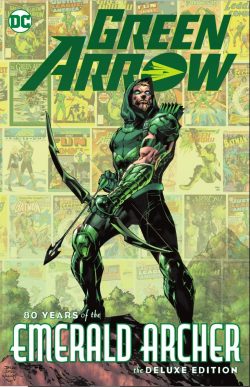
Green Arrow: 80 Years of the Emerald Archer – The Deluxe Edition


By Mort Weisinger, Ed Herron, Denny O’Neil, Mike Grell, Chuck Dixon, Grant Morrison, Kevin Smith, Brad Meltzer, Judd Winick, Jeff Lemire, Marc Guggenheim, Benjamin Percy, George Papp, Lee Elias, Neal Adams, Jim Aparo, Rodolfo Damaggio, Oscar Jimenez, Phil Hester, Scott McDaniel, Cliff Chiang, Denys Cowan, Joe Bennett,Otto Schmidt & various (DC Comics)
ISBN: 978-1-7795-0914-7 (HB)

Win’s Christmas Gift Recommendation: Superb All-Ages Entertainment and Adventure… 9/10

Green Arrow is one of DC’s Golden All-Stars. He’s been a company fixture – in many instances for no discernible reason – more or less continually since his 1941 debut in More Fun Comics #73. Many Happy Returns, Emerald Archer!

In those distant heady days, origins weren’t as important as image or storytelling, so creators Mort Weisinger & George Papp never bothered. The first inkling of formative motivations came in More Fun Comics #89 (March 1943) wherein Joe Samachson & Cliff Young detailed ‘The Birth of the Battling Bowman‘ (and a tip of the feathered hat to Scott McCullar for bringing the tale to my belated attention).

With the secret revealed, it was promptly ignored for years, leaving later workmen France “Ed” Herron, Jack Kirby and his wife Roz to fill in the blanks again with ‘The Green Arrow’s First Case’ at the start of the Silver Age superhero revival. It appeared in Adventure Comics #256, coved-dated January 1959. This time the story stuck, becoming – with numerous tweaks over successive years – the basis of the modern Amazing Archer on page and screen.

This hardback and digital celebration offers another quick survey of the Battling Bowman’s epic career, gathering material from More Fun Comics #73, Adventure Comics #246, 259, Green Lantern/Green Arrow #85-86, Green Arrow: The Longbow Hunters #1, Green Arrow volume 2 #100-101, JLA ‘8-9, Green Arrow volume 3 #1, 17, 75, Green Arrow and Black Canary #4, Secret Origins volume 3 #4, Arrow Season 2.5 #1, Green Arrow: Rebirth #1 and opens with the first of a series of brief prose ruminations ad reminiscences. Former editor Mike Gold details the heritage and legacy of ‘The Octogenarian Green Arrow’ before we meet the stars in November 1941’s More Fun Comics#73 solving the ‘Case of the Namesake Murders’ (Weisinger & Papp). Skipping unchanged to March 1958 and Adventure Comics #246, Herron & Papp detail how a counterfeiter redesigns himself as toxophilist terrorist ‘The Rainbow Archer’ whilst issue #259 (April 1959 by an anonymous author and Lee Elias) introduces ‘The Green Arrow’s Mystery Pupil’: exposing ulterior and sinister motives for his studies…

The turbulent 1960s saw Oliver Queen utterly reinvented. Deprived of his fortune he became a strident advocate of liberal issues in a bold experiment which created a fad for socially relevant, ecologically aware, mature stories which spread throughout DC’s costumed hero comics and beyond; totally revolutionising the industry and nigh-radicalising many readers.

Tapping relatively youthful superstars-in-waiting Denny O’Neil & Neal Adams to produce the revolutionary fare, editor Julie Schwartz watched in fascinated disbelief as the resultant thirteen groundbreaking, landmark issues captured the tone of the times, garnering critical praise, awards and valuable publicity from the outside world, whilst simultaneously registering such poor sales that the series was cancelled anyway: the heroes unceremoniously packed off to the back of marginally less-endangered comic book The Flash.

America at his time was a bubbling cauldron of social turmoil and experimentation. Everyone and everything were challenged on principle, and O’Neil & Adams utterly redefined super-heroism with “Issues”-driven stories transforming complacent establishment masked boy-scouts into uncertain, questioning champions and strident explorers of the enigma of America.

Probably the most notably of the run was 2-part saga ‘Snowbirds Don’t Fly’ and ‘They Say It’ll Kill Me…But They Won’t Say When!’ in Green Lantern/Green Arrow #85-86 (September – November 1972???)

Depiction of drug abuse had been strictly proscribed in comic books since the advent of the Comics Code Authority, but by 1971 the elephant in the room was too big to ignore and both Marvel and DC addressed the issue in startlingly powerful tales that opened Pandora’s dirty box forever. When the Green Gladiators are drawn into conflict with a vicious heroin-smuggling gang, Oliver Queen is horrified to discover his own sidekick had become an addict…

This sordid, nasty tale did more than merely preach or condemn, but actively sought to explain why young people turned to drugs, just what the consequences could be and even hinted at solutions older people and parents might not want to consider. It might all seem a little naïve now, but the earnest drive to do something and the sheer dark power and visual elan of the story still deliver a stunning punch…

Following Mike Grell writing about ‘My Favorite Hero’ comes the first chapter of the tale he crafted to radically reinvent the Archer for the post-Vietnam generation: setting out a new path that would quickly lead to the hero becoming a major player at long last and, ultimately, a 21st century TV sensation.

Green Arrow is one of the very few superheroes to be continuously published (more or less) since the Golden Age. On first look, the combination of Batman and Robin Hood seems to have very little going for him, but he has always managed to keep himself in vogue and in sight.

Probably the most telling of his many, many makeovers came in 1987, when – hot on the heels of Frank Miller’s The Dark Knight Returns – Grell was given the green light to make the Emerald Archer the star of DC’s second Prestige Format Mini-Series.

Grell was considered a major creator at the time, having practically saved the company with his Edgar Rice Burroughs inspired fantasy series Warlord. He had illustrated many of GA’s most recent tales (in Green Lantern/Green Arrow, Action Comics and elsewhere), and was a firm fan-favourite after well-received runs on Legion of Super-Heroes, Aquaman, Phantom Stranger, Batman and others. During the early 1980s, he had also worked on the prestigious Tarzan newspaper strip and created successful genre series Starslayer and Jon Sable, Freelance for pioneering indie publisher First Comics.

By the middle of the grim ‘n’ gritty Eighties, it was certainly time for another overhaul. Exploding arrows yes, maybe even net or rope arrows, but arrows with boxing gloves on them just don’t work (trust me – I know this from experience!). Moreover, for his 1960s makeover, the hero had evolved into a tempestuous, social reformer using his gifts to battle for the little guy. Now, in a new era of corrupt government, drug cartels and serial killers, this emerald survivor adapted again and thrived once more.

The plot was brilliantly logical and controversial, concerning the superhero’s mid-life crisis. Weary and aging, Oliver Queen relocates to Seattle, struggling to come to terms with the fact that since his former sidekick Speedy is now a dad, he is technically a grandfather. With long-time ‘significant other’ Dinah Lance/Black Canary, he starts simplifying his life, but the drive to fight injustice hasn’t dimmed for either of them.

As she goes undercover to stamp out a pervasive drug ring, the Arrow hunts the hunt for a psycho-killer dubbed “The Seattle Slasher”. Tracking a prolific beast slaughtering prostitutes, he learns of a second, cross-country slayer murdering people with arrows – the “Robin-Hood Killer”…

Eschewing his gaudy costume and gimmicks, Queen is an urban hunter stalking unglamorous hidden monsters, but stumbles into a complex mystery leading back to WWII, involving the Yakuza, CIA, corporate America and even Viet Nam war secrets that eventually change the course of the Archer’s life…

Intricate and effortless, the plot weaves around the destabilized champion, Dinah and new character Shado: exploring and echoing themes of vengeance and family in a subtle blending of three stories that are in fact one, delivering a shocking punch even now. This yarn, its narrative quality and sophistication, is arguably the first truly mature superhero yarn in the DCU.

Grell produced a gripping, mystery adventure pushing all the right buttons, conveyed by artwork – in collaboration with Lurene Haynes & Julia Lacquement – that was and remains a revelation. Beautifully demure yet edgily sharp when required, these painterly visuals and watercolour tones perfectly complement a terse, sparse script, and compelling ride.

It’s shame you’ll need another book to see the body and end of this snapping dragon…

The miniseries led to a lengthy and noteworthy run but – as ever – fashions changed and Oliver’s run apparently ended forever in Green Arrow volume 2 #100-101 (September & October 1995).

‘The Trap’ and ‘Run of the Arrow’ – by Chuck Dixon, Jim Aparo, Rodolfo DaMaggio, Gerry Fernandez & Robert Campanella  saw a weary, radicalised aging hero make the ultimate sacrifice to save Metropolis from eco-terrorist Hyraxwhilst his new-found, ashram-trained son Connor Hawke reluctantly assumed his legacy. The Buddhist-trained martial artist reluctantly took up his estranged father’s role and mission and was impressive enough to be summoned to the moon for a try-out in the  reinvented Justice League.

Grant Morrison, Oscar Jimenez, Chip Wallace, Hanibal Rodriguez supervised the secret son’s invitation to join the bright and shiny, no-nonsense team in August and September 1997’s JLA #8-9, with Jimenez & Wallace rendering ‘Imaginary Stories’ as mind-bending villain The Key attempts to conquer the universe by trapping individual Leaguers in perfect dreams, before the art was augmented by Anibal Rodriguez for the tense conclusion ‘Elseworlds’ This sees the Zen Archer saving the day in his own unique style…

Recent scribe Anne Nocenti describes ‘Hitting the Ground Running’ about her tenure on the Emerald Archer before we cover the return of the irascible original Oliver Queen as seen in Green Arrow volume 3 #1 from April 2001. This revival, by unconventional Kevin Smith (yes, Silent Bob!) and the wonderful art-team of Phil Hester & Ande Parks, brings him back from Heaven in the most refreshing manner I’ve seen in nearly five decades of comic reading. . ‘Quiver: Chapter One: The Queen is Dead (Long Live the Queen)’ starts a gloriously enjoyable refining of Green Arrow embracing the fundamental daftness of superhero comics to revitalise them. Replete with guest-stars, jam-packed with action and intrigue and wallowing in fun thanks to the sly, snappy dialogue of Smith, this is a costume-drama in a thousand and I’m certainly not going to spoil your fun by giving away any details. Just revel in the smart combination of the old and the new to create the best yet…

The renewed energy and impetus caried on building as Green Arrow volume 3 #17, November 2002 – ‘The Archer’s Tale: Chapter Two: Grays of Shade’ by Brad Meltzer, Hester & Parks – highlighted a long-overdue reconciliation between the Arrow and Speedy, triggered by the mistimed activation of a contingency plan to hide all their secrets in the event of the hero’s death, after which Green Arrow volume 3 #75 (August 2007) sees ‘Jericho, Conclusion: And the Walls Came Tumbling Down’ by Judd Winick, Scott McDaniel Andy Owens. Here the now-much extended Arrow family unite to save Star City from Deathstroke the Terminator‘s deranged vengeance scheme and witness a marriage proposal everybody knew was inevitable…

Writer, Producer and Director Greg Berlanti discusses ‘Arrow: Origins’ before Green Arrow and Black Canary #4 (March 2008) depicts Judd Winick & Cliff Chiang’s ‘Dead Again, Conclusion: Please Play Where Daddy Can See You.’Detailing the loss of a beloved “team-arrow” member, it as powerful downbeat tale about duty and repercussions that segues neatly into a new motivational start for Oliver, created as part of the New 52 company-wide reboot.

For Secret Origins volume 3 #4 (September 2014) Jeff Lemire, Denys Cowan & Bill Sienkiewicz detailed what makes a hero in ‘Secret Origins: Green Arrow’ whilst essay ‘I’m Not Batman, Dammit’ by Oliver Queen (as told to Mark Guggenheim)’ uses a faux interview to tell some real truths before we enjoy the fruits of the hero’s TV success.

Like any proper comics to screen venture, the show generated a comic book extending the on-screen adventures and here Arrow Season 2.5 #1 (December 2014) sees Guggenheim, Joe Bennett, Jack Jadson & Craig Yeung craft a tense, terse thriller in ‘Blood: Descent’ with the Arrow vigilante’s team save their city from airborne death and settle in for the fight against a new Brother Blood after which the on-point action ends with a return to basics and the end of the New 52 experiment in ‘Rebirth’ by Benjamin Percy & Otto Schmidt. Returning to Seattle, middle age and liberal crusading, the one-shot Green Arrow: Rebirth #1 (August 2016) details a first meeting with Black Canary and the hunt for urban predators “the Underground Men” abducting and selling the city’s poor into slavery…

Capped off with ‘Cover Highlights’ from the Golden, Silver, Bronze, Dark and Modern Ages, pencil art by Jim Lee and full ‘Biographies’ of the army of creators crafting green dreams over 8 decades, this is a striking reminder of the tenacity of the heroic principle and an uncomplicated core concept. Ideal Fights ‘n’ Tights fun for all…
© 1941, 1958, 1959, 1971, 1987, 1995, 1997, 2001, 2002, 2007, 2008, 2014, 2016, 2021 DC Comics. All Rights Reserved.
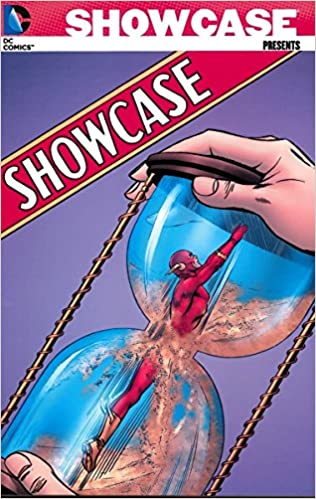
Showcase Presents Showcase


By Many and various (DC Comics)
ISBN: 978-1-78116-364-1 (TPB)

If you’re a book reviewer, Christmas often comes incredibly early. We received lots and lots of lovely new tomes in the last week and I’ve still not caught up yet, so in the meantime, I’m fobbing you all off with a reworked recommendation I was saving for our actual Christmas promotion season. It’s still a wonderful read criminally in need of re-release and a digital edition, but readily available – for now…

The review is incredibly long. If you want to skip it and just buy the book – because it’s truly brilliant – then please do. I won’t mind and you won’t regret it at all…

In almost every conceivable way, DC’s original “try-out title” Showcase created and dictated the form of the Silver Age of American comic books and is responsible for the multi-billion-dollar industry and art form we all enjoy today.

For many of us old lags, the Silver Age is the ideal era and a still-calling Promised Land of fun and thrills. Varnished by nostalgia (because it’s the era when most of us caught this crazy childhood bug), the clean-cut, unsophisticated optimism of the late 1950s and early 1960s produced captivating heroes and compelling villains who were still far less terrifying than the Cold War baddies then troubling the grown-ups. The sheer talent and unbridled professionalism of the creators working in that too-briefly revitalised comics world resulted in triumph after triumph and even inspired competitors to step up and excel: all of which brightened our young lives and still glow today with quality and achievement.

The principle was a sound one and graphically depicted in the very first issue: the Editors at National/DC were apparently bombarded with readers’ suggestions for new titles and concepts and the only possible way to feasibly prove which would be popular was to offer test runs and assess fan reactions – for which read Sales…

Firmly ensconced in the age of genre thrillers and human adventurers, this magnificent, monolithic monochrome tome covers the first 21 issues from that historic series, spanning March/April 1956 to July/August 1959, and starts the ball rolling with the first and last appearances of Fireman Farrell in a proposed series dubbed Fire Fighters.

Following the aforementioned short ‘The Story Behind Showcase’ by Jack Schiff & Win Mortimer, the human-scaled dramas begin in ‘The School for Smoke-Eaters’ by Schiff and the superb John Prentice (Rip Kirby), introducing trainee fireman Mike Farrell during the last days of his training and desperate to simultaneously live up to and escape his father’s fabulous record as a legendary “smoke-eater”.

The remaining stories, both scripted by Arnold Drake, deal with the job’s daily dilemmas: firstly in ‘Fire under the Big Top’ wherein an unscrupulous showman ignored Farrell’s Fire Inspection findings with tragic consequences, and in‘Fourth Alarm’ mixing an industrial dispute over fireman’s pay, a crooked factory owner and a waterfront blaze captured on live TV in a blisteringly authentic tale of human heroism.

Showcase #2 featured Kings of the Wild: tales of animal valour imaginatively related in three tales scripted by Robert Kanigher – who had thrived after the demise of superheroes with a range of fantastical genre adventures covering western, war, espionage and straight adventure. Stunningly illustrated by Joe Kubert, ‘Rider of the Winds’ tells of a Native American lad’s relationship with his totem spirit Eagle; ‘Outcast Heroes’ (Ross Andru & Mike Esposito) relates how an orphan boy’s loneliness ends after befriending a runaway mutt who eventually saves the town’s kids from a flood before ‘Runaway Bear’ – drawn by Russ Heath – uses broad comedy to describe how an escaped circus bruin battles all the horrors of the wilderness to get return to his comfortable, safe life under the Big Top.

Issue #3 debuted Kanigher & Heath’s The Frogmen in an extended single tale following candidates for a US Underwater Demolitions Team as they move from students to successful undersea warriors. Beginning with ‘The Making of a Frogman’ as the smallest diver – mocked and chided as a ‘Sardine’ by his fellows (especially ‘Shark’ and ‘Whale’) – perseveres and forges bonds until the trio are dumped into blazing Pacific action in ‘Flying Frogmen’, learning the worth of teamwork and sacrifice by destroying a Japanese Sub base in ‘Silent War’…

The feature returned as a semi-regular strip in All-American Men of War #44 (April #1957) amongst other Kanigher-edited war comics: making Frogmen the first but certainly not the last graduate of the try-out system. The next debut was to be the most successful but the cautious publishers took a long, long time to make it so…

No matter which way you look at it, the Silver Age officially arrived began with The Flash. It’s an unjust but true fact that being first is not enough; it also helps to be best and people have to notice. The Shield beat Captain America to the news-stands by over a year yet the former is all but forgotten today.

The industry had never really stopped trying to revive superheroes when Showcase #4 was released in late summer of 1956, with such precursors as The Avenger (February-September 1955); Captain Flash (November 1954-July 1955); Marvel’s Human Torch, Sub-Mariner and aforementioned Sentinel of Liberty (December 1953-October 1955) and even DC’s own Captain Comet (December 1953-October 1955) and Manhunter from Mars (November 1955 until the close of the 1960’s and almost the end of superheroes again!) still turning up in second-hand-stores and “Five-and-Dime” bargain bins. What made the new Fastest Man Alive stand out and stick was … well, everything!

Once DC’s powers-that-be decided to try superheroes once more, they moved pretty fast themselves. Editor Julie Schwartz asked office partner and Golden-Age Flash scripter Kanigher to recreate a speedster for the Space Age, aided and abetted by Carmine Infantino & Joe Kubert, who had also worked on the previous incarnation.

The new Flash was Barry Allen, a forensic scientist simultaneously struck by lightning and bathed in the exploding chemicals of his lab. Supercharged by the accident, Barry took his superhero identity from a comic book featuring his predecessor (scientist Jay Garrick, who was exposed to the mutagenic fumes of “Hard Water”). Designing a sleek, streamlined bodysuit (courtesy of Infantino – a major talent rapidly approaching his artistic and creative pinnacle), Barry Allen became the point man for the spectacular revival of a genre and the entire industry.

‘Mystery of the Human Thunderbolt’ (Kanigher) and ‘The Man Who Broke the Time Barrier’ (written by the superb John Broome) are polished, coolly sophisticated stories introducing the comfortingly suburban superhero and establishing the broad parameters of his universe. Whether defeating bizarre criminal masterminds such as The Turtle or returning criminal exile Mazdan to his own century, the new Flash was a protagonist of keen insight and sharp wits as well as overwhelming power. Nonetheless the concept was so controversial that despite phenomenal sales, rather than his own series the Fastest Man Alive was given a Showcase encore almost a year later…

Showcase #5 featured the last comics concept in years that didn’t actually develop into an ongoing series, but that’s certainly due to changing fashions of the times and not the quality of the work. The three crime yarns comprising cops-&-robbers anthology Manhunters, begin with ‘The Greatest Villain of all Time’ by Jack Miller & Mort Meskin, revealing how Hollywood screenwriter-turned-police detective Lt. Fowler is dogged by a madman playing for real all the fantastic bad guys the mystery author had once created, whilst ‘The Two Faces of Mr. X’ (Miller, Curt Swan & Sy Barry) finds a male model drafted by the FBI to replace a prominent mob-boss. Unfortunately, it’s the day before the gangster is scheduled for face-changing plastic surgery…

‘The Human Eel’ (Miller & Bill Ely) then pits a cop unable to endure heights against an international high-tech rogue who thinks he hold all the winning cards…

The next try-out was on far firmer fashion grounds and was the first feature to win two issues in a row.

The Challengers of the Unknown were a bridging concept. As the superhero genre was ever so cautiously alpha-tested in 1956 here was a super-team – the first new group-entry of this still-to-be codified era – but with no uncanny abilities or masks, the most basic and utilitarian of costumes, and the most dubious of motives: Suicide by Mystery…

If you wanted to play editorially safe you could argue that were simply another para-military band of adventurers like the long running Blackhawks… but they weren’t.

A huge early hit – winning their own title before The Flash (March 1959) and just two months after Lois Lane (March 1958, although she had been a star in comics since 1938 and even had TV, radio and movie recognition on her side) – the Challs struck a chord resonating for more than a decade before they finally died… only to rise again and yet again. The idea of them was stirring enough, but their initial execution made their success all but inevitable.

Jack Kirby was – and remains – the most important single influence in the history of American comics. There are quite rightly millions of words written about what the man has done and meant, and you should read those if you are at all interested in our medium. When the comic industry suffered a collapse in the mid 1950’s, Kirby briefly returned to DC, crafting genre mystery tales and revitalising the Green Arrow back-up strip whilst creating newspaper strip Sky Masters of the Space Force. He also re-packaged for Showcase an original super-team concept that had been kicking around in his head since he and long-time collaborator Joe Simon had closed their innovative but unfortunate Mainline Comics.

The Challengers of the Unknown were four extraordinary mortals; heroic adventurers and explorers brought together for a radio show who walked away unscathed from a terrible plane crash. Already obviously what we now call “adrenaline junkies”, they decided that since they were all living on borrowed time, they would dedicate what remained of their lives to testing themselves and fate. They would risk their lives for Knowledge and, of course, Justice.

Showcase #6, dated January/February 1957 – which meant it came out in time for Christmas 1956 – introduced pilot Ace Morgan, wrestler Rocky Davis, acrobat Red Ryan and scholarly marine explorer “Prof” Haley in a no-nonsense romp by Kirby, scripter Dave Wood, inkers Marvin Stein and Jack’s wife Roz, before devoting the rest of the issue to a spectacular epic with the doom-chasers hired by duplicitous magician Morelian to open an ancient casque holding otherworldly secrets and powers in ‘The Secrets of the Sorcerer’s Box!’

This story roars along with all the tension and wonder of the B-movie thrillers it emulates, and Kirby’s awesome drawing resonates with power and dynamism as the heroes tackle ancient horrors such as ‘Dragon Seed!’, ‘The Freezing Sun!’ and ‘The Whirling Weaver!’

The fantasy magic continued in the sequel: a science fiction crisis caused when an alliance of Nazi technologies with American criminality unleashes a robotic monster. Scripted by Kirby, ‘Ultivac is Loose!’ (Showcase #7, March/April 1957) introduces quietly capable boffin Dr. June Robbins, who becomes the fifth Challenger at a time when most comic females had returned to a subsidiary status in that so-conservative era.

As her computers predict ‘A Challenger Must Die!’, the lads nevertheless continue to hunt a telepathic, sentient super-robot who inadvertently terrorises ‘The Fearful Millions’ but soon find their sympathies with the tragic artificial intelligence after ‘The Fateful Prediction!’ is fulfilled…

Showcase #8 (June 1957) again featured the Flash, leading with another Kanigher tale – ‘The Secret of the Empty Box’. This perplexing but pedestrian mystery sees Frank Giacoia debut as inker, but the real landmark is Broome’s thriller ‘The Coldest Man on Earth’. With this yarn the author confirmed and consolidated the new phenomenon by introducing the first of a Rogues Gallery of outlandish super-villains. Unlike Golden Age stalwarts, new super-heroes would face predominantly costumed foes rather than thugs and spies. Henceforth, Bad Guys would be as visually arresting and memorable as the champions of justice. Captain Cold would return time and again as pre-eminent Flash Foe and Broome would go on to create every single member of Flash’s classic pantheon of super-villains.

Also included is filler reprint ‘The Race of Wheel and Keel’ by Gardner Fox, Gil Kane & Harry Lazarus, from All-Star Comics #53 (June/July 1950): a true story of how in 1858 a shipping magnate and stagecoach tycoon competed to prove which method of transportation was fastest…

When Lois Lane – arguably the oldest supporting character/star in the Superman mythology if not DC universe – finally received her own shot at a solo title, it was very much on the terms of the times.

I must shamefacedly admit to a deep, nostalgic affection for her bright, breezy, fantastically fun adventures, but as a free-thinking, (nominally) adult liberal of the 21st century I’m astounded now at the jolly, patronising, patriarchally misogynistic attitudes underpinning so many of the stories.

Yes, I’m fully aware that the series was intended for young readers at a time when “dizzy dames” like Lucille Ball or Doris Day played to a popular American stereotype of Woman as jealous minx, silly goose, diffident wife and brood-hungry nester, but asking kids to seriously accept that intelligent, courageous, ambitious, ethical and highly capable females would drop everything they’d worked hard for to lie, cheat, inveigle, manipulate and entrap a man just so that they could cook pot-roast and change super-diapers is just plain crazy and tantamount to child abuse.

I’m just saying…

Showcase #9 (cover-dated July/August 1957) featured Superman’s Girl Friend Lois Lane in three tales by Jerry Coleman, Ruben Moreira & Al Plastino; opening with seminal yarn ‘The Girl in Superman’s Past’ wherein Lois first meets red-headed hussy Lana Lang. The childhood sweetheart of Superboy seems to be a pushy conniving go-getter out to win Lois’ intended at all costs. Naturally Miss Lane invites Miss Lang to stay at her apartment and the grand rivalry is off and running…

‘The New Lois Lane’ aggravatingly saw Lois turn over a new leaf and stop attempting to uncover his secret identity just when Superman actually needs her to do so, and the premier concludes with concussion-induced day-dream ‘Mrs. Superman’ with Lois imagining a life of domestic super-bliss…

The next issue (September/October 1957) offered three more of the same, all illustrated by Wayne Boring & Stan Kaye, beginning with ‘The Jilting of Superman’ – scripted by Otto Binder – wherein the Man of Tomorrow almost falls for an ancient ploy as Lois pretends to marry another man to make the Kryptonian clod realise what she means to him…

‘The Sightless Lois Lane’ by Coleman reveals how a nuclear accident temporarily blinds the journalist, before her unexpected recovery almost exposes Clark Kent‘s secret when he callously changes to Superman in front of the blind girl. Binder delightfully closes the issue with ‘The Forbidden Box from Krypton’: a cache of devices dug up by a Smallville archaeologist originally packed by Jor-El to aid the infant superbaby on Earth. Of course, when Lois opens the chest all she sees is a way to become as powerful as the Man of Steel before becoming addicted to being a super-champion in her own right…

Superman’s Girlfriend Lois Lane launched into her own title scant months later, clearly exactly what the readers wanted…

Showcase #11 (November/December 1957) saw the Challengers return to combat an alien invasion on ‘The Day the Earth Blew Up’, with unique realist Bruno Premiani inking a taut doomsday chiller that keeps readers on the edge of their seats even today. Whilst searching for missing Antarctic explorers the Challs discover an under-ice base where double-brained aliens prepare to explosively alter the mass and gravity of Earth. Although intellectually superior, ‘The Tyrans’are no match for the indomitable human heroes and with their Plan A scotched, resort to brute force and ‘The Thing That Came out of the Sea’, even as Prof scuttles their aquatic ace in the hole with ‘One Minute to Doom’…

By the time of their final Showcase cases (#12, January/February 1958) they had already secured their own title. Here, though, ‘The Menace of the Ancient Vials’ is defused by the usual blend of daredevil heroics and ingenuity (with the wonderful inking of George Klein, not Wally Wood as credited here) as international spy and criminal Karnak steals a clutch of ancient chemical weapons which create giants and ‘The Fire Being!’, summon ‘The Demon from the Depths’and materialise ‘The Deadly Duplicates!’ before the pre-fantastic four put their enemy down.

Flash zipped back in Showcase #13 (March/April 1958) in a brace of tales pencilled by Infantino and inked by Joe Giella. Written by Kanigher, ‘Around the World in 80 Minutes’ follows the Scarlet Speedster as he tackles atomic blackmail in Paris, foils kidnappers and rebuilds a pyramid in Egypt; dismantles an avalanche in Tibet and scuttles a pirate submarine in the Pacific, before Broome’s ‘Master of the Elements’ introduces outlandish chemical criminal Al Desmond who ravages Central City as Mr. Element until the Flash outwits him.

One last try-out issue – inked by Giacoia – cemented the Flash’s future: Showcase #14 (May/June 1958) opens with Kanigher’s eerie ‘Giants of the Time-World!’ as the Fastest Man Alive smashes dimensional barriers to rescue his girlfriend Iris West from uncanny cosmic colossi and stamp out an alien invasion plan, after which Al Desmond returns with an altered M.O. and new identity. Doctor Alchemy‘s discovery of the mystic Philosopher’s Stone makes him ‘The Man who Changed the Earth!’: a stunning yarn and worthy effort to bow out on, but it was still nearly a year until the first issue of The Flash finally hit the stands.

To reiterate: Showcase was a try-out comic designed to launch new series and concepts with minimal commitment of publishing resources. If a new character sold well initially, a regular series would follow. The process had been proved with Frogmen, Lois Lane, Challengers of the Unknown and Flash, so Editorial Director Irwin Donenfeld now urged his two Showcase editors to create science fiction heroes to capitalise on the twin zeitgeists of the Space Race and the popular fascination with movie monsters and aliens. Jack Schiff came up with a “masked” crimefighter of the future – who featured in issues #15 and 16 – whilst Julie Schwartz concentrated on the now in the saga of a contemporary Earth explorer catapulted into the most uncharted territory yet imagined.

Showcase #15 (September/October 1958) commenced without fanfare – or origin – the ongoing adventures of Space Ranger – beginning in ‘The Great Plutonium Plot’ (plotted by Gardner Fox, scripted by pulp veteran Edmond Hamilton and illustrated by Bob Brown).

Their hero was in actuality Rick Starr, son of a wealthy interplanetary businessman who – thanks to incredible gadgets and the assistance of shape-shifting alien pal Cryll and capable Girl Friday Myra Mason – spent his free time battling evil and injustice. When Jarko the Jovian space pirate targets only ships carrying the trans-uranic element, Rick suspects a hidden motive. Donning his guise of the Space Ranger, he lays a cunning trap, exposing a hidden mastermind and a deadly ancient device endangering the entire solar system…

From his base in a hollow asteroid, Space Ranger ranges the universe and ‘The Robot Planet’ brings him and his team to Sirius after discovering a diabolical device designed to rip Sol’s planets out of their orbits. At the end of his voyage, Starr discovers a sublime civilisation reduced to cave-dwelling and a mighty computer intelligence intent on controlling the entire universe unless he can stop it…

Issue #16 opened with ‘The Secret of the Space Monster’ (plot by John Forte, scripted by Hamilton, illustrated by Brown) with Rick, Myra and Cryll investigating an impossible void creature and uncovering a band of alien revolutionaries testing novel super-weapons. ‘The Riddle of the Lost Race’ (Fox, Hamilton & Brown) then takes the team on a whistle-stop tour of the Solar system in pursuit of a vicious criminal and hidden treasures of a long-vanished civilisation.

A few months later Space Ranger was transported to science fiction anthology Tales of the Unexpected, beginning with issue #40 (August 1959) to hold the lead and cover spot for a 6-year run…

One of the most compelling and revered stars of those halcyon days was an ordinary Earthman who regularly travelled to another world for spectacular adventures, armed with nothing more than a ray-gun, a jetpack and his own ingenuity. His name was Adam Strange, and like so many of that era’s triumphs, he was the brainchild of Julius Schwartz and his close team of creative stars.

Showcase #17 (November/December 1958) proclaimed Adventures on Other Worlds, courtesy of Gardner Fox, Mike Sekowsky & Bernard Sachs, telling of an archaeologist who, whilst fleeing from enraged natives in Peru, jumps a 25-foot chasm only to be hit by a stray teleport beam from a planet orbiting Alpha Centauri. Rematerialising on another planet filled with giant plants and monsters, he is rescued by a beautiful woman named Alanna who teaches him her language via a cunning contrivance. ‘Secret of the Eternal City!’ reveals Rann is a world recovering from atomic war, and the beam Adam intercepted was in fact a simple flare, one of many sent in an attempt to communicate with other races.

In the four years (Speed of Light, right? As You Know, Bob – Alpha Centauri is about 4.3 light-years from Sol) the Zeta-Flare travelled through space, cosmic radiation converted it into a teleportation beam. Until the radiation drains from his body Strange is a most willing prisoner on a fantastic world of mystery, adventure and romance…

And an incredibly unlucky one apparently, as no sooner has Adam started acclimatising than an alien race The Eternalsinvades, seeking a mineral that grants them immortality. Strange’s courage and sharp wits enable him to defeat the invaders only to have the Zeta radiation finally fade, drawing him home before his adoring Alanna can administer a hero’s reward. Thus was established the principles of this beguiling series. Adam would intercept a Zeta-beam hoping for some time with his alien sweetheart, only to be confronted with a planet-menacing crisis.

The very next of these, ‘The Planet and the Pendulum’ sees him obtain the crimson-and-white spacesuit and weaponry that became his distinctive trademark in a tale of alien invaders attacking a lost colony of Rannians. They reside on planetary neighbour Anthorann – a fact that also introduces the major subplot of Rann’s still-warring city-states, all desperate to progress and all at different stages of recovery and development….

The next issue featured the self-explanatory ‘Invaders from the Atom Universe’ – with sub-atomic marauders displacing the native races until Adam unravels their nefarious plans – and ‘The Dozen Dooms of Adam Strange’, wherein our hero outfoxes the dictator of Dys who plans to invade Alanna’s home-city Rannagar.

With this last story, Sachs was replaced by Joe Giella as inker, although the former did ink Showcase #19’s stunning Gil Kane cover, (March/April 1959) which saw the unwieldy Adventures on Other Worlds title replaced with eponymous logo Adam Strange.

‘Challenge of the Star-Hunter’ and ‘Mystery of the Mental Menace’ are classic puzzle tales wherein the Earthman must outwit a shape-changing alien and an all-powerful energy-being. After so doing, Adam Strange took over the lead spot and cover of anthology comic Mystery in Space with the August issue.

Clearly on a creative high and riding a building wave, Showcase #20 (May/June 1959) introduced Rip Hunter… Time Master and his dauntless crew as Prisoners of 100 Million BC’ (by Jack Miller & Ruben Moreira) in a novel-length introductory escapade seeing the daredevil physicist, his engineer friend Jeff Smith, girlfriend Bonnie Baxter and her little brother Corky travel to the Mesozoic era, unaware they are carrying two criminal stowaways.

Once there, the thugs hi-jack the Time Sphere, holding it hostage until the explorers help them stock up with rare and precious minerals. Reduced to the status of castaways, Rip and his team become ‘The Modern-Day Cavemen’, but when an erupting volcano provokes ‘The Great Beast Stampede’, our dauntless chrononauts finally turn the tables on their abductors…

Miller was always careful to use the best research available, but never afraid to blend historical fact with bold fantasy for Hunter’s escapades, and this volume concludes with an epic follow-up. Illustrated by Sekowsky & Joe Giella, ‘The Secret of the Lost Continent’ (Showcase #21, July/August, 1959,) has the Time Masters jump progressively further back in time in search of Atlantis. Starting with a dramatic meeting with Alexander the Great in 331 BCE, the explorers follow the trail back centuries to ‘The Forbidden Island’ of Aeaea in 700 BCE and uncover the secret of the witch Circe before finally reaching 14,000 BCE and ‘The Doomed Continent’ only to find the legendary pinnacle of early human achievement to be a colony of stranded extraterrestrial refugees…

Rip Hunter would appear twice more in Showcase before winning his own comic. The succeeding months would see the Silver Age truly kick into High Gear with classic launches coming thick and fast…

These stories from a uniquely influential comic book determined the course of the entire American strip culture and for that alone they should be cherished, but the fact they are still some of the most timeless, accessible and entertaining graphic adventures ever produced is a gift that should be celebrated by every fan and casual reader.

Buy this for yourself, get it for your friends and get a spare just because you can…
© 1956, 1957, 1958, 1959, 2012 DC Comics. All Rights Reserved.
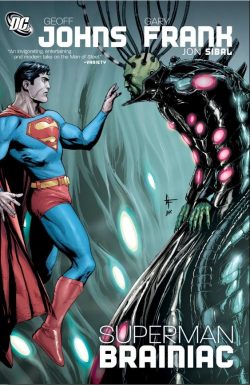
Superman: Brainiac


By Geoff Johns, Gary Frank, Jon Sibal & various (DC Comics)
ISBN: 978-1-84856-230-1 (TPB)

Since his first appearance in Action Comics #242 (July 1958), robotic alien reaver Brainiac has been a perennial favourite foe of the Man of Steel, and has remained so even through being subsequently “retooled” many times. Brilliant and relentless, the one thing he/it has never been is really scary – until this latest re-imagining from Geoff Johns and Gary Frank.

In post-Crisis on Infinite Earths continuity the raider was a computerised intellect from planet Colu who inhabited and transformed the body of showbiz mentalist Milton Fine, until it grew beyond physical limits to become a time-travelling ball of malignant computer code, constructing or co-opting ever-more formidable physical forms in its self-appointed mission to eradicate Superman.

However, in this slim but evocative tome – collecting Action Comics #886-870 and Superman: New Krypton Special #1 – the truth is finally revealed… or if you prefer, edited into a sensible scenario combining the best of dozens of previous plot strands.

Long ago, an alien invader attacked Krypton: merciless and relentless robotic berserkers slaughtered hundreds of citizens before physically removing the entire city of Kandor. Decades later, one of those robots lands on Earth only to promptly fall before the Man of Tomorrow’s shattering fists.

This ‘First Contact’ leads to a revelatory conversation with Supergirl – a fortunate survivor of the Kandor Incident, as seen in ‘Hide and Seek’. Now we know every Brainiac Superman has ever faced has only been a pale shadow of the true villain: autonomous automatic probes and programming ghosts of a malevolent entity that has stalked the universe for centuries, stealing representative cities before destroying the redundant worlds they once thrived upon. Most importantly, the real Brainiac has found Earth…

What nobody realises is that the Cosmic Kidnapper has been scouring the cosmos ever since Krypton died. He actually wants to possess every last son and daughter of that long-dead world and neither time nor distance will hinder him…

Superman rockets into space to confront the monster, unaware that the marauder is already en route to Earth, and as the Metropolis Marvel confronts his old foe for the very first time in a titanic, horrific clash, ‘Greetings’ sees Supergirl lead the defence of embattled planet Earth against the monster’s diabolical mechanical marauders.

The war on two fronts continues in ‘Mind Over Matter’, concluding in an overwhelming moment of ‘Triumph and Tragedy’ as Superman defeats Brainiac and frees an entire city of fellow Kryptonians he never knew still existed, only to lose one of the most important people in his life, ending on an uncharacteristically sombre, low key note in ‘Epilogue’.

Geoff Johns was then at the forefront of the creative movement to restore and rationalize DC’s Pre-Crisis mythology, and by combining a modern sensibility with the visual flavour of Ridley Scott’s Alien movies here added a tangible aura of terror to the wide-eyed imagination and wonder of those old and much-loved tales. The visceral, gloriously hyper-realistic art of Gary Franks & John Sibal adds to the unease, and their deft touch with the welcome tension-breaking comedic breaks is a sheer delight.

Available in both print and digital formats, this is a Superman yarn anybody can pick up, irrespective of their familiarity – or lack of – with the character: fast, thrilling, spooky and deeply moving, for all that it’s also the introduction to major event New Krypton – but that’s a tale and review for another time…
© 2008, 2009 DC Comics. All Rights Reserved.
Superman: The City of Tomorrow volume 1


By Jeph Loeb, Stuart Immonen, Mark Millar, Mark Schultz, Joe Kelly, Mike McKone, Steve Epting, Dough Mahnke, German Garcia, Joe Phillips, Yannick Paquette, Kano, Butch Guice, Ed McGuinness & various (DC Comics)
ISBN: 978-1-4012-9508-0 (TPB)

The Man of Tomorrow has proven to be all things to most people over more than 80 years of action and adventure, with Jerry Siegel & Joe Shuster’s iconic Superman now practically unrecognisable to most fans after continual radical shake-ups and revisions. Nevertheless, every refit and reboot has resulted in appalled fans and new devotees in pretty much equal proportion, so perhaps the Metropolis Marvel’s greatest ability is the power to survive change…

These days, in the aftermath of the Future State and Infinite Frontier events, myriad decades of accrued mythology have been re-assimilated into an overarching, all-inclusive media dominant, film-favoured continuity, with the grittily stripped-down, post-Crisis on Infinite Earths Man of Steel (as re-imagined by John Byrne and built upon by an army of immensely talented comics creators) regarded as a stunning high point.

As soon as the Byrne restart had demolished much of the mythology and iconography which had grown up around the “Strange Visitor from Another World” over fifty glorious years, successive writers, artists and editors expended a lot of time and ingenuity restoring it, albeit in terms more accessible to a cynical, well-informed audience far more sophisticated than their grandparents ever were.

Even so, by the mid-1990’s Byrne’s baby was beginning to look a little tired. The sales kick generated by the Death… and Return of Superman was already fading, so the decision was made to give the big guy a bit of a tweak for the fast-approaching new millennium: bringing in new creators and moving the stories into more bombastic territory.

The fresh tone was augmented by a new sequence and style of trade paperback editions and this new collection adheres to that format in gigantic themed tomes like this initial outing re-presenting material from Action Comics #760-763; Superman #151-154, Superman: Man of Steel # 95-98; The Adventures of Superman #573-576 and Superman: Y2K, covering December 1999-March 2000.

It spectacularly opens with ‘We’re Back!’ by Jeph Loeb, Mike McKone & Marlo Alquiza (from Superman #151), which sees the recently wrecked Daily Planet restored, rebuilt and returned to glory after a dark period under the ownership of Lex Luthor, allowing Lois Lane-Kent plenty of opportunities for reflection, remembrance and handy recapping before the sinister son of alien marauder Mongul explosively crashes to earth…

‘Higher Ground’ (by Stuart Immonen, Mark Millar, Steve Epting & Denis Rodier from Adventures of Superman #573) then details Luthor’s machinations and political chicanery in the creation of a proposed elite “hypersector” to cap the rebuilding of “his” City of Tomorrow. Only stubborn landowner Jerome Odett stands in his way, but with the mayor on his team and bending the law to his needs Lex is assured of victory… until Superman intervenes using sentiment, nostalgia and happy childhood memories as his weapons of choice to arouse popular opinion…

Mark Schultz, Doug Mahnke & Tom Nguyen then reveal that ‘Krypton Lives’ (Superman: Man of Steel # 95) after a Superman robot malfunctions in the Antarctic, allowing humans to enter the Kryptonian’s Fortress of Solitude and triggering the escape of a bizarre string of ancient yet impossibly alive Kryptonian artefacts and creatures.

Forced to destroy the last vestiges of his alien heritage, Kal-El returns to Lois, thinking that a precious chapter of his life is over, but he couldn’t be more wrong…

Crafted by Joe Kelly, German Garcia & Joe Rubinstein, Action Comics #760 depicts ‘…Never-Ending Battle…’ as a legion of minor menaces and misfits lead the Man of Tomorrow to Latina sorceress La Encantadora who sells slivers of Kryptonite to thugs trying to lay our hero low. Even after the elusive enchantress is corralled, she delivers one last surprise which will make much mischief for the Last Son of Krypton…

‘Deadline U.S.A.’ (Superman #152, Loeb, McKone & Alquiza) resumes the interrupted battle with Mongul Jr., but all conflict ceases when the mammoth monster finally gets the Man of Steel to stop hitting and listen…

The brutal tyrant has come to warn of a vast, universe-ending threat and, in conjunction with Luthor, is offering to train Superman to beat it…

There are more pedestrian but just as critical distracting problems to deal with. During Superman’s sparring with Mongul, Jimmy Olsen took a photo of the hero’s hand sporting a wedding ring. When the picture is leaked, the media goes into a feeding frenzy…

‘Something Borrowed, Something Blue’ (Immonen, Millar, Joe Phillips & Rich Faber; Adventures of Superman #574) follows that strand as old foe and potential bunny-boiler Obsession resurfaces in a Superwoman outfit, claiming to be the much-sought Mrs. Superman. However, her deranged tantrum leads to nothing but tragedy and disaster…

Returning ‘Home’ (by Schultz, Mahnke & Nguyen in Superman: Man of Steel #96) Clark Kent finds his Metropolis apartment transformed into a terrifying outpost of his destroyed birthworld, courtesy of renegade miracle machine The Eradicator. In the resultant clash, Superman looks doomed to destruction, until Lois takes decisive action…

Her valiant nature and wifely tolerance is truly tested in Action Comics #761, as – courtesy of Kelly, Garcia & Rubinstein – Lois is abandoned after Wonder Woman requests the Man of Tomorrow join her in battle beside gods against devils.

For the feisty journalist it’s mere days until Clark returns, but she’s blissfully unaware that her husband and the perfect warrior woman have been comrades – and perhaps more – ‘For a Thousand Years…’

The last Christmas of the 20th century ends in Superman #153 (Loeb, McKone & Alquiza) as ‘Say Goodbye’ finds the Action Ace heading into space with Mongul to battle Imperiex, Destroyer of Galaxies who has targeted the Milky Way for destruction…

When the pair implausibly triumph, Mongul instantly betrays his erstwhile pupil and only a violent intervention by bounty hunter Lobo prevents a tragic travesty. What nobody knows is that the Imperiex so recently destroyed is just a fractional drone of the real cosmic obliterator, who is now really ticked off…

Offering a brief pause and change-of-pace ‘A Night at the Opera’ (by Immonen, Millar, Yannick Paquette, Dexter Vines & Rich Faber; Adventures of Superman #575) sees Luthor poison Clark in a churlish attempt to monopolize and impress Lois, before Schultz, Mahnke & Nguyen’s ‘Bridge the Past and Future’ (Superman: Man of Steel # 97) focusses on John Henry Irons – AKA Steel – and his niece Natasha. The high-tech armourers to the City’s police force join Superman against the possessed personification of the Eradicator, still hell-bent on making Earth an outpost of lost Krypton, but now afflicted by an all-too-human consciousness …

As year and millennium anxiously count down to potential doom (kids – this was a genuine concern at the time, you should check it out…) Christmas tensions escalate in Action Comics #762 as Kelly, Garcia, Kano & Rubinstein’s ‘All I Want for Christmas’ finds Man of Steel battling occasional ally Etrigan the Demon beside current foe La Encantadora, before all rediscover the true meaning of the season…

Finally, the long-dreaded doom days begin with the Superman: Y2K one-shot special, crafted by scripter Joe Kelly and artists Butch Guice, Kevin Conrad, Mark Propst & Richard Bonk. ‘The End’ traces the history of the Luthor dynasty in Metropolis, from the first settlers in America to the present day when Last Son Lex practically owns the entire place as a counterpoint to the ongoing action…

With the end of the Holidays fast approaching, staunch traditionalist Clark is facing an existential crisis: Lois and his own mother want to elbow the sacrosanct seasonal tradition of a quiet New Year’s on the Smallville farm for a (professionally-catered, not home-cooked) vacation in the Big City…

Bowing to the inevitable, the Hubby of Tomorrow ferries the family to a Metropolis suddenly gripped with terror: fearing that all the computers on Earth will imminently expire, precipitating the end of civilisation as the millennium closes…

When the countdown concludes, everybody’s fears are totally justified. An alien entity overwhelms the world’s digital systems, triggering a wave of destruction affecting every electronic device on Earth…

Alien digital dictator Brainac 2.5 has upgraded himself since his last attack, but his hatred for Luthor is undiminished. As every hero on Earth battles panic, riots and failing technologies, and Superman and Green Lantern are busy fielding all the nuclear missiles launched during the terrifying induced glitch, the computer dictator is trying his hardest to murder Lex and his new baby daughter Lena Luthor.

As part of his scheme Brainiac 2.5 has also enslaved Earth’s many robotic and android entities such as Red Tornado, Hourman and the Metal Men, but the AI invader is blithely unaware that he too is being used…

With the world – and especially Metropolis – crashing into ruin the secret invader makes its move: from the far distant future the merciless Brainac 13 program has been attempting to overwrite its ancient ancestor and take over Earth centuries before it was even devised…

As described by Loeb, Ed McGuinness & Cam Smith in Superman volume 2 #154 (March 2000), the crisis intensifies in ‘Whatever Happened to the City of Tomorrow?’ as the colossal chronologically-displaced construct begins reformatting the world: converting matter into materials and designs analogous to its own time. Unfortunately, that’s very bad news for the billions of human beings inside buildings, vehicles and vessels abruptly undergoing those transformations…

Even Luthor is helpless, locked out of his own corporate tower as “his” city falls apart whilst the Man of Steel is occupied battling Brainiac 13 and upgraded cyborg assassin Metallo. Assistance arrives in most unwelcome form as little Lena begins offering technical advice. The toddler has been possessed by presumed-destroyed Brainiac 2.5: simultaneously becoming hostage and bolt-hole for the outmoded, nigh-obsolete alien menace…

With the aid of the Metal Men, Superman defeats Metallo and confers with Lois and Jimmy Olsen. The games-mad lad theorises that the transforming city is starting to resemble a gigantic motherboard…

As elsewhere Jonathan and Martha Kent are trapped aboard a subway train programmed to deliver organic units to a slave-indoctrination station, the Action Ace attempts to dislodge the computerising city’s main power cable. When Brainiac 13 tries to digitise and absorb the annoying Kryptonian, it accidentally reverts the hero to a previous incarnation: the intangible electrical form dubbed Superman Blue…

The hostile planetary hacking continues in The Adventures of Superman #576 as ‘AnarchY2Knowledge’ (Millar, Immonen & José Marzan, Jr.) finds the Man of Energy hopelessly tackling Brainiac 13. He seeks to quell the rising body count of helpless humans, whilst far below Luthor and Lena 2.5 battle through marauding B13 creations in the overwritten bowels of the LexCorp Tower towards a stolen secret weapon…

The alien-occupied infant shares a direct link with all Brainiacs’ core programming and has discovered a possible backdoor that could enable them to destroy the all-pervasive program from the future. Their progress is greatly facilitated after Luthor’s lethally devoted bodyguards Hope and Mercy finally locate them. As preparations proceed, the villains opt to rescue Superman, incidentally restoring the Metropolis Marvel to a flesh and blood state. To save Metropolis for his family, the evil billionaire will even work with his most hated enemy…

Superman: Man of Steel # 98 continues the epic with ‘Thirty Minutes to Oblivion’ (Schultz, Mahnke & Nguyen) as the senior Kents escape conversion into B13 drones thanks to a last moment rescue by the Man of Steel and The Eradicator.

After a lengthy period of self-imposed banishment in deep space (for which see Superman: Exile) Kal-El returned to Earth carrying an incredibly powerful Kryptonian artefact which had survived the destruction of the planet. The Eradicator could reshape matter and was programmed to preserve or resurrect and restore the heritage and influence of the lost civilisation at any cost.

After a number of close calls Superman realised it was too dangerous, so he buried it in an Antarctic crevasse and foolishly assumed that ended the affair. Such was not the case and the miracle machine returned many times, always attempting to remake Earth into New Krypton.

When Superman died, it manufactured a new body and sought to carry on Kal-El’s legacy… Eventually it failed and fell into the hands of dying scientist David Connor who merged with the manufactured body to produce a phenomenally powerful – if morally and emotionally conflicted – new hero…

Superman’s understandable anxiety is assuaged as Eradicator points out a weakness in B13 tech assimilation. Its transmode programs have been unable to infect Kryptonian systems such as those in the Fortress of Solitude, but the base has now become the invader’s primary target. If the program masters Kryptonian systems it will be utterly unstoppable…

After finishing off Metallo and the co-opted Metal Men, Eradicator and Superman head to the Fortress, whilst in his factory John Henry Irons and Natasha find their own temporary answer to the threat of the constantly encroaching and bloodthirsty B13 drones…

Deep below LexCorp, Luthor and Lena 2.5 are working towards similar goals with the same insights whilst planning to betray each other later. Admitting that Brainiac core systems can’t even see Kryptonian tech, the baby bodysnatcher advises Lex to modify the robotic warsuit stolen from Superman and deploy it against the apparently omnipotent digital invader.

In the Antarctic, events have moved to a crisis point. The Fortress – transformed by echoes of the original Eradicator – has reconstructed itself into a colossal warrior attempting to overwrite the predatory B13 programs and satisfy its own primary mission… recreating Krypton.

To counter this threat David Connor pays an intolerable price…

The epic comes to a startling conclusion in ‘Sacrifice for Tomorrow’ (Kelly, Garcia, Kano & Alquiza in Action Comics #763) as Superman returns to Metropolis armed with the knowledge of B13’s Achilles’ heel and his repurposed Kryptonian butler Kelex…

Attacking the monstrous computer tyrant with a battalion of mechanoid heroes, the Man of Tomorrow is again repulsed and seeks Luthor’s aid. However, despite Lex’s resolve to work with his nemesis to defeat Brainiac, the billionaire cannot resist turning the warsuit on its previous owner. Typically, Superman was counting on treachery, using it as an opportunity to hijack the Kryptonian armour’s systems to power a forced crash in Brainiac 13…

The blockbuster battle ends as Earth is rapidly reconverted to its original state, but for some inexplicable reason the remission halts outside Metropolis. The city remains a valuable, incomprehensible artefact of a far future with Luthor in the driving seat, frantically patenting thousands of incredible technological advances. There is no sign of baby Lena and the new master of Metropolis refuses to hear her name mentioned…

To Be Continued…

With covers by Phil Jimenez; Dwayne Turner & Danny Miki; Ian Churchill & Norm Rapmund; Bryan Hitch & Paul Neary; Lee Bermejo; Guice; McGuiness & Smith; Immonen & Marzan; Mahnke & John Dell and Garcia & Mendoza, this blistering paperback and digital blockbuster tome introduces a whole new world – and a wealth of fresh problems – for the venerable, wide-ranging cast to cope with: building built upon the scintillating re-casting of the greatest of all superheroes. Lovers of the genre cannot help but respond to the sheer scale, spectacle and compelling melodrama of these tales which will delight all fans of pure untrammelled Fights ‘n’ Tights fiction.
© 1999, 2000, 2019 DC Comics. All Rights Reserved.
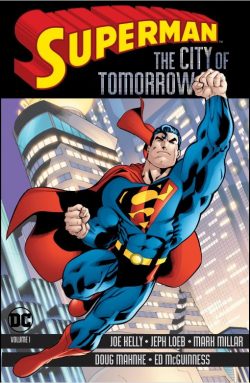
Showcase Presents Aquaman volume 1


By Robert Bernstein, Jack Miller, George Kashdan, Bob Haney, Ramona Fradon, Nick Cardy, Jim Mooney & various (DC Comics)
ISBN: 978-1-4012-1223-0 (TPB)

Big year for comics anniversaries, and we can’t let this guy go unmentioned. Sadly, most of his back catalogue is still unavailable unless you track down aging compendia like this bulky gem. Although unavailable in digital formats, one of the greatest advantages of these monochrome tomes is the opportunity they provide whilst chronologically collecting a character’s adventures to include crossovers and guest spots from other titles. When the star is as long-lived and incredibly peripatetic as DC’s King of the Seven Seas that’s an awful lot of extra appearances for a fan to find…

One of the few superheroes to survive the collapse at the end of the Golden Age was a rather nondescript and generally bland looking chap who solved maritime crimes, rescuing fish and people from sub-sea disaster. Aquaman was created by Mort Weisinger and Paul Norris in the wake of Timely Comics’ Sub-Mariner: debuting in More Fun Comics #73 (November 1941) with fellow born survivor Green Arrow.

Strictly a second stringer for most of his career, Aquaman nevertheless continued on far beyond many stronger features. He was primarily illustrated by Norris, Louis Cazeneuve and Charles Paris, until young Ramona Fradon took over the art chores in 1954, by which time the Sea King had settled into a regular back-up slot in Adventure Comics. Fradon was to draw every single adventure until 1960 and indelibly stamp the hero with her unique blend of charm and sleek competence.

In 1956, Showcase #4 finally rekindled the public’s imagination and zest for costumed crime-fighters. As well as re-imagining Golden Age stalwarts, DC undertook to update and remake its hoary survivors. Records are incomplete, sadly, so often we don’t know who wrote what, but the initial revamp ‘How Aquaman Got His Powers!’ (Adventure Comics #260, May 1959) was the work of Robert Bernstein who wrote the majority of the subsea capers at this time.

From that tale on the hero had a new origin – offspring of a lighthouse keeper and a refugee from the undersea city of Atlantis – and eventually all the trappings of the modern superhero followed: Themed hideout, sidekick and even super-villains! Moreover, greater attention was paid to continuity and the concept of a shared universe.

The 49 adventures gathered here encompass that early period of renewal, taking him from wandering back-up bit-player to stardom and his own comic book. Writers from those years included the aforementioned Bernstein, Jack Miller, George Kashdan, Bob Haney and perhaps other DC regulars, but the art was always by Fradon, whose captivatingly clean economical line always made the pictures something special.

The initial stories are pretty undemanding fare, ranging from simply charming to simply bewildering examples of all-ages action to rank alongside the best the company offered at the time. ‘Aquaman Duels the Animal Master’, ‘The Undersea Hospital’, ‘The Great Ocean Election’, ‘Aquaman and his Sea-Police’ and ‘The Secret of the Super Safe’ kept the hero in soggy isolation, but via an early crossover, Aquaman made his full entrance into the DC universe.

DC supported the popular 1950s Adventures of Superman TV show with a number of successful spin-off titles. Superman’s Girlfriend Lois Lane #12 (October 1959) featured ‘The Mermaid of Metropolis’ wherein the plucky news hen (and isn’t that a term that’s outlived its sell-by date?) suffers crippling injuries in a scuba-diving accident. On hand to save her is Aquaman and a surgeon who turns her into a mermaid so she can live a worthwhile life without legs beneath the waves.

I know, I know: but just accepting the adage “Simpler Times” often helps me at times like this. In all seriousness, this silly story – by Bernstein – is a key moment in the development of one-universe continuity. The fact that it’s drawn by Kurt Schaffenberger – one of the most accomplished artists ever to work in American comics – makes it even more adorable, for all its silliness; and you can’t make me change my mind…

‘Aquaman Meets Aquagirl’ (Adventure Comics #266, by Bernstein & Fradon) gave a little more information about lost Atlantis whilst testing the waters (sorry!) for a possible sidekick. Remember, in those days the Sea King spent most of his time expositorially dialoguing with an octopus so with Adventure Comic #267 the editors tried a novel experiment.

At this time the title starred Superboy and featured two back-up features. Aquaman tale ‘The Manhunt on Land’ saw villainous Shark Norton trade territories with Green Arrow’s foe The Wizard and, in a rare crossover – both parts of which were written by Bernstein – the two heroes worked the same case with Aquaman fighting on dry land whilst the Emerald Archer pursued his enemy beneath the waves in his own strip ‘The Underwater Archers’, illustrated by the great Lee Elias.

In the next issue ‘The Adventures of Aquaboy!’ we got a look at the early years of the Sea King, and following that permanent sidekick Aqualad was introduced in ‘The Kid from Atlantis!’ In quick succession came ‘The Menace of Aqualad’, ‘The Second Deluge!’, ‘The Human Flying Fish!’, ‘Around the World in 80 Hours’, ‘Aqua-Queen’ and intriguing mystery ‘The Interplanetary Mission’.

Originally seen in Adventure Comics #275 – a few months after the debut of the Justice League of America in The Brave and the Bold #28 – this story concerned a plot to secure Kryptonite from the sea-floor. Although Superman did not appear, nets of shared continuity were being gradually interwoven. Heroes would no longer work in assured solitude. It was back to business as usual for ‘The Aqua-thief of the Seven Seas’, ‘The Underwater Olympics’, ‘Aqualad Goes to School’, ‘Silly Sailors of the Sea’ and ‘The Lost Ocean’: a typical mixed bag which served to set the scene for a really Big Event.

In Showcase #30 (January-February 1961) Jack Miller & Fradon expanded the origin of Aquaman in full-length epic ‘The Creatures from Atlantis’, wherein extra-dimensional creatures conquer the sunken civilisation. From this point on fanciful whimsy would be downplayed in favour of character-driven drama. The saga was followed by tense thriller ‘One Hour to Doom’ in Adventure Comics #282. Inked by Charles Paris, this was Fradon’s last art job for nearly a year and a half, whilst a second Showcase issue by Miller saw the first Aquaman job for comics veteran Nick Cardy who would visually make Aquaman his own for the next half-decade.

‘The Sea Beasts from One Million B.C.’ (Showcase #31, March/April 1961) is a wild romp of fabulous creatures, dotty scientists and evolution rays presaging a new path for the King of the Seas. Jim Mooney drew ‘The Charge of Aquaman’s Sea Soldiers’ for Adventure #284, before the series shifted to a new home, replaced by Tales of the Bizarro World.

Before that, however, there was another Showcase spectacular. Miller & Cardy pulled out all the stops for ‘The Creature King of the Sea’: an action-packed duel against a monstrous villain with murder in mind. The hind end of Detective Comics #293 (July 1961) then welcomed Aquaman & Aqualad, who took only six pages to solve the mystery of ‘The Sensational Sea Scoops’. All this time Cardy – who had initially altered his drawing style to mirror Fradon – had been gradually reverting to his natural, humanistic mode. By the time of fourth Showcase outing, ‘Prisoners of the Aqua-Planet’ (#33) appeared, the Sea King was a rugged, burly He-Man, and his world – no matter how fantastic – had an added edge of realism to it.

Detective #294’s ‘The Fantastic Fish that Defeated Aquaman’ coincided with a guest-spot in a second Superman Family title. Drawn by Al Plastino, ‘The Monster that Loved Aqua-Jimmy’ (Superman’s Pal Jimmy Olsen #55) is another child of its time that hasn’t weathered well, but the big kid in me still regards it fondly and I hope that others will afford it the same courtesy. Meanwhile, back at Detective Comics #295, our heroes defied ‘The Curse of the Sea Hermit’ (scripted by George Kashdan), before next month exposed ‘The Mystery of Demon Island!

To accompany the more realistic art, and perhaps in honour of their new home, the stories became – briefly – less fantasy oriented. ‘Aqualad, Stand-In for a Star’ (Miller & Batman stalwart Sheldon Moldoff) was a standard hero-in-Hollywood crime caper, after which Cardy drew both ‘The Secret Sentry of the Sea’ (#298) and ‘Aquaman’s Secret Teacher’ (#299): a brace of yarns encompassing security duty at a secret international treaty signing and the Sea scions teaching an old blowhard a lesson in tall-tale telling…

The next month saw another milestone. After two decades of continuous adventuring the Sea King finally got a comic book of his own. Aquaman #1 (January/February 1962) was a 25-page fantasy thriller introducing one of the most controversial supporting characters in comics lore. Pixie-like Water-Sprite Quisp was part of a strange trend for cute imps and elves who attached themselves to far too many heroes of the time, but his contributions in ‘The Invasion of the Fire-Trolls’ and succeeding issues were numerous and obviously carefully calculated and considered…

‘The Mystery of the Undersea Safari!’ (Detective Comics #300) was the last Aqua caper before he moved again, this time to World’s Finest Comics. However, prior to that residency commencing, his own second issue appeared. ‘Captain Sykes’ Deadly Missions’ is a lovely-looking thriller with fabulous monsters and a flamboyant pirate blackmailing the Sea King into retrieving deadly mystical artefacts.

The World’s Finest run started in fine style with #125’s ‘Aquaman’s Super-Sidekick’ (Miller & Cardy) and Aquaman #3 provided full-length thrills and more exposure for the lost city in ‘The Aquaman from Atlantis’: a tale of traitors and time-travel. WF #126 then saw the heroes foil thieves with ‘Aquaman’s Super Sea Circus’ as – for better or worse – Quisp returned in #4’s ‘Menace of the Alien Island’.

A more welcome returnee was Ramona Fradon who took over the World’s Finest strip with #127’s ‘Aquaman’s Finny Commandos’ before the next issue saw ‘The Trial of Aquaman’ close in his favour just in time to endure ‘The Haunted Sea’ in his own fifth issue, and encountering ‘The Menace of the Alien Fish’ in WF #129.

This bumper volume concludes with Aquaman #6 and ‘Too Many Quisps’: a case of painfully mistaken identity and a sentiment difficult to disagree with… but still beautifully illustrated by Mr. Cardy.

DC has a long and comforting history of gentle, innocuous yarn-spinning with quality artwork. Fradon’s Aquaman is one of the most neglected runs of such universally-accessible material, and it’s a sheer pleasure to discover just how readable they still are. When the opportunity arises to compare her astounding work to the best of a stellar talent like as Nick Cardy, this book becomes a true fan’s must-have item and even more so when the stories are still suitable for kids of all ages. Why not treat the entire family to a seaside spectacle of timelessly inviting adventure?
© 1959-1962, 2007 DC Comics. All Rights Reserved.
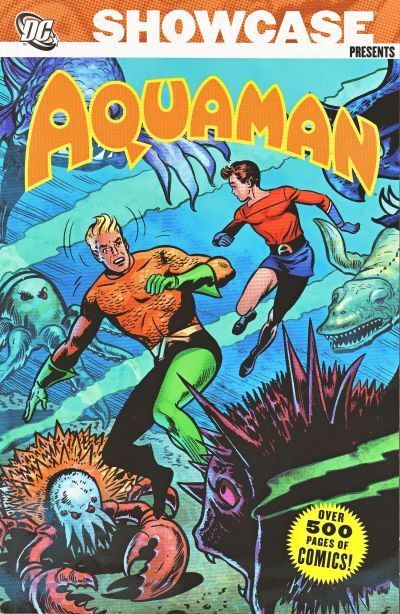
World’s Finest: Guardians of Earth


By Denny O’Neil, Mike Friedrich, Steve Skeates, Len Wein, Elliot S! Maggin, Dick Dillin, Joe Giella & various (DC Comics)
ISBN: 978-1-7795-0178-3 (HB)

For decades Superman and Batman were quintessential superhero partners: the “World’s Finest team”. The affable stalwarts were best buddies as well as mutually respectful colleagues, and their pairing made sound financial sense since DC’s top heroes could happily cross-pollinate and cross-sell their combined readerships. This most inevitable of Paladin Pairings first occurred on the Superman radio show in the early 1940s, whilst in comics the pair had only briefly met whilst on a Justice Society of America adventure in All-Star Comics #36 (August-September 1947) – and perhaps even there they missed each other in the gaudy hubbub…

Of course, they had shared covers on World’s Finest Comics from the outset, but never crossed paths inside; sticking firmly to their specified solo adventures within. In fact, they never shared an official comic book case. However, once that Rubicon was crossed in Superman #76 (May 1952), the partnership solidified thanks to spiralling costs and dwindling page-counts. As 52-page titles dwindled to the 32, WFC permanently sealed the new deal and the industry never looked back…

The Cape and Cowl Crusaders were partners and allies from #71 onwards (July 1954), working together until the title was cancelled in the build-up to Crisis on Infinite Earths in 1986. All that is, except for a brief period when the Man of Steel was paired with other stars of DC’s firmament.

This mighty compelling compendium re-presents those cataclysmic collaborations from the turbulent 1970’s (World’s Finest Comics #198-214, spanning November 1970 to October- November 1972), as radical shifts in America’s tastes and cultural landscape fostered a hunger for more mature, socially relevant stories. That drive even affected the Dark Knight and Action Ace – so much so, in fact, that their partnership was temporarily suspended: paused so Superman could guest-star with other DC icons.

After three years, another bold experiment reunited them as parents of The Super-Sons before the regular relationship was revitalised and renewed. With the World’s Finest Heroes fully restored, their bizarrely apt pre-eminence endured another lengthy run until the title’s demise.

Without preamble the action kicks off here by returning to a thorny topic which had bedevilled fans for years…

The comic book experience is littered with eternal, unanswerable questions. The most common and most passionately asked always begin “who would win if…” or “who’s strongest/smartest/fastest…”

Here, crafted by Denny O’Neil, Dick Dillin & Joe Giella, ‘Race to Save the Universe!’ and the concluding ‘Race to Save Time’ (WFC #198-199; November and December 1970) upped the stakes on two previous competitions as the high-speed heroes are conscripted by the Guardians of the Universe to circumnavigate the entire cosmos at their greatest velocities to reverse the rampage of the mysterious Anachronids: faster-than-light creatures whose pell-mell course throughout the galaxies is actually unwinding time itself and unravelling the fabric of creation. Little does anybody suspect that Superman’s oldest enemies were behind the entire appalling scheme…

Anniversary issue #200 was crafted by regular Robin, the Teen Wonder scripter Mike Friedrich, with Dillin & Giella doing the drawing – as they did for this entire book. ‘Prisoners of the Immortal World!’ (February 1971) focusses on college-student brothers on opposite sides of the Vietnam War debate abducted along with youth icon Robin and “Mr. Establishment” Superman to a distant planet where undying vampiric aliens wage eternal war on each other.

Green Lantern pops in for #201, contesting ‘A Prize of Peril!’ (O’Neil, Dillin & Giella) which would grant either Emerald Gladiator or Man of Steel sole jurisdiction of Earth’s skies. Sadly, all is not as it seems…

Batman returned for a limited engagement in #202 as the O’Neil-penned ‘Vengeance of the Tomb-Thing!’ sees archaeologists unearth something horrific in Egypt, just before Superman seemingly goes mad and attacks his greatest friends and allies. A superb ecological scare-story, this tale changed the Man of Tomorrow’s life for decades to come…

Current Aquaman writer Steve Skeates waded in for #203 as ‘Who’s Minding the Earth?’ pits Metropolis Marvel and King of Atlantis against parthenogenetic mutant dolphins attempting to terraform the polluted world into something more welcoming to their kind…

More ecological terror underpins O’Neil’s bleak warning in #204 as ‘Journey to the End of Hope!’ finds powerless former Wonder Woman Diana Prince and Superman summoned to a barren lifeless Earth. Here a dying computer warns that a butterfly effect will inevitably lead to this future unless they prevent a certain person dying in a college campus riot. Only time will tell if they succeed as the clash does indeed cost a life despite all their efforts…

Racism, sexism and the oppression of reactionary conservative values then get a well-deserved pasting in #205’s ‘The Computer that Captured a Town!’

Here Skeates deviously layers a Teen Titans tale with a wealth of eye-opening commentary after the team are locked into a mid-Victorian parochial paradise enforced by a dead man and alien tech, until the Man of Tomorrow wades in to set things straight…

WFC #206 (October-November 1971) was an all-reprint giant, represented here by its rousing Dick Giordano cover, after which #207 again reunites the true World’s Finest team as Batman returns to solve a murder mystery in the making and save the Man of Tomorrow in ‘A Matter of Light and Death!’, after which Earth-2 sorcerer hero Doctor Fate aids the Action Ace in thwarting the extraterrestrial ‘Peril of the Planet-Smashers!’ – both courtesy of Len Wein, Dillin & Giella.

Supernatural menaces were increasingly popular as a global horror boom reshaped readers’ tastes, informing (#209) Friedrich’s ‘Meet the Tempter – and Die!’ wherein Hawkman and Superman are seduced into evil by an eternal demon, whilst Elliot S! Maggin’s ‘World of Faceless Slaves!’ in #210 catapults the Caped Kryptonian and Green Arrow into a primordial magic kingdom to liberate the vassals of diabolical sorcerer supreme Effron…

The Darknight Detective returns again in #211, as O’Neil, Dillin & Giella devise a global manhunt for a ‘Fugitive from the Stars!’ Their target is a political refugee whose arrest is demanded by warriors who are a physical match for Superman, but happily, not Batman’s intellectual equals…

‘…And So My World Begins!’ in #212 is O’Neil’s thematic sequel to Justice League of America #71, which saw Mars devasted by race war and its survivors flee to the stars in search of a new homeworld. Here, Martian Manhunter J’onn J’onzz seeks Superman’s aid to rescue the last survivors from life-leeching mechanoids, unaware that a traitor has sold them all out to predatory aliens…

Maggin drills deep into super science for #213 as ‘Peril in a Very Small Place!’ finds the greater universe endangered by a microscopic and insatiable Genesis molecule, demanding a fantastic voyage into the Microverse inside a phone line for the Atom and Superman before this compilation concludes with wild west weirdness from by Skeates, O’Neil, Dillin & Giella. Here Golden Age troubleshooter The Vigilante delivers the silver bullet necessary to save Superman when ‘A Beast Stalks the Badlands!’

With covers by Neal Adams, Dick Giordano, Nick Cardy and Curt Swan & Murphy Anderson, this book is a gloriously uncomplicated treasure trove of adventures which still have the power and punch to enthral even today’s jaded seen it-all audiences.

The contents of this titanic team-up tome are a veritable feast of witty, pretty thrillers packing as much punch and wonder now as they always have. Utterly entrancing adventure for fans of all ages!
© 1970, 1971, 1972, 2020 DC Comics. All Rights Reserved.

Supergirl: Cosmic Adventures in the 8th Grade


By Landry Q. Walker, Eric Jones & various (DC Comics)
ISBN: 978-1-7795-0670-2 (

As a rule, superhero comics don’t generally do whimsically thrilling anymore. They especially don’t do short or self-contained. The modern narrative drive concentrates on extended spectacle, major devastation and relentless terror and trauma. It also helps if you’ve come back from the dead once or twice and wear combat thongs and thigh boots…

Although there’s nothing intrinsically wrong with that – other than the inappropriateness of striving to fix wedgies during life-or-death struggles – sometimes the palate just craves a different flavour.

Once such continued cosmic cataclysm was the exception, not the rule, and this enchanting re-issue from 2009 – available on paperback and digital formats – harks back to simpler days of complex plots, solid characterisation and suspenseful fun by way of an alternative take on Superman’s cousin Kara Zor-El, late of Argo City and Earth’s newest alien invader…

After a few intriguing test-runs, Supergirl began as a future star of the expanding Superman pocket universe in Action Comics #252 (May 1959). Superman’s cousin Kara had been born on a city-sized fragment of Krypton, hurled intact into space when the planet exploded. Eventually, Argo turned to Kryptonite like the rest of the detonated world’s debris, and Kara’s dying parents, observing Earth through their scopes, sent their daughter to safety even as they perished.

Landing on Earth, she met the Action Ace, who subsequently created the cover-identity of Linda Lee and hid her in an orphanage in bucolic Midvale whilst she learned of her new world and mastered her powers in secrecy and safety.

In 2009 much of that treasured back-history was joyously reinstated for a superb miniseries for younger readers with Saturday morning animation sensibilities. As reimagined by Landry Walker (Clash of Kings, Red Lanterns, Teenage Mutant Ninja Turtles) and Eric Jones (Scary Larry, Little Gloomy, Batman: The Brave and the Bold), here Kara Zor-El is recast as a plucky 12-year-old whose world is suddenly turned upside down: a decidedly ordinary kid forced to adapt to and cope with impossible changes at the craziest time of her life…

It all begins as Superman and Lex Luthor indulge in another life-and-death duel. The battle ends suddenly as the evil genius’ war machine is wrecked by a gleaming rocket, from which emerges a dazed girl in a knock-off Man of Steel outfit. Panicked by the press pack that converges on her, the waif jumps back and suddenly catapults into the air.

Soon, however, Superman catches and calms the careering child and explanations ensue. She’s his cousin Kara from Argo City, which escaped the destruction of Krypton by a fantastic fluke: being hurled by the blast unharmed and entire into another dimension…

The Argoans thrive in their pocket reality and watch baby Kal-El become a mighty hero. In fact, it’s a message-probe aimed at him that Kara sneaked onto before being accidentally sent to Earth and a horrific shock to learn Superman has no idea how to get her back to them…

Marooned on a weird, primitive planet with powers she doesn’t understand and cannot control is bad enough, but discovering her cousin has no time or space to look after her is the worst. Soon, wearing a pair of awful glasses, orphan “Linda Lee” begins a new life at Stanhope Boarding School…

The lessons are dull or baffling; nobody likes her, Principal Pycklemyer is a snide, snarky ass and worst of all, Kara’s powers keep turning off and on without any rhyme or reason. The first week is sheer hell, but ends on an up note as, after another fruitless attempt to get home, Linda heads back to the girls’ dormitory and finds a present waiting: a super-phone which can reach her mum and dad…

The Pre-Teen Powerhouse is still screwing up in class and her troubles multiply in detention when an odd green mineral interacts with a light projector in the science lab and creates an evil doppelgang.

Smug, arrogant Superiorgirl calls herself Belinda Zee and is instantly more popular with everybody. She also determined to make Linda’s life an unending succession of petty aggravations and annoyances…

However, Belinda’s greatest scheme to humiliate Linda is foiled by a new transfer student. High-maintenance misfit Lena Thorul is a scary genius who takes an instant liking to fellow outcast Linda and saves the day with a mind-control helmet she whipped up. Soon the weird pair are dorm-mates, even though Lena is a bit clingy and rather aggressive. She might even be preventing other students befriending Linda…

Life is never quiet and when Supergirl intercepts a glowing red meteor in space the fallout scatters scarlet debris all over Stanhope. The effect is amazing, as almost everybody develops superpowers…

Naturally Linda can’t reveal her own hidden abilities, so she and a few pitiful others are quickly relegated to a remedial class for the “super-heroically challenged”. When her powers suddenly fade, Supergirl is kept busy saving students from their own youthful follies and is astonished to later discover the power drain was caused by Lena…

And that’s when things get truly complicated, as her solution to the on-going problem gives Supergirl the ability to time-travel and the notion that she can warn her earlier self to respond differently to the crisis…

Another day, and another disaster dawns as Linda’s experiments with Green Kryptonite – in hopes of finding a cure – instead grant an alley cat superpowers. As Streaky stalks the halls of Stanhope, Lena reveals her true nature and Superiorgirl is forced to choose sides…

The adventure concludes on ‘Graduation Day’. Chaos reigns and the real reason for all the incredible events Linda has endured are finally revealed. Luthor escapes jail, Streaky returns, Belinda becomes queen of Bizarro Zombies, Fifth Dimensional Sprites attack and Supergirl meets Supragirl before ending with a new trusty companion – Comet the Superhorse. Sadly, he’s not enough to aid Linda as she strives to prevent the destruction all there is…

With Reality unravelling, Supergirl needs a little help, and it comes from the last person she expects…

Joyous, thrilling, warm-hearted and supremely entertaining, this festival of Fights ‘n’ Tights fun is a delightful romp for youngsters and a fabulous tribute to DC’s Silver Age, and fans can also enjoy bonus features including sketch sections on ‘Redesigning Supergirl’, lovely pencil roughs and a full cover gallery.

Also included is a tantalising preview taste of Diana: Princess of the Amazons by Shannon & Dean Hale, illustrated by Victoria Ying: a similarly intentioned reinvention for the smaller set focusing on the school days of the peerless Princess of Power…

Some characters are clearly capable of surviving seemingly infinite reinvention and the Girl of Steel is certainly one of those. Here in this charming, engaging, inspiring yarn you can enjoy a pure and primal romp: simultaneously action-packed and funny as it perfectly demonstrates how determination, smarts and courage trump superpowers and cosmic omnipotence every time.

© 2009, 2020 DC Comics. All Rights Reserved