Catwoman: Nine Lives of a Feline Fatale


By Bill Finger, Bob Kane, Edmond Hamilton, Leo Dorfman, Gardner Fox, Frank Robbins, Doug Moench, Ed Brubaker, Frank Springer, Lew Sayer Schwartz, Kurt Schaffenberger, Irv Novick, Tom Mandrake, Michael Avon Oeming (DC Comics)
ISBN: 978-1-4012-0213-2 (TPB)

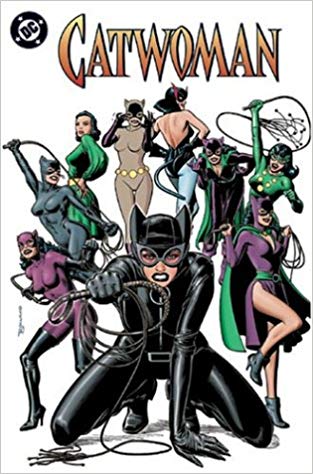
It feels odd to plug a book that is so obviously a quick and cheap cash-cow tie-in to a movie (and a bad movie, at that), but this Catwoman volume from 2004 has a great deal to recommend it. For a start it is quaintly cheap ‘n’ cheerful. The references to the film are kept to an absolute minimum. The selection of reprints, purporting to signify nine distinct takes on the venerable femme fatale are well considered in terms of what the reader hasn’t seen as opposed to what they have. There are also some rare and stunning art pieces selected as chapter heads, too, from the likes of George Perez, Dave Stevens, Alan Davis and Bruce Timm.

The stories themselves vary in quality by modern standards, but serve as an intriguing indicator of taste in the manner of a time capsule or introductory Primer. Track the feline fury from her first appearance as mysterious thief ‘The Cat’ (by Bill Finger, Bob Kane & Jerry Robinson: Batman #1 1940), through ‘The Crimes of the Catwoman’ (Edmond Hamilton, Kane/Lew Sayer Schwartz & Charles Paris: Detective #203 1954), to the wonderfully absurdist cat fight with Superman’s Girl Friend Lois Lane (#70-71: 1966), as described by Leo Dorfman & Kurt Schaffenberger in ‘The Catwoman’s Black Magic’ and ‘Bad Luck for a Black Super-Cat!’

A victim of 1960’s TV “Batmania”, ‘Catwoman Sets Her Claws for Batman’ sees her battle Batgirl in a cringingly painful outing from Batman #197, by 1967 by Gardner Fox, Frank Springer & Sid Greene) but at least it can be regarded as the nadir of her decline from sexy object of pursuit to imbecilic Twinkie. From here it’s onwards and upwards again…

In the nonsensical ‘The Case of the Purr-Loined Pearl’ (Batman #210, 1969), Frank Robbins, Irv Novick & Joe Giella slowly (and oh, so terribly gradually) begin her return to major villain status, after which Doug Moench, Tom Mandrake & Jan Duursema devise ‘A Town on the Night’ (Batman #392, 1986), showing one of her innumerable romantic excursions onto the right side of the law before ‘Object Relations’ (Catwoman #54 1998), shows us a ghastly but brief “Bad-Grrrl” version of the glamorous super-thief.

Mercifully, we then get to the absolutely enthralling ‘Claws’ (Batman: Gotham Adventures #4 1998, by Ty Templeton, Rich Burchett& Terry Beatty), produced in the spin-off comic based on the television cartoon but probably the best piece of pure comic book escapism in the whole package. The volume closes with another revision of her origin ‘The Many Lives of Selina Kyle’ (Catwoman Secret Files#1 2002), by Ed Brubaker, Michael Avon Oeming & Mike Manley.

Catwoman is a timeless icon and one of the few female comic characters that the entire real world has actually heard of, so it’s great that the whole deal is such a light, frothy outing, as well as having some rarity appeal for dedicated fans. Go get her, Tiger!
© 1940-1955, 1956-2002, 2004 DC Comics. All Rights Reserved.

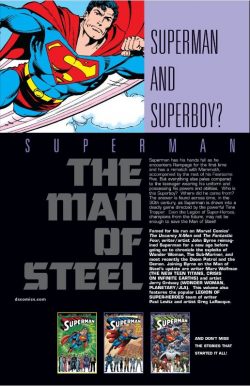
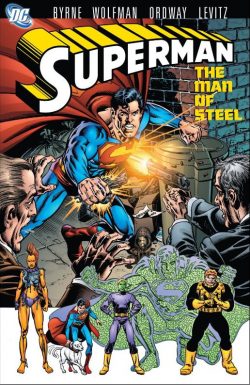
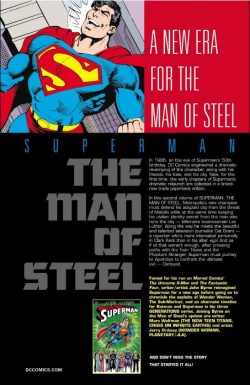
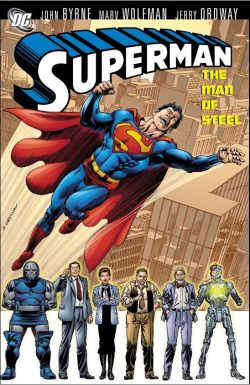
Superman: The Man of Steel volume 4


By John Byrne, Marv Wolfman, Paul Levitz, Jerry Ordway, Greg LaRoque, Erik Larsen & various (DC Comics)
ISBN: 978-1-4012-0455-6 (TPB)

Here’s a classic compilation – and series – which has inexplicably been allowed to drop out of print and is thus long overdue for re-issue. At least this one’s still available in digital editions…

In 1985, when DC Comics decided to rationalise and reconstruct their continuity with Crisis on Infinite Earths, they used the event to regenerate their key properties at the same time. The biggest gun they had was Superman and it’s hard to argue that change came none too soon.

The big guy was in a bit of a slump, but he’d weathered those before. So how could a major makeover be anything but a pathetic marketing ploy that would alienate the real fans for a few Johnny-come-latelies who would jump ship as soon as the next fad surfaced? The popular wisdom amongst fans was that this new Superman was going to suck. They couldn’t have been more wrong.

Superman titles were cancelled or suspended for three months, and yes, that did make the real-world media sit up and take notice of the character for the first time in decades. But there was method in the corporate madness.

Beginning with 6-part miniseries Man of Steel – written and drawn by mainstream superstar John Byrne and inked by venerated veteran Dick Giordano – the experiment was a huge and instant success. So much so, that when it was first collected as a stand-alone graphic novel in the 1980s, it became one of the industry’s premiere break-out hits. From his overwhelming re-inception the character returned to his suspended comicbook homes with the addition of a third monthly title premiering that same month.

Superman, Adventures of Superman, and Action Comics (which became a fan-appeasing team-up book guest-starring other heroes of the DC Universe) were instant best-sellers. So successful was the relaunch that by the early 1990’s Superman would be able to sustain four monthly titles as well as Specials, Annuals, guest shots and his semi-regular appearances in titles such as Justice League.

It was quite a turnaround from the earlier heydays of the Man of Steel when editors were frantic about not over-exposing their biggest gun. With Byrne’s controversial reboot a solid hit, the collaborative teams tasked with ensuring his continued success really hit their stride with the tales collected in this fourth volume.

First published between July and September 1987 and re-presenting in paperback (if you can find it) and eBook formats (if you can’t) the contents of Superman #7-8, Action #590-591 and Adventures of Superman #430-431, this epic tome also includes two critical issues of Legion of Super-Heroes (#37-38) and the wonderment is necessarily preceded here by Introduction ‘Superman or Superboy?’ which outlines the dilemma that occurred after the Man of Tomorrow’s recent retcon eliminated his entire career and achievements as the Boy of Steel…

This event provided a classic back-writing exercise to solve an impossible post-Crisis paradox whilst giving us old geeks a chance to see a favourite character die in a way all heroes should….

The drama kicks off with ‘Rampage!’ by Byrne and inker Karl Kesel (Superman volume 2 #7) as a petty colleague sabotages an experiment at a Metropolis lab and accidentally transforms his boss Dr. Kitty Faulkner into a super-strong rage-fuelled monstrosity. Thankfully, Superman is on hand and possessed of a cool head…

Adventures of Superman #430 then sees the Action Ace ‘Homeward Bound!’ – courtesy of Marv Wolfman & Jerry Ordway – in pitched battle against metahuman bandits the Fearsome Five whilst in Action Comics #590 Byrne & Dick Giordano explore ‘Better Living Dying Through Chemistry’, wherein a bizarre toxic accident turns ambulatory waste dump Chemo into a giant Superman clone. Happily, its old adversaries The Metal Men are on hand to aid in the extremely violent clean-up…

Legion of Super-Heroes #37 (August 1987, by Paul Levitz, Greg LaRoque, Mike DeCarlo & Arne Starr) then sets the scene for ‘A Twist in Time’ as a team of Legionnaires heads back to Smallville to visit founding member Superboy only to find themselves attacked by their greatest ally and inspiration…

The tale continues in Byrne & Kesel’s ‘Future Shock’ (Superman #8): a strange squad of aliens appear in his boyhood hometown. Mistaking Superman for Superboy, the Legionnaires attack and after the inconclusive clash concludes begin to piece together an incredible tale of cosmic villainy that has made suckers of them all…

When a kill-crazed Superboy shows up the tale shifts to Action #491 where Byrne & Keith Williams reveal a ‘Past Imperfect’ as the youthful and adult Kal-El’s butt heads until a ghastly truth is revealed leading to Levitz, LaRoque & Mike DeCarlo’s stunning and tragic conclusion in Legion of Super-Heroes #38 where the manipulative reality-warping mastermind behind the scheme falls to ignominious defeat at the hands of ‘The Greatest Hero of Them All’…

Back on solid ground and his own reality the one-and-only Superman then battles a new kind of maniac malcontent in ‘They Call Him… Doctor Stratos’ (by Wolfman, Erik Larsen & “India Inc.” from Adventures of Superman #431): delivering a crushing defeat to a weather-controlling would-be god to wrap up the never-ending battle for another day…

The back-to-basics approach perfected here lured many readers to – and back to – the Superman franchise, but the sheer quality of the stories and art are what convinced them to stay. Such cracking, clear-cut superhero exploits are a high point in the Metropolis Marvel’s decades-long career, and these chronologically-curated collections are certainly the easiest way to enjoy one of the most impressive reinventions of the ultimate comic-book icon.
© 1987, 2005 DC Comics. All Rights Reserved.

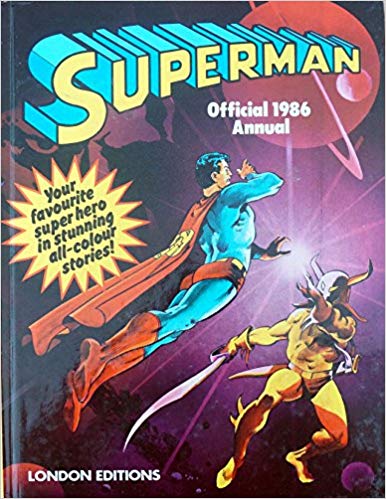
Superman Annual 1986


By Cary Bates, Elliot S! Maggin, Grant Morrison, Pete Milligan, Curt Swan, Barry Kitson, Jeff Andersen, Mike Collins, Mark Farmer, Mike Grell, Brian Bolland & various (London Editions)
ISBN: 978-0-72356-763-9 (HB)

Before DC and other American publishers began exporting comicbooks directly into the UK in 1959, our exposure to their unique brand of fantasy fun came from licensed reprints. British publishers/printers like Len Miller, Alan Class and Top Sellers bought material from the USA – and occasionally Canada – to fill 68-page monochrome anthologies, many of which recycled the same stories for decades.

Less common were strangely coloured pamphlets produced by Australian outfit K. G. Murray: exported to the UK in a rather sporadic manner. The company also produced sturdy Annuals which had a huge impact on my earliest years (I suspect my abiding adulation of monochrome artwork stems from seeing supreme stylists like Curt Swan, Carmine Infantino, Gil Kane and Murphy Anderson strut their stuff uncluttered by flat colour…).

In Britain we began seeing hardcover Superman Annuals in 1950 and Batman Annuals in 1960. Since then a number of publishers have carried on the tradition. This particular tome comes from the mid-1980s when a number of young British creators were perfecting their skills and looking for work in the home of the Brave…

Thankfully though the UK Annual format remains: offering a delightfully eclectic and inescapably nostalgic mix of material designed to cater to young eyes and broad tastes.

Released in the Autumn of 1985, this hardback gem opens with a frontispiece montage of the Man of Steel by a host of US luminaries before contemporary comics reprint (taken from Superman #392, February 1984) ‘If a Body Meets a Body…’ (by Cary Bates, Elliot S. Maggin Curt Swan & Dave Hunt) finds the Action Ace scouring the world for his childhood sweetheart Lana Lang. Complicating the issue is the abductor, alien superhero Vartox and a champion more powerful and experienced than the fraught and frantic Man of Steel.

What could possible have triggered this unexpected aberration?

This is followed by an original prose yarn written by then-up-&-comer Grant Morrison and liberally illustrated in full-colour by Barry Kitson & Jeff Anderson. When the Metropolis mob want to get rid of Superman, they back a mad scientist who tries psychological warfare with ‘Osgood Peabody’s Big Green Dream Machine’. Any guesses how that works out?

Returning to strip reprints, ‘This Legionnaire is Condemned’ is by Bates, Mike Grell & Bob Wiacek and originated in December 1976’s Superboy and the Legion of Super-Hero #222. The tales sees new member Tyroc seemingly terrorising 30th century Metropolis with his reality-bending sonic screams, but of course there’s a rational reason for all the cunningly conceived catastrophes…

‘Testing Time for Superman’ is another text adventure, courtesy of Pete Milligan, Mike Collins & Mark Farmer with the overworked Action Ace multitasking alien threats and romantic interludes with Lois Lane, after which a stunning Brian Bolland pinup (from Superman #400) segues into pages of ‘Super Puzzles’ and a bombastic final act from Bates, Swan & Tex Blaisdell as ‘Superman’s Energy Crisis’ (Action Comics #454, December1975) sees the Last Son of Krypton battling a new Toyman just as his powers are mysteriously fading away…

Smart, no-nonsense, solid superhero shenanigans have always been the watchword of Superman Annuals and this one is no exception.
© 1985 DC Comics Inc, and London Editions Limited. All characters © 1985 DC Comics Inc.

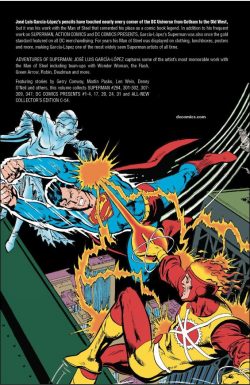
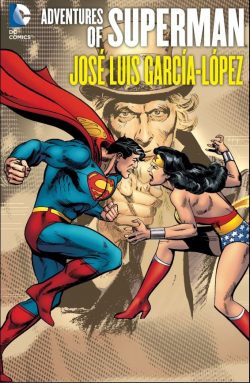
Adventures of Superman: José Luis García-López


By José Luis García-López, Martin Pasko, Gerry Conway, Elliot S. Maggin, David Michelinie, Len Wein, Denny O’Neil & various (DC Comics)
ISBN: 978-1-4012-3856-8 (HB)

Win’s Christmas Gift Recommendation: Super Special Stocking Stuffer… 9/10

It’s a fact (if such mythological concepts still exist): the American comicbook industry would be utterly unrecognisable without the invention of Superman. His unprecedented adoption by a desperate and joy-starved generation quite literally gave birth to a genre if not an actual art form.

Within three years of his June 1938 debut, the intoxicating blend of eye-popping action and social wish-fulfilment which hallmarked the early Man of Steel had grown to encompass cops-and-robbers crime-busting, socially reforming dramas, science fiction, fantasy, whimsical comedy and, once the war in Europe and the East embroiled America, patriotic relevance.

In comicbook terms at least Superman is master of the world, having utterly changed the shape of a fledgling industry and modern entertainment in general. There have been newspaper strips, radio and TV shows, cartoons games, toys, merchandise and blockbusting movies. Everyone on Earth gets a picture in their heads when they hear the name.

Moreover, he is a character endlessly revitalised by the creators who work on his never-ending exploits. One the most gifted and intoxicating is José Luis García-López.

An industry professional since he was 13 years old, he was born in Pontevedra, Spain in 1948. By age three he was living in Argentina where he was reared on a steady diet of comics: especially the works of Alex Raymond, Hal Foster, Alberto Breccia, Milt Caniff and José Luis Salinas.

During the late 1960s, García-López finally broke into the US comics world, with anthological romance work and anodyne horror tales for Charlton Comics and mystery-suspense yarns for Gold Key, and in 1974 moved to New York City where Joe Orlando got him a crucial intro with DC Comics. That turned into an almost-exclusive 40-year association which not only led to some astounding comics sagas, but also saw the artist become the corporation’s official reference artist for style guides and merchandising materials. His art was DC’s interface with the wider world.

After a few tentative inking jobs, García-López debuted as a penciller/inker on a Hawkman back-up in Detective Comics#452 in October 1975, and a month later began illustrating Hercules Unbound. His sumptuous art could also encompass grim & gritty and he was drafted in to end run on the company’s Tarzan title, and afterwards handed western antihero Jonah Hex as the gunslinger – bucking all industry sales trends – graduated to his own solo title in early 1977.

The artist’s star was on the rise. While filling in all across the DCU – his assorted Superman tales are all in this stunning hardback and digital compilation – García-López was increasingly first choice for major publishing projects such as the Marvel-DC Batman/Hulk tabloid crossover, prestige specials such the Wonder Woman clash collected here and such breakthrough miniseries and graphic novels as Cinder & Ashe, Atari Force, Twilight, Star Raiders, Road to Perditionand countless more. He remains, paradoxically, one of the company’s greatest artists and yet largely unknown and under-appreciated…

This splendid tome gathers the contents of Superman #294, 301-302, 307-309, 347, All-New Collectors’ Edition C-54and DC Comics Presents #1-4, 17, 20, 24, 31, collectively spanning December 1975 to March 1981 and, hopefully, eventually to be joined by a companion DC Universe of… edition one day.

What we have here, though, is a boldly exuberant celebration of the Man of Steel, many with guest stars and all splendidly accessible to veteran fans and casual acquaintances alike.

The wonderment opens with a short back-up from Superman #294.

Scripted by Martin Pasko and inked by Vince Colletta, ‘The Tattoo Switcheroo!’ details how Clark Kent escapes secret identity exposure after being nabbed by gangsters, but such pedestrian concerns are forgotten in issue #301 (July 76) where Gerry Conway & Bob Oksner help prove ‘Solomon Grundy Wins on a Monday!’ as the Earth-2’s monstrous zombie horror sideslips to Earth-1 to wreak havoc in Metropolis, forcing the Action Ace to use brains rather than brawn to win the day.

An issue later, Elliot S. Maggin scripted ‘Seven-Foot-Two… and Still Growing!’ as super scientist Lex Luthor finds a way to diminish the hero’s intellect by enlarging him to the point where his brain no longer connects to his dinosaur-dimensioned body. Thankfully, size-shifting hero The Atom is only a phone call away…

Curt Swan was Superman’s premiere artist for decades: a supremely gifted and conscientious illustrator who made the character his own. He was not, however, superhuman and while he was drawing the then-“longest Superman story ever” for DC Special Series #5 (Superman Spectacular 1977) García-López united with Conway and inker Frank Springer for issues #307-309 (January – March 1977), as the Man of Steel was deluded in ‘Krypton – No More!’ into believing his alien origins to be a comfortable fabrication to ease a human mutant’s twisted mind. Waging a war to save the environment from big business and their multipowered minions Radion and Protector, Kal-El even battles his cousin Supergirl to disprove ‘This Planet is Mine!’ before the true story is revealed, just in time to tackle an alien invasion in ‘Blind Hero’s Bluff!’ with the Girl of Steel returning to battle beside the now clear-headed hero and his faithful dog Krypto…

Following that comes one of the most impressive and fun comics sagas of the era as All-New Collectors’ Edition C-54(January 1978), written by Conway and inked by Dan Adkins. ‘Superman vs. Wonder Woman’ takes us back to World War II, as Man of Steel and Amazing Amazon meet for the first time after Nazi Übermensch Baron Blitzkrieg and Japan’s lethal assassin Sumo the Samurai unite to steal a prototype atomic device. Although they should be allies, the heroes are quickly and cataclysmically at odds over the dispensation of the nuke, but once they stop fighting, they still must defeat the Axis Powers’ most fanatical operatives…

From the moment a kid first sees his second superhero the only thing they want is to see how the new gaudy gladiator stacks up against the first. From the earliest days of the comics industry (and according to DC Comics Presents editor Julie Schwartz it was the same with the pulps and dime novels that preceded it), we’ve wanted our idols to meet, associate, battle together – and if you follow the Timely/Marvel model, that means against each other – far more than we want to see them trounce their archenemies in a united front…

The concept of team-up books – an established star pairing or battling (usually both) with less well-selling company characters – was far from new when DC awarded their then-biggest gun a regular arena to have adventures with other stars of their firmament, just as Batman had been doing since the middle of the 1960s in The Brave and the Bold. It was the publicity-drenched weeks before release of Superman: The Movie and Tim Burton’s Batman (which, BTW, García-López also provided designs for) was over a decade away…

In truth, the Metropolis Marvel had already enjoyed the serial sharing experience before, when World’s Finest Comicsbriefly ejected the Caped Crusader and Superman battled beside a coterie of heroes including Flash, Robin, Teen Titans, Vigilante, Dr. Fate and others (issues #198-214: November 1970 to October/November 1972) before a proper status quo was re-established.

The star-studded new monthly DC Comics Presents was a big deal at the time, so only the utterly astounding and series-unattached José Luis García-López (inked by Adkins) could conceivably open the show.

Silver Age Flash Barry Allen had been Superman’s first co-star in that aforementioned World’s Finest Comics run and reprises his role in ‘Chase to the End of Time!’ and ‘Race to the End of Time!’ from DCCP #1 and 2 (July/August and September/October 1978), wherein scripter Marty Pasko detailed how warring alien races trick both heroes into speeding relentlessly through the time-stream to prevent Earth’s history from being corrupted and destroyed.

As if that isn’t dangerous enough, nobody could predict the deadly intervention of the Scarlet Speedster’s most dangerous foe, Professor Zoom, the Reverse-Flash, who tries to turn the race against time to his own advantage…

David Michelinie then wrote a tantalising pastiche of classic Adam Strange Mystery in Space thrillers for García-López to draw and ink in ‘The Riddle of Little Earth Lost’, wherein the Man of Two Worlds and Man of Tomorrow foil the diabolical cosmic catastrophe scheme of a deranged military genius Kaskor to transpose, subjugate or destroy Earth and light-years distant planet Rann.

Len Wein came aboard to script the superb ‘Sun-Stroke!’ as the Man of Steel and the madly-malleable Metal Men join forces to thwart solar-fuelled genius I.Q. and toxic elemental menace Chemo after an ill-considered plan to enhance Earth’s solar radiation exposure provokes a cataclysmic solar-flare.

With the title on solid ground the artist moved on, but returned with Gerry Conway and inker Steve Mitchell to herald the return of Firestorm in DCCP #17’s ‘The Ice Slaves of Killer Frost!’: a bombastic, saves-the-day epic which brings the Nuclear Man back into the active DC pantheon after a long hiatus.

In #20, Green Arrow steals the show as always in gripping, big-business-busting eco-thriller ‘Inferno from the Sky!’ by Denny O’Neil, García-López & Joe Giella, after which the artist filled in with Conway on Superman #347 (May 1980) as the Last Son of Krypton clashes with a mythic cosmic courier in ‘The Sleeper Out of Time!’

In his peregrinations around the DCU, García-López had particularly distinguished himself with numerous episodes and fill-ins starring murdered aerialist Deadman. One of the very best came in DC Comics Presents #24 (August 1980) wherein scripter Wein reveals the tragic and chilling story of ‘The Man Who Was the World!’ as the grim ghost is forced to possess Superman and save the Earth… but fouls up badly…

Wrapping up this superb Fights ‘n’ Tights festival is ‘The Deadliest Show on Earth!’ (DCCP #31); written by Conway and inked by Dick Giordano, teaming Man of Steel and original Robin, the Teen Wonder Dick Grayson to conclusively crush a perfidious psychic vampire predating on the performers at the troubled Sterling Circus…

These tales are gripping fare elevated to epic regions by the magnificent art of one of the world’s finest artists. How could any fan possibly resist?
© 1975, 1976, 1977, 1978, 1979, 1980, 1981, 2013 DC Comics. All Rights Reserved.

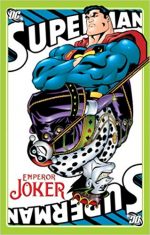
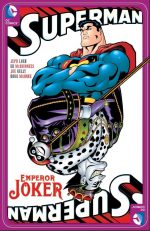
Superman: Emperor Joker

By Jeph Loeb, J.M. DeMatteis, Mark Schultz, Joe Kelly, Ed McGuinness, Mike Miller, Doug Mahnke, Kano, Duncan Rouleau, Todd Nauck, Carlo Barberi, Scott McDaniel & various (DC Comics)
ISBN: 978-1-4012-1193-6 (TPB)

In the arena of superhero stories, the terms of narrative are often determined more by the antagonists than the gaudily costumed champions doggedly duelling with them. That’s never been more apparent than in tales featuring the Clown Prince of Crime such as this one…

Originally available as a trade paperback and now in a selection of digital formats, this outlandish yarn collectively spans September and October 2000, as originally published in Superman #160-161, Adventures of Superman #582-583, Superman: The Man of Steel #104-105, Action Comics #769-770 and Emperor Joker #1.

First 4-part story arc Superman: Arkham begins in Superman #160 with ‘It’s a Mad, Mad, Mad World!’ by Jeph Loeb, Ed McGuinness & Cam Smith. The night is broken with hideous screams. Every night.

A black-clad maniac dubbed Superman smashes out of grim asylum Arkham, only to be subdued again and re-incarcerated by warped clone Bizarro before day breaks.

Every night a diminutive and greatly distracted pixie of a man dashes to an appointment only to be hit by a train, or a giant weight or something else gigantic, weighty and somehow non-fatal…

In a sky that rains custard pies hangs a moon with the Joker‘s face. What is going on and when will it all end?

The madness spreads to Adventures of Superman #582 and ‘Crazy About You’ (by J.M. DeMatteis, Mike Millar & José Marzan Jr.) where unlikely nun Supergirl is tormented by visions whilst evil billionaire genius Lois Lane sets her incomparable intellect to solving the mystery of the constant Arkham escapee.

A ghastly warped convocation of the JLA resumes their terrorising activities as Superman: The Man of Steel #104 ‘No Axioms’ (Mark Schultz, Doug Mahnke, Tom Nguyen & John McCrea) sees the perennial escapee meet up with inspirational inventor armourer John Henry Irons; a man afflicted with astounding ideas and concepts torturously leaking out of his brain. As he strives to create a suit of Steel to aid the prisoner, Bizarro and the powered-up posse attack…

And elsewhere the little man remembers who he is. Now there’s a ghost of a chance to save and correct Reality…

Forced to toil as ineffectual fast-food peon Super Burger Boy, rebel teen Conner Kent witnesses a war between wonder beings and his clouded thoughts stir in ‘SupermanamrepuS’ (Joe Kelly, Kano & Marlo Alquiza from Action Comics #769). As Irons and the prisoner invade the JLA’s moon citadel, the kid’s powers revive too…

When 5th Dimensional trickster Mr. Mxyzptlk finally arrives to beg the Men of Steel’s assistance, they initially assume he’s the cause of the universe’s woes… until he makes them look at the Earth they’ve just come from…

Answers if not solutions are forthcoming in Emperor Joker #1. ‘It’s a Joker World, Baby, We Just Live in it!’ by Kelly, Loeb, Duncan Rouleau, Todd Nauck, Carlo Barberi, Scott McDaniel, Alquiza, Jaime Mendoza & Richard Bonk reveals how the beyond-deranged Harlequin of Hate appropriated the immeasurable power of Mxyzptlk, what he did with it and how his whimsical changes are threating all existence.

As the crisis encompasses a host of transformed and tormented guest stars, the disparate remnants of the former Superman Family launch a desperate last-ditch scheme to save everything, leading to closing story arc ‘The Reign of Emperor Joker’ and beginning with Superman #161.

Loeb, McGuinness & Smith’s ‘You Say You Want a Revolution?’ finds Superboy, Supergirl and the Action Ace picking off the Joker’s minions and invading his awesome Hahacienda, only to discover what the Joker has done to his greatest obsession The Batman…

The infernal realms are assaulted and overturned in Adventures of Superman #583’s ‘Life is but a (Very Bad) Dream’ (DeMatteis, Millar & Armando Durruthy), resulting in a shocking resurrection and counterstrike before even more unlikely revivals converge on the mad clown in ‘All the World His Stage’ (by Schultz, Mahnke & Nguyen from Superman: The Man of Steel #105).

After an inconceivable final battle that rocks all reality, the universe is set aright in Action Comics #769-770’s ‘He Who Laughs Last’ by Kelly, Kano & Marlo Alquiza, but don’t think for a moment that all’s right with the world…

Although not a new plot, this tale of a time and place where compulsively interventionist god the Joker employs Fifth dimensional magic to literally remake creation in his own image just so he can torture the heroes who have so often thwarted him, actually works. Maintaining breakneck pace and peppering the action with in-jokes and sly asides, the narrative of Superman under terminal pressure to save the universe is truly gripping and the eventual denouement actually succeeds in both contextual terms and delivery of a powerful payoff. This is a marvellous piece of comic eye-candy.

Although taken from a particularly grim and humourless period in Superman history, this thinly disguised tribute to the zany genius of Chuck Jones, Tex Avery and those wacky Warner Brothers cartoons reads like a breath of fresh air when gathered together in one collection and comes with closing contrary codicil ‘The Codex Comicon’ from Joe Kelly under his nom de plume Professor B. Zarro.
Thrilling, fun and full of perfect comics moments, this is a book every Fights ‘n’ Tights fan should have.
© 2000, 2007, 2016 DC Comics. All Rights Reserved.

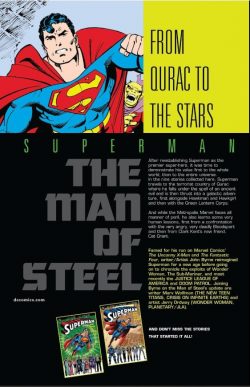
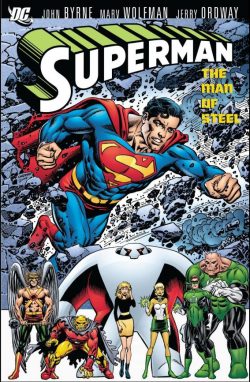
Superman the Man of Steel Volume 3


By John Byrne, Marv Wolfman, Jerry Ordway & various (DC Comics)
ISBN: 978-1-4012-0246-0 (TPB)

In 1985, when DC Comics decided to rationalise and reconstruct their continuity with Crisis on Infinite Earths, they used the event to regenerate their key properties at the same time. The biggest gun they had was Superman and it’s hard to argue that change came none too soon.

The big guy was in a bit of a slump, but he’d weathered those before. So how could a major makeover be anything but a pathetic marketing ploy that would alienate the real fans for a few Johnny-come-latelies who would jump ship as soon as the next fad surfaced? The popular wisdom amongst fans was that this new Superman was going to suck.

They couldn’t have been more wrong.

Superman titles were cancelled or suspended for three months, and yes, that did make the real-world media sit-up and take notice of the character for the first time in decades. But there was method in the corporate madness.

Beginning with 6-part miniseries Man of Steel – written and drawn by mainstream superstar John Byrne and inked by venerated veteran Dick Giordano – the experiment was a huge and instant success. So much so, that when it was first collected as a stand-alone graphic novel in the 1980s, it became one of the industry’s premiere break-out hits. From his overwhelming re-inception the character returned to his suspended comicbook homes with the addition of a third monthly title premiering that same month.

Superman, Adventures of Superman, and Action Comics (which became a fan-pleasing team-up book guest-starring other heroes of the DC Universe) were instant best-sellers. So successful was the relaunch that by the early 1990’s Superman would be able to sustain four monthly titles as well as Specials, Annuals, guest shots and his semi-regular appearances in titles such as Justice League.

It was quite a turnaround from the earlier heydays of the Man of Steel when editors were frantic about not over-exposing their biggest gun.

With Byrne’s controversial reboot now a solid hit, the collaborative teams tasked with ensuring his continued success really hit their stride with the tales collected in this third volume.

From April to June 1987 and re-presenting Superman #4-6, Action #587-589 and Adventures of Superman #427-429 in paperback and digital formats, the wonderment is preceded by an Introduction from writer/artist Jerry Ordway before the drama kicks off with an all-out battle against deranged gunman ‘Bloodsport!’ courtesy of Byrne and inker Karl Kesel. The merciless shooter is more than just crazy, however: some hidden genius has given him the ability to manifest wonder weapons from nothing and he never runs out of ammo… Marv Wolfman & Jerry Ordway concentrated on longer, more suspenseful tales. Adventures of Superman #427-428) take the Man of Tomorrow on a punishing visit to the rogue state of Qurac and an encounter with a hidden race of alien telepaths called the Circle, in a visceral and beautiful tale of un-realpolitik. ‘Mind Games’ and ‘Personal Best’ combine a much more relevant, realistic slant with lots of character sub-plots featuring assorted staff and family staff of the Daily Planet after which Byrne in Action Comics manufactures spectacle, thrills and instant gratification reader appeal.

‘Cityscape!’, in #587, teams the Metropolis Marvel with Jack Kirby’s Etrigan the Demon as sorceress Morgaine Le Fay attempts to gain immortality by warping time itself…

‘The Mummy Strikes’ and ‘The Last Five Hundred’ (Byrne & Kesel, Superman #5-6) then introduce the first hint of potential romance between the Man of Steel and Wonder Woman, before Lois Lane and Clark Kent are embroiled in an extraterrestrial invasion drama that started half a million years ago and feature rogue robots and antediluvian bodysnatchers.

In ‘Old Ties’ (Superman #6) Wolfman & Ordway reveal the catastrophic results of the Circle transferring their expansionist attentions to Metropolis, before this collection concludes with a cosmic saga from Action Comics #588-589 wherein Byrne & Giordano team the Caped Kryptonian with Hawkman and Hawkwoman in ‘All Wars Must End’, an epic battle against malign Thanagarian invaders, permitting Arisia , Salaak, Kilowog, Katma Tui and other luminaries of the Green Lantern Corps to meet and rescue the star-lost Superman in ‘Green on Green’ before uniting to eliminate an unstoppable planet-eating beast.

The back-to-basics approach lured many readers to – and back to – the Superman franchise, but the sheer quality of the stories and art are what convinced them to stay. Such cracking, clear-cut superhero exploits are a high point in the Action Ace’s decades-long career, and these chronological-release collections are certainly the easiest way to enjoy one of the most impressive reinventions of the ultimate comic-book icon.
© 1987, 2004 DC Comics. All Rights Reserved.

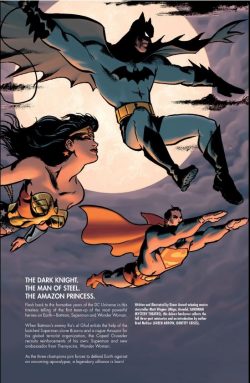
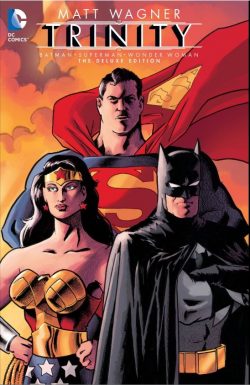
Batman/Superman/Wonder Woman: Trinity – the Deluxe Edition


By Matt Wagner, with Dave Stewart & Sean Konot (DC Comics)
ISBN: 978-1-4012-5690-6 (HC)
Comics fans – especially diehard lifelong aficionados of the superhero genre – have an innate appreciation and love of mythologizing. The hunger lures like a siren, hits like a speeding locomotive and dictates our lives and fate like Doomsday freshly arrived. We just can’t help ourselves…

DC Comics have been responsible for many outstanding tales that have become modern day legends, ever since the primal creation of Superman, Batman and Wonder Woman: slowly interweaving the undying fantasy favourites into a rich tapestry of perfect adventure which has taken on a life of its own, inextricably entrenched in the dream-lives of generations of children and the adults – and screen icons – they became.

It was only relatively recently that DC fully acknowledged the imaginative treasure-trove they were sitting on: cannily building on the epic, cross-generational appeal and elder statesman status of their founding stars. One of the most impressive of the efforts is this evergreen fable, originally released in 2003 as a 3-part Prestige Format miniseries.

As seen in Batman and the Mad Monk, Sandman Mystery Theatre, The Shadow: The Death of Margo Lane or Zorro, auteur Matt Wagner has an uncanny gift for re-imagining and updating the raw power of Golden Age classics while celebrating and sustaining the core mystique of the originating concept. With Trinity he revealed a new canonical first collaborative venture of the all-conquering triumvirate, set in the brave new lone universe post-Crisis on Infinite Earths…

Following an effusive Introduction from novelist and A-List comics-scribe Brad Meltzer, the brief encounter opens in the Art Deco Metropolis as oafish Clark Kent‘s morning is ruined by an assassin who shoots a commuter train driver and brings the morning rush-hour to a screeching, crashing, cataclysmic halt…

It soon becomes apparent that the subsequent near-disaster has been devised simply to distract and assess the capabilities of the mighty Man of Steel. That night a daring raid on S.T.A.R. Labs is ruthlessly foiled by a silent, caped visitor to the “City of Tomorrow”, but Superman knows nothing about it until it’s all over.

…And at the bottom of the world, more mysterious masked minions at last liberate Superman’s warped and retarded clonal antithesis Bizarro from its icy imprisonment deep beneath the Antarctic mantle…

Another promising day is spoiled for the reporter by a visit from Bruce Wayne, a reluctant occasional ally, and equally obnoxious whether in his playboy charade or as his true self: the dread Batman.

The visit is a courtesy call between distant colleagues. A terrorist group calling itself “The Purge” would have obtained samples of Kryptonite had the Dark Knight not intervened. Now they plan to raid Lex Luthor‘s citadel and professional courtesy demands that Superman be fully apprised…
Meanwhile, in a most secret hideaway a strangely formidable young girl named Diana auditions for the Most Dangerous Man on Earth: a criminal overlord in need of a perfect warrior to lead his massed forces…

Ra’s Al Ghul always gets what he wants and after the charismatic Demon’s Head charms Bizarro with honeyed words of friendship, the freakish doppelganger is only too happy to bring him a present…

Tragically, Russian nuclear submarines are a bit tricky to handle and the super-simpleton manages to drop one of its atomic missiles en route. The lost nuke explodes far from any regular shipping lines, however. Apart from fish, the only creatures affected are a race of immortal women warriors, invisible to mortal eyes and forgotten by Man’s World for millennia…

As mysterious mercenary Diana prepares to carry out The Demon’s orders, in Metropolis another Amazon tracks down Superman and politely enquires why he dropped an A-Bomb on her home. Eschewing rash accusations or pointless fisticuffs they soon come to realise the true nature of the horrific event and unite to track the stolen sub to the Sahara, promptly falling into an ambush by Al Ghul’s fanatical forces. The guns, knives, nerve gas and suicide bombers prove no problem, but a booby-trapped nuke is another matter entirely…

Barely surviving the detonation, Man of Steel and Princess of Power head for Gotham City to seek the grudging assistance of The Demon’s most implacable foe, only to find the Dark Knight is already on the case, having just unsuccessfully engaged with Al Ghul’s Amazonian field commander.

Reluctant to admit a need for allies and inherently suspicious of bright and shiny super-people chronically unable to make hard decisions or get their hands dirty, Batman nevertheless enters into a tenuous alliance with the dilettante champions to stop the insane plans of an immortal madman determined to wipe out modern civilisation and cleanse the Earth of toxic humanity…

Hard-hitting, epic and spectacular, this Wagnerian saga (you have no idea how long and hard I struggled before succumbing to that painful pun) superbly illustrates the vast gulfs between the oh-so-different heroes and how they nevertheless mesh to form the perfect team. Strongly character-driven throughout, the protracted struggle to defeat Al Ghul and his infamous allies offers tension, mystery, genuine humour and powerful plot-twists galore, all wrapped up in a bombastic feast of frenzied action supplemented with savvy cameos and guest shots by other – albeit lesser – keystones of the DCU.

Stunningly illustrated by Wagner, lavishly coloured by Dave Stewart and subtly lettered by Sean Konot, this Deluxe hardcover and digital edition also includes a glorious cover gallery – including the tie-in covers to the miniseries that graced Adventures of Superman #628, Wonder Woman #204 and Batman #627, plus a beautiful Sketchbook section featuring a wealth of the artist’s preliminary drawings, layouts, designs and ideas.

When producing this type of tale there’s always the dilemma of whether to trade on current continuity or to deconstruct and attain a more grandiose, mythic feel, but part-time and casual readers need not worry. Wagner has hewn to the timeless fundamentals to craft a gratifyingly “Big” story which still manages to reveal more about the individual stars involved than a year’s worth of periodical publishing.

Trinity is primal adventure: accessible, exciting and rewarding, with Superman, Batman and Wonder Woman as they should always be but so seldom are. Team ups and retrofits should all be this good.
© 2003, 2004, 2015 DC Comics. All Rights Reserved.

Superman: The Man of Steel volume 2


By John Byrne, Marv Wolfman, Jerry Ordway & various (DC Comics)
ISBN: 978-1-4012-0005-3

In 1985, when DC Comics decided to rationalise and reconstruct their continuity with Crisis on Infinite Earths, they used the event to regenerate their key properties at the same time. The biggest gun they had was Superman and it’s hard to argue that the change was not before time.

The big guy was in a bit of a slump, but he’d weathered those before. So how could a root and branch retooling be anything but a pathetic marketing ploy that would alienate the real fans for a few fly-by-night Johnny-come-latelies who would jump ship as soon as the next fad surfaced? The popular wisdom amongst fans was that this new Superman was going to suck.

They couldn’t have been more wrong.

Both Superman titles were cancelled or suspended for three months, and yes, that did make the real-world media sit-up and take notice of the character for the first time in decades. But there was method in the corporate madness.

Beginning with 6-part miniseries Man of Steel – written and drawn by mainstream superstar John Byrne and inked by venerated veteran Dick Giordano – the experiment was a huge and instant success. So much so, that when it was first collected as a stand-alone graphic novel in the 1980s it became one of the industry’s premiere ‘break-out’ hits. From this overwhelming start the character returned to his suspended comic-book homes with the addition of a third monthly title premiering that same month.

Superman, Adventures of Superman, and Action Comics (which morphed into a fan-pleasing team-up book that guest-starred other favourites of the DC Universe) were instant best-sellers. So successful was the relaunch that by the early 1990’s Superman would be able to sustain four monthly titles as well as Specials, Annuals, guest shots and his semi-regular appearances in titles such as Justice League. It was quite a turnaround from the earlier heydays of the Man of Steel when editors were frantic about not over-exposing their biggest gun.

This trade paperback and/or digital collection was the first of a far-too-infrequent sequence collecting those early editions, patterned on the Man of Steel compendium. Volume 2 begins a more or less (narrative permitting) chronological representation of the regular monthly titles, with this outing gathering Superman #1-3, Action Comics #584-586 and Adventures of Superman #424-426 covering January to March 1987 and includes relevant pages from the DC Who’s Who Update 1987.

Following co-author Marv Wolfman’s introductory reminisces and commentary in ‘Reinventing the Wheel’ , the never-ending battle recommences with Superman vol. 2 #1, as Byrne & Terry Austin reveal a ‘Heart of Stone’: offering a new origin for Metallo, the Terminator-style cyborg with a human brain and a Kryptonite heart, culminating in a deadly battle and baffling mystery portending big troubles to come. The focus then shifts to Action #584 and ‘Squatter!’ (Byrne & Giordano) as a body-snatching mental force suborns the Metropolis Marvel and necessitates a team-up with the Teen Titans. The accent is predominantly on breakneck pace and all-out costumed conflict here…
Superman #2 (by Byrne & Austin) then describes ‘The Secret Revealed’ as modern-day robber baron Lex Luthor makes the biggest mistake of his life after kidnapping and torturing Clark Kent’s first girlfriend Lana Lang…

This is followed by Marv Wolfman & Jerry Ordway’s ‘Man O’ War’ and ‘Going the Gauntlet,’ (Adventures of Superman #424 and #425, and inked by Mike Machlan): introducing the tragic Dr. Emil Hamilton and rival reporter Cat Grant to the mythology. Here the Action Ace battles high-tech terrorists sponsored by rogue state Qurac and proves to be no respecter of international boundaries like his pre-Crisis counterpart…

These politically and socially aware dramas would become a truer and more lasting template for the modern Man of Tomorrow after Byrne’s eventual retirement from the character…

The Phantom Stranger guests in a battle against a deadly manifestation of unquiet spirits in ‘And the Graves Give Up Their Dead’ (Byrne & Giordano from Action #585) before the last three chapters are given over to the Superman segment of multi-part crossover event Legends.

Byrne & Austin’s Superman #3 began with ‘Legends of the Darkside’, as Clark Kent is abducted to Apokolips by its evil master. He escapes to become a rebel leader of the lowly “Hunger Dogs” in Adventures… #426, wherein Wolfman, Ordway & Machlan give us an amnesiac Superman on Apokolips in ‘From the Dregs’ before the rousing yarn concludes with ‘The Champion’, as Action Comics #586 (Byrne & Giordano) reintroduces Jack Kirby’s legendary New Gods Orion and Lightray just in time for a blistering battle royale between the Man of Steel and Darkseid…

Closing this collection is a full cover gallery and information pages on reimagined and post-Crisis icons Lois Lane, Amazing Grace, Krypton and Kryptonite, and Metallo.

As I’ve previously mentioned ad nauseum, a major problem most non-fans have with super-hero comics (apart from them actually having super-heroes in them) are the insane permutations and convolutions demanded by in-house continuity. This All-Readers-Start-Here opportunity to show doubters how good this genre can be was one all comics missionaries could exploit to the fullest, and these tales are even more accessible and enjoyable now that they ever were. Thrill-starved Newbies start here… and bring your significant others/mothers/dads/kids and all your super-friends too…
© 1987, 2003 DC Comics. All Rights Reserved.
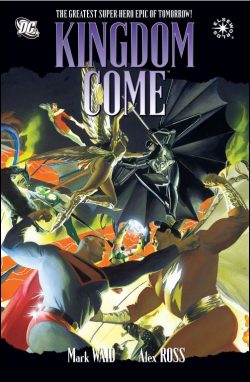
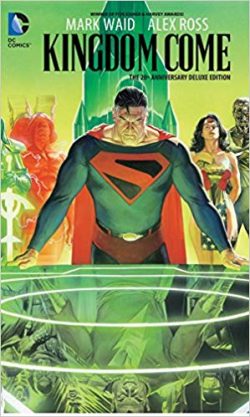
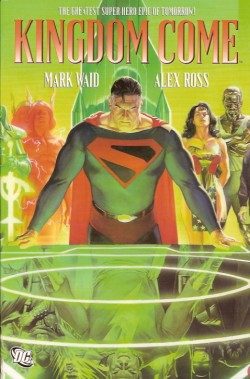
Kingdom Come


By Mark Waid & Alex Ross, with Todd Klein & various (DC Comics)
ISBN: 978-1-4012-6082-8 (20th Anniversary HB) 978-1-4012-2034-1 (TPB

In the mid-1960s a teenaged Jim Shooter wrote a couple of stories about the Legion of Super-Heroes set some years into the team’s own future. Those stories of the adult Legionnaires revealed hints of things to come that shackled the series’ plotting and continuity for decades as eager, obsessed fans (by which I mean all of us) waited for the predicted characters to be introduced, presaged relationships to be consummated and heroes to die.

By being so utterly impressive and similarly affecting, Kingdom Come accidentally repeated the trick decades later, subsequently painting the entire post Crisis on Infinite Earths DC Universe into the same creative corner until one of the company’s periodic continuity reboots…

Envisaged and designed by artist Alex Ross as DC’s answer to epic groundbreaking Marvels, Kingdom Come was originally released as a 4-issue Prestige Format miniseries in 1996 to rapturous acclaim and numerous awards and accolades. Although set in the future and an “imaginary story” released under DC’s Elseworlds imprint, it almost immediately began to affect the company’s mainstream continuity.

Set approximately twenty years into the future, the grandiose saga details a tragic failure and subsequent loss of Faith for Superman and how his attempt to redeem himself almost leads to an even greater and ultimate apocalypse.

The events are seen through the eyes and actions of Dantean witness Norman McCay, an aging cleric co-opted by Divine Agent of Wrath the Spectre after the pastor officiates at the last rites of dying superhero Wesley Dodds. As the Sandman, Dodds was cursed for decades with precognitive dreams which compelled him to act as an agent of justice.

Opening chapter ‘Strange Visitor’ reveals a world where metahumans have proliferated to ubiquitous proportions: a sub-culture of constant, violent clashes between the latest generation of costumed villains and vigilantes, all unheeding and uncaring of the collateral damage they daily inflict on the mere mortals around and in all ways beneath them.

The shaken preacher sees a final crisis coming, but feels helpless until the darkly angelic Spectre comes to him. Taken on a bewildering voyage of unfolding events, McCay is to act as the ghost’s human perspective whilst the Spirit of Vengeance prepares to pass final judgement on Humanity.

First stop is the secluded hideaway where farmer Kal-El has hidden himself since the ghastly events which compelled him to retire from the Good Fight and the eyes of the World. The Man of Steel was already feeling like a dinosaur when newer, harsher, morally ambiguous mystery-men began to appear. After the Joker murdered the entire Daily Planet staff and hard-line new hero Magog executed him in the street, the public applauded the deed. Heartbroken and appalled, Superman simply disappeared for a decade. His legendary colleagues also felt the march of unwelcome progress and similarly dropped from sight.

With Earth left to the mercies of dangerously irresponsible new vigilantes, civil unrest soon escalated. The younger heroes displayed poor judgement and no restraint, with the result that within a decade the entire planet had become a chaotic arena for metahuman duels.

Civilisation was fragmenting. Flash and Batman retreated to their home cities and made them secure, crime-free solitary fortresses. Green Lantern built an emerald castle in the sky, turning his eyes away from Earth and towards the deep black fastnesses of space. Hawkman retreated to the wilderness, Aquaman to his sub-sea kingdom whilst Wonder Woman retired to her hidden paradise. She did not leave until Armageddon came one step closer…

When Magog and his Justice Battalion battled the Parasite in St. Louis, the result was a nuclear accident which destroyed all of Kansas and much of Iowa, Missouri and Nebraska. Overnight the world faced starvation as America’s breadbasket turned into a toxic wasteland. Now with McCay and the Spectre invisibly observing, Princess Diana convinces the bereft Kal-El to return and save the world on his own terms…

In ‘Truth and Justice’ a resurgent Justice League led by Superman begins a campaign of unilateral action to clean up the mess civilisation has become: renditioning “heroes” and “villains” alike, imprisoning every dangerous element of super-humanity and telling governments how to behave, blithely unaware that they are hastening a global catastrophe of Biblical proportions as the Spectre invisibly gathers the facts for his apocalyptic judgement.

In the ensuing chaos, crippled warrior Bruce Wayne rejects Superman’s paternalistic, doctrinaire crusade and allies himself with mortal humanity’s libertarian elite – Ted (Blue Beetle) Kord, Dinah (Black Canary) Lance and Oliver (Green Arrow) Queen – to resist what can only be considered a grab for world domination by the meta-human minority. As the helpless McCay watches in horror, Wayne’s group makes its own plans; another dangerous thread in a tapestry of calamity…

At first Superman’s plans seem blessed to succeed, with many erstwhile threats flocking to his banner and his doctrinaire rules of discipline, but as ever there are self-serving villains with their own agendas. Lex Luthor organises a cabal of like-minded compatriots – Vandal Savage, Catwoman, Riddler, Kobra and Ibn Al Xu’ffasch (Son of the Demon Ra’s Al Ghul) – into a “Mankind Liberation Front”.

With Shazam-empowered Captain Marvel as their slave, this group are determined the super-freaks shall not win. Their cause is greatly advanced once Wayne’s clique joins them…

‘Up in the Sky’ sees events spiral into a deadly storm as McCay, still wracked by his visions of Armageddon, is shown the Gulag where all recalcitrant metahumans have been dumped. He also witnesses how it will fail, learns from restless spirit Deadman that the Spectre is the literal Angel of Death and watches with growing helplessness as Luthor’s plan to usurp control from the army of Superman leads to a shocking confrontation, betrayal and a deadly countdown to the End of Days…

The deadly drama culminates in a staggering battle of superpowers, last moment salvation and a second chance for humanity in a calamitous world-shaking ‘Never-Ending Battle’…

Thanks to McCay’s simple humanity, the world gets another chance and this edition follows up with an epilogue ‘One Year Later’ which end this ponderous epic on a note of renewed hope…

This edition – available as a 20th Anniversary deluxe hardback, a standard trade paperback and in digital formats – comes with an introduction by author and former DC scribe Elliot S. Maggin, assorted cover reproductions and art-pieces, an illustrated checklist of the vast cast list plus a plethora of creative notes and sketches in the ‘Apocrypha’ section, and even hints at lost glories in ‘Evolution’: notes, photos and drawings for a restored scene that never made it into the miniseries.

Epic, engaging and operatically spectacular, Kingdom Come is a milestone of the DC Universe and remains to this day a solid slice of superior superhero entertainment, worthy of your undivided attention.
© 1996, 2008, 2016 DC Comics. All Rights Reserved.
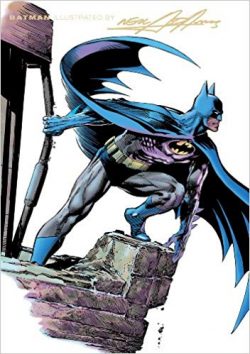
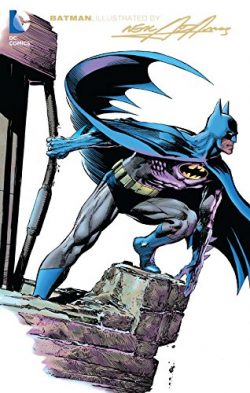
Batman: Illustrated by Neal Adams volume 3


By Neal Adams with Dennis O’Neil, Frank Robbins, Len Wein, Dick Giordano & various (DC Comics)
ISBN: 978-1-4012-4075-2 (TPB)

It’s Batman’s anniversary year. What are you reading?

As the 1960s began Neal Adams was a young illustrator who had worked in advertising and ghosted some newspaper strips whilst trying to break into comics. Whilst pursuing a career in advertising and “real art” he did a few comics pages for Archie Comics and subsequently became one of the youngest artists to co-create and illustrate major licensed newspaper strip Ben Casey (based on a popular TV medical drama series).

That comics fascination never faded, however, and Adams drifted back to National/DC, doing a few covers as inker or penciller before eventually finding himself at the vanguard of a revolution in pictorial storytelling…

He made such a mark that DC recently chose to reprint every piece of work Adams ever did for them into a series of commemorative collections. This is the last of three superb tomes (available in a variety of formats including last minute delivery eBook) starring the “Darknight Detective” as he was dubbed back then, and featuring every cover, story and issue in original publication order.

This particular package celebrates the covers and pertinent contents of Batman #232, 234-241, 243-246, 251, 255, Batman Annual #14, Batman Black & White # 4, The Brave and the Bold #99, Detective Comics #412-422, 439, 600, Heroes Against Hunger, Limited Collectors’ Edition C-25, C-51, C-59, Robin #1, Saga of Ra’s Al Ghul #4, World’s Finest Comics # 211, 244-246, 258; cumulatively embracing June 1971 to September 1996.

Following Adams’ liberally illustrated Foreword and key collaborator Denny O’Neil’s recollections describing their work process in his Introduction, the comics gold begins.

Throughout this period Adams remained one of the industry’s top cover artists, generating a stunning succession of mesmerising images on most Bat-related titles (and plenty of other comics). Those are listed here in chronological release order…

Behind a macabre eye catcher, Batman #232 (June 1971) took the hero to new heights as former kidnap victim Talia returns and we learn more of her as O’Neil & Adams – with inking as usual from Dick Giordano – introduce her father: immortal eco-terrorist Râ’s Al GhÅ«l.

A whirlwind adventure which became one of the signature highpoints of the entire Batman canon, ‘Daughter of the Demon’ is a timeless globe-girdling mystery yarn drawing the increasingly grim hero from Gotham’s concrete canyons to the Himalayas in search of hostages Robin and Talia, purportedly captured by forces inimical to both Batman and the mysterious figure who claims to be working in secret to save the world…

Ra’s was a contemporary, more acceptable visual embodiment of the classic inscrutable ultimate foreign devil (as typified in a less forgiving age as the “Yellow Peril” or Dr. Fu Manchu). This kind of alien archetype permeates popular fiction and is still an astonishingly powerful villain-symbol, although the character’s Arabian origins – neutral at the time – seem to uncomfortably embody a different kind of ethnic bogeyman in today’s post 9/11, ISIS-infested world.

The concept of a villain who has the best interests of the planet at heart is not a new one, but Ra’s Al Ghul, whose avowed intent is to reduce teeming humanity to viable levels and save the world from our poison, hit a chord in the 1970s – a period where ecological issues first came to the attention of the young. It was a rare kid who didn’t find a note of sense in what “the Demon’s Head” planned. The spectacular tale ended with a shocking pronouncement of what Ra’s intended for Gotham’s Guardian…

The chilling covers for Detective Comics #412 and 413 (this was the peak of the revival in supernatural comics, after all), leads to Batman #234 which featured the stellar return of one of the hero’s most tragic foes.

As comics became increasingly more anodyne in the 1950s, psychologically warped, physically actualised schizophrenic Two-Face was quietly retired from Batman’s roster of rogues, but with ‘Half an Evil’ (O’Neil, Adams & Giordano), he resurfaced at the forefront of grimmer, grittier stories.

When a string of bizarre and brutal robberies afflicts the city, the baffled Batman has to use all his ingenuity to discern the reasoning and discover the identity of a ruthless hidden mastermind in time to thwart a diabolical scheme…

Covers for Detective #414-417 Batman #235-236 lead into another much-reprinted classic. ‘Night of the Reaper!’ – by the usual suspect from Batman #237 – is one of the most revered tales of the era: a harrowing Halloween epic which finds Robin working with his old mentor to solve a string of barbarous killings, only to uncover a pitifully deranged perpetrator as much sinned-against as sinner…

The fronts for Detective# 418-422, The Brave and the Bold #99, Batman #238-241 and World’s Finest Comics # 211 bring us to Batman #243 (August) as the long-brewing war between Batman and Ra’s Al Ghul reaches Def Con 3: a single extended saga taken out of normal DC continuity and depicting the final confrontation between two opposing ideals.

Not included here are the non-Adams episodes from Batman #240 and 242 (although they are available in many other collections). In them, the Darknight Detective abandoned his civilian identity by faking Bruce Wayne’s death and gathered a small team of specialist allies – comprising criminal alternate-identity Matches Malone, scientific advisor Dr. Harris Blaine and Ra’s’ top assassin Ling – suborned to the side of the angels by his own superstitious code of honour and sworn to destroy the Demon forever.

O’Neil, Adams & Giordano reunited for Batman #243 which sees the team – plus latecomer Molly Post – invade the Demon’s Swiss citadel moments after their intended target dies. Nobody suspects the ageless villain’s resources include ‘The Lazarus Pit’ which can revive the dead…

The fateful finale came in #244, wherein ‘The Demon Lives Again!’ Sadly, despite all his supernal gifts and forces, Ra’s cannot escape the climactic vengeance of his implacable foe in dream-team O’Neil, Adams & Giordano’s compulsive climax. With the job done, a short addendum in #245 resolves ‘The Bruce Wayne Murder Case!’, restoring the billionaire to his rightful place in Gotham’s social whirl…

The all-Adams cover to Batman #246 (October 1972) leads to another graphic landmark. ‘The Joker’s Five-Way Revenge’ comes from Batman #251 (September 1973 by Dennis O’Neil & Neal Adams) and finally ended forever the zany, “camp” taint of the TV show by re-branding the characters and returning to the original 1930s concept of a grim and driven Dark Avenger chasing an insane avatar of pure evil.

Such a hero needs truly deadly villains and – by reinstating the psychotically unpredictable Killer Clown who scared the short pants off readers in the Golden Age – this single-issue yarn set the bar very, very high. A true milestone that utterly redefined the Joker for the modern age: the story sees the Mirthful Maniac stalking his old gang, determined to eradicate them all with the hard-pressed Gotham Guardian desperately playing catch-up. As the crooks die in all manner of Byzantine and bizarre ways, Batman realises his arch-foe has gone irrevocably off the deep end….

Terrifying and beautiful, for many fans this is the definitive Batman/Joker story, but signalled Adam’s graduation to other jobs and away from regular bat-missions. Before that departure, however, the cover to Detective #439 (February/March 1974) and one last thriller awaited.

Scripted by Len Wein and inked by Giordano, ‘Moon of the Wolf’ from Batman #255 (March/April 1974) pits the ultimate human hero against a tragic former sportsman mutated into a truly supernatural lupine killer and enslaved by old enemy Professor Milo…

From Limited Collectors’ Edition C-25 comes a pin-up before a rare example of the artist’s commercial comics work appears. Adams produced art for a series of comics adventures starring various Marvel and DC heroes – as well as screen icons such as Star Trek and Planet of the Apes – for Power Records’ line of Book and Records sets. These offered a vinyl recording of a story accompanied by a fully illustrated comic tale. The Batman offerings began with ‘Trumping the Joker’ in Stacked Cards (PR-27, 1975 and written & illustrated by Adams) was followed a year later, by PR-30 (Adams, Frank Robbins and Giordano) wherein ‘Robin Meets Man-Bat’. The all-ages tales are accompanied by a house ad for the DC stars available in Power Records’ unique packages.

Still a huge draw as a cover artist, between 1977-1996 Adams generated Bat-related frontages for World’s Finest Comics # 244-246 & 258, Limited Collectors’ Edition C-51 (a wraparound reprinting the “Bride of the Demon” saga) and C-59 (‘Batman’s Strangest Cases’), the Heroes Against Hunger benefit comic, a pin-up in Detective Comics #600, covers for Saga of Ra’s Al Ghul #4 (another wraparound), Batman Annual #14, and pin-ups for Robin #1 and Batman Black & White # 4.

The history of Batman is inescapably linked to and shaped by Neal Adams’ efforts, and captivating secrets of creation are revealed in the stunning Neal Adams Sketchbook section (featuring comic art, ads, storyboards and conceptualisations for a Batman amusement park) which closes this compelling and irresistible tome (still readily available in trade paperback and digital editions).

With the game-changing classics in this volume, Batman finally returned to the commercial and critical top flight he had enjoyed in the 1940s reviving and expanding upon his original conception as a remorseless, relentless avenger of injustice. The next few years would see the hero rise to unparalleled heights of quality so stay tuned: the very best is just around the corner… that dark, dark corner…
© 1971, 1972, 1973, 1974, 1975, 1976, 1977, 1978, 1979, 1986, 1988, 1989, 1990, 1991, 2005, 2015 DC Comics. All Rights Reserved.