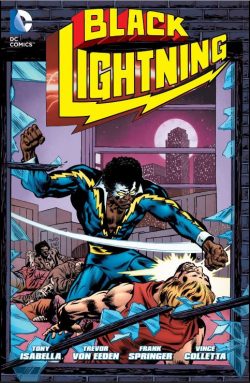
Black Lightning volume 1


By Tony Isabella, Denny O’Neil, Trevor Von Eeden, Mike Netzer, Frank Springer, Vince Colletta & various (DC Comics)
ISBN: 978-1-4012-6071-2

As a pale, sickly kid growing up in a uniformly and unrelentingly white area of the Home Counties in the 1960s, I got almost all my early experience of black people from television and films (for which I’m most profoundly sorry) – and, of course, comics – for which I’m not.

Almost completely unaware of the struggle for racial equality in my formative years, the incredible consciousness-raising explosion of Black Power after the 1968 Olympic Games somewhat politicised me and gripped my unassailable sense of fairness.

However, in my village and school, even though some comics companies had by this time made tentative efforts to address what were national and socio-political iniquities, issues of race and ethnicity took a long time to filter through to the still-impressionable young minds avidly absorbing knowledge and attitudes via four colour pages that couldn’t even approximate the skin tones of African-Americans.

As the struggle progressed, on television and in comics breakthroughs were small, incremental and too often reduced to a cold-war of daringly liberal “firsts.”

Excluding a few returning characters in Jungle-themed comicbooks of the 1940s and 1950s, War comics truly opened the door in the early 1960s, with Robert Kanigher & Joe Kubert creating negro boxer Jackie Johnson as a stalwart member of Sgt. Rock‘s easy company in Our Army at War #113 (December 1961).

Marvel followed suit with a black member of Sgt. Fury’s Howling Commandos team (Gabe Jones who debuted in #1, May 1963, but was accidentally re-coloured Caucasian at the printers: hard-working artisans who clearly didn’t realise his ethnicity), but pulled ahead in the diversity stakes after introducing Americas’ first negro superheroes Black Panther (Fantastic Four #52, July 1966) and the Falcon (Captain America #117, September 1969).

The honour of being the country’s first black hero to carry in his own title came via a little-remembered (or regarded) title from Dell Comics.

Created by artist Tony Tallarico & scripter D.J. Arneson, Lobo was a gunslinger and vigilante in the wild west who sought out injustice just like any cowboy hero would. He first appeared in December 1965 with his second and final issue cover-dated October 1966…

Arguably a greater breakthrough was Marvel’s Joe Robertson; City Editor of the Daily Bugle and a smart, brave, competent and magnificently ordinary mortal distinguished by his sterling character, not a costume or skin tone. He debuted in Amazing Spider-Man # 51 (August 1967), proving in every panel that the world wouldn’t end if black folk and white folk worked and ate together…

This big change slowly grew out of raised social awareness during a terrible time in American history – although Britain had nothing to be smug about either. Race riots had started early in the Sixties and left simmering scars that only comedians and openly racist politicians dared to talk about.

Shows such Till Death Us Do Part and Love Thy Neighbour made subtly telling headway but still raise a shudder whenever I see clips today…

Slowly, more positive ethnic characters appeared, with DC finally getting a black-skinned hero in John Stewart (Green Lantern #87, December 1971/January 1972), although his designation as a “replacement” Green Lantern might be construed as more conciliatory and insulting than revolutionary.

Jack Kirby had introduced teen New God Vykin the Black in Forever People #1 (March 1971) and created ghetto kid Shilo Norman as the hero’s apprentice (and eventual successor) in Mister Miracle ##15 (August, 1973) but DC’s first superhero to have his own solo title was Black Lightning, who didn’t debut until 1977…

Now with the urban avenger the star of his own television series, those early groundbreaking adventures have been gathered into an astoundingly accessible, no-nonsense trade paperback and eBook collection (comprising Black Lightning #1-11, plus material from Cancelled Comics Cavalcade #1 and World’s Finest Comics #260, cumulatively spanning April 1977 to January 1980) that dashes into action following a forthright and informative Introduction by series and character originator Tony Isabella.

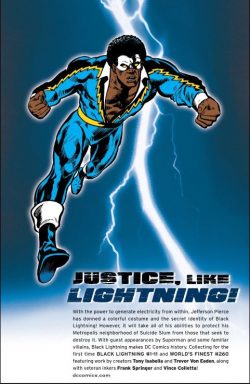
It all begins as ‘Black Lightning’ (illustrated by neophyte penciller Trevor Von Eeden & veteran inker Frank Springer) sees former Olympic decathlete Jefferson Pierce return to the streets of Suicide Slum, Metropolis to teach at inner city Garfield High School.

Pierce is determined to make a difference to the troubled kids he used to be numbered amongst, but when the educator interrupts a drug buy on school grounds and sends the dealer packing, the door is opened to vengeance and tragedy.

When the mob – an organised syndicate dubbed The 100 – come seeking retaliation, one of Pierce’s students pays the ultimate price and the teacher realises he needs the shield of anonymity if he is to win justice and safety for his beleaguered home and charges…

Happily, tailor Peter Gambi – who took Jefferson and his mother in after the elder Pierce was murdered – has some useful ideas and inexplicable access to some pretty far-out technology…

Soon, equipped with a strength-&-speed enhancing forcefield belt and costume, with mask and wig that completely change his appearance, a fierce new vigilante stalks the streets of Metropolis…

The local chapter of The 100 is run by a monstrous and cunning freak called Tobias Whale and once Black Lightning’s harrying of his soldiers starts to bite into profits and give the downtrodden populace a glimmer of hope, the sinister strategist starts laying traps, culminating in hiring a lethal super-assassin who previously battled Green Arrow and the Justice League of America.

When the killer pounces, Pierce is forced into an uneasy alliance with mystery woman Talia Al Ghul, but their alliance ends as soon as the bodies start piling up all over the school gym in ‘Merlyn Means Murder’…

As Vince Colletta assumes the inker’s role, Black Lightning’s continued war against The 100 forces “the Whale” to fight smart, and Metro Police – led by doughty Inspector William Henderson – begin pursuing the mysterious vigilante as vigorously aa any gangster or felon. Taking seedy stoolie Two Bits Tanner into his confidence, Pierce savagely works his way up the criminal chain of command. He eventually confronts Tobias in his inner sanctum only to find ‘Every Hand Against Him’ as someone the police pounce. Has someone he trusts betrayed him?

A more palatable answer seems apparent in #4 as suspicion falls on Tanner’s source, Daily Planet journalist Jimmy Olsen. When the outraged Pierce tries to force a confession from the baffled cub reporter, they are attacked by the 100’s latest super heavy in ‘Beware the Cyclotronic Man’.

Although they combine to fight off the atomic villain Jimmy is hurt and Black Lightning is suddenly confronted by the kid’s enraged and late-arriving best pal, who jumps to the wrong conclusion and quickly proves ‘Nobody Beats a Superman!’

In fact, had Cyclotron not switched attention to the true target the Whale wanted him to kill, everybody might have died, but the heroes’ misunderstandings are all forgotten when Lightning saves the Man of Tomorrow from a nuclear meltdown, beats the bad guys and uncovers a mole in the police force…

His patience exhausted and under pressure from his own bosses, the Whale declares open season and offers an astounding bounty on Black Lightning. When deeply conflicted manhunter Syonide (and his hilarious Marvel-baiting in-joke kung fu assistants) stalk the Saviour of Suicide Slum, their first move is to shadow and learn everything about their quarry.

Before long Gambi is abducted and Jefferson’s secret finally exposed in ‘One Man’s Poison’…

Afflicted with a bizarre sense of honour, Syonide hands over a helpless Black Lightning to the Whale in #7: ‘The Conscience of the Killer’ compelling him to shelter the captive tailor from the 100’s vengeance and voluntarily pay the ultimate price when ordered to kill the seemingly-helpless masked hero.

Tragically, even as Black Lightning undergoes a miraculous transformation and takes out the gathered crooks and villains, he loses another innocent to the new violent life he has embraced…

With the power of the 100 apparently broken and Tobias Whale in custody, the fight seems over until the gigantic gangster breaks free and takes hostages from Police HQ. Determined to end the vendetta Black Lightning tracks him down for one last duel and in the ‘Deadly Aftermath’ finds purpose to carry on his alternate lifestyle…

Now considering himself more hero than avengers, Pierce experiences ‘Fear and Loathing at Garfield High’ when the school is invaded by a maniac terrorist operating an army of robotic killers after which a circus trip exposes ‘The Other Black Lightning’. Unfortunately, although the well-meaning admirer is a mostly-harmless copycat, a gang of jewel thieves and former Flash foe The Trickster provide plenty of genuine danger and menace before the big top sawdust settles…

Comicbooks were experiencing another general sales downturn at this time just as Denny O’Neil took over the scripting, Black Lightning was cancelled with the 11th (October 1978) issue.

‘All They Will Call You Will Be… Deportee!’ offered promise of a new direction as the urban avenger exposed an insidious people trafficking ring luring South American refugees into slave jobs at a fast food chain, but for most readers that was the last sight of the hero for some time.

So abrupt was the cancellation, that for legal reasons and to secure copyrights, DC had to put out a black-&-white ashcan anthology entitled Cancelled Comics Cavalcade, printing completed but unpublished stories of Claw the Unconquered, The Deserter, the Green Team, Madame Xanadu, Firestorm and others, including Black Lightning #12.

The wider world got to see that last adventure – ‘Lure of the Magnetic Menace’ by O’Neil, Mike Nasser (nee Netzer) & Colletta – a year later when the January 1980 cover-dated World’s Finest Comics #260 ran the story as a prelude to a series of new BL back-up adventures.

This edgy yarn details how the electrifying hero is attacked by costumed crazy Doctor Polaris after Jefferson Pierce investigates a possible case of child neglect and abuse involving one of his more troubled students…

Wrapping up this initial outing is a copious selection of working drawings from the ‘Black Lightning Sketchbook’ by Von Eeden and Mike Netzer’s unfinished cover for never-seen issue #13.

Although closely interlinked to then-current DC continuity, these fast-paced Fights ‘n’ Tights thrillers are so skilfully constructed that even the freshest neophyte will be able to settle in for the ride without any confusion and enjoy a self-contained rollicking rollercoaster of terrifically traditional superhero shenanigans.

So, go do that then…
© 1977, 1978, 1979, 2016 DC Comics. All Rights Reserved.

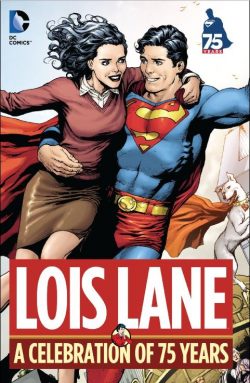
Lois Lane: A Celebration of 75 Years


By Jerry Seigel & Joe Shuster, Don Cameron, William Woolfolk, Whitney Ellsworth, Jerry Coleman, Robert Kanigher, Cary Bates, John Byrne, Jeph Loeb, Phil Jimenez, Katheryn Immonen, Greg Rucka, Grant Morrison, Ed Dobrotka, Sam Citron, Al Plastino, Wayne Boring, Curt Swan, Kurt Schaffenberger, Ed McGuiness, Matthew Clark, Renato Guedes, Frank Quitely & various (DC Comics)
ISBN: 978-1-4012-4703-4 (HB)

When the Man of Steel debuted in Action Comics #1 (June 1938) he was instantly the centre of attention, but even then, the need for a solid supporting cast was understood and cleverly catered for. Glamorous daredevil journalist Lois Lane premiered right beside Clark Kent – a constant companion and foil from the outset.

This stunning compilation – part of a dedicated series introducing and exploiting the comics pedigree of venerable DC icons – is available in hardback and digital formats, offering a sequence of snapshots detailing how the original “plucky news-hen” has evolved right beside Superman in that “never-ending battle”…

The groundbreaking appearances selected are preceded here by a brief critical analysis of the significant stages in Lois’ development, beginning with

Part I 1938-1956: Girl Reporter

Most of the early tales were untitled, but for everyone’s convenience have been given descriptive appellations by the editors. Thus, after describing the foundling’s escape from exploding Planet Krypton and explaining his astonishing powers in nine panels, with absolutely no preamble the wonderment begins in ‘Superman, Champion of the Oppressed’ and ‘War in San Monte’ from Action Comics #1 and 2 (June and July 1938 by Jerry Seigel & Joe Shuster) as the costumed crusader – masquerading by day as reporter Clark Kent – began averting numerous tragedies.

As well as saving an innocent woman from the electric chair and roughing up a wife-beater, the tireless crusader worked over racketeer Butch Matson – consequently saving suave and feisty colleague Lois from abduction and worse since she was attempting to vamp the thug at the time!

The mysterious Man of Steel made a big impression on her by then outing a lobbyist for the armaments industry who was bribing Senators on behalf of greedy munitions interests fomenting war in Europe…

The next breathtaking instalment sees the mercurial mystery-man travelling to the actual war-zone and spectacularly dampen down the hostilities already in progress, after which in #6 canny chiseller Nick Williams attempts to monetise the hero – without asking first. ‘The Man Who Sold Superman’ (Action Comics #6 1938, Seigel & Shuster) had Superman’s phony Manager even attempting to replace the real thing with a cheap, musclebound knock-off before quickly learning a very painful lesson in business ethics…

In those turbulent times the interpretation of the dogged journalist was far less derogatory than the post-war sneaky minx of the 1950s and 1960s. Lois might have been ambitious and life-threateningly precipitate, but it was always to advance her own career, help underdogs and put bad guys away, not trap a man into marriage. At his time, she was much more Nellie Bly than Zsa Zsa Gabor.

After proving a worthy rival and foil to Clark Kent and his alter ego, Lois won her own occasional solo feature beginning in Superman #28 (May/June 1944). Examples included here begin with ‘Lois Lane, Girl Reporter: The Bakery Counterfeiters’ (Superman #29, July/August 1944, by Don Cameron, Ed Dobrotka & George Roussos) which finds the peerless newshound turning her demotion to the women’s cookery pages into another blockbusting scoop by uncovering a crafty money scam at the local patisserie…

In Superman #33 (March 1945) Whitney Ellsworth & Ed Dobrotka detail how a typically cruel prank by male colleagues and cops turns into another front-page scoop as Lois Lane, Girl Reporter: The Purloined Piggy Bank’ sees her help a little kid and unmask big time jewel thieves after which ‘Lois Lane, Girl Reporter: The Foiled Frame Up’ (Superman #34 May 1945 by Ellsworth, Sam Citron & Roussos) has her expose political corruption by exposing grafters seeking to discredit Daily Planet Editor Perry White…

Originally seen in Superman #58 (May-June 1949) ‘Lois Lane Loves Clark Kent’ is by William Woolfolk, Wayne Boring & Stan Kaye: a beguiling teaser finding our “Girl Friday” (that’s a movie reference: look it up) consulting a psychiatrist because of her romantic obsession with the Man of Steel.

The quack tells her to switch her affections to her bewildered, harassed workmate!

Part II 1957-1985: Superman’s Girl Friend

When Lois Lane – arguably the oldest supporting character/star in the Superman mythology if not the DC universe – finally received her own shot at a solo title, it was very much on the terms of the times.

When the Adventures of Superman television show launched in the autumn of 1952 it was an overnight sensation and National Periodicals began cautiously expanding their revitalised franchise with new characters and titles.

First to get a promotion to solo-star status was the Daily Planet’s impetuously capable if naïve “cub reporter”. His gloriously charming, light-hearted, semi-solo escapades began in Superman’s Pal Jimmy Olsen #1 (September-October 1954): the first spin-off star in the Caped Kryptonian’s ever-expanding entourage.

It took three years for the cautious Editors to tentatively push the boat out again. In 1957, just as the Silver Age of Comics was getting going try-out title Showcase – which had launched The Flash (#4) and Challengers of the Unknown (#6) – followed up with a brace of issues entitled Superman’s Girl Friend Lois Lane.

Soon after they swiftly awarding the “plucky News-hen” a series of her own. Technically it was her second, following her brief mid-1940s solo back-ups in Superman.

In previous reviews I’ve banged on at length about the strange, patronising, parochial – and to some of us, potentially offensive – portrayals of kids and most especially women during this period, and although at least fairer and more affirmative instances were beginning to appear, the warnings still bear repeating.

At that time Lois Lane was one of precious few titles with a female lead, and, in the context of today, one that gives many 21st century fans a few uncontrollable qualms of conscience. Within the confines of her series the valiant, capable working woman careened crazily from man-hungry, unscrupulous bitch, through ditzy simpleton, to indomitable and brilliant heroine – often all in the same issue.

The comic was clearly intended to appeal to the family demographic that made I Love Lucy a national phenomenon and Doris Day a saccharine saint, with many stories played for laughs in that same patriarchal, parochial manner; a “gosh, aren’t women funny?” tone that appals me today – but not as much as the fact that I still love them to bits.

It honestly helps that they’re mostly sublimely illustrated by the wonderfully whimsical Kurt Schaffenberger.

During the 1950s and early 1960s in America, being different was a bad thing. Conformity was sacrosanct, even in comicbooks, and everybody and thing was meant to keep to its assigned and intended role. For the Superman family and cast the tone of the times dictated a highly-strictured code of conduct and parameters: Daily Planet Editor Perry White was a stern, shouty elder statesman with a heart of gold, Cub Reporter Jimmy Olsen was a bravely impulsive unseasoned fool – with a heart of gold – and Plucky News-Hen (what does that even mean?) Lois Lane was brash, nosy, impetuous, unscrupulous and relentless in her obsession to marry Superman, although she too was – deep down – another owner of an Auric aorta.

Yet somehow even with these mandates in place the talented writers and artists assigned to detail their wholesomely uncanny exploits managed to craft tales both beguiling and breathtakingly memorable: frequently as funny as they were exciting.

I must shamefacedly admit to a deep, nostalgic affection for her bright, breezy, fantastically fun adventures, but as a free-thinking, (notionally) adult liberal of the 21st century I’m simultaneously shocked nowadays at the jolly, patronising, patriarchally misogynistic attitudes underpinning too many of the stories.

Yes, I’m fully aware that the series was intended for young readers at a time when “dizzy dames” and matronly icons played to the popular American gestalt stereotype of Woman as jealous minx, silly goose, diffident wife and brood-hungry nester, but to ask kids to seriously accept that intelligent, courageous, ambitious, ethical and highly capable females would drop everything they’d worked hard for to lie, cheat, inveigle, manipulate and entrap a man just so that they could cook pot-roast and change super-diapers is just plain crazy and tantamount to child abuse.

I’m just saying…

Showcase #9 (cover-dated July/August 1957) featured Superman’s Girl Friend Lois Lane and opened with the seminal yarn ‘The Girl in Superman’s Past’ (by Jerry Coleman & Al Plastino) wherein Lois first met red-headed hussy Lana Lang: childhood sweetheart of Superboy and a pushy conniving go-getter out to win Lois’ intended at any and all costs. Naturally Miss Lane invited Miss Lang to stay at her apartment and the grand rivalry was off and running…

Then ‘The New Lois Lane’ (Otto Binder, Ruben Moreira & Plastino) aggravatingly sees Lois turn over a new leaf and stop attempting to uncover his secret identity just when Superman actually needs her to do so…

Superman’s Girlfriend Lois Lane #1 (March/April #1958) then confirms all stereotypes in Binder & Schaffenberger’s ‘The Fattest Girl in Metropolis’: wherein a plant growth ray accidentally super-sizes our vain but valiant reporter. Imagine her reaction when she finds out that Superman had deliberately expanded her dimensions… for good and solid reasons, of course…

In ‘The Kryptonite Girl’ (Superman’s Girlfriend, Lois Lane #16, April 1960), Siegel & Schaffenberger were responsible for another cruel lesson as Superman tries to cure Lois’ nosy impulses by tricking his own girlfriend into believing she has a radioactive death-stare. (Of course, as all married couples know, such a power develops naturally not long after the honeymoon…) I love these stories, but sometime words just fail me…

As contrived by Leo Dorfman & Schaffenberger, a personality-altering head blow then causes Lois to try tricking her Man of Steel into matrimony in ‘The Romance of Superbaby and Baby Lois’ (#42, July 1963). Sadly, whilst conniving she employs a stolen rejuvenation chemical which cause them to de-age below the age of legal consent…

Happily, the late 1960s, Feminism and the general raising of female consciousness rescued Lois from demented domesticity, and by the time of Superman’s Girlfriend, Lois Lane #106 (November 1970) she was a competent, combative, totally capable go-getting journalist every inch the better of her male rivals. It’s a shame more of those stories aren’t included in this collection.

However, ‘I Am Curious (Black)!’ by Robert Kanigher, Werner Roth & Vince Colletta showed the lengths she would go to get her story. Unable to truly grasp the nature of being African American, she borrows Kryptonian tech to become black for 24 hours and realises how friends, acquaintances and fellow liberals responds to different skins. She even asks Superman if he would marry her in her altered state…

Big changes and modifications were set in place for Part III 1986-1999: Lois and Clark.

When DC Comics decided to rationalise and reconstruct their continuity with Crisis on Infinite Earths, they used the event to regenerate their key properties. The biggest shake-up was Superman and it’s hard to argue that the change was unnecessary. The old soldier was in a bit of a slump, but he’d weathered those before. So how could a root and branch overhaul be anything but a marketing ploy that would alienate real fans for a few fly-by-night chancers who would jump ship as soon as the next fad surfaced?

Superman’s titles were cancelled/suspended for three months, and boy, did that make the media sit-up and take notice – for the first time since the debut Christopher Reeve movie. But there was method in this corporate madness…

Man of Steel – written and drawn by John Byrne and inked by Dick Giordano – stripped away vast amounts of accumulated baggage and returned the hero to the far from omnipotent, edgy but good-hearted reformer Siegel and Shuster had first envisioned. It was a huge and instant success, becoming the industry’s premiere ‘break-out’ hit and from that overwhelming start Superman re-inhabited his suspended comicbook homes with the addition of a third monthly title premiering the same month.

The miniseries presented six complete stories from key points in Superman’s career, reconstructed in the wake of the aforementioned Crisis. ‘From Out of the Green Dawn…’ (Man of Steel #1, June 1986) revealed a startling new Krypton in its final moments then followed the Last Son in his escape, through his years in Smallville to his first recorded exploit and initial encounter with Lois Lane.

Byrne was a controversial choice at the time, but he magnificently rekindled the exciting, visually compelling, contemporary and even socially aware slices of sheer exuberant, four-colour fantasy that was the original Superman, making it possible and fashionable to be a fan again, no matter your age or prejudice. Superman had always been great, but Byrne had once again made him thrilling and unmissable.

Included here though, is ‘The Story of the Century’ from The Man of Steel #2 (October 1986) wherein feisty top Daily Planet reporter Lois Lane puts all her efforts into getting the landmark exclusive first interview with Metropolis’ mystery superhero, only to be ultimately scooped by a nerdy, hick new hire named Clark Kent…

We then skip to anniversary issue Action Comics #600 (May 1988) for an untitled segment courtesy of Byrne, Roger Stern, Schaffenberger, Jerry Ordway of a mammoth ensemble piece. Codified for easy access as “Lois Lane” the tale depicts the jaded journalist – fresh from beating up and arresting a gang of thugs – rendezvous with rival Kent to discuss Superman’s possible romance with Wonder Woman…

As the years passed Lois and Clark grew beyond professionalism into a work romance but the hero kept his other identity from her. That all changed after the Man of Tomorrow narrowly defeated mystic predator Silver Banshee and decided there would no more ‘Secrets in the Night’ between him and his beloved (Action Comics #662, February 1991, by Stern & Bob McLeod).

Having finally married her man (in 1996) Lois and Clark settled down into a life of hectic wedded bliss, but trouble was never far from the happy couple.

Created as part of the Girlfrenzy publishing event, ‘Lois Lane’ from one-shot Superman: Lois Lane #1 (June 1998 by Barbara Kesel, Amanda Conner & Jimmy Palmiotti sees the relentless reporter heading to Canada to singlehandedly bust a child-snatch ring and illicit genetics-mutation lab…

In Part IV 2000-Present: Twenty-First Century Lois, the era of domesticity was marred by many external problems, such as Lex Luthor finagling himself into America’s presidency. ‘With This Ring’ (Superman #168, May 2001 from Jeph Loeb, Ed McGuiness & Cam Smith) details how Lois and Batman infiltrate the White House to steal the gimmick Bad PotUS has been using to keep the Man of Steel at bay, after which ‘She’s a Wonder’ (Wonder Woman #170 (July 2001, by Phil Jimenez, Joe Kelly & Andy Lanning) offers a pretty but relatively slow day-in-the-life tale.

Here Lois interviews the impossibly perfect Amazon cultural ambassador to Mans’s World – and potential romantic rival – providing readers with valuable insights into both.

Greg Rucka, Mathew Clark, & Renato Guedes & Nelson then craft ‘Battery: Part Five’ (Adventures of Superman #631 (October 2004) as Lois’s devil-may-care luck finally runs out and the Caped Kryptonian arrives seconds too late after she becomes a sniper’s target.

Slipping back into comedy, ‘Patience-Centred Care’ comes from Superman 80-Page Giant 2010, where Katheryn Immonen & Tonci Zonjic show how even the Action Ace can’t cope with a bed-ridden wife who won’t let flu stop her nailing a story…

Part V 1957-1985: Imaginary Tales then takes a step sideways to highlight the many memorable out-of-continuity stories the Superman-Lois relationship has generated.

‘The Wife of Superman’ was part of an occasional series running in early issues of Superman’s Girlfriend, Lois Lane. Probably scripted by Seigel and definitely drawn by Schaffenberger) this third outing (from #23, February 1961), revisits a possible future wherein Lois is worn to a frazzle by two unmanageable super-toddlers and yearns for her old job at the Daily Planet…

From a period where Golden Age stories where assumed to have occurred on parallel world Earth-Two, ‘Superman Takes a Wife’ comes from 40th Anniversary issue Action Comics #484 (June 1978). Here Cary Bates, Curt Swan & Joe Giella detail how the original Man of Tomorrow became editor of the Metropolis Daily Star in the 1950s and married Lois. Thanks to villainous rogues Colonel Future and the Wizard who had discovered a way to make Superman forget his own existence, only she knew that her husband was once Earth’s greatest hero…

When I was a nipper, Superman had outlandish adventures and was a decent regular guy. His head could be replaced by a lion’s or an ant’s and he loved playing jokes on his friends. His exploits were routinely mind-boggling and he kept a quiet dignity about him. He only shouted to shatter concrete, and not to bully villains. He was quietly cool.

And in All Star Superman he was again. Grant Morrison & Frank Quitely produced a delightful evocation of those simpler, gentler times with a guided tour of the past redolent with classic mile-markers. Superman was the world’s boy scout, Lois was spending her days trying to prove Clark is the Man of Steel, Jimmy Olsen was a competent young reporter dating Lucy Lane and all of time and space knew they could always rely on the Man of Tomorrow.

As seen in All-Star Superman #2 and 3 (February and May 2006), ‘Superman’s Forbidden Room’ and ‘Sweet Dreams, Superwoman’ sees Lois takes centre stage as a plot to kill Superman forces the hero to acknowledge his feelings for her. The result is an astonishing trip to his Fortress of Solitude and a hyper-empowering birthday gift she will never forget… Wrapping up the recollections is an astounding Cover Gallery to accompany the works already seen in conjunction with the stories cited above with covers by Shuster, Swan & Stan Kaye, Schaffenberger, Murphy Anderson, Byrne, Kerry Gammill & Brett Breeding, Leonard Kirk & Karl Story, Ed McGuiness & Cam Smith, Adam Hughes, Gene Ha, José Luis García-López, Quitely & Jamie Grant.

These extras comprise Superman #51 (March/April 1948) and Action Comics #137 (October 1949) both by Boring & Kaye; Superman’s Girlfriend, Lois Lane #1 (April 1958) by Swan & Kaye; issue #25 (May 1961) by Schaffenberger; #80 (January 1967) by Swan & Neal Adams and #111 (July 1971) by Giordano.

Later classics covers include Superman volume 2 #59 (September 1991) by Dan Jurgens & Brett Breeding; Superman: The Wedding Album and Beyond (1995) by Jurgens & Ordway; Superman volume 2 #157 (June 2000) by McGuiness & Smith; Superman Returns Prequel #4 (August 2006) by Hughes; Superman Confidential #2 (February 2007) by Tim Sale and Superman Unchained #1 (2013 variant cover) by José Luis García-López.

This monolithic testament to the most enduring love affair in comics is a guaranteed delight for fans of all ages and a perfect introductory time capsule for all readers of fantastic fiction.
© 1940, 1942, 1952, 1954, 1957, 1960, 1961, 1963, 1972, 1983, 1986, 1987, 1992, 1997, 2001, 2005, 2006, 2007, 2010, 2014, 2015 DC Comics. All Rights Reserved.

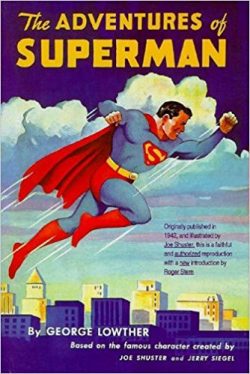
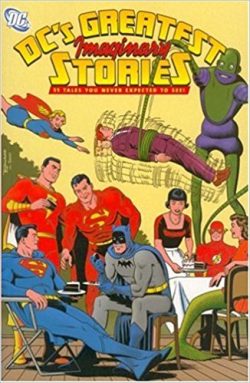
DC’s Greatest Imaginary Stories


By Otto Binder, Bill Finger, Jerry Siegel, John Broome, Leo Dorfman, Edmond Hamilton, Jim Shooter, C.C. Beck, Dick Sprang, Kurt Schaffenberger, Curt Swan, Carmine Infantino, Bob Kane & various (DC Comics)
ISBN: 978-1-4012-0534-8

Alan Moore’s infamous epigram notwithstanding, not all comics tales are “Imaginary Stories.”

When DC Editor Mort Weisinger was expanding the Superman continuity and building the legend, he realised that each new tale was an event that added to a nigh-sacred canon: that what was written and drawn mattered to the readers. But as a big concept guy he wasn’t going to let that aggregated “history” stifle a good idea, nor would he allow his eager yet sophisticated audience to endure clichéd deus ex machina cop-outs to mar the sheer enjoyment of a captivating concept.

The mantra known to every baby-boomer fan was “Not a Dream! Not a Hoax! Not a Robot!” boldly emblazoned on covers depicting scenes that couldn’t possibly be true… even if it was only a comicbook.

Imaginary Stories were conceived as a way of exploring non-continuity plots and scenarios devised at a time when editors believed entertainment trumped consistency and knew that every comic read was somebody’s first …or potentially last.

This jolly little compilation celebrates that period when whimsy and imagination were king and stretches the point by leading with a fanciful tale of the World’s Mightiest Mortal as ‘Captain Marvel and the Atomic War’ (Captain Marvel Adventures #66, October 1946) actually hoaxes the public with a demonstration of how the world could end in the new era of Nuclear Proliferation, courtesy of Otto Binder & CC Beck.

‘The Second Life of Batman’ (Batman #127 October 1959) by Bill Finger, Dick Sprang & Charles Paris doesn’t really fit the strict definition either, but the tale of a device that predicts how Bruce Wayne‘s life would have run if his parents had not been killed is superb and engaging all the same.

‘Mr. and Mrs. Clark (Superman) Kent!’ by Binder and the brilliant Kurt Schaffenberger, was the first tale of an occasional series that began in Superman’s Girlfriend Lois Lane #9 (August 1960); depicting the laughter and tears that might result if the plucky news-hen secretly married the Man of Steel. From an era uncomfortably parochial and patronizing to women, there’s actually plenty of genuine heart and understanding in this tale and a minimum of snide sniping about “silly, empty-headed girls”…

Eventually the concepts became so bold that Imaginary Stories could command book-length status. ‘Lex Luthor, Hero!’ (Superman #149, November 1961) by Jerry Siegel, Curt Swan & Sheldon Moldoff details the mad scientist’s greatest master-plan and ultimate victory in a tale as powerful now as it ever was. In many ways this is what the whole concept was made for…

No prizes for guessing what ‘Jimmy Olsen Marries Supergirl!’ (Superman’s Pal Jimmy Olsen, #57, December 1961) is about, but the story is truly a charming delight, beautifully realized by Siegel, Swan & Stan Kaye.

Once more stretching the point ‘The Origin of Flash’s Masked Identity!’ (The Flash# 128, May 1962) by John Broome, Carmine Infantino & Joe Giella, although highly entertaining, is more an enthusiastic day-dream than alternate reality, and, I suspect, added to bring variety to the mix – as is the intriguing ‘Batman’s New Secret Identity’ (Batman #151, November 1961, by Finger, Bob Kane & Paris).

‘The Amazing Story of Superman-Red and Superman-Blue!’ (Superman #162, July 1963) is possibly the most influential tale of this entire sub-genre. Written by Leo Dorfman, with art from Swan & George Klein, this startling utopian classic was so well-received that decades later it influenced and flavoured the post-Crisis on Infinite Earths Superman continuity for years. The plot involves the Action Ace being divided into two equal wonder men who promptly solve all universal problems and even the love rivalry between Lois Lane and Lana Lang!

The writer of ‘The Three Wives of Superman!’ is currently unknown to us but the ever-excellent Schaffenberger can at least be congratulated for this enchanting tragedy of missed chances that originally saw print in Superman’s Girlfriend Lois Lane #51, from August 1964.

‘The Fantastic Story of Superman’s Sons’ (Superman #166, November 1964) by Edmond Hamilton, Swan & Klein is a solid thriller built on a tragic premise (what if only one of Superman’s children inherited his powers?), and this bright and breezy book closes with the stirring and hard-hitting ‘Superman and Batman… Brothers!’, wherein orphaned Bruce Wayne is adopted by the Kents, but cannot escape a destiny of tragedy and darkness.

Written by Jim Shooter, with art from Swan & Klein for World’s Finest Comics # 172 (cover-dated December 1967) this moody thriller in many ways signalled the end of the carefree days and the beginning of a grittier, more cohesive DC universe for a less whimsical, fan-based audience.

This collection is a glorious slice of fancy, augmented by an informative introduction from columnist Craig Shutt, and bolstered with mini-cover reproductions of many tales that tragically never made it into the collection, but I do have one minor quibble: No other type of tale was more dependent on an eye-catching, conceptually intriguing cover, so why couldn’t those belonging to these collected classics have been included here, too?

Surely, it’s time for a re-issue in either print or eBook format with all those arresting covers included. Yes, it is… and don’t call me Shirley…
© 1946, 1959-1964, 1967, 2005 DC Comics. All Rights Reserved.

Superman: Past and Future


By Jerry Seigel, Bill Finger, Edmond Hamilton, Leo Dorfman, Jim Shooter, Elliot Maggin, Cary Bates, George Papp, John Sikela, Wayne Boring, Al Plastino, Curt Swan, Kurt Schaffenberger, Keith Pollard & various (DC Comics)
ISBN: 978-1-4012-1934-5                  978-1-84856-074-1 (Titan Books UK Edition)

In the aftermath of Crisis on Infinite Earths and its reconstructed DC Universe, time travel – at last for a while – became a Really Big Deal. So, when the Metropolis Marvel did eventually break the fourth dimension, as in the superb Superman: Time and Time Again, the gimmick became as important as the plot and immensely difficult to achieve. But there was an era when all of history and so many implausible futures were just a short and simple spin away…

Superman is the comicbook crusader who started the whole comicbook genre of indomitable costumed champions and, in the eight decades since his debut in June 1938, has probably undertaken every kind of adventure imaginable. With this in mind it’s tempting and very rewarding to gather up whole swathes of his inventory and periodically re-present them in specific themed collections, such as this compelling confection of chronal escapades from a host of superb writers and artists who have contributed to his canon over the years.

The fun begins with a tale from Superboy #85 (December 1960) which reiterated an iron-clad cosmic law of the Silver Age: “History Cannot Be Changed”,

Nevertheless, the Smallville Sensation tragically undertook ‘The Impossible Mission!’ (by Jerry Siegel & George Papp) when he travelled to 1865 to prevent the assassination of Abraham Lincoln, but fate constantly conspired to make events unfold along a predestined course…

A different theory was in play back in September 1947 when the adult Action Ace broke the time barrier for the first time to collect famous signatures for an ailing boy in ‘Autograph, Please!’ (Superman #48, by Siegel & John Sikela), whilst in ‘Rip Van Superman’ (Superman #107, August 1956 by Bill Finger, Wayne Boring & Stan Kaye) an accident placed the hero in a coma, trapping him in a future where he was redundant…

The 1960s were the pinnacle of temporal travel tales with the Man of Tomorrow and his friends nipping forward and back the way you or I (well me, anyway) would pop to the pub. In the brilliantly ingenious ‘Superman Under the Red Sun!’ (Action Comics #300, May 1963 by Edmond Hamilton & Al Plastino) our hero is dispatched to the far, far future where the sun has cooled, and undergoes incredible hardship before brilliantly figuring out a way home.

In ‘Jimmy’s D-Day Adventure!’, the courageous cub reporter ranged back to World War II in search of a bizarre mystery only to end up a trusted member of Hitler’s inner circle, (Superman’s Pal Jimmy Olsen #86 (July 1965, Leo Dorfman, Curt Swan & George Klein) before his Daily Planet colleague almost ripped apart the fabric of reality by nearly becoming Superman’s mum when ‘Lois Lane’s Romance with Jor-El!’ (Superman’s Girlfriend Lois Lane #59; August 1965, by Hamilton & Kurt Schaffenberger) resulted from an ill-considered jaunt to pre-cataclysm Krypton…

One of the boldest experiments of the decade occurred when Hamilton, Swan & Klein introduced us to ‘The Superman of 2965!’ (Superman #181, November 1965) for the first of a series of adventures starring the Man of Steel’s distant descendent. A two-part sequel appeared the following summer in Action Comics #338-339, (June and July 1966) ‘Muto… Monarch of Menace!’ and ‘Muto Versus the Man of Tomorrow!’ and a postscript tale appeared in World’s Finest Comics #166 entitled ‘The Danger of the Deadly Duo!’ teaming that era’s Batman and Superman against Muto and the latest in a long line of Jokers (May 1967 by Jim Shooter, Swan & Klein).

For Superman #295, Elliot Maggin, Curt Swan & Bob Oksner produced ‘Costume, Costume – Who’s got the Costume?’ (January 1976): a neat piece of cross-continuity clean-up that featured a few DC parallel worlds including those of Kamandi (Last Boy on Earth) and the Legion of Super-Heroes.

From June of that same year ‘Superman, 2001!’ – by Maggin, Cary Bates, Swan & Oksner – was an Imaginary Story (a tale removed from regular continuity) featured in the anniversary issue Superman #300, which posited what would have happened if baby Kal-El‘s rocket had landed in the Cold War era of 1976 – an intriguing premise then which looks uncomfortably like the TV series Smallville to my jaded 21st century eyes…

This fascinating collection concludes with ‘The Last Secret Identity’ (from 1983’s DC Comics Presents Annual #2, by Maggin, Keith Pollard, Mike DeCarlo and Tod Smith), which introduced the first incarnation of Superwoman, with a time-travelling historian landing in Metropolis only to become the subject of her own research…

These tales are clever, plot-driven romps far removed from today’s angst-heavy psycho-dramas and unrelentingly oppressive epics. If you’re after some clean-cut, wittily gentle adventure there’s no better place to go – or time…
© 1947, 1956, 1960, 1963, 1965, 1966, 1967, 1976, 1983, 2008 DC Comics. All Rights Reserved.

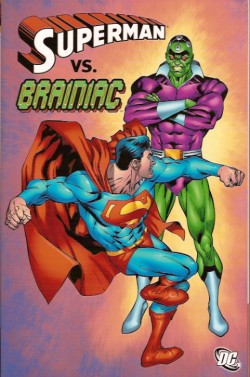
Superman Vs. Brainiac


By Otto Binder, Jerry Seigel, Edmund Hamilton, Cary Bates, Marv Wolfman, John Byrne, Jerry Ordway, Roger Stern, Joe Kelly, Al Plastino, Curt Swan, Kurt Schaffenberger, Gil Kane, George Pérez, Kerry Gammill, German Garcia, Kano & various (DC Comics)
ISBN: 978-1-4012-1940-6

Superman is the comicbook crusader who started the whole masked marvel genre and, in the decades since his debut in 1938, has probably undertaken every species of adventure imaginable. With this in mind it’s inevitable and constantly rewarding to gather up whole swathes of his inventory and periodically re-present them in specific themed collections, such as this calculated confection of cosmic clashes with alien arch-foe Brainiac.

Since his first appearance in Action Comics #242, the alien marauder has been a perennial favourite foe of the Man of Steel, and has remained so even after being subsequently upgraded and retooled many times. Brilliant and relentless, he has been continually refitted over the decades until he now stands as the ultimate artificial nemesis, a chilling remorseless thing of cogs, clockwork and undying computer code.

This superb collection represents appearances both landmark and rare from the many brilliant writers and artists who have contributed to the Kryptonian canon over the years, and with faultless logic opens with that aforementioned and extremely impressive introductory saga.

‘The Super-Duel in Space’ was crafted by Otto Binder & Al Plastino (Action #242, July, 1958) and details how an evil alien scientist attempts to add Metropolis to his collection of miniaturised cities in bottles.

As well as a titanic tussle in its own right, this tale utterly altered the mythology of the Man of Steel by introducing Kandor, an entire city full of Kryptonians who had escaped the planet’s destruction when Brainiac captured and bottled them as part of his vivarium of cultures and civilisations.

Although Superman rescued his fellow survivors, the villain escaped to strike again, and it would be years before the hero could restore his fellow Kryptonian survivors to their true size.

Next is a delicious sharp yarn from Superman’s Girl Friend, Lois Lane#17 (May 1960), scripted by Jerry Siegel and illustrated by the sublime art team of Curt Swan & George Klein. ‘Lana Lang, Superwoman’ has the Man of Tomorrow temporarily imbue both Lana and Lois with superpowers to foil a blackmail/murder plot by the viridian villain, after which novel-length saga ‘The Team of Luthor and Brainiac’ (by Edmund Hamilton, Swan & Klein from Superman #167, February 1964) not only teams the hero’s greatest foes in an uneasy alliance but also reveals for the first time that the alien interloper is actually a malevolent mechanism in humanoid form, designed by the fearsome Computer-Tyrants of planet Colu to infiltrate and all destroy organic races across the universe.

Then there’s a big jump to the end of the 1970s for the next story, an epic 3-part clash which originally appeared in Action Comics #489-491 (November 1978-January 1979), scripted by the hugely undervalued Cary Bates and illustrated by Swan & Frank Chiaramonte.

‘Krypton Dies Again’ finds Superman once more battling Brainiac when the light from the decades-gone explosion of his homeworld finally reaches Earth. The resultant flash supercharges his Kryptonian cells leaving the Man of Steel helpless. ‘No Tomorrow for Superman!’ then sees an increasingly berserk hero unable to cope until joined by Hawkman to finally resolve ‘A Matter of Light and Death!’

In Action Comics #544 (June 1983) both Lex Luthor and Brainiac were given radical makeovers to transform them more apposite menaces for the World’s Greatest Superhero. Marv Wolfman & Gil Kane amped up the computer conqueror’s threat-level with ‘Rebirth!’ as uncanny cosmic forces reshape the humanoid horror into a mechanistic angel of death…

When DC Comics decided to rationalise and reconstruct their continuity with Crisis on Infinite Earths in 1985 they also used the event to regenerate their key properties at the same time. The biggest gun they had was Superman and it’s hard to argue that the change was not before time. The new, back-to-basics Man of Steel was a sensation and members of his decades-old rogues’ gallery were suitably reimagined to match the new, grittier sensibility.

In this continuity ‘The Amazing Brainiac’ (Adventures of Superman #438, March 1988, written by John Byrne & Jerry Ordway, illustrated by Ordway & John Beatty) was Vril Dox: a monolithic disembodied intellect from the planet Colu who slowly inhabits and transmogrifies the body of showbiz mentalist Milton Moses Fine. Eventually, it grows beyond human physical limits in ‘Man and Machine’ (Action Comics #649, January 1990, by Roger Stern, George Pérez, Kerry Gammill & Brett Breeding) to eventually become a time-travelling ball of malignant computer code, reconstructing or co-opting ever-more formidable physical forms in its self-appointed mission to eradicate Superman…

By the time of ‘Sacrifice for Tomorrow’ (Action Comics #763; March 2000, and realised by Joe Kelly, German Garcia, Kano & Mario Alquiza), the fiend has transformed into its 13th iteration and converted Metropolis into an automated City of the Future.

The malware warlord has also learned how to possess human infants – including Lana Lang’s newborn son and Luthor’s daughter Lena…

With a pin-up page of Brainiac 13 by Scott Beatty, Steve Kim & Tommy Yune (culled from Superman: Metropolis Secret Files #1, March 2000) this comprehensive collection of cyber-chillers offers the merest a taste of the monstrous horror Brainiac is capable of but remains a compelling introduction and overview of the undying enemy alien and a superb treat for fans of every vintage.
© 1958, 1960, 1964, 1978, 1979, 1983, 1988, 1990, 2000, 2008 DC Comics. All Rights Reserved.

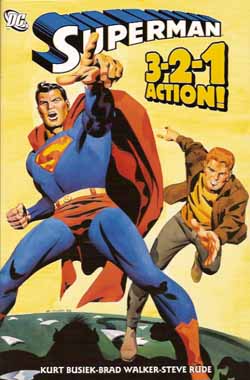
Superman: 3-2-1 Action!


By Kurt Busiek, Mark Evanier, Rick Leonardi, Brad Walker, Steve Rude & various (DC Comics)
ISBN: 978-1-4012-1680-1

There are a number of big cartoon and comics anniversaries this year and probably none bigger than Seigel and Shuster’s magnificent Man of Tomorrow! Here then is a splendid sample of sheer excellence and bucket of fun for Fights ‘n’ Tights fans that spun out of DC’s epic Countdown publishing event. Although nominally another collection of the Action Ace’s adventures, the actual star of the book is Superman’s Pal, Jimmy Olsen with the main body of the volume reprinting Action Comics #852-854 (September-October 2007), which examines the cub reporter’s trials and travails as the effects of the Reality-rending Countdown reach Metropolis.

Without wanting to give too much away (Countdown is collected, readily available and should be read and enjoyed on its own merits) a massive Crisis is affecting all 52 Earths of the newly-reminted DC multiverse.

One inexplicable side-effect of the cosmic kerfuffle is the “fight-or flight” super-power that suddenly afflicts James Bartholomew Olsen, reporter-at-large.

Whenever his life is endangered, sudden inexplicable transformations wrack the kid’s body (and older fans will no doubt be delighted to see the not-so-subtle tributes to such classics of the silver Age as Turtle Boy Olsen, Jimmy the Werewolf, Elastic Lad and The Human Porcupine). This engaging sidebar to Countdown’s Main Event – crafted by scripter Kurt Busiek, penciller Brad Walker and inker John Livesay – also features yet another new take on Titano the Super-Ape, and the return of both superdog Krypto and the Kryptonite Man.

This is preceded by a marvellous updating of Olsen’s “origin” by Busiek, Rick Leonardi & Ande Parks, originally published in Superman #665 (September 2007).

‘Jimmy’ is a charming and adventure-drenched character piece which updates the lad for the millennial generation, whilst still keeping the vitality, verve and pluckiness that carried the boy reporter through seven decades and hundreds of his own adventures within the DCU.

Without doubt though, the absolute prize and gem of this collection comes from the fabulous and much-missed Legends of the DC Universe comicbook of the late 1990s.

Issue #14 to be precise; 55 glorious pages of wonderment from Marv Evanier, Steve Rude & Bill Reinhold from March 1999, presenting a new story crafted from an unused plot Jack Kirby worked up during his tempestuous tenure as Writer-Artist on Superman’s Pal, Jimmy Olsen in the early 1970s.

This story features the hordes of Apokolips, The Evil Factory, The Golden Guardian and enough fun and thrills to take decades off the most jaded fan as investigative journalist Olsen uncovers an Apokolyptian scheme to de-evolve the inhabitants of Metropolis and takes action to thwart the impending catastrophe…

In 1970 Kirby’s run on what had become DC’s most moribund title utterly revolutionised the entire DC universe, introducing Darkseid, the Fourth World, Intergang, The Project (later known as Cadmus) and so much more. Nothing on Earth can induce me to reveal any details of this lost epic (sadly only still available in paperback, and not as an eBook yet) but if you can’t have prime, fresh Kirby, this loving and beautiful addendum to his work is the Very Next Best Thing.

I’m going to be recommending a whole lot of Superman stuff this year and this relatively modern collection is right at the top of that list. Track it down now and learn why you really must…!
© 1999, 2007 DC Comics. All Rights Reserved.

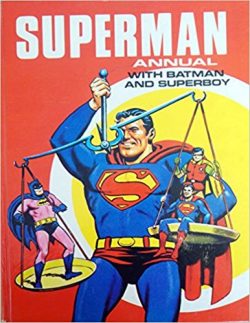
Superman Annual 1969 with Batman and Superboy


By Jerry Seigel, Leo Dorfman, E. Nelson Bridwell, Edmond Hamilton, Jerry Coleman, Al Plastino, Curt Swan, Wayne Boring, George Papp, Jim Mooney, Bob Brown & various (Top Sellers, Ltd by arrangement with the K. G. Murray Publishing Co.)
No ISBN – ASIN: B00389XM8C

Before DC and other American publishers began exporting comicbooks directly into the UK in 1959, our exposure to their unique brand of fantasy fun came from licensed reprints. British publishers/printers like Len Miller, Alan Class and Top Sellers bought material from the USA – and occasionally Canada – to fill 68-page monochrome anthologies – many of which recycled the same stories for decades.

Less common were strangely coloured pamphlets produced by Australian outfit K. G. Murray: exported to the UK in a rather sporadic manner. The company also produced sturdy Annuals which had a huge impact on my earliest years (I suspect my abiding adulation of monochrome artwork stems from seeing supreme stylists like Curt Swan, Carmine Infantino, Gil Kane and Murphy Anderson strut their stuff uncluttered by flat colour…).

In Britain we began seeing hardcover Superman Annuals in 1950 and Batman Annuals in 1960. Since then a number of publishers have carried on the tradition. This particular tome emerged at the close of the Batman TV phenomenon which briefly turned the entire planet Camp-Crazed and Bat-Manic; offering a delightfully eclectic mix of material designed to cater to young eyes and broad tastes.

This collection – proudly proclaiming second billing for Batman and Superboy – is printed in a quirky mix of monochrome, dual-hued and full-colour pages which made Christmas books such bizarrely beloved treats and opens with ‘Clark Kent’s Great Superman Hunt’ by Leo Dorfman & Al Plastino and originally a back-up in Superman #180 (October 1965).

Here, to the disgust of his friends, the Daily Planet star reporter seemingly exhorts the public to come forward with information to unmask the Man of Steel. Of course, there’s a deeper scheme in play here…

‘Prison for Heroes’ and ‘The Revenge of Superman’ come from World’s Finest Comics #145 (November 1964): an enthralling and dramatic thriller where Batman is hypnotically pressganged to an alien internment citadel: not as a cell-mate for Superman and other interplanetary champions, but as their sadistic jailer…

Edmond Hamilton, Curt Swan & George Klein shine in this potent yarn, delivering a superb team-up tale to excite fans of all ages.

Switching from full-colour to black-&-magenta, ‘You Too can be a Super Artist’ (Superman #211, November 1968) sees Frank Robbins, Ross Andru & Mike Esposito offer advice and starter tips on depicting the Action Ace, after which ‘Batman Kwizzlers’ test your general knowledge and short strip ‘The Superboy Legend: Superboy’s Secret Hideaways’ (by E. Nelson Bridwell, Bob Brown & Wally Wood from Superboy # 161, December 1969) reveals the secret treasures stored in the Boy of Steel’s Smallville home.

Drastically modified and abridged from Superboy # 147 (May-June 1968 and illustrated by George Papp), ‘The Origin and Powers of the Legion of Super Heroes’ offers a pictorial checklist of the Future’s greatest champions, supplemented by Bridwell’s prose history lesson ‘The Lore of the Legion’.

Next comes some participation events beginning with ‘Superman’s Christmas Quiz: Christmas in Many Lands’ (most likely written by Jack Schiff and definitely illustrated by Ruben Moreira from many different contemporary venues) and ‘Superman… and his Space Zoo!’ puzzles.

Then, again truncated and culled from many separate tales, ‘The Origin of the Bizarro World’ takes clips drawn by Wayne Boring and John Forte to precis the whacky backwards super-clowns; ‘Metropolis Mailbag’ answers readers’ questions about all things Kryptonian and the activity section closes with brain-busting conundrums in ‘The Batman Whirly-Word Game’.

Full colour comics action resumes with ‘The Spell of the Shandu Clock’ (Superman #126, January 1959: by Jerry Coleman, Boring & Stan Kaye) providing spooky chills, supposedly supernatural chills and devious ploys to outwit a malevolent criminal mastermind.

From Superboy #109 (December 1963) Jerry Seigel & Papp revealed how a timid Earth orphan is transported to another world to become planetary champion ‘The Super-Youth of Brozz’ after which ‘The Sweetheart Superman Forgot’ by Seigel & Plastino (Superman #165, November 1963) aspires to the heady heights of pure melodrama as the Man of Tomorrow loses his powers, memories, and the use of his legs before loving and losing a girl who only wants him for himself.

In a most poignant moment, the hero recovers his lost gifts and faculties and returns to his old life with no notion of what he’s lost and who waits for him forever alone…

Romance is also on the cards in Dorfman & Mooney’s ‘Zigi and Zagi’s Trap for Superman!’ (Action Comics #316. September 1964) wherein juvenile alien delinquents lure the hero to their homeworld and set him up romantically with their spinster aunt Zyra…

With their eclectic selection of tales, Annuals like this one introduced generations of kids to the wild wonderment of the American comics experience and to readers of a certain age remain a captivating, irresistible lure to more halcyon times and climes.
© National Periodical Publications Inc. New York.

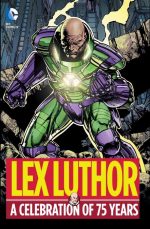
Lex Luthor: A Celebration of 75 Years


By Jerry Siegel & Joe Shuster, Bill Finger, Edmund Hamilton, Len Wein, Cary Bates, Elliot S. Maggin, John Byrne, Roger Stern, Grant Morrison, Greg Rucka, Brian Azzarello, Paul Cornell, Geoff Johns, John Sikela, Wayne Boring, Curt Swan, Jackson Guice, Howard Porter, Matthew Clark, Lee Bermejo, Frank Quitely, Pete Woods, Doug Mahnke & various (DC Comics)
ISBN: 978-1-4012-6207-5

Win’s Christmas Gift Recommendation: A Sound Reason to Keep up with Science Classes as well as Reading… 9/10

Closely paralleling the evolution of the groundbreaking Man of Steel, the exploits of the mercurial Lex Luthor are a vital aspect of comics’ very fabric. In whatever era you choose, the ultimate mad scientist epitomises the eternal feud between Brains and Brawn and over those decades has become the Man of Steel’s true antithesis and nemesis as well as an ideal perfect indicator of what different generations deem evil.

This stunning compilation – part of a dedicated series introducing and exploiting the comics pedigree of venerable DC icons – is available in hardback Trade Paperback and digital formats and offers a sequence of snapshots detailing how Luthor has evolved in his never-ending battle with Superman.

The groundbreaking appearances selected are preceded here by a brief critical analysis of the significant stages in the villain’s development, beginning with ‘Part I: 1940-1969 The Making of a Mastermind’. After history and deconstruction comes sinister adventure as the grim genius debuted in ‘Europe at War Part 2’ (by Jerry Siegel & Joe Shuster from Action Comics #23, April 1940).

Although not included here Action #22 had loudly declared ‘Europe at War’ – a tense and thinly-disguised call to arms for the still neutral USA – and as the Man of Tomorrow tried to stem the bloodshed the tale became a continued story (almost unheard of in those early days of funny-book publishing).

Spectacularly concluding in #23, Clark Kent‘s European investigations revealed a red-headed fiend employing outlandish science to foment war for profit and intent on conquering the survivors as a modern-day Genghis Khan. Of course, the Man of Steel strenuously objected…

Next comes ‘The Challenge of Luthor’ from Superman #4 (Spring/March1940) and created at almost the same time: a landmark clash with the rogue scientist who, back then, was still a roguish red-headed menace with a bald and pudgy henchman. Somehow in the heat of burgeoning deadlines, master got confused with servant in later adventures and the public perception of the villain irrevocably crystalized as the sinister slap-headed super-threat we know today…

This story – by Siegel & Shuster – involves an earthquake machine and ends with Luthor exhausting his entire arsenal of death-dealing devices in attempts to destroy his enemy with no negligible effect…

From Superman #17 (July 1942), ‘When Titans Clash’, by Siegel & John Sikela, depicts how the burly bald bandit uses a mystic powerstone to survive his justly deserved execution and steals Superman’s abilities. However, the Action Ace stills maintains his wily intellect and outsmarts his titanically-empowered foe…

Jumping ahead ten years, ‘Superman’s Super Hold-Up’ World’s Finest Comics #59 (July 1952, by Bill Finger, Wayne Boring & Stan Kaye) is a supremely typical duel of wits in which the Einstein of Crime renders the Metropolis Marvel helpless with the application of a devilish height- and pressure-sensitive mega explosive device – but only for a little while…

World’s Finest Comics #88 (June 1957) provides ‘Superman and Batman’s Greatest Foes!’ (by Edmond Hamilton, Dick Sprang & Stan Kaye) which finds “reformed” master criminals Lex and the Joker ostensibly setting up in the commercial robot business – which nobody really believed – and as it happens quite correctly…

As the mythology grew and Luthor became a crucial component of Superman’s story, the bad boy was retroactively introduced into the hero’s childhood. ‘How Luthor Met Superboy!’ (from Adventure Comics #271, April 1960 by Siegel & Al Plastino) details how Superboy and the budding genius were pals until a lab accident burned off the human’s hair and in his prideful fury Lex blamed the Kryptonian and swore revenge…

In ‘The Conquest of Superman’ (Action Comics #277, June 1961 by Bill Finger, Curt Swan & John Forte) the authorities paroled Lex to help with an imminent crisis only to have the double-dealer escape as soon as the problem was fixed. By the time Superman returned to Earth, Luthor was ready for him…

Superman #164, October 1963, featured ‘The Showdown between Luthor and Superman’ (by Hamilton, Swan & George Klein): the ultimate Silver Age confrontation between the Caped Kryptonian and his greatest foe, pitting the lifelong foes in an unforgettable confrontation on the post-apocalyptic planet Lexor – a lost world of forgotten science and fantastic beasts – which resulted in ‘The Super-Duel!’ and displayed a whole new side to Superman’s previously two-dimensional arch-enemy.

Part II: 1970-1986 Luthor Unleashed previews how a more sophisticated readership demanded greater depth in their reading matter and creators responded by adding a human dimension to the avaricious mad scientist, as seen in ‘The Man Who Murdered the Earth’ from Superman #248 (February 1972 by Len Wein, Swan & Murphy Anderson).

Here Luthor dictates his final testament after creating a Galactic Golem to destroy his sworn enemy, and ponders how his obsession caused the destruction of Earth…

For the 45th anniversary of Action Comics Superman’s two greatest enemies – the other being Brainiac – were radically re-imagined for an increasingly harder, harsher world. ‘Luthor Unleashed’ in issue #544 (June 1983, by Cary Bates Swan & Murphy Anderson) saw the eternal duel between Lex and Superman lead to the destruction of Lexor and death of Luthor’s new family after the techno-terror once again chose vengeance over love. Crushed by guilt and hatred, the maniacal genius reinvents himself as an implacable human engine of terror and destruction…

Elliot S. Maggin, Swan & Al Williamson then offer a glimpse into the other motivating force in Luthor’s life by exposing ‘The Einstein Connection’ (Superman #416, February 1986) wherein a trawl through the outlaw’s life reveals a hidden link to the greatest physicist in history…

The Silver Age of comicbooks had utterly revolutionised a flagging medium, bringing a modicum of sophistication to the returning sub-genre of masked mystery men. However, after decades of cosy wonderment, Crisis on Infinite Earths transformed the entire DC Universe and led to the creation of a harder, tougher Superman. John Byrne’s radical re-imagining was most potently manifested in Luthor, who morphed from brilliant, obsessed bandit to ruthless billionaire capitalist… as seen in the introduction to Part III: 1986-2000 Captain of Industry…

The tension begins with ‘The Secret Revealed’ (Superman #2, February 1987 by John Byrne, Terry Austin & Keith Williams) when the relentless tycoon kidnaps everyone Superman loves to learn his secret and after collating all the data obtained by torture and other means jumps to the most mistaken conclusion of his misbegotten life…

‘Metropolis – 900 Miles’ (Superman volume 2 #9, September1987 by Byrne, & Karl Kesel) then explores the sordid cruelty of the oligarch as he cruelly torments a pretty waitress with a loathsome offer and promises of a new life…

‘Talking Heads’ appeared in Action Comics #678 (June 1992, by Roger Stern, Jackson Guice & Ande Parks) set after Luthor – riddled with cancer from constantly wearing a green Kryptonite ring to keep Superman at arms’ length – has secretly returned to Metropolis as his own son in a hastily cloned new young and handsome body. Acting as a philanthropist and with Supergirl as his girlfriend/arm candy, young Luthor has everybody fooled, Sadly, everything looks like falling apart when rogue geneticist Dabney Donovan is arrested and threatens to tell an incredible secret he knows about the richest man in town…

‘Hostile Takeover’ comes from JLA #11 1997) wherein Grant Morrison, Howard Porter & John Dell opened interstellar saga ‘Rock of Ages’ with the Justice League facing a newly-assembled, corporately-inspired Injustice Gang organised by Lex and run on his ruthlessly efficient commercial business model.

Superman, Batman, Wonder Woman, Martian Manhunter, Flash, Green Lantern and Aquaman are targeted by a coalition of arch-enemies comprising Chairman-of-the-Board Lex, the Joker, Circe, Mirror Master, Ocean Master and Doctor Light with ghastly doppelgangers of the World’s Greatest Heroes raining destruction down all over the globe.

Even with new members Aztek and second generation Green Arrow Connor Hawke on board, the enemy are running the heroes ragged, but the stakes change radically when telepath J’onn J’onzz detects an extinction-level entity heading to Earth from deep space…

The action and tension intensify when the cabal press their advantage whilst New God Metron materialises, warning the JLA that the end of everything is approaching.

As ever, these snippets of a greater saga are more frustrating than fulfilling, so be prepared to hunt down the complete saga. You won’t regret it…

A true Teflon businessman, Lex ended the millennium running for President and Part IV: 2000-Present 21st Century Man follow a prose appraisal with ‘The Why’ from President Luthor Secret Files and Origins #1 (2000, by Greg Rucka, Matthew Clark & Ray Snyder). Here the blueprint to power and road to the White House is deconstructed, picturing the daily frustrations and provocations which inspired the nefarious oligarch to throw his hat into the political ring…

The next (frustratingly incomplete) snippet comes from a miniseries where the antagonist was the star. ‘Lex Luthor Man of Steel Part 3’ by Brian Azzarello & Lee Bermejo offers a dark and brooding look into the heart and soul of Superman’s ultimate and eternal foe: adding gravitas to villainy by explaining Lex’s actions in terms of his belief that the heroic Kryptonian is a real and permanent danger to the spirit of humanity.

Luthor – still believed by the world at large to be nothing more than a sharp and philanthropic industrial mogul – allows us a peek into his psyche: viewing the business and social (not to say criminal) machinations undertaken to get a monolithic skyscraper built in Metropolis. The necessary depths sunk to whilst achieving this ambition, and Lex’s manipulating Superman into clashing with Batman, are powerful metaphors, but the semi-philosophical mutterings – so very reminiscent of Ayn Rand’s The Fountainhead – although flavoursome, don’t really add anything to Luthor’s character and even serve to dilute much of the pure evil force of his character.

Flawed characters truly make more believable reading, especially in today’s cynical and sophisticated world, but such renovations shouldn’t be undertaken at the expense of the character’s heart. At the end Luthor is again defeated: diminished without travail and nothing has been risked, won or lost. The order restored is of an unsatisfactory and unstable kind, and our look into the villain’s soul has made him smaller, not more understandable.

Lee Bermejo’s art, however, is astoundingly lovely and fans of drawing should consider buying this simply to stare in wonder at the pages of beauty and power that he’s produced here. Or read the entire story in its own collected edition…

Rather more comprehensive and satisfying is ‘The Gospel According to Lex Luthor’ as first seen in All-Star Superman #5. Crafted by Morrison, Frank Quitely & Jamie Grant from September 2006, here an unrepentant Luthor on Death Row grants Clark Kent the interview of his career and scoop of a lifetime, after which ‘The Black Ring Part 5’ (Action Comics #894, December 2010 by Paul Cornell & Pete Woods) confirms the genius’ personal world view as Death of the Endless stops the universe just so she can have a little chat with Lex and see what he’s really like…

This epic trawl through the villain’s published life concludes with a startling tale from Justice League volume 2, #31 (August 2014) as the post-Flashpoint, re-rebooted New 52 DCU again remade Lex into a villain for the latest generation: brilliant, super-rich, conflicted and hungry for public acclaim and approval. In ‘Injustice League Part 2: Power Players’ by Geoff Johns, Doug Mahnke, Keith Champagne & Christian Alamy, bad-guy Luthor has helped save the world from extradimensional invaders and now wants to be a hero. His solution is to make the real superheroes invite him to join the Justice League, and that can be accomplished by ferreting out Batman’s secret identity and blackmailing the Dark Knight into championing his admission…

Lex Luthor is arguably the most recognizable villain in comics and can justifiably claim that title in whatever era you choose to concentrate on; goggle-eyed Golden Age, sanitised Silver Age or malignant modern and Post-Modern milieus. This book captures just a fraction of all those superb stories and offers a delicious peek into the dark, unhealthy side of rivalry and competition…

This monolithic testament to the inestimable value of a good bad-guy is a true delight for fans of all ages and vintage.
© 1940, 1942, 1952, 1954, 1957, 1960, 1961, 1963, 1972, 1983, 1986, 1987, 1992, 1997, 2001, 2005, 2006, 2007, 2010, 2014, 2015 DC Comics. All Rights Reserved.
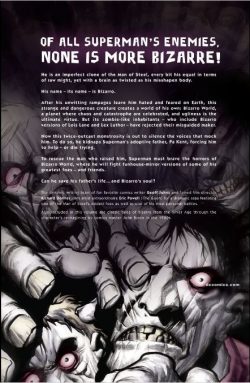
Superman vs. Mongul


By Len Wein, Paul Levitz, Alan Moore, Jim Starlin, Curt Swan, Dave Gibbons & various (DC Comics)
ISBN: 978-1-4012-4256-5

Almost 80 years ago Superman jump-started the entire modern era of fantasy heroes: indomitable, infallible, unconquerable, outlandish and flamboyant. He also saved a foundering proto-industry by personifying an entirely new narrative construct – the Super Hero.

Since June 1938 The Man of Tomorrow has grown into a mighty presence in all aspects of the arts, culture and commerce, even as his natal comicbook universe organically grew and expanded to today’s heady heights.

Superman is comics’ outstanding icon: the hero who effectively started a whole genre and, in the decades since his nativity, one who has survived every kind of menace imaginable. With this in mind, it’s tempting – and usually very rewarding – to gather up whole swathes of his prodigious back-catalogue and re-present them in specifically-themed collections, such as this fun frolic chronicling the genesis of an awesome antagonist designed to be the hero’s modern antithesis: a monstrous militaristic madman with greater power, better resources and far more sinister values and motivations…

As initially envisioned, Mongul the Merciless was an alien tyrant and extinction-level threat in the manner of Jack Kirby’s Darkseid and Jim Starlin’s own Thanos: an unrepentantly evil intelligent monster beyond the scope of everyday costumed crusaders. He debuted in DC Comics Presents #27 (November 1980). The title was one wherein the Man of Steel would star beside a different company character (mostly heroes but not always…) and the other champion involved here was J’onn J’onzz, Manhunter from Mars.

Unlike companion team-up vehicle The Brave and the Bold – which boasted a regular artist for most of its Batman co-starring run – a veritable merry-go-round of creative talent contributed to DCCP. Issue #27 proved the value of such tactics when Len Wein, Jim Starlin, Dick Giordano & Frank McLaughlin (as inking collective “Quickdraw”) collaboratively changed the shape of Superman mythology by introducing seemingly unstoppable marauder Mongul in ‘The Key that Unlocked Chaos!’

The overwhelmingly powerful deposed despot of a far-away planet kidnapped Lois Lane, Jimmy Olsen and Daily Planet gadfly Steve Lombard to force Superman to attack his former JLA comrade. This was because the Martian had already successfully driven off the rapacious fiend when Mongul attacked New Mars in search of an artefact granting its possessor control of the universe’s most terrible weapon…

The Yellow Devil wanted the Metropolis Marvel to get it for him and, although the resulting planet-shaking clash between old allies did result in the salvation of his friends, Superman subsequently failed to keep the coveted crystal key out of the villain’s gigantic hands…

The story continued in #28 (December 1980) as Supergirl united with her Kryptonian cousin to scour the cosmos for the Sallow Supremacist and the ancient doom-weapon ‘Warworld!’ (Wein, Starlin & Romeo Tanghal) that he now controlled.

Unfortunately, once they found him and it, Mongul unleashed all its devastating resources to destroy his annoying adversaries and in the resultant cataclysm the mobile gun-planet was demolished. The resultant detonation also blasted Kara Zor-El out of existence…

(Although not included in this tome, that triptych concluded a month later as Ghostly Guardian The Spectre helped retrieve his cousin from Where No Superman Has Gone Before! At least now you won’t wonder or worry…)

Back here and now the cosmic clashes continue with ‘A Universe Torn Asunder!’ (also known as ‘Whatever Happened to Starman?‘) by Paul Levitz & Starlin: another system-shaking saga first seen in DC Comics Presents #36 (August 1981).

Here the Great Dictator resurfaces, having turned his nefarious attention to Prince Gavyn, ruler of a distant sidereal empire as well as a covert stellar powered crusader, rather confusingly employing the title Starman for his secret superhero shenanigans.

After snatching the monarch’s beloved fiancé Merria, Mongul tries to take over the masked hero’s interplanetary empire but is thwarted once more by the timely arrival of the Man of Steel and the vengeful fury of the cosmic crusader he has challenged…

You can’t keep a good citrine psychopath down, however, and the brutal beast resurfaced in DCCP #43 (March 1982) to challenge both Superman and the Legion of Super-Heroes ‘In Final Battle’ (Levitz, Curt Swan & Dave Hunt). Hungry for revenge, Mongul again steals a universal ultimate weapon – this time a Sun-Eater (the clue is in the name) – and points it in the direction of Sol. He never expected the cavalry to arrive from the 30th century though… The all-out, all-action exploits then conclude with a modern masterpiece by Alan Moore & Dave Gibbons who produced one of the last truly memorable Superman stories before the cosmic upheaval and reboot triggered by the Crisis on Infinite Earths publishing event.

‘For the Man Who Has Everything’ (Superman Annual #11) sees despicable deceptive Mongul cunningly invade the Fortress of Solitude to ambush the Action Ace with the most insidious of weapons on his birthday.

A valiant last-minute intervention by Batman, second Robin Jason Todd and Wonder Woman are barely enough to turn the tide…

Moreover, when the Man of Steel recognises the culprit for the emotional hell he has barely survived his furious response is terrifying to behold…

Essentially a blockbusting battle royale, this tale carries plenty of intellectual weight too, showing a dystopian Krypton for the first time: a view that the fabulous lost world might not have been a utopian super-scientific paradise after all and one that has become a given for most later interpretations…

Also including an illustrated fact-file of Mongul (from Who’s Who #16, June 1986) and a cover gallery by Starlin, Brian Bolland & Gibbons, this is an incomprehensibly enthralling collection of Fights ‘n’ Tights feasts: a pure package of superhero magnificence: fun-filled, action-packed, absolutely addictive and utterly irresistible.
© 1980, 1981, 1982, 1985, 1986, 2013 DC Comics. All Rights Reserved.
Supergirl: The Silver Age volume 1


By Otto Binder, Al Plastino, Jerry Seigel, Jim Mooney & various (DC Comics)
ISBN: 978-1-4012-7292-0

Superhero comics seldom do sweet or charming anymore. Modern narrative focus concentrates on turmoil, angst and spectacle and although there’s nothing intrinsically wrong with that, sometimes the palate just craves a different flavour.

Such was not always the case as this superb trade paperback compendium – spanning Action Comics #252-284 (May 1959 to January 1962) and also available in eBook editions – of the early career of Superman’s cousin Kara Zor-El of Argo City joyously proves.

Also included and kicking off proceedings is the delightful DC House Ad advertising the imminent arrival of a new Girl of Steel. Sadly missing, however, is the try-out story The Three Magic Wishes’ – written by Otto Binder and illustrated by Dick Sprang & Stan Kaye from Superman #123, August 1958 – which told how a mystic totem briefly conjured up a young girl with super powers as one of three wishes made by Jimmy Olsen. Such was the reaction to the plucky heroine that within a year a new version was introduced to the Superman Family…

Here, then, the drama commences with ‘The Supergirl from Krypton!’, the third story from Action Comics #252 introducing Superman’s cousin Kara, who had been born on a city-sized fragment of Krypton, which was somehow hurled intact into space when the planet exploded.

Eventually Argo City turned to Kryptonite like the rest of the giant world’s debris, and Kara’s dying parents, having observed Earth through their scanners and scopes, sent their daughter to safety as they perished.

Landing on Earth, she meets Superman who creates the cover-identity of Linda Lee whilst hiding her in an orphanage in small town Midvale allowing her to learn about her new world and powers in secrecy and safety. This groundbreaking tale was also written by Binder and drawn by the hugely talented Al Plastino.

Once the formula was established Supergirl became a regular feature in Action Comics (starting with #253), a residency that lasted until 1969 when she graduated to the lead spot in Adventure Comics. In ‘The Secret of the Super-Orphan!’, at her new orphanage home she makes the acquaintance of fellow orphan Dick Wilson (eventually Malverne) who would become her personal gadfly (much as the early Lois Lane was to Superman), a recurring romantic entanglement who suspects she has a secret. As a young girl in far less egalitarian times, romance featured heavily in our neophyte star’s thoughts and she frequently met other potential boyfriends: including alien heroes and even a Merboy from Atlantis.

Many of the early tales also involved keeping her presence concealed, even when performing super-feats. Jim Mooney was selected as regular artist and Binder remained as chief scripter for most of the early run.

In Action #254’s ‘Supergirl’s Foster-Parents!’, sees an unscrupulous couple of con-artists easily foiled, after which Linda meets a mystery DC hero when ‘Supergirl Visits the 21st Century!’ in #255. Her secret is almost exposed in ‘The Great Supergirl Mirage!’ before she grants ‘The Three Magic Wishes!’ to despondent youngsters and teaches a mean bully a much-needed lesson.

The Man of Steel often came off rather poorly when dealing with women in those less enlightened days, always under the guise of “teaching a much-needed lesson” or “testing” someone. When she plays with Krypto, ignoring his secrecy decree, cousin Kal-El banishes the lonely young heroine to an asteroid in ‘Supergirl’s Farewell to Earth!’ but of course there’s paternalistic method in the madness…

‘The Cave-Girl of Steel!’ then sees her voyage to the ancient past and become a legend of the Stone Age before Action #260 finds her transformed by the mystical Fountain of Youth into ‘The Girl Superbaby!’

The next tale introduced feline fan-favourite Streaky the Super-Cat in ‘Supergirl’s Super Pet!’ after which ‘Supergirl’s Greatest Victory!’ delivers a salutary lesson in humility to the Girl of Steel. Binder moved on after scripting ‘Supergirl’s Darkest Day!’ in which the Maid of Might rescues an alien prince, after which Jerry Siegel took over the storytelling as ‘Supergirl Gets Adopted!’: a traumatic and sentimental tale which only ends with the lonely lass back at Midvale orphanage.

I’ve restrained myself so please do the same when I say that the next adventure isn’t what you think. ‘When Supergirl Revealed Herself! (Siegel & Mooney from Action#265) is another story about nearly finding a family, after which Streaky playfully returns in ‘The World’s Mightiest Cat!’

Supergirl encounters fantastic fellow super-kids in Action #267’s ‘The Three Super-Heroes!‘ but narrowly fails to qualify for the Legion of Super Heroes through the cruellest quirk of fate. Picking herself up she then exposes ‘The Mystery Supergirl!’ before Siegel & Mooney introduce Mer-boy Jerro who becomes ‘Supergirl’s First Romance!’

‘Supergirl’s Busiest Day!’ is packed with cameos from Batman and Robin, Krypto and Lori Lemaris all celebrating a very special occasion, after which Streaky makes another bombastic appearance as the wonder girl builds ‘Supergirl’s Fortress of Solitude!’.

Otto Binder wrote ‘The Second Supergirl!’, an alternate world tale that was too big for one issue. A sequel, ‘The Supergirl of Two Worlds!’ appeared in Action #273 – as did a novel piece of market research. ‘Pick a New Hairstyle for Linda (Supergirl) Lee!’ involved eager readers in the actual physical appearance of their heroine and gave editors some valuable input into who was actually reading the series…

Siegel & Mooney then soundly demonstrate the DC dictum that history cannot be changed in ‘Supergirl’s Three Time Trips!’ before ‘Ma and Pa Kent Adopt Supergirl!’ offers a truly nightmarish scenario, rapidly followed by a return visit to the Legion of Super Heroes in ‘Supergirl’s Three Super Girl-Friends!’, whilst Action #277 featured an animal epic in ‘The Battle of the Super-Pets!’

The next five tales in this volume form an extended saga taking the Girl of Steel in totally new directions. On the eve of Superman announcing her existence to the world, Supergirl loses her powers and – resigned to a normal life – is adopted by the childless Fred and Edna Danvers. Tragically it’s all a deadly plot by wicked Lesla-Lar, Kara’s identical double from the Bottle City of Kandor. This evil genius plans to replace Supergirl and conquer the Earth. This mini-epic – ‘The Unknown Supergirl!’, ‘Supergirl’s Secret Enemy!’, ‘Trapped in Kandor!’, ‘The Secret of the Time-Barrier!’ and (following the results of the Hair Style competition) ‘The Supergirl of Tomorrow!’ ran in Action #278-282 and solidly repositioned the character for a more positive, effective and fully public role in the DC universe. The epic also hinted of a more dramatic and less paternalistic, parochial and even sexist future for the most powerful girl in the world, over the months to come…

The young heroine still in very much a student-in-training, her very existence kept secret from the general public and living with adoptive parents who are completely unaware that the orphan they have recently adopted is a Kryptonian super-being.

The accent on these stories generally revolves around problem-solving, identity-saving and loneliness, with both good taste and the Comics Code ensuring readers weren’t traumatised by unsavoury or excessively violent tales. Plots akin to situation comedies often pertained, as in ‘The Six Red “K” Perils of Supergirl!’

Peculiar transformations were a mainstay of 1960s comics, and although a post-modern interpretation might discern some metaphor for puberty or girls “becoming” women, I rather suspect the true answer can be found in author Seigel’s love of comedy and an editorial belief that fighting was simply unladylike.

Red Kryptonite, a cosmically-altered isotope of the radioactive element left when Krypton exploded, caused temporary physical and sometimes mental mutations in the survivors of that doomed world and was a godsend to writers in need of a challenging visual element when writing characters with the power to drop-kick planets…

Here the wonder-stuff generates a circus of horrors, transforming Supergirl into a werewolf, shrinking her to microscopic size and making her fat (I’m not going to say a single bloody word…).

The drama continues and concludes – like this initial Silver Age compilation – with the next instalment ‘The Strange Bodies of Supergirl!’ wherein Linda Lee Danvers’ travails escalate after she grows a second head, gains death-ray vision (ostensibly!) and morphs into a mermaid. This daffy holdover to simpler times presaged a big change in the Maid of Might’s status but that’s a volume for another day…

Throughout her formative years Kara of Krypton underwent more changes than most of her confreres had in twenty years, as editors sought to find a niche the buying public could resonate with, but for all that, these stories remain exciting, ingenious and utterly bemusing.

Possibly the very last time a female super-character’s sexual allure wasn’t equated to sales potential and freely and gratuitously exploited, these tales are a link and window to a far less crass time and display one of the few truly strong and resilient female characters parents can still happily share with even their youngest children.
© 1959, 1960, 1961, 1962, 2017 DC Comics. All Rights Reserved.