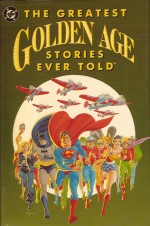
The Greatest Golden Age Stories Ever Told


By many & various (DC Comics)
ISBN: 0-932289-57-9

When the very concept of high priced graphic novels was just being tested in the 1990s DC Comics produced a line of glorious hardback compilations spotlighting star characters and celebrating standout stories from the company’s illustrious and varied history decade by decade. They even branched out into themed collections which shaped the output of the industry to this day, such as this fabulous congregation of yarns – and even ads – that epitomised the verve and sheer exuberance of the most important period in American comics history.

Edited by Mike Gold, with associates Brian Augustyn, Robert Greenberger and Mark Waid, this splendid tome opens with a ‘One Man’s Gold is Another Man’s Pyrite’ – a foreword by Golden Age champion Roy Thomas – and also includes the essay ‘Roots of Magic’ by Gold, but fascinating and informative as those features are, the real literary largesse is to be found in the 22 stories and five stunningly enticing house ads and single page editorial features which no true fan can see without experiencing ineffable yearning…

The vintage thrills and spills commence with a spectacular Joe Simon & Jack Kirby Boy Commandos romp from Detective Comics #69 (November 1942). ‘The Siege of Krovka’ found the underage warriors battling Nazis beside desperate Russian villagers determined to make the invaders pay for every frozen inch of Soviet soil in a blockbusting 12 page masterpiece of patriotic fervour as only the Golden Age’s greatest creative team could craft.

A classic and much-beloved Caped Crusaders caper follows: ‘While the City Sleeps’ from Batman #30 (September 1945) by Bill Finger & Dick Sprang, wherein the Dynamic Duo prowl Gotham long after dark, seeking to keep a first-time burglar from a life of ruinous crime – a genuine masterpiece of the socially aware, even-handed redemptive era where theft was split into greed and – all too often – necessity…

From Flash Comics #4 (April 1940) comes the splendidly barbarous Hawkman thriller ‘The Thought Terror’ by Gardner Fox & Sheldon Moldoff wherein the Winged Warrior and reincarnated Egyptian Prince clashed with a sinister mesmerist enslaving the city’s wealthy citizens whilst Plastic Man #21 (January 1950) provided the absurdist and hilarious horror-adventure ‘Where is Amorpho?’ as the stretchable Sleuth faced an alien shape-shifter with a voracious and potentially lethal appetite…

Superboy: Give Your Town a Present (1949) is a public service announcement page of the sort continually running through comicbooks of the period, courtesy of Jack Schiff & Win Mortimer and is followed by the debut appearance of one the era’s most impressive “lost treasures”. ‘The Story of Wildcat’ comes from Sensation Comics #1 (January 1942) which is best remembered for the series debut of Wonder Woman. In this classy tale of a framed boxer who clears his name by donning a feline mask and costume, Finger & Irwin Hasen captured everything which made for perfect rollercoaster action adventure.

Black Canary started as a sexy criminal foil in the Johnny Thunder strip before taking over his spot in Flash Comics. ‘The Riddle of the Topaz Brooch’ by Robert Kanigher & Carmine Infantino from #96 (June 1948) is a perfect example of the heady blend of private eye mystery and all-action hi-jinks which increasingly typified post-war comics.

After a beguiling House Ad for ‘The Big Seven!’ (Action, Flash, More Fun, Star Spangled, Detective, All-American and Adventure Comics for October 1941), an uncredited Kid Eternity yarn illustrated by Mac Raboy introduces deadly art thief ‘The Count’ (Kid Eternity #3, Fall 1946) before Sheldon Mayer provides a superbly whacky selection of comedy strips featuring the tribulations of Scribbly: Midget Cartoonist (in actuality a little kid with a big future and lots of pencils) from All-American Comics #6 September 1939.

The original Green Lantern battled his most nefarious foe in ‘The Icicle Goes South’ (All-American Comics #92, December 1947) a spectacular duel choreographed by Kanigher and Alex Toth after which The Sandman tackled ‘The Pawn Broker’ in a fascinating detective mystery by Fox & Crieg Flessel from Adventure Comics #51 (June 1940) and Jay Garret, the first super-speeding Flash, helped professional gambler Deuces Wild survive ‘The Rise and Fall of Norman Empire’ a captivating history of crime and punishment by Fox & E.E. Hibbard, first seen in All Flash Comics #14 Spring 1944.

Jack Burnley’s Starman was always a magnificently illustrated strip and with Alfred Bester scripting ‘The Menace of the Invisible Raiders’ (Adventure Comics #67, October 1941) this example is easily one of the most thrilling tales of the run – if not the entire decade – introducing eerily impressive villain The Mist to an awe-struck world.

Schiff & George Papp produced institutional ad ‘Green Arrow and the Red Feather Kid’ in 1949 to promote Community Chest contributions, followed here by a fabulously fearsome Spectre adventure ‘Boys From Nowhere’ (More Fun Comics #57, July 1940) wherein Jerry Siegel & Bernard Baily recount the vengeful return of murderous supernatural terrorist Zor. A note of admitted bafflement here: I’m pretty sure the title is a misprint as there are no kids in the tale but there is a voice which emanates from empty air…

Cowboy crimebuster Vigilante and his sidekick the Chinatown Kid visited a ranch in Australia to bust rustlers and catch ‘The Lonesome Kangaroo’ in a rocket-paced romp beautifully illustrated by Jerry Robinson & Mort Meskin from Action #128 (September 1948), whilst the burly gumshoe Slam Bradley – arguably DC’s longest running character and prototype for Superman – cleaned up ‘The Streets of Chinatown’ in Detective Comics #1, March 1937 courtesy of talented kids Jerry Siegel & Joe Shuster, after which another gloriously evocative House Ad (for June 1942 and with the addition of Sensation Comics now ‘The Big Eight!’) all precede a stunning blockbuster exploit of The Black Condor in ‘The President’s Been Kidnapped’ from Crack Comics #19, December 1941, illustrated by the incredible Lou Fine.

Another fascinating House Ad from July 1944 combines a listing of the worthies of the company’s Editorial Advisory Board with a cracking come-on for the proverbial ‘Big Eight’ after which Dan Barry provides sublime art for the uncredited Johnny Quick drama ‘The Day That Was Five Years Long’ (Adventure Comics #144, September 1949) wherein the Man in Motion gives back a half-decade of lost time to a convict wrongly convicted of a crime he did not commit and ‘Superman Returns to Krypton’ (Superman #61 December 1949) by Finger & Al Plastino thematically, if not chronologically, closed the Golden Age by expanding, rewriting and retconning the Siegel & Shuster debut tale.

Unsung genius Jimmy Thompson wrote and drew the maniacally merry thriller ‘Robotman vs. Rubberman’ (Star-Spangled Comics #77 February 1948) wherein a good hearted brain in a mechanical form battled a larcenous circus freak without a bone or a scruple in his body, after which aviation ace Blackhawk braved antediluvian horrors on ‘The Plateau of Oblivion’ (Modern Comics #67 November 1947), illustrated by the incredible Reed Crandall.

Wonder Woman #13 (Summer 1945) provided the chilling fantasy saga of ‘The Icebound Maidens’, by William Moulton Marston & H.G. Peter, whilst the House Ad ‘Action! Thrills! Adventure!’ tempts us all with the covers of Superman, Batman, World’s Finest Comics and Mutt and Jeff for October 1941, before the Justice Society of America wrap things up with the stellar tale of ‘The Injustice Society of the World’ and their campaign to conquer America, narrowly averted by the era’s boldest heroes in 37 rip-roaring pages crafted by Gardner Fox, Irwin Hasen, Joe Kubert, Carmine Infantino & Alex Toth, which first captivated readers in All-Star Comics #37 (November 1947).

In a treasure-trove like this the biographies section ‘Creating the Greatest’ is a compulsive and enticing delight courtesy of Mark Waid and the whole show is capped off with Robert Greenberger’s explanatory ‘End Notes’ which describes the impossible task of compiling such a wonderful collection as this

The Greatest Stories collections were revived this century as smaller paperback editions but although the titles often duplicate the original volumes the contents usually don’t.

These sturdy early collections stand as an impressive and joyous introduction to the fantastic worlds and exploits of the World’s Greatest Superheroes and for sheer physical satisfaction the older, larger books are by far the better product. Some of them made it to softcover trade paperback editions, but if you can afford it, the big hard ones are the jobs to go for – and cherish forever…
© 1939-1950, 1990 DC Comics, Inc. All Rights Reserved.

World’s Finest Comics Archives volume 1


Edmond Hamilton, Bill Finger, Curt Swan, Dick Sprang & various (DC Comics)
ISBN: 978-1-56389-488-6

During the 1950s most superheroes of the American Golden Age faded away leaving only headliners Superman, Batman and Wonder Woman – and whoever they could carry in the back of their assorted titles – to carry on their genteel crusade against thugs, monsters and aliens.

With economics and rising costs also dictating a reduction in average page counts, the once-sumptuous World’s Finest Comics (originally 96 pages per issue), which had featured solo adventures of the flagship heroes plus a wealth of other features, simply combined the twin stars in a lead story of each issue, beginning with #71 in July-August 1954.

And so they proceeded for decades more until Crisis on Infinite Earths rewrote the DC universe in 1985 and everything was shaken up by retooling The Man of Steel and  re-examining all the Caped Kryptonian’s close relationships in a darker, more cynical light.

However, for many years Superman and Batman worked together perfectly as the “World’s Finest” team. They were friends as well as colleagues and the pairing made sound financial sense since DC’s top heroes (in effect the company’s only costumed stars) could cross-pollinate and, more importantly, cross-sell their combined readerships.

This most inevitable of Paladin Pairings first occurred on the Superman radio show in the early 1940s, whilst in comics the pair had only briefly met whilst on a Justice Society of America adventure in All-Star Comics #36 (August-September 1947) – and perhaps even there they missed each other in the gaudy hubbub…

Of course they had shared the covers on World’s Finest Comics from the outset, but never crossed paths inside; sticking firmly to their specified solo adventures within. So, after a fascinating introduction from Mark Waid, this magnificent all-ages hardback compendium begins reliving those days of wonder in fabulous full colour with their classic, official first comicbook case together which appeared in Superman #76 (issue #76, May/June 1952).

Science fiction author Edmond Hamilton was tasked with revealing how Man of Steel and Caped Crusader first met – and accidentally discovered each other’s identities – whilst sharing a cabin on an over-booked cruise liner. Although an ordinary crime-stopper yarn, it was the start of a phenomenon. The art for ‘The Mightiest Team in the World’ was by the superb Curt Swan and inkers John Fischetti & Stan Kaye. Thereafter remaining inclusions in this first volume comprise the lead stories from World’s Finest Comics #71-85.

World’s Finest Comics #71 (July-August 1954) presented the Man of Tomorrow and the Gotham Gangbuster in the first of their official shared-cases as the Caped Crusader became ‘Batman – Double For Superman!’ (by scripter Alvin Schwartz with Swan & Kaye providing pictures) as the merely mortal hero traded identities to preserve his comrade’s alter ego and latterly, his life…

‘Fort Crime!’ (Schwartz, Swan & Kaye) saw them unite to crush a highly organised mob with a seemingly impregnable hideout, after which Hamilton returned to script ‘Superman and Batman, Swamis Inc’, a clever sting-operation that almost went tragically awry before an alien invader prompted an insane rivalry which resulted in ‘The Contest of Heroes’ by Bill Finger, Swan & Kaye, from #74.

The same creative team produced ‘Superman and Robin!’ wherein a disabled Batman could only fret and fume as his erstwhile assistant seemingly dumped him for a better man, whereas ‘When Gotham City Challenged Metropolis’ (Hamilton, Swan & Charles Paris) saw the champions at odds as their hometowns over-aggressively vied for a multi-million dollar electronics convention before a landmark tale by Hamilton, Swan & Kaye invented a new sub-genre when a mad scientist’s accident temporarily removed the Caped Kryptonian’s powers and created ‘The Super-Batman!’ in WF #77.

Arguably Batman’s greatest artist joined the creative crew ‘When Superman’s Identity is Exposed!’ (by Hamilton, Dick Sprang & Kaye) as a mysterious source kept revealing the Man of Steel’s greatest secret, only to be revealed as a well-intentioned disinformation stunt, whereas the accent was on high adventure when the trio became ‘The Three Musicians of Bagdad’ – a stunning time-travel romp from Hamilton, Sprang & Kaye.

When the Gotham Gazette faced closure days before a spectacular crime-expose, Clark Kent and Lois Lane joined dilettante Bruce Wayne as pinch-hitting reporters on ‘The Super-Newspaper of Gotham City’ (Hamilton, Sprang & Charles Paris) after which ‘The True History of Superman and Batman’ (Hamilton, Sprang & Kaye, #81) saw a future historian blackmail the heroes into restaging their greatest exploits so his erroneous treatise on them would be accurate…

Hamilton also produced a magnificent and classy costumed drama when ‘The Three Super-Musketeers!’ visited 17th century France to solve the mystery of the Man in the Iron Mask whilst Bill Finger wrote a brilliant and delightful caper-without-a-crime in ‘The Case of the Mother Goose Mystery! before Hamilton provided insight on a much earlier meeting of the World’s Finest Team with ‘The Super-Mystery of Metropolis!’ in #84, all for Sprang & Kaye to enticingly illustrate.

This initial collection of tales ends on a romantic note as Hamilton, Swan, Sprang & Kaye demonstrate how a comely Ruritanian Princess inadvertently turned the level-headed heroes into ‘The Super-Rivals’ (World’s Finest Comics #85 November-December 1956) attempting to woo, wow and outdo each other – but of course they had a far nobler plan in motion all along…

As mentioned above Superman Batman and Robin appeared together on the covers of World’s Finest from the outset and this captivating chronicle includes a glorious additional section reproducing 17 of those magnificently eye-catching, irresistible lures for the young at heart, as well as a comprehensive raft of creator biographies for the dedicated fan.

These are charming, clever yet uncomplicated tales whose dazzling style has recently returned to inform if not dictate the form for much of DC’s modern television animation – especially the fabulous Batman: the Brave and the Bold series – and the contents of this tome are a veritable feast of witty, charming thrillers packing as much punch and pizzazz now as they always have.

This book is the perfect gift for the kid in your no matter what age he/she/you are…
© 1952, 1954, 1955, 1956, 1999 DC Comics. All Rights Reserved.

Superman in Action Comics Archives volume 1


By Jerry Siegel & Joe Shuster (DC Comics)
ISBN: 978-1-56389-335-3

The creation of the Man of Steel quite literally spawned a genre if not an actual art form and, nearly eight years after the first DC Archive Edition gathered the first four issues of the comicbook Superman into a spectacular lavish hardbound collection, the company finally got around to re-presenting the epochal run of raw, vibrant, unpolished stories which preceded them – and which first set the funnybook world on fire.

Here is the crude, rough, uncontrollable wish-fulfilling, cathartic exuberance of a righteous and superior man dealing out summary justice equally to social malcontents, exploitative capitalists, thugs and ne’er-do-wells that initially captured the imagination of a generation.

In this volume you’ll meet the first ever returning foe (us old lags call ’em “arch-enemies”) the Ultra Humanite plus a rip-roaring mix of hoods, masterminds, plagues, disasters, lost kids and distressed damsels – all dealt with in a direct and captivating manner by our relentlessly entertaining champion in swift and decisive fashion. Here they are presented in totality and chronological order from Action Comics #1 (June 1938) through #20 (January 1940).

Well, not exactly…

Because the first and third issues of the Man of Tomorrow’s own title featured an expanded version of the inaugural exploit and reprinted the Superman tales from Action Comics #2-5 – already seen in Superman Archives volume 1 – this tome is, perforce, not exactly a complete chronicle. However the cut-down, savagely truncated premier tale which appeared in June of 1938 to launch the long-lived anthology is here, in all its impressively terse, groundbreaking glory, as are all the Kryptonian contents of issues #7-20.

Most of these early tales were untitled, but for everyone’s convenience, have been given descriptive appellations by the editors; so after a fascinating introduction from Mark Waid, the wonderment begins with ‘Superman: Champion of the Oppressed!’ as, after describing the alien foundling’s escape from exploding Planet Krypton and astonishing powers in nine panels; the costumed crusader masquerading by day as reporter Clark Kent averted numerous tragedies by saving an innocent woman from the Electric Chair, roughing up a wife beater, busting racketeer Butch Matson – consequently saving feisty colleague Lois Lane from abduction and worse – and exposed a lobbyist for the armaments industry who was bribing Senators and fomenting war in Europe.

Although the stories themselves don’t appear, Action Comics #2-6 are represented here by a brief prose précis of each Superman yarn and the covers of the comics – all by Leo E. O’Mealia – and not one featuring the Caped Crimebuster…

The editors were initially dubious about the alien strongman’s popular appeal and preferred more traditional genre covers. By #16 sales figures confirmed that whenever the big guy did appear up-front sales jumped and, inevitably, Superman assumed pole position for decades to come with #19.

Action #7 was one of those high-selling issues, with a stunning Shuster cover of the still-leaping-not-flying hero which presaged ‘Superman Joins the Circus’ as the crusading mystery-man stopped racketeers taking over the Big Top, whilst the next episode saw ‘Superman in the Slums’ working to save young delinquents from a future life of crime and depravity and #9 featured the cops’ disastrous decision to stop the caped vigilante’s interference in ‘Wanted: Superman’. That manhunt ended in an uncomfortable stalemate…

‘Superman Goes to Prison’ in #10 again featured a Shuster cover (the non-super front images were by Fred Guardineer and are all included as an appetising bonus in this book) with the Man of Tomorrow infiltrating and exposing the brutal horrors of the State Chain Gangs, whilst #11 featured ruthless conmen driving investors to penury and suicide in ‘Superman and the “Black Gold Swindle”’.

Guardineer’s cover of Zatara on Action #12 incorporated another landmark as the Man of Steel was given a cameo badge declaring he was inside every issue, and his own adventure ‘Superman Declares War on Reckless Drivers’ was a hard-hitting tale of casual joy-riders, cost-cutting automobile manufacturers, corrupt lawmakers and dodgy car salesmen who all felt the wrath of the hero after a friend of Clark Kent was killed in a hit-&-run incident. The road-rage theme continued into the next instalment when ‘Superman vs. the Cab Protective League’ pitted the tireless force of nature against a murderous gang trying to take over the city’s taxi companies and quietly introduced the hero’s first great nemesis.

This issue also sported a classic Shuster Super-cover as the Man of Steel was awarded all the odd-numbered issues for his attention-grabbing playground.

Action #14 (which coincided with the launch of Superman #1) saw the return of the villain in ‘Superman Meets the Ultra-Humanite’ which had the mercenary scientist switch from incessant graft, corruption and murder to an obsessive campaign to destroy the Metropolis Marvel after which the cover-featured ‘Superman on the High Seas’ in #15 tackled sub-sea pirates and dry land gangsters. ‘Superman and the Numbers Racket’ saw the hero save an embezzler from suicide and disrupt another wicked gambling cabal, after which #17 featured ‘The Return of the Ultra-Humanite’ in another viciously homicidal caper.

Guardineer’s last human adventure cover – an aerial dog fight – on #18 led into ‘Superman’s Super-Campaign’ as both Kent and Superman determined to crush a merciless blackmailer, whilst ‘Superman and the Purple Plague’ found the city in the grip of a deadly epidemic created by the Ultra-Humanite.

This incredible run of tales ends with ‘Superman and the Screen Siren’ from Action Comics #20 (January 1940) as beautiful actress Delores Winters was revealed not as a sinister super-scientific monster but the latest tragic victim of the Ultra-Humanite’s greatest horror… brain transplant surgery!

Superman’s rise was meteoric and inexorable by now. He was the indisputable star of Action, plus his own dedicated title; a Superman daily newspaper strip began on 16th January 1939, with its separate Sunday strip following from November 5th of that year, which was garnering millions of new fans, and a radio show was in the offing and would launch on February 12th 1940.

Although the gaudy burlesque of monsters and super-villains still lay years ahead of our hero, these primitive captivating tales of corruption, disaster and social injustice are just as engrossing and speak powerfully of the tenor of the times. The raw intensity and sly wit still shine through in Siegel’s stories which literally defined what being a Super Hero means whilst Shuster created the basic iconography for all others to follow. These Golden Age tales are priceless enjoyment at an absurdly affordable price and in a durable, comfortingly lavish format. What dedicated comics fan could possibly resist them?
© 1938, 1939, 1940, 1997 DC Comics. All Rights Reserved.

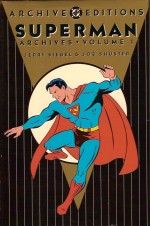
Superman Archives volume 1


By Jerry Siegel & Joe Shuster (DC Comics)
ISBN: 0-30289-47-1
Without doubt the creation of Superman and his unprecedented acceptance and adoption by a desperate and joy-starved generation quite literally gave birth to a genre if not an actual art form.

This stunning, lavish collection was also a significant first: the lovingly restored pages on glossy paper between gleaming hardback covers began DC’s superb Archive Editions series which, since 1989, has brought long forgotten and expensive classic tales to an appreciative wider audience.

Moreover the format has inestimably advanced the prestige and social standing of the medium itself as well as preserving a vital part of American popular culture.

Within this initial collection, following an effusive appreciation from legendary creator and comics historian Jim Steranko, are the complete contents of the first four issues of Superman, from Summer 1939 to Spring 1940. Here is the crude, rough, uncontrollable wish-fulfilling exuberance of a righteous and superior man dealing out summary justice to wife-beaters, reckless drivers and exploitative capitalists, as well as thugs and ne’er-do-wells, who captured the imagination of a nation and the world.

The character had debuted a year previously in Action Comics #1 in truncated, reformatted episodes by young, exuberant creators Jerry Siegel and Joe Shuster, cobbled together from a rejected newspaper strip proposal. An instant stand-out hit in the otherwise average comics anthology, the Man of Steel was given his own solo title – another first – and also starred in the tourist tie-in New York’s World Fair Comics #1 (June 1939).

Superman #1 began with an expanded partial reprint of the premier Action Comics tale, describing the alien foundling’s escape from exploding Planet Krypton before a costumed crusader masquerading by day as reporter Clark Kent averted a tragedy by saving an innocent woman from the Electric Chair, pounded a wife beater and busted racketeer Butch Matson, consequently saving feisty colleague Lois Lane from abduction and worse.

He also averted a European war fomented by greedy munitions dealers.

Superman’s first issue also re-presented the material from Action #2-4, with the mystery-man travelling to San Monte to spectacularly quiet down the hostilities already in progress and after a ‘Scientific Explanation of Superman’s Amazing Strength!’ the Man of Steel responded to a coal mine cave-in and exposed corrupt corporate practises before cleaning up gamblers who fixed football games. The first issue concluded with a two-page prose adventure of the Caped Crime-crusher and a biographical feature on Siegel & Shuster.

Superman #2 opened with a human drama as the Action Ace cleared the name of broken heavyweight boxer Larry Trent, coincidentally cleaning the scum out of the fight game and, after ‘Superman’s Tips for Super-Health’ and a captivating add for New York’s World Fair Comics, proceeded with ‘Superman Champions Universal Peace!’ wherein the hero crushed a gang who had stolen the world’s deadliest poison gas weapon, once more going up against unscrupulous munitions manufacturers.

‘Superman and the Skyscrapers’ found Kent investigating suspicious deaths in the construction industry, leading his alter ego into confrontation with ruthless thugs and their fat-cat corporate boss, after which another Superman text tale ended the issue.

The Winter Superman edition opened with a rip-roaring and shockingly uncompromising expose of corrupt orphanages, after which Lois stole Clark Kent’s assignment and became hopelessly embroiled in a deadly construction scam: imperilled by a colossal collapsing dam in a stirring yarn first published in Action #5.

Future Superboy star artist George Papp contributed science filler ‘Fantastic Facts’ and “Bert Lexington” penned prose crime thriller ‘Death by the Stars’ after which ‘Superman’s Manager’ turned up to scam Metropolis until he finally met his supposed client and ended up behind bars (reprinted from Action #6).

The exigencies of providing so much material was clearly beginning to tell: this issue is filled with fillers such as ‘Acquiring Super-Strength’, ‘Attaining Super-Health!’, prose prison yarn ‘Good Luck Charm’ by Hugh Langley and funny animal antics with dashing Dachshund ‘Shorty’ before the Man of Steel made his last appearance in another sterling gang-busting exploit, rescuing Lois from murderous smugglers.

Superman #4, cover-dated Spring 1940, concludes this inaugural compendium, with another four adventures; beginning with the landmark saga ‘The Challenge of Luthor’, wherein the red-headed rogue scientist used earthquakes to threaten civilisation. Following more ‘Attaining Super-Strength’, animal antics with ‘This Doggone World’ and facts ‘From the 4 Corners’ by Sheldon Moldoff, the mad scientist returned in ‘Luthor’s Undersea City’, a terrific tale of dinosaurs and super-science. Langley’s text vignette ‘Changer of Destiny’ preceded Superman’s battle against ‘The Economic Enemy,’ a spy-story about commercial sabotage instigated by an unspecified foreign power. Another Papp ‘Fantastic Facts’, some immensely enticing house ads and Lexington’s science fiction prose poser ‘Pioneer into the Unknown’ all act as palate-cleansers for the final fantastic thriller wherein the Man of Tomorrow clashed with gangsters and Teamsters in ‘Terror in the Trucker’s Union’.

Steranko then closed the show with an ‘Afterword’ detailing the contents of the adventures from Action Comics #1-14 (which were eventually collected in 1987 as Superman in Action Comics Archive volume 1).

As well as economical price and no-nonsense design and presentation, and notwithstanding the historical significance of the material presented within, there is a magnificent bonus for any one who hasn’t read these tales before. They are astonishingly well-told and engrossing mini-epics that can still grip and excite the reader.

In a world where Angels With Dirty Faces, Bringing Up Baby and The Front Page are as familiar to our shared cultural consciousness as the latest episode of Dr Who or the next Bond movie, the dress, manner and idiom in these seventy-plus-year-old stories can’t jar or confuse. They are simply timeless, enthralling, and great.

Read these yarns and you’ll understand why today’s creators keep returning to this material every time they need to revamp the big guy. They are simply timeless, enthralling, and great.
© 1939-1940, 1989 Dc Comics. All Rights Reserved.

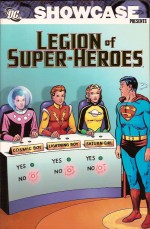
Showcase Presents Legion of Super-Heroes volume 1


By Otto Binder, Jerry Siegel, Edmond Hamilton, Curt Swan, John Forte & various (DC Comics)
ISBN: 978-1- 4012-1382-4

Once upon a time, in the far future, a band of super-powered kids from dozens of alien civilisations took inspiration from the greatest legend of all time and formed a club of heroes. One day those Children of Tomorrow came back in time and invited that legend to join them…

And thus began the vast and epic saga of the Legion of Super-Heroes, as first envisioned by writer Otto Binder and artist Al Plastino in early 1958, just as the revived comicbook genre of superheroes was gathering an inexorable head of steam. Since that time the fortunes and popularity of the Legion have perpetually waxed and waned, with their future history tweaked and rebooted, retconned and overwritten again and again to comply with editorial diktat and popular whim.

This glorious, far-and-wide ranging monochrome collection assembles the many preliminary appearances of these valiant Tomorrow People and their inevitable progress towards and attainment of their own feature; including all pertinent material from Adventure Comics #247, 267, 282, 290, 293, and 300-321, Action Comics #267, 276, 287 and 289, Superboy #86, 89, 98, Superman #147, Superman Annual #4 and Superman’s Pal Jimmy Olsen #72 and 76.

The many-handed mob of juvenile universe-savers debuted in Adventure Comics #247 (April 1958) in a Superboy tale wherein three mysterious kids invited the Boy of Steel to the 30th century to join a team of metahuman champions all inspired by his historic career. Created by Otto Binder & Al Plastino, the throwaway concept inflamed public imagination and after a slew of further appearances throughout Superman Family titles, the LSH eventually took over Superboy’s lead spot in Adventure for their own far-flung, quirky escapades, with the Caped Kid Kryptonian reduced to “one of the in-crowd”…

However here the excitement was still gradually building as the kids returned more than a 18 months later in Adventure #267 (December 1959) for Jerry Siegel & George Papp to play with. In ‘Prisoner of the Super-Heroes!‘ the teen wonders turned up to attack and incarcerate the Boy of Steel because of a misunderstood ancient record…

The following summer Supergirl met the Legion in Action Comics #267 (August 1960, by Siegel & Jim Mooney) as Lightning Lad, Saturn Girl and Cosmic Boy secretly travelled to “modern day” America to invite the Maid of Might to join the team, in a repetition of their offer to Superboy 15 years previously (in nit-picking fact they claimed to be the children of the original team – a fact glossed over and forgotten these days: don’t time-travel stories make your head hurt…?).

Due to a dubious technicality, young and eager Kara Zor-El failed her initiation at the hands of ‘The Three Super-Heroes’ and was asked to reapply later – but at least we got to meet a few more Legionnaires, including Chameleon Boy, Invisible Kid and Colossal Boy…

With the editors still cautiously testing the waters, it was Superboy #86 (January 1961) before the ‘The Army of Living Kryptonite Men!’ by Siegel & Papp turned the LSH into a last-minute Deus ex Machina to save the Smallville Sentinel from juvenile delinquent Lex Luthor’s most insidious assault. Two months later in Adventure #282, Binder & Papp introduced Star Boy as a romantic rival for the Krypton Kid in ‘Lana Lang and the Legion of Super-Heroes!’

Action #276 (May 1961) introduced ‘Supergirl’s Three Super Girl-Friends’ by Siegel & Mooney, which finally saw the her crack the plasti-glass ceiling and join the team, sponsored by Saturn Girl, Phantom Girl and Triplicate Girl. We also met for the first time Bouncing Boy, Shrinking Violet, Sun Boy and potential bad-boy love-interest Brainiac 5 (well at least his distant ancestor Brainiac was a very bad boy…)

Next comes a pivotal two-part tale ‘Superboy’s Big Brother’ (by Robert Bernstein & Papp from Superboy #89, June 1961) in which an amnesiac, super-powered space traveller crashes in Smallville, speaking Kryptonese and carrying star-maps written by the Boy of Steel’s long-dead father…

Jubilant, baffled and suspicious in equal amounts the Superboy eventually, tragically discovered ‘The Secret of Mon-El’ by accidentally exposing the stranger to a lingering, inexorable death, before desperately providing critical life-support by depositing the dying alien in the Phantom Zone until a cure could be found…

With an August 1961 cover-date Superman #147 unleashed ‘The Legion of Super-Villains’ (Siegel, Curt Swan & Sheldon Moldoff): a stand-out thriller featuring Lex Luthor and the adult Legion coming far too close to destroying the Action Ace until the temporal cavalry arrived…

Adventure #290 (November) by Bernstein & Papp seemingly gave Sun Boy a starring role in ‘The Secret of the Seventh Super-Hero!’ – a clever tale of redemption and second chances, followed in #293 (February 1962) by a gripping thriller from Siegel, Swan & George Klein: ‘The Legion of Super-Traitors’ wherein the future heroes were turned evil, prompting Saturn Girl to recruit a Legion of Super-Pets including Krypto, Streaky the Super Cat, Beppo, the monkey from Krypton and Comet the magical Super-horse to save the world – and yes, I typed all that with a reasonably straight face…

‘Supergirl’s Greatest Challenge!’ by Siegel & Mooney (Action #287 April 1962) saw her visit the Legion (quibblers be warned: for some reason it was mis-determined as the 21st century in this story) and saved future Earth from invasion. She also met a telepathic descendent of her cat Streaky. His name was Whizzy (I could have omitted that fact but chose not to – once more for smug, comedic effect and in sympathy with cat owners everywhere)…

Action #289 featured ‘Superman’s Super-Courtship!’ wherein the Girl of Steel scoured the universe for an ideal mate for her cousin. One highly possible candidate was the adult Saturn Woman, but her husband Lightning Man objected… Perhaps charming at the time, but modern sensibilities might quail at the conclusion that his perfect match was a doppelganger of Supergirl herself, but thankfully a bit older…

By the release of Superboy #98 (July 1962), the decision had been made. The buying public wanted more Legion stories and after ‘The Boy With Ultra-Powers’ by Siegel, Swan & Klein introduced a mysterious lad with greater powers than the Boy of Steel, focus shifted to Adventure Comics #300 (cover dated September 1962) where the futuristic super-squad finally landed their own gig; even occasionally taking an alternating cover-spot from the still top-featured Superboy.

Tales of the Legion of Super-Heroes opened its stellar run with ‘The Face Behind the Lead Mask!’ by Siegel, John Forte & Plastino; a fast-paced premier which pitted Superboy and the 30th century champions against an impossibly unbeatable foe until Mon-El, long-trapped in the Phantom Zone, briefly escaped a millennium of confinement and saved the day…

In those halcyon days humour was as important as action, imagination and drama, so many of the early exploits were light-hearted and moralistic. Issue #301 offered hope to fat kids everywhere with ‘The Secret Origin of Bouncing Boy!’ by regular creative team Siegel & Forte, wherein the process of open auditions was instigated (providing devoted fans with loads of truly bizarre and memorable applicants over the years) whilst allowing the rebounding human rotunda to give a salutary pep talk and inspirational recount of heroism persevering over adversity.

Adventure #302 featured ‘Sun Boy’s Lost Power!’ as the golden boy was forced to resign until fortune and boldness restored his abilities whilst ‘The Fantastic Spy!’ in #303 provided a tense tale of espionage and possible betrayal by new member Matter-Eater Lad.

The happy readership was stunned by the events of #304 when Saturn Girl engineered ‘The Stolen Super-Powers!’ to make herself a one-woman Legion. Of course it was for the best possible reasons, but still didn’t prevent the shocking murder of Lightning Lad…

With comfortable complacency utterly destroyed #305 further shook everything up with ‘The Secret of the Mystery Legionnaire!’ who turned out to be the long-suffering Mon-El finally cured and freed from his Phantom Zone prison.

Normally I’d try to be more obscure about story details – after all my intention is to get new people reading old comics – but these “spoiler” revelations are crucial to further understanding here and besides you all know these characters are still around, don’t you?

Pulp science fiction writer Edmond Hamilton took over the major scripting role with Adventure #306 and introduced ‘The Legion of Substitute Heroes!’ (still quirkily, perfectly illustrated by John Forte): a group of rejected applicants who selflessly banded together to clandestinely assist the champions who had spurned them, after which transmuting orphan Element Lad joined the team, seeking vengeance of the space pirates who had wiped out his entire species in ‘The Secret Power of the Mystery Super-Hero!’ and #308 seemingly saw ‘The Return of Lightning Lad!’

Spoiler Warning: skip to the next paragraph NOW!!! if you don’t want to know it was actually his similarly empowered sister who once unmasked – and unmanned – took her brother’s place as Lightning Lass…

‘The Legion of Super-Monsters!’ was a straightforward clash with embittered applicant Jungle King who took his rejection far too personally and gathered a deadly clutch of space beasts to wreak havoc and vengeance whilst ‘The Doom of the Super-Heroes!’ in #310 was a frantic battle for survival against an impossible foe and Adventure #311 saw ‘The War Between the Substitute Heroes and the Legionnaires!’ begin with a cease-and-desist order from the A-Team which turned into secret salvation as the plucky, stubborn outcasts carried on anyway under the very noses of the blithely oblivious LSH…

Issue #312 (September 1963) saw the ‘The Super-Sacrifice of the Legionnaires!’ and the inevitable resurrection of Lightning Lad – but only after the harrowing sacrifice of one devoted team-member – whilst in Superman’s Pal Jimmy Olsen #72 (October) ‘The World of Doomed Olsens!’ (Siegel, Swan & Klein) depicted an intriguing enigma wherein the cub-reporter was confronted by materialisations of his most memorable metamorphoses (see the Superman: the Amazing Transformations of Jimmy Olsen for further details), only to deduce it was all a prank by those naughty Legion scamps… but one with a serious purpose behind the jolly japery…

In #313’s ‘The Condemned Legionnaires!’ (Hamilton, Swan, Klein & Forte) Supergirl played a starring role when the mysterious Satan Girl infected the team with a deadly plague and forced them all into perpetual quarantine whilst ‘The Super-Villains of All Ages!’ (illustrated by Forte) had a manic mastermind steal a Legion Time-Bubble to recruit the greatest monsters and malcontents of history – Nero, Hitler and John Dillinger – as his irresistible army of crime.

Why he was surprised when they double-crossed him and took over the bodies of Superboy, Mon-El and Ultra Boy is beyond me… Happily, the lesser legionnaires still proved more a match for the brain-switched rogues.

‘The Legionnaires Super-Contest!’ in #315 finally saw the Substitute heroes go public, for which the primary team offered to allow one of them to join the big boys. Which one? That’s the contest part…

Issue #316’s ‘The Renegade Super-Hero!’ saw one trusted team-mate revealed as a career criminal and go on the run, but of course there was more to the tale than first appeared, after which the heroes were introduced to ‘The Menace of Dream Girl!’ a ravishing clairvoyant who beguiled her way into the Legion for her own obscure, arcane reasons. In her well-meaning way she presaged the coming of deadly threat The Time Trapper and also found a moment to convert the electrically redundant sister of the revived Lightning Lad into the gravity-defying Light Lass.

Adventure #318 featured ‘The Mutiny of the Legionnaires!’ wherein Sun Boy succumbed to battle fatigue and became a draconian Captain Bligh during an extended rescue mission, whilst in Superman’s Pal Jimmy Olsen #76 (April 1964) Siegel & Forte described ‘Elastic Lad Jimmy and his Legion Romances!’ wherein the plucky journalist was inveigled into the future and found himself inexplicably irresistible to the comely costumed champions of Tomorrow. It wasn’t his primitive charm, though…

Hamilton & Forte began a strong run of grittier tales from #319 on, beginning with ‘The Legion’s Suicide Squad!’ as the Science Police asked the team to destroy, at all costs, a monolithic space fortress, whilst #320 debuted a daring new character in Dev-Em, a forgotten survivor of Superman’s dead homeworld who was little more than a petty thug when Superboy first defeated him.

Now in ‘The Revenge of the Knave From Krypton!’ by Siegel, Forte, Papp, Moldoff & Plastino, the rapscallion returned as either a reformed undercover cop or the greatest traitor in history…

The story portion of this wonderful tome concludes with Adventure #321 and ‘The Code of the Legion!’ by Hamilton, Forte & Plastino which revealed the team’s underlying Articles of Procedure during a dire espionage flap, whilst testing one Legionnaire to the limits of his honour and ingenuity and actually ending another’s service forever.

Perhaps.

This is followed by an appropriate extra from Superman Annual #4 which featured a two-page informational guide illustrated and pictorial check-list of the team by Swan & Klein which was amended and supplemented in Adventure #316 with an additional two pages of stunning micro-pin-ups, all faithfully included here. This fabulously innocent and imaginative chronicle also includes every cover the team starred on: mostly the work of honorary Legionnaire Curt Swan and inkers George Klein, Stan Kaye, and Sheldon Moldoff.

The Legion is undoubtedly one of the most beloved and bewildering creations in American comicbook history and largely responsible for the growth of the groundswell movement that became Comics Fandom. Moreover, these sparkling, simplistic and devastatingly addictive stories as much as the legendary Julie Schwartz Justice League fired up the interest and imaginations of a generation of young readers and built the industry we all know today.

These naive, silly, joyous, stirring and utterly compelling yarns are precious and fun beyond any ability to explain – even if we old lags gently mock them to ourselves and one another. If you love comics and haven’t read this stuff, you are the poorer for it and need to enrich your future life as soon as possible.

© 1958-1964, 2007 DC Comics. All Rights Reserved.

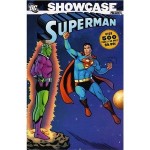
Showcase Presents Superman volume 1


By Otto Binder, Jerry Coleman, Bill Finger, Jerry Siegel, Wayne Boring, Al Plastino, Curt Swan & various (DC Comics)
ISBN: 978-1-4012-0758-8

Although we all think of Jerry Siegel and Joe Shuster’s iconic creation as the epitome of comicbook creation the truth is that very soon after his launch in Action Comics #1 he became a multimedia star and far more people have seen or heard the Man of Steel than have ever read him – and yes, that does include the globally syndicated newspaper strip. By the time his 20th anniversary rolled around he had been a regular on radio, starred in a series of astounding animated cartoons and two movies and just ended his first smash live-action television serial. In his future were three more (Superboy, Lois & Clark and Smallville), a stage musical, a franchise of stellar movies and an almost seamless succession of TV cartoons beginning with The New Adventures of Superman in 1966 and continuing ever since. Even Krypto got in on the small-screen act…

It’s no wonder then that the tales from this Silver Age period should be so draped in the wholesome trappings of Tinseltown – even more so than most of celebrity-obsessed America. It didn’t hurt that editor Whitney Ellsworth was a part-time screenwriter, script editor and producer as well as National DC’s Hollywood point man.

However, that’s not all there is to these gloriously engaging super-sagas culled from Action Comics #241-257 and Superman #122-133, reliving the period June 1958 to November 1959 in crisp, clean black and white in this first economical Showcase Presents collection.

By the mid-1950s Superman had settled into an ordered existence. Nothing could really hurt him, nothing would ever change, and thrills seemed in short supply. With the TV show cementing the action, writers increasingly concentrated on supplying wonder, intrigue, imagination and, whenever possible, a few laughs as well.

The adventure begins with Action Comics #241 and ‘The Key to Fort Superman’ a fascinating and clever puzzle-play guest-featuring Batman, written by Jerry Coleman and illustrated by Wayne Boring & Stan Kaye, wherein an impossible intruder vexes the Man of Steel in his most sacrosanct sanctuary, after which Superman #122 (July, 1958) presented three yarns by veteran scripter Otto Binder beginning with ‘The Secret of the Space Souvenirs’ (illustrated by Al Plastino) as a temporary madness seemed to grip the Man of Tomorrow as he gathered artefacts for a proposed time-capsule, ‘Superman in the White House’ a fanciful dream by Jimmy Olsen also drawn by Plastino and the Boring/Kaye bamboozler which finds the hero investigating an outbreak of super-powers at a US military base in ‘The Super-Sergeant’…

That same month Binder & Plastino introduced both the greatest new villain and most expansive new character concept to the series had seen in years in The Super-Duel in Space’ (Action Comics #242) which saw an evil alien scientist named Brainiac attempt to add Metropolis to his collection of miniaturised cities in bottles.

As well as a titanic tussle in its own right, this tale completely changed the mythology of the Man of Steel, by introducing Kandor, a city full of Kryptonians who had escaped the planet’s destruction when Brainiac captured them. Although Superman rescued his fellow survivors, the villain escaped to strike again, and it would be years before the hero could restore the Kandorians to their true size.

Superman #123 (August 1958) featured ‘The Girl of Steel’ by Binder, Dick Sprang & Kaye which tested the potential of a distaff Supergirl as part of a three-chapter yarn involving a magic wishing totem, which tragically segued into ‘The Lost Super-Powers’ before granting the hero’s greatest dream and facilitating ‘Superman’s Return to Krypton’. Action #243 by Binder & Boring saw Superman mysteriously transformed into a beast in ‘The Lady and the Lion’ after which Superman #124 provided the intriguing menace of ‘The Super-Sword’ by Coleman & Plastino, Binder & Kurt Schaffenberger’s delightful desert island drama wherein Lois Lane became ‘Mrs. Superman’ and Clark Kent’s investigation of construction industry corruptions which compelled him to become ‘The Steeplejack of Steel’ (Binder, Boring & Kaye).

Curt Swan pencilled Binder’s ‘Super-Merman of the Sea’ (inked by Kaye) in Action #244: a canny mystery wherein the Man of Steel abandoned the surface world for an alien aquatic princess, after which Boring & Kaye delineated Binder’s compelling thriller ‘The Shrinking Superman!’ featuring an insidious menace from the Bottle City of Kandor…

‘Lois Lane’s Super-Dream’ (Coleman & Schaffenberger) opened Superman #125 (October-November 1958) with another potentially offensive and certainly sexist parable wherein the plucky news-hen learnt a salutary lesson about powers and responsibility whilst ‘Clark Kent’s College Days’ (illustrated by Plastino) began an occasional series of Untold Tales of Superman by revealing just how, when and why Superboy became the Man of Tomorrow, before Boring & Kaye concluded Coleman’s hat-trick with ‘Superman’s New Power’ as the hero gained new and incomprehensible abilities with catastrophic consequences

Action #246 featured ‘Krypton on Earth!’ (Binder, Boring & Kaye) as a trip to tourist attraction “Krypton Island” revealed a crafty criminal scam whilst #247 presented ‘Superman’s Lost Parents!’ (Binder & Plastino) wherein a criminal scheme to reveal the hero’s secret identity prompted an extreme face-saving solution, after which Superman #126 had Binder, Boring & Kaye reveal ‘Superman’s Hunt for Clark Kent’ a thrilling tale of amnesia and deduction whilst ‘The Spell of the Shandu Clock’ by Coleman, Boring & Kaye, provided spooky chills and clever ploys to outwit a malevolent mastermind and ‘The Two Faces of Superman’ (Coleman & Schaffenberger) again saw conniving Lois learn a much-needed lesson in humility.

Action #248 (January 1959) was a rare contribution from Bill Finger, illustrated by Boring & Kaye as the Caped Kryptonian became ‘The Man No Prison Could Hold!’ to topple a war criminal tyrant whilst Superman #127 opened with another Untold Tale of Superman, ‘When There Was No Clark Kent!’ (Coleman, Swan & Kaye) as an accident temporarily deprived the hero of his treasured alter ego, after which Coleman, Boring & Kaye exposed ‘The Make-Believe Superman’ as a depressed dad tried to impress his son with a most preposterous fib before another hugely popular character debuted in ‘Titano the Super-Ape!’. The chimpanzee who became a giant ape with Kryptonite vision was one of the most memorable “foes” of the period, courtesy of Binder, Boring & Kaye’s sublime treatment combining action, pathos and drama to superb effect.

‘The Kryptonite Man!’ by Binder & Plastino in Action #249, saw Lex Luthor deliberately irradiate himself with Green K to avoid capture, but his evil genius was no match for the hero’s sharp wits, used with equal aplomb in ‘The Eye of Metropolis!’ (Finger & Boring) as a prominent TV journalist sought to expose Superman’s secret identity in #250.

Bill Finger scripted the entirety of #128 as ‘Superman versus the Futuremen’ (Boring & Kaye) and ‘The Secret of the Futermen’ saw the Metropolis Marvel framed for heinous crimes and hijacked to the impossible year of 2000AD before outwitting his abductors and retuning in time to encounter ‘The Sleeping Beauty from Krypton!’ – actually Lois in another hare-brained scheme to trap her beloved into marriage, illustrated by the unmistakable and deliciously whimsical Kurt Schaffenberger.

‘The Oldest Man in Metropolis!’ by Robert Bernstein & Plastino, saw an unfortunate lab accident age Superman decades overnight in Action #251 whilst Superman #129 (May 1959) revealed ‘The Ghost of Lois Lane’ (Coleman, Boring & Kaye) to be anything but and Binder & Plastino’s ‘Clark Kent, Fireman of Steel!’ depicted the reporter’s aggravating and hilarious “luck” as a temporary fire-fighter before introducing the bewitching mermaid Lori Lemaris in ‘The Girl In Superman’s Past’ – another moving Untold Tale of Superman (from Finger & Boring) which again refined the Man of Steel’s intriguing early life.

Action Comics #252 (May 1959) would have been significant enough merely for introducing the threat of John Corben, a criminal whose crushed body was replaced by a robot body and Kryptonite heart to become ‘The Menace of Metallo!’ (by Bernstein & Plastino) but a new back-up feature also began in that issue which utterly revolutionised the Man of Tomorrow’s ongoing mythology.

‘The Supergirl from Krypton!’ introduced Kal-El’s cousin Kara Zor-El in another captivating, groundbreaking yarn by Binder & Plastino. The Maid of Might would occupy the back of Action and alternate covers for a decade and more to come, carving her own unique legend (see Showcase Presents Supergirl volumes 1 and 2)…

Issue #253 featured ‘The War Between Superman and Jimmy Olsen!’ by Alvin Schwartz, Swan & Kaye as an alien presence gave the boy reporter super-powers and a mania to conquer the world whilst Superman #130 presented ‘The Curse of Kryptonite!’ by Binder & Plastino, wherein the Man of Tomorrow relived his past experiences with the lethal mineral; ‘The Super-Servant of Crime!’ by Bernstein, Swan & John Sikela which finds the hero turning the tables on a petty crook who thinks he’s fooled the Action Ace, and ‘The Town That Hated Superman!’ (Binder, Boring & Kaye): a happy hamlet which had outlawed the hero and he simply had to know why…

‘The Battle with Bizarro!’ (Action Comics #254, by Binder & Plastino) re-introduced an imperfect duplicate super-being who had initially appeared in a well-received Superboy story (#68, from the previous year), courtesy of Luthor’s malfunctioning duplicator ray. Even way back then high sales trumped death and so popular was the fatally-flawed character that the tale was continued over two issues, concluding with ‘The Bride of Bizarro!’ in #255, an almost unheard of luxury back then, but here that bombastic, traumatic conclusion is separated by the contents of Superman #131, which firstly reintroduced a long-vanished pestiferous annoyance with ‘The Menace of Mr. Mxyzptlk!’ by Coleman & Plastino, before Lois Lane was granted a tantalising glimpse of ‘Superman’s Future Wife’ (Bernstein & Schaffenberger) and ‘The Unknown Super-Deeds’ revealed hitherto hidden connections with the Daily Planet staff long before Superboy left Smallville in another Untold Tale of Superman from Binder & Plastino.

Action #256 seemingly unleashed ‘The Superman of the Future’ (Binder, Swan & Kaye) whilst in Superman #132 (October 1959) Batman and the projections of a super-computer showed what might have happened if Superman had grown up on an unexploded Krypton in the three chapter epic ‘Superman’s Other Life’, ‘Futuro, Super-Hero of Krypton!’, ‘The Superman of Two Worlds!’ by Binder, Boring & Kaye.

Action #257 revealed Clark Kent as ‘The Reporter of Steel!’ after he was hit by a ray from mad scientist Luthor in a cunning yarn by Binder, Boring & Kaye before the contents of Superman #133 brings to a close this premier compendium with ‘The Super-Luck of Badge 77’ (Binder & Plastino) as the reporter tried his hand as a beat cop, before the first new tales by co-creator Jerry Siegel in nearly a decade: ‘How Perry White Hired Clark Kent’ (art by Plastino) and the wryly light-hearted ‘Superman Joins the Army!’ illustrated by Boring & Kaye.

Superman has proven to be all things to all fans over his decades of existence and with the character undergoing another radical overhaul at this time these timeless tales of charm and joy and wholesome wit are more necessary than ever: not just as a reminder of great tales of the past but as an all-ages primer of the wonders still to come…
© 1959-1963, 2005 DC Comics. All Rights Reserved.

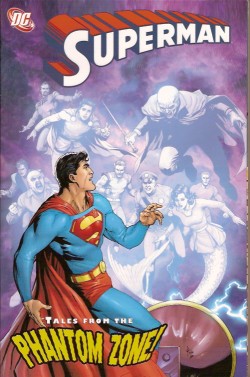
Superman: Tales From the Phantom Zone


By Jerry Siegel, Edmond Hamilton, Otto Binder, Curt Swan & various (DC Comics)
ISBN: 978-1-4012-2258-1

Superman is comics’ champion crusader: the hero who effectively started a whole genre and in the decades since his spectacular launch in June1938 one who has survived every kind of menace imaginable. With this in mind it’s tempting and very rewarding to gather up whole tranches of his prodigious back-catalogue and re-present them in specifically-themed collections, such as this sinister set of sorties into the stark and silent realm of nullity designated the Phantom Zone: a time-proof timeless prison for the worst villains of lost planet Krypton.

This captivating collection (gathering material from Adventure Comics #283, 300, Action Comics #336, Superman’s Girl Friend, Lois Lane #33, Superman’s Pal, Jimmy Olsen #62, Superman #157, 205, Superboy #89, 104 and Who’s Who volume 18) represents appearances both landmark and rare, crafted by the many brilliant writers and artists who have contributed to the Kryptonian canon over the years.

Naturally this terrific tome begins with the first appearance of the dolorous dimension in ‘The Phantom Superboy’ by Robert Bernstein & George Papp (from Adventure Comics #283 April, 1961) wherein a mysterious alien vault smashes to Earth and the Smallville Sensation finds sealed within three incredible super-weapons built by his long-dead dad Jor-El. There’s a disintegrator gun, a monster-making de-evolutioniser and a strange projector that opens a window into an eerie, timeless dimension of stultifying intangibility.

However as Superboy reads the history of the projector – used to incarcerate Krypton’s criminals – a terrible accident traps him inside the Phantom Zone and only by the greatest exercise of his mighty intellect does he narrowly escape…

Next is the pivotal two-part tale ‘Superboy’s Big Brother’ (by Robert Bernstein & Papp from Superboy #89, June 1961) in which an amnesiac, super-powered space traveller crashes in Smallville, speaking Kryptonese and carrying star-maps written by the long-dead Jor-El…

Jubilant, baffled and suspicious in equal amounts the Boy of Steel eventually, tragically discovers ‘The Secret of Mon-El’ by accidentally exposing the stranger to a fatal, inexorable death and desperately provides critical life-support by depositing the dying alien in the Phantom Zone until a cure can be found…

Superman’s Girl Friend, Lois Lane #33 (May 1962) by a sadly unknown writer, but illustrated by the always exceptional art team of Curt Swan and George Klein, further explored the dramatic potential of the Zone in ‘The Phantom Lois Lane!’ when a temporarily deranged Lana Lang dispatched all her romantic rivals for the Man of Tomorrow’s affections to the extra-dimensional dungeon, whilst one month later in ‘Superman’s Phantom Pal!’ (Leo Dorfman, Swan & Klein from Superman’s Pal, Jimmy Olsen #62) Jimmy Olsen in his Elastic Lad role was drawn through a miniscule rip in the fabric of reality and joined Mon-El in the Zone where the plucky cub reporter faced down the worst of Krypton’s villains and resisted their ultimate temptation…

Adventure Comics #300 (September 1962) saw the debut of the Legion of Super-Heroes in their own series by Jerry Siegel, John Forte & Al Plastino. That premier yarn ‘The Face Behind the Lead Mask!’ pitted Superboy and the 30th century champions against an unbeatable foe until Mon-El intervened, briefly freed from a millennium of confinement…

‘The Super-Revenge of the Phantom Zone Prisoner!’ by Edmond Hamilton, Swan & Klein (from Superman #157 November 1962) saw the introduction of power-stealing Gold Kryptonite and Superman’s Zone-o-phone – which allowed him to communicate with the incarcerated inhabitants – in a stirring tale of injustice and redemption. Convicted felon Quex-Ul uses the device to petition Superman for release since his sentence has been served, and despite reservations the fair-minded hero can only agree.

However further investigation reveals Quex-Ul had been framed and was wholly innocent of any crime, but before Superman can explain or apologise he has to avoid the deadly trap the embittered and partially mind-controlled parolee has laid for the son of the Zone’s discoverer…

Superboy #104 (April 1963) contained an epic two-part saga ‘The Untold Story of the Phantom Zone’ with ‘The Crimes of Krypton’s Master Villains’, by Hamilton & Papp describing Jor-El’s discovery of the Zone, his defeat of ambitious political criminal Gra-Mo and the reasons the vault of super-weapons was dispatched into space whilst ‘The Kid who Knocked Out Superboy!’ (illustrated by Swan & Klein) saw Gra-Mo return to take vengeance on the son of his nemesis.

‘The Man From the Phantom Zone!’ (Action Comics #336, April 1966, by Hamilton, Swan & Klein) had Superman release another convict whose time was served, leading to a captivating crime mystery in the Bottle City of Kandor as 50 year old juvenile delinquent Ak-Var found life in a solid and very judgemental world a very mixed blessing…

By April 1968, times and tone were changing as seen in ‘The Man Who Destroyed Krypton!’ (Superman #205, Otto Binder & Plastino) as alien terrorist Black Zero comes to Earth determined to blow it up just as he had the planet Krypton decades ago! Overmatched and stunned by the truth of his world’s doom, the Man of Steel is convinced that releasing Jax-Ur, the Zone’s wickedest inhabitant, is the only way to save his adopted homeworld… an absorbing, enthralling, surprisingly gritty tale of vengeance and a perfect way to end this eclectic collection.

With a comprehensive informational extract from the 1986 Who’s Who in the DC Universe entry from the Zone and its most notorious inmates, illustrated by Rick Veitch, this compelling collection is an intriguing introduction to the aliens hidden amongst us and a superb treat for fans of every vintage.

© 1961, 1962, 1963, 1964, 1966, 1968, 1986, 2009 DC Comics. All Rights Reserved.

Superman: Eradication! (The Origin of the Eradicator)


By Dan Jurgens, Jerry Ordway, Roger Stern, George Pérez & various (DC Comics)
ISBN: 978-1-56389-193-9

Once the 1987 John Byrne re-imagining of the Man of Steel had stripped away much of mythology and iconography which had grown up around the Strange Visitor from Another World over fifty glorious years, succeeding creative teams spent a great deal of time and ingenuity putting much of it back, albeit in terms more accessible to a cynical and well-informed young audience far more sophisticated than their grandparents ever were.

This slim but exceedingly effective tome, collecting material from Action Comics #651-652, Adventures of Superman #460, 464-465 and Superman #41-42, provides fascinating insights and fresh revelations into the long-gone world of Krypton as well as introducing new character-concepts which would inform and affect the entire mythology of the World’s Ultimate Superhero.

After a lengthy period of self-impose banishment in deep space (for which see Superman: Exile) the Man of Tomorrow returned to Earth carrying an incredibly powerful artefact which had survived the destruction of Krypton. The Eradicator could reshape matter and was programmed to preserve, or indeed, resurrect and restore the heritage and influence of the lost civilisation at all costs.

After a number of close calls Superman realised the device was too dangerous to leave loose so he buried it in an Antarctic crevasse and assumed that ended the affair…

‘Be it ever So Deadly’ by Dan Jurgens & Andy Kubert, found the Metropolis Marvel hurtling to the South Pole to rescue a survey team transformed into slaves of an automated fortress built by the Eradicator to emulate Krypton on Earth. Investigating the alien citadel, Superman discovered the Eradicator had been built by his own ancestor and was attuned his own genetic structure. A spectacular battle ensued…

‘The Nature of the Beast’ by Jerry Ordway & Dennis Janke saw a far calmer hero adopt the Fortress as his secret base, whilst light years away the infallible bounty hunter Lobo got really drunk and was conned into travelling to Earth to destroy Superman. The Czarnian had no idea it was a betting scam by gamblers who didn’t want to see War World Gladiator Draaga bankrupt them by killing the Man of Steel…

Clark Kent had been made editor of glossy magazine News-time, but the pressure was clearly affecting the once affable and easygoing guy. Lately he’d become a cold, calculating, nitpicking martinet…

Even Superman seemed distant and aloof, especially with loved ones such as Ma and Pa Kent…

Still pickled, Lobo reached Earth before Draaga and promptly started throwing blockbusting punches…

‘Blood Brawl’ (Jurgens & Art Thibert) pulled all the clues together as Lobo and his entourage invaded the Antarctic citadel. When the Action Ace responded his uniform momentarily converted to Kryptonian apparel… As Superman and Lobo cataclysmically clashed, the Eradicator openly continued reprogramming the Man of Steel’s mind converting him into a ruthless, passionless Kryptonian science-warrior, who deemed it more expedient to avoid combat rather than strive against one of the most dangerous killers in the universe…

The tension increased in ‘Not of this Earth’ by Roger Stern, George Pérez, Kerry Gammill & Brett Breeding, as alien warrior queen Maxima returned, determined to make Superman her mate. When he again rejected her, their blistering battle allowed the Eradicator to take full control of the embattled Kryptonian.

Ordway & Janke then described how Kal-El the ‘Krypton Man’ began reshaping the chaotic, emotion-afflicted Earth into a world of cold logic just as Draaga arrived, hungry for a decisive return match…

A catastrophic combat almost decimated Metropolis before scientist Emil Hamilton forcibly moved the fight to the Moon, resulting in a turning point for ‘The Last Son of Krypton’ (Jurgens & Thibert) as Clark Kent’s foster parents, realising the horror their boy has become, risked everything to help him shake off the influence of the alien artefact, culminating in a magnificent victory of love over logic in Stern, Pérez, Gammill & Breeding’s stirring finale ‘Wayward Son’.

When they were first published these tales of the post-Crisis Superman continually confounded old fans (like me) and industry pundits (me again, I suppose) simply by being, against all expectations, the very best in good, old fashioned four-colour fun, crafted by creators who went above and beyond to deliver cracking good reads week after week. These little gems are an absolute must for any lover of Fights ‘n’ Tights wonderment.
© 1989, 1990, 1996 DC Comics. All Rights Reserved.

Showcase Presents World’s Finest volume 1


By Edmond Hamilton, Bill Finger, Curt Swan, Dick Sprang & various (DC Comics)
ISBN: 978-1-4012-1697-9

Some things were just meant to be: Bacon & Eggs, Rhubarb & Custard, Chalk & Cheese…

For many years Superman and Batman worked together as the “World’s Finest” team. They were friends as well as colleagues and the pairing made sound financial sense since DC’s top heroes (in effect the company’s only costumed stars) could cross-pollinate and, more importantly, cross-sell their combined readerships.

This most inevitable of Paladin Pairings first occurred on the Superman radio show in the early 1940s, whilst in comics the pair had only briefly met whilst on a Justice Society of America adventure in All-Star Comics #36 (August-September 1947) – and perhaps even there they missed each other in the gaudy hubbub…

Of course they had shared the covers on World’s Finest Comics from the outset, but never crossed paths inside; sticking firmly to their specified solo adventures within. So for us pictorial continuity buffs, the climactic first time was in the pages of Superman’s own bi-monthly comic (issue #76, May/June 1952).

Science fiction author Edmond Hamilton was tasked with revealing how Man of Steel and Caped Crusader first met – and accidentally discovered each other’s identities – whilst sharing a cabin on an over-booked cruise liner. Although an average crime-stopper yarn, it was the start of a phenomenon. The art for The Mightiest Team in the World’ was by the superb Curt Swan and inkers John Fischetti & Stan Kaye with that keynote caper the opening inclusion in this first magnificent monochrome compendium (which thereafter re-presents their first 41 collaborations from World’s Finest Comics #71-111).

With dwindling page counts, rising costs but a proven readership and years of co-starring but never mingling, World’s Finest Comics #71 (July-August 1954) presented the Man of Tomorrow and the Gotham Gangbuster in the first of their official shared cases as the Caped Crusader became ‘Batman – Double For Superman!’ (by scripter Alvin Schwartz with Swan & Kaye providing the pictures) as the merely mortal hero traded identities to preserve his comrade’s alter ego and latterly, his life…

‘Fort Crime!’ (Schwartz, Swan & Kaye) saw them unite to crush a highly organised mob with a seemingly impregnable hideout, after which Hamilton returned to script ‘Superman and Batman, Swamis Inc’, a clever sting-operation that almost went tragically awry before an alien invader prompted an insane rivalry which resulted in ‘The Contest of Heroes’ by Bill Finger, Swan & Kaye, from World’s Finest #74.

The same creative team produced ‘Superman and Robin!’ wherein a disabled Batman could only fret and fume as his erstwhile assistant seemingly dumped him for a better man, whereas ‘When Gotham City Challenged Metropolis’ (Hamilton, Swan & Charles Paris) saw the champions at odds as their hometowns over-aggressively vied for a multi-million dollar electronics convention before a landmark tale by Hamilton, Swan & Kaye invented a new sub-genre when a mad scientist’s accident temporarily removed the Caped Kryptonian’s powers and created ‘The Super-Batman!’ in WF #77.

Arguably Batman’s greatest artist joined the creative crew ‘When Superman’s Identity is Exposed!’ (by Hamilton, Dick Sprang & Kaye) as a mysterious source kept revealing the Man of Steel’s greatest secret, only to be revealed as a well-intentioned disinformation stunt, whereas the accent was on high adventure when the trio became ‘The Three Musicians of Bagdad’ – a stunning time-travel romp from Hamilton, Sprang & Kaye.

When the Gotham Gazette faced closure days before a spectacular crime-expose, Clark Kent and Lois Lane joined dilettante Bruce Wayne as pinch-hitting reporters on ‘The Super-Newspaper of Gotham City’ (Hamilton, Sprang & Charles Paris) after which ‘The True History of Superman and Batman’ (Hamilton, Sprang & Kaye, #81) saw a future historian blackmail the heroes into restaging their greatest exploits so his erroneous treatise on them would be accurate…

Hamilton also produced a magnificent and classy costumed drama when ‘The Three Super-Musketeers!’ visited 17th century France to solve the mystery of the Man in the Iron Mask whilst Bill Finger wrote a brilliant and delightful caper-without-a-crime in ‘The Case of the Mother Goose Mystery! before Hamilton provided insight on a much earlier meeting of the World’s Finest Team with ‘The Super-Mystery of Metropolis!’ in #84, all for Sprang & Kaye to enticingly illustrate.

Hamilton, Swan, Sprang & Kaye demonstrated how a comely Ruritanian Princess inadvertently turned the level-headed heroes into ‘The Super-Rivals’ (or did she?), before a monolithic charity-event ‘The Super-Show of Gotham City’ (Hamilton, Sprang & Kaye) was almost turned into a mammoth pay-day for unscrupulous con-men whilst ‘The Reversed Heroes’ (Finger, Sprang & Ray Burnley) once again saw the costumed champions swap roles when Batman and Robin gained powers thanks to Kryptonian pep-pills found by criminal Elton Craig, just as Superman’s powers faded…

World’s Finest #87 presented ‘Superman and Batman’s Greatest Foes!’ (Hamilton, Sprang, Kaye) and found “reformed” villains Lex Luthor and the Joker ostensibly setting up in the commercial robot business – which nobody really believed – after which seminal sequel ‘The Club of Heroes’ by Hamilton, Sprang & Kaye, reprised a meeting of Batmen from many nations (Detective Comics #215, January 1955 or Batman: the Black Casebook and a key plank of Grant Morrison’s epic Batman: the Black Glove serial) but added the intriguing sub-plot of an amnesiac Superman and a brand-new costumed champion…

That evergreen power-swap plot was revisited in #90’s ‘The Super-Batwoman’ (Hamilton, Sprang & Kaye) when the headstrong heroine defied Batman by restarting her costumed career and was quickly compelled to swallow Elton Craig’s last Krypton pill to prevent criminals getting it, after which the stirring time-busting saga of ‘The Three Super-Sleepers’ (Hamilton, Sprang & Kaye) saw our heroes fall into a trap which caused them to slumber for 1000 years and awaken in a fantastic world they could never escape…

But of course they could and once back where they belonged ‘The Boy From Outer Space!’ by Hamilton, Sprang & Kaye detailed how a super-powered amnesiac lad crashed to Earth and briefly became Superman’s sidekick Skyboy, whilst ‘The Boss of Superman and Batman’ (author unknown, Sprang & Kaye) revealed how a brain-amplifying machine turned Robin into a super-genius more than qualified to lead the trio in their battle against insidious rogue scientist Victor Danning.

When the Man of Tomorrow replaced the Caped Crusader with a new partner it led to a review of ‘The Origin of the Superman-Batman Team’ by Hamilton, Sprang & Kaye after which Dave Wood, Sprang & Ray Burnley pitted the now equally multi-powered and alien-entranced champions against each other in ‘The Battle of the Super-Heroes’ from WF #95.

A magical succession of magnificent and whacky classics began in #96 with Hamilton’s ‘The Super-Foes From Planet X’ as indolent and effete aliens dispatched fantastic monsters to battle the titanic trio for the best possible reasons, before Bill Finger took over scripting and turned the Man of Steel on his greatest friends in ‘The Day Superman Betrayed Batman’ after which ‘The Menace of the Moonman!’ pitted the heroes against a deranged hyper-powered astronaut, ‘Batman’s Super-Spending Spree!’ baffled all his close friends and Luthor then trapped Superman in the newly recovered Bottle City of Kandor and became ‘The Dictator of Krypton City’ – all astounding epics beautifully limned by Sprang & Kaye.

Sprang inked himself in the rocket-paced super-crime thriller ‘The Menace of the Atom-Master’ whilst it took Swan, Burnley, Sprang & Paris to properly unveil the titanic tragedy of ‘The Caveman from Krypton’ in #102.

‘The Secret of the Sorcerer’s Treasure’ (art by Sprang & Paris) found two treasure hunters driven mad by the tempting power unearthed magical artefacts and Luthor quickly regretted used a hostage Batwoman to facilitate ‘The Plot to Destroy Superman’ whereas the metamorphosis which turned Clark Kent into ‘The Alien Superman’ proved not at all what it seemed.

‘The Duplicate Man’ in WF #106 had developed an almost unbeatable crime tool – whereas ‘The Secret of the Time-Creature’ spanned centuries and produced one of Finger’s very best detective thrillers to baffle but never stump the Terrific Team.

Jerry Coleman took over scripting with ‘The Star Creatures’, (art by Sprang & Paris), the tale of an extraterrestrial moviemaker whose deadly props were stolen by Earth crooks, whilst ‘The Bewitched Batman’ drawn by Swan & Kaye, was a tense race to save the Gotham Guardian from an ancient curse and ‘The Alien who Doomed Robin’ (Sprang & Sheldon Moldoff) saw a symbiotic link between monster marauder and Boy Wonder leave the senior heroes apparently helpless… at least for a little while…

This inaugural black and white chronicle concludes with ‘Superman’s Secret Kingdom’ by Finger, Sprang & Moldoff from World’s Finest #111 (August 1960): a compelling lost world yarn wherein a cataclysmic holocaust deprives the Man of Steel of his memory and Batman and Robin have to find and cure him at all costs…

These are gloriously clever yet uncomplicated tales whose dazzling style has returned to inform if not dictate the form for much of DC’s modern television animation – especially the fabulous Batman: the Brave and the Bold series – and the contents of this tome are a veritable feast of witty, charming thrillers packing as much punch and wonder now as they always have.
© 1952, 1954, 1955, 1956, 1957, 1958, 1959, 1960, 2007 DC Comics. All Rights Reserved.
Superman: The Amazing Transformations of Jimmy Olsen


By Otto Binder, Curt Swan, Ray Burnley & various (DC Comics)
ISBN: 978-1-4012-1369-5

Although unnamed, a red-headed, be-freckled plucky kid worked alongside Clark Kent and Lois Lane from Action Comics #6 (November 1938) and was called by his first name from Superman #13 (November-December 1941) onwards. That lad was Jimmy Olsen and he was a major player in The Adventures of Superman radio show from its debut on April 15th 1940; somebody for the hero to explain stuff to for the listener’s benefit and the closest thing to a sidekick the Man of Tomorrow ever needed…

When the similarly titled television show launched in the autumn of 1952 it became a monolithic hit and National Periodicals began cautiously expanding their valuable franchise with new characters and titles. First up were the gloriously charming, light-hearted escapades of the rash, capable but naïve photographer and “cub reporter” from the Daily Planet: new star of Superman’s Pal Jimmy Olsen, which launched in 1954 with a September-October cover date.

The comic was popular for more than two decades, blending action, adventure, broad, wacky comedy, fantasy and science fiction in the gentle manner scripter Otto Binder had perfected a decade previously at Fawcett Comics on the magnificent Captain Marvel. As the feature progressed one of the most popular plot-themes (and most fondly remembered and referenced today by most Baby-Boomer fans) was the unlucky lad’s appalling talent for being warped, mutated and physically manipulated by fate, aliens and even his friends…

The Amazing Transformations of Jimmy Olsen delightfully collects some of the very best and most iconic tales from the series all of which originally appeared in issues #22, 28. 31-33, 41-42, 44, 49, 53, 59, 65, 72, 77, 80, 85 and 105 of the comicbook, as well as the lead story from the giant anthology Superman Family #173, into which Superman’s Pal Jimmy Olsen evolved.

The spellbinding wonderment begins with a selection of beautifully reconfigured covers (from issues 22, 44, 59 and 105) which act as contents and credit pages after which the story segments open with ‘The Super-Brain of Jimmy Olsen’ by Binder, Curt Swan & Ray Burnley, wherein resident crackpot genius Professor Phineas Potter evolved the boy into a man from 1,000,000AD. The seemingly benevolent being seems to have a hidden agenda however and is able to bend Superman to his will…

The same creative team produced ‘The Human Skyscraper’ with another Potter production enlarging Jimmy to monumental size, whilst in ‘The E-L-A-S-T-I-C Lad’ Superman was ultimately responsible for the reporter gaining stretching powers after leaving a chest of alien artefacts with the nosy, accident-prone kid.

‘The Jimmy Olsen from Jupiter’ by Alvin Schwartz, Swan & Burnley saw aliens mutate him into one of their scaly selves, complete with mind reading powers, whilst Binder’s ‘The Human Flame-Thrower!’ saw Potter’s latest experiment cause the worst case of high-octane halitosis in history, after which Robert Bernstein, Swan & John Forte displayed the lad’s negligent idiocy when Jimmy ate alien fruit and became ‘The Human Octopus!’

Craig Flessel inked the hilarious and ingenious ‘Jimmy the Genie!’ in which boy and magical sprite exchanged roles after which ‘The Wolf-Man of Metropolis!’ , by Binder, Swan, Stan Kaye, blended horror, mystery and heart-warming charm in a mini-classic of the genre.

Professor Potter was blamed for, but entirely innocent of, turning Jimmy into ‘The Fat Boy of Metropolis!’ – a daft but clever crime caper from Swan & Forte – whilst sheer mischance resulted in the now-legendary saga of ‘The Giant Turtle Man!’ and his oddly casualty-free rampage (courtesy of scripter Jerry Siegel) before Leo Dorfman, Swan & George Klein collaborated to produce the sparkling tale of alien love gone amiss, which resulted in our boy temporarily becoming ‘Jimmy Olsen, Freak!’

When Jimmy spurned the amorous attentions of supernatural Fifth Dimensional babe Miss Gzptlsnz, she quite understandably turned him into ‘The Human Porcupine’ by Siegel, Swan & Klein, who also crafted the intriguing enigma of ‘The World of Doomed Olsens!’ wherein Jimmy was confronted by materialisations of his most memorable metamorphoses…

‘The Colossus of Metropolis!’ saw Jimmy deliberately and daringly grow into a giant to tackle the rampaging Super-Ape Titano, whilst Siegel, Forte & Klein’s ‘Jimmy Olsen, the Bizarro Boy!’ was a merry comedy of errors with Potter’s cure for the backwards-living Bizarro beings going painfully awry, resulting in the poor lad being ‘Exiled on the Bizarro World!’

The immensely popular Legion of Super-Heroes guest-star in many of these tales and play a pivotal part in ‘The Adventures of Chameleon-Head Olsen!’, a madcap mirth spree as only Siegel, Forte & Klein could make ’em, whilst the far more menacing tale of ‘The World of 1,000 Olsens!’, by Binder, E. Nelson Bridwell & Pete Costanza was a product of changing times and darker tastes; with an actual arch-enemy trapping Jimmy on a murderous planet where everybody looks like but hates the cub reporter…

This fabulously strange brew concludes with a smart thriller set in the Bottled City of Kandor where Jimmy resumed his costumed-hero identity of Flamebird beside Superman to save the last Kryptonians from the ‘Menace of the Micro-Monster!’ …a sharp terrorist shocker by Cary Bates & Kurt Schaffenberger which satisfyingly closes this magically engaging tome.

As well as relating some of the most delightful episodes of the pre angst-drenched, cosmically catastrophic DC, these stories also perfectly depict the changing mores and tastes which reshaped comics from the safe 1950s to the seditious, rebellious 1970s, all the while keeping to the prime directive of the industry – “keep them entertained and keep them wanting more”.

I know I certainly do…

© 1957-1965, 1967, 1975, 2007 DC Comics. All Rights Reserved.