Incredible Hulk Marvel Masterworks volume 4


By Stan Lee, Gary Friedrich, Roy Thomas, Bill Everett, Archie Goodwin, Marie Severin, Herb Trimpe, Frank Giacoia & various (Marvel)
ISBN: 978-0-7851-2682-9 (HB)

Bruce Banner was a military scientist who was caught in a gamma bomb blast of his own devising. As a result of continual ongoing mutation, stress and other factors can cause him to transform into a giant green monster of unstoppable strength and fury.

After an initially troubled few years, the gamma-irradiated gargantuan finally found his size 700 feet and a format that worked, becoming one of young Marvel’s most popular features. After his first solo-title folded, the morose man-monster shambled around the slowly-coalescing Marvel Universe as guest star and/or villain du jour until a new home was found for him.

Covering May to December 1968, this sturdy hardback (and eBook) collection re-presents issues #103-110 of his second solo-starring series and also includes the first Incredible Hulk Annual from autumn of that year.

Following a rather incredulous and self-deprecating Introduction from artist Herb Trimpe the never-ending saga resumes. Trimpe, associated with the character for nearly a decade, began his tenure as Marie Severin’s inker in Tales to Astonish #94 and would eventually take over pencilling the Jade Juggernaut, but before that epic handover rising star Gary Friedrich scripts, Marie pencils and veteran artist Frank Giacoia inks the all-action advent of a tragic alien antagonist in #103’s ‘And Now… the Space Parasite!’: a former hero who seemingly perished after attempting to consume the Green Goliath’s abundant life energies.

‘Ring Around the Rhino!’ in #104 is another paean to the Hulk’s destructive potential and visceral appeal as the gamma-fuelled enemy agent is tasked by his cruel masters with abducting Bruce Banner before a longer plot-strand, tinged with pathos and irony, began in Incredible Hulk #105, courtesy of surprise scripters Roy Thomas and Bill Everett, ably illumined by Severin and inker George Tuska.

‘This Monster Unleashed!’ sees the Missing Link – a radioactive and violently mutating victim of Soviet aggression – dumped in New York, and easily capable of burning our dull-witted hero into glowing ashes.

The second part, ‘Above the Earth… A Titan Rages!’ – by Thomas and Archie Goodwin – was pencilled by the neophyte Trimpe over Severin’s breakdowns, with Tuska inking. Sadly, the result is rather a muddle nearly as great as the story itself since the action abruptly switches from New York to Russia after the battling behemoths are suddenly abducted by Yuri Breslov, the Soviet counterpart to Nick Fury and his agents of S.H.I.E.L.D. who promptly loses them over a rural and isolated farm collective.

The story neatly segues into a much more polished yarn with #107’s ‘Ten Rings Hath… the Mandarin’ (by Friedrich & Trimpe with wonderfully rugged inking from the great Syd Shores) as the oriental despot tries to enslave the emerald engine of destruction…

The extended epic concludes with savage success as Stan Lee returns to script and Trimpe – inked by the legendary John Severin (yep, Marie’s big brother) – pulls all the strands together in the action-packed finale ‘Monster Triumphant!’, guest-starring Nick Fury, Yuri Breslov and even Chairman Mao Tse Tung!

Cover-dated October, The Incredible Hulk Annual #1 was one of the best comics of 1968. Behind an iconic Jim Steranko cover, Friedrich, Marie Severin & Shores (with lots of last-minute inking assistance) delivered a passionate, tense and melodramatic parable of alienation that nevertheless was one of the most action-stuffed fight-fests ever depicted.

In 51 titanic pages ‘A Refuge Divided!’ sees the forlorn and perpetually lonely Jade Juggernaut stumble upon the hidden Great Refuge of genetic outsiders. The Inhumans – recovering from a recent failed coup by new players Falcona, Leonus, Aireo, Timberius, Stallior, Nebulo and their secret backer (the king’s brother Maximus the Mad) – are distracted by the Hulk’s arrival.

All too soon, suspicion and short tempers result in carnage and chaos. The band of super-rebels start the fight but it’s the immensely powerful Black Bolt who eventually battles the infuriated Hulk to a standstill…

This is the vicarious thrill taken to its ultimate, still one of the very best non-Lee-Kirby tales of that period, and the issue also provides a pictorial extra with a Marvel Masterwork Pin-up featuring 11 different versions and a challenge to identify the artists…

Back at the monthly venue, Incredible Hulk #109 takes up from the end of the Mandarin saga with the Hulk rampaging through Red China, but still without a settled creative team in place. ‘The Monster and the Man-Beast!’ was written by Stan Lee, laid out by Giacoia, pencilled by Trimpe and inked by John Severin, as the Hulk trashes the Chinese Army and accidentally interferes with a Red super-missile…

The upshot is that the man-monster is hurtled into space and blasted into the Antarctic paradise known as the Savage Land. This preserve of dinosaurs and cavemen is a visually perfect home for the Hulk and the addition of Tarzan analogue Ka-Zar, and a primitive death-cult worshipping an alien device designed to destroy the world, ramps up the tension nicely.

The tale and this edition wrap up with the attack of ‘Umbu the Unliving!’ (Lee, Trimpe & John Severin) as yet another extraterrestrial device left to facilitate Earth’s demise goes into overkill mode. Thankfully Banner and his green alter-ego dispatch it with Ka-Zar’s assistance, albeit at the cost of Banner’s life.

As they said at the time “To Be Hulkinued!”…

Adding even more deal appeal to this book is a stunning selection of comedy sketches and cartoons devised by the infamously puckish Marie Severin to cheer up her fellow Bullpen pals as well as Hulk original art pages and covers by her, brother John, Trimpe, Giacoia, and Steranko – plus her unused cover for that iconic Annual.

This titanic tome of Hulk heroics offers visceral thrillers and chaotic clashes overflowing with dynamism, enthusiasm and sheer quality: tales crucial to later, more cohesive adventures. Even at their most hurried, these epics offer an abundance of full-on, butt-kicking, “breaking-stuff” catharsis to delight the destructive eight-year-old in all of us.
© 1968, 2007, 2018 Marvel Characters, Inc. All Rights Reserved.

Incredible Hulk Marvel Masterworks volume 3


By Stan Lee, Jack Kirby, Gary Friedrich, Marie Severin, Bill Everett, John Buscema, Gil Kane, Jerry Grandenetti & various (Marvel)
ISBN: 978-0-7851-6762-4 (TPB)

Bruce Banner was a military scientist who was caught in a gamma bomb blast. As a result of continual ongoing mutation, stress and other factors can cause him to transform into a giant green monster of unstoppable strength and fury.

After an initially troubled few years, the gamma-irradiated gargantuan finally found his size 700 feet and a format that worked, becoming one of young Marvel’s most popular features. After his first solo-title folded, the morose man-monster shambled around the slowly-coalescing Marvel Universe as guest star and/or villain du jour until a new home was found for him.

Spanning June 1966 to April 1968, this trade paperback (and eBook) volume covers his years as co-star of Tales to Astonish – specifically issues #80-101 – and includes the first issue of his well-deserved new solo vehicle Incredible Hulk #102.

Following an Introduction by Stan Lee the saga resumes with TtA #80 as the Jade Juggernaut is dragged into an under-earth civil war after not-so-immortal old enemy Tyrannus resurfaces in ‘They Dwell in the Depths!’

Seeing the rampaging Hulk as a weapon of last resort in a bitter war against the Mole Man, the toppled tyrant abducts the emerald brute to Subterranea, but still loses his last bombastic battle. When Hulk returns topside, he promptly shambles into a plot by the insidious Secret Empire in #81’s ‘The Stage is Set!’

The convoluted mini-epic spread into a number of other Marvel series, especially Nick Fury, Agent of S.H.I.E.L.D. and Sub-Mariner (who was at that time sharing Tales to Astonish with Ol’ Greenskin).

Here, however, the Hulk is targeted by the Empire’s hired gun Boomerang as they strive to steal the military’s new Orion missile…

As the epic unfolds ‘The Battle Cry of the Boomerang’, ‘Less then Monster, More than Man!‘, and ‘Rampage in the City!’ weave potent strands of sub-plot into a gripping mosaic which indicated to the evolving reader just how close-knit the Marvel Universe was becoming.

Obviously, such tight coordination between series caused a few problems as art for the final episode is credited to “almost the whole blamed Bullpen” (which to my jaded eyes is mostly Jerry Grandenetti). During that climactic clash the Hulk marauds through the streets of New York City in what I can’t help but feel is a padded, unplanned conclusion…

Everything’s back on track with #85 however, as John Buscema & John Tartaglione step in to illustrate ‘The Missile and the Monster!’ with yet another seditious spy diverting the experimental Orion rocket directly onto the city. The obvious stylistic discomfort the realism-heavy Buscema experienced with the Hulk’s appearance has mostly faded by second chapter ‘The Birth of… the Hulk-Killer!’, although the return to the strip of veteran inker Mike Esposito also helps.

As obsessed Hulk-hunter and fiery US General “Thunderbolt” Ross foolishly deploys a weapon designed by gamma genius The Leader to capture the Grim Green Giant, the old soldier has no inkling what his rash act will lead to, nor that Boomerang is lurking behind the scenes to make things even hotter for the Hulk…

Issue #87’s concluding episode ‘The Humanoid and the Hero!’ depicts Ross’ regret as the Hulk-Killer abruptly expands his remit to include everybody in his path and Gil Kane takes up the green pencil for #88 as ‘Boomerang and the Brute’ shows both the assassin and the Hulk’s savage power uniformly unleashed…

Tales to Astonish #89 once more sees the Hulk become an unwilling weapon as a nigh-omnipotent alien subverts and sets him to purging humanity from the Earth.

‘…Then, There Shall Come a Stranger!’, ‘The Abomination!’ and ‘Whosoever Harms the Hulk…!’ comprise a taut and evocative thriller-trilogy which also includes the origin of the malevolent Hulk-counterpart who would play such a large part in later tales of the ill-fated Bruce Banner.

A new narrative tone comes with ‘Turning Point!’ (TtA #92, June 1967, by the superb and criminally underrated Marie Severin & inker Frank Giacoia), depicting the Gamma Giant hunted through a terrified, locked-down New York City as a prelude to a cataclysmic guest-battle in the next issue.

Back then, the Hulk didn’t really team-up with visiting stars, he just got mad and smashed them. Such was certainly the case when he became ‘He Who Strikes the Silver Surfer!’; ironically battling with and driving off a fellow outcast who held the power to cure him of his atomic affliction…

Herb Trimpe, associated with the character for nearly a decade, began his tenure as Severin’s inker with #94’s ‘To the Beckoning Stars!’: the initial instalment of a terrific 3-part shocker which saw the Hulk transported to the interstellar retreat of the High Evolutionary to futilely battle against recidivist beast-men on ‘A World He Never Made!’, before escaping a feral bloodbath in #96’s ‘What Have I Created?’.

Returned to Earth by the now god-like Evolutionary, the Hulk was gearing up to the next being change in his life.

Returned to Earth, the Green Goliath fell into a high-tech plot to overthrow America in ‘The Legions of: the Living Lightning!’, but the subversives’ beguilement of the monstrous outcast and conquest of a US military base in ‘The Puppet and the Power’ soon faltered and failed ‘When the Monster Wakes!’: his last inked by John Tartaglione.

Tales to Astonish was an anthological “split-book”, with two star-features sharing billing: a strategy caused by Marvel’s having entered into a highly restrictive distribution deal to save the company during a publishing crisis at the end of the 1950s.

At the time when the Marvel Age Revolution took fandom by storm, the company was confined to a release schedule of 16 titles each month, necessitating some doubling-up as characters became popular enough to carry their own strip. Fellow misunderstood misanthrope the Sub-Mariner had proved an ideal thematic companion since issue #70, and to celebrate the centenary of the title, issue #100 featured a breathtaking “who’s strongest?” clash between the blockbusting anti-heroes as the Puppet Master decreed ‘Let There be Battle!’ and Lee, Severin & Dan Adkins made it so.

The next issue was the last. With number #102 the comic would be redesignated The Incredible Hulk and the character’s success was assured. Before that, however, Lee, Severin & Giacoia set the scene with ‘Where Walk the Immortals!’ as Loki, Norse god of Evil transported the monster to Asgard in an effort to distract all-father Odin’s attention from his other schemes.

The premiere issue (#102) of The Incredible Hulk launched with an April, 1968 cover-date.

‘…This World Not His Own!’ included a rehashed origin for the Hulk and completed and concluded the Asgardian adventure with a troll invasion of Asgard with arch-villains Enchantress and the Executioner leading the charge. The issue was written by rising star Gary Friedrich, drawn by Severin and inked by veteran artist George Tuska. It was only the start of a big, bold and brutally enthralling things to come…

To Be Continued…

Adding even more lustre and appeal to this tome is a selection of original art covers by Everett, Kane and Severin…

This titanic tome of Hulk heroics offers visceral thrillers and chaotic clashes overflowing with dynamism, enthusiasm and sheer quality: tales crucial to later, more cohesive adventures, and even at their most hurried, the efforts of Kirby, Everett, Kane, Buscema, Severin and the rest in full-on, butt-kicking, “breaking-stuff” mode is a thrill to delight the destructive eight-year-old in everyone.

Hulk Smash(ing)!
© 1966, 1967, 2018 Marvel Characters, Inc. All rights reserved.

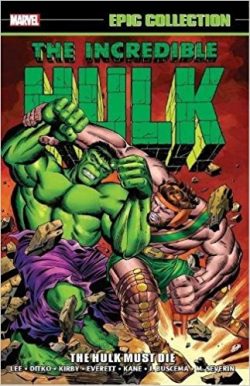
The Incredible Hulk Epic Collection volume 2: The Hulk Must Die


By Stan Lee, Gary Friedrich, Steve Ditko, Jack Kirby, John Romita, Bill Everett, Gil Kane, Bob Powell, John Buscema, Mike Esposito, Jerry Grandenetti, Marie Severin, Herb Trimpe & various (Marvel)
ISBN: 978-1-3029-0445-6

Bruce Banner was a military scientist who was caught in a gamma bomb blast. As a result of ongoing mutation, stress and other factors can cause him to transform into a giant green monster of unstoppable strength and fury.

After an initially troubled few years the gamma-irradiated gargantuan finally found his size 700 feet and a format that worked, becoming one of young Marvel’s most popular features. After his first solo-title folded, The Hulk shambled around the slowly-coalescing Marvel Universe as guest star and/or villain du jour until a new home was found for him and this trade paperback (and eBook) volume covers his years as co-star of Tales to Astonish; specifically issues #60-96, spanning October 1964 to October 1967, and even includes a silly spoof yarn from Not Brand Echh #3.

Way back then, the trigger for the Hulk’s second chance was a reprinting of his origin in the giant collection Marvel Tales Annual #1 (the beginning of the company’s inspired policy of keeping early tales in circulation and which did so much to make fervent fans out of casual latecomers). Thanks to reader response, Ol’ Greenskin was awarded a back-up strip in a failing title…

Giant-Man was the star turn in Tales to Astonish, but by mid-1964 the strip was visibly floundering. In issue #59 the Master of Many Sizes was used to introduce his forthcoming co-star in a colossal punch-up, setting the scene for the next issue wherein the Green Goliath’s own feature began.

‘The Incredible Hulk’ (TtA #60) opens with Banner still working for General Thaddeus “Thunderbolt” Ross, despite the military martinet’s deep disgust and distrust of the puny milksop who had won his daughter’s heart. Aloof and standoffish, Bruce keeps secret his astounding condition: an affliction which subjects him to uncontrollable transformations into a rampaging, if well-intentioned, engine of destruction.

The 10-page instalments were uncharacteristically set in the Arizona/New Mexico deserts, not New York, and espionage and military themes were the narrative backdrop of these adventures.

Lee scripted, Ditko drew and comics veteran George Roussos – as “George Bell” – provided the ink art. The first episode details how an anonymous spy steals an unstoppable suit of robotic armour built by the radiation-obsessed Banner, and concludes with a shattering battle in the next instalment as the Hulk is ‘Captured at Last!’

Cliffhanger endings such as the exhausted Gamma Giant’s imprisonment by Ross’s military units at the end of the yarn would be instrumental in keeping readers onboard and enthralled. Next chapter ‘Enter… the Chameleon!’ has plenty of action and suspense as the spy infiltrates Ross’ command, but the real punch is the final panel, hinting at the mastermind behind all the spying and skulduggery. The enigmatic Leader would become the Hulk’s ultimate and antithetical nemesis…

The minor Spider-Man villain works well as a returning foe; his disguise abilities an obvious threat in a series based on a weapons scientist working for the US military during the Cold War. Even the Leader himself has dubious connections to the sinister Soviets – when he isn’t trying to conquer the world for himself.

Preceded by a titanic Jack Kirby Marvel Masterwork Pin-up of the Green Goliath, ‘A Titan Rides the Train!’ (Astonish #63, January 1965) provides an origin for the super-intellectual menace whilst setting up a fresh subplot wherein new cast addition Major Glen Talbot begins to suspect Banner of being a traitor. The action comes when the Leader tries to steal Banner’s new anti-H-bomb device from a moving freight locomotive….

‘The Horde of Humanoids!’ features the return of guilt-stricken former sidekick Rick Jones who uses his Avengers connections to obtain a pardon for the incarcerated Banner just by letting the American President in on the secret of the Hulk! Ah, simpler times!

Free again, Banner joins Talbot on a remote island to test his hotly sought-after atomic device only to be attacked by the Leader’s artificial warriors – providing a fine example of Ditko’s unique manner of staging a super-tussle.

The chaotic clash continues into the next issue when Ayers assumes the inking and Banner is taken prisoner by those darn Commies. ‘On the Rampage against the Reds!’ sees the Hulk go ballistic behind the Iron Curtain: a satisfyingly gratuitous crusade that spans three issues with #66 – ‘The Power of Doctor Banner’, inked by Vince Colletta and ‘Where Strides the Behemoth’ in #67, (inked by Frank Giacoia), cumulatively exhibiting the brute’s shattering might.

His Commie-Busting fury finally expended, the Hulk reverts to human form and is captured by Mongolian bandits who see a chance to make lots of ransom money…

Jack Kirby returned as illustrator – supplemented by Mike (“Mickey Demeo”) Esposito – in Tales to Astonish #68. ‘Back from the Dead!’ sees plucky Glen Talbot extricate the tragic scientist only to lose him again on the way back to America. Even so, Banner falls again into military custody and is ordered to activate his Atomic Absorbatron for one last test.

Yet again the process is interrupted by the Leader’s attacking Humanoids, but this time the Veridian Villain succeeds and the Hulk is ‘Trapped in the Lair of the Leader!’ …but only until the US Army bursts in…

Issue #70 saw Giant-Man benched and replaced by the Sub-Mariner, making Tales to Astonish a title dedicated to aggressive, savage anti-heroes. Increasingly the Hulk stories reflected this shift, and ‘To Live Again!’ sees the furious Leader launch a 500-foot tall Humanoid against the local US missile base, with the Jade Giant caught in the middle.

Kirby reduced his input to layouts and Esposito handles the lion’s share of the art with #71’s ‘Like a Beast at Bay’: a minor turning point with the Hulk actually joining forces with the Leader whilst ‘Within the Monster Dwells a Man!’ then has Major Talbot getting ever-closer to uncovering Banner’s dark secret.

‘Another World, Another Foe!’ (with the legendary Bob Powell pencilling over Kirby’s layouts) details how the Leader dispatches Hulk to The Watcher‘s homeworld to steal an ultimate weapon, just as an “unbeatable” intergalactic rival arrives. ‘The Wisdom of the Watcher’ descends to all-out, brutal action with a shocking climax, and is followed by TtA#75’s conclusion: an abrupt return to Earth and to basics as the rampaging Hulk falls victims to one of Banner’s most bizarre atomic devices…

‘Not all my Power Can Save Me!’ sees the man-monster helplessly hurled into a devastated dystopian future, and in ‘I, ‘Against a World!’ (with pencils by Gil Kane moonlighting as “Scott Edward”), the devastation is compounded by a doom-drenched duel with time-lost Asgardian immortal The Executioner.

A true milestone occurred in Tales to Astonish #77 when the tragic physicist’s dread secret is finally exposed. Magnificently illustrated by John Romita (the elder, and still over Kirby layouts), ‘Bruce Banner is the Hulk!’ concludes the time-travel tale and reveals the tragic horror of the scientist’s condition to the military and the general public.

It didn’t make him any less hunted or haunted, but at least now the soldiery were in an emotional tizzy whilst trying to obliterate him.

With #78, Bill Everett began a short but vividly evocative run as penciler (Kirby remaining on layouts throughout). To his very swift and last regrets, megalomaniacal scientist Dr. Zaxon tries to steal the Gamma Monsters’s bio-energy in ‘The Hulk Must Die!’ Before his body is even cold, follow-up ‘The Titan and the Torment!’ propels the fugitive gargantuan into a bombastic battle against recently Earth-exiled Olympian man-god Hercules.

Losing a desperate war with fellow subterranean despot Mole Man, not-so-immortal Tyrannus resurfaced in ‘They Dwell in the Depths!’ Seeing the Hulk as a weapon of last resort, he abducts the man-brute to Subterranea, but still loses his last battle and when Hulk returns topside he shambles into a plot by the insidious Secret Empire in #81’s ‘The Stage is Set!’

The convoluted mini-epic spread into a number of other Marvel series, especially Nick Fury, Agent of S.H.I.E.L.D. and Sub-Mariner. Here, however, the monster is targeted by the Empire’s hired gun Boomerang as they strive to steal the military’s new Orion missile…

As the epic unfolds ‘The Battle Cry of the Boomerang’, ‘Less then Monster, More than Man!‘, and ‘Rampage in the City!’ wove strings of sub-plot into a gripping whole which indicated to the evolving reader just how close-knit the Marvel Universe was.

Obviously such tight coordination between series caused a few problems as art for the final episode is credited to “almost the whole blamed Bullpen” (which to my jaded eyes is mostly Jerry Grandenetti). During that climax the Hulk is marauding through the streets of New York City in what I can’t help but feel is a padded, unplanned conclusion…

Everything’s back on track with #85 however, as John Buscema and John Tartaglione step in to illustrate ‘The Missile and the Monster!’ as yet another spy diverts the experimental Orion rocket onto the city. The obvious discomfort the realism-heavy Buscema experienced with the Hulk’s appearance has mostly faded by second chapter ‘The Birth of… the Hulk-Killer!’, although the return of veteran inker Mike Esposito to the strip also helps.

As General Ross releases a weapon designed by the Leader to capture the Grim Green Giant, the old soldier has no inkling what his rash act will lead to, nor that Boomerang is lurking behind the scenes to make things even hotter for the Hulk…

Issue #87’s concluding part ‘The Humanoid and the Hero!’ depicts Ross’ regret as the Hulk-Killer expands his remit to include everybody in his path and Gil Kane returns for #88 as ‘Boomerang and the Brute’ shows both the assassin and the Hulk’s savage power.

Tales to Astonish #89 once more sees the Hulk become an unwilling weapon as a nigh-omnipotent alien subverts and sets him to purging humanity from the Earth.

‘…Then, There Shall Come a Stranger!’, ‘The Abomination!’ and ‘Whosoever Harms the Hulk…!’ comprise a taut and evocative thriller-trilogy which also includes the origin of the malevolent Hulk counterpart who would play such a large part in later tales of the ill-fated Bruce Banner.

A new narrative tone comes with ‘Turning Point!’ (TtA #92, June 1967) by the superb and criminally underrated Marie Severin and inker Frank Giacoia, depicting the Jade Giant hunted through a terrified New York City as a prelude to a cataclysmic guest-battle in the next issue. Back then, the Hulk didn’t really team-up with visiting stars, he just got mad and smashed them. Such was certainly the case when he became ‘He Who Strikes the Silver Surfer!’; ironically battling with and driving off a fellow outcast who held the power to cure him of his atomic affliction.

Herb Trimpe, associated with the character for nearly a decade, began his tenure as Marie Severin’s inker with #94’s ‘To the Beckoning Stars!’: the initial instalment of a terrific 3-part shocker which found the Hulk transported to the interstellar retreat of the High Evolutionary to battle against recidivist beast-men on ‘A World He Never Made!’ before escaping a feral bloodbath in #96’s ‘What Have I Created?’.

Returned to Earth by the now god-like Evolutionary, the Hulk was gearing up to the next being change in his life.

To Be Continued…

Adding even more lustre and appeal to this tome are a bevy of intriguing extras, starting with a not-so-serious alternative back-story in ‘The Origin of Brucie Banter… and Friend’, by Gary Friedrich & Severin from spoof mag Not Brand Echh #3 (October 1967).

That outing of the “Inedible Bulk” then segues into rare pencil art from Ditko, original pages by Kirby & Everett, Buscema & Tartaglione, Kane and Severin & Trimpe; T-shirt and sweatshirt designs by Kirby, Sol Brodsky & Joe Sinnott from 1965 and 1966 plus house ads and Kirby’s cover from Tales to Astonish #77 modified by painter Richard Isanove and used to front Marvel Masterworks: The Hulk volume 2.

This titanic tome of Hulk heroics is occasionally hit-and-miss, with visceral thrillers and plain dumb nonsense running together, but the enthusiasm and sheer quality of the awesome artistic endeavours should go a long way to mitigating most of the downside. These tales are key to the later, more cohesive adventures, and even at their worst the work of Kirby, Ditko, Everett, Kane, Buscema, Severin and the rest in full-on, butt-kicking, “breaking-stuff” mode is a thrill to delight the destructive eight-year-old in everyone. Hulk Smash(ing)!
© 1964, 1965, 1966, 1967, 2017 Marvel Characters, Inc. All rights reserved.

Incredible Hulk Masterworks volume 2


By Stan Lee, Steve Ditko, Jack Kirby, John Romita, Bill Everett, Gil Kane, Bob Powell & various (Marvel)
ISBN: 978-0-7851-5883-7

Win’s Christmas Gift Recommendation: Epic Evergreen Entertainment… 9/10

Bruce Banner was a military scientist who was caught in a gamma bomb blast. As a result of ongoing mutation, stress and other factors can cause him to transform into a giant green monster of unstoppable strength and fury.

After an initially troubled few years the gamma-irradiated gargantuan finally found his size 700 feet and a format that worked, becoming one of young Marvel’s most popular features. After his first solo-title folded, The Hulk shambled around the slowly-coalescing Marvel Universe as guest star and/or villain du jour until a new home was found for him and this second trade paperback (or eBook) volume covers his first few years as co-star of Tales to Astonish; specifically issues #59-79, spanning September 1964 to May 1966.

Way back then, the trigger for the Hulk’s second chance was a reprinting of his origin in the giant collection Marvel Tales Annual #1 (the beginning of the company’s inspired policy of keeping early tales in circulation and which did so much to make fervent fans out of casual latecomers). Thanks to reader response, Greenskin was awarded a back-up strip in a failing title…

Giant-Man was the star turn in Tales to Astonish, but by mid-1964 the strip was visibly floundering. In issue #59 – and kicking off the all-out action here with absolutely no preamble – the Master of Many Sizes is tricked by old foe the Human Top into battling the still-at-large man-monster in ‘Enter: The Hulk’.

Crafted by Stan Lee, Dick Ayers & Paul Reinman the clash is little more than a colossal punch-up, setting the scene for the next issue wherein the Green Goliath’s own feature began.

Following a full-page house ad for the debuting solo feature,‘The Incredible Hulk’ (TtA #60, October 1964)) opens with Bruce Banner still working for General Thaddeus “Thunderbolt” Ross, despite the military martinet’s deep disgust and distrust of the puny milksop who had won his daughter’s heart. Banner is still aloof and standoffish, keeping secret his astounding condition: an affliction which subjects him to uncontrollable transformations into a rampaging, if well-intentioned, engine of destruction.

The 10-page instalments were uncharacteristically set in the Arizona/New Mexico deserts, not New York, and espionage and military themes were the narrative backdrop of these adventures.

Lee scripted, Ditko drew and comics veteran George Roussos – under the pseudonym George Bell – provided the ink art. The first tale details how an anonymous spy steals an unstoppable suit of robotic armour built by the radiation-obsessed Banner, which concludes with a shattering battle in the next episode ‘Captured at Last!’

Cliffhanger endings such as the exhausted Hulk’s imprisonment by Ross’s military units at the end of the yarn would be instrumental in keeping readers onboard and enthralled. The next chapter ‘Enter… the Chameleon’ has plenty of action and suspense as the spy infiltrates Ross’ command, but the real stinger is the final panel that hints at the mastermind behind all the spying and skulduggery – the enigmatic Leader – who would become the Hulk’s ultimate and antithetical nemesis.

The minor Spider-Man villain works well as a returning foe, his disguise abilities an obvious threat in a series based on a weapons scientist working for the US military during the Cold War. Even the Leader himself has dubious connections to the sinister Soviets – when he wasn’t trying to conquer the world for himself.

Preceded by a titanic Jack Kirby Marvel Masterwork Pin-up of the Green Goliath, ‘A Titan Rides the Train!’ (Astonish #63, January 1965) provides an origin for the super-intellectual menace whilst setting up a fresh subplot wherein new cast addition Major Glen Talbot begins to suspect Banner of being a traitor. The action comes when the Leader tries to steal Banner’s new anti-H-bomb device from a moving train….

The next episode ‘The Horde of Humanoids!’ features the return of guilt-stricken sidekick Rick Jones who uses his Avengers connections to obtain a pardon for the incarcerated Banner just by letting the American President in on the secret of the Hulk! Ah, simpler times!

Free again, Banner joins Talbot on a remote island to test his hotly sought-after atomic device only to be attacked by the Leader’s artificial warriors – providing a fine example of Ditko’s unique manner of staging a super-tussle.

The battle continues into the next issue when Ayers assumes the inks and Banner is taken prisoner by those darn Commies. ‘On the Rampage against the Reds!’ sees the Hulk go wild behind the Iron Curtain: a satisfyingly gratuitous crusade that spans #66 – ‘The Power of Doctor Banner’ inked by Vince Colletta – and ‘Where Strides the Behemoth’ (#67, and inked by Frank Giacoia).

His Commie-Busting fury finally expended the Hulk reverts to human form and is captured by Mongolian bandits who see a chance to make lots of ransom money…

Jack Kirby returned as illustrator – supplemented by Mike (“Mickey Demeo”) Esposito – in Tales to Astonish #68. ‘Back from the Dead!’ sees plucky Glen Talbot help extricate the tragic scientist – although he loses him again on the way back to America. Even so, Banner falls again into military custody and is ordered to activate his Atomic Absorbatron for one last test.

Yet again the process is interrupted by the Leader’s attacking Humanoids, but this time the Veridian Villain succeeds and the Hulk is ‘Trapped in the Lair of the Leader!’ …but only until the US Army bursts in…

Issue #70 saw Giant-Man replaced by the Sub-Mariner, making Tales to Astonish a title typified by aggressive, savage anti-heroes. Increasingly the Hulk stories reflected this shift, and ‘To Live Again!’ sees the furious Leader launch a 500-foot tall Humanoid against the local US missile base, with the Jade Giant caught in the middle.

Kirby reduced his input to layouts and Esposito handles the lion’s share of the art with #71’s ‘Like a Beast at Bay’: a minor turning point with the Hulk actually joining forces with the Leader. Next episode ‘Within the Monster Dwells a Man!’ then has Major Talbot getting ever-closer to uncovering Banner’s dark secret.

‘Another World, Another Foe!’ (with the great Bob Powell pencilling over Kirby’s layouts) details how the Leader dispatches Hulk to The Watcher‘s homeworld to steal an ultimate weapon, just as an “unbeatable” intergalactic rival arrives. ‘The Wisdom of the Watcher’ resorts to all-out, brutal action with a shocking climax, and is followed by TtA #75’s return to Earth and to basics as the rampaging Hulk falls victims to one of Banner’s most bizarre atomic devices…

‘Not all my Power Can Save Me!’ sees the man-monster helplessly hurled into a devastated dystopian future, and in ‘I, ‘Against a World!’ (featuring pencils by Gil Kane moonlighting as “Scott Edward”) the devastation is compounded by a fierce duel with the time-lost Asgardian immortal The Executioner.

A true milestone occurred in Tales to Astonish #77 when the tragic physicist’s dread secret is finally exposed. Magnificently illustrated by John Romita (the elder, and still over Kirby layouts) ‘Bruce Banner is the Hulk!’ concluded the time-travel tale and revealed the tragic horror of the scientist’s condition to the military and the general public.

It didn’t make him any less hunted or haunted, but at least now the soldiery were in an emotional tizzy when they tried to destroy him.

With #78, Bill Everett began a short but lovely run as art-man (Kirby remaining on layouts throughout). To his very swift and last regrets, megalomaniacal scientist Dr. Zaxon tries to steal and tap the Gamma Monsters’s bio-energy in ‘The Hulk Must Die!’ and before his body is even cold, follow-up ‘The Titan and the Torment!’ conclude proceedings here with a bombastic battle against recently Earth-exiled Olympian man-god Hercules.

Although some of these adventures might seem a bit hit-and-miss, with visceral suspenseful thrillers and plain dumb nonsense running together, the enthusiasm and sheer quality of the artistic endeavour should go a long way to mitigating most of the downside. These tales are key to the later, more cohesive, adventures, and even at their worst – or most anonymised – the magic of Kirby, Ditko, Everett, Kane, Powell and the rest in full butt-kicking, “breaking-stuff” mode is an unadorned thrill to delight the destructive 8-year-old in everyone.

Hulk Smash(ing)!
© 1964, 1965, 1966, 2017 Marvel Characters, Inc. All rights reserved.
Incredible Hulk Masterworks volume 1


By Stan Lee, Jack Kirby, Steve Ditko & various (Marvel)
ISBN: 978-07851-3714-6

What’s that coming over the hill? Is it a monster?

Chronologically collecting the Jade Juggernaut’s earliest appearances, this titanic Trade Paperback tome (also available in digital editions) gathers Incredible Hulk #1-6, spanning May 1962 to March 1964.

The Incredible Hulk was new-born Marvel’s second new superhero title, although technically Henry Pym debuted earlier in a throw-away yarn from Tales to Astonish #27 (January 1962). However, he didn’t become actually become a costumed hero until the autumn, by which time Ol’ Jade Jaws was not-so-firmly established.

Presumably on the back of the still-popular atomic monster trend in comics, The Hulk smashed right into his own bi-monthly comic but, despite some classic action romps by Young Marvel’s finest creators, crashed right out again.

After six issues the series was cancelled and Lee retrenched, making the Gruff Green Giant a perennial guest-star in other Marvel titles until such time as they could restart the drama in their new “Split-Book” format in Tales to Astonish where Ant/Giant-Man was proving to be a character who had outlived his time.

Cover-dated May 1962, the Incredible Hulk #1 sees puny atomic scientist Bruce Banner, sequestered on a secret military base in the desert, perpetually bullied by the bombastic commander General “Thunderbolt” Ross as the clock counts down to the world’s first Gamma Bomb test.

Besotted by Ross’s daughter Betty, Dr. Banner stoically endures the General’s constant jibes as the timer ticks on and tension increases.

In the final moments Banner sees a teenager lollygagging at Ground Zero and frantically drives to the site to drag the boy away. Unknown to everyone, the assistant he’s entrusted to delay the countdown has an agenda of his own…

Rick Jones is a wayward but good-hearted kid. After initial sassy-mouthed resistance he lets himself be pushed into a safety trench, but just as Banner prepares to join him The Bomb detonates…

Somehow surviving the blast, Banner and the boy are secured by soldiers, but that evening as the sun sets the scientist undergoes a monstrous transformation. He grows larger; his skin turns a stony grey…

In six simple pages that’s how it all starts, and no matter what any number of TV or movie reworkings or comicbook retcons and psycho-babble re-evaluations would have you believe that’s still the best and most primal take on the origin. A good man, an unobtainable girl, a foolish kid, an unknown enemy and the horrible power of destructive science unchecked…

Written by Stan Lee, drawn by Jack Kirby with inking by Paul Reinman, ‘The Coming of the Hulk’ barrels right along with the man-monster and Jones subsequently kidnapped by Banner’s Soviet counterpart the Gargoyle for a rousing round of espionage and Commie-busting.

In the second issue the plot concerns invading aliens, and the Banner/Jones relationship settles into a traumatic nightly ordeal as the good doctor transforms and is locked into an escape-proof cell whilst the boy stands watch helplessly. Neither ever considers telling the government of their predicament…

‘The Terror of the Toad Men’ is formulaic but viscerally and visually captivating as Steve Ditko inks Kirby; imparting a genuinely eerie sense of unease to the artwork. Incidentally, this is the story where the Hulk inexplicably (to us readers at the time) changed to his more accustomed Green persona.

Although cleverly back-written years later as a continuing mutation, the answer was simply commercial: the grey tones of the monster printed unreliably on the cheap newsprint pages and caused all manner of problems for production colourists so it was arbitrarily changed to the simple and more traditional colour of monsters: a far more tractable shade of green…

The third issue presented a departure in format as issue-long, chaptered epics gave way to complete short stories. Dick Ayers inked Kirby in the transitional ‘Banished to Outer Space’ which radically altered the relationship of Jones and the monster, with the story thus far reprised in 3-page vignette ‘The Origin of the Hulk’. Then Marvel mainstay of villainy the Circus of Crime debuted in ‘The Ringmaster’ with the Emerald Apparition mesmerised into working for a band of criminal performers…

The Incredible One goes on an urban rampage in #4’s first tale ‘The Monster and the Machine’ before sneaky Commies masquerade as invading aliens in second escapade ‘The Gladiator from Outer Space!’

The Incredible Hulk #5 is a joyous exemplar of cataclysmic Kirby action, introducing immortal villain Tyrannus and his underworld empire in ‘The Beauty and the Beast!’ after which those pesky and incorrigible Commies come in for another drubbing when our Jolly Green freedom-fighter prevents the invasion of Lhasa by ‘The Hordes of General Fang!’

Despite the sheer verve and bravura of these simplistic classics – some of the greatest, most rewarding comics nonsense ever produced – the Hulk series was not doing well, and Kirby moved on to more appreciated arenas. Steve Ditko handled all the art chores for final issue #6: another full-length epic and an extremely engaging one.

‘The Incredible Hulk Vs the Metal Master’ has astonishing action, sly and subtle sub-plots and a thinking man’s resolution, but nonetheless the title (temporarily) died with the issue.

After shambling around the nascent Marvel universe for a year or so, first as the odd man out in the Avengers and thereafter as a misunderstood villain-cum-monster, the Hulk eventually got another shot at the big time and found a home in Tales to Astonish where Giant-Man (né Ant-Man) was rapidly proving to be a character who had outlived his time…

The rest is history and the momentous meat of another volume and review…

Hulk Smash! He always was and with material like this he always will be.
© 1962, 1963, 2009, 2016 Marvel Characters, Inc. All rights reserved.
Fantastic Four Epic Collection volume 2: The Master Plan of Doctor Doom


By Stan Lee, Jack Kirby & various (Marvel)
ISBN: 978-1-3029-0435-7

Fantastic Four #1 (bi-monthly and cover-dated November 1961, by Stan Lee, Jack Kirby, George Klein & Christopher Rule was crude: rough, passionate and uncontrolled excitement. Thrill-hungry kids pounced on it and the raw storytelling caught a wave of change starting to build in America. It and succeeding issues changed comicbooks forever.

This full-colour compendium – also available as a digital download – collects Fantastic Four #19-32 plus the first two giant-sized Annuals issues of progressive landmarks (spanning July 1963 to October 1963) and tellingly reveals how Stan & Jack cannily built on that early energy to consolidate the FF as the leading title and most innovative series of the era.

As seen in the ground-breaking premier issue, maverick scientist Reed Richards, his fiancé Sue Storm, their close friend Ben Grimm and Sue’s teenaged brother survived an ill-starred private space-shot after Cosmic rays penetrated their ship’s inadequate shielding and mutated them all.

Richards’ body became elastic, Sue gained the power to turn invisible, Johnny Storm could turn into living flame and tragic Ben devolved into a shambling, rocky freak.

Here the wonderment resumes with the contents of the first summer Annual: a spectacular 37-page epic battle as, finally reunited with their wandering prince, the warriors of Atlantis invade New York City and the rest of the world in ‘The Sub-Mariner versus the Human Race!’ by Lee, Kirby and inker Dick Ayers.

A monumental tale by the standards of the time, the saga saw the FF repel the undersea invasion through valiant struggle and brilliant strategy as well as providing a secret history of the secretive race Homo Mermanus. Nothing was really settled except a return to the original status quo, but the thrills were intense and unforgettable…

Also included are rousing pin-ups and fact file features ‘A Gallery of the Fantastic Four’s Most Famous Foes!’, ‘Questions and Answers about the Fantastic Four’, a diagrammatic trip ‘Inside the Baxter Building’ and a charming short tale ‘The Fabulous Fantastic Four meet Spider-Man!’.

This is an extended re-interpretation of the first meeting between the two most popular Marvel brands from the premiere issue of the wallcrawler’s own comic. Pencilled this time by Kirby, the dramatic duel benefitted from Steve Ditko’s inking which created a truly novel look.

Cover-dated October 1963, Fantastic Four #19 introduced another of the company’s top-ranking super-villains as the quarrelsome quartet travelled back to ancient Egypt and ‘Prisoners of the Pharaoh!’ This time travel tale has been revisited by so many writers that it is considered one of the key stories in Marvel history introducing a future-Earth tyrant who would evolve into overarching menace Kang the Conqueror.

Another universe-threatening foe was introduced and defeated by brains not brawn in

FF#20 as ‘The Mysterious Molecule Man!’ menaced New York before being soundly outsmarted, whilst the next issue guest-starred Nick Fury: lead character in Marvel’s only war comic.

Sgt. Fury and his Howling Commandos was another solid hit, but eventually the brusque and brutal star would metamorphose into the company’s answer to James Bond. Here, however, he’s a simple CIA agent seeking the team’s aid against a sinister demagogue called ‘The Hate-Monger’ in a cracking yarn with a strong message, inked by comics veteran George Roussos, under the protective nom-de-plume George Bell.

By this juncture the team were firmly established and creators Lee & Kirby were well on the way to toppling DC/National Comics from their decades-held top spot through an engaging blend of brash, folksy and consciously contemporaneous sagas, mixing high concept, low comedy, trenchant melodrama and breathtaking action.

Unseen since the premiere issue, #22 finally saw ‘The Return of the Mole Man!’; another full-on monster-mashing fight-fest, chiefly notable for the debut of the Invisible Girl’s newly developed powers of projecting force fields and “invisible energy” – which would eventually make her one of the mightiest characters in the company’s pantheon.

Fantastic Four #23 heralded ‘The Master Plan of Doctor Doom!’, which introduced his frankly mediocre minions the Terrible Trio of Bull Brogin, Handsome Harry and Yogi Dakor, although the uncanny menace of “the Solar Wave” was enough to raise the hackles on my 5-year-old neck…

(Do I need to qualify that with: all of me was five but only my neck had properly developed hackles back then?)

Issue #24’s ‘The Infant Terrible!’ was a sterling yarn of inadvertent extra-galactic menace and misplaced innocence, followed by a two-part epic that truly defined the inherent difference between Lee and Kirby’s work and everybody else’s at that time.

Fantastic Four #25 and 26 featured a cataclysmic clash that had young heads spinning in 1964 and led directly to the Emerald Behemoth finally regaining a strip of his own. In ‘The Hulk Vs The Thing’ and ‘The Avengers Take Over!’, a fast-paced, all-out Battle Royale resulted when the disgruntled man-monster came to New York in search of side-kick Rick Jones, and only an injury-wracked FF stood in the way of his destructive rampage.

A definitive moment in the character development of The Thing, the action was ramped up when a rather stiff-necked and officious Avengers team horn in claiming jurisdictional rights on “Bob” Banner (this tale is plagued with pesky continuity errors which would haunt Stan Lee for decades) and his Jaded alter ego. Notwithstanding the bloopers, this is one of Marvel’s key moments and still a visceral, vital read.

The creators had hit on a winning formula by including their other stars in guest-shots – especially as readers could never anticipate if they would fight with or beside the home team. ‘The Search for Sub-Mariner!’ again found the undersea anti-hero in amorous mood, and when he abducted Sue Storm the boys called in Doctor Strange, Master of the Mystic Arts to aid them. Issue #28 is a superb team-up tale too, most notable (for me and many other older fans) for the man who replaced George Roussos.

‘We Have to Fight the X-Men!’ finds the disparate teams battling due to the machinations of Puppet Master and the Mad Thinker, but the inclusion of Chic Stone – Kirby’s most simpatico and expressive inker – elevates the art to indescribable levels of quality.

‘It Started on Yancy Street!’ (FF#29) starts low-key and a little silly in the slum where Ben Grimm grew up, but with the reappearance of the Red Ghost and his Super-Apes the action quickly goes Cosmic and results in a blockbusting battle on the Moon, with the following issue introducing evil alchemist ‘The Dreaded Diablo!’ who almost breaks up the team while casually conquering the world from his spooky Transylvanian castle.

Next up is Fantastic Four Annual #2 from 1964; boldly leading with ‘The Fantastic Origin of Doctor Doom!’, tragically detailing how brilliant gypsy boy Victor Von Doom remakes himself into the most deadly villain in creation.

Following a fresh batch of rogues starring in ‘A Gallery of the Fantastic Four’s Most Famous Foes!’ and pin-ups of Johnny, Sue, Ben, Alicia Masters and Reed, the past informs the present as the ultimate villain believes he has achieved ‘The Final Victory of Dr. Doom!’, but has in fact suffered his most ignominious defeat…

The monthly wonderment resumes with #31’s ‘The Mad Menace of the Macabre Mole Man!’ which precariously balances a loopy plan by the subterranean satrap to steal entire streets of New York City with a portentous sub-plot featuring a mysterious man from Sue’s past, as well as renewing the quartet’s somewhat fractious relationship with the Mighty Avengers…

The secret of that mystery man is revealed in the last tale in this titanic tome. ‘Death of a Hero!’ is a powerful tale of tragedy and regret that spans two galaxies, starring the uniquely villainous Invincible Man who is not at all what he seems…

Adding unique value to the proceedings, this epic encounter closes with a house ad for the first FF Annual plus the unused first cover version, many original art pages by Kirby inked by Ayers, Roussos and Stone, an unused pencilled Kirby cover for FF #20 and a quartet of re-mastered Masterworks collection covers drawn by Jack and painted by Dean White.

This is a truly magnificent book to read highlighting the tales that built a comics empire. The verve, imagination and sheer enthusiasm shines through and the wonder is there for you to share. If you’ve never thrilled to these spectacular sagas then this book of marvels is your best and most economical key to another world and time.
© 1963, 1964, 2017 Marvel Characters, Inc. All rights reserved.
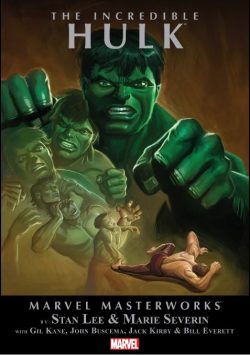
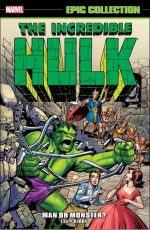
Incredible Hulk Epic Collection: Man or Monster?


By Stan Lee, Jack Kirby, Steve Ditko, Dick Ayers & various (Marvel)
ISBN: 978-0-7851-9600-6

Chronologically collecting the Jade Juggernaut’s earliest appearances, this titanic tome (available as a hefty paperback and relatively weightless digital edition) gathers Incredible Hulk #1-6, Fantastic Four #2 and 25-26, Avengers #1-3 and 5, Amazing Spider-Man #14, Tales to Astonish #59 and a memorable clash with Thor from Journey into Mystery #112: cumulatively spanning early 1962 to the end of 1964.

The Incredible Hulk was new-born Marvel’s second new superhero title, although technically Henry Pym debuted earlier in a one-off yarn in Tales to Astonish #27 (January 1962). However, he didn’t become a costumed hero until the autumn, by which time Ol’ Greenskin was not-so-firmly established.

The Hulk smashed right into his own bi-monthly comic and, after some classic romps by Young Marvel’s finest creators, crashed right out again. After six issues the series was cancelled and Lee retrenched, making the Gruff Green Giant a perennial guest-star in other Marvel titles until such time as they could restart the drama in their new “Split-Book” format in Tales to Astonish where Ant/Giant-Man was rapidly proving to be a character who had outlived his time.

Cover-dated May 1962, the Incredible Hulk #1 sees puny atomic scientist Bruce Banner, sequestered on a secret military base in the desert, perpetually bullied by the bombastic commander General “Thunderbolt” Ross as the clock counts down to the World’s first Gamma Bomb test.

Besotted by Ross’s daughter Betty, Banner endures the General’s constant jibes as the timer ticks on and tension increases.

At the final moment Banner sees a teenager lollygagging at Ground Zero and frantically rushes to the site to drag the boy away. Unknown to everyone, the assistant he’s entrusted to delay the countdown has an agenda of his own…

Rick Jones is a wayward but good-hearted kid. After initial resistance he lets himself be pushed into a safety trench, but just as Banner prepares to join him The Bomb detonates…

Somehow surviving the blast, Banner and the boy are secured by soldiers, but that evening as the sun sets the scientist undergoes a monstrous transformation. He grows larger; his skin turns a stony grey…

In six simple pages that’s how it all starts, and no matter what any number of TV or movie reworkings or comicbook retcons and psycho-babble re-evaluations would have you believe that’s still the best and most primal take on the origin. A good man, an unobtainable girl, a foolish kid, an unknown enemy and the horrible power of destructive science unchecked…

Written by Stan Lee, drawn by Jack Kirby with inking by Paul Reinman, ‘The Coming of the Hulk’ barrels along as the man-monster and Jones are kidnapped by Banner’s Soviet counterpart the Gargoyle for a rousing round of espionage and Commie-busting. In the second issue the plot concerns invading aliens, and the Banner/Jones relationship settles into a traumatic nightly ordeal as the good doctor transforms and is locked into an escape-proof cell whilst the boy stands watch helplessly. Neither ever considers telling the government of their predicament…

‘The Terror of the Toad Men’ is formulaic but viscerally and visually captivating as Steve Ditko inks Kirby; imparting a genuinely eerie sense of unease to the artwork. Incidentally, this is the story where the Hulk inexplicably changed to his more accustomed Green persona…

Although back-written years later as a continuing mutation, the plain truth is that grey tones caused all manner of problems for production colourists so it was arbitrarily changed to the simple and more traditional colour of monsters.

The third issue presented a departure in format as long, chaptered epics gave way to complete short stories. Dick Ayers inked Kirby in the transitional ‘Banished to Outer Space’ which radically altered the relationship of Jones and the monster, with the story thus far reprised in 3-page vignette ‘The Origin of the Hulk’ after which Marvel mainstay of villainy the Circus of Crime debuts in ‘The Ringmaster’. The Hulk goes on an urban rampage in #4’s first tale ‘The Monster and the Machine’ before aliens and Commies combine in the second escapade ‘The Gladiator from Outer Space!’

The Incredible Hulk #5 is a joyous classic of Kirby action, introducing immortal Tyrannus and his underworld empire in ‘The Beauty and the Beast!’ whilst those pesky Commies came in for another drubbing when the Jolly Green freedom-fighter prevents the invasion of Lhasa in ‘The Hordes of General Fang!’

Lee grasped early on the commercial impact of cross-pollination and – presumably aware of disappointing sales – inserted the Jade Juggernaut into his top selling title next.

Fantastic Four #12 (March 1963) featured an early crossover as the team were asked to help the US army capture ‘The Incredible Hulk’: a tale from Lee, Kirby & Ayers packed with intrigue, action and bitter irony as  series of spectacularly destructive sabotage incidents puts the heroes on the trail of a monster when they should have been looking at spies…

Despite the sheer verve and bravura of these simplistic classics – some of the greatest, most rewarding comics nonsense ever produced – the Hulk series was not doing well, and Kirby moved on to more appreciated arenas. Steve Ditko handled all the art chores for #6: another full-length epic and an extremely engaging one.

‘The Incredible Hulk Vs the Metal Master’ has astounding action, sly and subtle sub-plots and a thinking man’s resolution, but nonetheless the title died with the issue, also dated March.

Another comic debuted that month and offered a life line to the floundering Emerald Outcast.  ‘The Coming of the Avengers’ is one of the cannier origin tales in comics. Instead of starting at a zero point and acting as if the reader knew nothing, creators Lee, Kirby & Ayers assumed that interested parties had at least a passing familiarity with Marvel’s other titles, and wasted very little time or energy on introductions in the premiere issue.

In Asgard Loki, god of evil, is imprisoned on a dank islet but still craves vengeance on his step-brother mighty Thor. Observing Earth the villain finds the monstrous Hulk and engineers a situation wherein the man-brute goes on a rampage, hoping to trick the Thunder God into battling the bludgeoning brute. When sidekick Rick Jones radios the Fantastic Four for assistance, Loki diverts the transmission so they cannot hear it and expects his mischief to quickly blossom. However. other heroes pick up the SOS – namely Iron Man, Ant Man and the Wasp.

As the costumed champions on the desert converge to search for the Hulk, they realize something’s amiss…

This terse and compelling yarn is Lee & Kirby at their bombastic best, and one of the greatest stories of the Silver Age (it’s certainly high in my own top ten Marvel Tales of all time!) and is promptly followed by ‘the Space Phantom’ (Lee, Kirby & Reinman), another unforgettable epic, in which an alien shape-stealer almost destroys the group from within.

Ever-changing, the tale ends with the volatile Hulk quitting the team only to return in #3 as a villain in partnership with ‘Sub-Mariner!’ This globe-trotting romp delivered high energy thrills and one of the best battle scenes in comics history.

Three months later Fantastic Four #25 featured a cataclysmic clash that had young heads spinning in 1964 and pretty much ever since. Inked by George Roussos, ‘The Hulk Vs The Thing’ and concluding tale ‘The Avengers Take Over!’ in FF #26 offered a fast-paced, all-out Battle Royale as the disgruntled man-monster comes to New York in search of sidekick Rick with only an injury-wracked FF in the way of his destructive rampage.

A definitive moment in the character development of the Thing, the action amplifies when a rather stiff-necked and officious Avengers team horns in claiming jurisdictional rights on “Bob” Banner (this tale is plagued with pesky continuity errors which would haunt Lee for decades) and his Jaded Alter Ego.

Notwithstanding the bloopers, this is one of Marvel’s key moments and still a visceral, vital read.

Over in Avengers #5, ‘The Invasion of the Lava Men!’ (Lee, Kirby & Reinman) revealed another incredible romp as Earth’s Mightiest battled superhuman subterraneans and a lethally radioactive mutating mountain with the unwilling assistance of the Hulk… his last appearance there for many months…

The next cameo came in Amazing Spider-Man #14 (July 1964): an absolute milestone as a hidden criminal mastermind debuted by manipulating a Hollywood studio into making a movie about the wall-crawler. Even with guest-star opponents such as the Enforcers the Incredible Hulk steals all the limelight in ‘The Grotesque Adventure of the Green Goblin’ (by Lee & Ditko) which is only otherwise notable for introducing Spider-Man’s most perfidious and flamboyant enemy (sarcasm alert!).

The second chapter of the man-monster’s career was about to take off and Tales to Astonish #59 (September) offered a bombastic prologue as ‘Enter: The Hulk!’ (Lee, Ayers & Reinman) sees the Avengers inadvertently inspiring Giant-Man to hunt down the Green Goliath.

Although the Human Top devilishly engineered that blockbusting battle, Lee was the real mastermind, as with the next issue The Hulk began starring in his own series and on the covers whilst Giant-Man’s adventures shrank back to a dozen or so pages.

This wonderfully economical compendium of wonders closes with the lead story from Journey into Mystery #112 (January 1965). ‘The Mighty Thor Battles the Incredible Hulk!’ is a glorious gift to all those fans who perpetually ask “Who’s stronger…?” Possibly Kirby and Chic Stone’s finest artistic moment, it details a private duel between the two super-humans that occurred during that free-for-all between Earth’s Mightiest, Sub-Mariner and Ol’ Greenskin in Avengers #3. The raw power of that tale is a perfect exemplar of what makes the Hulk work and would an ideal place to close proceedings but fans and art lovers can enjoy further treats in the form of assorted House Ads, original artwork by Kirby and Ditko, a gallery of classic Kirby covers modified by painter Dean White (originally seen on assorted Marvel Masterworks editions), plus reproduced Essentials collection and Omnibus covers by Bruce Timm and Alex Ross…

Hulk Smash! He always was and with material like this he always will be.
© 1962, 1963, 1964, 1965, 2016 Marvel Characters, Inc. All rights reserved.
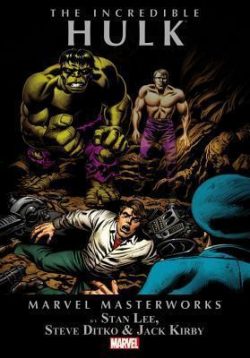
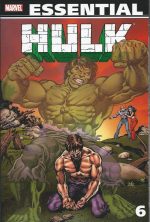
Essential Hulk volume 6


By Len Wein, Roger Stern, David Anthony Kraft, Gerry Conway, Chris Claremont, Sal Buscema, Herb Trimpe, George Tuska, Keith Pollard, Jim Starlin & various (Marvel)
ISBN: 978-1-7851-4540-0

Bruce Banner was a military scientist accidentally caught in a gamma bomb blast of his own devising. As a result, stress and other factors cause him to transform into a giant green monster of unstoppable strength and fury. He was one of Marvel’s earliest innovations and first failure but after an initially troubled few years finally found his size-700 feet and a format that worked, becoming one of the company’s premiere antiheroes and most popular features.

During the 1960s, artist Herb Trimpe had made the character his own; the Jack Kirby-based “house” art-style he initially employed quickly evolving into often startlingly abstract mannerism, augmented by an unmatched facility for drawing technology – especially honking great ordnance and vehicles – and, crucially, who could possibly deny the sheer cathartic reader-release rush of those spectacular “Hulk Smash!” moments…

However, by the time of the tales in chronologically complete monochrome mammoth (re-presenting Incredible Hulk #201-225 and Incredible Hulk King Size Annual #6, July 1976-July 1978) the artistic reins had passed to another illustrator who would become inextricably associated with the Jade Juggernaut whilst writer Len Wein continued to insert fresh ideas and characters, redefining the man-monster for the modern age…

The blockbusting battle-action starts with ‘The Sword and the Sorcerer!’ (illustrated by regular art-team Sal Buscema & Joe Staton) wherein the Hulk found himself in a perilously primitive world.

He had been miniaturised and inserted into the brain of Major Glen Talbot by former pursuers Dr. Leonard Samson and General Thaddeus Ross to restore the mind of Banner’s comatose rival for Betty Ross-Talbot‘s affections. The radical psycho-surgery was not without complications, however, and at the moment of his greatest triumph and sacrifice the Man-Monster began uncontrollably shrinking beyond the ability of Samson’s team to reach him…

He stabilised on a sub-atomic world long enough to liberate a primitive people from the domination of a brutal despot (and demon-possessed pawn) Kronak the Barbarian before starting to diminish once more. His last stop was the promised land of his beloved and long-lost alien queen Jarella…

Sadly ‘Havoc at the Heart of the Atom’ revealed how his last visit had rendered the world tectonically unstable and shattered the civilisation which once had the power to blend Banner’s mind with the Hulk’s body. Moreover the once-gentle population had turned on the queen they held responsible…

Reunited with his beloved, the simplistic brute swore to fix the problem and was soon embroiled with the antediluvian horror who first hijacked him to the Microverse and who still craved bloody revenge…

Once again evil was defeated as the ‘Assault on Psyklop!’ led to another crushing defeat for the vile insectoid and a guardedly happy ending for the man-brute as a rescue attempt from Earth brought the Hulk home, carrying the astounded Jarella with him…

Herb Trimpe returned in #204 to pencil a tale of time-bending might-have-beens as brilliant theoretician Kerwin Kronus offered to eradicate Banner’s problems by turning back time and undoing the accident which created the Hulk. Sadly, the experiment succeeded all too well: briefly forming an alternate timeline where original sidekick Rick Jones died and the time-master became an even greater menace to reality. Banner/Hulk made a heartbreaking sacrifice to close that ‘Vicious Circle’…

The evergreen artist – aided by inkers Frank Giacoia & Mike Esposito – remained to illustrate David Anthony Kraft’s ‘Beware the Beehive!’ from Incredible Hulk King Size Annual #6, wherein a band of mad scientists attempted to recreate their greatest success and failure.

Morlak, Hamilton, Shinsky and Zota were a rogue science collective known as the Enclave and from their hidden “Beehive” had spawned puissant artificial man Him (latterly Adam Warlock). Here and now, three of them reunite for another go at building a god they can control, but when they abduct Dr. Stephen Strange to replace their missing fourth, the magician summons the Jade Juggernaut to save him from the experiment’s inevitable consequences: a marauding, compassionless super-slave dubbed Paragon whose first tasks are to eradicate Strange and subdue mankind.

Happily, after a border-shattering, army-crunching global rampage, that’s when the Hulk kicks the wall in and goes to work…

‘Do Not Forsake Me!’ in Hulk #205 saw Wein, Buscema & Staton back to depict the most tragic moment in the Green Goliath’s tortured life as Jarella sacrifices herself to save a child from rampaging robbery robot Crypto-Man, leaving the bereft Hulk ‘A Man-Brute Berserk!’

His grief-stricken trail of destruction leads from Gamma Base, New Mexico all the way to New York City where even his friends and allies are unable to calm the green gargantuan, leading to a brutal battle ‘Alone Against the Defenders!’ who finally realise compassion is the only method that will work against their traumatised foe…

Hulk #208 finds ‘A Monster in Our Midst!’ as Bruce finally rejects ending his pain-wracked existence and begins a new and hopefully stress-free life where his alter ego will never be seen again. That resolve only lasts as long as it takes the maniacal Crusher Creel – freed as a consequence of the Jade Juggernaut’s most recent rampage – to accept a commission from a triumvirate of hooded schemers who want the Hulk dead…

However, even though ‘The Absorbing Man is Out for Blood!’ the super-thug is no match for Hulk’s unfettered fury, but his well-deserved defeat results in Banner collapsing unconscious in alley where he is eventually found by a mystic do-gooder in search of an ally…

With #210, Ernie Chan became new regular inker as ‘And Call the Doctor… Druid!’ sees both Banner and the Hulk crucial to a plan to stop immortal mutant Maha Yogi, his vast mercenary army and alien bodyguard Mongu before they complete their preparations for world domination…

Although the battles of ‘The Monster and the Mystic!’ are a close-run thing, virtue is eventually victorious, but that makes little difference to the Hulk’s once-companion Jim Wilson as he hitch-hikes across America, utterly unaware that he is the target of a vicious criminal conspiracy…

The plots hatch once Jim reaches New York where his hidden tormentors decide that he must be ‘Crushed by… the Constrictor!’ but neither they nor their ruthless high-tech hitman expected the Hulk to intervene…

With a friend and confidante who knows all his secrets, you’d expect Banner’s life to get a little easier, but the authorities will never stop hunting the Hulk, who initially realises ‘You Just Don’t Quarrel with the Quintronic Man!’ (inked by Tom Palmer) before bouncing back to trash the formidable five-man mecha suit.

As Chan returns this battle leads to a frenzied clash with a new hyper-powered hero determined to make his name by defeating America’s most terrifying monster in ‘The Jack of Hearts is Wild!’

Macabre old enemy the Bi-Beast is resurrected in #215; still hungry to eradicate humanity in ‘Home is Where the Hurt Is’ and close to succeeding after seizing control of SHIELD’s Helicarrier. Only desperate action by General Ross can save the day and the old soldier uses the carrier’s tech to shanghai Banner, letting nature take its course and hoping that the right monster wins the inevitable earthshaking battle before a ‘Countdown to Catastrophe!’ leaves the planet a smoking ruin…

A moodily poignant change of pace graces #217 as ‘The Circus of Lost Souls!’ sees the shell-shocked Hulk lost somewhere in Europe, defending a band of carnival freaks from the crooked depredations of the Ringmaster and his Circus of Crime: a solid demarcation as Wein moves away from scripting in favour of simple co-plotting, allowing Roger Stern to find his own big green feet to guide the Green Goliath’s future…

It all begins with ‘The Rhino Doesn’t Stop Here Anymore’ (#218 by Wein, Stern, George Tuska, Keith Pollard & Chan) as super-strong psychologist Doc Samson takes centre stage battling the ruthless Rhino whilst in #219 Banner learns ‘No Man is an Island!’ (Wein, Stern, Buscema & Chan) after hiring on as a deck hand on a freighter, only to have it sunk from under him by submarine-based pirate Cap’n Barracuda.

Washed ashore on a desert atoll, Hulk is befriended by a deluded individual who believes himself to be Robinson Crusoe, but as events unfold an even stranger truth is revealed. After Barracuda captures the madman, it is to pluck the secret of making monsters from his broken mind but the cruel corsair has completely underestimated the ferocious loyalty and compassion of the Hulk, who unleashes devastating catastrophic ‘Fury at 5000 Fathoms!’

With Stern in complete authorial control, Sal Buscema is joined by Alfredo Alcala for #221’s ‘Show Me the Way to Go Home’ as the still all-at-sea Banner is rescued from drowning by marine explorer Walt Newell who ferries his exhausted passenger back to New York where he is recognised as Bruce Banner. Realising he has unleashed the Hulk on a major population centre, Newell exposes his own secret identity as sub-sea superhero Stingray and pursues his former guest. The battle is painfully one-sided and Stingray is near death when Jim Wilson intervenes, saving the marine crusader’s life but only at the cost of Hulk’s trust…

Wein returned for one last hurrah in #222, aided and abetted by Jim Starlin & Alcala for a creepy horror yarn as the Green Goliath tears through another unfortunate army unit before being gassed into unconsciousness. Banner awakens in the care of two children living in a cave, but they’re not surprised by the fugitive’s transformations: not since the radioactive stuff changed their little brother.

Of course now people have started disappearing and although they haven’t grasped the truth of it yet, Bruce instantly grasps what is involved in ‘Feeding Billy’ and what his intended role is…

Now firmly established, Stern began an ambitious storyline in Incredible Hulk #223 as ‘The Curing of Dr. Banner!’ (illustrated by Sal Buscema & Josef Rubinstein) saw the monster’s human half spontaneously purged of the gamma radiation that triggered the changes.

Heading for Gamma Base to verify his findings, Bruce discovers the entire facility has been taken over: mind-controlled by his ultimate archenemy…

As the crowing villain makes everyone ‘Follow the Leader!’, Doc Samson and General Ross escape and beg Banner to again sacrifice his humanity for the sake of mankind. Only the Hulk has ever defeated the Leader and their only hope is to recall and harness the beast’s unstoppable fury. Tragically, the halfway measures fail at the final moment and the villain has cause to ask ‘Is There Hulk after Death?’

With Banner seemingly deceased, his compatriots tried to jump start his system with another overwhelming dose of gamma rays and soon have cause to regret the resurrection of the original Gamma Goliath…

To Be Continued…

This catastrophically cathartic tome also includes pages taken from the Marvel Universe Handbook giving the lowdown on Jarella and the Constrictor plus an alternative cover to Hulk #206.

The Incredible Hulk is one of the most well-known comic characters on Earth, and these stories, as much as the movies, cartoons, TV shows, games, toys and action figures are the reason why. For an uncomplicated, earnestly vicarious experience of Might actually being Right, you can’t do better than these exciting episodes, so why not Go Green – even if it’s only in monochrome and in your own delirious head?

1976, 1977, 1978, 2010 Marvel Characters, Inc. All rights reserved.
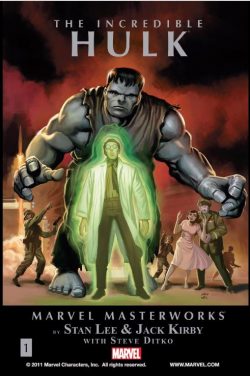
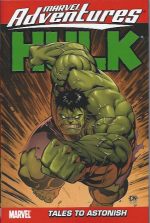
Marvel Adventures Hulk volume 4: Tales to Astonish


By Peter David, Juan Santacruz, Raul Fernandez & various (Marvel)
ISBN: 978-0-7851-2981-3

In 2003 the ever-expanding House of Ideas instituted the Marvel Age line: an imprint updating classic original tales and characters for a new and younger readership.

The enterprise was tweaked in 2005, evolving into Marvel Adventures with core titles morphing into Marvel Adventures: Fantastic Four and Marvel Adventures: Spider-Man. The tone was very much that of the company’s burgeoning TV cartoon franchises, in delivery if not name. Supplemental series included Super Heroes, The Avengers, Iron Man and Hulk. These ran until 2010 when they were cancelled and replaced by new volumes of Marvel Adventures: Super Heroes and Marvel Adventures: Spider-Man.

Most of the re-imagined tales have been collected in cheerfully inviting digest-sized compilations such as this one which features the final four mini-epics from the Green Giant’s own short-lived series. In the original mainstream continuity Bruce Banner was a military scientist accidentally caught in a gamma bomb blast of his own devising. As a result he would unexpectedly transform into a giant green monster of unstoppable strength and fury when distressed or surprised.

Alternating between occasional hero and mindless monster, he rampaged across the Marvel Universe for years, finally finding his size 700 feet to become one of young Marvel’s most resilient stars.

A hugely popular character both in comics and greater global media beyond the printed page, he has often undergone radical changes in scope and direction to keep his stories fresh and his exploits explosively compelling…

Culled from Marvel Adventures Hulk #13-16 (covering September to December 2008) this quirky quartet of tales features Banner and the Hulk in essentially the same roles older fans will remember: a brilliant scientist and hunted man who turns into a fury-fuelled green gargantuan when provoked. The major difference of this version – other than the updating to modern times – is that here former juvenile delinquent Rick Jones was his lab-assistant when the gamma blast hit Banner and joins in his fugitive flight across America bringing a lab monkey (dubbed “Monkey”) which he stole before escaping from the army units of general Thaddeus “Thunderbolt” Ross…

For months the tortured trio have been making their way across the country staying below the radar, seeking a cure for Bruce’s condition and somehow always stumbling across rampaging villains and conflicted heroes who don’t know whether to help the Hulk or fight him…

If you’re of a compulsive disposition continuity-wise, these breezily bombastic blockbusters all take place on Marvel’s Earth-20051 but you should also be aware of one other thing: outrageous humour – from broad slapstick to surreal whimsy to bitingly sharp continuity in-jokes – plays a big part in the proceedings…

Written throughout by Peter David, winningly illustrated by Juan Santacruz & Raul Fernandez, with colours from Angel Marin and letters by Dave Sharpe, events kick off with ‘Are You My Mummy?’ as Bruce, Rick and Monkey sneak into New York City only to find the populace have been turned into shambling zombies wrapped in rotting bandages – even the Silver Surfer, Fantastic Four, X-Men and Mighty Avengers…

When the enwrapped heroes attack Bruce “Hulks out” and battles his way to Central Park, leaving Rick to be chased into a museum. Here the terrified teen discovers mutant maniac the Living Pharaoh is behind the catastrophe, but after Monkey swipes the villain’s control wand the mutant uncontrollably shifts into cosmic powerhouse the Living Monolith.

This only gives the frustrated Hulk a better, bigger target to smash…

The fugitives are in town to surreptitiously use the Gamma-tech and atomic devices of Bruce’s old mentor Professor Trimpe in their quest for a cure, but as they break into his lab in ‘Small Doubts’ they are disturbed by janitor Sam Sterns and, in the melee that follows, the machinery goes wild and Banner goes green and the trio are sucked through a wormhole into a subatomic world.

Before long they’re battling to save its benighted, downtrodden masses from the emotion-warping tyrant Psycho-Man…

Eventually catapulted back to their own size and situation, they’re just in time to rescue the United Nations’ delegates and diplomats from ‘Following the Leader’. The release of all that gamma energy had turned floor-sweeper Sterns into an evil, giant-headed super-genius able to grow androids in instants and mind-control humans (especially politicians) who knew he could rule the world more efficiently that self-serving humans…

Thankfully Trimpe’s all-purpose accelerator in conjunction with Hulk’s unreasoning anger and pummelling fists are enough to handle the crisis and, after dumping megalomaniac and his plastic minions into the Microverse, Rick, Bruce and Monkey can finally try to sort out that cure…

Tragically that’s not to be as a sudden anti-nuclear protest upsets the applecart. Although the distraction allows our heroes to sneak into the lab, they are caught by sadistic spy Emil Blonsky. Impersonating a security guard, the killer had planned on swiping some plutonium, but now he’s prepared to settle on simply blowing up the nuclear plant…

In the resulting struggle Trimpe’s machines trigger again and Bruce is mutated to ‘The 7th Level’ into an ever more monstrous Hulk.

Blonsky fares even worse, metamorphosed into a ghastly gamma-spawned Abomination able to pound the Hulk to pulp and still determined to turn the entire state into a radioactive hole in the ground…

Fast-paced, enthralling and deliciously witty, these riotous super-sagas are augmented by a pulse-pounding cover gallery by Sean Gordon Murphy, David Nakamura & Guru eFX, Santacruz & Vicente Cifuentes, Tom Grummett, Gary Martin & Moose Bauman.

Never the success the company hoped, Marvel Adventures was superseded in 2012 by specific comics tied to Disney XD TV shows designated “Marvel Universe cartoons”, but these kid-friendly comics collections are still an intriguing, astonishingly entertaining and more culturally accessible means of introducing long-established stars and concepts to newcomers and represent a fantastic reservoir of fresh and entertaining Fights ‘n’ Tights fun for all lovers of the genre.
© 2008 Marvel Characters, Inc. All rights reserved.
Incredible Hulk: Boiling Point


By Bruce Jones, Lee Weeks, Tom Palmer & various (Marvel)
ISBN: 978-0-7851-0905-1

Bruce Banner was a military scientist accidentally caught in a gamma bomb blast of his own devising. As a result he would unexpectedly transform into a giant green monster of unstoppable strength and fury when distressed or surprised. As both occasional hero and mindless monster he rampaged across the Marvel Universe for years, finally finding his size 700 feet and a format that worked, becoming one of young Marvel’s most resilient features.

A hugely popular character both in comics and greater global media beyond the printed page, he has often undergone radical changes in scope and direction to keep his stories fresh and his exploits explosively compelling…

One of the most impressive runs of was by noted thriller and horror writer Bruce Jones (see especially his impressive Hitchcock pastiche Somerset Holmes or sci fi sagas Arena and Silverheels) who injected some long-neglected suspense and a sense of building menace back into the saga, by referencing both classic 1960s cult TV series The Fugitive and the Jade Juggernaut’s own small screen hit from the 1970s…

This slim tome (re-presenting issues #40-44 of the second Incredible Hulk comicbook volume from July to October 2002) combines his moody, humanistic writing with the understatedly workmanlike yet potently effective illustration of Lee Weeks & Tom Palmer to stunning effect in this beguiling middle-sequence of a shocking extended saga of shadowy conspiracies and government malfeasance.

Previously: perpetually running from the authorities and himself, Banner had finally lost all hope in the aftermath of one of the Hulk’s bouts of mindless destruction which devastated Chicago and resulted in the death of a little boy, Ricky Myers. However, as the dejected scientist fled across America, one faltering step ahead of the authorities and his own battered conscience, he became aware of an incredible conspiracy and realised all was not as it seemed.

For one thing, a warring team of professional assassins were hunting him for an as-yet unknown client…

Both Slater and his rival/partner Sandra Verdugo had been co-opted by a cabal of Men in Black with an unspecified interest in ramping up anti-Hulk hysteria. They also wanted Banner taken alive and had gifted their agents with the power of resurrection…

Their exhausted target meanwhile had found a way to keep his rampaging Other under control and away from the world, even though his pursuers had often pushed him to the very brink…

The relentless pursuit resumes in rural Miser, Colorado where a tense hostage situation suddenly becomes a major crisis. It’s bad enough that a pink-slip has turned one overstressed wage-slave into a gun-toting nut-job holding a group of terrified citizens in the town’s only convenience store. It’s a potential problem that shell-shocked big city ex-cop and former SWAT-negotiator Sally Riker is a suicidal burnout with PTSD. It’s a terrifying prospect that one cop is down and bleeding out, with only an eerily calm drifter keeping the deranged gunman talking.

However, ‘Boiling Point’ is only reached when a taskforce of Feds inexplicably invade the town… As they brusquely take charge, in side the Ready-Mart, the strangely-placid stranger uses his pre-arranged safe-word code to tell Sally that they’re all impostors…

‘Poker Face’ opens with imposing FBI Agent Pratt briefing his shadow team to trigger Banner’s change to the Hulk, whilst “allowing” Sally to enter the store to negotiate all the captives’ release. With all his ducks in place, Pratt thinks he can end any witness problems with a Waco-style “accidental” exchange of gunfire, but has not taken into account Riker’s paranoia or Banner’s instincts…

When the Hulk at last manifests in ‘All Fall Down’, Pratt breaks out the futuristic weaponry he’s been hiding; primed to get a gamma-ray blood-sample before taking the beast captive…

With Miser razed by the Green Gargantuan and Pratt’s team killed by their murderous boss, the exultant agent then heads off to meet his mysterious masters, with a heavily tranquilised Banner in tow. The triumphant operative is confident his crimes will never be reported, but has not counted on Sally Riker’s survival skills and hunger for vengeance and answers…

Before too long she freed the Hulk and Pratt is faced with the cost of his sins as Sally, Banner and the Beast teach him the danger of unleashing ‘The Beast Within’…

These tension-packed tales focus primarily on Banner and judiciously limit the use of the Jade Juggernaut to the point that the monster almost becomes a ghost: terrifying, dreaded but largely unseen. This Hulk is an oppressive force of calculated salvation and last resort rather than mere reader-friendly graphic destruction and gratuitous gratification.

Like all great monsters he lurks in the shadows, waiting for his moment…

One of the most underrated and impressive Hulk yarns of all, this book is the middle of three self-contained volumes which utterly reinvigorated the character of both Banner and his Altered Ego, cleverly refocusing the series for the 21st century. If you’re new to the series or looking for an excuse to jump back on, this book – and its companions – are for you…
© 2002, 2003 Marvel Characters Inc. All rights reserved.