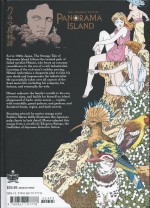
The Strange Tale of Panorama Island


By Edogawa Rompo, adapted and illustrated by Suehiro Maruo, translated by Ryan Sands & Kyoko Nitta (Last Gasp)
ISBN: 978-0-86719-777-8

Win’s Christmas Gift Recommendation: Beautiful, seductive and intoxicating… 10/10

Edogawa Rompo is hailed as the Godfather of Japanese detective fiction – his output as author and critic defining the crime thriller from 1923 to his death in 1965. Born Tarō Hirai, he worked under a nom-de-plume based on his own great inspiration, Edgar Allen Poe, penning such well-loved classics as The Two-Sen Copper Coin, The Stalker in the Attic, The Black Lizard and The Monster with 20 Faces as well as many tales of his signature hero detective Kogoro Akechi, notional leader of the stalwart young band Shōnen tantei dan (the Boy Detective’s Gang).

He did much to popularise the concept of the rationalist observer and deductive mystery-solver. In 1946 he sponsored the detective magazine Hōseki (Jewels) and a year later founded the Detective Author’s Club, which survives today as the Mystery Writers of Japan association.

Although his latter years were taken up with promoting the genre, producing criticism, translation of western fiction and penning crime books for younger audiences, much of his earlier output (Rampo wrote twenty novels and lots of short stories) were dark, sinister concoctions based on the trappings and themes of ero guro nansensu (“eroticism, grotesquerie, and the nonsensical”) playing into the then-contemporary Japanese concept of hentai seiyoku or “abnormal sexuality”.

From that time comes this particular adaptation, originally serialised in Enterbrain’s monthly magazine Comic Beam from July 2007-January 2008.

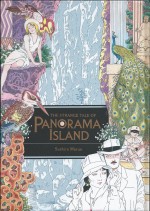
Panorama-tō Kidan or The Strange Tale of Paradise Island was a vignette released in 1926, adapted here with astounding flair and finesses by uncompromising illustrator and adult manga master Suehiro Maruo.

A frequent contributor to the infamous Japanese underground magazine Garo, Maruo is the crafter of such memorable and influential sagas as Ribon no Kishi (Knight of the Ribbon), Rose Coloured Monster, Mr. Arashi’s Amazing Freak Show, The Laughing Vampire, Ultra-Gash Inferno, How to Rake Leaves and many others.

This is a lovely book. A perfect physical artefact of the themes involved, this weighty oversized (262x187mm) monochrome hardback has glossy full-colour inserts, creator biographies and just feels like something extra special, whilst it compellingly chronicles an intriguingly baroque tale of greed, lust, deception and duplicity which begins when starving would-be author Hitomi Hirosuke reads of the death of the Taisho Emperor.

The shock of losing the revered ruler (December 26th 1926) echoed through the entire nation and forces the failing writer to brutally reassess his life.

He finds himself wanting…

At another fruitless meeting with his editor Ugestu, Hitomi learns that an old friend, Genzaburo Komoda, has passed away. At college the boys were implausibly inseparable: the poor but ambitious kid and the heir to one of the greatest industrial fortunes in Japan. Perhaps it was because they looked and sounded exactly alike: doppelgangers nobody could tell apart…

The presumed cause of death was the asthma which had plagued the wealthy scion all his life and Hitomi, fuelled by self-loathing and inspired by Poe’s tale “The Premature Burial”, hatches a crazy scheme…

Faking his own suicide the writer leaves his effects to Ugestu before travelling to Kishu and immediately beginning his insane plot. Starving himself the entire time, Hitomi locates his pal’s grave, disposes of the already mouldering body and dons the garments and jewellery of Komoda. He even smashes out a front tooth and replaces it with the false one from the corpse…

His ghastly tasks accomplished, the starving charlatan simply collapses in a road where he can be found…

The news spreads like wildfire and soon all Komoda’s closest business associates have visited the miraculous survivor of catalepsy. The intimate knowledge Hitomi possesses combined with the “shock and confusion” of his miraculous escape is enough to fool even aged family retainer Tsunoda, and the fates are with him in that the widow Chiyoko has gone to Osaka to get over her loss. Of course she will rush back as soon as she hears the news…

However with gifts and good wishes flooding in, even Chiyoko is seemingly fooled and the fraudster begins to settle in his new skin. Just to be safe, however, he keeps the wife at a respectful and platonic distance. Comfortably entrenched, he begins to move around the Komoda fortune.

Hitomi the starving writer’s great unfinished work was The Tale of RA, a speculative fantasy in which a young man inherits a vast fortune and uses it to create an incredible, futuristic pleasure place of licentious delight. Now the impostor starts to make that sybaritic dream a reality, repurposing the family wealth into buying an island, relocating its inhabitants and building something never before conceived by mind of man…

Fobbing off all questions with the lie that he is constructing an amusement park that will be his eternal legacy, he populates the marvel of Arcadian engineering, landscaping, and optical science with a circus of wanton performers, living statues of erotic excess and a manufactured mythological bestiary.

He even claims that the colossal expenditure will kick-start the local economic malaise, but for every obstacle overcome another seems to occur. Moreover he cannot shift the uneasy feeling that Chiyoko suspects the truth about him…

Eventually however the great dream of plutocratic grandeur, lotus-eating luxury and hedonistic sexual excess is all but finished and “Komoda” escorts his wife on a grand tour of the wondrous celebration of debauched perversity that is his personal empire of the senses.

Once ensconced there he ends his worries of Chiyoka exposing him, but all too soon his PanoramaIsland receives an unwanted visitor.

Kogoro Akechi has come at the behest of the wife’s family and he has a few questions about, of all things, a book.

It seems that an editor, bereaved by the loss of one of his protégés, posthumously published that tragic young man’s magnum opus to celebrate his wasted life: a story entitled The Tale of RA…

This dark compelling morality play is realised in a truly breathtaking display of artistic virtuosity by Maruo, who combines clinical detail of intoxicating decadence with vast graphic vistas in a torrent of utterly enchanting images, whilst never allowing the visuals to overwhelm the underlying narrative and rise and fall of a boldly wicked protagonist…

Stark, stunning, classically clever and utterly adult The Strange Tale of Paradise Island is one of the best-looking, most absorbing crime thrillers I’ve seen this century, and no mystery loving connoisseur of comics, cinema or prose should miss it.

© 2008, 2013 HIRAI Rutaro, MARUO Suehiro. All rights reserved. English translation © 2013 Last Gasp.
This book is printed in ‘read-from-back-to-front’ manga format.

Tropic of the Sea


By Satoshi Kon, translated by Maya Rosewood (Vertical)
ISBN: 978-1-939130-06-8

In the West we’re used to single manga stories filling entire bookcases: epic sagas filling thousands of pages with brilliant, lovely, exciting but generally very long tales on every theme and subject under the sun.

Every so often, however, something comes along which is more familiar to English sensibilities, such as this short, sharp, sinister shocker from screenwriter, artist, animator and Director Satoshi Kon.

The author was born in Kushiro Subprefecture, Hokkaido in 1963 and after High School attended MusashinoArtUniversity’s Graphic Design department from 1982-1987. Whilst there he spent a lot of time studying foreign film.

Whilst still a student he released the short manga Toriko and became an assistant to Katsuhiro Otomo, dividing his time between comics and animation. In 1990 he produced the single volume Kaikisen we’re concentrating on here, before graduating more fully toward film as scripter, layout artist and animator.

Amongst his credits are World Apartment Horror, Roujin Z, Patlabor 2: The Movie, Magnetic Rose, Perfect Blue Millennium Actress, Tokyo Godfathers and others. What would have certainly been a stellar career in either or both art forms was cruelly cut short in 2010 when he died tragically young from pancreatic cancer.

As Shinsouban Kaikisen, this eerie yarn was first serialised in Kodansha’s Young Magazine in 1990: eleven episodes between issues #17 and 29, thereafter collected in tankōbon form and again as a Bijutsu Shuppan edition in 1999. That commemorative tome provides the informative Afterword which ends this book describing the author’s path from mangaka to animator.

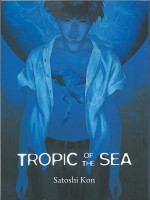
Tropic of the Sea opens on a secluded beach where teenager Yosuke and his dog Fujimaru play before the dutiful son climbs to a hilltop shrine to enact a centuries-old ritual. His joyful morning is then disturbed when his father brings a TV crew into the sacred area.

Yozo Yashiro is the 23rd Head Priest of the Hiratsu Shrine; a thoroughly modern man keenly supporting a major consortium’s ambitious plans to turn the sleepy fishing village of Ade into a modern luxury resort. As such he’s keen on publicity and is happy to disturb the Mermaid’s Egg within the shrine and show it to all the viewers whilst explaining the silly but charming legend attached to it.

Long ago his ancestor found another such egg and promised a mermaid to respectfully care for it. After six decades the egg was returned to the sea and another egg left. In return the sea matron guaranteed calm waters and abundant fishing. This current egg was deposited in the shrine almost exactly sixty years ago…

The televised lecture is interrupted by Yosuke’s furious grandfather who has dragged himself out of hospital to stop the travesty he has just seen. Again the bitter argument begins. Grandfather is a fierce opponent of the proposed resort, whereas the current priest is no believer in his duties, nor the sacrosanct pact between the fishermen and the nonsensical sea-woman.

He does however realise the tourist potential of a Mermaid’s Egg theme park…

The village too is divided into warring camps on the issue. The fishermen see their ancestral livelihoods threatened by the proposed tourist trap whilst shopkeepers imagine thousands of new customers flocking in daily.

As Yosuke and best buddy Tetsu discuss the potential influx of college girls and summer days, they watch a limousine full of Ozaki Construction bigwigs arrive to inspect the monstrous Hotel growing like a giant tumour on the beach, and feel a pang of apprehension…

The egg is now common knowledge and billboards proclaiming “Welcome to Mermaid Country” are everywhere, but the boys’ minds are on more mundane things… but only until they take a dinghy out to the sacrosanct offshore islet Kamijima and catch a tantalising glimpse of something impossible in the water…

It turns out to be only old school friend Nami, back from Tokyo for the summer mermaid festival and taking a playful swim, but Yosuke is still uneasy and oddly unsettled…

With Ade becoming a bustling, money-mad boomtown and the priestly Yozo vigorously pushing villagers into selling their land to the developers, grandfather – despite his illness – is determined to honour the family’s ancient promise, and things take a decidedly dark turn when ambitious corporate development head Kenji Ozaki starts taking an unhealthy interest in the Egg. He also lets slip that Kamijimi will be razed and turned into Marine Land theme park…

He’s too late: by the time his team get to the hilltop shrine the Mermaid’s treasure has vanished. The trail leads to Kamijima where Nami and the boys find grandpa with the Egg in a submerged grotto. It’s the place where the mermaid has come every sixty years to pick up her hatchling and leave a new egg and grandpa has almost killed himself getting it here. Hard on the kids’ heels, however, come Ozaki and his goons.

As the businessman tries to appropriate the gleaming globe a strange waterspout erupts and in the tumult Yosuke badly cuts his hand. The drama soon subsides though, and as they all return to Ade in Ozaki’s launch, the boy is amazed to realise that when he picked up the Egg his wound completely healed…

There’s even stranger news to come as tensions over the Corporation’s full building schemes leak out. In the hospital the doctors cannot understand how grandpa’s terminal stomach cancer has completely gone…

Days pass and already the first wave of tourists are despoiling the previously quiet seaside atmosphere. Nami and Yosuke – no longer sceptical about the Egg – are making plans, but Ozaki is also convinced that the object has some mysterious power and takes steps to claim it for the company even as his bulldozers begin to clear Kamijima.

The fishermen are furious. Their once-abundant catches have dried up and the Mermaid’s Egg festival, crowded with suits and tourist interlopers, degenerates into a massive riot. In the melee, with Yozo’s compliance, Ozaki takes the artefact into his safekeeping, and the stunned, betrayed Yosuke thinks he sees a figure on a rock, waiting in vain for her child to be returned…

As Ozaki’s technicians poke and probe the Egg, the traditional day of surrender comes and goes. Yosuke barely survives an uncanny contact with something beyond the scope of science and, with Nami and Tetsu, determines to retrieve the Egg and return it to its true owner whatever the risk…

A tense clash on a bridge finds the kids surprisingly victorious but it’s too late. The Egg hatches in Yosuke’s hands and at the beach the sea vanishes. It can mean only one thing. A tsunami is coming: a wall of angry wild water to wipe away all the foul fabrications of double-dealing, oath-breaking mankind…

Brooding and pensive, this superb supernatural thriller builds tension with masterful dexterity in beguilingly understated style and Kon’s superb draughtsmanship and meticulous pacing keeps the suspense simmering until the spectacular denouement snatches your breath away. A cracking tale no fiction fan or comics collector should miss – especially as the book also includes a gallery of the beautiful title pages which accompanied the original Young Magazine serialisation.

Tropic of the Sea is a minor masterpiece of modern fantasy fiction and a perfect spooky epic movie in waiting…

© 2013 KON’STONE Inc. All rights reserved.
This book is printed in ‘read-from-back-to-front’ manga format.

Sickness Unto Death volume 1


By Hikaru Asada & Takahiro Seguchi (Vertical)
ISBN: 978-1-939130-09-9

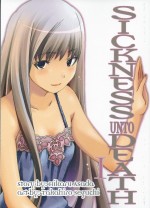
Continuing their line of challenging manga for adult readers, Vertical have begun here a two-volume translation of Takahiro Seguchi’s gripping psychological melodrama Sickness Unto Death: a bleak and enthralling, emotionally complex tale of love, compulsion and dependency turned into spellbinding comics by artist Hikaru Asada.

Inspired by Danish Christian philosopher Søren Kierkegaard’s treatise The Sickness Unto Death, this extremely accessible tale first appeared in Japan as Shi ni Itaru Yamai, serialised in Hakusensha’s fortnightly Seinen magazine Young Animal in 2009, and opens with a Professor standing beside a student over the grave of his first case – and greatest love…

When, as a young man, Kazuma Futaba came to the city to study clinical psychology, he was lucky to find lodgings in an old house. However on his way there he encountered a young girl with white hair suffering a crushing anxiety attack in the street. Although everybody ignored the crippled creature he went to her assistance and happily complied with her desperate need to be held.

‘Emiru’ was impossibly cold to the touch and although both were merely 18 years old she seemed inexorably gripped by an ancient despondency, and overwhelming gloom…

When she recovered he hurried on to find his new digs in a vast old house and met the butler Kuramoto who revealed that the place belonged to the orphan Emiru Ariga, a beautiful vivacious creature who had within the last two years suddenly succumbed to a crushing ‘Despair’ so great it had bleached her hair, caused drastic weight-loss, weakened her heart and caused her body temperature to fall to far below normal. He described it as a “terminal illness of the spirit”…

She spent most of her time locked in her room, drawing monsters and waiting to die…

Intrigued, desperate to help but painfully aware of how inexperienced he was, Futaba examined the compliant, barely-living corpse and determined to somehow help her. At least she showed some animation when he was near. Both Kuramoto and his young mistress wanted Futaba to fix her…

In ‘Haunted Mansion’ the relationship developed further as the student transferred what he learnt by day at school into evening practise. Emiru seemed brighter, even though she believed the house concealed ghosts…

When Kuramoto was called away for a few days, he left Futaba in charge, but after the frail girl spent too long in a bath the boy had panicked and broke in, seeing her painfully thin, nude form for the first time. Embarrassed and confused he dashed out and discovered a mystery room, door nailed shut with heavy planks.

Emiru saw ghosts: a crying, lonely child and a monster with teeth but no face…

Her sleep was perpetually disturbed, and Futaba – after learning about Night Terrors in class – agreed to ‘Sharing a Bed’, even though he was no longer certain his own motives were strictly professional. Nevertheless, resolved to save her he began with a ‘Psych Assessment’, gathering facts and personal history, but learned little more than once she was normal and then suddenly she wasn’t…

Emiru spent increasing time locked in despair, weeping outside the barred room; her traumatic nights eased by Kazuma’s platonic presence, although she felt the spectral presence of ‘The One in the Mansion’ whenever he was away…

In the present, Professor Futaba and student Minami – who thinks she too can see a ghost in the abandoned dwelling – explore the deserted, decrepit mansion which housed his greatest regret. When they stop at a monster drawing scrawled on a wall, it takes him back to those troubled years…

A setback in Emiru’s recovery occurred when another ghost sighting triggered a wave of depression and young Futaba learned of her carefree ‘High School Years’ from fellow psych student Koizumi – a classmate of Emiru when she a healthy, happy, raven-haired ball of wild energy, fun and adventure…

Koizumi believed she became burdened with some terrible secret which overnight transformed her into the frail fading creature Futaba describes, prompting the floundering lad to confer with his tutor Professor Otsuki who lent him a copy of Kierkegaard’s Sickness Unto Death…

For such a weakened patient even a cold could be fatal, but with Futaba at her side Emiru pulled through. However after recovering she had enticed him into crossing a ‘Forbidden Line’ but neither as therapist nor lover was young Futaba assured of securing her ‘Happiness and Beauty’ until and unless he could her unburden her obsessive soul of the dark secret strangling it from within…

To Be Concluded…

Beguiling and hypnotic, this exceptional medical mystery/ghostly love story is far from the familiar – to Western eyes at least – explosive bombast and action slapstick normally associated with manga. As such it might just make a few converts amongst die-hard holdouts who prefer sensitive writing, deep themes and human scale to their comics.

Moody, moving and far more than just another adult comic, Sickness Unto Death is that rare thing: a graphic novel for people who don’t think they like comics…

© 2010 Hikaru Asada. © 2010 Takahiro Seguchi. All rights reserved.
This book is printed in ‘read-from-back-to-front’ manga format.

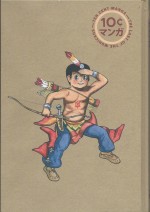
Last of the Mohicans: Ten-Cent Manga Series volume 1


Freely adapted from the novel by James Fenimore Cooper by Shigeru Sugiura, edited & translated by Ryan Holmberg (PictureBox)
ISBN: 978-0-985195-6-6

Those of us in the know tend to believe that Japanese comics began with Osamu Tezuka in the years following the end of World War II – and indeed in most ways that assessment is reasonable.

However, as the superbly informative article bolstering this superb and timely translation attests, there has been a thriving manga business operating in Japan since the 1930s, and one of its greatest proponents was artist and author Shigeru Sugiura.

This superb black and white hardback volume re-presents one of his greatest triumphs as the initial volume in a proposed series of “Ten-Cent Manga” collections translated and edited by Ryan Holmberg which will highlight lost works displaying not simply indigenous Japanese virtuosity but also the influence of cross-cultural contact and pollination with other countries such as America.

In his erudite and lavishly illustrated essay and appreciation ‘Shigeru Sugiura and his Mohicans’ Holmberg describes in fascinating and forensic detail the origins of the project, the state of play in Japan pre-and-post WWII and the absorbing life and career of an artist who began as a jobbing strip cartoonist yet elevated himself to the status of Psychedelic, Surrealist Pop Art icon – one utterly addicted to American movies and comicbooks.

The treatise is fully supported by documentary excerpts from the 1950s magazines and strips Sugiura scrupulously homaged and swiped from: Jesse Marsh’s Tarzan, Alex Toth’s Johnny Thunder, and particularly Fred Ray’s Tomahawk being the most common amongst a wealth of graphic treasures synthesised and transformed into something fresh, vibrant and, most crucially, relevant to the entertainment-starved kids of occupied Japan.

Also included is an article by the artist himself, written in 1988 and describing his life-long passion for and debt of influence to American cinema – most especially ‘Silent Movies’…

However, although scholarly and revelatory, the text portions of this delightful tome pale beside the sheer exuberant energy and B-movie bravura of James Fenimore Cooper’s text…

Shigeru Sugiura (1908-2000) studied painting before becoming an art assistant to comics pioneer Suihō Tagawa. By 1933 he was creating his own strips for the gags and boys’ own adventure style comics that proliferated prior to the war. He returned to the industry when hostilities ended, producing more of the same but now influenced far more by the ubiquitous comicbooks of the occupying G.I.s than the silent Westerns and baggy-pants comedies he had voraciously consumed in his youth.

His blended comedy/action stories for children achieved great success throughout the 1950s, based on well known characters such as the ninja Sasuke Sarutobi or Chinese classics like Journey to the West, and he adapted modern themes like wrestling, science fiction and even Gojira/Godzilla to his fun-filled weekly pages in a most prolific and influential career.

…And Westerns; he did lots of rootin’ tootin’ shoot ’em up cowboy stories…

He very loosely adapted Last of the Mohicans in 1953 (when it was already a very familiar tale to Japanese readers) for Omoshiro Manga Bunko – a line of books presenting world classics of literature in comics form – albeit not exactly in any form recognisable to literary purists…

He retired in 1958 but returned in 1970, reworking old stories and creating new pieces from the fresh perspective of a fine artist, not a mere mangaka earning a precarious living.

In 1973 he was already refining and releasing his classic tales for paperback reprints when he was approached by Shōbunsha to update another. The 1953 Mohicans became the latest re-released tale, slyly reworked as a wry pastiche which kick-started Sugiura’s second career as a darling of the newborn adult manga market…

One word of warning: This is not your teacher’s Last of the Mohicans, any more than The Shining resembles Stephen King’s actual novel or the way the musical South Pacific could be logically derived from James Michener’s Tales of the South Pacific – or indeed how anything Alan Moore wrote could be found in films like From Hell or League of Extraordinary Gentlemen…

Sugiura’s updated 1973-74 iteration forms the majority of this chronicle; a fast-paced story of non-stop adventure, greed, pride, tragedy and whacky humour where both the heroic frontiersman Leatherstocking and noble savage Chingachgook are re-imagined as bold young lads in bad times, their desperate quest punctuated with weirdly clashing moments of slapstick, creative anachronism, cross-cultural in-jokes and plain outright peculiarity…

It all works impossibly well, beginning with the introduction of Hawkeye, ‘La Carabine Kid’: a young but doughty colonial scout and spy for the British.

The Empire is at war with the French for possession of the New World, and the Kid and his companions have suffered many reverses at the brutal hands of the Mingos – a tribe allied to France and responsible for reducing the mighty Mohicans to two survivors; Chief Chinga and his son Uncas. 

The plot thickens when the Mingo Chief and his manic son Magua threaten to abduct Cora and Alice, daughters of British Colonel Munro, in an attempt to force the soldier to surrender his command East Fort to the French.

After a savage assault, Hawkeye, the Mohicans and dashing Major Duncan decide to escort the girls to the safety of Fort Henry, with the hostiles close behind…

En route they pick up itinerant preacher Father Gamut, before fighting their way on through wilderness and repeated Mingo attacks, always one step ahead of ‘Magua’s Pursuit’.

The struggle is not one-sided. The wily fugitives manage to blow up a French fort and even link up with a war party of Delas who subsequently reduce the ravening Mingos to scattered remnants – but not before the pursuers succeeding in carrying off ‘The Abducted Sisters’…

The scene is set for the heroes to rescue the girls and end Magua’s threat forever – but the showdown is costly and there is a high price to pay in ‘The Sad Ending’…

Sheer graphic escapism, spectacular storytelling and a truly different view of a time-honoured masterpiece make this an unmissable treat for all lovers of world comics.

This book is printed in ‘read-from-back-to-front’ manga format.

© 2013 the Estate of Shigeru Sugiura. Translation and essay © 2013 Ryan Holmberg. All rights reserved.
Win’s Christmas Gift Recommendation: An ideal present for comics connoisseurs… 8/10

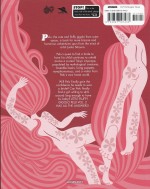
Little Fluffy Gigolo Pelu volume 2


By Junko Mizuno (jaPress/Last Gasp)
ISBN: 978-0-86719-743-3

If you’re over a certain age or have eclectic tastes in art and music you might feel a pang of nostalgia at the work in this second intriguing, coyly adult collection, featuring Manga sensation Junko Mizuno’s most subversively compelling creation.

Since her emergence in 1995, the author has become renowned – perhaps infamous – for mixing childlike innocence with grim, gory action and unwholesome or stridently clashing, wildly inappropriate content in a sub-genre now dubbed Gothic or Noir kawaii (where kawaii describes cutely drawn protagonists and subjects).

Moreover the skewed sensibilities of her work in such Manga as Cinderalla, Hansel & Gretel, Princess Mermaid, Pure Trance and Momongo no Isshō (the Life of Momongo) has exploded out of the comics ghetto to be embraced by a larger audience with art exhibitions (Heart Throbs and Tender Succubus), art-books (Hell Babies, Collector File and Flare) and high-end designer toys for adults which include plush animals, vinyl figures, stationery, postcards, stickers, original art T-shirts and even a line of condoms and erotic paraphernalia.

Her shojo (“stories for girls”) derived style also borrows heavily from the iconic imagery of the 1960s and early 1970s, particularly the Graphic Psychedelia which grew out of Pop Art, with huge eyed, large-headed poppet girls, drawn to look young or, more accurately, actively, innocently, illicitly under-aged: living in simplified environments where detail is reduced to bare minima.

Her stories are always sharply at odds with her drawing style, like cartoons for toddlers involving unpleasant visits to the gynaecologist or being consumed by cannibals, and much of her material incorporates splashy full colour despite the overwhelming preponderance of black and white material in Japan.

Once Upon a Time on a cute pink planet invisible to human eyes lived a race of beautiful naked young women and one very lovely, placidly carnivorous purple Space Hippo.

Of course, there was also Pelu: a fluffy excitable ball of fuzz who incessantly questioned the idyllic existence. From the Hippo Pelu learned of Earth where there are two sexes, and of his own origins, and immediately the little puffball determined to visit the planet of humans and father a baby so he won’t be alone any more…

The journey led to a number of salutary adventures for the naive ET, whose venerable progression from wide-eyed Innocent to sexual enlightenment did not provide contentment or that longed-for child.

On Earth the fluffy naif closely observed a host of human interactions whilst always politely asking if anyone would like to be made pregnant – but love, hate, jealousy, pride, ambition, self-loathing and even murder were all hard to grasp until Pelu befriended hobo alcoholic Su-San who became a valued comrade and teacher…

This second monochrome tome continues the elucidatory explorations and peripatetic pursuits of the lonely heart “lad”, beginning with ‘Bubble Princess Transformation’ wherein the amorphous alien becomes enamoured of a beautiful sex-worker in the final stages of gender reassignment and presides over a rare happy-ever-after rather than the regulation “happy ending” after which the 2-part ‘I Married a Puppet Master’ delves into even stranger territory.

Good wife Murako spends her idle moments knitting glove puppet friends, but is increasingly worried that husband Mamoru‘s job is affecting his health. She is utterly unaware one of her creations has befriended the oddly similar new neighbour Pelu…

However, when Mamoru is callously transformed into a living doll by his bosses at Big Pharmaceutical, Murako is shocked into stunned inactivity… but not knitwear nightmare Koro who recruits Pelu to help obtain a brutal revenge…

Back on the streets again Su-San and Pelu are then approached by a sexy hostess for one of those unique television competition game-shows in ‘Surprise! Japan’s New Record’ but, after the little visitor’s stunning victory leaves them flush for a change, things get very odd…

Another 2-parter, ‘The Secret of the Flower Garden’ finds the spherical sex-pot approached by lovely Tsubomi with a rather unlikely proposition. Soon Pelu is regularly servicing her, her mother and grandmother, in a secret villa beneath a soda factory, just helping a family of hereditary nymphomaniacs, blithely unaware that understanding man of the house Kiyoshi is a bit of an amateur film-maker…

Eventually, still without progeny, Pelu is discarded for a fresher, less exhausted replacement and returns to best buddy Su-San, just in time to fall in love again…

‘Sigh of the Kappa Girl’ is a bittersweet tale of unrequited love as poor Kappa-ko is ditched by boyfriend and prospective husband Makoto. His family want their boy to marry someone else – anyone else actually – as they have an old-fashioned prejudice against Kappas.

You can see their point of view: although she is sweet and sad and gentle, most of the magical water demons are mischievous, cunning flesh-eaters, living in the city’s tainted rivers and watercourses. Seeking solace with Pelu, the betrayed girl steals his heart away but soon leaves him for another…

The saga takes another strange turn in ‘The Niece from Outer Space’ when a young princess from the pink planet comes to visit her far-voyaging uncle. Melu is even more innocent than Pelu but too soon adapts to Earth’s ways – especially after gorging on human food makes her body grow up faster than her mind. Soon she’s hanging out with the wrong crowd (homicidal quintuplets and their abusive, exploitative father) and Pelu is too late to prevent a miraculous tragedy…

This extraordinary collection concludes in poignant heartbreak as Pelu and Su-San become ill on the streets and the little stranger loses his best friend forever to the ‘Homeless Paradise’. The only glimmer of light in the sobering tale for Pelu is meeting Su-San’s estranged daughter Noriko Saotome and learning something of his forever-gone companion’s sorry past…

Little Fluffy Gigolo Pelu continues the potentially shocking saga of an incorrigible innocent abroad, with seductive fantasy underpinned by a subtle sinister subtext and an overt narrative informed by the naivety of “Swinging Sixties” sexuality.

Everything, especially the legion of pretty  girls, is drawn in the style of early Playboy icons, in the brand of  cartoon stylisations that featured in movie title sequences like What’s New, Pussycat? or Yellow Submarine. Anybody British who remembers the children’s animation Crystal Tipps and Alistair, or the hippo from Rainbow, will feel a frisson of nostalgia – which is of course the point. The art is an irresistible velvet trap designed to reduce readers to a receptive state in which the author can make telling points about contemporary culture.
By co-opting children’s entertainment Mizuno addresses fundamental aspects of human existence in a form designed to shock, subvert, upset and most importantly provoke. So, if some thought on the readers’ part extends beyond our visceral gut-reaction to nude innocent girls and the idealistic purity that used to be associated with such imagery, then she’s done her job…

This is a supremely edgy fantasy with a lot to say about society and relationships – similar to but utterly different from Robert Heinlein’s groundbreaking social satire Stranger in a Strange Land, and will one day I’m sure, have just as much impact.

© 2004, 2013 Junko Mizuno. All Rights Reserved.

See also www.MIZUNO-JUNKO.com

Helter Skelter Fashion Unfriendly


By Kyoko Okazaki (Vertical)
ISBN: 978-1-93565-483-4

Following her debut in 1983, producing erotic material for the men’s markets, Kyoko Okazaki established a reputation for challenging, controversial, contemporary manga tales before gradually shifting her focus to produce stories specifically for and about women (such as Pink, Happy House and River’s Edge), focusing with unflinching intensity on their social issues and the overwhelming pressures of popular culture in modern Japan. You can find out more about this pioneering creator here.

From 1994-1995, and following her immensely successful strip Tōkyō Girls Bravo in mainstream fashion magazine CUTIE, Okazaki created a biting expose of the industry – and its casualties – in Shodensha’s Feel Young anthology.

Heruta Sukeruta took the author’s concerns, inclinations and observations into realms tinged with dark speculation, but the episodes never seemed too far-fetched or distant from what we all believed models and managers and clients actually experienced…

Liliko is the undisputed top model in Japan. The Lily’s face and body are everywhere, selling products and lifestyle to men, women and especially young girls. She is an unchanging paragon of look and style and has been so for absolutely ages.

In fact, nobody seems to know quite how long – except ruthless model agency president Mama Tada – and only Liliko’s long-suffering gofer/manager Hada and make-up artist Kin Sawanabe have any inkling of the real person under the gloss and glitz and glamour…

Despite her star status Lily is incredibly unhappy: bored, paranoid, burned out and increasingly obsessed with her inevitable usurpation by some fresh young “Next Year’s Model”…

Knowing her days are numbered, the fragile yet hard-as-nails supermodel is frantically chasing singing and acting gigs, capitalising on her celebrity. Sadly, lacking any discernible talent, she’s only getting ahead by sleeping with all the money-men involved…

When not drugged up, stressed out or screaming, she finds some measure of contentment in the arms of Takao, handsome, spoiled heir to the Nanbu department store fortune (and the man she plans to marry) or in degrading and debauching the obsessively devoted Hada.

Liliko’s biggest problem is an incredible secret that could shake the nation. All her beauty and success come from a series of cosmetic procedures, carried out by a renegade plastic surgeon at an exclusive clinic that caters to the most powerful and influential people in the world.

Long ago a desperate girl with a sordid past met Mama and agreed to a complete, full-body series of operations. Now only her bones and some meat is her – all that glittering skin and surface is a fabrication, maintained by constant use of addictive drugs supplied by the dowdy doctor in charge to fight implacable tissue rejection.

Sadly, after years of use even these experimental remedies aren’t as efficient as before and Liliko’s look is breaking down and fragmenting…

She is by no means the only client of the clinic, and following a spate of suspicious deaths and the trail of illegal aborted foetal organ traffickers, police prosecutor Asada has begun to put the pieces together. However even he is not completely immune to the Lily’s allure…

In the face of increasing breakdown, Mama brings Kin up to date and makes him part of the conspiracy, whilst arranging with “The Doctor” to perform still more operations on her fragile star…

Liliko’s damaged psyche endures even greater shocks when her fat and dumpy little sister turns up. Having impossibly tracked down her sublime sibling, little Chikako is sent away with stars in her eyes, a dream in her heart and newfound determination to be beautiful too, whatever the cost…

Chemically deranged, paranoid and alternatively wildly uncontrollable and practically catatonic, Lily goes off the deep end when Takao admits that he’s marrying an heiress for dynastic reasons but will still, of course, have sex with her in secret…

Having already seduced Hada and her boyfriend in a moment of malicious boredom, Liliko induces them to take revenge for her bruised pride and events quickly spiral into an inescapable crescendo of catastrophe that extends far beyond the intangible world of image and illusion into the very bedrock of Japanese society…

Harsh, raw, brutal and relentlessly revelatory, the author’s forensic examination of the power of sex, temptations of fame and commoditisation of beauty is a multi-layered, shockingly effective – if occasionally surreal – tale that should alarm every parent who reads it. It is also a superb adult melodrama, tense political thriller and effective crime mystery to delight all broad-minded fans of comics entertainment looking to expand their horizons beyond capes, and ghost and ray-guns…

Vertical are dedicated to bringing the best of Japan’s adult comics to English-speaking audiences and Helter Skelter is part of a line books targeting women readers with challenging material that breaks out of the genre ghettos usually attributed to manga. Helter Skelter Fashion Unfriendly certainly qualifies. The cautionary tale was collected into a Japanese tankōbon edition in 2003, winning a number of awards including the 2004 Osamu Tezuka Culture Prize, and was subsequently adapted into a film shown in Cannes.

Grim, existential and explicit, this is not a book for kids or the squeamish, but it is a dark marvel of graphic narrative and one well deserving of your attention.

© 2003 Kyoko Okazaki. All rights reserved.
This book is printed in ‘read-from-back-to-front’ manga format.

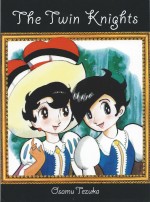
The Twin Knights


By Osamu Tezuka, translated by Maya Rosewood (Vertical)
ISBN: 978-1-939130-01-3

Osamu Tezuka first rescued and then utterly revolutionised the Japanese comics industry during the 1950s and 1960s. Being a devoted fan of the films of Walt Disney he also performed similar sterling service in the country’s fledgling animation industry.

Many of his earliest works were aimed at children but right from the start his expansive fairytale stylisations – so perfectly seen in this splendid romp – harboured more mature themes and held hidden treasures for older readers…

Ribon no Kishi or “Knight of the Ribbon” was a breakthrough series which Tezuka returned to repeatedly during his life and one that is being continued even in the 21st century by his disciples. The simplistic but engaging fable of a Princess forced by political intrigue and cruel fate to pose as a man – and a warrior knight at that – has been adapted into movie and TV anime seen all over the world (generally known as some variation of “Choppy and the Princess” in places as far-flung as Canada, France Australia and Brazil) and in 2006 a stage musical was launched.

The serial was first published in Kodansha’s Shoujo Korabu (Shōjo Club), running from January 1954 to January 1956, with the generational sequel collected here appearing in Nakayoshi magazine as Futago no Kishi between January 1958 and June 1959.

The series is a perennial favourite and classic of the medium and this complete-in-one-volume yarn continues the saga begun in the two-volume softcover English-language Princess Knight.

Influenced heavily by Disney’s fairytale feature-films, each chapter herein is designated a “Scene” and opens with an homage to movie musical set-pieces in a ‘Prologue’ which reveals that the beautiful Queen Sapphire of Silverland has just given birth to a boy and a girl…

Scene 2 reveals ‘The Twin’s Secret’ as ambitious nobles of the court begin lobbying for one or other of the newborns to be named as heir (apparently, the subject of male primogeniture doesn’t appear to be a hindrance or issue in Silverland), with such vigour that proud father Franz is spending all his time breaking up duels…

Depressed and flustered the King gets a helping hand from the angel Tink, and Prince Daisy rather than Princess Violetta is officially nominated Heir Apparent.

However ambitious Duchess Dahlia and her ineffectual husband are unprepared to accept the decision and make treasonous plans. Soon, baby boy Daisy has been abducted and left to die in a wooded wilderness ruled over by the ferocious monster Slobb…

The people are divided and, in an effort to curtail civil war, Sapphire and Franz devise an insane plan. The twins were identical and now Violetta will play the part of both siblings, for as long as it takes to find her lost brother and preserve the kingdom. The Queen is particularly distraught that, for sake of duty, her daughter must endure the selfsame hardships that forced a young Sapphire to become the turbulent Knight of the Ribbon all those years ago…

‘In the Forest’ meanwhile, the Prince has been adopted by a fawn whose love and devotion is so great that the Goddess of the Forest grants her the power to become human from dusk till dawn. Papi will raise the boy as her little brother “Ronnie”, but the Goddess warns that her shape-shifting gift comes with some serious provisos and inevitable tragic consequences…

A decade passes and Daisy, left alone every day, becomes a headstrong, independent lad and mighty hunter. His greatest dream is to shoot a certain deer that always avoids him with almost human intelligence…

At the palace ‘Violetta’s Sadness’ grows as she is one day demure damsel and the next a boy harshly schooled in all the manly arts of war. Eventually she runs off and meets the palace gardener’s boy Tom Tam, but her brief, carefree respite kindles an incredible suspicion in the ever-scheming, always watching Dahlia…

More time passes and on the separated children’s fifteenth birthday a crisis is reached when only Violetta attends the huge party. Thankfully, the arrival of enigmatic envoys ‘Prince White and Prince Black’ distracts the ever-watching plotters and allows the distraught Princess to change into her masculine mode. The visiting brothers are keen on hunting in the Forest of Slobb, however, and when “Daisy” accompanies them Dahlia confirms her suspicions using the keen nose of a savage hunting hound…

Prince Black is as dark as his name and belligerently picks a fight with “Daisy”. Although beaten in the ensuing duel he cheats and is admonished by his noble brother, but in his heart hatred blooms and festers…

Prince White, meanwhile, finds himself impossibly drawn to the beautiful boy Daisy and is delighted to hear that the plucky lad has a sister who is his exact match and equal…

Dahlia, seeing an opportunity, distracts Prince Black from taking out his ire on the local fauna and offers him an intriguing proposition…

When White is wounded by Slobb, the hunting party returns to the palace – with Papi in her deer form one of the captured prizes – and as Daisy changes into her girl clothes to meet and minister to the visiting Prince’s injuries the scurrilous Black observes the transformation and discovers the nation’s greatest secret…

As the sun sets the trussed but living fawn becomes human again and ‘What Papi Saw’ describes how her eavesdropping on Black and Dahlia changes the fate of Silverland forever…

Horrifically, however, after escaping the palace and earnest pursuit from Prince Black, she is shot in her own home by the boy she has raised. Reverting to human and on her deathbed she tells heartbroken Ronnie everything she has learned and urges him to fulfil his true destiny …

That begins with a final fateful battle against the terrifying Slobb after which the keen hunter forever forswears his boyhood pursuits and finds all the animals in the forest pay him homage. Meanwhile in the palace Dahlia makes her move, forcing the compromised Royal Family into temporary custody in ‘The North Tower’.

Even her husband is surprised at her plan to ensure that they never leave it…

Long ago the King of Mice pledged his allegiance to Sapphire, and his successor now informs Violetta of her lost brother’s location and even aids her escape – clad in the legendary guise of Knight Ribbon – but she is too late.

Her brother has vanished. As the disguised Violetta slumps in dejection she is accosted by a saucy wench most taken with the beautiful young man before her. The wild, teasing creature offers aid which is gratefully accepted…

Emerald is in fact a ‘Gypsy Queen’ and, promising to aid the Knight, takes “him” to their wizened fortune teller Nara Yama, who reveals the missing brother is alive. She also divines the masquerader’s true identity and gender!

Just then the usurper Duke’s men raid the camp but the gypsies fight them off and flee…

At the palace Dahlia’s husband as acting regent gets a double surprise. The first is the corpse of the once-unstoppable Slobb and the other is the youth who dragged it in.

Common woodsman Ronnie is the spitting image of the missing Violetta in her male aspect and might well act as a pliable ‘Substitute Daisy’ when the Royal Family finally succumb to the slow-acting poison secretly being administered to them…

Things take a magical turn when Emerald and Knight Ribbon stumble upon the hidden ‘Palace of Roses’ and learn the true nature of Princes Black and White. Both are mystical creatures but whilst the good Prince wishes he could lose his powers and wed Violetta, Black is determined to cause her extreme suffering and death…

With the faithful, still-oblivious Gypsy Queen’s aid the Ribbon Knight survives Black’s garden of horrors and the pair escape ‘Inundation’ and eldritch ‘Storm’ as they fight their way out of Rose Citadel, but are soon trapped in a ghastly ‘Mirage Forest’ controlled by the witch Begonia until a magical sprite adopts them. However ‘Devoted Tiln’ must pay an awful price for her valiant intercession which only brings the fugitives to the relative safety of a small village.

Prince Black leads the Regent’s soldiers to them there and Violetta is exposed. Shocked and angry, Emerald nevertheless helps her escape to ‘Wolf Mountain’ where another tragic sacrifice leads the rebels into one final battle against the plotters, restores order for the just and inflicts well-deserved punishment upon the wicked in the action-packed, wildly romantic – if inappropriately entitled – ‘Epilogue’…

The Twin Knights is a spectacular, riotous, rollicking adventuresome fairytale about desire, destiny and determination which cemented the existence of the Shoujo (“Little Female” or young girl’s manga) genre in Japan and can still deliver a powerful punch and wide eyed wonder on a variety of intellectual levels. One of the most beguiling kid’s comics Tezuka ever crafted, it’s a work that all fans and – especially parents – should know, but be warned, although tastefully executed, this tales doesn’t sugar coat the drama and more than one favourite character won’t be alive at the end. If you have sensitive kids read it first and, if you too have a low woe quotient, pack handkerchiefs…

This black and white book is printed in the traditional ‘read-from-back-to-front’ manga format.
© 2013 by Tezuka Productions. Translation © 2013 by Vertical, Inc. All rights reserved.

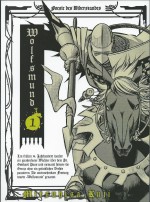
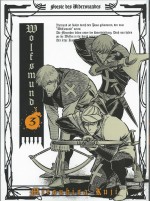
Wolfsmund volume 1


By Mitsuhisa Kuji, translated by Ko Ransom (Vertical)
ISBN: 978-193565475-9

All I can glean regarding pseudonymous woman of mystery Mitsuhisa Kuji is that she has worked as assistant to both Kentaro Miura (Berserk) and Kaoru Mori (Emma, Anything and Something), but that simply means that we can appreciate her solely through her work, such as this darkly nihilistic and bleakly beguiling historical re-enactment of the legend of William Tell as collected in this first English-language volume of Wolfsmund…

Set in the 14th century and drawing on historical records, the serial debuted in 2009 as Ookami no Kuchi: Wolfsmund in Seinen publication Fellows! – with four tankōbon volumes collected thus far – and details the struggle of three autonomous alpine cantons, Uri, Unterwalden and Shwyz, for freedom and independence from the oppressive domination of invaders from what will become the Habsburg Empire.

Unconventionally, the oft-told tale centres around the monolithic fortress of Wolfsmund, situated in the Sankt Gotthard Pass: an impenetrable barrier station between mountains controlling the population’s ability to move, flee or obtain allies, intelligence or war material, and a crucial trade bottleneck between Germany and Italy.

The chilling black drama begins in ‘Liese and Georg’ as a highborn lady and daughter of the downtrodden proto-nation’s liberating hero undergoes appalling hardships and indignities at the hands of her most devoted servant in order to pass through the forbidding gate to freedom.

However all her determination and her bondsman’s wiles are as nothing to the insidious observations and deep suspicions of Wolfram the Bailiff; sadistic sentinel with an angel’s face, and undisputed master of Wolfsmund.

Although the wayfarers find sympathetic souls in the village around the castle – especially the seductive female innkeeper – their flight ends in discovery, combat and inevitable, inescapable doom…

The dark fable continues in ‘Johanna and Klaus’ wherein a lethally competent woman warrior undertakes to preserve her master’s treasures and the resistance’s war chest by passing through Wolfsmund to Italian bankers in Lugano. After also spending time with the enigmatic Guesthouse Madam, the deviously competent Johanna also fails to fool implacably diligent Wolfram and she is taken.

However, once inside the castle her true plan comes into play…

The notional stars of the legend at last appear in the final story in this initial volume.

The legend of ‘Wilhelm and Walter’ had long inspired the savagely repressed peoples of what will one day be Switzerland and, after a meeting with the innkeeper, Tell senior and junior opt for the unprecedented option of scaling the mountain rather than passing through the Wolf’s Mouth.

Wolfram however is a coldly calculating custodian and has made provision to counter even the most hare-brained and impossible attempts to escape his jurisdiction…

This is a harsh and visceral saga best enjoyed by older readers, and there’s a powerful aura of woodblock-etching (even a feeling of Albrecht Dürer) to the stark, uncompromising illustration that perfectly compliments the daunting milieu, adamantine scenery and cruelly brutal episodes in which assorted freedom fighters of “the Eternal Alliance” repeatedly try and fail to pass through the fortress gates and fool the cruelly beautiful sadistic angel in command.

However, with the mystery of the lovely libertine innkeeper to tease things along, this book feels more like prologue than main event and I for one can’t wait to see what comes next. After all, even if we know our eventual destination, it’s the journey that really matters…

Wolfsmund is printed in the ‘read-from-back-to-front’ manga format.
© 2010 Mitsuhisa Kuji. All rights reserved.
Pacific Rim: Tales from Year Zero


By Travis Beacham, Sean Chen, Yvel Guichet, Pericles Junior, Chris Batista, Geoff Shaw & various (Legendary)
ISBN: 978-0-7851-5394-8

It’s summer – which means movie blockbusters – and just for a change here’s a collection of comics stories based on a film rather than the other way round.

The filmic Pacific Rim is set in the third decade of the 21st century and details a protracted battle between humanity and a procession of monolithic monsters which perpetually erupt out of the oceans to smash our cities. To combat these creatures – whose blood is devastatingly toxic – science has devised colossal anthropomorphic machines piloted by teams of bold but essentially doomed soldiers…

This slight but stunningly fun hardback companion compilation, set simultaneously before and during the events of the silver screen saga, features a triptych of short tales drawn from the unused backstory material to fill in detail and character necessarily sacrificed to the exigencies of keeping the motion picture action moving along.

According to the Introduction by writer Travis Beacham, he and co-scripter/Director Guillermo Del Toro are both manic fans of the venerable Japanese genres of Kaiju (literally “strange beasts” or ,more popularly, humongous city-stomping monsters) and their frequent opponents in anime and manga, Mecha (super automaton/vehicles piloted by noble human heroes).

Pacific Rim is thus a way to reintroduce these ever-cool concepts to a new generation of fans who might have missed out on the sheer vicarious joy and thrills of such planet-shaking spectacle.

The revelations begin in 2024AD as journalist Naomi Sokolov, en route to an interview with legendary figure Stacker Pentecost, meets another veteran of the anti-Kaiju initiative and learns how technician Tendo Choi survived humanity’s first encounter with the marauding horror which eradicated San Francisco and changed the path of mankind on August 13th 2013 – ‘K-Day’…

In the decade since, giant Jaeger war-suits have protected the surface world but now they’re being phased out in favour of a new solution – “the Wall” – and Choi’s account of that fateful first contact gives powerful argument as to why that’s a bad idea…

Naomi’s next interview is with Dr. Jasper Schoenfeld, the engineering genius who first came up with the concept of immense ambulatory uber-tanks. His revelations in ‘Turn of the Tide’ explain the role and sacrifices of his all-but-forgotten lab partner Caitlin Lightcap, whose brilliance and passion turned the idea into a workable reality – and also detail the appalling cost to the Jaegers’ unique riders…

Sokolov finally gains her time with inspirational project leader Pentecost in ‘The Bond’ but is quite unprepared for the great man recognising her and the role she played in almost destroying a crucial part of the Jaeger Academy team in the early days of recruitment…

Even though packed with blockbusting Mecha vs. Monster action throughout, this book primarily provides a subtle in-filling and shading of character in vignettes unavailable in the rip-roaring on-screen avalanche of action. Moreover, illustrators Sean Chen, Yvel Guichet, Pericles Junior, Chris Batista, Geoff Shaw, Mark McKenna, Steven Bird, Matt Banning, Guy Major, Tom Chu & Dom Regan work wonders blending these quiet, informative moments with the overall thrust of paralleling the movie mayhem.

This volume also includes an expansive segment charting ‘From Script to the Final Page: The Creative Process’ as Beacham’s typing progresses through Guichet’s rough sketches to full pencils and inks before ending as coloured and lettered final art. And as if that wasn’t enough, there’s even a full colour feature on ‘Kaiju’ with a handy guide for distinguishing Belobog from Scissure, telling apart Trespasser from Kaiceph and knowing your Verocitor from Karloff…

Furious fun for monster-lovers of all ages…
© 2013 Legendary Comics LLC. All Rights Reserved.

Blade of the Immortal volume 1: Blood of a Thousand


By Hiroaki Samura translated by Dana Lewis & Toren Smith (Dark Horse/Studio Proteus)
ISBN: 978-1-56971-239-9

Born in Chiba Prefecture in 1970, manga master Hiroaki Samura differs from many of his contemporary colleagues in that he actually pursued classical art training before abandoning oil paints and easels for the monochrome freedom and easy license of the “whimsical drawings” industry.

He was, however, plucked from college in the early 1990s before finishing his degree, to find huge success creating the astonishing fantasy saga Mugen no Jūnin (The Inhabitant of Infinity) for Seinen magazine Afternoon.

The series ran from June 25th 1993 to December 25th 2012, a total of 30 volumes which spectacularly blended ubiquitous Samurai comics themes and scenarios with vengeful supernatural plots, political intrigues, existential philosophy and punk-era nihilism as the driven, murderously efficient antihero constantly deployed his outrageously eccentric arsenal of fanciful edged weapons, whilst pondering the merits of salvation and the meaning and point of living too long…

The series was picked by Dark Horse in 1996 and released as Blade of the Immortal, first as a monthly comicbook series and, from 2007 onwards, exclusively in collected graphic novel editions.

One note of caution for purists: the series’ dialogue is written in an updated, quirkily anachronistic literary style which strives for emotional veracity rather than (faux) period authenticity, so it can all be a little disconcerting at first…

Set in middle of the Tokugawa Shogunate (between 1600 and 1868AD), this first sublimely engaging volume opens with ‘About the Translation’ – a prose section explaining the translation process and the symbology of the piece – before ‘Prologue: Criminal’ introduces debased and unsavoury Ronin Manji; one-eyed outlaw and a weary killer looking for peace and redemption in all the wrong places.

The “Slayer of 100 Good Men” – including his own peace-keeper brother-in-law – Manji is currently stalking Gyobutsu “Johnny” – a mass-murderer who kills his victims whilst disguised as a priest. When a trap goes wrong the debased Ronin manfully ignores a pistol shot through his brain to finish his sacrilegious quarry.

The Ronin is no longer as other men. There are worms in his head, and as they knit his inexplicably non-fatal wound back together, Manji broods.

In his despicable past he was a cheap sell-sword who killed as he pleased. When his misdeeds brought him into conflict with his “cop” brother-in-law he also butchered him. The shock drove his sister Machi mad.

She was the only thing Manji ever cared about…

Yaobikuni has no problem with living forever – she won’t die until she’s saved every soul in Japan – and when the unkillable reprobate again meets the 800-year old nun who inflicted on him the sacred Kessen-chu bloodworms which can heal any hurt, she draws him into the old pointless discussion about salvation. Yaobikuni urges him to give up the sword, but all he wants to do is die….

Even if he could, it’s no longer an option now that he has to care for his grievously damaged Machi…

The problem is savagely solved when the vengeful brother and 20-strong gang of “Johnny” abduct her, determined to make her murderous brother pay emotionally and physically for the death of their leader.

Manji’s botched rescue attempt leaves him triumphant above a sea of corpses and utterly alone in the world…

Pushed too far, he finds Yaobikuni and offers her a deal: if he kills one thousand truly evil men she must remove the Kessen-chu and let Manji rest at last.

Despite misgivings that he’s just found another way to keep on killing, the nun agrees…

‘Conquest’ introduces young Rin, whose father Asano was targeted for slaughter by a merciless gang of anarchist thugs calling themselves the Ittō-ryÅ«.

Long ago the grandfather of their leader Anotsu Kagehisa had been shamefully and unjustly expelled from Asano’s Mutenichi ryÅ« fencing Dojo, and the grandson had resolved to destroy all such schools and the socially stratified, arrogantly smug advocates of privilege who populated them.

Gathering an army of similarly aggrieved, like-minded rebels and outcasts, Anotsu murdered many Swords-masters: destroying their legacies and accumulating a powerful army before seeking his ultimate triumph over a despised ancestral enemy…

After ending Rin’s father, Anotsu gave her mother O-Toki to his men, but told them to leave the little girl alone.

Rin never saw her mother again and now, aged sixteen, the last sword of the Mutenichi- ryū School was in the metropolis of Edo looking for payback. What she found was a jolly little nun who suggested she seek out a maimed-and-mangy, mean-looking Ronin to act as her bodyguard…

They didn’t hit it off. Manji was condescending and patronising and wanted her to prove her contention that the members of Ittō-ryÅ« were genuinely evil before he subtracted them from his target tally of 1000 human monsters…

Reaching an agreement of sorts the pair join forces, unaware that Rin has been followed by Anotsu’s macabre lieutenant Kuroi Sabato. The deranged psycho-poet has been sending taunting verses to the girl ever since that fateful night, whilst secretly treasuring his keepsake of her mother O-Toki all these lonely years…

Now he’s ready for Rin to complete a ghastly set of horrific personalised trophies but the satanic stalker has never met – or killed – anyone like Manji before…

The eerie epic closes here with ‘Genius’ wherein the decidedly odd couple seek aid and assistance from an old friend of Rin’s father. Retired samurai Sōri has dedicated his remaining years to becoming an artist, but still struggles to master the tricky discipline of “sword-painting”. The uncouth Manji can barely contain his scornful taunts, especially as the artist seems unwilling to assist a lady in distress, apparently far more concerned with the trivial problem that he can never get the reds right in his compositions…

Of course the revenant Ronin has no idea that once Sōri was The Shogun’s Ninja …

More of Anotsu’s psycho-killer goons have followed Rin and Manji to the painter’s lodgings however, looking for the blade-wielding girl genius who killed the lethally adept Kuroi. When they attack the sleeping Rin they soon discover to their everlasting regret the mettle of her allies…

In the stillness after the slaughter, Rin and Manji move on to continue their vendetta against the Ittō-ryū, but Sōri regretfully remains behind to pursue his art.

At least now he knows what pigments suit him best…

‘An Interview with Hiroaki Samura’ and a selection of cover illustrations from the comicbook iteration complete this viscerally brutal, staggeringly beguiling first volume of mythic martial mastery…

Although crafting other works such as the western Emerald, romantic comedies, erotic works and horror stories such as Night of the Succubus and Bradherley’s Coach, Blade of the Immortal is undoubtedly Mr. Samura’s signature creation – so far – and a truly unparalleled delight for fans of not just manga but for all lovers of dark fantasy.
© 1996, 1997 Hiroaki Samura. All rights reserved. English translation rights arranged through Kodansha Ltd. New and adapted artwork & text © 1996, 1997 Studio Proteus and Dark Horse Comics Inc. All other material © 2000 Dark Horse Comics Inc. All rights reserved.