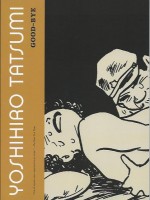
Good-Bye


By Yoshihiro Tatsumi, translated by Yuji Oniki (Drawn & Quarterly)
ISBN: 978-1-77046-078-2

Since the 1950s, compulsive storyteller and inventor of the mature and socially relevant Gekiga comics-form Yoshihiro Tatsumi worked at the fringes of the Japanese manga industry as it grew from a despised sub-art form to an unstoppable global colossus of the entertainment media.

Freelancing for whoever would take a chance on him, whilst producing bargain-basement Manga lending shop Kashihon (story-books purpose-made for comics lending libraries), and even self-publishing – as Dōjinshi or “Vanity projects” – his uniquely personal graphic explorations of the world as he saw it, Tatsumi slowly gained prominence amongst other artists and a small dedicated cognoscente.

Eventually his dedication to tales of deeply personal, agonisingly intimate and slyly accusatory cartoon reportage filtered into and became the mainstream and in recent years Tatsumi has received the accolades and acclaim he long deserved as, at last, society caught up with him…

After decades at the periphery of comics consciousness, Tatsumi was “discovered” by the West at the dawn of the new millennium (despite a bootlegged English-language edition in 1987 and occasional European reprints) and in 2005 Drawn & Quarterly began releasing collections of his vast output in hardback editions which re-presented a taste of material culled from specific years.

Now the fruits of that on-going annual project are at last available in deluxe monochrome softcover editions, their appeal greatly benefited by the fact that in 2009 Tatsumi’s monolithic cartoon autobiography A Drifting Life turned him into a domestic and world superstar, garnering a brace of Eisner Awards, Japan’s Osamu Tezuka Cultural Prize as well as the regards sur le monde Award at the Angoulême International Comics Festival.

Following an introduction from author, historian, translator and pundit Frederik L. Schodt, this third volume presents works from the period 1971-1972 when Tatsumi settled into an unqualified burst of inspired creativity and produced some of his most memorable pieces: dissections, queries and tributes to the Human Condition as experienced by the lowest of the low in a beaten but re-emergent nation-culture which was ferociously and ruthlessly re-inventing itself all around him

The panoply of disturbing, beguiling, sordid, intimate, heartbreaking, trenchantly wry and utterly uncompromising strips dealing with uncomfortable realities, inescapable situations, punishing alienations, excoriating self-loathing and the bleakest, emptiest corners and crannies of human experience begins in ‘Hell’ – a tale which recalls the bombing of Hiroshima and the headiest days of the passionately anti-H-Bomb movement in 1967. A former Japanese Army photographer recalls a shot he took in the aftermath: a silhouette burned into a wall of a loving son massaging his weary mother’s shoulders. In 1951 he had sold the photo to a news agency and the shot became a potent symbol of the “No More Hisoshimas” movement, rocketing the photographer to world-wide prominence.

Now in the shadow of a newly dedicated monument a stunning revelation threatens to undo all the good that photo has done…

At the end of his working life Saburo Hanayama was sidelined by all the younger workers: all except kind Ms. Okawa whose kindly solicitousness rekindled crude urgings in the former soldier and elderly executive. With his wife and daughter already planning how to spend his retirement pension, Saburo rebels and blows it all on wine, women and song, but even when he achieves the impossible hidden dream with the ineffable Ms. Okawa, he is plagued by impotence and guilt and is still ‘Just a Man’…

In ‘Sky Burial’ disaffected slacker Nogawa isn’t even shaken up when the mummified body of his neighbour is discovered, a victim of neglect, undiscovered for months until the smell became too overpowering.

After all, his life is a mess too and he keeps seeing vultures in the sky above the bustling streets… As his surviving neighbours all move out following the death, Nogawa stays, abandoning himself to the birds and vermin eager to colonise the vacant building…

When he retired, a nondescript businessman deeded all his possessions to his family and went to live in the woods, obsessed with a bizarre ‘Rash’ that afflicted his body. However, when a young girl attempts suicide he saves her and gains new interest in the world. How tragic that his notions and hers are so different…

Businessman Kazuya returns to the old neighbourhood and recalls a bizarre friendship with a ‘Woman in the Mirror’. Once he and Ikeuchi were great friends, but when he accidentally discovered his pal’s need to dress as a girl, a great fire changed both their lives forever…

When ‘Night Falls Again’ a desperately lonely man haunts the strip joints and bars of Osaka, despising himself, missing his rural home and bombarded by images of sex for sale. Driven to the edge he at long last buys a ticket…

Two bar girls clean up after the night’s toil, but Akemi is preoccupied. It’s time to visit her husband in prison, even if he is a changed, brutalised man and doesn’t believe she has kept herself for him all these years. When he threatens to become her pimp once released, she takes extreme action in ‘Life is so Sad’…

Tatsumi experimented with wash tones rather than the usual line, brush and mechanical tone screens for his tale of a foot fetishist driven to outlandish steps just so he could keep hearing heels go ‘Click Click Click’, and this compelling collection concludes with the eponymous minor masterpiece which was until recently the artist’s most (in)famous tale.

The semi-autobiographical ‘Good-Bye’ describes the declining relationship between prostitute Mariko or “Mary” – who courts social ignominy by going with the American GI Joe’s – and her dissolute father; once a proud soldier of Japan’s beaten army, reduced to cadging cash and favours from her.

Her dreams of escape to America are shattered one day and in her turmoil she pushes her father too far and he commits an act there’s no coming back from…

Tatsumi uses art as a symbolic weapon, using an instantly recognisable repertory company of characters pressed into service over and again as archetypes and human abstracts of certain unchanging societal aspects and responses. Moreover he has an astounding ability to present situations with no clean and clear-cut resolution: the tension and sublime efficacy revolves around carrying the reader to the moment of ultimate emotional crisis and leaving you suspended there…

Tatsumi, like Robert Crumb and Harvey Pekar, largely set his own agenda, producing work which first and foremost interested himself, toiling for decades in relative isolation producing compelling, explicit, groundbreaking stories which were the foundation of today’s “literary” or alternative field of graphic narrative: a form which whilst mostly sidelined and marginalised for most of their working lives has at last emerged as the most important and widely accepted avenue of the comics medium.

These are stories no true lover of comics can afford to miss and this series of collections is a must-have for every adult reader’s bookshelf.

Art and stories © 19771, 1972, 2012 Yoshihiro Tatsumi. Introduction © 2008, 2012 Frederik L. Schodt. This edition © 2012 Drawn & Quarterly. All rights reserved.

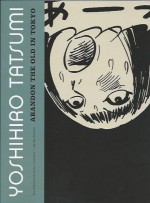
Abandon the Old in Tokyo


By Yoshihiro Tatsumi, translated by Yuji Oniki (Drawn & Quarterly)
ISBN: 978-1-77046-077-5

Yoshihiro Tatsumi was born in Osaka in 1935 and grew up in the Tennōji Ku district. By the time World War II began Osaka was the undisputed industrial, commercial and almost-evangelically capitalist trading-centre of the nation: a place of great wealth, fervent modernisation and nigh-universal literacy as well as vast slums, massive unemployment and crushing poverty. Osaka was the first Japanese city to introduce a welfare program for relief for the poor, modelled after the British system that began in the early 20th century…

One of 24 political wards, Tennōji Ku was named for the ancient Buddhist shrine Shitennō-ji (Temple of the Four Heavenly Kings) and growing up there, Tatsumi must have been constantly exposed to the glorious past, tantalising future and ever-present frustrated desperation of the poor suffering the daily iniquities of the class system.

Growing up during the nightly American bombing raids Tatsumi was obsessed by books and cartooning and devoted his life to the budding comics industry in all its forms.

His earliest successes were all-new, large graphic novels for the uniquely Japanese Kashihon or Manga lending shops (story-books purpose-made to be borrowed and returned for a pittance, rather than bought outright: cost and remuneration were necessarily low and turnover quite high) before moving into the fringes of manga magazine sales.

By 1969 Tatsumi ran a small publishing house for these tomes but the lending shops were dying out…

Since the mid fifties the author had been struggling with a new kind of manga, one that was more than simply childish entertainment, and in 1957 coined the term Gekiga or “Dramatic Pictures” to describe the adult, mature-themed, downbeat and decidedly bleak material he was crafting.

His restless pictorial questioning of affairs of the state and the state of affairs in the furiously reconstructing modern nation, as well as humanity’s breakdown in a disillusioned new Japan subjected to incessant and unceasingly building internal pressures didn’t find much popular success, but fellow manga artists slowing began to create their own serious narratives as the drive towards post-war modernism began to founder and more and more citizens began to question not just the methods but the goal itself…

After decades of virtual obscurity both at home and abroad Tatsumi was “discovered” by the West and in 2005 Canadian publisher Drawn & Quarterly began compiling collections of his vast output in hardback editions which re-presented a selection of material on a year-by-year basis.

Now the on-going annual project is at last available in deluxe monochrome softcover editions, their appeal greatly enhanced by the fact that Tatsumi’s monolithic cartoon autobiography A Drifting Life turned him into a domestic and global comics superstar, winning a brace of Eisner Awards, Japan’s Osamu Tezuka Cultural Prize as well as the regards sur le monde Award at the Angoulême International Comics Festival between 2009-2012.

After an introduction from modern manga superstar Koji Suzuki (creator of The Ring, Dark Water, Birthday and other shocking blockbusters) this second collection gathers longer works from the year 1970 and begins with the deeply disturbing ‘Occupied’ as a lonely and unsuccessful creator of children’s comics experiences digestive troubles. Forced to use public toilets he discovers a different sort of drawing and is inexorably drawn into a world where the cubicles offer an utterly different kind of relief…

‘Abandon the Old in Tokyo’ finds diligent Kenichi slowly crumbling under the pressure of his ailing intolerant mother’s constant carping demands. It’s no help that his girlfriend wants to see “his” place and eventually the weary prevaricator does something about the situation…

‘The Washer’ spends his life cleaning windows and watching powerful businessmen force themselves on young office secretaries. Things turn decidedly difficult however when the girl behind the gleaming glass is his own daughter, whilst a down-trodden factory worker’s grim, grey life only comes alive when he returns home to his hovel and his ‘Beloved Monkey’. Tragically it’s all spoiled when he lets a girl into his heart…

When old Mr. Yamanuki‘s company goes under, he cannot accept his life’s work is done and some debts have to remain ‘Unpaid’. Why and how then, does he derive such comfort and solace from that thing he does with the Collie at the Dog Appreciation Club?

‘The Hole’ sees a hiker taken prisoner by a woman hideously deformed during botched cosmetic surgery, but when the man’s divorced wife comes to his rescue, his smug arrogance seals his own fate, after which ‘Forked Road’ examines two childhood friends and the different paths their first experiences of sex made for them…

The eerily intimate episodes end with ‘Eel’ as a young sewer-cleaner sees too many parallels between the fish caught in the rake and bucket and his own existence. Some days having a disgusting, dead-end job and a callous bar-girl wife who’s delighted when she miscarries your baby doesn’t seem that different to swimming the wrong way in rubbish and excrement until you die…

Stories of sexual frustration, human obsolescence, dislocation, impotence, loneliness, poverty or the futile and vainglorious acts of rekindled pride are again depicted through rat-run mazes populated by a succession of hookers, powerless men, disaffected women, ineffectual lovers and grasping dependents and via recurring motifs of illness, retirement, injury and inadequacy in ramshackle dwellings, grimy streets, tawdry bars and sewers obstructed by things of no further value: pots, pans, people…

Concluding with another extensive ‘Q & A with Yoshihiro Tatsumi’ this second breathtaking compendium further illustrates why no serious devotee of graphic narratives can afford to miss the masterful literary skill of one of the world’s great masters of the comic arts.

Art and stories © 1970, 2012 Yoshihiro Tatsumi. Introduction © 2009, 2012 Koji Suzuki. This edition © 2012 Drawn & Quarterly. All rights reserved.

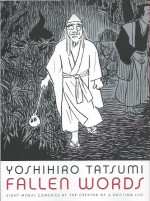
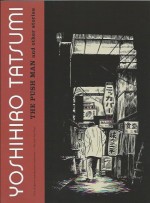
The Push Man and Other Stories


By Yoshihiro Tatsumi, translated by Yuji Oniki (Drawn & Quarterly)
ISBN: 978-1-77046-074-4

Since the 1950s, compulsive manga storyteller Yoshihiro Tatsumi has worked at the edges of the colossal Japanese comics industry, toiling for whoever would hire him, whilst producing an absolutely vast canon of deeply personal, agonisingly honest and blisteringly incisive cartoon critiques, dissections, queries and homages to the Human Condition as endured by the lowest of the low in a beaten nation and culture which utterly and ferociously and ruthlessly re-invented itself during his lifetime.

Tatsumi was born in 1935 and after surviving the war and reconstruction of Japan devoted most of his life to mastering – most would say inventing – a new form of comics storytelling, now known universally as Gekiga or “Dramatic Pictures” – as opposed to the flashy and fanciful escapist entertainment of Manga – which translates as “Irresponsible or Foolish Pictures” and was targeted specifically at children in the years immediately following the cessation of hostilities.

If he couldn’t find a sympathetic Editor, Tatsumi often self-published his darkly beguiling wares in Dōjinshi or “Vanity projects” where his often open-ended, morally ambiguous, subtly subversive underground comics literature gradually grew to prominence as those funnybook-consuming kids grew up in a socially-repressed, culturally-occupied country and began to rebel. Topmost amongst their key concerns were Cold War politics, the Vietnam war, ubiquitous inequality and iniquitous distribution of wealth and opportunity, so the teen upstarts sought out material that addressed their maturing sensibilities and found it in the works of Tatsumi and a growing band of serious cartoonists…

Since reading comics beyond childhood was seen as an act of rebellion – like digging Rock ‘n’ Roll a decade earlier in the USA and Britain – these kids became known as the “Manga Generation” and their growing influence allowed comics creators to grow beyond the commercial limits of their industry and tackle adult stories and themes in what rapidly became a bone fide art form. Even the “God of Comics” Osamu Tezuka eventually found his mature author’s voice in Gekiga…

Tatsumi uses his art as a symbolic tool, with an instantly recognisable repertory company of characters pressed into service over and again as archetypes and human abstracts of certain unchanging societal aspects and responses. Moreover he has a mesmerising ability to portray situations with no clean and clear-cut resolution: the tension and sublime efficacy revolves around carrying the reader to the moment of ultimate emotional crisis and leaving you suspended there…

Narrative themes of sexual frustration, falls from grace and security, loss of heritage and pride, human obsolescence, claustrophobia and dislocation, obsession, provincialism, impotence, loneliness, poverty and desperate acts of protest are perpetually explored by a succession of anonymous bar girls, powerless men, ineffectual loners and grasping spouses, wheedling, ungrateful family dependents and ethically intransigent protagonists through recurring motifs such as illness, forced retirement, crippled labourers, sexual inadequacy in ramshackle dwellings, endless dirty alleyways, tawdry bars and sewers too often obstructed by discarded foetuses and even dead babies…

After decades of virtual obscurity both at home and abroad, Tatsumi was “discovered” by the West (despite a bootlegged English-language edition in 1987 and occasional reprints in France and Spain) and in 2005 Canadian publisher Drawn & Quarterly began compiling collections of his vast output in hardback editions which re-presented a selection of material on a year-by-year basis.

Now the on-going annual project is at last available in deluxe monochrome softcover editions, their appeal greatly enhanced by the fact that Tatsumi’s monolithic cartoon autobiography A Drifting Life turned him into a domestic and global comics superstar, winning a brace of Eisner Awards, Japan’s Osamu Tezuka Cultural Prize as well as the regards sur le monde Award at the Angoulême International Comics Festival between 2009-2012.

This initial outing gathers seminal pieces created in the turbulent year 1969 and also includes an introduction by series editor/designer Tomine and a concluding ‘Q & A with Yoshihiro Tatsumi’.

The trawl through the hearts of darkness begins with ‘Piranha’ as an apathetic factory worker, sick and tired of his wife’s brazen philandering, deliberately maims himself at work for the workman’s compensation pay-out. Even relatively well-off and with his wife now attentive and loving he is not content, so he starts collecting Piranha fish. When she returns to her old habits, he looks at his fish and has an idea…

‘Projectionist’ tells of a another disillusioned labourer whose job is to travel the country screening blue films for executives keen to get secretaries “in the mood” and provide cinematic bonuses for company clients, whilst ‘Black Smoke’ details the existence of an incinerator operator who can’t satisfy his wife, or father children. Meanwhile his days are filled with chucking dead newborns from the local Women’s hospital into those fierce cleansing flames…

‘The Burden’ relates the inevitable fate of a placard carrier advertising a massage parlour. Why can he get on with prostitutes of the street but not his wife, constantly carping about her unwanted pregnancy? Why is murder the only rational option?

In ‘Test Tube’ an over-worked sperm donor allows his latest “inspiration” to get too close with catastrophic results, whilst the ‘Pimp’ who permits his wife to continue her profession so that they can buy a bar together finds the situation increasingly intolerable and ‘The Push Man’ who crams commuters onto the city’s hyper-crowded trains finally experiences a little too much enforced and unwelcome closeness of his own…

Whilst daily unclogging the city’s mains, a harassed young man no longer reacts to the horror of what the people above discard: baskets, boxes, babies… even when the deceased detritus in the ‘Sewer’ is his own, but the ‘Telescope’, which brings a crippled man too close to an aging exhibitionist who needs to be seen conquering young women, leads only to recrimination and self-destruction…

In a place where every one is trying to survive and make a little progress, one couple have reached a necessary accommodation that allows the wife to prosper just so long as her trouble husband remains ‘The Killer’, whilst for the strait-laced mechanic who discovers his TV ideal has loose knickers and a whorish heart after a ‘Traffic Accident’, life is no longer worth living.

‘Make-Up’ is the only solace of a poor salary-man living with a cheap cocktail waitress. In her clothes and with her face he can truly be himself, even if the lonely and lovelorn telephone sanitizer of ‘Disinfection’ cannot bring himself to connect with the many women of easy affection he meets in his job, and well-meaning nondescript auto-parts worker Matsuda who struggles long and hard, seeking the best way to get rid of his wife and help the young girl resisting their nasty boss’s urgings to abort the embarrassing baby he’s fathered in ‘Who Are You?’

When Mr. Fukuda is badly injured in ‘Bedridden’ he entrusts young Tanno with his greatest secret: locked in his house is a sex slave, trained and shaped from birth to please men. He will pay the apprentice anything and everything to keep her fit and fed until he can get out of hospital. Big mistake…

This initial outing ends with a superbly outré examination of life wherein Shoji returns to his rat-infested apartment and frumpy, horny woman. As she cleans herself up the pensive post-coital drifter ponders all those wasted sperm – each one a potential Napoleon or ‘My Hitler’, until a scream alerts him to the fact that one determined rodent has taken up residence.

Despite all his efforts the rat, pregnant and determined stay put, avoids every attempt to remove or kill it. With his strident companion moved out and back in the bar where she works, the contemplative Shoji discovers a new appreciation of the valiant mother and her progeny…

Like Adrian Tomine, Editor of the English-language series, I first discovered Mr. Tatsumi’s astounding works in the aforementioned album sized – and it transpires, wholly unauthorised – Catalan Communications edition at the end of the 1980s, and was blown away by the seductive and wholly entrancing simplicity of his storytelling and bleak, humanist subject matter.

Now that I know just when these stark, wry, bittersweet vignettes, episodes and stories of cultural and social realism were first drawn, it seems as if a lone voice in Japanese comics had independently and synchronistically joined the revolution of Cinéma vérité and the Kitchen Sink Dramas of playwrights and directors like John Osborne, Tony Richardson and Lindsay Anderson – not to mention Ken Loach and Joe Orton – which gripped the West in the 1960s and which have shaped the critical and creative faculties of so many artists and creators ever since.

Tatsumi, like Robert Crumb and Harvey Pekar, worked for decades in relative isolation producing compelling, bold, beguiling, sordid, intimate, wryly humorous, heartbreaking and utterly uncompromising strips dealing with uncomfortable realities, social alienation, excoriating self-examination and the nastiest and most honest arenas of human experience. They can in fact be seen as brother auteurs and indeed inventors of the “literary” or alternative field of graphic narrative which, whilst largely sidelined for most of their working lives, has finally emerged as the most important and widely accepted avenue of the comics medium.

These are stories no serious exponent or fan of comics can afford to miss and this series of collections is the best way yet to enjoy a hidden master’s dedication and brilliance.

Art and stories © 1969, 2012 Yoshihiro Tatsumi. Introduction © 2005, 2012 Adrian Tomine. This edition © 2012 Drawn & Quarterly. All rights reserved.

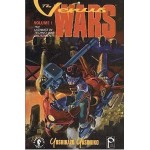
The Venus Wars Volume 1


By Yoshikazu Yasuhiko, translated by Adam Gleason & Toren Smith (Dark Horse)
ISBN: 978-1-87857-462-6

It’s been a while since I reviewed anything manga so here’s a rather lost classic we Westerners first saw, courtesy of Dark Horse Comics, before it made the jump to a big book edition just as the graphic novel market was finally coming into its own in 1993.

Of course, I’m no expert, so these will be thoughts restricted to the simple perspective of an interested casual collector, and measured against all other illustrated stories and not simply other manga/anime works. There are plenty of specialist sites to cater for that and they’re there at the touch of a search engine…

Vinasu Senki or The Venus Wars first appeared in Comic Nora, published by electronics specialist company Gakken between 1987 and 1990. In 1989 creator Yasuhiko Yoshikazu, who had learned his craft under “God of Manga” Osamu Tezuka and is equally celebrated for his animated movies as his comics output (Space Cruiser Yamato, Gundam, Crusher Joe, Joan, Dirty Pair, Arion, Jesus, Neo Devilman and dozens more) turned the bombs, bullets and bikes epic into a stunning amine feature and oversaw its conversion to a successful computer game to supplement the four collected comic volumes.

Reprinted in the larger American graphic book standard (258x168mm) this monochrome mini-masterpiece begins in 2003 when a vast meteoric ball of ice crashes into the planet Venus and subsequently renders the place nominally habitable.

By 2083 – or Venusian year 72 – the two competing colonial nations of Aphrodia and Ishtar are days way from war. The Ishtarians are coldly calculating aggressors whose resources have long been concentrated into building a force of super-massive “Octopus Tanks” while the complacent Aphrodians seemingly do nothing to redress the situation.

All, that is, except Major Sims who is talent-scouting at the local Battle-bike stadium. These potentially lethal motorised gladiatorial contests are where young and restless teen rebels burn off their aggressions, but Sims sees them as a proving ground for his secret weapon against Ishtar’s mechanised might.

As the blistering high-speed duels continue Sims has his eye on fullback Ken Seno, a manic daredevil who clearly doesn’t care whether he lives or dies…

When the games end the Major offers the kid a chance to ride a one-ton armed and armoured super-cycle which he thinks will counter Ishtar’s advantage with nothing but speed and rocketry…

Of course Ken’s rowdy team-mates are not keen to lose their star rider and besotted groupie Maggie is terrified that her bad-boy might leave without ever realising she loves him, but the lure of that mega-bike is irresistible to the aimless youth…

When a ship from Earth arrives carrying military observers, government arbiters and the enigmatic Helen Macluth, Sims is wary, but too soon events overtake them all when Ishtar suddenly attacks Aphrodia’s capital Io City with a division of Octopus Tanks.

Ken has joined the biker elite “Hound Unit”, but his training has run into a few snags, the worst being snotty rival Kurtz, who seems to be his better in every aspect – and an arrogant rat to boot…

Macluth is injured and subsequently detained by the Aphrodians, but as the Ishtarian attack continues, hardly slowed by Sims’ super-bike squads, the government falls and radical cult leader Ayraht Akhbar seizes control of Io’s military. In the ensuing chaos Ken’s old Battle-bike team-mate Miranda and her friends break the Earthling out and they all flee the city together as a mass civilian evacuation begins…

Meanwhile Sims’ command has been usurped by Akhbar’s Mesada zealots whose insane methods seem certain to lose the war, even though the Ishtarian military command is on the verge of implosion itself with rival generals seeking to wrest supreme control away from the War’s original architects…

When the inflammatory and outspoken Ken is tortured and incarcerated by the newly-appointed Mesada commandant it sparks a mutiny amongst the Hound riders and they break him out of solitary, just as the Ishtarians begin their major offensive.

And somewhere in the hinterlands Helen Macluth wonders if she is the only person who knows or cares that the terra-forming miracle which transformed Venus and made human colonisation possible has begun to reverse itself…

Rocket-paced, with spectacularly violent action; blending bleak, cynical philosophy with trenchant human-scaled drama and politics, all whilst finding room for the odd soupcon of humour and romance, The Venus Wars was one of the best future-war thrillers to ever come out of Japan and is one of Yoshikazu Yasuhiko’s most impressive epics.

This is a series every comics and science fiction fan will love to read.
Original story & art © 1991 Yoshikazu Yasuhiko and Gakken. English translation © 1991 Studio Proteus & Dark Horse Comics, Inc. All Rights reserved.

Princess Knight Part 1


By Osamu Tezuka, translated by Maya Rosewood (Vertical)
ISBN: 978-1934287-27-9

Win’s Christmas Gift Recommendation: a fairytale for all ages and types of romantic… 8/10

Osamu Tezuka utterly revolutionised the Japanese comics industry during the 1950s and 1960s. Being a devoted fan of the films of Walt Disney he also performed similar sterling service in the country’s fledgling animation industry.

Many of his earliest works were aimed at children but right from the start his expansive fairytale stylisations – so perfectly seen in this splendid romp – harboured more mature themes and held hidden treasures for older readers…

Ribon no Kishi or “Knight of the Ribbon” is a series which Tezuka returned to repeatedly during his life and one that is being continued even in the 21st century by his disciples. The simple tale has been turned into TV anime seen all over the world (generally known as some variation of “Choppy and the Princess” in places as far-flung as Canada, France and Brazil) and in 2006 a stage musical was launched.

The serial was first published in Kodansha’s Shoujo Korabu (Shōjo Club), running from January 1954 to January 1956, with a generational sequel appearing in Nakayoshi magazine between January 1958 and June 1959. The original tale was updated and revised in 1963-1966 and forms the basis of the version featured in this magnificent tome, translated from the Tezuka Osamu Manga Zenshu Edition 1977.

In 1967-1968, to tie-in with a television adaptation, Tezuka reconfigured the tale with science fiction overtones and, illustrated by Kitano Hideaki, it ran for a year in Shōjo Friend.

The series is a perennial favourite and classic of the medium and this volume forms part of a two-volume softcover English-language edition, containing the first 16 episodes.

‘Once Upon a Time’ opens in Heaven where junior angels are busy with soon to be born souls, installing either blue boy hearts or pink girl hearts to the ante-natal cherubs in their care. Unfortunately easily distractible Tink (AKA “Choppy” in many foreign iterations) cocks up and one proto-baby gets both…

Tink is dispatched to Earth to retrieve the superfluous metaphysical organ and lands in the feudal kingdom of Silverland, where a most important child is about to be born. The King and Queen desperately desire that their imminent first-born be a boy, for no female can rule the country. Should the child be a princess then vile Duke Duralumin‘s idiot and nastily maladjusted boy Plastic will become heir-apparent.

Thus, due to a concatenation of circumstances, a baby girl with a dual nature spends her formative years pretending to be a prince…

Fifteen years pass before ‘Flowers and Parades’ resumes the saga. Tink has been lax in his mission and Prince Sapphire has become the darling boy of the kingdom. Duralumin and his crafty henchman Sir Nylon have spent the intervening years certain that the gallant boy is actually a useless girl but have been unable to prove it, whilst Sapphire has grown into a dutiful, beautiful – if androgynous – specimen skilled in riding, sports and all arts martial, but passionately yearns to be allowed to openly wear the dresses and make-up which are her family’s most intimate secret. When Tink finally reveals himself and exposes the heir’s hidden nature, Nylon overhears…

‘The Carnival’ sees gorgeous Prince Franz Charming pay a royal visit from neighbouring Goldland and Sapphire, aided by her mother and nurse, dons a blonde wig and party frock and clandestinely give vent to her true nature, turning all heads and captivating her regal guest. When she returns to her public identity all Franz can talk about is the mysterious girl with flaxen hair, blind to the fact that she is sitting beside him…

In ‘The Tournament’ the evil Duke turns a fencing exhibition to his advantage, killing the King and framing Franz for the deed, after which the ‘Prisoner Prince’ is helped to escape by his Flaxen maid. Heir Sapphire accedes to the throne in ‘Coronation’ only to have it all snatched away as the Duke’s latest scheme succeeds beyond all his wildest dreams and Sapphire is publicly exposed as a girl, and her recently widowed mother is accused of betraying the nation by concealing the fact since her birth…

Reviled and shunned, mother and daughter are imprisoned with ghastly hunchback jailer Gammer in ‘Sapphire in Coffin Tower’ wherein the distraught girl befriends the vermin of the keep just as Gammer gets his orders to dispose of his charges. Meanwhile Tink has been searching high and low for Sapphire…

Narrowly escaping being murdered the princess becomes a masculine masked avenger of wrongs in ‘Phantom Knight’s Debut’, punishing the wicked men who have ruined her nation since Plastic was enthroned by his corrupt father Duralumin.

Meanwhile in the Palace the villains look for ways to control the increasingly off-kilter Plastic in ‘The Idiot King’s Bride’. Little do they know that Briar Rose, the fetching companion they’ve acquired, is Sapphire on an infiltration mission…

When she is inevitably caught Sapphire’s life takes an even more dramatic turn in ‘Devil’s Whisper’ when terrifying witch Madame Hell materialises, offering her untold wealth and power if she will sell her female heart and nature. Luckily Tink’s angelic power drives her off, but is unable to prevent the princess being sentenced to a life of penal servitude in ‘Two By the Quarry’.

Here she again meets Franz, who has long believed Sapphire responsible for his frame-up and imprisonment in Silverland’s dungeons. Nevertheless the Prince helps Sapphire escape, almost dying in the effort. Soon after the girl is transported to ‘The Witch’s Lair’ and meet’s Hell’s daughter Hecate, who is violently opposed to her mother’s scheme to marry her off to Franz.

That young worthy however, has meanwhile recovered from his wounds and is still searching for the Flaxen-haired girl, oblivious to her true identity and nature…

Hecate does not want Sapphire’s girlish heart and frees the Princess Knight by turning her into a ‘Grieving Swan’ who is captured by Franz and added to the Royal Flock. The Prince too is being pressured to marry and beget an heir, so when Madame Hell arrives with a huge bribe and a now compliant Hecate the boy’s uncle is keen to cement the nuptial alliance until the ensorcelled swan Sapphire exposes their true natures with Tink’s angelic assistance…

Just as Franz begins to finally notice the similarity of his flaxen dream girl to the freshly restored Sapphire in ‘Two Hearts’ she and Tink are fleeing – right into the clutches of Nylon who is keen to wipe out any loose ends. At the worst possible moment the angel completes his long mission and reclaims the boy-heart, leaving her helpless, but cannot betray his friend and returns it, consequently losing his place in Heaven…

Together again the pair attempt to rescue Sapphire’s mother from Coffin Tower but are too late. The Queen and Gammer have been taken to Sea Snake Island where vengeful Madame Hell’s dark magic has transformed her into a petrified ‘Stone Queen’.

This premier chronicle concludes with Sapphire and Tink adrift on the ocean where they encounter the brilliant, dashing and gloriously charismatic ‘Captain Blood, Pirate’ who instantly penetrates the princess’ manly disguise and sees a woman he wants to marry at all costs…

Princess Knight is a spectacular, riotous, rollicking adventuresome fairytale about desire, destiny and determination which practically invented the Shoujo (“Little Female” or young girl’s manga) genre in Japan and can still deliver a powerful punch and wide eyed wonder on a variety of intellectual levels. Still one of the best and most challenging kid’s comics tales ever, it’s a work that all fans and – especially parents – should know.

This black and white book is printed in the traditional ‘read-from-back-to-front’ manga format.

© 2011 by Tezuka Productions. Translation © 2011 by Mari Morimoto and Vertical, Inc. All rights reserved.

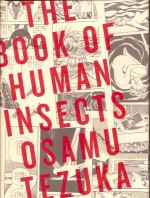
The Book of Human Insects


By Osamu Tezuka translated by Mari Morimoto (Vertical)
ISBN: 978-1-935654-20-9

Win’s Christmas Gift Recommendation: an ideal chiller for those dark nights… 8/10

There aren’t many Names in comics. Lots of creators; multi-disciplined or single focussed, who have contributed to the body of the art form, but we don’t have many Global Presences whose contributions have affected generations of readers and aspirants all over the World, like a Mozart or Michelangelo or Shakespeare. There’s just Hergé and Jack Kirby and Osamu Tezuka.

Tezuka was born in Osaka Prefecture on 3rd November 1928 and as a child suffered from a severe illness which made his arms swell. The doctor who cured him inspired him to study medicine, and although Osamu began his professional drawing career while at university, he persevered with his studies and qualified as a doctor too. Facing a career crossroads, his mother advised him to do the thing that made him happiest. He never practiced as a healer but the world was gifted with such classic cartoon masterpieces as Tetsuwan Atomu (Astro-boy), Kimba the White Lion, Buddha, Adolf and literally hundreds of other graphic narratives. Along the way Tezuka incidentally pioneered, if not created, the Japanese anime industry.

Able to speak to the hearts and minds of children and adults equally, Tezuka’s works range from the childishly charming to the disturbing – and even terrifying. In 1970-1971 he produced the stark and moody psycho-thriller Ningen Konchuuki for Akita Shonen’s Play Comic, detailing the inexorable rise of a truly different kind of monster for the burgeoning audiences who were growing up and demanding more mature manga fare.

This superb black and white 364 page hardback opens with ‘Spring Cicada’ as failed and broken designer Ryotaro Mizuno ponders the incredible success of golden girl Toshiko Tomura; a bright young thing who has just scooped a major literary prize for her first novel.

Across town a broken-down derelict also toasts her success whilst in a lonely garret a girl hangs from the end of a noose…

Mizuno confronts Toshiko in her moment of triumph, telling her failed author Kageri Usuba has committed suicide. Their tense exchange is observed by muck-raking journalist Aokusa…

Convinced he’s on to something the reporter perseveres and discovers that Toshiko is a modern renaissance woman: emerging from obscurity to become a celebrated actress while still in her teens, she graduated to directing before becoming an award-winning designer. Abruptly she metamorphosed again, writing the stunning novel The Book of Human Insects. Still in her twenties, there seems to be nothing the angelic girl cannot do…

Further enquiry leads the newsman to her desolate rural home where the uncanny genius presents an entirely different, almost wanton aspect. Moreover she keeps there a very creepy waxwork of her dead mother…

Toshiko catches the professional voyeur and agrees to an interview, but before that meeting Aokusa is accosted by shambling drop-out Hyoroku Hachisuka, a once-prominent stage-director who imparts the true story of Toshiko’s resplendent rise to fame and fortune.

Once, the universally approved-of, wholesome girl was a small, timid creature who inveigled her way into his theatre company. Once there she attached herself like a leech to the star, learning her ways and mannerisms. A perfect mimic, Toshiko not only acquired the actress’s skills but also seemed to suck out her talent and inspiration. When the former star quit Toshiko replaced her…

She performed that same slow consumption of the entire company and then turned her attentions to the director…

Moreover, the seemingly helpless waif was utterly amoral, using sex, slander and perhaps even murder to achieve her ends, which were always short-term: she had no goals or life ambitions, but merely flitted from victim to victim like a wasp seeking its next meal…

Ignoring the warning Aosuka persists and discovers that promising writer Usuba once had a room-mate named Toshiko whom she accused of plagiarising her novel…

Intriguingly, the lonely writer’s recent suicide occurred in extremely suspicious circumstances…

During a TV interview Toshiko accidentally meets Mizuno again. Revealed as one of her earliest victims, can he possibly be the only man she ever loved?

In ‘Leafhopper’ Aosuka uncovers another of Toshiko’s secrets when he meets for the first and last time her shady associate Arikawa – a murderous anarchist who cleans ups the lovely mimic’s potential embarrassments – just as she tries to renew her relationship with the bitter and far wiser Mizuno.

Toshiko also meets war criminal and right-wing “businessman” Sesson Kabuto who immediately discerns her true nature and keeps a fascinated but wary professional distance from her…

Toshiko operates almost instinctively and according to immediate desire, but she has a terrifying capacity to clean up any potentially damaging loose-ends. After seducing Arikawa she spectacularly removes him during a political assassination and uses the affair to promote her next book…

Meanwhile Mizuno spirals further into despondency until he meets a prostitute who looks like Toshiko and finally finds redeeming true love – of a sort…

Toshiko almost overreaches her abilities when she is arrested by South Korean security forces in ‘Longhorn Beetle’ but is rescued and forced into marriage by a man every inch her ruthless, remorseless equal, compelling her to even more inspired acts of perversion and survival – which consequentially endangers the wellbeing of everybody in Japan – before ‘Katydid’ brings the unique drama to a shocking, bloody, poignant and utterly unexpected conclusion…

Murder-mystery, Greek Tragedy, trenchant melodrama, serial-killer horror story and much more, this supremely adult tale has hardly dated at all since its release and offers a chilling image of those hidden invisible predators who have supplanted vampires, witches and werewolves in the dark corners of our communal consciousness.

The beautiful maiden as lure and amoral predator possibly began with this truly disturbing tale and the story is one which will stay with readers long after the final page is turned…

“God of Manga” Osamu Tezuka died in 1989 but with ever more of his copious canon at last being released in English there’s plenty of brilliant material for all ages, intellects and inclinations to admire and adore, so why not start right here, right now.

Accept no imitations…

© 2011 by Tezuka Productions. Translation © 2011 by Mari Morimoto and Vertical, Inc. All rights reserved.

The Drops of God Book 1: Les Gouttes de Dieu


By Tadashi Agi & Shu Okimoto translated by Kate Robinson (Vertical)
ISBN: 978-1-93565-427-8

Win’s Christmas Gift Recommendation: 7/10. Perfect for that impossible-to-buy-for relative.

Every so often a graphic novel jumps the ghetto walls and makes a splash in the wider world and this intriguing manga monolith is the latest: eschewing the usual icebreakers of horror, sci fi or blood-soaked action to target the lofty and insular world of the high-end vinter trade and the obsessive fascination of oenophilia (I’m chucking in a bunch of technical terms all enticingly explained in the book, but you can cheat and use your search-engine of choice).

Created by brother and sister thriller-writing team Shin & Yuko Kibayashi (Kindaichi’s Case Files, GetBackers) under their nom de crime Tadashi Agi and stunningly illustrated by Shu Okimoto, Kami no Shizuku debuted in 2004 in Kondansha’s Morning and began book compilation a year later. The siblings are also two of the most influential wine connoisseurs in the world and their expertise and passion shine through every page of this monolithic manga tome (430 pages) which has taken the wine world by storm and won the Gourmand and Cookbook Award 2009 – presumably a first for any work of fiction, let alone graphic novel – and has been described by Decanter Magazine as “arguably the most influential wine publication in the past 20 years.”

Of course all I care about is comics, but even on my terms the tale of prodigal son Shizuku Kanzaki, raised from birth to follow his father’s obsession only to rebel and seek his own path until tragedy and circumstance pull him back to his destiny, this is a thoroughly entertaining immaculately realised soap/thriller drama that would make fans of Jackie Collins or Dick Francis rethink their allegiances…

The first eighteen chapters of the ongoing saga are contained in this first English translation, beginning with ‘The Scent of a Hundred Flowers’ and introducing apprentice Sommelier Miyabi Shinohara who almost shames her wine-bar/restaurant employers in front of a prominent – but boorish – wine snob until a dashing young man saves the day with a bit of daredevil decanting.

It transpires that the lad is a small cog in a vast beer-making concern and has never tasted wine: a shocking admission as Shizuku is the son of global superstar of wine criticism Yutaka Kanzaki…

It seems old man Kanzaki had great hopes and aspirations for his son, training the boy from birth in flavours, odour detection and discrimination like a vintner version of Doc Savage, but the boy rebelled and rejected his father’s passion.

The situation changes when Shizuku is informed of his sire’s death and a unique will…

‘A Prayer to the Fruitful Earth’ reveals the elder Kanzaki had a vast and valuable private collection of stellar vintages and has left them, his house and fortune to his wayward son under a bizarre condition. The lad must indulge in a duel with dark prince of Wine-tasters – and inheritor of Kanzaki’s mantle as greatest critic in Japan – Issei Tomine in a dozen blind tastings of the greatest vintages in the collection – the “Twelve Apostles” – as well as the mysterious thirteenth bottle known only as “the Drops of God”. To the one who most closely agrees with the master’s own description goes everything…

At first Shizuku doesn’t care, but the arrogance of Tomine and a burning desire to understand the father who pushed him to such extraordinary lengths moves the orphan to an alliance with Miss Shinohara and a crash-course in the history, lore and philosophy of the wine industry and craft in ‘The Profound and Subtle Queen’ as well as his first ever actual taste of the magical elixir…

For reasons even he doesn’t understand the neophyte decides to accept the challenge of the Drops of God in ‘Over the Bed Wafts an Aroma of Awakening’ and begins his education, inestimably assisted by his incredible sense of smell, expanded palate and the physical skills he never even knew he possessed, courtesy of his early training.

In episodes with such evocative titles as ‘The God of Burgundy’, ‘A Maiden Fleeing through Strawberry Fields’, ‘Tasting in the Park’ and ‘Cradling God’s Blessing in Both Hands’, what follows is a dazzling display of hard fact and the theosophical fervour of the grape-growers art, seamlessly blended with a canny melodrama of rivalry, redemption and possibly burgeoning young love as Shizuku discovers the obsessive power of his father’s life.

The cast expands as the story unfolds and the nigh-mystical nature of wine is seen to mend fences, restore lost lovers and even diagnose illness in ‘Draining the Glass of Reunion’, ‘A Maiden Smiling in the Strawberry Fields’, ‘The Sweet Dessert of Parting’ and ‘The Ones Who Watch Over’.

Even Shizuku’s career alters as he transfers from sales to the Beer company’s small and struggling wine division and discovers that even all he has learned is not enough when he falls foul of snobbery and bigotry in ‘At All the Battles’ Start’, ‘A Lovely Cruel Flower’, ‘Tough Love for a Saucy Lolita’, ‘The Mystery Man of the Wine Division’ and ‘Merry-Go-Round’.

Meanwhile Tomine has begun to stack the odds in his favour by introducing a seductive secret agent into the lives of Shizuku and Miss Shinohara in ‘A Fantastico Night’ wherein some nasty facts about the true character of the Prince of wine-critics is revealed…

As much religion and philosophy as science and art, the cachet and inherent excitement of the wine trade transfers readily and effectively in this tale to make for a superbly readable tale for older readers.

The Japanese excel at making superb comics which simultaneously entertain and educate (check out economics textbook Japan Inc. by Shotaru Ishinomori to see what I mean) and the powerful, evocative imagery used to capture the sensorial effect of wine on the tongue and myriad fragrances in the nostrils is staggeringly effective – a perfect use of the disciplines which only comics can muster.

This is a surprisingly compelling comics-read and might well be the perfect gift for all those people you thought you couldn’t buy a graphic novel present for…

This black and white book is printed in the traditional ‘read-from-back-to-front’ manga format.

© 2011 Tadashi Agi/Shu Okimoto. All rights reserved.

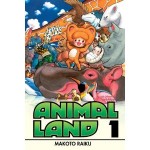
Animal Land book 1


By Makoto Raiku, translated and adapted by Stephen Paul (Kondansha USA)
ISBN: 978-1-935429-13-5

Here’s a sly and rather subtle allegory from relative manga newcomer Makoto Raiuku (Newtown Heroes, Genmai Blade, and the enormously popular Konjiki no Gash!! which hit American TV screens as Zatch Bell!!).

Dōbutsu no Kuni or “Animal Country” began in 2009 and follows the incredible life of a seemingly human baby abandoned and cast adrift on a river only to wash up in the land of animals: a dog-eat-dog, literally bestial world of raw savagery where the weak always die and only the strong are able to survive.

‘Word 1: Hello, Baby’ opens proceedings with little Monoko, an orphan Tanuki (a sort of tiny raccoon dog indigenous to Japan). Since her parents were eaten by wild cats she’s been unable to pull her weight in the hard-pressed Tanuki community; all rushing to store enough for the rapidly approaching winter. It doesn’t look like she’s going to make it…

Her world and existence change forever when she adopts the strange hairless monkey cub which washes up on the river bank one cold day. This is a very strange baby and Monoko insanely decides to become its new mother against all the advice of the village.

In Animal Land all creatures are at odds and cannot understand other species cries, but Monoko decides to risk everything – including being eaten by cats such as the fearsome Kurokagi – to steal some milk for the foundling to drink.

Despite a horrifying but successful mission the baby is cold and dying: it has no will to live and the Tanuki elders brusquely tell her to stop wasting everybody’s time and resources.

Desperate Monoko cuddles it with her body, sharing her warmth in a desperate, lonely struggle to keep it alive one more night. When she awakes she discovers something miraculous and staggering game-changing…

The initial episodes ends with another huge shock: the baby can speak Tanuki…

The mystery increases in the second instalment ‘Word 2: Baby’s Power’ when the infant reveals that he can converse and understand the speech of all animals – even the ultimate predator Kurokagi – thereby discovering the dire marauder’s tragic secret and further reshaping the nature and destiny of the savage domain, whilst the third and final chapter ‘Word 3: Baby Cries Over His Name’ sees Monoko’s first maternal crisis as she finds a keepsake from the baby’s biological mother and fears her joyous new world is crumbling around her until once more the wonder baby comes to her emotional and physical rescue…

Despite what the publishers would have you believe this isn’t just another cute kiddie-book. For starters it’s filled with scatological asides and the audience advisory is 13 and older. Moreover, despite being filled with action, adventure and slapstick/social gaffe humour in the grand manga manner, this is a tale filled with scary moments, brutal situations and heartbreaking poignancy, with a lot to say about family, community, integration, unity and understanding through plain-talking and communication.

Also included in this initial monochrome volume are translator’s notes, a guide to Japanese honorifics, Omake pages (“extra” or “bonus”) of short cartoon strips and a longer piece wherein Makuto Raiku lets us in on the background of and inspiration for the strip: sharing the bittersweet story of his and wife’s best friend Riku – an abandoned wounded puppy…

More Animal Farm than The Gruffalo, this is a brilliant piece and impressive slice of social fantasy for kids, and would make a great gift for older children getting too big for traditional kids stuff.

This volume is printed in the traditional front-to-back, right-to-left reading manner.

© 2010 Makoto Raiku. English translation © 2011 Makoto Raiku. All rights reserved.

Lucky Star volume 1


By Kagami Yoshimizu translated by Rika Takahashi (BANDAI Entertainment)
ISBN: 978-1-60496-112-6

Japanese four-panel strips are very similar in terms and construction to modern Western newspaper strips, with a fixed cast of characters acting in brief complete gag tales, often building upon previous episodes to comprise a greater mosaic, but often the similarity ends there.

This rather peculiar (to a fat, finicky fifty-something British bloke at least) compilation confuses, delights, confounds, charms but mostly baffles as it describes the day to day to day trials and tribulations of a small group of small Japanese schoolgirls, their less than completely proper teacher and a few other older – if no wiser – influences who regularly intersect with the all-encompassing world of TV, manga, comics games, homework and dawning social advancement that is Lucky Star.

Kagami Yoshimizu’s Raki☆Suta debuted in the January 2004 issue of Japanese computer magazine Comptiq as a floating graphic end-piece and page-filler for the articles and features, but proved so popular that a reprint collection was released a year later. The strip soon began guesting in other magazines such as Shōnen Ace, Dragon Magazine, Mobile Newtype and Kadokawa Hotline and quickly spun off into video games, a drams CD, visual novels, light novels and an anime TV series, and even made the jump to American screens.

Set in Kasukabe City, Saitama Prefecture, the individual episodes are in the mild and timeless, unchallenging, nothing-ever-changes mould of Hagar or Garfield – but with far less of their stripped-down artistic and stylistic economy – and follow the daily doings and musings of young High School girls. Sporty “Otaku” games addict Konata Izumi, cute, bespectacled and dutiful know-it-all Miyuki Takara, tough-girl Kagami Hiiragi and her kind, adorable bimbo-in-training fraternal twin Tsukasa are all brought together under the second-rate, whimsical, but not-so efficient tutelage of beer-drinking history teacher Ms. Nanoko Kuroi.

This initial translated tome collects the first 25 instalments (averaging between 4 and 9 four-panel strips reading down, not across, the page, right to left and, since it’s manga, back to front), mostly in black and white but with a few full-colour examples too.

As you’d expect most of the material centres around the playing of electronic games; dutifully paying lip-service to the absorption and distraction of such upon girls who should be preparing for life and doing their homework, but as the series progressed wider issues (such as dealing with boys), interests (like films, magazine competitions and travelling on trains) and more mature characters are introduced, – most notably  grown-up and freshly newlywed cousin Yui Narumi; a strong-willed but amiably good-hearted police woman in the Traffic Rules Division who might perhaps be quite the wrong sort of role-model for the already slacking Konata.

The chapters are designated ‘Begin Activity’, ‘Older Sister’, ‘Unchanging Everyday Life’, ‘The Other Side of the Lens’, ‘Footsteps of Spring’, ‘A Season of New Beginnings… Maybe’, ‘Ideals’, ‘Various Appearances, but Contents are Still the Same’, ‘A Clever Way to Do It’, ‘The Rowdiness Before Battle’, ‘Do Your Best, Young Ones’, ‘Beginner’, ‘Relatives, No Doubt’, ‘Play, Play’, ‘Bright Season’, ‘Full of Memories’, ‘When Time Passes, Even Things you Don’t Like’, ‘The Other Side, Without the Lens’, ‘Preparations for the Cultural Festival!’, ‘The Days Until the Athletics Festival!’, ‘Personality’, ‘Game’, ‘Home Visitation’, ‘Conditions Don’t Change’ and ‘Season For Sleep’: covering a plethora of topics and situations inadvertently delivering intriguing insights into modern attitudes to school, work, women’s roles and  the culture and concerns of the nation. For example, Konata is a second-generation addict; working after school at a cosplay café, staying up all night and sharing all the games her equally electronically-enslaved single parent dad buys – even the adult ones. Kagami is a traditional swot: diligent, diffident and most concerned with best efforts and propriety at all times, but is sweet, forgiving and understanding… whilst her sister is an airhead but an excellent cook.

The strips themselves range from clever and charming to dry and witty to devastatingly funny to bittersweet to, quite often, utterly incomprehensible (at least to a fat old English bloke who doesn’t play video games) but the craft and quality of the storytelling, whilst not perhaps everyone’s cup of tea, is exceptional and indisputable.

With lots of sketches, illustrated character studies and a handy and informative annotated Translators Notes section, Lucky Star might be just the thing to spark interest from that stubborn holdout in the house who just won’t read any comics at all…

© 2005 Kagami Yoshimizu. English BANDAI Entertainment, Inc. edition May 2009.

Robotech: the Macross Saga volume 1


By Jack Herman, Carl Macek, Mike Baron, Reggie Byers, Neil D. Vokes, Ken Steacy & various (WildStorm)
ISBN: 978-1-84023-713-9

Robotech was a minor comics/TV crossover phenomenon of the 1980s based on some rather deft remarketing of assorted Japanese fantasy exports. Whilst American TV company Harmony Gold was cobbling together and re-editing three separate weekly science fiction anime series (Super Dimension Fortress Macross, Super Dimension Cavalry Southern Cross and Genesis Climber MOSPEADA), US model-kit company Revell had begun selling Japanese mecha kits based on the aforementioned Fortress Macross, plus Super Dimension Century Orgus and Fang of the Sun Dougram as Robotech Defenders, complete with an all-new English language tie-in comic produced by DC Comics.

A copyright clash resulted in the DC title being killed two issues in, after which TV produced Carl Macek and Revell went into limited partnership on a Macross co-licensing deal which saw the three shows translated into an 85-episode generational saga wherein planet Earth was rocked by successive alien invasions decades apart and only saved from annihilation by a fortuitous spaceship crash which had allowed humans to master extraterrestrial Robotechnology.

The American TV hybrid and toy range naturally led to Role Playing Games, novels, an animated movie, art books and comicbooks which have been semi-continuously in print since 1984.

The premise evolved into The Macross SagaFirst Robotech War: a desperate conflict with giant Zentraedi warriors seeking to retrieve a crashed space craft; Robotech MastersSecond Robotech War wherein Earthlings battled a fresh wave of Zentraedi, come here to discover what happened to their lost fleet and Robotech MastersThird Robotech War, with enemies becoming allies to confront an even greater, mutual foe: the horrendous Invid, from whom the Robotech Masters had originally stolen the near-magical, cataclysmic, semi-spiritual power source Protoculture, reverentially worshipped as the Flower of Life and the motivating force behind all Robotechnology….

Comico produced separate titles set twenty years apart (Robotech Macross Saga, Robotech Masters and Robotech the New Generation) from 1984-1989, after which Eternity Comics, Academy Comics, Antarctic Press and WildStorm took up the perennial favourites in their turn.

At the height of the furore in 1986 and two years after the comic book triptych launched, Comico produced Robotech: the Graphic Novel, an original oversized 48 page European style graphic album plotted by Carl Macek which filled in the heretofore unknown backstory; telling the story of that fateful First Contact when a starship crashed onto the island of Macross.

It was scripted by Mike Baron, illustrated by Neil D. Vokes & Ken Steacy (with painted colour by Tom Vincent and lettering by Bob Pinaha) and the initial chapter of that revelatory tale provides the opening segment of this digest-sized, full-colour compilation which then re-presents the first six Macross Saga comicbooks in a handy catch-all edition for the next generation of Amerimanga or OEL (Original English Language) fans.

In ‘Genesis: Robotech’ far away on the other side of the universe a two kilometre long spacecraft is seeding desolate worlds with a unique plant. Unconventional and rebellious Philosopher-Scientist Zor is attempting to grow the energy-rich Flower of Life in soil not sanctioned by his Robotech Masters, over the protests of dutiful warrior-commander Dolza.

This allows the insidious and monstrous Invid to track them, fanatically attempting to wipe out the Zentraedis who had purloined their sacred bloom and daily desecrated its holy purpose…

Although temporarily driven off, the Invid fatally wound Zor and he dispatches the ship on a pre-programmed jaunt across the universe to a world only he knows of…

In two text reminiscences Bob Shreck and artist Neil Vokes describe the frantic efforts which resulted in the deal with the fledgling Comico and dictated rushing out the first issue ASAP (further demanding a new issue every fortnight until a stable print schedule could be established)…

All of which goes some way to pardoning the rather crude visuals on ‘Booby Trap’ as, a decade after that vessel crashed on Macross Island (instantly ending a percolating Third World War), the united Terran forces are preparing to activate their greatest weapon: the retooled, reconstructed ship as interplanetary dreadnought SDF-1 – Super Dimension Fortress.

Preparing for a shakedown flight and full test run ex-Admiral Gloval is not prepared for the shocking alien attack he has been dreading ever since the super-ship smashed to Earth…

In fact his first inkling of trouble is when the city-sized construct automatically fires its colossal main-gun, obliterating a squadron of unseen Zentraedi scout ships, just as teen exhibition-aviator Rick Hunter arrives on the Pacific Island to meet old mentor Roy Fokker. The invaders brutally respond and Gloval is compelled to take SDF-1 to battle stations and direct a desperate counterattack.

Caught up in the action Rick finds himself stuck in a Veritech fighter-plane he has no idea how to fly, dogfighting with giant invaders in incredible, mecha murder-machines…

With the Island and planet under brutal assault the illustration takes a huge step up in quality for the second issue as ‘Countdown’ finds the embattled Captain Gloval forced, under repeated sorties from the invaders, to move the sitting duck SDF-1 space whilst the civilians of Macross City suffer dreadfully under the Zentraedi bombardment.

Rick has made his first kill and panicked when his jet morphed into a giant robot, but has no time to panic as he saves civilians Minmei and her little brother Jason from death in the ruins…

Unfortunately the Fortress anti-gravity engines fail and humanity seems doomed until Gloval and his snarky Executive Officer Lisa Hayes gamble everything and switch to good, old-fashioned jet power…

Temporarily safe in low-Earth orbit, the SDF-1 is still an easy target for repeated alien assaults and the civilian population can only cower in deep shelters beneath Macross Island. With the SDF-1’s Veritechs easy prey for the Zentraedi, Gloval gambles again and activates the untested ‘Space Fold’ system. Instantly, a space warp deposits them safely in the orbit of Pluto, but brings with it a huge chunk of Macross, Pacific Ocean and Earth atmosphere…

Caught in mid-air over the city in the lad’s exhibition plane, Rick and Minmei are instantly stranded in hard vacuum but manage to crash into a previously unexplored section of the SDF-1 as the baffled engineers report to Gloval that the Fold Generators which saved and marooned them all months from home have inexplicably vanished…

Stranded in deep space, but temporarily beyond the reach of Zentraedi attack, the first order of business is rescuing the civilians trapped in the remnants of Macross Island. After long weeks the populace has been resettled within the vast ship and Macross City is being steadily incorporated into the vessel’s superstructure. ‘The Long Wait’ reveals how Rick and Minmei coped; isolated, alone and presumed dead until the constant rebuilding accidentally uncovers their unsuspected survival hutch…

As the SDF-1 proceeds slowly and cautiously back towards Earth, Gloval, Hayes and Fokker discuss reconfiguring the ship if necessary. The trouble is that nobody can predict what the ‘Transformation’ will mean to the masses of humanity now infesting every spare inch of the super-ship…

As they pass Saturn the decision is taken from their hands as the Zentraedi ambush the ship and the SDF-1 reconfigures into its gigantic robot warrior mode to fight off the cataclysmic alien ‘Blitzkrieg’…

Packed with fast-paced action and, I’m afraid, quite a bit of the twee, comedy-of-romantic-embarrassment soap opera beloved by the Japanese, this collection by Mike Baron, Jack Herman, Carl Macek, Reggie Byers, Dave Johnson, Mike Leeke Svea Stauch, Neil D. Vokes, Ken Steacy, Jeff Dee, Chris Kalnick, Phil Lasorda, Tom Poston, Rich Rankin and a host of colourists and letterers was groundbreaking for American comicbooks and opened the doors to a Manga invasion that reshaped the industry.

The stories also read winningly well, even after all these years and are easily accessible to older kids and young teens as well as all us picture-story junkies who never agreed to grow up…

Fun and adventure in the grand old space opera manner, it’s about time these 1980s epics were revisited by a more comics friendly readership.
© 2003 Harmony Gold, USA, Inc. All rights reserved. Previously published as Robotech: the Macross Saga #1-6 & Robotech: the Graphic Novel. © 1984-1986 Harmony Gold, USA, Inc and Tatsunoko Production Company, Ltd. Robotech®, Macross® and all associated names, logos and related indicia are trademarks of Harmony Gold USA, Inc.