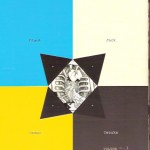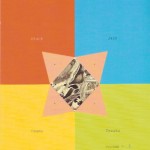
Black Jack volume 1


By Osamu Tezuka, translated by by Camelia Nieh (Vertical)
ISBN: 978-1934287-27-9

There aren’t many Names in comics. Lots of creators; multi-disciplined or single focussed, who have contributed to the body of the art form, but we don’t have many Global Presences whose contribution have affected generations of readers and aspirants all over the World, like a Mozart or Michelangelo or Shakespeare. There’s just Hergé and Jack Kirby and Osamu Tezuka.

Tezuka was born in Qsaka Prefecture on 3rd November 1928, and as a child suffered from a severe illness that made his arms swell. The doctor who cured him inspired him to study medicine, and although Osamu began his professional drawing career while at university, he persevered with his studies and qualified as a doctor too. Facing a career crossroads, his mother advised him to do the thing that made him happiest. He never practiced as a healer but the world was gifted with such classic cartoon masterpieces as Tetsuwan Atomu (Astro-boy), Kimba the White Lion, Buddha, Adolf and literally hundreds of other graphic narratives. Along the way Tezuka incidentally pioneered, if not created, the Japanese anime industry.

Able to speak to the hearts and minds of children and adults equally, Tezuka’s work can range from the charming to the disturbing and even terrifying. In 1973 he turned his storyteller’s heart to the realm of medicine and created Burakku Jakku, a lone wolf surgeon living outside society’s boundaries and rules: a scarred and seemingly heartless mercenary who could work miracles for the right price but also a deeply human wounded soul who made his surgical magic from behind icy walls of cool indifference and casual hostility – think Silas Marner before the moppet turns up or Ebenezer Scrooge before bedtime; except Black Jack never, ever gets soft and cuddly.

This long overdue series of translated, collected adventures begins with the frankly startling yarn ‘Is There a Doctor?’ wherein the joyriding son of the richest man in the world is critically injured. The boy’s ruthless father forces Black Jack to perform a full body transplant on an unwilling victim… but the super-surgeon still manages to turn the tables on the vile plutocrat…

Each story is self-contained over about 20 pages, and the second ‘The First Storm of Spring’ tells the eerie, poignant story of a young girl whose corneal transplant has gone strangely awry. Can the handsome boy she keeps seeing possibly be the ghostly original owner of the eye, and if so what was he truly like…

With ‘Teratoid Cystoma’ the series solidly enters into fantasy territory whilst ramping up the medical authenticity. Tezuka chose to draw in a highly stylised, “Big-foot” manner (he was the acknowledged inventor of the Manga Big-Eyes artistic device) but with increasing dependence on surgical and anatomical veracity, his innate ability to render anatomy and organs realistically truly came to the fore.

A teratonous cystoma occurs when twins are conceived but one of the embryos fails to cohere. Undifferentiated portions of one twin, a limb or organ grows within and nourished by the other. As the surviving twin matures the enclosed “spare parts” start distend the body appearing like a cyst or growth.

For the sake of narrative – and possibly to just plain freak you out – in this story a famous personage wishing total discretion required the Ronin Doctor to remove a huge growth from her. (Many Japanese have an unhealthy prejudice against physical imperfection, as seen by their decades of “ambivalent” treatment towards the atomic bomb survivors – for more see our review of Barefoot Gen vol. 3 Life after the Bomb or search engine “the Hibakusha“).

The mystery patient’s problem is exacerbated because whenever other surgeons have tried to operate they have been debilitated by a telepathic assault from the growth! Overcoming incredible resistance Black Jack succeeds, removing a fully-formed brain and nervous system. Ignoring the disgust of the patient and doctors he builds an artificial body for the stunted, sentient remnants; and calls her Pinoko.

‘The Face Sore’ combines Japanese legends of the Jinmenso (intelligent, garrulous tumours) with cases of disfiguring carbuncles and rashes to produce a very scary modern horror story – and by modern I mean without a happy ending…

Pinoko, looking like a little girl (whether she’s a year old or eighteen is a running gag throughout the series) has meanwhile become Black Jack’s secretary/major domo and gadfly. In ‘Sometimes Like Pearls’ she opens a unique parcel addressed to him which leads to some invaluable back-story as the solitary surgeon travels to see his great teacher and learns one final lesson…

‘Confluence’ provides a little twisted romance as the medical maverick loses out on a chance at love when he undertakes a radical procedure to save a young woman from uterine cancer, whilst in ‘The Painting is Dead!’ an artist caught in a nuclear test endures a full brain transplant just to be able to finish his painting condemning the atomic warmongers.

‘Star, Magnitude Six’ exposes the pompous venality and arrant cronyism, not to mention entrenched stupidity, of hospitals’ hierarchical hegemonies in a tale satisfyingly reminiscent of Steve Ditko’s H series and J series of polemical objectivist parables (see the Ditko Collection vol. 1) whilst the ruthless outlaw surgeon meets his female counterpart in the bittersweet ‘Black Queen.’

‘U-18 Knew’ moves us into pure science fiction territory when the unlicensed doctor is hired by an American medical facility to operate on a vast medical computer that has achieved real sentience, leading to some telling questions about who – and what – defines “humanity.”

An annoying sidebar I feel compelled to add here: For many years broad, purely visual racial stereotypes were common “shorthand” in Japanese comics – and ours, and everybody else’s. They crop up here, but please remember that even at the time this story originated from this was in no way a charged image; Tezuka’s depictions of native Japanese were just as broad and expressionistic. A simple reading of the text should dispel any notions of racism: but if you can’t get past these decades old images, just put the book down. Don’t buy it. It’s your loss.

A heartrendingly powerful tale of determination sees a young polio victim almost fail a sponsored walk until an enigmatic stranger with a scarred face bullies, abuses and provokes him to finish. It also provides more clues to Black Jack’s past in ‘The Legs of an Ant’ and this first superb volume concludes with ‘Two Loves’ as a van driver deprives the greatest sushi artist in the world of his arm and his dreams when he runs him over. The lengths to which the driver goes to make amends are truly staggering… but sometimes Fate just seems to hate certain people…

One thing should always be remembered when reading these stories: despite all the scientific detail, all the frighteningly accurate terminology and trappings. Black Jack isn’t medical fiction; it is an exploration of morality with medicine raised to the level of magic… or perhaps duelling.

This is a saga of personal combat, with the lone gunfighter battling hugely oppressive counter-forces (the Law, the System, himself) to win just one more victory: medicine as mythology, experiences by Ronin with a Gladstone bag.

Elements of rationalism, science-fiction, kitchen sink drama, spiritualism and even the supernatural appear in this sage of Japanese Magical Realism that rivals the works of writers like Carlos Fuentes and Gabriel García Márquez. But overall these are dramatic, highly addictive tales of heroism; and one that that will stay with you forever.

This book is printed in the Japanese right to left, back to front format.

© 2008 by Tezuka Productions. Translation © 2008 by Camelia Nieh and Vertical, Inc. All Rights Reserved.
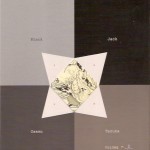
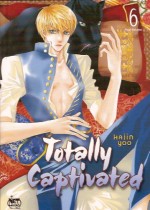
Totally Captivated volume 6


By Hajin Yoo (NetComics)
ISBN: 978-1-60009-298-5

Ewon is an orphan who has always made his own way – although not without some big mistakes. Now a flighty college student, his biggest error was probably getting involved with Jiho, who, enraged by Ewon’s casual infidelity, sold him to a local Mafia boss to pay off a debt. What nobody expected was that the devilishly handsome and eccentrically deadly gang-boss Mookyul would fall in love with the slave/errand boy/gofer.

After some particularly convoluted love-triangle confusion Ewon and Mookyul have declared their love for each other and plan to flee the oppressive and ultimately fatal life of a crime family. But Mookyul’s obligations are seemingly inescapable and when his sadistic and ambitious junior Nahmyung Kim makes his move to replace the distracted mobster it leads to a lot of grief and bloodshed…

Can the lovers ever be happily together or will the call of duty and power of the Mob tear them apart?

The oddly compelling gangster love story concludes in fine style as the lovers brave death and dishonour to find a way to stay together…

I’m not the target market for Shujo (girl’s stories) romances nor Shônen-Ai (explicit boys in love) tales – even ones with lots of fighting – and I never quite believed the conceit here that all these young, really androgynous, non-threatening guys were ruthless Mafia leg-breakers and button men, but there is something quite compelling and comfortably Shakespearean about the rivalry and interplay between the junior bosses, the paternal yet terrifying roles of the ruthless over-bosses, the unswerving loyalty of the subordinate thugs and the honest, overwhelming love the protagonists have for each other.

Passionate, engaging, poignant and even funny this is a Manhwa (Korean Comic) yarn open-minded readers might find to be surprisingly to their taste.
© 2009 Hajin Yoo. All Rights Reserved. English text © 2009 NetComics.

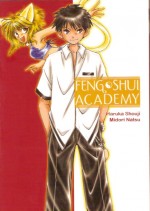
Feng Shui Academy


By Haruka Shouji & Midori Natsu, translated by Jason Tanthum (DrMaster Publications)
ISBN: 978-1-59796-191-2

If you’re one of those people who’s never read a manga tale, or who’s been tempted but discouraged by the terrifying number of volumes these tales can run to here’s a delightful little fantasy fable complete in one book that shows all that’s best about comics from the East.

Comfortably fitting into the Worst Witch/Harry Potter milieu of magical schools it details the exploits of young Enoki Ozunu, the best and most talented student at the Kusanagi School of Magical Architecture. This Tokyo establishment trains students to restore spiritual harmony to buildings using Feng Shui, and to exorcise the demons and ghosts that can infest a dwelling once its “Harmonic Seals” are broken. Narrative balance is more easily achieved by adding a bunch of memorable school friends – and enemies – and a chaotic home-life, courtesy of his foster family.

Beyond all the intriguing and exotic scenarios and mythology is a solid school-days comedy drama, packed with excitement and honest sentiment as orphan Ozunu and his sassy cat-girl familiar Kyara save people’s homes from giant Earth-Spiders, root rats, eel water-spirits and more; and rescue the odd monster from evil people.

Uncomplicated, charming, funny and unashamedly sentimental (I defy the hardest-hearted old git to read the story of the faithful ghost-cat without shedding a tear or two) this older kid’s adventure exemplifies all that’s best in Manga and is a darn good read to boot.
© 2006 Haruka Shouji. © 2006 Midori Natsu. English translation © 2008 DrMaster Publications Inc. All Rights Reserved.

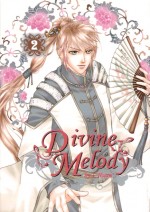
Divine Melody Volume 2


By I-Huan, translated and adapted by Lobelia Cheng & Sue Yang (DrMaster)
ISBN: 978-1-59796-174-5

Celestial Fox Demons are nearly extinct: only females survive and they have enacted a desperate plan to propagate their kind. Stealing a baby deity, they have trained Cai-Sheng over centuries until now she is able to turn into a male at will. But now her abductors are unaware that she/he is matured: able to mate with the fox women; to continue and even elevate their celestial species.

Because Cai-Sheng has other ideas.

When she was still a child two hundred years previously her life was saved by two mortal children, and more importantly, for one glorious afternoon, she learned of play and freedom from duty and destiny. Now after centuries she is reunited with them – or at least their latest reincarnations, beautiful Su Ping and apprentice priest/exorcist Han Yun-Shi. To repay them for their kindness Cai-Sheng has determined to act as matchmaker for the pair, but Ping has seen Cai-Sheng’s male form and become obsessed with “him”.

To further complicate matters Wei Zi-Qiu, an envoy from the goddess of dawn, childbirth and destiny sought out Cai-Sheng, tasked with purifying her and returning her to Heaven whilst in the wings debased fox-demonYu-Niang made her opening move. She had grown strong on two centuries of blood taken from boy children and now she wants the power tied up in Cai-Sheng’s male form…

Yun-Shi is smitten with Su Ping but can’t understand why the frankly weird Cai-Sheng is always hanging around, making herself a nuisance. Moreover, while performing his appointed duties for his disreputable master the apprentice realizes he has a rival in Cai-Sheng’s male form, even if the transforming neo-deity doesn’t…

Zi-Qiu is also constantly turning up, distracting her, and insulting the mortals. He calls Yun-Shi a fraud and questions his motives and honour. When the apprentice is dispatched to find an herb that confers immortality, with Cai-Sheng annoyingly tagging along as usual, he decides to destroy the mystic flower instead, but all the celestial envoy can think of is that Cai-Sheng was alone with the mortal all night, and jumps to the wrong conclusion…

Cai-Sheng returns to the lair of the fox-demons contemplating her designed destiny, but looking at them with new eyes, can’t find any that she loves enough to mate with. Can she save them and be true to her newfound self?

Naming his male self Qin Cai-Sheng, the troubled would-be saviour clashes again with Zi-Qiu, learning the envoy’s tragic history just as the mortal Hui-Niang (a former fox demon who chose humanity, love and children over debased immortality) confronts the wicked Yu-Niang and warns her that her schemes will always be opposed…

And all the strands inevitably draw the cast into a showdown with Yu-Niang and her demonic hordes…

This second volume of the enchanting shōjo tale of legendary China consolidates the characters whilst setting up a portentous clash to come. Even so, Taiwanese creator I-Huan’s flawless blend of mythology and soap-opera temporarily sacrifices comedy for romance and especially action to move on the plot in this saga of duty versus free-will, and familial expectation battling personal desire.

As ever the lyrical art perfectly captures the sense of a lost age whilst horror and fight-fans will revel in the exotic combat scenes (especially against the shadowy demons of Feng Xia) in what is becoming much more than the enduring trials of three people falling in love. A perfect manga for the romantic adventure lover, this is a series that can clearly deliver on all it promises.

This book is produced in the traditional Japanese format and should read from back to front and right to left.

© 2003 I-Huan/Tong Li Publishing Co. Ltd. English translation © 2009 DrMaster Publications, Inc. All Rights Reserved.

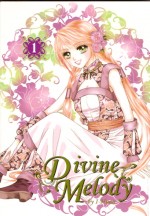
Divine Melody Volume 1


By I-Huan, translated and adapted by Lobelia Cheng & Sue Yang (DrMaster)
ISBN: 978-1-59796-173-8

Pity the Celestial Fox Demons: only females now exist and if they wish to advance their status let alone survive as a race they must propagate their kind…

To this end their leader has stolen the girl Cai-Sheng, who with the proper training and refinement will, when full grown, be able to transform into a male and thus father another, superior generation. But all this takes so long. On the haunted mountain they inhabit the fox-demon clan grows impatient. Some renounce their powers and marry mortal men, and bold Yu-Niang has even begun to take little boys as “offerings”…

But as the mystical politicking happens around her all little Cai-Sheng knows is that she is bored and very lonely. Sneaking away from her lessons one day she plays at a secluded well where she meets two village children. Together the girl Xiao-Que and boy Duo Xi romp innocently with her until a dog attacks the magical child (dogs are the mortal enemies of foxes). Brave Duo Xi fights the hound and little Xiao-Que also suffers a cruel bite protecting Cai-Sheng. Just in time her guardian Hui-Niang appears and kills the beast with a well-aimed arrow…

To thank the humans for spilling their blood in the chosen child’s defence, Hui-Niang marks the boy’s torn forehead and the girl’s bitten hand with mystic marks. No matter how long, nor how many incarnations pass, their sacrifice will be rewarded. Promising to meet again on the morrow, the children part, but time and duty is different for celestial being and the humans never see their new friend again.

Two hundred years pass. Cai-Sheng has grown into a beautiful young woman. Hui-Niang has forsworn her immortality and married a mortal. When Cai-Sheng visits to see her new baby she reveals that her training is over. At will she can transform into a beautiful man with incredible magic powers, but has grave doubts about her role and purpose. So far only Hui-Niang knows the secret and Cai-Sheng wants it kept that way.

She wants to see how mortals live and travels to the city to learn all about them. Whilst there, she meets a student priest and apprentice exorcist who is the reincarnation of Duo Xi, and strikes up a tempestuous friendship with him. Together (well, more her than him) they defeat a cat-demon tormenting young Su Ping, the beautiful daughter of Scholar Su, who is Xiao-Que reborn. Delighted to have found her lost friends the fox-redeemer decides to act as matchmaker for the pair but the impressionable Ping has seen Cai-Sheng’s male form and become enamoured…

To further complicate the matter Wei Zi-qui, an envoy from the goddess of dawn, childbirth and destiny has sought out Cai-Sheng, intending to purify her and return her to Heaven where she truly belongs, whilst in the wings corrupt Yu-Niang patiently waits, having grown strong on two centuries of bloody “offerings”…

This remarkable shōjo tale (story for girls) of legendary China from Taiwanese creator I-Huan seamlessly blends mythology with soap-opera, using comedy and action to tell a charming tale of duty versus free-will, and familial expectation battling personal desire. The lovely, lyrical art perfectly captures the sense of a lost age and the enduring immediacy of three people falling in love. A lovely book for the fanciful and romantic, this is a series that looks to have great staying power.

This book is produced in the traditional Japanese format and should read from back to front and right to left.

© 2003 I-Huan/Tong Li Publishing Co. Ltd. English translation © 2009 DrMaster Publications, Inc. All Rights Reserved.

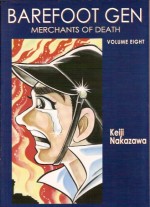
Barefoot Gen Volume 8: Merchants of Death


By Keiji Nakazawa (Last Gasp)
ISBN: 978-0-86719-599-6

The eighth volume of Barefoot Gen begins on 25th June 1950 with America again at war, this time with North Korea. Ardent anti-war protestor Gen Nakaoka is both disgusted and frightened as he explains to a classmate that even if Japan isn’t a participant it’s still in danger as the Occupation troops are using Japan as the major staging post for attacks against the Koreans. In Kyushu citizens are already compelled to operate nightly blackouts…

His lecture is abruptly interrupted by raucous laughter. Fellow student Aihara sneers at Gen’s sentiments. For him war is inevitable, profitable and beneficial to the race. A fight is only prevented by the arrival of the new teacher, Mr. Ohta, who lectures the whole class on the horrors of war, but once more Aihara derides the message.

Later Aihara and Gen meet to settle things in the time-honoured schoolboy manner, but the aggressive war-lover wants to use knives not fists…

Meanwhile Ryuta has become a super-salesman, selling dresses made by Natsue and Natsuko on Hiroshima’s street corners until the girls have enough money saved to open their own shop. He’s also become a devoted follower of the city’s woefully sub-par baseball team the Hiroshima Carp. On his return he finds a battered and bruised Gen talking of his fight with the clearly disturbed Aihara.

Naturally the valiant little fighter won, but now can’t get over the war-lovers reaction; begging that Gen finish it. He actually demanded that he be killed! The boys then swing by the baseball game where the see Aihara, crying bitter tears.

On the way home they encounter an anti-war march with teacher Mr. Ohta in the vanguard, despite the repressive anti-protest ordinances issued by the occupation forces (which were used with ruthless efficiency by the police and local government officers to suppress civil dissent, political opposition and especially the growth of a labour movement). When the police arrive they begin to harass the protestors until activists of the pro-war, pro-America Japan-Blood-and-Iron Party arrive and attack the pacifists. Things are getting ugly when Aihara appears, single-handedly breaking up the clash with devastating rhetoric and phenomenally well-thrown rocks. Inexplicably the war-lover’s only targets are the Blood-and-Iron thugs…

When Aihara is jumped and beaten Gen rescues him and gets him to a hospital. Finding his mother he learns the whole story. Aihara is just another bomb orphan who followed her home one day, but she replaced her own dead son with him and they endured. He learned to love baseball. Then they found he had leukemia. Ever since he has devoured any book or article about combat, but he is simply looking for a good way to die…

As he recovers it is Ryuta who finds a way to help him. Anyone who can throw like that – even a sick kid – should be pitching for his beloved Carp…

Later as Gen and Ryuta exit a movie theatre (life wasn’t unrelentingly grim, even then) they find Mr. Ohta, drunk as a skunk. The pressure is getting to him, and he drags the boys into a bar. It’s not just his job. He’s demoralised because he sees Japan sliding around its own Constitution, scant years after writing it, as the militarists that brought about the country’s downfall sneak back into power and trick the country into another fruitless war.

Shocked to hear the teacher’s own war-time experiences the boys get roaring drunk too. What else can they do?

On the fifth anniversary of the bombing of Hiroshima, 3,000 police officers were deployed around the city to prevent peace rallies and protests. The people marched anyway and Gen and his friends were there. The next day they learn that Mr. Ohta will no longer be teaching them. Returning home they see another new evil – Methamphetamine Hydrochloride – a drug originally given to Japanese soldiers in the war “to stop them from getting scared” is now readily available in pharmacies. The nation’s young men are all becoming speed-freaks, injecting their lives away…

Forced out of his job, Mr. Ohta has also turned to the drug – until Gen talks him around. The next day Gen’s class all play hooky: they’ve decide to choose their own teacher, but the Principal and his stooges track them down, brutally beating them. Gen as always, resists, but Ohta demonstrates the power of passive resistance, gaining a moral victory and proving the worth of his pacifist convictions. Moreover the dissident will build his own school and prove there is a better way…

Rejected by the establishment for years, Ryuta cannot read or write: he becomes Ohta’s very first pupil.

As the war in Korea escalates tensions in Hiroshima grow, but amid the politics the kids have a more pressing problem. Natsue’s appendix was recently removed, but her wound won’t heal. The doctors keep operating but she’s fading…

The city is changing too. Capitalist profiteers and carpetbaggers are everywhere, flaunting their ill-gotten wealth whilst so many people still go hungry. A fight with a speculator in a restaurant ends with Gen nearly being beaten to death. Everywhere the monsters and criminals are regaining their pre-war positions of power, but at least Gen scores one small measure of utterly gratuitous vengeance…

And then authorities begin to clear the shanties built by the survivors whom they abandoned in the bomb’s aftermath. Everywhere ramshackle dwellings are destroyed; their inhabitants dispossessed for the second time in five years – except this time their leaders aren’t affected and actually profit from the tragedy. Gen and his brothers will soon be homeless again…

Life, even such a hard life as Gen’s, is all about change and struggle. As Koji finds a girlfriend and starts his own family and Natsue finds the courage to die on her own terms, the 13 year old Gen embraces again the words of his father and takes control of his path. His life will henceforward be lived on only his own terms.

Barefoot Gen: Merchants of Death is the most strident and polemical of the volumes to date: almost a graphic manifesto of how the world ought to be as much as a catalogue of its perennial mistakes. And yet even at its most bleak and traumatic Keiji Nakazawa’s magnum opus never forgets to be funny, compelling and enjoyably Human. This series should be on every school curriculum. At least you can keep it for homework…


© 2008 Keiji Nakazawa. All Rights Reserved.

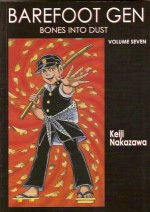
Barefoot Gen Volume 7: Bones into Dust


By Keiji Nakazawa (Last Gasp)
ISBN: 978-0-86719-598-9

As another day dawns in Keiji Nakazawa’s brilliant tribute to the endurance of the human spirit, the escaped prisoner Ryuta reveals a dark secret and turns it into a unique opportunity for Gen and his band of atomic survivors.

Before his incarceration Ryuta and other bomb orphans lived with an old man slowly dying, like so many others, from radiation poisoning. “Gramps” had one great wish: to publish a book about the Atom Bombing of Hiroshima. As his end approaches he has begun to despair. The American Occupation Forces suppress any discussion of the Bomb and its aftereffects so no Publisher will look at the manuscript and every printer in the recovering city is afraid of being charged with treason and espionage if they reproduce it.

Now Ryuta informs Gen that he has the solution. Japanese prisons are full of men from all trades, and have access to industrial machinery. The institutions must retrain and rehabilitate inmates whilst operating on very limited funds. Unscrupulous people “in the know” can get anything made in a prison if they know how to work the system – and can pay…

As so often the case in Gen’s life, the result falls into the category of Good News and Bad News. The prisoners will print the book, but only if Gen provides the paper. Once more the kids are scrabbling to find cash…

As they ponder how to get it they see a body floating in the river. For once it’s not a corpse and when they retrieve it Ryuta recognizes Noro, with whom he escaped from Shimane Reformatory. The lad is in a terrible state. When he had returned to the uncle who swindled him and put him in prison the old man set the dog on him…

Determined to help Noro – and themselves – the boys try to shame and defraud the old crook out of his money, but none of Gen’s extra-legal schemes ever work (only those that depend on grit, determination, ingenuity and honest toil) but when the rogue breaks down and tells his own tale of woe, a reconciliation is reached. With his inheritance returned the grateful Noro splits it three ways. They can buy paper now, if they can find a supplier…

At this point Korean black marketer Mr. Pak turns up again. The ex-slave labourer has prospered in the new, all-but lawless Hiroshima, and as the Nakaokas were the only people who ever treated him decently during the war, he will never accept their money. After relating his own experiences of those terrible times Pak’s only request is that the proposed book tells the truth about the war and the bombing – all of the truth…

At the height of the fourth summer after the detonation a small band of urchins collected a stack of freshly printed books from the back door of a prison and stacked them high on a hand cart.

“The End of Summer” by Matsukichi (Gramps) Hirayama is a condemnation of Man’s failings and yet a victory of the human spirit, and in a break from dragging it to the dying old man who wrote it, Gen reads a copy to his fellow child survivors. The savage, poetic testimony of the horror and even the old man’s private battles in the wake of the explosion reduces all of them to wracking tears. It also reinforces Gen’s fierce determination that it must never happen again.

But when they reach their shack the old man is dead.

Ryuta loses control in his frustration and grief, brutally pounding Gramps’ chest in uncontrollable fury. The old pain-dimmed eyes open! Was the old man in a deep coma, or did pride and love and rage drag his ghost back? It is a perfect affirmation: Never, Never, Never give up.

Within days the books are all gone and the truth about Hiroshima has begun its hand-to-hand travels across Japan. Gen, Musubi and Ryuta are still basking in a rare success when the American military police pounce, delivering them to the US Base at Kure and the tender mercies of Nisei (foreign born, second generation Japanese – in this case Japanese American) Officer Lieutenant Mike Hirota. He wants the author of The End of Summer and is prepared to do anything to get him. As usual Gen cannot be silenced and his accusatory confrontation with the face (a Japanese face not a white devil face) of the nation that used the bomb has been building for years…

The boys are thrown in a cell to await “Thought Modification”. It is already occupied by a severely beaten man who also refused to play ball with the Americans. Through broken lips he describes the treatment he received – chillingly similar to what detainees at Guantanamo Bay and Abu Ghraib have described in the most recent unpleasantness – to involve the UK and USA. The boys are terrified.

Nakazawa briefly digresses to relate the fate of author Wataru Kaji and the CIA precursor the Cannon Agency (“Canon Z-Unit”) in the Iwakasaki Mansion Scandal of 1953 (use your search engine or you could read Eiji Takamae and Robert Ricketts The Allied Occupation of Japan for more details), probably to show that militarists – and human nature – never changes before detailing the extreme measures the kids resort to in order to be freed…

Miraculously liberated, the kids use their newfound knowledge of how to sabotage engines to wage a small war of revenge on American vehicles…

When he finally goes home his mother is there and looking better than she has in years. His delight is short-lived as brother Akira explains that nobody ever recovers. If she’s home from hospital it can only be to die. The bittersweet weeks that follow are the most poignant yet as the children try to make her days perfect, and Mrs. Nakaoka’s shared memories of their father and his courtship, and even his brutal treatment as an anti-war activist, all serve to draw the family closer together.

When Koji finally returns from the coal mines the united Nakaoka clan go on one final trip together to the great Kiyomizu Temple at Kyoto where the parents spent their honeymoon – the happiest time of their lives…

The book closes with Gen’s reaction to his mother’s death, scenes I don’t have the words or the will to describe. It would be crass and you would not thank me.

Read this magnificent book. Read them all.


© 2008 Keiji Nakazawa. All Rights Reserved.

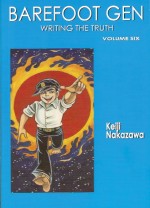
Barefoot Gen Volume 6: Writing the Truth


By Keiji Nakazawa (Last Gasp)
ISBN: 978-0-86719-597-2

Hadashi no Gen originally began in 1973, serialised in ShÅ«kan Shōnen Jampu (Weekly Boys Jump) following an occasional 1972 series of stand-alone stories in various magazines which included Kuroi Ame ni Utarete (Struck by Black Rain) and Aru Hi Totsuzen, (One Day, Suddenly). These led Shonen’s editor Tadasu Nagano to commission the 45 page Ore wa Mita (I Saw It) for a Monthly Jump special devoted to autobiographical works. Nagano realised that the author – an actual survivor of the first Atomic Bombing – had much more to say and commissioned the serial which has grown into this stunning epic.

The tale was always controversial in a country that too often prefers to ignore rather than confront its mistakes and indiscretions, and after 18 months Hadashi no Gen was removed from Jump, transferring first to Shimin (Citizen), Bunka Hyōron (Cultural Criticism), and Kyōiku Hyōron (Educational Criticism). Like his indomitable hero, Keiji Nakazawa never gave up and his persistence led to the first Japanese book collection in 1975, translated by the original Project Gen into English, and other languages including Norwegian, French German, Italian, Portuguese Swedish, Finnish, Indonesian, Tagalog and Esperanto. He completed the tale in 1985 and his dark chronicle has been since been adapted into three anime films, (1983 and 1987) and in 2007, a 2-part live action television drama.

Undoubtedly mirroring Nakazawa’s own creative journey this volume relates the false starts, little triumphs and perpetual set-backs following the bold declaration of old man Gramps to defy the American suppression policy and write a book about the effects and repercussions of atomic warfare.

The dying journalist had made Ryuta and his fellow bomb orphans his new family after his own children threw him out, but as he feels his death approaching and the kids (with the irrepressible Gen always in attendance) spend all their time begging and preying on the ubiquitous American G.I’s his resolve begins to falter. The kids have made enough money to buy black market food for him and Gen’s equally ailing mother, but their joy is ended when Ryuta’s pocket is picked by a better thief than he…

However, life is full of opportunities. They find a discarded stash of comestibles by the rail tracks, jettisoned from a train to prevent police officers from confiscating it. Despite their best efforts they too are arrested but Gen’s strident protestations about police corruption provokes a small riot and the kids escape with most of their windfall. Returning home fortune again turns away as Mrs. Nakaoka has weakened so much that she can no longer eat. Nothing can save her now but money. Lots and lots of it…

Whilst Gen tenderly ministers to her Ryuta explores another solution. The opportunistic gangs that would become indistinguishable from and largely supplant the traditional Yakuza have a brutal grip on Hiroshima’s rackets and are moving into politics. Working from gambling dens they are the largest repositories of cash in the slowly regenerating city. In an astounding feat of courage and stupidity the wayward lad single-handedly raids a casino, stealing a huge amount of money and brazenly kidnapping the Boss of Bosses.

It is an unforgivable affront and Ryuta is forever a marked man. The Yakuza turn Hiroshima upside down hunting for him and the boy is seemingly doomed until Gen conceives a unique solution. If Ryuta surrendered to the police and went to a state reformatory the Yakuza would be unable to find him…

Even with another loved one seemingly taken from Gen forever, his tragic defiance never wavers. By July 1948 he is eking out a regular pittance salvaging building materials from bomb-sites, with his mother in a hospital, paid for with the stolen Yakuza cash. Ryuta is safe in a penitentiary in Shimane Prefecture, whilst his fellow bomb orphans Natsuko and Musubi are still with Gramps, who is soldiering on.

Koji is gone. He left for the coal mines but they haven’t heard from him yet. Life is briefly tolerable, but Gen’s mood is spoiled when he finds another girl has committed suicide. This is a common and growing problem as radiation-deformity and growing prejudice make life intolerable for many survivors. Others simply cannot bear dying slowly and painfully…

On his way home he rescues another would be suicide from the river. It is Natsue, a young dance student he saved once before (Barefoot Gen: volume 2 The Day After, ISBN: 978-0-86719-619-1). Again he diverts her from her fatalistic intent, even after she unburdens herself by revealing her painfully familiar story. The big-hearted boy takes her to Gramps, who invites her to join his family of orphans. Both Natsue and Natsuko are talented seamstresses, and Gen determines to get them a sewing machine so they can earn some money…

The scrap metal trade has always been hovered on the line between legitimacy and larceny. When other salvagers reveal that copper can be easily “found” at the new Daido Shipyard, Gen and Musubi steal a boatload – but as always things do not end well. Even when they find a less risky source their treasure is hijacked by thieves until Gramps intervenes at risk of his life. Aware of how close to death he is Gen reaffirms his vow that the old man’s book “The End of Summer” will be published – no matter what.

At this moment a strange boy and girl burst in. She especially is horrified at the old man’s condition, and with a shock everybody finally realizes that Ryuta has escaped from prison and returned to them…

Possibly the most intriguing and revealing of Keiji Nakazawa’s ten volume graphic masterpiece, Barefoot Gen: Writing the Truth is mostly comprised of character asides as Gen often yields focus to the supporting cast whose personal stories add body and texture to the overall narrative. The long, hard and so-slow struggle to publish a book about the Atom Bombing of Hiroshima acts as a frame for a broader view of post-war Hiroshima, and the insights into cultural peccadilloes, particularly the rise of the organized gangster and politician, are irresistibly compelling.

The insights into the sordid criminal underbelly are subtly reminiscent of the early Graham Greene, and by seemingly moving slightly off his message Nakazawa actually drives home his points with far greater force. Barefoot Gen is positively Reithian in its ability to Educate, Inform and Entertain and its legacy will be as pervasive and long-lasting…


© 2008 Keiji Nakazawa. All Rights Reserved.

Barefoot Gen Volume 5: the Never-Ending War


By Keiji Nakazawa (Last Gasp)
ISBN: 978-0-86719-596-5

At the half-way point of Keiji Nakazawa’s ten volume masterpiece of anti-war, anti-greed polemic, the eternally resilient Gen Nakaoka is playing outside his ramshackle school when he runs afoul of a brittle, solitary girl who won’t let him see her face. It is December 1947 and much of the children’s school day consists of old fashioned rote learning and furtive brawling when the teacher isn’t looking. A grim and graphic recap is provided as the entire class is told to write an essay about their family…

This testament to determination and the human ability to endure continues with the return of the wayward orphan Ryuta, now a rising star of the local underworld. Delighted at the return of his “brother”, Gen is lured to a bar where he confronts Ryuta about his life of crime, and enjoys the fruits of thievery in the form of black market food and coffee. Here he meets another maimed bomb girl named Katsuko, whose desperate hunger for education was thwarted by intolerant teachers and her own shame. The mood is convivial when Gen promises to tutor her but swiftly changes when Ryuta’s brutal boss Masa shows up.

The gangster is in the middle of a turf war for control of the thriving rackets that have grown up in the demolished but still populous city. Although Ryuta and his fellow orphan’s believe themselves on a solid career path, they are unaware that Masa only wants them as disposable cannon fodder for the battle he knows is coming…

The daily grind continues with Gen always a strident outsider whose observations and protests are either embarrassing or laughable to those around him. However when the teacher announces that the Emperor intends to “honor” the city with a visit the boy’s resentment at what the militarists caused and indignation at the survivors fawning gratitude boils over.

Meanwhile older brother Koji becomes a victim of the city’s cash shortage. After months of working he learns his employer cannot and will never pay him. Once more the spectre of starvation confronts the Nakaokas, but Gen is more troubled by bad dreams. On awakening he finds his premonition to be true. Ryuta has been involved in another shooting…

On December 7th 1947, six years to the day after the Japanese attack on Pearl Harbor Emperor Shōwa (Hirohito to we westerners) toured the bomb craters and building sites of Hiroshima, safe within a luxurious automobile, whilst hundreds of cold, starving citizens clad in threadbare rags waved handmade flags and saluted. Furious at their insensate stupidity Gen could only look incredulously on whilst sneaking Ryuta and his surviving child gangsters into his family’s shanty shack.

En route they see an old man being kicked out of his home by his own family, but the ever helpful boy is baffled by the frail man’s seeming indifference to the situation. The delay causes them to overhear Mrs Nakaoka talking to a neighbour. Made aware of just how ill she is and how much strain three more mouths to feed will cause, Ryuta, Katsuko and little Musubi decide to strike out on their own.

Once more Gen’s spirit overcomes all obstacles. He convinces the three to set up their own home in hiding, and when they find the evicted old man still sitting in the road where they left him Gen talks him into joining them. The un-named gentleman was thrown out because he had “A Bomb Slackers Disease” (an enervating malaise as much traumatic shock and survivor’s guilt syndrome as acute long-term radiation poisoning, which manifested as a lack of energy and concentration in the early stages). Finding an abandoned Army Field Hospital, they cannibalise the structure to build a small house. The orphans have never been happier, but when Katsuko goes to buy some food to celebrate she is captured by Masa’s thugs. The Big Boss wants his cannon-fodder back…

Despite a brutal beating she refuses to talk. When Masa throws her out the distraught innocent is unaware that they are following her. As the gangsters burst into the ramshackle sanctuary, Gen leaps to defend his friends, suffering the worst beating of his terrible, violent life. To save him Ryuta once more resorts to his gun, shooting a thug and even wounding Masa himself.

Joyous in their new-found freedom, young and old celebrate the dawn of a New Year in the most lavish manner possible, but at school later that day Gen once more invites trouble by refusing to bow and bless the Emperor. However, despite the teacher’s wrath, the boy is beginning to win the admiration of some of his fellow students…

Certain elements of military Japan were re-establishing themselves as the city began to rebuild, attempting to whitewash their pasts for the New Japan. When Denjiro Samejima, head of the Merchants Association, runs for political office claiming he always opposed the war and was a “soldier for Peace”, Gen boils over at the arrant hypocrisy. He bursts into a public meeting to confront him reminding everybody that the crafty merchant and Black Marketeer had denounced Gen’s father – a genuine antiwar dissident – and even led the hate-campaign that tortured the entire family in the days before The Bomb. His brief moment of triumph is ended when Akira finds him: their mother has collapsed…

In occupied Japan the news media was absolutely forbidden from discussing or reporting the effects of Atom Bombs. 300,000 terrified and bewildered survivors had no idea what was happening to their bodies – or that they were not unique nor even isolated cases…

The doctor they beg to examine their mother tells the boys that the only hope is the American’s research agency ABCC – Atomic Bomb Casualty Commission – and he refers her to their care over the belligerent Gen’s strident objections. But the foreigners can do nothing to help and she returns home. With money in such short supply Koji leaves for distant Kyushu to work in the coal mines. Leaving his family for the second time he swears to send them all he earns.

Whilst looking for work Gen saves another girl from bullies, but this time occupation not immolation has provoked the citizens’ ire. Even seeking employment is increasingly risky as the police now have orders to round up street children and lock them in state orphanages. Chie has a father, and when he carries the girl home Gen is gratefully given his first taste of alcohol – which, like everything, he overdoes to the point of collapse.

He also discovers his suspicions about the ABCC were totally justified.

Chie’s father Seikichi Hirokawa is a “vulture”, employed by the Americans to buy the bodies of recently deceased Japanese for scientists to examine. Traumatised and plagued with guilt he can only feed his family by hounding the bereaved and dishonouring the dead. He reveals that the bomb’s makers are hungry for information on the aftereffects and don’t see the victims as human; dissecting the bodies, stealing organs and always hungry for more data…

The all-pervasive teams they send into schools to regularly examine the children have a hidden agenda and are aided by the local Japanese doctors who are all bribed to refer everybody they can to the Agency. For each referral they are rewarded with fancy American drugs – which they sell for profit to the black market. Nobody is treated or cured; they are just tested and catalogued. Kimie Nakaoka was just another lab rat and paycheck to the greedy physician and Gen’s inevitable remonstrance with the quack is at once uniquely disturbing and cathartically emphatic.

To escape the orphan-hunters Ryuta and his pal’s have been adopted by the old man they called “Gramps” but his health is fading. Originally a journalist he has determined his last act will be to publish a book telling the truth about the Atom Bombing of Hiroshima. Even though they know no publisher will risk taking it and Americans will try to suppress it the children swear his book will be released…

The broad cartoon style of Keiji Nakazawa’s art has often been the subject of heated discussion; the Disney-esque, simplified rendering felt by some to be at odds with the subject matter, and perhaps diluting the impact of the message. I’d like to categorically refute that.

Mister Nakazawa’s style springs from his earliest influence, Osamu Tezuka, the Father of Animé and God of Manga who began his career in 1946 and whose works – Shin Takarajima (New Treasure Island), Tetsuwan Atomu (Astro Boy) and literally hundreds of others – eased some of the grim realities of being a bomb survivor, providing escape, hope and even a career path to the young boy.

As such the clear line, solid black forms and abstracted visual motifs act as tolerable symbols for much of the horror in this parable. The art defuses, not dilutes, the terrible facts and scenes of the tragedy and its aftermath. The reader has to be brought through the tale to receive the message and for that purpose the drawings are accurate, simplified and effective. The intent is not to repel (and to be honest as they are they’re still pretty hard to take) but to inform, to warn.

So now you’ve been warned, buy this series. Better yet, agitate your local library to get a few sets in as well. Barefoot Gen is a world classic and should be available to absolutely everyone…


© 2008 Keiji Nakazawa. All Rights Reserved.

Barefoot Gen Volume 4: Out of the Ashes


By Keiji Nakazawa (Last Gasp)
ISBN: 978-0-86719-595-8

Hadashi no Gen began in 1973, serialised in ShÅ«kan Shōnen Jampu (Weekly Boys Jump) following an occasional series of single stories released the previous year including Kuroi Ame ni Utarete (Struck by Black Rain) and Aru Hi Totsuzen, (One Day, Suddenly) in diverse magazines. These led Shonen’s editor Tadasu Nagano to commission the 45 page Ore wa Mita (I Saw It) for a Monthly Jump special devoted to autobiographical works. Nagano realised that the author – an actual survivor of the first Atomic Bombing – had much more to say and commissioned the serial which has grown into this stunning epic.

The tale was controversial in a country that too often preferred to ignore rather than confront its mistakes and indiscretions, and after 18 months Hadashi no Gen was removed from Jump and moved first to Shimin (Citizen), Bunka Hyōron (Cultural Criticism), and Kyōiku Hyōron (Educational Criticism).

Like his indomitable hero Keiji Nakazawa never lost heart and his persistence led to the first Japanese book collection in 1975, later translated by a precursor of today’s Project Gen into English and other languages including Norwegian, French German, Italian, Portuguese Swedish, Finnish, Indonesian, Tagalog and Esperanto. He completed the tale in 1985. This chronicle of despair and hope has been adapted into three live action films (from 1976 to 1980), 2 anime films, (1983 and 1987) and in 2007, a 2-part live action television drama.

Since I Saw It! became Barefoot Gen, it has been revised and refined: now the entire semi-autobiographical saga is being released in an unabridged ten-volume English translation by Last Gasp under the auspices of Project Gen, the multinational organisation dedicated to global peace and the abolition of nuclear weapons.

The first book A Cartoon Story of Hiroshima (ISBN: 978-0-86719-602-3) began with six year old Gen Nakaoka singing folk-songs in a small allotment, cultivating wheat with his father, an artist whose anti-war sentiment had made life even more difficult for his family. Hiroshima was starving, with American air-raids a constant hazard and rabid patriotic militarists urging the weary populace to greater and greater sacrifice. Everywhere constant reminders that their greatest honour would be to die for the Emperor exhorted greater effort for final victory, but still American bombs kept raining down…

Out of the Ashes signalled the dawn of a new kind of oppression as General Douglas MacArthur became the de facto new Emperor of Japan. On 30th August 1945 the Supreme Commander for the Allied Powers took complete control of the defeated and humiliated country, and began a process of westernization that though often scurrilous and brutally painful, led to a totally new country being created.

The attitudes of the Japanese, however, took somewhat longer to change. As usual, Gen and Ryuta are scavenging when they discover a huge dump of weapons casually abandoned by returning soldiers and disregarded by the villagers of rural Eba. As any children would, they play with the fascinating objects, terrifying themselves when the loaded weapons discharge. Entranced by the destructive power they each take a handgun, just in case the Americans are as bad as everyone is saying…

The mental state of the defeated peoples is perhaps hard for us to grasp. By declaring a complete surrender, the Japanese military overlords had inflicted upon the people a most crushing blow. Over and again the book’s characters say that the Americans can do “whatever they like” because of the absolute capitulation. The defeated are prepared for constant injustice; expect daily abuse and travesty – they almost welcome it. If the oft-abused maxim of surrender being the greatest dishonour is true then the entire country is now dishonourable, worthless, deserving of every wicked thing the conquerors inflict upon them…

When the boys return to the shed the family lives in they find big brother Koji has returned, badly traumatised by his experiences at a Kamikaze training camp, and horrified by the pitiful shrine to his father and dead siblings. His shock slowly fades but not the anger. When the Occupation Forces arrive; tall monstrous soldiers with alien faces, his emotions boil over and he rushes to attack them, but Mama Nakaoka literally beats the fury out of him. Throughout the drama the mother is a sheltering wall, holding her children safely together, but no-one knows how ill she truly is…

A more sinister event occurs when Gen and Ryuta, whilst playing in the rubble, spy American soldiers extracting organs from the corpses that still litter the landscape. Discovered the starving kids are placated with chewing gum – a taste of heaven for the sugar-starved waifs… As soon as the Occupation began, Americans were everywhere, collecting samples, gathering information. Things and people disappeared into a cavernous hole never to be heard of. Simultaneously US authorities suppressed all mention of and data about the bombs and their after-effects – as if they wanted the world to forget what had happened…

The family had been staying in a shed in rural Eba, guests of Mama’s friend Kiyo, despite the outright hostility of the good woman’s family. Now, with all the surviving Nakaokas reunited they are driven out. Resolutely they return to the ruins of the city, but not before Gen extracts a typically unpleasant and humiliating vengeance. On the slow journey back they meet returning soldiers and are taught the meaning of a new word: Malnutrition.

Gen realizes how close to death his family is – especially Tomoko – and resolves to get real food and nutritious milk for his sister. He and Ryuta break into the US base, but the mission goes disastrously, ludicrously wrong. It does however give him an introduction to the growing gangster element secretly thriving amidst the ruins, a connection that will have tragic repercussions in the future. And when they are swindled out of food and milk by two Japanese soldiers trying to take over the Black Market Ryuta remembers the gun he played with not so long ago…

By the time he returns Gen has been beaten near to death. Furious the little boy avenges his adopted brother by killing the soldiers, and falls under the sway of another gang-boss. When Gen recovers Ryuta has vanished, but not before leaving them money to buy food…

Life goes on: out of the rubble the Nakaoka’s build a shack from scavenged debris. With a roof over their heads a semblance of normality returns. A school reopens and the children of Hiroshima resume their education, but everywhere the effects of the bomb can be seen. During an ordeal of teasing Gen comes to the defence of Nomura, a young girl whose hair has fallen out, thereby revealing his own wounds and deformities. In this cruel crucible lifelong friendships are forged.

Gen is no shrinking violet. When he finds Nomura throwing stones at a woman consorting with an American G.I. he is appalled to discover it is the little girl’s sister: doubly so when he hears their tragic story, but it pales into insignificance when Tomoko is stolen. The family searches for weeks, but with no one to help – nobody else cares – Gen is forced to desperate measures. He gets the local priest to teach him how to pray!

But in the end it is observational skills and a little luck that leads him to the kidnappers and another dehumanizing confrontation. The baby has become the good-luck symbol of a gang of ne’er-do-wells and the police – corrupt and powerless since their guns were surrendered to the Americans – can do nothing. But even this awful situation is not cut-and-dried. Gen’s rage fades when he learns why Tomoko was stolen and why the thugs cannot return her. The impasse crumbles and all enmity vanishes when the sickly baby starts to cough up blood…

On August 6th 1947, Hiroshima held the First Annual Peace Festival amid ruins and a starving, dying populace. The stupidity and hypocrisy caused a small riot but Gen wasn’t involved. He was desperately trying to earn enough money to pay the profiteering doctor treating Tomoko. As he hustles he discovers Americans bulldozing bodies into a mass-grave without even a blessing to ease their spirits. The appalling lack of respect inspires him. He will use the prayers he has learned to bless the newly-departed – for which the bereaved happily pay!

But even this is not enough for the American drugs Tomoko needs. Luckily, Black Marketeer, Mr. Pak, a Korean slave-labourer befriended by Gen before the bomb reappears, and happily gives him all he needs.

But not in time…

In a series riddled like a firing-squad wall with tragic and horrific scenes, the paroxysms of emotion as Gen denies, endures, accepts and moves on from the death of the beloved sister he delivered during the firestorm of Hiroshima is a beautiful, awful thing to behold – one that shows more than other how comics can affect and inform a reader. They are proof of what a master artist can invoke – and more so when Nakazawa then rides that tide of tragedy into a promise of hope by the skillful weaving of his chosen metaphors: growing wheat, folk-song and a new day dawning…

Although accessible and thoroughly readable by older children, Barefoot Gen is a work of astoundingly subtle layers and textures. Throughout the tale Gen is visited by dreams, the impact and relevance of which shape the way he grows and develops. They speak of things lost or uncompleted, populated by the family and things he misses most. But never does he retreat into those dreams or any form of fantasy. His world of harsh reality cannot be escaped or avoided: it must be overcome…

© 2008 Keiji Nakazawa. All Rights Reserved.