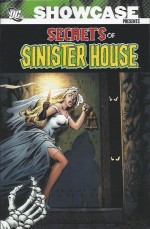
By Jack Oleck, Frank Robbins, Sheldon Mayer, Robert Kanigher, Tony DeZuniga, Alex Toth, Mike Sekowsky, Alex Niño, Sergio Aragonés & various (DC Comics)
ISBN: 978-1-4012-2626-8
American comicbooks just idled along rather slowly until the invention of Superman provided a flamboyant new genre of heroes and subsequently unleashed a torrent of creative imitation and imaginative generation for a suddenly thriving and voracious new entertainment model.
Implacably vested in World War II, these Overmen swept all before them until the troops came home. As the decade closed, however, more traditional themes and heroes resurfaced and eventually supplanted the Fights ‘n’ Tights crowd.
Whilst a new generation of kids began buying and collecting, many of the first fans also retained their four-colour habit but increasingly sought more mature themes in their reading matter. The war years had irrevocably altered the psychological landscape of the readership and as a more world-weary, cynical young public came to see that all the fighting and dying hadn’t really changed anything, their chosen forms of entertainment (film, theatre and prose as well as comics) increasingly reflected this.
As well as Western, War and Crime comics, celebrity tie-ins, madcap escapist comedy and anthropomorphic funny animal features were immediately resurgent, but gradually another of the cyclical revivals of spiritualism and a public fascination with the arcane led to a wave of impressive, evocative and shockingly addictive horror comics.
There had been grisly, gory and supernatural stars before, including a pantheon of ghosts, monsters and wizards draped in mystery-man garb and trappings (the Spectre, Mr. Justice, Sgt. Spook, Frankenstein, The Heap, Sargon the Sorcerer, Zatara, Zambini the Miracle Man, Kardak the Mystic, Dr. Fate and dozens of others), but these had been victims of circumstance: The Unknown as a power source for super-heroics. Now the focus shifted to ordinary mortals thrown into a world beyond their ken with the intention of unsettling, not vicariously empowering, the reader.
Almost every publisher jumped on the increasingly popular bandwagon, with B & I (which became the magical one-man-band Richard E. Hughes’ American Comics Group) launching the first regularly published horror comic in the Autumn of 1948, although their Adventures Into the Unknown was technically pipped by Avon.
The book and comics publisher had released an impressive single issue entitled Eerie in January 1947 but didn’t follow-up with a regular series until 1951. Classics Illustrated had already secured the literary end of the medium with child-friendly comics adaptations of the Headless Horseman, Dr. Jekyll and Mr. Hyde (both 1943), The Hunchback of Notre Dame (1944) and Frankenstein (1945) among others.
If we’re keeping score this was also the period in which Joe Simon & Jack Kirby identified another “mature market†gap and invented Romance comics (Young Romance #1, September 1947) but they too saw the sales potential for spooky material, resulting in the seminal Black Magic (launched in 1950) and boldly obscure psychological drama anthology Strange World of Your Dreams (1952).
The company that would become DC Comics bowed to the inevitable and launched a comparatively straight-laced anthology that nevertheless became one of their longest-running and most influential titles with the December 1951/January 1952 launch of The House of Mystery.
After the hysterical censorship debate which led to witch-hunting Senate hearings in the early 1950s was curtailed by the industry adopting a castrating straitjacket of self-regulation, titles produced under the aegis of the Comics Code Authority were sanitised and anodyne affairs in terms of Shock and Gore, but the audience’s appetite for suspense was still high and in 1956 National introduced sister titles Tales of the Unexpected and House of Secrets.
Stories were soon dialled back from uncanny spooky phenomenon yarns to always marvellously illustrated, rationalistic fantasy-adventure vehicles and eventually straight monster-busting Sci Fi tales which dominated the market until the 1960s.
That’s when super-heroes – which had begun to revive after Julius Schwartz began the Silver Age of comics by reintroducing the Flash in Showcase #4 – finally overtook them.
Green Lantern, Hawkman, the Atom and a growing coterie of costumed cavorters generated a gaudy global bubble of masked mavens which forced even dedicated anthology suspense titles to transform into super-character books. Even ACG slipped tights and masks onto its spooky stars.
When the caped crusader craziness peaked and popped, superheroes began dropping like Kryptonite-gassed flies. However nothing combats censorship better than falling profits and, at the end of the 1960s with the cape-and-cowl boom over and some of the industry’s most prestigious series circling the drain, the surviving publishers of the field agreed on revising the Comics Code, loosening their self-imposed restraints against crime and horror comics.
Nobody much cared about gangster titles but, as the liberalisation coincided with yet another bump in public interest in supernatural themes, the resurrection of scary stories was a foregone conclusion and obvious “no-brainer.†Even ultra-wholesome Archie Comics re-entered the field with their rather tasty line of Red Circle Chillers…
Thus, with absolutely no fanfare at all spooky comics came back to quickly dominate the American funnybook market for more than half a decade. DC led the pack by converting The House of Mystery and Tales of the Unexpected into mystery-suspense anthologies in 1968 and resurrected House of Secrets a year earlier.
However horror wasn’t the only classic genre to experience renewed interest. Westerns, war, adventure and love-story comicbooks also reappeared and, probably influenced by the overwhelming success of the supernatural TV soap Dark Shadows, the industry mixed a few classic idioms and invented gothic horror/romances. The mini-boom generated Haunted Love from Charlton, Gothic Romances from Atlas/Seaboard and from undisputed industry leader National/DC Dark Mansion of Forbidden Love and Sinister House of Secret Love.
The 52-page Sinister House of Secret Love launched with an October/November 1971 cover-date, offering book-length graphic epics in the manner of gothic romances such as Jane Eyre, before transforming into a more traditional anthology package as Secrets of Sinister House with #5 (June/July 1972) and reducing to the traditional 36-page format with the next issue. The format remained until its cancellation with #18 in June/July 1974.
In keeping with the novel enterprise, the dark, doomed love stories were extra-long affairs such as the 25-page Victorian period chiller ‘The Curse of the MacIntyres’ (by Mary Skrenes & Don Heck) which opened issue #1 and recounted how recently-bereaved Rachel lost her scientist father and fell under the guardianship of her cousin Blair. Moving into his remote Scottish castle she readily befriended Blair’s son Jamie but could not warm to the dwarfish cousin Alfie.
As the days and weeks passed however she became increasingly disturbed by the odd household and the family’s obsessive interest in “mutationsâ€â€¦
There was even room for a short back-up and the Jane Eyre pastiche was nicely balanced by a contemporary yarn of hippies in love. Undying passion and ghostly reincarnation in ‘A Night to Remember – A Day to Forget!’ by an unknown author, effectively illustrated by John Calnan & Vince Colletta.
Editor Joe Orlando and scripter Len Wein closely collaborated on the Tony DeZuniga limned ‘To Wed the Devil’ in the next issue, wherein beautiful, innocent Sarah returns to her father’s estate and discovers the place to be a hotbed of Satanism where all the old servants indulge in black magic rituals.
Moreover her father is forcing her to abandon true love Justin and wed the appalling and terrifying Baron Luther Dumont of Bohemia to settle an outstanding debt. This grim bodice-ripper tale saw the return of Victorian devil-busting duo Father John Christian and Rabbi Samuel Shulman who appeared far too infrequently in succeeding years (see also Showcase Presents the House of Secrets volume 1 and Showcase Presents the Phantom Stranger volume 2) whose last-minute ministrations saved the day, quelled an unchecked evil and of course provided the obligatory Happy Ever After…
Sinister House of Secret Love #3 was the most impressive of these early issues and ‘Bride of the Falcon’ was a visual feast from Alex Toth, Frank Giacoia & Doug Wildey, as author Frank Robbins detailed a thoroughly modern-day mystery. American proof-reader Kathy Harwood answers one of the Lonely Hearts ads in her own magazine and finds herself in Venice, Italy, trapped on the isolated Isola Tranquillo with the tragic, scarred and lovelorn heartsick Count Lorenzo Di Falco and his paralysed mother.
Something isn’t right, though, and as the wedding day approaches, a series of inexplicable deaths occurs. Soon, the romance-obsessed dreamer realises she is in deadly danger. Luckily, poor but handsome gondolier Roberto has constantly refused her demands that he stop bothering her…
The gripping psychological thriller is supplanted by prose ghostly romance ‘Will I Ever See You Again’ illustrated by Jack Sparling…
‘Kiss of the Serpent’ by Mary DeZuniga, Michael Fleisher & Tony DeZuniga in #4 takes us to Bombay (you can call it Mumbai if you’re feeling modern and PC) where freshly orphaned teacher Michelle Harlinson has taken a job arranged by her uncle Paul.
Dazed by loss and the sheer exoticism of India, she is soon drawn into a terrible vendetta between her gorgeous wealthy employer Rabin Singh and his jealous brother Jawah. But as the American finds herself falling under the seductive sway of Rabin, she uncovers a history of murder and macabre snake-worship that can only end in more death and heartbreak…
With the next extra-sized issue the title became Secrets of Sinister House (June/July 1972), and Lynn Marron, Fleisher, Mike Sekowsky & Dick Giordano produced the eerie ‘Death at Castle Dunbar’ where modern American Miss Mike Hollis is invited to the desolate Scottish manse to complete a history of Clan Dunbar. However most of the family and staff are inexplicably hostile, even though they are unaware of the writer’s true agenda…
Mike’s sister Valerie was married to the Laird Sir Alec and apparently drowned in an accident. The author is even more convinced when, whilst snooping in the darkened midnight halls, she meet’s Val’s ghost…
Certain of murder, Mike probes deeper uncovering a deeply-concealed scandal and mystery, becoming a target herself. However when there are so many suspects and no one to trust, how long could it be before she joins her sibling in the spirit world?
In #6 the transition to a standard horror-anthology was completed with the introduction of a schlocky comedic host/raconteur along the lines of Cain, Abel and the Mad Mod Witch.
Charity offered her laconic first ‘Welcome to Sinister House’ (presumably scripted by Editor Orlando and illustrated by the astonishingly gifted Michael Wm. Kaluta), before pioneering industry legend Sheldon Mayer – who would briefly act as lead writer for the title – replaced romance with mordant terror and gallows humour by asking ‘When is Tomorrow Yesterday?‘ (art by Alfredo Alcala) for a genre-warping tale of time-travelling magic and medicine.
‘Brief Reunion!’ by John Albano, Ed Ramos & Mar Amongo showed a hitman the inescapable consequences of his life, and veterans Robert Kanigher & Bill Draut showed a murdering wife that Karma was a vengeful bitch in ‘The Man Hater’.
Issue #7 began with ‘Panic!’ by Mayer and the sublimely talented Nestor Redondo, who together taught a mobster’s chiselling bookkeeper a salient lesson about messing with girls who know magic, Sergio Aragonés opened an occasional gag feature of ‘Witch’s Tails’ and Mayer & June Lofamia futilely warned a student taking ship for America ‘As Long as you Live… Stay Away from Water!’
Sam Glanzman then illustrated Mayer’s twice-told tale of ghostly millennial vengeance in ‘The Hag’s Curse and the Hamptons’ Revenge!’ before cartoonist Lore Shoberg took a turn at the ‘Witch’s Tails’ to end the issue.
‘The Young Man Who Cried Werewolf Once Too Often’ illustrated by Draut in #8 found a most modern manner of dealing with lycanthropes, after which Maxene Fabe & Ruben Yandoc’s ‘Playing with Fire’ saw a bullied boy find a saurian pal to fix all his problems and E. Nelson Bridwell & Alex Niño again featured a wolf-man – but one who mistakenly believed lunar travel would solve his dilemma during a ‘Moonlight Bay’…
Secrets of Sinister House #9 showed what could happen if impatient obnoxious neighbours were crazy enough to ‘Rub a Witch the Wrong Way!’ (Mayer & Abe Ocampo), and Kanigher & Rico Rival revealed ‘The Dance of the Damned’, wherein an ambitious ballerina learned to regret stealing the shoes and glory of her dead idol, before Jack Oleck & Rival depicted obsessive crypto-zoologists learning a hard lesson and little else whilst hunting ‘The Abominable Snowman’…
In #10 Steve Skeates & Alcala’s ‘Castle Curse’ saw a family torn apart by vulpine heredity, whilst Gerry Taloac’s ‘The Cards Never Lie!’ saw a gang turf war end badly because nobody would listen to a fortune teller, and a greedy hunchback went too far and learned too much in his drive to surpass his magician master in ‘Losing his Head!’ by Larry Hama, Neal Adams & Rich Buckler.
Following another Kaluta ‘Welcome to Sinister House’, Fabe & Yandoc crafted a period tale of greedy adventure and just deserts in ‘The Monster of Death Island’, after which all modern man’s resources were unable to halt the shocking rampage of ‘The Enemy’ (by persons unknown). More Aragonés ‘Witch’s Tails’ then preceded an horrific history lesson of the 18th century asylum dubbed ‘Bedlam’ by John Jacobson, Kanigher & Niño and generations of benighted, deluded exploited souls…
Sekowsky & Wayne Howard led off in #12 with the salutary tale of a greedy, ruthless furrier who became to his horror ‘A Very Cold Guy’, after which Oleck & Niño explored ‘The Ultimate Horror’ of a hopeless paranoid whilst, following more Aragonés ‘Witch’s Tails’, Bridwell & Alcala adapted W. F. Harvey’s classic chiller of ravening insanity ‘August Heat’.
Shock and awe was the order of the day in #13 when giant animals attack a horrified family in the decidedly deceptive ‘Deadly Muffins’ by Albano & Alcala, whereas Oleck & Niño wryly combined nuclear Armageddon and vampires in ‘The Taste of Blood’, before Albano & Jess Jodloman wrapped everything up with a nasty parable about great wealth and prognostication in ‘The Greed Inside’.
‘The Man and the Snake’ was another Bridwell & Alcala adaptation, this time depicting Ambrose Bierce’s mesmerising tale of mystery and imagination, but the original thrillers in #14 were just as good. In ‘The Roommate’ by Fred Wolfe, Sekowsky & Draut, a college romance is destroyed by a girl with an incredible secret whilst ‘The Glass Nightmare’ by Fleisher & Alcala taught an opportunistic thief and killer the reason why you shouldn’t take what isn’t yours…
Issue #15 began with ‘The Claws of the Harpy’ (Fleisher & Sparling), wherein a very human murdering monster reaped a whirlwind of retribution, followed up with Oleck & Romy Gamboa’s proof that there are more cunning hunters than vampires in ‘Hunger’ and culminating with a surprisingly heart-warming and sentimental fable in Albano & Jodloman’s ‘Mr. Reilly the Derelict!’
Despite the tone of the times, Secrets of Sinister House was not thriving. The odd mix of quirky tales and artistic experimentation couldn’t secure a regular audience, and a sporadic release schedule exacerbated the problems. Sadly the last few issues, despite holding some of the best original material and a few fabulous reprints, were seen by hardly any readers and the series vanished with #18.
Still, they’re here in all their wonderful glory and well worth the price of admission on their own.
An uncredited page of supernatural facts opens #16, after which George Kashdan & Don Perlin proffered a tale of feckless human intolerance and animal fidelity in ‘Hound You to Your Grave’, whilst the superb Vicente Alcazar traced the career of the infamous 18th century sorcerer the Count of St. Germain who proudly boasted ‘No Coffin Can Hold Me’ (possibly scripted by Leo Dorfman?), before Kashdan returned with newcomer Ernie Chan to recount the sinister saga of the world’s most inhospitable caravan in ‘The Haunted House-Mobile’.
Perhaps ironic in choice as lead #17’s ‘Death’s Last Rattle’ (Kashdan & the uniquely marvellous Ramona Fradon) combined terror with sardonic laughs as a corpse went on trial for his afterlife, even as an innocent living man was facing a jury for the dead man’s murder, whilst ‘Strange Neighbor’ by Howard Chaykin and ‘Corpse Comes on Time’ from Win Mortimer told classic quickie terror tales in a single page each.
To close the issue, the editor raided the vaults for one of the company’s oldest scary sagas.
‘Johnny Peril: Death Has Five Guesses’ by Kanigher, Giacoia & Sy Barry was first seen in Sensation Mystery #112 (November/December 1952) and pitted the perennial two-fisted trouble-shooter against a mystery maniac in a chamber of horrors. But was Karl Kandor just a deranged actor or something else entirely?
The curtain fell with #18, combining Kashdan & Calnan’s all-new ‘The Strange Shop on Demon Street’ – featuring a puppet-maker, marauding thugs and arcane cosmic justice – with a selection of reprints. From 1969 ‘Mad to Order’ by Murphy Anderson was another one page punch-liner and Dave Wood – as D.W. Holtz – & Angel B. Luna offered New Year’s Eve enchantment in ‘The Baby Who Had But One Year to Die’, whilst ‘The House that Death Built’, by Dorfman & Jerry Grandenetti, saw plundering wreckers rap the watery doom for their perfidy.
Once again the best was left till last as ‘The Half-Lucky Charm!’ by an unknown writer and artists Gil Kane & Bernard Sachs from Sensation Mystery #115 (May 1953) followed a poor schmuck who could only afford to buy 50% of Cagliostro’s good luck talisman and found his fortune and life were being reshaped accordingly…
With superbly experimental and evocative covers by Victor Kalin, Jerome Podwell, DeZuniga, Nick Cardy, Kaluta, Sparling and Luis Dominguez, this long-overlooked and welcomingly eclectic title is well overdue for a critical reappraisal, and fans of brilliant comics art and wry, laconic, cleverly humour-laced mild horror masterpieces should seek out this monochrome monolith of mirth and mystery.
Trust me: you’ll love it…
© 1971, 1972, 1973, 1974, 2010 DC Comics, Inc. All Rights Reserved.