Justice League of America: The Silver Age volume 2


By Gardner Fox, Mike Sekowsky, Bernard Sachs & various (DC Comics)
ISBN: 978-1-4012-6515-1

The advent of the Justice League of America marks the moment when superheroes truly made comicbooks their own particular preserve. Even though the popularity of masked champions has waxed and waned since 1960 and other genres have re-won their places on published pages, in the minds of America – and the world – Comics means Superheroes.

The JLA signalled that men – and even a few women – in capes and masks were back for good…

When Julius Schwartz began reviving and revitalising the nigh-defunct superhero genre in 1956, his key moment came a few years later with the uniting of these reconfigured mystery men into a team…

The League was launched in issue #28 of The Brave and the Bold (March 1960) and cemented the growth and validity of the revived sub-genre, triggering an explosion of new characters at every company producing comicbooks; even spreading to the rest of the world as the 1960s progressed.

Spanning February 1962 to May 1963, this latest full-colour paperback collection of timeless classics (also available digitally) re-presents issues #9-19 of the epochal first series of Justice League of America with scripter Gardner Fox and illustrators Mike Sekowsky & Bernard Sachs seemingly able to do no wrong…

Although Superman and Batman were included in the membership their participation had been strictly limited as editorial policy at the start was to avoid possible reader ennui and saturation from over-exposure. That ended with the stories gathered here as they joined the regulars Flash, Green Lantern, Wonder Woman, Aquaman, J’onn J’onzz – Manhunter from Mars and late inductee Green Arrow. There were also contributions from “typical teenager” Snapper Carr: a hip and plucky mascot who proved a focus of ferocious fan debate for decades thereafter…

Justice League of America #9 opens proceedings here: a legendary and oft-recounted tale and the start of a spectacular run of nigh-perfect super-hero adventures. ‘The Origin of the Justice League’ recounts the circumstances of the team’s birth: an alien invasion saga of mighty space warriors seeking to use Earth as a gladiatorial arena in which to decide the future ruler of their distant world Appellax.

It’s followed by the series’ first continued story. ‘The Fantastic Fingers of Felix Faust’ finds the World’s Greatest Superheroes already battling a marauder from the future when they’re spellbound by a vile sorcerer. Faust has awoken three antediluvian demons and sold them the world in exchange for 100 years of unlimited power. Although the heroes eventually outwit and defeat Faust they have no idea that the demons are loose…

In ‘One Hour to Doomsday’ the JLA pursue and capture their initial target The Lord of Time, but are then trapped a century from their home-era by the awakened, re-empowered demons. This level of plot complexity hadn’t been seen in comics since the closure of EC Comics, and never before in a superhero tale. It was a profound acknowledgement by the creators that the readership was no longer simply little kids – if indeed it ever had been…

Arch-villain Doctor Light debuted in #12, attempting a pre-emptive strike on the team by transporting them to carefully selected sidereal worlds where their abilities would be useless, but ‘The Last Case of the Justice League’ proved to be anything but, and in the next issue the heroes saved our entire reality by solving ‘The Riddle of the Robot Justice League’ created to stop the champions from halting the theft of our life-energy by agents of another cosmic realm.

‘The Menace of the “Atom” Bomb’ in issue #14 was a neat way of introducing latest member The Atom whilst showing a fresh side to an old villain masquerading as new nemesis Mister Memory whilst issue #15’s ‘Challenge of the Untouchable Aliens’ added some fresh texture to the formulaic plot of extra-dimensional invaders out for our destruction.

‘The Cavern of Deadly Spheres’ was a deceptive change-of-pace tale with a narrative technique that just couldn’t be used on today’s oh-so-sophisticated audience, but still has the power to grip a reader, after which ‘Triumph of the Tornado Tyrant’ saw a sentient cyclone that had once battled the indomitable Adam Strange (in Mystery in Space #61- or Adam Strange Archives volume 1) set up housekeeping on an desolate world and ponder the very nature of Good and Evil.

It soon realised that it needed the help of the Justice League to reach a survivable conclusion.

Teaser Alert: As well being a cracking yarn, this story is pivotal in the development of the android hero Red Tornado…

In #18 the heroes were forcibly summoned to a subatomic world by three planetary champions whose continued existence threatened to destroy the very world they were designed to protect. ‘Journey to the Micro-World’ found the JLA compelled to defeat opponents who were literally unbeatable and discovering yet again that Batman’s brains were a super power no force could thwart…

A final perplexing puzzle was posed in ‘The Super-Exiles of Earth’ after unstoppable duplicates of the heroes went on a crime-spree, forcing the world’s governments to banish the League into space. Battling undercover, the team proved too much for the mystery mastermind behind the plot and returned to public acclaim in a stellar wrap-up to another fabulous feast of four-colour fun.

With iconic covers by Sekowsky and Murphy Anderson, these tales are a perfect example of all that was best about the Silver Age of comics, combining optimism and ingenuity with bonhomie and adventure. This slice of better times also has the benefit of cherishing wonderment whilst actually being historically valid for any fan of our medium. And best of all the stories here are still captivating and enthralling transports of delight.

These classical compendia are a dedicated fan’s delight: an absolute gift for modern fans who desperately need to catch up without going bankrupt. They are also perfect to give to youngsters as an introduction into a fabulous world of adventure and magic…
© 1962, 1963, 2016 DC Comics. All Rights Reserved.

Batman: The Golden Age volume 1


By Bob Kane, Bill Finger, Gardner Fox, Whitney Ellsworth, Sheldon Moldoff, Jerry Robinson, George Roussos & various (DC Comics)
ISBN: 978-1-4012-6333-1

Win’s Christmas Gift Recommendation: Vintage Comicbook Perfection… 10/10

For anyone who’s read more than a few of these posts, my tastes should be fairly apparent, but in case you’re in any doubt, here’s a flat-out confession: I’m that shabby, possibly crazy old geezer muttering at the checkout about how things were better before, and all new things are crap and not the same and…

You get the picture. Now, ignore all that. It’s true but it’s not relevant here.

Batman: The Golden Age is the latest paperback-format (there’s also a weightier, pricier but more capacious hardback Omnibus available) re-presentation of the Dark Knight’s earliest exploits.

Set in original chronological order, it forgoes glossy, high-definition paper and reproduction techniques in favour of a newsprint-adjacent feel and the same flat, bright-yet-muted colour palette which graced the originals.

There’s no fuss, fiddle or Foreword, and the book steams straight into the meat of the matter with the accumulated first year and a half of material masked mystery-man plus all those stunning covers spanning Detective Comics #27-45; Batman #1-3 and the Dynamic Duo’s story from New York World’s Fair Comics 1940; cumulatively covering all the groundbreaking escapades from May 1939-November 1940.

As Eny Fule Kno, Detective #27 spotlighted the Gotham Guardian’s debut in the ‘Case of the Chemical Syndicate!’ by Bob Kane and close collaborator/co-originator Bill Finger.

This spartan, understated yarn introduced dilettante playboy criminologist Bruce Wayne, drawn into a straightforward crime-caper wherein a cabal of industrialists were successively murdered. The killings stopped when an eerie figure dubbed “The Bat-Man” intruded on Police Commissioner Gordon‘s stalled investigation and ruthlessly exposed and dealt with the hidden killer.

The next issue saw the fugitive vigilante return to crush ‘Frenchy Blake’s Jewel Gang’ before encountering his very first psychopathic killer and returning villain in Detective #29. Gardner Fox scripted the next few adventures beginning with ‘The Batman Meets Doctor Death’, featuring a deadly duel of wits with deranged, greedy general practitioner Karl Hellfern and his assorted instruments of murder: the most destructive and diabolical of which was sinister Asiatic manservant Jabah…

Confident of their new villain’s potential, Kane, Fox and inker Sheldon Mayer encored the mad medic for the next instalment in ‘The Return of Doctor Death’, before Fox and Finger co-scripted a 2-part shocker which introduced the first bat-plane, Bruce’s girlfriend Julie Madison and undead horror The Monk in an expansive, globe-girdling spooky saga. ‘Batman Versus the Vampire’ concluded in an epic chase across Eastern Europe and a spectacular climax in a monster-filled castle in issue #32.

Detective Comics #33 featured Fox & Kane’s ‘The Batman Wars Against the Dirigible of Doom’: a blockbusting disaster thriller which just casually slipped in the secret origin of the Gotham Guardian, as mere prelude to intoxicating air-pirate action, after which Euro-trash dastard Duc D’Orterre found his uncanny science and unsavoury appetites no match for the mighty Batman in ‘Peril in Paris’.

Bill Finger returned as lead scripter in issue #35, pitting the Cowled Crusader against crazed cultists murdering everyone who had seen their sacred jewel in ‘The Case of the Ruby Idol’ – although the many deaths were actually caused by a far more prosaic villain, after which grotesque criminal genius ‘Professor Hugo Strange’ (inked by new kid Jerry Robinson) debuted with his murderous man-made fog and lightning machine in #36, and all-pervasive enemy agents ‘The Spies’ ultimately proved no match for the vengeful masked Manhunter in #37.

Detective Comics #38 (April 1940) changed the landscape of comicbooks forever with the introduction of ‘Robin, The Boy Wonder’: child trapeze artist Dick Grayson whose parents were murdered before his eyes and who thereafter joined Batman in a lifelong quest for justice, by bringing to justice mobster mad dog Boss Zucco…

After the Flying Grayson’s killers were captured, Batman #1 (Spring 1940) opened proceedings with a recycled origin culled from portions of Detective Comics #33 and 34. ‘The Legend of the Batman – Who He Is and How He Came to Be!’ by Fox, Kane & Moldoff offered in two perfect pages what is still the best ever origin of the character, after which ‘The Joker’ (Finger, Kane & Robinson – who produced all the remaining tales in this astonishing premiere issue) introduced the greatest villain in DC’s criminal pantheon via a stunning tale of extortion and wilful wanton murder.

‘Professor Hugo Strange and the Monsters’ follows as the old adversary returns with laboratory-grown hyperthyroid horrors to rampage through the terrified city and ‘The Cat’ – who later added the suffix ‘Woman’ to her name to avoid any possible doubt or confusion – plied her felonious trade of jewel theft aboard the wrong cruise-liner and fell foul for the first time of the dashing Dynamic Duo.

The initial issue ends with the ‘The Joker Returns’ as the sinister clown breaks jail to resume his terrifying campaign of murder for fun and profit before “dying” in mortal combat with the Gotham Guardian.

Following a superb pin-up (originally the back cover of the premier issue) of the Dynamic Duo by Kane, the tense suspense and all-out action continues with Detective #39 and ‘The Horde of the Green Dragon’ – oriental Tong killers in Chinatown – by Finger, Kane & Robinson, after which ‘Beware of Clayface!’ finds the Dynamic Duo solving a string of murders on a film set which almost sees Julie Madison the latest victim of a monstrous movie maniac…

Batman and Robin solved the baffling mystery of a kidnapped boy in Detective #41’s ‘A Master Murderer’ before enjoying their second solo outing in four comics classics from Batman #2 (Summer 1940).

It begins with ‘Joker Meets Cat-Woman’ (Finger, Kane, Robinson & new find George Roussos) wherein svelte thief, homicidal jester and a crime syndicate all tussle for the same treasure with the Caped Crusaders caught in the middle.

‘Wolf, the Crime Master’ offers a fascinating take on the classic Jekyll & Hyde tragedy after which an insidious and ingenious murder-mystery ensues in ‘The Case of the Clubfoot Murderers’ before Batman and Robin confront uncanny savages and ruthless showbiz promoters in poignant monster story ‘The Case of the Missing Link’.

‘Batman and Robin Visit the New York World’s Fair’ comes from the second New York World’s Fair Comics. Finger, Kane & Roussos followed the vacationing Dynamic Duo as they track down a maniac mastermind with a metal-dissolving ray, after which Detective Comics #42 again finds our heroes ending another murder maniac’s rampage in ‘The Case of the Prophetic Pictures!’ before clashing with a corrupt mayor in #43’s ‘The Case of the City of Terror!’

An unparallelled hit, Batman stories never rested on their laurels. The creators always sought to expand their parameters as with Detective #44 and a nightmarish fantasy of giants and goblins in ‘The Land Behind the Light!’, after which Batman #3 (Fall 1940) has Finger, Kane, Robinson & Roussos rise to even greater heights, beginning with ‘The Strange Case of the Diabolical Puppet Master’: an eerie episode of uncanny mesmerism and infamous espionage…

Then a grisly scheme ensues as innocent citizens are mysteriously transformed into specimens of horror and artworks destroyed by the spiteful commands of ‘The Ugliest Man in the World’ before ‘The Crime School for Boys!!’ sees Robin infiltrate a gang who have a cruel and cunning recruitment plan for dead-end kids…

‘The Batman vs. the Cat-Woman’ then reveals the larcenous lady in well over her head when she steals for – and from – the wrong people…

The issue also offered a worthy Special Feature as ‘The Batman Says’ presented an illustrated prose Law & Order pep-talk crafted by Whitney Ellsworth and illustrated by Robinson…

The all-out action concludes here with a magnificent and horrific Joker jape from Detective Comics #45 as ‘The Case of the Laughing Death’ displays the Harlequin of Hate undertaking a campaign of macabre murder against everyone who has ever defied or offended him…

Including full Creator biographies and with Batman covers by Kane, Robinson & Roussos and all the other general action ones by Fred Guardineer & Creig Flessel, this is a stunning monument to exuberance and raw talent. Kane, Robinson and their compatriots created an iconography which carried the Batman feature well beyond its allotted life-span until later creators could re-invigorate it. They added a new dimension to children’s reading… and their work is still captivatingly accessible.

Moreover, these early stories set the standard for comic superheroes. Whatever you like now, you owe it to these stories. Superman gave us the idea, but writers like Finger and Fox refined and defined the meta-structure of the costumed crime-fighter.

Where the Man of Steel was as much Social Force and wish fulfilment as hero, Batman and Robin did what we ordinary mortals wanted to do. They taught bad people the lessons they deserved…

These are tales of elemental power and joyful exuberance, brimming with deep mood and addictive action. Comicbook heroics simply don’t come any better.

One final thing: I’m still that guy in paragraph one, right? I’ve read these stories many, many times, in every format imaginable, and I’d like to thank whoever decided that they should also be available in as close a facsimile to the originals as we can get these days.

More than anything else, this serves to perfectly recapture the mood and impact of that revolutionary masked avenger and, of course, delights my heavily concealed inner child no end.
© 1939, 1940, 2016 DC Comics. All Rights Reserved.
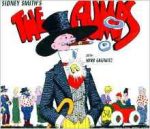
Sidney Smith’s The Gumps


By Sidney Smith, edited and compiled by Herb Galewitz (Charles Scribner’s Sons)
ISBN: 978-0-68413-997-5

Chances are you’ve never heard of him, but Robert Sidney Smith (February 13th 1877-October 20th 1935) is probably one of the most influential creators in the history of popular entertainment. A pretty big claim, I admit, but true nonetheless.

Smith was a pioneer of what we call continuity and the most successful early cartoonist to move the medium on from situational, gag-a-day variations on a theme (a style which dominates again today in almost all popular strips like B.C., Blondie or Beetle Bailey) and build a relationship based on progress with his avid audience.

The Gumps grew from a notion of influential comic strip Svengali Joseph Medill Patterson – Editor and publisher of the Chicago Tribune – who shaped the development of such iconic institutions as Little Orphan Annie, Gasoline Alley, Dick Tracy, Terry and the Pirates and so many more. He handed the idea to Smith to make magic with….

The ongoing saga of a middle class American family began in 1917 and ran for 42 years, inviting readers to share the – largely comedic – tribulations of chinless wonder Andy Gump, his formidable wife Minerva, son Chester, cat Hope, dog Buck and fearsome elderly cook/housemaid Tilda.

Andy was a regular blowhard with lots of schemes to make his fortune, Min was shrewish and nagging, the boys were troublesome and Tilda was a nosy tartar. The domestic scene occasional drifted into thrilling adventure and flights of fancy whenever eccentric, two-fisted globetrotting millionaire Uncle Bim paid a visit…

It sounds hackneyed now, but that’s because The Gumps wrote the book on what daily story narratives should be: a lot of laughs, plenty of vicarious judgement, the occasional tragedy, oodles of long-drawn out tension and characters everyone recognised if not actually identified with…

Having enticed and beguiled a nation, The Gumps was one of the earliest strips to make the jump to celluloid. More than four dozen Universal Pictures 2-reel comedies were released between 1923- 1928 starring Joe Murphy as the gormless patriarch. These followed fifty or more animated cartoons produced and directed by Wallace A. Carlson with scripts credited to Smith which were first seen between in 1920 and 1921.

The Gumps became an early sensation of radio (1931-1937), paving the way for all later family soap operas which mimicked the irresistible format.

Most importantly, as the strip progressed, its growing popularity became a key driver in the rise of comics syndication. Eventually Sidney Smith’s baby was being seen across America and the world and he became one of the most highly-paid artists in the history of the medium.

His salary was enormous and kept rising. The grateful Patterson frequently rewarded him with a new extravagance to show his gratitude. The legend goes that racing mad speed-freak Smith was driving his latest luxury Rolls Royce when he died in a smash-up in 1935…

After his shocking death, Patterson parachuted in sports cartoonist Gus Edson. He was a creditable replacement but the indefinable pizzazz was gone. Whether it was something unique to Smith or simply that times were changing will never be known. Readership declined steadily – although it took decades – and the feature finally folded on October 17th 1959, by which time less than twenty papers carried it.

There will probably never be a comprehensive or complete Gumps collection: the art is still wonderful and most of the gags remain well-conceived and effective. The real problem is the pacing and verbosity of the text in the panels.

Smith was writing and drawing a new way to tell stories and had to be sure the majority of his audience were with him. For lots of modern readers, blessed with a hundred years of progress, much of the material can seem interminably slow. Not so back then: many of Smith’s boldest innovations caused uproar and shock on a periodic basis…

This sterling monochrome landscape hardback from 1974 (254 x 231 x 23 mm) offers the best of all possible worlds; extracting salient snippets, events and extracts from key storylines whilst providing fascinating commentary and context where necessary…

On Thursday February 8th 1917 Sidney Smith’s funny animal strip Old Doc Yak ended with the sagacious ruminant moving out of their house and wondering who the next tenants might be. The following Monday – February 12th – the doors opened on the Gump clan. The magic started strong and just kept on going…

Packed with photos and plenty of astonishing facts, Herb Galewitz’s ‘Introduction’ offers the run-down on the strip and its creator whilst also providing a glimpse at the star in the making through ‘Sidney Smith’s Sports Cartoons’. Also revealed are ‘The Last Old Doc Yak’ strip and a handy pictorial introduction to the cast before ‘The Early Years – 1917-20’ sees the stories begin to unfold…

Scenes of wedded bliss and domestic contention abound as Andy and Min contend with household chores, wayward furnaces, gardening, child-rearing and each other. As ticked off as they got, the happy marrieds seldom let their adversarial moments linger or fester…

‘Andy On Vacation – 1922’ shows our hero’s take on bucolic pastimes such as fishing, hiking and cooking after he and Min take separate holidays and Andy finds himself at a lakeside cabin with the least welcoming couple in history. Mr. Gump doesn’t mind: it takes all sorts and he’s willing to be accommodating…

The satire cup overflows when the pontificating prawn then enters politics. ‘Andy Runs for Congress – 1922’ provides plenty of scope for character assassination, skulduggery and corrupt shenanigans before all the votes are finally cast and counted…

The Gumps really hit its peak after moving en masse into melodrama as with ‘The Vindication of Tom Carr – 1929’ wherein romantic series regular Mary Gold‘s one true love is wrongfully convicted of robbery. Smith sagely portrayed the trial in daily bulletins which built tension and sympathy in equal amounts. When the travesty of justice saw the real culprit rapaciously move in on Mary, the assembled readership was aghast and astoundingly vocal in their protests…

They went absolutely crazy when the vile predator’s machinations led shockingly to ‘The Death of Mary Gold – 1929’. The story then moved from the comics section to the Front Page as readers registered their disapproval even as the sales of papers carrying the strip skyrocketed…

Uncle Bim was an exotic semi-regular whose appearances always caused sparks. His lonely years of prospecting and wealth-gathering looked likely to end when he met Millie De Stross but her social-climbing mother had other ideas. These brought her to near ruin when the gullible old lady met unscrupulous embezzler and conman Townsend Zander who masqueraded as royalty in ‘The Count Bessford Affair – 1933’…

With Mama firmly in the crook’s pocket, the scoundrel demanded marriage to Millie as part of his illegally-obtained payment. When that went wrong he resorted to kidnap and blackmail.

The audience was breathless and terrified. Their favourite funny page feature had a track record of letting the good guys suffer and killing off heroines…

When ‘The Disappearance of Uncle Bim – 1933’ was finally resolved, the distraught millionaire and his intended rushed to the altar but Zander had one last card to play, resulting in ‘A Foiled Wedding! – 1934’…

The villain’s outrageous claim to have already wed Millie led to more courtroom drama and ‘A Legal Hassle! – 1934’ which allowed the reprehensible and haughty Mama De Stross to sue Bim for his fortune, so Andy took the beleaguered suitor to his old holiday haunt for ‘An Interlude at Shady Rest – 1934’…

Batteries fully recharged, the irrepressible Gumps returned to the fray and at last defeated Zander and Mrs. De Stross, resulting in a long-delayed happy ending of sorts with ‘Bim and Millie, United at Last – 1934’.

Of course that meant the newlyweds had to cope with ‘Mama De Stross, Mother In Law – 1934′…

These too-brief tastes of Smith’s amazing graphic narrative achievements are supplemented by a selection of shorter vignettes such as a glimpse at the unique service of housemaid ‘Tilda’ and the wiles of child prodigy ‘Chester Gump’ as well as a peek at successor ‘Gus Edson’s The Gumps.

Also on view is an appreciation of Smith’s gag-panel displaying the oriental wisdom of ‘Ching Chow’.

Although disquieting – if not actually disturbing – to modern eyes, this philosophy-spouting comedy Chinaman first appeared on January 27th 1927 and on Smith’s death was taken over by Stanley Link. Regarded as an irreplaceable cartoon “fortune cookie” by many editors, the panel was crafted by a succession of creators and ran until June 4th 1990, outliving The Gumps by almost forty years…

The examples seen here are counterbalanced by a ‘Comparison of Chester Gump and Stanley Link’s Tiny Tim and followed by a photo-feature ‘Miscellany’ displaying a wide range of Gumps books and merchandise to end this cartoon celebration…

Studious and genuinely enticing for students of the comic form and anybody interested in the development of both soap operas and sitcoms, this book provides insight and a fascinating visual tour of a phenomenon and world we’ve mostly outgrown, but one worth celebrating for all that.
© 1974 The Chicago Tribune/N.Y. News Syndicate Inc. All rights reserved.

Fairy Tales of Oscar Wilde volume 3: The Birthday of the Infanta


Adapted by P. Craig Russell with Galen Showman (NBM)
ISBN: 978-1-56163-214-5 (Signed HC)        978-1-56163-775-1 (PB)

Win’s Christmas Gift Recommendation: A Comicbook Gift of the Graphic Magi… 9/10

Craig Russell began his illustrious career in comics during the early 1970s and came to fame young with a groundbreaking run on science fiction adventure series Killraven, Warrior of the Worlds.

Although his increasingly fanciful, meticulous classicist style was derived from the great illustrators of Victorian and Edwardian heroic fantasy and his visual flourishes of Art Nouveau were greatly at odds with the sausage-factory deadlines and sensibilities of the mainstream comicbook industry, the sheer power and beauty of his illustrative work made him a huge draw.

By the 1980s he had largely retired from the merciless daily grind, preferring to work on his own projects (generally adapting operas and plays into sequential narratives) whilst undertaking the occasional high-profile Special for the majors – such as Dr. Strange Annual 1976 (totally reworked and re-released as Dr. Strange: What Is It that Disturbs You, Stephen? in 1996) or Batman: Robin 3000.

As our industry grew up and coincided with the global fantasy boom, Russell returned to the comics industry with Marvel Graphic Novel: Elric (1982), further adapting prose tales of Michael Moorcock’s iconic sword-&-sorcery star in the magazine Epic Illustrated and elsewhere.

Russell’s stage-arts adaptations had begun appearing in 1978: first in the independent Star*Reach specials Night Music and Parsifal and then from 1984 at Eclipse Comics where the revived Night Music became an anthological series showcasing his earlier experimental adaptations; not just operatic dramas but also tales from Kipling’s Jungle Books and other favourite literary landmarks.

In 1992, he began adapting the two volumes of Fairy Tales of Oscar Wilde – a mission he continues to date, deftly balancing tales of pious allegorical wonderment with a wry touch and clear, heartfelt joy in the originating material of a mercurial misunderstood, much-maligned master of devastating, so-quotable epigrams who was briefly the most popular man in London Society…

First published in May 1888, The Happy Prince and Other Tales was Oscar Fingall O’Flahertie Wills Wilde’s first book for children with the lead story merely one of a quintet of literary gems. The others within were The Nightingale and the Rose, The Devoted Friend, The Remarkable Rocket and The Selfish Giant.

It was followed in 1891 by A House of Pomegranates; Wilde’s second book of stories for children which held The Young King, The Fisherman and his Soul, The Star-Child and our subject today The Birthday of the Infanta, with adaptor Russell utilising all his skills to staggering effect to deliver a masterpiece of sardonic whimsy and casual cruelty.

In the glittering court of the King of Spain, the monarch is celebrating his beautiful daughter’s twelfth birthday. For such an occasion the normally closeted, haughty child is allowed to play with other, lesser youngsters whilst conniving courtiers look on and seek any moment of advantage which might further their own prospects.

There’s little chance of that, however. The King is not the man he was and has languished in growing misery since his beloved wife died soon after delivering the sole heir. So bereft is he at the loss of his flighty French bride’s boundless spirit and joyous joie de vivre that he cannot bear to have her interred. Instead her mummified corpse still occupies the chapel in the grand palace…

Thus the Infanta grew up isolated by her elevated position and swamped with magnificence, drowning in privilege and inundated in all things beautiful, but deprived of companionship. Today she takes full advantage of the youthful playthings around her, revelling in every boisterous dance and all attentions paid by the sons and daughters of the Court. The entertainments are even more thrilling: acrobats, jugglers, jongleurs, dancers, magicians and wild beasts all amaze, but nothing delights the lovely child more than the hideous, malformed dwarf-boy who dances for her, lost in his own simple, insensate world.

The deformed, inadvertent fool is a present from two particularly noxious nobles who had seen him capering innocently in the forests and promptly made off with him. The blithe simpleton knows nothing of this, only that his actions in this immaculate garden of boughs and flowers make the most beautiful creature in the world happy… and that her laughter is music to him…

His idiot caperings concluded, the dwarf is given a perfect white rose by the Infanta before the nobles’ children are escorted away. This casual, indifferent act drives him to even greater paroxysms and in his head a dangerous idea forms…

Later he sneaks into the Palace, finding room after room of breathtaking opulence and dazzling magnificence until he reaches at last the Infanta’s apartments. Curiously peeking in, he spies a coarse, misshapen monster mimicking his every move. Never has he seen such a thing of such utter ugliness…

What follows is one of the saddest, most relentless withering denouements in literature; a thinly-veiled yet ferocious condemnation of the brutal force of vanity and deadly power of surface glamour devastatingly depicted with debilitating detail by Russell and his assistant/letterer Galen Showman.

Bring tissues, and probably a stiff drink. You’ll need them.

A deeply moving, studiously horrific and truly tragic fairytale that shows not all endings are happy or even just, The Birthday of the Infanta displays Wilde’s razor-edged social commentary and scathingly beautiful cynicism to full effect; denying us the requisite happy ending and harbouring a cruel barb to prick and train the conscience…

This unsettling yet unmissable adaptation signalled another high point in Russell’s astounding career: another milestone in the long, slow transition of an American mass market medium into a genuine art form.

Most importantly, this and the other volumes in the series are incredibly lovely and irresistibly readable examples of superb writing (so please read Wilde’s original prose tomes too) and sublime examples of comics at their most potent.
© 1998 P. Craig Russell. All rights reserved.

Justice League of America: The Silver Age volume 1


By Gardner Fox, Mike Sekowsky, Carmine Infantino, Bernard Sachs & various (DC Comics)
ISBN: 978-1-4012-6111-5

Win’s Christmas Gift Recommendation: Comic Perfection and the ideal Stocking Stuffer… 10/10

After the actual invention of the comicbook superhero – by which we mean the launch of Superman in June 1938 – the most significant event in the industry’s progress was the combination of individual sales-points into a group. Thus what seems blindingly obvious to us with the benefit of four-colour hindsight was irrefutably proven – a number of popular characters could multiply readership by combining forces.

Plus of course, a whole bunch of superheroes is a lot cooler than just one – or even one and a sidekick…

And so the Justice Society of America is rightly revered as a true landmark in the development of comic books, and, when Julius Schwartz began reviving and revitalising the nigh-defunct superhero genre in 1956, the key moment would come a few years with the inevitable teaming of reconfigured mystery men…

When wedded to the relatively unchanged big guns who had weathered the first fall of the Superhero at the beginning of the 1950s the result was a new, modern, Space-Age version of the Justice Society of America and the birth of a new mythology.

When the Justice League of America was launched in issue #28 of The Brave and the Bold (March 1960) it cemented the growth and validity of the genre, triggering an explosion of new characters at every company producing comics in America and even spread to the rest of the world as the 1960s progressed.

Spanning March 1960 to January 1962, this latest paperback collection of timeless classics re-presents The Brave and the Bold #28-30 and Justice League of America #1-8 and also includes a titanic team-up from Mystery in Space #75 (May 1962).

That moment that changed everything for us baby-boomers came with issue #28 of The Brave and the Bold, a classical adventure title that had recently become a try-out magazine like Showcase.

Just in time for Christmas 1959 ads began running…

“Just Imagine! The mightiest heroes of our time… have banded together as the Justice League of America to stamp out the forces of evil wherever and whenever they appear!”

Released with a March 1960 cover-date, that first tale was written by the indefatigable Gardner Fox and illustrated by the quirky and understated Mike Sekowsky, inked by Bernard Sachs, Joe Giella and Murphy Anderson.

‘Starro the Conqueror’ saw Flash, Green Lantern, Wonder Woman, Aquaman and J’onn J’onzz – Manhunter from Mars defeat a marauding alien starfish whilst Superman and Batman stood by (in those naive days editors feared that their top characters could be “over-exposed” and consequently lose popularity). The team also picked up an average American kid as a mascot. “Typical teenager” Snapper Carr would prove a focus of fan controversy for decades to come…

Confident of his material and the superhero genre’s fresh appeal Schwartz had two more thrillers ready for the following issues. B&B #29 saw the team defeat a marauder from the future who apparently had history on his side in ‘The Challenge of the Weapons Master’ (inks by Sachs and Giella) whilst #30 saw the debut of the team’s first mad-scientist arch-villain in the form of Professor Ivo and his super android Amazo. ‘The Case of the Stolen Super Powers’ by Fox, Sekowsky & Sachs ended the tryout run and three months later a new bi-monthly title debuted.

Perhaps somewhat sedate by histrionic modern standards, the JLA was revolutionary in a comics marketplace where less than 10% of all sales featured costumed adventurers. Not only public imagination was struck by hero teams either.

Stan Lee was apparently given a copy of Justice League by his boss Martin Goodman and told to do something similar for the tottering comics company he ran – and look what came of that!

Justice League of America #1 featured ‘The World of No Return’, introducing trans-dimensional tyrant Despero to bedevil the World’s Greatest Heroes, but once again plucky Snapper Carr was the key to defeating the villain and saving the day.

The second issue, ‘Secret of the Sinister Sorcerers’, presented an astounding conundrum. The villains of Magic-Land sneakily transposed the location of their dimension with Earth’s, causing the Laws of Science to be replaced with the Lore of Mysticism. The true mettle of the costumed crusader heroes (and by this time Superman and Batman were allowed a more active part in the proceedings) was shown when they had to use ingenuity rather than their powers to defeat their fearsome foes and set two worlds to rights.

Issue #3 introduced the despicable Kanjar Ro who attempted to turn the team into his personal army in ‘The Slave Ship of Space’, and with the next episode the first of many new members joined the team.

Although somewhat chronologically adrift there’s solid sense in placing the next tale in this position as Mystery in Space #75 (May 1962), as the team guest-star in a full-length thriller starring Adam Strange.

Strange was an Earth archaeologist who regularly teleported to a planet circling Alpha Centauri where his wits and ingenuity saved the citizens of Rann from all sorts of interplanetary threats.

In ‘The Planet that came to a Standstill!’, Kanjar Ro attempts to conquer Strange’s adopted home, and our gallant hero has to enlist the aid of the JLA before once again saving the day himself. This classic team-up was written by Fox, and illustrated by the irreplaceable Carmine Infantino and Murphy Anderson.

Green Arrow saved the day in the science-fiction thriller ‘Doom of the Star Diamond’, but was almost kicked out in #5 as the insidious Doctor Destiny inadvertently framed him ‘When Gravity Went Wild!’

‘The Wheel of Misfortune’ saw the debut of pernicious and persistent master of wild science Professor Amos Fortune, who used weaponised luck to challenge the masked marvels whilst #7 was another alien invasion plot centred on an amusement park, or more specifically ‘The Cosmic Fun-House!’.

The never-ending parade of perils then concludes for the moment with January 1962’s JLA #8. ‘For Sale… the Justice League!’ is a smart crime caper wherein a cheap hood finds a mind-control weapon that enslaves the team before simple Snapper once again saves the day.

These tales are a perfect example of all that was best about the Silver Age of comics, combining optimism and ingenuity with bonhomie and adventure. This slice of better times also has the benefit of cherishing wonderment whilst actually being historically valid for any fan of our medium. And best of all the stories here are still captivating and enthralling transports of delight.

These classical compendia are a dedicated fan’s delight: an absolute gift for modern fans who desperately need to catch up without going bankrupt. They are also perfect to give to youngsters as an introduction into a fabulous world of adventure and magic – especially with forthcoming iterations of the team due in both TV animation and live action movie formats.
© 1960, 1961, 1962, 2016 DC Comics. All Rights Reserved.
Superman Chronicles volume 10


By Jerry Siegel & Joe Shuster, John Sikela, Leo Nowak, Ed Dobrotka, George Roussos, Jack Burnley, Fred Ray & various (DC Comics)
ISBN: 978-1-4012-3488-1

Without doubt the creation of Superman and his unprecedented adoption by a desperate and joy-starved generation quite literally gave birth to a genre if not an actual art form.

Within three years of his Summer 1938 debut, the intoxicating mix of eye-popping action and social wish-fulfilment which hallmarked the early exploits of the Man of Tomorrow had grown to encompass cops-and-robbers crime-busting, reforming dramas, science fiction, fantasy and even whimsical comedy, but once the war in Europe and the East snared America’s consciousness, combat themes and patriotic imagery dominated most comicbook covers if not interiors.

In comic book terms at least Superman was master of the world, and had already utterly changed the shape of the fledgling industry. There was the popular newspaper strip, a thrice-weekly radio serial, games, toys, foreign and overseas syndication and the Fleischer studio’s astounding animated cartoons.

Thankfully the quality of the source material was increasing with every four-colour release and the energy and enthusiasm of Jerry Siegel & Joe Shuster had informed and infected the burgeoning studio that grew around them to cope with the relentless demand.

Superman was definitely every kid’s hero, as confirmed in this classic compendium, and the raw, untutored yet captivating episodes reprinted here had also been completely embraced by the wider public, as comicbooks became a vital tonic for the troops and all the ones they had left behind…

I sometimes think – like many others I know – that superhero comics were never more apt or effective than when they were whole-heartedly combating global fascism with explosive, improbable excitement courtesy of a myriad of mysterious, masked marvel men.

All the most evocatively visceral moments of the genre seem to come when gaudy gladiators soundly thrashed – and I hope you’ll please forgive the offensive contemporary colloquialism – “Nips and Nazis”.

However, even in those long-ago dark days, comics creators were wise enough to offset their tales of espionage and imminent invasion with a barrage of home-grown threats and gentler or even more whimsical four-colour fare…

This tenth astounding Superman chronological chronicle – collecting #18-19 of his solo title, episodes from flagship anthology Action Comics #53-55 and the Man of Steel segment of World’s Finest Comics #7 (covering September to December 1942) – sees the World’s Premier Superhero pre-eminent at the height of those war years: a vibrant, vital role-model and indomitable champion whose sensational exploits spawned a host of imitators, a genre and an industry.

Behind the stunning covers by Jack Burnley and Fred Ray – depicting our hero smashing scurrilous Axis War-mongers and reminding readers what we were all fighting for – scripter Siegel – who authored everything in this volume – was crafting some of the best stories of his career, showing the Action Ace in all his morale-boosting glory; thrashing thugs, spies and masters of Weird science whilst America kicked the fascist aggressors in the pants…

Co-creator Joe Shuster, although plagued by punishing deadlines for the Superman newspaper strip and rapidly failing eyesight, was still fully involved in the process, overseeing the stories and drawing character faces whenever possible, but as the months passed the talent pool of the “Superman Studio” increasingly took the lead in the comicbooks as the demands of the media superstar grew and grew.

Thus most of the stories in this volume were illustrated by studio stalwarts John Sikela, Leo Nowak and Ed Dobrotka with occasional support from others…

The debut of Superman had propelled National Comics to the forefront of the fledgling industry. In 1939 the company collaborated with the organisers of the New York World’s Fair: producing a commemorative comicbook celebrating the opening. The Man of Tomorrow prominently featured on the appropriately titled New York World’s Fair Comics beside such four-colour stars as Zatara, Gingersnap and The Sandman.

He starred again a year later in the sequel issue with newly-launched Batman and Robin in another epochal mass-market premium – World’s Fair 1940.

The monolithic 96-page card-cover anthologies were a huge hit and convinced National’s Powers-That-Be to release a regularly scheduled over-sized package of their pantheon of characters, with Superman and Batman prominently featured.

The bountiful format was retained for a wholly company-owned quarterly which retailed for the then-hefty price of 15¢. Launching as World’s Best Comics #1 (Spring 1941), the book transformed into World’s Finest Comics from #2, beginning a stellar 45 year run which only ended as part of the massive decluttering exercise that was Crisis on Infinite Earths.

Here – illustrated by Nowak & Sikela – the thrills begin with ‘The Eight Doomed Men’ (World’s Finest Comics #7); a tale involving a coterie of ruthless millionaires targeted for murder because of the wicked past deeds of their privileged college fraternity. This enthralling crime mystery is suitably spiced up with flamboyant high-tech weaponry that pushes the Action Ace to his limits…

Superman #18 (September/October 1942) then offers a quartet of stunning sagas, leading with the all-Sikela’s ‘The Conquest of a City’ wherein Nazi infiltrators used a civil defence drill to infiltrate the National Guard and conquer Metropolis in the Fuehrer’s name until Superman spearheads the counter-attack, whilst in Nowak’s ‘The Heat Horror’ an artificial asteroid threatens to burn the city to ashes until the Metropolis Marvel defeats Lex Luthor, the manic mastermind who aimed it at Earth.

‘The Man with the Cane’ offers a grand, old-fashioned and highly entertaining espionage murder mystery for Ed Dobrotka & Sikela to illustrate after which Superman takes on his first fully costumed super-villain after ‘The Snake’ perpetrates a string of murders during construction of a river tunnel in a moody masterpiece drawn by Nowak.

Sikela is inked by George Roussos on fantastic thriller ‘The Man Who put Out the Sun!’ from Action Comics #53, wherein bird-themed menace Night-Owl uses “black light” technology and ruthless gangsters to plunder at will until the Man of Steel takes charge, whilst in #54 ‘The Pirate of Pleasure Island!’ (Sikela) follows the foredoomed career of upstanding citizen Stanley Finchcomb, a seemingly civilised descendent of ruthless buccaneers, who succumbs to madness and becomes a modern day merciless marine marauder. Or perhaps he truly was possessed by the merciless spirit of his ancestor Captain Ironfist in this enchanting supernatural thriller…?

A classic (and much reprinted) fantasy shocker opened Superman #19. ‘The Case of the Funny Paper Crimes’ (by Sikela & Dobrotka) saw bizarre desperado Funnyface bring the larger-than-life villains of the Daily Planet’s comics page to terrifying life in a grab for loot and power, after which ‘Superman’s Amazing Adventure’ (Nowak) finds the Man of Tomorrow battling incredible creatures in an incredible extra-dimensional realm – but all is not as it seems…

Some of the city’s most vicious criminals are commanded to kill a stray dog by the infamous Mr. Z in ‘The Canine and the Crooks’ (Nowak) and it takes all of Clark and Lois Lane‘s deductive skills to ascertain why before ‘Superman, Matinee Idol’ breaks the fourth wall for readers as the reporters visit a movie house to see a Superman cartoon in a shameless but exceedingly inventive and thrilling “infomercial” plug for the Fleischer Brothers cartoons then currently astounding movie-goers; all lovingly rendered by Shuster and inked by Sikela.

This latest leaf through times gone by concludes with a witty and whimsical Li’l Abner spoof illustrated by Sikela & Dobrotka. ‘A Goof named Tiny Rufe’ focuses on desperate cartoonist Slapstick Sam who plagiarises – and ruins – the simple lives of a couple of naïve hillbillies to fill his idea-empty panels and pages until Superman intercedes to give the hicks their lives back and the devious dauber the drubbing he so richly deserves……

Although the gaudy burlesque of evil aliens, marauding monsters and slick super-villains still lay years ahead of Superman, these captivating tales of villainy, criminality, corruption and disaster are just as engrossing and speak powerfully of the tenor of the times.

Most importantly all problems are dealt with in a direct and captivating manner by our relentlessly entertaining champion in summarily swift and decisive fashion. No “To Be Continueds…” here!

As fresh, thrilling and compelling now as they ever were, the endlessly re-readable epics re-presented here are perfectly presented in these glorious paperback collections where the graphic magic defined what being a Super Hero means and with every tale defined the basic iconography of the genre for all others to follow.

These Golden Age tales are priceless enjoyment at absurdly affordable prices and in a durable, comfortingly approachable format. What dedicated comics fan could possibly resist them?
© 1942, 2012 DC Comics. All Rights Reserved.
The Complete Peanuts volume 1: 1950-1952


By Charles Schulz (Canongate Books/Fantagraphics Books)
ISBN: 978-1-84767-031-1 (Canongate):        978-1-56097-589-2 (Fantagraphics)

Win’s Christmas Gift Recommendation: All that’s great about cartoon strips… 10/10

Peanuts is unequivocally the most important comics strip in the history of graphic narrative. It is also the most deeply personal.

Cartoonist Charles M Schulz crafted his moodily hilarious, hysterically introspective, shockingly philosophical epic for half a century. He published 17,897 strips from October 2nd 1950 to February 13th 2000 and died from the complications of cancer the day before his last strip was published…

At its height the strip ran in 2,600 newspapers in 75 countries, translated into 21 languages. Many of those venues are still running perpetual reprints, as they have ever since his departure. Attendant book collections, a merchandising bonanza and television spin-offs made the publicity-shy artist a billionaire.

None of that is really the point. Peanuts – a title Schulz despised, but one which the syndicate forced upon him – changed the way comics strips were received and perceived, and showed that cartoon comedy could have edges and nuance as well as pratfalls and punch lines.

Following a typically garrulous, charming and informative Introduction from fellow Minnesotan – and possibly kindred spirit – Garrison Keillor, this mammoth (218 x 33x 172 mm) landscape hardback compendium offers the first two and a bit years. Here a prototypical, rather outgoing and jolly Charlie Brown and high-maintenance mutt Snoopy joined with bombastic Shermy and mercurial Patty in hanging out doing kid things.

These include playing, playing pranks, playing sports such as tennis, golf and baseball, playing musical instruments, teasing each other, making baffled observations and occasionally acting a bit too much like grown ups. Fans of Bill Watterson’s Calvin and Hobbes will feel eerie familiarity with much of the hijinks and larks of these episodes.

As new characters Violet, infant prodigy Schroeder, and Lucy and her strange baby brother Linus were added to the mix, the boisterous rush of the series began to imperceptibly settle into a more contemplative pace. Charlie Brown began to adopt his eternal loser, singled-out-by-fate persona and the sheer diabolical wilfulness of Lucy began to sharpen itself on everyone around her…

The first Sunday page debuted on January 6th 1952; a standard half-page slot offering more measured fare than the daily. Both thwarted ambition and explosive frustration became part of the strip’s signature denouements…

By the end of 1952 the rapid-fire gags had evolved from raucous slapstick to surreal, edgy, psychologically barbed introspection, crushing judgements and deep rumination in a world where kids – and certain animals – were the only actors. The relationships however, were increasingly deep, complex and absorbing even though “Sparky” Schulz never deviated from his core message: entertain…

David Michaelis then celebrates and deconstructs ‘The Life and Times of Charles M. Schulz’ after which Gary Groth and Rick Marschall conduct ‘An Interview with Charles M. Schulz’ rounding out our glimpse of the dolorous graphic genius with intimate revelations and reminiscences whilst a copious ‘Index’ offers instant access to favourite scenes you’d like to see again….

Readily available in hardcover, paperback and digital editions this initial volume offers a rare example of a masterpiece in motion: comedy gold and social glue gradually metamorphosing in an epic of spellbinding graphic mastery which became part of the fabric of billions of lives, and which continues to do so long after its maker’s passing.
The Complete Peanuts: 1950-1952 (volume 1) © 2004 Peanuts Worldwide, LLC. Introduction © 2004 Garrison Keillor. “The Life and Times of Charles M. Schulz” © 2000 David Michaelis. “An Interview with Charles M. Schulz” © 2004 Gary Groth and Richard Marschall. All other material copyright its respective owners. All rights reserved.

Krazy & Ignatz volume 3 1922-1924: “At Last my Drim of Life Has Come True”


By George Herriman, edited by Bill Blackbeard (Fantagraphics Books)
ISBN: 978-1-60699-477-1

The cartoon strip starring Krazy Kat is unquestionably a pinnacle of graphic innovation, a hugely influential body of work which shaped the early days of the comics industry and became an undisputed treasure of world literature.

Krazy and Ignatz, as it is dubbed in these glorious commemorative collected tomes from Fantagraphics, is a creation which can only be appreciated on its own terms. It developed a unique language – at once both visual and verbal – and dealt with the immeasurable variety of human experience, foibles and peccadilloes with unfaltering warmth and understanding without ever offending anybody.

Sadly however it baffled far more than a few…

It was never a strip for dull, slow or unimaginative people who simply won’t or can’t appreciate the complex multilayered verbal and pictorial whimsy, absurdist philosophy or seamless blending of sardonic slapstick with arcane joshing. It is still the closest thing to pure poesy that narrative art has ever produced.

Herriman was already a successful cartoonist and journalist in 1913 when a cat and mouse who had been cropping up in his outrageous domestic comedy strip The Dingbat Family/The Family Upstairs graduated to their own feature. Krazy Kat debuted in William Randolph Hearst’s New York Evening Journal on Oct 28th 1913 and, largely by dint of the publishing magnate’s overpowering direct influence and interference, gradually spread throughout his vast stable of papers.

Although Hearst and a host of the period’s artistic and literary intelligentsia (notably – but not exclusively – e.e. Cummings, Frank Capra, John Alden Carpenter, Gilbert Seldes, Willem de Kooning, H.L. Mencken and later Jack Kerouac) all adored the strip, many local and regional editors did not; taking every potentially career-ending opportunity to drop it from the comics section.

Eventually the feature found a home and safe haven in the Arts and Drama section of Hearst’s papers. Protected there by the publisher’s heavy-handed patronage, the Kat flourished unharmed by editorial interference and fashion, running generally unmolested until Herriman’s death in April 1944.

The basic premise is simple: Krazy is an effeminate, dreamy, sensitive and romantic feline of indeterminate gender hopelessly in love with Ignatz Mouse: rude crude, brutal, mendacious and thoroughly scurrilous.

Ignatz is a true unreconstructed male; drinking, stealing, constantly neglecting his wife and children and always responding to Krazy’s genteel advances by smiting the Kat with a well-aimed brick (obtained singly or in bulk from noted local brick-maker Kolin Kelly) which the smitten kitten invariably deems tokens of equally recondite affection.

The third crucial element completing an animalistic eternal triangle is lawman Offissa Bull Pupp, who is completely besotted with Krazy, well aware of the Mouse’s true nature, but hamstrung by his own amorous timidity and sense of honour from removing his devilish rival for the foolish feline’s affections.

Krazy is blithely oblivious of Pupp’s dilemma…

Also populating the ever-mutable stage are a stunning supporting cast of inspired bit players such as dreaded deliverer of unplanned, and generally unwanted, babies Joe Stork; hobo Bum Bill Bee, unsavoury trickster Don Kiyoti, busybody Pauline Parrot, self-aggrandizing Walter Cephus Austridge, inscrutable – often unintelligible – Chinese mallard Mock Duck, Joe Turtil and a host of other audacious characters – all equally capable of stealing the limelight and even supporting their own features.

The exotic quixotic episodes occur in and around the Painted Desert environs of Coconino (based on the artist’s vacation retreat in Coconino County, Arizona) where surreal playfulness and the fluid ambiguity of the flora and landscape are perhaps the most important member of the cast.

The strips are a masterful mélange of unique experimental art, wildly expressionistic and strongly referencing Navajo art forms whilst utilising sheer unbridled imagination and delightfully evocative lettering and language: alliterative, phonetically and even onomatopoeically joyous with a compelling musical force (“He’s simpfilly wondafil”, “l’il dahlink” “is it pussible?” or “It aint kendy afta all – it’s a brick”).

Yet for all that, the adventures are poetic, satirical, timely, timeless, bittersweet, self-referential, fourth-wall bending, eerie, idiosyncratic, astonishingly hilarious escapades encompassing every aspect of humour from painfully punning shaggy dog stories to riotous, violent slapstick.

There have been numerous Krazy Kat collections since the late 1970s when the strip was rediscovered by a better-educated, open-minded and far more accepting audience. This third volume – covering 1922-1924 in a reassuringly big and hefty (231 x 15 x 305 mm) softcover edition – completes the controversial, tempest-tossed feature’s run of full-page comic strips and also includes a legendary run of full-colour extra pages Herriman produced in a last-ditch attempt to escape a largely intellectual ghetto and break into the lives of John Q. Public.

The colour works – intense, expansive but never dumbed down – are some of Herriman’s very best and most inspired, but they still failed to hit with the bustling hoi polloi way back then…

Context, background and possible explanations are delivered by Bill Blackbeard in his effusive essay ‘A Kat of Many Kolors: Jazz Pantomime and the Funny Papers in 1922’ describing the creation of the rainbow-hued Saturday specials – which ran for 10 Saturdays from January 7th to March 11th 1922 – and the text feature also covers the tragically lost modern dance ballet created by composer John Alden Carpenter.

After this comes samples of an earlier Herriman strip ‘Little Tommy Tattles’ from 1903 and Michael Tisserand’s scholarly expose ‘Better Late Than Never: Herriman’s First Daily Strip Finally Unearthed!’ describing – with a vast hoard of compelling examples of ‘Mrs. Waitaminnit – the Woman Who is Always Late’ – how funny business got done in the days before newspaper photography, powered flight, laugh tracks or emojis…

The prose section then ends with a moving tribute In Memoriam to Bill Blackbeard ‘The Man Who Saved Comics’ and who, like Moses, toiled long and hard but never got to see his great work completed…

On to the strips then: within this magical atlas of another land and time the unending drama plays out as usual, but with some intriguing diversions. We open with 1922 where, following traditional jests about New Years and voluntary behaviour modifications, the acutely surreal colour pages rub shoulders with the regular monochrome masterpieces, tackling such issues as the growing of breadfruit, jailing “elefints” and door mice and the doors they carry about with them at all times.

The perils of smoking are visually exposed, as are the surprising perils and problems of coconuts, telephone reception in Coconino County and jail overcrowding. Things even get weirdly self-referential when Krazy discovers he’s the star of a newspaper comic strip…

Herriman continues to divide his efforts between beguiling word plays and stunningly smart silent slapstick sequences. Whilst dreaded stork Joe’s natal missions go into overdrive and increasingly awry, disease, despair and sporadic brick provision also provides plenty of drama for Ignatz, Offissa Pupp and the motley irregulars

As the Jazz Era further unfolds through 1923 and 1924, technological advancements such as aeroplanes, radio, motion pictures, flashlights, electrical gimmicks and radium shampoo increasingly offer plenty of fodder for foolish thoughts and deeds.

Seasonal landmarks – New Years, St. Valentine’s Day, Easter, Christmas – take on a greater relevance but the old standbys remain paramount: Prohibition sidestepped; pomposity punctured and penny-pinching money-making schemes from the town’s great and good always coming to nothing…

Also unchanging but infinitely fresh are instances of weather which thinks it’s a comedian, the endless pursuit of hyperactive jumping beans, the street value of the common house brick and a certain foul mouse’s attempts to murder, marmelise and maltreat the Kat, which grow ever more intricate, but are always met with the same unshakeable gratitude and unswerving devotion…

New hobbies are tried: astronomy, inventing, driving automobiles; and Krazy tries to barter a unique singing voice into a career in the entertainment arts.

…And sometimes plain mischief rules such as when Herriman puckishly reverses plot, pictures and dialogue just to see what will happen…

At the nether end of this tome the scholarly amongst you can enjoy some full-colour archival illustration as Jeet Heer discusses ‘The Domestic Herriman: “Us Husbands”’: a strip the tireless artist created as a populist family comedy which ran in Sunday papers for most of 1926. It’s represented here by 48 pages complete with alternating “topper” strips ‘A Big Moment in a Man’s Life’ and ‘Mistakes Will Happen’.

Wrapping up the cartoon gold is another batch of erudite and instructional ‘Ignatz Mouse Debaffler Pages’, providing pertinent facts, snippets of contextual history and necessary notes for the young and potentially perplexed and one last surprise – a lost Krazy Kat page never published before…

Herriman’s epochal classic is a remarkable achievement: in all the arenas of Art and Literature there has never been anything like these comic strips which have shaped our industry and creators, inspired auteurs in fields as disparate as prose fiction, film, dance, animation and music whilst delivering delight and delectation to generations of wonder-starved fans.

If, however, you are one of Them and not Us, or if you actually haven’t experienced the gleeful graphic assault on the sensorium, mental equilibrium and emotional lexicon carefully thrown together by George Herriman from the dawn of the 20th century until the dog days of World War II, this glorious compendium is the most accessible way to do so. Don’t waste the opportunity…
© 2012 Fantagraphics Books. All rights reserved.

The Living Mummy and other Stories


Illustrated by Jack Davis, written by Al Feldstein with Ray Bradbury (Fantagraphics Books)
ISBN: 978-1-60699-929-5

Win’s Christmas Gift Recommendation: What’s Christmas without Ghost Stories… or vampires or werewolves or mad murderers or… 8/10

Jack Davis is probably one of the few artists better known outside the world of comics than within it. His paintings, magazine covers, advertising work and sports cartoons have reached more people than his years of comedy cartooning for such magazines as Mad, Panic, Cracked, Trump, Sick, Help!, Humbug, Playboy, etc., and very few modern comic collectors seem aware of his horror, war and other genre masterpieces for EC, his Westerns for Marvel comics or his pivotal if seminal time at Jim Warren’s Eerie and Creepy magazines.

Entertaining Comics began in 1944 when comicbook pioneer Max Gaines – presumably seeing the writing on the wall – sold the superhero properties of his All-American Comics company to half-sister National/DC, retaining only Picture Stories from the Bible. His plan was to produce a line of Educational Comics with schools and church groups as the major target market.

He augmented his flagship title with Picture Stories from American History, Picture Stories from Science and Picture Stories from World History but these worthy projects were all struggling when he died in a boating accident in 1947.

As detailed in the comprehensive closing essay of this superb graphic compilation (‘Crime, Horror, Terror, Gore, Depravity, Disrespect for Established Authority – and Science Fiction Too: the Ups and Downs of EC Comics’ by author, editor, critic and comics fan Ted White), Max’s son William was dragged into the company by unsung hero and Business Manager Sol Cohen who held the company together until initially unwilling Bill Gaines abandoned dreams of being a chemistry teacher and transformed the ailing educational enterprise into the EC we all know and love…

After some tentative false starts and abortive experiments mimicking industry fashions, Gaines took advantage of multi-talented associate Al Feldstein, who promptly graduated from creating teen comedies and westerns to become Gaines’ editorial supervisor and co-conspirator.

As they began co-plotting the bulk of EC’s stories together, they changed tack, moving in a boldly impressive new direction. Their publishing strategy, utilising the most gifted illustrators in the field, was to tell a “New Trend” of stories aimed at older and more discerning readers, not the mythical semi-literate 8-year-old all comicbooks ostensibly targeted.

From 1950 to 1954 EC was the most innovative and influential publisher in America, dominating the genres of crime, horror, war and science fiction and originating an entirely new beast: the satirical comicbook…

Feldstein had started as a comedy cartoonist and, after creator/editor Harvey Kurtzman departed in 1956, Al became Mad‘s Editor for the next three decades…

This 16th volume of the Fantagraphics EC Library gathers a mind-boggling selection of Feldstein’s stories – mostly co-plotted by companion-in-crime Gaines – and all illuminated by the company’s most versatile illustrator: a young hopeful who literally walked in off the street with his portfolio and walked away with the first commissions of a stellar career.

Davis was to grow into a master of macabre mood, earthy true grit and flamboyantly excessive gallows humour and his work has never looked better than in this stark and lavish monochrome hardcover edition packed with supplementary interviews, features and dissertations.

It begins with historian and lecturer Bill Mason’s Introduction ‘Jack Be Quick’ relating how John Burton “Jack” Davis left Atlanta, Georgia – via the Navy – for a life in art after which the groundbreaking pictorial yarn-spinning commences with ‘The Living Mummy’ (from Haunt of Fear #4, November/December 1950) wherein three unwise scientists soon regret revivifying an ancient mummified cadaver.

Then a dutiful man is forced to confront family tragedy and exterminate a lycanthropic loved one in ‘The Beast of the Full Moon!‘ in a potent shocker from Vault of Horror #17 (February/March 1951).

A weary, storm-tossed traveller stumbles into the wrong house in Haunt of Fear #5, (January/February 1951) and become a ‘A Tasty Morsel!’ after completely misdiagnosing the kind of monster he’s trapped with, whilst murder strikes close to home in the tale of a comicbook artist embroiled in a lethal romantic triangle in ‘Conniver!’ from Crime SuspenStories #4 (April/May 1951).

A transplant surgeon survives a crippling car crash and is forced to cry ‘Lend Me a Hand!’ (Vault of Horror #18 April/May 1951) before he can continue his life’s work after which ‘Cheese, That’s Horrible!’ (Haunt of Fear #6, March/April 1951) sees a greedy dairy-factory owner come to regret murdering his finicky, idealistic partner even as ‘Mr. Biddy… Killer!’ (Crime SuspenStories #5, June/July 1951) explores the psychological underpinnings of a murdering maniac…

‘The Jellyfish!’ – from Vault of Horror #19 (June/July 1951) – was based on and inspired by Ray Bradbury’s short story “Skeleton” and reveals the grisly revenge of a chemist framed by his own brother for adulterating insulin, before regular writers Feldstein and Gaines resume their grisly games with ‘The Basket!’ (Haunt of Fear #7, May/June 1951): a shocking tale of monstrous deformity and murderous misdirection.

Davis’ art had been gradually developing its characteristic loose energy over the months, and with ‘The Reluctant Vampire!’ (Vault of Horror #20 August/September 1951) entered a new stage: perfectly capturing the grisly humour of a bloodsucker who worked nights in a blood bank and took extraordinary measures to keep the place open in the face of economic hardship and a paucity of donations…

‘The Irony of Death!’ (Haunt of Fear #8, July/August 1951) traces the rise and demise – through supernatural agency – of a metal worker who takes over an iron foundry through judicious marriage and murder; ‘Phonies’ (Crime SuspenStories #7, October/November 1951) is a delicious caper of crooks swindling crooks and ‘Trapped!’ (Vault of Horror #21 from the same month) details the final fate of a fugitive killer whose mad dash for safety came to very sticky end.

‘The Gorilla’s Paw’ (Haunt of Fear #9, September/October 1951) is an extremely gory take on the classic tale of wishes granted in the most grudging manner imaginable whilst ‘Gone… Fishing!’ (Vault of Horror #22 December 1951/January 1952) demonstrates arcane tit-for-tat to an angler who revelled in the inherent cruelty of his sport.

Then, a disgraced bullfighter murders his young rival and pays an horrific price for his sin in Bum Steer!’ from Haunt of Fear #10 (November/December 1951) whilst in Crime SuspenStories #9 (February/March 1952), an ambitious stand-in kills the star he doubles for but is tripped up by his own ineptitude in ‘Cut!’

Davis was probably the fastest artist in EC’s stable and versatile enough to cover any genre. For Vault of Horror #23 (February/March 1952) he provided a brace of chillers, beginning with ’99 44/100% Pure Horror!’ as a soap factory owner is reduced to packets of his own premium product yet still manages to wipe the slate clean by killing his killer, whilst ‘Dead Wait!’ focuses on the distant tropics as an obsessive thief schemes to steal a priceless gem, unaware that he is actually a pearl of equal price to his most trusted and ruthless confederate…

The rest of Davis’ 1952 was equally impressive and wide-ranging. ‘Ear Today… Gone Tomorrow!’ (Haunt of Fear #11, January/February) told of two bonemeal fertiliser salesmen who mistakenly saw a graveyard as a way to cut costs whilst ‘Missed by Two Heirs!’ (Crime SuspenStories #10, April/May) details the sheer dumb luck which plagued two wastrels eager to off their old man and start spending big.

Shady used car salesmen who gleefully sold un-roadworthy vehicles met justice through supernatural intervention and joined ‘The Death Wagon!’ in Vault of Horror #24 (April/May) before ‘The Patriots!’ (Shock SuspenStories #2, April/May) moved from horror and humour to stark social commentary which still resonates today as a crowd of spectators cheering a parade of recently returned soldiers turns on one man not showing the proper respect to the marching military heroes…

A return to baroque grisly giggles is seen in ‘What’s Cookin’?’ (Haunt of Fear #12, March/April) as two greedy partners in a fast food franchise decide to cut the genius who created the phenomenon out of the profit-equation before Davis demonstrates his speed in a new occasional features – “EC Quickies”.

These were linked 4-page tales on a shared theme and begins with a pair from Crime SuspenStories #11 (June/July): an examination of how con men dupe suckers beginning with ‘Two for One!’ as a cash-strapped business opts for a deal which is literally too good to be true whilst ‘Four for One!’ reveals an even more cunning way to embezzle huge sums from banks…

‘Kickin’ the Gong a Round!’ (Vault of Horror #25 June/July) reveals the lethal lengths to which a boxing champion goes to keep his title after which ‘Stumped!’ (Shock SuspenStories #3, June/July) follows fur trappers in the far north who use ferocious bear traps to make a profit – and remove rivals – after which Davis delineates one of Feldstein’s most visceral and innovate tales in ‘Wolf Bait!’ (Haunt of Fear #13, May/June).

Here a sleigh full of desperate men, women and children frantically outrace a pack of starving predators. However, once all the ammunition is expended and they’ve thrown all the food they have at them, what else can be jettisoned to slow the ravenous pursuit?

The cartoon chills build to a crescendo with another double-feature EC Quickie segment – from Crime SuspenStories #12 (August/September) – wherein two friends go hunting in the deep woods: both of them prepared to kill more than moose to secure a woman they both want.

‘Murder the Lover!’ then explores the consequences of one set of circumstances whilst ‘Murder the Husband!’ proffers a grim alternative, but in each example the victorious killer pays a price in pure poetic justice for his crime. The weird wonderment then concludes with sardonic cynical satire in ‘Graft in Concrete’ (Vault of Horror #26 August/September) as the building of a simple road bogs down in layer upon layer of corrupt backhanders and is only expedited by desecration and sacrilege. Of course, certain dead parties take grave offence at the intrusion and make their umbrage known in a most effective manner…

Adding final weight to the tome is an outrageous contemporary caricature of the artist by EC staffer Marie Severin accompanying S.C. Ringgenberg’s biography of the cartoonist who became America’s most popular illustrator in ‘Jack Davis’, plus the aforementioned history of EC and a comprehensive ‘Behind the Panels: Creator Biographies’ feature by Mason, Tom Spurgeon and Janice Lee.

The short, sweet but severely limited output of EC has been reprinted ad infinitum in the decades since the company died. These astounding stories and art not only changed comics but also infected the larger world through film and television and via the millions of dedicated devotees still addicted to New Trend tales.

The Living Mummy is a superb celebration of the astounding ability of a comics legend and offers a fabulously engaging introduction for every lucky fear fan encountering the material for the very first time.

Whether you are an aging fear aficionado or callow contemporary convert, this is a book you cannot miss…
The Living Mummy and other Stories © 2016 Fantagraphics Books, Inc. All comics stories © 2016 William M. Gaines Agent, Inc., reprinted with permission. All other material © 2014 the respective creators and owners.

Tarzan Archives: The Joe Kubert Years volume 3


By Joe Kubert with Robert Kanigher, Russ Heath & various (Dark Horse Comics)
ISBN: 978-1-59307-417-3

The early 1970s were the last real glory days of National/DC) Comics. As they slowly lost market-share to Marvel they responded by producing controversial and landmark superhero material, but their greatest strength lay, as it always has, in the variety and quality of its genre divisions. Mystery and Supernatural thrillers, Science Fiction, Romance, War and Kids’ titles remained powerful attractions and the company’s eye for a strong licensed brand was as keen as ever.

A global multi-media phenomenon, Edgar Rice Burroughs’ Tarzan had long been a comicbook mainstay of Dell/Gold Key/Whitman, and when DC acquired the title they rightly trumpeted it out, putting one of their top Artist/Editors, Joe Kubert, in charge of the immortal Ape-man’s monthly exploits.

After decades as Whitman staples, total licensing of ERB properties was transferred to DC – not just Tarzan and his extended family, but also the author’s pioneering science fantasy characters – with DC wisely continuing the original numbering.

Tarzan #207 was the first (with an April 1972 cover-date) and the series stormed, garnering great acclaim until #258 in February 1977. Thereafter Marvel, Malibu, Dark Horse and Dynamite extended the Jungle Lord’s comicbook canon in sporadic sorties to recapture the sales and popularity of the 1950s…

The latter days of the Gold Key run had suffered ever since Russ Manning left the title to draw the syndicated newspaper strip, and even the likes of Doug Wildey were unable to revive the comic’s success in the face of constantly rising costs and a general downturn in sales across the market. DC’s continuation of the franchise premiered in a blaze of publicity at the height of a nostalgia boom and was generally well-received by fans.

DC pushed the title in many places and formats (such as bookstore digest collections and the gloriously oversized Tabloid Editions) and adapted other properties such as John Carter of Mars, Pellucidar and Carson of Venus in their own features and titles.

This third and final fabulous hardcover archive collection (also available in digital formats) re-presents material from Tarzan #225-235, covering November 1973 through February/March 1975 and concluding the master’s interior artistic contributions – writing, illustrating and lettering.

After more fond reminiscences in Kubert’s Introduction, the pictorial wonderment resumes with original tale ‘Moon Beast’ which sees a mother and child brutally slaughtered and Tarzan framed for the hideous crime by cunning medicine man Zohar. When the vile trickster overreaches himself, the captive Ape-Man breaks free but still has to deal with the mutant brute Zohar employed to perpetrate the atrocity…

Kubert only produced the cover for #226 as the crushing deadline pressures finally caught up with him. The contents – not included here – featured a retelling of the Ape-Man’s origins by Russ Manning, taken from the Sunday newspaper strips of 15th November 1970-7th February 1971.

Back in control for #227, Joe took Tarzan out of his comfort zone as ‘Ice Jungle’ saw young native warrior Tulum endure a manhood rite at the top of a mountain. Also converging on the site for much the same reason is American trust-fund brat J. Pellington Stone III, determined to impress his father by bagging a legendary snow ape. Sensing impending doom, Tarzan follows them both and is not wrong in his assessment…

After single-handedly killing an immense Sabretooth tiger in an unexplored region of the continent, Tarzan is captured by pygmies intent on offering him as to a mighty monster who has terrorised them for years. However, his ‘Trial By Blood!’ sees Tarzan cleverly outwit the giant lizard and teach the tribal elders a valuable lesson in leadership, after which albino queen Zorina seeks to extend her power by making him her consort.

The Ape-Man wants nothing to do with ‘The Game!’, and, after the kingdom descends into savage civil war, sees ironic Fate deal the white queen a telling death blow…

With Tarzan #230 (April/May 1974), the title transformed into a sequence of 100-page giants, mixing new material with reprints of ERB characters and thematically-aligned stars from DC’s vast back-catalogue.

Leading off that issue was a brief all-Kubert vignette as ‘Tarzan’ saved a deer from a lioness which neatly segued into ‘Leap into Death’ starring Korak, Son of Tarzan, written by Robert Kanigher, drawn by Kubert and inked by Russ Heath.

Here the titanic teen nomad hunted for his stolen true love Meriem and the barbarian Iagho who had taken her, before stumbling into a nest of aggressively paranoid bird-people who learned to respect his courage but still flew away with his lover…

The next issue featured the start of another-Kubert-adapted Burroughs novel: possibly the most intriguing conception of the entire canon.

‘Tarzan and the Lion Man Part One’ saw a movie company on location in the deep jungle to make a picture about a white man raised by animals to become undisputed master of all he surveyed. The chain of coincidences grew more improbable as actor Stanley Obroski was a dead ringer for Tarzan… which probably explained why he was taken by savages set on torturing him to death…

Rescued by Tarzan, Stanley explained how the expedition was attacked, unaware exactly how much trouble his fellow actors were in. During Obroski’s absence, stand-in Rhonda Terry and starlet Naomi Madison were kidnapped by El Ghrennem‘s Arab bandits who believed the production’s prop map actually led to a valley of diamonds…

When Tarzan found the rest of the film crew he was mistaken for Stanley and drawn into their search for the missing women. The plucky Americans had already made a mad dash for freedom, however, and Rhonda had been captured by creatures she simply could not believe…

After a fascinating bonus section revealing Kubert’s ‘Layouts and Thumbnails’ for the opening chapter, ‘Tarzan and the Lion Man Part Two’ sees Rhonda taken by apes who speak Elizabethan English, and made the subject of a fierce debate. Half of the articulate anthropoids want to take her to “God” whilst the other faction believes her a proper prize of their liege lord “King Henry VIII”…

After being briefly recaptured by El Ghrennem, Naomi too is taken by the talkative Great Apes. When Tarzan discovers the kidnapper’s corpses he follows the trail up an apparently unscalable escarpment. Rescuing and returning Miss Madison to her surviving friends, Tarzan/Stanley then returns to ascend the stony palisade and discover an incredible pastoral scene complete with feudal village and English castle…

Tracking Rhonda, he enters the citadel and meets a bizarre human/ape hybrid calling himself God. The garrulous savant explains that once he was simply a brilliant Victorian scientist pursuing the secrets of life. When his unsavoury methods of procuring test subjects forced him to flee England and relocate to this isolated region of Africa, he eventually resumed his experiments and transformed himself into a superior being and apes into fitting servants.

Now they have a society of their own – based on the history books he brought with him – and his experiments are nearing completion. Having already extended his life and vitality far beyond its normal span by experimenting upon himself, God is now ready to attain immortality and physical perfection. All he has to do is consume Tarzan…

Of course the madman has no conception of his captive’s capabilities, and when the Ape-Man and Rhonda promptly vanish from their dungeon it sends the palace into turmoil and God into a paroxysm of insanity…

The chaos also prompts already ambitious apostate King Henry to begin a revolution to overthrow his creator. As ‘Tarzan and the Lion Man Part Three‘ opens, the war between Church and State is in full swing and Tarzan battles to rescue Rhonda whilst God’s castle becomes a flaming hell.

Losing her in the chaos Tarzan is forced into a hasty alliance with God, unaware that maniacal monarch Henry has taken her back to the jungles below the escarpment and into a region where God casts his scientific failures…

All too soon Henry is dead and Rhonda is facing beings even stranger than talking apes. Thankfully ‘Tarzan and the Lion Man Part Four‘ sees “Stanley” arrive in time to save her from incredible peril and return her to the film party in the dazzling, tragic conclusion…

Kubert then ended his close association with Tarzan in #235’s ‘The Magic Herb’. After the jungle hero saves a couple from a crashed aeroplane, siblings Tommy and Gail urge him to help them find a legendary flower that might cure the man’s fatal ailment. However, something about them makes Tarzan suspicious…

Nevertheless he takes them to the primeval lost valley where it grows, only to be betrayed as the intruders frame him: throwing the jungle lord to the resident lizard men whilst they make off with specimens that will make them millionaires in the outside world.

Sadly, the treacherous pair have completely misunderstood the powers of the plant and pay the ultimate price all betrayers must…

Wrapping up the astounding thrills and captivating artistry (splendidly remastered by Sno Cone Studious and Jason Hvam) is a revelatory selection of drawings from ‘Joe Kubert’s Sketchbook’ tracing the art process from page-roughs to competed page

Supplemented by Creator Biographies of Burroughs and Kubert, this tome is another unmissable masterpiece of comics creation and wild adventure no lover of the medium or fantasy fan can afford to be without.
Edgar Rice Burroughs’ Tarzan ® The Joe Kubert Years Volume Two © 1973, 1974, 1975, 2006 Edgar Rice Burroughs, Inc. All rights reserved. Tarzan ® is owned by Edgar Rice Burroughs Inc., and used by permission.