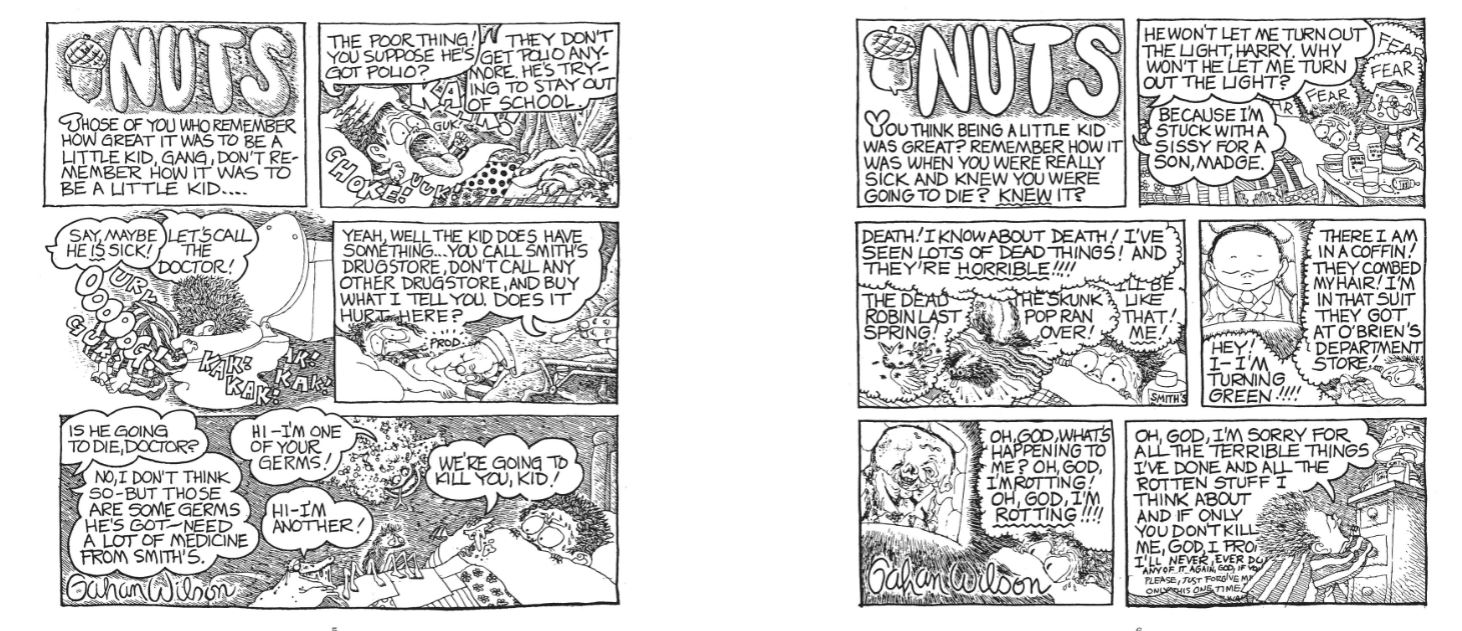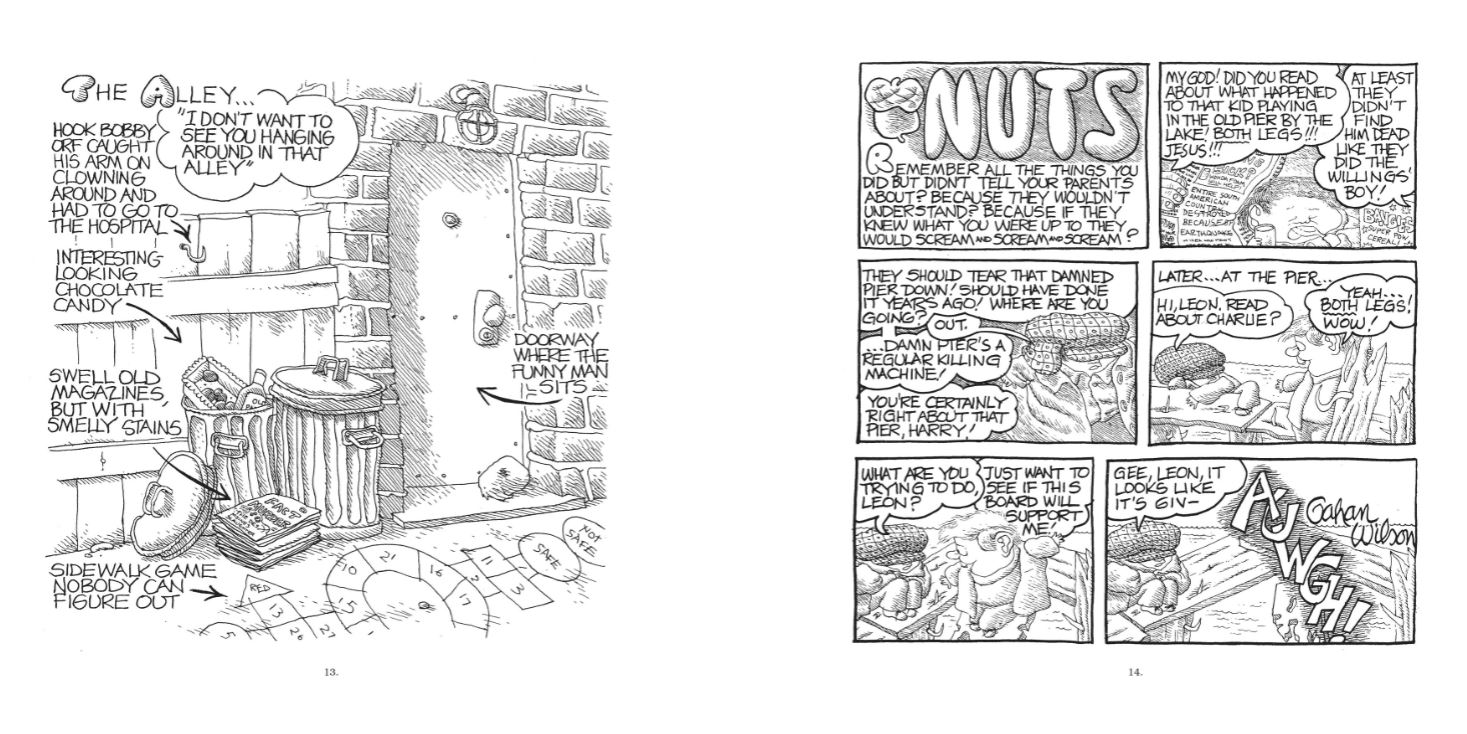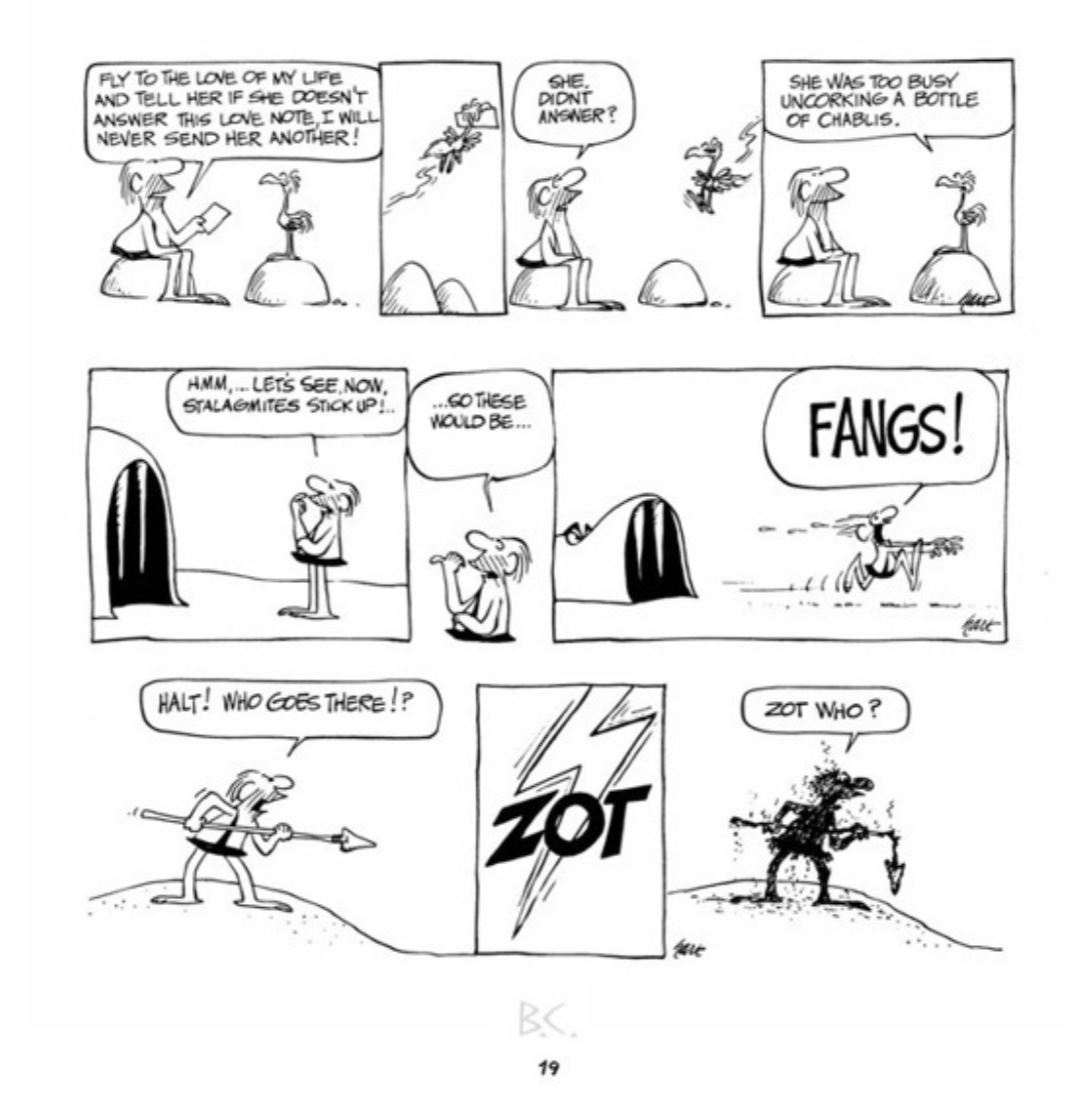
Bernet


By Jordi Bernet & various, edited by Manual Auad (Auad Publishing)
ISBN: 978-0-96693-812-8 (HB)

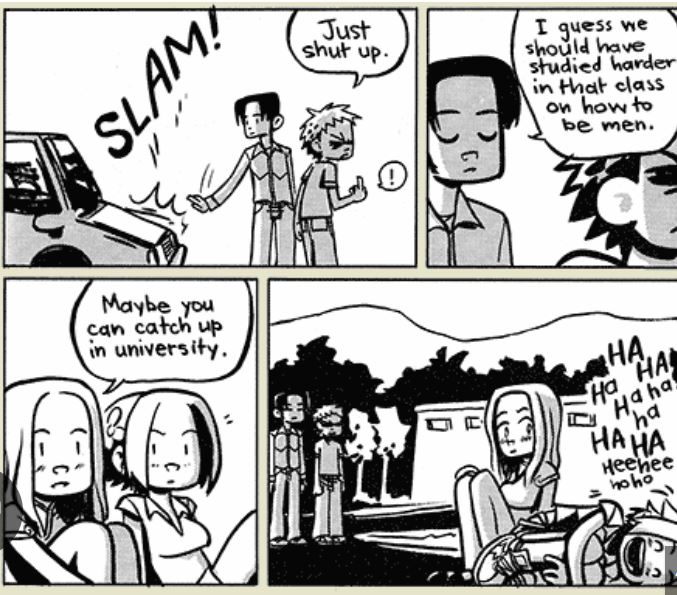
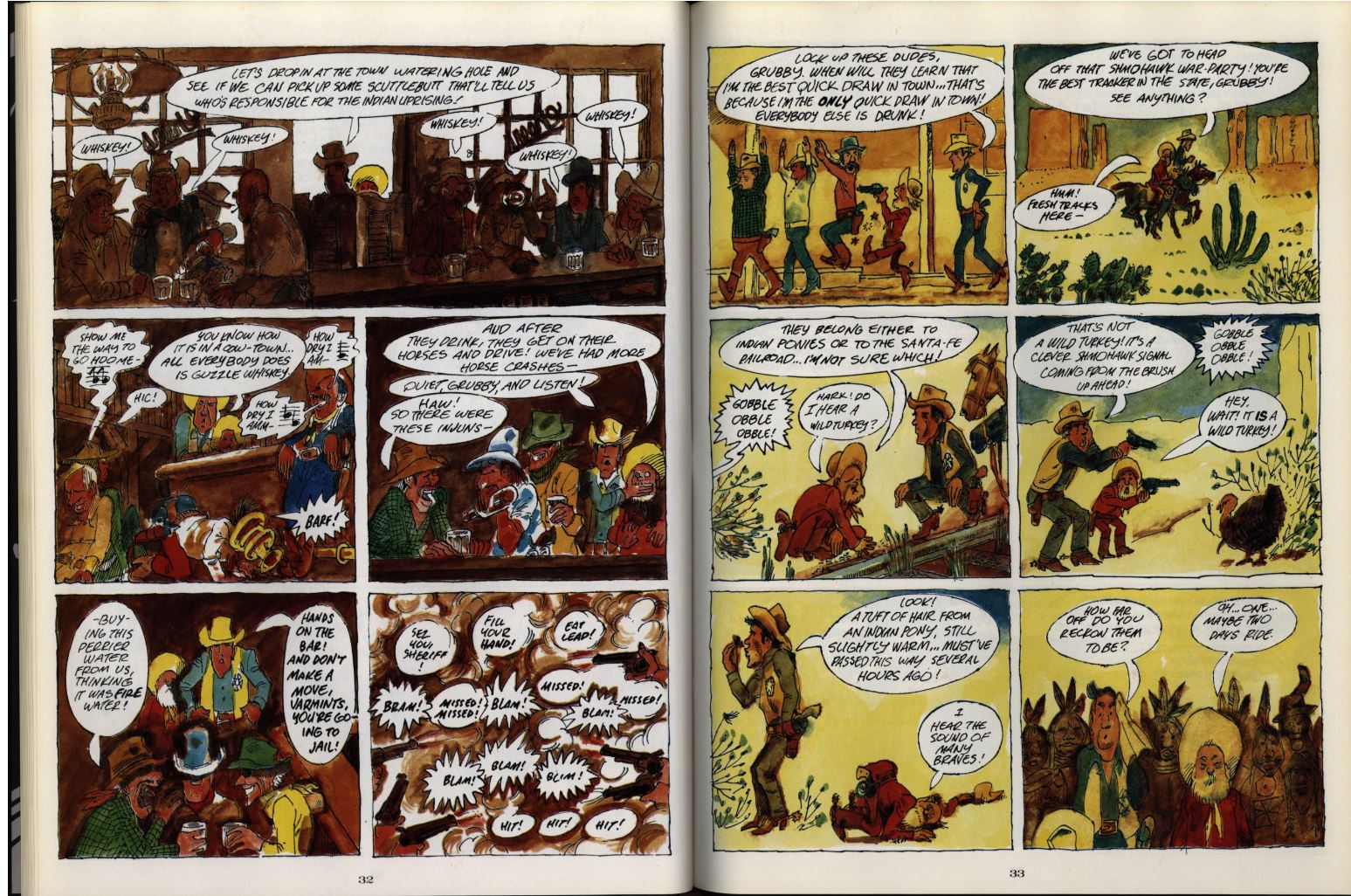
In anticipation of the impending Legend Testers collection from Rebellion Studios expected next week, here’s a glance at a translated treat from a bygone era confirming why you should adore this graphic genius as much as I do. It’s well worth the search and I’ll be cribbing from it heavily when I get around to the turbulent time troubleshooters themselves…

When you’re a life-long thrill-starved kid enchanted by comics, the first stage of development is slavishly absorbing everything good, bad and indifferent. Then comes the moment that you see subtle nuances which inexplicably makes some features favourites whilst others become simply filler.

I first recognised Jordi Bernet’s work on UK thriller serial The Legend Testers… and by “recognised” I mean the very moment I first discerned that somebody actually drew the stuff I was mesmerised by, and that it was better than the stuff either side of it. This was 1966 when British comics were mostly monochrome and never had signatures or credits, so it was years before I knew who had sparked my interest.

Jordi Bernet Cussó was born in Barcelona in 1944, son of a prominent, successful humour cartoonist. When his father died suddenly Jordi, aged 15, took over his father’s strip Doña Urraca (Mrs. Magpie). A huge fan of Alex Raymond, Hal Foster and especially expressionist genius Milton Caniff, Jordi yearned for less restrictive horizons and left Spain in the early 1960s and moved into dramatic storytelling.

He worked for Belgium’s Le Journal de Spirou, and Germany’s Pip and Primo, before finding a home in British weeklies. Bernet worked for UK publishers between 1964 and 1967, and as well as the Odhams/Fleetway/IPC anthologies Smash, Tiger and War Picture Library, also produced superb material for DC Thomson’s Victor and Hornet. He even illustrated a Gardner Fox horror short for Marvel’s Vampire Tales #1 in 1973, but mainstream America was generally denied his mastery (other than a few translated Torpedo volumes and a Batman short story) until the 21st century reincarnation of Jonah Hex which he truly made his own…

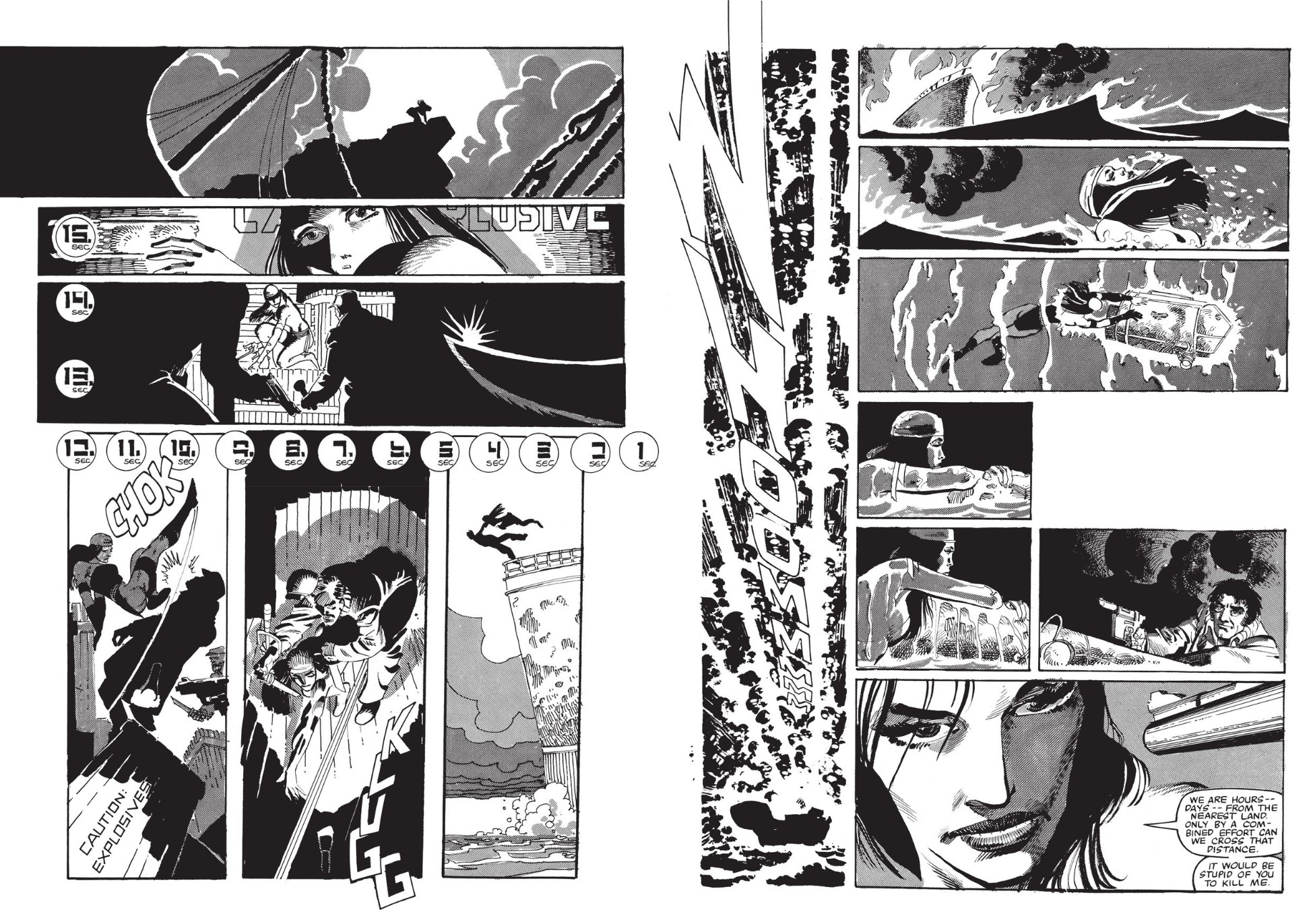
His most famous strips include thrillers Dan Lacombe (written by his uncle Miguel Cussó), Paul Foran (scripted by José Larraz) the saucy Wat 69 and spectacular post-apocalyptic barbarian epic Andrax (both with uncle Cussó again). When fascist dictator Franco died, Bernet returned to Spain and began working for Cimoc, Creepy and Metropol, collaborating with Antonio Segura on the sexy adult fantasy Sarvan and the dystopian SF black comedy Kraken, and with Enrique Sánchez Abuli on the gangster and adult themes tales that have made him one of the world’s most honoured artists. These culminated on the incredibly successful crime saga Torpedo 1936.

This magnificent commemoration of his career thus far spans those years when he first echoed his father’s style through to the sleek minimalist, chiaroscuric, emphatic line economy that drills into readers hindbrains like hot lead from a smoking 45. Also on view, as well as the violence there’s ample example of his sly, witty (and just as hot!) sex comedy material. Bernet is an absolute master of the female form and his adult material – created with Carlos Trillo – such as Custer, Clara De Noche and Cicca is truly remarkable and unforgettable.

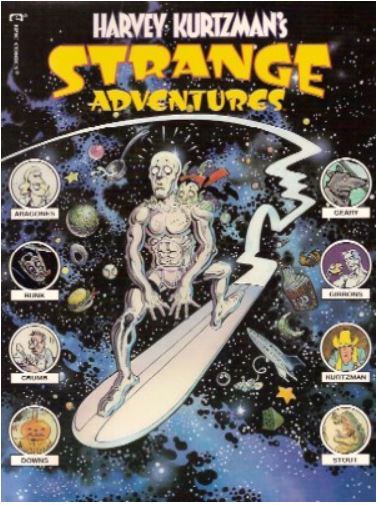
This glorious deluxe hardback gathers together a vast quantity of covers; book illustrations; sketches; drawings, pin-ups &studies; advertising work and that Batman stuff, with a separate chapter on Bernet’s Beauties, a biography (which could, I must admit, have done with one last proof-read before going to press) and full checklisting of his works and awards. There are heartfelt artistic contributions and tributes from some of his vast legion of fans: Will Eisner, Joe Kubert, Jordi Langaron, Carlos Nine, Josep M. Bea, Luca Biagnini, Al Dellinges, Josep Toutain, Eduardo Risso, Horacio Altuna, Carlos Gimenez, Sergio Aragonés, Carlos Trillo, Juan Gimenez and Hobie MacQuarrie, but the true delights here are the 16 complete stories – Torpedo 1936, Sarvan, Custer, Clara De Noche and Kraken – as well as westerns, war stories, comedies and crime thrillers.

This is an incredible tribute to an incredible creator, and one no artist with professional aspirations can afford to miss, but parents be warned – there’s lots of nudity and violence beautifully depicted here – so be sure to read it yourselves first. Just in case…
All art and characters © 2009 their respective copyright holders. All Rights Reserved.

Today in 1955, sleek design master/airbrush aviation nut Ken Steacy was born, and we lost master craftsmen Victor (Redbeard, Buck Danny) Hubinon in 1979 and Bernard Krigstein in 1990. If you read nothing else by “Krig”, go find “Master Race” (Impact Comics #1, April 1955) and learn something important…

Invincible Iron Man Epic Collection volume 7 (1976-1978): Ten Rings to Rule the World


By Bill Mantlo, Gerry Conway, Herb Trimpe, Roger Stern, George Tuska, Keith Pollard, Keith Giffen, Carmine Infantino, Jeff Aclin, Mike Esposito, Don Perlin, Jack Abel, Fred Kida, Alfredo Alcala, Rudy Nebres, Bruce Patterson, Josef Rubinstein, Bob Wiacek, Pablo Marcos, Don Newton & various (MARVEL)
ISBN: 978-1-3029-6059-9 (TPB/Digital edition)

This book includes Discriminatory Content produced in less enlightened times.

Arch-technocrat and supreme survivor Tony Stark has changed profile and rebuilt himself many times since debuting in Tales of Suspense #39 (March 1963). There and then, as a VIP visitor to Vietnam assessing the efficacy of munitions he had designed, the inventor was critically wounded and captured by sinister, savage Communists. Put to work building weapons with the dubious promise of medical assistance upon completion, Stark instead crafted the first of innumerable technologically-augmented protective suits to keep himself alive and deliver him from his oppressors. From there it was a simple – transistor-powered – jump to full time superheroics as a modern Knight in Shining Armour…

Conceived after the Cuban Missile Crisis at a time when Western economies were booming and “Commie-bashing” was America’s obsession, a dashing new Thomas Edison employing Yankee ingenuity, wealth and invention to safeguard the Land of the Free and better the World seemed an obvious development. Combining then-sacrosanct faith that technology and business in unison could solve any problem, with the universal imagery of noble knights battling evil, Stark – the Invincible Iron Man – seemed an infallibly successful proposition.

Of course, whilst he was the acceptable face of 1960s Capitalism – a glamorous, benevolent, rich, technocratic and all-conquering hero when clad in super-scientific armour – the turbulent tone of the 1970s soon relegated his suave, “can-do” image to the dustbin of history. With ecological disaster and social catastrophe from myriad big business abuses new zeitgeists of the young, the Golden Avenger and Stark International were soon confronting some tricky questions from an increasingly politically savvy readership.

With glamour, money and fancy gadgetry not quite so cool anymore the questing voices of a new generation of writers began posing uncomfortable questions in the pages of a series that was once a bastion of militarised America. Collectively accommodating cover-dates November 1976 to October 1978, this Epic chronological epistle completes that transitional period, reprinting Iron Man #92-114, plus Annual #4 and a guest yarn from Marvel Premiere #44 as Bill Mantlo’s passionate writing triggered a minor renaissance in the Steel Sentinel’s chrome-plated chronicles that resulted in some of the best stories of the Eighties era. It also returned Iron Man to the top-rank of Marvel stars.

If you’re a fan thanks to the movie interpretation, that iteration starts right here, right now…

The mettle majesty opens with manic menace The Melter who soon regrets an ill-advised grudge rematch in ‘Burn, Hero… Burn!’ (Gerry Conway, George Tuska & Jack Abel) before Herb Trimpe returns to plot and pencil Iron Man #93. Pitting Old Shellhead against a British-based modern-day pirate in ‘Kraken Kills’ (Conway script & Abel inks), the self-declared Commander deduces Stark’s secret identity before blackmailing the inventor into building weapons for his super-submarine fleet. Never at a loss, though, Stark turns the tables, sparking ‘Frenzy at Fifty Fathoms!’ to scupper the madman’s plans…

Invincible Iron Man Annual #4 (August 1977) offers an all-action alliance with newly constituted super-team The Champions by Mantlo, Tuska & inker Don Perlin. When psychic assassin M.O.D.O.K. overwhelms the Golden Avenger, Iron Man calls in old allies Black Widow and Hercules (plus teammates Ghost Rider, Iceman, Darkstar and The Angel) to thwart ‘The Doomsday Connection!’

Also from that issue comes an out-of-place martial arts vignette by Roger Stern, Jeff Aclin & Don Newton. ‘Death Lair!’ stars former Master of Kung Fu villain Midnight on a mission of murder against old Iron Man enemy Half-Face

The regular monthly climb to reclaimed pole position resumes with veteran Iron Man artist Tuska joining plotter Conway, scripter Mantlo and inker Perlin in unleashing giant android ‘Ultimo!’ (IM #95, cover-dated February 1977) against Washington DC. Clad in upgraded armour and in the Capitol to answer congressional questions about his company, Stark is targeted by a vengeful hidden nemesis who activates the mountainous monster for a classic B-movie sci fi rampage in the streets, with the Golden Avenger supplementing hard pressed Army and National Guard units… before falling in ignominious defeat due to sabotage…

Mantlo, Tuska & Abel prove you can’t keep a good Iron Man down as the embattled hero rallies and retaliates in ‘Only a Friend Can Save Him’ as former close ally and dutiful S.H.I.E.L.D. agent Jasper Sitwell joins the counterattack. Meanwhile, a long-simmering plotline advances as NYPD detective Michael O’Brien – who holds Stark responsible and accountable for the death of his brother Kevin – finally allows his obsession with a cover-up to pull him across legal lines and into collusion with shady PI Harry Key, whose latest client also has nasty plans for the playboy inventor…

Thanks to ingenuity and sheer guts, Stillwell & Iron Man seemingly destroy Ultimo deep below DC, but their triumph is short lived as a return to Stark’s Long Island factory provokes a ‘Showdown with the Guardsman!’ (Conway, Mantlo, Tuska & Perlin). When Mike takes PA Krissy Longfellow hostage, steals the armour suit that drove his brother insane and ambushes the Golden Avenger wearing it, the clash is swift and brutal. Thankfully this time, the blockbusting battle ends before another good man dies…

Whilst subsequently treating O’Brien, another distraction comes when an old frenemy attacks the facility and US interventionist economic practises. ‘Sunfire Strikes Again!’ sees the Japanese ultra-nationalist mutant warrior again seek to derail progress, unaware that he’s a pawn of the lurking presence gunning for Stark. However, the harried hero’s problems start with the fact that his greatest weapon is offline and he’s fighting in borrowed Guardsman armour. When the conflict frees imprisoned Michael O’Brien, the cop seeks to make amends by joining the battle in an obsolete Iron Man outfit, but – even with Mike Esposito inking – the new allies rapidly find themselves ‘At the Mercy of the Mandarin!’

During the melee, Key tries his luck in the Stark vaults once too often and encounters an unexpected problem, thanks to another insidious infiltrator planted by a different scheming mastermind. However, having freed himself, Tony is too now busy rushing to a far-distant, potentially world-ending final battle in anniversary issue #100. Invading China, Iron Man faces horrors, homunculi Death Squads, nuclear armageddon and his most obsessive enemy whose ‘Ten Rings to Rule the World!’ ultimately prove insufficient to the task…

With the tyrant’s countless plots to discredit Stark now exposed, our hero starts a long journey home, even as in Long Island, Harry Key, Sitwell and one of the traitors in Stark’s midst begin a cautious espionage dance…

Iron Man’s trip stalls when he’s shot down over Yugoslavia (just google it) and awakens in a creepy old castle filled with freaks and outcasts safeguarded by a familiar – to elderly or dedicated Marvelites at least – huge and daunting figure. Recovering in ‘Then Came the Monster!’ our weary voyager views Castle Frankenstein and panics: clashing with the gentle “Modern Prometheus” before the real menace emerges.

Inked by Esposito & Pablo Marcos, ‘Dreadknight and the Daughter of Creation!’ channels old Marvel horror tales as a brutal and brutalised escaped experiment of Doctor Doom’s laboratories seeks to compel the great granddaughter of Victor Frankenstein to share with him the secrets of creating life…

This ruthless high-tech paladin’s sadistic efforts are eventually thwarted by Iron Man and the original (good) Monster, after which the Steel-Shod Sentinel at last arrives home in #103’s ‘Run for the Money!’ by Mantlo, Tuska & Esposito. Sadly, it’s just in time for the next domestic crisis as Sitwell exposes the traitor only to be captured by revolting corporate villain Midas, who – patience exhausted – launches a truly hostile takeover using tanks, mercenaries, lawyers and the Stock Market…

He is temporarily checked by itinerant junior hero/innocent bystander Jack of Hearts who – as per standard Marvel protocol – is attacked by weary, late arriving Iron Man who misconstrues events and assaults the well-meaning stranger. Shock follows shock as Midas’ legal chicanery forces Iron Man’s surrender, ceding control of Stark International to his enemy, even as the villain’s agent and top lieutenant Madame Masque quits to ally herself with the defeated hero and his ousted, outmanoeuvred alter ego Tony Stark.

In the aftermath, repercussions of the takeover ripple outwards. With Stark no longer paying her bill, deeply disturbed super-telepath (and former Stark inamorata) Marianne Rodgers is kicked out of the sanatorium that has been keeping her psionic deadly tendencies in check…

The fightback begins in ‘Triad! (Mantlo, Tuska & Esposito) after Stark initially refuses the help of Masque. Thus she instead allies with former lover/patsy Sitwell whilst elsewhere, interested parties Michael O’Brien and Jack of Hearts also seek to stop Midas converting Stark’s purloined resources into a world-conquering armed force. Also heading slowly towards a showdown, Marianne graduates towards Long Island, leaving a trail of bodies in her wake…

With ‘Every Hand Against Him!’ and despite the stakes being so high, Tony has quit forever, preferring to hide in his father’s old house with Madame Masque. Less sanguine over the crisis and National Security threat, many of Iron Man’s allies join a volunteer force recruited by psychic superhero The Wraith and eventually consisting of Police Captain Jean de Wolf, former Iron Man stand-in Eddie March, The Guardsman & Jack of Hearts, covertly backed up by Sitwell and (the first) Nick Fury

Still short of power, they co-opt through blackmail, Masque’s lethal skills and Tony’s last remaining armour suit to take out Midas. ‘Then There Came a War!’ (#106) sees the squad invade SI to face a legion of automated Iron Men. At the height of battle Marianne Rodgers – in a fugue state – finally reaches her destination. As Keith Pollard & Fred Kida step in to illustrate the catastrophic conclusion, ‘And, in the End…’ sees her power tip the scales, uncovering even more treachery in Tony’s inner circle and inspiring the despondent hero to take back his heritage, his company and his honour…

With most of his allies apparently dead, Iron Man calls in Avenging ally Yellowjacket (AKA original Ant-Man Henry Pym) to help whip up a miracle cure in #108 (Mantlo, Carmine Infantino & Bob Wiacek). This incurs some ‘Growing Pains!’ and a palate-cleansing action-filled monster-bash as the clear-up somehow reactivates Kang the Conqueror’s devastating Growing Man android to add to the wreckage and rubble…

Once the fighting is finished, rebuilding Stark International begins, with Mantlo, Infantino & Kida dictating the pace prior to another crisis after Jack of Hearts traces the Growing Man’s programming commands as emanating from Luna. Thus Iron Man and his superhero apprentice board a Quinjet and experiences a very painful ‘Moonrise!’ when their mission intersects a secret sortie by Soviet Super-soldiers Darkstar, Vanguard & Crimson Dynamo. The Communist cosmonauts are only investigating a bizarre alien artefact, but entrenched political and personal animosities spark a savage clash. Both sides are preoccupied when the silver egg activates, transporting those closest to it – the Americans – to somewhere far, far away…

Mantlo, Pollard & Kida stretch their fantasy muscles in an astral epic as the heroes materialise aboard a vast ship bearing Colonizers of Rigel to their next conquest. Sadly, these ‘Sojourners Through Space!’ have targeted Wundagore II – used by animal-enhancing man-made deity the High Evolutionary to store former experiments – and are soon caught up in a battle against formidable space Knights of Wundagore and two devastating late-arriving, quickly escaping human captives within their colossal Command ship…

When an alliance of humans and hyper-evolved Earth beasts proves too costly, the Rigellian venture is called off in ‘The Man, the Metal, and the Mayhem!’  but this in turn leads to renegade Colonizer subcommander Arcturus spitefully targeting Earth with a robot stolen from Galactus (the original Punisher from Fantastic Four #48-50). Upon its despatch, closing instalment ‘Moon Wars!’ (IM #112, July 1978 by Mantlo, Pollard & Alfredo Alcala) sees a swift, unauthorised Colonizer strike prompt a desperate dash back to Luna and shattering descent to Detroit for Iron Man, resulting in blistering battle with the cosmic weapon of chastisement and a new definition of the word “invincible” for the triumphant Golden Avenger…

With Mantlo scripting, Pollard layout pages and Trimpe’s pencilling for inker Josef Rubinstein, Iron Man #113 trumpeted a fresh beginning for Stark International after defeating the bloody takeover bid of Mr Midas. However, as the new complex opened for business, an old enemy is already infiltrating the company whilst a more brazen assault comes after a dying foe is manipulated into attacking the complex using ‘The Horn of the Unicorn!’

Seeking help for the beaten-and-at-death’s door Unicorn, the Metal Marvel consults The Avengers and inadvertently triggers a second assault by the villain who also activates a long-interred robotic threat that seems agonisingly familiar in ‘The Menace of… Arsenal!’ (Mantlo, Giffen & Bruce D. Patterson) leading to a turning point moment you’ll need the next book or another collection to enjoy…

To Be Continued…

Here, however, one last narrative nubbin comes from Marvel Premiere #44 (October 1978): the one-shot try-out of Stark’s former apprentice, by Mantlo, Giffen & Rudy Nebres). ‘The Jack of Hearts!’ reexamines the origin of trust fund brat Jack Hart, who was inundated in the experimental “zero fluid” invented by his murdered father. Seemingly resurrected and imbued with incredible energy and computational powers, Jack hunts The Corporation who ordered the hit and here – thanks to new connection in S.H.I.E.L.D. – inconclusively clashes with their preferred hitman Hemlock

With covers throughout by Jack Kirby, Al Milgrom, Abel, Ron Wilson, Dan Adkins, Gil Kane, Dave Cockrum, Sal Buscema, Jim Starlin, Val Mayerik, George Pérez, Terry Austin, Frank Giacoia, Joe Sinnott, Joe Rubinstein, John Byrne, Wiacek, Pollard, John Romta Jr., Ed Hannigan & Frank Giacoia, other extras include house ads, cartoon fan letter ‘Printed Circuits’ (by Fred Hembeck from #112); editorial pages and style sheets from Marvel Premiere #44 and original art covers by Starlin, Mayerik & Cockrum.

From our distant vantage point the polemical energy and impact might be dissipated, but the sheer quality of the comics and cool thrill of the eternal aspiration of man in perfect partnership with magic metal remains. These Fights ‘n’ Tights classics are amongst the most underrated but impressive tales of the period and are well worth your time, consideration and cold hard cash
© 2025 MARVEL.

You’d think we barely have room for a review this time as it’s such an auspicious day for comics…

In 1912 today creepy cartoon colossus Charles Addams was born, and in 1929 both Buck Rogers by Dick Calkins and Hal Foster’s Tarzan strips debuted. In 1934 Alex Raymond & Don Moore launched Jungle Jim and a year later combined it with new idea Flash Gordon.

Underground and Mad magazine artist Jay Lynch was born in 1945 and two years later Milton Caniff premiered his other masterpiece with the launch of Steve Canyon. That ran until 1988.

In 1953, Bob Wiacek joined the party as did Karl Kesel in 1959, and publisher Fabrice Giger (Les Humanoïdes Associés) arrived in 1965. Surely by coincidence, two years after, that nativity was followed by the launch of Greg & Eddie Paape’s Luc Orient in Le Journal de Tintin.

Lone Wolf and Cub volume 1: The Assassins Road


By Kazuo Koike & Goseki Kojima, translated by Dana Lewis (Dark Horse Manga)
ISBN: 978-1-56971-502-4 (TPB/Digital edition)

This book includes Discriminatory Content produced in less enlightened times.

Best known in the West as Lone Wolf and Cub, the epic Samurai saga created by Kazuo Koike & Goseki Kojima is a global classic of comics literature. An example of the hugely popular Chanbara (“sword-fighting”) genre of print and screen, Kozure Okami was serialised in Weekly Manga Action from September 1970 until April 1976. It was an immense and overwhelming Seinen (“Men’s manga”) hit. Those tales quickly prompted thematic companion series Kubikiri Asa (Samurai Executioner) which ran from 1972-1976, but the major draw and main attraction – at home and, increasingly, abroad – was always the nomadic wanderings of doomed noble Ōgami Ittō and his solemn silent child Daigoro: framed by family rivals, dishonoured by the Shōgun and condemned to death by his peers. Breaching all etiquette, the court executioner refused to suicide quietly and instead opted to vengefully walk the bloody road to Meifumadō: the hell of Buddhist legend…

Revered and influential, Kozure Okami was followed after years of supplication by fans and editors by sequel Shin Lone Wolf & Cub (illustrated by Hideki Mori). The serial even spawned – through Koike’s indirect participation – science fiction homage Lone Wolf 2100 by Mike Kennedy & Francisco Ruiz Velasco.

The original saga has been successfully adapted to most other media, spawning movies, plays, TV series (plural), games and merchandise. The property is notoriously still in pre-production in Hollywood.

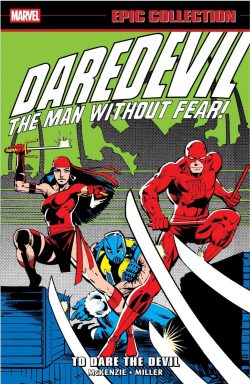
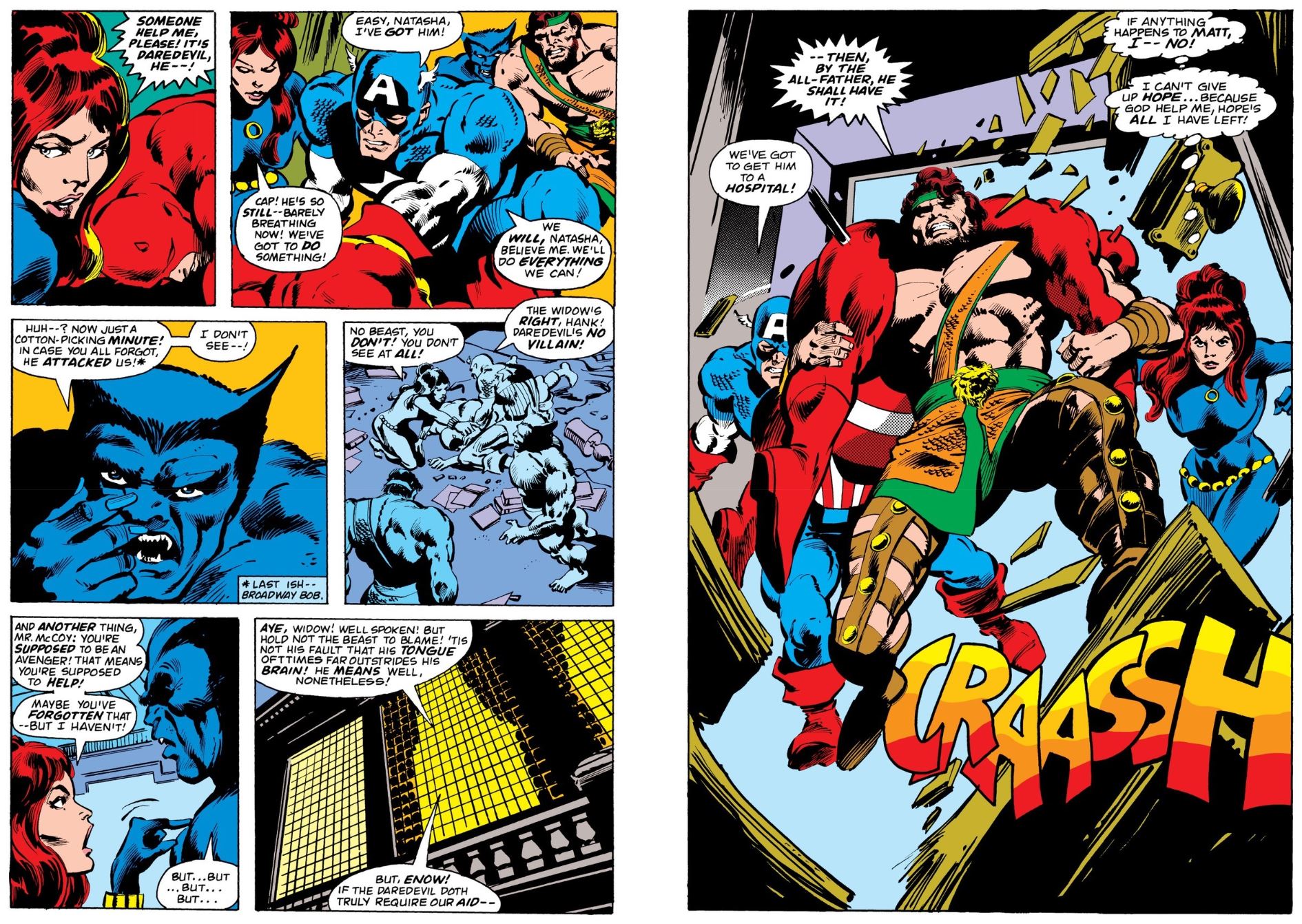
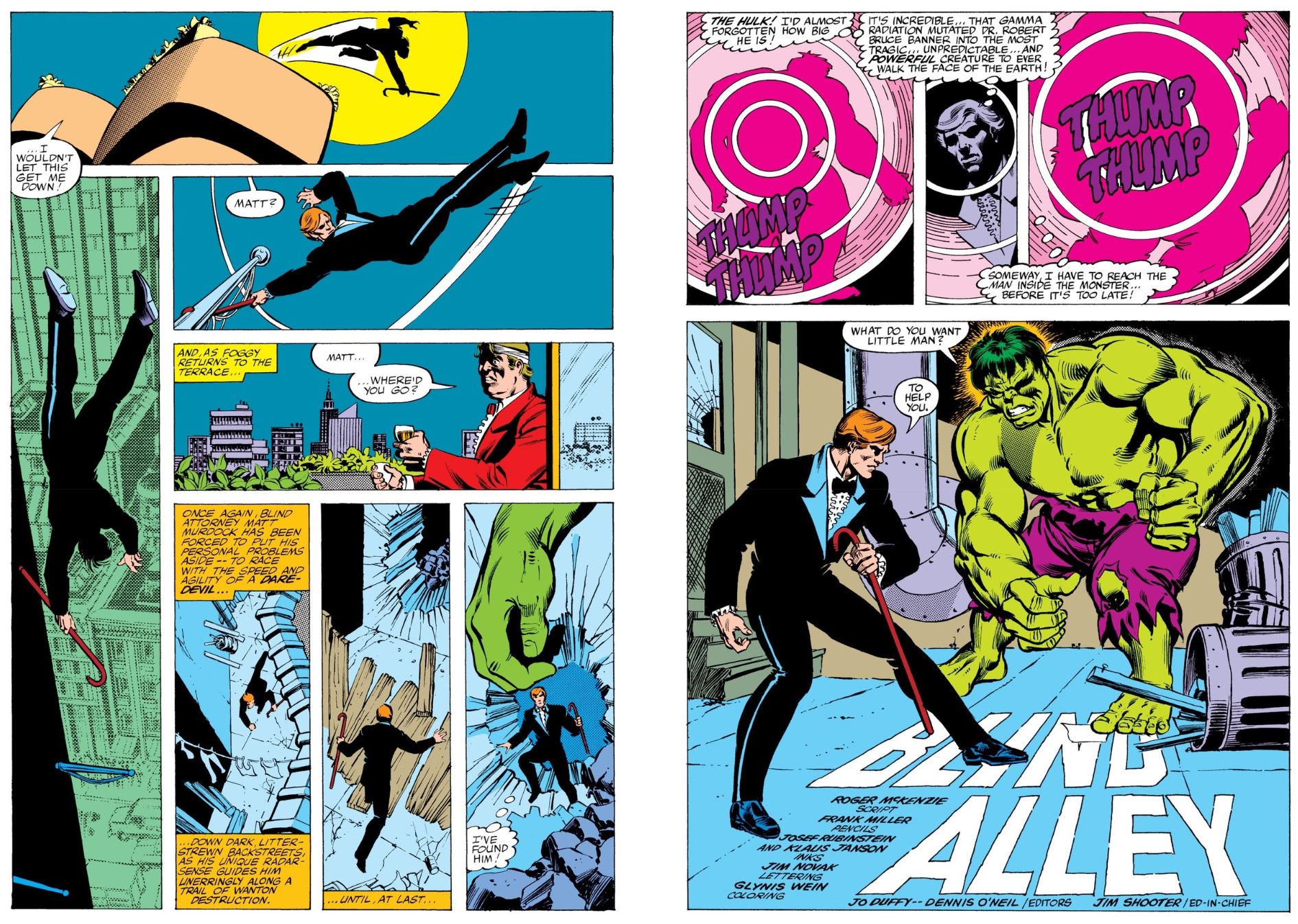
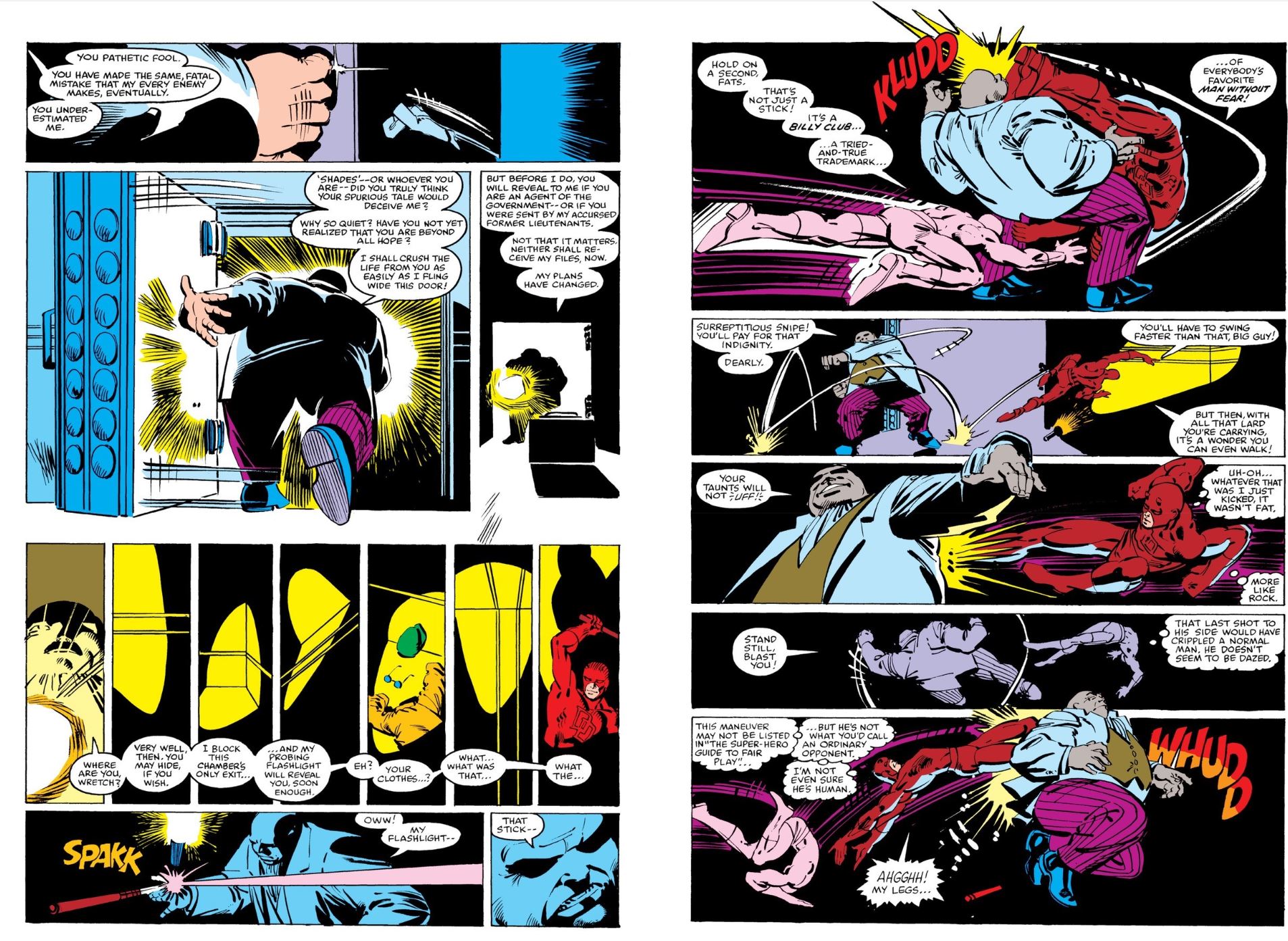
The several thousand pages of enthralling, exotic, intoxicating narrative art produced by the legendary creators eventually filled 28 collected volumes, beguiling generations of readers in Japan and, inevitably, the world. More importantly, their philosophically nihilistic odyssey – with its timeless themes and iconic visuals – has influenced hordes of other creators. The many manga, comics, movies, TV and animated versions these stories have inspired around the globe are utterly impossible to count. Frank Miller, who illustrated the cover of this edition, referenced the series in Daredevil, his dystopian opus Ronin, The Dark Knight Returns and Sin City. Max Allan Collins’ Road to Perdition is a proudly unashamed tribute to the masterpiece of vengeance-fiction. Stan Sakai has superbly spoofed, pastiched and celebrated the wanderer’s path in his own epic Usagi Yojimbo, and children’s cartoon shows like Samurai Jack are direct descendants of this astounding achievement of graphic narrative. The material has become part of a shared global culture.

In the West, we first saw the translated tales in 1987 as 45 Prestige Format editions from First Comics. That innovative trailblazer foundered before getting even a third of the way through the vast canon, after which Dark Horse Comics acquired the rights, systematically reprinting and translating the entire epic into 28 tank?bon-style editions of around 300 pages each. Once the entire epic was translated (between September 2000 & December 2002) it was all placed online through the Dark Horse Digital project.

Following a cautionary ‘Note to Readers’ – on stylistic interpretation – this moodily magnificent monochrome missal truly gets underway, retaining many terms and concepts western readers may find unfamiliar. Therefore this lean, mean, martial edition offers at the close a Glossary providing detailed context on the term used in the stories, plus profiles of author Koike Kazuo & illustrator Kojima Goseki and the first instalment of ‘The Ronin Report’: an occasional series of articles offering potted history essays on the period of the Tokugawa Shogunate, with Tim Ervin starting the ball rolling here.

Of course, the true meat is the captivating, grimly compelling combination of revenge fable and action-adventure which opens here with intriguing episodes of stripped-down mystery, gripping intensity and galvanic bloodletting as the first tale introduces a scruffy indigent pushing a homemade bamboo pram with a 3-year-old boy in it. A banner on the contraption proclaims ‘Son for Hire, Sword for Hire’ and, as the man stoically ignores mockery and derision from louts on the road, his promotional ploy attracts the attention of four deadly men who have been warned of an assassin carrying his baby boy with him…

A basic formula informs early episodes: the acceptance of a commission to kill an impossible target necessitates the forging of a cunning plan and relentless determination leads to inevitable success: all underscored with bleak philosophical musings alternately informed by Buddhist teachings in conjunction with or in opposition to the unflinching personal honour code of Bushido…

You won’t learn it until the end of this tome, but the fore-doomed killer-wanderer was once the Shogun’s official executioner: capable of cleaving a man in half with one stroke. An eminent individual of esteemed imperial standing, elevated social position and impeccable honour, Ōgami Ittō lost it all and now roams feudal Japan as a doomed soul, hellbent for the dire, demon-haunted underworld of Meifumadō. When the noble’s wife was murdered and his clan dishonoured due to the machinations of the treacherous and politically ambitious Yagyu Clan, the Emperor ordered Ōgami to commit suicide.

Instead, he rebelled, choosing to become a despised Ronin (masterless samurai) and assassin, pledging to revenge himself on the traitors until they were all dead or Hell claimed him. His son, toddler Daigoro, also chose the way of the sword and together they roam the grim and evocative landscapes of feudal Japan, one step ahead of doom and with death behind and before them. Frequently, the infallible assassin’s best ploy is to allow himself to be captured, endure unimaginable torture and then fight his way out having slaughtered his target…

The tactic is again employed in ‘A Father Knows His Child’s Heart, As Only a Child Can Know His Father’s’, with the wolf despatching willing Daigoro to penetrate the unyielding defences of Takai Han so Papa can kill a dishonourable usurper…

Another aspect of Ōgami’s methodology emerges in ‘From North to South, From West to East’. The assassin always insists on a personal interview with every client, demanding not only who is to die, but why. Perhaps the cautious killer only wants to know the extent of what he’s getting into, but we know he’s judging: seeing whether the target deserves death… or if the client does…

The legend of the Lone Wolf and Cub quickly spreads, and when faithful guards briefly hire Daigoro to help their beloved mistress, it is with full knowledge of what the boy’s father is. In ‘Baby Cart on the River Styx’ that knowledge is crucial to Ōgami’s plan for quashing a gang turf-war before it begins, even whilst bringing down a corrupt yet untouchable lord. Shocking for us may be the accepted conceit that father is fully prepared to sacrifice son to compete the mission, fulfil his promises and uphold his word. ‘Suio School Zanbato’ sees the boy willingly become hostage to fortune so his dad can lure a swords-master – and all his honourless students – into an officially sanctioned duel, killing all without legal ramifications or repercussions.

Lyrically twisting the theme of star-crossed lovers, ‘Waiting for the Rains’ sees him befriend a dying woman even as his father stoically anticipates completing his next commission: expunging the man she so patiently awaits…

These stories are deeply metaphorical and work on multiple cultural levels most of us westerners just won’t grasp on first reading – even with contextual aid provided by the bonus features. That only makes them more exotic and fascinating. Also a little unsettling is the even-handed treatment of women in the tales. Within the confines of the notoriously stratified society depicted, women – from servants to courtesans, prostitutes to highborn ladies – are all fully rounded characters, with their own motivations and drives. The wolf’s female allies are valiant and dependable, and his foes, whether targets or mere enemy combatants in his path, are treated with professional respect by Ōgami. He kills them just as if they were men…

In ‘Eight Gates of Deceit’ the indomitable nomad is ambushed by an octet of female assassins hired by his latest client who foolishly chooses to discount the professional honour of his hireling in favour of clearing up loose ends. It’s his last mistake…

‘Wings to the Birds, Fangs to the Beast’ finds the tireless wanderer stumbling into a hot-spa village recently taken over by bandits. To their eternal cost, and despite the newcomer’s every forbearing effort, the human beasts refuse to believe the man with the baby wants no trouble…

This stunning opening collection ends with a few of the answers readers want as the scene shifts to the recent past at the Shogun’s palace in Edo for an origin. There, thanks to political manoeuvrings of ambitious nefarious Lord Yagyu, Shogun’s Executioner Ōgami Ittō has been ousted and his entire clan disgraced. With his wife Asami dead, the austere warrior outwits his opponent – who assumed honourable suicide the only option he’d left his enemy – by opting to travel ‘The Assassin’s Road’ with his baby son momentously choosing to follow him to Meifumadō or victory…

Whichever English transliteration you prefer – Wolf and Baby Carriage is what I was first introduced to – the grandiose, thought-provoking hellbent Samurai tragedy created by Kazuo Koike & Goseki Kojima is without doubt one of those all too rare breakthrough classics of comics literature. A breathtaking tour de force, these are comics you must not miss.
© 1995, 2000 Kazuo Koike & Goseki Kojima. All other material © 2000 Dark Horse Comics, Inc. Cover art © 2000 Frank Miller. All rights reserved.

Today in 1916 lettering legend Artie Simek was born and in Italy in 1953 Dylan Dog cocreator Angelo Stano arrived, whilst 2000 saw the end of an era as Mad mastermind Don Martin died.

Spirou and Fantasio volume 9: The Dictator and the Mushroom


By André Franquin, translated by Jerome Saincantin (Cinebook)
ISBN: 978-1-84918-267-6 (album PB/Digital edition)

This book includes Discriminatory Content produced in less enlightened times.

Another anniversary I just couldn’t leave unremarked upon. Deal with it. I’m old, morose and accursed with nostalgia.

André Franquin was born in Etterbeek, Belgium on January 3rd 1924 and died on January 5th 1997. In between there were good times and bad, which he offset by creating the most incredible characters and stories, and by making people laugh and think – but mostly laugh. This is one of the very best you can find translated into English.

Adventure-seeking kid Spirou headlined the magazine he was named for from the first issue (dated April 21st 1938). He was created by French cartoonist Françoise Robert Velter using his pen-name Rob-Vel for Belgian publisher Éditions Dupuis in direct response to the success of Hergé’s Tintin for rival outfit Casterman. Originally a plucky bellboy/lift operator employed by the Moustique Hotel (a sly reference to the publisher’s premier periodical Le Moustique), his improbable exploits with pet squirrel Spip gradually grew into high-flying, far-reaching and surreal comedy dramas. That evolution was mainly thanks to Velter’s wife Blanche “Davine” Dumoulin who took over the strip when her husband enlisted in 1939 and Belgian artist assistant Luc Lafnet… at least until 1943 when Dupuis purchased all rights to the property, after which comic-strip prodigy Joseph Gillain (Jijé) took the helm.

Our interest really begins when Jijé handed his own trainee assistant complete responsibility for the flagship strip part-way through Spirou et la maison préfabriqué, (Le Journal de Spirou #427, June 20th 1946). Andre Franquin ran with it for two decades; enlarging the scope and horizons until it became purely his own. Almost every week fans would meet startling new characters such as comrade/rival Fantasio or crackpot inventor and Merlin of mushroom mechanics the Count of Champignac.

Spirou and Fantasio became globe-trotting journalists, travelling to exotic places, uncovering crimes, exploring the fantastic and clashing with a coterie of exotic arch-enemies such as Zorglub and Fantasio’s unsavoury cousin Zantafio. Incidentally, eerily-relevant The Dictator and the Mushroom features the second appearances of Zantafio and strong, capable, female (!) rival journalist Seccotine (renamed Cellophine for these English translations)…

Franquin, plagued in later life by bouts of depression, passed away in 1997 but his legacy remains; a vast body of work which reshaped the landscape of European comics.

Here then as originally serialised in LJdS #801-838, between 1953 and 1954 before subsequently being released on the continent in 1956 as hardcover album Spirou et Fantasio 7 – Le Dictateur et Le Champignon, this epic episode begins as globe-trotting troubleshooter Spirou and his short-tempered reporter pal Fantasio approach the isolated home of eccentric inventor Count Champignac. They are resolved to return the mischievous miracle monkey Marsupilami to its natural habitat in the jungles of Palombia

Sadly, whilst they discuss their plan with the elderly savant, the mischievous monkey he’s been safeguarding swipes the inventor’s latest mycoprotein marvel and heads for town…

Champignac calls the gaseous form of his newest mushroom extract “metalsoft” and that’s exactly what the stuff does: reduce the solidity of iron, brass, bronze, tin or whatever to the consistency of hot wax. By the time the prankish primate has finished innocently playing with the pump dispenser, locals are in uproar and their village is practically a puddle…

With nobody in Europe objecting, the lads promptly book passage on a South America-bound cruise ship, where once again the elastic-tailed terror causes a cacophony of comedic chaos. Eventually, though, our increasingly irate and exhausted adventurers at last head in-country towards sleepy Palombia where a big surprise is waiting for them…

Thanks to Marsupilami, they are forced to travel the last ten miles to capital city Chiquito on foot and are astonished to observe the sheer number of military vehicles constantly overtaking them. In the city, an altercation with soldiers leads to their arrest and interview with new supreme dictator General Zantas. The meeting is both a huge shock and unhappy reunion…

Fantasio’s cousin Zantafio had been only a little mean and perhaps misguided when they were all first hunting for the Marsupilami, but since then has reinvented himself, graduating into a full-blown murderous megalomaniac. A cheap thug in a flashy uniform, he is determined to carve himself a bloody empire and vast wealth through the conquest of his national neighbours. Moreover, Zantafio/Zantas wants his countrymen and cousin to join him in the campaign of conquest, a horrific demand the reporters initially refuse.

Locked in jail, Spirou & Fantasio ponder how to stop the murderous scheme and realise the perfect counter to Zantas’ burgeoning war machine is Champignac’s Metalsoft. All they have to do is get a message to the inventor and have him send enough of the wonder stuff to destroy the ever-expanding army…

Thus they apparently switch sides and are soon installed as high ranking officers. Of course, Zantafio is no fool and sets his most cunning spy to watch them; just waiting for the moment when they betray themselves.

It’s not our heroes’ first rodeo either and, aware of their shadow, the lads engage in a prolonged and hilarious game of cat-&-mouse with the spook, all the while fretting that D-Day is approaching and they still haven’t been able to smuggle out a message…

A solution presents itself when go-getting journalist Cellophine makes contact. She’s been secretly covering the crisis for ages – without being caught like her mere male rivals – and offers to ferry the request for Metalsoft to Champignac ASAP…

Things aren’t all going Zantafio’s way. Even though weapons dealers are frantically auditioning their death-dealing wares for the General, Colonels Spirou & Fantasio are especially diligent and somehow able to find dangerous faults in everything on offer…

And then one night Cellophine sneaks back into Palombia with the secret weapon which will end Zantas’ dreams of empire…

Following a fantastical fight with the mushroom-gas-wielding trio battling an entire modern military, and a tense yet inconclusive showdown with Zantafio, peace and democracy break out and the boys finally complete their original mission. Having at last safely returned the Marsupilami to his natural wilderness, Spirou & Fantasio wearily head back to civilisation, content in the knowledge that the lovable little perisher is back where he belongs.

Of course, the pestilential primate has his own ideas on the matter…

Stuffed with superb slapstick situations, riotous chases and gallons of gags, but barely concealing a strongly satirical anti-war message, this exuberant yarn is a joyous example of angst-free action, thrills and spills. Easily accessible to readers of all ages and drawn with beguiling style and seductively wholesome élan, this is an enduring comics treat from a long line of superb exploits, deserving to be as much a household name as that other kid reporter and his dog…
Original edition © Dupuis, 1956 by Franquin. All rights reserved. English translation 2015 © Cinebook Ltd.

Today in 1941 mangaka/anime director Hayao Miyazaki (Nausicaa of the Valley of Wind) was born, and two years later so was street level/underground commix crafter Roger (Eerie, Tales of Sex and Death, Yellow Dog) Brand. In 1957 Brick Bradford cartoonist Clarence Gray died, as did André Franquin in 1997, and in 2000, master mangaka Goseki Kojima famed and missed for such wonders as Kozure Okami (Lone Wolf and Cub), Kubikiri Asa (Samurai Executioner) and Hanzo no Mon (Path of the Assassin).

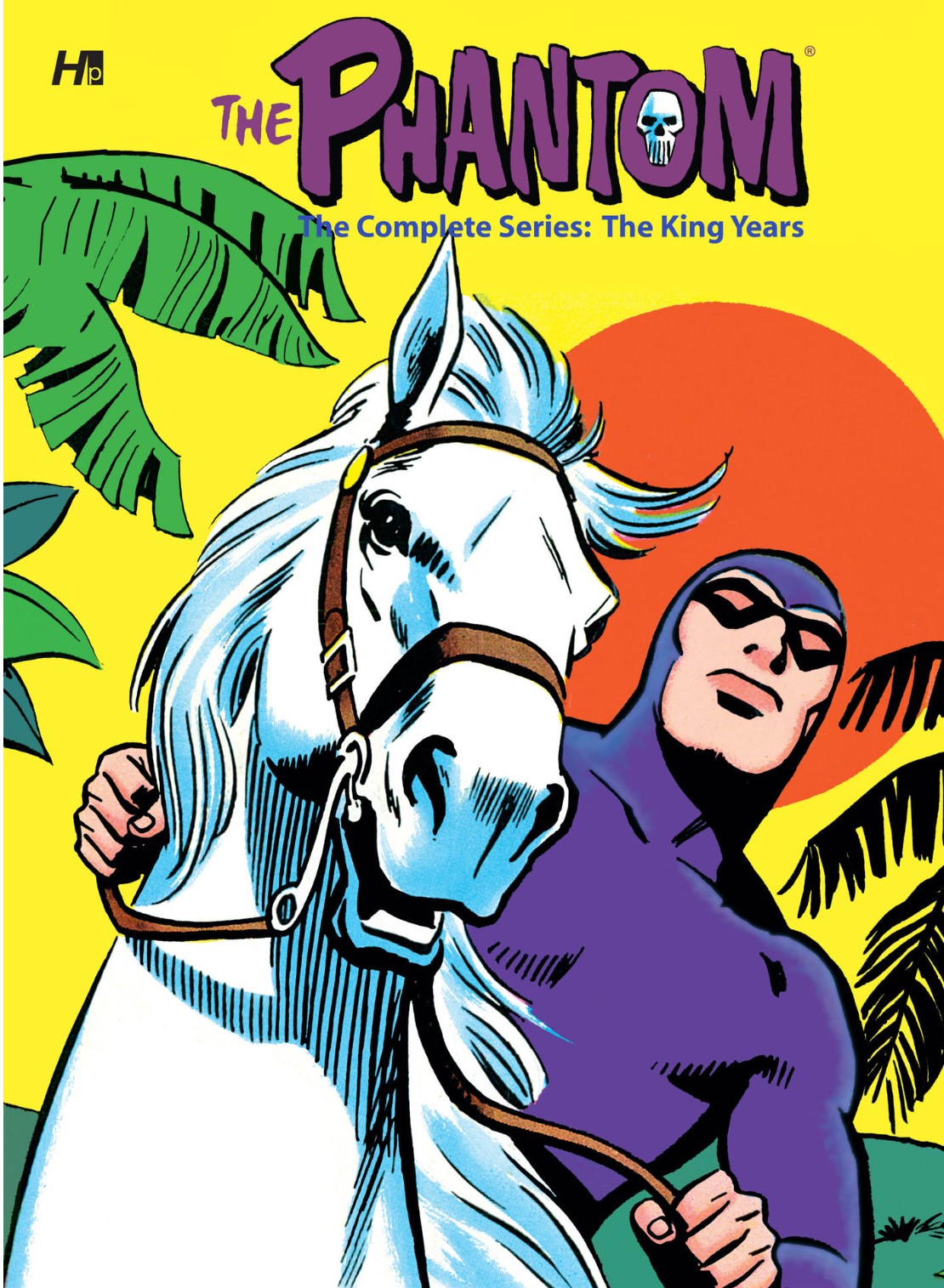
The Phantom: The Complete Newspaper Dailies volume 1 1936-1937


By Lee Falk & Ray Moore: introduction by Ron Goulart (Hermes Press)
ISBN: 978-1-932563-41-5 (HB/Digital edition)

This book includes Discriminatory Content produced in less enlightened times.

There are plenty of comics-significant anniversaries this year, and this guy is probably right at the top of the birthday cake. As next month sees his 90th anniversary here’s tasty reminder of why he is considered one of our industry’s landmark figures.

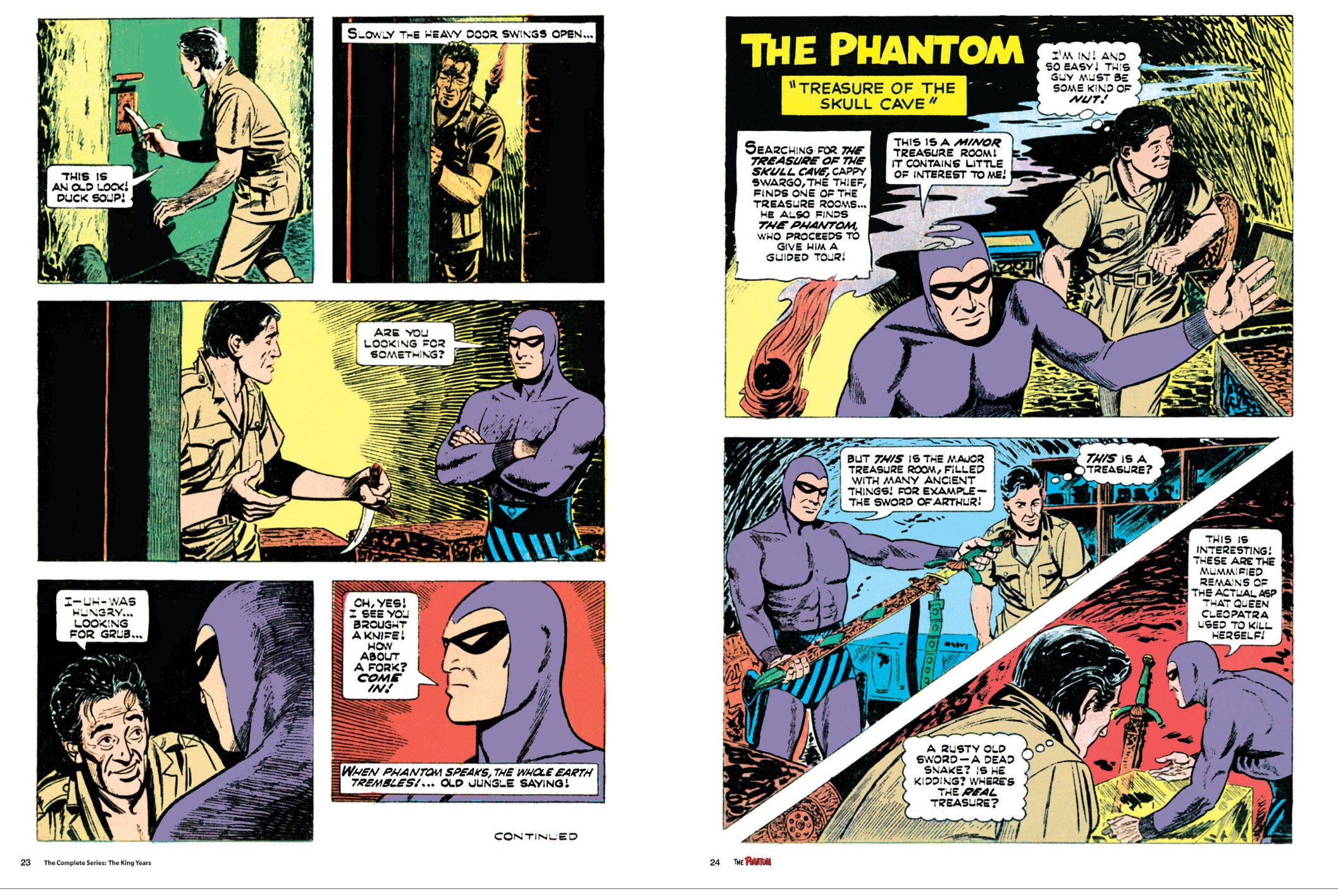
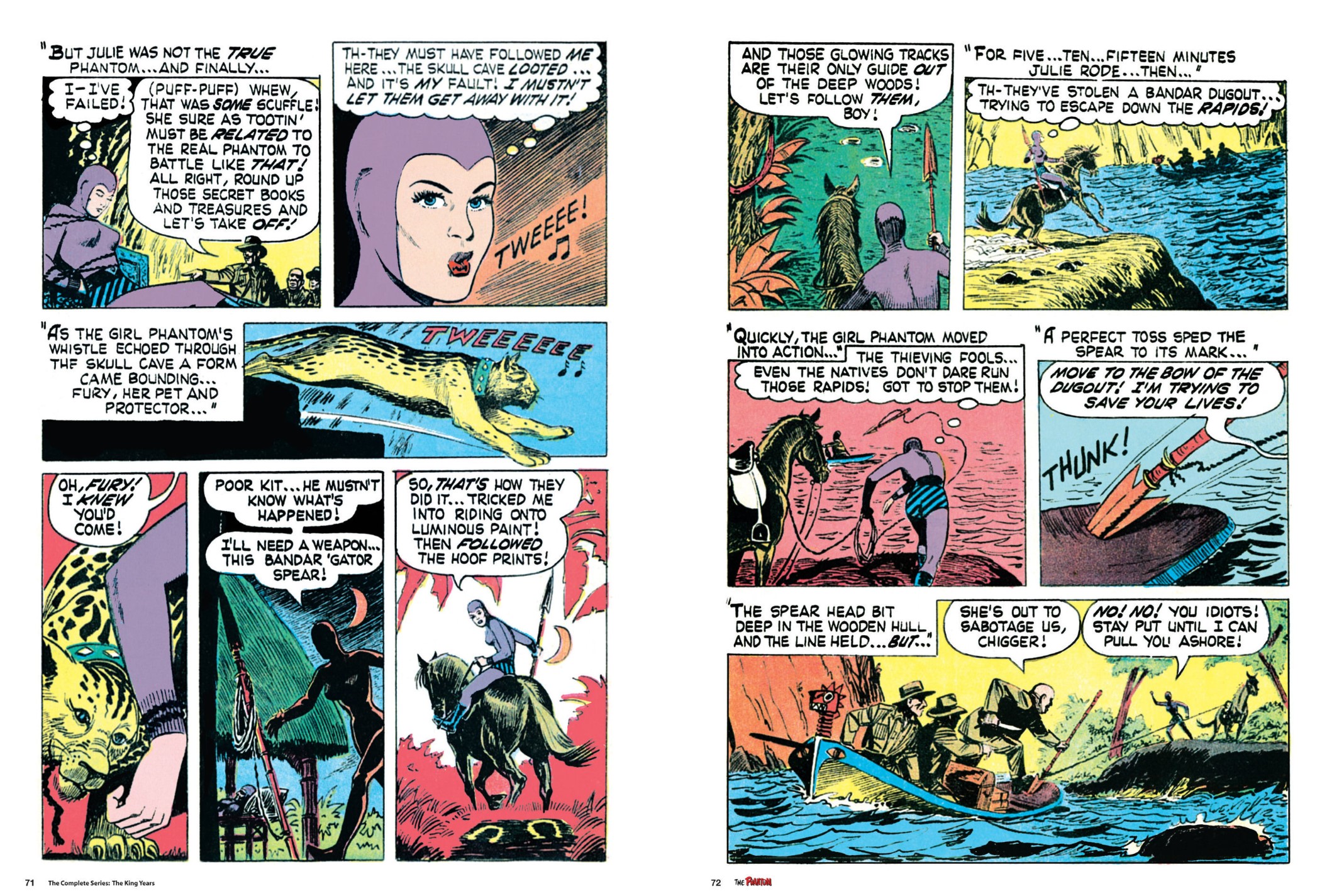
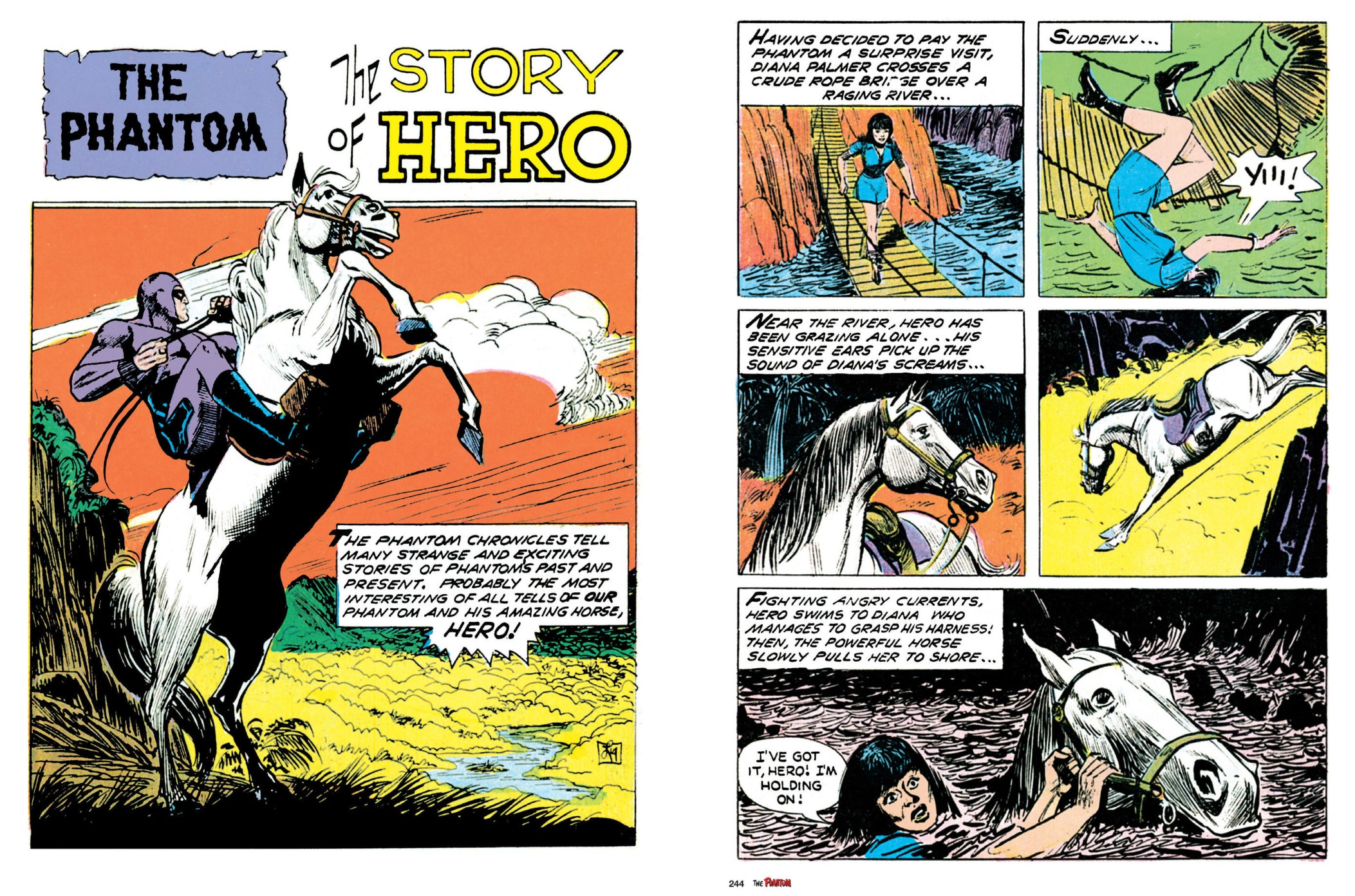
For such a long-lived, influential series, in terms of compendia or graphic novel collections, The Phantom has been very poorly served by the English language market (except in Australia where he has always been accorded the status of a pop culture god). Numerous companies have sought to collect the strips – one of the longest continually running adventure serials in publishing history – but in no systematic or chronological order and never with any sustained success. At least the former issue began to be rectified with this initial curated collection from Archival specialists Hermes Press. This particular edition is a lovely large hardback (albeit also available in digital formats), printed in landscape format, displaying two days strip per page in black & white with ancillary features and articles in dazzling colour where required.

Born Leon Harrison Gross, Lee Falk created the Jungle Avenger at the request of his King Features Syndicate employers who were already making history, public headway and loads of money with his first strip sensation Mandrake the Magician. Although technically not the first ever costumed champion in comics, The Phantom’s instant popularity made him the prototype paladin as he was the first to wear a skin-tight body-stocking and have a mask with opaque eye-slits…

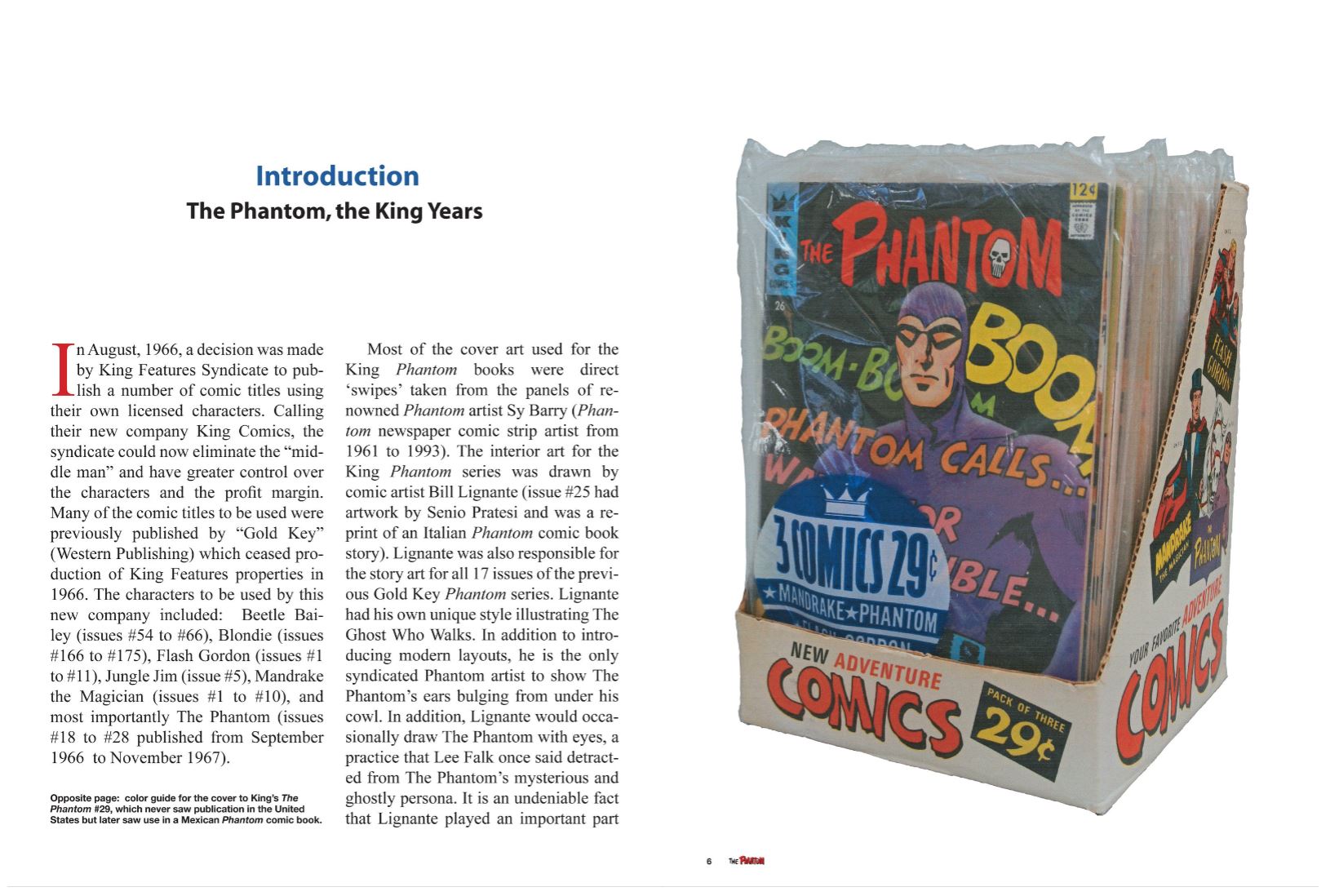
“The Ghost Who Walks” debuted on February 17th 1936 in an extended sequence pitting him against an ancient global confederation of pirates. Falk wrote and drew the daily strip for the first two weeks before handing over illustration to artist Ray Moore. A spectacular and hugely influential Sunday feature began in May 1939. In a text feature stuffed with sumptuous visual goodies like movie posters; covers for comics, Feature and Little Big Books plus many kinds of merchandise, Ron Goulart’s eruditely enticing ‘Introduction: Enter the Ghost Who Walks’ tells all you need to know about the character’s creation before the vintage magic begins with ‘Chapter 1: The Singh Brotherhood’.

American adventurer Diane Palmer returns to the USA by sea, carrying a most valuable secret making her the target of mobsters, sleazy society ne’er-do-wells and exotic cultists. Thankfully, she seems to have also attracted an enigmatic guardian angel who calls himself the Phantom

Successive attacks and assaults endanger the dashing debutante, and she learns an ancient brotherhood of ruthless piratical thieves wants her secret, but that they have been opposed for centuries by one man. Kidnapped and held hostage at the bottom of the sea, Diana is saved by the mystery man who naturally falls in love and eventually shares an incredible history with her…

In the 17th century a British sailor survived an attack by pirates, and – washing ashore on the African coast – swore on the skull of his murdered father to dedicate his life and that of his descendants to destroying all pirates and criminals. The Phantom fights crime and injustice from a base deep in the jungles of Bengali, and throughout Africa is known as the Ghost Who Walks. His unchanging appearance and unswerving war against injustice have led to him being considered an immortal avenger by the credulous and the wicked. Down the decades, one hero after another has fought and died in an unbroken family line, and the latest wearer of the mask, indistinguishable from the first, continues the never-ending battle. And he’s looking to extend the line and the legend…

In the meantime, however, there’s the slight problem of Emperor of Evil Kabai Singh and his superstitious armies to deal with…

‘Chapter 2: The Sky Band’ (originally published from 9th November 1936 to April 10th 1937) finds the mystery avenger caught in love’s old game as a potential rival for Diana’s affections materialises in the rather stuffy form of career soldier Captain Meville Horton: a decent, honourable man who sadly knows when he’s outmatched, unwanted and in the way. Mistakenly determined to do the right thing too, our masked mystery man concentrates on destroying a squadron of thieving aviators targeting the burgeoning sky clipper trade: airborne bandits raiding passenger planes and airships throughout the orient. Initial efforts infuriatingly lead to the Phantom’s arrest: implicated in the sky pirates’ crimes, before escaping from police custody with the aid of his devoted “pygmy witch doctor” Guran and faithful Bandar tribe allies, he’s soon hot on the trail of the real mastermind…

Upon infiltrating their base, he discovers the airborne brigands are all women, and that his manly charms have driven a lethal wedge between the deadly commander and her ambitious second in command Sala

A patient plaything of the manic Baroness, The Phantom eventually turns the tide not by force but by batting his invisible eyes and exerting his masculine wiles upon the hot-blooded – if certifiably psychopathic – harridan, unaware until too late that his own beloved, true-blue Diana is watching. When she then sets a trap for the Sky Band, it triggers civil war in the gang, a brutal clash with the British army and the seeming end of our hero, triggering Diana’s despondent decision to return alone to America…

‘Chapter 3: The Diamond Hunters’ opened on April 12th 1936 and revealed how the best laid plans can go awry. In Llongo territory, white prospectors Smiley and Hill unearth rich diamond fields but cannot convince or induce local tribes to grant them mineral rights to the gems they consider worthless. Like most indigenous Africans, they’re content to live comfortably under the “Phantom’s Peace” and it takes all the miners’ guile – including kidnapping a neighbouring chief’s daughter and framing the Llongo; gunrunning and claiming the Ghost Who Walks has died – to set the contented residents at each other’s throats. Recovering from wounds, the Phantom is slow to act, but when he does his actions are decisive and unforgettable…

With the plot foiled and peace restored, Smiley flees, only to encounter a returned Diana who has acted on news that her man still lives. Seeing a chance for revenge and profit, Smiley kidnaps “the Phantom’s girl”, provoking his being shunned by all who live in the region, a deadly pursuit and spectacular last-minute rescue. Smiley’s biggest and last mistake is reaching the coast and joining up with a band of seagoing pirates…

At least he is the catalyst for Diana and The Ghost finally addressing their romantic issues…

To Be Continued…

‘Afterword: For Those Who Came in Late…’ then sees editor Ed Rhoades offer his own thoughts on the strip’s achievements and accomplishments.

Stuffed with chases, assorted fights, torture, blood & thunder antics, daredevil stunts and many a misapprehension and coincidence – police and government authorities clearly having a hard time believing a pistol-packing masked man with a pet wolf might not be a bad egg – this a pure enthralling excitement that still packs a punch and plenty of sly laughs.
© 2010 King Features Syndicate, Inc.: ® Hearst Holdings, Inc.; reprinted with permission. All rights reserved.

Today in 1907, astounding illustrator Bruno (Doom Patrol, Teen Titans) Premiani was born, as was artist and inker Chic (Nemesis, Batman, all the best 1960s Thor, X-Men and FF stories) Stone in 1923.

In 1975 Archie co-creator Bob Montana died; and the day is infamous in the UK as the last day Buster was published. Kidding. Nobody noticed because we’d all stopped buying it. We are really sorry now though…

Die Laughing


By Andre Franquin, translated by Jenna Allen (Fantagraphics Books)
ISBN: 978-1-68396-091-1 (HB/Digital edition)

This book includes Discriminatory Content produced in less enlightened times. This book includes Discriminatory Content included for dramatic effect.

Like so much in Franco-Belgian comics, it all starts with Le Journal de Spirou. The momentous magazine debuted on April 2nd 1938, with its engaging and eponymous lead strip created by Rob-Vel (Françoise Robert Velter). In 1943 publishing giant Dupuis purchased all rights to the comic and its titular star, after which comic-strip prodigy Joseph Gillain/Jijé took the helm. In 1946 Jijé’s assistant assumed the creative reins, gradually sidelining previously preferred gag vignettes in favour of extended adventure serials. He introduced a broad, engaging cast of regulars: adding to the mix phenomenally popular rare beast and animal marvel Marsupilami (first seen in Spirou et les héritiers in 1952 and eventually a spin-off star of screen, plush toy store, console games and albums in his own right).

The auteur continued crafting increasingly fantastic tales and absorbing Spirou sagas until his resignation in 1969. Throughout that period the creator was deeply involved in the production of the weekly Spirou comic and increasingly beset by depression and other mental health issues.

André Franquin was born in Etterbeek, Belgium on January 3rd 1924. Drawing from an early age, the lad began formal art training at École Saint-Luc in 1943 but only until the war forced the school’s closure a year later. He then found work at Compagnie Belge d’Animation in Brussels where he met Maurice de Bévère (Lucky Luke creator Morris), Pierre Culliford (Peyo, creator of The Smurfs and Benny Breakiron) and Eddy Paape (Valhardi, Luc Orient). In 1945 all but Peyo signed on with Dupuis, and Franquin began his career as a jobbing cartoonist/illustrator. He produced covers for Le Moustique and scouting magazine Plein Jeu. During those early days, Franquin and Morris were being tutored by Jijé, who was the main illustrator at Le Journal de Spirou. He turned the youngsters – and fellow neophyte Willy Maltaite (AKA Will of Tif et Tondu, Isabelle, Le jardin des désirs) – into a smoothly functioning creative bullpen known as La bande des quatre or “Gang of Four”. They later reshaped and revolutionised Belgian comics with their prolific and engaging “Marcinelle school” style of graphic storytelling…

Jijé handed Franquin all responsibilities for the flagship strip part-way through Spirou et la maison préfabriquée (Spirou #427, June 20th 1946). The kid ran with it for the next two decades; enlarging the scope and horizons of the feature until it became purely his own. Almost every week fans would meet startling new characters such as comrade/rival Fantasio or crackpot inventor and Merlin of mushroom mechanics the Count of Champignac.

Spirou & Fantasio became globe-trotting journalists, travelling to exotic places, uncovering crimes, exploring the fantastic and clashing with a coterie of exotic arch-enemies. However, throughout all that time Fantasio was still a full-fledged reporter for Le Journal de Spirou and had to pop into the office all the time. While there he conceived another landmark icon, a comedic foil/meta-real alter ego who was an accident-prone, big-headed junior in charge of minor jobs and dogs-bodying. He was Gaston Lagaffe and through him Franquin expressed his unruly dissident opinions and tendencies…

Gaston – who debuted in #985 (February 28th 1957) – grew to be one of the comic’s most popular and perennial components. In terms of entertainment schtick and delivery, older readers will certainly recognise beats of Jacques Tati; timeless elements of well-meaning self-delusion British readers will recognise from Some Mothers Do Have ‘Em or Mr Bean. It’s primal slapstick, paralysing puns, pomposity lampooned and no good deed going noticed, rewarded or unpunished…

In a splendid example of good practise, Franquin mentored his own band of apprentice cartoonists during the 1950s. These included Jean Roba (La Ribambelle, Boule et Bill/Billy and Buddy); Jidéhem (Sophie, Starter, Gaston Lagaffe) & Greg (Comanche, Bruno Brazil, Bernard Prince, Zig et Puce, Achille Talon), all co-workers with him on Spirou et Fantasio. In 1955, a contractual spat with Dupuis saw Franquin briefly enlist with rivals Casterman on Le Journal de Tintin, where he collaborated with René Goscinny and old pal Peyo whilst creating the fashion/lifestyle domestic comedy gag strip Modeste et Pompon. Franquin almost immediately patched things up with Dupuis and returned to Spirou, subsequently co-creating Gaston Lagaffe (known in Britain these days as Gomer Goof) in 1957, but was still obliged to carry on his Casterman commitments too…

From 1959, writer Greg and background artist Jidéhem assisted Franquin, but by 1969 the artist had reached his Spirou limit. He quit, taking his mystic yellow monkey with him.

Later creations include fantasy series Isabelle, illustration sequence Monsters and this arcane convergence of bleak gallows humour, adult conceptual nihilism and impassioned social and ideological frustration lensed through bitter comedy. If you’re aware of the later work of Spike Milligan, you’ll know what I mean. The strip and original series title Idées Noires has become linguistic common currency in French-speaking countries, as a term for gloomy or negative thoughts: dark ideas daily obsessing people in crisis expunged and expressed through strident manic humour…

It began as Franquin recuperated from a heart attack in 1975. Idées Noires was part of an insert comic – Le Trombone illustré – he & Yvan Delporte produced for weekly Le Journal de Spirou beginning in 1977 with the March 17th issue. After 30 mini-issues, and with the global situation looking increasingly fraught, a revitalised Franquin took the strip to mature reader magazine Fluide Glacial where it ran until 1983.Plagued throughout his life by depression, Franquin passed away on January 5th 1997, but his legacy remains: a vast body of work that reshaped the landscape of European comics. In 2018, Fantagraphics gathered and translated the strips, releasing them as Die Laughing.

As seen in Cynthia Rose’s erudite and informative Introduction – ‘Liberty, Audacity, Hilarity: André Franquin’ – the peripatetic feature gave the troubled genius room to address his allegiances with issues of environmentalism, animal cruelty, political duplicity and plain old human insanity, and strike back with the best weapons in his arsenal: sarcasm, mockery and despairing outrage.

To further demarcate the material from past works, the images were delivered in scratchy, shocking lines and solid blacks, with elements reversed out. It’s a world of silhouettes, deep shadows and brooding forward spaces and middle-grounds, with no extraneous detail: all delivered in eerie evocative, expressionist monochrome, rather than the shining, substantial Disney-inspired colour of Spirou and Marsupilami.

This compilation consists of half and full page shorts plus some longer strips lampooning and spearing smug pomposity, business greed, military-industrial chicanery and ruthlessness, planetary abuse such as inflicted by oil companies and the global arms race. There are many mordant observations on sport, war for profit, the death penalty (still the guillotine, for Pete’s sake!), alien abduction, the rat race; sheer random surreal absurdism, all skewered by a sense of cosmic justice acknowledged, if not satisfied…

A constant theme returned to with merciless regularity is bloodsports and the kind of arsehole who finds fun and feels magnified by pointless slaughter. Especially singled out are those French traditionalists (think of whatever the French have instead of our steadfast “Gammon” crowd) who simply must slaughter songbirds in their thousands every year as they migrate to and from Europe…

Franquin was a master of comedy in all its aspects from whimsically light to trenchantly black-edged. Come see how and why…

Die Laughing © 2018 by Fantagraphics Books, Inc. Comics © Editions Audie/Franquin Estate. All rights reserved. Introduction © 2018 by Cynthis Rose. Afterword © 2018 Gotlib Estate. All other images and text © 2018 their respective copyright holders. All rights reserved.

Today in 1911 DC writer/editor Murray Boltinoff was born, and in 1977 the newspaper strip Amazing Spider-Man by Stan Lee & John Romita Sr. began.

In 2005 we lost one of the true greats as Will Eisner finally put down his pens. As always, there are many places other than us to go learn more and read stuff. Do that then, yes?

Blackmark – 30th Anniversary Edition


By Gil Kane, with Archie Goodwin, Harvey Kurtzman & Neal Adams (Fantagraphics Books)
ISBN: 978-1-56097-456-7 (TPB)

This book includes Discriminatory Content produced in less enlightened times.

Gil Kane was one of the pivotal players in the development of the American comics industry, and indeed of the art form itself. Working as an artist, and an increasingly more effective and influential one, he drew for many companies since his 1940s debut: on superheroes, action, war, mystery, romance, movie adaptations and, perhaps most importantly, Westerns and Science Fiction tales. In the late 1950s Kane became one of editor Julius Schwartz’s key artists in regenerating the superhero. Yet by 1968, at the top of his (admittedly much denigrated) profession, this relentlessly revolutionary and creative man felt so confined by the juvenile strictures of the industry that he struck out on bold new ventures that jettisoned the editorial and format bondage of comic books for new visions and media.

His Name Is Savage was an adult-oriented black & white magazine about a cold and ruthless super-spy in the James Bond/Matt Helm/Man Called Flint mould, co-written by friend and collaborator Archie Goodwin. It was very much a precursor in tone, treatment and subject matter of many of today’s adventure titles.

The other venture, Blackmark (also with Goodwin), not only ushered in the comic book age of Sword and Sorcery, but also became one of the first Graphic Novels. Technically, as the series was commissioned by fantasy publisher Ballantine as eight volumes, it was also envisioned as America’s first comic Limited Series. Volume 1 was released in January 1971, with volume 2 just completed when the publisher cancelled the project. A generation Kane’s junior but a long term, seasoned collaborator, Roy Thomas reprinted those tales in Marvel’s monochrome magazines Savage Sword of Conan and Marvel Preview, with the artwork rejigged to accommodate the different page format.

That’s enough background. Blackmark tells the tale of a boy born into a war-ravaged, primitive future where atomic holocaust has resulted in a superstitious society that fears and shuns technology and science – like parts of the American Bible Belt. Similarly, feudal lords rule by might and terror, whilst rebel technophiles are hunted like dogs. One night, and when fleeing persecution, a married couple encounter a dying scientist-king who pays the woman to impregnate her with a son pre-programmed to be a messiah of science.

Blackmark is born into a life of poverty and toil. When his parents are killed by a wandering warlord he devotes his life to vengeance, and learns all the physical skills necessary when he is taken for a gladiator slave. It is (sadly) overwhelmingly familiar to us today, simply because it was so influential at the time – albeit with those few original purchasers who seem to have become the next generation of comics and literary creators.

Although the plot might seem old hat, the beauty and power of the illustration has never been matched. Kane designed the pages with blocks of text as part of the whole, rather than with willy-nilly blurb and balloons to distract the eye, and his evocative figure drawing has never been as taut, tense and passionate. Always suffering from deadline pressures, the artist called in colleagues Harvey Kurtzman & Neal Adams to help lay out and finish the project on time. The script, over Kane’s story, was provided by the incomparable Goodwin, as much a master as Kane himself; Nevertheless, Blackmark is very much quintessential Kane.

This compilation (incomprehensibly out of print and hard to find) collects original volumes 1 and 2 and presents them in a size far larger than the original standard paperback. As well as a fantasy masterpiece, and a spectacular comic romp, it preserves and presents a literal breakthrough in comic storytelling that should be on every fan’s must-read list.

And in bloody print…
© 2002 Fantagraphics Books & the estate of Gil Kane. All Rights Reserved.

Today in 1857 pioneering cartoon satirist and comic strip creator Frederick Burr Opper was born. He did Happy Hooligan, And Her Name Was Maud and Alphonse and Gaston and so have we, so go look back in wonder. In 1913 George McManusBringing Up Father launched and charmed generations until 2000. Look for that too, but perhaps wonder why Red Ryder isn’t better represented here. After all its artist Fred Harman died today in 1982…

In comic books, unsung wonders Joe Certa (Martian Manhunter) and Don Heck (everything) were born in 1919 and 1929 respectively. In 1958 the utterly unique H. G. Peter passed away. He was still drawing Wonder Woman at the time. Less well known but just as dedicated, Kid Colt, Outlaw and drag racing comics illustrator Jack Keller passed on in 2003.

The Jack Kirby Omnibus Volume One: Green Arrow and others


By Jack Kirby with Joe Simon, France E. Herron, Dave Wood, Bill Finger, Robert Bernstein, Frank Giacoia, George Roussos, Roz Kirby & various (DC Comics)
ISBN: 978-1-4012-3107-1 (HB)

This book includes Discriminatory Content produced in less enlightened times.

Happy New Year! Let’s look at something old and valued!

Green Arrow is one of DC’s Golden All-Stars. He’s been a fixture of the company – in many instances for no discernible reason – more or less continually since his 1941 debut in More Fun Comics #73, cover dated November but on sale from September 19th 1941. Happy 85th and Many Happy Returns, Emerald Archer!

In those distant heady days, origins weren’t as important as image and storytelling, so creators Mort Weisinger & George Papp never bothered. The first inkling of formative motivations came in More Fun Comics # 89 (March 1943) wherein Joe Samachson & Cliff Young detailed ‘The Birth of the Battling Bowman!’ With the secret revealed, it was promptly ignored for years, leaving later workmen France Herron, Jack Kirby and his wife Roz to fill in the blanks again…

Jack Kirby was – and remains – the most important single influence in the history of US comics. There are millions of words written – such as those here by former Kirby assistant-made-good Mark Evanier in a revelatory. myth-busting Introduction to this gloriously enthralling hardback compilation – about what the King has done and meant, and you should read those too, if you are at all interested in our medium.

Tragically this particular tome is not available digitally, but that will just make it an even more impressive and rewarding once you get a copy. It might even prompt the publisher to reprint and repackage these mini masterpieces…

For those of us who grew up with his work, Kirby’s are the images which furnish and clutter our interior mindsets. Close your eyes and think “robot” and the first thing that pops up is a Kirby kreation. Every fantastic, futuristic city in our heads is crammed with his chunky yet towering spires. Because of Jack, we all know what the bodies beneath those stony-head statues on Easter Island look like, and we are all viscerally aware that you can never trust great big aliens parading around in their underpants…

When comic books began, in a remarkably short time Kirby and creative partner Joe Simon became the wonder-kid dream-team of the nascent industry. After generating a year’s worth of the influential monthly Blue Bolt, and dashing off Captain Marvel Adventures (#1) for Fawcett, Martin Goodman nailed them down. He appointed Simon editor at Timely, where “S&K” created a host of iconic stars like Red Raven, the first Marvel Boy, Hurricane, The Vision, The Young Allies, immortal villain The Red Skull and of course million-selling mega-hit Captain America (and Bucky AKA Winter Soldier).

When Goodman failed to make good on his financial obligations, Simon & Kirby quit and were snapped up by National DC, who welcomed them with open arms and a fat chequebook. Bursting with ideas the staid company were never really comfortable with, the pair were initially an uneasy fit, and were given two moribund strips to play with until they found their creative feet: Sandman and Manhunter. They turned both around virtually overnight and, once established and left to their own devices, switched to the “Kid Gang” genre they pioneered at Timely. Joe & Jack created wartime sales sensation The Boy Commandos and Homefront iteration the Newsboy Legion before being called up to serve in the war they had been fighting on comic book pages since 1940. When they returned it was to a very different funnybook business, and soon they left National to create their own little empire.

Simon & Kirby heralded and ushered in the first American age of mature comics – not just by inventing the Romance genre, but with all manner of challenging modern material about real people in extraordinary situations. They saw it all disappear again in less than eight years. Their small stable of magazines – generated for an association of interlinked companies known as Prize/Crestwood/Pines/Essenkay/Mainline Comics – blossomed and as quickly wilted when the industry abruptly contracted throughout the 1950s. After years of working for others, Simon & Kirby had finally established their own publishing house, producing comics for a far more sophisticated audience, only to find themselves in a sales downturn and awash in public hysteria generated by an anti-comicbook pogrom.

Hysterical censorship-fever spearheaded by US Senator Estes Kefauver and opportunistic pop psychologist Dr. Frederic Wertham led to witch-hunting Senate hearings. Caving in, publishers adopted a castrating straitjacket of draconian self-regulation. Horror titles produced under the aegis and emblem of the Comics Code Authority were sanitised and anodyne affairs in terms of Shock & Gore, even though the market’s appetite for suspense and the uncanny was still extremely high. Non superhero Crime comics vanished and mature themes challenging society’s status quo were suppressed…

Simon quit the business for advertising, but Kirby soldiered on, taking his skills and ideas to a number of safer, if less daring, companies. As the panic subsided, Kirby returned briefly to DC where he worked on mystery tales and Green Arrow (a long-lived back-up in Adventure Comics & World’s Finest Comics) whilst concentrating on his long-dreamed-of newspaper strip feature Sky Masters of the Space Force. During that period, Kirby also re-packaged a superteam concept kicking around in his head since he and Joe had closed their innovative, ill-timed ventures. At the end of 1956, Showcase #6 (a try-out title that launched many DC mainstays) premiered Challengers of the Unknown. After 3 more test issues “the Challs” won their own title, with Kirby in command for the first 8. Then a legal dispute with Editor Jack Schiff kicked off and the King was gone…

During that brief 3-year period (cover-dates 1957-1959), Kirby also crafted a plethora of short comics yarns which this fabulous tome re-presents in originally-published order. The roster comprises superhero, mystery and science fiction shorts from Tales of the Unexpected #12, 13, 15-18, 21- 24; House of Mystery #61, 63, 65, 66, 70, 72, 76, 84, 85; House of Secrets #3, 4, 8, 12; My Greatest Adventure #15- 18, 20, 21, 28; Adventure Comics #250-256 and World’s Finest Comics # 96-99: a long-lost gem from All-Star Western #99 plus 3 quirky vignettes by Simon & Kirby from 1946-1947 for Real Fact Comics #1, 2 & 6.

Records from those days when no creator was allowed a by-line are sparse and scanty, so many of these carry no writer’s credit (and besides, Kirby was notorious for rewriting scripts he was unhappy drawing) but Group Editor Schiff’s regular stable of authors included Dave Wood, Bill Finger, Ed Herron, Joe Samachson, George Kashdan, Jack Miller & Otto Binder, so feel free to play the “whodunit” game…

National DC Comics was relatively slow in joining the post-war mystery comics boom, but as 1951 closed they at last launched a gore-free, comparatively straight-laced anthology which nevertheless became one of their longest-running and most influential titles: The House of Mystery (cover-dated December 1951/January 1952). Its success inevitably led to a raft of similar, creature-filled fantasy anthologies including Sensation Mystery, Tales of the Unexpected, My Greatest Adventure and House of Secrets. With the Comics Code in full effect, plot options for mystery and suspense stories were savagely curtailed: limited to ambiguous, anodyne magical artefacts, wholesomely educational mythological themes, science-based miracles and criminal chicanery.

Although marvellously illustrated, stories were rationalistic, fantasy-adventure vehicles and they dominated until the early 1960s when superheroes (reinvigorated after Julius Schwartz reintroduced The Flash in Showcase #4, October 1956) usurped them…

In this compilation, following that aforementioned Introduction – describing Kirby’s 3 tours of duty with DC in very different decades – the vintage wonderment commences with another example of the ingenious versatility of Jack & Joe.

Originating in the wholesome and self-explanatory Real Fact Comics, ‘The Rocket-Lanes of Tomorrow’ (#1, March/April 1946) and ‘A World of Thinking Robots’ from #2 (May/June 1946) are forward-looking, retro-fabulous graphic prognostications of the “World That’s Coming”. A longer piece in #6 (July/August 1947) then details the history and achievements of ‘Backseat Driver’ and road-safety campaigner Mildred McKay. These were amongst the very last strips the duo produced for National before moving to Crestwood/Pines, so we skip ahead a decade and more for Jack’s return in House of Secrets #3 (March/April 1957) where ‘The Three Prophecies’ eerily depicts a spiritualist conman being fleeced by an even more skilful grifter… until Fate takes a hand…

Mythological mysticism informs ‘The Thing in the Box’ (House of Mystery #61, April 1957) wherein a salvage diver is obsessed with a deadly casket his captain is all too eager to dump into the ocean. From the same month, Tales of the Unexpected #12 focuses on ‘The All-Seeing Eye’ as a journalist responsible for many impossible scoops realises the potential dangers of the ancient artefact he employs far outweigh its benefits…

In House of Secrets #4 (May/June 1957) the ‘Master of the Unknown’ seems destined to take the big cash prize on a TV quiz show until the producer deduces his uncanny secret, after which ‘I Found the City under the City’ (My Greatest Adventure #15, from the same month) details how fishermen recover the last testament of a lost oceanographer and read of how he intended to foil an impending invasion by aquatic aliens…

From May 1957, France E. Herron & Kirby investigated ‘The Face Behind the Mask’ (Tales of the Unexpected #13): a gripping crime-caper involving gullible men, a vibrant femme fatale and a quest for eternal youth. There was no fakery to ‘Riddle of the Red Roc’ (House of Mystery #63, June) as a venal explorer hatches and trains the invulnerable bird of legend, creating an unstoppable thief before succumbing to his own greed. My Greatest Adventure #16 (July/August) features a truly fearsome threat as an explorer is sucked into a deadly association, creating death and destruction to learn ‘I Died a Thousand Times’

That month, Unexpected #15 offered ‘Three Wishes to Doom’: a crafty thriller proving that even with a genie’s lamp, crime does not pay, after which weird science transforms a rash scientist into ‘The Human Dragon’ (HoM #65 August, with George Roussos inking his old pal Jack), although his time to repent is brief as a criminal mastermind capitalises on his misfortune…

There’s an understandable frisson of foreshadowing to ‘The Magic Hammer’ (TotU #16 August) as it relates how a prospector finds a magical mallet capable of creating storms and goes into the rainmaking business… until the original owner turns up…

A smart gimmick underscores a tantalising tale of plagiarism and possible telepathy in ‘The Thief of Thoughts’ (HoM #66 September) whilst straight Sci Fi tropes inform the tale of a hotel detective and a most unusual guest in ‘Who is Mr. Ashtar?’ (TotU #17, September) before MGA #17 (September/October 1957) reveals how aliens intent on invasion brainwash a millionaire scientist to eradicate humanity in ‘I Doomed the World’. Happily one glaring error was made…

In Tales of the Unexpected #18 (October), Kirby shows how an astute astronomer saves us all by outwitting an energy being with big appetites in ‘The Man Who Collected Planets’, after which MGA #18 (November/December 1957) ushers in the comic book Atomic Age with ‘I Tracked the Nuclear Creature’, detailing how a hunter sets out to destroy a macabre mineral monster created by uncontrolled fission…

A new year dawned with Roussos inking ‘The Creatures from Nowhere!’ (HoM #70, January 1958) as escaped alien beasts rampage through a quiet town, and HoS #8 (January/February) finds greed, betrayal, murder and supernatural suspense are the watchwords when a killer tries to silence ‘The Cats Who Knew Too Much!’ Tales of the Unexpected #21 (also January) sees a smart investor proving too much for apparent extraterrestrial ‘The Mysterious Mr. Vince’, whilst a month later Unexpected #22 sees an ‘Invasion of the Volcano Men’ start in fiery fury and panicked confrontations before resolving into an alliance against uncontrolled forces of nature.

Kirby never officially worked for National’s prodigious Westerns division, but apparently his old friend and neighbour Frank Giacoia did, and occasionally needed Jack’s legendary pencilling speed to meet deadlines. ‘The Ambush at Smoke Canyon!’ features long-running cavalry hero Foley of the Fighting 5th single-handedly stalking Pawnee renegades in a somewhat standard sagebrush saga scripted by Herron and inked by Giacoia from All-Star Western #99 (February/March 1958).

Meanwhile in House of Mystery #72 (March) a shameless B-Movie Producer seemingly becomes ‘The Man Who Betrayed Earth’ whilst in MGA #20 (March/April), interplanetary bonds of friendship are forged when space pirates kidnap assorted sentients and a canny Earthling saves the day in ‘I Was Big-Game on Neptune’

Inadvertent cosmic catastrophe is narrowly averted in TotU #23 (March) when one man realises how to make contact with ‘The Giants from Outer Space’, after which issue #24 (April) slips into wild whimsy as ‘The Two-Dimensional Man!’ strives desperately to correct his incredible condition before being literally blown away…

When an early space-shot brings back all-consuming horror in MGA #21 (May/June 1958), a brace of boffins realise ‘We Were Doomed by the Metal-Eating Monster’ before ‘The Artificial Twin’ (HoM #76, July) combines mad doctor super-science with deception and fraud, whilst House of Secrets #12 (September) reveals a frantic man struggling to close ‘The Hole in the Sky’ before invading aliens use it to conquer humanity…

Also scattered throughout this extraordinary compendium of the bizarre is a stunning and bombastic Baker’s Dozen of Kirby’s fantastic covers from the period, but for most modern fans the real meat is the short, sharp salvo of superhero shockers that follow…

On his debut, Green Arrow proved quite successful. With boy partner Speedy, he was one of precious few masked stalwarts to survive beyond the Golden Age. A blatant blend of Batman and Robin Hood seemed to have very little going for itself, but the Emerald Archer always managed to keep himself in vogue. He carried on adventuring in the back of other heroes’ comic books, joined the Justice League of America just as their star was rising and later became – courtesy of Denny O’Neil & Neal Adams – the spokes-hero of the anti-establishment generation, during the 1960-70’s “Relevancy Comics” trend.

Later, under Mike Grell’s stewardship and thanks to epic miniseries Green Arrow: the Longbow Hunters, he at last became a headliner: re-imagined as an urban predator dealing with corporate thugs and serial killers rather than costumed goof-balls. This version, more than any other, informs and underpins the TV incarnation seen in Arrow.

After his long career and numerous venue changes, by the time of Schwartz’s resurrection of the Superhero genre the Battling Bowman was a solid second feature in Adventure and World’s Finest Comics where, as part of a wave of retcons, reworkings and spruce-ups DC administered to their remaining costumed old soldiers, a fresh start began in the summer of 1958. Part of that revival happily coincided with Kirby’s return to National Comics.

As revealed in Evanier’s Introduction, after working on anthological stories for Schiff, the King was asked to revise the idling archer and responded by beefing up science fictional aspects. When supervising editor – and creator – Weisinger objected, changes were toned down and Kirby saw the writing on the wall. He lost interest and began quietly looking elsewhere for work…

What resulted was a tantalisingly short run of 11 astounding action-packed, fantasy-filled swashbucklers, the first of which was scripted by Bill Finger as ‘The Green Arrows of the World’ (Adventure Comics #251, July 1958) sees costumed archers from many nations attending a conference in Star City. They are blithely unaware a fugitive criminal with murder in his heart is hiding within their masked midst…

August’s #251 takes a welcome turn to astounding science fiction as Kirby scripted and resolved ‘The Case of the Super-Arrows’ wherein the Amazing Archers take possession of high-tech trick shafts sent from 3000 AD. World’s Finest Comics #96 (writer unknown) then reveals ‘Five Clues to Danger’ – a classic kidnap mystery made even more impressive by Kirby’s lean, raw illustration and wife Roz’s sharp inking. A practically unheard-of continued case spanned Adventure #252 & 253 as Dave Wood, Jack & Roz posed ‘The Mystery of the Giant Arrows’ before GA & Speedy briefly became ‘Prisoners of Dimension Zero’ – a spectacular riot of giant aliens and incredible exotic other worlds, followed in WFC #97 (October 1958) with a grand old-school crime-caper in Herron’s ‘The Mystery of the Mechanical Octopus’. Kirby was having fun and going from strength to strength. Adventure #254 featured ‘The Green Arrow’s Last Stand’ (by Wood): a particularly fine example with the Bold Bowmen crashing into a hidden valley where Sioux warriors thrive unchanged since the time of Custer. The next issue saw the heroes battling a battalion of Japanese soldiers who refused to surrender their island bunker in ‘The War That Never Ended!’ (also by Wood). December’s WFC #98 nearly ended the heroes’ careers in Herron’s ‘The Unmasked Archers’, when a private practical joke caused the pair to inadvertently expose themselves to public scrutiny and deadly danger…

As previous stated, in the heady early days origins weren’t as important as just plain getting on with it. The definitive version was left to later workmen Herron, Jack & Roz (in Kirby’s penultimate tale), filling in the blanks with ‘The Green Arrow’s First Case’ as the superhero revival hit its stride. It appeared in Adventure Comics #256 – cover-dated January 1959 – and this time the story stuck, becoming, with numerous tweaking over successive years, the basis of the modern Amazing Archer of page and screen. Here we learned how wealthy wastrel Oliver Queen was cast away on a deserted island and learned to use a handmade bow and survive. When scurvy mutineers fetched up on his desolate shores, Queen used his newfound skills to defeat them and returned to civilisation with a new career and purpose…

Kirby’s spectacular swansong came in WFC #99 (January 1959) in ‘Crimes under Glass’. Written by Robert Bernstein, it sees GA & Speedy confronting crafty criminals with a canny clutch of optical armaments, before the Archer steadfastly slid back into the sedate, gimmick-heavy rut of pre-Kirby times…

The King had moved on to other enterprises – Archie Comics with Joe Simon and a little outfit which would soon be calling itself Marvel Comics – but his rapid rate of creation had left completed tales in DC’s inventory pile which slowly emerged for months thereafter and neatly wrap up this comprehensive compendium of the uncanny. From My Greatest Adventure #28 (February 1959) ‘We Battled the Microscopic Menace!’ pits brave boffins against a ravening devourer their meddling with unknown forces had unleashed, whilst a month later HoM #84 depicted a terrifying struggle against ‘The Negative Man’ as an embattled researcher fought his own unleashed energy doppelganger.

It all ends in an unforgettable spectacular as House of Mystery #85 (April 1959) awakens ‘The Stone Sentinels of Giant Island’ to rampage across a lost Pacific island and threaten the brave crew of a scientific survey vessel… until one wise man deduces their incredible secret…

Jack was and is unique and uncompromising: his words and pictures are an unparalleled, hearts-and-minds grabbing delight no comics lover could resist. If you’re not a fan or simply not prepared to see for yourself what all the fuss has been about then no words of mine will change your mind.

That doesn’t alter the fact that Kirby’s work from 1937 to his death in 1994 shaped the American comics scene and the entire comics planet: affecting billions of readers and thousands of creators in every arena of artistic endeavour for generations. He still wins new fans and apostles every day, from the young and naive to the most cerebral of intellectuals. His work is instantly accessible, irresistibly visceral, deceptively deep and simultaneously mythic and human. This collection from his transformative middle period exults in sheer escapist wonderment, and no one should miss the graphic exploits of these perfect adventures in that ideal setting of not-so-long-ago in a simpler, better time and place than ours.
© 1946, 1947, 1957, 1958, 1959, 2011 DC Comics. All Rights

Today in 1912 British cartoonist and strip master Tony Weare was born. Where the tarnation is that Matt Marriot compilation? Ten years later in Trenton, New Jersey Sherrill David Robinson followed. You know Jerry for co creating the Joker and his Batman stuff, but try tracking down his Still Life panels…

In 1980, Gary Larson’s The Far Side debuted, only to stop original material on the same day 15 years later. How weird is that? Of course you could ascertain all that by seeing observing There’s a HAIR in My Dirt! – A Worm’s Story please link to November 2nd 2021.

Neill Cameron’s Donut Squad: Make a Mess! (Book 2)


By Neill Cameron & various (David Fickling Books)
ISBN: 978-1-78845-358-5 (Digest TPB Standard edition), 978-1-78845-408-7 (Waterstones edition)

Had enough to eat yet? Do You Like Donuts?

Only you can truly answer that question, but if you’re undecided, and dangerously unaware of the ramifications of indecision, then rowdy raconteur and inestimable art fiend Neill Cameron has another batch of artisanal, edibly-edifying arguments you might want to consider before deciding, all jam-packed into a manic new compendium of strips, activities and artificially-sweetened exploits starring a bargain box of comics champions cherrypicked from modern British periodical treasure trove The Phoenix.

Since debuting in 2012 and just like Beano, Dandy and other perennial childhood treasures, the wonderful weekly has masterfully mixed hilarious comedy with enthralling adventure serials… and frequently in the same scintillating strip. Everybody braced in? Got your snacks? Napkins? Right then, let’s go…

Crafted by Cameron (Mega Robo Bros, Freddy, Tamsin of the Deep, How to Make Awesome Comics, Pirates of Pangea), a unique team of toothsome adventurers reconvene here in world much improved by an absence of bagels. As enny fule kno, bagels are the arch enemy of Donuts and probably all Life…

Moreover, there are fresh additions to the team we met in volume 1 (Donut Squad Take over the World! May 2nd 2025) besides commander-in-chief Sprinkles, accident prone Jammyboi, Chalky (the ghost of a murdered Victorian Donut), violent vigilante Justice Donut, nerve-wracked Anxiety Donut, piratical Caramel Jack! (he’s a little bit salty!), Dadnut & Li’l Timmy, and utterly unknowable and incomprehensible Spronky! who will make themselves known in good time…

First though we indulge in some ‘Fun Times with Sprinkles’ and the rest, prior to a passionately resolute ‘No Bagels.’ Public Service Announcement, leading us all into an extended exploit in ‘The Great Outdoors’ involving camping, campfires and being eaten by bears…

Ruggedly individualistic, the assorted flavourites (said it. Not proud.) generally work in solo vignettes that combine to make a full package but all pitch in for regular features such as the ads for merch like the ‘Official Donut Squad Camping Gear!’ which here include Tents, Backpacks and High-Power Bear Tranquiliser Guns, and are sensibly, accommodatingly backed up by ‘Hot New Donut Flavours for Summer!’ How about Piña Coladonut!, Choco Banana! or Sweat and Suncream! – or even Cool Cool Mango!, Watermellon Baller and Seagull Beaks!?

If you don’t mind me asking, how big are your nuts? Are you man enough to handle Omega Gargantunut, Gargantunut Titan, Extinction Level Gargantunut, Gargantunut: Nemesis? Steve thinks he is but significant other Janet just thinks he’s full of himself…

No matter how rich they might sound they are as nothing compared to Daddy Billions! – The Richest Donut in the World! If you’re not sure we can direct you to ‘Ask your Mother!: with Mumnut & Li’l Timmy’ episodes before meeting the new guys. These ‘Meatynuts!’ include ‘Spicyboi!’, ‘Beefychunks!’, ‘Crazy Mayonnaisey!’ and ‘Ham Alan’, who shares his extensive backstory before we explore ‘Sweet-Meat Fusion Donuts’ like ‘Chocolate-Frosted Beef’, ‘HAMnJAM!’ or ‘Caramel Sausage!’

A barrage of parental queries season ‘Great Moment’s in Donut History’ and ‘Classic of World Donut Cinema’, and intermittent silhouette games commence with ‘Name That Donut’, supported by more merch such as Donut Squad Caps!, Water Bottles!, Plutonium Enrichment Plants!, Hoodies, Cushions and Autonomous Humanoid Robots!, prior to everyone from Beefychunks to the entire afterlife getting a go at answering dear Timmy’s questions…

Regular features like ‘Donut-Related Conspiracy Theories!’ and ‘It’s Spronky!’ vie for attention with new treats like ‘Do You Like Cheese Donuts? Introducing Tasty Bob!, Nordic Helga and Camemboi!’ and ‘The Life of Michael’ plus ‘Donutiquette – DOs and DON’Ts of POLITE DONUT EATING’, ‘Extreme Donut Eating!’ and ‘Great Figures of History Who Were Secretly Donuts’..

Of course all this is fine but – following the lengthy saga of ‘The Totally Normal Humans’ – things get a bit weird and very nasty as all the long-banished Bagel Battalion break free of their extradimensional jail in THE VOID and attempt to take over the book by invading its gutters!

They succeed too…

Having whetted your appetite you’ll need to buy the book to see what happens next, but be warned, the bready brutes broke out by infiltrating the activity section at the rear, with Cameron’s ‘Phoenix Comic Club’ art classes on How to Draw ‘Sprinkles!’, ‘…Anxiety Donut!’, ‘…Justice Donut!’, ‘…Caramel Jack!’, and all the others caught up in the conflict…

Smart, witty, laugh out loud weird and utterly bonkers, this seemingly piecemeal treat cunningly connects a whole bunch of stuff kids love without knowing why, but which totally bewilders us oldsters and keeps us in our place. Devious, eccentric and captivating, the sugar rush is guaranteed and if you get toothache it’s from laughing not quantum confessions…

Moreover, as all the best books and movies say: DONUT SQUAD WILL RETURN…
Text and illustrations © Neill Cameron 2026. All rights reserved.

Neill Cameron’s Donut Squad: Take Over the World! is scheduled for UK release on January 1st 2026 and is available for pre-order now; or wait until next year and get it tomorrow while walking off all those donuts and bagels…

Today in 1956 Nexus co-creator and Kirby fan Steve Rude was born. In 1965 Dirty Plotte auteur Julie Doucet arrived, but the day also commemorates major losses. In 1978 graphic genius Basil Wolverton went to his long-anticipated reward, and in 2005 inimitable Maurice (The Perishers) Dodd told his last joke. While talking of newspaper strips that changed lives, December 31st 1995 also saw Bill Watterson’s final Calvin and Hobbes episode. Sigh.

You know where to look by now, so perhaps do that between all the “auld lang synes” and dry white whines.

Showcase Presents Robin The Boy Wonder


By E. Nelson Bridwell, Ed Hamilton, John Broome, Leo Dorfman, Gardner F. Fox, Cary Bates, Mike Friedrich, Frank Robbins, Denny O’Neil, Bob Haney, Elliot Maggin, Bob Rozakis, Ross Andru, Curt Swan, Sheldon Moldoff, Pete Costanza, Chic Stone, Gil Kane, Irv Novick, Murphy Anderson, Dick Dillin, Rich Buckler, Bob Brown, Mike Grell, A. Martinez Al Milgrom & various (DC Comics)
ISBN: 978-1-4012-1676-4 (TPB)

This book includes Discriminatory Content produced in less enlightened times.

As previously mentioned, there are a lot of comics anniversaries occurring in this otherwise dreadful year. The ultimate and original sidekick is probably the most significant of DC’s representatives, and indeed there have been a few intriguing collections released to celebrate the occasion. This one, however, is probably the best but remains criminally out of print, if not utterly unavailable…

Robin the Boy Wonder debuted in Detective Comics #38 (cover dated April 1940 and on sale from March 6th). Co-created by Bob Kane, Bill Finger & Jerry Robinson, he was a juvenile circus acrobat whose parents were murdered by a mob boss. The story of how Batman took the orphaned Dick Grayson under his scalloped wing and trained him to fight crime has been told, retold and revised many times over the decades and still regularly undergoes tweaking to this day.

Grayson fought beside Batman until 1970 when, as an indicator of those turbulent times, he flew the nest, becoming a Teen Wonder college student. His creation as a junior hero for younger readers to identify with has inspired an incomprehensible number of costumed sidekicks and kid crusaders, and Grayson continued in similar innovative vein for the older, more worldly-wise readership of America’s increasingly rebellious youth culture.

The first Robin even had his own solo series in Star Spangled Comics from 1947 to 1952, a solo spot in the back of Detective Comics from the end of the 1960s – a position he alternated and shared with Batgirl – and a starring feature in anthology comic Batman Family. During the 1980s he led the New Teen Titans, initially in his original costumed identity but eventually in the reinvented guise of Nightwing, all while re-establishing a (somewhat turbulent) working relationship with his masked mentor.

This broad ranging easy on the eye monochrome compilation covers the period from Julie Schwartz’s captivating reinvigoration of the Dynamic Duo in 1964 until 1975 with Robin-related stories and material from Batman #184, 192, 202, 213, 227, 229-231, 234-236, 239-242, 244-246, 248-250, 252, 254 and portions of 217; Detective Comics #342, 386, 390-391, 394-395, 398-403, 445, 447, 450-251; World’s Finest Comics #141, 147, 195, 200; Superman’s Pal Jimmy Olsen #91, 111, 130 and Justice League of America #91-92.

The wonderment begins with the lead story from Batman #213 (July-August 1969) – a 30th Anniversary reprint Giant – which featured an all-new retelling of ‘The Origin of Robin’ courtesy of E. Nelson Bridwell, Ross Andru & Mike Esposito, perfectly reinterpreting that epochal event for the Vietnam generation. After that, the tales proceed in (more or less) chronological order, covering episodes where Robin took centre-stage.

First up is ‘The Olsen-Robin Team versus… the Superman-Batman Team!’ (from World’s Finest #141, May 1964, by Edmond Hamilton, Curt Swan & George Klein). In a stirring blend of science fiction thriller and crime caper, the underappreciated sidekicks fake their own deaths to undertake a secret mission even their adult partners must remain unaware of – for the very best of reasons of course. A sequel from WF #147 (February 1965) delivers an engaging drama of youth-in-revolt as ‘The New Terrific Team!’ quit their assistant roles to strike out on their disgruntled own. Naturally there’s a perfectly reasonable – if incredible – reason here, too…

Detective Comics #342 (August 1965) featured ‘The Midnight Raid of the Robin Gang!’ by John Broome, Sheldon Moldoff & Joe Giella, wherein the Boy Wonder joins a youthful gang of costumed criminals, after which Superman’s Pal Jimmy Olsen #91 (March 1966) delivers ‘The Dragon Delinquent!’ (Leo Dorfman & Pete Costanza) as Robin and the cub reporter, unknown to each other, both infiltrate the same biker gang with potentially fatal consequences.

‘The Boy Wonder’s Boo-Boo Patrol!’ – originally a back-up in Batman #184 (September 1966, Gardner Fox, Chic Stone & Sid Greene), shows the daring lad’s star-potential in a clever tale of thespian skulduggery and classic conundrum solving, before ‘Dick Grayson’s Secret Guardian!’ (Batman #192, June 1967, Fox, Moldoff & Giella) depicts his physical prowess in one of comic books’ first instances of the exo-skeletal augmentation gimmick.

‘Jimmy Olsen, Boy Wonder!’ (SPJO #111, June 1968, by Cary Bates & Costanza) finds the reporter trying to prove his covert skills by convincing the Gotham Guardian that he was actually Robin, whilst that same month in Batman #203 the genuine article tackles the ‘Menace of the Motorcycle Marauders!’ (Mike Friedrich, Stone & Giella) consequently learning a salutary lesson in the price of responsibility…

Cover-dated April 1969, Detective Comics #386 featured the Boy Wonder’s first solo back-up in what was to become his semi-regular spot for years. ‘The Teen-Age Gap!’ (as described by Friedrich, Andru & Esposito) depicts a High School Barn Dance which only narrowly escapes becoming a riot thanks to his diligent intervention, after which Gil Kane & Murphy Anderson assume the art-chores with #390’s ‘Countdown to Chaos!’ (August 1969), bringing the series stunningly alive. Friedrich concocted a canny tale of corruption and kidnapping leading to a paralysing city ‘Strike!’ for the Caped kid to spectacularly expose and foil in the following issue.

Batman #217 (December 1969) was a landmark in the character’s long history as Dick leaves home to attend Hudson University. Only the pertinent portion from ‘One Bullet Too Many!’ by Frank Robbins, Irv Novick & Dick Giordano is included here, closely followed by ‘Strike… Whilst the Campus is Hot’ (Detective #394 from the same month, by Robbins, Kane & Anderson) as the callow freshman stumbles into a campus riot organised by criminals and radical activists, forcing the now Teen Wonder to ‘Drop Out… or Drop Dead!‘ to stop the seditious scheme…

Detective #398-399 (April & May 1970) ran a 2-part spy-thriller with Vince Colletta replacing Anderson as inker. ‘Moon-Struck’ has lunar rock samples borrowed from NASA apparently causing a plague among Hudson’s students until Robin exposes a Soviet scheme to sabotage the Space Program in ‘Panic by Moonglow’. The 400th anniversary issue (June 1970) finally teamed the Teen Wonder with his alternating back-up star in ‘A Burial For Batgirl!’ (Denny O’Neil, Kane & Colletta): a college-based murder mystery which again heavily references the political and social unrest then plaguing US campuses, but which still finds space to be smart and action-packed as well as topical, before chilling conclusion ‘Midnight is the Dying Hour!’ wraps up the saga.

Never afraid to repeat a good idea, Superman’s Pal Jimmy Olsen #130 (July 1970) sees Bob Haney & Murphy Anderson detail the exploits of ‘Olsen the Teen Wonder!’ as the boy reporter again apes Batman’s buddy – this time to infiltrate an underworld newspaper – whilst World’s Finest #195 (August 1970) finds Jimmy & Robin targeted for murder by the Mafia in ‘Dig Now, Die Later!’ by Haney, Andru & Esposito. Simultaneously in DC #402 ‘My Place in the Sun’ (Friedrich, Kane & Colletta), embroils Grayson and fellow Teen Titan Roy Speedy Harper in a crisis of social conscience, before our scarce-bearded hero wraps up his Detective run with corking crime-busting caper ‘Break-Out’ in the September issue.

Robin’s romps transferred to the back of Batman, beginning with #227 (December 1970) and ‘Help Me – I Think I’m Dead!’ (Friedrich, Novick & Esposito) as ecological awareness and penny-pinching Big Business catastrophically collide on the campus, beginning an extended epic seeing the Teen Thunderbolt explore communes, alternative cultures and the burgeoning spiritual New Age fads of the day. Inked by Frank Giacoia ‘Temperature Boiling… and Rising!’ (#229, February 1971) continues the politically-charged drama, albeit uncomfortably interrupted by a trenchant fantasy team-up with Superman sparked when the Man of Steel attempts to halt a violent campus clash between students and National Guard.

Crafted by Friedrich, Dick Dillin & Giella, ‘Prisoners of the Immortal World!’ (WFC #200, February 1971), has brothers on opposite sides of the teen scene abducted with Robin & Superman to a distant planet where undying vampiric aliens wage eternal war on each other. A return to more pedestrian perils in Batman #230 (March 1971) sees ‘Danger Comes A-Looking!’ for our young hero in the form of a gang of right-wing, anti-protester jocks and a deluded friend who prefers bombs to brotherhood, courtesy of Friedrich, Novick & Dick Giordano. ‘Wiped Out!’ (#231, May 1971) then offers an eye-popping end to the jock gang whilst #234 sees a clever road-trip tale in ‘Vengeance for a Cop!’, when a campus guard is gunned down forcing Robin to track the only suspect to a commune. ‘The Outcast Society’ has its own unique system of justice, but eventually the shooter is apprehended in the cataclysmic ‘Rain Fire!’ (#235 & 236 respectively).

The Collective experience blooms into psychedelic and psionic strangeness in #239 as ‘Soul-Pit’ (illustrated by new penciller Rich Buckler) finds Grayson’s would-be girlfriend, “Jesus-freaks” and runaway kids all sucked into a telepathic duel between a father and son, played out in the ‘Theatre of the Mind!’ before exposing the ‘Secret of the Psychic Siren!’ and culminating in a lethal clash with a clandestine cult in ‘Death-Point!’ (Batman#242, June 1972). After that eerie epic we slip back a year to peruse the Teen Wonder’s participation in one of the hallowed JLA/JSA summer team-ups, beginning in Justice League of America #91 (August 1971) and ‘Earth… the Monster-Maker!’, as Supermen, Flashes, Green Lanterns, Atoms and a brace of Hawkmen from two separate Realities simultaneously and ineffectually battle an alien boy and his symbiotically-linked dog (sort of) on almost identical planets a universe apart. There’s still time to painfully patronise the Robins of both until ‘Solomon Grundy… the One and Only!’ gives everyone a brutal but ultimately life-saving lesson on acceptance, togetherness, youthful optimism and lateral thinking…

Elliot Maggin, Novick & Giordano then set ‘The Teen-Age Trap!’ (Batman#244, September 1972), with Grayson mentoring troubled kids – and finding plenty of troublemakers his own age – whilst ‘Who Stole the Gift from Nowhere!’ is a delightful old-fashioned change-of-pace mystery yarn. However, ‘How Many Ways Can a Robin Die?’ by Robbins, Novick, Dillin & Giordano (Batman #246, December 1972) is actually a Dark Knight story with Teen Wonder helpless hostage throughout, whereas #248 opens another run of solo stories with ‘The Immortals of Usen Castle’ (Maggin, Novick & Frank McLaughlin) wherein another deprived-kids day trip turns into an episode of Scooby-Doo, Where are You? The ‘Case of the Kidnapped Crusader!’ (pencilled by Bob Brown) then puts the Student Centurion on the trail of an abducted consumer advocate and ‘Return of the Flying Grayson!’ (Maggin, Novick & McLaughlin from #250) painfully reminds the hero of his Circus past after tracking down pop-art thieves.

Batman #252 (October 1973) sees Maggin, Dillin & Giordano’s light-hearted pairing of Robin with a Danny Kaye pastiche for charming romp ‘The King from Canarsie!’, before ‘The Phenomenal Memory of Luke Graham!’ (#254 January/February 1974 and inked by Anderson) causes nothing but trouble for the hero, his college professors and a gang of robbers…

It was a year before the Teen Wonder’s solo sallies resumed with ‘The Touchdown Trap’ in Detective Comics #445 as new scripter Bob Rozakis and artist Mike Grell catapulted our hero into a 50-year-old college football feud that refused to die, whilst ‘The Puzzle of the Pyramids’ (#447 and illustrated by A. Martinez & Mazzaroli) offers another clever crime conundrum. This eccentrically eclectic monochrome compendium concludes with an action-packed, chase-heavy human drama by Al Milgrom & Terry Austin as ‘The Parking Lot Bandit!’ & ‘The Parking Lot Bandit Strikes Again!’ (DC #450-451, August & September 1975), giving the titanic teen one last chance to strike a bit of terror into the hearts of evil-doers…

These stories span a turbulent and chaotic period for comic books: perfectly encapsulating and describing the vicissitudes of the superhero genre’s premier juvenile lead: complex yet uncomplicated adventures drenched in charm and wit, moody tales of rebellion and self-discovery, and rollercoaster, all-fun romps. Action is always paramount, and angst-free satisfaction is pretty much guaranteed. These cracking yarns are something no fan of old-fashioned Fights ‘n’ Tights fiction should miss.
© 1964-1975, 2008 DC Comics. All Rights Reserved.

Today in 1922, Belgian auteur Marc Sleen was born. We still haven’t seen English versions of his Nero yet, but have slavishly and repeatedly begged you all to tune in to the oeuvre of Ronald Searle, who left us all far less today in 2011.