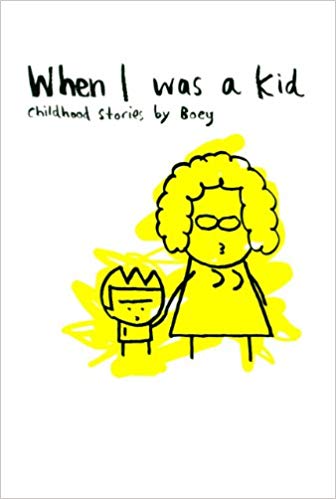
When I Was a Kid – Childhood Stories by Boey


By Cheeming Boey (Last Gasp)
ISBN: 978-0-86719-785-3

Unless your life’s even more unpredictable than mine, all the preparations and frantic panics should be sorted by now and it’s too late to pick up any meaningful gifts that aren’t actually immaterial and/or downloadable.

So, with that in mind, why not calmly ponder the meaning of it all and lay plans for next time?

As this little lost gem proves, the whole histrionic drama of the season is about making memories for those around you… good and bad. Why not strive to make them ones you and yours can share with friends instead of the police or EMTs?

The ability to go back into our childhoods and relive those bizarre, baffling and brilliantly fierce thoughts and every brand-new-day discoveries is a wondrous mixed blessing, but being able to share those recaptured experiences with jaded world-weary adults is a truly miraculous gift and thus utterly evergreen.

One of the most effective and memorable collections generated by an august crowd of halcyon salad-days wranglers comes from Malaysian animator, illustrator, educator, video game developer and cartoonist Cheeming Boey – who also produces gallery art on Styrofoam coffee cups and created an autobiographical webcomic about his life in America, entitled I Am Boey.

You should really check it out…

As a kind of prequel to his blog – if indeed growing up can be considered an introduction to a main event – Boey collected a huge number of visual memoirs and epigrams about his im-maturing years in Asia, bundling them up in a beguiling tome (and a rapidly released sequel) emphasising both the exoticism of life in Malaysia and the universal similarities and solidarities of being a kid.

Warm, sensitive, intimate, uproarious, disarmingly honest as well as on occasion brutal, shocking and sad, these 103 visual monologues (with heart-warming family photos scattered throughout) are invitations into a world of wonder, rivalry, confusion, punishment, resentment, humiliation, anticipation, frustration, greed, glee and always the security of family.

They all begin with “When I was a kid…” and prove that, apart from the odd surface detail, every happy, loving childhood is identical…

The stand-out incidents include such salutary universal reminiscences as ‘My First Pet’, ‘Baby Powder’, ‘Bedtime Stories’, ‘Bad for your Eyes’, ‘Grandma’s Leg’, ‘Nasal Noodles’, ‘R-Rated’, ‘Stealing Money’, ‘Sunday Cartoons’, ‘Not a Genius’ and of course ‘Failing Math’ but with such a wide catalogue to choose from, every little cartoon episode will resonate with somebody. Especially you. Particularly now…

And just in case I’ve made a convert – this one is available as an eBook if you need it right away…
© 2011, 2013 Cheeming Boey. All rights reserved.

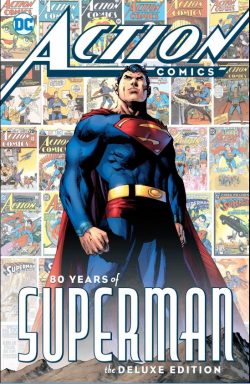
Action Comics: 80 Years of Superman the Deluxe Edition


By Jerry Siegel & Joe Shuster, Fred Guardineer, Don Cameron, Mort Weisinger, Jerry Coleman, Otto Binder, Edmond Hamilton, Len Wein, Cary Bates, Marv Wolfman, John Byrne, Roger Stern, Joe Kelly, Grant Morrison, Paul Levitz, Mort Meskin, Ed Dobrotka, Fred Ray, Wayne Boring, Al Plastino, Jim Mooney, Curt Swan, Carmine Infantino, Gil Kane, Dick Giordano, Kerry Gammill, Bob McLeod, Ben Oliver, Neal Adams plus Many & various (DC Comics)
ISBN: 978-1-4012-7887-8

Win’s Christmas Gift Recommendation: the Ultimate Stocking Stuffer… 9/10

It’s a fact (if such mythological concepts still exist): the American comicbook industry would be utterly unrecognisable without the invention of Superman. His unprecedented adoption by a desperate and joy-starved generation quite literally gave birth to a genre if not an actual art form.

Within three years of his June 1938 debut, the intoxicating blend of eye-popping action and social wish-fulfilment which hallmarked the early Man of Steel had grown to encompass cops-and-robbers crime-busting, socially reforming dramas, science fiction, fantasy, whimsical comedy and, once the war in Europe and the East embroiled America, patriotic relevance.

In comicbook terms at least Superman is master of the world, having utterly changed the shape of a fledgling industry and modern entertainment in general. There have been newspaper strips, radio and TV shows, cartoons games, toys, merchandise and blockbusting movies. Everyone on Earth gets a picture in their heads when they hear the name.

It all started with Action Comics #1 and this bold compilation celebrates the magic, not just with the now-traditional re-runs of classic Superman tales, but with informative articles and fascinating glimpses of some of the other characters who shared the title with him.

Available as a bonanza hardback and in various digital formats, this epic album offers material from Action Comics #0, 1, 2, 42, 64, 241, 242, 252, 285, 286, 309, 419, 484, 554, 584, 655, 662 and 800, and opens with an Introduction by Paul Levitz, a fond Foreword from Laura Siegel Larson and Jules Feiffer’s scene-setting, context-creating essay ‘The Beginning’ before the immortal wonderment commences…

Most of the early tales were untitled, but for everyone’s convenience have been given descriptive appellations by the editors. Thus, after that unmistakeable, iconic cover and a single page describing the foundling’s escape from exploding Planet Krypton (also explaining his astonishing powers in nine panels), with absolutely no preamble ‘The Coming of Superman’, by Jerry Seigel & Joe Shuster introduces a costumed crusader – masquerading by day as reporter Clark Kent – averting numerous tragedies.

As well as saving an innocent woman from the electric chair and roughing up a wife-beater, the tireless crusader works over racketeer Butch Matson – consequently saving suave and feisty colleague Lois from abduction and worse since she is attempting to vamp the thug at the time!

The mysterious Man of Steel makes a big impression on her by then outing a lobbyist for the armaments industry currently bribing Senators on behalf of greedy munitions interests fomenting war in Europe…

To say the editors were amazed by Superman’s popularity was an understatement. They had their money bet on a knock-off Mandrake the Magician crafted by veteran cartoonist Fred Guardineer. Zatara: Master Magician‘s mystic/illusion powers were fully demonstrated in ‘The Mystery of the Freight Train Robberies’ but it’s still a run-of-the-mill and rather sedate affair when compared to the bombastic stunts of the Caped Kryptonian.

Next up is a sneak peek at ‘The Ashcans’: unused and alternative illustrations that didn’t make that crucial first cut after which Action #2 (with a Leo O’Mealia generic adventure cover) supplies the conclusion of Superman’s first case as ‘Revolution in San Monte’ finds the mercurial mystery-man travelling to the war-zone before spectacularly dampening down the hostilities already in progress…

‘The Times’ by Tom DeHaven deconstructs the mythology of the title before Fred Ray’s Superman cover (from November 194)1 introduces Action #42’s ‘The Origin of the Vigilante’ by Mort Weisinger & the amazing Mort Meskin. This spectacular western-themed hero-romp proves that the anthology title had plenty of other captivating characters to enchant audiences…

Issue #64 debuted ‘The Terrible Toyman’ (Don Cameron, Ed Dobrotka & George Roussos), wherein an elderly inventor of children’s novelties and knick-knacks conducts a spectacular campaign of high-profile and potentially murderous robberies, with Lois as his unwilling muse and accessory, and is followed by a little tale of serendipity as Marv Wolfman harks back to his early days and explains ‘How I Saved Superman’…

That’s followed by a genuine lost treasure as ‘Too Many Heroes’ offers an unpublished 1940s Superman tale – credited to Siegel & Shuster – that was rescued from destruction and obscurity. What a gift!

David Hajdu then reveals the allure of the alter ego in ‘Clark Kent, Reporter’ after which we jump to June 1958 and the beginning of the Silver Age. Action Comics #241 cover-featured ‘The Key to Fort Superman’: a fascinating and clever puzzle-play guest-featuring Batman. Scripted by Jerry Coleman with art from Wayne Boring & Stan Kaye, here an impossible intruder vexes the Man of Steel in his most sacrosanct sanctuary…

One month later Otto Binder & Al Plastino introduced both the greatest new villain and most expansive new character concept the series had seen in years. ‘The Super-Duel in Space’ saw evil alien scientist Brainiac attempt to add Metropolis to his collection of miniaturised cities in bottles.

As well as a titanic tussle in its own right, this tale completely changed the mythology of the Man of Steel: introducing Kandor, a city full of Kryptonians who had escaped the planet’s destruction when Brainiac captured them. Although Superman rescued his fellow survivors, the new villain escaped to strike again, and it would be years before the hero could restore the Kandorians to their true size.

After a few intriguing test-runs, a future star of the ever-expanding Superman universe launched in Action Comics #252. In ‘The Supergirl from Krypton!’ (May 1959), Superman discovers he has a living relative. Cousin Kara Zor-El had been born on a city-sized fragment of Krypton, hurled intact into space when the planet exploded. Eventually Argo City turned to Kryptonite like the rest of the detonated world’s debris, and her dying parents, observing Earth through their scopes, sent their daughter to safety as they perished.

Landing on Earth, she met Superman and he created the cover-identity of Linda Lee, hiding her in an orphanage in small town Midvale so that she could master her new powers in secrecy and safety.

‘Endurance’ by Larry Tye discusses longevity and political merit before we return to Superman’s official Action Comics co-star…

Hogging the cover (by Super-stalwarts Curt Swan & George Klein) the simpler times of practicing in secret ended as a big change in the Maid of Might’s status occurred. When her new adoptive parents learn of their new daughter’s true origins, Superman allows cousin Kara to announce her existence to the world in 2-part saga ‘The World’s Greatest Heroine!’ (#285 February 1962) and ‘The Infinite Monster!’ (#286, March 196). Here Jerry Siegel & Jim Mooney detail how Supergirl becomes the darling of the universe: openly saving planet Earth and finally getting all the credit for it.

/telethon to pose a tricky puzzler in the hoary old secret-identity save plot. Written by Edmond Hamilton and illustrated by Swan & Klein, it sets up a scene where the Man of Tomorrow can use none of his usual tricks to be both Superman and Clark simultaneously, then delivers a truly shocking and utterly era-appropriate solution…

Hurtling forward to December 1972 and Action #419 we meet a surprisingly successful back-up feature created by Len Wein, Carmine Infantino & Dick Giordano. Debuting in‘The Assassin-Express Contract!’ Christopher Chance is the Human Target: hiring himself out to impersonate endangered individuals such as the businessman “accidentally” sitting in the sights of a hitman, thanks to a disgruntled employee dialling a wrong number…

From a period where Golden Age stories where assumed to have occurred on parallel world Earth-Two, ‘Superman Takes a Wife’ first appeared in 40th Anniversary issue #484 (June 1978).

Here Cary Bates, Curt Swan & Joe Giella detail how the original Man of Tomorrow became editor of the Metropolis Daily Star in the 1950s and married Lois. Thanks to villainous rogues Colonel Future and the Wizard who had discovered a way to make Superman forget his own existence, only she knew that her husband was once Earth’s greatest hero…

‘If Superman Didn’t Exist’ by Marv Wolfman & Gil Kane comes from Action #554 (April 1984) and posits an alien-invaded Earth deprived of heroes until two kids with big dreams invent one…

In 1985 DC Comics rationalised, reconstructed and reinvigorated their continuity with Crisis on Infinite Earths. They then used the event to regenerate their key properties at the same time. The biggest gun they had was Superman and it’s hard to argue that the change was not before time.

The big guy was in a bit of a slump, but he’d weathered those before. So how could a root and branch retooling be anything but a pathetic marketing ploy that would alienate the real fans for a few fly-by-night Johnny-come-latelies who would jump ship as soon as the next fad surfaced? This new Superman was going to suck…

He didn’t.

The public furore began with all DC’s Superman titles being “cancelled” (actually suspended) for three months, and yes, that did make the real-world media sit-up and take notice of the character everybody thought they knew for the first time in decades. However, there was method in this seeming corporate madness.

The missing mainstays were replaced by a 6-part miniseries running from October to December 1986. Entitled Man of Steel it was written and drawn by Marvel’s mainstream superstar John Byrne and inked by venerated veteran Dick Giordano.

The bold manoeuvre was a huge and instant success and the retuned Superman titles all came storming back with the accent on breakneck pace and action. Action Comics #584 had a January 1987 cover-date and featured a team-up with the Teen Titans as the young heroes had to battle an out-of-control hero with a ‘Squatter’ in his head…

Following a gentle cartoon “roasting” by Gene Luen Yang in ‘Supersquare’, ‘Ma Kent’s Photo Album’ (by Roger Stern, Kerry Gammill & Dennis Janke from #655, July 1990) offers some insights into growing up different before a major turning point began.

As the years passed Lois Lane and Clark gradually grew beyond professionalism into a work romance but the hero had always kept his greatest secret from her. That all changed after the Man of Tomorrow narrowly defeated mystic predator Silver Banshee and decided there would no more ‘Secrets in the Night’ between him and his beloved (Action Comics #662, February 1991, by Stern & Bob McLeod)…

Action #800 (April 2003) then offers a reverential examination of the ongoing myth thus far as ‘A Hero’s Journey’ combines a Joe Kelly script with art from Pasqual Ferry, Duncan Rouleau, Alex Ross, Tony Harris, Bill Sienkiewicz, Dave Bullock, Ed McGuiness, J.H. Williams III, Dan Jurgens, Klaus Janson, Killian Plunkett, Jim Lee, Tim Sale, Lee Bermejo, Cam Smith, Marlo Alquiza & Scott Hanna: cherry-picking unmissable moments from a life well lived…

In 2011 DC again rebooted their entire line and Superman was reimagined once more. ‘The Boy Who Stole Superman’s Cape’ by Grant Morrison & Ben Oliver comes from Action Comics #0, (November 2012) and focusses on a decidedly blue-collar champion just learning the game and painfully aware of the consequences if he makes a mistake…

Wrapping up the celebrations in April 2018’s ‘The Game’ by Levitz & Neal Adams wherein the ultimate enemies Superman and Luthor face off for another round in their never-ending battle…

Before the curtain comes down, though there’s still more unbridled joy and rekindled memories as ‘Cover Highlights’ brings a selection of stunning examples from the Golden, Silver, Bronze, Dark and Modern ages of the Man of Tomorrow, as well as the very best of Action Comics ‘Now’.

Should you be of a scholarly or just plain reverential mood you can then study the copious ‘Biographies’ section so you know who to thank…

Exciting, epochal and unmissable, this is book for all fans of superhero stories.
© 1938, 1941, 1943, 1958, 1959, 1961, 1963, 1972, 1978, 1984, 1986, 1990, 1991, 2003, 2012, 2018 DC Comics. All Rights Reserved.

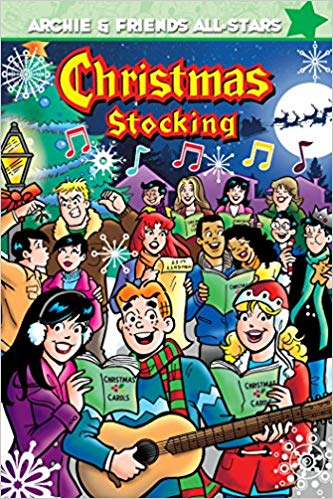
Archie & Friends All-Stars: Christmas Stocking


By Many & various (Archie Comics Publications)
ISBN: 978-1-879794-57-3

Win’s Christmas Gift Recommendation: An Unmissable Tradition… 8/10

My good lady wife and I have a peculiar ritual that I’m not ashamed to share with you. Every Christmas we lock the doors, draw the shutters and stoke up the radiators before settling down with a huge pile of seasonal comics from yesteryear. There’s a few DC’s, a bunch of Disneys and some British annuals, but the biggest bunch is Archie Comics (although we have graduated to graphic novel compilations and even digital collections).

From the 1950s onwards, The Archie team have made Yule time a brighter warmer, dafter time with a gloriously funny, charming, nostalgically sentimental barrage of top-notch stories capturing the spirit of the season throughout a range of comicbooks running from Archie to Veronica, Betty to Sabrina and Jughead to Santa himself…

For most of us, when we say comicbooks people’s thoughts turn to buff men and women in garish tights hitting each other and lobbing trees or cars about, or stark, nihilistic crime, horror or science fiction sagas aimed an extremely mature and sophisticated readership of confirmed fans – and indeed that has been the prolific norm of late. If you don’t count the barrage of licensed titles championing the other pillars of Christmas: toys game and cartoons…

Throughout the years though, other forms and genres have waxed and waned but one that has held its ground over the years – although almost completely migrated to television – is the teen-comedy genre begun by and synonymous with a carrot topped, homely (at first just plain ugly) kid named Archie Andrews.

MLJ were a small publisher who jumped on the “mystery-man” bandwagon following the debut of Superman. In November 1939 they launched Blue Ribbon Comics, promptly following with Top-Notch (see what I did earlier?) and Pep Comics. Content comprised the common blend of funny-book costumed heroes and two-fisted adventure strips, although Pep did make some history with its lead feature The Shield, who was the industry’s first super-hero to be clad in the flag.

After initially profiting from the Fights ‘N’ Tights crowd, Maurice Coyne, Louis Silberkleit and John Goldwater (hence MLJ) were quick to spot a gap in their blossoming market. In December 1941 the costumed heroes and two-fisted adventure strips were supplemented by a wholesome ordinary hero, an “average teen” who would have ordinary adventures like the readers, but with the laughs, good times, romance and slapstick emphasised.

Pep Comics #22 introduced a gap-toothed, freckle-faced red-headed goof showing off to the pretty blonde next door. Taking his lead from the popular Andy Hardy matinee movies starring Mickey Rooney, Goldwater developed the concept of a wholesome youthful everyman protagonist, tasking writer Vic Bloom and artist Bob Montana with the job of making it work.

It began with an innocuous six-page tale entitled ‘Archie’ which introduced boy-goofball Archie Andrews and pretty girl-next-door Betty Cooper. Archie’s unconventional best friend and confidante Jughead Jones also debuted in that first story as did the small-town utopia of Riverdale.

The feature was an instant hit and by the winter of 1942 had graduated to its own title. Archie Comics #1 was the company’s first non-anthology magazine and with it came a gradual transformation of the entire company. After the introduction of rich, raven-haired Veronica Lodge, all the pieces were in play for the industry’s second Phenomenon (Superman being the first).

By May 1946 the kids had taken over, so the company renamed itself Archie Comics, retiring its heroic characters years before the end of the Golden Age and becoming to all intents and purposes a publisher of family comedies. Its success, like the Man of Steel’s, changed the content of every other publisher’s titles, and led to a multi-media industry including TV, movies, pop-songs and even a chain of restaurants.

Those costumed cut-ups have returned on occasion, but the company now seems content to concentrate on what they do uniquely best.

Archie is a well-meaning boy but lacks common sense. Betty is the pretty, sensible girl next door, with all that entails, and she loves Archie. Veronica is rich, exotic and glamorous; she only settles for our boy if there’s nobody better around. She might actually love him, though. Archie, typically, can’t decide who or what he wants…

This family-friendly eternal triangle has been the basis of nearly seventy years of charming, raucous, gentle, frenetic, chiding and even heart-rending comedy encompassing everything from surreal wit to frantic slapstick, as the kids and an increasing cast of friends grew into an American institution. So pervasive is the imagery that it’s a part of Americana itself. Adapting seamlessly to every trend and fad of the growing youth culture, the battalion of writers and artists who’ve crafted the stories over the decades have made the “everyteen” characters of mythical Riverdale a benchmark for youth and a visual barometer of growing up.

Archie’s unconventional best friend Jughead Jones is Mercutio to Archie’s Romeo, providing rationality and a reader’s voice, as well as being a powerful catalyst of events in his own right. That charming triangle (+ one) has formed the foundation of decades of comics magic. Moreover, the concept is eternally self-renewing…

Each social revolution was painlessly assimilated into the mix (the company has managed to confront a number of social issues affecting the young in a manner both even-handed and tasteful over the years) and the addition of new characters such as Chuck, an African-American kid who wants to be a cartoonist, his girlfriend Nancy, fashion-diva Ginger, Hispanic couple Frankie and Maria, gay icon and role model Kevin Keller plus a host of others such a spoiled home-wrecker-in-waiting Cheryl Blossom all contributed to a broad and refreshingly broad-minded scenario.

This volume (available in paperback and digital formats) was the sixth in a line of albums blending old with new and capitalising on the growing popularity of graphic novels. It gathers some of the best Christmas stories of recent years as well as an all-original Yule adventure which delightfully shows the overwhelming power of good writing and brilliant art to captivate an audience of any age.

It all kicks off with ‘Have Yourself a Cheryl Little Christmas’, wherein the gang head off en masse for a winter break, not knowing Queen of Mean Cheryl Blossom is intending to spoil all their fun. Luckily the ever-vigilant Santa knows who’s going to be naughty or nice and dispatches his top agent Jingles the Elf (an Archie regular for decades) to foil her plans…

‘The Night Before Christmas’ adapts the perennial 1823 poem “A Visit from St. Nicholas” attributed to Clement Clarke Moore into a handy introduction to the Riverdale stars before culminating in a clever and heart-warming family moment for Archie and his long-suffering parents, whilst Jughead’s family take centre-stage in the mini-miracle ‘Playing Santa’.

The stresses of having two girlfriends finally overcome Archie in ‘A Not-So-Cool Yule’ before Veronica’s hard-pressed dad once more gets the short end of the stick in ‘Santa Cause’ after which rivals Betty & Veronica succumb to another bout of insane competition in ‘Tis the Season For… Extreme Decorating’.

That darned elf returns in ‘Jingles All the Way’ trying to pry Archie out from under Betty & Veronica’s shapely well-manicured (Ronnie’s at least) thumbs, but faces unexpected opposition from pixie hottie Sugar Plum the Yule Fairy, and we get a glimpse of the kids’ earliest experiences when Betty digs out her diary for a delightful trip ‘Down Memory Lane’.

This sparkling comic bauble concludes with another tale based on that inescapable ode in ‘The Nite Before X-Mas!’

These are perfect stories for young and old alike, crafted by those talented Santa’s Helpers Dan Parent, Greg Crosby, Mike Pellowski & George Gladir, and polished up by the artistic talents of Parent, Stan Goldberg, Fernando Ruiz, Rich Koslowski, Bob Smith, Al Milgrom, John Lowe, Jack Morelli, Vickie Williams, Jon D’Agostino, Tito Peña, Barry Grossman and Digikore Studios.

These stories epitomise the magic of the Season and celebrate the perfect wonder of timeless children’s storytelling: What kind of Grinch could not want this book in their stocking?
© 2010 Archie Comics Publications, Inc. All rights reserved.

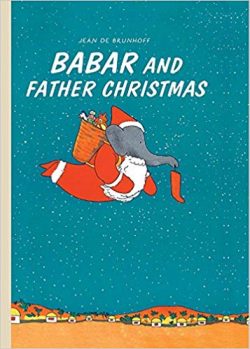
Babar and Father Christmas


By Jean de Brunhoff (Egmont)
ISBN: 978-1-4052-3822-9 (PB)                     978-1-4052-9259-7 (HB)

Win’s Christmas Gift Recommendation: All Aboard for a Splendid Santa Safari… 9/10

Babar the Elephant has been charming readers for generations and Egmont have stuck with the proud pachyderm since they revived the series in 2008.

The gentle and genteel big guy first appeared in France in 1931 where L’Histoire de Babar was an instant hit. An English-language version debuted in 1933, complete with introduction by A. A. Milne, bringing Jean de Brunhoff’s forthright and capable elephantine hero across the channel and thence across the Oceans to America and the Colonies.

By all accounts, the tale was a bedtime story his wife Cecile created for their own children. De Brunhoff wrote and painted seven adventures before his death in 1937, with two of them published posthumously. After World War II his son Laurent continued the family franchise producing ten more adventures between 1946 and 1966.

The books have in their time been controversial. Many critics regard them as being pro-colonialism, and as products of a more robust time, they could never be regarded as saccharine or anodyne, but they are sweet, alluring and irresistibly captivating.

When baby Babar is growing up in the jungle his mother is killed by white hunters. Terrified and sad, the baby flees in a panic, eventually coming to a very un-African provincial city. He meets a kind old lady there who gives him money to buy a suit. As he adapts to city-life he moves into her very large house and is educated in modern, civilised ways. But still, occasionally, he feels homesick and misses his jungle home.

After two years he meets his cousins Celeste and young Arthur wandering naked in the streets of the city and Old Lady gets them clothes too. Soon though, their mothers come to fetch them and Babar decides to return with them and show the other elephants all the wonderful things he has experienced. Buying a motor-car and filling it with clothes and presents he returns just in time, because the King of all the Elephants has eaten a bad mushroom and is dying…

The political assumptions of adults are one thing, but the most valid truth is that these are magical books for the young, illustrated in a style that is fluid, humorously detailed and splendidly memorable. Even after nearly 90 years they have the power to enthral and captivate, and that charm is leavened with an underlying realism that is still worthy of note.

In today’s recommendation (released in 1941 as Babar et le père Noël), our so-very-urbane elephant and now patient parent undertakes an arduous expedition to bring joy to his children and his people.

One day Zephir the monkey tells Babar’s children Pom, Flora and Alexander – and their ubiquitous Cousin Arthur – about the fabulous Father Christmas who brings presents to children in the world of Men.

Captivated, they decide to invite the venerable gentleman to visit them, but after a very long time with no reply, they become despondent. Devoted paternal Babar decides to seek out Father Christmas and personally invite him to the Land of the Elephants…

Produced at a time when the World desperately needed something bright, cheerful and filled with hope, this last tale from de Brunhoff is a fabulously inventive and escapist adventure brimming with simple charm and clever, enchanting artwork. Europhiles will also be delighted to discover that the North Pole is merely a forwarding address and his real home is where it’s always been – in the cold, snowy mountains of Bohemia.

Great Children’s Books are at once plentiful and scarce. There are many, but definitely never enough. This deceptively engaging series has weathered the test of time and has earned a place on your shelves and in your hearts.

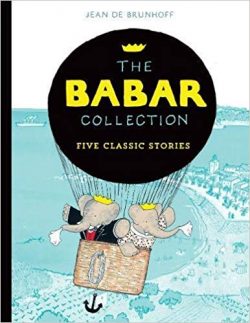
Moreover, if you’re looking for a big bold bargain you might want to pick up 2016’s The Babar Collection: Five Classic Stories which combines this seasonal gem with four other all-ages classics to astound and delight your herd.
© 2018 Edition. All Rights Reserved.

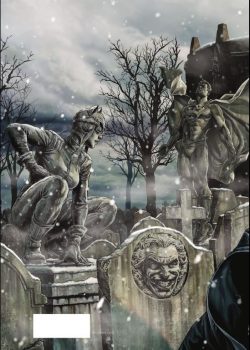
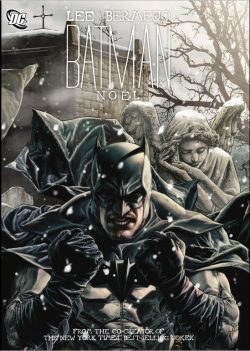
Batman: Noël


By Lee Bermejo, with Barbara Ciardo & Todd Klein (DC Comics)
ISBN: 978-1-4012-3213-9 (HB)

Win’s Christmas Gift Recommendation: A Fresh, Twisted Spin on a Seasonal Favourite… 9/10

Beginning with 1941’s Batman #9, the Dark Knight and festively-hued sidekick celebrated Christmas with specially crafted, tinsel-tinted topical tales (part warm spirituality, part Dickens homage, part O. Henry bittersweet irony, part redemption story), all perfectly encapsulating everything the festival ought to mean.

Although many his contemporaries – especially Superman – did likewise, the Batman Yule yarns somehow always got the balance between sentiment and drama just right. It led to the common comics fan assumption that Batman Owned Christmas. Given the evidence, it’s hard to dispute…

In 2011 writer-artist Lee Bermejo (Lex Luthor: Man of Steel, Joker, Before Watchmen: Rorschach) took his avowed love of Charles Dickens’ novels and the gritty, painterly heroic style he’d perfected and crafted a Times Best-Selling stand-alone Batman Original Graphic Novel. His creative partners in crime were colour-artist Barbara Ciardo award-winning letterer Todd Klein.

Available in deluxe hardback, Trade Paperback and eBook editions, Batman: Noël is a smart and imaginative reworking of Dicken’s redemptive masterpiece told from the point of view of Bob, a cheap hood with a guilty conscience and a sick kid. Bob’s got himself in a spot of bother with both his boss – The Joker – and the meanest bastard in Gotham, who’s selfishly using him to get to the killer clown…

Someone needs to have his views challenged and his path reset. Surely the Season will provide a miracle…

Featuring a big cast of star guests, this dark festive fable adds a bleak spin to the immortal events that will amaze and delight jaded readers, and also offers an Introduction by Jim Lee and many pages of production art and Author Commentary from Bermejo.

Batman Noël is a decidedly different take on one of the most fundamental cornerstones of the modern Christmas experience, and, while we’re recommending seasonal stuff, Dickens wrote four follow-ups to A Christmas Carol plus 22 other Christmas-themed or situated stories. They’re all in print – physically and digitally – so you should treat yourself to those too…
© 2011 DC Comics. All Rights Reserved.
Of Dust and Blood – A Story from the Fight at the Greasy Grass


By Jim Berry & Val Mayerik (Jim Berry)
ISBN: 978-0-692-63801-9

Win’s Christmas Gift Recommendation: Even More Potent, Powerful, Unmissable… 10/10

Back in October I reviewed a beautiful book published by NBM: a passionate and compelling re-examination of one of the most infamous and iconic moments in American history. I thought it was superb and said so in pixel-print.

After the review posted we were contacted by the writer of the book who very graciously thanked us. He also said that the original crowdfunded Kickstarter edition was not only better but how the book should be seen. He even sent us a copy to prove it.

He was right.

Here’s a tweaked review. Go buy this one. Even if you already have the perfectly excellent oversized, portrait format hardback edition. Get this one too. You won’t regret it…

Thanks to the twin miracles of humanity’s love of stories and the power of commercial narrative there’s no logic to how or why some events pass into the forgotten corners of history whilst others become touchstones of common experience or even actual living myths.

In 1875 final – official – tally of casualties for The Battle at Little Big Horn listed 268 US dead and 55 severely wounded men… and an unknown or unspecified number of native casualties.

Eleven years earlier the Chivington (Sand Creek) Massacre recorded a wildly estimated 500-600 killed and mutilated Cheyenne and Arapaho (two thirds of whom were women and children). To be fair, the figures might have been as low as 60 or 70 heathen souls, but practically nobody white really cared…

My point is that the reason you’ve heard of one but not the other is the force of publicity…

After Custer’s debacle and the slaughter of the 7th Cavalry, the Anheuser-Busch brewery commissioned prints of a painting memorialising “Custer’s Last Fight” and had them framed and hung in bars and saloons across America, forever connecting their product in the minds of generations of drinkers with unvarnished white heroism…

With historical veracity at a supreme disadvantage, the ill-judged clash at Little Big Horn – alternatively described by the winning side (on that day, at least) as the Battle of the Greasy Grass – has become the stuff of imagination and extrapolation.

Atrocity aside, that’s not necessarily a bad thing as it’s led numerous thoughtful creative types to examine the event on their own terms and applying the perspective of history to the events and the shameful, bloody aftermath…

Two of the very best are comics veteran Val Mayerik and journalist-turned-author Jim Berry who have here shaped the conflict to their own deeply moving ends with this superb offering. Originally crowdfunded through Kickstarter contributions, this stunning landscape format (295 x 192 mm) full-colour hardback explores truth and myth whilst adding another powerful fictive component to the sprawling patchwork.

Following Berry’s mood-setting and painfully timely Introduction – dramatically augmented by a linework Map of The Battle of the Greasy Grass/Little Big Horn by fellow graphic scholar and historian Rick Geary – the story (lettered by Simon Bowland) unfolds in rapid yet panoramic moments, and traces two ultimately converging paths.

On one side cavalry scout Greenhaw takes some time off to pen a letter to his beloved Rose, even as some distance away young Lakota warrior Slow Hawk performs the funeral rites for his brother. Now he is the last of his family…

Against the background of the tragically documented specifics of the inevitable, legendary greater clash, these two strangers are carried by events towards an inescapable and bloody confrontation…

Rendered with staggering virtuosity by Mayerik, the smaller moments and incidents contributing to the greater clash we all think we know are beguiling and breathtaking in their warmth and humanity, magnificently underscoring Berry’s incisive questioning of the point and merit of the battle.

Augmenting the visual narrative is a text essay describing what happened After the Battle and how commercial interests monetised and weaponised public sentiment against the Indians and led to America’s own final solution to the Indian Wars at Wounded Knee Creek in 1890.

Following on, Val Mayerik: The Process describes, with plenty of access to the artist’s sketchbook, how many of the most evocative images were created before this terrific tome concludes with a Bibliography (illustrated by Aaron McConnel of further reading for interested parties and a moving page of dedications dubbed ‘Philamayaa’… (it means “Thank You”)

This is a wondrous and sobering experience any comics fan or student of human nature must seek out share. And that’s best seen in the original edition.

© 2016 Jim Berry, all rights reserved. 1st Edition. All fictional characters are trademarks of Jim Berry and Val Mayerik.

Copies of the first edition Of Dust and Blood can be purchased on eBay.

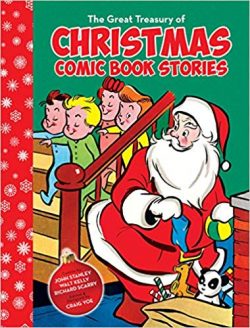
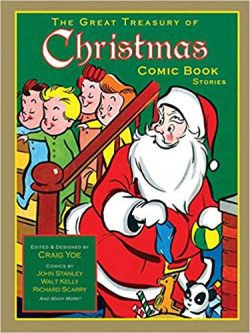
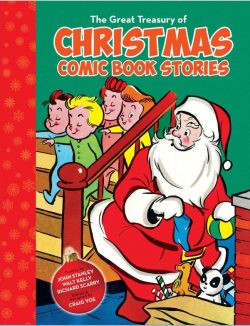
The Great Treasury of Christmas Comic Book Stories


By John Stanley, Walt Kelly, Richard Scarry, Jack Bradbury, Klaus Nordling, Mike Sekowsky, Alberto Giolitti & various: edited and designed by Craig Yoe with Clizia Gussoni (IDW Publishing)
ISBN: 978-1-60010-773-3(HB); 978-1-68405-009-3(TPB); eISBN: 978-1-68406-352-9

Win’s Christmas Gift Recommendation: The Clue is in the Title… 10/10

Justifiably revered for his brilliant newspaper strip Pogo, and perhaps even his wonderful Our Gang tales, the incredible Walt Kelly also has a pretty strong claim to owning the traditional childhood Christmas. From 1942 until he abandoned comic-books for newsprint he produced stories and magazines dedicated to the season of Good Will for West Coast publishing giant Dell.

Santa Claus Funnies and Christmas with Mother Goose were a Holidays institution in both their Four Color and Dell Giant incarnations and the sheer beauty and charm of Kelly’s work defined what Christmas should be for two generations. Kelly transferred his affinity for the best of all fantasy worlds to the immortal Pogo but still was especially associated with the Festive season. Many publications sought out his special touch. Even the Christmas 1955 edition of Newsweek starred Kelly and Co on the cover.

And now, thanks to that dedicated champion preserver of America Comics Past Craig Yoe, I can add a wealth of other great creators and stories to our communal seasonal joy-fest, as this cracking tome – available in all physical and electronic formats – celebrates Yuletide comic classics.

Offering old masters and vintage delights from Santa Claus Funnies # 61, 91,128, 175, 205, 302, 361, 867, 1154 and 1274 (1944-1962) and 1962’s Santa Claus Funnies #1, plus material from A Christmas Treasury #1 1954, Sleepy Santa (1948), Ha Ha Comics #49 (1947), Santa and the Pirates (1953), Here Comes Santa (1960), Christmas at the Rotunda, Giant Comics #3 (1957) and Christmas Carnival volume 1 #2 (1954) this superb funfest opens with a silent short by Kelly revealing the Big (in red) Man’s working practice, & Mo Gollub introducing ‘The Christmas Mouse’ (from Santa Clause Funnies #126 and #175) before we enjoy a Seasonal message (illustrated by Mel Millar) revealing ‘Hey Kids, Christmas Comics!’

‘How Santa Got his Red Suit’ is a superbly imaginative, gnome-stuffed origin fable by Kelly from Santa Claus Funnies # 61, after which H.R. Karp & Jack Bradbury reveal the salutary saga of ‘Blitzen, Jr.’ as first seen in Ha Ha Comics #49 and a tragically uncredited team disclose in prose-&-picture format the magical adventure of ‘Santa and the Pirates’, taken from a booklet premium released by Promotional Publishing Co. NYC.

As rendered by the inimitable John Stanley SCF #1154’s ‘Santa’s Problem’ explores the good intentions and bad habits of polar bears before Mike Sekowsky contributes a concise and workmanlike adaptation of ‘A Christmas Carol’ by Charles Dickens (from A Christmas Treasury #1) before Kelly returns with the heart-warming tale of ‘A Mouse in the House’ (SCF #128).

Stanley strikes again with ‘The Helpful Snowman’ (Here Comes Santa) offering aerial assistance to Kris Kringle whilst ‘Christmas at the Rotunda’ offers a classy version of ‘The Shoemaker and the Elves’ courtesy of Elsa Jane Werner & Richard Scarry, after which cognoscenti can see potent prototypes for Pogo characters in 1945’s ‘Christmas Comes to the Woodland’ (SCF #91): another whimsical Kelly classic.

Imbecilic but well-meaning elf Scamper causes mayhem and ‘Santa’s Return Trip’ in wry delight from John Stanley & Irving Tripp (from SCF #1274) after which Stanley & Dan Gormley craft an epic voyage for determined rugrats Cathy and David as they deliver ‘A Letter for Santa’ (Santa Claus Funnies #1).

Another masterful Kelly prose-&-picture fable then recounts the sentimental journey of ‘Ticky Tack, the Littlest Reindeer’ (SCF #205) and the animal crackerz continue as a lost puppy finds friendship and a new home in ‘Sooky’s First Christmas’ (Stanley & Gormley from SCF #867)…

Charlton Comics were late to the party for X-mas strips but their glorious Giant Comics #3 from 1957 provides here both Frank Johnson’s anarchic ‘Lil’ Tomboy in It Was the Day Before Christmas…’ and an extra-length action-packed romp for Al Fago to masterfully orchestrate in ‘Atomic Mouse in The Night before Christmas’. Separating those yarns is a deft updating of Clement Clark Moore’s ubiquitous ode in ‘The Night before Christmas’ by Dan Gormley from A Christmas Treasury #1…

In 1947, Walt Kelly set his sights on consolidating a new Holiday mythology and succeeded with outrageous aplomb in ‘The Great Three-Flavoured Blizzard’ (Santa Claus Funnies #175) as an unseasonal warm spell precipitates a crisis and necessitates the making of a new kind of snow, before the fabulous Klaus Nordling contributes a stylish comedy of errors with ‘Joe and Jennifer in the Wonderful Snowhouse’ from Christmas Carnival volume 1 #2.

Bringing things to a close Dan Noonan concocts a staffing crisis for Santa to solve with the aid of ‘Teddy Bear in Toyland’ (SCF #91, 1950) after which we enjoy a moment of sober reflection as ‘The Christmas Story’ – according to St. Matthew’s gospel and illuminated by Alberto Giolitti – (A Christmas Treasury #1) reminds us that for many people it’s not just about loot, excess and fantasy.

Kelly then ushers us out with a brace of end pieces encompassing a poetic hunt for the old boy and a silent silly symphony from ‘The Carollers’…

It absolutely baffles me that Kelly and his peers’ unique and universally top-notch Christmas tales – and Batman‘s too for that matter – are not re-released every November for the Yule spending spree. Christmas is all about nostalgia and good old days and there is no bigger sentimental sap on the planet than your average comics punter. And once these books are out there their supreme readability will quickly make converts of the rest of the world.

Just you wait and see…
The Great Treasury of Christmas Comic Book Stories © 2018 Gussoni-Yoe Studio, Inc. All Rights Reserved. Material reprinted: Sleepy Santa © 1948 Belda Record & Publishing Co. Ha Ha Comics #49 © Creston Publications Corporation. Santa and the Pirates © 1953 Promotional Publishing Co. NYC. Christmas at the Rotunda © 1955 Ford Motor Company and Artists and Writers Guild, Inc. Giant Comics #3 © 1957 Charlton Comics Group Christmas Carnival vol. 1 #2 St. John Publishing Corp. ©1954. © Western Printing & Lithographing Co. 1948, 1950, 1951, 1954, 1957, 1960, 1961, 1962. © 1944, 1945, 1946, 1947, Oscar Lebek/Dell Publishing, Western Printing & Lithographing Co.
Last Minute Presents

Win’s Christmas Gift Recommendation: Perfect Childhoods caught in cartoons… 10/10 Each!

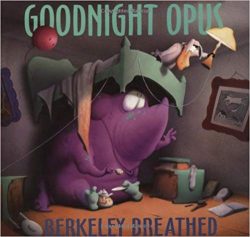
Goodnight Opus

By Berkeley Breathed (Little, Brown & Co.)
ISBN: 978-0-316-10853-9 (HB)                    978-0-316-10599-6 (PB)

After a desperately brief and glittering career as a syndicated strip cartoonist and socio-political commentator (so often the very same function) Berkeley Breathed retired his award-winning Bloom County and Outland vehicles and became a writer and illustrator of children’s books. He lost none of his perception or imagination, and actually got better as a narrative artist. He didn’t completely abandon his entrancing cast of characters and – as a happy ever after postscript – eventually revived them all for another go-round of satire and social advocacy. Yay!

This is a story about the magic of storytelling and features that universal innocent Opus the Penguin. One night, as she has done two hundred and nine times before, Granny starts to read the svelte and uncool waterfowl his favourite bedtime book. But this night is different. Tonight, Opus’ mind wanders and he “departs the text”…

And so begins a riotous flight of Technicolor fantasy as sedate monochromatic images give way to a powerful, vibrant and surreal romp that extends to the Milky Way and back, by way of animated monuments, the burned out Fairy of Sleep, and stopovers at some of the most exotic corners of the planet.

Less a story than an exuberant travelogue of Imagination, delivered in sharp and lyrical rhyme, this is a book to trigger dreams and promote creativity. A perfect primer to explain how to wonder and wander… So every kid, at any age, should own it.
© 1994 Berkeley Breathed. All Rights Reserved.

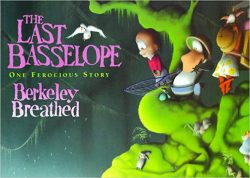
The Last Basselope – One Ferocious Story

By Berkeley Breathed (Little, Brown & Co.)
ISBN: 978-0-316-10761-7 (HB)                    978-0-590-47542-6 (PB)

Berke Breathed is no one-trick-pony and has never been limited to one specific season or holiday. He can do fun and wonder all year round…

Although not a proper Christmas story, this charming and tearfully funny tale is another joyous celebration of the wonder of childhood and how little adventures can become great big ones. Starring his best-loved characters (although I personally identified far too closely with Binkley) from Bloom County and Outland: jolly, unfulfilled Opus, Bill the Cat, Milquetoast the Housebug, Ronald-Anne (her mother named her for President Reagan – because he had done so much to advance the cause of Poor Black Women) and Rosebud, the eponymous Basselope of the title.

Opus is a dreamer of great dreams and a frustrated explorer. In his unassuming, shy way he lusts for glory and the heady wine of immortality and as everybody knows, that can only be found by Discovering Something.

Anything will do. And in the pages of the latest ‘National Geographic Enquirer’ he finds his dream waiting…

Organising a safari, our fish-fuelled fool heads for the woods at the back of the house in search of the most elusive beast in history; every crypto-zoologist’s Holy Grail.

How he finds The Last Basselope and what he actually learns is a magical journey into the uncharted wilds of childhood’s imagination which reveals the strength, power and character of true friendship.

This beautifully illustrated, captivating and multi-layered fable is ideal for the eternally young at heart and all those still looking for a path back to their own wonder years.
© 1994 Berkeley Breathed. All Rights Reserved.

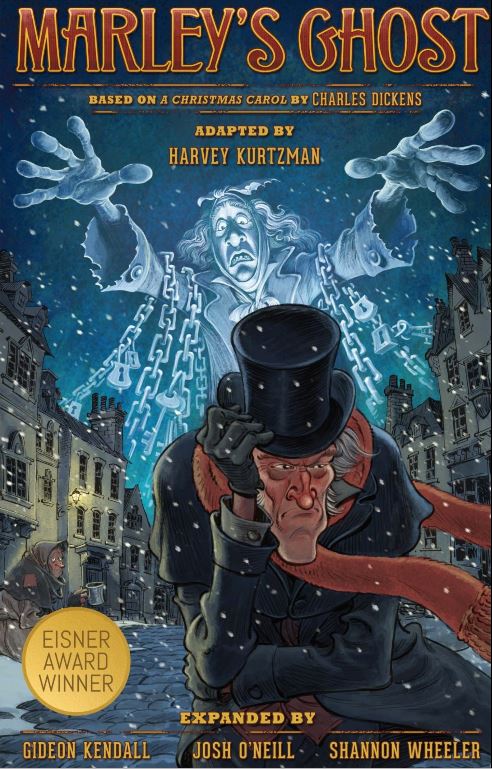
Harvey Kurtzman’s Marley’s Ghost


Adapted by Harvey Kurtzman & expanded by Gideon Kendall, Josh O’Neill, Shannon Wheeler & various (ComiXology Originals)
No ISBN, ASIN: B01LZAATMD

Win’s Christmas Gift Recommendation: Reverential Revisitation of a Cornerstone Christmas Classic… 9/10

Harvey Kurtzman is probably the most important cartoonist of the latter half of the last century – even more so than Jules Feiffer, Jack Kirby, Joe Kubert or Will Eisner.

His early triumphs in the fledgling field of comicbooks (Frontline Combat, Two-Fisted Tales and especially the groundbreaking, game-changing Mad) would be enough for most creators to lean back on, but Kurtzman was also a force in newspaper strips (Flash Gordon Complete Daily Strips 1951-1953) and a restless innovator, commentator and social critic who kept on looking at folk and their doings and just couldn’t stop making art or sharing his conclusions…

He invented a whole new format when he converted the highly successful colour comicbook Mad into a black-&-white magazine, safely distancing the brilliant satirical publication from the fall-out caused by the 1950s comics witch-hunt which eventually killed all EC’s other titles.

He then pursued comedy and social satire further with newsstand magazines Trump, Humbug and Help! all the while creating challenging and powerfully effective humour strips such as Little Annie Fanny (for Playboy), Nutz, Goodman Beaver, Betsy and her Buddies and many more. He died far too soon, far too young in 1993.

As recounted in Denis Kitchen’s appendix ‘The Origins of the Marley’s Ghost Graphic Novel’, despite helming a huge and influential comicbook sensation, by 1954 Kurtzman was looking to expand the influence and appeal of the medium even further.

Mad was reaching millions but he wanted to get to everybody and he wanted his efforts to be treated with respect…

His notion was to adapt – properly, faithfully, and not as an abridged, bowdlerized kiddie’s version such as seen in Classics Illustrated – a global masterpiece of literature. Charles Dickens’ A Christmas Carol was the perfect vehicle and Kurtzman feverishly set to in his spare time, producing more than 70 tightly laid out thumbnails and seven colour layouts, plus a complete page rendered by EC/Mad comrade Jack Davis.

The luxurious coffee-table book he’d envisioned foundered due to the timidity and short-sightedness of publishers – and quite possibly the toxic fug around comicbooks caused by Senate Hearings and Frederick Wertham’s hysterical campaign against teenage culture and fun…

Kurtzman shelved the project, but his papers and notes were discovered after his death and the result – adapted by writers Josh O’Neill & Shannon Wheeler and compellingly illustrated by Gideon Kendall – is a splendidly engaging addition to the novel’s legion of cross-media iterations. Just like Kurtzman knew it would be…

The tale is augmented here by Kurtzman’s original thumbnails and layouts, the Davis page and a wealth of development sketches generated by Kendall in completing the project.

Moreover, Marley’s Ghost is even more groundbreaking than Kurtzman ever imagined. Released as a digital book, it has garnered acclaim and awards even before its inevitable transition to physical form… which means, as long as you’re connected you can buy this as the most literal of last-minute gifts…

The Story? It’s what you’d expect and want, all executed with warmth, with and sublime grace. Scrooge Mean. Ghosts! Revelations! Scared Scrooge! Change of Heart! Happies all around! God bless us every one!

And if that was a spoiler in any manner, you have no right to be reading this review…

Here is a superb work long overdue and a comics god’s dream at long-last realised: a new old master of our art form no true devotee can afford to be without. And it’s fun and engaging enough to be an introducer to youngsters looking for comics to love.

Marley’s Ghost as adapted by Harvey Kurtzman is published by Kitchen, Lind & Associates, LLC. Adaptation © 2017 by Gideon Kendall, Josh O’Neill, & Kurtzman Properties LLC. All rights reserved.

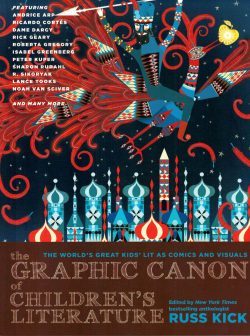
The Graphic Canon of Children’s Literature


By Many and various, Edited by Russ Kick (Seven Stories)
ISBN: 978-1-60980-530-2

Win’s Christmas Gift Recommendation: Amazing Recollections for Every Kid of Voting Age… 10/10

If you are of a certain age, you will remember that Christmas when you got The Book. What it was varies and you may not even have it now (probably not, in truth), but the getting of it, the cherishing of it in that moment, and the nostalgic debilitation recalling it brings now shaped your life. This book might well be it for someone you know and can’t think of a gift for…

Swallow the lump in your throat, grab a tissue and we’ll begin…

Once upon a time in the English-speaking world, nobody clever, educated or in any way grown-up liked comics. Now we’re an accredited really and truly art form and spectacular books like this can be appreciated…

The Graphic Canon is an astounding literary and art project, instigated by legendary crusading editor, publisher, anthologist and modern Renaissance Man Russ Kick. It seeks to interpret the world’s great books through the eyes of masters of crusading sequential narrative in an eye-opening synthesis of modes and styles. The project was initially divided into three periods roughly equating with the birth of literature and the rise of the modern novel.

Such was the success and impact of the feat that a number of side projects grew from the original, such as this startling confection celebrating the uniquely dual-purpose arena of stories for Children.

Make no mistake: this is not a simple bowdlerising “prose to strip” exercise like generations of Classics Illustrated comics, and you won’t pass any tests on the basis of what you see here. Moreover, these images will make you want to re-read the texts you know and hunger for the ones you haven’t got around to yet. Even those you think you’ve known for your entire life…

They certainly did for me…

Following the fascinating and agenda-setting ‘Editor’s Introduction’ the reimagination of centuries of wonder begins with a selection of Aesop’s immortal fables. Deliciously concocted by Roberta Gregory ‘The Miller, His Son, and the Donkey’ and ‘The Eagle, The Cat, and The Sow’ are followed by Peter Kuper’s refreshing interpretations of ‘The Ape and the Fisherman’ and ‘The Wasp and the Snake’.

Lance Tooks then takes torrid liberties but still makes magic with ‘The Lion in Love’, ‘The Fox and the Grapes’ and ‘The City Mouse and the Country Mouse’ before we move on to another timeless tale…

David W. Tripp offers a psycho-sexual take in his silent reworking of European fairy tale ‘Little Red Riding Hood’ after which Andrice Arp beguilingly details the saga of the ‘The Mastermaid’. Following that Norse fairy tale we head further north and east for Lesley Barnes’ iconic celebration of Russian folk tale ‘The Firebird’ before Miguel Molina offers a brace of scenes from Peruvian fairy tale ‘The Shepherdess and the Condor’.

The unfailingly entertaining Rachel Ball adapts a British yarn of abduction in ‘The Weardale Fairies’ after which Maëlle Doliveaux applies astounding collage and cut-paper acumen to ‘Four Fables’ by French mediaeval poet Jean de La Fontaine before a selection of Brothers Grimm tales opens with Kevin H. Dixon applying his studied blend of cultural appropriation and mordant insubordination to the ‘Town Musicians of Bremen’…

Chandra Free – with technical assistance from BLAM! Ventures – then scrupulously documents ‘A Tale of One who Travelled to Learn what Shivering Meant’ before Noah Van Sciver adapts ‘Star Dollars’ and ‘The Water-Sprite’.

E.T.A. Hoffman’s ‘The Nutcracker and the Mouse King’ is translated into pictorial beats by Sanya Glisic and Dame Darcy revels in the full horror of ‘The Little Mermaid’ by Hans Christian Andersen whilst Isabel Greenberg concentrates the old master’s imaginative whimsy for ‘The Tinderbox’.

Billy Nunez reinvigorates British fairy tale ‘Goldilocks and the Three Bears’ by transposing it to rural China before Frank M. Hansen has wicked fun updating Mark Twain’s shockingly wry ‘Advice to Little Girls’.

Vicki Nerino liberally updates ‘Alice’s Adventures in Wonderland’ – by Lewis Carroll in case you don’t know – and Keren Katz illustrates a triptych of ‘Fables for Children’ by Leo Tolstoy (The Birds in the Net, The Duck and the Moon, The Water Sprite and the Pearl, The Mouse Under the Granary and The Falcon and the Cock) after which Sandy Jimenez adds a sheen of Glam Rock iconoclasm to an extract of Jules Verne’s ‘20,000 Leagues Under the Sea’.

Nabob of Nonsense Edward Lear is celebrated in ‘The Owl and the Pussycat’ by Rick Geary and doubly so by Joy Kolitsky who colourfully interprets ‘Calico Pie’ and ‘The New Vestments’, after which R. Sikoryak stunningly reduces Twain’s ‘The Adventures of Tom Sawyer’ to a quartet of symbolically eventful maps.

Lost story master George McDonald is represented by Dasha Tolstikova’s moving treatment of ‘At the Back of the North Wind’ and Molly Brooks adapts the first tantalising chapter of Johanna Spyri’s ‘Heidi’ before Eric Knisley redeems the fabulous and unfairly embargoed sagas of Joel Chandler Harris with a vivid take on ‘The Tar Baby (From Tales of Uncle Remus)’.

Molly Colleen O’Connell adapts Carlo Collodi’s ‘The Adventures of Pinocchio’ and Robert Louis Stevenson’s ‘Treasure Island’ is given a meta-textual going over by Lisa Fary, Kate Eagle & John Dallaire before Tara Seibel gives a modern spin to Oscar Wilde’s heartbreaking ‘The Nightingale and the Rose’.

Caroline Picard ambitiously and simultaneously covers four tales from ‘The Jungle Book’ by Rudyard Kipling – specifically ‘Rikki Tikki Tavi’, ‘Toomai of the Elephants’, ‘Kaa’s Hunting’, and ‘The White Seal’ – whilst Matthew Houston adds a graphically futuristic spin to his treatment of H.G. Wells’ ‘The Time Machine’.

Shawn Cheng adapts L. Frank Baum’s ‘The Wonderful Wizard of Oz’ in a single colour-splashed page and then does the same for the remaining 13 novels in ‘The Oz Series’ after which Sally Madden silently shows a key scene from ‘Peter Pan’ by J.M. Barrie and Andrea Tsurumi delicately details the retaking of Toad Hall from the end of Kenneth Grahame’s ‘The Wind in the Willows’ before Juliacks turns in a most dramatic reinterpretation of Frances Hodson Burnett’s ‘The Secret Garden’…

Kate Glasheen adapts and modifies ‘The Velveteen Rabbit’ by Margery Williams, after which C. Frakes adapts ‘How the Potato Face Blind Man Enjoyed Himself on a Fine Spring Morning’ from Carl Sandburg’s ‘Rootabaga Stories’ and Matt Wiegle offers his rebus-filled silent take on Franklin W. Dixon’s ‘The Tower Treasure (A Hardy Boys Mystery)’ whilst Katherine Hearst goes wild with an eerie examination of ‘Peter and the Wolf’ as never imagined by Serge Prokofiev…

Astrid Lindgren’s immortal ‘Pippi Longstocking’ inhabits a decidedly off-kilter world thanks to Emelie Östergren, balanced by a sobering snippet from Anne Frank’s ‘The Diary of a Young Girl’ from mainstream comicbook royalty Sid Jacobson & Ernie Colón, after which John W. Pierard treats us to a selection of contemporaneous (and Rude) ‘Schoolyard Rhymes’.

Hitting the home stretch of modernity, we close with a chilling and wordless adaption from Tori Christina McKenna of Richard Adams’ ‘Watership Down’ and a stunning recapitulation by Lucy Knisley J.K. Rowling’s ‘The Harry Potter Series’ – all of it. Really. In 8 pages…

Complementing the childhood obsessions is a ‘Gallery’ by 58 more artists, and ‘Contributors’, ‘Acknowledgments’, ‘Credits and Permissions’ and even an ‘Index’.

Each piece is preceded by an informative commentary page by Kick, and this sort of book is just what the art form comics needs to grow beyond our largely self-imposed ghetto, and anything done this well with so much heart and joy simply has to be rewarded.
© 2014 Russ Kick. All work © individual owners and copyright holders and used with permission. All rights reserved.