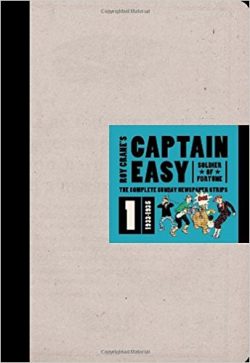
Roy Crane’s Captain Easy, Soldier of Fortune: The Complete Sunday Newspaper Strips volume 1


By Roy Crane (Fantagraphics Books)
ISBN: 978-1-60699-161-9

Amongst the many cartoon and comics anniversaries this year there are household names still with us (albeit in exceedingly altered forms) and tragically masterpieces of the form that have faded from popular memory, even though their influence remains in every panel we might peruse…

Modern comics evolved from newspaper gag and comic strips. These pictorial features were, until relatively recently, utterly ubiquitous and hugely popular with the public and highly prized by publishers who used them as an irresistible sales weapon to guarantee and increase circulation and profits.

It’s virtually impossible for us to today to understand the overwhelming power of the comic strip in America (and the wider world) from the Great Depression to the end of World War II. With no television, broadcast radio far from universal, and movie shows at best a weekly treat for most folk, household entertainment was mostly derived from the strip sections of daily and especially Sunday Newspapers. “The Funnies” were the most common recreation for millions who were well served by a fantastic variety and incredible quality of adventures and exploits.

From the very start humour was paramount; hence the terms “Funnies” and “Comics”, and from these gag and stunt beginnings – a blend of silent movie slapstick, outrageous fantasy and the vaudeville shows – evolved a thoroughly entertaining mutant hybrid: Roy Crane’s Wash Tubbs.

Debuting on April 21st 1924, Washington Tubbs II was a comedic gag-a-day vehicle not much different from family favourite Harold Teen (by Crane’s friend and contemporary Carl Ed).

When it premiered in 1924, Tubbs was a diminutive and ambitious young shop-clerk, but gradually the strip moved into mock-heroics, then through cosy, non-confrontational action, only to become a full-blown, light-hearted, rip-roaring adventure series with the introduction of ancestral he-man and prototype moody swashbuckler Captain Easy in the landmark episode for 6th May, 1929.

As the tales became evermore exotic and thrill-packed, the globe-trotting little dynamo clearly needed a sidekick who could believably handle the strenuous combat side of things, and thus – in the middle of a European-set war yarn – Wash liberated a mysterious fellow American from a jail cell and history was made.

Before long the mismatched pair were travelling companions, hunting treasure, fighting thugs and rescuing a bevy of startlingly comely maidens in distress…

The bluff, two-fisted, surly, comprehensively capable, utterly dependable, down-on-his-luck “Southern Gen’leman” was something not seen before in comics: a raw, square-jawed hunk played completely straight rather than as the buffoon or music hall foil of such classic serials as Hairsbreadth Harry or Desperate Desmond.

Moreover, Crane’s seductively simple blend of cartoon exuberance and design was a far more accessible and powerful medium for action story-telling than the somewhat static illustrative style favoured by artists like Hal Foster: just beginning to make waves on the groundbreaking new Tarzan Sunday page.

Tubbs and Easy were as exotic and thrilling as the Ape-Man, but rattled along like the surreal and tempestuous Popeye, full of vim, vigour and vinegar, as attested to by a close look at the early work of the would-be cartoonists who followed the strip with avid intensity: Floyd Gottfredson, Milton Caniff, Jack Kirby, Will Eisner and especially young Joe Shuster…

After a couple of abortive attempts starring his little hero, Crane bowed to the inevitable and created instead a full-colour Sunday page dedicated to his increasingly popular hero-for-hire.

Captain Easy debuted on 30th July 1933 (happy 85th Cap!), in wild and woolly escapades set before his first fateful rendezvous with Tubbs.

This first sublime archival volume begins with the soldier of fortune undertaking a mercenary mission for the Chinese government to spy on the city of ‘Gungshi.’ In the heyday of popular exploration and aviator exploits, the bold solo flight over the Himalayas to Chinese Turkestan was stirring enough but when Easy then infiltrates a hidden citadel it heralded the beginning of a rollercoaster romp with sword-wielding Mongols, sultry houris, helpless dancing girls, fabulous beasts and wicked bandits. The heady, intoxicating dramatic brew captivated entire families across the planet, week after addictive week…

With an entire page and vibrant colours to play with, Crane’s imagination ran wild and his fabulous visual concoctions achieved a timeless immediacy that made each page a unified piece of sequential art.

The effect and influence of Crane’s pages can be seen in so many strips since; especially the works of near-contemporaries such as Hergé and giants-in-waiting like Charles Schulz.

These pages were a clearly as much of joy to create as to read. In fact, the cited reason for Crane surrendering the Sunday strip to his assistant Les Turner in 1937 was the controlling NEA Syndicate abruptly demanding that all its strips be henceforward produced in a rigid panel-structure to facilitate them being cut up and re-pasted as local editors dictated.

Crane just walked away, concentrating on the daily feature. In 1943 he left the Syndicate to create the aviation adventure strip Buz Sawyer.

At the end of the initial blockbuster epic Easy is a hero to the people of Gungshi, if not the aristocracy, who plot to oust him via the subtlest of means. The second adventure ‘The Slave Girl’ opened on 21st January 1934, depicting the occidental hero bankrupted in saving the beautiful Rose Petal from the auction block: a chivalrous gesture leading to war with the rival city of Kashno, and a brutally hilarious encounter with South Sea pirates…

In an era where ethnic stereotyping and casual racism were commonplace and acceptable – if not actually mandatory – the introduction of a vile and unscrupulous Yank as the exploitative villain was and remains a surprising delight.

Rambling Jack is every inch the greedy “ugly American” of later, more informed decades, and by contrasting Easy’s wholesome quest to make his fortune with the venal explorer’s rapacious ruthlessness, Crane makes a telling point for the folks back home. It also makes for great reading as Chinese bandits also enter the fray, determined to plunder both cities and everybody in their path…

With the help of a lost British aviator Easy is finally victorious, but on returning to his Chinese employers he spots something whilst flying over the Himalayas that radically alters his plans…

‘The Sunken City’ is an early masterpiece of comics fiction, with Easy recruiting comedy stooge ‘Arry Pippy, a demobbed cockney British Army cook, to help him explore a drowned city lost for centuries in a hidden inland sea, and one he had he had spotted from the air only through sheer chance.

However, simply to get there the pair must trek through wild jungles, survive blowpipe-wielding cannibals and the greatest threat our valiant rogue has ever faced…

If I’ve given the impression that this has all been grim-‘n’-gritty turmoil and tension thus far, please forgive me: Roy Crane was an utterly irrepressible gag-man and his enchanting chapter-play serial abounds with breezy light-hearted banter, hilarious situations and outright farce – a sure-fire formula modern cinema directors plunder to this day.

Easy is the Indiana Jones, Flynn (the Librarian) Carsen and Jack (Romancing the Stone) Cotton of his day and inarguably blazed the trail for all of them.

Using a deep-sea diver’s suit, Easy and ‘Arry explore the piscine wonders and submerged grandeur of the lost city, encountering some of the most magical and fanciful sea beasts ever recorded in comics before literally striking gold. Typically, when the cannibals attack those dredged up treasures are lost and Easy finds himself captive and betrothed to the most hideous witch-hag imaginable…

Risking everything the desperate treasure-seekers make a break for it only to re-encounter ‘The Pirates’ (April 14th – July 7th 1935), but before they get too far the husband-hungry sorceress and her faithful cannibals come after him, leading to a brutal, murderous conclusion…

After years in the Orient Easy and Pippy then succumb to a hankering for less dangerous company and make their way to Constantinople and Europe, but trouble is never far from the mercenary and in ‘The Princess’ (14th July – December 1st 1935), the Captain’s gentlemanly instincts compel him to rescue a beautiful woman from the unwelcome attentions of munitions magnate Count Heyloff, a gesture that embroils our hero in a manufactured war between two minor nations.

This tale addressed the contemporary American sentiment that another world conflict was brewing and it’s obvious that Crane’s opinion was the deeply held common conviction that the whole international unrest was the result of rich men’s greedy manipulations…

Dark, bittersweet and painfully foreboding, this yarn sees Easy become the focus of Heyloff’s vengeance, and the sum total air force for the tiny underdog nation of Nikkateena in their bitter struggle for survival against the equally-duped country of Woopsydasia.

Crane kept the combat chronicle light but on occasion his true feelings showed through in some of the most trenchant anti-war art ever seen.

This superb hardback and colossal initial collection is the perfect means of discovering or rediscovering Crane’s rip-snorting, pulse-pounding, exotically racy adventure trailblazer. The huge pages in this volume (almost 14½ by 10½ inches, or 210 x 140 mm for the younger, metric crowd) also contain a fascinating and informative introductory biography of Crane by historian Jeet Heer; a glowing testimonial from Charles “Peanuts” Schulz; contemporary promotional material, extra drawings and sketches plus a fascinating feature explaining how pages were coloured in those long-ago days before computers…

This is primal comics storytelling of the very highest quality: unforgettable, spectacular and utterly irresistible. These tales rank alongside the best of Hergé, Tezuka and Kirby, and led inexorably to the greatest creations of all of them. Now that you have the chance to experience the strips that inspired the giants of our art form, how can you possibly resist?
Captain Easy Strips © 2010 United Features Syndicate, Inc. This edition © 2010 Fantagraphics Books, all other material © the respective copyright holders. All rights reserved.
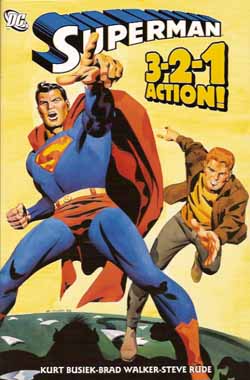
Superman: 3-2-1 Action!


By Kurt Busiek, Mark Evanier, Rick Leonardi, Brad Walker, Steve Rude & various (DC Comics)
ISBN: 978-1-4012-1680-1

There are a number of big cartoon and comics anniversaries this year and probably none bigger than Seigel and Shuster’s magnificent Man of Tomorrow! Here then is a splendid sample of sheer excellence and bucket of fun for Fights ‘n’ Tights fans that spun out of DC’s epic Countdown publishing event. Although nominally another collection of the Action Ace’s adventures, the actual star of the book is Superman’s Pal, Jimmy Olsen with the main body of the volume reprinting Action Comics #852-854 (September-October 2007), which examines the cub reporter’s trials and travails as the effects of the Reality-rending Countdown reach Metropolis.

Without wanting to give too much away (Countdown is collected, readily available and should be read and enjoyed on its own merits) a massive Crisis is affecting all 52 Earths of the newly-reminted DC multiverse.

One inexplicable side-effect of the cosmic kerfuffle is the “fight-or flight” super-power that suddenly afflicts James Bartholomew Olsen, reporter-at-large.

Whenever his life is endangered, sudden inexplicable transformations wrack the kid’s body (and older fans will no doubt be delighted to see the not-so-subtle tributes to such classics of the silver Age as Turtle Boy Olsen, Jimmy the Werewolf, Elastic Lad and The Human Porcupine). This engaging sidebar to Countdown’s Main Event – crafted by scripter Kurt Busiek, penciller Brad Walker and inker John Livesay – also features yet another new take on Titano the Super-Ape, and the return of both superdog Krypto and the Kryptonite Man.

This is preceded by a marvellous updating of Olsen’s “origin” by Busiek, Rick Leonardi & Ande Parks, originally published in Superman #665 (September 2007).

‘Jimmy’ is a charming and adventure-drenched character piece which updates the lad for the millennial generation, whilst still keeping the vitality, verve and pluckiness that carried the boy reporter through seven decades and hundreds of his own adventures within the DCU.

Without doubt though, the absolute prize and gem of this collection comes from the fabulous and much-missed Legends of the DC Universe comicbook of the late 1990s.

Issue #14 to be precise; 55 glorious pages of wonderment from Marv Evanier, Steve Rude & Bill Reinhold from March 1999, presenting a new story crafted from an unused plot Jack Kirby worked up during his tempestuous tenure as Writer-Artist on Superman’s Pal, Jimmy Olsen in the early 1970s.

This story features the hordes of Apokolips, The Evil Factory, The Golden Guardian and enough fun and thrills to take decades off the most jaded fan as investigative journalist Olsen uncovers an Apokolyptian scheme to de-evolve the inhabitants of Metropolis and takes action to thwart the impending catastrophe…

In 1970 Kirby’s run on what had become DC’s most moribund title utterly revolutionised the entire DC universe, introducing Darkseid, the Fourth World, Intergang, The Project (later known as Cadmus) and so much more. Nothing on Earth can induce me to reveal any details of this lost epic (sadly only still available in paperback, and not as an eBook yet) but if you can’t have prime, fresh Kirby, this loving and beautiful addendum to his work is the Very Next Best Thing.

I’m going to be recommending a whole lot of Superman stuff this year and this relatively modern collection is right at the top of that list. Track it down now and learn why you really must…!
© 1999, 2007 DC Comics. All Rights Reserved.

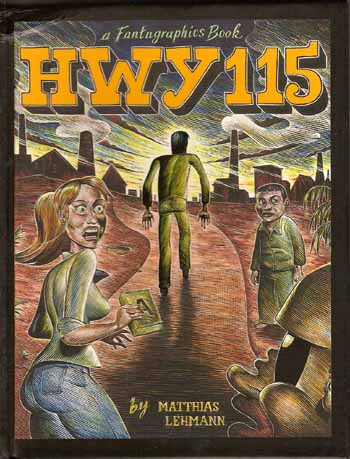
HWY.115


By Matthias Lehmann (Fantagraphics Books)
ISBN: 978-1-56097-733-9 (HB)

This stirring and deeply disturbing, psycho-thriller combines the not-so dissimilar forms of road movies and buddy flicks with straight crime thrillers as hardboiled private detective René Pluriel hits the highways of France in pursuit of the deadly “Heimlich Killer”.

He hasn’t gone far before he picks up flamboyant hitch-hiker Agatha, who reveals that she too is a detective on the trail of the notorious serial murderer.

As they wend their way through the back roads and, consequently, history of France, diligently interviewing the killer’s associates and survivors, they build a tense picture not just of their quarry but also of each other, and inevitably realise that the conclusion of the quest won’t be happy for everybody.

Lehmann’s dark voyage is gripping and often surreal, and the tension is augmented by the spectacular, moody art, stylishly etched in a powerful scraperboard style. The narrative is blistered with flashbacks, literary diversions and hallucinogenic asides that amplify the dissociative feel of this ostensibly simple tale. This award-winning fear-fable was the author’s first original graphic novel and it remains a bravura performance almost impossible to top; I eagerly await the attempt.
Characters, stories & art © 2006 Actes Sud. All Rights Reserved. This edition © 2006 Fantagraphics Books.

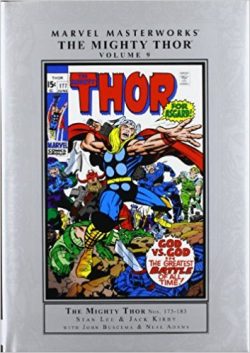
Mighty Thor Marvel Masterworks volume 9


By Stan Lee & Jack Kirby, John Buscema, Neal Adams, Bill Everett, Vince Colletta, John Verpoorten, Joe Sinnott & various (Marvel)
ISBN: 978-0-7851-4220-1

The Mighty Thor was the title in which Jack Kirby’s restless fascination with the Cosmic Unknown was honed and refined through his dazzling graphics and captivating concepts. The King’s career-defining string of power-packed signature pantheons all stemmed from a modest little fantasy/monster title called Journey into Mystery where – in the summer of 1962 – a tried-and-true comicbook concept (feeble mortal transformed into god-like hero) was revived by fledgling Marvel Comics to add a Superman analogue to their growing roster of costumed adventurers.

This bombastic full-colour hardback tome – also available in eFormats – re-presents Kirby’s final Asgardian exploits and the initial efforts of his successors. Taken from Thor #173-183 the sagas collectively cover February to December 1970, as universe-builder Jack abandoned the worlds he’d cultivated with Stan Lee for DC Comics and a cosmos uniquely his own…

Once upon a time lonely, lamed American doctor Donald Blake took a vacation in Norway only to encounter the vanguard of an alien invasion. Trapped in a cave, Blake found a gnarled old walking stick, which, when struck against the ground, turned him into the Norse God of Thunder!

Without any hesitation or preamble, the reborn godling was soon defending the weak and smiting the wicked. As months swiftly passed, rapacious extra-terrestrials, Commie dictators, costumed crazies and cheap thugs gradually gave way to a vast panoply of fantastic worlds and incredible, mythic menaces. Eventually the magnificent warrior’s ever-expanding world of Asgard was a regular feature and mesmerising milieu for the hero’s earlier adventures, heralding a fresh era of cosmic fantasy to run almost tangentially to the company’s signature superhero sagas.

The astounding action begins here – after a fascinating and revelatory Behind the Scenes Introduction from Will Murray – with the earthbound fury of ‘Ulik Unleashed!’ (inked by Bill Everett) as the ferocious super-troll is sent to Earth by Loki only to be hypnotised into aiding old adversaries The Circus of Crime in the robbery of the century…

Single-issue adventures continue with an epic clash between Thor and a tormented young genius whose strength-stealing robot runs amok in ‘The Carnage of the Crypto-Man!’ before the last great epic of the Kirby-era hits its stride, but that’s a saga for another time and place…

Behind a Marie Severin cover ‘The Fall of Asgard!’ sees valiant Asgardian Balder and his Warriors Three allies Fandral, Hogun and Volstagg escape the clutches of lovestruck sorceress Karnilla only to confront the assemble hordes of giants and trolls marching on the Home of the Gods.

With All-Father Odin incapacitated by his annual Great Sleep, Loki has perfidiously seized the throne forcing war-goddess Sif to call Thor back home for perhaps the Last Battle…

Inked by Vince Colletta, ‘Inferno!’ reveals the folly of the usurper as terrifying Fire-demon Surtur breaks free of his Odinian captivity to begin his pre-ordained task of burning down the universe.

With everything appearing ‘To End in Flames!’ Loki flees to Earth, having first hidden Odin’s sleeping form in the life-inimical Sea of Eternal Night. As Thor leads a heroic and Horatian last stand, Balder penetrates the Dimension of Death to rescue the All-Father just as Surtur fires up for his fulminating final foray…

Thor #178 (July 1970) is a landmark: the first issue created without Jack Kirby. Clearly a try-out or fill-in yarn, ‘Death is a Stranger’ – by Lee, John Buscema & Colletta – depicts the Thunderer snatched away from Asgard by the nefarious Abomination to an epic battle with the alien Stranger – an extra-galactic powerhouse who collects unique beings for scientific study…

The interrupted epic resumed in #179 (inked by John Verpoorten) with ‘No More the Thunder God!’ as Thor, Sif and Balder are dispatched to Earth to arrest the fugitive Loki. This issue was Kirby’s last: he left the entire vast unfolding new mythology on a monumental cliffhanger just as the Thunder God is ambushed by his wicked step-brother. Using arcane magic, the Lord of Evil switches bodies with his noble sibling and gains safety and the power of the Storm whilst Thor is doomed to endure whatever punishment Odin decrees…

More than any other Marvel strip Thor was the feature where Kirby’s creative brilliance matched his questing exploration of an Infinite Imaginative Cosmos: dreaming, extrapolating and honing a dazzling new kind of storytelling graphics with soul-searching, mind-boggling concepts of Man’s place in the universe.

Although what followed contained the trappings and even spirit of that incredible marriage, the heart, soul and soaring, unfettered wonderment just were not there any longer: nor would they be until 1983 when Walt Simonson assumed creative control with #337 (see Mighty Thor: the Ballad of Beta Ray Bill).

Here, however, ‘When Gods Go Mad!’ introduced the radically different style of Neal Adams to the mix, inked by the comfortably familiar Joe Sinnott, as the true Thunder God was sent to Hell and the tender mercies of Mephisto, whilst on Earth Loki uses his brother’s body to terrorise the UN Assembly and declare himself Master of the World…

In #181’s ‘One God Must Fall’ Sif leads the Warriors Three on a rescue mission to the Infernal Realm whilst Balder struggles to combat the power of Thor combined with the magic and malice of Loki until Mephisto is thwarted. Then a cataclysmic battle of brothers on Earth soon sets the world to rights…

The new Post-Kirby era truly began with Thor #182 as John Buscema assumed the artistic reins and began his own epic run as illustrator with ‘The Prisoner… The Power… and… Dr. Doom!’ as the Thunderer is entangled in Earthly politics. When a young girl entreats him to rescue her father from the deadly Iron Monarch, the noble scion cannot refuse, especially as the missing parent is an expert on missile technology and is capable of making Doom the master of ICBM warfare…

The decidedly down-to-Earth and mismatched melodrama concludes with Don Blake ‘Trapped in Doomsland!’ until Thor can retrieve his mislaid mallet, but even after his deadly mission of mercy is accomplished, tragedy is his only reward…

Closing out this key transitional volume is the cover of the Kirby tour de force Tales of Asgard #1 and his unused cover for Thor #175 (inked by John Verpoorten) plus a Buscema house ad for the aforementioned clash with Dr. Doom.

The Kirby Thor is a high-point in graphic fantasy and all the more impressive for its sheer timeless readability, but the end was truly a new beginning and a testament to the sheer pulling power of the mightiest son of Asgard. These tales are a Fantasy fan’s delight and an absolute must for all devotees of the medium.
© 1970, 2017 Marvel Characters, Inc. All rights reserved.

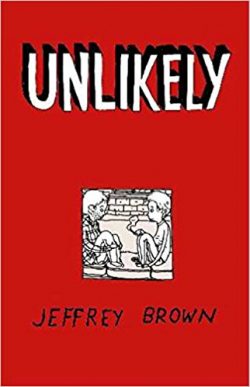
Unlikely


By Jeffrey Brown (Top Shelf Productions)
ISBN: 978-1-89183-041-4                  978-1-89183-041-9

If you’re a fan of Jeffrey Brown’s cartoon exploits you might understandably admit to a small degree of confusion. In 2012 he scored his first global best-seller with a hilarious spin on the soft and nurturing side of the Jedi experience in Darth Vader and Son, following up with equally charming and hilarious sequels Vader’s Little Princess, Star Wars: Jedi Academy and others. He followed that up by contributing to the franchise’s dramatic comics canon with Star Wars Jedi Academy; Star Wars Jedi Academy: Return of the Padawan and Star Wars Jedi Academy: The Phantom Bully (2013-2015).

He has also directed music videos, created film posters, worked for public radio and co-written the feature film Save the Date.

Before that another Jeffrey Brown was the sharply sparkling wit who had crafted slyly satirical all-ages funny stuff for The Simpson’s Treehouse of Horror, Marvel’s Strange Tales, Incredible Change-Bots and similar visual venues.

There is yet another Jeffrey Brown: instigator and frequent star and stooge of such quirkily irresistible autobiographical Indy comics classics as Bighead, Little Things, Mome, Funny, Misshapen Body, Undeleted Scenes and the four-volume “Girlfriend Trilogy” (of which this is the second), comprising Clumsy, Unlikely, AEIOU and Every Girl is the End of the World for Me …

Whichever Brown’s your preferred choice, he’s a cartoonist of rare insight and unflinching integrity who still makes you laugh out loud when not prompting you to offer a big consoling hug…

Brown was raised in Michigan; relocating to Chicago in 2000 to attend the School of the Arts Institute and study painting. Before graduating he had switched to drawing comics and in 2002 Clumsy was released. A poignant and uncompromising dissection of a long-distance relationship, it quickly becoming a surprise hit with fans and critics alike.

A little later – and in the same vein – he produced Unlikely (or How I Lost My Virginity) – a True Love Story.

In both paperback and digital formats it describes a succession of painful torments, frustrations and moments of unparalleled joy as “250+ pages of young love, sex, drugs, heartbreak & comedy” involving the long and agonisingly extended process of “becoming a Man”…

The material is both delicious and agonising in its forthright simplicity: a sequence of pictorial snippets and vignettes detailing how a meek, frumpy, horny, inoffensively average film-fan art-student – and long-overdue virgin – cautiously navigates his first fully-sexualised relationship with a girl.

As is always the case, his prospective partner comes with baggage that is at first beguiling and charming – or at least overlook-able – but which soon becomes a major sticking point. More telling, however, is what Jeffrey learns about himself in the process…

Every young man who’s gone gagging for it, gone for broke when the opportunity arose, and gone off to college or elsewhere to lick his amorous wounds has been through this, and for every inflammatory romance that makes it, there are a million that don’t…

Drawn in his deceptively effective Primitivist monochrome style with masterful staging, a sublime economy of phrase and a breathtaking gift for generating in equal amounts belly-laughs and those poignant lump-in-throat moments we’ve all experienced and regretted forever-after, this is a potent procession of crystallised moments which establish one awful truth. This is Not The One…

We’ve all been there, done that and then relentlessly reviewed and revised in our heads and wished we’d done it all differently…

Through dozens of individual episodes with titles like ‘Things of Mine She Still Has’, ‘I’d Do Her’, ‘No, This is Jeff’, ‘Virgin Alert’, ‘Talking and, Talking’, ‘All Nighter’, ‘I Had a Weird Dream’, ‘Will you Still’, ‘Sex’, ‘Sweetness Frustration’, and ‘The Last Time’: a web of triumphant relief, fractious accommodation and eventually, inevitably disappointment and fresh awareness for Jeff and Allisyn …

Brimming with portentous discovery, hopeful revelation and the shattering angst us oldsters can barely remember now let alone understand, Unlikely is a powerful delight for everybody who has confused raging hormones and intimate physical contact with love, and a sublime examination of what makes us human, hopeful and perhaps wistfully incorrigible…
© 2007 Jeffrey Brown.

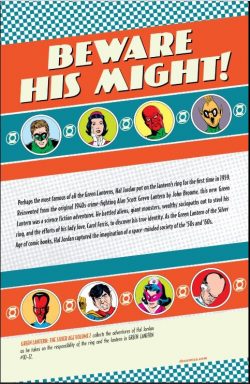
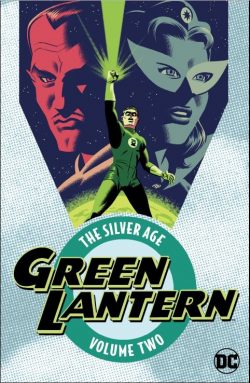
Green Lantern: The Silver Age volume two


By John Broome, Gardner Fox, Gil Kane, Mike Sekowsky & various (DE Comics)
ISBN: 978-1-4012-6-7107-7

After their hugely successful revival and reworking of The Flash, DC (or National Comics as they were) were keen to build on the resurgent superhero trend. Showcase #22 hit the stands at the same time as the fourth issue of the new Flash comicbook – #108 – and once again the guiding lights were Editor Julie Schwartz and writer John Broome. Assigned as illustrator was action ace Gil Kane, generally inked by Joe Giella.

Hal Jordan was a brash young test pilot in California when an alien policeman crashed his spaceship on Earth. Mortally wounded, Abin Sur commanded his ring – a device which could materialise thoughts – to seek out a replacement officer, honest and without fear.

Scanning the planet, it selected Jordan and brought him to the crash-site. The dying alien bequeathed his ring, the lantern-shaped Battery of Power and his profession to the astonished Earthman.

In six pages ‘S.O.S Green Lantern’ established characters, scenario and narrative thrust of a series that would increasingly become the spine of DC continuity. Now that the concept of the superhero was swiftly being re-established among the buying public, there was no shortage of gaudily clad competition.

The better books survived by having something a little “extra”. With Green Lantern that was primarily the superb scripts of John Broome and Gardner Fox and the astounding drawing of Gil Kane – ably abetted by inker Joe Giella – whose dynamic anatomy and deft page design was maturing with every page he drew, but the concept itself was also a provider of boundless opportunity.

Other heroes had extraterrestrial, other-dimensional and even trans-temporal adventures, but the valiant champion of this series was also a cop: a lawman working for the biggest police force in the entire universe. As such his support team was necessarily composed of some of the brightest talents in American comics.

This fabulous paperback compilation gathers Green Lantern #10-22 (January 1962-July 1963) and reveals how a Space Age reconfiguration of the Golden-Age superhero with a magic ring replaced mysticism with super-science and opens with ‘Prisoner of the Power Ring!’ as the hero responds to a distress call from inside his own emerald wonder-weapon.

Blending Atomic Cold War anxiety with the rescue of a scientist’s family from subatomic exile, GL saves the refugees from their own folly before back up yarn ‘The Origin of Green Lantern’s Oath’ reviews three of the hero’s earliest exploits.

These cases led to him constructing the piece of doggerel he uses to time his ring’s recharging period…

Although neither tale is a blockbuster, the increasingly loose and expressive artwork of Kane, especially on the latter (with Murphy Anderson on inks) are an unalloyed delight of easy grace and power.

The readers were constantly clamouring for more on the alien Corps Jordan had joined and ‘The Strange Trial of Green Lantern’ introduced another half-dozen or so simply to court-martial Hal for dereliction of duty in a saga of cataclysmic proportions, whereas ‘The Trail of the Missing Power Ring!’ focuses on drama of a more human scale when a young boy finds the power ring Hal has foolishly lost.

Issue #12 returned GL to 5700AD as brainwashed Solar Director Pol Manning to thwart an interplanetary coup in ‘Green Lantern’s Statue goes to War’ engineered by an envious magician…

A balance between cosmic and candidly personal stories was developing in those issues sporting two stories, and ‘Zero Hour in the Silent City!’ highlights engineer/grease-monkey Tom Kalmaku‘s close friendship with Hal against the backdrop of bank robbers with a super scientific gimmick.

Green Lantern #13 was a true landmark as an interdimensional invasion led to a team-up and lifelong friendship between our hero and fellow Showcase alumnus the Flash. Controversial for the time, ‘The Duel of the Super-Heroes!’ sees them share each other’s secret identities; a rarity then even among the close comrades of the Justice League of America.

This full-length thriller was followed in #14 by the introduction of Balkan ultra-nationalist super-villain Sonar as ‘The Man Who Conquered Sound!’: a traditional frantic fist-fest complemented by the return of Jim Jordan and snoopy girl reporter Sue Williams.

In the frothy romp ‘My Brother, Green Lantern!’ it’s revealed that she’s now romantically involved with the youngest Jordan sibling and – due to a slight mishap with the boy’s fraternity rings – more certain than ever that her intended is the dashing Emerald Gladiator.

Sinestro once more escapes the justice of the Guardians of the Universe to return in #15’s ‘Peril of the Yellow World!’ a cosmic duel testing GL’s bravery and fortitude as much as Space Race thriller ‘Zero Hour at Rocket City!’ tests his wits. The next issue took the Hal Jordan/Green Lantern/Carol Ferris romantic triangle to a new level. ‘The Secret Life of Star Sapphire!’ introduces the alien women of Zamaron.

Readers of contemporary comics will be aware of their awesome heritage but for the sake of this review and new readers let’s keep that to ourselves. These questing females select Carol as their new queen and give her a gem as versatile and formidable as a power ring, and a brainwash make-over too.

Programmed to destroy the man she loves, Star Sapphire would become another recurring foe, but one with a telling advantage. The second story then solves a puzzle that had baffled readers since the very first appearance of the Emerald Crusader.

Gardner Fox contributes his first tale in ‘Earth’s First Green Lantern’ as Hal finally learns why his predecessor Abin Sur crashed to Earth in a spaceship when all GLs can fly through hyperspace and the interstellar voids on ring power alone. A stirring tale of triumph and tragedy, this short yarn is one of GL’s very best.

Also written by Fox, ‘The Spy-Eye that Doomed Green Lantern!’ again revolves around test pilot Jordan’s personal involvement in the US/Soviet race to the stars, and is a fine example of a lost type of tale. In those long-ago days costumed villains were always third choice in a writer’s armoury: clever bad-guys and aliens always seemed more believable to the creators back then. If you were doing something naughty would you want to call attention to yourself? Nowadays the visual impact of buff men in tights dictates the type of foe more than the crimes committed, which is why these glorious adventures of simpler yet somehow better days are such an unalloyed delight.

Green Lantern #18 (January 1963) led with ‘The World of Perilous Traps!’ by Broome, regular penciller Gil Kane and inker Giella who teamed to produce another cracking, fast paced thriller featuring the renegade GL Sinestro, whilst Mike Sekowsky penciled the end of the intriguing ‘Green Lantern Vs. Power Ring’ wherein Broome engineered a startling duel after larcenous hobo Bill Baggett takes control of the green ring, necessitating a literal battle of wills for its power.

Green Lantern #19 saw the return of radical nationalist Sonar in ‘The Defeat of Green Lantern!’ (Broome, Kane & Giella) a high-energy super-powered duel nicely counter-pointed by the whimsical crime-caper ‘The Trail of the Horse-and-Buggy Bandits!’ by the same team, wherein a little old lady’s crossed phone line led the Emerald Gladiator into conflict with a passel of crafty crooks. Issue #20’s ‘Parasite Planet Peril!’ by Broome, Kane & Anderson then triumphantly reunites GL with the Flash in a full-length epic to foil a plot to kidnap human geniuses.

One of the DCU’s greatest menaces debuted in #21’s ‘The Man Who Mastered Magnetism’. Broome created a world-beater in the dual-personality villain Doctor Polaris for Kane & Giella to limn, whilst ‘Hal Jordan Betrays Green Lantern!’ is the kind of action-packed, cleverly baffling puzzle-yarn Gardner Fox always excelled at, especially with Anderson’s stellar inks to lift the art to a delightful high.

Fox also scripted the return of diabolical futurist villain Hector Hammond in ‘Master of the Power Ring!’ (Giella inks) before Broome turns his hand to a human-interest story with the Anderson-inked ‘Dual Masquerade of the Jordan Brothers!’, with GL playing matchmaker, trying to convince his future sister-in-law that her intended is in fact Green Lantern!

These costumed drama romps are in themselves a great read for most ages, but when also considered as the building blocks of all DC continuity they become vital fare for any fan keen to make sense of the modern superhero experience.

Judged solely on their own merit, these are snappy, awe-inspiring, beautifully illustrated captivatingly clever thrillers that amuse, amaze and enthral both new readers and old devotees. This lovely collection is a must-read item for anybody in love with our art-form and especially for anyone just now encountering the hero for the first time through his movie incarnations.
© 1962, 1963, 2017 DC Comics. All Rights Reserved.

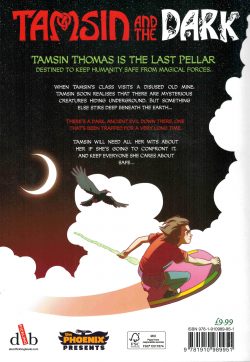
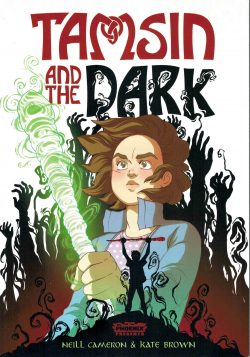
Tamsin and the Dark


By Neill Cameron & Kate Brown (David Fickling Books)
ISBN: 978-1-910989-95-1

In January 2012 Oxford-based family publisher David Fickling Books launched a weekly anthology comic aimed at under-12 girls and boys; revelling in reviving the good old days of traditional picture-story entertainment intent whilst embracing the full force of modernity of style and content.

Each issue offers humour, adventure, quizzes, puzzles and educational material in a joyous parade of cartoon fun and fantasy. In the years since its premiere, The Phoenix has gone from strength to strength, winning praise from the Great and the Good, child literacy experts and the only people who really count – the astoundingly engaged kids and parents who read it…

Like the golden age of The Beano and Dandy the magazine masterfully manages the magical trick of marrying hilarious humour strips with potently powerful adventure serials such as the subject of this latest compilation: a wondrous seaside sorcerous saga with intriguing overtones of the darker works of Alan Garner.

Written by Neill Cameron (Mega Robo Bros, How to Make Awesome Comics, Pirates of Pangea) and beguilingly illustrated by Kate Brown (Manga Shakespeare: A Midsummer Night’s Dream, Young Avengers, Fish + Chocolate), the eerie tale opens with schoolgirl Tamsin Thomas resuming her part-time job as the last Pellar: magical protector of Cornwall’s human population from creatures ancient and uncanny…

Tamsin first inherited the sacred duty and oppressive pain-in-the-butt responsibility after her brother Morgan was targeted by a malign mystic sea-sorceress who had years previously taken their father. Her newfound power hasn’t come with any extra knowledge however, and being able to fly hasn’t stopped Morgan’s obnoxious new friends from picking on her…

Even sometime mentor and full-time bird King Arthur is no use: preferring to let her learn on the job rather than share anything useful…

After a brief educational interlude detailing the legend of how Mankind and the terrible Cornish Giants came to an accommodation in the Times before Time, Tamsin’s day starts getting ruined when a shadowy monster attacks her dog Pengersek. Happily, her apparently all-powerful Magic Lucky Stick is able to dispel the horror.

King Arthur even tells her it was a “Spriggan” before uttering mysterious warnings, talking technobabble about her stick and flying off to deal with some supposed crisis elsewhere…

Sadly, any tiny sense of triumph dissipates when bullying neighbour Blake Trescothick starts picking on her again and Morgan chooses to side with the jock rather than stick up for his own sister…

He’s even less keen to help her research the legends of Cornwall: despite what he’s seen and been through, Morgan has no time for magic and fairies…

Later when the school goes on a trip to a decommissioned tin-mine, we learn about the ancient pact between man the miner and the ancient Bucca creatures – and so would Tamsin if Blake and Morgan hadn’t started vandalising the site and accidentally re-opened a pit into the darkest recesses of the Earth…

When Morgan is teased into climbing down something awful happens and he’s not the same boy when he comes back up…

And so begins another stunning eldritch thriller blending old-world myth and mayhem with superbly modern and matter-of-fact treatment of properly 21st century kids. Addressing issues of bullying, school-girl pregnancy, and regional job security with primal animosity and terror in a manner suitable and engaging for kids, Tamsin and the Dark reveals how an ancient inimical evil is overwhelmed by good magic and dutiful study, antediluvian bonds and pacts are renewed, old magical allies return to supplement a doughty band of pesky interfering but valiant kids and man’s darkest enemy is repelled. Tamsin even gets to refresh her street cred with the locals mundane and otherwise…

However, her next crisis has already begun…

A mesmerising mix of scary and astounding, the latest exploit of the Last Pellar is bombastic, bold and brilliantly engaging: a romp of bright and breezy supernatural thrills just the way kids love them, leavened with brash humour and straightforward sentiment to entertain the entire family. How and why this series hasn’t been optioned for a TV series or movie is utterly beyond me. Read it and you’ll surely agree…

Text © Neill Cameron 2018. Illustrations © Kate Brown 2018. All rights reser–ved.
Tamsin and the Dark will be released on January 4th 2018 and is available for pre-order now.

Krazy & Ignatz 1933-1934: “Necromancy by the Blue Bean Bush”


By George Herriman, edited by Bill Blackbeard & Derya Ataker (Fantagraphics Books)
ISBN: 978-1-56097-620-2

The Krazy Kat cartoon strip is arguably the pinnacle of graphic narrative innovation; a singular and hugely influential body of work which shaped the early days of the comics industry and became an undisputed treasure of world literature.

Krazy and Ignatz, as it is now dubbed for these glorious commemorative tomes from Fantagraphics, is a creation which must be appreciated on its own terms. The strip developed a unique language – at once both visual and verbal – and dealt with the immeasurable variety of human experience, foibles and peccadilloes with unfaltering warmth and understanding without ever offending anybody.

Sadly, however, it baffled far more than a few…

It was never a strip for dull, slow or unimaginative people who simply won’t or can’t appreciate the complex multi-layered verbal and pictorial whimsy, absurdist philosophy or seamless blending of sardonic slapstick with arcane joshing. It is still the closest thing to pure poesy that narrative art has ever produced.

Herriman was already a successful cartoonist and journalist in 1913 when a cat and mouse who had been cropping up in his ever-evolving, outrageous domestic comedy strip The Dingbat Family/The Family Upstairs graduated to their own feature. Krazy Kat debuted in William Randolph Hearst’s New York Evening Journal on Oct 28th 1913 and – largely by dint of the publishing magnate’s overpowering direct influence and interference – gradually spread throughout his vast stable of papers.

Although Hearst and a host of the period’s artistic and literary intelligentsia (notably – but not exclusively – e.e. Cummings, Frank Capra, John Alden Carpenter, Gilbert Seldes, Willem de Kooning, H.L. Mencken and – latterly – Jack Kerouac) all adored the strip, many local and regional editors did not; taking every potentially career-ending opportunity to drop it from the comics section.

Eventually the feature found a home and safe haven in the Arts and Drama section of Hearst’s papers. Protected there by Hearst’s heavy-handed patronage, the Kat flourished unharmed by editorial interference and fashion, running generally unmolested until Herriman’s death in April 1944.

The basic premise is simple: Krazy is an effeminate, dreamy, sensitive and romantic feline of indeterminate gender hopelessly in love with Ignatz Mouse: rude crude, brutal, mendacious and thoroughly scurrilous.

Ignatz is a true unreconstructed male; drinking, stealing, fighting, conniving, constantly neglecting his wife and children and always responding to Krazy’s genteel advances by clobbering the Kat with a well-aimed brick (obtained singly or in bulk from noted local brick-maker Kolin Kelly) which the smitten kitten invariably misidentifies as tokens of equally recondite affection.

The third crucial element completing an anthropomorphic eternal triangle is lawman Offissa Bull Pupp, a figure of honesty and stolid duty completely besotted with Krazy, professionally aware of the Mouse’s true nature, yet hamstrung – by his own amorous timidity and sense of honour – from permanently removing his devilish rival for the foolish feline’s affections.

Krazy is, of course, blithely oblivious to Pupp’s dilemma…

Also populating the ever-mutable stage are a stunning supporting cast of inspired bit players such as Joe Stork, dreaded deliverer of unplanned, and generally unwanted, babies; hobo Bum Bill Bee, unsavoury conman and trickster Don Kiyoti, self-aggrandizing Walter Cephus Austridge, busybody Pauline Parrot, inscrutable, barely intelligible Chinese mallard Mock Duck, dozy Joe Turtil and a host of other audacious characters, all equally capable of stealing the limelight or even supporting their own strip features.

The exotic, quixotic episodes occur in and around the Painted Desert environs of Coconino (based on the artist’s vacation retreat in Coconino County, Arizona) where absurdly surreal playfulness and the fluid ambiguity of the flora and landscape are perhaps the most important member of the cast.

The strips are a masterful mélange of unique experimental art, wildly expressionistic and strongly referencing Navajo art forms whilst graphically utilising sheer unbridled imagination and delightfully evocative lettering and language: alliterative, phonetically and even onomatopoeically joyous with a compelling musical force (“Mitt me at the Musharoon”, “l’il dahlink” or “Ignatz, ware four is thou at Ignatz??”).

Yet for all that, the adventures are poetic, satirical, timely, timeless, bittersweet, self-referential, fourth-wall bending, eerily idiosyncratic, astonishingly hilarious escapades encompassing every aspect of humour from painfully punning shaggy dog stories to riotous, violent slapstick.

Sometimes Herriman even eschewed his mystical mumblings and arcane argots for the simply sublime grace of a supremely entertaining silent gag in the manner of his beloved Keystone Cops and other stars of silent slapstick comedies…

The wealth of Krazy Kat collections started in the late 1970s when the strip was first rediscovered by a better-educated, open-minded and far more accepting generation. This delirious tome, covering the last of the full-page black-&-white Sunday Page material from 1933-1934 – prior to a switch to full colour and a sheltered safe-haven in a sheltered Hearst comics insert package – comes in a comfortably hefty (231 x 305 mm) softcover or eBook edition: one last monochrome masterpiece expansively “Compounding the Complete Full-Page Comics Strips, with some extra Rarities”…

The machinations that brought about that transformation and an account describing the herculean efforts involved in finding and restoring those final strips can be found in Bill Blackbeard’s Introduction ‘No Kidding… We’ve Run Out of Kats!’, supplemented by examples of another Herriman lost treasure – ‘Mary’s Home From College’ – plus contemporary photo-material from King Features promotional magazine Circulation, and additional strip examples such as Dempsey Under Wraps and beguiling hand drawn postcard by the master himself.

Extra treats manifest in a selection of Herriman’s Krazy Kat Daily strips hilariously discussing the gender-confabulation of the mixed-up moggy and lost strips and gag-panels are uncovered with samples of ‘The Amours of Marie Anne Magee’, ‘Embarrassing Moments’, ‘Darktown Aristocracy Caught in the Swirl’ and ‘Baron Bean’ plus pertinent newspaper clippings featuring the artist from a time when cartoonists were actual celebrities…

On to the strips then: within this compelling compendium of incessant passions thwarted in another land and time, the torrid triangular drama dwindles and expires in the middle of 1934 in preparation for later, greater full-colour glories but never ceases to revel in the wild wonders of blithe whimsy as winningly as ever, but with the old familiar faces popping up to contribute to the insular insanity and well-cloaked social satire…

One thing to note: during this period local editors who actually ran the strip usually had the manically expressive layouts reformatted to standard tiers – and the Fantagraphics staff are to be praised eternally for their efforts to restore the original designs…

We open on January 1st 1933 with the tangled trio greeting another year with the same heartworn and forlorn shenanigans, although Offisa Pupp is now pressing his attentive suit with more desperate forcefulness…

A spate of strips sees the lawdog proactively stalking and thwarting Ignatz, but as always, the mouse’s continual search for his ammunition of choice and the perfect ambush spot predominate, leading to many brick-based gags and increasing frustration.

One happy circumstance is the growing use of the county lock-up as the escalating slapstick silliness frequently concludes with Ignatz incarcerated. Naturally that just means the malign Mus Musculus (look it up if you must) magnifying his malevolent efforts; even regularly taking to the air in a series of aeronautical escapades…

In response, Coconino’s (occasionally “Kokonino”) Finest has taken to hurling missiles of his own in retaliation and – on the rare but exceeding satisfactory occasion – Pretaliation…

Of course, the mouse is a macho jerk who enjoys revenge served hot, cold or late…

The region still abounds with a copious coterie of confidence tricksters – a scurrilous sub-population which seems to grow weekly – but a new addition is a perennial reoccurring abundance of giant fungi, adding confusion, bewilderment and visual zest to proceedings …

Amongst the new arrivals is a colony of extremely bellicose kingfishers and a helpful sawfish and greater use of inspired comedy trigger Joe Stork, whose delivery of unexpected babies still brings dread responsibility and smug schadenfreude in equal amounts to all denizens of the county and the introduction of enhanced aerial bombardment courtesy of an actual flying carpet…

As ever there is a solid dependence on the strange landscapes and eccentric flora – especially the viciously ferocious coconuts – for humorous inspiration, and bizarre weather plays a greater part in inducing anxiety and bewilderment. Strip humour never got more eclectic or off-kilter…

Supplementing the cartoon gold and ending this slim tome is another erudite and instructional ‘Ignatz Mouse Debaffler Page’, providing ‘Komments on Mysteries of the Master’s Drawing Mesa’ through pertinent facts, snippets of contextual history and necessary notes for the young and potentially perplexed.

Herriman’s epochal classic is a phenomenal achievement: in all the arenas of Art and Literature there has never been anything like these comic strips which have shaped our industry and creators, and inspired auteurs in fields as disparate as prose fiction, film, dance, animation and music, whilst delivering delight and delectation to generations of wonder-starved fans.

If, however, you are one of Them and not Us, or if you actually haven’t experienced the gleeful graphic assault on the sensorium, mental equilibrium and emotional lexicon carefully thrown together by George Herriman from the dawn of the 20th century until the dog days of World War II, this astounding compendium is a most accessible way to do so.
© 2004, 2015 Fantagraphics Books. All rights reserved.

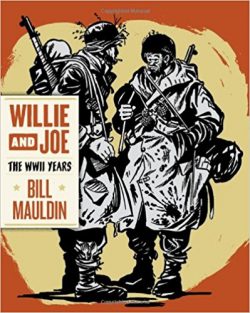
Willie and Joe: the WWII Years


By Bill Mauldin, edited by Todd DePastino (Fantagraphics Books)
ISBN: 978-1-56097-838-1 (HB)                                978-1-60699-439-9 (PB)

During World War II a talented, ambitious young man named William Henry “Bill” Mauldin (29/10/1921 – 22/01/2003) fought “Over There” with the 45th Division of the United States Infantry as well as many other fine units of the army. He learned to hate war and love his brother soldiers – and the American fighting man loved him back.

During his time in the service he produced civilian cartoons for the Oklahoma City Times and The Oklahoman, and intimately effective and authentic material for his Company periodical, 45th Division News, as well as Yank and Stars and Stripes: the US Armed Forces newspapers. Soon after, his cartoons were being reproduced in newspapers across Europe and America.

They mostly featured two slovenly “dogfaces” (a term he popularised) giving their trenchant and laconic view of the war from the muddied tip of the pointiest of Sharp Ends. Willie and Joe, much to the dismay of the brassbound, spit-and-polish military martinets and diplomatic doctrinaires, became the unshakable, everlasting image of the American soldier: continually revealed in all ways and manners the upper echelons of the army would prefer remained top secret.

Willie and Joe even became the subject of two films (Up Front – 1951 and Back at the Front – 1952) whilst Willie made the cover of Time Magazine in 1945, when 23-year old Mauldin won his first Pulitzer Prize.

In 1945 a collection of his drawings, accompanied by a powerfully understated and heartfelt documentary essay, was published by Henry Holt and Co. Up Front was a sensation, telling the American public about the experiences of their sons, brothers, fathers and husbands in a way no historian would or did. A biography, Back Home, followed in 1947.

Mauldin’s anti-war, anti-Idiots-in-Charge-of-War views became increasingly unpopular during the Cold War and despite being a War Hero his increasingly political cartoon work fell out of favour and those efforts are the subject of companion volume Willie & Joe: Back Home. Mauldin left the business to become a journalist and illustrator.

He was a film actor for a while (appearing in Red Badge of Courage with Audie Murphy, among other movies); a war correspondent during the Korean War and – after an unsuccessful campaign for Congress in 1956 – finally returned to newspaper cartooning in 1958.

He retired in 1991 after a long, glittering and award-studded career. Mauldin only drew Willie and Joe four times in that entire period (for an article on the “New Army” in Life magazine; for the funerals of “Soldier’s Generals” Omar Bradley and George C. Marshall; and to eulogize Milton Caniff). His fondest wish had been to kill the iconic dogfaces off on the final day of World War II, but Stars and Stripes vetoed it.

The Willie and Joe cartoons and characters are some of the most enduring and honest symbols of all military history. Every Veterans Day in Peanuts, from1969 to 1999, fellow veteran Charles Schulz had Snoopy turn up at Mauldin’s house to drink Root Beers and tell war stories with an old pal.

When you read Sgt. Rock you’re looking at Mauldin’s legacy, and Archie Goodwin even drafted the shabby professionals for a couple of classy guest-shots in Star-Spangled War Stories (see Showcase Presents the Unknown Soldier).

This immense mostly monochrome compendium (with some very rare colour and sepia items) comes in hardback, softcover and even as an eBook: collecting all Mauldin’s known wartime cartoons and featuring not only the iconic dog-face duo, but also the drawings, illustrations, sketches and gags that led, over 8 years of army life, to their creation.

Mauldin produced most of his work for Regimental and Company newspapers whilst under fire: perfectly capturing the life and context of fellow soldiers – also under battlefield conditions – and gave a glimpse of that unique and bizarre existence to their families and civilians at large, despite constant military censorship and even face-to-face confrontations with Generals such as George Patton, who was perennially incensed at the image the cartoonist presented to the world.

Fortunately, Supreme Commander Eisenhower, if not an actual fan, at least recognised the strategic and morale value of Mauldin’s Star Spangled Banter and Up Front features with indomitable everymen Willie and Joe…

This far removed in time, many of the pieces here might need historical context for modern readers and such is comprehensively provided by the notes section to the rear of the volume. Also included are unpublished pieces and pages, early cartoon works, and rare notes, drafts and sketches.

Most strips, composites and full-page gags, however, are sublimely transparent in their message and meaning: lampooning entrenched stupidity and cupidity, administrative inefficiency and sheer military bloody-mindedness whilst highlighting the miraculous perseverance and unquenchable determination of the ordinary guys to get the job done while defending their only inalienable right – to gripe and goof off whenever the brass weren’t around…

Moreover, Mauldin never patronises the civilians or demonises the enemy: the German and Italians are usually in the same dismal boat as “Our Boys” and only the war and its brass-bound conductors are worthy of his inky ire…

Let’s just hope that in these tense, “ten-seconds-to-doomsday” times the latest batch of brass-hats and political ass-hats keep that in mind and remember what’s always at stake here…

Alternating trenchant cynicism, moral outrage, gallows humour, absurdist observation, shared miseries, staggering sentimentality and the total shock and awe of still being alive every morning, this cartoon catalogue of the Last Just War is a truly breathtaking collection no fan, art-lover, historian or humanitarian can afford to miss.

…And it will make you cry and laugh out loud too.

With a fascinating biography of Mauldin that is as compelling as his art, the mordant wit and desperate camaraderie of his work is more important than ever in an age where increasingly cold and distanced leaders send ever-more innocent lambs to further foreign fields for slaughter. With this volume (and the aforementioned Willie & Joe: Back Home) we should finally be able to restore Mauldin and his works to the forefront of graphic consciousness, because tragically, his message is never going to be out of date…
© 2011 the Estate of William Mauldin. All right reserved.

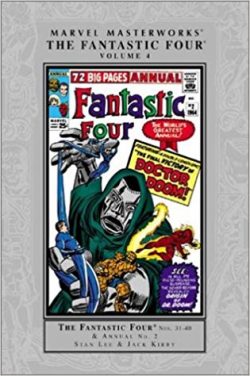
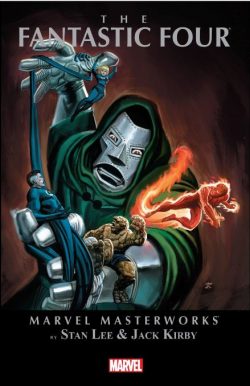
Fantastic Four Marvel Masterworks volume 4


By Stan Lee & Jack Kirby with Chic Stone, Frank Giacoia, Vince Colletta and others (Marvel)
ISBN: 978-0-7851- 4566-0 (PB)                    978-0-7851-1183-2 (HB)

The monolith of Marvel truly began with the adventures of a small super-team who were as much squabbling family as coolly capable costumed champions. Everything the company produces now comes due to the quirky quartet and the groundbreaking, inspired efforts of Stan Lee and Jack Kirby…

This full-colour compendium – also available in digital editions – collects Fantastic Four #31-40 plus the second giant-sized Annual: issues of progressive landmarks spanning September 1964 to July 1965 with Stan & Jack cannily building and consolidating a shared universe with the FF as the central title and most innovative series of that web of cosmic creation.

As seen in the landmark premier issue, maverick scientist Reed Richards, his fiancé Sue Storm, their close friend Ben Grimm – with Sue’s teenaged tag-along brother – survived an ill-starred private space-shot after Cosmic rays penetrated their ship’s inadequate shielding and mutated them all.

Richards’ body became elastic, Sue gained the power to turn invisible, Johnny Storm could turn into living flame and tragic Ben devolved into a shambling, rocky freak.

Without any preamble the wonderment resumes here with the contents of Fantastic Four Annual #2 (September 1964) and Chic Stone inking ‘The Fantastic Origin of Doctor Doom!’

A short (12 page) scene-setter, it momentously details how brilliant gypsy boy Victor Von Doom remakes himself into the most deadly villain in creation, ruthlessly surmounting obstacles such as ethnic oppression, crushing poverty and the shocking stigma of a sorceress mother to rise to national dominance and global status…

Following a fresh batch of rogues starring in ‘A Gallery of the Fantastic Four’s Most Famous Foes!’Super-Skrull, Rama-Tut, Molecule Man, Hate-Monger, The Infant Terrible and Diablo – plus pin-ups of Johnny, Sue, Ben, Alicia Masters and Reed, the past informs the present as the ultimate villain believes he has achieved ‘The Final Victory of Dr. Doom!’, through guile, subterfuge and mind-control but has in fact suffered his most ignominious defeat…

The monthly wonderment resumes with #31’s ‘The Mad Menace of the Macabre Mole Man!’ which precariously balances a loopy plan by the subterranean satrap to steal entire streets of New York City with a portentous sub-plot featuring a mysterious man from Sue’s past, as well as renewing the quartet’s somewhat fractious relationship with the Mighty Avengers…

The secret of that mystery man is revealed in ‘Death of a Hero!: a powerful tale of tragedy and regret spanning two galaxies starring the uniquely villainous Invincible Man… who is not at all what he seems…

Supplemented by a glorious Kirby & Stone ‘Prince Namor Pin-up’, ‘Side-by-Side with Sub-Mariner!’ follows, bringing the aquatic anti-hero one step closer to his own series as the team lend surreptitious aid to the embattled undersea monarch against deadly barbarian Attuma who makes his debut in FF #33.

In ‘A House Divided!’ the team are nearly destroyed by Mr. Gregory Hungerford Gideon, the power-hungry Richest Man in the World after which (following a wry ‘Yancy Street Pin-Up’) ‘Calamity on the Campus!’ sees the team visit Reed’s old Alma Mater in a tale designed to pander to the burgeoning college fan-base Marvel was cultivating.

Incorporating a cameo role for then prospective college student Peter Parker, the rousing yarn brings back demon alchemist Diablo whilst introducing the monstrous misunderstood homunculus Dragon Man.

Fantastic Four #36 premieres the team’s theoretical nemeses ‘The Frightful Four’: a team of villains comprising The Wizard, Sandman, Trapster (he was still Paste Pot-Pete here, but not for long) plus enigmatic new character Madame Medusa, whose origin was to have a huge impact on the heroes in months to come…

Most notable in this auspicious, action-packed but inconclusive duel is the announcement after many months of Reed and Sue’s engagement – in itself a rare event in the realm of comicbooks.

Issue #37 finds the team spectacularly travelling to the homeworld of the shape-shifting Skrulls in search of justice or vengeance in ‘Behold! A Distant Star!’ They return only to be ‘Defeated by the Frightful Four!’ in FF #38: a sinister sneak attack and catastrophic clash of opposing forces with a startling cliff-hanger that marked Chic Stone’s departure in suitably epic manner.

Frank Giacoia – under the pseudonym Frank Ray – stepped in to ink #39’s ‘A Blind Man Shall Lead Them!’ wherein a suddenly-powerless Fantastic Four are targeted by an enraged Doctor Doom with only sightless vigilante Daredevil offering a chance to keep them alive. The tale – and this volume – concludes in #40 with ‘The Battle of the Baxter Building’ as Vince Colletta assumes the inking duties for a bombastic conclusion that perfectly displays the indomitable power, overwhelming pathos and undeniable heroism of the brutish Thing.

These are the tales that built a comics empire. The verve, imagination and sheer enthusiasm shines through and the wonder is there for you to share. If you’ve never thrilled to these spectacular sagas then this book of marvels is the perfect key to another world and time.
© 1964, 1965, 2017 Marvel Characters, Inc. All rights reserved.