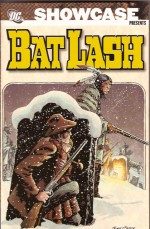
Showcase Presents Bat Lash


By Sergio Aragonés, Denny O’Neil, Nick Cardy & various (DC Comics)
ISBN: 978-1-4012-2295-6

By 1968 the glory-days of comicbooks as a cheap mass-market entertainment were over. Spiralling costs, “free” alternatives like television and an increasing inability to connect with the mainstream markets were leaving the industry at the mercy of dedicated fan-groups with specialised, even limited, interests and worse yet, gradually becoming dependent on genre-trends to maintain sales.

Editorial Director Carmine Infantino, a thirty-year veteran, looked for ways to bolster DC business (already suffering a concerted attack by the seemingly unstoppable rise of Marvel Comics) and clearly remembered the old publisher’s maxim “do something old, and make it look new”.

Although traditional cowboy yarns (which had dominated both TV and cinema screens since the 1950s) were also in decline, novel spins such as Wild, Wild West and Italian “Spaghetti Westerns” were popular, and would be a lot easier to transform into comics material than the burgeoning Supernatural craze that would soon come to dominate the next half-decade – but only after the repressive and self-inflicted Comics Code was finally re-written.

Thus Spanish/Mexican cartoonist (and occasional actor) Sergio Aragonés Domenech was asked by Infantino and Editor Joe Orlando to add some unique contemporary twists to a cowboy hero they had concocted with the aid of the legendary Sheldon Mayer. Although many hands had already stirred the plot, the irrepressible Aragonés – with dialogue-provider Denny O’Neil – rendered and remade the world-weary, lonely saddle-tramp archetype into a something completely fresh and original – at least in comicbook terms…

The result was a seemingly amoral wanderer with an aesthete’s sensibilities, a pacifist’s good intentions, and the hair-trigger capabilities of a top gun-for-hire. …and played for sardonic, tongue-in-cheek laughs…

Roguish, sexually promiscuous and always getting into trouble because his heart was bigger than his charlatan’s façade, Bat Lash caroused, cavorted and killed his way across the West – including Mexico – in one Showcase try-out (#76, August 1968) and seven bi-monthly issues spanning October/November 1968 through October/November 1969 before mediocre sales and a turbulent marketplace finally brought him low.

A lost masterpiece of the era and a splendid variation on the traditional western genre, Bat Lash’s exploits are criminally uncelebrated and – as far as I know – only available in this slim (a mere 240 pages) monochrome tome gathering all those ahead-of-their-times adventures plus later well-meaning revivals from DC Special Series #16 and a short run from the back of rival and fellow controversial cowboy Jonah Hex.

The greatest strength of Bat Lash stories was that they took well-worn plots and added a sardonic spin and breakneck pace to keep them rapidly rattling along. It also didn’t hurt that the majority of the art was produced by unsung genius Nick Cardy, whose light touch and unparalleled ability to draw beautiful women kept young male readers (those who bothered to try the comic) glued to the pages.

The drama begins with eponymous Showcase introduction ‘Bat Lash’ in which the flower-loving nomad wanders into the town of Welcome in search of a fancy feed only to find a gang of thugs and a mystery poisoner in the process of driving out the entire populace…

No “Suthun Gen’leman” – no matter how far he might have fallen – could allow such a situation to proceed…

Mere months later – which leads me to conclude that the Editorial Powers-That-Be were a mite overconfident with their western wonder – Bat Lash #1 hit the stands, carrying on the episodic hi-jinks in ‘Bat Lash… We’re A-comin’ Ta Get You’ as the laconic Lothario narrowly escapes a lynching only to stumble into the murder of a monk carrying part of a treasure map. Is it his finer instincts seeking retribution for the holy man, the monk’s stunning niece or the glittering temptation of Spanish gold that prompts the rootin’ tootin’ action that follows?

In #2 ‘Melinda’s Doll’ opens with a shotgun wedding, expands as the drifter becomes unwilling guardian to a little girl orphaned by gun-runners and brilliantly climaxes with unexpected poignancy and calamitous gunplay…

A radical departure – even for this offbeat series – occurs in ‘Samantha and the Judge’ when the easy Epicurean – whilst reluctantly trying out the temporary role of Deputy Sheriff – encounters a hanging judge who believes he is a Roman Emperor, after which ‘Bat Lash in Mexico!’ sees the mild-mannered wanderer cross the border and stumble into a revolutionary crisis in issue #4.

Soon embroiled in an assassination plot; Bat needs all his wits and a big bunch of luck and guile in a tale as much gritty as witty which truly displays the hidden emotional depths of the rambling man…

Still in Mexico for #5, the impish creative team pit the dashing rogue against his near-equal in raffish charm and gunplay when he meets a deadly bandito in ‘Wanted: Sergio Aragonés!’ Of course, they are both outmatched and overwhelmed by the delightfully deadly Senorita Maribel…

Mike Sekowsky pencilled most of issue #6 for Cardy to ink: a dark, tragic origin tale of ‘Revenge!’ which reveals the anger and tears behind the laughter, before Bat Lash #7 and final foray ‘Brothers’ sets our far-from-heroic protagonist on the trail of a younger sibling he had believed dead for a decade…

And that’s where it was left until 1978 when giant sized anthology comic DC Special Series (#16) produced a Western-themed issue for which O’Neil and artist George Moliterni crafted a slick, sly murder-mystery set in San Francisco. Here an older Bat Lash is getting by as a professional gambler until the idyllic life disappears, enveloped in a deadly war between Irish gangs and Chinese immigrant workers.

This compelling, enjoyable yarn eventually led to a four-issue run as back-up in Jonah Hex #49-52 (encompassing June-September 1981) wherein the charming chancer wins a New Orleans bordello in a river-boat card game and, despite numerous attempts to kill him, eventually takes full possession of the Bourbon Street Social Club…

Is he that hungry for lazy luxury and female companionship, or is it perhaps that he knows a million dollars in Confederate gold was hidden there in the dying days of the Civil War and never found…?

Scripter Len Wein and the incomparable Dan Spiegle continued and concluded this utterly under-appreciated character’s solo exploits in fine style; which only leaves it to you to hunt down this brash and bedazzling book or – if you are a truly passionate fan/humanitarian – bombard DC’s editors with (polite) requests and enquiries until they are convinced to give the foppishly reluctant gunslinger the comprehensive compilation – even digitally – that he so deserves…

Enchanting, exciting, wry and wonderful, this is a book for all readers of fun fiction and a superb example of comics’ outreach potential.
© 1968, 1969, 1978, 2006 DC Comics. All Rights Reserved.
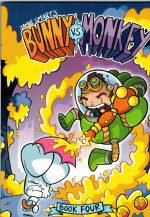
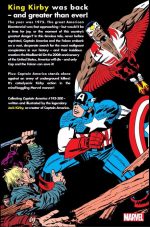
Bunny vs Monkey Book 4


By Jamie Smart (David Fickling Books)
ISBN: 978-1-910989-79-1

Since its premiere in 2012, The Phoenix has offered humour, adventure, quizzes, puzzles and educational material in a traditional-seeming weekly comics anthology for girls and boys. The vibrant parade of cartoon fun and fantasy has won praise from the Great and the Good, child literacy experts and the only people who really count – a dedicated and growing legion of totally engaged kids and parents who read it avidly…

The publishers would be crazy not to gather their greatest serial hits into a line of fabulously engaging album compilations, but they’re not so they do. The latest of these is a fourth fabulous paperback-bound bout of ongoing conflict gripping a once-chummy woodland waif and interloping, grandeur-hungry hairy-brained simian…

Concocted with feverishly gleeful inspiration by Jamie Smart (Fish Head Steve!), Bunny vs. Monkey has been a Phoenix fixture from the first issue: recounting a madcap vendetta between animal arch-enemies set amidst an idyllic arcadia which masquerades as a more-or-less mundane English Wood.

Book Four boldly delves deep into the pasts of the uncanny assortment of odd critters littering and loitering around the bucolic paradise – and not before time – as the rapidly encroaching Hyoomanz are now well underway in building something called a motorway through the sylvan glades and apparently unprotected parks…

Sadly all the tail-biting tension does nothing to derail the ongoing but so-far localised war of wits and wonder-weapons which began when an obnoxious simian intruder popped up after a disastrous space shot went awry.

Having crash-landed in Crinkle Woods – a scant few miles from his blast-off site – Monkey believes himself the rightful owner of a strange new world, despite the continual efforts of reasonable, sensible, genteel, contemplative Bunny. For all his patience, propriety and good breeding, the laid-back lepine just cannot contain the incorrigible idiot ape, who is a rude, noise-loving, chaos-creating troublemaker…

These collected volumes dispense disaster-drenched doses of daftness in six-month courses of ill-treatment and this book describes Year Two: July-December after another vivid Contents page and character catch-ups and score-cards, plus a double-page spread pinup…

The already fraught atmosphere of the forest gets another unnecessary shot of adrenaline as ‘A New Challenger Appears’ in the fuzzy form of The Maniacal Badger, resolutely challenging resident reprobate Skunky (a brilliant inventor with a bombastic line in animal-themed atrocity-weapons and a secret agenda of his own) for the title of top mad scientist, after which Monkey wrecks a playground but loses face once Bunny gets him to share a ‘See-Saw!’…

Skunky horrifies blithering innocents Weenie Squirrel and Pig when his ‘Grav-O-Box’ sets the river running backwards but when co-conspirator Monkey ruins the test flight of his Hot Air Balloon Jet Engines and propels them ‘Around the Woods in 80 Seconds’ the malcontents themselves are the only ones to suffer…

Sinking into over-indulgence the simian stinker has to take drastic action after becoming a ‘Fat Monkey’ before stealing some building machinery from the Hyoomanz in ‘Monkey at Work’…

Skunky upsets the balance of nature – and value of custard – after creating aberrant lifeform ‘The Wobbles!’ before every animal pulls together when a Hyooman wanders in and Bunny orders ‘Battle Stations’. Skunky then stupidly makes things so much worse by splicing Science to Nature and releasing ‘The Vines’…

An annoying game of ‘Poink!’ drives everybody bonkers but welcome terror returns after the colossal ‘Monkeytron!’ rampages through the trees, just in time to greet rocket scientists searching for a test monkey they lost in the very first episode…

Pig’s origin is revealed in the cleverly obfuscatory (not!) ‘A Pig on the Range’ after which Park Ranger Derek P. Brigstocke has a close encounter with a net and ‘A Bear Bum!’ and irrepressible yet lonely cyber-crocodile ‘The Incredible Metal Steve’ undergoes a ferocious metal-morphosis even as ‘Bunny Vs. Monkey!’ finds our notional stars getting back to bruising basics in their never-ending struggle…

After a troop of Hyooman cub scouts fail to ‘Catch That Bunny’ Pig and Squirrel dig up ‘Worms’ and take the slimy earth-movers fishing, but not in any way you’ve seen before, whilst ‘Goodbye, Bunny’ finds our pacifist protagonist plunging deep into the distant city in search of his origins even as Pig becomes a dragon-slaying knight in ‘Arise, Lord Wuffywuff!’

…And none too soon as it happens, since with snow falling the Maniacal Badger returns to worry the woodland folk with ‘The Thing!’ he’d stolen from the Hyoomanz Building Site, prompting a desperate search for natural leader Bunny: a trail that takes them to a comfortable suburban hutch and ‘A Place Where You Belong’…

Reunited with the Crinkle Woods critters, Bunny finds a time machine and – by accidentally visiting ‘Once Upon a Time’ – discovers the true secret of Skunky’s vast and evil intellect in an extra-long extravaganza which segues straight into the formation of sadly deficient superhero team the Rather Good Squad in ‘Choose Your Side!’

With Christmas fast approaching, festivities are briefly disrupted by marauding ‘Snow Meanies’ before the Builders try secretly bulldozing the Woods only to be stopped by Monkey, gleefully brain-battered, bewildered former stuntman Action Beaver and ‘The Real Santa!’…

The madcap mayhem concludes with a portentous epilogue as ‘Door B’ opens to reveal the ultimate triumph of the ultimate villainous mastermind, but that’s…

To Be Continued

The absolute acme of absurdist adventure, Bunny Vs Monkey is well on the way to becoming a British Institution of weird wit, brilliant invention and superb cartooning: an utterly irresistible joy for grown-ups of every vintage, even those who claim they only get it for their kids…
Text and illustrations © Jamie Smart 2017. All rights reserved.

Bunny Vs Monkey Book Three will be released on 6th July 2017 and is available for pre-order now.

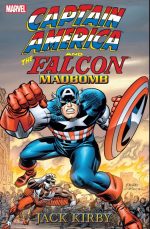
Captain America and the Falcon: Madbomb


By Jack Kirby with Frank Giacoia, D. Bruce Berry & various (Marvel)
ISBN: 978-0-7851-1557-1

Created by Joe Simon & Jack Kirby in an era of frantic patriotic fervour, Captain America was a dynamic and highly visible response to the horrors of Nazism and the threat of Liberty’s loss.

He quickly lost focus and popularity after hostilities ceased: fading during post-war reconstruction to briefly reappear after the Korean War: a harder, darker sentinel ferreting out monsters, subversives and the “commies” who lurked under every American bed. Then he vanished once more until the burgeoning Marvel Age resurrected him just in time to experience the Land of the Free’s most turbulent and culturally divisive era.

He quickly became a mainstay of the Marvel Revolution during the Swinging Sixties but lost his way somewhat after that, except for a glittering period under scripter Steve Englehart. Eventually however he too moved on and out in the middle of the 1970s.

Meanwhile, after nearly a decade drafting almost all of Marvel’s successes, Jack Kirby had jumped ship to arch-rival DC in 1971, creating a whole new mythology and dynamically inspiring pantheon. Eventually he accepted that even he could never win against any publishing company’s excessive pressure to produce whilst enduring micro-managing editorial interference.

Seeing which way the winds were blowing, Kirby exploded back into the Marvel Universe in 1976 with a promise of free rein, concocting a stunning wave of iconic creations (2001: a Space Odyssey, Machine Man, The Eternals, Devil Dinosaur). Simultaneously he was handed control of two of his previous co-creations – firmly established characters the Black Panther and Captain America – to do with as he wished…

His return was much hyped at the time but swiftly became controversial as his intensely personal visions paid little lip service to company continuity as Jack went explosively his own way.

Whilst those new works quickly found many friends, his tenure on those earlier inventions drastically divided the fan base.

Kirby was never slavishly wedded to tight continuity and preferred, in many ways, to treat his stints on Cap and the Panther as creative “Day Ones”. This was never more apparent than in the pages of the Star-Spangled Sentinel of Liberty…

This sterling collection reprints Captain America #193-200 (January-August 1976) and when Kirby came aboard as writer, artist and editor, he had big plans for the nation’s premiere comicbook patriotic symbol in the year of the nation’s 200th anniversary…

Some of them materialised in Captain America’s Bicentennial Battles (a companion volume to this trade paperback/eBook collection I’ll get around to in the fullness of time) but the regular title was reserved for the really Big Show…

After finally accepting the worth of a nation Captain America and the Falcon #193 concentrated on saving it with the opening salvo in an epic storyline leading up the immortal super-soldier’s own 200th issue. Gone now was all the soul-searching and breastbeating about what the country was or symbolised: America was in peril and its sentinel was ready to roar into action…

Inked by fellow veteran Frank Giacoia ‘The Madbomb’ opened by revealing a ‘Screamer in the Brain!’ as a miniscule new weapon is triggered by unknown terrorists, reducing an entire city block to rubble by driving the populace into a mass psychotic frenzy. Experiencing the madness at close hand Cap and the Falcon are swiftly seconded by the US government to ferret out the culprits and find a full-scale device hidden somewhere in the vast melting pot of America…

‘The Trojan Horde’ introduces plutocratic mastermind William Taurey who intends to correct history, unmake the American Revolution and restore an aristocracy. Using inestimable wealth, a cabal of similarly disgruntled millionaire elitists, an army of mercenaries, slaves cruelly transformed into genetic freaks and other cutting edge super-science atrocities, the maniac intends to forever eradicate the Republic.

Moreover, when he was finally ascended to what he considered his rightful place in charge, the first thing Taurey intends is to hunt down the last descendent of Colonial hero Steven Rogers, who rebel who had killed Taurey’s Monarchist ancestor and allowed Washington to win the War of Independence…

Little did he suspect the subject of his wrath had already infiltrated his secret army…

In ‘It’s 1984!’ (inked by D. Bruce Berry), Cap and Falcon get a first-hand look at the kind of world Taurey advocates, battling their way through monsters, mercenaries and a mob fuelled by modern mind-control and pacified by Bread and Circuses, before ultra-spoiled elitist Cheer Chadwick takes the undercover heroes under her bored, privileged and patronising wing…

Sadly, even she can’t keep her new pets from being sucked into the bloody, brutal Circus section of the New Society and American loyalists are forced to fight for their lives in ultra-modern gladiatorial mode in the ‘Kill-Derby’ even as the US army raids the secret base in ‘The Rocks are Burning!’ (with Giacoia inks).

Soon, Cap and Falcon realise it has all been for nought since the colossal full-sized Mad-Bomb is still active but hidden somewhere else in their vast Home of the Brave…

The offbeat ‘Captain America’s Love Story’ then takes a decidedly different and desperate track as the Bastion of Freedom must romance a sick woman to get to her father – the inventor of the deadly mind-shatter device – after which ‘The Man Who Sold the United States’ accelerates to full speed for all-out action as the hard-pressed heroes race a countdown to national disaster with the Bomb finally triggering by ‘Dawn’s Early Light!’ in a spectacular showdown climax which surpasses every expectation.

This supremely thrilling collection also has room for a selection of Kirby cover roughs and un-inked pencils that will delight art fans and aficionados. The King’s commitment to wholesome adventure, breakneck action and breathless wonderment, combined with his absolute mastery of the comic page and unceasing quest for the Next Big Thrill, always make for a captivating read and this stuff is amongst the most bombastic and captivating material he ever produced.

A fast-paced, action-packed, totally engrossing Fights ‘n’ Tights Masterpieces no fan should ignore and – above all else – a furiously fabulously fun fable of a true American Dream…
© 1975, 1976, 2004, 2016 Marvel Characters, Inc. All rights reserved.

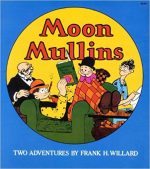
Moon Mullins: Two Adventures


By Frank H. Willard (Dover)
ISBN: 978-0486232379

An immensely popular newspaper strip in its day, Moon Mullins grew out of gentle – if bucolically rambunctious – Irish ethnic humour to become the comedy soap opera (one of the very first of its kind) that absolutely everybody followed.

Create by Frank Willard – a two-fisted, no-nonsense type with a cracking ear for dialogue, an unerring eye for winning social faux pas and an incorrigible sense of fun – the strip debuted on June 19th 1923. Willard wrote and drew both monochrome dailies and flashy Sunday colour segments until his death in 1958, whereupon his assistant Ferdinand “Ferd” Johnson (who began working with Willard scant months after the strip launched, and continued even whilst working on his own strips Texas Slim and Lovey-Dovey) assumed full authorship until his own retirement in 1991 – a gloriously uninterrupted tenure of 68 years.

The feature was marketed around the globe by the mighty Chicago Tribune/New York News Syndicate, and recounted the rowdily raucous, ribald, hand-to-mouth, lowbrow life and tribulations of Moonshine Mullins, lovable rogue and unsuccessful prize-fighter who was just getting by in tough circumstances.

The doughty rapscallion spent his time in bars, on the streets (sometimes the gutters) and most tellingly at the pokey boarding house of Emmy Schmaltz, located at 1323 Wump Street. Mullins was amiable and good-natured, liked to fight, loved to gamble, was slick with the ladies and had the worst friends imaginable…

He also had an iconic little brother, named Kayo, who was the visual prototype for every one of those tough-kid heroes in Derby hats (“bowlers” to us Brits) populating Simon & Kirby’s early work.

Brooklyn and Scrapper and all those other two-fisted, langwitch-manglin’ cynical, sassy tykes took their cues from the kid who often had the last word. The other mainstay of the strip was lanky landlady Emmy Schmaltz; a nosy interfering busybody with inflated airs and graces and a grand line in infectious catchphrases.

Other regulars included Uncle Willie – Moon’s utterly dissolute bad relation; saucy, flighty flapper (Little) Egypt – our hero’s occasional girlfriend and a dead ringer for silent film sensation Louise Brooks (and, incomprehensibly, Emmy’s niece), plus Mushmouth – a black character who will make modern audiences wince with social guilt and societal horror – although to be fair, in this strip which celebrated and venerated working class culture, he was far more a friend than foil, stooge or patsy.

One final regular was affluent Lord Plushbottom, whose eye for the ladies – particularly Egypt – constantly brought him sniffing around the boarding house. At the period of the tales in this volume he is a jolly English bachelor, completely unaware that the spidery spinster has set her cap for him. In 1933, after a decade of hilarious pursuit, she finally got her man…

Surprisingly still readily available as a paperback book (surely, if ever anything was crying out to be suitably and permanently digitally archived it’s vintage strips such as this), Moon Mullins: Two Adventures collects and reprints two marvellous extended romps originally reformatted from the newspapers and released in 1929 and 1931 by Cupples & Leon – a publishing company which specialized in reprinting popular strips in lush, black and white albums; very much a precursor of both comicbooks and today’s graphic novels.

In the first story Mullins is given a car in payment for $30 he foolishly lent Emmy’s ne’er-do-well brother Ziggy, unaware the vehicle is stolen. This is a delightful shambolic, knockabout episode with striking slapstick and clever intrigues resulting in the entire cast behind bars at one time or another.

It should be remembered that the cops in these circumstances are always everybody’s enemy and fools unto themselves…

The second tale describes how Plushbottom treats Emmy and Egypt to a Florida holiday, unaware that he’s also paying for Moon and Mushmouth to join them after a brilliantly inventive and madcap road-trip.

Each adventure is delivered via the incredibly difficult method of one complete gag-strip per day combining to form an over-arching narrative… and they’re all wonderfully drawn and still funny. If you’re a fan of classic W.C. Fields, Marx Brothers and other giants of vintage comedy you must see this stuff…

Moon Mullins was one of the key strips in the development of both cartooning and graphic narrative; hugely influential, seditiously engaging, constantly entertaining and perfectly drawn. With such a wealth of brilliant material surely, it’s only a matter of time until some fine publisher releases a definitive series of collected editions…
© 1929, 1931 The Chicago Tribune. All rights reserved.

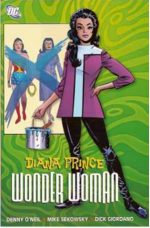
Diana Prince, Wonder Woman volume 1


By Mike Sekowsky, Denny O’Neil, Dick Giordano & various (DC Comics)
ISBN: 978-1-84576-776-1

With Wonder Woman once again a media darling and screen superstar, I think it’s high time I revisited a favourite trade paperback collection whilst conspicuously grinding an old axe of mine. Diana Prince, Wonder Woman was originally collected in the first decade of this century, celebrating a critical period in the long life of the amazing Amazon but has dropped out of print now and isn’t even available in a digital format. That’s just wrong, wrong, wrong… especially as it portrayed her as a mere mortal overcoming astounding odds with no more than wits, grace, training and a formidable fashion-sense…

I hope you’ll forgive me that heartfelt outburst, but with the movie hype in full blast, it’s about time DC Comics re-released one of the most appealing and memorable sequences in the long history of the most famous female comic character in the world…

In 1968 superhero comics were once again in decline and publishers were looking for ways to stay profitable – or even just in business – as audience tastes changed. Back then, with the entire industry dependent on newsstand sales, if you weren’t popular, you died. Handing over the hoary, venerable and increasingly moribund Wonder Woman title to Editor Jack Miller and Mike Sekowsky, the bosses sat back and waited for their eventual failure, and prepared to cancel the only female superhero in the marketplace…

The superbly eccentric art of Sekowsky had been a DC mainstay for decades, and he had also scored big with Man from Uncle fans at Gold Key and at Tower Comics with T.H.U.N.D.E.R. Agents and war comic Fight the Enemy!

His unique take on the Justice League of America had contributed to its overwhelming success, and now he was stretching himself with a number of experimental projects, focussed on the teen and youth-markets.

Tapping into the teen zeitgeist with the Easy Rider styled drama Jason’s Quest proved ultimately unsuccessful, but with the Metal Men and the hopelessly hidebound Wonder Woman he had much greater impact. Sekowsky would ultimately work the same magic with Supergirl in Adventure Comics (another epic and intriguing run of tales long overdue for compilation).

This first volume (collecting Wonder Woman #178-184 of the comic book series, spanning October 1968 to October 1969) shows just how bold were those changes to the Amazing Amazon’s career. With neophyte scripter Denny O’Neil on board for the first four tales, we see the old star-spangled stalwart one last time as she clears long-time boyfriend Colonel Steve Trevor of a murder-plot in ‘Wonder Woman’s Rival’ before everything changes…

Issue #179 heralded huge changes as ‘Wonder Woman’s Last Battle’ saw the immortal Amazons of Paradise Island forced to abandon our dimensional plane, taking with them all their magic – including all Wonder Woman’s astounding gadgets and weapons such as the Invisible Plane and Golden Lasso – and even her mighty superpowers. Despite all that her love for Steve compels her to remain on Earth.

Effectively becoming her own secret identity of Diana Prince, she resolves to fight injustice as a mortal (#180 ‘A Death for Diana’, February 1969). A meeting with the blind Buddhist monk I Ching shows her how and she becomes his pupil; training as a martial artist, and quickly becoming embroiled in the schemes of a would-be world-conqueror after incurring ‘The Wrath of Doctor Cyber’. And then Steve Trevor is branded a traitor and disappears…

When Sekowsky took over the writing himself (with the fifth tale ‘A Time to Love, A Time to Die’) the rip-roaring adventures moved in some wildly diverse directions, including high-fashion and high fantasy…

In #183 (August 1969) older fans got a surprise treat after ‘Return to Paradise Island’ found Diana and Ching traversing myriad planes of existence to lost dimensions to join her sister Amazons and fabled heroes such as King Arthur, Lancelot, Siegfried and Roland in a cataclysmic clash against the monster-filled armies of the old adversary Mars, God of War, grimly culminating in ‘The Last Battle!’…

With apparently nothing to lose, the switch to amateur espionage agent/peripatetic troubleshooter in the trendy footsteps of such popular TV characters as Emma Peel, The Girl from Uncle and Honey West – not to mention our own ultimate comic strip action-heroine Modesty Blaise – seemed like desperation, but the series was brilliantly written and fantastically drawn, with master inker Dick Giordano adding a sleek veneer of gloss and glamour to the oh-so-readable proceedings.

Steeped heavily in Hippie counter-culture and the Mod-fashion explosion, the New Wonder Woman quickly found a dedicated fan-base. Sales may not have rocketed but they stopped sliding and the character was one of the few frantic, scrabbling refits of that era (even Green Lantern/Green Arrow, X-Men and Silver Surfer not faring quite so well) to avoid cancellation…

Eventually, as times changed, the magical Amazons returned and Wonder Woman once again became a super-powerful creature, but that period of cool, hip, bravely human heroism and drama on an intimate scale stands out as a self-contained high-point of quality in a largely bland career.

That modern readers can’t readily experience this most enjoyable reading experiences is a truly sad state of affairs and one which hopefully be rectified as matter of extreme urgency…
© 1968, 1969, 2008 DC Comics. All Rights Reserved.
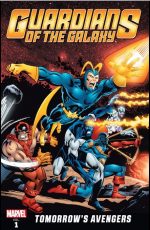
Guardians of the Galaxy: Tomorrow’s Avengers volume 1


By Arnold Drake, Steve Gerber, Gene Colan, Sal Buscema, Don Heck, Al Milgrom, John Buscema & various (Marvel)
ISBN: 978-0-7851-6687-0

With more Marvel Cinematic movies doing bonanza summer business around the world, here’s a timely trade paperback collection designed to perfectly augment cinematic exposure and cater to film fans wanting to follow up with a comics experience. If you want you can look at this on screen, too, through its digital edition…

This treasury of torrid tales gathers landmarks and key moments from Marvel Super Heroes #18, Marvel Two-In-One #4-5, Giant-Size Defenders #5, Defenders #26-29 and the time-busting team’s first solo series as it originally appeared in Marvel Presents #3-12, all monumentally spanning January 1969 to August 1977: a radically different set-up than that of the silver screen stars, but grand comicbook sci fi fare all the same…

One thing to recall at all times though is that there are two distinct and separate iterations of the team. The films concentrate on the second, but there are inescapable connections between them so pay close attention here…

Although heralded since its genesis in the early 1960s with making superheroes more realistic, The House of Ideas also always maintained a close connection with outlandish and outrageous cosmic calamity (as best exemplified in their pre-superhero “monsters-in-furry-underpants” days), and this pantheon of much-travelled space stalwarts maintain that delightful “Anything Goes” attitude in all of their many and varied iterations.

This titanic tome’s blistering battle-fest begins with ‘Guardians of the Galaxy: Earth Shall Overcome!’: first seen in combination new-concept try-out/Golden Age reprint vehicle Marvel Super Heroes #18 (cover-dated January 1969).

The terse, grittily engaging episode introduces a disparate band of freedom fighters united to save Earth from occupation and humanity from extinction at the scaly hands of the sinister, reptilian Brotherhood of Badoon.

It all starts when Jovian militia-man Charlie-27 returns home from a six-month tour of scout duty to find his entire colony subjugated by invading aliens. Fighting free, he jumps into a randomly programmed teleporter and emerges on Pluto, just in time to scotch the escape of crystalline scientist Martinex.

Both are examples of radical human genetic engineering: subspecies carefully designed to populate and colonise Sol system’s outer planets but now possibly the last of their kinds. After helping the mineral man complete his mission of sabotage – blowing up potentially useful material before the Badoon can get their hands on it – the odd couple set the teleporter for Earth and jump…

Unfortunately, the invaders have already taken the homeworld…

The Supreme Badoon Elite are there, busily mocking the oldest Earthman alive. Major Vance Astro had been humanity’s first intersolar astronaut; solo flying in cold sleep to Alpha Centauri at a plodding fraction of the speed of light.

When he got there 1000 years later, humanity was waiting for him, having cracked trans-luminal speeds a mere two centuries after he took off. Now he and Centauri aborigine Yondu are a comedy exhibit for the cruel reptilian conquerors actively eradicating both of their races…

The smug invaders are utterly overwhelmed when Astro breaks free, utilising psionic powers he developed in hibernation, before Yondu butchers them with the sound-controlled energy arrows he carries.

In their pell-mell flight, the pair stumble across incoming Martinex and Charlie-27 and a new legend of valiant resistance was born…

The eccentric team, as originally envisioned by Arnold Drake, Gene Colan & Mike Esposito in 1968, were presented to an audience undergoing immense social change, with dissent in the air, riot in the streets and with the Vietnam War on their TV screens every night.

Perhaps the jingoistic militaristic overtones were off-putting or maybe the tenor of the times were against the Guardians, since costumed hero titles were entering a temporary downturn, but whatever the reason the feature was a rare “Miss” for Early Marvel and the futuristic freedom fighters were not seen again for years.

They floated in limbo until 1974 when Steve Gerber incorporated them into some of his assigned titles (Marvel Two-In-One and The Defenders), wherein assorted 20th century champions travelled a millennium into the future to ensure humanity’s survival…

From MTIO #4, ‘Doomsday 3014!’ (Gerber, Sal Buscema & Frank Giacoia) finds Ben Grimm and Captain America catapulted into the 31st century to save Earth from enslavement by the reptilian Badoon, concluding an issue later as the Guardians of the Galaxy climb aboard the Freedom Rocket to help the time-lost heroes liberate occupied New York before returning home.

The fabulous Future Force repaid that visit in Giant Sized Defenders #5: a diverse-hands production with the story ‘Eelar Moves in Mysterious Ways’ credited to Gerber, Gerry Conway, Roger Slifer, Len Wein, Chris Claremont & Scott Edelman.

Dependable Don Heck & Mike Esposito drew the surprisingly satisfying cohesive results: how the Defenders met with future heroes Guardians of the Galaxy in a time-twisting disaster yarn where their very presence seemed to cause nature to run wild, which only set up the next continued epic arc for the monthly comicbook…

‘Savage Time’ (Defenders #26 August, by Gerber, Buscema & Colletta) saw Hulk, Doctor Strange, Nighthawk and Valkyrie accompany the Guardians back to 3015AD in a bold bid to liberate the last survivors of mankind from the all-conquering and genocidal Badoon: a mission which continued with ‘Three Worlds to Conquer!’, then became infinitely more complicated when ‘My Mother, The Badoon!’ revealed the sex-based divisions that so compellingly motivated the marauding lizard-men, before triumphantly climaxing in the rousingly impassioned ‘Let My Planet Go!’ Along the way they had picked up – or been unwillingly allied with – an enigmatic stellar powerhouse dubbed Starhawk: a glib and unfriendly type who called himself “one who knows” and infuriatingly usually did, even if he never shared any useful intel…

Rejuvenated by exposure the squad rededicated themselves to liberating star-scattered Mankind and having adventures, eventually winning a short-lived series in Marvel Presents (#3-12, February 1976-August 1977) before cancellation left them roaming the Marvel Universe as perennial guest-stars in such cosmically-tinged titles as Thor and the Avengers.

That run began with ‘Just Another Planet Story!’ by Gerber, Al Milgrom & Pablo Marcos with the Badoon removed from a triumphantly exultant Earth and the now purposeless Guardians realising that peace and freedom were not for them…

Unable to adapt to civilian life the team reassembled, stole their old starship The Captain America and rocketed off into the void…

Those episodes were augmented by text features ‘Readers Space’ episodically delineating the future history of Marvel Universe Mankind – using various company sci fi series as mile markers, way stations and signposts – and firmly establishing a timeline which would endure for decades.

Gerber & Milgrom descended ‘Into the Maw of Madness!’ in Marvel Presents #4 as the noble nomads picked up Nikki, a feisty teenage Mercurian survivor of the Badoon invasion, and detected the first inklings that something vast, alien and inimical was coming from “out there” to consume our galaxy…

They also met cosmic enigma Starhawk’s better half Aleta, a glamorous woman and mother of his three children, who just happened to be sharing his body…

When the intrepid star-farers and their ship are swallowed by the systems-wide monster Karanada they find a universe inside the undead beast and end up stranded on the ‘Planet of the Absurd’ (Gerber, Milgrom & Howard Chaykin) allowing the author to indulge his taste for political and social satire as our heroes seek to escape a society of vast species variety somehow mimicking 20th century Earth…

Escape achieved the fantastic fantasy escalates into high gear when the crash into the heart of the invading force and on a galaxy-sized planet in humanoid form. ‘The Topographical Man’ (Gerber, Milgrom & Terry Austin) holds all the answers they seek in a bizarre sidereal nunnery where Nikki is asked to make a supreme sacrifice that changes Vance’s life forever in ways he never imagined as they spiritually unite to ‘Embrace the Void!’ in a metaphysical rollercoaster (inked by Bob Wiacek) which finally ends the menace of the soul-sucking galactic devourer.

At this time deadlines were a critical problem and Marvel Presents #8 adapted a story from Silver Surfer #2 (1968) as the team picked up an old Badoon data-log and learned ‘Once Upon a Time… the Silver Surfer!’ saved Earth from alien predators in two-layered yarn correctly attributed to Gerber, Milgrom, Wiacek, Stan Lee, John Buscema & Joe Sinnott…

Back on track for MP #9, Gerber & Milgrom revealed that ‘Breaking Up is Death to Do!’ as the Guardians’ ship is ambushed by the predatory Reivers of Arcturus, leading into the long-awaited and shocking origins of Starhawk and Aleta and setting the assembled heroes on a doomed quest to save the bonded couple’s children from brainwashing, mutation and murder by their own grandfather in ‘Death-Bird Rising!’ and the concluding ‘At War with Arcturus!’ (both inked by Wiacek).

The series abruptly concluded just as new scripter Roger Stern signed on with ‘The Shipyard of Deep Space!’ as the bruised and battered team escape Arcturus and stumble onto a lost Earth vessel missing ever since the beginning of the Badoon invasion. Drydock is a mobile space station the size of a small moon, designed to maintain and repair Terran starships. However, what initially seems to be a moving reunion with lost comrades and actual survivors of the many genegineered human sub-species eradicated by the reptilian ravagers is quickly found to be just one more deadly snare for the Guardians of the Galaxy to overcome or escape…

This spectacular slice of riotous star-roving is a non-stop feast of tense suspense, surreal fun, swingeing satire and blockbuster action: another well-tailored, on-target tool to turn curious movie-goers into fans of the comic incarnation and another solid sampling to entice newcomers and charm even the most jaded interstellar Fights ‘n’ Tights fanatic.
© 1968, 1974, 1976, 1977, 2014 Marvel Characters Inc. All rights reserved.

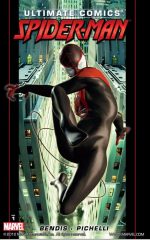
Ultimate Comics Spider-Man by Brian Michael Bendis: volume 1


By Brian Michael Bendis & Sara Pichelli (Marvel)
ISBN: 978-0-7851-5712-0                  978-0-7851-5713-7(TPB)

When the Ultimate Comics Spider-Man died, writer Brian Michael Bendis and Marvel promised that a new hero would arise from the ashes…

Marvel’s Ultimates imprint began in 2000 with a new post-modern take on major characters and concepts to bring them into line with the tastes of 21st century readers – apparently a wholly different market from those baby-boomers and their descendants content to stick with the precepts sprung from founding talents Jack Kirby, Steve Ditko and Stan Lee… or simply those unable or unwilling to deal with decades of continuity baggage (seven if you include the Golden Age/Timely Comics tales retroactively co-opted into the mix which saturated the originals).

Eventually even this darkly nihilistic new universe became as continuity-constricted as its ancestor and in 2008 the cleansing event “Ultimatum” culminated in a reign of terror which excised dozens of super-humans and millions of lesser mortals in a devastating tsunami which inundated Manhattan courtesy of mutant menace Magneto.

In the aftermath Peter Parker and his fellow meta-human survivors struggled to restore order to a dangerous new world. Spider-Man finally gained a measure of acceptance and was hailed a hero when he valiantly and very publicly met his end during a catastrophic super-villain confrontation…

This collection – published before the mega-crossover events Time Runs Out and Secret Wars which resulted in the merger of the Ultimate and mainstream Marvel Universe – re-presents the introductory teaser from Ultimate Comics Fallout #4 (August 2011) and follow-up Ultimate Comics Spider-Man: Who is Miles Morales? #1-5) with a new and even younger Arachnid Avenger and describes how, just like his predecessor, a troubled boy learned the painful price of misusing the unique gifts fate had bestowed…

The epic opens with a skinny kid having the poor taste to parade around town in a cheap imitation costume of fallen hero Spider-Man encountering and somehow defeating vicious super-villain The Kangaroo. Then the revelations begin by spinning back to the relatively recent past where manic industrialist Norman Osborn repeats the genetic experiment which first gave Peter Parker his powers (see Ultimate Spider-Man volume 1: Power and Responsibility) via the bite of an artificially-mutated spider.

Unfortunately, the deranged mastermind didn’t expect a burglar to waltz in and accidentally carry off the latest test animal as part of his haul…

When grade-schooler Miles Morales gets into prestigious and life-changing Brooklyn Visions Academy Boarding School by the most callous of chances, the brilliant African American/Latino lad quickly and cynically realises life is pretty much a crap-shoot… and unfair to boot. Feeling guilty about his unjust success and sorry for the 697 other poor kids who don’t get his chance, he sneaks off to visit his uncle Aaron.

The visit has to be secret since his uncle is a “bad influence”: a career criminal dubbed The Prowler. Whilst there, a great big spider with a number on its back bites Miles and he begins to feel very odd…

For starters he starts fading from sight…

Suddenly super-fast and strong, able to leap huge distances and fade from view, Miles rushes over to see geeky pal Ganke, a brilliant nerd already attending Brooklyn Visions. Applying “scientific” testing, the boy also discovers Miles can deliver shocking, destructive charges through his hands. When Miles goes home Ganke continues online research and deduces a connection to Spider-Man; strenuously pushing his friend towards becoming a costumed crusader.

However, after Miles assists during a tenement fire, saving a mother and baby, shock sets in and he resolves never to use his powers again…

Time passes: Miles and Ganke are roommates at the Academy for almost a year when news of a major metahuman clash rocks the city. Troubled Miles heads out and is an accidental bystander at the scene of Spider-Man’s death.

Seeing a brave man perish so valiantly, Miles is again consumed by guilt: if he had used his own powers when they first manifested he might have been able to help; to save a true hero…

As part of the crowd attending Parker’s memorial Miles and Ganke talk to another mourner, a girl who actually knew Parker. Gwen Stacy offers quiet insights to the grieving child and a phrase which alters the course of his life forever: “with great power comes great responsibility…”

Clad in a Halloween Spidey costume borrowed from Ganke, Miles takes to the night streets for the first time and stops Kangaroo from committing murder…

His third night out the exhilarated 13-year old encounters the terrifying and furiously indignant Spider-Woman who thrashes and arrests him, before dragging him to Government agency S.H.I.E.L.D, where Hawkeye, Iron Man and master manipulator Nick Fury coldly assess him.

However, before they can reach a decision on Miles’ fate, murderous malcontent Electro breaks free of the Triskelion’s medical custody ward and goes on a rampage.

Despite easily defeating the seasoned heroes the voltage villain is completely unprepared for a new Spider-Man: especially as the boy has a range of extra powers including camouflage capabilities and an irresistible “venom-strike” sting…

As Miles considers the full implications of his victory, Fury imparts a staggeringly simple homily: “With great power…”

Brian Michael Bendis and Sara Pichelli crafted a stirring new chapter both engaging and intriguing and this stirring debut volume (available in Hardcover, Trade Paperback and digital editions) also contains a gallery of alternate covers by Marko Djurdjevic and Pichelli.

Tense, breathtaking, action-packed, evocative and full of the light-hearted, self-aware humour which blessed the original Lee/Ditko tales, this is a controversial but worthy way to continue and advance the legend Fights ‘n’ Tights addicts will admire and adore…
A British Edition ™ & © 2012, 2016 Marvel Characters Inc. All rights reserved.

The Paper Man


By Milo Manara (Catalan Communications)
ISBN: 978-0-87416-022-2

The lush and sensuous art of Milo Manara has always outshone his scripting – at least to English speaking sensibilities – but on occasion his pared-down writing produces genuine comic gems. One such is the egregiously STILL OUT OF PRINT monochrome wonder The Paper Man.

A sparse and gritty epic of Love and Death on the American frontier, the lavishly rendered graphic spectacle ostensibly tells the tragic tale of a young man looking for his Truly Beloved in a relentless trek across Arizona, and his chance meetings with pop-culture mile-markers.

These include a weather-crazed Preacher, a demented veteran of the long-past War of Independence, and the erotic and sensual Sioux maiden White Rabbit, all depicted against a backdrop of the most hallowed tropes and clichés of the Western, exported as cultural icons from Hollywood to the rest of the world.

By following a rather inept and innocent everyman through increasingly harsh incidents with US cavalrymen, wagon-trains, drunken and malevolent cow-pokes – plus, of course, marauding “Injuns” – none of whom actually conform to their stereotypes, Manara looks at the commonplace in a fresh if somewhat reductionist manner, without losing sight of the fact that the reader always wants an enthralling story, beautifully rendered.

This untypical western with its starkly sumptuous art and crushingly tragic ‘final reel’ owes more to Brecht than to Ford or Huston, but nonetheless remains powerfully true to its roots, and is achingly easy on the eyes. Minimal but wonderful, lush and Spartan, this is a Wild West story for every adult to enjoy, regardless of when they last put on a cowboy hat.

…So, for Pete’s Sake can’t somebody puh-lease re-release an English-language version, even if only as an electronic edition?
© 1982 by Dargaud Editeur, Paris for Milo Manara. English language edition © 1986 Catalan Communications. All rights reserved.

Amazing Spider-Man Masterworks volume 12


By Stan Lee, Gerry Conway, John Romita, Gil Kane & various (Marvel)
ISBN: 978-0-7851-4214-0 (HB)

Amazing Spider-Man was always a series that matured with – or perhaps just slightly ahead – of its fan-base. As the depressing weight of the Sordid Seventies continued, that feeling seemed to intensify with every issue…

By the time of these tales Stan Lee was easing out of writing and here replaces himself with 19-year-old science fiction author Gerry Conway. The scripts – aided in no small part by the plotting input and mentoring of resident illustrator John Romita – achieved a more contemporary tone (but, naturally feeling quite dated from here in the 21st century, Dude!): purportedly closely in tune with the times. Combined with the emphatic use of soap opera subplots which kept older readers glued to the series even when bombastic battle sequences didn’t, Amazing Spider-Man grew to ever greater heights of popularity.

Moreover, as a sign of the times a hint of cynical surrealism also began creeping in…

Thematically, there’s a decline in the use of old-fashioned gangsterism and a growing dependence on outlandish villains. The balance of costumed super-antagonists with thugs, hoods and mob-bosses, was gradually eroding and soon a global resurgence of interest in supernatural stories would result in more monsters and uncanny happenings…

Nevertheless, the wallcrawler was still indisputably mainstream comics’ voice of youth and defined being a teenager for young readers of the 1970s, tackling incredible hardships, fantastic foes and the most pedestrian and debilitating of frustrations.

Lonely High School nerd Peter Parker had grown up and gone to college. Because of his guilt-fuelled double-life he struggled there too, but found true love with policeman’s daughter Gwen Stacy…

Re-presenting Amazing Spider-Man #110-120 (originally released between July 1972 and May 1973) the astonishing tales in this titanic twelfth Masterworks tome begin with ‘The Birth of… the Gibbon!’ (by Lee & Romita) which finds a despondent and world-weary wallcrawler battling another shunned and lonely outcast. Orphaned drifter Martin Blank possessed an anthropoid frame which made him an outcast and brought out the cruel worst in humanity. When he reaches out in friendship and admiration to Spidey he is rebuffed again and savagely lashes out…

The Gibbon retuned a month later when psychopathic stalker Kraven the Hunter brainwashed the hapless outcast ‘To Stalk a Spider!’ in a tale which saw the beginning of Gerry Conway’s tenure on the title, after which #112 follows up with another periodic crisis of faith for Peter Parker as ‘Spidey Cops Out!’

The harassed and exhausted hero is ready to chuck it all in until another nightmarish old adversary resurfaces as part of a burgeoning gang war…

They Call the Doctor… Octopus!’ (Conway & Romita with art assistance from Tony Mortellaro and Jim Starlin) sees the city plunged into chaos when the multi-limbed madman squares off against mysterious gang-boss Hammerhead with a rededicated but fearfully overmatched Spider-Man caught in the middle…

The next chapter in a brutal and comparatively long-running duel for control of New York’s underworld played out in ‘Gang War, Schmang War! What I Want to Know is … Who the Heck is Hammerhead?’ by Conway, John Romita Sr., Mortellaro & Jim Starlin, with our angst-ridden arachnid trapped between the battling mobs of 1930s movie gangster pastiche Hammerhead and sworn nemesis Dr. Octopus; each seeking to top the other’s callous, staggering ruthlessness.

In the melee Spidey is captured by the bizarre newcomer and learns from the boastful braggart how an ordinary amnesiac gunsel was rebuilt into an unstoppable cyborg by a rogue scientist named Jonas Harrow.

Seconds from death, Spider-Man is driven to risk everything on a wild escape bid after he overhears that Ock will be meeting up with an old lady. The agonised wallcrawler fears that his beloved, befuddled, missing-for-months Aunt May is once more sheltering the many-armed menace…

Dashing into the Westchester countryside, he breaks in to Octavius’ HQ only to be brained with a vase by the terrified May Parker. Moments behind him are Hammerhead’s goons and, all too soon, ‘The Last Battle!’ is underway…

As the mobsters decimate each other, Spider-Man barely escapes being shot by his closest relative and is more than happy to disappear when the police show up to arrest (almost) everybody.

In the aftermath, however, the Widow Parker astounds everybody by revealing that she will be staying in Octopus’ mansion until he is released…

Amazing Spider-Man #116 began an extended political thriller as charismatic reformer Richard Raleigh opens a savvy campaign to become Mayor, only to be opposed and hunted by a brutish monster and hidden mastermind in Suddenly… the Smasher!’

Older fans will recognise much of the story and art since it was a recycled Lee, Romita & Jim Mooney monochrome saga from 1968’s Spectacular Spider-Man Magazine (augmented with additional art by Romita & Mortellaro and bridging scenes scripted by Conway): all neatly reconfigured to encompass new subplots regarding May’s absence and publisher J. Jonah Jameson‘s involvement and obsession with Law-&-Order demagogue Raleigh…

The drama deepens with ‘The Deadly Designs of the Disruptor!’ as the monster’s masked master intensifies efforts to destroy the would-be Mayor – with only Spider-Man seemingly able to deter the maniac – before the affair finally culminates in a ‘Countdown to Chaos!’ wherein the true architect of the campaign of terror is exposed and destroyed…

Peter’s problems exponentially increased in #119 as a mysterious telegram for Aunt May calls him away to Canada to meet a lawyer named Rimbaud. Before he leaves, however, Peter’s best friend’s father has a disturbing episode.

Norman Osborn had been the maniacal Green Goblin until cured by hallucinogen-induced amnesia. Now as Parker readies himself for a trip to Montreal, Osborn seems to be recovering those obscured memories…

With no other option, our harried hero heads north, arriving in time to be caught in a city-wide panic as another verdant former sparring partner hits town. ‘The Gentleman’s Name is… Hulk’ (an all-Conway & Romita collaboration) saw the wallcrawler utterly overmatched but still striving to stop the rampaging green juggernaut, spectacularly culminating in ‘The Fight and the Fury!’ (illustrated by Gil Kane with Paul Reinman and inked by Romita & Mortellaro).

With the immediate threat averted, Peter at last rendezvous with Rimbaud only to see the secretive legal eagle murdered before he can share whatever he knows about May Parker…

To Be Continued…

Fast-paced, fabulously far-fetched and full of innovative thrills, these tales again proved Spider-Man was bigger than any creator and was well on the way to becoming as real as Romeo and Juliet, Sherlock Holmes or Tarzan…
© 1972, 1973, 2011 Marvel Characters, Inc. All rights reserved.

Buster Brown: Early Strips in Full Color


By Richard F. Outcault with an introduction by August Derleth (Dover Publications)
ISBN: 978- 0-1-486-23006-1

Richard F. Outcault is credited with being the father (fans and historians are never going to stop debating this one, but Outcault is one of the most prime of all contenders) of the modern comic strip. His breakthrough was a scandalous creation dubbed The Yellow Kid for legendary newspaperman Joseph Pulitzer’s New York World in 1895 (the feature was actually entitled Hogan’s Alley) but the cartoon shenanigans captivated the reading public and even led to the coining of a new term: “Yellow Journalism”.

Outcault was notoriously fickle and quickly tired of his creation, and of the subsequent features he created for William Randolph Hearst in the New York Journal during a particularly grave period of bitter newspaper circulation warfare.

In 1902, he created a Little Lord Fauntleroy style moppet called Buster Brown, but the angelic looks actually acted as camouflage for a little boy perpetually wedded to mischief, pranks and poor decision making. Once again Outcault soon became bored and moved on, but this strip was another multi-media sensation, which captured public attention and spun off a plethora of franchises.

Buster was a merchandising bonanza. By a weird set of circumstances, Buster Brown Shoes became one of the biggest chain-stores in America, and in later years produced a periodical comicbook Premium (a giveaway magazine free to purchasers) packed with some of the greatest comic artists and adventure stories the industry had ever seen. Outcault may have dumped Buster, but the little devil darling never quit comics…

Way back in 1974 Dover Publications released this facsimile reproduction of an earlier collection from 1904, then entitled Buster Brown and his Resolutions, featuring fifteen glorious full-colour strips from the first two years of the run, and it’s about time they thought about doing it again – or even of publishing a far more comprehensive edition…

Until then however, let’s re-examine what we have here and meet the cherubic Hellion and his faithful dog Tige, and see that if indelicate or untoward happenstance doesn’t create another round of chaos in the ordered and genteel life of the well-to-do Mr. and Mrs. Brown, then little Buster is always happy to lend a hand.

Each lavish page, rendered in a delightfully classical, illustrative line style – like Cruickshank or perhaps Charles Dana Gibson – ends with a moral or resolution, but one that is subversively ambiguous.

As Buster himself is wont to comment, “People are usually good when there isn’t anything else to do.”

Historically pivotal, Buster Brown is also thematically a landmark in content, and a direct ancestor of the mischievous child strip that dominated the family market of the 20th century. Could Dennis the Menace (“Ours” or “Theirs”), Minnie the Minx or Bart Simpson have existed without Buster or his contemporary rivals The Katzenjammer Kids?

It’s pointless to speculate, but it’s no waste of time to find and enjoy this splendid strip.
© 1974 Dover Publications. All Rights Reserved.