Underworld


By Lovern Kindzierski & GMB Chomichuk (Renegade Arts Canmore Ltd)
ISBN: 978-1-98782-502-2

Win’s Christmas Recommendation: A Dark Delight to Savour Forever… 9/10

Ancient literary classics have always been a fertile source of inspiration for modern artists in all arenas of expression and the works of Homer have especially called out to creators of every stripe.

Comics have had their fair share of straight adaptations, lesser or greater oblique tributes and a host of imaginative reinterpretations of the proverbially blind bard’s timeless chronicles of heroism and futility, love and adversity, but Underworld adds fresh angles and even darker poetic edges to the saga of a man fighting fate and horror to return to his home…

A beguiling new foray from Winnipeg-based Lovern Kindzierski (Shame Trilogy, Agents of Law, Tarzan Le Monstre, Star Wars) and GMB Chomichuk (Infinitum, The Imagination Manifesto, Raygun Gothic, Cassie and Tonk), with seductively effective lettering by Ed Brisson, this compelling hardback is crafted in stark monotone and utilises graphic illustration and manipulated photographs to replay The Odyssey on two complementary and contrasting levels…

Following Mike Carey’s scholarly and passionate Foreword ‘The Hard Part is Coming Home Again’ the dark descent and arduous search begins as Hector Ashton breaks out of a psychiatric hospital. The golden scion of Winnipeg’s dominant political dynasty has gone badly astray. He has dabbled in corruption, excelled in drug-dealing and barely survived a catastrophic overdose.

Now he’s loose in the city: lost in the ferocious warrens of the Club District where every evil and depravity can be readily bought and where barely-human monsters abound. However, in his delusional state Hector is convinced that he is Ulysses, travelling from moment to foreordained moment in a hellish, interminable, gods-decreed voyage back to his son and long-suffering, abandoned wife Penelope, and bolstered in that armour of hallucination he is more than a match for most of the hazards that await him…

As he staggers from trial to travail to terrifying titan, it soon becomes clear that the dangers might not be mythical but they are very real.

The metropolis’s embedded drug-lords and shadowy movers-&-shakers begin arraying even deadlier forces to ensure a weak link in a chain of corruption never makes it to anyone who might listen to the eternal truths buried within his rambling quotes and perorations…

As much gritty noir-flavoured thriller as fantastic mythical escapade, Underworld overlays the classic poem’s thematic skeleton with a grimy modern visual skin of vice and violence which is chillingly authentic and masterfully evocative, but never forgets that at its core the story is about a fallen hero finding redemption through struggle…

Allegory, metaphor, delusion or vision-gift of cruel and callous gods; Hector’s odyssey is just as epic as his symbolic totem’s ever was; every bit as dangerous and, in the end, just as triumphantly well-earned…

Supported by an Afterword from the author tracing the long and winding road of Underworld‘s genesis, Creator Biographies and a wealth of sketches and designs, this is a vibrant artistic vision which deserves to be seen by the largest audience possible.
© Lovern Kindzierski, GMB Chomichuk and Renegade Arts Canmore Ltd.

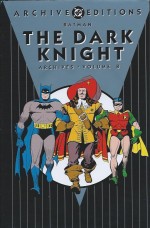
Batman: the Dark Knight Archives volume 7


By Bob Kane, Don Cameron, Bill Finger, Joe Samachson, Alvin Schwartz, Dick Sprang, Jerry Robinson, Ray Burnley & various (DC Comics)
ISBN: 978-1-4012-3744-8

Win’s Christmas Recommendation: Classically Traditional, Timelessly Wonderful… 9/10

Launching a year after Superman, “The Bat-Man” (and latterly Robin, the Boy Wonder) cemented DC/National Comics as the market frontrunner and conceptual leader of the burgeoning comicbook industry.

Having established the fantastic parameters of the metahuman with their Man of Tomorrow, the strictly mortal physical perfection and dashing derring-do of DC’s Dynamic Duo rapidly became the swashbuckling benchmark by which all other four-colour crimebusters were judged.

This eighth luxuriously lavish hardback Archive Edition volume covers another bevy of Batman adventures (#32-37 of his solo title, spanning December 1945/January 1946 through October/November 1946), with the Gotham Gangbusters resolutely returned to battling post-war perils and peacetime perfidies of danger, doom and criminality….

These Golden Age greats comprise many of the greatest tales in Batman’s decades-long canon, as lead writers Bill Finger and Don Cameron, supplemented by Joe Samachson, Alvin Schwartz and other – sadly unrecorded – scripters, pushed the boundaries of the medium.

On the visual side, graphic genius Dick Sprang superseded and surpassed freshly-returned originator Bob Kane (who had been drawing the Batman daily newspaper strip until its cancellation), making the feature utterly his own in all but name whilst keeping the Dauntless Double-act at the forefront of the legion of superhero stars, even as veteran contributor Jerry Robinson was reaching the peak of his illustrative powers and preparing to move on to other artistic endeavours…

The sheer creativity exhibited in these adventures proved the creators responsible for producing the bi-monthly adventures of the Dark Knight were hitting an artistic peak that few other superhero titles could match. Within scant years they would be one of the only games in town for Fights ‘n’ Tights fans…

Following a fascinatingly fact-filled and incisive Foreword from the inestimable Roy Thomas, the all-out action begins with Batman #32 and another malevolently marvellous exploit of The Joker whose ‘Racket-Rax Racket!’ (crafted by Cameron & Sprang) finds its felonious inspiration in college-student hazing and initiation stunts, after which Finger scripted ‘Dick Grayson, Boy Wonder!’ for that man Sprang, which reprises the jaunty junior partner’s origins and reveals how the lad earned the right to risk his life every night beside the mighty Batman in a blisteringly tense first case…

Light-hearted supplemental feature ‘The Adventures of Alfred’ provides thrills and laughs in equal measure as the dutiful butler reluctantly baby-sits a posh pooch and ends up ‘In the Soup’ after stumbling upon a gang of high society food smugglers (courtesy of Samachson & Robinson), before Cameron & Sprang spectacularly combine a smidgen of science fiction flair and a dash of historical conceit to the regular adventure mix when Professor Carter Nichols uses his hypnosis-powered time-travel trick to send Bruce and Dick to the court of Louis XIII to work with D’Artagnan and the Three Musketeers in ‘All for One, One for All!’

Issue #33 was the Christmas issue for 1945 – complete with seasonal cover by Sprang – but was otherwise an all-Win Mortimer art-fest; beginning with Finger’s ‘Crime on the Wing’ wherein the Penguin popped up and began a renewed campaign of crime with his trick umbrellas, just to prove to modern mobsters that he was still a force to be reckoned with after which anonymously-scripted thriller ‘The Looters!’ found the Dynamic Duo hunting a heartless pack of human hyenas led by the Jackal, raiding cities struck by disasters natural and not…

As if that wasn’t vile enough, the shameless exploiter was also trying to steal or sabotage the invention of a dedicated seismologist who thought he’d found a way to predict earthquakes until Batman and Robin rocked the Jackal’s world…

The issue ended with a similarly uncredited Holiday treat as ‘The Search for Santa Claus’ saw three broken old men redeemed by the season of goodwill.

After selflessly standing in for Saint Nick, an innocent man who’d spent 25 years in jail, an over-the-hill actor and a millionaire framed and certified insane by his unscrupulous heirs all found peace, contentment and justice after encountering those industriously bombastic elves Batman and Robin…

Three quarters of issue #34 was crafted by Finger & Sprang, beginning with ‘The Marathon of Menace!’ as an old man who’d dedicated his life to speed records organised a cross-country race across America with enough prize cash to interest crooks – and the ever-vigilant Gotham Gangbusters – after which an insufferable chatterbox deafeningly returned in ‘Ally Babble and the Four Tea Leaves!’; in which the chaos-causing manic maunderer consults a fortune teller and accidentally confounds a string of dastardly desperadoes…

Robinson then limned an anonymous but timely tale as ‘The Adventures of Alfred: Tired Tracks’ found the veteran valet stumbling upon a gang of opportunistic thieves before the issue ends with Finger & Sprang detailing ‘The Master Vs. the Pupil!’

Here the Batman tests his partner’s progress by becoming the quarry in a devious manhunt, but Robin’s early confidence and success take a nasty nosedive after an embarrassing gaffe which proves the danger of too much success…

Finger, Bob Kane & Ray Burnley crafted the lion’s share of Batman #35, beginning with the landmark ‘Nine Lives has the Catwoman!’ wherein the slinky thief finally emerged as the Dark Knight’s premier female foil.

Escaping prison and going on a wild crime spree, the feline felon convinces the world – and possibly the Caped Crusaders – that she cannot die, after which the equally auspicious and influential ‘Dinosaur Island!’ finds our heroes performing a sociology experiment in a robotic theme park, only to find the cavemen and giant beasts co-opted by a murderous enemy looking to become king of the criminal underworld by orchestrating their deaths…

An author unknown then scripted the whimsical exploits of ‘Dick Grayson, Author!’ (art by Kane & Burnley) as the young daredevil deems comicbook stories too unrealistic and is offered the opportunity to write some funnybook dramas which would benefit from actual crime-fighting experience. Of course, all that typing and plotting are harder than they look…

Kane & Burnley also illustrated all the Batman tales in #36, beginning with Alvin Schwartz’s ‘The Penguin’s Nest!’ wherein the podgy Bird of Ill-Omen started imperilling his new, successful – and legitimate – restaurant venture by committing minor misdemeanours just to get arrested. Unsure of what he’s up to, the Masked Manhunters spend an inordinate amount of time and energy keeping him out of jug until they finally glean his devious, million-dollar scheme…

When Hollywood’s top stuntman suffers a head injury on set and begins acting out his assorted past roles in the real world, the panicked studios call in Batman to be a ‘Stand-In for Danger!’ (Cameron, Kane & Burnley), whilst ‘The Adventures of Alfred: Elusive London Eddie!’ (with Robinson art) sees the mild-mannered manservant ferreting out a British scallywag gone to ground in Gotham after which the issue ends on a spectacular high with another terrific time-travel trip.

‘Sir Batman at King Arthur’s Court!’ – courtesy of Finger, Kane & Burnley – sees our compulsive chrononauts crisscrossing fabled Camelot and battling rogue wizards to verify the existence of the enigmatic Round Table legend dubbed Sir Hardi Le Noir…

This stunning and sturdy compilation closes with the all-Robinson, all anonymously scripted #37, beginning with ‘Calling Dr. Batman!’ wherein the wounded crimebuster is admitted to hospital and uncovers dark doings and radium robbery.

As if that wasn’t enough a very sharp nurse seems to have suspicions regarding the similarity of the masked celebrity’s wounds to those of a certain millionaire playboy…

Batman and Robin are back in Tinseltown to solve a dire dilemma as ‘Hollywood Hoax!’ has them hunting thieves and blackmailers who have swiped the master print of the latest certified celluloid smash, after which the dauntless derring-do ends with a magnificent clash of eternal adversaries when ‘The Joker Follows Suit!’

Fed up with failing in all his felonious forays, the Clown Prince of Crime decides that imitation is the sincerest form of theft and begins swiping the Dark Knights gimmicks, methods and gadgets; using them to profitably come to the aid of bandits in distress…

Accompanied as always by a full creator ‘Biographies’ section, this superb collection of comicbook classics is another magnificent rollercoaster ride back to an era of high drama and breathtaking excitement: a timeless, evergreen delight no addict of graphic action can ignore.
© 1945, 1946, 2012 DC Comics. All Rights Reserved.

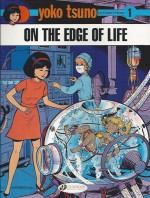
Yoko Tsuno volume 1: On the Edge of Life


By Roger Leloup (Cinebook)
ISBN: 978-1-905460-32-8

Yoko Tsuno began first began gracing the pages of Spirou in September 1970 and is still going strong. As detailed by Roger Leloup, the astounding, all-action, uncannily edgy, excessively accessible exploits of the slim, slight Japanese scientific-adventurer are amongst the most intoxicating and absorbing comics thrillers ever created.

Leloup’s brainchild is an expansively globe-girdling, space and time spanning multi-award winning series devised by the monumentally talented Belgian maestro after leaving his job as a studio assistant on Herge’s The Adventures of Tintin and striking out on his own.

Compellingly told, superbly imaginative but always solidly grounded in hyper-realistic settings boasting utterly authentic and unshakably believable technology and scientific principles, the illustrated epics were at the vanguard of a wave of strips featuring competent, clever and brave female protagonists which revolutionised Continental comics from the 1970s onwards and they are as timelessly engaging and potently empowering now as they ever were.

The very first stories ‘Hold-up en hi-fi’, ‘La belle et la bête’ and ‘Cap 351’ were brief introductory vignettes before the superbly capable Miss Tsuno and her always awestruck and overwhelmed male comrades Pol Paris and Vic Van Steen truly hit their stride with premier extended saga Le trio de l’étrange which began in the May 13th 1971 Spirou…

In the original European serialisations, adventures alternated between explosive escapades in exotic corners of the world and sinister deep space sagas with the secretive and disaster-plagued alien colonists from Vinea, but for these current English translations, the extraterrestrial endeavours have been more often than not sidelined in favour of realistically intriguing Earthly epics such as this one which began serialised life in 1976 as La frontière de la vie (Spirou #1979-1999) before becoming the seventh collected album a year later.

There have been 27 European albums to date, and Cinebook opted to open their string of English translations with this one; a skilfully suspenseful spooky mystery which opens in the fabulously restored mediaeval German city of Rothenburg.

Yoko is sightseeing as she walks to a meeting with new friend Ingrid Hallberg: one of Germany’s most promising young classical organists and a woman the troubleshooting trio saved from murder in the case of The Devil’s Organ.

The trip takes a dark turn when Yoko learns Ingrid is ill. The musician is suffering from a strange, inexplicable form of anaemia and her cousin Rudy believes the malady is not of natural origin. In fact, despite his qualifications as a biologist, the frantic young man claims Ingrid is the victim of a vampire…

He has constantly examined her since the illness began and discovered a bizarre wound and that a large percentage of Ingrid’s blood has been replaced with a synthetic substitute. The distraught, diligent researcher has also plotted the timing of the attacks and the next one is due that very night…

Plans laid, valiant Yoko patiently waits by the victim’s bedside, but is overcome by an unexplained lethargy and, but for a fluke chance, would have slept through the sight of a caped and gas-masked woman siphoning off Ingrid’s precious fluids and drip-feeding something else into her…

However, a concerned pet upsets the intruder’s invasion and a drowsy but roused Yoko gives frantic chase through the unlit streets of the ancient town. Not at her best, she soon fades and is distracted by peculiar historian and archivist Ernst Schiffers who shows her a strange sight: some hooligans have built a makeshift scientific laboratory in the crypts beneath the city…

But that is not the worst of it: when the town was meticulously rebuilt after the bombing raids of the last war something went wrong. As an astoundingly accurate scale model he constructed now proves, the restored Rothenburg has one house too many…

Before he can say more, however, a car pulls up and a gang of masked men try to grab Yoko…

Soon she is the quarry, doubling back over the torturous route she followed in pursuit of the vampire and is astonished to fund the gas-masked woman waiting. With urgent desperation the enigma begs Yoko to finish the transfusion into Ingrid or the “victim” will die…

Later Rudy confirms the solution is a breakthrough plasma substitute, perfectly attuned to Ingrid’s incredibly rare blood-group. As they cautiously administer it, Vic and Pol drive up in the dawn light. Together the adventurers retrace Yoko’s eventful night and track Schiffers to his house. Although the historian is gone – probably taken by the masked gang – his home conceals a massive model of the town and eagle-eyed Yoko spots a discrepancy which can only be a clue…

Most suspicious of all is the fact that the Hallberg family physician Doctor Schulz is the missing man’s neighbour and his dwelling is ground zero for the “extra” house…

Rudy cannot believe any wrongdoing of the doctor and shares the story of how the tragic GP lost his little girl Magda in one of the last air raids of the war. On being pushed however, Rudy admits that there was some oddity or mystery connected to the event. A little digging and the investigators uncover a strange fact: little Magda had the same rare blood type as Ingrid…

Assumptions formed and conclusions reached, the gang head straight to a local cemetery to check out a certain coffin even as back in town an impossible apparition appears to Rudy’s mother…

Soon the vampire has no choice but to reveal herself and an incredible tale unfolds. A family pact has kept two generations of Schulz’s working at the forefront of biological advancement. Magda has been kept in tenuous suspended animation between life and death since 1945 as her father and extended family sought a cure, but now with the project almost completed, they have been forced to share their secrets and discoveries with other scientists and either haste or greed has left the 30 year old infant in mortal peril…

Based in a lab under the city, they have resorted to stealing Ingrid’s healthy blood to sustain Magda as they carefully remove her from decades of life support but the project is inexplicably failing at the final stage. When the vampire convinces her colleagues to let Rudy and Yoko add their skills to the team-effort, the observant engineer instantly spots that the problem is sabotage from within the select group…

When the indomitable Yoko acts with her usual philanthropic recklessness, she too has a terrifying near-death experience before the generational tragedy reaches a happy conclusion…

As always the most potent asset of these breathtaking dramas is the astonishingly authentic, staggeringly detailed draughtsmanship and the terse, supremely understated storytelling, which superbly benefits from Leloup’s scrupulous research and meticulous attention to detail, honed through years of working on Tintin.

Every bit the fictive equal of James Bond, Modesty Blaise, Tintin or any other genre-busting super-star, Yoko Tsuno is a truly multi-faceted adventurer, equally at home in all manner of dramatic milieus and able to hold her own against all threats and menace on Earth or beyond …

This is another miraculously-paced, meticulously planned, tensely suspenseful escapade to appeal to any fan of blockbuster action fantasy or devilish sinister thriller.
Original edition © Dupuis, 1978, by Roger Leloup. All rights reserved. English translation 2007 © Cinebook Ltd.

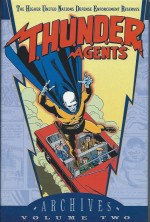
T.H.U.N.D.E.R. Agents Archives volume 2


By Wally Wood, Steve Ditko, Dan Adkins, John Giunta, Gil Kane, Reed Crandall, Mike Sekowsky, Steve Skeates & various (DC Comics)
ISBN: 978-1-56389-970-6

The history of Wally Wood’s immortal comics masterpiece is convoluted, and once the mayfly-like lifetime of the Tower Comics line folded, not especially pretty: wrapped up in legal wrangling and lots of petty back-biting. None of that, however, diminishes the fact that the far-too brief run of The Higher United Nations Defense Enforcement Reserves was a benchmark of quality and sheer bravura fun for fans of both the still-reawakening superhero genre and the popular media’s spy-chic obsession.

In the early 1960s the James Bond movie franchise was going from strength to strength, with action and glamour utterly transforming the formerly understated espionage vehicle. The buzz was infectious: soon A Man like Flint and Matt Helm were carving out their own piece of the action even as television shanghaied the entire bandwagon with the irresistible Man from U.N.C.L.E. (which premiered in September 1964), bringing the whole genre inescapably into living rooms across the world.

Before long wildly creative cartooning maverick Wally Wood was approached by veteran MLJ/Archie Comics editor Harry Shorten to create a line of characters for a new distribution-chain funded publishing outfit – Tower Comics. Woody called on some of the biggest names in the industry to produce material in the broad range of genres the company requested (as well as T.H.U.N.D.E.R. Agents and its spin-offs Undersea Agent, Dynamo and NoMan, there was the magnificent war-comic Fight the Enemy and the youth-comedy Tippy Teen).

Samm Schwartz and Dan DeCarlo handled the funny book – which outlasted all the others – whilst Wood, Larry Ivie, Len Brown, Bill Pearson, Steve Skeates, Dan Adkins, Russ Jones, Gil Kane and Ralph Reese all contributed scripts for themselves and the industry’s top talents to illustrate on the assorted adventure series.

With such a ravenous public appetite for super-spies and costumed heroes steadily rising in comic-book popularity the idea of blending the two concepts seems a no-brainer now, but those were far more conservative times, and when T.H.U.N.D.E.R. Agents #1 appeared with no fanfare or pre-publicity on newsstands in August 1965, thrill-hungry readers were blown away.

It didn’t hurt either that all Tower titles were in the beloved-but-rarely-seen 80 Page Giant format: there was a huge amount to read in every issue!

All that being said the tales would not be so adored by us baby-boomer fans if they hadn’t been so superbly crafted. As well as Wood, the art accompanying the compelling, far more mature stories was by some of the greatest talents in comics: Reed Crandall, Kane, George Tuska, Mike Sekowsky, Dick Ayers, Joe Orlando, Frank Giacoia, John Giunta, Steve Ditko and others.

This second lush and lustrous hardback compilation collects T.H.U.N.D.E.R. Agents #5-7 and the first blockbusting issue of spin-off title Dynamo – from June to August 1966 – with the superbly cool concept and characters going from strength to strength.

Following a positively passionate and insider-fact packed Foreword by Robert Klein and Michael Uslan, the stunning all-star action blast off like a rocket…

For those who came in late: When brilliant Professor Emil Jennings was attacked by the forces of the mysterious Warlord, the savant perished but UN troops salvaged some of his greatest inventions. These included a belt that increased the density of the wearer’s body until it becomes as hard as steel, a cloak of invisibility and a brain-amplifier helmet.

The prototypes were divided between several agents to create a unit of super-operatives to counter increasingly bold attacks of many global terror threats such as the aforementioned Warlord.

First chosen was affable, honest but far from brilliant file clerk Len Brown who was, to everyone’s surprise, assigned the belt and codename Dynamo. Contributing scripter Len Brown had no idea illustrator/editor Wood had puckishly changed the hero’s civilian name as a last-minute gag until the comic rolled off the presses…

T.H.U.N.D.E.R. Agent NoMan was once aged Dr. Anthony Dunn who chose to have his mind transferred into an android body and was then gifted with the invisibility cape. If his artificial body was destroyed Dunn’s consciousness could transfer to another android body. As long as he had a spare ready, he could never die…

John Janus seemed the perfect UN employee: a mental and physical marvel who easily passed all the tests necessary to wear the Jennings helmet. Sadly, he was also a deep cover mole for the Warlord, poised to betray T.H.U.N.D.E.R. at the earliest opportunity. All plans went awry once he donned the helmet and became Menthor. The device awakened his mind’s full potential, granting him telepathy, telekinesis and mind-reading powers, but it also drove all evil from his mind. When the Warlord attacked with a small army and a giant monster, Menthor was compelled by his own costume to defeat the assault. What a dilemma for a traitor to be in…

A fourth super-spy was added when Guy Gilbert of the crack Mission: Impossible style T.H.U.N.D.E.R. Squad was required to beta-test an experimental super-speed suit. The gung-ho hyper-fast Lightning was proud to do so, even if every use of the hyper-acceleration gimmick shortened his life-span…

T.H.U.N.D.E.R. Agents #5 again gloriously pandered to every kid’s dream as the nice guy with the power to smash was pinpointed as the weak link of the agency and subjected to a three-pronged attack by Warlord and his subterranean race in ‘Dynamo and the Golem’ by a sadly unrecorded writer with art from Crandall, Wood & Adkins. The stupendous underground duel with the monstrous mechanical was even augmented by guest walk-ons (a rare treat in the mid-1960s when most editors feared over-exposing their heroes) by other T.H.U.N.D.E.R. stars…

The modern master of a tribe of primordial men returned as ‘NoMan: In the Caverns of Demo’ (by Bill Pearson, Gil Kane, Wood & Tony Coleman) saw the invisible agent lured into a trap and temporarily lose his wonder cape. After a gloriously panoramic ‘Lightning Pin-up’ by Adkins, Steve Skeates, Mike Sekowsky & Frank Giacoia then reveal how a Nazi scientist blackmails a trusted engineer and wrecks new planes for the agency with his deadly “slow-down” dust in ‘Lightning: Return of Baron Von Kampf’…

The author of ‘Menthor vs. The Entrancer’ is unknown but the unmistakable John Giunta limns the dark tale of the mind master’s duel with a petty thief who steals a magic gem and almost conquers a country before the concluding ‘T.H.U.N.D.E.R. Agents: Double For Dynamo’ (Skeates, Wood, Adkins & Coleman) sees the entire team unite to tackle another plot by duplicate maker Mastermind to place his felonious android facsimiles in positions of power…

Issue #6 opened with ‘Dynamo and the Sinister Agents of the Red Star’ (author unknown, Wood & Adkins) as the sinister Sino-spymaster introduced a devastating judo expert who could use the human powerhouse’s strength against him. Len had to use his brain (for a change) to stop the brazen theft of America’s newest super-submarine…

Skeates, Sekowsky & Giacoia had fun with a teleporting criminal in ‘Lightning: The Origin of the Warp Wizard’ and shockingly let the villain win whilst in ‘T.H.U.N.D.E.R. vs. Demo’ – illustrated by Giunta, Wood & Adkins – the vile plotter ambushed NoMan and used his stolen cape to gather tons of cash and the other Jennings devices.

The arrogant thug’s big mistake was trusting his sultry sidekick Satana, who oddly bore a grudge for that time he abandoned her to T.H.U.N.D.E.R. and the cops…

‘Menthor: The Carnival of Death’ with art by Giunta & Carl Hubbell pitted the agent against a spy who was a natural telepath. Despite tremendous odds Janus foiled an insidious assassination attempt but lost his helmet in the process…

The best tale in this issue – and probably the entire book – is ‘NoMan: To Fight Alone’ by Skeates & Ditko wherein the immortal agent is the only one capable of defying anti-democratic demagogue Mr. Image who has the power to control any and all living beings in his vicinity. Of course, NoMan is only “living” is a strictly technical sense…

The final T.H.U.N.D.E.R. Agents inclusion is #7; a true landmark which opens with Dynamo in ‘Wanted: Leonard Brown, Code Name “Dynamo” Suspicion of Treason’ (illustrated by Wood, Adkins & Ralph Reese) with the hero on the run. Gullible Brown has been framed by the delectable Rusty (revealed as the svelte and sinister Iron Maiden; a vivacious villainess clad in figure-hugging steel who was the probable puberty trigger for an entire generation of boys…) but still manages – as much by charm and luck as skill or wit – to turn the tables and vindicate himself, after which a frantic showdown leaves Lightning possibly crippled for life after enduring ‘The Warp Wizard’s Revenge’ (Skeates, Sekowsky & Giacoia).

The years-long secret war against invaders from Earth’s core came closer to final resolution in ‘T.H.U.N.D.E.R. Agents: Subterranean Showdown’ – art by George Tuska – as a council of Warlords’ abduction of Dynamo leads to a shattering battle they ultimately fail to win, whilst, after a pulse-pounding Wood & Adkins ‘Iron Maiden: Pin-up’, NoMan suffers a psychological breakdown in ‘To Be or Not To Be’ by Pearson, Giunta & Sal Trapani.

Although Dr. Dunn is now a thing of plastic and wire, he is still susceptible to feminine allure and the unresolved dilemma almost costs him – and Earth – everything…

The issue ended with a tale which blew the mind of most kids reading it in the summer of 1966. ‘Menthor: A Matter of Life and Death’ written by Adkins, with art by Ditko & Wood was an utter shock to readers who had never seen a hero die before (we were so sheltered back then; cowboys and cops only ever shot guns out of owlhoots’ hands)…

When a super-agent is shanghaied to Subterraneana as bait for a trap, he does what any hero would do rather than betray his friends…

This cathartic fun-fest concludes with the contents of Dynamo #1 as the Tower’s top draw was the first hero to get his own solo title. It began with sheer sci fi spectacle as T.H.U.N.D.E.R. spots a staging post on Luna and sends Len on what might be a one-way trip (it’s three years before the Apollo moon shots, remember?) to scotch a potential invasion from space in ‘Menace From the Moon’ by Wood & Adkins.

That astounding blockbuster is followed by a deliciously wry romp as ‘A Day in the Life of Dynamo’ (Sekowsky & Giacoia) finds the invulnerable operative harried around the world from pillar to post in pursuit of the elusive Red Dragon, the wicked Warlords, rampaging giant robots… and a date with the boss’ assistant Alice…

Then Crandall, Wood & Adkins seemingly take Dynamo ‘Back to the Stone Age’: revealing the secret of Demo’s stock of cavemen and dinosaurs after the devilish villain breaks out of jail with Mastermind in tow, after which Ditko, Wood & Adkins craft another mini-masterpiece as ‘Dynamo Meets the Amazing Andor’.

Decades ago the so-very-patient Warlords stole a human baby and spent long years turning the waif into a biological superman devoid of sentiment or compassion. Sadly, when they finally unleashed their Andor on the surface civilisations, although they anticipated the dogged resistance of humanity and even the newly-constituted T.H.U.N.D.E.R., the subterranean geniuses hadn’t factored in their living weapon’s reaction to the first woman he had ever seen…

The tongue-in-cheek dramas wrap up with a bright breezy spoof as ‘Wonder Weed, Super Hero’ illustrated by Giunta, reveals how merely mortal – and mildly jealous – agent William “Weed” Wylie is tricked by a magician/enemy agent into thinking he has powers too. Of course Weed is gullible and avaricious but nobody’s fool…

With stories all shaded in favour of fast pace, sparse dialogue, explosive action and big visuals, T.H.U.N.D.E.R. Agents was decades ahead of its time and certainly informed everything in Fights ‘n’ Tights comics which came after it. These are truly timeless comic classics which improve with every reading, and there’s never been a better time to add these landmark superhero sagas to your collection of favourites.
© 1966 John Carbonaro. All rights reserved. This edition © 2003 DC Comics.

XIII volume 2: Where the Indian Walks


By William Vance & Jean Van Hamme, coloured by Petra (Cinebook)
ISBN: 978-1-84918-040-5

One of the most consistently entertaining and popular adventure serials in Europe, XIII was created by Jean Van Hamme (Wayne Shelton, Blake and Mortimer, Lady S.) and illustrator William Vance (Bruce J. Hawker, Marshal Blueberry, Ramiro).

Van Hamme was born in Brussels in 1939 and after academically pursuing business studies moved into journalism and marketing before selling his first graphic tale in 1968. He is one of the most prolific writers in comics.

Immediately clicking with the public, by 1976 he had also branched out into prose novels and screenwriting. His big break was the monumentally successful fantasy series Thorgal for Tintin magazine but he cemented his reputation with mass-market bestsellers Largo Winch and XIII as well as more cerebral fare such as Chninkel and Les maîtres de l’orge. In 2010 Van Hamme was listed as the second-best selling comics author in France, ranked right between the seemingly unassailable Hergé and Uderzo.

Born in 1935 in Anderlecht, William Vance is the bande dessinée nom de plume of William van Cutsem. After military service in 1955-1956 he studied art at the Académie Royale des Beaux-Arts and promptly became an illustrator of biographic features for Tintin in 1962. His persuasive illustrative style is a classical blend of meticulous realism, scrupulous detail and spectacular yet understated action.

In 1964 he began the maritime serial Howard Flynn (written by Yves Duval) before graduating to more popular genre work with western Ray Ringo and espionage thriller Bruno Brazil (scripted by “Greg”). Further success followed when he replaced Gérald Forton on science fiction classic Bob Morane in Femmes d’Aujourd’hui, (and latterly Pilote and Tintin).

Although working constantly – on serials and stand-alone stories – Vance’s most acclaimed work is his lengthy collaboration with fellow Belgian Van Hamme on this contemporary thriller based on Robert Ludlum’s novel The Bourne Identity…

XIII debuted in 1984, originally running in prestigious Spirou to great acclaim. A triad of albums were rushed out – simultaneously printed in French and Dutch editions – before the first year of serialisation ended.

The series was a monumental hit in Europe but has fared less well in its many attempts to make the translation jump to English, with Catalan Communications, Alias Comics and even Marvel all failing to maximise the potential of the gritty mystery thriller.

The epic conspiracy saga of unrelenting mood, mystery and mayhem began in The Day of the Black Sun when an old man came upon a body shot and near death on a windswept, rocky shore. The human flotsam was still alive despite being shot in the head, and when Abe‘s wife Sally examined the near-corpse she found a key sewn into his clothes and the Roman numerals for thirteen tattooed on his neck. Their remote hideaway offered little in the way of emergency services, but alcoholic, struck-off surgeon Martha was able to save the dying stranger…

As he recuperated a complication became apparent. The patient – a splendid physical specimen clearly no stranger to action or violence – had suffered massive, probably irreversible brain trauma, and although increasingly sound in body had completely lost his mind.

Language skills, muscle memories, even social and reflexive conditioning all remained, but every detail of his life-history was gone…

Abe and Sally named him “Alan” after their own dead son – but the intruder’s lost past explosively intruded when hitmen invaded the beach house with guns blazing. Alan reacted with terrifying skill, lethally retaliating, but too late to save anybody but himself and Martha…

In the aftermath he took a photo of himself and a young woman from one of the killers and, with Martha’s help, traced it to nearby Eastown. Desperate for answers and certain more killers were coming, the human question mark headed off to confront unimaginable danger and hopefully find the answers he craved.

The picture led to a local newspaper, and the attention of crooked cop Lieutenant Hemmings who recognised the amnesiac but said nothing…

The woman in the photo was Kim Rowland, a local widow who had recently gone missing. Alan’s key opened the door of her house. The place had been ransacked but a more thorough search utilising his forgotten talents turned up another key and a note warning someone named “Jake” that “The Mongoose” had found her and she was going to disappear…

He was then ambushed by the cop and newspaper editor Wayne. They called him “Shelton” and demanded the return of a large amount of money…

Alan/Jake/Shelton reasoned the new key fitted a safe-deposit box and bluffed the thugs into taking him to the biggest bank in town. The staff there also knew him as Shelton, but when Hemmings and Wayne examined the briefcase in Shelton’s box a booby trap went off. Instantly acting upon the unexpected distraction, the mystery man expertly escaped and eluded capture, holing up in a shabby hotel room, pondering again what kind of man he used to be…

Preferring motion to inactivity, he prepared to leave and stumbled into a mob of armed killers. In a blur of lethal action he escaped and ran into another group led by a man addressed as Colonel Amos. The chilling executive referred to his captive as “Thirteen” and claimed to have dealt with his predecessors XI and XII on something called the “Black Sun” case…

The Colonel very much wanted to know who Alan was, and offered some shocking titbits in return. The most sensational was film of the recent assassination of the American President which clearly showed the lone gunman to be none other than the aghast Thirteen…

Despite the amnesiac’s heartfelt conviction that he was no assassin, Amos accused him of working for a criminal mastermind. The Colonel wanted the boss but failed to take Alan’s forgotten instinctive abilities into account and was astounded when his prisoner leapt out of a fourth floor window…

The frantic fugitive headed for the only refuge he knew, but by the time he reached Martha’s beachside house trouble had beaten him there. More murderers awaited; led by a mild-seeming man Alan inexplicably knew was The Mongoose. The mastermind expressed surprise and admiration: he thought he’d killed Thirteen months ago…

Following an explosion of hyper-fast violence which left the henchmen dead and Mongoose vanished but vengeful, the mystery man regretfully hopped a freight train west towards the next stage in his quest for truth…

The bewildering journey resumes in Where the Indian Walks (originally collected in Europe as Là où va l’indien in 1984) as the enigma’s search for Kim Rowland brings him to a military base where her dead husband was once stationed. His enquiries provoke an unexpected response and it takes a whole platoon to subdue him after Alan instinctively resists arrest with horrific force. Soon he is being interrogated by General Ben Carrington and his sexily capable aide Lieutenant Jones.

They claim to be from the Joint Chiefs of Staff, know an awful lot about black ops units and – eventually – offer incontrovertibly proof that the memory-challenged prisoner is in fact the deceased Captain Steve Rowland and one of their select number…

Soon after, Carrington has Jones test the returned prodigal’s trained combat abilities and once Steve beats her is made a strange offer…

The military spooks drop him off in his – Rowland’s? – home town of Southberg and clandestinely return him to his rat’s nest of a family just in time for the vultures to begin circling the dying body of paralysed patriarch Matt Rowland. Steve’s wheelchair-bound dad still exerts an uncanny and malign grip over the town, the local farmers and his own grasping, ambitious relatives. The surprise reappearance of another potential heir really sets the cat among the pigeons…

The sheer hostility of the avaricious relatives isn’t his problem, however: before Steve Rowland left town for the army he pretty much made enemies of everybody in it and even the sheriff has happily harboured a grudge all these years…

One who hasn’t is storekeeper Old Joe who shows the amnesiac some home movies that give the obsessed Thirteen the most solid clue yet to his quarry…

So stunned by the possibilities is Alan/Steve that he’s completely unprepared for the brutal murder attempt which follows. Luckily the sheriff is on hand to stop it but when the bruised and battered truth-seeker arrives back at the family mansion, Colonel Amos is waiting, applying more pressure to find the mastermind behind the President’s assassination. This time however it’s Kim he wants to question… as soon as Steve finds her…

The Forgetting Man ignores all distractions; using the scant, amassed film and photo evidence to narrow down the location of a cabin by a lake “where the Indian walks”. It has to be where Kim is hiding…

That single-mindedness almost proves his undoing as the crippled patriarch is murdered and his recently returned son superbly framed for the killing…

With Thirteen again the subject of a furious manhunt, Carrington and Jones suddenly reappear and help him reach the cabin, but when he finally confronts Kim, the anguished amnesic receives the shock of his life… just before the posse bursts in…

To Be Continued…

XIII is one most compelling and convoluted mystery adventures ever conceived, with subsequent instalments constantly taking the questing Thirteen two steps forward, one step back as he encounters a world of pain and peril whilst tracking down the and cutting through an interminable web of past lives he seemingly led…

Fast-paced, clever and immensely inventive, XIII is a series no devotee of mystery and murder will want to miss.
Original edition © Dargaud Benelux (Dargaud-Lombard SA), 1984 by Van Hamme, Vance & Petra. All rights reserved. This edition published 2010 by Cinebook Ltd.

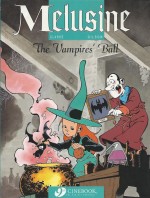
Melusine volume 3: The Vampires’ Ball


By Clarke (Frédéric Seron) & Gilson, coloured by Cerise and translated by Jerome Saincantin (Cinebook)
ISBN: 978-1-905460-69-4

Witches – especially cute and sassy teenage ones – have a long and distinguished pedigree in fiction and one of the most seductively engaging first appeared in venerable Belgian magazine Spirou in 1992.

Mélusine is actually a sprightly 119 years old and spends her days – and many nights – working as an au pair/general dogsbody to a most ungracious family of haunts and horrors inhabiting a vast monster-packed, ghost-afflicted chateau whilst diligently studying to perfect her craft at Witches’ School…

The long-lived much-loved feature is presented in every format from one-page gag strips to full-length comedy tales, all riffing wickedly on supernatural themes and detailing her rather fraught life, filled with the demands of the appallingly demanding master and mistress of the castle and even her large circle of exceedingly peculiar family and friends.

The strip was devised by writer François Gilson (Rebecca, Cactus Club, Garage Isidore) and cartoon humorist Frédéric Seron, AKA Clarke whose numerous features for all-ages Spirou and acerbic adult humour publication Fluide Glacial include Rebecca, Les Cambrioleurs, Durant les Travaux, l’Exposition Continue… and Le Miracle de la Vie.

Under the pseudonym Valda, Seron also created Les Babysitters and as Bluttwurst Les Enquêtes de l’Inspecteur Archibaldo Massicotti, Château Montrachet, Mister President and P.38 et Bas Nylo.

A former fashion illustrator and nephew of comics veteran Pierre Seron, Clarke is one of those insufferable guys who just draws non-stop and is unremittingly funny. He also doubles up as a creator of historical and genre pieces such as Cosa Nostra, Les Histoires de France, Luna Almaden and Nocturnes and apparently is free from the curse of having to sleep…

Collected editions began appearing annually or better from 1995, with the 24th published in 2015 and another due next year. Thus far five of those have transformed into English translations thanks to the fine folk at Cinebook.

Originally released on the Continent in 1996, Le bal des vampires was the second Mélusine album and sets the scene delightfully for newcomers as the majority of the content is comprised of one or two page gags starring the sassy sorceress who makes excessive play with fairy tale and horror film icons, conventions and themes.

When brittle, moody Melusine isn’t being bullied for her inept cleaning skills by the matriarchal ghost-duchess who runs the castle, ducking cat-eating monster Winston, dodging frisky vampire The Count or avoiding the unwelcome and often hostile attentions of horny peasants and over-zealous witch hunting priests, our saucy sorceress can usually be found practising her spells or consoling and coaching inept, un-improvable and lethally unskilled classmate Cancrelune.

This sorry enchantress-in-training is a sad case: her transformation spells go awfully awry, she can’t remember incantations and her broomstick-riding makes her a menace to herself, any unfortunate observers and even the terrain and buildings around her…

At least Mel’s boyfriend is a werewolf, so he only troubles her a couple of nights each month…

This turbulent tome features the regular procession of slick sight gags and pun-ishing pranks but also features a few longer jocular jaunts such as the fate of rather rude knight in armour, a brush with what probably isn’t a poltergeist in the Library and Mel’s unfortunate experience with daunting dowager Aunt Adrezelle‘s patented Elixir of Youth…

Wrapping up the barrage of ghostly gaffes, ghastly goofs and grisly goblin gaucheries is the sordid saga of the eternal elite at their most drunkenly degenerate as poor Melusine is not only expected to organise and cater ‘The Vampires’ Ball’ but has to stick around and handle the explosive clean-up for those especially intoxicated Nosferatus who tend to forget why the revelry has to die down before dawn…

Wry, sly, fast-paced and uproariously funny, this compendium of arcane antics is a great taste of the magic of European comics and a beguiling delight for all lovers of the cartoonist’s art. Read before bedtime and don’t eat any hairy sweets…

Original edition © Dupuis, 2000 by Clarke & Gilson. All rights reserved. English translation 2007 © Cinebook Ltd.

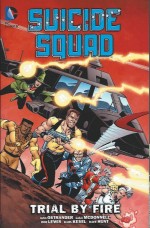
Suicide Squad volume 1: Trial by Fire


By John Ostrander, Luke McDonnell, Bob Lewis, Karl Kesel, Dave Hunt & various (DC Comics)
ISBN: 978-1-4012-5831-3

Following the huge success of Crisis on Infinite Earths in 1986, fickle fan-interest was concentrated on DC and many of their major properties – and indeed the entire continuity – were opened up for radical change, innovation and renewal.

So, how best to follow the previous year’s cosmic catastrophe? Why not a much smaller and more personal Great Disaster, spotlighting those strangers in familiar costumes and a bunch of beginnings rather than the deaths and endings of the Crisis?

Thus, Darkseid of Apokolips decided to attack humanity’s spirit by destroying the very concept of heroism and individuality in Legends and sent hyper-charismatic Glorious Godfrey to America to lead a common man’s crusade against extraordinary heroes, while the he initiated individual assaults to demoralize and destroy key champions of Earth.

The rampant civil unrest prompted President Ronald Reagan to outlaw costumed crime-busters and opened the door for a governmental black-bag operation to use super-powered operatives who had no option but to obey the orders of their betters…

That was the beguiling concept behind the creation – or more accurately – consolidation and reactivation of separate but associated concepts dating back to the 1960s and the first revival of superhero comics.

John Ostrander was new to DC; lured with editor Mike Gold from Chicago’s First Comics where their work on Starslayer, Munden’s Bar and especially Grimjack had made those independent minnows some of the most popular series of the decade. Spinning out of Legends Ostrander hit the ground running with a superb and compelling reinterpretation of the long neglected Suicide Squad: a boldly controversial revaluation of meta-humanity and the hidden role of government in a world far more dangerous than the placid public believed…

Devised by Robert Kanigher, The War that Time Forgot debuted in Star Spangled War Stories #90 (April-May 1960) and ran until #137 (May 1968). The wonderment began as paratroops and tanks of “Question Mark Patrol” were dropped on Mystery Island from whence no American soldiers ever returned. The crack warriors discovered why when the operation was overrun by Pterosaurs, Tyrannosaurs and worse: all superbly rendered by veteran art team Ross Andru & Mike Esposito.

What followed was years of astonishing action as various military disciplines – of assorted nationalities – pitted modern weapons and human guts against the most terrifying monsters ever to stalk the Earth…

The Brave and the Bold #25 (September 1959) was the first issue of the title in its new format as a try-out vehicle testing new characters and concepts before launching them into their own series. Inauspiciously, the premier starred a quartet of human specialists – Colonel Rick Flag, medic Karin Grace and big-brained boffins Hugh Evans and Jess Price – officially convened into a Suicide Squad codenamed Task Force X by the US government to investigate uncanny mysteries and tackle unnatural threats.

The gung ho gang – another Kanigher, Andru & Esposito invention – appeared in six issues but never really caught the public’s attention – perhaps because they weren’t costumed heroes – and quickly faded from memory.

Then, in April 1967 Our Fighting Forces #106 began running the exploits of homicide detective Ben Hunter who was recruited by the army during WWII to run roughshod over a penal battalion of prisoners who had grievously broken regulations.

Facing imprisonment or execution, the individually lethal military malcontents were given a chance to earn a pardon by undertaking missions deemed too tough or hopeless for proper soldiers. Hunter’s Hellcats – inarguably “inspired” by the movie The Dirty Dozen – ran until OFF #122 (December 1969) on increasingly nasty and occasionally fatal little sorties, before being replaced without fanfare or preamble by The Losers and similarly lost to posterity.

This long-awaited trade paperback collection – designed to tie-in to both the recent TV and upcoming movie iterations of the Suicide Squad – gathers the in-filling, background-providing introduction from Secret Origins #14 and the first 8 issues of the decidedly devious thriller serial set in the dark corners of the-then DCU (spanning May to December 1987) and opens sans fanfare in the Oval Office as strident political insider Amanda Waller briefs the President on ‘The Secret Origin of the Suicide Squad’ (by Ostrander, Luke McDonnell & Dave Hunt).

Cleverly amalgamating the aforementioned Hellcats and Colonel Flag through early missions against those dinosaurs, Ostrander tied together strands and linked obscure periods of recent events to provide a shocking secret history of America: a time when superheroes were forced into retirement after World War II with the military and Task Force X used to unobtrusively take out the monsters, spies, aliens and super-criminals who didn’t conveniently pack up with them…

Waller has a plan: she doesn’t want society to depend on the current crop of capricious super do-gooders and has recruited Flag’s damaged and driven son to run a new penal battalion comprising captured super-villains who will work off the books for the highest echelons of government, using metahuman force for the greater – i.e. political – good…

The true reasons and motivations for her actions are then disclosed in a tragic story of personal loss and criminal atrocity before she is grudgingly given the go-ahead, but told that if the new initiative fails or becomes public knowledge, she alone will bear the blame…

The series proper – by Ostrander and McDonnell – begins with ‘Trial by Blood’ (inked by Karl Kesel) as metahuman terrorist team The Jihad, working out of rogue state Qurac, bloodily prepares to bring slaughter to America. Tipped off by an asset inside the killer sect, the US wants to stop the killers before they start. This means sending Waller’s convict team to kill off the Jihad before they even leave their impregnable mountain fortress.

Knowing criminals cannot be trusted, the set-up involves not just bribery – reduced sentence deals, favours and pardons – but also minor coercion. Combat operations are led by traumatised, obsessively patriotic Rick Flag Jr. – assisted by amnesiac martial arts master Bronze Tiger – and to keep everybody honest and on-mission, convict-operatives Deadshot, Plastique, Mindboggler, Captain Boomerang and schizophrenic sorceress Enchantress are wired with remote-detonation explosive devices…

Backed by a support team which includes Flag’s ex-girlfriend Karin Grace and Briscoe, a bizarre mystery pilot who has a rather unusual relationship with his seemingly sentient helicopter gunship , the team seem ready for anything but even before the Squad set off for Qurac things go badly wrong after Boomerang and Mindboggler clash and the Australian promises bloody vengeance…

Linking up with undercover asset Nightshade, even more misfortune manifests as the teleporting covert op violently complains to Flag about the horrific things she has had to do since infiltrating Jihad. Challenged but committed now, the unwilling agents all begin their assignments in assassination but the ‘Trial by Fire’ at last unravels when one of the Squad switches sides…

Thankfully the US has another agent in play and undercover, so the damage is limited. Nevertheless, not every American makes it home…

Issue #3 finds defeated and deflated New God Glorious Godfrey incarcerated in superhuman detention centre – and top secret base of the Suicide Squad – Belle Reve whilst a universe away his master Darkseid despatches Female Furies Lashina, Stompa, Bernadeth and Mad Harriet to fetch him home.

Tensions pop Earth-side when Flag strenuously objects to mind-wiping procedures being used on one of his “recruits” and Waller takes flak from Nightshade and super-disguise expert Nemesis over her handling of the Qurac mission and even gets grief from mouthy felon Digger Harkness.

The erstwhile Boomerang was promised a measure of leniency and even a place outside the walls if he behaved, and now he thinks it’s time he got his reward. All arguments end however when the unstoppable Furies bust in to administer Darkseid’s judgement in ‘Jailbreak’…

Despite their best efforts the mere mortals are swept aside and only the renewal of an internecine struggle for command of the Furies prevents greater harm to the criminal crew…

As Bob Smith takes over inking these tense yarns, domestic issues take precedence when a new masked hero begins cleaning up the streets of Central City. Waller is painfully aware that the increasingly popular vigilante is turning ethnic criminals over to the cops but letting white perps slide if they promise to join burgeoning political party the Aryan Empire…

With undercover specialists Black Orchid and Nemesis taking the lead and obnoxious racist Harkness acting as thoroughly credible decoy, the team – supplemented by Time Thief Chronos – lay a trap for a white supremacist billionaire and deftly end ‘William Hell’s Overture’…

A disastrous dip into Cold War realpolitik begins when Waller is ordered to send a team into a Soviet gulag and rescue a dissident novelist in ‘The Flight of the Firebird’.

Tapping criminal strategist the Penguin to plan the complex mission, neither she, her superiors or indeed anyone seems aware that the Russians actually want to banish gadfly Zoya Trigorin to the West but she wants to stay a martyr in Novogorod “psychiatric centre”…

More importantly the foredoomed scheme depends on Enchantress, who is exhibiting all the more bloodthirsty symptoms of being crazier than a bag-full of rabid badgers…

Before they head off, Flag checks in on Harkness (who has earned his own place in New Orleans) blithely unaware that the unrepentant rogue is already planning to supplement his civil service stipend by resorting to his old felonious tricks…

Eventually the mission begins and the Squad slowly infiltrates the frozen town of Gorki and break into Novogorod, but when Trigorin refuses to leave they are forced to kidnap her and make a desperate escape across Russia in ‘Hitting the Fan’.

The botched mission leads American authorities to disavow all knowledge of the effort but the real problem is still the killing cold, vast distance and murderously determined efforts of Soviet super-team the People’s Heroes, relentlessly hunting the survivors who have been ‘Thrown to the Wolves’ by their own bosses…

This glimpse at the grubby side of super-heroics concludes with a smart and incisive perusal of project psychologist Simon La Grieve‘s ‘Personal Files’, offering insights and setting up future subplots for Waller, Flag, Deadshot Floyd Lawton, Boomerang and temporarily curtailed, mystically-bound Enchantress and her helpless human host June Moon…

These were and still are a magnificent mission statement for the DC Universe, offering gritty, witty cohesive and contemporary stories that appealed not just to Fights ‘n’ Tights fanatics but also lovers of espionage and crime capers. As such they are perfect fodder for today’s so-sophisticated, informed and ultimately thrill-hungry readers.
© 1987, 2015 DC Comics. All Rights Reserved.

Alley Oop: the First Time Travel Adventure – Library of American Comics Essentials volume 4


By V.T. Hamlin (IDW/Library of American Comics)
ISBN: 978-1-61377-829-6

Win’s Christmas Gift Recommendation: Primal Cartoon Fun… 10/10

Modern comics evolved from newspaper comic strips. These pictorial features were, until relatively recently, extremely popular with the public and highly valued by publishers who used them as a powerful weapon to guarantee and even increase circulation and profits. From the earliest days humour was paramount; hence our umbrella terms “Funnies” and of course “comics”.

Despite the odd ancestor or precedent like Roy Crane’s Wash Tubbs (comedic when it began in 1924; gradually moving from mock-heroics to light-action into full-blown adventure with the introduction of Captain Easy in 1929) or Tarzan and Buck Rogers – which both debuted January 7th 1929 as adaptations of pre-existing prose properties – the vast bulk of strips produced were generally feel-good humour strips with the occasional child-oriented fantasy.

This abruptly changed in the 1930s when an explosion of rollicking drama strips were launched with astounding rapidity. Not only features but actual genres were created in that decade which still impact on not just today’s comicbooks but all our popular fiction.

Another infinitely deep well of fascination for humans is cavemen and dinosaurs. During that distant heyday of America’s strip-surge a rather unique real character created a rather unique and paradoxical cartoon character: at once both adventurous and comedic; simultaneously forward-looking and fantastically “retro” in the same engagingly rendered package…

Vincent Trout Hamlin was born in 1900 and did many things before settling as a cartoonist. After mustering out of the US Expeditionary Force at the end of the Great War V.T. finished High School and then went to the University of Missouri. This was in 1920 and he studied journalism but, since he’d always loved drawing, the eager beaver took advantage of the institution’s art courses too.

Hamlin was always a supreme storyteller and lived long enough to give plenty of interviews and accounts – many impishly contradictory – about the birth of his antediluvian archetype…

As a press photographer Hamlin had roamed the Lone Star State filming the beginnings of the petroleum industry and caught the bug for finding fossils. Whilst drawing ads for a Texas Oil company, he became further fascinated with bones and rocks as he struggled to create a strip which would provide his family with a regular income…

When V.T. resolve to chance his arm at the booming comic strip business, those fossil fragments got his imagination percolating and he came up with a perfect set-up for action, adventure, big laughs and even a healthy dose of social satire…

Alley Oop is a Neanderthal (-ish) caveman inhabiting a lush, fantastic land where dinosaurs still thrive. In fact his greatest friend and boon companion is Dinny; a faithful, valiant saurian chum who terrifies every other dinosaur in creation… as well as all the annoying spear-waving bipeds swarming about.

Because Dinny is as smart and obedient as a dog, all the other cave folk – like arrogant, insecure King Guzzle – generally treat the mighty, free-thinking, disrespectful Oop with immense caution…

Unlike most of his audience, Hamlin knew such things could never have occurred but didn’t much care: the set-up was too sweet to waste and it would prove to be the very least of the supremely imaginative creative anachronisms he and his brilliant wife Dorothy would concoct as the strip grew in scope and popularity.

Oop actually launched twice. In 1930 Hamlin whipped up primeval prototype Oop the Mighty which he then radically retooled and sold to small, local Bonnet-Brown Syndicate as Alley Oop. It debuted on December 5th 1932 and was steadily gaining traction when Bonnet-Brown foundered in the worst days of the Great Depression a year later.

Happily the strip had won enough of a popular following that the Newspaper Enterprise Association syndicate – whose other properties included Major Hoople, Boots and Her Buddies and the aforementioned Wash Tubbs – tracked down the neophyte scribbler and offered him a regular slot in papers all over America.

Alley Oop re-debuted as a daily strip on August 7th 1933, swiftly reprising his old stories for a far larger audience before moving on to new adventures and inevitably winning a Sunday colour page on September 9th 1934, the year V.T., Dorothy and new daughter Theodora relocated to affluent Sarasota, Florida.

Sadly for such a revered series with a huge pedigree – still running today scripted by Carole Bender and drawn by her husband Jack as both Sunday and daily feature – there has never been a concerted effort to properly collect the entire epic. There have however been tantalising outbursts of reprints in magazines and short sets of archive editions from Kitchen Sink, Dark Horse and IDW’s Library of American Comics.

This uniquely intriguing monochrome hardback (Part of The Library of American Comics Essentials range) re-presents – in the form of one day per elongated landscape page – the absolutely most crucial and game-changing sequence in the strip’s 80-year history as the protagonists escaped their antediluvian environs for the first time and were calamitously catapulted into the 20th century…

Supplementing the cartoon bedazzlement is a superbly informative and candid-picture packed introduction by Michael H. Price. ‘V.T. Hamlin and the Road to Moo’ reviews the creator’s amazing life and other strip endeavours before starting his life’s work and what the feature meant to him, after which the grand adventure – spanning Monday March 6th 1939 to Saturday March 23rd 1940 – opens in a strange land a long, long way from here and now…

A little background: the cave-folk of that far-ago time lived in a rocky village ruled over by devious, semi-paranoid King Guzzle and his formidable, achingly status-conscious wife Queen Umpateedle. The kingdom was known as Moo and the elite ruling couple were guided, advised and manipulated in equal amounts by the sneaky shaman Grand Wizer. All three constantly sought to curb the excesses of a rebelliously independent, instinctively democratic kibitzer and free-spirit Oop.

Our hero – the toughest, most honest man in the land – had no time for the silly fripperies and dumb made-up rules of interfering civilisation, but he did usually give in to the stern glances and fierce admonishments of his long-suffering girl “companion” Ooola. The uneasy balance of power in the kingdom comes from the fact that Guz and the Wizer – even with the entire nation behind them – were never a match for Oop and Dinny when they got mad… which was pretty often…

The big change began when Dinny turned up with an egg and became broody and uncooperative. With Oop’s mighty pal out of sorts, the Wizer then played a cruel master-stoke and declared that only the contents of the egg could cure King Guz of a mystery ailment and prompted a mini civil war…

After revolution and counterrevolution Oop and Ooola are on the run when they encounter a bizarre object which vanishes before their eyes. As they stare in stupefaction they are ambushed by Guz’s men and only escape because they too fade from sight…

Somewhere in rural America in 1939, brilliant researcher Dr. Elbert Wonmug (that’s a really convoluted but clever pun) discusses with his assistant the movies their camera took when they sent it into the distant past via their experimental time machine…

The heated debate about the strangely beautiful and modern-looking cave woman and her monstrously odd-looking mate are soon curtailed as the subjects actually materialise in the room and the absentminded professor realises he left his chronal scoop running…

Before he can reverse his mistake and return the unwilling, unwitting guests to their point of origin, the colossal mechanism catastrophically explodes, wrecking the lab and burying the astounded antediluvians in rubble.

Thanks to an unexplained quirk of temporal trans-placement, time travellers always speak the language of wherever they’ve fetched up – albeit through their own slang and idiom – so after Oop digs his way out utterly unharmed, explanations are soon forthcoming from the modern tinkerers. Before long the cave folk are welcomed to all the fabulous advances of the 20th century…

At least Ooola is – thanks to the friendly advice of Wonmug’s daughter Dee – but the hulking male primitive is quickly getting fed up with this fragile place, all snarled up with just as many foolish rules and customs as home…

Storming off to catch and eat something he understands, Oop is suddenly whisked across country in a spectacular and hilarious rampage of destruction – in the best silent movie chase tradition – after he falls asleep in a transcontinental freight train. After weeks of wondering Wonmug and the now thoroughly-acclimated Ooola read newspaper reports of a cunning and destructive “Great White Ape” and make plans to fetch their stray home. The government meanwhile have put top agent G.I.Tum on the case…

The Phantom Ape however has plans of his own and, after “trapping” an aeroplane and its pilot, makes his own tempestuous way back to the isolated lab.

Eventually the whole story comes out and the displaced cave-folk become media sensations just as Wonmug finally completes his repairs to the time machine. Sadly Ooola – and to a lesser extent Alley – are not keen on returning to their dangerous point of origin…

Moreover, not everybody believes Elbert has actually cracked the time barrier and the next segment sees scientific sceptic Dr. Bronson demand first hand proof. However when he eagerly zips off to experience Moo first hand he disappears and – after much pleading – Oop is convinced to follow him and find out what happened…

When the swirling sensation ends our hirsute hero discovers what the problem is: the machine is by no means accurate and its focus has shifted. He has rematerialised outside a gigantic walled city of what we’d call the Bronze Age…

What follows is a stupendous romp of action, adventure and laughs as Oop and Bronson become improbable and forgotten heroes of the Trojan War, meeting and enchanting Helen of Troy and becoming the embattled city’s top warrior generals.

In the 20th century Wonmug is arrested for murder. Dee and his assistant Jon struggle to perfect the machine but in the end resort to busting the genius out to fix the problem and bring the time-lost wanderers back. In a race against time that’s all soon sorted and Ooola heads for ancient Greece to save the lost boys.

Unfortunately she’s picked up by the besieging Greeks and, thanks to her skill with guns, mistaken for the goddess Minerva…

The legendary story further unfolds with Oop and Ooola on opposite sides until wily Bronson makes a breakthrough based on his historical knowledge and they all return home in time to save Wonmug from the cops…

Soon a compact time team is established to exploit the invention – but not before Oop returns to devastated Troy to retrieve his beloved stone axe and – with Bronson and Ooola in tow – finds himself swept up in little sea voyage we knows as the Odyssey…

Back in America the team expands after old college chum and genius of all knowledge G. Oscar Boom invites himself to Wonmug’s scientific party. With all contact lost the unscrupulous rogue offers to go looking for them in the untrammelled past, providing he can take his specially tricked-out station wagon…

As this stunning collection concludes Boom and a mighty hitchhiker named Hercules have just run into the missing chrononauts as they are about to enter the Amazonian wilds of the Land of Warrior Women…

To Be (hopefully) Continued…

Having escaped the ultimately limiting confines of the strip and becoming a seasoned time travellers Hamlin had made the best of all worlds for his characters: Oop and Ooola periodically returned home to Dinny and the cave folk of Moo but they also roamed every intriguing nook and cranny of history ands even escaped planet Earth entirely and hopefully our own future holds the prospect of more such splendid strip sagas…

Fast-paced, furious, fantastically funny and bitterly barbed in the wryly acerbic manner of Billy Wilder and Preston Sturges, Alley Oop is a bone fide classic of strip narrative, long overdue the respect and honour of a complete chronological collection.

However until some enlightened publisher gets around to it, by all means start digging on line and in bargain bins for each – or any – of the wonderful tomes already released. It’s barely the tip of an iceberg but it’s a start…
Alley Oop © and ® 2013 United Features Syndicate, Inc. All rights reserved.

Archie’s Favorite Christmas Comics


By many and various (Archie Comics)
ISBN: 978-1-936975-80-8

Win’s Christmas Gift Recommendation: For All Good Girls & Boys Who’ve Been Nice This Year 9/10

As long-term readers might recall, my good lady wife and I have a family ritual we’re not ashamed to share with you. Every Christmas we barricade the doors, draw the shutters, stockpile munchies and stoke up the radiators before settling down with a huge pile of seasonal comics from yesteryear.

There’s a few older DC’s, loads of Disney’s and some British annuals, but the vast preponderance is Archie Comics. From the earliest days this too-often neglected comics institution has quite literally “owned Christmas” with a gloriously funny, charming, nostalgically sentimental barrage of cannily-crafted stories capturing the spirit of the season through a range of comicbooks running from Archie to Veronica, Betty to Sabrina and Jughead to Santa himself…

For most of us, when we say comicbooks people’s thoughts turn to buff men and women in garish tights hitting each other, bending lampposts and lobbing trees or cars about, or stark, nihilistic crime, horror or science fiction sagas aimed at an extremely mature and sophisticated readership of confirmed fans – and indeed that has been the norm of late.

Throughout the years though, other forms and genres have waxed and waned but one that has held its ground over the years – although almost completely migrated to television these days – is the genre of teen-comedy begun by and synonymous with a carrot topped, homely (at first just plain ugly) kid named Archie Andrews.

MLJ were a small publisher who jumped on the “mystery-man” bandwagon following the debut of Superman. In November 1939 they launched Blue Ribbon Comics, promptly following-up with Top-Notch and Pep Comics. The content was the common blend of funny-book costumed heroes and two-fisted adventure strips, although Pep did make a little history with its first lead feature The Shield, who was the American industry’s first superhero to be clad in the flag (see America’s 1st Patriotic Hero: The Shield)

After initially revelling in the benefits of the Fights ‘N’ Tights game, Maurice Coyne, Louis Silberkleit and John Goldwater (MLJ, duh!) spotted a gap in their blossoming market and in December 1941 the costumed cavorters and two-fisted adventurers were gently nudged aside – just a fraction at first – by a wholesome, improbable and far-from-imposing new hero; an unremarkable (except, perhaps, for his teeth) teenager who would have ordinary adventures just like the readers, but with the laughs, good times, romance and slapstick emphasised.

Almost certainly inspired by the hugely popular Andy Hardy movies, Goldwater developed the concept of a youthful everyman protagonist and tasked writer Vic Bloom & artist Bob Montana with the job of making it work. Their precocious new notion premiered in Pep #22: a gap-toothed, freckle-faced, red-headed kid obsessed with impressing the pretty blonde girl next door.

A 6-page untitled tale introduced hapless boob Archie Andrews and wholesomely pretty Betty Cooper. The boy’s unconventional best friend and confidante Jughead Jones also debuted in the first story as did idyllic small-town utopia Riverdale. It was a huge hit and by the winter of 1942 the kid had won his own title.

Archie Comics #1 was MLJ’s first non-anthology magazine and with it began the slow transformation of the entire company. With the introduction of ultra-rich, raven-haired Veronica Lodge, all the pieces were in play for the industry’s second Genuine Phenomenon…

By 1946 the kids were in charge, so MLJ became Archie Comics, retiring most of its costumed characters years before the end of the Golden Age to become, to all intents and purposes, a publisher of family-friendly comedies. The hometown settings and perpetually fruitful premise of an Eternal Romantic Triangle – with girl-hating best bud Jughead Jones and scurrilous rival Reggie Mantle to test, duel and vex our boy in their own unique ways – the scenario was one that not only resonated with the readership but was infinitely fresh…

Archie’s success, like Superman’s, forced a change in content at every other publisher (except perhaps Gilberton’s Classics Illustrated) and led to a multi-media brand which encompasses TV, movies, newspaper strips, toys and merchandise, a chain of restaurants and, in the swinging sixties, a pop music sensation when Sugar, Sugar – from the animated TV cartoon – became a global pop smash. Clean and decent garage band “The Archies” has been a fixture of the comics ever since…

That Andrews boy is good-hearted, impetuous and lacking common sense, Betty his sensible, pretty girl next door who loves the ginger goof, and Veronica is rich, exotic and glamorous: only settling for our boy if there’s nobody better around. She might actually love him too, though. Archie, of course, is utterly unable to choose who or what he wants…

The unconventional, food-crazy Jughead is Mercutio to Archie’s Romeo, providing rationality and a reader’s voice, as well as being a powerful catalyst of events in his own right. That charming triangle (and annexe) has been the rock-solid foundation for seven decades of funnybook magic. Moreover the concept is eternally self-renewing…

This eternal triangle has generated thousands of charming, raucous, gentle, frenetic, chiding and even heart-rending humorous dramas ranging from surreal wit to frantic slapstick, with the kids and a constantly expanding cast of friends (boy genius Dilton Doily, genial giant jock Big Moose and aspiring comicbook cartoonist Chuck amongst many others) growing into an American institution and part of the nation’s cultural landscape.

The feature has thrived by constantly re-imagining its core archetypes; seamlessly adapting to the changing world outside its bright, flimsy pages, shamelessly co-opting youth, pop culture and fashion trends into its infallible mix of slapstick and young romance. Each and every social revolution has been painlessly assimilated into the mix and, over the decades, the company has confronted most social issues affecting youngsters in a manner always both even-handed and tasteful.

Constant addition of new characters such as African-American Chuck and his girlfriend Nancy, fashion-diva Ginger, Hispanic couple Frankie and Maria and spoiled home-wrecker-in-waiting Cheryl Blossom have contributed to a wide and appealingly broad-minded scenario. In 2010 Archie jumped the final hurdle when openly gay Kevin Keller became an admirable advocate capably tackling and dismantling the last major taboo in mainstream Kids’ comics.

One of the most effective tools in the company’s arsenal has been the never-failing appeal of the seasons and holiday traditions. In Riverdale it was always sunny enough to surf at the beach in summer and it always snowed at Christmas…

The Festive Season has never failed to produce great comics stories. DC especially have since their earliest days perennially embraced the magic of the holiday with a decades-long succession of stunning and sentimental Batman thrillers – as well as many other heroic team-ups incorporating Santa, Rudolph and all the rest.

Archie too started early and kept on producing year-end classics. The stories became so popular and eagerly anticipated that in 1954 the company created a specific title – Archie’s Christmas Stocking – to cater to the demand, even as it kept the winter months of its other periodicals stuffed with assorted tales of elves and snow and fine fellow-feeling…

This splendidly appealing, cheap-&-cheerful full-colour pocket-digest (as long as your pockets are both deep and strong), gathers and re-presents a superb selection of cool Yule extravaganzas of ancient and relatively recent vintages which begins, after jolly, informative Introduction ‘Christmas in Riverdale!’ from Paul Castiglia, with a selection from ‘The Early Years’.

It naturally kicks off with ‘Archie Andrews’ Christmas Story’ by Montana (from Jackpot Comics #7 1942) wherein our hapless boy wonder is even more obvious than usual and ends up with a surfeit of the same present from everybody he cares about. His antics to offload the unwanted extras lead to a painful comeuppance…

Also from 1942 and Montana, ‘The Case of the Missing Mistletoe’ debuted Archie #1, and found Archie and Jughead at loggerheads after unknowingly taking identical twins to a party whilst a few unchanging years later ‘Christmas Cheers’ (Pep Comics #46, 1944, by Harry Sahle, Ed Goggin & Ginger) saw the red-headed fool in deep trouble after losing his diligently deliberated present list – and all his savings…

The next two tales originate from Archie Giant Series #5, 1958, and are both by Dan DeCarlo, Rudy Lapick & Vincent DeCarlo, beginning with ‘Generous to a Fault’ wherein Betty and Veronica convince all the boys in town to elect the most “giving” among them from over the last year and instigate a major riot, whilst ‘Seasonal Smooch’ sees Reggie abusing mistletoe privileges with agonising consequences…

The theme of ‘Christmas Trees and Decorations’ opens with ‘A Christmas Tale’ (Life With Archie #33, 1965 by Frank Doyle, Bob White & Marty Epp) as arch-rivals Andrews and Mantle try to establish the manly pecking order by competing to cut down the best tree before ‘ ‘Tis the Season for Extreme Decorating’ (Betty & Veronica Spectacular #80 2007, by Dan Parent, Rich Koslowski, Barry Grossman & Jack Morelli) finds the distaff competitors succumbing to another bout of insane one-upmanship over who can spruce up and illuminate a home best…

When loaded Mr. Lodge hires ‘Tree Experts’ (Veronica #191, 2009 by Mike Pellowski, Parent, Jim Amash, Grossman & Morelli) to trim the Mansion’s huge pine, Archie’s wistful nostalgia produces a sentimental change of heart before ‘Price Clubbed’ (Archie Digest #248, 2008, Pellowski, Randy Elliott & Bob Smith) finds him and his own dad spending special time obtaining their tree. The chapter concludes with Betty & Veronica one-pager ‘Snow Flakes’ featuring some punishingly accurate satirical snowmen…

‘Gifts and Giving’ opens with a ‘Holiday Rush’ (Holiday Fun Digest #11 2006 from Pellowski, Tim Kennedy, Koslowski, Grossman & Morelli) as Betty and Veronica bemoan the early advent of Xmas overload, ‘Gift Exchange’ (Betty & Veronica #87 1965, Doyle, Dan & Vincent DeCarlo) then deals with the repercussions of the little rich girl giving her friends away – as presents – and ‘Christmas Misgivings’ (Veronica #60 1997, Barbara Slate, Jeff Shultz, Rudy Lapick, Grossman & Bill Yoshida) sees her friends reactions after they all sneak a peek in Ronnie’s shopping bags and reach all the wrong conclusions about who’s getting what…

‘Stamp of Approval’ (Archie Giant Series #6 1959 by Doyle, Dan DeCarlo, Lapick Sheldon Brodsky & Vincent DeCarlo) sees Betty obsessed with collecting Green Stamps to offset her regular lack of funds for presents whilst ‘Gift Exchange’ (Holiday Fun Digest #11 2006 by Pellowski, Tim Kennedy & Al Nickerson) finds Chuck and Big Moose inadvertently selecting perfect prezzies for their girlfriends by mixing up their purchases…

‘Snuggle Up’ (Betty & Veronica #244, 2009 by Parent, Shultz, Koslowski, Grossman & Morelli) then reveals how the loaded Lodge lass really feels about the hideous thing Archie got for her when left all alone…

‘Fit to be Yuletide’ (Jughead #125, by Craig Boldman, Rex Lindsey, Koslowski, Grossman & Morelli from 2000) follows snide sidekick Juggy as he goes to extraordinary lengths to find the perfect present for his arch-enemy Trula Twist after which selfish, conceited Reggie surprises everyone when they follow to see how he actually spends his holidays in ‘The Gift Horse Laugh!’ from Archie Digest #248, (2008 by Pellowski, Pat Kennedy & Ken Selig).

The next selection concentrates on ‘Playing Santa’, opening with ‘Wanted: Santa Claus’ (Archie and Me #26 from 1969, by Joe Edwards & Jon D’Agostino) wherein long-suffering School Principal Mr. Weatherbee pines for the annual dress-up role he claims to despise and ‘Santa Claws’ (Archie Digest #248, 2008 from Bill Golliher, Pat Kennedy & Amash) sees our red-headed loon deeply regretting accepting the opportunity to make extra cash by being the Santa in a pet shop.

Even more upset is the raven-haired rich girl when she inveigles the position of ‘Santa’s Little Helper’ (Veronica #176, 2007 Parent, Amash, Grossman & Teresa Davidson) to be near Archie yet ends up as elf assistant to a creepy stalker-nerd before enjoying a jumbo crop of jolly red fellows after announcing there’s a ‘Santa Shortage’ (Betty & Veronica #231, 2008 by Pellowski, Shultz & Al Milgrom) at a party for needy kids. The chapter concludes with a vivacious pin-up of ‘Veronica’s Christmas Card’…

‘Santa and His Elves’ opens with ‘Playing Santa’ from Jughead & Friends Digest #35 (2010 by Pellowski, Fernando Ruiz, Milgrom, D’Agostino & Grossman) as a posse of pixies pressgang laconic young Mr. Jones into making the all-important delivery run as St. Nick is out of action, after which elfin Lisa seemingly spoils the Season of Giving with her new-fangled online ordering website to replace letters to Santa. Oddly, things work out fine anyway, as everyone gets ‘Surprise Presents’ (Archie Digest #248, 2008 by George Gladir, Shultz, Koslowski, Morelli & Grossman)…

‘Pizza and Good Cheer’ (Jughead’s Double Digest #145, 2009 from Pellowski, Ruiz, Nickerson, Morelli & Grossman) displays Jughead at his most engaging when the greedy goof wins a year’s worth of pies and hands them out to Riverdale’s destitute, unaware that the ever-watching little people have had a hand in his generous gesture…

This section then slapsticks to a sharp stop via a typically rambunctious pin-up of ‘Archie’s Christmas Card’…

Jingles the Elf has been an Archie regular for decades and ‘Santa’s Sprites’ raids the archives for some of his best moments, beginning with first appearance ‘A Job for Jingles’ from Archie Giant Series #10 (1961 by Doyle, Dan DeCarlo, Lapick & Vincent DeCarlo) as the playful imp – who cannot be seen by adults – spends his day off just like any normal kid.

He resurfaced in ‘Return of Jingles’ (Archie Giant Series #20, 1963 by the same creative team) but found himself upstaged by a brace of his workbench associates who wanted to see for themselves how much fun humans have, but in ‘Season of Magic’ (Archie Giant Series #158, 1969, Doyle, White & Yoshida) Jingles met his puckish, pranksterish match when Reggie decided to teach him a lesson…

Perhaps it was in retaliation for ‘Treed’ (Archie Giant Series #150, 1968 Doyle, Al Hartley & Yoshida) wherein Jingles aided and abetted Archie in the yearly ritual of impressing Ronnie by chopping down a Christmas fir for the Lodge Mansion…

Rivalry resulted in sweet music in ‘Jingles Rocks’ (Archie & Friends #21, 2012 by Golliher, Lapick, Grossman & Yoshida) when the showy sprite tried out as lead singer in Archie’s band but had to make some radical wardrobe changes to be seen and heard by the over-21s…

Always adept at seeing issues from the female point of view, the editors soon added a feminine counterpart to Jingles; someone with the same magical powers and festive mission, but a bitter despised rival – and in a miniskirt…

‘Some Things Never Change’ (Betty & Veronica #156, 2001 by Kathleen Webb, Shultz & Henry Scarpelli) saw effusive Sugar Plum Fairy pop in for her annual visit only to find the too-cool kids already out of Christmas cheer. Her solution is carol singing…

Another year and Webb, Dan DeCarlo, Grossman & Yoshida crafted ‘Visions of a Sugar Plum’ (Betty & Veronica #108, 1997). Now it was the twinkly sprite who couldn’t catch the mood – until B & R convinced her to turn human-sized and come shopping. Everything was fine until hunky elf boyfriend Troll – the cause of her Yule blues – came to Riverdale to find her and made a lasting impression on the town’s available young ladies…

In ‘Tis the Season to be Jolly’ (Betty & Veronica #120, 1998, Webb, Dan DeCarlo, Alison Flood, Grossman & Yoshida) Sugar Plum brought flu-ridden Ronnie a stolen dose of Santa’s special pick-me-up – and the cure proved worse than the ailment – whilst in ‘She’s So Gifted’ (Veronica #191, 2009 by Parent & Amash) the fairy comforted our spoiled heiress after everybody decided to make presents and Ronnie found she had no talent for anything. At least that’s what she thought until Sugar Plum pointed out the obvious thing she’s overlooked…

Santa himself sent Sugar to sort out a depletion of seasonal cheer afflicting B & V in ‘The Gifted’ (Betty & Veronica #169, 2002 Webb, Shultz, Scarpelli, Yoshida &Grossman) whilst an all-out magic war broke out in Riverdale when ‘Holiday Watch’ (Betty & Veronica #244, 2009 by Parent, Shultz, Koslowski, Morelli & Grossman) saw the Fairy and Jingles vying for the young mortals’ attentions before ‘Jingles All the Way’ (Betty & Veronica Spectacular #86, 2009 by Parent, Koslowski, Rosario “Tito” Peña & Morelli) proves an old truism when the elfin enemies – thanks to Betty, Ronnie and Archie – are convinced to quit hissing and start kissing…

The merriment then concludes with manga-styled ‘The Naughty Clause’ (Archie #639, 2013 by Alex Segura, Gisele, Koslowski, Digikore Studios & Morelli) as Jingles takes the entire gang to the North Pole so Santa can give Reggie a little personal attitude adjustment…

‘Once upon a Yuletide’ focuses on the odder ends of Archie history with ‘A Children’s Story’ coming from The Adventures of Little Archie #29, (Winter 1963-64 by amazing one-man band Dexter Taylor) which see the little red-headed scamp entertain a lost Santa Claus from a strange other world whilst ‘Let it Snow’ (from Archie’s Weird Mysteries #18, 2002 by Paul Castiglia, Ruiz, Koslowski, Stephanie Vozzo & Vickie Williams) introduces a quartet of seasonal superheroes to while away a quiet night of tale-telling. The fanciful feast finishes with two half-page gag-fests starring Dan DeCarlo’s Sabrina the Teenage Witch enduring a ‘Hanging Hang-Up’ and experiencing ‘Foto Fun’…

A selection of ‘Winter Wonderland’ escapades starts with ‘Ski-Cart Catastrophe’ from Laugh Comics #300 (1976, by George Gladir, Sal Amendola, D’Agostino, Grossman & Yoshida) wherein the lads covert a shopping cart into an idiot-powered ski-mobile, resulting in many pains for them and pained looks from the girls after which golden greats of slapstick Frank Doyle & Harry Lucey treat us to a ‘Slay Ride’ (Archie Giant Series #5, 1958) wherein Archie and a borrowed horse make much manic mischief in the Lodge Mansion…

‘Frosty Fairy Tales’ (Betty & Veronica #120, 1998 by Pellowski, Dan DeCarlo, Grossman & Yoshida) sees Betty get the good-looking guy – but not Archie – when she and Ronnie go skiing and it all concludes with a silent romantic interlude involving ‘Snowmobile Snuggles’…

‘Holiday Party Time’ shows the gang at their best and worst starting with ‘Party Time’ (Betty & Veronica Double Digest #176, 2010 by Gladir, Shultz & D’Agostino) as Ronnie refuses to give up a long planned-for ball by merging it with a charity supper after her guests all decide to help the needy…

Her soiree for the town’s pets is much less of a hit with the ‘Party Dogs’ (Betty & Veronica #222, 2007, Gladir, Shultz & Milgrom) but some ‘Give and Take’ (Archie Digest #258, 2009, Parent, Amash & Grossman) turns a pot-luck shindig into the roaring success of the season. After voracious Jughead accidentally eats all the treats intended for Riverdale Orphanage he pulls out all the stops to ensure ‘The Party’ (Betty & Veronica Digest #189, 2009, Gladir, Shultz & D’Agostino, Morelli & Grossman) is still a howling hit…

Closing out this epic tome is a hearty heaping of ‘Christmas Spirit’ beginning with ‘You’re Cooked’ (Veronica #176, 2007 by Parent, Amash, Grossman& Teresa Davidson) as Betty teaches infamous Anti-chef Ronnie how to cook something festive – and Juggy descends like a locust – whilst ‘She Needs a Little Christmas’ (Betty & Veronica #132, 1999, Webb, Dan DeCarlo, Scarpelli, Grossman & Yoshida) finds him teaching the rich miss a few things about flaunting her wealth…

Ronnie’s social credibility takes a mortal hit when the true origin of the hyper-prestigious and ultra-exclusive Lodge family Christmas confection is revealed in ‘A Couple of Fruitcakes’ from Betty & Veronica #169 (2002 by Webb, Shultz & Scarpelli) and an impromptu sing-along turns into an inclusive town event in ‘Here We Come A-Caroling’ (Holiday Fun Digest #8, 2003, by Greg Crosby, Tim Kennedy, Lapick & Yoshida) before all the graphic good will pops to a stop with a deep dip into ‘Archie’s Holiday Fun Scrapbook’ (Holiday Fun Digest #12, 2007, by Parent) offering revealing glances at the Riverdale gang over many happy years.

These are perfect stories for young and old alike, crafted by a host of Santa’s most talented Helpers, epitomising the magic of the Season and celebrating the perfect wonder of timeless children’s storytelling. What kind of Grinch could not want this book in their kids’ stocking (from where it can most easily be borrowed)?
© 2014 Archie Comics Publications, Inc. All rights reserved.

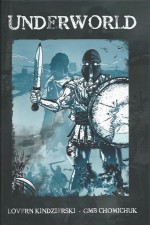
The Boy Commandos volume 1


By Joe Simon & Jack Kirby (DC Comics)
ISBN: 978-1-4012-

Win’s Christmas Gift Recommendation: Ideal for fanboys, superhero purists and lovers of sheer comic exuberance… 9/10

Just as the Golden Age of comics was kicking off two young men with big hopes met up and began a decades-long association that was always intensely creative, immensely productive and spectacularly in tune with popular tastes.

Joe Simon was a sharp-minded, talented gentleman with five years experience in “real” publishing, working from the bottom up to art director on a succession of small newspapers such as the Rochester Journal American, Syracuse Herald and Syracuse Journal American before moving to New York City and a life of freelancing as an art/photo retoucher and illustrator. Recommended by his boss, Simon joined Lloyd Jacquet’s pioneering Funnies Inc., a comics production “shop” generating strips and characters for a number of publishing houses eager to cash in on the success of Action Comics and its stellar attraction Superman.

Within days Simon created The Fiery Mask for Martin Goodman of Timely (now Marvel) Comics and met young Jacob Kurtzberg, a cartoonist and animator just hitting his imaginative stride with the Blue Beetle for the Fox Feature Syndicate.

Together Simon and Kurtzberg (who went through a battalion of pen-names before settling on Jack Kirby) enjoyed stunning creative empathy and synergy which galvanized an already electric neo-industry with a vast catalogue of features and even genres.

At rocket-pace they produced the influential Blue Bolt, Captain Marvel Adventures #1 and, after Martin Goodman appointed Simon editor at Timely, a host of iconic characters such as Red Raven, Marvel Boy, Hurricane, The Vision, The Young Allies and a guy named Captain America.

When Goodman failed to make good on his financial obligations, Simon & Kirby jumped ship to National/DC, who welcomed them with open arms and an open chequebook. Initially an uncomfortable fit, bursting with ideas the company were not comfortable with, the pair were soon handed two failing strips to play with until they found their creative feet.

Soon after establishing themselves with The Sandman and Manhunter they were left to their own devices and promptly created comicbooks’ “Kid Gang” genre with a unique juvenile Foreign Legion entitled The Boy Commandos – who soon shared the spotlight with Batman in flagship publication Detective Comics and whose solo title was frequently amongst the company’s top three sellers.

Boy Commandos was such a success – often cited as the biggest-selling American comicbook in the world at that time – that the editors, knowing The Draft was lurking, green-lighted the completion of a wealth of extra material to lay away for when their star creators were called up. S&K and their team produced so much four-colour magic in a phenomenally short time that Publisher Jack Liebowitz eventually suggested they retool some of it into adventures of a second kid gang… and thus was born The Newsboy Legion (and their super-heroic mentor The Guardian)…

Those guys we’ll get to some other time but today let’s applaud this splendidly sturdy full-colour hardback compilation re-presenting the first ten months of the courageous child soldiers (June 1942-March 1943) as seen in Detective Comics #64-72, World’s Finest Comics #8-9, Boy Commandos #1-2 (spanning June 1942 to March 1943): a barrage of bombastic blockbusters that were at once fervently patriotic morale-boosters, rousing action-adventures and potent satirical swipes and jibes by creators who were never afraid to show that good and evil was never simply just “us & them”…

Following a scholarly Introduction from respected academic Paul Buhle, the vintage thrills and spills commence with a spectacular introduction to the team as only S & K could craft it: a masterpiece of patriotic fervour which eschewed lengthy explanations or origins in favour of immediate action as ‘The Commandos are Coming!’ cleverly followed the path of a French Nazi collaborator who found the courage to fight against his country’s conquerors after meeting the bombastic military unit.

We never knew how American Captain Rip Carter got to command a British Commando unit nor why he was allowed to bring a quartet of war-orphans with him on a succession of deadly sorties into “Festung Europa”, North Africa, the Pacific or Indo-Chinese theatres of war. All we had to do was realise that cockney urchin Alfy Twidgett, French lad Pierre – later unobtrusively renamed Andre – Chavard, little Dutch boy Jan Haasen and rough, tough little lout Brooklyn were fighting the battles we would if we only had the chance…

From the start the yarns were strangely exotic and bizarrely multi-layered, adding a stratum of myth making and fantasy to the grim and grisly backdrop of a war fought from the underdog’s position. Detective Comics #66 (which featured a stunning art-jam cover by Jerry Robinson, Simon & Kirby with Batman and Robin welcoming the team to their new home) saw the exploits of the juvenile warriors related by a seer to feudal Queen Catherine of France in ‘Nostrodamus Predicts’.

She saw and drew comfort from Carter’s attempt to place the kids in a posh boarding school only uncovered a traitor in educator’s clothing and led to a shattering raid right in the heart of the occupier’s defences…

The locale shifted to Africa and time itself got bent when ‘The Sphinx Speaks’, revealing how a reporter in the year 3045 AD interviewed a mummy with a Brooklyn accent. The seeming madness had materialised after the Commando “mascots” arrived in Egypt in 1942 to liberate a strategically crucial village and discovered a Nazi radio post inside an ancient edifice. Whilst they were causing their usual corrective carnage one of the lads had a strange meeting with the rocky pile’s oldest inhabitant…

Another esoteric human interest tale began back in Manhattan where hoods Horseshoes Corona and his best pal Buttsy Baynes barely avoided a police dragnet and ‘Escape to Disaster!’ by heading out into the open ocean and straight into the sights of a U-boat. The sight of the gloating Nazis laughing as his friend perished had a marked effect on one heartless gangster.

When badly wounded Horseshoes was later picked up by Carter’s crew he immediately had a negative influence on impressionable, homesick Brooklyn but turned around his life in its final moments when the Allied ship attacked an apparently impregnable German sea base…

Detective #68 exposed ‘The Treachery of Osuki!’ as a dogfight dumped the boys and a Japanese pilot in the same life-raft. Once they hit land the obsequious flier soon began grooming the simple island natives who saved them, but ultimately couldn’t mask his fanatical urge to conquer and kill after which an epic of East-West cooperation saw the underage warriors battling Nazis beside desperate Russian villagers at ‘The Siege of Krovka!’ determined to make the invaders pay for every frozen inch of Soviet soil in a blockbusting tale of heroism and sacrifice.

Another odd episode found contentious, argument-addicted New York cabbie Hack Hogan drafted and – protesting all the way – slowly transformed into a lethal force of nature sticking it to the Nazis in the heart of their homeland with the kids reduced to awestruck observers in ‘Fury Rides a Taxicab!’

An astounding hit, the kids also became a fixture in premier all-star anthology World’s Finest Comics with #8’s (Winter 1942-1943) ‘The Luck of the Lepparts’ wherein a cad and bounder battled to beat a curse which had destroyed three previous generations of his family of traitors. Was it fate, ill fortune or the arrival of the Boy Commandos in the Burmese stronghold he planned to sell out that sealed his fate?

That same month saw the inevitable launch of Boy Commandos #1 which explosively opened with ‘The Town that Couldn’t be Conquered!’, wherein Rip leads the lads back to Jan’s home village to terrify the rapacious occupiers and start a resistance movement, after which ‘Heroes Never Die’ fancifully finds the team in China where they meet a dying monk.

This aged sage remembers his childhood when a white pirate and four foreign boys led a bandit army against imperial oppression and has waited for their prophesised return ever since the Japanese invaded…

This period of furious productivity resulted in some of Simon & Kirby’s most passionate yet largely unappreciated material. As previously stated, Boy Commandos regularly outsold Superman and Batman during WWII, and the moody ‘Satan Wears a Swastika’ clearly shows why, blending patriotic fervour with astonishing characterisation and a plot of incredible sophistication.

When news comes of the team’s death, official scribes Joe and Jack convene with the Sandman and Newsboy Legion on how to handle the morale-crushing crisis. As the Homefront heroes debate, across the ocean the answers unravel. The confusing contretemps had begun when a quartet of wealthy little people decided that despite their medical deficiencies they would not be cheated of their chance to fight fascism. Accompanied by their tall, rangy butler, they set up as a private combat unit and plunged into the bowels of Berlin even as the real commandos were currently being run ragged by the Germans’ most deadly operative Agent Axis…

That epochal initial issue ended with a weird war story as the boys kept meeting French soldier Francois Girard who shared snippets of useful intel as they prepared for their most audacious mission: kidnapping Hitler…

Even though the sortie eventually came up short the blow to the enemy’s morale and prestige was enormous but on returning home the codenamed ‘Ghost Raiders’ shockingly learned that for one of their number, the title was not metaphorical…

Back in Detective #71 (January 1943) ‘A Break for Santa’ offered a stellar change of pace as the boys organised a treat for orphans and opted – even if they were cashiered for it – to rescue one lad’s dad from a concentration camp for Christmas…

The next issue saw them uncover a devilish espionage/sabotage ring operating out of a florists shop in ‘Petals of Peril’ whilst #73 revealed ‘The Saga of the Little Tin Box’ as Rip dragged the kids through hellish African jungles ahead of a cunning and supremely competent Nazi huntsman; watching them slowly psychologically unravel as they became increasing obsessed with a pointless trinket…

That mystery successfully solved, the action switched to Europe for World’s Finest Comics #9 as the kids went undercover as circus performers cautiously recruiting a cadre of operatives to strike against the oppressors from within, culminating in ‘The Battle of the Big Top!’

This stunning collection concludes with the contents of Boy Commandos #2 (Spring 1943), leading with ‘The Silent People Speak’ as two Danish brothers – one on each side of the conflict – resolve years of jealousy and hatred when the Commandos stage an incursion into their strategically crucial village, after which black comedy resurfaces as wastrel nobleman Lord Tweedbrook is drafted and his butler becomes his drill-sergeant. Happily the young lions are on hand to stop the suffering scion absconding and see the turbulent toff’s transition to fighting tiger in ‘On the Double, M’Lord!’

Another tantalising twice-told tale has Rip and the boys invade fairytale European kingdom Camelon to rescue a sleeping Queen (from magic spells or Nazi drugs?) in ‘The Knights Wore Khaki’, before this first wave of yarns culminates with a gloriously sentimental romp as the kids adopt a battered and bloody bomb crater kitten and smuggle him onto a vital mission. Things looked bad until even little “Dodger” proves he would give ‘Nine Lives for Victory’…

Although I’ve concentrated on the named stars it’s important to remember – especially in these more enlightened times still plagued with the genuine horror of children forcibly swept up in war they have no stake in – that the Boy Commandos, even in their ferociously fabulous exploits, were symbols as much as combatants, usually augmented by huge teams of proper soldiers doing most of the actual killing.

It’s not much of a comfort but at least it showed Simon & Kirby were not simply caught up in a Big Idea without considering all the implications…

Bombastic, blockbusting and astoundingly appetising these superb fantasies from the last “Good War” are a spectacular example of comics giants at their most creative. No true believer or dedicated funnybook aficionado should be denied this book.
© 1942, 1943, 2010 DC Comics. All Rights Reserved.