Name Droppings


By Mahood (Columbus Books)
ISBN: 978-0-86287-260-1

Another prolific but criminally all-but forgotten staple of British cartooning is Kenneth Mahood, whose darkly dry and merrily mordant panel gags were a mainstay of humour mags, cartoon-book racks and newspapers from 1949 to the end of the 1980s.

Your man was born in Belfast in 1930 and after going the usual route of jobs he didn’t want – solicitor’s Junior and Apprentice printer – the painter, collage artist and political cartoonist sold his first work to Punch in 1948 and went full-time.

He never quit “real” art and had exhibitions of paintings throughout the 1950s in Belfast London and Dublin and studied art in Paris on a CEMA scholarship. Constantly selling gags he became Assistant Art Editor at Punch (1960-1965), only surrendering the position when he became the first ever resident political cartoonist in The Times‘ history (1966-1968). He performed the same function for The London Evening Standard from 1969 to 1971 before moving over to the Financial Times and the Daily Mail in 1982, at which time he began to concentrate increasingly on his Fine Art output.

This slightly off-kilter and wittily impressive collection from 1986 could double as a rainy-day parlour-game kit as it offers cartoon images and sight-gags which the reader is asked to identify as the title of either Books, Theatre or Cinema classics and blockbusters; much like graphic charades or a prototype Pictionary, ranging from the punishingly obvious and literal to the devious, askew and outright surreal, all delivered in the artist’s signature style of heavy line, angular definition and dark tones.

It’s fun and it’s funny in equal measure and a glorious example of the wide and expansive appeal and facility of cartoon expression.

Good luck finding it though. As is the norm these days, most of Mahood’s collections – political, general or otherwise – are all out of print, although many old bookshops and charity stores have a few in their bargain bins.
© 1986 Mahood.

Thoroughly Ripped with the Fabulous Furry Freak Brothers …and Fat Freddy’s CAT!


By Gilbert Shelton & Dave Sheridan with Paul Mavrides (Rip Off Press, Inc.)
ISBN: 978-0-89620-088-3
(1978)

Since nobody normal, god-fearing, decent and upstanding would ever dabble with  recreational pharmaceuticals, you’re probably utterly unaware of the extensive sub-culture which has grown up around the casual abuse and dastardly trafficking of narcotics – and so, of course, am I – but it must be said: those counter-culture dudes certainly know how to craft a comic tale.

The Fabulous Furry Freak Brothers shambled out of the Underground Commix counter-culture wave in 1968; initially appearing in Berkeley Print Mint’s Feds ‘n’ Heads, before creator Gilbert Shelton and a few friends founded their own San Francisco based Rip Off Press in 1969. This effective collective continued to maximise the madness as the hilarious antics of the “Freaks” (a contemporary term for lazy, dirty, drug-taking hippy folks) captured the imagination of the more open-minded portions of America and the world (not to mention their kids)…

In 1971 Rip Off published the first compilation: The Collected Adventures of the Fabulous Furry Freak Brothers – which has been in print all around the planet ever since – and soon assorted underground magazines and college papers were joined by the heady likes of Rip Off Comix, High Times, Playboy and numerous foreign periodicals in featuring the addictive adventures of Freewheelin’ Franklin, Phineas T. Freakears and Fat Freddy Freekowtski (and his cat): simpatico metaphorical siblings in sybaritic self-indulgence.

Always written by Shelton and, from 1974 illustrated by Dave Sheridan (until his death in 1982) after which Paul Mavrides picked up the nibs and brushes; the disjointed strips (sorry; irresistible puns are the monkey on my back) combined canny satirical cynicism, surreal situations, scatological sauciness and a terrifying grasp of human nature in staggeringly comedic episodes which cannot fail to amuse anyone with a mature sense of humour.

All the strips have been collected in various formats (in Britain by the marvellous Knockabout Comics) and have been happily absorbed by vast generations of fans – most of whom wouldn’t read any other comic.

Despite the hippy-dippy antecedents and stoner presentiments, Shelton is irrefutably a consummate professional. His ideas are always enchantingly fresh yet timeless, the dialogue is permanently spot-on and his pacing perfect. The stories, whether half-page fillers, short vignettes or full blown sagas, start strong and relentlessly build to spectacular – and often wildly outrageous, hallucinogenic yet story-appropriate – climaxes.

And they’re so very, very funny.

Freewheelin’ Franklin is the tough, street-savvy one who can pull the chicks best, Phineas T. Freakears is a wildly romantic, educated and dangerous (to himself) intellectual whilst Fat Freddy Freekowtski is us; weak-willed, greedy, not so smart, vastly put upon by an uncaring universe but oddly charming (you wish…)

One last point: despite the vast panoply of drugs imbibed, both real and invented, the Freaks don’t ever do heroin – and if that’s not a warning message I don’t know what is…

Thoroughly Ripped is a compilation first released in 1978 and revised with the 1980 edition reviewed here: a luxurious full painted-colour softcover which collects the last of Dave Sheridan’s strips and a couple of the superb early Paul Mavrides efforts in a gloriously anarchic and hilarious chronicle of cloudy-headed, anti-corporate skits and sketches.

The wit and wonderment opens with ‘Fat Freddy’s CAT in the Burning of Hollywood’ from 1978 as the sublimely smug and sanguine survivor of a million hairy moments recounts to his ever-burgeoning brood of impressionable kittens how he and his imbecilic human spectacularly flamed out in the movie biz in a classic tale written and illustrated by Shelton, after which follows a single page strip about the dangers of buying your fun from a guy in an alley…

Next up is the breakthrough “origin” saga of Phineas ‘Winter of ’59’ (produced for internationally distributed Playboy magazine in 1974) and a saucy retrospective of high times in the Fabulous Fifties and Swinging Sixties.

‘Sunday Funnies’ was a single-page spoof of super-cop Dick Tracy starring inept undercover Fed Notorious Norbert (the Nark) who returned in ‘The Fabulous Furry Freak Brothers and the Mysterious Visitor’ which saw the start of Dave Sheridan’s artistic endeavours in a snazzy sting operation by the dragged-up drug cop, followed by the superbly surreal ‘Ridin’ That Train’ as Fatty Freddy discovered the mixed joys of train sets and strong weed…

Much of the material consisted of untitled quickies and short strips. Freewheelin’ Franklin solos in a paranoid cautionary tale of the perils of housework, whilst Freddy and Phineas get into a bizarre battle over TV privileges after which the Fat One finally decides to get rid of the cockroach invasion blighting his life before accidentally and cataclysmically exposing corporate greed in the fire-alarm sales trade…

Preceded by a one-page tale of Phineas’ latest drug-dregs recycling invention, ‘The $29.95 SF to NYC Non-Stop Whiteline Cannonball Express’ by Shelton & Sheridan details the explosive and acerbic epic tale of the Bro’s attempt to start a trans-continental people’s vintage bus service with the usual wildly unbelievable detours and results, after which a flurry of short strips, including Freddy’s adventure in a mud wallow, Phineas’ attempt to make bees produce marijuana honey, Norbert’s latest drug scanning technology fiasco and a search for the legendary “Lost Volkswagen Cocaine Stash” leads to the lads’ latest home-growing experiment decimating their apartment block.

The Reefer Madness concludes with a yarn exposing the secret TV conspiracy to suck out our brains, how undercover cops won a Fabulous Furry Freak Brothers look-alike competition and two Mavrides one-pagers – an untitled collaboration with Sheridan detailing the wonder of “the munchies” and the disgustingly uproarious ‘Zeno’s Law’ as the Freaks attempt to legislate and police refrigerator privileges and responsibilities…

Without Shelton and the Freaks the whole sub-genre of slacker/stoner movies, from Cheech and Chong‘s assorted escapades to more modern entries such as Dude, Where’s My Car?, Supertroopers, Harold and Kumar and all the rest, good, bad or indifferent, wouldn’t exist. Whether or not that’s a good thing is up to you…

Anarchically sardonic and splendidly ludicrous, the madcap slapstick of the Freak Brothers is always an irresistible and joyously innocent tonic for the blues and these tales should be a compulsory experience for any fan of the comics medium. However, if you’re still worried about the content, which is definitely habit-forming, simply read but don’t inhale…
© 1981 Rip Off Press, Inc. Fat Freddy’s Cat © 1981 Gilbert Shelton. “Winter of ’59” © 1974 Playboy.

The Victims Guide to… The Baby


By Roland Fiddy (Exley)
ISBN: 978-1-85015-503-8

British cartooning has been magnificently serviced over the centuries by masters of form, line, wash and most importantly clever ideas repeatedly tickling our funny bones whilst poking our pomposities and fascinations.

As is so often the case, many of these doyens of drollery are being daily forgotten in their own lands whilst still revered and adored everywhere else. One of our most prolific and best was a chap named Roland Fiddy whose fifty-year career encompassed comics, newspaper strips and dedicated gag-books such as the item I’ve zeroed in on here; one of a half-dozen he crafted examining such passions, fascinations and obsessions as Middle Age, Air Travel and the Dentist. I’d actually intended to feature his chronicle of Christmas but I’ve had enough of that for a while and so, I’m sure, have you.

His brisk, seductively loose cartooning winnowed out extraneous detail and always zeroed straight in to the punch-line with a keen and accurate eye for shared experience and a masterfully observational sense of the absurd, whether producing one-off gags for magazine such as Punch, cartoons and strips for comics or even the far tougher discipline of daily features; winning him nearly two dozen international humour awards from places as disparate as Japan, Italy, the Netherlands, Bulgaria and many others. His work was particularly well received in the USA, making him an international icon and ambassador of “Britishness” as valuable as Giles or Thelwell.

“Fiddy” as he signed his work, was born in Plymouth in 1931 and educated at Devonport High School, Plymouth College of Art and Bristol’s West of England College of Art: a dedicated course of study interrupted for three years’ compulsory National Service which saw him join the RAF.

He had been an art teacher for two years when he sold his first professional cartoon to digest men’s magazine Lilliput in July 1949. He quickly graduated to Punch, selling constantly to intellectual powerhouse editor Malcolm Muggeridge. By 1952 he was also a regular contributor of gags to populist papers the News Chronicle, Daily Mail and Daily Mirror.

His first continuity work was for the post-war British comics industry, creating Sir Percy Vere for Clifford Makins, editor of the prestigious Eagle after it was bought by Odhams from original publisher Hulton Press. He followed up the period poltroonery with an army strip entitled Private Proon for Boy’s World before settling back into his comfort zone with a weekly page of one-off gags for Ranger.

The Fun with Fiddy feature was one of the few (others included the legendary Trigan Empire) which survived the high-end comic’s inevitable absorption into Look and Learn.

In 1976 he began a decade-long stint drawing the rather anodyne Tramps (scripted by practising Christian Iain Reid) which featured jovial hoboes Percival and Cedric; an inexplicably well-regarded strip which ran seven days a week. I mention the religious aspect in case you ever see Tramps in the Kingdom: a 1979 collection of the 110-odd, faith-based episodes. To my knowledge the remaining 3000 or more everyday, secularly funny instalments haven’t ever been collected.

In 1985 Fiddy created Paying Guest for the Sunday Express (another 10 year spree) and in 1986 Him Indoors for The People. The home-grown strip market was changing and contracting however and increasingly Fiddy chose to sell gags as an international freelancer and create cartoon books.

Within the pages, of The Victim’s Guide To… the Baby (available as both English or American editions) is a sympathetic seminar and calamitous catalogue of the joys and woes of  early-child-rearing: heavy on the irony and surrealism and mercifully light on bodily functions.

After all, we all know babies do that: let’s see what other horrors and wonders they’re capable of…

The charming and effective observations include interactions with and similarities to pets, men becoming “Daddies”, the reactions of older children, fun with mirrors, cribs, playpens and maximum security cells and of course the sheer destructive potential of the little rugrats…

Fiddy built a solid body of irresistible, seductive and always funny work which had universal appeal to readers of all ages, appearing in innumerable magazines, comics and papers where his instantly accessible style always stood out for its enchanting impact and laconic wit. Other than these and the Fanatic’s Guides his most impressive and characteristic collection is probably The Best of Fiddy.

Fiddy’s cartoon books are perennial library/charity shop and jumble sale fare: if you ever see a Fiddy in such a place, do yourself a favour, help out a good cause and have a brilliant laugh with the master of mirth.
Cartoons © 1994 Roland Fiddy. Compilation © 1994 Exley Publications  Ltd.

Fear Itself: the Home Front


By Howard Chaykin, Christos N. Gage, Benjamin McCool, Peter Milligan, Mike Mayhew, Ty Templeton and many various (Marvel/Panini UK)
ISBN: 978-1-84653-495-9

Marvel’s 2011 multi-part, inter-company braided mega-saga focused on Captain America, Thor and the Avengers, recounting how an ancient Asgardian menace resurfaced, possessing a band of the planet’s mightiest mortals and compelling them to wreak unimaginable death and destruction on the global population whilst he drank the terror the rampage generated.

To accompany and expand the series Marvel released a seven-part anthology miniseries which offered brief continuing sagas and snapshots which focused on the peripheries of the main event.

Although every issue contained a chapter of each story-strand, this tome sensibly organises the tales into discrete story-blocks so with the “The Worthy” – Sin, the Hulk, Juggernaut, Absorbing Man, Titania, Attuma, Grey Gargoyle and Thing – storming through cities awash with slaughter in other books, Fear Itself: the Home Front opens with disgraced teen hero Speedball who had caused the deaths of six hundred innocent civilians and sparked the Civil War and Superpowers Registration Act clandestinely returned to the town of Stanford where his impulsive act had turned into a metahuman massacre…

Guilt-wracked the lad had been sneaking back in his secret identity of Robbie Baldwin to work as a volunteer, but when he is exposed by the mother of one of his victims the outraged citizens want to lynch him. Lucky for him a horde of escaped super-criminals pick that moment to turn up and the kid gets the chance to save some lives.

Not that that makes any difference to the grieving, angry people of Stamford…

And then the ensorcelled Juggernaut and Attuma hit town just ahead of a colossal tidal wave and the psychotic slaughterers The Sisters of Sin…

Powerfully written by Christos N. Gage and illustrated by Mike Mayhew & colourist Rainier Berado, ‘The Home Front’ is a splendid Coming-of-Age redemption tale, swiftly followed by four-part saga ‘The Age of Anxiety’ (by Peter Milligan, Elia Bonetti & John Rausch) as resurrected and future-shocked 1950s super-spy Jimmy Woo leads a group of similar vintage dubbed the Atlas Foundation (Sub-Mariner’s cousin Namora, Gorilla-Man, love-goddess Venus, the Uranian Marvel Boy and wonder-robot M11) against an upsurge of hate-group attacks. Something is causing all the supremacists to rise up in a wave of venom and hatred and it all leads back to the Nazi cult which first found the mystic hammers of the Asgardian Serpent-god…

‘The Chosen’ by (Fred van Lente, Alessandro Vitti & Javier Tartaglia) reveals how the next generation of Avenging heroes are triumphantly Assembled by their natural leader… at least that’s what the manipulative Prince of Power believes. His less-than-happy recruits Thunderstrike, Spider-Girl, Powerman and junior Wolverine X-23, however, think otherwise in a light action-packed and cynically sassy three-part thriller which sees the unlikely lads and lasses save Hawaii from a horrifying catastrophe.

Ordinary people are the focus of later tales. Jim McCann, Pepe Larraz & Chris Sotomayor describe how the war of the gods affects the Oklahoma town of Broxton, located in the shadow of the Fallen City of Asgard in ‘There’s No Place Like Homeless’ and Corinna Bechko, Lelio Bonaccorso & Brian Reber recount a subway crisis involving Tiger Shark, a mugger and terrified mom Liz Allan in ‘Between Stations’ before Ben McCool & Mike Del Mundo show how medical maverick and vigilante predator on “Big Phamaceutical” businesses Cardiac suffers a moral ‘Breakdown’…

Forgotten hero Blue Marvel saves a nuclear sub and begins a slow return to the world in ‘Legacy’ by Kevin Grevioux, MC Wyman, John Wycough & Wil Quintana, Native crusader American Eagle smartly settles a hilariously dark dispute between anglos and tribesmen in ‘Red/White Blues’ by Si Spurrier & Jason Latour and ‘Fear and Loathing in Wisconsin’ hilarious leavens the horror with a magically quirky yarn from Elliott Kalan & Ty Templeton starring the Great Lakes Avengers, before the book concludes with a powerfully poignant vignette as Captain America meets the real heroes in Brian Clevinger, Pablo Raimondi & Veronica Gandini’s ‘The Home Front Lines’…

Howard Chaykin wrote and illustrated a series of delightful single-page star-segment visual epigrams ‘A Moment With… J. Jonah Jameson’, ‘A Moment With… the Purple Man’, ‘A Moment With… the People of Paris’, ‘A Moment With… Kida of Atlantis’, ‘A Moment With… Mr. Fear’, ‘A Moment With… Dust’, and ‘Another Moment With… J. Jonah Jameson’ which intersperse the shorter pieces, and there is of course a full cover gallery to add to all the fun and thrills of this brilliantly broad and bombastic bunch of mini Marvel Tales.

Fear Itself: The Home Front is scheduled for publication on January 18th, 2012.

™ & © 2012 Marvel & Subs. Licensed by Marvel Characters B.V. through Panini S.p.A. Italy. A British Edition by Panini UK Ltd.

Sgt. Rock Archive Edition Volume 1


By Robert Kanigher, Joe Kubert, Bob Haney, Ross Andru & various (DC Comics)
ISBN: 978-1-56389-841-9
Sgt Rock and the “combat-happy Joes” of Easy Company are one of the great and enduring creations of the American comic-book industry. The gritty meta-realism of Robert Kanigher’s ordinary guys in life-or-death situations captured the imaginations of generations of readers, young and old. So pervasive is this icon of comicbook combat, that it’s hard to grasp that Rock is not an immortal industry prototype like Superman, Batman and Wonder Woman – with us since the earliest moments of the industry – but is in fact a late addition to and child of the Silver Age of Comics.

This gloriously gritty, full-colour premier collection musters all pertinent material in the evolution of the immortal “topkick” from the early salvo of battle blockbusters from Our Army at War #83-96 (including the tentative first steps in the character’s evolution from G.I. Combat #68 and Our Army at War #81-82), a period spanning the dog-days of 1958 to the summer of 1960, wherein the entire field of American comics was just beginning a staggering revolution in style, theme and quality.

Following a fascinating reminiscence from co-creator and living legend Joe Kubert (and this inaugural battle-book also includes detailed creator profiles), the pictorial action commences with a stunning Jerry Grandenetti cover – the first of many in this impressive tome – from G.I. Combat #68 (cover-dated January 1959), and a simple, unassuming filler story by Robert Kanigher & Joe Kubert, of an anonymous boxer who wasn’t particularly skilled but simply refused to be beaten. When ‘The Rock!’ enlisted in the US Army, however, that same Horatian quality attained mythic proportions as he held back an overwhelming Nazi attack by sheer grit and determination, remaining bloody but unbowed on a field littered with dead and broken men. Although no more than another straight “ordinary guy finds his heroic niche” yarn for the anthology mill that was war comics of the era, something in this tale – other than the superbly taut script and stunning illustration – caught the attention of both the public and the editors…

Christened “Rocky”, the character returned as a sergeant in the April Our Army at War (#81, April 1959) again facing overwhelmingly superior German forces as ‘The Rock of Easy Co.!’ in a brief but telling vignette by Bob Haney, Ross Andru & Mike Esposito before finally winning an actual persona as Sgt. Rock in the next issue, in the Mort Drucker illustrated ‘Hold Up Easy!’: another harsh and declarative mini-epic from Kanigher which saw everyman hard-luck heroes Easy Company delayed and then saved by callow replacements who eventually came good in the life-changing crucible of combat…

Our Army at War #83 (June 1959) saw the true launch of the ordinary hero in ‘The Rock and the Wall!’ (Kanigher & Kubert): wherein a tough-love, battlefield tutor shepherded his men to competence and survival amidst the constant perils of war. Here he met a rival for his men’s admiration in the equally impressive warrior Joe Wall…

Irv Novick illustrated ‘Laughter on Snakehead Hill!’ as the embattled dog-faces of Easy fought to take a heavily fortified citadel and OAAW #85 introduced the first continuing and marginally less-disposable cast member in the Kubert limned ‘Ice Cream Soldier!’ wherein Rock assuaged a fearful replacement’s jangled nerves with tales of another hopeless “green apple” who grew into his job.

This ploy of incorporating brief past-action episodes into a baptism of fire scenario would play over and over again and never got old…

Following a magnificent cover by master of realism Russ Heath, Haney returned in #86 to script ‘Tank 711’ for Kubert as the terse top-kick educated another newbie in combat etiquette. Kanigher returned to describe the taking of “No-Return-Hill” and the initiation of four more raw recruits in ‘Calling Easy Co.!’ after which Grandenetti illustrated a brace of tales in #88 and 89; ‘The Hard Way’ in which Rock suffered a shocking crisis of confidence and ‘No Shot from Easy!’ wherein the indomitable sergeant was forced to give his toughest ever order…

Issue#90 is classic Kubert from start to finish as ‘Three Stripes Hill!’ revealed the story of how Rock won his stripes after which the traditionally anthological Our Army at War offered three complete Sgt. Rock stories in #91, beginning with ‘No Answer From Sarge!’ as the NCO risked everything to drag a recruit out of a crippling funk, ‘Old Soldiers Never Run!’ where he had to weigh an old man’s pride against Easy’s continued existence, and the Haney scripted tragic fable of a sole-surviving Scottish soldier in ‘The Silent Piper!’

Issue #92 saw Kanigher and Kubert tackle battlefield superstitions in ‘Luck of Easy!’, ‘Deliver One Air Field!’ introduced Zack Nolan, a son of privilege who had to learn teamwork the hard way and #94’s ‘Target… Easy Company’ pitted the company against a German General determined to eradicate the high-profile heroes.

OAAW #95 debuted the charismatic and ambitious Bulldozer Nichols who wanted Rock’s rank and position in ‘Battle of the Stripes!’, but grew to become the second most-recognisable character of the entire series and this premier deluxe edition closes its preliminary campaign with ‘Last Stand for Easy!’ which saw the still in-charge top-kick compelled to relinquish his lead-from-the-front position when a by-the-book officer deems him too valuable to waste on a battlefield…

Robert Kanigher at his worst was a declarative, heavy-handed and formulaic writer, but when writing his best stuff – as he does here – an imaginative, evocative, iconoclastic and heart-rending observer of the warrior’s way and the unchanging condition of the dedicated and so very human ordinary foot-slogging G.I.

With superb combat covers from Grandenetti, Kubert or Heath fronting each episode, this titanic tome is a visually intoxicating compendium and brilliant tonic for any jaded fan looking for something more substantial than simple flash and dazzle.
A perfect example of true Shock and Awe; these are stories every fan should know.
© 1959, 1960, 2002 DC Comics. All Rights Reserved.

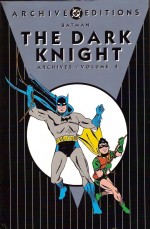
Batman: the Dark Knight Archives volume 2


By Bob Kane, Bill Finger, Jerry Robinson & George Roussos (DC Comics)
ISBN: 1-56389-183-2

By the time of the spectacular action, adventure and mystery classics contained in this magnificent full-colour hardback tome (re-presenting the classic contents of Batman #5-8, Spring 1941 to December 1941/January 1942), the Dynamic Duo were bona fide sensations whose heroic exploits not only thrilled millions of eager readers but also provided artistic inspiration for a generation of comics creators – both potential and actually working then and there…

Scripted by Bill Finger, with art from Bob Kane aided and abetted by Jerry Robinson & George Roussos (who also lettered many of the stories and even provided the effulgent introductory interview with historian Joe Desris which opens this volume) these stories are key moments in the heroes’ careers and still stunningly compelling examples of comics storytelling at its very best.

The magic commences with ‘The Riddle of the Missing Card!’ wherein the ever-deadly Joker rises from the dead once more and embarks on a grisly spree of gambling crimes based on playing cards and the poor unfortunate souls who rescued him, whilst ‘Book of Enchantment’ finds the Gotham Gangbusters scientifically teleported into a fantastic dimension of fairytale horrors. ‘The Case of the Honest Crook’ is the kind of humanistic mystery/second-chance story of redemption earned that Finger excelled at: Batman tackles bandit Joe Sands who has just robbed a store of $6 when he could have taken hundreds. His hard luck story soon leads to real bad guys though…

The last story from Batman #5 ‘Crime Does Not Pay’ deals with the perennial problem of good kids going bad and once again salvation is at hand after a mind-boggling amount of action and mayhem…

Issue #6 saw the title achieve bi-monthly status as the ravenous fans clamoured for more, more, more masked mystery-man madness. ‘Murder on Parole’ saw Batman and Robin hunt down a prominent citizen who was freeing criminals to work as his part-time criminal army after which ‘The Clock Maker’ gave them a deadly old time as he maniacally murdered the people who purchased his fine chronometers before the City Crime-crushers headed for the Texas oil-fields and waded hip-deep in murder and robbery to solve ‘The Secret of the Iron Jungle’. This magnificent romp led inexorably to an undercover case as Bruce Wayne investigated Gotham’s ‘Suicide Beat!’ where three policemen had already died whilst on patrol…

Batman #7 (October/November 1941) began with ‘Wanted: Practical Jokers’ and naturally starred the scene-stealing psychotic Clown Prince of Crime, who had unleashed a host of deadly body-doubles to play hob with the terrified citizenry, whilst ‘The Trouble Trap’ found the Dynamic Duo soundly smashing a Spiritualist racket. They then headed for the Deep Forests to clear up ‘The North Woods Mystery’ of a murdered lumber tycoon.

The last tale in this issue is something of a landmark case, as well as being a powerful and emotional melodrama. ‘The People vs. the Batman’ had Bruce Wayne framed for murder and the Caped Crusaders finally sworn in as official police operatives. They would not be vigilantes again until the grim and gritty 1980’s…

Eight weeks later Batman #8 came out, cover dated December 1941-January 1942. Such a meteoric rise and expansion during a time of extreme paper shortages gives heady evidence to the burgeoning popularity of the characters. Behind a superbly evocative “Infinity” cover by Fred Ray and Jerry Robinson lurked four striking tales of astounding bravura adventure.

‘Stone Walls Do Not A Prison Make’ was a brooding prison drama, with Batman breaking into jail to battle a Big Boss who ruled the city from his cell, followed by a rare foray into science fiction as a scientist abused by money-grubbing financial backers turned himself into a deadly radioactive marauder in ‘The Strange Case of Professor Radium’ (this tale was radically revised and recycled by Finger & Kane as a sequence of the Batman daily newspaper strip from September 23rd to November 2nd 1946).

‘The Superstition Murders’ is still a gripping and textbook example of the “ABC Murders” plot, far better read than read about and ‘The Cross Country Crimes’ perfectly ends this trip to the vault of comic treasures with a tale of the Joker rampaging across America in a dazzling blend of larceny and lunacy whilst trying to flee from the vengeful Gotham Guardians.

These are the stories that forged the character and success of Batman. The works of co-creators Finger and Kane and the multi-talented assistants Robinson & Roussos are spectacular and timeless examples of perfect superhero fiction. Put them in a lavish deluxe package like this, include the pop art masterpieces that were the covers of those classics plus handy creator biographies, and you have pretty much the perfect comic book.
© 1940-1941, 1995 DC Comics. All Rights Reserved.

Green Lantern and Green Arrow #2


By Denny O’Neil, Neal Adams, Frank Giacoia & Dan Adkins (Paperback Library)
ISBN: 0-446-64755-1

Once upon a time, comics – like Rock ‘n’ Roll or spray-can street art – was considered outcast, bastard non-Art continually required to explain and justify itself – even when some of the people vainly defending the intrusive fledgling forms were critics and proponents of the other higher creative forms.

And during those less open-minded times, just like the other examples cited, every so often the funnybook industry brought forth something which forced the wider world to sit up and take notice.

This slim paperback – in itself proof positive of the material’s merit because the stories were contained in a proper book and not a flimsy, gaudy, disposable pamphlet (sic) – is a sequel to an earlier collection of some of the most groundbreaking comic adventures in American history; repackaged for an audience finally becoming cognizant that the unfairly dismissed children’s escapism might have something to contribute to the whole of culture and society…

After a decade of earthly crime-busting, interstellar intrigue and spectacular science fiction shenanigans the Silver Age Green Lantern was about to become one of the earliest big-name casualties of a downturn in superhero sales in 1969 prompting Editor Julius Schwartz to try something extraordinary to rescue the series.

The result was a bold experiment which created an industry-wide fad for socially relevant, ecologically aware, mature stories which spread throughout DC’s costumed hero comics and beyond; totally revolutionising the comics scene and nigh-radicalising readers.

Tapping superstars-in-waiting Denny O’Neil & Neal Adams to produce the revolutionary fare, Schwartz watched in fascinated disbelief as the resultant thirteen groundbreaking, landmark tales captured the tone of the times, garnered critical praise, awards and desperately valuable publicity from the outside world, whilst simultaneously registering such poor sales that the series was finally cancelled anyway, with the heroes unceremoniously packed off to the back of marginally less endangered comicbook The Flash.

When these stories (reprinted from Green Lantern/Green Arrow #78-79, July and September 1970) first appeared DC was a company in transition – just like America itself – with new ideas (which in comic-book terms meant “young writers”) being given much leeway: a veritable wave of fresh, raw talent akin to the very start of the industry, when excitable young creators ran wild with fevered imaginations and anything might happen.

Their cause wasn’t hurt by the industry’s swingeing commercial decline: costs were up and the kids just weren’t buying funnybooks in the quantities they used to…

O’Neil, in tight collaboration with hyper-realistic illustrator Adams, attacked all the traditional monoliths of contemporary costumed dramas with tightly targeted, protest- driven stories. Green Arrow had been shoe-horned into the series with Emerald Archer Oliver Queen constantly mouthing off as a hot-headed, liberal sounding-board and platform for a generation-in-crisis whilst staid, quasi-reactionary GL Hal Jordan played the part of the oblivious but well-meaning old guard. At least the Ring-Slinger was able to perceive his faults and more or less willing to listen to new ideas…

This striking book opens with an introduction from Dennis O’Neil before hurling helter-skelter into a chillingly topical headline grabbing yarn…

The confused and merely-mortal Green Lantern discovered another unpalatable aspect of human nature in ‘A Kind of Loving, a Way of Death!’ (with inks from Frank Giacoia) when the Arrow’s new girlfriend Black Canary joined the peripatetic cast. Seeking to renew her stalled relationship with the Emerald Archer, she was waylaid by bikers, grievously injured and taken in by a charismatic hippy guru. Sadly Joshua’s wilderness cult owed more to Charles Manson than the Messiah and his brand of Peace and Love only extended to white people: everybody else was simply target practise…

The ongoing shoddy treatment and plight of Native Americans was stunningly highlighted next in ‘Ulysses Star is Still Alive!’ (inked by Dan Adkins) as big-business logging interests attempted to deprive a mountain tribe of their very last scraps of heritage, once more causing the Green Knights to take extraordinarily differing courses of action to help and find a measure of justice…

It’s impossible to assess the effect this early bookstore edition had on the evolution of comics’ status – it certainly didn’t help keep the comicbook series afloat – but  this edition certainly gave credibility to the stories themselves: a fact proved by the number of times and variety of formats these iconic adventures have been reprinted.
© 1970, 1972 National Periodical Publications, Inc. All rights reserved.

Ghost Rider: Fear Itself


By Rob Williams, Matthew Clark, Brian Ching, Lee Garbett & various (Marvel/Panini UK)
ISBN: 978-1-84653-499-7

In recent times Marvel has eschewed colossal braided mega-crossover events in favour of smaller, themed mini-epics but following the release of the Captain America and Thor films – not to mention the upcoming Avengers celluloid blockbuster – the time obviously seemed right to once more plunge their entire Universe into cataclysmic chaos and rebirth.

This collection gathers the prologue an 5-issue miniseries which reintroduced the Ghost Rider to contemporary continuity and can even be read without reference to the Fear Itself core volume and subsequent spin-off books (stemming from the 30-odd regular titles, miniseries and specials the saga expanded into).

In the main storyline an antediluvian Asgardian menace resurfaces and by possessing a selection of Earth’s heroes and villains sets in motion a terrifying bloodbath of carnage to feed on the fear of mankind and topple the established Norse pantheon. With that much spiritual energy unleashed its no surprise that other supernatural entities begin to feel threatened…

Years ago carnival stunt-cyclist Johnny Blaze sold his soul to the devil in an attempt to save his foster-father from cancer. As is always the way of such things Satan – or arch-liar Mephisto, as he actually was – followed the letter, but not spirit of the contract. Crash Simpson died anyway and when the Dark Lord came for Johnny only the love of an innocent saved the bad-boy biker from eternal pain and damnation.

Temporarily thwarted Johnny was afflicted with a body that burned with the fires of Hell every time the sun went down and became the unwilling host for outcast demon Zarathos – the spirit of vengeance.

In later years Blaze briefly escaped his doom and a tragic boy named Danny Ketch assumed the role of Zarathos’ host and prison.

Now in a classy fright-fest by Rob Williams (Cla$$war, 2000AD‘s Low Life) and artists Matthew Clark, Brian Ching, Lee Garbett & Sean Parsons, with additional art from Valerio Schiti, the Angel from Hell possesses a new host and is unleashed again to punish the guilty, beginning in the Prologue issue ‘Give Up the Ghost’ wherein the emotionally shattered but still valiantly heroic Blaze – once again bonded to the flaming phantom – is tricked by the mysterious adept Adam into surrendering the curse to a more than willing new vessel…

As the fear-mongering “Worthy” decimate the planet and humanity’s psyche, a female Ghost Rider roars through the ruins on her flaming bike saving the innocent and destroying the things which prey on mortals, but finds her match in the transformed Asgardian herald Skadi…

Meanwhile the liberated Blaze is confronted by his lifelong tormentor Mephisto who reveals that he is not the only Great Big Liar in creation: Adam, who claims to be the First Man, has a plan for the new Ghost Rider which will alter mankind forever…

Adam wants to eradicate all sin on Earth using the gullible, girlish novitiate acolyte Alejandra as his weapon but that is actually an even worse proposition and fate than anything any devil could devise…

Driven by conscience, Blaze makes another Devil’s Bargain to save humanity whilst the sheltered child who now contains the Ghost Rider begins to carry out Adam’s plan with staggering success.

Raiding Adam’s hidden temple. Blaze joins forces with British Zombie wizard Seeker – who knows far more than he’s letting on – just as Adam’s devoted disciple begins to find her own mind and path…

With the planet sliding swiftly into physical cataclysm and psychic Armageddon can the disparate forces of Free Will unite in time to save us all from salvation…?

The book ends on a superbly powerful human note as the mortal who eventually retains the power of Zarathos goes on a mission of old-fashioned vengeance only to be confronted with the most appalling of father figures…

Cool, action-packed, mightily moving and wryly witty, this is a splendid reinvention of a character who has been in equal amounts both the best and worst of Marvel’s mighty pantheon and one well worth a little of your time and money.

Ghost Rider: Fear Itself is scheduled for British release on January 12th 2012.

™ & © 2012 Marvel & Subs. Licensed by Marvel Characters B.V. through Panini S.p.A. Italy. A British Edition by Panini UK Ltd.

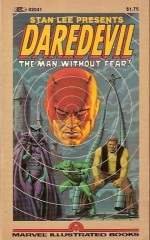
Daredevil and the Punisher: Child’s Play


By Frank Miller & Klaus Janson (Marvel)
ISBN: 978-087135-351-1

Here’s another slim, sleek and sublimely enticing lost treasure from the early days of graphic novel compilations that will undoubtedly enthral fans of hard-bitten, high-calibre Fights ‘n’ Tights fracas.

Released in 1988, this full-colour 64-page compendium collected three unforgettable issues of Daredevil (#182-184 from May-July 1982) which perfectly encapsulated everything that made the first Frank Miller run such a momentous, unmissable, “must-read” series…

Matt Murdock is a blind lawyer whose remaining senses hyper-compensate, making him an astonishing acrobat, formidable fighter and living lie-detector. Very much a second-string hero for most of his early years, Daredevil was nonetheless a striking and popular one, due in large part to the captivatingly humanistic art of Gene Colan. He fought gangsters, a variety of super-villains and even the occasional monster or alien invasion. He quipped and wise-cracked his way through life and life-threatening combat, but under the auspices of Jim Shooter, Roger McKenzie and finally Miller himself, the character transformed into a dark, moody avenger and grim, quasi-religious metaphor of justice and retribution…

Frank Castle saw his family gunned down in Central Park after witnessing a mob hit and thereafter dedicated his life to eradicating criminals everywhere. His methods are violent and permanent. It’s intriguing to note that unlike most heroes who debuted as villains (Wolverine comes to mind) the Punisher actually became more immoral, anti-social and murderous, not less: the buying public shifted its communal perspective – Castle never toned down or cleaned up his act nor did his moral compass ever deviate…

The story goes that Marvel were reluctant to give The Punisher a starring vehicle in their standard colour comic-book line, feeling the character’s very nature made him a bad guy and not a good one.

Debuting as a deluded villain in Amazing Spider-Man #129 (February 1974), Castle was created by Gerry Conway, John Romita Sr. & Ross Andru, in response to popular prose anti-heroes such as Don Pendleton’s Mack Bolan: the Executioner and at of other returning Viet Nam vets who all turned their training and talents to wiping out organised crime.

Maybe that genre’s due for a revival as sandy GI boots hit US soil in the months to come…?

The crazed crime-crusher had previously starred in Marvel Preview #2 (1975) and Marvel Super Action #1 (1976) but as these were both black-and-white magazines aimed at a far more mature audience: however in the early 1980s a number of high profile guest-shots: Captain America #241, Amazing Spider-Man Annual #15 (covered recently in Sensational Spider-Man) and the extended epic here, convinced the Powers-That-Be to finally risk a miniseries on the maniac vigilante (see The Punisher by Steven Grant & Mike Zeck. You all know where that led…

In this collection, a reeling Matt Murdock is trying to cope with the murder of his first love Elektra when ‘Child’s Play’ sees Castle clandestinely removed from prison by a government spook to stop a shipment of drugs the authorities can’t touch.

Once he’s killed the gangsters, however, The Punisher refuses to go back to jail…

This story, concerning school kids using drugs, was begun by McKenzie & Miller but shelved for a year, before being reworked into a stunningly powerful and unsettling tale once Miller and Klaus Janson assumed the full creative chores on the title. When Matt Murdock visits a High School he is a helpless witness as a little girl goes berserk, attacking staff and pupils before throwing herself out of a third floor window.

She was high on Angel Dust and as the appalled hero vows to track down the dealers he encounters her bereaved and distraught younger brother Billy, determined to exact his own vengeance and later the coldly calculating Castle who has the same idea and far more experience…

The hunt leads inexorably to a certain street pusher and DD, Billy and the Punisher all find their target at the same time. After a spectacular battle the thoroughly beaten Daredevil has only a bullet-ridden corpse and Billy with a smoking gun…

The kid is innocent – and so, this time at least, is Castle – and after Murdock proves it in court, the investigation resumes with the focus falling on the pusher’s boss Hogman. When DD’s super-hearing confirms the gangster’s claims of innocence his alter-ego Murdock then successfully defends the vile dealer, only to have the exonerated slime-ball gloatingly admit to having committed the murder after all…

Horrified, shocked, betrayed and determined to enforce justice, DD finds a connection to a highly-placed member of the school faculty deeply involved with Hogman in the concluding ‘Good Guys Wear Red’ but far too late: Castle and Billy have both decided the end the matter Hogman’s way…

Tough, disturbing, beautiful and chillingly plausible, this epic encounter redefined both sides of the heroic coin for a decade to come and remains one  of the most impressive stories in both character’s canons.

With creator biographies and commentaries from Ralph Macchio, Mike Baron and Anne Nocenti this oft re-printed tale (in 2000 it was repackaged and released with a new cover as The Punisher vs. Daredevil) marks a genuine highpoint in the serried careers of both horrifically human heroes and is well worth tracking down.
© 1988 Marvel Entertainment Group, Inc. All rights reserved.

Legion of Super-Heroes: Archive Edition Volume 1


By Otto Binder, Jerry Siegel, Edmond Hamilton, Curt Swan, John Forte, Jim Mooney & various (DC Comics)
ISBN: 1-56389-020-8

Once upon a time, in the far future, a band of super-powered kids from dozens of alien civilisations took inspiration from the legend of the greatest champion of all time and formed a club of heroes. One day those Children of Tomorrow came back in time and invited that legend to join them…

And thus began the vast and epic saga of the Legion of Super-Heroes, as first envisioned by writer Otto Binder and artist Al Plastino in early 1958, just as the revived comicbook genre of superheroes was gathering an inexorable head of steam. Since that time the popularity of the Legion has perpetually waxed and waned, with their complex continuity continually tweaked and rebooted, retconned and overwritten again and again to comply with editorial diktat and popular whim.

We Silver Age Legion fans are indubitably the most persistent, passionate, finicky and snitty of all – and editors crossed us at their peril – so when DC announced that it would be gathering all the titanic team’s appearances in a chronological series of deluxe hardcover Archive Editions we were overjoyed (actually most of us thought it was about time and long overdue…) and eager.

This glorious, far-and-wide ranging full-colour premier compendium assembles the many preliminary appearances of these valiant Tomorrow People and their inevitable progress towards and attainment of their own feature; including all pertinent material from Adventure Comics #247, 267, 282, 290, 293, and 300-305, Action Comics #267, 276, 287 and 289, Superboy #86, 89, 98, Superman #147 – a period spanning 1958-1963. Also included are an introduction by editor, publisher and devotee Mike Gold, creator biographies and a Curt Swan cover gallery (all inked by either Stan Kaye or George Klein) featuring all the burgeoning band of brothers’ pole positions from Adventure Comics #247, 267, 282, 290, 293, 300, 302, Superboy #89 and 98 and Superman #147.

The multi-hued mob of universe-savers first manifested in Adventure Comics #247 (April 1958) in a Superboy tale wherein three mysterious kids invited the Boy of Steel to the 30th century to join a team of metahuman champions all inspired by his historic career. Created by Otto Binder & Al Plastino, the throwaway concept inflamed public imagination and after a slew of further appearances throughout Superman Family titles, the LSH eventually took over Superboy’s lead spot in Adventure for their own far-flung, quirky escapades, with the Caped Kid Kryptonian reduced to “one of the in-crowd”…

However here the excitement was still gradually building when the kids returned more than 18 months later in Adventure #267 (December 1959) for Jerry Siegel & George Papp to play with.

In ‘Prisoner of the Super-Heroes!‘ the teen wonders reappeared to attack and incarcerate the Boy of Steel because of a misunderstood ancient record…

The following summer Supergirl met the Legion in Action Comics #267 (August 1960, by Siegel & Jim Mooney) as Lightning Lad, Saturn Girl and Cosmic Boy secretly travelled to “modern day” America to invite the Maid of Might to join the team, in a repetition of their offer to Superboy 15 years previously (in nit-picking fact they claimed to be the children of the original team – a fact glossed over and forgotten these days: don’t time-travel stories make your head hurt…?).

Due to a dubious technicality, young and eager Kara Zor-El failed her initiation at the hands of ‘The Three Super-Heroes’ and was asked to reapply later – but at least we got to meet a few more Legionnaires, including Chameleon Boy, Invisible Kid and Colossal Boy…

With the editors still cautiously testing the waters, it was Superboy #86 (January 1961) before the ‘The Army of Living Kryptonite Men!’ by Siegel & Papp turned the LSH into a last-minute Deus ex Machina to save the Smallville Sentinel from juvenile delinquent Lex Luthor’s most insidious assault. Two months later in Adventure #282, Binder & Papp introduced Star Boy as a romantic rival for the Krypton Kid in ‘Lana Lang and the Legion of Super-Heroes!’

Action #276 (May 1961) introduced ‘Supergirl’s Three Super Girl-Friends’ by Siegel & Mooney, which finally saw the her crack the plasti-glass ceiling and join the team, sponsored by Saturn Girl, Phantom Girl and Triplicate Girl. We also met for the first time Bouncing Boy, Shrinking Violet, Sun Boy and potential bad-boy love-interest Brainiac 5 (well at least his distant ancestor Brainiac was a very bad boy…)

Next comes a pivotal two-part tale ‘Superboy’s Big Brother’ (by Robert Bernstein & Papp from Superboy #89, June 1961) in which an amnesiac, super-powered space traveller crashes in Smallville, speaking Kryptonese and carrying star-maps written by the Boy of Steel’s long-dead father…

Jubilant, baffled and suspicious in equal amounts Superboy eventually, tragically discovered ‘The Secret of Mon-El’ by accidentally exposing the stranger to a lingering, inexorable death, before desperately providing critical life-support by depositing the dying alien in the Phantom Zone until a cure could be found…

With an August 1961 cover-date Superman #147 unleashed ‘The Legion of Super-Villains’ (Siegel, Curt Swan & Sheldon Moldoff): a stand-out thriller featuring Lex Luthor and the adult Legion coming far too close to destroying the Action Ace until the temporal cavalry arrived…

Adventure #290 (November 1961, by Bernstein & Papp) seemingly gave Sun Boy a starring role in ‘The Secret of the Seventh Super-Hero!’ – a clever tale of redemption and second chances, followed in #293 (February 1962) by a gripping thriller from Siegel, Swan & George Klein: ‘The Legion of Super-Traitors’ wherein the future heroes were turned evil, prompting Saturn Girl to recruit a Legion of Super-Pets including Krypto, Streaky the Super Cat, Beppo, the monkey from Krypton and Comet the magical Super-horse to save the world – and yes, I typed all that with a reasonably straight face…

‘Supergirl’s Greatest Challenge!’ by Siegel & Mooney (Action #287 April 1962) saw her visit the Legion (quibblers be warned: it was mistakenly described as the 21st century in this story) to save future Earth from invasion. She also met a telepathic descendent of her cat Streaky. His perhaps ill-considered name was Whizzy…

Action #289 featured ‘Superman’s Super-Courtship!’ wherein the Girl of Steel scoured the universe for an ideal mate for her cousin. One highly possible candidate was the adult Saturn Woman, but her husband Lightning Man objected… Perhaps charming at the time, but modern sensibilities might quail at the conclusion that his perfect match was a doppelganger of Supergirl herself, but thankfully a bit older…

By the release of Superboy #98 (July 1962), the decision had been made. The buying public wanted more Legion stories and once ‘The Boy With Ultra-Powers’ by Siegel, Swan & Klein had introduced a mysterious lad with greater powers than the Boy of Steel, the focus shifted to Adventure Comics #300 (cover dated September 1962) wherein the futuristic super-squad finally landed their own gig; even occasionally stealing the odd cover-spot from the still top-featured Superboy.

Tales of the Legion of Super-Heroes opened its stellar run with ‘The Face Behind the Lead Mask!’ by Siegel, John Forte & Plastino; a fast-paced premier which pitted Superboy and the 30th century champions against an impossibly unbeatable foe until Mon-El, long-trapped in the Phantom Zone, briefly escaped a millennium of confinement and saved the day…

In those halcyon days humour was as important as action, imagination and drama, so many early escapades were light-hearted and moralistic. Issue #301 offered hope to fat kids everywhere with ‘The Secret Origin of Bouncing Boy!’ by regular creative team Siegel & Forte, wherein the process of open auditions was instigated (providing devoted fans with loads of truly bizarre and memorable applicants over the years) whilst allowing the rebounding human rotunda to give a salutary pep talk and inspirational recount of heroism persevering over adversity.

Adventure #302 featured ‘Sun Boy’s Lost Power!’ as the golden boy was forced to resign until fortune and boldness restored his abilities whilst ‘The Fantastic Spy!’ in #303 provided a tense tale of espionage and possible betrayal by new member Matter-Eater Lad.

The happy readership was stunned by the events of #304 when Saturn Girl engineered ‘The Stolen Super-Powers!’ to make herself a one-woman Legion. Of course it was for the best possible reasons, but still didn’t prevent the shocking murder of Lightning Lad…

With comfortable complacency utterly destroyed, #305 further shook everything up with ‘The Secret of the Mystery Legionnaire!’ who turned out to be the long-suffering Mon-El finally cured and freed from his Phantom Zone prison.

The Legion is undoubtedly one of the most beloved and bewildering creations in American comicbook history and largely responsible for the growth of the groundswell movement that became Comics Fandom. Moreover, these sparkling, simplistic and astoundingly addictive stories as much as the innovations of Julie Schwartz’s Justice League fired up the interest and imaginations of a generation of young readers and built the industry we all know today.

Naive, silly, joyous, stirring and utterly compelling yarns are precious and fun beyond any ability to explain but if you love comics and haven’t read this stuff, you are the poorer for it and need to enrich your future life as soon as possible.
© 1958-1964, 1991 DC Comics. All Rights Reserved.