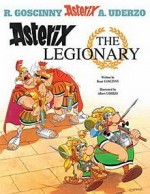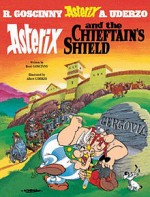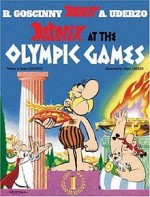
Asterix the Gaul, Asterix and the Golden Sickle and Asterix and the Goths


By René Goscinny & Albert Uderzo, translated by Anthea Bell & Derek Hockridge (Orion/Hodder-Darguad/Brockhampton)
Orion ISBNs: 978-0-75286-605-5, 978-0-75286-613-0 and 978-0-75286-615-4

Sorry, Baudelaire, Balzac Proust, Sartre, Voltaire, Zola and all you other worthy contenders; Asterix the Gaul is probably France’s greatest literary export: a feisty, wily little warrior who fought the iniquities and viewed the myriad wonders of Julius Caesar’s Roman Empire with brains, bravery and, whenever necessary, a magical potion which imbued the imbiber with incredible strength, speed and vitality.

The diminutive, doughty hero was created at the very end of the 1950s by two of the art-forms greatest masters, René Goscinny & Albert Uderzo and even though the perfect partnership ended in 1977 the creative wonderment still continues – albeit at a slightly reduced rate of rapidity.

René Goscinny is arguably the most prolific and remains one of the most read writers of comicstrips the world has ever known. Born in Paris in 1926, he grew up in Argentina where his father taught mathematics. From an early age René showed artistic promise, and studied fine arts, graduating in 1942.

In 1945 while working as junior illustrator in an ad agency his uncle invited him to stay in America, where he found work as a translator. After National Service in France he returned to the States and settled in Brooklyn, pursuing an artistic career and becoming in 1948 an assistant for a little studio which included Harvey Kurtzman, Will Elder, Jack Davis and John Severin as well as European giants-in-waiting Maurice de Bévère (Morris, with whom Goscinny produced Lucky Luke from 1955-1977) and Joseph Gillain (Jijé). He also met Georges Troisfontaines, head of the World Press Agency, the company that provided comics for the French magazine Spirou.

After contributing scripts to Belles Histoires de l’Oncle Paul and Jerry Spring Goscinny was promoted to head of World Press’ Paris office where he met life-long creative collaborator Albert Uderzo. In his spare time Rene created Sylvie and Alain et Christine with Martial Durand (Martial) and Fanfan et Polo, drawn by Dino Attanasio.

In 1955 Goscinny, Uderzo, Charlier and Jean Hébrard formed the independent Édipress/Édifrance syndicate, creating magazines for business and general industry (Clairon for the factory union and Pistolin for a chocolate factory). With Uderzo he produced Bill Blanchart, Pistolet and Benjamin et Benjamine and illustrated his own scripts for Le Capitaine Bibobu.

Goscinny clearly patented the 40-hour day. Using the nom-de-plume Agostini he wrote Le Petit Nicholas (drawn by Jean-Jacques Sempé) and in 1956 began an association with the revolutionary magazine Tintin, writing for various illustrators including Dino Attanasio (Signor Spagetti ), Bob De Moor (Monsieur Tric ), Maréchal (Prudence Petitpas), Berck (Strapontin), Globule le Martien and Alphonse for Tibet, Modeste et Pompon for André Franquin, as well as the fabulous and funny adventures of the incredible Indian brave Oumpah-Pah with Uderzo. He also wrote for the magazines Paris-Flirt and Vaillant.

In 1959 Édipress/Édifrance launched Pilote, and Goscinny went into overdrive. The first issue featured re-launched versions of Le Petit Nicolas, Jehan Pistolet/Jehan Soupolet, new serials Jacquot le Mousse and Tromblon et Bottaclou (drawn by Godard) plus a little something called Asterix the Gaul, inarguably the greatest achievement of his partnership with Uderzo.

When Georges Dargaud bought Pilote in 1960, Goscinny became editor-in-Chief, but still found time to add new series Les Divagations de Monsieur Sait-Tout (Martial), La Potachologie Illustrée (Cabu), Les Dingodossiers (Gotlib) and La Forêt de Chênebeau (Mic Delinx).

He also wrote frequently for television but never stopped creating strips such Les Aventures du Calife Haroun el Poussah for Record (first episode January 15th 1962) illustrated by Swedish artist Jean Tabary. A minor success, it was re-tooled as Iznogoud when it transferred to Pilote.

Goscinny died – probably of well-deserved pride and severe exhaustion – in November 1977.

Alberto Aleandro Uderzo was born on April 25th 1927, in Fismes, on the Marne, the son of Italian immigrants. As a child reading Mickey Mouse in Le Pétit Parisien he dreamed of becoming an aircraft mechanic and showed artistic flair from an early age. Albert became a French citizen when he was seven and found employment at 13 as an apprentice of the Paris Publishing Society, learning design, typography, calligraphy and photo retouching.

When WWII broke out he spent time with farming relatives in Brittany and joined his father’s furniture-making business. Brittany beguiled Uderzo: when a location for Asterix’s idyllic village was being decided upon the region became the only choice.

In the post-war rebuilding of France Uderzo returned to Paris and became a successful artist in the country’s burgeoning comics industry. His first published work, a pastiche of Aesop’s Fables, appeared in Junior and in 1945 he was introduced to industry giant Edmond-François Calvo (whose masterpiece The Beast is Dead is long overdue for the world’s – and my – closer attention).

Young Uderzo’s subsequent creations included the indomitable eccentric Clopinard, Belloy, l’Invulnérable, Prince Rollin and Arys Buck.

He illustrated Em-Ré-Vil’s novel Flamberge, worked in animation, as a journalist and illustrator for France Dimanche, and created the vertical comicstrip ‘Le Crime ne Paie pas’ for France-Soir. In 1950 he illustrated a few episodes of the franchised European version of Captain Marvel Jr. for Bravo!

Another inveterate traveller, the young artist met Goscinny in 1951. Soon fast friends they decided to work together at the new Paris office of Belgian Publishing giant World Press. Their first collaboration was in November of that year; a feature piece on savoir vivre (how to live right or gracious living) for women’s weekly Bonnes Soirée, after which an avalanche of splendid strips and serials poured forth.

Jehan Pistolet and Luc Junior were created for La Libre Junior and they produced a western starring a Red Indian that became the delightful and (eventually) popular Oumpah-Pah. In 1955 with the formation of Édifrance/Édipresse, Uderzo drew Bill Blanchart, for La Libre Junior, replaced Christian Godard on Benjamin et Benjamine and in 1957 added Charlier’s Clairette to his portfolio.

The following year later, he made his debut in Tintin, as Oumpah-Pah finally found a home and a rapturous audience. Uderzo also worked Poussin et Poussif, La Famillle Moutonet and La Famille Cokalane

When Pilote launched in 1959 Uderzo was a major creative force for the new magazine with the series Charlier’s Tanguy et Laverdure and a little something called Asterix…

Although Asterix was a massive hit from the start, Uderzo continued working with Charlier on Michel Tanguy, (subsequently Les Aventures de Tanguy et Laverdure), but soon after the first adventure was collected as Astérix le gaulois in 1961 it became clear that the series would demand most of his time – especially as the incredible Goscinny never seemed to require rest or run out of ideas (after the writer’s death the publication rate dropped from two per year to one volume every three to five).

By 1967 the strip occupied all Uderzo’s time and attention. In 1974 the partners formed Idéfix Studios to fully exploit their inimitable creation and when Goscinny passed away three years later Uderzo was convinced to continue the adventures as writer and artist, producing a further ten volumes since then.

According to UNESCO’s Index Translationum, he is the tenth most-often translated French-language author in the world and the third most-translated French language comics author – after his old mate René Goscinny and the grand master Hergé.

So what’s it all about?

Like all entertainments the premise works on two levels: as an action-packed comedic romp of sneaky and bullying baddies coming a cropper for younger readers and as a pun-filled, sly and witty satire for older, wiser heads, transformed here by the brilliantly light touch of master translators Anthea Bell & Derek Hockridge who played no small part in making the indomitable little Gaul so very palatable to the English tongue.

Originally published in Pilote #1-38 (29th October 1959- 4th July 1960, with the first page appearing a week earlier in a promotional issue #0, distributed on June 1, 1959), the story was set on the tip of Uderzo’s beloved Brittany coast in the year 50BC, where a small village of redoubtable warriors and their families resisted every effort of the world-beating Roman Empire to complete their conquest of Gaul. Unable to defeat these Horatian hold-outs, the Empire has resorted to a policy of containment and the little seaside hamlet is hemmed in by the heavily fortified permanent garrisons of Totorum, Aquarium, Laudanum and Compendium.

The Gauls don’t care: they daily defy the world’s greatest military machine by just going about their everyday affairs, protected by a magic potion provided by the resident druid and the shrewd wits of a rather diminutive dynamo and his simplistic best friend…

In Asterix the Gaul this perfect scenario is hilariously demonstrated when Centurion Crismus Bonus, fed up with his soldiers being casually beaten up by the fiercely free Frenchmen, sends reluctant spy Caligula Minus to ferret out the secret of their incredible strength.

The affable resistors take the infiltrator in and dosed up with potion, the perfidious Roman escapes with the answer – if not the formula itself…

Soon after, the Druid Getafix is captured by the invaders and the village seems doomed, but wily Asterix is on the case and breaks into Compendium determined to teach the Romans a lesson. After driving them crazy for awhile by resisting all efforts at bribery and coercion, wizard and warrior seemingly capitulate and make the Romans a magic potion – but not the one the rapacious oppressors were hoping for…

Although comparatively raw and unpolished, the good-natured, adventurous humour and sheer finesse of the yarn barrels along, delivering barrages of puns, oodles of insane situations and loads of low-trauma slapstick action, marvellously rendered in Uderzo’s seductively stylish art-style. From the second saga on the unique and expanding cast would encroach on events, especially the unique and expanded, show-stealing sidekick Obelix who had fallen into a vat of potion as a baby and was a genial, permanently superhuman, eternally hungry foil to the smart little hero…

These albums are available in a wealth of differing formats, and earlier translated editions going all the way back to the first Brockhampton editions in 1969 are still readily available from a variety of retail and internet vendors – or even your local charity shop and jumble sale. Be warned though that if pure continuity matters only the most recent British publisher, Orion, has released the nearly 40 albums in chronological order – which is how I intend to review them – and are even in the process of re-releasing the tales in Omnibus editions; three tales per tome.

Also, on a purely artistic note some of the Hodder-Dargaud editions have a rather unconventional approach to colour that might require you to wear sunglasses and put blinkers on your pets and staff…

Asterix and the Golden Sickle originated in Pilote #42-74 (August 11th 1960-1961) and recounts the disastrous consequences of Getafix losing his ceremonial gold sickle just before the grand Annual Conference of Gaulish Druids. Since time is passing and no ordinary replacement will suffice to cut ingredients for magic potion, Asterix offers to go all the way to Lutetia (you can call it Paris if you want to) to find another.

As Obelix has a cousin there, Metallurgix the Smith, he also volunteers and the two are swiftly off, barely stopping to teach assorted bandits the errors of their pilfering ways but still finding a little time to visit the many roadside inns and tavern serving roast boar…

There is a crisis in Lutetia: a mysterious gang is stealing all the Golden Sickles and forcing the prices up. The druid community is deeply distressed and more worrying still master sickle-maker Metallurgix has gone missing…

Asterix and Obelix investigate the dastardly doings in their own bombastic manner and discover a nefarious plot that seems to go all the way to the office of the local Roman Prefect…

The early creative experiment was quickly crystallizing into a supremely winning format and the next epic cemented the strip’s status as a popular icon of Gallic excellence.

Asterix and the Goths ran from 1962-1963 and followed the plot-thread of the Druid Conference. As Getafix, new golden sickle in hand, sets off for the Forest of the Carnutes to compete, on the Gaul’s Eastern border savage Goths – barbarians who remained unconquered by the might of Rome – crossed into pacified Roman territory intent on capturing the mightiest Druid and turning his magic against the rule of Julius Caesar.

Although non-Druids aren’t allowed into the forest Asterix and Obelix had accompanied Getafix to its edge and as the competition round of the Conference ends in victory for him and his power-potion the Goths struck, abducting him in his moment of triumph.

Alerted by fellow Druid Prefix, the heroic pair tracked the kidnappers but were mistaken for Visigoths by Roman patrols, allowing the Goths to cross the border into Germania.

Although Romans were no threat they could be a time-wasting hindrance so Asterix and Obelix disguise themselves as Romans and invade the Barbarian lands…

Well-used to being held prisoner by now Getafix is making himself a nuisance to his bellicose captors and a genuine threat to the wellbeing of his long-suffering translator, and when Asterix and Obelix are captured dressed as Goths the wily Gauls conceive a cunning plan to end the permanent and imposing threat of Gothic invasion – a scheme that succeeded for almost two thousand years…

If, like me, you’re particularly interested (my wife calls it “sad”) in absolutely all the iterations you might also want to seek out back issues of British boys comic Ranger (1965-1966 and every one a gem!) and issues of Look and Learn immediately after the two titles merged (beginning with #232; 25th June 1966). Among the many splendid strips in the glossy, oversized photogravure weekly was an quirky comedy feature entitled ‘Britons Never, Never, Never, Shall Be Slaves!’ which featured the first appearance of Goscinny & Uderzo’s masterpiece – albeit in a radically altered state.

In these translations Asterix became “Beric”, Getafix was “Doric” and Obelix was dubbed “Son of Boadicea”. More jingoistically the entire village was editorially transported to England where a valiant population of True Brits never ever surrendered to the Roman Occupation!

Similar intellectual travesties occurred during two abortive early attempts to introduce the gutsy Gauls to America as a heavily re-edited family newspaper strip…

Asterix is one of the most popular comics in the world, translated into more than 100 languages; 8 animated and 3 live-action movies, assorted games and even his own theme park (Parc Astérix, near Paris). More than 325 million copies of 34 Asterix books have been sold worldwide, making Goscinny & Uderzo France’s bestselling international authors.

This is sublime comics storytelling and you’d be as Crazy as the Romans not to increase that statistic by finally getting around to acquiring your own copies of this fabulous, frolicsome French Folly.

© 1961-1963 Goscinny/Uderzo. Revised English translation © 2004 Hachette. All rights reserved.

Essential Thor volume 4


By Stan Lee, Jack Kirby, Neal Adams, John Buscema & various (Marvel)
ISBN: 978-0-7851-3076-5

Whilst the constantly expanding Marvel Universe grew ever more interconnected as it matured, with characters literally tripping over each other in New York City, the Asgardian heritage of Thor and the soaring imagination of Jack Kirby had long been drawing the Thunder God away from mortal realms into stunning new landscapes.

With this fourth Essential black and white compendium however, an unthinkable Changing of the Guard occurred as the increasingly discontented King of Comics jumped ship from the House of (His) Ideas for arch-rival DC where he crafted the unfinished magnum Opus of the Fourth World series as well as a number of other game-changing comics classics…

An era ended at Marvel when the King abdicated his seemingly divinely-ordained position. Left to soldier on were Stan Lee and a couple of budding talents named Adams and Buscema…

In case you came in late: disabled doctor Donald Blake took a vacation in Norway only to stumble into an alien invasion. Trapped in a cave, he found an old walking stick which, when struck against the ground, turned him into the Norse God of Thunder! Within moments he was defending the weak and smiting the wicked. Months swiftly passed with the Lord of Storms tackling rapacious extraterrestrials, Commie dictators, costumed crazies and cheap thugs, but these soon gave way to a vast kaleidoscope of fantastic worlds and incredible, mythic menaces.

This iconic transitional compendium encapsulates the absolute zenith of the fantastic feature, reprinting Mighty Thor #167-195, spanning August 1969 to July 1972 with the mighty Thunder God going both forward and back.

At the close of the previous volume Thor had fallen to a berserker rage whilst retrieving his beloved Lady Sif from the naive artificial superman Him: now as this chronicle opens with ‘This World Renounced!’ (by Stan Lee, Jack Kirby & Vince Colletta and a cover by John Romita: the first ever not drawn by Kirby) almighty Odin punishes his son for succumbing to Warrior Madness by exiling him to deep space, where he must atone by locating the enigmatic world-devourer Galactus.

Just before departure however, Thor got to clear up some outstanding old business, including one last confrontation with Loki, Prince of Evil…

The superb George Klein came aboard as inker for ‘Galactus Found!‘ which saw Balder and the Warriors Three safeguarding Earth as Thor roamed the heavens on his lonely mission. As a new threat emerged in Red China, Galactus came to Thor and revealed ‘The Awesome Answer!’ to his origins – pure Kirby Kosmology of truly staggering proportions, whilst back home the terrifying Thermal Man was making things too hot for both his Chinese creators and the Lands of the Free…

In issue #170 ‘The Thunder God and the Thermal Man’ (inked by Bill Everett) found Thor, with mission accomplished, returned to New York only to tumble straight into cataclysmic combat beside his Asgardian comrades against the unstoppable Atomic menace unleashed by the duplicitous Reds. At the height of the struggle Balder, Hogun, Fandral and Volstagg were abducted by Loki and the Norn Queen but nevertheless the Thunder God triumphed…

Alone on Earth Thor faced in short order ‘The Wrath of The Wrecker!’, the body-swapping plot of billionaire Kronin Krask in ‘The Immortal and the Mind-Slave!’ and the earthbound fury of ‘Ulik Unleashed!’ (with the Circus of Crime thrown in for good measure) as well as ‘The Carnage of the Crypto-Man!’ before the last great epic of the Kirby-era began.

Behind a Marie Severin cover ‘The Fall of Asgard!’ saw Balder and Co. escape to confront the assemble hordes of Giants and Trolls marching on the Home of the Gods. With Odin incapacitated by his annual Great Sleep, Loki had seized the throne and Sif called Thor back for perhaps the Last Battle…

‘Inferno!’ (inked by Colletta) saw the folly of the usurper as the terrifying Fire-demon Surtur broke free of his Odinian prison and began its ordained task of burning down the universe. As everything appeared ‘To End in Flames!’ Loki fled to Earth, having first hidden Odin’s sleeping form in the Sea of Eternal Night. Thor led a heroic last stand as Balder invaded the Dimension of Death to rescue the All-Father just as Surtur fired up for the final foray…

Thor #178 is a landmark: the first issue created without Jack Kirby. An obvious fill-in, ‘Death is a Stranger’ by Lee, John Buscema & Colletta, found the Thunderer snatched away from Asgard by the nefarious Abomination to battle the Stranger – an extra-galactic powerhouse who collects unique beings…

The interrupted epic resumed in #179 with ‘No More the Thunder God!’ as Thor, Sif and Balder were dispatched to Earth to arrest Loki. This story was Kirby’s last: he left the entire vast unfolding new mythology on a cliffhanger as the Thunder God was ambushed by his wicked step-brother.

By switching bodies, the Lord of Evil gained safety and the power of the Storm whilst Thor was doomed to endure whatever punishment Odin decreed…

More than any other Marvel strip The Mighty Thor was the feature where Kirby’s creative brilliance matched his questing exploration of an Infinite Imaginative Cosmos: dreaming, extrapolating and honing a dazzling new kind of storytelling graphics with soul-searching, mind-boggling concepts of Man’s place in the universe. Although what followed contained the trappings and even spirit of that incredible marriage, the heart, soul and soaring, unfettered wonder just were not there any longer: nor would they be until 1983 Walt Simonson assumed creative control with #337 (see Mighty Thor: the Ballad of Beta Ray Bill).

‘When Gods Go Mad!’ introduced the totally different style of Neal Adams to the mix, inked by the comfortably familiar Joe Sinnott, as the true Thunder God was sent to Hell and the tender mercies of Mephisto, whilst on Earth Loki used his brother’s body to terrorise the UN Assembly and declare himself Master of the World…

In #181 ‘One God Must Fall’ Sif led the Warriors Three on a rescue mission to the Infernal Realm as Balder struggled to combat the combined power of Thor and malice of Loki until Mephisto was thwarted and a cataclysmic battle of brothers set the world to rights.

The new era truly began with Thor #182 as John Buscema assumed the artistic reins for ‘The Prisoner… The Power… and… Dr. Doom!’ as the Thunder God became entangled in Earthly politics when a young girl entreated him to rescue her missile-designer father from the deadly Iron Monarch. The decidedly down-to-Earth and mismatched melodrama concluded with Don Blake ‘Trapped in Doomsland!’ until Thor could retrieve his mislaid mallet…

Lee & Buscema began their own cosmic saga in #184 and ‘The World Beyond!‘ as a sinister force began devouring the outer galaxies and psychic reverberations began to unravel life on Earth and in Asgard. Sam Grainger inked ‘In the Grip of Infinity!’ as the cosmic calamity intensified whilst ‘Worlds at War!’ revealed the true architect of the conflagration, leading to a desperate last-ditch ploy in ‘The World is Lost!’ and a final clash which led to ‘The End of Infinity!’ (inked by Jim Mooney).

Although vast in scope and quite clever this tale suffers from excessive padding and a plodding, repetitive pace which isn’t helped by a ponderous epilogue in #189 as the Goddess Hela came calling, demanding Thor feel ‘The Icy Touch of Death!’ to pay for all the souls she didn’t get…

After a big chase she was finally dissuaded in ‘…And So To Die!’ but the distraction had once more allowed Loki to seize the Throne and unleash ‘A Time of Evil!’ which he manifested in the form of an unstoppable artificial hunter/killer dubbed Durok the Demolisher. Unleashing his merciless engine of destruction on Earth, Loki gloated at the ‘Conflagration!’ (inked by Grainger) he had instigated…

Gerry Conway came aboard as writer with ‘What Power Unleashed?’ (Sal Buscema inking brother John) to conclude the tale as Balder and Sif enlisted the Silver Surfer to aid the embattled Thunder God as Asgard tottered on the brink of total destruction until Thor could intercede, culminating in ‘This Fatal Fury!’ where the All-Father finally resumed his rightful place.

This pivotal collection concludes unsatisfactorily ‘In the Shadow of Mangog!’ (inked by Colletta) with the first part on another extended odyssey as Thor and friends are dispatched to the ends of the Universe. In his righteous rage Odin had banished Loki to that fantastic world, momentarily forgetting that once there the Prince of Evil might awaken the most vicious, unbeatable monster in the Asgardian universe …

To be continued…

The Kirby Thor will always be a high-point in graphic fantasy, all the more impressive for the sheer imagination and timeless readability of the tales. With his departure the series foundered for the longest time before finding a new identity, yet even so the remaining stories in this volume are still packed with intrigue and action and magnificently rendered by artists who whilst not possessing Kirby’s vaulting visionary passion were every inch his equal in craft and dedication.  This book is still an absolute must for all fans of the medium.

©1969, 1970, 1971, 1972, 2009 Marvel Characters, Inc. All Rights Reserved.

Cycops


By Julie Woodcock & Brian Stelfreeze (Comics Interview Publications)
No ISBN

The mid-1980s were a great time for American comics creators. It was as if an entire new industry had opened up with the proliferation of the Direct Sales market and dedicated specialist retail outlets; new companies were experimenting with format and content, and punters had a bit of spare cash to play with. Moreover much of the “kid’s stuff” stigma had finally abated and the country was catching up to the rest of the world in acknowledging that sequential narrative might just be an actual art-form…

Consequently many new companies began competing for the attention and cash of punters who had grown accustomed – or resigned – to getting their on-going sequential narratives from DC, Marvel, Archie and/or Harvey Comics. European and Japanese styled material had been creeping in and by 1983 a host of young companies such as WaRP Graphics, Pacific, Eclipse, Capital, Now, Comico, Dark Horse, First and many others had established themselves and were making impressive inroads.

New talent, established stars and fresh ideas all found a thriving forum to try something a little different both in terms of content and format. Even smaller companies had a fair shot at the big time and a lot of great material came – and often, sadly went – without getting the attention or success it warranted.

One such lost gem is Cycops: a neat and appealing science fiction romp released by David Anthony Kraft’s Comics Interview Publications. The journalist, writer, editor, publisher and literary agent specialised in publishing intriguing funnybooks, as well as the wonderful, informative and award-winning titular magazine of comics journalism, with the most notable forays probably being Southern Knights, X-Thieves, and Comics Revue.

Originally released as a black and white 3-issue miniseries Cycops is set in a star-spanning 25th century where civilisation is a loose confederation of autonomous states governed – or at least kept generally honest – by the Human Coalition Senate and an elected President.

The eponymous agents are scientifically enhanced and augmented warriors tasked by the Interstellar Bureau of Criminal Investigation with upholding basic human rights and dealing with criminals and threats generated by the manic proliferation of technology.

The processes used to create Cycops produce super-strong, fast and tough peace-keepers who are a breed apart from normal humanity; not least because the procedures generally halve their life-spans…

The saga begins with ‘Cycops Blues’ which introduces Valcyr, Tanaka and Radm, the celebrated White Team who are tasked by President Kamdr herself with a delicate undercover mission… exposing popular Senator Desron Tec’s slavery racket and proving she has turned her world of Kagni into a sadistic hellworld of degradation and brutal sex-tourism…

Before they can begin however the President is murdered by Tec’s ally Ragoczy: a legendary, nigh-immortal hyper-augmented assassin who easily defeats all three Cycops and frames them for Kamdr’s death…

In ‘White Heat’ the Cycops corps searches for the three fugitives who have become Ragoczy’s helpless possessions on Kagni. However dissension is growing between the super-warrior and the depraved Desron Tec who feels her power is slipping away. Held by bonds cybernetic and psychological, Radm struggles to win free as he witnesses horror after horror… When he finally succeeds and liberates his comrades the scene is set for a catastrophic conclusion in the savage showdown ‘Seeing Red’

A stunning combination of hard-science adventure and dark, procedural cop thriller, Julie Woodcock’s script is sharp, understated and winningly effective whilst the black and white art from then-newcomer Brian Stelfreeze (who probably enjoys his greatest fame today as a brilliant cover painter) perfectly captures the simultaneous experience of an ancient brotherhood of soldiers, a galaxy of wonders and a human history of inescapable depravity that will always need extraordinary guardians to defend us.

Still available in both hardback and softcover editions this collection also boasts behind-the-scenes interviews and commentary plus an extensive sketchbook section.

Impressive and frustrating (the promise of further adventures sadly unfulfilled) Cycops is a solid piece of comics entertainment long overdue for a second look by today’s broader minded, less superhero obsessed readers.
© 1988, 1989 Woodcock, Stelfreeze, Kraft. All rights reserved.

Showcase Presents Blackhawk volume 1


By anonymous, Dick Dillin & Chuck Cuidera (DC Comics)
ISBN: 978-1-4012-1983-3

The early days of the American comicbook industry were awash with both opportunity and talent and these factors also coincided with a vast population hungry for cheap entertainment. Comics had no acknowledged fans or collectors; only a large, transient market-place open to all varied aspects of yarn-spinning and tale-telling – a situation which maintained right up to the middle of the 1960s.

Thus, even though loudly isolationist and more than six months away from active inclusion in World War II, creators like Will Eisner and publishers like Everett M. (“Busy”) Arnold felt that Americans were ready for the themed anthology title Military Comics.

Nobody was ready for Blackhawk.

Military Comics #1 launched on May 30th 1941 (with an August cover-date) and included in its gritty, two-fisted line-up Death Patrol by Jack Cole, Miss America, Fred Guardineer’s Blue Tracer, X of the Underground, the Yankee Eagle, Q-Boat, Shot and Shell, Archie Atkins and Loops and Banks by “Bud Ernest” (actually aviation-nut and unsung comics genius Bob Powell), but none of the strips, not even Cole’s surreal and suicidal team of hell-bent fliers, had the instant cachet and sheer appeal of Eisner and Powell’s “Foreign Legion of the Air” led by the charismatic Dark Knight of the airways known only as Blackhawk.

Chuck Cuidera, already famed for creating the original Blue Beetle for Fox, drew ‘the Origin of Blackhawk’ for the first issue, wherein a lone pilot fighting the Nazi invasion of Poland in 1939 was shot down by Nazi Ace Von Tepp; only to rise bloody and unbowed from his plane’s wreckage to form the World’s greatest team of airborne fighting men…

This mysterious paramilitary squadron of unbeatable fliers, dedicated to crushing injustice and smashing the Axis war-machine, battled on all fronts during the war and stayed together to crush international crime, Communism and every threat to democracy from alien invaders to supernatural monsters, becoming one of the true milestones of the US industry. Eisner wrote the first four Blackhawk episodes before moving on and Cuidera stayed until issue #11 – although he triumphantly returned in later years.

There were many melodramatic touches that made the Blackhawks so memorable in the eyes of a wide-eyed populace of thrill-hungry kids. There was the cool, black leather uniforms and peaked caps. The unique, outrageous – but authentic – Grumman F5F-1 Skyrocket planes they flew from their secret island base and of course their eerie battle-cry “Hawkaaaaa!”

But perhaps the oddest idiosyncrasy to modern readers was that they had their own song (would you be more comfortable if we started calling it an international anthem?) which Blackhawk, André, Stanislaus, Olaf, Chuck, Hendrickson and Chop-Chop would sing as they plummeted into battle (to see the music and lyrics check out the Blackhawk Archives edition); just remember this number was written for seven really tough leather-clad guys to sing while dodging bullets…

Quality adapted well to peacetime demands: Plastic Man and Doll Man lasted far longer than most Golden Age superhero titles, whilst the rest of the line adapted into tough-guy crime, war, western, horror and racy comedy titles. The Blackhawks soared to even greater heights, starring in their own movie serial in 1952. However the hostility of the marketplace to mature-targeted titles after the adoption of the self-censorious Comics Code was a clear sign of the times; as 1956 ended Arnold sold most of his comics properties and titles to National Publishing Periodicals (now DC) and set up as a general magazine publisher.

Many of the purchases were a huge boost to National’s portfolio, with titles such as GI Combat, Heart Throbs and Blackhawk lasting uninterrupted well into the 1970s (GI Combat survived until in 1987), whilst the unceasing draw and potential of characters such as Uncle Sam, the assorted Freedom Fighters costumed pantheon, Kid Eternity and Plastic Man have paid dividends ever since.

This commodious monochrome collection covers the first National-emblazoned issue (#108, January 1957) through #127 (August 1958) which saw the Air Aces hit the ground running in a monthly title (at a time when Superman and Batman were only published eight times a year) and almost instantly established themselves as a valuable draw in the DC firmament.

Regrettably many of the records are lost so scripter-credits are not available (potential candidates include Ed “France” Herron, Arnold Drake, George Kashdan, Jack Miller, Bill Woolfolk, Jack Schiff and/or Dave Wood) but the art remained in the capable hands of veteran illustrators Dick Dillin and Chuck Cuidera: a team who meshed so seamlessly that they often traded roles with few any the wiser…

Moreover although broadly formulaic the gritty cachet, crime and Sci Fi underpinnings and international jurisdiction of the team always allowed great internal variety within the tales, so with three complete adventures per issue, this terrific tome is a joyous celebration and compelling reminder of simpler yet more intriguing times.

The action begins with ‘The Threat From the Abyss’ an old-school “Commie-Stomper” yarn wherein the Magnificent Seven put paid to a sinister subsea Soviet rocket base, after which ‘Killer Shark’s Secret Weapon’ stuck with the watery theme as the Blackhawks’ greatest foe returned with another outrageous mechanical masterpiece to aid his piratical schemes. Issue #108 concludes with ‘The Mutiny of the Red Sailors’ wherein a mass-defection of Russian mariners in Hong Kong proved to be a cunning scheme to destroy the British Colony.

‘The Avalanche King’ detailed the struggle against Red infiltrators in South America, ‘Blackhawk the Sorcerer!’ saw the team discover a lost outpost of Norman knights who had missed the invasion of England in 1066 and ‘The Raid on Blackhawk Island’ pitted the squad against their own trophies as an intruder invaded their secret base and turned a host of captured super-weapons against them.

Blackhawk #110 opened with ‘The Mystery of Tigress Island’ as the doughty lads battled an all-girl team of rival international aviators, ‘The Prophet of Disaster’ proved to be not a seer but simply a middle Eastern conman and ‘Duel of Giants’ pitted the team against a deranged scientist who could enlarge his body to blockbuster proportions.

‘The Menace of the Machines’ found the heroes battling the incredible gimmicks of a Hollywood special effects wizard who had turned to crime, ‘The Perils of Blackie, the Wonder Bird’ featured the team’s incredible feathered mascot who cunningly turned the tables on the spy-ring which had captured him whilst ‘Trigger Craig’s Magic Carpet’ proved once again that Crime Does Not Pay but also that even ancient sorcery was no match for bold hearts and heavy machine-guns…

‘The Doomed Dogfight’ opened #112 as a Nazi ace schemed to rerun his WWII aerial duel against Blackhawk; criminal counterpart squadron ‘The Crimson Vultures’ proved to be no match for the Dark Knights and ‘The Eighth Blackhawk’ was nothing more than a dirty traitor… or was he?

‘The Volunteers of Doom’ found the team uncovering sabotage whilst testing dangerous super-weapons for the US Government and ‘The Saboteur of Blackhawk Island’ only appeared to be one of the valiant crew before ‘The Cellblock in the Sky’ found the heroes imprisoned by a disenchanted genius in floating cages – but not for long…

‘The Gladiators of Blackhawk Island’ saw a training exercise co-opted by criminals with deadly consequences whilst costumed criminal the Mole almost enslaved ‘20,000 Leagues Beneath the Earth’ and Blackie was transformed into a ravening and uncontrollable menace in ‘The Winged Goliath’.

In ‘The Tyrant’s Return’ a group of Nazi war criminals rallied sympathisers around a new Hitler, ‘Blackie Goes Wild’ saw the gifted raptor  revert to savagery but still thwart a South American revolution whilst ‘The Creature of Blackhawk Island’ saw a extra-dimensional monster foolishly begin smashing through to our reality on the most heavily fortified military base on Earth…

As ‘The Prisoners of the Black Palace’ the old comrades crushed a criminal scheme to quartermaster the entire international underworld, Blackhawk became ‘The Human Torpedo’ to eradicate a sea-going gangster but ended up in contention with a race of mermen, and old Hendrickson became ‘The Outcast Blackhawk’ after failing his annual requalification exams…

Blackhawk #117 began with the team tackling what seemed to be a lost tribe of Vikings in ‘The Menace of the Dragon Boat’ before becoming the targets of a ruthless mastermind in ‘The Seven Little Blackhawks’ and battling a chilling criminal maniac in ‘The Fantastic Mr. Freeze’.

‘The Bandit with 1,000 Nets’ proved to be yet another audacious thief with a novel gimmick whereas the Pacific Ocean was the real enemy when an accident marooned ‘The Blackhawk Robinson Crusoes’ as they hunted the nefarious Sting Ray, before ‘The Human Clay Pigeons’ found the team helpless targets of international assassin and spymaster the Sniper.

A time-travel accident propelled the aviators back to the old West in ‘Blackhawk vs Chief Black Hawk’ and on their return Frenchman Andre inherited a fortune and became ‘The Playboy Blackhawk’ before being kicked off the team. However he was happily back for the all-out dinosaur action of ‘The Valley of the Monsters’…

‘The Challenge of the Wizard’ led in #120 as the crew tackled an ingenious stage magician whilst a well-meaning kid made plenty of trouble for them when he elected himself ‘The Junior Blackhawk!’ before the sinister Professor tricked the heroes into re-enacting ‘The Perils of Ulysses’ with deadly robotic monsters.

‘Secret Weapon of the Archer’ pitted the team against a fantastic attention-seeking costumed menace, whilst ‘The Jinxed Blackhawk’ found the team struggling against bad luck, superstition and a cunning criminal before ‘Siege in the Sahara’ saw them imitating Beau Geste whilst rescuing hijacked atomic weapons from bandit chieftain the Tiger…

‘The Movie that Backfired’ started out as a biopic but developed into a mystery when criminals began making murderous alterations to the script, ‘The Sky Kites’ found the squad battling aerial pirates The Ravens and ‘The Day the Blackhawks Died’ saw the deadly Cobra lay a lethal trap unaware that he was the prey not the predator…

Killer Shark returned to unsuccessfully assault ‘The Underseas Gold Fort’, more leftover Nazis resurfaced to solve a ‘Mystery on Top of the World’ that involved the location of the Reich’s stolen gold and Blackhawk became ‘The Human Rocket’ to thwart an alien invasion.

In issue #124, figures from history were robbing at will and even the Blackhawks were implicated but the ‘Thieves With a Thousand Faces’ proved to be far from supernatural whilst ‘The Beauty and the Blackhawks’ saw shy Chuck apparently bamboozled by a sultry siren whilst ‘The Mechanical Spies From Space’ attempted to establish an Earthly beachhead but were soundly defeated by the Magnificent Seven’s unique blend of human heroism and heavy ordnance.

‘The Secrets of the Blackhawk Time Capsule’ proved an irresistible temptation for scientific super-criminal the Schemer whilst ‘The Sunken Island!’ hid a lost Mongol civilisation in the throes of civil war and ‘The Super Blackhawk’ saw an atomic accident transform the group’s leader into a all-powerful metahuman… unfortunately it did the same for the Mole and his entire gang too…

‘The Secret of the Glass Fort’ revisited the idea as the entire team temporarily received superpowers to battle alien invaders whilst The Prisoner of Zenda provided the plot for ‘Hendrickson, King For a Day’ as the venerable Dutchman doubled for a missing monarch and ‘The Man Who Collected Blackhawks’ quickly learned to regret using his shrinking ray on the toughest crime-fighters in the World…

This stupendous selection climaxes with issue #127: starting with ‘Blackie – the Winged Sky Fighter’ wherein the formidable hawk rescued his human colleagues from an impossible death-trap, after which strongman Olaf took centre-stage as ‘The Show-Off Blackhawk’ when a showbiz career diverted his attention from the most important things in life and the manly monochrome marvels conclude when a criminal infiltrating the squad disguised as American member Chuck seemingly succeeds in killing the legendary leader in man ‘The Ghost of Blackhawk’.

These stories were produced at a pivotal moment in comics history: the last great outpouring of broadly human-scaled action-heroes in a marketplace increasingly filling up with gaudily clad wondermen and superwomen. The iconic blend of weary sophistication and glorious, juvenile bravado where a few good men with wits, firearms and a trusty animal companion could overcome all odds was fading in the light of spectacular scenarios and ubiquitous alien encounters.

For this precious moment though these rousing tales of the miracles that (extra) ordinary guys can accomplish are some of the early Silver Age’s finest moments. Terrific traditional all-ages entertainment and some of the best comics stories of their time, these tales are forgotten gems of their genre and I sincerely hope DC finds the time and money to continue the magic in further collections.

And so will you…

© 1957, 1958, 2008 DC Comics. All Rights Reserved.

Werewolf


By Richard Corben & friends (Catalan Communications)
ISBN: 0-87416-007-3             Del Rey edition ISBN: 978-0-34548-311-9

Richard Corben is one of America’s greatest living proponents of comic strip storytelling: an animator, illustrator, publisher and cartoonist springing, as so many have, from the tumultuous wave of independent counterculture commix of the 1960s and 1970s to become a major force in sequential narrative with an unmistakable style and vision. He is equally renowned for his mastery of the airbrush, captivatingly excessive anatomical stylisation and his delightfully wicked, darkly comedic horror, fantasy and science fiction tales.

Until relatively recently Corben steered clear of the Fights ‘n’ Tights comicbook mainstream. He hasn’t sold out – it’s simply that American funnybooks have grown mature enough to accommodate him, due in no small part to his pervasive influence…

Born in Anderson, Missouri in 1940, he graduated with a Fine Arts degree in 1965 and found work as an animator. At that time, the neutered comicbooks of the Comics-Code Authority era were just starting to lose disaffected, malcontented older fans to the hippy-trippy, freewheeling, anything-goes publications of independent-minded creators across the continent who were increasingly making the kind of material Mummy and her lawyers wouldn’t approve of…

Creative impulses honed by ultra-graphic and explicitly mature 1950s EC Comics, Carl Barks’ perfectly crafted Duck tales and other classy early strips, a plethora of young artists like Corben all responded with a variety of small-press publications – including Grim Wit, Slow Death, Skull, Fever Dreams and his own Fantagor – that featured shocking, rebellious, sexed-up, raw, brutal, psychedelically-inspired and enhanced cartoons and strips that mixed the new wave of artists’ unconventional lifestyles with their earliest childhood influences… making the kind of stories that they would like to read…

Corben’s work began to appear in more professionally produced venues. As his style and skills developed he worked for Warren Publishing’s Eerie, Creepy, Vampirella, Comix International and graphically outrageous adult science fiction anthology 1984/1994. He also famously coloured some strips for the revival of Will Eisner’s the Spirit.

In 1975 Corben approached French fantasy phenomenon Métal Hurlant and became a fixture of its American iteration Heavy Metal. Soon he was producing stunning graphic escapades for a number of companies, making animated movies, painting film posters and producing record covers such as the multi-million-selling Meatloaf album Bat Out of Hell. He never stopped making comics but preferred his own independent projects with collaborators such as Harlan Ellison, Bruce Jones and Jan Strnad.

Always garnering huge support and acclaim in Europe his short pieces were regularly collected in albums such as this moody and manic midnight melange that gathered his assorted dabblings with the iconic global curse of lycanthropy into one masterful edition, before selling it back to the Yanks…

I’m reviewing my beloved and spiffy Catalan Communications hardback edition, complete with affectionate introductory tribute from fellow artistic superstar Gaetano Liberatore, but if you can’t find that or the subsequent softcover, as they are both regrettably out-of-print and tricky to find, there was a soft-cover re-release from Del Rey in 2005 that is a bit more accessible and just as good.

Corben regularly revisited old works, adding colour to black and white tales or refining rough edges, but this collection opens with an early strip that is deliciously raw and edgy in blocky monochrome…

‘Dead Hill’ is a dark and punchy taster to set the ball rolling: a saga of vulpine cross-and-double-cross, before the airbrush colour of ‘The Beast of Wolfton’ regales us with the hilariously sardonic and nihilistic tale of a beast that haunts a medieval manor seeking vengeance for the extermination of his kind and the deeply put-upon Lady who finds little to differentiate between the hairy slavering brute and her husband who hunts it with such passion…

Corben returned to that milieu for the nominal sequel ‘Spirit of the Beast’ as the tortured spawn of the werewolf sought penance and forgiveness for his family’s curse, but reckoned without the seductive power of true Evil…

Corben’s infamous signature-stylisation includes acres of male and female nudity, excessive, balletic violence and nigh-grotesquely proportioned male and female physiques, and these are all readily in your face in a full-frontal, chilling and clever interpretation of Red Riding Hood re-imagined here as ‘Roda and the Wolf’.

A brace of wolf-manly sagas first crafted in 1973 for Warren’s horror anthology Creepy follows; beginning with the severed-tongue-in-cheek shocker ‘Lycanklutz’ after which Doug Moench stumps up a Halloween teaser in ‘Change… into Something Comfortable’ and the whole hirsute Hall of Horrors concludes with the John Pocsik scripted Puritan immorality play ‘Fur Trade’.

Richard Corben is a unique visual stylist blessed with a love of the dark and graced with a scathingly sharp sense of humour. Combine that with the World’s apparently insatiable hunger for hairy monsters and this book is just the aperitif any fan needs to start the night right…
© 1979-1984 Richard V. Corben. © 1984 Doug Moench for “Change into Something Comfortable”. © 1984 John Pocsik for “Fur Trade”. Introduction © 1984 Gaetano Liberatore. All rights reserved.

Showcase Presents Warlord volume 1


By Mike Grell, with Vince Colletta & various (DC Comics)
ISBN13: 978-1-4012-2473-8

During the troubled 1970s the American comics industry suffered one of the worst of its periodic downturns and publishers desperately cast about for other genres to bolster the flagging sales of superhero comics.

By revising their self-imposed industry code of practice (administered by the Comics Code Authority) to allow supernatural and horror comics, the publishers tapped into the global revival of interest in spiritualism and the supernatural, and as a by-product opened their doors to Sword-and-Sorcery as a viable genre, with Roy Thomas and Barry Smith’s adaptation of R. E. Howard’s Conan the Barbarian an early exemplar.

DC launched a host of titles into that budding market but although individually interesting nothing seemed to catch the public’s eye until number #8 of the company’s latest try-out title First Issue Special.

In that issue popular new Legion of Super-Heroes artist Mike Grell launched his pastiche, homage and tribute to Edgar Rice Burroughs’s works (particularly Pellucidar – At the Earth’s Core) which, after a rather shaky start (like Conan, the series was cancelled early in the run but rapidly reinstated) went on to become for a time DC’s most popular title.

Blending swords, sorcery and super-science with spectacular, visceral derring-do, the lost land of Skartaris was a venue expertly designed for adventure: stuffed with warriors, mythical creatures, dinosaurs and scantily-clad hotties. How could it possibly fail?

This first stupendous black and white compendium, gathers 1st Issue Special #8 (from November 1975) and Warlord #1-28 (January-February 1976 – December 1979) and delivers wild wonder and breathtaking thrills from the outset.

The magic commences with ‘Land of Fear!’ as in 1969, U2 spy-pilot Colonel Travis Morgan is shot down whilst filming a secret Soviet base. The embattled aviator manages to fly his plane over the North Pole before ditching, expecting to land on frozen Tundra or pack-ice the right side of the Iron Curtain.

Instead he finds himself inside the Earth, marooned in a vast, tropical jungle where the sun never sets. The incredible land is populated by creatures from every era of history and many that never made it into the science books. There are also cavemen, savages, lost races, mythical beasts, barbaric kingdoms and fabulous warrior-women.

Plunging head-on into the madness the baffled airman saves an embattled princess from a hungry saurian before both are captured by soldiers. Taken to the city of Thera, Morgan is taught the language by his fellow captive Tara and makes an implacable enemy of the court wizard Deimos. After surviving an assassination attempt the pair escape into the eternal noon of the land beneath the Earth.

Within months Morgan had his own-bimonthly title written, pencilled and inked by Grell. ‘This Savage World’ saw the lost airman and the Princess of Shamballah fall deeply in love, only to be separated by slavers who leave Morgan to die in #2’s ‘Arena of Death.’ After a stint as a galley slave, Morgan, with Nubian warrior Machiste, led an insurrection of Gladiators which became a full-scale revolution, earning him the title of The Warlord in the process.

However, after this issue the series vanished for months until October-November 1976.

Morgan returned in all his gory glory in #3’s ‘War Gods of Skartaris’, leading his army of liberation and hunting for Tara until he stumbled across his downed aircraft – worshipped as a god by lizard-men and stuffed with lots of twentieth century ordnance… Moreover it had crashed into a temple that gave the first clues to the incredible secret of the lost land…

‘Duel of the Titans’ saw the Warlord’s army lay siege to Thera, where Deimos had seized power and held Tara hostage. The mage’s sorcery was no match for high explosives and inevitably he lost his life to Morgan’s flashing blade.

Warlord #5 saw the reunited lovers heading for Tara’s home city Shamballah, discovering en route ‘The Secret of Skartaris!’ in a lost temple that held millennia-old computer records revealing the entire land to be a lost colony of Atlantis, with much of the magic of the timeless region nothing more than advanced technology. When one such dormant device rocketed Morgan away Tara thought her man was gone forever…

‘Home is a Four-Letter Word!’ saw the displaced aviator returned to the surface-world with eight years gone by since his crash; emerging from a lost outpost in the Andes where a multi-national excavation was being conducted in the Incan ruins of Machu Pichu.

However the scientists used Morgan’s dog-tags to contact his CIA superiors and the suspicious spooks assumed he had defected all these years ago: especially since one of the archaeologists was comely soviet researcher Mariah Romanova… When the intransigent spymasters roused a demonic watchdog Morgan’s only chance was to head back to Skartaris with Mariah in tow…

Back in the temple again, the day he spent on Earth had somehow translated into an interminable time within it. Tara was long gone and Morgan elected to follow her to Shamballah. Stopping in the city of Kiro Morgan and Mariah saved the Warlord’s old comrade Machiste from the insidious horror of ‘The Iron Devil’, after which the trio voyaged together: attacked by cyborg vampires from ‘The City in the Sky’ and braving ‘The Lair of the Snowbeast’, wherein Morgan discovered a unique benefactor and a tragically brief kind of love…

Warlord #10 saw the opening sally in a long-running saga as the ‘Tower of Fear’ found the trio aiding a maiden in distress and inadvertently restoring the underland’s greatest monster to life. ‘Trilogy’ in #11 features a triptych of vignettes to display conflicting aspects of the Warlord’s complex character, after which ‘The Hunter’ pitted the wandering warriors against a manic, vengeful CIA agent who had followed Morgan to Skartaris and ‘All Men Are Mine’ saw the gravely wounded Warlord battle the very personification of death.

Issue #15 ‘Holocaust’ (inked by Joe Rubinstein) marked the series’ advancement to a monthly schedule and finally reunited Morgan and Tara in Shamballah. The obtuse warrior was stunned to see Mariah heartbroken by the couple’s joy, resulting in hers and Machiste’s incensed departure. The biggest shock, though, was Morgan’s introduction to his son, Joshua. However he didn’t have much time to dwell as the city began to explosively self-destruct. As Morgan and Tara tackled the major crisis Deimos struck, abducting the baby…

Vince Colletta came aboard as regular inker with the beginning of ‘The Quest’ as Morgan and Tara hunted down the undead sorcerer starting with ‘Visions in a Crimson Eye’, battling Deimos’ minions and rival magicians, encountering the desert-locked ‘Citadel of Death’ (which revealed some intriguing Skartaran history from the Age of the Wizard Kings) before being briefly distracted by alien invaders in ‘Bloodmoon’.

Scouring Skartaris, Tara and Morgan were reunited with Mariah and Machiste in ‘Wolves of the Steppes’ after which the quartet braved Deimos’ fortress in ‘Battlecry’ as the unliving savant began experimenting on little Joshua, marrying Atlantean science with sinister sorceries…

The epic concluded in Warlord #21 as Morgan was compelled to battle an adult enslaved version of Joshua in ‘Terminator’. When he killed his own son, the Warlord’s heart broke and his love abandoned him… but as ever nothing was as it quite seemed…

Shell-shocked, Morgan lost himself in drink and bloodletting, battling werewolves and worse in ‘The Beast in the Tower’, subterraneans and cannibals in ‘The Children of Ba’al’ and tragically trysting with a love that could not last in ‘Song of Ligia’ before becoming a mercenary in ‘This Sword For Hire’, making a new friend in unscrupulous but flamboyant thief Ashir.

Together they accept ‘The Challenge’ of winning ultimate knowledge and as Deimos begins his next deadly assault Morgan relives all his past lives (which include Lancelot, Jim Bowie and Crazy Horse) whilst experiencing first hand the true story of ‘Atlantis Dying’…

The last issue in this compilation comprises two linked tales. In the first Morgan crushes alien horrors in ‘The Curse of the Cobra Queen’ whilst the long absent Tara, Mariah and Machiste are drawn into a time-warping encounter with the lost masters of ‘Wizard World’ – the opening salvo in another extended epic that you’ll have to wait for the second volume to enjoy…

The tricky concept of relativistic time and how it does or doesn’t seem to function in this Savage Paradise increasingly grated with many readers but as Grell’s stated goal was to produce a perfect environment for yarn-spinning, not a science project, the picky pedant would be best advised to suck it up or stay away.

For we simple, thrill-seeking fantasy lovers, however, these are pure escapist tales of action and adventure, light on plot and angst but aggressively and enthusiastically jam-packed with fun and wonder. These are timeless tales that will enthral, beguile and enchant. As the man himself constantly says “in Skartaris, always expect the unexpected”…

© 1975, 1976, 1977, 1978, 1979, 2009 DC Comics. All Rights Reserved.

Invaders Now!


By Alex Ross, Christos Gage & Caio Reis (Marvel/Panini UK)
ISBN: 978-1-84653-479-9

During World War II superhuman heroes regularly fought alongside merely mortal men-at-arms and far too often the repercussions of those battles echoed down the years growing stronger and not fading away.

After decades of relative European peace and prosperity one of the worst weapons of the conflict appears to have been rediscovered: an incurable disease which mutates victims into savage, blood-crazed monsters… and in America the survivors and heirs of premiere WWII super-team the Invaders are mystically manipulated into reuniting to relive the most painful event of their auspicious and glorious history.

During the lasts months of the war, with the Allies pushing hard towards Berlin, Captain America & Bucky, the Human Torch & Toro, Sub-Mariner, Spitfire and Union Jack, accompanied by trans-dimensional eldritch vigilante the Vision were battling through Holland when they encountered their Nazi counterparts Masterman, Baron Blood, U-Man, Warrior Woman and Iron Cross.

The Blitzkriegers were protecting Hitler’s top geneticist Arnim Zola, who was about to unleash a monstrous bio-weapon intended to turn the tide of the war… a virus that made civilians and enemy soldiers into bestial maniacs.

Faced with a village full of highly contagious, deranged living weapons, the Invaders had no choice but to sterilise the entire area and euthanise the infected victims…

Now nearly seventy years later Vision has been called back to our Reality as somebody is using magic to turn back time and re-run the whole ghastly affair once more. Moreover, Zola’s deadly virus is back and loose in a world where global transport is commonplace and no place is truly isolated…

This plain and simple, old-fashioned blockbuster romp (collecting the 5 issue miniseries from 2010) combines Alex Ross’s ardent passion for classic superhero comics with modern methodology, funnybook mythology with cosmic horror literature, and contemporary terrorism fiction with timeless action-adventure in a captivating countdown thriller scripted by Christos Gage and effectively illustrated by Caio Reis.

Supremely old-school and breathtakingly in tune with 21st century tastes Invaders Now! delivers a thoroughly gratifying good guys vs. bad guys drama drenched in pure bravura escapism.

All-out vintage Marvel Madness for the modern comics maven: you just know you want it…

™ and © 2010 & 2011 Marvel Entertainment LCC and its subsidiaries. All rights reserved. A British edition released by Panini UK Ltd.

Ordinary Victories Complete Set


By Manu Larcenet, colours by Patrice Larcenet, translated by Joe Johnson (NBM/ComicsLit)
Complete Set ISBN: 978-1-56163-600-6.  Vol. 1 ISBN: 978-1-56163-423-1 Vol. 2 ISBN: 978-1-56163-

One of the very best European comics series of recent times is now available as a complete bargain-priced banded set.

Ordinary Victories examines the introspective and incidental life of neurotic, left-leaning, change-dreading Marco Louis in the years before the conservative/centrist Sarkozy government came to power. In mesmerising, eulogistic and winningly comedic narrative and alternating modes of illustration ranging from brashly big-foot to sensitively realistic, the soul-searching isolationist examines himself, his past, his art and his family and consequently finds a future he can at least settle for…

The four albums released in France translate to two solidly satisfying tomes here and opens with Marco, who has been subject to devastating panic attacks for years, not getting through to his therapist before giving up visiting his happy, married and well-adjusted brother to get high, chill out and reminisce.

Marco is just the kind of guy who lets life get to him. Visiting his over-protective mum and frail dad only heightens his general tension, but he does get a hint of parts of his father’s life he never before knew.

Returning to his isolated rural cottage and Adolf, his maniacal cat, Marco tries to get back to his photo-journalism job, but the despair and hatred he feels for the whole rat-race won’t go away. Wracked by anxiety and nightmares Marco takes his cat for walks in the woods where he encounters an abusive, trespass-obsessed farmer and a wise old gentleman.

When Adolf is savaged by a dog Marco meets a charming vet who inexplicably likes him, but life compensates for the nice event by getting Marco fired…

Unemployed but obsessed with his art, Marco still resists change: Emily is making noises about moving in together but the potential commitment terrifies him. He certainly can’t handle her outright demands for a baby…

The country seems to be heading for outright fascism too, his neighbour is a maniac and when he visits the old gentleman Marco discovers an unsettling connection to his dad’s mysterious war service. His paranoia goes into overdrive when he finds out what kind of a soldier old man Mesrin was and with his world spinning the angst-wracked artist is compelled to change or die…

The second part of volume 1 is ‘Negligible Amounts’ and sees the now officially-paired couple Emily and Marco visiting his parents where the son learns some unpleasant truths about his father’s health. The once vigorous and sharp-witted ship-worker is fading…

Marco’s shots of the dying Shipyard win him a Paris gallery show, but meeting his artistic and creative heroes proves a painful experience. Still the promise of a book might boost his reputation and save his dad’s old work comrades from redundancy, even if some of them are already talking of closures, unemployment and even changing their political allegiances…

With Right-wing radicalism in the streets and racism in the air Marco and his brother are pretty glum and soon after pretty drunk. When another panic attack hits hard the photographer only narrowly avoids an extended stay in a psychiatric unit… and then he gets the phone call about his father…

Volume 2 of Ordinary Victories opens with the eponymous ‘What is Precious’ as Marco slowly adjusts to his father’s death, getting even closer to Emily… at least when her incessant demands for a baby aren’t freaking him out.

With a book deal and a new analyst, things seem to be progressing but the contents of his dad’s diary provides fresh material for passive hysteria, as does his previously indomitable mother’s new attitude. Unable to stand the strain any longer, Marco confronts Mesrin and demands to know just what ghastly atrocities the old man and the deceased ship-builder actually committed…

The final chapter ‘Hammering Nails’ opens with new mum Emily and their delightful daughter Maude providing new and different anxieties for Marco, especially since he finally agreed to move the family into a bigger house…

The Shipyard is in its final days and as Marco photographs the resigned but striking workers his thoughts are more confused than ever. Everybody else either accepts or fights life’s vicissitudes: why can’t he do either?

There’s yet another election coming and everybody thinks a great change is coming – but for Marco that’s never been a comforting notion…

This is a subtle, funny and deeply contemplative tale, deftly understated and compellingly seductive. A commonplace guy handles nothing we blokes haven’t all faced and reacts pretty much as any guy would: astonished to make it safely through another day, always astonished that our partner seems to love us, claims to know us and yet stays anyway. Ordinary Victories is about frustration, loss, disappointment, and yes, occasional triumphs. These books are wonderful, sublime, magical comics and you really should read them…

© Dargaud 2005, 2007, 2008 by Larcenet. Translation © 2005, 2008 NBM.

X-Men: Curse of the Mutants


By Victor Gischler, Paco Medina & Juan Vlasco (Marvel/Panini UK)
ISBN: 978-1-84653-480-5

With a property as valuable as the X-Men change is a necessarily good thing, even if you sometimes need a scorecard to keep up. This thoroughly entertaining read (collecting X-Men volume 2 #1-6 and text features from Marvel Spotlight: X-Men: Curse of the Mutants #1) keeps the baggage to a sustainable minimum for non-addicts and concentrates on delivering a tense and fast-paced rollercoaster thriller heavy on action and light on extended sub-plots.

Most of the World’s mutants now live on an island dubbed “Utopia” in San Francisco Bay, welcomed by the easygoing human population and with X-Men team-leader Cyclops running the show. In other news: the planet’s assorted vampire clans have been united after centuries of internecine struggle by Xarus, the son of Dracula who destroyed his own father to succeed to the position of Lord of Vampires…

When a nosferatu suicide-bomber explodes himself in a crowded plaza his re-engineered blood infects many shocked and helpless bystanders with a manufactured virus that inevitably infects and overwhelms any mortal exposed to it. The united night-hunters have declared all-out war on their food-supply, bolstering their ranks without risking being hunted… and one of the first infected is veteran X-warrior Jubilee…

Wolverine leads a scouting mission into the increasingly overrun city and discovers that the campaign is meticulously organised and extremely far advanced. Moreover the new vampire lord has planned ambitiously: a key tactic is to “turn” every mutant on Utopia, providing the would-be conqueror with a compliant army of super-powered blood-sucking storm-troopers. Jubilee has already joined them…

Always genned-up on undead affairs, Blade joins the party and brings the embattled mutants up to speed, but facing impossible odds. With new vampires springing up everywhere Cyclops makes the seemingly insane decision to revive Dracula, despite the Vampire Hunter’s strenuous objections.

And then Wolverine finally succumbs to the manufactured virus and switches sides…

When the Children of the Night make their final assault against the assembled mutant heroes all seems lost… but Cyclops has a cunning plan…

Laced with a profusion of variant covers by such artistic stalwarts as Olivier Coipel, Marko Djurdjevic, Mike Mayhew and John Romita Jr. this is an exhilarating romp that pushes all the right buttons, engagingly written by Victor Gischler and entrancingly illustrated by Paco Medina & Juan Vlasco. If you want fast, furious and fulfilling Fights ‘n’ Tights magic this is a perfect one-shop stop for your edification and delectation.

™ and © 2010 & 2011 Marvel Entertainment LCC and its subsidiaries. All rights reserved. A British edition released by Panini UK Ltd.

Dungeon Quest Book 2


By Joe Daly (Fantagraphics Books)
ISBN: 978-1-60699-436-8

Cartoonist and animator Joe Daly has come a long way and won a lot of friends with his eccentric, eclectic comics narratives since he broke into the American market with the beguiling and memorable Scrublands in 2006. British born and raised in South Africa, Daly quirkily blends elements as diverse as drug-culture, dead-pan comedy, penetrating soul-searching, the irrepressible ebullience of youth, and wry social commentary in a dreamy primitivist manner reminiscent of the truly great Underground Commix (and, for me at least, captivating touches of Bryan Talbot in his Brainstorm Comics days) and absurdist art and music.

His latest, award-winning, on-going project Dungeon Quest is a delightful combination of nerdy discipline and pharmaceutical excess wherein a group of stoner Dungeons and Dragons disciples actually undertake a fantasy voyage to realms fantastical, dangerous and excessively violent.

Now with volume 2, the prime mystical quest to find and reassemble the incredible Atlantean Resonator Guitar takes Millennium Boy (the smart one), Steven (the capable one), Lash Penis (the steroid-fuelled warrior) and Nerdgirl (who doesn’t talk much) through the spider-haunted Fireburg forest to a hidden Masonic temple filled with fresh weapons, cosmic mysteries and even a few rewards and answers – at least to their secondary sub-quest: finding the gender ambiguous prophet-poet Bromedes and returning his magnificent penis-sheath…

Overcoming hunger, privation, a lack of latrines, ancient puzzles, river trolls, a sea of vegetable detritus and a giant leaf monster whilst taking every possible opportunity to get brain-bustingly wasted, the post-modern Argonauts make great strides in their mission and eventually achieve their secondary goal. Nevertheless, there are still miles to go and much to see, snort or kill before they quest is over…

Happily marrying the sensibilities of post-grunge, teenaged waste-lads as typified by Jay and Silent Bob, Harold and Kumar or the assorted boy loons in films like Without a Paddle or even Dude, Where’s My Car? with the meticulous and finicky obsessions of role-playing gamers and the raw thrill of primal myths, this captivating and wittily indulgent yarn is enchantingly rendered in solid, blocky friendly black and white and garnished with lashings of smart-ass attitude.

Strength: vulgar. Intelligence: witty. Dexterity: compelling. Mana: absolutely. Status: unmissable.

© 2011 Joe Daly. All rights reserved.