Asterix the Gladiator, Asterix and the Banquet, Asterix and Cleopatra


By René Goscinny & Albert Uderzo, translated by Anthea Bell & Derek Hockridge (Orion and others)
ISBNs: 978-0-7528-6611-6, 978-0-7528-6609-3 and 978-0-7528-6607-9

Asterix the Gaul is probably France’s greatest literary export: a wily wee warrior who resisted the iniquities, experienced the absurdities and observed the myriad wonders of Julius Caesar’s Roman Empire with brains, bravery and a magic potion which bestowed incredible strength, speed and vitality.

One of the most popular comics in the world, the chronicles have been translated into more than 100 languages; 8 animated and 3 live-action movies, assorted games and even into a theme park (Parc Astérix, near Paris). More than 325 million copies of 34 Asterix books have been sold worldwide, making Goscinny & Uderzo France’s bestselling international authors.

The diminutive, doughty hero was created as the transformative 1960s began by two of the art-form’s greatest masters, René Goscinny & Albert Uderzo and even though their perfect partnership ended in 1977 the creative wonderment still continues – albeit at a slightly reduced rate of rapidity.

When Pilote launched in 1959 was Asterix was a massive hit from the start. For a while Uderzo continued working with Charlier on Michel Tanguy, (Les Aventures de Tanguy et Laverdure), but soon after the first epic escapade was collected as Astérix le gaulois in 1961 it became clear that the series would demand most of his time – especially as the incredible Goscinny never seemed to require rest or run out of ideas (after the writer’s death the publication rate dropped from two books per year to one volume every three to five).

By 1967 the strip occupied all Uderzo’s time and attention. In 1974 the partners formed Idéfix Studios to fully exploit their inimitable creation and when Goscinny passed away three years later Uderzo was convinced to continue the adventures as writer and artist, producing a further ten volumes since then.

Like all great literary classics the premise works on two levels: for younger readers as an action-packed comedic romp of sneaky, bullying baddies regularly getting their just deserts and as a pun-filled, sly and witty satire for older, wiser heads, enhanced here by the brilliantly light touch of master translators Anthea Bell & Derek Hockridge who played no small part in making the indomitable Gaul so very palatable to the English tongue.

Launched in Pilote #1 (29th October 1959, with the first page appearing a week earlier in a promotional issue #0, June 1st 1959), the stories was set on the tip of Uderzo’s beloved Brittany coast in the year 50BC, where a small village of redoubtable warriors and their families resisted every effort of the all-conquering Roman Empire to complete their conquest of Gaul. Unable to defeat these Horatian hold-outs, the Empire resorted to a policy of containment and the little seaside hamlet is perpetually hemmed in by the heavily fortified garrisons of Totorum, Aquarium, Laudanum and Compendium.

The Gauls don’t care: they daily defy the world’s greatest military machine by just going about their everyday affairs, protected by a magic potion provided by the resident druid and the shrewd wits of a rather diminutive dynamo and his simplistic best friend…

With these volumes a key pattern was established: the adventures would henceforth- like a football match – alternate between Home and Away, with each globe-trotting escapade balanced by an epic set in and around he happily beleaguered Gaulish village (if you’re counting, home tales were odd numbered volumes and travelling exploits even-numbered…)

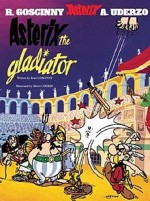
Asterix the Gladiator debuted in Pilote #126-168 in 1963 and saw the canny rebel and his increasingly show-stealing pal Obelix (who had fallen into a vat of potion as a baby and was a genial, permanently superhuman, eternally hungry foil to the smart little hero) despatched to the heart of the Roman Empire on an ill-conceived mission of mercy…

When Prefect Odius Asparagus wanted to give Julius Caesar a unique gift he decided upon one of the indomitable Gauls who had been giving his occupying forces such a hard time.

Thus he had village Bard Cacofonix abducted and bundled off to Rome. Although in two minds about losing the raucous harpist, pride won out and the villagers mounted a rescue attempt, but after thrashing the Romans again they discovered that their lost comrade was already en route for the Eternal City…

Asterix and Obelix were despatched to retrieve the missing musician and hitched a ride on a Phoenician galley operated under a bold new business plan by captain/general manager Ekonomikrisis. On the way to Italy the heroes first encountered a band of pirates who would become frequent guest-stars and perennial gadflies.

The pirates were a creative in-joke between the close-knit comics creative community: Barbe-Rouge or Redbeard was a buccaneering strip created by Charlier and Victor Hubinon that also ran in Pilote at the time.

As Asterix and Obelix made friends among the cosmopolitan crowds of Rome, Caesar had already received his latest gift. Underwhelmed by his new Bard, the Emperor sent Cacofonix to the Circus Maximus to be thrown to the lions just as his chief of Gladiators Caius Fatuous was “talent-spotting” two incredibly tough strangers who would make ideal arena fighters…

Since it was the best way to get to Cacofonix our heroes joined the Imperial Gladiatorial school; promptly introducing a little Gallic intransigence to the tightly disciplined proceedings. When the great day arrived the lions had the shock of their lives and the entertainment-starved citizens of Rome got a show they would never forget…

As always the good-natured, comedic situations and sheer finesse of the yarn rattles along, delivering barrages of puns, oodles of insane situations and loads of low-trauma slapstick action, marvellously rendered in Uderzo’s expansive, authentic and continually improving big-foot art-style.

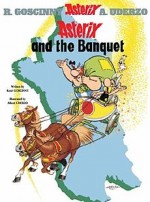
Asterix and the Banquet originated in Pilote #172-213 (1963) and was inspired by the Tour de France cycle race.

After being continually humiliated by the intractable Gauls coming and going as they pleased, Roman Inspector General Overanxius instigated a policy of exclusion and built a huge wall around the little village, determined to shut them off from their country and the world.

Incensed, Asterix bet the smug Prefect that Gauls could go wherever they pleased and to prove it invited the Romans to a magnificent feast where they could sample the culinary delights of the various regions. Breaking out of the stockade and through the barricades, Asterix and Obelix went gathering produce from as far afield as Rotomagus (Rouen), Lutetia (Paris, where they also picked up a determined little mutt who would eventually become a star cast-member), Camaracum (Cambrai) and Durocortorum (Rheims), easily evading or overcoming the assembled patrols and legions of man-hunting soldiers. However, they didn’t reckon on the corrupting power of the huge – and growing – bounty on their heads…

Some Gauls were apparently more greedy than patriotic…

Even with Asterix held captive and all the might of the Empire ranged against them, Gaulish honour was upheld and Overanxius, after some spectacular fights, chases and close calls eventually was made to eat his words – and a few choice Gallic morsels – in this delightful, bombastic and exceedingly clever celebration of pride and whimsy.
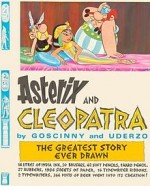
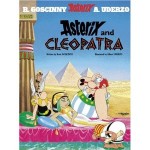
Asterix and Cleopatra ran from 1963-1963 in issues #215-257 and although deriving its title from Shakespeare’s Antony and Cleopatra, is actually a broad visual spoof of the 1963 movie blockbuster Cleopatra (the original collected album cover was patterned on the film poster).

Rome was a big empire to run but Caesar always had time to spare for the fascinating Queen of Egypt – even though she could be a little overbearing at times…

When Caesar called her people decadent, Cleopatra announced that her Egyptians would build a magnificent palace within three months to prove their continued ingenuity and vitality.

Her architect Edifis was less confidant and subcontracted the job, recruiting his old friend Getafix the Druid to help, with Asterix, Obelix and faithful pooch Dogmatix coming along to keep him out of trouble…

After another short, sharp visit with the pirates, the voyagers reached the Black Lands only to find the building site a shambles. Edifis’ arch rival Artifis had jealously stirred up unrest among the labourers and consequently sabotaged the supply-chain, entombed the visitors in a deadly tourist-trap and even framed Edifis by attempting to poison the Queen.

For all these tactics the ingenious Gauls had a ready solution and the Palace construction continued apace, but when Caesar, determined not to lose face to his tempestuous paramour, sent his Legions to destroy the almost-completed complex, it was up to the two smallest, smartest warriors to come up with a solution to save the day, the Palace and the pride of two nations…

Outrageously fast-paced and funny and magnificently illustrated by a supreme artist at the very peak of his form, Asterix and Cleopatra is one of the very best epics from a series that has nothing but brilliant hits.

These albums are available in a wealth of differing formats and earlier editions going all the way back to the 1969 Brockhampton editions are still readily available from a variety of retail and internet vendors – or even your local charity shop and jumble sale.

Be warned though, that if pure continuity matters only Orion, the current British publisher, has released the nearly 40 albums in chronological order – and are in the process of re-releasing the tales in Omnibus editions; three tales per tome.

Also, on a purely aesthetic note some of the Hodder-Dargaud editions have a rather exuberant approach to colour that might require you to don sunglasses but could save you a fortune on lighting your house… and possibly heating it too…

This is supremely enjoyable comics storytelling and if you’re still not au fait with these Village People you must be as Crazy as the Romans ever were…

© 1964-1965 Goscinny/Uderzo. Revised English translation © 2004 Hachette. All rights reserved.

Showcase Presents the Unknown Soldier volume 1


By Joe Kubert, Bob Haney, Archie Goodwin & various (DC Comics)
ISBN: 978-1-4012-1090-2

After the death of EC Comics in the mid-1950’s and prior to the game-changing Blazing Combat, the only certain place to find powerful, controversial, challenging and entertaining American war comics was DC. In fact, even whilst Archie Goodwin’s stunning but tragically mis-marketed quartet of classics were waking up a generation, the home of Superman, Batman and Wonder Woman was a veritable cornucopia of gritty, intriguing and beautifully illustrated battle tales presenting war on a variety of fronts and from many differing points of view .

After the Vietnam War escalated, 1960’s America entered a homefront death-struggle pitting deeply-ingrained establishment social attitudes against a youth-oriented generation with a radical new sensibility. In response DC’s (or rather National Periodical Publishing, as it then was) war books became even more bold and innovative…

This stunning black and white compendium, collecting the lead feature from issues #151-188 (June-July 1970 to June 1975) of the truly venerable Star-Spangled War Stories anthology features one of the very best concepts ever devised for a war comic: a faceless, nameless hero perpetually in the right place at the right time, ready, willing and oh, so able to turn the tide…

The Unknown Soldier was actually a spin-off – having first appeared as a one-off in a Sgt Rock story in Our Army at War #168 (June 1966, by Robert Kanigher & Joe Kubert) – but in 1970 the artist had become editor of the company’s war division and was looking for a new (American) cover/lead character to follow the critically acclaimed “Enemy Ace” (tales of a WWI German fighter pilot) who had been summarily bounced to the back of the book after issue #150).

Written and drawn by Kubert ‘They Came Back From Shangri-La!’ introduced a faceless super-spy and master-of-disguise whose forebears had fought and died in every American conflict since the birth of the nation. Here he took on the identity of B-25 pilot Capt. Shales in 1942 as he participated in vital, morale-building retaliatory bombing raids on Japanese cities. When their plane is shot down over occupied China, “Shales” led his crew through enemy-infested territory to the safety of the Chinese resistance.

From this no-nonsense start the feature grew to be one of DC’s most popular and long-lived: Star-Spangled became The Unknown Soldier in 1977 with #205 and the comic only folded in 1982 with issue #268.

One intriguing factor in the tales is that there is very little internal chronology: the individual adventures take place anytime and anywhere between the bombing of Pearl Harbor and the surrender of Germany and later Japan. This picaresque approach adds a powerful sense of both timelessness and infallible, unflinching continuity.

The Unknown Soldier has always and will always be where he is most needed…

His second adventure ‘Instant Glory!’ found a US patrol captured by the SS as they entered a German city in 1944. An excoriating examination of brutality, heroism and philosophy, the story set the hard-bitten, bitter-edged tone for the rest of the series.

Always economy-conscious and clever with scissors and glue, DC reformatted a number of old stories at this time, particularly old westerns and mystery stories (and even the Phantom Stranger in his first appearances since the 1950s) so it should be no surprise that they would try the same thing with their newest star.

‘Everybody Dies’ was retooled into a new offering by a framing sequence by Kubert, but the body of the tale was originally seen as ‘A GI Passed Here’ (by Irv Novick in Star-Spangled War Stories #36). In its revamped form the saga recounted a grim day in the life of anonymous Eddie Gray as he survived just one more day in the deserts of Nazi-held Africa.

The Unknown Soldier got a full origin in #154’s ‘I’ll Never Die!’ recounting how two inseparable brothers joined up in the days before America was attacked and were posted to the Philippines just as the Japanese began their seemingly unstoppable Pacific Campaign. Overwhelmed by a tidal wave of enemy soldiers the brothers held their jungle posts to the last and when relief came only one had survived, his face a tattered mess of raw flesh and bone…

As the US forces retreated from the islands the indomitable survivor was evacuated to a state-side hospital. Refusing medals, honours and retirement the recuperating warrior dedicated his remaining years to his lost brother Harry and desperately retrained as a one man-army intelligence unit. His unsalvageable face swathed in bandages, the nameless fighter learned the arts of make-up, disguise and mimicry and offered himself to the State Department as an expendable resource that could go anywhere and do anything…

All DC’s titles were actively tackling the issue of race at this time and #155’s ‘Invasion Game!’ (written by Bob Haney) saw the Soldier parachuted into France in Spring 1944 to connect with the Underground’s mysterious leader “Chat Noir”. Sent to finalise the plans for D-Day he was horrified to discover the enigmatic commander was a disgraced black US Army sergeant with a grudge against his old country. Chat Noir was too good a character to waste and became a semi-regular cast member…

Haney was on top form for the next epic too. ‘Assassination’ detailed the Immortal G.I.’s boldest mission and greatest failure as he impersonated but could not destroy Hitler himself, after which that aforementioned Sgt Rock classic by Kanigher & Kubert was recycled as an untitled but deeply moving yarn for Star-Spangled War Stories #157.

Haney & Kubert reunited for ‘Totentanz!’ as the faceless warrior broke into a top security concentration camp to rescue a captured resistance leader.

General Patton was the thinly-veiled subject of ‘Man of War’ as the Unknown Soldier was dispatched to investigate a charismatic general who had pushed his own troops to the brink of mutiny, whilst ‘Blood is the Code!’ found him captured and tortured by a Japanese Colonel until he broke to reveal every secret America wanted the enemy to know…

Doug Wildey illustrated Haney’s superb ‘The Long Jump’ as the Soldier infiltrated occupied Holland only to meet more resistance from a stubborn, misguided Dutchman than all the Nazis hunting for the faceless spy, ‘Take My Coward’s Hand’ recycled the 1960 Sgt. Rock story ‘No Answer from Sarge’ (by Kanigher & Kubert from Our Army at War #91) and ‘Kill the General!’ by Haney & Dan Spiegle pitted the Man of a Thousand Faces against Nazi infiltrators determined to assassinate General Eisenhower at the height of the Battle of the Bulge.

‘Remittance Man!’ in #164 saw the anonymous hero replace a legendary spotter on an occupied Pacific island, directing Allied attacks on Japanese strongholds, after which Jack Sparling came aboard as artist in ‘Witness For a Coward’ as a US tank commander sentenced to death for desertion is saved by the testimony of a Nazi Officer – but only after he was abducted from his HQ by the immortal G.I. after which a debt of honour had to be repaid…

Bill Mauldin’s legendary wartime dogfaces “Willie and Joe” (see the superb Up Front for further details) paid an unannounced visit in #166 ‘The True Glory’ as the Unknown Soldier travelled to Italy to find out what was holding up the advance in Haney’s last offering, after which Archie Goodwin steps in to script ‘Three Targets for the Viper!’ wherein the faceless man hunted an assassin set on killing Churchill, Roosevelt and De Gaulle during a conference in 1943 Morocco before jumping to France in 1944 and a close encounter with an American officer determined to make a name for himself at any cost in ‘The Glory Hound!’

Godwin’s tenure saw a stronger concentration on espionage drama, as with issue #169 which found the Immortal G.I. infiltrating the compound where Hitler’s latest secret weapon was being built in ‘Destroy the Devil’s Broomstick!’ after which the Soldier had to stand in for an irreplaceable Marine Major and capture an impregnable island fortress in ‘Legends Don’t Die!’

‘Appointment in Prague!’ offered a rare and tragic glimpse into the Unknown Soldier’s past as he followed the aged actor who taught him the mastery of make-up and impersonation into Nazi-occupied Czechoslovakia to rescue a grandson thought long dead, after which scripter Frank Robbins took over and moved the action to the Eastern Front in ‘A Cocktail For Molotov!’ where the Nazis pulled out all the stops to destroy Russia’s charismatic foreign Minister before he could conclude a treaty with the Allies.

Star-Spangled War Stories #173 saw the G.I. infiltrating a Japanese Submarine base disguised as a Nazi wrestler invited to an exhibition match against a Sumo master. Unfortunately ‘No Holds Barred!’ proved that although allies, Japanese and Germans weren’t exactly friends…

‘Operation Snafu!’ began an extended storyline as it found him impersonating a German tank-commander and forced to sacrifice his own Resistance allies in order to complete a mission vital to the Allied advance, whilst ‘A Slow Burn… From Both Ends!’ gave him the chance to make amends and #176’s ‘Target: the Unknown Soldier!’ ramped up the tension as the Nazis discovered a way to identify the faceless warrior no matter how he was disguised…

With Von Sturm, his deadly Nazi counterpart, on his trail, the Unknown Soldier had stirred up ‘The Hornet’s Nest!’ and was hunted and hounded towards a concentration camp where inmates work as slaves to construct V1 rockets. Trapped, with the net closing around him, he replaced one of the jailers but Von Sturm was determined to deliver ‘The Sting of Death!’ in the spectacular climactic duel to the death…

In Star-Spangled War Stories #179 in the aftermath of his close escape the Immortal G.I. stumbled into ‘A Town Called Hate!’ where racial tensions between white and black American soldiers had devolved into tit-for-tat murders. Unfortunately, whilst disguised as a member of an SS infiltration squad, the Soldier could only exacerbate the situation. With the Germans about to deliver a devastating counter-attack it was a good thing the long-missing Chat Noir was also on hand…

‘The Doomsday Heroes!’ despatched the anonymous agent to the Leyte Gulf where Japanese suicide attacks had stopped the US advance. However before he could begin his mission he was shot down and forced to work with a failed Kamikaze pilot to survive the cruel Pacific seas…

After that tragedy of honour the mission continued with ‘One Guy in the Right Place…’ as the Soldier linked up with natives fighting the Japanese invaders. Disturbingly they are led by an unseen American who sounded like the brother he had lost in the first days of the war. Could Harry have survived all those years…?

Robbins and Sparling bowed out with a classy mini-classic in Star-Spangled War Stories #182, set in Tunisia where ‘A Thirst for Death!’ set the Soldier and a crew of veterans on the sandy trail of Rommel’s hidden petrol reserves, after which new kids David Michelinie & Gerry Talaoc heralded a change of direction with ‘8,000 to One’.

The horror boom in comics was at its peak in 1974 and new editor Joe Orlando capitalised on that fascination with a few startling changes – the most controversial being to regularly reveal the Unknown Soldier’s grotesque, scar-ravaged face – presumably to draw in monster-hungry fear fans…

The story itself went back to the Immortal G.I.’s earliest days as an American agent and saw him sent to Denmark to rescue a ship full of Danish Jews destined for Hitler’s death camps. Disguised as SS Captain Max Shreik, the Soldier was forced to make an unconscionable choice to safeguard his mission. The degree and manner of graphic violence was also exponentially increased to accommodate the more mature readership as the Soldier took a very personal revenge…

‘A Sense of Obligation’ found the now cold, remorseless warrior in France tasked with infiltrating a Special Kommando Training Centre and destroying it from within. However, as with all undercover work, the risk of going too deep and making friends who you might have to kill later inevitably led to another tragic life or death decision for the increasingly grim and soulless Soldier, whilst ‘The Hero’ saw the faceless man invade neutral Switzerland to kidnap a British scientist held by the Nazis. This time his lethal final judgement cost him no sleep at all…

In ‘Man of God… Man of War’ (#186) a Catholic Priest duped into working with the Nazis in Italy became the Soldier’s latest target, but the plan was forestalled and the true situation revealed and rectified after ‘A Death in the Chapel’.

This imposing, impressive and thoroughly entertaining first volume concludes with Star-Spangled War Stories #188 and ‘Encounter’ as the Unknown Soldier strove to prevent the scuttling of a hospital ship by Nazis, unaware that his only ally was in love with the enemy commander…

Dark, powerful, moving and overwhelmingly ingenious, The Unknown Soldier is a magnificent addition to the ranks of extraordinary mortal warriors in an industry far too heavy with implausible and incredible heroes. These tales will appeal to not just comics readers but all fans of action fiction.
© 1970, 1971, 1972, 1973, 1974, 1975, 2006 DC Comics. All rights reserved.

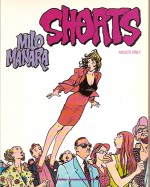
Shorts


By Milo Manara, translated by Tom Leighton (Catalan Communications)
ISBN: 978-087416-060-4

For some folks the graphic novel under review here will be unacceptably dirty. If that’s you, please stop here and come back tomorrow when there will something you’ll approve of but which will surely offend somebody else.

I’m in a mature and contemplative mood today, so here’s a review of a rather quirky and philosophical confection by one of the world’s greatest graphic eroticists. Originally translated into English from the French edition Courts Mệtrages by Catalan in 1989, it’s another inexplicably Out-of-Print graphic gem desperately in need of a English language release…

Maurilio Manara (born September 12th 1945) is an intellectual, whimsical craftsman with a dazzling array of artistic skills ranging from architecture, product design, painting and of course an elegant, refined, clear-clean line style with pen and ink. He is best known for his wry and always controversial sexually explicit material – although that’s more an indicator of our comics market than any artistic obsession.

His training was in the classical arts of painting and architecture before succumbing to the lure of comics. In 1969, he started his career with the Fumetti Neri series Genius, worked on the magazine Terror and in 1971 began his adult career (see what I did there?) illustrating Francisco Rubino’s Jolanda de Almaviva. In 1975 his first major work, a reworking of the Chinese tales of the Monkey King was released as Lo Scimmiotto (The Ape).

By the end of the seventies he was working for Franco-Belgian markets where he is still regarded as an A-list creator. It was while creating material for Charlie Mensuel, Pilote and L’Écho des savanes that he created his signature series HP and Giuseppe Bergman for A Suivre.

As the 80’s staggered to a close he wrote and drew, in his characteristic blend of bawdy burlesque and saucy slapstick, the eccentric selection of satirical, baroque tales gathered here as a wry and penetrating assault on modern media and bastardized popular cultural which were increasingly being used to cloak capitalist intrusions and commercial seductions.

In these absurdist, voyeuristic, fourth-wall breaking, intellectually-challenging and exceedingly sexy black and white vignettes Manara highlights the diminishing divisions between Art and Selling, with tales intended to make your head throb as much as your nether regions…

The sensorial incursion commences with ‘Commercial’, as couch-potato is inexorably drawn into the Casanovan drama he is watching and the drama’s TV-contained characters are impeded in their roles by the intrusive presence of the sponsor’s unsavoury product – adult diapers.

All of these tales are visually influenced by icons of the Great Arts, such as Luciano Pavarotti and Fellini, whilst ‘Blue Period’ details the ruthless nature of commercialism as a photographic director goes to extraordinary lengths to reproduce a Picasso painting for an album cover. Sadly, under normal conditions, the human body just doesn’t bend that way…

‘X3’ offers to reveal your sex-portrait with a brief questionnaire survey carried out by aliens well-versed in the techniques of abduction and probing whilst ‘John Lennon’ delightfully describes what happened after the master musician got to Heaven and ‘Acherontia Atropos’ plays a very dark prank on a cameraman who signs up to film a genuine snuff-movie…

‘Untitled’ returns to the role of unsatisfied Casanova as the legendary lover suffers a unquantifiable loss and surreal challenge to his life-style, but ‘The Last Tragic Day of Gori Bau & the Callipygian Sister’ sinisterly shows the dark-side of underage explorations as a trio of kids invoke feelings and powers they are not equipped to cope with…

The allegorical ambuscade concludes with the calamitously comedic surreal science fiction yarn ‘And’ as an Earthman and an Arturian escape from a dying planet thanks to the power of a book which writes itself and predicts the future. If only the incredible chronicle had a spell-checker too…

Described in Manara’s beautifully rendered, lavish line-work this explicit, daringly deep and sexually charged selection makes intriguing points of social and creative commentary in an utterly seductive and fascinating manner, but even at its most raunchy, funny and challenging this tome is first and foremost a work of sublime pictorial entertainment desperately worthy of a new edition.
© 1989 Milo Manara/Staletti, agent, Paris. English Language edition © 1989 Catalan Communications. All rights reserved.

Love From the Shadows


By Gilbert Hernandez (Fantagraphics Books)
ISBN: 978-1-60699-406-1
There’s fiction, there’s Meta-fiction and then there is Gilbert Hernandez. In addition to being part of the graphic and literary revolution of Love and Rockets (where his astonishingly accessible and captivating tales of rural Palomar first garnered overwhelming critical acclaim) he has produced stand-alone books such as Sloth, Grip, Birdland and Girl Crazy, all marked by his bold, instinctive, compellingly simplified artwork and a mature, sensitive adoption of the literary techniques of Magical Realist writers like Carlos Fuentes and Gabriel García Márquez: techniques which he has amplified and, visually at least, made his own.

Then he acknowledged such influences as Roger Corman, John Cassavetes, Elmore Leonard and Jim Thompson as he broke new ground and reprocessed the cultural influences that shaped all us baby-boomers.

In Luba we glimpsed the troubled life of the lead character’s half-sister Rosalba “Fritz” Martinez: a brilliant, troubled woman, speech-impaired psychotherapist, sex-worker, belly-dancer and “B-movie” starlet of such faux screen gems as We Love Alone, Seven Bullets to Hell, Chest Fever, Blood is the Drug and Lie Down in the Dark.

Fritzi has an irresistible or incredibly annoying lisp and unfeasibly large breasts.

In 2007 Hernandez “adapted” one of those trashy movies as the graphic novel Chance in Hell – although Fritzi only had a bit part in it – and repeated the story-within-a-story- within-a-story trick in 2009 with The Troublemakers – a frantic, hell-bent pulp fiction crime thriller.

Now he returns to his eccentric sideline to translate the wildly experimental independent/exploitation/sexploitation tale Love From the Shadows into a stunning graphic rollercoaster ride of broken families, counter-culture angst, embezzlement, greed madness, obsession, charlatanry, psychics and mysterious aliens in possibly the greatest tribute to scurrilous lowbrow movie maestro Russ Meyer ever seen…

“Playing” three different roles in this dubious epic, Fritzi is mostly Dolores, the estranged and distractedly promiscuous daughter of a successful author.  In a world much like ours she meanders her solitary way, only occasionally impeded by the ubiquitous, mysterious Monitors who perpetually pester normal citizens with their oddly intrusive and brusque personal questions…

With her equally neglected and emotionally abused gay brother Sonny, she visits the old reprobate, daydreaming of either a heartfelt reconciliation or bloody patricide, but the stay is filled with the usual mind-games and confrontations.

When they all visit the beach the old man wanders into a cave and is lost. When he is eventually found daddy dearest’s razor-like mind is utterly shattered…

Since he is clearly a far better and more friendly father whilst deranged, the siblings move in to the palatial home to look after him, but one day after a swim Dolores is inexplicably drawn away to the city where she joins a trio of conmen scamming old men and widowers. Wistful, dreamy, always looking for love, she becomes their stooge, playing dead wives and ghostly daughters till her sexually charged presence splits the gang with fatal consequences…

Meanwhile, her own father has died and Sonny is horrified to discover that the entire multi-million dollar estate has been left to his vanished sister. Hurt, outcast and permanently ostracized, Sonny uses his own small bequest to pay for sex-change surgery and becomes “Dolores”, beginning an oddly gratifying affair with a psychic named Anton who seemingly discerned all his/her secrets with one telling glance.

Impossible, surreal tragedy strikes when against all logic Sonny’s body repairs all the surgeries and rejects the hormone treatments, reverting to full masculinity, just as the real Dolores returns…

Missing his beloved Sonny, Anton meets Dolores and takes her to the Cavern where her father died. He convinces her to replace Sonny just as her brother had impersonated her…

Now rich and contented, Dolores is drawn into a world of cults, continuing her lifetime obsession with a certain type of man, but the liaison inevitably leads to heartbreak and bloody death… and always the evocative imagery and subtly dangerous attraction of The Cave impinges and threatens…

As the Monitors inexplicably vanish from the streets, Dolores dyes her hair and hopes she’s finally free, but she’s only heading into the shadows of that ever-calling cavern…

Beguiling and absolutely mesmerising, this perfect pastiche of the genre is stuffed with Hernandez’s raw sexuality, trippy, mind-warping tension and sly elements of filmic surrealism which carry the reader through the deliberately obfuscative, intentionally challenging narrative, whilst his superbly primitivist cartooning seduces the eye as much as his glandular heroine ever could. These books are truly movies so bad and different they ought to be made…

Every adult who loved Up!, Beneath the Valley of the Ultra-Vixens or Faster, Pussycat! Kill! Kill! should snap this up immediately and revel in the graphic insanity, and open-minded comics fans should take a look beyond the costumes and chains of continuity to take a true walk on the Wild Side.

© 2011 Gilbert Hernandez. All rights reserved.

Kingdom Hearts: Chain of Memories


Adapted by Shiro Amano translated by (TokyoPop)
ISBN: 978-1-59816-67-37-8

Regular readers (if any of you are still alive out there and not bored to death by my pithy ramblings) will already know that I am utterly immune to computer and video games. Nevertheless the industry has generated some intriguing comics material and occasionally I’ll take a peek at what you youngsters are spending your cash on…

Kingdom Hearts is a series of games which stars a new young hero named Sora working in combination with characters and scenarios from Disney’s globe-girdling cinematic canon and elements of the Fighting Fantasy electronic franchise.

This plucky lad travelled to different realms trying to rescue his two best friends Riku and Kairi who had fallen into the cracks between worlds after a wave of Darkness enveloped all the myriad worlds of creation and wicked creatures named The Heartless were unleashed on the kid’s idyllic land of Destiny Islands.

Once the many Realms were separate; barred to each other by Dark Doorways, with a single Chosen One who carried an ultimate key to all locks, able to pass easily between them.

In his quest Sora was joined by Donald Duck, Goofy and Jiminy Cricket who were similarly searching for their lost King Mickey. During the saga Sora came into possession of the fabled Keyblade which can hurl back the Heartless and unlock all doors…

The comic tie-in Kingudamu Hātsu began in 2003 as a serial in Square Enix’s Japanese Monthly Shōnen Gangan before making the inevitable jump to book collections. Subsequent game releases have been similarly incorporated into the print adventures.

Kingdom Hearts: Chain of Memory – which bridges the gap between the first and second games – opens with Riku and Mickey having sacrificed themselves to keep Ansem, the mastermind behind the chaos, sealed behind the  Doorway to Darkness (trapping themselves there as well) and Sora, Jiminy, Donald and Goofy still searching for a way to rescue them.

In their travels the questers encounter a mysterious stranger who directs them to the Castle Oblivion, but on entering they find that the eerie citadel is stealing their memories, making the shadowy stranger’s confusing predictions and warnings even harder to decipher…

Unaware that they are being manipulated by a shady cabal called Organization XIII, the assembled heroes travel to more incredible worlds with the aid of “Memory Cards” arriving in seedy Traverse Town where the heroic Leon helps them defeat a marauding band of Heartless, after which they are accosted and tested by the sinister Axel before arriving in the Arabian town of Agrabah just in time to assist Aladdin and Princess Jasmine in their struggle against the nefarious Jaffar…

Meanwhile on the other side of the Dark Divide Riku is being tempted and tested by the forces of Evil, but at least he has the indomitable strength of the ghostly King Mickey to help him resist the terrors and seductions of the Disney witch Maleficent and the charismatic Ansem…

Fast-paced and engaging, this tale offers some fascinating moments for fans of classic Disney movies and the Fighting Fantasy universe, but generally it reads like a computer game (probably, to be fair,  Shiro Amano’s intention and brief) so if you’re a narrative purist the ride is likely to feel confused, bumpy and little information-intense in all the wrong places.

If you’re open-minded and clear-headed there’s joy to be gleaned from this peculiar all-ages tome but I rather suspect that more traditional fans might prefer to leave their assorted media unalloyed and sedately separated…
Original manga by Shiro Amano/Enterbrain Inc. © Disney. Characters from Final Fantasy © 2005 Square Enix Co., Ltd. All Rights Reserved. English translation © 2006 TokyoPop Ltd.

Green Lantern: Agent Orange (Prelude to Blackest Night)


By Geoff Johns, Philip Tan & Jonathan Glapion (DC Comics)
ISBN: 978-1-4012-2420-2

Hal Jordan was a young test pilot in California when an alien policeman crashed on Earth. Mortally wounded, Abin Sur commanded his ring, a device which could materialise thoughts and fuelled by willpower, to seek out a replacement ring-bearer, honest and without fear. Scanning the planet it selected Jordan and brought him to the crash-site. The dying alien bequeathed his ring, the lantern-shaped Battery of Power and his profession to the astonished Earthman.

Over the years Jordan became one of the greatest members of that serried band of law-enforcers, The Green Lantern Corps, which had protected the cosmos from evil for millennia under the auspices of immortal super-beings who dubbed themselves the Guardians of the Universe. These undying patrons of Order were one of the first races in creation and currently dwell in sublime emotionless security on the world of Oa at the very centre of creation.

If all this is new to you then this book should absolutely not be your introduction to the series. Go read (at least) Green Lantern: Secret Origin and preferably all the other collections of this monumental fixture in the comicbook firmament before attempting to decipher the compulsive, compelling, pell-mell onslaught of characters and concepts scripter Geoff Johns throws at the reader as his extended epic thoroughly reshapes the DC Universe.

Following the bombastic, blockbusting Sinestro Corps War the entire cosmos was in turmoil at the revelation that Green was not the only colour and an entire emotional spectrum of puissant energies underpinned and operated upon reality. In increasingly ambitious storylines, Johns began exploring the adherents and disciples of each hue and the forces transformed by or seeking to control them…a situation which led inexorably into DC’s major crossover events Blackest Night and its sequel Brightest Day.

This volume (collecting Green Lantern #39-42 and portions of Blackest Night #0), illustrated by Philip Tan & Jonathan Glapion, Eddy Barrows, Ruy José & Julio Ferreira, opens with a band of Controllers (a splinter group who split from the Guardians eons ago) encountering the possessor of the Orange light of Avarice.

The resultant slaughter precipitates another crisis when its sole user – a bestial, undying monstrosity named Larfleeze – abrogates an ancient secret treaty with the Oans and explodes out of his exile in the Vega system to take whatever takes his voracious fancy…

The very first thing he espies is Hal Jordan, currently overloaded by the exponentially increased power of a Blue Lantern ring overwhelming his own emerald weapon with the azure energy of Hope.

As revelations of the Guardians’ duplicitous past intrigues come to light, the vengeance-crazed, Green Lantern-hunting Fatality is overtaken by the Violet power of Love and becomes a Zamaron Star Sapphire (another dissident faction formed when the female Guardians also abandoned Oa) and attempts an uncomfortable rapprochement with her arch-enemy Green Lantern John Stewart…

Due to the Guardians’ ancient treaty with Larfleeze Vega had always been outside GL Corps jurisdiction and subsequently became a stellar sinkhole and safe-haven for the very worst scum of universe. With nothing left to hide anymore the remaining, still-squabbling Guardians lead a phalanx of their best peacekeepers in a punitive mission to clean out the sector of intergalactic criminals now that the Avatar of Greed has gone…

Sadly Larfleeze has left unique defences and the sortie ends badly. With the Orange Obsessive still hungry for Jordan’s Blue ring (which refuses to leave Hal’s hand and resists all efforts at removal) the Oans are forced to resort to a further deal with the devil…

Meanwhile Sinestro, controlling the Yellow light of Fear, and the diabolical Atrocitus, wielding the corrupting Red light of Rage, are jockeying into position for their own assaults on the embattled Guardians…

Jordan finally overcomes the paralysing burden of too much power and acts decisively to temporarily end the threat of Larfleeze, but not before the Guardians are betrayed from within and the Black light of Death resurrects the greatest threat to life there has ever been…

…Which will only become clear in the next volume.

Feeling uncomfortably like entering a play late and leaving before the end, the spectacle and action here will impress and bewilder in equal amounts, but at least there’s a selection of short complete vignettes included to afford the briefest modicum of narrative closure; beginning with ‘Origins and Omens’ (illustrated by Ivan Reis & Oclair Albert) which explores the history of the Star Sapphires and the salutary ‘Tales of the Orange Lanterns: Weed Killer’ with art by Rafael Albuquerque, which reveals the rise to power of the ravenous Orange subordinate Agent Glomulous…

After a gallery of variant covers and a fascinating design, commentary and sketch section from Philip Tan and Doug Mahnke, the book closes with informational pages on the eight colours of the Emotional Spectrum by Mahnke, Christian Alamy & Tom Nguyen

Combining big-picture theatrics with solid characterization, Green Lantern is an ideal contemporary superhero series, vast in scope, superb in execution and blending just the right amounts of angst, gloss and action in the storytelling mix – but a basic familiarity with DC/Green Lantern history is more necessary than advisable.

Impressive, exciting enticing and engrossing: all terms you’ll happily apply to Green Lantern: Agent Orange – but only after doing your homework and reading the other stuff first…
© 2009 DC Comics. All rights reserved.

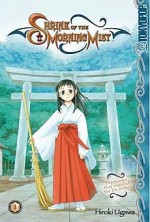
Shrine of the Morning Mist volume 1


By Hiroki Ugawa, translated and adapted by Jeremiah Bourque & Hope Donovan(TokyoPop)
ISBN: 978-1-59816-343-4

Most manga can be characterised by a fast, raucous and even occasionally choppy style and manner of delivery but the first volume of Hiroki Ugawa’s atmospheric supernatural thriller and moody saga of young love takes its time to get all the elements in play rather than simply steaming in all guns blazing.

Set in the city of Miyoshi in Hiroshima Prefecture (noted for its shrines and beautiful mist-draped landscapes) Asagiri no Miko or Shrine of the Morning Mist first appeared as a serial in the monthly periodical Young King Ours, running eventually to five volumes of eerie mystery, romance comedy and demonic action.

The saga opens here in traditional portentous manner and carefully unfolds the story of young Yuzu Hieda, one of three sisters who are hereditary Miko (a combination of shamans, mediums and priestesses attached to Shinto shrines and temples) attending to the local places of worship.

The sisters are especially gifted with special powers to combat the supernatural threats that menace the locality.

Little more than a teenager herself, schoolgirl Yuzu is troubled by the return of her childhood sweetheart and cousin Tadahiro Amatsu who, after five years away, has come home only to be targeted by evil forces. Despite being teased by sisters Tama and Kurako Yuzu accompanies them to the railway station just in time to save the lad from a sinister, sorcerous old man obsessed with the boy’s blood.

Invited to stay in the Miko’s home the withdrawn boy is disquieted by the teasing and references to his past relationship with Yuzu, but the father of the house proves to be a far-more unforgiving prospect…

Mystic forces are gathering round the introspective, solitary boy – with repercussions felt as far away as Tokyo – and over their dad’s objections Tadahiro is pressured into staying at the Hieda home where he can be properly protected. However next morning when the girls are at school a monolithic, cyclopean demon attacks the house. The assault is instantly perceived by Yuzu who dashes back to save him only to find her long-absent mother already there, having driven off the dark “kami”.

Well, one of them, at least…

Typically even Mother Miyuki thinks Tadahiro and Yuzu are a perfect, predestined couple…

With questions swirling about him, such as “why is everybody so interested in his blood” and “whatever happened to his own parents” the shell-shocked Tadahiro is blissfully unaware that the Miko are forming a protective Council around him, but even he knows something is up when the dark newcomer Koma introduces herself and reveals that she intimately knew his long-departed father…

To be continued…

This uncharacteristically slow-paced, contemplative and almost elegiac tale mystery was partially inspired by a classical tale recorded on the Inō Mononoke scroll and Hiroki Ugawa’s beautiful illustration perfectly captures a sense of brooding ancient powers at war, even during the most juvenile set-piece moments of awkward young romance and generational embarrassment comedy.

A slightly off-beat but intriguing tale for older readers, this black and white volume is printed in the Japanese right-to-left, back to front format.
© 2001 Hiroki Ugawa. All rights reserved. English text © 2006 TokyoPop inc.

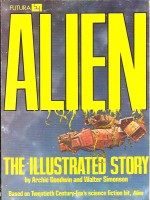
Alien: The Illustrated Story


By Archie Goodwin & Walter Simonson from a screenplay by Dan O’Bannon and a story by Dan O’Bannon & Ronald Shusett (Heavy Metal/Futura)
ISBN: 0-7088-1559-6

Alien was released in 1979 and utterly refreshed the science fiction cinema genre. Creeping in on the back of the jolly adventuring romps of the Star Wars phenomenon and its shiny, happy rip-offs, Dan O’Bannon’s dark tale and Ridley Scott’s grimly meticulous vision reintroduced the vital element of apocalyptic terror that had been absent from the medium since the headiest, most paranoiac days of the 1950s B-Movies.

You know the plot: a bunch of interstellar miners are diverted by their untrustworthy bosses to a lost planet where they find an extraterrestrial shipwreck. One of the humans is infected and brings aboard a horror that grows and picks off the crew one by one and cannot be stopped, escaped from or killed…

Lots of films have had comics adaptations: good bad or indifferent. Very few have ever come as close to capturing the stunning, senses-overloading feel – rather than the plot or look or detail – of the source material, although all of those too are well-catered for in this slim but superb graphic extravaganza from the award-winning creative team of Archie Goodwin and Walt Simonson (see Manhunter: the Special Edition for perhaps their ultimate moment of comics collaboration).

Spectacular, engrossing, visually innovative (in both storytelling and lettering/calligraphic effects) and absolutely absorbing, this hard-to-find gem (either in the original US edition from Heavy Metal Productions or the mass-market UK edition from Futura) is a true lost landmark of comics, long overdue for a new release – but only in the original large, square European Album format please…

© 1979 by Twentieth Century-Fox Film Corporation, All rights reserved.

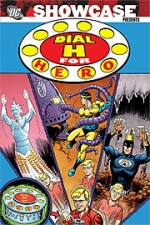
Showcase Presents Dial H For Hero


By Dave Wood, Jim Mooney & various (DC Comics)
ISBN13: 978-1-4012-2648-0

The entire world was going crazy for costumed crusaders in the mid-Sixties and every comicbook publisher was keenly seeking new ways to repackage an extremely exciting yet intrinsically limited concept. Perhaps its ultimate expression came with the creation of a teen-aged everyman champion who battled crime and disaster in his little town with the aid on a fantastic wonder-tool…

This slim monochrome compendium collects the entire run from House of Mystery #156 (January 1966) to #173 (March-April 1968) when the comicbook disappeared for a few months to re-emerge as DC’s first – of many – anthological supernatural mystery titles.

Created by Dave Wood and Jim Mooney, Dial H For Hero recounted the incredible adventures of boy genius Robby Reed who lived with his grandfather in idyllic Littleville where nothing ever happened…

Criminally, very little is known about writer Dave Wood, whose prolific output began in the early days of the American comics industry and whose work includes such seminal classics (often with artistic legends Jack Kirby and Wally no-relation Wood) as Challengers of the Unknown and the seminal “Space Race” newspaper strip Sky Masters.

A skilled “jobbing” writer, Wood often collaborated with his brother Dick, bouncing around the industry, scripting mystery, war, science fiction and adventure tales. Among his/their vast credits are stints on most Superman family titles, Batman, Detective Comics, World’s Finest, Green Arrow, Rex the Wonder Dog, Tomahawk, Blackhawk, Martian Manhunter and many others. As well as Dial H For Hero Wood created the sleeper hit Animal Man and the esoteric but fondly regarded Ultra, the Multi-Alien.

James Noel Mooney started his comics career in 1940, aged 21 and working for the Eisner & Eiger production shop and Fiction House on The Moth, Camilla, Suicide Smith and other B-features. By the end of the year he was a mainstay of Timely Comic’s vast funny animal/animated cartoon tie-in department.

In 1946 Jim moved to DC to ghost Batman for Bob Kane and Dick Sprang. He stayed until 1968, working on a host of features including Superman, Superboy, Legion of Super-Heroes, World’s Finest and Tommy Tomorrow, plus various genre short stories for the company’s assorted anthology titles like Tales of the Unexpected and House of Mystery.

He also drew Supergirl from her series debut in Action Comics #253 to #373, after which he headed for Marvel and stellar runs on Spider-Man, Marvel Team-up, Omega the Unknown, Man-Thing, Ghost Rider and a host of other features as both penciller and inker. Just before that move he was working on Dial H For Hero; the only original DC feature he co-created.

Big things were clearly expected of the new feature, which was parachuted in as lead and cover feature, demoting the venerable Martian Manhunter to a back-up role at the end of each issue.

The first untitled story opens with an attack on the local chemical works by super-scientific criminal organisation Thunderbolt just as Robby and his pals were playing in the hills above the site. As they fled the plucky lad was caught in a landslide and fell into an ancient cave where lay an obviously alien artefact that looked like an outlandish telephone dial.

After finding his way out of the cavern Robby became obsessed with the device and spent all his time attempting to translate the arcane hieroglyphs on it. Eventually he determined the writings were instructions to dial the symbols which translate to “H”, “E”, “R” and “O”…

Ever curious Robby complied and was transformed into a colossal super-powered “Giantboy”, just in time to save a crashing airliner and stop another Thunderbolt raid. Returning home he reversed the dialling process and went to bed…

These were and still are perfect wish-fulfilment stories: uncluttered and uncomplicated yarns hiding no great messages or themes: just straight entertainment expertly undertaken by experienced and gifted craftsmen who knew just how to reach their young-at-heart audiences, so no-one should be surprised at the ease with which Robby adapted to his new situation…

When Thunderbolt struck again next morning Robby grabbed his dial but was startled to become a different hero – high-energy being “The Cometeer”. Streaking to the rescue he was overcome by the raider’s super weapon and forced to use the dial to become Robby again. Undeterred, the lad tries again and as “The Mole” finally tracked the villains to their base and defeated them – although the leader escaped to become the series’ only returning villain…

Mr. Thunder was back in the very next issue as Robby became “The Human, Bullet”, bestial energy-being “Super-Charge” and eerie alien “Radar-Sonar Man” to crush ‘The Marauders from Thunderbolt Island’ whilst criminal scientist Daffy Dagan stole the H-Dial after defeating the boy’s temporary alter ego “Quake-Master”. Dagan became a horrifying multi-powered monster when he learned to ‘Dial “V” For Villain’ but after the defeated hero took back the artefact Robby redialed into techno-warrior “The Squid” and belatedly saved the day.

Clearly the Mystery in House of… was related to where the Dial came from, what its unknown parameters were and who Robby would transform into next. Issue #159 pitted “The Human Starfish”, “Hypno-Man” and a super-powered toddler named “Mighty Moppet” (who wielded weaponised baby bottles) in single combats with a shape-changing gang of bandits dubbed ‘The Clay-Creep Clan’ whilst ‘The Wizard of Light’ played with the format a little by introducing a potential love-interest for Robby in his best friend’s cousin Suzy…

It also saw the return of Giant-Boy, the introduction of sugar-based sentinel of Justice “King Candy” and the lad’s only transformation into an already established hero – the Golden Age legend Plastic Man.

Cynical me now suspects the move was a tester to see if the Pliable Paladin – who had been an inert resource since the company had bought out original publisher Quality Comics in 1956 – was ripe for a relaunch in the new, superhero-hungry environment.

DC’s Plastic Man #1 was released five months later…

House of Mystery #161 featured an awesome ancient Egyptian menace ‘The Mummy with Six Heads’ who proved too much for Robby as “Magneto” (same powers but so very not a certain Marvel villain) and “Hornet-Man” but not the intangible avenger “Shadow-Man”, after which ‘The Monster-Maker of Littleville’ was proved by “Mr. Echo” and “Future-Man” to be less mad scientist than greedy entrepreneur…

‘Baron Bug and his Insect Army’ almost ended Robby’s clandestine career when the boy turned into two heroes at once; but even though the celestial twins “Castor and Pollux” were overmatched, animated slinky-toy “King Coil” proved sufficient to stamp out the Baron’s giant mini-beasts, whilst human wave “Zip Tide”, living star “Super Nova” and “Robby the Super-Robot” were hard-pressed to stop the rampages of ‘Dr. Cyclops – the Villain with the Doomsday Stare’.

Things got decidedly peculiar in #165 when a clearly malfunctioning H-Dial called up ‘The Freak Super-Heroes’ “Whoozis”, “Whatsis” and “Howzis” to battle Dr. Rigoro Mortis and his artificial thug Super-Hood in a bizarrely captivating romp with what looks like some unacknowledged inking assistance from veteran brush-meister George Roussos (who popped in a couple more times until Mooney’s departure).

Suzie became a fixture and moved into the house next door with ‘The King of the Curses’ who found his schemes to plunder the city thwarted by “TheYankee-Doodle Kid” and “Chief Mighty Arrow”, a war-bonneted Indian brave on a winged horse…

In HoM #167 ‘The Fantastic Rainbow Raider’ easily defeated “Balloon Boy” and “Muscle Man” but had no defence against the returning Radar-Sonar Man, whilst ‘The Marauding Moon Man’ easily overmatched Robby as “The Hoopster” but had no defence when another glitch turned old incarnations Mole and Cometeer into a single heroic composite imaginatively christened “Mole-Cometeer”, but the biggest shock of all came when ‘The Terrible Toymaster’ defeated Robby as “Velocity Kid” and Suzy cajoled the fallen hero into dialling her into the scintillating “Gem Girl” to finish the job.

As it was the 1960s, Suzy didn’t quite manage on her own, but when Robby transformed into the psionically-potent “Astro, Man of Space” they soon closed the case – and toybox – for good. This one was all Mooney and so was the next.

‘Thunderbolt’s Secret Weapon’ was also the artist’s last outing with the Kid of a Thousand Capes as the incorrigible cartel tried to steal a supercomputer only to be stopped dead by “Baron Buzz-Saw”, “Don Juan” (and his magic sword) and the imposing “Sphinx-Man”.

With House of Mystery #171 a radical new look emerged, as well as slightly darker tone. The writing was clearly on the wall for the exuberant, angst-free adventurer…

‘The Micro-Monsters!’ was illustrated by Frank Springer and saw Robby dial up “King Viking – Super Norseman”, “Go-Go” a hipster who utilised the incredible powers of popular disco dances (how long have I waited to type that line!!!?) and multi-powered “Whirl-I-Gig” to defeat bio-terrorist Doc Morhar and belligerent invaders from a sub-atomic dimension.

Springer also drew ‘The Monsters from the H-Dial’ wherein the again on-the-fritz gear turned his friend Jim into various ravening horrors every time Robby dialled up. Luckily the unnamed animated pendulum, Chief Mighty Arrow and “the Human Solar Mirror” our hero successively turned into proved just enough to stop the beasts until the canny boy could apply his trusty screwdriver to the incredible artefact again.

In those distant days series ended abruptly, without fanfare and often in the middle of something… and such was the fate of Robby Reed. HoM#173, by Wood and Sal Trapani saw the lad solve a mystery in ‘The Revolt of the H-Dial’ wherein the process turned him into water-breathing “Gill-Man” and a literal “Icicle Man”: beings not only unsuitable for life on Earth but also compelled to commit crimes. Luckily by the time Robby had become “Strata Man” he’d deduced what outside force was affecting his dangerously double-edged dial…

And that was that. The series was gone, the market was again abandoning the fights ‘n’ Tights crowd and on the horizon was a host of war western, barbarian and horror comics…

Exciting, fun, engaging and silly in equal amounts (heck, even I couldn’t resist a jibe or too and I genuinely revere these daft, nostalgia-soaked gems) Dial H For Hero has been re-imagined a number of time since these innocent odysseys first ran, but never with the clear-cut, unsophisticated, welcoming charm displayed here.

This is Ben-10 for your dad’s generation and your kid’s delectation: and only if they’re at just that certain age. Certainly you’re too grown up to enjoy these glorious classics. Surely you couldn’t be that lucky; could you…?

© 1966, 1967, 1968, 2010 DC Comics. All rights reserved.

Asterix the Gaul, Asterix and the Golden Sickle and Asterix and the Goths


By René Goscinny & Albert Uderzo, translated by Anthea Bell & Derek Hockridge (Orion/Hodder-Darguad/Brockhampton)
Orion ISBNs: 978-0-75286-605-5, 978-0-75286-613-0 and 978-0-75286-615-4

Sorry, Baudelaire, Balzac Proust, Sartre, Voltaire, Zola and all you other worthy contenders; Asterix the Gaul is probably France’s greatest literary export: a feisty, wily little warrior who fought the iniquities and viewed the myriad wonders of Julius Caesar’s Roman Empire with brains, bravery and, whenever necessary, a magical potion which imbued the imbiber with incredible strength, speed and vitality.

The diminutive, doughty hero was created at the very end of the 1950s by two of the art-forms greatest masters, René Goscinny & Albert Uderzo and even though the perfect partnership ended in 1977 the creative wonderment still continues – albeit at a slightly reduced rate of rapidity.

René Goscinny is arguably the most prolific and remains one of the most read writers of comicstrips the world has ever known. Born in Paris in 1926, he grew up in Argentina where his father taught mathematics. From an early age René showed artistic promise, and studied fine arts, graduating in 1942.

In 1945 while working as junior illustrator in an ad agency his uncle invited him to stay in America, where he found work as a translator. After National Service in France he returned to the States and settled in Brooklyn, pursuing an artistic career and becoming in 1948 an assistant for a little studio which included Harvey Kurtzman, Will Elder, Jack Davis and John Severin as well as European giants-in-waiting Maurice de Bévère (Morris, with whom Goscinny produced Lucky Luke from 1955-1977) and Joseph Gillain (Jijé). He also met Georges Troisfontaines, head of the World Press Agency, the company that provided comics for the French magazine Spirou.

After contributing scripts to Belles Histoires de l’Oncle Paul and Jerry Spring Goscinny was promoted to head of World Press’ Paris office where he met life-long creative collaborator Albert Uderzo. In his spare time Rene created Sylvie and Alain et Christine with Martial Durand (Martial) and Fanfan et Polo, drawn by Dino Attanasio.

In 1955 Goscinny, Uderzo, Charlier and Jean Hébrard formed the independent Édipress/Édifrance syndicate, creating magazines for business and general industry (Clairon for the factory union and Pistolin for a chocolate factory). With Uderzo he produced Bill Blanchart, Pistolet and Benjamin et Benjamine and illustrated his own scripts for Le Capitaine Bibobu.

Goscinny clearly patented the 40-hour day. Using the nom-de-plume Agostini he wrote Le Petit Nicholas (drawn by Jean-Jacques Sempé) and in 1956 began an association with the revolutionary magazine Tintin, writing for various illustrators including Dino Attanasio (Signor Spagetti ), Bob De Moor (Monsieur Tric ), Maréchal (Prudence Petitpas), Berck (Strapontin), Globule le Martien and Alphonse for Tibet, Modeste et Pompon for André Franquin, as well as the fabulous and funny adventures of the incredible Indian brave Oumpah-Pah with Uderzo. He also wrote for the magazines Paris-Flirt and Vaillant.

In 1959 Édipress/Édifrance launched Pilote, and Goscinny went into overdrive. The first issue featured re-launched versions of Le Petit Nicolas, Jehan Pistolet/Jehan Soupolet, new serials Jacquot le Mousse and Tromblon et Bottaclou (drawn by Godard) plus a little something called Asterix the Gaul, inarguably the greatest achievement of his partnership with Uderzo.

When Georges Dargaud bought Pilote in 1960, Goscinny became editor-in-Chief, but still found time to add new series Les Divagations de Monsieur Sait-Tout (Martial), La Potachologie Illustrée (Cabu), Les Dingodossiers (Gotlib) and La Forêt de Chênebeau (Mic Delinx).

He also wrote frequently for television but never stopped creating strips such Les Aventures du Calife Haroun el Poussah for Record (first episode January 15th 1962) illustrated by Swedish artist Jean Tabary. A minor success, it was re-tooled as Iznogoud when it transferred to Pilote.

Goscinny died – probably of well-deserved pride and severe exhaustion – in November 1977.

Alberto Aleandro Uderzo was born on April 25th 1927, in Fismes, on the Marne, the son of Italian immigrants. As a child reading Mickey Mouse in Le Pétit Parisien he dreamed of becoming an aircraft mechanic and showed artistic flair from an early age. Albert became a French citizen when he was seven and found employment at 13 as an apprentice of the Paris Publishing Society, learning design, typography, calligraphy and photo retouching.

When WWII broke out he spent time with farming relatives in Brittany and joined his father’s furniture-making business. Brittany beguiled Uderzo: when a location for Asterix’s idyllic village was being decided upon the region became the only choice.

In the post-war rebuilding of France Uderzo returned to Paris and became a successful artist in the country’s burgeoning comics industry. His first published work, a pastiche of Aesop’s Fables, appeared in Junior and in 1945 he was introduced to industry giant Edmond-François Calvo (whose masterpiece The Beast is Dead is long overdue for the world’s – and my – closer attention).

Young Uderzo’s subsequent creations included the indomitable eccentric Clopinard, Belloy, l’Invulnérable, Prince Rollin and Arys Buck.

He illustrated Em-Ré-Vil’s novel Flamberge, worked in animation, as a journalist and illustrator for France Dimanche, and created the vertical comicstrip ‘Le Crime ne Paie pas’ for France-Soir. In 1950 he illustrated a few episodes of the franchised European version of Captain Marvel Jr. for Bravo!

Another inveterate traveller, the young artist met Goscinny in 1951. Soon fast friends they decided to work together at the new Paris office of Belgian Publishing giant World Press. Their first collaboration was in November of that year; a feature piece on savoir vivre (how to live right or gracious living) for women’s weekly Bonnes Soirée, after which an avalanche of splendid strips and serials poured forth.

Jehan Pistolet and Luc Junior were created for La Libre Junior and they produced a western starring a Red Indian that became the delightful and (eventually) popular Oumpah-Pah. In 1955 with the formation of Édifrance/Édipresse, Uderzo drew Bill Blanchart, for La Libre Junior, replaced Christian Godard on Benjamin et Benjamine and in 1957 added Charlier’s Clairette to his portfolio.

The following year later, he made his debut in Tintin, as Oumpah-Pah finally found a home and a rapturous audience. Uderzo also worked Poussin et Poussif, La Famillle Moutonet and La Famille Cokalane

When Pilote launched in 1959 Uderzo was a major creative force for the new magazine with the series Charlier’s Tanguy et Laverdure and a little something called Asterix…

Although Asterix was a massive hit from the start, Uderzo continued working with Charlier on Michel Tanguy, (subsequently Les Aventures de Tanguy et Laverdure), but soon after the first adventure was collected as Astérix le gaulois in 1961 it became clear that the series would demand most of his time – especially as the incredible Goscinny never seemed to require rest or run out of ideas (after the writer’s death the publication rate dropped from two per year to one volume every three to five).

By 1967 the strip occupied all Uderzo’s time and attention. In 1974 the partners formed Idéfix Studios to fully exploit their inimitable creation and when Goscinny passed away three years later Uderzo was convinced to continue the adventures as writer and artist, producing a further ten volumes since then.

According to UNESCO’s Index Translationum, he is the tenth most-often translated French-language author in the world and the third most-translated French language comics author – after his old mate René Goscinny and the grand master Hergé.

So what’s it all about?

Like all entertainments the premise works on two levels: as an action-packed comedic romp of sneaky and bullying baddies coming a cropper for younger readers and as a pun-filled, sly and witty satire for older, wiser heads, transformed here by the brilliantly light touch of master translators Anthea Bell & Derek Hockridge who played no small part in making the indomitable little Gaul so very palatable to the English tongue.

Originally published in Pilote #1-38 (29th October 1959- 4th July 1960, with the first page appearing a week earlier in a promotional issue #0, distributed on June 1, 1959), the story was set on the tip of Uderzo’s beloved Brittany coast in the year 50BC, where a small village of redoubtable warriors and their families resisted every effort of the world-beating Roman Empire to complete their conquest of Gaul. Unable to defeat these Horatian hold-outs, the Empire has resorted to a policy of containment and the little seaside hamlet is hemmed in by the heavily fortified permanent garrisons of Totorum, Aquarium, Laudanum and Compendium.

The Gauls don’t care: they daily defy the world’s greatest military machine by just going about their everyday affairs, protected by a magic potion provided by the resident druid and the shrewd wits of a rather diminutive dynamo and his simplistic best friend…

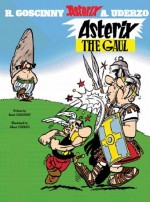
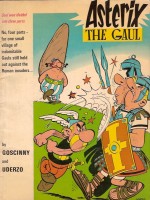
In Asterix the Gaul this perfect scenario is hilariously demonstrated when Centurion Crismus Bonus, fed up with his soldiers being casually beaten up by the fiercely free Frenchmen, sends reluctant spy Caligula Minus to ferret out the secret of their incredible strength.

The affable resistors take the infiltrator in and dosed up with potion, the perfidious Roman escapes with the answer – if not the formula itself…

Soon after, the Druid Getafix is captured by the invaders and the village seems doomed, but wily Asterix is on the case and breaks into Compendium determined to teach the Romans a lesson. After driving them crazy for awhile by resisting all efforts at bribery and coercion, wizard and warrior seemingly capitulate and make the Romans a magic potion – but not the one the rapacious oppressors were hoping for…

Although comparatively raw and unpolished, the good-natured, adventurous humour and sheer finesse of the yarn barrels along, delivering barrages of puns, oodles of insane situations and loads of low-trauma slapstick action, marvellously rendered in Uderzo’s seductively stylish art-style. From the second saga on the unique and expanding cast would encroach on events, especially the unique and expanded, show-stealing sidekick Obelix who had fallen into a vat of potion as a baby and was a genial, permanently superhuman, eternally hungry foil to the smart little hero…

These albums are available in a wealth of differing formats, and earlier translated editions going all the way back to the first Brockhampton editions in 1969 are still readily available from a variety of retail and internet vendors – or even your local charity shop and jumble sale. Be warned though that if pure continuity matters only the most recent British publisher, Orion, has released the nearly 40 albums in chronological order – which is how I intend to review them – and are even in the process of re-releasing the tales in Omnibus editions; three tales per tome.

Also, on a purely artistic note some of the Hodder-Dargaud editions have a rather unconventional approach to colour that might require you to wear sunglasses and put blinkers on your pets and staff…

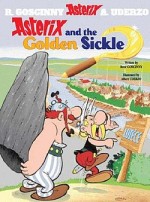
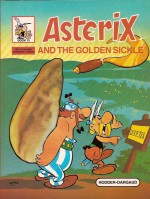
Asterix and the Golden Sickle originated in Pilote #42-74 (August 11th 1960-1961) and recounts the disastrous consequences of Getafix losing his ceremonial gold sickle just before the grand Annual Conference of Gaulish Druids. Since time is passing and no ordinary replacement will suffice to cut ingredients for magic potion, Asterix offers to go all the way to Lutetia (you can call it Paris if you want to) to find another.

As Obelix has a cousin there, Metallurgix the Smith, he also volunteers and the two are swiftly off, barely stopping to teach assorted bandits the errors of their pilfering ways but still finding a little time to visit the many roadside inns and tavern serving roast boar…

There is a crisis in Lutetia: a mysterious gang is stealing all the Golden Sickles and forcing the prices up. The druid community is deeply distressed and more worrying still master sickle-maker Metallurgix has gone missing…

Asterix and Obelix investigate the dastardly doings in their own bombastic manner and discover a nefarious plot that seems to go all the way to the office of the local Roman Prefect…

The early creative experiment was quickly crystallizing into a supremely winning format and the next epic cemented the strip’s status as a popular icon of Gallic excellence.

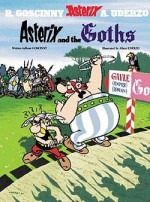
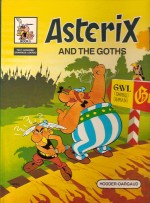
Asterix and the Goths ran from 1962-1963 and followed the plot-thread of the Druid Conference. As Getafix, new golden sickle in hand, sets off for the Forest of the Carnutes to compete, on the Gaul’s Eastern border savage Goths – barbarians who remained unconquered by the might of Rome – crossed into pacified Roman territory intent on capturing the mightiest Druid and turning his magic against the rule of Julius Caesar.

Although non-Druids aren’t allowed into the forest Asterix and Obelix had accompanied Getafix to its edge and as the competition round of the Conference ends in victory for him and his power-potion the Goths struck, abducting him in his moment of triumph.

Alerted by fellow Druid Prefix, the heroic pair tracked the kidnappers but were mistaken for Visigoths by Roman patrols, allowing the Goths to cross the border into Germania.

Although Romans were no threat they could be a time-wasting hindrance so Asterix and Obelix disguise themselves as Romans and invade the Barbarian lands…

Well-used to being held prisoner by now Getafix is making himself a nuisance to his bellicose captors and a genuine threat to the wellbeing of his long-suffering translator, and when Asterix and Obelix are captured dressed as Goths the wily Gauls conceive a cunning plan to end the permanent and imposing threat of Gothic invasion – a scheme that succeeded for almost two thousand years…

If, like me, you’re particularly interested (my wife calls it “sad”) in absolutely all the iterations you might also want to seek out back issues of British boys comic Ranger (1965-1966 and every one a gem!) and issues of Look and Learn immediately after the two titles merged (beginning with #232; 25th June 1966). Among the many splendid strips in the glossy, oversized photogravure weekly was an quirky comedy feature entitled ‘Britons Never, Never, Never, Shall Be Slaves!’ which featured the first appearance of Goscinny & Uderzo’s masterpiece – albeit in a radically altered state.

In these translations Asterix became “Beric”, Getafix was “Doric” and Obelix was dubbed “Son of Boadicea”. More jingoistically the entire village was editorially transported to England where a valiant population of True Brits never ever surrendered to the Roman Occupation!

Similar intellectual travesties occurred during two abortive early attempts to introduce the gutsy Gauls to America as a heavily re-edited family newspaper strip…

Asterix is one of the most popular comics in the world, translated into more than 100 languages; 8 animated and 3 live-action movies, assorted games and even his own theme park (Parc Astérix, near Paris). More than 325 million copies of 34 Asterix books have been sold worldwide, making Goscinny & Uderzo France’s bestselling international authors.

This is sublime comics storytelling and you’d be as Crazy as the Romans not to increase that statistic by finally getting around to acquiring your own copies of this fabulous, frolicsome French Folly.

© 1961-1963 Goscinny/Uderzo. Revised English translation © 2004 Hachette. All rights reserved.