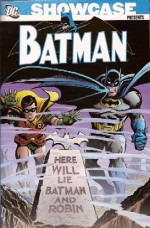
Showcase Presents Batman volume 4


By Frank Robbins, Irv Novick, Bob Brown, Joe Giella & various (DC Comics)
ISBN13: 978-1-84856-357-5

After three seasons (perhaps two and a half would be closer) the overwhelmingly successful Batman TV show ended in March, 1968. It had clocked up 120 episodes since the US premiere on January 12, 1966. As the series foundered and crashed the global fascination with “camp” superheroes – and no, the term had nothing to do with sexual proclivities no matter what you and Mel Brooks might think about Men in Tights – burst as quickly as it had boomed and the Caped Crusader was left with a hard core of dedicated fans and followers who now wanted their hero back.

For the editor who had tried to keep the most ludicrous excesses of the show out whilst still cashing in on his global popularity, the reasoning seemed simple: get him back to solving baffling mysteries and facing genuine perils as soon and as thrillingly as possible.

No problem.

This fourth impressively economical black and white compendium gathers Batman and Robin yarns from Batman #202-215 and the front halves of Detective Comics #376-390; the back-up slot being delightfully filled until #383 by the whimsically wonderful Elongated Man, whereafter he was unceremoniously dropped to make room for Batgirl’s own solo sallies.

The 27 stories here (some of the Batman issues were giant reprint editions so only their covers are reproduced within these pages) were written and illustrated by an evolving team of creators as editor Julie Schwartz lost some of his elite stable to age, attrition and corporate pressure, but the “new blood” was only fresh to the Gotham Guardian, not the industry and their sterling efforts deftly moulded the character into a hero capable of actually working within the new “big things” in comics: suspense, horror and the supernatural…

The book leads off with ‘Gateway to Death!’ (Batman #202, June 1968) by Gardner Fox, an un-attributed artist – possibly Dick Dillin or Mike Sekowsky – & Sid Greene, a spooky graveyard chiller which found the Dynamic Duo chasing a psychic plunderer towards their own prognosticated doom, after which Detective #376 (by the same creative team) asked ‘Hunted or …Haunted?’ as a time-traveller inadvertently put the fear of death and worse into the Caped Crusader.

Batman #203 was an 80-Page Giant with a cover by Neal Adams, whilst an old foe returned in ‘The Riddler’s Prison-Puzzle Problem!’ (Detective #377, Fox, Frank Springer & Greene) before Frank Robbins (creator of newspaper strip Johnny Hazard) joined the writing team for ‘Operation: Blindfold!’ illustrated by Irv Novick & Joe Giella, a two-part criminal conspiracy saga wherein a legion of thugs and sightless beggars almost took over Gotham.

With veteran penciller Bob Brown on Detective and Novick on Batman the artistic quality was high and consistent but unfortunately the strictly chronological reprinting works against the reader as the concluding episode is postponed and derailed here by Detective #378, the first half of a generation gap murder-mystery ‘Batman! Drop Dead… Twice!’ (Robbins, Brown & Giella) which itself climaxed after ‘Blind as a… Bat?’ from Batman #204 with a rollicking rollercoaster ride of spills and chills in ‘Two Killings For the Price of One!’ in Detective #379.

Issue #380 follows, introducing a new love-interest in Ginny Jenkins, the ‘Marital-Bliss Miss!’ (Robbins, Brown & Giella) who only pretended to be the new Mrs. Bruce Wayne for the very best of motives – saving his life – whilst in Batman #206 Novick & Giella illustrated a canny thriller ‘Batman Walks the Last Mile!’ pitting the Caped Crusader against a conman who claimed to be the brains behind the Dynamic Duo’s success.

In an era where teen angst and the counter-culture played an increasingly strident part Robin’s role as spokesperson for a generation was becoming increasingly important, with disputes and splits from his senior partner constantly recurring. Detective #381 featured one of the best as Batman literally dumped the Boy Wonder in ‘One Drown… One More to Go!’ – another clever crime conundrum from Robbins, Brown & Giella.

Batman #207 carried a classy countdown to catastrophe drama as all Gotham hunted for ‘the atomic nightmare’ of ‘The Doomsday Ball!’ whilst ‘Tec #382 continued the theme of youth in revolt with ‘Riddle of the Robbin’ Robin!’ but the disagreements were never serious or genuine, although that would soon change. Batman #208 was another reprint Giant: this time focusing on the women in his life. However even though Schwartz varied the usual format by having Gil Kane draw interlocking framing sequences, turning the issue into one big single story, all that has all been left out here so you just get the rather nifty Nicky Cardy cover.

Detective #383 was a straightforward thriller set in Gotham’s Chinatown: ‘The Fortune-Cookie Caper!’ but outlandish mind-bending mystery was the order of the day in ‘Jungle Jeopardy!’ in Batman #209 and ‘Tec #384 asked ‘Whatever Will Happen to Heiress Heloise?’ a crafty last tale of cross and double-cross from Gardner Fox, illustrated as ever by Brown & Giella.

Catwoman returned mob-handed – or is that mob-pawed? – in Batman #210 with eight other cat chicks in tow so the Caped Crimebuster was hard-pressed to solve ‘The Case of the Purr-Loined Pearl!’ whilst Bob Kanigher wrote one of the best tales of his long and illustrious career for Detective #385 as a nameless nonentity became the most important man Batman never met in the deeply moving ‘Die Small… Die Big!’

Issue #386 found Bruce Wayne a ‘Stand-In for Murder’ (Robbins, Brown & Giella) whilst the heroes had secret identity woes in ‘Batman’s Big Blow-Off!’ (#211, (Robbins, Novick & Giella) and Young Turk Mike Friedrich returned to script a reworking of Batman’s very first appearance for the 30th Anniversary issue of Detective Comics. ‘The Cry of Night is… Sudden Death!’ was a contemporary reworking of issue #27’s ‘The Case of the Chemical Syndicate’ which launched the Dark Knight on the road to immortality (and to see the original check out Batman Chronicles Volume 1, or any of the many “Best of” collections that feature this landmark tale) but once more the relationship between Batman and Boy Wonder came under probing scrutiny.

‘Baffling Deaths of the Crime-Czar!’ (Batman #212, Robbins, Novick & Giella) pitted a trio of exuberant hit-men against the heroes, before John Broome made a final scripting contribution that moved the Joker away from Clown crimes and back towards the insane killer we all cherish in ‘Tec #388’s ‘Public Luna-tic Number One!‘  – a classy sci-fi thriller that totally reinvented the Laughing Loon, in no small part thanks to the artistic efforts of Brown & Giella.

Batman #213 was another reprint Giant, celebrating other landmarks of the 30th Anniversary and featured a new retelling of ‘The Origin of Robin’ courtesy of E. Nelson Bridwell, Ross Andru & Mike Esposito, which is included here after the spiffy cover from Bill Draut & Vince Colletta.

The road to a scary hero continued with Detective #389 and the Robbins-scripted ‘Batman’s Evil Eye’ wherein the Scarecrow infected Gotham’s Guardian with the power to terrify at a glance – obviously somebody saw the long-term story potential in that stunt…

There was still potential to be daft too, though as seen in ‘Batman’s Marriage Trap!’ (#214, Robbins, Novick & Giella) wherein a wicked Femme Fatale set the unhappy spinsters of America on the trail of Gotham’s Most Eligible Bat-chelor (see what I did there? Wishing I hadn’t…?) Not even a guest-shot by positive role-model Batgirl can redeem this peculiar throwback – although the art just might…

The last Detective tale is from #390 and pits the Dynamic Duo against lacklustre costumed assassin The Masquerader in ‘If the Coffin Fits… Wear It!’ before the end of an era is presaged in Batman #215 and ‘Call Me Master!’ by Robbins, Novick and the soon to become legendary Dick Giordano. Although a clever tale of mind-control skullduggery, this tale trialed the loss of Wayne Manor and an all-out split between Dark Knight and Boy Wonder: events that would come to pass within mere months, ushering in a bold new direction for the Bat-Universe

This volume brings three decades of Batman to a solid conclusion. Soon safe boy-scout Caped Crusader would become a terrifying creature of passion, intellect and shadowy suspense.

Stay tuned: This book is wonderfully good but the very best is still to come…

© 1968, 1969, 2009 DC Comics. All rights reserved.
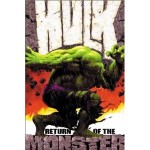
Incredible Hulk: Return of the Monster


By Bruce Jones, John Romita Jr. & Tom Palmer (Marvel)
ISBN: 978-0-7851-0943-3

Bruce Banner was a military scientist accidentally caught in a gamma bomb blast of his own devising. As a result he would unexpectedly transform into a giant green monster of unstoppable strength and fury when distressed or surprised. As both occasional hero and mindless monster he rampaged across the Marvel Universe for years, finally finding his size 700 feet and a format that worked, becoming one of young Marvel’s most resilient features.

An incredibly popular character both in comics and more global media beyond, he has often undergone radical changes in scope and direction to keep his stories fresh and his exploits explosively compelling…

One of the most impressive runs of recent vintage was by noted thriller and horror writer Bruce Jones (see especially his impressive Hitchcock pastiche Somerset Holmes) who injected some long-neglected suspense and pure menace back into the saga. This slim volume (re-presenting issues #34-39 of The Incredible Hulk comicbook from 2001) combines his moody, humanistic writing with the ponderously powerful pencilling of John Romita Jr. and the slickly realistic inking of Tom Palmer to stunning effect.

Always running from the authorities and himself, Banner has finally lost all hope in the aftermath of one of the Hulk’s bouts of mindless destruction which devastated Chicago and resulted in the death of a little boy, Ricky Myers. This book opens with ‘The Morning After’ as a cold and emotionally dead Banner hides in a sleazy hotel where he encounters Jerome, a kid so smart that he knows joining a gang is the only thing that can keep someone with his kind of brains alive.

The desperate lad gets a glimpse at another option after he tries to burglarize the skinny, repressed white guy down the hall and when Jerome gets in over his head it is Banner not the Hulk who is the solution…

Incognito, restlessly wandering but with a mysterious ally keeping him one step ahead of his myriad pursuers Banner is slowly reconnecting with the humanity he has avoided ever since the monster was first created. In the wordless, deeply moving ‘Silent Running’ the fugitive narrowly escapes capture at a diner due to the inadvertent assistance of an autistic child, whilst ‘The Gang’s All Here!’ introduces a mismatched pair of assassins hired by the secret organisation actually behind the current manhunt for Banner and the Hulk.

Both the lethal killer Slater and his rival/partner Sandra Verdugo have been co-opted by a cabal of Men in Black with an unspecified interest in ramping up anti-Hulk hysteria and they definitely want Banner. They also appear to have the literal power of life and death over their unwilling agents…

With Banner’s old friend Doc Samson lured into the pursuit the cabal makes its move in ‘You Must Remember This…’ but when the gamma-fuelled psychologist is distracted by a small child’s experience of school bullying the Hulk-hunters converge and generate a colossal amount of collateral damage at the ‘Last Chance Café’, before events get totally out of hand and terrifyingly weird in the concluding ‘Tag… You’re Dead!’

Using the theme of troubled childhoods and imagery based on the classic Frankenstein films that were such an integral part of the Jade Giant’s conceptual genesis, these tales focus on Banner and judiciously limit the use of his emerald alter ego to the point where the monster almost becomes a ghost. Ever-present but never seen (the monster is only on 21 of the 144 pages of this collection and that includes covers, dream-sequences, flashbacks and spot illustrations) like a catastrophic Rebecca haunting a Midwestern Manderley, the Hulk is a oppressive force of calculated salvation and last resort rather than mere reader-friendly graphic destruction and gratuitous gratification.

Like all great monsters he lurks in the shadows, waiting for his moment…

One of the most beguiling and impressive Hulk yarns of all, this book is the first of three self-contained volumes which utterly reinvigorated the character and completely refocused the series for the 21st century. If you’re new to the series or looking for an excuse to jump back on, this is the book for you…
© 2001, 2002 Marvel Characters Inc. All rights reserved.

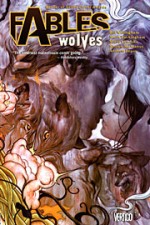
Fables volume 8: Wolves


By Bill Willingham, Mark Buckingham & others (Vertigo)
ISBN: 978-1-84576-388-6

Fables is one of those blessed delights that makes a reviewers job almost impossible. Series of matchless quality that still improve with each volume are rare and most welcome but you soon run out of superlatives to express your enthusiasm, so unless the reviewer wants to cross the border into Spoiler Territory (giving away a plot to a potential fan ought to be a Capital Offence) you really have nothing to offer: therefore I’m repeating my standard short review: Best One Yet – Get Them All.

Still and all you might want a little more, so…

The monthly comicbook Fables details the exploits of fairytale and storybook characters that we humans regard as fictional, living secret immortal lives among us, refugees from a monstrous all-consuming Adversary who had conquered their original otherworldly homelands.

Allow me to elucidate. Keeping their true nature hidden from humanity the Fables have created enclaves where their magic and sheer strangeness (all the talking animals are sequestered on a remote farm in upstate New York, for example) keep them luxuriously safe. Many characters do wander the human world, but always under strict injunction not to draw attention. These magical, perfect, cynical yet perversely human creatures dream of one day returning to their own homes and interrupted lives.

They used to live with the constant threat that their all-consuming foe would one day find them…

However their nemesis has been revealed as the puppeteer Geppetto, who used his ability to carve living, sentient beings out of wood to build all-powerful armies, soon supplemented with goblins, monsters and collaborators who joined rather than die when his unstoppable marionette forces came marching in. ruling in anonymity from behind his greatest creation the Emperor. Geppetto has almost conquered all of Reality, but now with his secret revealed the indomitable refugees of Fabletown are planning to retaliate…

Collecting issues # 48-51 of the monthly comic this volume brings everybody up to speed with the handy ‘Who’s Who in Fabletown’ featurette before the eponymous two-parter ‘Wolves’ (illustrated by Mark Buckingham, Steve Leialoha & Andrew Pepoy) finds the eternally young Mowgli prowling the Arctic hinterlands attempting to track down absent friend – and experienced warrior – Bigby; shape-changing Big Bad Wolf and son of the storm god known alternately as Mr. North and the Great North Wind.

When the mortals of Siberia prove useless the Jungle Boy turns to the wolves and soon discovers what he needs. Meanwhile back in America on the farm Bigby’s cubs are growing increasingly hard to handle…

Of course Mowgli is eventually successful and Bigby returns to Fabletown, although not without some pretty conniving convincing, just in time for the celebratory 50th issue extravaganza which opens with ‘Secret Agent Man’ as Bigby undertakes an covert mission deep into the Adversary’s territory, reviews the Fables indescribably unique war-resources in ‘Castles in the Sky’ before dropping ‘Behind Enemy Lines’ to set up a spectacular confrontation and coup.

Breathtaking in its audacity ‘The Israel Analogy’ establishes a new relationship between Geppetto and the refugee Fables before Bigby returns to Earth in ‘Home is the Hunter’ for a different kind of confrontation and unexpected revelation with Snow White (long-abandoned mother of his cubs) in ‘Restoration’ leading to a reconciliation in ‘The Big Valley’ and ending, as proper stories should, in ‘The Wedding’. There’s even a pithy little epilogue ‘Mr. and Mrs. Wolf’ for all us helpless romantics…

Shawn McManus then illustrates ‘Big and Small’ wherein special emissary Cinderella goes to extraordinary lengths to maintain allies amongst both giants and mouse governments, which ends the narrative portion of this splendid tome but there are still treats in store beginning with assorted ‘Maps of the Fable Territories’ and ending with the complete script to Fables #50, illustrated by cover illustrator James Jean.

There is nothing around today that can touch this series for imagination, style and quality, and you’ll never know the real meaning of “happy ever after” until you turn on to this magnificent saga.

© 2006 Bill Willingham and DC Comics. All rights reserved.

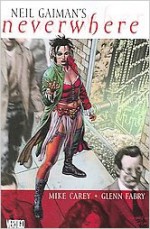
Neil Gaiman’s Neverwhere


Adapted by Mike Carey & Glenn Fabry (Vertigo)
ISBN 1-84576-353-X

Just as he was reaching the narrative heights with his comics works Neil Gaiman wrote a six part television series for the BBC which met with mixed responses from the not-necessarily overlapping audiences of print and TV. Neverwhere had plenty of literary antecedents but its contemporary setting and post-punk attitude clearly caused a few confusions, whilst the legendary BBC budget “make-do-and-mend” policy and financial restrictions left the show looking far less impressive than the writing and acting warranted (a superficial viewer prejudice which still deprives far too many potential fans from taking the pre-1989 Dr. Who series as seriously as they should…)

Concocted by Gaiman and comedian Lenny Henry – long-time comics fan – the show was broadcast on BBC 2 in 1996 and was soon forgotten, but they eventually returned to the concept and it was adapted, restored and expanded as a novel which became a substantial hit (most recently re-published in 2006 in an “Author’s Preferred Text” edition). The core concepts have also been referenced in some of Gaiman’s subsequent fiction.

In 2005 the story was adapted to comics form by Mike Carey and Glenn Fabry as a 9-part miniseries from Vertigo and this compilation graphic novel seems to be the ultimate and most comfortable arena for this engaging urban quest into the dark and hidden side of cities and civilisation.

Abridged and distilled rather than adapted from the novel, Neverwhere recounts the journey and fate of harassed would-be yuppie Richard Mayhew who, against his fiancée’s wishes, stops to help a young homeless girl they find collapsed on the streets of London.

The frail, Goth-like waif calls herself Door and reveals that she is running for her life. Unfortunately that life is a mystical, metaphysical, subterranean analogue of reality notionally located under the sewers beneath our feet. Populated by the lost and forgotten, indigents, outcasts and creatures of legend and fevered fantasy this world is both seductive and dangerous. Moreover, once on those hidden paths mere mortals almost never return…

Door is the last of House Portico, a dynasty once powerful in “London Below” but all dead now. Her family’s relentless enemies have followed her to the world above and when Mayhew is threatened by thugs-for-hire Messrs Croup and Vandemar, pressing him for her location, he inadvertently crosses over, becoming forgotten and eventually invisible to his old friends and acquaintances.

As Door assembles allies to combat the plot against her, Mayhew is dragged along; a well-meaning innocent determined to win back his old life by completing a quest to cross Night’s Bridge, defeat Croup, Valdemar and their hidden master, overcome the fearsome Beast of London and win the support of the supreme power of this underworld: the Angel called Islington.

The path is long and hard however and Mayhew isn’t sure if he and the orphan Door can trust such unique, uncompromising companions as the derelict Iliaster, the Marquis de Carabas, Lord Rat-Speaker, Old Bailey and Hunter. Most importantly, should he win his heart’s desire, is Mayhew even aware of what it might truly be…?

Clever and engaging this dark romance is packed with tension, drama and the lure of the arcane and exotic, skilfully wrangled by Carey and Fabry into a pretty, enthralling package. This is a solid comics treat for full-on fans and tantalised dabblers alike.

© 2005, 2006 Neil Gaiman. All Rights Reserved.

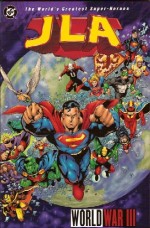
JLA Volume 6: World War III


By Grant Morrison, J.M. DeMatteis, Howard Porter, Mark Pajarillo & various (DC Comics)
ISBN: 978-1-84023-184-7

With this sixth collection of breathtaking adventures starring the World’s Greatest Superheroes, the progression of gargantuan epics and mind-boggling conceptual endeavours culminated in the cosmic spectacle re-originators Grant Morrison and Howard Porter had been patiently working towards for three years: a “Big Finish” saga that proved well worth the wait.

This book, collecting issues #34-41of the monthly comic-book, also includes contributions from writer J.M. DeMatteis and art by Mark Pajarillo, John Dell, Drew Geraci & Walden Wong as an ancient extra-universal terror-weapon finally began to eat its way through reality.

Beginning with the thematic prelude ‘The Ant and the Avalanche’ (Morrison, Porter & John Dell) the JLA faced increased super-villain violence, natural disasters and general madness and New God Orion determines that a threat from the time of the Primal Gods is loose and closing on Earth. With the entire planet in turmoil, Lex Luthor and his malevolent allies prepared to destroy all heroes once and for all…

‘The Guilty’ by J.M. DeMatteis, Mark Pajarillo & Walden Wong took a timely sidestep to focus on debased angel Zauriel and the Hal Jordan-bonded Spectre and the past mortal sins of the assembled Leaguers. Cleansed and refreshed the team then embarked on the six-part epic ‘World War Three’ (Morrison, Porter and Dell), starting by learning the origins of Mageddon, a semi-sentient doomsday weapon that fostered hatred and violence. And now it approached Earth…

Responding to its presence the erstwhile hero Aztek (see JLA Presents Aztek, the Ultimate Man) came out of retirement as Luthor’s team ambushed the JLA in their lunar citadel with devastating success… Meanwhile on Earth, the inexorably approaching God-Weapon was driving the populace, human and not, into mania and blood-frenzy whilst the hard-pressed superhero community found that even they were not immune from Mageddon’s influence…

When even Heaven refused to act in Earth’s defence all hope seemed lost until the long-lost Flash returned with assistance from the end of time and space and Zauriel won help from an unexpected source, but even this was not enough until a hero made the ultimate sacrifice and humanity took its fate into its own disparate hands for a spectacular and cathartic cosmic climax that will delight fans of every persuasion and preference.

Compelling, challenging and genuinely uplifting this tale is a high-mark in modern superhero comics and one no fan can afford to miss. Morrison & Porter’s JLA was never afraid of looking back fondly or laughing at itself: an all-out effort to be Thrilling, Smart and Fun. For a brief moment in the team’s long and chequered career they were truly the “World’s Greatest Superheroes.” This is the kind of joyous frolic that nobody should ever outgrow and these are graphic novels to be read and re-read forever…

© 1999, 2000 DC Comics.  All rights reserved.
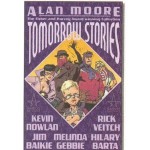
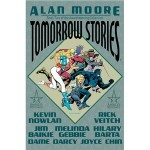
Tomorrow Stories Books 1 & 2


By Alan Moore & various (America’s Best Comics)

ISBN: 978-1-56389-985-0 and 978-1-4012-0166-1

Alan Moore revolutionised American Comics with a series of stunningly well-crafted series and shorter stories featuring characters created by others and in the late 1990s began working for Jim Lee’s Wildstorm outfit. Initially writing for the imprint’s reductive and post-modern line of superheroes (see Alan Moore’s Complete WildC.A.T.s and Alan Moore: Wild Worlds) he gradually began constructing his own universe, loosely based on a number of perennial concepts, genre archetypes and the visual likenesses of some Golden-Age characters long unused – and unclaimed – by copyright farmers…

In 1999 he deftly injected some fun back into a medium plagued and overwhelmed by grim tales of assorted vengeances and mind-numbing violence. The stories also found room to intellectually challenge as well as play with the readership. Moore and a selection of his very talented friends employed all the vast benefits of a shared continuity without getting bogged down in histrionics and shallow bombast, producing a line of clever, witty, beautifully illustrated adventures aimed at those adults grown from the Baby-boomers who had fed the Silver-Age comics revolution and only to be somehow deprived of their fundamental fascination by an industry increasingly devoted to fads and short-term profits.

The most perfect example of this erudite graphic philosophy was undoubtedly Tomorrow Stories, a series designed as a themed anthology title and the greater part of which has been collected in two splendidly whacky volumes of action, suspense, adventure, mystery and imagination.

Volume one, fully scripted throughout by Moore, led with the introduction of Jack B. Quick – Boy Inventor illustrated by the incredibly talented Kevin Nowlan who introduced a junior Edison in ‘Smalltown Stardom.’ The juvenile super-genius, resident on a farm in rural Queerwater Creek, rashly created a miniature sun in the back pasture and had to deal with the diminutive solar system that develops – causing traffic chaos and concomitant conniptions amongst the townsfolk and livestock…

Blending cutting edge science with wondrous surreality this feature always concealed an uplifting laugh amongst its conceptually challenging wonders…

Rick Veitch illustrated Greyshirt (a fulsome tribute to Will Eisner’s urbane detective the Spirit) and the feature began here with ‘Amnesia’ a tale of stylish murder whilst Jim Baikie slipped comfortably into broad parody and biting satire with the patriotic wonders The First American and U.S.Angel; battling Nazis, aliens and daytime television audiences in ‘Dumbsday!’

The first issue closed with ‘The Cobweb’ an exotic pastiche of such (scantily) costumed Golden-Age mystery women as Phantom Lady and Tarpe Mills’ Miss Fury in a plethora of artistic styles provided by Melinda Gebbie. This crusading feminist Lady of the Night starred in a thought-provokingly whimsical yet sinister tale of scandalous delights and forbidden horrors wherein the Amorous Avenger battled a mad scientist who literally turned women into toys and playthings…

Issue #2 opened with Greyshirt in a visually arresting generational yarn of four stories in a building’s life. ‘How Things Work Out’ (illustrated by Veitch) played with Time, Space and vertical altitude to define how crime affects people over the course of decades whilst physics got another well-honed kicking from Jack B. Quick in ‘The Unbearableness of Being Light’ as the brainy boy determined that photons in Queerwater had been over-imbibing intoxicants…

It was ‘Waltztime’ for Cobweb when she encountered dancing alien phantoms in the asteroid belt whilst the First American crushed a backwards-looking felon wielding a deadly Nostalgitator in ‘The Curse of the Reverse!’ to close the proceedings.

Quick’s ‘Pet Theory’ is a triumph of bad-taste: an animal-testing black comedy that tips a cocky hat to Orwell’s Animal Farm; the ever experimental Moore & Gebbie pulled off an illustrated prose thriller-tragedy in the Cobweb fragment ‘Eurydice: A Retrospective’ and First American took a painful look at youth culture and juvenile crime in ‘The Peril of the Pediatric Perpetrators’ before the smoke-coloured man of mystery once more stole the show in ‘The Making of Greyshirt’: a different kind of origin from Moore & Veitch.

The President Clinton/Ken Starr clash got a jovial shout-out in #4’s First American micro-saga as ‘The Bitter Crumbs of Defeat!?!’ almost saw the Patriotic Poltroon investigated and legislated out of business whilst ‘Li’l Cobweb’ married the innocent charms of childhood with a more sordid look at modern relationships and ‘Tempus Fugitive’ pitted Greyshirt against a conceptually inept time-bandit, after which Jack B. Quick hilariously, confoundingly also got the chronal itch as he underwent ‘A Quick Geography of Time’.

Musical explorer ‘Dr. Crescendo!’ paid an ultimate price for his virtuosity in the Greyshirt tale that opened issue #5 whilst Cobweb slipped into moody old territory with the fabulous old Romance fragment ‘La Toile dans le Chateau des Larmes’ a gothic triumph hinting at the true vintage of the spidery siren and first American got in the festive spirit just in time for ‘A Christmas Cop-Out’.

The premiere volume closed with #6 and a Greyshirt saga entitled ‘Day Release’ wherein the supernatural supplanted the grimly urban blight of crime and First American manfully resisted any urge to get all “Touchy-Feely” in the impressively brusque ‘Lo! There Shall Come a Closeness and Commitment!’ with the ever-ambivalent U.S.Angel dragged along for the ride, after which Cobweb found herself distressingly confined with an arachnid opponent who left her ‘Shackled in Silk!’

The final tale is a debut, as an old champion awakened to a world that had pretty much outgrown him. Inky Idol Splash Brannigan: Indelible Avenger made a long-overdue first reappearance in ‘The Return of the Remarkable Rivulet!’ by Moore and Hilary Barta, wherein a downtrodden comics artist accidentally freed an ebullient liquid asset to fight crime and crush her intolerable deadlines…

The hardcover tome under review here also includes all the covers, a selection of sketches and artwork by Nowlan, Veitch, Gebbie and Barta and a copious informative biographies section.

The second volume (reprinting issues #7-12) was also fully written by Moore and riotously opened with the Barta limned Splash Brannigan romp ‘A Bigger Splash!’ as the Dark Stain and Miss Daisy Screensaver stumbled into the atrocity of the modern art market, after which Melinda Gebbie revealed the Maid of Mysteries’ flower-power experiences in the trippy flashback ‘Grooveweb’ and First American selectively recalled recent history from an ideal perspective in ‘The 20th Century: My Struggle’ before Veitch again stole the show with the compulsive Greyshirt thriller ‘How’s My Driving?’

First American muffed the chance to tell his story as a docu-soap in the biting ‘Justice in Tights!’, that Brannigan chap endured horror beyond description when he attended a comics convention and battled ‘Testostor the Terrible!’, Cobweb fans got a rare treat with the uncovering of rare (and faux) newspaper strips featuring her and bosom buddy Clarice clashing with a lost tribe of jungle women, and Greyshirt’s ever-varying cast examined their own interior monologues in the innovative ‘Thinx’.

Alternative Comics darling Dame Darcy illustrated Cobweb’s hardboiled fairytale detective yarn ‘Farewell, My Lullabye’, but series regular Jim Baikie stayed the course to mistreat us to ‘The Origin of the First American’ and Rick Veitch went for the gusto in the show-stopping ‘Greyshirt: The Musical!’ before Splash Brannigan ended the issue with a heartfelt parody parable in ‘Splash of Two Worlds!’

Jack B. Quick triumphantly returned in #10 to solve the mystery of Manure Circles in an alien extravaganza of bovine bombast ‘Why the Long Face?’, ably complimented by the fast-paced Greyshirt thriller ‘…For a Blue Lady’ whilst First American was inaugurated for his ultimate role in the uproarious ‘What We Probably Inhaled at the Toilet’s Last Cleaning!’ and Dame Darcy again enthralled in the quirky travelogue ‘Cobweb of the Future!’.

Splash Brannigan left an inky residue on the pristine world of Pop music in ‘Splash City Rocker!’, Greyshirt went all monster-hunter in the cleverly crafted ‘Vermin’ and we had a behind-the-scenes glimpse of super-patriotic life in ‘Being the First American’ before Joyce Chin illustrated the eerie Cobweb period-piece ‘Bedsheets & Brimstone!’.

This volume and the original series concluded with #12 (although a couple of Specials were later released) so Moore and Veitch celebrated the wind-up in grand style with a Greyshirt/Cobweb team-up ‘Strands of Desire’ wherein the Sultry Sleuth and Man of Smoke and Mirrors set out to catch the sinister, sexy Moneyspider, concluding in the evocative ‘Shades of Grey’ after which Jack B. Quick took one last chance to shock and amaze with the hilariously straight-faced vignette ‘The Facts of Life!!’, leaving the Flag-Draped Fool to close the comics experimentation with an audacious homage to the breadth of comics imagination in ‘The Death/Marriage/Son of the First American of the Future!’ neatly revering and skewering it and ourselves in one swell foop.

Bold, insightful, witty and not at all precious Tomorrow Stories was a brave attempt at being fresh with archetypes whilst asking audiences to respond with brain as well as gut. Comics fans alternatively love it, hate or don’t get it: I really hope you get it (them, they, whatever…)

© 1999, 2000, 2001, 2002, 2004 America’s Best Comics, LLC. All rights reserved.

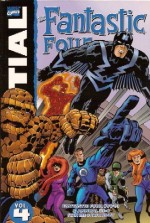
Essential Fantastic Four volume 4


By Stan Lee, Jack Kirby, Joe Sinnott & various (Marvel)
ISBN: 978-0-7851-1484-X

This fabulous fourth black-and-white compendium of the classic and landmark “Stan & Jack” Fantastic Four sees the feature achieve its highest potential in a string of superlative tales that proved the bold boast on every cover… “World’s Greatest Comic Magazine!”

Jack Kirby was in his conceptual prime and continually unleashed his vast imagination on spectacular plot after plot whilst Stan Lee scripted some of the most passionate superhero sagas that Marvel – or any publisher, for that matter – has ever seen. Both were on an unstoppable roll, at the height of their creative powers, and full of the confidence that only success brings, with Kirby in particular eager to see how far the genre and the medium could be pushed.

This volume, covering the early career of comics’ First Family covers Fantastic Four #64-83 (July 1967-February 1969) plus the fifth and sixth annuals, a bombastic blend of super-science, soap opera and stunning action that has seldom been equaled and never bettered.

The magic commences with ‘The Sentry Sinister’ (inked as always by Joe Sinnott) a frenetic adventure romp which pitted the team against a super-scientific robot buried for millennia by an ancient star-faring race. This tropical treat expanded the burgeoning interlocking landscape to an infinite degree by introducing the imperial Kree who would grow into one of the fundamental pillars supporting the continuity of the Marvel Universe.

Although regarded as long-dead the Kree themselves resurfaced in the very next issue as the team was attacked by an alien emissary ‘…From Beyond this Planet Earth!’ The formidable Ronan the Accuser turned up looking to see what could possibly have destroyed his Sentry. Simultaneously The Thing’s blind girlfriend Alicia was abducted by a super scientific stranger…

The mystery of her disappearance was revealed in #66 in ‘What Lurks Behind the Beehive?’ as the heroes trailed the seemingly helpless girl to a technological wonderland where a band of rogue geniuses had genetically engineered the next phase in evolution but lost control of it even before it could be properly born…

‘When Opens the Cocoon!’ revealed the secret of the creature known only as Him and only Alicia’s gentle nature could placate the nigh-omnipotent creature (who would eventually evolve into the tragic cosmic voyager Adam Warlock), after which the tight continuity gradually paused to allow the Inhumans (a time-lost race of paranormal beings long secluded from mortal men) and the Black Panther to share the stage in that year’s Annual, wherein the sinister invader Psycho-Man attempted to ‘Divide… and Conquer!’

Frank Giacoia actually inked this wrongly attributed yarn that pitted the emotion-bending invader against both the King of Wakanda and the Royal Family of hidden Attilan until the FF could pitch in, delayed as they were by the news that the Sue Richards was pregnant – and soon to confined in the most appallingly sexist manner until the birth…

The Annual also included another comedy insight into the creation of Marvel Epics as Stan, Jack and Frank asked ‘This is a Plot?’ and after the now customary Kirby pin-ups (Inhumans Black Bolt, Gorgon, Medusa, Karnak, Triton, Crystal and Maximus, a colossal group shot of Galactus the Silver Surfer and others and a double page spread of the FF themselves) a rapidly rising star-in-the-making got his first solo appearance in ‘The Peerless Power of the Silver Surfer’ a pithy fable of cruel ingratitude that reintroduced the Mad Thinker’s lethal Artificial Intelligence creation Quasimodo…

In FF #68 the Thinker himself enacted his latest plan and ‘His Mission: Destroy the Fantastic Four!’ as the cogitating criminal replaced a famous doctor and subverted a potential cure for The Thing’s rocky condition into a mind-warping scheme to turn the Thing against his comrades (inked as ever by the remarkable Joe Sinnott). The scheme progressed in ‘By Ben Betrayed!’ as the newly malevolent Grimm attempted to murder the rest of the team only to be driven temporarily away. Desperately searching for him the FF soon captured the Thinker and freed Ben from mind-control in ‘When Fall the Mighty!’ but the victory left the heroes unconscious and only Sue conscious to tackle the villains last-ditch killer android in ‘…And So It Ends…’

With baby on board Reed and Sue resigned, leaving Ben, Johnny and the Inhuman maid Crystal to hold the fort when cosmic calamity came calling. In ‘Where Soars the Silver Surfer!’ the sky-born wanderer imprisoned on Earth by the world-devouring Galactus went cage-crazy and attacked humanity, forcing Reed’s return, whilst #73 presented the conclusion to a long-running Daredevil (see Essential Daredevil volume 2) story wherein the sightless crusader was ousted from his own body by the Iron Dictator Doctor Doom.

Warning the FF of imminent attack the Man without Fear then subsequently defeated Doom – but neglected to tell the heroes of his victory… outmatched and unable to convince them any other way DD enlisted Thor and Spider-Man in ‘The Flames of Battle…’ to solve the problem Marvel style – with a spectacular pointless and utterly riveting punch-up…

The Surfer was back in #74 ‘When Calls Galactus’ as the planet-eater returned to our skies demanding that his one-time herald once more become his food-finding slave, but despite his increasingly violent probings, Galactus cannot locate his target. That’s because the Surfer had departed for ‘World Within Worlds!’ forcing Reed, Ben and Johnny to follow. When attacked by Psycho Man they are ‘Stranded in Sub-Atomica!’ and as they struggle to survive Galactus applies ever-more pressure… ‘Shall Earth Endure?’

Turning himself in to save Earth, the Surfer is summarily returned to his captivity here as soon as ungrateful Galactus is finished feeding, just in time to begin his own landmark series – but that’s the subject of another review, another time…

Meanwhile in FF#78 another attempt to cure Ben Grimm goes awry in ‘The Thing No More!’ due to interference from old foe The Wizard and, in ‘A Monster Forever?’, Ben’s choice to stay a rocky monster and save his friends from the bludgeoning Android Man.

A brief change of pace took the team to the Indian Lands of old friend Wyatt Wingfoot to solve an eerie mystery ‘Where Treads the Living Totem!‘ before the sixth Annual spotlighted the birth of Franklin Richards. Unfortunately however, not before Reed, Ben and Johnny invaded the anti-matter Negative Zone to confront a monstrous creature named Annihilus whose power was the only thing that could prevent the death of Sue and her unborn child. ‘Let There Be… Life!’ is a groundbreaking 48 page epic that is as stunning to read now as it ever was, passionate thrilling and mind-boggling in its visual intensity.

With Sue a new mother faithful Crystal became the first new official member of the team and promptly showed her mettle by pulverizing the incorrigible Wizard in #81’s ‘Enter… the Exquisite Elemental!’ and this volume concludes with a classic two-part clash against the inhuman Maximus as he once more attempted to conquer mortal humanity. ‘The Mark of… the Madman!’ saw the FF come to the aid of the imprisoned Royal Family of Attilan before together trouncing the insane despot in ‘Shall Man Survive?’

Did I say concludes? Not quite as this book still finds room for a selection of 6 original art pages from Kirby and his alternate cover for issue #65, you lucky, lucky people…

These are the stories that confirmed Jack Kirby as the absolute master of superhero storytelling and gave Marvel the push needed to overtake the decades-dominant DC. They’re also some of the very best comics ever produced and as thrilling and compulsive now as they ever were. This is a must-have book for all fans of graphic narrative.

© 1967, 1968, 1969, 2005 Marvel Characters, Inc. All Rights Reserved.

Teen-Aged Dope Slaves and Reform School Girls


By Joe Simon, Jack Kirby, Harvey Kurtzman & various (Eclipse Books)
ISBN: 0-913035-79-3   ISBN-13: 978-0-913035-79-5

As the flamboyant escapist popularity of superheroes waned after World War II newer genres such as Romance and Horror came to the fore and older forms regained their audiences. Some, like Westerns and Funny Animal comics hardly changed at all but crime and detective tales were utterly radicalised by the temperament of the times.

Stark, uncompromising, cynically ironic novels and socially aware, mature-themed B-movies that would become categorised as Film Noir offered post-war society a bleakly antiheroic worldview that often hit too close to home and set fearful, repressive, middleclass parent groups and political ideologues howling for blood.

Naturally the new forms seeped into comics, transforming two-fisted gumshoe and Thud and Blunder cop strip-thrillers of yore into darkly beguiling and frightening tales of seductive dames, big pay-offs and glamorous thugs. Sensing imminent Armageddon, the moral junkyard dogs bayed even louder as they saw their precious children’s minds under seditious attack…

From that turbulent period a number of tales and titles garnered especial notoriety from the doomsmiths and particular celebration amongst us tragic, psychologically scarred comics-collecting victims, so in 1989 Eclipse Comics parceled together a bunch of the most salacious, shocking, sensationalistic, best written and drawn examples, produced by an impressive variety of superstars and anonymous unsung draftsmen purely in the interest of historical research…

Still readily available through internet suppliers at extremely reasonable prices, this cool chronicle opens with a handy and informative introduction from Eclipse publisher Dean Mullaney before the sordid spectacle begins with the outrageously trashy tale of Faith: a Bad-Girl-gone-Badder, who only just found redemption in the arms of her equally penitent-and-going-straight ideal man Jeff. There’s no record of who scripted ‘Reform School Girl!’ (1951) but the splendidly kinetic art comes from Louis Zansky.

There are no credits at all for ‘Trapped!’ (also from 1951, and can I detect hints of John Rosenberger or Paul Reinman?); the tale of High School kid Bill Jones, sucked into a spiral of failing grades, lost friends and rebellion against parents and adults after he tries a reefer in the boys toilets. Fear not, however: love, decency and understanding once more save the day.

Joe Simon and Jack Kirby ushered in the American age of mature comics, not only with their creation of the Romance genre but with challenging modern tales of real people in extraordinary situations, seen in their other magazines produced for the loose association of companies known as Prize/Crestwood/Pines. From Headline Comics #27 (1947) comes the stunning saga of Stella Mae Dickson… ‘The Bobby Sox Bandit Queen.’

Fictionalising true crime cases was tremendously popular at the time and of the assorted outfits that generated such material nobody did it better than S&K as this incredibly hard-punching saga shows with the tale of a young girl willingly drawn into a life of robbery and violence. Her ending was not so happy…

Next up is something of an oddity but still addictively enthralling for all that. ‘Lucky Fights it Through’ was published in 1949, a popular song adapted in 16 pages by Harvey Kurtzman (there’s even a sheet music section) as part of an educational comics project sponsored by Columbia University (as was Trapped!), a contemporary western saga about an ignorant cow-poke (don’t! It’s what they were called, not what they did) dealing with and explaining how to cope with Syphilis.

Crime Detector #5 (September 1954) provided two anonymous stories: ‘Gun Happy’ and the single pager which closes this volume. The former details the sad, brief life of juvenile delinquent Thomas Parker whose obsessive love of firearms took him into the army and Korea but who couldn’t stop the shooting once he returned.

He is followed by a second Simon & Kirby classic from Headline Comics #28. ‘I Worked For the Fence!’ outlines the sorry tale of show-girl Monica who found the lure of a smooth-tongued hustler and other people’s jewels too great to resist, before the major part of this tome relates the shocking fall and rise of a High School Jock dragged down by narcotic addiction until medical attention and the love of a devoted girl dragged him back from the edge…

The notorious ‘Teen-Aged Dope Slaves’ by Martin Bradley & Frank Edgington came from Harvey Comics Library #1 (April 1952) but was actually a resized reprint of a sequence from popular family newspaper strip Rex Morgan, M.D. Nonetheless, for all its strident preachiness, it remains a powerful, well-meaning drama that never forgets the cartoon doctor’s prime doctrine “First, Don’t be Boring.”

That aforementioned one-pager from Crime Detector closes the volume on a tantalising high note as Homicide Inspector Craig challenges the reader to solve the fair-play mystery of ‘The Deadly Needle’…

These black and white tales from a simpler a time about a society in meltdown are mild by modern standard of behaviour but the quality of art and writing make them far more than a mere historical curiosity. Teen-Aged Dope Slaves and Reform School Girls is a book well worth your time and attention, but please beware: such material can be habit-forming…
© 1989 Eclipse Enterprises, Inc. Individual strips are © 1947-1954 their respective creators/copyright holders.

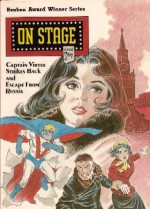
On Stage


By Leonard Starr (Blackthorne Publishing)
ISBN: 0-932629-11-3

Leonard Starr was born in 1925 and began his long and illustrious creative career in the Golden Age of American comic-books working for the crucially important Harry A. Chesler “Shop” at the dawn of the Golden Age. He moved for a period into the lucrative field of advertising before returning to creative pictorial narrative, settling in the gruelling arena of newspaper strips. He comicbook credits include Sub-Mariner, the Human Torch and the immensely popular but now all-but forgotten Don Winslow of the Navy during the 1940s, drew love stories for Simon and Kirby’s landmark Romance line and crime stories for EC, and freelanced extensively for ACG and DC Comics, where he worked on lost gems such as Pow-Wow Smith, Dr.13, the Ghost-Breaker and Gang Busters among many others until he left the industry for Madison Avenue. He returned to graphic narrative in 1955 when he began “ghosting” Flash Gordon.

In 1957 he created On Stage, a soap-opera strip starring aspiring actress Mary Perkins for the Chicago Tribune. After an astonishing and beautiful 22-year run, he left the globally syndicated feature in 1979 to revive Harold Gray’s legendary Little Orphan Annie (which he continued until his retirement in 2000), simultaneously creating the series ‘Cannonball Carmody’ for Belgium’s Tintin magazine. An experienced TV scripter since 1970 Starr worked as head writer on Thundercats, and briefly returned to comic-books in the 1980s. He received the National Cartoonist’s Society Story Comic Strip Award for On Stage in 1960 and 1963, and their Reuben Award in 1965. In collaboration with like-minded veteran Stan Drake he produced one of the best female action characters of the 1980s: Kelly Green.

Since I haven’t yet managed to lay hands on the Classic Comics Press reprint series (chronologically collecting all the adventures of career actress Mary Perkins), I’m reviewing this tempting and impressive little package from pioneering reprint publisher Blackthorne.

The feature began as On Stage with a Sunday page dated in February 10th 1957, at the height of the American fascination with movie stars and Hollywood celebrity, in papers subscribing to the Chicago-Tribune/New York News Syndicate, and detailed a warts-and-all tale of aspiring actress Mary Perkins. Starr sensibly opted to make his young ingénue a jobbing New York thespian seeking the lights on Broadway rather than taking the easy but limited Tinseltown glamour-puss route, allowing his starlet plenty of opportunity to meet and interact with real people and authentic situations: at least by soap opera standards…

In 1959 she married her photographer boy-friend Pete Fletcher and in 1961 she finally got star-billing when the strip was renamed Mary Perkins On Stage (naturally she had kept her stage name) and gradually added movies and television to her resume. She even made it to Hollywood…

Starr combined his narrative skills with beautiful clean-lined drawing and imaginative design and layouts that dipped heavily into his previous experiences as a comicbook action artist and that was never more apparent than in the first of the two sequences that make up this book.

Taken from the mid-1960s the book opens with ‘Captain Virtue Strikes Back’ as Mary is hired by a TV studio to coach a hunky school custodian who saved some kids and was offered a job of a comicbook hero being adapted for a prime-time television show. Holy Coincidences, B*tm*n!

Unfortunately Brooklyn boy Bernie Kibble comes with a little baggage. He’s big, goofy, uneducated and totally subordinate to his weaselly pal Al Gordon, a cunning, ambitious runt who knows a solid gold meal ticket when he sees one…

The Captain Virtue Show is a blockbuster success and with Mary’s coaching Bernie blossoms; even getting a girlfriend despite Al’s attempts to keep the lug dumb and under his thumb, but as is so often the case fame and fortune don’t necessarily lead to happiness…

The second tale is an intriguing Cold War Thriller that puts the actress and her loved ones in unusual peril, and gives the strong supporting cast a far more extensive role. In the years since his debut, husband Pete had become a roving photojournalist meeting the great and the good on seven continents. One of these, Morgana D’Alexius had developed an unhealthy attraction for the clean-living hunk and spent uncounted hours and millions trying to lure him away from his beloved Mary,

The romantic simpleton was completely oblivious to it all: thinking the richest woman in the world kept inviting him on holidays whilst Mary was working because she wanted to be friends. The erstwhile Miss Perkins, however, veteran of stage, screen and melodrama was not fooled…

‘Escape From Russia’ sees a turning point in this bizarre triangle when Mary is invited by the Soviet government to attend a rather unique cultural exchange as the star of the Moscow Film Festival. Meanwhile Major Grigori Volkov, charismatic hero of the Soviet Republics, is calling on his old friend Mike Fletcher to invite him for a visit to the USSR…

It soon transpires that Morgana has influence in the highest echelons of the Communist state and the entire event is a plan to separate Mike and Mary long enough for the amorous autocrat to work her wiles on the hapless photographer.

With Mike innocently touring secret Soviet factories built by Morgana, Mary is abducted to Volkov’s Dacha, but the plucky, smart American son turns the tables and co-opts the Russian hero who helps her flee across the country to safe-haven and a final confrontation with Morgana in Trieste.

At a time when the Evil Empire could do no right, the depiction of suave, bold, heroic Volkov as a human and moral person must have been a controversial revelation to the American public and his transformation from beastly kidnapper to likeably roguish road-buddy is a delight, as is the final comeuppance of Morgana. This light frothy thriller is a splendid example of the magical blend of humour, romance, family-values and exoticism Starr could command in a few simple panels…

This superb black and white compilation also contains an early and provocative early Sunday page, photos of the creator and an insightful interview with Starr conducted by comic strip historian Shel Dorf.
© 1985 Tribune Media Services. All rights reserved.

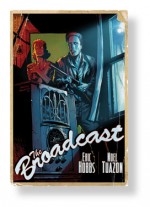
The Broadcast


By Eric Hobbs & Noel Tuazon (NBM/ComicsLit)
ISBN: 978-1-56163-590-0

When you read that as many as one millions Americans were fooled into hysterical panic by Orson Welles’ Halloween radio broadcast of the War of the Worlds it’s had not to think “how dumb are you?” or “don’t you people read books?” but the sad fact remains that a vast proportion of the population heard a portion of the innovative updating of the HG Wells classic on October 30th 1930 and genuinely thought the end of humanity had come.

This superbly low-key monochromatic tale takes a canny peek at human nature in a time of sustained privation (the Great Depression had just hit the USA a damned sight harder than any Martian death-ray could) and urgent – if only imagined – emergency as a small community in rural Indiana endures a couple of unhappy coincidences that result in a horrific confrontation…

At the height of a brutal storm a small band of farmers and families huddle in a barn. It’s been a bad day all around. Young Gavin Baker has finally asked wealthy Thomas Shrader if he could marry his daughter, Kim, but the meeting didn’t go well. Nevertheless the lovers still planned to escape to New York where Kim could become a writer…

Shrader had made a killing bailing out and buying up failing farms over the past year and wasn’t well liked by the newly destitute townsfolk such as widower Jacob Lee or cropper Eli Dawson, but he’s the only employer left so they make do…

A severely beaten, wandering Negro named Martin Steinbeck stumbled into the Baker place later that day. He’d clearly had a brutally rough encounter and was astonished when the family offered him help and sustenance rather than hatred and further violence…

Later, throughout the community the townsfolk tuned in their radios and all caught what they believed to be newscasts reporting Martian invaders blasting New York and New Jersey when suddenly a storm hit and the town lost power. With the phones and lights out, panicked, terrified people all headed towards the Shrader place with its solid storm cellar but when Kim discovered a truck with dead bodies it in, the only conclusion could be that the aliens have already reached the Heartland…

But when the families arrive Shrader delivered an ultimatum: only five people will be allowed refuge, him, his wife and three other and only then if rebellious Kim is one of them…

With imminent doom lurking in the darkness, friendship, civility and human empathy begin to breakdown and a very human atrocity seems inevitable…

This is an enchantingly subtle and impressive tale, carefully avoiding histrionics and bombast, and ultimately uplifting and positive. Eric Hobbs has focused on the communal heroism of the common man and the misty, raw line-and-wash illustration of Noel Tuazon marries dreamy introspection with painful sufferance to give the ensemble cast a look far removed from the general run of modern comics.

The book also contains a photo and clippings gallery displaying the media’s response to the original radio broadcast, deleted scenes, character sketches and a brief commentary on the creator’s working process. Tense, ironic and deeply moving this may well be the sleeper-hit of the year and a major motion picture soon after…

© 2010 Eric Hobbes.