Retro Classics: The Victor Presents: Alf Tupper – The Tough of the Track


By various anonymous and Peter Sutherland (Retro Classics/DC Thomson)
No ISBN, digital only edition

If you grew up British any time after 1960 and read our comics you probably cast your eye occasionally – if not indeed fanatically – over DC Thompson’s venerable “Boys’ Paper” The Victor. For over 100 years the Dundee-based company has been a mainstay of British reading entertainment with its strong editorial stance informing and influencing a huge number of household names over the decades.

Post-WWII, Victor was very much the company’s flagship title for action/adventure and featured amongst its grittily realistic pantheon of stars a perpetually grimy, soot-stained, incorrigibly working-class young(ish) sportsman called Alf Tupper; forever immortalised as The Tough of the Track. Gathered here is a clever compilation of early episodes from a sublimely never-ending soap opera story (sampled from the 1960s, illustrated by Peter [Mike Fink, Spy 13, Kit Carson, Battler Britton, Super Detective Library, Cowboy Comics Library, Thriller Picture Library] Sutherland) commemorating the unique DC Thomson comics experience and offering a splendid taste of the Running Man’s gritty charms.

The main tenet of Thomson adventure philosophy was a traditional, humanistic sense of decency. Talented, determined distance runner Tupper might be a poor, rough, ill-educated working-class orphan competing – we’d call it “punching up” – in a world of hostile “Toffee-Nosed Swells”, but he strives tirelessly and excels for the sheer reward of sportsmanship, not for gain or glory.

He’s the kind of man most decent folk used to want their kids to grow up into…

Friendly, helpful, short-tempered but big-hearted (and looking a little like everyman Norman Wisdom), Alf was actually created by in 1949 by Bill Blaine before featuring in a non-stop series of prose stories in “Boys Story-Paper” The Rover. The majority of those exploits were written by Gilbert Lawford Dalton with single illustrations by Len Fullerton, Ian McKay, Fred Sturrock, Jack Gordon, George Ramsbottom, Calder Jamieson and James “Peem” Walker.

As the 1950s ended the publisher was finally accepting that their readers no longer wanted all-prose periodicals, and comic strips were the way to go. Alf was retooled as just such a pictorial headliner, transferring to The Victor where he persevered if not prospered, carrying on until the title folded. His last 20th century appearance was in 1992 for The Sunday Post: training for the impending Barcelona Olympics. However, his spirit truly was indomitable and in April 2014 Tupper came out of enforced retirement, to begin a monthly page-per-issue strip in monthly international magazine Athletics Weekly

Vulgar but decent, rowdy, earthy, barely-educated and perpetually sticking it to all those posh boys monopolising athletics, Alf was a proudly individualistic sportsman and one of the greatest natural distance runners who ever lived. He fought prejudice, discrimination, poverty and especially privilege to win races, medals and accolades. When he wasn’t training, competing or eating fish & chips (his secret weapon for success), the comic strip Alf was a welder in the northern industrial town of Greystone, originally apprenticed to shifty, shiftless Ike Smith before eventually setting up in business for himself.

Tupper was all about determination overcoming ill-fortune, adversity and even enemy action… and he just hated to be beaten. When he occasionally was, he didn’t dwell on excuses, but resolved to win the rematch…

Our True Brit sporting legend apparently had a big influence on the development of many of our actual sporting greats, such as Brendan Foster CBE, and the reason why can be seen in this carefully edited compilation of weekly episodes beginning with a race for the Greystone Harriers that ends in a fist fight with a fellow runner and Alf being kicked off the team and out of the club…

Barred from competing, Alf races along the verge of the track and beats them all…

As an apprentice welder, Alf spent lots of time in sports venues that were being refurbished and helped himself to empty tracks and unused facilities, gradually being noticed by coaches and selectors. However, every attempt to integrate him with the country’s top athletes ended in some smug elitist saying the wrong thing or even sabotaging the uppity oik; with Alf paying a working man’s penalty for it…

Further complicating Tupper’s life was his exploitative Aunty Meg, who controlled his wages, pawned his kit and prizes and generally gaslit him until he finally ran away from home – or rather the shed she rented to him…

In this brief collection, Alf’s career slowly progresses, comprising many clashes with the Greystone running elite, an on-off relationship with Olympic sporting academy Granton Hall, shoes and kit crises, high profile competitions in London, France, Belgium and beyond, hitchhiking troubles, clashes with the law and brushes with gamblers and race fixers, and dalliances with different distances and even other disciplines such as hurdles, long jump, 4X4 relay and steeplechase …and plenty of “boxing” too.

His biggest battle was against a top sports dietician who banned fish & chips and made him eat salads…

Wry and full of olde-worlde pluck, this seasoned sporting sampler is a wonderfully accessible slice of truly British nostalgia and a certain delight for every fan of classic competition and great comics.
VICTOR™ & © D.C. Thomson & Co. Associated text, characters and artwork © D.C. Thomson & Co., Ltd. All rights reserved.

The Detective Chimp Casebook


By John Broome, Mike Tiefenbacher, Carmine Infantino, Irwin Hasen, Alex Kotzky, Gil Kane, Joe Giella, Sy Barry, Bernard Sachs & various (DC Comics)
ISBN: 978-1-7795-2165-1 (HB/Digital edition)

This book includes Discriminatory Content produced during less enlightened times.

Detective stories are a literary subgenre wherein an investigation by amateur or professional (active or retired) into a legal transgression or moral/social injustice plays out before the consumer, who may or may not include themselves in the process. Like exploration and adventuring, fantasy, horror and science fiction, Detective stories blossomed in white western societies during the mid-19th century: spreading from magazines and prose novels to later forms of entertainment media such as plays, films and radio shows, with early crime puzzle solvers including C. Auguste Dupin, Judge Dee/Di Gong An, Sherlock Holmes, Jules Maigret, Father Brown, Lord Peter Wimsey, Sexton Blake and Hercule Poirot. Tales targeting youngsters generated their own sleuthing stars: Nancy Drew, The Hardy Boys and more, sparking a subgenre especially popular on television…

Comic strips developed detective stalwarts like Hawkshaw, Dick Tracy, Charlie Chan, Kerry Drake ad infinitum: all contributing to a tidal wave of fictive crimebusters that in many ways inspired true literary legends – Philip Marlow, Sam Spade, Simon Templar, Mike Hammer and so on. Where there is such variety and richness, strange yet rewarding things may blossom, none more rewarding than those seen in graphic narratives. Gathered here is the original, seminal comics lunacy in the hirsute form of Detective Chimp: a Florida-based do-gooder who – thanks to an extremely unconventional official lawman – became assistant sheriff of a major coastal metropolis.

In later years, wit and whimsey fell prey to the all-consuming fan-drive for rationality and reason (at least in comic book science terms) and both the police primate and his comic book host Rex the Wonder Dog were given origins rationalising and explaining their mighty mentalities. You can see the first hint of that at the end of this compilation which gathers the madcap monkeyshines of an ape answering to Bobo, as first seen in The Adventures of Rex The Wonder Dog #4 and thereafter #6-46, plus a canny codicil from  DC Comics Presents #35: spanning July 1952 to September/October 1959 and including a moment of animal magic from July 1981. Also in here is material from DC Special #1, Helmet of Fate: Detective Chimp #1, Tarzan #231, 234 & 235, Amazing World of DC Comics #1 and Who’s Who: The Definitive Directory of the DC Universe #6. And while we’re at it, let’s get one thing straight: I know and you know chimpanzees are APES. The author(s) did too, but to have more fun and engage euphony I – as they did – reserve the right to use many terms associated with both primates and prosimians throughout…

We now pause for me to pontificate some more…

Boasting a March 1937 cover-date, Detective Comics #1 was the third and final anthology title devised by luckless comics pioneer Major Malcolm Wheeler-Nicholson. In 1935, the entrepreneur had seen the potential in Max Gaines’ new invention – the Comic Book – and reacted quickly, conceiving and releasing packages of all-new strips in New Fun: The Big Comic Magazine and follow-up New Fun/New Adventure (ultimately Adventure Comics) under the banner of National Allied Publications. These publications differed from similar prototype comics magazines which simply reprinted edited collations culled from established newspaper strips. However, these vanguard titles were as varied and undirected in content as any newspaper funnies page.

Detective Comics was different. Specialising solely in tales of crime and crimebusters, the initial roster included (amongst others) adventurer Speed Saunders, Cosmo, the Phantom of Disguise, Gumshoe Gus and two series by a couple of kids from Cleveland named Siegel & Shuster – espionage agent Bart Regan and two-fisted shamus Slam Bradley

Within two years the commercially inept and unseasoned Wheeler-Nicholson had been forced out by his more savvy business partners, and his company eventually grew into monolithic DC (for Detective Comics) Comics. Surviving a myriad of changes and temporary shifts of identity and aims, it’s still with us – albeit primarily as a vehicle for the breakthrough character who debuted in the 27th issue…

In the years when superheroes were in retreat and considered a bit foolish, DC concentrated on genre stars. At the end of 1951 they launched Rex the Wonder Dog (#1 cover-dated January/February 1952), based equally on Rin Tin Tin, Lassie and their own miracle mutt Streak – the original Green Lantern’s dog who had ousted Alan Scott and Co. from his own title in the dying days of the Golden Age.

Rex solved crimes, saved lives in disasters, fought dinosaurs and saved the world, but that wasn’t enough and real-world legal restrictions dictated his title required other strips to qualify for favourable postal shipping rates. In #4 (July/August 1952), a future back-up feature was trialled. Written by John Broome, drawn by Carmine Infantino and inked by Sy Barry, the tale of a little chimp who helped solve the murder of his beloved owner captivated readers. Infantino always claimed this hirsute anthropoid crimebuster was his favourite character…

In The Adventures of Rex the Wonder Dog #4 readers were invited to ‘Meet Detective Chimp!’ in a charming comedy thriller. It was the first outing of undeniably captivating comics lunacy revealing how, when Oscaloosa Florida’s Sheriff Chase snared the killer of prominent businessman and owner of Thorpe Animal Farm, it was only with the valiant and uncanny help of a certain young chimp. He consequently adopts and deputises the beast, with Bobo thereafter acting as assistant sheriff right up until the final issue. The hairy savant also enjoyed a revival at the end of the century and fresh fame in the 21st as new generations of creators and fans rediscovered him…

Response must have been overwhelming and immediate in 1952, because mere months later ‘The Return of Detective Chimp!’ came with #6 (cover-dated November/December – and remember, this was the company that took 3 years to give The Flash his own title…). Broome again scripted the hirsute Hawkshaw – as he would almost all (I’m presuming: records are sadly incomplete) – in a delightful succession of what we would call “Cosy Mysteries”. Infantino was inked by Joe Giella as the chimp – with the aid of an enraged nesting bird – solved a family murder, restored a sabotaged will and settled a family inheritance in a wild romp setting the pattern for years to come…

Illustrated by Alex (The Sandman, Plastic Man) Kotzky, #7 settled in for the long haul and exposed ‘Monkeyshines at the Wax Museum!’, with Bobo catching the killer of amiable murder-enthusiast Len Billings, after which Irwin (Green Lantern, Wildcat, Justice Society of America, Dondi) Hasen & Giella highlighted how ‘Death Walks the High Wire!’ as the savvy simian proved a circus trapeze accident was anything but, even deputising some four-legged performers to bring the assassin to justice…

For RtWD #9 (May/June 1953), Broome, Hasen & Bernard Sachs indulged a passion for sports as Bobo saved his favourite baseball star from kidnappers in ‘Crime Runs the Bases’ before uncovering ‘Monkey Business on the Briny Deep!’ (Broome, Hasen & Giella, July-August 1953). Here, Bobo became an inveterate but dilettante hobby fanatic, exploring a different fascination each episode which would miraculously impact on the current case. This time it was sea fishing that netted cunning thieves, whilst in #11 it was horses and jockeys, as the impressionable assistant solved ‘The Riddle of the Riverside Raceway!’ (Hasen & Giella): befriending a prize steed, stymying race-fixing gangsters and collaring the FBI’s Most Wanted fugitive…

Th chimp made and lost a new friend next with Hasen & Giella limning the saga of how ‘The Million Dollar Gorilla!’ was killed by a big game hunter’s jealous love-rival before Infantino (inked by Sy Barry) embraced Bobo’s new love of Westerns in #13’s The Case of the Runaway Ostrich!’. This hobby afforded the hairy half-pint much opportunity to display his roping and riding skills when corralling a rare bird rustler…

In RtWD #14 (March/April 1954, with art by Hasen & Sachs) Bobo became a Flying Fool addicted to aircraft just in time to stumble over ‘Murder in the Blue Yonder!’ and catch the killer of his flight instructor, after which Infantino settled in for the long haul as his favourite character became a lifeguard and solved The Case of the Fishy Alibi!’, wherein a gambler almost pulls off the perfect crime. For #16 Bobo’s new passion for scuba diving/ spearfishing exposes a millionaire’s murderer in ‘Monkey Sees, Monkey Does!’ Two months later Bobo cracked ‘The Case of the Suspicious Signature!’ (September/October 1954) when his new passion for autograph collecting accidentally lands him in a Hollywood star’s kidnapping…

When Chase starts paying his deputy in cash as well as room-&-board and bananas, Bobo goes ape over finance with The Case of Bobo’s Bankbook!’ leaving him in the right place at the right time to foil a big heist, prior to succumbing to more basic fascination in #19’s ‘See No Evil, Hear No Evil!’ Bobo falls for visiting movie star Moka and takes up bodybuilding to impress her, but it proves no help at all when “The Most Famous Female Chimpanzee in the World” is kidnapped and he needs all his old skills to save the day…

With Sy Barry inking Infantino, ‘Detective Bobo… Chimp-Napped!’ sees the deputy abducted when his circus chums hit town again, just in time to thwart a jewel snatch, after which #21’s ‘The Secret of the ‘Indian’ Monkey!’ offers opportunity for dressing up when a historical pageant uncovers a treasure map and draws thieves like flies. In #22’s topical tale – inked by Giella – the chimp goes ape for sci fi stories yet still foils a cunning robbery scheme after ‘Bobo Rides a Flying Saucer!’ RtWD #23 saw Sheriff Chase’s only hobby – stamp collecting – key to solving ‘The Secret of the Spanish Castle!’ as a misdelivered letter inadvertently draws the lawgivers into a robbery/hostage situation, whilst Bobo’s temporary love of railways is the spur for ‘The Mystery of the Silver Bullet!’ when locomotive driver Mike Layton allows the chimp onto the footplate just as hijackers attack…

A dalliance with firefighting in #25 proves ‘Where There’s Smoke – There’s Trouble!’ as Bobo joins the Junior Forest Rangers just when a couple of thieves trying to hide their loot in the woods start throwing lighted cigarettes around, and #26 sees the simian Sherlock take up Egyptology in time to solve ‘The Mystery of the Missing Mummy!’ (Giella inks) and save Chase from being entombed forever…

After months of eating premium-promotion cereal, the eager ape at last opens the pack containing ‘A Whistle for Bobo!’ and subsequently drives everyone crazy as an impromptu traffic cop… until one car packed with brigands and boodle refuses to stop. Then a string of robberies by the Goliath Gang again sees him seeking to build up his physique by using ‘Bobo’s Amazing Jungle Gym!’ That turns into bad news for the bandits…

Broome & Infantino transformed Detective Chimp into ‘The Scientific Crook-Catcher!’ (#29 September/October 1956) when the savvy simian sneaks into a symposium of savants disguised as human professor and wowing the assembled savants by tracking down quick-change disguise artist Larry the Lynx, after which a duel with a jewel thief and rendezvous with a robbing raven presents ‘A Jailbird for Bobo!’

The special deputy met his match in a gang of boy do-gooders in ‘Clue of the Secret Seven!’ but even collaboratively collaring a brace of escaped convicts was no preparation for tackling the maritime ‘Mystery of the Talking Fish!’ (#32) after returning to diving to hunt for sunken treasure. When Bobo’s friend Alice Rogers – inheritor of the animal farm in the first adventure – needs a favour, the detective is more than happy to be companion to her new albino Guereza monkey. However, when it vanishes, Bobo attempts to impersonate a creature he has never seen, whilst seeking to find ‘The Mystery Monkey from Zanzibar!’ leads to the capture of its opportunistic abductors instead…

Infantino tested a range of stylistic innovations on Detective Chimp and excels in #34’s The Case of the Chimpanzee’s Camera!’ when Bobo takes up photography and snaps a trio of paranoid thieves casing their next caper, whilst ‘Bobo’s New York Adventure!’ sees the little ape in the Big Apple, pinch-hitting for a monkey TV star and stumbling into Oscaloosa’s Most Wanted: murderous jewel thief “Dangerous Jack” Diamond

Giella inks in #36 as ‘The Mystery of the Missing Missile!’ sees Bobo and Secret Seven pal Tommy Wheeler stymie thieves and test a new invention before the chimp takes a vacation in human guise and unearths ‘The Treasure of Thunder Island!’ In #38 he catches canny counterfeiters whilst accidentally debunking the theories of a scientist who believes he can make animals talk in ‘The Amazing Experiment of Professor Snodgrass!’

For the next case ‘Bobo Goes to Sheriff’s School!’ as Chase sends the assistant in his place to a detection and criminology seminar. It disturbs the chimp’s latest passion of collecting marbles but the substitution works out okay as the chimp outshines all human attendees and even catches a couple of robbers along the way, after which ‘Bobo the Baby Sitter!’ recovers escaped circus star Kangy (the Boxing ’Roo) and nabs a brace of thieving fugitives prior to becoming ‘Bobo – Sleuth on Skis!’ when freak weather turns Oscaloosa into a snowcapped winter playground for thieves…

Giella inks a road rage riot in #42 as hot-rod fanatic Bobo drives a kiddie stock car for the Secret Seven in a big meet, becoming ‘Demon of the Speedways!’ after his new invention allows him to pip all rivals at the post. This attracts the unwanted attention of a gang boss in need of  super-fast getaway car, but does not end well for him…

Keen on being a model citizen, Bobo resolves to ‘Stop That Litterbug!’ in #43, accidentally intercepting a scrap of paper worth millions to the desperate men who lost it, before Giella’s last inking hurrah confirms ‘Where There’s Smoke – There’s Bobo!’ as the ape’s drive to be a fireman almost costs him his real job – until he encounters crooks at a fire – after which a logical outcome of Bobo’s career comes to pass in penultimate episode The Case of the Monkey Witness!’ Here the anthropoid must testify against crime boss Legs Dunne, with the mobster’s gang seeking to end him before the trial begins…

Bobo’s last case came in #46 as he joins a Little League team and becomes ‘The Chimp-Champ of Baseball!’ (September/October 1959), all while preventing a pair of crooks escaping custody.

And that was that…

To make room for resurgent superheroes, The Adventures of Rex the Wonder Dog folded with that issue and – other than an occasional reprint – Bobo vanished for years. The covers of most of those re-appearances are displayed at the back of this book and are listed there, but before that one last story falls under the aegis of this pre-Crisis on Infinite Earths collection.

DC Comics Presents had an occasional back-up series offering short tales of lost stars and in #35 (July 1981) Mike Tiefenbacher & Gil Kane (who had drawn the majority of exploits starring Bobo’s canine companion) revealed ‘Whatever Became of Rex the Wonder Dog?’ Here the canine marvel teamed with now-ancient and decrepit ape Bobo to solve one last mystery, inadvertently restoring themselves to youthful health and vitality for another round of action adventures…

The collection closes with gallery of images under the umbrella of ‘The Ape Files’ which include the 1969 cover to DC Special #1 (an “All-Infantino Issue”), those for Joe Kubert’s covers for Tarzan #231, 234, 235 (which carried Bobo reprints) and Amazing World of DC Comics #1: another Infantino mega montage. Brian Bolland’s preliminary pencil art for Helmet of Fate: Detective Chimp #1 is augmented by the finished full-colour piece before all the ape antics end with Infantino & Bill Wray’s page on Bobo from Who’s Who: The Definitive Directory of the DC Universe #6, a brief biography ‘About the Ape’ and similar treatment for creators Broome and Infantino.

In this century an ape solving crimes is less of a sure-fire winner – as many other hirsute DC gumshoes could attest – and Detective Chimp speaks many human tongues, consults with Batman and works with Shadowpact and for Justice League Dark: a far different beast operating on less charming levels. However, if you’re looking for daft laughs, sublime wit and astounding artwork, this is a book worth casing…
© 1952, 1952, 1952, 1952, 1952, 1952, 1952, 1952, 1968, 1974, 1975, 1981, 1985, 2007, 2023 DC Comics. All Rights Reserved.

Pink Floyd in Comics


By Nicolas Finet, Tony Lourenço, Thierry Lamy, Céheu, Samuel Figuiére, Alex Imé, Abdel de Bruxelles, Joël Alessandra, Gilles Pascal, Christelle Pécout, Antoine Pédron, Léah Touitou, Yvan Ojo, Toru Terada, Christopher, Antoane Rivalan, Martin Texier, Martin Trystram, Romain Brun, Will Argunas, Estelle Meyrand, Fred Grivaud, Georges Chapelle, Chandre, Kongkee, Christophe Kourita, Juliette Boutant, Afuro Pixe, Lauriane Rérolle, Pierre Vrignaud , Mathilde d’Alençon, Emmanuel Bonnet & various: translated by Peter Russella (NBM)
ISBN: 978-1-68112-336-3 (HB) eISBN: 978-1-68112-337-0

Graphic biographies are all the rage these days and this one – originally released on the continent in 2016 – is one of the most comprehensively researched and emotionally rewarding that I’ve seen yet: part of NBM’s Music Star in Comics series guaranteed to appeal to a far larger audience than comics usually reach. It certainly deserves to and might make a perfect gift if any of us make it to the Great December fun-fest/Gig in the Sky…

If you’ve never heard of Pink Floyd there may not be much point in you carrying on past this point, but if you are open to having your mind blown visually whilst visiting wild spaces, please carry on and perhaps invest some time and effort into checking out the music too…

Still with us? Okay then…

As if cannily re-presented popular culture factoids and snippets of celebrity history – accompanied by a treasure trove of candid photographs, song lyrics, posters and other memorabilia – aren’t enough to whet your appetite, this addition to the annals of arguably the most creative and conflicted assemblage of musicians ever bundled in the back of a tour bus also offers vital and enticing extra enticements.

Author, filmmaker, journalist, publisher, educator, translator/music documentarian Nicolas Finet has worked in comics over three decades: generating a bucketload of reference works – such as Mississippi Ramblin’ and Forever Woodstock. He adds to his graphic history tally (Prince in Comics; Love Me Please – The Story of Janis Joplin 1943-1970 and David Bowie in Comics) with this deep dive into the crazed career of the ultimate cosmic explorers and rebellious cultural pioneers. His scripts of the comics vignettes compiled here are limned by international strip artists, providing vividly vibrant key moments in the band’s progress, with each augmented by photo/prose feature articles by Tony (Prince in Comics) Lourenço on chapters #1-14 and Thierry (David Bowie in Comics) Lamy for chapters #15-28.

The ever-growing show starts small and quite quietly in ‘1962-1967: Psychedelia and Light Shows’, as envisioned by Céheu with the meeting of school chums and enthusiastic Blues lovers in Cambridge. Roger Waters, Dave Gilmour and Roger “Syd” Barrett were all middle-class intellectual teens certain of succeeding in life – although no strangers to personal tragedy. However, as they progressed educationally and moved towards London – meeting Rick Wright and Nick Mason on the way – Music increasingly stole their souls…

Illustrated by Samuel Figuiére, the new band was making waves by 1965 and awash in the euphoria of first gigs by ‘1967: Dazzling Beginnings’: even taking on ardent fans Peter Jenner and Andrew King as their managers whilst they mixed fantasy, science fiction concepts and art school psychology with Avant Garde lighting effects in increasingly expansive live performances…

Alex Imé and colourist Mathilde d’Alençon depict ‘1968: A New Team’ as Mason, Waters, Wright & Syd capped off a perfect start with hit singles Arnold Layne and See Emily Play with a breakthrough album Piper at the Gates of Dawn, as creative touchstone Barratt butted heads with dogmatic recording bosses and labels. Soon drugs, pressure and his own shaky mental health would push Syd into relinquishing touch with reality…

After introducing Storm Thorgerson and design specialists Hipgnosis (a lifelong secret weapon in Floyd’s conceptual arsenal), Abdel de Bruxelles’ ‘1967-1968: Syd Barrett, A Genius Struck Down’ reveals how a Rock & Roll lifestyle irreparably damaged the fragile genius who was the soul of the group and what happened with him after he left, whilst Joël Alessandra illuminates the next stage of the band’s creative growth in ‘1969 – Pink Floyd at the Movies: MORE’

Hungry to prove their creative worth and collaborative ethic, the unstoppable rise of the band is further explored in ‘1969 – A Record or Two’ by Gilles Pascal, whilst less happy film fun manifests in Christelle Pécout’s ‘1970 – Pink Floyd at the Movies: ZABRISKIE POINT’.

Internationally renowned, critically adored and hugely popular across the globe, a string of hit albums and monster tours are detailed (as Dave Gilmour returns to the line-up) in Antoine Pédron’s ‘1970 – A Cow and a Full Orchestra’ and ‘1971 – Welcome to Trippy Rock’ by Léah Touitou. Then Yvan Ojo shares the story of the world’s weirdest live gig in ‘1971 – A Day in Pompeii’, before Toru Terada depicts another astounding art-driven side project in ‘1972 – Pink Floyd at the Movies: OBSCURED BY CLOUDS’

The band’s world was about to change forever, even as internal dissent heralded a moment to pause and reflect. Christopher’s oblique approach illustrates ‘1973 – A Lunar Journey in the Form of Cosmic Validation’ as 8th album The Dark Side of the Moon elevated Pink Floyd to another level of success… and pressure.

This is counterpointed by Antoane Rivalan’s flashback moment ‘1967-1994 – Hipgnosis: Music to Look At’ and further revelations regarding Thorgerson and his designers before Martin Texier focuses on what true innovators do once they’ve done everything in ‘1971-1974 – Wavering: The Household Objects’. The answer for the group was individual endeavours and looking backwards as ‘1975 – Wish You Were Here’ by Martin Trystram honoured old mate Syd, just as internal tensions were peaking…

For years deeply politicised, antiwar activist Roger Waters had been seeking to appoint himself leader of a creative collective that didn’t want one, and his campaign to take charge – which eventually ruptured the band – really began with ‘1977 – Dogs, Sheep, Pigs’ as captured by Romain Brun. Incensed by the Falklands War but creating masterpieces despite breaking childhood bonds as seen in Will Argunas’ ‘1979-1982 – The Wall’ (album, tour and movie), the inevitable occurred in Estelle Meyrand’s ‘1983 – Break Up’

Dark days of dissolution and dispute are exposed in ‘1985 – The Great Beanpole Throws in the Towel’ by Fred Grivaud, ‘1987 – Pink Floyd Rolls the Dice Again’ by Georges Chapelle and Terada’s tour overview ‘1966-2005 – Absolutely Live’.

Reconciliatory moments triggered by time apart are seen in ‘1994 – Recapturing the Magic’ (by Chandre, coloured by Emmanuel Bonnet) as work on new album The Division Bell leads to the surviving but separate players partially reuniting for Kongkee’s ‘1996 – In the Pantheon of Rock’ before political protest movement Live 8 brought them together as seen in Christophe Kourita’s ‘1996-2005 – On the Back Burner’.

As friends and old enemies passed away with increasing frequency, their era’s end is acknowledged by Juliette Boutant in ‘2006-2012 – To its Dead, a Grateful Pink Floyd’ and Afuro Pixe’s ‘2014 – One More for the Road’, with speculative appraisal coming in ‘1967-2014 – Four Inspired Boys’ by Lauriane Rérolle and an exploration of legacy visualised in Pierre Vrignaud’s ‘2015-Infinity – Pink Floyd’s Children’…

This compelling and remarkable catalogue of cultural heritage and achievement concludes with Pink Floyd’s Discography (including all solo and off-brand releases), listings of Films, DVD, and Videos, Websites of Note, Bibliography and Recommended Reading plus a copious Acknowledgements section.

Pink Floyd in Comics is an astoundingly readable, beautifully realised treasure for comics and music fans alike: one to resonate with all who love to listen, look and fritter and waste the hours in an off-hand way…
© 2022 Editions Petit as Petit. © 2024 NBM for the English translation.

Pink Floyd in Comics will be published on 13th August. 2024 and is available for pre-order now. NBM books are also available in digital editions. For more information and other great reads see http://www.nbmpub.com/

Moon Mullins: Two Adventures


By Frank H. Willard (Dover)
ISBN: 978-0-4862-3237-9 (TPB)

This book includes Discriminatory Content produced during less enlightened times.

An immensely popular newspaper strip in its day and a remarkably long-lived one, Moon Mullins grew out of gentle if bucolically rambunctious Irish immigrant ethnic humour to become THE comedy soap opera (one of the very first of its kind) that absolutely everybody in America followed.

Create by Frank Willard – a 2-fisted, no-nonsense type with a cracking ear for dialogue, an unerring eye for swingeing social faux pas and an incorrigible sense of fun – the strip debuted on June 19th 1923. Willard wrote and drew both monochrome dailies and sparkling Sunday colour segments until his death in 1958, whereupon his assistant Ferdinand “Ferd” Johnson (who started working with Willard scant months after the strip’s launch, and continued there even whilst working on his own strips Texas Slim and Lovey-Dovey) assumed complete authorship until his own retirement in 1991 – a gloriously uninterrupted tenure of 68 years.

The feature was marketed around the globe by the mighty Chicago Tribune/New York News Syndicate, and recounted daily the rowdily raucous, ribald, hand-to-mouth lowbrow life and tribulations of Moonshine Mullins, lovable rogue and unsuccessful prize-fighter who was just getting by in tough circumstances…

The doughty rapscallion spent his time in bars, on the streets (sometimes the gutters) and most tellingly at the pokey boarding house of Emmy Schmaltz, located at 1323 Wump Street. Mullins was amiable and good-natured, liked to fight, loved to gamble, was slick with the ladies and had the worst friends imaginable…

He also had an iconic little brother, named Kayo, who was the visual prototype for every one of those tough-kid heroes in Derby hats (“bowlers” to us Brits) and tatty pants populating Simon & Kirby’s early work.

Brooklyn and Scrapper and all those other two-fisted, langwitch-manglin’ cynical, sassy tykes took their cues from the kid in the funny papers who so often had the very last word. The other mainstay of the strip was lanky landlady Emmy; a nosy interfering busybody with inflated airs and graces and a grand line in infectious catchphrases.

Other enticing regulars included Uncle Willie – Moon’s utterly dissolute bad relation; saucy, flighty flapper (Little) Egypt – our hero’s occasional girlfriend and a dead ringer for silent film sensation Louise Brooks (and, incomprehensibly, Emmy’s niece), plus Mushmouth – a black character who will make modern readers wince with social guilt and societal horror. However, to be fair, in this strip which celebrated and venerated working class culture, he was always another unfortunate schmuck on the wrong side and far more a friend than foil, stooge or patsy.

One final regular was affluent Lord Plushbottom, whose eye for the ladies – especially Egypt – constantly brought him sniffing around the boarding house. At the period of the tales in this volume he is a jolly English bachelor, completely unaware that a spidery spinster has set her cap for him. In 1933, after a decade of hilarious pursuit, she finally got her man…

Surprisingly still readily available as a paperback book (surely, if ever anything was crying out to be suitably and permanently digitally archived it’s vintage strips like these!), Moon Mullins: Two Adventures is still readily available and reprints two marvellous extended romps originally reformatted from newspapers and released in 1929 and 1931 by Cupples & Leon – a publishing company which specialized in reprinting popular strips in lush, black-&-white tomes; very much a precursor of both comic books and latterday graphic novels.

In the first yarn Mullins is given a car in payment for $30 he foolishly lent Emmy’s ne’er-do-well brother Ziggy, utterly unaware that the vehicle is stolen. This is a delightful shambolic, knockabout sequence with striking slapstick and clever intrigues resulting in the entire cast behind bars at one time or another.

It should be remembered that the cops in these circumstances and during those tough days were always everybody’s enemy and fools unto themselves…

The second tale describes how Plushbottom treats Emmy and Egypt to a Florida holiday, unaware that he’s also paying for Moon and Mushmouth to join them on a brilliantly inventive and madcap road-trip…

Each adventure is delivered via the incredibly difficult method of one complete gag-strip per day combining to form an over-arching narrative… and they’re all wonderfully drawn and still funny. If you’re a fan of classic W.C. Fields, The Marx Brothers and other giants of vintage screwball comedy you must see this stuff…

Moon Mullins was one of the key foundational strips in the development of both cartooning and graphic narrative: hugely influential, seditiously engaging, constantly entertaining and perfectly drawn. With such a wealth of brilliant material surely, it’s only a matter of time until some sensible publisher with a sense of history releases a definitive series of collected editions?
© 1929, 1931 The Chicago Tribune. All rights reserved.

Glorious Summers volume 3: Little Miss Esterel (1962)


By Zidrou & Jordi Lafebre with additional colour by Mado Peña, translated by Lara Vergnaud (Europe Comics)
No ISBN: Digital edition only

Until comparatively recently, comics in the English-speaking world mostly countenanced comedic or numerous adventure sub-genres (crime, superhero, horror, sci fi), with only a small but vital niche of “real world” ventures, and those usually depicted via graphic biographies/autobiographies like They Called Us Enemy, Love on the Isle of Dogs, Wage Slaves or Sour Pickles offering a different feel and flavour. Even historical sagas were treated as extraordinary moments with larger-than-life characters whenever possible.

What we have never had – and still largely don’t outside small press/self-publishing – is a comics equivalent to general fiction, drama and melodrama. That’s not so in Japan, South Korea or Europe, where a literal “anything goes” attitude has always accommodated and nurtured human-scaled, slice-of-life tales with ordinary folk in as many quiet as extraordinary moments.

Surely it can’t be that hard to tell engaging stories in simple, recognisably ordinary settings? Medical traumas, love stories, school tales and family tragedies still play well on various-sized screens around the world, so why not in English-language comics?

People being people is more than enough for our continental cousins. There appears to be an insatiable appetite for everyday moments aimed at properly “mature readers”, joyfully sans vampires, aliens or men in tights. These even have sub-genres all their own. For example, there’s a wealth of superb material just about going on holiday. So, since we Brits are all too broke for any jaunts or une petite vacances in Europe, let’s stare covetously at them having a good time. After all, Over There holidays are an inalienable right and they have some simply fabulous tales about the simple well-earned break. This one comes from one of the best series on taking it easy you will ever see …

An absolute exemplar of fantasy vacations made real, Glorious Summers: Southbound! (1973) was a nostalgia-drenched confection by Zidrou and regular collaborator Jordi Lafebre: a sublime example of idyllic group memory made into graphic sorcery in an everyday account utterly unafraid to temper humorous sweetness and light with real-world tragedy and suspense.

Would sir et madame care for a soupçon of context? Summer holidays – “Midi” – are a big deal in France and Belgium. The French divide into two tribes over the annual rest period, which generally lasts an entire month. Juilletistes only vacation in July, wielding dogmatic facts like rapiers to prove why it’s the only way to take a break. They are eternally opposed, heart, soul, and suntan lotion, by majority faction the Aoûtiens, who recharge their batteries in August whilst fully reciprocating the suspicion, disdain and baffled scorn of the early-leavers. Many European sociologists claim the greatest social division today is not race, religion, gender, political affiliation or whether to open boiled eggs from the top or the bottom, but when summer holidays begin and end…

Les Beaux Étés 1: Cap au Sud! was first in a string of family visits – six so far – that began in 2015 courtesy of scripter Benoît “Zidrou” Drousie and Spanish illustrator Jordi Lafebre. Drousie is Belgian, Brussels-born in 1962 and was a school teacher prior to becoming a teller of tales in 1990. His main successes include school dunce series L’Elève Ducobu, Petit Dagobert, Scott Zombi, La Ribambelle, Le Montreur d’histoires, a revival of Ric Hochet, African Trilogy, Léonardo, Shi and so many more. His most celebrated and beloved stories are this memorable sequence and 2010’s Lydie, both illustrated by Lafebre.

That gifted, empathically sensitive artist and teacher was born in Barcelona in 1979 and has created comics professionally since 2001, first for magazines like Mister K, where he limned Toni Font’s El Mundo de Judy. He found regular work at Le Journal de Spirou, creating the romance Always Never and collaborated with Zidrou on La vieille dame qui n’avait jamais joué au tennis et autres nouvelles qui font du bien, Lydie, and La Mondaine.

A combination of feel-good fable and powerful comedy drama, Glorious Summers depicts memories of an aging couple recalling their grandest family moments, beginning with a momentous vacation in 1973 where their four kids nearly lost their parents. The general progress is backwards, as the second tale – The Calanque – was set in summer of 1969, when heavily pregnant Maddie Faldérault (imminently about to deliver precociously hyperactive Paulette AKA “Peaches”) once again had her holiday start late thanks to an inescapable deadline. Husband Pierre is a comics artist and every summer break begins with him frantically trying to complete enough pages to take the time off…

That time it left Maddie coping with three impatient kids (oldest girl Jolly-Julie, dangerously forthright Nicole and introspective toddler Louis) and a newly-bereaved and lonely Spanish father-in-law…

Here, however, third volume Mam’zelle Estérel (translated for this criminally digital-only-edition as Little Miss Esterel) starts in the present day before setting the wayback machine to August 1962. Papa and Mama Faldérault are finally selling the faithful Renaut 4L Hatchback which carried their ever-expanding family south to the sun for three memorable decades.

It’s not that she’s clapped out or knackered – in fact the vehicle is in immaculate condition. She has been lovingly cared for and is a valuable collector’s item! – it’s only that Peaches is all grown up now and the last chick preparing to leave the nest, so plucky, steadfast “Little Miss Esterel” deserves an owner who will keep her on the road and having adventures…

Of course, the transaction is charged with sentiment and sparks a flood of memories, and the scene shifts to 1969. Recently a mum for the second time, Maddie shepherds her two kids (toddler Jolly-Julie AKA “Zulie” and 6-month-old Nicole) and idiot husband. It’s four days into the big holiday, and he’s just finishing the emergency pages his abusive “named-creator” boss Garin just dropped on him.

The scenario is particularly aggravating as Maddie’s martinet mother Yvette LeGrand and long-suffering, still-recuperating cardiac-case dad are staying with them. Having bought the young marrieds a car for family vacations, the snooty dowager has invited herself and gluttonous heart-attack survivor Henry (dubbed forever after “Fat Pop Pop” by Zulie) along on their eagerly-anticipated premier camping trip.

Sadly, grandmama’s haughty convictions and stern diktats don’t just extend to how badly Madeleine is raising her children, how stupid Pierre’s job is or what Henry can eat, drink or do. Before long she hijacks the déclassé sun, sea-&-picnic worshippers’ dreams: sternly inflicting upon them all a succession of hotels, restaurants and churches (all Michelin-starred!) for their own good and ultimate edification…

Inevitably the situation is too much even for easy-going Pierre and poor historically-dominated Maddie… but then something small but wonderful happens to change and even explain those harsh years when Yvette raised her daughter all alone; and Pierre philosophically accepts that the Sun and Sea will always be there, but some things won’t…

Packed with heart, honest emotion and tons of pure sitcom comedy gold, this tale is another beautifully rendered and realised basket of memories stitched seamlessly together. It’s funny, sweet and charming whilst delivering painful blows you never see coming. There aren’t any spectacular events and shocking crises and that’s the entire point…

If you’re British – and old enough – this series will stir echoes of revered family sitcoms like Bless This House, Bread, or Butterflies and even generational ads starring the “Oxo Family” (and if that description doesn’t fit you, I pity your browsing history if you look up any of that…). The rest of you in need of an opening (but unfair) comparator might break out the Calvin and Hobbes collections and re-examine the bits with his embattled parents when the kid’s out of the picture…

Lyrical, laconic, engagingly demure, debilitatingly nostalgic but unafraid to grasp any nettles on the beach, this holiday romance is another dose of sheer visual seduction wrapped in sharp dialogue and a superbly anarchic sense of mischief. Vacations are built of moments and might-have-beens, and come packaged here in compelling clips all making the mundane marvellous.
© 2018 -DARGAUD BENELUX (Dargaud-Lombard s.a.) – ZIDROU & LEFEBRE, LLC. All rights reserved.

Mac Raboy’s Flash Gordon volume 3


By Mac Raboy & Don Moore (Dark Horse Books)
ISBN: 978-1569719787 (TPB)

This book includes Discriminatory Content produced during less enlightened times.

By almost every metric, Flash Gordon is the most influential comic strip in the world. When the hero debuted on Sunday January 7th 1934 (with equally superb Jungle Jim running as a supplementary “topper” strip), it was a slick, sophisticated answer to Philip Nolan & Dick Calkins’ revolutionary, ideas-packed, inspirational, but quirkily clunky Buck Rogers (which had also launched on January 7th – albeit in 1929), with two fresh elements added to the wonderment: Classical Lyricism and Poetic Dynamism. The newcomer became a weekly invitation to stunningly exotic glamour and astonishing beauty.

Where Buck merged traditional adventure with groundbreaking science concepts, Flash reinterpreted fairy tales, hero epics and mythology, draping them in the spectacular trappings of contemporary futurism, with the varying “rays”, “engines” and “motors” of modern pulp sci fi substituting for trusty swords and lances. There were also plenty of those too – and exotic craft and contraptions stood in for galleons, chariots and magic carpets. Look closely, though, and you’ll see cowboys, gangsters and of course, flying saucer fetishes adding contemporary flourish to the fanciful fables. The narrative trick made the far-fetched satisfactorily familiar – and was continued with contemporary trends and innovations by Austin Briggs and Don Moore before Mac Raboy, (with Moore and Robert Rogers) took over the Sunday strips in a tenure lasting from 1948 to 1967.

The sheer artistic talent of Raymond, his compositional skills, fine linework, eye for clean, concise detail and just plain genius for drawing beautiful people and things, swiftly made this the strip that all young artists swiped from literally all over the world. When original material comic books began a few years later, many talented kids used Gordon as their model and ticket to future success in the field of adventure strips. Almost all the others went with Raymond’s stylistic polar opposite: emulating Milton Caniff’s expressionist masterwork Terry and the Pirates (and to see one of his better disciples check out Beyond Mars, limned by wonderful Lee Elias).

Flash Gordon began on present-day Earth (which was 1934, remember?) with a wandering world about to smash into our planet. As global panic ensued, polo player Flash and fellow passenger Dale Arden narrowly escaped disaster when a meteor fragment downed their airliner. They landed on the estate of tormented genius Dr. Zarkov, who imprisoned them in the rocket-ship he had built. His plan? To fly the ship directly at the astral invader and deflect it from Earth by crashing into it!

Thus began a decade of sheer escapist magic in a Ruritanian Neverland: a blend of Camelot, Oz and a hundred other fantasy realms promising paradise yet concealing vipers, ogres and demons, all cloaked in a glimmering sheen of sleek scientific speculation. Worthy adversaries such as utterly evil yet magnetic Ming, emperor of the fantastic wandering planet; myriad exotic races and shattering conflicts offered a fantastic alternative to drab and dangerous reality for millions of avid readers around the world.

With Moore handling the majority of the scripting, Alex Raymond’s ‘On the Planet Mongo’ ran every Sunday until 1944, when the artist joined the Marines. On his return, he forsook wild imaginings for sober reality: creating gentleman-detective Rip Kirby. The public’s unmissable weekly appointment with wonderment perforce continued under the artistic auspices of Austin Briggs – who had drawn the monochrome daily instalments since 1940.

In 1948, eight years after beginning his career drawing for the Harry A. Chesler production “shop”, comic book artist Emmanuel “Mac” Raboy took over illustrating the Sunday page. Moore remained as scripter and began co-writing with the new artist.

Raboy’s sleek, fine-line brush style – heavily influenced by his idol Raymond – had made his work on Captain Marvel Jr., Kid Eternity and especially Green Lama a pinnacle of artistic quality in the early days of the proliferating superhero genre. His seemingly inevitable assumption of Flash Gordon’s extraordinary exploits led to a renaissance of the strip and in a rapidly evolving post-war world, it became once more a benchmark of timeless, hyper-realistic quality escapism which only Hal Foster’s Prince Valiant could match. This third 260-page paperback volume – produced in landscape format, printed in stark monochrome and still criminally out-of-print and long overdue for a fresh edition – opens after a gripping and informative appraisal of Raboy in Bruce (Incredible Hulk, Arena, Silverheels, Ka-Zar the Savage) Jones’ Introduction ‘The Body Aerodynamic’. Then it’s blast-off time. again…

Sequence 68 ‘Missiles from Neptune’ began on January 19th 1958 and closed the previous cliffhanging volume barely weeks in. It resumes here with the episode for February 30th and carries on until March 9th, revealing how the oppressive Tyrant of Neptune seeks to impress and cow into submission his already-captive populace by testing deadly new Weapons of Interplanetary Destruction against hapless planet Earth.

The callous campaign prompts Flash to go and discourage him, but after superbly succeeding the conquering hero is lost in the interplanetary void and forced to build a survival nest inside an asteroid. His ingenuity as a ‘Robinson Crusoe in Space’ (16th March – 27th April) once more demonstrates the compelling power of straight, hard science storytelling (especially at a time when America was locked in a space race of its own), but it’s back to fantastic empires and extragalactic terror for his next exploit as Earth is menaced by ‘The Z Bomb Cloud’ (4th May – 15th June).

Long after a far-distant civilisation destroys itself, the deadly fallout of its doomsday weapon drifts into Earth orbit, threatening all terrestrial life. When Zarkov’s desperate plan to intercept the cloud goes wrong, someone must sacrifice themself to save us all…

Obviously, just this once it isn’t Flash, but the potent drama peaks with appropriate tragedy and sentiment anyway, before sequence S071 taps into the sheer burgeoning wonderment of the era as Flash and Dale help big game hunter Brian Farr prove the existence of uncanny unseen cryptids he calls ‘Stratosphere Beasts’ (22nd June – 17th August). These invisible beasts apparently dwell far above Earth’s highest mountain tops, so the endeavour takes the humans to the top of Everest where the unknown isn’t the only trial they face…

From 24th August to October 12th S072 told how the ace space pilot was embroiled in a commercial show-race to the outer planets. However, the ‘Rocket Derby’ is apparently less about proving whose ship is best and more about rich, spoiled obsessive competitors Morgan Bates and Babara “Bobcat” Kathryns realising how close hate is to love…

Along the way, Dale is dragged into the competition after hearing macho males telling Bobcat that space is no place for women, even as hired gun Flash suffers numerous sabotage attempts. It’s almost like there’s an unknown fifth element acting on their own agenda…

It’s back to dramatic basics for ‘Moon Wreck’ (S073, running from 19th October to December 14th) wherein Gordon attempts to rescue an arrogant playboy and his latest dalliance from a self-inflicted crash and subsequent marooning on Luna. The pilot’s every valiant effort is hampered by the autocrat’s privilege, greed, stupidity and cowardice, vain starlet’s Elyse Elan’s venality, and the deadly environment they both refuse to take seriously…

Gordon’s piloting skills land him in more trouble in ‘The Ship of Gold’ (S074: December 21st 1958 to January 2nd 1959) when he captains a transport of mining machinery and tons of cash to Mars, only to have the ship stolen out from under him with Dale trapped aboard. The evil mastermind is old college colleague Nicky Hamilton, but when the boastful villain abandons current girlfriend Jet in a ruthless attempt to loose Flash in the airless wastes of Titan, he seals his own fate and accidentally exposes a major threat to Earth in succeeding saga ‘The Skorpi’ (February 8th – April 5th)…

Left for dead, Flash and Dale fall through Titan’s surface to discover an insectoid alien invasion force. Skorpi can become copies of humans and are well advanced in a plot to infiltrate Earth, but aren’t quick enough to outwit Flash, especially once he befriends captive telepathic ET Brunn. His gigantic kind are Gorgins and with their allies The Dhreen have been battling Skorpi for 30,000 years. Together, the new pals whip up a plan to defeats this particular incursion…

Brunn then adapts a ship to Faster-Than-Light drive and accompanies Flash on a ‘Flight for Help’ (S076: April 12th – June 7th), beseeching Dhreen’s Council of Elders for military aid. Instead, the embassage is covertly targeted by their other client vassals – like Brunn’s own Gorgin race – who fear their share of aid will be diminished if the benign overlords help yet another endangered species…

Plots become assassination attempts, but only accidentally expose Skorpi infiltration, leading Brunn and Gordon to further corruption, exile and ultimately capture by a hidden race who dwell unsuspected in a ‘City of Glass’ (S077: June 14th to August 23rd). Condemned to death for breaking the metropolis’ sacrosanct isolation, the wanderers are only saved by lovely, sympathetic Flara, who aids the human’s escape back to the Solar system but keeps adorable Brunn by her side…

The Earthman only makes it as far as the second rock from the Sun and S078 (August 30th – November 1st) radically changes pace for a ‘Venus Mystery’ wherein human colonists face disaster as their Bajo crop is targeted by “swamp devils”. In an early lesson in green land management, crash-landed Flash aids ecologist Dirk Van Meer in proving to the furious farmers how badly wrong they have got things, what is actually to blame for all the chaos and carnage and how to fix it…

Immediate emergency over, Flash finally reaches Earth to find Zarkov impatiently waiting. Before he can catch his breath the steadfast starman is dragooned into a dangerous new experiment with cyberneticist Dr. Else Neilson having him ride along as a fallback option as she “road-tests” her ‘Robot Spaceship’ (S079: November 8th 1959 to 17th 1960). Fully automated – and what we’d call AI – the ship has human safety as its core drive, but of course, human and mechanical opinions on what exactly that means differ extensively…

Thanks in large part to Flash Gordon, spaceship technology has rapidly advanced and he is selected to pilot the first human-built FTL drive ship. The Columbus will ferry ‘The Star Miners’ (S080: January 24th – March 27th) to another star system, reap mineral wealth and set up a colony. However, the directives of chief advisor Dr. Zarkov are constantly challenged and ultimately overruled by gang-boss Mr. Birk, who can only think of glory and a big fat bonus promised for prompt completion and delivery…

Arriving on unexplored planet Karst, Zarkov again urges patience and caution, but is first sidelined and then arrested once Flash undertakes his secondary mission of exploration. By the time the hero returns the entire expedition is close to extinction and only drastic measures can save them all…

On returning to Earth, welcome shore-leave ends in catastrophe when Flash is shanghaied by “entrepreneurs” Roni and Captain Graz: kidnapped into space and ordered to pilot their ship or die. They need someone able to deliver potentially ‘Deadly Cargo’ (S081: April 3rd to June 12th) and navigate through the asteroid belt to mineral-rich big rock Juno, where a huge diamond strike has created urgent demand for explosives. It’s also a race setting competitive old rivals at each other’s throats and costs plenty of nefarious lives before Gordon gets ramshackle freighter Pollux down (relatively) safely…

Subsequent attempts to get off Juno turn wild and dangerous in ‘The Soil Divers’ (S082: June 19th – August 28th) when Flash is suckered into an ongoing resource war on the mining asteroid. Scientist Ben Corelli has devised a means of passing through solid matter, but fallen under the spell of avaricious faithless Roni and her new heavy Snapper Kaye, sparking violent conflict amongst those desperate diggers stuck using old methods of extracting mineral wealth. Soon, the attempts to seize Corelli’s breakthrough tech leads to murder and worse…

A self-aggrandising, fame-hungry documentary filmmaker obsessed with his legacy makes trouble for Dale – and therefore Flash – next. Charles Q. Charlston brings ‘Dead Worlds’ (S083: September 4th to November 20th) and lost civilisations to the masses, but has no qualms or scruples about breaking all the rules of space conduct: cheating, lying, stealing and even killing to ensure his own glory… until Gordon steps up. He and Dale are then called to the ringed planet and a reunion and to assist Brian Farr, now ‘Game Warden on Saturn’ (S084: November 27th 1960 to February 19th 1961)…

His job is currently complicated by the system’s most successful poacher – cunning sadist Von Brandt – who seeks the joy of hunting and intends making millions selling the skins of a rare indigenous lifeform. He’s also happy to excise interfering busybodies for free…

A maritime tang and epic approach flavours ‘The Trail of Orpheus’ (S085: February 26th – May 28th) when Flash joins oceanologists Henry and Veronica Weeks on a submarine to map the unique and spectacular “Devils Spring” environmental phenomenon making the watery world so hazardous to rocket ships. Their undersea voyage reveals fantastic truths about the past rulers of the planet and changes the solar system forever…

It’s a welcome return to space opera and pulp overtones as S086 sees an orbital agriculture satellite accidentally invaded by space gremlins and transformed into a ‘Death Farm in Space’ (June 4th to September 3rd) until Zarkov and Flash investigate and act, all followed by comedic whimsy as a band of backward-looking human bandits revolt against ecological progress in ‘Desert Prince’ (S087: September 10th to December 10th)…

When Earth loses the final dusty miles of once-barren Sahara to water reclamation projects, reactionary tribal chieftain Al Maarri refuses to take up farming and instead leads his raiders on a wave of sorties. The campaign of resistance culminates in his stealing a rocket ship to carry his entire bandit horde and their families to Mars where civilisation is scarce, law is poorly enforced and beautiful sandy wastes are abundant. Soon, armed with modern weapons, he’s making life difficult for genuine colonists, forcing under-resourced Flash to solve the problem creatively. That means infiltrating the tribe with the assistance of the long-suffering wives, children and oldsters the rowdy raiders forcibly dragged along with them…

Law & order was the theme of the next tale as readers gained insights into future traffic management solutions in the crowded orbital paths above Earth. The revelations came thanks to Flash visiting old pal “Ape” Rice, an officer of the ‘Spaceways Patrol’ (S088: December 17th 1961 to April 1st 1962).

Sadly, it’s not a friendly visit: Gordon works for the World Space Patrol and is on an official inspection of the Police satellite. Silly cultural satire – observing how dumb the private citizens “driving” in space are – quickly gives way to taut drama when recently-ousted national despot Generalissimo Sanre and his entourage seize the station through subterfuge, planning to blackmail the world with its arsenal of atomic weapons…

With only Flash and Ape free to act, tragedy inevitably follows the deadly fight that ensues before the planet is free from the threat of global tyranny…

The same blend of expansive wonder and human frailty permeates the saga of a blonde, blue-eyed hero found in a block of arctic ice – a tale told in full in S089, spanning April 8th through July 15th 1962. Incidentally, The Avengers #4 was released on January 3rd 1964, reintroducing Captain America to the world. I’m just saying…

Here, the ‘Living Fossil’ is found by researchers testing magnetic fields in Greenland and only involves Flash when defrosted berserker Ragnor goes on a rampage that brings him to the airfield Gordon is trying to land on. A renewed assault traps the Viking aboard (with Flash and a crew that includes handy Scandinavian scholar Eva) on a flight to Venus: a world far more in keeping with the barbarian’s culture of warriors, trolls, goblins, dwarves… and dragons…

This third astounding visit to a historical future closes with another technological nightmare and disaster-movie precursor spanning July 22nd to October 14th 1962. ‘Falling Moon’ (S090) reveals how massive artificial satellite Deepspace-One – jumping-off point for all outgoing Earth space travel – is struck by a meteor. Deflected and doomed, it slowly falls, leaving Flash only five hours to evacuate its resort contingent and find a way to save Earth from impact and atomic fallout…

As the adventures never ended, we close the collection with the opening of another exploit and pause on a moment of cliffhanging suspense. ‘Sons of Saturn’ (S091: in its original entirety running from October 21st 1962 to January 20th 1963) stops here with the December 9th episode. Prior to that point, a hitherto unsuspected super-civilisation thriving in the clouds of the Sixth Planet is revealed when an Earth probe provokes the current dictator to determine human nature and resource by sending super-criminal outcast Baldr to plague, punish and test them. That results in the indestructible giant breaking into Flash’s ship and going on a rampage…

To Be Continued…

Each week as he toiled on the strip, Raboy produced ever-more expansive artwork filled with distressed damsels, deadly monsters, incredible civilisations, increasingly authentic space hardware and locales, and all sorts of outrageous adventure that continued until the illustrator’s untimely death in 1967. Perhaps it was a kindness. He was the last great Golden Age romanticist illustrator and his lushly lavish, freely-flowing adoration of perfected human form was beginning to stale in popular taste. The Daily feature had already switched to the solid, chunky, He-Manly burly realism of Dan Barry and Frank Frazetta, but here at least the last outpost of ethereally beautiful heroism and pretty perils still prevailed: a dream realm you can visit as easily and often as Flash, Dale & Zarkov popped between planets, just by tracking down this book and the one which follows…
© 2003 King Features Syndicate Inc. ™ & © Hearst Holdings, Inc. All rights reserved.

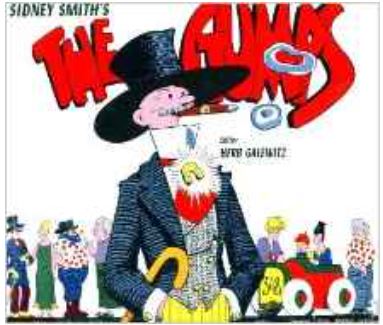
Sidney Smith’s The Gumps


By Sidney Smith, edited and compiled by Herb Galewitz (Charles Scribner’s Sons)
ISBN: 978-0-68413-997-5 (HB)

This book includes Discriminatory Content produced during less enlightened times.

There are so many milestones of the art of comics that new or casual readers can’t enjoy these days. The literary pioneer celebrated in this book is probably the most important of all 20th century US cartoonists, but other than this rare-as-hen’s-teeth tome and a single Library of American Comics Essentials collection (The Saga of Mary Gold) there’s precious little to be seen of his greatest invention – in English at least. Chances are you’ve never heard of him, but Robert Sidney Smith (February 13th 1877 – October 20th 1935) is arguably the most influential creator in the history of popular entertainment. A pretty big claim, I admit, but true nonetheless.

Smith was a pioneer of narrative continuity and the most successful early cartoonist to move the medium on from situational, gag-a-day variations on a character (a style dominant again today) to build with his avid audience an ongoing relationship based on character development and story progress. The Gumps grew from a notion expressed by influential comic strip Svengali Joseph Medill Patterson – Editor and Publisher of the Chicago Tribune – who shaped the development of such iconic institutions as Little Orphan Annie, Gasoline Alley, Dick Tracy, Terry and the Pirates and so many more. He handed his idea to Smith to make magic with…

The ongoing saga of a middle class American family began in 1917 and ran for 42 years, inviting readers to share the largely comedic tribulations of chinless wonder Andy Gump, his formidable wife Minerva, son Chester, cat Hope, dog Buck and fearsome Tilda, the family’s aging cook, housemaid, gadfly and critic

Andy was a regular guy: a blowhard with lots of schemes to make his fortune, Min was shrewish and nagging, the boys were troublesome and Tilda was a nosy tartar and the already infinite plot well of their domestic set-up sporadically drifted into thrilling adventure and flights of fancy whenever eccentric, two-fisted globetrotting millionaire Uncle Bim paid a visit…

It sounds hackneyed now, but that’s because The Gumps literally wrote the book on what daily story narratives should be: a lot of laughs, plenty of vicarious judgement, an occasional tragedy, oodles of long-drawn out tension and archetypal characters every reader recognised if not actually identified with…

Having enticed and beguiled a nation, The Gumps was one of the earliest strips to make the jump to celluloid. More than four dozen Universal Pictures 2-reel comedies were released between 1923 and 1928 starring Joe Murphy as the gormless patriarch. These followed 50 or more animated cartoons first seen between in 1920 and 1921, produced and directed by Wallace A. Carlson with scripts credited to Smith.

The Gumps was an early sensation of radio (1931-1937), paving the way for all later family soap operas which mimicked its irresistible format. Most importantly, as the strip progressed, its rocketing popularity became a key driver in the rise of comics syndication. Eventually Sidney Smith’s baby was seen across America and the world and he became one of the most highly-paid artists in the history of the medium. His salary was enormous and kept rising, as the grateful Patterson constantly rewarded him with some new extravagance to show his gratitude. The legend goes that racing-mad speed-freak Smith was driving his latest luxury Rolls Royce when he died in a smash-up in 1935…

After his shocking death, Patterson parachuted in sports cartoonist Gus Edson: a creditable replacement but ultimately unable to recapture the indefinable pizzazz of the originator. Whether it was something unique to Smith or simply that times and tastes were changing will never be known. Readership declined steadily but it took decades before the feature finally folded on October 17th 1959, by which time less than 20 papers carried it.

There will probably never be a comprehensive or complete Gumps archival collection. The spiky but compelling art is still manically wonderful and most of the gags remain well-conceived and effective, but the real problem is the pacing and verbosity of the text in the panels. Smith was writing and drawing a whole new way to tell stories and had to be sure the majority of his audience were with him. For most modern readers – blessed with a 100+ years of progress – much of the material might seem interminably slow. Not so back then: many of Smith’s boldest innovations caused uproar and shock on a periodic basis…

This sterling and scholarly monochrome landscape tome from 1974 still pops up now and again, offering the best of all possible worlds; extracting salient snippets, events and extracts from key storylines whilst providing fascinating commentary and context where necessary.

On Thursday February 8th 1917 Sidney Smith’s funny animal strip Old Doc Yak ended with the sagacious ruminant moving out of their house and wondering who the next tenants might be. The following Monday – February 12th – the doors opened on the Gump clan. The magic started strong and just kept on going…

Packed with photos and plenty of astonishing facts, Herb Galewitz’s ‘Introduction’ offers the run-down on the strip and its creator whilst also providing a glimpse at the star in the making through ‘Sidney Smith’s Sports Cartoons’. Also revealed are ‘The Last Old Doc Yak’ strip and a handy pictorial introduction to the incoming cast before ‘The Early Years: 1917-20’ sees the stories begin to unfold…

Scenes of wedded bliss and domestic contention abound as Andy & Min contend with household chores, wayward furnaces, gardening, child-rearing and each other. As ticked off as they ever got, the happy marrieds seldom let adversarial moments linger or fester…

‘Andy On Vacation – 1922’ shows our hero’s take on bucolic pastimes like fishing, hiking and cooking after he and Min take separate holidays. Andy finds himself at a lakeside cabin with the least welcoming couple in history. Mr. Gump doesn’t mind: it takes all sorts and he’s willing to be accommodating…

The satire cup overflows when the pontificating prawn then enters politics. ‘Andy Runs for Congress – 1922’ proffers plenty of scope for character assassination, skulduggery and corrupt shenanigans before all the votes are finally cast and counted…

The Gumps truly hit its peak after moving wholeheartedly into melodrama, as with ‘The Vindication of Tom Carr – 1929’, wherein romantic regular Mary Gold’s one true love was wrongfully convicted of robbery. Smith sagely portrayed the trial through daily bulletins which built tension and sympathy in equal amounts. When the travesty of justice saw the real culprit rapaciously move in on Mary, the aroused assembled readership was aghast and astoundingly vocal in their protests…

They went absolutely crazy when the vile predator’s machinations led shockingly to ‘The Death of Mary Gold – 1929’. The story even moved from the comics section to Front Page as readers registered their disapproval. Circulation of papers carrying The Gumps skyrocketed…

Uncle Bim was an exotic semi-regular whose appearances always caused sparks. His lonely years of prospecting and wealth-gathering looked likely to end when he met Millie De Stross but her social-climbing mother had other ideas. These brought her to near-ruin after the gullible old lady encountered unscrupulous embezzler/conman Townsend Zander who masqueraded as royalty in ‘The Count Bessford Affair – 1933’

With Mama firmly in the crook’s pocket, the scoundrel demanded marriage to Millie as part of his pay-off. When that went wrong he resorted to kidnap and blackmail. Audiences were breathless and terrified. Their favourite funny page feature had a track record of letting good guys suffer and killing off heroines…

When ‘The Disappearance of Uncle Bim – 1933’ was finally resolved, the distraught millionaire rushed his intended to the altar, but Zander had one last card to play, resulting in ‘A Foiled Wedding! – 1934’

The villain’s outrageous claim to have already wed Millie led to courtroom drama and ‘A Legal Hassle! – 1934’, allowing reprehensible, haughty Mama De Stross to sue Bim for his fortune, so Andy took the beleaguered suitor to his old holiday haunt for ‘An Interlude at Shady Rest – 1934’

Batteries fully recharged, the irrepressible Gumps returned to the fray to finally outwit Mrs. De Stross and defeat Zander, resulting in a long-delayed happy ending (of sorts) with ‘Bim and Millie, United at Last – 1934’. Of course that meant the newlyweds had to cope with ‘Mama De Stross, Mother In Law – 1934’

These too-brief tastes of Smith’s amazing graphic narrative achievements are supplemented by a selection of shorter vignettes such as a glimpse at the unique service of housemaid ‘Tilda’ and the wiles of child prodigy ‘Chester Gump’ as well as a peek at the efforts of his successor in Gus Edson’s The Gumps. Also included is an appreciation of Smith’s gag-panel, uncomfortably displaying the “oriental wisdom” of ‘Ching Chow’. Although disquieting to modern eyes, this philosophy-spouting comedy “Chinaman” first appeared on January 27th 1927 and also carried on after Smith’s death, initially rendered by Stanley Link. Regarded as an irreplaceable cartoon “fortune cookie” by countless editors, the panel was crafted by a succession of creators and ran until June 4th 1990 (!!), outliving The Gumps by almost 40 years…

The examples seen here are counterbalanced by a ‘Comparison of Chester Gump and Stanley Link’s Tiny Tim and followed by a photo-feature ‘Miscellany’ displaying a wide range of Gumps books and merchandise to end this cartoon celebration…

Studious and genuinely enticing for students of comics and anybody interested in the evolution of soap operas and sitcoms, this book provides insight and a fascinating visual tour of a phenomenon and world we’ve mostly outgrown, but one still worth celebrating and commemorating.
© 1974 The Chicago Tribune/N.Y. News Syndicate Inc. All rights reserved.

Sub-Mariner & The Original Human Torch


By Roy Thomas, Dann Thomas, Rich Buckler with Bob McLeod, Richardson & Company, Mike Gustovich, Danny Bulanadi, Alfredo Alcala, Romeo Tanghal & various (Marvel)
ISBN: 978-0-7851-9048-6 (TPB)

Prince Namor, the Sub-Mariner is the hybrid offspring of a sub-sea Atlantean princess and an American polar explorer; a being of immense strength, highly resistant to physical harm, able to fly and thrive above and below the waves. Created by young Bill Everett, Namor technically predates Marvel/Atlas/Timely Comics.

He first caught the public’s attention as part of an elementally electrifying “Fire vs. Water” headlining team-up clash in Marvel Comics #1 (October 1939 and soon to become Marvel Mystery Comics) alongside The Human Torch, but had originally been seen in truncated form via monochrome Motion Picture Funnies: a weekly promotional giveaway handed out to moviegoers earlier in the year.

Rapidly becoming one of the new company’s biggest draws, Namor gained his own title at the end of 1940 (cover-date Spring 1941) and was one of the last super-characters to go at the end of the first heroic age. In 1954, when Atlas (as the company then was) briefly revived its “Big Three” (the Torch and Captain America being the other two), Sub-Mariner resurfaced with Everett returning for an extended run of superb fantasy tales. Even so, the time wasn’t right and the title sank again.

When Stan Lee & Jack Kirby began reinventing comic-books in 1961 with Fantastic Four, they revived and rebooted the near-forgotten amphibian as a troubled, semi-amnesiac, yet decidedly more regal and grandiose anti-hero. He was understandably embittered at the loss of his undersea kingdom, which had seemingly been destroyed by American atomic testing.

He also became a dangerous bad-boy romantic interest: besotted with the FF’s golden-haired Sue Storm

Namor knocked around the budding Marvel Universe for a few years, squabbling with assorted heroes like Daredevil, The Avengers and X-Men – and villains like The Incredible Hulk and Doctor Doom – before securing his own series as part of “split-book” Tales to Astonish with the aforementioned fellow antisocial antihero…

In 1988, as part of Marvel’s 50th Anniversary celebrations, that phenomenal half-century of comic book history was abridged, amended, updated and generally précised by avowed fan and self-appointed keeper of chronology Roy Thomas and writing partner Dann Thomas who collaboratively commemorated the Avenging Son’s contribution in 12-part Limited Series miniseries The Saga of the Sub-Mariner: rapturously drawn by Golden Age groupie Rich Buckler.

Roy & Rich did the same with The Saga of the Original Human Torch – a 4-part series running April to July 1990 – and both sides of the tempestuous coin are triumphantly tossed together in this splendidly all-encompassing, no-nonsense textbook of historic Fights ‘n’ Tights mythology ideal for celebrating and commemorating the elemental odd couple’s 85th Anniversary…

It all begins thousands of years ago with ‘A Legend a-Borning’ from The Saga of the Sub-Mariner #1 (November 1988) with Buckler inked by Bob McLeod. A short history of the sinking of antediluvian Atlantis and its eventual reoccupation by nomadic tribes of Homo Mermanus follows. The water-breathing wanderers flourish deep in the icy waters, and their story leads to a certain US research vessel sailing into icy waters in 1920…

Its depth-charging and icebreaking has horrendous consequences for the citizens of the deep and in response Emperor Thakorr organises a possibly punitive expedition. Instead, his daughter Princess Fen uses experimental air-breathing serums to infiltrate the ship and forms a brief liaison with Captain Leonard McKenzie. They even marry, but neither is aware the voyage has been arranged by unscrupulous telepath Paul Destine who is drawn to the area by an uncanny device of ancient power and origins…

Whilst Destine is being buried under a catastrophic avalanche trying to excavate the artefact, a raiding party from Atlantis boards the ship and drags Fen back home. She believes her husband has been killed in the attack. Months later a strange, pink-skinned baby is born beneath the deep blue sea…

The story resumes years later with teenaged Namor experiencing prejudice firsthand whilst playing with his blue-skinned chums and royal cousin Prince Byrrah. The passing of his callow years are interspersed with his grandfather’s disdain, his mother’s tales of the fabled “Americans” and the annoying girl Dorma who is always hanging around…

Every day seems to point out another way in which he differs from his people, such as his ever-increasing strength, ability to live unaided on the surface and the wings on his ankles which grant him the power of flight through the air.

Life changes forever when the youngster scavenges a sunken ship and shockingly encounters a brace of clunky mechanical men from the surface world doing the same. Panicked, he attacks, severing control cables connected to a ship far above before proudly hauling them to Atlantis as his prize. For once grandfather is delighted, especially when the face plates are pried open and he sees dead surface-men within.

The Emperor is ever more gleeful when Byrrah suggests Namor should go beard the Surfacers in their own realm to pay them back for the past destruction of Atlantis. Young, feisty and gullible, Namor sets off, ready to live up to his name which means ‘Avenging Son’

‘A Prince in New York’ spectacularly depicts the fantastic reign of terror and destruction Sub-Mariner wrought upon the city, until distracted and becalmed by plucky blonde policewoman Betty Dean. It then reveals how he learns to despise Nazi Germany’s maritime depredations before ‘A Fire on the Water’ details how New York Special Policeman The (Original) Human Torch is deputised to stop the fish-man at all costs…

He never quite succeeds, but their ongoing clash resulted in some of the most astonishing scraps in comics history. With the city almost wrecked by their battles Betty Dean again steps in to calm the boiling waters and the next chapter – inked by Richardson & Company – introduced the ‘Invaders!’ as Hitler incomprehensibly decides to eradicate Atlantis with depth charges and U-boats. This rash act of wanton hatred merely secures Sub-Mariner’s fanatical aid for the Allied Powers.

With Thakorr wounded, the people elect Namor Emperor by popular acclaim before watching him swim off to crush the Axis and their super-powered servants. The young regent fights with and beside the Torch, Captain America, Bucky, Spitfire and Union Jack. By the time the war is won and Namor returns to his realm, Byrrah and his crony Commander Krang have turned recuperating Thakorr against his interim substitute and Sub-Mariner finds himself banished. Only Lady Dorma’s impassioned intervention prevents the homecoming becoming a bloodbath…

With nowhere else to go Namor rejoins his surface superhero friends to create the post-war All-Winners Squad, before eventually being summoned home by his cousin Namora. Atlantis has been ravaged by air-breathing gangsters…

Seeking vengeance, they team up with Betty for a short-lived crusade against criminals, madmen and monsters until again recalled to the rebuilt underwater kingdom. Namor’s years away had gradually diminished his mighty hybrid abilities, but now-recovered Thakorr orders Atlantis’ greatest scientists to restore them so the Sub-Mariner can renew the Realm’s war against all surface-men…

Instead, Namor attempts diplomacy, but his State Visit to the United Nations results in violent protests and the death of a bystander. He returns to his grandfather a bitter man, but still argues against war, no matter how hard General Krang and Byrrah urge it…

When Atlantis is wracked by seaquakes, Namor leads a patrol to the polar cap above and discovers freshly-exhumed Paul Destine is responsible. The psychic had found a fantastic Helmet of Power which magnified his gifts exponentially, and decided to test his expanded abilities on the closest population centre…

Enraged, Namor’s physical might is useless against the tele-potent madman and Destine wipes his fishy foe’s memories, sending him to live as an amnesiac amongst the dregs of New York, blindly awaiting his future ‘Dark Destiny’ (McLeod inks).

The epic history lesson reaches the dawn of the Marvel Age decades later as ‘Rage and Remembrance’ recaps the epochal events after new Human Torch Johnny Storm restores the memory of a weary derelict and unleashes the rage of the Sub-Mariner once again. With his mind and most of his memories back, Namor instantly heads home to find Atlantis razed and his people gone. Blaming humans, he launches a series of blistering attacks on the Fantastic Four whilst attempting to win the heart of the clearly conflicted Invisible Girl

As months pass he discovers his people had relocated to rebuild Atlantis. Namor is re-elected Emperor over the protests of Byrrah and betrothed to Lady Dorma, unknowingly earning the eternal enmity of Warlord Krang who has always wanted her…

His war against the surface continues, escalating into a brief invasion of New York, a turbulent alliance with The Hulk and clash with ‘Avengers!’ (Mike Gustovich inks) resulting in the revival of his now-forgotten Invaders comrade Captain America…

Sub-Mariner’s pointless sorties against mankind continue as he forcefully adds The X-Men and Magneto onto his roster of enemies whilst still trying to take Sue Storm away from Reed Richards.

After repelling an invasion by sub-sea barbarian Attuma he softens and again seeks official human recognition for Atlantis. Whilst making this embassage, Krang seizes control of Atlantis and after battling Daredevil, Namor returns to his kingdom, deals with the usurper and more-or-less dials back his campaign against the surface. Sadly, this peace is interrupted as Destine again strikes, inviting the new ruler to a ‘Rendezvous with Destiny!’ (McLeod inks).

Time and events telescope from now on as ‘Losses in Battle’ traces Namor’s showdown with the mental maniac, alliance with the Inhuman Triton and battles Plantman, Dr. Dorcas, Tiger Shark, The Thing and a host of others, as well as enjoying a reunion with Betty Prentiss (nee Dean) and facing the rise of the sinister antediluvian Serpent Cult of Lemuria, which first devised the formidable Helmet of Power in eons past. Also revealed is how Namor’s marriage to Dorma is thwarted by murderous Lemurian Llyra and his subsequent agonising first and last meetings with his long-lost father…

‘Blood Ties’ then details his meeting with and adoption of Namora’s teenaged daughter Namorita, clashes with Doctor Doom and M.O.D.O.K., an alliance of Byrrah and Llyra and origins of The Defenders before ‘Triumphs… and Tragedy!’ (inked by McLeod & Co) brings us to a cameo-packed conclusion, relating Namor’s enforced alliance with Doom, admission into the Mighty Avengers and loss of two of his greatest loves…

Although appearing a tad rushed, the writing is strong and compelling: offering fresh insights for those familiar with the original material whilst presenting these chronicles in an engaging and appetising manner for those coming to the stories for the first time. Moreover, Buckler’s solidly dependable illustration capably handles a wide, wild and capacious cast with great style and verve.

Balancing the watery wonderment is the later and far shorter comics chronology of Sub-Mariner’s arch ally and favourite frenemy, as first seen in The Saga of the Original Human Torch. It starts with ‘The Lighted Torch’ by Thomas, Buckler & Danny Bulanadi, showing how the Flaming Fury first burst into life as a malfunctioning humanoid devised by troubled and acquisitive Professor Phineas Horton. Instantly igniting into an uncontrollable fireball whenever exposed to air, the artificial innocent was consigned to entombment in concrete but escaped to accidentally imperil the metropolis until it/he fell into the hands of a malign mobster named Sardo.

When the crook’s attempts to use the android as a terror weapon dramatically backfired, the hapless newborn was left a misunderstood fugitive – like a modern-day Frankenstein’s monster. Even his creator only saw the fiery Prometheus as a means of making money.

Gradually gaining control of his flammability, the angry, perpetually rejected android decides to make his own way in the world. Instinctively honest, the creature saw crime and wickedness everywhere and resolved to do something about it. Indistinguishable from human when not afire, he joined the police as Jim Hammond: tackling ordinary thugs even as his volcanic alter ego battled such outlandish bandits as Asbestos Lady. The Torch met Betty Dean when New York City Chief of Police John C. Wilson asked him to stop the savage Sub-Mariner destroying everything. The battles are spectacular but inconclusive, only ending when Betty intervenes and brokers a tenuous ceasefire.

Later, a brusque reunion with Horton sets the Torch on the trail of his creator’s former assistant Fred Raymond. Hammond is too late to stop Asbestos Lady murdering the Raymonds in a train wreck, but adopts their little boy Toro, who gains the power to become a human torch as soon as he meets the artificial avenger. The partners in peril become a team who set ‘The World on Fire!’: battling beside Namor in The Invaders for WWII’s duration.

They even play a major role in ending the conflict in 1945, storming a Berlin bunker and incinerating Hitler, before rising ‘Out of the Ashes…’ (Alfredo Alcala inks) to battle Homefront hostiles, exposing Machiavellian android mastermind Adam-II who, with knowledge of the future, attempts to assassinate a group of strangers who would all eventually be Presidents of the USA. The Fiery Furies formed the backbone of the All-Winners Squad, battling maniacs and conquerors from tomorrow, continuing their campaign against crime long after their comrades retired…

When a family crisis benches Toro, the Torch soldiers on with new sidekick Sun Girl until he returns. The reunion is destined to be short and far from sweet…

The hot history lesson concludes in ‘The Flaming Fifties!’ (inked by Romeo Tanghal) as Jim Hammond bursts from a desert grave following a nuclear test explosion: revived from a chemically-induced coma mimicking death. His last memory was of being ambushed by gangsters and sprayed with a chemical inhibiting his flame and knocking him out. Blazing back to the ambush site he attacks his assailants only to discover four years have passed…

When they employ the same solution as before, the compound no longer works on his atomically-charged form and when G-Men burst in the awful truth comes out. The Torch & Toro vanished in 1949 and when pressed, the crooks admit to having got their chemical cosh from the Russians. More chillingly, they paid for it by handing Toro over to the Reds…

After spectacularly rescuing and deprogramming the Soviets’ incendiary secret weapon, the Torch brings Toro home and they continue their anti-crime campaign against weird villains, Commie menaces and an assortment of crooks and gangsters. However, before long tragedy again strikes as the atomic infusion finally reaches critical mass in Jim’s android body.

Realising he is about to flame out in a colossal nova, The Human Torch soars into the desert skies and detonates like a supernova…

The pre-Marvel Age exploits of the Torch end here, but devotees already know how Hammond was resurrected a number of times in the convoluted continuity that underpins the modern House of Ideas…

This substantial primer into the prehistory of the groundbreaking Marvel Universe also includes a quartet of original art covers plus a brace of full-colour, textless cover reproductions. Fast, furious and fabulously action-packed, this is a lovely slice of authentic Marvel mastery to delight all lovers of Costumed dramas.
© 1988, 1989, 1990, 2014 Marvel Characters, Inc. All rights reserved.

The Complete Johnny Future


By Alf Wallace, Luis Bermejo & various (Rebellion Studios)
ISBN: 978-1-78108-758-9 (HB/Digital edition)

Gosh I feel inexplicably optimistic and upbeat this week and can’t imagine why. Let’s continue looking forward and back and explore one of our little industry’s best lost secret: a buried masterpiece of international cooperation that has stood the test of time…

Until relatively recently, Britain never really had a handle on superheroes. Although every reader from the 1950s on can cite a particular favourite fantasy muscle-man or costumed champion – from Thunderbolt Jaxon to Morgyn the Mighty to Marvelman, Gadget Man & Gimmick Kid to The Spider, Tri-Man and Phantom Viking to Red Star Robinson, The Leopard from Lime Street and Billy the Cat (& Katie!) and all worthy stalwarts deserving their own archived revivals! – who have populated our pages, they all somehow ultimately lacked conviction. Well, almost all…

During the heady Swinging Sixties days of “Batmania”, just as Marvel Comics was first infiltrating our collective consciousness, a little-remembered strip graced the pages of a short-lived experimental title. The result being sheer, unbridled magic…

With Scotland’s DC Thomson steadily overtaking the London-based competition (monolithic comics publishing giant Amalgamated Press) during the late 1950s & 1960s, the sheer variety of material the southerners unleashed to compete offered incredible vistas in adventure tales. Thanks to Leo Baxendale and Ken Reid’s defection to AP, they also had a wealth of anarchic comedy material to challenge the likes of The Bash Street Kids, Dennis the Menace, Minnie the Minx and their unruly ilk. During that latter end of the period, the Batman TV show sent the world superhero crazy just as AP finished absorbing all its local rivals such as The Eagle’s Hulton Press to form Fleetway, Odhams and ultimately IPC.

Formerly the biggest player in children’s comics, Amalgamated Press (founded by Alfred Harmsworth at the beginning of the 20th century) had stayed at the forefront of sales by latching onto every fad: keeping their material contemporary, if not always fresh or original. The all-consuming monolith had been reprinting the early successes of Marvel comics for a few years, feeding on the growing fashion for US-style action/adventure which had largely supplanted the rather tired True-Blue Brit style of Dan Dare or DCT’s Wolf of Kabul or the Tough of the Track. A key point at that time was that although both part of the Mirror Group, Fleetway and Odhams were deadly rivals…

Power Comics was a sub-brand used by Odhams to differentiate their periodicals containing reprinted American superhero material from the greater company’s regular blend of sports, war, western adventure and gag comics such as Buster, Valiant, Lion or Tiger. During this period, the strictly monochrome Power weeklies did much to popularise budding Marvel characters and their shared universe in this country, which was still poorly served by distribution of the actual American imports.

The line began with Wham! – but only after the comic was well-established. Originally created by newly-ensconced Baxendale, it had launched on June 20th 1964. Initially, the title was designed as a counter to The Beano, as was Smash! (launching February 5th 1966), but the tone of times soon dictated the hiving off into a more distinctive imprint, which was augmented by the creation of little sister Pow!

Pow! premiered with a cover date of January 31st 1967, combining home-grown funnies like Mike Higgs’ The Cloak, Baxendale’s The Dolls of St Dominic’s, Reid’s Dare-a-Day Davy, Wee Willie Haggis: The Spy from Skye and British originated thrillers such as Jack Magic and The Python with the now ubiquitous resized US strips: in this case Amazing Spider-Man, The Hulk and Nick Fury, Agent of S.H.I.E.L.D. The next step was even bolder. Fantastic – and its sister paper Terrific – were notable for not reformatting or resizing the original US artwork whereas in Wham!, Pow! or Smash!, an entire 24-page yarn could be rejigged and squeezed into 10 or 11 pages, and were accompanied by British comedy and adventure strips.

These slick new titles – each with a dynamic back cover pin-up taken from Marvel Comics or created in-house by apprentice comics bods and future superstars Barry Windsor-Smith and Steve Parkhouse (see below) – reprinted US Superhero fare, supplemented by minimal amounts of UK originated filler and editorial.

Fantastic #1 debuted with cover-date February 18th 1967 (but first seen in newsagents on Saturday 11th), revealing the origin stories of Thor, Iron Man and the X-Men, but from the get-go, savvy tykes like me were as engrossed by a short adventure serial also included to fill out the page count. The Missing Link was beautifully drawn and over the following year (February 18th 1967 – February 3rd 1968) would become a truly unique reading experience…

The series began inauspiciously as a homegrown Incredible Hulk knock off. Oddly, editor and writer Alfred “Alf” Wallace crafted for the filler a tone very similar to that adopted by Marvel’s own Green Goliath when he became a small screen star a decade later…

The illustrator was the astoundingly gifted Luis Bermejo Rojo, a star of Spanish comics forced to seek work abroad after the domestic market imploded in 1956. He became a prolific contributor to British strips, working on a succession of moody masterpieces in a variety of genres. These included The Human Guinea Pig, Mann of Battle, Pike Mason, Phantom Force Five and Heros the Spartan, appearing in Girls Crystal, Tina, Tarzan Weekly, Battle Picture Library, Thriller Picture Library The Eagle, Buster, Boys World, Tell Me Why, Look and Learn and many more. Bermejo finally achieved a modicum of his long-deserved acclaim in the 1970s, after joining fellow studio mates José Ortiz, Esteban Maroto and Leopoldo Sanchez working on adult horror stories for Creepy, Eerie and Vampirella.

I’m still a big kid helplessly enmired in nostalgia, but to me his greatest moments were the year spent drawing Johnny Future

The Missing Link – as the feature was entitled for the first 15 episodes – was disturbingly similar in tone and delivery to television’s Hulk of the 1970s. The strip’s titular protagonist was superhumanly strong, seemingly intellectually challenged and tragically misunderstood. The saga combined human-scaled drama with lost world exoticism in the manner of King Kong, as can be see seen following Steve Holland’s incisive and informative Introduction ‘Welcome to the Future!’, when the drama opens in the wilds of Africa.

A bestial man-beast roams the veldt, swamps and mountains, until great white hunter Bull Belson comes to capture him, accompanied by secretary/photographer Lita Munro. The infamous tracker sees only profit in his quarry: a mute beast who, after much frustratingly destructive behaviour, is lured into captivity by an inexplicable attraction to Miss Munro…

To be fair, she actually has the brute’s interests at heart, attempting to befriend and teach the Link on the slow voyage back to England, but on reaching London Dock, the prospective sideshow attraction is spooked by mocking labourers and shockingly breaks his bonds… and cage.

Brutally rampaging across the city at the heart of the Swinging Sixties, the Link is hunted by the army, but no one realizes that beneath the bestial brow is a cunning brain. Hopping a freight train north, he seeks refuge in an isolated government atomic research laboratory run by Dr. Viktor Kelso and is accidentally dosed with vast amounts of transformative radiation. Unleashed uncanny forces jumpstart an evolutionary leap, turning the primitive beast into a perfect specimen of human manhood, while simultaneously sparking near-catastrophic meltdown in the machinery. It is only averted by the massive instinctive intellect of the new man. Arrested as a terrorist spy, the silent superman is very publicly tried in court and again encounters Lita.

Kelso meanwhile has deduced the true course of events. As the Link uses his prison time to educate himself in the ways of the world, the unstable scientist works on a deadly super-weapon, prompting the Link to escape jail and clear his name. With super-strength and his newly enhanced massive mind, the task is easy but he still needs Lita to complete his plan…

The series cheerfully plundered the tone of the times. The drama seamlessly morphs into and pilfers chilling contemporary science fiction tropes as Kelso’s device brings Britain to a literal standstill, leaving only the evolved outsider to thwart a staggeringly ambitious scheme.

Set on a fresh, bold openly heroic path, and despite still being a hunted fugitive, the Link creates a civilian identity (John Foster) and a costumed persona just as the nation is assaulted by ‘The Animal Man’: a psionic dictator able to control all beasts and creatures. Incredibly, that includes recently ascendant Johnny Future, with the villain only defeated through overextending himself after accidentally awakening a primordial horror from Jurassic times…

In short order, Johnny Future tackles Dr. Jarra and his killer robot; a society of evil world-conquering scientists; invention-plundering shapeshifting aliens; prehistoric giants and deranged science tyrant The Master.

Fully hitting his stride, the tomorrow man overcomes personality warping psychopath Mr. Opposite and defeats the top assassins of the Secret Society of Science‘The Brain, The Brute and the Hunter’, prior to saving Earth from marauding living metal and destroying Dr. Plasto’s animated waxwork killers.

… And that was that. Without warning the comic merged with sister publication Terrific and there was no more room for a purely British superhero. Here, however, there’s one final memorable delight: a 14-page, full-colour complete adventure with Johnny battling diabolical primordial revenant Disastro, as first seen in Fantastic Annual 1968, as well as a colour pin-up from Fantastic #30 (September 9th 1967).

Interest in superheroes and fantasy in general were on the wane and British weeklies were diversifying. Some switched back to war, sports and fantasy adventure yarns, whilst – with comedy strips on the rise again – others became largely humour outlets. The Complete Johnny Future is a unique beast: a blend of British B-movie chic with classic monster riffs seen through the same bleakly compelling lens that spawned Doctor Who and Quatermass. It is the social sci fi of John Wyndham trying on glamourous superhero schtick whilst blending the breakneck pace of a weekly serial with the chilling moodiness of kitchen sink crime dramas.

There was never anything quite like this before – or since – and if you love dark edges to your comics escapism you must have this amazing collection far sooner than tomorrow.
™ & © 1967, 1968, & 2020 Rebellion Publishing Ltd. All Rights Reserved.

Batman: Silver Age Dailies and Sundays volume 1: 1966-1967


By Whitney Ellsworth, Joe Giella, Sheldon Moldoff, Carmine Infantino, Bob Powell, Werner Roth, Curt Swan & various (Library of American Comics)
ISBN: 987-1-61377-845-6 (HB)

Last century in America the newspaper comic strip was the Holy Grail all cartoonists and graphic narrative storytellers aspired to and hungered for; syndicated across the country and the planet. Always a prime tool of circulation-building, strips won millions of readers and were regarded (in most places) as a more mature and sophisticated form of literature than comic books.

They also paid better, and the Holiest of Holies was a full-colour Sunday page, so it was always something of a poisoned chalice if comic book characters became so popular that they swam against the tide and became a syndicated serial strip. After all, weren’t funnybooks invented just to reprint the strips in cheap accessible form?

Both Superman and Wonder Woman made the jump soon after their debuts and many features have done so since. Due to numerous war-time complications, the Batman and Robin newspaper strip was slow getting its shot, but when the Dynamic Duo finally hit the comics section of papers, the feature proved to be one of the best-regarded, highest quality examples of the trend, both in Daily and Sunday formats (and we’ll be covering what collections there are of those landmarks quite soon in this Dark Knight anniversary year).

The 1940s strips never achieved the circulation they deserved, but the Sundays were latterly given a new lease of life when DC began including selected episodes in the 1960s Batman 80-Page Giants and Annuals. Those exceedingly high-quality adventures were ideal short stories, adding an extra cachet of exoticism for youngsters captivated by simply seeing their heroes in tales that were positively ancient and redolent of History with a capital “H”.

Such was not the case as the decade proceeded when, for a relatively brief moment, humanity went bananas for superheroes in general but most especially went “Bat-Mad”…

Comic books’ Silver Age utterly revolutionised a creatively moribund medium cosily snoozing in unchallenging complacency, bringing a modicum of sophistication to the returning genre of masked mystery men. For quite some time the changes instigated by Julius Schwartz in Showcase #4 (October 1956) had rippled out to affect all National/DC Comics’ superhero characters but generally passed by Batman and Robin. Fans buying Detective Comics, Batman, World’s Finest Comics and latterly Justice League of America read exploits that – in look and tone – were largely unchanged from safely anodyne fantasies that had turned the Dark Knight into a mystery-solving, alien-fighting costumed Boy Scout after the 1940s turned into the 1950s.

By the end of 1963, however, Schwartz having – either personally or by example – revived and revitalised the majority of DC’s line (and, by extension and imitation, the entire industry) with his reinvention of the Superhero, was asked to work his magic with the creatively stalled nigh-moribund Caped Crusaders.

Shepherding his usual team of top-notch creators, the Editor stripped down the core-concept, downplaying the ETs, outlandish villains and daft transformations, bringing cool modernity to the capture of criminals and overseeing a streamlining rationalisation of the art style itself. The most apparent change to us kids was a yellow circle around the Bat-symbol but, far more importantly, the stories similarly changed as a subtle aura of genuine menace had crept back in. At the same time Hollywood was in production of a television series based on Batman and, through the sheer karmic insanity that permeates the universe, the studio executives were basing their interpretation upon the addictively daft material DC was emphatically turning its editorial back on rather than the “New Look Batman” currently enthralling readers.

The Batman TV show premiered on January 12th 1966 and ran for three seasons of 120 episodes, airing twice weekly for the first two. It was a monumental, world-wide hit and sparked a wave of imitation. Resulting media hysteria and fan frenzy generated an insane degree of Bat-awareness, no end of spin-offs and merchandise – including a movie – and introduced us all to the phenomenon of overkill. No matter how much we might squeal and foam about it, even 60 years later, to a huge portion of this planet’s population Batman is always going to be that “Zap! Biff! Pow!” buffoonish Boy Scout in a mask…

“Batmania” exploded across the world and almost as quickly became toxic and vanished, but at its height sparked a fresh newspaper strip incarnation. The strip was a huge syndication success and even reached fuddy-duddy Britain, not in our papers and journals but as the cover feature of weekly comic Smash! (with the 20th issue onwards).

Overwhelmingly successful, Batman’s TV show ended in March 1968. As it foundered and faded away, the global fascination with “camp” superheroes – and no, the term had nothing to do with sexual orientation no matter what you and Mel Brooks might suspect about Men in Tights – burst as quickly as it had boomed and the Caped Crusader was left with a hard core of dedicated fans and followers who now wanted their hero back…

From the time when the Gotham Guardians could do no wrong comes this superb collection re-presenting the bright and breezy, intentionally zany cartoon classics, augmented by a wealth of background material, topped up with oodles of unseen scenes and detail to delight the most ardent Baby-boomer nostalgia-freaks.

It opens with an astonishingly informative and astoundingly picture-packed, candidly cool introduction from comics historian Joe Desris entitled A History of the Batman and Robin Newspaper Strip’, stuffed with a wealth of newspaper promotional materials, premiums and giveaways, sketches, comic book covers and the lowdown on how the strip was coordinated to work in conjunction with the regular comic books. The Dailies and Sundays were all scripted by former DC writer/editor – and the company’s Hollywood liaison/producer – Whitney Ellsworth (Tillie the Toiler, Congo Bill) and initially illustrated by Bob Kane’s long-term secret art collaborator Sheldon Moldoff, before inker Joe Giella was tapped by the TV studio to provide a slick, streamlined modern look in the visuals – frequently as penciller but ALWAYS as embellisher.

Since the feature was a 7-day-a-week job, Giella often called in few comicbook buddies to help lay-out and draw the strip; luminaries such as Carmine Infantino, Bob Powell, Werner Roth, Curt Swan and more…

Back then, black-&-white Dailies and full-colour Sundays were usually offered as separate packages with continuity strips often generating different storylines for each. With Batman the strip started out that way, but switched to unified 7-day continuities in December 1966.

For convenience, this collection begins with the Sunday-only yarns. As on TV, the first villain du jour was a certain top-hatted raucous raptor…

‘Penguin Perpetrated a Prank’ (May 29th – July 10th 1966) saw the Fowl Felon and masked moll Beulah go on a rather uninspired crime spree, after which ‘The Nasty Napoleon’ (July 17th – October 16th) introduced a pint-sized plunderer with larcenous intent and delusions of military grandeur. Moldoff was replaced by Giella &Infantino at the end of August, if you were wondering…

Contemporarily “Swinging England” was almost as big a craze as Batman so it was no surprise the Dynamic Duo would hop across The Pond to meet well-meaning but bumbling imitators ‘Batchap and Bobbin’, fighting crime in the sleepy hamlet of Lemon Regis (October 23rd – December 18th) after which the Sundays were incorporated into the working week storylines.

Monochrome Dailies launched on May 30th: Ellsworth & Moldoff kicking off with a healthy dose of sex & violence as ‘Catwoman is a Wily Wench’ (running to July 9th 1966) saw the sultry bandit easily captured only to break out of jail and go on a vengeance-fuelled spree intended to end Batman’s career and life. Next came ‘Two Jokers and a Laughing Girl’ (July 11th – September 24th) wherein the Clown Prince of Crime is paroled into the custody of Bruce Wayne, whilst covertly robbing Gotham blind by employing a body-double. As Giella took over the art chores, it took a guest shot from Superman to iron out that macabre miscreant’s merry muddle.

Claiming to have been robbed of his rightfully stolen loot, the Wily Bird brigand became ‘Penguin the Complainant’ (September 26th – October 8th), demanding his greatest enemies and the Gotham police catch a modern-day pirate plaguing him. That led in turn to a flotilla of fists and foolishness as Batman & Robin began ‘Flying the Jolly Roger’ (October 10th – December 9th), after which Daily and Sunday segments unified as our courteous but severely outmatched Chivalrous Crusaders faced their greatest challenge from a trio of college girls: The Ivy League Dropouts. The co-ed crooks and their floral field commander seen in The Sizzling Saga of Poison Ivy’ (December 10th 1966 – March 17th 1967) were unrelated to the psychotic poisoner created by Robert Kanigher in Batman #181 (June 1966) in all but name…

Like its TV counterpart, the strip began increasingly featuring real-world guest stars and the bad girls’ scheme to plunder hospitality magnate Conrad Hilton‘s latest enterprise – The Batman Hilton – led to comedic cross-dressing hijinks, a doomed affair for Bruce and plenty of publicity for all concerned…

The guest policy was expanded in ‘Jack Benny’s Stolen Stradivarius’ (March 18th – April 30th) as the infamously penny-pinching comedian promised Gotham’s Gangbusters a $1000-an-hour stipend (for charity, of course) to recover his fiddle and insisted on accompanying them everywhere to ensure they worked at top speed…

A major character debuted in ‘Batgirl Ain’t your Sister’ (May 1st – July 9th) with a masked mystery woman prowling the night streets. She was beating up plenty of baddies but their loot never seemed to be recovered…

With no clues and nothing to go on, all Batman & Robin could do was masquerade as crooks and rob places in hopes of being caught by the “Dominoed Daredoll”, but by the time they found each other The Riddler had involved himself, planning to kill everybody and keep all that accumulated loot for himself…

Riding a wave and feeling ambitious, Ellsworth & Giella began their longest saga yet as ‘Shivering Blue Max, “Pretty Boy” Floy and Flo’ (July 10th 1967 – March 18th 1968 and ending in the next book) saw a perpetually hypothermic criminal pilot accidentally down the Batcopter and erroneously claim the underworld’s million dollar bounty on Batman & Robin. The heroes were not dead, but the crash had caused the Caped Crusader to lose his memory. As Robin and faithful manservant Alfred sought to remedy his affliction, Max collected his prize and jetted off for sunnier climes. With Batman missing, neophyte crimebuster Batgirl tracked down the heroes – incidentally learning their secret identities – and was instrumental in restoring him to action… if not quite his full functioning faculties.

When underworld paymaster BG (Big) Trubble heard the heroes had returned he quite understandably instituted procedures to get his money back, forcing Max to return to Gotham where he stupidly fell foul of Pretty Boy before that hip young gunsel and his sister Flo kicked off a murderous scheme to fleece a horoscope-addicted millionaire…

To Be Continued and concluded, Bat-Fans…

Supplementing the parade of guilty pleasures is a copious, comprehensive and fabulously educational section on ‘Notes on Stories in this Volume’ – also generously illustrated with covers, photos and show-&-strip arcana – as well as a fascinating behind-the-scenes display highlighting editorial corrections and alterations to the strips required by those ever-so-fussy TV studio people. Everything then ends for now with a schematic key to ‘The Batman Cast’ as depicted on the back cover.

The stories in this compendium reflect gentler times and an editorial policy focusing as much on broad humour as Batman’s reputation as a manhunter, so the colourful, psychotic costumed super-villains are in a minority here, but if you’re of a certain age or open to fun-over-thrills this a collection well worth your attention.

Batman: Silver Age Dailies and Sundays 1966-1967 was the first of huge (305 x 236 mm) lavish, high-end hardback collections starring the Gotham Gangbusters, and another crucial addition to the superb commemorative series of Library of American Comics which has preserved and re-presented in luxurious splendour such landmark strips as Li’l Abner, Tarzan, Little Orphan Annie, Terry and the Pirates, Bringing Up Father, Rip Kirby, Polly and her Pals and many other cartoon icons. Hopefully one day they will all be available digitally too…

If you love the era, or simply the medium of serial graphic narratives, these stories are great comics reading, and this is a book you must have.
© 2014 DC Comics. All Rights Reserved. Batman and all related characters and elements ™ & © DC Comics.