Bluecoats volume 19 Drummer Boy


By Willy Lambil & Raoul Cauvin, with Leonardo; translated by Jerome Saincantin (Cinebook)
ISBN: 978-1-80044-177-4 (Album PB/Digital edition)

This book includes Discriminatory Content produced in less enlightened times but also emphasised for dramatic and comedic effect.

Devised by Louis “Salvé” Salvérius & Raoul Cauvin – who scripted the first 64 volumes until retirement in 2020 – Les Tuniques Bleues (or Dutch iteration De Blauwbloezen) began as the 1960s ended: created to soften the blow of losing Lucky Luke when that mild-mannered maverick megastar defected from Le Journal de Spirou to arch-rival periodical Pilote. From the start, the substitute strip was popular: swiftly becoming one of the most-consumed bande dessinée series in Europe. After stints by the Jose-Luis Munuera/BeKa writing partnership, it is now scribed by Kris and up to 68 volumes…

Salvé was a cartoonist in the Gallic big-foot/big-nose humour manner, and after his sudden death in 1972, successor Willy “Lambil” Lambillotte gradually moved towards a more realistic – but still overtly comedic – tone and look. Born in 1936, Lambil is Belgian and, after studying Fine Art in college, joined publishing giant Dupuis in 1952 as a letterer. Arriving on Earth two years later, scripter Cauvin was also Belgian and (prior to joining Dupuis’ animation department in 1960) studied Lithography. He soon discovered his true calling was comedy and began a glittering, prolific writing career at LJdS. In addition, he scripted dozens of long-running, award winning series including Cédric, Les Femmes en Blanc and Agent 212: clocking up more than 240 separate albums. Les Tuniques Bleues alone has sold over 15 million copies… and counting.

Cauvin died on August 19th 2021, but his vast legacy of barbed laughter remains and – as of ten minutes ago – Lambril, at 87, is still drawing the Boys in Blue…

The Bluecoats are long-suffering protagonists Sergeant Cornelius Chesterfield and Corporal Blutch: worthy, honest fools in the manner of Laurel & Hardy; ill-starred US cavalrymen defending a vision of a unified America during the War Between the States – well, at least one of them is…

The original format offered single-page gags set around an Indian-plagued Wild West fort, but from second volume Du Nord au Sud, the sad-sack soldiers were situated back East, perpetually fighting in the American Civil War. Subsequent exploits are set within the scant timeframe of the Secession conflict, but – like today’s tale – occasionally range far beyond the traditional environs of the sundered USA, dipping into and embracing actual events (also like today’s tale), tackling genuine, thoroughly researched moments of history…

Blutch is an everyday, whinging little-man-in-the street: work-shy, mouthy, devious and ferociously critical of the army and its inept orchestrators and commanders. Ducking, diving, deserting at every opportunity, he’s you or me – except at his core he’s smart, principled, loyal and even heroic… if no easier option presents itself. Chesterfield is a big, burly professional fighting man: a proud career soldier of the 22nd Cavalry who devoutly believes in patriotism and esprit-de-corps of The Army. Brave, bold, never shirking his duty and hungry to be a medal-wearing hero, he’s quite naïve and also loves his cynical little pal. Naturally, they quarrel like a married couple, fight like brothers and simply cannot agree on the point and purpose of the horrendous war they are trapped in. That situation again stretches their friendship to breaking point in this cunningly conceived instalment, in which both find themselves pretty much fish out of water…

On offer this time is a rather more straightforward and trenchant outing with characters rather than settings providing most of the humour. Coloured as ever by Vittorio Leonardo, Les Tuniques Bleues – Drummer Boy was serialised continentally in Le Journal de Spirou #2720-2730, before becoming the 31st album in 1990, and now Cinebook’s 19th translated Bluecoats book.

As already hinted, it differs somewhat from the majority of tales, which tread a fine line between comedy and righteous anger, so if you share these books with younger kids, best read it first. However, biting wit and sardonic comedy are curbed for a mostly moving message here as a battlefield policy decision divides the old comrades and unleashes calamity and catastrophe. It begins in polemical mode as the aftermath of another battle leaves corpses and cripples underfoot (on both sides) and colonels and generals (ditto) unable to ascertain why their great plans and bold strategies just don’t work.

As always the casualty lists provoke a drive for new recruits, the one area where Union forces can outdo the Confederacy. As Chesterfield & Blutch indulge a rare quiet moment in a nearby town, they dispassionately watch the hundreds of poor folk, recent immigrants, unemployed men and thirsty ne’er-do-wells signing up, but only until Blutch spots a very young boy in the queue. Chesterfield cannot understand his pal’s towering outrage as Blutch tries everything to get the so-determined kid out of the line and away from the meatgrinder of imminent slaughter. What lands the little rebel in the guardhouse, however, is the patriotic Sergeant “taking care” of the problem by rushing the waif to the front of the line and personally signing him up.

At war with each other for the rest of the tale, Blutch – as chuck wagon commissary server – provides most of the laughs from this point on, as even the madmen running the 22nd Cavalry and Union top brass can find no suitably bellicose role for the plucky orphan in their ranks. Thus little Pucky Potts is made company drummer boy as both sides build up for the next – deciding – pitched battle.

Only that’s not quite how things work out, as the Rebs somehow anticipate every move and stratagem before delivering a stinging defeat. It keeps happening and eventually even the Generals work out what Blutch has already deduced. Pucky is a spy for the other side…

Refusing to let any child be killed for this stupidity, the corporal pulls out all the stops and even makes up with his old ally to ensure that the travesty of an underage execution will not happen. First, though, he has to stop being thrown in the guardhouse and get Chesterfield to talk to him…

Again highlighting not only divisions and disparities of officers and enlisted men but also of the American class structure – particularly the inherent racism driving rich and poor players on all sides – Drummer Boy is another disturbingly edgy epic that makes fun from the very worst of human endeavour. Shocking, powerful and hard-hitting as well as funny, thrilling, beautifully realised and eminently readable, this is one of finest Bluecoats yarns in the entire canon and best kind of war-story/Western. it appeals to the best, not worst, of the human spirit and hopefully that means you. © Dupuis 1990 by Lambil & Cauvin. All rights reserved. English translation © 2025 Cinebook Ltd.

Today in 1912 Mexican cartoonist German Butze (The Supersabios) was born, with Bringing up Father follow-up artist Zeke Zekley arriving three years later, and Danish multi-talented Peter Snejbjerg not joining us until 1963.

In 1977 Us cartoonist Ben Batsford (Billy’s Uncle; Doings of the Duffs; Little Annie Rooney; Frankie Doodle; Mortimer and Charlie) died, as did gekiga mangaka Jiro Taniguchi (Icaro; A Distant Neighorhood; The Summit of the Gods; A Journal of My Father) in 2017.

Toby and the Pixies volume 4 How to Be Cool!


By James Turner & Andreas Schuster, with Emily Kimball & Leanne Daphne (David Fickling Books)
ISBN: 978-1-788453-77-6 (TPB)

Way back in January 2012, Oxford-based David Fickling Books made a rather radical move by launching a traditional anthology comics weekly aimed at under-12s. It revelled in reviving the good old days of picture-story entertainment intent whilst embracing the full force of modernity in style and content.

To this day each issue features humour, adventure, quizzes, puzzles and educational material in a joyous parade of cartoon fun and fantasy. The Phoenix has successfully established itself as a potent source of children’s entertainment because, like Beano and Dandy, it is equally at home to boys and girls, and HAS mastered the magical trick of mixing amazingly action-packed adventure series with hilarious humour strip serials such as this one. Most of the strips have also become graphic collections; just like this one…

Crafted by James Turner (Star Cat, Super Animal Adventure Squad, Mameshiba, The Unfeasible Adventures of Beaver and Steve) and Canadian cartoonist/designer/animator Andreas Schuster (KLARA AND ANTON in PRIMAX Magazine), Toby and the Pixies began in January 2020 as I Hate Pixies and, once out of the compost bag of creative wonders, just wouldn’t stop. Those first forays were remastered and released as Toby and the Pixies: Worst King Ever! and follow-up fester forays Best Frenemies & Pixie Pandemonium!, charting the course of a nerdy boy at a nice school… until it all goes wrong…

Unappreciated, anxious 12-year-old Toby Cauldwell was resigned to and content with his meagre, second-rate friends, dedicated personal bullies, negative charisma levels and functional classroom invisibility at Suburbiton High School, but began rapidly shedding his appallingly uncool reputation the day after his electric-toaster-obsessed Dad ordered him to sort out their unruly, out-of-control back garden…

That’s when Toby discovered that wild, jungle-like urban wilderness was – unbeknownst to any mortal – the camouflaging screen for a fabulous fey realm. The ethereal, moist and rather mucky enclave had endured unseen in the green shambles of the Cauldwell backyard for countless ages. Now, thanks to an inept and inadvertent act of emancipation triggered by Toby kicking an unfortunately placed plaster garden gnome, the status quo forever altered. A tool of fate, the reluctant lad was instantly elevated to the position of supreme overlord, by dint of accidently yet totally obliterating the sitting tyrant. It was only for a hidden kingdom of magical morons, but they were really happy to be shot of their previous mad, mean, magical master…

As interpreted by the former King’s advisors – Royal Druid Mouldwarp, wise(ish) Lore Keeper/Potion Master Gatherwool and Toadflax (she eats stuff) – deliberately or otherwise, despatching King Thornpickle made Toby new absolute monarch. Pixie law also stated said ruler could do anything they wanted… a prospect so laden with responsibility that it made Toby weep with terror…

Just coming to terms with MAGIC actually existing, and that the ever-present freaky, anarchic imps can do it whilst still being absolute idiots and morons was awful enough, without also still having to survive school’s normal horrors. Thankfully, as the little odds and sods increasingly impinged and impacted on Toby’s life, education and prospects, they also turned school upside on a daily basis, and Toby’s fellow outcast Mo soon discovered the shocking secret of their existence. And he thought it was BRILLIANT!

In the short term it actually made things worse but now, apart from constant teasing and perpetual whining pleas to visit the magic kingdom, there is a fellow human King Toby can moan at. Two, actually, as snarky bully Steph also soon discovered the secret and has since proved to not be quite as awful as she might be…

That’s good because knowledge is a dangerous, trouble-causing thing, particularly as the Pixies are now everywhere and Toby’s succession triggered many problems: especially when magic-slime wielding Princess Sugarsnap – daughter of Thornpickle and rightful heir to a job Toby really, really doesn’t want – started a war to take back the throne Toby absolutely doesn’t want…

This fourth folio of foolishly foetid foofaraw opens with a fresh chance to get reacquainted with musty regulars Toby, Mo, Steph, Sugarsnap, Toadflax, Gatherwool & Mouldwarp in a comprehensive triple page intro. Then it’s back to school and off the deep end (or is it?) in ‘Chapter 1: T Train’ as Toby – under the Advisors’ suggestions and fed up with his old nickname (“Trousers”) – decides to reboot his image. Sadly, using magic to remove everyone’s memories of old Toby to make room for supercool “T-Train” is a complete disaster… as usual.

‘Chapter 2: Pet Project’ sees the rickety ruler granted extra responsibility – looking after the class goldfish – before disaster immediately strikes when it dies. No appreciable use (as usual!) the pixies take away the wrong message from Toby’s humiliating tragedy and over-explore the fascinating human notion of “pets” by concentrating on “can anybody be one…?”

Pixies are willing, compliant slaves to their King, so only chaos can result from Steph finally making overburdened Mouldwarp understand the concepts of consent and refusal in ‘Chapter 3: The More You “No”’. Rebellion can be an ugly thing to witness…

Social horror blends with the squishy icky kind in ‘Chapter 4: Spot On’ when Toby allows his advisors to “treat” the unsightly blemish on his forehead. Soon, the unsightly pimple is not only bigger than his original head, but far smarter and more erudite, too. Of course, it cannot last…

The young king hates grooming and his much-deferred barber appointments finally come home to roost in ‘Chapter 5: Hair Today, Gone Tomorrow’, paying dank, dandruffy dividends after the Advisors’ first suggestion (hungry goat) is superseded by manic tonsorial magic and grows well beyond anyone’s control. Sadly, that catastrophe is rapidly eclipsed in ‘Chapter 6: Penguin Peril’ when an impending appearance on TV show “That’s Sciency” becomes just the latest way his Advisors cannot help. Here an ecology project involving papier mache penguins and global climate crises suddenly becomes a disaster of cosmic proportions when the pixies soup it up. Now, only devious Princess Sugarsnap seems able to assist… and only for a most outrageous price…

In ‘Chapter 7: Lore Unto Themselves’ a dose of school library cleaning results in the fetid fey folk experiencing sugar-stoked culture shock after seeing in something called “a book” what proper Pixies are…

After realising the King is constantly being saved by his loyal Champion Mo, Sugarsnap bounces back with her most wicked plan yet in ‘Chapter 8: Getting the Hump’. To succeed, all she has to do is break up their friendship, and what better way than by exploiting their shared passion for video games? And THAT is best accomplished by entering the game itself via magic, yes? Well, no, actually…

Writing is hard even if you have great ideas like scholastic King Toby, but if you let your Advisors remove the Self Doubt Critter in your head via a Magical Brain Beret, all manner of plots, schemes and characters are able to unstoppably manifest. Thus, in ‘Chapter 9: Critical Thinking’ as Toby generates a torrent of unwanted essay pages, his freedom of thought increasingly and dangerously impacts on his actions. The solution is to put the SDC back in the king’s head, but it’s perfectly happy squatting in Mouldwarp’s bonce and not keen on being evicted, so it’s a happy thing that when it goes on a rampage Toby has few ideas…

When Toadflax discovers advertising and psychology it soon spawns sheer anarchic trouble in ‘Chapter 10: Choco Crisis’ as the Advisors’ addiction to sugar leads them to magically manifest idols and monsters only a hasty human ad campaign can counter…

Echoes of that encounter reverberate as Christmas rolls around again and ‘Chapter 11: Advent Adventure’ finds Mo, Steph and Toby confronting the Pixies’ newfound love of doors that open onto presents and the ultimate terror that leads to…

The storytelling terminates with one more trial as Sugarsnap returns with her ultimate gambit: suing Toby for the Kingdom of Pixies. However, nobody can win when the law is such an ass that it allows Gatherwool to be judge and book-eating Toadflax and Mouldwarp to be defence counsel. As chaos mounts in ‘Chapter 12: Court Out’, Toby has never been more happy to have Stepha and Mo acting as his behind the scenes advocates…

Ordinary school interactions can be a nightmare, but with the reading done for now, keen types can learn useful stuff from pages of related activities grouped under the banner of the Phoenix Comics Club. Bring paper, pencils and you to a selection of items from the compact online course detailing all aspects of comic strip creation supervised by Andreas Schuster.

Here that includes ‘Let’s Draw a Pixie! Castle’; ‘Pixie Magic!’; ‘Character class: Ducks!’; ‘Duckification!’ and ‘By the Power of Art, COMBINE!’ backed up by an extensive peek at other Fickling books and treats plus a plug for the Phoenix Comics Club website complete with instant access via a QR code.

Toby and the Pixies is a fabulous fabrication of festery fun and nonsense no lover of laughs and lunacy should deprive themselves and which all kids will gleefully consume. What are we all waiting for?
Text and illustrations © The Phoenix Comic 2026. All rights reserved.

Toby and the Pixies: volume 4: How to Be Cool! is published on 12th February 2026 and available for preorder now.

Today in 1898 the previous Frank Miller (who produced aviation strip Barney Baxter in the Air) was born, as was eternal letterer Irv Watanabe in 1919. In 1957 Leonard Starr’s Mary Perkins on Stage opened, but strips lost to us on this day include DC’s The World’s Greatest Superheroes in 1985 and Secret Agent X-9 in 1996.

Crucially and painfully, in 1987 Diabolik co-creator Angela Giussani died, as did the uniquely irreplaceable Steve Gerber in 2008.

Escape from Special


By Miss Lasko-Gross (Fantagraphics Books)
ISBN: 978-1-56097-804-6 (TPB/Digital edition)

Little Melissa is a very difficult child: smart and constantly questioning her unconventional parents (easy-going hippie-types) as well as the guards and inmates at her elementary school (both intransigent teachers and status-obsessed kids). Even at six years old, she’s a fiercely independent thinker – the kind of kid modern parents usually dope with Ritalin.

She flounders in all the arenas of childhood, consequently being moved from school to school. She has a child-therapist and like many smart, creative kids has problems with reading. Painfully self-aware but ultimately adamantine, Melissa must endure the social horrors of Special Education.

But please don’t think this is a book about the crushing of a spirit. Whether on a tour-bus with her so-very-hip ‘n’ cool folks, fumbling with classmates or fighting off nightmares, this is a series of skits and sketches that affirm Melissa’s vibrant character: one which can adapt but will never buckle. Illustrated in a powerful primitivist – almost naivest – illustrative style and symbology, the little girl endures and overcomes in tales that are charming, sad, funny, reassuring and just plain strange.

Miss (that’s her name now – she changed it) Lasko-Gross has produced graphic narrative for most of her life, editing the Pratt Institute’s Static Fish comic book, working in Mauled, House of Twelve 2.0, Legal Action Comics, Aim and others whilst generally living the kind of life that finds its way onto the pages of fabulous books like this one. This book was followed by notional sequel A Mess of Everything and in 2015 macabre religious funny animal opus Henni which should also be on the must-see list of every thinking comics consumer.

The powerfully direct stories in Escape from “Special” are of such a high calibre that they’re far beyond some new or trendy genre and demand to be seen by a greater audience who don’t even care if their reading matter has pictures or not. These tales are in the same category as American Splendor, Maus and Persepolis with words wedded to pictures that you’ll revel in for years to come.
© 2006 Miss Lasko-Gross. All Rights Reserved.

Today in 1902 Red Ryder co-creator Fred Harman was born, as was Spirou originator “Rob-Vel” (François Robert Velter) in 1909. In 1928 Frank Frazetta joined the party, with Scots script wizard Alan Grant popping along in 1942, just like Jo Duffy in 1954. Two years later Timothy Truman was born, as was French star David B. in 1959. Somehow all that doesn’t really balance the scales as today in 1989 Osamu Tezuka laid down his pens and brushes for the last time.

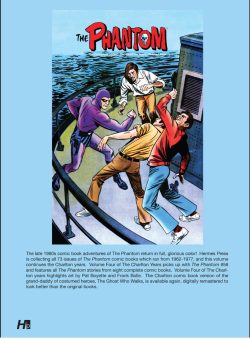
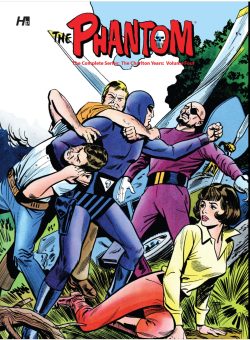
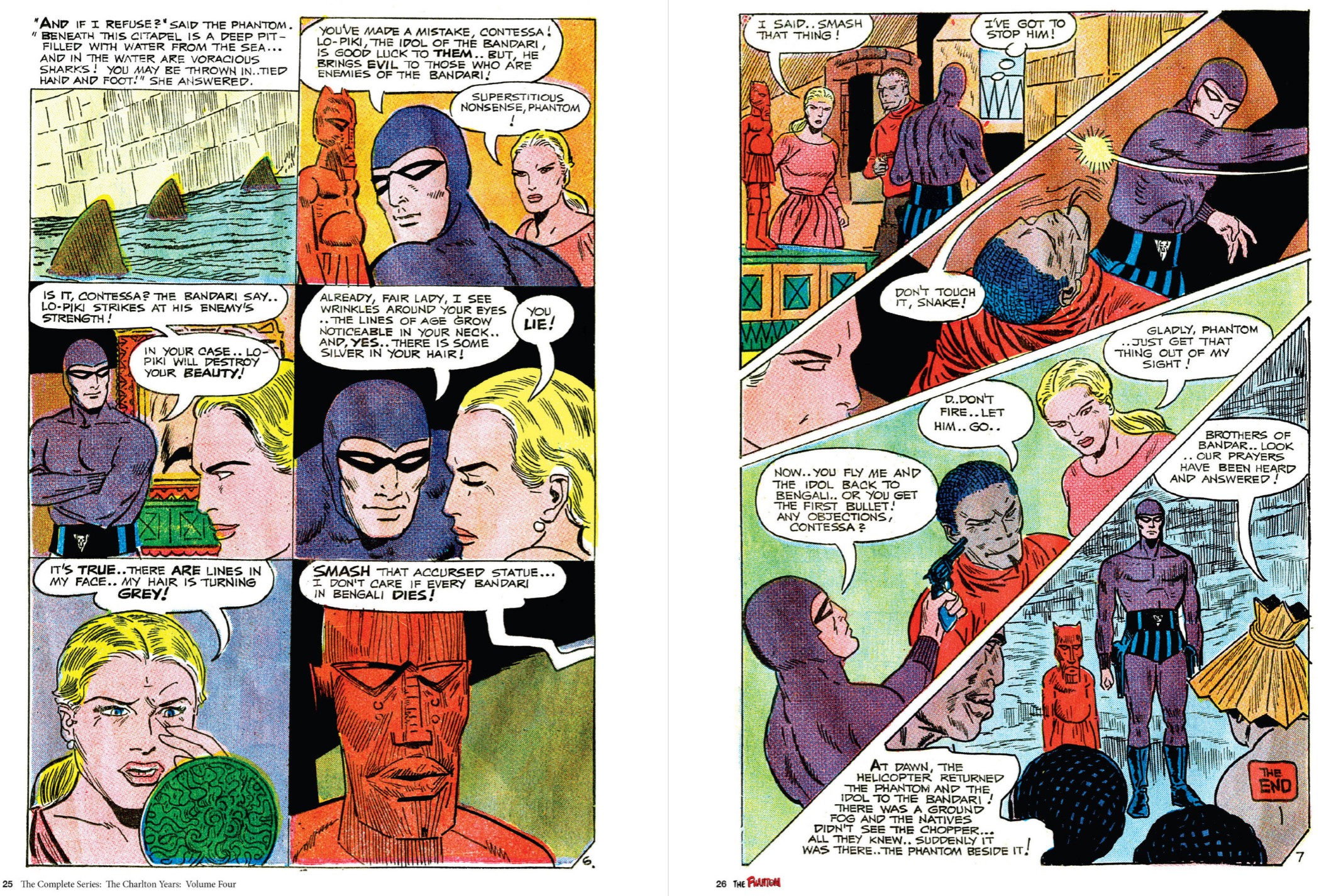
The Phantom – The Complete Series: The Gold Key Years volume 2


By Bill Harris & Bill Lignante, with Joe Certa, Sparky Moore, George Wilson & various (Hermes Press)
ISBN: 978-1-61345-023-9 (HB?/Digital edition)

This book includes Discriminatory Content produced in less enlightened times.

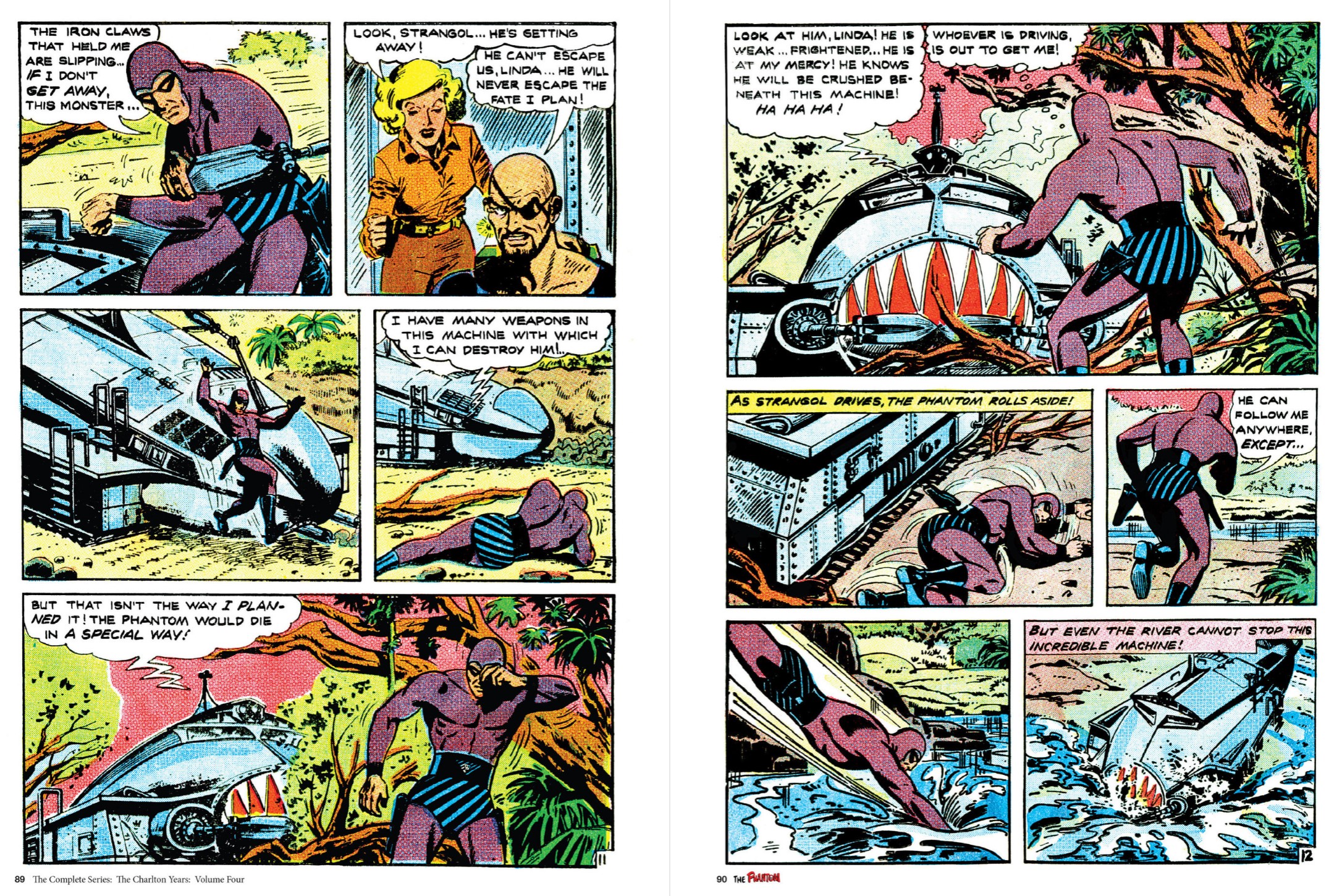
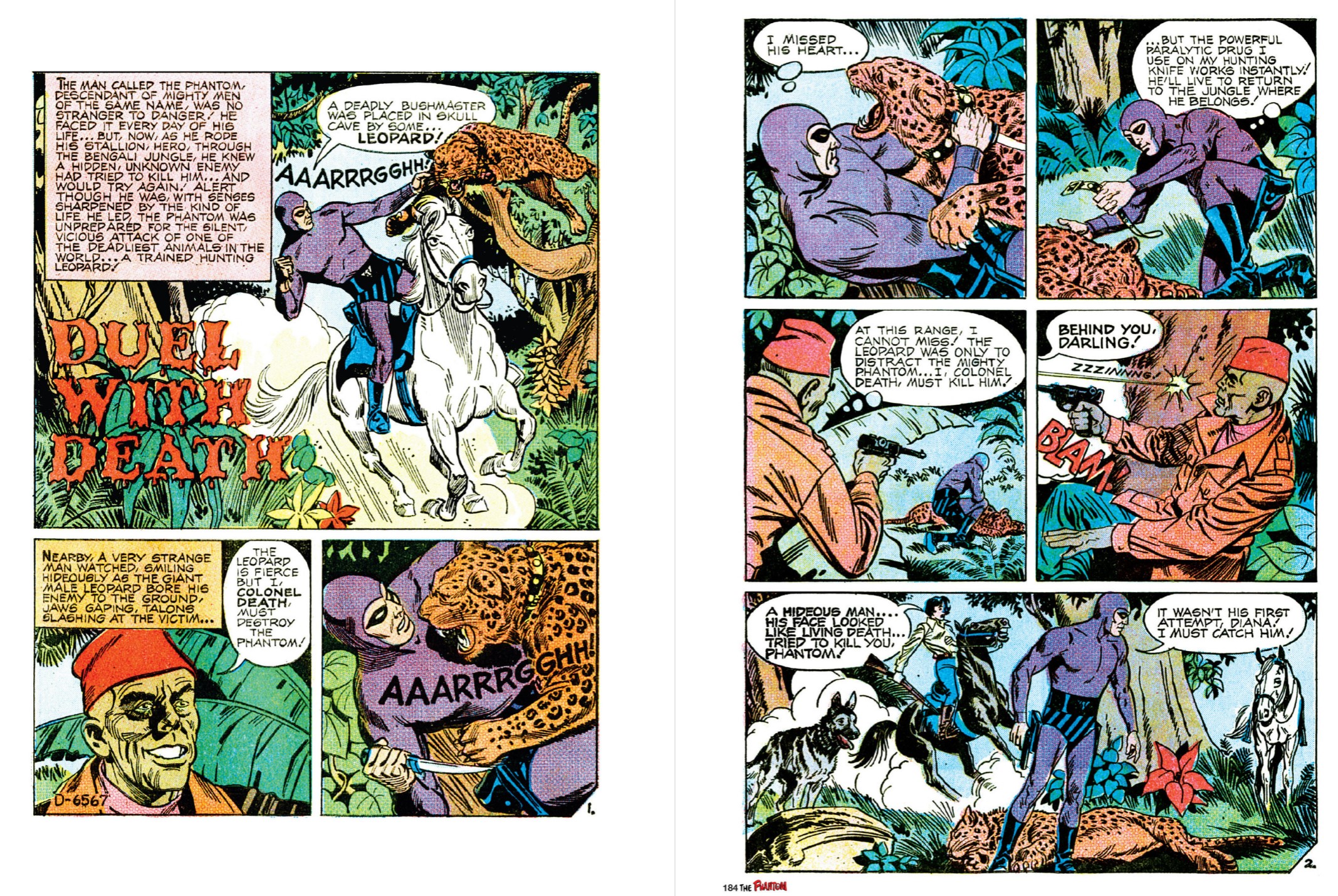
In the 17th century a British sailor survived an attack by pirates, and, washing ashore in Africa, swore on the skull of his murdered father to dedicate his life and that of all his descendants to destroying all pirates and criminals. The Phantom fights crime and injustice from a fabulous lair deep in the jungles of Bengali, and is known throughout Africa as “the Ghost Who Walks”. His unchanging appearance and unswerving quest for justice have led to him being regarded as an immortal avenger by the credulous and the wicked. Down the decades one hero after another has fought and died in an unbroken line, and the latest wearer of the mask, indistinguishable from the first, continues the never-ending battle…

Lee Falk created the Jungle Avenger at the request of his syndicate employers who were already making history, public headway and loads of money with his first strip sensation Mandrake the Magician

Although technically not the first ever costumed hero in comics, The Phantom was the prototype paladin to wear a skintight bodystocking, and the first to have a mask with opaque eye-slits. He debuted on February 17th 1936 in an extended sequence pitting him against a global confederation of pirates called the Singh Brotherhood. Falk wrote and drew the daily strip for the first two weeks before handing over the illustration side to artist Ray Moore. The Sunday feature began in May 1939.

For such a successful, long-lived and influential series, in terms of compendia or graphic novel collections, The Phantom has been poorly served by the English language market. Various small companies have tried to collect the strips – one of the longest continually running adventure serials in publishing history – but in no systematic or chronological order and never with any sustained success. But, even if it were only of historical value (or just printed for Australians, who have long been manic devotees of the implacable champion) surely “Kit Walker” is worthy of a definitive chronological compendium series?

Happily, his comic book adventures have fared slightly better – especially in recent times.

In the 1960’s King Features Syndicate dabbled with a comic book line of their biggest stars – Flash Gordon, Popeye, Blondie, Mandrake and The Phantom – but immediately prior to that, the Ghost Who Walks helmed a solo-starring vehicle under the broad and effective aegis of veteran licensed properties publisher Gold Key Comics. Each issue was fronted by a stunning painted cover by George Wilson. The Phantom was no stranger to funnybooks, having been featured since the Golden Age in titles such as Feature Book and Harvey Hits, but only as straight strip reprints. These Gold Key exploits were tailored to a big page and a younger readership.

This second superb full-colour hardcover – with equivalent eBook editions for the modern minded – gathers The Phantom #9-17 (originally released between November 1964 and July 1966) and opens with fan and scholar Pete Klaus’ Introduction ‘The Gold Key Phantom’ offering original art panels (many by Sy Barry) and a welcoming overview of the immortal strip star.

Scripted by Bill Harris and drawn in comic book format by Bill Lignante, the illustrated adventures resume with full-length epic ‘The Sixth Man’ from #9 as the Ghost Who Walks takes a rare trip into modern civilisation only to be shanghaied by crooks. All too soon the miscreants realise that they have made the biggest mistake of their shady lives. Determined to discover what’s behind the nefarious scheme, Kit Walker allows himself to be taken to a remote island ruled by bored, cruel queen Sansamor who thrives on making powerful men duel to the death.

Once the hero sees the kind of creature she is, her downfall is assured…

The issue is concluded by a single-page historical recap of the legend of ‘The Phantom’ and equally brief monochrome rundown of the mystery man’s intended bride ‘Diana’ (Palmer).

Cover-dated February 1965, #10 opens with devious action thriller ‘The Sleeping Giant’ wherein the long-peaceful tribe of Itongo headhunters take up the old ways after ancestral idol Tuamotu comes to life.

Thankfully, the Phantom is on hand to stem potential carnage and expose crooked diamond prospector Joe Gagnon (and his oversized circus performer pal) inciting the tribesmen to war and conquest. All he has to do is defeat the giant warrior in unarmed combat…

Assisting the masked peacekeeper in policing tribes and criminals of the region is ‘The Patrol’. These worthy soldiers have no idea who their mysterious “Commander” actually is, so when the latest raw recruit tries to find out, he receives a startling shock in this wry vignette.

Issue #11 (April 1965) features ‘Blind Man’s Bluff’ with two brutal convicts breaking out of the Bengal Penal Colony to terrorise native communities by masquerading as demonic spirits. When the Phantom apprehends them as they link up with pirates, he is struck sightless by a flare gun, but not even blindness can stop the resourceful champion from dispensing justice…

Closing the issue is a one-page tour of ‘The Skull Cave’ by Joe Certa, after which #12 (June, with art by Sparky Moore & Lignante) introduces ‘The Beast of Bengali’. Here a golden giant capable of seeming miracles subjugates the locality until the masked marvel exposes his magical feats for the tricks they really are. Then, following a mouth-watering period ad for the Phantom Revell model kit, #13 (August) opens ‘The Phantom Chronicles’ as the Jungle Sentinel consults his ancestor’s meticulous records for tips on defeating seemingly immortal bandit Rachamond

October cover-dated, The Phantom #14 opens with ‘The Historian’ as scholar Dr. Heg consults with the Jungle Patrol on a book chronicling their achievements. His ulterior motive is to destroy the only law for hundreds of miles, but he has not reckoned on the true identity of their enigmatic leader…

‘Grandpa’ switches locales to America where Diana Palmer’s doting ancestor is playing unwelcome matchmaker. Eventually, after violent incidents involving bears and robbers, the old man warms to African mystery man Kit Walker…

Closing 1966, TP #15 (December) details the downfall of ‘The River Pirates’ who ravage the mighty waterways of the region. Their modern weapons prove little use against the cunning and bravery of the Deep Woods Guardian. ‘The Tournament’ then focuses on an unlucky prison escapee who finds the Phantom’s clothes and is stuck fighting a native gladiator in a centuries-old grudge match. Sadly, if he loses, the prestige lost means chaos will return to the tribes benefitting from The Phantom’s Peace…

‘The Chain’ opens #16 (April 1966) as a world-weary Phantom considers quitting after an interminable period negotiating peace between warring tribes. Even Diana cannot change his mind, but then ancient wise man Wuru appears, relating a story of the hero’s father, who endured hardship, mockery and even slavery in a quest to rescue a woman from vile bondage. Her name was Maude, and she was to be the Phantom’s mother…

A brace of single-pagers follow, revealing Kit Walker’s unrecorded boxing bout against ‘The Champ’ and a battle in a bar won by ‘The Milk Drinker’ before ‘The Crescent Cult’ sees the Jungle Ghost crushing an assassination gang determined to murder their country’s new Maharani. The comic concludes with another 1-page yarn as ‘The Diggers’ examine old ruins and discover proof that the Phantom has lived and fought evil for centuries!

This second volume closes on a truly supernatural note as The Phantom #17 (July 1966) discloses how undying witch ‘Samaris’ has preyed on male suitors for centuries, and believes she has last found another cursed to live forever…

Following one-pager ‘The Waterfall’, detailing the secrets of the entrance to the fabled Skull Cave, ‘Samaris Part II’ finds the Ghost Who Walks captive of the Queen but resisting her every wile until justice, fate and an avalanche of deferred years catch up to her at last…

Wrapping up is a monochrome vignette detailing the secrets of The Phantom’s devout helpers ‘The Bandar’ Poison Pygmy People and a sumptuous cover gallery by painter George Wilson.

Straightforward, captivating rollicking action-adventure has always been the staple diet of The Phantom. If that sounds like a good time to you, this is a traditional nostalgia-fest you won’t want to miss…
The Phantom® © 1964-1966 and 2012 King Features Syndicate, Inc. ® Hearst Holdings, Inc. Reprinted with permission. All rights reserved.

Today in 1828 genre-founding author Jules Verne was born, so maybe go read a book soon? In comics, unsung wonder Bill Finger was born in 1914, as was Filipino inking legend Danny Bulanadi in 1946. On the debit side we lost the iconic Julius Schwartz today in 2004 and Li’l Jinx originator and Archie stalwart Joe Edwards in 2007.

Dc Finest: Batman – The Case of the Chemical Syndicate


By Bob Kane, Bill Finger, Gardner F. Fox, Whitney Ellsworth, Sheldon Moldoff, Jerry Robinson, George Roussos & various (DC Comics)
ISBN: 978-1-79950-670-6 (TPB/Digital edition)

This book includes Discriminatory Content produced in less enlightened times.

Although already much reprinted, archived and curated, here’s another sound and stunning collection of the Gotham Guardian’s earliest exploits in original chronological order, forgoing glossy, high-definition paper and reproduction techniques in favour of a newsprint-adjacent feel and the same flat, bright-yet-muted colour palette which graced the originals. There’s no fuss, fiddle or Foreword, and the book steams straight into the meat of the matter with the accumulated first two years of material featuring the masked mystery-man, as well as all those stunning covers (by Kane, Robinson, Roussos, Fred Gurdineer, Creig Flessel, Jack Burnley, Fred Ray and The Strauss Engraving Company). These span Detective Comics #27-51; Batman #1-5; the Dynamic Duo’s endeavours in New York World’s Fair Comics 1940 and World’s Best Comics #1, cumulatively encompassing every groundbreaking escapade from May 1939 to May 1941.

As Evri Fule Kno, Detective Comics #27 featured the Darknight Detective’s debut in the ‘Case of the Chemical Syndicate!’ by Bob Kane and as yet still anonymous close collaborator/co-originator Bill Finger. A spartan, understated yarn introduced dilettante playboy criminologist Bruce Wayne, drawn into a straightforward crime-caper as a cabal of industrialists were successively murdered. The killings stop when an eerie figure dubbed “The Bat-Man” intrudes on Police Commissioner Gordon’s stalled investigation to ruthlessly expose and deal with the hidden killer.

The following issue saw our fugitive vigilante return to crush ‘Frenchy Blake’s Jewel Gang’ before encountering his very first psychopathic killer/returning villain in Detective #29. Gardner Fox scripted these next few adventures beginning with ‘The Batman Meets Doctor Death’, in a deadly duel of wits with deranged, greedy general practitioner Karl Hellfern and his assorted instruments of murder: the most destructive and diabolical of which was sinister “Asiatic” manservant Jabah…

This is my cue to again remind all interested parties that these stories were created in far less tolerant times with numerous narrative shortcuts and institutionalised social certainties expressed in all media that most today will find offensive. If that’s a deal-breaker, please pass on this book… and most literature, pop songs and films created before the 1960s…

Confident of their new villain’s potential, Kane, Fox and inker Sheldon Mayer encored the mad medic for the next instalment and ‘The Return of Doctor Death’, before Fox & Finger co-scripted a 2-part shocker debuting the very first bat-plane, Bruce’s girlfriend Julie Madison and undead horror The Monk in expansive, globe-girdling spooky saga ‘Batman Versus the Vampire (part one)’. It all concluded in part two with an epic chase across Eastern Europe and spectacular climax in a monster-filled castle in #32.

DC #33 featured Fox & Kane’s ‘The Batman Wars Against the Dirigible of Doom’: a blockbusting disaster thriller which just casually slips in the secret origin of the grim avenger, as mere prelude to intoxicating air-pirate action, before Euro-trash dastard Duc D’Orterre finds his uncanny SCIENCE! and unsavoury appetites no match for the mighty Batman in ‘Peril in Paris’. Bill Finger returned as lead scripter in #35, pitting the Cowled Crusader against crazed cultists murdering everyone who had seen their sacred jewel in ‘The Case of the Ruby Idol’ … although the many deaths were actually caused by a far more prosaic villain. Inked by new kid Jerry Robinson, grotesque crime genius ‘Professor Hugo Strange’ debuted with his murderous manmade fog and lightning machine in #36, after which all-pervasive enemy agents lodged in ‘The Screaming House’ prove no match for a vengeful Masked Manhunter in #37.

Detective Comics #38 (April 1940) changed the landscape of comic books forever with the introduction of ‘Robin, The Boy Wonder’ as child trapeze artist Dick Grayson – whose parents are murdered before his eyes – thereafter joins Batman in a lifelong quest after bringing to justice mobster mad dog Boss Zucco

With the Flying Graysons’ killers captured, all-out action continued in #39 with Finger, Kane & Robinson’s ‘The Horde of the Green Dragon’ – “oriental” Tong killers in Chinatown – Batman #1 (Spring 1940) opened proceedings with a recycled origin culled from portions of Detective #33 & 34. ‘The Legend of the Batman – Who He Is and How He Came to Be!’ by Fox, Kane & Moldoff delivers in two perfect pages what is still the best ever origin of the character. ‘The Joker’ (Finger, Kane & Robinson – who also produced all the remaining tales in this astonishing premiere issue) then launches the greatest villain in DC’s pantheon via a macabre tale of extortion and wilful wanton murder.

‘Professor Hugo Strange and the Monsters’ follows as an old adversary returns, unleashing laboratory-grown hyperthyroid horrors to rampage through the terrified city, before ‘The Cat’ – who later added the suffix “Woman” to her name to avoid any possible doubt or confusion – plies her felonious trade of jewel theft aboard the wrong cruise-liner, thereby falling foul for the first time of the dashing Dynamic Duo. Then comics end with the ‘The Joker Returns’ as the sinister clown breaks jail to resume his terrifying campaign of murder for fun and profit before “dying” in mortal combat with the Gotham Guardians. pulse pounding premier package fun folds with Whitney Elsworth’s text piece ‘Meet the Artist’ and a superb Kane pin-up (originally the back cover of that premier issue) of the Dynamic Duo.

Tense suspense and eerie evil is also on show in DC #40 as ‘The Murders of Clayface’ sees the Dynamic Duo solving a string of murders on a film set which almost sees Julie Madison the latest victim of a monstrous movie maniac…

Batman & Robin solve the baffling mystery of a kidnapped pupil in Detective #41’s ‘The Masked Menace of the Boys’ School’ before enjoying a busman’s holiday in ‘Batman and Robin Visit the 1940 New York World’s Fair’ as seen in the second New York World’s Fair Comics. Here Finger, Kane & Roussos follow the vacationing troubleshooters as they track down a maniac mastermind with a metal-dissolving ray, before Detective Comics #42 again finds our heroes ending another murderous maniac’s rampage in ‘The Case of the Prophetic Pictures!’

The heroes’ second solo outing produced another quartet of comics classics in Batman #2 (Summer 1940). It begins with ‘Joker Meets Cat-Woman’ (Finger, Kane, Robinson & new find George Roussos) wherein svelte thief, homicidal jester and a crime syndicate all tussle for the same treasure, with our Caped Crusaders caught in the middle. ‘Wolf, the Crime Master’ then offers a fascinating take on the classic tragedy of Jekyll & Hyde prior to an insidious and ingenious mystery in ‘The Case of the Clubfoot Murderers’. Ultimately Batman & Robin confront uncanny savages and ruthless showbiz promoters in poignant monster yarn ‘The Case of the Missing Link’.

By now an unparalleled hit, Batman stories never rested on their laurels. The creators always sought to expand their parameters, as Detective #43 saw our heroes clash with a corrupt mayor in #43’s ‘The Case of the City of Terror!’ before rather jumping the shark with #44’s nightmarish fantasy of giants and goblins ‘The Land Behind the Light!’, in advance of returning to bizarre baroque basics in #45’s horrific Joker jape ‘The Case of the Laughing Death!’ wherein the Harlequin of Hate undertakes a campaign of macabre murder against everyone who has ever defied or offended him…

Batman #3 (Fall 1940) has Finger, Kane, Robinson & Roussos rise to even greater heights, beginning with ‘The Strange Case of the Diabolical Puppet Master’: an eerie episode of uncanny mesmerism and infamous espionage…

A grisly scheme unfolds next as innocent citizens are mysteriously transformed into specimens of horror, and artworks destroyed by the spiteful commands of ‘The Ugliest Man in the World’ before ‘The Crime School for Boys!’ registers Robin, allowing infiltration of a gang who have a cruel and cunning recruitment plan for dead-end kids, whilst ‘The Batman vs. the Cat-Woman’ lastly reveals the larcenous lady in well over her head when she steals for – and from – the wrong people…

The issue also offered a worthy Special Feature from Ellsworth & Burnley as ‘The Batman Says’ presents an illustrated prose Law & Order pep-talk…

Plunging right into perilous procedures, Detective #46 (Kane, Robinson & Roussos) features the return of Batman’s most formidable fringe scientific adversary as our heroes must counteract the awesome effects of ‘Professor Strange’s Fear Dust’, after which #47 delivers drama on a more human scale by proving ‘Money Can’t Buy Happiness’. This action-packed homily of parental expectation and the folly of greed leads into Detective Comics #48, finding the lads defending America’s bullion reserves in ‘The Secret Cavern’, and is followed by Batman #4 (Winter 1941) which opens with a spiffy catch-all visual resume.

Then its all-out razzle-dazzle as the Gotham Guardians visit and vanquish ‘The Joker’s Crime Circus’, prior to pulling the plug on the piratical plundering of ‘Blackbeard’s Crew and the Yacht Society!’. Immediately after, ‘Public Enemy No.1’ tells a gangster fable in the manner of Jimmy Cagney’s Angels With Dirty Faces, before ‘Victory For the Dynamic Duo!’ involves the pair in the treacherous world of sports gambling.

Detective Comics #49 (March 1941), finds them confronting another old foe when ‘Clayface Walks Again!’ with the deranged actor resuming his passion for murder by re-attempting to kill Bruce Wayne’s old girlfriend Julie before World’s Best Comics #1 (Spring 1941 and destined to become World’s Finest Comics with its second issue) offers an eerie murder mystery concerning ‘The Witch and the Manuscript of Doom!’.

DC #50 pits Batman & Robin against acrobatic burglars in ‘The Case of the Three Devils’, whilst sordid human scaled wickedness informs #51’s ‘The Case of the Mystery Carnival!’: a mood-soaked crimebusting set-piece featuring fairly run-of-the mill thugs, but serving as a perfect palate-cleansers for big bold Batman #5 (Spring 1941). Once again, The Joker plays lead villain in ‘The Riddle of the Missing Card!’, before the heroes prove their versatility by solving a quixotic crime in Fairy Land via ‘Book of Enchantment’.

‘The Case of the Honest Crook!’ follows: one of the key stories of Batman’s early canon. When a mugger steals only $6 from a victim, leaving much more behind, his trail leads to a vicious gang who almost beat Robin to death. The vengeance-crazed Dark Knight goes on a rampage of terrible violence that still resonates in the character to this day. The last story from Batman #5 – ‘Crime does Not Pay’ – once again deals with kids going bad and their potential for redemption, and surely that’s what heroic mythmaking is all about?

Kane, Robinson and their compatriots created a visual iconography which carried Batman well beyond his allotted lifespan until later creators could re-invigorate the concept. They added a new dimension to children’s reading… and their work is still captivatingly accessible. Moreover, these early stories laced with Fingers’ mood-soaked macabre madness set the standard for comic superheroes. Whatever you like now, you owe it to these stories. Superman gave us the idea, but inspired and inspirational writers like Finger & Fox refined and defined the meta-structure of the costumed crime-fighter. Where the Man of Steel was as much Social Force and juvenile wish-fulfilment as hero, Batman and Robin did what we ordinary mortals wanted to do most: teach bad people the lessons they richly deserved…

These are tales of elemental power and joyful exuberance, brimming with deep mood and addictive action. Comic book heroics simply don’t come any better.
© 1939, 1940, 1941, 2025 DC Comics. All Rights Reserved.

Today in 1914 All American editor Ted Udall was born, but we had to wait until 1953 for Richard Bruning, 1956 for animator, director and funnybook renaissance man Bob Camp and 1958 for astounding letterer and sublime illustrator Kevin Nowlan as well as Archie Comics writer/editor Paul Castiglia in 1966.

In the meantime, UK weekly mainstay The Topper began its 37-year run today in 1953, thereby launching Davey Law’s Beryl the Peril unto an unsuspecting world.

In the Days of The Mob


By Jack Kirby, Vince Colletta, Mike Royer, Sergio Aragonés & various (DC Comics)
ISBN: 978-1-4012-4079-0 (HB)

This book includes Discriminatory Content produced in less enlightened times.

Jack Kirby died today in 1994. This is one of his best and least recognised concept-books. Don’t you think it’s about time it was re-released and available digitally?

There’s a magnificent abundance of Jack Kirby collections around these days (though still not every single thing he ever did, so I remain a partially disgruntled devotee) and this sturdy oversized hardback re-presents the complete “King’s Canon” of one his most personal – yet subsequently misunderstood and mishandled – DC projects.

Famed for his larger than life characters and gigantic, cosmic imaginings, “King” Kirby was an astute, spiritual man who had lived through poverty, gangsterism, the Depression and World War II – all grist for his imaginative mill and the basis for this particular publishing project. He saw Post-War optimism, Cold War paranoia, political cynicism and the birth and death of peace-seeking counter-cultures. He was open-minded and utterly wedded to the making of comics stories on every imaginable subject.

On returning from World War II, with his long-term creative partner Joe Simon, he created the entire genre of Romance comics for the Crestwood/Prize publishing outfit. Prior to that, however, Joe and Jack plundered history books and the daily papers to craft a raft of edgy, adulted oriented crime thrillers for titles such as Headline Comics, Real Clue Crime Stories and Justice Traps the Guilty. The genre was one they made uniquely their own…

Changing tastes and an anti-crime, anti-horror witch-hunt quashed the comics industry, so under a doctrinaire, self-inflicted conduct code, publishers stopped innovating and moved into more anodyne areas. This established holding pattern persisted until the rebirth of superheroes. Working at a little outfit dubbed Atlas, Jack partnered with Stan Lee and when superheroes were revived, astounded the world with a salvo of new concepts and characters that revitalised if not actually saved the comics business.

Kirby understood the fundamentals of pleasing his audience and always toiled diligently to combat the appalling state of prejudice about the type-and-picture medium – especially from insiders and professionals who despised the “kiddies’ world” they felt trapped in.

However, after a decade or so, costumed characters again began to wane. Public interest in genre topics and the supernatural was building, with books, television and movies all exploring the subjects in gripping and stylish new ways.

The Comics Code Authority was even ready to slacken its censorious choke-hold on horror titles to save the entire industry from implosion as the 1960s superhero boom fizzled out.

Experiencing increasing editorial stonewalling and creative ennui at Marvel, in 1970 Kirby accepted a long-standing offer from arch rival National Periodical Publications AKA DC Comics…

Before he was let loose on DC’s continuity with his epic, controversial, grandiose Fourth World project Kirby looked for other concepts which would stimulate his vast creativity and still appeal to an increasingly fickle market. General interest in the occult was growing, and America was also enjoying a protracted love affair with period gangster yarns thanks to shows like The Untouchables, and books and movies such as The Godfather or Bonnie and Clyde.

Promised freedom to innovate, one of the first projects he tackled was a new magazine format carrying material targeting adult readerships. He devised Spirit World – a supernatural themed, adult-oriented monochrome magazine – and sister title In the Days of the Mob, dedicated to revisiting the heady era when crime ran wild in America.

For the full story of how that worked out, you can read Mark Evanier’s acerbic article in equally neglected companion volume Jack Kirby’s Spirit World. The net result of constant editorial cowardice and backsliding was that Kirby and his small team were left to create magazines that DC didn’t promote or support and casually cancelled even before they hit the newsstands.

After decades of obscurity the work was at last gathered into two glorious and oversized (282 x 212 mm) hardback compilations, each collecting the superb but poorly received and largely undistributed first issues that had nigh-invisibly launched in the summer of 1971. At least the books also re-presented whatever remained of the unpublished second issues.

In the Days of the Mob #1-and-only was released with no discernible marks or connections to DC/National Comics with a September 1971 cover-date through a subsidiary called Hamilton Distribution. Like a body with “concrete overshoes” it promptly vanished without trace. Here though, historical details plus other contextual treasures are provided in ‘Crime and Punishment Pinball: An Introduction by John Morrow’, wherein the esteemed historian, collector and publisher describes the state of play in the Bad Old Days, before the comics wonderment begins.

New York ghetto-kid Kirby used his own childhood experiences to flavour graphic reconstructions of the explosive careers of legendary gangsters and for this long-awaited revival, In the Days of the Mob forsakes continuity in favour of plot and mood-driven tales related by a sinister narrator-host. Printed in redolent sepia monotones, the premier issue combined comics stories (because DC wouldn’t spring for colour photography) with prose and monochrome “Foto-Features”, all furiously fuelled by the King’s unique perspective.

Inked by Vince Colletta, the stories were journalistic biographs delivered with a supernatural twist as they came direct from the horse’s mouth – and from the Ultimate Big House – as seen in ‘Welcome to Hell!’, which introduced sardonic Warden Fry, gatekeeper of an infernal jail made especially for mobsters and murderers.

The first of Fry’s cautionary tales is ‘Ma’s Boys’, detailing the rise and fall of the infamous Barker bandit clan and their psychopathic domineering mother, after which ‘Bullets for Big Al’ offers just one little snippet from a modern mythology packed with atrocious acts of violence.

Featurette ‘The Breeding Ground’ then provides a word-&-photo snapshot of the era’s poverty and privations whilst text article ‘Funeral for a Florist’ by Mark Evanier & Steve Sherman describes the war between Al Capone and Johnny Torrio for control of Prohibition-era Chicago, after which graphic action resumes with the lowdown on the ‘Kansas City Massacre’ of FBI agents which made Pretty Boy Floyd a legend and Public Enemy No. 1.

Obsessive angler Country Boy is caught by examining his ‘Method of Operation’ before Sergio Aragonés lightens the mood with two pages of gangster gags confirming ‘Killjoy was Here’ prior to the criminal capers concluding with a reproduction of the ‘John Dillinger Wanted Poster’ that came free with the original magazine.

Comics need a huge amount of creative lead-in and preparation and by the time Kirby learned the title was scrubbed, the second issue was all but complete. Here, for the first time fans can now see how the magazine might have developed as – inked by Mike Royer and printed in standard black line – the majority of that unpublished material follows.

Leading off is a salutary moment with Warden Fry and a double-page spread starring Hitler before the bloody vendetta between Brooklyn brothers Meyer, Willie and Irving Shapiro and aspiring mobster Kid Twist led to the creation of organised crime in the form of ‘Murder Inc.’

Devised as a full-length account the story diverts to describe ‘The Ride!’ as Twist orders his pet goons to get rid of a stoolpigeon giving information to up-&-coming lawman Thomas E. Dewey…

Another diversion follows as Kirby details ‘the Colorful, Beautiful, Pragmatic, Inscrutable, Ladies of the Gang!’ revealing how Mrs. Tootsie, Miss Murder Inc., The Kiss of Death Girl and the Decent Kid make the best of life as attendants (willing or otherwise) of men with a price on their heads, before the saga comes to savage end in ‘A Room for Kid Twist!’

Wrapping things up is a rare comedy outing for Kirby as he postulates a variety of technical innovations crooks might benefit from in an outlandish catalogue of ‘Modern Technology and the Getaway Car!’

Kirby always was and remains a unique and uncompromising artistic force of nature: his words and pictures are an unparalleled, hearts-&-minds grabbing delight no comics lover could resist. If you’re not a fan or simply not prepared to see for yourself what all the fuss has been about then no words of mine will change your mind.

That doesn’t alter the fact that Kirby’s work shaped the entire American scene and indeed the entire comics planet – affecting the lives of billions of readers and thousands of creators in all areas of artistic endeavour for generations. He’s still winning new fans and apostles, from the young and naive to the most cerebral of intellectuals. Jack’s work is still instantly accessible, irresistibly visceral, deceptively deep whilst simultaneously mythic and human.

Wherever your tastes take you, his creations will be there ready and waiting. So, if cops and robbers are your bag, it would a crime to miss out on these classic treasures.
© 1971, 2013 DC Comics. All Rights Reserved.

Today in 1949 Comics giant and Kirby lover Rich Buckler was born, as was Yvel Guichet in 1970. In 1970 legendary manga mag Monthly Shonen Jump launched its first issue.

Leonardo da Vinci: The Renaissance of the World


By Marwan Kahil & Ariel Vittori, translated by Montana Kane (NBM)
ISBN: 978-1-68112-259-5 (HB) eISBN: 978-1-68112-260-1

Some people are simply so famous that everybody thinks they already know all about them. That’s what makes biographies like this one such a tricky proposition. As always, talent will tell and the narrative gifts of writer Marwan Kahil and illustrator Ariel Vittori are more than sufficient to breathe fresh life into a much-told tale of one of the most accomplished men in world history.

Kahil (A. Einstein – the Poetry of Real) studied at the École Spéciale d’Architecture in Paris and Simon Boudvin’s prestigious Graphic Art Workshops before deciding to split his time and efforts between comics and film and theatre. Rome-based Ariel Vittori (Quelques pincées de désir) is an artist and designer who numbers Disney, Campari and Monadori amongst her satisfied clients, although her true calling is narrative illustration. She is co-founder and President of Attacapanni Press: an independent publisher matching rising stars with seasoned comics veterans…

Leonardo da Vinci: The Renaissance of the World opens with a querulous preface from Kahil before the Maestro’s eventful life begins to unfold in glorious colour as the elder reminisces in Rome 1515 anno domini…

It begins in April 1452 with ‘Chapter 1: A Young Man Unlike Any Other’ at the hamlet of Anchiano (near Vinci) with the welcoming of a very observant baby to loving extended family. Time passes and a doting grandfather passes, leaving the special child apprenticed to a painter in Florence…

The present interrupts as the elderly Leonardo falls foul of the Roman clergy and is forced to flee to France…

‘Chapter 2: The Most Handsome Man in Florence’ follows the seemingly blessed teenager as he excels and overtakes mentor Andrea del Verrocchio, roistering his way through Florence and making many friends and far more enemies as he courts rich, powerful and essentially dangerous patrons. Throughout it all he is driven by his unconventional romantic drive and fanatical compulsion to see more and understand everything.

In ‘Chapter 3: The Sforza’s Man’ the itinerant ideas man reaches Milan and works for the powerful duke, even as his older self in 1515 must deal with the so-different responses of his two apprentices Salai and Francesco to their impending arrest and excommunication…

Our saga concludes as the great man finally achieves a measure of peace and security under the patronage of lifelong admirer Francis I, allowing Leonardo to end his days in ‘Chapter 4: In the Service of the King of France’

Although many scenes and snippets are taken from non-chronological key moments, the overall effect reveals a life both frustrating and frequently dangerous, but lived very much on the scholar’s own terms… and with few regrets. The tale is also liberally dosed with revelatory secrets on the creation of the Master’s greatest artworks and scientific discoveries, adding a degree of enthralling vitality to proceedings.

This beguiling dramatised biography is splendidly augmented by educational extras, such as with ‘Leonardo da Vinci – Works’: a commentary on many of his creations supplemented by a crucial illustrated menu of ‘Principal Players’; a fulsome list of further reading in ‘More on Leonardo’ and a copious illustrated collection of ‘Quotes of Leonardo da Vinci’.

Seen here is a visual delight celebrating a unique mind and personality, and one you should reacquaint yourself with as soon as you can.
© 2017 Blue Lotus Prod. © 2019 NBM for the English translation.

For more information and other great reads go to NBMpub.com.

Today in 1912 strip pioneer Sydney Smith launched Old Doc Yak, precursor to The Gumps, and Mexican cartoonist Gabriel Vargas (La Familia Burrón) was born in 1915. Legendary artist George Evans (EC Comics, Terry and the Pirates, Secret Agent X-9) took his first breath in 1920, as did just as fabulous Bruce Timm in 1961.

UK comic Smash! launched today in 1966 and cartoonist Corinna (The Space Between) Bechko was born in 1974, but in 1996 Italian Roberto Raviola (Kriminal, Alan Ford) died.

I Am Not Okay with This


By Charles Forsman (Fantagraphics Books)
ISBN: 978-1-68396-193-2 (FB PB) 978-0-57135-012-4 (Faber & Faber PB)

PUBLIC SEVICE ANNOUNCEMENT: It’s ten days until the big romance confluence. Start thinking now, don’t think your significant other or intended likes just what you do – and for every god’s sake don’t “share” drugs with them without informing them first!

Teenage rites of passage are an evergreen source for dramatic material – and comedy too, if you’re fortunate enough to survive the inescapable maturation process relatively unscathed and not too warped… especially when viewed from a bit of distance and with the right perspective. That said, it certainly seems that the problems faced get worse for each successive generation. I can remember my lot facing peer and parental pressure, sexual and/or gender confusion, a war against conformity, political despair and general powerlessness, all while trying to stay sober enough to finish exams and ponder employment futures, but trolls and invisible bullies you can’t escape or confront? No, thanks.

Today’s issues have a unique (devil’s) advocate, however, in a brilliant cartoonist who combines keen insight, devilish imagination and an uncanny ear for dialogue to make stories it’s impossible to not respond to, no matter your specific age or circumstance. Charles Forsman is a multi-award-winning graduate of Vermont’s celebrated Center for Cartoon Studies, whose previous releases include Celebrated Summer, The End of the Fucking World, Hobo Mom and self-published minicomics such as Snake Oil, Revenger and Slasher. He’s been sadly quiet of late but we live in hope…

Subject to many printings and international editions, readily available digitally and the basis for an equally evocative – but by no means identical – TV adaptation, I Am Not Okay with This is rendered in a powerfully deceptive, underplayed cartoon primitivist manner which deviously disguises the fact that this yarn has the shock value and emotional impact of a chunk of concrete chucked through your windscreen from a motorway overpass.

A tale for our times opens with troubled outsider Sydney reluctantly complying with a school counsellor’s urgings to start a journal to catalogue and confront her feelings. Syd is 15 and confused: she’s so far from pretty, a poor student, and recently lost her war-veteran dad in a most unconventional manner.

She’s fighting with her mom – who wastes all her time at her crappy waitressing job – and idiot little brother Liam. Sydney’s only friend Dina is now ghosting her, having just discovered boys in the incomprehensibly form of vile jock Brad. He wants to keep the freak away from his “property” and calls Syd a dyke. Maybe she is? So what?

…And now – as if sexual confusion, family insecurity and disgusting body breakouts aren’t enough – Syd discovers a hidden and uncontrollable ability to cause harm and destruction with her mind. She also thinks someone dark and dangerous is dogging her heels and knows all her secrets…

Similarities to the broader elements of Stephen King’s epistolary landmark Carrie or Kazuya Kud? & Ryoichi Ikegami’s Mai the Psychic Girl soon vanish here, however, as a progression of diary entries intimately expose a succession of poor decisions and relationship mistakes that reshape and transform Syd and everyone she knows. Sadly, the choices made by one lost soul are increasingly irredeemable. They will never get the chance to live down or move away from the events that soon overtake them all, bringing tragedy and disaster in their wake…

Potent and moving, I Am Not Okay with This is a devastatingly affecting variation on a teen theme, and an unforgettable exploration of becoming human everyone with a heart and mind must read.
© 2018 Charles Forsman. This edition © 2018 Fantagraphics Books Inc. All rights reserved.

Today in 1920 historical illustrator and comic book artist Fred (Superman, Tomahawk) Ray was born. In 1951 comics writer/editor/publisher/sound Yorkshire son Dez Skinn arrived too.

In 1957 Mel LazarusMiss Peach first appeared, just like Dik Browne’s Hägar the Horrible did in 1973.

Cravan – Mystery Man of the Twentieth Century


By Mike Richardson & Rick Geary (Dark Horse Books)
ISBN: 978-1-59307-291-9 eISBN: 978-1-62115-198-2

This book includes Discriminatory Content included for dramatic effect.

The old cliché about truth being stranger than fiction seemingly has a lot more force these days than it used to have. Moreover, everybody is always captivated by an unsolved mystery, aren’t they?

That was clearly the case when occasional writer, producer and full-time publisher (of Dark Horse Comics) Mike Richardson discovered he shared a small obsession with cartoonist and true crime raconteur Rick Geary…

That story is intriguing enough in itself but only constitutes a minor footnote at the back of this fascinating appraisal of one of the most infamous self-aggrandizers of the early 20th century and yet somehow fittingly, a man all but forgotten today. If any of us survive we’ll be saying that about 45/47 one day (soon, I hope…).

Rick Geary is a unique talent in the comics industry, not simply because of his style of drawing but especially because of his method of telling tales. For decades he toiled as an Underground cartoonist and freelance illustrator of strange stories – published in locales as varied as Heavy Metal, Epic Illustrated, National Lampoon, RAW and High Times -honing his unique ability to create sublimely understated stories by stringing together seemingly unconnected streams of narrative to compose tales moving, often melancholy and always beguiling.

Discovering his natural oeuvre with works including biographies of J. Edgar Hoover and Trotsky, plus the multi-volumed Treasury of Victorian Murder and Treasury of XXth Century Murder series, Geary has grown into a grand master and unique presence in both comics and True Crime literature.

In this captivating monochrome tome, he and Richardson wove scanty facts, some solid supposition and a bit of bold extrapolation into a mesmerising treatise about a precursor to Jimmy Hoffa and Lord Lucan – with a hefty dose of Shergar, D.B. Cooper, Ronnie Biggs and Forrest Gump thrown in for good measure…

Arthur Cravan was but one of the names used by serial fraudster and inveterate troublemaker Fabian Lloyd, a nephew of Oscar Wilde who, after being expelled from the last of many good schools in 1903, began, at the tender age of 16, a short and sparkling career seeking limelight.

In a scant few years he became a star of the art world: a noted poet, Bohemian, journalist, art critic, painter, publisher, author, performer and pugilist (through a string of uncanny flukes he became Lightweight Champion of France without throwing a punch!) whilst simultaneously admitting to being a thief, forger, deserter, confidence-trickster, political subversive and agitator…

A man of many identities – for most of whom he created impeccably-crafted forged papers – Cravan numbered Jack Johnson, Leon Trotsky, Marcel Duchamp and other stellar luminaries of the Edwardian and pre-Great War era as friends. Even after admitting to manufacturing “undiscovered” works by Manet, Dante and his uncle Oscar – whilst assiduously avoiding any involvement in the global conflagration – he was feted by America’s intellectual elite and simultaneously hounded by the US Secret Service…

In 1918, with the American authorities making his life miserable, he set sail from Mexico to join poet Mina Loy – wife and mother of his unborn daughter – in Buenos Aires, but was lost at sea and never seen again.

That’s the official version. Searches found nothing and eventually he was declared dead and mostly forgotten, but stories and sightings persisted, as they always will…

And here’s where Richardson & Geary boldly imagine and draw some admittedly convincing conclusions about Cravan’s possible fate, linking it to the short but fabled career of reclusive author B. Traven: most well known today as the enigma who penned Death Ship and The Treasure of the Sierra Madre

Beguilingly speculative and ringing with authenticity if not indisputable veracity, this fictive biography is a superb exercise in historical exploration: one packed with wholehearted fun and mercurial love of life. And don’t we all need some of that now?
© 2005 Dark Horse Comics, Inc. All rights reserved.

Today in 1949, comics historian Richard Marschall was born, followed by Gladstone Publishing head honcho Byron Erickson in 1951 and translator/writer Randy Lofficier in 1953. At the same time as Brazilian artist Joe Bennett was being born in 1968, British comic Terrific! was selling its final issue.

In 1969 we lost Donald Duck strip illustrator Al Taliaferro, and in 1999, arguably the most significant man in US comic books, when originating editor Vin Sullivan (Action Comics and Superman) died.

Marvel Team-Up Omnibus volume 1


By Roy Thomas, Gerry Conway, Len Wein, Steve Gerber, Ross Andru, Gil Kane, Jim Mooney, Sal Buscema, Don Heck, Mike Esposito, Frank Giacoia, Steve Mitchell, Frank Bolle, Don Perlin, Sal Trapani, Wayne Howard, Dave Hunt, Vince Colletta & various (MARVEL)
ISBN: 978-1-3029-6699-7 (HB/Digital edition)

This book includes Discriminatory Content produced in less enlightened times.

Inspiration isn’t everything. In fact, as Marvel slowly grew to a position of market dominance in the wake of losing their two most innovative and inspirational creators, they did so less by experimentation and more by expanding proven concepts and properties. The only real exception to this was the assembly line creation of horror and horror-hero titles in response to the industry down-turn in super-hero sales – a move expedited by a rapid revision in the wordings of the increasingly ineffectual Comics Code Authority rules.

The concept of team-up books – an established star pairing or battling (usually both) with less well-selling company characters – was not new when Marvel decided to award their most popular hero the lion’s share of this new title, but they wisely left their options open by allocating an occasional substitute lead in the Human Torch. In those long-lost days editors were acutely conscious of potential over-exposure – and since superheroes were actually in a decline they may well have been right.

Marvel Team-Up was the second regular Spider-Man title (abortive companion title Spectacular Spider-Man was created for the magazine market in 1968 but died after two issues). MTU launched at the end of 1971 and went from strength to strength, proving the time had finally come for expansion and a concentration on uncomplicated action over sub-plots…

This engaging hardback and/or eBook compilation gathers the first 30 issues of Marvel Team-Up (spanning cover-dates March 1972 to February 1975) and includes crossover fun from Daredevil (and the Black Widow) #103, plus double length larks from Giant-Size Super Heroes #1 and Giant-Size Spider-Man #1-3. As well as a monolithic assortment of nostalgic visual treats at the back, this mammoth tome is dotted throughout with editorial and letters pages (from ‘Team-Up’ to ‘Mail it to Team-Up’) and also includes recycled Introductions from previous Marvel Masterworks editions (namely Gerry Conway’s ‘Behold: An Introduction’ and Roy Thomas’ ‘A Long, Loose Leash’ and ‘Full Credit – or Blame’) plus other contemporary editorial announcements as seen in each original issue, just to enhance overall historical experience…

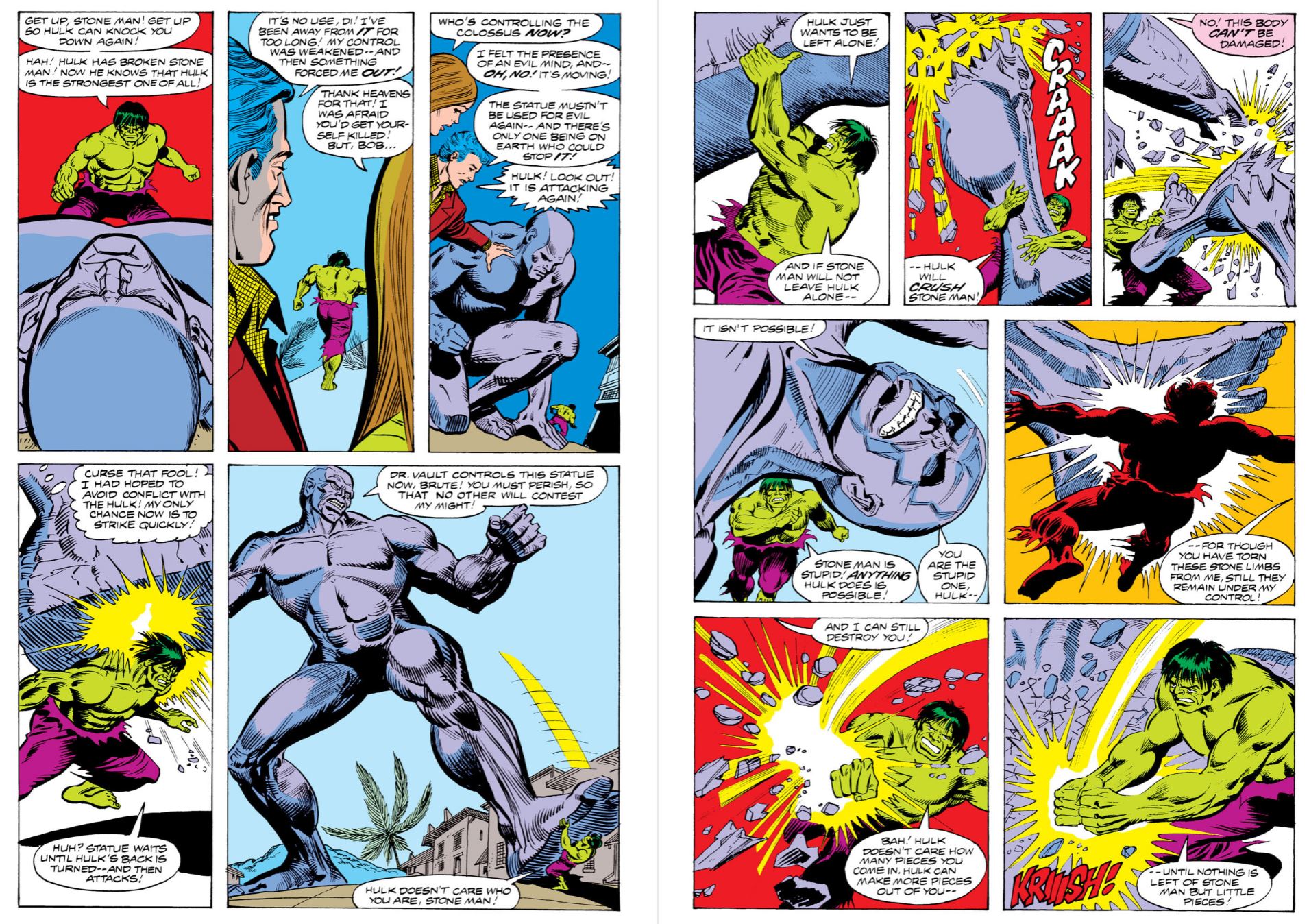
Marvel Team-Up #1was crafted by Roy Thomas, Ross Andru & Mike Esposito as a mutual old enemy reared his gritty head in charming seasonal saga ‘Have Yourself a Sandman Little Christmas!’. A light-heated romp full of Christmas cheer, rambunctious action and seasonal sentiment, the story set the tone for all epics to follow. Merry Marvelite Maximii can award themselves a point for remembering which martial arts/TV hero debuted in this issue, but folk with lives can simply take my word that it was Iron Fist’s sometimes-squeeze Misty Knight

Gerry Conway assumed the writer’s role and Jim Mooney the inks for ‘And Spidey Makes Four!’ in the succeeding issue as our hot and sticky heroes then take on and trounce the Frightful Four and Negative Zone bogeyman Annihilus before without pause going after Morbius the Living Vampire in #3’s ‘The Power to Purge!’ (as inked by Frank Giacoia). The new horror-star was still acting the villain in MTU #4 as the Torch was replaced by most of Marvel’s sole mutant team (The Beast having gone all hairy – and solo) in ‘And Then… the X-Men!’

Inked by Steve Mitchell, this boldly enthralling thriller was illustrated by magnificent Gil Kane at the top of his form. Kane became a semi-regular penciller, and his dynamic style and extreme-action anatomy lifted many pedestrian tales such as #5’s ‘A Passion of the Mind!’ (Conway script & Esposito inks), pitting Spidey and The Vision against manipulative mesmeric Puppet Master and robotic assassin the Monstroid. The bad guy again carried over to the next issue and joined by the Mad Thinker in ‘…As Those Who Will Not See!’ pitted the wallcrawler and The Thing against cerebral scoundrels in a cataclysmic battle no Fights ‘n’ Tights fan could be unmoved by…

MTU #7’s ‘A Hitch in Time!’ was produced by Conway, Andru & Mooney: guest-starring Thor with otherworldly Trolls freezing Earth’s time-line as a prerequisite step to conquering Asgard, after which #8 provides a perfect example of the team-up comic’s other function – to promote and popularise new characters. ‘Man-Killer Moves at Midnight!’ was most fans’ first exposure to The Cat (later retooled as Tigra the Were-Woman) in a painfully worthy if ham-fisted attempt to address feminist issues from Conway & Mooney. The hard-pressed heroes joined forces here to stop a male-hunting murderer paying back abusive men. These days we’d probably be rooting for her…

Iron Man collaborated in the opening foray of 3-part tale ‘The Tomorrow War!’ (Conway, Andru & Frank Bolle) as he & Spidey are kidnapped by Zarkko the Tomorrow Man to battle Kang the Conqueror. The Torch returned to help deal with the intermediate threat of a ‘Time Bomb!’ (with art by Mooney & Giacoia) before the entire race of Black Bolt’s Inhumans pile in to help Spidey stop history unravelling in culminatory clash ‘The Doomsday Gambit!’ – this last chapter scripted by Len Wein over Conway’s plot for Mooney & Esposito to illustrate.

Deftly delineated by Andru & Don Perlin, Wein scripted a Conway plot for ‘Wolf at Bay!’ in MTU #12 wherein wallcrawler meets Werewolf By Night Jack Russell to maul malevolent mage Moondark in foggy San Francisco, after which we divert to the Man Without Fear’s own title. Here they share some left coast limelight as Daredevil and the Black Widow #103 (Steve Gerber, Don Heck & Sal Trapani). This sees them join the still-California-bound wallcrawler as a merciless cyborg attacks the odd couple while they pose for roving photojournalist Peter Parker in ‘…Then Came Ramrod!’

Kane & Giacoia limned ‘The Granite Sky!’ wherein Wein pits Spidey & Captain America against Hydra and Grey Gargoyle in a simple clash of ideologies, after which ‘Mayhem is… the Men-Fish!’ (inked by Wayne Howard – and, yes bad grammar, but great action-art!) matches the webslinger with the savage Sub-Mariner against vile villains Tiger Shark and Doctor Dorcas as well as an army (navy?) of mutant sea-beasts.

Wein, Andru & Perlin created The Orb to bedevil Spidey and Ghost Rider in ‘If an Eye Offend Thee!’ in #15 before Kane & Mooney limn ‘Beware the Basilisk my Son!’: a gripping romp featuring (the original Kree) Captain Marvel, concluding with ‘Chaos at the Earth’s Core!’ (inked by “everybody”!), as Mister Fantastic joins the fracas to stop Mole Man inadvertently blowing up the world. Human Torch Johnny Storm teams with The Hulk in MTU #18 to stop antimatter malcontent Blastaar in ‘Where Bursts the Bomb!’ (Giacoia & Esposito inks), but Spidey blazes back a month later with Ka-Zar in situ to witness ‘The Coming of… Stegron, the Dinosaur Man!’ (Wein, Kane & Giacoia). His plans to flatten New York by releasing ‘Dinosaurs on Broadway!’ is foiled with Black Panther’s help… as well as the artistic gifts of Sal Buscema, Giacoia & Esposito.

Dave Hunt replaced Esposito inking ‘The Spider and the Sorcerer!’ in #21 as Spidey and Doctor Strange once more battled Xandu, a wily wizard first seen in Spider-Man Annual #2, before we pause for a brief lecture.

Giant-Size titles were quarterly double-length publications added to the schedule of Marvel’s top tier heroes, and the wallcrawler’s were used to highlight outré or potentially controversial pairings such as Dracula and Doc Savage. Here they are represented by try-out Giant-Size Super Heroes #1 which pitted the wallcrawler against Living Vampire Morbius as well as hirsute and manic Man-Wolf. In a classic clash by Conway, Kane & Esposito. Within months a quarterly double-length Spider-Man team vehicle was added to Marvel’s schedule….

Back in MTU #22, Wein, Sal B & Giacoia’s ‘The Messiah Machine!’ brings the monthly story glories to a brief pause after depicting Hawkeye and the Amazing Arachnid frustrating deranged computer Quasimodo‘s ambitious if absurd mechanoid invasion. Then – cover-dated July 1974 and courtesy of Conway, Andru & Heck – Giant-Size Spider-Man #1 saw the webspinner in frantic pursuit of an experimental flu vaccine, improbably carried on an ocean liner in ‘Ship of Fiends!’ The quest brought him into chilling contact with newly-revived vampire lord Dracula and a scheming Maggia Capo at ‘The Masque of the Black Death!’

Here that bizarre battle is accompanied by its original editorial text feature ‘An Illuminating Introduction to Giant Size Spider-Man’ before we move on to monthly MTU wherein the Torch & Iceman fractiously unite to stop Equinox, the Thermo-Dynamic Man on ‘The Night of the Frozen Inferno!’ (Wein, Kane & Esposito). Still embracing supernatural themes and trends, the webslinger learns ‘Moondog is another Name for Murder!’ in a defiantly quirky yarn illustrated by Mooney & Trapani which brings the decidedly offbeat Brother Voodoo to the Big Apple to quash a Manhattan murder cult…

Wein, Mooney & Frank Giacoia then determine that ‘Three into Two Won’t Go!’ as Daredevil joins Spider-Man in thrashing inept kidnappers Cat-Man, Bird-Man and Ape-Man, after which Giant-Size Spider-Man #2 sees the amazing arachnid drawn into battle with Shang-Chi, Master of Kung Fu as sinister immortal Fu Manchu frames Spider-Man in ‘Masterstroke!’ The duped heroes clear the air in ‘Cross… and Double-Cross!’ before uniting to foil the cunning Celestial’s scheme to mindwipe America from the ‘Pinnacle of Doom!’

MTU #26 finds the Torch and Thor battling to save the world from Lava Men in The Fire This Time…’ by Wein, Mooney, Giacoia & Hunt. At this time, in a desperate effort to build some internal continuity into the perforce brutally brief encounters, the scripters introduced a shadowy trio of sinister observers with an undisclosed agenda who would monitor superhero episodes and eventually be revealed as providers of outrageous technologies for many of the one-shot villains who came and went so quickly and ignominiously…

They weren’t involved when the Chameleon frames Spider-Man (again) and tricks the Hulk into freeing a man – for the most unexpected reason of all – from the New York Men’s Detention Center in #27’s ‘A Friend in Need!’ (Wein, Mooney & Giacoia). They did, however, have a cloaked hand in ‘The City Stealers!’ (#28 by new regular creative team Conway, Mooney & Vince Colletta) when strange mechanoids swipe the island of Manhattan, necessitating Spidey and Hercules (mostly Hercules) having to drag it back to its original position…

After that implausible minor miracle Spider-Man experiences time-displaced disaster as Giant-Size Spider-Man #3 (Conway, Andru & Esposito) explores ‘The Yesterday Connection!’ Now lovely alien Desinna seeks the aid of Spidey in 1974 and – in ‘The Secret Out of Time’ – the hands-on help of legendary 1930s adventurer Doc Savage. Across a gulf of four decades the heroes individually discover something is not right in ‘Other People in Other Times!’ With the escape of a savage rampaging monster, two eras seem doomed to destruction, at least until wiser, more suspicious heads and powers prevail in ‘Tomorrow is Too Late’ ensuring that ‘The Future is Now!’

Marvel Team-Up #29 displays a far less constrained – or even amicable – pairing as flaming kid Johnny Storm and patronising know-it-all Iron Man butt heads whilst tracking a seeming super-saboteur in ‘Beware the Coming of Infinitus! or How Can You Stop the Reincarnated Man?’ before in #30 Spider-Man and The Falcon find ‘All That Glitters is not Gold!’ whilst tracking a mind-control drug back to its crazy concoctor Midas, the Golden Man.

However, adding extra lustre are visual treats aplenty in the form of contemporaneous house ads; covers and frontispieces from seasonal tabloid treasury Giant Superhero Holiday Grab-Bag (with art from John Buscema & John Romita Sr.) and original art pages and covers from Andru, Kane, Esposito, Perlin, Mooney, & Giacoia plus Kane pencil layouts. Also on view are covers from Marvel Tales #234, 249, 254, by Todd McFarlane, Marshall Rogers, Brian Stelfreeze, complete with new bridging pages by Jae Lee. Jan Harpes & Renee Witterstatter, and another gallery of Spider-Man Megazine covers (#1-6) by James Fry, Hector Collazo, Stelfreeze, Jung Choi, Ron Frenz, Al Milgrom, Stuart Immonen, Kirk Jarvinen, Jason Moore and Mark Buckingham, plus the unpublished cover of #7 as crafted by John Romita Sr & Jr.. Closing the book is a truly unique unused cover for #8 by Brian Bolland.

These stories are of variable quality but nonetheless all exhibit an honest drive to entertain and please. Artistically the work is superb, and most fans of the genre would find little to complain about so, although not really a book for casual or more maturely-oriented readers, there’s bunches of fun on hand and young readers will have a blast, so there’s no real reason not to add this tome to your library…
© 2025 MARVEL.
Today in 1892 Korky the Cat creator James Crighton was born as was Golden Age great Creig Flessel in 1912 and Al McWilliams in 1916. Writer/editor/publisher Bob Shreck joined the party in 1955, three years after Crocket Johnson released the final episode of Barnaby.

Back in 1938, the very first Donald Duck newspaper strip was syndicated and in 1987 the astounding Ken Reid drew his last breath – as did Dutch comics maestro Lo Hartog van Banda in 2006. As always, look in the blog for more or just buy anything with these guys’ names on it…