Barnaby volume 1: 1942-1943


By Crockett Johnson (Fantagraphics Books)
ISBN: 978-1-60699-522-8 (HB/Digital edition)

This book includes Discriminatory Content produced in less enlightened times.

Here is one of those books that’s worthy of two reviews, so if you’re in a hurry…

Buy Barnaby now – it’s one of the most wonderful strips of all time and this superb hardcover compilation and its digitised equivalent have lots of fascinating extras. If you harbour any yearnings for the lost joys of childish glee and simpler, more clear-cut world-ending crises, you would be crazy to miss this…

However, if you’re still here and need a little more time to decide…

As long ago as August 2007 I started whining that one of the greatest comic strips of all time was criminally out of print and in desperate need of a major deluxe re-issue. So – as if by the magic of a fine Panatela – Cushlamocree! – Fantagraphics came to my rescue.

Today’s newspapers – those that still cling on by ink-stained fingernails – have precious few continuity drama or adventure strips. Indeed, if a paper has any strips, as opposed to single panel editorial cartoons at all, chances are they will be of the episodic variety typified by Jim Davis’ Garfield or reruns of old favourites like Calvin and Hobbes or Peanuts.

You can describe most of these as single-idea pieces with a set-up, delivery and punchline, rendered in sparse, pared-down-to-basics drawing style. In that at least, they’re nothing new. Narrative impetus comes from the unchanging characters themselves, and a building of gag-upon-gag in extended themes. The advantage to the newspaper was obvious. If readers liked a strip it encouraged them to buy the paper. If one missed a day or two, they could return fresh at any time having, in real terms, missed nothing.

Such was not always the case, especially in America. Once upon a time the Daily “funnies” -comedic or otherwise – were crucial circulation builders and sustainers, with lush, lavish and magnificently rendered fantasies or romances rubbing shoulders beside, above and across from thrilling, moody masterpieces of crime, war, sci-fi and mundane modern melodrama. Even the legion of humour strips actively strived to maintain an avid, devoted following.

…And eventually there was Barnaby which in so many ways bridged the gap between Then and Now…

On April 20th 1942, with America at war for the second time in 25 years, liberal New York tabloid PM (a later iteration of which – The New York Star – launched and hosted Walt Kelly’s wonderful Pogo) began running a new, sweet strip for kids which happened to be the most whimsically addicting, socially seditious and ferociously smart satire since the creation of Al Capp’s Li’l Abner… another utter innocent left to the mercy of scurrilous worldly influences…

Crockett Johnson’s outlandish regimented 4-panel daily was the brainchild of a man who didn’t particularly care for comics, but who – according to preeminent strip historian Ron Goulart – just wanted steady employment. David Johnson Leisk (October 20th 1906 – July 11th 1975) was an ardent socialist; passionate anti-fascist; gifted artisan and brilliant designer who had spent much of his working life as a commercial artist, Editor and Art Director.

Born in New York City, he was raised in the outer borough of Queens (when it was still semi-rural and apparently darn-near feral), very near the slag heaps which would eventually house two New York World’s Fairs in Flushing Meadows. Leisk studied art at Cooper Union (for the Advancement of Science and Art) and New York University before leaving early to support his widowed mother. This entailed embarking upon a hand-to-mouth career drawing and constructing department-store advertising. He supplemented that income with occasional cartoons to magazines such as Collier’s before becoming an Art Editor at magazine publisher McGraw-Hill. He also began producing a moderately successful, “silent” strip called The Little Man with the Eyes.

Johnson had divorced his first wife in 1939 and moved out of the city to Connecticut, sharing an oceanside home with student (and eventual bride) Ruth Krauss: always looking to create that steady something, when, almost by accident, he devised a masterpiece of comics narrative. However, if his friend Charles Martin hadn’t seen a prototype Barnaby half-page lying around the house, the series might never have existed. Happily, Martin hijacked the sample and parlayed it into a regular feature in prestigious highbrow left-leaning tabloid PM simply by showing the scrap to the paper’s Comics Editor, Hannah Baker.

Among her other finds was a strip by cartoonist Theodor Seuss Geisel (who called himself “Dr. Seuss”) which would run contiguously in the same publication. Despite Johnson’s initial reticence, within a year Barnaby had become the new darling of the intelligentsia…

Soon there were hardback book collections, talk of a radio show (in 1946 it was adapted as a stage play), accolades and rave reviews in Time, Newsweek and Life. The small yet rabid fanbase ranged from politicians and the smart set such as President and First Lady Roosevelt, Vice-President Henry Wallace, Rockwell Kent, William Rose Benet and Lois Untermeyer to cool celebrities like Duke Ellington, Dorothy Parker, W. C. Fields and legendary New York Mayor Fiorello La Guardia.

Of course, those last two might only have been checking the paper because the undisputed, unsavoury star of the cartoon show was a scurrilous if fanciful amalgam of them both…

Not since George Herriman’s Krazy Kat had a scrap of popular culture so infiltrated the halls of the mighty, whilst largely passing way over the heads of the masses or without troubling the Funnies sections of big circulation papers. Over its 10-year run – from April 1942 to February 1952 – Barnaby was only syndicated to 64 papers nationally, with a combined circulation of just over 5½ million, but it kept Crockett (his childhood nickname) & Ruth in relative comfort whilst America’s Great & Good constantly agitated on the kid’s behalf.

This splendid collection opens with a hearty appreciation from Chris Ware in the Foreword before cartoonist and historian Jeet Heer provides critical appraisal in ‘Barnaby and American Clear Line Cartooning’, after which the captivating yarn-spinning takes us from April 20th 1942 to December 31st 1943.

There’s even more elucidatory content after that, though, as education scholar and Professor of English Philip Nel provides a fact-filled, picture-packed ‘Afterword: Crockett Johnson and the Invention of Barnaby’. Dorothy Parker’s original ‘Mash Note to Crockett Johnson’ is reprinted in full, and Nel also supplies strip-by-strip commentary and background in ‘The Elves, Leprechauns, Gnomes, and Little Men’s Chowder & Marching Society: a Handy Pocket Guide’

The real meat (and no rationing here!) begins in the strip itself and starts when ‘Mr. O’Malley Arrives’. This saga ran from 20th to 29th April 1942, setting the ball rolling as a little boy wishes one night for a Fairy Godmother and something strange and disreputable falls in through his window…

Barnaby Baxter is a smart, ingenuous and scrupulously honest pre-schooler (4-year-old to you) whose ardent wish is to be an Air Raid Warden like his dad. Instead he is “adopted” by a short, portly, pompous, mildly unsavoury and wholly discreditable windbag with pink wings.

Jackeen J. O’Malley, card carrying-member of the “Elves, Gnomes, Leprechauns and Little Men’s Chowder and Marching Society” (although he hasn’t paid his dues in years) installs himself as the lad’s Fairy Godfather. A lazier, more self-aggrandizing, mooching old glutton and probable soak (he certainly frequents taverns but only ever raids the Baxter’s icebox, pantry and humidor, never their drinks cabinet) could not be found anywhere.

Due more to intransigence than evidence – there’s always plenty of physical proof whenever O’Malley has been around – Barnaby’s father and mother adamantly refuse to believe in the ungainly, insalubrious sprite, whose continued presence hopelessly complicates the sweet boy’s life. The poor parents’ greatest abiding fear is that Barnaby is cursed with Too Much Imagination…

In fact, this entire glorious confection is about our relationship to imagination. This is not a strip about childhood fantasy. The theme here, beloved by both parents and children alike, is that grown-ups don’t listen to kids enough, and that they certainly don’t know everything.

Despite looking like a complete fraud – he never uses his magic and always wields one of Pop’s stolen cigars as a substitute wand – O’Malley is the real deal, he’s just incredibly lazy, greedy, arrogant and inept. He does (sort of) grant Barnaby’s wish though, as his midnight travels in the sky trigger a full air raid alert in ‘Mr. O’Malley Takes Flight’ (30th April-14th May)…

‘Mr. O’Malley’s Mishaps’ (15th – 28th May) offer further insights into the obese ovoid elf’s character – or lack of same – as Barnaby continually fails to convince his folks of his newfound companion’s existence, before the bestiary expands into a topical full-length adventure when the little guys stumble into a genuine Nazi plot with supernatural overtones in the hilariously outrageous ‘O’Malley vs. Ogre’ from 29th May through 31st August.

‘Mr. O’Malley’s Malady’ (1st – 11th September) dealt with the airborne oaf’s brief bout of amnesia, even as Mom & Pop, believing their boy to be acting up, take him to a child psychologist. However, ‘The Doctor’s Analysis’ (12th to 24th September) doesn’t help…

The war’s effect on the Home Front was an integral part of the strip and ‘Pop vs. Mr. O’Malley’ (25th September – 6th October) and ‘The Test Blackout’ (7th – 16th October) see Mr. Baxter become chief Civil Defense Coordinator despite – not because of – the winged interloper, but not without suffering the usual personal humiliation. There is plenty to go around and, when ‘The Invisible McSnoyd’ (17th – 31st October) turns up, O’Malley gets it all.

The Brooklyn Leprechaun, although unseen, is O’Malley’s personal gadfly: continually barracking, and offering harsh, ribald counterpoints and home truths to the Godfather’s self-laudatory pronouncements. In ‘The Pot of Gold’ (2nd – 20th November) perpetually taunting and tempting JJ to provide a treasure trove of laughs.

When Barnaby wins a scrap metal finding competition and is feted on radio, O’Malley co-opts ‘The Big Broadcast’ (21st – 28th November) and brings chaos to the airwaves, but once again Mr. Baxter won’t believe his senses. Pop’s situation only worsens after ‘The New Neighbors’ (30th November – 16th December) move in and little Jane Shultz also starts candidly reporting Mr. O’Malley’s deeds and misadventures…

Barnaby’s faith is only near-shaken when the Fairy Fool’s constant prevarications and procrastination mean Dad Baxter’s Christmas present arrives late. The Godfather did accidentally destroy an animal shelter in the process, so ‘Pop is Given a Dog’ (17th – 30th December) which brings a happy resolution of sorts. A perfect indication of the wry humour that peppered the feature is seen in ‘The Dog Can Talk’ – which ran from 31st December 1942 to 17th January 1943. New pooch Gorgon can indeed converse – but never when parents are around, and only then with such overwhelming dullness that everybody listening wishes him as mute as all other mutts…

Playing in an old abandoned house (don’t you miss those days when kids could wander off for hours, unsupervised by eagle-eyed, anxious parents; or were even able to walk further than the length of a garden?) serves to introduce Barnaby & Jane to ‘Gus, the Ghost’ (18th January – February 4th) which in turn involves the entire ensemble with ration-busting thieves after they uncover ‘The Hot Coffee Ring’ (5th – 27th February). Barnaby is again hailed a public hero and credit to his neighbourhood, even as poor Pop Baxter stands back and stares, nonplussed and incredulous…

As Johnson continually expanded his gently bizarre cast of Gremlins, Ogres, Policemen, Spies, Ghosts, Black Marketeers, Talking Dogs and even Little Girls (all of whom can see O’Malley), the unyieldingly faithful little lad’s parents were always too busy and too certain that the Fairy Godfather and all his ilk are unhealthy, unwanted, juvenile fabrications.

With such a simple yet flexible formula Johnson made pure cartoon magic. ‘The Ghostwriter Moves In’ (1st – 11th March) finds Gus reluctantly relocating to the Baxter abode, where he’s even less happy to be cajoled into typing out O’Malley’s odious memoirs and organising ‘The Testimonial Dinner’ (12th March – 2nd April) for the swell-headed sprite at the Elves, Leprechauns, Gnomes, and Little Men’s Chowder & Marching Society clubhouse and pool hall…

With the nation urged to plant food crops, ‘Barnaby’s Garden’ (3rd – 16th April) debuts as a another fine example of the things O’Malley is (not) expert in, whilst ‘O’Malley and the Lion’ (17th April – 17th May) finds the innocent waif offering sanctuary to a hirsute circus star even as his conniving, cheroot-chewing cherub contemplates his own “return” to showbiz, after which ‘Atlas, the Giant’ (18th May – 3rd June) wanders into the serial. At only 2-feet-tall, the pint-sized colossus is not that impressive… until he gets out his slide rule to demonstrate that he is, in fact, a mental giant…

‘Gorgon’s Father’ (4th June – 10th July) turns up to cause contretemps and consternation before disappearing again, before Barnaby & Jane are packed off to ‘Mrs. Krump’s Kiddie Kamp’ (12th July – 13th September) for vacation rest and the company of “normal” children. Sadly, despite the wise matron and her assistant never glimpsing O’Malley and Gus, all the other tykes and inmates are more than happy to associate with them…

Once the kids arrive back in Queens – Johnson had set the series in the streets where he’d grown up – the Fairy Fathead shows off his “mechanical aptitude” on a parked car with its engine wastefully running… and breaks the idling getaway car just in time to foil a robbery…

Implausibly overnight he becomes an unseen and reclusive ‘Man of the Hour’ (14th – 18th September) before preposterously translating his new cachet into a political career by accidentally becoming patsy for a corrupt political machine in ‘O’Malley for Congress!’ (20th September – 8th October). This strand gave staunchly socialist cynic Johnson ample opportunity to ferociously lampoon the electoral system, pundits and even the public. Without spending money, campaigning – or even being seen – the pompous pixie wins ‘The Election’ (9th October – 12th November) and actually becomes ‘Congressman O’Malley’ (13th – 23rd November), with Barnaby’s parents perpetually assuring their boy that this guy was not “his” Fairy Godfather”…

The outrageous satire only intensified once ‘The O’Malley Committee’ (24th November – 27th December 1943) began its work – by investigating Santa Claus – despite the newest, shortest Congressman in the House never actually turning up to do a day’s work. Of course that can’t happen these days…

Raucous, riotous sublimely surreal and adorably absurd, the untrammelled, razor-sharp whimsy of the strip is instantly captivating, and the laconic charm of the writing well-nigh irresistible, but the lasting legacy of this groundbreaking feature is the clean, sparse line-work that reduces images to almost technical drawings: unwavering line-weights and solid swathes of black that define space and depth by practically eliminating it, without ever obscuring the fluid warmth and humanity of the characters. Almost every modern strip cartoon follows the principles laid down here by a man who purportedly disliked the medium…

The major difference between then and now should also be noted, however. Johnson despised doing shoddy work, or short-changing his audience. On average each of his daily, always self-contained encounters built on the previous episode without needing to re-reference it, and offered three to four times as much text as its contemporaries. It’s a sign of the author’s ability that the extra wordage is never unnecessary, and often uniquely readable, blending storybook clarity, the snappy pace of Screwball comedy films and the contemporary rhythms and idiom of authors like Damon Runyan.

Johnson managed this miracle by typesetting narration and dialogue and pasting up the strips himself – primarily in Futura Medium Italic, but with effective forays into other fonts for dramatic and comedic effect. No sticky-beaked educational vigilante could claim Barnaby harmed children’s reading abilities by confusing the tykes with non-standard letter-forms (a charge levelled at comics as late as the turn of this century), and the device also allowed him to maintain an easy, elegant, effective balance of black & white which makes the deliciously diagrammatic art light, airy and implausibly fresh and accessible.

During 1946-1947, Johnson surrendered the strip to friends as he pursued a career illustrating children’s book such as Constance J. Foster’s This Rich World: The Story of Money, but eventually he returned, crafting more magic until he retired Barnaby in 1952 to concentrate on books. When Ruth graduated she became a successful children’s writer and they collaborated on four tomes – The Carrot Seed (1945), How to Make an Earthquake, Is This You? and The Happy Egg – but these days Crockett Johnson is best known for his seven Harold books, which began in 1955 with the captivating Harold and the Purple Crayon.

During a global war with heroes and villains aplenty, where no comic page could top the daily headlines for thrills, drama and heartbreak, Barnaby was an absolute panacea to the horrors without ever ignoring or escaping them.

For far too long, Barnaby was a lost masterpiece. It is influential, groundbreaking and a shining classic of the form. It is also warm, comforting and outrageously hilarious. You are diminished for not knowing it, and should move mountains to change that situation.

I’m not kidding.

Liberally illustrated throughout with sketches, roughs, photos and advertising materials as well as Credits, Thank You and a brief biography of Johnson, this big book of joy will be a welcome addition to 21st century bookshelves – especially yours.
Barnaby and all its images © 2013 the Estate of Ruth Kraus. Supplemental material © 2013 its respective creators and owners.

Today in 1940 science fiction author and Buck Rogers scripter Philip Francis Nowlan died as did fellow pulp star and DC comics writer Edmond Hamilton in 1977. Birthdays include Editor/writer Dian Schutz (1955), Love and Rockets superstar Gilbert Hernandez (1957) and superhero artist Ron Frenz (1960).

In 2003 Ryan North launched his Dinosaur Comics webcomic dodging so much tribulation print stuff endures. For example legendary French magazine Charlie Mensuel launched today in 1969, closed today in 1986 and merged with Pilote to form Pilote et Charlie which ran for only 27 issues before dying in 1988 – but in July.

Richard Wagner’s THE RING OF THE NIBELUNG


Adapted by Roy Thomas, Gil Kane & Jim Woodring (DC Comics/ExPress Publishing)
ISBN: 978-1-56389-006-2 (DC TPB) 978-0-93295-620-0 (TPB ExPress Publishing)

Richard Wagner’s four epic operas Das Rheingold, Die Walküre, Siegfreid and Götterdämmerung (or The Rhinegold, The Valkyrie, Siegfried and Twilight of the Gods if you’re less pompous than me) is a classic reinterpretation of Germano-Norse myth and classic poems collected as the Icelandic Eddas. Over 26 years the master of German music distilled them into a cycle of staggering power, which people either love or hate. Great tunes, too.

Everybody loves the brilliant animated tribute-come-distillation starring Bugs Bunny entitled “What’s Opera, Doc?” – although they probably refer to it as “Kill the Wabbit!”

All joking aside, the Ring Cycle is a true masterpiece of Western Culture and an immortal inspiration to purveyors of drama and historic fiction. In 1989 and 1990 long-time fans and comics superstars Roy Thomas (who had already integrated the plot into the canon of Marvel’s Mighty Thor) and the legendary and nearly mythical Gil Kane produced a four part, prestige-format miniseries that adapted the events into comic strip form. Latterly P. Craig Russell also adapted the saga in his own inimitable style.

Alberich the Nibelung is a dwarf shunned by all, but a cunning operator who still manages to charm the three Rhine Maidens. Commanded by the King of the Gods to guard an accursed treasure horde that even they could not tame or master, the river nymphs reveal the secret to the glib intruder. Whoever recasts ‘The Rhinegold’ into a ring will have all the wealth and power of the world, but must forever forswear love and joy. Never having known either, greedy Alberich easily forsakes such unsampled pleasures and seizes the treasure even All-Father Wotan dared not touch.

Meanwhile in Heaven, wily Loge has convinced Wotan to promise giants Fasolt and Fafner anything they wish if they will build the great castle Valhalla to house the world’s heroes. Assured that the trickster god can free him from his promise to the giants, Wotan accepts their price, but on completion the giants claim as recompense Freia: Goddess guardian of the Apples of Immortality.

Bound by their Lord’s sworn oath, the gods must surrender her, but malicious Loge suggests that Alberich’s stolen gold – now cast as that dreadfully anticipated ring – can be used by any other possessor without abandoning love. Thus the brothers demand the world-conquering trinket as a replacement fee…

In ‘The Valkyrie’, an unarmed warrior who calls himself Woeful is the sole survivor of a blood-feud. Fleeing, he claims Right of Hospitality from a beautiful woman in a remote cottage, but when her husband returns they all discover that he is a member of the clan Woeful just battled. Secure for the night in the holy bond of Hospitality, Woeful realises he must fight for his life in the morning when the sacred truce expires. Without weapons, he thinks little of his chances… until the woman reveals to him a magic sword embedded in the giant Ash tree that supports the house…

‘Siegfried’ is the child of an illicit union, raised by malicious, cunning Mime, a blacksmith who knows the secrets of the Nibelung. No loving parent, the smith wants the indomitable wild boy to kill the dragon Fafner – who used to be a giant – and steal the magical golden horde the wyrm guards so jealously. However, the young hero has his own heroic dreams and wishes to wake the maiden who slumbers eternally behind a wall of fire…

‘Twilight of the Gods’ reveals how all the machinations, faithlessness and oath-breaking of the Lords of Creation leads to ultimate destruction. Siegfried has won beauteous Brünnhilde from the flames, but their happiness is not to be. False friends drug him to steal his beloved, and wed him all-unknowing to a woman he does not love. A final betrayal by a comrade whose father was the Nibelung Alberich leads to the tormented hero’s death and inevitable consequences…

If you know the operas you know how much more remains to enjoy in this quartet of tales, and the sheer bravura passion of Kane’s art, augmented by the stirring painted palette of Jim Woodring, magnificently captures the grandeur and ferocity of it all. This primal epic is visual poetry and no fan should be without it.

Released by DC in 1991, as a 4 part prestige miniseries before collecting in one titanic tome, the book was re-issued by ExPress Publishing in 2002 and remains not only a high point in the careers of Thomas and Kane (who was particularly passionate about the source material and the debt modern heroic fiction owed to it) but also a landmark in graphic narrative. If you don’t have it already you must make it your life’s quest to get it.
© 1991 DC Comics. All Rights Reserved.

Today in 2000, Gil Kane went to his own heavenly reward. On the other hand, in 1799 Swiss teacher and creator of the modern comics medium Rodolphe Töpffer was born. In 1960 Grant Morrison showed up for the first time, and today is especially momentous as it saw the first appearance of Marsupilami as delivered by André Franquin in Le Journal de Spirou #721.

Papyrus volume 2: Imhotep’s Transformation


By Lucien De Gieter, coloured by Colette De Gieter: translated by Luke Spear (Cinebooks)
ISBN: 978-1- 905460-50-2 (Album PB/Digital edition)

This book includes Discriminatory Content produced in less enlightened times.

British and European comics have always been happier with historical strips than our cousins across the pond (a pugnacious part of me wants to say that’s because we have so much more past to play with – and yes, I know they can claim Prince Valiant, but it’s an exception, not a rule), and our Franco-Belgian brethren in particular have made an astonishing art form out of days gone by.

The happy combination of past lives and world-changing events blended with drama, action and especially broad humour has generated a genre uniquely suited to beguiling readers of all ages and tastes. Don’t take my word for it – just check out Asterix, Adele Blanc-Sec, The Towers of Bois-Maury, Empress Charlotte, Iznogoud or Thorgal to name the merest few which have made it into English, or even our own much missed classics such as Olac the Gladiator, Dick Turpin, Heros the Spartan or Wrath of the Gods – all long overdue for collection in mass market album form and on the interweb-tubes…

Papyrus is the spectacular magnum opus of Belgian cartoonist Lucien de Gieter. It began in 1974 in the legendary weekly Le Journal de Spirou, running to 36 albums, plus a wealth of merchandise, a television cartoon show and a video game.

The plucky “fellah” (go look it up) was blessed by the gods and gifted with a magic sword courtesy of the daughter of crocodile-headed Sobek. His original brief was to free supreme Horus from imprisonment in the Black Pyramid of Ombos and thereby restore peace to the Two Kingdoms. More immediately however the lad was also charged with protecting Pharaoh’s wilful and high-handed daughter Theti-Cheri – a princess with an unmatchable talent for finding trouble…

De Gieter was born in 1932 and studied at Saint-Luc Art Institute in Brussels before going into industrial design and interior decorating. He made the logical jump into sequential narrative in 1961, first through ‘mini-récits’ inserts (fold-in, half-sized-booklets) for Le Journal de Spirou of his jovial little cowboy Pony, and later by writing for established regular art stars as Kiko, Jem, Eddy Ryssack and Francis.

He then joined Peyo’s studio as inker on Les Schtroumpfs – AKA The Smurfs – and took over the long-running newspaper strip Poussy. In the mid-1960s he created South Seas mermaid fantasy Tôôôt et Puit’, even as Pony was promoted to the full-sized pages of Spirou, so De Gieter deep-sixed his Smurfs gig to expand his horizons, producing work for Le Journal de Tintin and Le Journal de Mickey. From 1972-1974 he assisted cartooning legend Berck on Mischa for Germany’s Primo, whilst putting finishing touches to his new project. This creation would occupy his full attention – and delight millions of fervent fans – for the next 40 years.

The annals of Papyrus encompass a huge range of themes and milieus: blending boys-own adventure with historical fiction and interventionist mythology, gradually evolving from traditionally appealing Bigfoot cartoon content towards a more realistic, dramatic and authentic iteration. Throughout, these light fantasy romps depict a fearless, forthright boy fisherman favoured by the gods as a hero of Egypt and friend to Pharaohs.

Imhotep’s Transformation was the second Cinebook translation (and 8th yarn, originally released in 1985 as La Métamorphose d’Imhotep): opening with our hero and his one-legged friend Imhotep (no relation) paddling a canoe through the marshes of the Nile. The peaceful idyll is wrecked when Theti-Cheri and her handmaidens hurtle by in their flashy boat, but the boys don’t mind as they have a message for the princess and were looking for her…

The new sacred statue of her father has arrived from the Priests of Memphis and the daughter of Heaven is required at the ceremony to install it at the pyramid of Saqqara before the annual Heb Sed King’s Jubilee. As girls and boys race back, an old peasant is attacked by a crocodile and diving after him; Papyrus wrestles the reptile away. He is about to kill it when Sobek appears, beseeching him to spare it.

On the surface Theti-Cheri and her attendants are ministering to the aged victim and the princess can’t help noticing how he bears an uncanny resemblance to her dad…

By the time they all reach the pyramid, the monumental task of hauling the statue into place is well under way, but suddenly blood begins pouring out of the monolith’s eyes. Terrified workers panic and the colossal effigy slips, crashing to destruction. The populace are aghast and murmurs of curses and ill omens abound. Rather than running away, Imhotep heads for the rubble and discovers the statue’s head is hollow. Moreover, inside there is a dead dwarf and a smashed flask which had held blood…

Papyrus is in the royal compound where recent events have blighted the anticipation of the court. During Heb Sed, the Pharaoh has to run around the sacred pyramid three times and fire his bow at the four corners of the kingdoms to prove his fitness to rule, but now it appears the gods have turned against their chosen emissary on Earth…

Papyrus is not so sure and when he tries to speak to a royal server the man bolts. Giving chase, the lad is in time to prevent the attendant’s murder, but not his escape. Then a cry goes up: Pharaoh has been poisoned…

Knowing there is no love lost between the Memphis Priests of Ptah and loyal Theban clerics doctoring the fallen king, Papyrus warns of a possible plot, but can offer no proof. What is worse, Chepseska, leader of the Memphis faction, is of royal blood too and will inherit the kingdom if Pharaoh is unable to complete the Heb Sed ritual. As loyal physicians and priests struggle to save their overlord’s life, Theti-Cheri remembers the old man in the swamp. If only the crocodile bite has not left him too weak to run…

The doughty dotard is willing to try and also knows of a wise woman whose knowledge of herbs can cure Pharaoh. However, ruthless Chepseska is on to the kids’ ploy and dispatches a band of killers to stop Papyrus and Imhotep.

The gods, however, are behind the brave kids and after the assassins fall to the ghastly judgement of Sobek, the boys rush an antidote back to Saqqara, only to fall into the lost tomb of Great Imhotep, first Pharaoh, builder-god and divine lord of the Ibis.

With time running out for his distant descendent, the resurrected ruler rouses himself to administer justice for Egypt and inflict the punishment of the gods upon the usurpers…

This is an amazing exploit to thrill and astound fans of fantastic fantasy and bombastic adventure. Papyrus is a brilliant addition to the family-friendly pantheon of continental champions who marry heroism and humour with wit and charm. Anybody who has worn out those Tintin, Lucky Luke or Asterix tomes would be wise beyond their years in acquiring these classic chronicles tales.

… And Cinebook would be smart to resume translating these magical yarns, too…
© Dupuis, 1985 by De Gieter. All rights reserved. English translation © 2008 Cinebook Ltd.
Born today in 1920 was pioneering woman mangaka Machiko Hasegawa (Sazae-san) as was Belgian auteur Jef Nys (Jommeke) in 1927. Writer Dann Thomas (Conan, All-Star Squadron, Young All-Stars, Arak, Son of Thunder, Crimson Avenger, Avengers West Coast) turned up in 1952 with comics cartoonist and satirist Fred Hembeck arriving a year later. It’s also Denys Cowan’s birthday (1961), Rhoda (Pakkin’s Land) Shipman (1968) and Michael Avon-Oeming (1973); and in 1971 we saw the last episode of Abbie an’ Slats.

Fallen Words


By Yoshihiro Tatsumi, translated by Jocelyne Allen (Drawn & Quarterly)
ISBN: 978-1-77046-074-4 (TPB)

This book includes Discriminatory Content produced in really really less enlightened times.

After half a century of virtual obscurity, crafting brilliantly incisive and powerfully personal tales of modern humanity on the margins and on the edge, Yoshihiro Tatsumi (10th June 1935 – 7th March 7, 2015) found “overnight success” in 2009 with his glorious autobiographical work A Drifting Life.

To describe his dark, bleak vignettes of raw real life, in 1957 Tatsumi devised the term Gekiga or “dramatic pictures”, practically if not actually inventing the genre of adult, realistic, socially aware and literary comics stories in Japan. He began his career after WWII, at a time when sequential narratives or “manga” literally meant “Irresponsible” or “Foolish Pictures”: a flashy and fanciful form of cheap, escapist entertainment targeted specifically at children (and the simple-minded) in the years immediately following the cessation of hostilities.

His tales continued in a never-ending progression, detailing the minutiae and momentum of Japanese popular culture and, with his star assured in the manga firmament, turned to a far older aspect of his country’s artistic heritage for this project.

The traditional performance art of Rakugo seems to combine many elements British observers would recognise: reverentially combining familiar tales told many times over such as morality or mystery plays with instructive fables and especially shaggy dog stories. Just like Christmas pantomimes, the art derives from how the story is revamped, retold and re-expressed – although the ending (punchline?) is sacrosanct and must always be delivered in its purest, untrammelled form…

Developing out of the far older Karukuchi and Kobanashi shows, Rakugo was first accepted as a discrete performance style accessible to the lower classes around 1780 CE, during the Edo Period, and going on to establish itself as a popular entertainment which still thrives today, regarded as a type of intimate comedy drama act in Vaudeville theatres.

As with all Japanese art-forms and disciplines, Rakuga is highly structured, strictured and codified, with many off-shoots and subgenres abounding, but basically it’s a one-man show where a storyteller (Rakugoka or Hanashika) relates a broad, widely embellished tale of Old Japan, acting all the parts from a sitting position, with only a paper fan (Sensu) and hand-cloth (Tenegui).

Equal parts humorous monologue, sitcom and stand-up act (or more accurately “kneel-down comedy”, since the Rakugoka never rises from the formal Seiza position) the crucial element is always delivery of the traditional ochi or punchline; inviolate, eagerly anticipated and already deeply ingrained in audience members and baffled foreign onlookers…

As is only fitting, these tales are presented in the traditional back to front, right to left Japanese format with a copious section of notes and commentary, plus an ‘Afterword’ from Mr. Tatsumi himself, and I’d be doing potential readers an immense disservice by being too detailed in my plot descriptions, so I’ll be both brief and vague from now on… as if any of you could tell the difference…

‘The Innkeeper’s Fortune’ relates the salutary events following the arrival of an immensely rich man at a lowly hostel, and what happens after – against his express desires – he wins a paltry 1000 Ryo in a lottery, whilst the ‘New Year Festival’ only serves to remind one reluctant father what a noisome burden his rowdy ungrateful son is…

An itinerant young artist cannot pay his inn bill and, as a promissory note, paints a screen with birds so lifelike they fly off the paper every morning. The populace are willing to pay good money to see the daily ‘Escape of the Sparrows’, more than the bill ever came to.

…And then one day another far more experienced artist wishes to see the screen…

When a dutiful merchant succumbs to the temptations of his trade and engages a mistress, she quickly consumes all his attention, leading to his poor neglected wife trying to kill the homewrecker with sorcery. Soon both women are dead and the merchant is plagued by their ‘Fiery Spirits’, after which ‘Making the Rounds’ details one night in a brothel where four clients are growing increasingly impatient: incensed by the non-appearance of the woman they’ve already paid for…

‘The Rooster Crows’ details the fate of a proud and puritanical young man tricked into visiting a brothel by his friends, whilst a poor and untrained man becomes an infallible doctor after entering into a bargain with ‘The God of Death’. This superb book of fables concludes with the sorry story of a lazy fishmonger who loved to drink, but whose life changed when he found a wallet full of money whilst fishing on ‘Shibahama’ beach – or was it just a dream?

With these “Eight Moral Comedies” Tatsumi succeeded – at least to my naive Western eyes – in translating a phenomenon where plot is so familiar as to be an inconvenience, but where an individual performance on the night is paramount, into a beguiling, charming and yes, funny paean to a uniquely egalitarian entertainment. That bit of graphic literary legerdemain proved him to be a true and responsible guardian of Japanese culture, ancient or modern, and begs the question: why is this glorious tome out of print and not available digitally?
Art and stories © 2009, 2012 Yoshihiro Tatsumi. This edition © 2012 Drawn & Quarterly. All rights reserved.
Today in 1874 pioneering Canadian cartoonist animator and comics creator Vital Achille Raoul Barré was born, just like Belgian Spirou editor Thierry Martens in 1942. One year later American scripter Steve Skeates (T.H.U.N.D.E.R. Agents, Aquaman, Hawk & Dove) arrived, but we had to wait until 1958 for Jeph Loeb (Batman: The Long Halloween, loads of others).

On the debit side today in 1977, we lost Bob Brown (Space Ranger, Challengers of the Unknown, Batman, Daredevil, The Avengers) and in 1982 Henry cartoonist John Liney, who can be properly appreciated by seeing Henry Speaks for Himself.

Add Toner – a Cometbus Collection


By Aaron Cometbus (Last Gasp)
ISBN: 978-0-86719-753-2 (TPB)

This book includes Discriminatory Content produced in less enlightened times.

Before the advent of computers and the internet gave everybody with a keyboard and an ounce of determination the ability to become writers and publishers (an eternity before AI made all that a complete joke and waste of time), only those truly dedicated, driven or Full-On Compulsive individualists self-published.

…Or those with something to say.

Aaron Cometbus (not his real name: use your search engine if you absolutely must find out about the man, but the best route would be to read his wonderful work) has been a drummer, roadie, author, designer, traveller, author, raconteur, social historian, bookseller and cultural anthropologist of the American Punk movement from long before he began his hugely acclaimed and long-running ‘Zine Cometbus in 1981.

In the decades over which his hand-crafted publication has been released (as photocopy pamphlet, offset magazine and even audio-mag) his writing and art have covered every aspect of the life of the contemporary outsider from self-exploratory introspection, reportage, criticism, oral history, music journalism, philosophical discourse and even unalloyed fiction – from epigram to novella, news bulletin to chatty remembrance – usually in a distinctive hand-lettered style all his own, augmented by cartoons, photo-collage, comics and a dozen other monochrome techniques beloved of today’s art-house cognoscenti.

Cometbus (go read Downtown Local, The Voyeurs and A Punkhouse in the Deep South: The Oral History of 309) tells stories and has been doing so since the first death of the Punk Rock movement at the end of the 1970s, but the material is – and always has been – about real, involved people, not trendy, commercialised bastardisations.

In 2002 Last Gasp released Despite Everything: a 600+ page Omnibus distillation of the best bits from the first 43 issues with this second compilation released in 2011… and this one’s still available.

Add Toner, which samples issues #44-46, 46½, and 47-48, is a far more comprehensive collection with stories, reminiscences, interviews, artworks and added features such as the novella ‘Lanky’ plus a selection of previously withheld and self-censored pieces which simply captivate and enthral.

Particularly informative and moving are the collected illustrated interviews with the “staff” and patrons of punk watering hole and communal meeting space Dead End Café from #46 (gloriously redolent and evocative of my own art-school punk band hang-out The Horn of Plenty in St. Albans) and a fabulous three-chapter oral history examination of the post-hippie “Back to nature” movement divided into interviews with ‘The Kids’, ‘The Adults’ and an appreciation of ‘Back to the Land’: a fascinating period in American history neglected by just about everybody, probably since most of those flower-power Arcadians and disenchanted just-plain-folks grew more pot than potatoes…

With graphic contributions and supplementary interviews from Phil Lollar, Nate Powell, Katie Glicksberg, Idon, Lawrence Livermore & Michael Silverberg, this is a gloriously honest and seditiously entertaining view of life from the trenches: happy, sad, funny and shocking…

Eccentric, eclectic and essentially, magically picayune, Add Toner is a fabulous cultural doctorate from the Kerouac of my g-g-generation…
© Aaron Cometbus. All rights reserved.
Today in 1878 Mary Tourtel was born, originator of UK strip star Rupert Bear

In 1983 Cuban inker Frank Chiaremonte died and in 1996 we lost two true legends, Jerry Siegel and Burne Hogarth. You don’t need me to tell you how they changed everything.

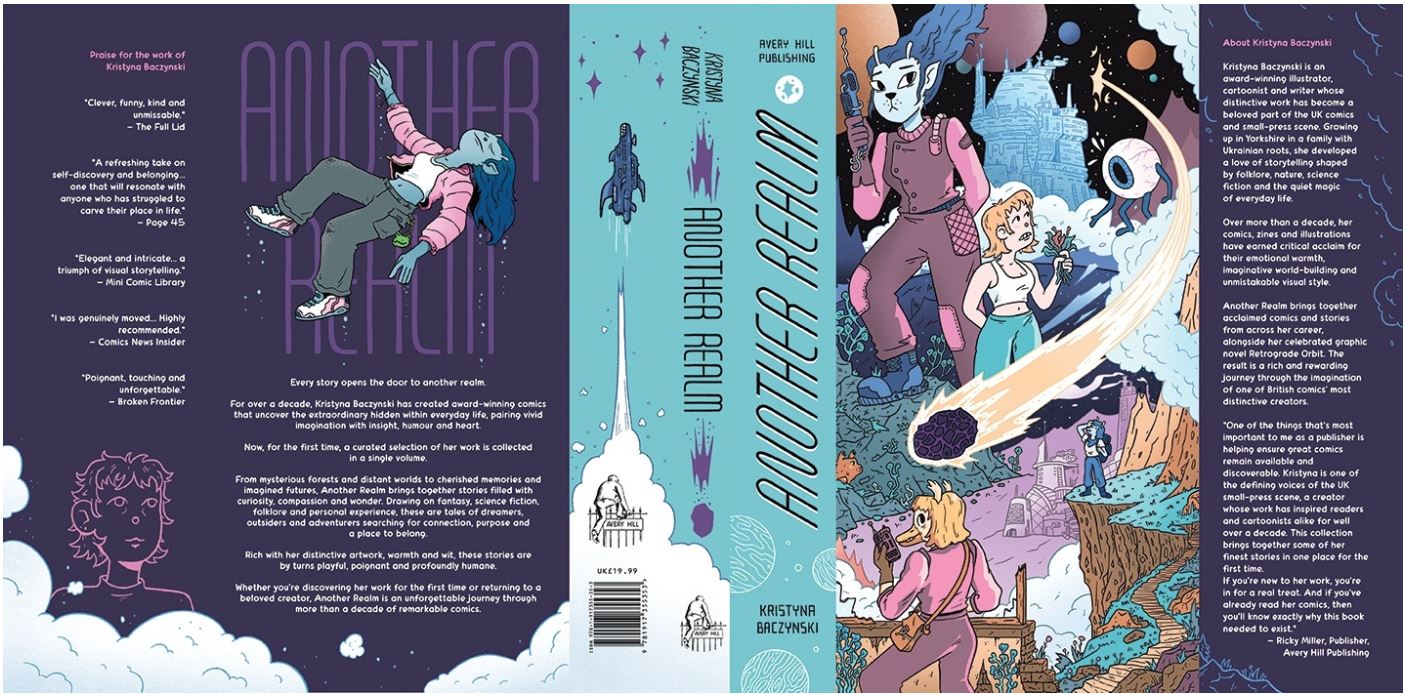
The Corus Wave


By Karenza Sparks (Avery Hill Publishing)
ISBN: 978-1-917355-22-3 (TPB/Digital edition)

The British have a tradition of quirkiness, and fondness for cosy mysteries and eccentric quests. Here’s an ideal example that combines sleuthing with SCIENCE! by way of a student days/buddy movie kind of vibe.

This gently genteel and genuinely refreshing mash-up offers a charming glimpse at obsession pursued and rewarded that begins when Geology student Lorelei finds a cool fossil during a beachcombing college class outing to the shore. What she found was a star-shaped fossilised Devonian-era cephalopod – what her tutor called a Palindenoid/Palindenite… and what Cornish locals used to call a “Strangely Wrinkled Potch”.

That oddment of swirling silica fascinated her and fuelled much of the toil of her last four years. Now it’s the basis of her Masters’ thesis and with final deadline and hand-in time looming, her obsessive research habits have led her into crisis. Instead of doing the bare minimum – and online – like a normal student, Lorelei has buried herself in old books and discovered the wonderful world of a lost genius. Her evaluation of the how Palindenite is formed has been derailed by one claim that they are the result of “the Corus Wave”…

Lorelei loves rocks and desperately wants to finish her thesis. She doesn’t have time for mysteries, even if they trigger old life-shaping memories. Sadly, the insubstantial legend and promise of the lost theories of Havius Corus have her now and won’t let go…

The internet is clueless over the Victorian mystery poet, scientist, mathematician, physicist, musician, historian and general polymath, but he does have a physical fan club. Having built half the great and grand buildings in Chorksbury, that admiring town now boasts the only Society dedicated to his name and works. With time pressing and time slipping away, when her pal Eddie suggests an adventure, Lorelei’s all primed for a procrastinating diversion – especially as pet cat Raisin is coming along for the ride…

Chorksbury is a rural, very quiet town packed with oddballs, but Society chief Helen is hugely helpful in detailing the lost wonders of Corus’ rise and fall. He was good at everything and en route to global glory until he latched onto an unsustainable, unverifiable theory of universal truth underpinning existence. He dubbed it the Corus Wave, and trying to prove it destroyed him…

Once his reputation was in tatters, he returned to Chorkesbury and built stuff. In 1864 he simply stopped being seen…

Now in seeking to separate fact and fiction on the origins of Palindenite, Lorelei is about to do the same. Her pursuit of disgraced and forgotten Corus – who suggested the creation of the oddly shaped fossils was due to an unrecognised cosmic force – left physical clues to the details of his discovery.

… And when she, Eddie & Raisin start looking closely, the consensus that it’s all nonsense is shelved forever. A fresh form of physics really is scattered in relics and restrooms all over town. As the students persevere, discoveries come thick, fast and incontrovertible.

… And really, really quickly if you understand the tricks of games and puzzled Corus wrapped his messages in.

Now, “proper” scientists and historians like Dr. Lowena Marley join the hunt for Corus’ truth, as concealed in his stone & natural materials building all over Chorksbury: colossal convoluted edifices like the Public Library, Anglican Church, Railway Station and Botanical Gardens, and even – somehow – the nearby ancient standing stone circle…

The strange potch Lorelei refused to let go of is instrumental in all their finds so far, but eventually her race against time with no promise of reward except satisfaction and Just Knowing totally pays off… and Lorelei learns something no one knows.

The Corus Wave  is a delightfully engaging first graphic novel from geology buff Karenza Sparks, with heartwarming shades of Father Brown, Rosemary & Thyme, The Sister Boniface Mysteries or Marlow Murder Club – but without all the death! Despite in-world jokes this is absolutely not The Da Vinci Code or National Treasure but does wallow in hints of The Village from The Prisoner) – but without all the death!

Here a truly fun time with big sky notions and traditional mystery moves – but without all the death! Get it now!
© Karenza Sparks, 2025. All rights reserved.
Today in 1952 artist Steve Leialoha was born, followed in 1954 by Peter (TMNT) Laird and their inspiration Frank Miller in 1957. Clarifying such fare is letterer (writer/artist/publisher/designer) Richard Starkings in 1962 and illustrator Sean Phillips (Third World War, Sleeper, Criminal) in 1965.

On the downside, Belgium’s Le Journal de Spirou stalwart Jaques Devos (Victor Sébastopol, Génial Olivier, Le Chroniques d’Extra-terrestres) left us.

DC Finest: The Doom Patrol – The Death of the Doom Patrol


By Arnold Drake, Bob Haney, Paul Kupperberg, Gerry Conway & Scott Edelman, Bruno Premiani, Bob Brown, Joe Staton, Arvell Jones, Frank Chiaramonte, Bruce Patterson, Romeo Tanghal, Carmine Infantino, Jack Sparling, Joe Orlando, Jim Aparo, Rich Buckler, Vince Colletta, Ross Andru, Dick Giordano & various (DC Comics)
ISBN: 978-1-79950-669-0 (TPB)

This book includes Discriminatory Content produced in less enlightened times.

In 1963 traditionally cautious comic book publishers at last realised superheroes were back in a big way and began reviving and/or creating a host of costumed characters to battle with and against outrageous menaces and dastardly villains. Thus, the powers-that-be at National Comics decided venerable adventure-mystery anthology title My Greatest Adventure would dip its toe in the waters with a radical take on the fad. Still, infamous for cautious publishing, they introduced a startling squad of champions with thematic roots firmly planted in those B-movie monster films of the era that had informed the parent comic.

No traditional team of masked adventurers, this cast comprised a robot, a mummy and an occasional 50-foot woman, joining forces with and guided by a vivid, brusque, domineering, crippled mad scientist. They would fight injustice in a whole new way…

Covering May 1966 to May 1965, this stunning compilation collects the remainder of the earliest exploits of the “Fabulous Freaks”, gathered from Doom Patrol #104-121. For good measure this comprehensive collection also contains the editorial material from reprint revival Doom Patrol #122-124 (February to July 1973); the enticing reboot that eventually returned the team to action from Showcase #94-96 (August 1977-January 1978), and the first official outing in a team-up trilogy from Superman Family #191-193 (October 1978 – January/February 1979).

The dramas were particularly enhanced by the drawing skills of Italian cartoonist and classicist artist Bruno Premiani, whose highly detailed, subtly humanistic illustration made even the strangest situation dauntingly authentic and grittily believable. He was also the ideal hand to squeeze every nuance of comedy and pathos from the captivatingly involved, grimly light-hearted scripts by Arnold Drake who always proffered a tantalising believably world for the outcast heroes to strive in. Premier tale ‘The Doom Patrol’ was co-scripted by Drake & Bob Haney, detailing how a mysterious wheelchair-bound scientist summoned three outcasts to his home through the promise of changing their miserable lives forever.

Competitive car racer Cliff Steele had legally died in a horrific pile up, but his undamaged brain was transplanted into a fantastic mechanical body. Test pilot Larry Trainor should have died. He had been trapped in an experimental stratospheric plane and become permanently radioactive, with the dubious benefit of gaining a semi-sentient energy avatar which could escape his body to perform incredible stunts for up to a minute at a time. To pass safely amongst men Trainor had to constantly wrap himself in special radiation-proof bandages.

Former movie star Rita Farr was exposed to mysterious swamp gases which gave her the terrifying, unpredictable – initially uncontrolled – ability to shrink or grow to incredible sizes.

The outcasts were brought together by brilliant, enigmatic Renaissance Man The Chief, who sought to mould solitary misfits into a force for good. He quickly proved his point when a bomber attempted to blow up the docks. The surly savant directed the trio in defusing it and no sooner had the misfits realised their true worth than they were on their first mission…

Now, years later with the team world-renowned, Doom Patrol #103 opens with the first of two tales: a tragedy ensuing after Professor Randolph Ormsby seeks the team’s aid for a space shot. When the doddery savant mutates into flaming monster ‘The Meteor Man’ it takes the entire patrol plus Beast Boy and Mento to save the day.

For those who haven’t seen the first volume yet: super-rich genius Steve Dayton (think ABSOLUTELY NOTHING like that Tesla guy) created a psycho-kinetic helmet and superhero persona Mento solely to woo and wed Rita, whilst outrageous, obnoxious Gar Logan was a tourist toddler in Africa, who contracted a rare disease. Although his scientist parents’ experimental cure beat the contagion before they died, it left him the colour of cabbage and able to change shape at will. A protracted storyline had commenced in #100 wherein the secretive, chameleonic kid revealed how he was now an abused orphan being swindled out of his inheritance by unscrupulous guardian Nicholas Galtry. The greedy, conniving accountant had even leased his emerald-hued charge to rogue scientists…

Rita especially had empathised with Gar’s plight and resolved to free him from Galtry whatever the cost…

DP #103 also continued unpacking the Mechanical Man’s early days following Caulder’s implantation of Cliff’s brain into an artificial body. In ‘No Home for a Robot’, the shock had seemingly driven the patient crazy as Steele went on a city-wide rampage, hunted and hounded by the police, but here, the ferrous fugitive finds brief respite with his brother Randy, before realising that trouble would trail him anywhere…

In an era devoid of promotional material or media platforms, Doom Patrol #104 astounded everyone as Rita abruptly stopped refusing loathsome billionaire/self-promoting supergenius smart guy Steve Dayton (think Musk with shinier hats) to become ‘The Bride of the Doom Patrol!’ However, her star-stuffed wedding day is almost ruined when alien arch-foe Garguax and The Brotherhood of Evil crash the party to murder the groom. So unhappy are Cliff and Larry with Rita’s “betrayal” that they almost let them…

Even whilst indulging her new bride status in #105, Rita can’t abandon the team and joins them in tackling old elemental enemy Mr. 103 during a ‘Honeymoon of Terror!’ before back-up yarn ‘The Robot-Maker Must Die’ concludes Cliff Steele’s origin as the renegade attempts to kill the mystery surgeon who had imprisoned him in a metal hell… finally giving Caulder a chance to fix a long-term malfunction in Steele’s systems…

‘Blood Brothers!’ in #106 introduces domestic disharmony as Rita steadfastly refuses to be a good trophy wife: resuming the hunt for Mr. 103 with the rest of the DP. Her separate lives continue to intersect, however, when Galtry hires that elemental assassin to wipe Gar and his freakish allies off the books…

The back-up section shifts focus onto ‘The Private World of Negative Man’, recapitulating Larry Trainor’s doomed flight and the radioactive close encounter that turned him into a walking mummy. However, even after being allowed to walk amongst men again, the gregarious pilot finds himself utterly isolated and alone…

Doom Patrol #107 opens epic story-arc ‘The War over Beast Boy’ as Rita & Steve (think Elon but funny and human) start begin proceedings to get Gar and his money away from Galtry, and the embezzler responds by opening a criminal campaign to beggar Dayton, inadvertently aligning himself with the Patrol’s greatest foes. Already distracted by the depredations of marauding mechanoid Ultimax, the hard-pressed heroes swiftly fall to the awesome automaton and Rita is exiled to a barbaric sub-atomic universe…

The secret history of Negative Man continues and concludes on a cliffhanger with ‘The Race Against Dr. Death’. When fellow self-imposed outcast Dr. Drew tries to draw the pilot into a scheme to destroy the human species which had cruelly excluded them both, the ebony energy being demonstrates its incredible power to save the world from fiery doom. In #108, ‘Kid Disaster!’ sees Mento diminished and despatched to rescue Rita whilst Galtry’s allies reveal their true nature before ambushing and killing the entire team…

…Almost.

Despite only Caulder and Beast Boy remaining, our exceedingly odd couple nevertheless pull off a major medical miracle: reviving the heroes in time to endure the incredible attack of alien colossus ‘Mandred the Executioner!’ before Larry’s ‘Flight into Fear’ at the comic’s rear proves Drew hasn’t finished with the itinerant Negative Man yet…

DP #110 wonderfully and wittily wraps up the Beast Boy saga as Galtry, Mandred and the Brotherhood marshal one last futile attack before a ‘Trial by Terror!’ finally finds Logan legally adopted by newlyweds Mrs. & Mr. Dayton. Sadly, it’s just a prelude to expansive extraterrestrial invasion in #111, heralding the arrival of ‘Zarox-13, Emperor of the Cosmos!’

The awesome overlord and his vanguard Garguax make short work of the Fabulous Freaks and – with all Earth imperilled – an unbelievable alliance forms, but not before ‘Neg Man’s Last Road!’ ends Trainor’s tale as the alienated aviator again battles Dr. Death, before joining a band of fellow outcasts in a bold new team venture…

Unbelievably, in #112, the uneasy alliance of DP with The Brain, Monsieur Mallah & Madame Rouge as ‘Brothers in Blood!’ results in no betrayals and the last-minute defeat of the invincible aliens. Moreover, although no rivalries were reconciled, a hint of romance does develop between two of the sworn foes, whilst at the back, untold tales of Beast Boy begin as ‘Waif of the Wilderness’ introduces millionaire doctors Mark & Marie Logan, whose passion for charity took them to deepest Africa and into the sights of “witchman” Mobu who saw his powerbase crumbling as SCIENCE! fixed his subjects’ problems…

When toddler Gar contracts dread disease Sakutia, the Logan’s radical treatment saves their child and grants him metamorphic abilities, but as they subsequently lose their lives in a river accident, the baby boy cannot understand their plight and blithely watches them die. Orphaned and lonely, he inadvertently saves the life of a local chief with his animal antics and is adopted… making of Mobu an implacable, impatient enemy…

DP #113 pits the team against a malevolent one-man mechanoid army in ‘Who Dares to Challenge the Arsenal?’ but the true drama manifests in a subplot showing Caulder seeking to seduce schizophrenic Madame Rouge away from the allure of wickedness and malign influence of the Brotherhood of Evil. The issue includes another Beast Boy short as ‘The Diamonds of Destiny!’ finds thieves kidnapping the amazing boy, just as concerned executor Nicholas Galtry takes ship for Africa to find the heir to his deceased employer’s millions…

Issue #114 opens with the Doom Patrol aiding Soviet asylum seeker Anton Koravyk and subsequently embroiled in a time-twisting fight against incredible caveman ‘Kor – the Conqueror!’ before Beast Boy briefing ‘The Kid Who Was King of Crooks!’ finds the toddler turned into a thief in Johannesburg… until his Fagin-ish abductors have a fatal falling out…

The next issue debuts ‘The Mutant Master!’: pitting the heroes against a trio of hideous, incomprehensibly powerful atomic atrocities resolved to eradicate the world which had so cruelly treated them. Things might have fared better had not the Chief neglected his comrades in his obsessive – and at last successful – pursuit of Madame Rouge…

Also included is ‘General Beast Boy – of the Ape Brigade!’, wherein a Nazi war criminal is accidentally foiled by lost wanderer Gar. The madman’s loss is Galtry’s gain, however, as the crooked money-man’s search ends with him “rescuing” Logan and taking him back to safe, secure America…

The mutant maelstrom concludes in #116 as ‘Two to Get Ready… and Three to Die!’ sees Caulder saving Earth from obliteration and reaping his unexpected reward in a passionate fling with “cured-but-still-fragile” Rouge. The wheelchair wonder seizes centre stage in #117 as his neglect drives his team away, leaving Caulder vulnerable to attack from a mystery man with a big grudge in ‘The Black Vulture!’ Happily, a reunited squad deals with grotesque madman ‘Videx, Monarch of Light!’ even as The Brain challenges Caulder to return his stolen chattel Rouge. Nobody thought to ask her what she wanted, though, and that’s a fatal oversight for all concerned…

Tastes were changing in the turbulent late 1960s and the series was in trouble. Superheroes were about to plunge into mass decline, and the creators addressed the problem head-on in #119: embracing psychedelic counter culture in a clever tale of supernal power, brainwashing and behaviour modification leaving the DP cowering ‘In the Shadow of the Great Guru!’

An issue later they faced a furious Luddite’s ‘Rage of the Wrecker!’ when a crazed scientist declares war on technology… including the assorted bodies keeping Cliff alive and active. The then-unthinkable occurred next and the series spectacularly, abruptly ended with what we all believed at the time to be ‘The Death of the Doom Patrol!’…

Faced with cancellation, Editor Murray Boltinoff and creators Drake & Premiani wrapped up all the long-running plot threads as spurned Madame Rouge went well off the deep end and declared war on both The Brain’s boys and Caulder’s “children”…

Pitilessly blowing up the Brotherhood, she then attacks the city until the Doom Patrol remove themselves to an isolated island fortress. Even there they are not safe and her forces ambush them. Captured and facing death, Rouge offers mercy if they abandon their principles and allow her to destroy a village of 14 complete strangers in their stead…

At a time when comics came and went with no fanfare and cancelled titles seldom provided any closure, the sacrifice and death of the Doom Patrol was a shocking event for us readers. We wouldn’t see anything like it again for decades – and never again with such style and impact. With the edge of time and experience on my side, it’s obvious just how incredibly mature Drake & Premiani’s take on superheroes was, and these superbly engaging, frenetically fun and breathtakingly beautiful stories rightfully rank amongst the very best Fights ‘n’ Tights tales ever told. Even the mercilessly exploitative many returns of the team since can’t diminish that incredible impact, and no fan of the genre or comic dramas in general should consider their superhero education complete until they’ve seen these classics.

However comics means business and eventually attention drifted back to the “World’s Strangest Heroes”. In 1973 as part of a strand of reprint titles, The Doom Patrol title resurfaced for three issues. From them a trio of editorial features – ‘Meet… The Doom Patrol’, ‘The Men Behind… the Doom Patrol’ and ‘The Doom Patrol’s Professional Fans’ – act as round-up and prelude for the final section of this fabulous compendium.

Itself an early cancellation in the superhero downturn, venerable try-out title Showcase was revived with #94 (cover-dated August/September 1977) and offered a new Doom Patrol courtesy of Paul Kupperberg & Joe Staton. It began with ‘The Doom Patrol Lives Forever!’ as Cliffe Steele’s shell is rescued and retooled by Metal Men inventor Will Magnus. Eventually independent again the traumatized survivor visits the only home he knows and discovers a new gang living/hiding in their old HQ.

Energy-caster Joshua “Tempest” Clay is a Vietnam deserter and Valentina “Negative Woman” Vostok absconded from the Soviet air force after she was possessed by a radioactive energy being very much like the one Larry Trainor was afflicted with. They are led by an Indian woman named Arani, whose temperature-shifting powers prompted her code name Celsius. Cliff is outraged and suspicious, but all becomes a bit clearer when arch enemy General Immortus attacks…

Inked by Francisco Chiaramonte, ‘The Origin of Celsius!’ reveals how the icy flamethrower is in fact Niles Caulder’s secret wife, and possesses those secrets of unending life the geriatric general craves above all else. The battle to stop him and save her creates a bond between the team that carries them straight into even deadlier dangers as Vostok is targeted by US federal agent Matt Cable (last seen palling around with the Swamp Thing) and far-less-tractable KGB operative The Cossack, seeking her recovery for the state. With Bruce Patterson inking, ‘Defection!’ sees the quartet begin a life as fugitive heroes in the grand tradition…

Mere months later Superman Family #191 through 193 saw them join Supergirl, confronting ‘A Matter of Gravity’ (by Gerry Conway with Sott Edelman, Arvell Jones & Romeo Tanghal) as rival villains – and distant cousins with a historic grudge – Gravitron Man and Gravity Lord tear up the world in search of validation and vengeance: cruelly proving ‘What Goes Up… Can’t Come Down’ before ‘The Gravity War’ is forcefully and forcible ended by the united champions…

Although as kids we all happily suspended disbelief and bought into the fanciful antics of the myriad masked heroes available, somehow the exploits of Doom Patrol – and their strangely synchronistic Marvel counterparts The X-Men (freaks and outcasts, wheelchair geniuses, both debuting in the summer of 1963) – always seemed just a bit more authentic than the usual cape-&-costume crowd. With the edge of time and experience on my side it’s obvious just how incredibly mature and hardcore Drake, Haney & Premiani’s take on superheroes actually was. These superbly engaging, frantically fun and breathtakingly beautiful tales should be rightfully ranked amongst the finest Fights ‘n’ Tights tales ever told.

With covers by Bob Brown, Premiani, Carmine Infantino, Jack Sparling, Joe Orlando, Jim Aparo, Rich Buckler Vince Colletta, Ross Andru & Dick Giordano this is a grande superhero sampler any fan of comics or the TV series will adore. Hopefully we’ll see it in digital format soon…
© 1966, 1967, 1968, 1973, 1977, 1978, 1979, 2025 DC Comics. All Rights Reserved.

Today in 1929 the astoundingly smart Jules Feiffer was born. Go see Explainers to see why that’s a cause for celebration before wishing super spidery avenging defending art star Sal Buscema Many Happy Returns since his natal arrival in 1936. If there are gods of any sort anywhere PLEASE DON’T JINX THAT!

In 1948 Frank Godwin’s Rusty Riley strip launched, as did UK weekly Boy’s World in 1963.

If you’re a travelling fan say hooray that Richard Alf was born today in 1952. Even if you haven’t visited his comics stores, you’ve probably enjoyed the San Diego Comic Con he co-founded…

Robbie Burns: Witch Hunter


By Gordon Rennie, Emma Beeby, Tiernen Trevallion, Jim Campbell & Jerry Brannigan (Renegade Arts Entertainment)
ISBN: 978-0-99215-085-3 (HB/Digital edition)

This book includes Discriminatory Content included for dramatic and comedic effect.

Robert Burns was born in 1759 in Alloway. His father was a farmer who went to great lengths to ensure that his children were properly educated. Robert was schooled in the classics, French and Latin and began his creative writing when he was fifteen.

He led a successful, tempestuous life – particularly favouring boozy carousing and roistering escapades with the ladies – and died in 1796 aged 37. As well as dialectical and vernacular poetry, Burns selflessly preserved a wealth of traditional Scottish songs and folklore – particularly the bizarre arcane bestiary of supernatural entities God-fearing folk of the 18th century knew were out there (sorry, oot there) – and is more popular today than he has ever been.

He is the only poet in history to have his own globally celebrated holiday, with his birth anniversary on January 25th an affair universally honoured by food, drink, recitations and well-loved scary stories…

This stunning re-imagining of the venerable wordsmith by scripters Gordon Rennie (Necronauts, Cabalistics Inc., Judge Dredd) & Emma Beeby (Doctor Who, The Alienist, Judge Dredd), breathtakingly illustrated by Tiernen Trevallion (2000AD, Judge Dredd) and lettered by Jim Campbell, owes as much to the modern fashion for stylish tongue-in-cheek horror comedies as the beguiling and frequently fantastical works of the poet, but the skilful interweaving of Burns’ immortal lines with a diabolically clever but simple idea make this tale an unforgettable treat whether pages or screens float your particular boat.

Think of it this way: in all those sterling supernatural sonnets and sagas, Burns wasn’t reinterpreting his elders’ supernatural folk tales or exercising a unique imagination, he was simply quoting from his diary…

The wee drama unfolds one night in Ayrshire in 1779 when rascally young gadabout Robbie finds himself on the wrong end of an angry man’s fist after playing fast and loose with the irate hulk’s intended bride. However, even though all the lassies fall for the blithe blather of the self-proclaimed poet, our battered man himself knows he has not yet found his true muse…

Half-drunk and well-thumped, the farmer’s son heads his horse for home but is drawn to uncanny lights emanating from haunted, drear abandoned old Alloway Kirk. Perilously enthralled, he then espies a scene out of Hell itself as witches and demons cavort in a naked ecstasy of dark worship to the satanic master “Old Clootie”…

The lad’s enrapt attention is only broken by a heavy pistol shoved in his ear by a stealthy pair also watching the shocking ritual. Old Mackay is a daunting figure kitted out like a wrinkled human arsenal, but Robbie’s attention cannot stray from the dangerous codger’s comely companion Meg, the most astounding woman he has ever seen.

Unfortunately the confrontation between the mortal voyeurs has resulted in Burns’ “innocent” blood being spilled and the satanic celebrants have caught wind of it…

Soon all the denizens of Hell are howling after the ‘mazed mortals but things are not as they seem. The outlandish pair are actually Witch Hunters, ferocious and fully skilled in sending all Satan’s minions back to the Inferno and always armed to the teeth with a fantastic array of ingeniously inventive ordnance…

Having fought free of the black Sabbat, the mortals take flight with the screaming witches in pursuit and when one grabs Robbie as he rides pillion on Meg’s horse, the dazed, half-soused lad blasts the beast with one of his companions’ blessed flintlock pistols. Tragically, in the selfsame altercation the pursuing she-devil had opportunity to mark him with her talons and the would-be poet promptly sobers up when he is informed that he has only three days left to live…

With mounting terror he learns most mortals so infected become willing thralls of the hellions, but when a seductive minion of The Pit comes for him the next night, the scribbler somehow fends it off long enough for the suspiciously near-at-hand Meg to spectacularly despatch it back to the brimstone realms.

Concluding that’s there might be something of worth to the Burns boy, Mackay & Meg resolve to teach him how to be a true Witch Hunter so that he can defend himself when the horrors come in full strength to collect the Devil’s due. Of course that’s only three days hence…

Renegade are a publisher who value fact as well as fiction and this superb full-colour hardback comes with a fine selection of factual features beginning with a lavish history and appreciation of Scotland’s greatest poet in Robbie Burns: a Biography’ by author and historian Jerry Brannigan as well as ‘Selected Poems’ which provides a tantalising entrée into the uniquely impassioned, eerie world of the grand imagineer with a sterling sampling of some of his most famous works, all embellished and beguilingly illustrated with a wealth of Trevallion’s pencils sketches of Bogles and Brownies, Spunkies and Sirens and even senior Witch Hunter Mackay.

The rhythmic reveille includes Scots Wha Hae, totally crucial, groundbreaking spooky saga Tam o’ Shanter (A Tale), the evocative A Red, Red Rose, A Man’s A Man For A’ That, the delirious Address To The Deil and most moving lament Ae Fond Kiss, And Then We Sever

Smart, action packed, skilfully suspenseful, uproariously funny, divinely irreverent and genuinely scary or sad by turn, Robbie Burns Witch Hunter is a gloriously compelling and truly mesmerising romp: a doom-laden, wisecracking rollicking love story no sensitive soul or jaded comics fan could possibly resist. It’s even educational too…

Robbie Burns: Witch Hunter © 2014 Renegade Arts Entertainment, Gordon Rennie, Emma Beeby and Tiernen Trevallion.

In 1926, Mad Magazine stalwart Bob Clarke was born today, as was master mangaka Shotaro Ishinomori (Cyborg 009, Super Sentai, Kamen Rider) in 1938. Dutch creator and entrepreneur Kees Kousemaker arrived in 1942 and was – as I’m sure you already know – the first person in Europe to open a comic shop.

Crusading, pioneering Alvin Phillips was born today in 1952, before becoming Turtel Onli and revolutionising the comic reading experience of American readers of colour. Onli died on January 15th 2025, aged 72. Go look him up online, it’s worth it…

In 1962, The Victor began in Britain, running until 1992, which is less long than Dan (Tarzan, Flash Gordon, The Phantom) Barry, who kept on going until 1997. Kudos…

Chimera


By Lorenzo Mattotti (Fantagraphics Books and Coconino Press)
ISBN-13: 978-1-56097-763-6 (TPB)

The sixth release – I hesitate to call it a volume, as the format, though bold and wonderful, is far more than a magazine but not quite a book – from the eclectic European publications imprint designated The Ignatz Collection, this fabulous item features an uncharacteristic and unforgettable look at the monochrome work of one of the world’s most talented colour artists.

Today in 1954, Lorenzo Mattotti was born in Brescia, Italy. He grew up and studied at the Faculty for Architecture in Venice before beginning a career as a comics storyteller in 1975 in French magazine Circus. Whether alone or with long-time collaborator Fabrizio Ostani (AKA Jerry Kramsky – they often used the single pen-name “Kleidebistro”) Mattotti’s incredible, nigh-abstract designs and pictorial narratives rapidly won him a huge following, with work appearing in Métal Hurlant, L’Écho des Savanes (France), Rumbo Sur (Spain), Frigidaire, Secondamano and Alter Alter (Italy), Raw (USA) and The Face (UK) among many others.

In 2002 Mattotti and Kramsky produced Docteur Jekyll & Mister Hyde (based on the Robert Louis Stevenson classic) for Casterman, and the English translation won Mattotti an Eisner Award the following year. As an illustrator, Mattotti has worked for Vanity Fair, The New Yorker, Cosmopolitan, Vogue and Le Monde, and has produced a number of startling and beautiful children’s books. His absolute masterpiece thus far is – to my mind at least – Fires.

Behind a deeply unsettling gate-fold wraparound cover, but printed throughout on reassuringly solid cream-coloured card-stock, lurks a startling journey from idyllic cloud-gazing through vaguely erotic musings on gods and giants to the depths of a terrifying and oppressive forested hell. Rendered in bravura line-and-dry-brush style that ranges from seductive and cajoling, through airy tumult to raw, fierce, bestial rage and horror, Mattotti uses the reader’s eyes to pull the viewer on a chaotic descent reminiscent of Mussorgsky’s “A Night on Bald Mountain” (in the manner of Disney’s Fantasia version, with just a shade of Watership Down thrown in).

Comics aficionados might also recognize a touch of the panning-in technique used by the great André Barbe where small pictorial changes lead to a total transformation, not only to the graphic representations but also to the mental or spiritual state of the object and observer. But where Barbe wanted to languidly surprise and seduce you, Mattotti is here to make you squirm…

Even if the “how” isn’t your major concern, the whole pictorial experience of Chimera is one headlong rush, and a supreme lesson in the power and virtuosity of dark lines against the light. This is probably the only white-knuckle ride you can put on a bookshelf… so why don’t you?

Story and art © 2005 Lorenzo Mattotti. Book edition © 2005 Fantagraphics Books and Coconino Press.

Also Today but in 1910, Noel (Scorchy Smith) Sickles was born. He shares the day with Mattotti, inker Bruce D, Berry (1924), and John Romita Senior in 1930.

In 1943 morale-boosting Miss Lace debuted in Milt Caniff’s Male Call strip, and in Britain once the shooting stopped in 1948, The Beano unleashed Biffo the Bear for the first time.

In 1977 we lost the wonderful John Rosenberger (The Fly, The Jaguar, Young Dr Masters, Lady Cop, Supergirl, Lois Lane) and in 2002, sublime Kurt Schaffenberger (Captain Marvel, Shazam, Lois Lane, Superboy, Supergirl, Superman, Super Friends). All of these stars are worth your time and attention whether here or best yet in their actual collected works, so go do that.

The Legend Testers 60th Anniversary Edition


By Graham Baker, Jordi Bernet, with Alf Wallace & various (Rebellon Studios/ treasury of British Comics)
ISBN: 978-1-83786-654-0 (TPB/Digital edition), 978-1-83786-681-6 (Webshop edition)

This book includes Discriminatory Content produced in less enlightened times.

British comics always enjoyed an extended love affair with what can only be described as “unconventional” (for which substitute “bizarre” or “creepy”) stars. So many notional role models we grew up reading were outrageous or just plain “off”: self-righteous voyeur / vigilantes like Jason Hyde, sinister foreign masterminds like The Dwarf or Black Max, affable criminals such as Charley Peace, arrogant ex-criminals like The Spider or outright racist Overmen like manic white ideologue Captain Hurricane

Prior to game changers Action, 2000AD and Misty, our comics fell into fairly ironclad categories. Back then, you had genial and/or fantastic preschool fantasy; many, many licensed entertainment properties; action; adventure; war (especially ones “We” were in or had started); school dramas; sports; and straight comedy strands. Closer examination could confirm that there was always a subversive merging, mixing undertone, especially anarchic antiheroes like Dennis the Menace or our rather strained interpretation of costumed crime-busters. Just check out Phantom Viking, Kelly’s Eye or early Steel Claw stories…

Over and again British oddness would combine with or react to long-standing familiarity with soft oppression, leading to sagas of overwhelming, imminent conquest and worse. With our benighted shores existentially threatened, entertainment sources responded with a procession of doughty resistors facing down doom from the deepest depths of perfidy and menace… especially as churned up by the scary results of foolish modern SCIENCE!

That’s not to say we didn’t appreciate less outrageous adventurers as with this notional precursor (or synchronistic zeitgeist?) to TV’s Time Tunnel, with a brace of straightlaced but tough-as-nails He-Men heroes Rollo Stones and Danny Charters who dared the unknown weekly in the name of SCIENCE! – and history of course…

Cover-dated February 5th 1966, Smash! launched as just another standard Odhams anthology weekly until abruptly re-badged as a “Power Comic” at the end of the year. It combined homegrown funnies and British originated thrillers with resized US strips to capitalise on the superhero bubble created by the Batman TV series. Power Comics was a sub-brand used by Odhams to differentiate those periodicals which contained reprinted American superhero material from the company’s regular blend of sports, war, western, adventure and funny strips – like Buster, Valiant, Lion or Tiger. During the Swinging Sixties, Power weeklies did much to popularise budding Marvel Universe characters in this country, which were still poorly served by distribution of the original US imports.

The increasingly expensive American reprints were dropped in 1969 and Smash! was radically retooled with the traditional mix of action, sport and humour strips. Undergoing a full redesign, it was relaunched on March 15th 1969 with all-UK material (mostly drawn by overseas artists) and finally disappeared into Valiant in April 1971 after 257 issues. Seasonal specials remained a draw until October 1975 when Smash Annual 1976 properly ended the era. From then on, the new Fleetway brand had no room for the old guard – except as re-conditioned reprints in cooler, more modern books…

Thanks to economic vagaries and spiralling costs in publishing, the mid 1960s and early 1970s were particularly wild and desperate for comics: inspiring a wave of innovation most fondly remembered for more of those aforementioned darkly off-kilter heroes, beguiling monsters and charismatic villains.

Gathering serialised episodes from Smash! 2nd April 1966 to 8th July 1967, this complete compilation delivers fantastic threats and menaces in a traditional weekly manner, as a pair of dedicated and competent white blokes diligently push back the boundaries of ignorance. As was usual for these times, what was popular on screens large & small affected what arrived on the picture-packed pages Probably committee created with majority input from supervising editor Alf Wallace (Missing Link, Johnny Future) and sub-editor/scripter Graham Baker with new kid Jordi Bernet involved from the get-go, this series is one of many lost delights crafted by world stars in waiting and the observant will see Bernet improving and pushing himself on every page…

Jordi Bernet Cussó was born in Barcelona in 1944, son of a prominent, successful humour cartoonist. When his dad died suddenly 15-year-old Jordi took over his strip Doña Urraca (Mrs. Magpie). A huge fan of Alex Raymond, Hal Foster and especially Milton Caniff, Jordi yearned for less restrictive horizons and left Spain in the early 1960s and moved into dramatic storytelling.

He worked for Belgium’s Le Journal de Spirou, and Germany’s Pip and Primo, before finding a home in British weeklies. Bernet worked for UK publishers between 1964 and 1967, and as well as Odhams/Fleetway/IPC anthologies Smash!, Tiger and War Picture Library, produced superb pages for DC Thomson’s Victor and Hornet. He even illustrated a Gardner Fox horror short for Marvel’s Vampire Tales #1 (1973), but mainstream America was generally denied his mastery (other than translated Torpedo volumes and a Batman short story) until the 21st century reincarnation of Jonah Hex… which he truly made his own.

His most famous strips include thrillers Dan Lacombe (written by his uncle Miguel Cussó), Paul Foran (scripted by José Larraz) the saucy Wat 69 plus spectacular post-apocalyptic barbarian epic Andrax (both with uncle Cussó again). When fascist dictator Franco died, Bernet returned to Spain and began working for Cimoc, Creepy and Metropol, collaborating with Antonio Segura on adult fantasy Sarvan and dystopian SF black comedy Kraken, as well as with Enrique Sánchez Abuli on the gangster and adult themed tales that made him one of the world’s most honoured artists. These culminated with the incredibly successful crime saga Torpedo 1936.

For now though and way back then, following a heartwarming reminiscence and proud career resume from the series illustrator himself, we launch at full pelt with inaugural serial ‘Death Castle’ which ran from 2nd April (Smash! #9) to 25th June 1966.

In that wild innovative era, the creators were looking to be fresh and new so here logos and layout and even the narrative tone changed from week to week as the storytellers shuffled to make something fresh instantly compelling out of old themes and plots. That even included on-again, off-again individual chapter titles like ‘Man into Monster’ and ‘The 5 Faces of Evil!’ before settling down and just opting to tell tense, gripping yarns…

The premise is simple: in the 40th century the Central Knowledge Museum is a vast research and storage repository of all things historical. Now top investigators Rollo Stones and Danny Charters have used its time machine to confirm the veracity of the last artefact and corrected (by first person observation) the mistaken data that has come down with it, their boss Marcson has a new mission for them. It’s June 7th 3900 AD and with no more history mysteries, he asks them to start testing the large collection of unknown and myth-based items in their cupboard.

Apart from the potential death and danger, it’s practically foolproof. The machine only works if the objects the newly-appointed Legend Testers are holding are in some way authentic, as with the supposed werewolf skull that catapults them both back to feudal Europe and an encounter with a magical coalition of diabolical monsters.

In short order Rollo & Danny survive on wits and fists against a citadel of devils comprising sorcerer Necro, vampire Draca, sadistic torturer/inventor Love, Balbin, Prince of Trolls. bodyguard brute Happy (the werewolf in question) and notional leader Count Cadavo. Each in turns tries to break the strangers with their personalised hordes of monster minions but in the end the myths are confirmed at the cost of the vile villains’ unlives…

One of the most complex and trippy exploits of the era, ‘Eterno’ ran in issues between 2nd July and 20th August. This time the suspect object pulled our investigators back beyond humankind to a previous civilisation that was destroyed by a vampiric alien that consumed their planetary life energies. Millions of years later, humankind evolved and developed a very similar existence which drew Eterna back to Earth and the Testers on his heels to that time and place. As the monster and his robots began preparing to absorb a second course of earthlings Rollo & Danny were in the right place and time to end the terror forever…

Channelling the contemporary cinematic trend for Grecian myths and heroes, the boys spend half a year authenticating ‘The Crown of Zeus’ (27th August – 24th December), enduring an avalanche of peril and near-death escapes to categorically verify their chunk of diadem – and by extension the ancient lives of gods and monsters. After facing cyclopes, centaurs, gorgons, Cerberus, the Minotaur, Lernaean ghosts and hydras, man-eating horses, Pegasus, Poseidon, Proteus, Janus, sky-propping Atlas, petty-minded Bacchus, satyrs and earth-shaking Titans the lads learn just how the gods died…

At least demi-gods Hercules and Hermes (AKA “Quicksilver”) were on their side until it was all over and the time machine called them home…

The days of Camelot called when the Testers touched fragments of ‘The Crystal Orb of Merlin’ (December 31st 1966 to 4th March 1967) but sparked chronal catastrophe as the wise wizard’s talisman was stolen by anti-Arthurian despot Black Shield, who used it to arm his troops with 20th century weapons from pistols and hand grenades to tanks and an atomic bomb. The conclusion left everyone gasping and still does today…

Published from 11th March to 15th April, ‘The King of the Beasts’ saw Rollo & Danny divine how an idyllic land of talking animals living in harmony and seclusion was destroyed by greed and ambition, after which aliens are the order of the day when Marcson hands the investigators a piece of metal not of this Earth. A simple touch then takes them to 12th century Europe where ‘The Metal Men’ (22nd April – 3rd June) are seeking to strip-mine the world for life-generating minerals. The Testers’ interference only results in their rendition to embattled, civil war-torn planet Meturn, but too late to do any good as the metalloids descend into mutually assured destruction. Thankfully, the confusion allows the boys to frantically steal the last space bus out of town…

The temporal turbulence terminates rather timidly with ‘The Crown of Kebi’ (10th June to 8th July 1967) as Marcson sends his gone-to guys to an utterly unknown destination where again greed and ambition trigger the end of a fabulous civilisation. Rollo & Danny’s very conspicuous arrival makes them unwitting tools of shady priest Walu on the island kingdom of Kebi, but their scruples mean he soon prefers them dead to alive. After tricking them into a voyage into “the underworld” beneath a mountain, the boys battle beastly apes, demon dwarves and worse, but their refusal to be suitably sainted and sent to heaven ultimately stymies the witch doctor and sinks the island nation…

Closing this epic outing of spookily spectacular saga is a compelling ‘Covers gallery’ of thrilling (albeit limited-colour) clashes courtesy of Bernet and the editorial paste up squad, plus the now traditional creator briefings.

For British, Commonwealth and European readers of a certain age and prone to debilitating nostalgia, the comic works gathered in this titanic tribute gig are an exciting, engaging, done-in-one delight that’s undemanding and rewarding; and a rare treat these days.

If that appeals, go hit this book, it’s how history – and SCIENCE! – should be made.
© 1966, 1967, & 2026 Rebellion Publishing IP Ltd. All Rights reserved.
Today in 1883, French artist, printmaker, illustrator, painter, caricaturist, sculptor and comic dabbler Gustave Doré died. However, one year later comics strip genius George (Jiggs & Maggie, Bringing Up Father) McManus was born. In 1952 Klaus (Daredevil, Batman) Janson joined the party, but probably missed the 1930 debut of Hergé’s Quick & Flupke in Le Petit Vingtième and launch of UK weekly Sparky in 1965.
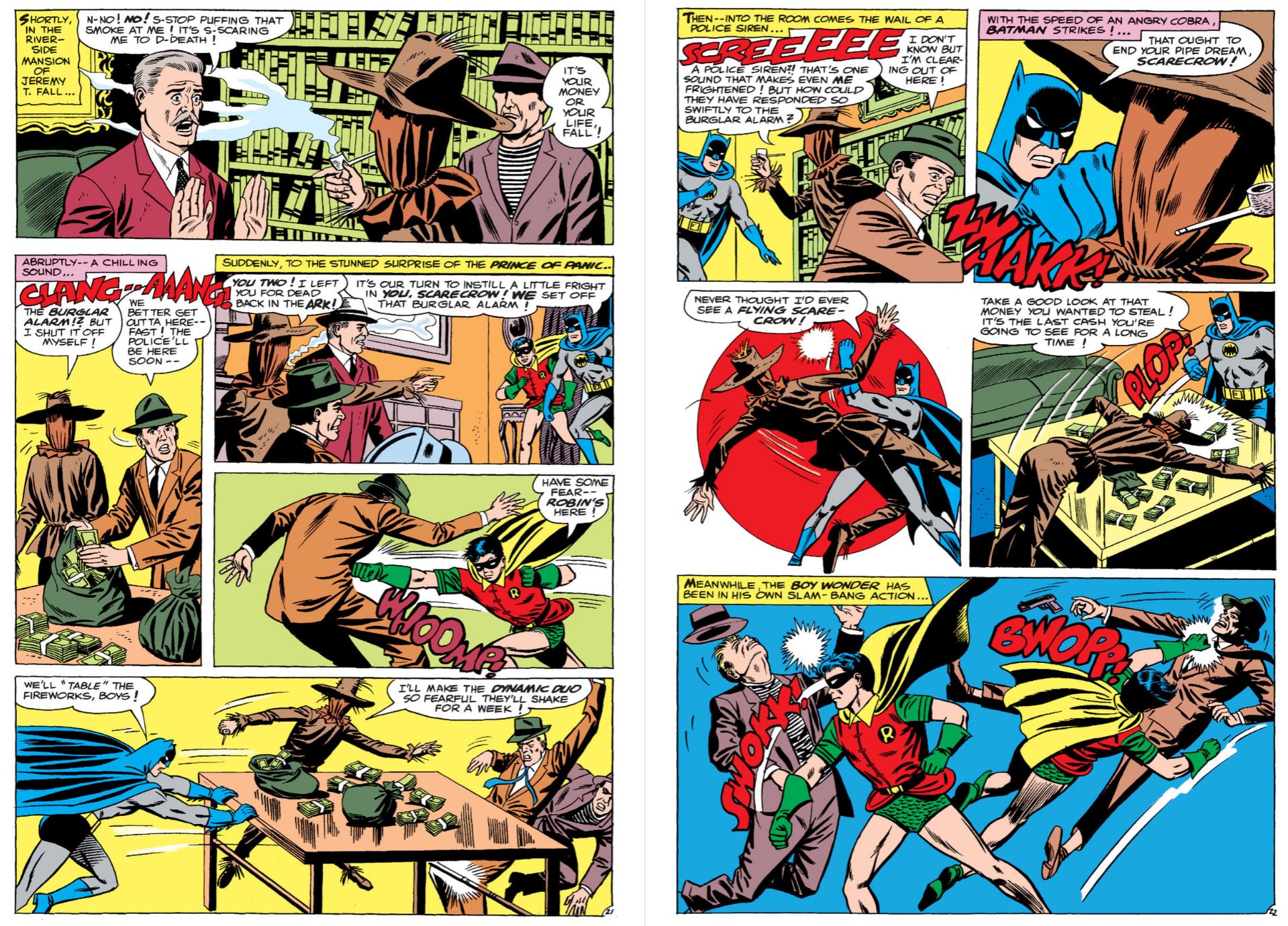
In 1988, UK icon Battle Picture Weekly shut up shop and in 2001 Makoto Yukimura’s manga masterpiece Planetes began.